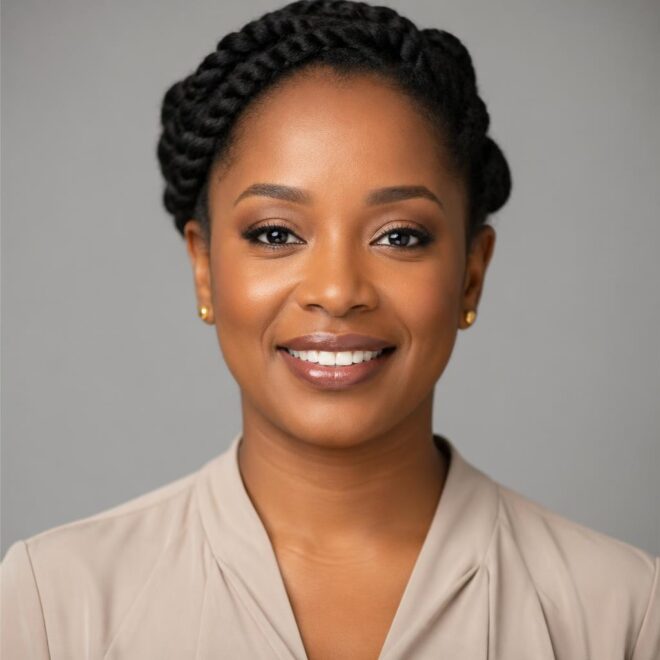


Afro hair is one of the most versatile and beautiful hair textures out there, and ponytails are a go-to style that works for just about every occasion. Whether you’re heading to work, hitting the gym, or going out for a night out, a good ponytail can be elegant, protective, and totally confidence-boosting. The key is understanding how to work with your natural texture rather than fighting against it.
The thing is, ponytails for afro hair are different from ponytails for straighter hair types. Your hair has its own structure, bounce, and personality, and when you style it right, you can create looks that are genuinely stunning. This isn’t about forcing your hair into shapes it doesn’t naturally make — it’s about embracing what you’ve got and using techniques that make your curls, coils, and texture the star of the show.
In this guide, we’re diving into 15 different ponytail styles that actually work beautifully on afro hair. Each one offers a different vibe, from casual and low-key to polished and show-stopping. You’ll find styling techniques that protect your hair, tips for making them last longer, and real-world guidance on which styles work best depending on your curl pattern, hair length, and what you’re trying to achieve.
1. High Ponytail with Texture
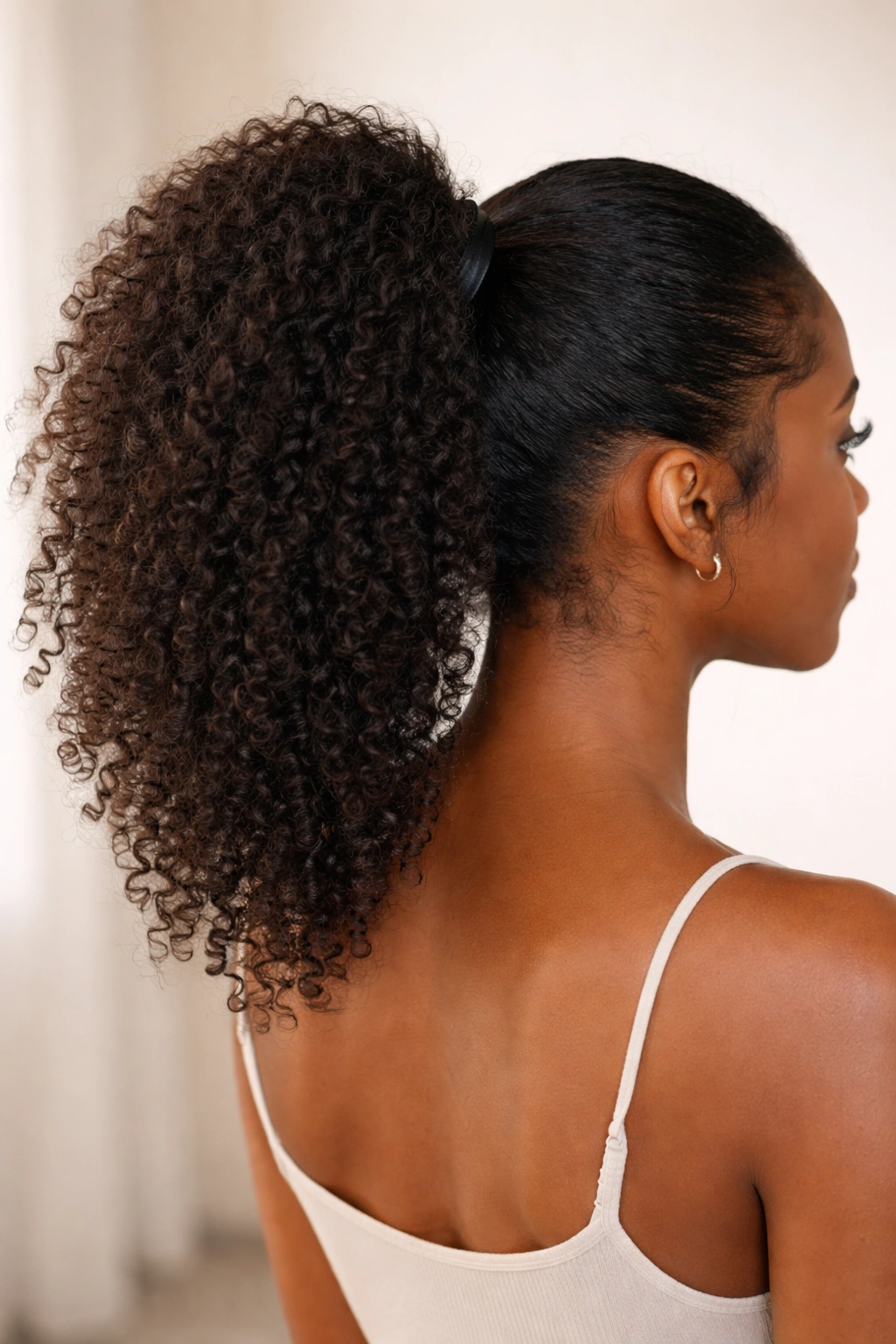
The high ponytail is a classic for a reason — it’s sleek, it shows off your face and neck, and it feels polished enough for just about anything. On afro hair, a high ponytail becomes something really special because your natural texture adds dimension and movement that straight hair just doesn’t have.
To create this look, start with clean, moisturized hair or hair that’s already been styled into your curl or coil pattern. Use a wide-tooth comb or your fingers to gather your hair at the crown (higher up than you might think — aim for the very top of your head). A light touch matters here; you’re not trying to flatten everything down into a smooth, tight shape. Instead, let your texture live. Secure your ponytail with a soft elastic or hair tie that won’t create a crease or cause breakage.
Why This Works for Afro Hair
Your natural curl and coil pattern creates a kind of built-in fluffiness at the base of the ponytail, which means you get volume without having to tease or backcomb your hair. This protects your edges and keeps the style looking fresh longer. The texture also catches light beautifully, so the ponytail itself becomes visually interesting rather than just smooth and flat.
Quick Styling Tips
- Use a gel or edge control to smooth your baby hairs and define your hairline if you like a polished look
- Don’t pull so tight that you’re stressing your edges — a secure but gentle ponytail is the sweet spot
- Add a decorative hair cuff or wrap around the base to elevate the look instantly
- This style works best on hair that’s at least shoulder-length, but works gorgeously on longer lengths
Pro tip: Moisturize your edges the night before if they tend to be dry, so they lay smoothly without fighting you on styling day.
2. Low Ponytail for Everyday Wear
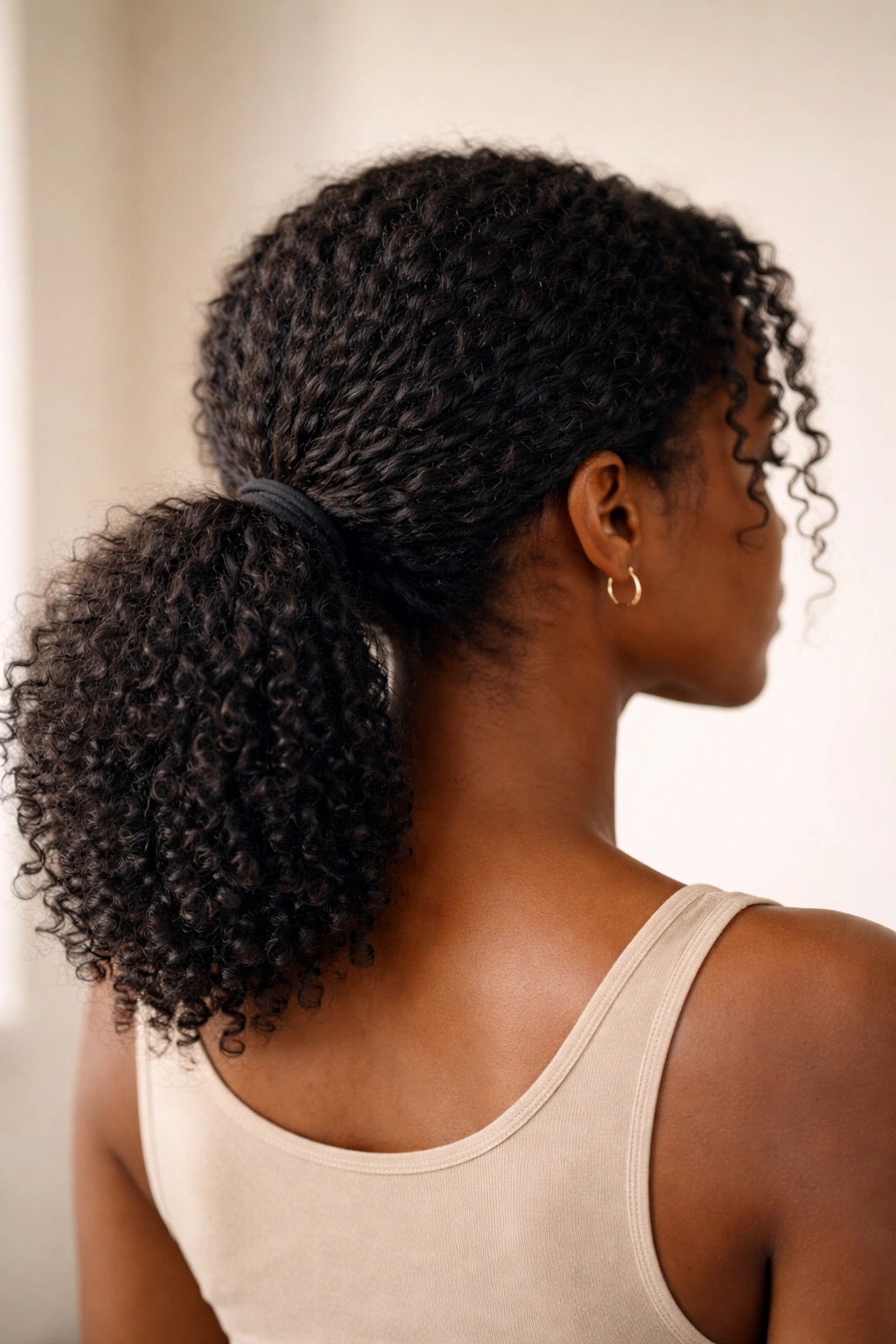
A low ponytail sits at the nape of your neck and gives off effortless, approachable energy. It’s perfect for days when you want your hair contained but don’t want to look overly polished. On afro hair, a low ponytail often feels more balanced and less severe than a high one, especially if you have a rounder face shape.
The technique is straightforward: gather your hair at the back of your head, roughly at ear level or slightly lower, and secure it with an elastic. The beauty of this style on textured hair is that you get to show off your natural pattern while keeping everything off your neck and face. You can leave a few strands loose around your face for a softer effect, or keep everything tucked in for a cleaner look.
Why This Works for Afro Hair
Low ponytails tend to look more natural on afro hair because you’re not fighting gravity as much. The weight of your hair actually works in your favor here, keeping the style in place without excessive tension. Your curls and coils have room to breathe, which means the style looks less sculptural and more like something you just threw together (even though you absolutely didn’t — but it should feel that way).
Styling and Maintenance Details
- Apply a smoothing serum or lightweight oil to the ponytail area before securing for a polished finish
- This is an excellent style if you’re growing out your edges or dealing with some breakage — the lower placement is gentler
- You can refresh a low ponytail the next day by misting it with water and re-securing it in the exact same place
- Pair this with a silk or satin scarf around your hairline at night to protect your edges
Worth knowing: A low ponytail is one of the most sustainable everyday styles for afro hair because it requires minimal manipulation and tension.
3. Sleek Gel Ponytail
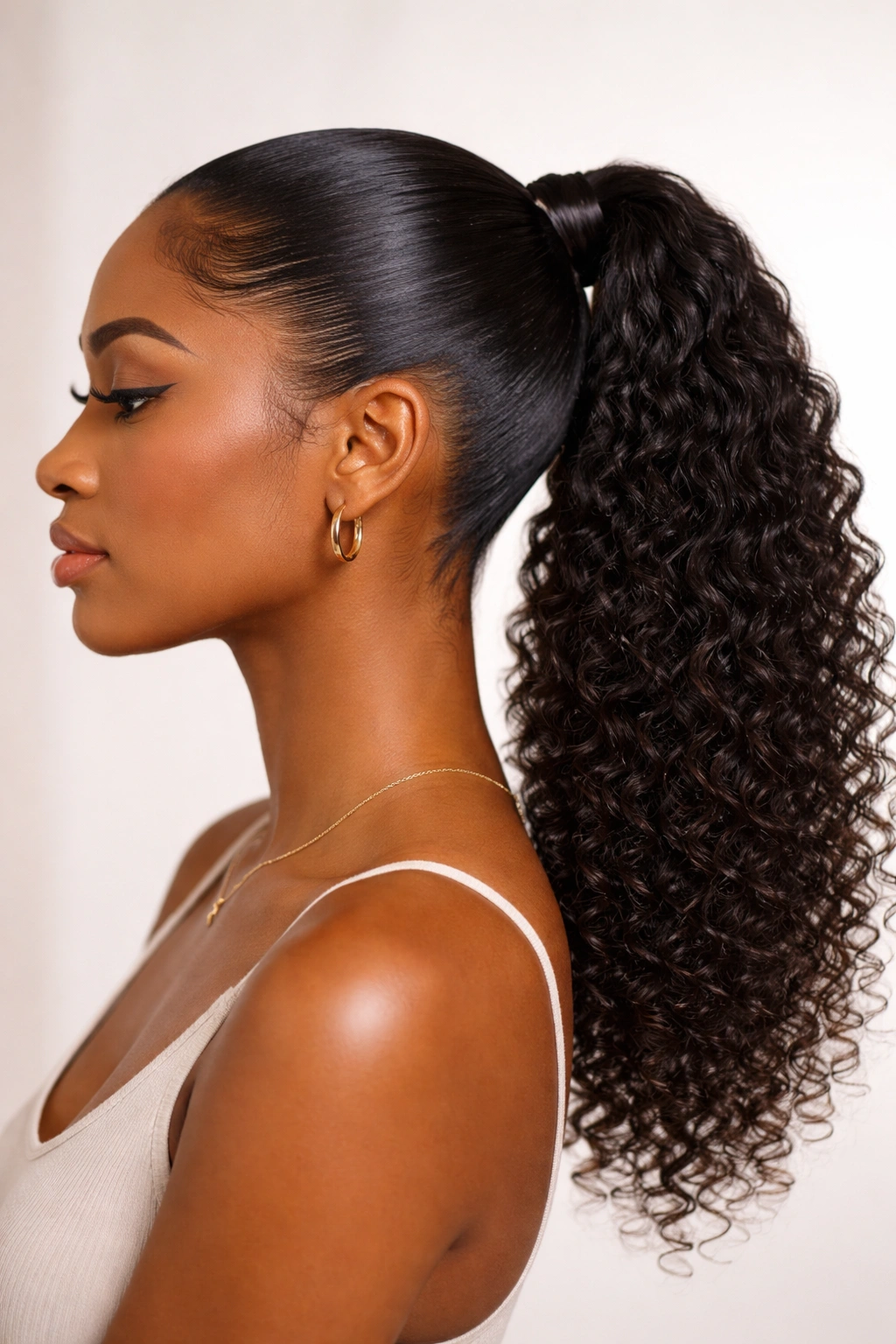
The sleek gel ponytail is all about control and polish. You’re using a holding product — typically a gel, cream, or mousse — to create a smooth, defined look that lasts all day. This style works gorgeously on afro hair when done correctly, and it’s a major flex because you’re showing that your natural texture can be both sculpted and beautiful.
Start with dry or damp hair and apply your gel or edge control product from the roots down, combing your hair back and up into a high or mid ponytail as you go. The key is using enough product to hold the style without making your hair stiff or crunchy. A good gel should give you hold while still letting your natural curl pattern show in the ponytail itself.
Why This Works for Afro Hair
Gel creates definition without heat damage, which is a huge win. When applied correctly, gel enhances your natural curl pattern rather than fighting it. The sleek base of the ponytail contrasts beautifully with the natural texture in the ponytail itself, creating visual depth and interest.
Product and Application Tips
- Start with a small amount of gel and add more if needed — too much product weighs hair down and can flake when it dries
- Use a fine-tooth comb or toothbrush to slick your edges with precision, then comb the rest back gently
- Let the gel air dry before moving around a lot, or use a blow dryer on low heat to set the style faster
- This style is best done on clean hair or hair that’s freshly refreshed with water and product
- Some people find that this works better on textured hair when they blow-dry it slightly damp instead of completely wet
Pro tip: If your gel tends to flake, try using a combination of a lighter gel and a smoothing cream layered together for hold without the crunch.
4. Twisted Ponytail with Volume
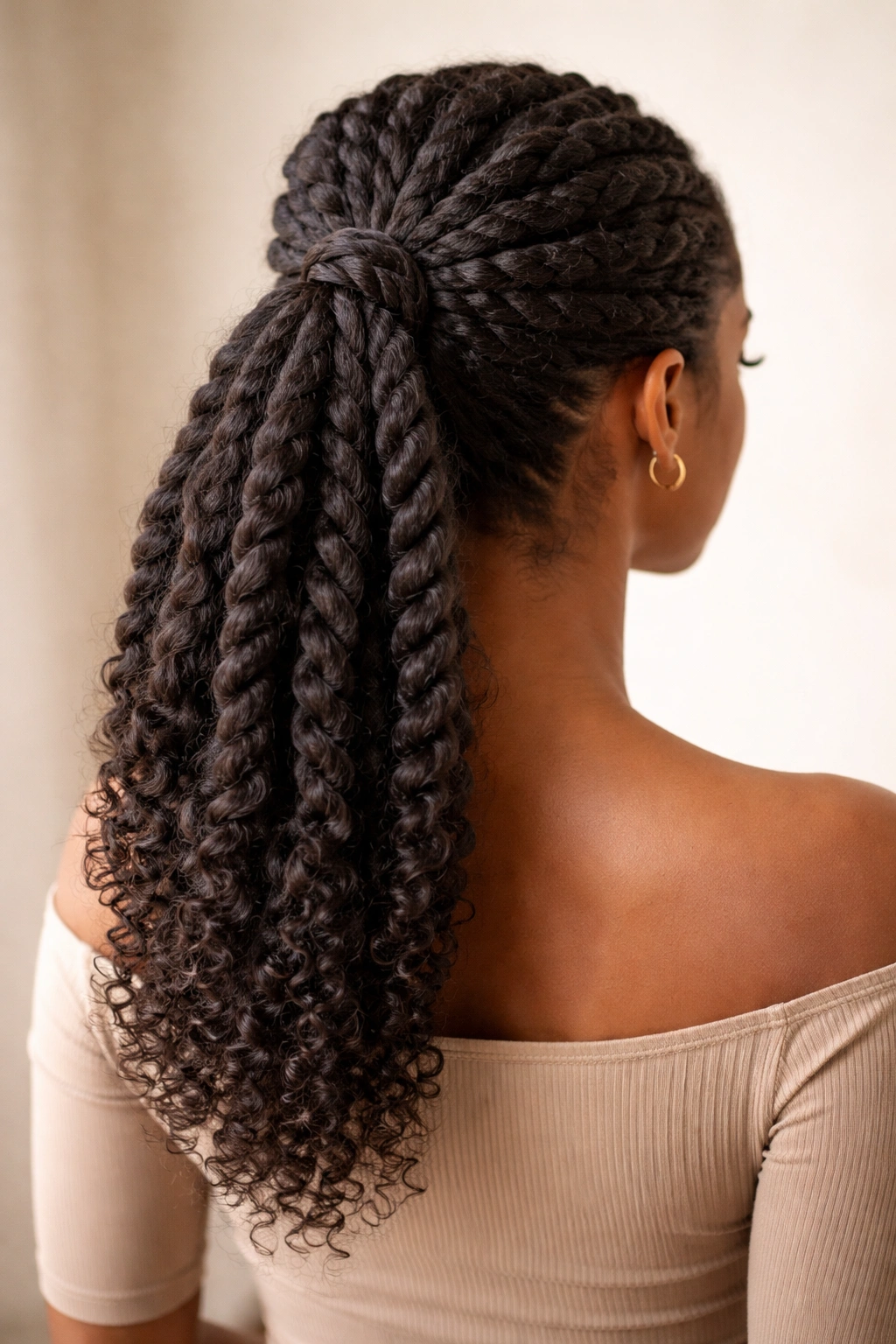
This style combines the protective benefits of twisting with the simplicity of a ponytail. You’re essentially creating rope twists with sections of your hair, then gathering those twists into a ponytail at the back of your head. It’s a bit more involved than a basic ponytail, but the effort pays off in a really striking finished look.
Divide your hair into 3 to 5 sections (depending on how much volume you want). Take each section and create a rope twist by wrapping one piece of hair around the other, working from the roots down. As you twist, you can let your natural curl pattern play a role — you’re not trying to make the twist perfectly smooth; it should have texture and personality. Once all your sections are twisted, gather them together at the back of your head and secure with an elastic.
Why This Works for Afro Hair
Twisting works with your natural hair texture instead of against it. The twists add visual interest and dimension that you don’t get with a regular ponytail, and the process is actually gentler on your edges than slicking all your hair straight back. The curls in your hair help hold the twist shape even without product.
Styling Techniques for Best Results
- You can create loose, thick twists for a fuller look or thinner, tighter twists for something more refined
- Twists hold better when your hair has some moisture in it — not soaking wet, but not completely dry either
- You can apply a light twisting cream or mousse before you start to help the twists hold their shape longer
- This style usually lasts 2 to 3 days if you sleep in a satin bonnet and refresh with a water spray in the morning
Worth knowing: The number of twists you create directly affects how voluminous the final ponytail looks — fewer twists equals more volume at the base.
5. Feed-In Braid Ponytail
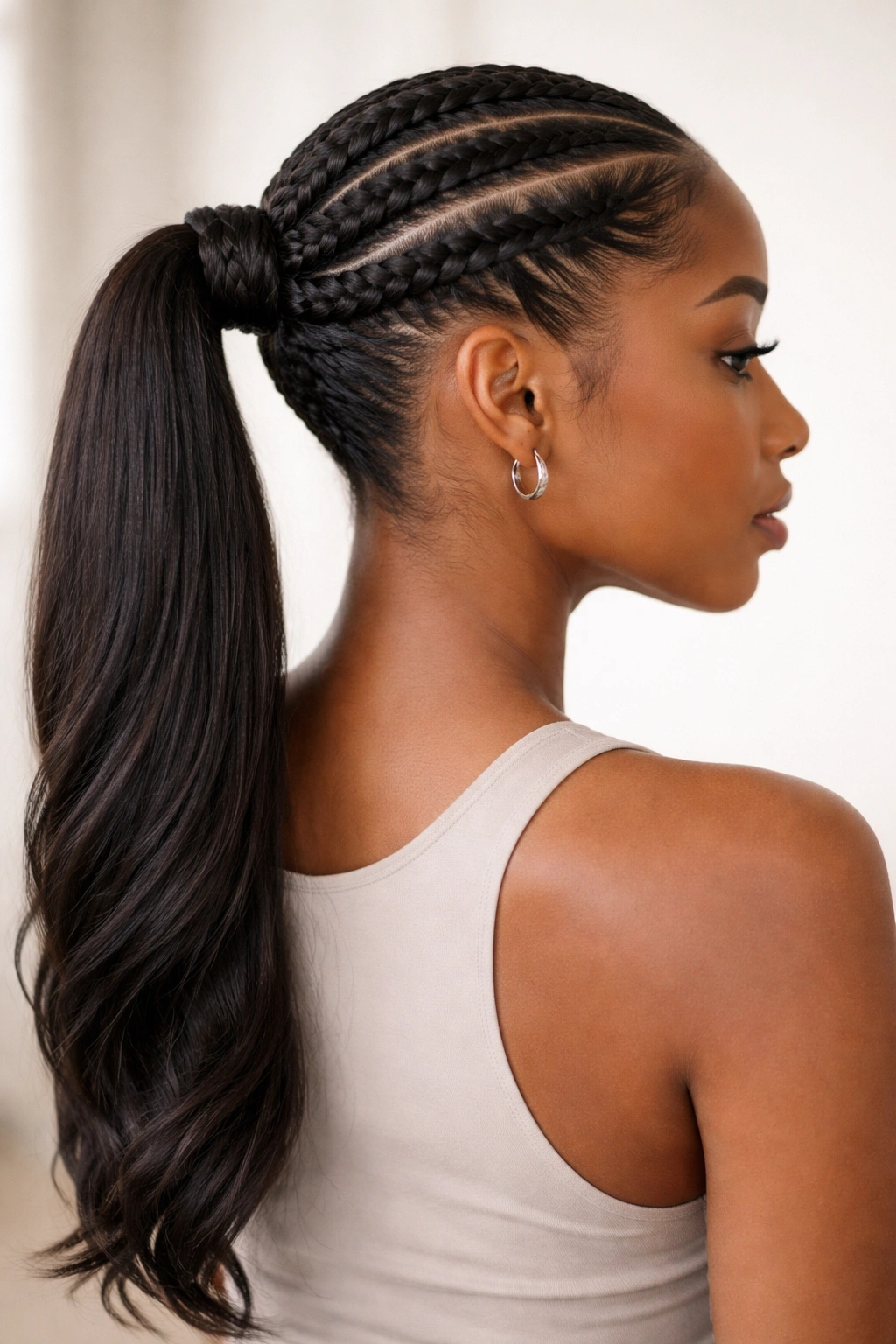
A feed-in braid is when you start with a small braid at the top of your head and gradually add hair as you braid down, creating a style that looks intricate but isn’t actually braiding all of your hair. This technique works beautifully on afro hair, and when you finish the braid and gather the remaining hair into a ponytail, you get something that looks complex enough to impress people but is actually pretty manageable.
Start at the crown with a small section of hair and begin a three-strand braid. As you braid down, take small pieces of hair from sections on either side and feed them into your braid. This continuous feeding creates that signature look. When you reach the nape of your neck or wherever you want the braid to end, gather that braid plus all your remaining hair into a ponytail and secure it.
Why This Works for Afro Hair
Feed-in braids are genuinely protective because they don’t require you to grab a big chunk of hair and pull it tight all at once. The braiding distributes tension more evenly across your scalp. The technique also makes the style look intentional and polished without requiring your entire head to be slicked or smoothed.
Technique and Styling Details
- Practise this style a few times — it’s not hard once you get the rhythm of feeding hair in, but it does take a minute to learn
- Tight feed-in braids look sleek and controlled; looser braids look more relaxed and casual
- You can create a single braid down the middle, two braids from either side, or even multiple small braids that feed into one ponytail
- This style protects your hair beautifully and can last 4 to 5 days with proper care at night
- The braid itself looks better and lasts longer if you apply a light oil or mousse before you start styling
Pro tip: If you’re worried about the braid unraveling, wrap a small elastic around the base where it meets your ponytail to lock it in place.
6. Puff Ponytail
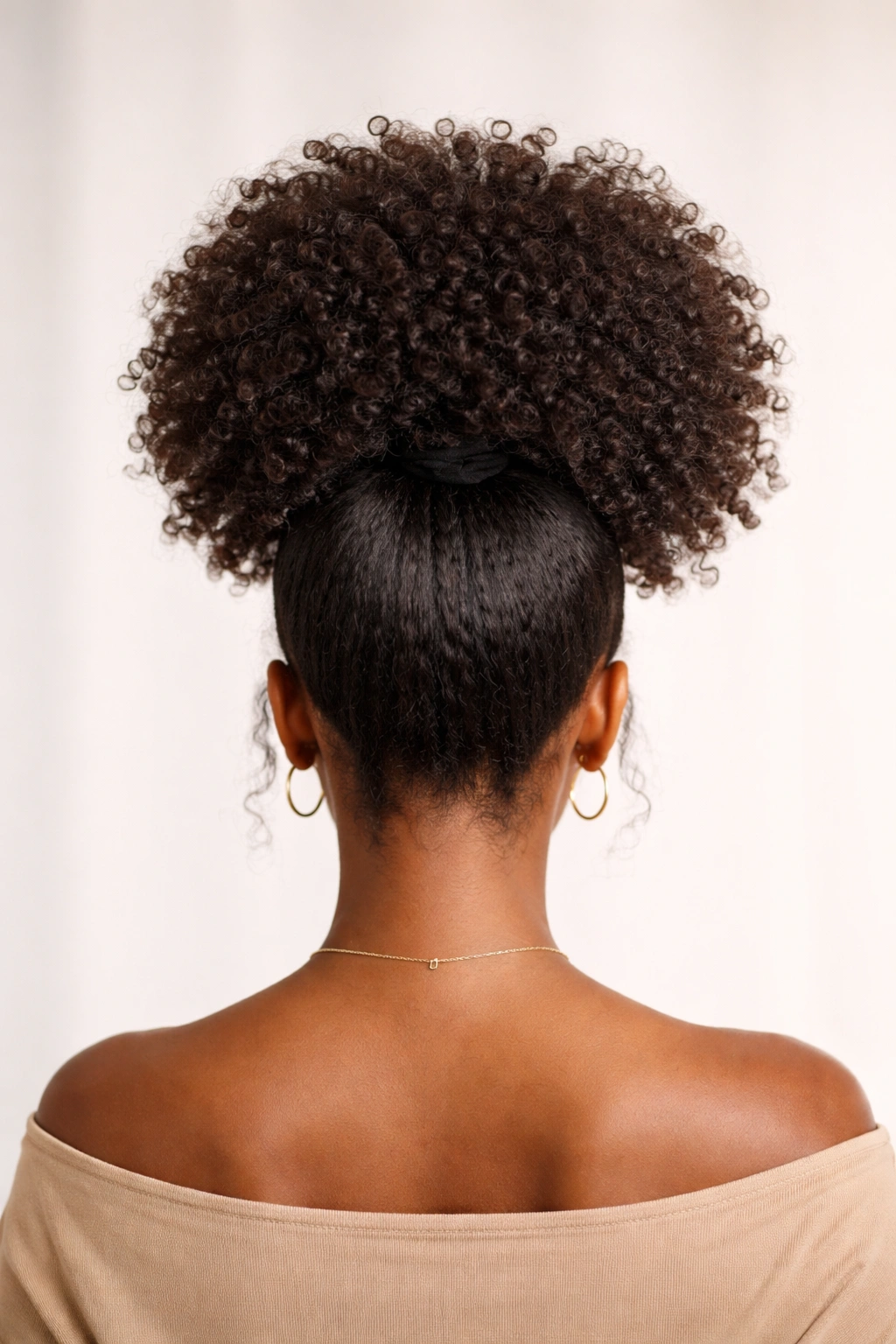
The puff ponytail takes your natural curl pattern and celebrates it. Instead of smoothing and slicking everything down, you’re gathering your hair and letting it puff out in all its natural glory. This is a style that looks casual and effortless but is actually perfect for protecting your hair and keeping it off your face.
Gather your hair into a high or mid ponytail — you can use your fingers or a comb, depending on how defined you want the ponytail to be. The key is not pulling too tight; you’re aiming for secure but gentle. Once your elastic is in place, gently separate and fluff out the ponytail so your curls can expand. You can smooth the crown and hairline with a little gel if you want that defined look at the top, but leave the ponytail itself full and textured.
Why This Works for Afro Hair
This is literally the most natural way to style afro hair into a ponytail because you’re not fighting your texture at all. Your curls are doing the work, and your hair gets to be itself. The style is protective, comfortable, and genuinely gorgeous when you embrace the fullness.
Creating the Perfect Puff
- The looser you gather your hair, the fuller the puff will be
- You can dampen your hair slightly before gathering it to encourage your curls to spring up and out
- A volumizing mousse applied to the ponytail (not the crown) makes the puff look even bigger without weighing it down
- This style works at any length, from shoulder-length to bra-length and beyond
- Sleeping in a satin bonnet helps the puff maintain its shape and volume overnight
Worth knowing: A puff ponytail actually gets better as it sits — the longer it’s been up, the more voluminous and sculpted it looks.
7. Half-Up Ponytail with Coils
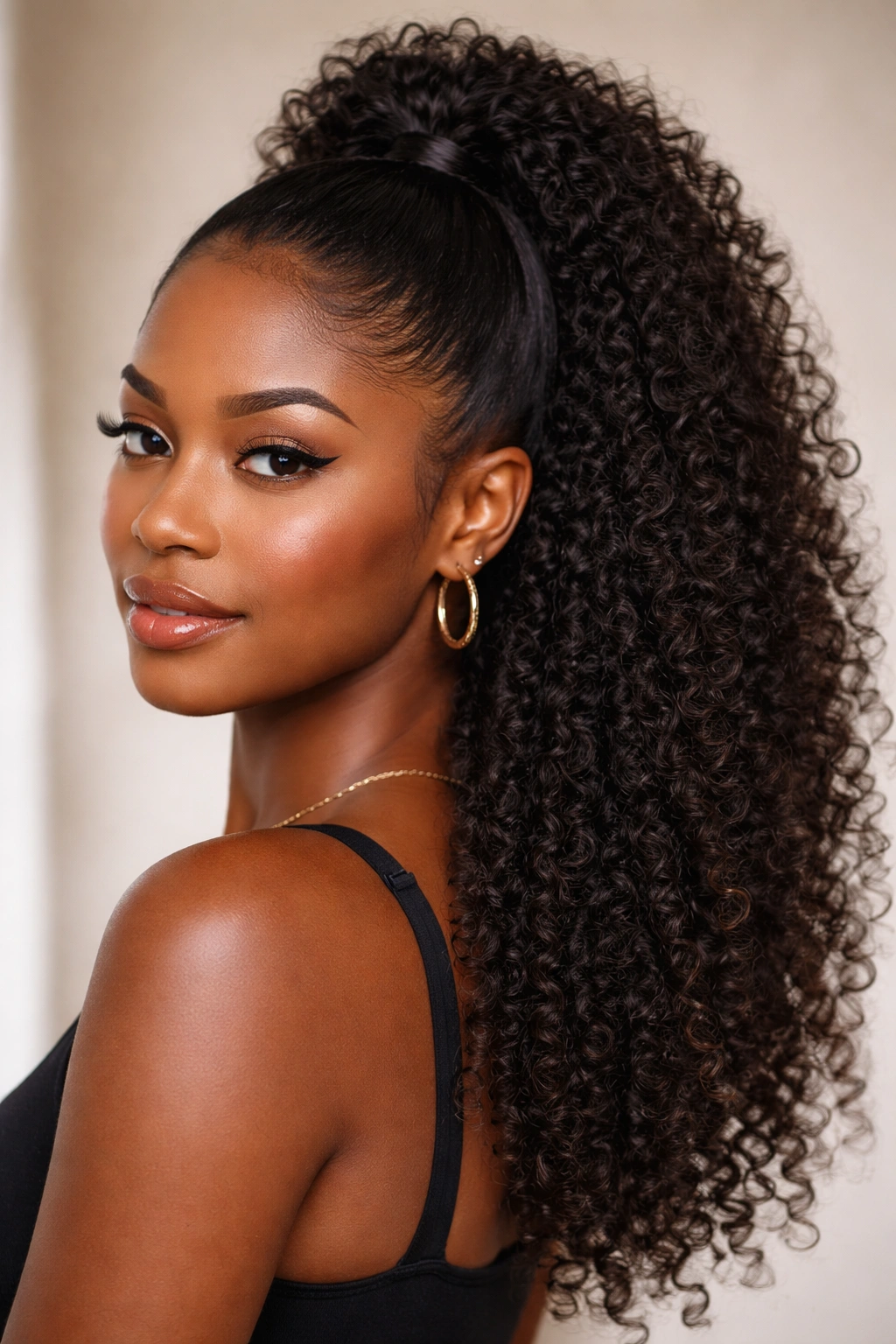
The half-up, half-down style gives you the best of both worlds: your hair is partially contained for practicality, but you’re also showing off length and full texture. On afro hair with beautiful coils, this is a particularly stunning choice because you get to frame your face while letting your coils cascade down your back.
Gather the top half of your hair (think everything from your ears up and over your crown) and pull it into a ponytail at the back of your head or slightly to the side. You can smooth the top section or leave it textured — both look great. Leave the bottom half of your hair down and let your coils fall naturally. The result is effortless elegance.
Why This Works for Afro Hair
The contrast between the gathered section and the free-flowing coils below is really visually striking. This style also gives you a practical solution for days when your roots or crown needs refreshing but your ends are looking good. You’re getting style and manageability without having to commit to a full updo.
Styling for Maximum Impact
- Use a flexible approach to the top section — tight or loose, smooth or textured, whatever feels right to you
- You can add a decorative clip or elastic wrap to make the gathered section look more intentional
- This style works beautifully on hair that’s at least shoulder-length so you have enough to show off below
- Your coils can be day-old or freshly refreshed; both look good in this style
- If your coils are a bit frizzy, use a light oil or smoothing serum on the bottom section to tame them without flattening them
Pro tip: Create this style slightly off-center by pulling the top section toward one side rather than straight back — it feels more modern and less formal.
8. Side-Swept Ponytail
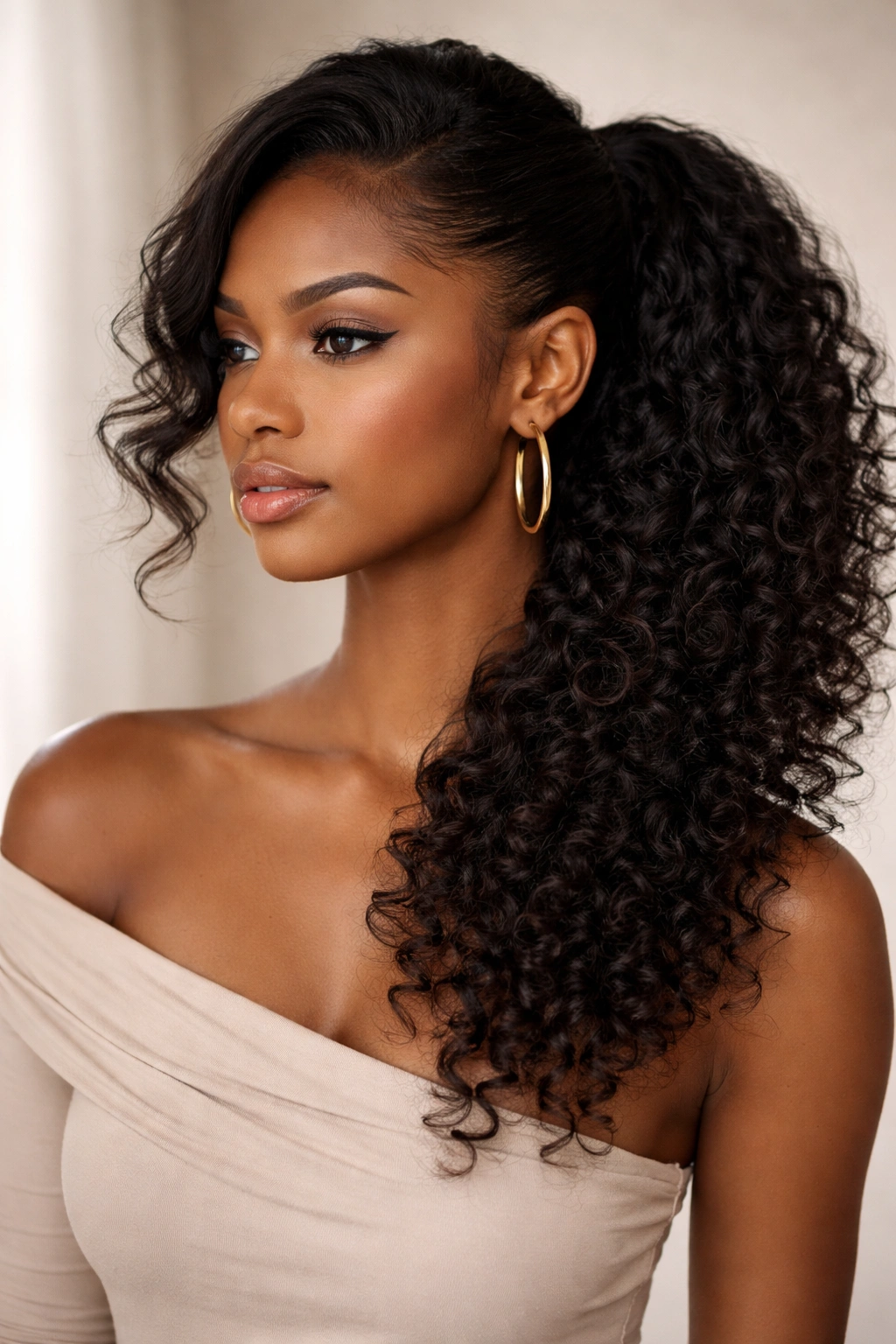
A side-swept ponytail gathers your hair to one side rather than straight back, creating an asymmetrical, fashion-forward vibe. On afro hair, this style is particularly flattering because the side placement adds dimension to your face and lets your curl or coil pattern show beautifully on the side that’s exposed.
Gather your hair to one side — decide whether you want it high, mid, or low, and whether you want the gathered section smooth or textured. Secure it with an elastic, and gently fluff out the ponytail so your curls can do their thing. You can leave a few strands loose on the exposed side of your face for an extra-soft effect.
Why This Works for Afro Hair
This style is flattering on pretty much every face shape because the asymmetry draws attention to your features in a balanced way. The side placement is gentler on one side of your scalp than center ponytails, which is good if you’re protecting edges or healing from tension-related breakage.
Styling Variations
- A high side ponytail feels fun and youthful; a low side ponytail feels sophisticated and grown-up
- You can create a twisted or braided section before pulling everything to the side for extra visual interest
- Try pulling your ponytail slightly forward and to the side rather than straight sideways — it feels more dynamic
- This style can be dressed up with a decorative clip or kept casual with just an elastic
- The side-sweep works well if you have longer hair, but you can adapt it for shoulder-length too
Worth knowing: A side-swept ponytail can make a day-old style look intentional and fresh, even if your hair has lost some volume overnight.
9. Bubble Ponytail
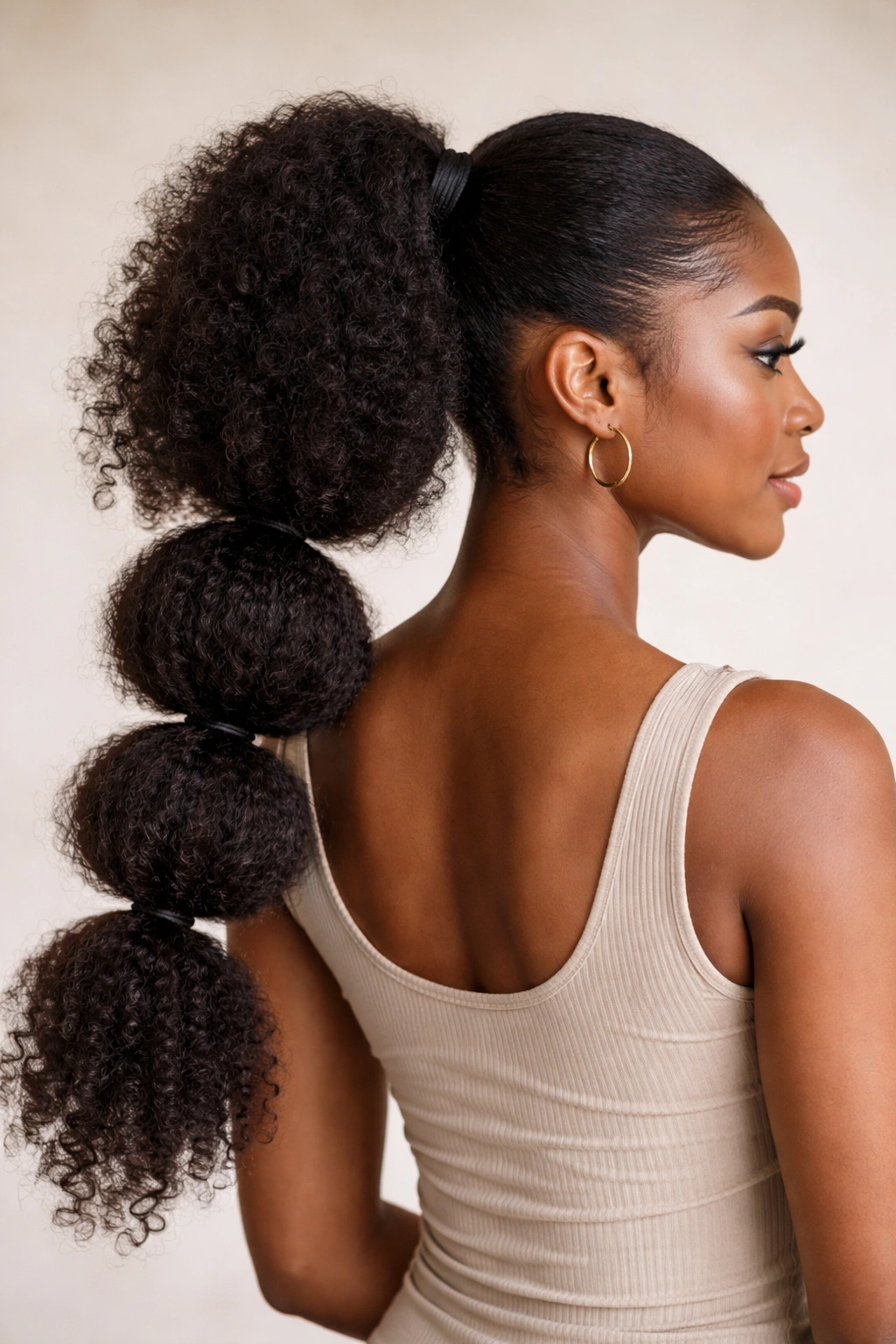
A bubble ponytail is made up of multiple sections, each gathered with its own elastic, stacked on top of each other to create a bubble effect. It looks playful, voluminous, and way more complicated than it actually is. On afro hair, the bubbles are extra full and textured, which makes this style feel fun and youthful.
Start by creating a high ponytail as you normally would. Secure it with an elastic. Then, about 2 to 3 inches below that elastic, create another ponytail by gathering the first ponytail plus new hair from that level. Secure it with another elastic. Repeat this process down the length of your hair until you run out of hair to work with. Gently fluff out each bubble to create volume between the elastics.
Why This Works for Afro Hair
Your natural texture naturally creates fullness between each elastic, so the bubbles look voluminous without extra effort. The style protects your hair because the tension is distributed across multiple sections rather than concentrated at one point. It’s also genuinely fun and catches people’s attention in a positive way.
Creating Picture-Perfect Bubbles
- The tighter you gather each section, the more defined the bubbles will be
- You can make the bubbles uniform in size or vary them — uniform looks more polished, varied looks more playful
- This style works best on hair that’s at least mid-back length so you have enough to create multiple bubbles
- Apply a light mousse or gel to encourage your curls to puff out between elastics
- The style typically lasts 2 to 3 days, and sleeping in a satin bonnet helps maintain the bubble shape
Pro tip: Fluff out your bubbles right after you finish styling and then again the next morning — they tend to compress a bit overnight and need reshaping.
10. Halo Braid Ponytail
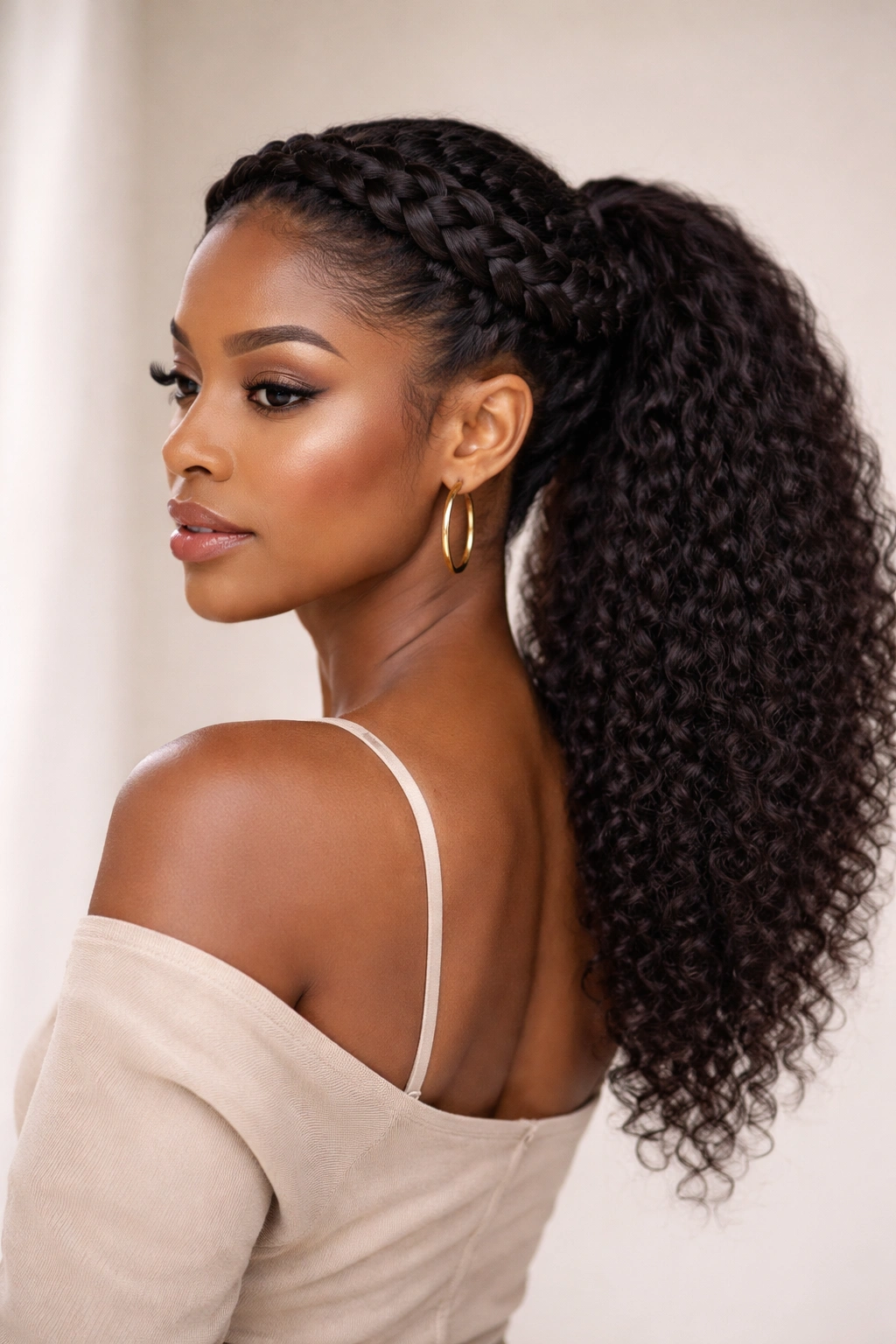
A halo braid is a crown-like braid that wraps around your head. When you add a ponytail in the center, you get a style that’s elegant and romantic. This is a step up in terms of styling effort, but it’s absolutely worth it for special occasions or when you want to feel extra put-together.
Start by sectioning off the top portion of your hair — think of it like the section you’d pull up for a half-up style. Create a braid from this section that wraps around your head like a crown. You can make it a simple three-strand braid, a feed-in braid, or even two smaller braids that meet at the back. Once your halo braid is in place, gather the remaining hair (including the ends of your halo braid) into a ponytail at the center back of your head and secure it.
Why This Works for Afro Hair
The halo braid creates a really polished frame for your face while the ponytail shows off your texture and length. The braiding distributes tension evenly, so it’s protective of your edges and edges. Your natural curl pattern is on full display in the ponytail, which is the focal point of the style.
Techniques for Success
- You can make your halo braid tight and sleek or loose and textured — both styles work beautifully
- Apply a light oil or mousse before braiding to help the braid hold its shape and to define your curl pattern
- This style works on hair that’s at least shoulder-length, but looks most dramatic on longer hair
- The halo braid can be done with just the top portion of your hair or can incorporate more sections if you want a thicker crown
- This is a great style for keeping your hair protected while still looking incredibly polished
Worth knowing: You can create a halo braid on hair that’s been in a puff or braid-out the day before — it actually works better on slightly textured hair that already has some hold.
11. Wrapped Ponytail

A wrapped ponytail is when you secure your main ponytail with an elastic, then wrap a section of hair (or a decorative wrap) around the base to hide the elastic. The result looks more refined and finished than a basic ponytail, and it gives you a chance to get creative with color or texture at the base.
Create a regular ponytail at whatever height you prefer. Then, take a small section of hair from the bottom of the ponytail and wrap it tightly around the base, covering your elastic. Pin the end of the wrapped section underneath itself with a bobby pin. Alternatively, you can use a decorative wrap, scarf, or even yarn wrapped around the base for a bolder look.
Why This Works for Afro Hair
The wrap adds a polished, intentional look to your ponytail that makes it feel more elevated. It also protects your elastic from being seen, which makes the style look cleaner and more finished. The wrap can be a functional styling choice or a creative opportunity to add color, pattern, or texture.
Wrapping Methods and Options
- A hair wrap (using hair from your own ponytail) is the most seamless option
- You can wrap a thin scarf, ribbon, or elastic band around the base for a pop of color
- Decorative cuffs, clips, and rings designed for this purpose slide over your ponytail and achieve the same effect
- The wrap is optional but recommended for any occasion where you want your style to look extra polished
- This technique works with any type of ponytail — high, low, side-swept, bubble, you name it
Pro tip: If you’re using a hair wrap and struggle with getting it secure, use a tiny bit of edge control or gel where the wrap meets your ponytail to help it grip and stay in place.
12. Pouf with Accessories
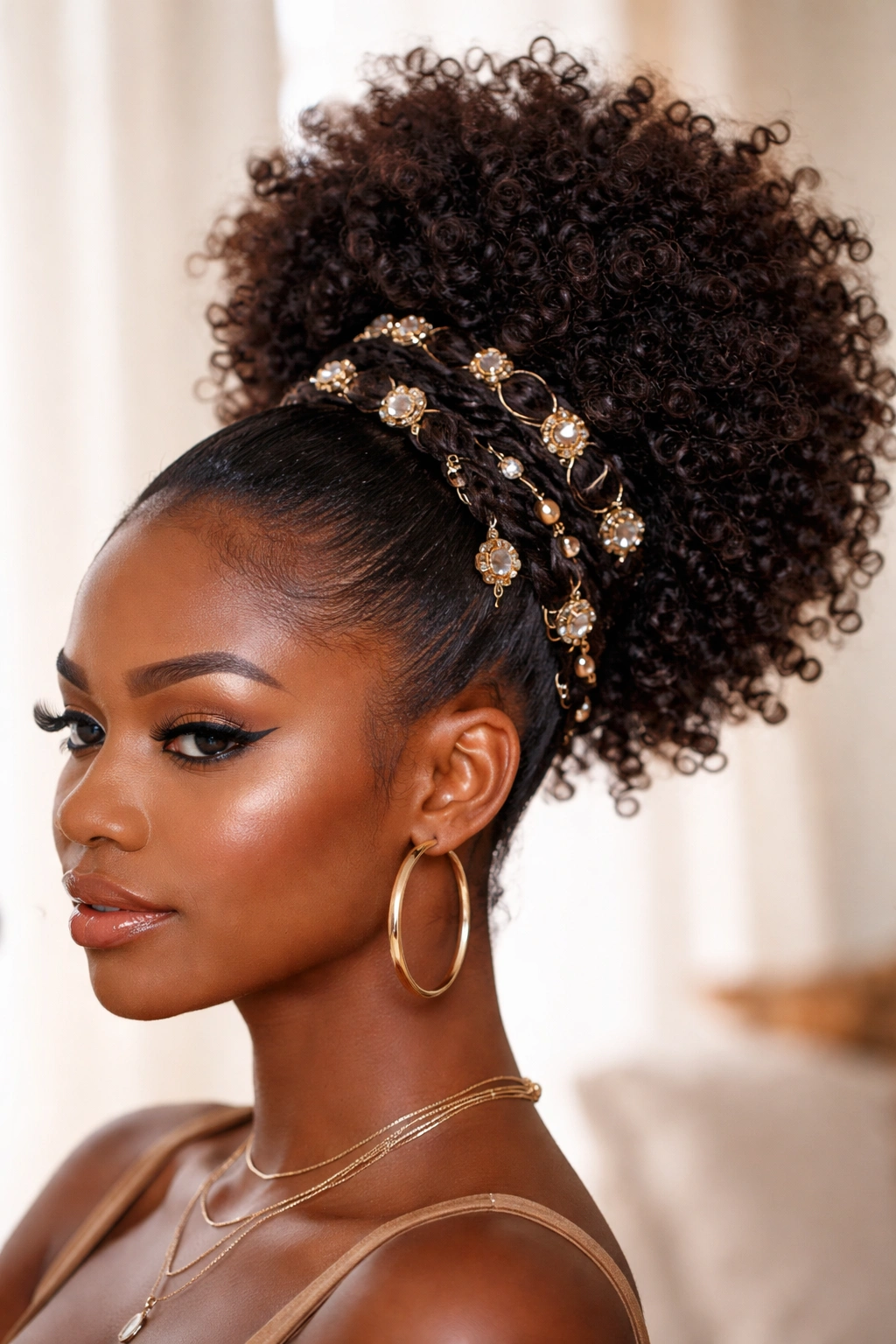
A pouf is similar to a puff but typically has more intentional styling and often includes accessories like clips, beads, cuffs, or headbands. The pouf celebrates your natural curl pattern while adding a creative, fashion-forward element with the accessory choice.
Create a ponytail (high, mid, or low, depending on your preference) and fluff out your curls. Then add your chosen accessory: hair cuffs, decorative clips, threaded beads woven through your curls, a wrap or scarf tied at the base, or even a headband worn above the ponytail. The accessory is the focal point here, so choose something that reflects your personal style.
Why This Works for Afro Hair
Accessories look incredible against the texture and fullness of afro hair. They catch light, add visual interest, and give your ponytail a personalized, intentional feel. This is a style that celebrates your natural hair while adding your own creative spin.
Accessory Ideas and Styling
- Gold or metallic cuffs add glamour and sophistication
- Beads or rings threaded through your curls create a fun, playful vibe
- Scarves or wraps add color and can coordinate with your outfit
- Decorative clips secured at the base or throughout the ponytail add personality
- Pearl or decorative hair pins can be scattered throughout the ponytail
- Headbands worn above the gathered section create a cute, preppy look
Worth knowing: The best accessories for afro hair ponytails are ones with enough weight and surface area to grip your hair securely without sliding out.
13. Layered Texture Ponytail
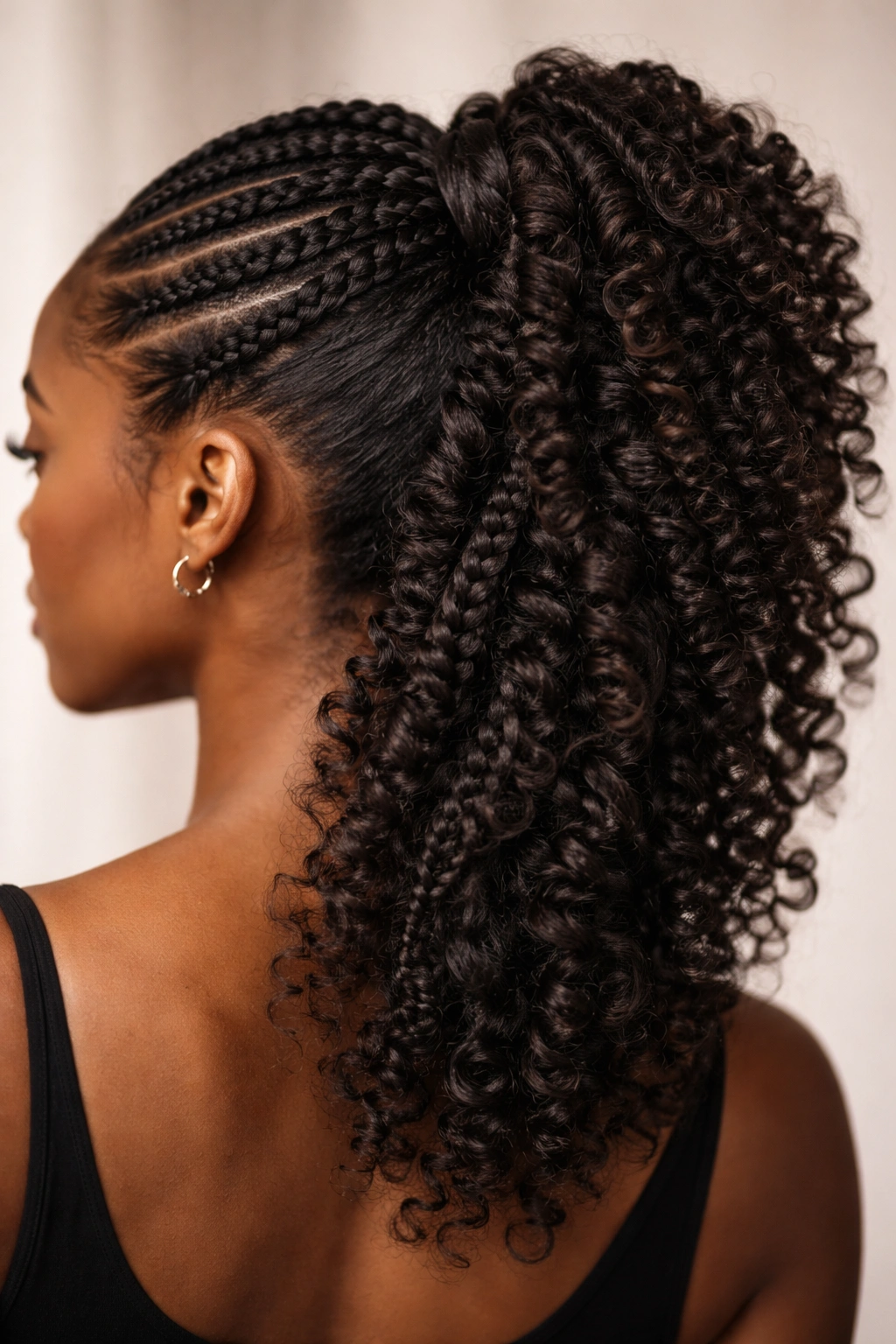
A layered texture ponytail involves creating multiple texture techniques (like twists, braids, and coils) within the ponytail section itself. Instead of one uniform texture, you’re mixing different styling methods to create visual depth and interest. This is a creative style for people who love playing with their hair.
You can create this in several ways: braid one section, twist another, leave a third section in its natural curls, and gather all of these together into a ponytail. Or, you can create a regular ponytail and then add braids or twists to different sections of the ponytail after securing it. The key is creating visual contrast between different textures.
Why This Works for Afro Hair
Layering different textures plays beautifully with your natural hair’s dimension. Each texture catches light differently, making the ponytail look dimensional and intentionally styled. This approach also gives you flexibility to refresh different sections on different schedules.
Creating Layered Textures
- You can combine twists, braids, coils, and freeform sections in one ponytail
- Create symmetrical layers for a more polished look or asymmetrical layers for something more artistic
- Apply different products to different sections to enhance the contrast (gel to one section, mousse to another)
- This style works especially well on longer hair where you have plenty of space to show the texture variations
- The layered approach makes it easier to maintain the style since you can refresh one texture at a time
Pro tip: Document your style with photos so you remember which combinations work best for you — this is the kind of style that improves with repetition.
14. Braided Crown Ponytail
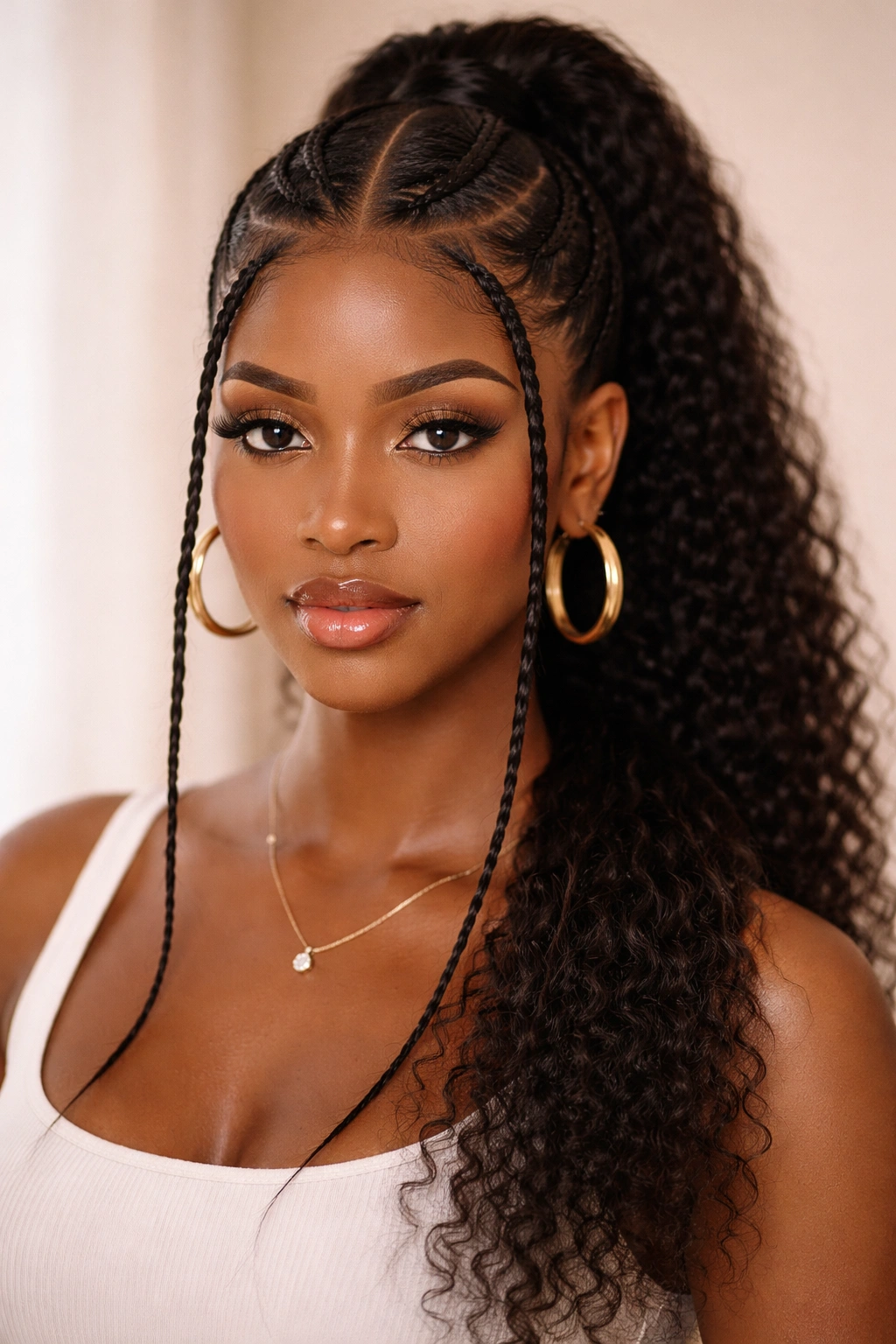
A braided crown ponytail combines elements of the halo braid and a traditional ponytail in a way that’s elegant and intricate-looking. You’re creating braids that frame your face and meet at the back, where they become the beginning of your ponytail.
Start by taking a section of hair from one side of your head near your temple and create a braid that goes back along your hairline. Do the same on the other side. These two braids should meet at the back of your head, and when they do, continue braiding all the gathered hair down as one central braid, or gather it into a regular ponytail. The result is a style that frames your face while keeping everything secured.
Why This Works for Afro Hair
The braids are genuinely protective and don’t require you to use excessive tension to keep your style in place. Your natural texture helps hold the braids in shape. The style frames your face beautifully while the length of your hair is displayed in the ponytail, giving you maximum visual impact.
Braided Crown Technique
- The braids should start small and incorporate more hair as they move back
- You can make the braids sleek or loose depending on the occasion and your preference
- Your hairline and edges are protected by the braids, which makes this a great protective style
- This works best on medium-length to long hair that has enough volume for visible braids
- The style can be refreshed by misting with water and re-securing, making it last several days
Worth knowing: This style looks more intricate than it actually is to create — with a bit of practice, you can do it in under 15 minutes.
15. Protective Style Ponytail
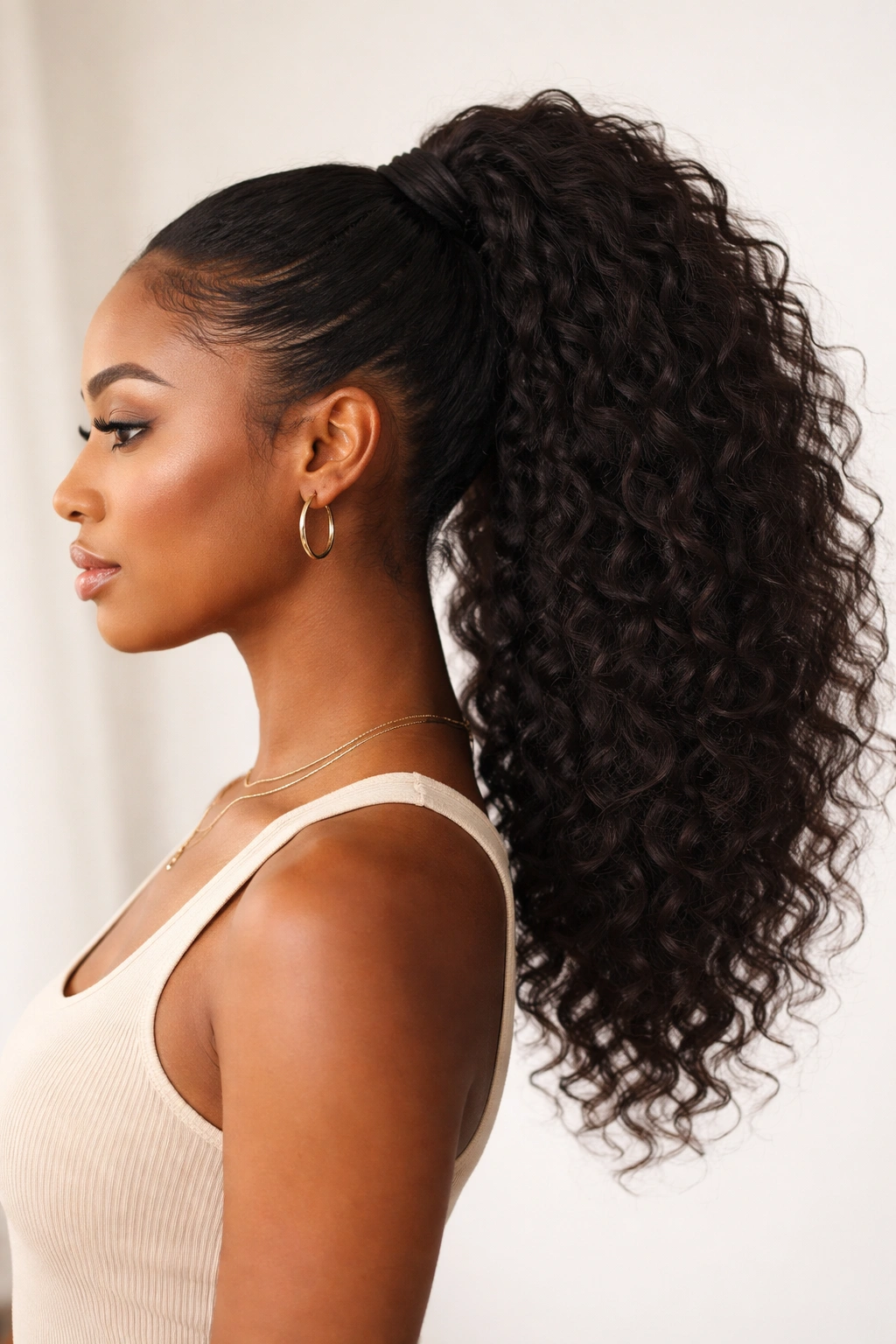
A protective style ponytail is designed with longevity and hair health as the primary goal. You’re creating a style that keeps your ends protected, minimizes manipulation, and can last a week or more. This often means using larger sections, gentler elastics, and being mindful of tension points.
Create a ponytail with loosely-gathered sections and a soft elastic that doesn’t crease your hair. You can incorporate braids, twists, or leave it in its natural texture. The goal is a style that’s secure enough to keep your hair protected but loose enough that you’re not stressing your edges or causing tension breakage. Many people sleep in this style and refresh it by misting with water in the morning.
Why This Works for Afro Hair
Protective ponytails respect your hair’s needs while still giving you a contained, manageable style. You’re not sacrificing your hair health for aesthetics. This approach is especially important for people doing length retention, recovering from breakage, or just wanting to give their hair a break from frequent styling and manipulation.
Building a True Protective Ponytail
- Use soft elastics (like hair ties specifically designed to minimize breakage) instead of regular rubber bands
- Gather your hair gently without pulling your edges tight
- You can leave the ponytail in for several days, refreshing it each morning with a water spray and light product
- Don’t create style contrast at the expense of comfort — if a style makes your scalp hurt, it’s too tight
- Moisturizing is essential; apply a leave-in conditioner or oil to your hair before creating the ponytail
- Sleep in a satin bonnet to preserve the style and protect your ends
Pro tip: The most sustainable protective ponytails are ones you forget you’re wearing — if you’re constantly aware of tension, adjust it before it becomes a problem.
Final Thoughts
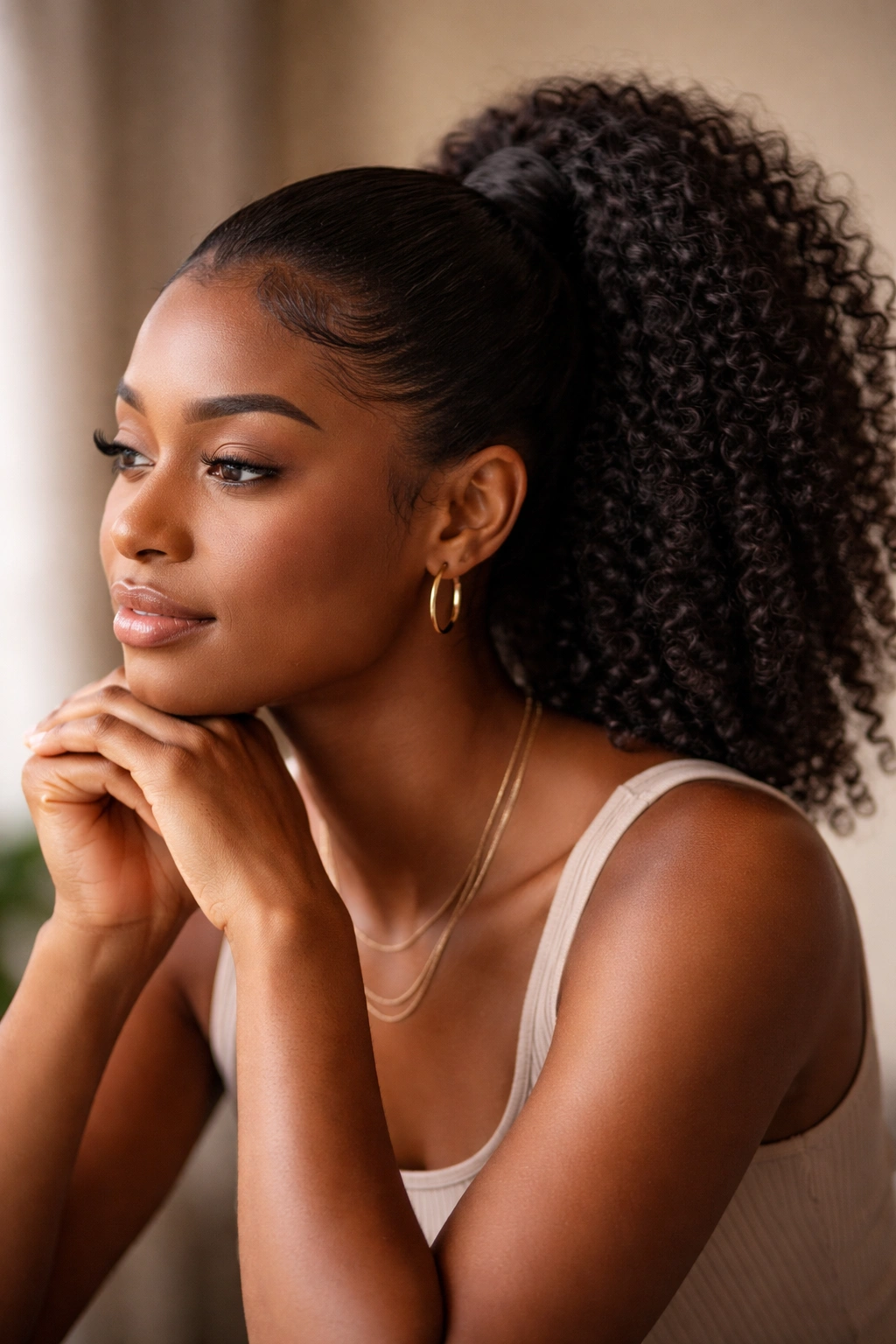
Ponytails on afro hair are about so much more than just pulling your hair back. They’re an opportunity to celebrate your natural texture, protect your hair, and express your personal style all at once. Whether you’re reaching for a simple puff on a busy morning or creating an intricate halo braid for a special occasion, the key is choosing a style that works with your hair, not against it.
The styles in this guide cover a huge range of possibilities, from protective styles designed to help your hair thrive to statement styles that turn heads. Many of them can be adapted and customized to your specific curl pattern, hair length, and personal preference. The more you experiment, the more you’ll figure out which styles feel best on your hair and which ones make you feel most like yourself.
Remember that afro hair has incredible inherent texture and dimension — use that as your starting point rather than trying to eliminate it. The ponytails that look best are the ones that celebrate what your hair naturally does, whether that’s coiling, curling, or creating beautiful texture. Take your time learning the techniques, be gentle with your hair, and don’t hesitate to adjust any style to make it work better for you. Your hair is unique, and your ponytail should be too.