



A round face shape is beautiful, but many people struggle to find hairstyles that feel flattering and balanced. The thing is, the right wavy hairstyle can completely transform how your face shape feels—creating the illusion of length, adding definition to the jaw, and drawing attention exactly where you want it. Wavy hair, specifically, is incredibly forgiving for round faces because the texture itself adds volume and movement that naturally elongates your features.
The key to flattering a round face isn’t about hiding it—it’s about creating visual interest, dimension, and angles that break up the circular shape. Wavy styles do this naturally by adding height at the crown, texture that catches light differently, and movement that tricks the eye into seeing length rather than width. This is why so many women with round faces find they can pull off styles that straighter-haired individuals can’t—the waves do the hard work for you.
Whether you’re growing your hair out, looking for a fresh cut, or just wanting styling inspiration for the hair you already have, wavy hairstyles offer endless possibilities. Let’s explore nine specific wavy cuts and styles that genuinely work for round faces, with practical details about why each one flatters, how to style it, and what to ask your stylist for.
1. Long Wavy Layers With Side-Swept Bangs
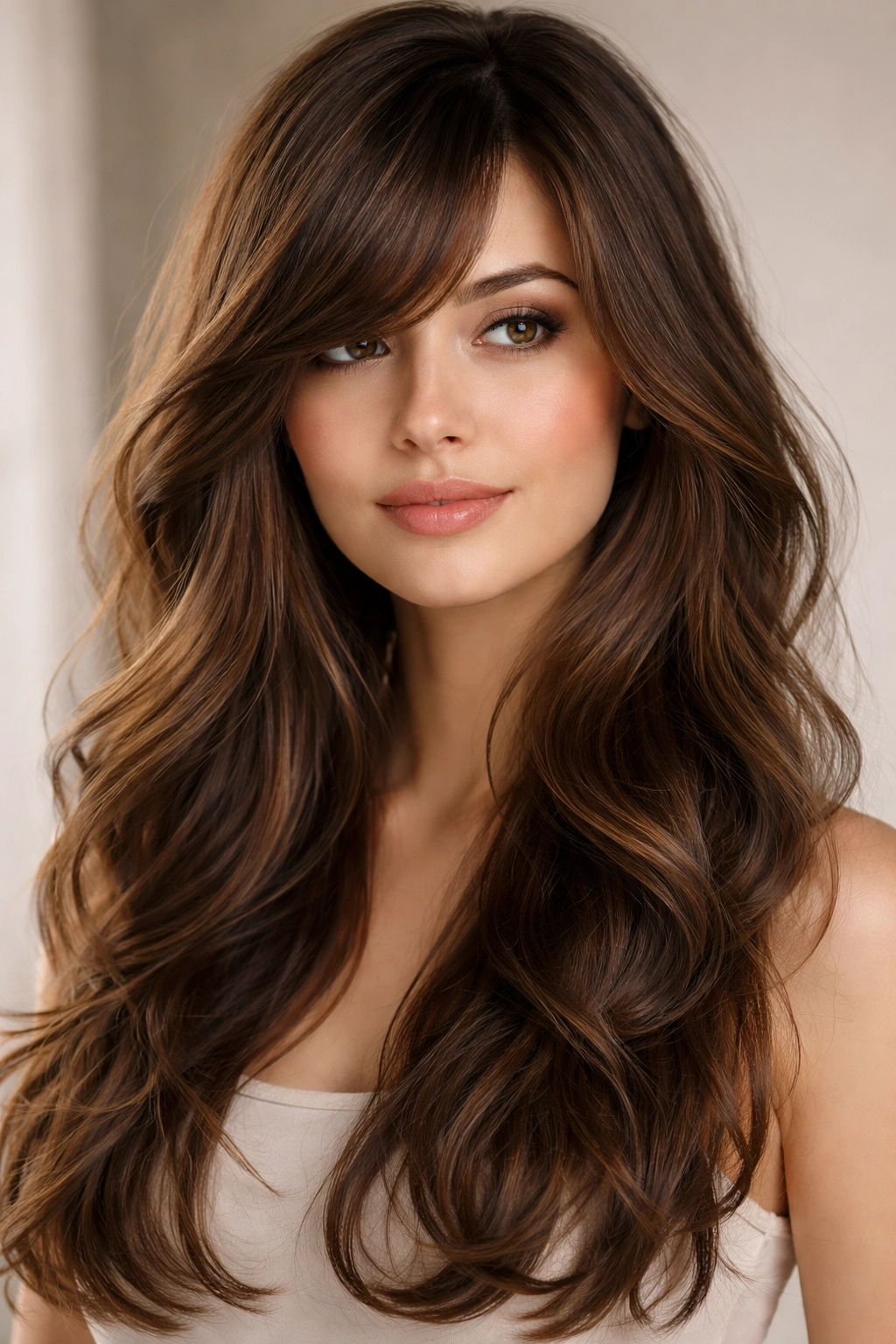
Long layered waves are the gold standard for round faces because length naturally elongates facial proportions. When you combine that length with face-framing layers and a side-swept bang, you create angles and movement that make your face appear slimmer and more sculpted. The layers prevent the hair from lying flat against your cheeks—instead, they flutter away from your face, creating space and negative lines that visually shorten the width of your face.
Why It Flatters Round Faces
Side-swept bangs are transformative for round faces because they create a diagonal line across your forehead, which breaks up the round shape at the top of your face. This diagonal is one of the most flattering lines you can create—it adds sophistication and immediately makes your face feel less circular. Long layers that start around chin-length or slightly longer give movement throughout the length, ensuring that your hair creates soft texture rather than a solid shape that hugs your face.
Styling and Maintenance Tips
- Style waves away from your face rather than framing it directly—this is the secret that makes this cut truly flattering
- Use a large-barrel curling iron (1.5 to 2 inches) or waves brush to create loose, romantic waves that start mid-length
- Blow-dry with your head slightly tipped back to maximize volume at the crown
- Apply lightweight styling cream or serum to damp hair before blow-drying to enhance the natural texture
2. Textured Lob With Choppy Layers
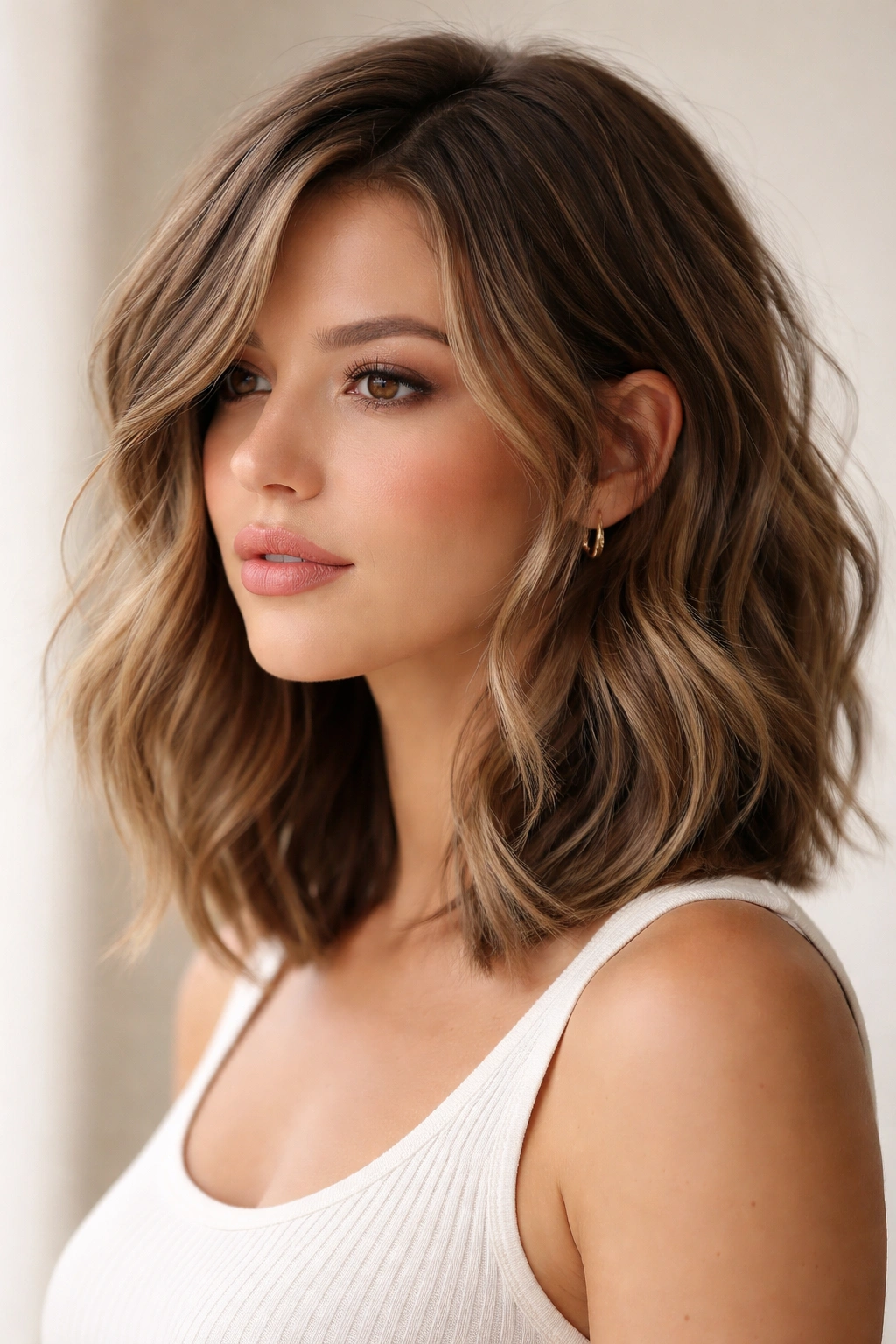
A lob—that’s a long bob falling between shoulder and collar bone—works beautifully on round faces when cut with choppy, graduated layers that create tons of texture. The choppy technique breaks up the solid length into separate pieces that move independently, creating visual interest and preventing the style from looking heavy or unflattering. The shorter front layers frame the face while the longer back layers add length, creating the ideal proportion for rounder face shapes.
Why It Flatters Round Faces
Choppy layers create an optical illusion of width at the sides and back of your head while shorter front pieces keep your face feeling open and defined. This plays perfectly with round-face proportions because it adds fullness where you want it (top and sides of head) while keeping the face area light and movement-focused. The textured, piece-y quality means your hair catches light in multiple places rather than creating one solid reflection—that variation makes your face look less like a flat circle and more sculptural.
How to Ask Your Stylist
Ask for “choppy graduated layers with the shortest pieces at the front and longer pieces in the back” and specify that you want the layers to start around cheekbone height or slightly longer. The front pieces should be considerably shorter than the back to create that distinct textured look. This cut requires a stylist confident with choppy techniques, so bring reference photos of the exact texture you want.
3. Shoulder-Length Waves With Face-Framing Pieces
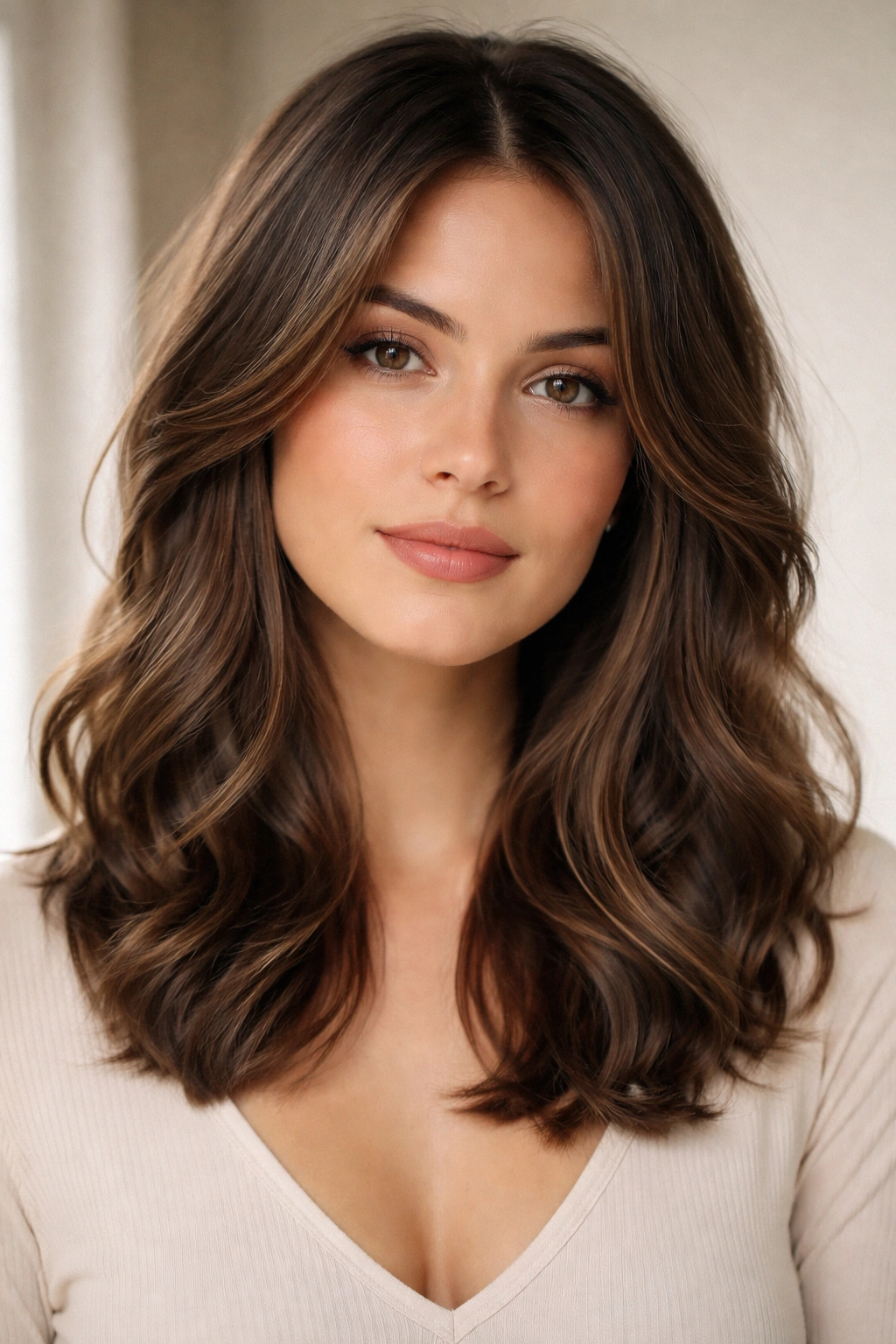
This is the most versatile option for round faces—shoulder-length waves give you enough length to feel elongating without committing to very long hair. When you add face-framing pieces (shorter layers specifically cut around the front of your face), you create a customized frame that draws the eye inward to your features rather than to the width of your face. The waves add movement that’s flattering rather than stiff, and the length sits right at the shoulder, which is the magic zone for round faces.
Why It Works for Round Faces
The shoulder-length zone is flattering because it hits right at the point where your neck meets your shoulders—this is the widest part of your silhouette, so longer hair at the shoulder actually creates proportion rather than adding to facial width. Face-framing pieces are specifically cut to angle slightly inward toward your face, creating diagonal lines that work against the roundness. Waves in this length range are bouncy and youthful without being overwhelming.
Styling Instructions
- Create waves with a 1.25-inch curling iron, wrapping sections around the barrel away from your face
- Curl from mid-length down rather than starting at the roots to keep the top of your head from looking too voluminous
- Use a texturizing spray or sea salt spray to boost wave definition and ensure the waves hold without feeling stiff
- Dry brush your waves gently with a wide-tooth comb to separate them and create that effortless-looking texture
4. Wavy Shag With Disconnected Layers
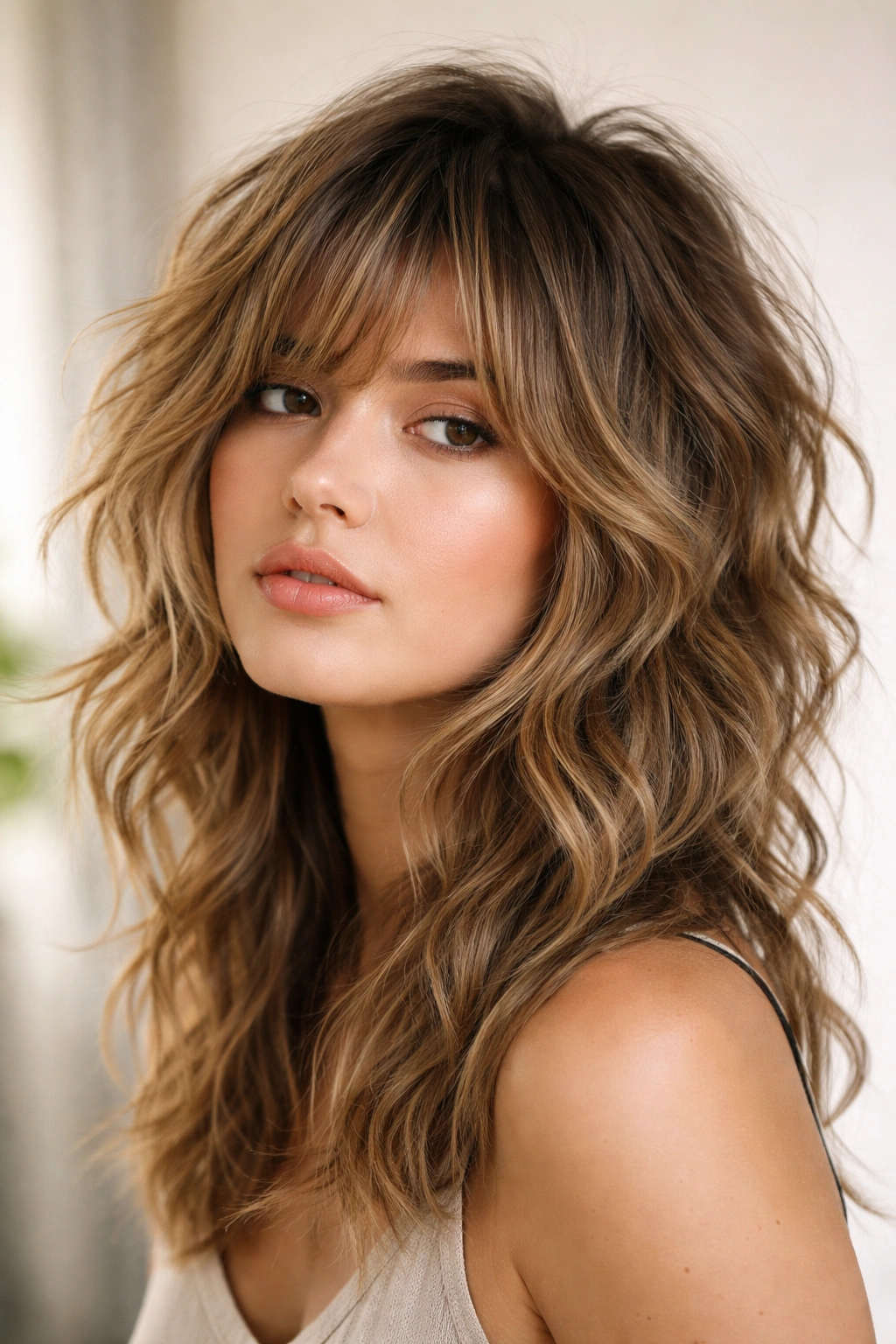
A modern shag—which is basically lots of choppy, disconnected layers throughout your hair—is having a serious moment, and it’s genuinely brilliant for round faces. The disconnected layers mean your hair doesn’t form a cohesive shape; instead, it’s a collection of moving pieces at different lengths. This texture and disconnection break up any roundness in your face shape, and the movement keeps the eye traveling rather than settling on the width of your face.
Why Shags Flatter Round Faces
Shags deliberately avoid creating one unified shape, which is exactly what you want when you have a round face. The multiple layers at varying lengths create visual complexity that’s the opposite of the simple roundness you’re trying to balance. The texture is intentionally choppy and piece-y—not smooth—which prevents your hair from clinging to your face or creating a heavy frame. Shags also naturally create more volume at the crown, which elongates the proportions of your face.
How to Style a Shag
- Blow-dry with your head flipped upside down to maximize crown volume
- Use a texturizing product or dry shampoo to amp up the piece-y quality
- Style waves with a smaller curling iron (1-inch) for more defined, textured waves rather than loose, romantic ones
- Tousle and separate the layers with your fingers rather than a comb to keep that intentionally disconnected look
5. Half-Up Half-Down Waves With Subtle Highlights
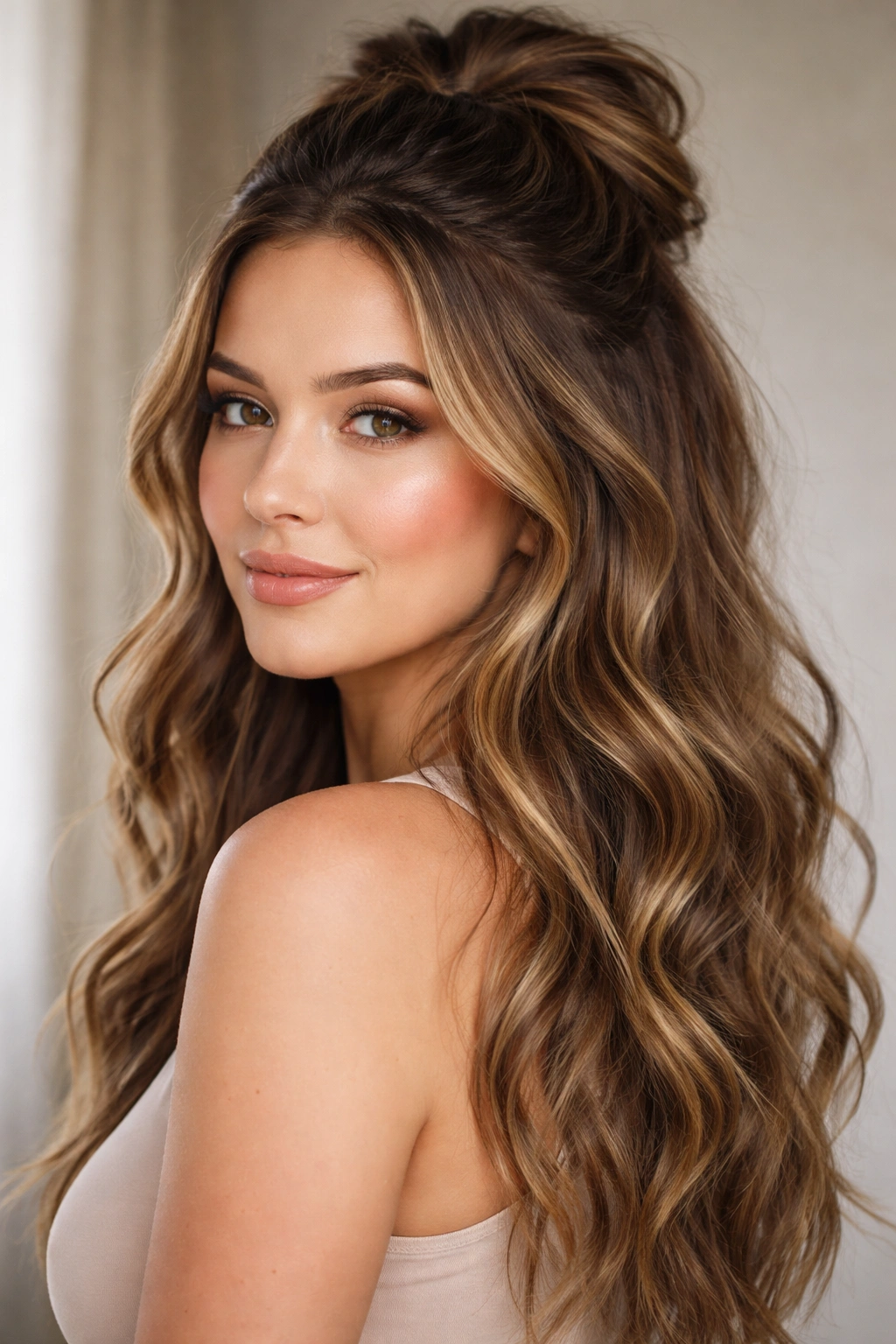
Sometimes the best hairstyle for a round face isn’t about the cut alone—it’s about how you style and color it. Half-up waves pull some volume and texture up and away from your face while leaving length down the back and sides. Combined with subtle highlights or dimensional color (which catches light and creates visual interest), this style creates angles and movement that balance round proportions. The half-up portion is key—it lifts the hair away from the widest part of your face.
Why This Styling Method Works
Half-up styles literally remove volume from the sides of your face where it might emphasize roundness, redistributing it to the crown where it helps elongate your proportions. The pulled-back portion creates a lifting effect that’s immediately flattering, and the waves throughout (both up and down portions) add texture and movement. Subtle highlights or balayage add dimension—the variation in color creates depth and visual interest that’s more flattering than a solid color, which can emphasize flatness.
Creating This Look at Home
- Section your hair horizontally from one temple to the other, across the crown
- Gather the top section and twist it loosely, securing with a clip or bobby pins
- Create waves throughout your hair with a curling iron before or after styling (after creates more textured, tousled waves)
- Leave some wispy pieces loose around your face, framing your jawline
6. Wavy Curtain Bangs With Layers
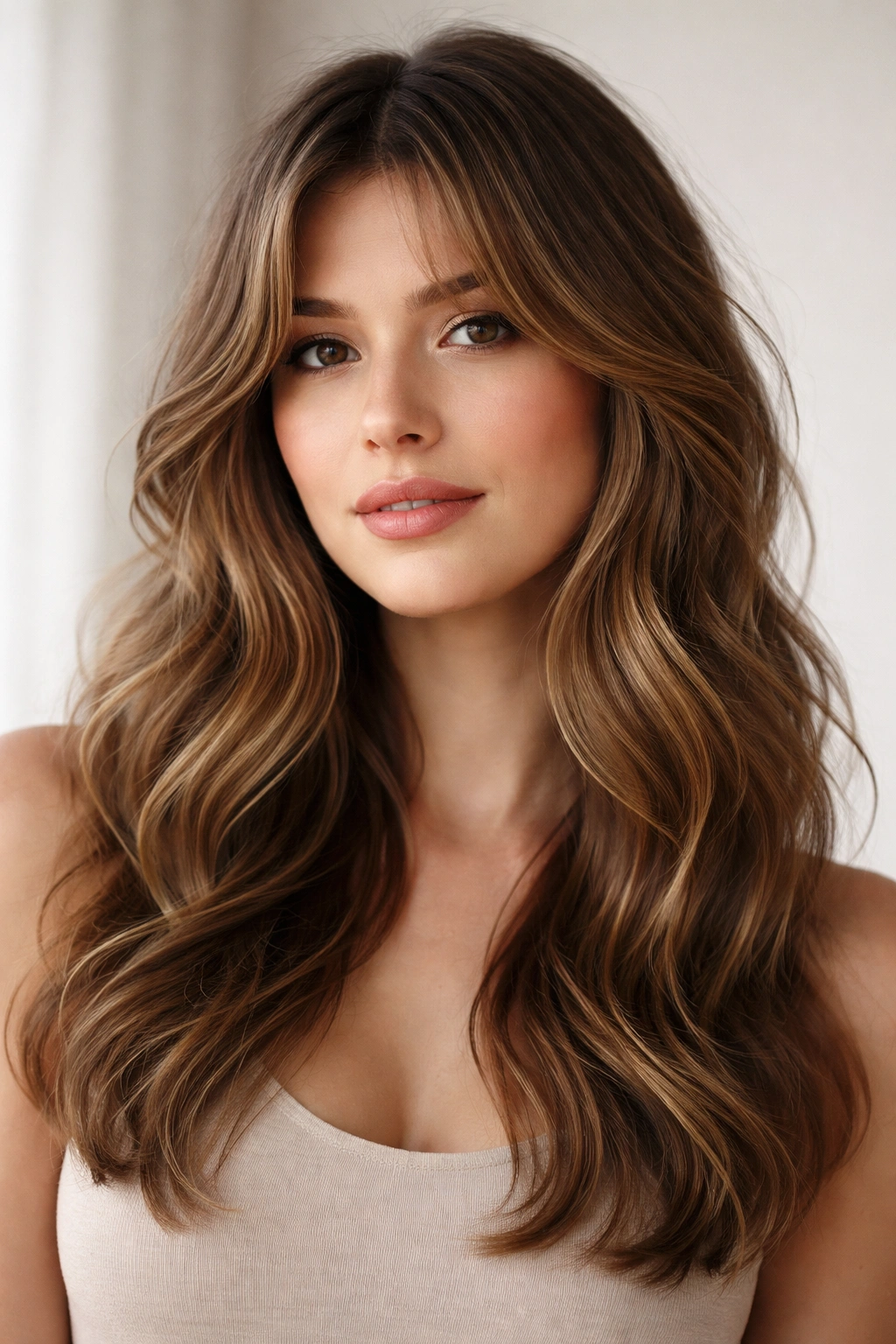
Curtain bangs—those center-parted, face-framing bangs that sweep to the sides—have become hugely popular, and they’re a legitimate game-changer for round faces. Unlike blunt bangs that can emphasize the roundness of your forehead, curtain bangs create a vertical center line and angles that work beautifully with round proportions. Pair them with layered waves throughout, and you’ve got a style that’s both trendy and genuinely flattering to your face shape.
Why Curtain Bangs Flatter Round Faces
The center part and inward-sweeping movement create a vertical line down the middle of your face, which visually lengthens it. Curtain bangs hit around cheekbone height, so they’re short enough to open up your face but long enough that they blend seamlessly with the rest of your hair. The angle of the bangs creates diagonal lines that break up facial roundness, and when you add waves to your curtain bangs, that texture prevents them from looking flat or heavy.
How to Ask Your Stylist
Request “long curtain bangs with a center part, starting around cheekbone length” and make sure to ask that they be layered and textured, not blunt. Specify that you want the bangs to blend into the rest of your layered cut, not sit as a separate, distinct section. Bring a photo showing exactly how much texture and movement you want—this cut depends on the styling, so the texture matters as much as the cut itself.
7. Long Waves With Strategic Color Placement
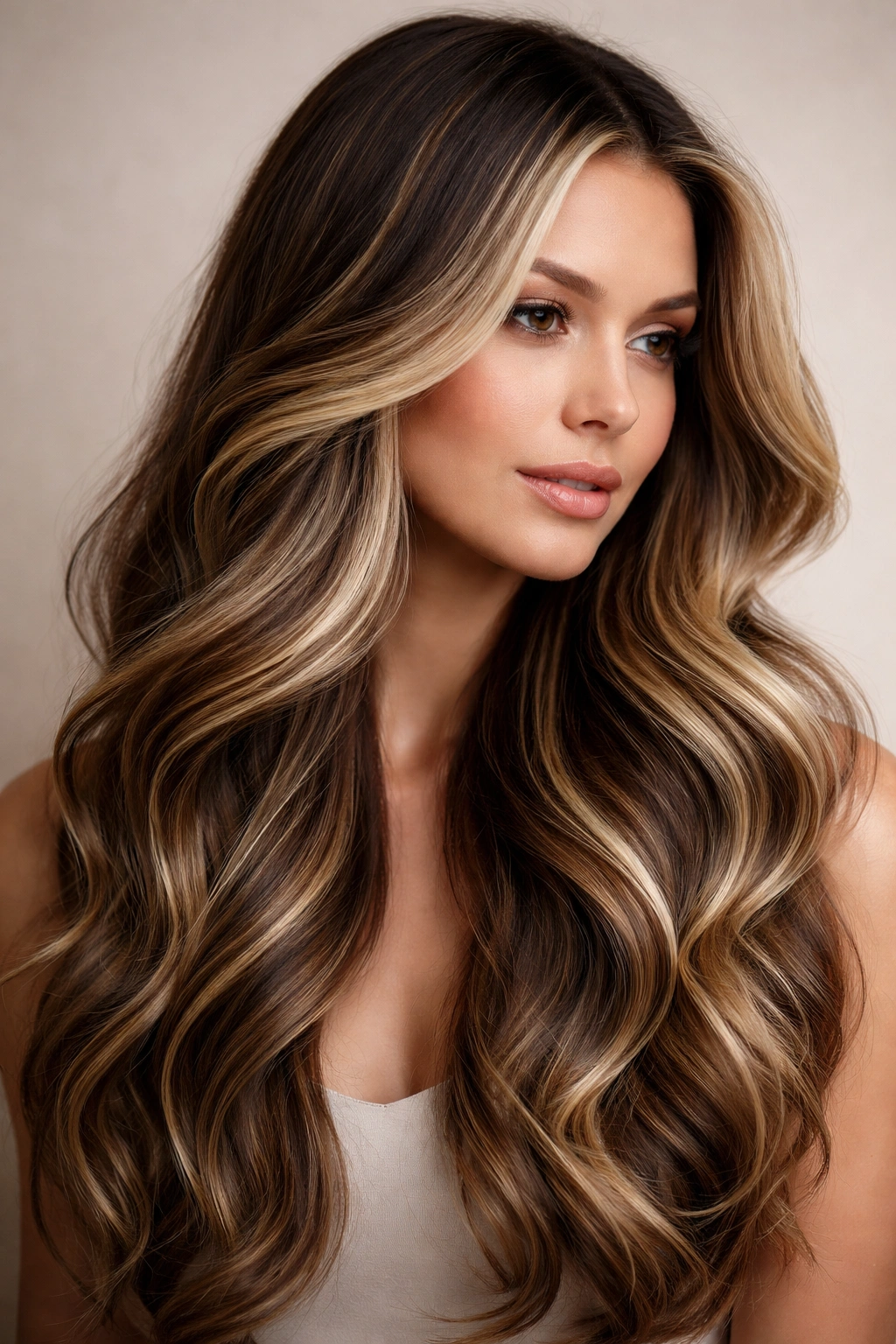
If you’re not ready to change your cut, strategic color placement can work wonders for a round face paired with wavy hair. Think shadows and highlights placed specifically to create angles and definition. Darker shadow tones along the sides of your face and lighter highlights on top and around the face create dimension that breaks up the roundness. This is less about an overall highlight pattern and more about intentional placement that sculpts your face shape.
Why Color Strategy Matters for Face Shape
Color is a visual tool that can completely change how your face shape reads. Darker tones recede (they make areas appear smaller and less prominent), while lighter tones advance and catch the eye. By placing darker tones along the sides of your face where roundness is most prominent, you create a subtle shadowing effect that visually minimizes width. Lighter pieces around the face and crown draw the eye upward and inward rather than across the width of your face.
Coloring Strategy for Wavy Hair
- Ask for dimensional color rather than all-over highlights or solid color
- Request face-framing pieces that are lighter than your base color, placed specifically around your face
- Consider darker roots or shadowing along the sides and underneath to create depth
- Wavy hair benefits from color variation because the texture and waves show off the dimension beautifully
8. Beach Waves With Textured Layers
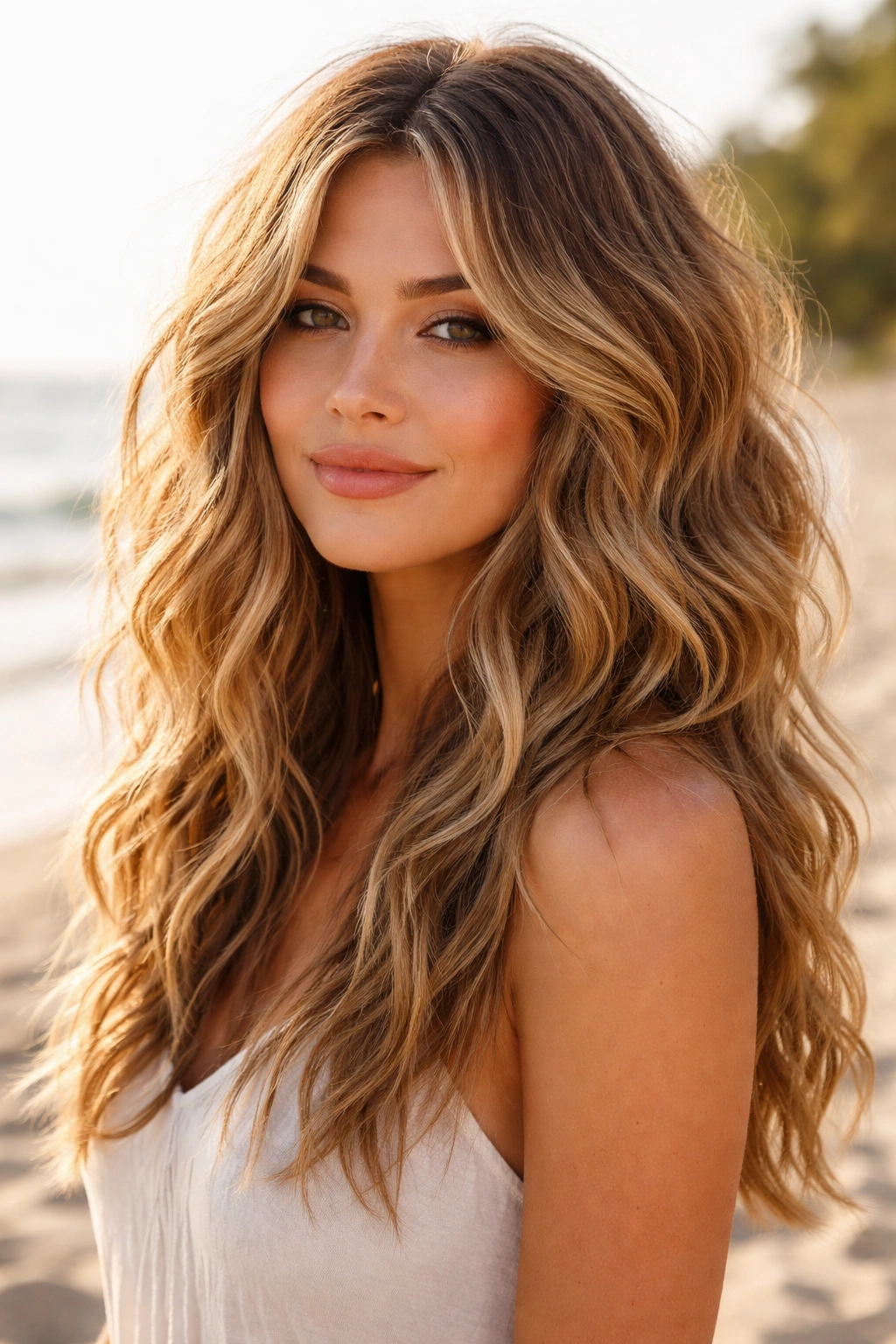
Beach waves—that effortless, piece-y, lived-in wave texture—are incredibly forgiving on round faces because the irregularity and movement prevent any one shape from being emphasized. Unlike perfectly uniform waves, beach waves have variation in depth and size, which keeps the eye moving around your hair rather than settling on any one feature. Combine this with textured layers throughout your hair, and you’ve got a style that’s forgiving, wearable, and genuinely flattering.
Why Beach Waves Flatter Round Faces
The imperfect, varied nature of beach waves is actually perfect for round faces because it adds visual complexity rather than emphasizing simplicity. Each wave is slightly different, each section has slightly different texture—that variation means your hair doesn’t read as one solid shape. The texture also creates shadows within your hair (where waves catch light and where they don’t), which adds dimension and prevents flatness. Beach waves are also super low-maintenance, which means you can wear this style frequently without it becoming a burden.
Creating Beach Waves on Wavy Hair
- Use a salt spray or texturizing spray on damp hair
- Blow-dry with a diffuser attachment to enhance your natural wave pattern
- Use a 1-inch curling iron to add more defined waves if your natural texture needs a boost
- Sleep on braids or use a wave-enhancing product overnight for effortless texture the next day
- Scrunch and tousle your waves with your fingers rather than combing them out for that authentic beach texture
9. Chin-Length Wavy Bob With Disconnected Front Layers
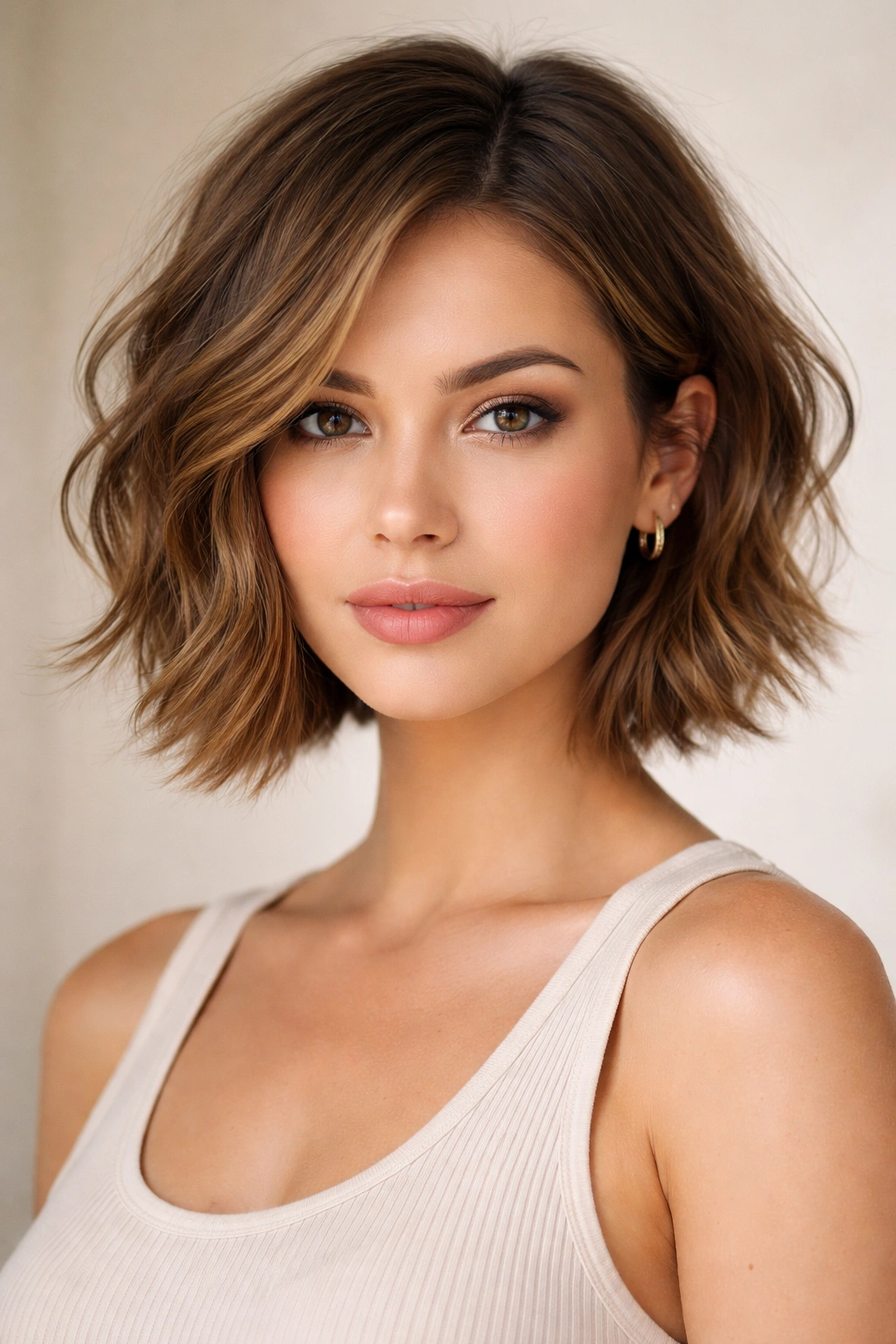
A chin-length wavy bob is shorter than the shoulder-length options, which makes it feel modern and requires confidence—but when done right for a round face, it’s stunning. The key is asking your stylist for disconnected front layers that are noticeably shorter than the back, creating a graduated effect. This prevents the bob from hugging your face and instead creates a shape that’s longer in back and shorter in front, which optically lengthens your face while the waves prevent the style from looking too blunt or severe.
Why This Cut Works for Round Faces
A regular blunt bob can emphasize roundness because it creates a straight line at chin level, which mirrors the roundness of your face. But when you add disconnection (graduated layers getting progressively shorter toward the front) and waves, you completely change the dynamic. The shorter front pieces open up your face, the longer back pieces add length to your silhouette, and the waves throughout prevent any straight lines that might emphasize facial roundness. This cut requires styling to look its best, but the payoff is a trendy, flattering style.
Styling This Short Wavy Cut
- Blow-dry with your head tipped forward to maximize crown volume
- Use a small curling iron (0.75 to 1 inch) to create defined waves
- Apply a styling cream or light gel to damp hair before blow-drying to enhance hold
- Style your front layers away from your face and slightly outward rather than tucking them behind your ears
- This cut looks best with a side part rather than a center part
Final Thoughts
The right wavy hairstyle for a round face comes down to understanding what visually elongates and adds angles to your proportions. Length, layering, texture, and movement are your tools—they work together to break up roundness and create a shape that feels more balanced and sculpted.
The beauty of wavy styles is that they’re incredibly versatile. You could wear any of these cuts sleeker and smoother for a polished look, or tousled and textured for something more casual and effortless. The key is ensuring that your cut has the right layers and face-framing pieces to work with your hair’s natural wave pattern, and that you’re styling it in a way that pulls volume away from the sides of your face and creates movement rather than a solid shape.
When you’re ready to make a change, bring reference photos to your stylist that specifically show the texture and movement you want—not just the overall shape. Tell your stylist about your face shape and ask them to specifically address how they’d cut for that. The best stylists are enthusiastic about working with face shape because it’s the foundation of flattering hair, and you deserve someone who gets that. From there, it’s just about finding the styling routine that keeps your waves looking their best and makes you feel confident every single day.
