

Blonde hair and waves are genuinely one of the most flattering combinations in modern styling. There’s something about the way light plays through textured, wavy strands in a lighter shade—it catches the dimension, creates movement that even straight hair can’t match, and instantly reads as effortlessly put-together. But here’s what most people don’t realize: the specific type of wave, the length of your cut, and how you style the texture makes all the difference between a hairstyle that just sits there and one that genuinely turns heads.
Medium length is the sweet spot for wavy blonde hair. It’s long enough to showcase beautiful wave patterns and give you real styling flexibility, but short enough that you won’t spend hours wrestling with tangles or dealing with weight that flattens your texture. The waves have room to move and breathe, the color shows off dimension naturally, and you can style it sleek for work, textured for weekends, or anywhere in between.
What I’ve found working with hundreds of people on styling medium-length blonde waves is that the cut matters as much as the color and the styling technique. The right layers in the right places can make waves fall beautifully without any effort. The wrong cut leaves you fighting against your hair every single day. That’s why this guide covers 15 distinct wavy blonde styles—each with a different cut structure, wave pattern, and styling approach—so you can see exactly what will work with your hair type and fit into your actual life.
1. Beachy Waves With Curtain Layers
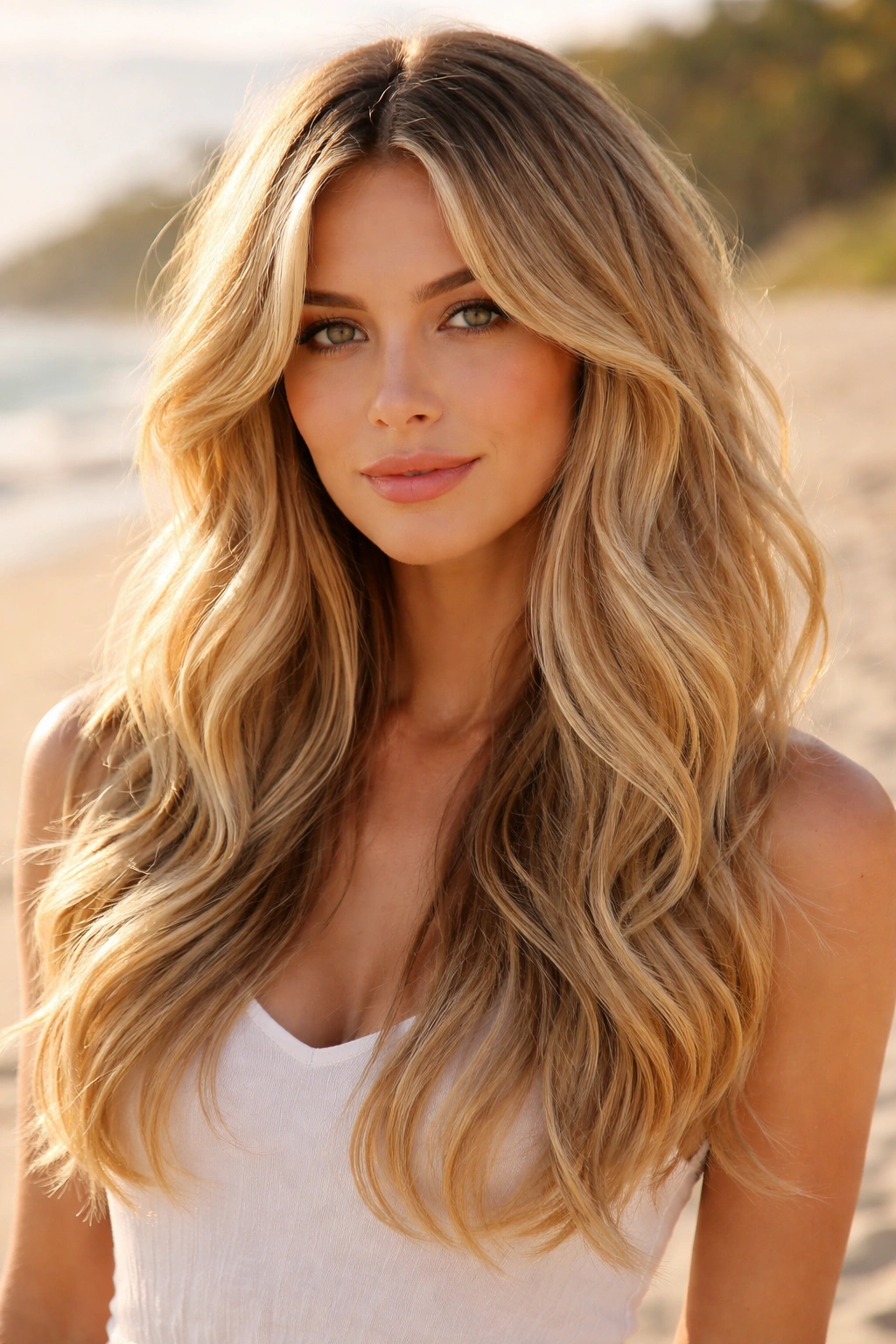
This is the effortless-looking style that somehow takes real technique to pull off correctly. The cut features longer layers throughout, with the heaviest concentration starting around the cheekbones, creating a face-framing effect that’s flattering on nearly every face shape. The waves aren’t tight or structured—they’re loose, organic, and genuinely look like you just came back from the beach (even if you actually blow-dried your hair in your bathroom).
Why This Style Works for Blonde Hair
Beachy waves are naturally enhanced by blonde color because lighter shades make texture visible. Darker hair can hide the actual wave pattern, but blonde shows off every ripple and shadow. The movement and dimension in the waves add visual interest in a way that a solid color alone can’t achieve. This style is particularly stunning with honey blonde or sandy blonde shades, which pick up the light and make the texture look three-dimensional.
How to Achieve and Maintain Beachy Waves
- Use a large-barrel curling iron or wand (1.5 to 2 inches) to create loose waves, curling sections away from the face for that face-framing effect
- Apply a sea salt spray before curling or after blow-drying for enhanced texture and a lived-in appearance
- Don’t brush out the waves completely—use your fingers to tousle and separate them for an intentional-but-relaxed vibe
- Sleep in loose braids to refresh waves the next day without heat styling
- Ask your stylist for choppy, point-cut layers that fall naturally and enhance the wave pattern
Pro tip: Apply salt spray to damp hair before blow-drying. It gives your waves grip and texture from the start, making them hold longer and look fuller without extra styling effort.
2. Soft Money Pieces With Subtle Waves
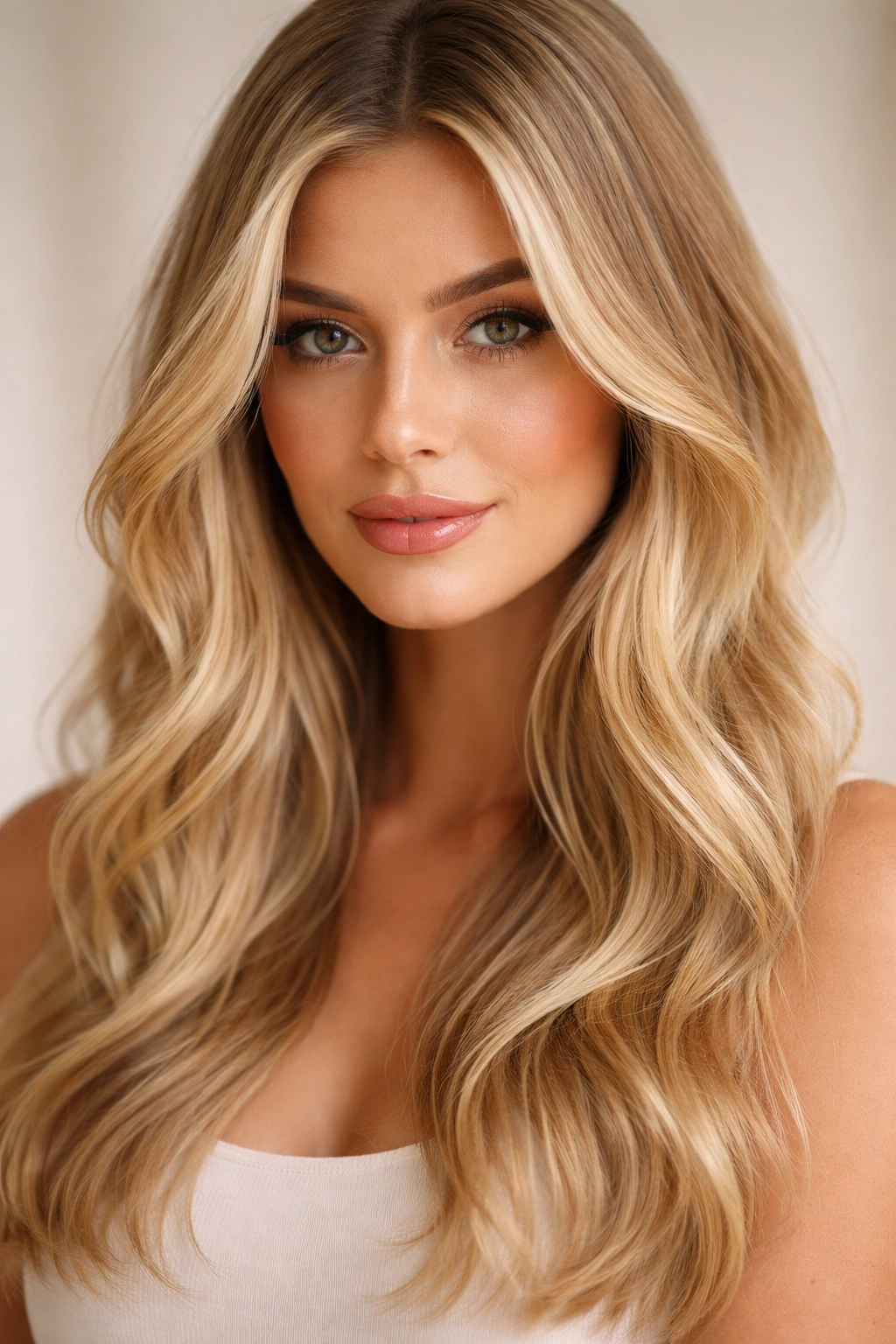
Money pieces are those strategically placed, face-framing sections that draw attention to your eyes and create an instantly polished look. This version pairs them with subtle, barely-there waves that keep everything soft and modern. The pieces themselves are typically 1 to 2 inches wide and extend from the roots, and they’re usually a shade or two lighter than the rest of the hair—creating dimension that makes the face-framing effect even stronger.
The Cut That Makes This Style
The money pieces work best with a solid, blunt or slightly choppy base cut (usually chin-length or slightly longer), and the rest of the hair is shaped with gentle layers throughout. The waves are loose enough that they read as texture rather than tight curls—think gentle movement rather than defined ringlets. This combination of straight-ish base with just-wavy money pieces looks intentional and editorial without requiring perfect styling every single day.
Styling and Color Technique Tips
- Ask your colorist for hand-painted or balayage money pieces in a lighter, warmer blonde than your base color
- Create soft waves using a 1.25-inch barrel for the base waves, then smooth the money pieces slightly for a polished contrast
- Use a lightweight mousse or volumizing spray at the roots to keep the style from looking flat
- The money pieces draw focus upward, so this style is especially flattering if you want to de-emphasize a wider jaw or bring balance to a longer face shape
- Refresh money pieces every 8-10 weeks to keep the color contrast bright and intentional
Worth knowing: This style requires healthy-looking ends because the face-framing pieces put them right where everyone looks. Budget for a trim every 4-6 weeks to keep the pieces sharp and blonde looking fresh.
3. Tousled Layers With Root Texture
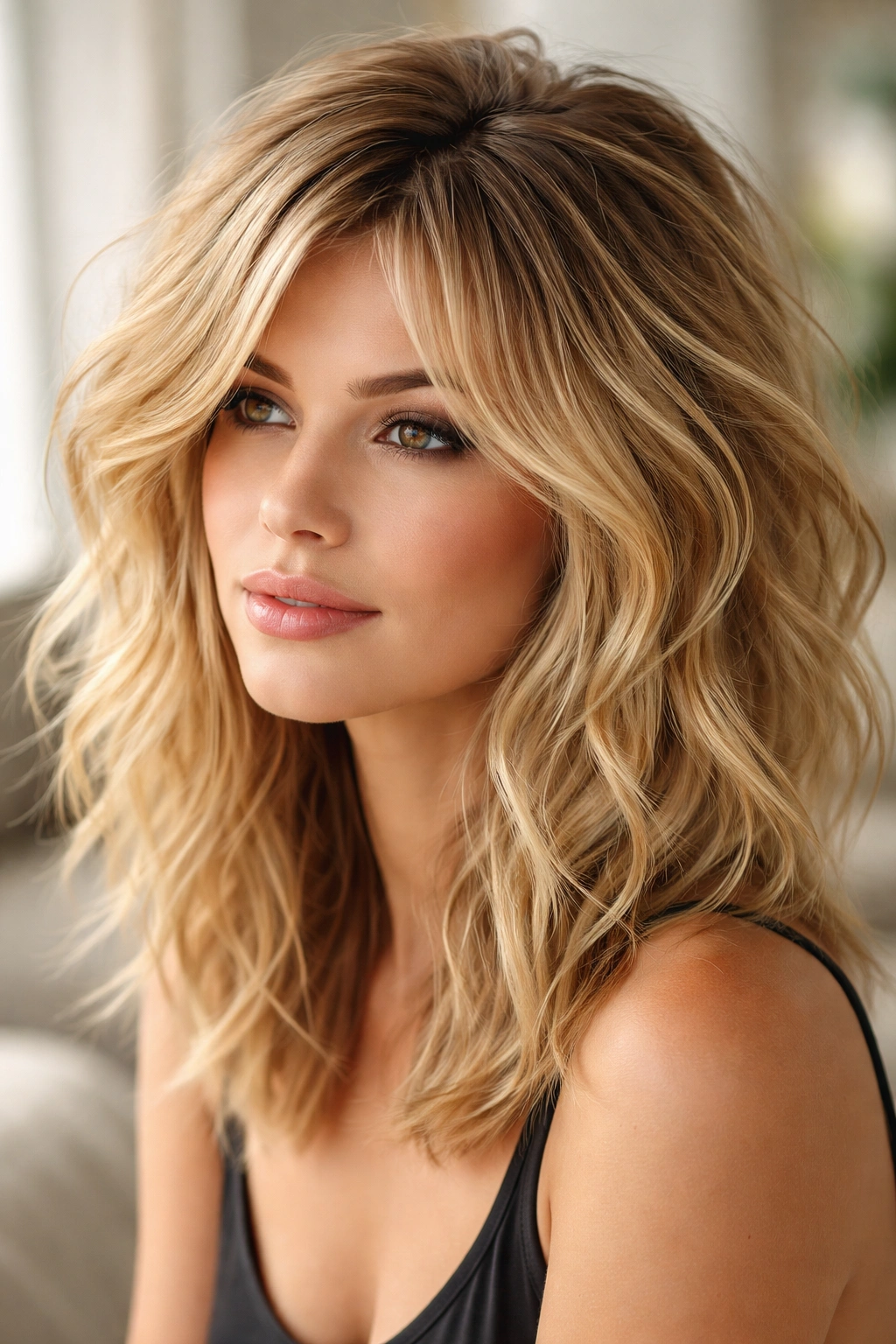
This style embraces the idea that waves don’t need to be perfect—they need to be interesting. The cut features short, choppy layers throughout (starting as close to the roots as 2-3 inches) that create texture and movement at every level. When you style this with loose waves, the shorter layers catch the light and create volume that medium-length hair sometimes struggles with. The blonde shows off every layer because of the variation in depth and dimension.
Why Choppy Layers Elevate Blonde Waves
Short, choppy layers scattered throughout the cut create pockets of texture that catch light differently than longer, straight sections. On blonde hair, this creates visual complexity and dimension that reads as higher-quality color and more sophisticated styling—even when you’re doing minimal work. The layers also reduce bulk, which keeps medium-length waves from looking heavy or droopy, and they create natural separation when you tousle waves rather than one uniform, wavy blob.
Creating That Effortless Tousled Look
- Blow-dry your hair with your head flipped upside down to encourage maximum volume and movement
- Use a curling wand or iron to create loose waves, but don’t focus on making them perfect—the point is to emphasize the choppy layers, not fight them
- Scrunch a texturizing spray or dry shampoo through damp hair before blow-drying for extra grip
- Run your fingers through the waves while the spray is still drying to separate the layers
- Sleep braided and refresh with a texture spray or light heat styling the next morning
Insider note: This is one of the few wavy styles that actually improves with a few days between washes because the natural oils help separate the layers and the texture becomes more defined.
4. Blunt Bob With Wavy Movement
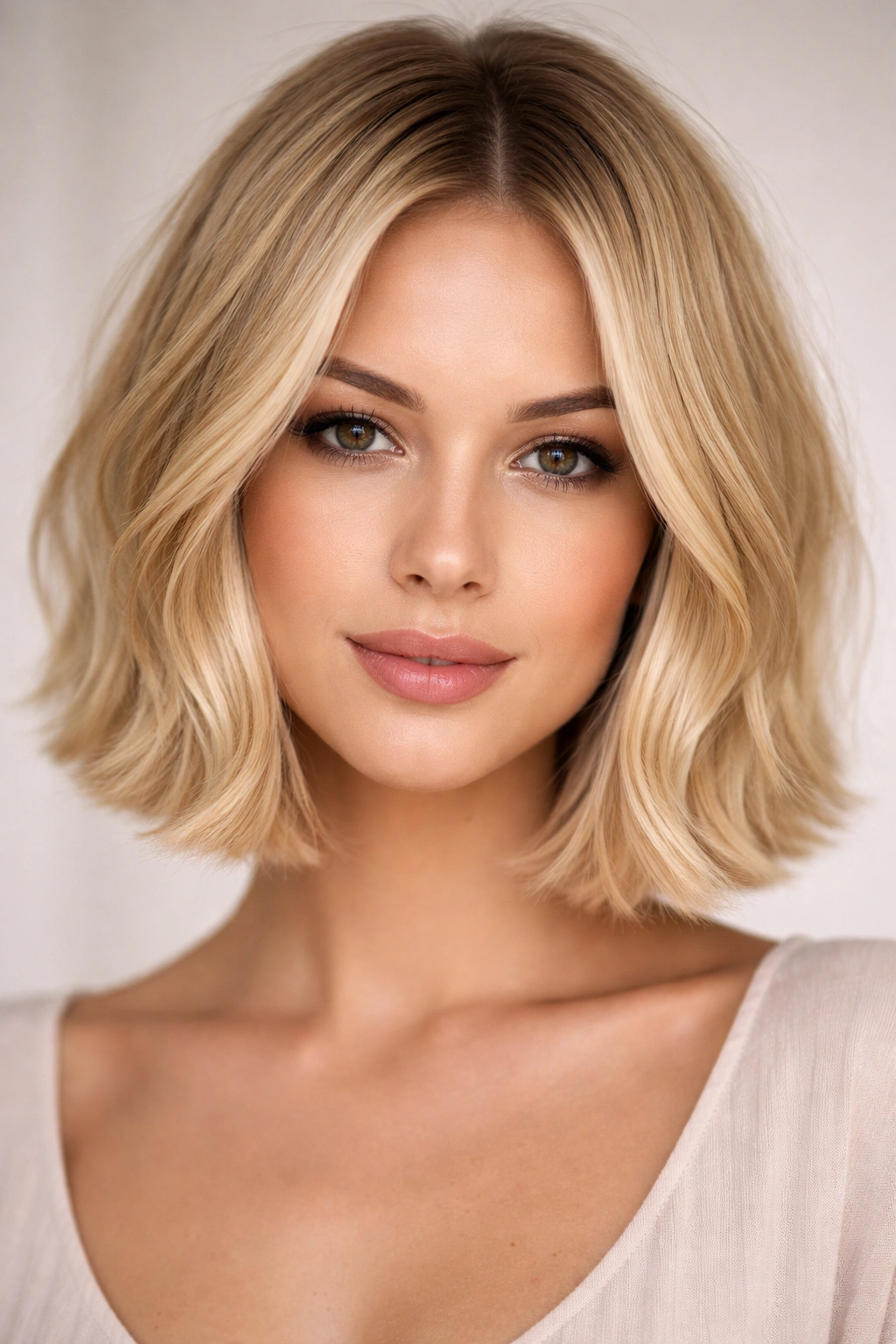
A blunt-cut bob—where all the hair ends at roughly the same length—sounds straight and severe. But pair it with medium length (around ear-level or slightly longer) and subtle waves, and suddenly you have a sharp, modern look that reads expensive and intentional. The blunt line keeps things polished; the waves keep it from feeling formal or stiff. The blonde color works because it shows off the clean line of the cut while also adding softness through the waves.
Styling a Blunt Bob to Enhance Waves
- The cut needs to be absolutely precise, so book someone experienced with blunt bobs—this style doesn’t hide imperfect lines like layers do
- Blow-dry with a round brush to create subtle inward movement, or use a flat iron to straighten the line, then add waves from there
- The waves should move inward toward your face (curl your iron away from your face), which complements the blunt line rather than fighting it
- Use a smoothing serum before styling so the waves look intentional, not frizzy
- This style benefits from very straight, smooth waves rather than beach-texture waves—think polished movement, not tousled texture
Pro tip: A blunt bob requires impeccable color maintenance because the shape shows every bit of root growth and damage. Stick to cool or neutral blondes (avoid brassy yellows) because they look fresh longer and hide regrowth better.
5. Textured Shag With Lots of Layers
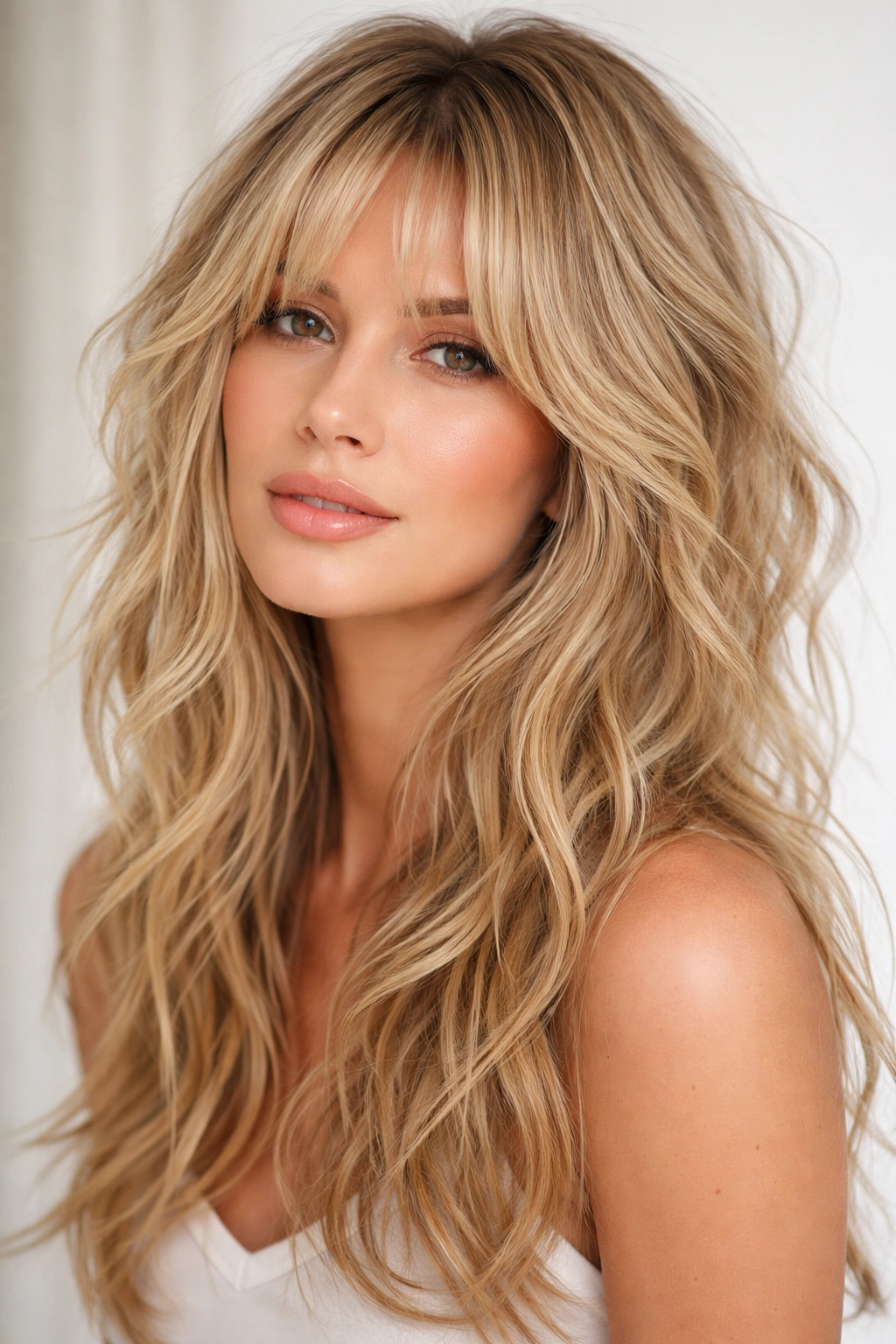
Shag cuts have made a major comeback, and they’re genuinely perfect for wavy blonde hair. A modern shag is essentially layers on top of layers—super short, choppy pieces at the crown for maximum volume, medium layers throughout the sides and back, and slightly longer pieces at the bottom for shape. When you add waves to this structure, every layer catches the light and moves independently, creating incredible texture and movement.
The Shag Architecture
- The shortest layers sit at the crown and temples, creating height and movement exactly where you need volume
- Longer layers frame the face and fall around the shoulders
- The overall shape is somewhat rounded, with more texture at the top and smoother fall at the bottom
- Blonde color makes the layer separation visually obvious, which is exactly what makes a shag look intentional rather than choppy
Maintaining and Styling Your Shag
- Wavy shags look best when you lean into the texture—don’t try to make this style sleek or smooth
- Apply a texturizing spray or mousse to damp hair before blow-drying to emphasize the layers
- Blow-dry with a diffuser (if your hair is naturally wavy) or use a curling iron to create defined waves within the choppy layers
- Separate the layers with your fingers as you dry to avoid them clumping together
- Ask your stylist for point-cut or razor-cut layers rather than blunt-cut—this technique makes layers fall more naturally and look less severe
Worth knowing: A textured shag requires styling to look intentional—it’s not a “wash and go” style for most people. Plan on 15-20 minutes of blow-drying and wave-creation on styling days.
6. Soft Face-Framing Layers With Piecy Waves
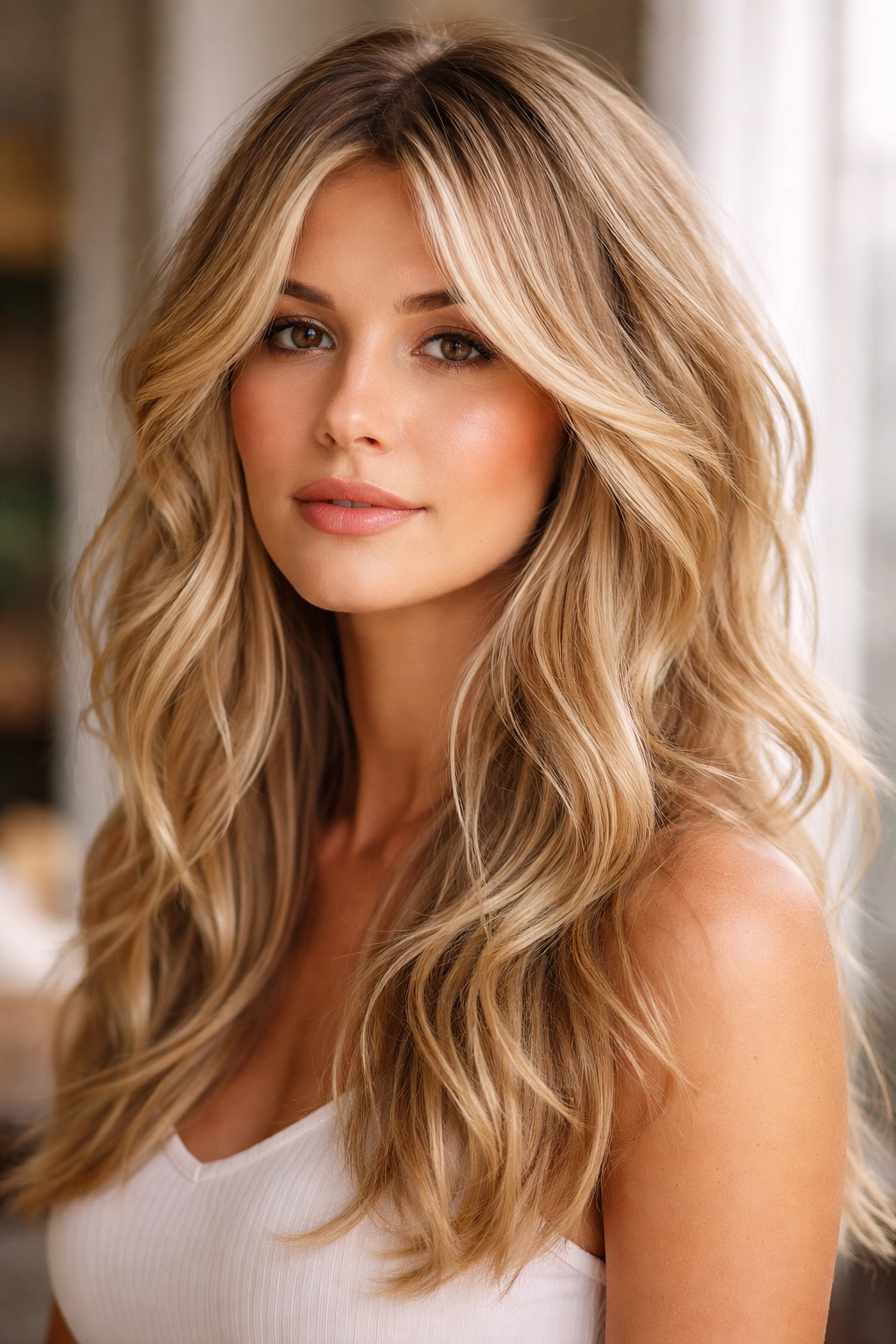
This style combines the best of face-flattering layers with piecy, separated waves that look modern and intentional. The cut features longer face-framing layers (typically starting around the cheekbones) and strategic short pieces around the crown to create lift. The waves are created with intention—each section is curled and then gently separated with your fingers or a texturizing spray, so they read as individual strands of texture rather than one unified wave.
Why Piecy Waves Complement Blonde
Piecy, separated waves show off the dimension in blonde color that wavy, unified texture sometimes hides. When you separate each wave, the light hits different sections at different angles, which makes any dimension, highlights, or balayage in your color much more visible. This is especially striking if you have a multi-tonal blonde (like buttery blonde mixed with darker rooty blonde or cool ashy tones).
Creating Intentional Piecy Texture
- Use a 1.25-inch curling iron or wand to create defined waves
- Curl sections at different angles—some away from the face, some toward the face, some straight down—to create variation rather than uniformity
- While the waves are still warm, spray with a light texturizing spray
- Once cool, use a fine-tooth comb or your fingers to gently separate each wave, starting at the ends and working up
- This separation is the key move—it’s what makes waves look piecy and modern rather than just wavy
Pro tip: This style is easier to achieve if you start with slightly damp hair that’s been blow-dried smooth first. Then you’re adding intentional texture to a smooth base, rather than trying to create separated waves in already-wavy hair.
7. Longer Lob With Loose Waves and Blonde Dimensions
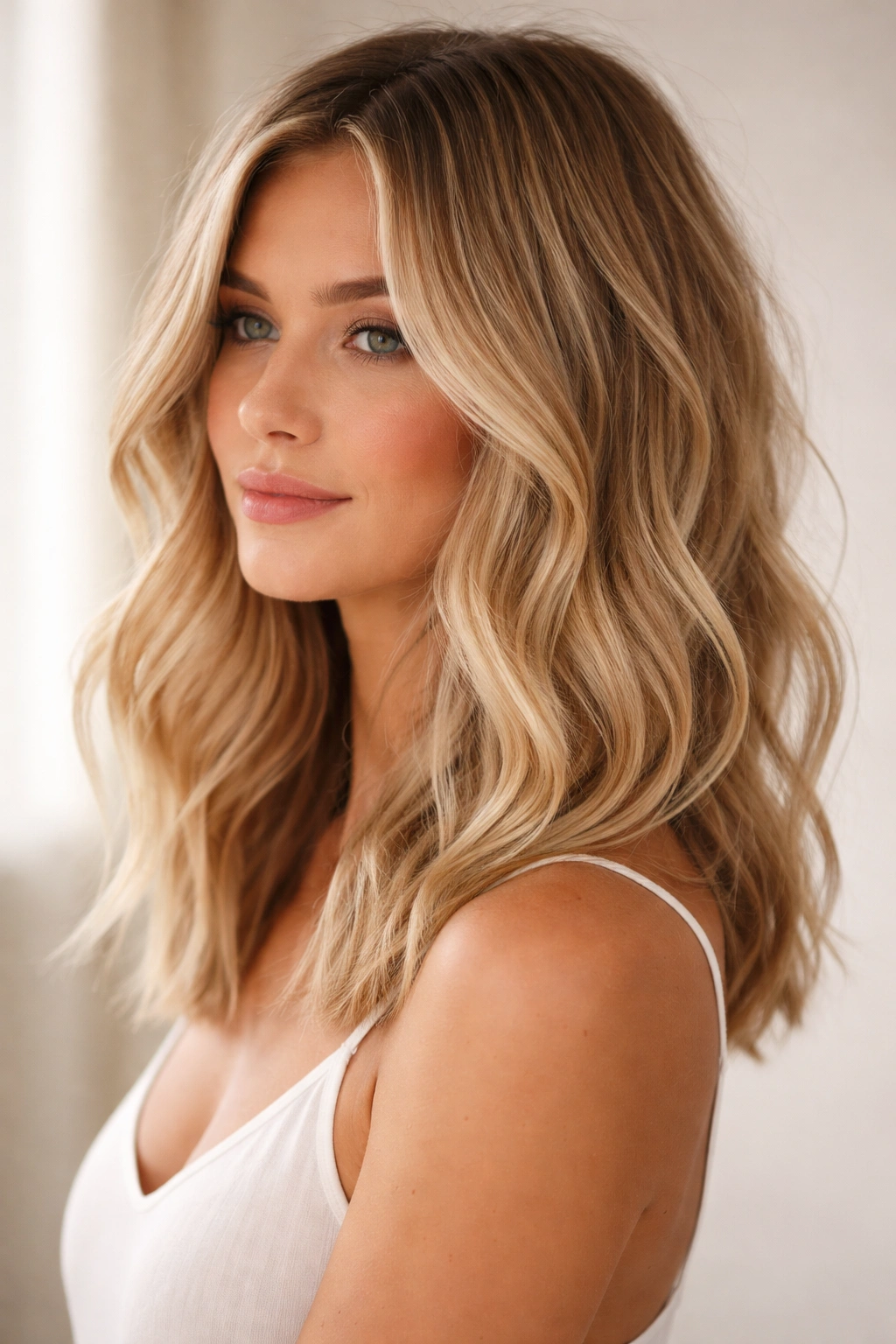
A lob (long bob) sits right around bra-strap or shoulder-length, which is technically on the longer side of medium. This length is ideal for showcasing the full beauty of loose waves in blonde because the waves have room to develop and move without the weight of very long hair crushing them. The style typically features subtle layers that enhance movement without creating choppy texture, and the blonde is usually a multi-tonal blend that gives the waves dimension.
The Lob That Maximizes Wave Potential
- Ask for long, subtle layers that remove bulk without creating obvious choppiness
- The bottom should be slightly shorter in the back (creating a gentle “u” shape) and longer in the front for a modern, flattering line
- Incorporate wispy, face-framing layers rather than heavy statement layers
- This length and layer structure lets waves move naturally without being weighed down
Styling Your Lob for Maximum Movement
- Blow-dry with your head flipped over and your fingers running through the hair to encourage waves to form naturally
- Use a large-barrel curling iron (1.5 to 2 inches) for loose, romantic waves that flow down the length of the hair
- Apply a lightweight sea salt spray or texture spray while hair is still warm to set the waves
- Let waves cool before running your fingers through them—this helps them hold longer
- This length and wave style look stunning with a honey blonde or golden blonde that catches light as the waves move
Worth knowing: A lob with loose waves requires regular trims (every 6-8 weeks) to keep the shape and movement looking intentional. As the hair grows and gets heavier, the waves flatten without proper maintenance.
8. Choppy Pixie-Bob Hybrid With Short Textured Waves
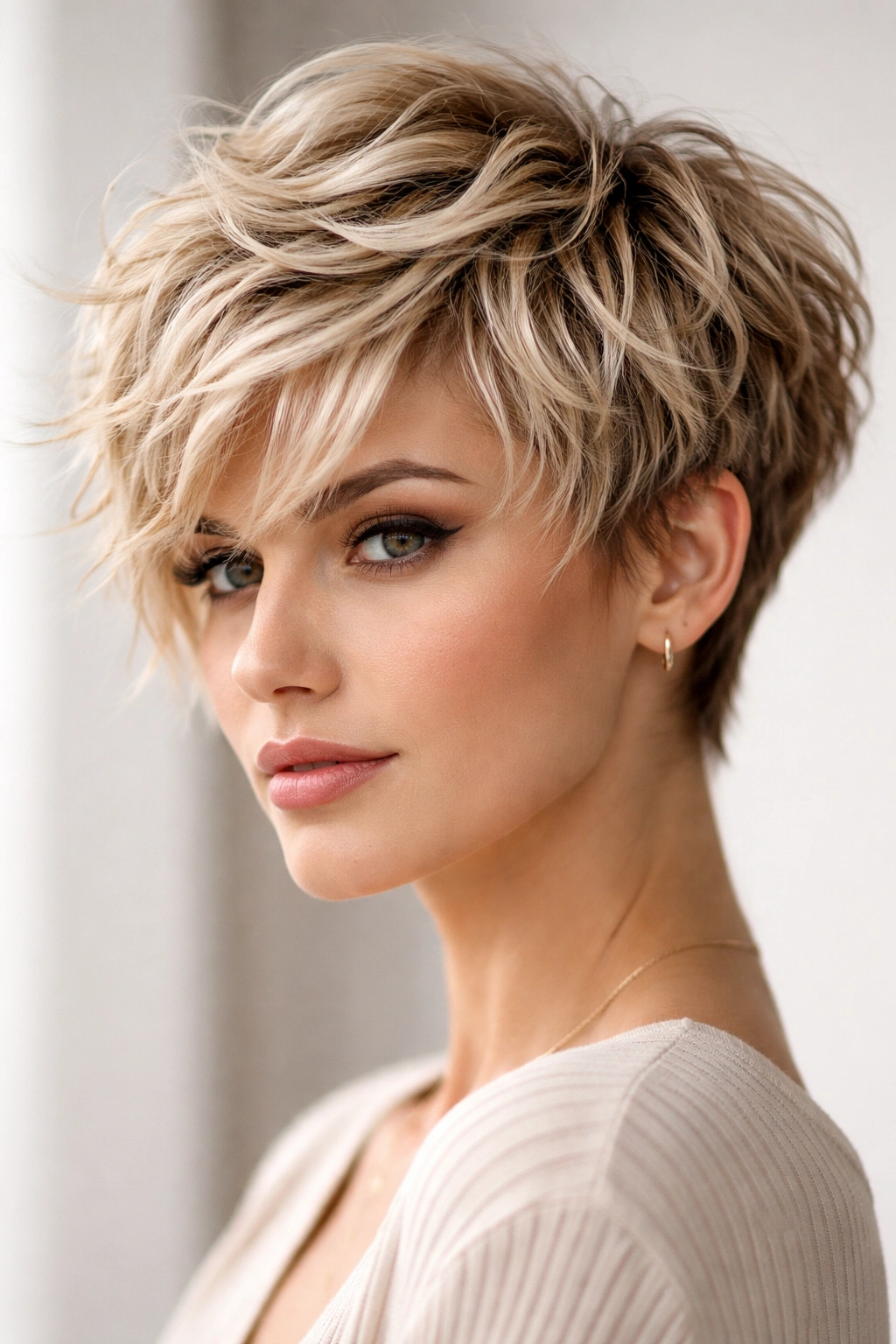
This is a bolder choice—a style that lands somewhere between a pixie and a bob, featuring very short, choppy layers throughout with medium-length pieces in the back. The waves are tight, intentional, and textured rather than loose and romantic. On blonde hair, this cut and style combo creates incredible visual interest because every short layer catches the light differently. It’s edgy, modern, and surprisingly low-maintenance despite looking like it requires a lot of styling.
The Cut That Makes This Work
- Shortest pieces sit at the crown and around the temples (typically 1-2 inches)
- Slightly longer pieces at the sides and back (medium length, around chin to shoulder)
- Lots of choppy, razor-cut layers throughout to create texture and movement
- The overall effect is somewhere between rock-and-roll shag and a modern pixie
Styling and Maintaining Choppy Texture Waves
- This style actually works better with shorter, tighter waves than loose, romantic ones
- Use a smaller curling iron (0.75 to 1 inch) to create more defined texture
- Apply styling cream or pomade before blow-drying to enhance the choppy texture and create separation
- Blow-dry with your fingers to encourage movement at the roots—this keeps short layers from lying flat
- Shorter blonde hair requires more frequent color touch-ups (every 4-6 weeks) because regrowth shows immediately
Insider note: This style is genuinely easier to maintain than longer wavy styles because it requires less daily styling and shorter hair is easier to refresh between washes.
9. Waves With Subtle Undercut and Face-Framing Highlights
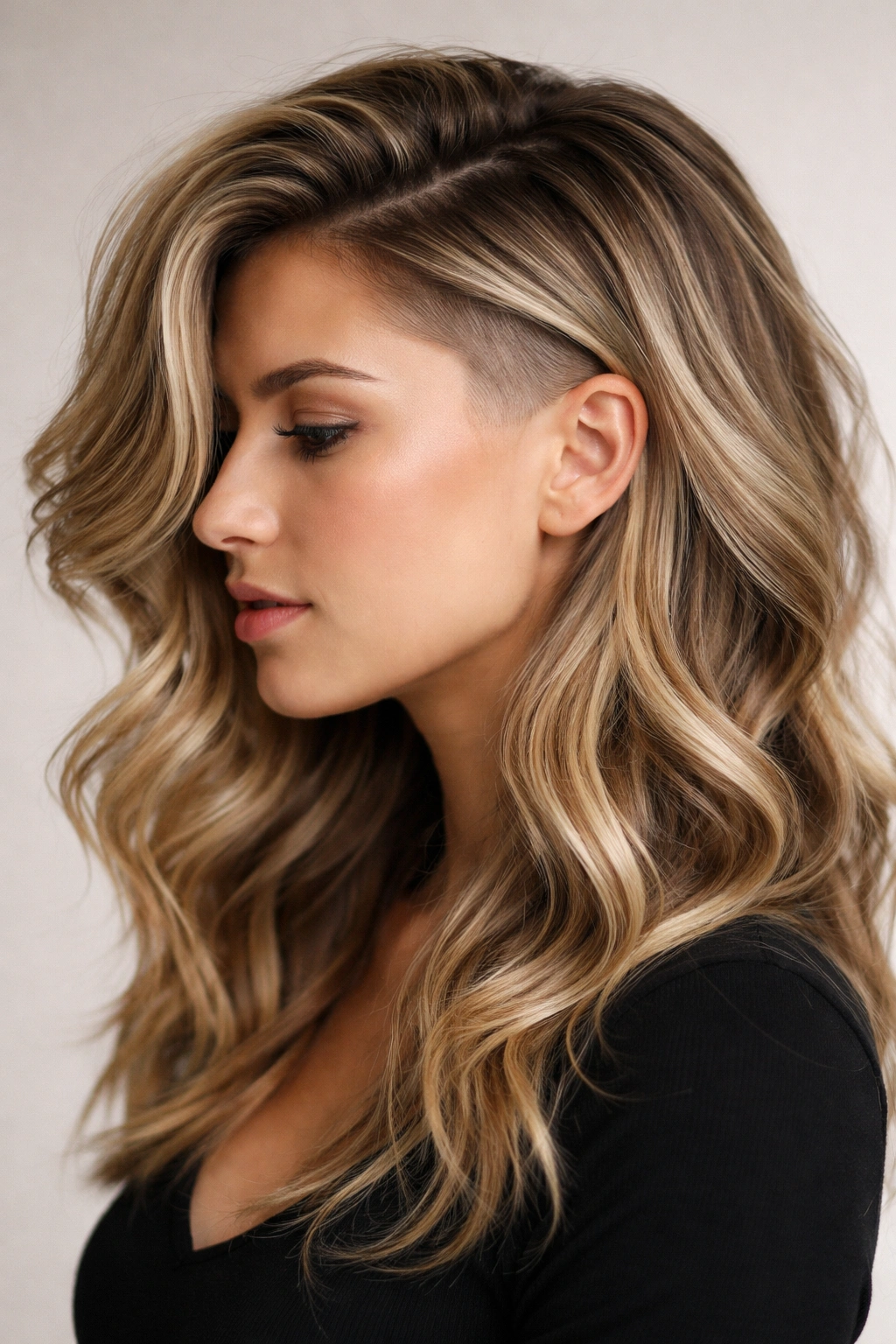
An undercut (shorter hair hidden underneath longer hair on top) creates volume and movement that’s almost impossible to achieve otherwise. Pair it with medium-length wavy blonde hair on top and strategic face-framing highlights, and you have a style that looks effortlessly voluminous and incredibly modern. The undercut sits close to the head so it’s not visible unless you’re specifically looking at the side profile, but it does serious work underneath to create lift and allow waves to move freely.
How an Undercut Enhances Waves
- The shorter hair underneath doesn’t weigh down the longer, wavy hair on top
- Waves have room to move and separate rather than clumping together
- The style looks naturally voluminous without requiring teasing or volumizing spray to achieve the effect
- Blonde color on the shorter under-layers creates subtle dimension and depth, especially visible when hair is styled half-up or in certain lighting
Styling With an Undercut Structure
- Blow-dry the top layers first while flipping your head for maximum volume at the roots
- Create waves in the top layers using a curling iron, focusing on making them move away from the face
- The undercut doesn’t require separate styling—it’s designed to stay mostly out of the way
- This style looks stunning when you wear it half-up, half-down because the undercut creates lift that prevents the half-up section from looking limp
- Face-framing blonde pieces (slightly lighter than your base color) draw attention upward and complement the wave movement
Pro tip: Ask your stylist to taper the undercut gradually into the longer hair rather than creating an obvious line. This creates better blending and a more modern, less stark appearance.
10. Sideswept Waves With Asymmetrical Layers
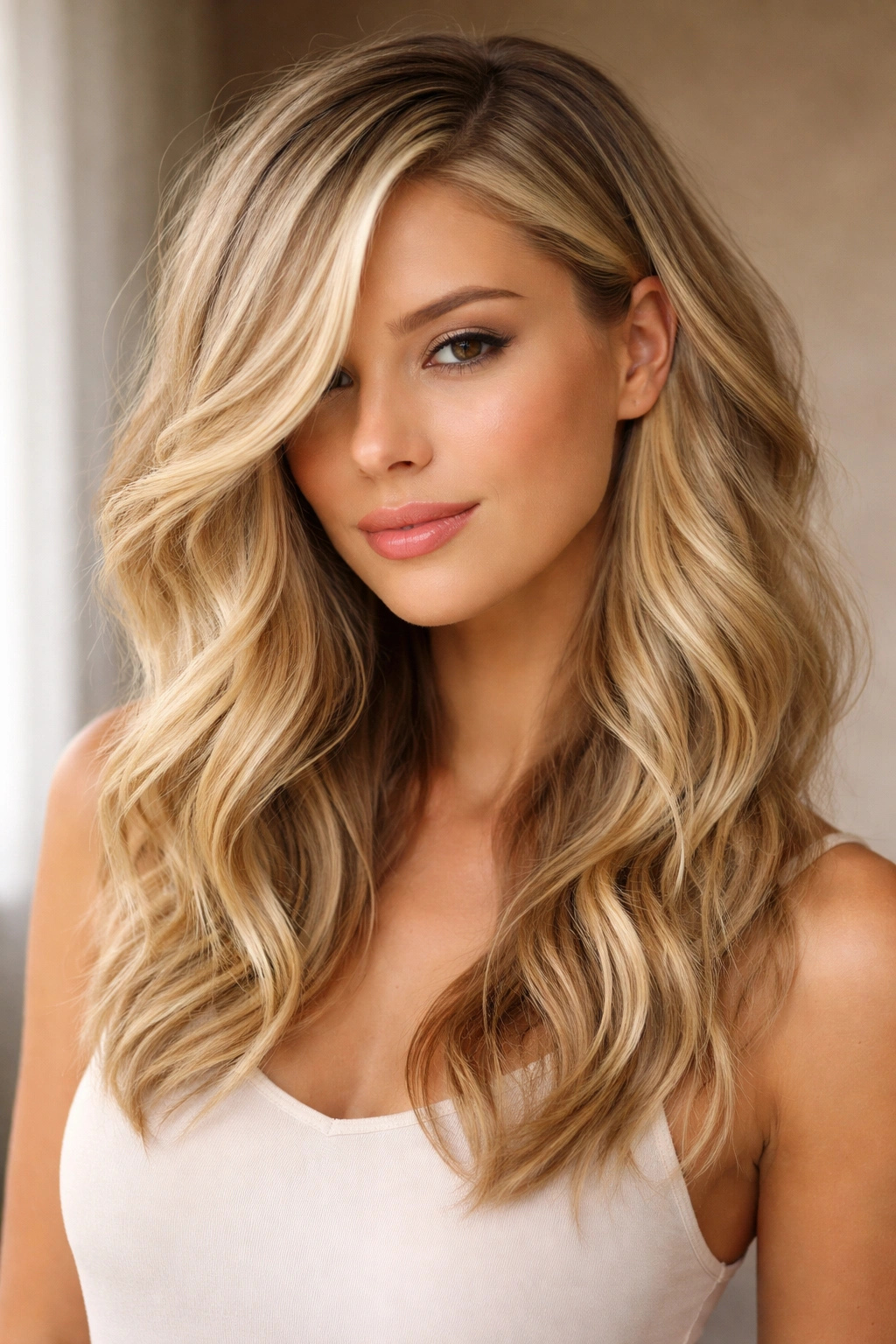
An asymmetrical cut (one side longer than the other) creates instant movement and visual interest, especially when paired with waves. This version typically features longer hair on one side (falling past the shoulder) and slightly shorter hair on the other side (around ear-length or slightly longer). The asymmetry is usually subtle rather than dramatic, and paired with waves, it creates a style that reads as effortlessly chic rather than edgy.
The Flattering Power of Asymmetry
- An asymmetrical cut naturally encourages hair to fall to one side, which creates an elegant, sideswept effect without requiring constant styling
- The different lengths on each side create visual interest and dimension that a one-length cut lacks
- On blonde hair, the asymmetrical fall and side-sweep shows off color dimension beautifully
- This style is particularly flattering if you want to emphasize one side of your face or de-emphasize a feature on the other side
Styling Your Asymmetrical Waves
- Create waves that fall with the natural direction of the cut—toward your face on the longer side, away on the shorter side
- Use a smaller curling iron on the longer side to create tighter, more structured waves that hold better
- The shorter side can have looser, more tousled waves because there’s less length for them to relax out of
- Use a volumizing mousse on the shorter side to create lift, and smoothing serum on the longer side to encourage it to fall sleekly to the side
- This style looks stunning with a side part that emphasizes the asymmetry
Worth knowing: This cut benefits from a side part that matches the direction of your natural hair fall. If your hair naturally wants to fall to the right, work with that rather than against it—your styling life will be infinitely easier.
11. Soft Waves With Extended Blonde Roots and Balayage
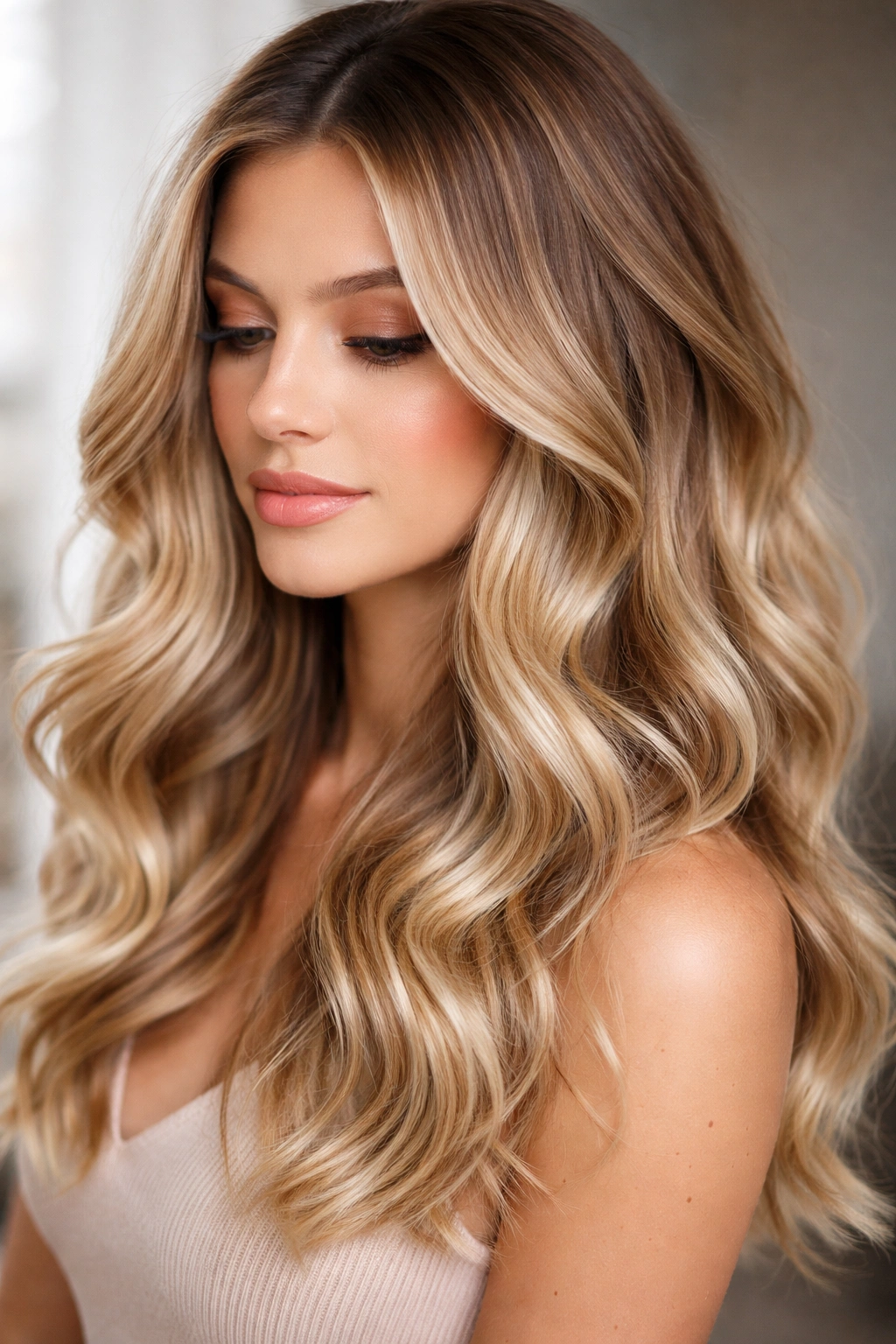
This style leans into the idea that perfect, uniform blonde is less interesting than multi-tonal, dimensional blonde. The cut features longer layers throughout medium length with lots of subtle texture-building layers. The color is the real star: darker, warmer roots (sometimes 2-3 inches) that gradually transition into lighter blonde tones, with balayage-style highlights scattered throughout. The waves showcase all of these color variations beautifully because the texture creates shadow and light play.
The Color Strategy That Makes This Work
- Roots are intentional and darker (could be your natural color, could be a warm brunette shade)
- Mid-lengths transition gradually from darker to lighter
- Balayage highlights (hand-painted, not striped) add dimension and brightness at the ends
- On wavy hair, these color variations create depth and interest that a flat, uniform blonde can’t match
Styling Soft Waves With Dimensional Blonde
- This color works with softer, more romantic waves rather than tight, piecy texture
- Blow-dry smooth first, then create loose waves with a 1.5-inch barrel
- Apply a glossing spray or lightweight serum while waves are warm to make the color shine and enhance dimension
- Don’t over-style—the point is to let the color dimension shine through relaxed waves
- This color is easier to maintain than pure blonde because root growth is less obvious, but balayage needs refreshing every 3-4 months to keep it looking intentional
Pro tip: This styling approach works especially well if you have naturally wavy or curly hair. The dimensional color makes texture look intentional rather than something you’re fighting against.
12. Piece-y Layers With Platinum and Golden Blonde Mix
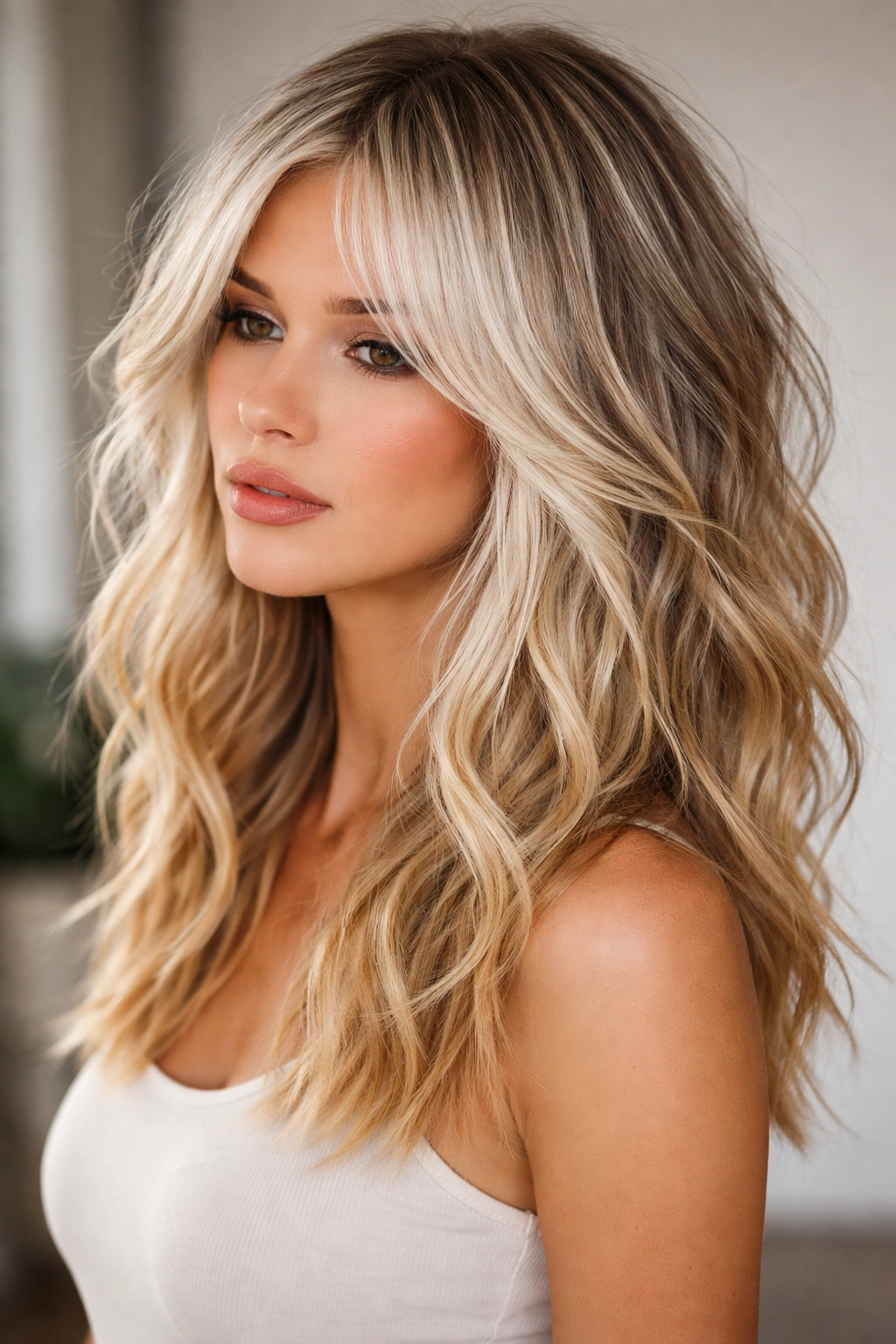
This style combines a modern, choppy layer structure with a two-tone blonde approach: cooler platinum tones mixed with warmer golden or honey tones. The cooler platinum typically sits at the roots and in some face-framing pieces, while the golden tones are scattered throughout and concentrated at the ends. The piece-y layers—created with point-cut or razor techniques—separate easily into individual strands, which shows off both blonde tones beautifully.
Why This Color Combo Enhances Piece-y Layers
- Platinum and golden blonde are visually distinct enough that when they’re separated into piece-y layers, each tone is visible
- The cooler platinum at the roots looks modern and intentional
- The warmer golden at the ends feels romantic and flattering
- Piece-y separation makes the color-blocking more visible and intentional—it’s a feature, not an accident
Achieving the Piece-y Effect With This Color
- Ask your stylist for point-cut layers throughout medium length—these naturally separate better than blunt-cut layers
- Use a 1-inch or smaller curling iron to create tighter waves that separate easily
- Apply a texturizing spray while hair is still warm and use your fingers to separate each wave while the spray is drying
- The separation is crucial here—without it, the layers and color colors blend together instead of creating that intentional, modern look
- This style requires active styling; it’s not a wash-and-go option
Insider note: This color is easier to maintain than a full platinum because the golden tones hide brassiness and the mix of tones means root regrowth is less noticeable. Touch-ups every 6-8 weeks keep it looking fresh rather than every 4 weeks.
13. Butterfly Layers With Soft Blonde Waves
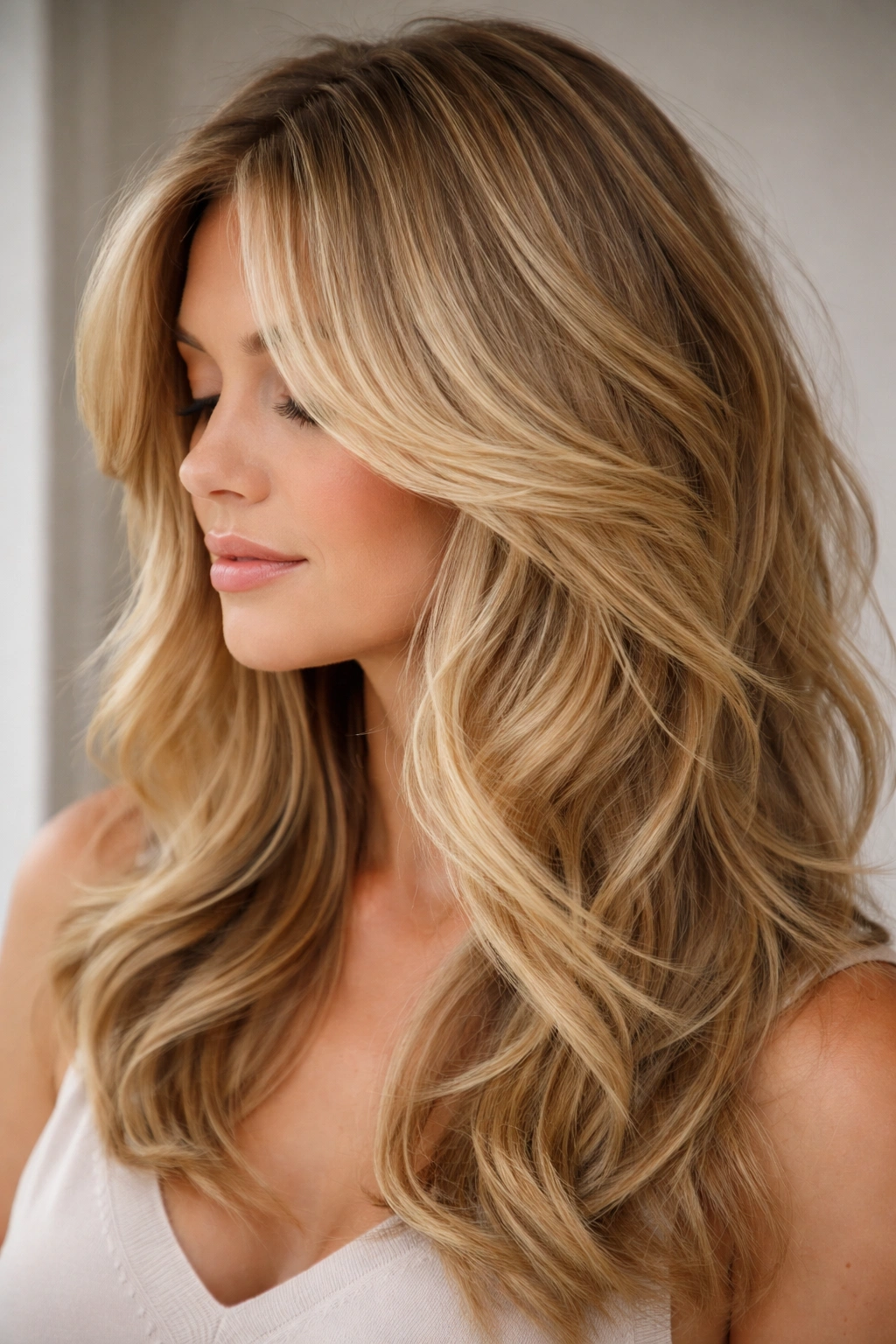
Butterfly layers are a specific cutting technique where shorter layers cluster around the crown and gradually extend down to longer pieces at the back and sides. The effect looks like butterfly wings—hence the name. This technique is excellent for creating volume and movement, and it pairs beautifully with medium-length wavy blonde hair. The blonde shows off the layers because each layer catches light at a different angle, creating visible dimension and depth.
The Magic of Butterfly Layers
- Shortest layers sit at the crown, creating natural lift and volume
- Layers gradually increase in length as they move down and back
- This structure supports waves beautifully—they have room to move and don’t get weighed down
- Blonde color makes the layer gradation visible, which enhances the dimensional effect
Styling Butterfly Layers for Maximum Impact
- Blow-dry with your head flipped upside down to encourage the layers to move and separate
- Create waves using a 1.25 to 1.5-inch barrel, focusing on waving sections away from the face
- The butterfly structure naturally encourages volume at the crown, so let it work—don’t try to smooth it down
- Apply sea salt spray or texture spray while hair is damp to enhance the natural texture created by the layers
- This style looks best with a side part rather than a center part, which emphasizes the butterfly wing effect
Worth knowing: This style requires regular trims (every 6 weeks) to keep the butterfly structure intact. As hair grows, the layers extend and flatten out, losing the intended effect.
14. Wavy Curtain Bangs With Long Blonde Layers
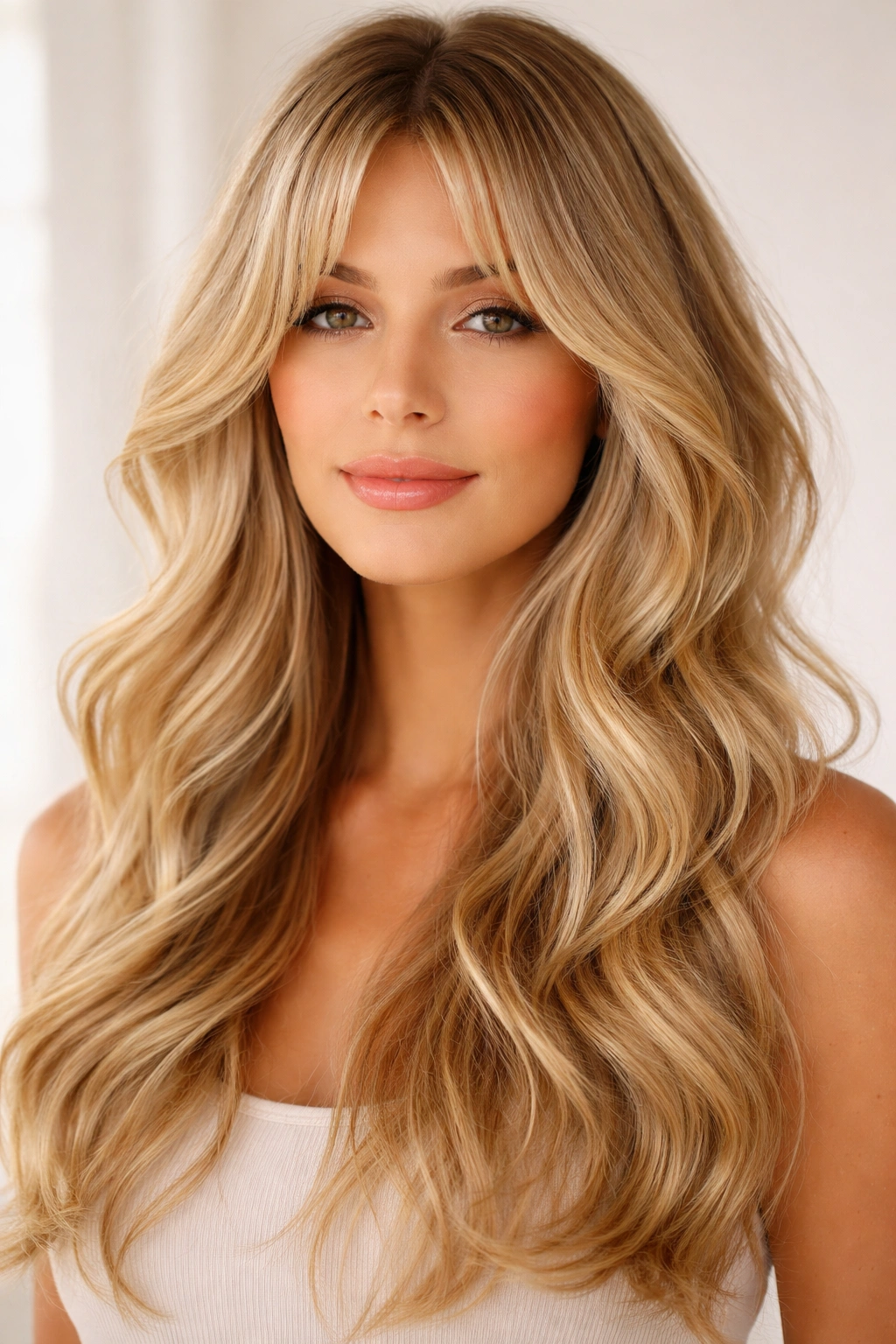
Curtain bangs are longer, face-framing pieces that part down the middle and fall alongside your face (rather than straight across your forehead like traditional bangs). Pair them with long layers throughout medium-length blonde hair and soft waves, and you have a effortlessly romantic style that feels both modern and timeless. The curtain bangs create a flattering face-frame, and the waves give the overall style movement and softness.
Why Curtain Bangs Work With Wavy Hair
- Curtain bangs are designed to work with texture rather than against it
- They look best when they have a slight wave or curl, which feels natural and intentional
- The parted-down-the-middle structure frames the face beautifully and works with nearly every face shape
- Blonde color on curtain bangs creates a face-framing effect that draws attention upward
Styling Your Bangs and Waves Together
- Create soft waves throughout your hair using a large-barrel curling iron (1.5 inches)
- Style your curtain bangs last—blow-dry them straight down the center, then use a round brush to curve them slightly outward at the ends
- The curtain bangs should wave slightly as they fall, not be completely straight
- Use a smoothing serum on your bangs to keep them polished while the rest of your hair has texture
- This style requires a trim every 4-6 weeks to keep the bangs looking intentional (they grow out of style quickly if left uncut)
Pro tip: Curtain bangs can take some styling practice to get looking right. Plan on spending a few extra minutes on bang styling even after you nail the wave-creation process.
15. Lived-In Waves With Dimensional Blonde Rooting
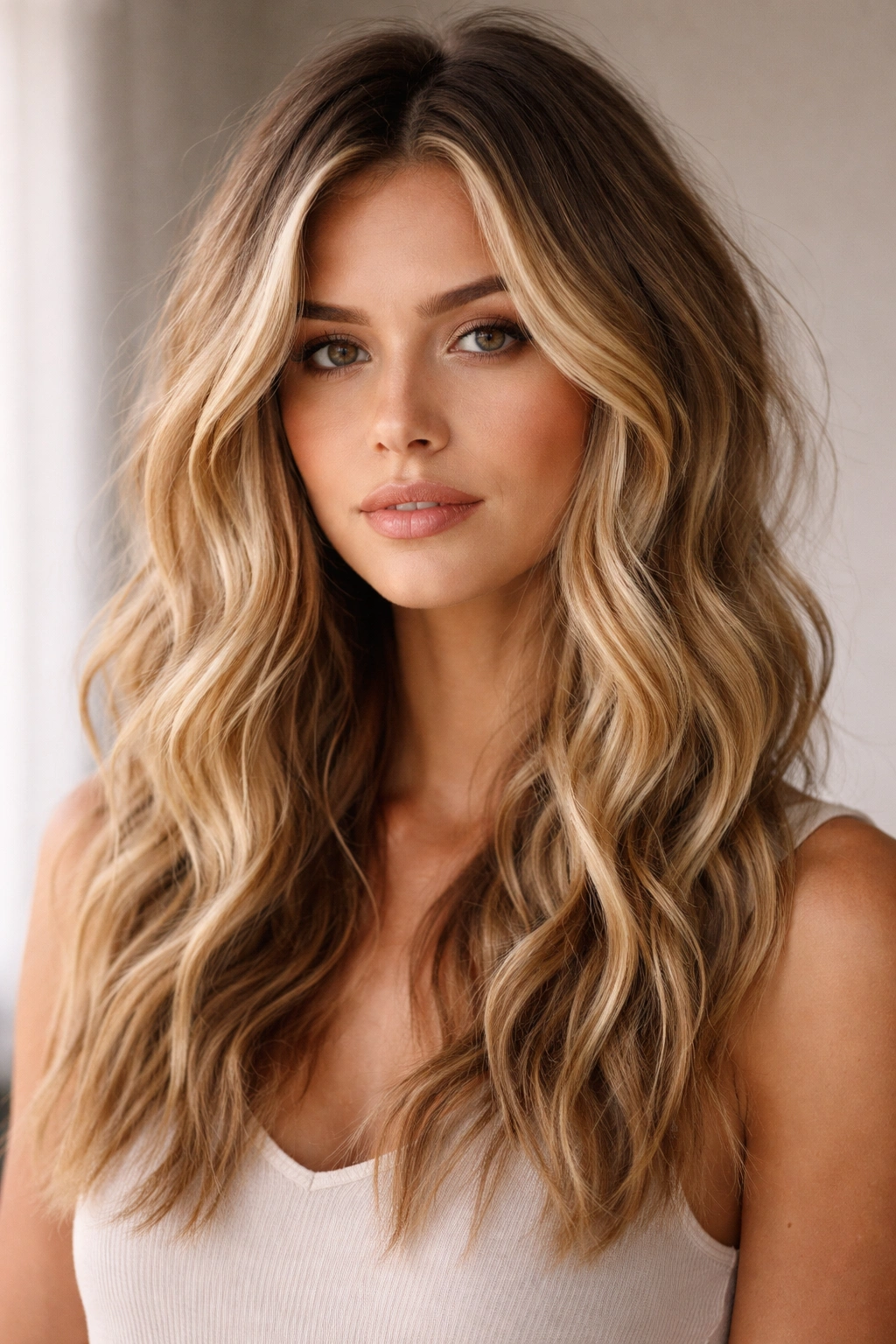
This final style is about embracing a more relaxed, authentically lived-in aesthetic. The cut features medium-length hair with subtle, natural-looking layers that enhance movement without creating obvious choppiness. The color is the focal point: intentional rooting (darker at the roots, gradually transitioning lighter) that looks natural rather than high-maintenance, mixed with subtle dimensional highlights throughout. The waves are loose, slightly undone, and textured in a way that looks like you didn’t spend an hour styling.
Building a Lived-In Aesthetic With Intention
- This style works because it looks effortless but actually requires some thought in the cut and color
- The roots are intentional (not grown-out)—typically warm, brunette-leaning tones that complement the lighter blonde lengths
- Subtle highlights scattered throughout (not striped) add dimension without looking deliberately placed
- The overall effect is “I have good hair” rather than “I spent three hours styling today”
Achieving Effortless-Looking Waves
- Blow-dry with your fingers or a diffuser to encourage natural texture without creating defined waves
- Use a texturizing spray or sea salt spray on damp hair before blow-drying
- If you need more wave definition, use a curling iron loosely on larger sections, then break up the curls with your fingers
- The goal is waves that look like your natural texture enhanced, not waves that were intentionally created
- This style benefits from 2-3 days of product buildup, which creates better texture than freshly washed hair
Insider note: This style actually looks better the longer it’s been since you washed your hair. Plan your styling around day 2 or 3 of your hair cycle when texture and natural oils work together to enhance waves and make them hold longer.
Final Thoughts
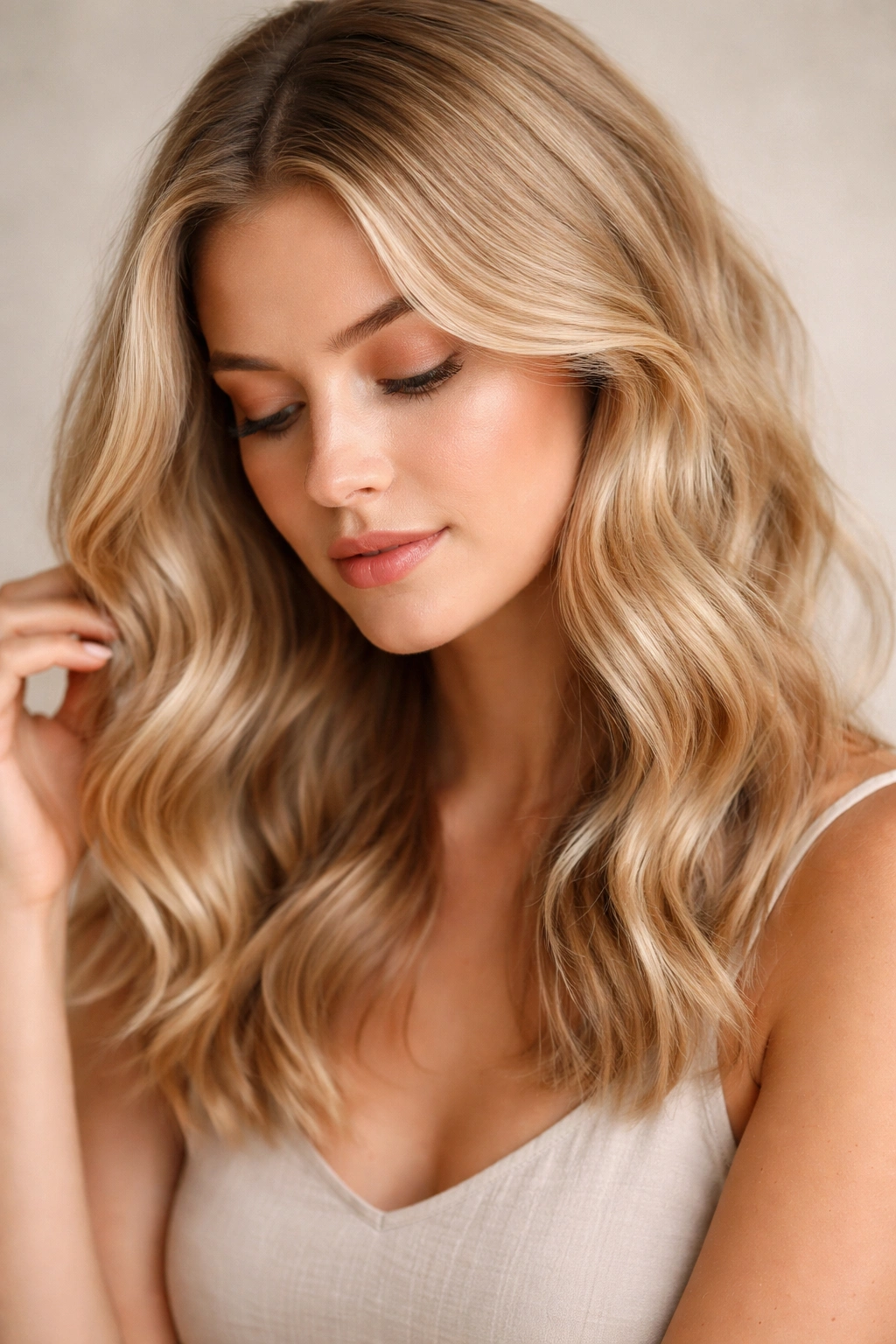
Choosing a medium wavy blonde hairstyle comes down to three things: understanding your hair’s natural texture and what it actually does, getting a cut that works with your hair rather than against it, and picking a styling approach that realistically fits into your daily routine. A gorgeous style that requires 45 minutes of blow-drying and heat styling every single day isn’t actually gorgeous if you don’t have time for it—it’s just frustrating.
The 15 styles in this guide show you the real range of possibilities: from effortless-looking beach waves to sharp, modern choppy cuts, from romantic and soft to edgy and textured. Some are true wash-and-go styles (or close to it), while others require more intentional daily styling. The one that’s right for you depends on your actual life, your hair’s natural texture, and what look makes you feel confident and like yourself.
Talk to your stylist about which of these styles matches your hair type and your styling commitment level. Show them multiple pictures—not just of the overall style, but close-ups of the wave texture, the layer placement, and the color combination. The more specific you can be about what you’re asking for, the better result you’ll get. And remember: a great cut is worth the investment because it makes every day’s styling easier, not harder.