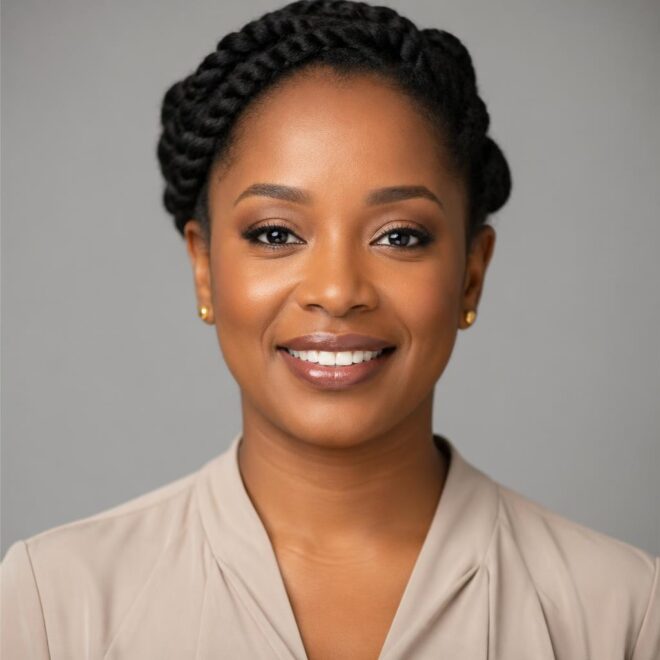


Braid styles with curtain bangs for oval faces can look polished or a little awkward based on one small thing: what happens at the front. The braid itself matters, sure, but the fringe is what changes the whole read of the style. If those curtain pieces sit flat, the face can lose shape. If they’re bent, separated, and left with a bit of air, the braid suddenly looks considered instead of thrown together.
Oval faces have an easy time with braids. That’s the honest truth. The proportions are already balanced, so you can wear tighter braids, loose braids, high braids, low braids, and all the in-between styles without fighting your bone structure. The catch is that curtain bangs can disappear if you pull everything back too hard. You want movement near the cheekbones, not a severe sweep that makes the whole hairstyle feel stern.
The front pieces are worth the extra minute. I like to think of curtain bangs as the frame around the braid, not an accessory added at the end. A quick pass with a round brush, a bend from a flat iron, or even a soft roller while you finish the rest of the hair can change the result a lot more than adding another pin ever will.
Some braid styles lean into that softness. Others give the bangs a stronger job to do. The first one is the cleanest place to start.
1. Classic French Braid With Soft Curtain Bangs
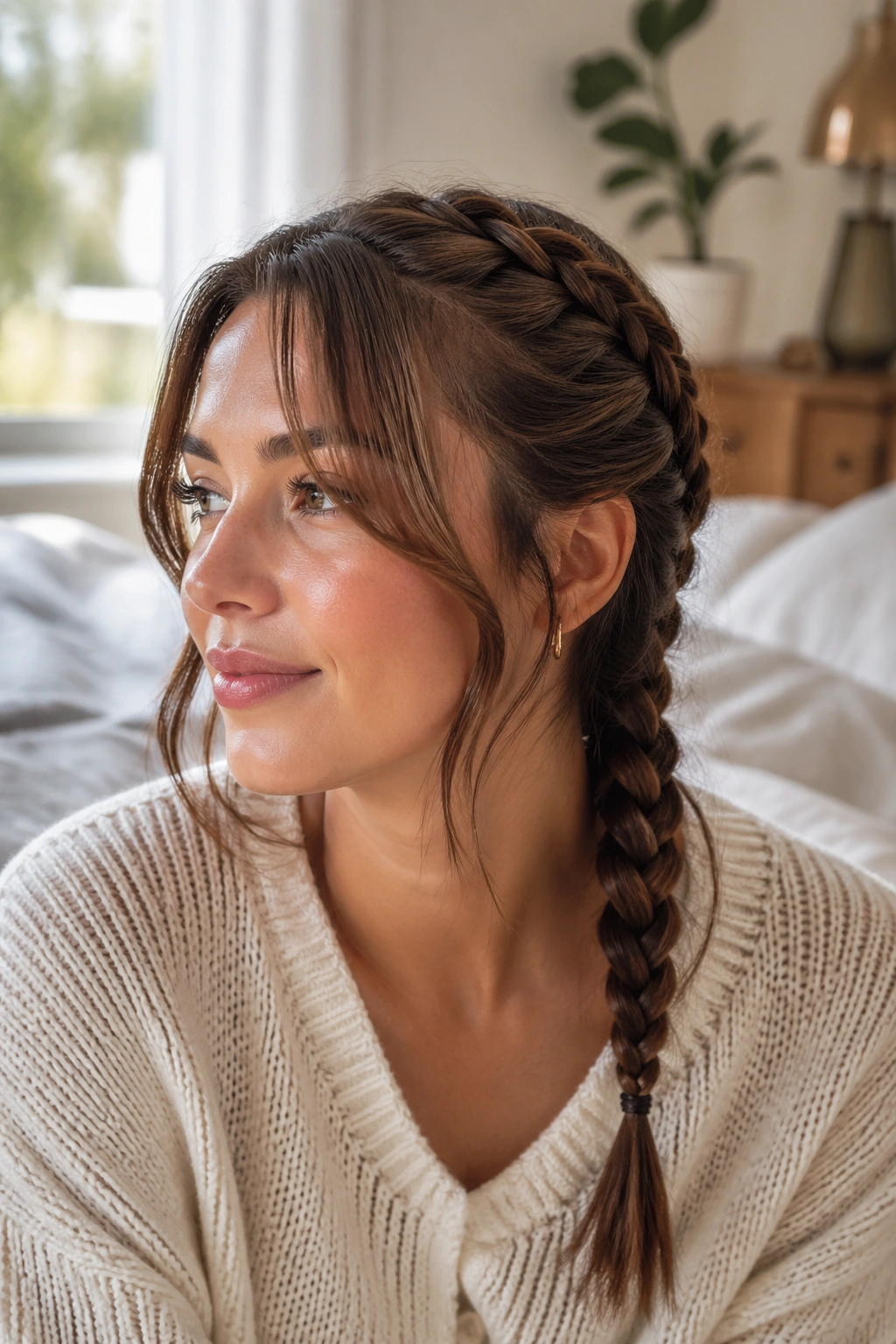
This is the easiest braid to make look intentional on an oval face. A French braid sits close to the head, so the shape stays neat while the curtain bangs bring back the softness around the face. That contrast is what makes it work. The braid can be tidy. The front pieces should not be.
Why It Flatters the Face
A French braid keeps the hairline open enough to show off an oval face instead of hiding it. The braid starts at the crown or just behind it, then travels down the center of the head, which gives you a clean vertical line. Curtain bangs soften that line and stop the style from feeling too severe.
How I’d Wear It
- Start the braid about 1 to 1½ inches behind the front hairline if you want the bangs to stay visible.
- Keep the curtain pieces around cheekbone length so they can bend outward instead of sitting in your eyes.
- Use a light mousse on damp hair before blow-drying if your hair slips out of braids fast.
- Pull the braid edges slightly after finishing so it looks fuller, not helmet-tight.
Small tip: if the bangs are freshly washed and too soft, a dusting of texture spray at the roots helps them hold the bend without turning crunchy.
2. Dutch Braid With Face-Framing Bangs
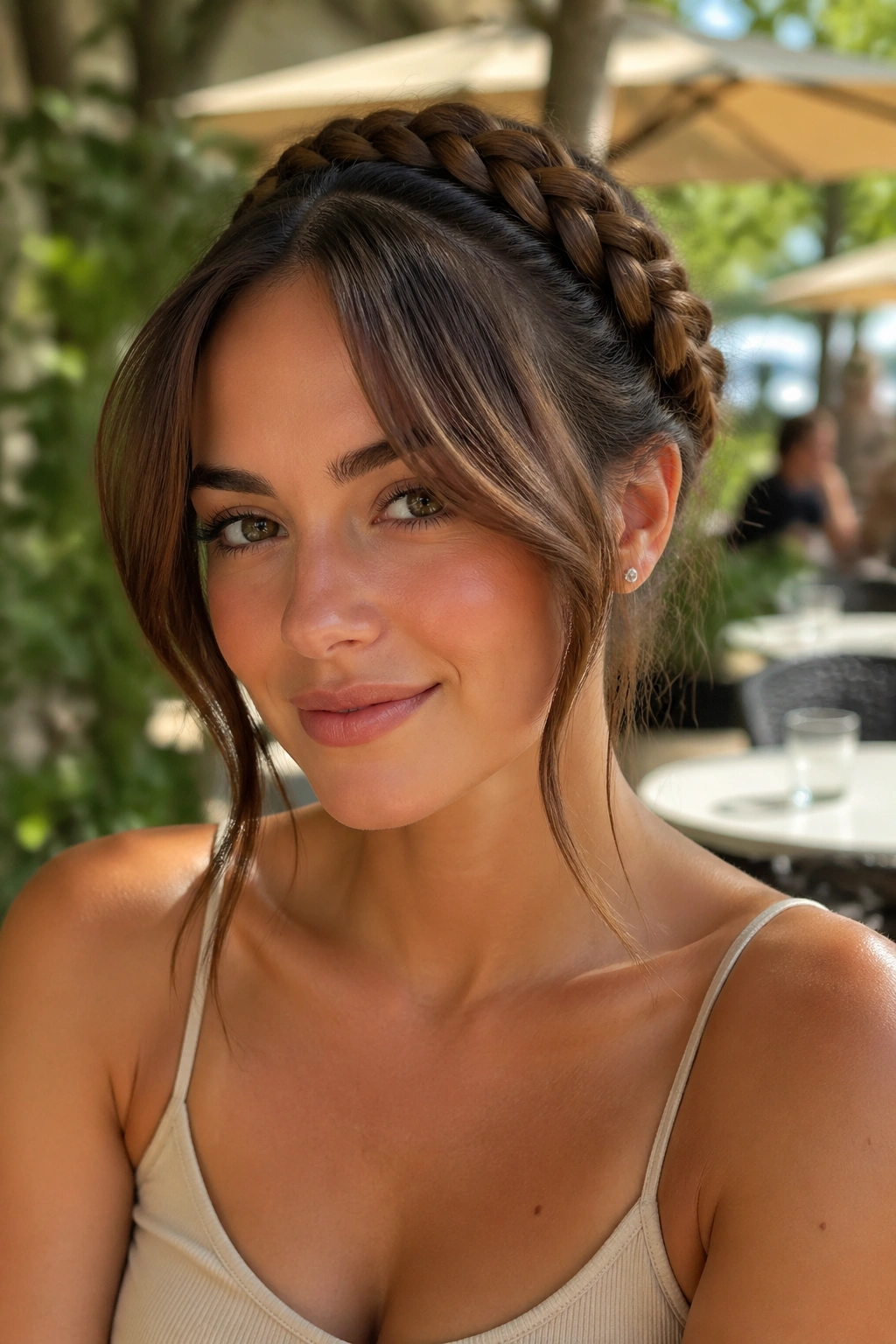
If you want the braid to stand out from your head a little more, Dutch braid is the stronger choice. It gives the braid a raised, rope-like look, which adds structure around an oval face without making the front feel flat. The curtain bangs do the balancing work here. They keep the style from turning into one long vertical line.
A Dutch braid is a smart pick when your hair is fine or medium and you want the braid to read clearly in photos or in daylight. The raised pattern gives more shadow and shape than a French braid. That matters more than people think, because an oval face can handle a lot of symmetry, but it still needs some softness around the temples to avoid looking over-pulled.
I like this style when the bangs are a little longer and can split in the center naturally. If they’re short and springy, pin them loose instead of forcing them back. Let the top of the braid do the heavy lifting, and let the fringe stay a little airy.
No stiffness. That’s the whole point.
3. Side Fishtail Braid That Keeps the Fringe Light
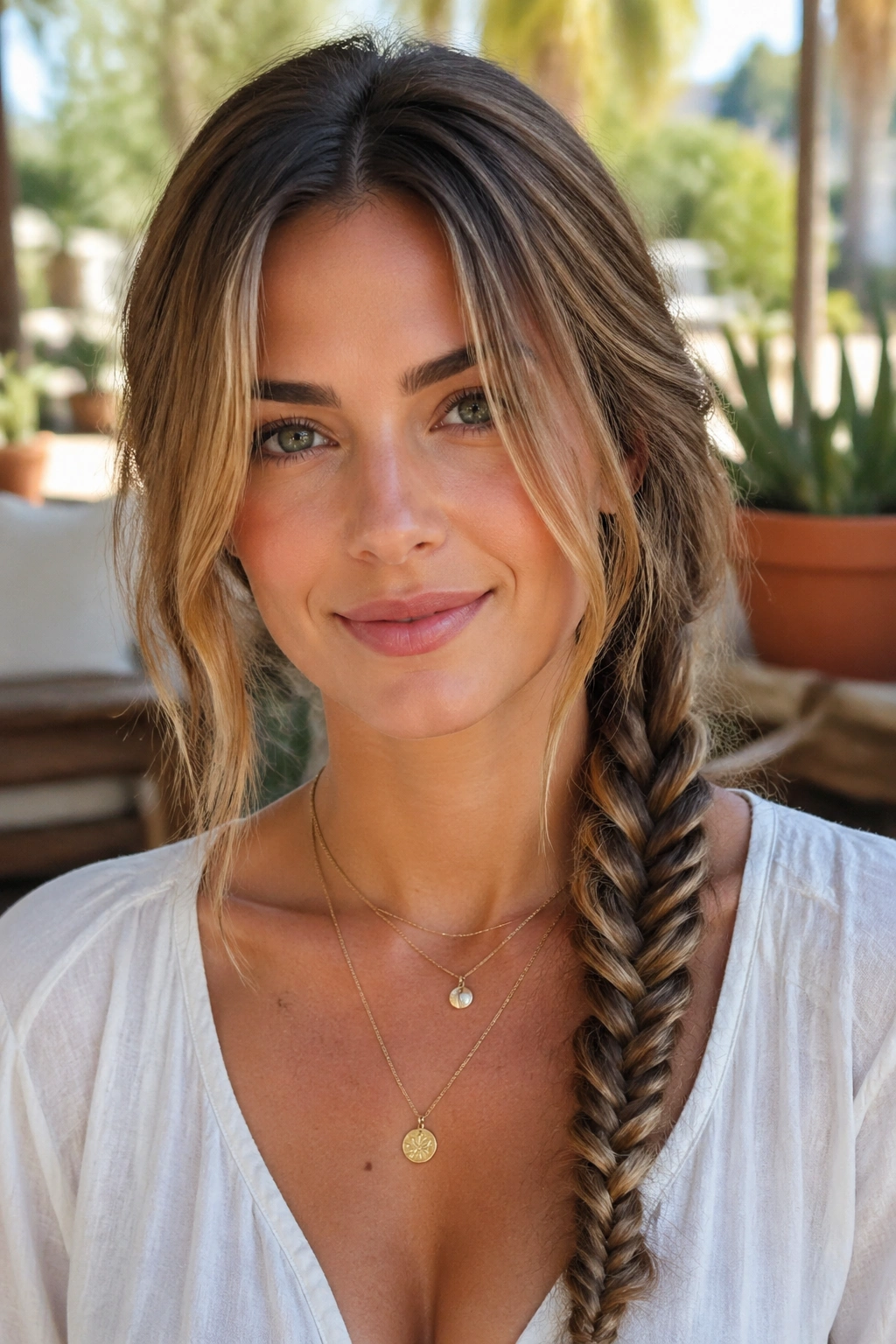
Why does a side fishtail braid work so well here? Because it gives the face a diagonal line instead of a straight one, and diagonals are forgiving on oval shapes. The braid also has a finer, more woven look than a standard three-strand braid, so the curtain bangs can stay soft without fighting a heavy braid shape.
What Makes It Different
A fishtail braid is made from tiny sections, so it usually looks detailed even when it’s loose. That looseness matters. It lets the braid sit over one shoulder while the front pieces fall around the cheekbones and jaw. If the braid starts too high, it can crowd the bangs. If it starts just below the ear, the whole style feels easier and less fussy.
How to Style It
- Part the hair in the center first, then let the curtain bangs fall forward before you braid.
- Keep the fishtail slightly undone by gently tugging the edges after tying off the end.
- Use a fine-tooth comb only on the section you’re braiding; leave the fringe soft.
- If your hair is layered, mist the braid with a little finishing spray so the shorter ends stay tucked in.
This one shines on shoulder-length hair and longer lengths. It also works well when you want the bangs to look like part of the style rather than a separate piece you added at the last minute.
4. Crown Braid That Sits Above the Brows
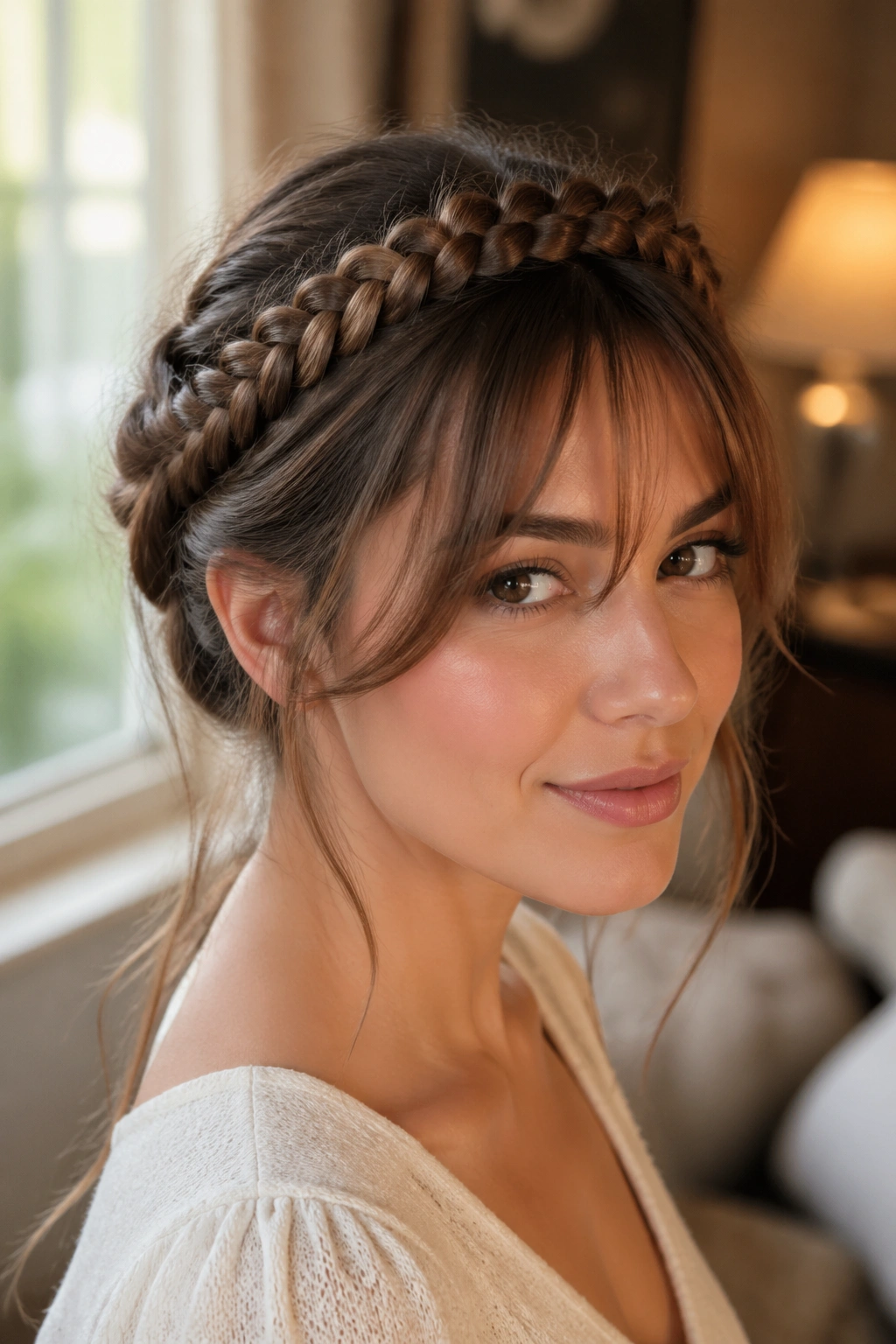
Picture hair pulled away from the face, but not in a severe way. That’s the sweet spot for a crown braid on an oval face. The braid wraps around the head like a frame, and the curtain bangs keep the style from feeling too formal or too tight. It has presence. It also has a little softness, which is the part people often miss.
Where to Place It
A crown braid looks best when it sits slightly above the temples, not jammed high on the scalp. Too high, and an oval face can start to look longer than you want. Too low, and the braid loses that lifted shape near the brows. The curtain bangs should skim the front of the face and stop around the cheekbone or lip line, depending on your length.
You can keep the braid sleek if you want a clean finish, or you can loosen it after pinning for a more relaxed read. I prefer the second version. The sleek version can look a bit school-uniform if the bangs are also too tidy.
What to Watch For
- Use bobby pins that match your hair color so the braid doesn’t break visually.
- Leave the bang pieces out before you start pinning the braid.
- A small amount of smoothing cream on the lengths keeps flyaways from taking over.
- If the braid feels too tight near the ears, loosen it there first. That’s where the discomfort shows.
5. Half-Up Braided Halo for Airy Front Pieces
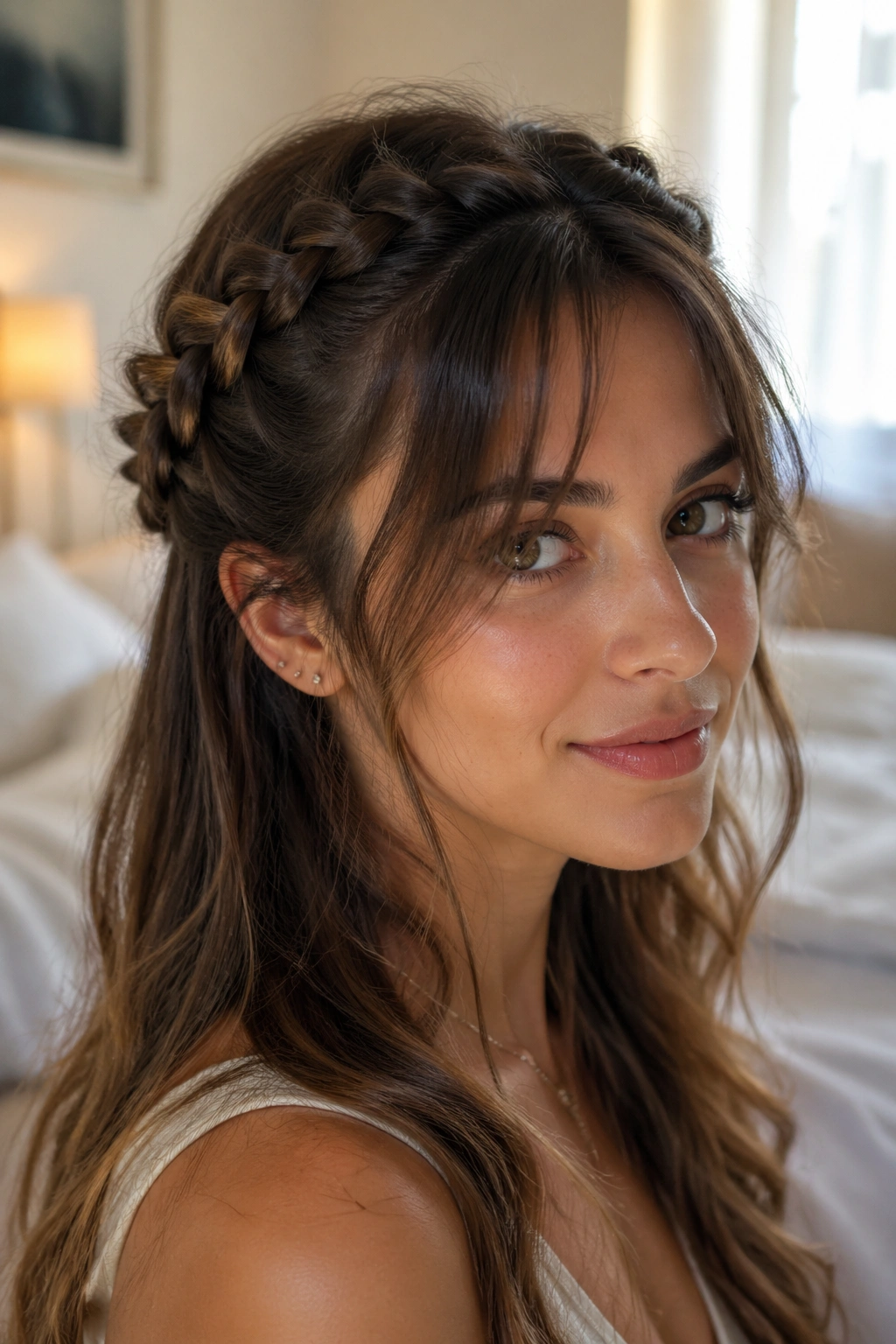
A half-up braided halo is one of those styles that makes curtain bangs feel like they were planned from the start. The braid only takes the upper section, so the lower hair stays loose and the face keeps its natural shape. On an oval face, that matters because you do not need much correction. You just need a little framing.
What I like here is the balance. The top half reads neat and controlled. The bangs and the rest of the length keep the style from getting too precious. If your hair is medium-thick, this look has enough texture to hold all day without feeling heavy. If your hair is fine, a bit of texturizing powder at the crown helps the braid stay lifted instead of collapsing by lunch.
The curtain bangs should stay outside the braid line and bend softly toward the cheekbones. If they’re too straight, the style loses that face-framing effect. If they’re too curled, the whole look can start to feel overdone, which is a shame because the shape itself is already doing the work.
One small detail makes a big difference: let a few tiny pieces near the temples stay loose. Not too many. Just enough to stop the half-up section from looking pasted on.
6. Boxer Braids With Loose Curtain Bangs
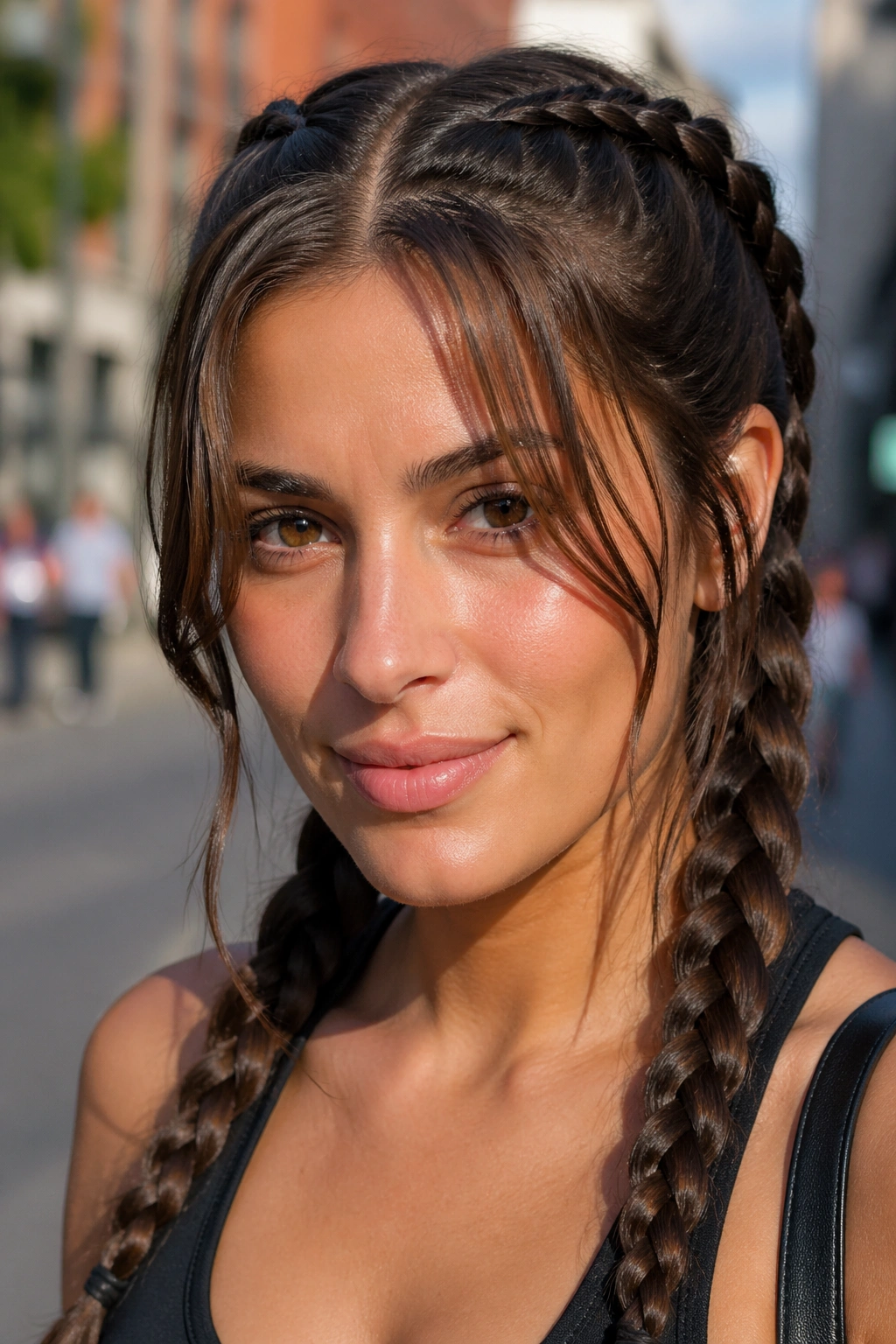
Unlike a soft side braid, boxer braids are all about control. That’s exactly why they’re useful for oval faces with curtain bangs. The center-parted braids create strong symmetry, and the bangs break that symmetry in a good way by keeping the front from looking hard or flat. The result is clean, sporty, and surprisingly wearable outside the gym.
This style works especially well when you want your hair off your neck but still want the face to look framed. If your curtain bangs are long enough to sit along the cheekbones, leave them out and shape them with a round brush first. If they’re shorter, let them sit a little closer to the forehead and soften them with a touch of pomade on the fingertips.
A tight boxer braid can look too severe if every strand is slicked down. I’d avoid that unless you want the whole point of the style to be sharp. For most oval faces, a tiny bit of looseness at the roots gives the braid better life. Pull the braid edges open a little. Stop before it gets messy.
Best use case: busy days, workouts, travel, or any time you want a braid that stays put without looking plain.
7. Waterfall Braid That Shows Off the Length
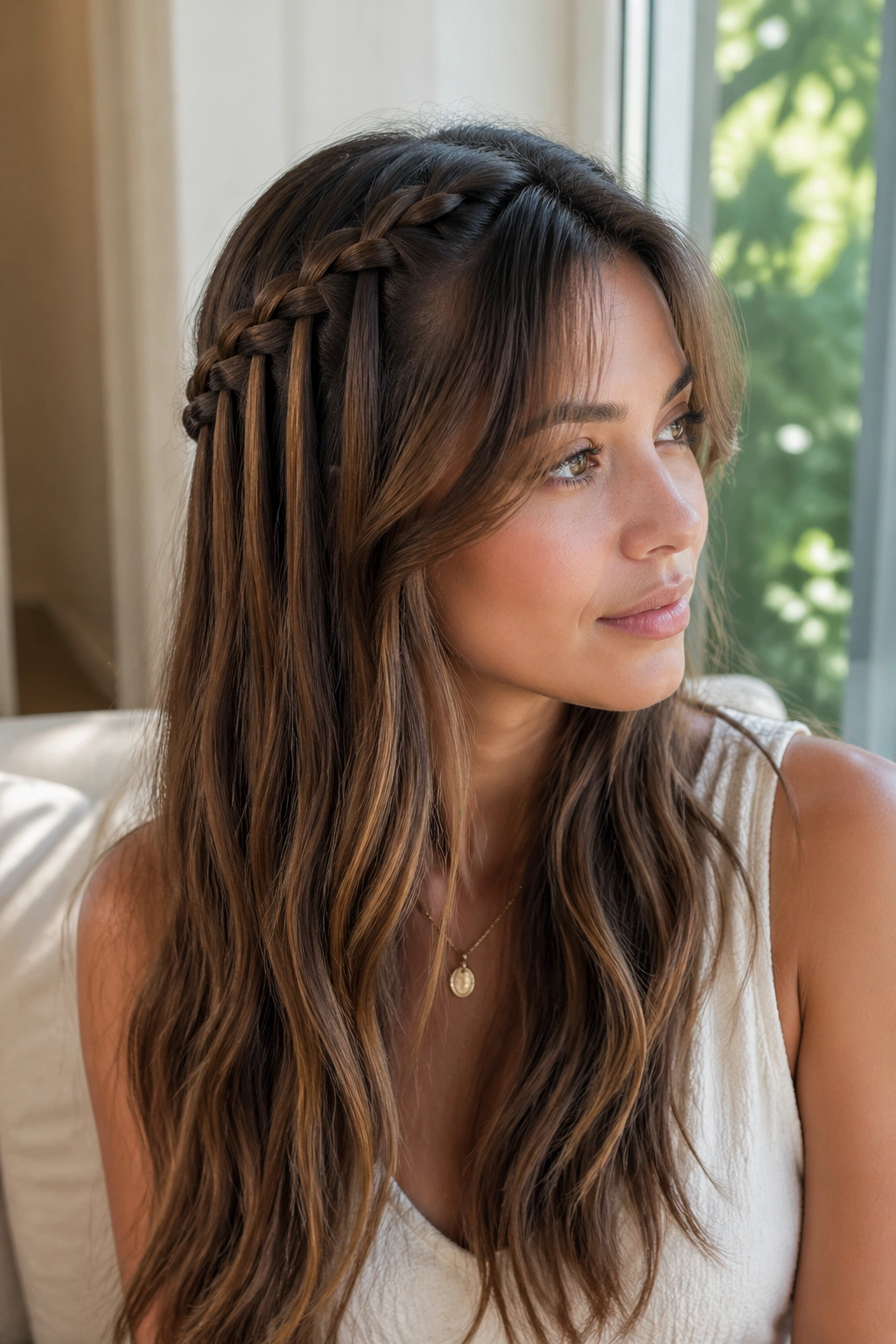
The nicest thing about a waterfall braid is how little it asks from the front. The braid moves across the head, but the dropped sections keep the style open and light. That makes it a strong match for curtain bangs on oval faces, because the bangs can stay in their own lane while the braid does something decorative through the side of the hair.
Where the Fringe Lands
The curtain bangs should blend into the rest of the hair rather than compete with the braid line. I like this style most when the bangs hit somewhere between the cheekbone and jawline. Too short, and they can fight the braid. Too long, and they sometimes disappear into the wave pattern.
This braid also likes hair with some bend. Straight hair can still work, but the dropped strands look prettier when they have a little wave to them. A 1-inch curling iron on the mids and ends is usually enough. You do not need ringlets. You need movement.
What to Do Before You Start
- Add a light wave to the lengths first.
- Keep the top section smooth so the braid line stays clean.
- Pin the braid lower if your face is already long oval and you want less height.
- Finish with a flexible spray, not a stiff one, or the waterfall effect gets crunchy fast.
This is one of those styles that looks like you spent more time on it than you did. I’m not mad about that.
8. Milkmaid Braid With Center-Part Curtain Bangs
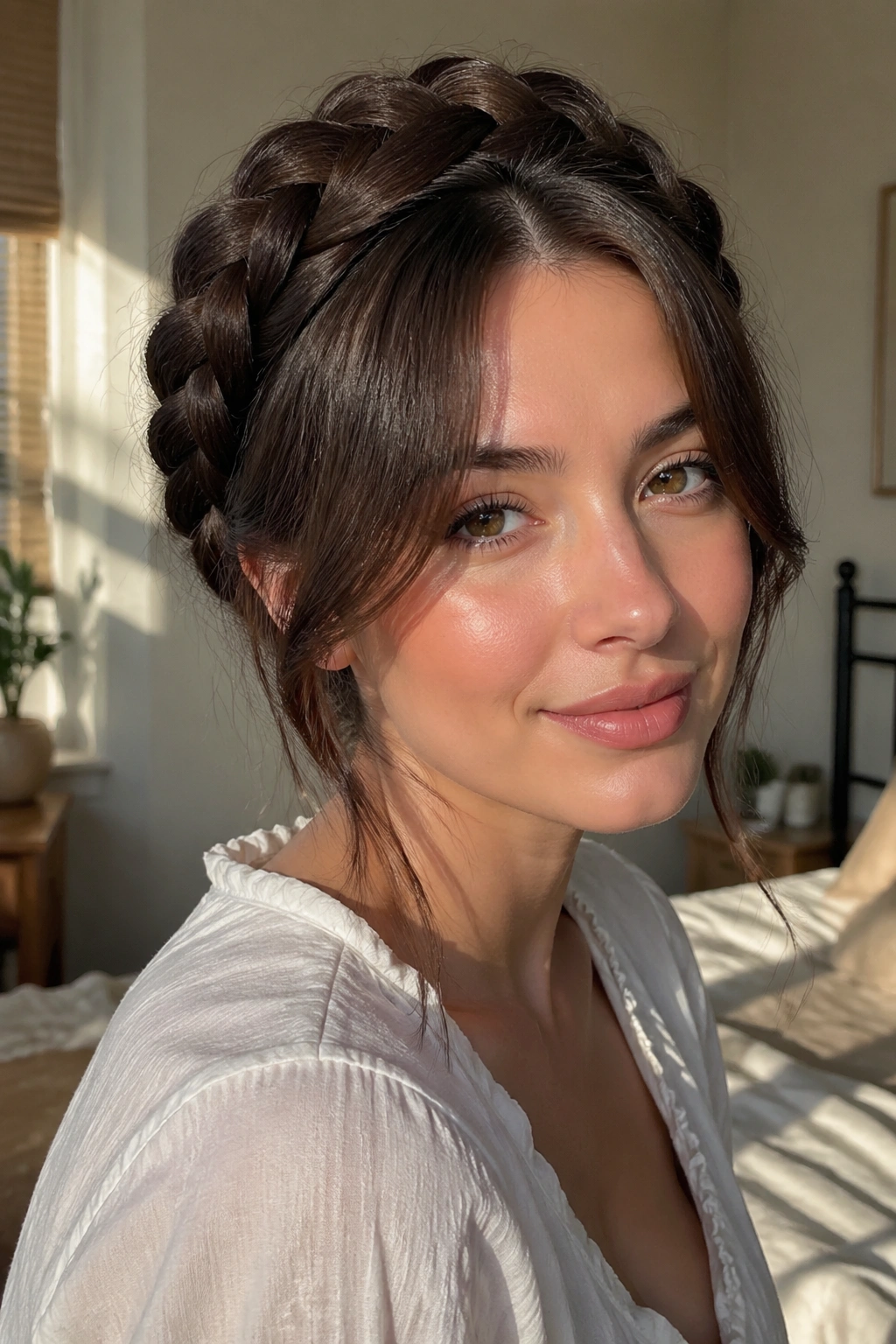
This is one of the few updos that can make curtain bangs look deliberate instead of like a leftover detail. A milkmaid braid wraps braids over the top of the head, which creates a polished frame. On an oval face, that frame works because it gives the forehead and cheekbones something soft to sit against without closing everything in.
The center part matters here. So does the bend in the bangs. If the front pieces are straight and flat, the braid can feel old-fashioned in the wrong way. If the bangs are softly bent away from the center, the whole style reads easier and cleaner. I like to curl the front pieces back from the face with a 1¼-inch iron, then brush them out once they cool. That leaves the shape without the curl memory looking too obvious.
Quick Checks
- The braid should sit just above the hairline, not on top of it.
- Use two or three hidden pins behind each ear so the braid stays put.
- A little dry shampoo at the roots gives the style grip if your hair is slippery.
- Leave the curtain bangs out, then smooth the ends with a drop of serum.
This braid is especially good for dressier settings, but it’s not fussy if you keep the front soft. That’s the part that saves it.
9. Pull-Through Braid for Thick, Long Hair
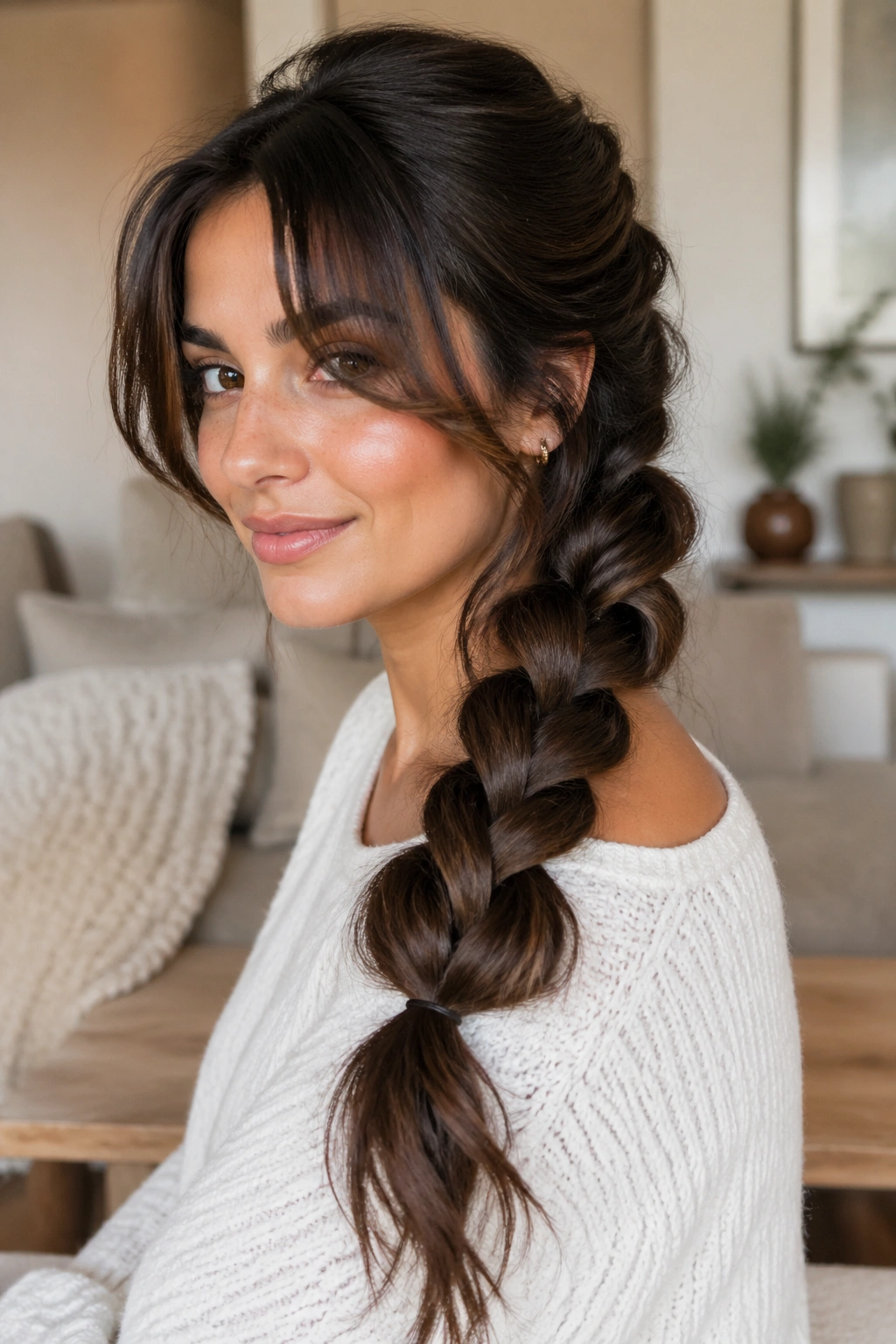
Do you have hair that laughs at regular braids and slips apart by noon? Pull-through braid is the answer. It uses elastics and stacked sections, so it creates a fuller braid shape with less hand strain and a cleaner finish on thick or layered hair. On an oval face, the volume along the braid can balance the face nicely, while curtain bangs keep the front from feeling too boxed in.
Why It Works
The pull-through braid has a built-in puffiness that regular braids sometimes lack. That volume adds width through the body of the hairstyle, which is useful if your hair is fine at the roots or if you want the braid to look dramatic without teasing every section into a mess. Because the braid sits in sections, you can also stop and adjust the front pieces more easily than with a standard braid.
How to Keep It Soft Around the Face
- Leave the curtain bangs out before tying the first elastic.
- Start with a small top ponytail, then add sections every 1 to 2 inches.
- Tug each section a little after securing it so the braid looks round, not flat.
- Use a touch of smoothing cream only on the fringe, not on the braid itself.
This is a good choice when you want height and fullness without making the face look crowded. It gives the bangs room to breathe. That’s the whole advantage.
10. Rope Braid Ponytail With Soft Front Pieces
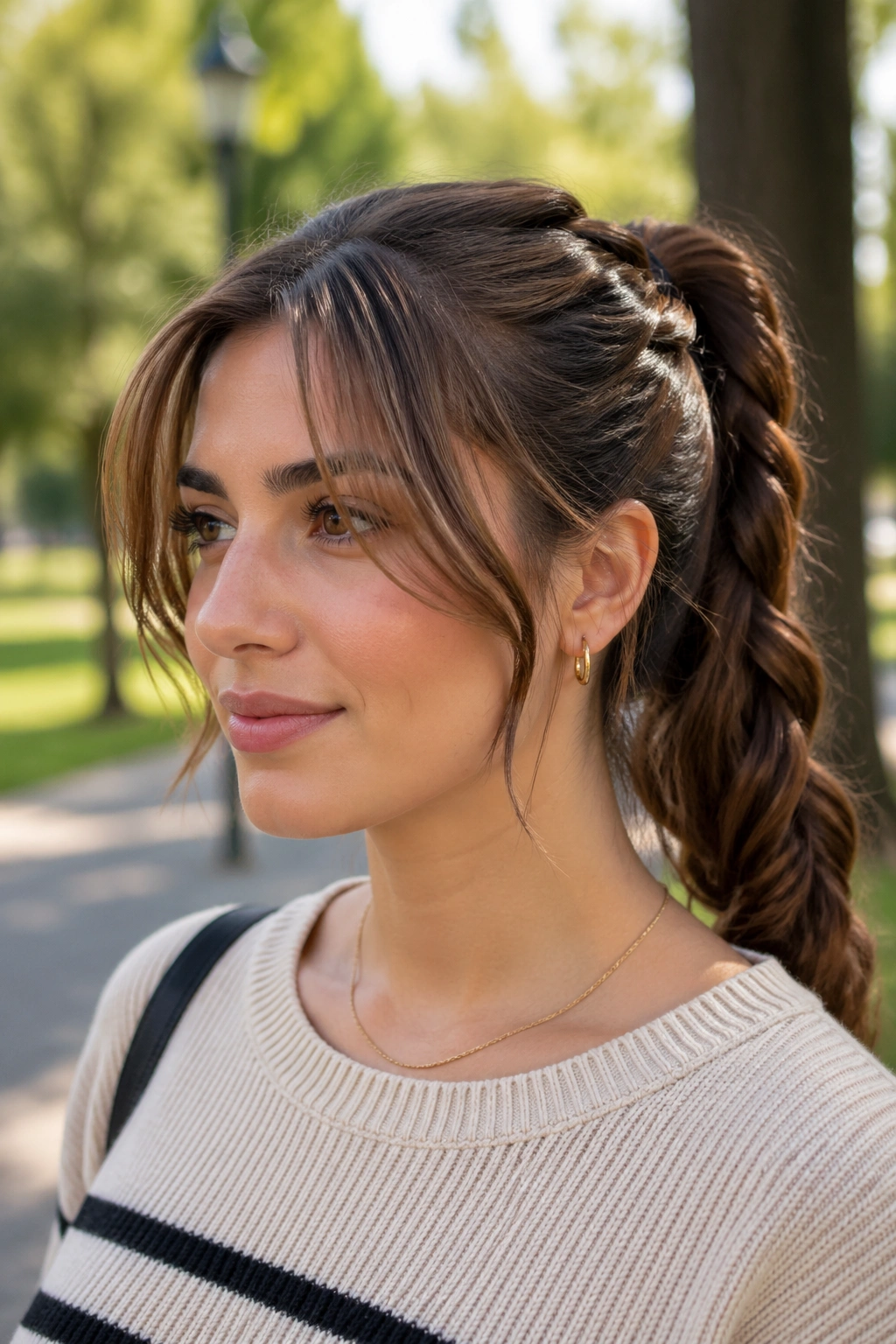
After a long day, a rope braid ponytail behaves better than a three-strand braid. It’s faster, cleaner, and it gives the hair a sleek twist that still feels casual. For oval faces, the ponytail length creates a strong vertical line, while the curtain bangs soften the front so the style doesn’t feel severe.
Best Placement
A mid-height ponytail is the sweet spot here. Too high, and the style can look sporty in a harsh way. Too low, and the braid sometimes disappears into the shirt collar. Mid-height keeps the face open and gives the braid a visible drop down the back.
The rope part is simple: split the ponytail into two sections, twist each one in the same direction, then wrap them around each other in the opposite direction. The shape looks neat fast. If your hair is layered, secure the ends with a clear elastic first so the twist does not unravel.
A Few Useful Details
- Mist the ponytail with a light spray before twisting so it grips.
- Keep the curtain bangs bent outward at the ends.
- If your hair is very straight, a tiny amount of texture spray at the roots helps the pony sit better.
- Wrap a thin strand around the elastic for a cleaner finish.
This one has a tidy look without being stiff. That balance makes it useful more often than people admit.
11. Loose Side Braid With Undone Curtain Bangs
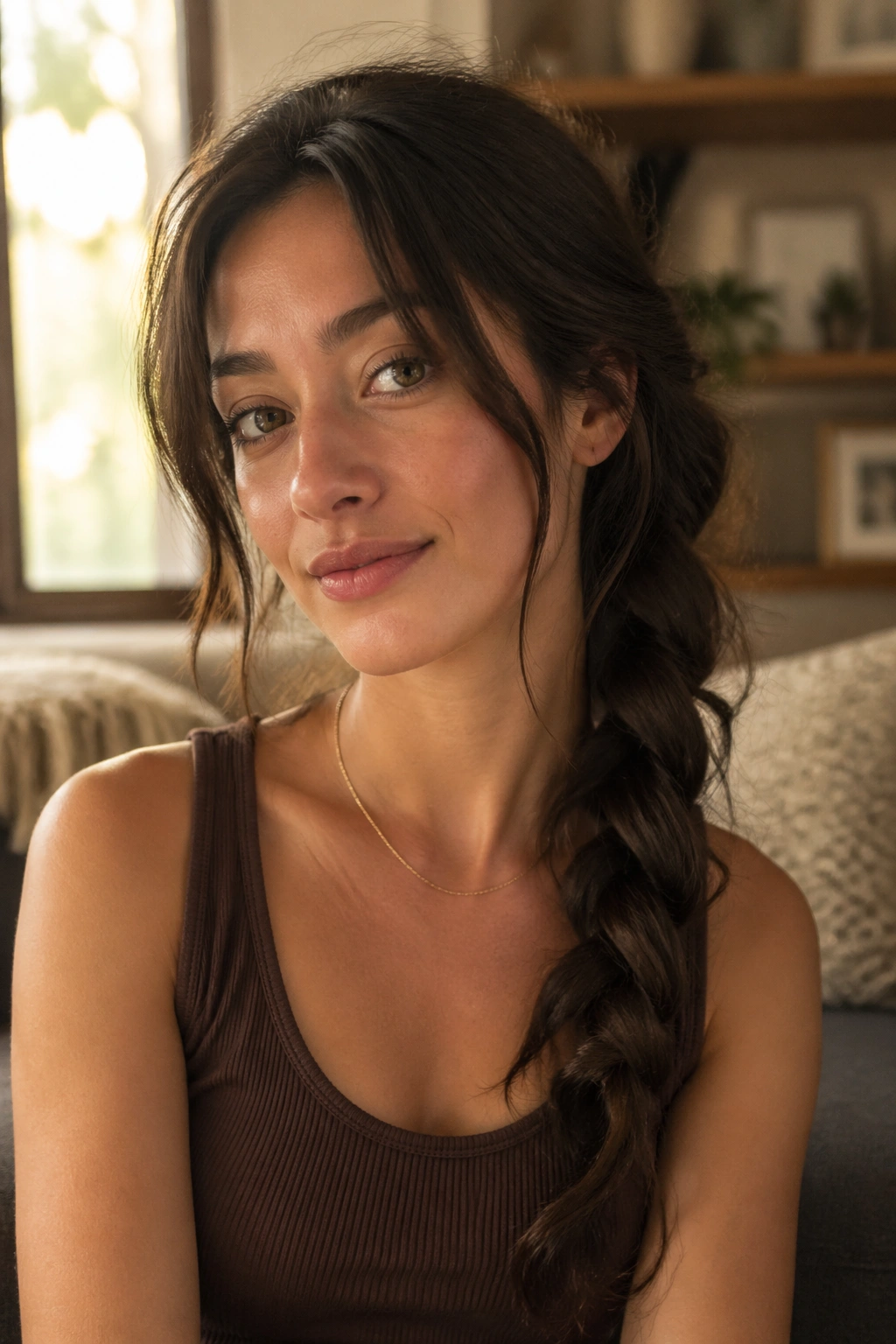
A loose side braid is the kind of style that looks better when it is not trying too hard. That is exactly why it works on oval faces. The side placement breaks up the symmetry of the face just enough, and the curtain bangs keep the front soft while the braid falls over one shoulder. There’s a little ease in it. Not much drama. That’s the charm.
I reach for this look when the hair is on day two or day three and has a bit of texture already. Freshly washed hair can be too slippery for a loose braid unless you rough it up first with dry shampoo or a touch of texturizing spray. Once the braid is in, gently pull the loops apart. Stop before it turns into a mess. A loose braid should still look like it knows where it’s going.
The bangs should feel separate from the braid, but not detached. If they’re too flat, they vanish into the style. If they’re too curled, they can look disconnected from the rest of the hair. A quick bend from the mid-lengths to the ends is usually enough.
This style is easy to underestimate. It isn’t fancy. It does not need to be. It just sits in the right place and lets the face stay visible.
12. Braided Bun With a Clean Fringe
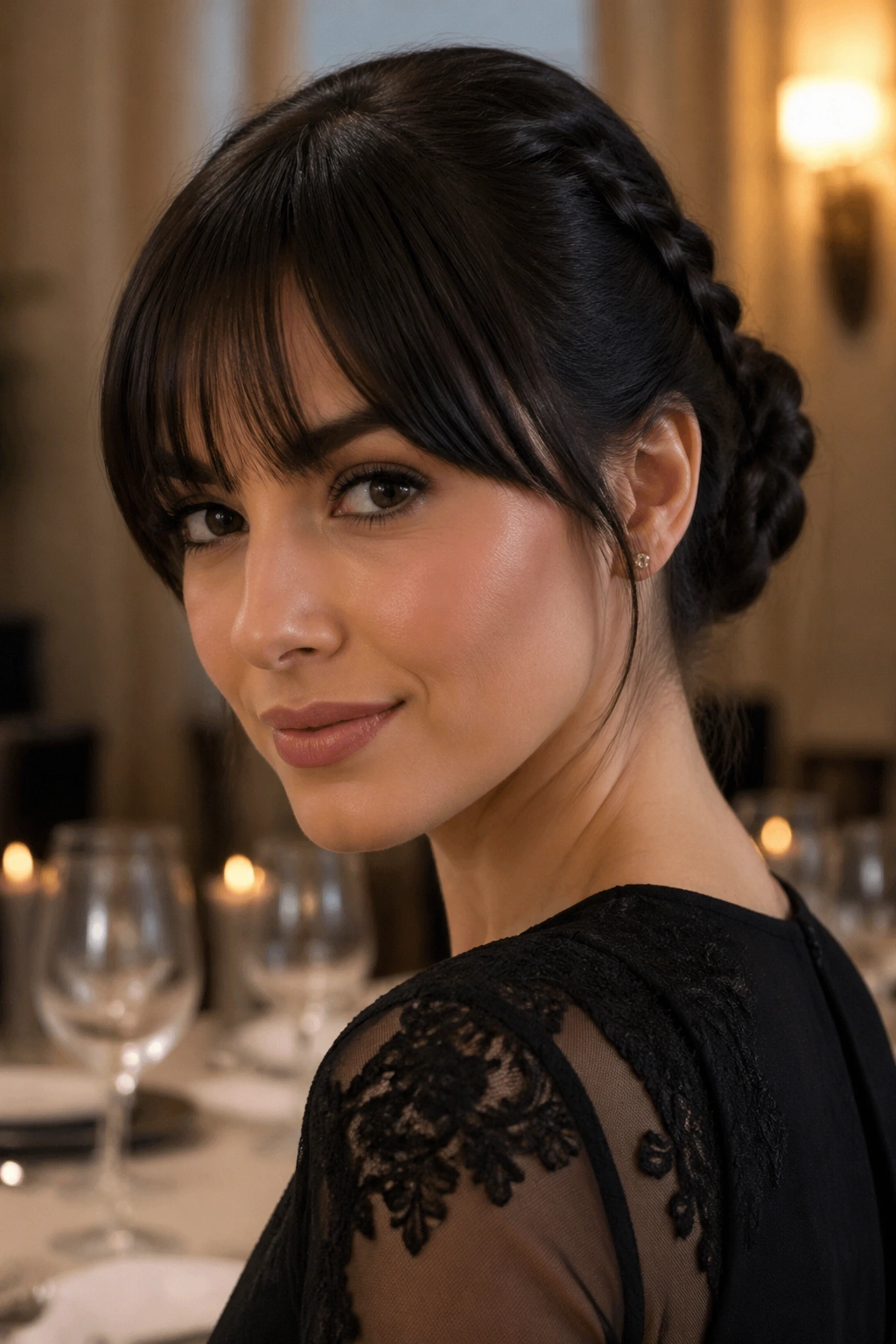
A braided bun reads dressier than a regular bun, but the curtain bangs stop it from looking severe. That’s the whole appeal. The braid can wrap into the bun or sit as a crown around it, and the front pieces soften the line near the cheeks. On an oval face, that contrast gives the whole look shape without making it too formal.
This is a smart option when you want your hair up but still want some movement around the face. A tight bun alone can flatten the front and pull attention straight to the center of the head. Add curtain bangs, and the eye gets a softer path in and out of the style. If your bangs are longer, tuck the ends under slightly so they sit around the jaw. If they’re shorter, leave them more open and let them curve outward.
When It Makes Sense
- Dinner plans.
- Office settings.
- Weddings or events where loose hair feels too casual.
- Hot days when you still want the face framed.
Use a low bun if you want the style to feel calm and grounded. Use a mid bun if you want a little more lift. I’d avoid a very high bun unless your bangs are quite long, because that can stretch the face vertically more than you want.
A few pins and a light mist of spray are enough. No need to pile on product.
13. Bubble Braid With Braided Front Accents
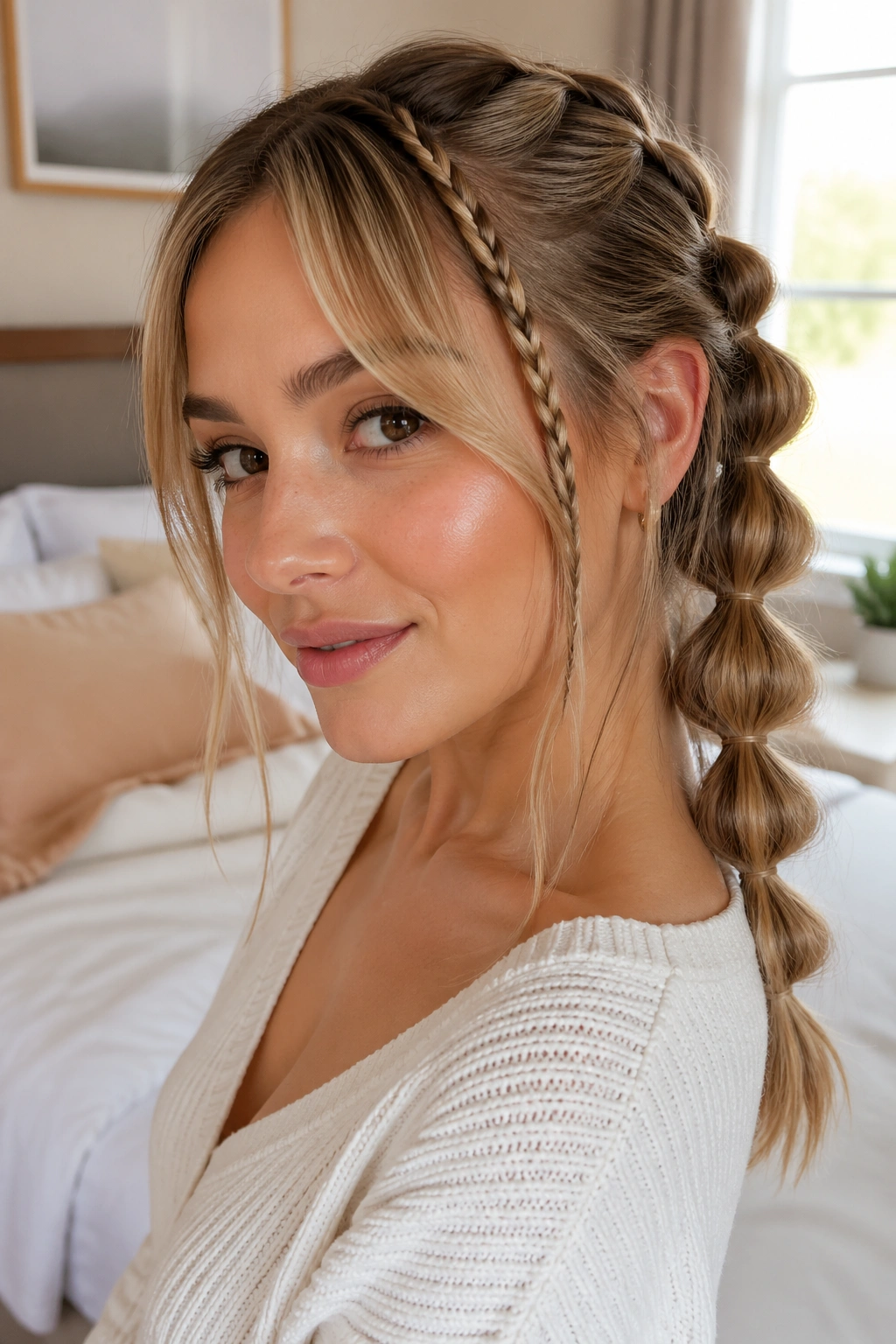
If you want something playful without losing shape at the face, bubble braid is a strong move. The bubbles add roundness and texture down the length, and the tiny braided front accents keep the curtain bangs from feeling too loose or too plain. On an oval face, that mix of horizontal volume and front framing can look balanced fast.
The trick is spacing. Tie the ponytail with clear elastics every 1½ to 2 inches, then gently tug each section outward until it forms a bubble. If the bubbles are too small, the style reads weak. If they’re stretched too far, they can look lopsided. I like mine a little soft, with enough shape to catch the eye but not so much that they feel cartoonish.
The front accents can be very small. Two tiny braids starting at the temples are enough. Leave the curtain bangs to fall just outside them, or blend the ends of the bangs into the first bubble if you want a more connected look. This works well on thick hair, extension hair, or any hair that needs a style with presence.
A Good Match For
- Parties and casual events.
- Longer hair that needs a break from heat styling.
- Anyone who likes braid detail but hates long braiding sessions.
It’s a fun style, but the structure still matters. That’s why it works.
14. Accent Braids Into Loose Waves
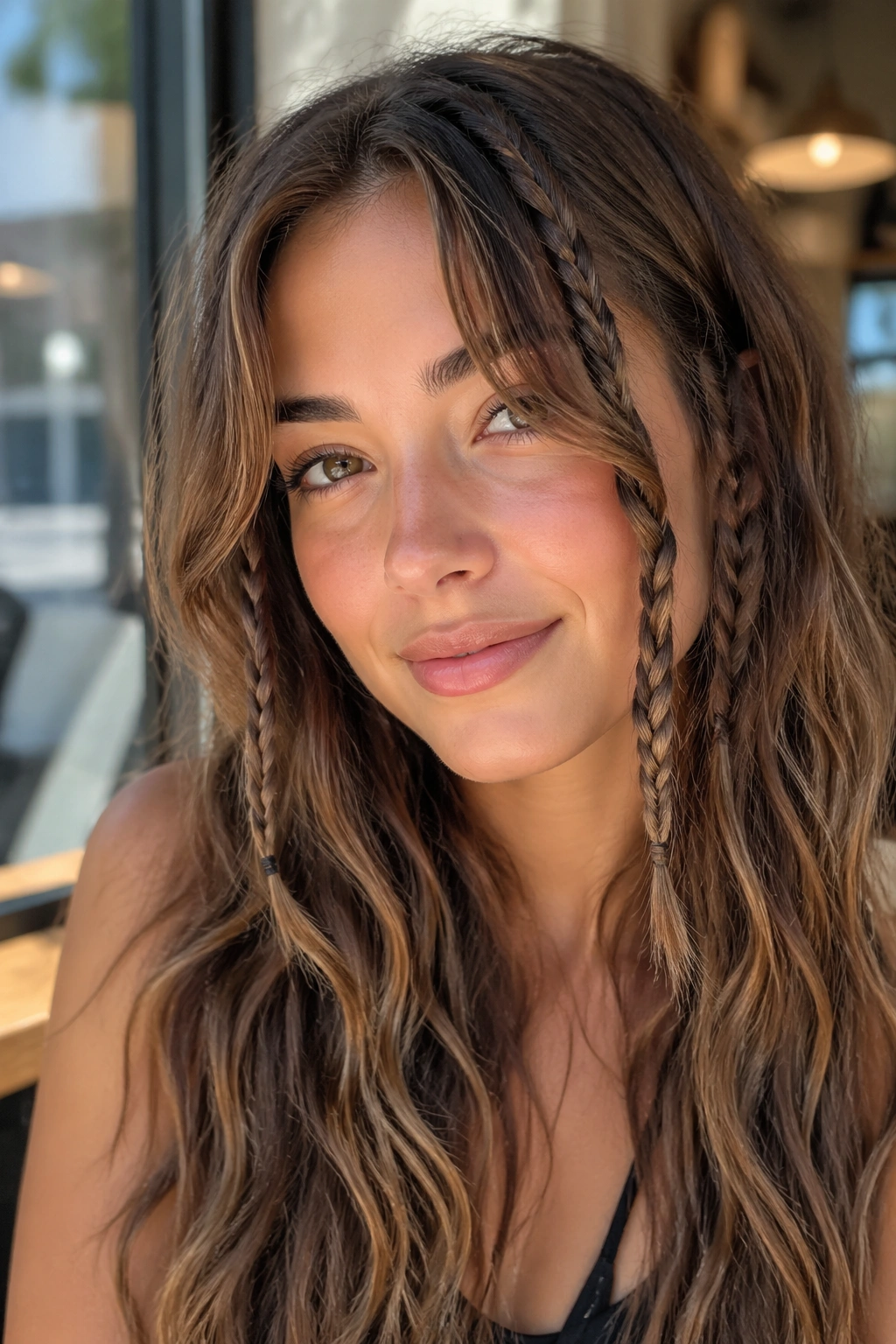
If you want the least demanding option on this list, start here. Two small accent braids at the front can change the whole look of loose waves without taking over the hair, and curtain bangs give the style the face-framing shape it needs. For oval faces, that is enough. You do not need to overbuild the rest.
How to Wear It
Take a section on each side of the part, braid it back a few inches, then secure it or blend it into the loose lengths. Keep the braids narrow so they read as detail rather than competition. The bangs should stay soft and separate, with a bend that follows the line of the cheekbones. If they’re too straight, the contrast feels unfinished. If they’re too curled, the front can start to look heavier than the rest of the hair.
Why It’s So Easy to Wear
- It works on straight hair, wavy hair, and lightly curled hair.
- It takes less time than a full braid.
- It gives you texture near the face without hiding the length.
- It can be dressed up with a clip or left plain.
This is also the style I’d recommend when you’re unsure how much braid you want. It lets the curtain bangs stay in charge, which is often the smarter choice on an oval face anyway. The face already has balance. The braid only needs to support it, not fight it.
That’s the real thread through all 14 styles: the braid can be simple, tight, loose, high, or decorative, but the curtain bangs should still feel like part of the haircut, not a piece you worked around.