


Messy fishtail braids have a sneaky talent: they look like they took forever, even when the real work was a few careful sections, a couple of pins, and some patient tugging at the edges. For garden wedding brides, that matters. Outdoor light is forgiving in one moment and brutally honest the next, so the hair has to feel soft, not stiff, and still hold up when the breeze picks up.
A fishtail braid gives you that rare mix of structure and looseness. The weave is tighter than a three-strand braid, but when you pull it apart a little, it turns into something airy, romantic, and a touch undone. That’s the sweet spot for a bridal look among roses, boxwood, climbing jasmine, and all the other things that make a garden setting feel alive instead of staged.
The trick is not making the braid “messy” by accident. It’s about controlled texture: hair with some grit, sections that are not too perfect, ends that are tucked or softly left out, and flowers placed where they won’t fight the braid. Get that part right and the style starts to look expensive in the old-fashioned sense — not flashy, just carefully made.
1. Loose Low Fishtail With Wildflower Sprigs
This is the style I’d hand to a bride who wants the braid to feel like it settled there naturally. The braid sits low at the nape, so the neckline stays open, and the loosened edges keep it from looking severe. A few tiny wildflower sprigs tucked near the elastic make the whole thing feel garden-ready without tipping into costume territory.
Why It Works
The low placement keeps the shape calm, which is useful if your dress already has a lot going on. A sweetheart neckline, lace back, or soft off-the-shoulder sleeve all play nicely here. Keep the sprigs small. You want a whisper of color, not a bouquet strapped to your head.
- Best for medium to long hair
- Works well with day-old texture spray
- Use 2 to 3 tiny flower pins, not 10
- Leave two face-framing pieces loose if your hairline needs softness
Pro tip: Pull the braid wider at the mid-lengths and tighter near the nape. That little shift keeps the top from collapsing.
2. Side-Swept Fishtail Over One Shoulder
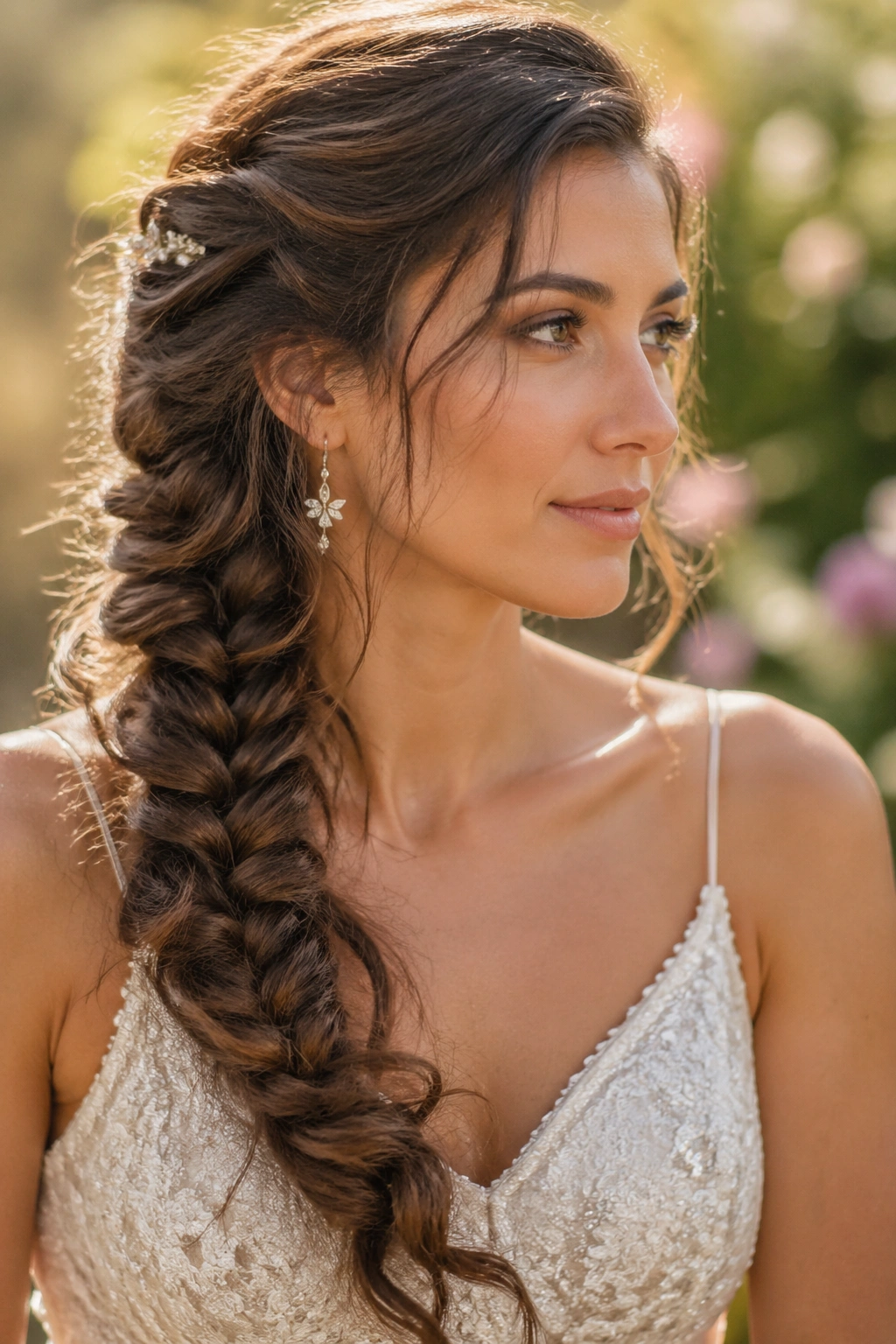
This one has drama without acting like it. The braid starts off-center and drapes over one shoulder, which is useful when the dress has embroidery, buttons, or a neckline you want to show off. It feels elegant, but not polished in a way that scares people.
The side sweep also helps in garden settings because the braid moves with the body. It doesn’t sit there like a helmet. If your hair is thick, keep the pull-apart texture a little uneven so the braid doesn’t become a giant rope. If it’s finer, a little root teasing at the crown gives you more presence up top.
The placement is the real win. You can pin the braid behind the ear with two hidden bobby pins, then let the tail rest forward where it’s easy to see in photos.
3. Half-Up Crown Fishtail With Face-Framing Pieces
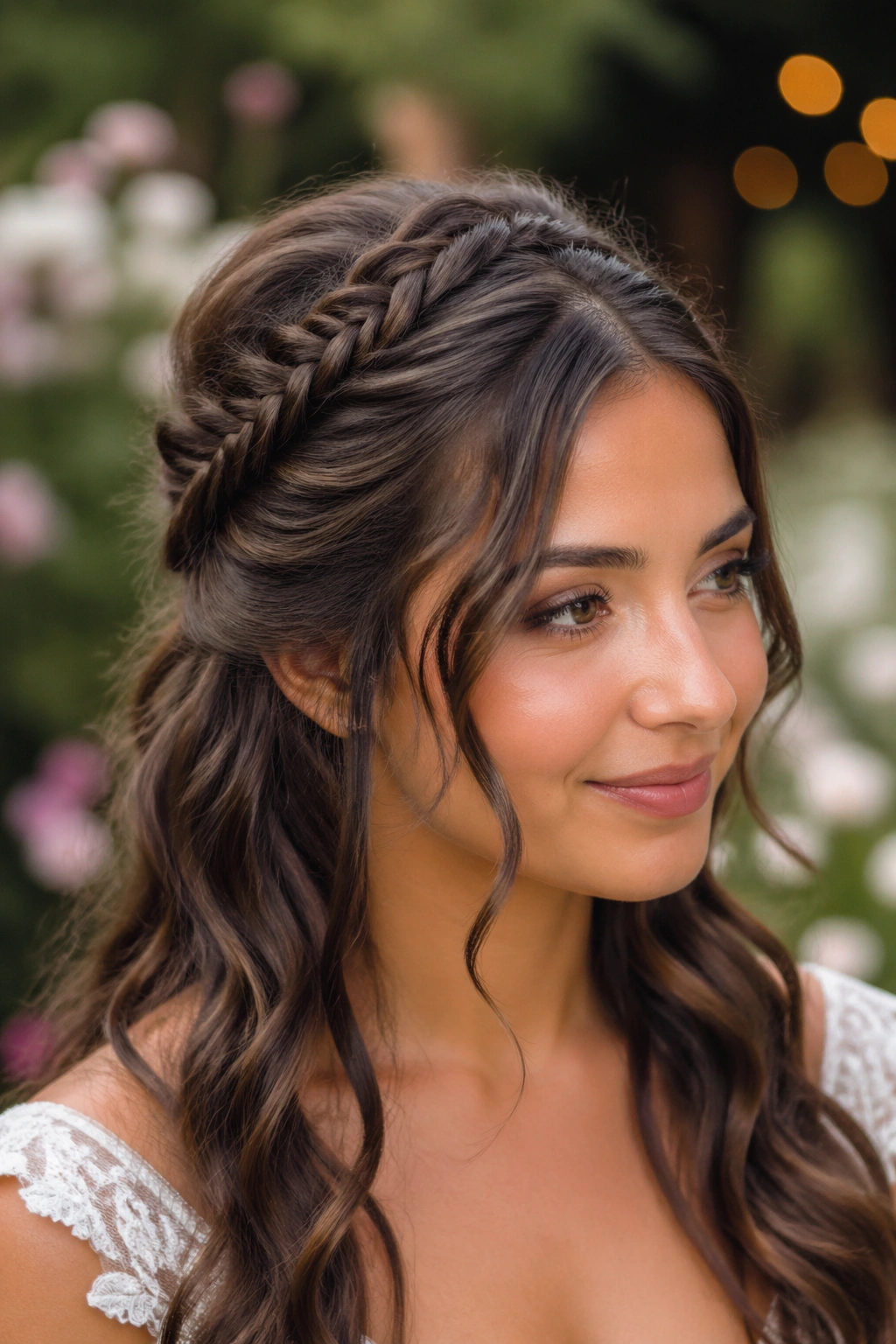
Why does this style work so well for brides who hate having all their hair up? Because it gives you lift at the crown and movement everywhere else. The top section is braided into a small fishtail band, then pinned into a soft half-up shape while the rest of the hair hangs in loose waves.
How to Wear It
Keep the front pieces on the narrow side. Thick face-framing strands can swallow the braid and make the whole style feel heavy. Two soft pieces near the cheekbones are enough.
If you’re using a veil, place the comb just below the braid rather than on top of it. That keeps the braid visible after the veil comes off. A tiny touch of shine spray on the woven section helps, but don’t soak it. Dull, dry-looking ends are a problem; glossy roots are one too.
4. Fishtail Wrapped Into a Messy Chignon
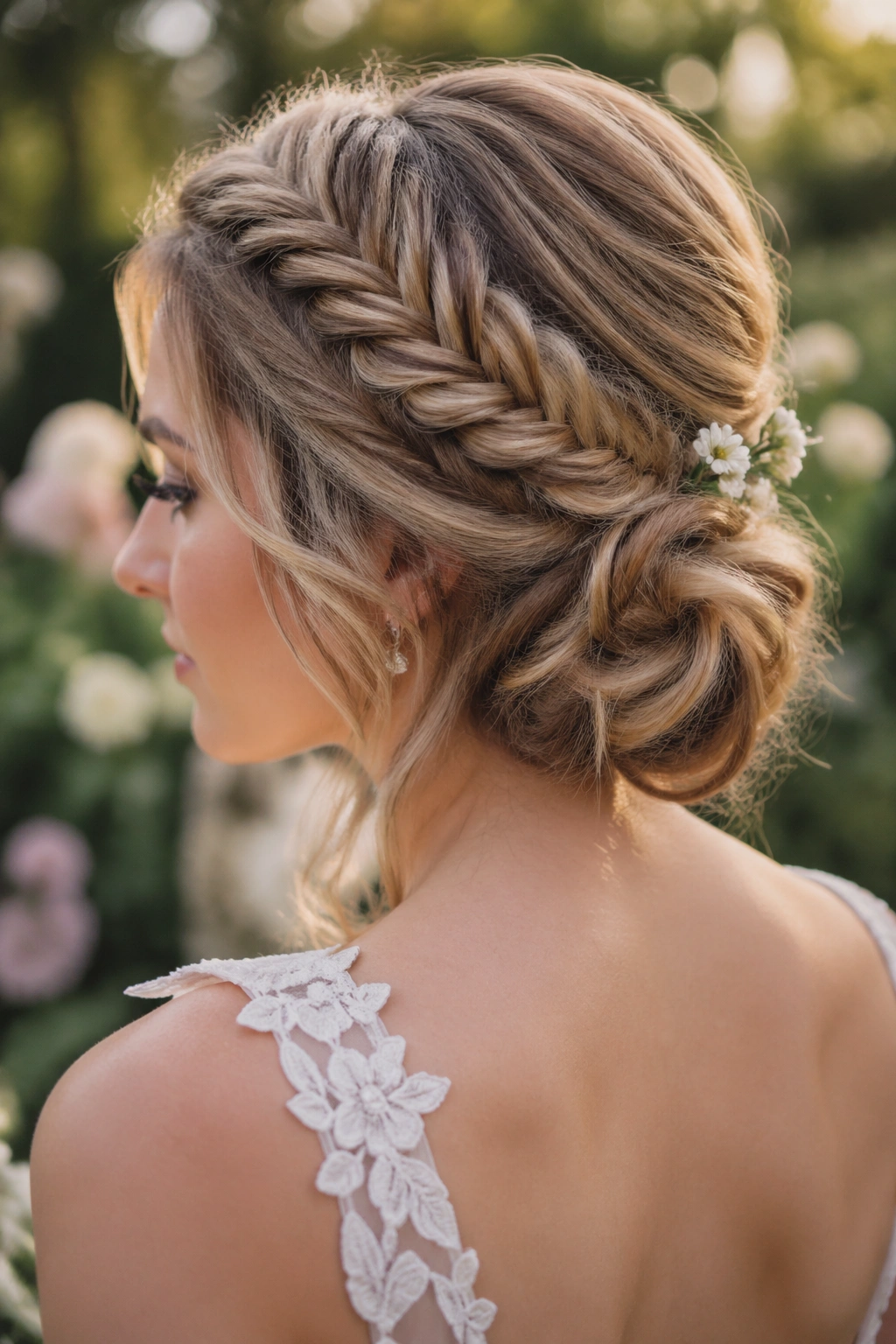
This is the version for brides who want their hair off the neck but still want braid detail to show. You start with a fishtail, then wrap it into a loose chignon at the back, pinning only the main anchor points so the edges can puff out a little.
The result feels softer than a strict bun. It also wears well in warm weather because the nape stays clear. I like this most with a square neckline or a gown with a high lace back. The braid gives the bun some story; otherwise it can read a little plain.
A few hidden pins do the heavy lifting here. Use a clear elastic first, then wrap a small section of hair around it before pinning the bun. That little concealment matters more than people think.
5. Boho Fishtail With Pearl Pins
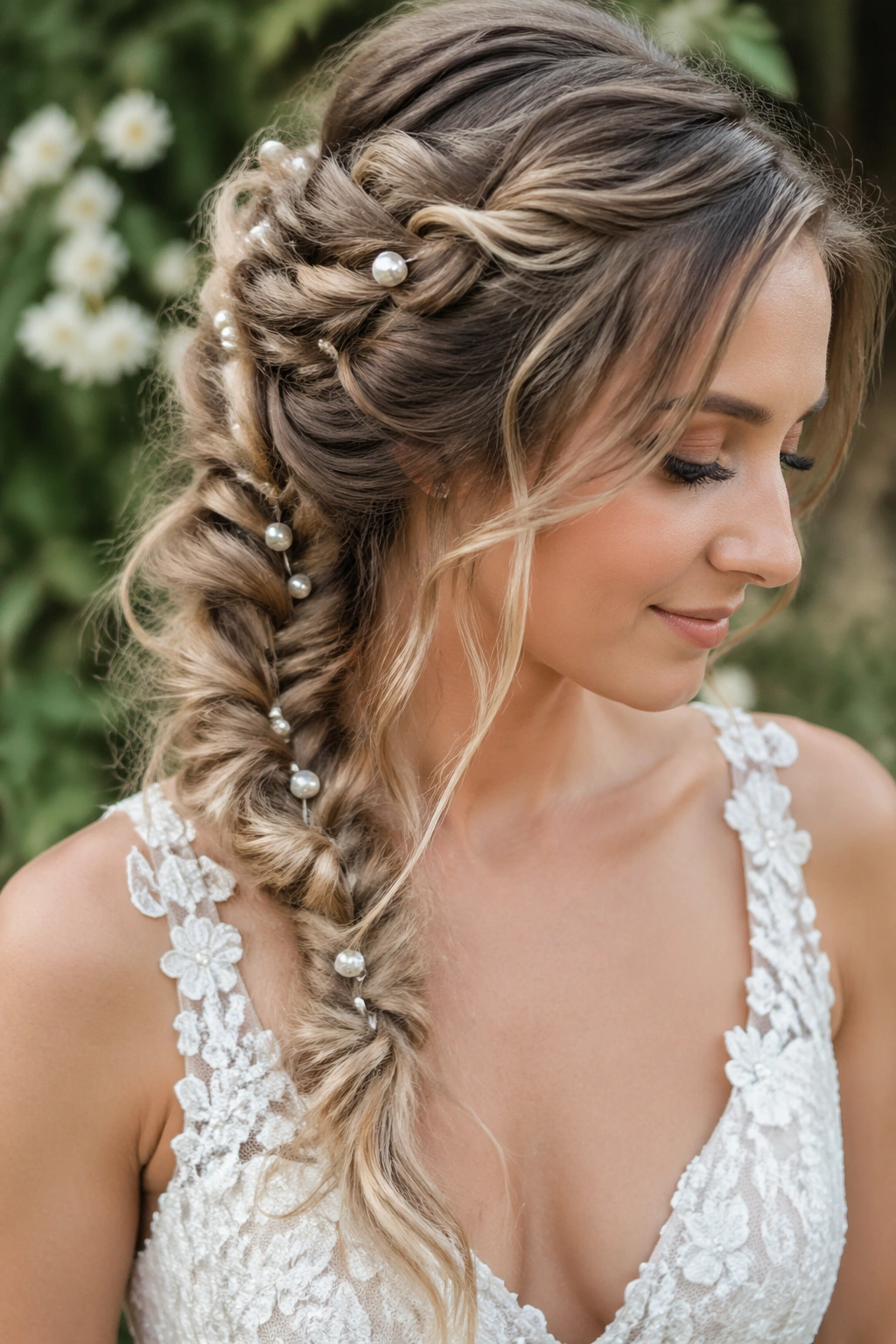
Pearls change the mood fast. Without them, this braid leans bohemian and easy. With a few small pearl pins tucked irregularly through the weave, it becomes bridal in a quieter way.
The best version keeps the pearls scattered, not lined up. A straight row looks fussy. Two near the crown, one near the middle, and one closer to the tail usually feels right. The braid itself should stay airy, with the sides pulled wider than you think you need.
This style likes soft fabrics: chiffon, crepe, lace, anything with movement. Heavy satin can make it feel too casual by contrast. And if you’re wearing statement earrings, keep the pins small. Too much sparkle starts to fight itself.
6. Braided Halo Fishtail With Soft Tendrils
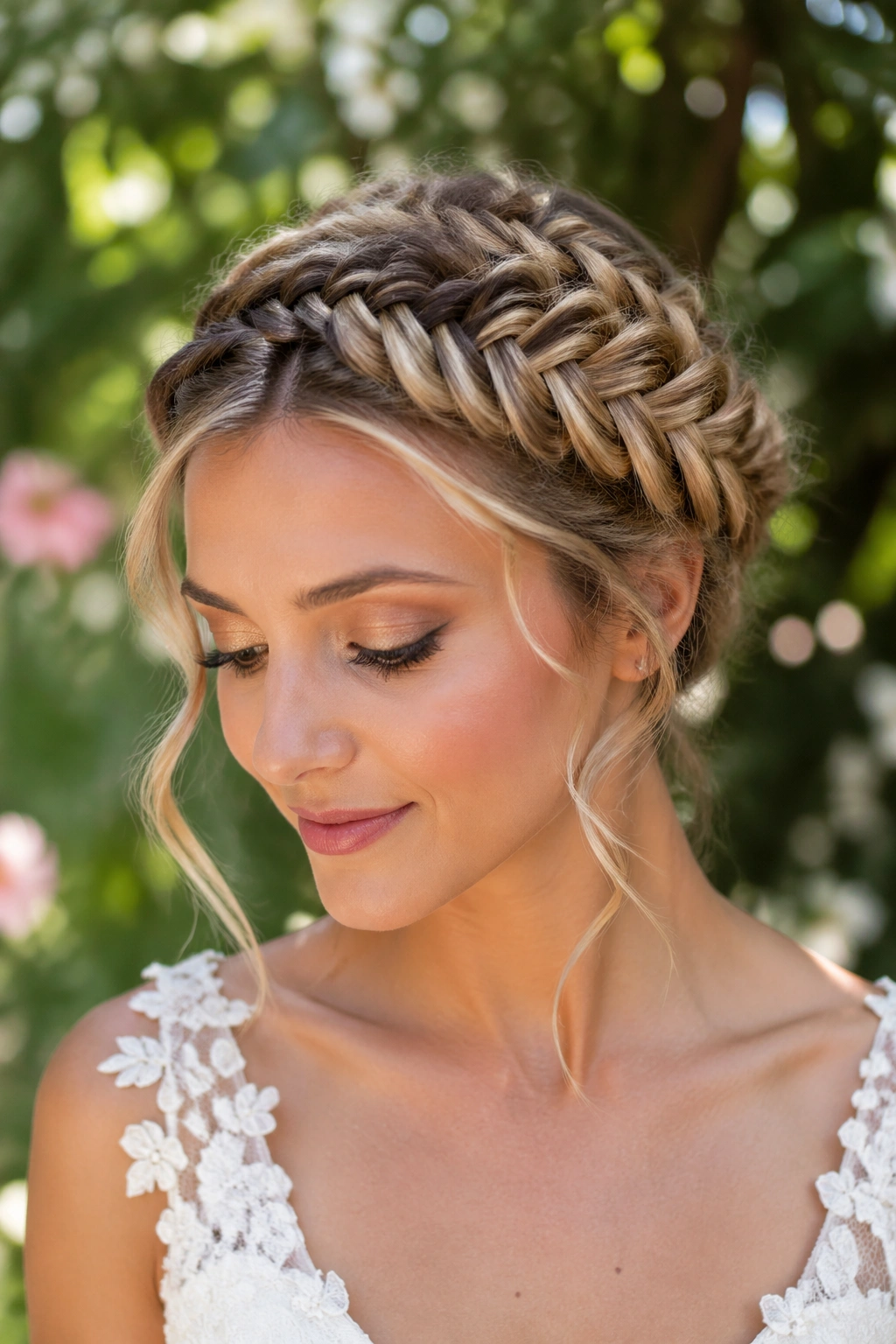
A halo braid can look strict if it’s braided too tightly. A messy fishtail version fixes that. The braid circles the head like a crown, but the loosened sections and a few soft tendrils keep it from feeling frozen in place.
It’s especially good for brides with outdoor ceremonies because it stays secure while still looking romantic from every angle. The halo also clears the face, which helps if you’re wearing a statement necklace or a dress with a detailed bodice. The tendrils should be thin. Thick chunks near the temples can make the style fall apart visually.
If your hair is very slippery, prep with mousse and a touch of dry texture spray before braiding. Smooth hair slides too much for this one.
7. Fishtail Ponytail With Tucked Ends
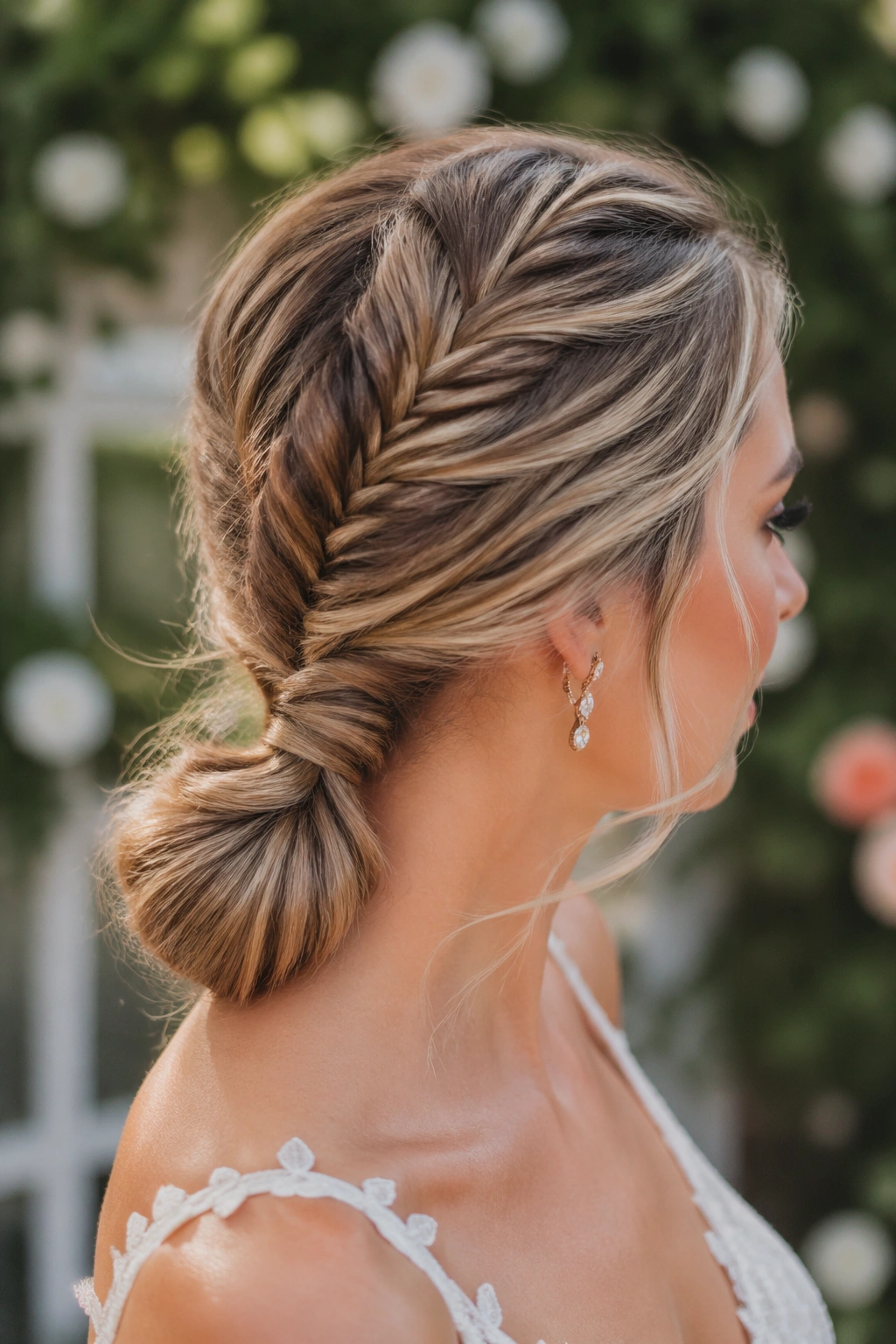
A ponytail sounds casual until you braid it with a fishtail and hide the elastic properly. Then it turns into something sharp and bridal. This version is cleaner than the others in this list, but the loosened braid and tucked ends keep it from feeling severe.
Small Things That Matter
- Start the ponytail at mid-height, not too high
- Wrap a thin hair section around the elastic
- Pull the braid apart in 1-inch sections
- Tuck the end under with two bobby pins if you want a neater finish
This is one of the easiest styles to wear if you’re worried about wind. It also lets earrings and neckline details stay visible, which matters more than people admit.
8. Double Fishtail Accent Braids Into One
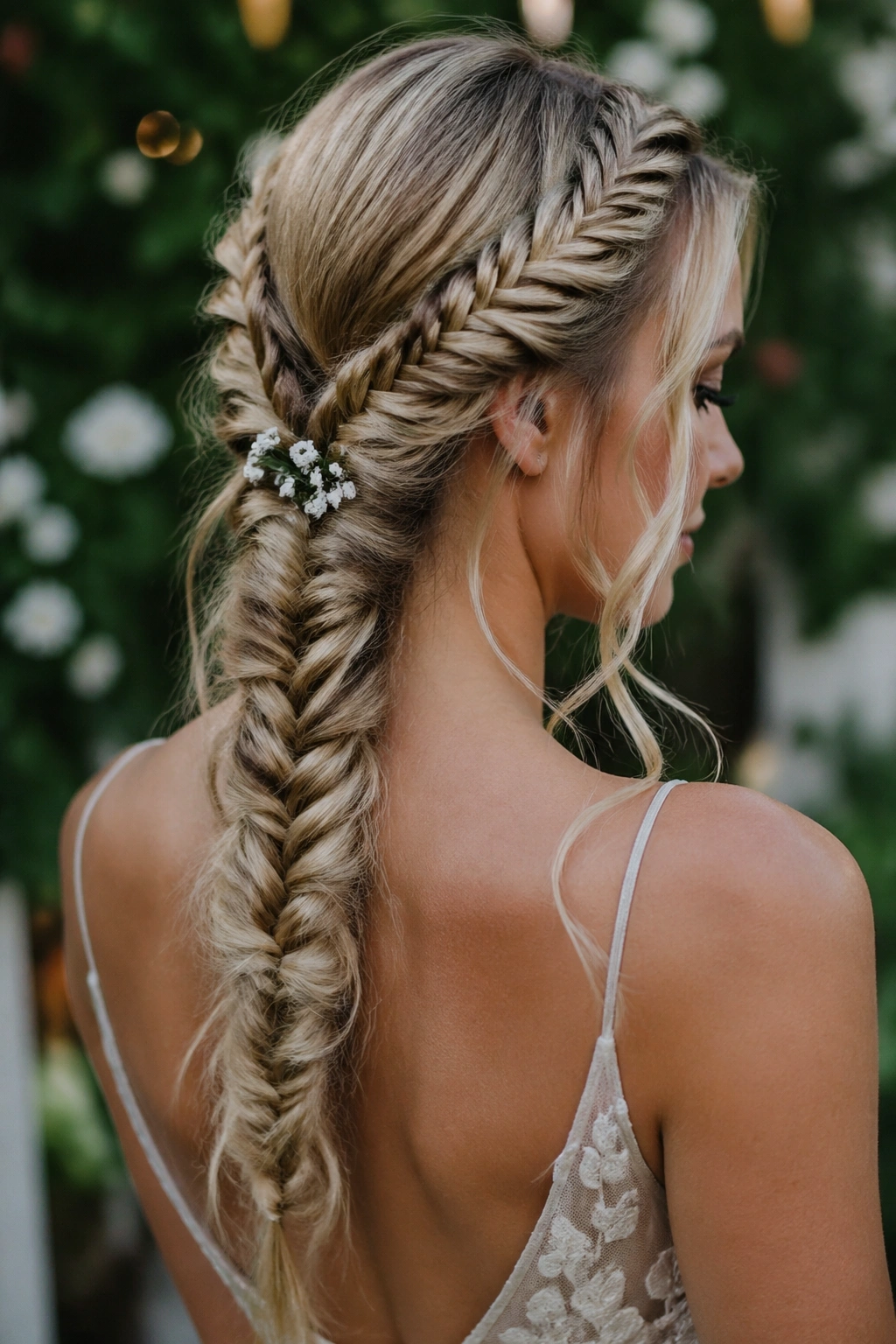
Sometimes the best way to make a braid feel special is to add two smaller braids first. These accent fishtails sit at the sides and feed into one larger central braid, giving the style more texture without making it look busy.
The trick is keeping the accent braids narrow. If they’re too thick, the whole style gets chunky fast. Use them like framing pieces, not the main event. A little looseness around the temples helps the braid settle into the hair instead of sitting on top of it.
This one works well for brides who want the braid to read from the back in photos. The side accents create movement when the head turns. That detail matters in outdoor weddings, where candid shots matter almost as much as the aisle walk.
9. Cascade Fishtail for Long, Thick Hair
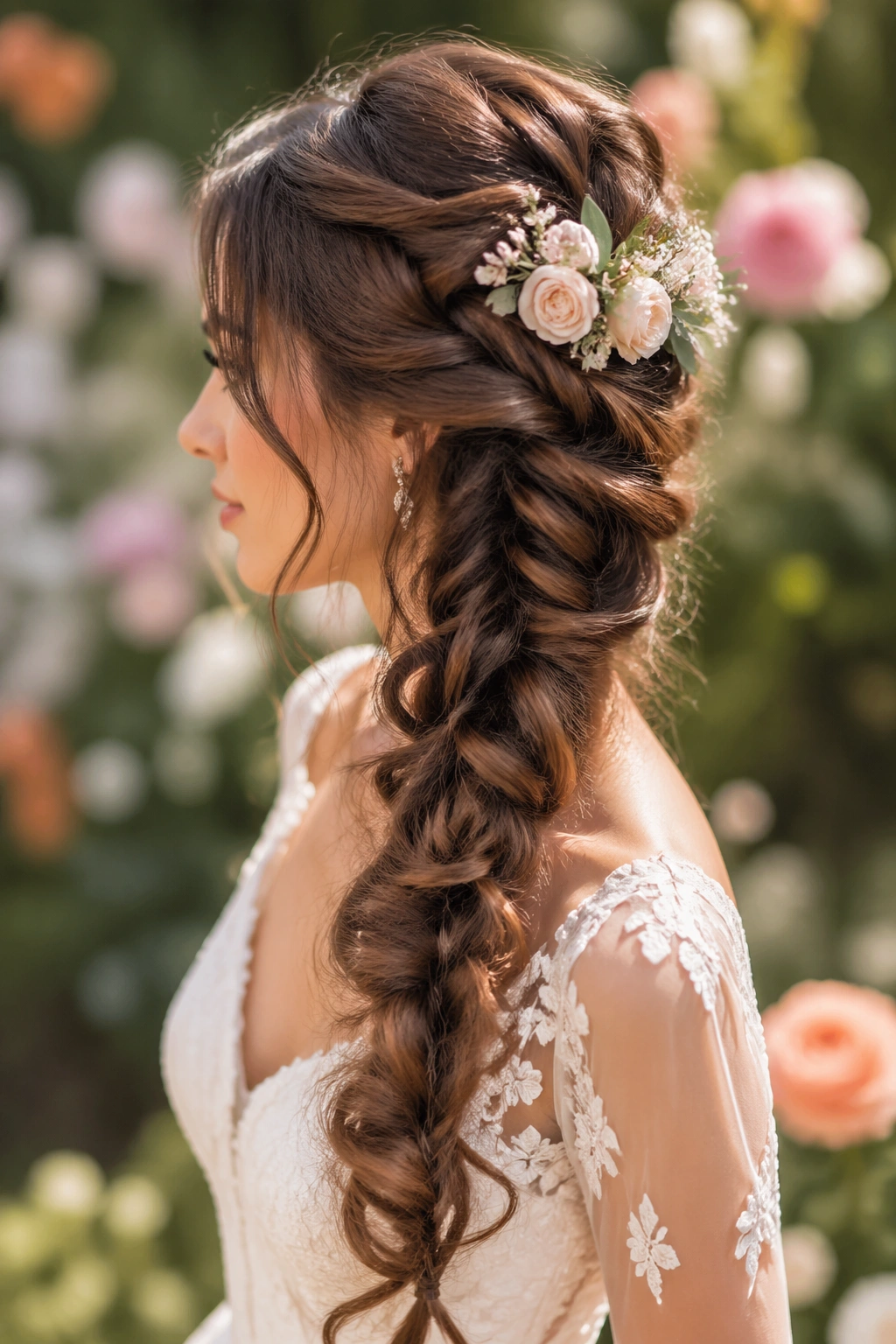
Long, thick hair can make a fishtail look gorgeous or heavy, and the difference usually comes down to how much you loosen it. This cascade style lets the braid fall in a long, layered line, almost like a waterfall of woven sections.
Don’t braid it too tight at the start. The top needs space so the shape doesn’t look bulky at the scalp. Once the braid is done, tug each loop outward a little at a time. That’s the part that gives it movement. If the ends feel too blunt, curl them with a 1-inch wand so the finish looks softer.
This is one of the few braid styles that can hold a larger floral comb without getting swallowed by it.
10. Fishtail Milkmaid Braid With Loose Crown Volume
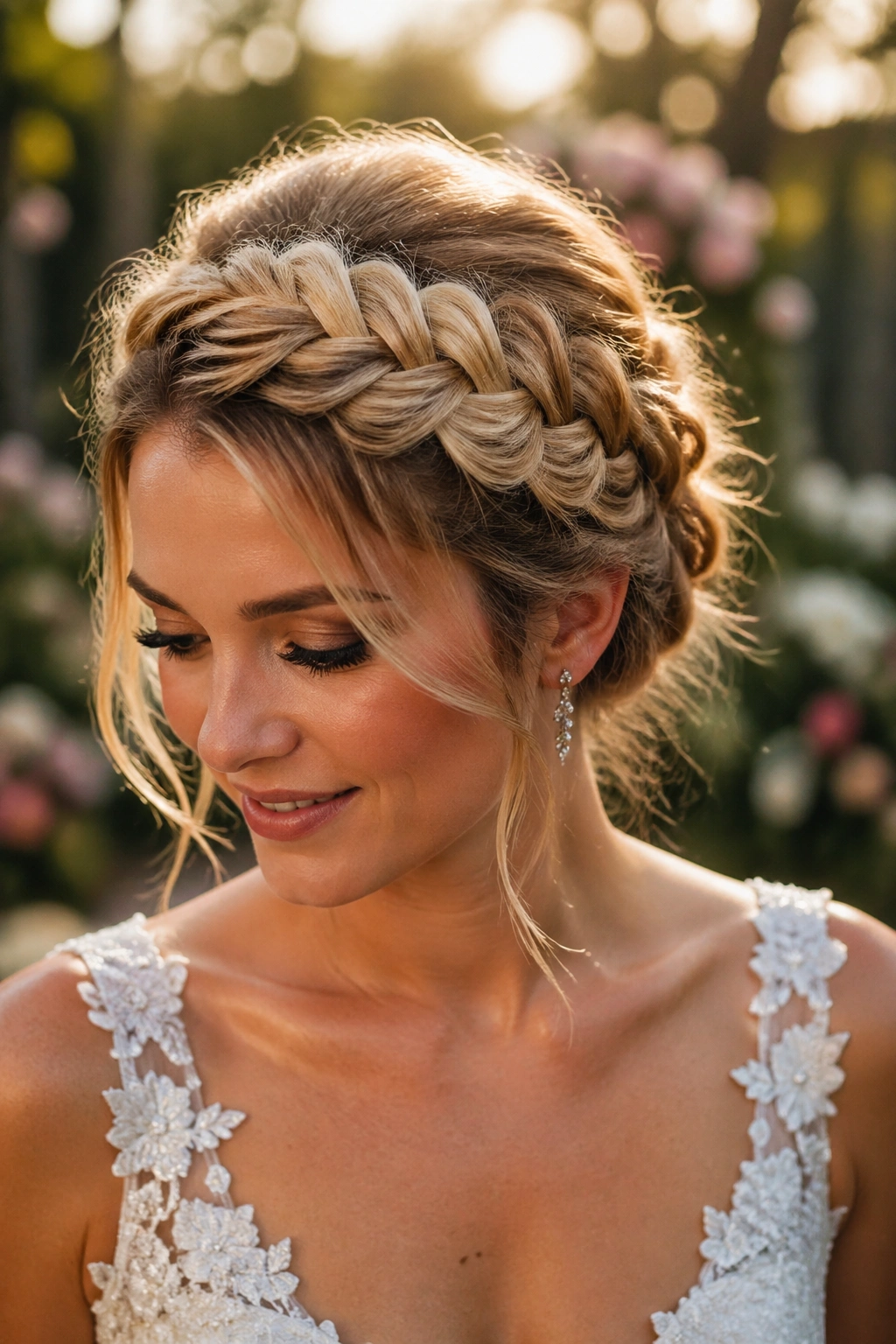
A milkmaid braid has a sweetness to it, but the messy fishtail version avoids the school-uniform look. The braid wraps across the crown, and a bit of lifted volume at the top gives the face more length.
What Makes It Different
The crown should not lie flat. If it does, the style can look old-fashioned in the wrong way. Tease a small section at the roots, smooth the surface lightly, and pin the braid just behind the ears. That little puff at the crown changes everything.
This style suits brides with open necklines and simple veils. It also keeps hair off the shoulders, which helps if the dress has detailed sleeves. Be gentle with the edges. A milkmaid braid that’s over-pulled starts to feel stiff fast.
11. Tousled Fishtail With Ribbon Woven Through
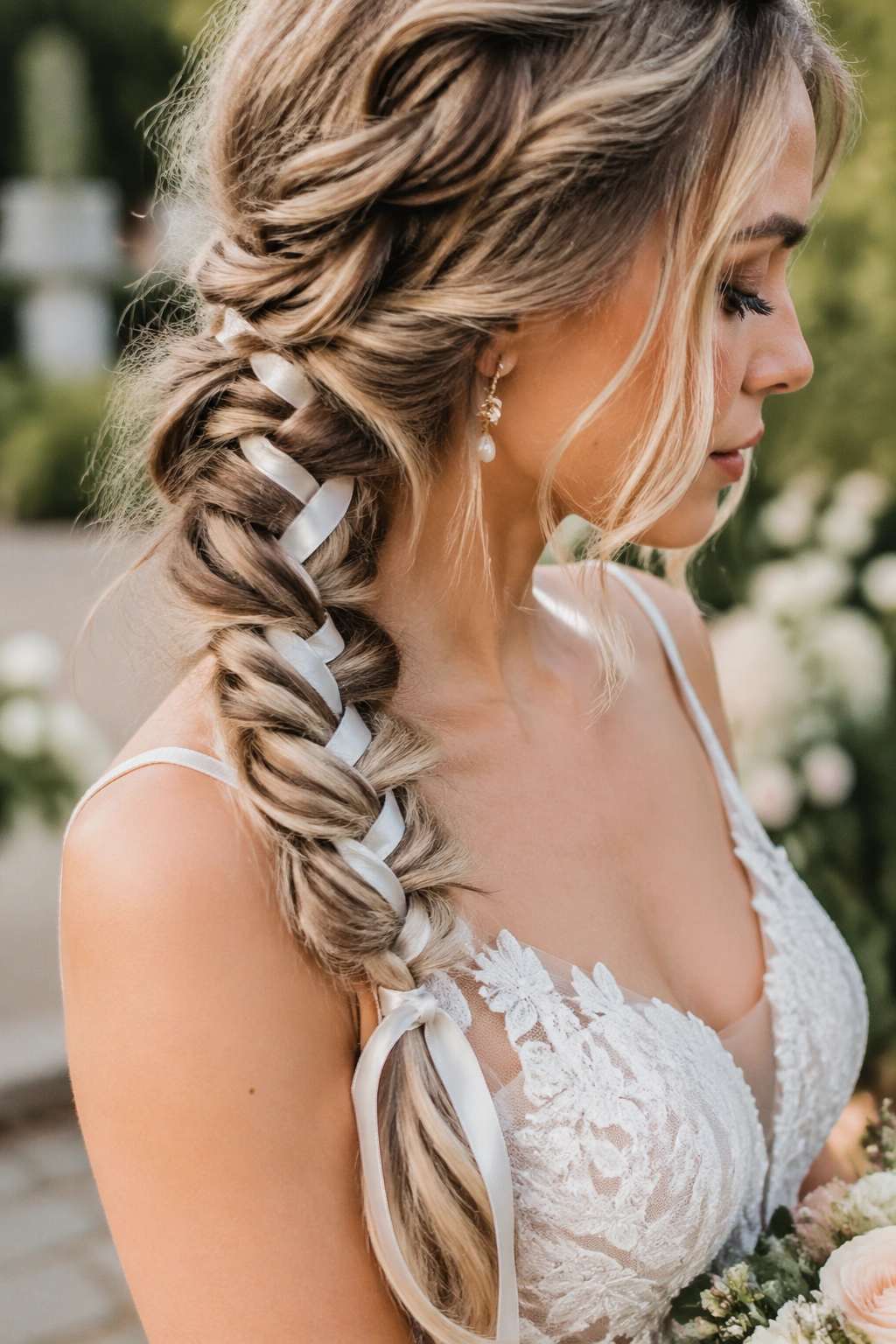
Ribbon can be charming or too precious, depending on how it’s used. A narrow silk ribbon woven through a messy fishtail keeps the look soft and a little old-world. Ivory, blush, or a muted sage all work well for garden weddings.
I like ribbon best when it shows and disappears as the braid turns. That stop-start effect looks richer than a full visible ribbon from top to bottom. Satin ribbon gives more shine; silk ribbon feels calmer and less slippery.
Keep the braid itself loose, because ribbon adds visual weight. A tight braid with ribbon can look overworked. A small bow at the end is enough if you want a finishing touch, but I’d skip anything too large. It starts to look like gift wrapping.
12. Asymmetrical Fishtail With Deep Side Part
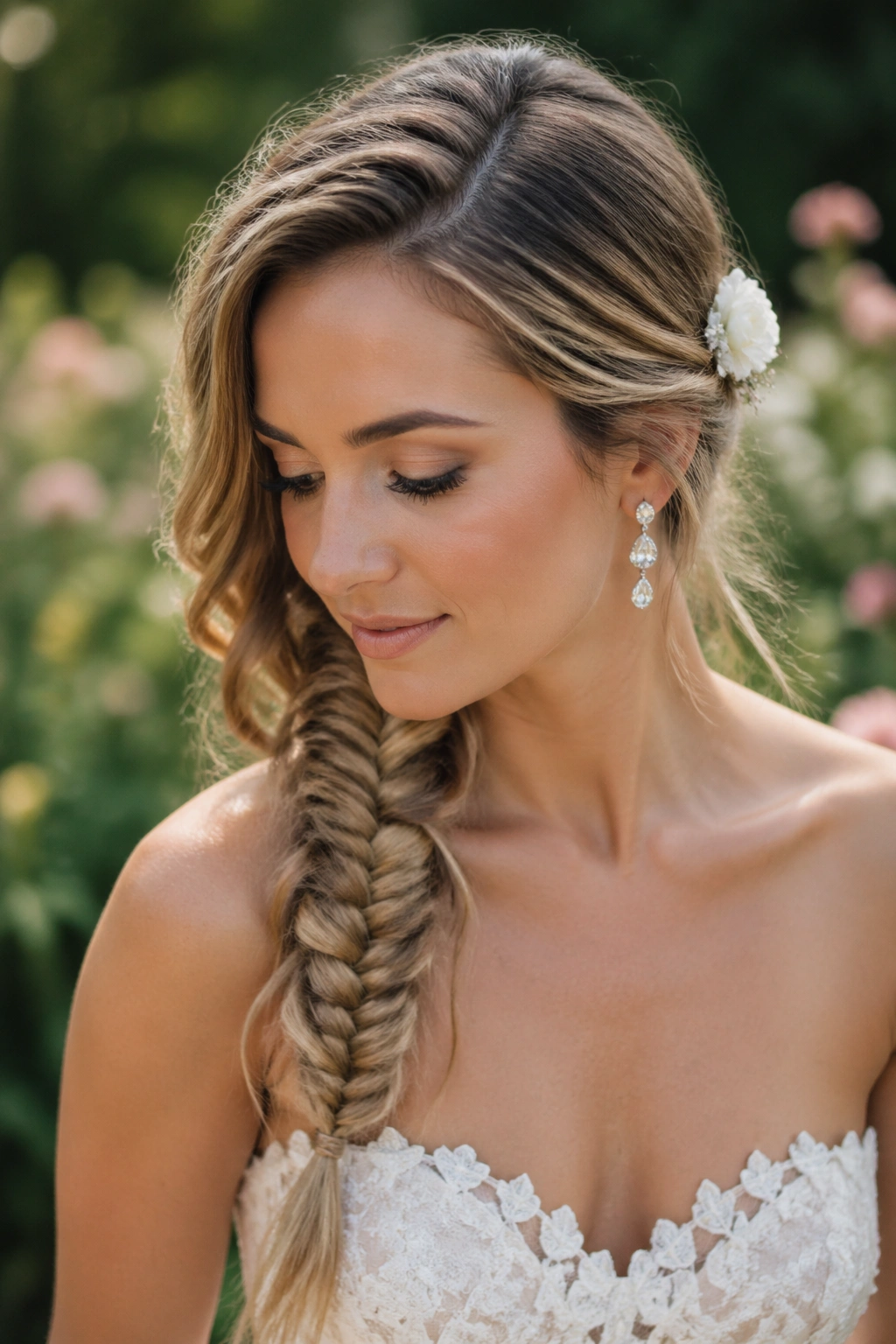
A deep side part changes the whole mood. The braid starts on one side, crosses the back at an angle, and leaves one side of the head more open than the other. It’s a little dramatic. In a good way.
This style suits brides who don’t want symmetry to do all the work. It gives the face a stronger line and makes earrings or a shoulder-baring dress feel even more noticeable. The open side can carry a single flower pin or nothing at all. Both options work.
If the part is very deep, balance it with a little lift at the crown so the head doesn’t look pinched. That’s the only real risk here.
13. Textured Fishtail Bun With Veil Underlay
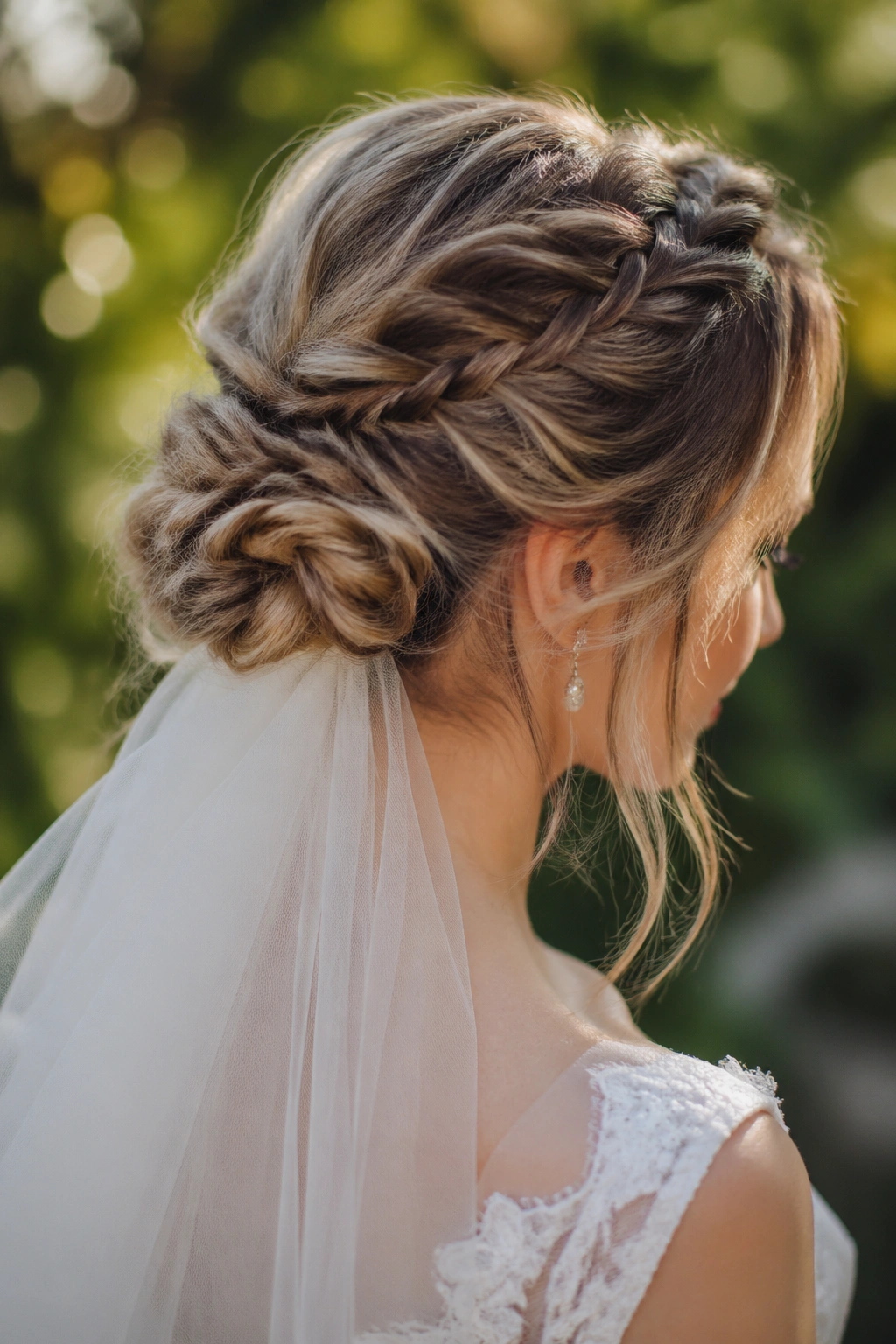
A veil underlay means the comb sits under the main braid or bun rather than on top of it. That’s a smart move for brides who want the braid to still be visible once the veil comes off. This textured bun uses a fishtail as the base, then coils it loosely into a low nest of pins.
Why It Holds So Well
The braided texture gives the bun grip. Smooth buns slide; braided buns stay put. It’s the same reason stylists use braided anchors under bigger updos.
- Use 6 to 10 pins depending on hair thickness
- Place the veil comb just below the braid line
- Leave a few ends poking out for softness
- Spray only the outer layer so the bun stays touchable
This one works especially well for long ceremonies because it doesn’t shift much once pinned.
14. Fishtail and Twist Combo for Shorter Lengths
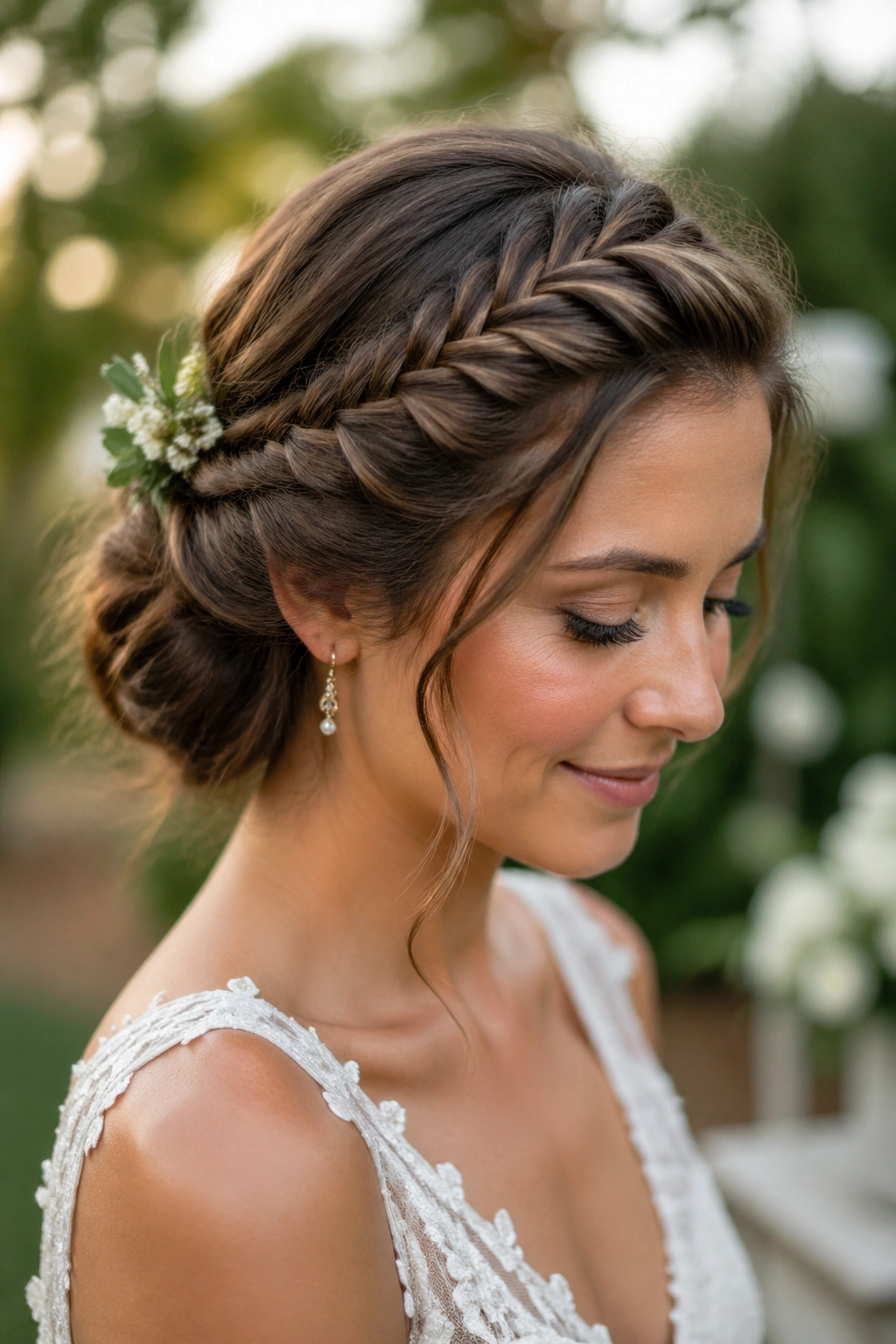
Shorter hair can still do a messy fishtail look if you stop pretending the braid needs to be enormous. A twist at the sides buys you a little extra length, and then the braid can begin lower than usual.
That little workaround matters. A lot of brides with collarbone-length hair assume a fishtail won’t hold, but the right pins and a few hidden twists can make it look fuller than it is. Keep the braid compact, and don’t tug it apart too much. Over-stretching shorter lengths makes the ends poke out in awkward places.
This style is especially handy if you want a garden wedding braid but still need it to work with fine or layered hair.
15. Soft Mermaid Fishtail With Beachy Waves
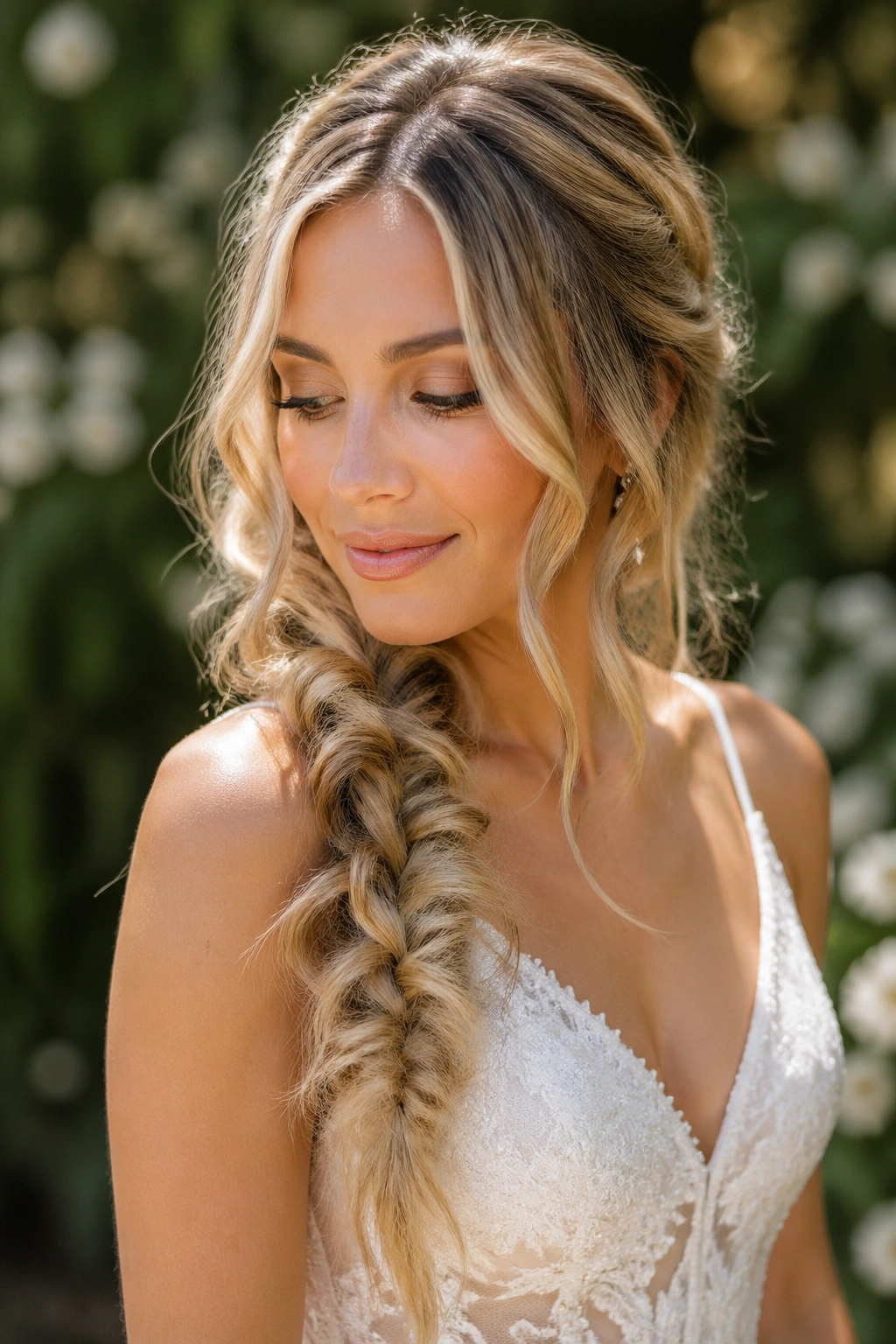
Beachy waves before braiding can help the fishtail feel fuller and less slick. The final effect is soft and a little romantic, which is exactly why this version keeps showing up with lace dresses and outdoor ceremonies.
The waves should not be too uniform. A few bends are fine. Ringlets aren’t the point here. Once the braid is finished, loosen the outside pieces and leave the tail a little piecey. That uneven tail is part of the charm.
If you’re using shine serum, use the tiniest bit on the ends only. Too much product flattens the wave pattern and the braid loses its airy shape.
16. Fishtail Crown With Baby’s Breath
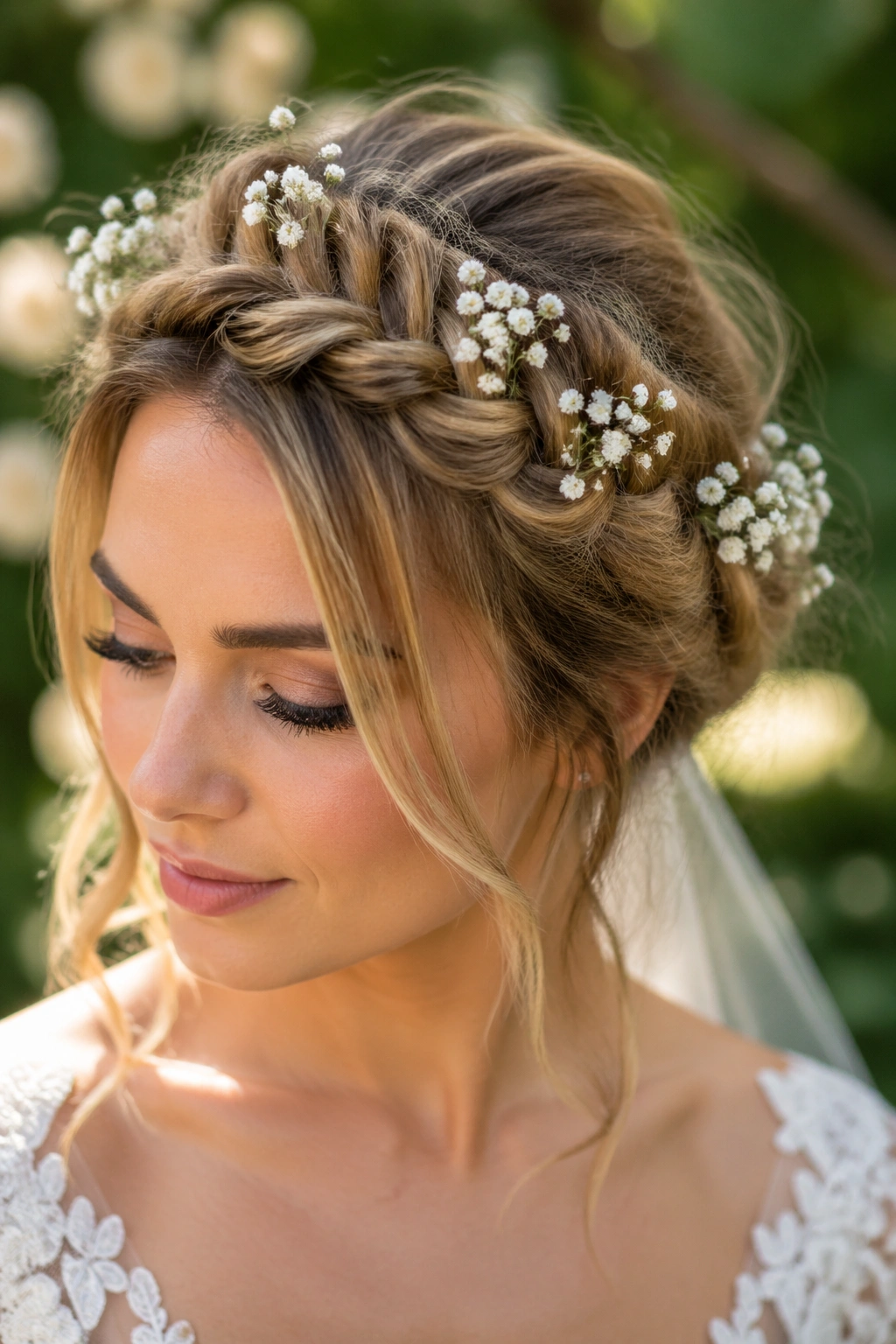
Baby’s breath has a tendency to look either dreamy or dated. The difference is placement. Tucked into a loose fishtail crown, it reads delicate and fresh, especially if the clusters are tiny and spaced out.
How to Keep It Modern
The braid should be soft, and the flowers should follow the braid’s curve rather than sit on top of it. A few small clusters near the back and one off to the side are enough. Skip the giant puffs people used to stuff into updos.
This style suits brides who want lightness around the face. It also photographs well from the side because the tiny white blooms catch light without competing with the braid. Keep the rest of the makeup soft. Heavy eye makeup can make the whole look feel mismatched.
17. Low Fishtail Knot for Minimal Brides
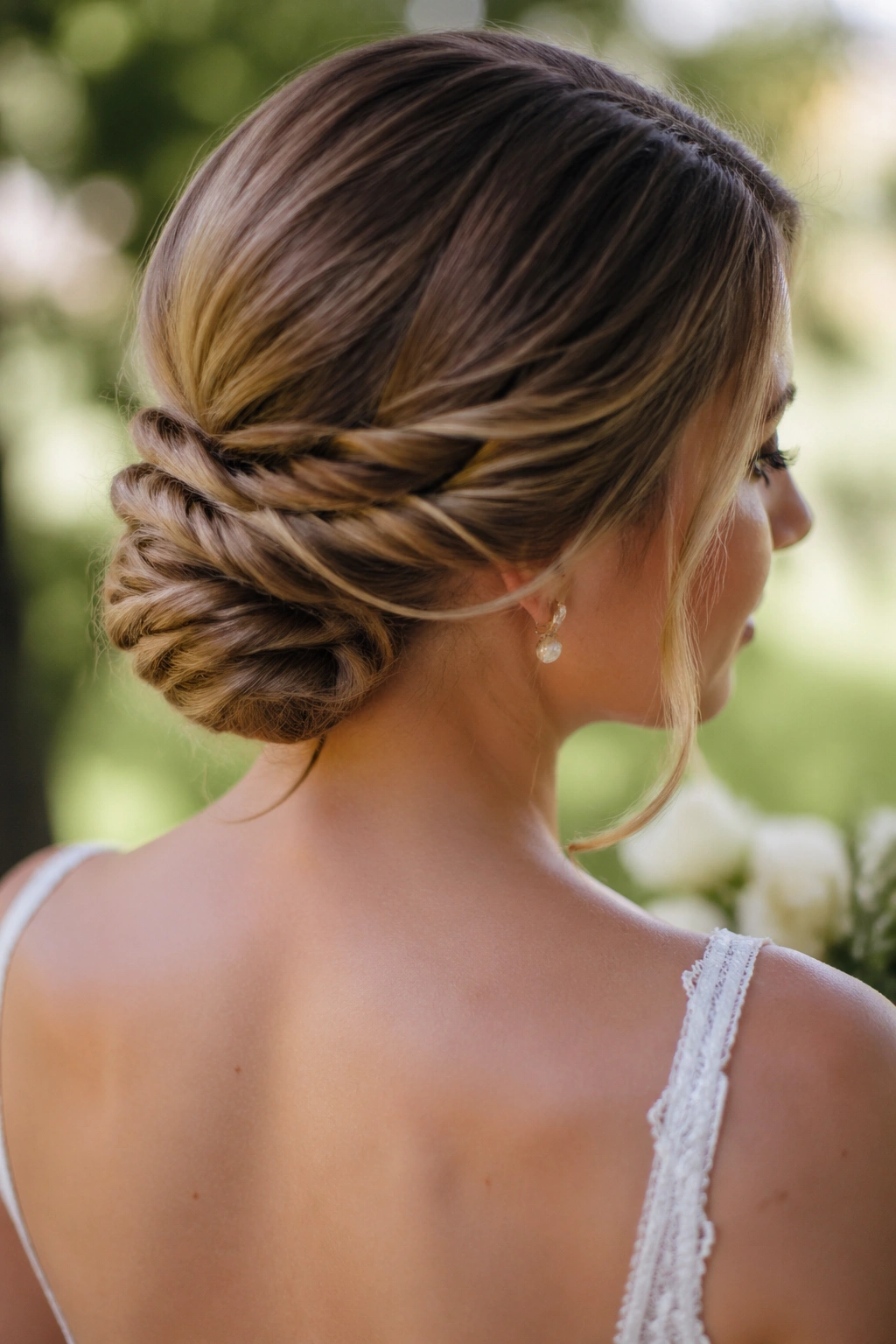
Not every bridal braid needs flowers. Some brides want the hair to feel clean, almost spare, and this low knot version gets there with a fishtail base and a tucked finish. The braid is folded into itself near the nape, then pinned so the tail disappears into the shape.
That tucked end is the key. It keeps the style neat without making it hard-looking. You still get the braid texture, but no long tail dragging the eye down. This is a smart pick for simple gowns, sleek crepe fabrics, or a garden wedding where the dress already has plenty of detail.
I’d keep the part clean and the texture subtle. Too much mess, and you lose the point of the style.
18. Over-Directed Fishtail With Lifted Crown
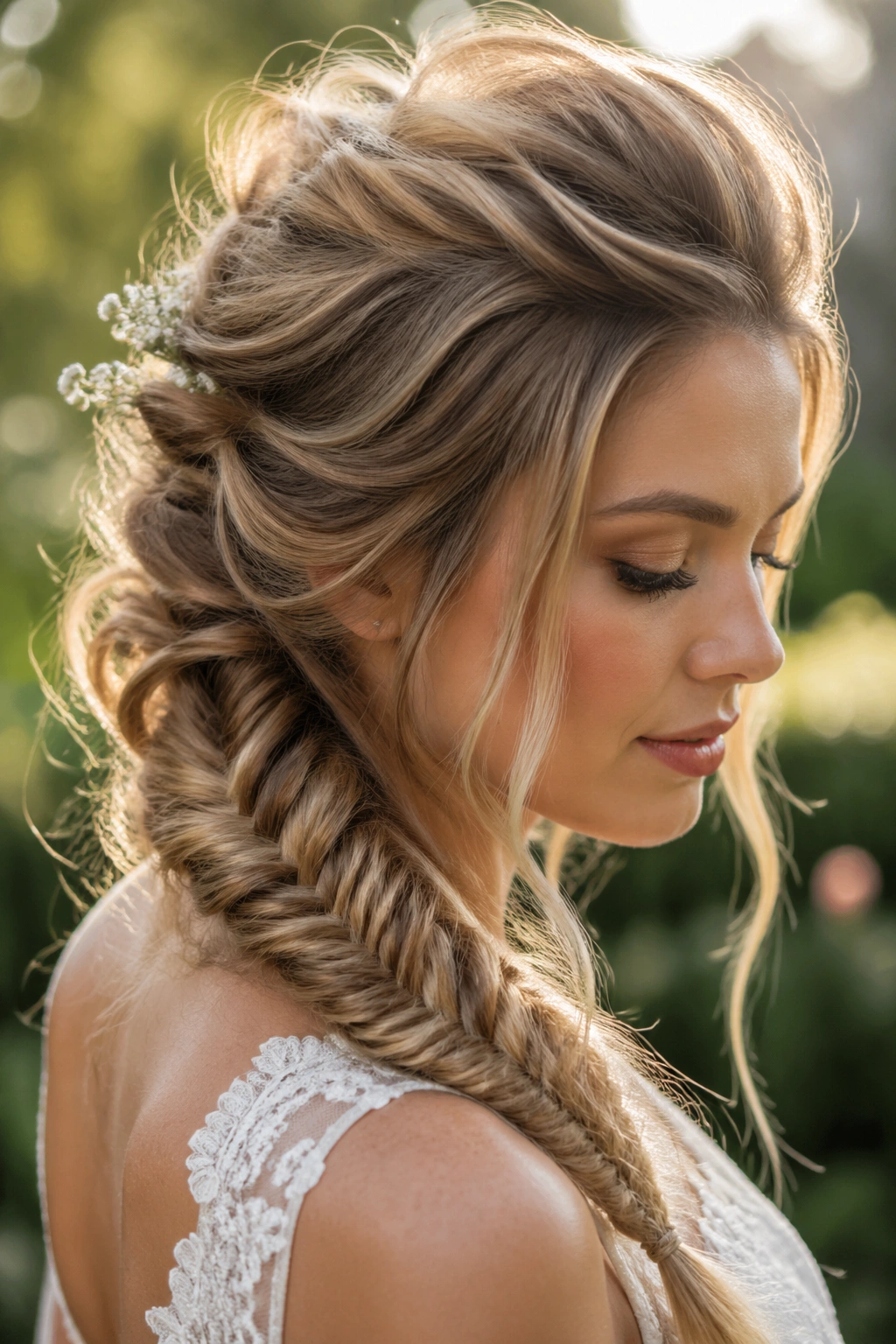
The phrase sounds technical because the result depends on direction. Hair is pulled slightly opposite the eventual fall of the braid, which creates lift at the crown and a fuller shape through the top half. That extra height is useful if the face needs a little length or if the dress has a lot of volume below the waist.
It’s one of those styles that looks easy once it’s done. It wasn’t. The hair has to be anchored well at the crown, or the lift collapses halfway through the ceremony. Use small, crossed pins and a little backcombing at the roots before the braid starts.
A stylist will usually like this one more than a rushed DIY job. It rewards patience.
19. Garden Rose Fishtail With Tiny Buds
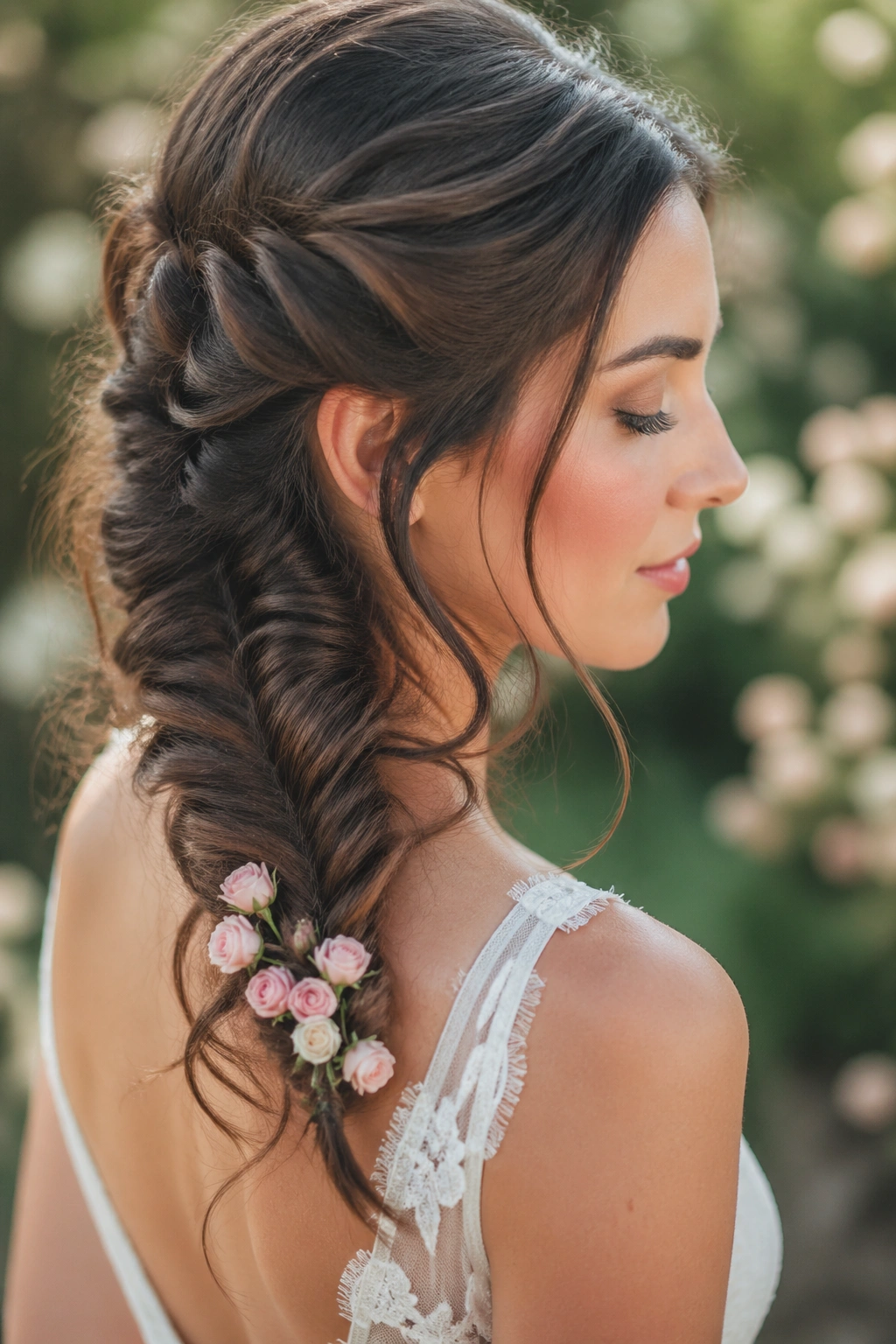
Roses can look heavy if you use large blooms. Tiny buds are the smarter choice. They echo the garden setting without turning the hairstyle into a centerpiece competing with the bouquet.
The braid itself should stay loose and slightly uneven, with the flowers tucked near the lower curve where the eye naturally lands. A blush rosebud against dark hair looks especially good. On lighter hair, cream and pale peach keep the look gentle. I’d avoid placing the flowers too close to the face. They belong in the braid, not on the cheekbone.
This one feels very bridal without trying too hard, which is why it works.
20. Messy Fishtail With Face-Framing S-Curls
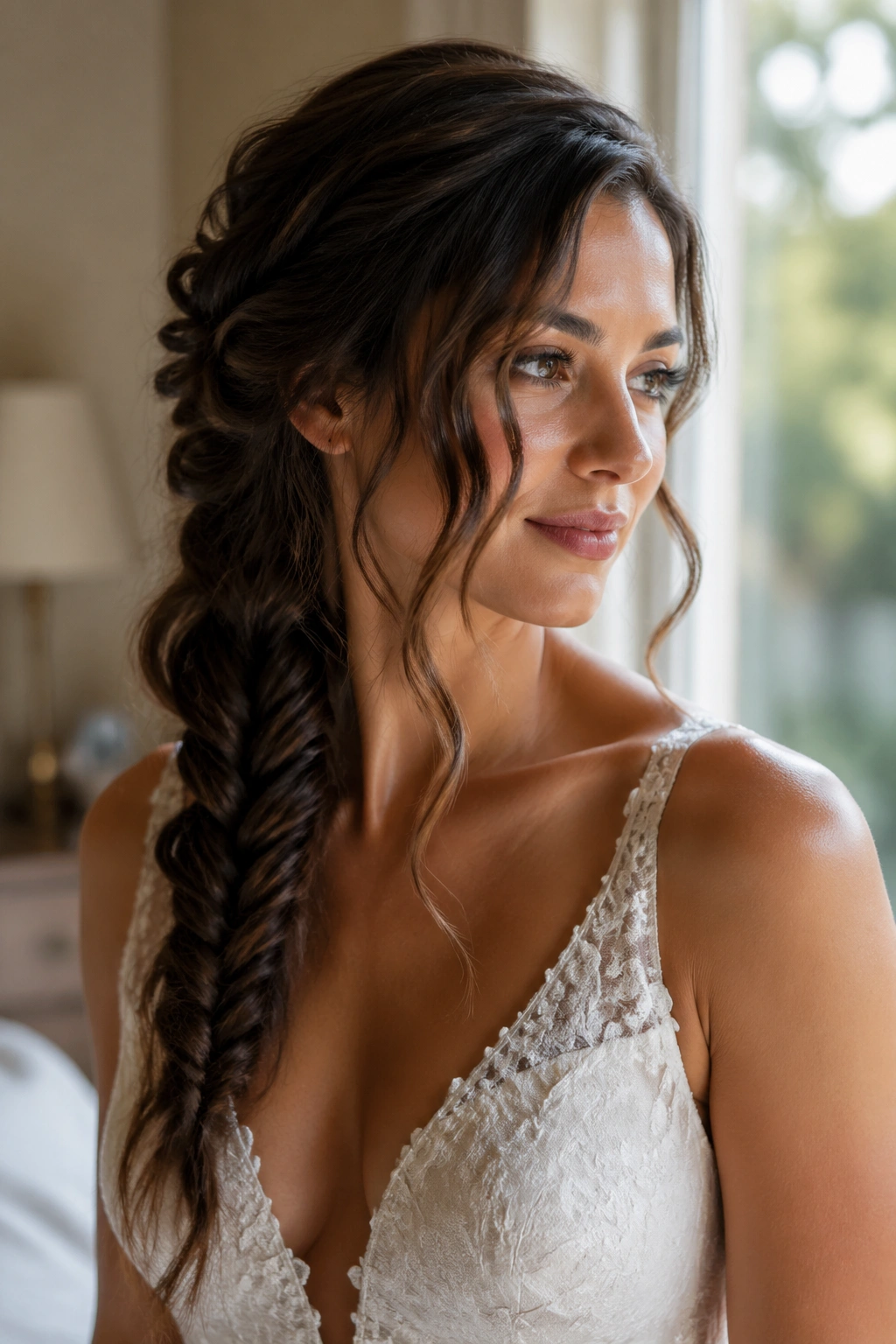
Face-framing curls make a braid feel softer fast. The S-shaped bend near the cheeks is less formal than a tight curl, and it suits the relaxed shape of a messy fishtail. The braid can sit low, mid-back, or off to one side; the face pieces do most of the softening work.
Use a medium-barrel wand and wrap only the front sections, leaving the ends out for a looser bend. Pin the braid first, then shape the face pieces after. If you curl them too early, they get flattened while you’re working on the braid.
This style is a gift for brides who want a little movement around the jawline. That tiny bit of softness changes the whole mood.
21. Twisted Half-Braid Fishtail Hybrid
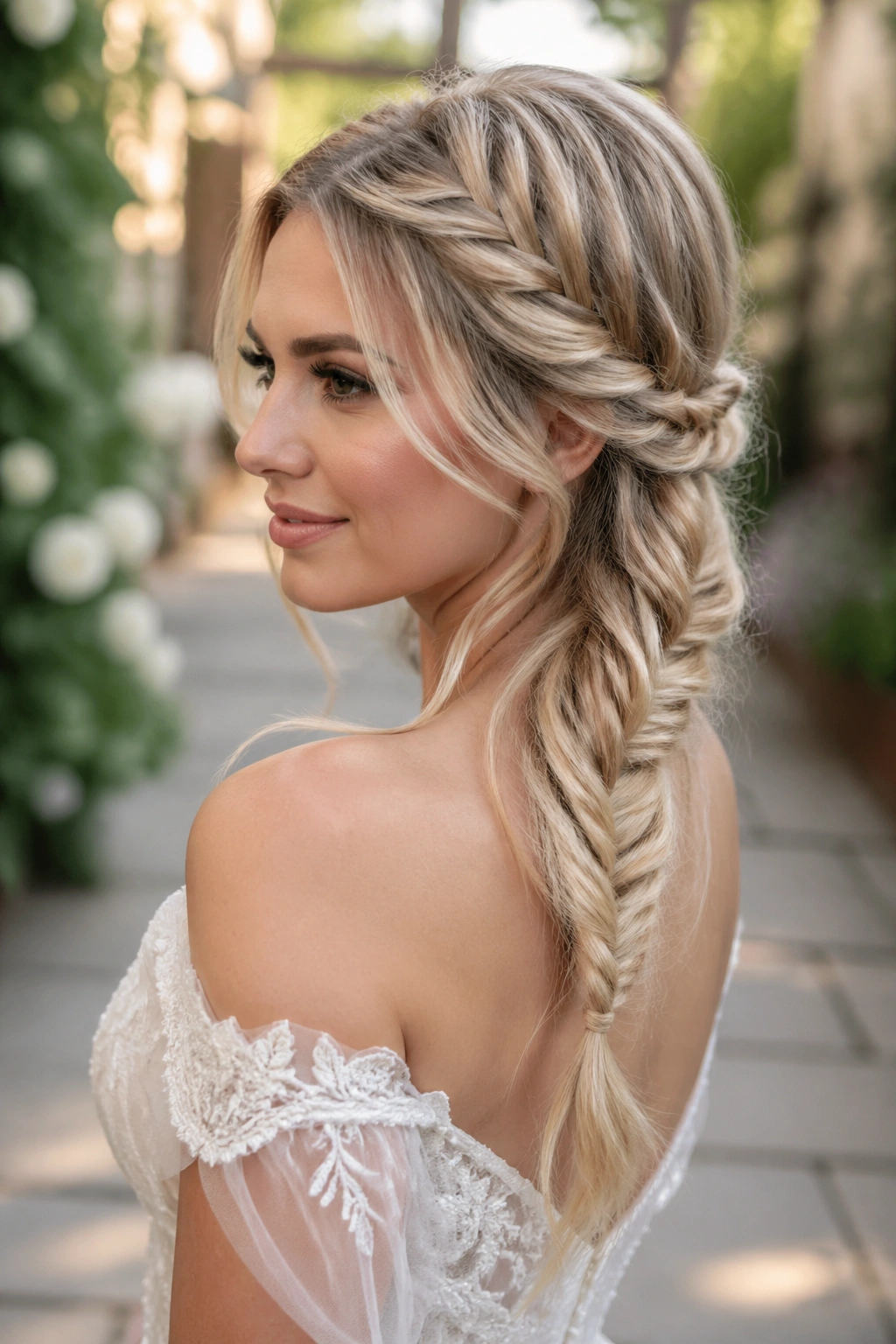
A pure fishtail is lovely, but combining it with a twist can make the top half feel more controlled. That matters if the bride wants some structure near the crown and more looseness through the tail. The twisted section also gives the braid a smoother entry point, which is nice for layered hair.
The main thing here is not to make the twist too tight. You want the braid to feel like it grew out of the twist, not like two different hairstyles were forced together. A couple of hidden pins at the crossover point help the two textures sit together.
This is one of those styles that rewards a close look. From the aisle, it reads clean. From behind, it has a little more going on.
22. Full-Volume Pull-Apart Fishtail
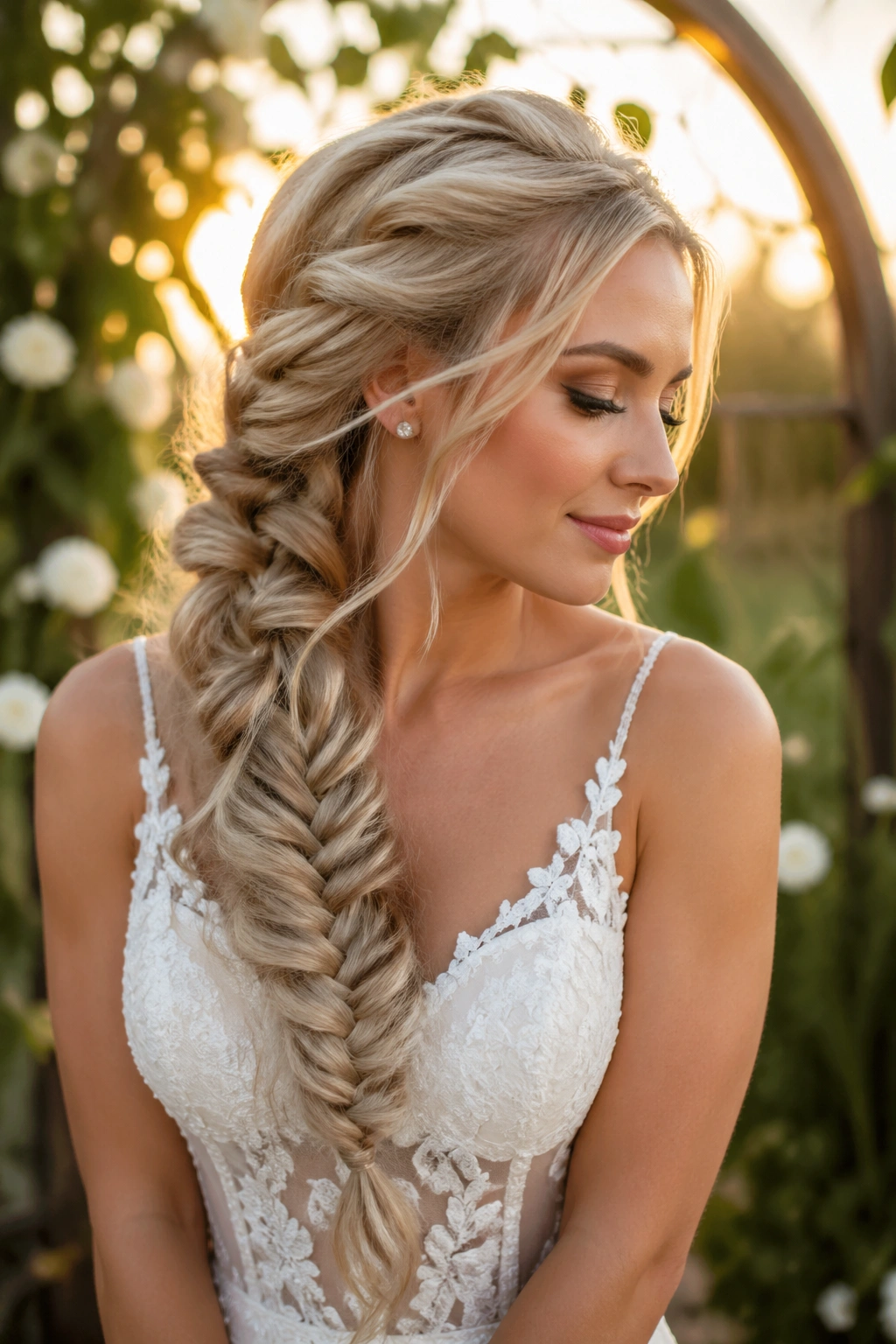
If you want the braid to look big in photos, this is the one. The pull-apart technique stretches each section so the braid spreads outward like a fan. It’s especially useful for fine hair, which can disappear inside a tighter fishtail.
What to Watch For
A full-volume braid needs anchors. Without them, the loosened sections slip and the braid comes apart too far. Braid first, secure with a clear elastic, then widen each loop one by one. Don’t yank. Nudge.
- Great for brides with thin hair
- Use texturizing spray before braiding
- Add 1 to 2 hidden padding pieces if needed
- Stop loosening once the braid starts to flatten
This one has presence. It’s not subtle, and that’s the point.
23. Fishtail With Greenery Garland
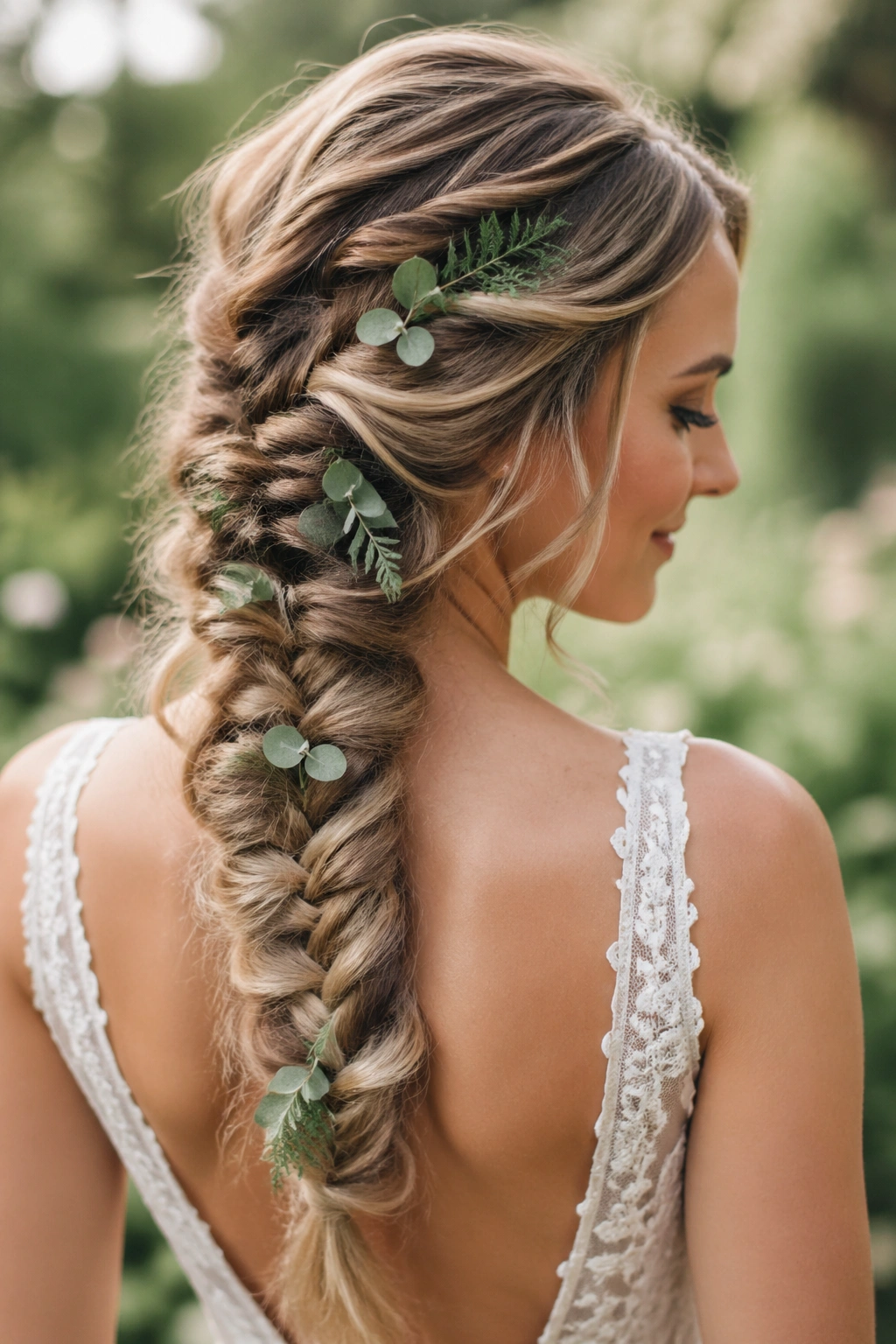
Greenery can calm the look down in the nicest way. Eucalyptus, olive, or fern tucked into a loose fishtail creates a soft garland effect that suits a garden wedding without screaming for attention. The green works best when it follows the braid rather than covering it.
I’d keep the garland light. Two or three small sections are enough. If the greenery is too dense, the braid disappears under it. Wrap the stems carefully and pin them flat so nothing scratches the neck.
This style pairs well with natural makeup and matte fabrics. It feels grounded, which is a nice change when everything else in a bridal look can tip toward shiny or overstyled.
24. Side Bun With Fishtail Detail
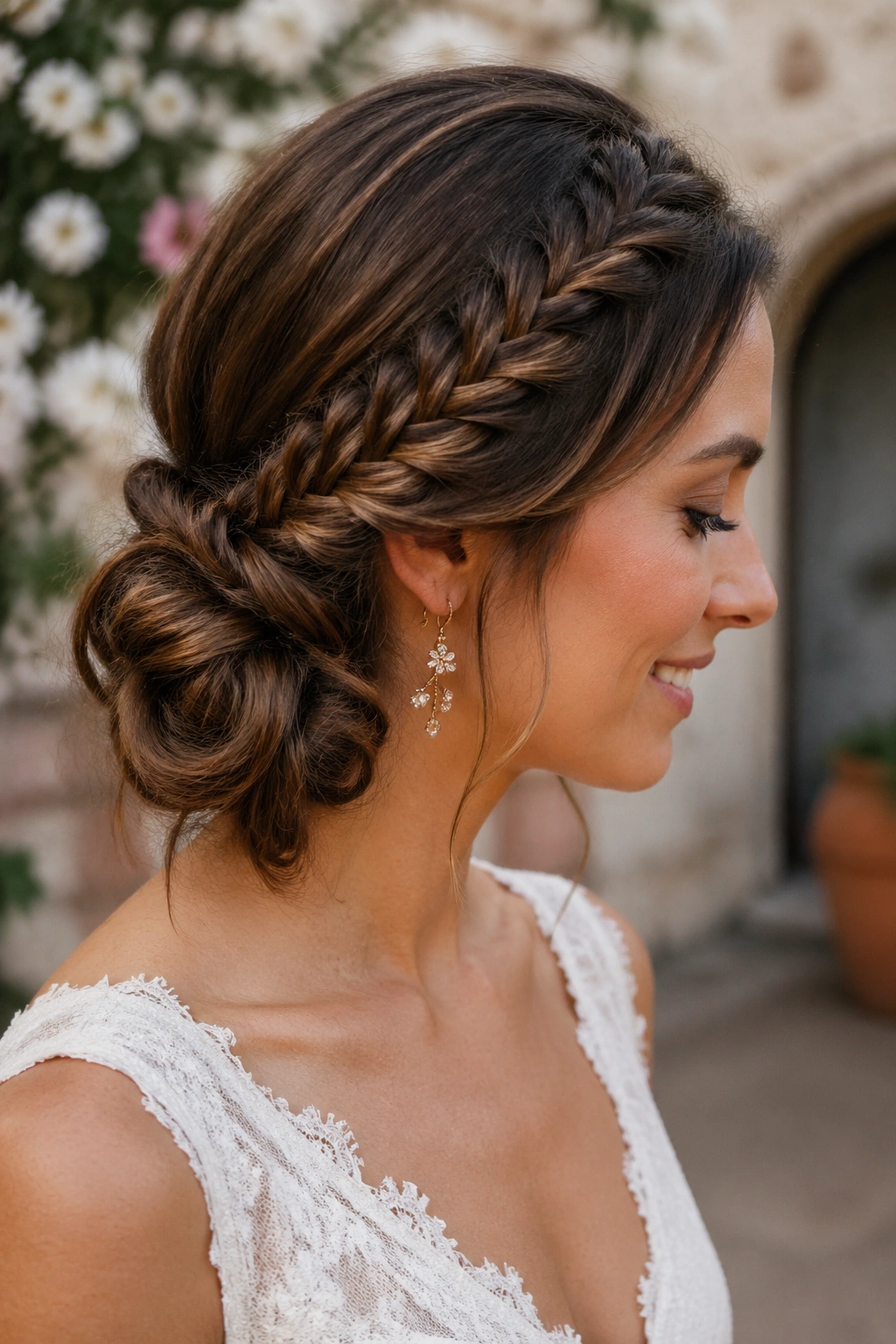
A side bun gets more interesting when the braid is visible before it wraps into the knot. Start the fishtail near one ear, then coil it into a loose side bun just behind the jawline. The asymmetry gives the style a softer, more handmade feel.
This one is useful if your dress has a high neckline or a lot of detail across one shoulder. The bun stays out of the way, but the braid gives it shape. Use pins that match your hair color and place them from underneath so the surface stays smooth.
A side bun can feel stiff if every strand is tamed. Leave a few ends loose. That’s where the charm sits.
25. Fishtail Wrapped Around a Soft Ponytail
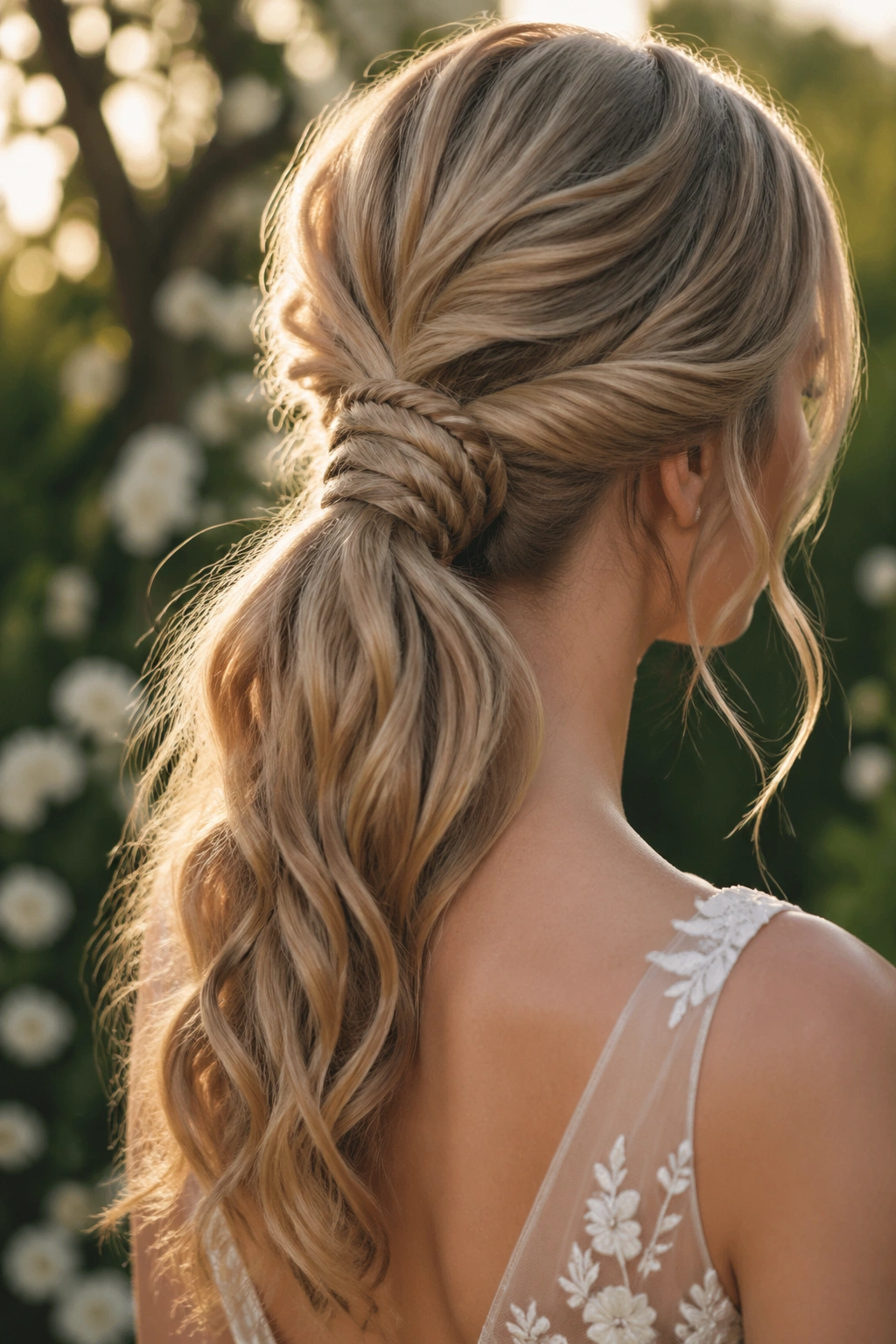
This is the friendliest style in the group. It starts as a ponytail, then a fishtail braid wraps around part of it and hides the elastic. The base stays soft, the braid adds interest, and the overall shape remains easy to wear for a full day.
Quick Styling Notes
- Set the ponytail low or mid-low
- Curl the tail lightly before braiding
- Wrap a small braid section around the elastic
- Pull the braid apart more at the back than near the face
This version works beautifully for brides who want movement but hate feeling over-pinned. It also travels well from ceremony to reception. No major reset needed.
26. Fishtail With Braided Bangs
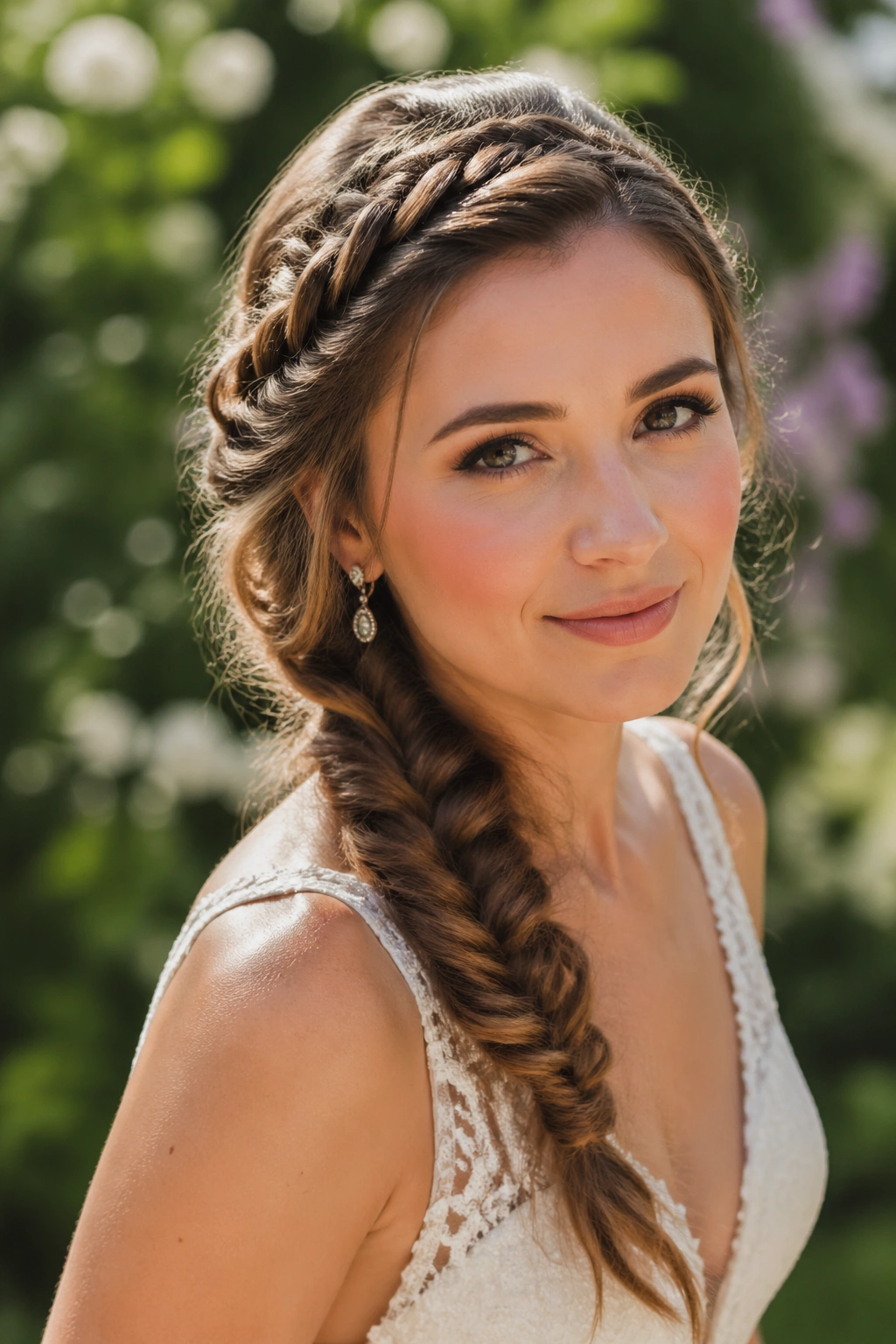
Bang control can be the difference between polished and fussy. Braiding the front pieces back into the main fishtail keeps shorter layers out of the eyes while still looking soft. It’s practical, but not boring.
The best part is how it frames the face without requiring a lot of heat styling. If your bangs are growing out, this is even better, because the braid hides the awkward in-between stage. Keep the braids at the front narrow. Thick braids near the hairline can make the forehead look crowded.
This style suits brides who like a little edge in their hair. It’s tidy where it needs to be and relaxed everywhere else.
27. Rustic Fishtail With Dried Lavender
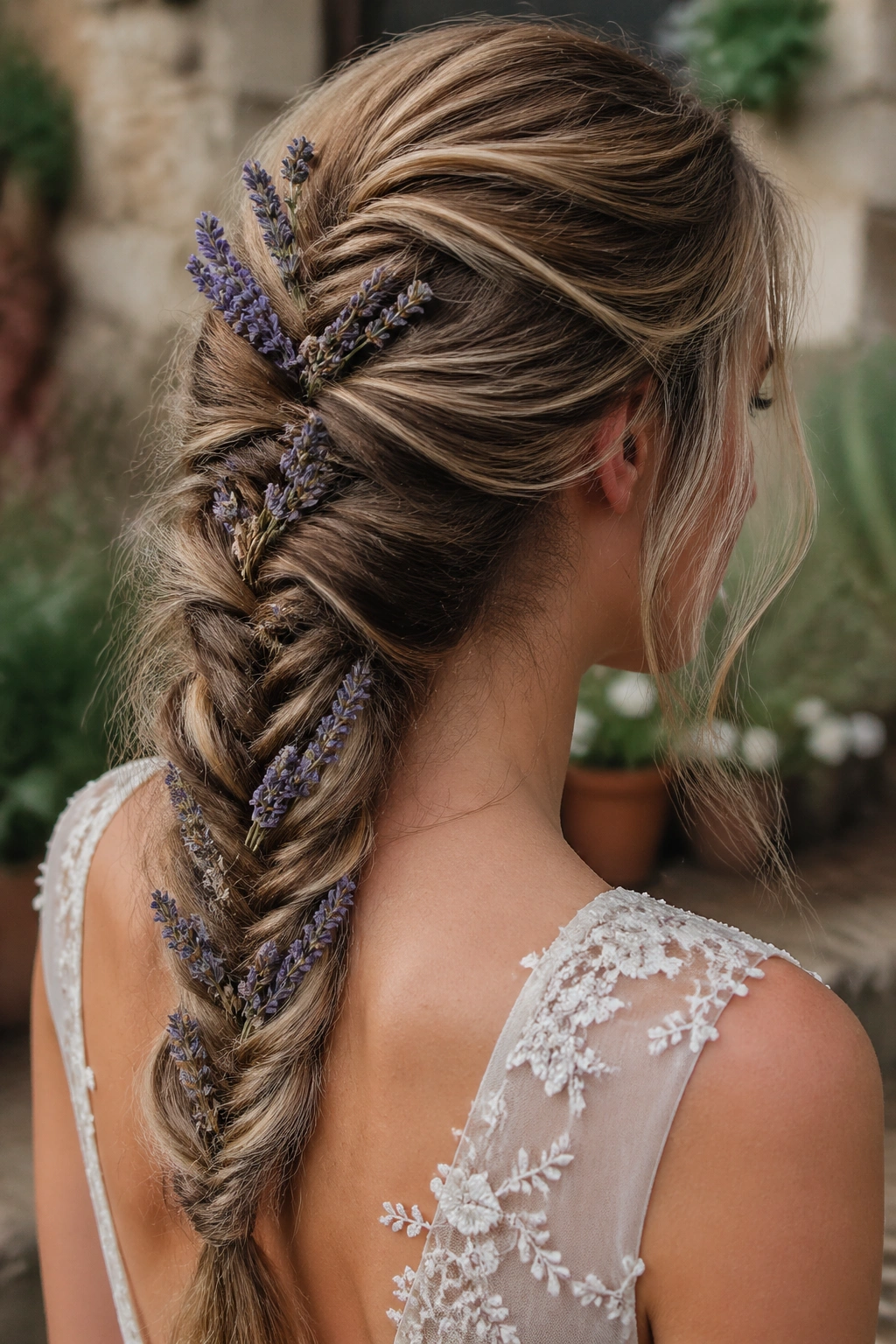
Dried lavender brings a muted purple tone and a gentle scent, which fits a rustic garden wedding better than bright blooms sometimes do. The braid should stay soft and slightly imperfect so the dried stems don’t feel too stiff beside it.
Use only a few stems, and place them where they can lean with the braid, not poke straight out. Lavender works best when it’s paired with other muted details — linen textures, pale ribbons, maybe a bouquet with dusty greens. Bright floral notes can crowd it fast.
One caution: dried flowers are fragile. Have them wired or wrapped securely before they go anywhere near the braid.
28. Minimal Knot-Tied Fishtail
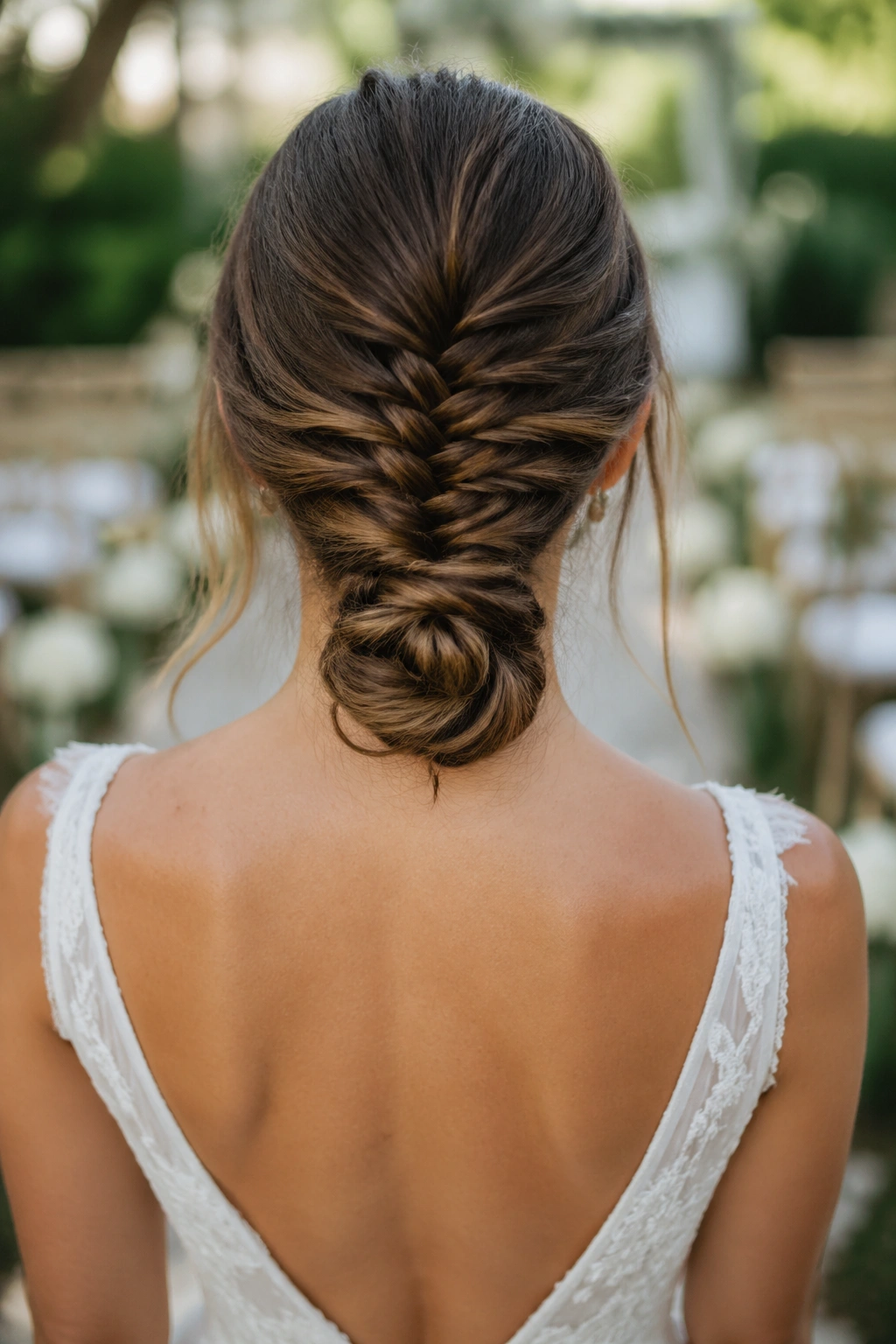
A knot-tied finish gives the braid a handmade edge. Instead of ending in a big tail, the braid is folded into a knot-like wrap and pinned low. The look is understated, which is useful for brides who want texture without a lot of decoration.
Why It Feels Different
There’s less visual drag at the bottom, so the braid doesn’t take over the whole hairstyle. That makes it easier to wear with a detailed dress or stronger jewelry.
This style needs clean sectioning at the start, even if the finish looks loose. If the early sections are messy in the wrong way, the knot ends up crooked. A couple of hidden pins usually solve that. Keep them crossed.
29. Waterfall-Style Fishtail Hybrid
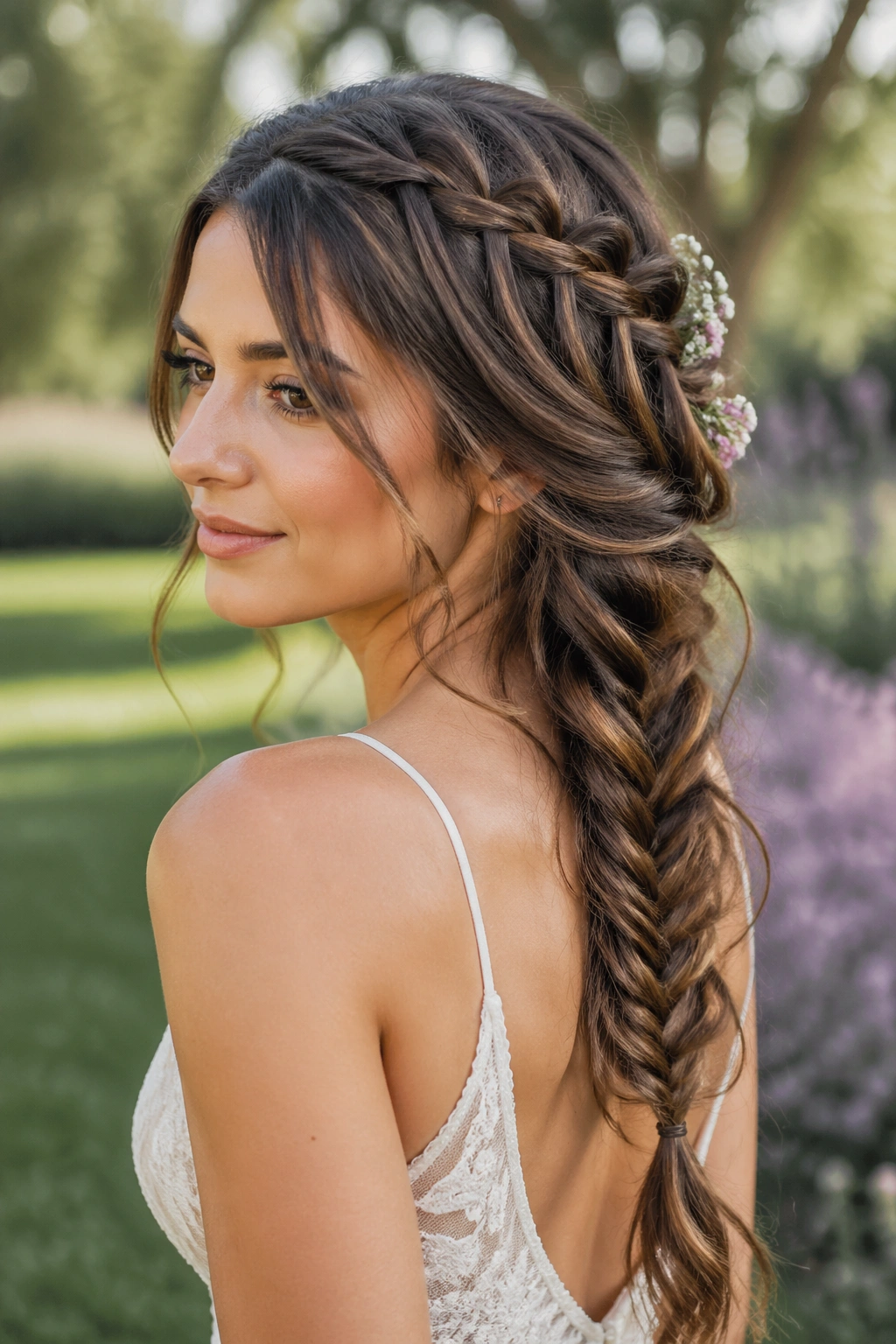
A waterfall braid and a fishtail are not the same thing, but they can be combined in a way that feels lovely for brides who want movement around the head and a woven finish below. The waterfall section creates softness near the crown while the fishtail carries the length.
This style is best for medium to long hair that holds shape well. Fine hair can do it too, but the sections need a little texture spray first. The waterfall bits should be spaced evenly or the shape starts to look busy. Keep the tail loose. A tight finish kills the whole effect.
It’s a good option when the bride wants something a little more detailed than a standard braid, but not a full updo.
30. Tousled Fishtail Updo for Finer Hair
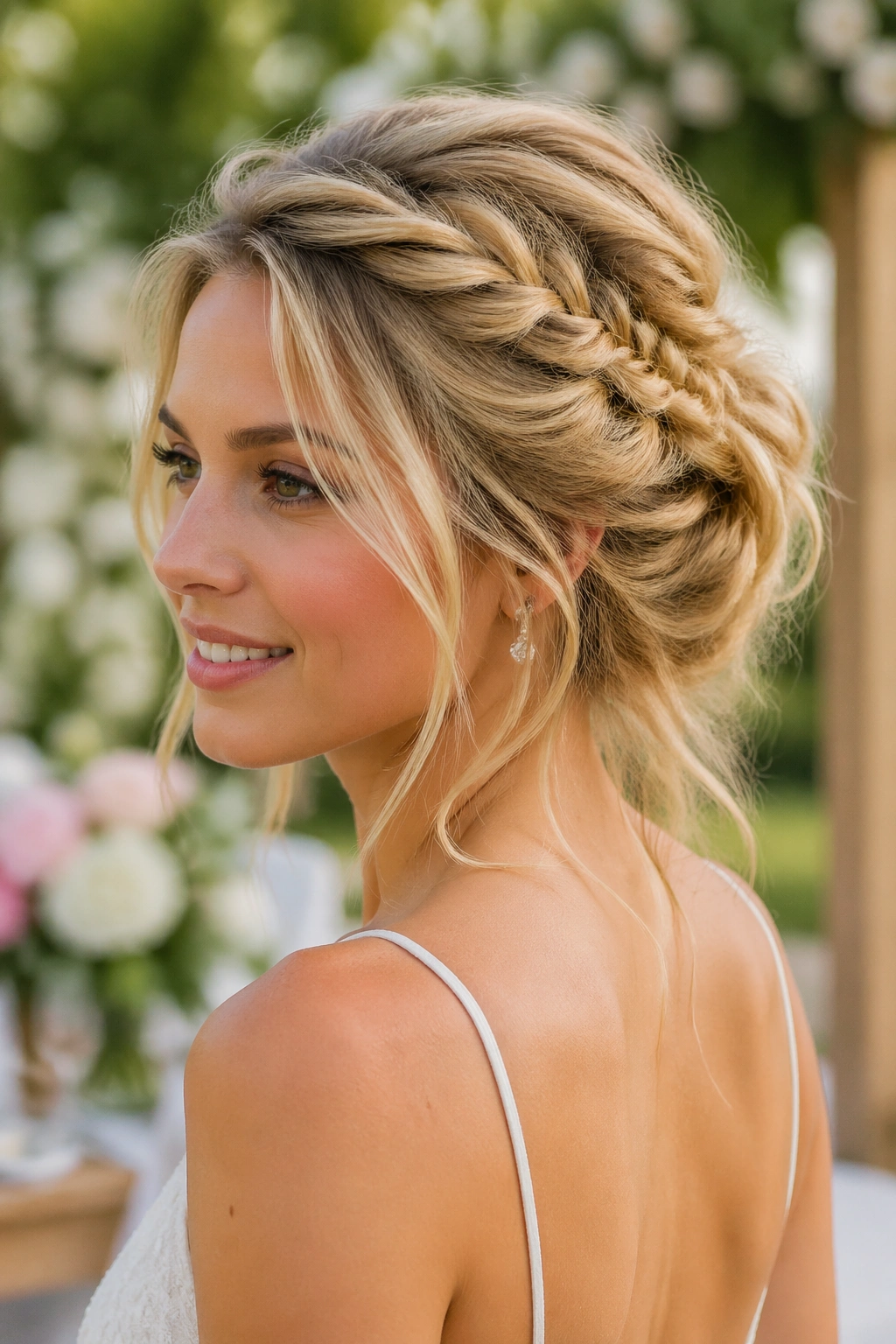
Fine hair often needs a little theater to look full enough in photos. A tousled updo does that with teasing at the crown, a loose fishtail through the middle, and a tucked finish that creates height without weight.
You do not want too much product here. Fine hair can go limp fast, especially outdoors. A light mousse and a dry texture spray are enough. Backcomb only the roots that will be hidden, then smooth the outer layer with your fingers. The whole point is to keep the shape soft, not crunchy.
This style can hold a small comb or a few pins with ease, which makes it practical for garden ceremonies where the wind likes to show up uninvited.
31. Fishtail With Cathedral Veil and Long Train
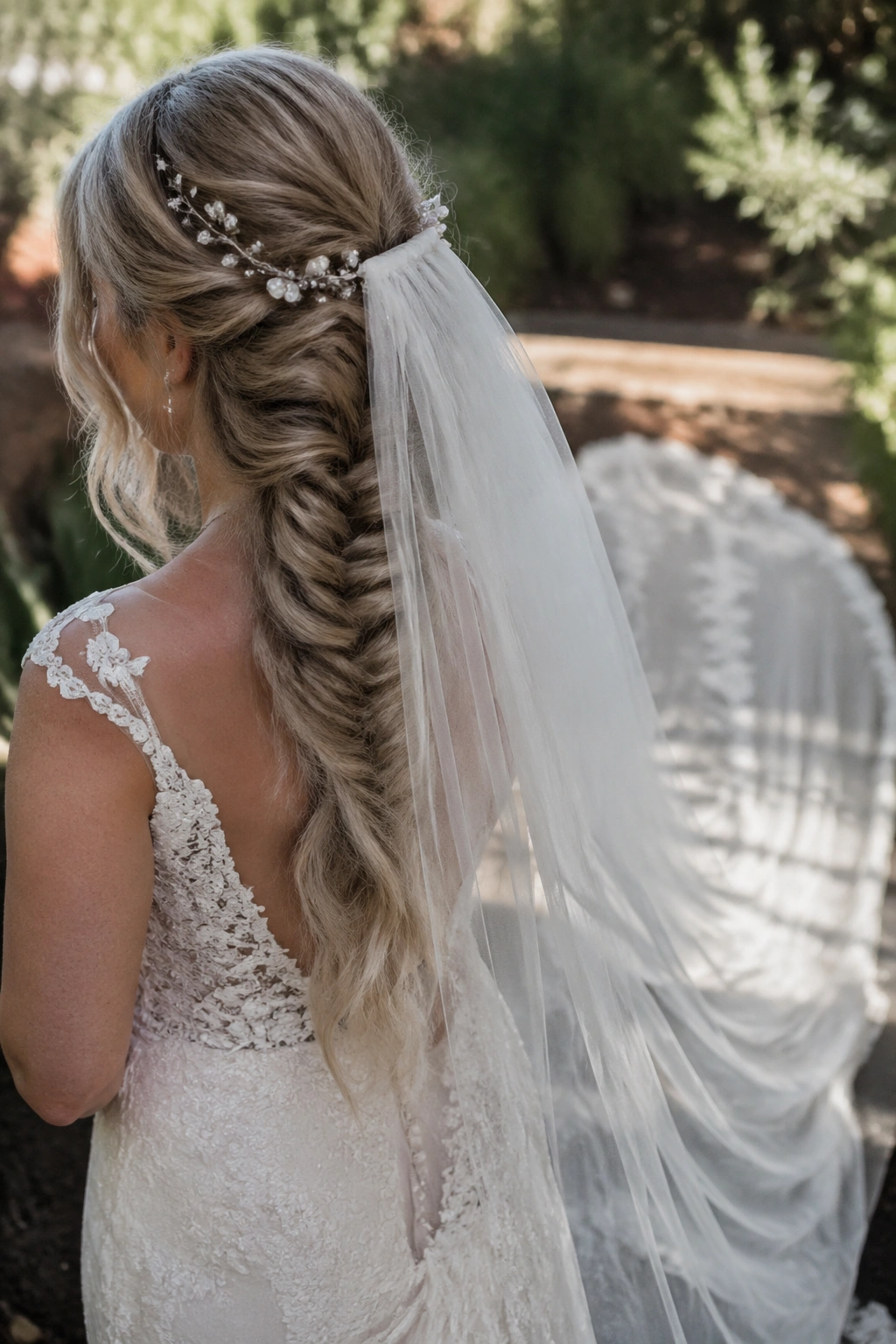
A long veil and a long train can overwhelm a weak hairstyle. A fishtail braid gives the back of the head enough structure to stand up to both. The braid sits low, usually under the veil comb, and the loosened sides keep the shape from getting swallowed by fabric.
The placement matters more than the braid size. If the comb sits too high, the veil hides the work. Too low, and it can tug the braid down. I’d secure the braid first, then set the veil and test how it falls when the bride turns her head. Tiny adjustment. Huge difference.
This style is for brides who want the braid to remain visible once the veil comes off. That’s the whole point.
32. Shorter Hair Fishtail With Extensions
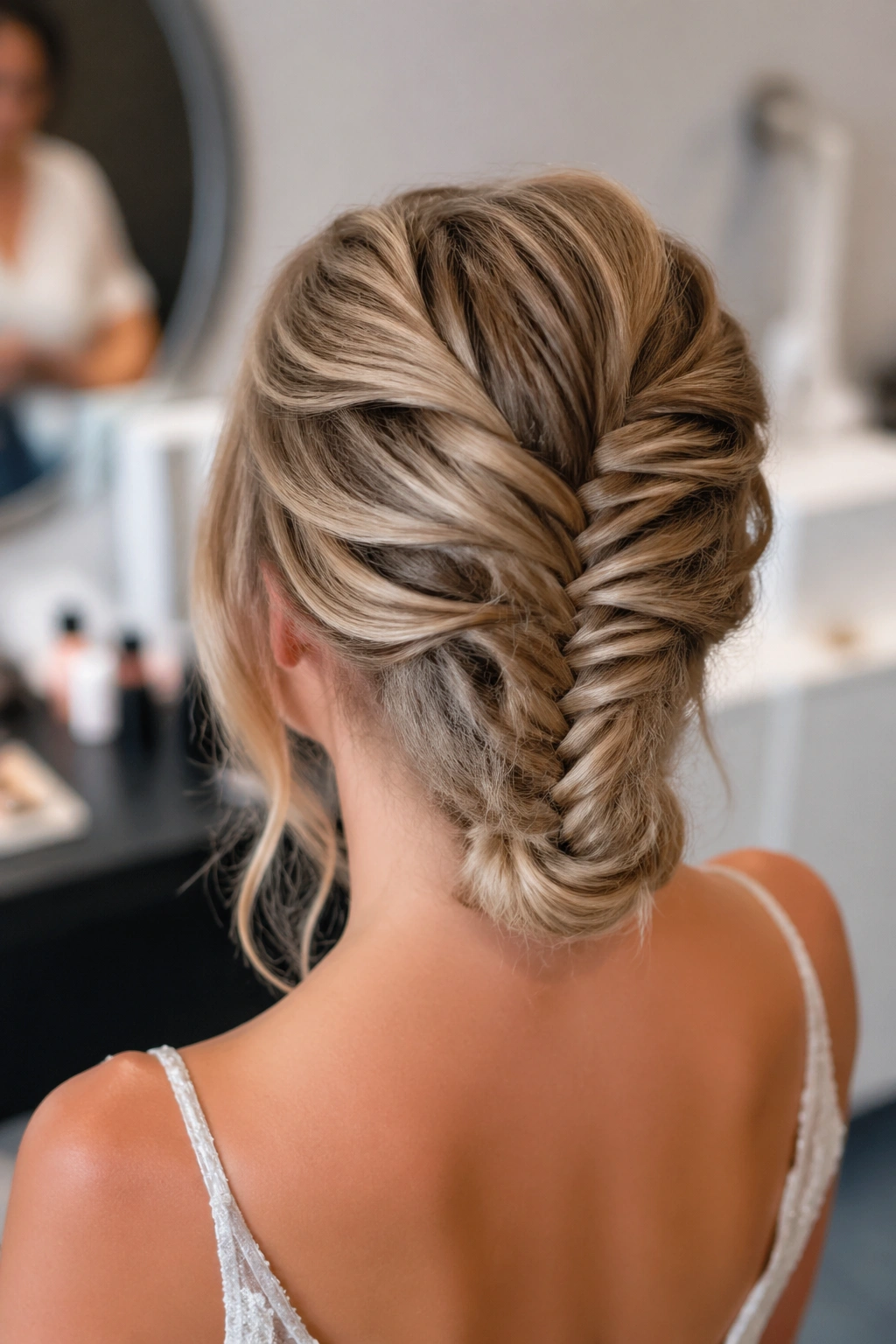
Shorter hair needs help sometimes, and there’s nothing wrong with that. Clip-in extensions can give a fishtail enough length to actually show off the weave instead of vanishing after two passes. The important part is blending, not bulk.
Match the extension texture to your own hair before the braid begins. If the ends are too silky or too thick, the mismatch shows fast. Clip them low enough that they disappear inside the braid, then loosen the outer sections once the braid is done. That hides the joins and keeps the shape believable.
This style is a solid option for brides who want a braid but do not have waist-length hair. The hair length issue is manageable.
33. Last-Minute Fishtail With Secure Pins
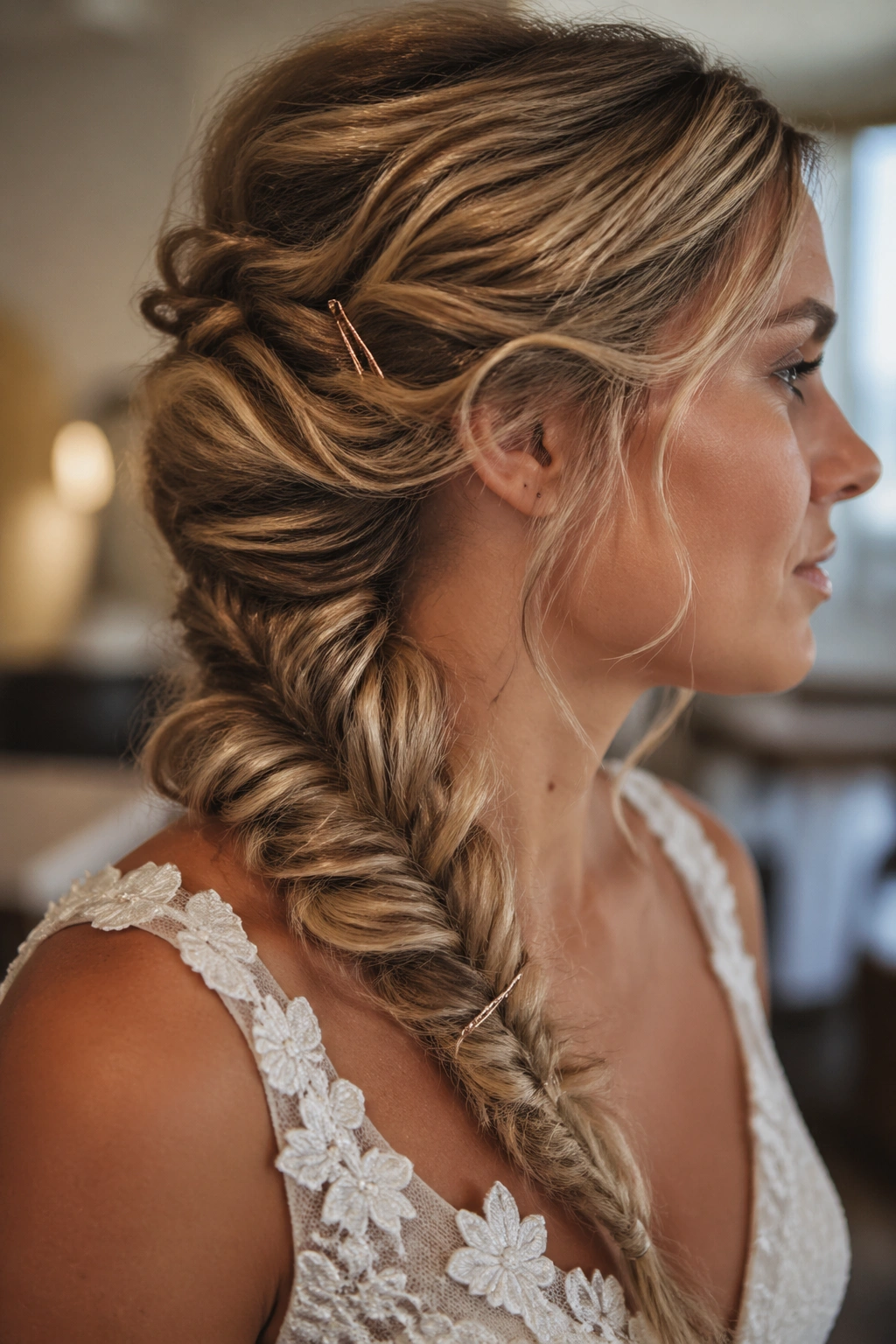
Some wedding mornings go according to plan. Others do not. This is the braid for the second kind. Keep the sections loose, braid low, and use more pins than you think you need. The goal is not perfection; it’s a style that survives hugs, dancing, and one emotional moment after another.
If the braid starts to slip, stop pulling it apart. Secure the base, then the middle, then the end. Work in that order. A little texture spray at the roots helps if the hair is too clean. And if the braid refuses to behave, fold it into a low tucked shape and call it intentional. That move saves more styles than people admit.
Final Thoughts
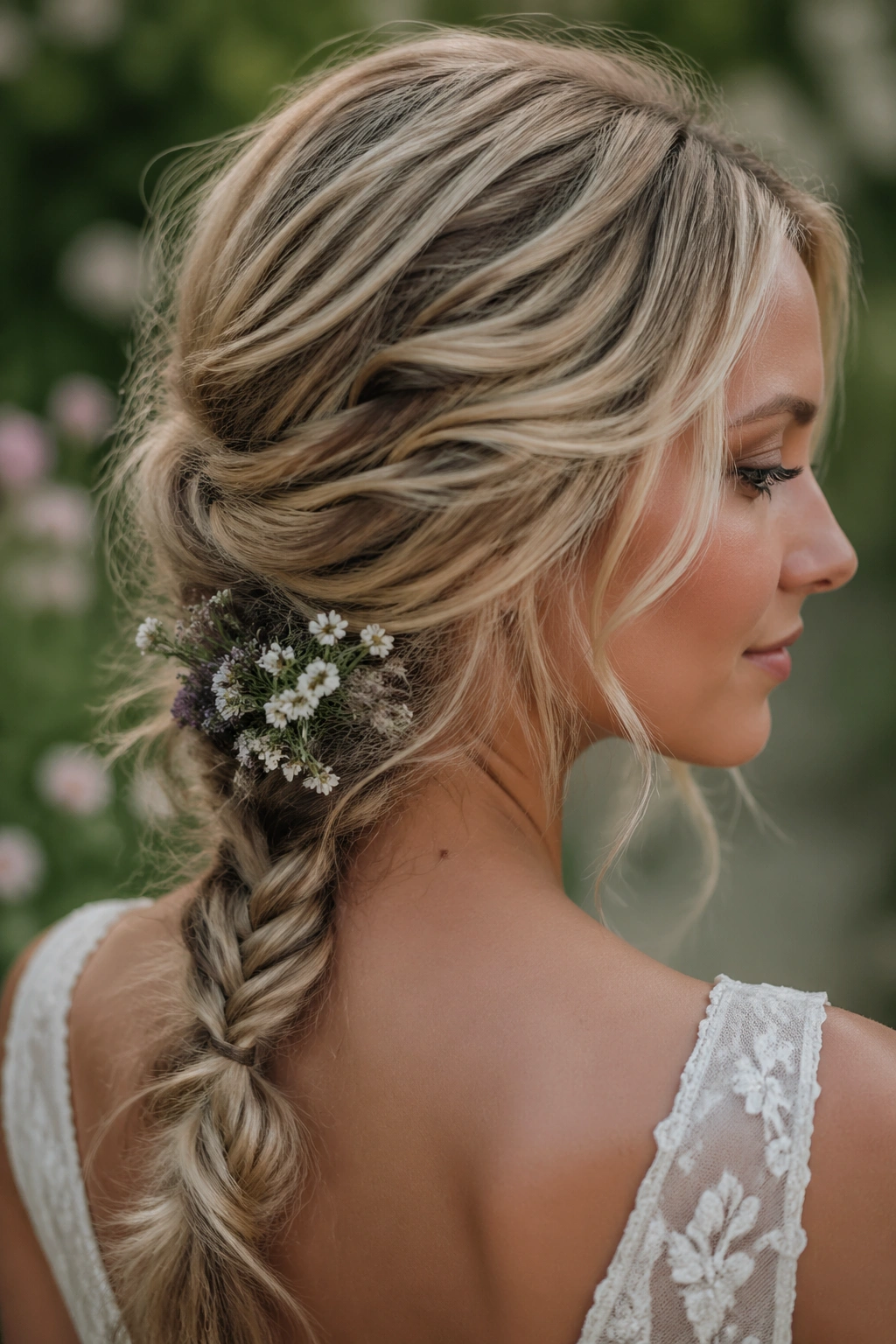
The best messy fishtail braid for a garden wedding is the one that matches the dress, the weather, and the bride’s tolerance for fuss. A strong neckline can handle a bigger braid. A detailed bodice usually wants something lower and softer. And if the ceremony is outdoors, a braid with hidden anchors will always behave better than one built on wishful thinking.
Trial runs matter. So do photos taken from the back, not just the mirror shot in front of the sink. A braid can look lovely head-on and fall flat behind the shoulders, which is exactly where garden wedding hair gets seen most.
Pick the version that still looks good after a long walk, a little wind, and one too many hugs. That’s the real test.