



If you’ve been scrolling through natural hair content and feeling overwhelmed by the endless possibilities, you’re not alone. The truth is, Black women’s hair is incredibly versatile—maybe the most versatile hair texture on the planet. From the moment you decide to embrace your natural hair, you’re opening a door to dozens of legitimate styling options, each with its own vibe, maintenance level, and staying power. The challenge isn’t finding styles; it’s figuring out which ones actually work for your lifestyle, your hair type, your comfort level, and what you’re trying to achieve right now.
What makes afro hairstyles so compelling is that they’re not just about looking good (though they absolutely do). These styles are deeply connected to identity, cultural expression, and the freedom to wear your hair exactly as it grows from your scalp. Whether you’re protecting your ends, creating texture, managing moisture, or simply making a bold aesthetic statement, there’s a legitimate reason behind nearly every afro style that’s stood the test of time. Some styles work best on freshly washed hair, while others are designed to last for weeks with minimal daily manipulation.
The following 14 styles represent a mix of everyday casual looks, protective styling options, statement pieces, and everything in between. Each one has real practical applications, specific techniques that make them work best, and honest guidance about what to expect when you’re learning to do them. Whether you’re a natural hair veteran or you’re just starting to explore what’s possible with your texture, this breakdown will help you understand not just what these styles look like, but why you might actually want to try them.
1. The Natural Afro (Big Chop)
The natural afro is often where the journey begins—when you cut away the chemically relaxed hair and let your natural texture fully emerge for the first time. It’s bold, liberating, and a genuine commitment to wearing your hair in its most authentic form. This isn’t just a hairstyle; it’s a statement that your natural texture is enough exactly as it is.
What Makes It Iconic
The natural afro is low-manipulation styling at its purest. You’re not twisting, braiding, or setting anything—you’re simply allowing your hair to be washed, moisturized, and shaped naturally as it grows. The key to a healthy, thriving natural afro is consistent moisture, deep conditioning, and strategic trimming to remove split ends. Many people find their afro actually grows fuller and healthier once they commit to this simple care routine because they’re not fighting against their hair’s natural texture.
How to Care for It Daily
- Wash your afro every 7-14 days using a sulfate-free shampoo or co-wash (conditioner wash) to maintain moisture
- Apply leave-in conditioner while your hair is still damp and seal in moisture with a light oil or butter product
- Use a wide-tooth comb or detangling brush on wet hair only—never on dry hair, which risks breakage
- Sleep on a silk or satin pillowcase, or wrap your afro in a silk scarf to reduce friction and frizz overnight
- Refresh your afro between washes by lightly misting it with water and smoothing products back through
Pro tip: A pick with wide teeth is your friend. Use it gently to lift and shape your afro without yanking through knots or causing breakage at the root. The goal is gentle volume, not aggressive fluffing.
2. Two-Strand Twists
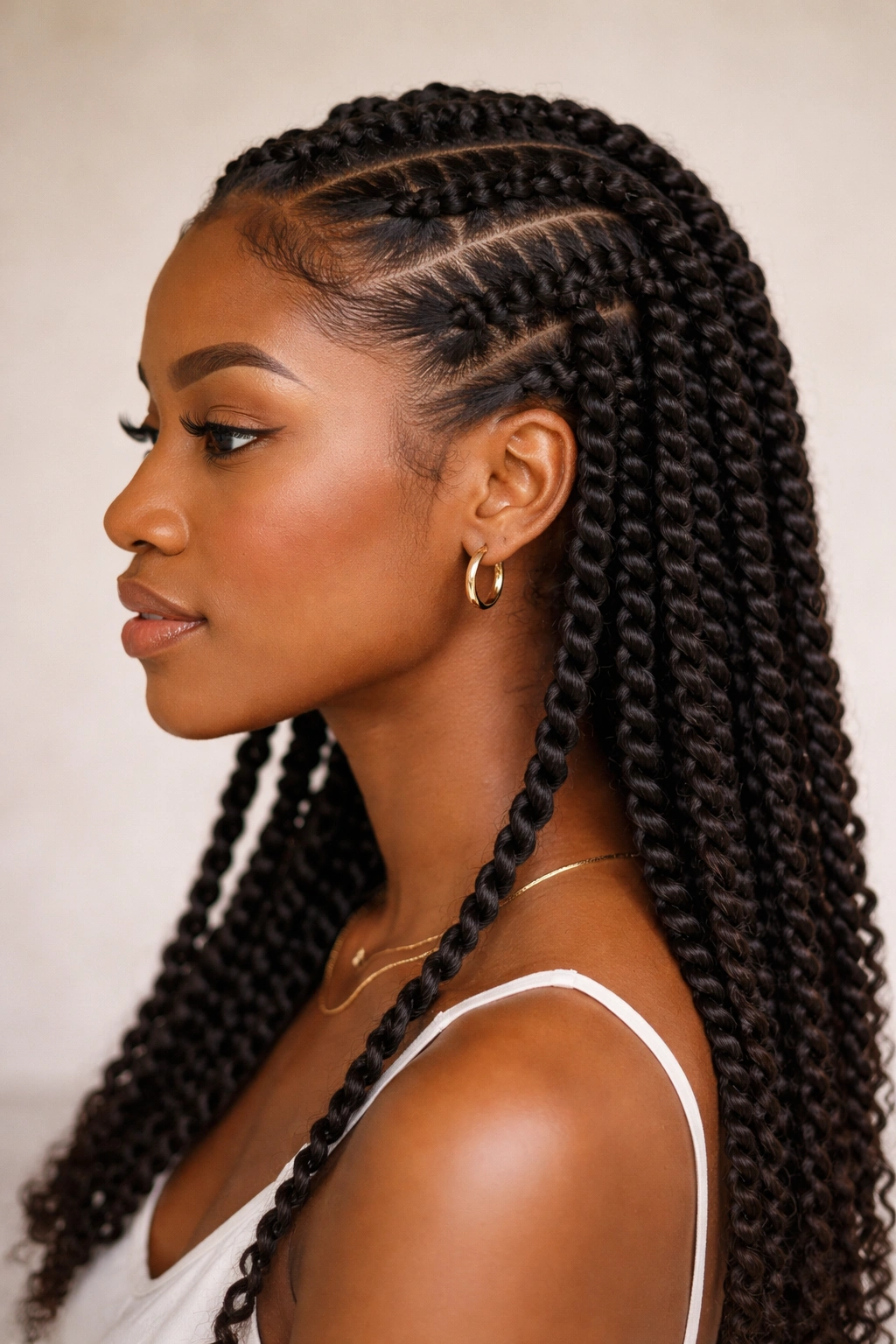
Two-strand twists are the workhorse of natural hair styling. They’re created by taking two sections of hair and twisting them together from root to tip, and they can last anywhere from one to four weeks depending on how carefully you handle them. They’re protective (meaning they protect your ends from breakage), they’re versatile enough to wear up or down, and they work as both a styling option and a setting tool.
Why Two-Strand Twists Deserve Their Own Section
The magic of two-strand twists is that they’re genuinely multi-functional. You can wear them immediately as a finished style, or you can leave them in overnight and unravel them in the morning for a beautiful defined curl pattern called a “twist out.” This dual purpose makes them incredibly practical for someone juggling work, social life, and hair maintenance. They’re also forgiving—if one twist starts to unravel, you can simply retwist just that section without redoing your entire head.
Installation Tips and Variations
- Start with damp, conditioned hair and divide it into sections using clips—this prevents you from missing spots
- Apply a twisting cream or butter to each section before twisting to help the twists hold their shape longer
- Twist each section tightly from root to tip, curling the ends around your finger to create a seal (this prevents unraveling)
- You can do thin twists (high definition, more delicate look) or thick twists (bolder, chunkier appearance)—both last about the same length of time
- Two-strand twists can be left in for 2-4 weeks; many people refresh the roots after 2 weeks by re-twisting just the new growth
Worth knowing: If you’re planning to do a twist out, leave your twists in for at least 24 hours so they fully set. The longer they’re in, the more defined your curl pattern will be when you unravel them.
3. Box Braids
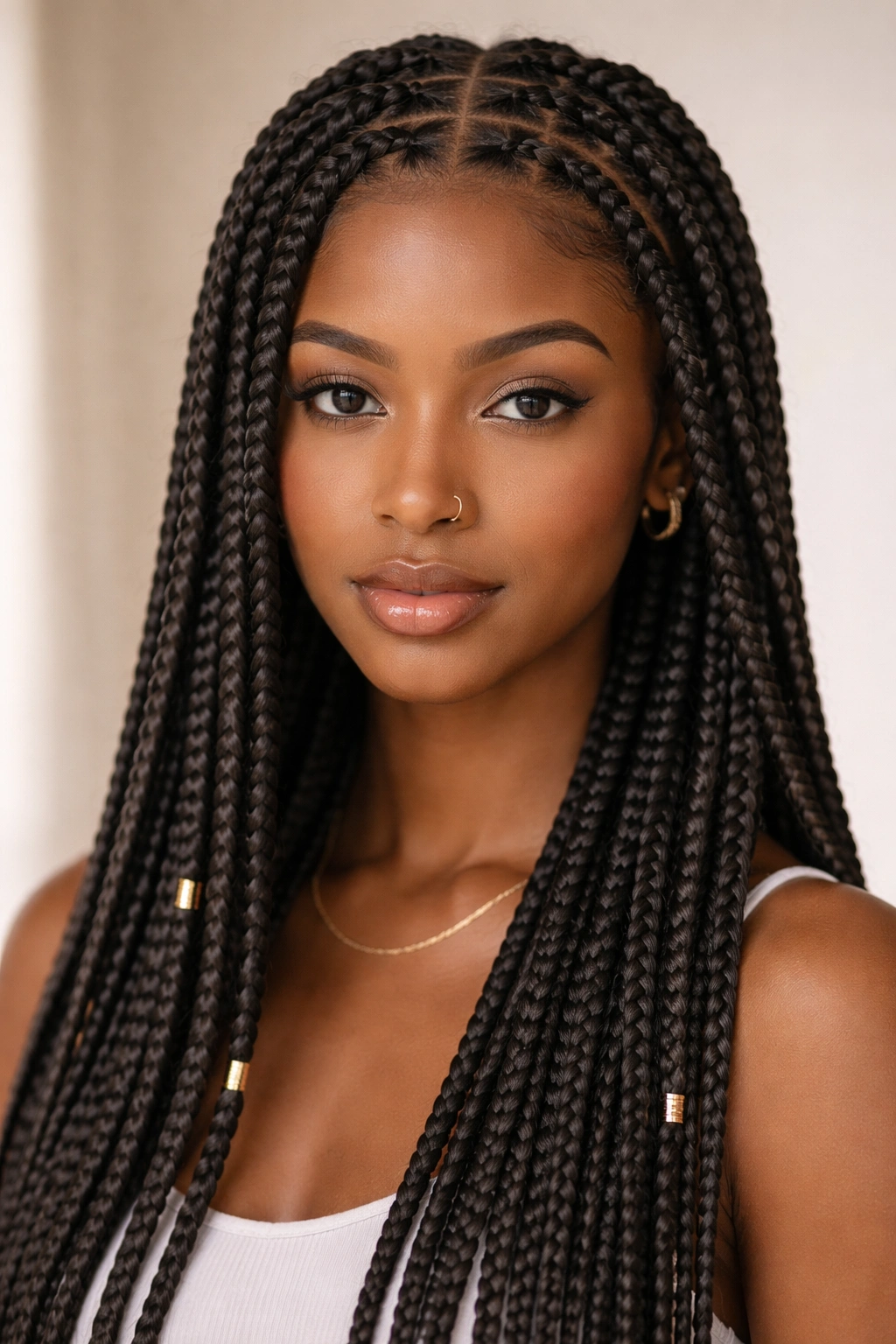
Box braids are the classic protective style that’s been holding down afro hairstyles for decades. They’re called “box” braids because the sections of hair are divided into square boxes, creating a neat grid pattern across your scalp before each braid is created. They can last 4-8 weeks with proper care, making them an excellent option if you want to give your natural hair a long break from manipulation and styling.
The Science Behind Box Braids as Protective Styling
When your ends are tucked away inside a braid for weeks at a time, they’re protected from daily friction, humidity, and accidental damage. This extended protection period allows your hair to retain length because you’re not losing the same amount to breakage that you would if your ends were exposed. Box braids also give you flexibility—you can wear them down as a statement style, or style them up into buns, ponytails, and more elaborate updos.
Practical Care and Longevity
- Wash your box braids every 2-3 weeks using a diluted shampoo applied directly to your scalp with a narrow applicator bottle—you’re cleaning your scalp, not the braids themselves
- Moisturize your scalp and the braids with a light oil or braid spray, paying special attention to the ends which dry out fastest
- Sleep with your braids in a silk bonnet or pineapple them (gather them loosely at the crown) to reduce frizz and friction
- Avoid excessive tension at the roots—if your braids feel painfully tight, loosen them slightly or redo the tightest ones
- Remove your braids by carefully cutting the thread or string at the bottom and gently unraveling each braid with a detangling conditioner on hand
Important: Leaving braids in longer than 8 weeks risks matting, buildup, and potential damage to your hair, especially at the roots where tension collects. Respect the timeline.
4. Knotless Braids
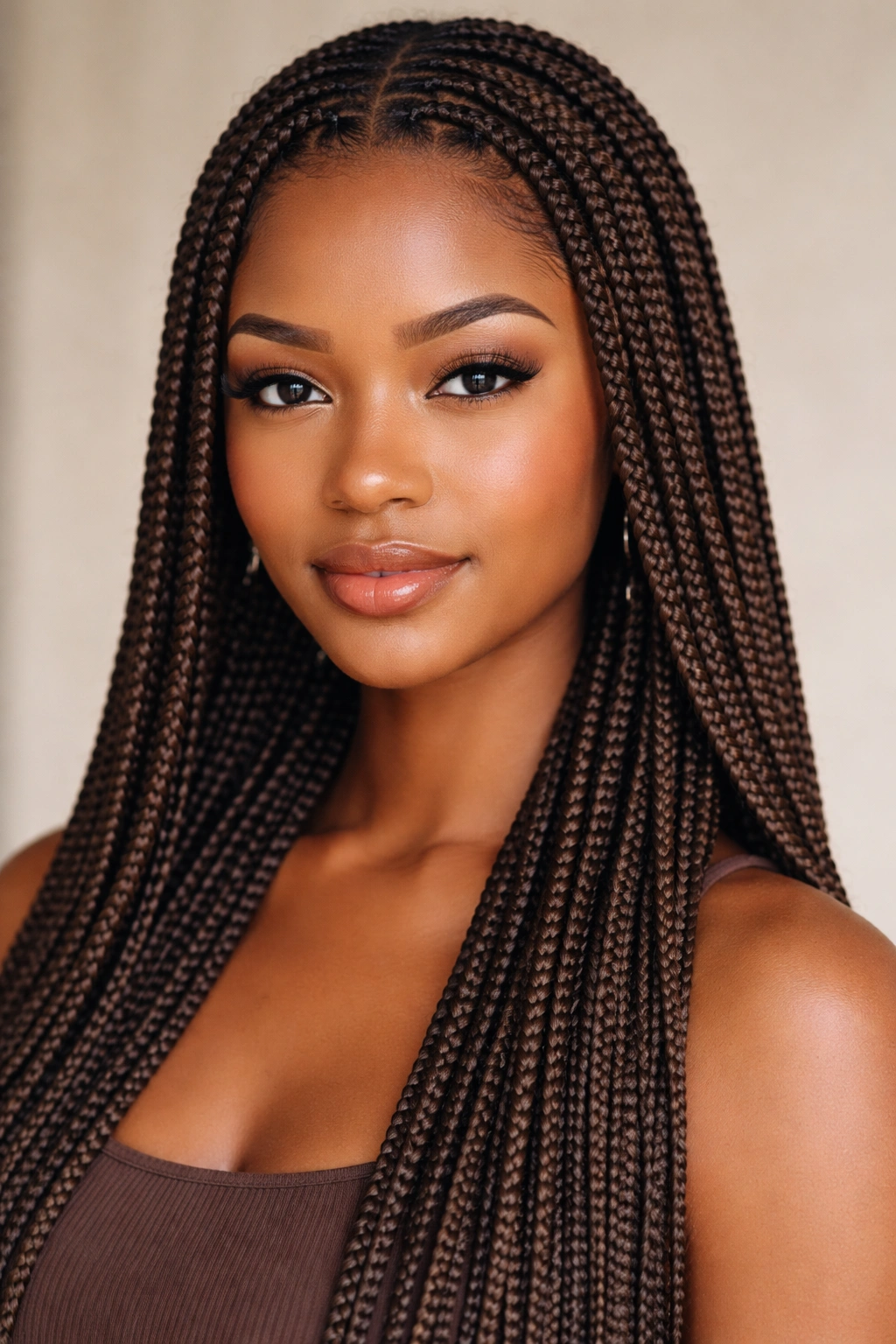
Knotless braids are a more recent evolution of box braids, designed specifically to reduce tension and scalp stress. Instead of creating a knot at the root where all the braiding sections meet, knotless braids use a feeding technique where synthetic hair is gradually incorporated into the braid as you work down from the root. The result is a softer look and significantly less tension on your edges.
Why Knotless Braids Make a Difference
The traditional knot in box braids creates an anchor point where tension naturally concentrates, which over time can cause traction alopecia (hair loss from chronic tension). Knotless braids distribute tension more evenly along the entire length of the braid, making them gentler on your scalp and edges. If you’ve experienced sensitive scalp or edge damage from traditional braids, knotless braids are absolutely worth trying—many people find them far more comfortable.
What to Expect When Getting Them Done
- Knotless braids take longer to install than box braids (often an extra 30-60 minutes) because the feeding technique requires precision
- They look more refined and polished because the roots blend seamlessly into the braid without a bulky knot
- The same care rules apply: wash every 2-3 weeks, moisturize regularly, and remove after 6-8 weeks maximum
- You can add decorative elements like beads, cuffs, and wrapped thread more easily to knotless braids because the roots are less bulky
- These braids age beautifully—as your natural hair grows in, the blended roots of knotless braids look intentional rather than unfinished
Real talk: Knotless braids cost more because of the installation time and skill involved, but if scalp health is a priority for you, it’s an investment worth making.
5. Locs (Dreadlocks)
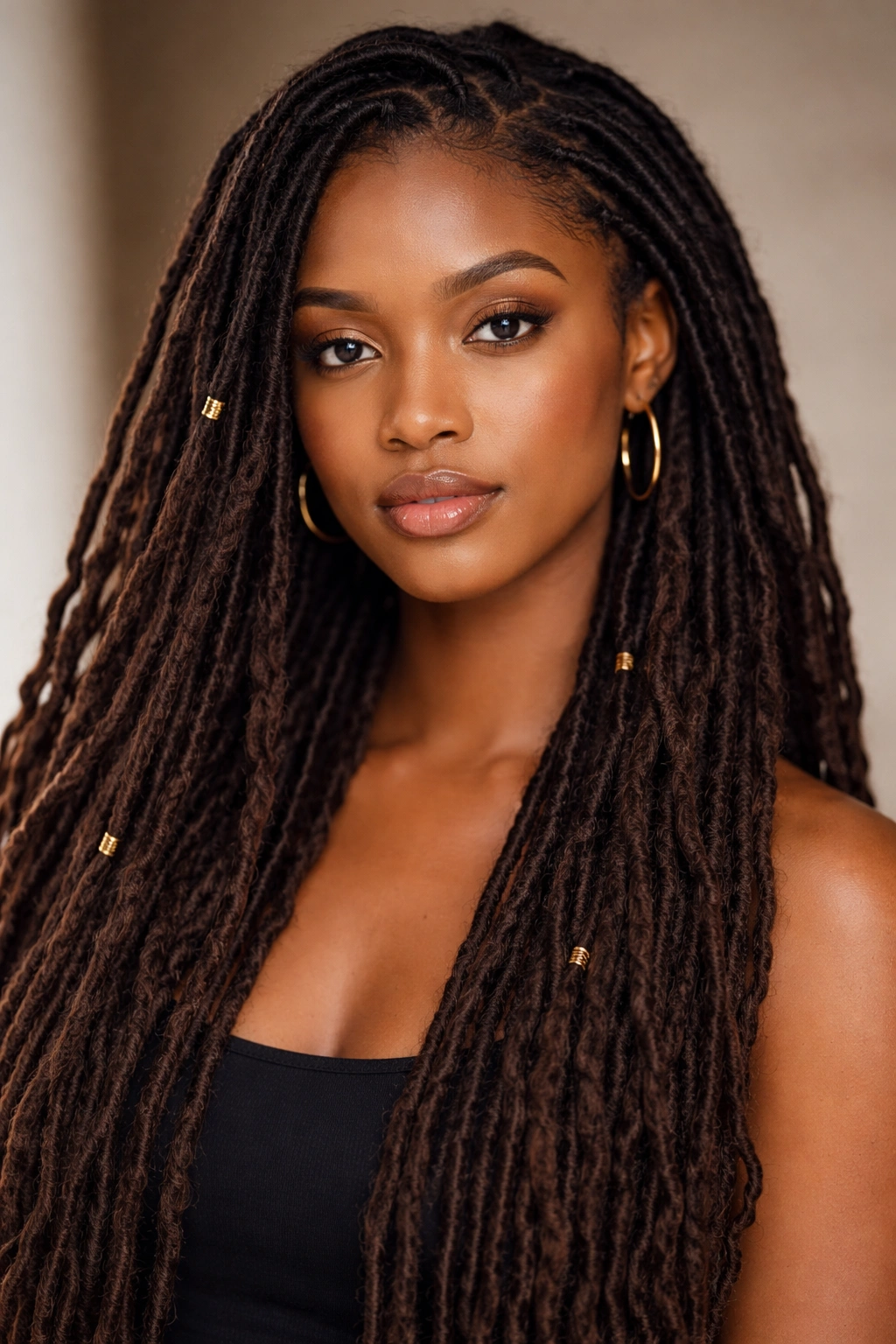
Locs are a long-term commitment to a specific aesthetic and maintenance routine, but they’re also one of the most striking and beautifully diverse afro hairstyles available. Whether you choose freeform locs (which develop naturally with minimal intervention), sisterlocks (thin, intentional locs created with a specific locking technique), or traditional locs (medium-thickness locs created and maintained through consistent twisting), locs are a legitimate lifestyle choice that opens up whole new styling possibilities.
Understanding the Locking Process
Locs form when hair naturally tangles and matts together over time, or when you intentionally encourage this process through consistent twisting or braiding. The forming phase typically takes 3-6 months, during which your locs are still delicate and prone to coming undone. Once they’ve fully locked (matted together), they become much more stable and can last for years or even a lifetime if properly maintained.
Maintenance, Washing, and Care
- New locs need to be retwisted every 4-6 weeks to keep them tight and prevent loose hair from extending out
- Wash your locs every 2-3 weeks using a lightweight shampoo specifically formulated for locs (regular shampoo can leave residue)
- Never use heavy oils or products on new locs—they’ll prevent the locking process and create buildup
- As your locs mature (after 6-12 months), you can experiment with more products and styling options
- You can updo your locs into buns, combine multiple locs into larger braids, or wrap them with thread and beads
- Locs can last decades with proper maintenance, making them the ultimate long-term investment in your hair journey
Key consideration: Locs are a significant commitment. Before you lock, make sure you’re ready for the 6-month forming phase and the ongoing maintenance. If you decide to remove them later, you’ll have to cut them out—there’s no way to “comb them back out” once they’re established.
6. Bantu Knots
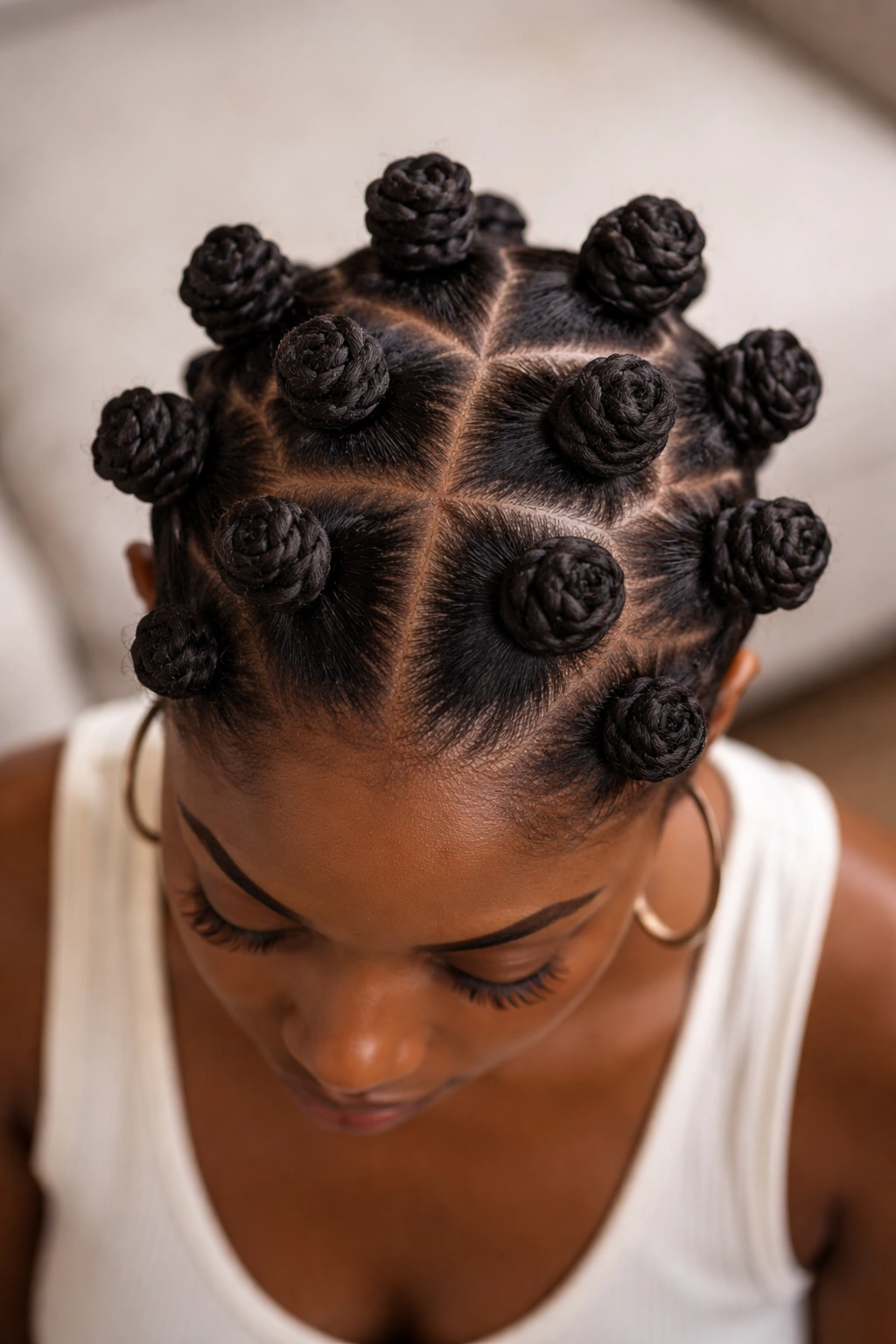
Bantu knots are a protective style created by twisting sections of hair and then coiling them around themselves to form small knots that sit close to your scalp. They’re practical, adorable, and surprisingly versatile—you can wear them as a finished style, or unravel them for a gorgeous knot-out curl pattern.
The Technique and What You Can Expect
Creating Bantu knots requires dividing your hair into sections, two-strand twisting each section, and then wrapping that twist around itself to form a knot that sits flat against your head. The knots can be small and precise or larger and chunkier depending on your preference and the amount of time you want to spend styling. They typically last 1-3 weeks depending on how gently you handle them.
Styling Options and Longevity
- Small Bantu knots create tighter, more defined coils when unraveled; larger knots create looser, wavier patterns
- You can sleep in Bantu knots and unravel them in the morning for an instant style, making them great for low-manipulation routines
- A “Bantu knot-out” (the style created by unraveling them) can last 3-5 days with proper refreshing
- Bantu knots can be worn as a finished style if you prefer the texture and look—they’re bold and fashion-forward
- This style works best on hair that’s at least 2-3 inches long and holds twist definition well
Pro tip: Use a setting spray or light gel when creating Bantu knots to help them hold their shape longer. This is especially helpful if your hair is naturally very soft and doesn’t hold definition as easily.
7. Flat Twists
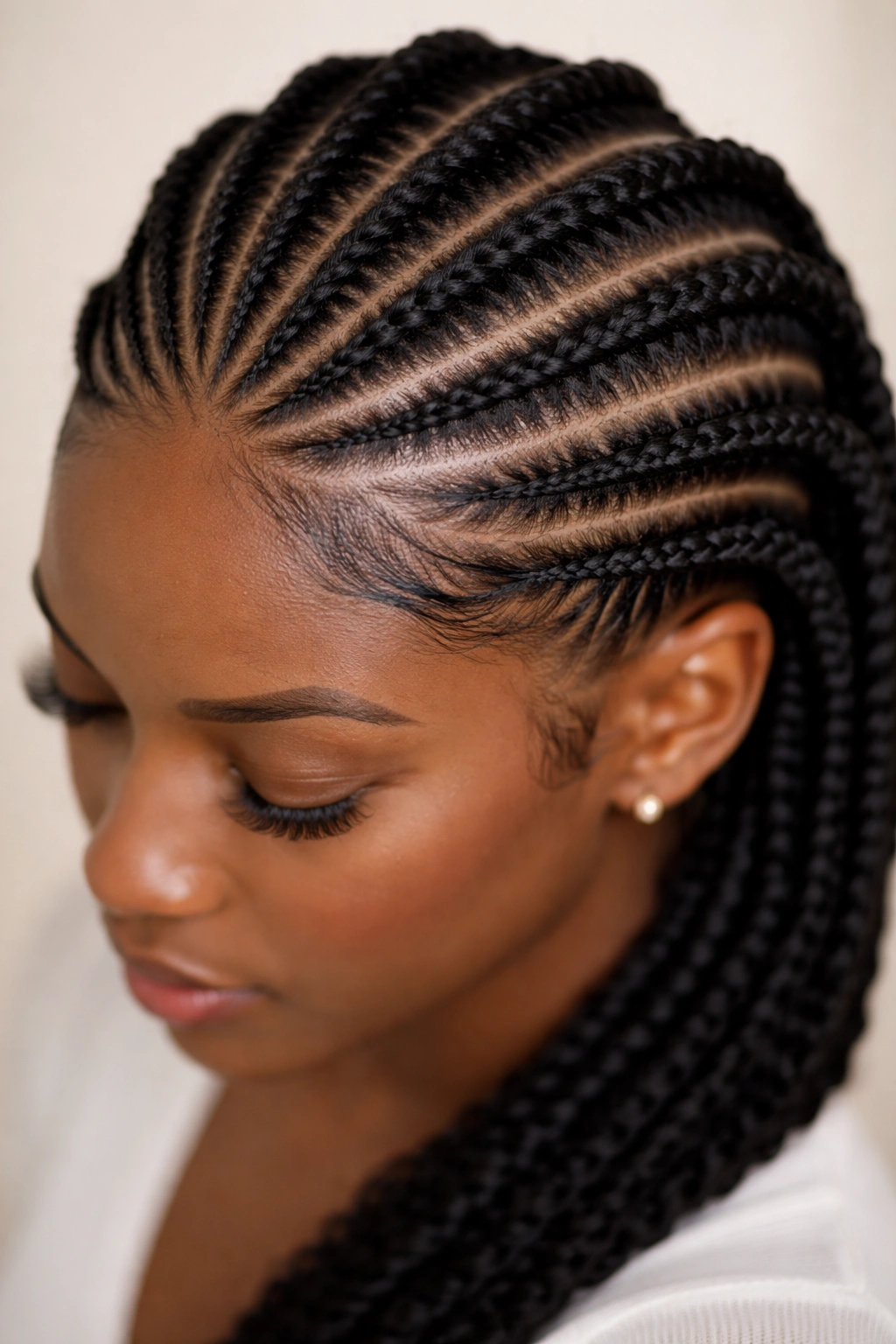
Flat twists are similar to cornrows but created with two strands instead of three, making them faster to install and often more comfortable for sensitive scalps. They lay flat against your head, creating geometric patterns, and they work beautifully as both a protective style and a way to add visual interest to your natural hair.
How Flat Twists Differ From Other Protective Styles
The beauty of flat twists is the speed—because you’re only working with two strands, they go noticeably faster than cornrows. They also create a distinct aesthetic that’s less polished than cornrows but more structured than loose twists. Flat twists are perfect for someone who wants a protective style but doesn’t want to commit to waiting hours in a stylist’s chair.
Installation and Styling Ideas
- Divide your hair into sections and create two-strand twists that follow the contours of your scalp, pinning them down as you go
- Flat twists can be done from roots to ends (a full-coverage protective style) or as face-framing pieces combined with other styles
- They last 2-4 weeks depending on tension and how well they’re sealed at the ends
- You can unravel flat twists for a twist-out texture, or wear them as a finished style
- Combine flat twists with braids, loose curls, or an afro for mixed-texture styles that look intentional and creative
Worth knowing: Flat twists work best on hair that’s at least 2-3 inches long and can hold twist definition. If your hair is very short or very soft, you might find they unravel faster than you’d like.
8. Cornrows
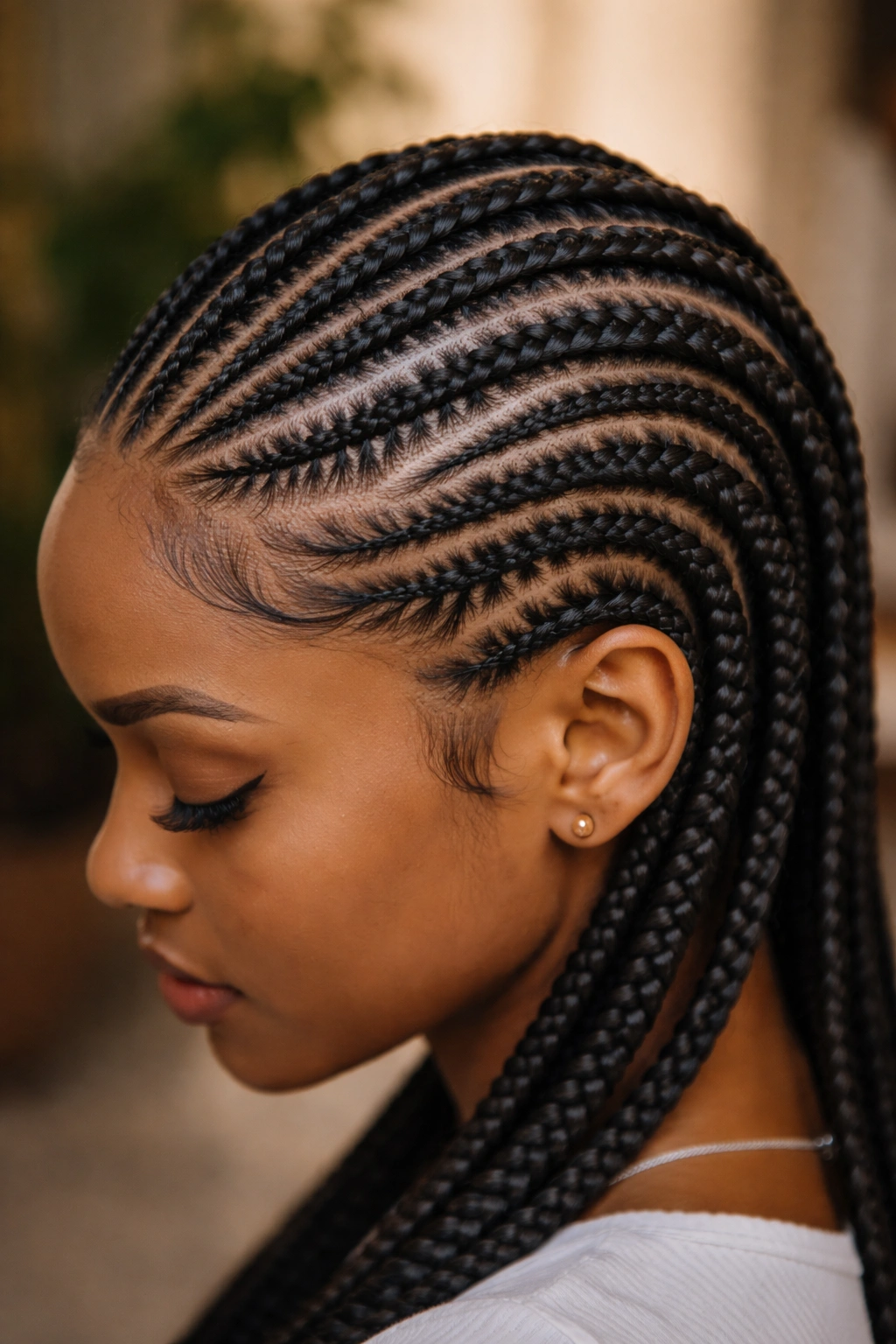
Cornrows are one of the most iconic afro hairstyles—they’re practical, beautiful, and deeply rooted in Black culture and tradition. They’re created by braiding hair close to the scalp in continuous rows, and they can be styled in countless patterns from simple straight lines to intricate geometric designs and creative freestyle patterns.
The Versatility of Cornrow Patterns
Traditional cornrows run straight down the head in parallel rows, but skilled braiders can create curved patterns, zig-zags, circles, and complex designs that transform cornrows into wearable art. Whether you choose simple, practical cornrows for their ease of care or elaborate artistic designs for a statement look, cornrows remain one of the most durable and low-manipulation protective styles available.
Care and Styling Longevity
- Cornrows can last 4-8 weeks with proper care, making them one of the longest-lasting protective styles
- Wash your scalp every 2-3 weeks using a diluted shampoo and a spray bottle to reach your roots without disturbing the braids
- Keep your cornrows looking fresh by moisturizing your scalp and the braids regularly with a light oil
- You can style cornrows up into buns and ponytails, or wear them down for a sleek statement look
- The ends of cornrows can be finished with beads, thread, or small rubber bands depending on your preference
- Cornrows create beautiful wave patterns in your natural hair when you remove them—many people leave them in for several weeks specifically to set this texture
Important detail: Tension at the roots is cumulative. If your cornrows feel uncomfortably tight, speak up before they’re finished, or remove them if they start causing headaches or edge tension over time.
9. High Puffs (Puffballs)
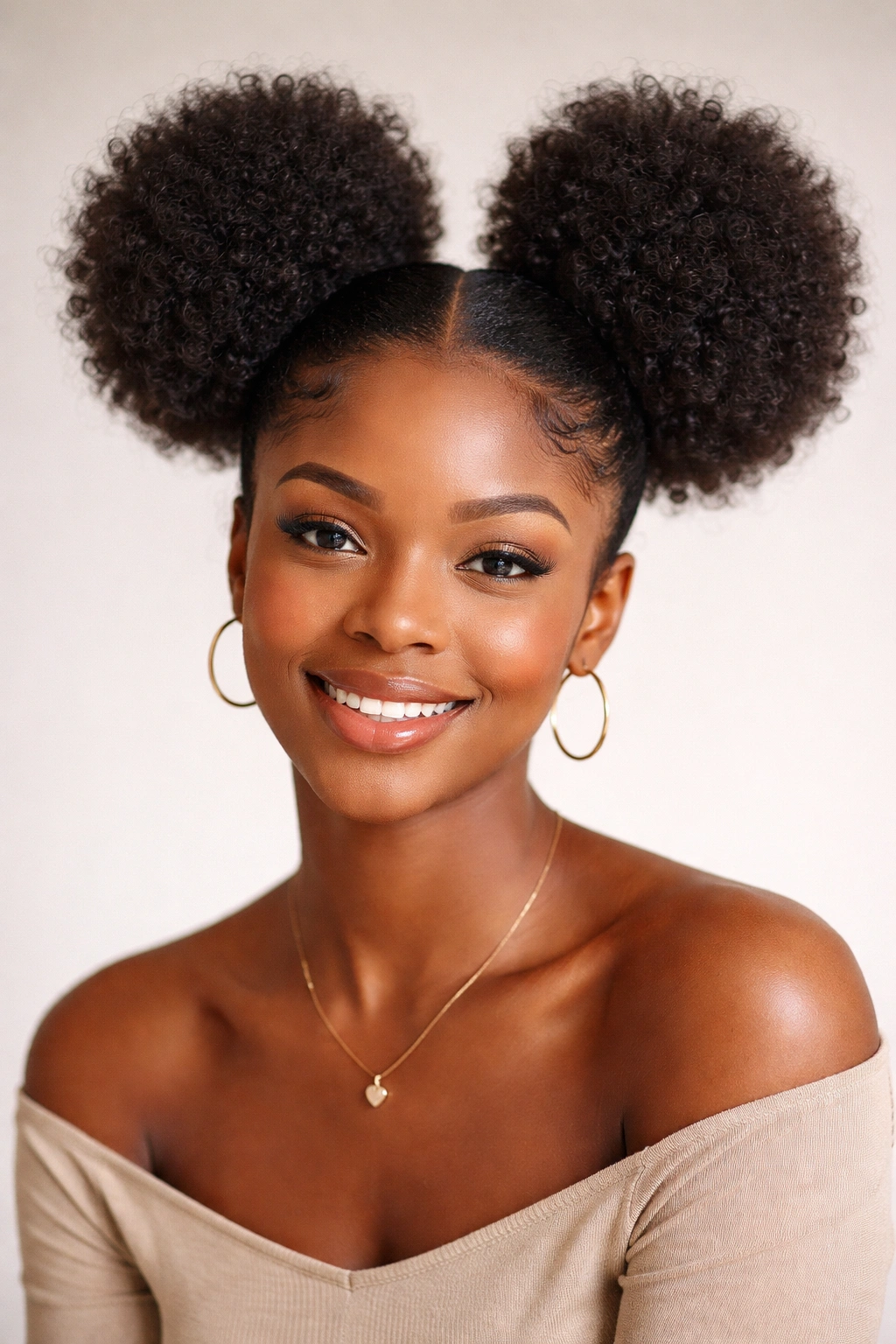
High puffs are exactly what they sound like—your hair gathered up into one or more high ponytails that create full, round shapes. They’re casual, playful, and genuinely one of the easiest afro styles to create, making them perfect for days when you want minimal manipulation but maximum impact.
Why High Puffs Work for Every Hair Type and Length
You can create a high puff on hair as short as 2-3 inches, and the style looks just as good on shoulder-length hair. The key is gathering your hair high on your head (at the crown) and using a stretchy ponytail holder that won’t slip or break your hair. High puffs work with natural texture—no heat, no straightening—which means they’re genuinely low-stress styling.
Creating and Styling Multiple Puffs
- Start with damp or dry hair and create a center part or side part, depending on the look you want
- Gather each section into a high ponytail and secure with a silk or fabric-covered elastic
- For more volume and definition, use your fingers to gently fluff each puff outward after securing
- You can create two, three, or even four puffs depending on the size of your hair and how playful you want to be
- High puffs look great for 1-2 days before you’ll want to refresh them, making them perfect for a casual style between wash days
Real talk: High puffs are best served with confidence. They’re unabashedly playful and not trying to be “professional”—if that’s your vibe, own it completely.
10. Faux Hawk
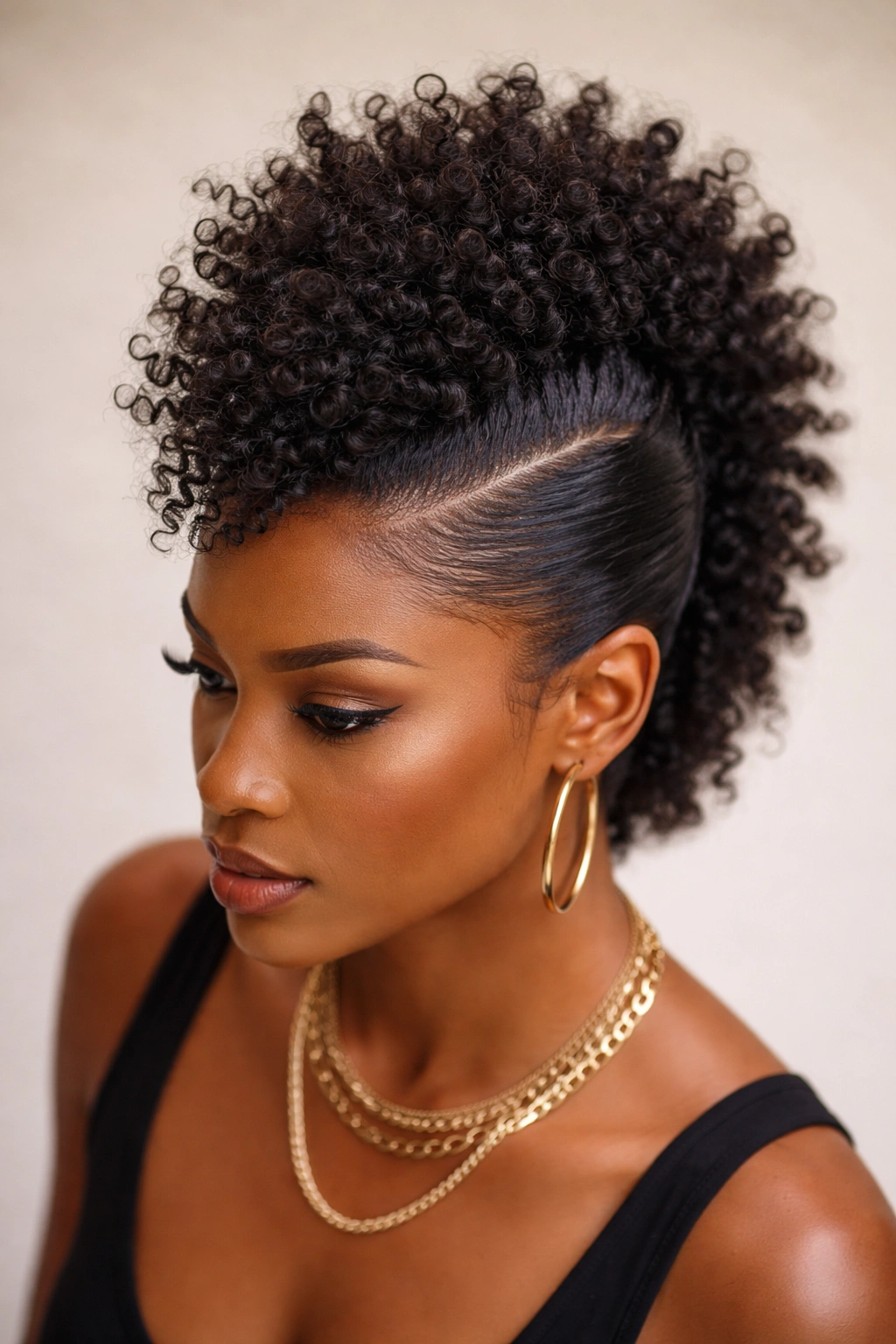
A faux hawk takes the high puff concept and elevates it with edgy confidence. Instead of gathering all your hair into a single puff, you create a dramatic raised section down the center of your head (like a mohawk) and let the sides fall naturally or smooth them back. It’s statement-making without requiring any cutting or shaving.
The Modern Appeal of the Faux Hawk
The faux hawk has been making a comeback as an easy, reversible way to create edge and attitude without commitment. It works on every hair length and texture, and it’s especially striking with natural afro texture because the contrast between the raised center and the sides is visually dramatic.
How to Create a Faux Hawk
- Create a part down the center of your head from your forehead to the nape of your neck
- Gather the center section of hair and secure it into a high ponytail or braid, leaving the sides loose or smoothing them back
- You can leave the sides completely natural and voluminous, or slick them back with gel for a sharper contrast
- For a more dramatic effect, section the center into multiple braids or twists rather than a single ponytail
- This style lasts 1-2 days before the sides start to flatten and lose definition
Pro tip: The most striking faux hawks pair a super clean, slicked-back side with a voluminous, textured center. This contrast is what makes the style work visually.
11. Crown Braids (Halo Braids)
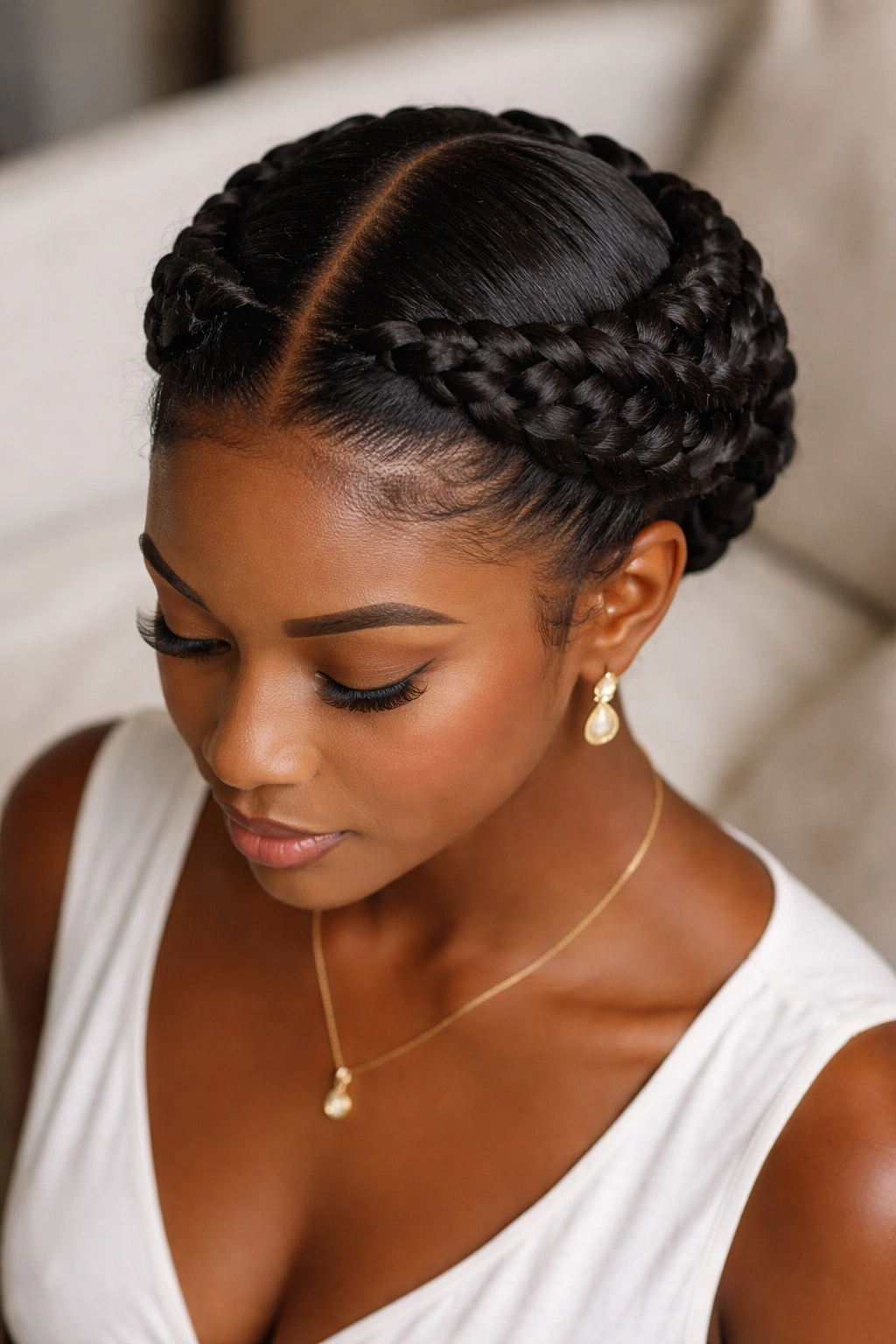
Crown braids wrap around your head like a crown or halo, using cornrow or Dutch braid techniques. They’re romantic, elegant, and surprisingly protective—your ends are braided down and tucked away while the style looks polished and intentional.
The Elegance and Practicality of Crown Braids
Crown braids work on hair that’s at least 3-4 inches long and have natural texture that holds definition well. The style is sophisticated enough for formal events but casual enough to wear on a regular day—it’s one of the few protective styles that doesn’t signal “protective style” to everyone looking at you.
Installation and Styling Ideas
- Create two Dutch braids (or cornrows, depending on your preference) that curve along the crown of your head
- You can bring them from your temples up and around the back of your head, creating a complete halo
- Tuck the ends of the braids underneath and secure with bobby pins
- Crown braids last 3-5 days as a finished style, or you can leave them in longer (up to 2 weeks) if you’re primarily doing them for protection
- This style pairs beautifully with face-framing twists or curls left loose around the front
Worth knowing: Crown braids are less about speed and more about precision. If you’re new to braiding, you might want to have a professional do them the first time so you can see exactly how they should sit and feel.
12. Coils (Comb Coils)
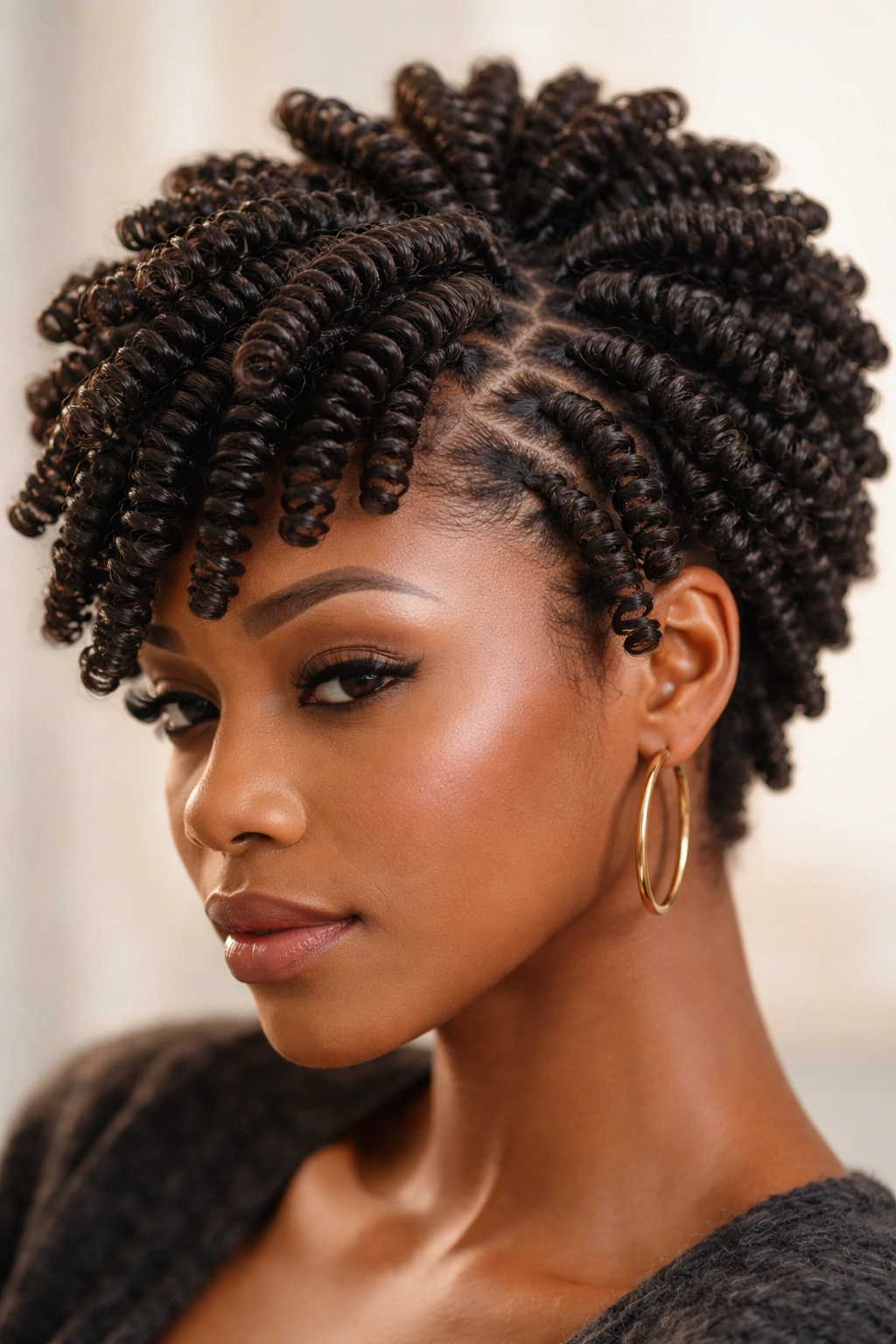
Coils are created using a tool (usually a coil or spiral tool) to wrap sections of hair into tight, uniform spirals. They’re a textured protective style that creates drama and visual impact, and they can last 3-6 weeks depending on your hair texture and how gently you handle them.
The Technique and Visual Impact
Comb coils create uniform, springy spirals that stand up from your scalp and can be arranged into updos, left to cascade down, or worn as a statement texture all on their own. Unlike twists, which have a defined line where two pieces of hair meet, coils create a smooth, continuous spiral that reads as extremely intentional and artistic.
Care and Maintenance
- Coils last longest if you’re very gentle with them—avoid touching, fluffing, or manipulating them more than necessary
- Wash your scalp every 2-3 weeks while your coils are in, being extra careful not to disturb them
- Moisturize your coils and scalp regularly with light products; heavy products will weigh them down
- You can leave coils in for 3-6 weeks depending on your hair type and how well they hold
- When you remove them, you’ll have beautiful coiled texture that lasts several days before it naturally relaxes
Real talk: Coils require a specific tool and technique—if you’ve never done them, you might want professional installation for your first set so you understand how they should be done.
13. Wash and Go
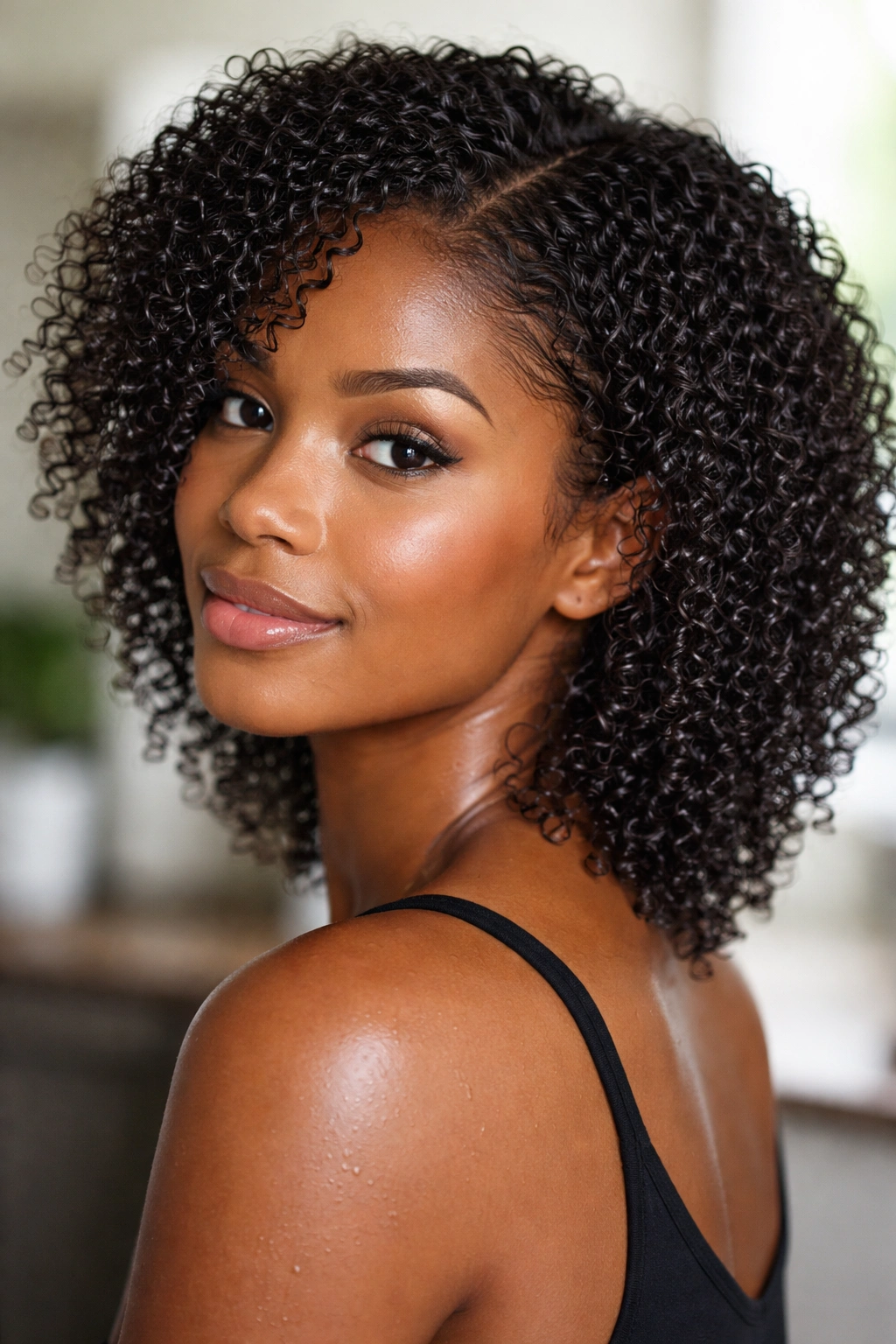
A wash and go is the simplest afro style on this list—you wash your hair, apply styling products (usually a creamy leave-in conditioner and/or curl-defining gel), and let your natural curl or coil pattern express itself. There’s no manipulation, no heat, no complicated technique—just you and your hair’s natural texture.
Why Wash and Gos Matter
The wash and go is the celebration of natural texture that every afro hairstyle journey eventually leads to. It’s low-manipulation, low-stress, and genuinely the healthiest long-term styling approach for natural hair. For many people, the goal of learning all the other protective styles is to eventually create an environment where a wash and go is a legitimate option.
Getting the Best Wash and Go Results
- Start with clean, wet hair and apply leave-in conditioner throughout while your hair is still dripping
- Apply a curl-defining product (gel, mousse, or cream) to enhance your natural curl or coil pattern
- You can style using the praying hands method (smoothing product in) or the raking method (working it through with your fingers) depending on your curl pattern
- Dry your hair using a microfiber towel or cotton t-shirt to minimize frizz (never use a regular towel, which causes friction)
- You can air-dry, use a diffuser attachment on a blow-dryer, or sit under a hooded dryer for faster drying
- A wash and go typically looks fresh for 2-4 days depending on your climate, hair texture, and product choice
Pro tip: The product combination is everything. If your wash and go isn’t holding the way you want, experiment with different leave-in conditioners and gels until you find the combination that works for your specific curl pattern.
14. Passion Twists
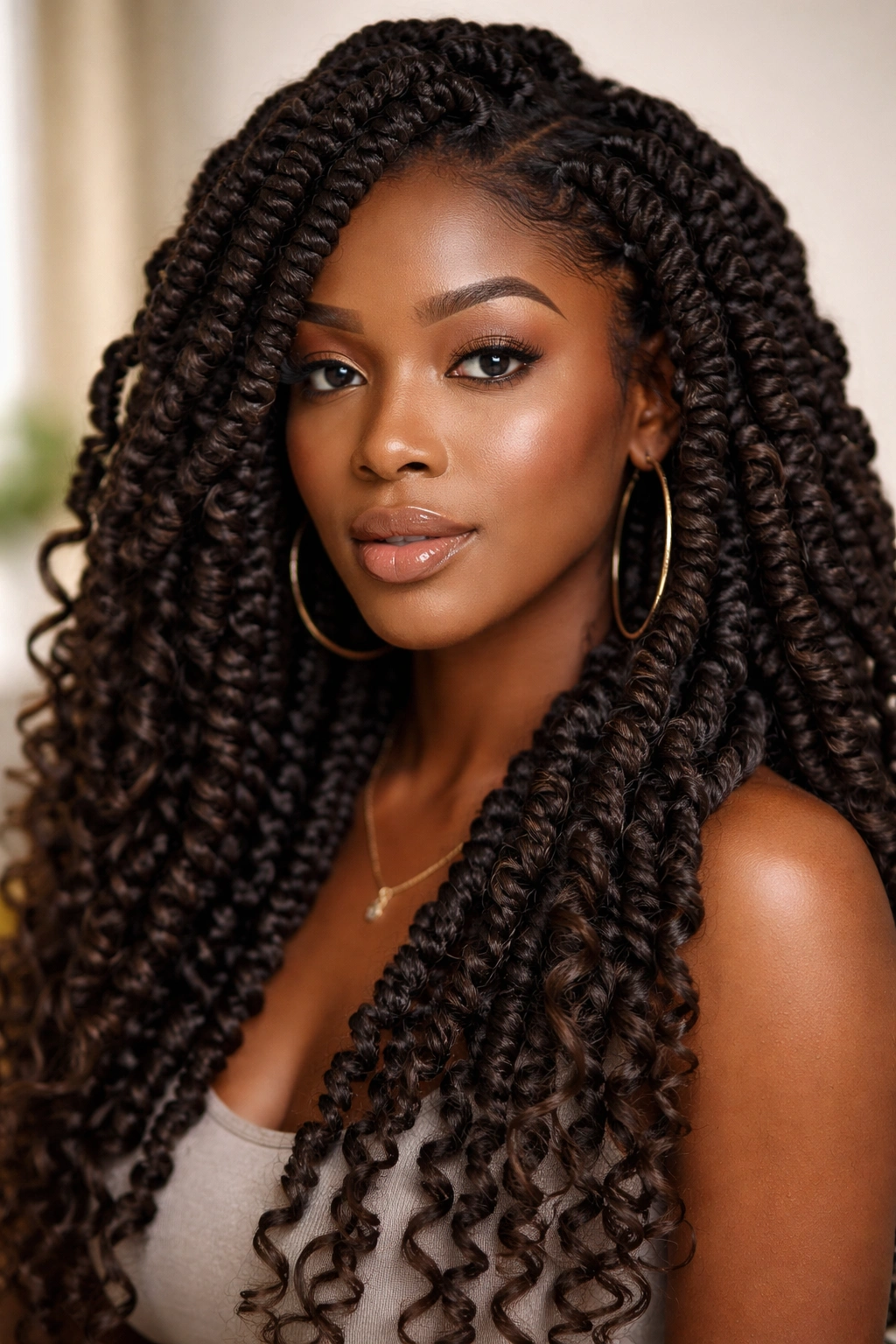
Passion twists are a hybrid style that combines the protective benefits of twists with the texture of a loose curl pattern. They’re created by wrapping texture-textured hair or yarn around two-strand twists, creating thick, chunky twists with a unique crinkled appearance that’s visually distinct from regular twists.
What Makes Passion Twists Stand Out
Passion twists look thicker and more textured than regular two-strand twists because of the wrapping, and they create incredible texture when unraveled. They’re also faster to install than traditional twists because the wrapping creates volume and definition without requiring thin, precise sectioning. The wrapping also helps them last longer—they typically hold for 3-4 weeks without needing refreshing.
Installation and Unraveling Results
- Section your hair and create two-strand twists as normal
- Use lightweight yarn, faux locs hair, or texture-textured synthetic hair wrapped around the twists to create bulk and definition
- Seal the ends by wrapping them tightly and securing with a small rubber band
- Passion twists can be worn as a finished style or unraveled after 2-3 weeks for incredible texture
- A “passion twist-out” creates voluminous, crinkled curls that last 5-7 days with gentle refreshing
Worth knowing: Because passion twists involve synthetic hair or yarn, you need to be intentional about when you wash them—excess water and product buildup can cause mildew. Wash every 2-3 weeks and dry them thoroughly.
Key Takeaways
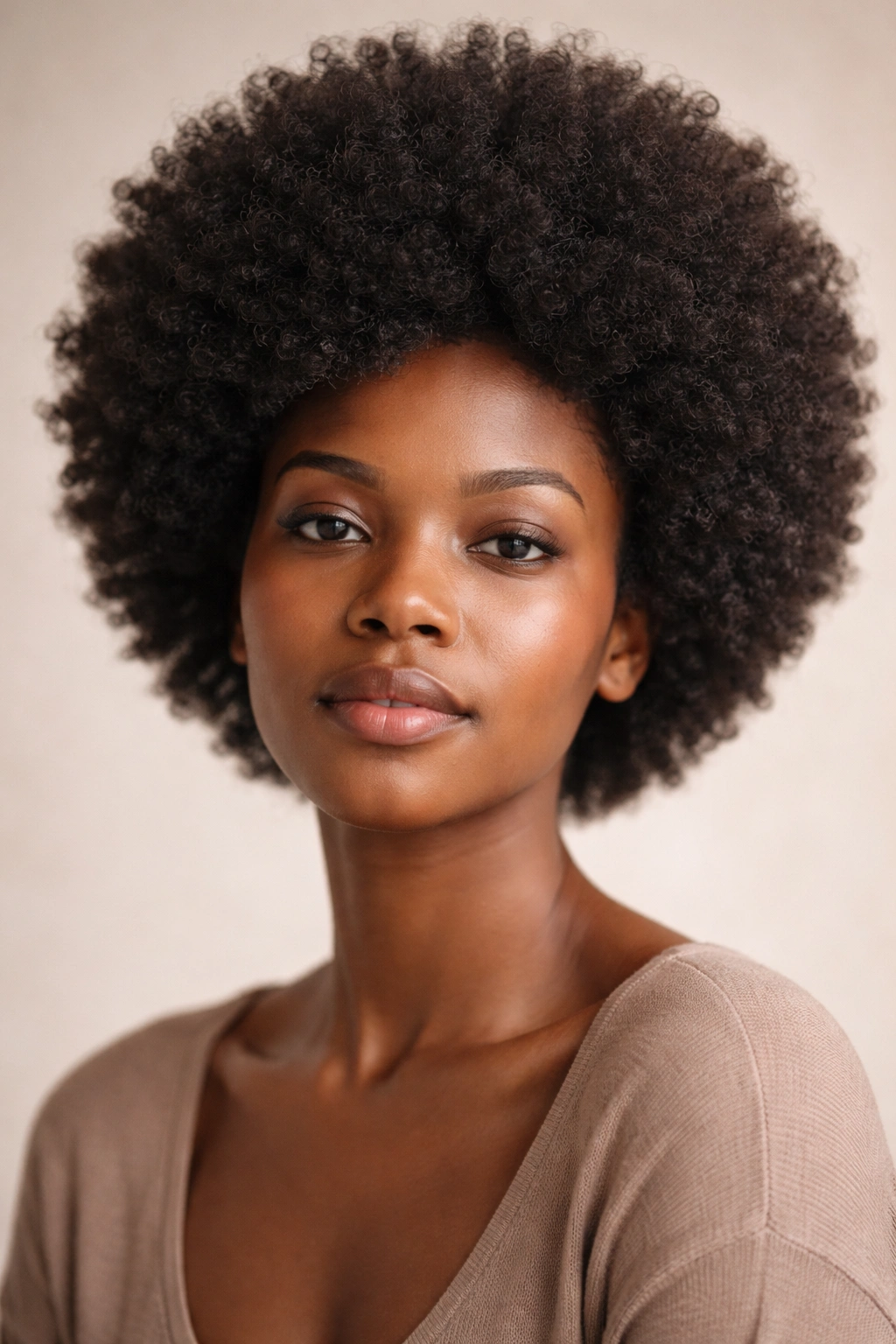
These 14 afro hairstyles represent genuinely different approaches to managing, styling, and celebrating natural hair. Some are protective (twists, braids, locs) designed to minimize manipulation over weeks at a time. Others are everyday casual (wash and go, high puff) that you can achieve in minutes with the right products. Still others are statement styles (faux hawk, Bantu knots, crown braids) that blend practicality with bold self-expression.
The honest truth is that your best hairstyle is the one that aligns with your lifestyle, your hair’s specific needs right now, and what makes you feel most confident. If you have limited time, a wash and go or high puff might be your go-to. If you’re prioritizing length retention and minimal manipulation, box braids or locs might be calling your name. If you want to feel creative and experimental, flat twists and crown braids let you play with pattern and design.
Your hair is going to change over time, and so will your styling preferences. The goal isn’t to master every single style on this list—it’s to find the ones that work for you, learn them well, and create a rotation that keeps your hair healthy while letting you express yourself authentically.
