



The afro hawk is one of the most striking and versatile ways to style natural hair—it’s bold, it’s protective, and it’s a genuine statement about embracing your texture while making space for creative expression. Whether you’re looking for a style that turns heads at a music festival, protects your natural hair from daily friction, or simply showcases the full volume and movement your curls and coils can achieve, the afro hawk offers countless interpretations. The beauty of this style is that it works across hair types, lengths, and densities, and it can be worn sleek and structured, wild and voluminous, braided or twisted, adorned with beads and jewelry, or completely natural and unfussy.
What makes the afro hawk so special in the natural hair community is that it celebrates the very texture that many of us spent years trying to minimize or hide. The style takes the inherent volume and texture of natural hair and uses it as the foundation for something visually powerful. You’re not fighting against your curls or coils—you’re amplifying them and channeling them into a shape that demands attention. The style also sits at a really interesting intersection: it’s protective enough to keep your edges and nape safe from breakage, yet expressive enough to feel like wearable art.
The versatility is genuinely one of the biggest appeals. You can adapt the afro hawk concept to match your lifestyle, the amount of time you want to spend styling, your hair’s natural texture pattern, and whether you prefer a subtle, understated look or something that’s unmistakably a statement. Some versions take an hour or more to install; others can be done in 10 minutes if you already have the foundational twist or braid in place. Let’s walk through eight interpretations of the afro hawk that showcase this range and give you real options to consider.
1. The Classic Sculptured Afro Hawk
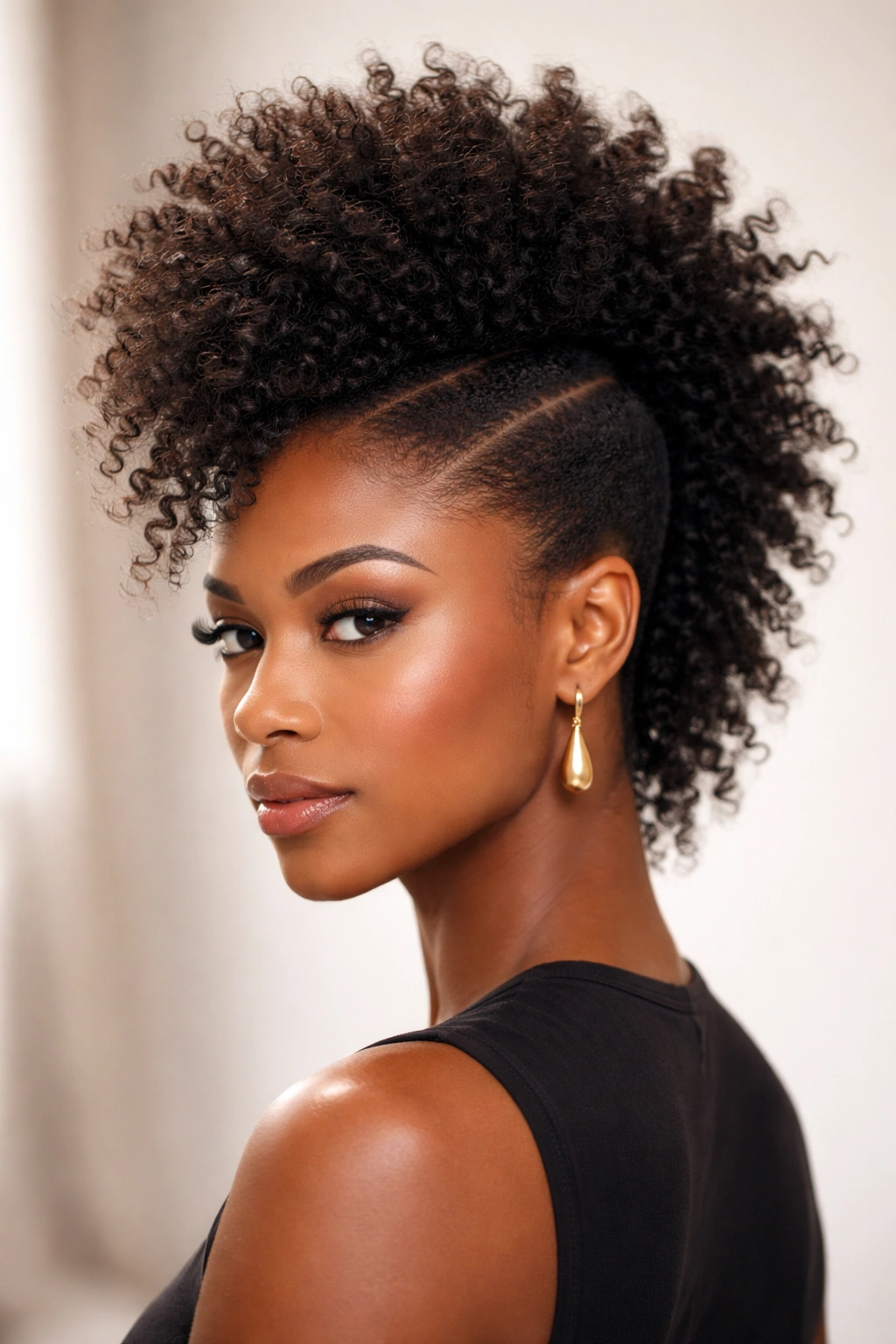
This is the version most people visualize when they picture an afro hawk: a clean, geometric raised center section with carefully shaped and smoothed sides. The magic happens in the contrast—the sides are either completely sleek (braided, twisted, or smoothed down with pomade and a wave brush), while the top rises in a voluminous, textured column of curls or coils. The sculptured version requires some intentional styling and often benefits from a light mousse, cream, or holding product applied to the sides to create that defined, sharp silhouette.
What Makes It Stand Out
The sculptured afro hawk reads as intentional and polished, even though the top half is all natural texture. It’s a style that works equally well in professional settings and at festivals—the clean geometry signals thoughtfulness and intention, while the voluminous top celebrates your natural hair’s full personality. This version typically lasts 3-5 days before needing refreshing, making it a practical choice for people who want something that feels curated without requiring daily styling effort.
Installation and Maintenance Tips
- Start with hair that’s been washed and deep conditioned the day before, which gives you better texture definition and hold
- Use a fine-tooth comb or detangling brush to smooth the sides, working from your hairline toward the back
- Apply a light pomade or gel specifically designed for natural hair edges—heavy products can make the sculpted sides look flat and weighted down
- Define the center section before styling the top by creating a clean part with a rattail comb or edge control brush
- Refresh the sleek sides each morning with a light spritz of water and a re-application of edge control
- Sleep with a satin or silk bonnet covering the whole style to preserve definition overnight
- The sculpted sides can last 4-5 days before needing a complete restyling, while the top texture stays fresh longer
2. The Braided Afro Hawk with Natural Crown
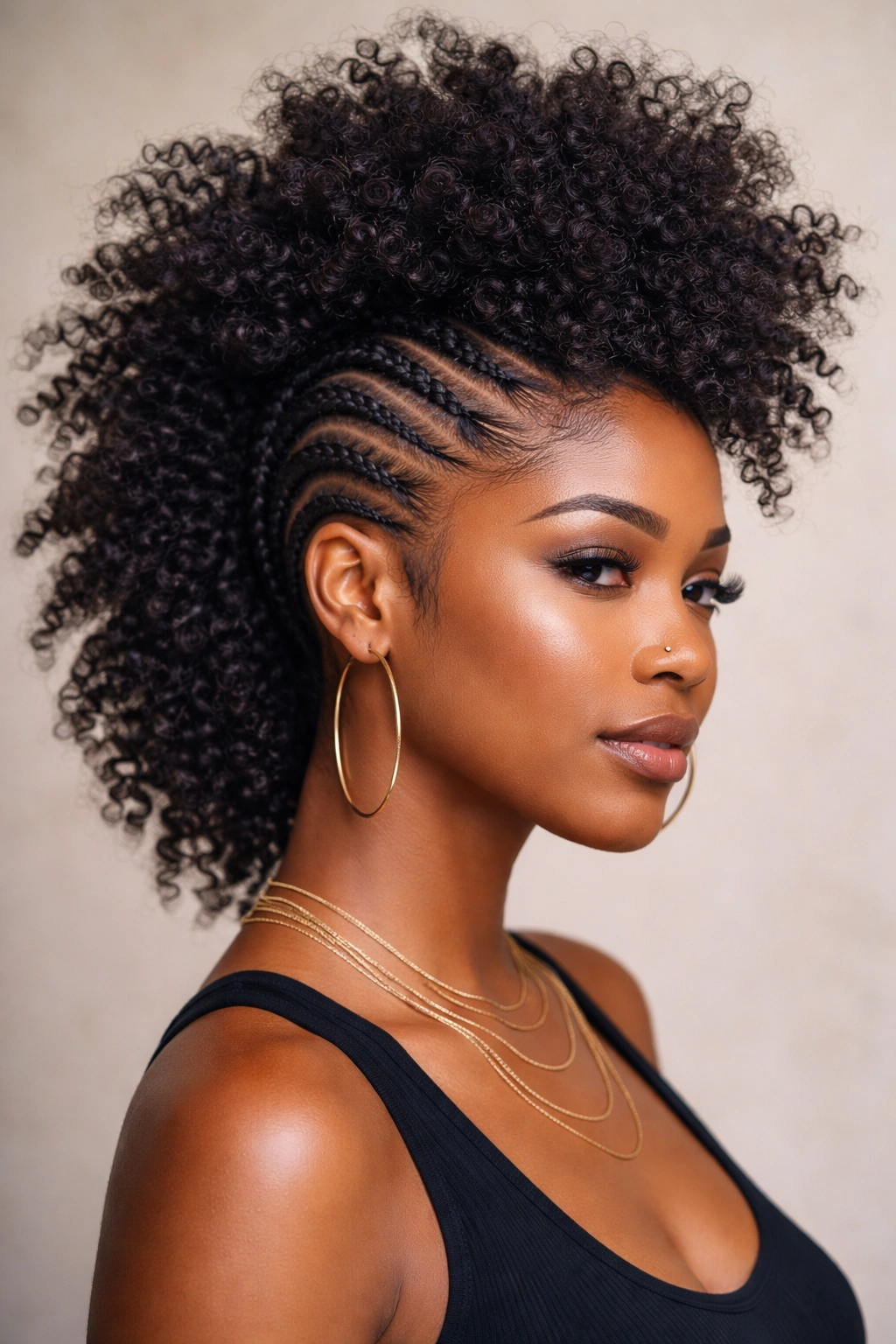
This variation combines technical braiding on the sides (usually box braids, cornrows, or flat twists) with a fully natural, unmanipulated crown of curls or coils rising above. The contrast between the neat, linear geometry of the braids and the organic, unpredictable beauty of natural texture is striking. You can create the braids using your own hair only, or add extensions for more volume, length, or visual impact. The braided sections don’t have to frame just the sides—many people braid a narrower center stripe down the middle of the head, leaving broader sections of natural hair on either side, then gather everything into a unified hawk shape at the crown.
Why This Style Stands Out
The braided afro hawk hits a sweet spot between protective and expressive. The braided sections genuinely protect your hair from friction and weather damage while you sleep or move throughout the day, and the natural crown is completely free to show off your texture at maximum volume. This style photographs beautifully because the combination of texture types creates visual depth and dimension. It’s also one of the more accessible versions if you already know how to braid—you don’t need special products or tools beyond what you likely already use.
Making It Work for Your Hair
- Braiding works best on hair that’s at least 2-3 inches long, though you can create a hawk effect with shorter hair by using smaller, tighter braids
- If you’re adding braid extensions, choose a length that complements your natural hair length so the overall silhouette feels cohesive
- You can wear this style for 2-3 weeks if you take care to keep the natural crown moisturized and the braids clean at the scalp
- The natural crown section will benefit from daily or every-other-day light misting with a water-based leave-in conditioner to combat dryness in the braided areas’ humidity
- At night, gather the braids toward the back and the natural crown together, and wrap the whole thing in a silk scarf or bonnet—this protects the braids and minimizes frizz
3. The Two-Strand Twist Afro Hawk
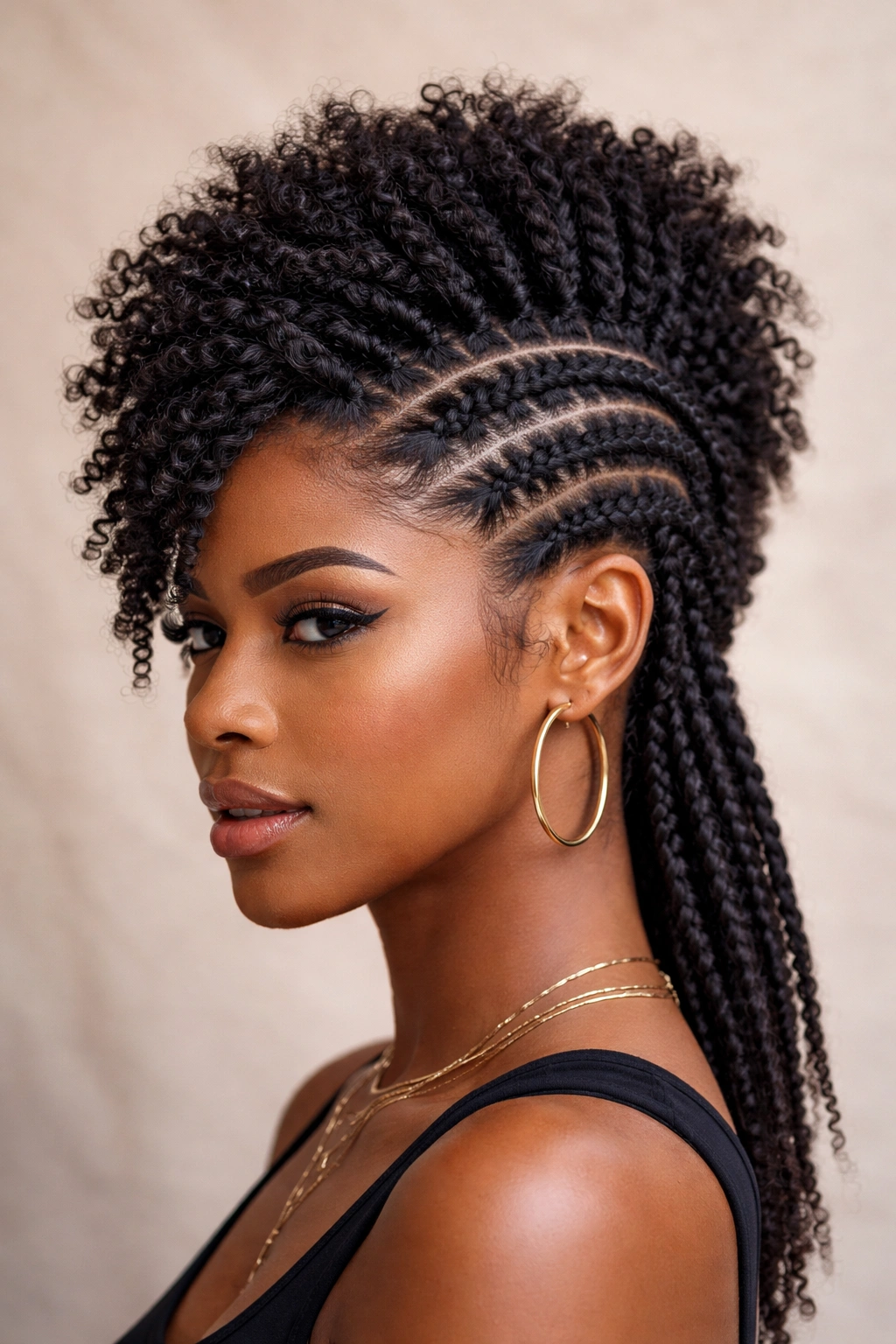
Here, the entire hawk structure is created using two-strand twists instead of loose natural hair or braids. You section out a center stripe from your hairline to the nape, then divide that section into individual two-strand twists that spiral from root to tip. The sides remain either smooth and slicked or can feature their own thinner twists. The resulting style has incredible texture and definition—those twists create a column of spiral texture that’s visually compelling and distinct from a simple afro hawk made with unmanipulated curls.
What Makes It Different
Two-strand twists give you a deliberate, hand-crafted quality that reads as intentional styling without looking heavily processed. The twists define each curl pattern individually, which is especially striking if you have a mix of curl patterns or if your natural curls tend to blend into each other when completely loose. This style is also protective in the sense that twists gently encourage your curls to hold a shape, which can reduce tangles and friction damage. Many people find that sleeping on twists causes less frizz and breakage than sleeping on fully loose curls.
Tips for Long-Lasting Twists
- Twists hold best on hair that’s been freshly washed and is damp (not soaking wet, but with moisture still present)
- Apply a lightweight twist cream or gel as you go, focusing on the twists themselves rather than loading the scalp with product
- Thinner twists will last longer and create more definition than chunky twists, though they take longer to install
- You can sleep on twists from day 1—they’ll actually look better on nights 2-4 as they set and define further
- To refresh twists that are a few days old, lightly mist with water, apply a touch of leave-in conditioner, and gently re-twist the ends to re-tighten them
- Two-strand twists can realistically last 2-3 weeks before they start to unravel and look untidy at the ends
4. The Flat Twist Afro Hawk with Soft Top
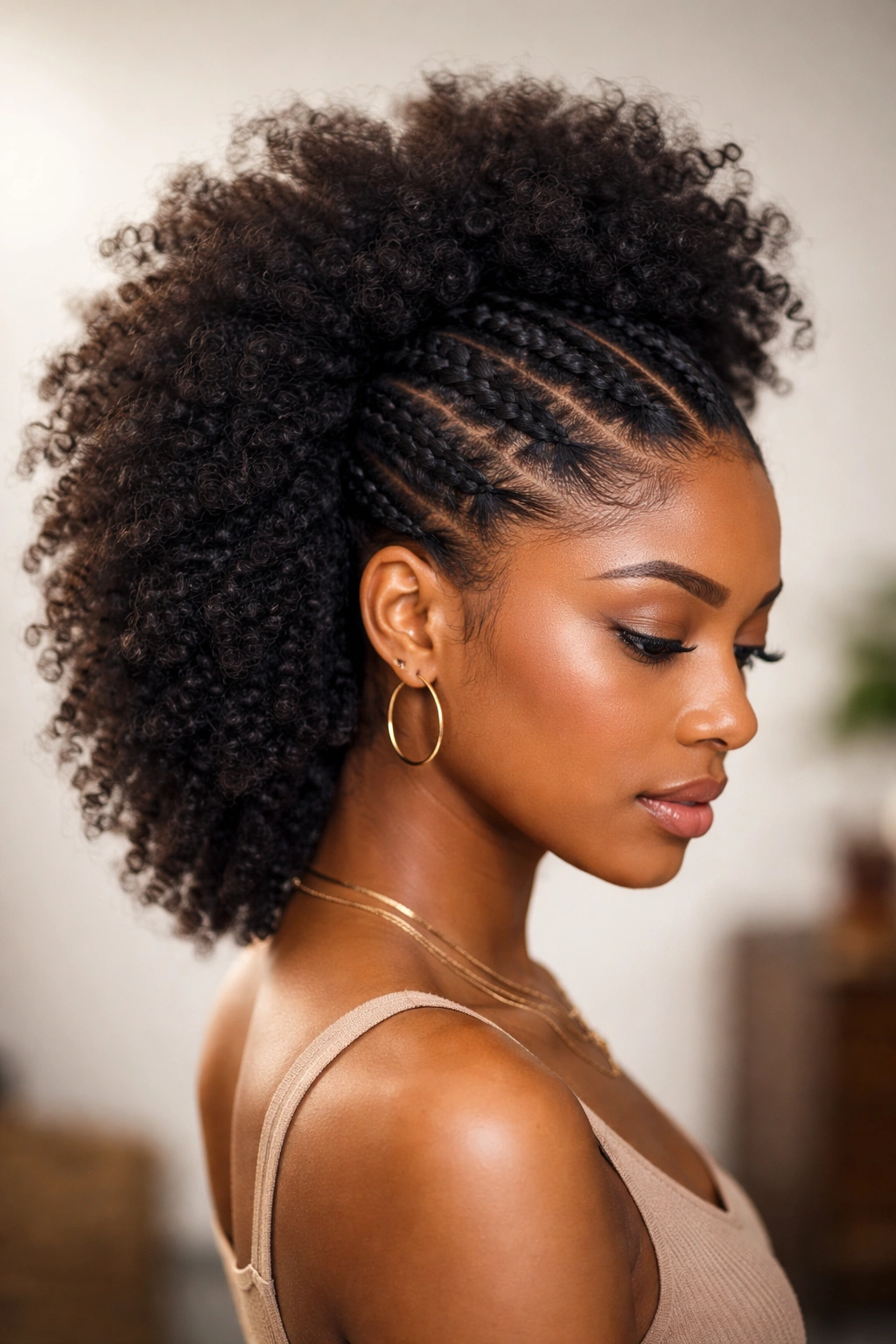
Flat twists run parallel to your scalp (like cornrows), but instead of braiding, you’re twisting two sections of hair together. When you create a center flat-twist stripe with soft, natural hair on either side, and then gather everything into an afro shape at the crown, you get a hybrid style that’s both structured and textured. The flat twists follow the natural curves of your head and create a railroad-track pattern down the center. The untwisted hair on the sides and top remains fully natural and voluminous, creating visual contrast.
Why It Works Well
Flat twists are faster to install than braids if you’re experienced with them, and they create a refined look that reads as both intentional and low-effort. The flat-twist center functions like an understructure that anchors the whole style and prevents the hawk from shifting side to side. If you have layers in your hair or varying curl patterns, the flat twists help unify the top section while letting the natural texture shine. This style is particularly effective for people with thinner density, since the twists create an illusion of more structure and volume than you might get from a loose afro hawk alone.
Installation and Care
- Flat twists can be installed on damp or dry hair, though damp hair is easier to work with
- The twists don’t need to be tight to be effective—medium tension is more comfortable and reduces scalp tension over time
- This style pairs well with edge control on the hairline and sides, keeping everything polished while the top is free and voluminous
- Flat twists last 5-7 days before you’ll want to refresh them (they loosen slightly as your hair settles and moves)
- At night, wrap the top portion loosely in a silk scarf or bonnet to preserve the shape; the flat-twist sections are more stable and don’t require as careful handling
5. The Faux Hawk with Shaved or Tapered Sides
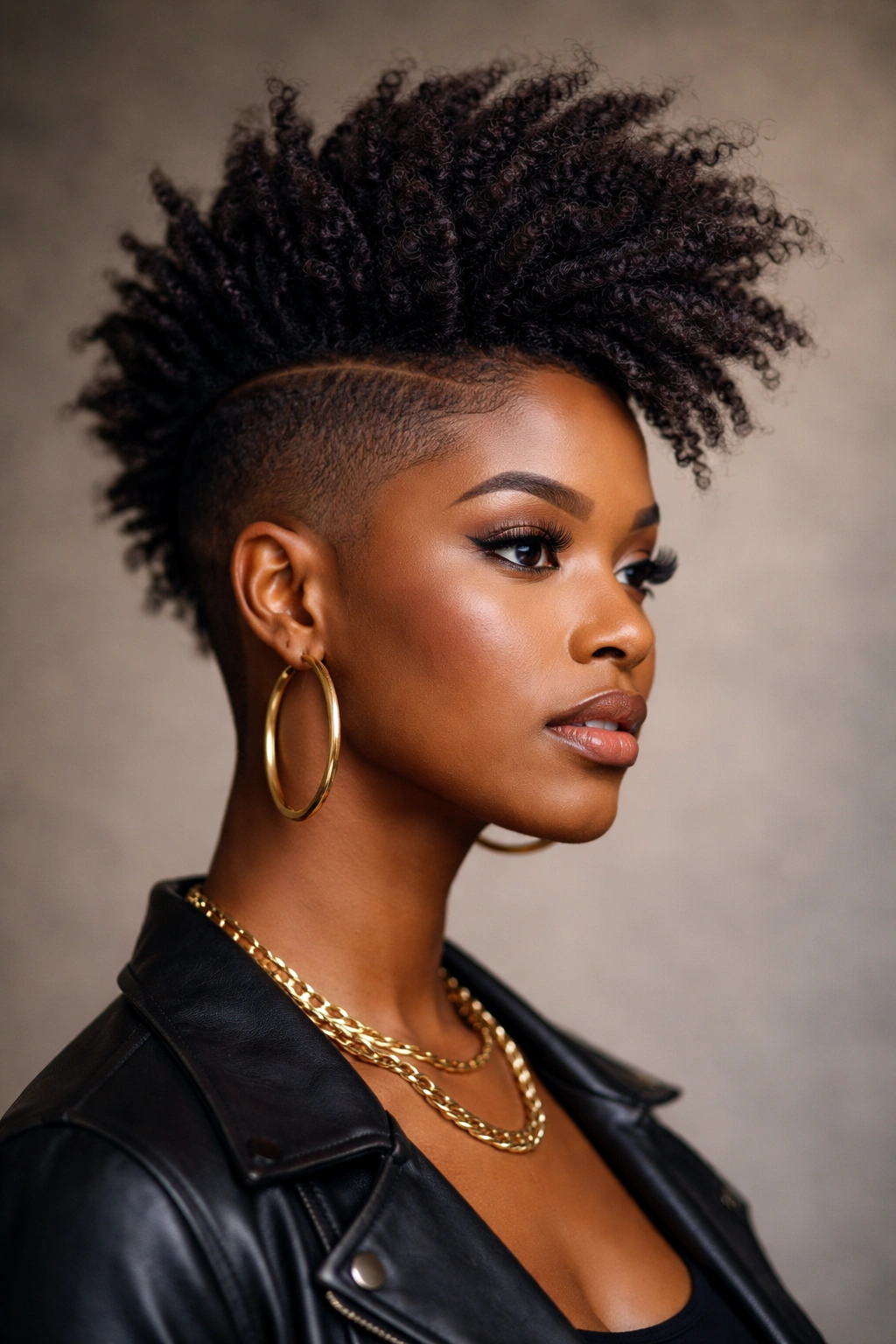
This version brings an edgier, more modern energy to the traditional afro hawk. The sides are either completely shaved or tapered very short, creating a dramatic contrast with a full, voluminous afro shape rising from the crown. The shaved/tapered sides can be completely smooth or can feature a design or pattern. This style requires either a trip to a barber or clipper confidence, but the payoff is a genuinely striking silhouette that emphasizes the height and volume of your natural crown.
What Makes It Stand Out
The faux hawk with shaved sides is unquestionably a statement style—there’s no subtle way to wear it. It reads as confident, creative, and unapologetic about occupying space. The contrast between the very short sides and the full crown is visually dramatic in the best way. Many people find that this style also feels the lightest and most carefree to maintain—there’s no styling required on the sides, and the crown just is what it is. The shaved/tapered sides also show off your scalp, jawline, and ear shape in ways a fuller head of hair doesn’t.
Maintenance Reality
- The sides will need a touch-up trim every 2-3 weeks to maintain that crisp, intentional look
- The crown can be worn completely natural without any styling product, or you can apply a light mousse for volume and definition on days when you want extra oomph
- Sleeping on this style is genuinely easy—no wrapping required since the short sides won’t show creasing
- This style works better if you have healthy, well-moisturized crown hair, since there’s nowhere to hide split ends or dryness
- The visual impact of the shaved sides means this style is best for people who genuinely want their hair to be a conversation-starter
6. The Adorned Afro Hawk with Beads and Jewelry
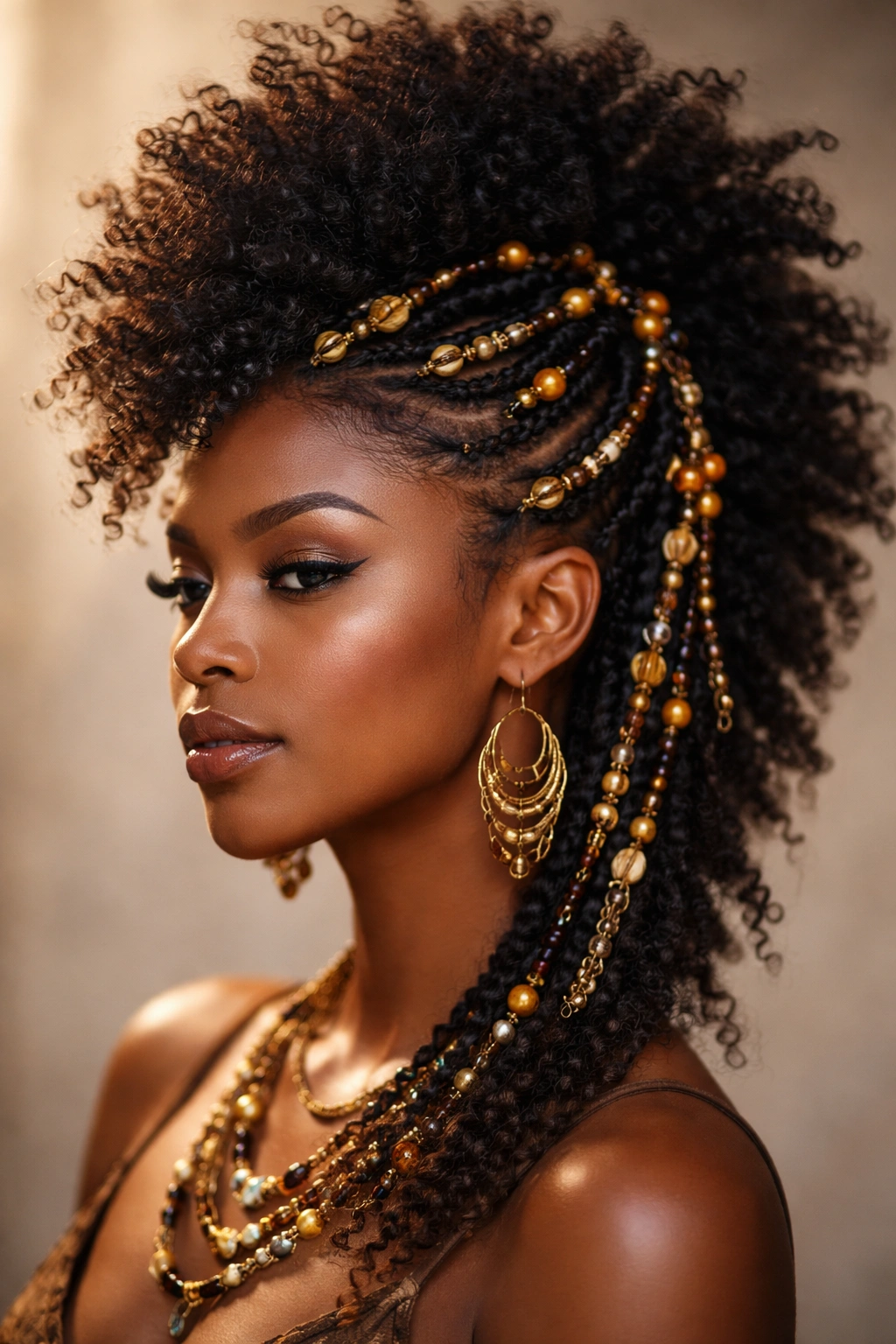
Any afro hawk can be elevated into an artistic statement by adding beads, cuffs, rings, or other hair jewelry throughout the crown. You can bead individual twists, sprinkle beads throughout unmanipulated curls, or create patterns by grouping beads of specific colors or materials. Some people add gold cuffs, silver rings, or geometric brass pieces. Others use wooden beads, ceramic beads, or even small seashells. The beads serve both a practical function (they help define and weight down curls slightly) and an artistic one.
Why It Works
Beaded afro hawks are genuinely an art form—they’re a direct connection to cultural practices and styling traditions, and they transform a natural hairstyle into something that feels ceremonial or celebratory. The beads catch light and create visual interest, making the style feel special and intentional. Practically, beads also help hold curl definition, slightly weight down very lightweight curls so the hawk shape is more stable, and reduce tangles because the beads keep individual curls separated from each other.
Beading and Jewelry Basics
- Wooden or ceramic beads are lighter and more comfortable for all-day wear than metal beads
- Place beads along twists or braid extensions rather than directly on your natural hair to reduce tension on individual strands
- You can use beads with the holes already drilled, or thread your own bead designs onto a thin flexible wire before placing them on your hair
- Beaded sections should be lightened (fewer beads on delicate areas like the temples) to minimize scalp tension
- Sleep with a protective bonnet or scarf to keep beads from catching on fabric and creating stress on your hair
- Beads can stay in place for 1-2 weeks before you’ll want to remove them and refresh your style
7. The Textured Mohawk with Color
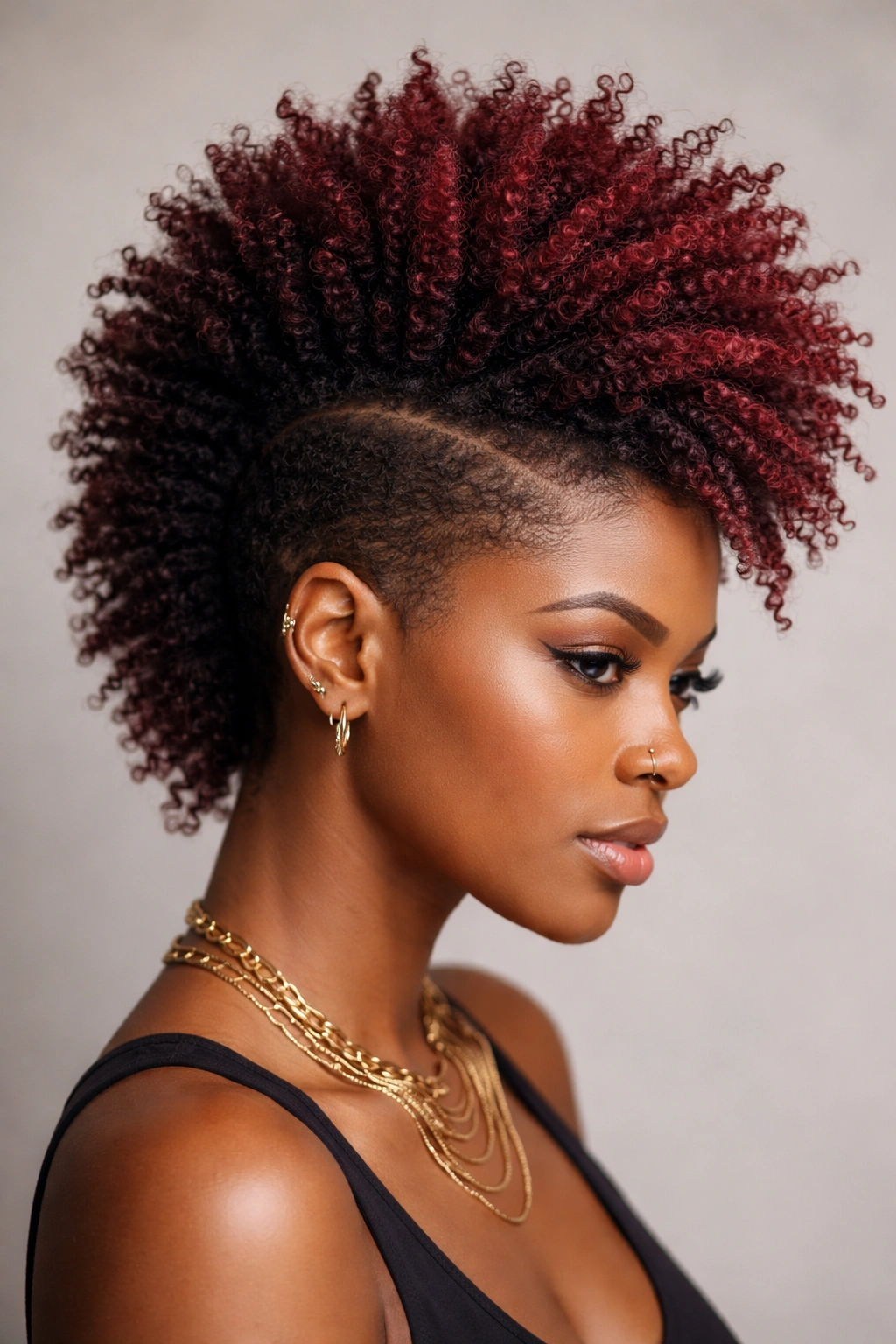
Add a semi-permanent or permanent color dimension to any afro hawk base, and you instantly elevate the visual impact. This could mean dyeing the entire crown a vibrant shade—burgundy, gold, coral, deep purple—or creating a color gradient that transitions from your natural color at the roots to a lighter shade at the tips. Some people color only the crown portion while leaving the sides their natural color, creating a two-tone effect. Others use color-depositing conditioners or temporary color sprays for a less permanent commitment.
What Makes It Distinctive
Color transforms an afro hawk from a styling choice into a fashion statement and an artistic expression. It amplifies the volume and dimensionality of the style and allows you to express creativity and personality in a way that goes beyond cut and texture. A well-executed color also draws attention to your face and can actually make your skin tone appear brighter and more glowing (depending on which shades you choose). The color dimension makes the hawk shape visually pop and creates multiple points of interest.
Color Considerations for Natural Hair
- Semi-permanent or temporary color is gentler on natural hair than permanent color, especially if you’re planning to recolor frequently
- Color-depositing deep conditioning treatments (brands like Mielle, Carol’s Daughter, and similar) offer subtle, buildable color while also conditioning your hair
- If you’re using permanent color, deep conditioning treatments become non-negotiable—your curls will be thirstier than usual and more prone to breakage if you don’t maintain moisture
- Jewel tones (deep purples, teals, emerald greens, burgundies) tend to look most striking on deeper skin tones, while softer pastels and warm golds complement all skin tones
- Colored hair needs UV protection; use hair products with UV filters or wear a hat or scarf in direct sunlight to prevent color fading
8. The Voluminous Wash-and-Go Afro Hawk
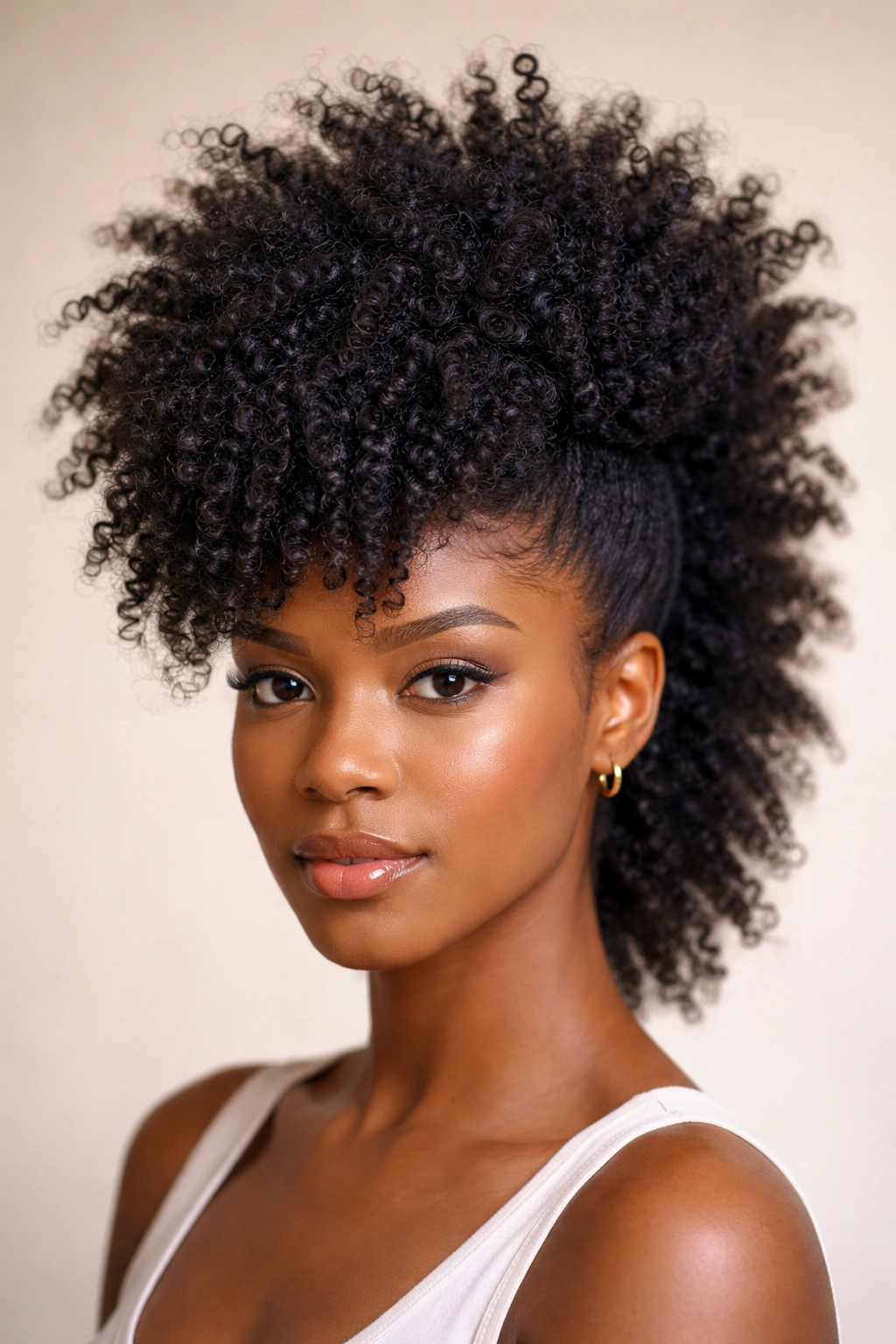
This is the version for people who love the aesthetic of an afro hawk but want a style that requires zero daily styling—just wash, apply a light product, and go. The foundation is healthy, well-moisturized natural curls allowed to dry completely into their most voluminous form. No braiding, no twisting, no sculpting. The “hawk” shape emerges naturally from the way your curls dry and fall, plus a little intentional scrunching upward at the crown while the hair is still wet. You’re essentially amplifying your natural wash-and-go and emphasizing the volume at the top.
Why It’s Worth Considering
The wash-and-go afro hawk is the least time-intensive version, making it genuinely sustainable as a regular style choice rather than a special-occasion look. It’s also the most natural-looking version in terms of celebrating your hair exactly as it grows. There’s nothing to remove, refresh, or install—it’s truly effortless. For people with beautiful, well-defined curl patterns, a simple wash-and-go that emphasizes the crown is sophisticated, striking, and absolutely sufficient as a statement.
Making Your Wash-and-Go Hawk Work
- Deep condition weekly or every other week to keep curls healthy, defined, and bouncy
- Use a leave-in conditioner that matches your hair’s porosity—low porosity hair typically does better with lighter, water-based leave-ins, while higher porosity hair can handle richer products
- Apply product to soaking-wet hair and use the praying hands or scrunching method to distribute it evenly
- Scrunch upward from the ends toward the roots as your hair dries (either air-drying or with a diffuser) to encourage volume at the crown
- A light mousse or curl-enhancing gel can help define curl clumps without creating crunch
- This style looks best on days 1-2 after washing; by day 3-4, you’ll want to refresh with a spray bottle of water and a bit of product
Final Thoughts
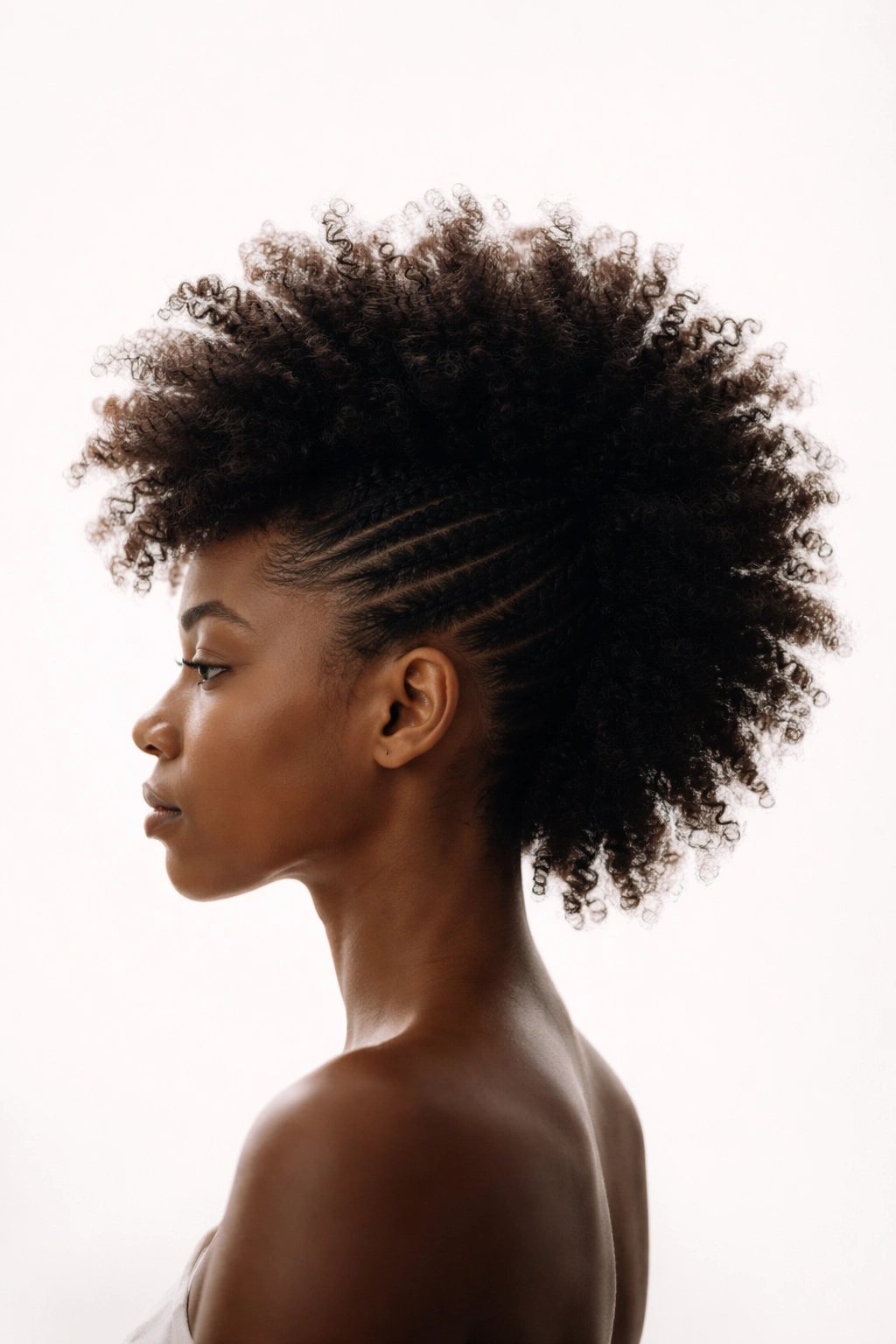
The afro hawk is far more than just a hairstyle—it’s a form of self-expression that celebrates natural texture while making space for creativity, intention, and unapologetic presence. Whether you’re drawn to the sculptural geometry of a sleek hawk with a voluminous crown, the protective benefits of braids and twists, the artistic statement of added color and jewelry, or the effortless ease of a wash-and-go version, there’s genuinely an afro hawk interpretation that fits your lifestyle, your hair’s texture, and the version of yourself you want to present to the world.
The best afro hawk for you is the one you’ll actually wear—the one that makes you feel confident, comfortable, and authentically yourself. Start by considering how much time you realistically want to spend on styling. Think about whether you prioritize protective aspects or pure aesthetic appeal. Consider your hair’s density, curl pattern, and current health. Ask yourself whether you want to make a subtle statement or turn heads completely. Then try the version that aligns with those priorities, give yourself grace while you learn the technique, and adjust as needed.
Your natural hair is your canvas, and the afro hawk is your way of saying that you’re not minimizing it, hiding it, or shrinking yourself down. You’re amplifying it. You’re celebrating it. You’re taking up space with intention and joy. That message matters, and every person who sees your afro hawk will feel that confidence, whether consciously or not.
