


There’s something profoundly liberating about a short afro hairstyle that actually works with your face shape, lifestyle, and what you want to project to the world. When you’re over 40, you’re not looking for a style that shouts “trendy”—you want something that says you’re intentional, confident, and comfortable in your own skin. The good news? Short afro styles offer exactly that kind of understated power.
The thing about short natural hair after 40 is that it often looks better than it did when you were younger. Your texture is what it is—no apologies needed. Your face has character and definition that actually pairs beautifully with close-cropped styles. You know your body, your schedule, and what makes you feel good. You’re done with styles that demand 90 minutes of maintenance before you leave the house. A well-chosen short afro can be wash-and-go, styling-flexible, and undeniably chic, all at the same time.
The challenge isn’t finding a short afro style—it’s finding one that actually suits your hair texture, face shape, and daily life. That’s where this guide comes in. Each of these 10 styles works beautifully for women over 40, and each one comes with real insight into who it flatters most, how to ask your barber or stylist for it, what the maintenance actually looks like, and how to style it on days when you want a little more polish.
1. Tapered Natural With Clean Lines
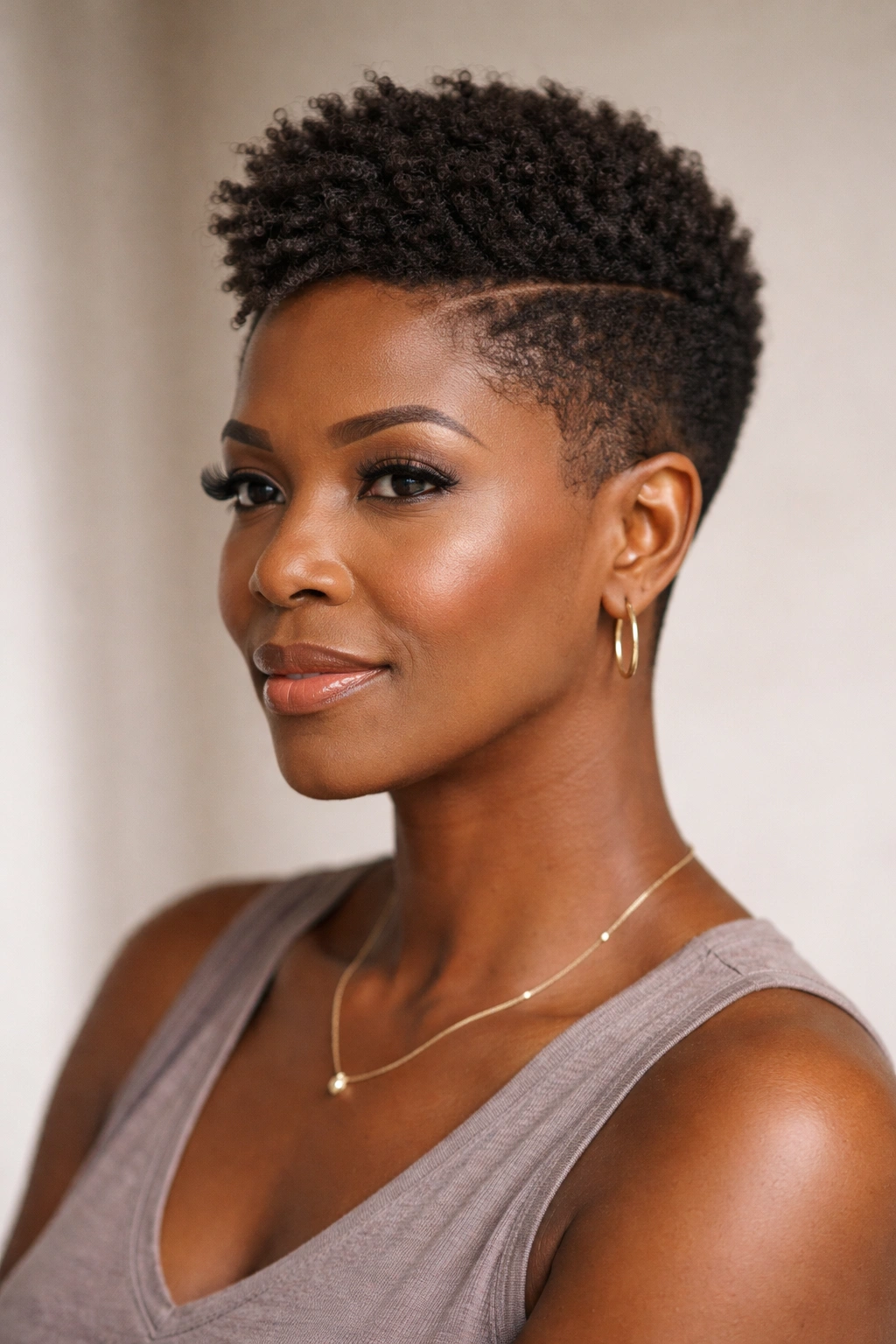
A tapered natural is the foundation of modern short afro styling, and it’s especially flattering on mature faces because it emphasizes bone structure and the natural shape of your head. The sides and back are cut close with clean, precise lines—think a fade that stops before it gets to skin, or a tight taper that shows definition without being undercut. The top stays longer, giving you volume and texture that you can style or leave alone depending on your mood.
Why This Works After 40
The tapered silhouette creates a lifted, intentional look that feels current without chasing youth. Because the sides are tighter, it draws the eye up toward your face and emphasizes your features rather than creating a heavy, all-over-the-head shape. The cleaner lines also read as polished and groomed, which matters when you’re not spending two hours on your styling routine. It’s architectural without being severe.
What You Need to Know
- Fade or taper depth is everything: Ask your barber to take the sides down to a 1 or 1.5 guard, leaving enough length on top (usually 2-3 inches minimum) that you have actual styling options. Too short on top and you lose shape; too thick on the sides and you lose the lifted effect.
- Maintenance happens every 3 to 4 weeks: The line between intentional taper and “needs a haircut” is only a few weeks, especially if your hair grows quickly. Budget accordingly—this isn’t a 8-week style.
- Your barber’s skills matter: A clean taper takes precision. Find someone who understands textured hair and can create crisp edges without nicking or irritating your scalp.
- Top styling is flexible: On casual days, brush up and out for volume. On days you want polish, brush back with a light mousse or edge control for definition.
Pro tip: Bring your barber a photo of what you want—not of someone else’s head, but of the exact fade angle and top length you’re envisioning. Language like “taper” can mean different things to different people.
2. Twisted Crown With Fade
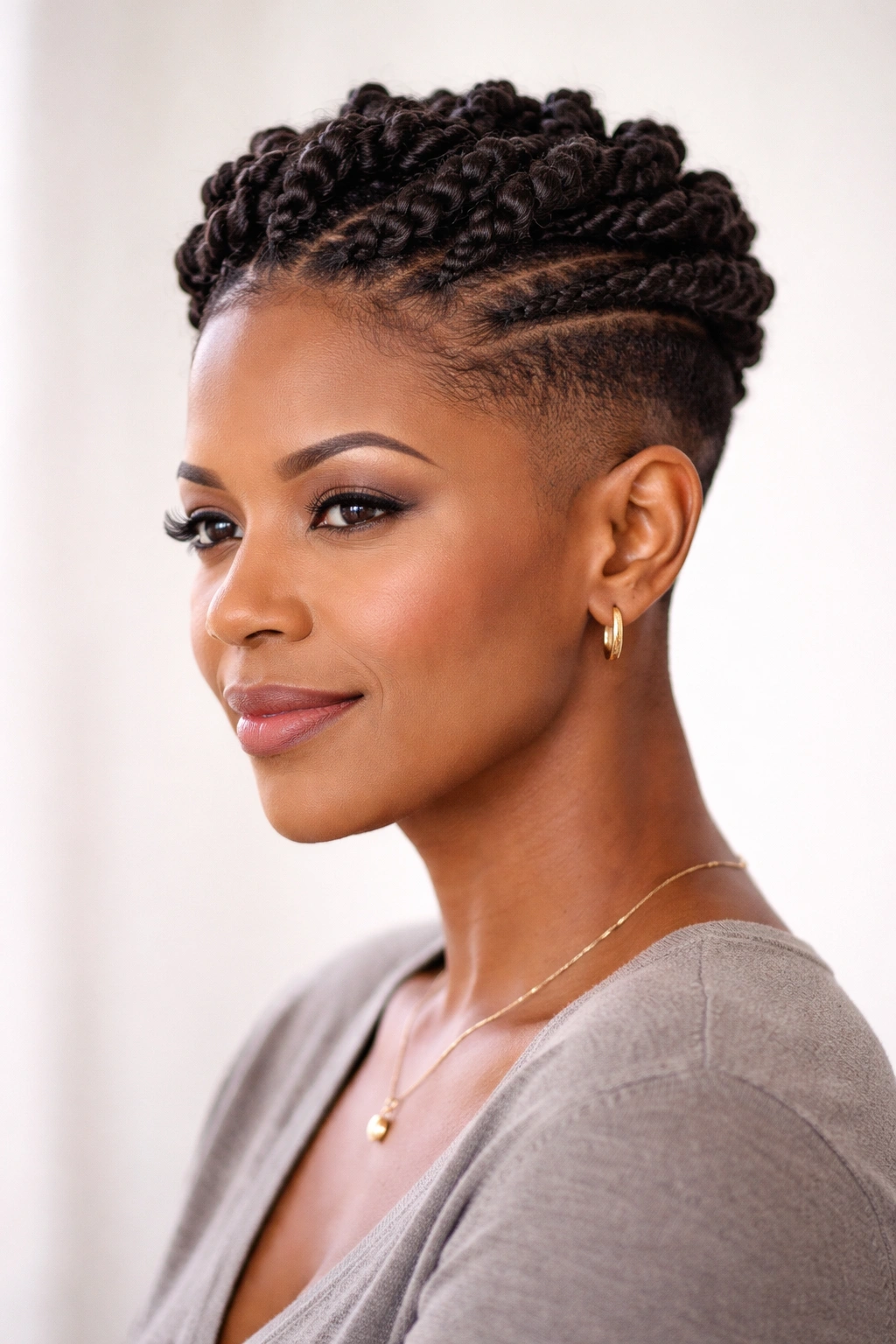
A twisted crown is romantic, intentional, and surprisingly low-maintenance—you’re twisting sections of your natural hair into coils around the top of your head, almost like a crown or halo, while the back and sides are faded clean. It’s elegant without feeling like you spent three hours getting ready, and it works across different hair textures from loose waves to tight coils.
The Appeal for Mature Hair
Twisted styles acknowledge your natural texture instead of fighting it. They also create visual interest and dimension that makes your hair look thicker and fuller, which many women notice becomes more important over 40. The twisted detail draws attention upward, and the contrast between the defined twists and the faded sides creates a sophisticated, modern silhouette that reads as intentional grooming.
How to Make It Work
- Twist thickness depends on your hair volume: If your hair is finer, do fewer, thicker twists. If you have dense hair, you can do more numerous, thinner twists. Start with 5-7 main twists and adjust based on how they look.
- Moisturize before twisting: Use a lightweight leave-in conditioner or hair oil so your twists are smooth and defined rather than crispy. Dry, unstretched twists can look frizzy after a day or two.
- You’ll need to re-twist every 1 to 2 weeks: Twists loosen as your hair grows and moves. Plan for a quick touch-up session, or do partial re-twisting of just the roots if the crown twists are still intact.
- Sleep protection matters: Pineapple your twists (gather them loosely on top of your head) or wrap your head in a silk scarf to keep them fresh longer and prevent breakage.
Insider note: If full twists feel like too much maintenance, try twisting just the front or top sections and leaving the sides naturally faded for a hybrid look that takes 15 minutes instead of 45.
3. Coils With Fade and Texture Variation
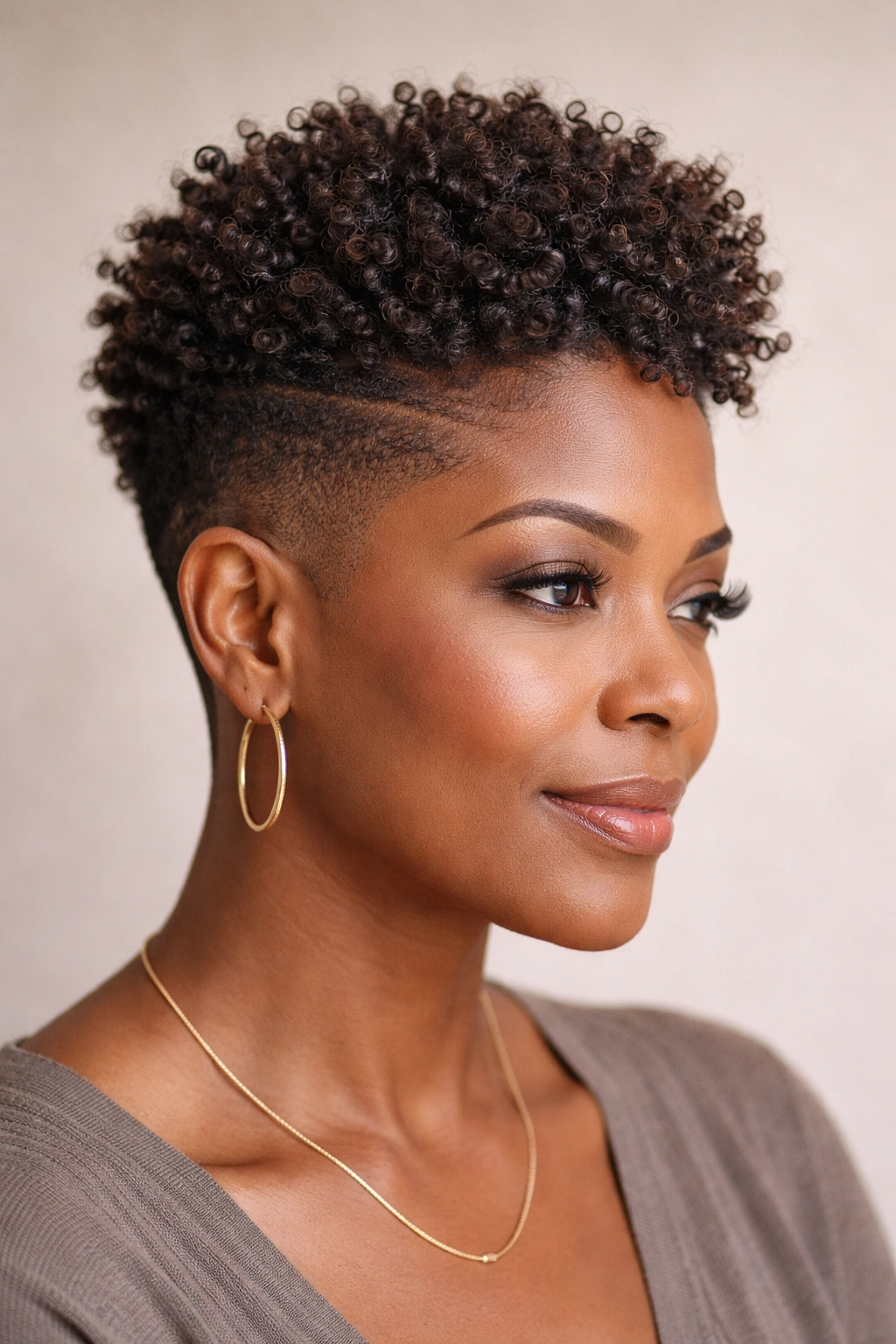
This style celebrates your natural coil pattern by keeping it defined and bouncy on top while fading the sides and back clean. You’re not trying to stretch or straighten anything—you’re working with your hair’s natural curl, defining it with the right products, and letting it do what it wants to do. Pair that with a sharp fade, and you’ve got a style that’s both natural and polished.
Why Texture-Forward Styles Shine After 40
When you stop fighting your hair’s natural pattern, something shifts in how you feel about yourself. Defined coils look fuller, healthier, and honestly more interesting than stretched or straightened hair. They also read as confident rather than trying-too-hard, which is a vibe that only gets stronger as you get older. The contrast between the textured top and the faded sides creates modern dimension.
The Maintenance Reality
- Defining products are non-negotiable: You need a defining gel or mousse that holds your coils in place without flaking, crunching, or feeling heavy. Test a few—what works for one person’s coils might not work for another’s.
- Refresh frequency depends on your routine: Coils stay defined longer in some hair types than others. Most women get 4-7 days before they need a light refresh with product. Sleeping in a pineapple or bonnet helps.
- Wash timing varies: Some women wash and re-define their coils weekly. Others stretch it to every 10 days. Listen to what your coils need—if they’re getting buildup or feeling dry, it’s time.
- A good cut makes all the difference: Your coils should be cut when they’re in their natural state (not stretched or twisted), and the barber should cut INTO them slightly to remove bulk while keeping definition.
Worth knowing: Coils look bouncier and shinier when you’re consistent with moisture. A lightweight leave-in conditioner or oil used every few days (not just on wash day) keeps them hydrated and prevents frizz.
4. High-Top Short Afro With Precision Edges
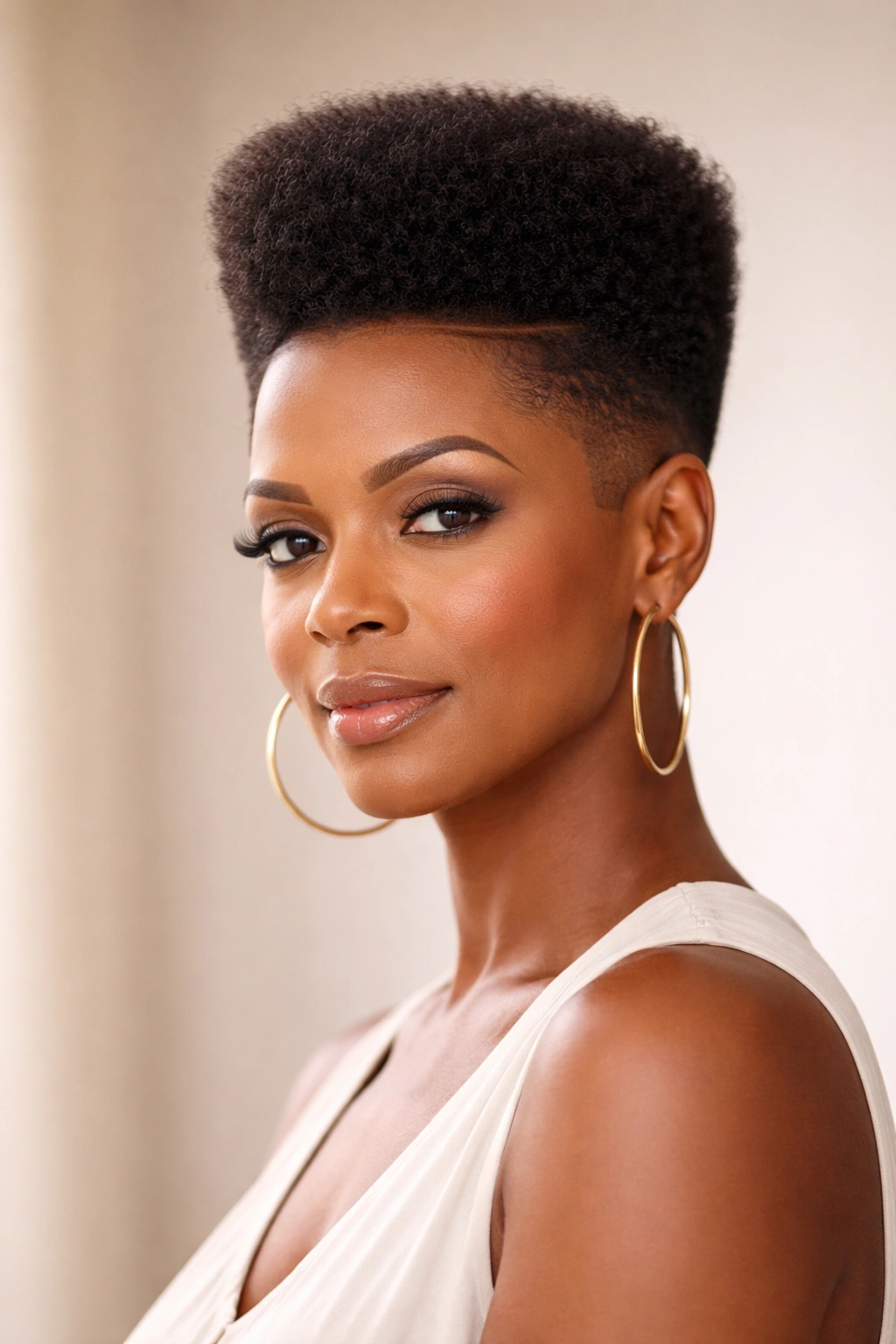
A high-top afro is structured volume on top with clean, tapered sides—it’s the style that says you understand who you are and you’re not apologizing for taking up space. The “high-top” refers to the actual height of the hair on top of your head; yours might be 3-4 inches at the tallest point, which gives you that signature shape without being extreme. It’s bold without being over-the-top.
What Makes This Flattering Over 40
A high-top draws the eye directly upward, which naturally lifts your face and makes your features feel more awake. The geometric precision of the shape reads as intentional and confident. It also works with almost every face shape because the key is getting the top height and width proportional to your specific head and features—not following a cookie-cutter template. A good barber will customize the shape to suit you.
Styling and Maintenance Specifics
- You’ll need an afro pick or wide-tooth comb: These are non-negotiable tools. Use them to fluff and shape your fro daily if you want maximum volume, or just 2-3 times a week if you prefer a more relaxed shape.
- Styling products vary by preference: Some women use light mousse for hold, others use a moisturizing edge control only on the edges, and some use nothing and let the hair do its thing. Experiment.
- Trims every 6 to 8 weeks keep the shape: High-tops require maintenance because the shape degrades quickly if you don’t trim. Plan for regular barber visits.
- How you sleep affects how the top looks: If you sleep on your side with friction, expect to shape it up each morning. A bonnet or scarf keeps your shape fresher overnight.
Pro tip: A light hair mousse or texturizing spray applied to damp hair and fluffed with an afro pick gives you more volume and shape retention than trying to work with completely dry hair.
5. Textured Bob With Undercut
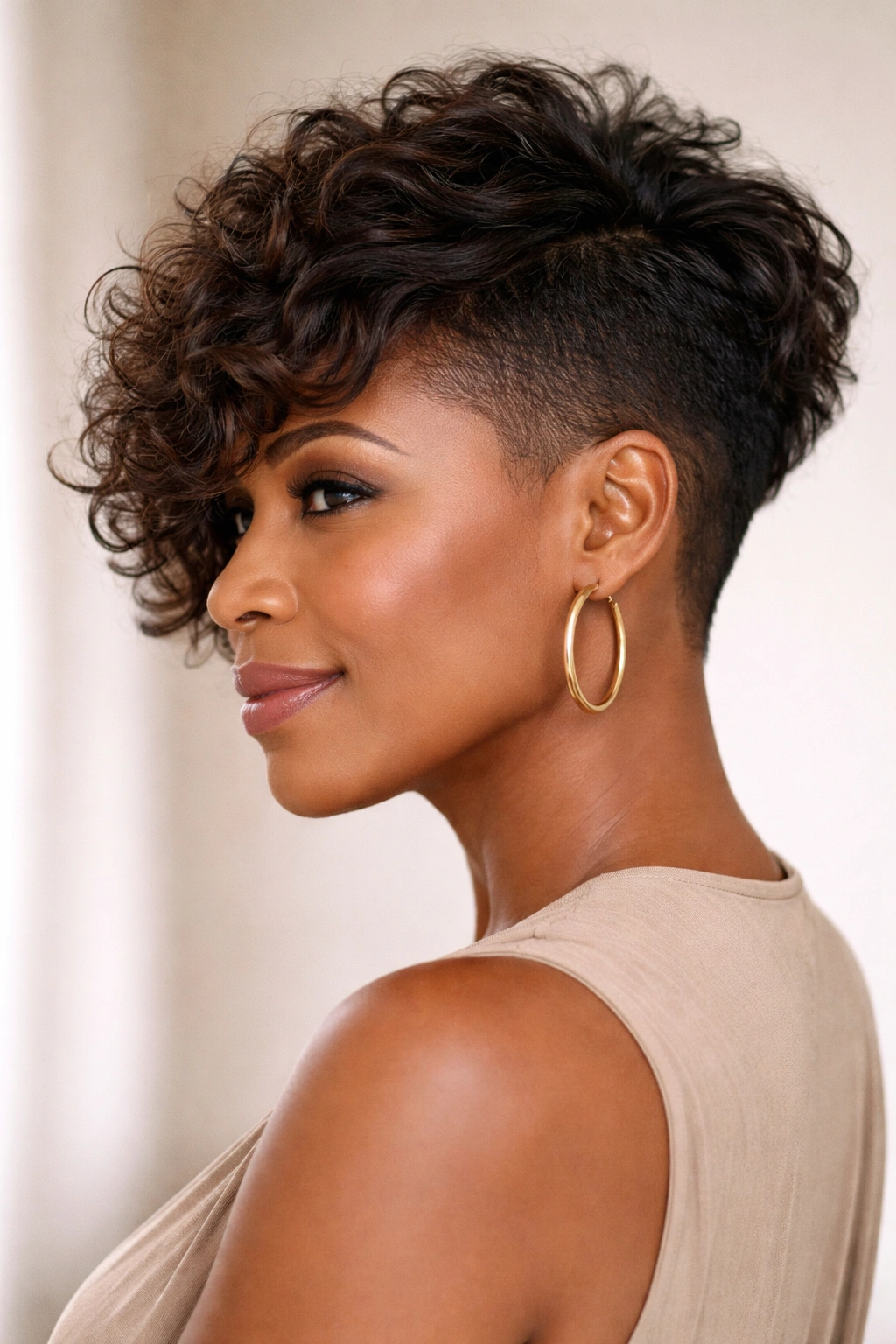
A short textured bob is sophisticated, wearable, and reads as intentional in a way that screams maturity. You’re keeping length on top (usually 2-3 inches, sometimes up to 4) and cutting the sides and back significantly shorter, creating a stacked, dimensional silhouette. The “textured” part means you’re not doing anything to flatten or straighten your curl—you’re working with your natural pattern and cutting into it to create shape.
Why This Flatters Mature Faces
The bob shape naturally frames your face without being too severe. It draws attention to your facial features rather than creating a heavy helmet of hair around your head. The dimensional layering also makes your hair look thicker and fuller, and the contrast between longer and shorter sections creates visual interest that keeps the style from feeling boring or flat. It’s feminine without being girly.
How to Achieve and Maintain the Style
- The cut matters enormously: You need a stylist who understands how to cut textured hair in layers, creating movement rather than bulk. Ask for a “textured layered bob” or “choppy bob”—the language helps your stylist understand the vibe.
- Expect it to look different on day 1 than day 5: Textured bobs don’t have a single “look.” They shift and move as your curls settle and relax. This is part of their charm, but it also means you need to be comfortable with that fluidity.
- Moisturizing shampoo and curl cream are essential: Your textured bob will look its best when you’re moisturizing regularly. Dry, crispy curls make the bob look less polished and more unkempt.
- Refresh with a curl cream or mousse daily: Most women with textured bobs do a quick product refresh on 2-3 of the days between shampoo and the next wash, especially around the face and top where styling matters most.
Insider note: If you want your textured bob to look more dramatic or polished, apply your styling product to slightly damp hair and use a hand-held diffuser on your blow dryer for 3-5 minutes. It helps set the texture and creates more definition.
6. Sleek Pixie Fade
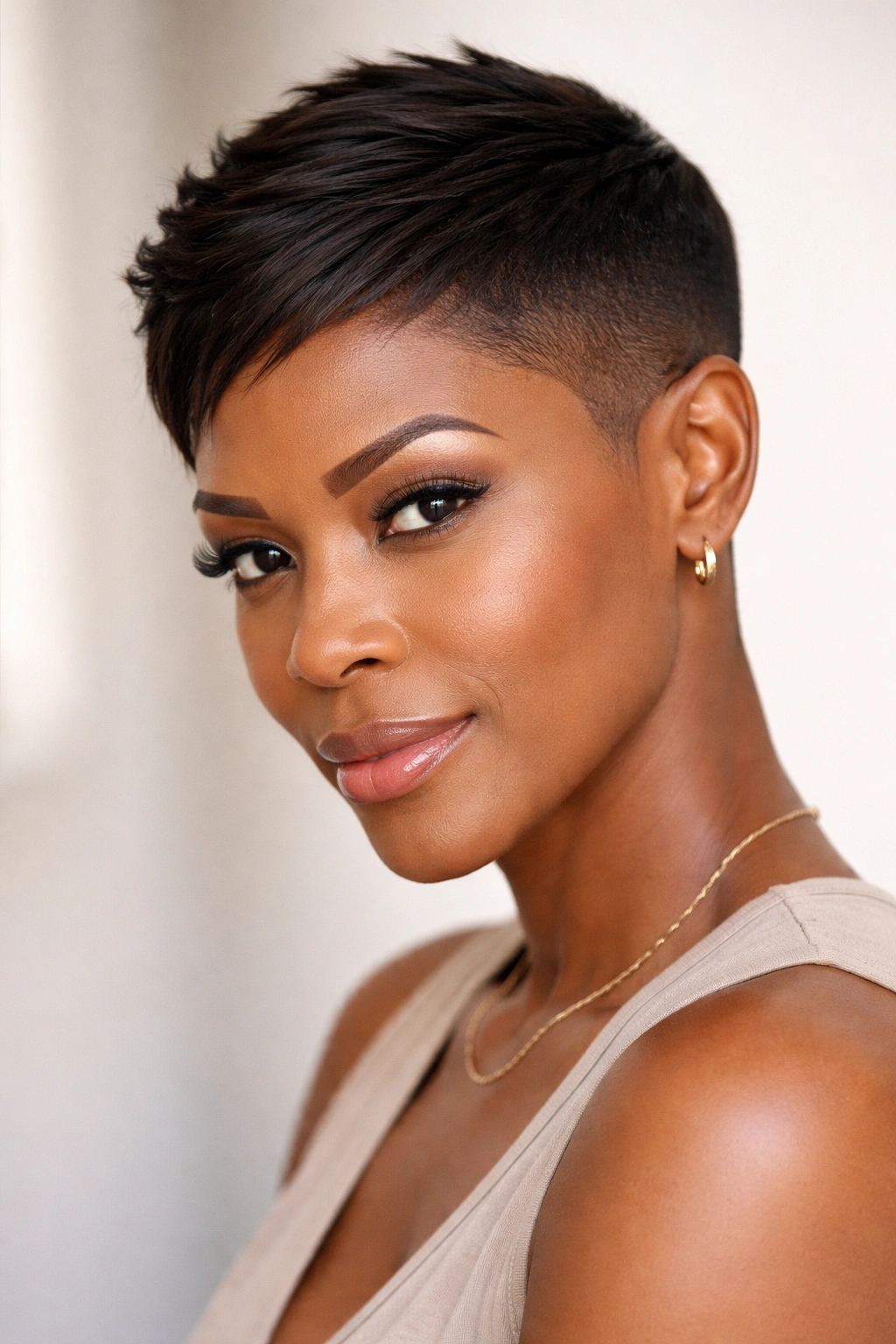
A pixie fade is short, sharp, and undeniably chic—it’s the style that says you don’t have time for complicated nonsense and you look good anyway. The fade tapers from longer hair on top (still short—think 1.5 to 2 inches) down to the skin on the sides and back. “Pixie” because it’s cropped close overall, but “fade” because the transition from longer to shorter is gradual rather than blunt.
The Confidence Behind This Style
A pixie fade requires the kind of self-assurance that many women develop as they get older. You’re not hidden behind a lot of hair. Your face, your neck, your bone structure—it’s all visible. That’s actually an advantage if you’re comfortable in your own skin, which many women over 40 are. A well-cut pixie fade also reads as modern and intentional rather than practical necessity.
The Real Maintenance Picture
- Your barber visits happen every 2 to 3 weeks: This is not a low-maintenance style. The fade grows out quickly, and the line between a sharp pixie and shaggy hair is only a few weeks.
- You’ll style it by brushing or finger-combing: Most pixies don’t require product unless you want to play with texture or define the hair direction. Brush it forward, back, or to the side depending on your mood.
- Sleep is less of an issue than with longer styles: A major advantage of a pixie is that bed head is minimal. Your hair might be slightly flattened one side, but it’s not a big deal.
- Scalp care becomes visible: With short hair, your scalp shows more. If you deal with flaking or dryness, addressing it matters not just for comfort but for appearance.
Worth knowing: The angle of your pixie fade can be customized to suit your face shape. Ask your barber to fade the sides more aggressively if you want to emphasize width, or to take more length off the back if you prefer a sleeker nape.
7. Layered Afro Puff With Decorative Clips
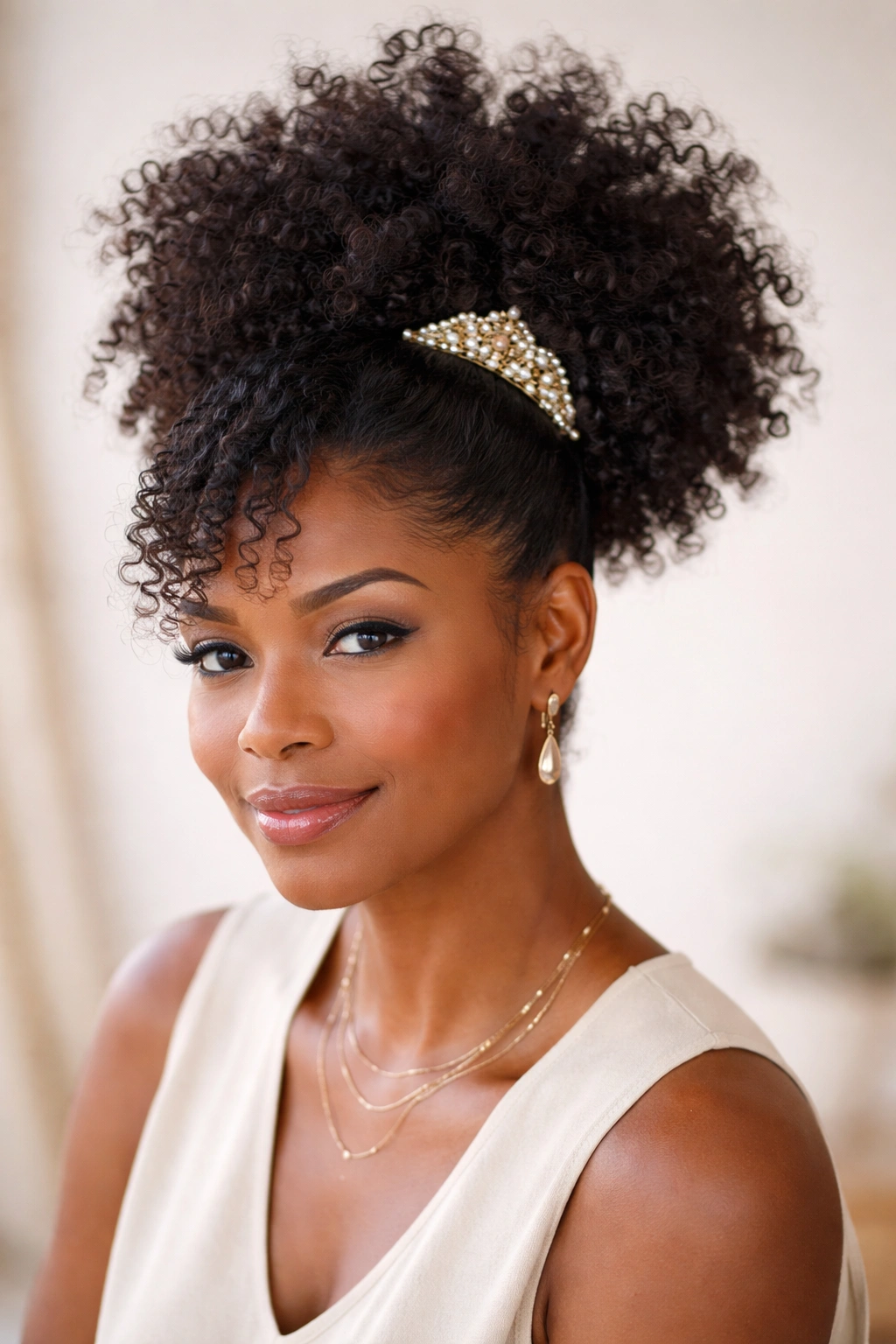
An afro puff is cheerful without being childish, especially when you’re working with natural texture and keeping it at a length that feels sophisticated. This version combines short layers throughout your hair with the styling option of gathering your hair on top in a puff, held with a statement clip or tie. It’s playful when you want it to be, and it’s also a quick way to look like you’ve done your hair even on mornings when you haven’t.
The Versatility Factor for Busy Women Over 40
The beauty of a layered afro puff is that it’s two styles in one. On days when you want simple, wear it down with the layers creating shape and texture. On days when you want your hair off your face or you want to feel polished, gather it up into a puff. You’re not committed to one look. It’s flexible without requiring completely different cuts.
Building the Style From the Ground Up
- Ask for layers throughout, not just on the bottom: Layers should start from the roots and move through, creating movement when the hair is down and better grip when you’re gathering it into a puff.
- The top and crown need enough length to puff: You need at least 2 inches on top to create a visible, intentional puff. Less than that and it’s more of a nub than a puff.
- Moisture is crucial for this style: Layered afro hair shows dryness easily. A regular deep conditioning routine keeps your layers looking defined and bouncy rather than crispy.
- Puff placement can change: A puff on top of your head reads differently than a puff at the crown or on the side. Experiment with placement based on your mood and face shape.
Pro tip: A satin or silk puff scrunchie (not elastic) keeps your hair healthier and makes the puff look smoother and more intentional. Cotton elastics create creases and cause breakage.
8. Defined Coil Cut With Precision Shaping
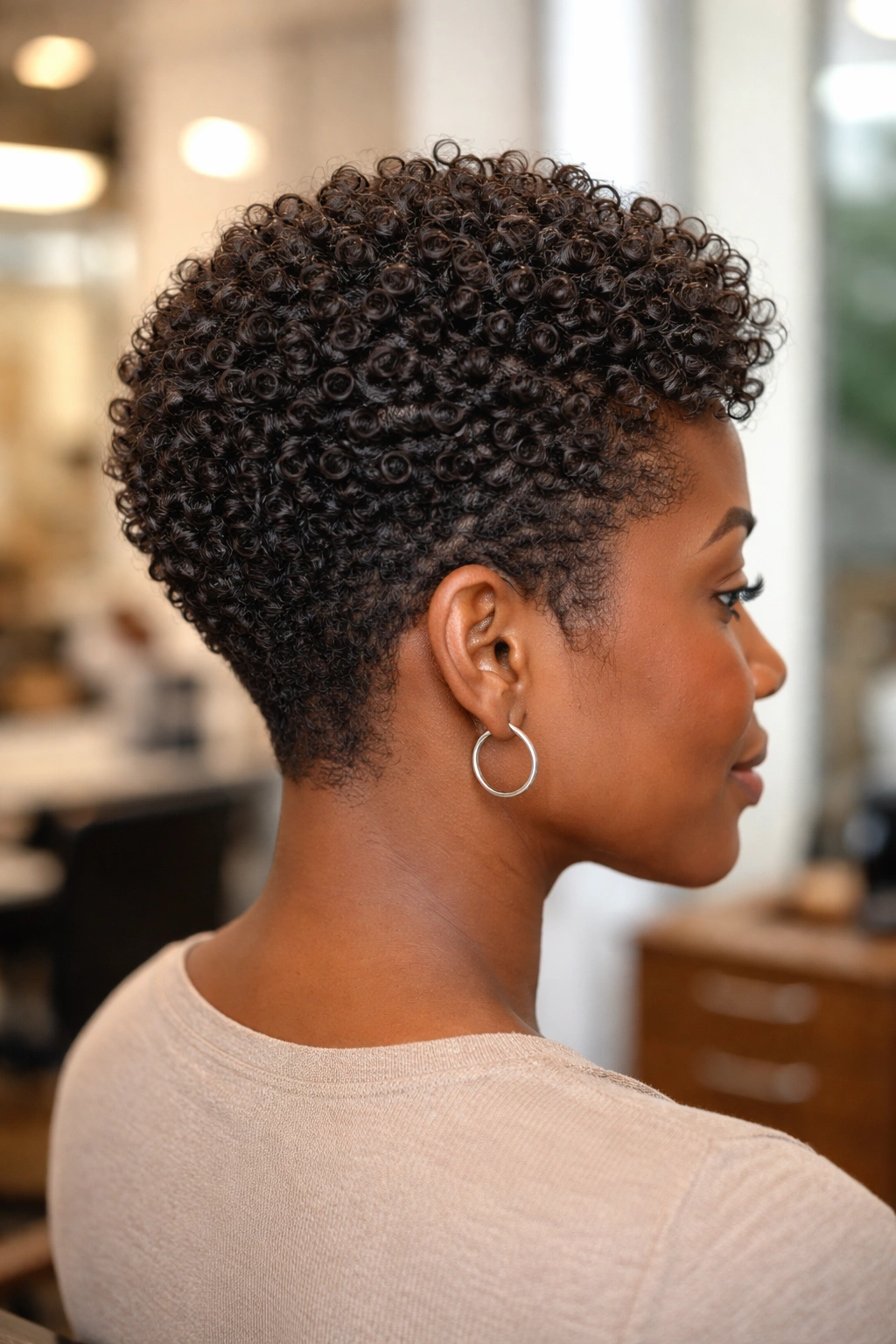
This is for women whose natural coils are their main asset, and who want a cut that honors that while still creating clean, shaped lines. The coils are cut to create definition and movement while the overall silhouette is shaped with intention—perhaps slightly longer on top and sides, with a slightly tapered back, or shaped into a specific geometric form. It’s natural hair that’s clearly been thought through.
Why Defined Coils Are Age-Appropriate
Defined coils look healthy, intentional, and beautiful in a way that can’t be faked. There’s no “trying too hard” about a good coil cut—it’s just your hair doing what your hair does, with proper care and shaping behind it. Many women find that their coils actually look better as they get older because they stop fighting their hair and start working with it. The result is confidence that shows.
The Cut-to-Care Pipeline
- The initial cut takes time and skill: Finding a stylist who specializes in coil cuts (not just “natural hair” generically) matters. They’ll cut your coils while they’re in their natural state, assessing the pattern and creating a cut that enhances rather than fights it.
- Coil definition products are investments: A good defining gel or mousse is worth the money because it’s what makes the difference between “my hair is a nice texture” and “my coils look amazing.” Expect to spend $8-15 on a product that lasts 1-2 months.
- Refresh your coils 2-3 times per week: A light spray of water mixed with product, applied to specific sections and re-coiled by hand, keeps your coils fresh between wash days without disturbing your overall shape.
- Deep conditioning is non-negotiable: Coils pull moisture away from the scalp naturally, so they’re prone to dryness. A weekly deep conditioning treatment or monthly intensive mask keeps them hydrated.
Insider note: Some stylists offer “coil reset” appointments between full cuts—they help you re-define and re-shape your coils without cutting. This can extend time between full cuts and keep your style looking intentional.
9. Shaped Taper With Soft Waves
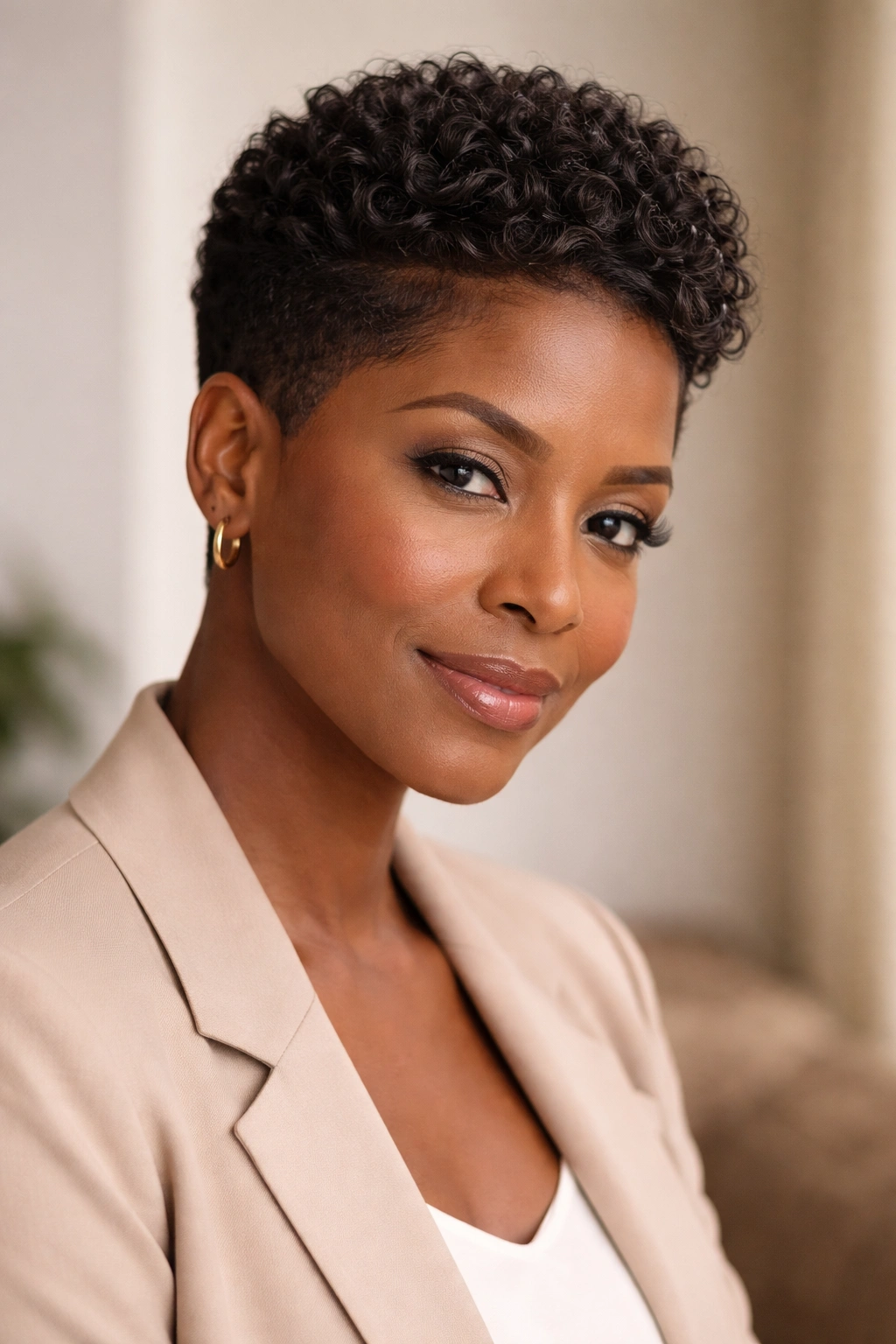
This is the bridge between a classic taper and something slightly more textured and relaxed. Your sides and back are tapered clean (1 to 1.5 guard), but instead of straight-up texture on top, you’re working with waves or a softly defined curl pattern. The overall effect is polished and sharp while still feeling accessible and wearable—it’s professional without being conservative.
The Appeal for Versatile Styling
A shaped taper with soft waves gives you options. You can brush the waves back for polish, brush them forward for texture, or leave them to settle however they naturally want to sit. It works in a professional setting and it works casually. You can style it quickly in the morning or spend five minutes creating more definition—the style accommodates both.
Achieving the Wave Pattern
- Waves come from how your hair naturally sits when it’s not stretched: If your hair has a natural wave pattern, your barber can enhance it by cutting into the wave slightly rather than against it. If your hair is curlier, coiling sections loosely while the hair dries can create a wave effect.
- Moisture and product create wave definition: A curl cream or wave-defining product applied to damp hair and set while drying creates more visible waves. Without product, waves might be softer or less noticeable.
- Sleep strategies matter: Sleeping with a bonnet or scarf keeps your waves intact. Sleeping on a satin pillowcase reduces friction and keeps your waves fresher longer.
- Refresh your waves mid-week: A light spray of water and a finger-combing session with product brings waves back to life between wash days.
Worth knowing: The taper part of this style still needs maintenance every 3-4 weeks to stay sharp. The wave part requires more care to keep defined, but less than fully natural coils because there’s less surface area.
10. Short Fro With Strategic Side Part
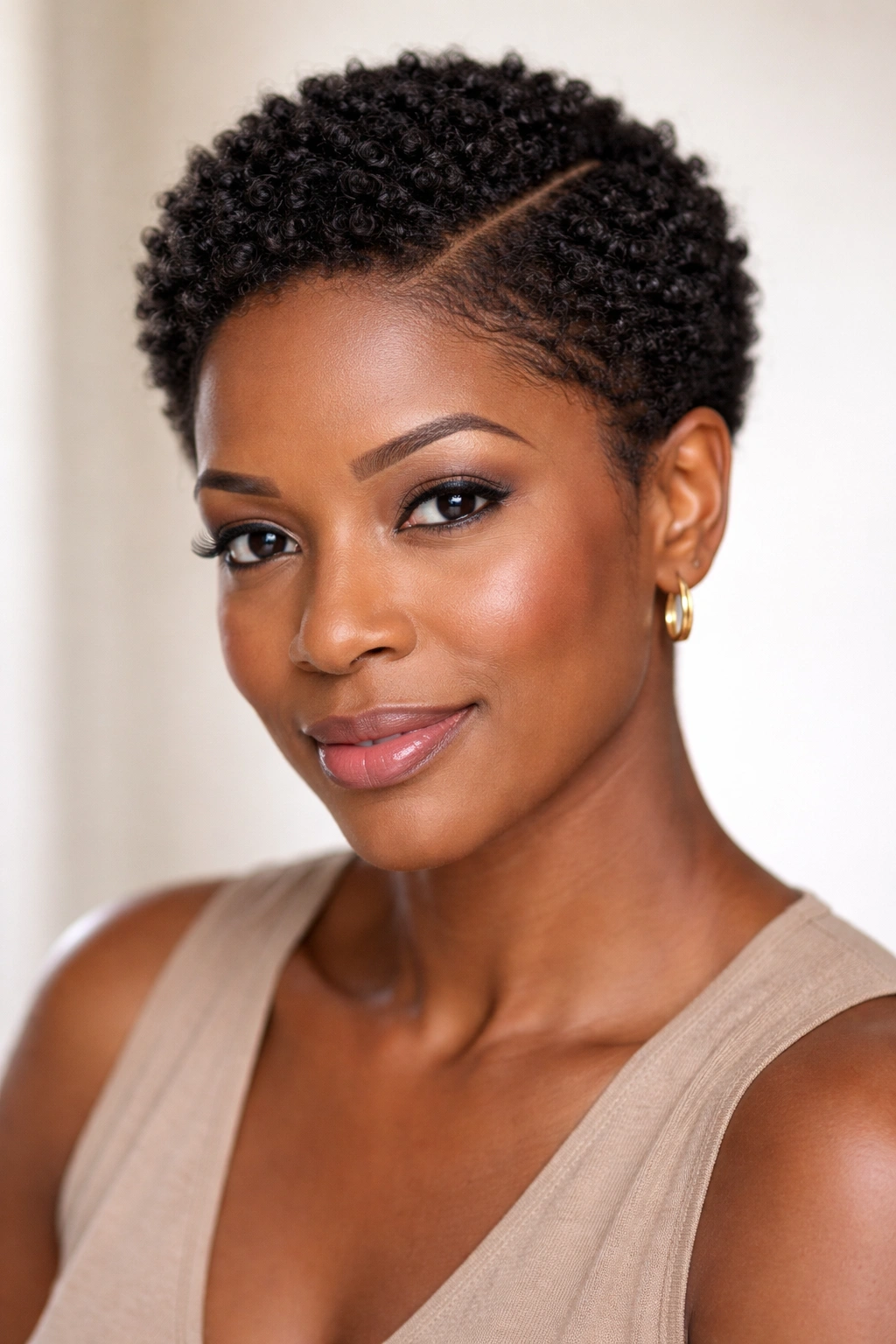
Sometimes the best style is the simplest one—your natural hair, cut to a consistent short length (usually 1.5 to 3 inches depending on your hair density and preferences), with a side part that creates asymmetry and frames one side of your face. No fades, no fades, no special techniques—just clean, intentional, and undeniably stylish.
The Elegance of Simplicity
A short fro with a side part has an ease to it that more complicated styles can’t match. It says you know who you are and you’re comfortable with it. The side part creates dimension and draws attention to your face in a flattering way. And honestly? A good short fro is faster to style than almost any other natural hair option, which is powerful when your time is limited.
Making It Look Intentional Rather Than Unfinished
- The cut needs to be precise, not just “short”: Your barber should cut the sides and back with intention, creating clean lines even though there’s no fade. The overall shape should look deliberate rather than like you haven’t had a haircut in a while.
- A side part requires a light hand with products: Apply edge control or a light mousse only on the part line and the hair surrounding it. You don’t want your whole head looking shiny or wet.
- Brush-out texture looks better than completely natural: Lightly brushing your fro with a soft-bristled brush or afro pick gives it slightly more shape and polish than leaving it completely uncombed.
- The side you part on can change your face shape: Parting on one side might suit your face better than the other. Experiment, or ask your barber which direction seems to frame you best.
Pro tip: A side part created with a rattail comb (the pointed end) while your hair is slightly damp with product holds better than trying to create one on completely dry hair. The part actually stays in place throughout the day.
Final Thoughts
Choosing a short afro style after 40 isn’t about what’s trendy or what you think you’re “supposed” to wear. It’s about finding a cut and styling approach that makes you feel confident, works with your lifestyle, and honors who you actually are. The 10 styles here all share something in common: they’re built on the foundation of your natural hair texture, they require maintenance but not obsession, and they read as intentional and polished rather than rushed or careless.
The best style for you depends on how much time you want to spend on maintenance, whether you prefer textured movement or sharp lines, and what makes you feel most like yourself. Some days you might want the quick ease of a short fro with a side part. Other days a tapered natural with clean edges feels like the thing you need. Many women rotate between styles over time as their needs and preferences shift—there’s no rule that says you’re locked into one cut forever.
The other thing to remember is that a good barber or stylist is worth investing in. They understand how your specific hair grows, what works with your face shape, and how to talk you through options in a way that actually serves you rather than just pushing what they prefer to cut. Don’t settle for “good enough” if you’re getting a cut every 3-4 weeks—find someone you trust and build a relationship with them. That consistency and expertise makes a genuine difference in how your style looks and feels.