



The best mother-of-the-bride hair has to do a strange little job. It needs to look calm in the church, hold through the handshake line, and still feel like a real hairstyle after three hours of photos and hugs.
Rope braid updos do that better than people expect. A rope braid is made by twisting two sections in one direction and then wrapping them around each other the opposite way, which gives the style that neat spiral people notice from the back and side.
They also sit nicely under a veil, around a comb, or beside a single brooch pin. That matters. A mother of the bride does not need a hairstyle that steals the show from the dress; she needs one that supports it and stays in place while she greets half the room.
The styles below cover the full spread: low and quiet, a little romantic, polished enough for a formal venue, and a few that work when the hair is fine, curly, shoulder-length, or thick enough to fight pins all afternoon. A good rope braid updo can handle all of that if the placement is right.
1. Low Rope Braid Chignon at the Nape
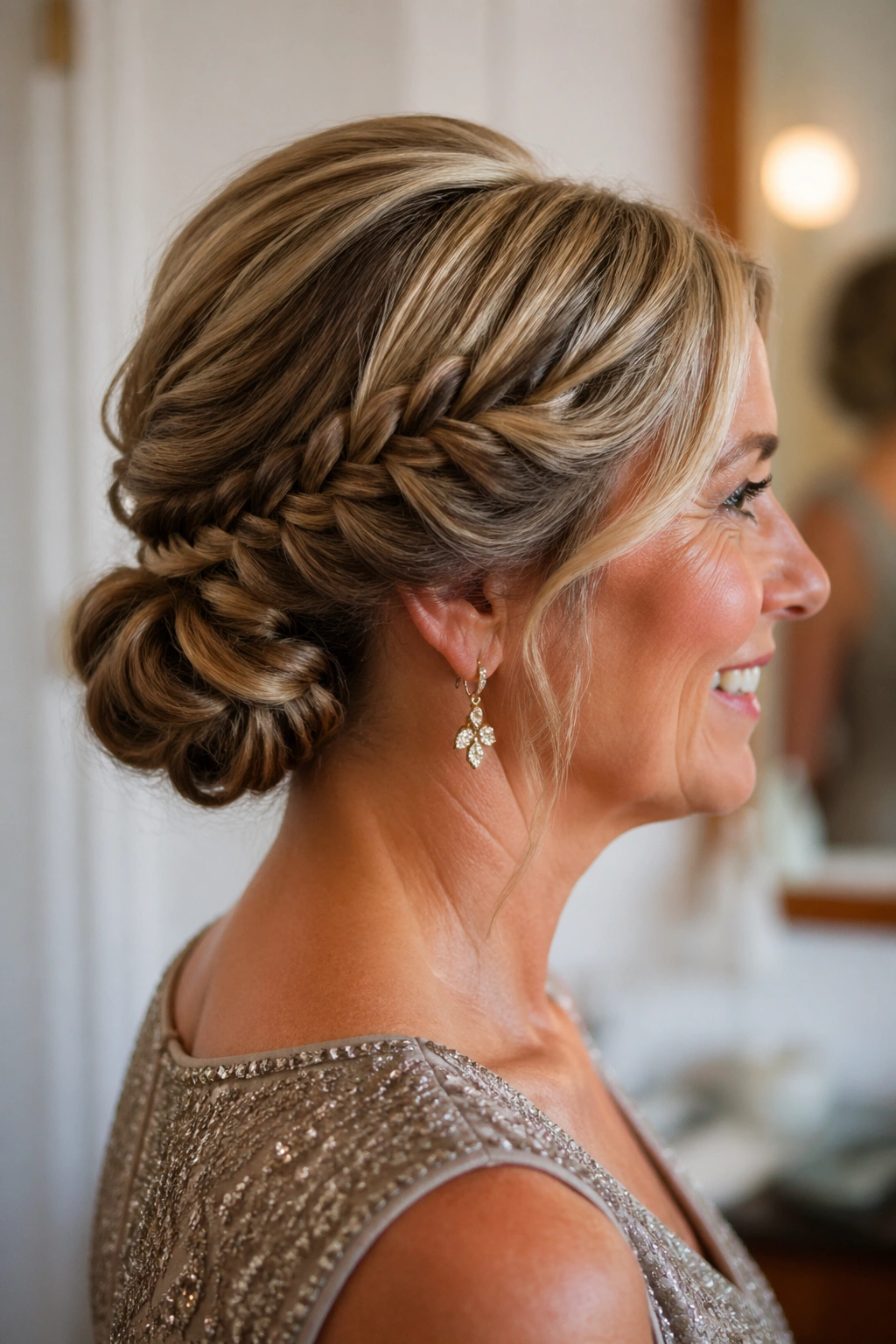
A low rope braid chignon is the safest elegant choice on this list, and I mean that in the best way. It sits close to the neck, keeps the silhouette clean, and never feels like it’s trying too hard.
This version works especially well when the dress already has a lot going on — lace at the shoulders, beading at the bodice, a clean boat neckline, or a back detail you want people to notice. The hair stays low and calm, which gives the outfit room to speak. There’s also something flattering about the way the twist settles at the nape; it opens the face without pushing everything upward.
I like this style most when the rope braid is kept slightly loose through the mid-lengths and then tucked into a flat coil. If you smooth every strand until it looks lacquered, the whole thing can start to feel stiff. A little movement in the braid gives the chignon depth, and depth matters more than perfection in wedding photos.
It also sits well under a comb or a short veil. The trick is pinning the braid from the inside out, so the shape looks soft from the outside but feels anchored when someone leans in for a hug. That’s the difference between a pretty style and one that actually lasts through the day.
2. Side-Swept Rope Braid Bun with Soft Volume
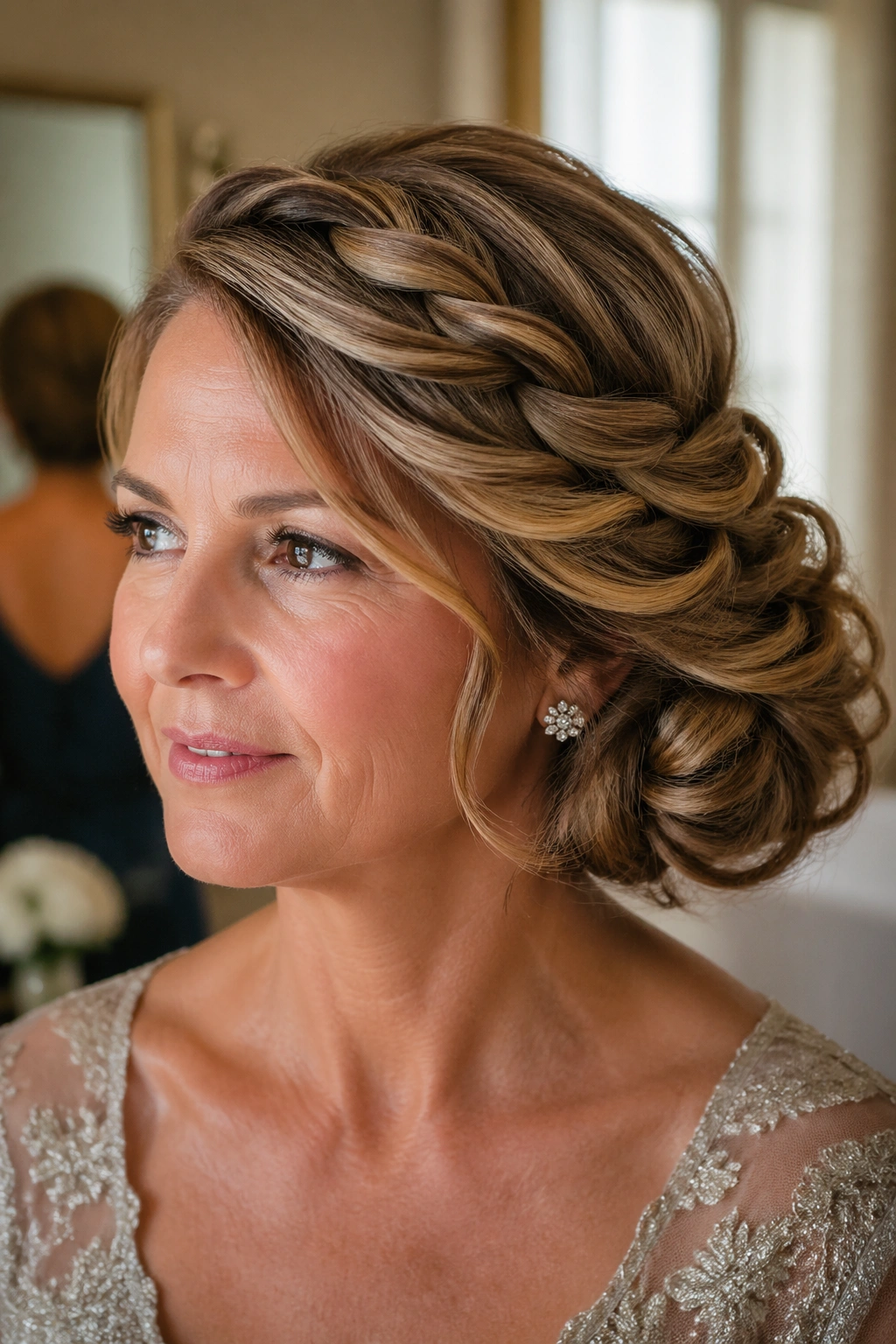
A side-swept rope braid bun is a smart pick when the mother of the bride wants a little drama without height. The braid begins off-center, curves across the head, and settles into a bun that feels deliberate rather than severe.
Why It Flatters the Face
The side part does a lot of quiet work here. It softens stronger jawlines, opens one side of the face for earrings, and gives the whole style a relaxed shape that reads well from the aisle and the dance floor.
It’s also forgiving if the dress has one interesting detail on one side — a shoulder flower, a draped sleeve, a clasp at the collarbone. The hair can echo that line instead of fighting it. That’s a small thing, but small things show up in photos.
A Few Practical Details
- A deep side part works best when the braid starts near the temple, not too far back.
- Medium to long hair gives the bun enough length to wrap cleanly.
- A light texture spray at the roots helps the braid stay put.
- Drop earrings look especially good here because the hair leaves one ear area open.
- The bun should sit low enough that the shape still feels grown-up.
Keep the rope braid wide. Skinny twists can vanish once they’re pinned, and the whole style loses some of its presence.
3. Rope Braid French Twist with a Gentle Lift
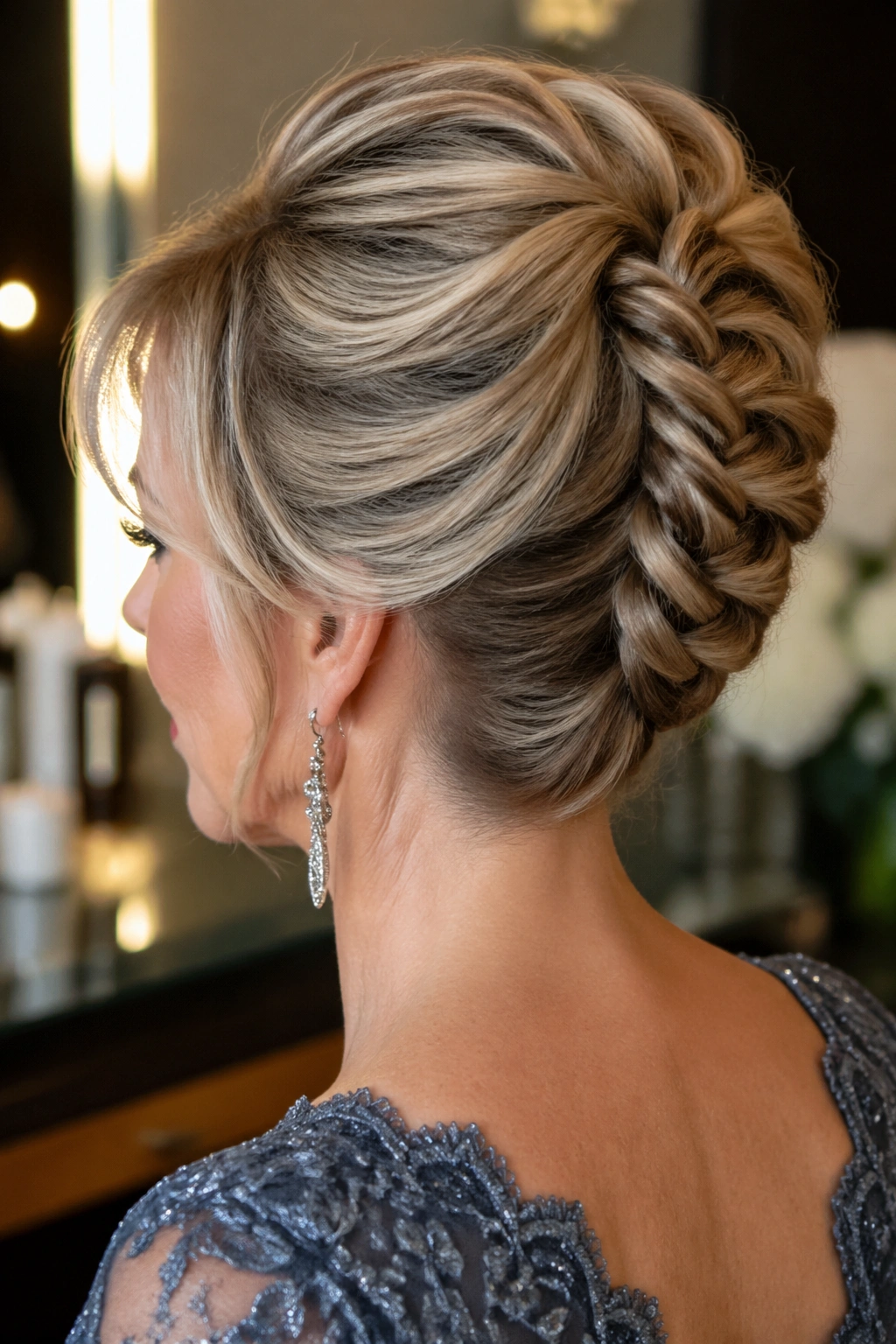
A rope braid French twist is the most polished style in the bunch. It has that upright, tailored shape people think of when they want something formal, but the rope braid keeps it from looking flat or too strict.
The best version starts with smooth sides and a little lift at the crown. Not a mountain. Just enough root height to keep the profile from collapsing into the head. Then the rope braid runs upward and disappears into the twist, which gives the back of the style a clean, vertical line. That line is flattering on almost everyone because it draws the eye up and lengthens the neck.
It also stays secure in a way that loose styles sometimes don’t. A French twist with rope braid structure gives pins more to grip, especially if the hair is medium to thick. I’d ask for hidden cross-pins every inch or so along the seam, because that seam is where the whole style either holds or starts to sag.
It suits formal venues, evening receptions, and dresses with a strong shape. A structured satin gown, a tailored jacket dress, even a softly draped sleeve — this is the hairstyle that keeps pace with those clothes instead of competing with them. It’s a little more serious than some of the other looks here, and sometimes that’s exactly right.
4. Crown Rope Braid Halo with a Low Bun
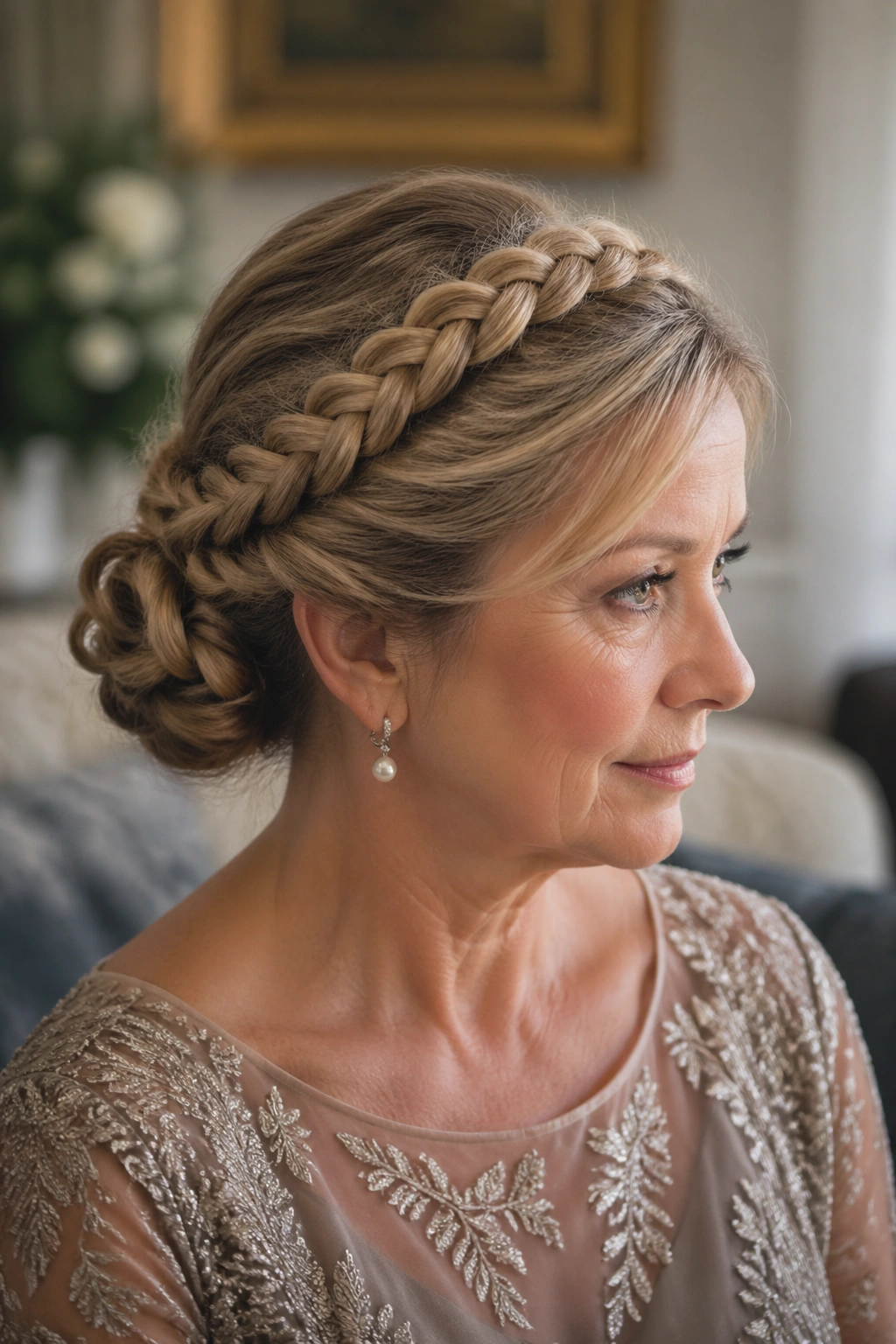
Who says a crown braid has to look youthful? When the rope braid is placed with care and the bun stays low, the halo shape turns elegant fast.
The key is not starting the braid too far forward. You want it to skim the hairline and curve around the head with a soft, steady line, then feed into a low bun at the back. If the crown sits too high, the style can feel costume-like. If it sits too low, the shape disappears. There’s a narrow sweet spot, and it’s worth finding.
How to Wear It With a Veil or Comb
A halo style like this is a good match for a veil that attaches below the braid line or a small comb tucked into the bun. The braid gives the accessory a frame, which makes the whole back of the hairstyle feel planned.
It also works with delicate flowers, but keep them sparse. One or two small blooms are enough. A halo braid already has texture; it does not need a garden.
I like this style for softer dresses, especially ones with flutter sleeves or a sheer back. The braid wraps the head like a line drawing, and the low bun keeps the finish grounded. That combination feels calm. Quiet, even. In a room full of things competing for attention, that kind of restraint is a gift.
5. Twisted Rope Knot with Pearl Pins
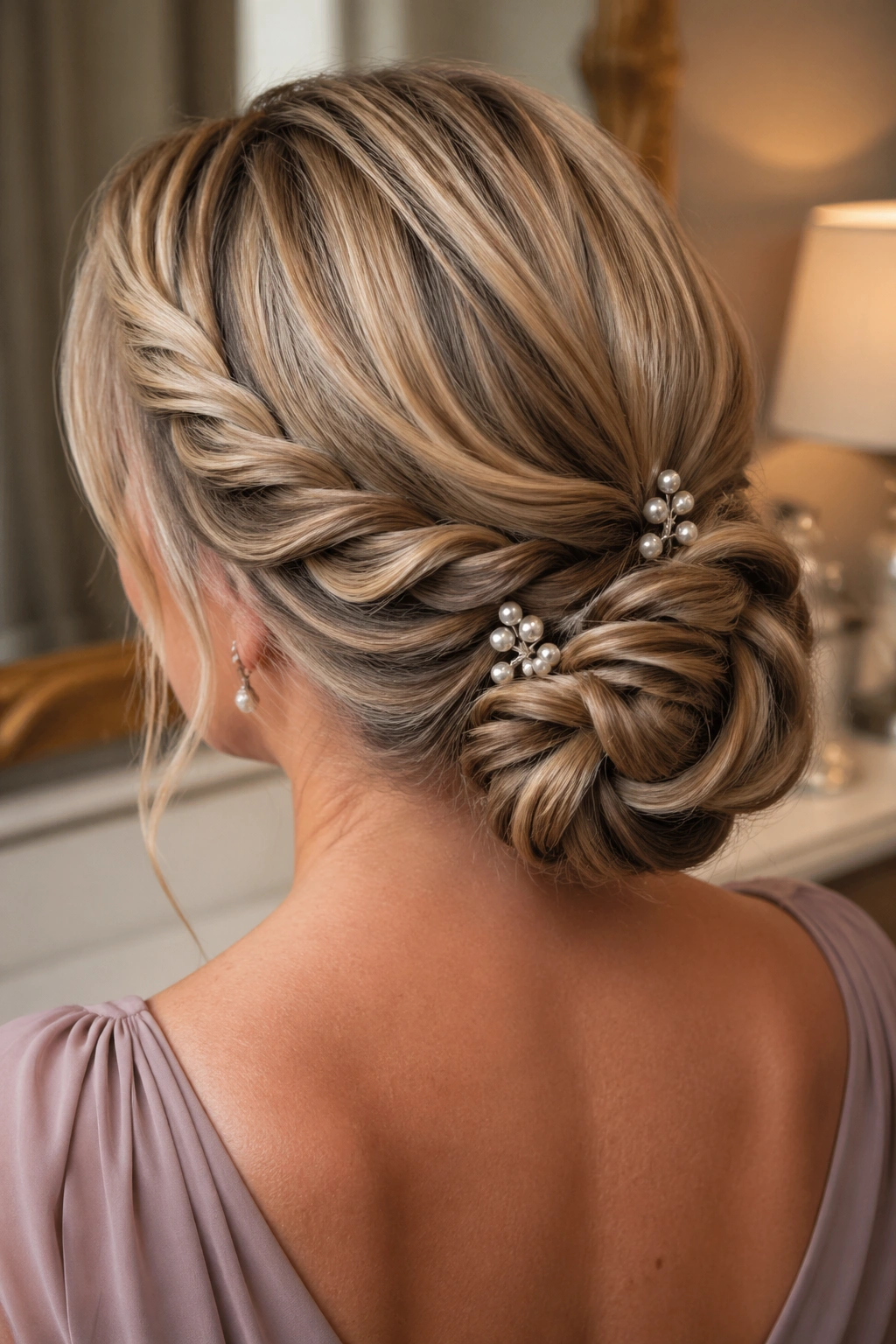
Picture the mother of the bride who wants her hair off her neck, but doesn’t want a big bun sitting in the middle of the back of her head. This is her style.
The rope braid is gathered into a knot instead of a coil, which gives the updo a little more shape and less bulk. Then the pearl pins go in as accents — not scattered everywhere, not lined up like punctuation, just tucked where the light can catch them. The result feels dressed up without looking fussy.
What Makes This Work
- The knot should sit low and slightly off-center for a softer profile.
- Pearls look best when they’re grouped in 2 or 3, not spread thin.
- Medium or thick hair gives the knot more structure.
- A smoothing cream at the front keeps flyaways from taking over the look.
- This style pairs well with rounded necklines and classic jewelry.
You can also build this one with a little texture at the crown if the face needs lift. That keeps the knot from pulling everything downward, which is a mistake I see often with formal updos. The whole point is balance — the knot should feel like a finish, not a weight.
The best part is how gently it ages. Not “older,” which is a silly way to think about hair anyway. Just calmer. More assured. Pearl pins help with that, but only if they’re used with a light hand.
6. Rope Braid Updo for Fine Hair That Needs Lift
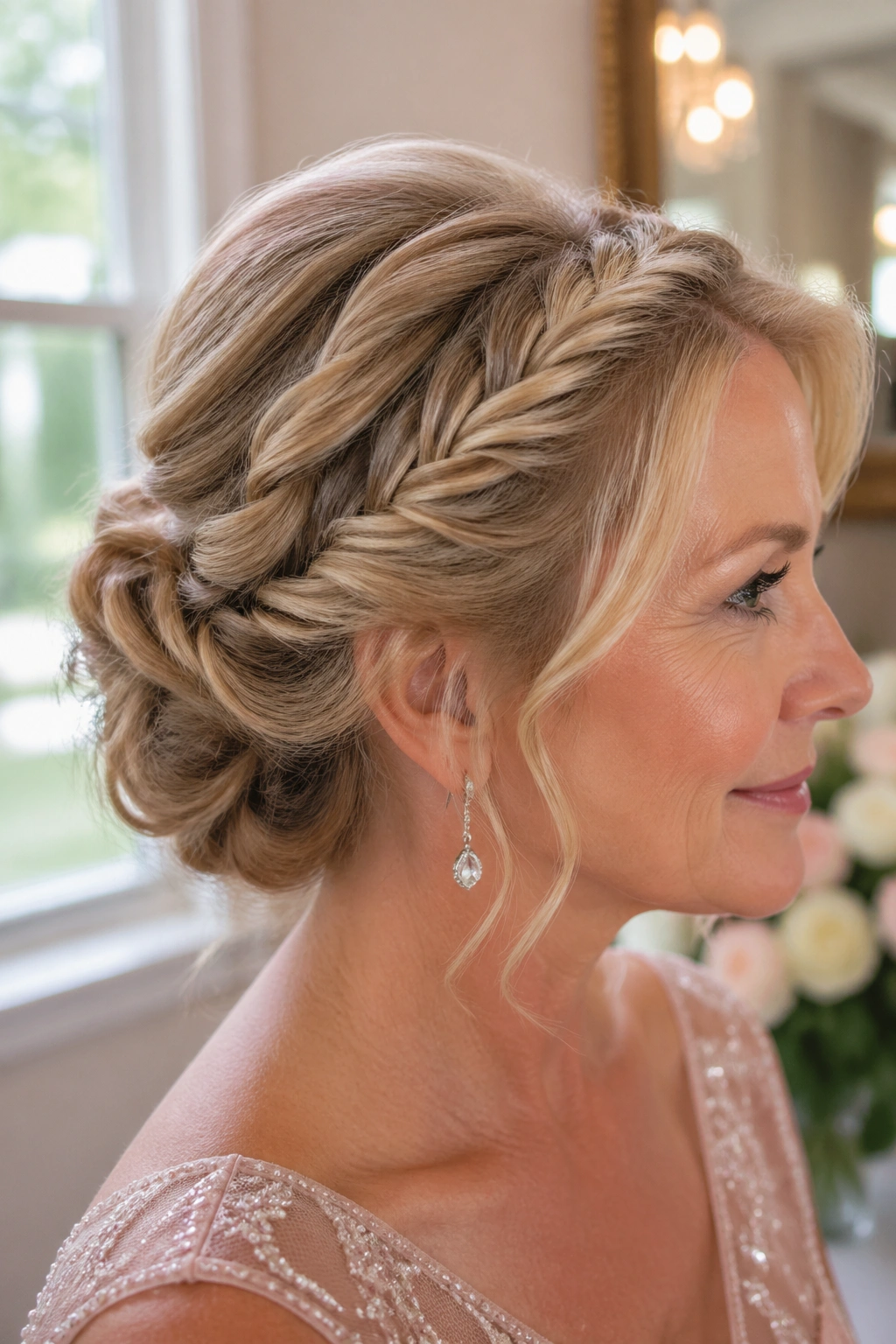
Fine hair can wear a rope braid updo beautifully, but it needs a little planning. A single slick bun often exposes too much scalp and can look smaller than the outfit calls for. Rope braids solve that by building texture into the style before the pins even go in.
The best prep starts the day before, or at least a few hours before. A bit of dry shampoo at the roots gives the hair more grip, and a light wave through the mid-lengths makes the braid look fuller. You do not need tight curls. You need enough bend for the strands to hold onto each other.
What I like here is using two smaller rope braids instead of one large one. The extra sections create more surface area, which gives the updo a fuller shape once everything is tucked and pinned. A tiny bit of padding at the crown can help too, but it should disappear into the hair. If you can spot the cushion from across the room, it’s too much.
This version is good for women who want softness without losing structure. It also behaves well in photos because the rope texture adds shape from every angle. Fine hair often gets blamed for looking flat, when the real issue is usually too much smoothness and not enough support. This style fixes that without pretending the hair is something it isn’t.
7. Rope Braid Updo for Curly or Wavy Hair
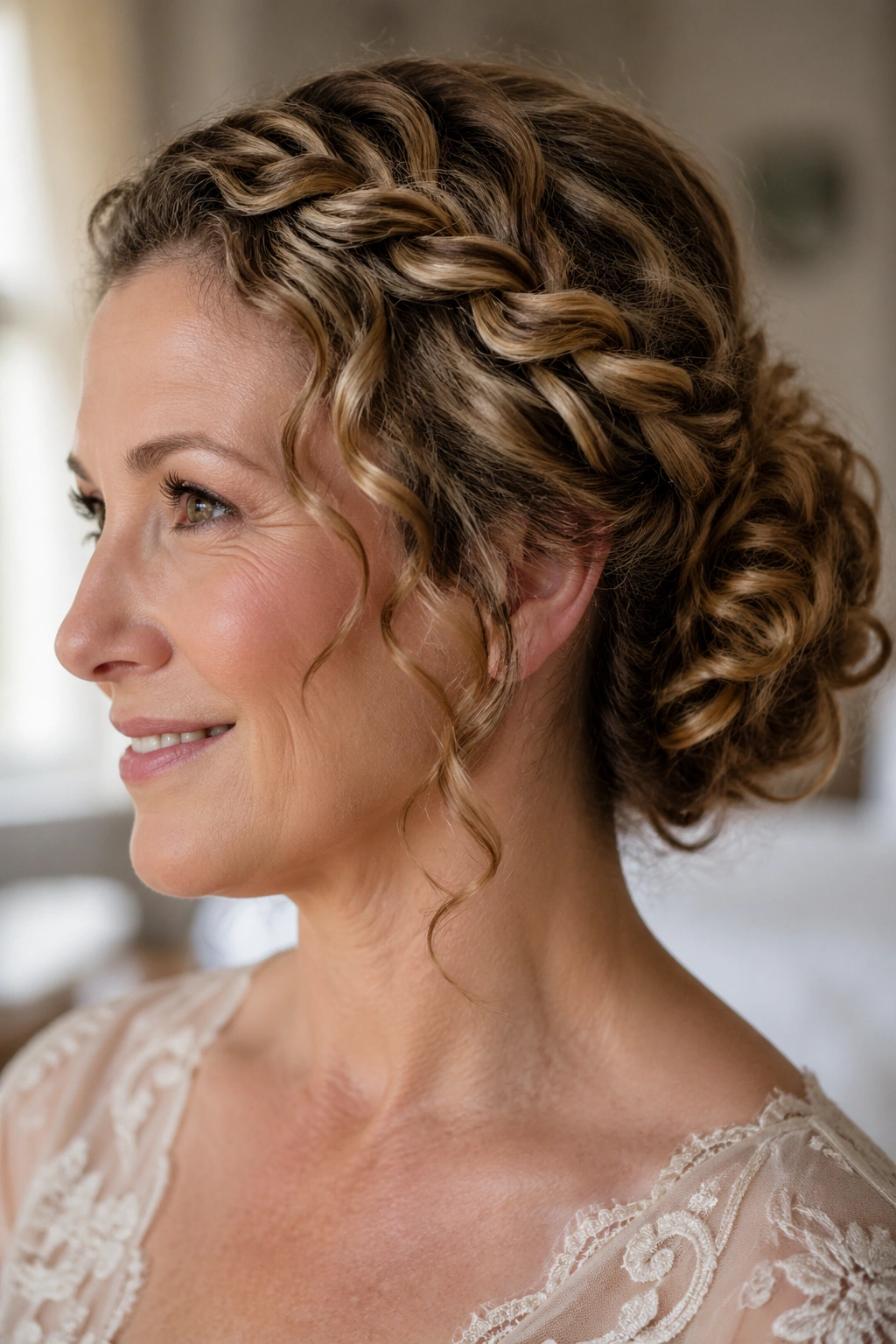
Curly hair does not need to be forced into a stiff, polished shell to look wedding-ready. In fact, the rope braid updo often looks better when the natural bend is part of the plan.
Unlike a straightened chignon that can feel a little lifeless by the end of the evening, this style lets waves and curls keep their shape. The braid adds structure, while the texture keeps the finish from looking overworked. That balance is what makes it so useful for a mother of the bride who wants her hair to feel like her own.
The main thing is to smooth only where you need to. Leave the texture at the back and through the lengths, but calm the edges at the hairline so the style looks intentional. If the curls are brushed out too much, the braid can frizz fast. If they’re loaded with too much cream, the whole style can go limp. Middle ground. Always middle ground.
I also like this look when the curls are pinned into a low mound rather than a tight bun. A low mound gives the eye something soft to land on, and it lets the rope braid wrap around the shape without creating a hard edge. It’s a generous style. Not messy, not stiff. Just full of life.
8. Asymmetrical Rope Braid Roll for One-Shoulder Dresses
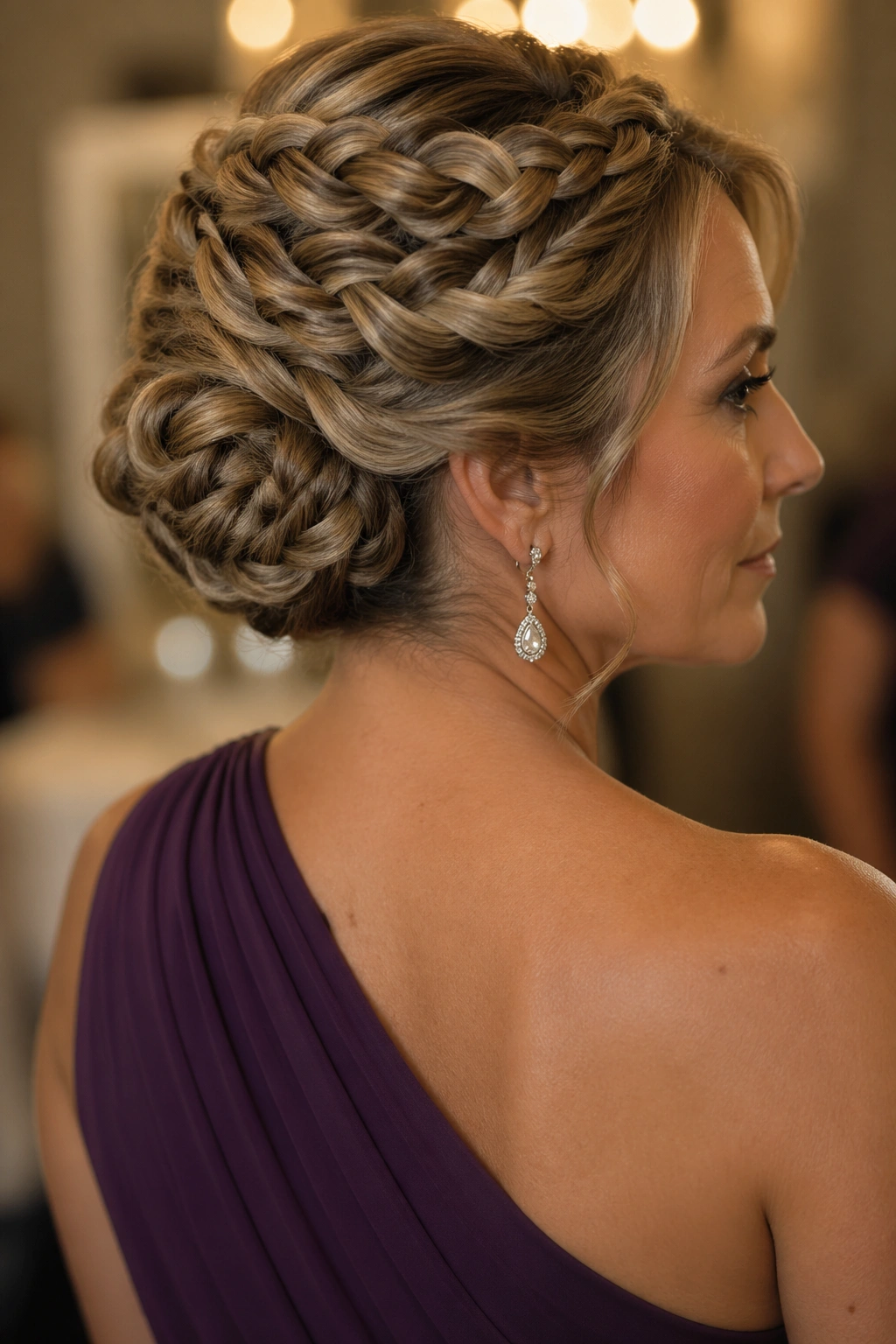
If the dress has one shoulder, the hair should move away from that side. That’s the whole reason this style works so well.
The rope braid starts higher on the fuller side, curves diagonally across the back, and rolls into an asymmetric updo that leaves the neckline open. The shape is subtle, but it changes the whole look. Instead of competing with the dress strap, the hair frames it and gives the eye a place to travel.
A one-shoulder gown can look busy if the hairstyle is too symmetrical. This braid solves that by shifting weight to the opposite side. The shoulder on display stays clean, the ear on the open side gets room for a statement earring, and the whole profile feels easier to read.
I’d keep the braid texture a little more defined here, because the asymmetry already gives the style personality. Too much smoothing can flatten the movement and make the roll look pasted on. A touch of lift at the crown helps too, though again, not much. Just enough to keep the line graceful.
This is one of those styles that looks expensive without needing much decoration. A single pin near the roll is enough. The hair does the rest.
9. Double Rope Braid Bun for Extra Texture
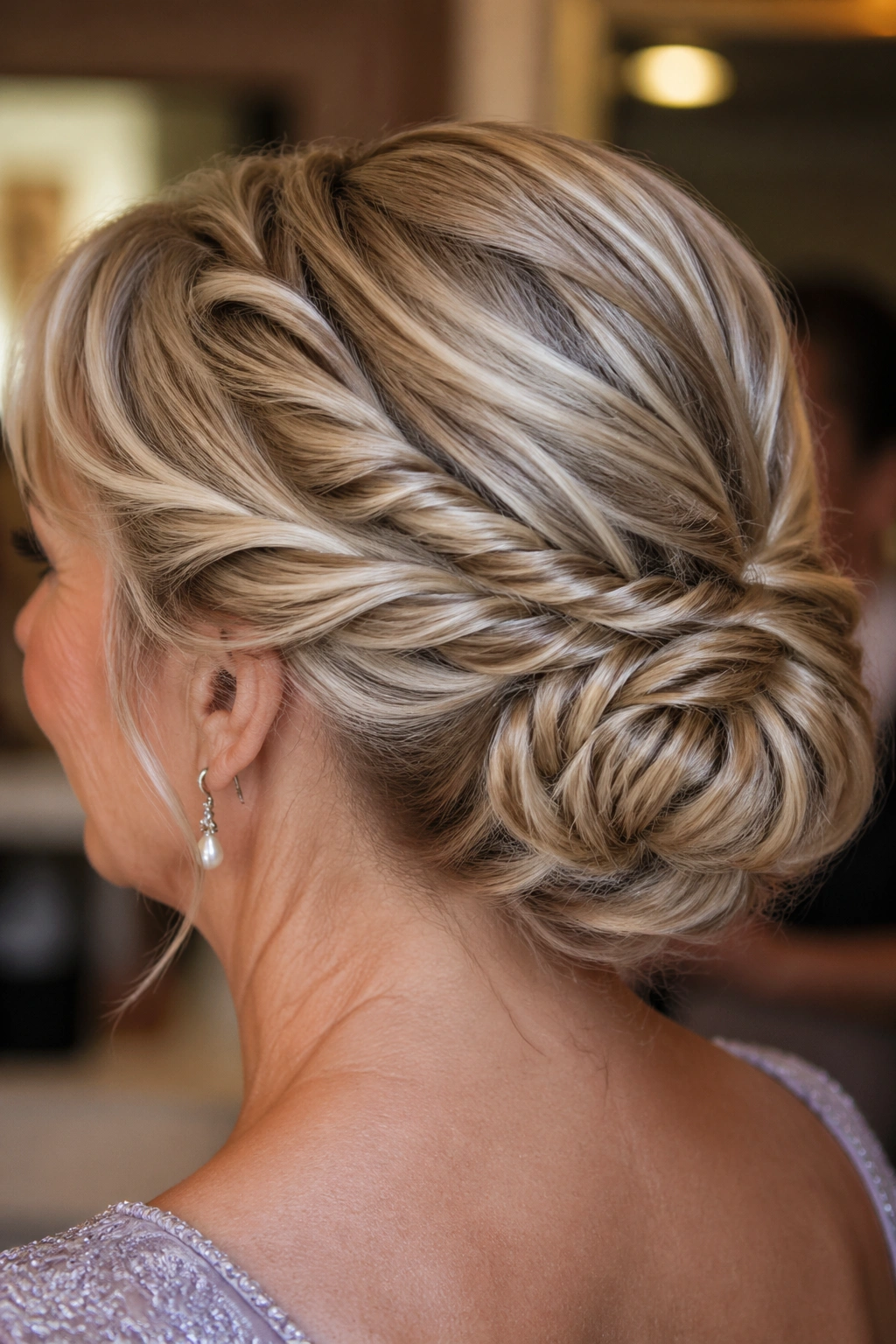
Why use one rope braid when two can build something better? That’s the logic behind this style, and it holds up.
A double rope braid bun starts with two rope twists, often one on each side of the head, that meet at the back and wrap into a bun. The effect is fuller than a single braid and a little more dimensional too. It’s a smart answer for hair that needs visual thickness, or for anyone who wants the back of the style to feel more intricate without turning fussy.
How to Keep It from Looking Busy
The sections need to be even, but not identical. One braid can sit slightly higher than the other so the bun has a natural, slightly off-center pull. If both sides are mirrored too tightly, the style can start to feel overbuilt. I’d rather see a small difference in placement than a rigid, machine-perfect shape.
A few soft pins can disappear into the bun and give it grip, but the bun itself should still look like one shape when you step back. That’s the goal. Not two separate braids shouting at each other.
This style is especially good for hair that’s layered or thick enough to need more structure. It also gives you room for a comb or a floral clip, because the bun has enough body to support an accessory without collapsing. There’s a lot going on here, but in a good way. It feels dressed up.
10. Sleek Rope Braid Chignon for Veils and Fascinators
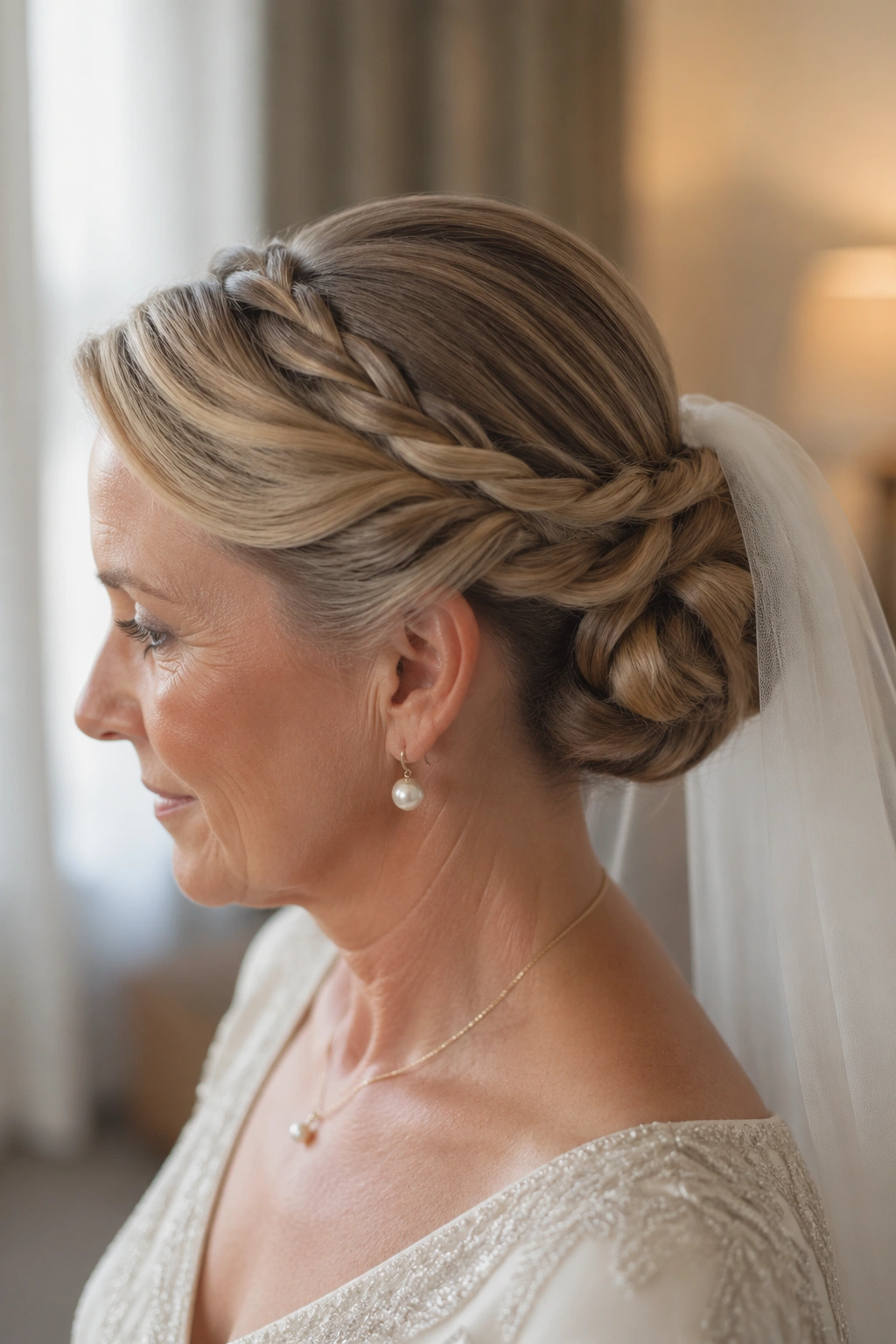
A veil-friendly hairstyle has to behave. No drifting pieces around the comb. No bulky braid where the veil needs to sit. No surprise bumps at the crown.
This sleek rope braid chignon does exactly that. The hair is smoothed into a low base, the rope braid travels neatly into the chignon, and the accessory rests in a clear zone where it won’t fight the shape. It’s the kind of style that makes an usher’s job easier and keeps the veil from slipping out of place halfway through the ceremony.
What to Tell the Stylist
- Keep the crown smooth, but not tight enough to show every scalp line.
- Place the veil comb just below the braid seam.
- Leave room for a fascinator if the hat is small and angled.
- Use pins that cross inside the chignon, not just along the outside.
- Test the finished shape with the accessory in place before leaving the chair.
The surface should feel smooth under your fingertips, not hard or crunchy. That matters if the style needs to sit under fabric or netting. You want support, not stiffness.
I like this one for formal weddings, church settings, and mothers who prefer a cleaner profile. It has a proper finish. Nothing fussy, nothing overbuilt. Just controlled, steady, and easy to live with for an entire day.
11. Loose Romantic Rope Braid Updo with Face-Framing Pieces
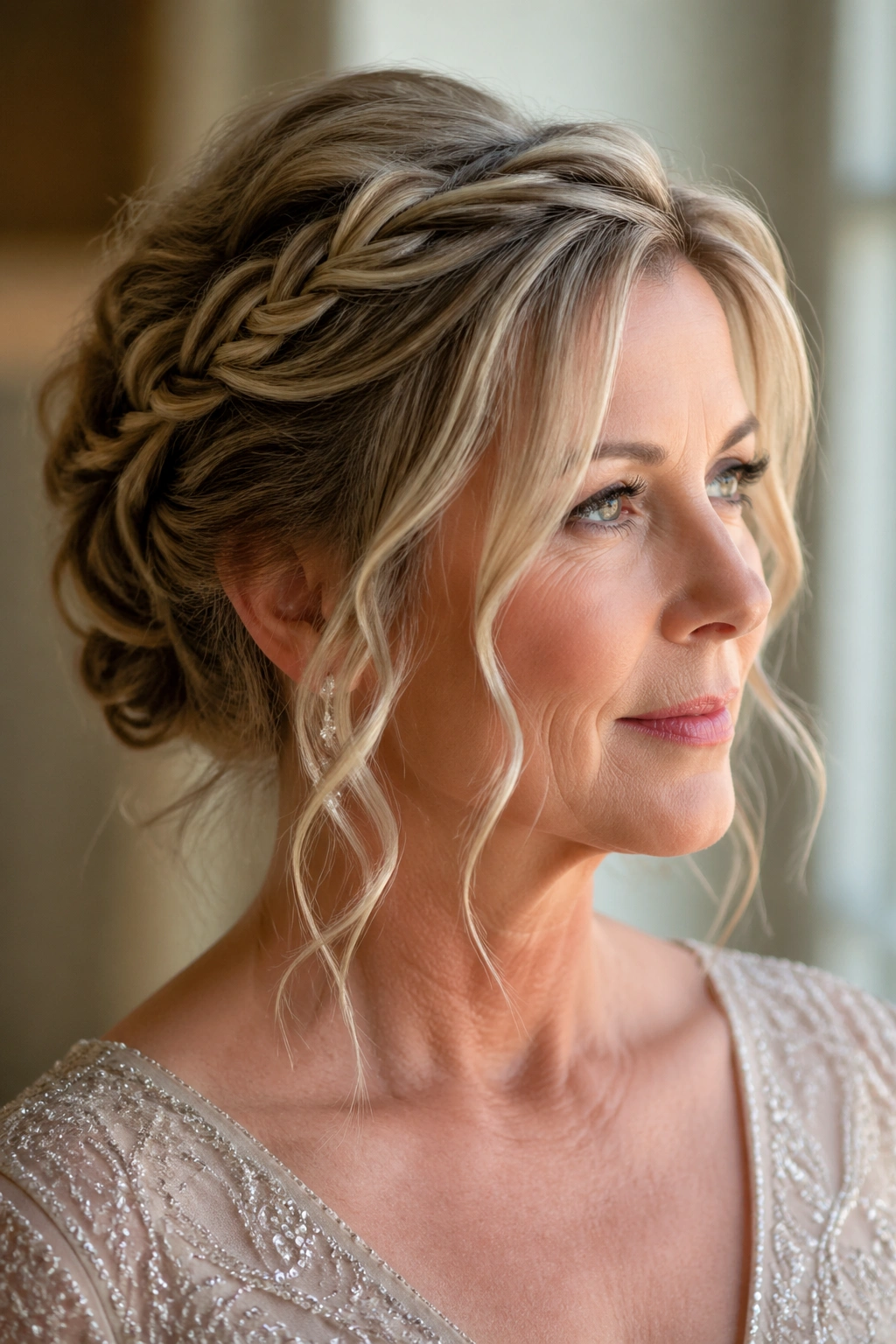
A few soft pieces around the face can change the whole mood of a rope braid updo. Not a cloud of flyaways. Just a couple of face-framing strands that keep the style from looking too strict.
This version works nicely when the dress is beaded, when the ceremony feels a little less formal, or when the mother of the bride wants something gentle around the edges. The rope braid can still build the structure at the back, but the front stays softer. That soft front matters more than people think. It keeps the style from pulling the face upward in a way that can feel severe.
I like the face-framing pieces to be curled with a 1-inch iron, then brushed once so they fall in a loose bend. If they’re left too tight, they can look like afterthoughts. If they’re too straight, they lose the job they’re supposed to do. The goal is a bend that touches the cheek and then moves away.
A couple of small pins hidden behind the ears can keep those pieces from drifting into the eyes during the reception. That’s the practical side. The pretty side is the way the braid and the loose front pieces balance each other. One gives shape. The other gives ease. You need both.
12. Rope Braid Pinned Updo for Shoulder-Length Hair
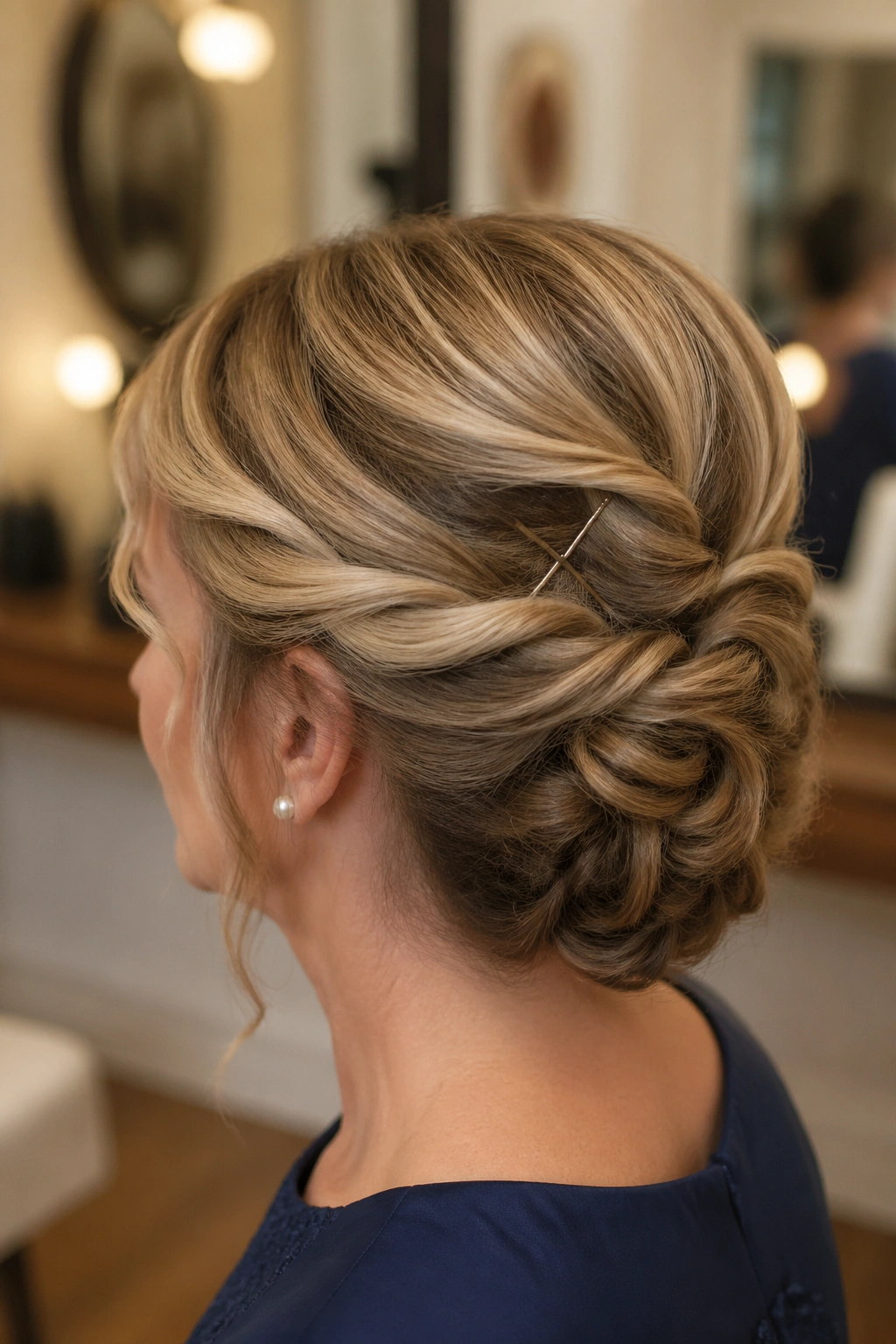
Shoulder-length hair can absolutely handle a rope braid updo. It just needs a different plan than long hair does.
The braid has less length to work with, so the shape has to rely more on pinning and less on wrapping. That’s not a drawback. It just means the sections need to be smaller and the base needs to be secured carefully. A little clip-in padding can help, but it should disappear into the final shape. If it calls attention to itself, it’s doing too much.
How to Build It on Shorter Length
Start with texture at the roots and mid-lengths. Shoulder-length hair slides more than longer hair, so a bit of grit makes a difference. Then create two rope twists from the front or temple area and pin them into a tucked knot or compact bun at the back. The pins should cross in an X pattern for grip — one pin goes in, another crosses over it, and the shape holds better than a single straight pin ever will.
This style is a nice option for mothers who don’t want to add length extensions just to get a formal look. It can still feel full, especially if the rope twists are widened a touch before pinning. The braid pattern creates the illusion of more hair than is actually there.
It’s tidy, practical, and easier to wear all day than a heavier style. That’s a quiet advantage, and a useful one.
13. Soft Rope Braid Knot with a Side Sweep
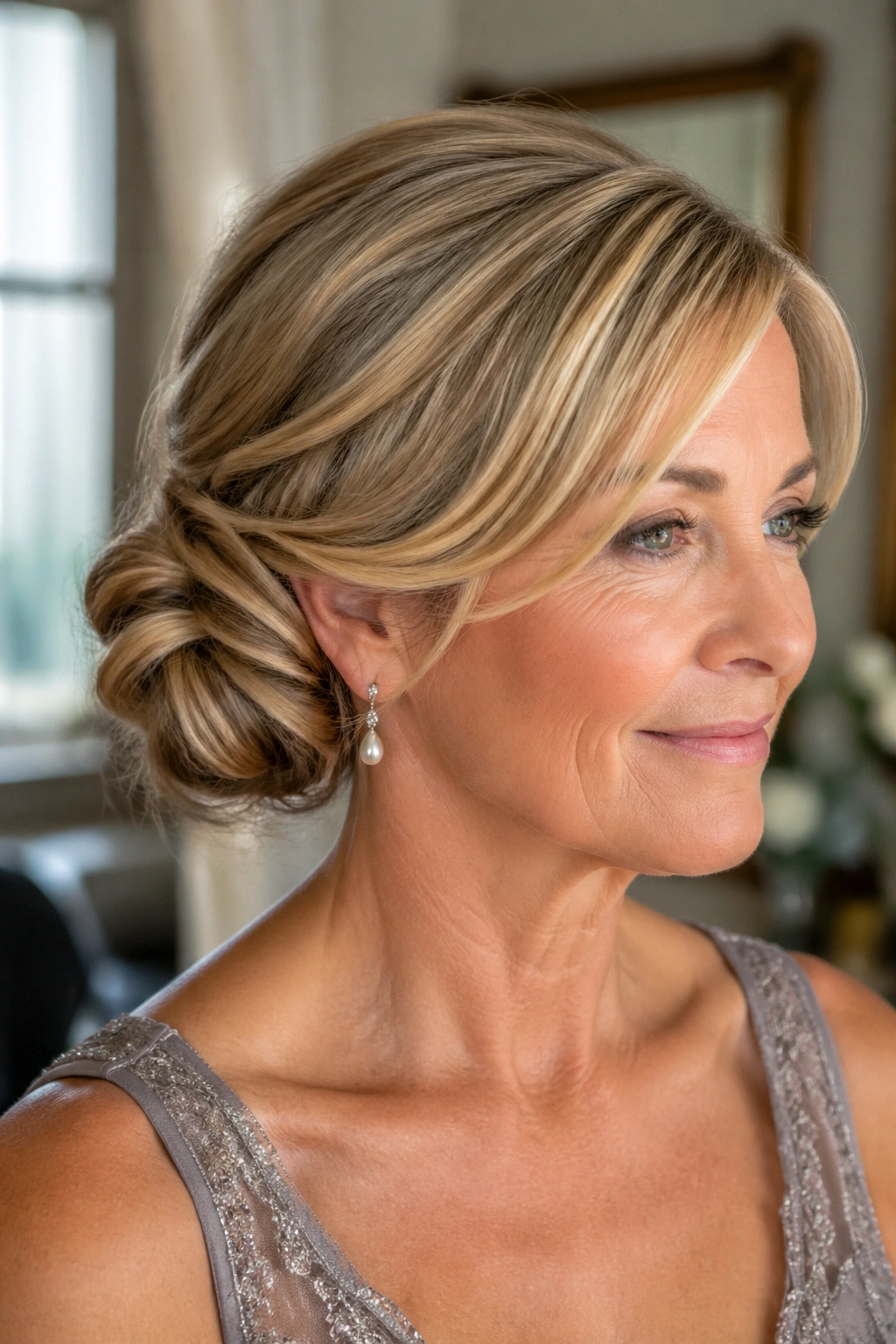
If I had to choose one style that feels calm, flattering, and easy to live with, this would be near the top.
The soft rope braid knot starts with a side sweep at the front, then gathers into a knot that sits low and slightly off-center. The side sweep keeps the face open, while the knot holds the back in a shape that feels finished but not formal in a stiff way. It’s graceful without trying to look precious.
What makes this one work is the balance. The front has movement. The back has structure. The sides stay neat enough for a ceremony, but the whole style can loosen a little as the day goes on and still look good. That matters for a mother of the bride, because the hair has to survive photos, dinner, dancing, and all the little moments in between.
I’d pair this with a dress that has a clean neckline or a soft drape. It also plays nicely with small earrings, a narrow necklace, or no necklace at all. If the outfit already feels complete, the hair should not compete for space.
A mother of the bride hairstyle should not feel like a helmet. It should move a little, survive the reception, and let the rest of the outfit breathe. This one does that well.
