



A warm copper refresh can change a braid style faster than most people expect. Swap the same braids into ginger, cinnamon, or burnished penny tones, and the whole look starts reading softer, brighter, and a little more deliberate without touching the braid pattern itself.
That’s the part people miss. The braid shape matters, sure, but the shade does half the storytelling: tiny knotless parts look cleaner in bright copper, thick cornrows look richer in auburn, and boho lengths take on a sunlit finish when you mix ginger with a few lighter strands.
The nicest thing about this color family is how easily it moves between moods. It can feel polished, playful, romantic, sharp, or soft, depending on the parting, the length, and whether you leave room for curls, beads, cuffs, or a blunt bob.
Some styles do need a little more care. Bright ginger shows product buildup faster than darker shades, and dry ends read drier in a copper tone. Still, when the color is chosen well, the payoff is immediate.
1. Ginger Braids with Copper-Lined Knotless Lengths
Knotless braids and ginger are a smart match because the braid starts softer at the scalp, which keeps bright copper from looking harsh. The whole style feels lighter on the head, and that matters when you want the color to do the talking instead of the braid line.
Why the color reads so clean
The gradual feed-in lets the copper show up in thin ribbons before it turns into full braid depth. That little shift keeps the style from looking flat, especially if you choose a blend with one deeper auburn shade near the roots.
- Best with medium parts, about 1/2 inch wide.
- Works well at chest to waist length.
- Add gold cuffs near the mid-lengths, not the roots.
- Keep the finish matte, not greasy.
Best move: ask for a root shade one step deeper than the braid body so the warm copper refresh looks intentional instead of loud.
2. Ginger Box Braids with Clean Center Parts
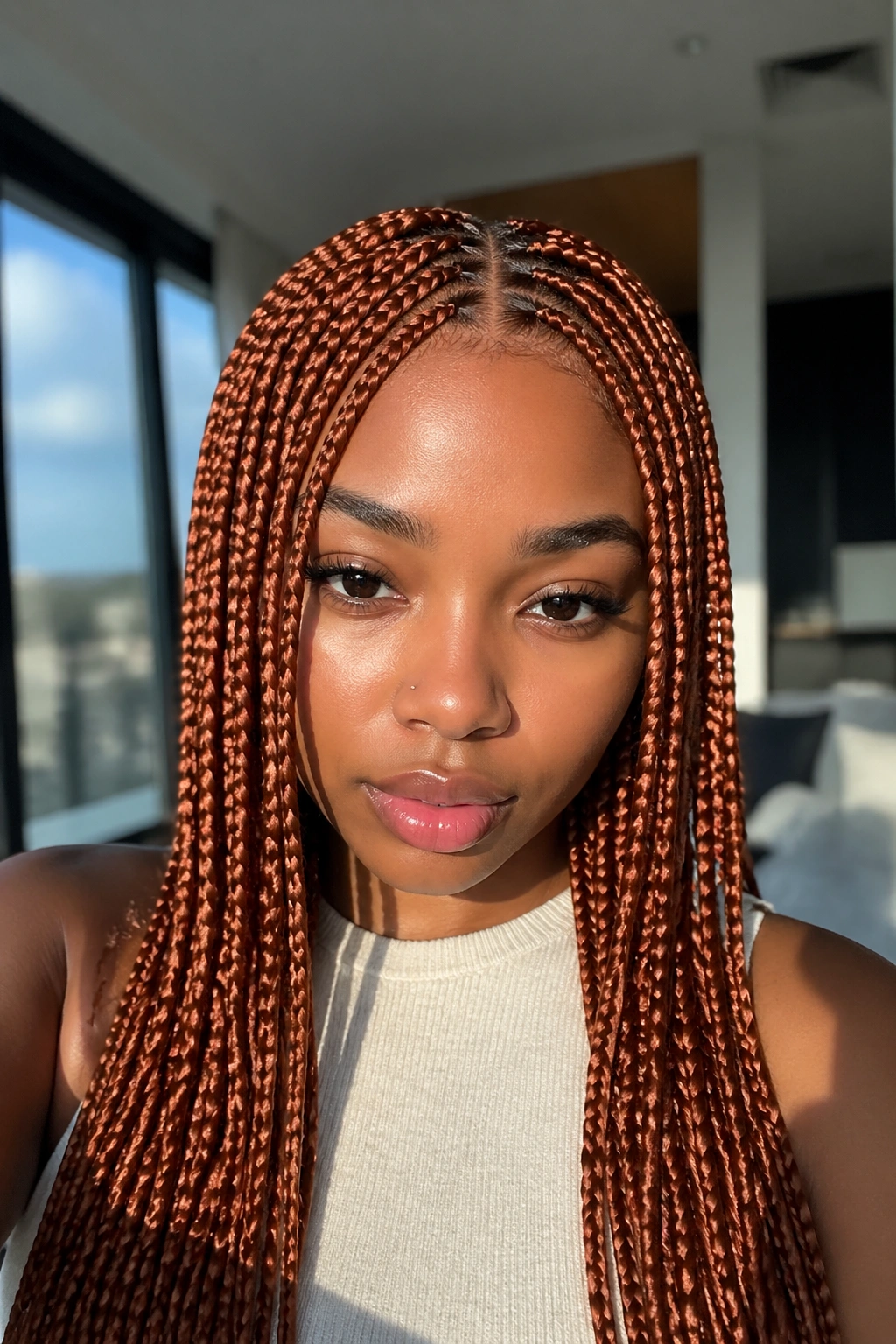
A clean center part makes ginger box braids look sharper than almost any accessory. The symmetry gives the color a runway-clean finish, and the straight line down the middle pulls the eye to the face first, which is exactly where a copper tone tends to glow.
These are the braids I think of when someone wants a refresh without a lot of fuss. The style looks neat on day one, but it also grows out in a way that still feels orderly if the parts are square and the braid size stays even. Keep the braids medium-sized if you want movement; go larger if you want the color to read in big, bold panels.
They also pair well with simple makeup. A peach lip, brushed brows, and a little shine on the cheek is enough. The braids already carry the warmth.
3. Cinnamon Feed-In Cornrows
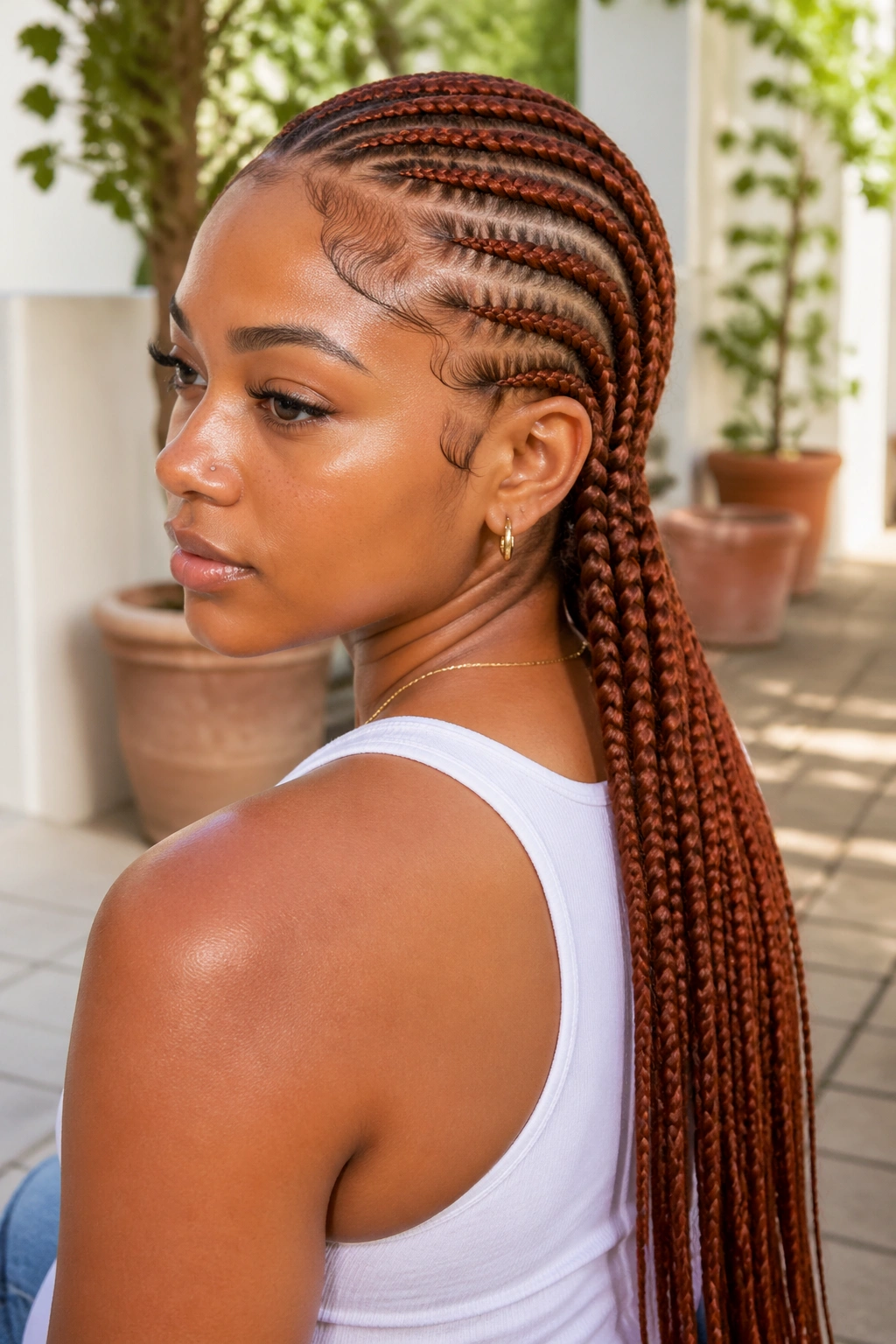
Why do feed-in cornrows look so good in ginger? Because the tight scalp pattern gives the color a chance to flash in slim, clean lines instead of one heavy block. That makes the warmth feel sharper, almost like a line drawing with copper ink.
The feed-in method helps the braid start small and build gradually, which keeps the head close to the scalp and the whole style easy to wear under hats or wraps. I like this look with cinnamon, rust, or a soft auburn blend, especially when the parts curve instead of going straight back.
How to wear it
- Try straight-back rows if you want a sportier finish.
- Choose curved parts for a softer frame around the face.
- Add one or two thinner accent braids if you want more detail.
- Keep the ends braided long or tuck them into a low ponytail.
4. Warm Auburn Lemonade Braids
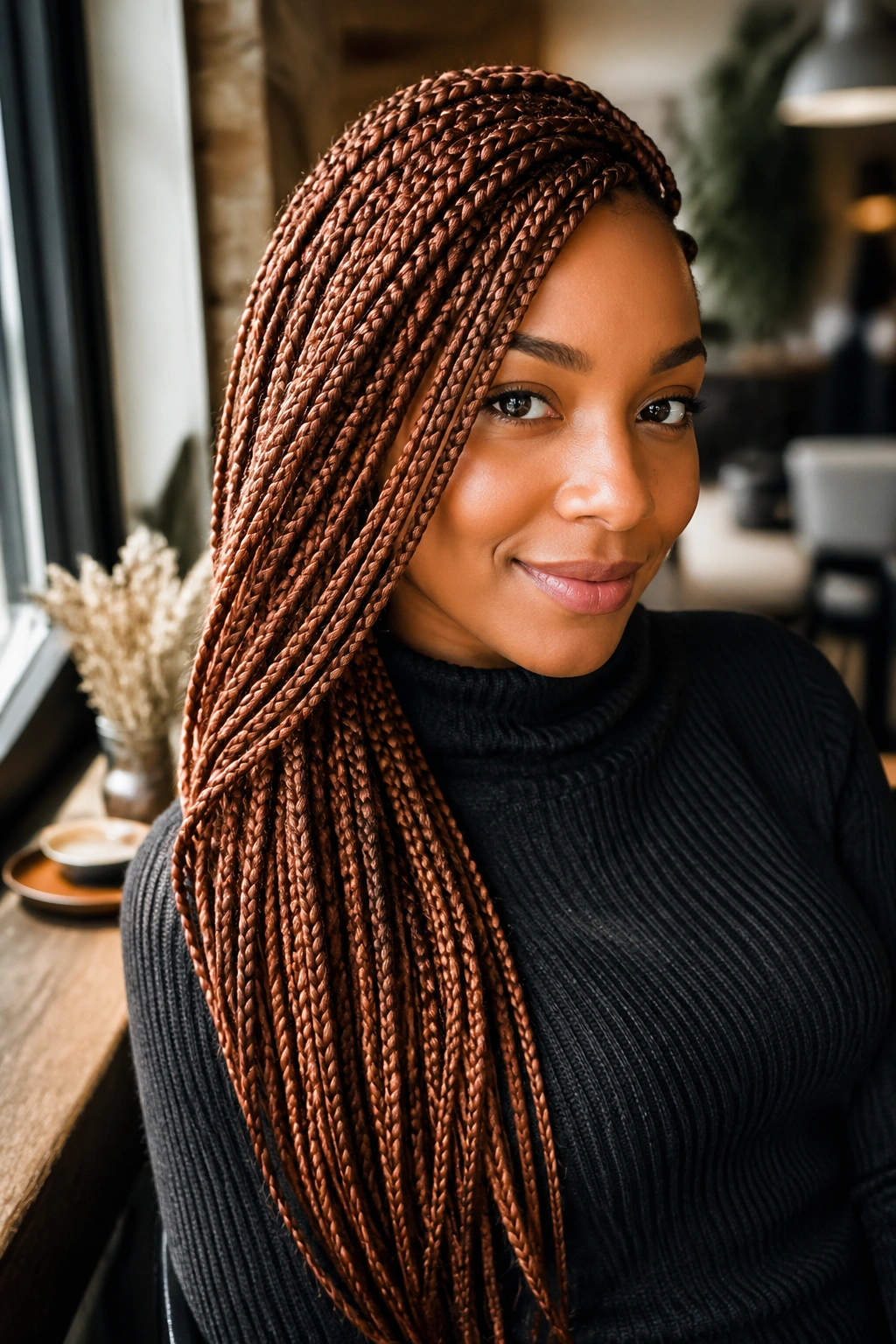
A side-swept braid and a warm auburn tone are a good pair when you want the face to look longer and the color to feel a little dramatic. The angle does half the work, then the copper shade catches the eye every time the braids move over one shoulder.
I like lemonade braids for anyone who wants a style that feels easy to dress up. The side part creates a clean line, and the long drape along the cheek and jaw gives you a bit of shape without needing curls or extra accessories. If your braid lengths are past the collarbone, the color has room to show off.
- Best with a deep side part.
- Looks strongest in long, narrow braids.
- Try a darker root with brighter ends.
- Hair cuffs work well near the temple.
Auburn shades do not need much else. The angle already gives the style enough attitude.
5. Ginger Boho Braids with Loose Waves
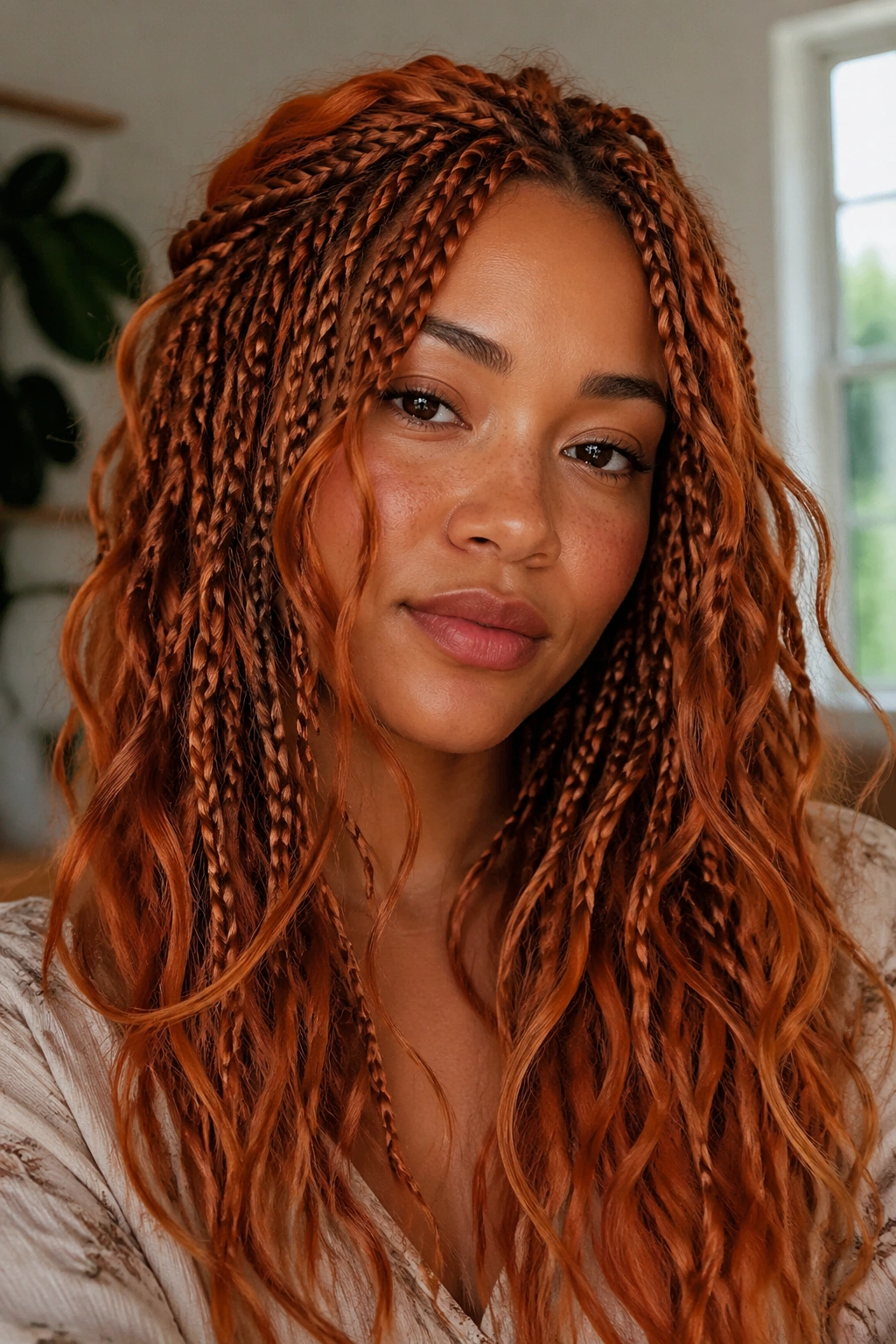
Loose waves make ginger boho braids feel softer, and that softness matters because copper can lean bold fast. The texture breaks up all that color in a good way, so the eye sees movement first and shade second.
This style works when you want the braid to look lived-in instead of stiff. Leave a few curled pieces free through the lengths, and choose a ginger blend with both gold and brick tones so the waves do not disappear into the braid base. A little frizz is part of the charm here. Too much polish and the style loses its edge.
The maintenance is a touch higher than a plain braid set, mostly because the loose pieces need a light touch. A small mist of water and leave-in on the curls goes farther than a heavy oil. Heavy products flatten the shape fast.
6. Side-Swept Copper Fishtail Braid
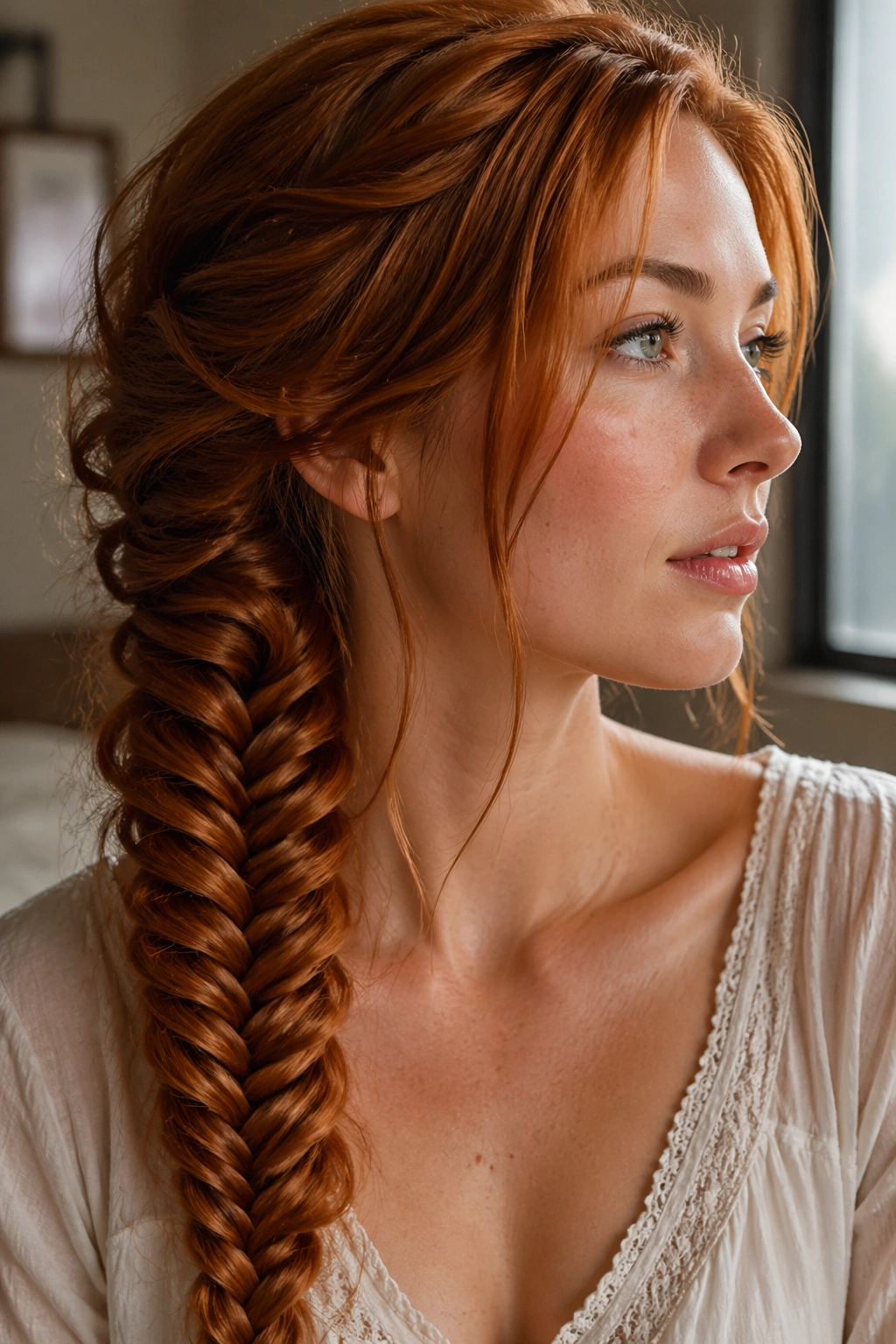
Unlike a standard three-strand braid, a fishtail has that woven, almost scaled look that makes copper shades read richer. The texture catches light in tiny shifts, so even a simple side braid feels dressed up.
This is the style I reach for when long hair needs something that looks precise but not stiff. The side placement lets the braid hang across the shoulder, which works especially well if the ginger tone has a few lighter strands mixed through it. On very smooth hair, a little texturizing spray at the roots helps the braid hold its grip.
It suits formal events, dinner plans, and any day when you want one braid to do a lot of visual work. Keep the braid loose at the top, then tighten it slightly through the tail so the fishtail pattern stays crisp.
7. Waist-Length Ginger Tribal Braids
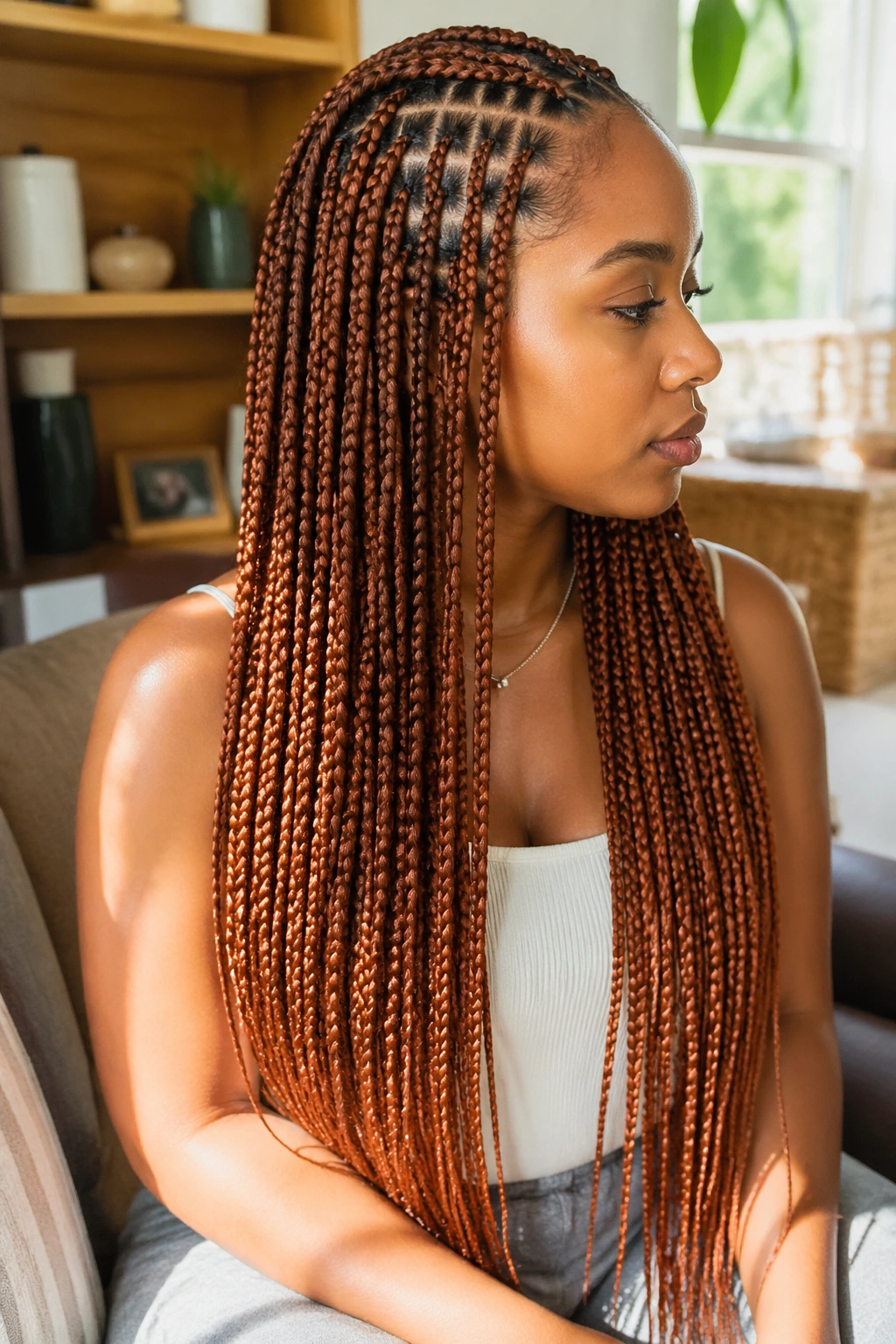
Tribal braids carry a lot of visual structure, so a ginger blend needs to support the pattern instead of fighting it. The parts become part of the design, and the warm copper color gives every section a little extra depth.
The parting tells the story
The best thing about this style is the grid. Small front braids, a few larger rows, and a longer back section create a rhythm that feels intentional right away. If you add cuffs or shells, keep them spaced out. Too many accessories can turn the style busy fast.
- Best when the front sections are narrow and precise.
- Waist length gives the strongest color payoff.
- Use one deeper brown shade near the roots if you want contrast.
- Tiny parts show the pattern better than chunky ones.
Tip: let the front rows stay slightly tighter in shape than the back lengths; that difference gives the style a cleaner outline.
8. Mini Ginger Micro Braids
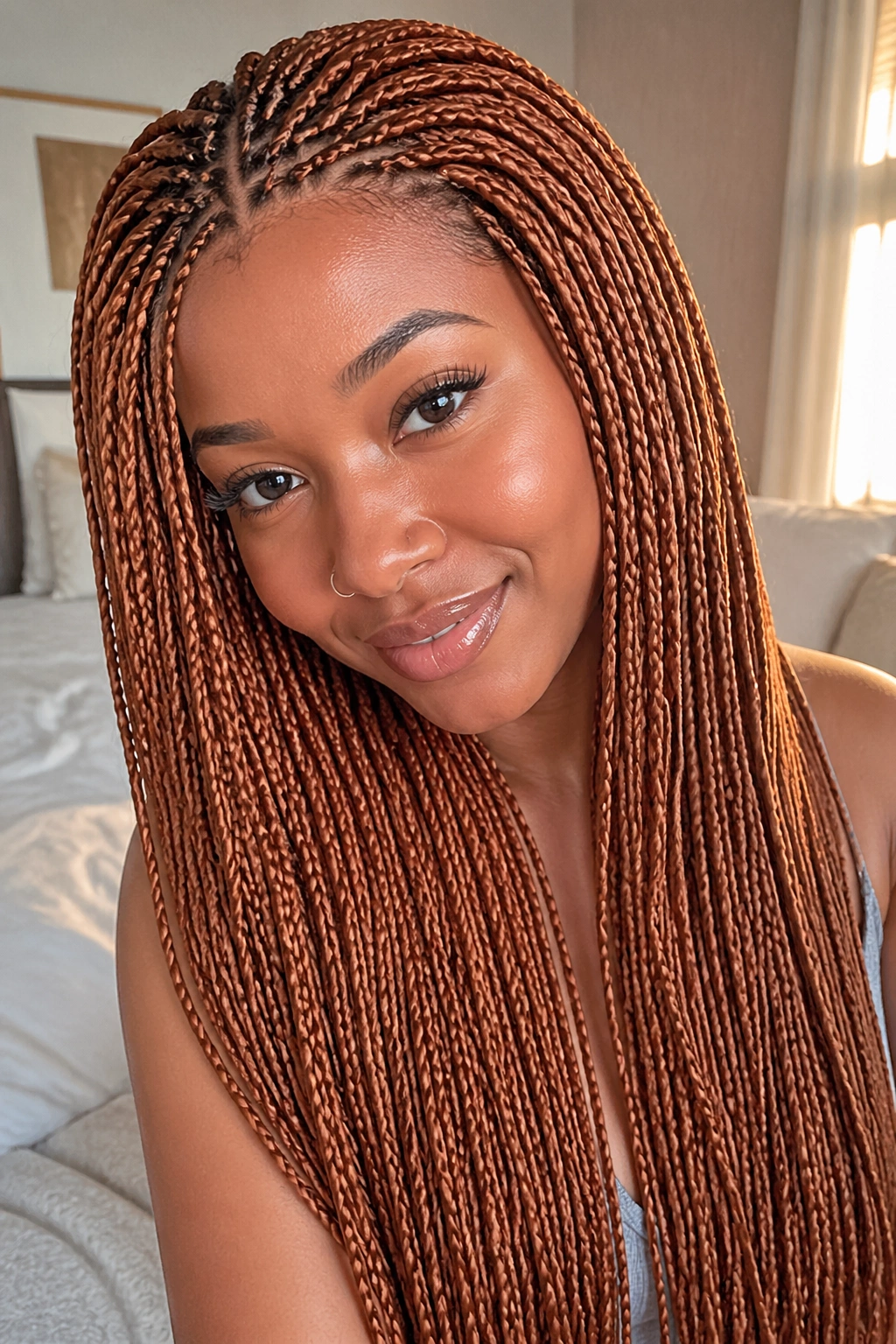
Why do micro braids work so well in copper tones? Because the tiny size creates a soft curtain of color instead of one obvious braid shape. The result feels almost fabric-like, which is a nice match for a warm ginger shade.
These are not quick braids, and they should not be treated like a rush job. The payoff is movement. A lot of movement. Each small braid shifts on its own, so the color looks alive, especially when the light hits the ends. They also give you room to pull the braids into a ponytail, bun, or half-up style without losing the overall shape.
Who should consider them
- People who like a lightweight look with lots of sway.
- Anyone who wants length without huge braid sections.
- Wearers who do not mind longer install time.
- Styles that need a clean, close finish around the face.
9. Ginger Dutch Braid Pigtails
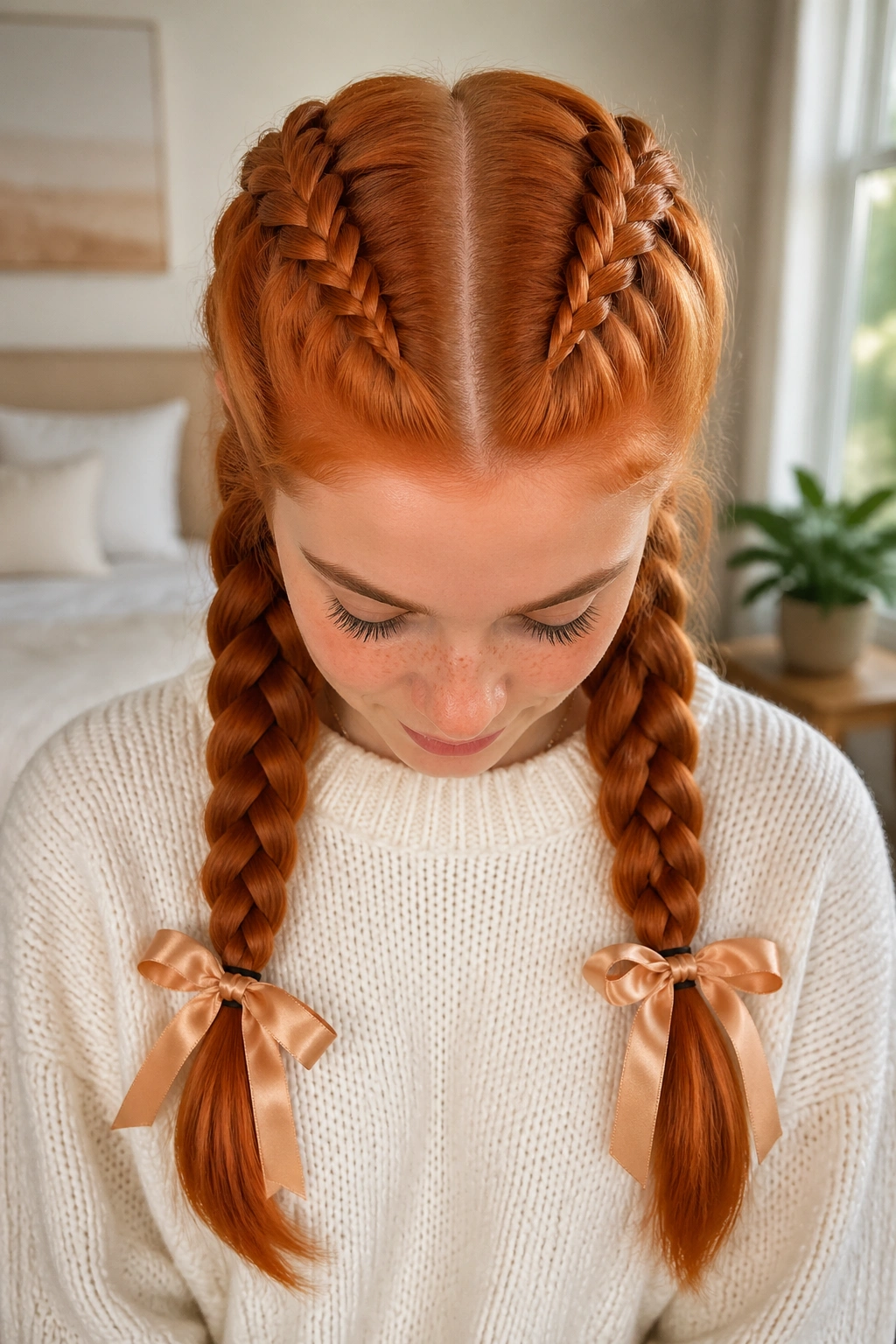
A pair of Dutch braids gives ginger hair a playful edge without feeling childish. The braid sits on top of the scalp instead of disappearing into it, so the copper shade stays visible from the hairline down to the ends.
I like this style for long days when you want the hair off your face but still want it to look styled. It works on fresh wash day, second-day hair, and stretched natural hair with a little grip. The parting can be neat and narrow or a little wider if you want the braids to feel thicker.
The charm is in the shape. Two braids keep the style balanced, and the ginger color keeps the whole thing from reading flat. A satin ribbon tied around each tail can soften the look without making it fussy.
10. Halo Crown Braid in Burnished Copper
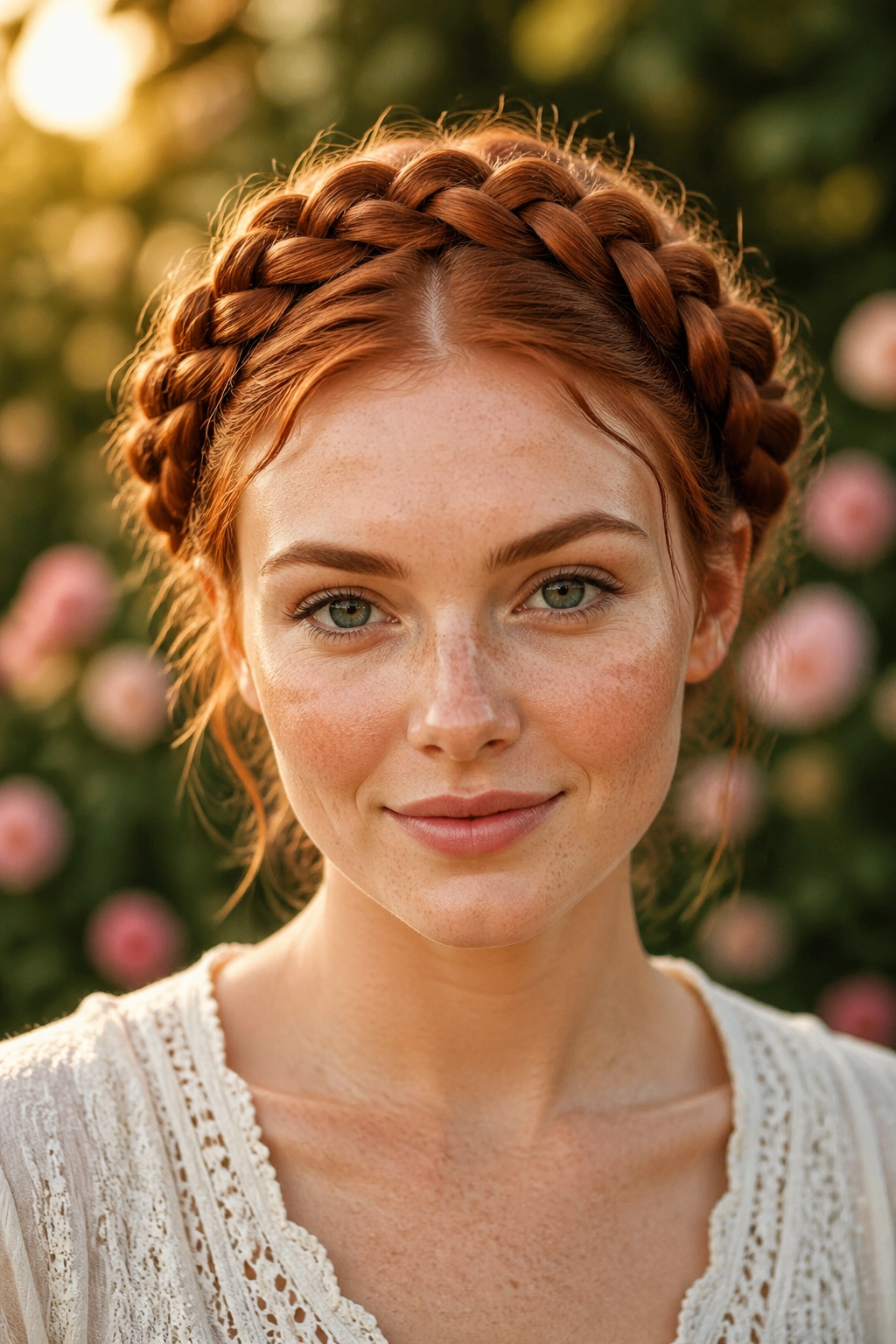
A halo crown braid in burnished copper is one of those styles that looks expensive even when the actual braid pattern is simple. The braid wraps the head like a frame, and warm copper turns that frame into the whole story.
The beauty here is restraint. You do not need a lot of extra texture, because the circular shape already gives the style presence. Keep the braid close to the hairline and tuck the ends cleanly so the crown line stays smooth. If your color has a burnished, almost penny finish, this style looks especially good in soft light.
A little face-framing piece can help if you want less severity. Otherwise, let the crown do its job. It has enough shape on its own.
11. Half-Up Ginger Bubble Braids
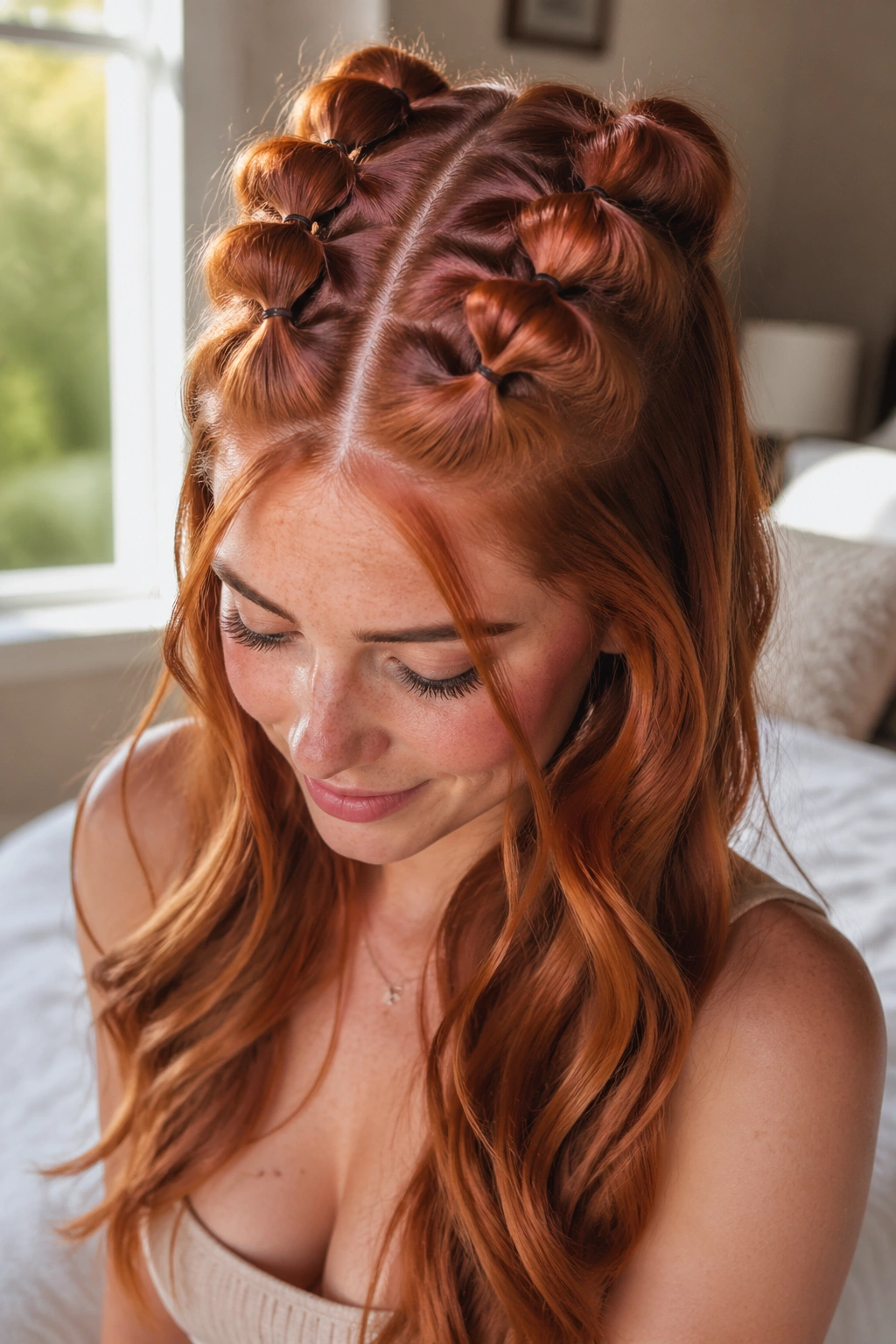
Half-up bubble braids are a nice middle ground when you want a fun copper refresh without committing to a full updo. The top section pulls the face up and back, while the lower lengths stay loose enough to show off the ginger blend.
The bubble effect matters here. Each elastic tie creates a little puff, and those puffs catch color in a way plain braids do not. I like using clear or amber-toned elastics so the detail stays visible. If the hair is very long, space the bubbles about 2 inches apart. That spacing keeps the shape from looking crowded.
This style has a playful feel, but it can still be neat if the top section is smooth and the bubbles are even. A soft copper blend with one lighter strand through the lengths makes the shape read even better.
12. Sleek Ginger Braided Ponytail
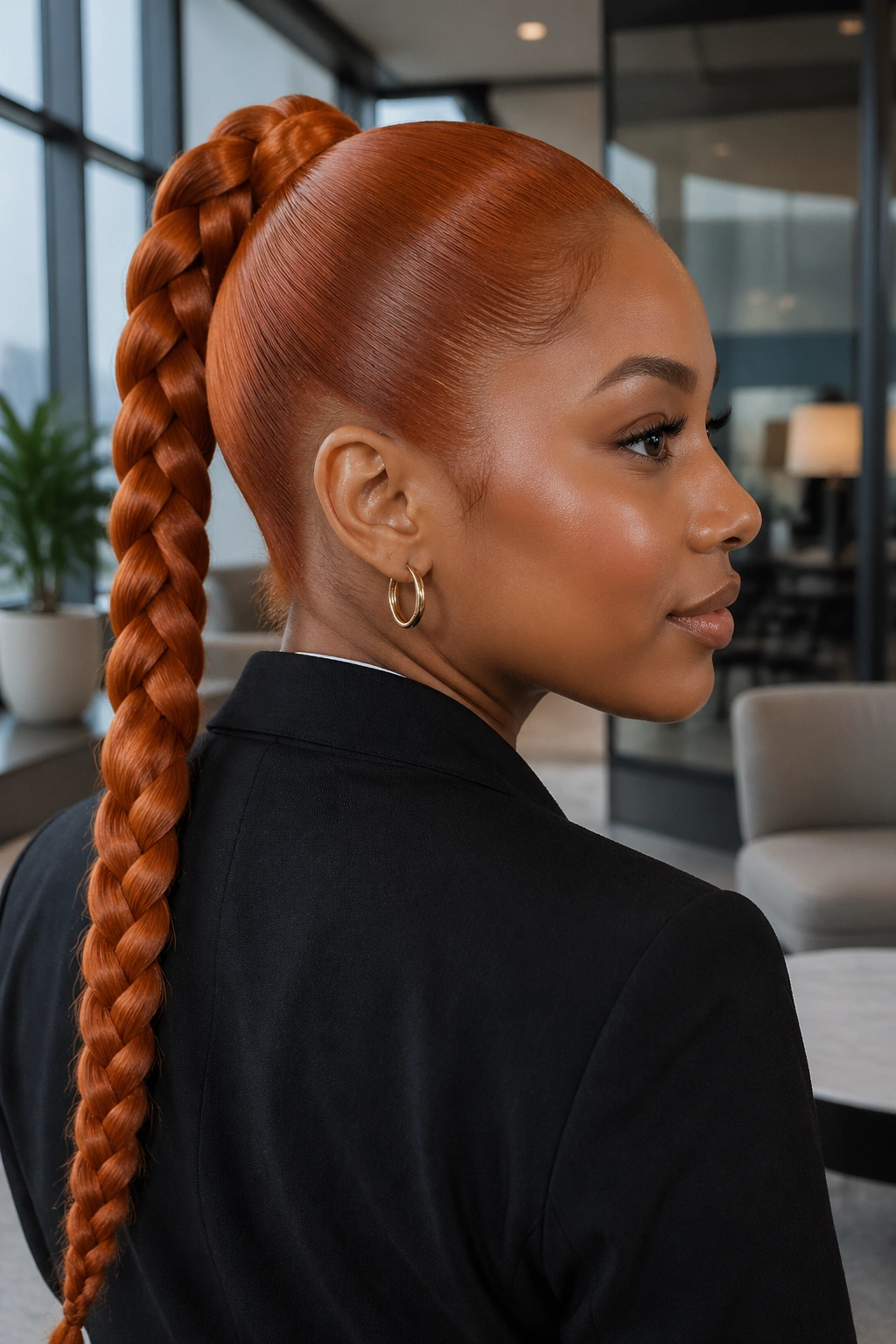
A sleek braided ponytail is the opposite of fussy. That’s why it works. The smooth base gives the ginger color a sharp outline, and the long tail keeps the look clean from every angle.
What makes it different
Unlike loose braids, this style puts all the tension and shine in one place. The scalp stays smooth, the ponytail sits at one height, and the warm copper shade becomes the focal point instead of the braid pattern itself. It’s a good choice for work, events, or any day when you want your hair to look pulled together fast.
Best way to wear it
- Keep the base low for a calmer look.
- Set the ponytail mid-height if you want more lift.
- Wrap a thin braid around the elastic to hide it.
- Use a small amount of edge control, not a thick layer.
The style gets a nice lift from a glossy finish, but don’t overdo the product. Too much shine can make the copper look flat.
13. Chunky Goddess Braids in Copper Ombre
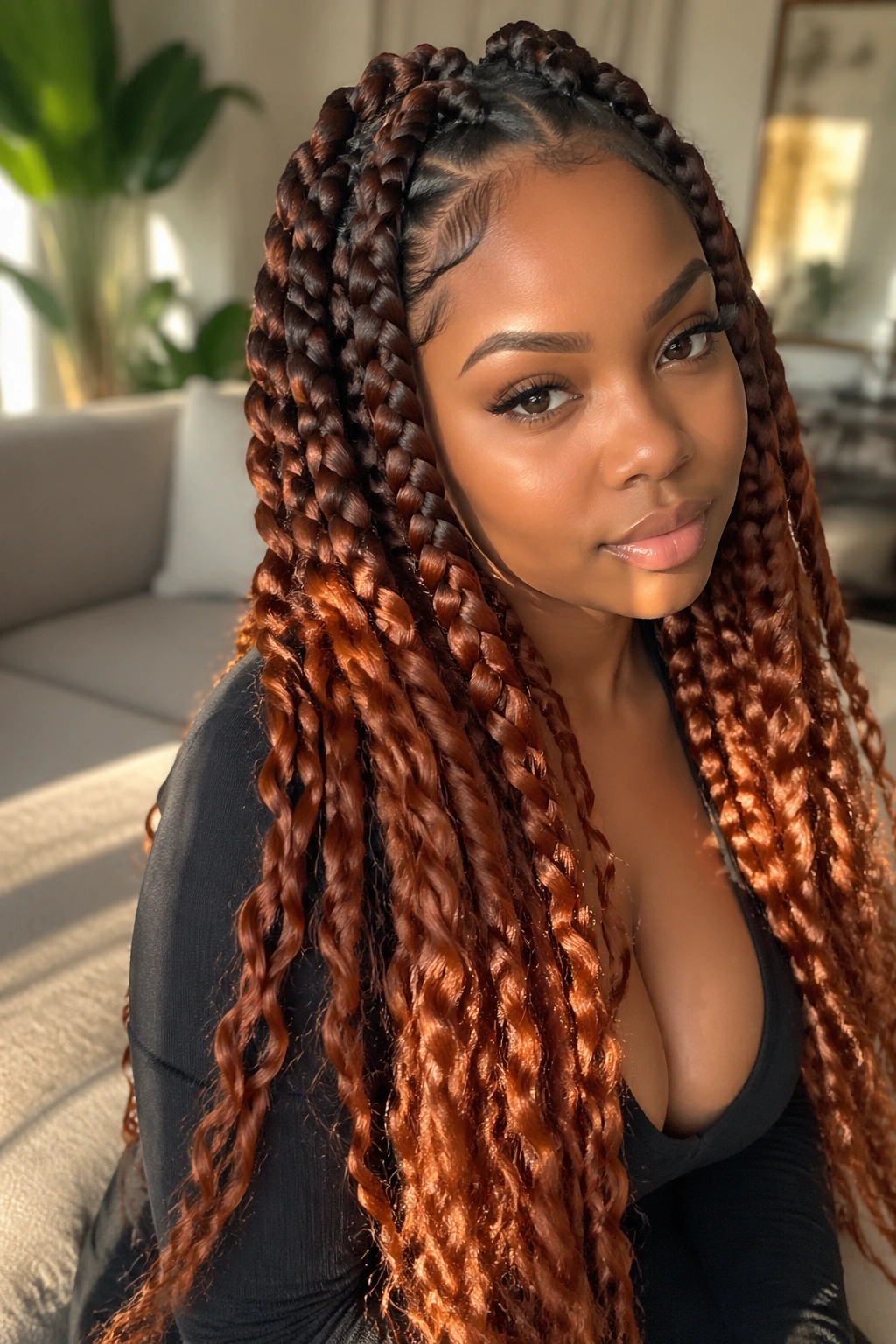
Chunky goddess braids give ginger a lot of room to breathe. The larger sections show off an ombré shift beautifully, especially when the color moves from a deeper root into a brighter copper end.
Why this braid size works
Big braids give the color a wide surface, which means every tone gets a chance to show. The style also feels more relaxed than tiny plaits, and the loose curly pieces woven through the lengths keep the whole thing from reading too heavy. If your face shape benefits from softness around the cheeks, leave a couple of curls forward instead of tucking everything back.
- Strong choice for long hair or added extensions.
- Ombre looks best when the transition is gradual.
- A few loose curls add movement without clutter.
- Thick braids need neat parting to stay polished.
My take: if you want copper without it feeling too loud, chunky goddess braids are one of the easiest ways to do it.
14. Ginger Fulani Braids with Beads
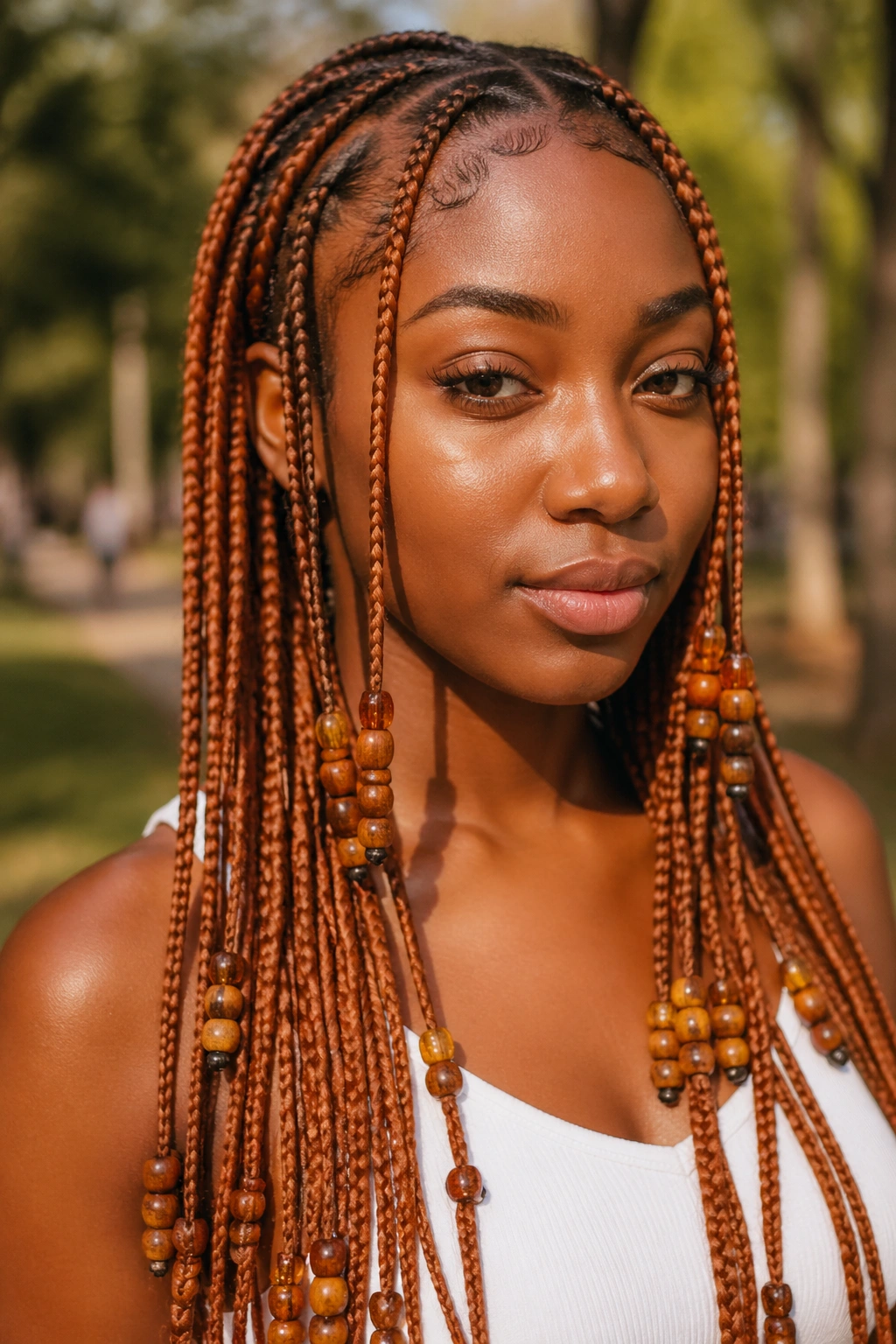
Why do Fulani braids hold color so well? Because the braid pattern itself already has a rhythm, so the ginger shade gets to sit inside a structure that feels deliberate. Add beads, and the style turns into something with movement and sound, not just color.
The center braid, side braids, and face-framing pieces give you several places to play with warm tones. I would keep the bead choice simple: clear, wood, gold, or amber all work better than a crowded mix. If the braids are a bright ginger, the accessories should stay quiet enough to let the color lead.
How to personalize it
- Use beads only on the front sections if you want a cleaner finish.
- Keep the ends lightweight so the braids still swing.
- Mix one or two thinner accent braids into the front.
- Choose a ginger blend with both red and honey notes.
15. Braided Bun with Warm Cinnamon Highlights
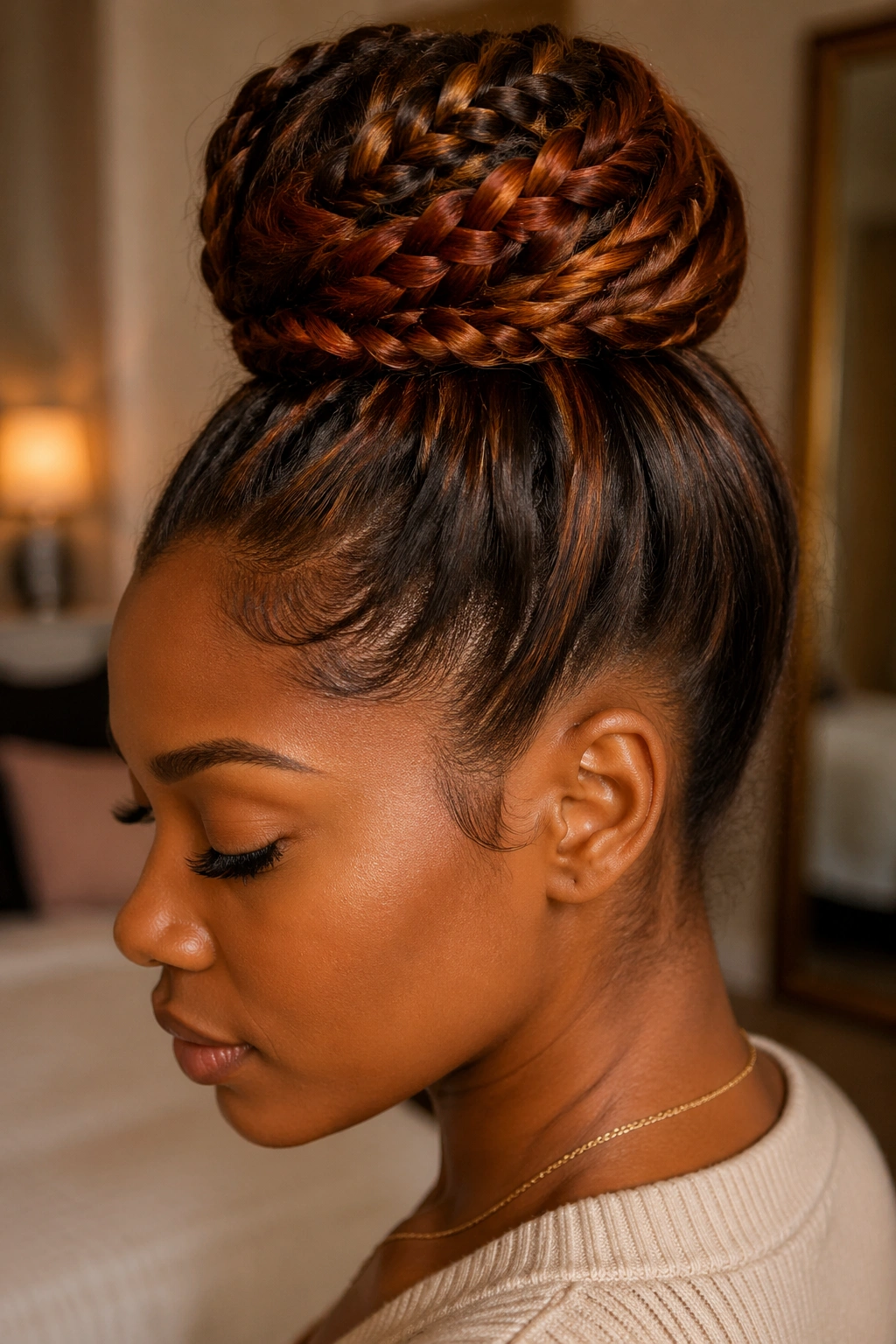
A braided bun can look severe on its own. Warm cinnamon highlights change that fast. They soften the shape, add depth to the twists, and keep the bun from disappearing into one solid block at the back of the head.
This style works when you need your hair contained but still want a little color movement. The bun can sit high, low, or slightly off-center, but the best version usually has a smooth base and a braided wrap around the outside. If you want the highlights to show, leave a few narrow sections brighter than the rest instead of blending everything into one shade.
A braided bun is also one of the easier ginger looks to maintain. Once it is pinned and shaped, it can last through a long day without much fuss. That is worth something.
16. Zigzag Ginger Feed-Ins
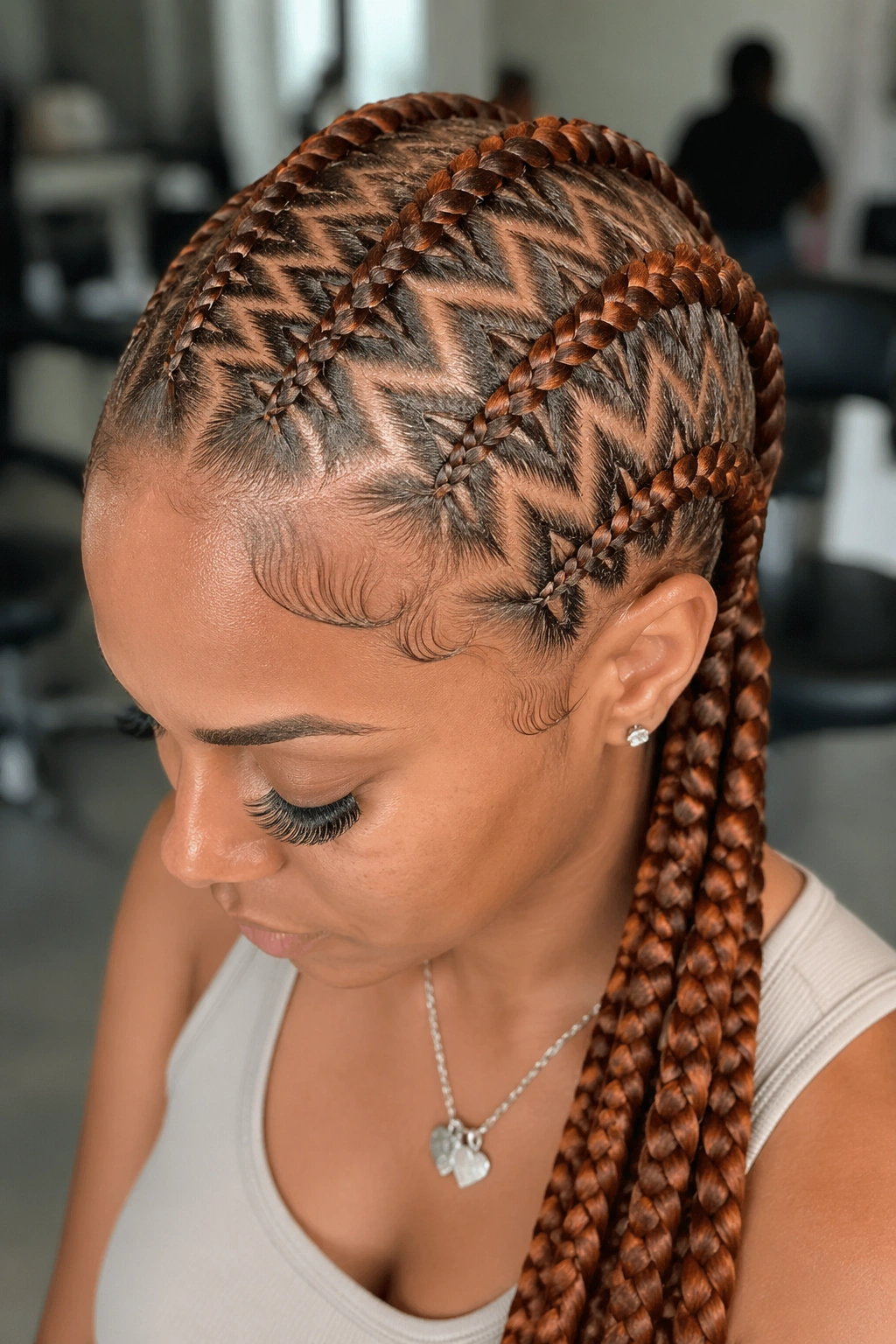
A zigzag part changes the whole mood of feed-in braids. Straight rows look tidy; zigzag rows look clever. Put that pattern in a ginger shade, and the scalp design becomes part of the color story.
The shape is the point here. The braid lines move in a way that catches the eye before the length even starts. That makes this style a good choice if you want something with detail at the root and less emphasis on long ends. Keep the zigzags consistent, though. Random bends look messy; deliberate bends look crisp.
What to watch for
- The zigzag should be even from row to row.
- Small sections make the pattern read more clearly.
- A copper blend with slight brown lowlights keeps it grounded.
- Avoid heavy edge products that blur the part line.
17. Rope-Twist Ginger Braids with Copper Ends
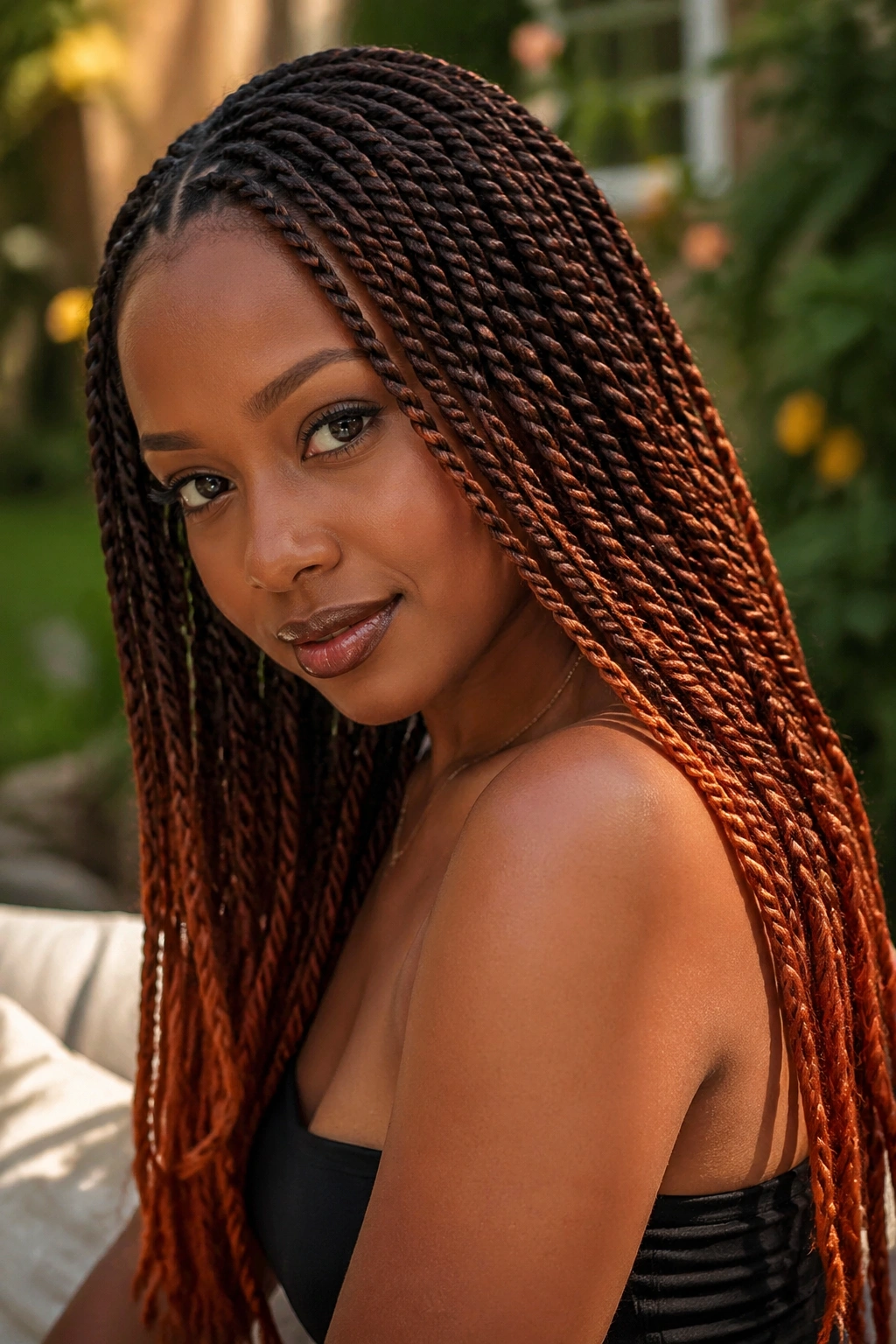
Rope-twist braids feel different from classic plaits because they spiral instead of crossing over. That twist gives ginger a new kind of texture, and the copper ends pick up light in a way that reads almost glossy.
These work well if you want something a little lighter-looking than a full box braid set. The two-strand structure has a neat finish, but it still feels soft at the tail. I like copper ends on a deeper ginger base because the shift gives the twist a clear finish. Without that contrast, the style can look a bit too uniform.
Who suits it best? People who want a style that falls between casual and polished. It’s not as rigid as cornrows, and it’s not as full as jumbo braids. That middle ground is where rope twists shine.
18. Ginger French Braid Into a Low Bun
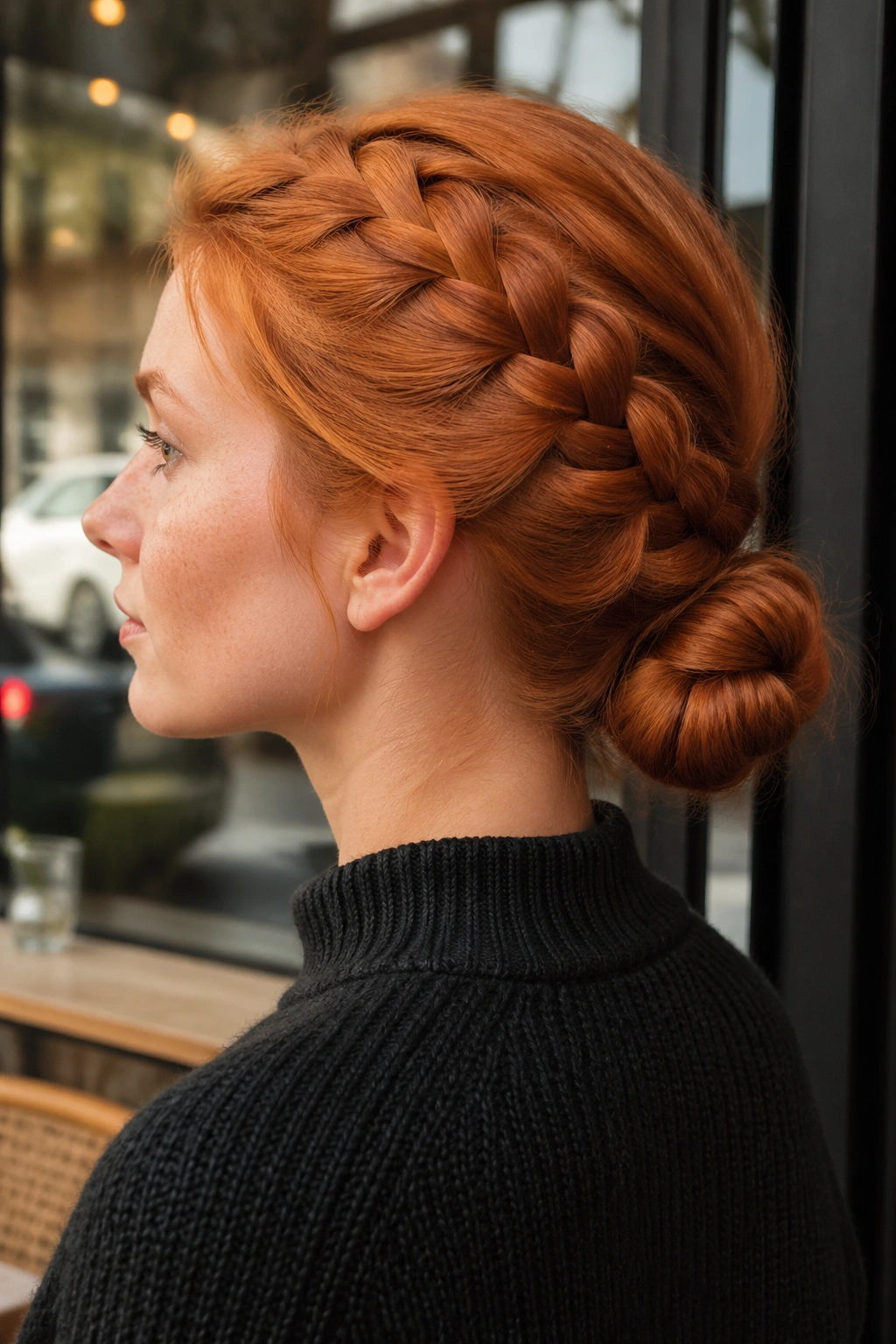
What makes a French braid into a low bun work in copper is the path it takes. The braid starts at the crown, follows the head shape, then disappears into a tucked bun at the nape. That movement keeps the eye traveling, which makes the warm color feel richer.
The bun itself should stay smooth and compact. If it gets too puffy, the style loses its clean line. I like this look when the braid is medium-width and the bun is pinned flat enough to sit close to the neck. A few subtle cinnamon strands near the top make the braid pattern easier to read.
This is a good choice for people who like neat hair but do not want the finished style to feel severe. It has structure. It still feels soft.
19. Tapered Bob Box Braids in Amber Ginger
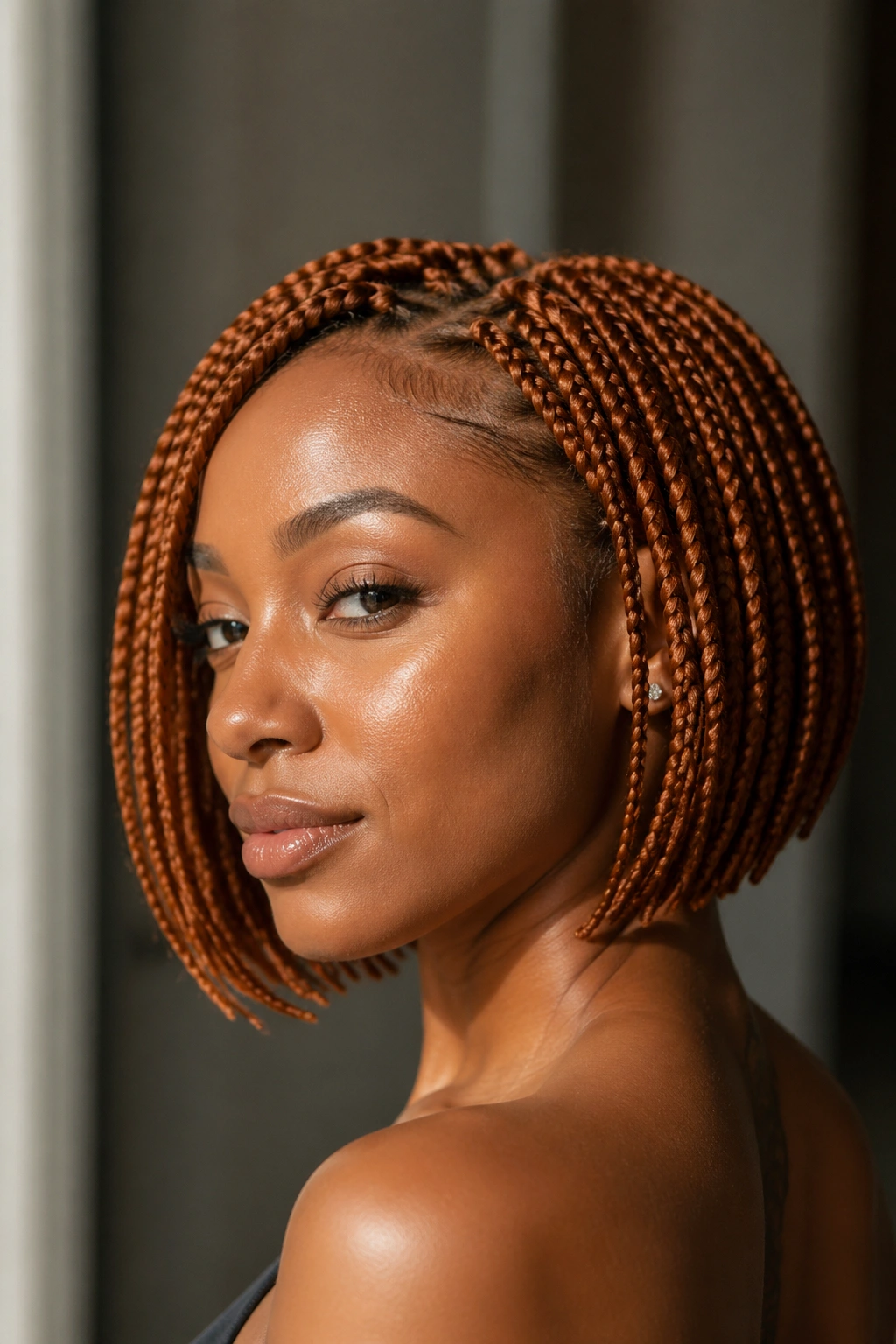
A tapered bob changes how ginger braids read right away. The shorter shape exposes the jaw, the neck, and the shoulder line, so the amber tone has nowhere to hide. That makes the color feel sharper and fresher than it would at waist length.
I like a bob shape when someone wants a big style shift without extra length getting in the way. The tapered finish keeps the back a little shorter and the front a little longer, which gives the whole cut movement. The best part is how easy it is to wear under coats, scarves, and collars.
Small details that matter
- Keep the longest pieces grazing the chin or collarbone.
- Use a clean side part if you want more shape.
- Add one or two tiny cuffs only.
- Choose an amber ginger blend, not a flat orange.
20. Crowned Milkmaid Braids with Apricot Tones
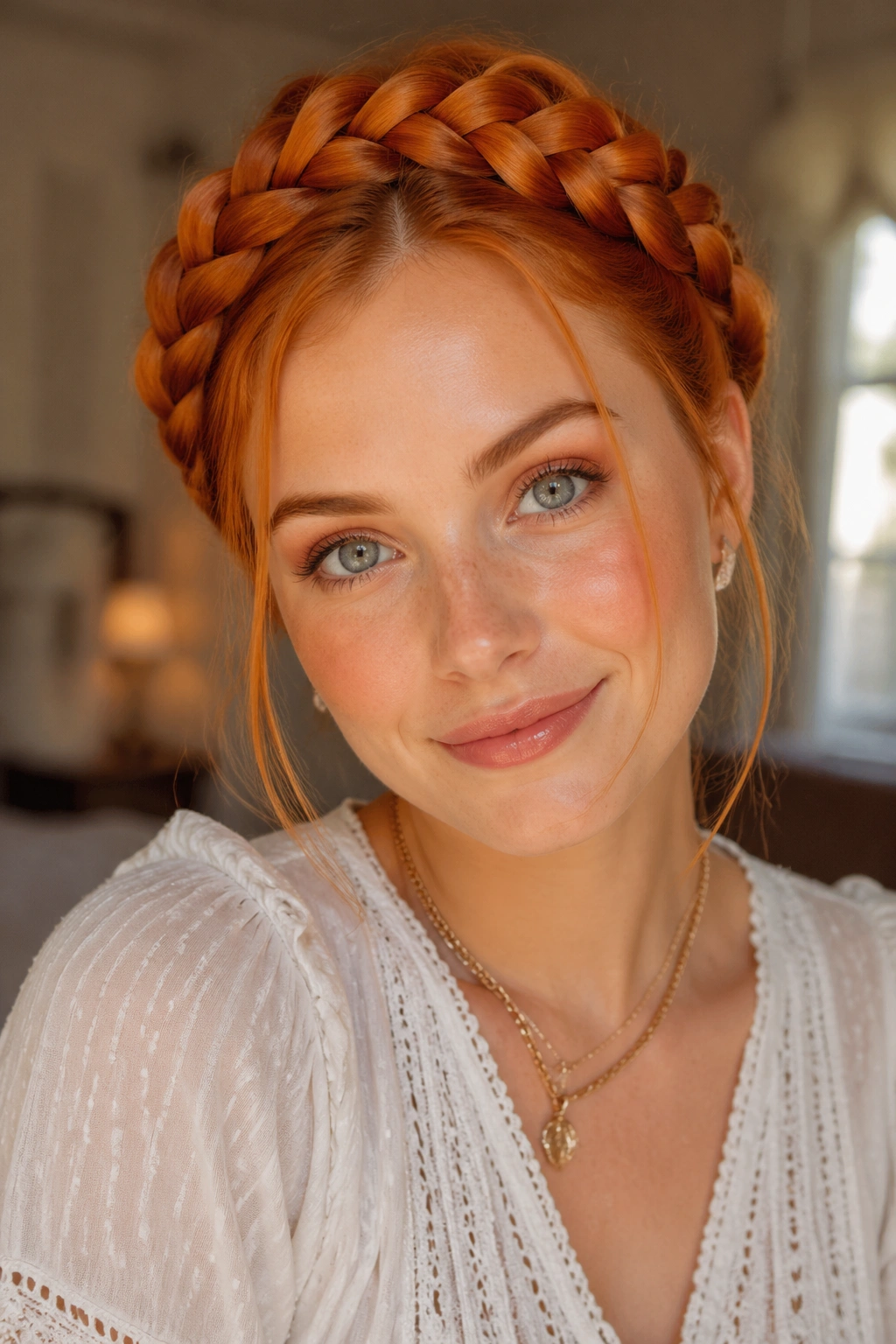
A milkmaid braid already has a soft, romantic feel. Add apricot tones, and the style gets warmer without turning brassy. The braids sit across the top of the head, so the color reads like a halo from the front and the side.
The best versions are not overstuffed. Two even braids, tucked and pinned with care, are enough. If the braids are too thick, the crown can start to feel bulky. Keep the edges smooth and let the apricot shade sit against the forehead and temples. That’s where it looks best.
This style works when you want the hair pulled up and away but still want the color to frame the face. It’s neat, but not severe. That balance matters more than people think.
21. Side-Part Lemonade Braids with Rust Tips
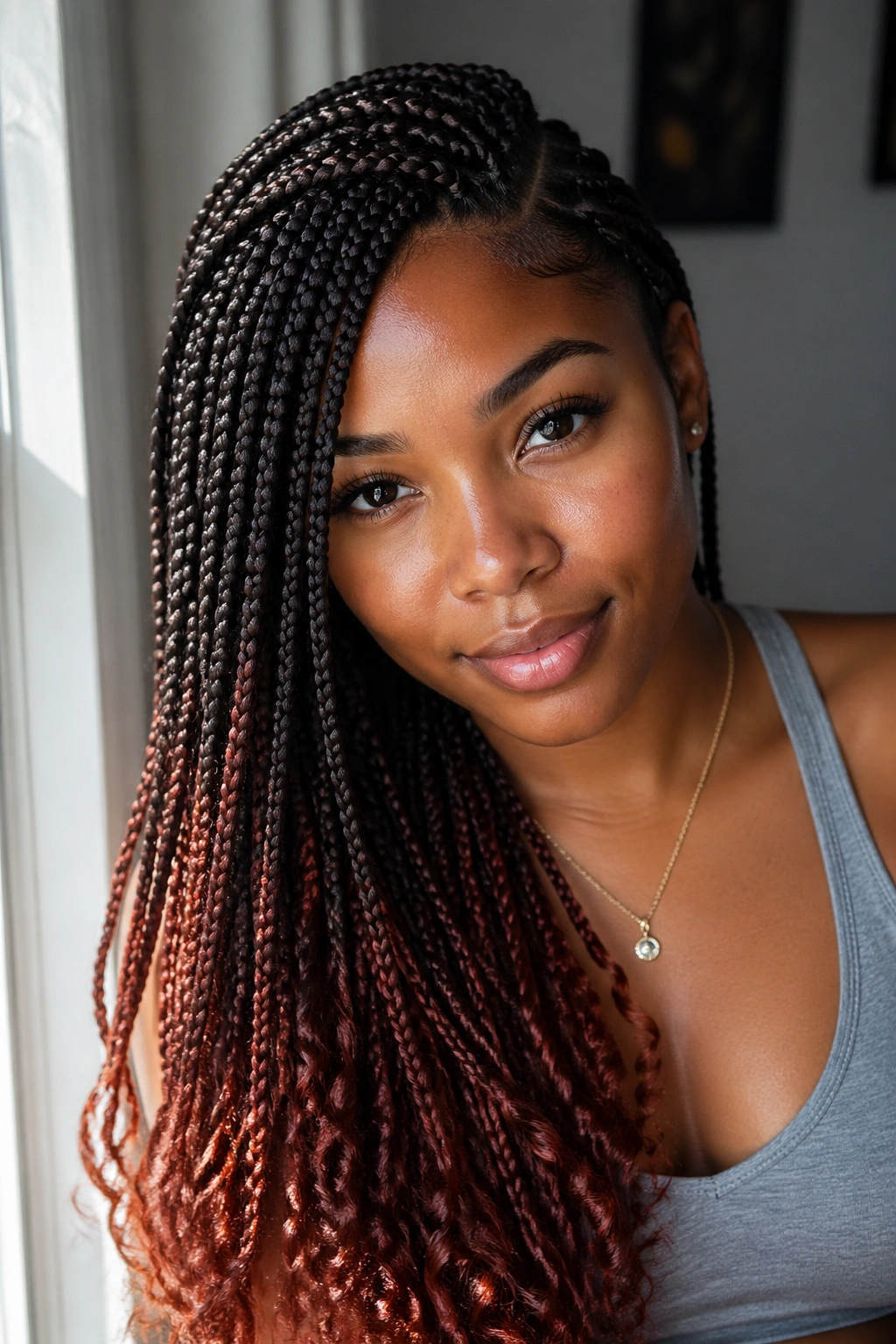
A side part gives lemonade braids their shape, but rust-tipped ends give them their mood. The shift from a deeper root into a warmer tip keeps the whole set from looking one-note, especially on longer braids.
Unlike straight-back braids, the side flow makes the style feel a little more directional. Your eye follows the part first, then the diagonal sweep of the lengths. That’s useful if you want the face to feel open on one side and wrapped on the other. It also gives you an easy way to show off a pair of earrings or a high collar.
This version is best when the tips are only a shade or two lighter than the root. If the contrast gets too high, the braid pattern can get lost in the color shift. Keep it close.
22. Curly-End Ginger Knotless Braids
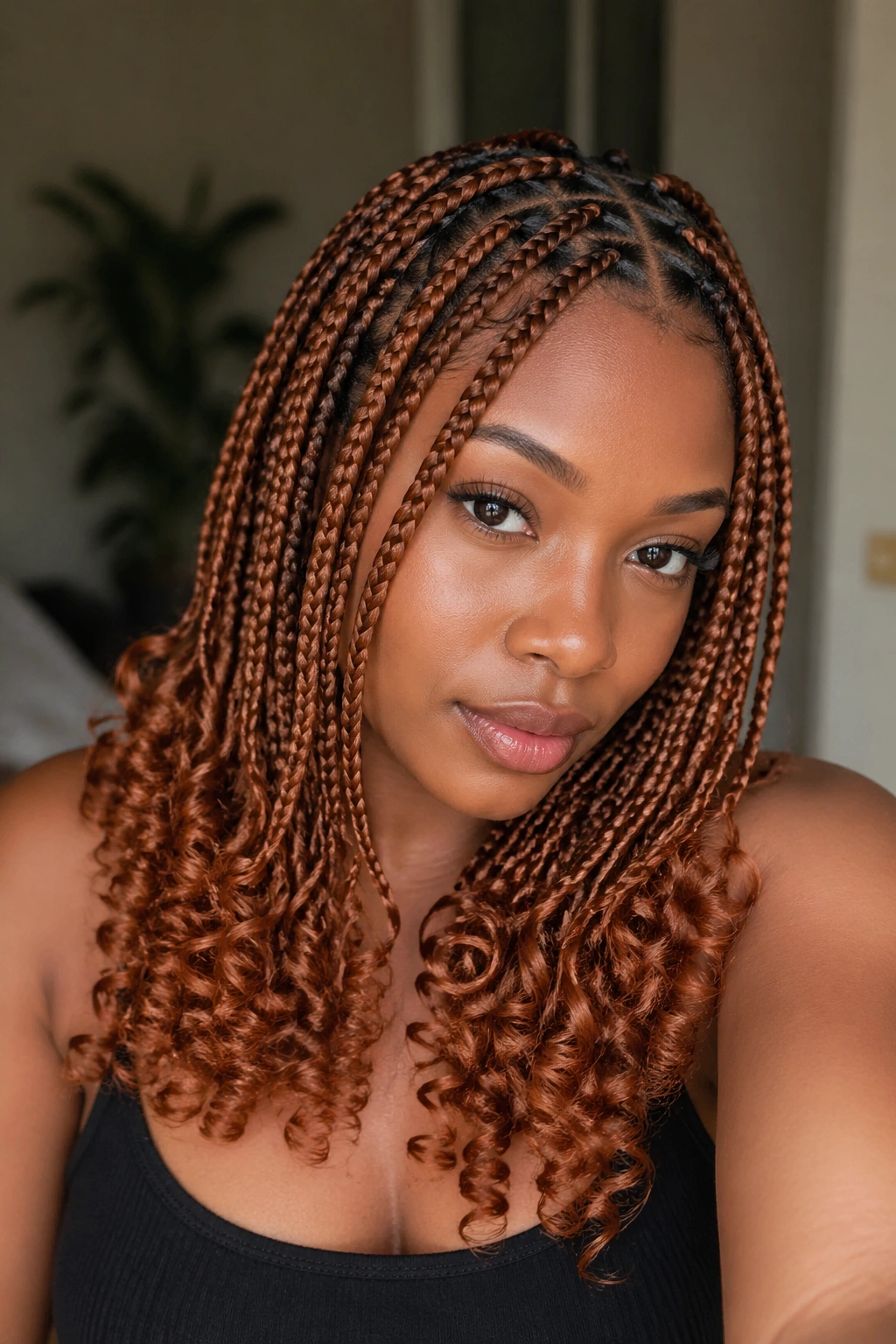
Why do curly ends make knotless braids feel softer? Because the straight braid line breaks into a looser shape right where your eye expects it to stop. That little change keeps the look from feeling too strict, which is a good thing in copper shades.
The curls at the ends should feel springy, not stiff. If they are crushed or overloaded with product, they fall flat quickly and the whole style loses bounce. I like a rod-set or flexi-rod finish on the tails, then a light mist of water to revive the shape when needed. Heavy creams are too much here.
How to keep the curls bouncy
- Wrap the ends on small rods while the hair is slightly damp.
- Use a satin scarf at night.
- Finger-separate the curls, not comb them.
- Refresh with a light mist, not oil.
23. Two-Row Accent Braids Over Straight Ginger Hair
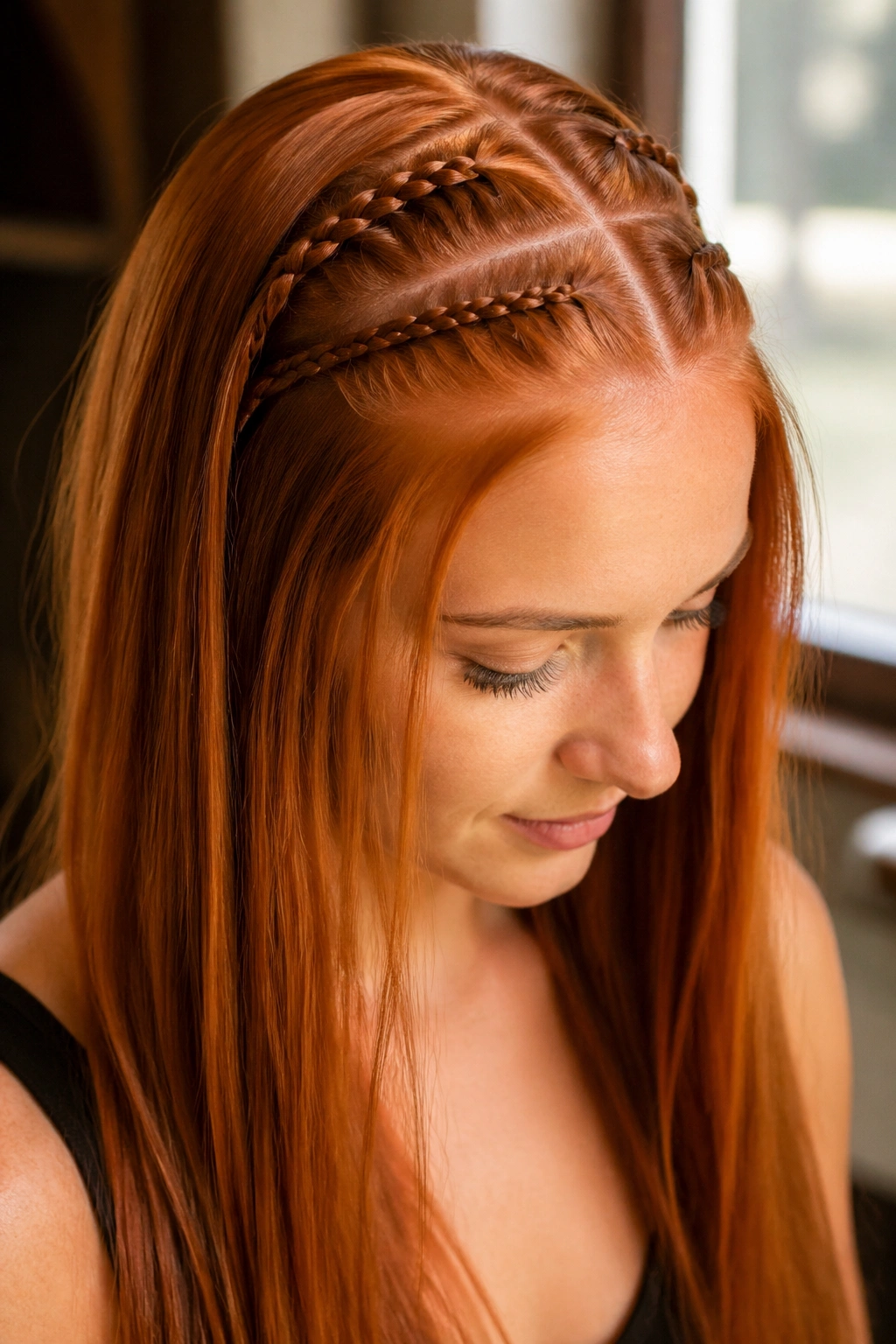
Sometimes the best braid refresh is the smallest one. Two neat accent braids across straight ginger hair can shift the whole look without turning it into a full braided style.
This works because the contrast is strong. The straight lengths show off the copper shade in a smooth sheet, while the accent braids break up the surface just enough to add detail. It’s a good option when you want to keep most of the hair loose and still look styled. The accent rows can sit near the temples, travel from the part line, or cross the crown like thin bands.
The main rule is restraint. If the accent braids get too thick, the style loses its clean simplicity. Tiny braids. Clean parting. That’s enough.
24. Braided Topknot with Copper Face-Framing Pieces
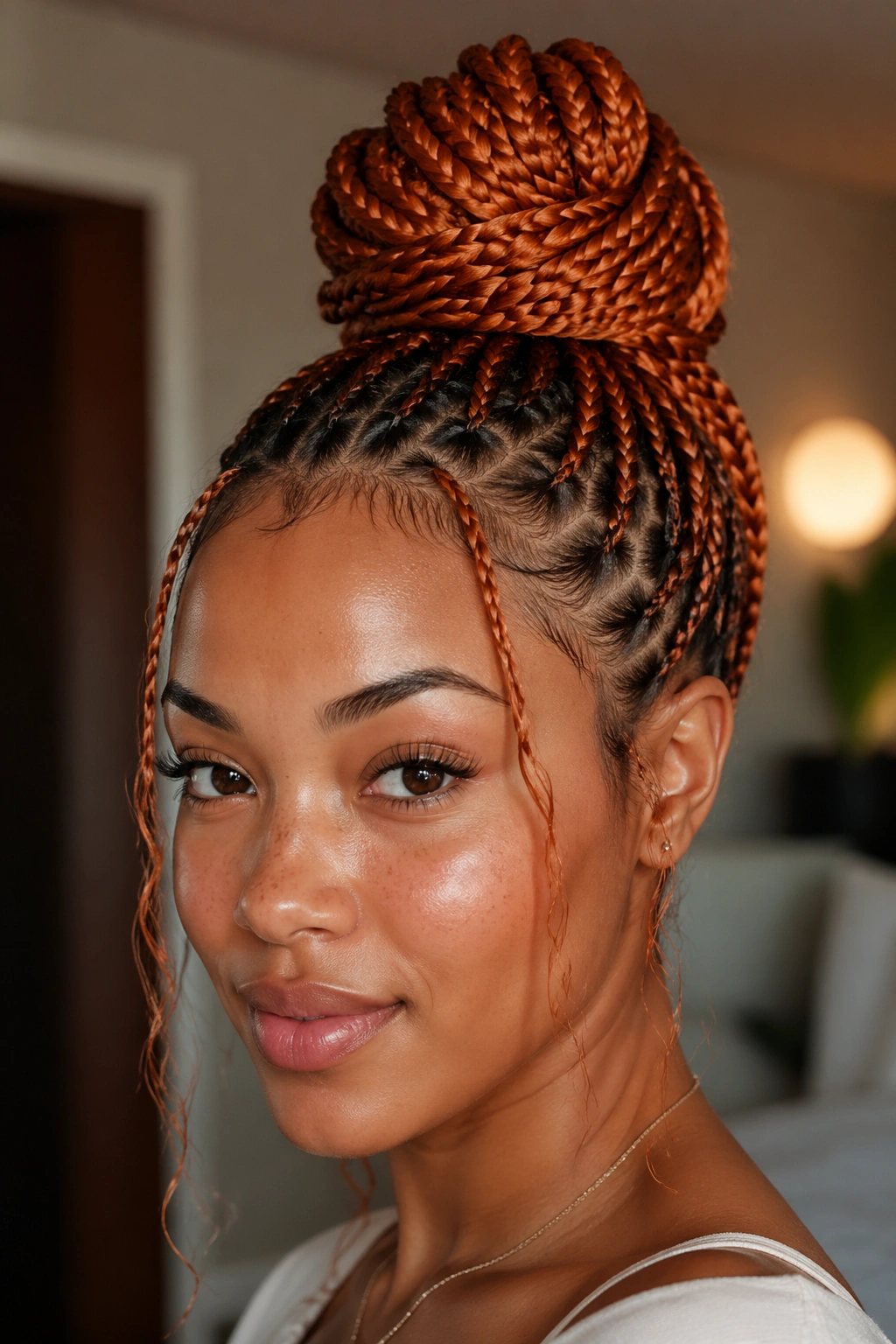
A topknot pulls the hair up fast, but face-framing pieces keep it from feeling severe. In copper hair, those two loose pieces matter even more because they bring the warm tone right beside the cheeks.
What makes it different
Unlike a fully slicked bun, this style leaves a small soft zone around the face. That changes the whole mood. The topknot can be tight and polished while the front pieces stay a little wavy or braided, which gives you some contrast without much effort.
Best way to wear it
- Keep the knot high if you want lift.
- Leave the front pieces just below eye level.
- Curl the face-framing strands lightly if they are straight.
- Wrap a thin braid around the bun base for polish.
The copper pieces around the face should be narrow, not heavy. Too much hair there can crowd the features.
25. Stitched Cornrows with Ginger Extensions
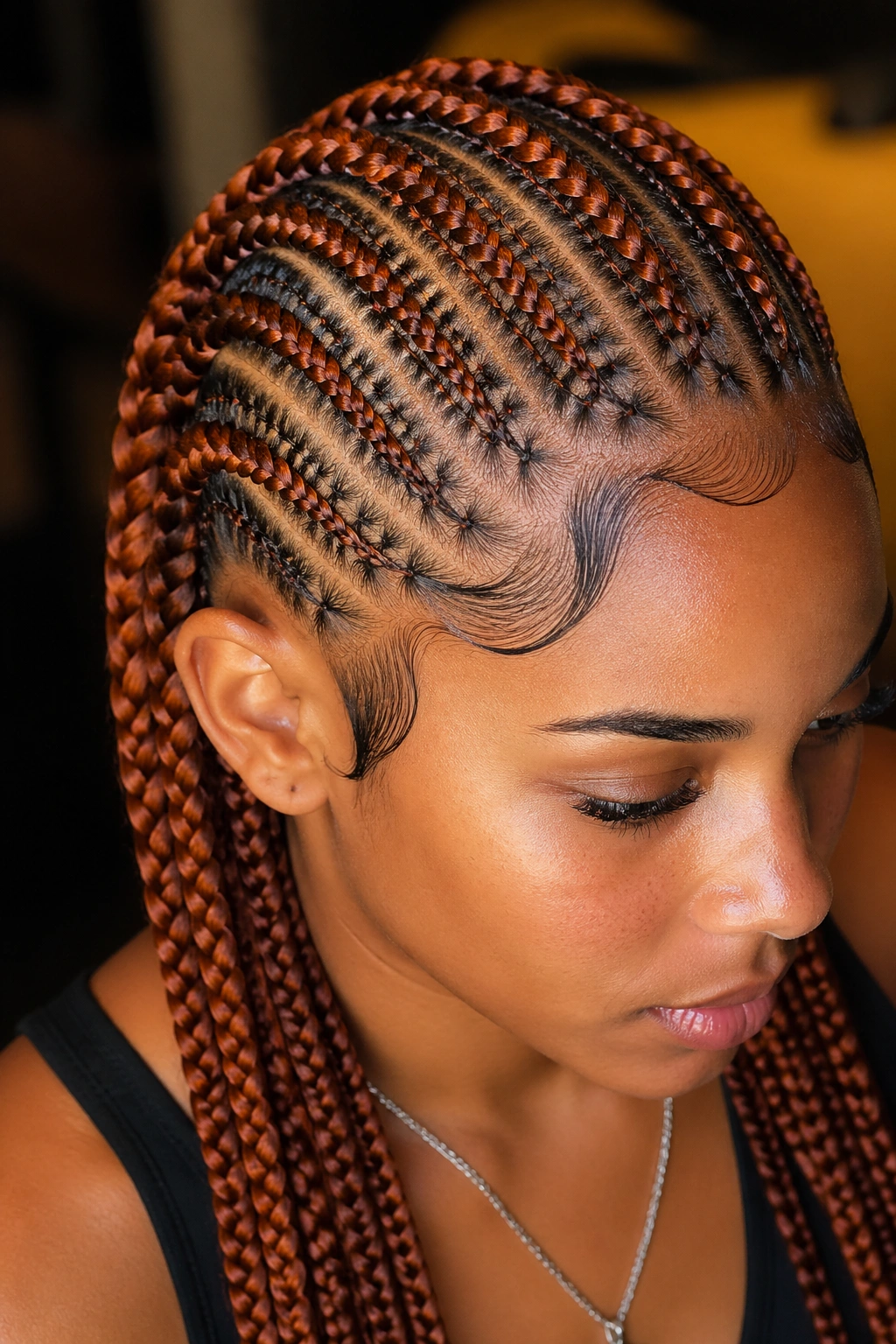
Stitched cornrows are crisp by nature, and ginger extensions make every seam easier to see. The style looks almost architectural because the braid lines appear stacked, one stitch after another, instead of flowing in a loose curve.
The stitch technique works best when the sections are neat and evenly spaced. If the parts wander, the entire look loses its clean edge. Keep the braids close to the scalp, and let the ginger shade stay consistent from root to end if you want that sharp graphic feel. A slightly darker root can work too, but the change should be subtle.
This is a style for someone who likes detail. Lots of it. The pattern is the point, and the copper finish just makes the lines louder in the best possible way.
26. Four-Strand Ginger Accent Braid
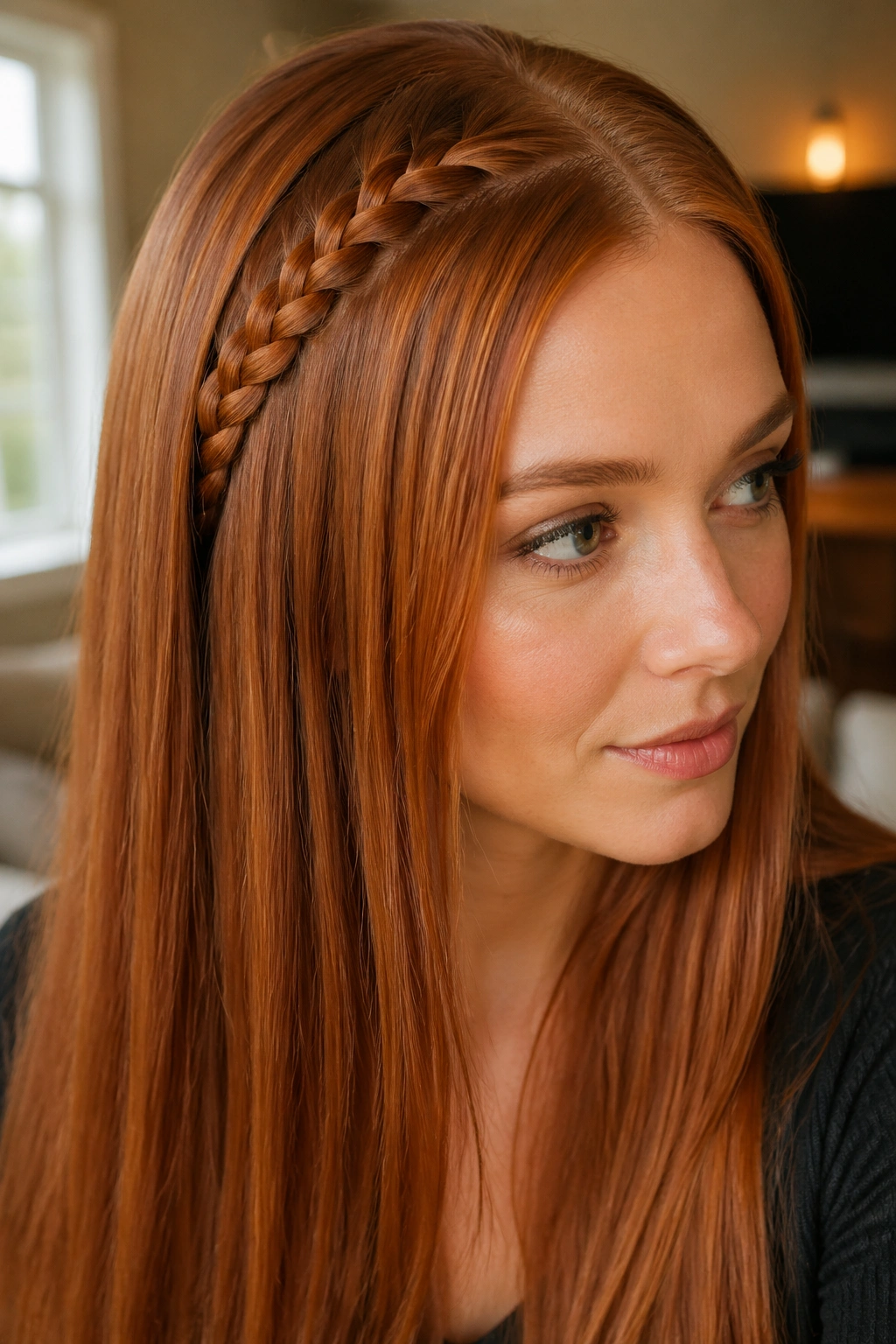
A four-strand braid looks more complex than a standard plait, even when the section is small. That extra weave gives ginger hair a richer texture, and the alternating strands make the color appear layered instead of flat.
Why does this matter? Because a copper tone can sometimes lose depth if the braid pattern is too plain. A four-strand build gives the shade more surfaces to bounce off. I like this braid tucked into a larger style, but it also works as a statement piece down the back or over one shoulder.
Where to place it
- Use it as a front accent near the part.
- Braid one side only for asymmetry.
- Mix it into a ponytail for extra texture.
- Keep the section narrow so the pattern stays readable.
27. Side Ponytail Braids with Cinnamon Rings
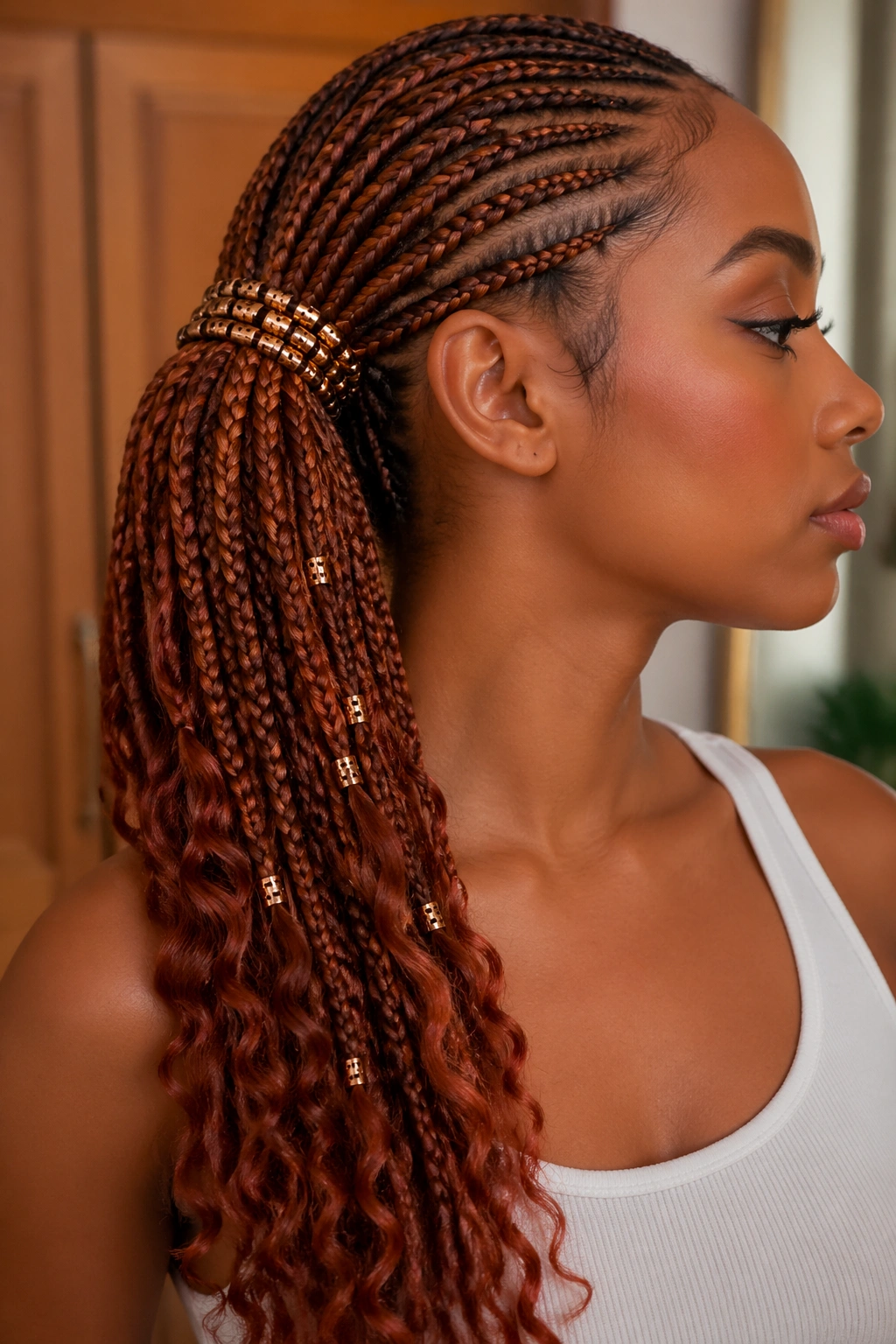
A side ponytail shifts the weight of the braid to one shoulder, which is a nice way to show off cinnamon tones. The whole style feels relaxed, but it still has enough shape to look deliberate.
The rings matter more than people think. A few copper or gold cuffs spaced down the ponytail can echo the braid color instead of fighting it. Keep them clustered near the base if you want a polished look, or spread them out if you want more movement. The side part should be clean, and the ponytail should sit low enough that it drapes rather than sticks out.
I like this style when the hair needs to feel casual but not lazy. There is a difference. This one knows the difference.
28. Waterfall Braid on Copper Silk-Press Hair
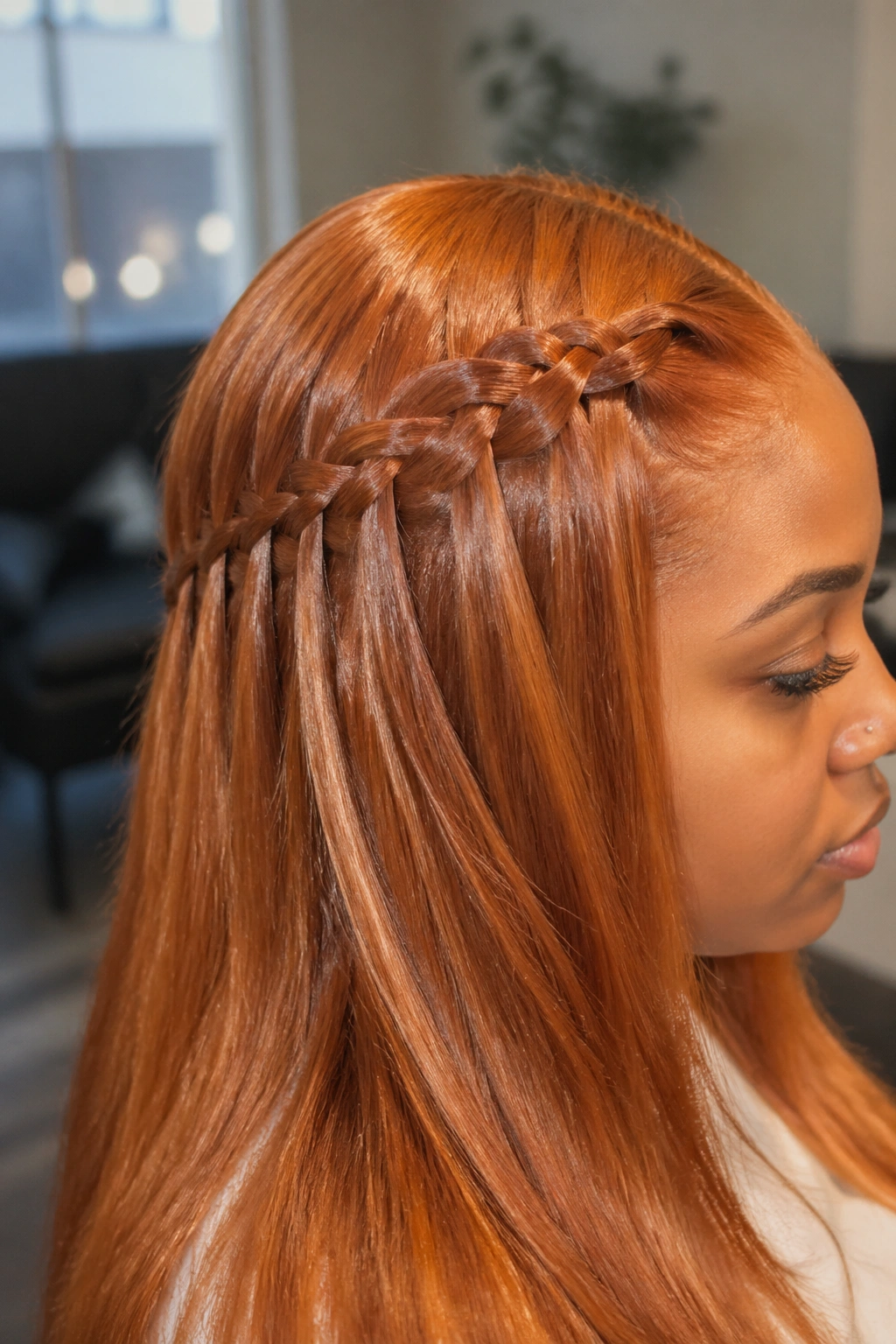
A waterfall braid is all about flow. On copper silk-press hair, that flow becomes even more obvious because the straight sections and the braided sections alternate like a little ribbon pattern.
Unlike tight scalp braids, a waterfall braid leaves most of the length loose. That makes it a good choice when you want the hair to move and still have a visible braid at the crown. The copper color shows up best when the hair is sleek and smooth, because the braid openings stay clean instead of collapsing into texture.
This style works well for softer events, dinner plans, or any day you want something pretty without too much structure. The braid should follow the head line gently. If it pulls too hard, the waterfall effect disappears.
29. Bohemian Braided Space Buns in Ginger Blend
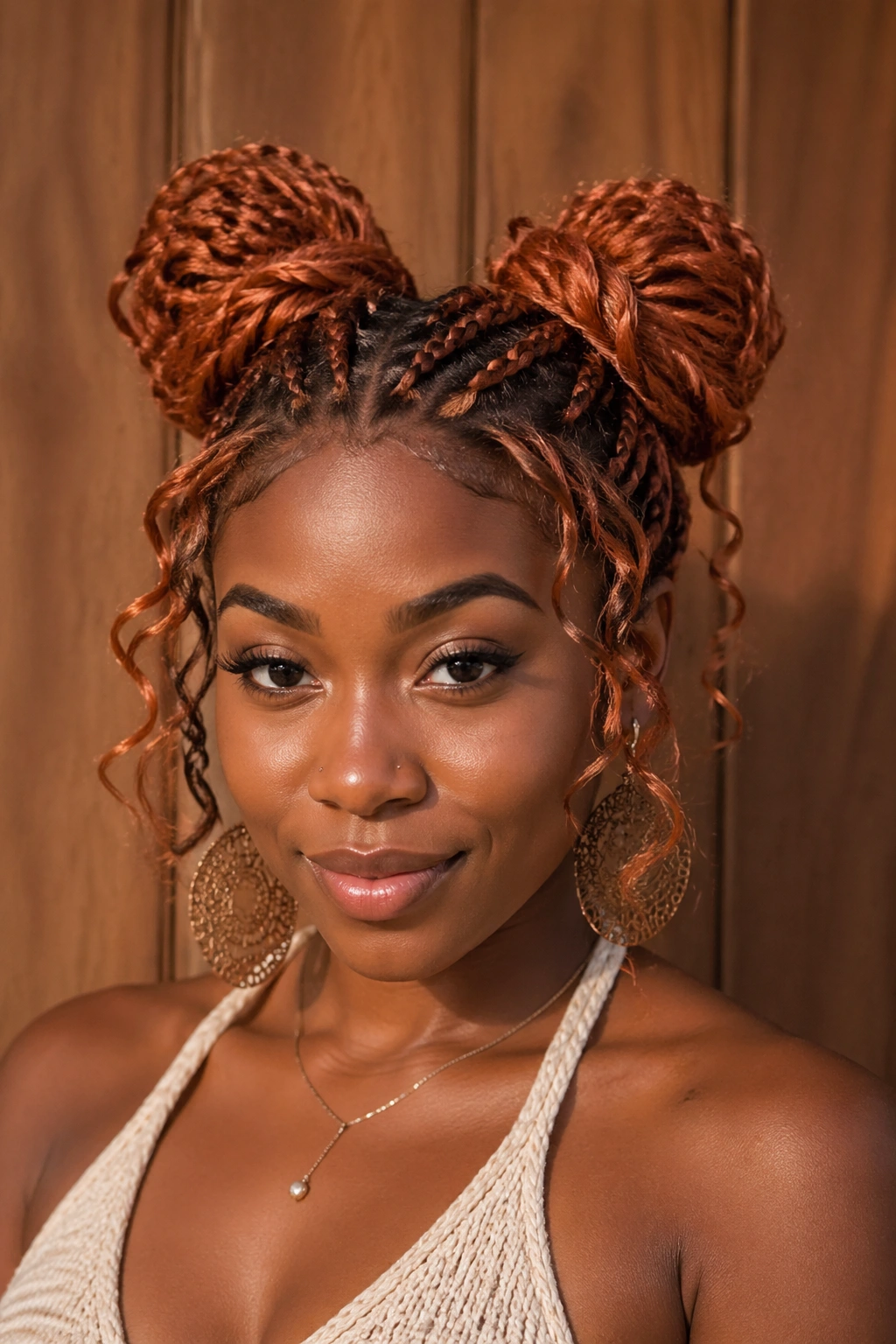
Space buns can read young fast, but a bohemian ginger blend changes that. The added curls and loose braids give the style a softer, more styled finish, so it feels playful rather than costume-like.
The best version uses two even buns placed high and slightly wide on the head. Leave a few curled pieces out near the temples and behind the ears. That keeps the buns from looking too tight. A blend with strawberry, cinnamon, and copper tones works nicely here because each shade can peek through the bun shape a little differently.
This style is best when you want something that has energy. It moves. It feels a little cheeky. And if the curls are left soft instead of crunchy, the whole thing looks better by a mile.
30. Long Passion Braids in Soft Copper
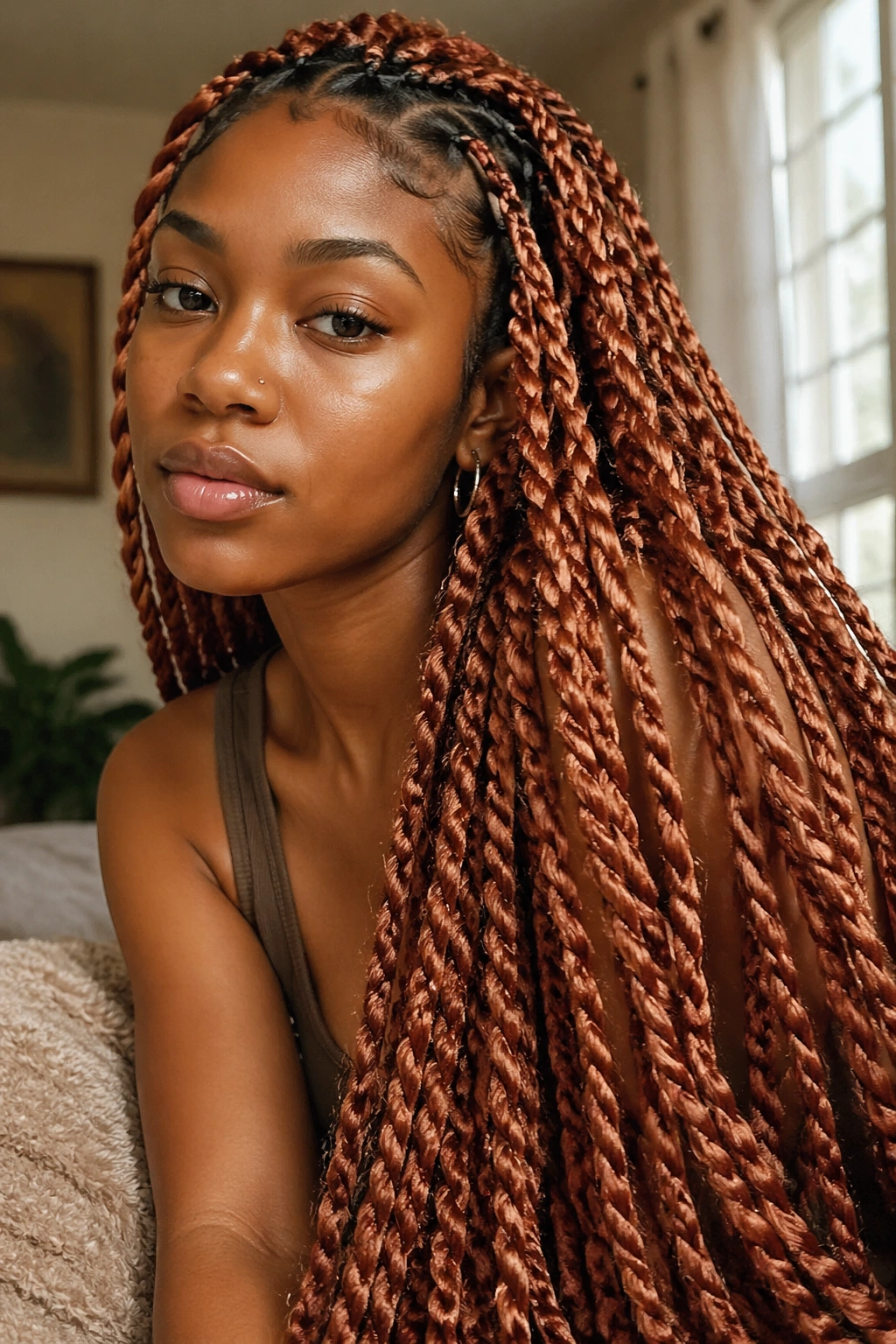
Long passion braids get their appeal from that loose, ropey texture, and soft copper gives them a warmer edge without making them too bright. The hair falls in ribbons, which means the color looks blended instead of striped.
Why they suit a warm refresh
The texture is already relaxed, so the copper tone can sit inside it without shouting. If the blend includes a touch of caramel near the ends, the style picks up light in a gentler way. I also like this look because it wears well at long lengths without feeling heavy at the roots.
Small choices that make a difference
- Keep the braids medium thickness for the best swing.
- Add a few curly pieces if you want a softer finish.
- Use a satin bonnet so the ends stay smooth.
- Choose a copper shade with a brown base if you want depth.
31. Low Braided Chignon with Warm Auburn Shine
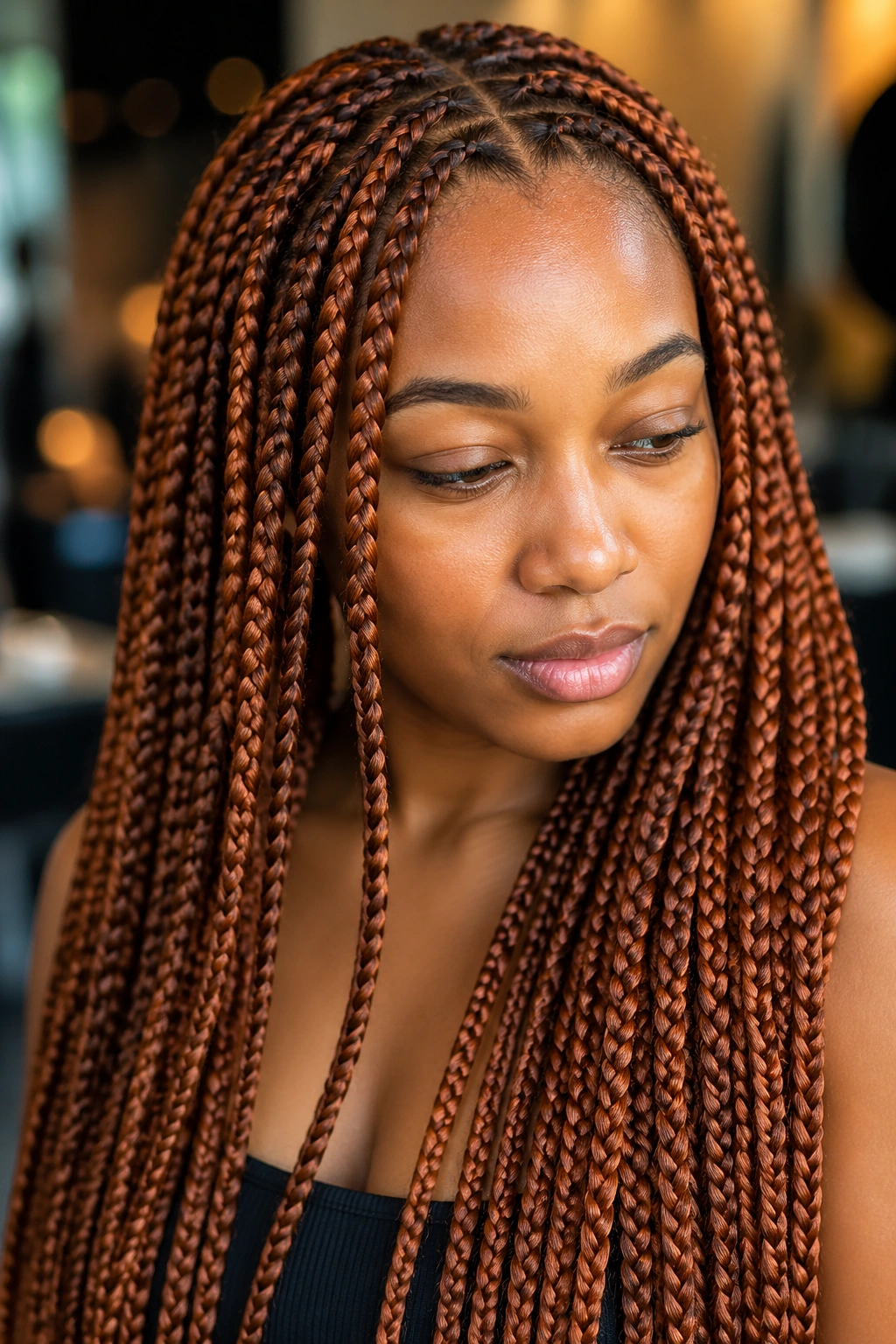
A low braided chignon is the style I reach for when I want the color to feel polished instead of loud. The braid wraps into itself at the nape, and the auburn shine gives the shape a quiet glow that looks good from the side and the back.
There’s a nice discipline to this one. The braids can be smooth, tucked, and pinned close, or they can have a little looseness around the crown if you want more softness. Either way, the low placement keeps the look calm. That matters when the color is already doing a lot of work.
If you want one ginger braid style that can move from a simple daytime look to something more dressed up, this is an easy one to keep in your back pocket. It does not ask for much. It gives a lot back.
