

Side bangs are one of the most flattering choices for wavy hair, and there’s a good reason why they’ve remained a go-to style across decades of hair trends. Unlike blunt-across bangs that can sometimes fight against your natural wave texture, side bangs work with your hair’s movement, falling gracefully along the face while creating a soft, dimensional frame. The magic of side bangs is that they add instant depth and dimension without requiring you to commit to heavy styling or constant maintenance—they integrate seamlessly into your existing waves rather than fighting against them.
What makes side bangs particularly brilliant for wavy hair is how they interact with your hair’s natural texture. When your waves catch light from slightly different angles because of the side bang’s placement, you get this enhanced sense of movement and dimension that makes your hair look fuller and more deliberately styled. Side bangs also offer a practical advantage: they’re incredibly versatile. Whether you’re going for edgy, romantic, playful, or polished, the right side bang style can shift your entire vibe while staying true to your wavy texture.
The real question isn’t whether side bangs work with wavy hair—they absolutely do—but rather which style of side bangs and which accompanying length and layer pattern will work best for your specific face shape, lifestyle, and how much texture you’re actually working with. That’s where things get genuinely interesting. Some waves pair better with long, wispy side bangs that drift past your cheekbones, while other wave patterns absolutely sing with blunt, choppy side bangs that echo the texture of the rest of your hair. Length matters too: a chin-length cut creates one feeling entirely, while waist-length waves with side bangs feel like a completely different vibe altogether.
Let me walk you through twelve distinct styles that showcase side bangs with wavy hair—each offering something different, from undone beachy texture to intentionally choppy movement to soft, romantic waves.
1. Shaggy Layers With Long Wispy Side Bangs
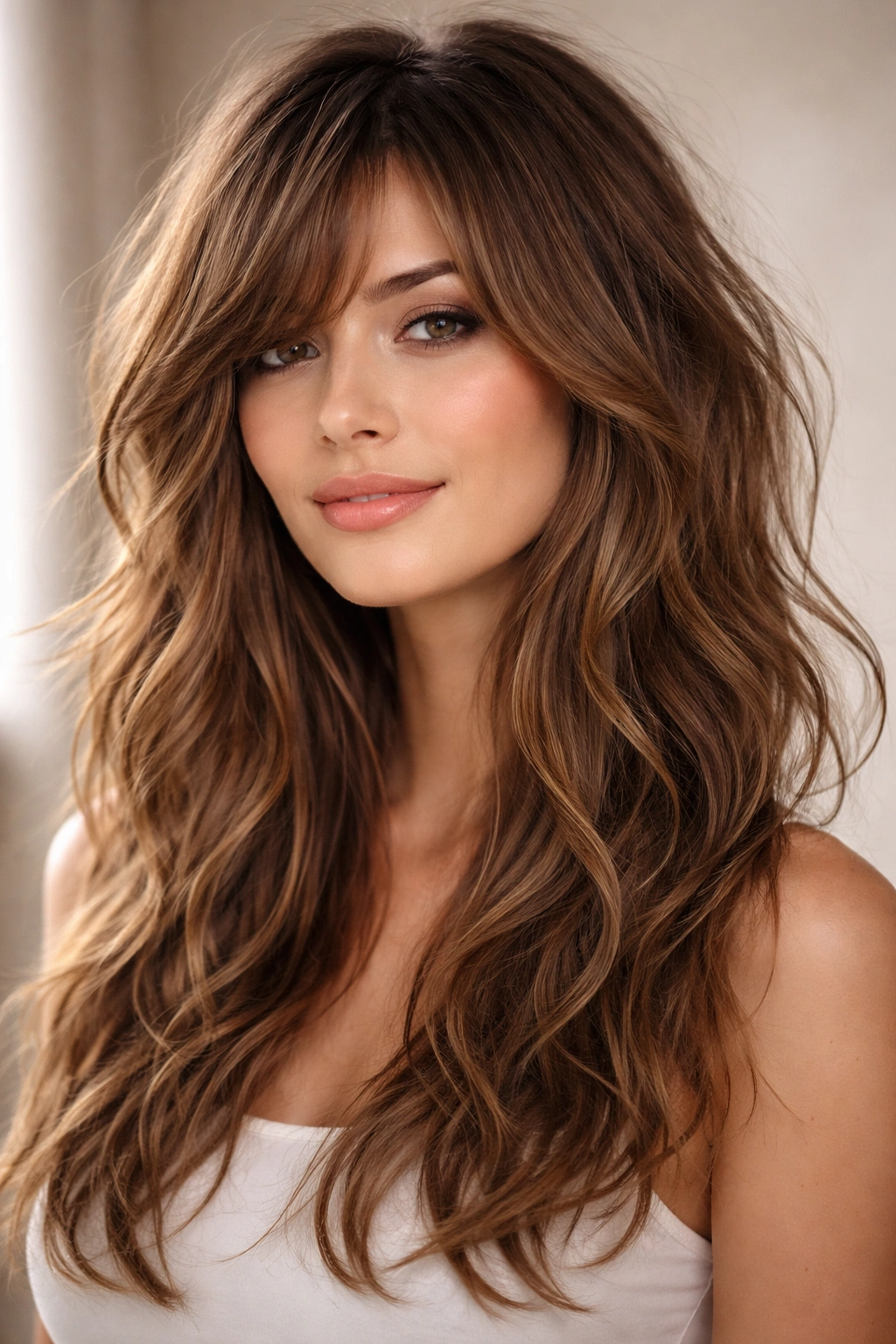
Shaggy layers are made for wavy hair, and when you add long, wispy side bangs that extend past your collarbone, you get effortless dimension that practically styles itself. This look features short layers throughout the crown that create bounce and movement, while the side bangs act as a soft frame rather than a blunt barrier. The key is requesting layers that are choppy and deliberate, not simply blended—you want visible texture that catches light and moves separately from the main body of your hair.
Why This Works for Wavy Hair
Shaggy layers work beautifully with natural waves because they enhance rather than fight your texture. Each layer breaks up the density of your hair, allowing your waves to move freely without feeling heavy. The long wispy side bangs soften the face while the choppy layers throughout add that intentional, slightly undone quality that makes wavy hair look intentional and styled.
How to Style and Maintain It
- Apply a lightweight mousse or sea salt spray to damp roots for texture without weight
- Scrunch your waves upward from the roots while blow-drying on medium heat for maximum volume
- Use a diffuser attachment to enhance your natural wave pattern without disrupting layers
- Refresh second-day waves with a texturizing spray and a few scrunches—this style thrives on a slightly lived-in appearance
- Get trims every 6-8 weeks to maintain the shaggy definition as layers grow out
Pro tip: This style actually looks better when your waves are undone and piece-y. Trying to perfectly smooth or tightly curl this cut works against the whole aesthetic.
2. Beachy Waves With Flirty Side-Swept Bangs
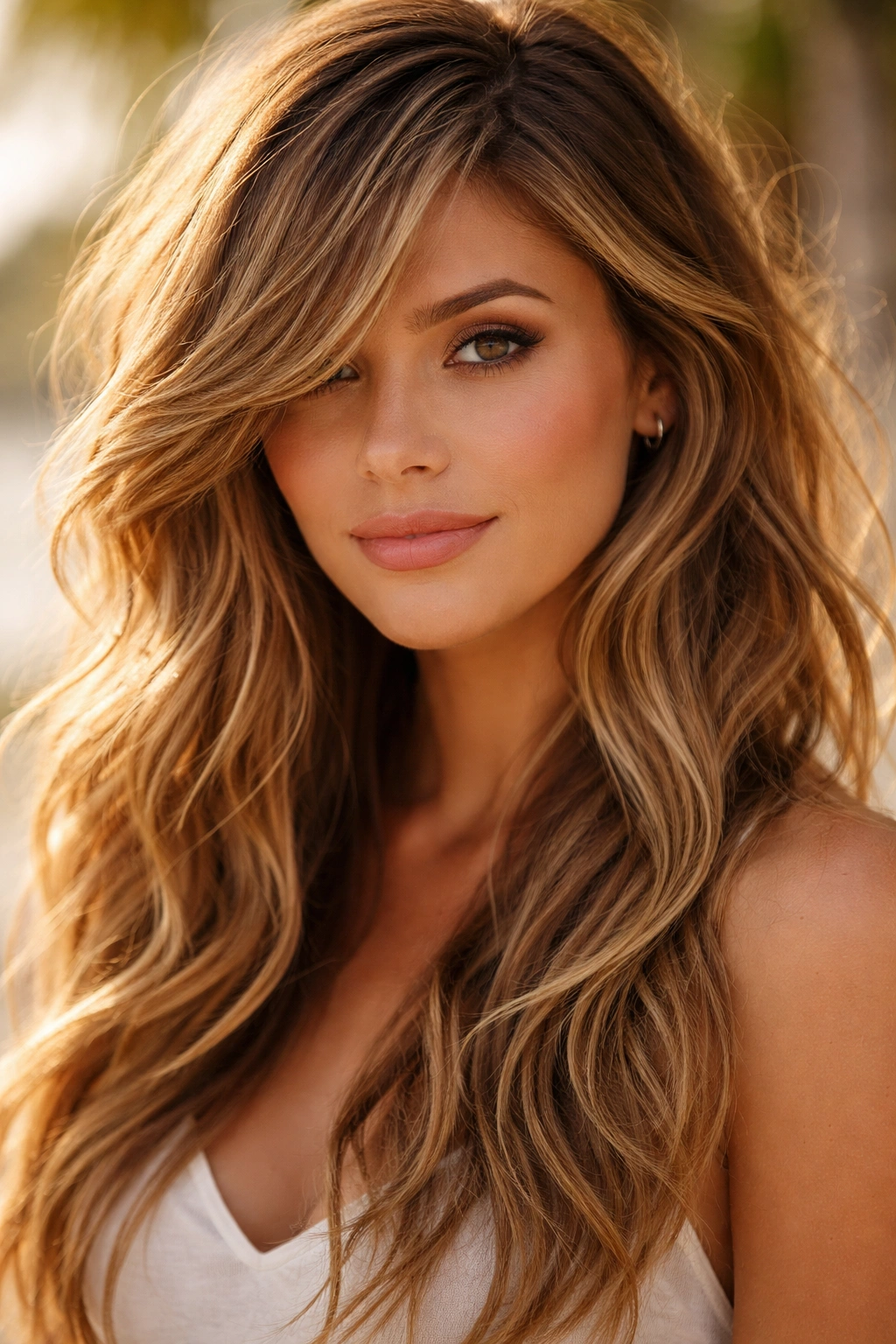
This is the effortless, sun-kissed style that feels like you just came back from the coast—whether or not you actually did. Beachy waves with flirty side-swept bangs creates that tousled, carefree texture while the side bangs add a subtle frame that keeps the style from feeling too casual or completely undone. The waves are typically loose and relaxed rather than tightly coiled, and the bangs sweep dramatically to one side, almost disappearing into the rest of your hair while still catching light across your face.
The Character of This Style
Beachy waves read as approachable and effortless—a style that works equally well for a day at the office or a weekend adventure. The flirty side bangs add just enough intentionality to prevent the whole look from feeling lazy, while still maintaining that “I don’t try too hard” aesthetic that makes it endlessly appealing.
Styling Techniques for Beachy Texture
- Start with damp hair and apply a texturizing spray or salt spray from roots to ends
- Use a medium or large barrel curling iron or wave wand, working sections away from your face at different angles to create movement
- Wrap waves loosely around the barrel rather than clamping and gliding for a more natural, undone effect
- Use a wide-tooth comb or your fingers to gently separate curls once cooled, creating softer waves rather than defined ringlets
- Finish with a light-hold texturizing spray that enhances movement without creating crunch
- The side bangs should be styled away from your face using the same technique as your main waves
Worth knowing: This style thrives on imperfection. Slightly irregular waves and pieces that fall out of place are features, not flaws.
3. Textured Lob With Choppy Side Bangs
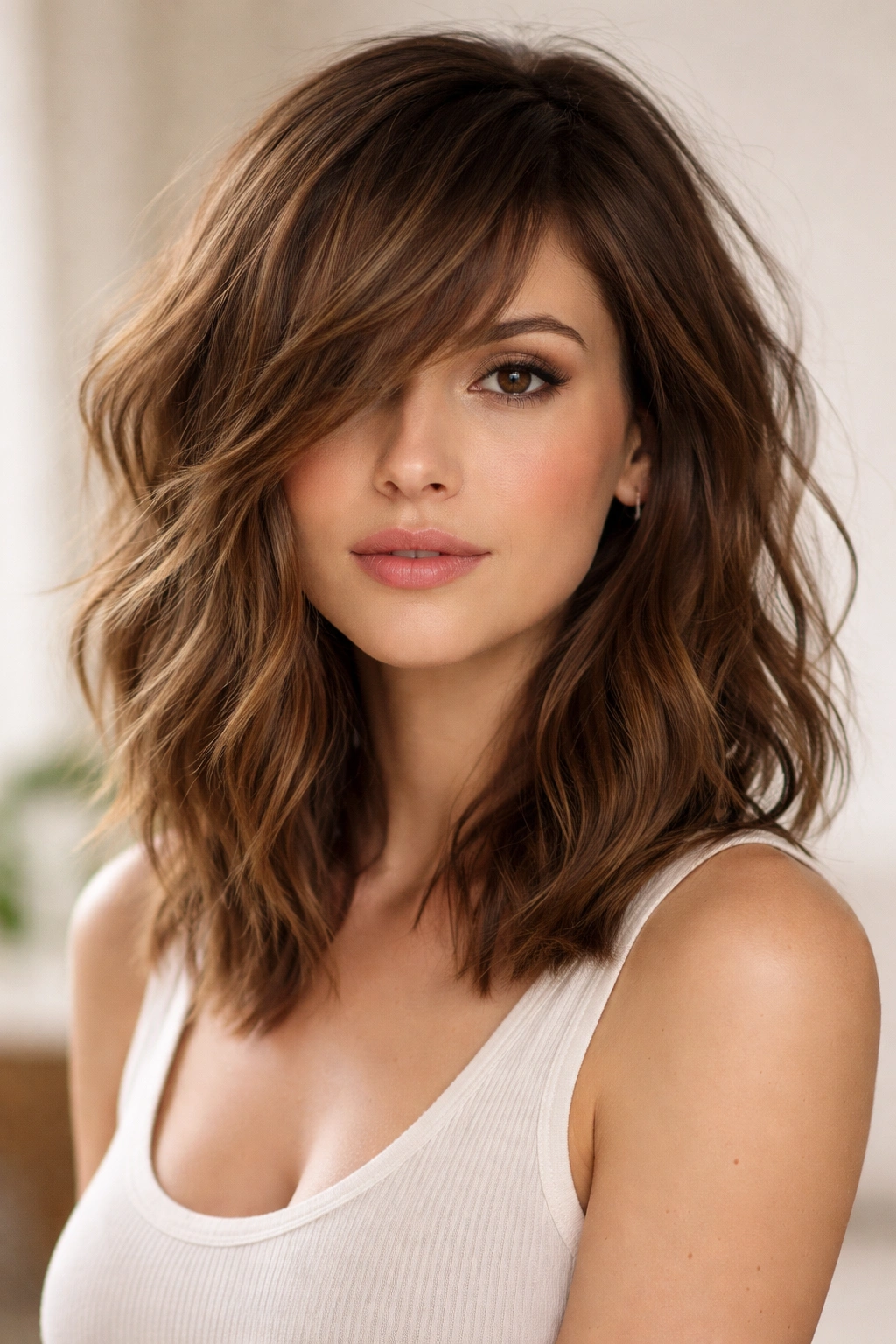
A lob—that perfect length that hits between your chin and shoulders—is genuinely one of the most flattering cuts for wavy hair, and when you add choppy, blunt side bangs, you create a style with serious dimension and character. The textured lob features layers that are visible and deliberate, creating movement throughout the cut, while the choppy side bangs echo that texture and add a modern, intentional edge that prevents the whole look from feeling too soft or romantic.
Why the Lob Length Works
The lob length is magical for waves because it sits right where your waves tend to have natural movement. Layers throughout create texture without creating frizz or bulk, and this length feels sophisticated enough for professional settings while remaining undeniably stylish and contemporary. The choppy side bangs ground the entire look with a modern sensibility.
Getting and Maintaining This Cut
- Ask your stylist for choppy, blunt-cut bangs rather than layers—you want a visible edge that contrasts with softer layers elsewhere
- Request visible layers throughout that start around mid-length, creating movement without dramatic length variation
- Blow-dry using a round brush to encourage volume at the roots, working sections downward and slightly away from your face
- The choppy bangs dry faster than the rest of your hair, so style them last to ensure they have movement and aren’t flattened by the time you finish
- Trim every 6 weeks to maintain the choppy definition of the bangs, which is critical to this style’s impact
4. Curtain Bangs With Soft Waves
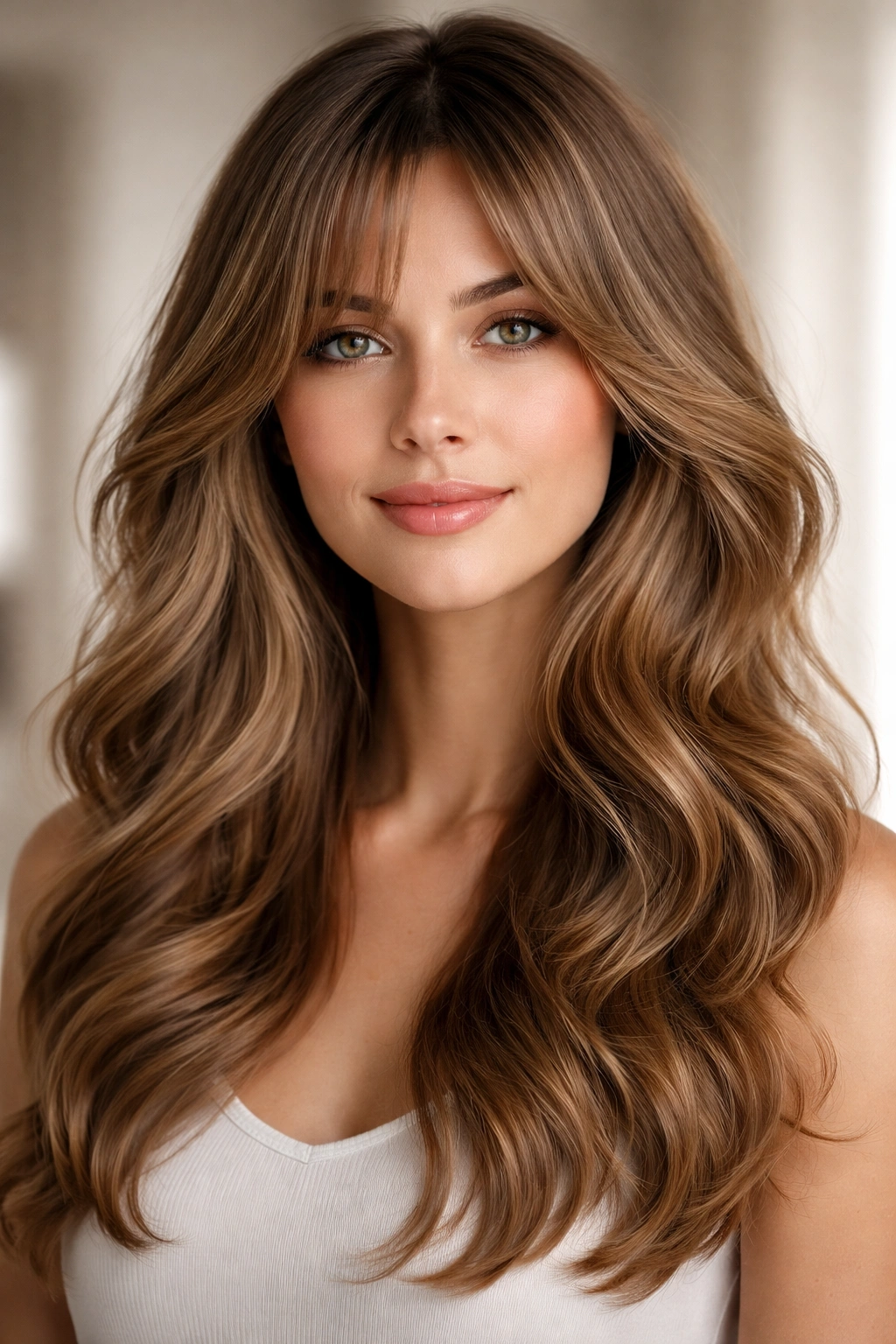
Curtain bangs—those beautifully parted bangs that frame both sides of your face—are arguably the most flattering option for wavy hair because they work with your natural texture rather than imposing a specific shape. Pair curtain bangs with soft, flowing waves that move gently away from your face, and you create a style that’s romantic, face-framing, and genuinely effortless to maintain. The bangs create a gentle curtain of texture while your waves provide movement and dimension.
The Romantic Appeal
Curtain bangs feel inherently soft and romantic, even when paired with edgier cuts elsewhere. They’re incredibly flattering on most face shapes because they frame rather than flatten, and they work with any wave pattern from barely-there texture to tight, defined waves. This is perhaps the most universally flattering bang style for wavy hair.
Styling Your Curtain Bangs
- Style bangs by blow-drying them downward and slightly outward, angling the brush to create that gentle sweep away from your face
- Use a round brush or a blow-dry brush to encourage softness rather than crispness—you’re aiming for flow, not sharp definition
- Once dry, you can gently curl the ends of your bangs away from your face using a small-barrel curling iron if you want extra movement
- Apply texturizing spray to your bangs and main waves for unified texture and effortless movement
- These bangs are forgiving and look excellent with slight imperfection—slight asymmetry is actually part of their appeal
Insider note: Curtain bangs are arguably the easiest bang style to grow out gracefully if you ever want to transition away from bangs, because they simply blend into your waves rather than creating an obvious growing-out phase.
5. Messy Waves With Side-Swept Bangs and Texture Spray Magic
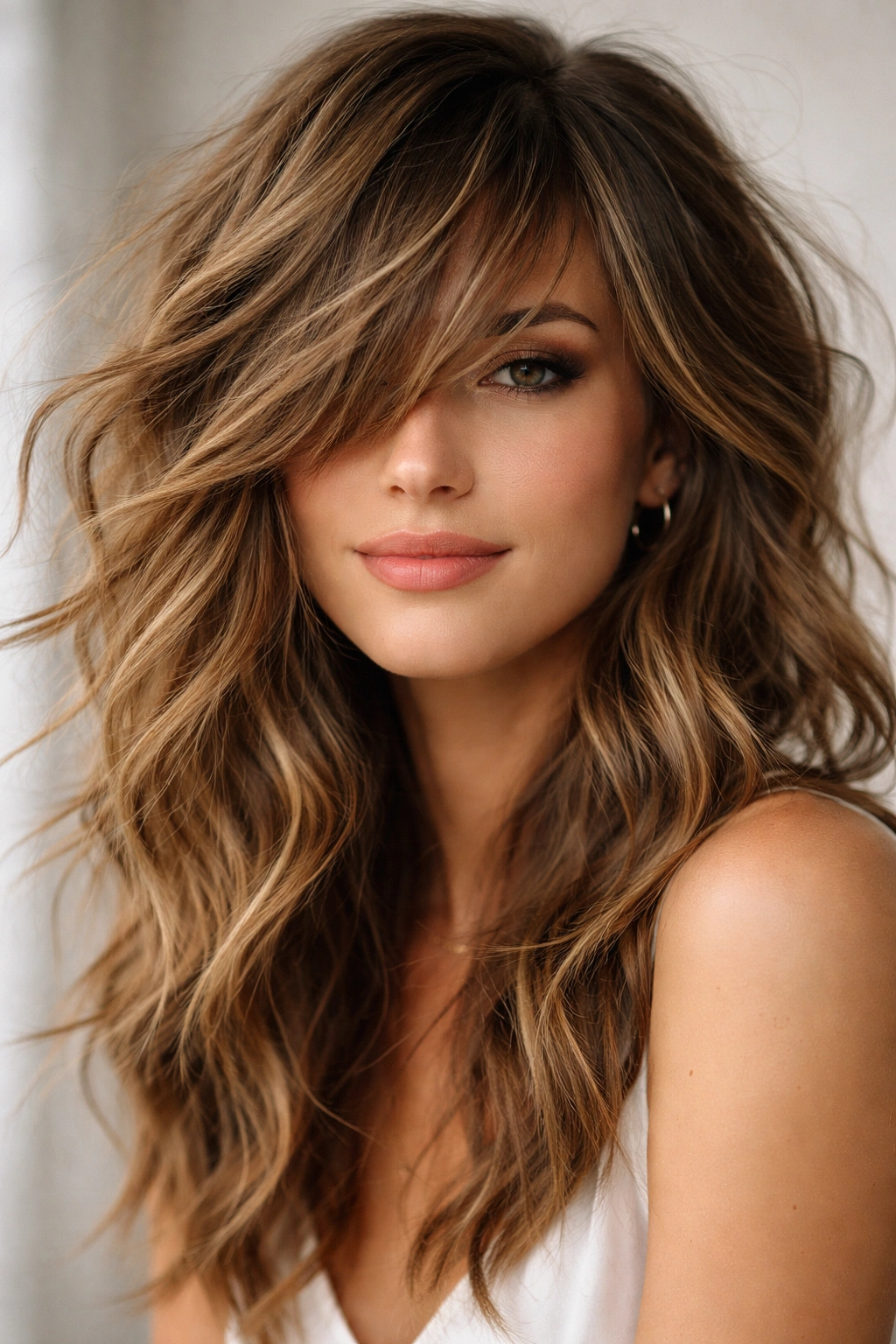
Some of the most compelling wavy hair looks are intentionally messy and undone, and when you pair deliberately tousled, piece-y waves with side-swept bangs that catch and move, you create a style that reads as effortlessly cool. This isn’t a style you perfect and then leave untouched—it’s a style you craft using texture spray and finger-styling, where imperfection and movement are the entire point.
The Styling Philosophy
This look embraces the truth that wavy hair doesn’t need to be perfect to be beautiful. Instead of fighting texture or aiming for uniformity, you’re intentionally creating texture and emphasizing movement. The side-swept bangs add a feminine edge while the messy waves feel confident and undone.
Creating the Messy-But-Intentional Look
- Wash your hair and let it air-dry until about 60-70% dry
- Apply a texturizing spray or dry shampoo throughout, working it in with your fingers to create texture and separation
- Use a blow dryer on medium heat with a diffuser to enhance your natural waves without smoothing them down
- With damp fingers, rake through your hair and scrunch different sections to create varied texture and movement
- Once dry, the bangs should be swept to the side and slightly tousled—not blown dry into perfect formation
- Refresh with additional texture spray as needed throughout the day or even into the second day
6. Straight-Across Side Bangs With Contrasting Waves
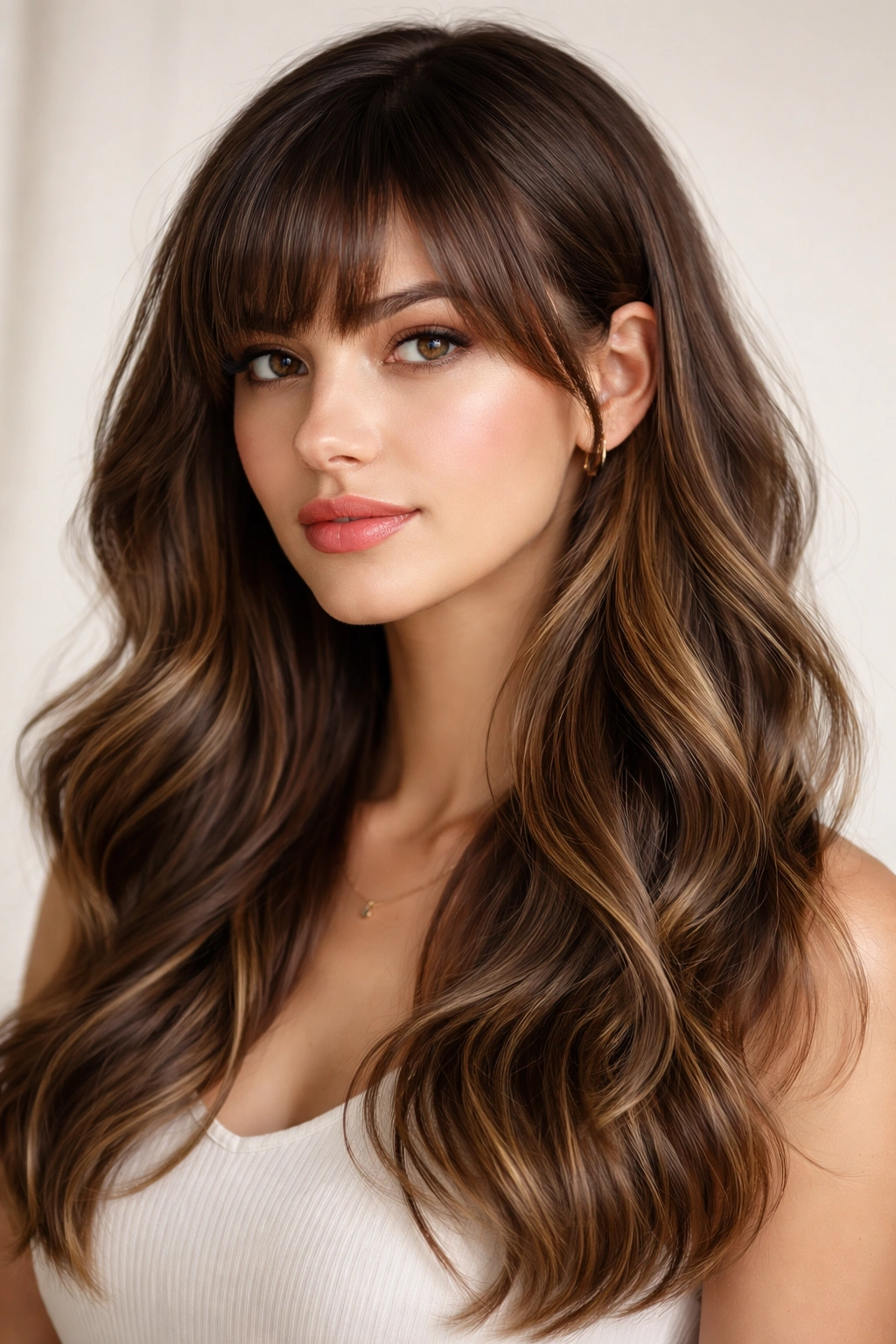
For a more graphic, modern look, straight-across side bangs create dramatic contrast with soft, flowing waves. The bangs start blunt and straight right at your hairline on one side, then extend longer as they sweep across your face and blend into the longer waves behind them. This creates an interesting visual tension—clean and modern on top, soft and romantic in the length—that reads as intentional and stylish.
The Modern Aesthetic
Straight-across side bangs feel contemporary and slightly edgy, especially when they contrast with the softness of your waves. This style works best when there’s genuine color or texture definition—the bangs need to stand out visually from your waves for the contrast to work.
Cutting and Styling for Impact
- Ask your stylist for bangs that are genuinely straight and blunt, not textured or choppy—the bluntness is what creates impact
- The bangs should hit somewhere between your eyebrows and just below, giving them presence without overwhelming your face
- As the bangs grow out and lengthen, they’ll naturally sweep more dramatically to the side, and you can work with that growth rather than fighting it
- Blow-dry bangs straight down and slightly to the side to maintain their shape and ensure they don’t flip or curve
- Use a flat iron on low-to-medium heat to ensure bangs remain smooth and straight while your waves remain textured
Pro tip: This style requires more frequent trims (every 4-5 weeks) to maintain the blunt edge of the bangs. As they grow, they lose their graphic impact.
7. Micro Bangs With Soft Waves and Sophisticated Edge
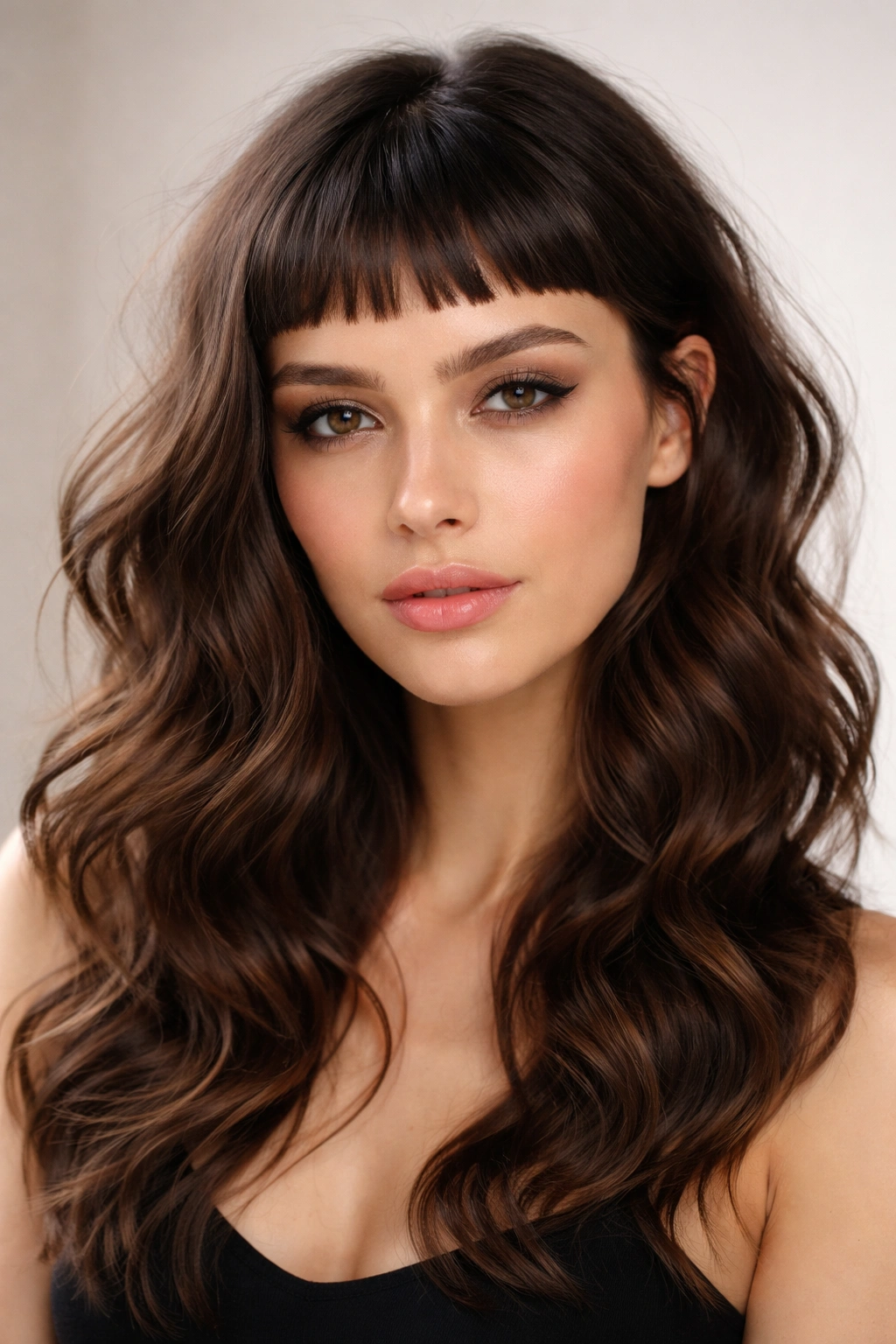
Micro bangs—those short, just-below-the-hairline bangs—create a bold, fashion-forward statement, especially when paired with soft waves in longer lengths. This is a style that requires confidence because it’s definitely not subtle, but when executed with wavy hair, it creates an interesting interplay between the short, deliberate bangs and the flowing waves that follow. It’s edgy and modern while remaining undeniably feminine.
Who This Style Suits Best
Micro bangs work best on faces with balanced proportions and good bone structure, because they draw attention directly to your face. They’re not the most forgiving bang style, but they’re absolutely stunning when they work. Wavy hair softens the boldness slightly, making micro bangs feel less severe than they would on straight hair.
Styling Micro Bangs Successfully
- These bangs require precision blow-drying—dry them with a small round brush angled slightly upward and to the side
- Use a flat iron on low heat if you want them perfectly smooth, or work with slight texture for a softer effect
- Micro bangs show every hair, so texture spray or dry shampoo can help create separation and movement
- These bangs need trimming every 3-4 weeks, sometimes even more frequently if you want them sharp and defined
- The rest of your hair should be kept long and flowing to balance the dramatic shortness of the bangs
- Consider face-framing layers that move around the micro bangs rather than completely separated cuts
8. Wispy Side Bangs With Long, Flowing Waves
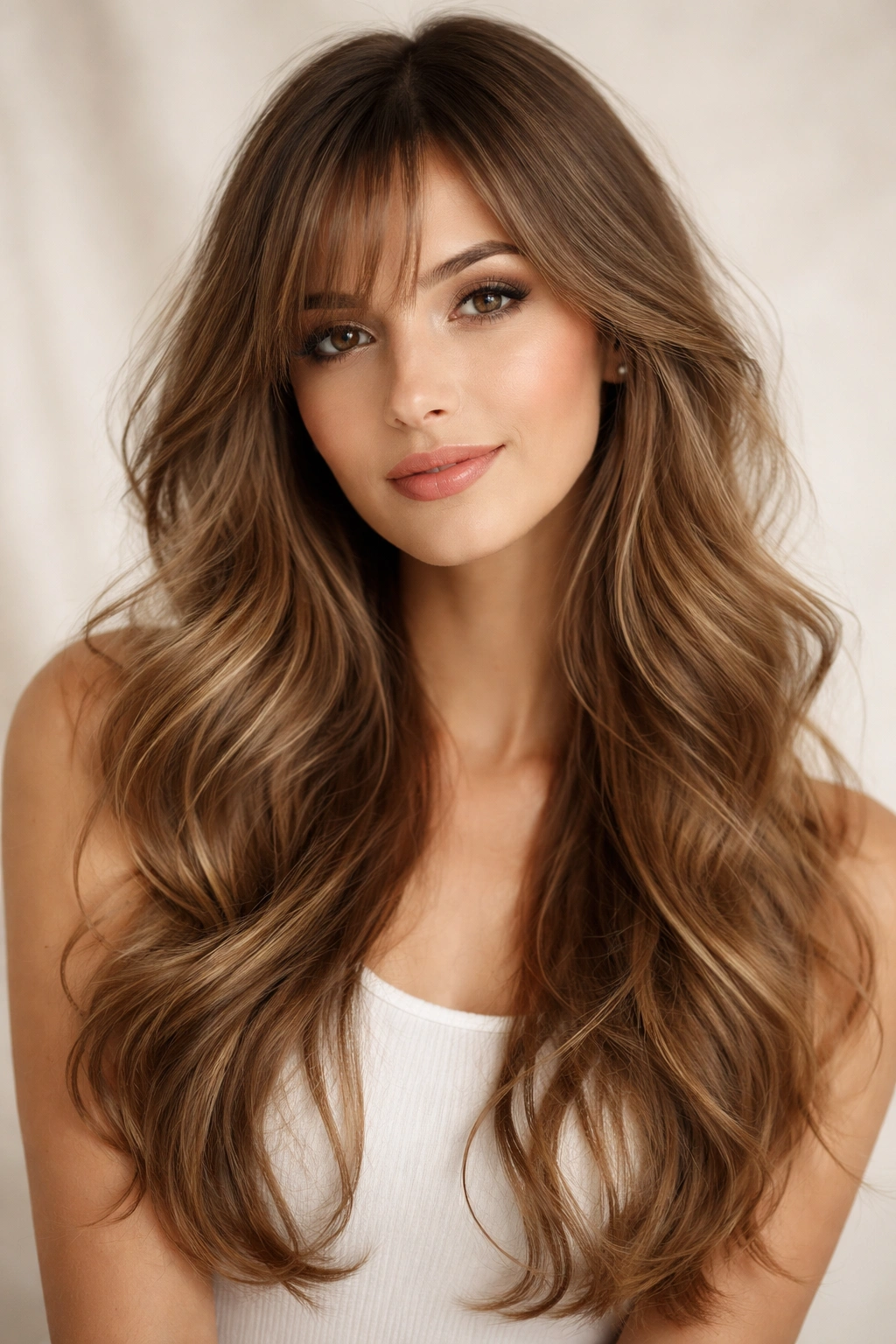
Long, flowing waves paired with wispy side bangs create an undeniably romantic, feminine aesthetic—think effortlessly elegant rather than deliberately styled. The wispy bangs are cut thinner and more delicate than blunt bangs, so they float and move along with your waves rather than feeling like a separate, defined element. This style works beautifully at any length from mid-back to waist-length.
The Romance of Length and Movement
There’s something inherently beautiful about long waves with soft bangs—it reads as confident, feminine, and undeniably romantic. The wispy bangs add delicate framing without disrupting the flow of your length. This is the style that works across decades and feels equally beautiful on someone in their twenties or their sixties.
Caring for Length With Wispy Bangs
- Long wavy hair needs regular deep conditioning to remain healthy and avoid excessive dryness at the ends
- Trim every 8-12 weeks to remove split ends and maintain the shape of your wispy bangs
- Wavy hair at length can feel heavy—request layers that start around mid-chest to mid-back to create movement without looking stringy
- Use a lightweight leave-in conditioner or hair oil on damp hair to enhance waves and reduce frizz without weighing hair down
- Pineapple your hair at night (gather it loosely on top of your head in a ponytail) to preserve waves and reduce bedhead
- Wispy bangs actually look better slightly longer as they grow out—they remain wispy and flattering longer than blunt bangs do
9. Choppy Waves With Chunky Side Bangs and Texture Everywhere
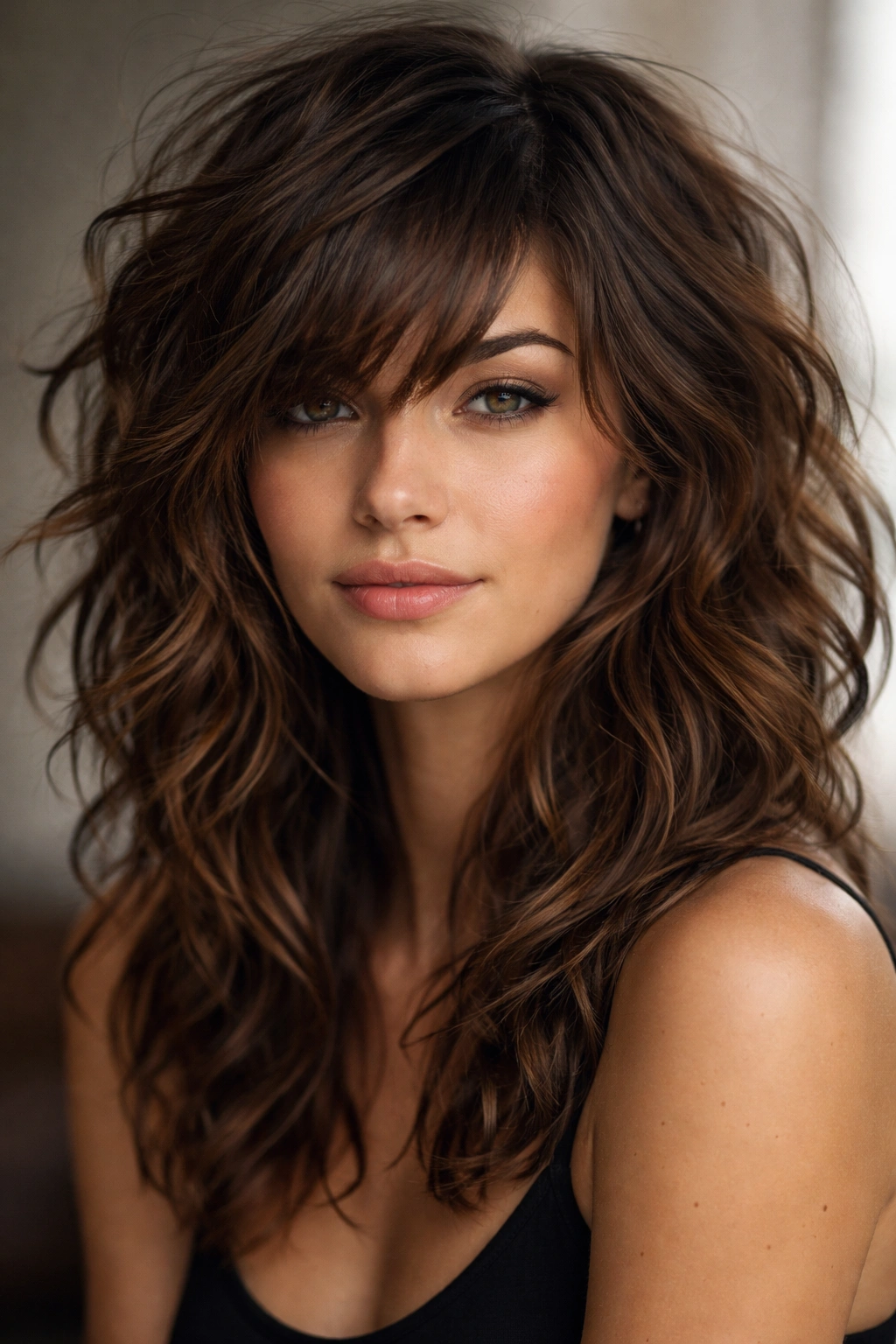
This is texture taken to its maximum expression—choppy, visible layers throughout your entire head, including chunky side bangs that are cut short and deliberately piece-y. Every element moves separately and catches light differently, creating a look that’s incredibly dimensional and visibly textured. It’s bold, it’s modern, and it requires confidence, but when executed well, it’s genuinely stunning.
The Power of Intentional Choppiness
Choppy layers aren’t about creating one uniform wave—they’re about creating multiple lengths and textures that move independently. The chunky side bangs are part of that texture story, not separate from it. This style celebrates the fact that not all your hair is the same length or texture, and that visual variation is what makes it interesting.
Mastering the Choppy Aesthetic
- Ask for choppy, blunt-cut layers throughout, not feathered or blended layers—the choppiness is the style
- Bangs should be obviously chunky, with visible separation between pieces rather than a smooth line
- Blow-dry using a diffuser to enhance texture and encourage volume at the roots, allowing layers to move independently
- Use a texturizing spray or dry shampoo before styling to create additional separation and movement
- Finger-style rather than using a brush to maintain the choppy definition
- Trims every 4-6 weeks are essential to maintain the choppy definition, as this style loses its impact if layers grow blunt
Worth knowing: This style works best when you’re willing to embrace product and styling—it’s not a wash-and-go look, but it’s not high-maintenance either, just intentional.
10. Blunt Waves With Angled Side Bangs
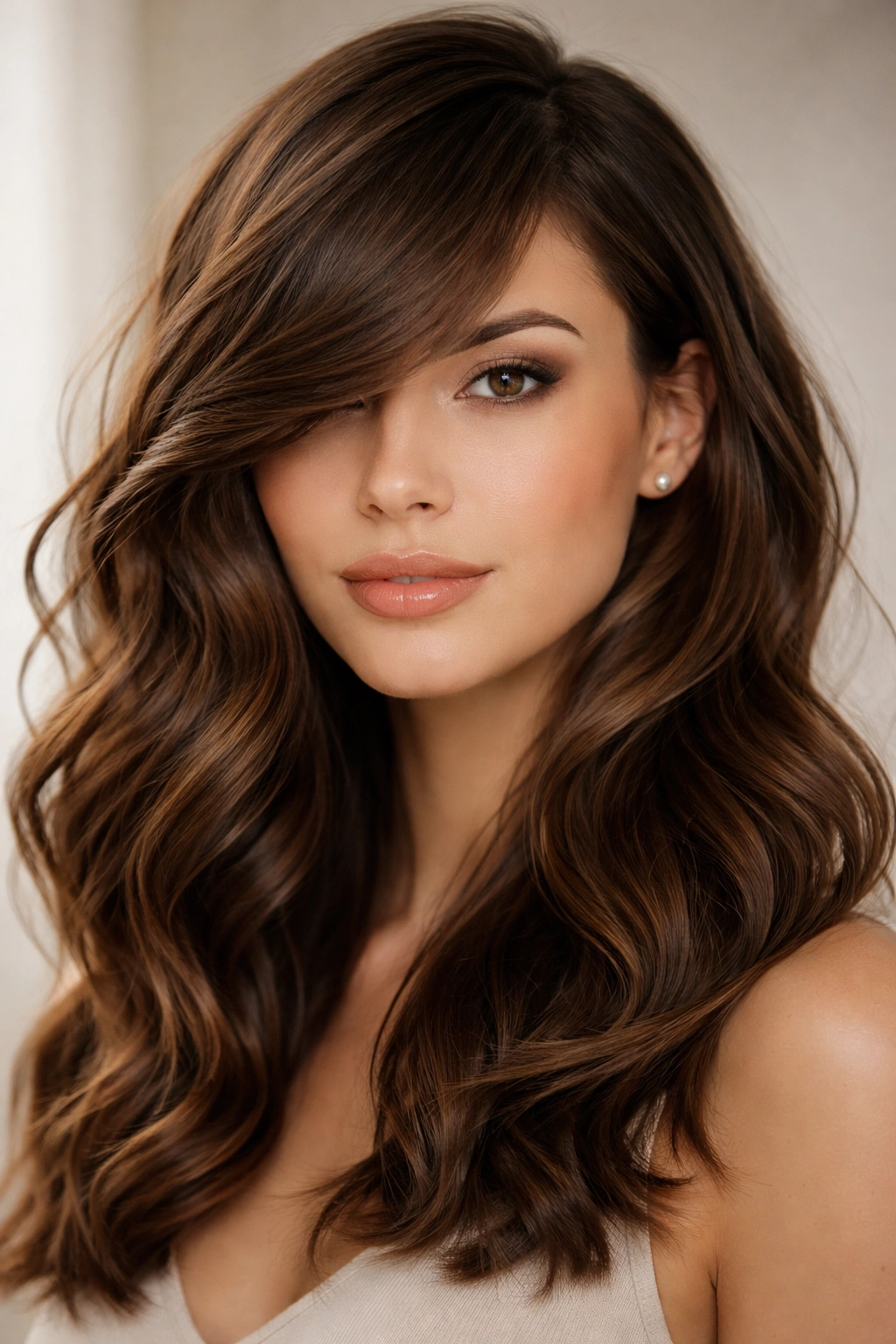
Angled side bangs that graduate longer as they sweep across your face create a modern, sculpted look, especially when paired with blunt waves that echo the clean lines of the cut. The bangs might be quite short on one side, then extend nearly to your chin by the time they reach the other side of your face. This geometric element combined with soft waves creates interesting visual tension.
The Graphic Quality
Angled bangs feel architectural and intentional—more designed than some of the softer bang styles. When paired with blunt waves rather than heavily layered ones, you create a modern, fashion-forward look that reads as thoughtfully styled and contemporary.
Achieving the Angled Bang Look
- Communicate the specific angle you want to your stylist—show reference photos because “angled” can mean quite different things
- The angle should feel natural for how your face is shaped and your hair falls, not forced
- Blow-dry bangs in the direction they’re meant to flow, using a round brush to encourage the sweep
- As bangs grow out, they’ll naturally become less angled unless you continue to style them deliberately
- The wave texture should be relatively uniform throughout rather than heavily layered, so the clean lines of the bangs remain visible
11. Spiral Curls With Side Bangs and Maximum Definition
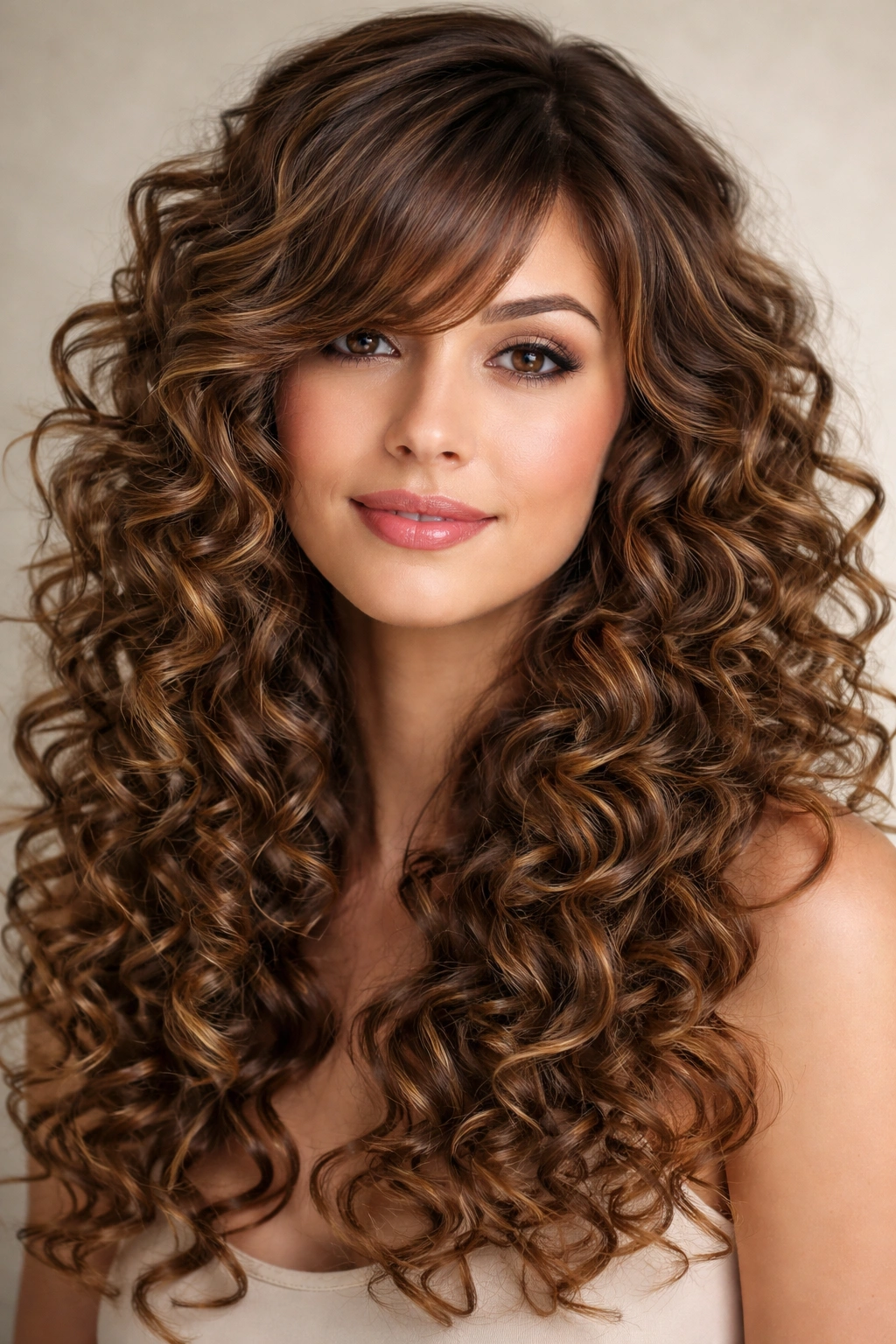
If your waves are actually more on the curly side, spiral curls with side bangs create a look with serious texture and personality. The curls are defined and bouncy rather than soft and flowing, and the side bangs frame your face while participating in the overall texture story. This style requires layers that work with your curl pattern rather than against it.
Working With Your Curl Pattern
Spiral curls require a different approach than loose waves—your stylist should cut them when they’re wet and curly, never dry and straight, to ensure the cut works with your actual hair texture. The side bangs should also be cut while wet so they’re proportioned correctly for your actual curl size.
Styling Defined Curls
- Apply curl-defining products to soaking-wet hair before any heat styling
- Use a diffuser attachment on your blow dryer, scrunching upward to enhance curl definition
- Never brush curls when dry—separate them with your fingers or a wide-tooth comb while still damp
- Product is your friend—mousse, gel, or curl cream depending on your hair’s needs
- The side bangs should be styled with the same curl-defining products and technique as the rest of your hair
- Refresh curls on day two using a spray bottle with water and a small amount of product, then diffuse dry
12. Mullet Waves With Edgy Side Bangs
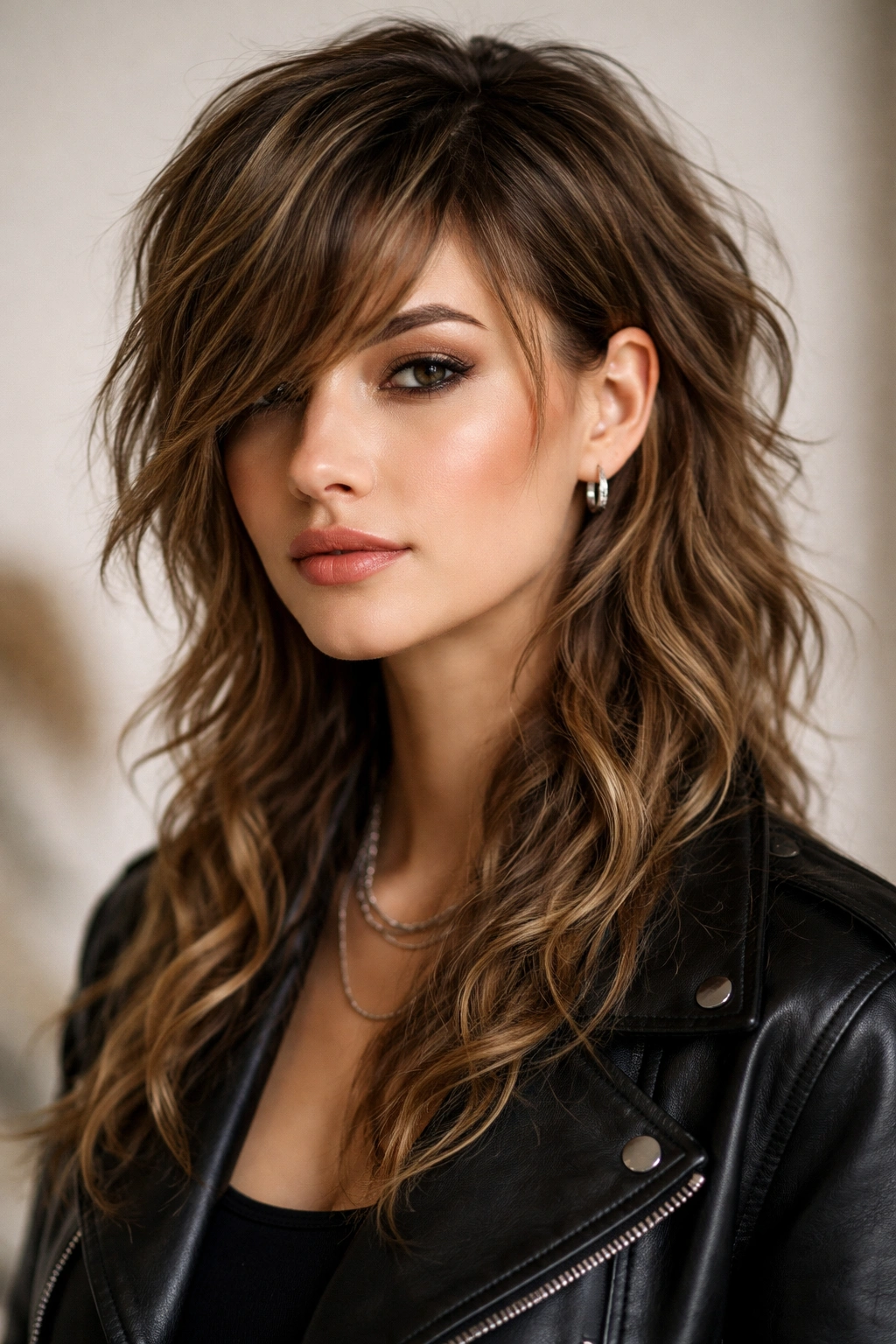
The modern mullet—business in the front with length and texture in the back—paired with edgy side bangs creates a bold, contemporary look that feels genuinely fashion-forward. Your hair is shorter and more textured at the crown and sides, while the back remains longer and wavy. The side bangs are an integral part of the short, textured front section, making the contrast between front and back even more dramatic.
The Fearless Factor
The mullet is not a subtle style—it requires genuine confidence to pull off. But paired with wavy texture, it avoids feeling costume-y and instead reads as intentional, modern, and creative. It’s a style for people who want their hair to be a statement.
Getting and Maintaining the Mullet
- Your stylist needs to understand the modern mullet aesthetic—this is about proportion and texture, not the 1980s version
- The front should be noticeably shorter, typically somewhere between ear-length and chin-length, with visible layers for movement
- Side bangs should be integrated into the short front section, contributing to the overall textured quality
- The back gradually lengthens, flowing into longer waves that create contrast with the short front
- Blow-dry the front section to create volume and texture, allowing the back to dry naturally into waves
- Trims every 4-6 weeks keep the front sharp and defined while the back grows into your desired length
Pro tip: This style requires confidence in the cut itself—you need a stylist who understands mullet proportions and can execute the gradual transition from short to long. The result should feel modern, not retro.
Final Thoughts
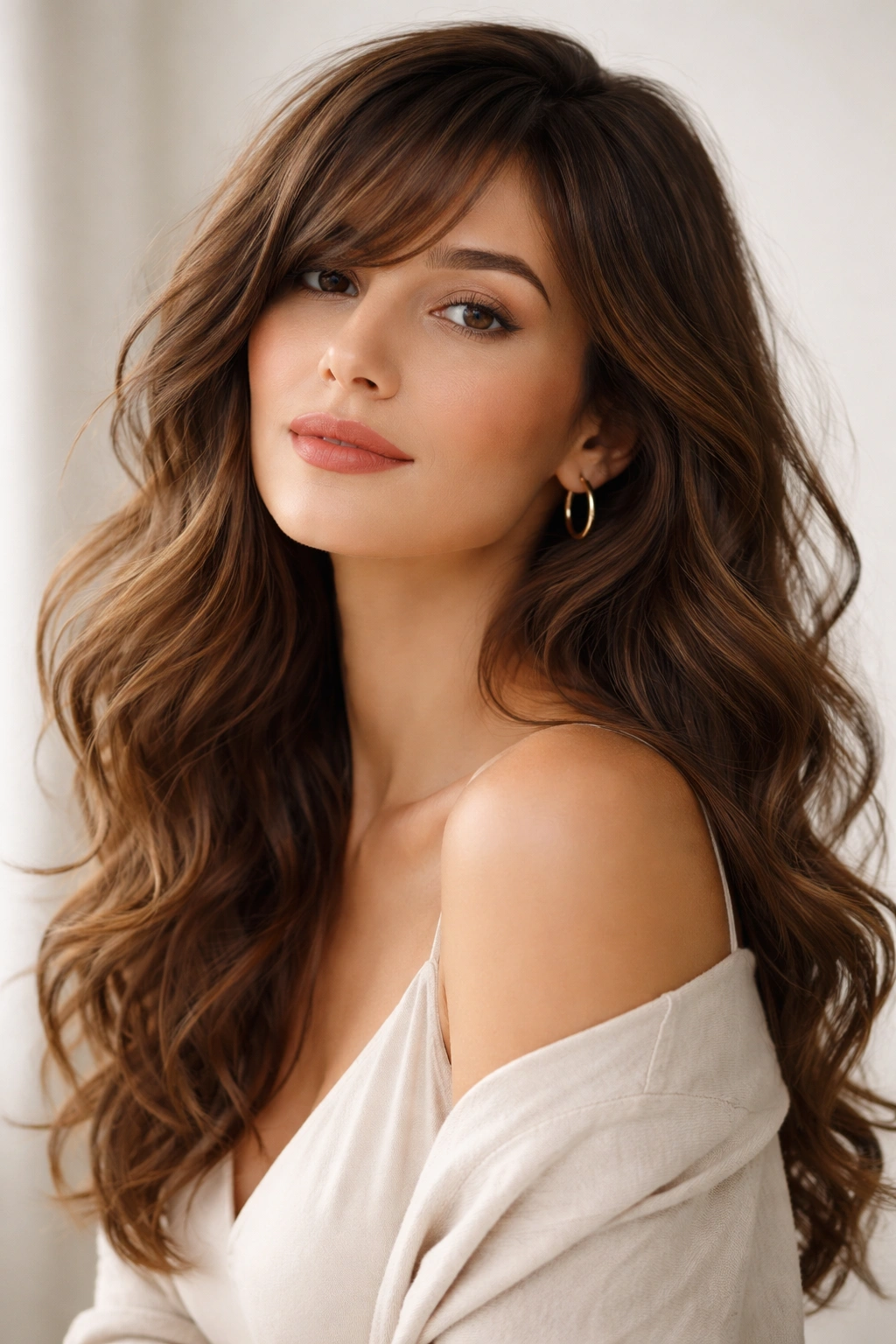
Side bangs with wavy hair create possibilities that extend far beyond a simple frame—they’re a chance to express personality, create dimension, and work with your hair’s natural texture rather than against it. Whether you choose the effortless romance of wispy bangs with long waves, the bold confidence of micro bangs, or the textured drama of choppy layers throughout, the key is choosing a style that resonates with how you actually want to show up in the world.
The beautiful thing about side bangs specifically is their flexibility. They work across multiple lengths, layer patterns, and styling approaches. You can embrace your waves completely, air-drying into soft texture, or you can style them deliberately using heat tools and product—and your bangs will work equally well either way. They add intentionality to your cut without requiring you to commit to a high-maintenance style if that’s not what you’re after.
Most importantly, choose a style that genuinely excites you, then find a stylist who understands your hair’s natural texture and what you’re actually trying to achieve. The best cut in the world won’t work if it doesn’t match your lifestyle, your hair’s actual behavior, and the amount of styling you’re genuinely willing to do. Side bangs with wavy hair are endlessly versatile—find the version that feels most like you.