

There’s an art to the messy low ponytail that most people get wrong. They create something that looks genuinely unkempt—the kind of hair you’d wear when you’re running late for the grocery store, not something you’d feature in a photo. But the messy low ponytail, done right, walks an incredibly fine line. It’s supposed to look effortlessly undone while still reading as intentional and polished enough for work, a date, or anywhere you actually want to look put together.
The magic isn’t in making your ponytail actually messy. It’s in creating the illusion of beautiful, controlled chaos. You’re strategically loosening strands, texturizing your hair, and positioning your tie so everything feels relaxed and romantic rather than chaotic. When executed well, a messy low ponytail suggests you didn’t spend hours getting ready—even though you probably spent ten solid minutes perfecting it—and that’s exactly why this style has staying power.
What makes messy low ponytails so appealing is their versatility. They work on straight hair, curly hair, fine hair, and thick hair. They suit casual weekend vibes just as well as they suit professional settings. You can dress them up or down depending on the occasion. And perhaps most importantly, they’re forgiving. If a strand falls out, if your texture isn’t perfectly uniform, if the back isn’t completely smooth—none of that matters. A tiny imperfection is actually the whole point.
Whether you’re dealing with a bad hair day or intentionally creating this look from scratch, these twelve variations will help you nail the messy low ponytail in every situation.
1. The Textured Base with Face-Framing Pieces
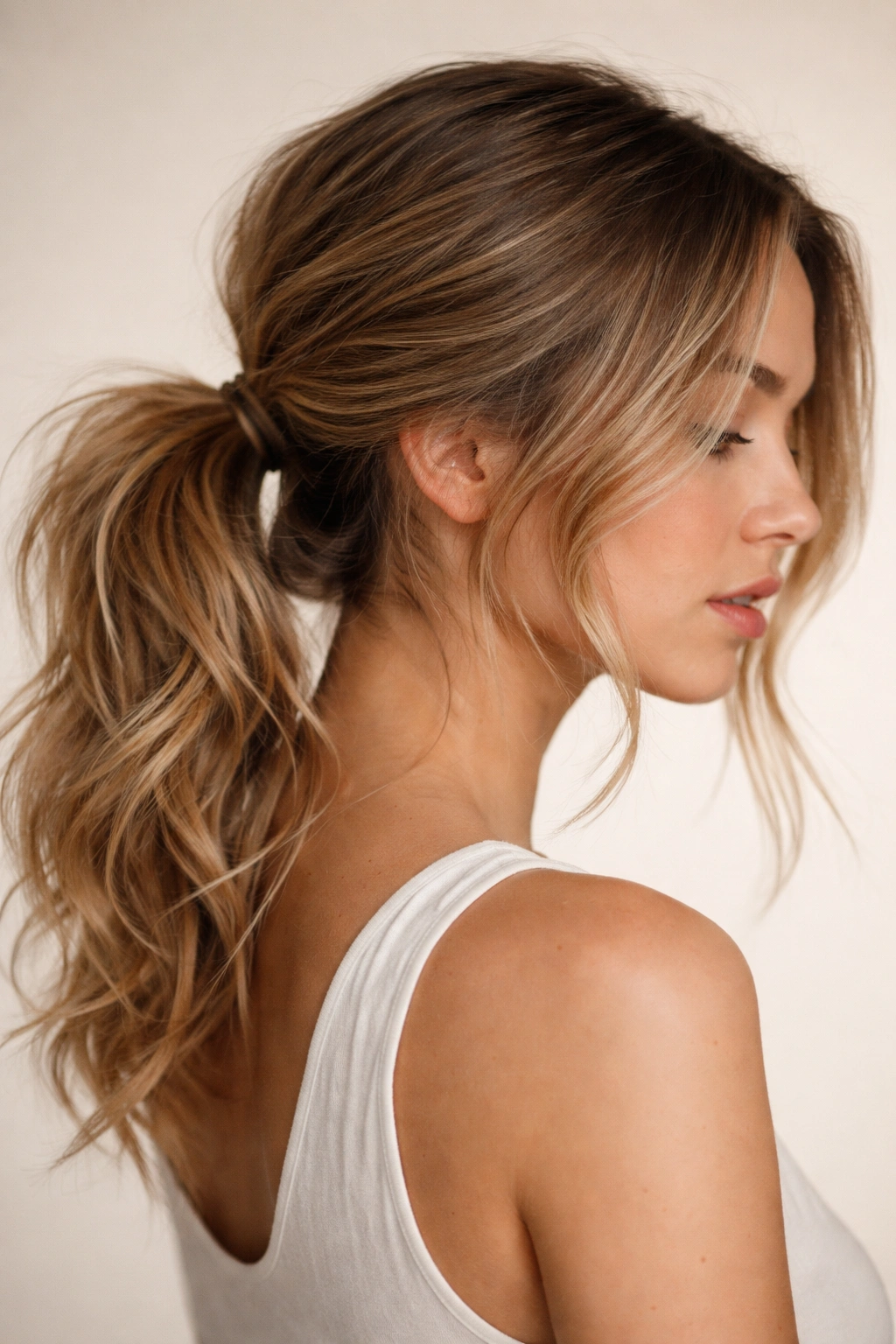
This is the foundational messy low ponytail that works on almost every hair type. The key is starting with intentional texture before you even pull your hair back, which transforms an ordinary ponytail into something that looks deliberately styled.
How to Build the Texture
Before pulling your hair into any shape, add texture to your hair if it’s naturally smooth or straight. You can do this by gently twisting sections of damp hair while blow-drying, using a curling iron to wave through your lengths, or applying sea salt spray to create a lived-in texture. If your hair is already curly or wavy, simply scrunch and encourage your natural pattern. The texture doesn’t need to be perfect—in fact, inconsistency is preferable. You want some loose waves, some tighter waves, and some sections that are just slightly textured.
The Ponytail Placement and Release
Once your texture is set, brush or comb your hair back gently—you’re not going for a sleek base here. Gather your hair into a low ponytail at the nape of your neck, positioning it slightly off-center for an intentional, relaxed feel. Secure it with a hair tie that’s either fabric-covered or in a metallic finish that feels intentional. Now comes the critical step: gently pull and tease a few small sections throughout your ponytail to create dimension. Don’t pull too hard; you’re aiming for soft, undone waves, not a disaster.
Finally, pull two to three face-framing pieces down in front of your ears. These pieces should be somewhat wavy or textured and should touch your collarbone or slightly beyond. This immediately elevates the whole look from “pulled back” to “effortlessly styled.”
Pro tip: Spray your ponytail lightly with texturizing spray or light hairspray before teasing it. This gives you grip and helps the strands hold their undone shape throughout the day without looking stiff.
2. The Sleek-Meets-Messy Hybrid
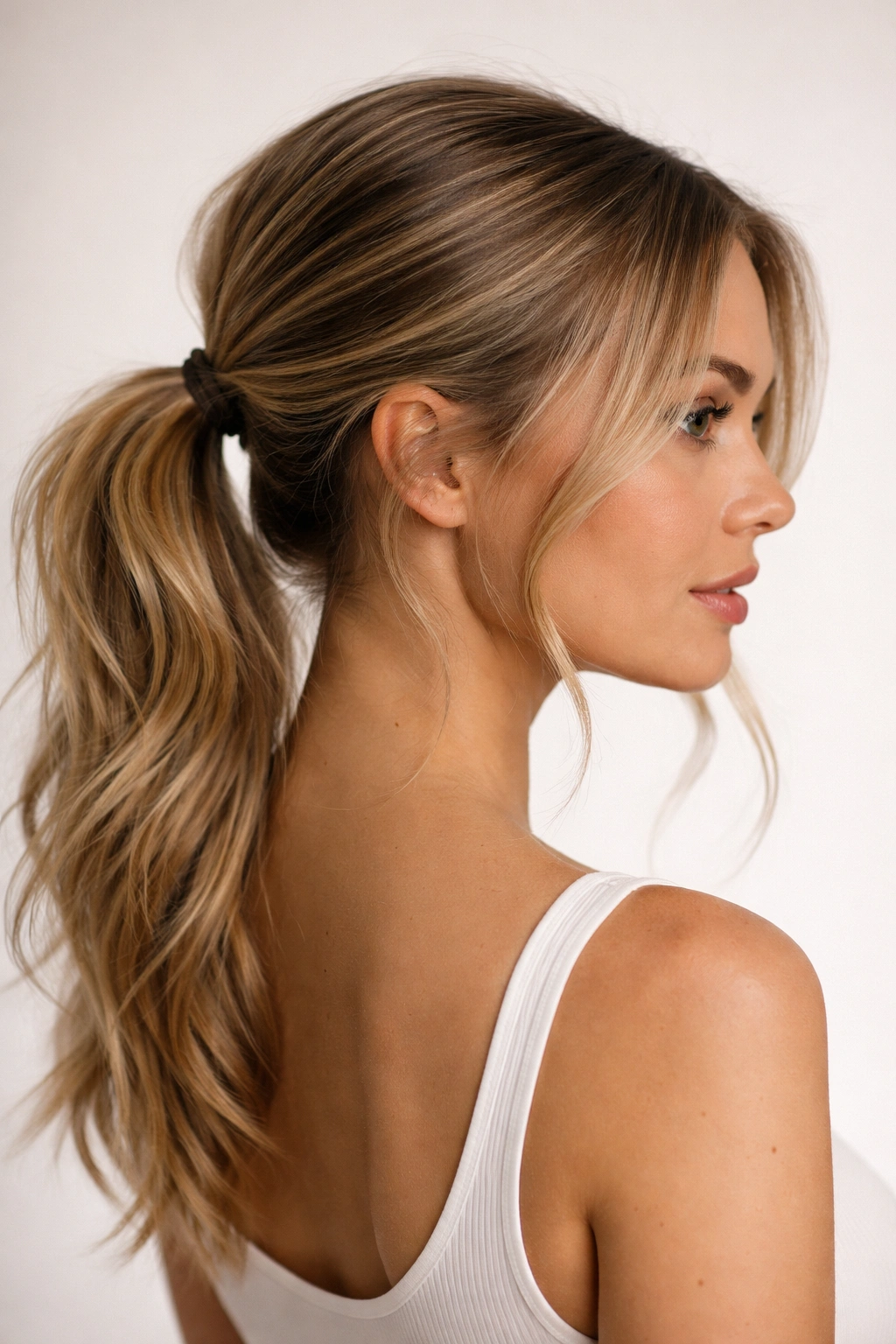
This variation gives you the sophistication of a clean, intentional style with the softness of the messy element. It’s an excellent choice when you want to look professional but not overly done.
Creating the Contrast
The entire magic of this style lives in the contrast between the sleek base and the undone pieces. Start by creating a clean part—either a center part or a deep side part—and smooth your hair back with a boar-bristle brush and lightweight smoothing cream. This keeps the style from feeling too chaotic. Secure your low ponytail tightly at first, making sure your base is absolutely smooth and intentional.
The Messy Release
Once your ponytail is secured, pull out several small sections, starting at the sides and working toward the back. These pieces should be pulled gently outward and downward to create an undone effect. The contrast between the smooth crown and the softly wispy pieces is what makes this feel sophisticated rather than unfinished. A few wisps near your temples and some looseness near the nape of your neck complete the effect.
This hybrid approach works beautifully for professional settings, client meetings, or any situation where you want to signal that you tried without looking like you spent an hour on your hair. It reads as “polished with an edge” rather than “I gave up.”
Worth knowing: The sleek base prevents this from reading as genuinely messy, so you can wear it to more formal events without worrying that it looks too casual or undone.
3. The Braided Low Ponytail
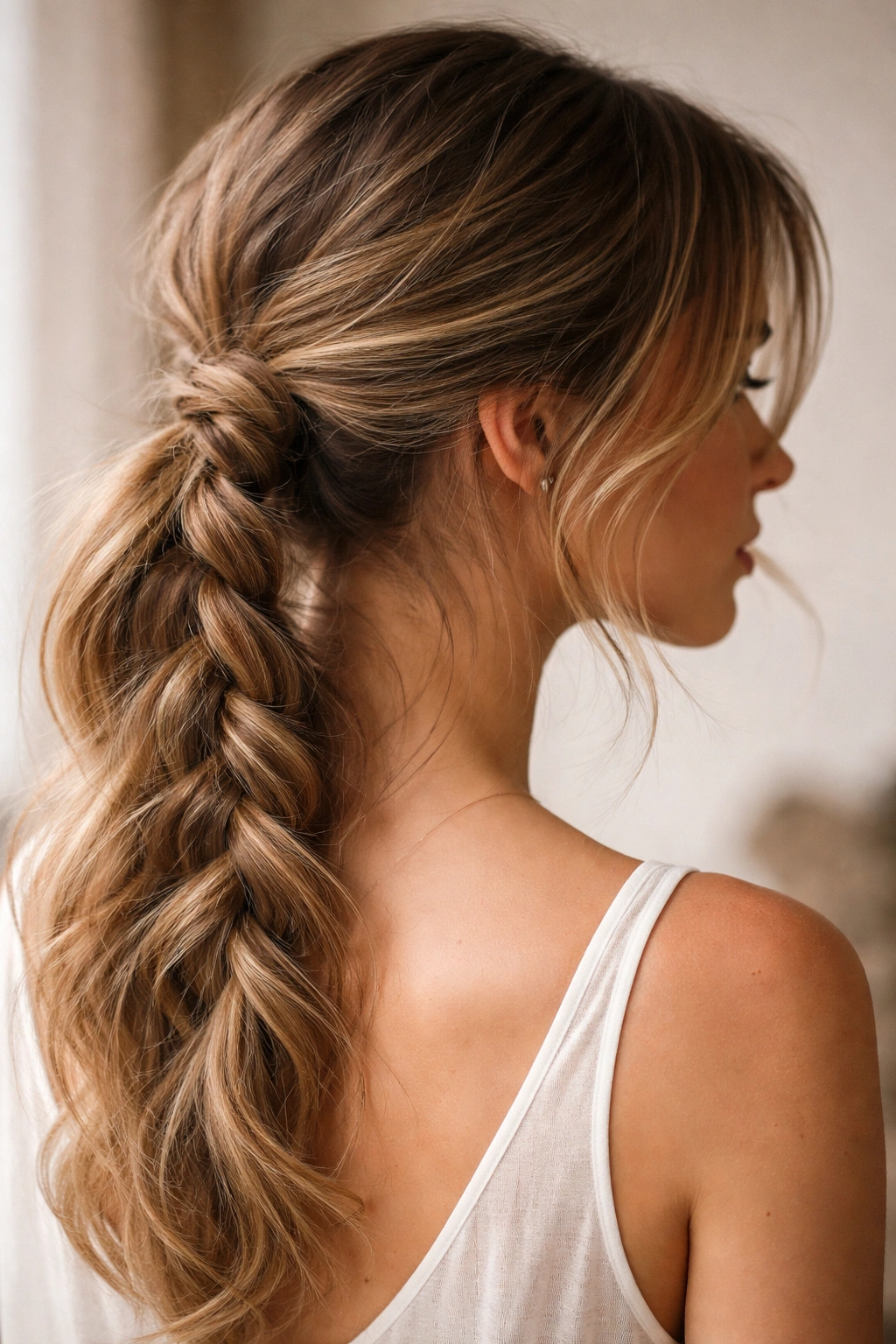
A braid adds visual interest and texture that makes the messiness feel deliberate and thoughtful rather than accidental.
Choosing Your Braid Style
You have several options here. A single three-strand braid running down your ponytail is classic and works on all hair types. A Dutch braid (braided backward) adds more visual dimension. Multiple small braids woven throughout your ponytail create a boho, romantic feel. The type of braid you choose should match the occasion and the overall vibe you’re going for. For something more casual, a loose, slightly messy three-strand braid is perfect. For something more intentional, a tighter Dutch braid feels polished.
Weaving the Braid into Your Ponytail
Gather your hair into a low ponytail and secure it loosely. Now, starting at the base of the ponytail, braid your hair loosely, allowing small pieces to escape as you work. You can braid all the way to the ends, or braid only the top two-thirds of your ponytail and leave the bottom section undone. Secure the braid with a small elastic or bobby pin, and gently pull at the sides of the braid to make it wider and more textured.
The beauty of the braided ponytail is that the braid structure itself gives definition to the messiness. It makes every imperfection feel intentional because it’s part of a recognizable pattern.
Insider note: If your braid falls apart as the day goes on, that’s actually fine. A slightly unraveled braid looks even more effortlessly done and romantic than a perfectly constructed one.
4. The Wrapped Low Ponytail
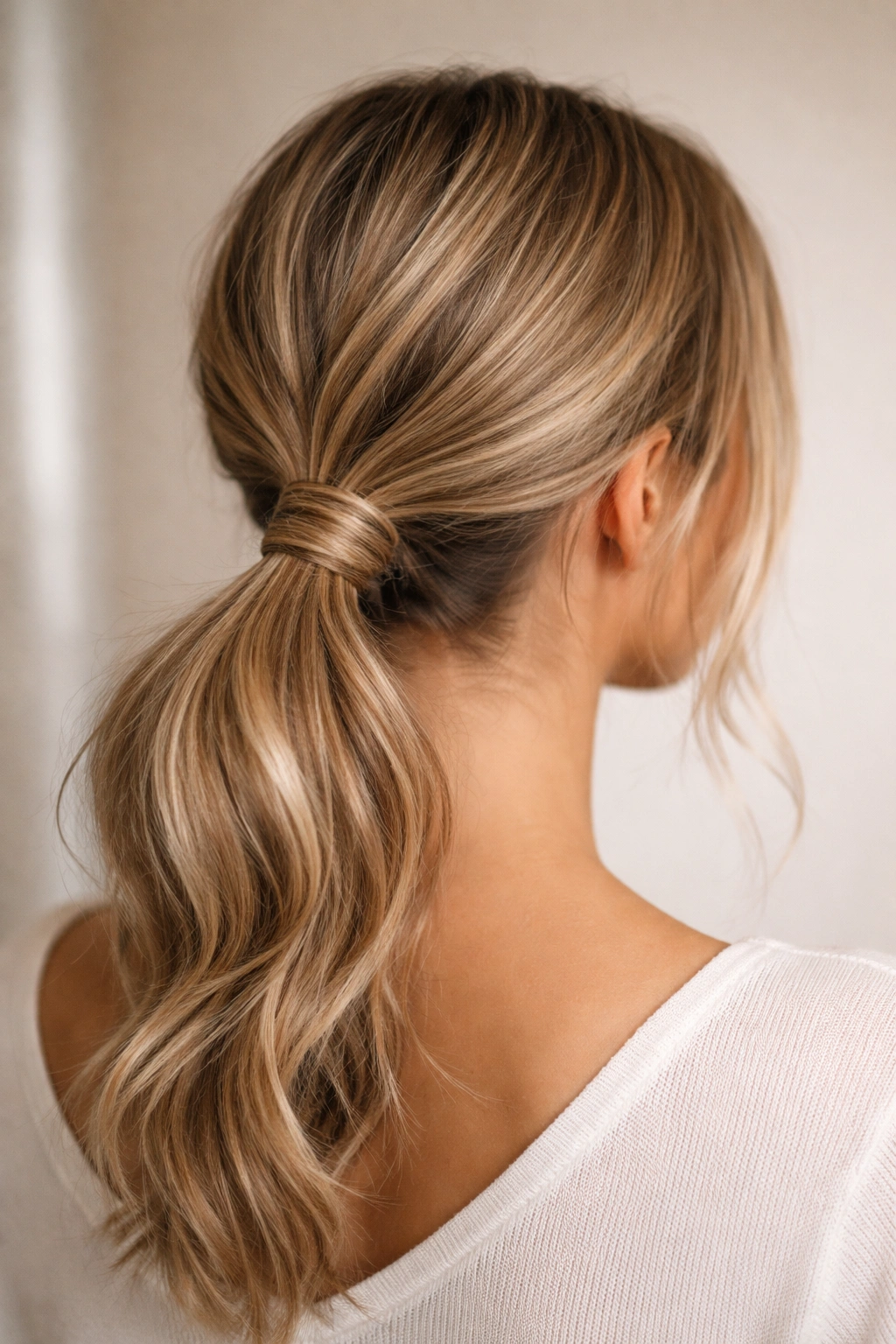
This variation uses a section of your own hair to wrap around the base of your ponytail, completely covering your hair tie and adding a finished, polished touch that makes the rest of the messiness feel intentional.
Creating the Wrap
Secure your low ponytail with a clear elastic or one that matches your hair color. Then, take a small section of hair (about the thickness of a pencil) from the underside of your ponytail and wrap it around the base, covering the elastic entirely. Secure the wrapped section with a bobby pin hidden underneath. This one technique instantly transforms a casual ponytail into something that looks more deliberate and salon-quality.
The Messy Release Strategy
Once your wrap is in place, gently pull sections of your ponytail to create that undone texture. The wrapped base keeps the style from feeling too loose or haphazard; everything feels anchored and intentional. You can create more aggressive messiness around the sides and back of your ponytail because the clean wrap at the base keeps it all looking purposeful.
This style works particularly well for work settings or situations where you want to look polished. The wrap signals that you put thought into your appearance, while the messiness keeps it from feeling uptight.
5. The Side-Swept Low Ponytail
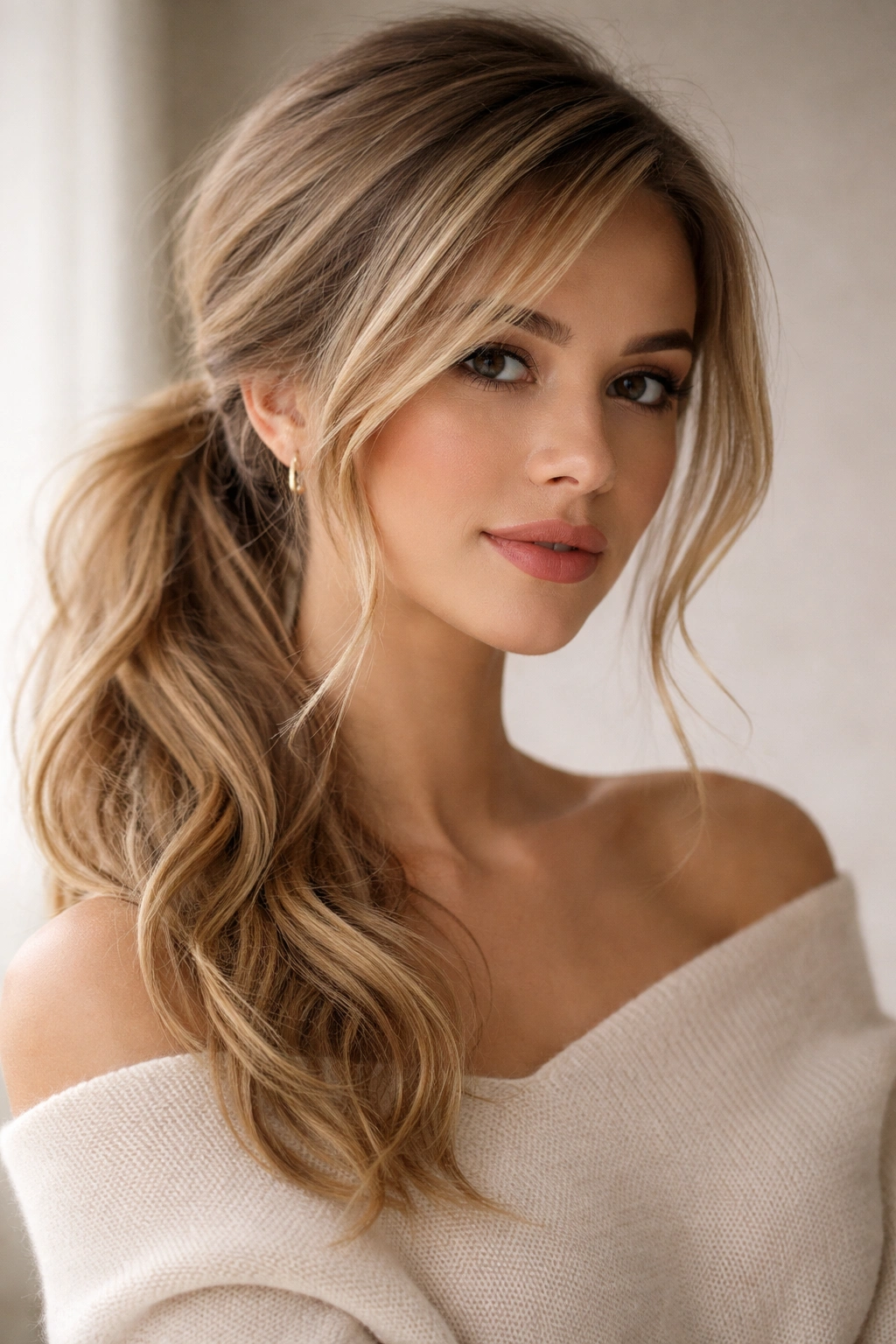
Instead of placing your ponytail at the center of your neck, sweep all your hair to one side for a more romantic, asymmetrical take on the messy low ponytail.
Positioning and Securing
Gather all your hair and tip your head slightly to the side that you want your ponytail to fall toward. Secure your hair at a low position, but instead of centering it, position the ponytail toward one side of your neck. The exact placement depends on how dramatic you want the asymmetry to be. For a subtle effect, position it only slightly off-center. For a more dramatic romantic look, place it fully to one side.
Creating Dimension
From this asymmetrical base, pull out several pieces along the back and sides to create softness. The side-swept placement automatically creates a messier feeling because gravity is working with you—pieces naturally fall more easily when you’ve swept everything to one side. Encourage this by gently releasing small sections and allowing them to frame your face and neck.
This variation is particularly flattering for round or square face shapes because the asymmetry creates visual interest and movement. It’s also incredibly romantic, making it a wonderful choice for date nights or special occasions.
Quick facts:
- Side-swept ponytails elongate the face and create a slimming effect
- This style works beautifully with soft waves or natural texture
- It pairs particularly well with minimal makeup for a relaxed, romantic vibe
- You can enhance the effect by leaving one side of your face more exposed and pulling more texture toward the other side
6. The Two-Tone Textured Ponytail
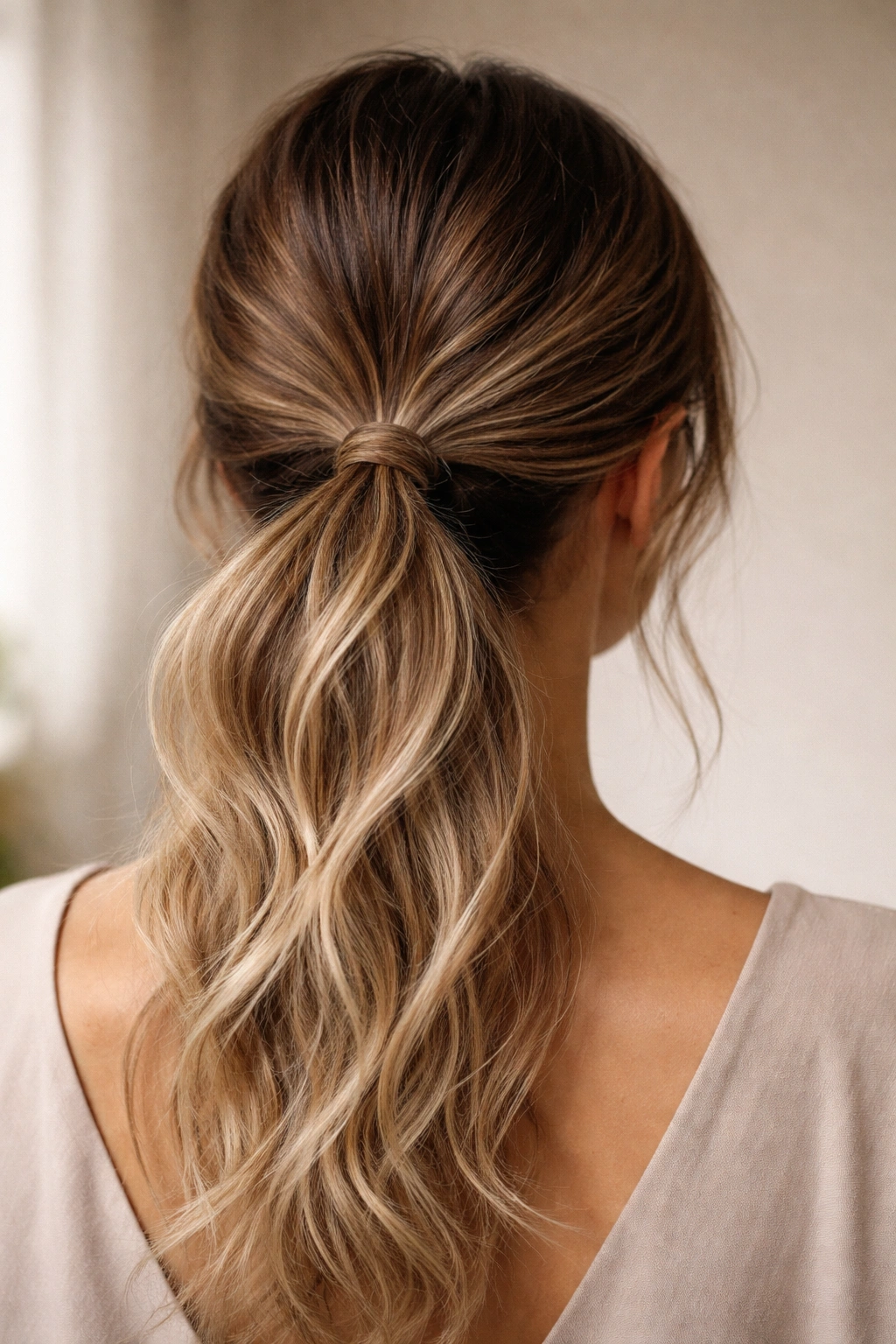
If your hair is long enough, creating contrast between your hair texture in different sections creates visual interest that makes messiness feel intentional and interesting rather than accidental.
Layering Your Texture
Start by creating texture in the first section of your hair—usually from roots to mid-length—using your preferred method (waves, curls, twists, or waves). Then, create a noticeably different texture in the lower section of your hair. If the top section has loose waves, make the bottom section more tightly curled or crimped. If the top is straighter, add more aggressive waves or curls to the bottom. The contrast creates movement and visual interest.
Building the Ponytail
Gather everything into a low ponytail, allowing the texture contrast to show. Secure your ponytail, then gently tease and pull at sections to enhance the dimensional effect. The different textures naturally create more movement and visual complexity, which means the whole style reads as more intentionally textured rather than simply messy.
This approach is particularly effective if you have very long hair or highlighted hair where you can create a subtle color variation along with the texture change.
When to Use This Style
Two-tone texture works beautifully for weekend plans, casual outings, or creative professional environments. It signals that you’re intentional and thoughtful about your styling choices while still maintaining that effortless aesthetic.
7. The Undone Twisted Low Ponytail
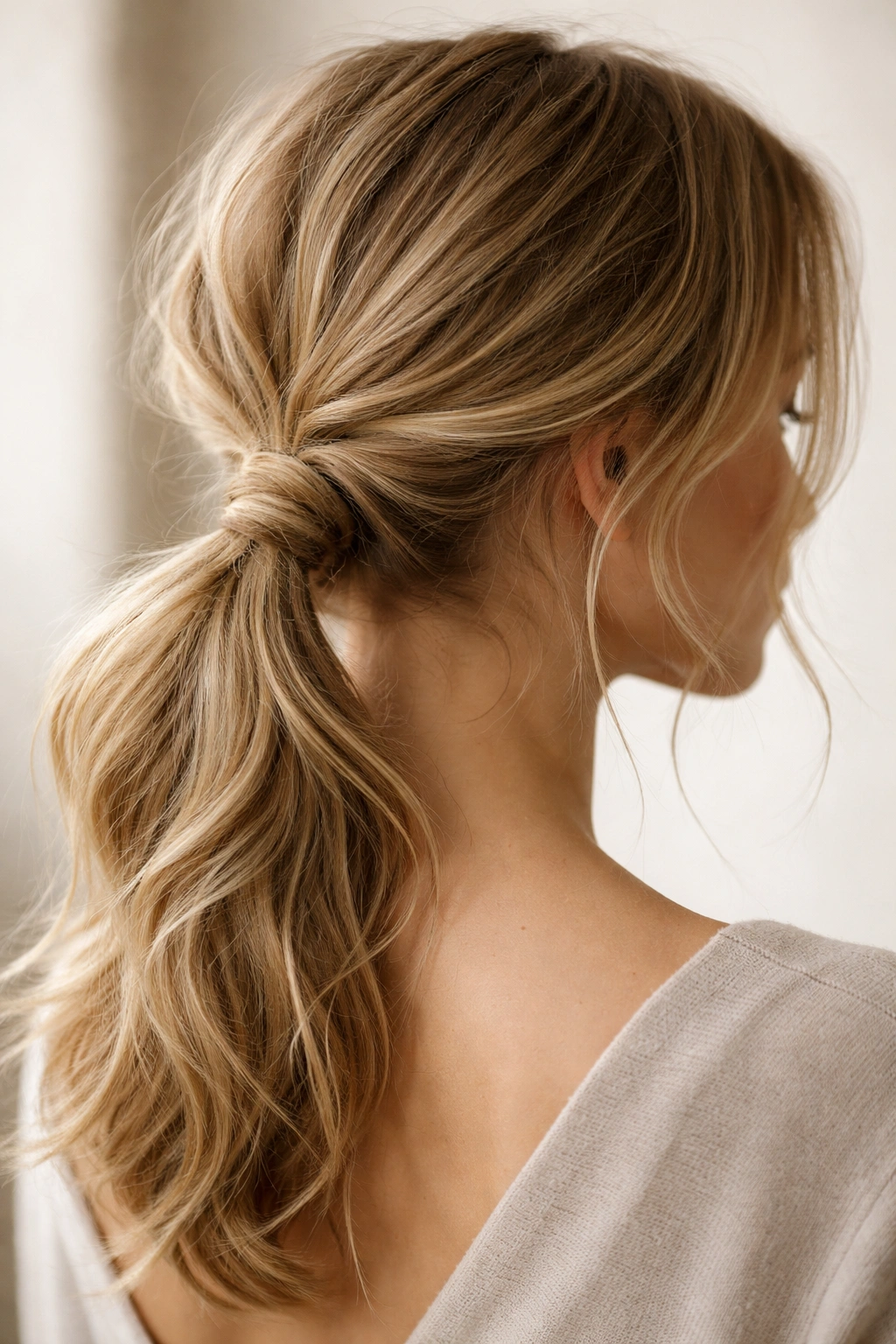
Twists add a subtle structure without looking as formal as braids. This variation combines the messiness of a textured ponytail with the soft intentionality of twisted sections.
Creating the Twists
Gather your hair into a low ponytail and secure it loosely. Now, take a small section from the side of your ponytail and twist it gently toward the center of the ponytail, wrapping it around the base. Secure the twisted section with a bobby pin. Repeat on the other side. You can create just two twists, one on each side, or add multiple twists throughout the length of your ponytail for more visual interest.
The key to making these twists look intentionally undone rather than neatly styled is to create them loosely and allow small pieces to escape as you work. The twist should feel soft and organic, not tight and controlled.
Releasing Additional Messiness
After creating your twists, gently pull at sections of your ponytail to create additional texture and softness. The twists provide structure while the released pieces create the effortless feeling. This balance is what makes the style feel polished yet relaxed.
What to know: Twisted elements work beautifully with straight hair because they provide definition without requiring you to create waves or curls beforehand. They’re also an excellent option if you have fine hair that can’t hold braids well but can hold a loose twist.
8. The Bumped Crown Low Ponytail
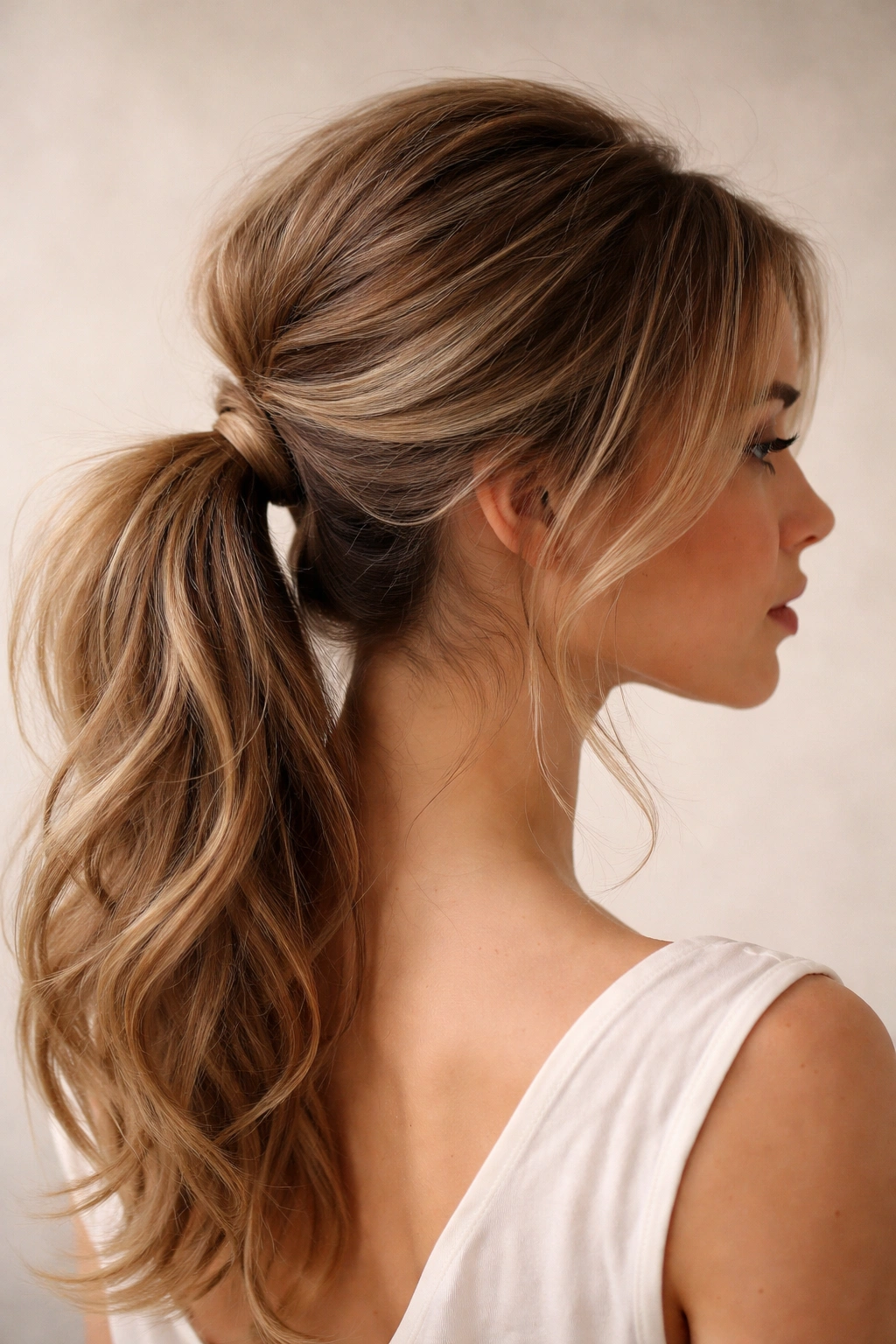
This variation uses strategic backcombing and teasing at your crown to create volume that makes the entire style feel more deliberate and polished.
Creating Crown Volume
Before pulling your hair into a ponytail, create a small teased bump at your crown. Use a fine-tooth comb to gently backcomb a section of hair at the very top of your head, then smooth the top layer with the comb. This creates the appearance of intentional volume without looking like you have a rat’s nest on top of your head.
The Low Ponytail Base
Once your crown bump is created, gather all your hair into a low ponytail, allowing the bump to remain visible and create a lifted, polished effect. Secure your ponytail loosely. The volume at your crown immediately makes even a very messy ponytail feel intentional and styled because it shows you created structure and height.
The Messy Release
From your low ponytail base, pull out generous sections of hair to create that soft, undone effect. The crown volume anchors the style and makes the looseness feel like an intentional design choice rather than a hair emergency.
This variation works particularly well if you have fine hair that’s difficult to texturize, or if you have straight hair that won’t hold waves well. The crown bump creates visual interest all on its own, and the messy ponytail becomes secondary to the polished volume you’ve created.
9. The Accessory-Focused Low Ponytail
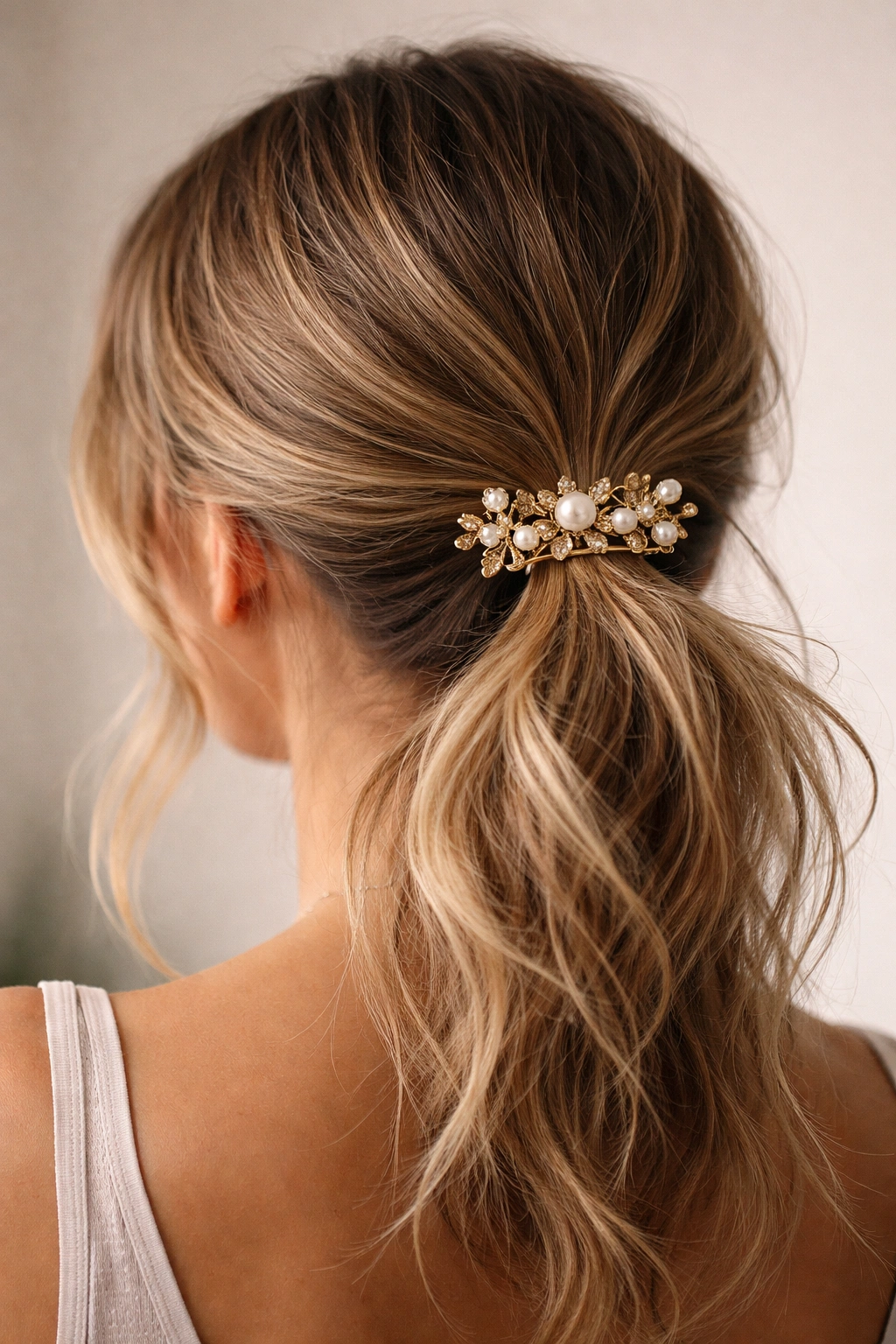
Sometimes, the right hair accessory can elevate a messy ponytail from “I didn’t have time” to “I’m intentionally undone.” This variation uses a striking hair clip, decorative pin, or ornamental elastic to add polish.
Choosing Your Accessory
Your accessory should be something with visual interest—a tortoiseshell clip, a gold claw clip, a decorative pearl barrette, or an embellished elastic in a complementary metal tone. The accessory should be substantial enough to be visible and intentional, but not so large that it overwhelms your hair. Metallic finishes add instant sophistication, while tortoiseshell or wood tones create a more organic, natural feeling.
Placement Strategy
Secure your low ponytail with a clear elastic, then place your decorative accessory in front of that elastic (or covering it entirely). The accessory immediately signals that your hair is styled intentionally. Even if your ponytail is quite messy and loose, the accessory suggests that the looseness is a deliberate design choice.
You can wear your accessory at the very base of your ponytail, or position it slightly lower for a more casual, playful feel. Some people wear multiple smaller clips positioned at intervals down their ponytail for a more intentionally undone effect.
Quick facts:
- Gold and silver accessories add instant polish and sophistication
- Claw clips in neutral tones work with any hairstyle and hair color
- Decorative elastics designed specifically for ponytails often have ornamental details that add visual interest without bulk
- Positioning your accessory slightly off-center creates a more intentionally relaxed feel than centering it perfectly
10. The Curled-Out Ends Low Ponytail
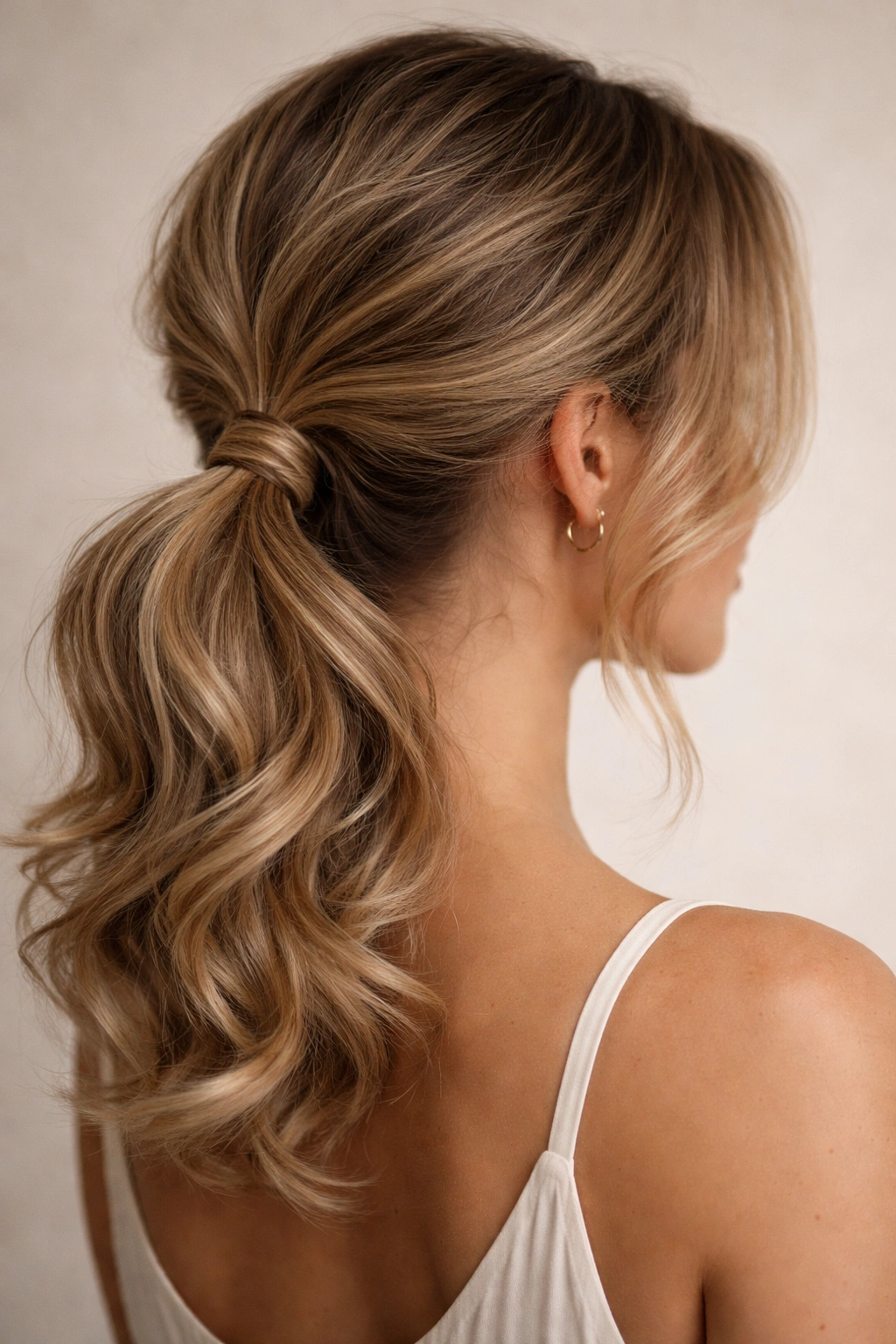
Rather than leaving your ponytail ends straight or just slightly textured, curling the ends of your ponytail outward creates a feminine, polished look that makes the messiness feel intentional and romantic.
Preparing Your Ponytail
Gather your hair into a low ponytail and secure it. At this stage, you can create messiness by pulling out face-framing pieces and gently teasing sections. The base should feel soft and undone, with gentle waves or texture throughout.
Curling the Ends
Take a curling iron or wand and curl the bottom section of your ponytail outward, working in small sections. You want loose, romantic curls that flip away from your face, not tight ringlets. The curls should be loose and soft enough to feel undone, but defined enough to read as intentional. This creates a beautiful contrast: the soft, messy crown and sides paired with the more defined, romantic curls at the bottom.
The Balance
The key to making this style work is maintaining the balance between undone and intentional. Your crown and sides should look effortlessly textured, while your ends should have visible, beautiful curl definition. This combination signals that you styled your hair carefully while still maintaining an approachable, relaxed vibe.
This variation works beautifully for date nights, special occasions, or any time you want to feel polished without looking overly done. It’s romantic and flattering without being dramatic.
11. The Undone Wrapped Braid Low Ponytail
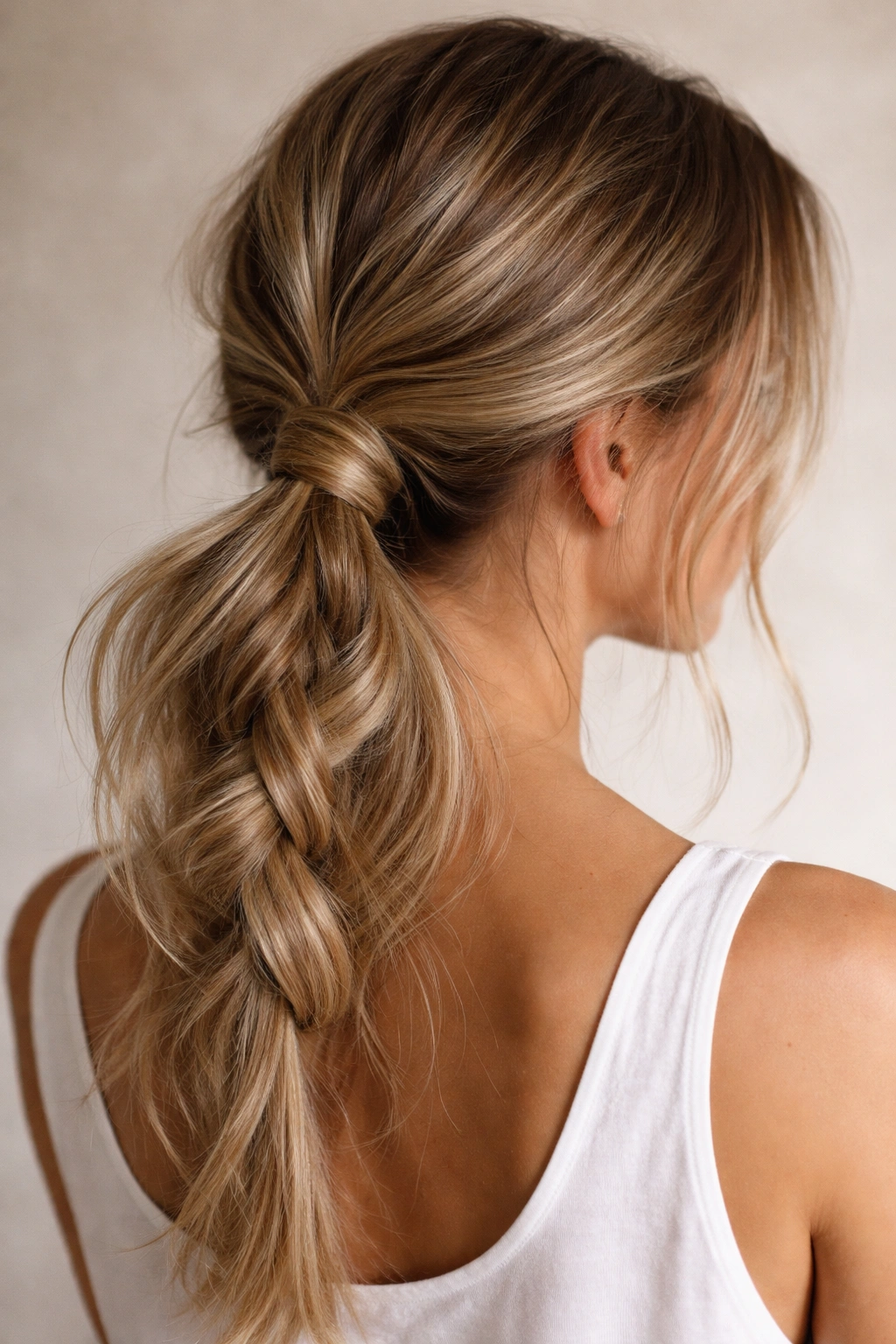
This variation combines the best elements of several previous styles: the visual interest of a braid, the polish of a wrapped base, and the softness of an undone, textured ponytail.
Building the Complete Style
Start with a low ponytail that has gentle texture or waves throughout. Secure it loosely. Take a small section of hair from the underside of your ponytail and wrap it around the base, covering your elastic and securing it with a bobby pin. Now, starting at that wrapped base, braid your hair loosely down the length of your ponytail. Allow small pieces to escape from the braid as you work; this is what makes it feel intentionally undone rather than meticulously styled.
The Final Touch
Once your braid is complete, gently pull at the sides of the braid to make it wider and airier. The combination of the neat wrap, the organized braid structure, and the intentionally loose strands creates a style that feels polished yet effortless.
This is an excellent choice when you want to signal that you put genuine effort into your hair without looking like you spent an hour getting ready. It works for professional environments, date nights, or creative settings where you want to stand out.
Insider note: The wrap at the base of this style is crucial. It’s what makes a very undone braid read as intentional rather than falling apart. The wrap says, “I styled this,” while the loose elements say, “but effortlessly.”
12. The Tousled Half-Secured Low Ponytail
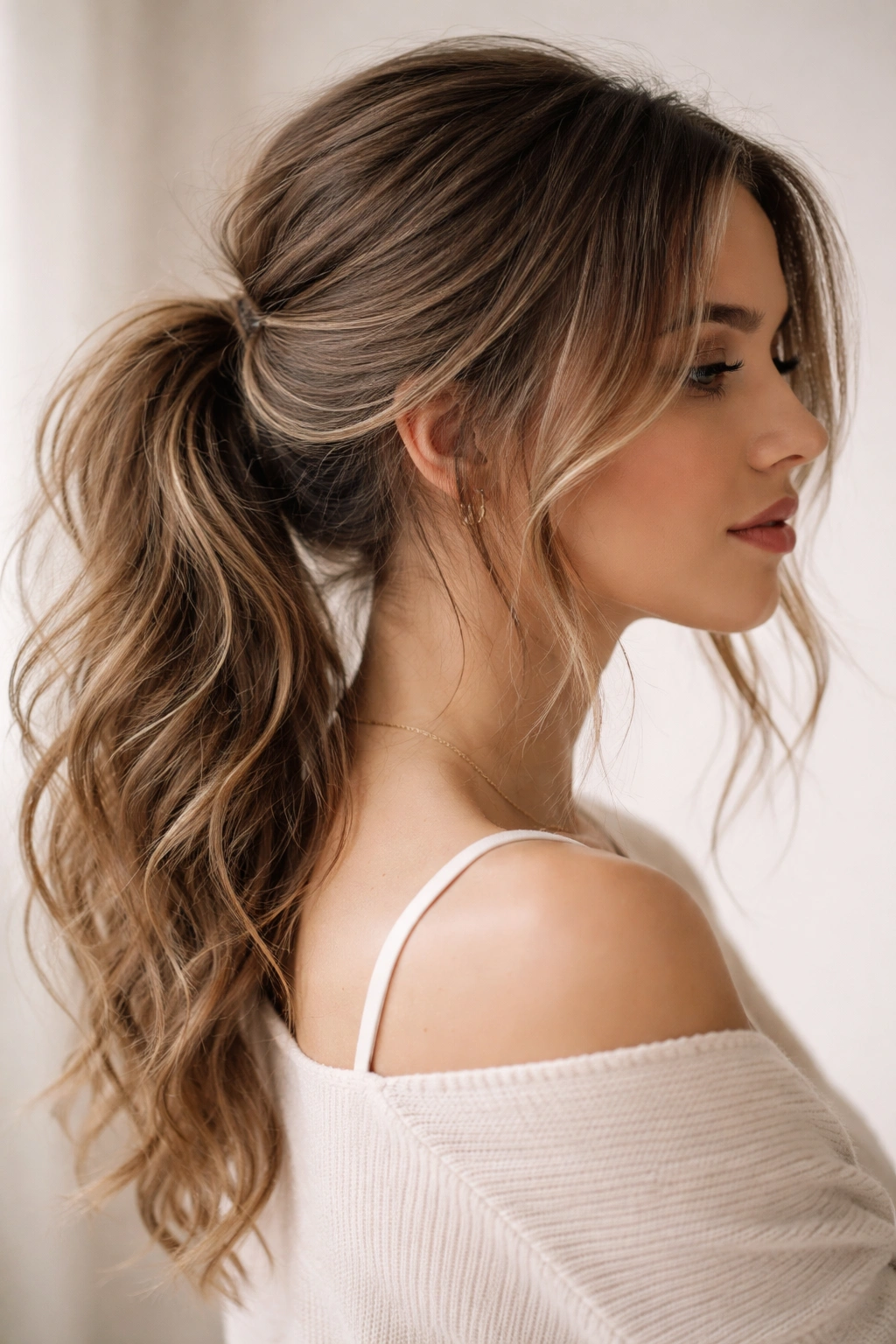
This final variation keeps some of your hair partially down while securing the bulk of it in a low ponytail, creating a romantic, undone effect that suggests you barely did anything.
Creating the Partial Ponytail
Rather than gathering all your hair, leave a generous section down. Typically, this means leaving some hair down near your temples and along your sides. Then, gather the back section and sides (excluding those deliberate release pieces) into a low ponytail at your nape. Secure it loosely.
You can interpret this style differently depending on your preference. Some people leave only thin face-framing pieces down while securing most of their hair. Others leave thicker side sections down, creating a more dramatic half-up, half-down effect. The point is that not all your hair is pulled back; there’s intention in what you’ve chosen to leave loose.
Adding Texture and Movement
Pull gently at your ponytail to create softness and texture. Encourage your face-framing pieces to curve and wave gently around your face and neck. The contrast between the secured, more controlled ponytail base and the flowing, loose pieces around your face creates a romantic, intentionally undone appearance.
When This Style Works Best
This variation is perfect for casual occasions, weekend outings, or any time you want to look beautiful without appearing to have tried too hard. It’s also an excellent choice if you’re dealing with flyaways or hair that won’t stay fully smoothed back, because the looseness is intentional.
Quick facts:
- This style works on all hair types and lengths
- Adding texture to your loose pieces makes the style feel more intentional
- This variation is forgiving; minor imperfections are actually part of the design
- It pairs beautifully with natural makeup for a soft, romantic aesthetic
Final Thoughts
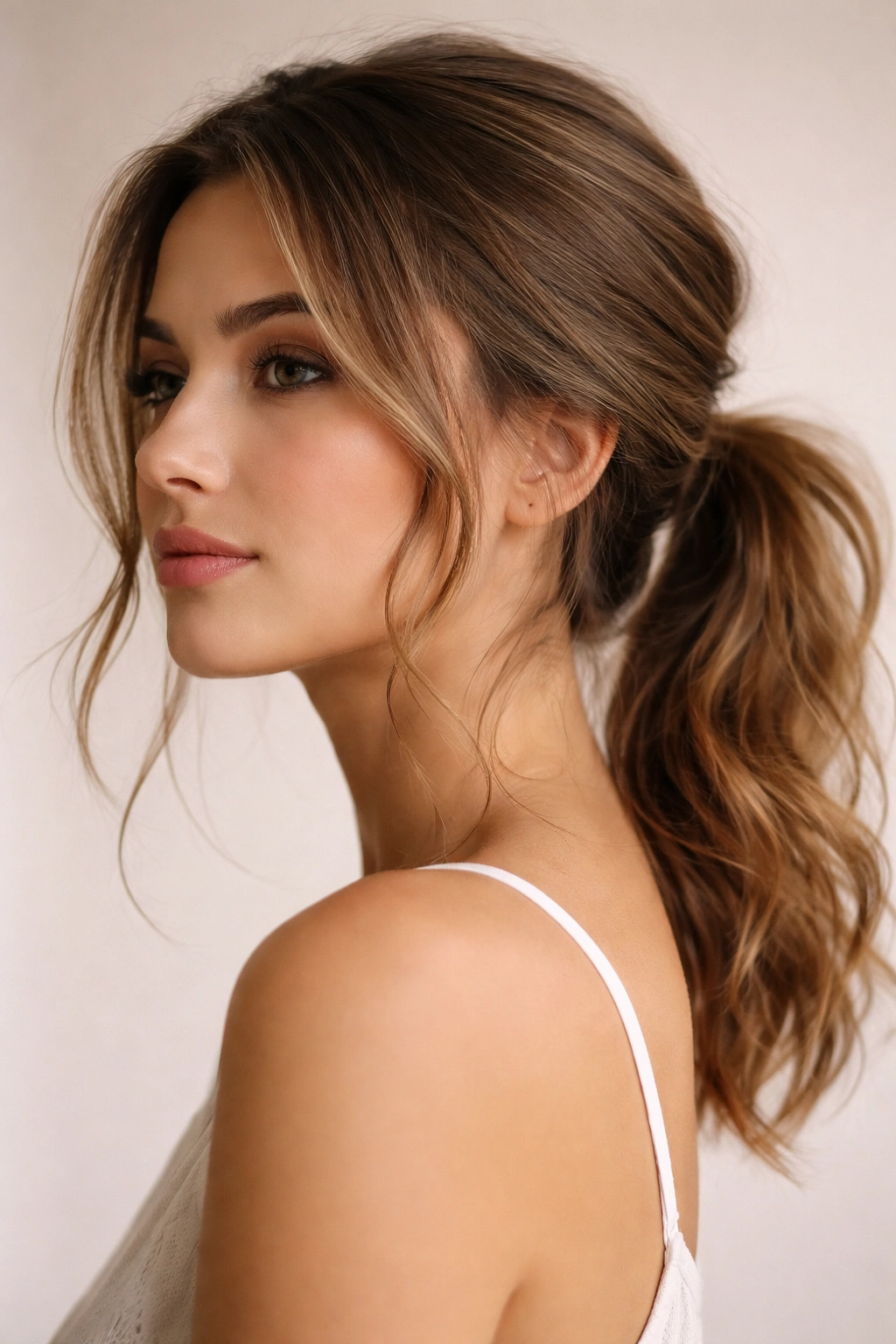
The messy low ponytail succeeds because it gives you permission to look beautiful without appearing to have spent hours perfecting yourself. Each of these twelve variations offers a different entry point into that effortless-but-intentional aesthetic. Some require more styling effort upfront—the braided versions, the wrapped styles, and the texture-heavy options. Others are almost embarrassingly simple, requiring just a hair tie and the willingness to pull out a few pieces.
The best version for you depends on your hair type, your lifestyle, and the occasion. If you have very straight hair and limited time, the bumped crown or accessory-focused approaches might be your best bet. If you have curly or wavy hair that holds texture naturally, almost any of these variations will work beautifully with minimal effort. If you’re heading somewhere you want to look particularly polished, the wrapped braid or the sleek-meets-messy hybrid makes a strong case for intentionality.
The real secret, though, isn’t any single technique. It’s understanding that “messy” in this context means strategic, intentional softness. It means texture over smoothness, movement over stillness, and the confident comfort of someone who knows they look good. That’s what makes these ponytails look put together despite the perfectly undone appearance. You’re not actually a mess—you’re just comfortable enough in your own style to make it look effortless.