



Bangs and ponytails might seem like they exist in different styling universes, but when you get the combination right, they create something genuinely transformative. The interplay between a sleek pulled-back style and face-framing bangs can actually work harder than either element alone—the bangs draw attention upward and soften your features while the ponytail keeps everything polished and low-maintenance. The trick is matching the specific bang style and ponytail shape to what actually flatters your face.
Not every face shape thrives with the same bang-and-ponytail pairing, and that’s exactly why this matters. If you’ve got a round face, certain bang angles will add definition that you genuinely need. For a long or rectangular face, the wrong proportions can stretch things out even more. Square jawlines benefit from specific softening techniques, and heart-shaped faces have their own ideal angles. Rather than settling for generic guidance, you’ll find that the most flattering combinations account for where your features sit and what lines actually work for your bone structure.
The beauty of bangs with a ponytail is that it’s a versatile enough formula to work for nearly every occasion—from professional to casual to going-out. You get the polished impact of a pulled-back style without looking severe, because the bangs add movement and personality right where people are already looking at your face. Whether you’re drawn to wispy, blunt, side-swept, or curtain bangs, there’s a ponytail height, texture, and positioning strategy that amplifies your best features.
1. Soft Wispy Bangs With a High Sleek Ponytail
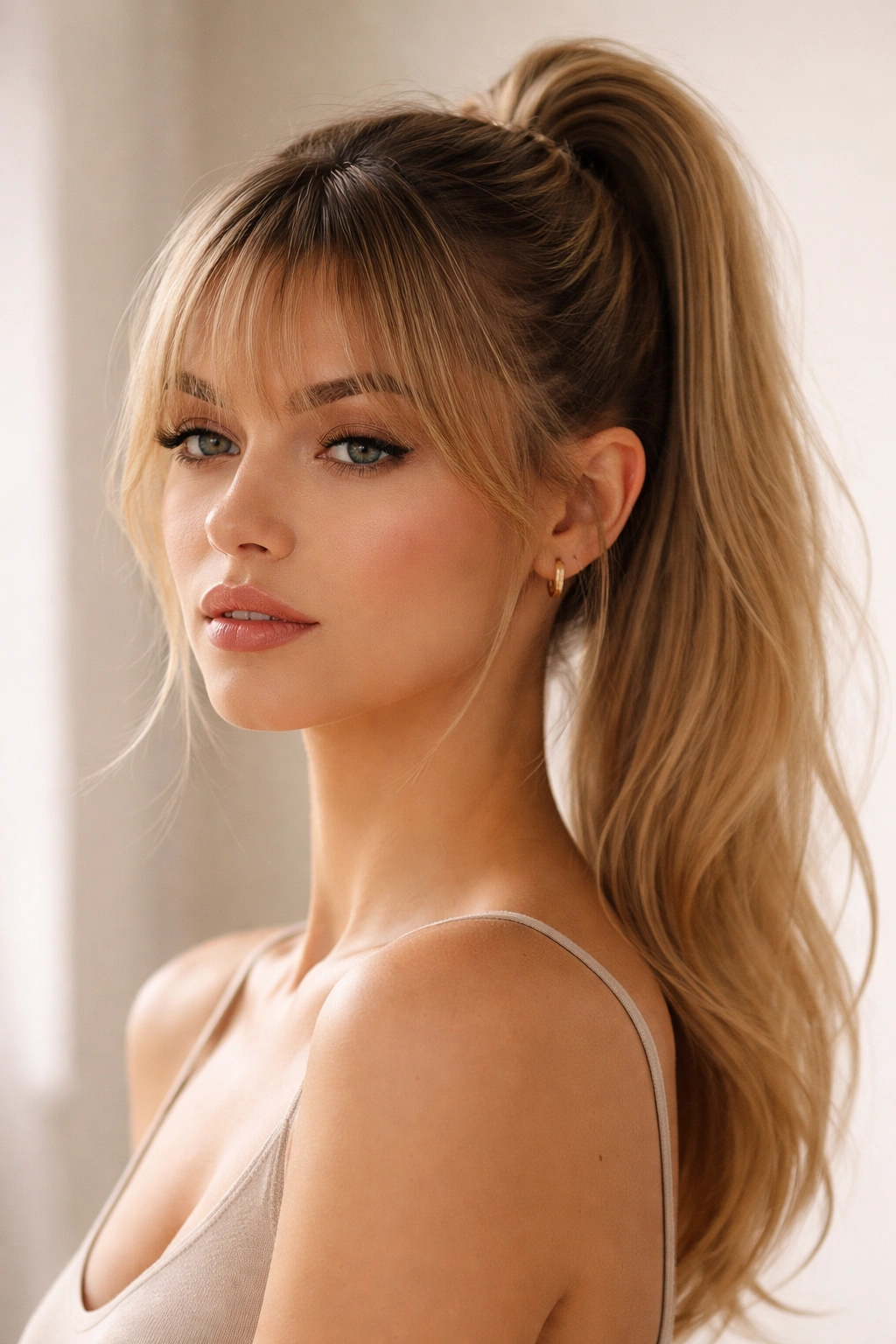
Wispy bangs feel effortlessly romantic because they catch the light differently than denser bang styles—they’re not a solid line across your forehead, but rather delicate layers that move independently. When you pair them with a high, sleek ponytail pulled taut at the crown, you’re creating lift and height that opens up your face while keeping things refined. This combination works especially well for oval and heart-shaped faces because the height balances the proportions without adding bulk.
Why This Works Best
The high placement creates vertical length that most face shapes appreciate, while the wispy bangs soften the transition between your forehead and eyes. Sleek styling shows off your bone structure without distraction, letting the bangs be the textural anchor. The movement in wispy bangs prevents the overall look from feeling too severe, even when the ponytail is tight and glossy.
How to Style It
- Section your bangs separately before pulling your ponytail, keeping them lying naturally across your forehead
- Use a fine-tooth comb and a smoothing serum to create the sleek base, then mist with light-hold hairspray
- Pull the ponytail from the crown area (not the very top of your head) and secure with an elastic
- Gently backcomb the ponytail base for grip and subtle volume if you want dimension
- Let a few shorter layers frame your face if they fall naturally—don’t force them back into the elastic
Pro tip: Wispy bangs need a light trim every 4-6 weeks to maintain their shape, since they show split ends more obviously than blunt bangs.
2. Blunt Bangs With a Mid-Height Textured Ponytail
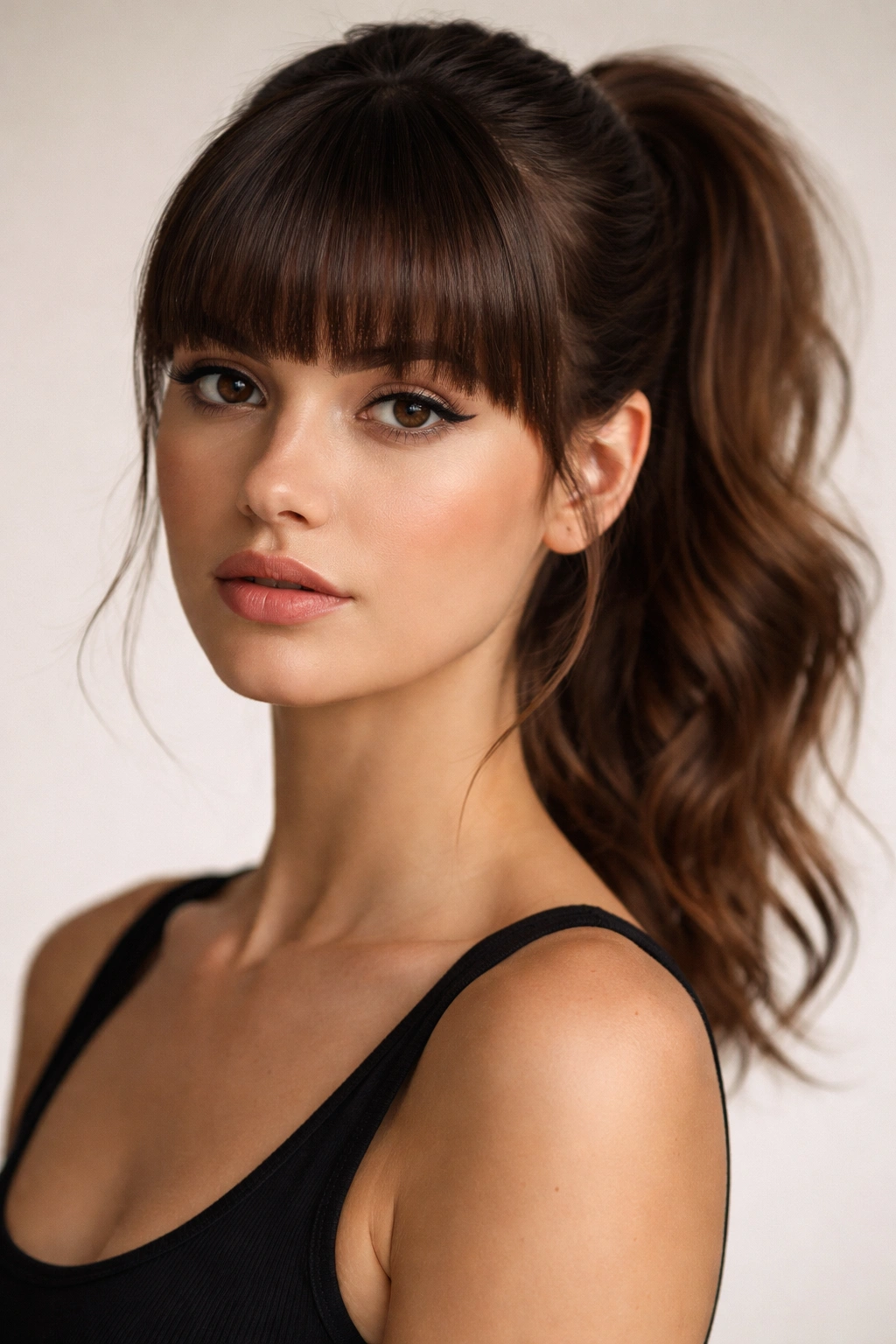
Blunt bangs make a confident statement because they’re a solid, deliberate line—no apologies, no softness. When you partner them with a textured ponytail positioned at mid-height (roughly at your ears), you’re creating a grounded look that suits square and rectangular face shapes beautifully. The horizontal line of the blunt bangs echoes the structure of a square jaw in a way that feels intentional rather than accidental, while the textured ponytail adds dimension that prevents the look from feeling harsh.
The Balance of Bluntness and Texture
Blunt bangs are bold enough that they need a ponytail with movement to avoid looking too severe. This is where loose waves, a tousled braid, or strategically placed layers in the ponytail itself come into play. The texture creates a softer finish that balances the graphic impact of the bangs. This pairing says you’re polished but not precious—intentional without being overdone.
Styling Steps
- Blow-dry your bangs straight and smooth; blunt bangs show every waviness
- Create texture in your ponytail by curling or waving it before or after securing it
- Position the elastic at mid-height, roughly where your ears are, for a modern proportion
- Leave 1-2 inches of face-framing texture at the front of the ponytail if possible
- Use a texturizing spray or dry shampoo on your ponytail for grit and hold
Worth knowing: Blunt bangs require regular trims (every 3-4 weeks) because the line becomes noticeably choppy as it grows.
3. Side-Swept Bangs With a Low Sleek Pony
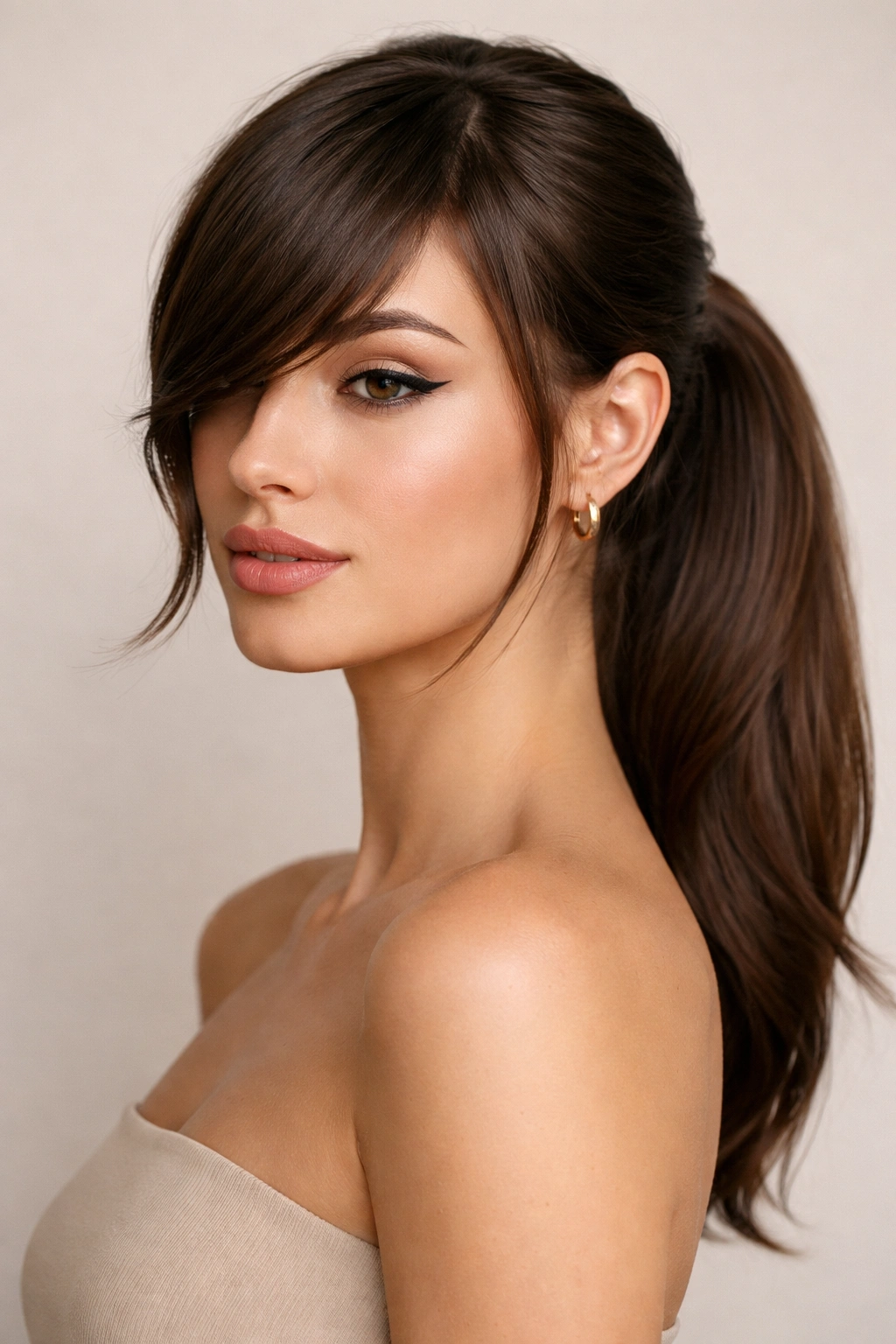
Side-swept bangs angle dramatically across your face, creating asymmetry that flatters nearly every face shape when positioned correctly. A low, sleek ponytail worn at the nape of your neck grounds the style and keeps it sophisticated. This pairing is particularly flattering for round and diamond-shaped faces because the diagonal line of the bangs creates visual length, while the low placement balances a heavier top with visual weight at the neck.
Why Asymmetry Works
The side sweep naturally draws the eye along a diagonal, which creates the illusion of a longer, narrower face—the opposite of what happens with straight-across bangs. Pairing this with a low ponytail means your hair isn’t competing at the crown; instead, the focus stays on your face and the beautiful line the bangs create. It’s understated and chic without feeling boring.
How to Achieve It
- Style your bangs with a round brush, directing them smoothly to one side as you blow-dry
- Use a light smoothing cream or serum to keep them lying in place without looking wet
- Gather your ponytail low at the nape, securing it with a thin elastic for a refined look
- Smooth the back section with a fine-tooth comb and add shine spray for polish
- Let the side-swept bangs fall naturally; don’t pin them back or hide them
Insider note: Side-swept bangs work better with some length—they need at least 3-4 inches to genuinely sweep without looking stubby.
4. Curtain Bangs With a Textured High Pony
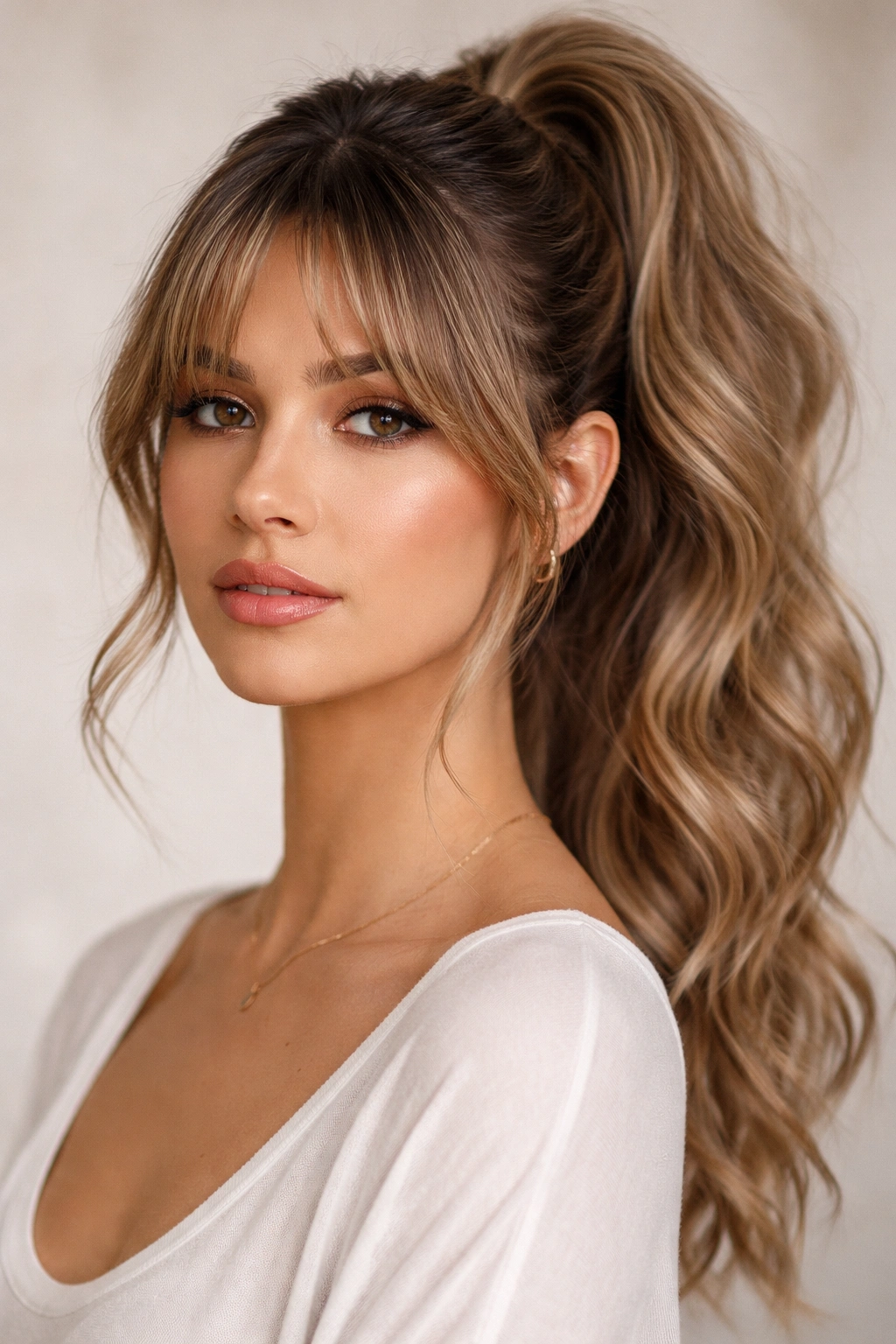
Curtain bangs part down the middle and fall in two distinct sections that frame your face like drapes—literally where they get their name. When you combine them with a textured, volumized high ponytail, you’re creating dimension at multiple levels. This works beautifully for long and rectangular faces because the opening down the middle is flattering to longer face shapes, and the textured volume in the ponytail adds width where it’s needed.
The Art of Curtain Bangs
Curtain bangs are inherently softer than blunt or even side-swept styles because they’re built on movement and separation rather than a solid line. They move independently, which gives your face more breathing room and a less severe appearance. When paired with a high ponytail with real texture—not just smooth, but actually wavy or curly—you’re creating a look that feels lived-in and intentional.
Styling Strategy
- Part your bangs down the middle and style each side separately with a round brush
- Angle the brush so each side curves away from your face slightly
- Blow-dry with your head tilted slightly back to encourage the curtain effect
- Create waves or curls in your ponytail before pulling it up for maximum texture
- Secure the high ponytail and gently spread the base to show more of your scalp for volume
Pro tip: Curtain bangs look best when there’s some texture already in your hair—they don’t photograph or move well on completely straight hair.
5. Micro Bangs With a Sleek Low Pony for Angular Faces
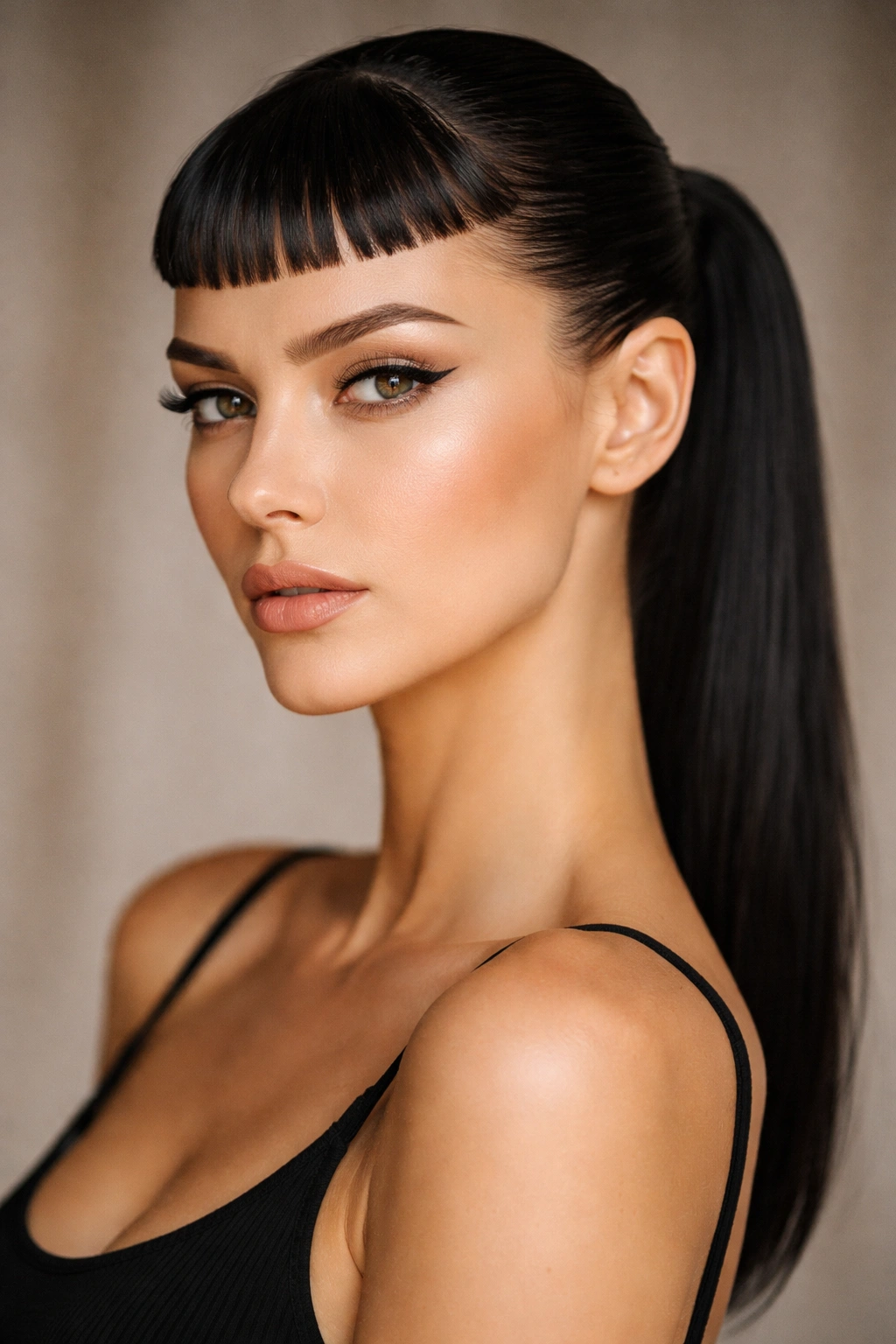
Micro bangs sit much higher on the forehead than traditional bangs—they’re barely covering your brow bone, showing maximum forehead. This takes real confidence, but it’s incredibly flattering for angular, heart-shaped, or diamond-shaped faces because it showcases your bone structure rather than hiding it. Pair micro bangs with a sleek, polished low ponytail, and you’re creating a look that’s fashion-forward and architectural.
When Micro Bangs Make Sense
Micro bangs work best when you have a naturally prominent forehead or angular features that you want to celebrate rather than downplay. They’re not for everyone, but they’re striking on the right face shape. The low, sleek ponytail keeps the style from feeling too edgy or harsh—it adds sophistication that balances the boldness of the bangs.
Getting the Look Right
- Micro bangs need to be trimmed professionally and maintained every 2-3 weeks
- Use a smoothing serum and blow-dryer to keep them perfectly flat
- Pull your ponytail low and smooth, using a fine-tooth comb for polish
- Add shine spray to both your bangs and ponytail for a cohesive, glossy finish
- Consider this style for special occasions or when you want serious impact
Worth knowing: Micro bangs show every hair texture, so they require daily styling attention to look polished.
6. Choppy Textured Bangs With a Layered Ponytail
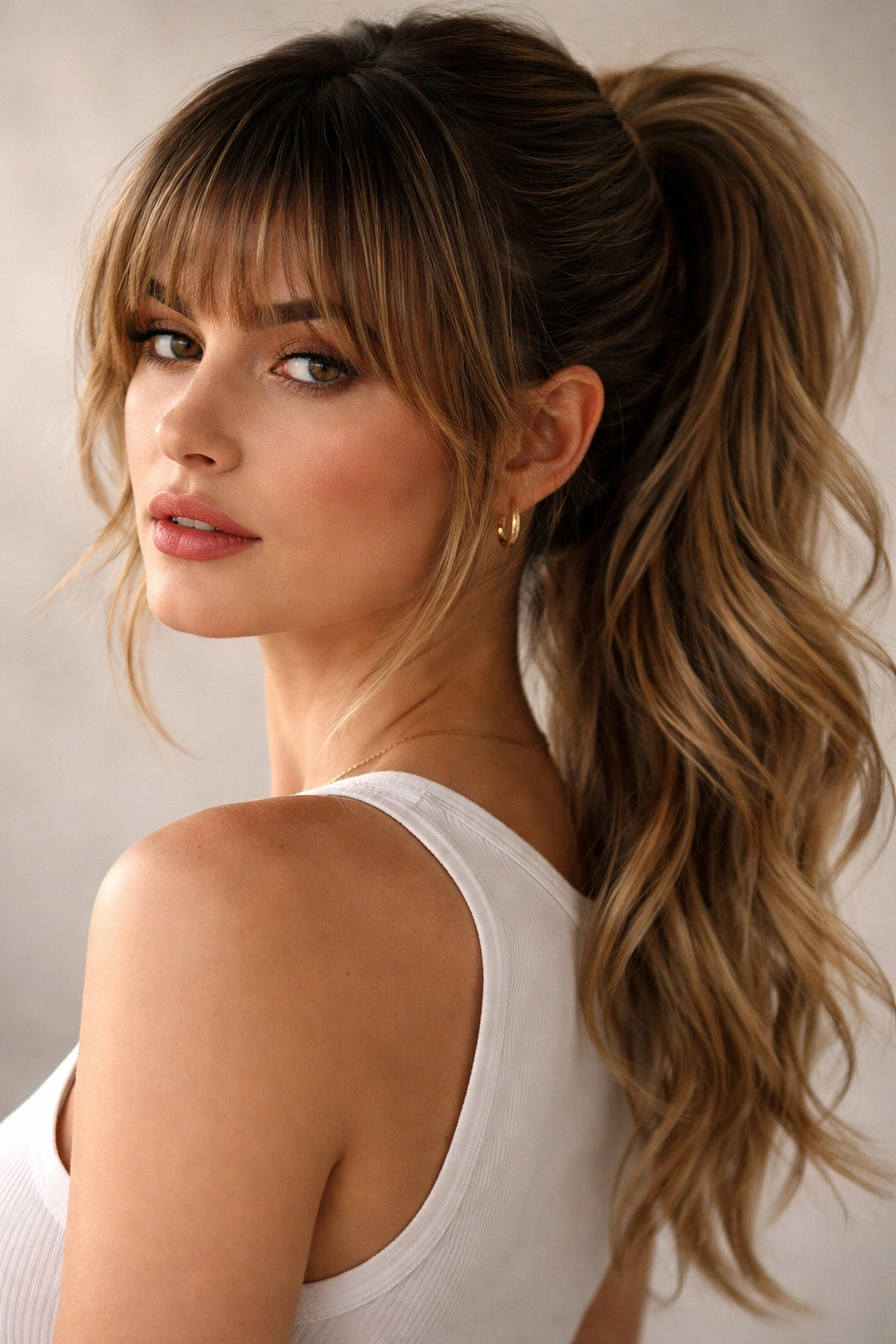
Choppy, textured bangs have shorter and longer pieces mixed throughout, creating instant movement and dimension. They’re built for texture and don’t require perfect smoothness to look good. When you pair them with a layered ponytail—where the hair has intentional length variation that creates texture as it moves—you’re creating a cohesive look that celebrates movement throughout your entire style. This works well for most face shapes, particularly round and square faces, because the texture breaks up solid lines.
The Power of Intentional Texture
Choppy bangs already communicate that this is a textured, lived-in style, so your ponytail should speak the same language. Rather than smooth and sleek, go for wavy, slightly undone, or even braided for visual interest. The combination creates a style that feels modern and effortless rather than formal or stiff.
How to Create This Look
- Ask your stylist for choppy, textured bangs with varied lengths—not blunt layers, but genuinely choppy
- Dry your bangs with a round brush or your fingers to encourage separation and texture
- Create waves or curls throughout your hair before pulling the ponytail
- Secure your ponytail with a covered elastic to hide the hair tie
- Use a texturizing spray to enhance the choppy texture in both your bangs and ponytail
Insider note: This style is more forgiving than sleek looks because texture hides imperfections and doesn’t require daily styling precision.
7. Feathered Bangs With a Sleek Slicked-Back Pony
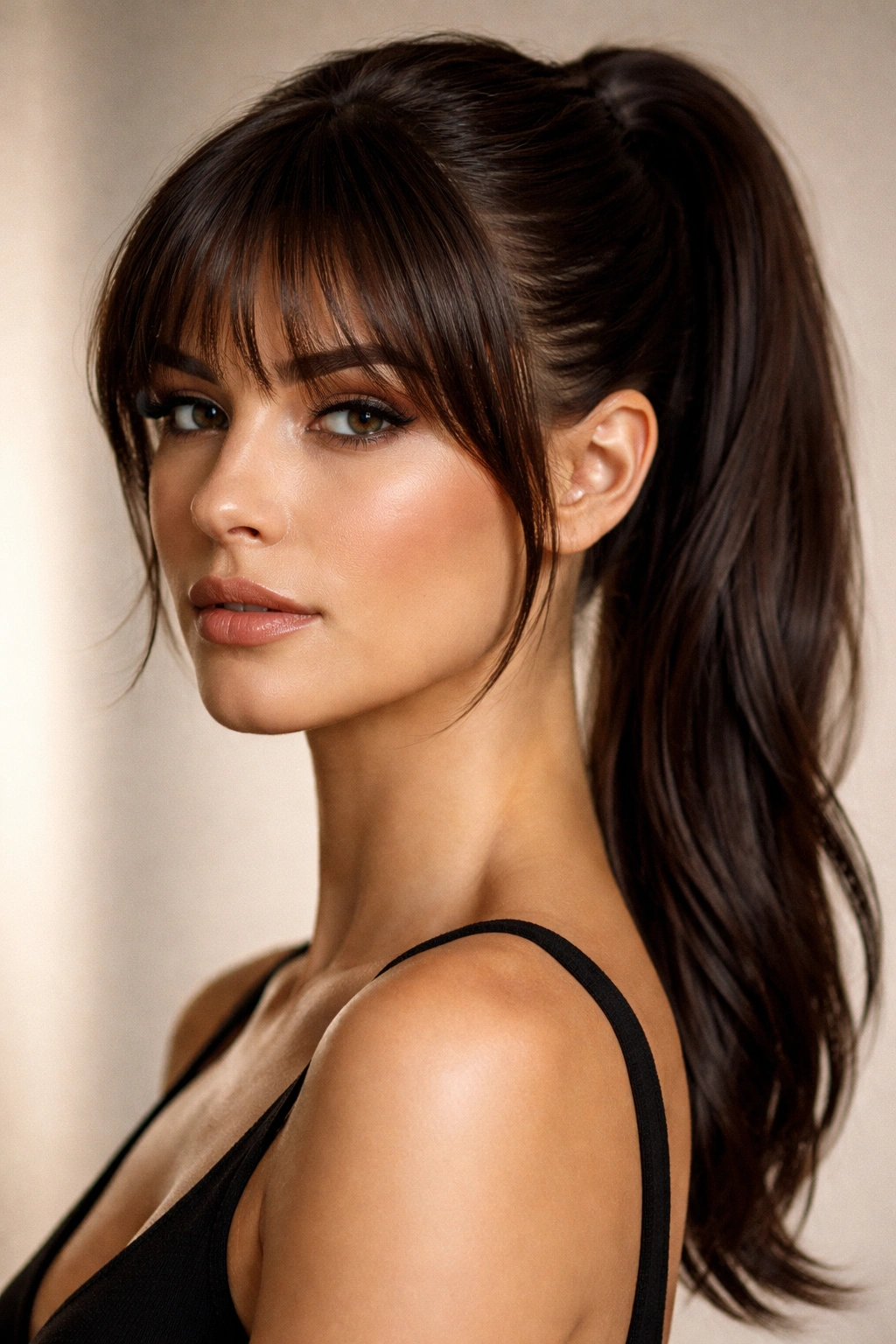
Feathered bangs have longer lengths around the edges that gradually get shorter toward the center of your forehead, creating a soft, curved shape that follows your natural brow line. When you pair them with a sleek, slicked-back ponytail, you’re creating contrast between the softness of the bangs and the severity of the pulled-back style. This is particularly flattering for oval and oblong faces because the feathering adds dimension to your forehead without bulk, and the sleek ponytail elongates your neck and shoulders.
The Softness Principle
Feathered bangs are inherently softer than blunt or even choppy styles because the longer pieces at the edges create a gentler frame. They’re not a solid line, but rather a subtle shape. This means you can pair them with more severe hairstyles—like a slicked-back ponytail—without the overall look feeling harsh or unfriendly.
Achieving the Style
- Blow-dry your bangs using a round brush, curving the edges outward slightly
- Direct the longer pieces at the edges to feather away from your face
- Apply a smoothing serum to your ponytail and brush it back firmly away from your face
- Secure the ponytail tightly with a thin elastic and smooth any flyaways
- Use a shine spray for a polished, cohesive finish across bangs and ponytail
Pro tip: Feathered bangs work especially well if you have naturally wavy or textured hair, as the feathering complements existing movement.
8. Longer, Thicker Bangs With a Messy Bun-Style Pony
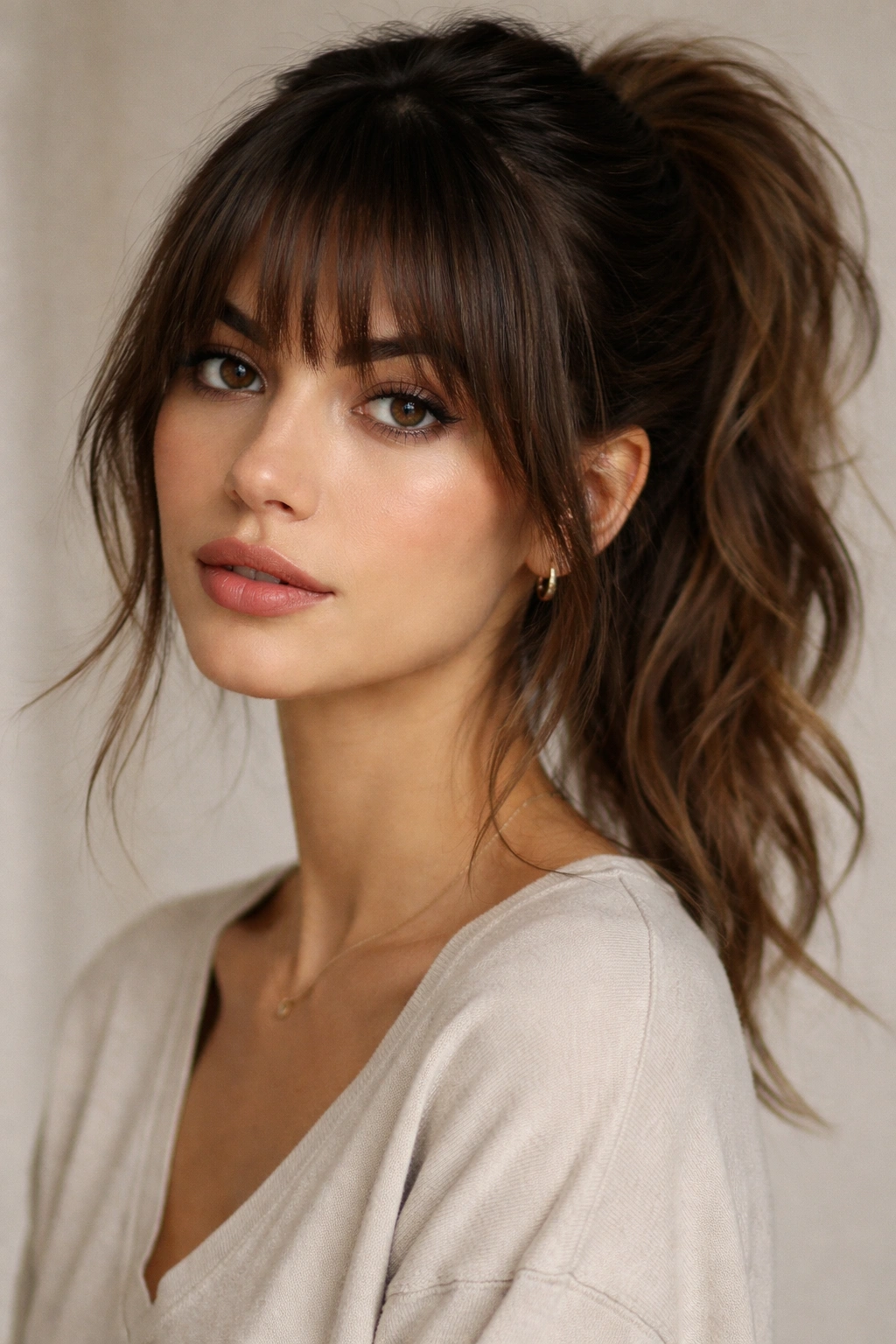
Longer, thicker bangs—falling to your eyebrows or just below—paired with a loosely gathered, slightly messy ponytail creates a casual, approachable look that works across nearly every face shape. The thickness of the bangs adds substantial framing around your face, while the relaxed ponytail style (with texture and intentional pieces escaping) keeps everything from feeling too formal or styled. This combination is ideal for round and square faces because the bulk of the bangs draws attention upward, and the messy styling softens angular jawlines.
Casual Confidence
This pairing celebrates a more undone aesthetic. The bangs are present and visible, but not demanding perfection; the ponytail is pulled up but not aggressively tight. It’s the hairstyle equivalent of looking effortlessly put-together, which translates across virtually every occasion and face shape.
Styling Tips
- Keep your bangs thick and blunt-ish, even if they have slight texture
- Don’t blow-dry everything perfectly straight—some wave or natural texture helps the look
- Gather your ponytail loosely at the crown or mid-height, securing it loosely with an elastic
- Gently pull a few pieces around your face and neck, creating intentional softness
- Use dry shampoo on your roots to add texture and grip for the messy effect
Worth knowing: This style requires less maintenance than sleek looks and actually improves throughout the day as texture develops naturally.
9. Wispy Curtain Bangs With a Braided Ponytail
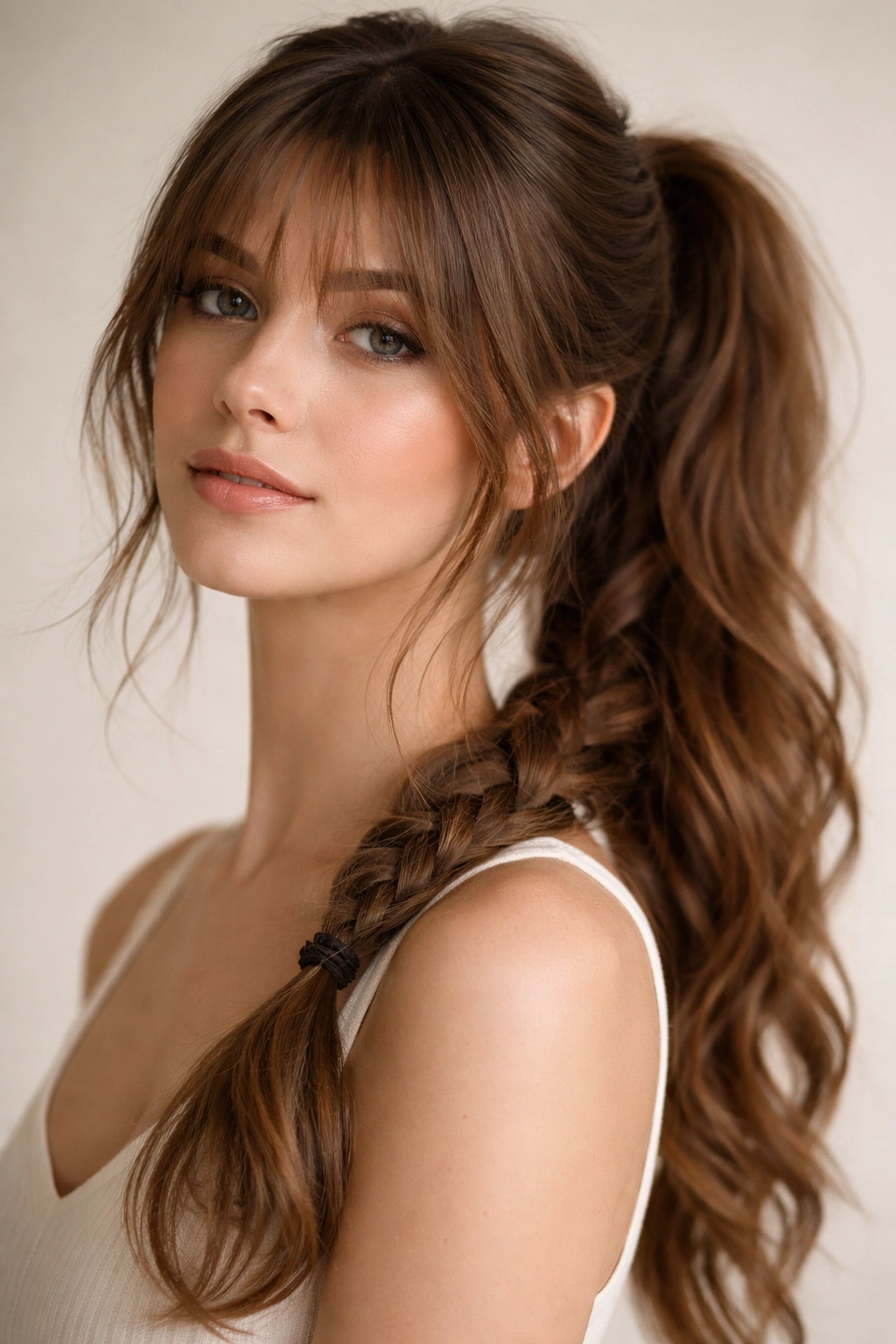
Wispy curtain bangs—where the parted, delicate strands frame your face gently—paired with a braided ponytail creates a romantic, slightly bohemian aesthetic. The braiding adds visual interest and texture while keeping your hair pulled away from your face. This works beautifully for heart-shaped and oval faces because the curtained opening is flattering to longer face shapes, and the braiding adds dimension without bulk at the crown.
Romance in the Details
Braids automatically read as more intentional and styled than a simple ponytail, but they’re still practical for keeping hair off your face. Combine braids with wispy curtain bangs, and you’re creating a look that’s both approachable and thoughtfully put-together. It reads feminine without being frilly.
How to Execute It
- Create your curtain bangs and style them to fall naturally around your face
- Gather your ponytail at your preferred height and secure it with a thin elastic
- Braid your ponytail in a single strand or split braid, depending on thickness and texture
- Secure the end of the braid with a small elastic
- Gently pull the braid slightly to add width and dimension after braiding
Pro tip: A fishtail or Dutch braid photographs better than a simple three-strand braid and adds more visual interest.
10. Side-Swept Heavy Bangs With a Low Textured Pony
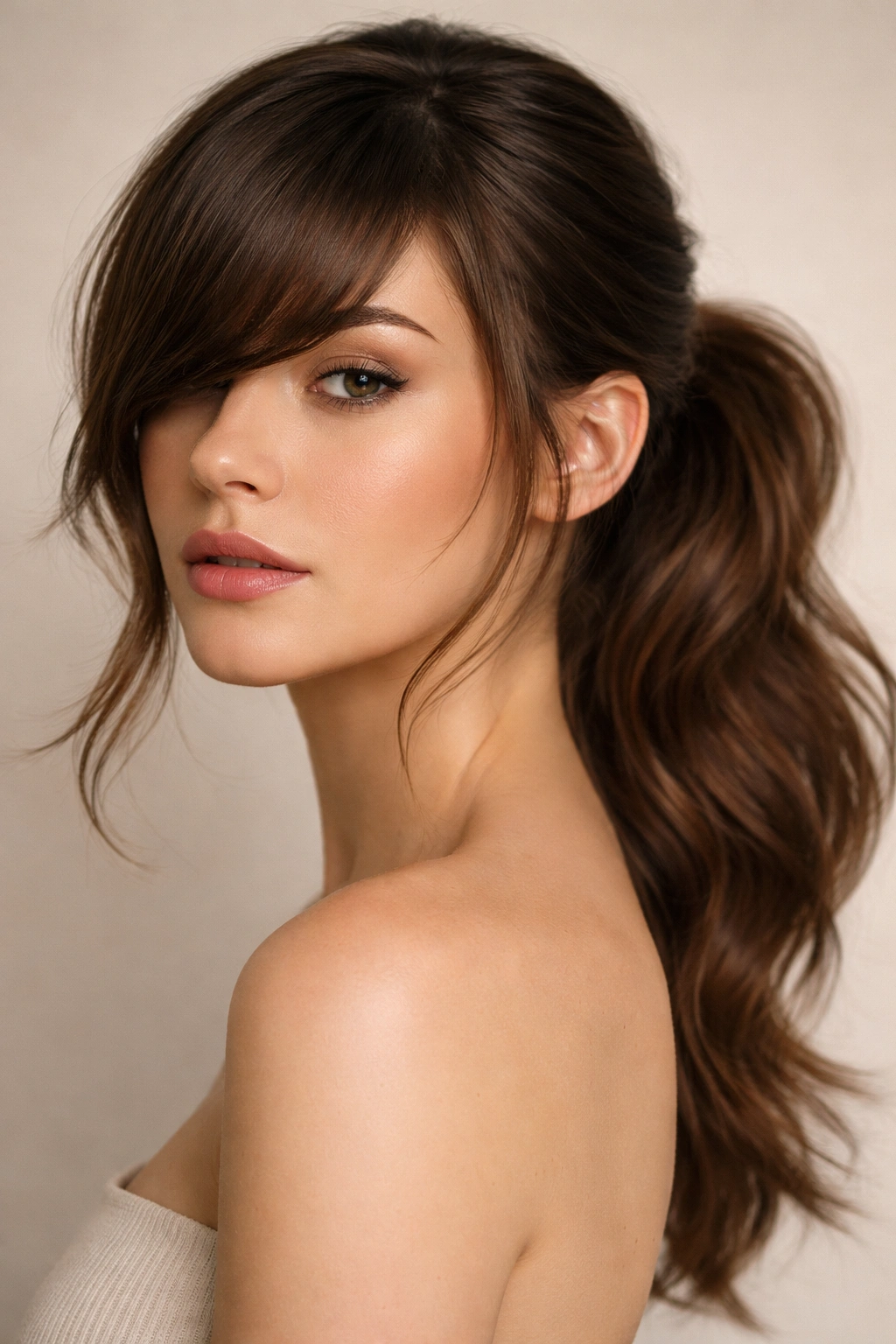
Heavy side-swept bangs—thicker and fuller than typical side-swept styles—combined with a low ponytail that has real texture creates substantial visual impact. The weight of the bangs and the textured layers in your ponytail create a look that’s undeniably stylish and flatters diamond-shaped and heart-shaped faces. The heaviness of the bangs balances a heavier brow area, while the low placement with texture adds visual weight at the base of your neck.
Weight and Balance
Heavy bangs command attention, so they pair best with equally intentional ponytail styling. A simple, smooth low ponytail would make the proportions feel off; you need texture and movement in your ponytail to balance the visual density of the bangs. Think waves, curls, or a twisted-together style rather than something completely sleek.
Styling Approach
- Style your heavy side-swept bangs smooth and slightly curved away from your face
- Use a smoothing serum to keep them lying perfectly without looking greasy
- Create waves or curls throughout your ponytail before securing it
- Gather your ponytail low at the nape and secure with a covered elastic
- Let a few pieces escape from the ponytail around your neck and ears for softness
Worth knowing: Heavy bangs require more upkeep than wispy styles because they show oil buildup and need regular washing to look fresh.
11. Blunt Micro Bangs With a High Braided Pony
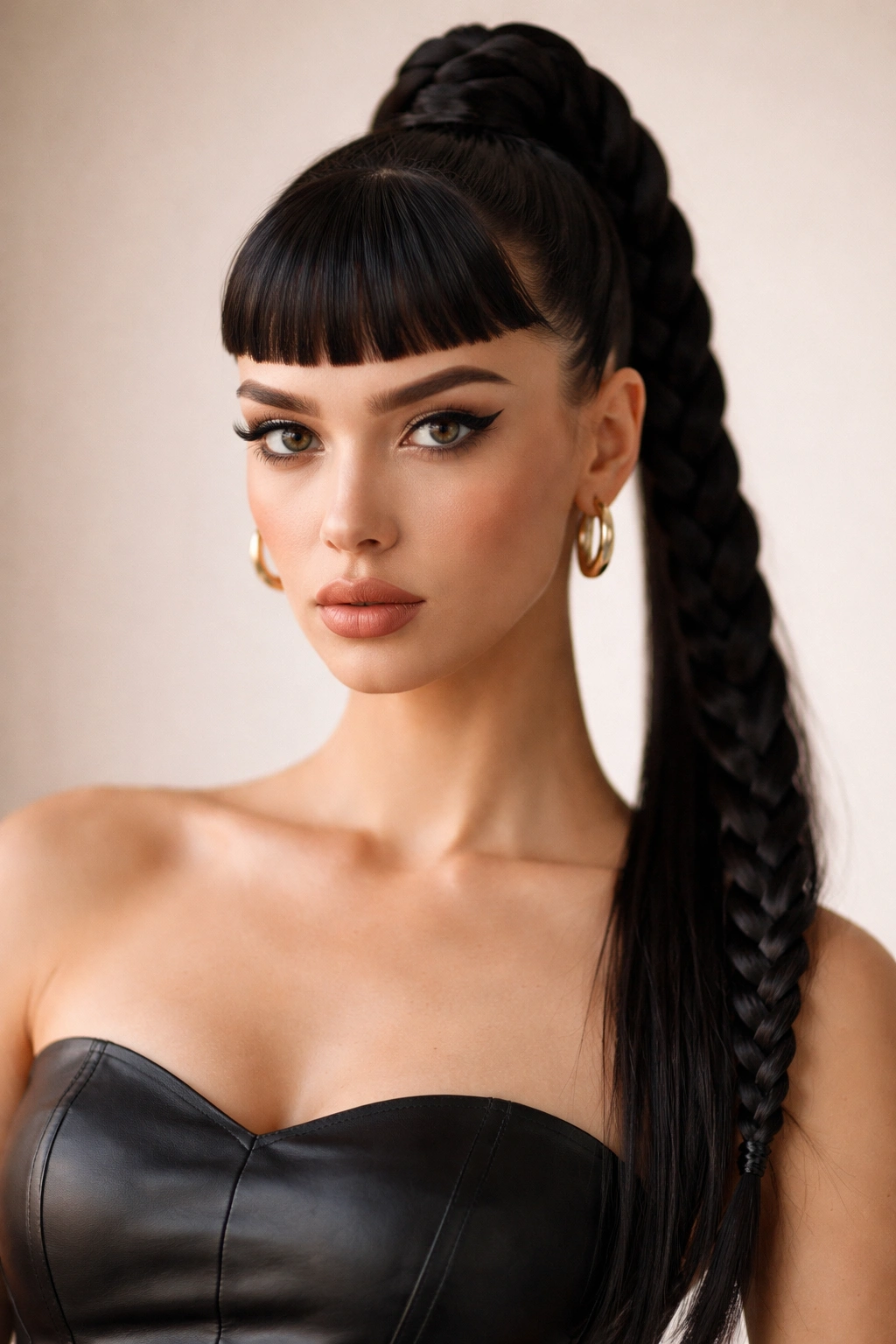
Blunt micro bangs—short and definitive—paired with a high ponytail that’s braided creates bold contrast and real personality. The shortness of the bangs makes a fashion statement, while the braiding at the crown adds dimension and prevents the style from feeling too edgy. This works particularly well for angular faces and faces with prominent features because it celebrates rather than softens structure. It’s not a style for the faint of heart, but it’s incredibly striking.
Statement-Making Combination
When you combine very short, blunt bangs with an equally intentional high braided ponytail, you’re committing to a look that’s contemporary and fashion-forward. This isn’t subtle—it’s a deliberate choice that reads as confident and cool. The braiding adds enough softness that it’s not purely architectural, but it’s definitely more style-focused than comfort-focused.
Getting It Done
- Work with a professional stylist for blunt micro bangs—the proportion is crucial
- Maintain them every 2-3 weeks because the line grows out noticeably
- Create your high ponytail from the crown and braid it in your chosen style
- Use a texturizing spray on the braid for a modern, slightly undone finish
- This style pairs beautifully with bold makeup since your forehead is fully visible
Pro tip: Micro bangs work better with some styling products—they’re harder to wear in a completely undone way.
12. Soft Layered Bangs With a Mid-Height Twisted Pony
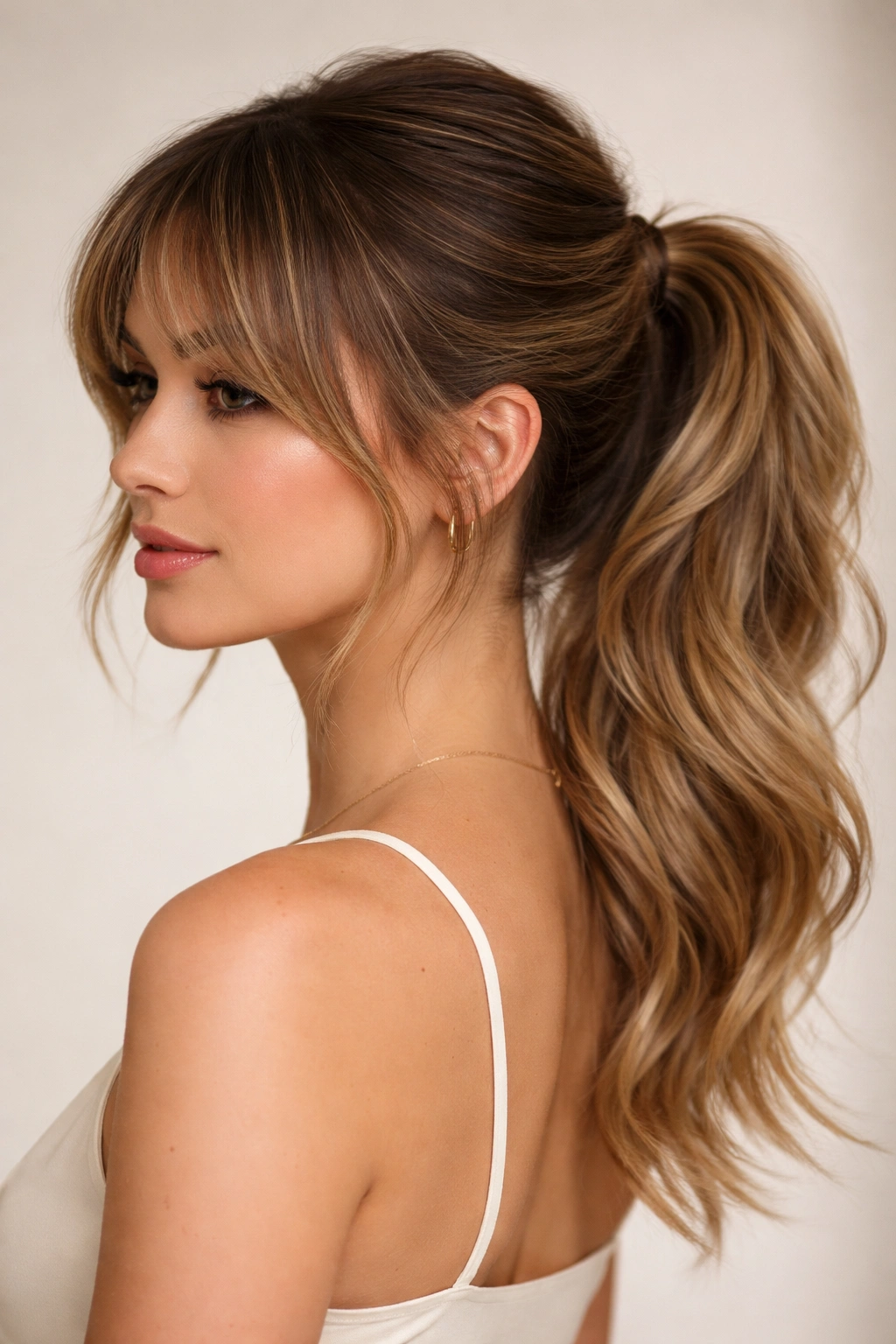
Soft, layered bangs with shorter pieces throughout that create movement and shape work beautifully with a mid-height twisted ponytail. The layering in the bangs creates softness and texture, while the twisting of your ponytail (rather than braiding or leaving it smooth) adds visual interest and dimension. This works well for square and rectangular faces because the layering of the bangs adds dimension to your face, and the mid-height placement balances proportions without being too high or too low.
Soft Dimension Throughout
This combination celebrates movement and texture in multiple forms. The layered bangs move independently, and the twisted ponytail creates visual complexity without requiring as much technical skill as braiding. It’s approachable but intentional—a style that looks like you care without looking like you spent hours on it.
How to Create This Look
- Ask your stylist for soft, layered bangs with varied lengths, not choppy texture
- Blow-dry your bangs with a round brush to encourage movement and separation
- Gather your ponytail at mid-height and secure it with an elastic
- Twist sections of your ponytail around each other, then secure the ends
- Gently pull the twist to add width and show the layering within the twist
Insider note: Layered bangs grow out more gracefully than blunt styles because the varied lengths hide the new growth.
13. Curtain Bangs With a High Voluminous Pony
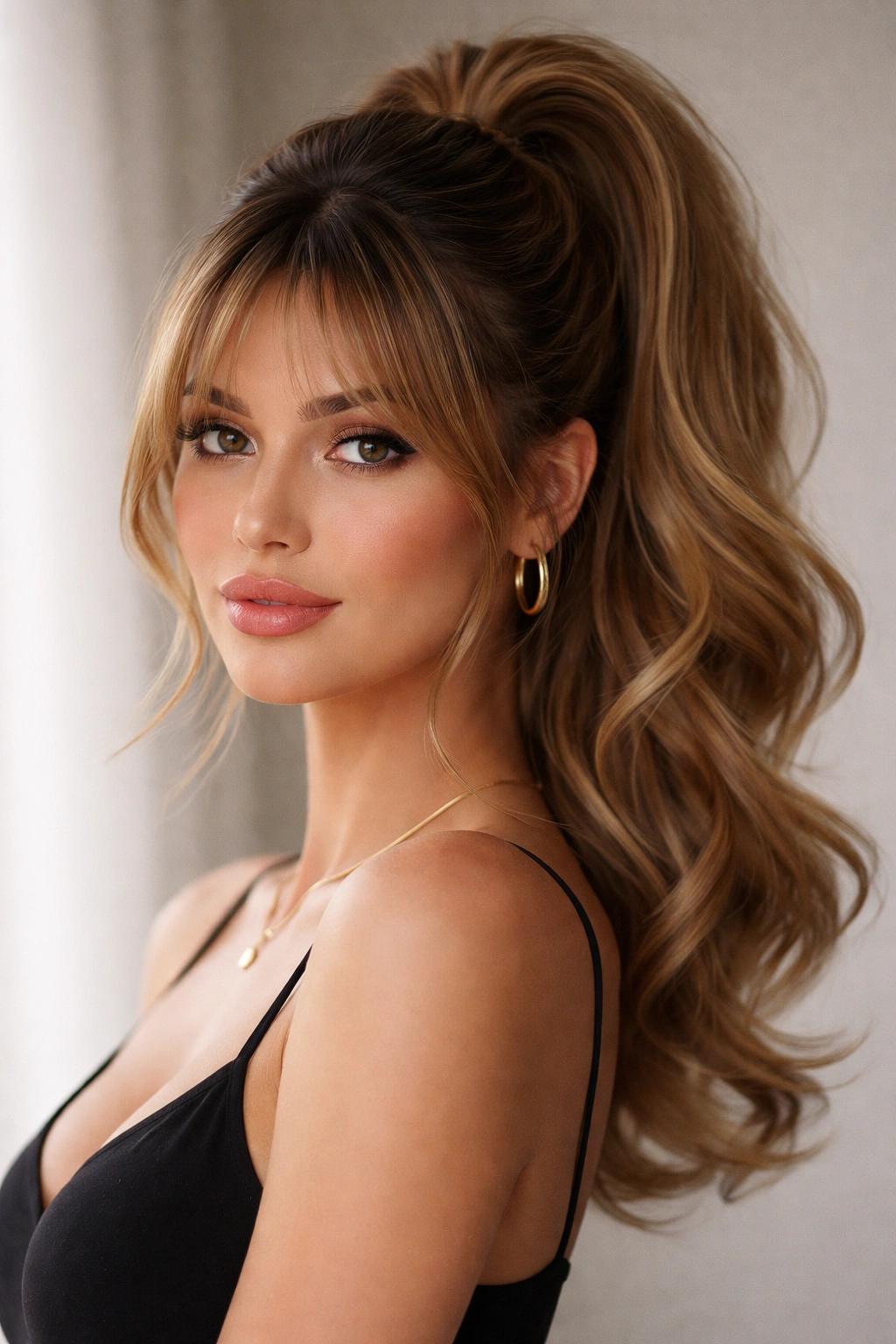
Curtain bangs with significant volume in your high ponytail creates an eye-catching style that suits most face shapes but particularly flatters long and rectangular faces. The opening created by curtain bangs is especially flattering to faces with longer proportions, while the volume at the crown adds width and prevents the style from feeling elongated. This is a style you’d wear when you want genuine visual impact—it’s glamorous and polished.
Glamour Through Volume
Volume at the crown automatically reads as more intentional and styled. When you combine that with the soft framing of curtain bangs, you’re creating a look that’s polished without feeling severe. The movement in your ponytail—curls, waves, or simply the volume itself—creates visual interest that draws the eye upward.
Achieving Maximum Volume
- Style your curtain bangs and let them fall naturally around your face
- Blow-dry your entire head with your head tipped back to create natural volume
- Use a volumizing spray or mousse at your roots for extra lift
- Gather your ponytail high at the crown and secure it tightly
- Gently backcomb the base of your ponytail to create more volume at the roots
- Create waves or curls in your ponytail with a curling iron for additional dimension
Pro tip: This style works better with longer hair or significant hair density because the volume needs enough hair to support it visually.
14. Swept-Side Bangs With a Sleek Center-Part Pony
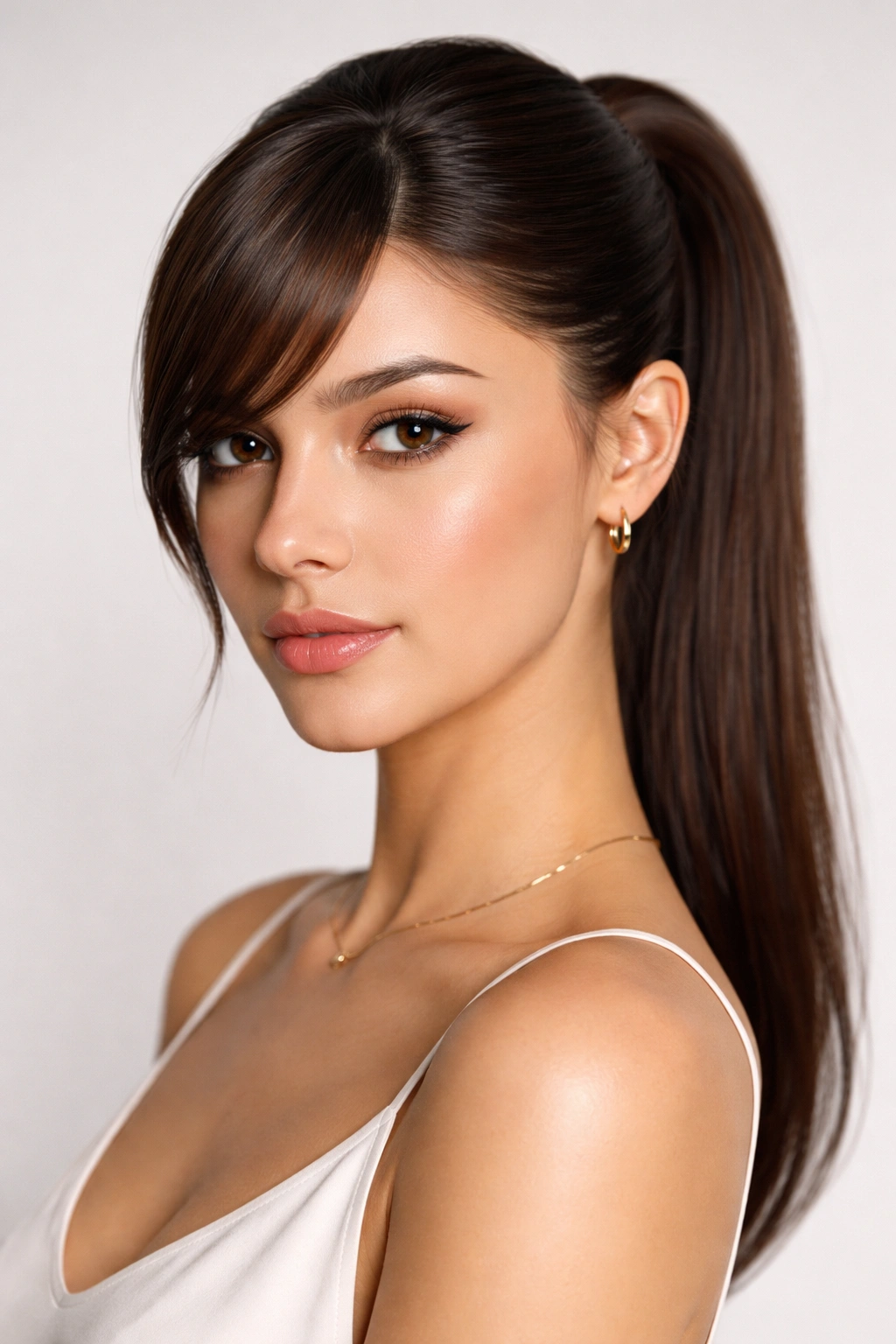
Swept-side bangs that angle dramatically across your face, paired with a sleek ponytail that’s parted down the center, creates graphic, contemporary contrast. The asymmetry of the bangs plays beautifully against the symmetry of a center-parted ponytail. This works particularly well for round faces because the diagonal line of the bangs creates visual length, and the center part adds definition without bulk.
Graphic Elegance
This combination is more editorial than everyday, which means it’s perfect for situations where you want your style to make an impression. The graphic nature of the side-swept bangs and center part feels intentional and thoughtfully designed. It’s not a casual look—it’s a committed aesthetic choice.
Styling Instructions
- Style your side-swept bangs to curve away from your face smoothly
- Use a smoothing serum and a fine-tooth comb to keep them lying perfectly
- Create a center part from your crown all the way down your back
- Gather your ponytail at your preferred height with the part running through the center
- Smooth your entire ponytail using a fine-tooth comb and shine spray
Worth knowing: A center-parted ponytail requires very smooth, polished hair to look intentional rather than accidental.
15. Textured Choppy Bangs With a Textured High Bun-Style Pony
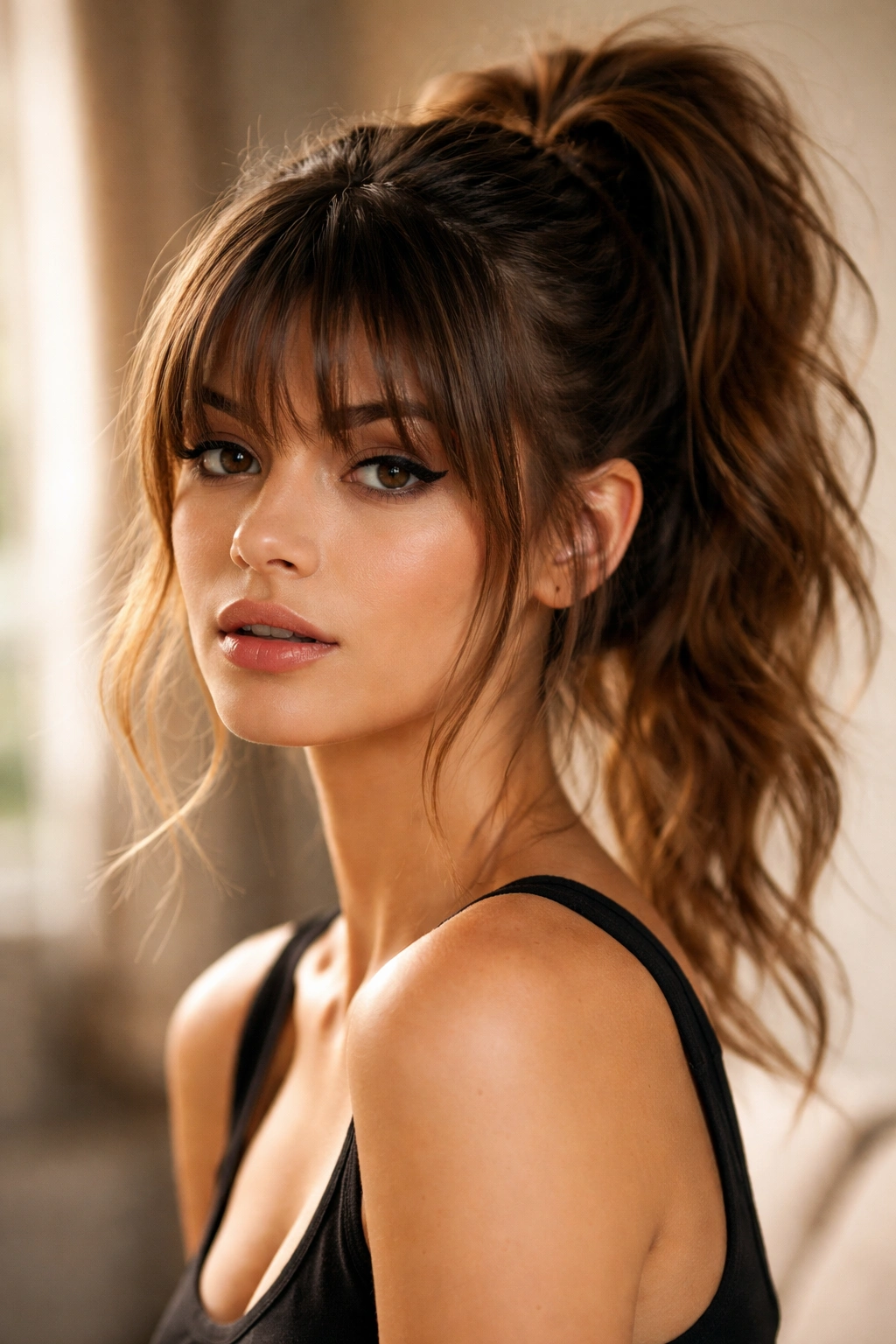
Choppy, textured bangs with obvious layering paired with a high ponytail styled into a loose bun creates an effortlessly modern look that works across nearly every face shape. The texture is consistent throughout—choppy bangs meeting a textured, loosely bundled high ponytail—creating visual cohesion through shared aesthetic. This is a style that celebrates texture and movement over sleekness, making it perfect for anyone who prefers a more undone, approachable vibe.
Texture as a Unifying Element
When your bangs are choppy and textured, pairing them with a smooth, sleek ponytail creates disconnect rather than flow. Instead, answer choppy with choppy, texture with texture. The result is a look that feels intentional and coordinated in its casual approach. This works beautifully for round and square faces because the texture breaks up lines and angles softly.
Creating the Style
- Keep your choppy bangs textured and slightly undone
- Create loose waves or curls throughout your hair before styling
- Gather your ponytail high at the crown and secure it loosely
- Twist or loosely braid your ponytail, then wrap it around itself to create a bun
- Pull a few pieces loose around your face and neck intentionally
- Use a texturizing spray to enhance all the texture throughout your style
Pro tip: This is the most forgiving style of the bunch because texture hides imperfections and daily styling variation actually adds to the aesthetic rather than detracting from it.
Final Takeaway
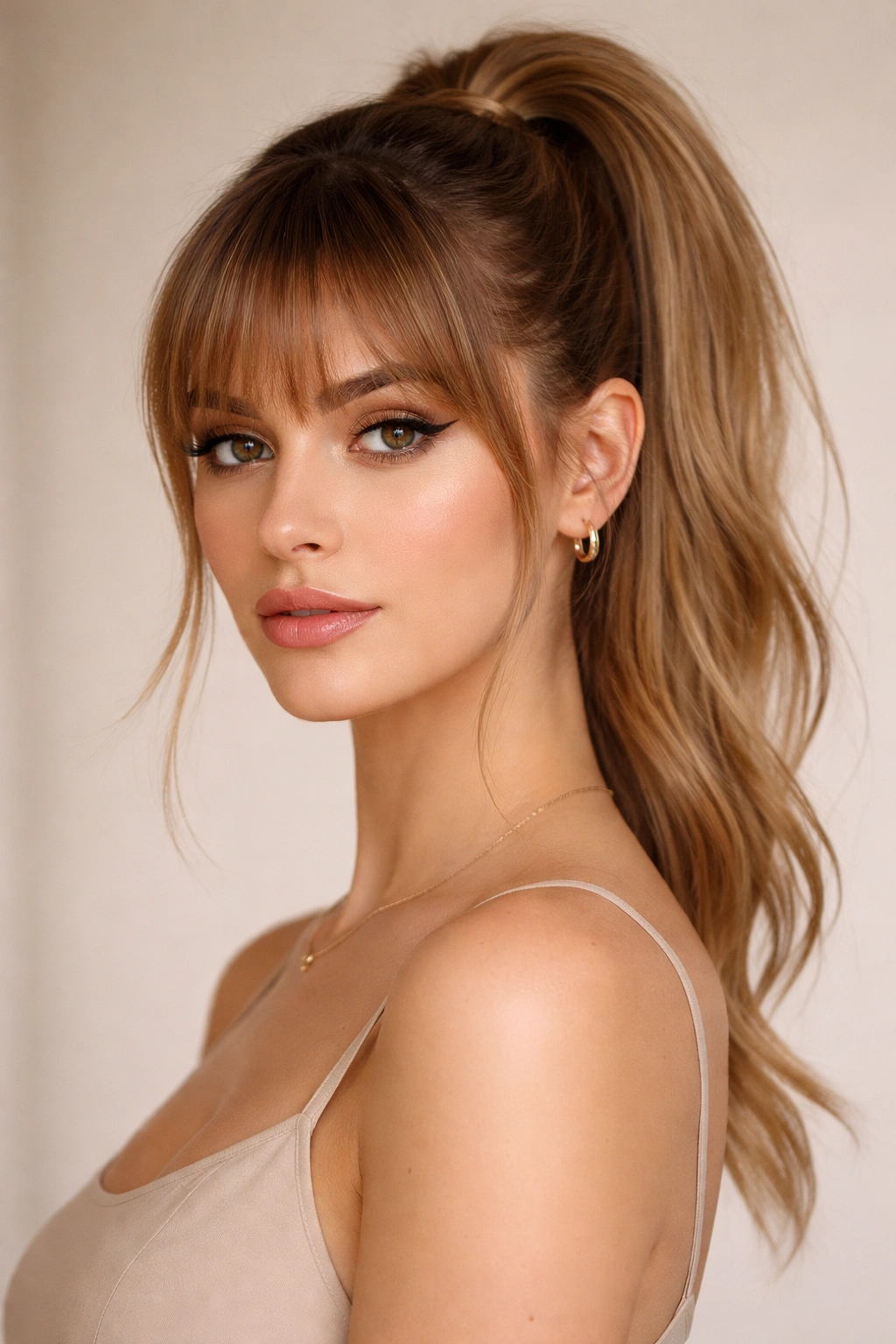
The magic of pairing bangs with a ponytail isn’t about following a rigid rule—it’s about understanding how the proportions, texture, and placement of each element work together to either balance or enhance your particular face shape and personal style. An oval face has the freedom to experiment across nearly all of these options, while a round face benefits from styles that add length and vertical interest. Heart-shaped faces thrive with styles that balance a heavier brow area, and square faces benefit from softness and texture that ease angular features.
Your best approach is to identify which characteristics resonate with your face shape, then experiment with the bang style and ponytail combination that feels genuinely flattering when you look in the mirror—not just theoretically correct. Pay attention to what makes you feel confident and like the most authentic version of yourself. Whether you’re drawn to wispy softness, bold bluntness, textured movement, or graphic asymmetry, there’s a ponytail-and-bangs combination that’s waiting to become your signature style.
