


If you’ve got wavy hair, you probably know the struggle of finding a bob cut that actually works with your texture instead of fighting against it. A regular blunt bob often looks choppy and shapeless on waves, while some styles sit flat and dull. But a bob designed specifically for wavy hair? That’s where the magic happens. The right cut can enhance your natural texture, add movement and dimension, and genuinely make styling easier rather than harder.
The key difference is that bobs for wavy hair need layers, strategic shaping, and a cut that works with your wave pattern rather than against it. Styling products and technique matter, sure, but the foundation is the cut itself. When you start with the right shape, you’re halfway to great hair without fussing for an hour every morning.
Whether your waves are loose and fluid or tighter and more textured, there’s a bob style that’ll make you feel like you finally found “the one.” Let’s look at specific cuts that’ve proven themselves on real wavy hair—styles that you can actually maintain and that get better, not worse, as your hair grows out a bit.
1. The Textured Shag Bob
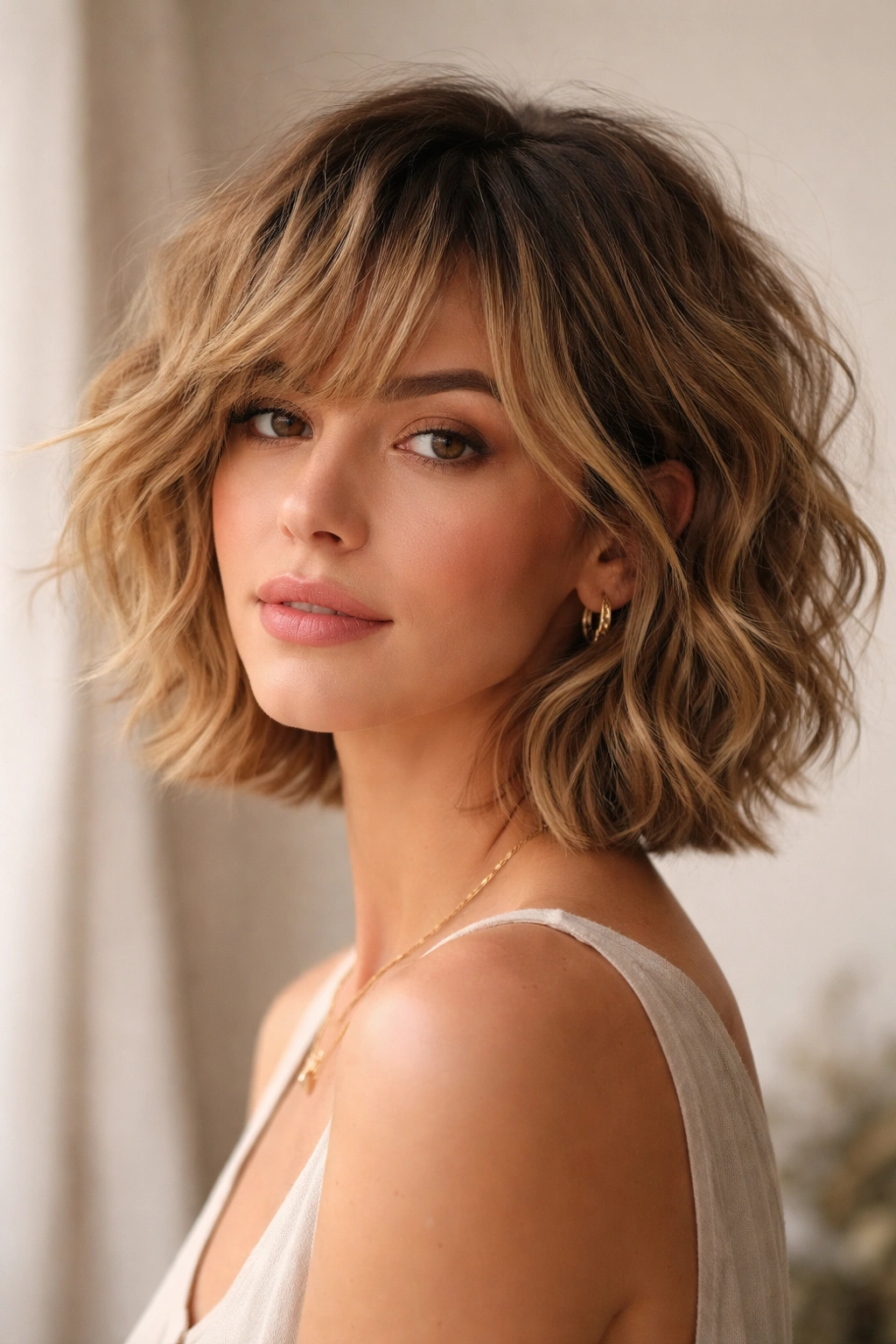
A shag bob brings retro energy with modern texture, and it’s practically made for wavy hair. This cut combines short, choppy layers throughout with longer pieces underneath, creating instant dimension and movement. The layers break up density and help waves sit more naturally instead of bunching up or looking limp.
Why Shag Works Beautifully on Waves
The layered structure means shorter pieces lift at the crown and longer strands create flow at the bottom. This prevents the heavy, triangle shape that traditional bobs sometimes create on wavy hair. The choppy texture also minimizes frizz visually because the cut celebrates texture rather than fighting it. Most waves look stronger and more intentional in a shag than in a blunt cut.
What to Ask Your Stylist About
- Request layers that start at least 2-3 inches from your scalp for volume without looking wispy
- Ask for textured, choppy layers throughout rather than smooth, blended ones—this is what gives the shag its personality
- Request longer pieces in front that frame the face, typically to the chin or just below
- Specify that the shortest layers should end around ear length for movement without shortness
- Plan for a cut every 6-8 weeks, as layers can look ragged when they grow out unevenly
Pro tip: Use a texture spray or sea salt spray on damp waves before blow-drying—it enhances the shag’s choppy vibe and makes styling feel effortless.
2. The Choppy Lob with Bangs
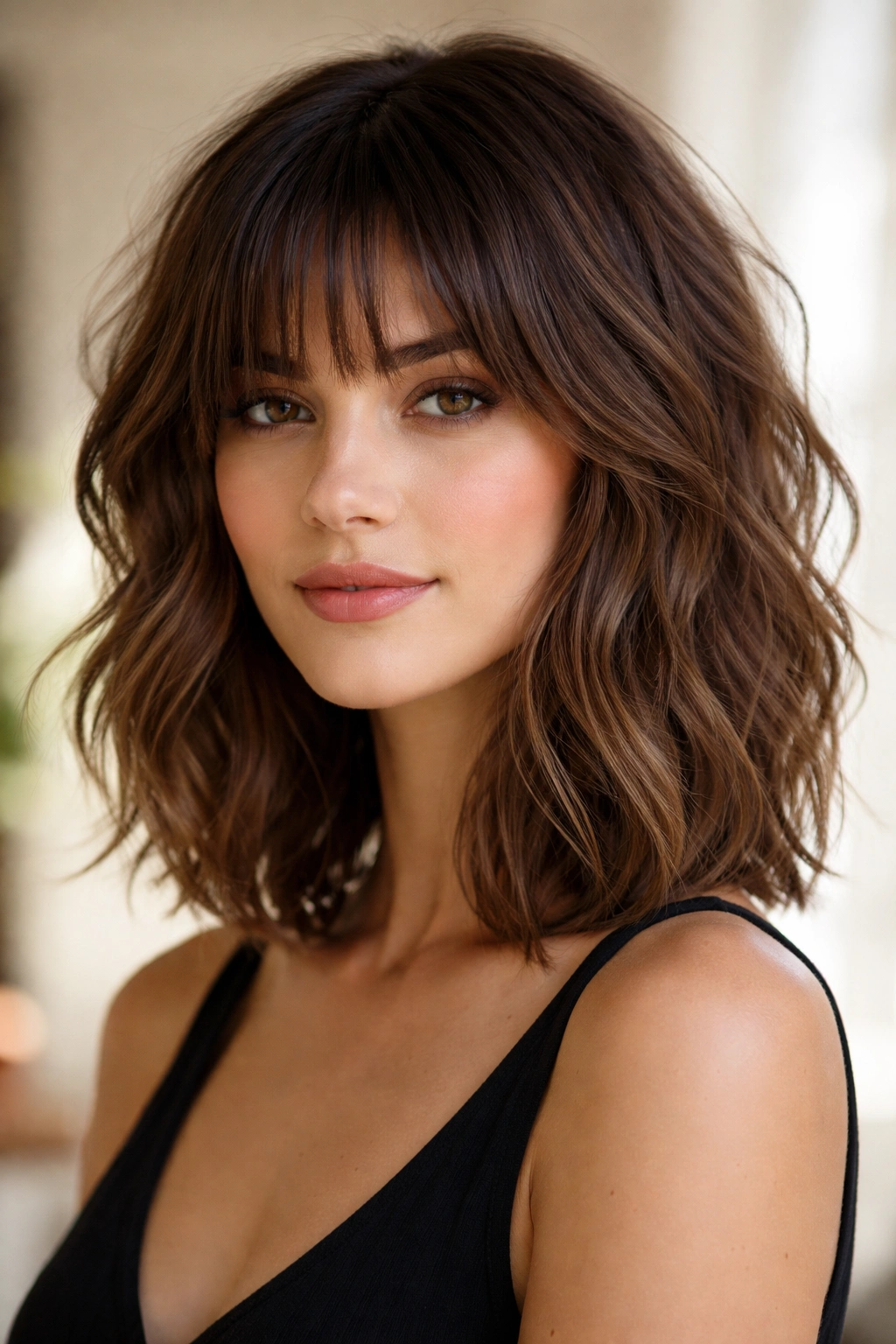
A lob (long bob) with choppy layers and face-framing bangs is extremely flattering on wavy hair, especially if you want more length without sacrificing movement. The bangs can be straight-across and bold, or wispy and textured—both look fantastic on waves. The choppy layers underneath make the lob feel less heavy and more contemporary.
Why This Style Flatters Wavy Hair
Choppy pieces catch light and movement differently than smooth ones, making waves look more dimensional and alive. Face-framing layers emphasize cheekbones and facial features while the length creates the illusion of a slimmer face shape. Bangs add personality and can actually reduce the effort needed to style the rest of your hair because they anchor the look. Waves naturally fall into the texture of choppy layers, so you’re working with your hair’s instincts rather than against them.
What to Know Before Booking
- Choose bangs that land just at your eyebrows if you want them bold, or higher on the forehead for a more subtle effect
- Ask for the lob to hit somewhere between chin and collarbone—longer than this and waves can look stringy
- Request that choppy layers start around cheekbone length so they don’t disappear when your hair dries
- Understand that bangs require more maintenance; plan for trims every 3-4 weeks if you want them looking sharp
- Ask about a textured or “lived-in” cut rather than razor-sharp layers for a more modern, wave-friendly result
Worth knowing: Bangs on wavy hair need to be cut into the wave pattern, not against it. A stylist experienced with waves will cut your bangs slightly longer than they appear wet, accounting for how waves shrink when they dry.
3. The Soft Rounded Bob
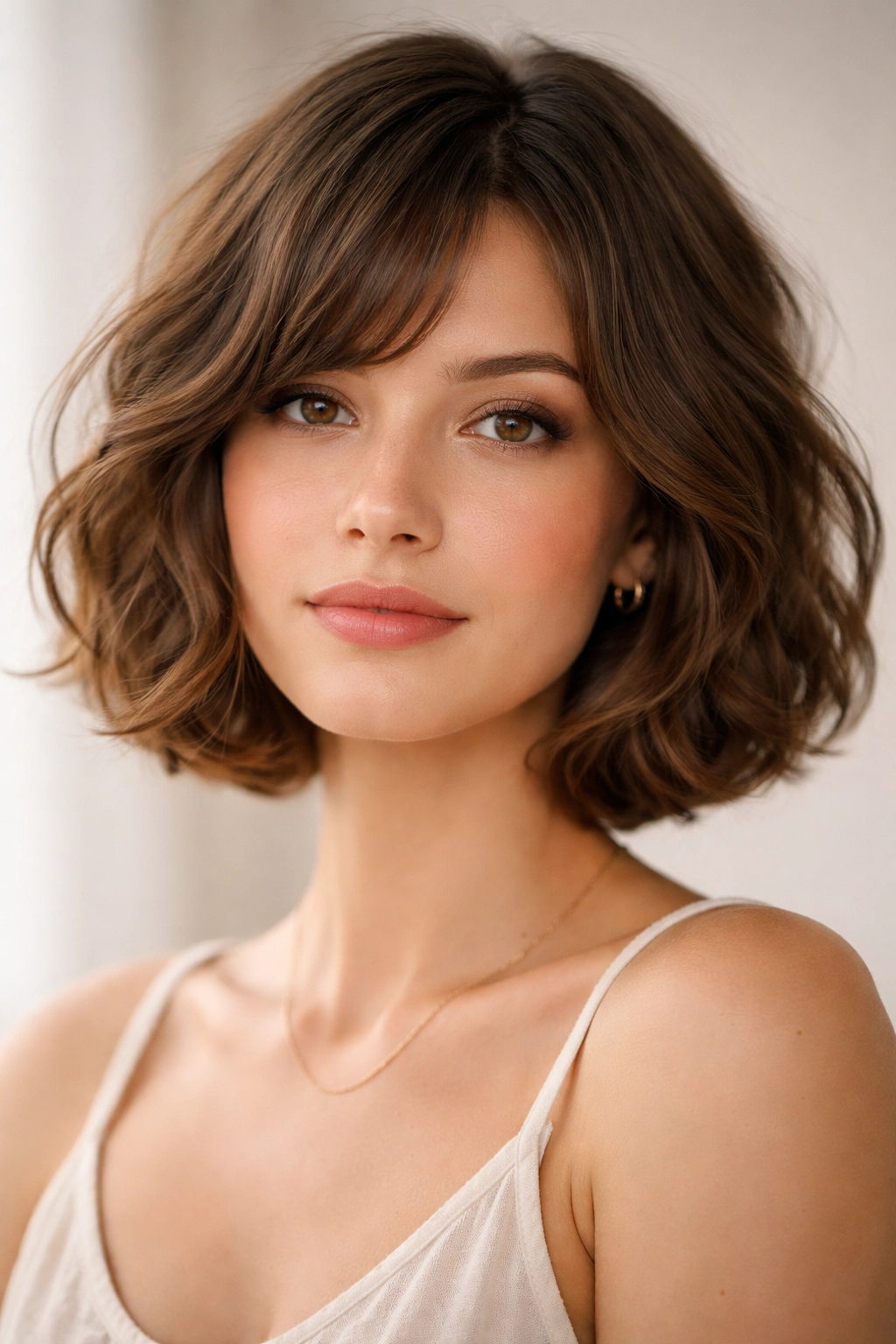
Sometimes the simplest is the most effective. A soft, rounded bob skims just below the chin and has subtle layers built in at the crown and sides. There’s no hard angle—just a gentle curve that follows the natural shape of the head. It’s sophisticated, easy to wear, and genuinely flattering when executed well on wavy hair.
Why Softness Suits Waves
Rounded bobs avoid the blunt lines that can look harsh on textured hair. Instead of a sharp edge, soft layers blend and feather, allowing waves to sit naturally without looking broken or disconnected. The rounded shape also allows for a fuller appearance at the crown, which combats the flatness some wavy-haired people experience. This style reads as polished without feeling overly styled.
Key Cutting Details to Discuss
- Ask for subtle layers only at the crown and sides; the back can be slightly thicker for structure
- Specify that you want the overall shape to be soft and rounded, not angular
- Request that the sides frame your face gently rather than emphasizing or diminishing any features
- Ask your stylist to cut while your hair is dry so they can see how your waves naturally fall and work with that
- Confirm that the bottom edge should be piece-y rather than blunt—this is what gives the softness
Pro tip: This style gets better as it grows; the layers expand and movement increases over 4-6 weeks, giving you two very different looks from one cut.
4. The Curtain Bangs Bob
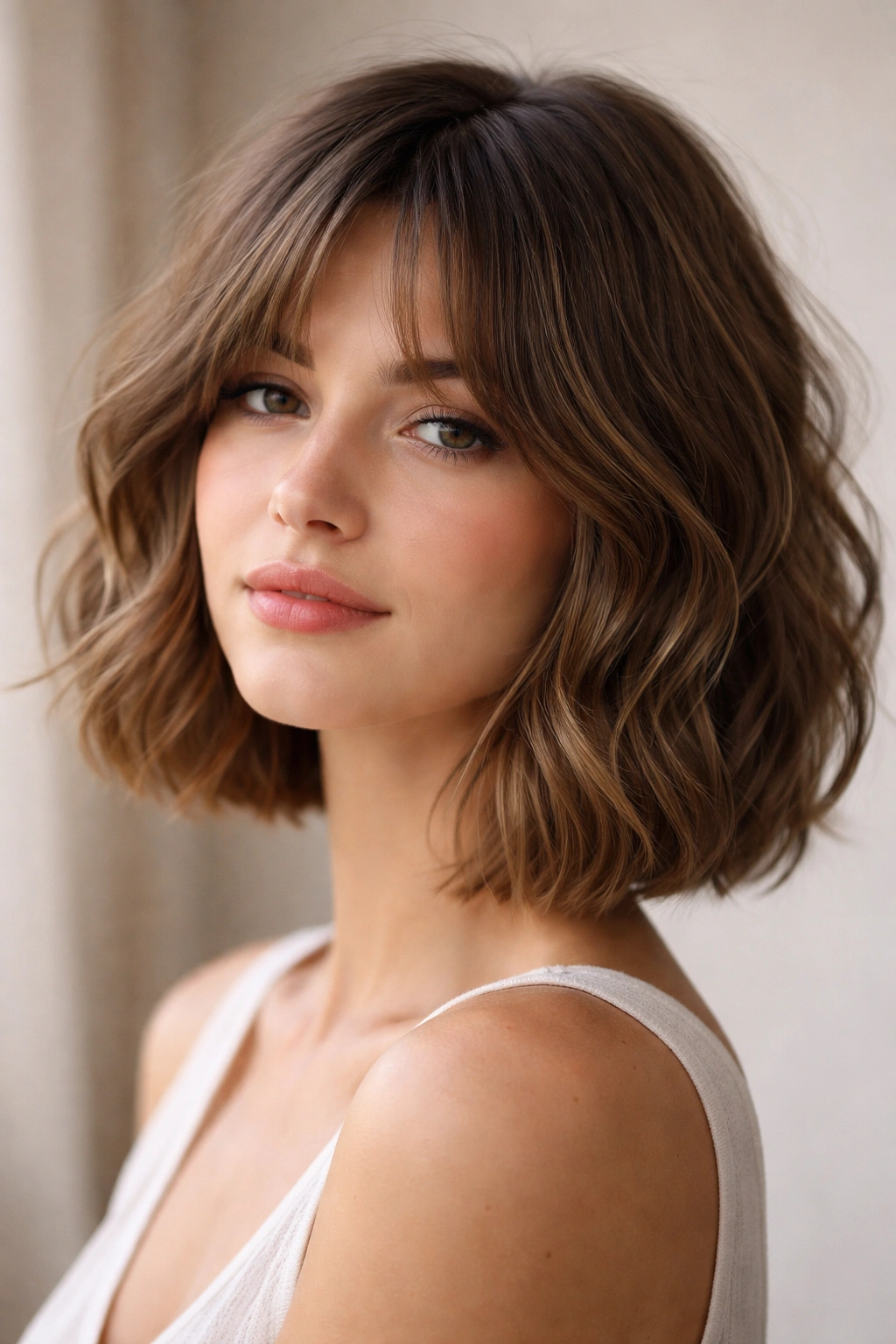
A bob with face-framing curtain bangs feels both trendy and timeless, and curtain bangs specifically suit wavy hair because they work with your wave pattern instead of sitting flat against your forehead. The bangs fall away from the face and blend seamlessly into the rest of the cut. The overall shape is chin-length or slightly longer, with layers throughout.
Why Curtain Bangs Enhance Wavy Hair
Curtain bangs create a natural parting where your waves already want to fall, so there’s minimal styling friction. They frame the face beautifully without requiring daily blow-drying into submission. The way they sit—with gentle movement and dimension—actually looks more natural on wavy hair than on straight hair. They’re also incredibly forgiving; if you wake up and your waves parted differently, the bangs still look intentional.
Styling and Cutting Considerations
- Ask for the bangs to fall just past your cheekbones when dry—they’ll look shorter when wet
- Request that the bangs be cut into layers rather than as a thick, blunt piece
- Specify that layers should continue throughout the rest of the bob for cohesion and movement
- Plan for maintenance every 4-6 weeks as the bangs grow and shift
- Ask your stylist how to style them using a round brush and heat, plus options for styling with heat-free methods
Worth knowing: Curtain bangs look even better when you enhance your natural waves with a texturizing spray or light mousse. The movement in the bangs echoes the movement in your hair.
5. The Disconnected Layered Bob
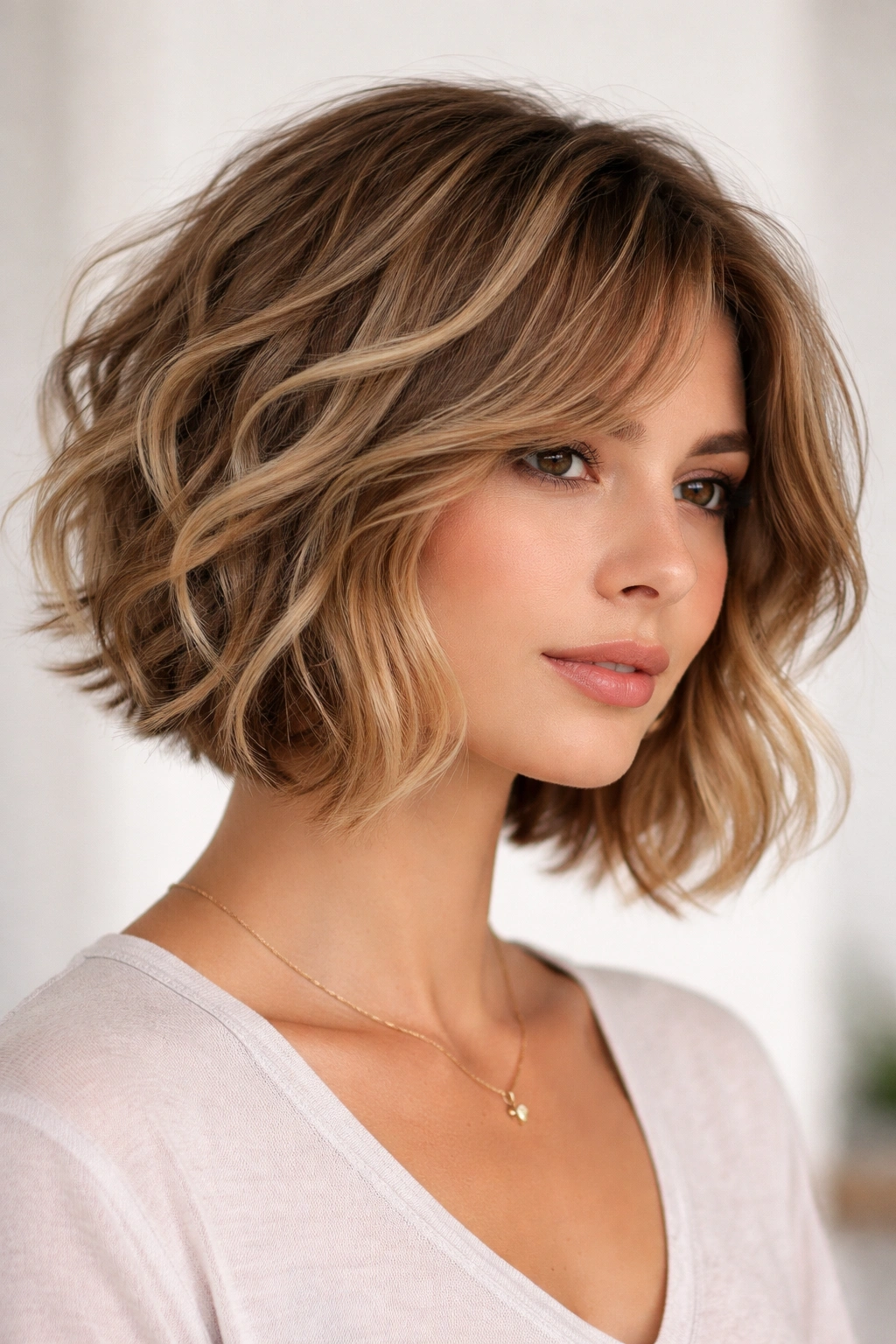
A disconnected bob has distinct, separate layers that don’t necessarily blend together—shorter pieces on top create height and volume, while longer pieces underneath provide movement. It’s bold, modern, and absolutely stunning on wavy hair because the contrast between short and long layers creates visual texture and depth. This is a style for people who aren’t afraid of a statement cut.
Why Disconnected Layers Work on Waves
Distinct layers prevent the “triangle effect” that can happen when wavy hair gets thicker toward the bottom. Each layer sits separately and moves independently, which multiplies the visual impact of your waves. The shorter top creates lift and prevents that flat, heavy feeling at the crown. This style is confidence-building because it looks intentional and designed, not like a compromise between lengths.
What to Expect from This Cut
- The shortest layers typically sit around ear length while longer pieces fall to the chin or collarbone
- Ask for at least 2-3 inches of difference between layer lengths so the disconnection is visible
- Request texturized, choppy ends rather than blunt ones—this softens the disconnected look slightly
- Understand that this cut requires more frequent trims (every 5-7 weeks) to maintain the shape as layers grow at different rates
- Plan for a stylist experienced with modern, fashion-forward cuts; this isn’t a beginner-friendly style
Pro tip: Use a volumizing mousse applied to damp roots before air-drying or blow-drying. The disconnected layers amplify volume, so this cut looks best when you have movement and height at the crown.
6. The Textured Pixie-Bob Hybrid
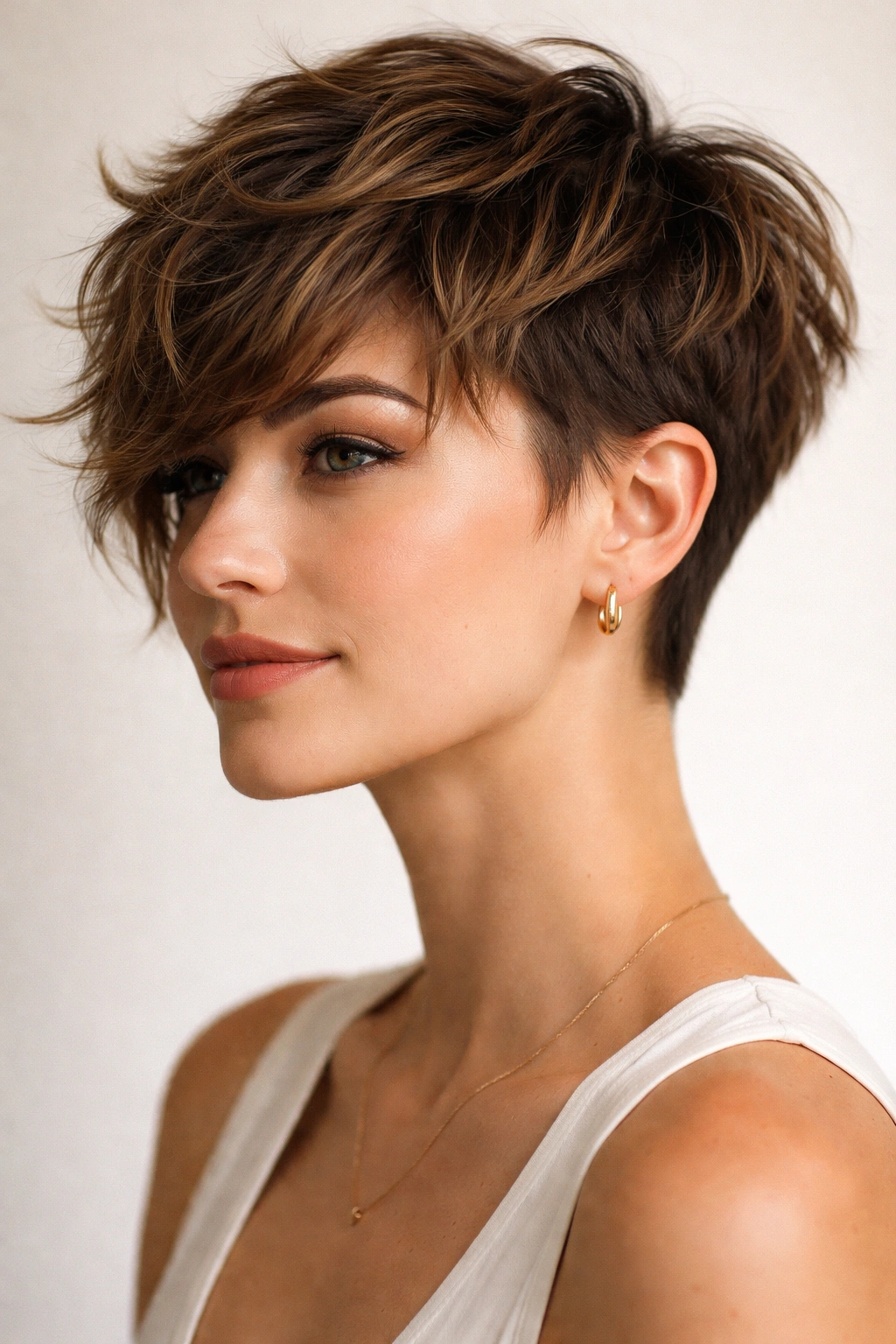
For those who want something shorter and more adventurous, a pixie-bob hybrid combines the playfulness of a pixie with the length and style of a bob. It’s very short on the sides and back, with longer pieces on top and in front that can be styled various ways. It’s bold, low-maintenance, and incredibly flattering on wavy hair when cut correctly.
Why This Cut Suits Wavy Hair
Short sides eliminate bulk and reduce the heavy feeling that can come with wavy hair volume. The longer top pieces can be styled smooth, tousled, or textured depending on your mood and the occasion. Waves in short hair read as playful and intentional rather than messy. This cut is liberating because it removes so much material that styling becomes genuinely easier, not harder.
Important Considerations Before Committing
- This is a significant change; ask to see photos of how it looks on other wavy-haired people
- Plan for an experienced stylist; cutting pixie-bob hybrids requires real skill with texture and proportion
- Discuss how short you’re comfortable going on the sides (an inch, half an inch, even closer?)
- Ask how the longer top pieces will be cut—chunky layers or more subtle ones?
- Understand that you’ll need trims every 4-5 weeks to maintain the shape as everything grows at different rates
- Plan for styling: you can blow-dry smooth, scrunch with mousse, or air-dry textured
Worth knowing: This cut works best when you embrace the texture. Fighting your waves defeats the purpose; let them do what they naturally do and style around that.
7. The Blunt Choppy Bob
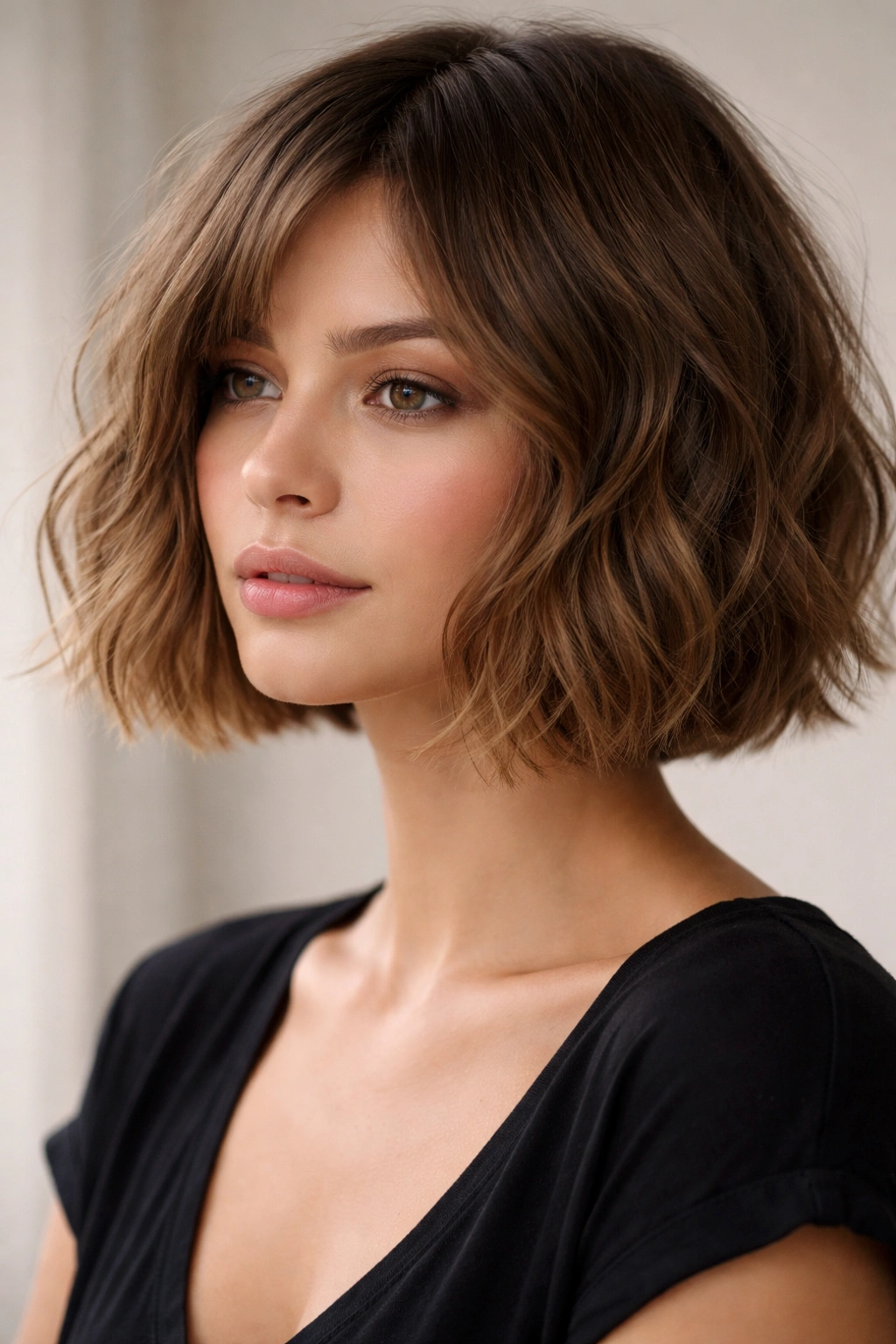
A blunt bob doesn’t have to be slick and severe—when it’s cut with choppy, textured pieces throughout, it can be incredibly flattering on wavy hair. The overall shape reads as blunt from far away, but up close, there are broken, choppy layers that prevent the cut from looking heavy or one-dimensional. It’s modern, chic, and surprisingly wearable on textured hair.
Why Choppy Texture Saves the Blunt Shape
Choppy pieces throughout soften what could otherwise be a harsh line. Waves naturally fall into textured layers, so the cut complements your hair type rather than fighting it. The visual weight feels balanced because the texture breaks up density. This is essentially a blunt bob designed specifically for wavy hair—all the structure, but none of the potential heaviness.
Technical Details Worth Discussing
- Ask for the blunt line to be at chin length or just below, with choppy layers integrated throughout
- Request that layers be cut into the perimeter as well, not just the interior—this creates that lived-in texture
- Specify textured, piece-y ends rather than razor-sharp ones
- Ask how the crown will be handled; typically, there should be subtle layers for lift without shortness
- Plan for styling with a round brush for polish, or air-drying for a more relaxed vibe
- Schedule trims every 6-8 weeks to keep the chop looking intentional rather than grown-out
Pro tip: This cut looks fantastic when you add a gloss or semi-permanent color with dimension—like balayage or lived-in highlights. The choppy texture shows off dimensional color beautifully.
8. The Tousled Beach Waves Bob
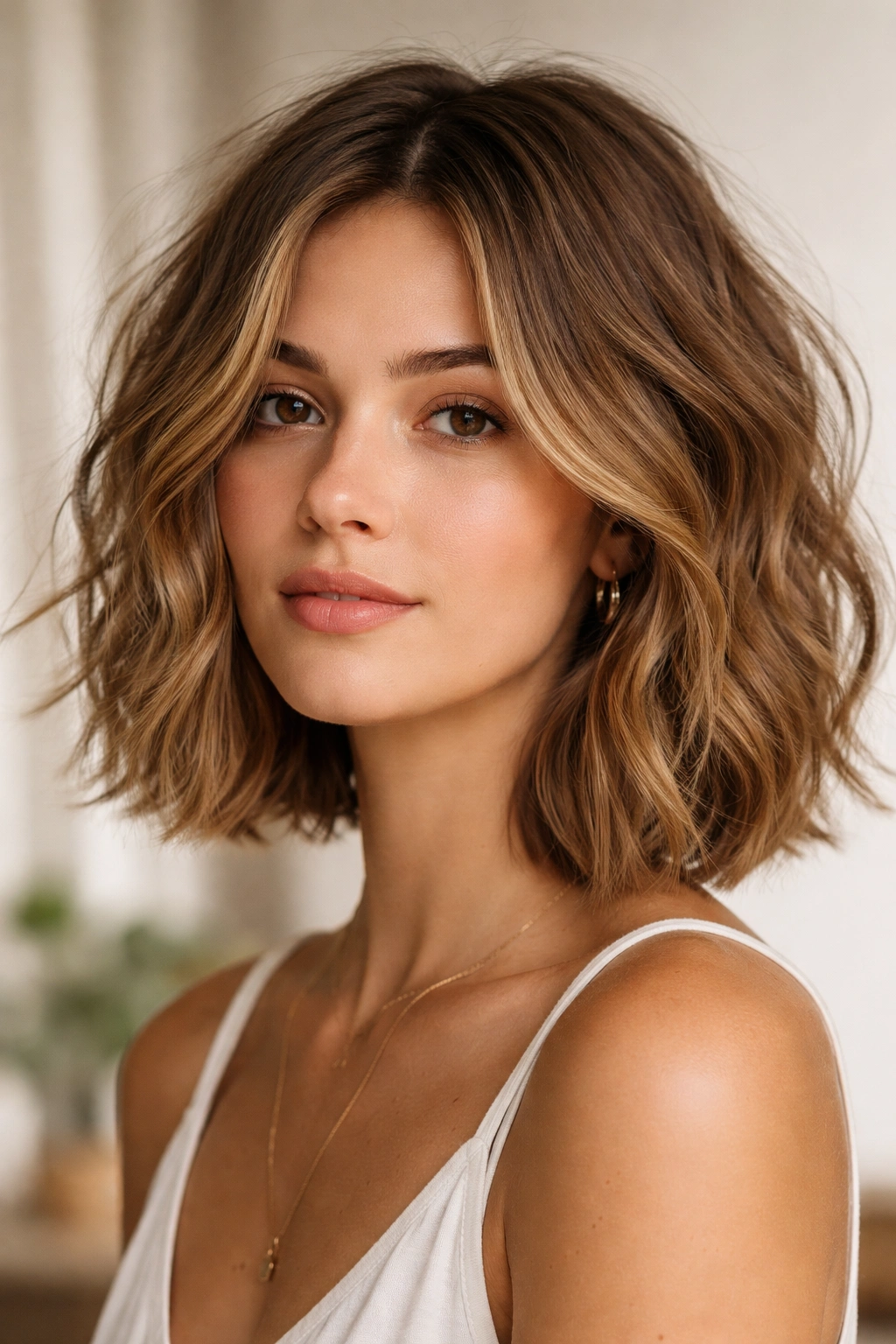
Sometimes you don’t need anything too structured; a relaxed, tousled bob that celebrates your natural waves is all you need. This is a longer bob (chin-length or slightly past) with minimal layers, designed to look effortlessly undone. It’s perfect if your waves are already pretty defined, and you just want a cut that lets them be themselves.
Why Less Is More for Natural Waves
Not every wavy-haired person needs tons of layers. If your waves are already substantial and defined, a simple cut with minimal intervention can actually look cleaner and more intentional. Fewer layers mean less maintenance, less frizz, and less effort. This style celebrates your natural texture rather than trying to “fix” it with excessive layering. The tousled vibe comes from styling, not from the cut alone.
How to Approach This Cut
- Ask for minimal layers—really just enough to remove bulk and allow movement
- Request that the overall shape be soft and rounded, following your head’s natural shape
- Specify that you want a lived-in, undone vibe rather than a blunt or structured look
- Ask your stylist to cut while your hair is dry, or to account for how your waves shrink when dry
- Discuss styling: this look thrives when you use sea salt spray, texture spray, or mousse to enhance your natural waves
- Plan for maintenance every 8-10 weeks; this cut doesn’t require frequent trims if you’re not layering heavily
Worth knowing: The magic of this style is in the styling, not the cut. Invest in good wave-enhancing products and learn how to scrunch your hair while it’s damp for texture enhancement.
9. The Modern Mullet Bob
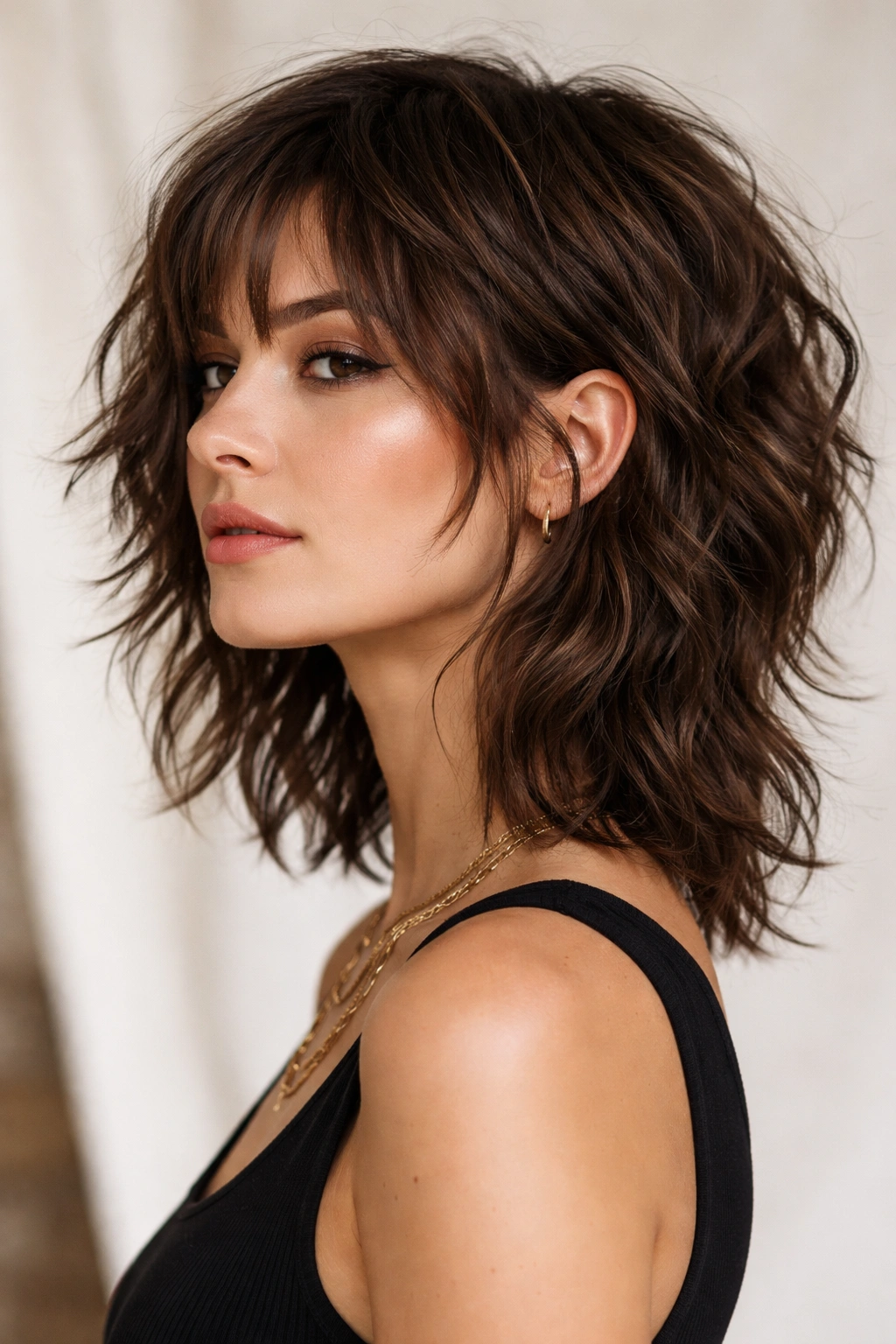
For the fashion-forward, a modern mullet bob offers something different—shorter in front and around the crown, with distinctly longer layers in the back. It’s edgy, fun, and can look incredibly cool on wavy hair when executed with the right proportions. The back layers have movement and flow while the front stays shorter and chic.
Why a Modern Mullet Flatters Wavy Hair
The contrast between short and long creates visual interest and movement. Waves in the longer back sections create gorgeous flow and dimension. The shorter front avoids a heavy, dated look while the longer back prevents the cut from feeling too severe. This is a statement style that looks modern, not retro, when the proportions are right and the layers are textured rather than blunt.
Execution Details to Nail
- Ask for front and crown pieces to sit around ear length or slightly shorter
- Request that back layers extend to at least collarbone length, creating visible contrast
- Specify textured, choppy layers throughout rather than smooth, blended ones
- Ask how the crown will be handled; you want volume, not flatness
- Understand that this is a bold choice; bring reference photos of exactly what you’re imagining
- Plan for regular trims every 5-7 weeks to maintain the shape as pieces grow at different rates
- Discuss styling options: you can sleek down the front for polish or tousle everything for a more relaxed vibe
Pro tip: A modern mullet works best when you embrace texture. Use sea salt spray, texture spray, or mousse on the back layers to enhance the waves and create maximum movement and dimension.
Final Thoughts

The best bob for your wavy hair is the one that works with your texture rather than against it. Every style here has one thing in common: strategic layers, choppy texture, or both. These elements are what allow waves to sit naturally, move beautifully, and actually become easier to style instead of more difficult.
Finding your perfect cut matters because you’ll wear it every single day. A great bob can genuinely change how you feel about your hair—not because you’re fighting it, but because it finally feels like it was designed just for you. When you book your appointment, bring reference photos of the specific style you love, discuss your daily styling routine and how much time you’re willing to spend, and be clear about whether you prefer more texture and movement or a cleaner, more structured shape.
The investment in a quality cut from a stylist experienced with wavy hair pays dividends. You’ll spend less time styling, your hair will look better naturally, and you’ll actually look forward to your wash days instead of dreading them. That’s the whole point of finding the right bob.