



Shoulder-length blonde waves represent one of the most versatile and flattering hair combinations in the style world. The interplay between the soft movement of waves and the brightness of blonde creates an effortlessly polished look that works across dozens of different aesthetic preferences—from casual beachy vibes to more refined, high-fashion interpretations. Whether you’re drawn to loose, romantic waves or tighter, more defined texture, the shoulder-length cut offers the perfect canvas for showing off dimensional color while keeping styling manageable for everyday wear.
What makes this length and styling combination so appealing isn’t just aesthetic. Shoulder-length hair sits at that sweet spot where it’s long enough to showcase waves and movement, but short enough to avoid the heavy, time-intensive styling that longer lengths demand. Blonde shades—whether they’re warm honey tones, icy platinums, creamy butters, or sun-kissed blends—naturally enhance the dimension that wavy texture creates, catching light in ways that make the waves appear more voluminous and dynamic than they might in darker shades.
The real magic happens when you understand that “shoulder-length wavy blonde” isn’t one thing. It’s a category that includes dramatically different looks, each with its own vibe, maintenance requirements, and ideal face shapes. Some styles lean into undone, beachy authenticity, while others embrace more intentional, structured waves. Some work beautifully on fine hair, while others shine on thicker textures. The key is finding the specific variation that matches your face shape, hair texture, lifestyle, and the overall aesthetic you’re trying to achieve.
1. Buttery Honey Blonde Waves with Textured Layers
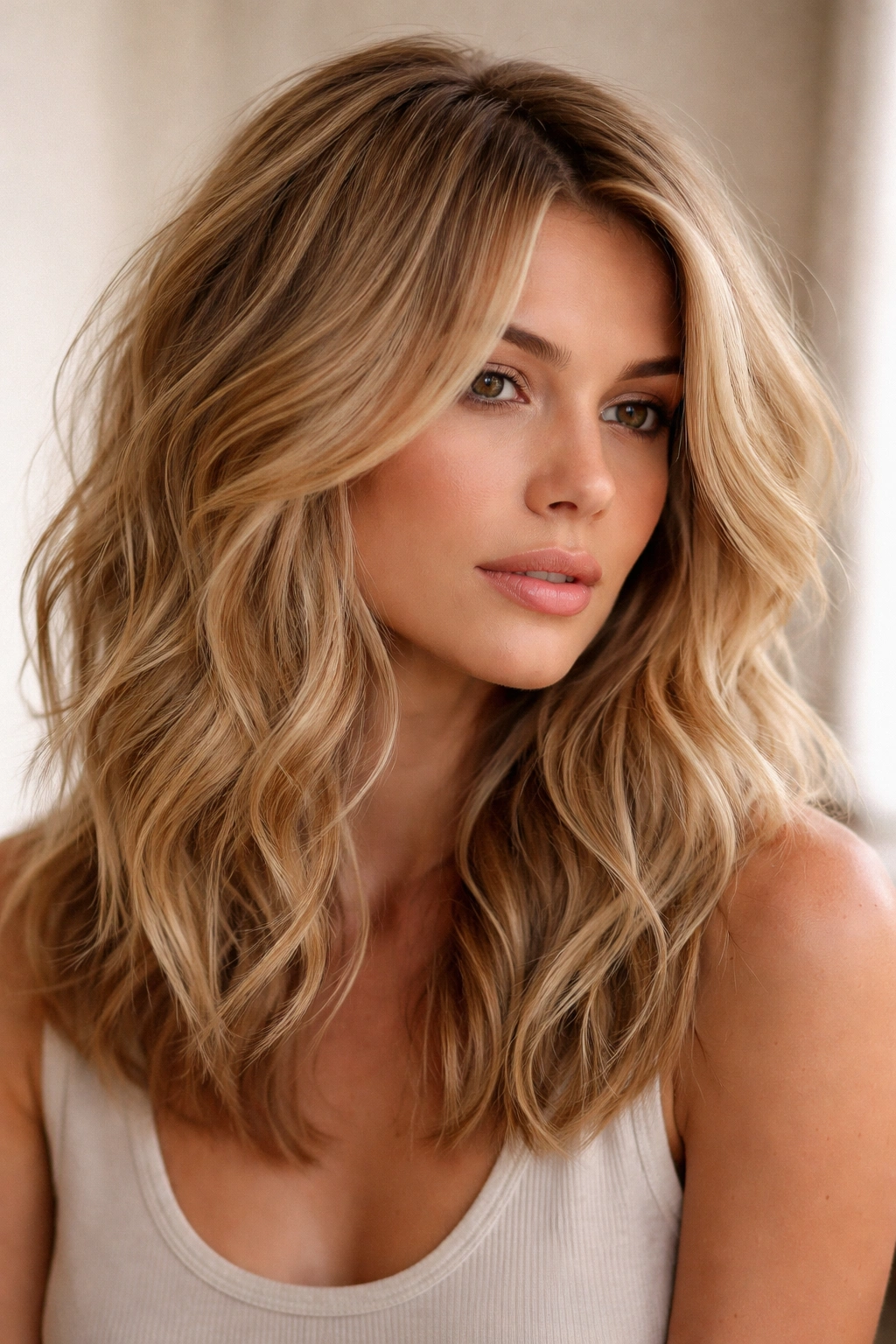
This style combines a warm, creamy honey blonde base with textured, choppy layers that amplify movement and create dimension without requiring stick-straight ends. The beauty of this approach is that the layers do half the work—they naturally disrupt the hair’s surface, making waves appear more prominent and fuller even on finer hair types. The honey tone adds richness and depth to blonde, making the style feel less high-maintenance between color touch-ups.
Why This Cut Maximizes Wave Dimension
The layering technique used in this style isn’t random—each layer is positioned to catch and hold waves differently, creating a cascading effect that makes the texture almost three-dimensional. Longer layers frame the face and shoulders while shorter, choppy layers throughout add movement and prevent the hair from looking limp or one-note. This creates visual interest that lasts even after your waves start to relax slightly.
How to Style and Maintain
- Start with damp hair and apply a lightweight wave-enhancing mousse or sea salt spray to damp roots and mid-lengths
- Blow-dry using a round brush to create volume at the crown, directing airflow downward to encourage wave formation
- Use a 1.5-inch curling iron to curl individual sections away from the face, alternating direction every other section
- Let curls cool completely before running your fingers through for a piece-y, textured finish
- Refresh waves on day two or three by misting with sea salt spray and scrunching while blow-drying on low heat
Pro tip: This style benefits enormously from a good texturizing spray or dry shampoo applied the night before styling—it gives your waves something to grip onto and makes them hold longer throughout the day.
2. Icy Platinum Blonde Waves with Curtain Bangs
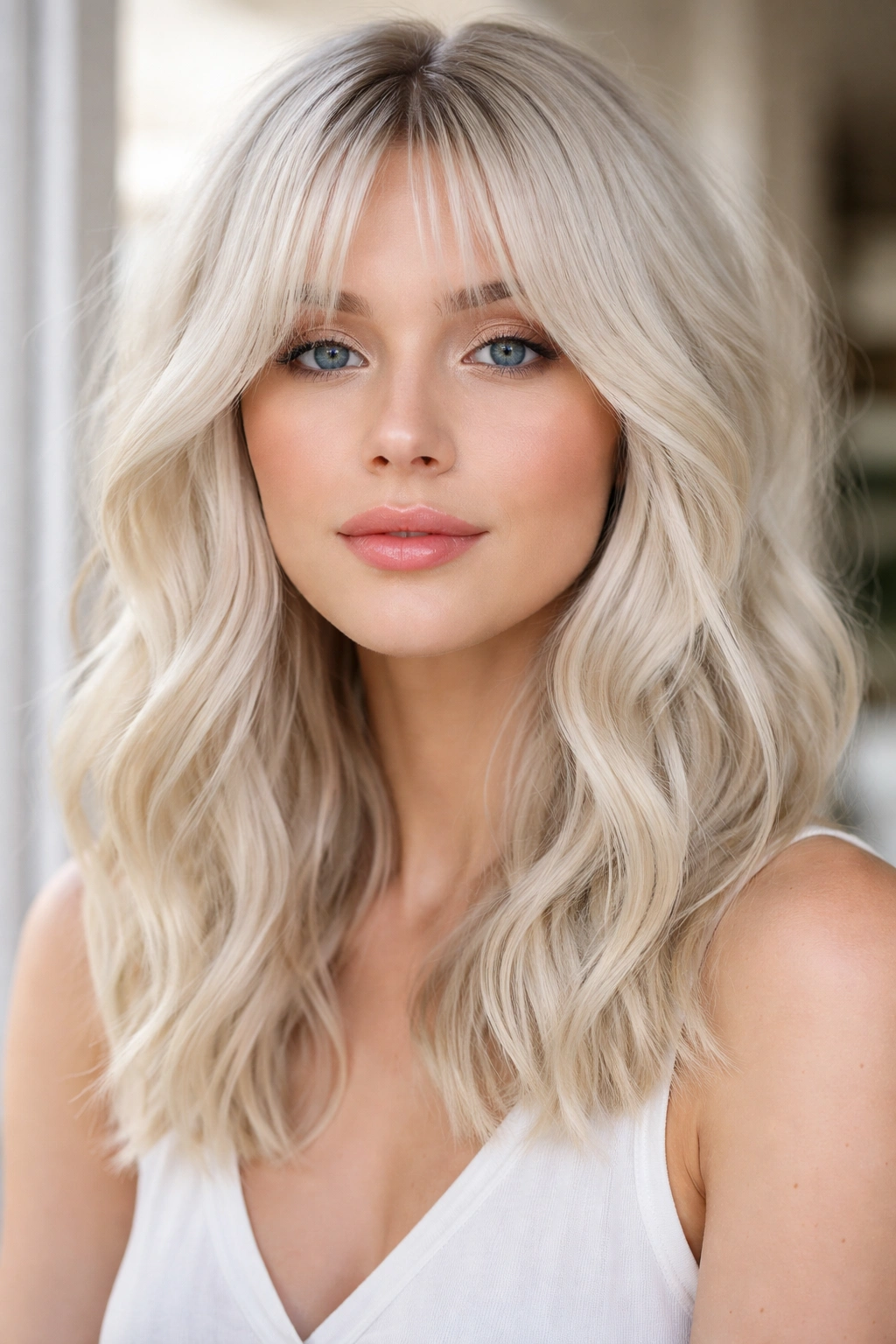
Icy platinum blonde represents the coolest end of the blonde spectrum, and when paired with soft, flowing waves and face-framing curtain bangs, it creates a distinctly modern, almost ethereal aesthetic. The curtain bangs serve multiple purposes: they frame the face beautifully, they’re endlessly versatile for styling, and they break up the length in a way that feels intentional rather than choppy. This combination works particularly well if you have a longer face or want to add softness around angular features.
The Color-to-Texture Relationship
Icy platinum blonde is bold enough that it almost demands well-executed waves to avoid looking flat or harsh. The waves add movement and warmth to what could otherwise feel cold or severe. The lighter the blonde, the more the waves show—every little movement catches light, so texture becomes extra-visible. This means your waves don’t have to be perfect; in fact, a little undone quality reads as intentional and chic rather than careless.
Styling Tips for Maximum Impact
- Platinum blonde waves photograph beautifully under natural light, so consider timing your styling to take advantage of morning or golden-hour light
- Curtain bangs require regular trims every 4-6 weeks to maintain their shape and prevent them from becoming too wispy
- Blow-dry bangs straight down using a paddle brush and low heat to keep them sleek and controllable
- Use a 1.25-inch barrel curling iron for waves to ensure the bangs don’t get caught in your main waves
- Lightweight oils or serums on the ends prevent the platinum blonde from looking dry or straw-like
Worth knowing: Icy platinum blonde requires consistent toning to prevent brassiness. Monthly toning appointments are worth the investment—the difference between cool, bright platinum and dull, brassy blonde is noticeable and affects how polished your entire look appears.
3. Warm Caramel Blonde with Beachy Waves and Blunt Ends
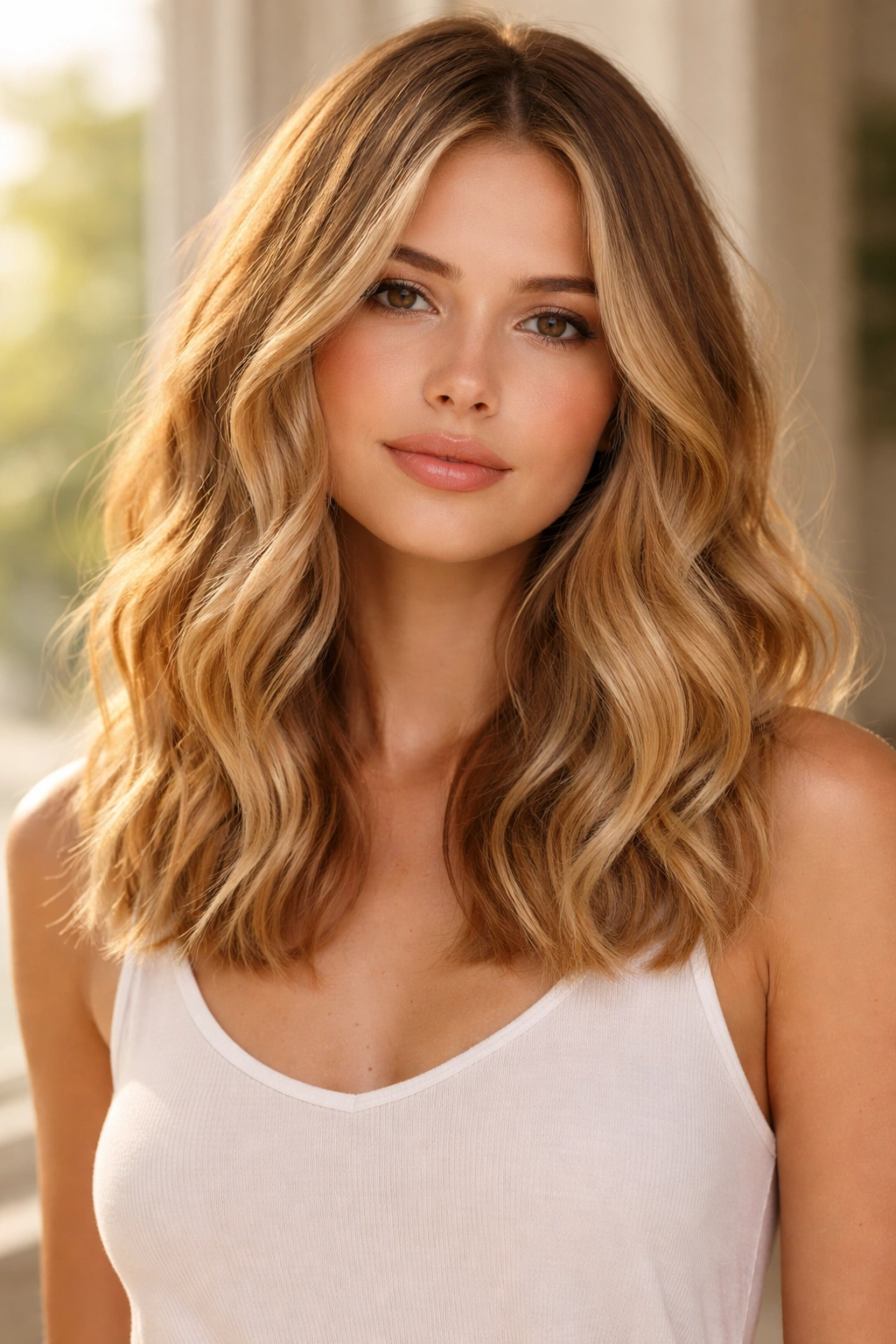
This style leans into effortless, sun-kissed vibes by pairing warm caramel blonde with soft, undone-looking waves and blunt, shoulder-skimming ends. The warmth of caramel blonde adds depth and dimension that makes lighter honey blondes look almost pale by comparison. Blunt ends create a visual anchor that keeps the style from feeling shapeless or overly soft, and the contrast between structured blunt lines and flowing waves is inherently flattering.
Building Dimension with Color
Caramel blonde works best when there’s slight variation in the base—deeper, richer tones at the roots shifting to lighter, honey-kissed tones through the mid-lengths and ends. This natural-looking gradation means the style maintains dimension and interest even after a few weeks of growth. The warmer undertones also photograph beautifully in most lighting conditions and work well across a wider range of skin tones than cooler platinum shades.
Achieving Effortless Beachy Waves
- Use a texturizing spray before styling—this is non-negotiable for the beachy aesthetic, as it prevents waves from looking too polished or intentional
- Braid damp hair loosely and let it air-dry for 30-40 minutes, then unravel for naturally textured waves that look like they happened by chance
- Alternatively, use a straightening iron to create loose S-waves by rotating the iron as you move down each section
- Finish with a light mist of flexible-hold hairspray that doesn’t feel stiff or crunchy
- Tousle with your fingers to break up any sections that look too uniform
Insider note: Blunt ends can feel heavy if your hair is fine or wavy on its own. Discuss with your stylist whether a very subtle point or choppy texture at the ends would work better for your hair type.
4. Darker Root Shadow with Blonde Waves (Rooted Blonde)
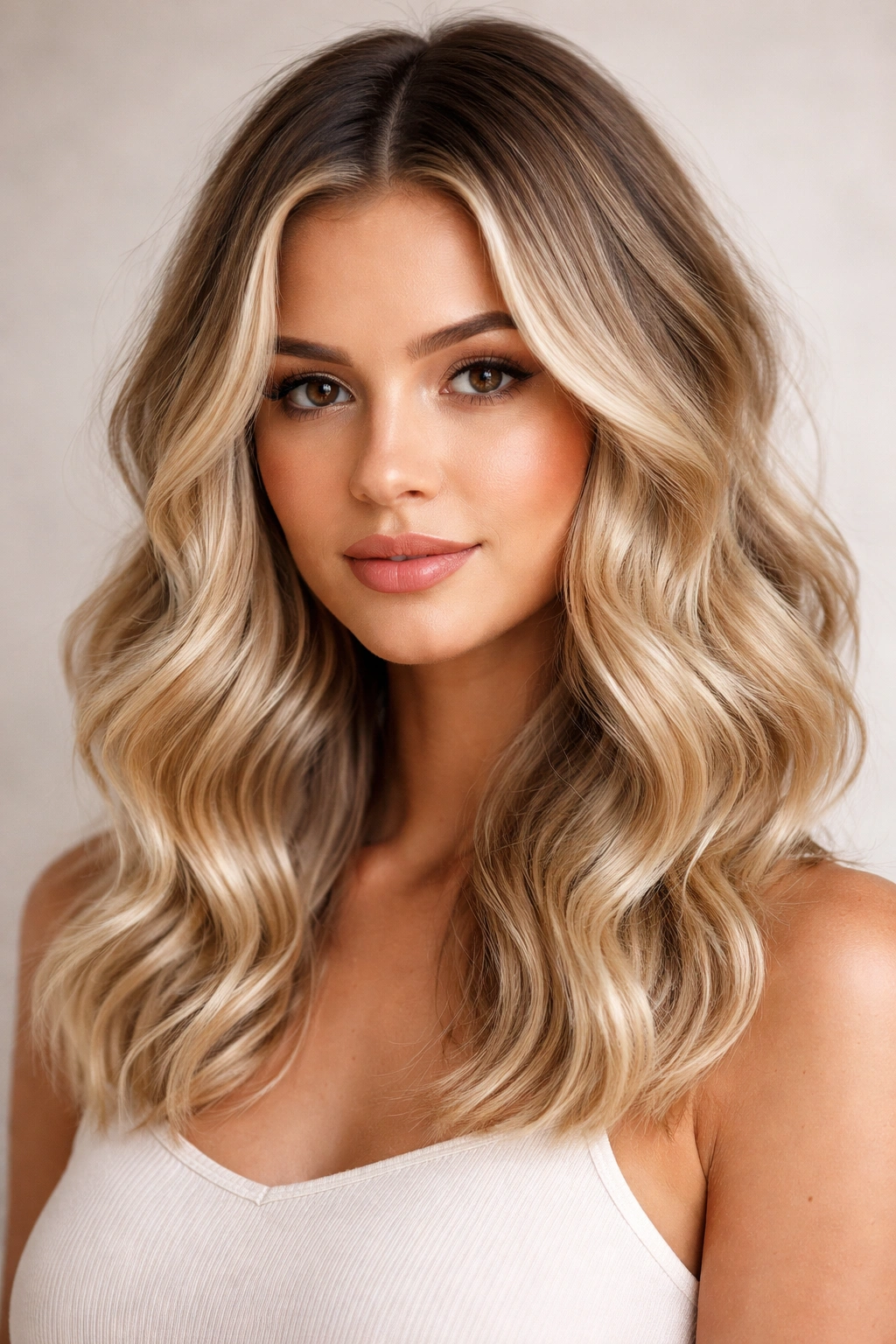
This style intentionally keeps darker roots visible (usually maintained about 2-3 inches of shadow), creating a low-maintenance approach to blonde that also adds significant dimension and depth. The contrast between darker roots and blonde lengths makes waves appear more prominent because the eye is drawn to the lighter sections. This technique works especially well for people with naturally darker hair who want blonde without committing to high-maintenance bleaching every 4-6 weeks.
Why This Technique Changes the Game
Root shadow (also called “rooted blonde” or “shadow root”) is fundamentally a low-maintenance strategy, but it’s also a visual technique that enhances texture. The darker roots naturally add depth and shadow that makes waves appear more three-dimensional. Additionally, if your natural hair color is medium to dark brown, the contrast between your roots and blonde lengths creates movement in its own right, separate from the actual waves.
Styling for Rooted Blonde Success
- Waves appear more dramatic when there’s tonal contrast, so styling them becomes almost more important with rooted blonde than with all-over color
- Sleep waves work beautifully—braid damp hair before bed and release in the morning for natural-looking texture
- Use a sea salt spray or texturizing product on damp hair before blow-drying to encourage wave formation at the root
- Avoid products that are too heavy, as they can weigh down waves and make the rooted effect look more severe than intentional
- Refresh waves on day 3-4 with dry shampoo, which also helps define the shadow root by adding subtle texture
Key consideration: Rooted blonde is only low-maintenance if you’re willing to embrace the darker roots as part of the style. Fighting against them by constantly touching up looks more chaotic than chic.
5. Face-Framing Blonde Highlights with Soft Waves
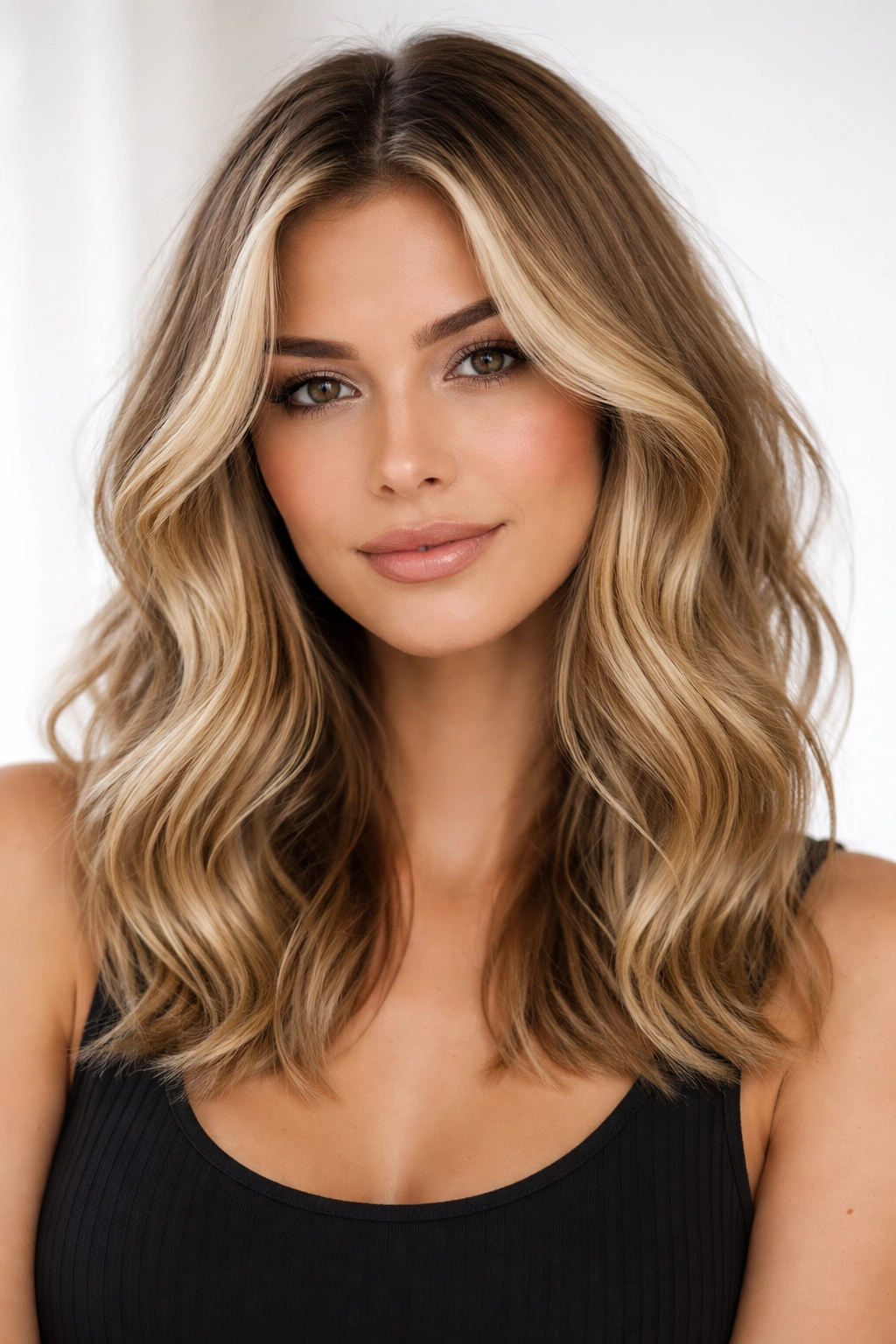
This approach uses strategic highlighting to frame the face with lighter blonde pieces while keeping the base darker or more muted. The lighter highlights around the face naturally draw attention upward and can make features appear brighter and more awake. When combined with soft waves, this technique creates movement that showcases the interplay between highlighted and base-tone sections, maximizing the depth and dimension of the color.
Understanding Strategic Placement
Face-framing highlights aren’t evenly distributed—they’re deliberately placed to brighten the face and draw attention to your best features. Longer pieces frame the cheekbones and jaw, while some strategically placed pieces near the part or crown add lift. This targeted approach means you get dramatic dimension without the commitment of full-head lightening, and the color requires fewer maintenance appointments.
Styling to Show Off Your Highlights
- Waves that fall away from the face showcase face-framing pieces beautifully, so style curls with direction rather than all-over texture
- Soft waves that move the hair around the face emphasize the highlight placement—avoid sleek, straight styling that hides the lighter pieces
- Use volumizing products at the crown to lift hair and expose the highlights around the hairline
- Side-part styling naturally showcases one side of face-framing highlights more than the other—experiment with both directions
- Larger, looser waves work better for this style than tight curls, which can make highlights appear choppy
Pro tip: Face-framing highlights photograph exceptionally well because the lighter pieces catch light and create a natural luminosity in photos. This is a great style if you take a lot of photos or spend time on video calls where you want your face to appear brighter and more defined.
6. Creamy Vanilla Blonde Waves with Soft Texture
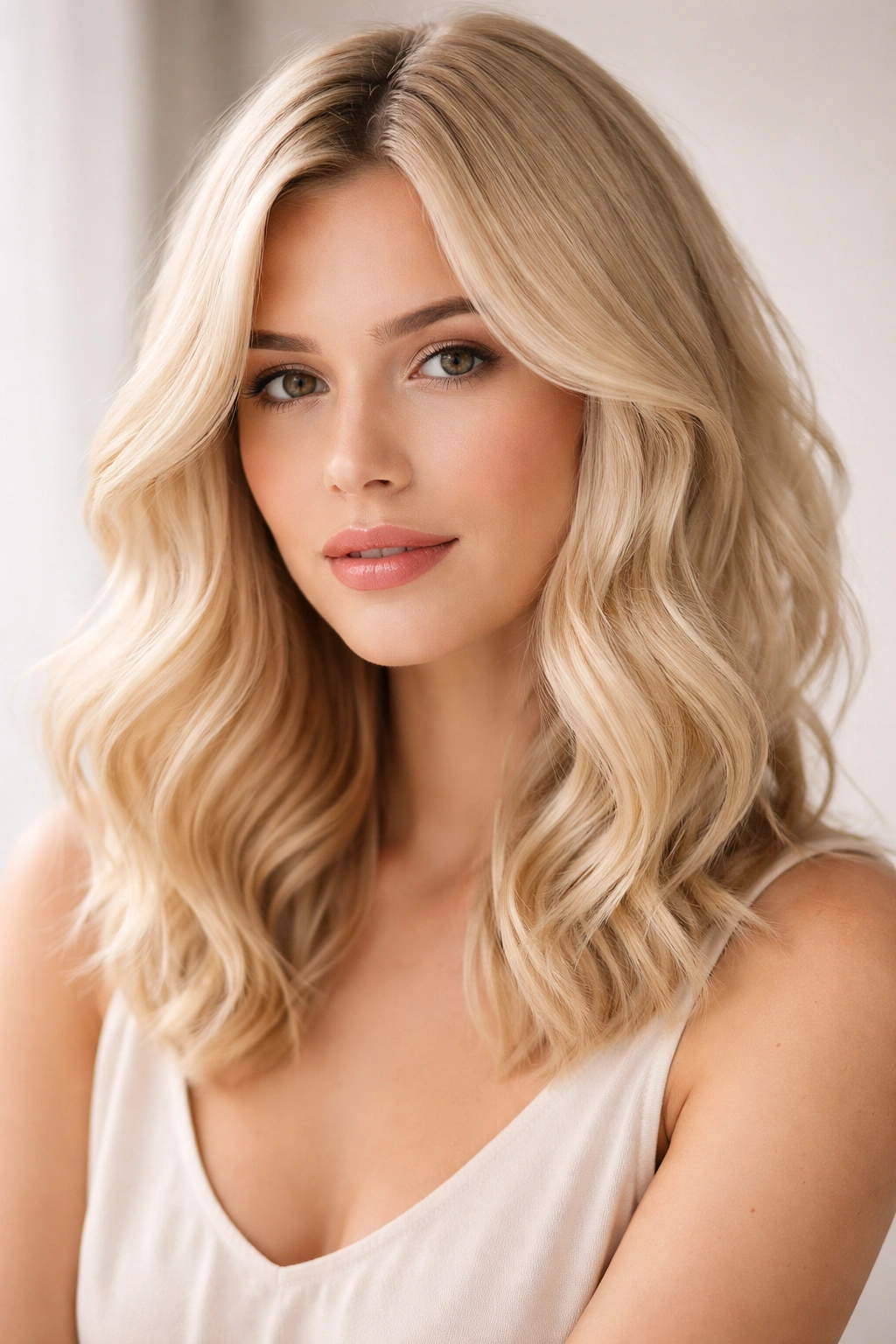
Vanilla blonde sits in that magical middle ground between warm and cool—it’s neither aggressively warm caramel nor icy platinum, making it one of the most universally flattering blonde shades. Paired with soft, romantic waves (not tight curls, but gently undulated movement), this creates a timeless, polished aesthetic that works across decades and age groups. The creamy quality of vanilla blonde also makes it feel less high-maintenance between tones, as slight brassiness actually reads as warm richness rather than unwanted growth.
The Psychology of Vanilla Blonde
Vanilla blonde works because it has warmth without being so golden that it looks dated or costume-like. It also has enough coolness that it doesn’t look brassy or yellowed. The soft waves that pair with this shade should feel refined rather than beachy—think gentle, intentional movement rather than undone texture. This is the style that looks polished at a business dinner but still effortlessly put-together on a casual day.
Creating and Maintaining Soft Waves
- Blow-dry with a round brush to create foundational volume and smoothness, then add waves with a large-barrel (2-inch) curling iron
- Curls made with a large barrel naturally relax into soft waves rather than holding as defined ringlets
- Alternate the direction you curl each section to create movement that flows rather than spirals
- For a more textured version, use a waver or crimping tool gently on mid-lengths to create undulation without bulk
- Finish with a light hairspray that holds the wave shape without making hair feel stiff or crunchy
Maintenance note: Vanilla blonde requires gentle toning but less frequently than cooler platinum shades—typically every 4-8 weeks depending on how quickly brassiness appears in your specific hair.
7. Balayage Blonde with Dimensional Waves
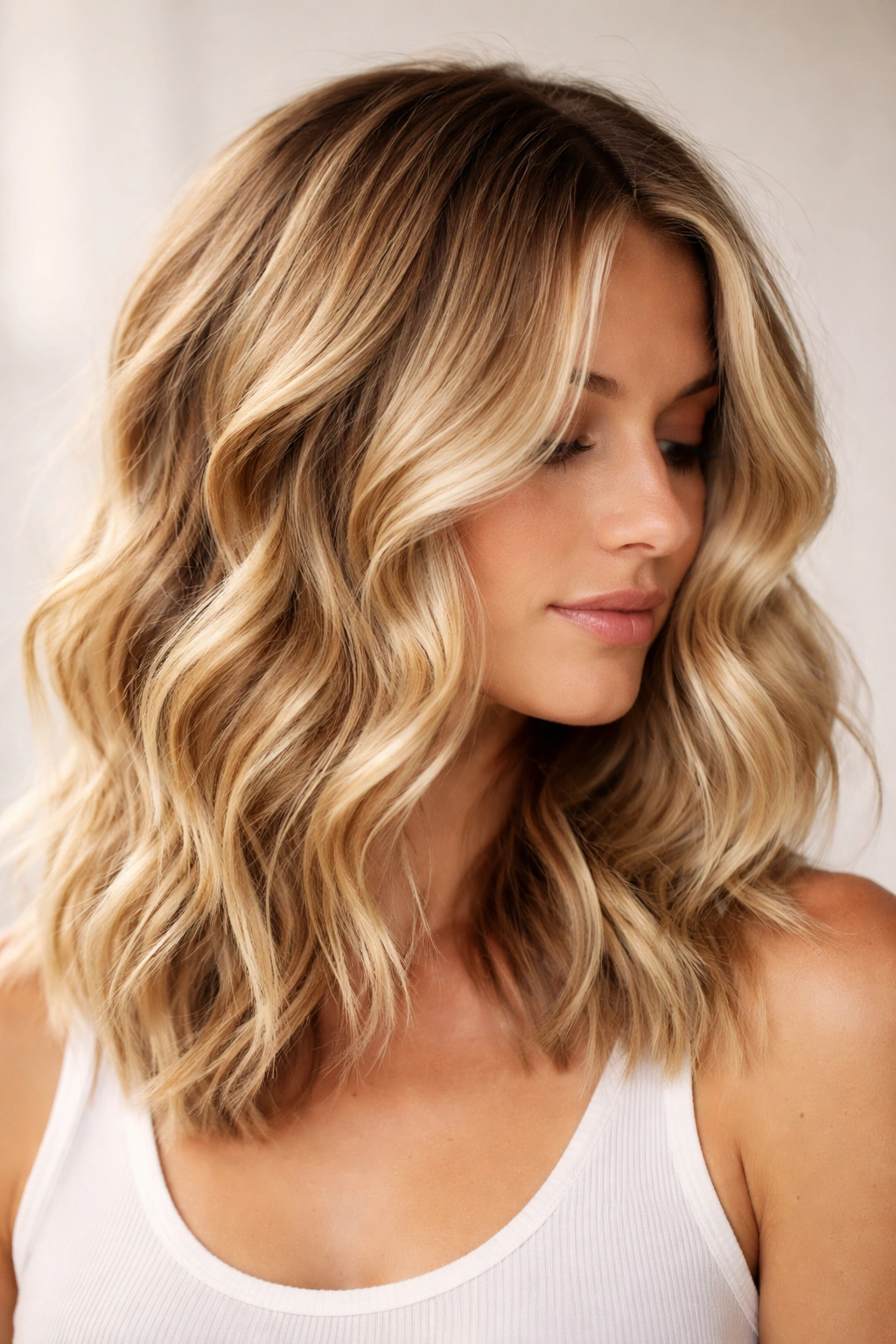
Balayage is a hand-painted highlighting technique that creates dimension without the rigid lines of traditional highlights or lowlights. When applied to shoulder-length hair with natural waves, balayage creates a multi-tonal effect that looks like sun-kissed, naturally lit hair. The lighter pieces are typically placed on the surface layers and around the face, while the base remains slightly darker, creating depth that makes waves appear more voluminous and textured.
How Balayage Enhances Wavy Texture
The beauty of balayage is that it’s inherently uneven and organic—the hand-painted technique means there’s no “perfect” placement, which works beautifully with naturally wavy hair that’s never going to be perfectly uniform anyway. The variety of tones creates visual interest in every curl and wave, meaning even if your waves aren’t salon-perfect, they look intentional and dimensional. This is the technique that makes imperfect waves look magazine-worthy.
Styling Balayage for Maximum Dimension
- Let your waves be loose and undone rather than trying to perfect them—the imperfection is the point with balayage
- Use a texturizing spray or sea salt spray to enhance natural wave patterns and encourage texture
- Air-dry or diffuse-dry when possible, as heat styling can sometimes flatten balayage dimensions that are best visible with movement
- Apply serums or oils to mid-lengths and ends to enhance shine and make the color variation more visible
- Consider side-parting to highlight one side of the balayage, then switch sides on alternate days for versatility
Real talk: Balayage does require occasional toning and maintenance appointments (typically every 8-10 weeks), but much less frequently than highlights that need root maintenance. The lower-maintenance reality is one reason this technique has become so popular.
8. Platinum Blonde Waves with Piece-y, Choppy Layers
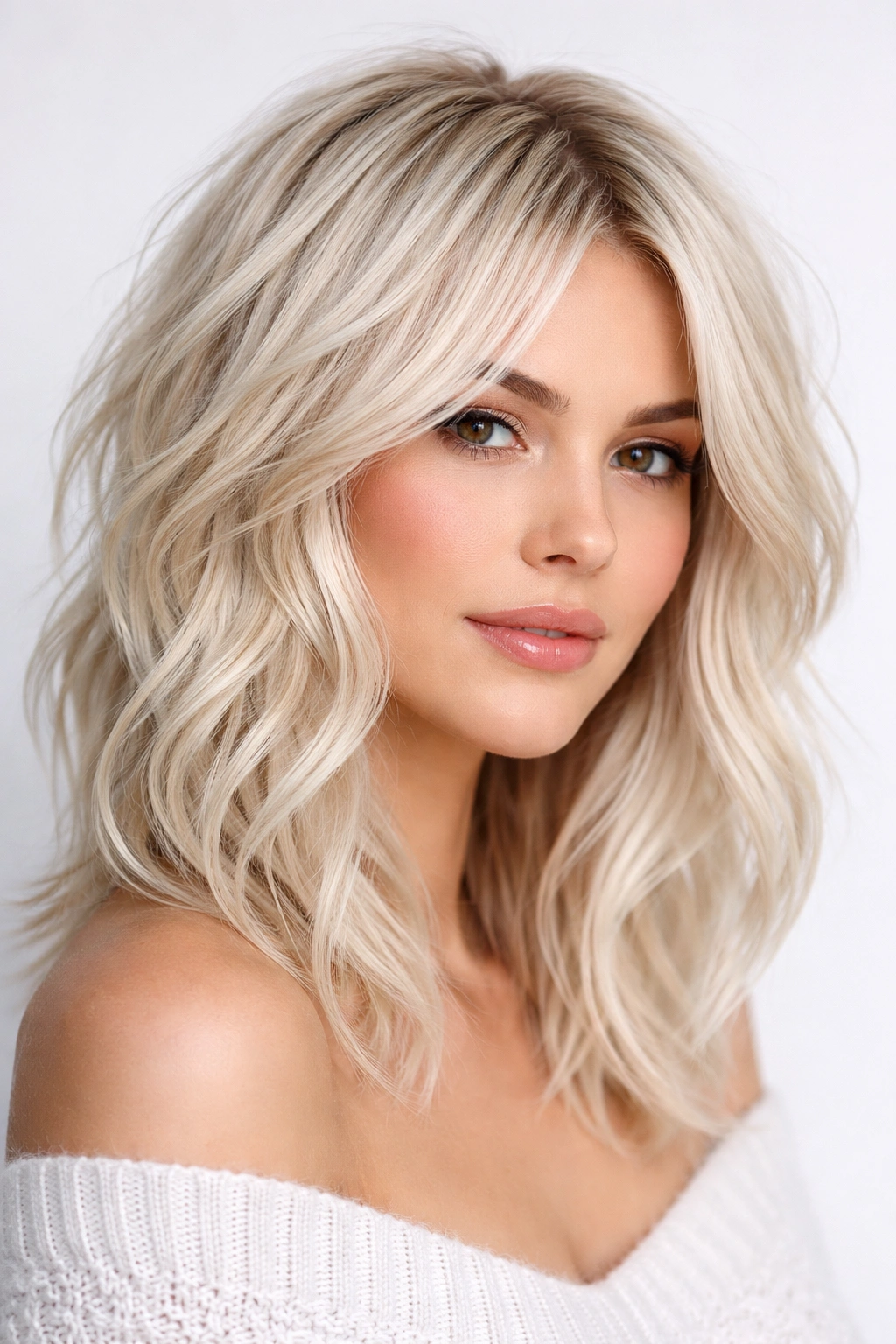
Choppy, piece-y layers create movement and texture even without waves, so when combined with platinum blonde and intentional wavy styling, this creates serious visual interest and dimension. The individual pieces created by choppy layers catch light differently, and the platinum blonde amplifies this effect. This style works particularly well on medium to thick hair and for people who want a modern, slightly edgy take on shoulder-length blonde.
The Technique Behind Strategic Choppy Layers
Choppy layers aren’t just randomly cut—they’re typically shorter throughout to create piece-y texture, with longer pieces around the face to frame and flatter. The choppiness creates natural separation between sections, so even straight hair will look textured, and wavy hair appears significantly more voluminous. This is a technique that actually benefits from wave-resistant hair, as the texture from choppiness + waves can sometimes feel overwhelming on very curly hair.
Styling Choppy Layers Effectively
- Choppy layers look best when slightly undone, so avoid over-polishing the waves—a tousled, textured finish is the goal
- Use a diffuser on your blow-dryer to dry waves gently without flattening the choppy layers
- Piece-y texturizing products (like a wax or texture paste) emphasize the individual pieces better than smoothing serums
- Scrunch upward while blow-drying on medium heat to encourage waves to form within the layered sections
- This style actually looks better on day 2-3 when waves have started to relax and texture becomes more pronounced
Worth knowing: Choppy layers require regular trims every 4-6 weeks to maintain the piece-y texture and prevent the style from growing into a shaggy mess. This is a higher-maintenance cut that pays off in styling ease but requires commitment to regular appointments.
9. Soft Gold Blonde Waves with Long Layers and Curtain Bangs
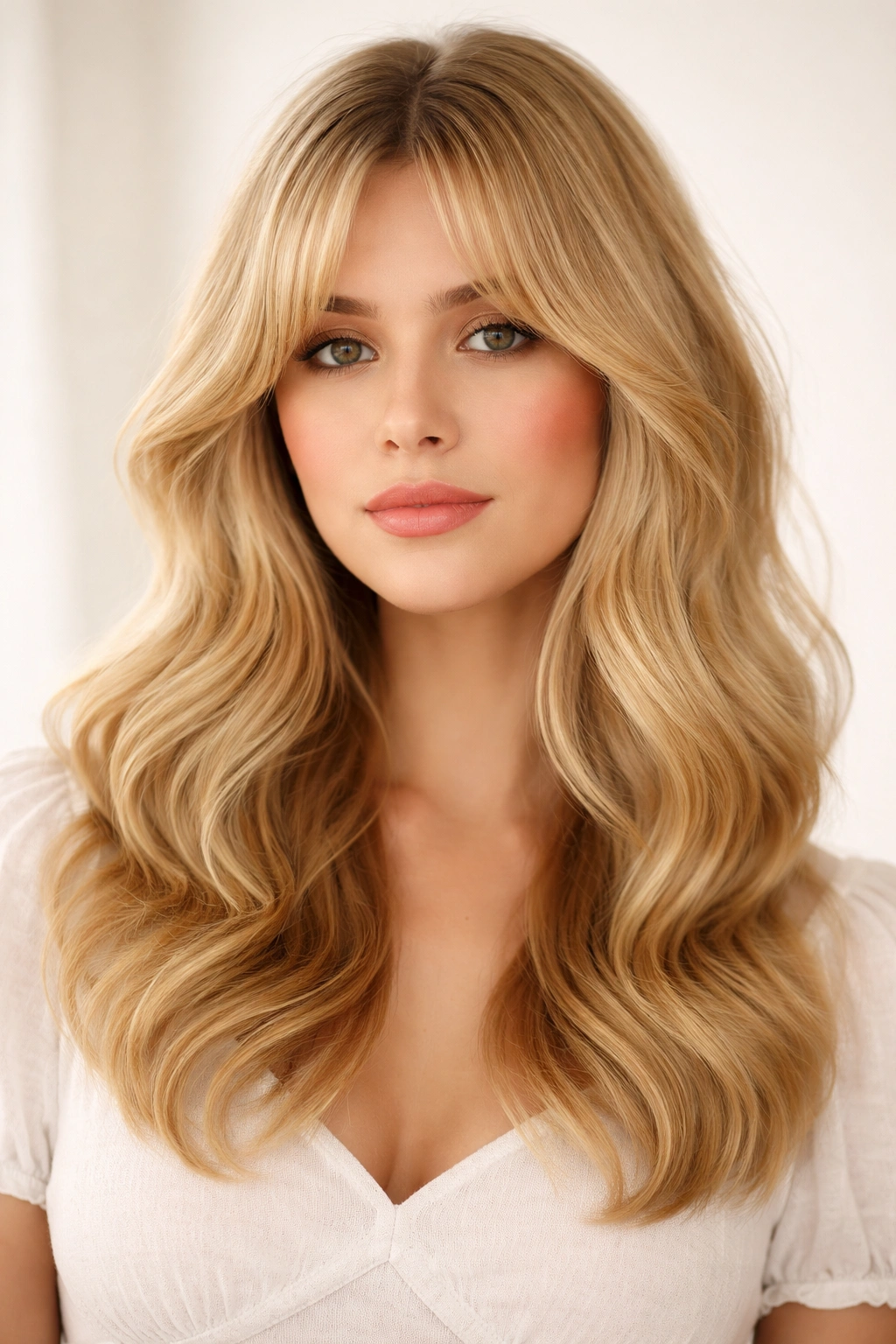
Soft gold blonde is slightly warmer and deeper than vanilla but less orange-forward than caramel, making it a sophisticated middle-ground shade. Long layers combined with curtain bangs and soft waves create a romantic, slightly ’70s-inspired aesthetic that works beautifully across face shapes and hair types. The layers keep the style from feeling heavy while the longer length shows off wave movement.
Layering Strategy for This Look
The layers in this style are typically longer and less choppy than other variations—they’re designed to blend seamlessly rather than create distinct separation. The longest layers extend to the shoulder and beyond, while mid-length layers sit around cheekbone height to frame the face gently. Curtain bangs split down the center create a soft, parted effect that adds to the romantic vibe. This is a style that rewards length because the waves have more surface area to display.
Achieving Romantic Waves
- This style works beautifully with loose, 2-3 wave applications rather than tighter curls or more uniform texture
- Use a large-barrel curling iron (1.5-2 inches) and curl sections loosely, not wrapping hair tightly around the barrel
- Tousle waves gently with your fingers rather than brushing them out completely—you want movement, not smooth waves
- Apply volumizing mousse to damp roots to create lift at the crown, which makes longer layers appear less heavy
- Sleep waves or braid waves work gorgeously with this style because the slightly undone quality suits the aesthetic
Styling note: Curtain bangs require consistent trims and styling attention. They need to be blow-dried straight and inward slightly to maintain their face-framing shape. If you’re not willing to style bangs daily or get them trimmed regularly, this isn’t the style for you.
10. Bright Platinum Blonde Waves with Shaggy Texture
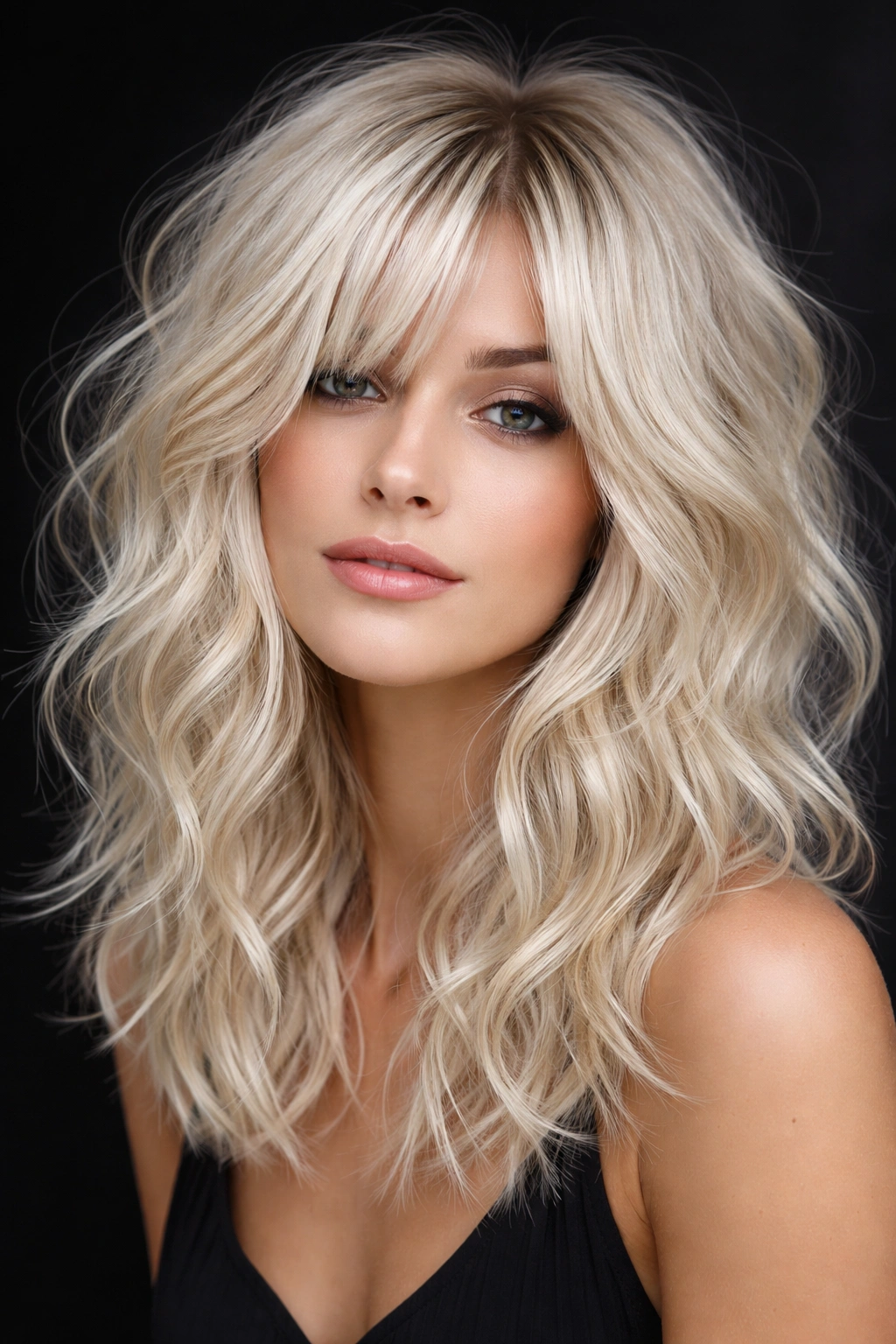
Shaggy layers create a distinctly modern, youthful aesthetic that borders on rock-and-roll meets romantic. Combined with bright platinum blonde and soft waves, this creates a style that feels current and intentional while maintaining the softness of wave texture. Shaggy layers are shorter throughout (often much shorter at the top) creating volume and movement that makes waves more visible and dramatic.
Understanding Shaggy Layer Placement
Shaggy cutting involves shorter layers at the crown that gradually lengthen toward the base, creating a triangular silhouette with lots of texture. When waves are added to this structure, the shorter layers at the crown create volume that longer, wavy layers can balance. The bright platinum blonde enhances the modern vibe—this combination reads as intentionally contemporary rather than trendy and temporary.
Styling Shaggy Layers Effectively
- Use a blow-dryer with a concentrator nozzle to direct airflow against the direction of the shorter crown layers, creating lift
- Rough-dry first to establish volume, then add waves with a curling iron focusing on mid-lengths and ends
- Product choice matters—lightweight mousses and volumizing sprays work better than creamy, heavy products that weigh down layers
- This style actually benefits from slightly undone waves; perfectly polished curls can look at odds with the shaggy texture
- Finger-comb waves and layers after styling for a piece-y, tousled finish
Pro tip: Shaggy layers grow quickly, so you’ll need trims every 3-4 weeks to maintain the shape. However, if you’re willing to commit to frequent haircuts, this style offers incredible daily versatility—it works textured and undone, or more polished with effort.
11. Honey Blonde Waves with Soft Side Part
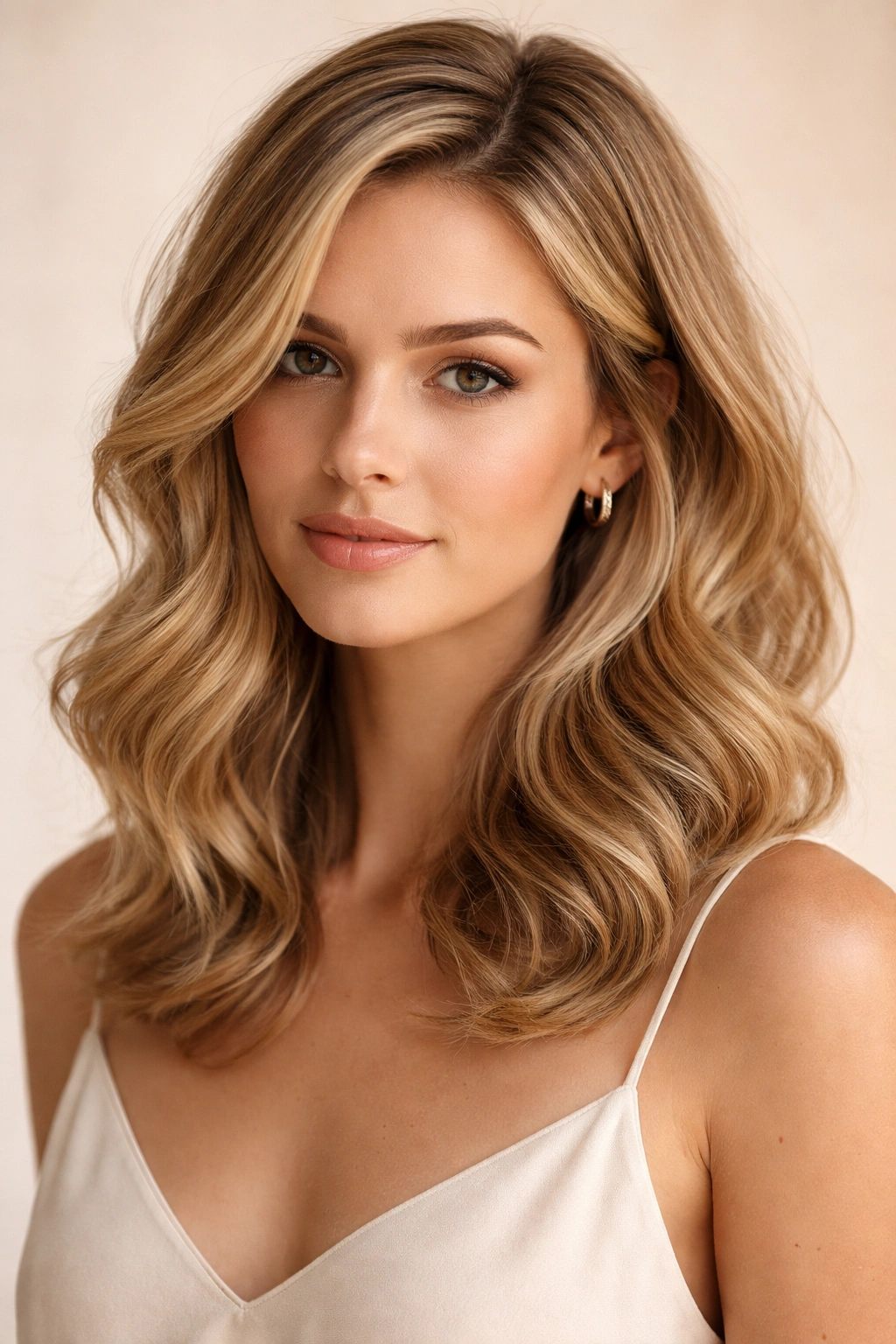
A soft side part creates an inherent line of asymmetry that works beautifully with waves, and honey blonde provides warmth and dimension that enhances this aesthetic. The side part naturally showcases one side of the face and hair while the other side creates gentle movement. This approach is deceptively simple but creates a refined, polished look that feels timeless rather than trendy.
Why Side Parting Matters for Wavy Hair
A side part is more flattering to round or square face shapes because it creates visual height and length. When combined with waves, one side of the part shows more wave definition while the other side has fuller coverage, creating natural asymmetry. This isn’t just styling—the part literally changes how the eye perceives your face shape and the movement of your hair.
Creating a Flattering Side Part
- Determine which side suits your face shape better (generally, part on the side opposite your face shape—round face, part on the side)
- Use a fine-tooth comb and a styling gel or mousse to create a crisp part line while hair is still damp
- Blow-dry following the part direction to set it in place
- Use the larger side of your hair to create fuller waves, while the smaller side gets gentler, smaller waves
- A deeper side part (starting further back) creates more drama; a shallower part feels softer and more romantic
Worth knowing: Side parts work best with longer layers and when the sides of your hair are long enough to move—short, choppy layers can make side parting look less intentional.
12. Sandy Blonde Waves with Textured Pixie Undercut
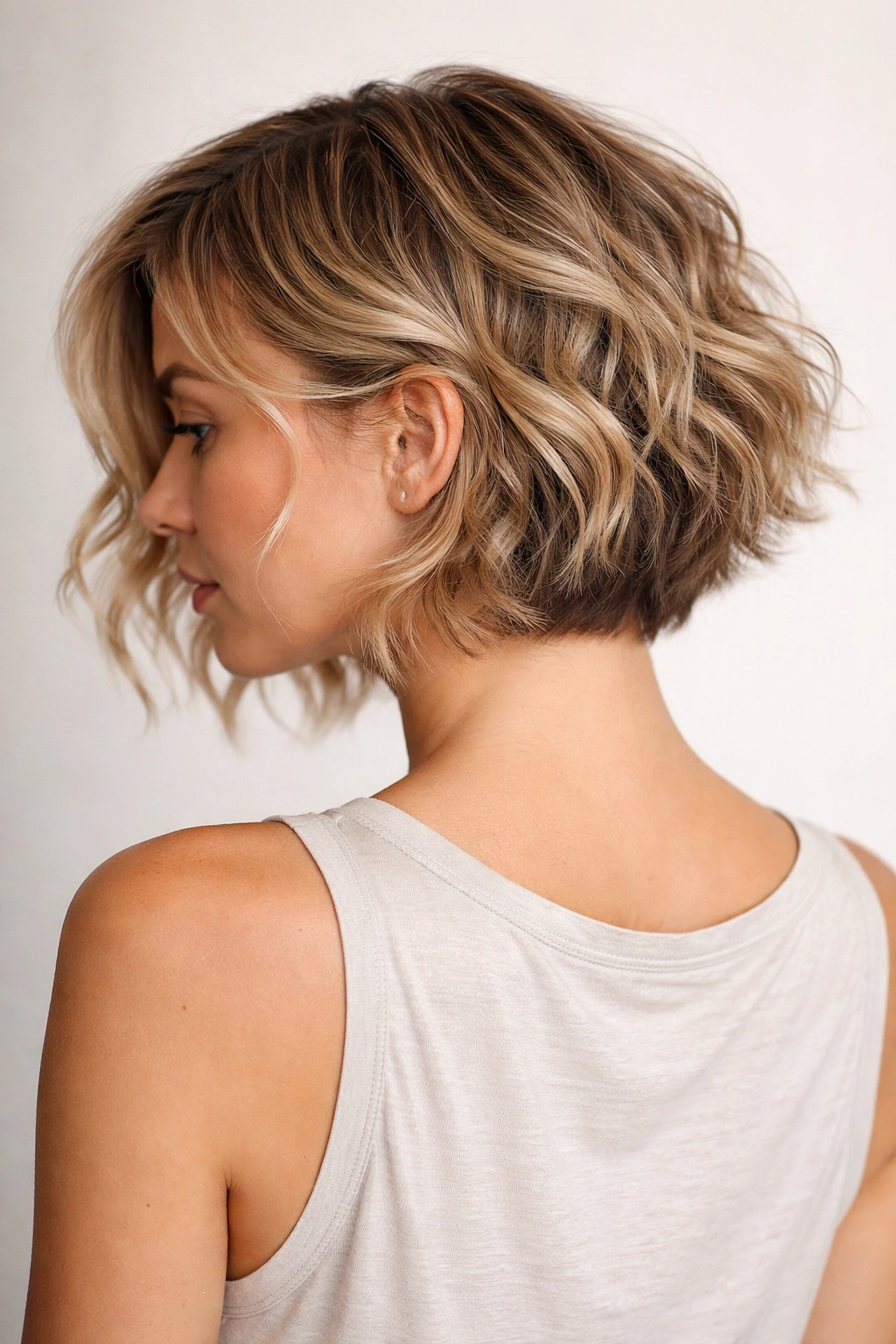
This modern approach combines a longer top and sides (shoulder-length) with shorter, textured layers on an undercut (usually kept around 2-3 inches at the nape). Sandy blonde is a warm, neutral shade that works well on many skin tones, and waves paired with the contrast of an undercut create an edgy, fashion-forward aesthetic. The undercut removes weight from underneath, making waves on top appear lighter and more voluminous.
The Practical Side of Undercuts with Waves
An undercut serves both aesthetic and practical purposes—it removes bulk from the nape area, which is especially helpful for anyone with thick hair or who finds shoulder-length hair heavy or hot. The contrast between the longer top and the cropped undercut creates visual interest even without waves, so adding waves to this foundation creates significant dimension. This style walks the line between femme and edgy.
Styling an Undercut with Waves
- The undercut requires regular maintenance (every 3-4 weeks) to keep the contrast sharp and prevent the shorter hair from growing into the longer sections
- Blow-dry the top section away from the undercut to showcase the contrast and create height
- Use a 1.5-inch curling iron to create waves in the top section, focusing on creating movement away from the face
- The undercut area itself stays smooth and short; don’t attempt to wave it
- Texturizing products work beautifully with this style—they emphasize the contrast between sections and add definition to the longer waves
Insider note: Sandy blonde shows wear and brassiness faster than cooler blondes, so monthly toning appointments are important to keep the color looking fresh and bright.
13. Dimensional Blonde Waves with Lived-In Color
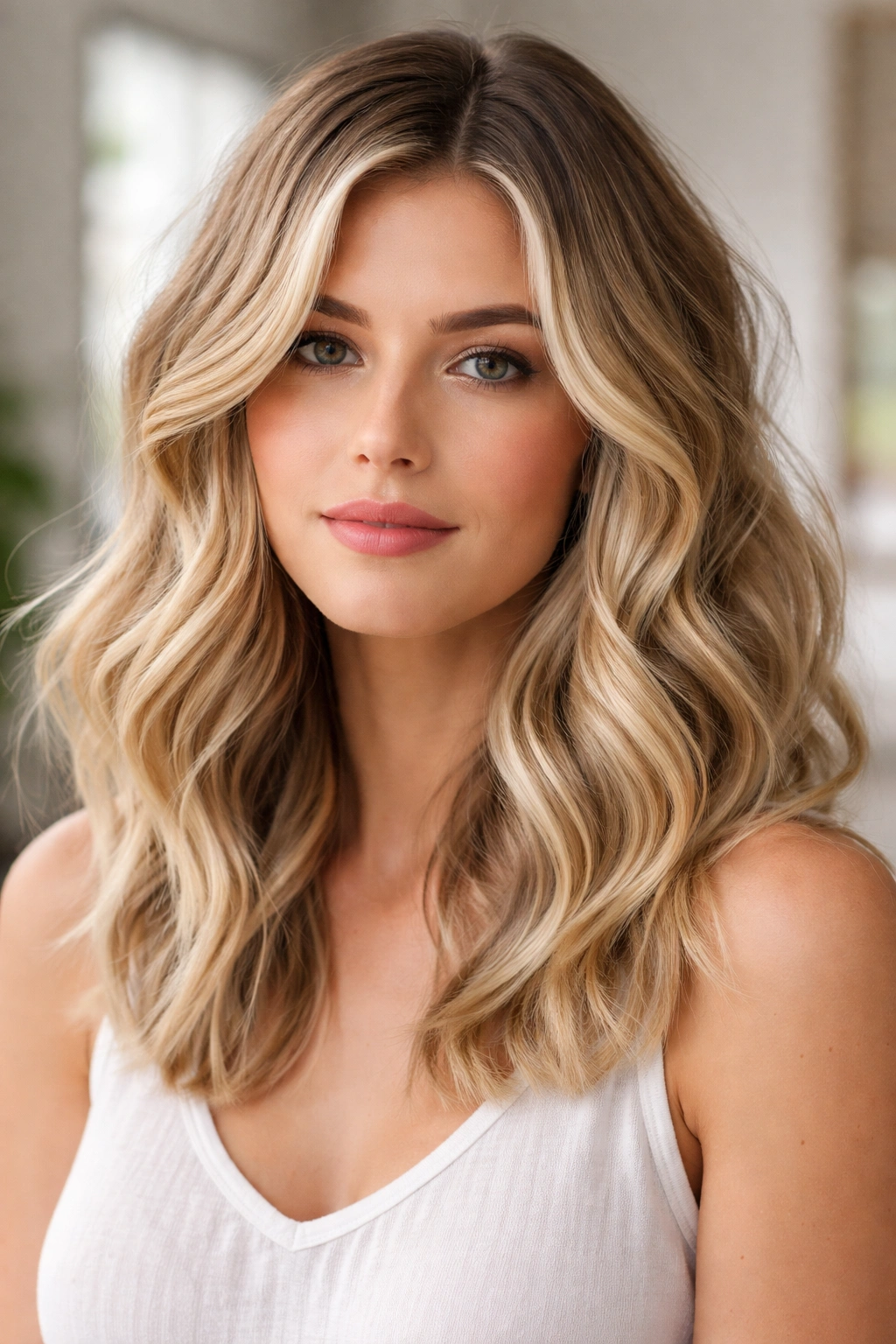
Lived-in color is a technique that uses multiple blonde tones (typically 3-4 different shades) to create dimension that looks naturally sun-kissed and aged gracefully. Rather than trying to maintain one perfect blonde shade, this approach embraces slight variation and changing tones over time. When paired with shoulder-length waves, lived-in color creates a sophisticated, effortlessly polished aesthetic that actually looks better as the color grows out.
The Philosophy Behind Lived-In Color
Lived-in color is rooted in the reality that perfect, single-tone blonde requires constant maintenance and eventually reaches a point of diminishing returns. Instead, this technique creates dimension from the outset that means touch-ups are less frequent and less dramatic. As your hair grows and the color shifts, it becomes richer and more dimensional rather than obviously regrowth. This approach is particularly appealing for people who want blonde without being a slave to color maintenance.
Styling Lived-In Color for Maximum Impact
- The dimension in your color means you don’t need perfect waves to look polished—slightly undone texture actually enhances the lived-in aesthetic
- Use sea salt spray or texturizing products to encourage natural wave formation and ensure texture is visible
- Avoid heavy serums that can make the color appear flat or dull—lightweight products preserve the dimension
- Sleep waves are perfect for this style because the slightly undone quality suits the aesthetic
- Gentle waves look better than tight curls with lived-in color, as the technique is all about softness and natural movement
Real talk: Lived-in color requires a skilled colorist who understands dimensional blending and can place multiple tones strategically. This isn’t a budget approach, but the longer timeline between appointments and the more forgiving maintenance make it worth the investment.
Final Thoughts
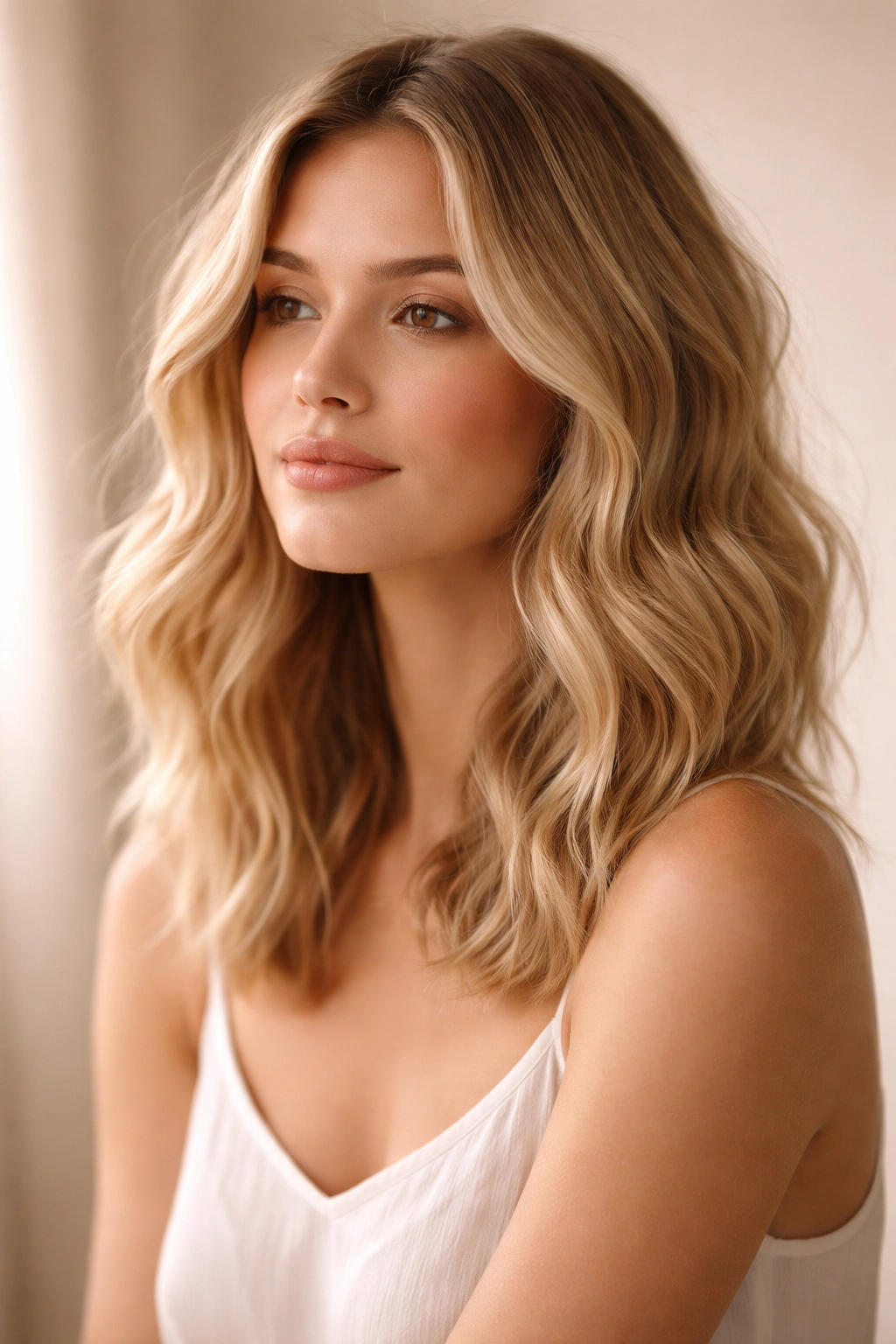
Shoulder-length blonde waves work because they sit at the intersection of manageability and visual impact. The length is long enough to show off wave movement and color dimension, but short enough that styling doesn’t feel like a daily chore. The specific combination of wave pattern, blonde shade, and cut technique determines whether your style feels beachy and undone, polished and refined, edgy and modern, or romantic and timeless.
The most important thing to remember is that no single style works for everyone. Your face shape, hair texture, lifestyle, and the amount of maintenance you’re willing to commit to should all factor into which of these approaches you choose. Consider consulting with a stylist about which specific cut and color combination suits your particular situation. A great stylist can suggest modifications that work with your hair’s natural tendencies rather than against them.
Finally, styling and maintenance matter just as much as the cut and color. A professionally executed cut loses its impact if it’s never styled, and beautiful blonde requires consistent toning to look its best. But if you’re willing to invest in both a good cut from a skilled stylist and regular maintenance appointments, shoulder-length blonde waves deliver consistent, effortless polish that works across countless occasions and personal styles.
