


Short 4C hair offers incredible versatility and texture that honestly deserves way more spotlight than it gets. When you embrace very short lengths—think one to three inches—you unlock a whole category of styles that range from effortlessly chic to boldly sculptural, all while requiring minimal styling time and maintenance. The beauty of 4C texture at these lengths is that your natural curl pattern becomes the star. You’re not fighting against your hair or spending hours manipulating it into something it isn’t. Instead, you’re celebrating the dense, springy coils that make 4C hair so distinctive.
The challenge most women face when transitioning to very short 4C styles is figuring out which cut will actually flatter their face shape, lifestyle, and the specific characteristics of their own hair (because not all 4C hair behaves identically). Some cuts work brilliantly for people with high hair density, while others shine on those with finer, more delicate strands. Some styles demand daily attention to stay fresh, while others improve as they settle and mature over days. The right very short 4C style should feel like it was made for your head, require styling methods that fit your daily routine, and make you feel genuinely confident when you catch your reflection.
What follows are eight of the most wearable, flattering, and genuinely doable very short 4C styles, complete with the specific details about face shapes, density requirements, maintenance reality, and styling techniques that actually matter. Each one has its own character—some are soft and rounded, others are sharp and geometric, a few sit somewhere beautifully in between. By the end, you’ll have a clear sense of which style aligns with your hair type, face shape, and how much time you’re actually willing to spend on styling.
1. The Teeny TWA (Tapered Wash and Go)
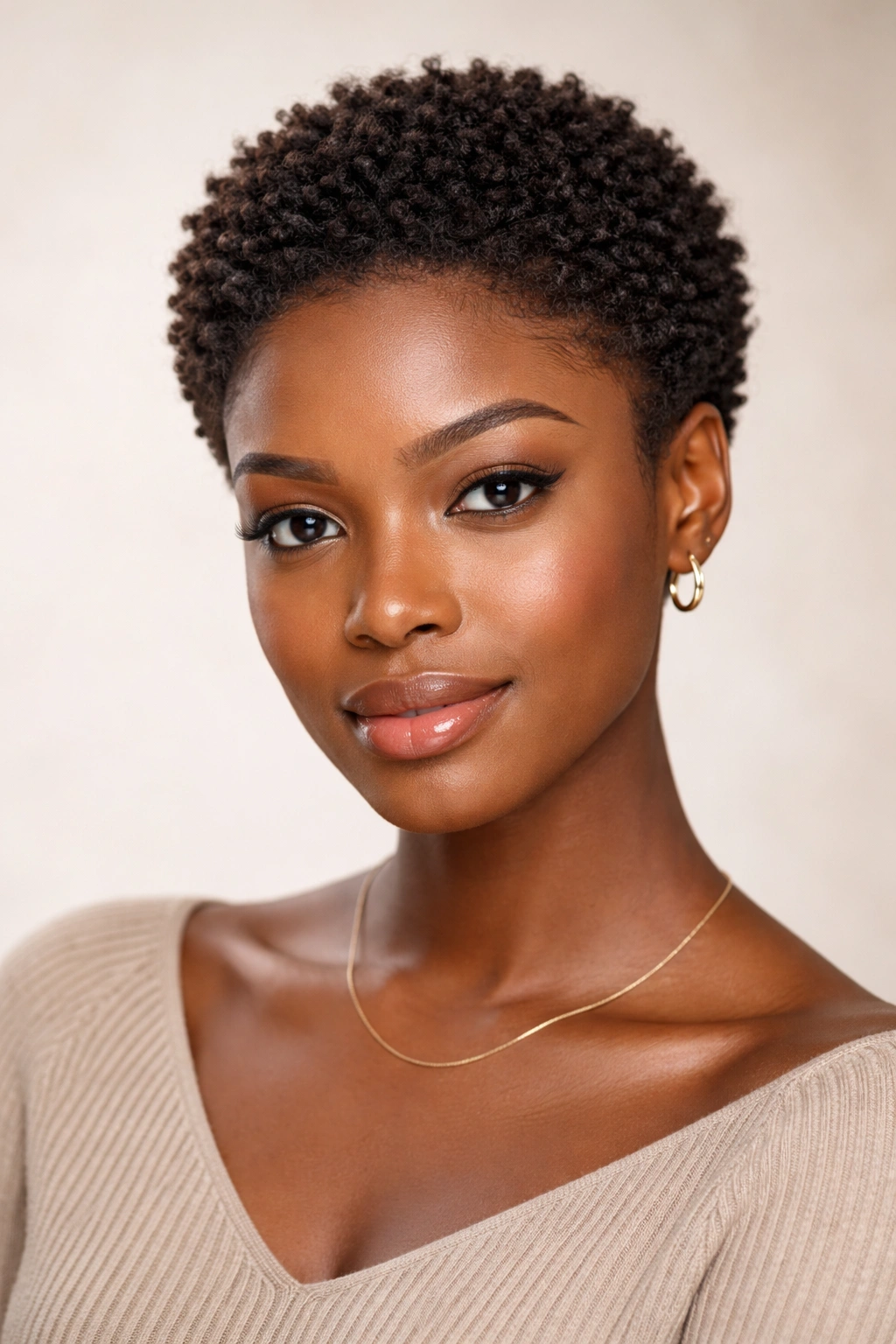
A Teeny TWA—which stands for “Tiny Waist Area,” though the name refers to the overall silhouette—is essentially a super-short, evenly tapered cut that works with your natural curl pattern rather than against it. Think one to two inches of length across the entire head, with no dramatic height variation or carving. This style celebrates the full roundness of your head shape and lets your natural coil pattern do literally all the visual work. The cut itself is deceptively simple: your barber or natural hair specialist works with clippers or scissors to create an even canvas where every curl sits at approximately the same distance from the scalp.
Why This Works So Well for 4C Hair
The Teeny TWA is genuinely one of the lowest-maintenance options available for 4C texture. Because the length is so short, you’re not dealing with tangles, breakage from manipulation, or the need to create specific curl patterns—your coils are already defined and visible. The cut removes any straggly, broken ends that accumulate when you wear longer styles, which often makes your hair look fuller and healthier almost immediately after the cut. The rounded silhouette flatters almost every face shape, though it’s particularly stunning on people with wider faces or prominent cheekbones, as the short length creates visual balance.
Styling and Maintenance Essentials
- Apply a leave-in conditioner or lightweight moisturizer to damp hair and let your curls air-dry completely before heading out—this takes roughly 30 minutes to 2 hours depending on your hair density and porosity
- Refresh your Teeny TWA in the morning by spritzing with water or a light misting spray, then use your fingers to gently separate any coils that have compressed overnight
- Plan for a fresh cut every 3 to 4 weeks if you want to maintain the perfectly rounded shape, or stretch it to 5 to 6 weeks if you’re okay with slightly softer edges
- This style requires absolutely no heat, no protective styling, and virtually no daily manipulation beyond finger-raking and optional product application
Pro tip: If your 4C hair is on the finer or lower-density side, ask your barber to cut slightly on the longer end of the spectrum (closer to two inches rather than one) so the style doesn’t look sparse or show too much scalp.
2. The Textured Pixie Cut
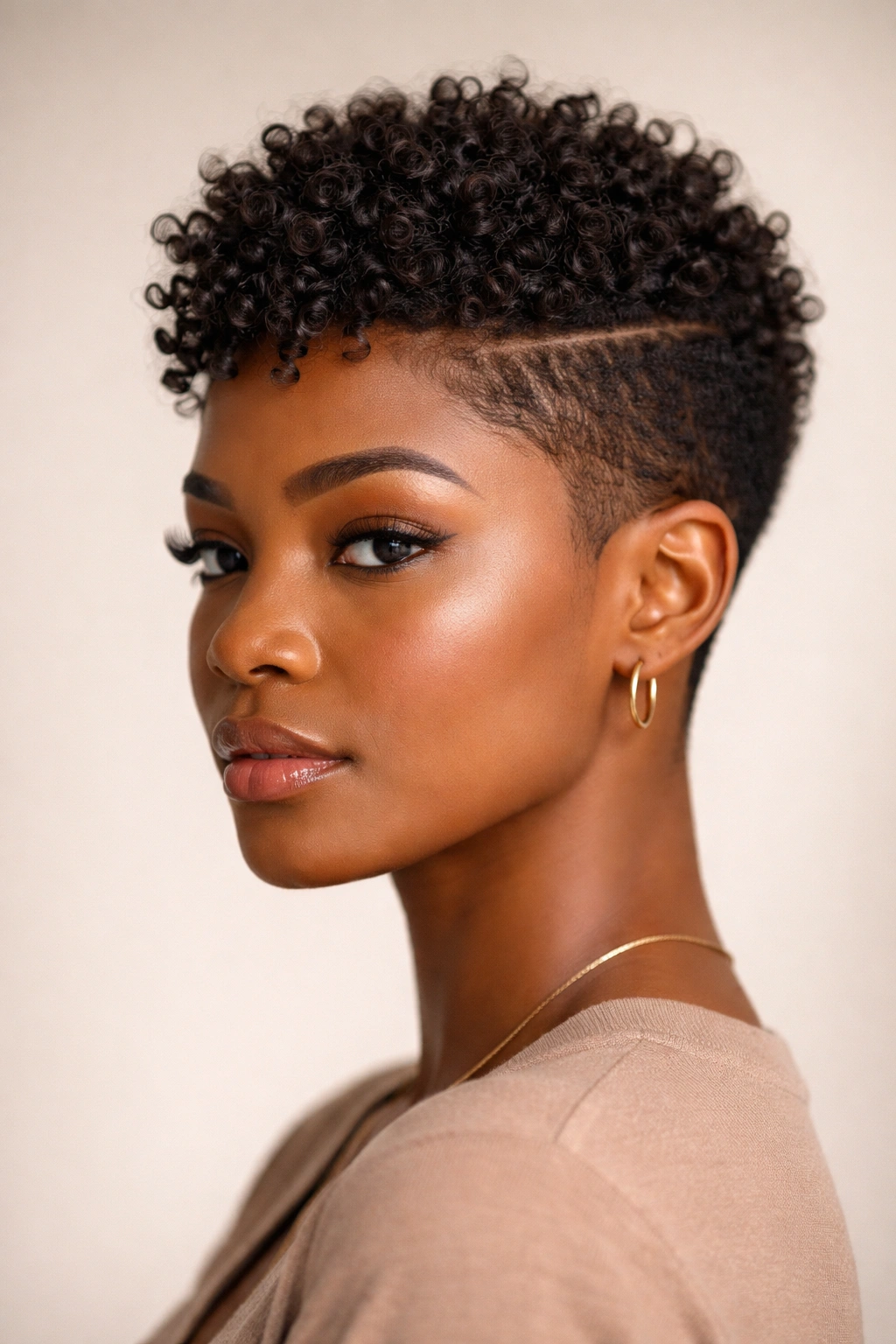
A textured pixie is a short, sculpted cut that creates intentional variation in length across your head—typically longer on top (two to three inches), shorter on the sides (one to one-and-a-half inches), and tapered edges around the nape and temples. Unlike the even Teeny TWA, a pixie cut is all about dimension and plays with height to create a more fashion-forward, editorial look. For 4C hair, a textured pixie leverages your natural curl shrinkage and dense texture to create visual volume exactly where you want it. The coils on top will spring up and create height, while the tapered sides show off your hair’s natural shape and the curves of your head and face.
What Makes the Textured Pixie Different
The textured pixie is your go-to if you want something that photographs beautifully, makes a statement, and still requires minimal effort. The longer hair on top means you have actual curl definition to work with—your coils will be visibly separated and bouncy rather than a uniform cloud. The tapered sides create an intentional graphic quality that reads as deliberately styled rather than simply short. This cut is particularly stunning on people with oblong or square face shapes, as the height on top and tapered sides create visual balance. If you have a rounder face, a textured pixie can actually complement your shape beautifully by drawing the eye upward.
Styling Techniques That Actually Work
- Wash your hair with a sulfate-free shampoo or co-wash, then apply a rich leave-in conditioner while hair is still dripping wet
- Use a microfiber towel or t-shirt to gently squeeze out excess water—never rub or agitate your curls
- Apply a styling cream, curl cream, or gel to soaking-wet hair and use your fingers to rake it through, encouraging each coil to form and separate
- Air-dry or sit under a hooded dryer if you’re in a rush; the longer top section will take longer to dry than the sides due to density variation
- Once fully dry, you can gently finger-rake the top section to create additional separation if desired, or leave coils as they naturally stack
Important note: The textured pixie requires a skilled barber who understands how 4C texture shrinks and behaves. A general barber might over-cut, leaving you with less length and volume than intended after your hair shrinks. Always communicate your curl pattern and ask to see the cut while your hair is fully dry.
3. The Cropped High-Top Fade
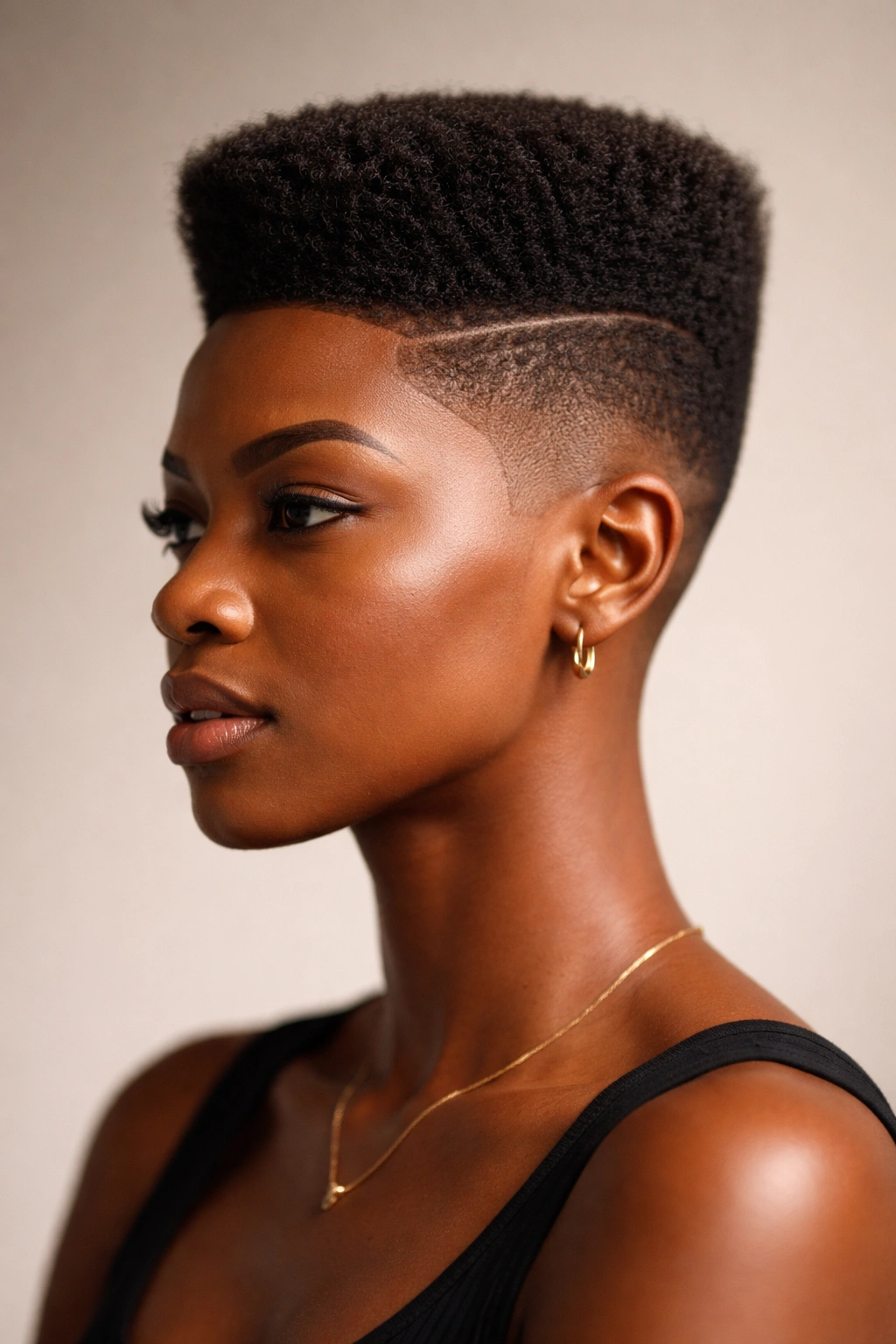
A cropped high-top fade is a bolder, more geometric take on short 4C styling. Your barber creates a distinct height gradient: longer, fuller coils on top (typically two-and-a-half to three-and-a-half inches), a clean fade on the sides that gradually reduces from quarter-inch to skin-close over the temple and ear area, and a precise line around your hairline. This style is inherently androgynous and visually striking. The height on top combined with the architectural fade creates a shape that’s almost sculptural. For 4C hair, the high-top works because your coils will naturally compress slightly under their own weight, creating a defined shape that holds without product.
Who This Style Suits Best
The cropped high-top fade looks exceptional on people who want to make a confident style statement and aren’t concerned with reading as traditionally feminine or masculine—this cut exists outside those categories and that’s precisely its appeal. It flatters angular face shapes beautifully and draws attention upward toward the eyes and forehead. If you have a smaller or narrower face, the contrast between the longer top and faded sides can actually make your face appear broader and more balanced. People with high hair density and actively coiled 4C texture (rather than 4C that leans more toward a tighter coil pattern) typically see the most dramatic, visually impressive results with this style.
Maintaining the Fade and Top Section
- The fade side is the commitment: plan for a touch-up every 2 to 3 weeks to maintain the crisp transition and keep the tapered edges clean and intentional
- The top section can go 4 to 5 weeks before needing a full trim, though you might want to slightly dust it every 3 weeks if split ends accumulate quickly
- Styling the top is straightforward—apply moisturizer or a styling product to damp hair, finger-rake for definition, and let it air-dry or use a hooded dryer
- The faded sides require virtually no styling; just keep them clean with a lightweight oil or moisturizer to prevent dryness in that tapered area
Insider insight: If you’re nervous about committing to a full high-top fade, ask your barber to start with a more moderate height variation and less dramatic side fade first—you can always go bolder once you’re comfortable with the overall vibe and commitment level.
4. The Rounded Wash and Go
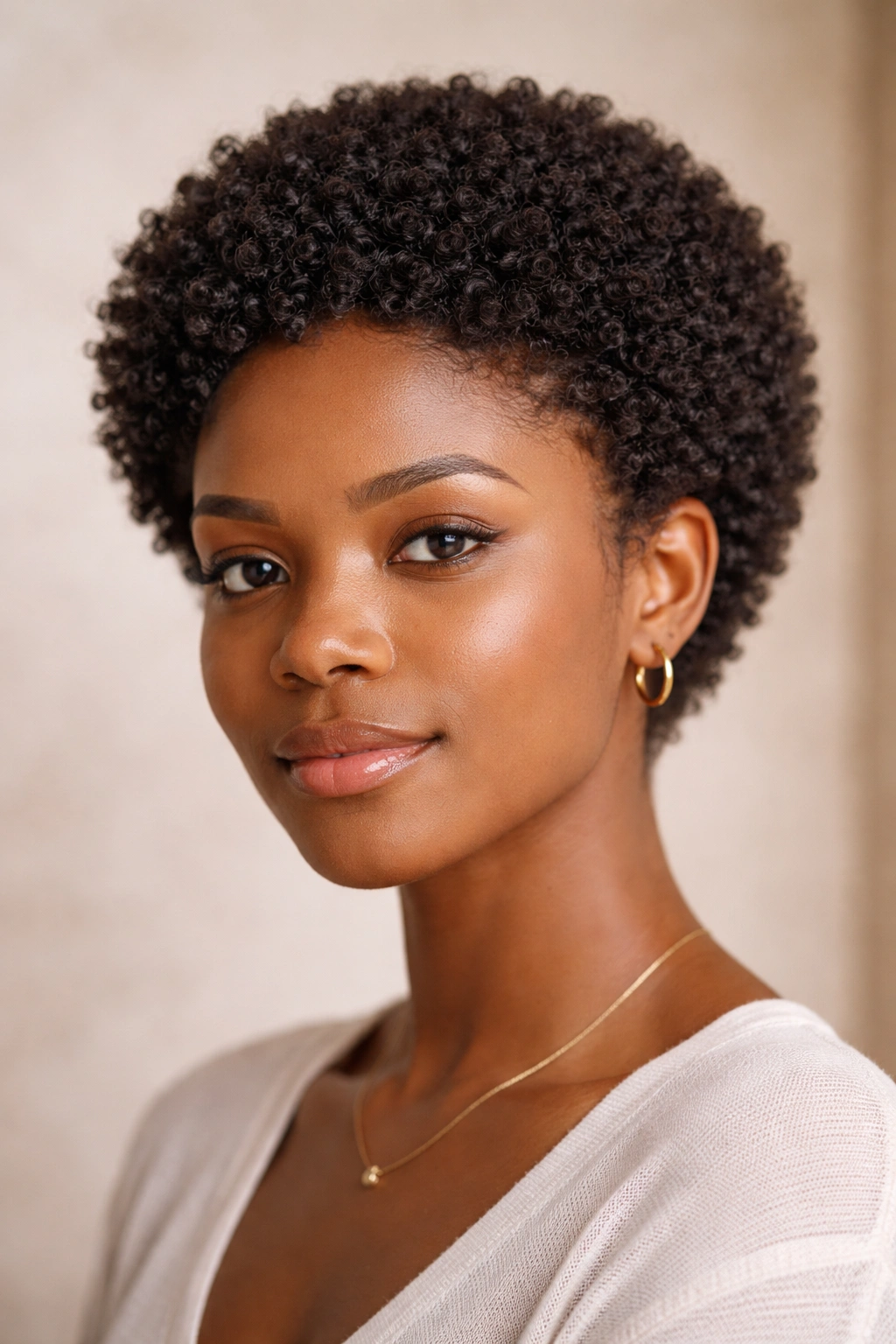
The rounded wash and go is your ultimate low-key style: wash your hair, apply product, let it air-dry, and you’re done. No combing, no manipulation, no specific cuts or fades—just your natural 4C coils doing their thing in a soft, rounded shape. This works best when you have roughly one-and-a-half to two-and-a-half inches of length and when your 4C texture naturally gravitates toward a more uniform coil pattern (rather than dramatic shrinkage variation). The rounded shape emerges organically as your hair dries; you’re not creating a specific geometric style, you’re just letting your hair express its natural form.
The Science Behind Why This Works
Your 4C hair has likely learned patterns from any previous styling methods—if you’ve worn it in braids, twists, or pressed styles, your hair might have a memory of those patterns. A wash and go essentially resets that memory. You’re starting with clean slate because you’re shampooing away product buildup and any directional set. As your hair dries in its completely natural state without tension or direction, it settles into whatever shape feels most comfortable for your specific curl pattern and hair density. The roundness you end up with is actually the most mechanically efficient shape for your coils—it happens naturally when hair is left to its own devices.
Making the Wash and Go Actually Work
- Use a sulfate-free shampoo (or a co-wash if your scalp is sensitive or your hair is low-porosity) and really focus on cleansing your scalp thoroughly, because product buildup will prevent coils from forming clearly
- While hair is still dripping wet, apply a leave-in conditioner, curl cream, or styling gel in a generous amount—your hair needs adequate moisture and slip to form defined coils
- Use your fingers (not a comb) to rake the product through, gently separating coils and encouraging definition while hair is still soaking wet
- Let hair air-dry completely; compressed or damp hair will not set into the shape you want—patience is non-negotiable here
- Once fully dry (which might take 4 to 6 hours depending on density), your style is set and ready to go without any additional styling
Worth knowing: The wash and go is genuinely low-maintenance only if your 4C texture cooperates with your chosen product formula. You might need to experiment with different leave-ins, creams, or gels to find what creates clean coil definition on your specific hair. What works for someone else might create frizz or lack of definition on your hair—this is normal and not a failure on your part.
5. The Sheared Sides with Volume on Top
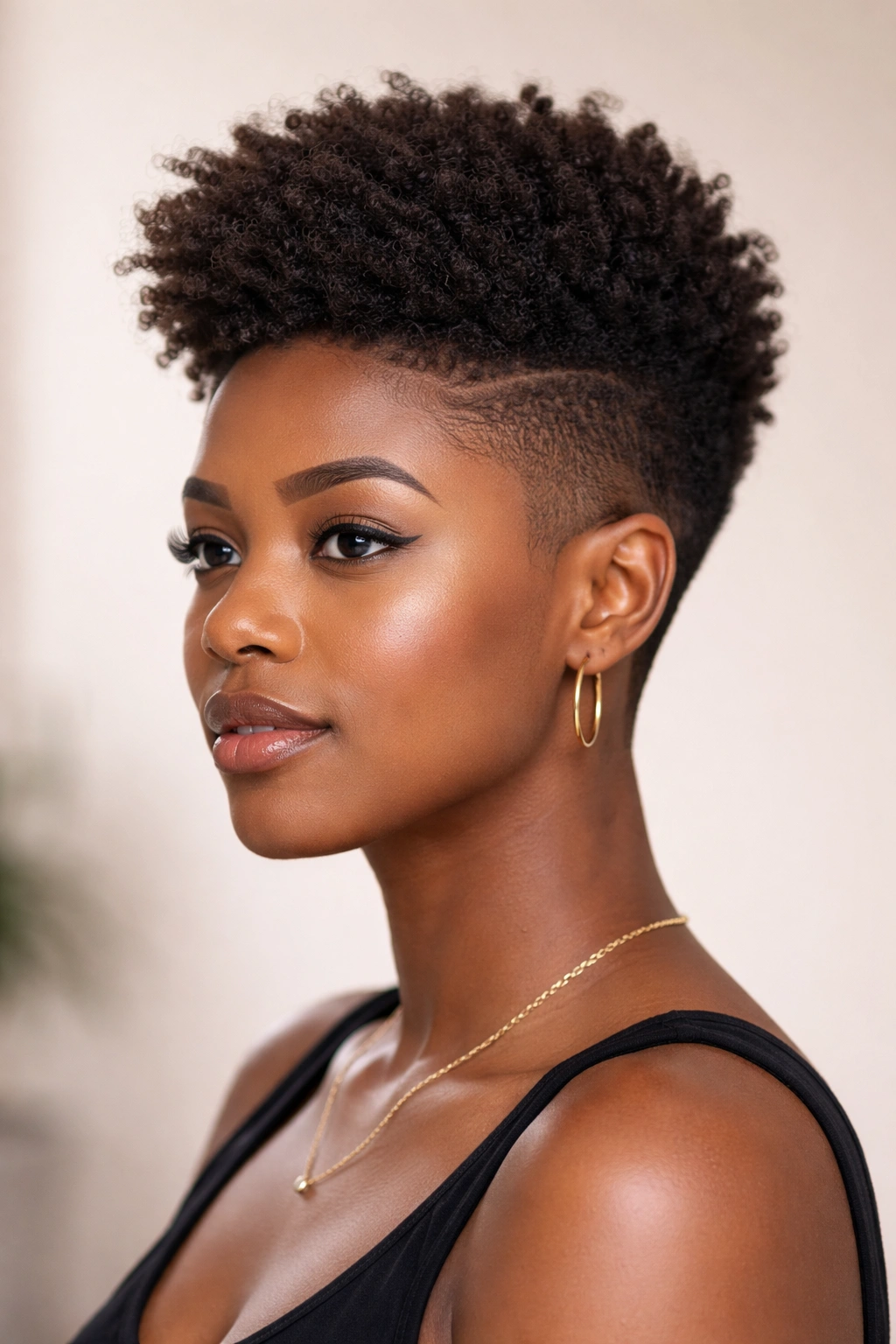
This style is the sweet spot between the low-maintenance Teeny TWA and the more sculptural high-top fade. Your barber removes significant length from the sides (leaving roughly half-inch to three-quarter-inch of coils) while keeping the top longer and fuller (two to two-and-a-half inches). The sides aren’t faded down to skin; they’re just shorter, creating a clear visual distinction between the volume on top and the more compressed texture on the sides. This cut is easier to maintain than a fade (no biweekly touch-ups needed) and offers more visual interest than an even-length cut, all while keeping styling incredibly simple.
Why This Hybrid Approach Works
The sheared sides create visual balance and actually complement a wider variety of face shapes than you might expect. The height on top draws the eye upward, while the shorter sides create definition around your face without the sharpness of a true fade. If you love the idea of a high-top fade but aren’t ready for the biweekly maintenance commitment, this is your perfect entry point. The style naturally photographs well because the contrast between top and sides creates definition, but it also feels relaxed and wearable for everyday life—you don’t have to worry about your fade growing out in a weird way.
Practical Maintenance and Styling
- Plan for a trim every 4 to 5 weeks to maintain the intentional length distinction—this is less frequent than a fade but more regular than a full Teeny TWA
- The shorter sides require minimal product; just keep them moisturized with a lightweight oil or leave-in conditioner
- The top section is where you can play with styling: apply product to damp hair, let it air-dry for a natural look, or finger-rake while drying for more definition and separation
- This style works beautifully as a wash and go, or you can apply a little more product and spend five minutes actively styling the top for days when you want something more intentional
Pro tip: When you go in for your cut, bring photos of styles you like and specifically mention that you want shorter sides without a fade—this helps your barber understand the length differential you’re aiming for.
6. The Low-Cut Tapered TWA with Texture
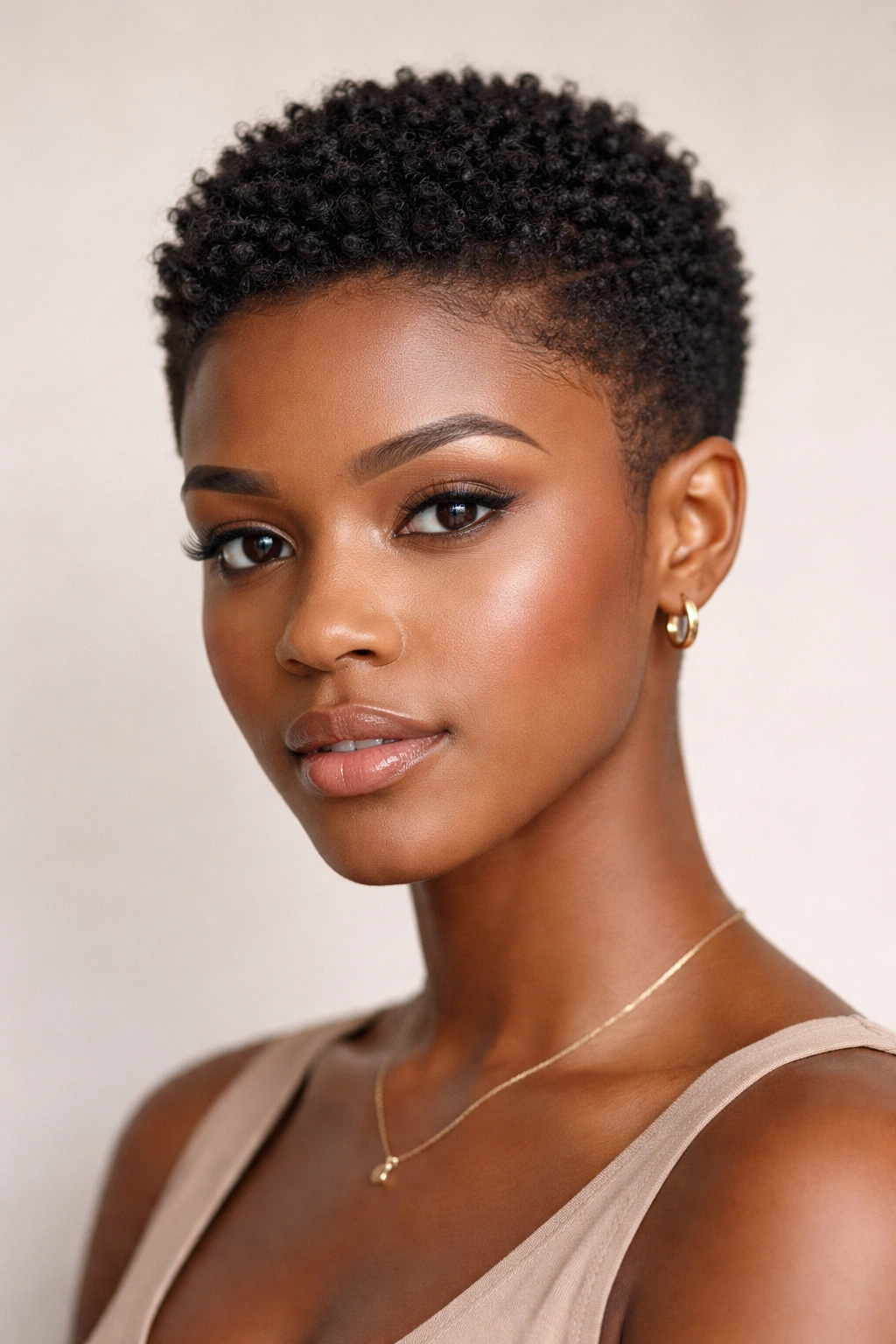
This is similar to the basic Teeny TWA but with slightly more intentional shaping and a tapered edge around the hairline and nape. Your barber cuts hair shorter around the perimeter (almost to fade-level on the sides but not quite, maintaining a visible quarter-inch of texture) and keeps the top and crown slightly longer (one-and-a-half to two inches). The result is a style that sits somewhere between completely even and dramatically tapered—it has subtle dimension without the commitment of maintaining a real fade. This works particularly well for people who want definition without drama, or for people whose face shape benefits from subtle shaping around the edges.
The Details That Actually Matter
The low-cut tapered TWA is less visually bold than a high-top fade but more intentional than a completely even cut. It’s particularly flattering on people with longer necks or narrower shoulders, as the tapered edges draw the eye inward rather than making your head look isolated on your neck. If you have a rounder face shape, the slight shortness around the temples and cheeks can actually create subtle contouring that’s surprisingly flattering. For people with very high hair density and coils that spring up dramatically, the slightly longer top combined with tapered edges creates beautiful proportion and balance.
Cutting and Maintenance Realities
- Plan for a fresh cut every 4 to 5 weeks to maintain the tapered edges and keep them looking intentional rather than grown-out
- Between cuts, you can refresh the tapered edges yourself using small clippers if you’re comfortable—start with a very low guard setting and go slowly, because 4C hair shrinks and what looks like a certain length wet will be shorter when dry
- Styling is incredibly simple: apply product to damp or wet hair, finger-rake for definition, air-dry, and you’re done
- The tapered edges don’t require any special maintenance beyond keeping them moisturized like the rest of your hair—apply your regular leave-in conditioner and don’t over-dry this area
Important: If you’re going to try touch-ups at home, invest in a decent pair of clippers (not scissors) and practice on the back of your head first, where any mistakes are less visible. It’s genuinely easier than it sounds once you do it once or twice.
7. The Textured Twist-Out on Short Hair
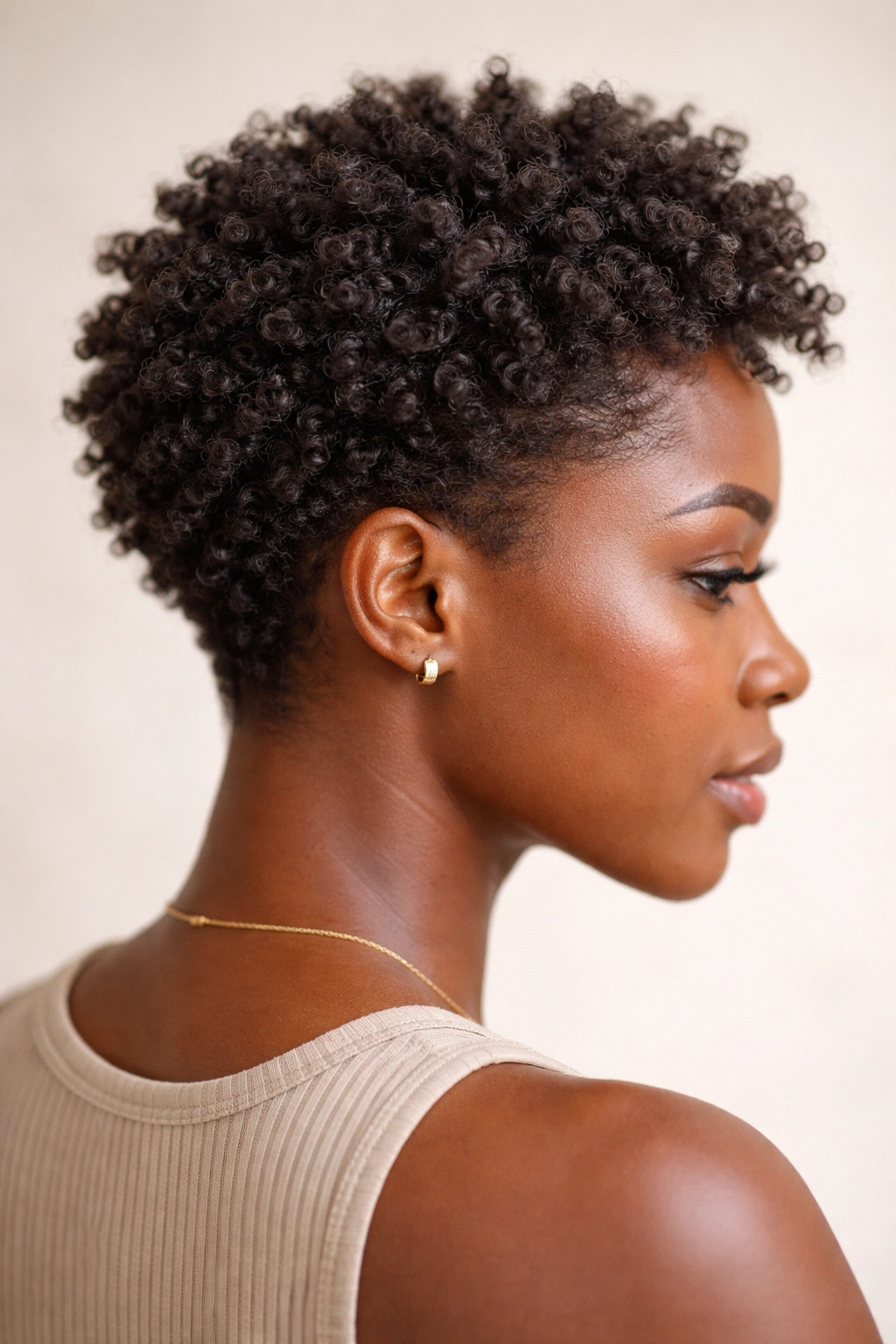
A twist-out on very short 4C hair is a styling technique rather than a permanent cut, but it creates such a distinct look that it deserves its own category. You create small two-strand twists while your hair is wet or damp, sleep on them or let them set for several hours, then unravel them to create a style with visible definition and texture separation. On short 4C hair (one-and-a-half to two-and-a-half inches), twist-outs create a voluminous, almost feathered appearance because each unraveled twist springs up independently. This style works best on hair that’s roughly one-and-a-half to two inches minimum; anything shorter than that won’t hold a twist pattern effectively.
How Twist-Outs Create Visual Drama
The beauty of a twist-out is that it temporarily transforms the appearance and texture of your coils without any permanent change. Your hair naturally sits as tightly coiled 4C texture, but once you unravel twists, those coils separate and spring up, creating a completely different silhouette and feel. The style looks intentional and styled rather than wash-and-go casual, yet requires no heat, no damaging manipulation, and actually represents a protective styling method that your hair genuinely benefits from. For people who want variety without committing to different cuts or growing their hair longer, twist-outs are a genuine game-changer.
The Actual Process From Start to Finish
- Wash your hair thoroughly and apply a leave-in conditioner or twisting cream while hair is still dripping wet
- Section your hair into however many twists feel manageable—typically 6 to 12 sections depending on your hair density and the look you want (more twists = more definition, fewer twists = a fuller, more voluminous look)
- Create two-strand twists by taking two strands of hair and rotating them around each other from root to tip, adding product as you go to maintain definition
- Let twists set for at least 6 to 8 hours, or overnight if you have the time—the longer they set, the more defined your twist-out will be once unraveled
- Unravel twists gently by starting at the ends and slowly unwinding each twist with your fingers; resist the urge to comb or pick through your hair aggressively
- Your twist-out will last 3 to 5 days depending on how much you manipulate it and whether you pineapple or bonnet it at night to preserve the style
Insider note: Twist-outs look best on day two or three after you unravel them—the initial crinkle from the twist pattern settles into a more refined texture, and the overall shape becomes more cohesive. Don’t judge the style immediately after unraveling; give it a day to settle.
8. The Short Coil-Out or Coil Pattern Refresh
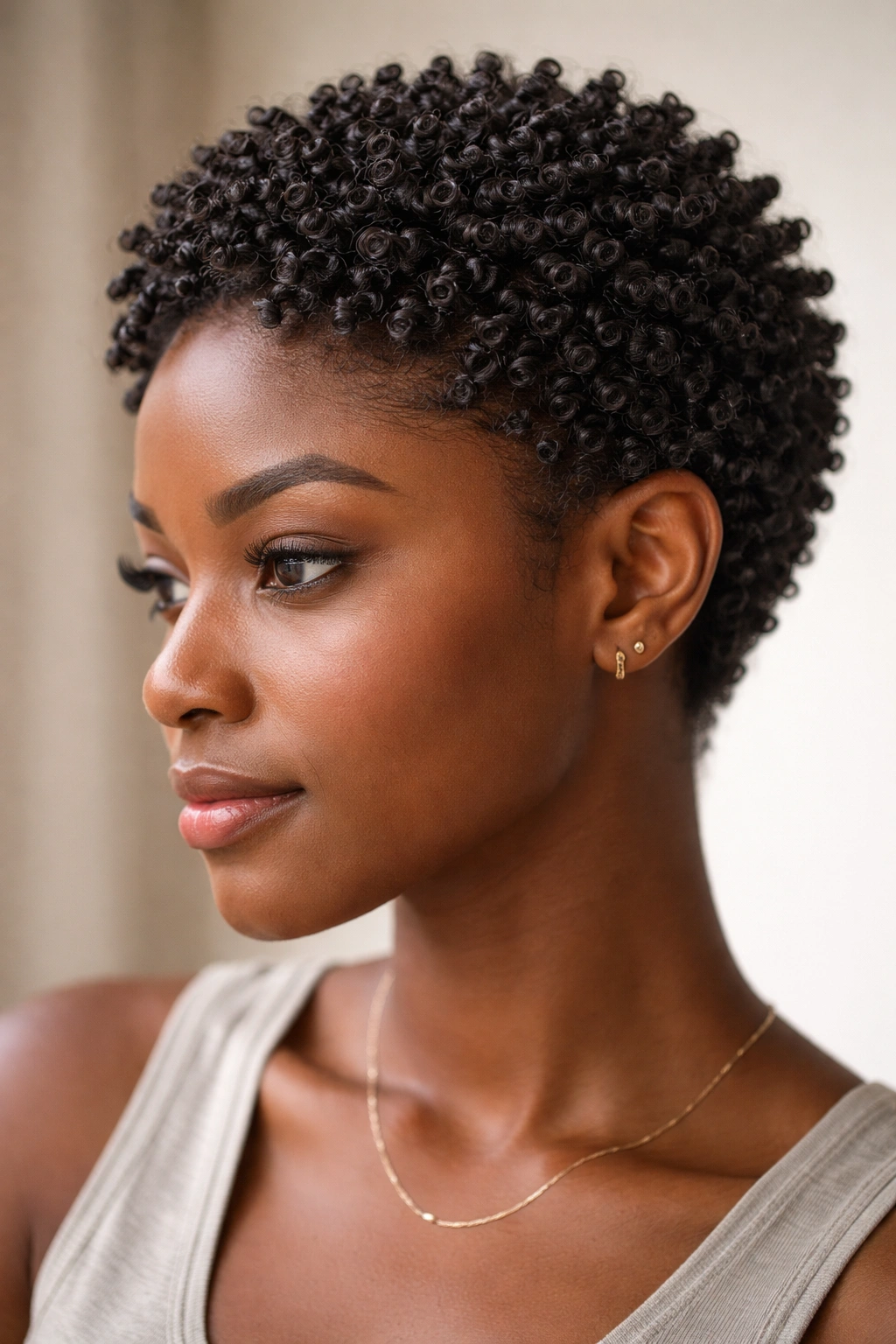
A coil-out is similar to a twist-out but uses a different technique to create definition. Instead of two-strand twists, you use a comb, brush, or your fingers to separate your natural coils into more distinct, individual units while your hair is wet or damp with product, then let those separated coils dry and set into that pattern. This works beautifully on short 4C hair because you’re not fighting against your natural texture—you’re actually enhancing and emphasizing exactly what’s already there. The result is coils that look more defined, separated, and visually distinct than they would in a basic wash and go, without the time investment of creating twists.
Why This Technique Matters for 4C Hair
Your 4C coils sometimes clump together or stack in ways that make the overall texture look less defined than it actually is. A coil-out essentially combs through those clumps while your hair is wet and responsive, separating each coil so they can dry as individual units. The technique is particularly useful for people whose 4C hair naturally tends toward tight coil patterns where individual coils aren’t immediately visible, or for people who want more dramatic texture definition without creating a completely different look. Unlike a twist-out, a coil-out is genuinely just manipulating your coils into a more separated state—no actual styling technique required, just strategic combing.
The Technique and the Timing
- Shampoo your hair thoroughly and apply a leave-in conditioner or detangler while hair is completely saturated and dripping wet
- Using a wide-tooth comb, comb through your hair gently while wet, working in sections and focusing on areas where coils clump together or blend into one another
- The goal isn’t to fully detangle (which would actually disrupt your coil pattern) but to separate enough that individual coils can form and dry independently
- You can use your fingers to further define specific coils if desired, but this step is optional—the comb work usually does the job effectively
- Allow hair to air-dry completely; compressed or damp hair won’t set properly and you’ll lose the definition
- A coil-out typically lasts 4 to 6 days before coils start to naturally blend back together again, which is when you’d refresh by repeating the process
Worth knowing: Coil-outs require absolutely zero heat, zero product beyond your regular leave-in, and virtually no styling skill—just patience and a good wide-tooth comb. This makes it an exceptionally accessible technique for people new to natural hair or looking for a completely low-effort styling method.
Final Thoughts
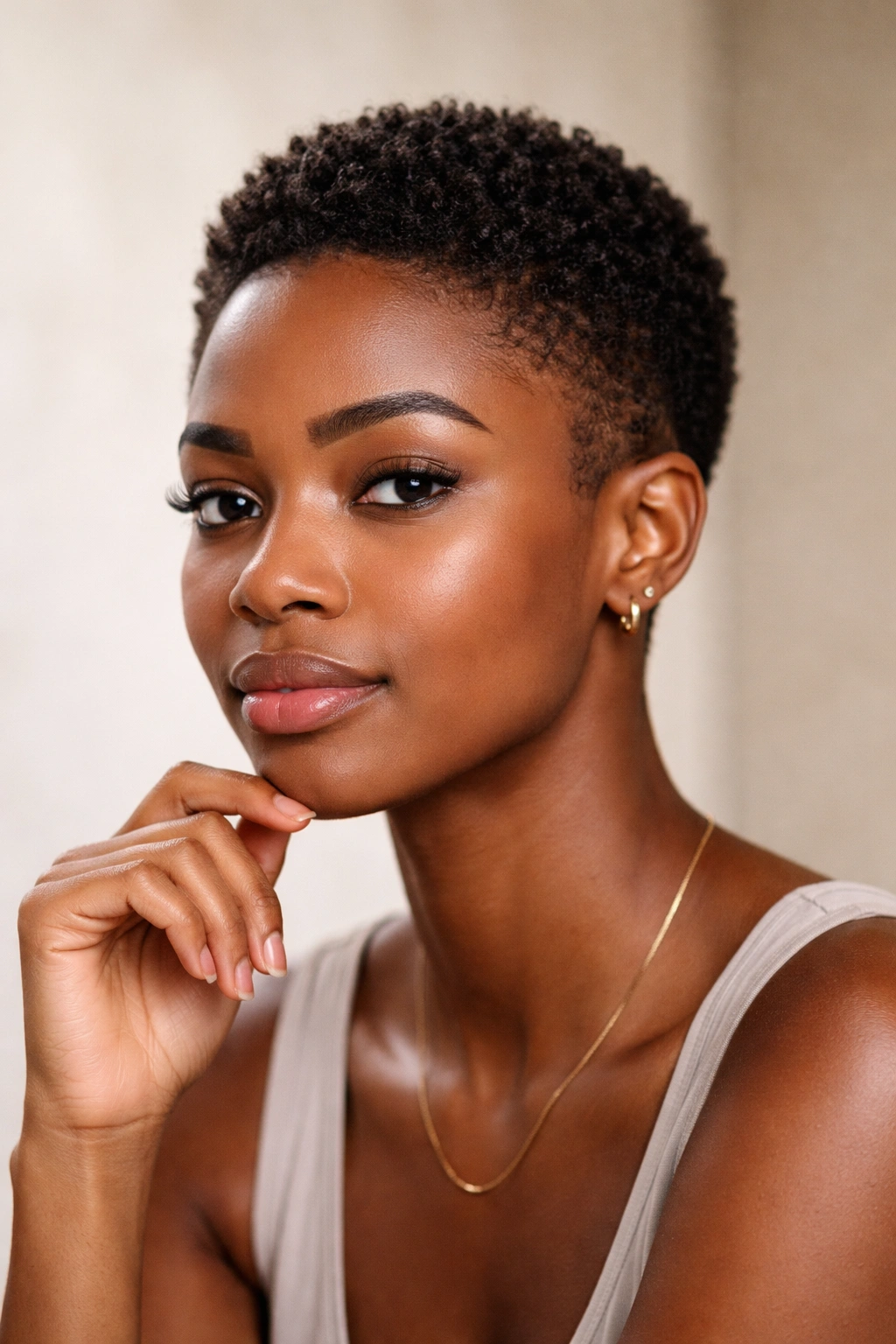
Choosing the right very short 4C style really comes down to understanding three things: your own hair density and coil pattern (because not all 4C behaves identically), your face shape and what proportions make you feel confident, and honestly, how much maintenance you’re willing to commit to month after month. A Teeny TWA or rounded wash and go demands basically nothing beyond shampooing and product application. A high-top fade or textured pixie requires more frequent trims and more intentional styling, but the payoff is a genuinely striking look. The sheared sides approach, low-cut tapered TWA, and twist-outs exist beautifully in the middle—they offer visual interest and intentionality without the biweekly fade maintenance commitment.
The reality is that short 4C styles are genuinely easier to maintain than longer natural hair, but that doesn’t mean they’re no-fuss. You’re still investing in quality product, you’re still being intentional about moisture and care, you’re still showing up for your hair consistently. What changes is the type of work involved—less detangling and protective styling, more intentionality about cut maintenance and styling technique. Most importantly, very short 4C styles offer something genuinely valuable: they make your natural curl pattern the undeniable star of your look, they require minimal heat exposure, and they celebrate your hair’s actual texture rather than forcing it into something it’s not.