



There’s something undeniably appealing about a messy bun—it looks effortlessly put-together, works for nearly any occasion, and somehow manages to be both casual and polished at the same time. If you have long hair, you’ve got the perfect canvas for creating messy bun styles that range from romantic and beachy to sleek and sophisticated. The beauty of this versatile hairstyle is that “messy” doesn’t mean unkempt; it means intentionally undone, with texture, movement, and a lived-in elegance that actually takes a bit of skill to pull off correctly.
The appeal of messy buns goes beyond pure aesthetics. They’re practical for keeping hair off your neck on warm days, they stay put during workouts and daily activities, and they give your hair a break from the tension of tighter styles. Long hair especially benefits from messy bun styling because you have enough length to create volume, texture, and interesting movement that shorter hair simply can’t achieve. Whether you’re heading to the gym, the office, a casual weekend brunch, or even a date night, there’s a messy bun style that fits the moment perfectly.
What makes mastering messy buns genuinely worthwhile is understanding how texture, placement, and intentional “imperfection” work together. A truly great messy bun isn’t about haphazardly throwing your hair up—it’s about understanding how to create the illusion of relaxed effortlessness through technique, the right products, and strategic styling choices. With long hair, you have the length to experiment with different heights, tightness levels, wrapping techniques, and incorporated elements like braids, twists, and face-framing pieces.
Let’s explore ten distinct messy bun styles specifically designed for long hair, each with its own personality and perfect-for scenarios.
1. The Classic Romantic Messy Bun
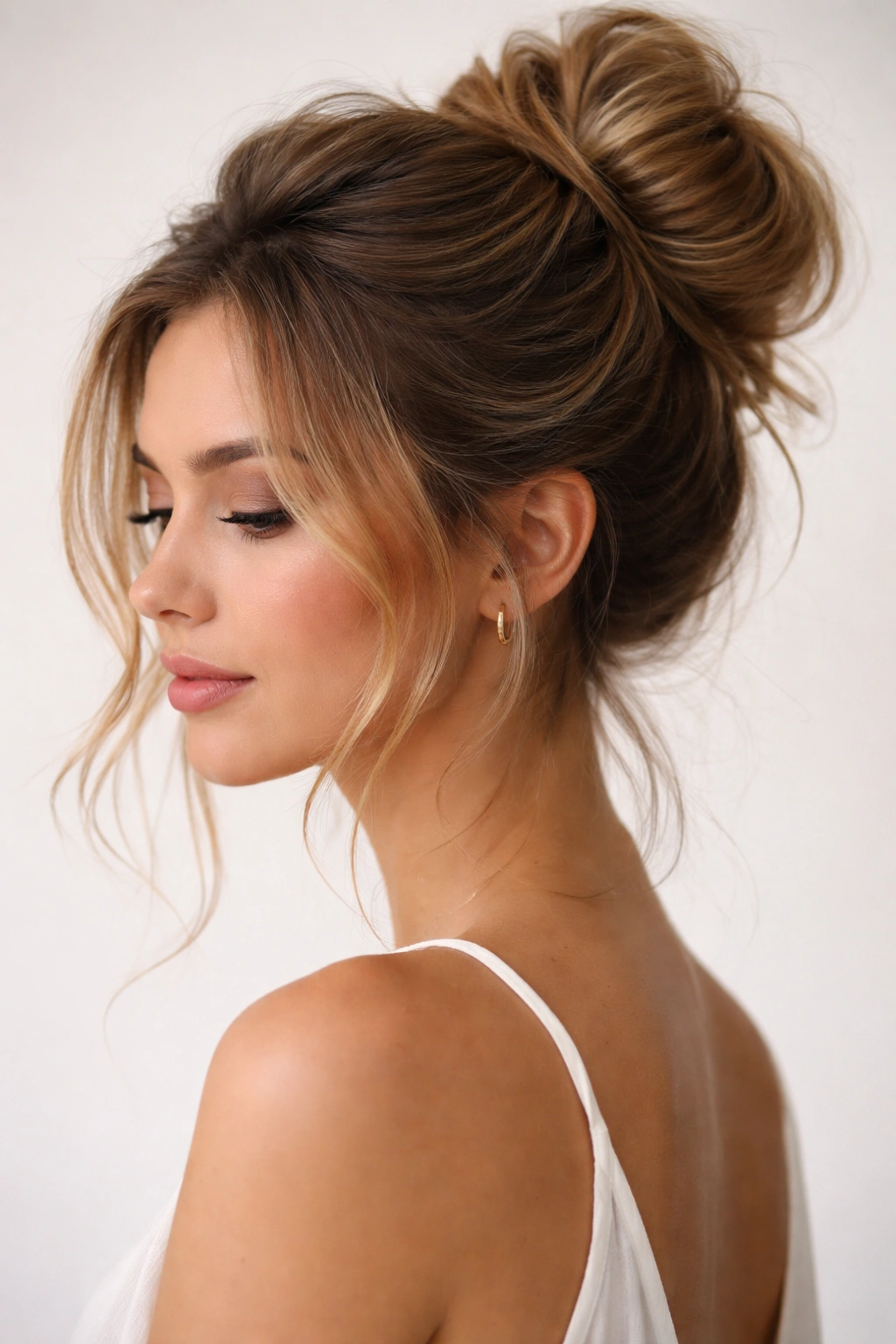
This is the go-to messy bun that works in almost every context—the style that makes you look like you just threw your hair up but actually spent five minutes perfecting it. It sits at the crown or slightly higher, with soft, undone texture throughout and a few intentional pieces framing your face. The romantic version leans into looser sections, delicate wisps, and an overall softness that feels feminine and approachable.
Why It’s the Foundational Messy Bun Style
The classic romantic messy bun works because it flatters most face shapes and reads as both casual and intentional. Unlike a tight bun that can emphasize certain facial features, the messiness diffuses that effect and creates a softening, forgiving silhouette. It’s the hairstyle equivalent of a white button-down shirt—something you can dress up or down depending on what you pair it with, and it somehow always looks right.
How to Create This Look
- Start with hair that has some natural texture or use a light texturizing spray on dry hair
- Create a high ponytail at the crown, leaving a few pieces around your face intentionally unraveled
- Tease the ponytail gently at the base to create volume
- Twist the ponytail loosely and wrap it around its own base, securing with bobby pins
- Pull out strategic pieces from around the bun to create soft wisps and intentional messiness
- Use a light hairspray to hold everything in place without creating stiffness
Worth knowing: This style works beautifully on the second or third day of hair, when your hair has natural oils and isn’t freshly washed. If you’ve just shampooed, apply a texturizing spray or dry shampoo first to give your hair grip and prevent slipping.
2. The High and Tight Messy Bun
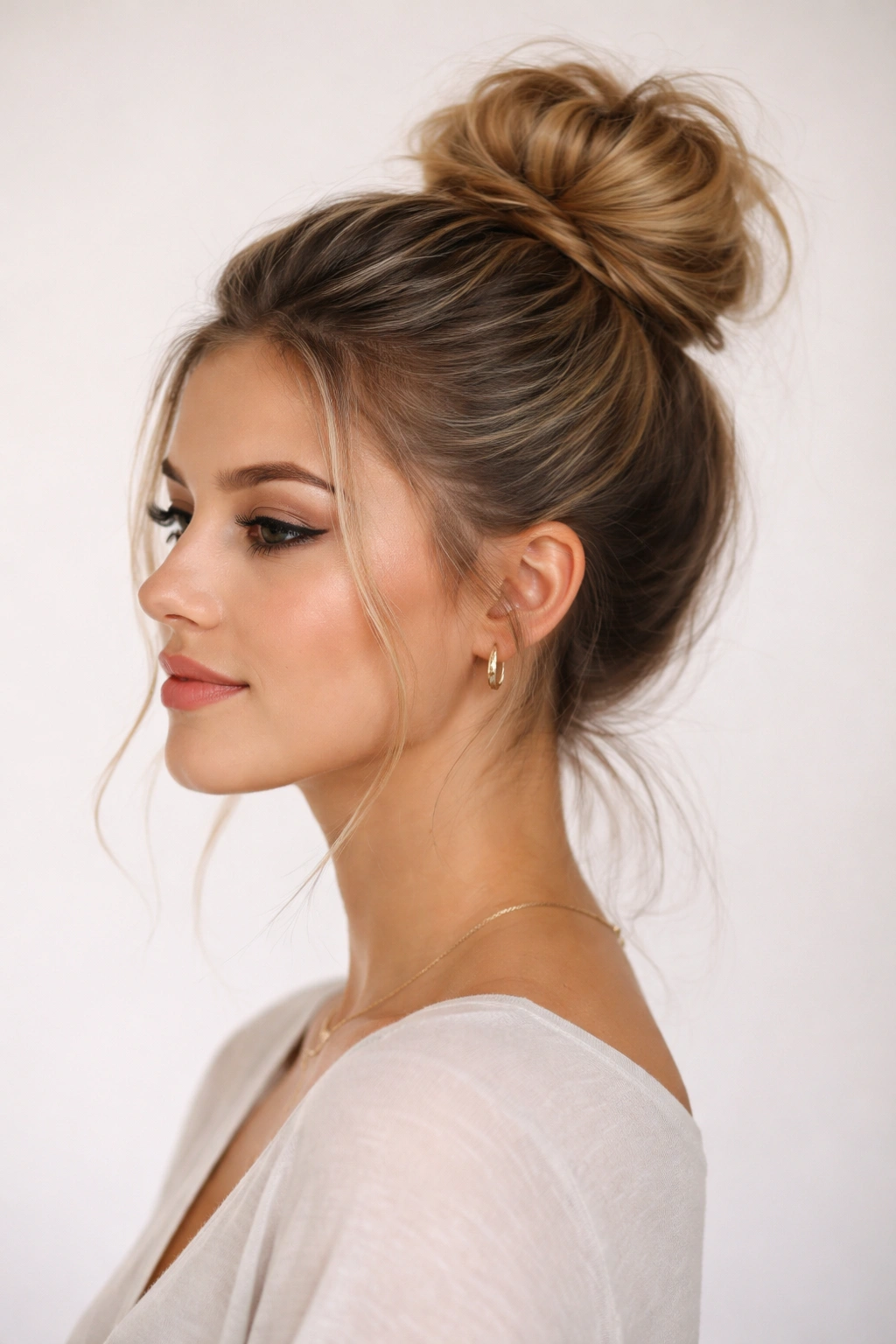
This version sits noticeably higher on your head—almost at the very top—and maintains more structural integrity than the romantic version, though it still maintains that undone texture. It’s sleek enough for professional settings but casual enough for everyday wear. The “tight” refers to the base being more controlled, while the top still has that characteristic messy, textured appearance.
The Modern Professional Angle
The high and tight messy bun has become increasingly popular in professional environments because it bridges the gap between polished and approachable. It communicates that you’re put-together without looking overly fussy, and it keeps long hair completely off your face and neck, which reads as intentional and professional. It’s especially flattering on long faces or if you prefer to show your face clearly.
Creating the Polished Version
- Apply a volumizing mousse or texturizing spray to your roots while your hair is still slightly damp
- Blow-dry your hair smooth or with just a bit of wave
- Create a high ponytail at the crown using a fine elastic
- Gently backcomb the ponytail just slightly for grip
- Wrap the ponytail around its base, creating a compact bun shape
- Secure with bobby pins that match your hair color
- Smooth any flyaways with a smoothing serum or light hairspray
Pro tip: This style shows the back of your neck and your hair’s thickness at the crown, so make sure your hair is clean and you’re comfortable with that level of exposure. It also means any stray hairs are visible, so bobby pin placement matters more here than in looser messy buns.
3. The Braided Messy Bun
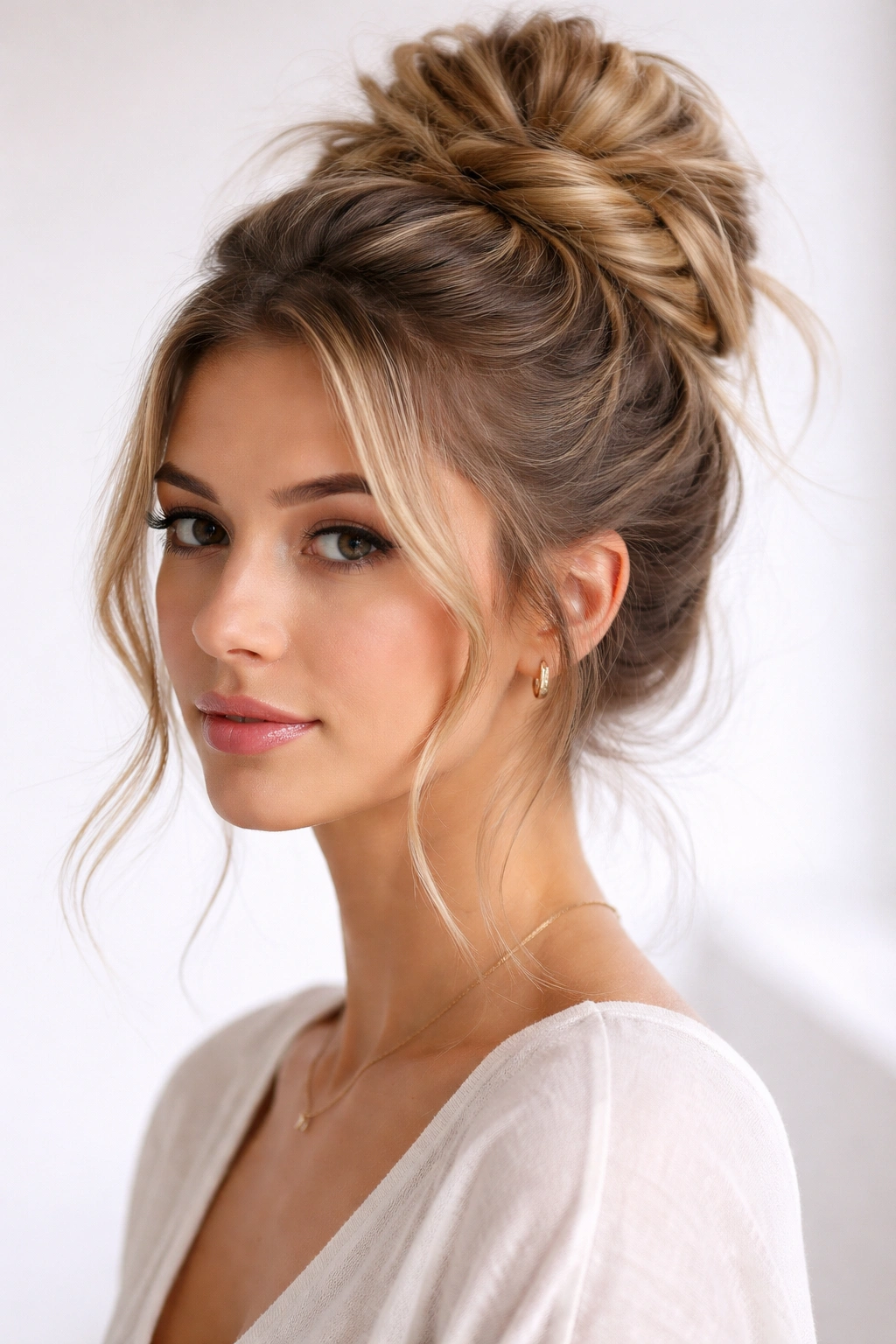
Incorporating a braid into your messy bun adds visual interest, texture, and holds the style more securely than a simple twist. You can braid the entire length of your ponytail before wrapping it, or add a braid just at the base for subtle detail. This style bridges the gap between simple and intricate, making it perfect for situations where you want to look like you made an effort without spending thirty minutes on your hair.
Why Braids Elevate the Messy Bun
Adding a braid to a messy bun changes the visual hierarchy—instead of loose texture being the main event, now the braid becomes the focal point and the messiness becomes an intentional supporting element. Braids also function structurally, helping to hold sections of the bun in place better than a simple twist alone. This means your messy bun will stay intact longer and move less throughout the day.
The Two-Minute Braided Bun
- Create a high or mid-height ponytail
- Divide the ponytail into two equal sections
- Braid each section separately, keeping the braids slightly loose
- Wrap one braid around the base of the ponytail
- Wrap the second braid around, securing both with bobby pins
- Gently pull sections from the braids to create texture and softness
- Tease slightly at the crown if you want extra volume
Insider note: Dutch braids (where you braid downward and under instead of over) photograph even better than traditional braids in messy buns because they’re more visually dramatic and show up clearly in photos. If you’re styling for Instagram or a special occasion, consider using a Dutch braid instead of a traditional one.
4. The Textured Undone Messy Bun
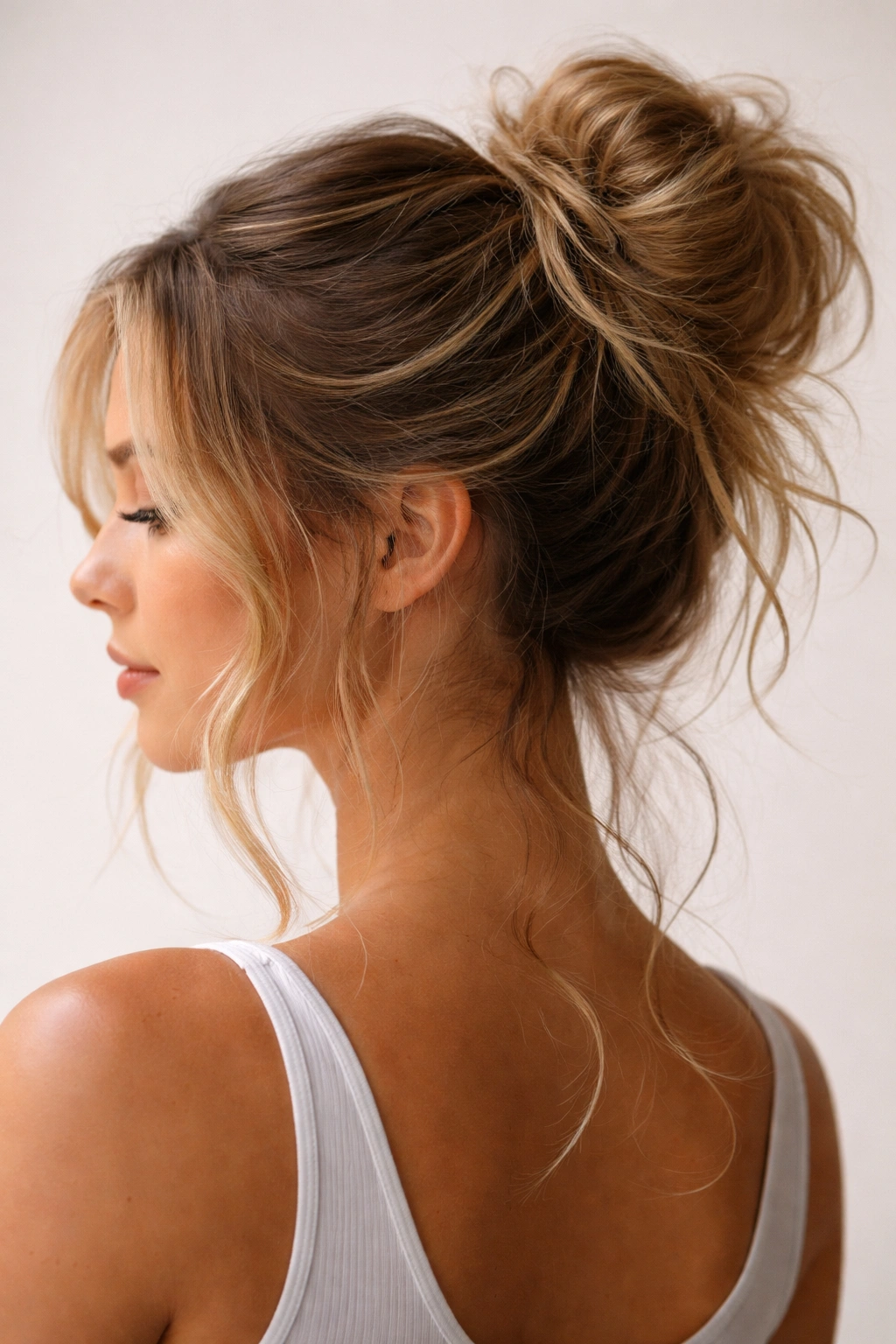
This style prioritizes texture above all else—it’s deliberately, almost aggressively undone, with visible waves, crimps, or even sections that look like they might fall out at any moment (though they’re actually secured). This is the messy bun for people who don’t want any pretense of polish; it’s genuinely, unapologetically casual and works best with natural texture or deliberate texture-building products.
Building Real Texture Into Your Base
The key to pulling off this ultra-undone look is actually having enough texture in your hair to begin with. If your hair is naturally straight and smooth, you need to create that texture first—through waves, crimping, or texture spray—before you even attempt this style. Without that foundational texture, an ultra-messy bun just looks like you didn’t put any effort in, rather than looking intentionally undone.
Creating the Chaotic-But-Controlled Look
- Apply a sea salt spray or texturizing spray to damp hair
- Blow-dry while scrunching sections of hair for natural-looking waves
- Use a curling iron to create loose waves or a crimper for more dramatic texture
- Create a low or mid-height ponytail, keeping it intentionally loose
- Loosely twist the ponytail and wrap it around its base
- Don’t secure anything too tightly—you want visible texture everywhere
- Pull out multiple sections from the bun, even more than you would in other styles
- Use a strong-hold hairspray to keep everything in place despite the apparent chaos
What to expect: This style moves more throughout the day than tighter buns, and it may look different by evening than it did in the morning. That’s actually part of the appeal—it’s a dynamic, evolving look rather than something static. If this bothers you, this might not be your go-to style.
5. The Wrapped-Base Messy Bun
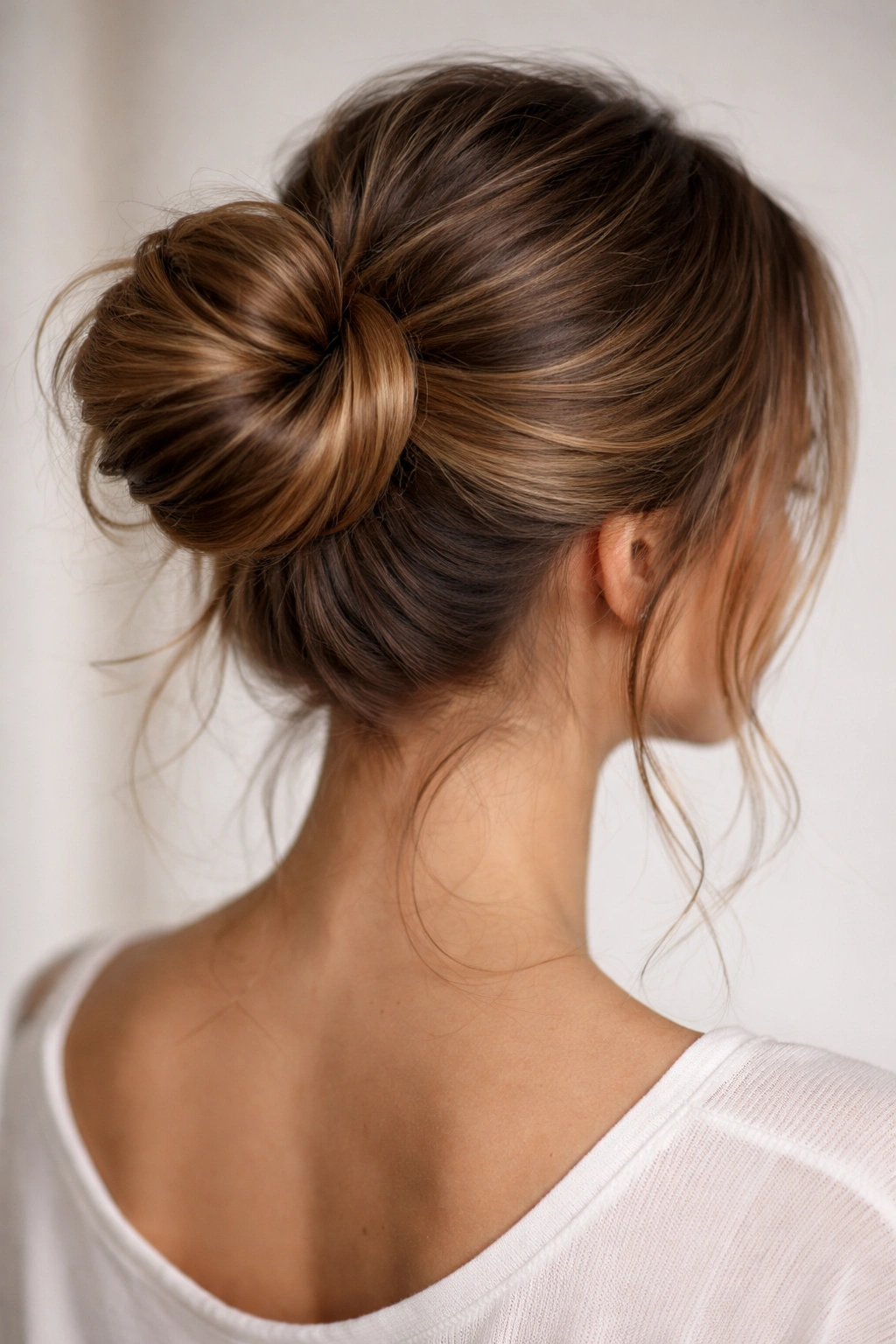
This style features a bun that’s formed from your ponytail but has a distinct wrapped element at the base—you take a small section of hair (or use a separate thin braid or cord), and wrap it tightly around where your ponytail attaches, creating a defined ring or band. It’s visual detail that elevates the messy bun while keeping the top portion soft and undone.
The Detail That Transforms a Simple Bun
The wrapped base serves both aesthetic and structural purposes. Visually, it creates a polished accent point that says “I made a deliberate choice here,” which elevates the entire look. Structurally, wrapping a section tightly around the base actually helps secure the bun more effectively, reducing sagging as the day goes on. It’s a small detail that adds sophistication without requiring more skill than a basic messy bun.
Executing the Wrapped Technique
- Create a ponytail at whatever height you prefer
- Take a small section of hair from underneath the ponytail
- Wrap this section tightly around the base where the elastic is
- Secure the wrapped section with a bobby pin
- Create your bun by twisting or loosely braiding the remaining ponytail
- Wrap it around the base, pinning it into place
- The wrapped section should create a visible band or ring around the bun’s foundation
- Pull out the top sections for messiness
Pro tip: If your hair is very thick and you have difficulty securing everything, take the wrapped section and bobby pin it under the bun base, creating a hidden support structure. The wrap doesn’t have to be visible to be effective.
6. The Half-Up Messy Bun
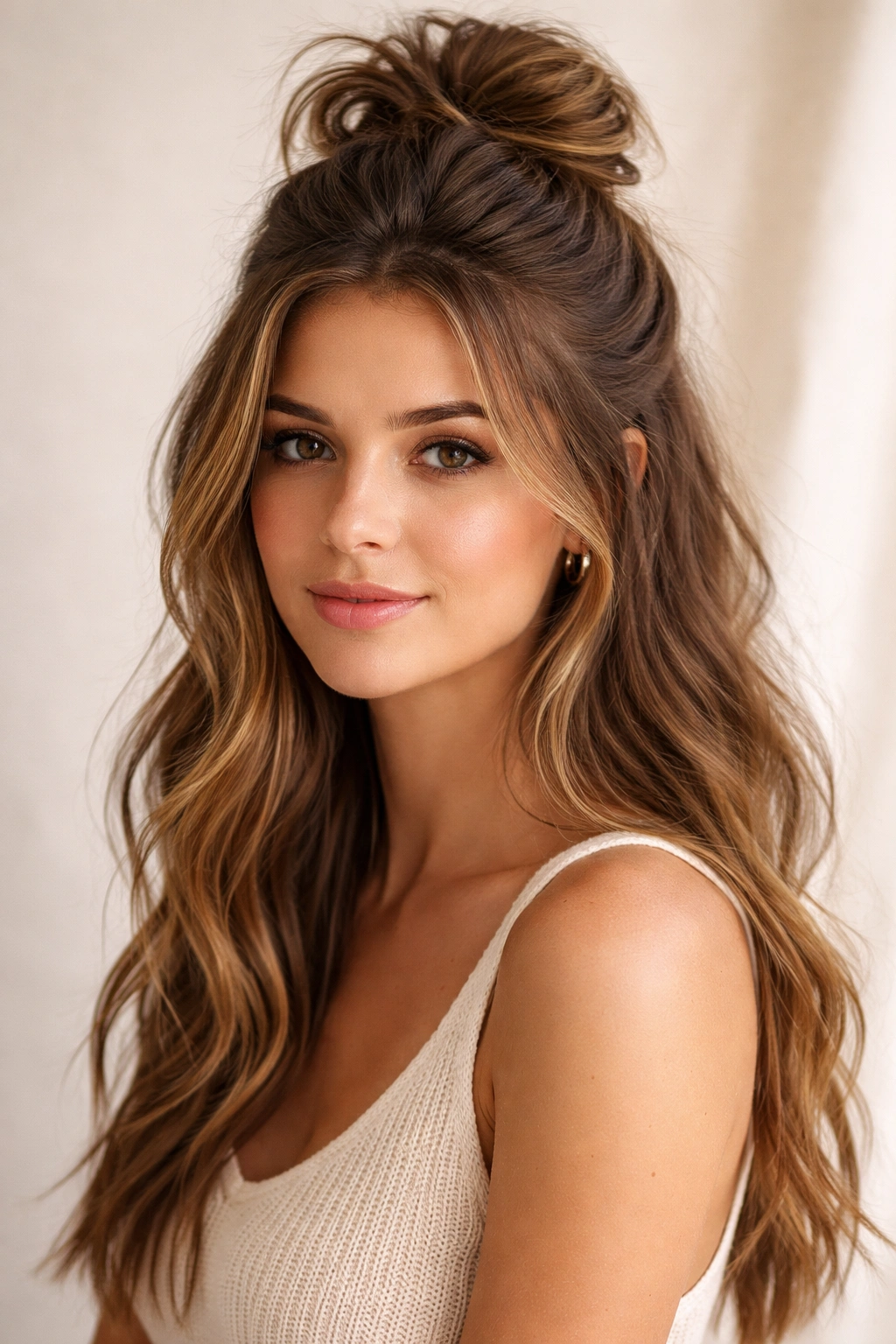
This style takes only the top half of your long hair and creates a messy bun, leaving the bottom half down—it’s the perfect choice for days when you want your hair off your face without committing to a full updo. It works especially well for long, thick hair because it removes volume from your face and shoulders while still showing off your length.
When a Full Bun Feels Like Too Much
The half-up messy bun sits in that perfect middle ground between a fully up hairstyle and completely down hair. It keeps flyaways and hair off your face without the commitment or formality of a full bun. It’s casual enough for everyday wear, works for professional settings, and photographs beautifully because you get the visual of both an updo and long hair.
The Half-Up Construction
- Section off the top half of your hair by drawing an imaginary line from ear to ear
- Clip the bottom half out of the way temporarily
- Create a ponytail with just the top section at the crown
- Gently backcomb this ponytail for volume and grip
- Twist or loosely braid the ponytail
- Wrap it around its base and secure with bobby pins
- Release the bottom section of hair
- If desired, create subtle waves in the bottom section to complement the bun
- Pull out a few pieces from around the front of the bun for softness
Worth knowing: This style shows the back of your head and the place where the bun attaches, so make sure that area is clean and you’re comfortable with that visibility. It also means your bottom section of hair gets compressed where it meets the bun, so the resulting texture might be slightly flat there if you wear it this way regularly.
7. The Low Side Messy Bun
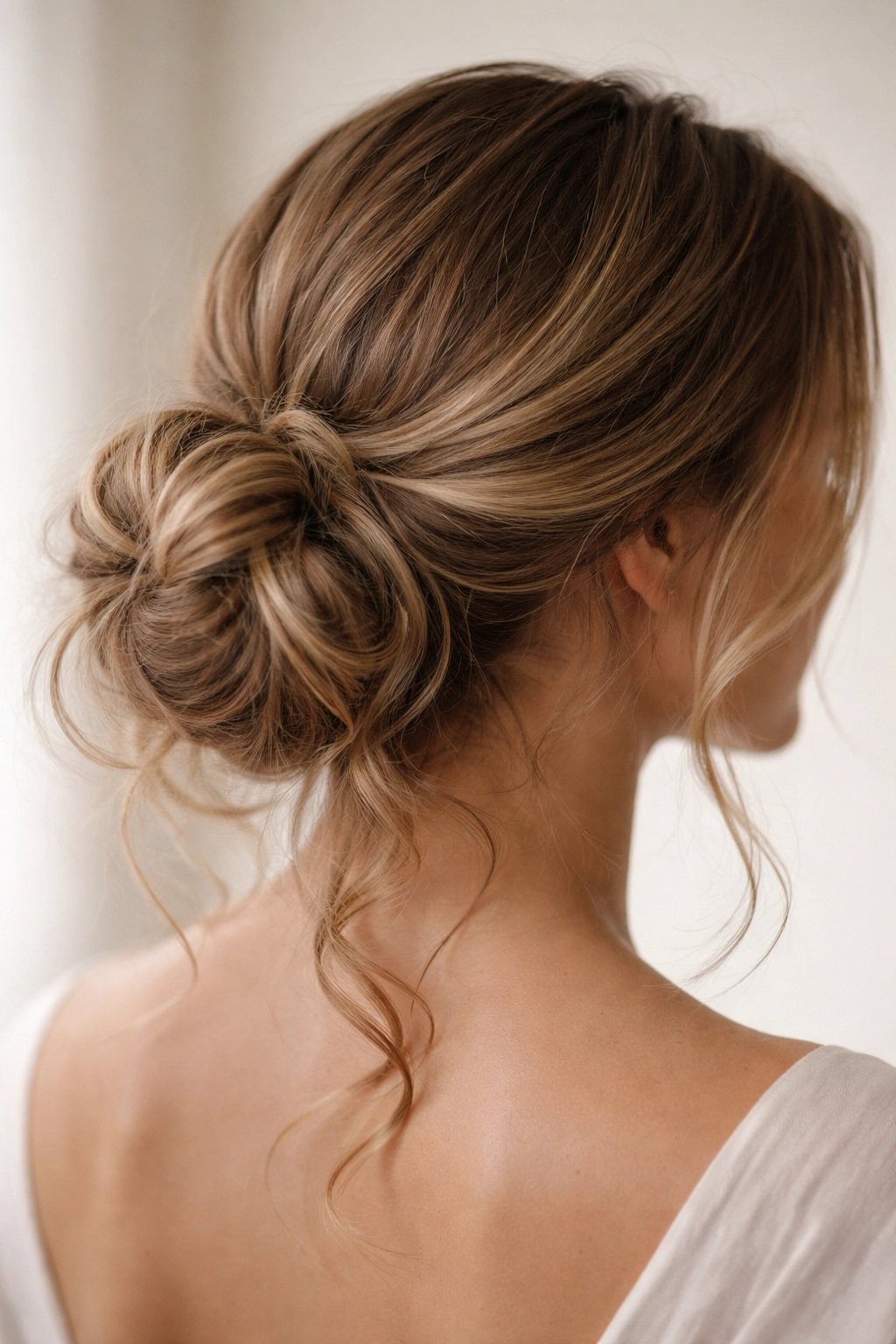
Positioned off to one side rather than centered at the crown or the back, a low side messy bun has romantic, goddess-like energy. It works beautifully for date nights, special occasions, or whenever you want to feel a bit more dressed up than usual. The side placement creates asymmetry, which reads as more intentional and thoughtful than a centered bun.
The Side Bun’s Romantic Appeal
Side buns have long been associated with elegance and femininity—think old Hollywood glamour with a modern, undone twist. By making it messy rather than sleek, you get that effortless-elegance vibe rather than formal severity. This style also flatters many face shapes because the side placement creates visual balance and frames the face differently than centered buns.
Creating Balanced Side Placement
- Tilt your head slightly to one side and create a low ponytail positioned toward that side
- The ponytail should sit at approximately the back of your ear on the side you’re tilting toward
- Gather hair gently—side buns work better when they’re not yanked too tight
- Twist the ponytail loosely and wrap it around its base
- Secure with bobby pins, making sure the whole structure is secure
- Pull out soft pieces from around the bun and from near your face
- Leave a few delicate strands framing your face on both sides for a softer look
- Optional: create gentle waves in any hair that falls down your back for added romanticism
Insider note: A low side messy bun works best when you’re not wearing your hair completely smooth and sleek. Subtle waves or texture throughout make the side placement feel intentional rather than accidental.
8. The Two-Tone Face-Framing Messy Bun
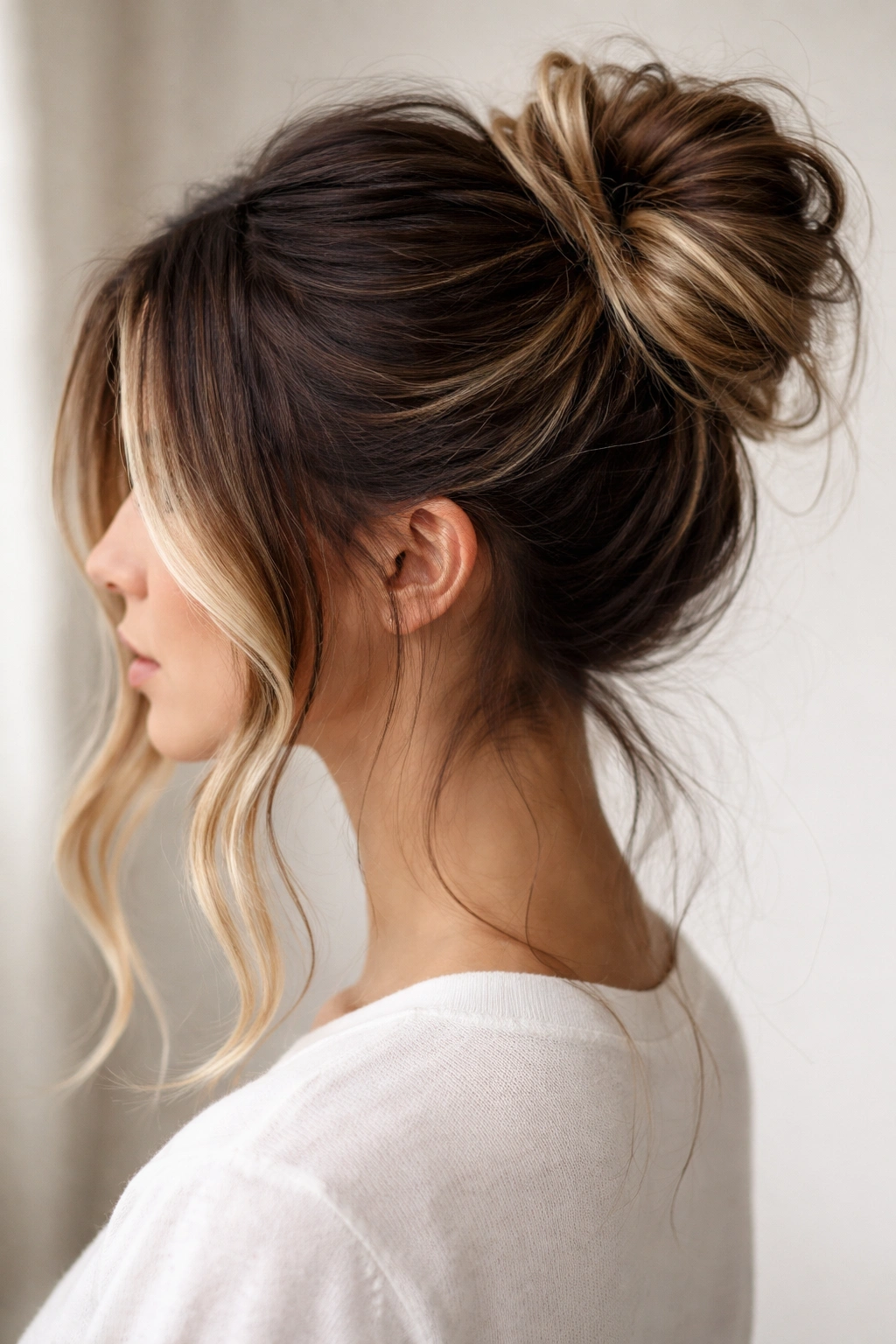
This style combines a messy bun with deliberate face-framing pieces—usually two sections from near your temples that you leave down, and sometimes even style separately with waves or curls. The contrast between the up portion and the framing pieces creates visual interest and softness. If your hair has natural dimension or color variation, this style showcases that beautifully.
Creating Intentional Face-Framing
The difference between this style and simply having flyaways escape from a bun is intentionality. You’re deliberately leaving specific pieces down to frame your face, and ideally, you’re styling them separately so they’re distinct from the rest of your hair. This is particularly stunning if your hair has highlights or balayage because the framing pieces draw attention to those lighter sections.
The Strategic Framing Technique
- Before putting your hair up, section off one piece from each temple area
- Clip these pieces aside temporarily
- Create a messy bun with the remaining hair at the crown or mid-back
- Take one of your face-framing pieces and create soft waves using a curling iron
- Repeat with the second piece
- Pin the bun in place and then arrange the framing pieces on either side of your face
- The framing pieces should curve around your face, not hang straight
- If you want extra softness, gently tease the framing pieces at the roots
What makes it work: This style is particularly flattering on long faces because the horizontal movement of the framing pieces creates visual width. It’s also stunning on anyone with face-framing layers because it showcases those layers intentionally rather than hiding them in an updo.
9. The Twisted Messy Bun
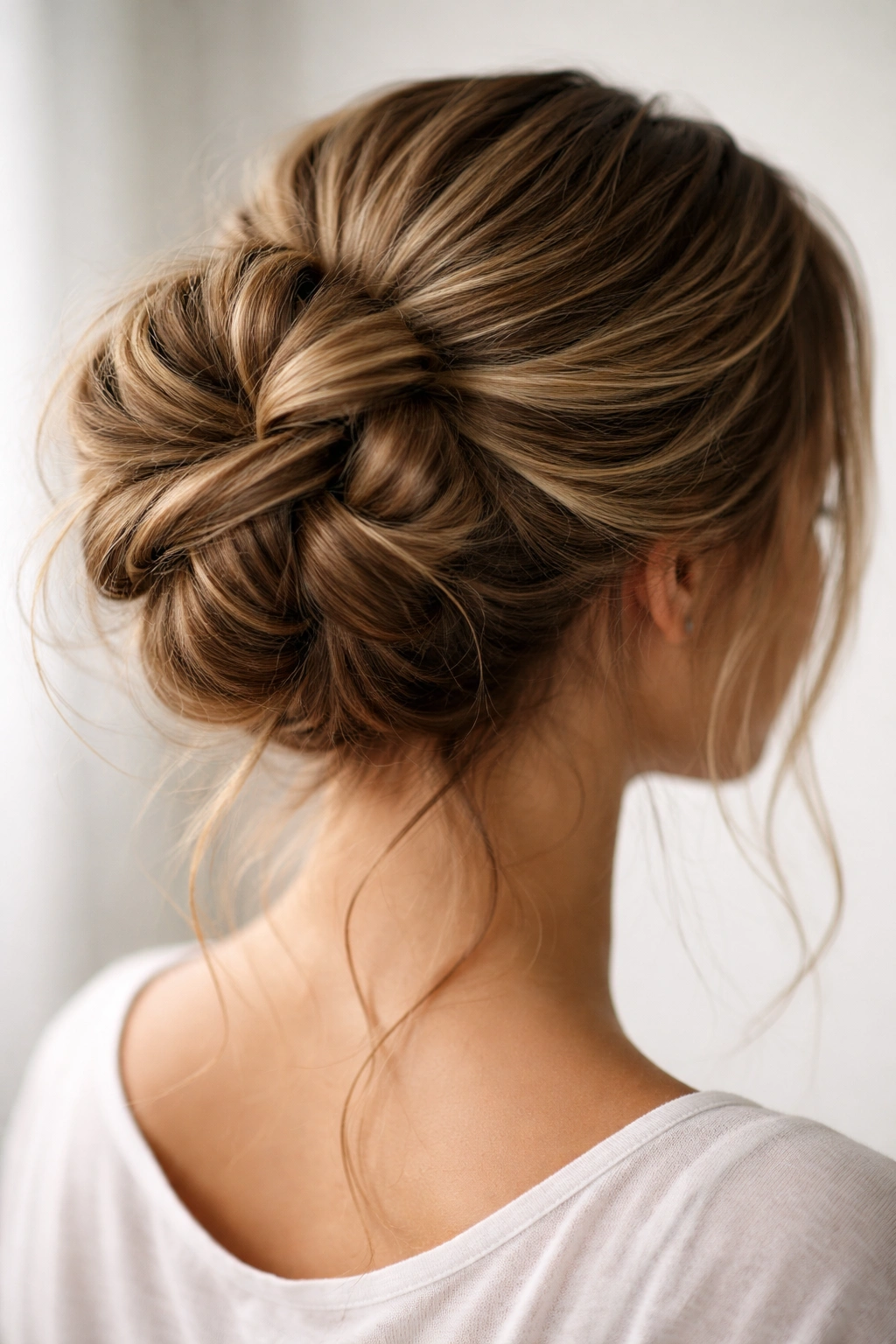
Instead of creating a traditional ponytail and then twisting it, this style involves twisting sections of hair from the crown down to the base, then wrapping those twists around each other to form the bun. It creates a more intricate appearance than a simple twist-and-wrap, and the twists hold the style more securely than looser approaches.
Why Twists Create Structure and Visual Interest
Twists function similarly to braids—they hold sections together and create visual texture—but they’re faster to execute and often photograph even better because they’re more sculptural. Multiple twists wrapped around each other create a bun with distinct sections and visible texture that reads as both undone and carefully considered.
Building a Twisted Bun
- Create two or three sections at your crown, depending on your hair thickness
- Twist each section tightly from crown to the nape of your neck
- Gather all the twisted sections together at the nape
- Wrap one twist around the base of the gathered twists
- Wrap the second twist around
- If you have a third twist, wrap that around as well
- Secure everything with bobby pins
- Gently pull out sections from the twists to create softness
- The twists should still be visible as distinct texture elements
Pro tip: This style works better on hair with some grip or texture. If your hair is very slippery or fine, apply a light texturizing spray first to prevent the twists from unraveling.
10. The Double Bun Space-Bun Style
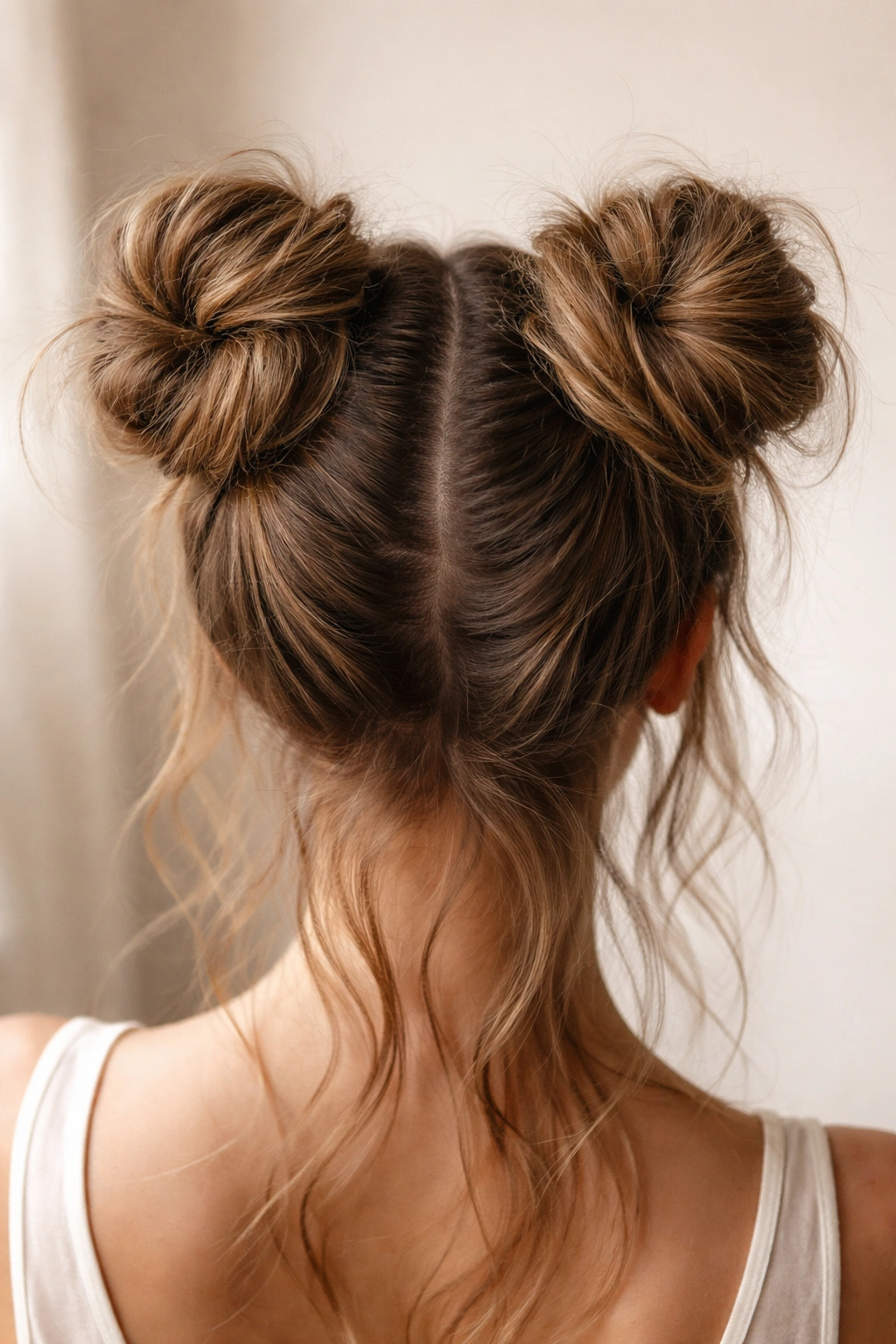
While this style might seem more playful or youthful than other messy bun options, a messy version of space buns (two buns positioned on either side of your crown) is actually incredibly versatile and surprisingly elegant when executed with intention. Think less “whimsical festival” and more “editorial cool girl aesthetic.”
Elevating Space Buns Beyond Youthful Playfulness
Double buns don’t have to be precious or aggressively cute—when you make them messy, undone, and use a neutral or sophisticated color palette, they read as editorial and fashion-forward rather than young or trendy. This style works beautifully for anyone with long, thick hair because the length gives you plenty of material to create two buns with real volume and presence.
Creating Intentional Double Buns
- Part your hair down the center from front to back
- Create a high ponytail on one side at the crown
- Create a matching high ponytail on the opposite side
- Backcomb each ponytail gently for grip and volume
- Twist each ponytail and wrap it around its own base
- Secure each with bobby pins
- Pull out sections from both buns to create texture and messiness
- The two buns should be balanced and symmetrical
- Leave some softness and wisps rather than making them perfectly neat
Worth knowing: This style works best with hair that’s long enough to create substantial buns. If your hair is only shoulder-length, you won’t have enough hair to make two full buns that don’t look sparse or skinny. Longer hair—at least mid-back length—makes this style shine.
Final Thoughts
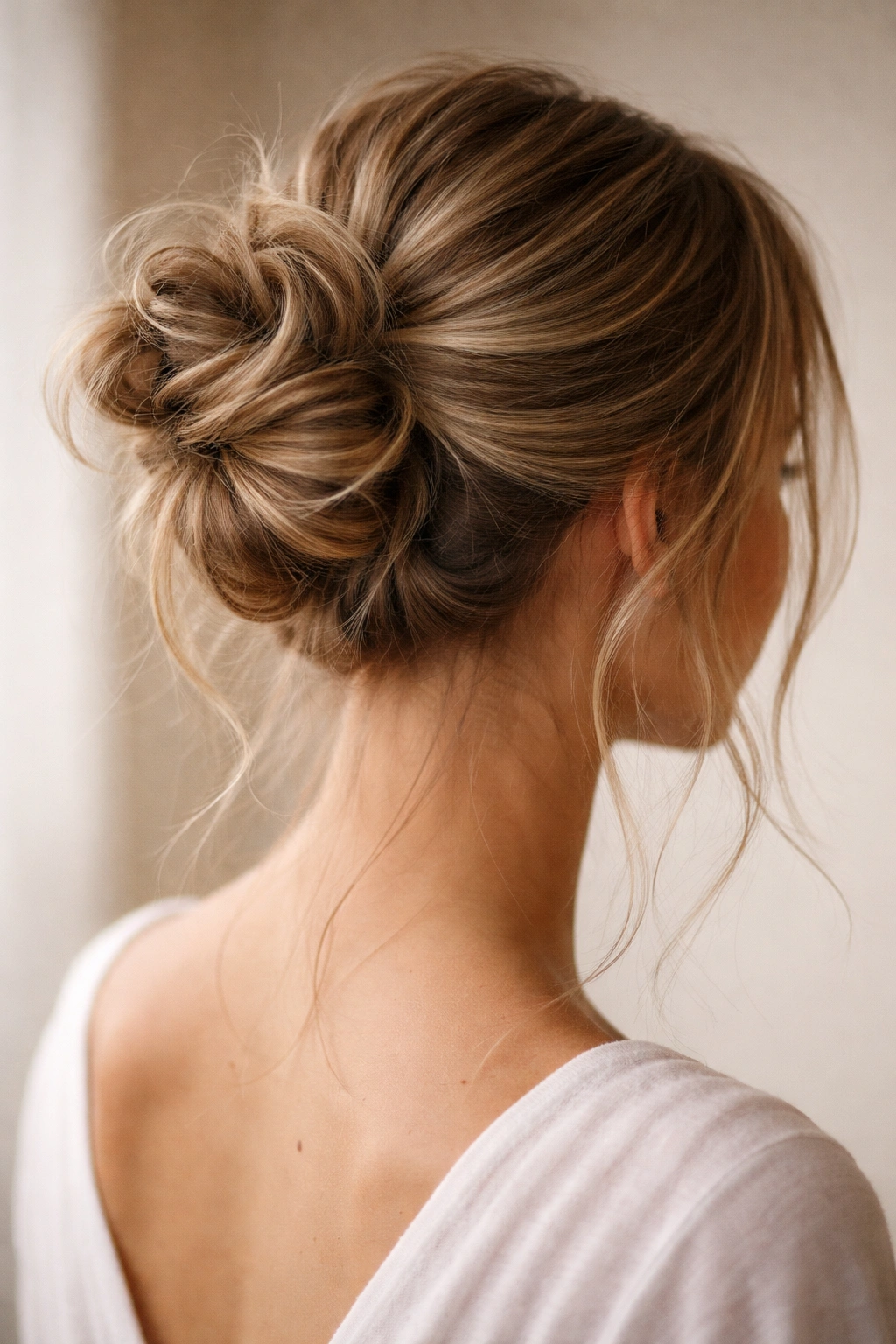
Messy buns for long hair are endlessly adaptable, which is exactly why they remain such a staple of everyday styling. Whether you’re reaching for the classic romantic version on a hectic Tuesday, the high and tight for a professional presentation, or the wrapped-base when you want to feel a bit more put-together, you’ve got options that match your mood and your plans. The foundation of every great messy bun is understanding that “messy” is a technique, not an accident—it requires intention, the right products or texture, and just enough care to look effortlessly undone.
The best part about having long hair is that you can experiment freely with these styles and discover which versions work best for your hair texture, face shape, and personal style. Some people find that one or two styles become their go-to, while others love rotating through all ten depending on what they’re doing that day. Your messy bun preferences might shift based on your hair’s condition, the climate, what you’re wearing, or simply what kind of energy you want to project. That flexibility is what makes long hair and messy buns such a perfect pairing.
