



The puff ponytail has become a cornerstone style in natural hair care—and for good reason. It’s protective, versatile, and genuinely easy to create once you understand the mechanics of working with your natural texture. Whether you’re wearing your hair in its full coily glory or you’ve stretched it out slightly, a well-executed puff ponytail keeps your ends protected while letting you experiment with different heights, shapes, and accompanying details.
What makes puff ponytails so practical is their honest simplicity. You’re gathering your hair at a chosen point—high, low, or anywhere in between—and allowing the natural fullness and texture of your coils and curls to do the visual work for you. No heat required. No damage. Just your hair at its most voluminous and natural. The real art comes in knowing which variations work best for your specific curl pattern, hair density, and lifestyle. A puff that flatters someone with ultra-coily 4C hair might look and feel different on someone with looser 3B waves. The 8 variations I’m breaking down here give you the framework to find what genuinely works for your hair, your schedule, and the look you’re trying to achieve.
Why Puff Ponytails Suit Natural Hair Textures
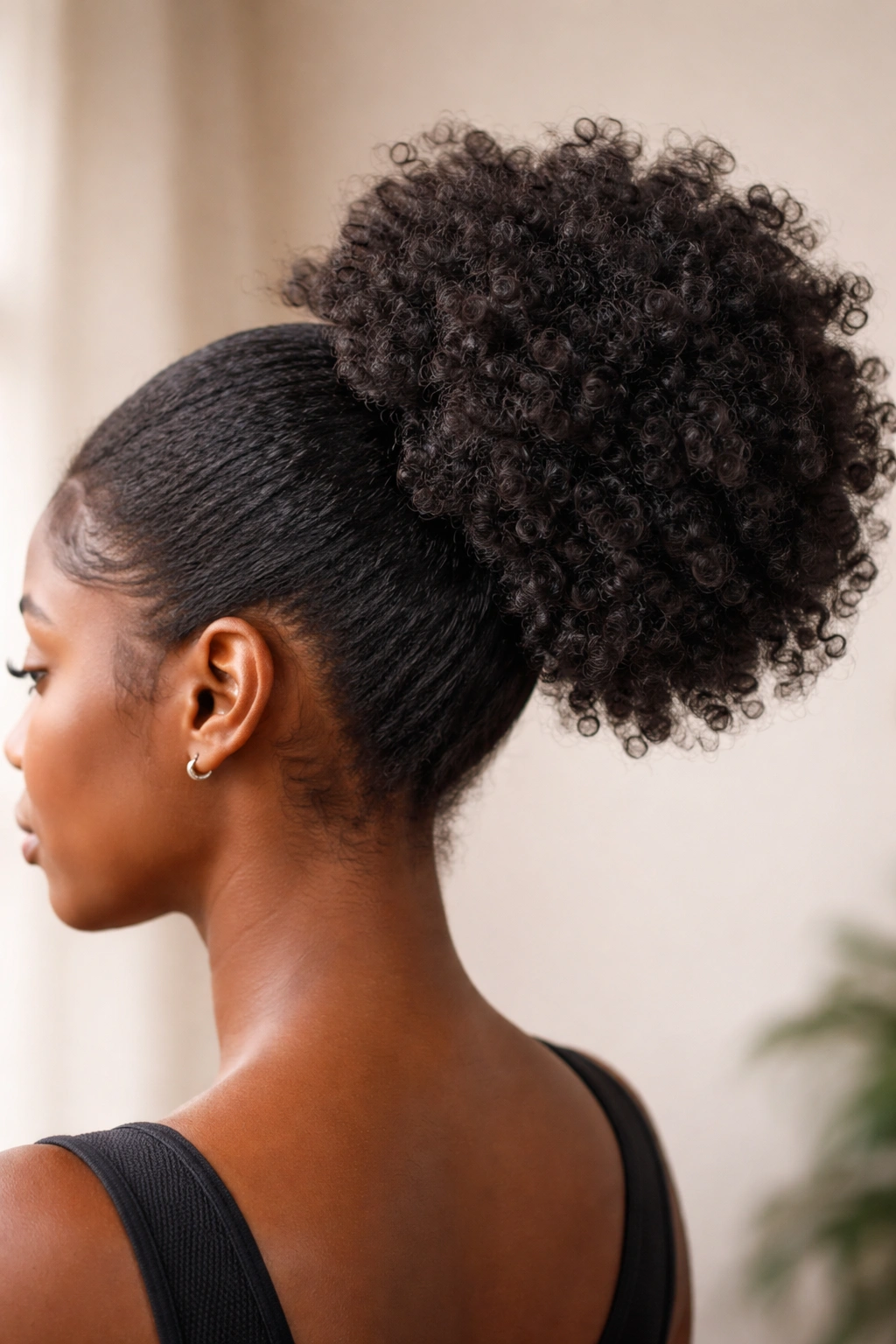
Natural hair thrives when you work with its inherent structure rather than against it. Puff ponytails do exactly that—they celebrate the volume and dimension that coils and curls naturally create. Unlike styles that require you to smooth, flatten, or straighten your hair, a puff lets you gather your natural texture as-is and showcase it exactly the way it grows from your scalp.
The protection angle matters just as much as the aesthetic one. When your hair is gathered into a puff ponytail, the ends are tucked away and less exposed to friction, breakage, and environmental stress. This is especially valuable if you’re trying to retain length or recover from damage. The style keeps your ends close to your roots and shoulders, reducing how much they brush against fabric, wind, and physical handling throughout the day.
Puff ponytails also adapt beautifully to your hair’s moisture and porosity needs. Coily hair tends to dry out more quickly than straight hair because the natural oils from your scalp have a harder time traveling down the spiral of each strand. A puff can trap moisture closer to your scalp and roots while still allowing some air circulation, particularly if you’re using it as a protective base for other styling techniques.
1. High Puff Ponytail
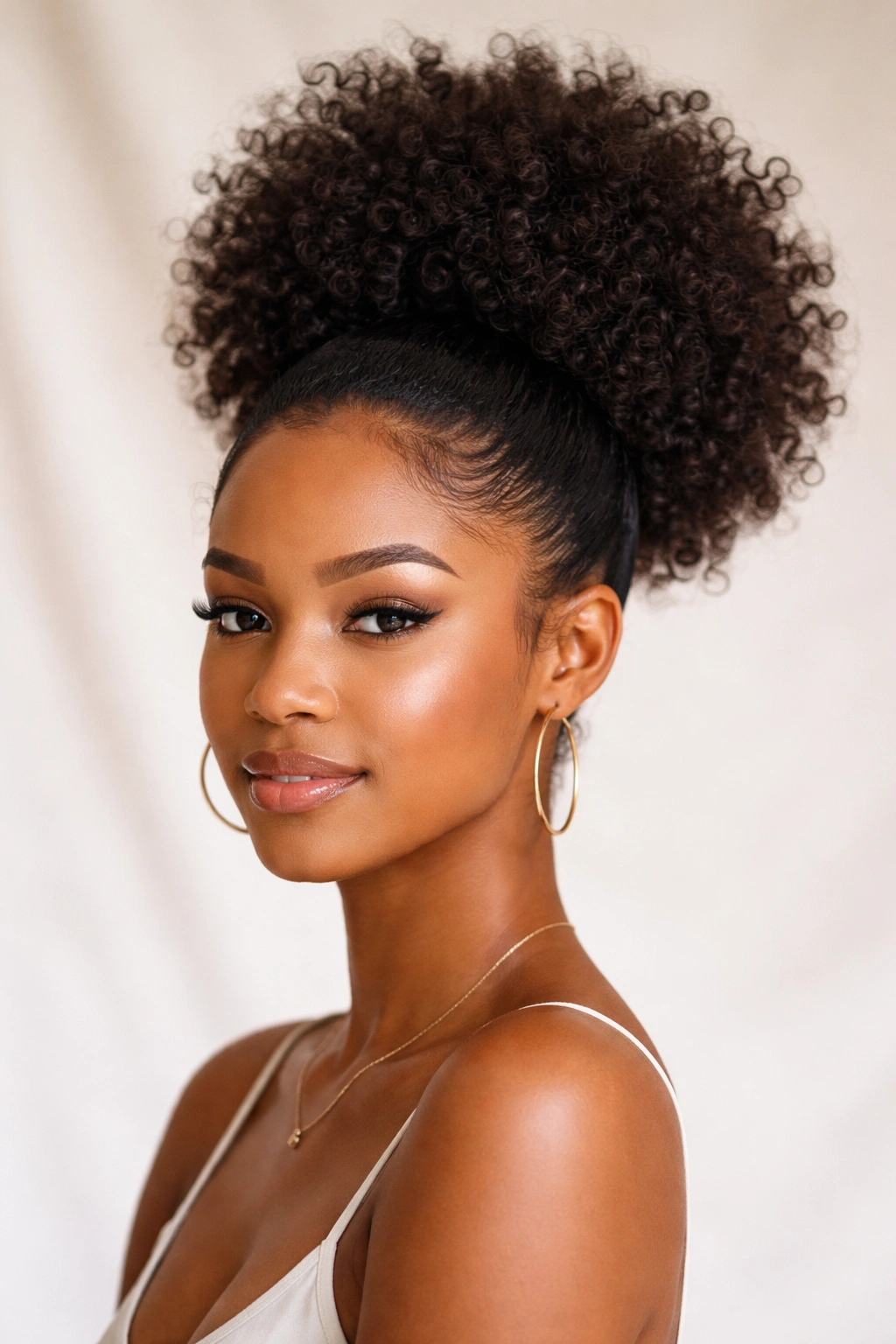
The high puff ponytail is the most dramatic and attention-grabbing variation. You’re gathering all your hair at the very crown of your head—imagine a point directly above the center of your scalp—and securing it there with a elastic or hair tie. The height immediately creates visual volume and elongates your face and neck. This style works best if you have enough density and length to create a substantial-looking puff without it appearing thin or strained.
How to Create It
Section off the hair you want in your puff by gently combing or finger-combing from the hairline upward to your chosen gathering point. Use a wide-tooth comb or your fingers to avoid disrupting your curl pattern. Smooth the section as little as possible—a few stray curls around the hairline actually add softness and look intentional. Gather everything into your elastic firmly but not aggressively; you want the puff to sit securely without painful tension at your roots. If you have shorter hair or less density, gently flip your head upside down while you’re gathering, which tricks your hair into appearing fuller before you secure it.
Why It Works
A high puff visually lifts your entire face and adds instant height and dimension to your silhouette. It’s ideal if you’re wearing it with business casual or professional clothing—it reads polished and intentional. The high placement also keeps your back and shoulders clear, so it pairs perfectly with open-back tops or dresses.
Styling note: A high puff looks particularly striking when paired with a sleek, defined laid-down hairline. Spend a minute on your edges using a soft brush and a lightweight gel to frame your face intentionally.
2. Side Puff Ponytail
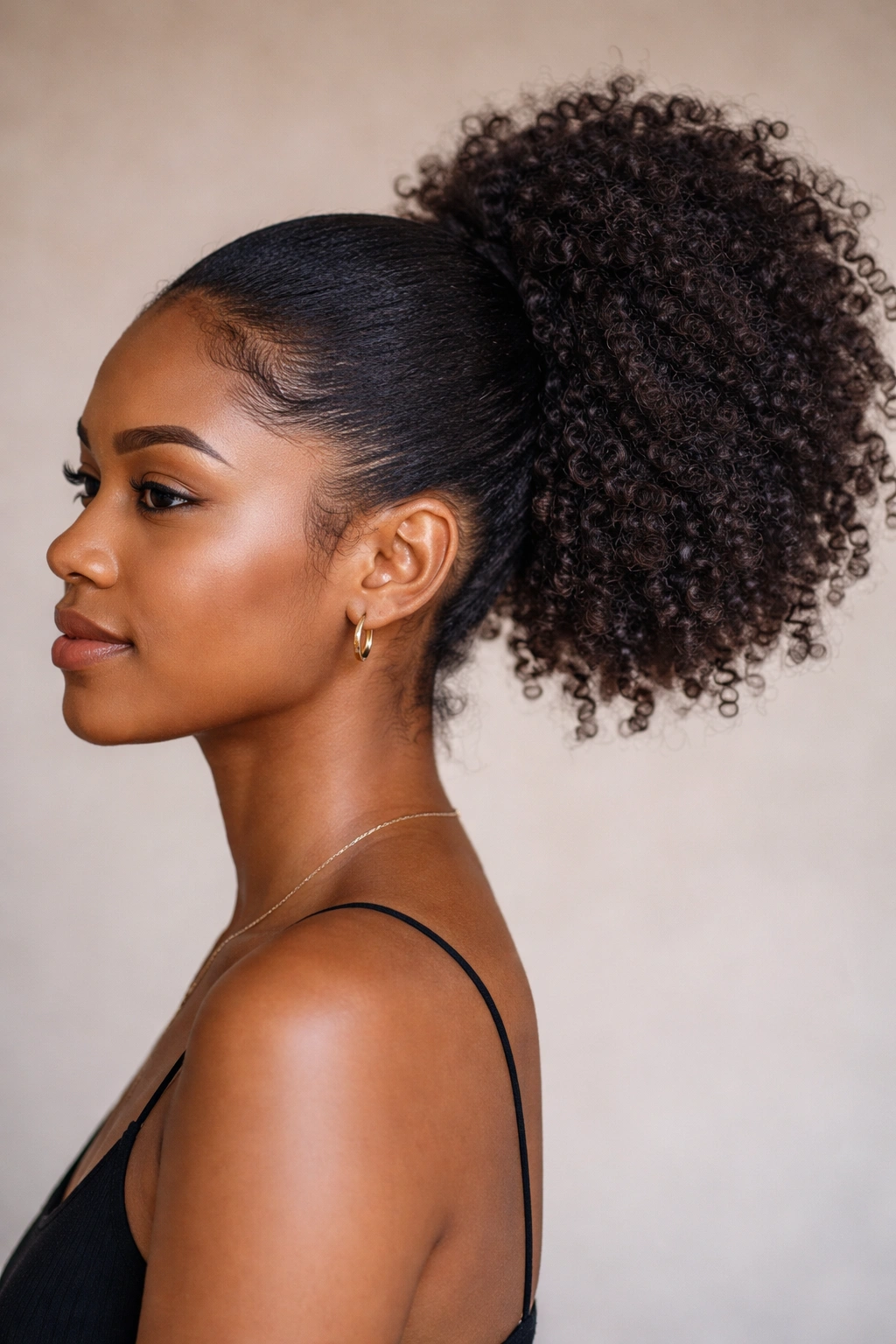
The side puff ponytail shifts the gathering point toward one side of your head—roughly where you’d place your ear, but higher up on your skull. This creates an asymmetrical, playful look that feels more relaxed and casual than a centered high puff, while still keeping your hair fully off your neck and back.
How to Create It
Determine which side you want your puff on—left or right. Using your fingers or a comb, gently gather all your hair toward that side, starting from the crown and moving the sections toward your chosen gathering point. Don’t comb too aggressively; instead, use gentle finger-combing motions that follow the natural direction your curls want to go. Once everything is loosely gathered at your side point, secure it with an elastic. You can tighten and adjust the shape once it’s secured. Some stylists like to leave a few face-framing pieces loose, which softens the overall look.
Why It Works
A side puff has an inherently softer, more approachable vibe than a centered puff. It suits both casual daytime wear and evening events. If you have an asymmetrical face shape or you’re trying to draw attention to one side of your face, a side puff is flattering. It also photographs beautifully from the opposite side—so if you always pose for photos from the right, a right-side puff puts your best angle front and center.
Pro tip: If you have shorter, denser hair that sometimes looks flat at the roots, a side puff actually solves that problem by shifting the weight and fullness to one area, which can make your roots appear taller and less flattened.
3. Low Puff Ponytail with Defined Curls
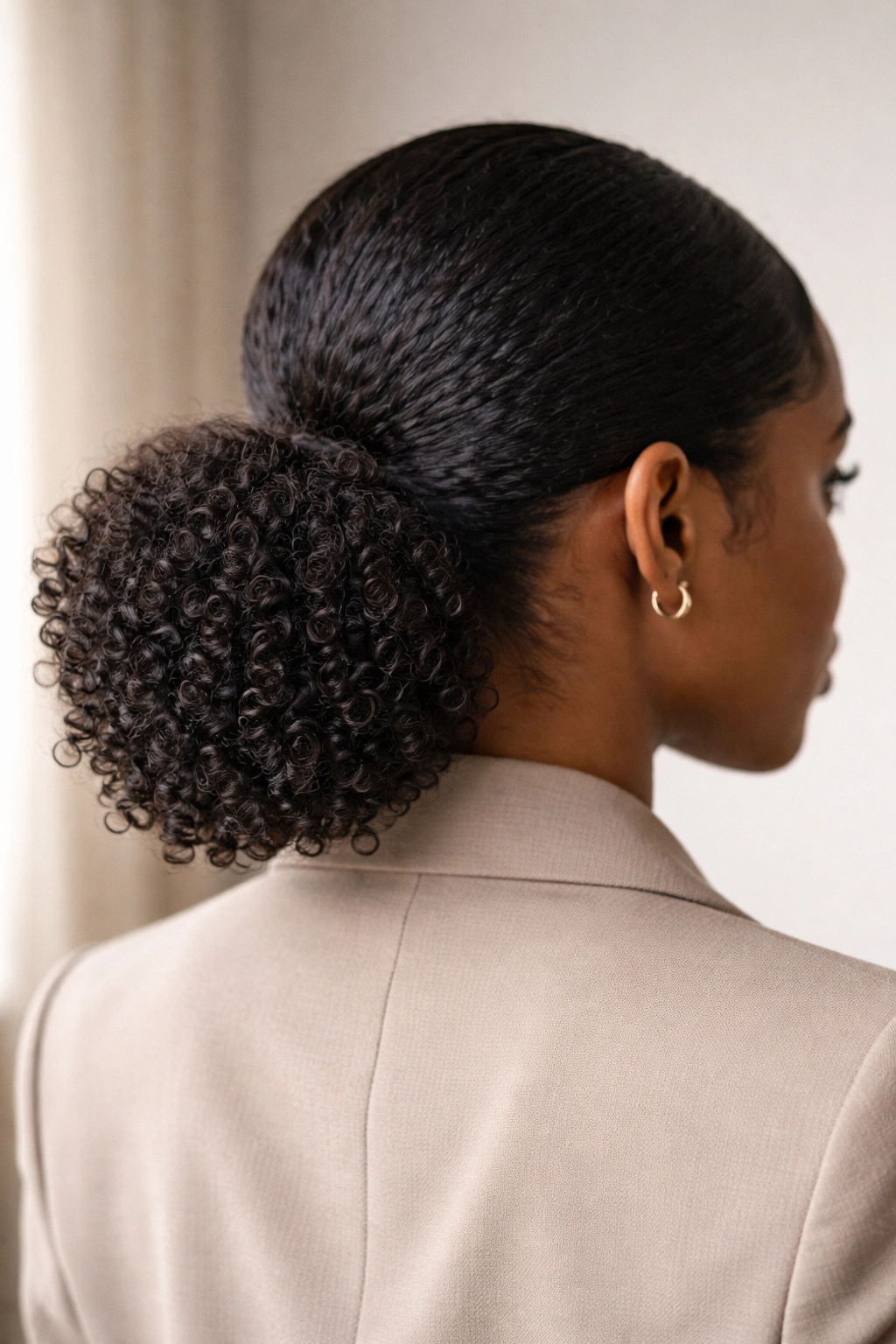
The low puff ponytail gathers your hair at the nape of your neck—roughly where a traditional low ponytail would sit—but instead of smoothing it into a sleek tail, you’re creating a plush, voluminous puff with your natural curls on full display. This style reads elegant and refined while remaining completely practical.
How to Create It
Section your hair as if you’re making a low ponytail, gathering it at the base of your neck. Instead of creating a tight, smooth tail, gather your hair loosely into the elastic. Once secured, gently fluff and separate your curls within the puff to encourage them to expand and define. You can use a wide-tooth comb, a comb with wider spacing, or simply your fingers to gently rake through and separate curl clusters. Avoid combing too aggressively, which can cause frizz; instead, use upward, gentle motions that encourage your curls to coil back and define.
Why It Works
This variation is sophisticated enough for professional settings while remaining completely natural-looking. The low placement suits longer face shapes and longer lengths of hair. Because your curls are actively defined rather than just swept up, the puff looks intentional and styled rather than rushed. This is also genuinely comfortable if you wear glasses or have sensitive ears—there’s no tension against those areas because the puff is positioned lower.
What to know: This style works better on stretched hair or hair that’s been refreshed with moisture. If your hair is very dry or hasn’t been washed in several days, low puffs can sometimes look less defined. Consider washing your hair the night before or refreshing it with a water-based curl activator before styling.
4. Braided High Puff Ponytail
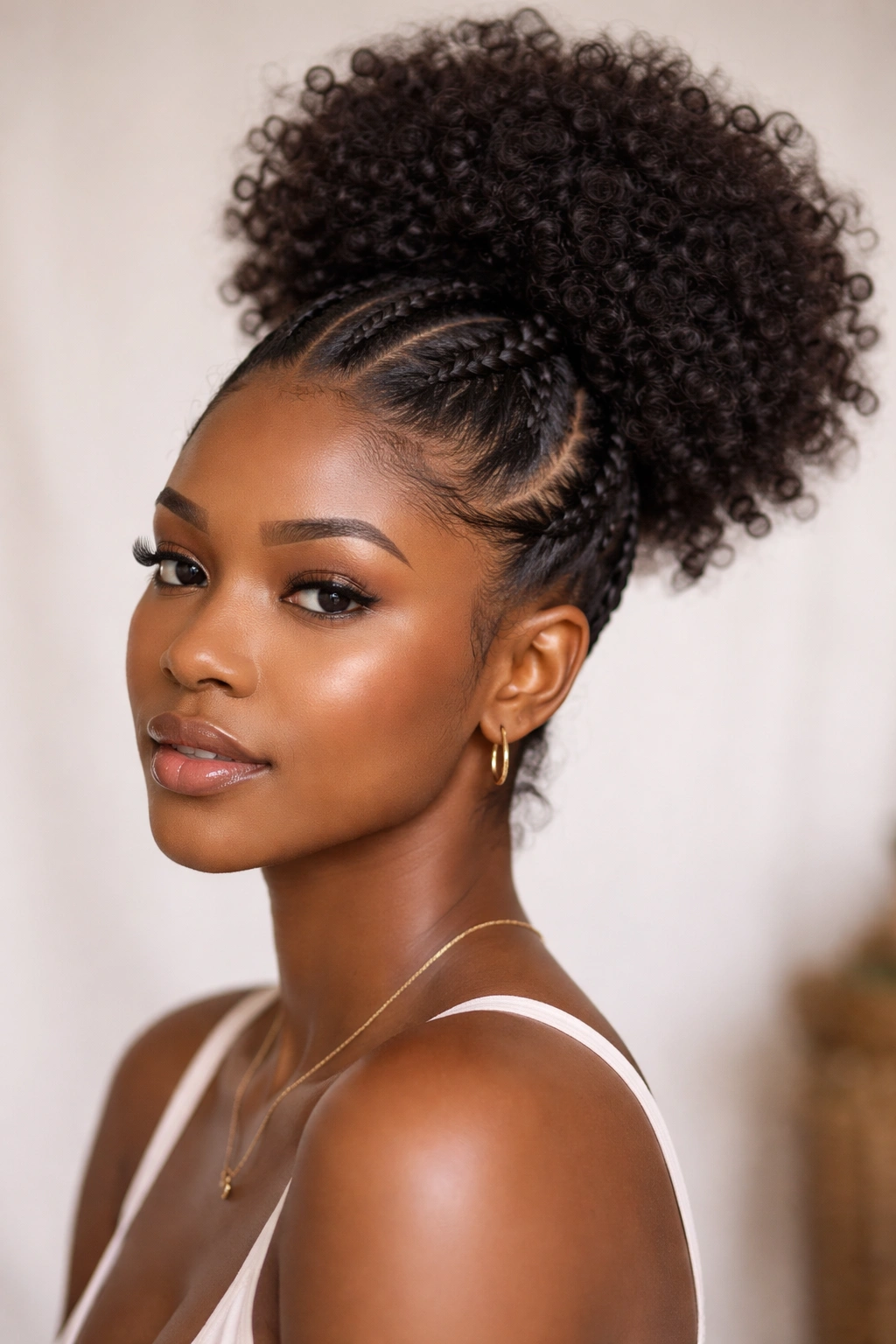
The braided high puff ponytail adds texture and visual interest by incorporating one or more braids into the base of the puff. You’re creating the same high gathering point as the classic high puff, but instead of a simple elastic securing plain hair, you’re securing braided sections that feed into the puff. This hybrid style offers extra visual depth and stays more securely in place throughout the day.
How to Create It
Start by deciding whether you want one braid, two braids, or three feeding into your puff. For a beginner, two braids is the perfect starting point. Divide your hair into two sections using a vertical part down the middle of your head. Starting from near your hairline, braid each section upward toward the crown. The braids don’t have to be tight—relaxed braids actually look more natural and less severe. Once your braids reach the crown, gather them together along with any unbraid hair, and secure everything into your high puff with an elastic.
Why It Works
Braided sections add texture and visual complexity without requiring additional heat, products, or time once you’ve done the initial braiding. The braids also secure your hair more firmly, so your puff holds its shape longer and resists the flattening that can happen throughout the day. If you’re styling for an event or a full day of activity, braided components mean your puff will look fresh and intentional at the end of the day, not compressed and deflated.
Insider note: Braiding slightly damp hair makes the braids lay flatter and neater without feeling stiff or crunchy. If your hair is fully dry, lightly mist it with a water-based spray before braiding, then allow it to air-dry before securing your puff.
5. Twisted Puff Ponytail
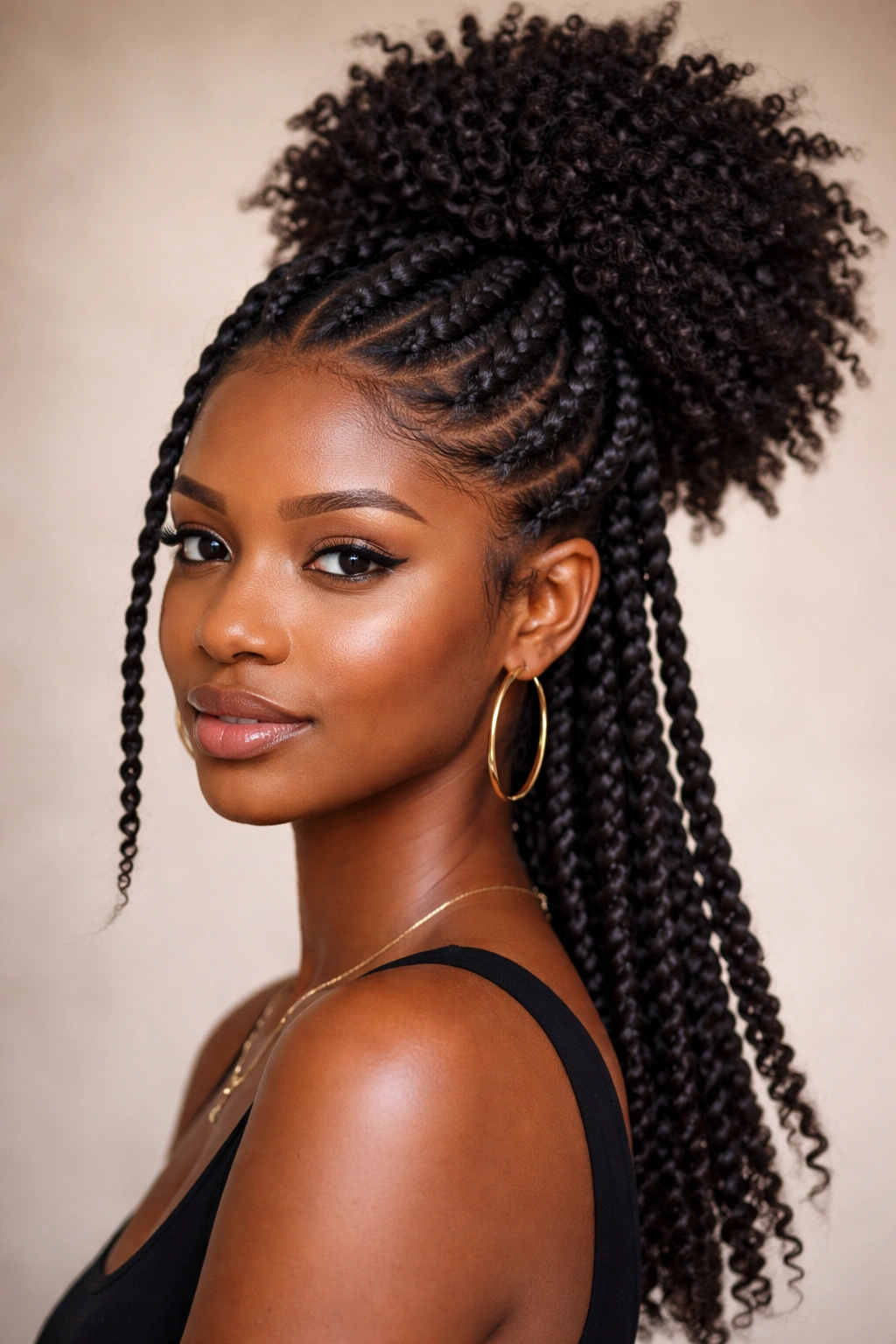
The twisted puff ponytail uses two-strand twists instead of braids to feed into and structure your puff. Two-strand twists are faster to create than braids, they work beautifully on all curl patterns, and they add a distinct visual texture that reads more contemporary than braids.
How to Create It
Divide your hair into two or more sections. Using two sections of hair at a time, twist them around each other moving upward toward the crown. Two-strand twists are straightforward: take two strands, cross one over the other, then cross them again, continuing upward. It’s faster than braiding because you’re only managing two strands instead of three. Once your twists reach the crown and meet, gather them together with any remaining untwisted hair and secure everything into your puff with an elastic. Gently fluff the twists slightly to encourage them to expand and show off their texture.
Why It Works
Two-strand twists hold definition longer than loose hair and create a beautiful spiral pattern that’s visually distinct. If you have finer or less dense hair, twists can actually look fuller than braids because they create more surface area and twist around each other more dramatically. Twists also take about half the time to create compared to braids, so if you’re styling in the morning before work, this is genuinely faster.
What to know: Two-strand twists work especially well on hair that’s slightly stretched—hair that was stretched the day before, or hair that’s been blow-dried or air-dried over time. Very freshly washed, maximally shrunken hair can sometimes make twists appear thinner because the curl pattern is so tightly coiled.
6. Double Puff Ponytails
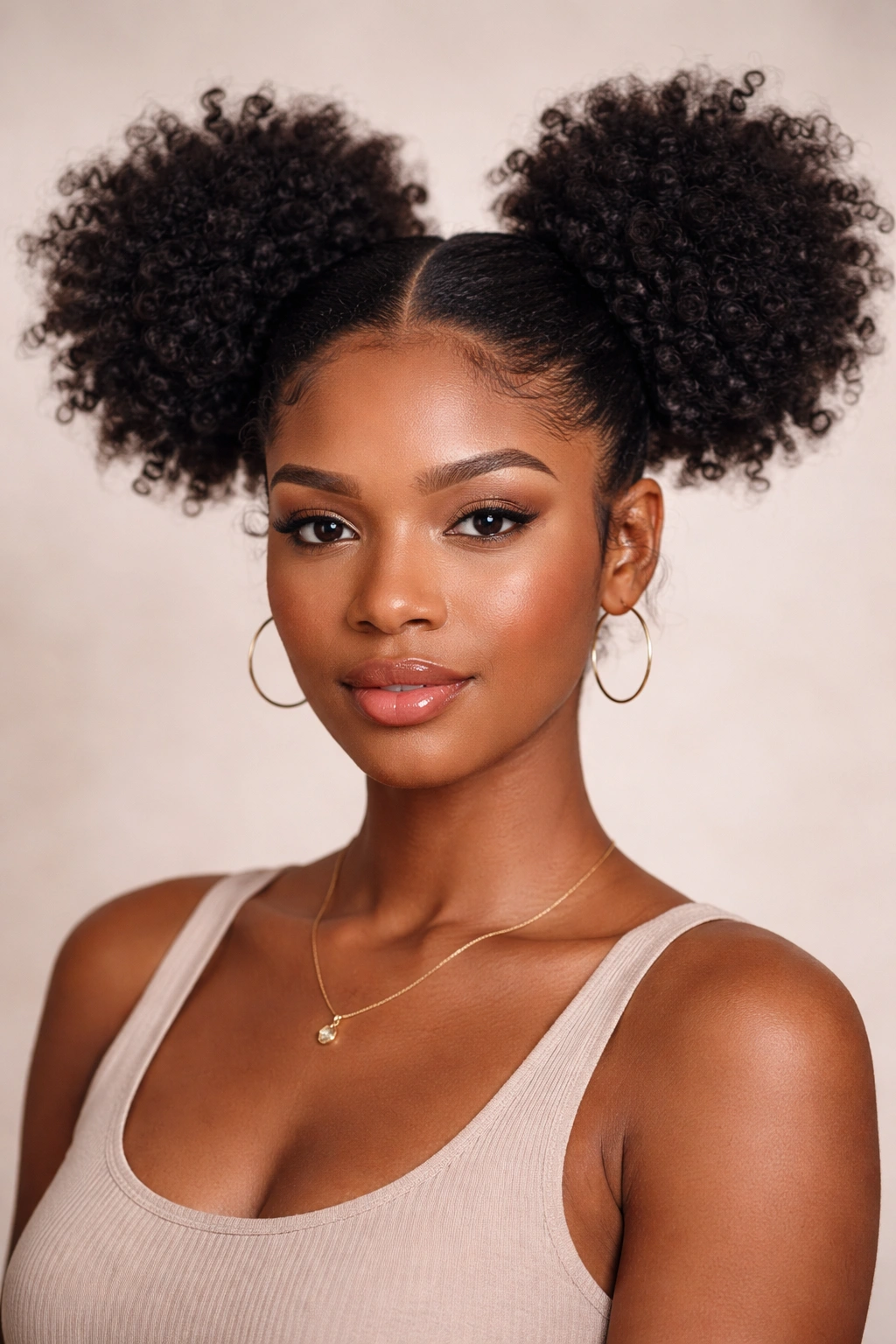
Double puff ponytails are exactly what they sound like: two separate puffs instead of one. You’re creating a playful, youthful style by gathering your hair into two ponytails—high or low, depending on your preference—instead of one. This style works beautifully on hair with length and density, and it immediately reads fun, approachable, and intentionally styled.
How to Create It
Use a vertical part down the middle of your head to divide your hair into two equal sections. Gather one section on each side of your head at your chosen height—either two high puffs sitting on each side of your crown, or two low puffs sitting on each side near your neck. Secure each section separately with its own elastic. Once both are secured, fluff each puff independently to encourage your curls to expand and define. You can even gently separate the two puffs so they sit further apart and look more distinct.
Why It Works
Double puffs create instant dimension and visual interest without extra effort. They’re protective in the same way a single puff is, but the two-puff structure distributes the weight of your hair more evenly across your scalp, which can feel more comfortable if you typically wear very tight styles. Double puffs also suit shorter to medium-length hair beautifully—even if your hair is only shoulder-length or shorter, you can still create two distinct puffs that look full and intentional.
Styling tip: Double puffs look particularly striking when you add color or accessories. Try placing a different hair clip or scarf wrap on each puff to create asymmetrical, interesting styling.
7. Bubble Puff Ponytail
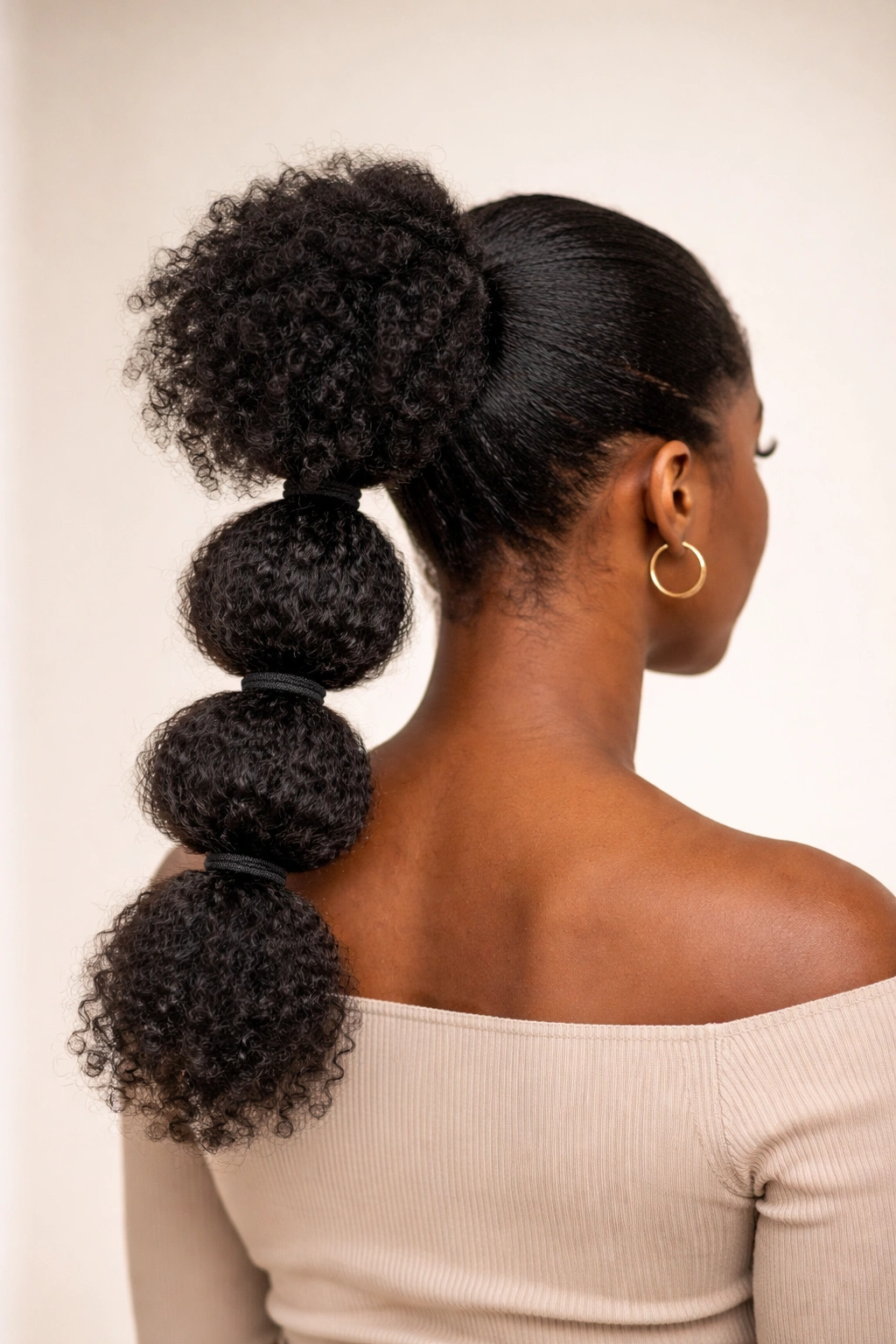
The bubble puff ponytail, also called a bubble ponytail, creates multiple defined sections along the length of your ponytail. You’re gathering your hair into a puff at your chosen height, then placing additional elastics down the length of the puff to divide it into multiple bubble-shaped sections. Each section puffs out around its elastic, creating a textured, dimensional look.
How to Create It
Start by creating your base puff at your chosen height and securing it with an elastic. Once that’s secure, determine how many bubbles you want—3 to 5 bubbles is typical for a medium-length puff. Place your first elastic about 2 inches below the base elastic, smoothing out the hair between them so the first bubble forms nicely. Then place your next elastic 2 inches below that, and continue down the length of the puff. Once all elastics are in place, gently fluff out each bubble section to encourage the hair to puff up around each elastic. You can use your fingers or a gentle comb to separate and define the curls within each bubble.
Why It Works
Bubble puffs are undeniably eye-catching. They suit playful, casual styling and work beautifully on longer puffs where you have enough length to create multiple distinct sections. Because there are multiple elastics securing the style, it holds together much more securely and can withstand movement and activity without flattening or deflating. If you’re wearing this style to an event or for a full day of activity, a bubble puff maintains its structure better than a simple puff.
Real talk: Creating bubble puffs takes a bit more time than throwing your hair into a simple puff, and you do need enough length to create visibly distinct bubble sections. If your puff is very short, bubbles will look cramped. But if you have shoulder-length hair or longer and you’re willing to spend an extra 5 minutes, bubble puffs absolutely reward the effort.
8. Sleek Puff Ponytail with Edges
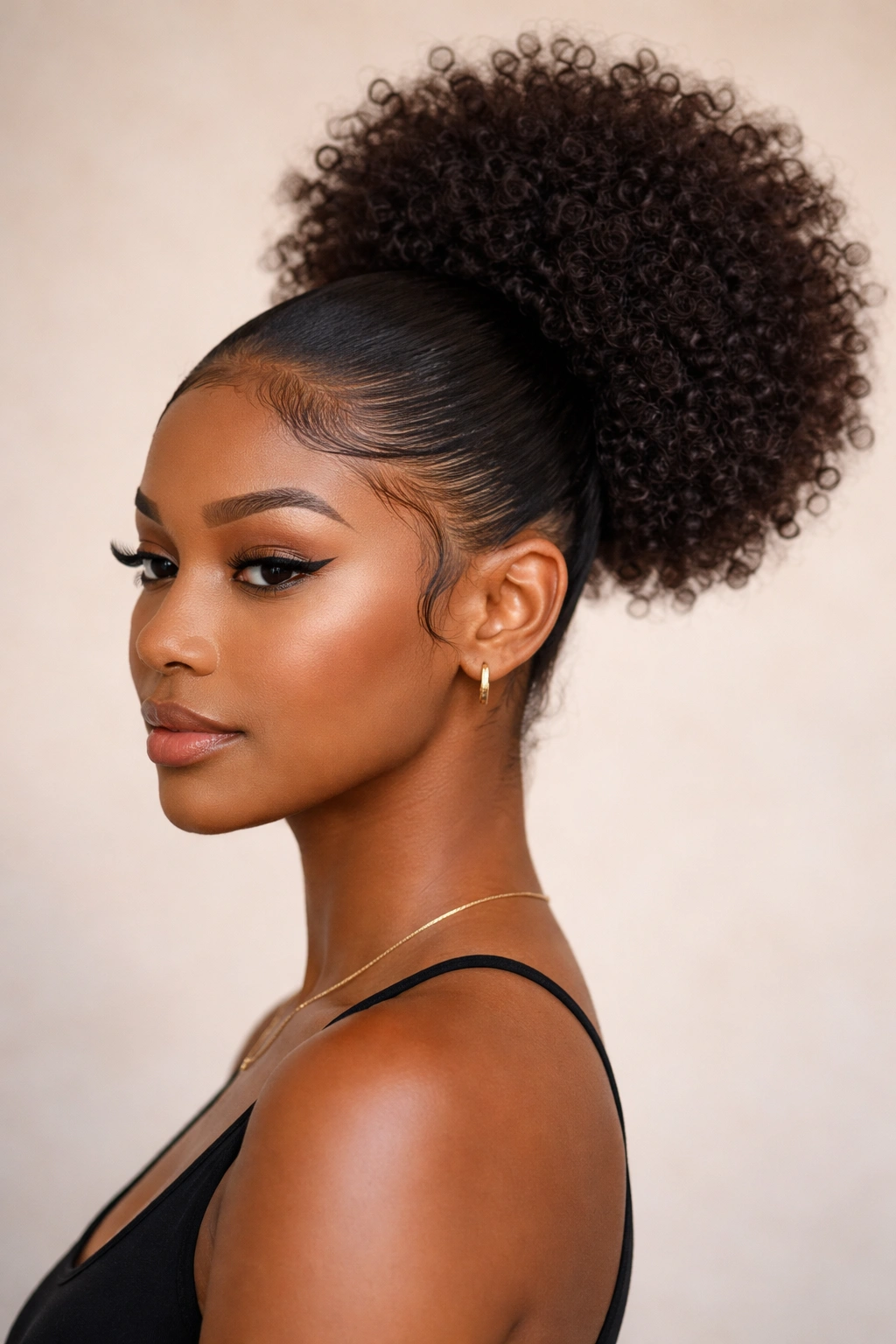
The sleek puff ponytail combines a voluminous, natural puff with intentionally smoothed, laid edges. Your edges are slicked down using a lightweight edge control or gel, creating a sharp, polished frame around your face and hairline. This contrast between the smooth edges and the full puff creates a powerful, intentional aesthetic.
How to Create It
Start by creating your puff at your chosen height—high, low, or side—exactly as you normally would. Once your puff is secured and you’re happy with its shape and volume, focus on your edges. Using a soft brush (a toothbrush-sized edge brush is ideal), gently brush your edges backward and downward toward their position on your face and neck. Apply a lightweight edge control product—keep it minimal, you don’t want heavy buildup—and continue brushing your edges into your desired pattern. Some people create a simple, smooth frame. Others create laid wave patterns or spirals in their edges. The key is using a product light enough that it doesn’t feel heavy or crunchy, and brushing gently enough that you’re directing your hair without pulling or breaking it.
Why It Works
The contrast of a smooth edge frame around an intentional, full puff creates visual polish and sophistication. This is the style variation you’ll see on red carpets, in professional settings, and in editorial styling because it’s genuinely striking. The smooth edges also visually enhance your face shape by creating a defined frame, and they make your puff look intentionally styled rather than casually thrown together.
Worth knowing: This style requires slightly more maintenance than a simple puff because your edges need periodic touching up as they grow out and your baby hairs start to loosen. If you’re creating this style for a special occasion, it looks perfect for 1 to 2 days. If you’re wearing it regularly, plan to refresh your edges every 2 to 3 days to keep them looking sharp.
Essential Styling Tips for Long-Lasting Puff Ponytails
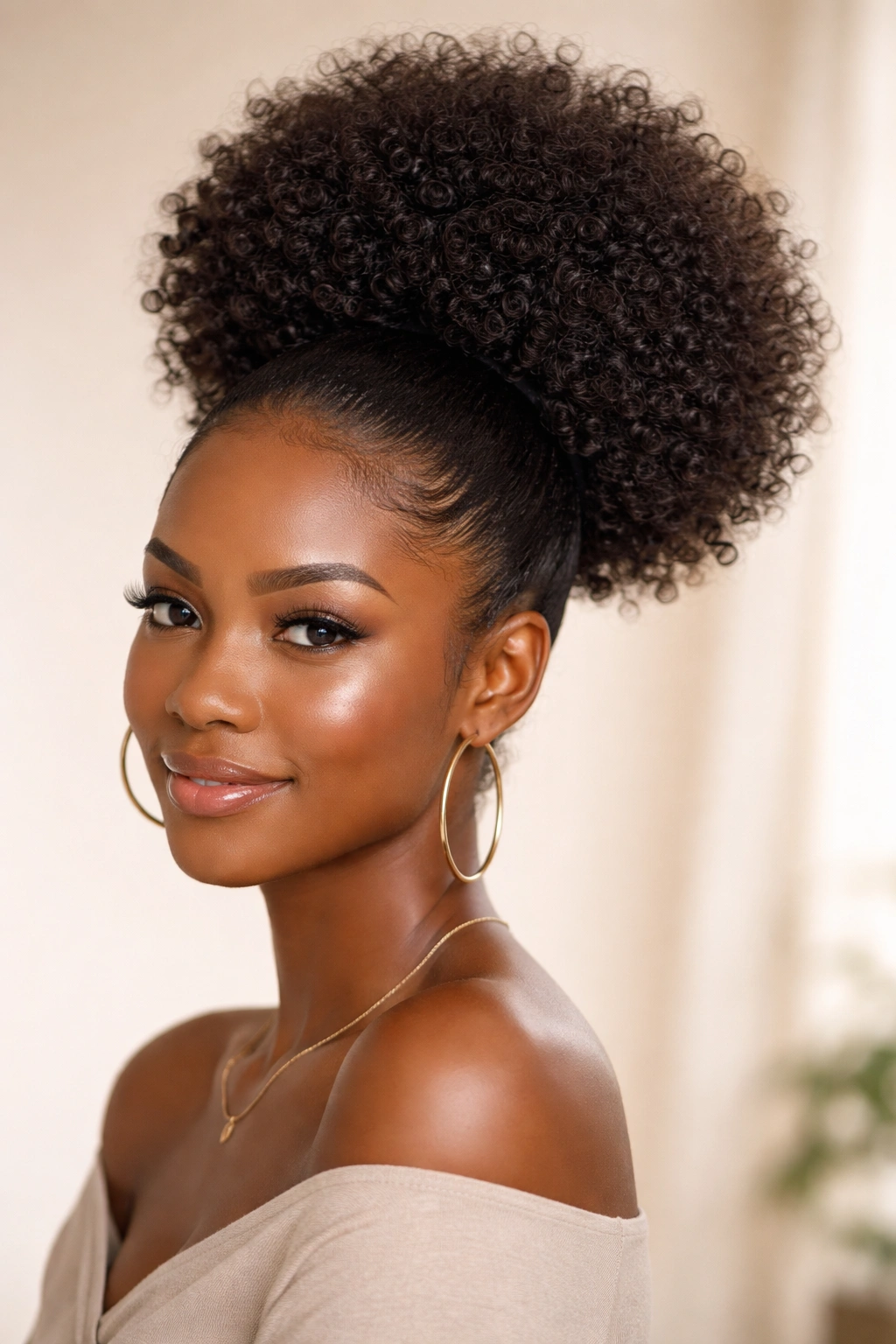
The difference between a puff that falls flat by noon and one that holds its shape and volume all day comes down to a few key techniques and maintenance strategies.
Start with the right moisture level. Hair that’s too dry becomes fragile and breaks easily when you’re gathering and securing it. Hair that’s soaking wet will take hours to dry and might develop mold at the roots if you’re wearing a tight style. The ideal moisture level is damp but not dripping—hair that you’ve lightly misted with water or applied a light leave-in conditioner to about an hour before styling. This moisture level allows your curls to be pliable and forgiving without being so wet that they’re heavy and prone to stretching.
Use the right elastic. A standard rubber band will crease your hair and cause breakage. Invest in seamless hair elastics or silk-wrapped elastics that don’t have hard edges and won’t grab your hair strands. If you wear multiple elastics in one puff (like in a bubble puff), plan to replace them regularly because they do lose elasticity over time. A elasticized scarf or silk scrunchy also works beautifully and adds texture to your style.
Keep your roots protected. Tight styles pull on your hairline and roots, which can contribute to tension alopecia over time if you’re not careful. Make sure your elastic isn’t so tight that you feel tension at your scalp, and don’t sleep in your puff with the same tightness you wore it during the day. If you’re keeping a puff in for multiple days, you might loosen the elastic slightly before sleeping to reduce tension.
Refresh your curls without rewashing. If you’re wearing your puff for multiple days, your curls will naturally start to lose definition and flatten. Refresh them by lightly misting your puff with a water-based curl refresher spray or even plain water, then gently scrunching your curls back to life. This brings definition back without requiring a full wash. You can do this every morning or whenever your puff starts to look tired.
Consider protective barriers at your hairline. If you’re worried about tension or breakage at your hairline from your elastic, apply a thin barrier of leave-in conditioner or oil along your hairline before securing your puff. This creates a slippery surface that reduces friction between your elastic and your hairline.
Final Thoughts
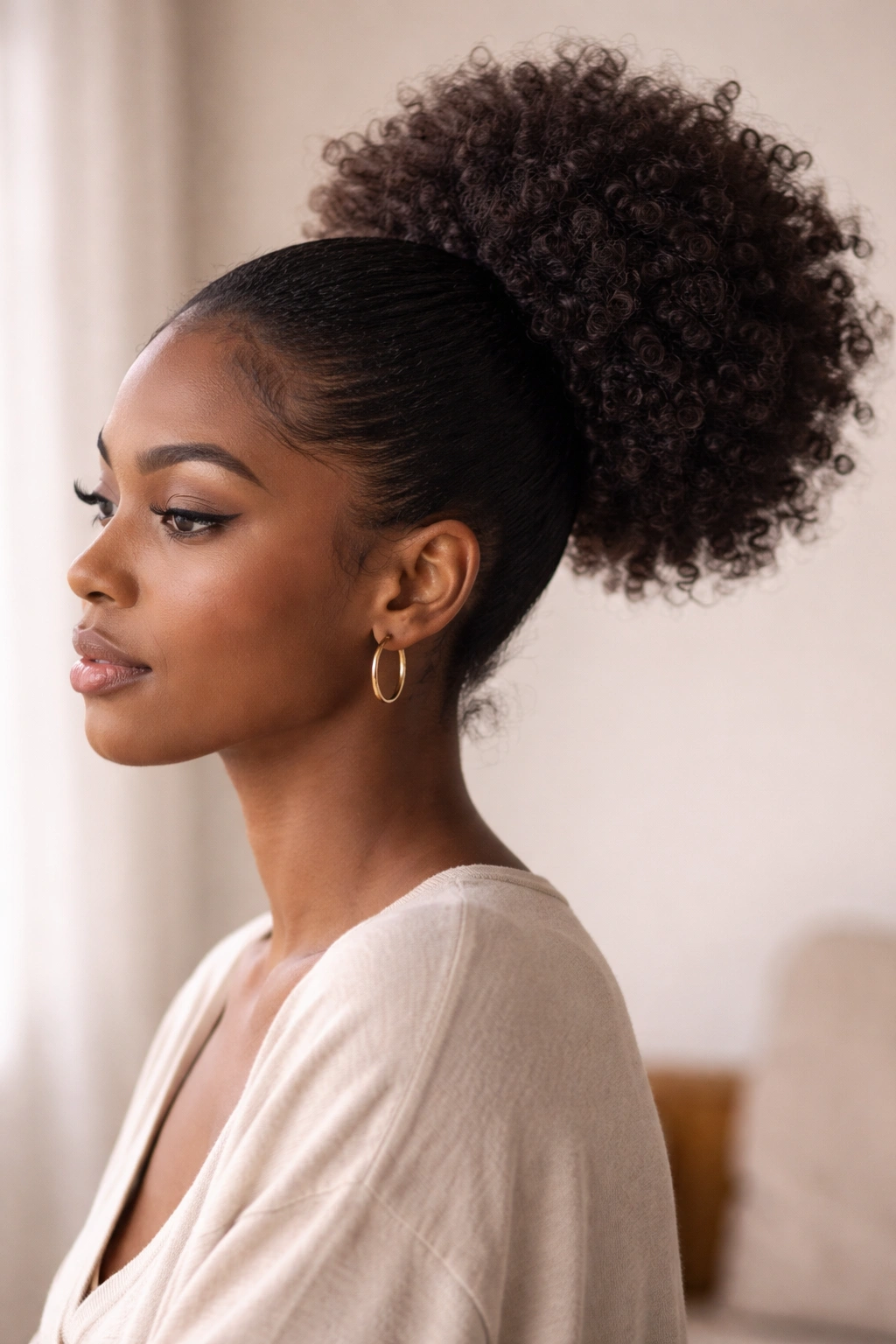
A puff ponytail isn’t just a convenience style—it’s a celebration of your natural texture in its fullest, most voluminous form. Whether you’re wearing a simple high puff for a casual day, a braided puff for added security and visual interest, or a sleek puff with defined edges for a polished occasion, you’re working with your hair’s natural structure rather than against it.
The key to finding your favorite puff variation is experimenting without pressure. Try a high puff one day and a side puff the next. Experiment with twists and braids when you have a few extra minutes. See how double puffs feel when you’re doing physical activity. Your hair will tell you which versions work best for your specific curl pattern, density, lifestyle, and aesthetic preferences.
Once you’ve found your go-to puff style, you’ll realize how genuinely freeing it is to have a protective, beautiful style that requires no heat, minimal product, and honest attention to your hair’s health. That’s the real power of the puff ponytail.
