

A saree is one of those magical garments that transforms how you wear your hair. Unlike a casual ponytail or the polished waves of everyday styling, a saree demands something that feels intentional, graceful, and just a little bit effortless-looking. The messy bun has become the go-to solution for saree styling because it bridges formal and relaxed in a way that complements the draped elegance of the fabric itself. The right messy bun sits somewhere between deliberately disheveled and carefully crafted, which is exactly the mood a saree creates.
What makes a messy bun work with a saree isn’t accident or luck—it’s understanding how the height, texture, and placement of your bun interact with the way a saree sits on your shoulders and frames your face. A bun that’s too tight looks severe against flowing fabric. One that’s too loose reads as unkempt. The sweet spot is a bun with visible texture, a few loose strands, and strategic positioning that either plays up or softens the angles of your face depending on the drape and color of your saree.
The beauty of messy bun styling for sarees is that you can adapt the same basic technique dozens of ways. You can dress it up with ornamental hairpins and jewelry, tone it down with just a few bobby pins, lean into romance with curled edges, or emphasize drama with a high placement. Whether you’re wearing a silk wedding saree, a cotton everyday drape, or a chiffon party saree, there’s a messy bun approach that will feel like it was designed specifically for that garment.
1. High Looped Messy Bun With Face-Framing Strands
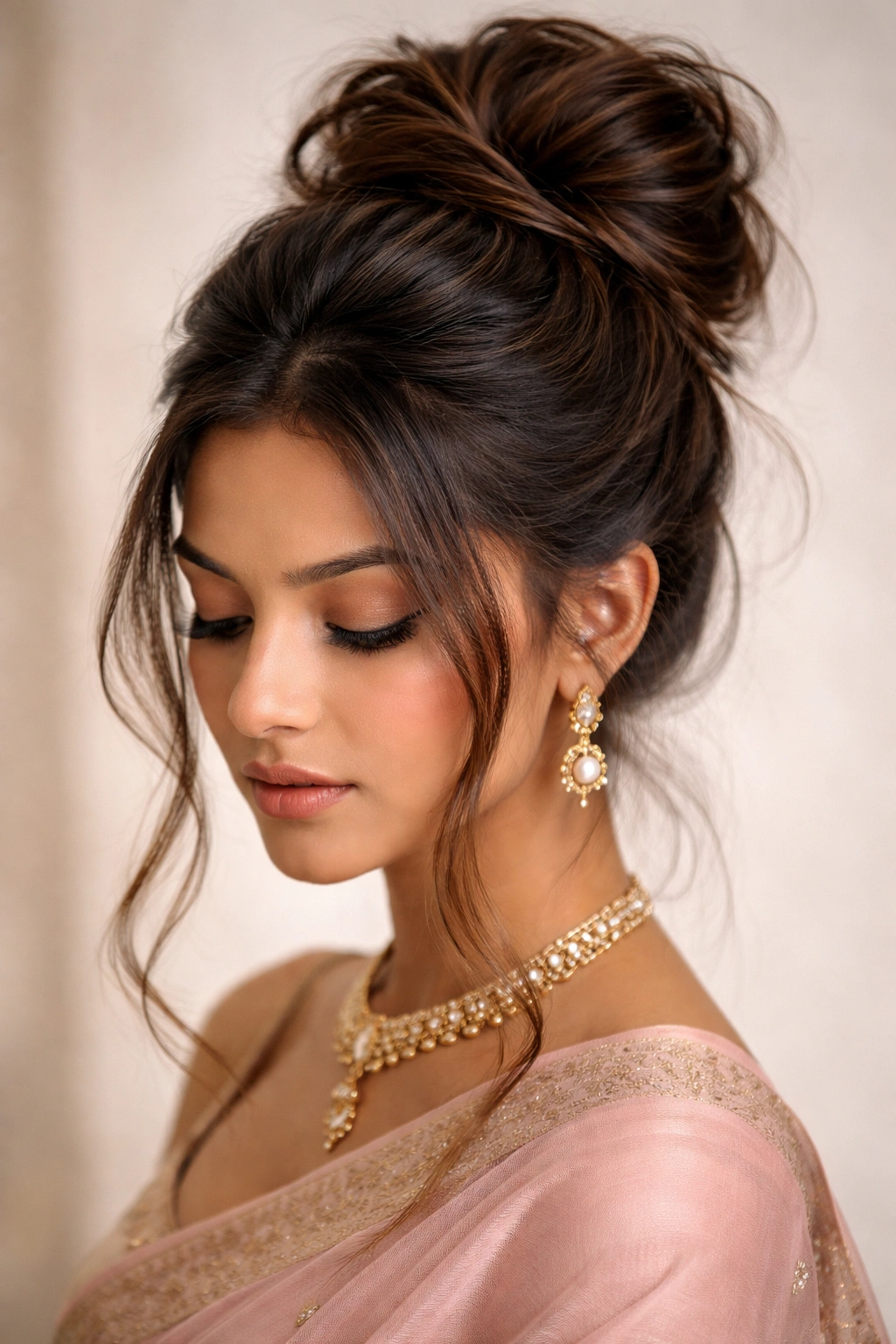
This is the classic saree bun that works across almost every occasion and saree type. You gather your hair high on the crown, twist it loosely, and wrap it around itself to create a bun that sits at the very top of your head. The key is leaving two or three sections of hair untwisted before you wrap—these pieces stay intentionally loose and fall in face-framing waves on either side. When you secure everything with bobby pins, you want visible texture showing through, not a smooth dome.
Why It Complements Saree Aesthetics
A high bun elongates your neck and creates an open frame for your face, which is essential because a saree naturally draws attention upward toward your shoulders and collarbone. The face-framing strands soften what might otherwise feel like too much exposed neck, and they add movement that mirrors the flow of the saree’s pleats. When you move—walking, sitting, turning—those loose strands catch light and add dimension that single-color fabric alone can’t provide.
How to Achieve This Look
Start with hair that has a little texture already—either from waves, a braid you slept in, or a light texturizing spray. Gather your hair into a high ponytail using a elastic that matches your hair color. Divide the ponytail into two sections. Twist one section loosely and wrap it around the base of the ponytail, securing with bobby pins as you go. Before you wrap the second section, pull out a couple of strands and let them fall intentionally at your temples. Then wrap the second section the same way, tucking and pinning until everything feels secure but looks deliberately undone.
Pro tip: Use a texturizing spray or dry shampoo before you start—it grips your hair better than freshly washed strands and makes the bun look fuller and more interesting rather than sleek.
2. Textured Low Messy Bun With Saree Pleats
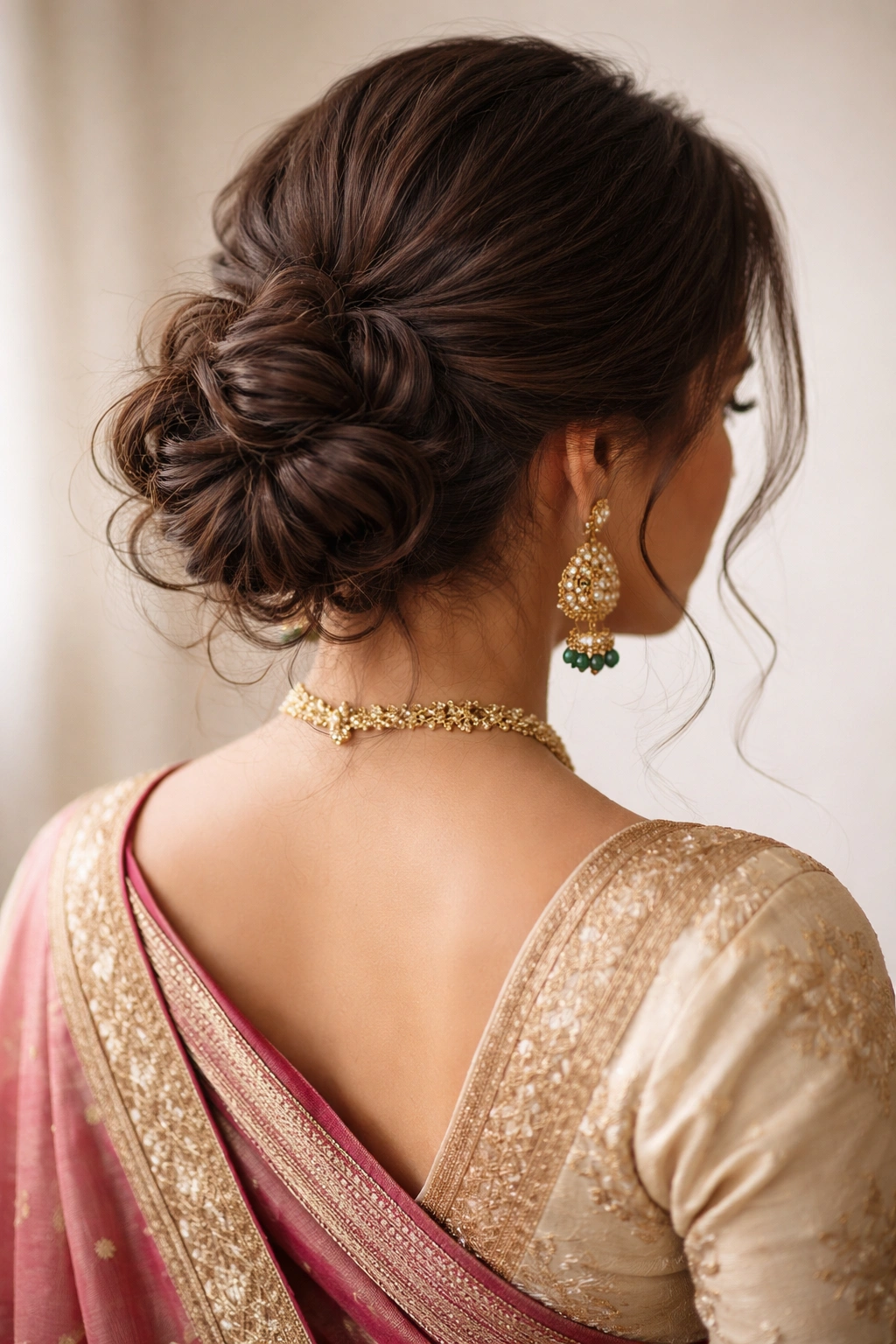
A low bun sits at the nape of your neck, which changes the entire proportions of your face and how you relate to the saree’s pallu (the draped end). This placement feels softer and more intimate than a high bun, making it perfect for heavier sarees, family events, or any moment when you want to seem approachable rather than dramatic. The texture here is everything—you’re not aiming for a smooth, polished knot but rather visible waves and texture that shows the work that went into it.
Why This Works With Traditional Sarees
A low bun at the nape creates a visual weight that balances a saree’s horizontal lines. It also allows the pallu to drape beautifully across your chest without fighting with an overly high bun for attention. The lower placement feels more traditional and is often preferred for silk sarees, wedding sarees, or formal occasions where you want to emphasize classic elegance over modern styling.
Creating Visible Texture and Movement
Rather than twisting your ponytail smoothly, use your fingers to rough it up. Separate the twisted sections, pull some strands out slightly, and let them hang loose. You’re creating deliberate imperfection. Use bobby pins in small clusters rather than systematically pinning everything down—this leaves gaps where texture shows through. Tease sections gently with a fine-tooth comb to add volume and visual interest.
Securing It for All-Day Wear
A low bun can slip if it’s not anchored well, especially with the movement and draping involved in wearing a saree. Use multiple bobby pins in a crosshatch pattern, and consider finishing with a light hairspray that holds texture without making hair feel stiff or weighed down.
3. Braided Wrap Around Messy Bun
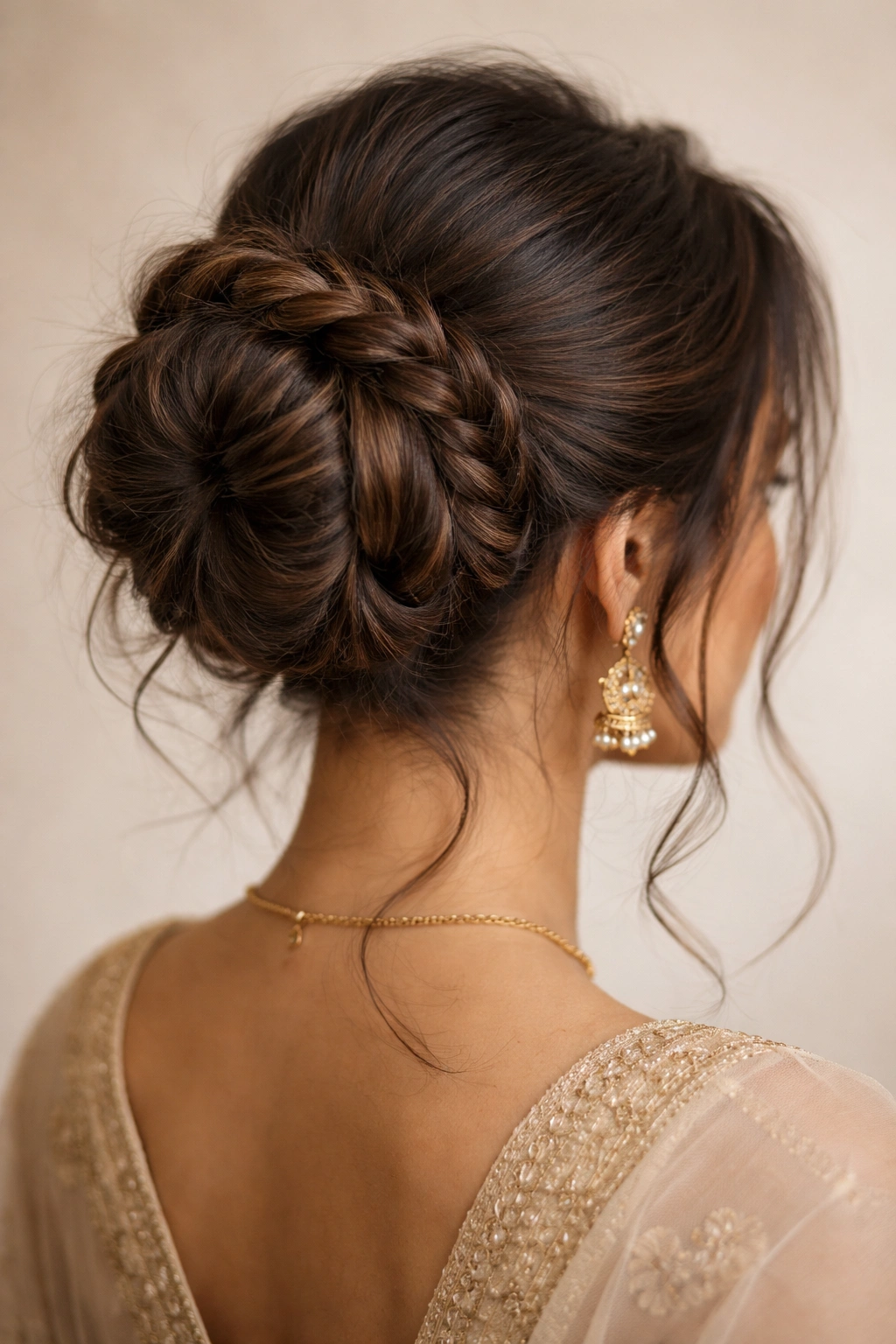
This style combines the sophistication of a braid with the casual ease of a messy bun. You create one or two loose braids from sections of your hair, then wrap those braids around a central bun base like a crown. The braids become a design element that frames the bun rather than just hair holding everything together. It’s visually interesting without requiring advanced braiding skills, and it photographs beautifully from every angle.
Why Braids Elevate Saree Styling
A braid running around your bun adds dimensionality and craftsmanship that reads as intentional and elevated. It works especially well with embellished sarees or sarees with intricate borders because the braid echoes the design language of the fabric. The contrast between the geometric precision of the braid and the organic mess of the bun creates visual balance.
How to Execute the Wrap
Gather your hair into a high or mid-height ponytail. Create your central bun by twisting and looping the ponytail loosely. Secure it lightly with a bobby pin. Then, from the side, take a section of hair that escaped or intentionally separate a new section from underneath. Braid this section loosely—the braid should look relaxed, not tight. Wrap the completed braid around the base of your bun, tucking the end underneath and securing everything with bobby pins. Let some shorter pieces fall loose around your face.
Worth knowing: If you don’t have enough hair length to wrap a braid all the way around, create one braid and pin it to wrap partially around the bun in a crescent shape. It’s just as striking and works beautifully with shorter hair.
4. Side-Swept Messy Bun With Jewelry
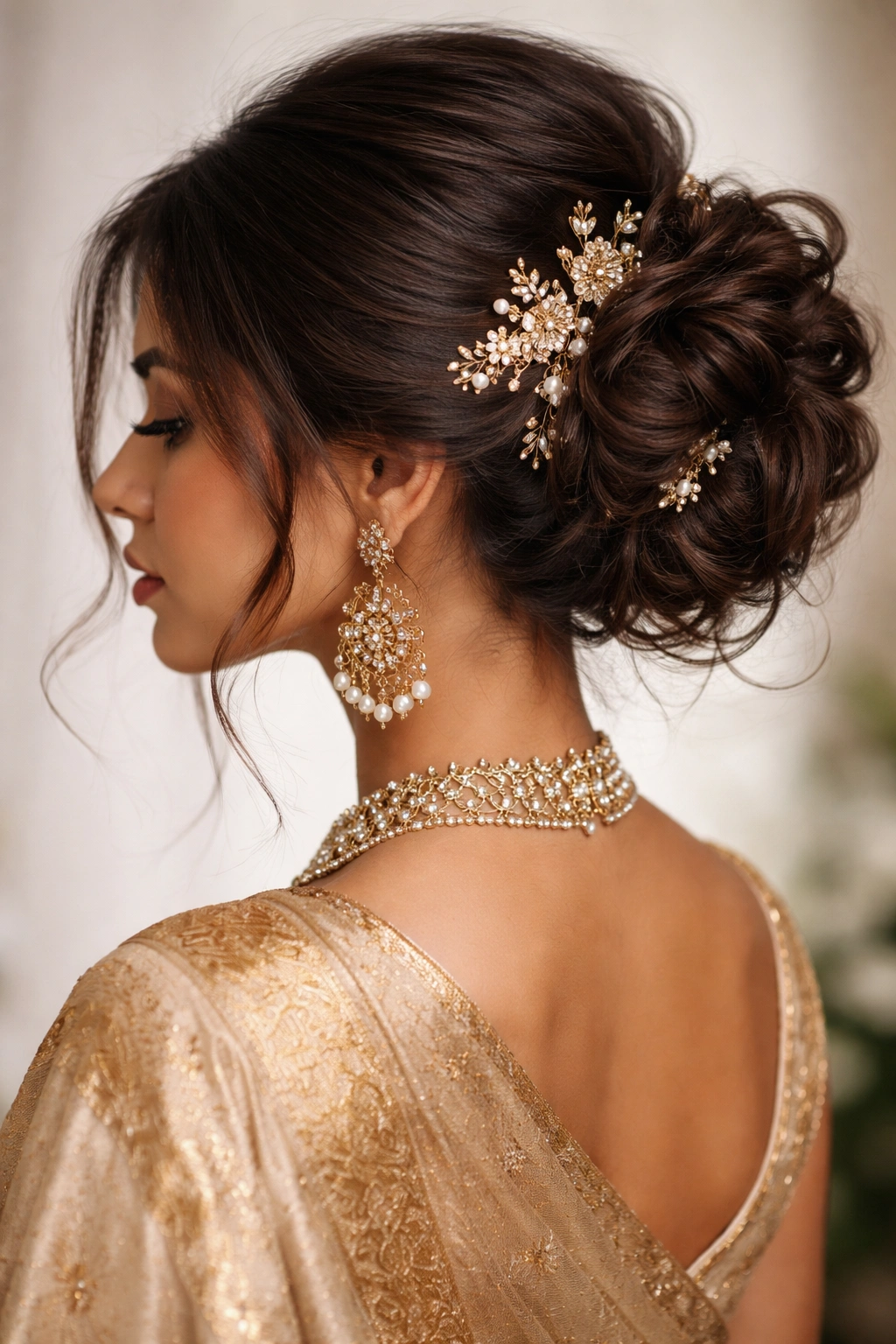
This is the bun for when you want drama and movement. Instead of centering your bun at the crown or nape, you shift it dramatically to one side—toward the back of one shoulder. The side placement creates asymmetrical balance with a saree’s pallu, which often drapes to one side anyway. You then add ornamental hairpins, flowers, or decorative clips to punctuate the bun’s shape and add cultural or aesthetic significance.
The Visual Impact of Off-Center Placement
A side-swept bun draws the eye along your hairline and neck, creating a stronger line than a centered style. It works with nearly every face shape, but it’s particularly flattering if you have a longer face or want to soften angular cheekbones. The asymmetry also feels more modern and fashion-forward, which works beautifully with contemporary saree styling or fusion looks.
Securing a Bun at the Side
Gather your ponytail lower than usual and sweep it to one side before twisting and wrapping it into a bun. The side position naturally throws off balance, so you’ll need to pin very securely—use more bobby pins than you’d think necessary, anchoring into sections of hair at different angles. The bun should feel immovable even if you’re moving around, dancing, or sitting and standing repeatedly.
Adding Ornamental Elements
Once your bun is secure, this is where jewelry comes in. A delicate gold or silver hairpin can simply slot into the side of the bun. Jhumkas (hanging earrings) or other decorative clips can hang from the hairpins. Fresh flowers—jasmine, baby’s breath, or roses—can be tucked into the texture of the bun itself. These ornaments should feel intentional rather than randomly placed, so plan where they’ll sit before you start pinning.
5. High Crown Messy Bun With Curled Ends
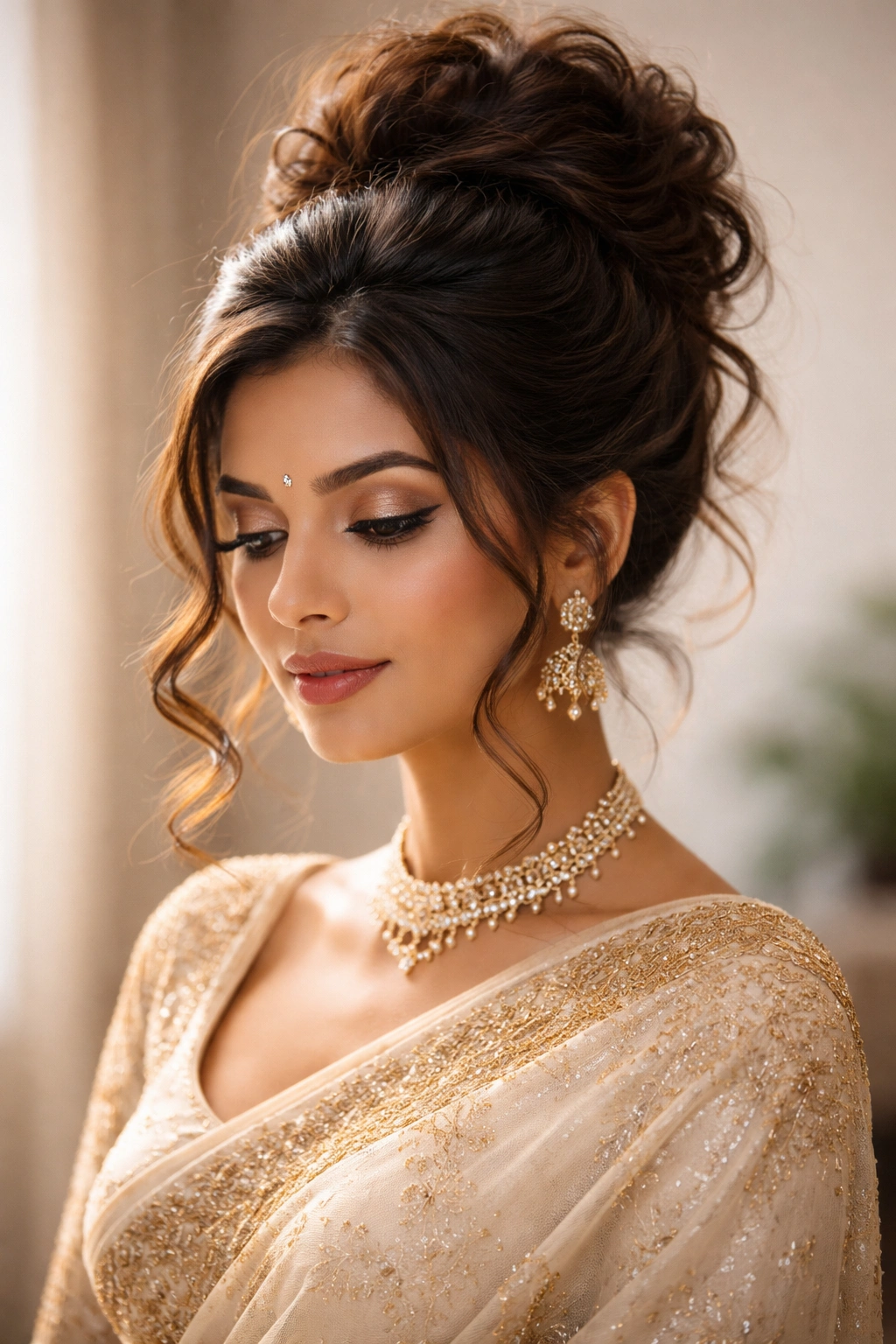
This style takes the messy bun into romantic territory by curling the loose strands that fall around your face and neck. You create a high bun with significant texture, then deliberately curl several pieces using a curling iron or by wrapping them around the iron barrel just before you secure everything. The result is a bun that looks effortlessly romantic, with soft waves framing your face.
Why Curled Strands Transform the Mood
Straight, loose strands around a bun read as casual. Curled strands read as intentional and polished. The curls catch light, add movement, and create a softer frame for your face. With a saree, curls suggest elegance and occasion—they signal that you’ve taken care with your appearance without looking overdone.
The Technique for Lasting Curls
Curl your loose pieces before you arrange them fully around your bun. Use a medium-barrel curling iron and wrap each section around the barrel for a few seconds, then release and let it cool in your hand for another few seconds before setting it in place. The cooling helps the curl hold longer. Once you’ve curled all your pieces, arrange them around your face and secure with bobby pins and a light hairspray that holds without flaking.
Pairing With Different Saree Styles
This bun works beautifully with chiffon or organza sarees, where the fabric itself has movement and flow. It’s less suited to heavy silk sarees where you want a more structured, formal aesthetic. For festive occasions, engagement ceremonies, or fashion-forward events, this is a strong choice.
Pro tip: Curl your strands away from your face rather than toward it—this creates a more flattering frame and prevents hair from sticking to your face due to humidity or movement.
6. Twisted Rope Messy Bun
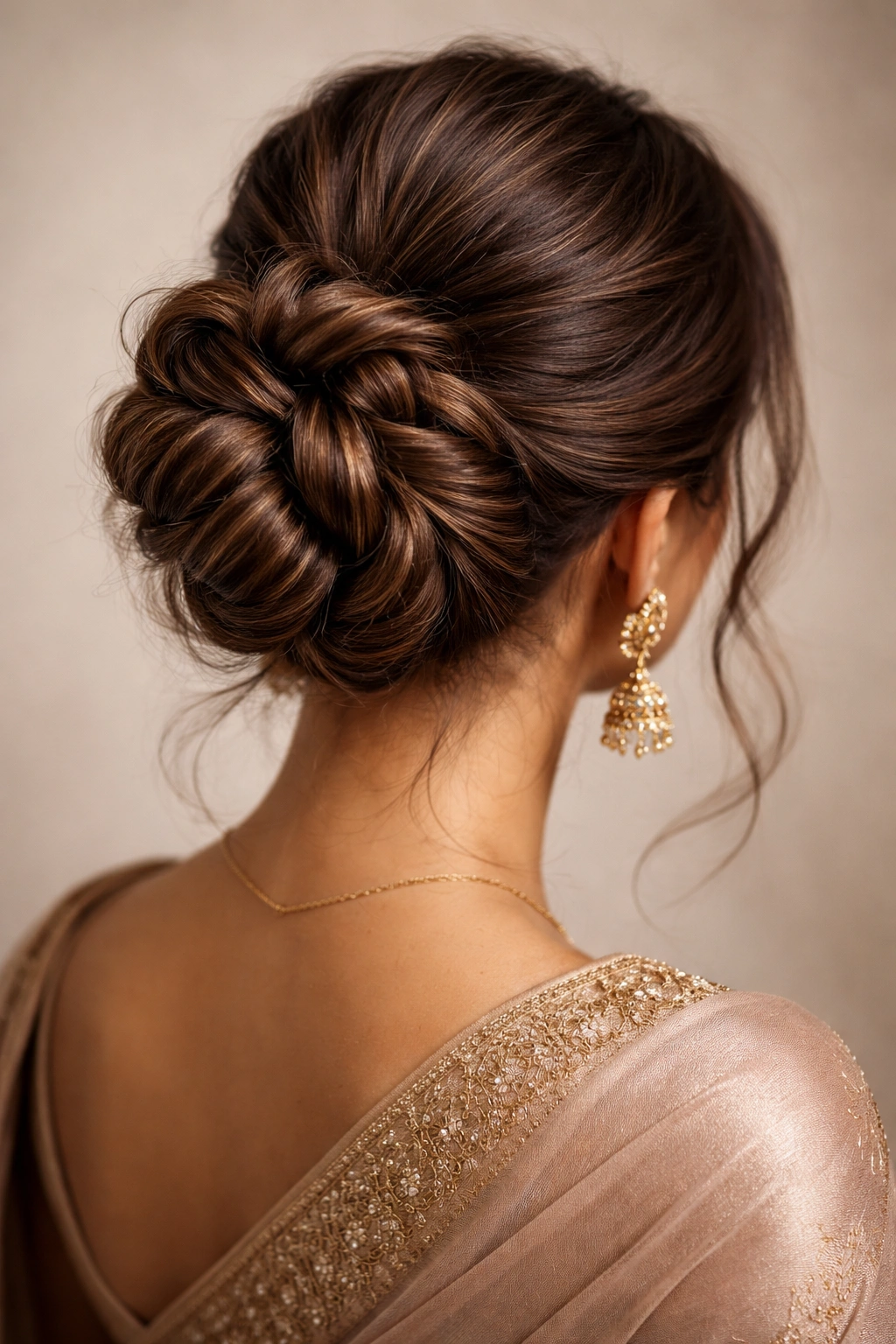
Instead of looping a twirled ponytail, you create tight twists with sections of your ponytail and then wrap those twists around each other like braided rope. The twists create a defined texture that’s more deliberate than a simple wrap but still reads as effortlessly undone. This style works particularly well with very long, thick hair because the twists hold their shape better.
Why Twisted Texture Photographs Well
When you photograph a standard looped bun, the texture can look muddled or flat. Twisted sections create clear lines of texture that show up beautifully in photos, which matters if you’re wearing a saree for an event that will be photographed. Each twist reads as a deliberate design choice rather than accident.
Creating Balanced Twists
Divide your high ponytail into three or four sections. Twist each section tightly, then wrap them around each other in a spiraling pattern, securing as you go with bobby pins. The tighter your individual twists, the more defined this style will look. Don’t be afraid to wrap the twisted sections around each other multiple times to create a sculptural, interesting shape.
Securing Everything Firmly
This bun requires excellent anchoring because the twisted structure can unravel if even one pin comes loose. Use bobby pins every inch or so, always working in pairs in an X pattern. Finish with a medium-hold hairspray that won’t weigh everything down but will keep the twists in place throughout the day.
7. Fishtail Messy Bun Hybrid
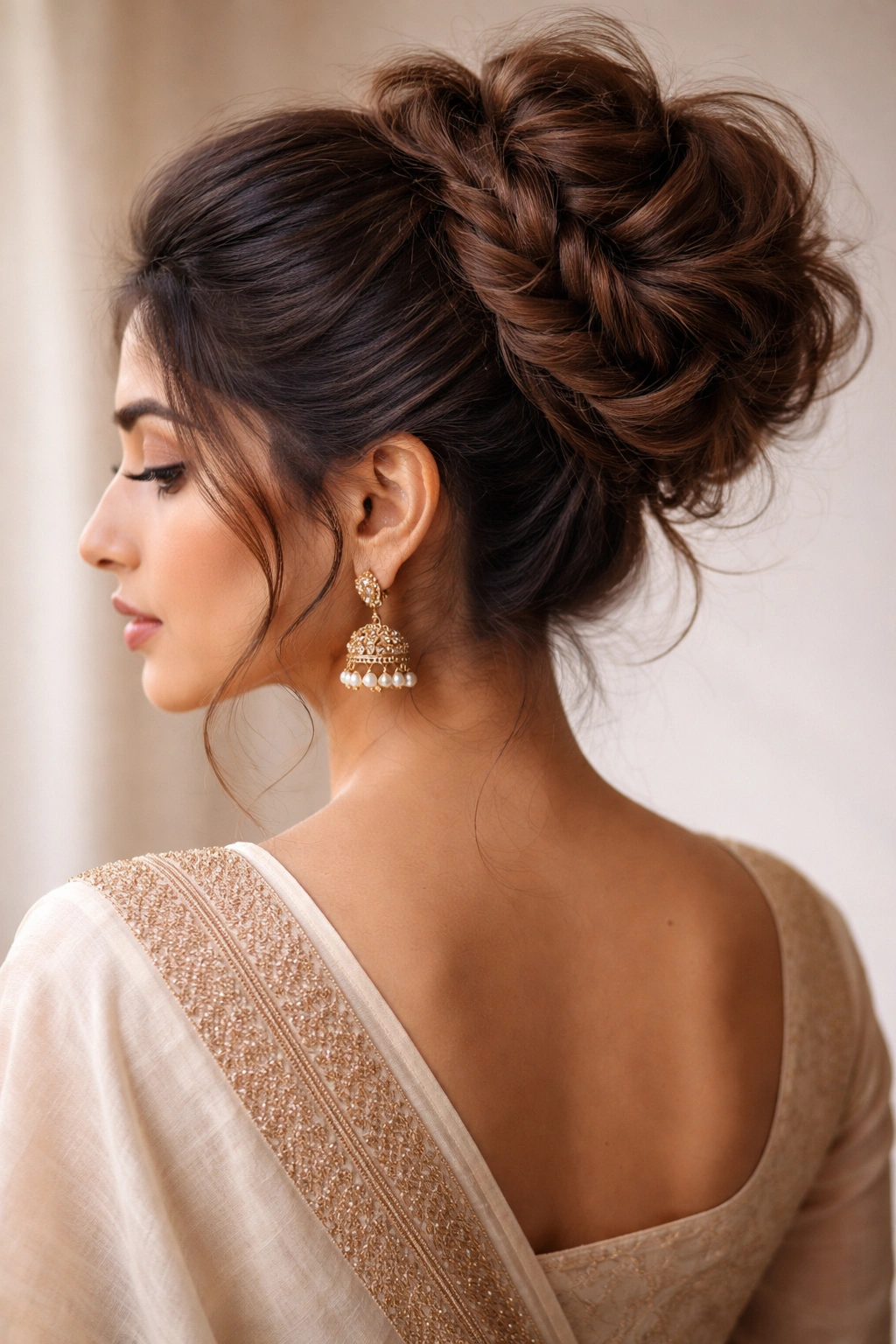
A fishtail braid combined with a bun creates one of the most visually interesting messy styles. You either create a fishtail braid as the primary style and loop it into a bun at the ends, or you create a fishtail braid from a section of hair and wrap it around a more traditional bun base. The interlocking pattern of a fishtail adds complexity that reads as more sophisticated than a basic bun.
The Visual Sophistication of Fishtail Details
A fishtail braid has a distinctive X-pattern that’s immediately recognizable. When that pattern is woven into or around a bun, it adds dimensionality and craft. This style works beautifully with embellished sarees because it echoes the intricate patterns often found in saree borders and pallu designs.
How to Build a Fishtail Bun
Create a high ponytail. Divide it into two sections. Create a fishtail braid by taking small strands alternately from the outer edge of each section and crossing them over to the opposite side—this creates the characteristic interlocking look. Once your fishtail is complete, wrap it into a bun shape at the crown and secure with bobby pins. Leave some shorter strands loose around your face for that essential messy element.
Styling Tip for Visibly Distinct Sections
To make the fishtail pattern more obvious, gently tease the braid apart slightly after you’ve finished braiding. Pull the outer edges of the braid gently so the X-pattern becomes more pronounced. This is called “undoing” a braid and it gives the fishtail a softer, more undone appearance while maintaining the visual interest of the pattern.
8. Half-Up Half-Down Messy Bun
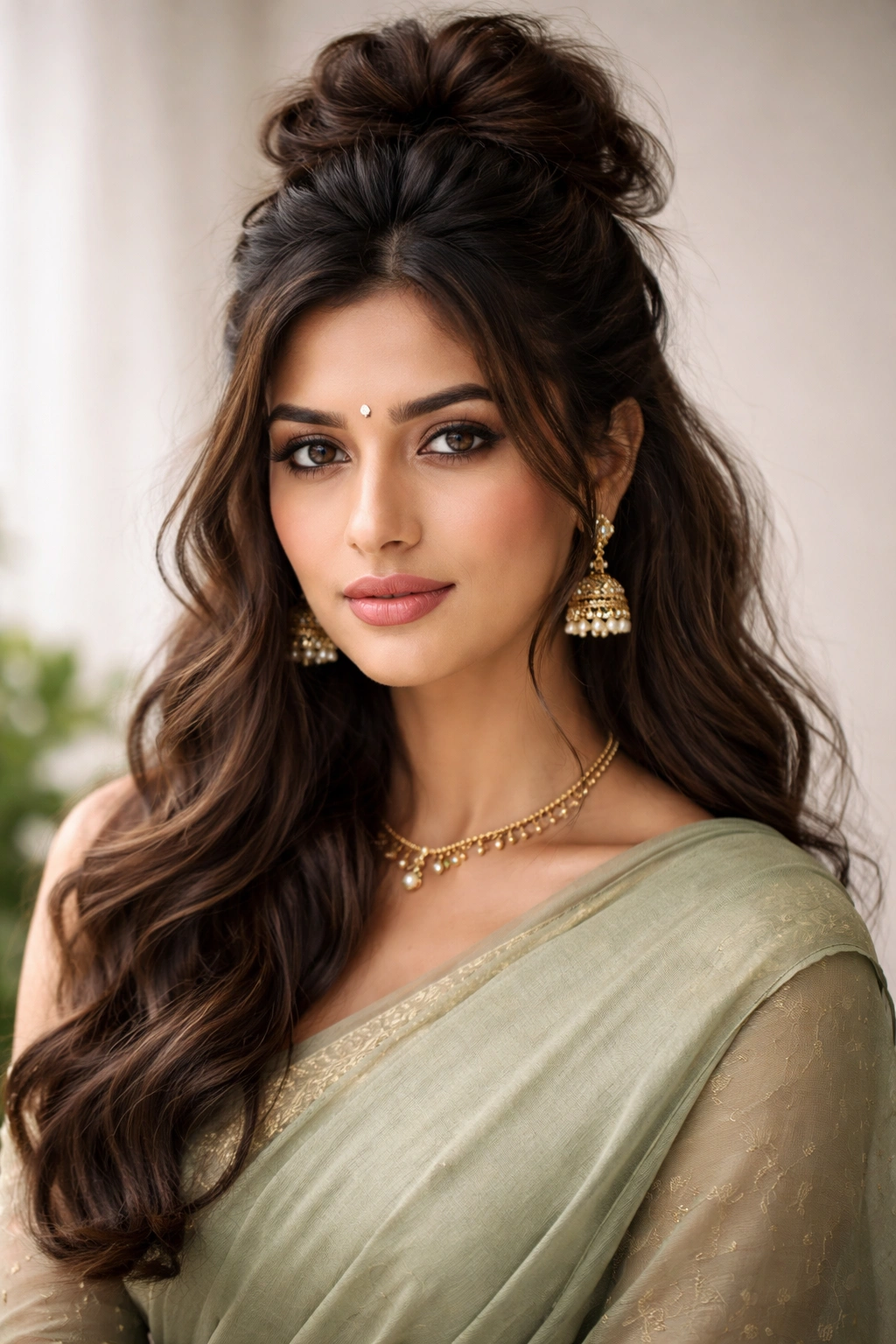
This style takes a more dramatic approach: you gather just the top half of your hair into a bun at the crown, leaving the bottom half down in loose waves or curls. It’s technically a half-up style rather than a true bun, but the top portion is bulky and textured enough to read as a bun. This works beautifully if you have very long hair and want to show off length while still keeping hair off your face and neck.
Why Half-Up Works With Sarees
A saree naturally frames the upper body, and a half-up style with a bun creates additional framing at the crown level. The combination of the bun’s bulk at the top and the cascading waves below creates a dramatic silhouette that complements the saree’s drape. It also solves the problem of extremely long hair that might get in the way or overwhelm a smaller frame.
Creating the Half-Up Bun
Section off the top quarter to third of your hair (depending on how much volume you want). Create a bun with just that section, leaving it intentionally messy and textured. Leave the bottom section completely down. Curl or wave the down section separately with a curling iron or by braiding it damp and releasing it. The key is making the two sections feel like they belong together—similar texture levels, cohesive styling.
Balancing Length and Proportion
With half-up styling, avoid anything too tight or too structured at the top, which will make the long hair below look limp by comparison. Your top bun should have visible texture and movement, and your bottom section should have equally visible waves or curls. They should look like two parts of one intentional whole, not like you forgot to finish styling.
Worth knowing: This style works best with hair that’s at least mid-back length. Shorter hair can look awkward with a half-up bun because the proportions become unbalanced.
9. Vintage Wave Messy Bun
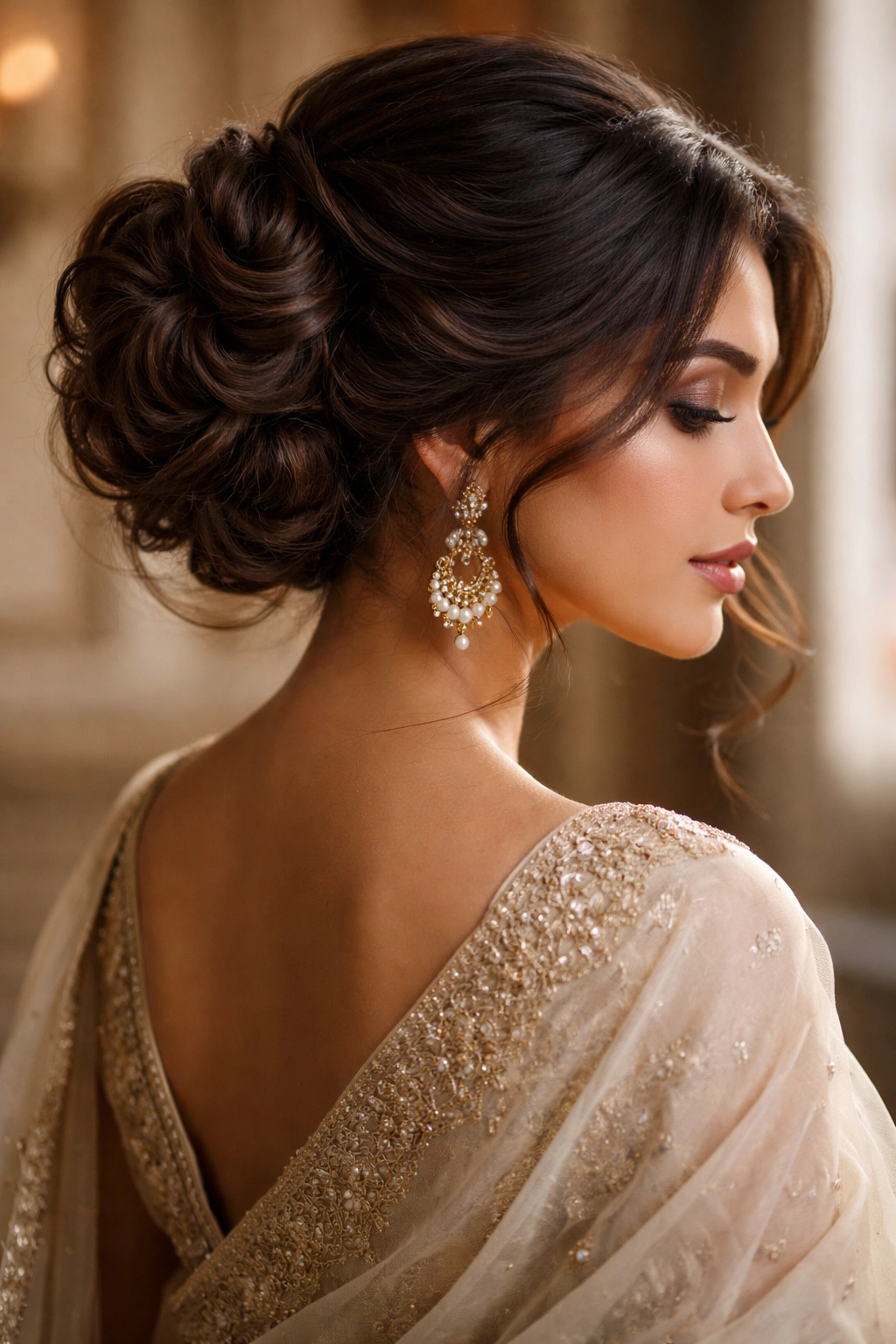
This takes inspiration from Old Hollywood waves and marries it with a messy bun aesthetic. You create soft, defined waves throughout your hair (using pin curls, finger waves, or a large curling iron), then gather everything into a bun while keeping those waves visible and structured within the bun itself. The result looks like you’ve stepped out of a vintage photograph—formal, beautiful, and undeniably elegant.
The Appeal of Structured Waves
Waves create a sense of occasion and formality. They suggest time and intention. Against a saree, structured waves in a bun create a classic, timeless look that feels appropriate for weddings, formal dinners, or any event where you want to look polished and put-together.
Creating Lasting Waves
The wave structure will only last if you set your hair properly. Apply a volumizing mousse to damp roots, blow-dry with a paddle brush using downward strokes to encourage wave direction, then either pin-curl your hair in sections and let it cool, or use a large (1.5-inch or bigger) curling iron to create waves. The curls need to cool completely before you disturb them, so be patient.
Building the Bun From Waved Hair
Once your waves are cool and set, gather your hair into a bun but don’t try to smooth or blend those waves out. Instead, work with them. Let the waves create texture and bulk within the bun structure. Pin sections of the bun to follow the wave pattern rather than fighting against it. The result is a bun that has clear wave detail visible within its shape.
Best Paired With Silk or Heavy Sarees
This formal, structured style works beautifully with heavy silk sarees, bridal sarees, or any occasion where you want to feel elegantly traditional. It’s less suited to casual cotton sarees or contemporary fusion styling.
10. Sleek Saree Messy Bun With Accessories
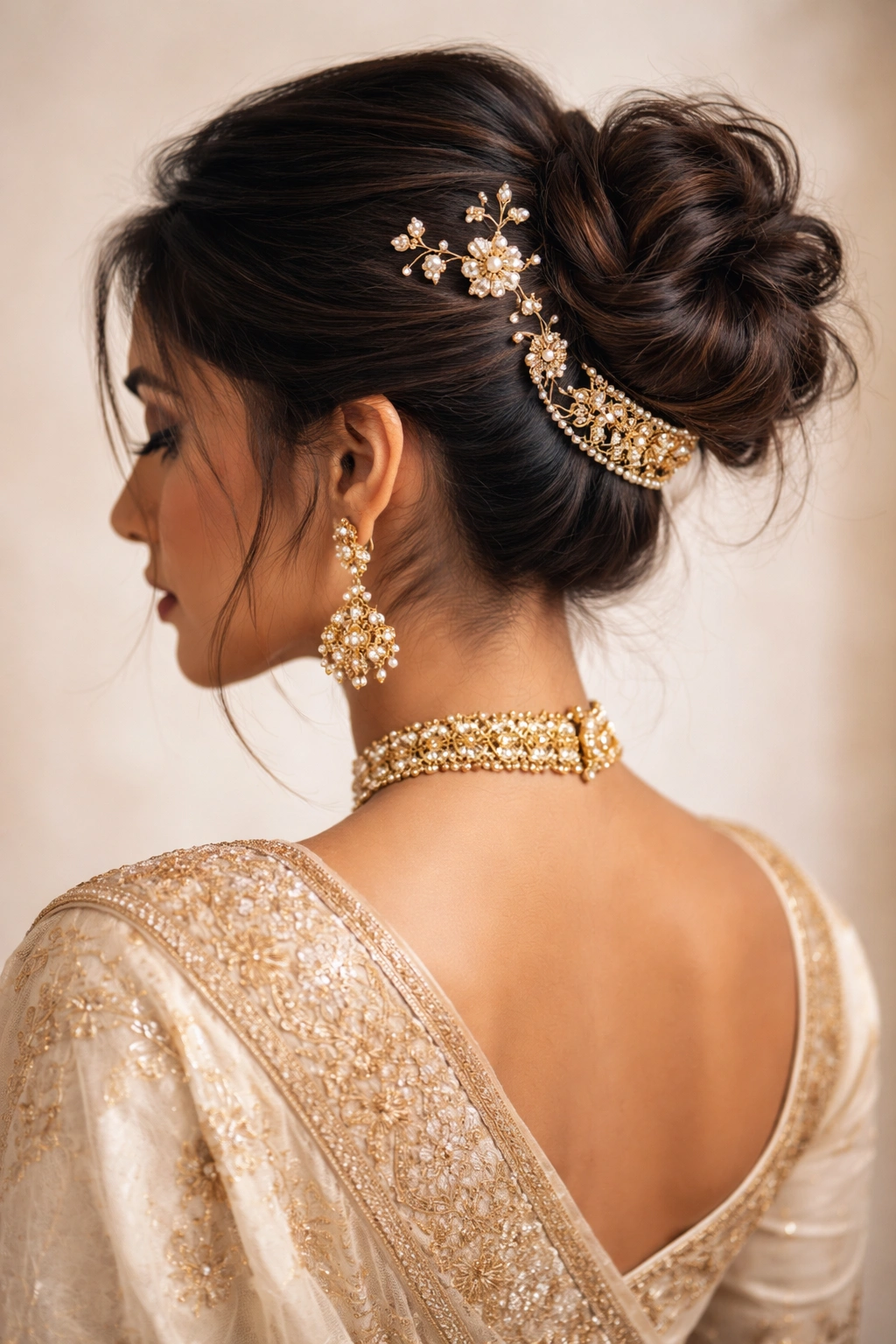
This final style bridges the gap between truly messy and more polished. You create a bun that’s textured and undone-looking but with cleaner lines and more deliberate placement than some of the other styles. You then accessorize heavily—with hairpins, clips, or even a decorative bun cuff that wraps around the base of the bun itself. The accessories elevate the casual texture into something formal and intentional.
Why Accessories Change Everything
A messy bun alone might read as underdone depending on the context. Ornamental hairpins, gold or silver clips, traditional Indian hair accessories, or even a delicate chain draped through the bun transform it into something ceremonial and complete. The accessories signal that this is intentional styling, not just hair thrown up for convenience.
Selecting Accessories That Work With Your Saree
Think about the color palette, the metal tones, and the overall aesthetic of your saree. A saree with gold embroidery pairs beautifully with gold hairpins and jewelry. A saree with silver or contemporary designs might call for silver or mixed-metal accessories. Traditional sarees work with traditional hair ornaments. Modern, fashionable sarees might pair better with minimalist clips or geometric pins.
Positioning Accessories for Visual Balance
Don’t scatter accessories randomly through your bun—that reads as chaotic rather than intentional. Instead, cluster them on one side of the bun or in a line across the back. This creates a focal point and feels more designed. If you’re using a bun cuff, it should sit just at the base where the bun begins, not awkwardly high or low.
The Confidence Factor
This style requires confidence in your own styling choices. You’re not following a rigid rule; you’re creating a personalized look that combines a relaxed texture with deliberate embellishment. That requires owning your choices and trusting that the combination works because you’ve intentionally chosen each element.
Pro tip: Practice placing your accessories while your bun is dry before you wear them in public. Experiment with different pins and clips until you find combinations that feel balanced and beautiful to you. This is your style—make it yours.
Final Thoughts
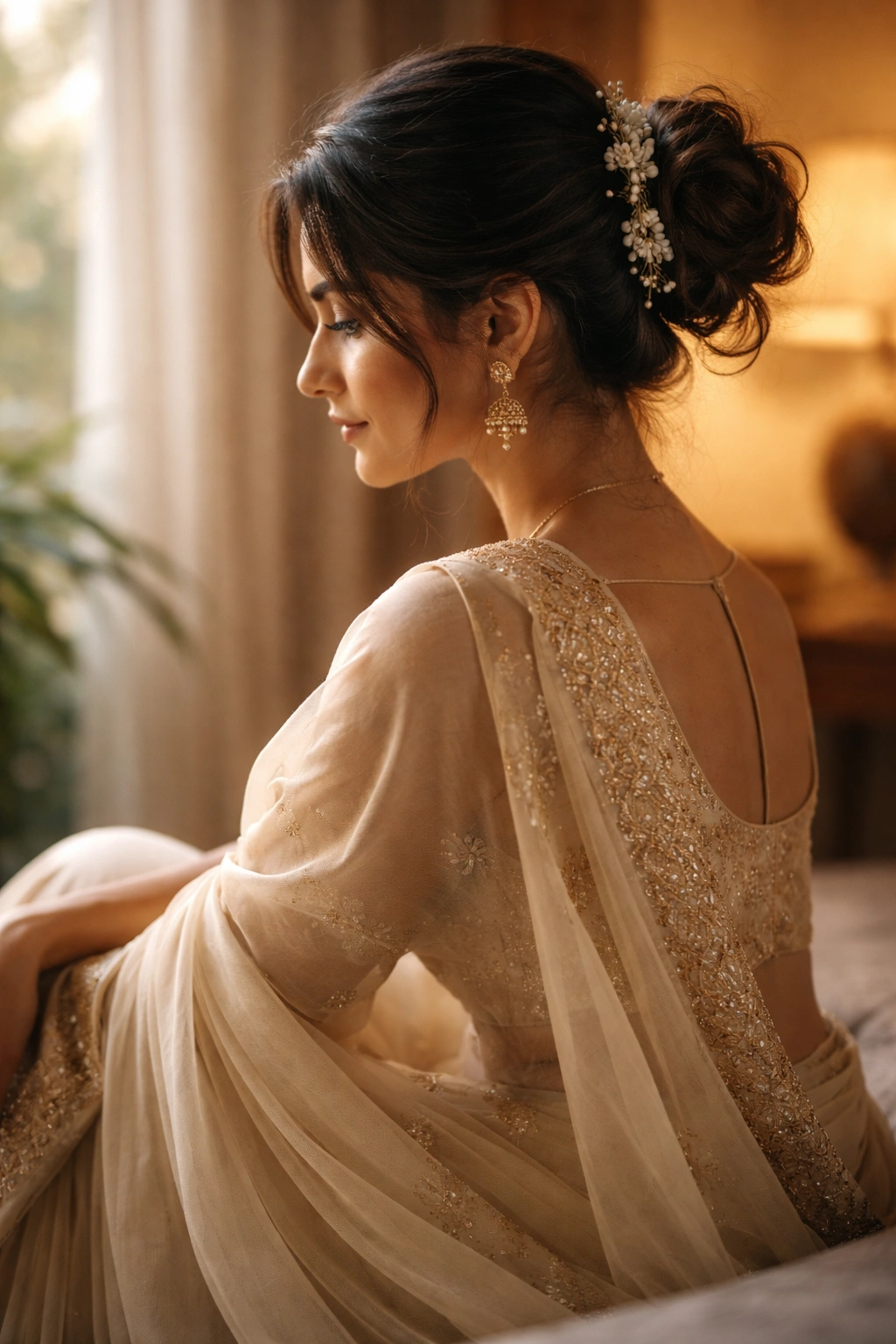
A messy bun with a saree isn’t about abandonment or laziness—it’s about creating a specific mood that balances structure with ease, tradition with contemporaneity. The right bun style for your saree depends on the fabric weight, the occasion, your face shape, your hair length, and honestly, how you feel that day. A high bun with curled face-framing strands says one thing; a low twisted bun says something entirely different. A braided wrap around bun communicates sophistication, while a half-up style screams confidence and dramatic flair.
The beauty of mastering messy bun styling is that once you understand the basic techniques—how to create texture, where to position your bun, which strands to leave loose—you can adapt and personalize endlessly. You can wear the same saree five different ways by changing only your hair, and each time it will feel like a completely different look. That versatility is exactly why the messy bun has become the go-to choice for saree wearers across occasions and styles.
Start with the styles that feel most natural to your hair type and skill level. If you have thick, long hair, try the twisted rope or fishtail versions. If you prefer simplicity and elegance, the high looped bun or low textured bun are your friends. As you practice and get comfortable, experiment with the more complex styles that combine braids, curls, or asymmetrical placement. Your messy bun should feel like an extension of your personal style, not a rigid style you’re forcing your hair into. When you find the approach that feels right—where your hair cooperates, where the styling takes minutes rather than hours, where you look in the mirror and feel genuinely beautiful—that’s the version you’ll return to again and again. That’s the messy bun style that becomes your signature.