



A wolf cut sits somewhere between edgy and effortless—think shaggy layers mixed with tousled texture, creating that lived-in, intentionally undone vibe that’s become impossibly popular. The style originally drew inspiration from 90s grunge and early 2000s emo aesthetics, but it’s evolved into something far more wearable and chic. What makes a wolf cut different from your standard layered cut is the deliberate choppy texture throughout, the way the layers move independently, and that signature undone quality that somehow still looks polished.
If you have a rounder face shape, you might think you’re automatically excluded from wolf cut territory. The opposite is actually true. A well-executed wolf cut can be genuinely transformative for round faces because those choppy layers, the length, and the movement naturally create angles and visual interest that draw the eye vertically instead of horizontally. The key is choosing a wolf cut variation that emphasizes the right elements—strategic face-framing, the right starting length, and layers placed where they’ll actually elongate your features instead of adding bulk.
The challenge isn’t whether a wolf cut works for your face shape; it’s finding the specific version that plays to your features. A wolf cut that works beautifully on someone with a square face might not be the ideal choice for a rounder face. The good news? There are genuinely excellent variations out there that are tailor-made for adding length, creating dimension, and moving the visual focus away from width. The cuts below all work from that foundational logic while offering different textures, lengths, and styling vibes so you can find the version that matches your personal style.
1. The Long Choppy Wolf with Extended Underneath Layers
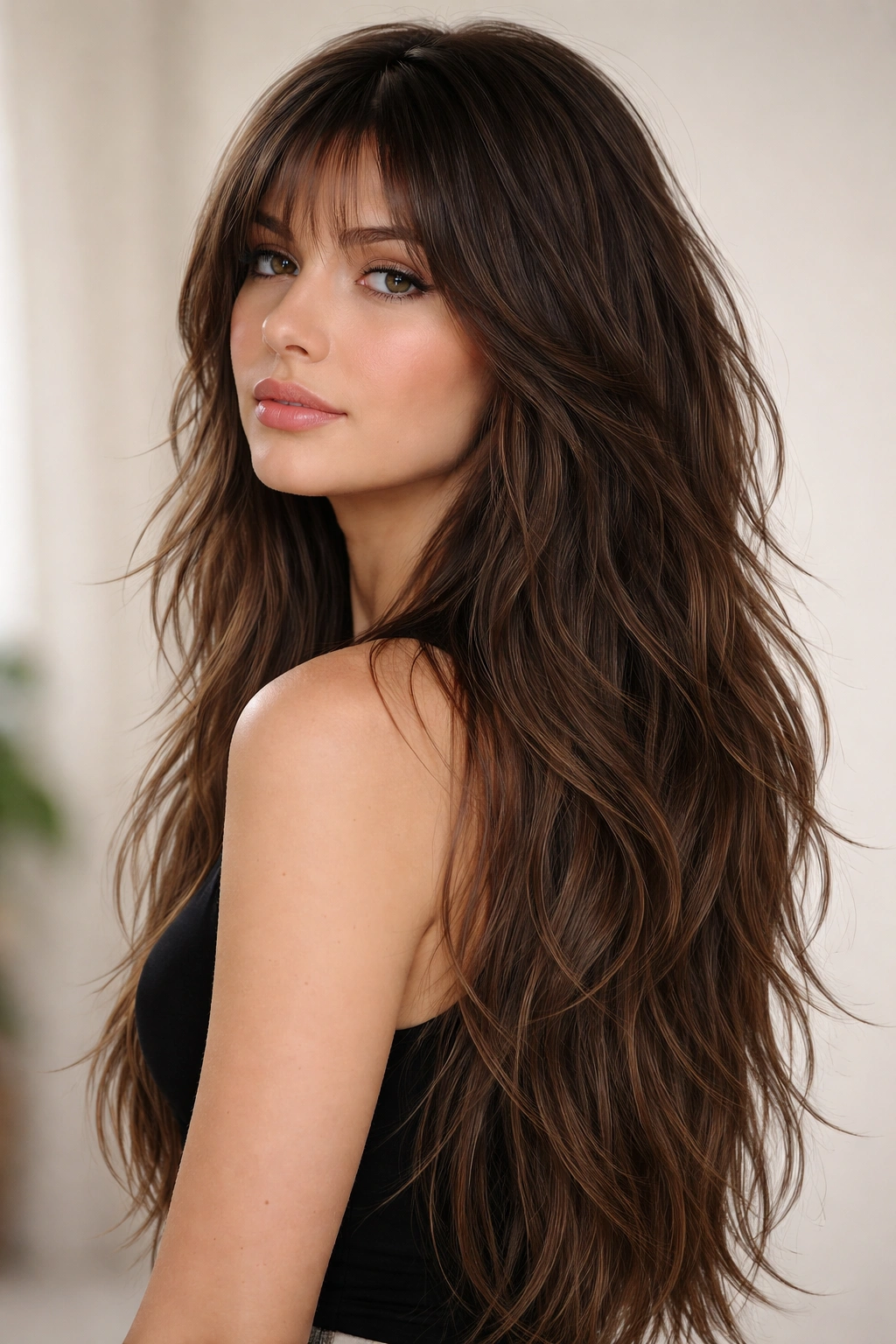
This version keeps serious length—think mid-back to waist-length—while the layers concentrate more heavily on the underneath sections and crown. What makes this variation special is the restraint; the face-framing isn’t aggressively choppy, but the back and underneath get significant texture. For round faces, this creates a vertical pull without the potential heaviness that comes from too much texture right at the cheekbones.
Why This Works for Round Faces
The extended length instantly elongates your entire face and body line, which is the fastest visual trick to counterbalance roundness. Because the choppy texture is distributed more toward the back and underneath layers rather than concentrated at your jawline, you avoid adding volume where you don’t need it. The face-framing pieces can be kept longer and more subtle, creating a softening effect while the length does the real work.
How to Style It Best
- Wear it with a deep side part or a center part depending on which direction feels better with your bone structure
- Tousle the underneath layers with sea salt spray and a diffuser to emphasize the texture without creating bulk at your face
- Consider getting the underneath layers undercut slightly shorter for more definition and movement
- Blow-dry with your head flipped upside down, then flip back and finger-comb for that signature tousled effect
2. The Textured Wolf with Wispy Face-Framing
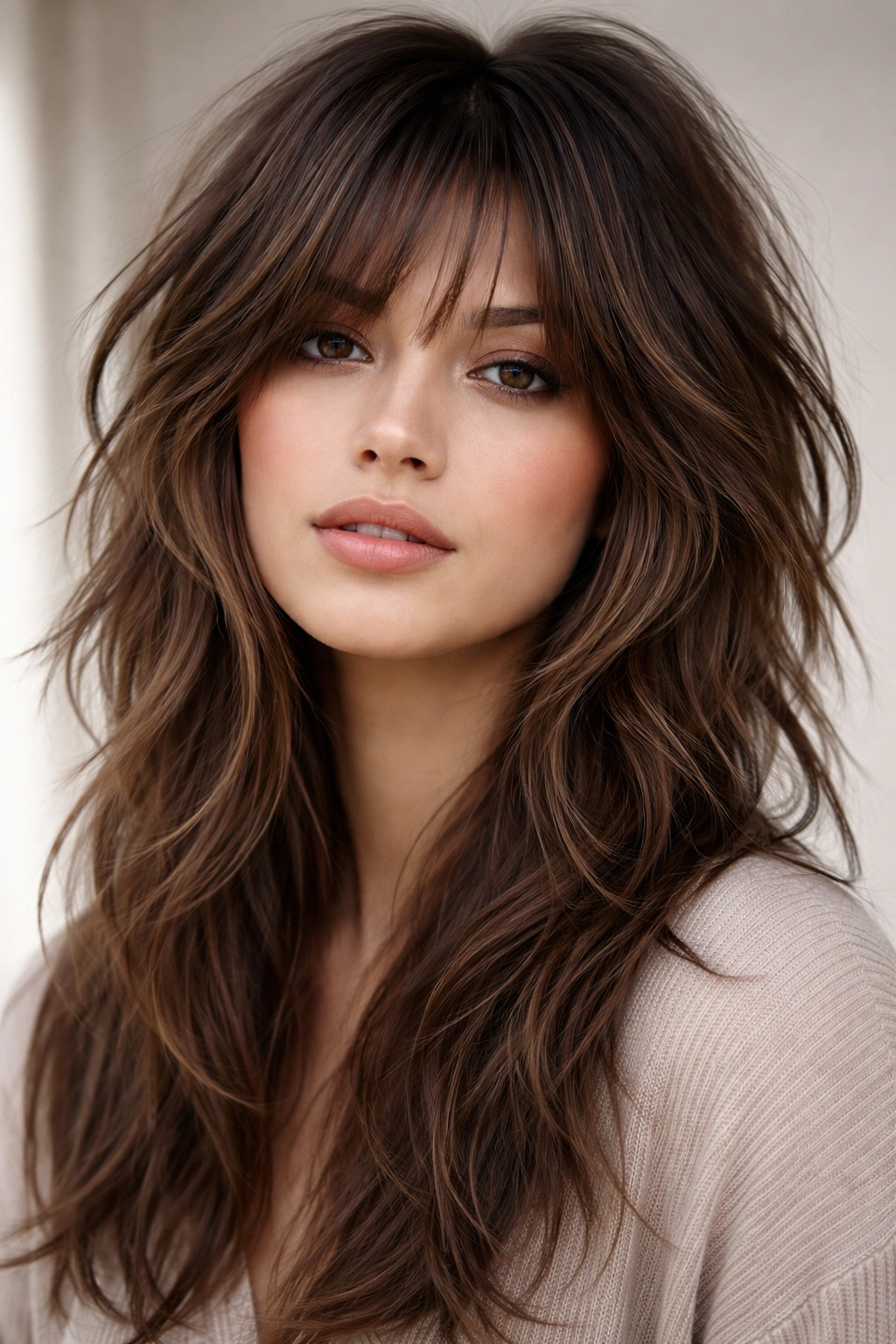
This cut goes all-in on the choppy, wispy element—but strategically. The face-framing layers are thin and feathered rather than blunt and chunky, creating softness around your cheekbones and jawline. The bulk of the chop happens through the mid-lengths and underneath, with the crown layers adding lift and texture without heaviness.
Why This Version Works for Round Faces
Wispy, feathered layers feel less severe and heavy than blunt choppy layers, so you get the textured wolf aesthetic without the risk of the cut looking too masculine or harsh against softer facial features. The thinness of the face-framing pieces means they move with your hair and create visual movement without bulk. This is especially flattering if you have a fuller face and want something that feels romantic rather than edgy.
Key Styling Tips
- This cut benefits from frequent tousling and is actually easier to style than you’d think
- Use a light texturizing spray or dry shampoo to emphasize the layers without making hair look dirty
- The wispy layers frame better when you don’t blow-dry them poker-straight; let them air-dry or dry with a diffuser for natural texture
- Pair with a side-swept bang (optional) to add more face-framing dimension
3. The Long Wolf with Subtle Underlayer Chop
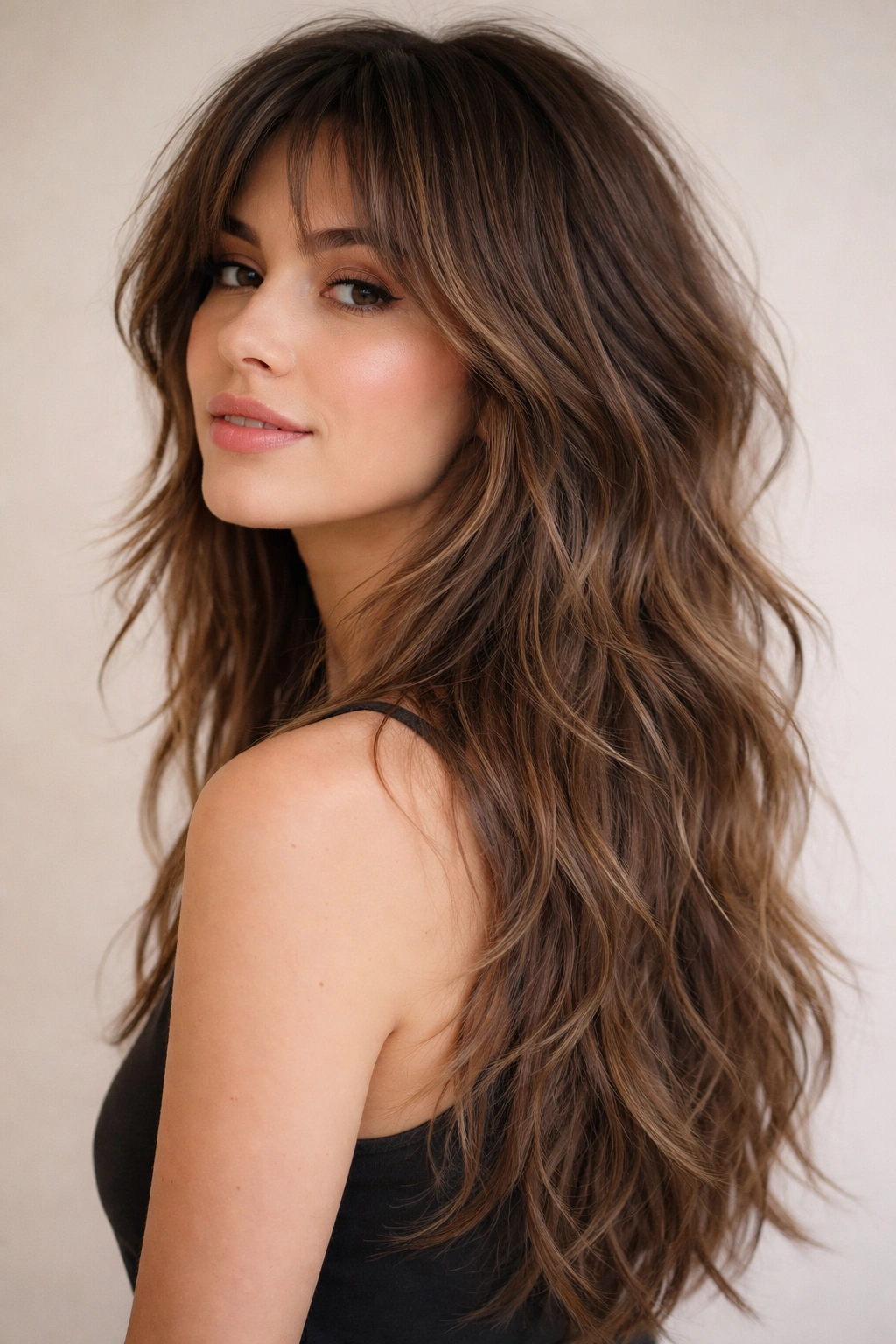
For those who want the wolf cut aesthetic but prefer something closer to a traditional long layered haircut, this version delivers. The overall silhouette reads as a long, feminine cut with layers, but the underneath and crown incorporate that choppy texture that defines a wolf cut. The face-framing is minimal and blends seamlessly into the rest of the cut.
Why It’s Ideal for Round Faces
This approach gives you length—which is always flattering for round faces—while the undercurrent of choppy texture prevents the cut from looking too safe or basic. You get movement and dimension without anything too harsh at your cheekbones. It’s a professional enough option for conservative workplaces while still being genuinely interesting and modern.
Styling Approach
- This cut actually looks great with minimal styling—it can be worn straight, wavy, or curly without looking out of place
- Layers blend better when you blow-dry with a paddle brush and some light tension
- Consider getting a subtle balayage or babylights to emphasize the texture and layers
- A loose wave or beachy texture enhances the cut without requiring a ton of effort
4. The Textured Wolf with Longer Face-Framing Pieces
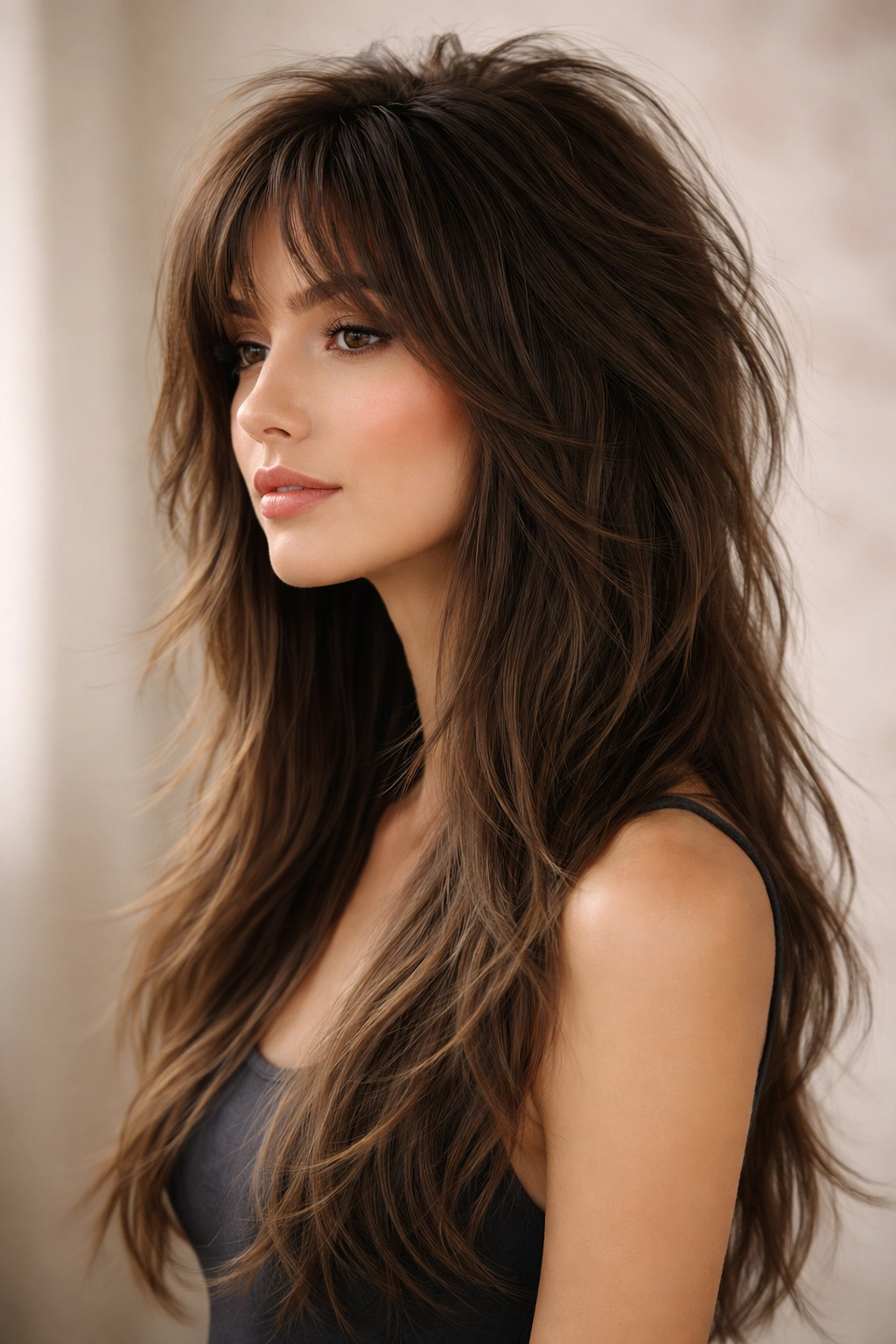
This variation keeps the face-framing layers notably longer than the rest of the cut, sometimes extending several inches past where the shorter layers end. It combines the choppy texture of a wolf cut with the strategic face-framing of a more traditional layered cut. The overall length is still substantial (usually at least mid-back), and the crown gets significant lift through choppy layers.
Why This Works for Round Faces
Longer face-framing pieces create a vertical line that naturally elongates your face, and they have room to move away from your cheekbones rather than sitting flat against them. The longer the face-framing, the more it creates that visual “lift” that counters roundness. This version is especially good if you want something that obviously frames your face without relying solely on length.
Styling and Maintenance
- These longer face-framing pieces require slightly more styling attention than versions with shorter face-framing
- Blow-dry them smooth and curl them slightly away from your face for maximum elongating effect
- The longer pieces are more prone to breakage if you’re not careful, so minimize heat styling and use a good heat protectant
- This cut pairs beautifully with a middle or slightly off-center part
5. The Heavily Textured Wolf with Blunt Ends
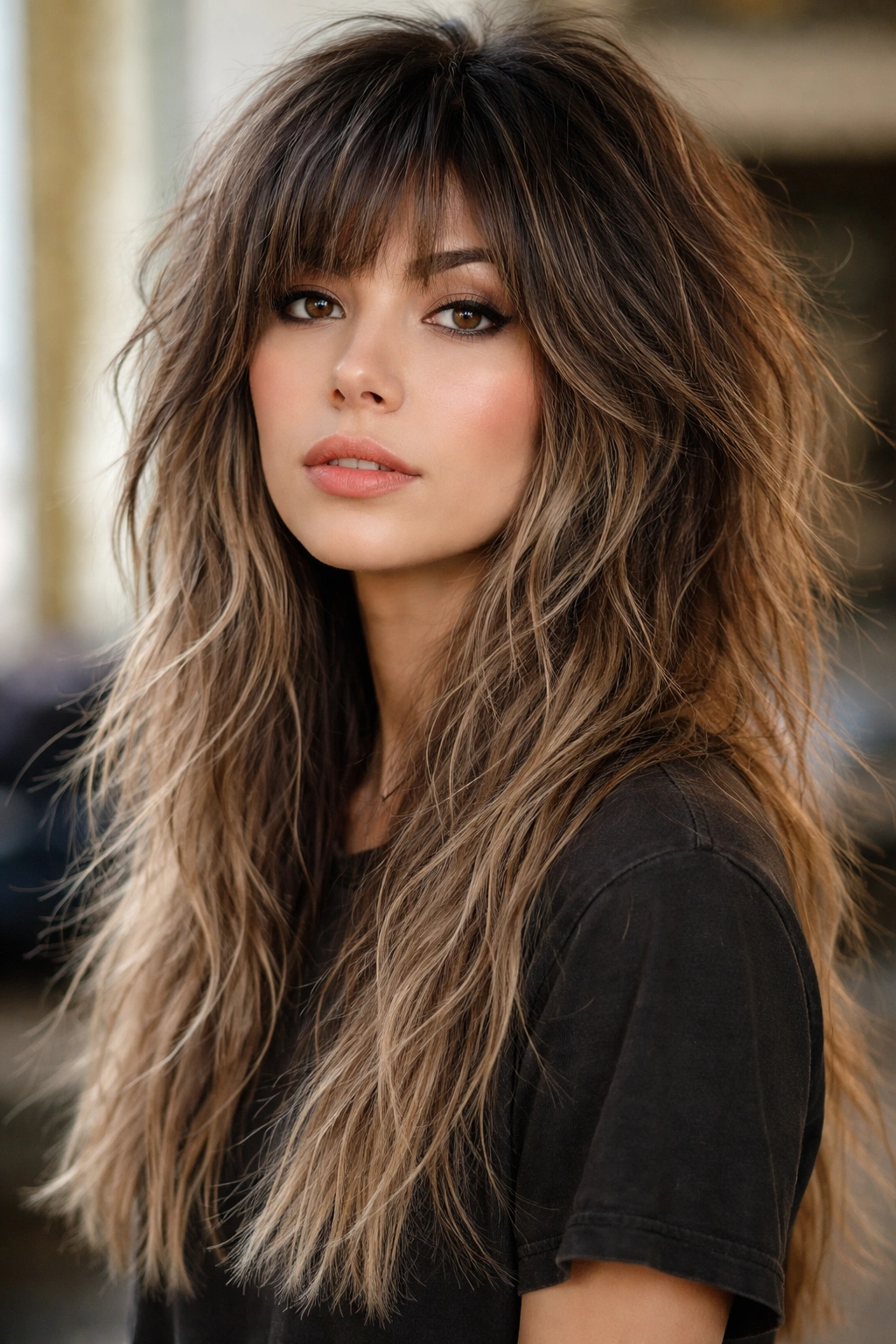
If you want a wolf cut that’s genuinely choppy throughout—not subtle, not soft, but unapologetically textured—this is the version. Every section from roots to ends has that signature choppy quality, and the overall effect is more punk-adjacent than romantic. The length is still substantial (usually to mid-back minimum), but the texture is the star.
Why It’s Flattering for Round Faces
A heavily textured cut throughout creates so much visual movement and dimension that it completely disrupts the roundness of your face. You’re not drawing a smooth outline around your face; you’re creating dozens of small directional lines that guide the eye in different directions. This actually breaks up the circular shape more effectively than subtler cuts. The key is making sure a stylist with real experience in choppy cuts executes this well—the chop needs actual intention, not just random hacking at your hair.
How to Make It Work
- This cut requires a stylist who truly understands wolf cut texture; ask to see their portfolio and specifically look for wolf cuts they’ve done
- Styling is actually simpler—the texture does a lot of the work for you
- A texturizing product (sea salt spray, dry texture spray) is your best friend with this cut
- It works better with some natural texture in your hair (waves or curls), though you can definitely style straight hair with this cut
6. The Extended-Length Wolf with Crown Layers and Choppy Underlayers
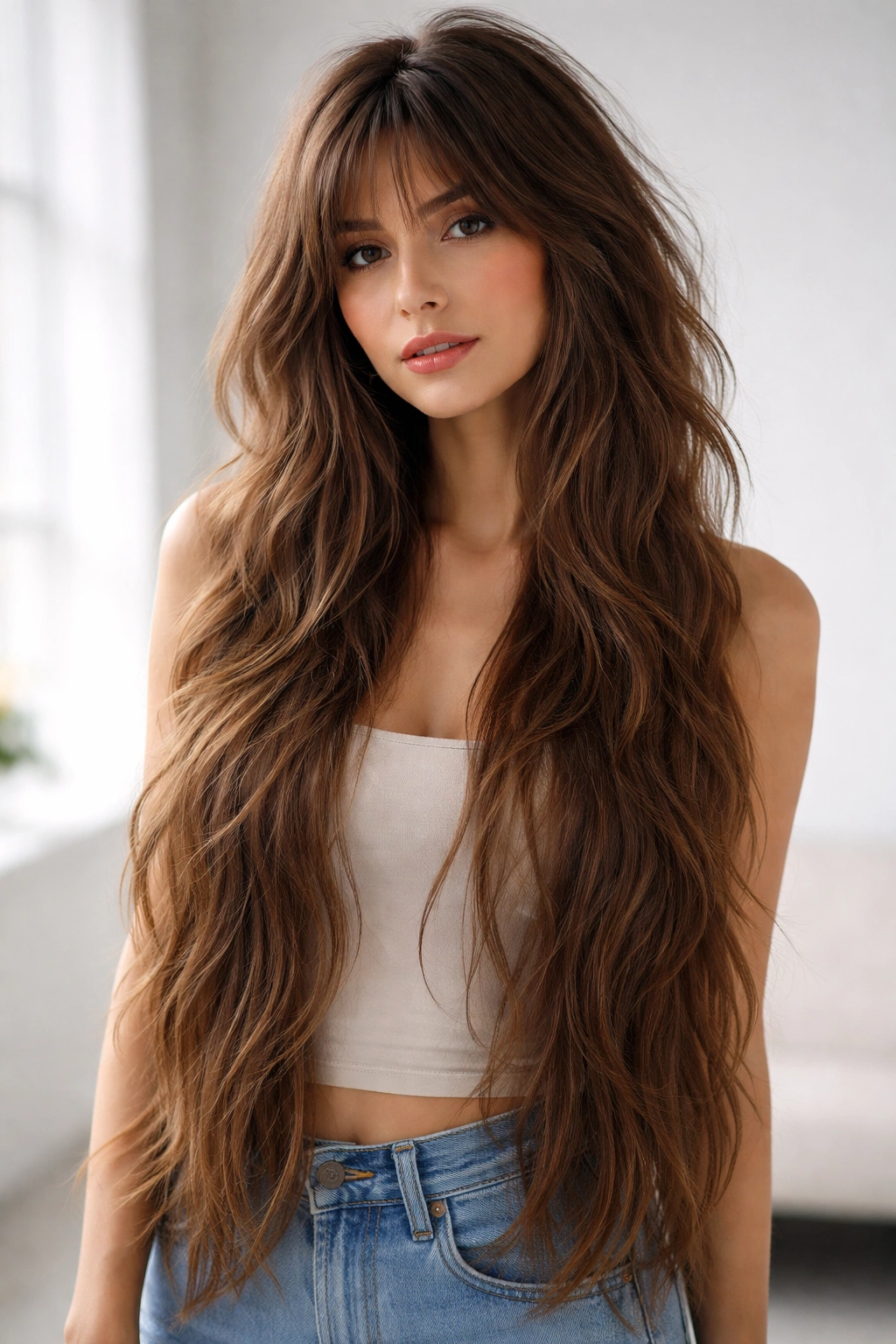
This version prioritizes extreme length—think waist-length or longer—while maintaining significant choppy texture through the crown and underneath. The face-framing is moderate and blends into the rest of the cut rather than being a distinct element. The overall effect is a longer, slightly wilder version of a typical wolf cut.
Why This Length Works for Round Faces
The longer the hair, the more it elongates your entire silhouette, and that visual elongation is incredibly flattering for round faces. At this length, the roundness of your face becomes less of the dominant visual impression because there’s so much length creating vertical lines. The choppy texture adds interest without the need for aggressive face-framing, which keeps the cut from feeling “done to death.”
Styling Considerations
- At this length, regular trims are essential—you’ll need a cut every 8-10 weeks to maintain the choppy texture as the hair grows out
- This length is best for people with fairly healthy hair that doesn’t break easily
- Styling is genuinely easier because the length creates natural movement—you can often just air-dry and tousle
- This cut can work beautifully with extensions if you’re building toward this length gradually
7. The Asymmetrical Wolf with Side-Swept Layers
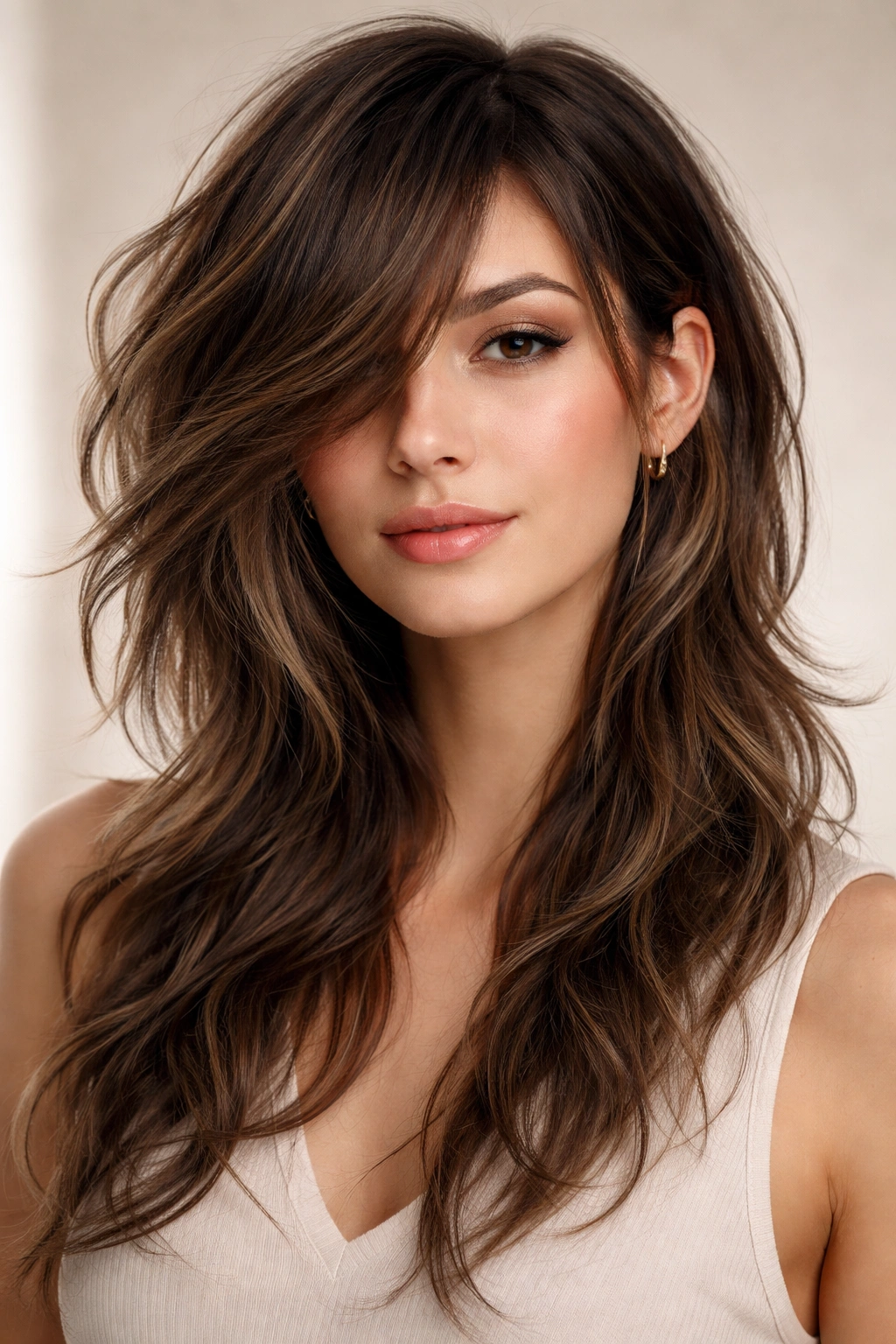
This version embraces subtle asymmetry, with one side having slightly longer face-framing and more choppy texture, while the other side is a bit shorter and less aggressively layered. It creates an angular quality that’s inherently flattering for round faces because angles literally work against roundness. The length is still substantial overall, but the asymmetry adds sophistication.
Why Asymmetry Benefits Round Faces
Asymmetry creates visual interest and breaks up symmetry, which is exactly what works against a round face shape. When one side of your face appears slightly more textured or slightly longer than the other, it tricks the eye into seeing more interesting bone structure. This doesn’t mean making your cut drastically asymmetrical—even subtle differences create the effect.
Styling for Maximum Effect
- This cut looks best with slightly textured styling rather than blown completely smooth
- Wear your hair with the longer side falling more naturally and the shorter side tucked behind your ear occasionally for dimension
- Side-swept styling makes this cut really shine; experiment with your part placement
- This cut requires a skilled stylist who understands proportion and asymmetry—it’s not something to try on a whim with someone inexperienced
8. The Wolf Cut with Thick, Choppy Bangs and Extended Layers
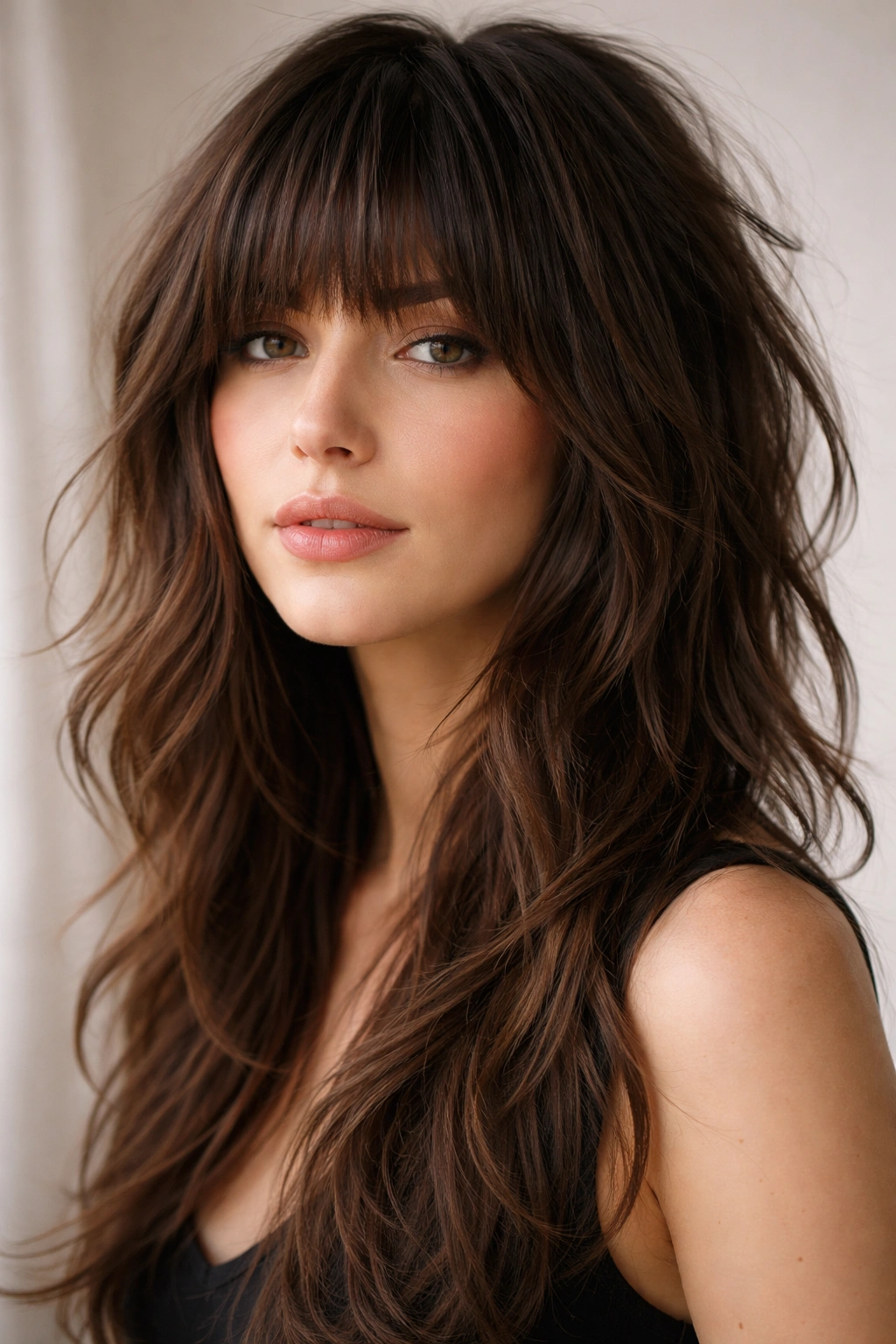
For a more editorial, high-fashion take on the wolf cut, this version adds chunky, choppy bangs to the formula—bangs that hang somewhere around eyebrow-length and get that same textured, choppy treatment as the rest of the cut. The overall length is still long, but the bangs create an additional framing element that’s visually striking.
Why This Works (and How to Make It Work for Round Faces)
Bangs are polarizing, but when done right for a round face, they can actually be incredibly flattering. Choppy bangs that graze your eyebrows create a horizontal line that can break up the upper portion of roundness, and because they’re textured and choppy rather than blunt, they don’t look heavy or overwhelming. The key is having the bangs wisp slightly to the sides rather than sitting perfectly straight across.
Important Styling Notes
- Choppy bangs require regular trims—every 4-6 weeks is typical—because they look scraggly quickly if they get too long
- Styling bangs textured is essential; straightening them flat makes them look less intentional and can make them seem heavier
- This is a commitment. Choppy bangs aren’t easy to grow out gracefully if you change your mind
- This cut reads very intentional and editorial, so it’s best for someone who wants a genuine statement rather than something subtle
9. The Romantic Wolf with Soft Waves and Subtle Layering
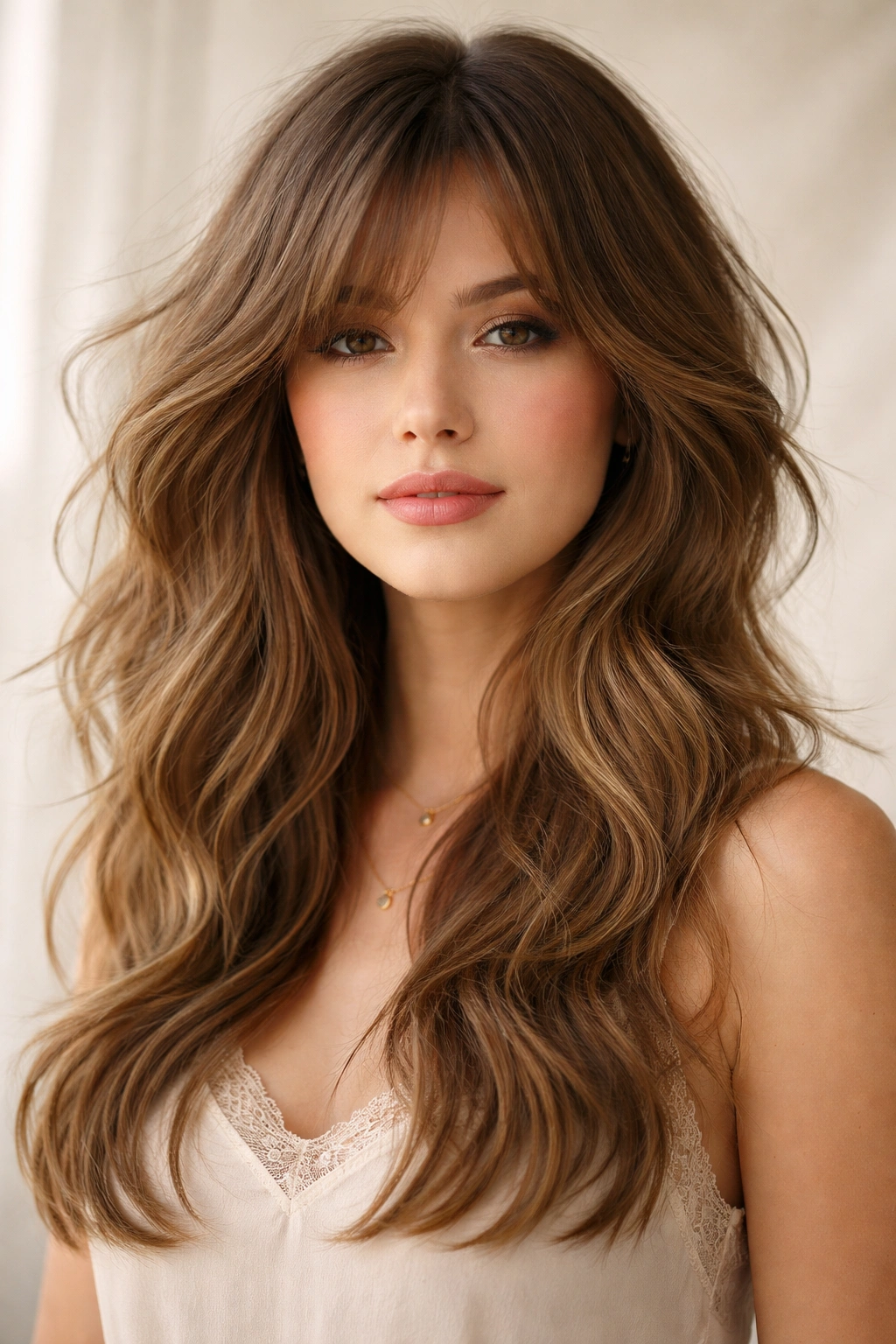
If choppy and textured doesn’t feel like your vibe, this version takes the wolf cut concept but softens everything. The layers are still present and still create movement, but they’re less aggressively choppy. You can style this cut with soft waves or curls, and it reads more romantic and ethereal than edgy. The length is substantial, and the overall effect is closer to a “lived-in romantic” aesthetic than “intentionally undone rock star.”
Why It’s Flattering for Round Faces
The softness prevents the cut from feeling harsh or unflattering, while the layers still create dimension and movement. Soft waves add texture without the graphic quality of choppy layers, and they elongate your face when they’re styled with a slight wave. This version of a wolf cut is genuinely versatile—you can wear it wavy one day and straighter the next, and it reads differently each time.
How to Achieve and Maintain It
- This cut looks best with some natural texture in your hair or with styling that creates soft movement
- A good blow-dry or loose curling iron waves bring out the shape of this cut
- Layers blend better with softer texture, so consider asking your stylist to feather rather than chop aggressively
- Sea salt spray and lightweight texturizing products keep this version looking intentional without looking unkempt
10. The Choppy Wolf with Grown-Out Roots and Dark Ends
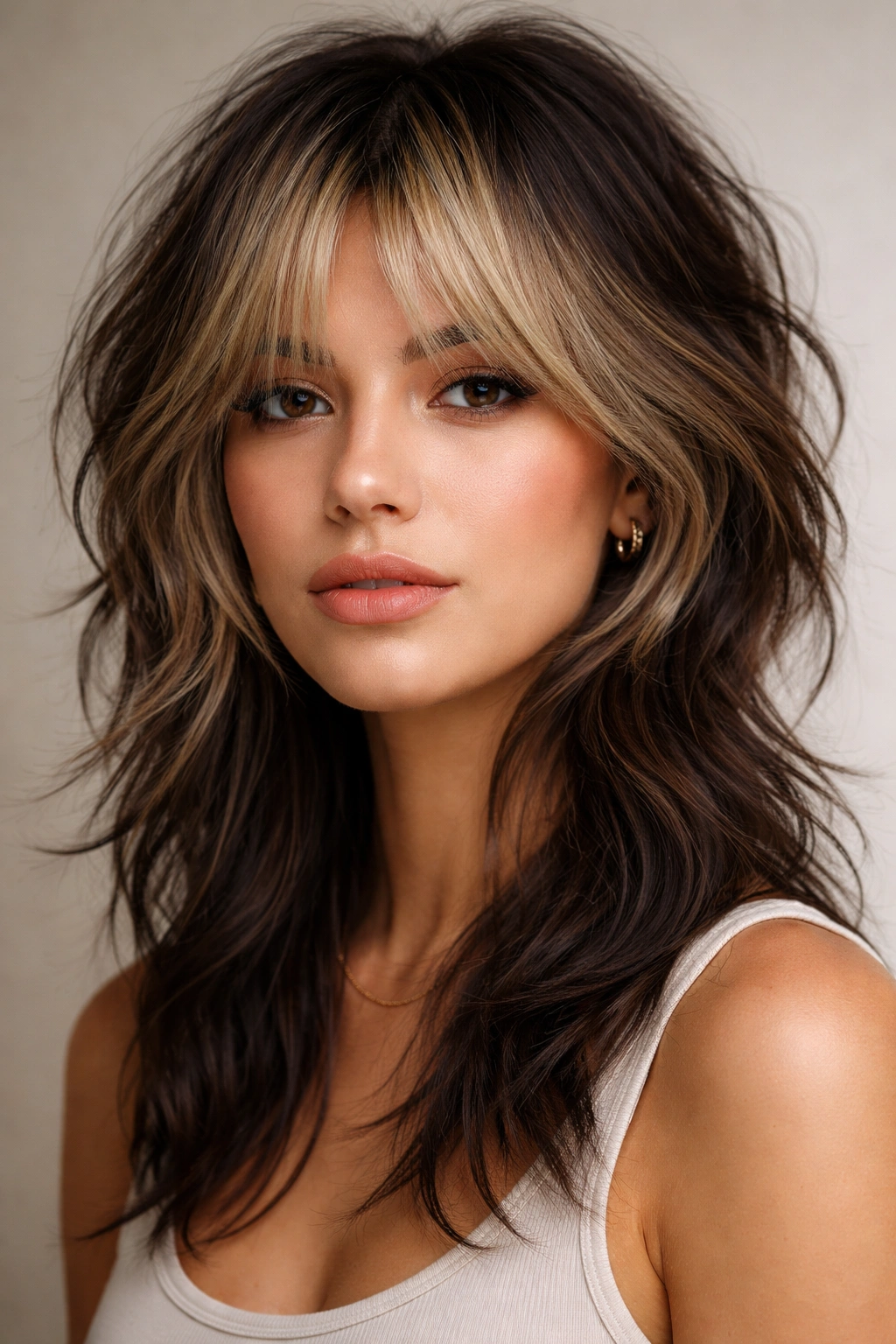
This isn’t so much a cutting technique as it is a styling and color approach, but it fundamentally changes how a wolf cut reads. By growing out your roots a few inches (or intentionally keeping them dark if you’re coloring), you create natural shadowing that makes the choppy texture more visually apparent. Adding darker color to the ends (or keeping your natural color) while lighter at the roots emphasizes dimension and makes the layers pop.
Why This Color-and-Cut Combo Works for Round Faces
The darker color at the ends, contrasted with lighter roots, creates shadow that actually helps define your face structure. The contrast makes the texture more visually apparent, so the layers do more work to break up roundness. This approach also makes the cut look intentionally styled rather than just “grown out,” which elevates the entire effect. It’s sophisticated and interesting without requiring more frequent trims than usual.
Styling and Color Maintenance Tips
- You’ll need a stylist who understands how to blend lived-in color; it shouldn’t look like you haven’t had your roots done in months
- This approach works with virtually any base color combination—blonde with darker ends, brunette with balayage, black with brown undertones
- Styling is actually easier because the color difference creates visual texture even if your hair is completely straight
- You’ll likely need color touch-ups every 6-8 weeks, so factor that into your commitment level
Final Thoughts
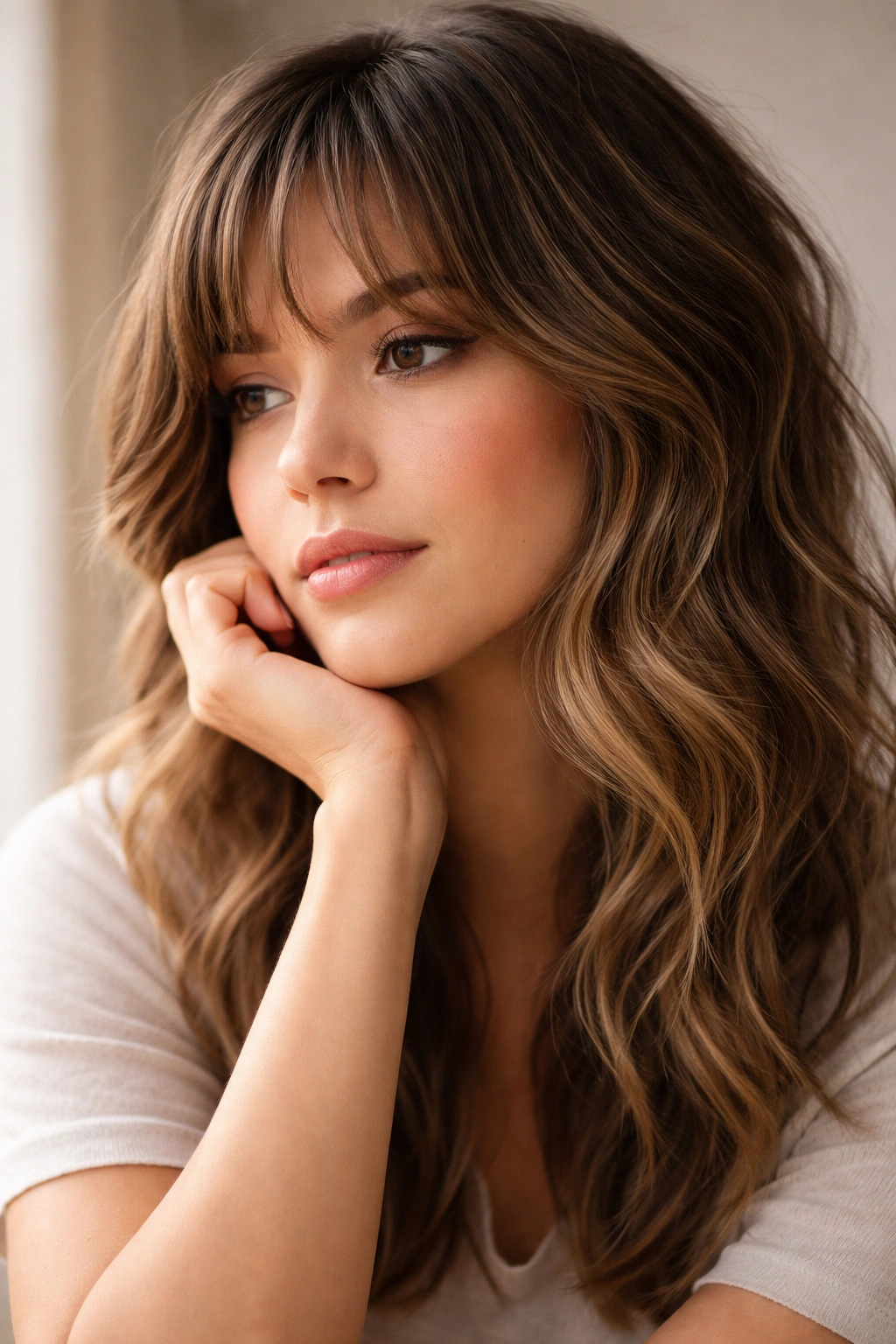
A wolf cut for a round face isn’t about fighting your natural face shape—it’s about choosing a variation that plays to the strengths of longer, textured hair while strategically using length, layers, and movement to create visual balance. The ten versions above all approach that same goal from different angles, so there’s genuinely something here whether you want something soft and romantic, edgy and intentional, or somewhere in between.
The most important thing when committing to any of these cuts is finding a stylist who specifically understands wolf cuts and has experience working with round face shapes. It’s worth spending time looking at their portfolio and asking questions about how they’d adapt the cut for your specific features. A generic layered cut from someone who doesn’t get the choppy texture component isn’t the same thing as an actual wolf cut, and the difference matters.
Once you have the cut, styling is usually simpler than you’d expect. Most wolf cuts benefit from texture—whether that’s natural waves, salt spray, dry shampoo, or actual tousling with your fingers—and almost all of them look better slightly undone than overly polished. That’s the whole point of the cut: that confident, intentionally imperfect vibe that somehow reads as incredibly chic. Commit to regular trims every 6-8 weeks to keep the texture sharp and prevent the cut from looking shaggy in a way that doesn’t work, and you’ll have a cut that genuinely transforms how you feel about your hair.
