



Wavy and curly hair is a blessing—and sometimes a challenge. If you’ve got natural texture, you know that not every hairstyle works the same way it does on straight hair. What matters is finding styles that actually play with your curl pattern rather than fight against it, that enhance your natural movement instead of forcing your hair into submission with endless heat tools and products.
The good news is that wavy and curly hair opens up a world of styling possibilities that straight-haired friends can’t easily achieve. Your texture has built-in volume, dimension, and movement. The trick is choosing hairstyles that work with your curl pattern, protect your hair health, and make your life actually easier—not harder. Whether your curls are loose waves, defined ringlets, or anything in between, there’s a style here that’s going to feel like it was made for you.
The hairstyles in this guide are chosen specifically because they suit wavy and curly textures, they’re achievable without damaging your hair, and they actually look better with natural texture than they would on straight hair. You don’t need to straighten anything or fight your curls into submission. Instead, you’ll learn how to work with what you’ve got and embrace the movement and personality that comes naturally.
1. The Textured Pixie Cut
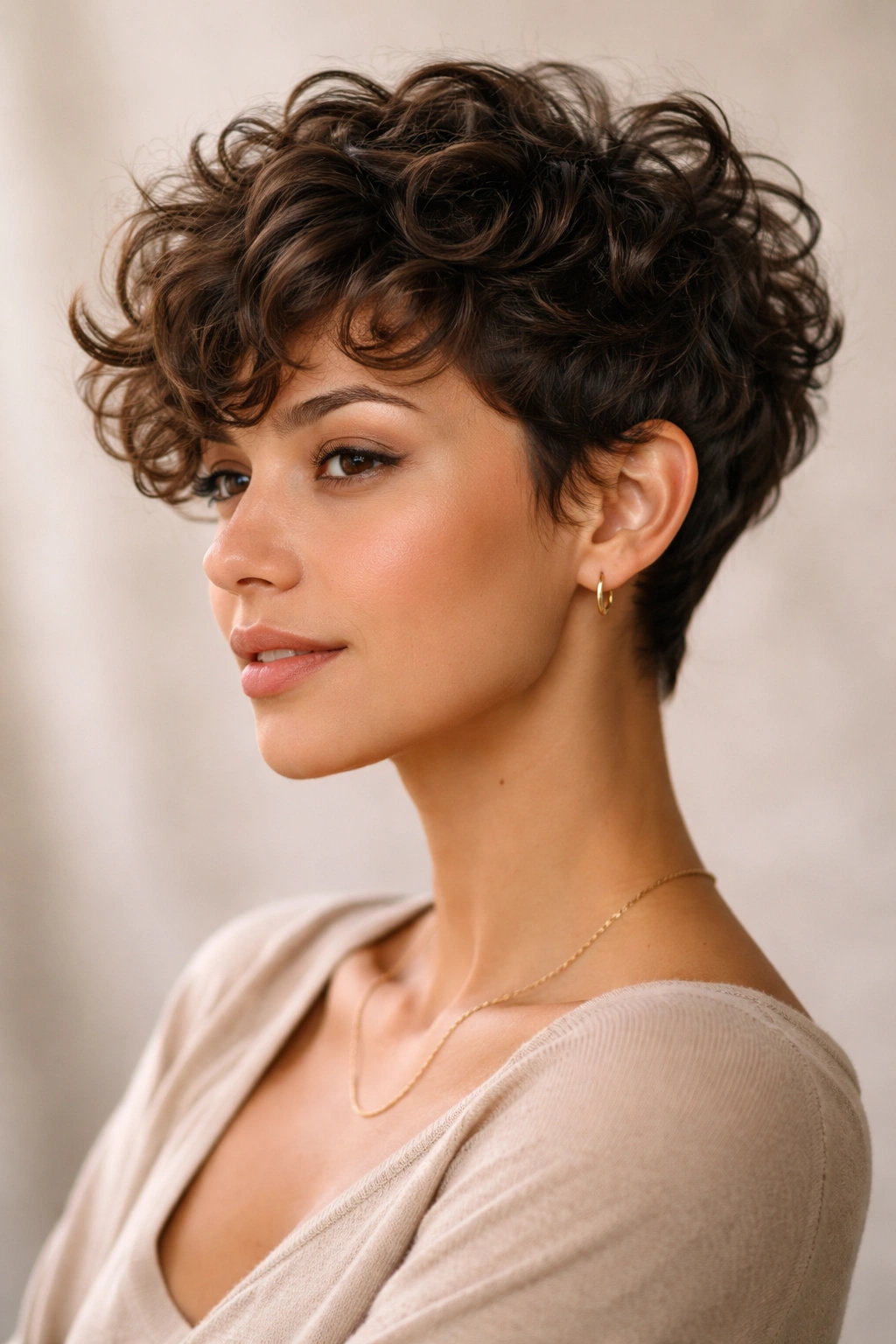
A pixie cut on curly hair is surprisingly liberating. Instead of the sleek, precise look it creates on straight hair, textured pixies on curly heads become bouncy, voluminous, and full of character. The short length means your curls have room to spring up and out, creating natural dimension without any styling effort.
Why This Works for Curly Hair
Short curly hair doesn’t need length to show off texture—in fact, length sometimes weighs curls down and makes them lose definition. A pixie cut embraces that curl at its best by removing weight and letting your natural spring shine. The beauty is in the lack of effort required; you can shower, let it air-dry, maybe use a small amount of curl cream, and you’re done. No blow-drying sections, no fighting to style the back, no worrying about whether your curls are cooperating today.
How to Keep It Looking Its Best
- Cut every 4-6 weeks to maintain shape and prevent bulk
- Use a curl-defining cream or gel to enhance texture while it’s still damp
- Sleep on a silk pillowcase to prevent frizz and flatten your curls
- Embrace the slightly messy, textured look—it’s actually the point
- Ask your stylist to cut into the curl slightly rather than blunt across, which helps texture work better
Pro tip: This cut is especially stunning if you have multiple curl patterns throughout your head—the variety becomes a feature rather than something to hide.
2. Long Layers with Movement
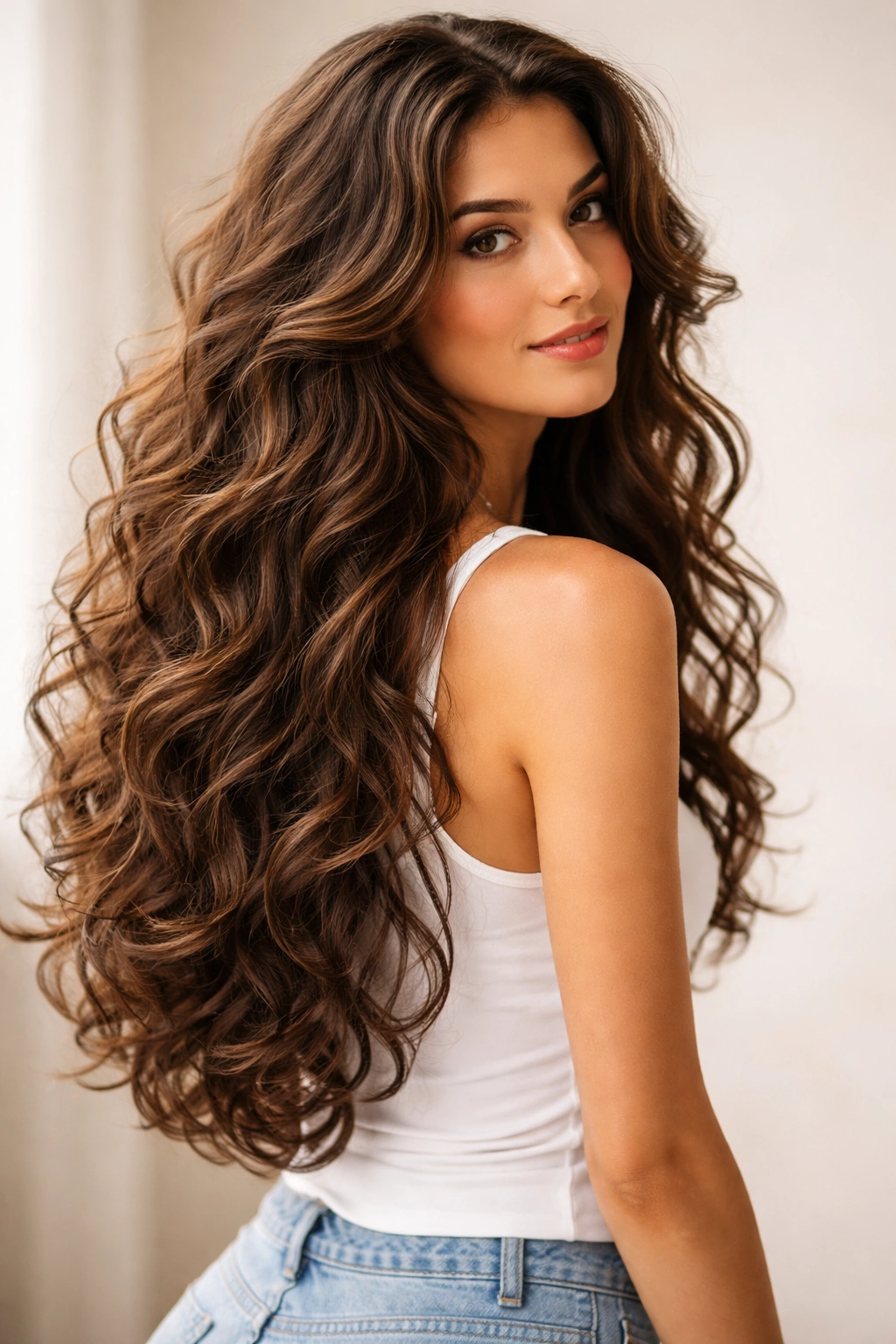
Long, layered haircuts are a curly girl’s secret weapon. Layers remove weight from the bottom while keeping length, which means your curls bounce and spring instead of getting matted down. The shape falls naturally along your curl pattern, creating movement that straight hair can’t achieve without a curling iron.
What Makes Layers So Effective
When your hair is all one length, the weight of your curls pulls them down, making them look flat or undefined. Layers break up that weight strategically. They also remove the heavy, blunt bottom that can trap moisture and create frizz. The result is hair that feels lighter, moves more freely, and shows off your curl definition from root to tip. Layers also make styling much easier—your curls have room to move and define themselves naturally.
Styling Long Layers
- Apply leave-in conditioner to soaking-wet hair and comb through gently
- Use a curl cream or gel to define and hold as you air-dry or diffuse
- Avoid brushing dry curls; use your fingers or a pick to separate instead
- Sleep in a pineapple bun (loose, high ponytail) to preserve curls overnight
- Refresh second-day curls with water and a bit of curl cream, scrunching upward
Worth knowing: The number and placement of layers matters—ask your stylist to focus layers throughout rather than just chopping at the bottom, which creates a shaggy effect that reads as messy rather than intentional.
3. The Curly Lob (Shoulder-Length Layers)
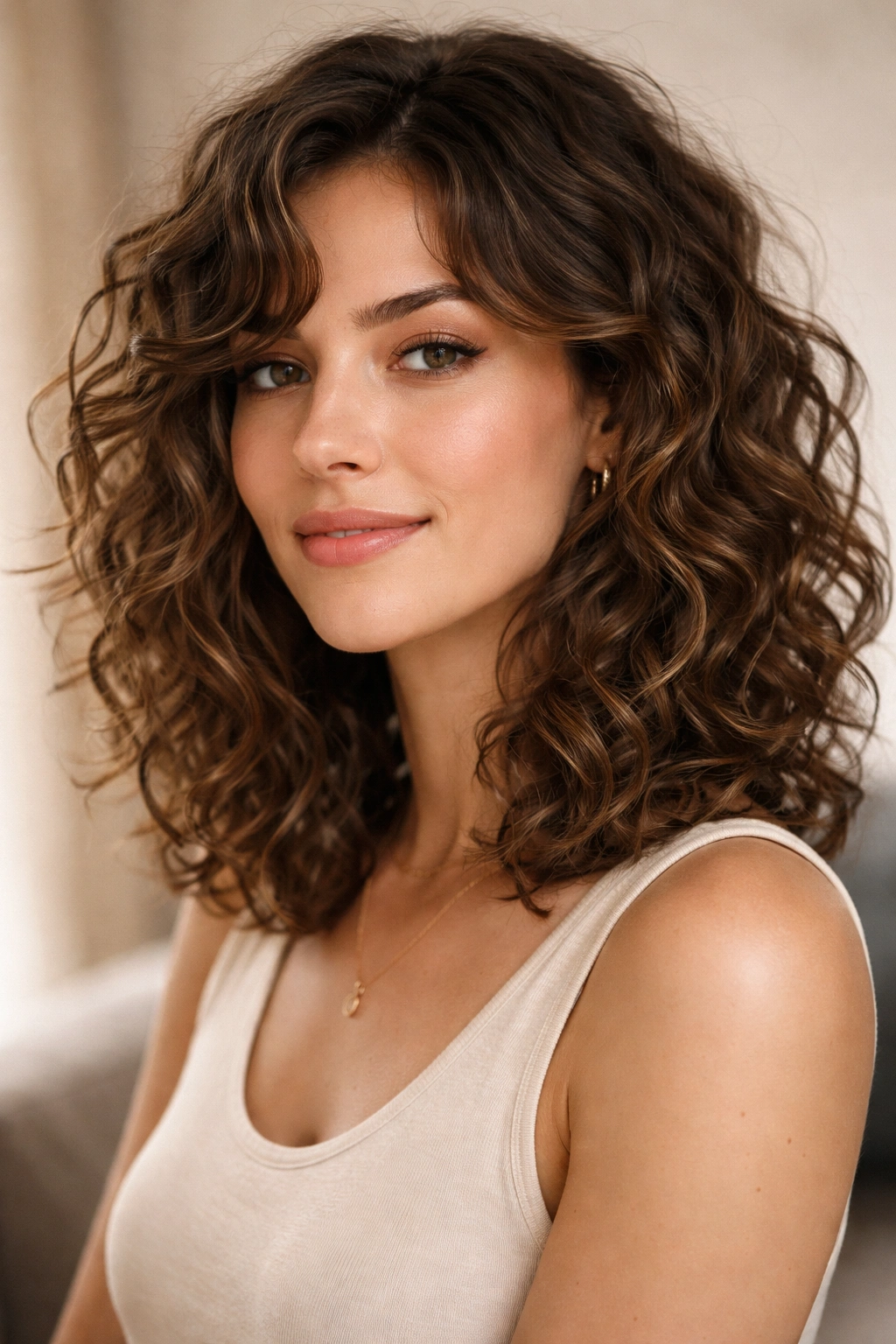
A lob—that perfect middle ground between short and long—is ideal for wavy and curly hair because it’s short enough to keep curls bouncy and defined, but long enough to give you styling versatility. You can wear it down for a full textured look or pull it back into a bun or ponytail on days when you want a different vibe.
Why Shoulder-Length Works Best for Texture
This length is the sweet spot for most curl patterns. It’s short enough that curls don’t get weighed down into limp waves, but long enough that you can do multiple styles without feeling restricted. A lob with layers gives you that effortless, lived-in aesthetic that actually requires less effort than longer lengths because your curls do most of the work for you. The shape flatters almost every face and works with loose waves through tight coils.
Styling a Textured Lob
- Blow-dry with a diffuser attachment for more volume, or air-dry for a softer look
- Use a medium-hold gel or cream to define curls without crunchiness
- Try styling half-up with a clip for texture and polish
- Sleeping on a silk pillowcase helps curls maintain shape
- Second-day refreshing is simple—just spritz with water and scrunch
Insider note: A textured lob is especially forgiving because slight waviness and frizz actually add to the aesthetic rather than look like a styling mistake.
4. The Curtain Bangs with Curls
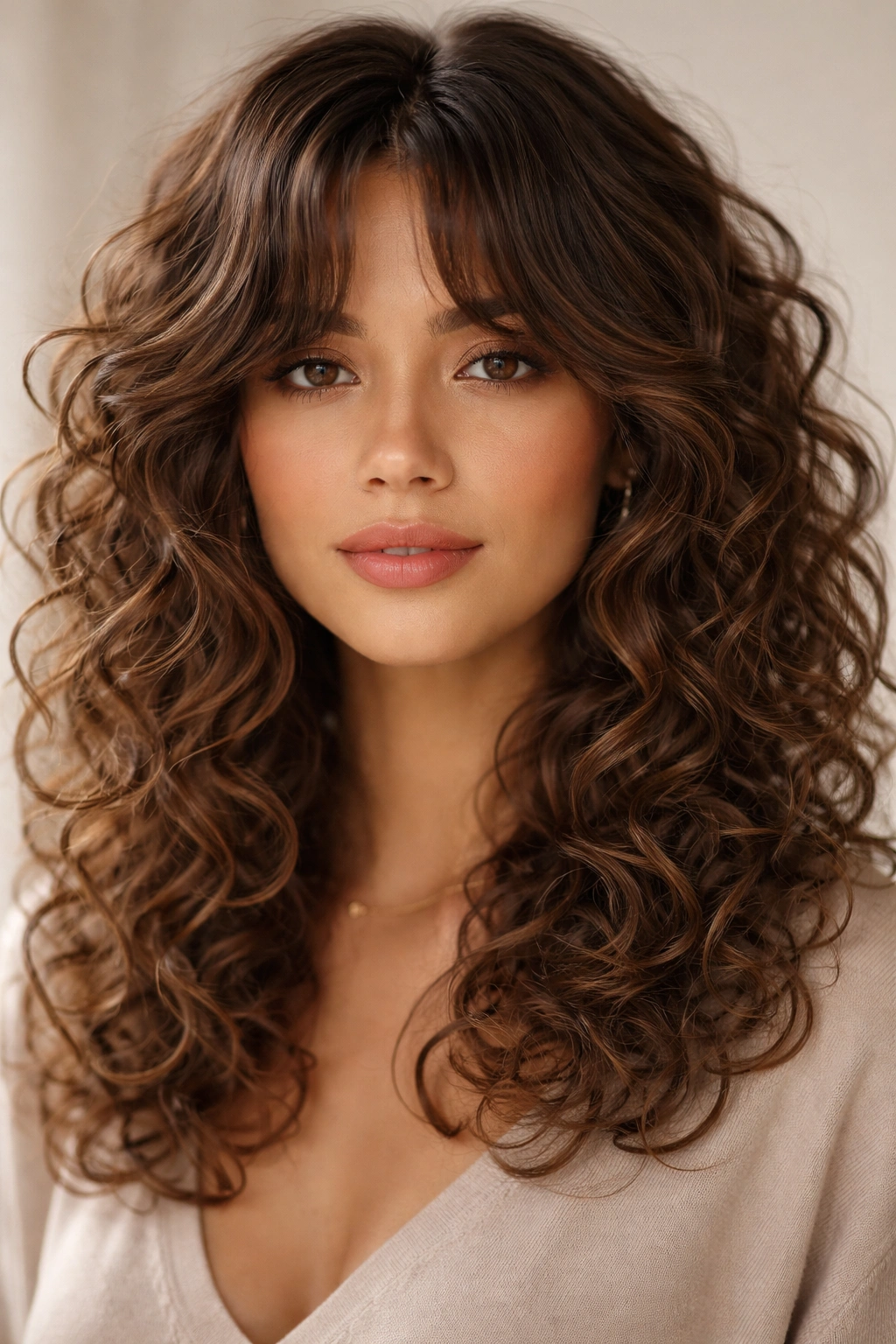
Curtain bangs frame curly hair beautifully because they follow your natural movement and parting. Instead of looking blunt or heavy (which they can on straight hair), curtain bangs on curly hair curve away from your face and blend seamlessly into your layers. They add a contemporary, effortless vibe without requiring precision styling every day.
The Magic of Movement-Based Bangs
Curtain bangs work with curly hair’s natural behavior rather than against it. Your curls will naturally move and shift, and good curtain bangs are designed to work with that shift. They frame your face without blocking it and create softness around your eyes. Unlike blunt bangs, which require daily styling and blow-drying on curly hair, curtain bangs literally style themselves as your curls move and settle into their natural pattern throughout the day.
Getting Curtain Bangs Right for Your Texture
- Ask your stylist to cut them longer than you think—they’ll appear shorter once your curls dry
- The bangs should graze your cheekbones or longer for the most flattering effect
- Cut in long layers so they blend with the rest of your hair rather than looking separate
- Style them by parting your hair down the middle and letting them frame each side of your face
- Avoid cutting bangs shorter than shoulder-length unless you’re ready to style them daily with product
Worth knowing: If you have tight coils or very curly hair, ask your stylist for longer, more subtle bangs that curve gently rather than sit flat.
5. The Textured Bun or Top Knot
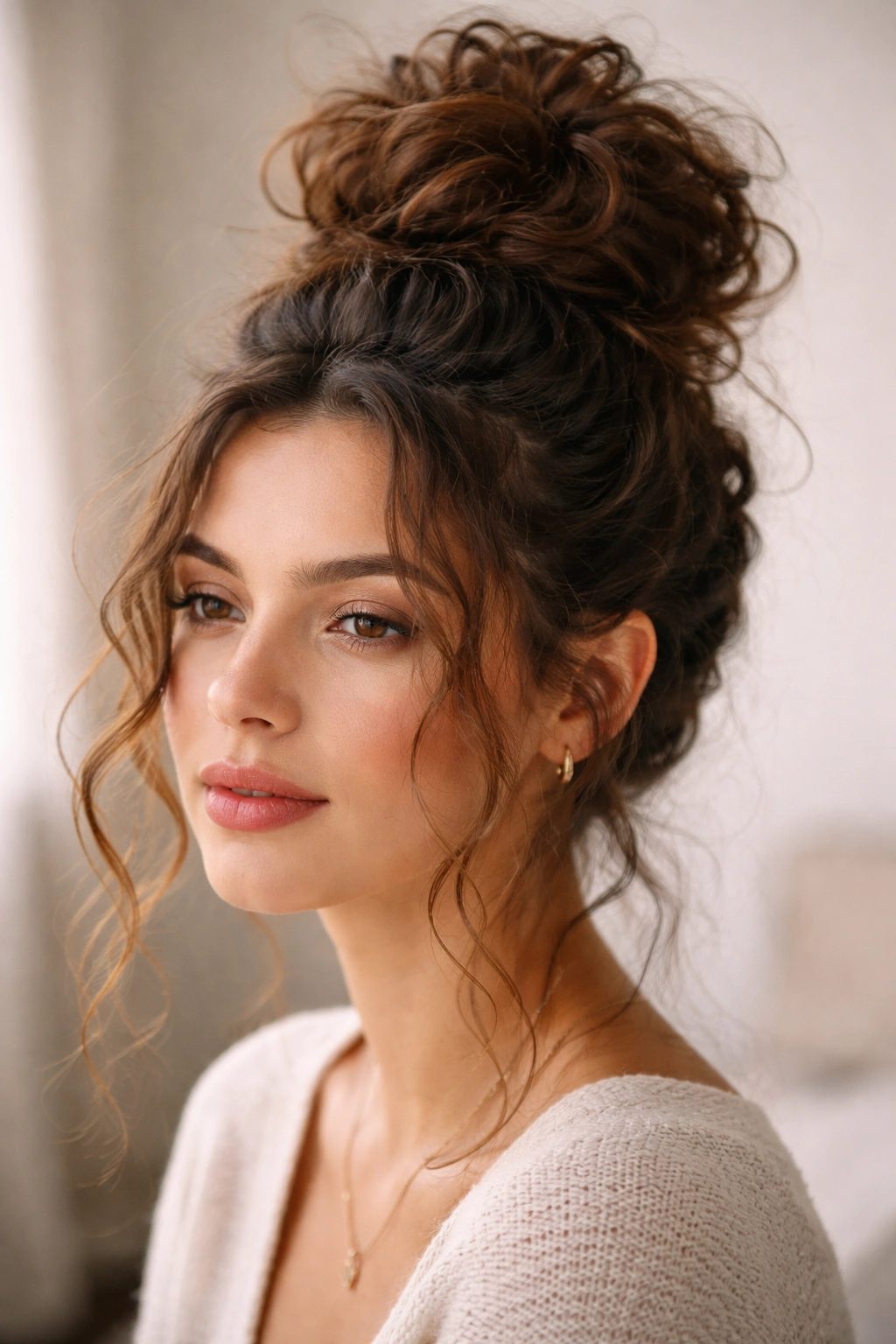
A bun on curly hair isn’t just practical for bad hair days—it’s an intentional style. A messy, textured bun made from actual curls (rather than sleek, pulled-back hair) looks polished while being completely effortless. You’re working with your texture, not against it, which is why it feels so right.
Why Buns Look Better on Curly Hair
When you put curly hair into a bun, you’re not trying to contain it or make it smooth. Instead, your curls contribute to the visual texture of the bun itself, making it look fuller, more interesting, and honestly more intentional than a sleek bun would. You don’t need bobby pins to wrangle flyaways into submission—a few loose strands actually enhance the look. The result is a style that’s completely practical but looks like you put effort in, even if you literally just twisted your hair up in thirty seconds.
How to Create a Textured Bun
- Gather hair at the crown or back of your head, leaving face-framing pieces out
- Twist the gathered hair loosely and wrap it around itself to form a bun shape
- Use a few bobby pins to secure, but leave wisps and curls loose intentionally
- Let some texture escape—that’s the whole point
- Smooth a bit of edge control or oil around your hairline and face-framing pieces
Pro tip: A textured bun is actually more forgiving than a sleek one because imperfection is built into the aesthetic.
6. The Spiral Curls (Defined Ringlets)
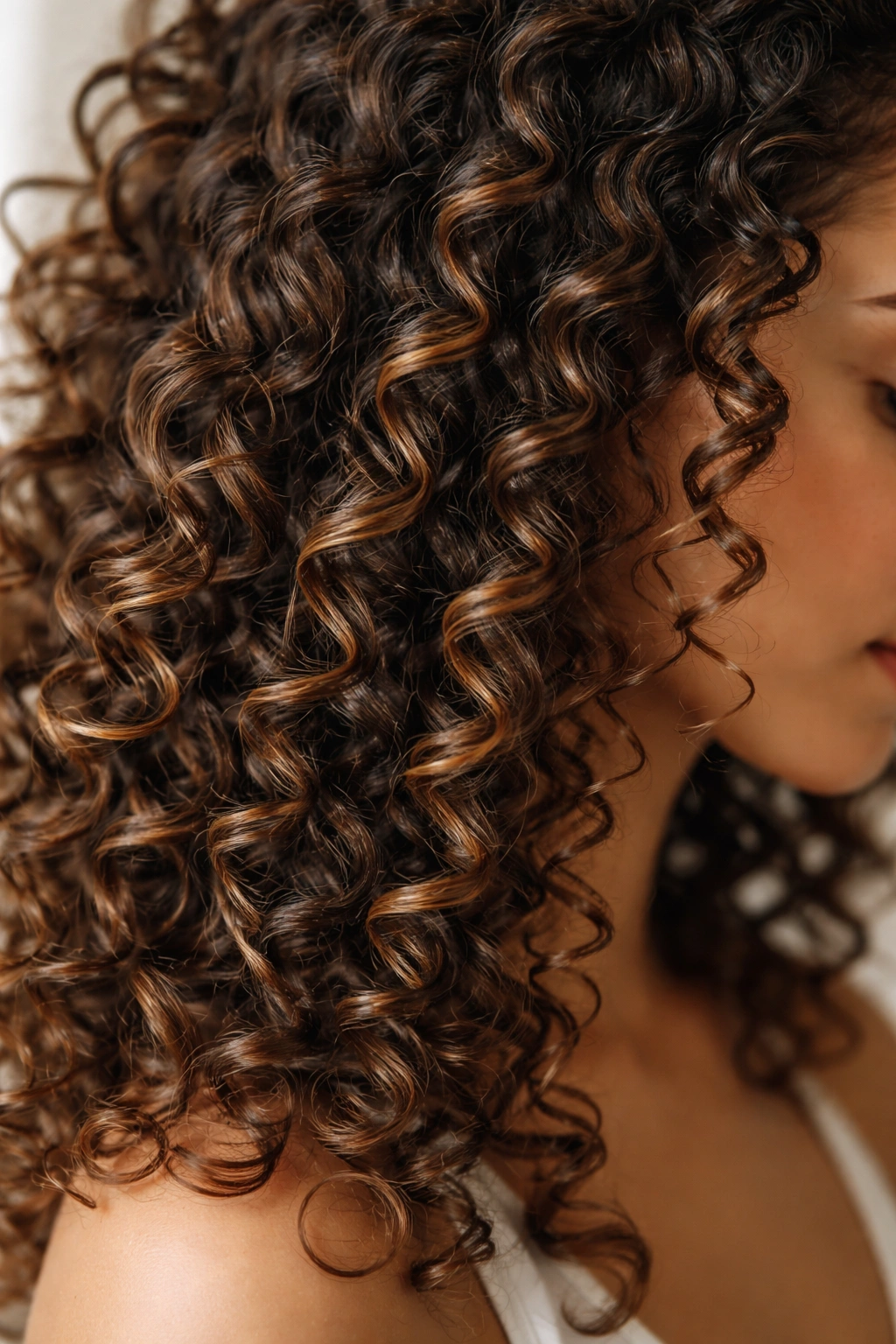
If you have naturally spiral curls or want to enhance curl definition, styling for defined ringlets is a game-changer. This isn’t about creating artificial curls with a curling iron—it’s about enhancing the curls you already have so they’re bouncier, more defined, and more visibly beautiful. It’s a style that celebrates your natural texture rather than asking you to change it.
Creating Defined, Bouncy Ringlets
The secret to enhanced spiral curls is product and technique. Start with soaking-wet hair and apply a curl cream, custard, or gel while it’s still dripping. The water acts as a styling agent. Using the praying hands method (applying product between your palms and smoothing down sections) or the raking method (raking product through with your fingers), you encourage each curl to form around itself. Then you let it air-dry or use a diffuser to speed the process without disrupting the curl formation.
Techniques for Maximum Definition
- Apply product to soaking-wet hair only—this is crucial for definition
- Use the “praying hands” or “raking” method to distribute product while encouraging curl clumping
- Consider plopping (wrapping wet hair in a microfiber towel) for 15-20 minutes before styling
- Air-dry or diffuse on low heat to prevent frizz
- Don’t touch the curls once they’re drying—moving them breaks up the spiral shape
- Once completely dry, gently separate curls with your fingers if they’ve clumped together too much
Insider note: Defined curls look best when your hair is in its natural state of moisture—trying to define curls that are already too dry leads to frizz and breakage instead of shine.
7. The Half-Up, Half-Down Style
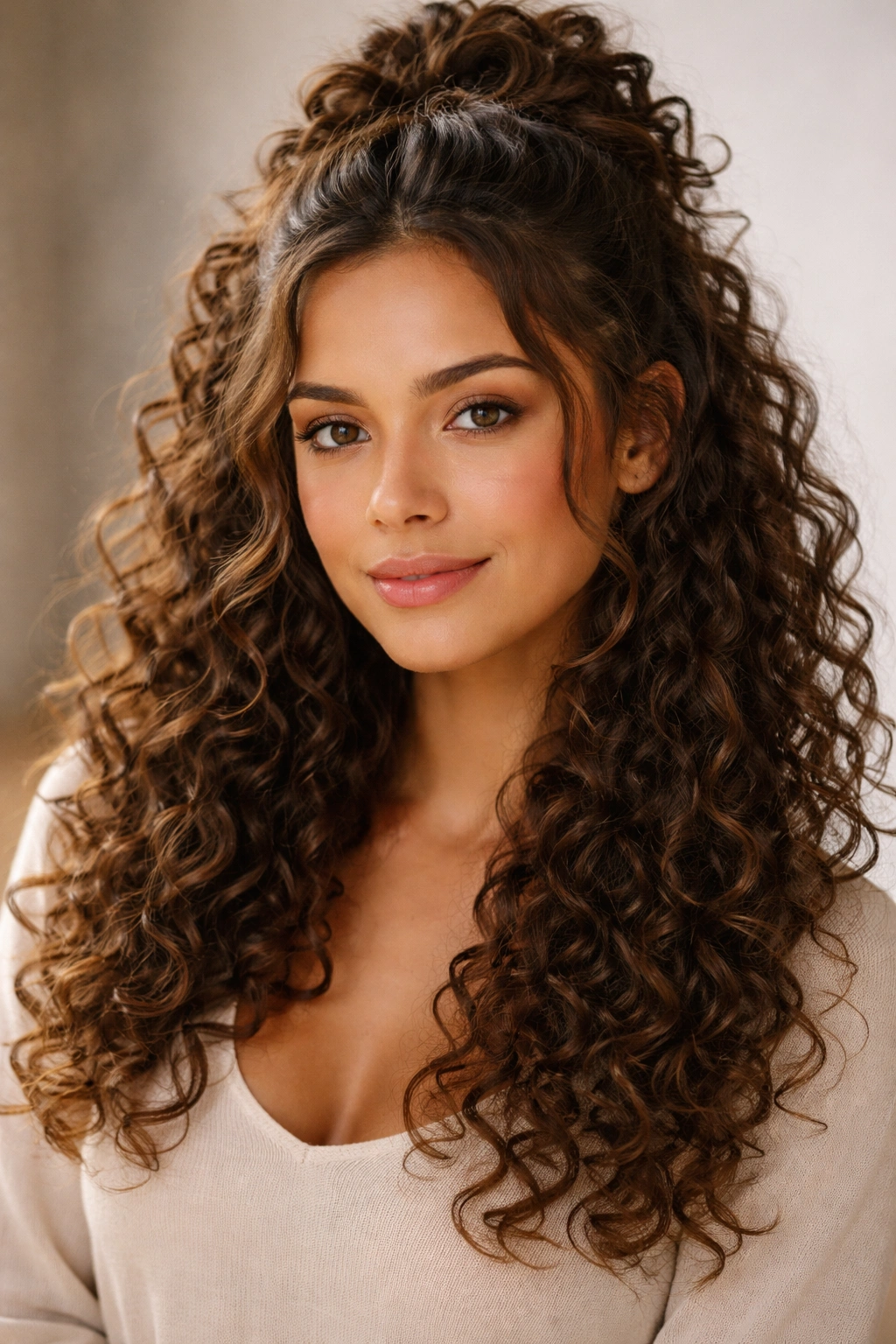
The half-up, half-down style is curly hair’s best friend because it gives you the best of both worlds. You get the face-framing, full-texture look of wearing your hair down, but with the off-your-face ease of an updo. It’s polished enough for work or events but effortless enough for everyday wear.
Why Half-Up Works with Curly Texture
Pulling some of your curly hair back immediately changes your face frame and the visual weight of the style. It prevents curls from falling directly in your face while still showing off your full texture on the bottom half. The gathered section at the crown (or wherever you clip) adds instant polish without requiring all-out styling effort. You’re not fighting your curls into a tight, controlled updo—you’re using them as part of the design.
Styling Half-Up, Half-Down
- Create the half-up section at the crown, sides, or back depending on face shape
- Twist, braid, or simply clip the gathered section—all look great
- Leave plenty of texture and movement in the bottom section
- Use a decorative clip, claw clip, or silk hair tie to secure without snagging
- Leave some face-framing pieces loose for softness
- Spritz the completed style with a light hold spray if needed
Worth knowing: This style works beautifully with second-day curls, which actually have more definition and hold than fresh curls sometimes.
8. The Voluminous High Ponytail
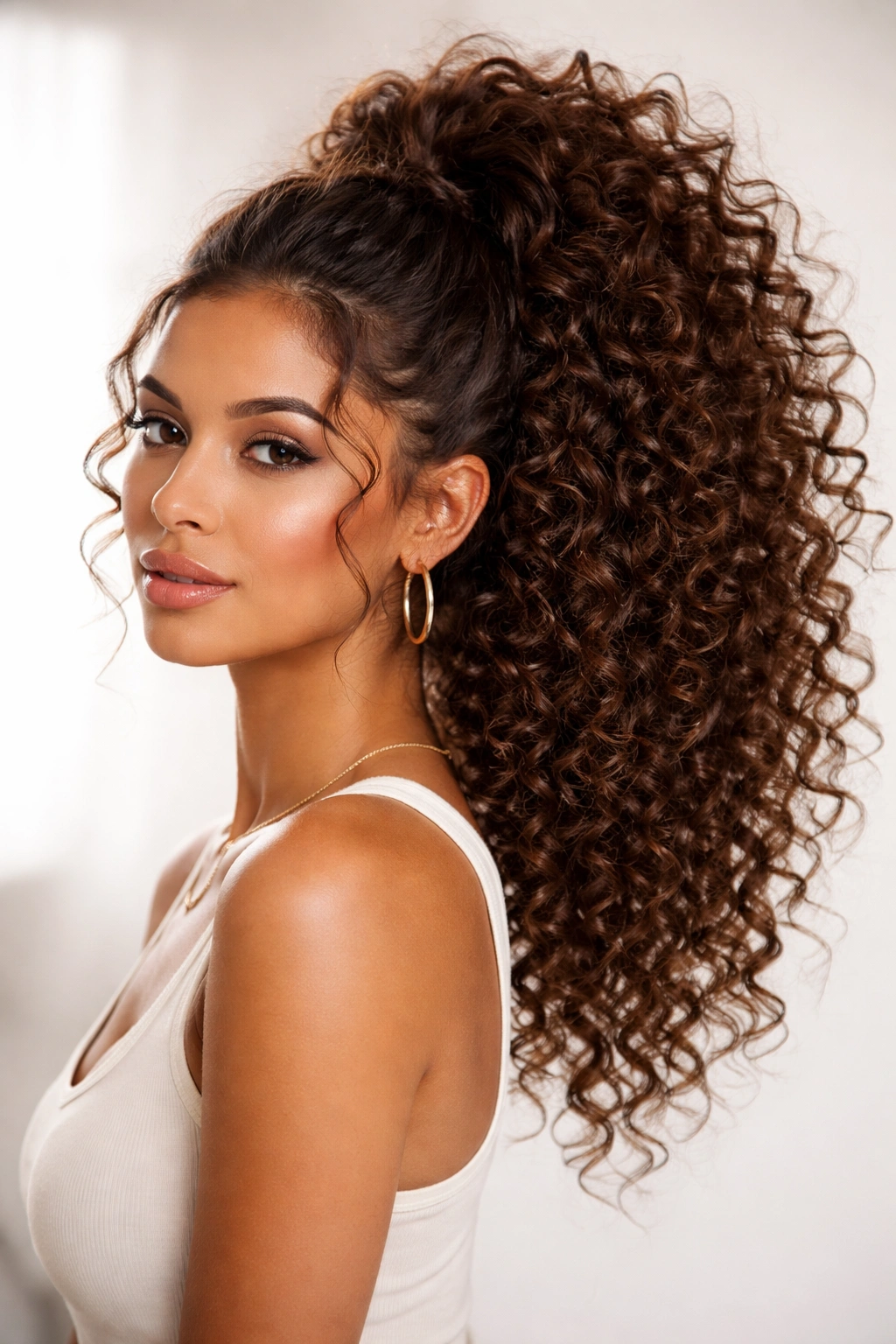
A high ponytail on curly hair is the ultimate statement of texture. Because your curls have natural volume and bounce, a high ponytail doesn’t look flat or sparse—it looks full, intentional, and genuinely gorgeous. It’s polished enough for professional settings or events, but the curly texture keeps it from feeling uptight.
Making a Curly Ponytail Actually Work
The trick with curly ponytails is not fighting the texture at the crown. Instead of smoothing everything back tightly, use your products and styling to enhance texture and volume at the crown while gathering the length into a ponytail. This creates a style that’s secure but still visibly curly and dimensional. It also keeps you from pulling your hair back so tightly that you get breakage or headaches—which matters more for curly hair since the curl pattern means individual strands are under more tension.
Technique for Volume and Hold
- Apply a curl-enhancing product to damp hair and let it partially dry
- Gather hair at your preferred ponytail height while curls are still slightly damp
- Use a secure elastic or hair tie, but don’t pull too tightly
- Wrap a small section of hair around the elastic to cover it and add polish
- Let some texture escape at the crown for volume rather than slicking it down
- Refresh slightly fallen curls in the ponytail by misting with water and scrunching
Pro tip: A high ponytail with curls is actually more forgiving than a low one because gravity helps keep everything in place while still looking intentional.
9. The Textured Side-Swept Style
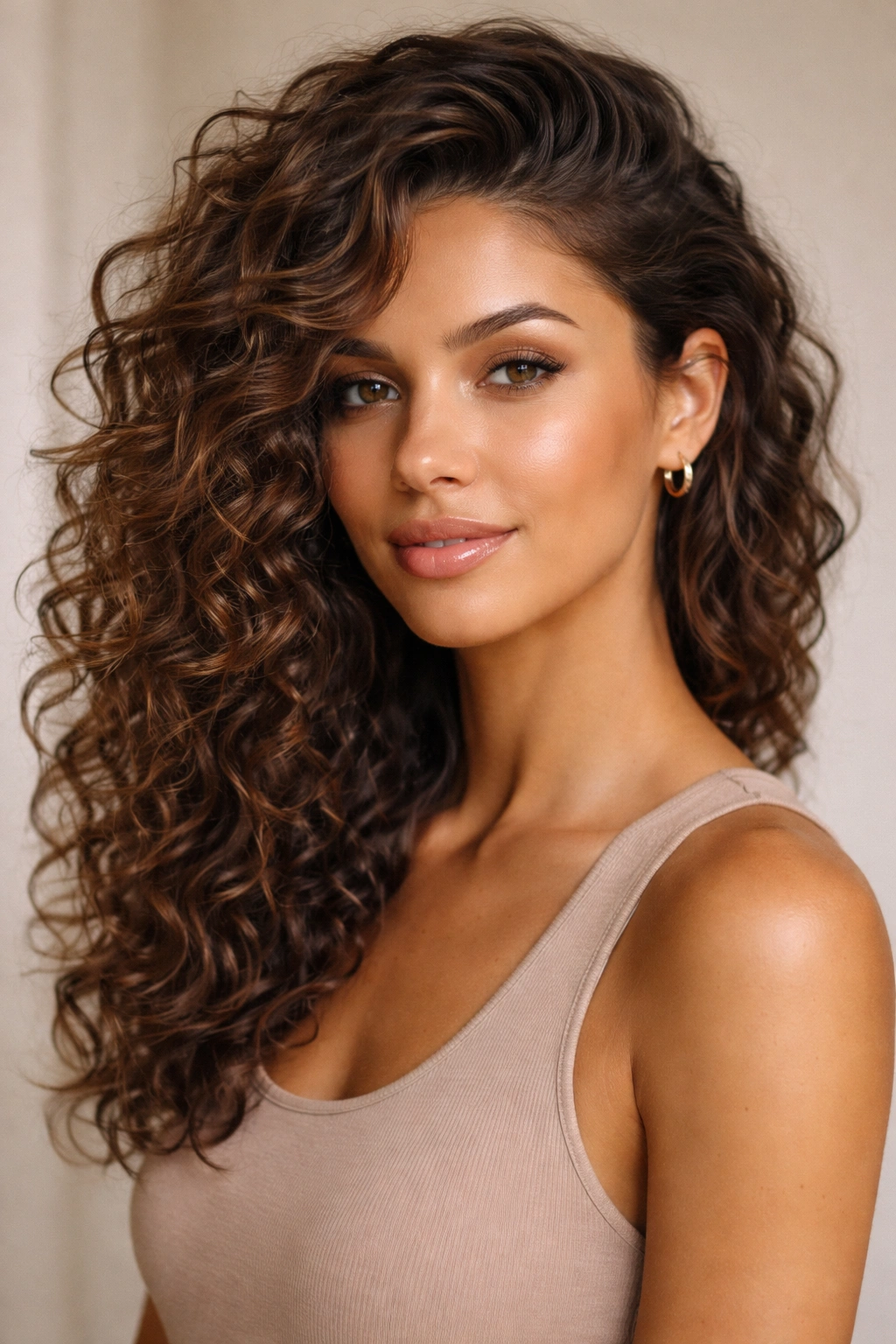
Sweeping your curly hair to one side is an elegantly simple style that works for almost every curl type and occasion. Unlike styling curly hair into a deep side part, which can look overstretched or unnatural, a gentle side-sweep lets your natural movement flow while creating a sophisticated silhouette. It’s the effortless-looking style that actually takes minimal effort.
The Beauty of Side-Sweep Styling
A side-swept style works because it follows your hair’s natural fall rather than fighting against it. When you sweep curly hair to one side, you’re not pressing it flat or creating tension—you’re just encouraging it to fall in a particular direction, which your curls do naturally anyway. This style adds visual interest by creating asymmetry and shows off the dimension of your curls on one side while softening the opposite side of your face. It reads as intentional without looking overdone.
Creating a Side-Swept Look
- Work with damp hair that’s already had styling product applied
- Gently guide your hair to one side using your hands rather than a comb
- Pin lightly on one side if you want more security, or let it sit naturally if your curls have enough hold
- Avoid pulling tightly—the movement of your curls is the whole point
- This works beautifully as a second-day style when curls have natural grip
- Add a decorative clip or minimal jewelry if you want extra polish
Worth knowing: This style is particularly stunning on people with longer layers because each layer falls at a slightly different angle, creating beautiful movement and dimension.
10. The Wash-and-Wear Textured Bob
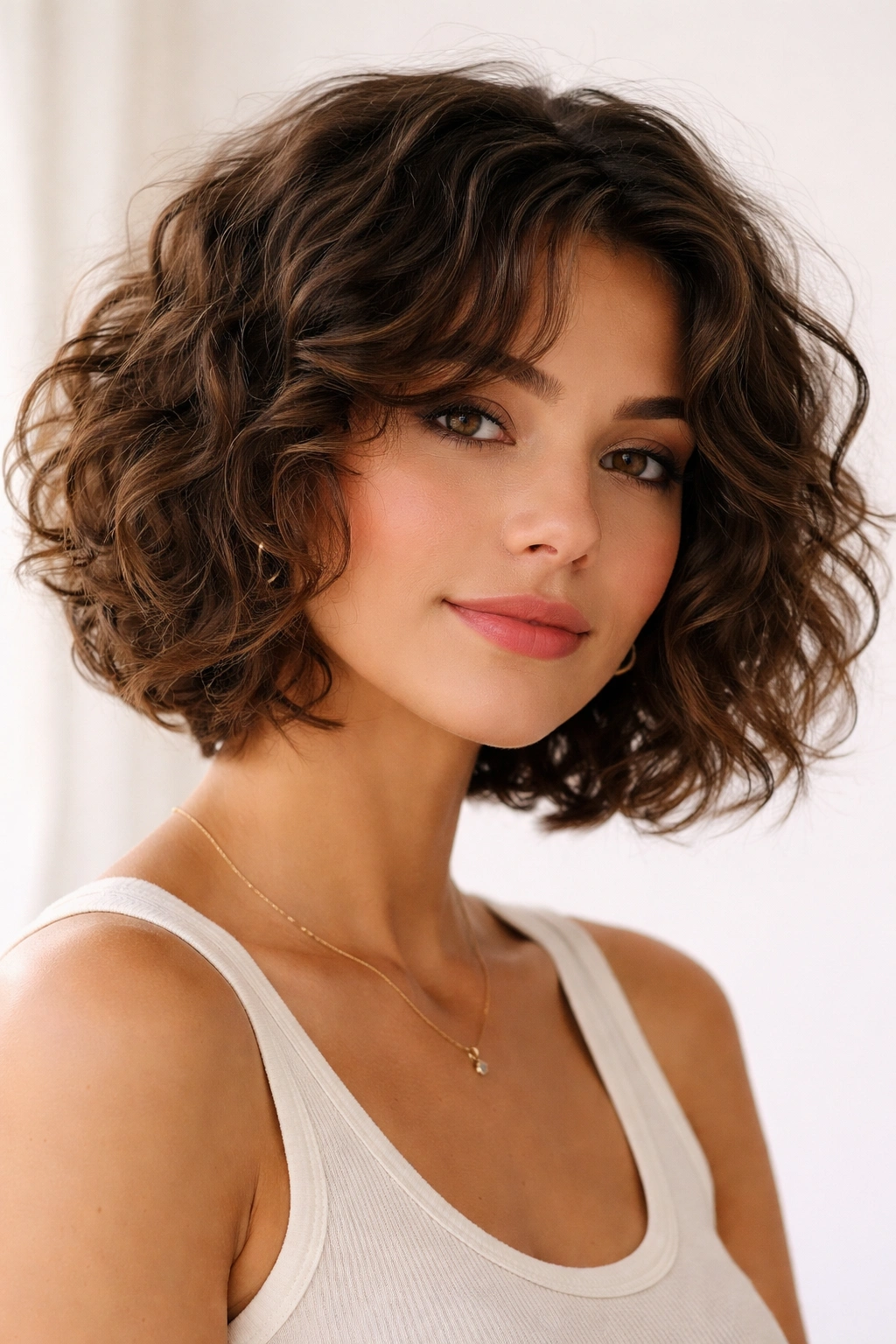
A curly bob (sometimes called a “curob”) embraces your natural texture and honestly requires less styling maintenance than longer styles. A well-cut textured bob with layers uses the bouncy, voluminous nature of curly hair to create a style that looks intentionally shaped while being beautifully effortless. You wash, condition, apply product, and let your curls do the work.
Why Textured Bobs Are So Practical
A bob on curly hair has built-in movement and shape just from your natural curl pattern. Unlike straight-haired bobs that require blow-drying and careful styling to maintain their shape, curly bobs want to be textured and dimensional. The right cut will shape itself as your curls dry. This means you can actually achieve a polished, intentional look with significantly less effort and heat styling than longer hair requires. The length also makes daily maintenance quicker and simpler while still giving you styling versatility.
Getting a Textured Bob That Works
- Ask your stylist for layers throughout rather than a blunt bottom
- Longer layers (longer than you think) prevent the bottom from looking too thick
- The cut should be shaped to work with your specific curl pattern, not against it
- Styling is simple: condition, apply gel or cream to damp hair, air-dry or diffuse
- You’ll need trims every 6-8 weeks to maintain the shape and prevent bulk
- Avoid trying to blow-dry and straighten a textured bob—you’re fighting the whole point
Insider note: A textured bob actually looks better with some movement and frizz than a perfectly smooth one would, which makes it the most forgiving curly hairstyle in terms of humidity and imperfection.
Final Thoughts
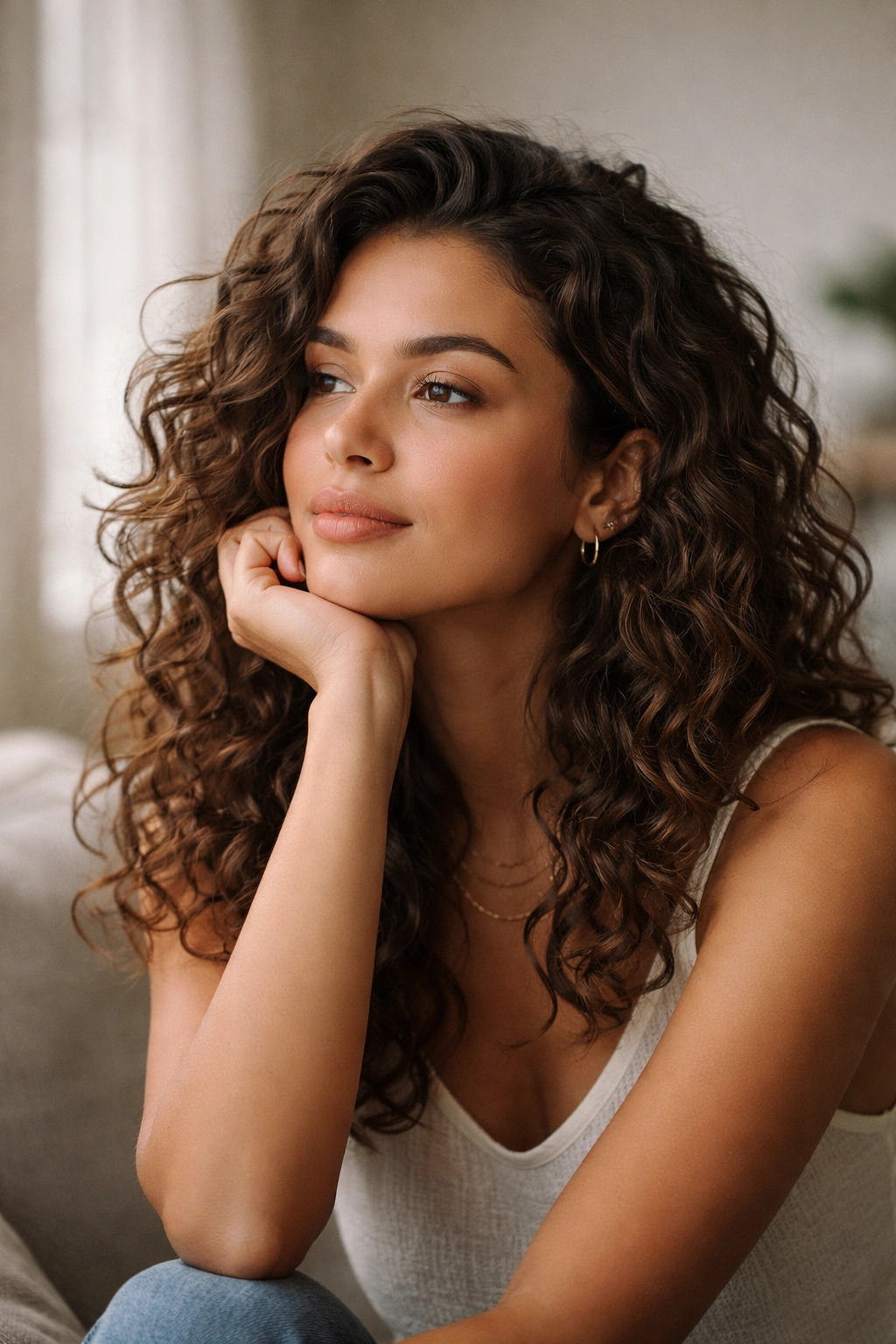
The right hairstyle for your wavy or curly hair is one that enhances your natural texture instead of fighting it. Whether you’re embracing short, bouncy cuts like pixies and lobs, or celebrating length with long layers and side-swept styles, the principle stays the same: work with your curls, not against them.
The styles here all share a common thread—they all look better because of your texture, not despite it. That’s the real shift in how to think about styling curly hair. Instead of asking “How do I make my curls behave,” ask “What style makes my curls look and feel their absolute best?” That mindset changes everything. Your curls are an asset, not something to control, and the right cut and style make that obvious every single day.
