



Afro hair deserves styling options that celebrate its texture while keeping it protected and looking intentional. Headbands are one of the most versatile accessories for textured hair — they work as both a protective style and a legitimate fashion statement. Whether you’re managing shrinkage, protecting your edges, or simply wanting to frame your face differently, headbands can transform your entire look in seconds.
The beauty of headband styling for afro hair goes beyond aesthetics. Headbands distribute tension evenly across your crown instead of concentrating it at one small section, which means they’re actually gentler on your hairline than many other styling methods. They work with your natural texture instead of fighting it, and they don’t require heat or chemical manipulation. Best of all, you can change your vibe completely without touching your actual hair underneath.
What makes headbands so effective for afro textures is how they interact with the natural volume and shape of your hair. A headband that might look flat on straighter hair types creates dimension and structure with afro hair. The key is finding the right style for your specific hair goals, whether you’re looking for protection, style elevation, or a way to handle hair you’re transitioning or growing out.
1. The Twisted Wrap Headband
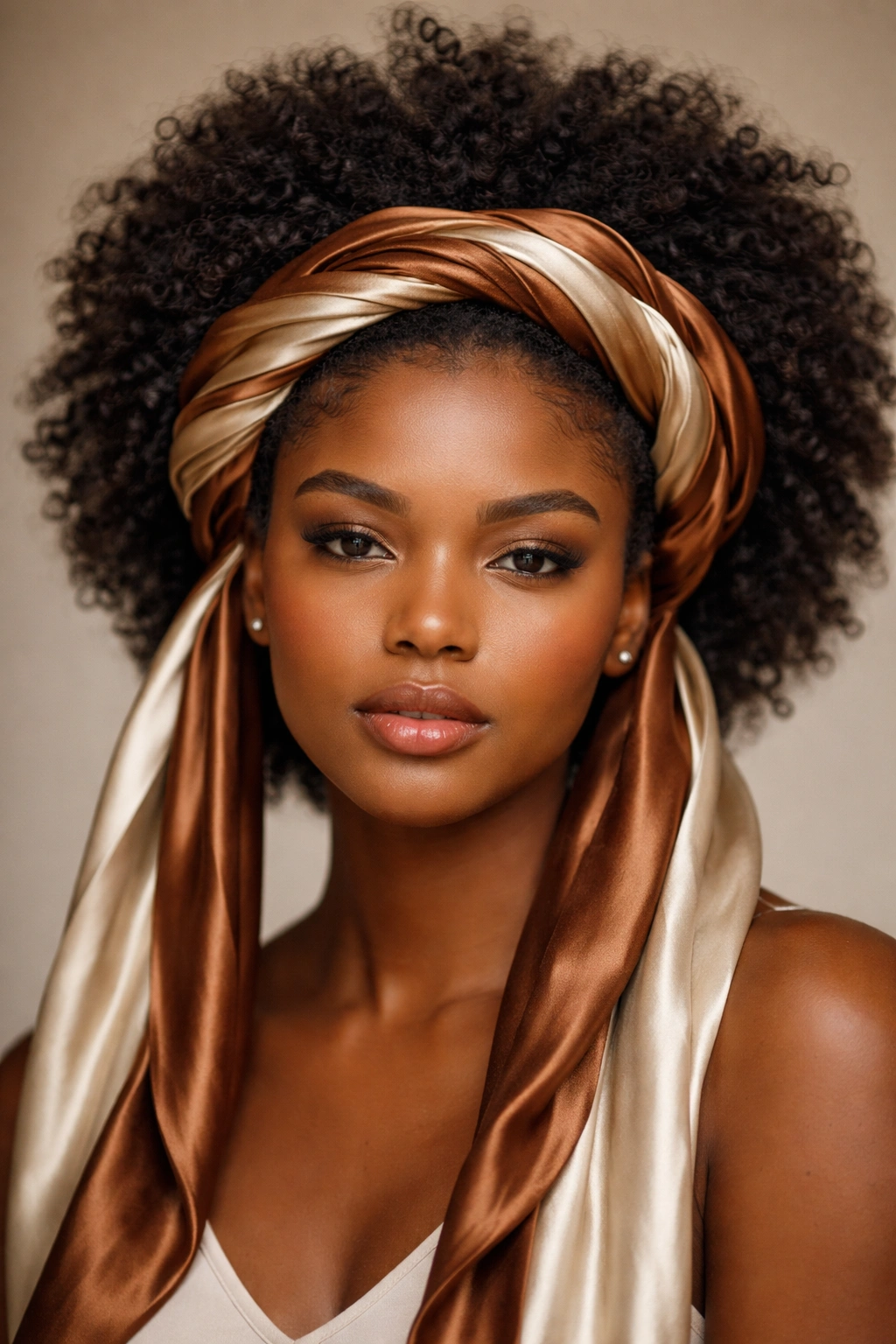
The twisted wrap is pure elegance, and it works beautifully because it plays with the movement of your own hair while adding texture and visual interest. This style involves wrapping fabric — usually a silk or cotton blend scarf or a dedicated headwrap — around your crown in a twisted pattern that sits like a crown or a band. Your natural afro sits either above or below the wrap depending on how you position it.
How to Create the Look
Start with a rectangular piece of fabric, about 45 inches long and 18 inches wide. Fold it diagonally to create a triangle, then place the center point on your forehead with the two long ends trailing over your shoulders. Twist each end loosely as you bring them around the back of your head, crisscrossing them as you go. The twists should follow the natural contour of your head. When you reach the back, tie the ends securely or tuck them under the twisted section. The key is keeping the twists loose enough that you can see your natural hair texture peeking through, not so tight that it creates tension.
Why This Works for Afro Hair
Your hair provides natural volume that makes the twisted pattern actually visible and dimensional. Straight hair types often look flat with this style, but afro texture gives the twists a fuller, more luxurious appearance. The wrap protects your edges while keeping your hair in its natural state. You can wear this style for 3-4 hours during the day and then remove it without any damage or disruption to your styling underneath.
Pro tip: Use a silk or satin-lined fabric rather than cotton. Cotton pulls moisture from your hair, while silk maintains hydration and prevents frizz at the edges where the fabric contacts your hair.
2. The Sleek Bandeau Headband
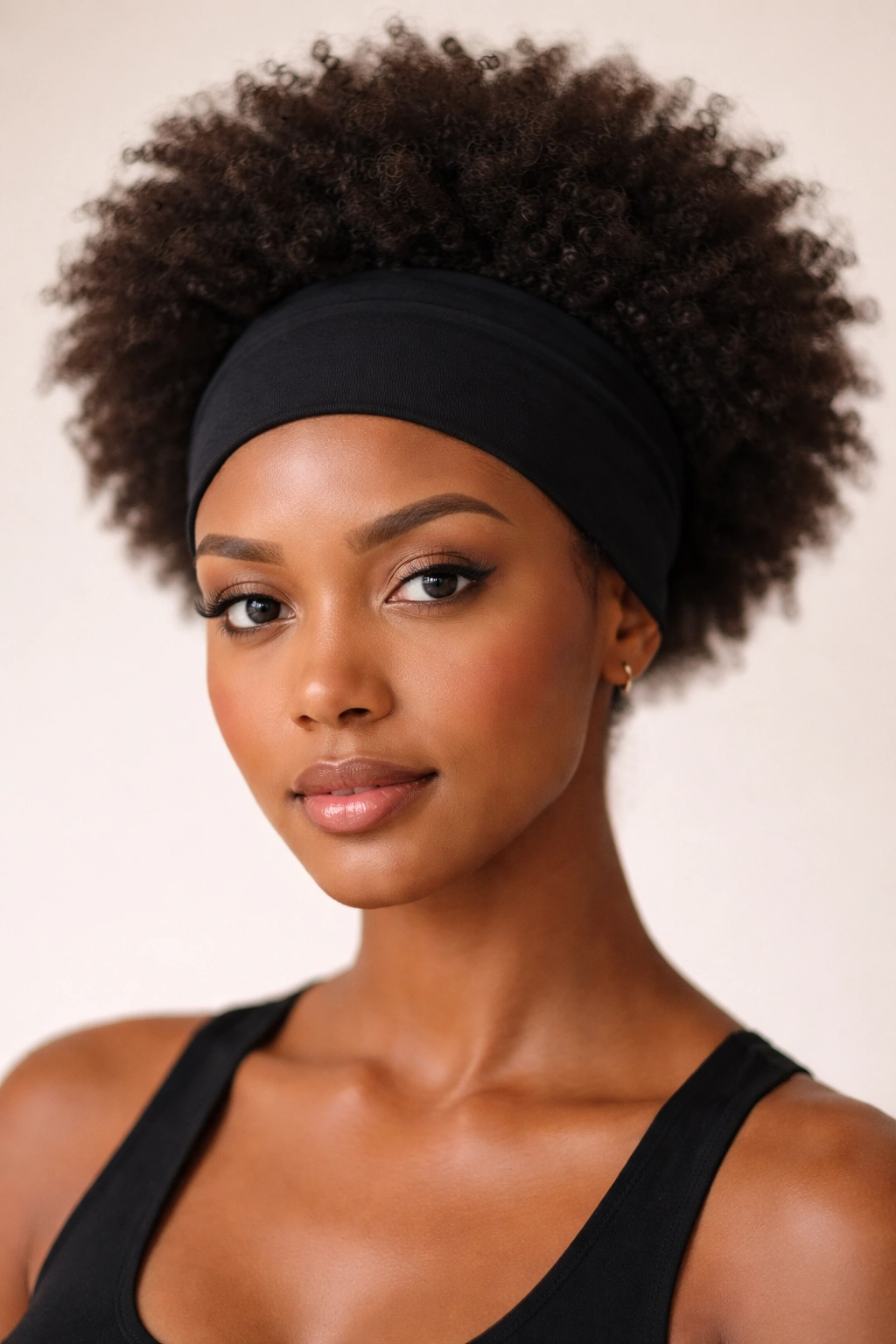
A bandeau headband is structured, modern, and works when you want to keep your entire afro visible while adding polish to your look. Unlike wraps, bandeaus are typically pre-formed fabric bands that slip over your head like a headpiece. They sit lower than a crown band, usually starting at your hairline or just above your brows, and rest against the top and back of your head.
Styling Tips for Texture
The success of a bandeau depends on the fabric texture and how it interacts with your hair. Wider bandeaus (3-4 inches) work better than narrow ones because they won’t sink into your hair or create uncomfortable pressure points. Position the bandeau so it sits on top of your hair, not embedded within it. Your afro should crown proudly above and around the band, creating a halo effect that frames your face beautifully.
Material Matters
Look for bandeaus made from stretch cotton blends or knitwear that won’t slip down throughout the day. Velvet and corduroy bandeaus add personality and visual richness. Metallic options work for elevated occasions, while basic solids pair with everything. The fabric should have enough grip to stay put without requiring bobby pins tucked into your hair, which creates unnecessary tension.
Worth knowing: A bandeau that fits snugly but comfortably when you first put it on might feel loose by afternoon as your hair settles. Consider keeping a small hair tie or elastic nearby to tighten it if needed, or choose one with a slightly smaller circumference than you think you need.
3. The Woven Basket Headband
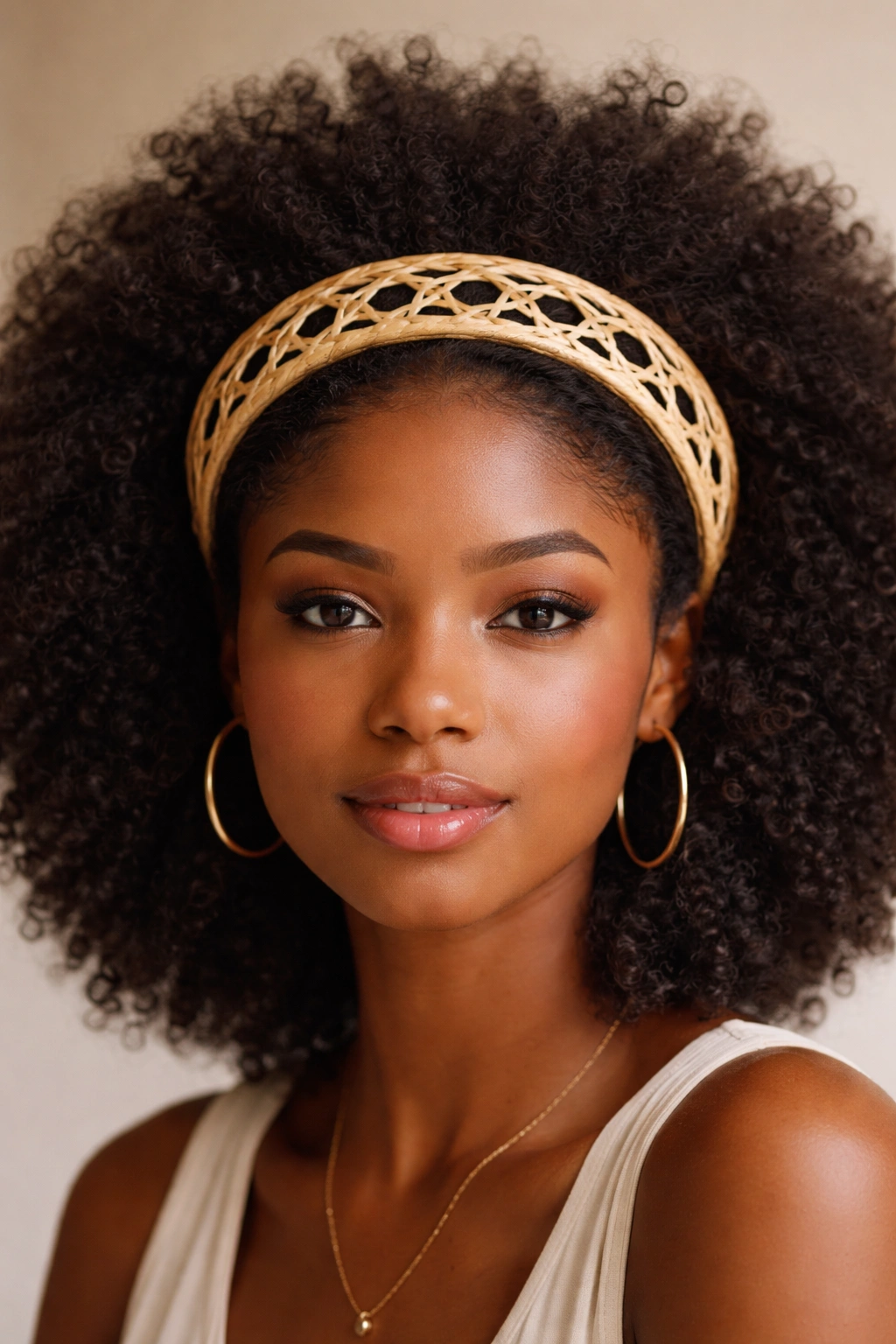
Woven headbands made from rattan, wicker, or woven fabric have texture that celebrates rather than competes with your hair. These lightweight bands create an interesting visual contrast with afro texture — the geometric pattern of the weaving plays beautifully against the organic curves of your natural hair. They’re especially stunning on full, rounded afros that fill the space within the band.
Choosing the Right Weave
Not all woven headbands work equally with afro hair. Look for bands with an open or semi-open weave pattern rather than completely solid construction. Open weave allows you to see your hair texture through the band, and it’s lighter to wear for extended periods. Rattan and wicker bands are typically the most comfortable because they’re naturally flexible and conform slightly to your head shape.
The Visual Effect
When you wear a woven basket headband over a full afro, the band creates a frame that emphasizes the width and shape of your hair. Your hair pushes through and around the weave, creating a sculptural, intentional-looking style that reads as high fashion without requiring any styling underneath. This is the kind of headband that works equally well at a casual coffee shop or a formal evening event.
Quick styling note: These bands work best when your afro has a few days of definition in it. Fresh twist-outs or braid-outs create the most visually interesting texture against the woven pattern. If your afro is a bit deflated, you can fluff it up with a pick before adding the headband.
4. The Wire Crown Headband
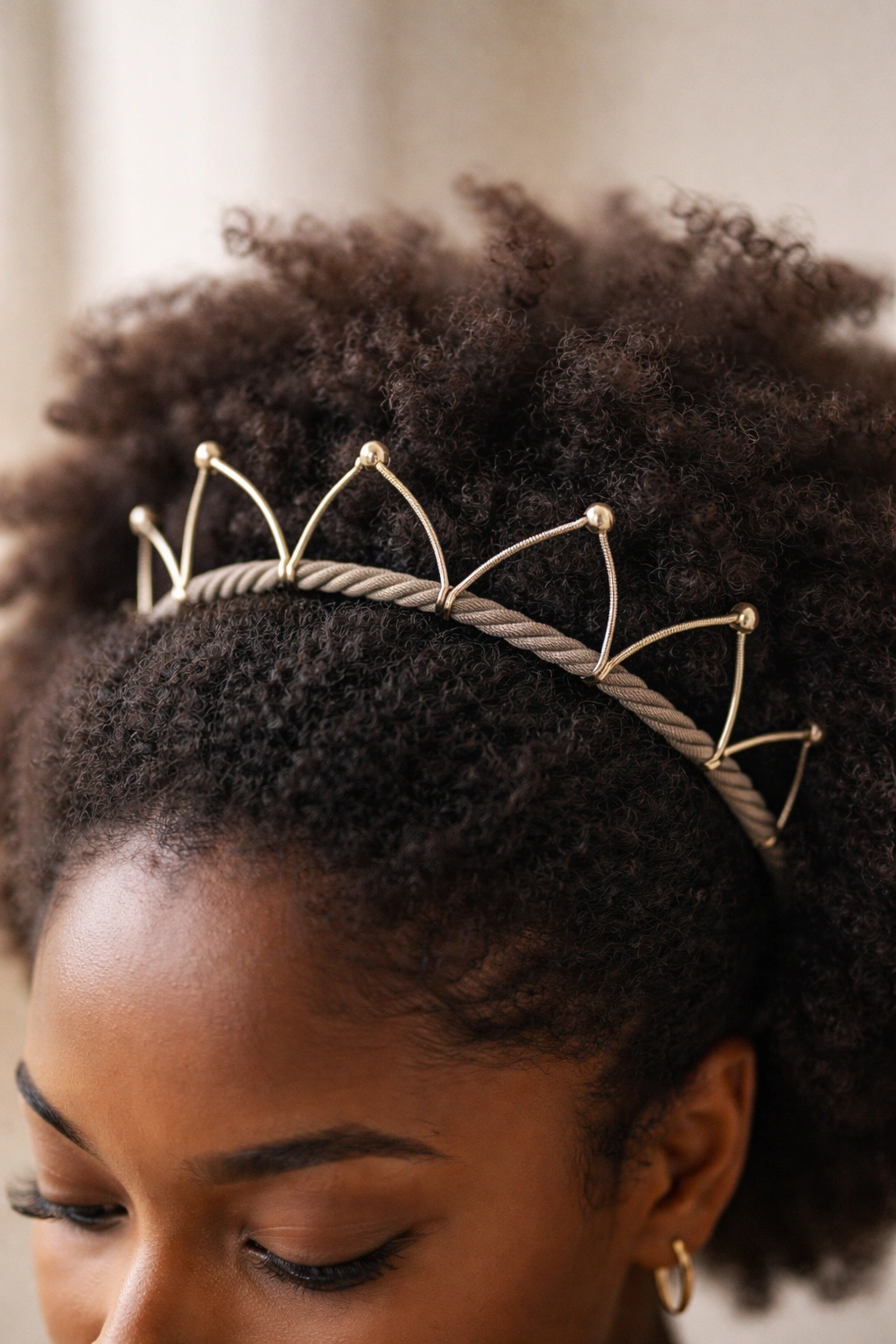
Wire crown headbands give you total control over how the band sits. These are flexible metal bands covered in fabric or beads that you can shape to fit your specific head and your specific hair volume. You can push them higher on your crown for a more dramatic look, or wear them lower and flatter for something subtle.
Customizing the Fit
The main advantage of wire headbands is that you can adjust them to work with your natural hair without creating pressure points. If your afro is particularly full, you can gently spread the band wider. If you prefer a more fitted look, you can push the sides slightly inward. This flexibility means a single wire headband can work for different styling moods and different hair states.
Styling Options
You can wear a wire crown headband with your hair completely down and natural, or you can incorporate it into more structured styles. Some people wear them over a puffed top knot with the rest of their hair down, creating a crown-and-afro hybrid. Others use them to gently lift the front section of hair while keeping the back in its natural shape. The wire gives you the freedom to be creative without permanent commitment.
Real talk: Metal wire headbands can sometimes snag hair if they’re not properly padded. Make sure the fabric covering is smooth and dense, with no exposed wire at any edge where it might catch loose strands.
5. The Beaded Headband
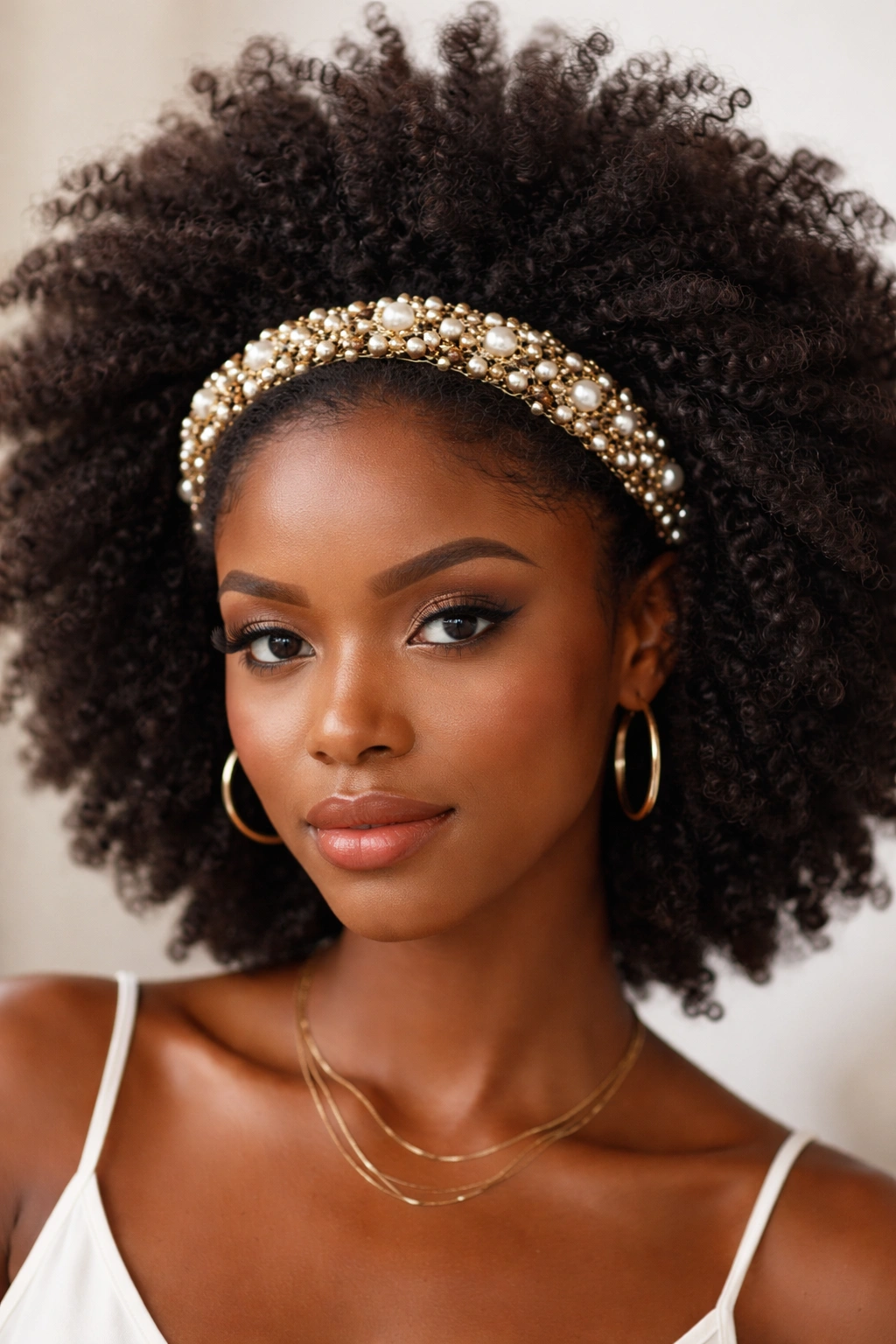
Beaded headbands are a celebration style — they add immediate visual interest and personality. These bands are typically made from strands of beads (wooden, plastic, glass, or metallic) threaded onto elastic or fabric. They sit across your forehead and/or crown, and the beads create beautiful visual lines that complement your face shape.
Choosing Beads That Work
The bead size matters with afro hair. Larger beads (½ inch or bigger) look intentional and don’t get lost in your hair volume. Smaller beads can disappear into your texture or create uncomfortable pressure if there are too many strands. Go for beads with some weight to them so the headband doesn’t shift constantly. Metal and wooden beads tend to work better than lightweight plastic because they stay put without slipping.
Styling with Texture
A beaded headband works equally well with a completely natural afro or with shaped styles like high buns, puffs, or half-ups. The beads create visual structure that actually plays up the fullness of your hair rather than fighting it. You can wear just one strand of beads as a delicate accent, or layer multiple strands for a more dramatic look that references traditional African styling.
Where to Position It
Forehead placement is classic — a single strand of beads rests across your brow line and behind your ears, creating a halo effect. Crown placement lifts the band higher, sitting on top of your head like a subtle crown. Some people do a combination, with thinner strands positioned at the forehead and wider strands at the crown, creating layered visual interest.
Pro styling tip: Beaded headbands work best when you’ve shaped your hair intentionally — think a rounded puff, a high bun, or a defined natural afro that’s been shaped with your hands. Beads on completely undefined, flattened-down hair can look accidental rather than intentional.
6. The Geometric Head Wrap Turban
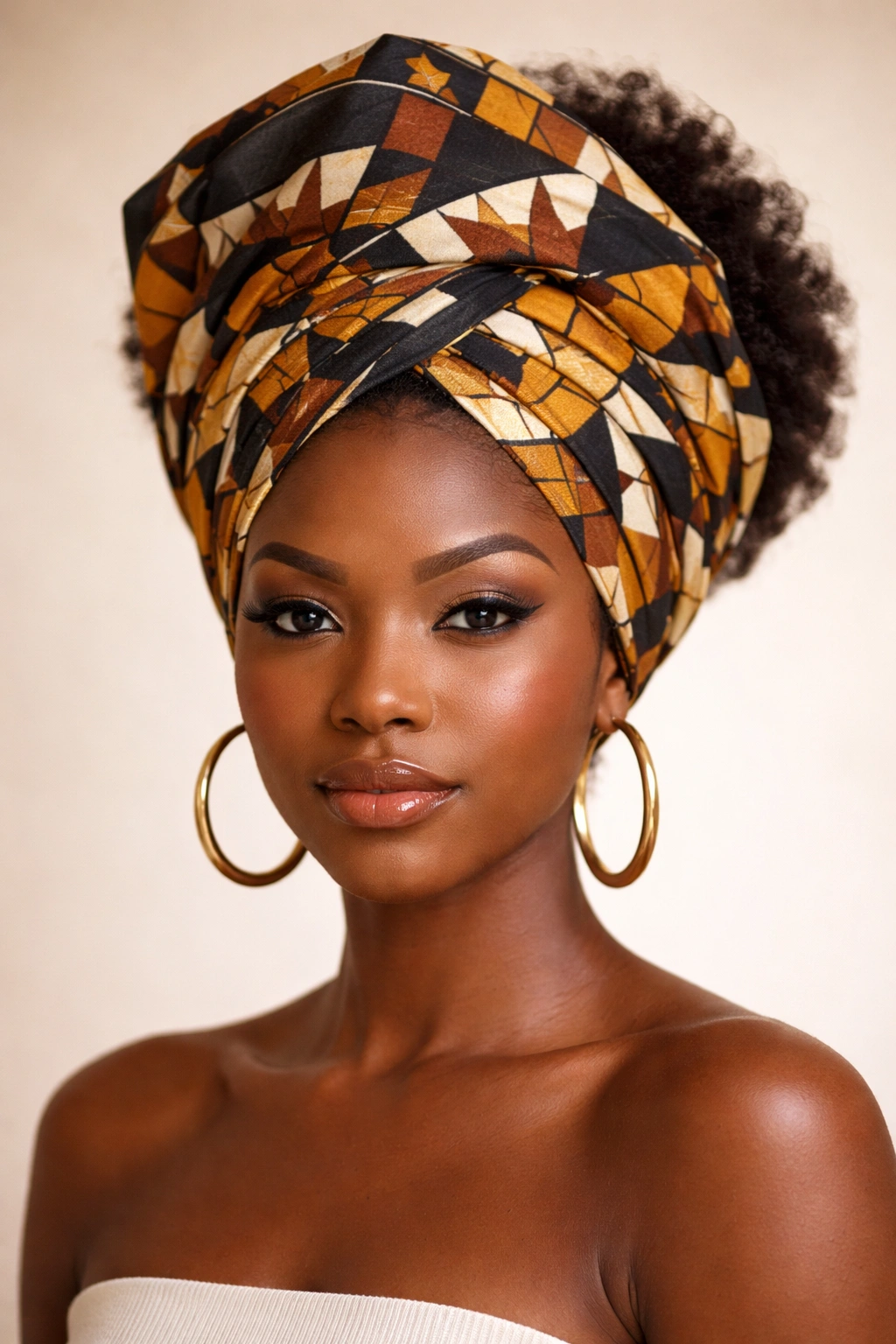
This isn’t a headband in the traditional sense, but rather a fabric wrap technique that creates a turban-like structure. It’s a geometric, modern take on head wrapping that feels fashion-forward and intentional. You start with a longer piece of fabric and wrap it around your head in a specific pattern that creates clean lines and defined angles.
The Wrapping Technique
A geometric turban typically involves folding your fabric into a triangle or rectangle, then positioning it on your head so the point faces forward (or backward, depending on the variation). You bring the long ends around your head in a controlled pattern, creating structured folds rather than soft, flowing wraps. The result looks almost architectural — very different from the soft, organic feel of a twisted wrap.
Volume Considerations
Because you’re creating a structured wrap, some of your hair ends up contained within the turban shape. This works perfectly if you want to protect your hair while creating a bold style statement. You can secure your hair in a bun or puff at the crown before wrapping, or you can keep your natural afro intact and let the wrap sit on top of it. The structural nature of the wrap means your hair underneath doesn’t need to look perfect — the wrap does the heavy lifting aesthetically.
Occasions and Vibes
Geometric turbans work for elevated casual, professional settings, evening events, and anywhere you want to make a style statement. The clean lines and controlled folds read as intentional and polished. You can make this style in statement fabrics — prints, metallics, or color blocks — and it’ll read as sophisticated rather than casual.
7. The Elastic Band Updo Headband
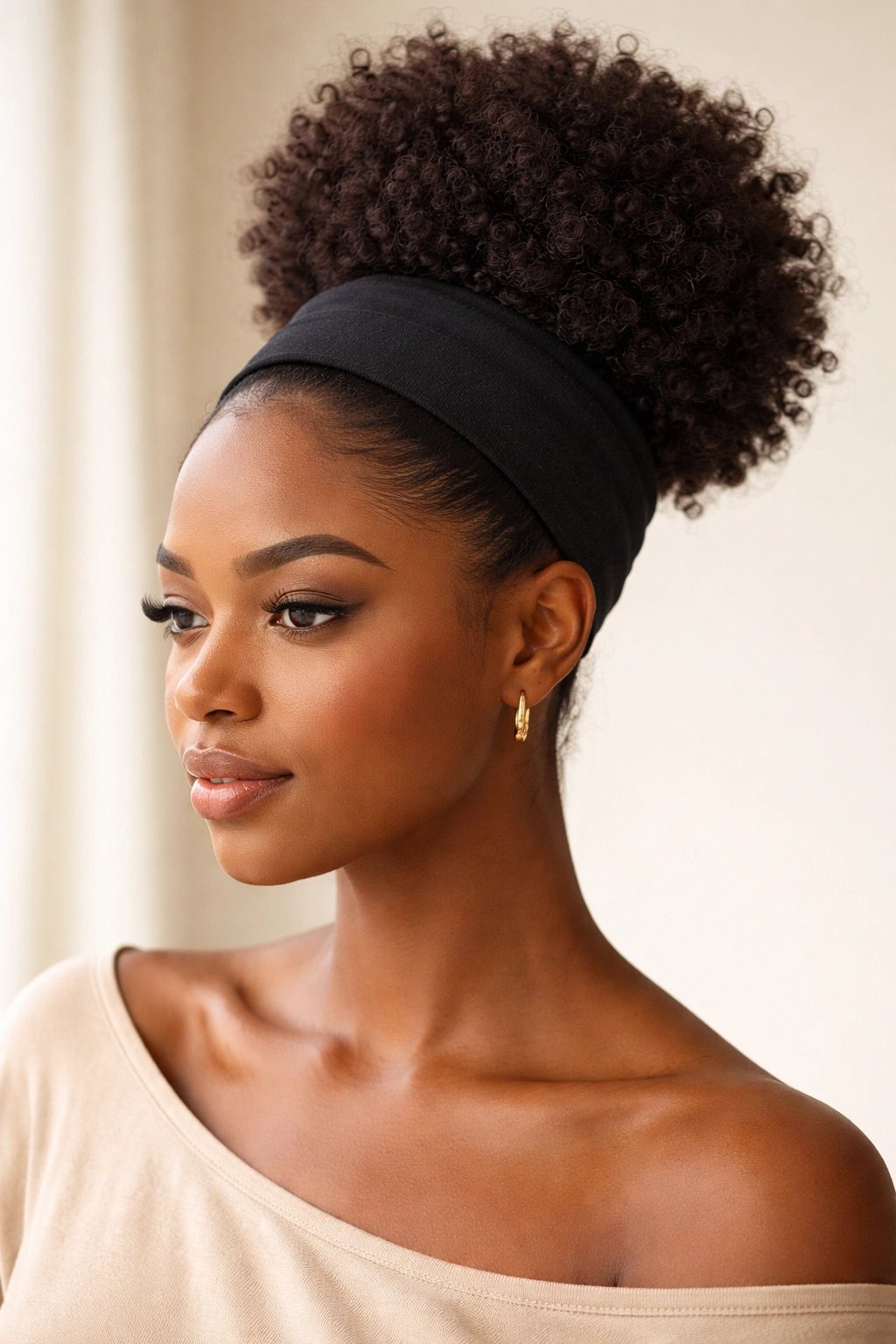
Some headbands are designed specifically to secure updos while looking decorative. These typically have elastic components and are engineered to grip your hair without bobby pins, creating a secured updo while the headband itself becomes part of the style. They’re perfect for when you want your hair completely off your face while still looking polished.
How They Work With Afro Hair
The key with elastic updo headbands is that they distribute pressure across a wider area of your scalp rather than gripping tightly at one section. They work best when you’ve gathered your hair into a high puff or bun at the crown, then wrapped the headband over and around it. The band secures the updo while the fabric finish makes it look intentional rather than purely functional.
Styling Underneath
You have options for what’s under the headband. A tight high bun creates a sleek, minimal look. A looser, rounded puff gives you more softness and texture. Some people secure their hair with a satin scarf first (for protection), then add the headband over top for a layered look. The updo underneath can be as smooth or as textured as you want — the headband will look good either way.
All-Day Comfort
Unlike tight elastic headbands that can give you a headache, quality updo-specific headbands are designed with padding and wider elastic that distributes pressure evenly. You should be able to wear one for 8+ hours without discomfort or tension headaches. If a headband causes pain, it’s too tight and you risk damaging your hairline — take it off and try a different size.
Important: Check the back of your neck and behind your ears for any irritation from the band. These areas are sensitive, and ill-fitting bands can cause rubbing. Look for headbands with soft fabric-covered edges.
8. The Metallic Statement Headband
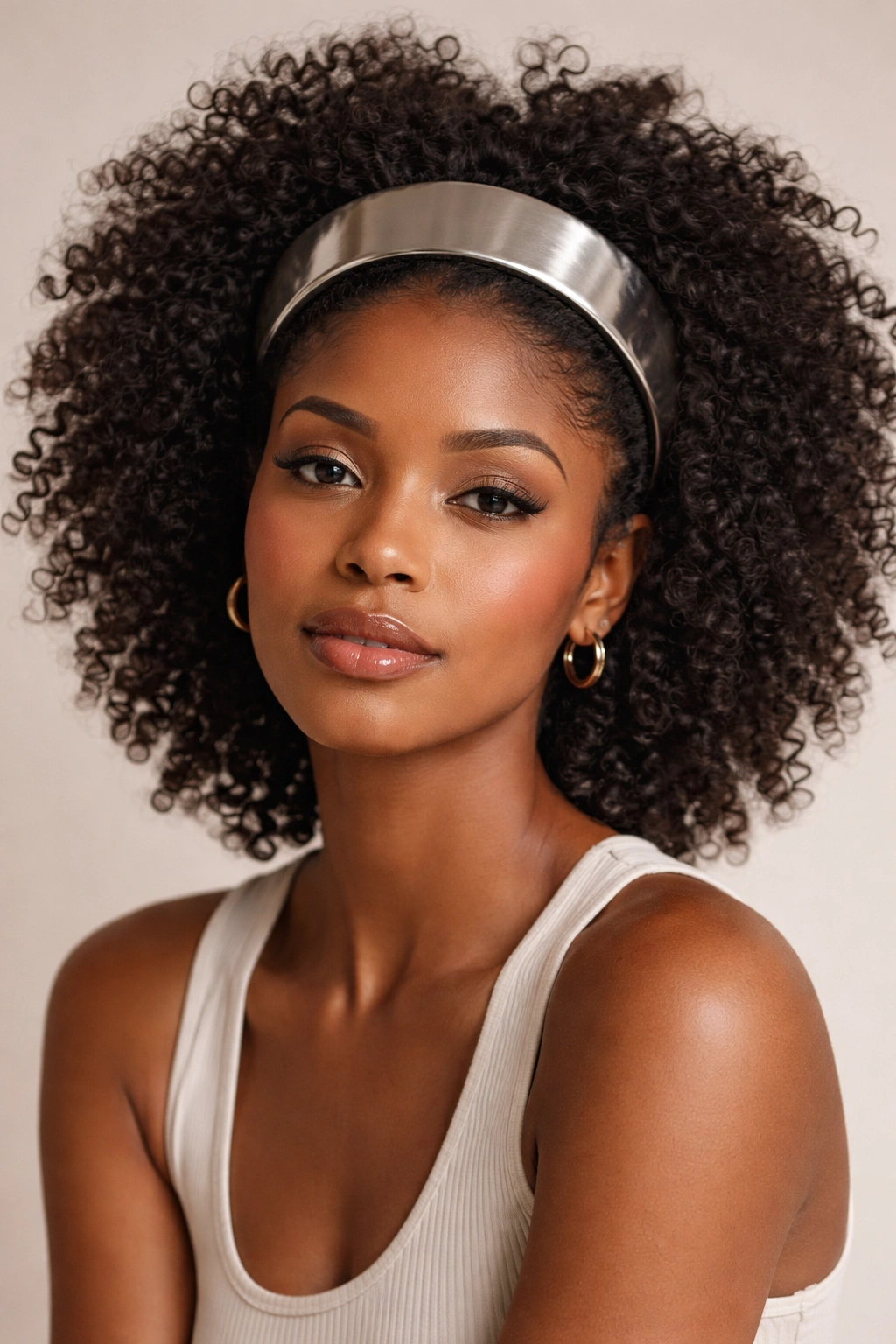
When you want your headband to be the main visual focus of your outfit, a metallic band takes center stage. These can be actual metal (gold, silver, rose gold, copper) formed into a band shape, or fabric-covered bands with metallic embellishments. They work because the shine and reflective quality of the metal creates visual interest that actually complements the organic texture of afro hair.
Wearing It Confidently
A metallic headband is a statement piece, which means everything else should be relatively neutral or understated. Pair it with solid-colored clothing, minimal jewelry, and a clean makeup look so the headband remains the focus. Your hair should be visible and textured — the headband works best when people can see both the metal shine and your natural hair texture interacting.
Different Metallics, Different Vibes
Gold metallics feel warm and luxurious. Silver reads as modern and sleek. Rose gold hits a sweet spot between warm and cool. Copper has an earthy, bohemian vibe. Choose based on your undertones and the mood you’re going for. A chunky gold cuff-style headband feels different from a delicate silver chain headband, even though they’re both metallic.
Occasion Flexibility
Metallic headbands work from casual daytime styling to evening events. During the day, wear one with jeans and a simple top for an effortlessly polished look. At night, pair it with something dressier and it reads as elegant and intentional. The key is that metallic headbands work well because they suggest investment and intention — you’re clearly thinking about your look.
Worth noting: Heavier metal headbands can create fatigue if worn for too long because of the weight concentrated on your head. If you’re choosing a substantial metallic band, make sure it’s well-balanced and padded on the inside to distribute weight evenly.
9. The Fabric Scrunchie Headband Hybrid
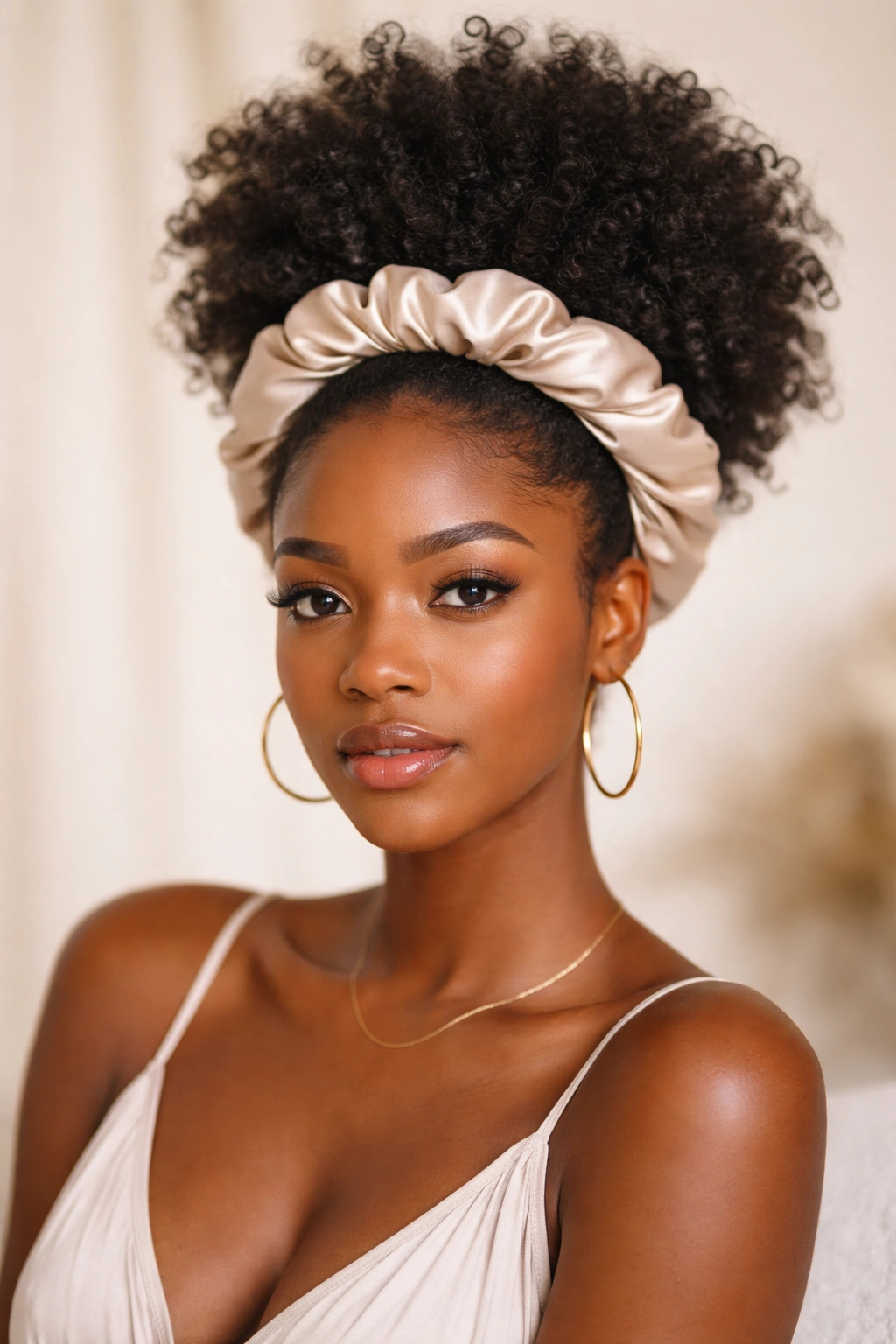
This is a hybrid style that’s technically a scrunchie made from oversized fabric that functions like a headband. It’s wrapped around your hair in a way that leaves some hair visible while securing and styling the rest. It’s part hair tie, part accessory, and it creates a sophisticated look that feels more intentional than a regular scrunchie.
How to Wear It
Gather your hair into a high or mid-crown puff or bun, secure it, then wrap the fabric scrunchie around the base of the style. The fabric drapes over and around your secured hair, becoming part of the aesthetic. You’re essentially using the scrunchie as both functional hair tie and decorative headband. The result looks like a wrapped updo with a fabric accent rather than just a hair tie.
Fabric Choices That Matter
Silk and satin fabric scrunchies are best because they won’t create friction and breakage at your hairline. Look for oversized versions (at least 3-4 inches in diameter) so the fabric is visible and becomes part of the style. Patterned, textured, or metallic fabrics work beautifully and make the style look more intentional.
Versatility Factor
This style works for casual everyday wear all the way up to more formal occasions depending on your fabric choice. A simple solid satin scrunchie-headband hybrid works for work or school. A printed silk or a metallic option levels up to evening-appropriate. You’re essentially getting two styling tools in one — a secure hair fastener and a decorative headband.
Quick tip: Make sure your puff or bun underneath is smooth and well-shaped. A messy or poorly secured base will look disorganized even with a beautiful fabric scrunchie on top. Spend a moment smoothing everything down with a brush or your hands before adding the fabric accessory.
Final Thoughts
Headbands are genuinely one of the most powerful styling tools in your arsenal when you have afro hair, and they deserve way more credit than they typically get. They protect your hair while being completely non-damaging, they look intentional without requiring heat or product, and they let you change your entire aesthetic in the time it takes to slip something over your head.
The right headband for any given day depends on your hair’s current state, your mood, and what you’re doing. Some days call for a protective wrap that keeps everything tucked and secure. Other days you want your full afro visible with just an elegant band adding polish. Your headband collection should feel like styling flexibility rather than a box of duplicates.
The thing about headband styling is that it celebrates your natural texture instead of fighting it. Your afro’s volume, shape, and movement actually make headbands look better, not worse. A headband that might disappear on straight hair becomes a full style statement on your textured crown. That’s not something to work around — that’s something to lean into completely.
