



An afro mohawk is one of those hairstyles that instantly commands attention—there’s something bold and unapologetically beautiful about it. Whether you’re shaving the sides close to the scalp or sculpting dramatic volume at the crown, this style bridges the gap between edgy and elegant, allowing you to express your personality while celebrating your natural hair texture. The afro mohawk has deep roots in Black culture and has evolved from a statement of rebellion into a versatile, empowering choice that works for every occasion, from everyday wear to special events.
What makes afro mohawks particularly appealing is their adaptability. You can style them in countless ways depending on your mood, hair texture, and how much time you want to invest in maintenance. Some versions are sharp and sculptural, while others are soft and romantic. Some feature intricate designs shaved into the sides, while others rely on the sheer volume contrast between cropped edges and a full crown. The beauty of this style is that it works whether you’re embracing your natural curl pattern or wearing protective braids, twists, or locs down the middle.
If you’ve been thinking about trying an afro mohawk but aren’t sure which version suits you best, or if you already have one and want to explore new interpretations, this guide walks you through eight distinct styles. Each one brings its own attitude and requires slightly different maintenance approaches. You’ll find options that are bold and statement-making, as well as subtle versions that work in professional settings. The key is finding the version that feels most authentically you.
1. The Classic High-Volume Mohawk
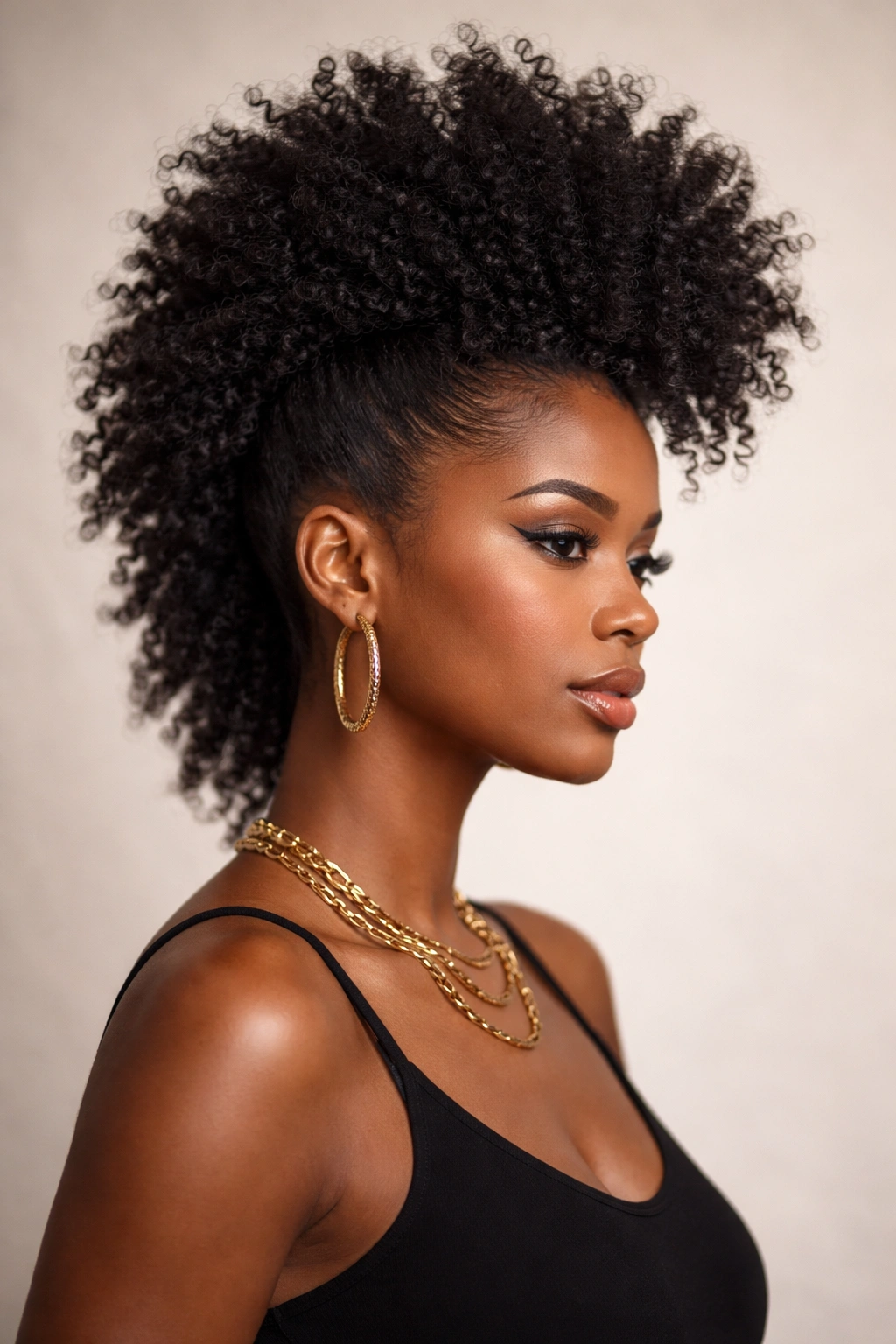
This is the quintessential afro mohawk—the one that instantly says “I’m confident and I know it.” The classic version features closely cropped or faded sides paired with a generous, voluminous crown that stands tall and full. The hair on top is left long enough to showcase your natural curl pattern or to be styled into various shapes, while the sides are tapered or undercut for maximum contrast.
What Makes This Style Work
The magic of the classic high-volume mohawk lies in the dramatic contrast between the sculpted sides and the liberated crown. This stark difference creates visual impact without requiring any additional styling products or techniques—though you can certainly enhance the volume with styling cream or gel if you want more definition. The style works beautifully on almost every face shape because you control how tall the mohawk sits and how far forward it extends. Some people prefer the volume to start right at the hairline for an angular, fashion-forward look, while others grow out a bit more length at the temples for a softer approach. The fade on the sides can be as subtle or as dramatic as you want, and you can ask your barber or stylist to taper it gradually or create a sharp line.
How to Maintain It
- Shampoo the crown area 2-3 times per week, allowing your natural curls to air-dry or using a diffuser on low heat
- Keep the faded sides moisturized with a lightweight oil or balm to prevent dryness, since shorter hair is more prone to breakage at the edges
- Invest in edge control for the hairline and sides—this keeps everything looking neat between appointments
- Schedule trims every 4-6 weeks to maintain the fade and keep the sides crisp
- Sleep on a satin or silk pillowcase to minimize frizz and prevent your crown from flattening overnight
Pro tip: If you want to add extra visual drama, ask your barber to cut a subtle design or line into the fade—a thin geometric pattern can add personality without overwhelming the style.
2. The Faux Hawk With Cornrows
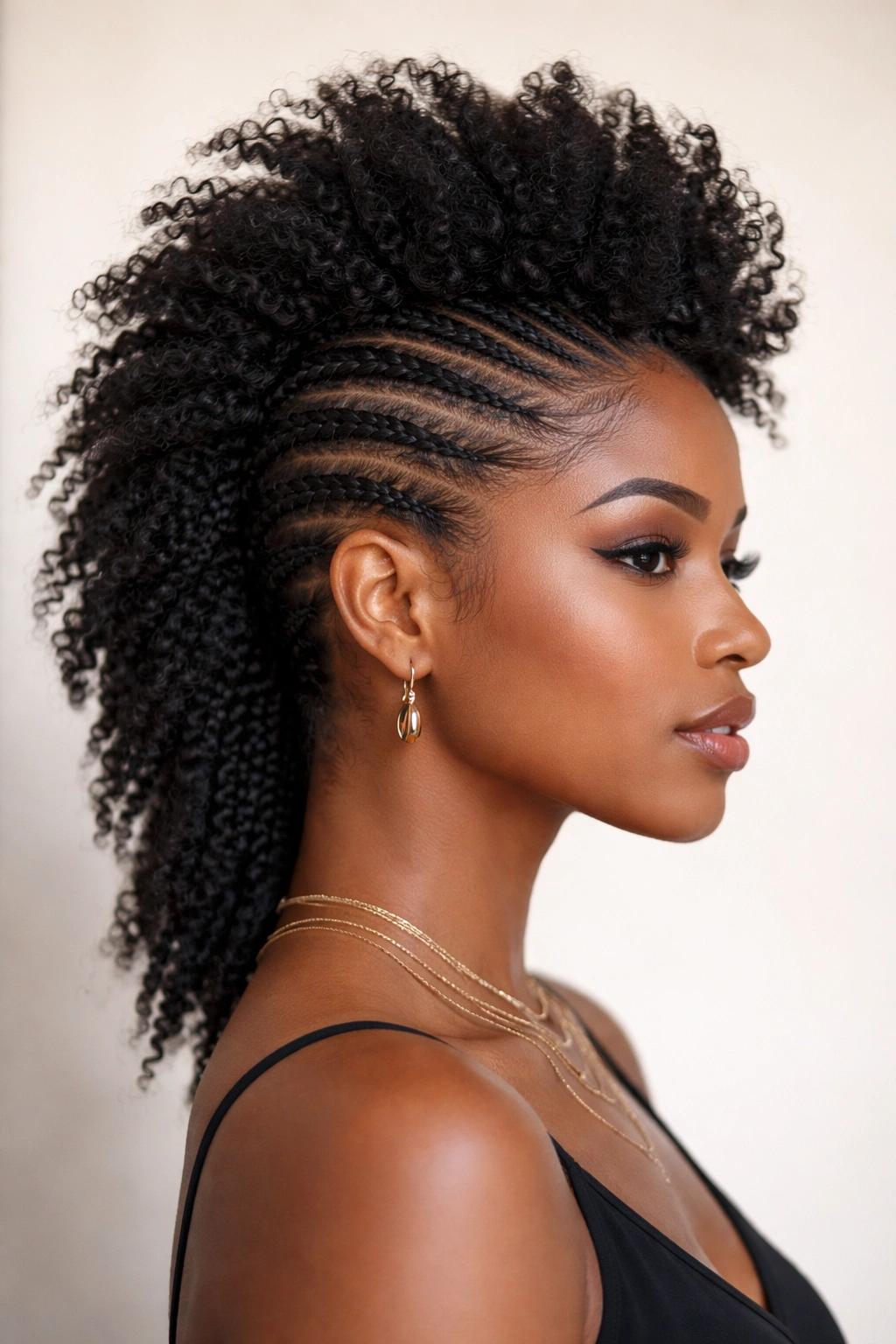
This version combines the aesthetic of a mohawk with the protective benefits of cornrows, making it an excellent choice if you want the look without the commitment of a full fade or if you’re looking to give your natural hair a break from daily styling. The sides are cornrowed close to the scalp in thin, tight rows that angle back and down, while a free section in the middle is left in its natural texture or braided separately for texture contrast.
Why This Hybrid Approach Excels
The faux hawk with cornrows gives you the visual statement of a traditional mohawk while reducing daily styling demand and protecting the edges of your hair. Because the sides are braided rather than shaved, it’s completely reversible—you can wear this style for two to four weeks, then unravel the braids and transition to something completely different. The cornrows themselves can be incredibly creative. Some women angle them toward the back in parallel rows, while others braid them in a crosshatch pattern or spiral them outward from a center point. The freed section in the middle can be styled as an afro, left natural, or even braided into larger twists for added texture and interest.
Styling Variations to Try
- Slick back the cornrowed sides with edge control, keeping the crown side completely natural and volumized for contrast
- Braid the central section into two thick twists that sit atop the cornrows, creating a two-tone texture effect
- Use threading or colored yarn woven through the cornrows to add a pop of color without dyeing your natural hair
- Create a tapered look where the cornrows start thick at the crown and gradually thin as they move toward the nape
- Leave the crown section loose and arrange it into an afro pick-friendly shape for a punk-inspired silhouette
Worth knowing: Cornrows can be left in for up to 4 weeks if you keep them moisturized and clean, making this a genuine low-manipulation protective style.
3. The Sharp Geometric Fade Mohawk
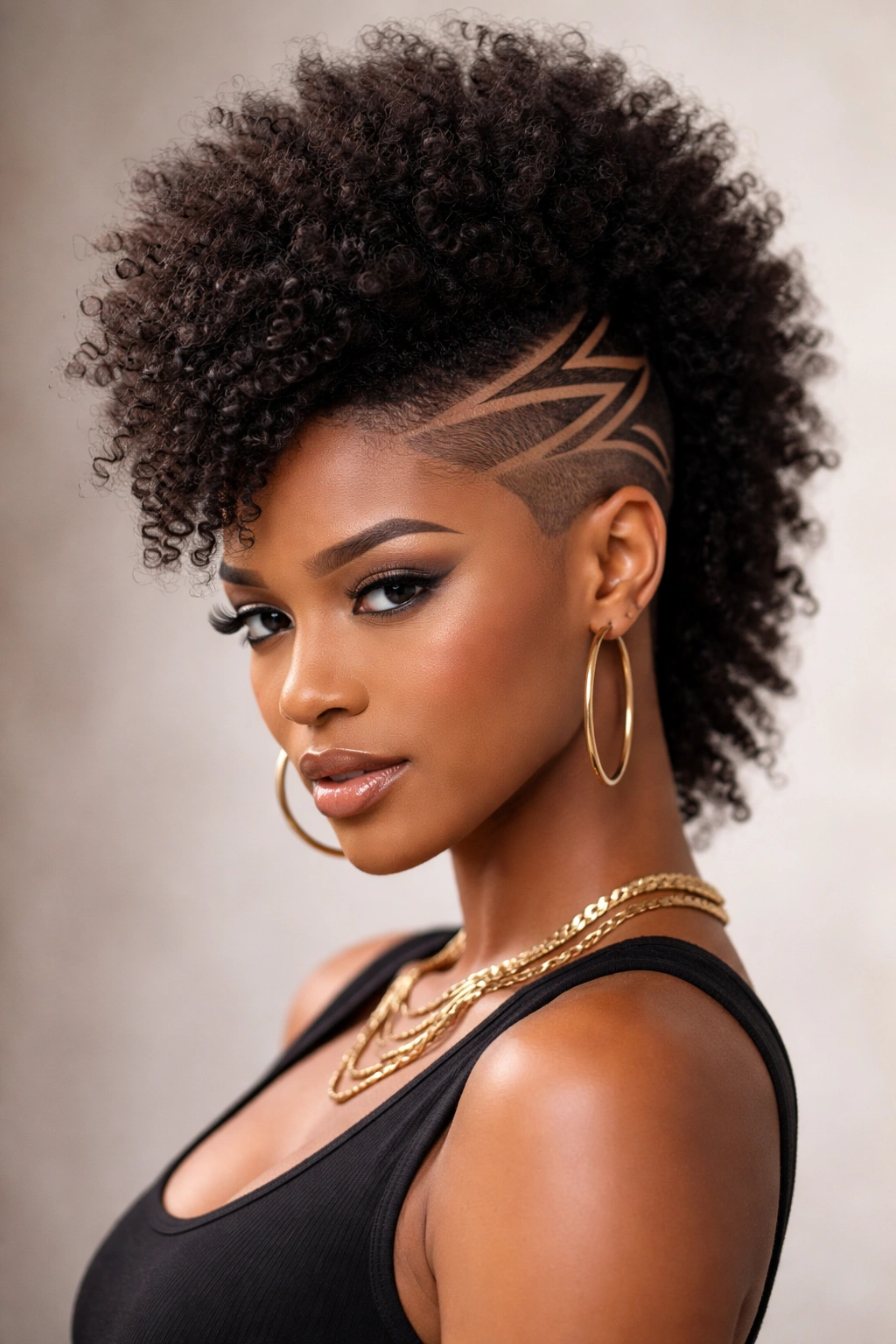
For those who want serious design presence, the sharp geometric fade mohawk is the answer. This version involves buzzed or very closely cropped sides with a deliberately shaved design—perhaps a lightning bolt, angular stripes, or geometric patterns. The crown remains thick and voluminous, creating a canvas that makes the sculpted sides even more striking.
The Design Element That Transforms It
A sharp geometric fade completely changes the energy of a traditional mohawk. Rather than letting the fade simply exist as a contrast element, you’re actively designing it. This could be a thin line running from the hairline back toward the crown, creating two distinct sections on each side. It could be diagonal stripes, a crosshatch pattern, or architectural angles that you love. The designs are temporary—as your hair grows, they’ll fade and eventually disappear—which means you can update them with each cut or leave them fade naturally and try something entirely new next time.
Design Options and Placement
- Thin vertical lines running from the temple toward the back of the ear for a sleek, directional feel
- Diagonal stripes across the side of the head, creating an illusion of movement and flow
- Geometric block patterns that create interesting visual texture against the smooth fade
- A shaved line or series of lines that create a frame for the crown section, drawing the eye upward
- Asymmetrical designs—different patterns on each side of the head for an avant-garde aesthetic
Insider note: Take a reference photo or Pinterest board to your barber showing exactly what you want. The more specific you can be about angle, thickness, and placement, the more accurately they can execute your vision.
4. The Soft Tapered Mohawk
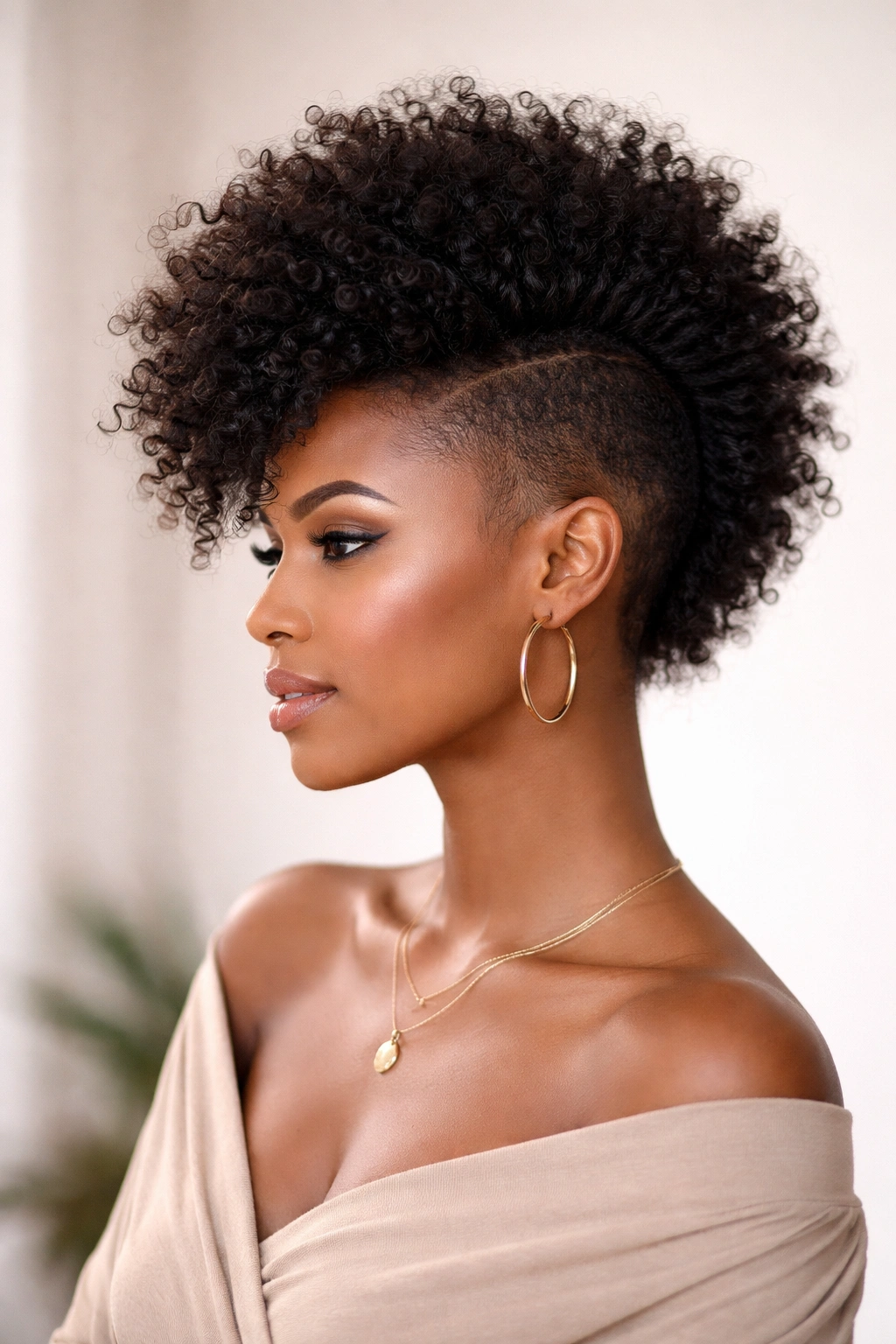
Not everyone wants their mohawk to scream. The soft tapered mohawk is all about elegance and subtlety. In this version, the sides gradually taper to shorter lengths rather than being fully faded or shaved. The sides might start at three-quarters of an inch at the temple and gradually taper down to a quarter-inch at the nape, creating a much softer silhouette overall.
When Subtle Elegance Wins
The soft tapered mohawk works beautifully in professional environments where you want to express your style without making a statement that might distract from your work. It’s also a wonderful choice if you’re transitioning back to longer hair or exploring the mohawk concept for the first time. The gradual taper is incredibly flattering because it creates visual flow rather than visual shock. Your face shape is still framed, but the effect is more integrated and refined. This version photographs beautifully and pairs well with everything from casual wear to formal occasions.
Styling the Soft Taper
- Wear the crown naturally textured and slightly voluminous, allowing your curl pattern to be the focal point
- Apply a light leave-in conditioner to the crown to enhance curl definition without adding heaviness
- Use a flexible styling cream on the tapered sides to smooth them without making them look plastered or overly groomed
- Let the crown grow out a bit more on this style—the additional length helps balance the softer sides
- Pair this style with softer, more polished aesthetics: gold jewelry, vintage fashion, minimalist clothing
Pro tip: Request a “fade line” at your nape—a subtle horizontal line where the shortest length happens—to give even more definition without looking aggressive.
5. The Braided Crown Mohawk
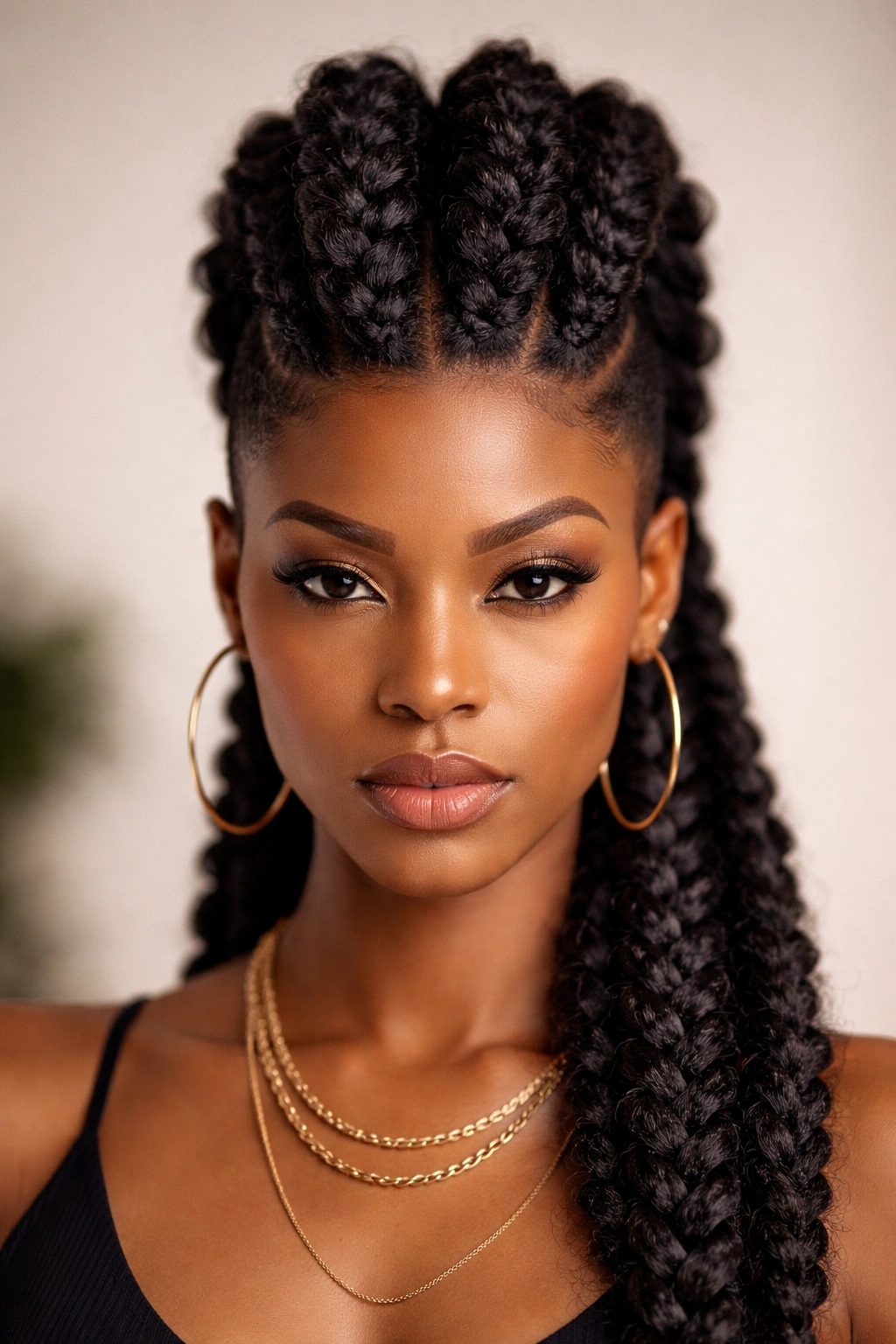
This style elevates the afro mohawk into something almost celebratory. The sides are faded or closely cropped, but the crown is where the magic happens. The central section is divided into 2-4 thick, loose braids or twisted sections that showcase dimension, texture, and artistry. This version is perfect if you’re looking for something that photographs beautifully and shows off your styling skills.
Execution and Texture Play
The braided crown works best when you use contrasting textures or sizes to create visual interest. You might braid the very center section tightly for definition, then flank it with looser, more textured twists on either side. Or you could create two thick braids on either side of the crown and leave a natural textured section down the middle. The braids can be practical—protecting your hair while looking gorgeous—or they can be purely aesthetic, styled for a special event. Some women like to weave thread or yarn through the braids for added color and dimension.
Braid Patterns to Explore
- Two French braids running parallel down the center of the crown, creating a symmetrical, almost formal appearance
- Three sections: tight center braid flanked by two looser twists for dimension and movement
- Waterfall braids or fishtail braids that showcase intricate technique and catch light beautifully
- Combination braid-and-twist style, alternating between different techniques for textural variety
- Loose, undone braids that look effortlessly romantic while still reading as intentional and designed
Worth knowing: If you’re not skilled at braiding your own hair, ask a braider or stylist to create the crown design for you, then maintain it yourself with nightly moisturizing and morning refreshing until you’re ready for a new style.
6. The Colored Accent Mohawk
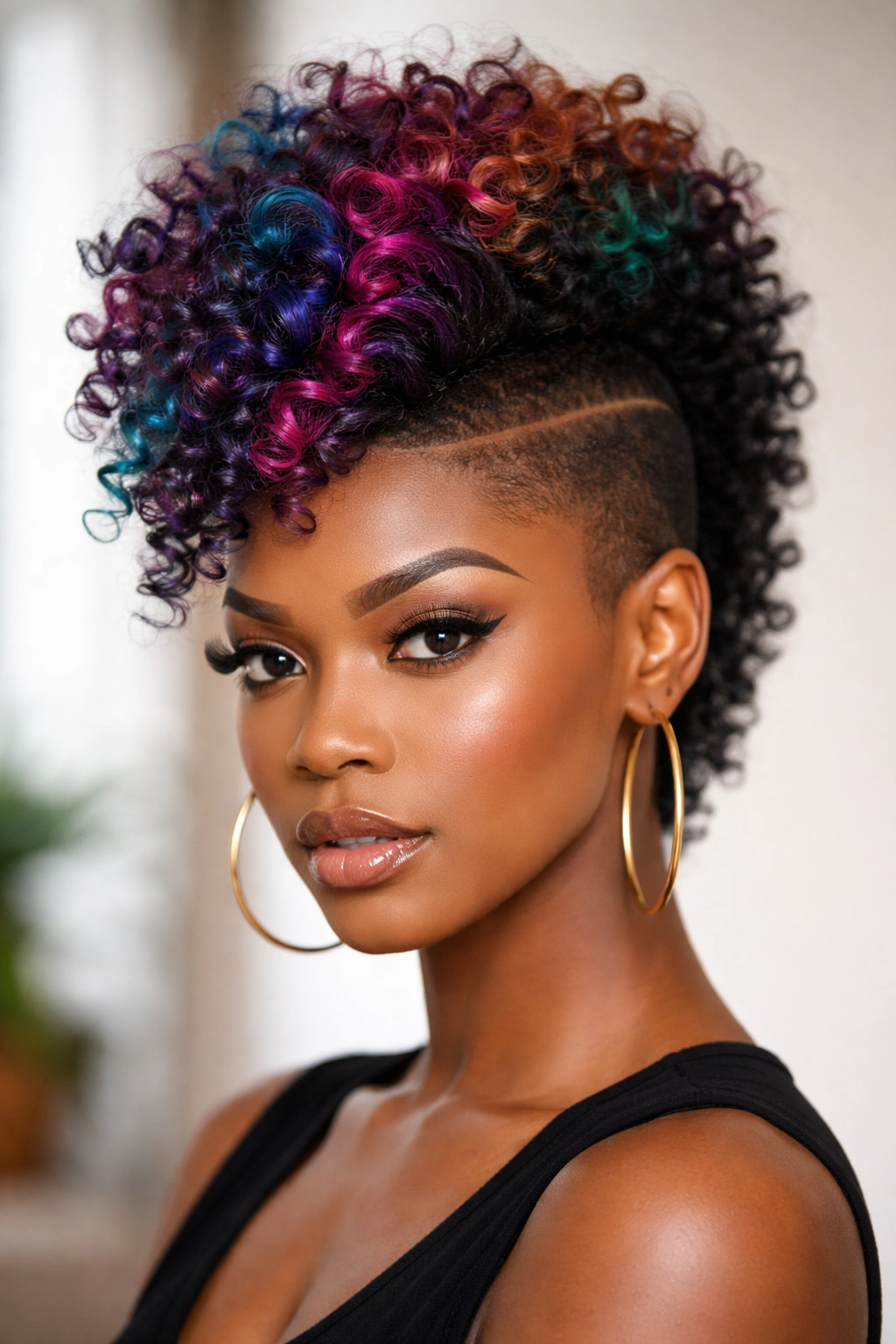
Why stick with one color when you can tell an even bigger story? The colored accent mohawk features a faded or closely cropped sides paired with either a dyed crown or colored extensions braided or twisted into the crown section. This might be a bold jewel tone, a bright neon shade, a warm copper, or even a subtle balayage. The color concentrates where it’s most visible and has the most impact.
Making Color Work Safely
If you’re thinking about dyeing your natural hair, approach it thoughtfully. Lighter shades like golds, warm browns, or copper tones can look stunning on deeper skin tones and are often less damaging than bleaching for brighter hues. If you want neon pink, electric blue, or other bold fashion colors, consider using colored extensions or braiding colored yarn through natural twists instead. This way you get the exact shade you want without risking damage to your natural hair. You can change the color whenever you want, and it’s completely reversible.
Color and Shade Combinations
- Deep burgundy or wine tones against dark skin for a luxe, sophisticated look
- Warm copper or rose gold highlights in the crown against darker faded sides
- Jewel-tone blues or purples that create stunning contrast while still feeling grounded
- Blonde or honey-toned highlights that catch light and add dimension
- Two-tone or ombre effects in the crown: transitioning from one shade to another as it gets longer
Pro tip: If you dye your natural crown, use a color-safe shampoo and deep condition weekly. The dyed hair is more delicate and prone to breakage, especially at the demarcation line between natural and colored hair.
7. The Sculptural Afro Mohawk
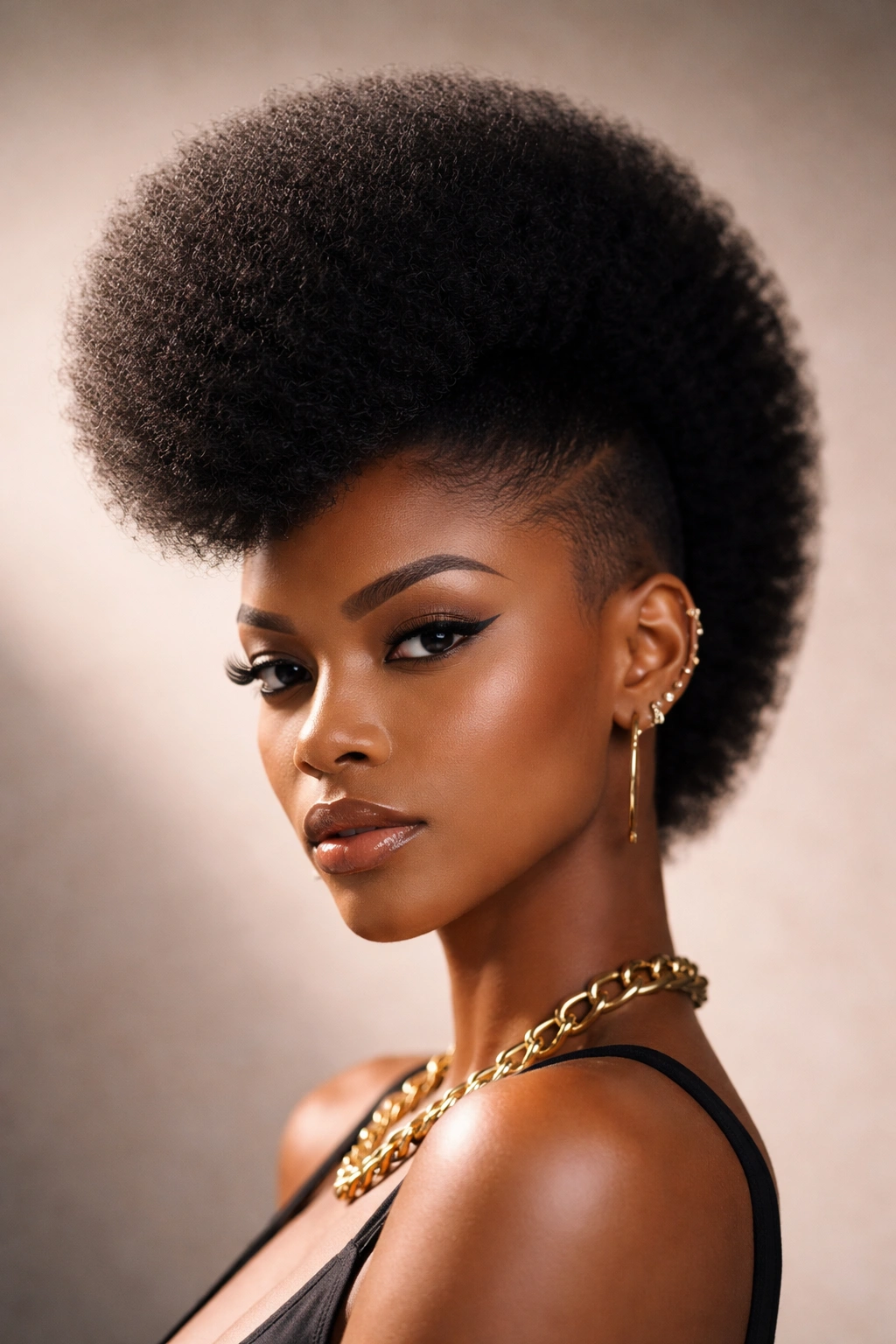
This is the version for people who love the idea of a true 3D silhouette. The sides are faded or undercut to emphasize maximum volume and height in the crown. But here’s the difference: the crown section is shaped and sculpted into an intentional form. This might mean a rounded, domed top; an angular, geometric shape; or even a tapered point. The curl pattern and length work together to create literal architecture.
Creating and Maintaining the Shape
The sculptural mohawk requires a bit more styling attention than some other versions, but the payoff is a hairstyle that’s genuinely wearable art. You’ll use a styling product like a styling cream, gel, or mousse to coax your curls into the desired shape. Some women pick out their afro with a wide-tooth comb or pick to emphasize roundness and volume. Others use a flatter brush or their fingers to encourage angles and definition. The shape you create can be adjusted based on your mood—more rounded and soft one day, more angular and sharp the next.
Shapes and Silhouettes to Consider
- A perfectly rounded dome that rises from the crown, giving serious height and visual presence
- An angular, geometric shape that tapers to a point at the top—think sculptural and fashion-forward
- An asymmetrical shape: taller and more voluminous on one side, creating movement and asymmetry
- A crown shape with movement and fluidity, curls arranged to suggest wind or motion
- A flat-top aesthetic, where the crown forms a relatively straight line across the top
Insider note: This style photographs incredibly well, especially in good natural light that highlights the texture and shape. If you love this hairstyle, take photos in different lighting to capture its full dimension.
8. The Locs Mohawk
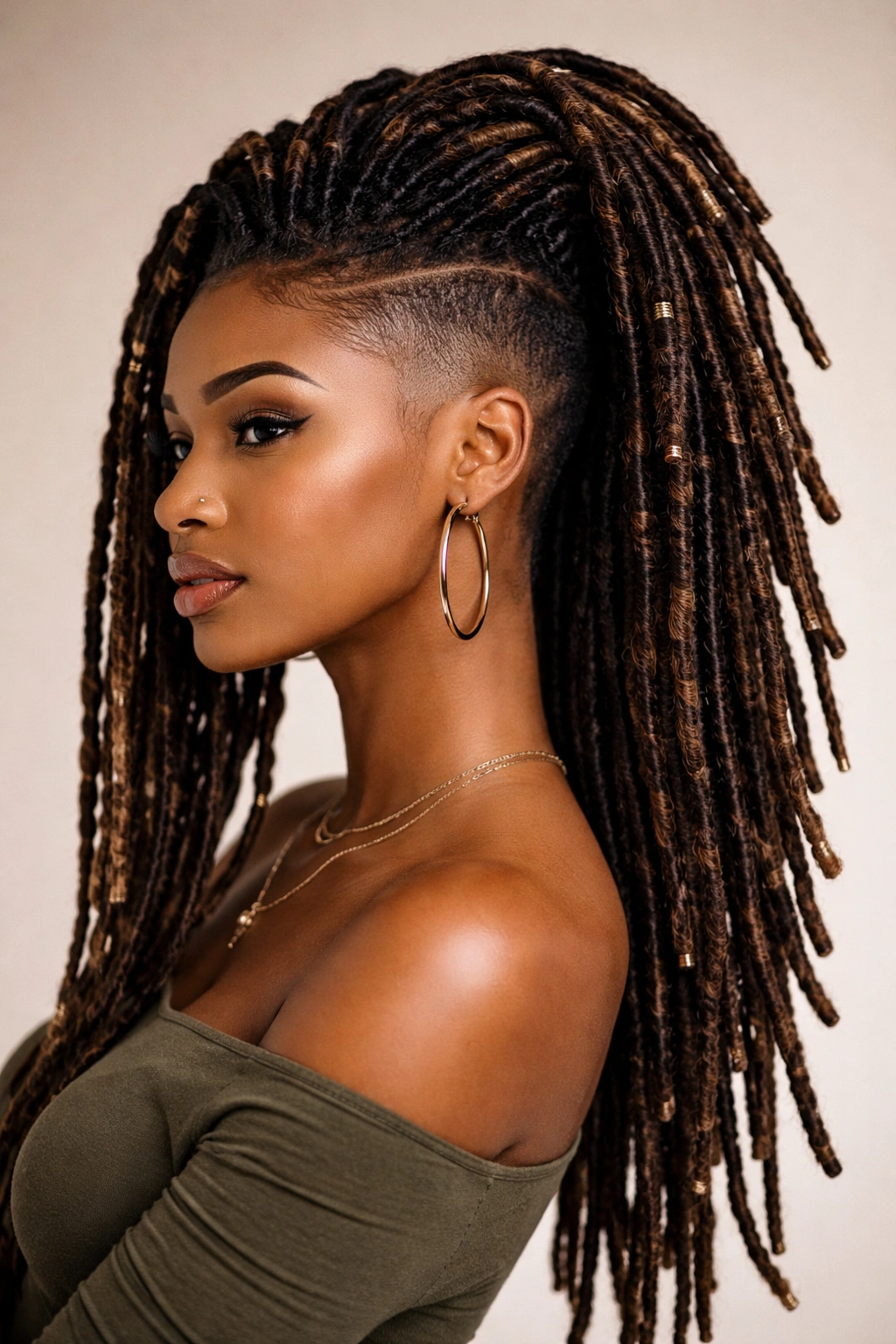
If you’re already wearing locs, or if you’ve been considering them, a locs mohawk combines the protective benefits of locs with the bold statement of a mohawk. The sides are faded or closely cropped, while the crown is left as long locks that can be styled in various ways. This is the most protective, low-manipulation version, and it’s also the most permanent-looking commitment.
Building and Styling the Locs
If you’re starting from scratch, you’ll need time to build your locs—the process typically takes 2-4 months depending on your hair texture and method of installation (palm rolling, interlocking, freeform, or with a loctician). Once they’re established, a locs mohawk is actually one of the easiest styles to maintain. You simply wash your locs every 1-2 weeks, allow them to air-dry, and retwist the roots every 4-8 weeks depending on how fast your new growth comes in. For styling variety, you can tie the locs up in a high ponytail or bun, braid them, wrap them with thread, or leave them to flow freely.
How to Wear Your Locs Mohawk
- Free and flowing: release all the locs and let them fall naturally down your back, the volume and length creating the mohawk effect
- Gathered high: use a hair tie or scarf to pull all the locs into a high ponytail, creating a fountain effect from the crown
- Half-up style: gather the back portion into a bun or ponytail while leaving the front and sides free for a softer look
- Braided crown: gather multiple locs together and braid them into larger sections, creating a hybrid mohawk-and-braid aesthetic
- Wrapped and styled: wind thread, yarn, or fabric around sections of your locs to add color and dimension
Worth knowing: Locs are a long-term commitment, but they’re also incredibly freeing—once established, they require minimal daily styling. This is the ultimate low-manipulation protective style, which means your natural hair gets time to rest and repair.
Final Thoughts
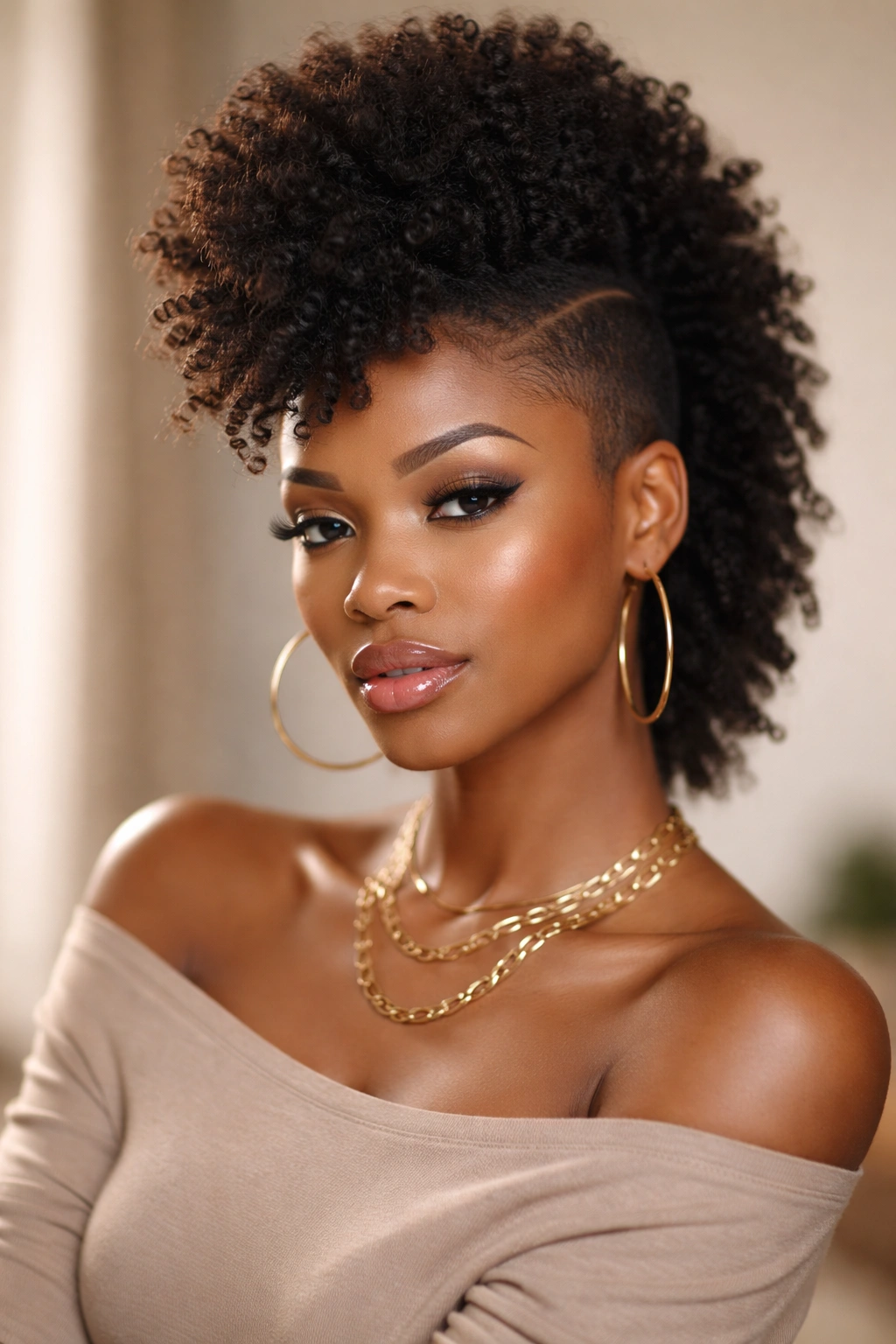
An afro mohawk in any of these forms is more than just a hairstyle—it’s a declaration of confidence and self-expression. Whether you choose the classic high-volume version, a soft tapered fade, geometric designs, protective cornrows, or a bold color accent, the key is selecting a version that resonates with your personality and lifestyle. Some of these styles demand more daily styling attention, while others are genuinely low-maintenance once they’re established.
The beauty of the afro mohawk is its versatility. You can wear one version for a year, then cut it completely differently and explore a totally new aesthetic. Each variation offers its own benefits and aesthetic payoff. What matters most is that you feel powerful, beautiful, and authentically yourself when you look in the mirror.
Take time to research your options, find a stylist or barber who understands the vision you’re going for, and don’t hesitate to bring reference photos or descriptions of exactly what you want. A skilled professional can bring these styles to life in ways that feel unique to your hair texture, face shape, and personal taste. Once you’ve found your mohawk, you’ll understand why this style has remained iconic for so long.
