



The tapered afro has become one of the most versatile and empowering styling options for people with 4C hair texture. This cut gives you the fullness and definition of a natural afro while the strategic tapering on the sides and back creates clean lines, reduces bulk, and makes styling easier to manage and maintain. Unlike closely cropped cuts, a tapered afro lets your hair grow to a noticeable length while keeping the overall silhouette sharp and intentional.
What makes tapered afros particularly suited to 4C hair is how they work with the natural shrinkage and texture pattern of your coils. When you taper the sides, you’re not fighting against the density of your hair — you’re using it strategically. The fuller crown gives you room to show off the definition of your curls and coils, while the shorter, tapered sides eliminate the need for constant touchups and give you that polished, groomed appearance. Whether you prefer a dramatic high-fade or a subtle taper, there’s a tapered afro style that fits your lifestyle, face shape, and hair goals.
The beauty of this cut is that it adapts well to everything from low-maintenance everyday wear to carefully styled occasions. You can let it grow wild and textured, smooth it down with styling cream, twist it out for defined coils, or create patterns and designs in the tapered sections. The variety is genuinely impressive, and most of these styles can be achieved with the right cut and a few basic styling techniques.
1. Classic Tapered Fro
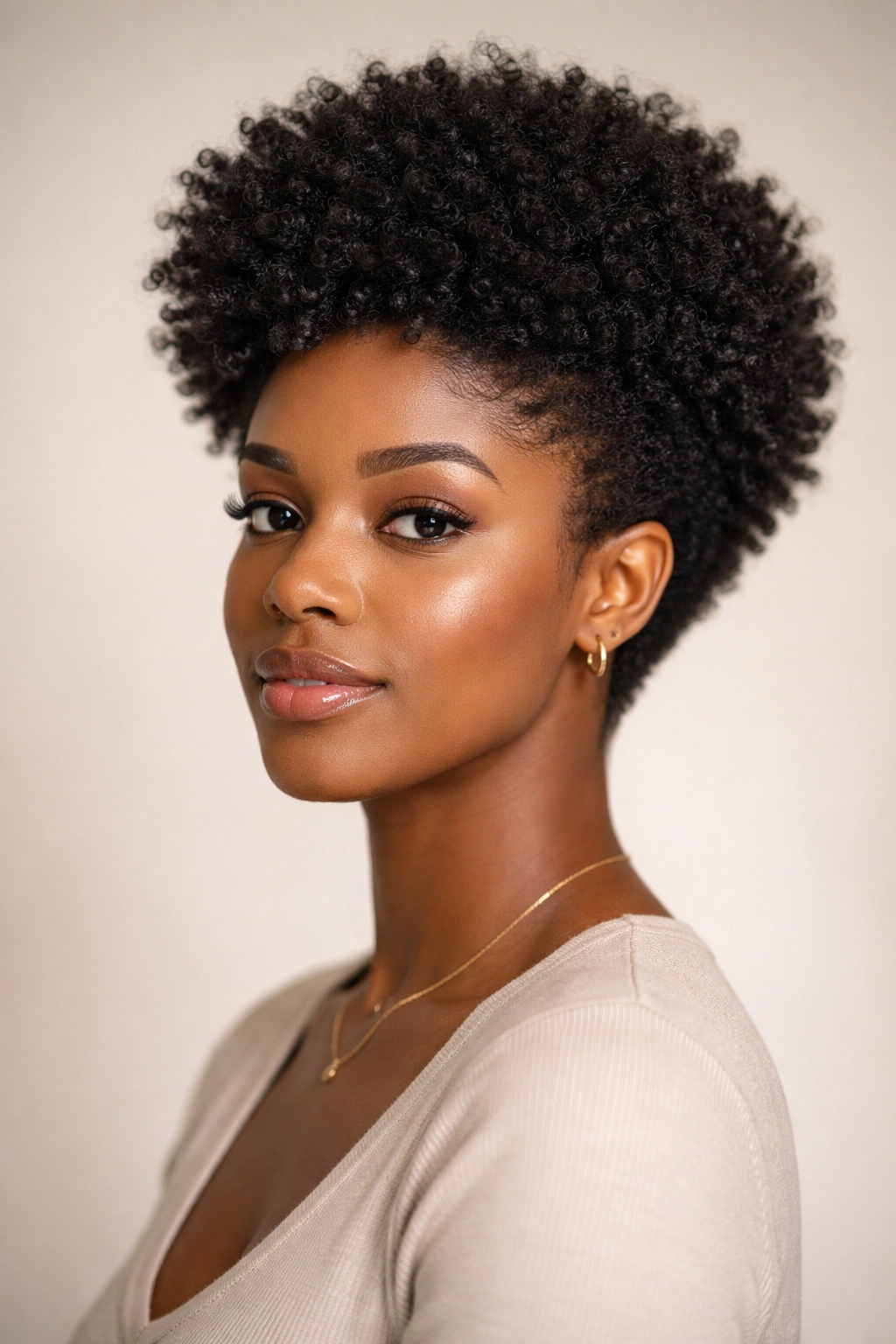
The classic tapered afro is the gold standard for 4C hair — it’s the look that started the tapered afro movement. This style keeps substantial length and volume on top while tapering gradually down the sides and back, typically starting from mid-ear level and getting shorter toward the nape. The result is a rounded, symmetrical shape that sits nicely on the head and shows off the natural texture and coil pattern of your hair.
Why It Works So Well for 4C Hair
The classic tapered fro leverages the natural shrinkage of 4C hair rather than fighting it. As your hair shrinks and the coils compress, the taper stays clean and defined without needing frequent maintenance. The density of 4C curls in the crown area creates that full, impressive look that makes this style visually striking. You get height and volume where it matters most without the awkward weight of longer sides pulling your coils down and distorting the shape.
What You Need to Know
- Maintenance happens roughly every 3 to 4 weeks, depending on how fast your hair grows
- This look works best when you get the initial cut from a barber or stylist experienced with natural hair texture
- Product-wise, you’ll need a lightweight styler (edge control, pomade, or styling butter) to define and smooth the tapered sides if you want that polished finish
- The style can look textured and wild or neat and groomed depending on how you style it — both versions of the classic tapered fro are equally valid and look professional
Pro tip: Moisturize the tapered sides every couple of days. The shorter hair dries out faster than your crown, so a light leave-in conditioner or styling cream keeps those sides looking sharp and prevents breakage.
2. High-Top Fade Afro
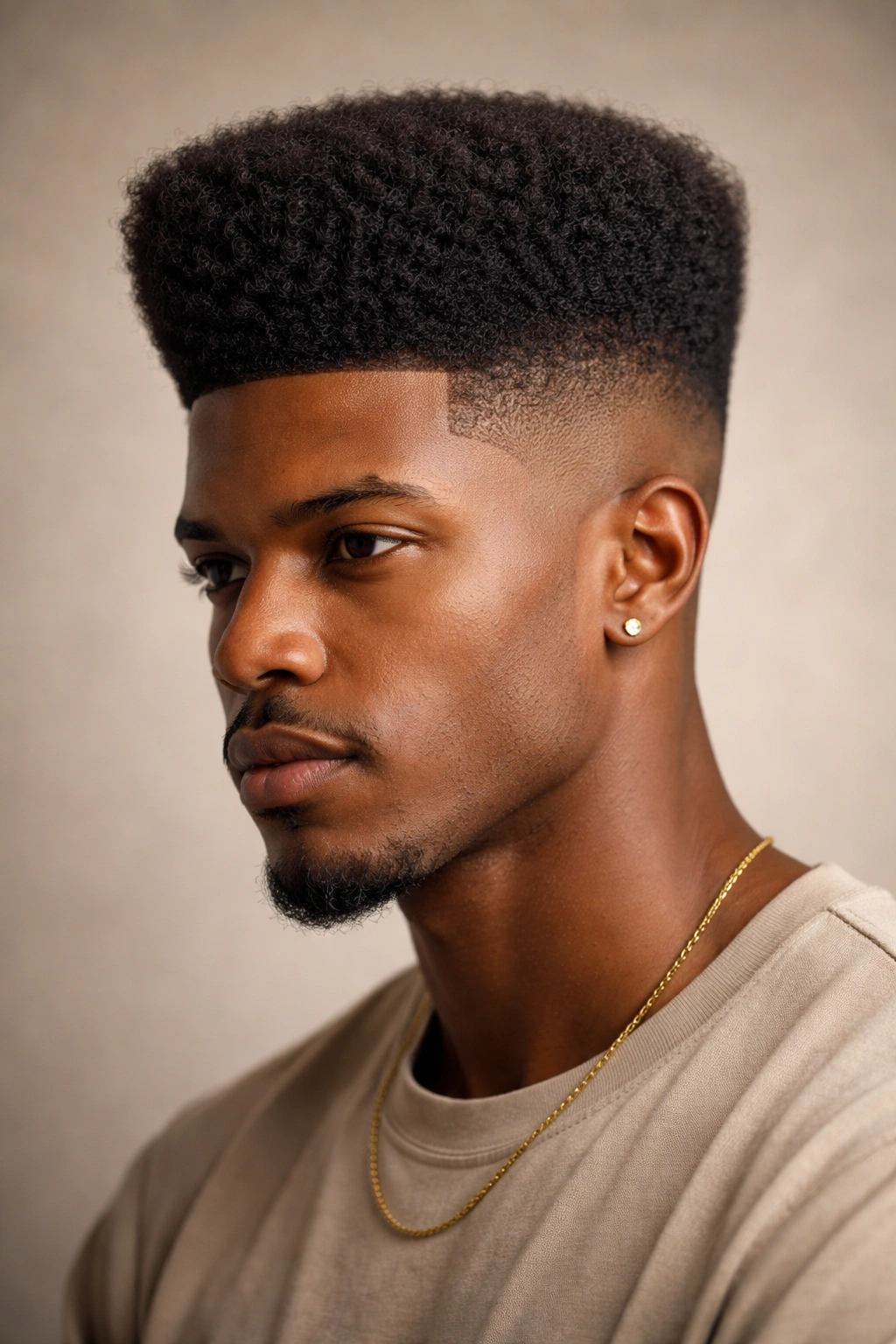
The high-top fade tapered afro is bolder and more dramatic than the classic version. The fade starts much higher up the head — often at temple level — and drops steeply down the sides, creating a sharp contrast between the voluminous crown and the closely cropped or faded sides. The top stays longer and fuller, sometimes even slightly flattened or shaped at the crown to emphasize the height. This is a statement-making style that reads young, confident, and intentional.
The Visual Impact and Styling Options
A high-top fade gives you serious presence. The dramatic contrast between the length and shape at the crown and the clean fade on the sides makes your hair look fuller and your face shape more defined. The steep angle of the fade also means you get a very sharp, clean line that reads as professional in most settings. Many people style the crown section with a slight angle or shape, using edge control and brushing technique to emphasize the geometry of the cut.
Maintenance and Styling Considerations
- High-top fades need trims every 2 to 3 weeks to keep the fade sharp and prevent it from growing out and looking shaggy
- You’ll want a barber experienced with natural hair texture — fades on 4C hair require different technique than fades on straighter textures
- The style demands some daily styling to look its best; you’ll typically use edge control, a wave brush or paddle brush, and styling cream to shape the crown
- For a cleaner, more polished look, many people brush the crown hair backward or to the side to emphasize the high fade underneath
Worth knowing: If you wear protective styles or hats regularly, a high-top fade can show wear quickly. The contrast makes regrowth and uneven spots more visible than with a more gradual taper.
3. Textured Tapered Sides with Full Crown
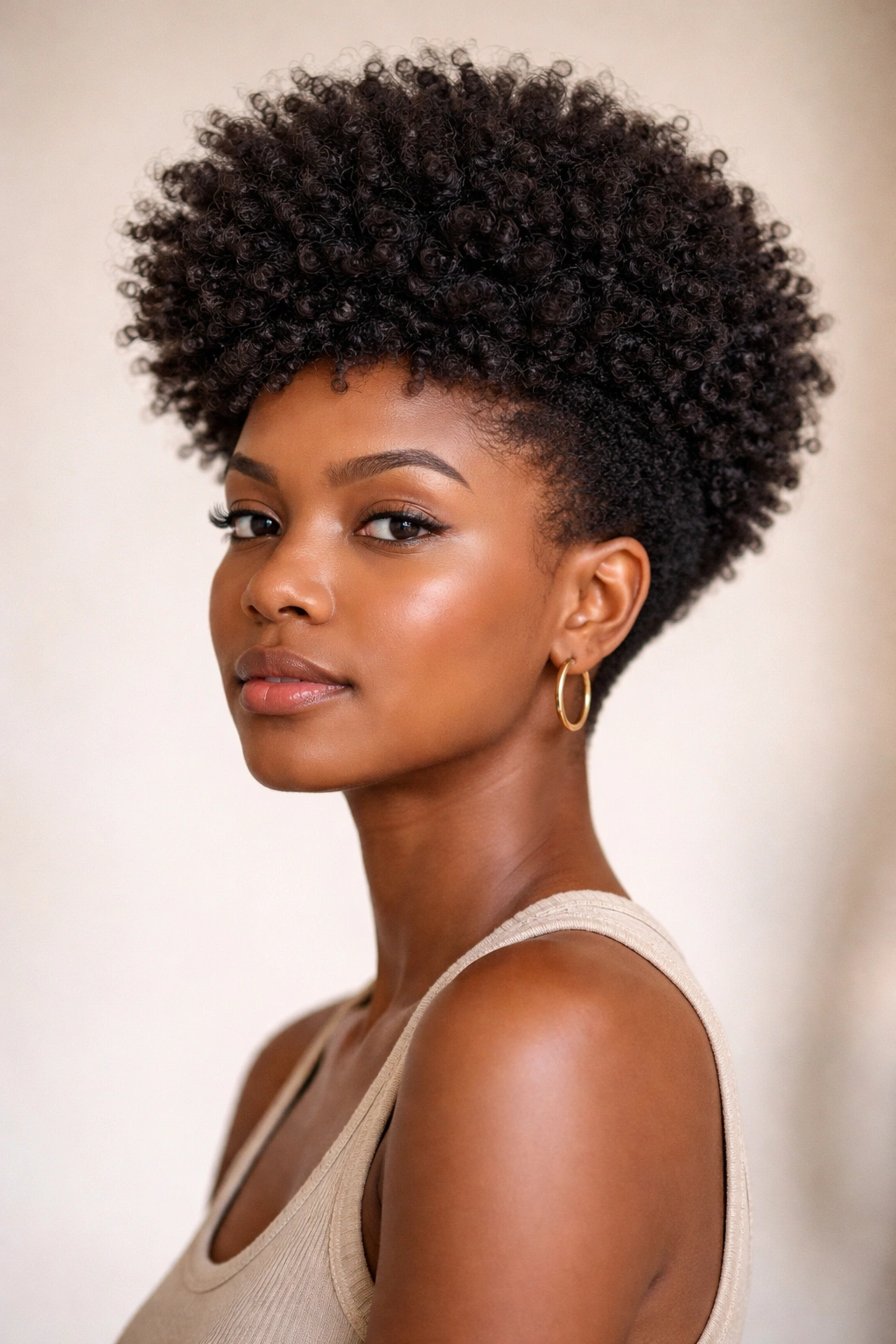
This style keeps a massive amount of volume and texture on top while the sides taper down gradually from roughly ear level. Unlike the classic tapered fro, this version prioritizes maximum length and coil definition on the crown, so the coils and texture are really visible and impressive. The sides are tapered but not faded — they’re still relatively short, just not dramatically short. This is ideal if you want the groomed look of a taper without the commitment of regular fades.
What Makes This Look Special
The full, textured crown is where this style shines. Because the sides are shorter, the weight distribution is perfect for keeping your coils defined and bouncy rather than compressed. Your hair air-dries into a beautiful, rounded shape with visible coil pattern rather than compressed density. The overall effect is both natural and intentionally styled — like you’re showing off your actual hair texture rather than forcing a specific geometric shape.
Growing It Out and Styling It
- This style is more forgiving between cuts than high fades, usually good for 4 to 6 weeks before looking overgrown
- The tapered sides actually help the crown look fuller by contrast
- Styling is straightforward: moisturize, fluff, and let the texture do the work, or smooth with cream for a more polished finish
- This version works beautifully with twists, braids, or coils in the crown section, since you have length to work with
Pro tip: Refresh this style between cuts by getting just the sides shaped up every 3 weeks. You don’t need to touch the crown, which preserves your length and allows you to gradually grow it longer.
4. Tapered Twist-Out
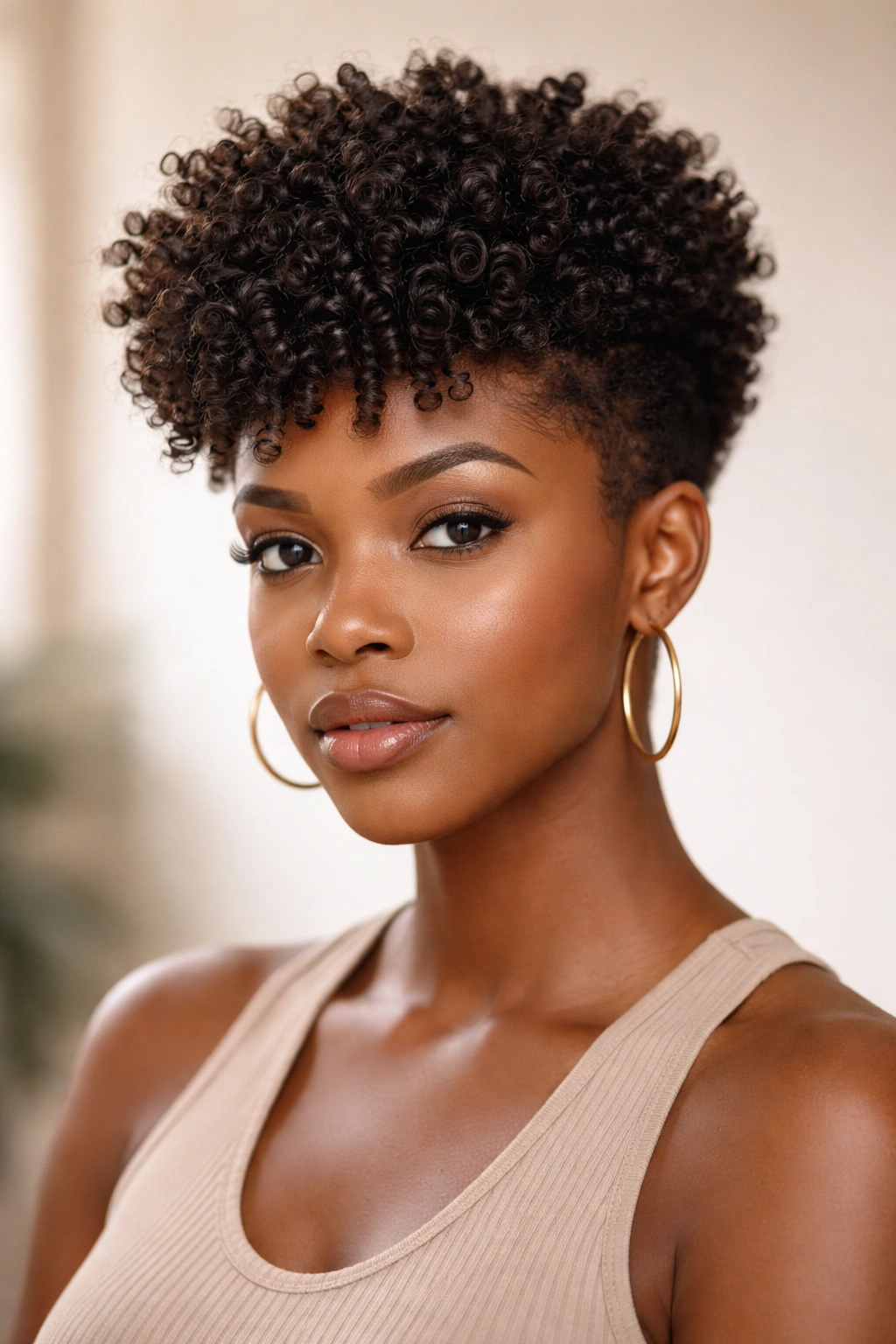
The tapered twist-out combines the structured look of a twist-out with the groomed lines of a tapered cut. You get your hair cut into a tapered shape, then two-strand twist the crown section while it’s longer and damp, let it dry completely, and unravel the twists to reveal gorgeous, defined coils. The tapered sides stay smooth and groomed, while the crown is packed with coil definition and texture.
How to Achieve the Look
To create a twist-out on tapered sides, start with wet or damp hair in the crown section. Two-strand twist or three-strand braid sections from root to tip, keeping tension consistent so all the twists are roughly the same size. You can leave the twists in overnight or longer — the longer they set, the more defined the coils will be. Once dry, carefully unravel each twist section by section to reveal springy, defined coils. The tapered sides remain smooth and provide a clean frame for the textured crown.
Maintenance and Duration
- A twist-out typically lasts 5 to 7 days before needing a refresh, depending on sleep patterns and manipulation
- You can extend the style by refreshing it with a light mist of water or leave-in conditioner and retwisting just a few sections at a time
- The tapered sides stay groomed throughout the entire week, which keeps the overall style looking intentional even as the crown texture relaxes slightly
- This look works well if you like variety — you can switch between a defined twist-out and a smoother, fluffed-out crown depending on your mood
Real talk: Twist-outs require some planning and patience. If you sleep a certain way, your twists might slide or crease unevenly. Sleeping on a silk or satin pillowcase or in a silk bonnet helps preserve them overnight.
5. Tapered Coils with Wave Pattern
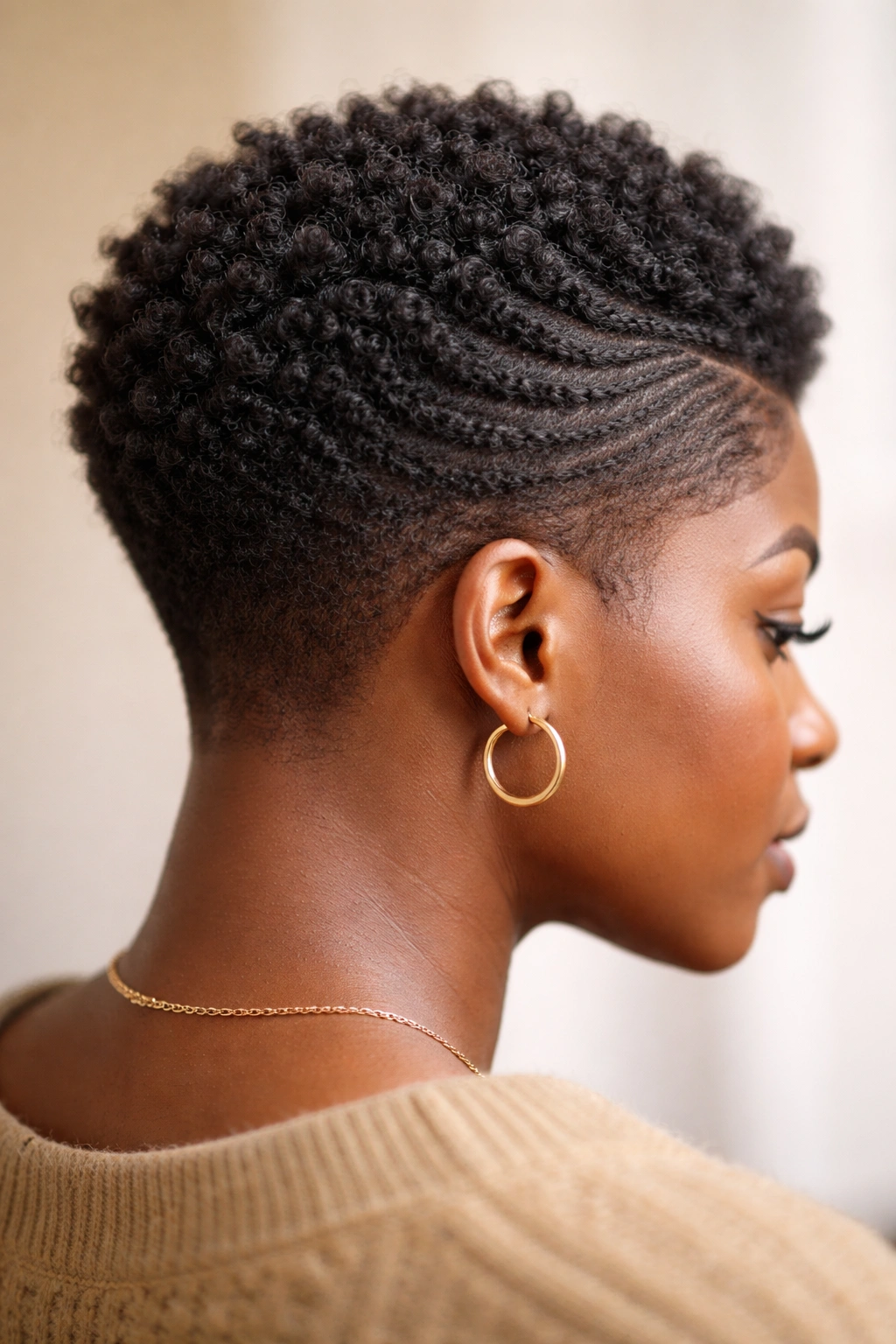
This sophisticated style features a tapered cut with carefully defined coils in the crown that are shaped or brushed to create a wave pattern or ripple effect. The coils are still individually defined, but they’re arranged to flow in a directional pattern — often brushed backward, to one side, or in rolling waves across the crown. The tapered sides provide a clean frame that makes the wave pattern even more striking.
Creating the Wave Pattern
Wave patterns on 4C hair happen through a combination of the cut, the direction you brush while your hair is damp, and product application. After getting your tapered cut, wet or damp the crown section thoroughly. Use a wave brush or paddle brush to brush the coils in your desired direction — backward, forward, or in rolling waves — while the hair is still damp. Apply a lightweight styling cream, pomade, or edge control and continue brushing to set the pattern. As it dries, the coils will set into that wave pattern.
Styling and Refreshing
- This look requires patience and technique to achieve, but it’s worth the effort for special occasions
- You can refresh the wave pattern daily by dampening the crown, brushing, and re-applying product
- The wave pattern tends to relax or shift after sleeping, so this style is best for times when you want maximum polish and don’t mind refreshing it daily
- For everyday wear, you can let the crown go back to its natural textured state and refresh just the tapered edges
Worth knowing: The wave pattern looks most dramatic on freshly trimmed hair. As the hair grows out, the pattern becomes less defined unless you’re actively maintaining it with daily styling.
6. Side-Swept Tapered Afro
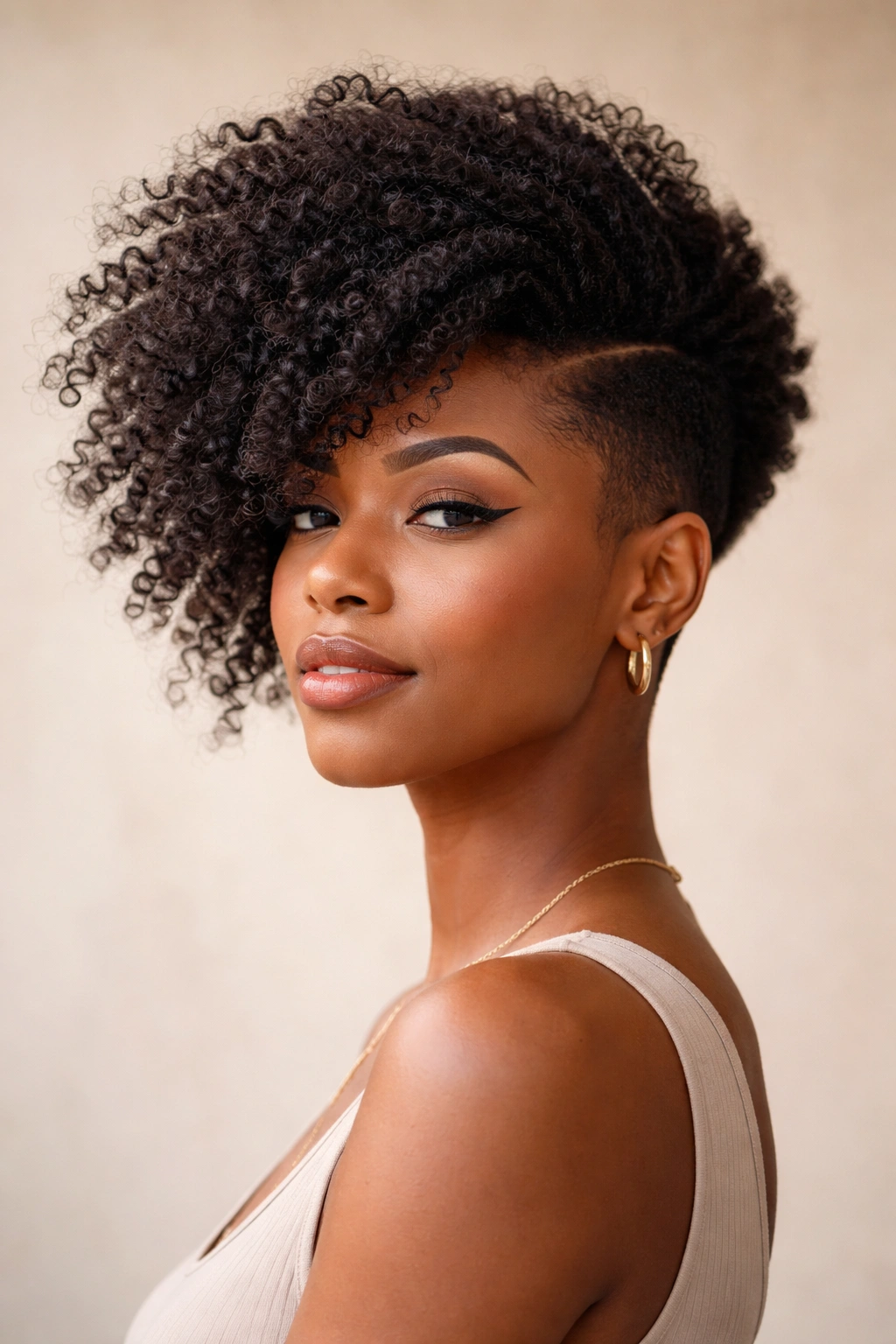
The side-swept tapered afro has the crown longer and fuller on one side than the other, with the hair styled to sweep or fall dramatically in one direction. One side of the tapered cut might be shorter while the other remains longer, creating an asymmetrical, directional look. The effect is artistic, fashion-forward, and gives you a distinct silhouette that’s different from a symmetrical tapered fro.
How to Cut and Style It
The barber or stylist cuts one side shorter (often medium-length) while keeping the other side of the crown longer and fuller. The taper on both sides is clean and groomed, but the length difference is the key feature. You then style the longer side to sweep back or to the side, often using a brush to create movement and direction. The shorter side might be kept smooth and close to the head, or slightly fluffed for texture.
Versatility and Maintenance
- This style is ideal if you like an edgier, less traditional look
- The asymmetrical cut means you might need slightly more frequent trims to keep the shape balanced as it grows
- It works beautifully with edge control and brushing for a sleek, styled appearance, or with a more natural, textured crown
- The directional sweep means you’ll want to style it consistently — if you usually brush your hair backward or to one side, a side-swept cut plays right into that habit
Pro tip: This style photograph beautifully. The asymmetry and directional flow are visually interesting and unique, making it a great choice if you enjoy sharing your style on social media or wanting something that stands out.
7. Tapered Undercut Afro
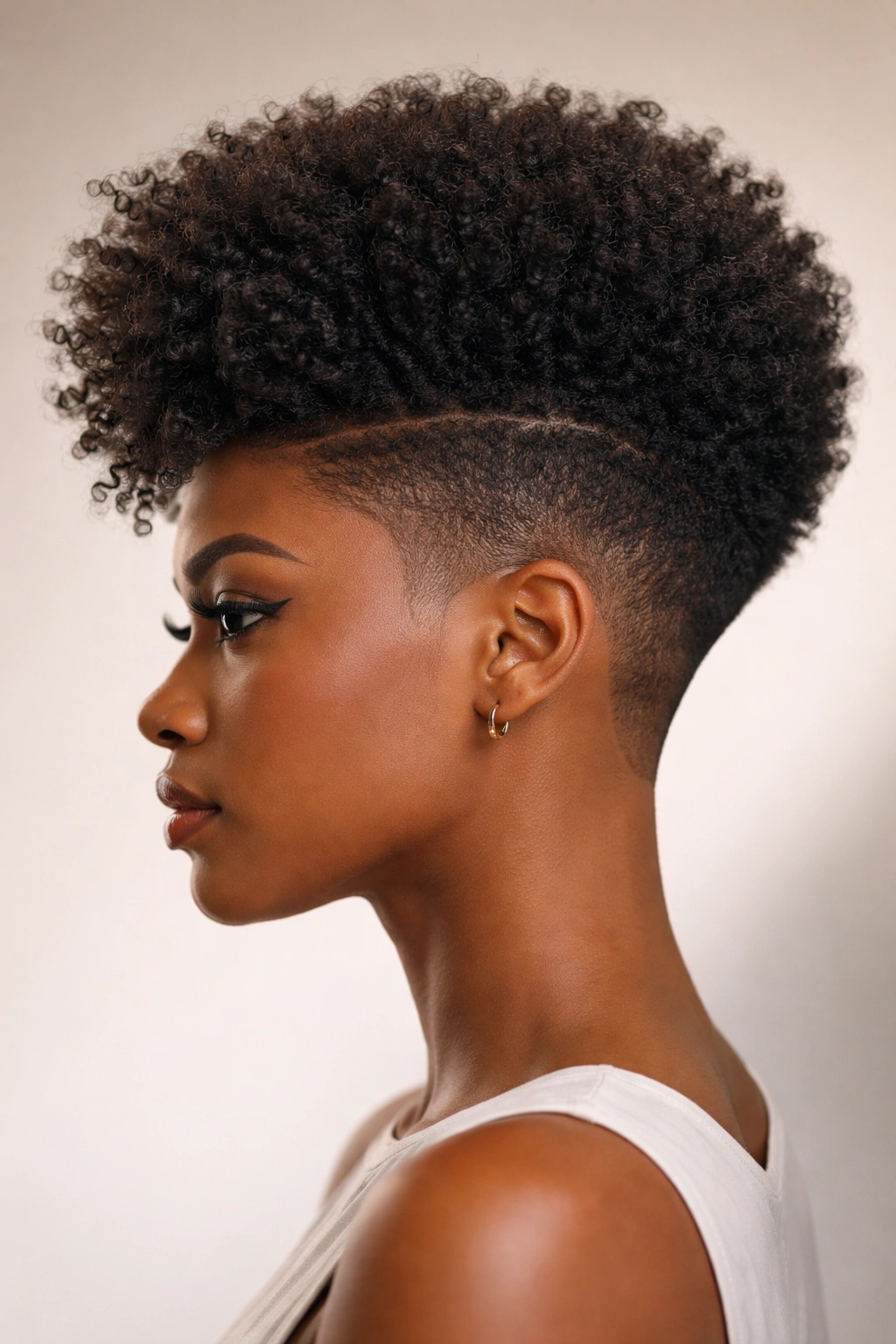
The tapered undercut afro takes the concept of an undercut and adapts it for natural 4C texture. The sides are cut extremely short — almost fade-like — and undercut, meaning they’re actually shorter at the bottom (near the neck and ear line) than higher up. The crown remains long and full. This creates an architectural, geometric look that’s bold and definitely fashion-forward.
The Geometric Appeal
An undercut underscores the natural geometry of an afro. The longer, voluminous crown contrasts dramatically with the closely cropped undercut sides, which creates visual interest and draws attention upward to your face. The style has an artistic, almost sculptural quality. It works particularly well if you have a nice face shape that you want to frame and highlight.
Execution and Styling
- This is a haircut that truly requires an experienced barber or natural hair stylist — the geometry of an undercut is all about precision
- The undercut creates clean lines underneath that reveal the back of your neck and ears, so this style works best if you’re comfortable showing those features
- Styling is relatively simple once the cut is right: keep the crown textured or smooth depending on your preference, and the tapered undercut speaks for itself
- The short, tapered undercut means less maintenance than longer tapered sections — you’ll need trims every 3 to 4 weeks to keep the undercut sharp
Real talk: An undercut tapered afro is not a subtle style. It’s a statement cut that reads as confident and intentional. If you prefer a more conventional look, this might not be your choice, but if you love being seen, it’s fantastic.
8. Burst Fade Tapered Afro
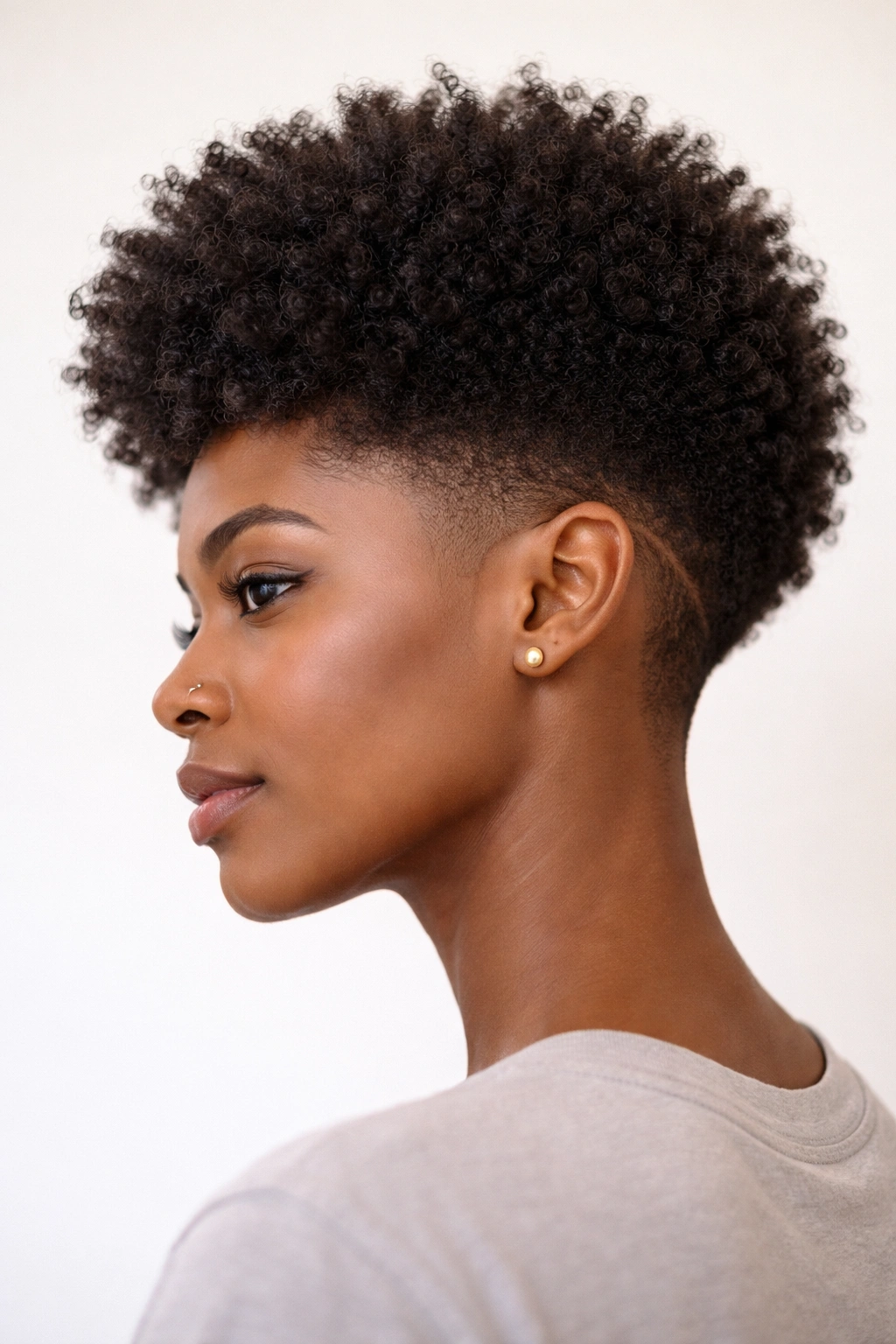
A burst fade tapered afro features a fade that radiates outward from a central point, typically behind the ear or at the side of the head. Instead of a straight taper line, the fade curves and flows around the natural contours of your head, creating a softer, more organic look than a linear taper. The burst pattern is particularly flattering because it follows the shape of your skull rather than fighting against it.
Why Burst Fades Work for 4C Hair
The burst fade pattern is genuinely flattering on round or square face shapes because the curves of the fade soften and balance facial geometry. The fade flows naturally rather than creating harsh lines. For people with 4C hair, this matters because your hair texture and shrinkage make geometric lines more dramatic. A burst fade softens that drama while still maintaining the groomed aesthetic of a tapered afro.
Styling and Maintenance
- Burst fades require a very skilled barber — this is not a cut to try with someone inexperienced with natural hair
- The pattern needs to be refreshed every 2 to 3 weeks to maintain the shape and keep the fade looking intentional
- Styling can be as simple or as elaborate as you want — the burst pattern looks good smooth and groomed, or textured and wild
- This cut works well at any length in the crown, from short and simple to longer and more dramatic
Worth knowing: If you’re growing the crown out, a burst fade actually looks good throughout the grow-out process. The pattern is interesting at every length, which is a huge advantage over linear tapers.
9. Tapered Afro with Geometric Patterns and Designs
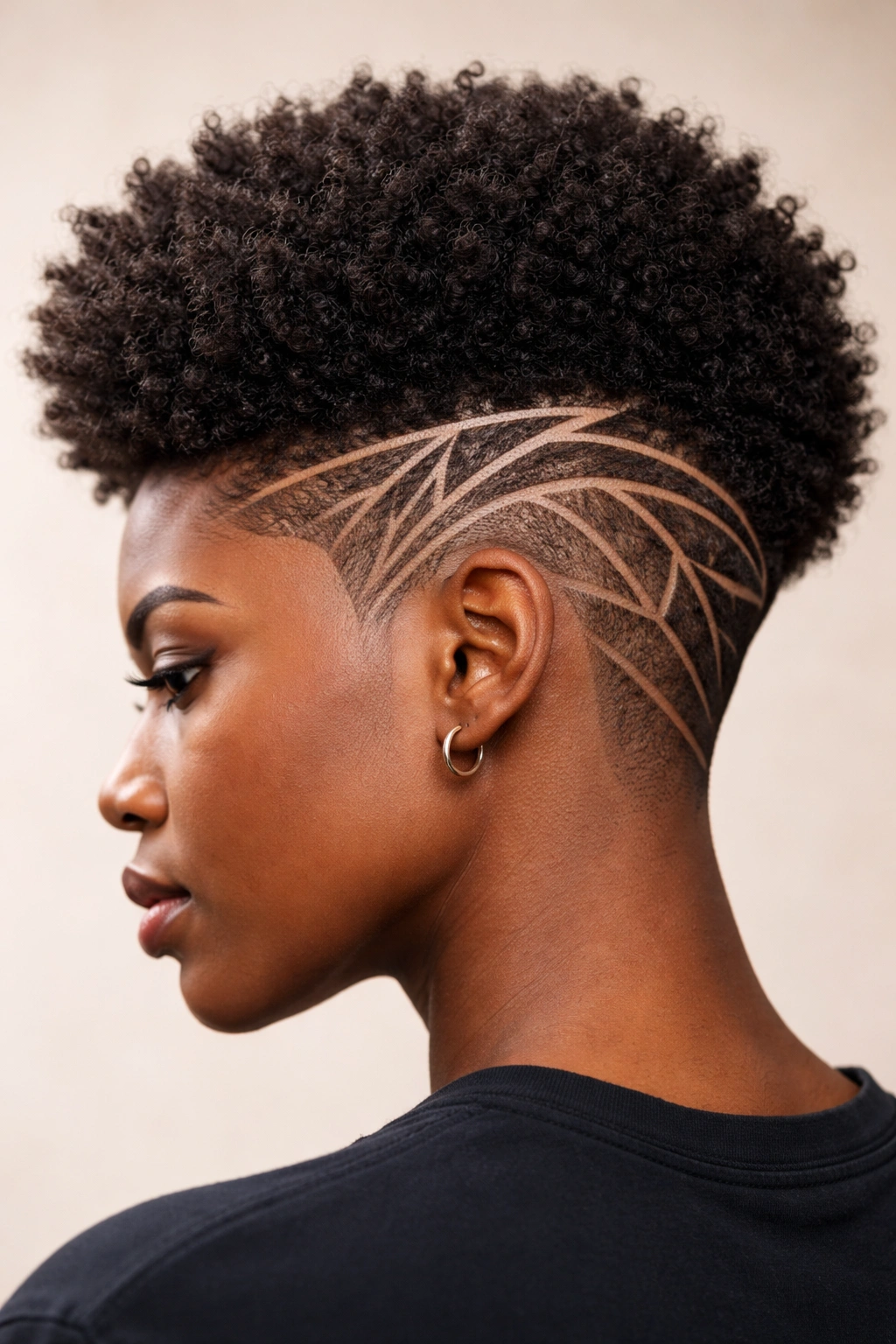
This is for the person who wants to take their tapered afro to an artistic level. You get a clean tapered cut, and then the barber adds geometric patterns, lines, or designs into the tapered sections using clipper artistry. The designs might be simple (clean parallel lines, triangles, or angles) or complex (intricate geometric patterns, symbols, or custom designs). The crown remains full and textured, creating maximum contrast with the detailed designs on the sides.
The Design Possibilities
The tapered sides and back of your head become a canvas for clipper art. Popular options include sharp geometric patterns (triangles, diamonds, or grids), wavy lines, angular designs, initials, or custom shapes. The designs are subtle or bold depending on your preference — some people choose very fine detail work while others go for bolder, more visible patterns. The contrast between the textured crown and the designed tapered sections is the whole point of this style.
Maintenance and Skill Requirements
- This absolutely requires a barber with clipper artistry experience — not every barber has these skills, so do your research
- Designs fade and blur as your hair grows, which might be intentional (some people like the transition) or might require frequent touch-ups to keep them sharp
- The tapered section still needs trims every 2 to 3 weeks, so designs will need to be refreshed at those appointments if you want them to stay clear and precise
- Designs work best on very short tapered sections, so if you prefer longer sides, the design work won’t show as clearly
Pro tip: Take reference photos or draw out the design you want before your appointment. Communication is everything with detailed custom work.
10. Low-Cut Tapered Afro
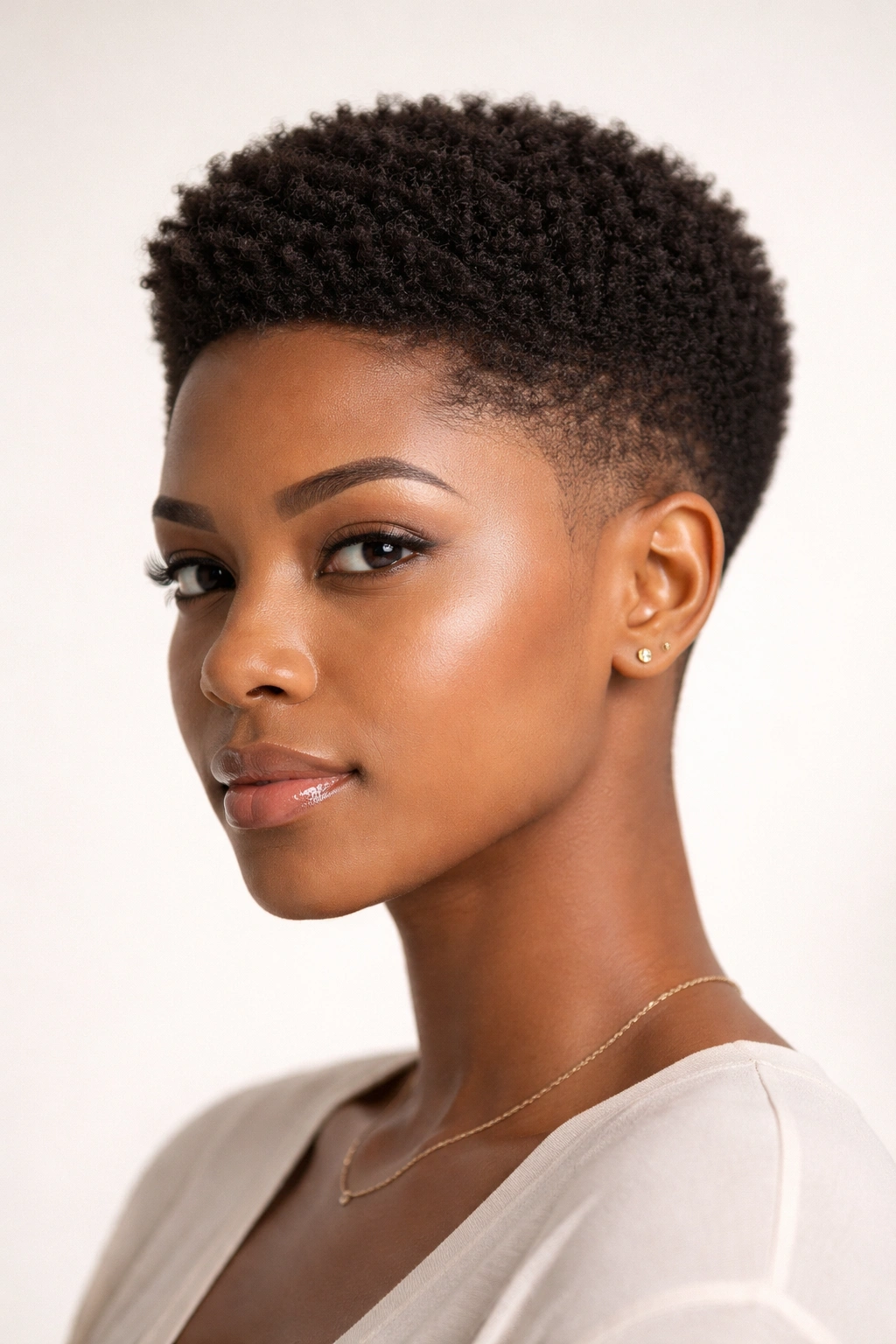
The low-cut tapered afro is the understated, minimalist version of the tapered afro. The crown stays relatively short — maybe 2 to 3 inches of length at the tallest point — and tapers very gradually down the sides. There’s no dramatic volume or height, just clean lines and definition. The overall effect is streamlined, elegant, and professional without being overly bold.
Why Less Can Be More
The low-cut tapered afro is perfect if you want the groomed, intentional look of a taper without the maintenance and styling demands of longer versions. The short length means less manipulation, less product, and less drying time. The hair looks healthy and well-maintained because short hair displays condition more obviously than longer styles. The gradual taper is subtle and flattering, and it works on nearly every face shape.
Easy Maintenance and Styling
- A low-cut tapered afro can go 4 to 5 weeks between trims comfortably because the short length doesn’t show growth as dramatically
- Styling is genuinely effortless — wash, let it dry or blow-dry it, and you’re done
- This cut looks great textured and natural, or smooth and polished depending on how you style it
- The short length means no tangles, minimal shedding, and maximum health for your hair
Real talk: If you’re coming from longer hair, a low-cut tapered afro might feel like a huge change. But the ease and the healthy-looking shine of well-maintained short hair converts a lot of people who try it.
Key Takeaways

The tapered afro is genuinely versatile, and 4C hair responds beautifully to this cut. Whether you go for a dramatic high-fade or a subtle low taper, with or without designs and patterns, the key to a successful tapered afro is finding a barber or stylist who understands natural hair texture and can cut with precision. The style you choose should match how much maintenance you’re willing to do and how bold you want to be. Most importantly, a tapered afro celebrates your actual hair texture while giving you clean lines and intentional shape — that combination is what makes it such a powerful style for 4C hair.
