



Messy buns get a serious upgrade when you introduce a silk scarf into the mix. Not only do you protect your hair from breakage and frizz, but you also instantly elevate the style from bed-head casual to intentionally polished. A silk scarf adds texture, color, and dimension while serving a genuinely protective function that cotton elastics simply can’t match.
The beauty of styling messy buns with silk scarves is that there’s so much room for creativity. You can wrap the scarf tight against your scalp, weave it through the bun itself, tie it as a decorative bow, or drape it loosely for an effortlessly romantic look. Whether you’re going for an undone, tousled vibe or something slightly more refined, a silk scarf transforms a basic bun into a statement piece that works for casual days, work settings, or even dressier occasions.
The key is understanding how to position the scarf so it actually stays put while you’re moving through your day. A scarf that slips down or comes loose halfway through your morning defeats the purpose entirely. We’ll walk through eight distinct techniques that each use the scarf differently—some as a functional hair tie, others as a visual accent that frames the bun, and a few that blend both purposes. By the end, you’ll have a full toolkit of messy bun styles that actually work with real hair and real life.
1. The Classic Silk-Wrapped High Bun
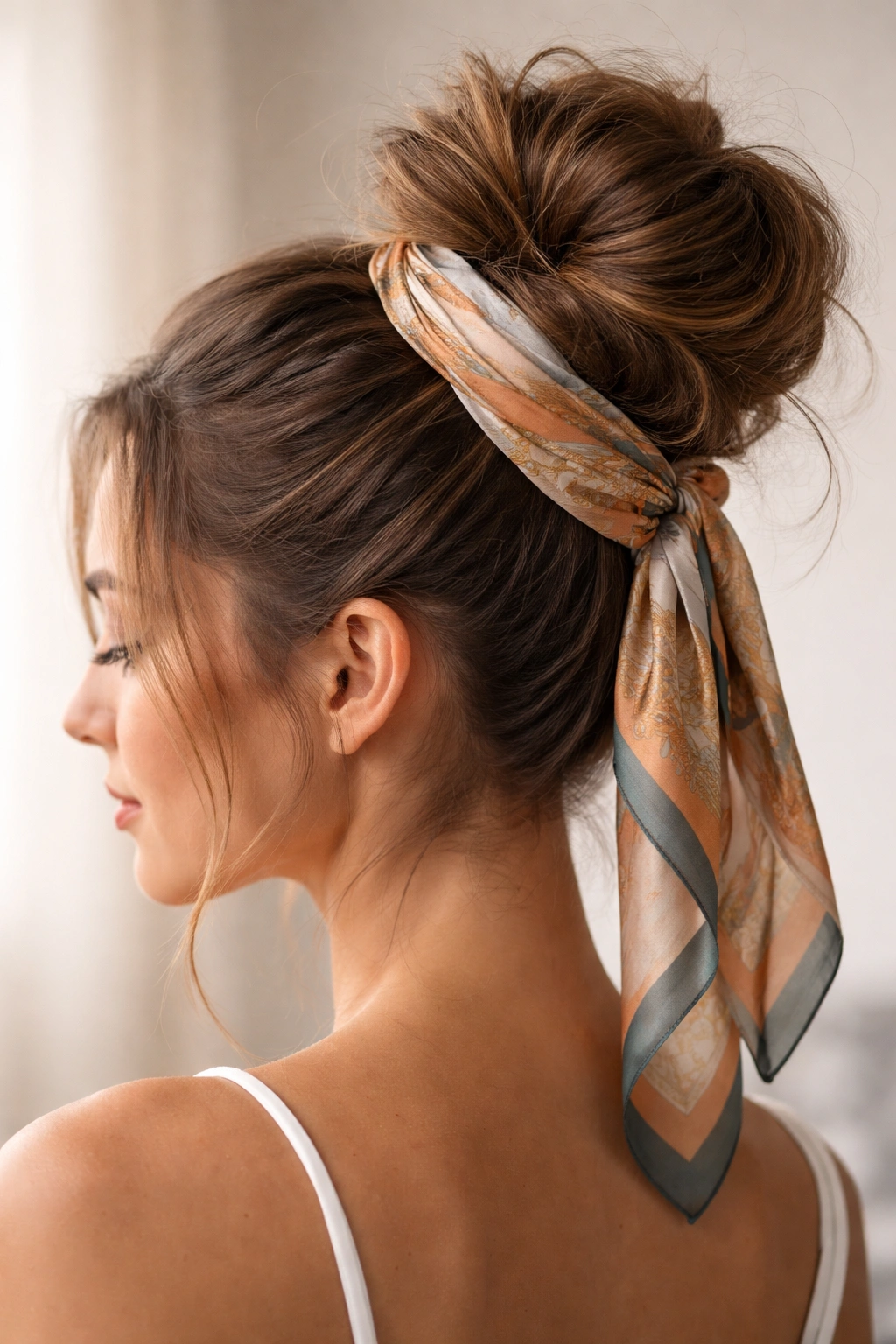
This is the foundational style that works on almost every hair type and length. Start by gathering your hair into a high ponytail at the crown—not tight enough to give you a headache, but secure enough that it won’t slip as you work. Take a silk scarf that’s roughly 2-3 inches wide and wrap it around the base of your ponytail multiple times, securing it with a knot at the back or tucking the end into the wrapped layers.
How to Build the Bun Structure
Once the scarf is secured at the ponytail base, you’ll create the bun itself. Divide your ponytail into 2-3 sections and twist each one loosely. Take these twisted sections and wrap them around the base of the ponytail, pinning as you go with bobby pins. The silk scarf should remain visible at the base, framing the bun and adding an immediate pop of color or pattern. If you have longer hair, you can weave sections in and out of the scarf for extra grip and visual interest.
Why This Works
- The scarf acts as both an aesthetic element and a functional anchor, preventing the bun from shifting
- This style works beautifully on second or third-day hair, which often has better grip than freshly washed hair
- You can create this style in under five minutes once you’ve done it a couple of times
- The wrapped base prevents the style from looking too formal or severe, adding softness and movement
Styling tip: Use a longer silk scarf (at least 36-40 inches) so you have enough fabric to wrap multiple times and still have a bit left over to tie or tuck.
2. The Low Textured Bun With Scarf Accent
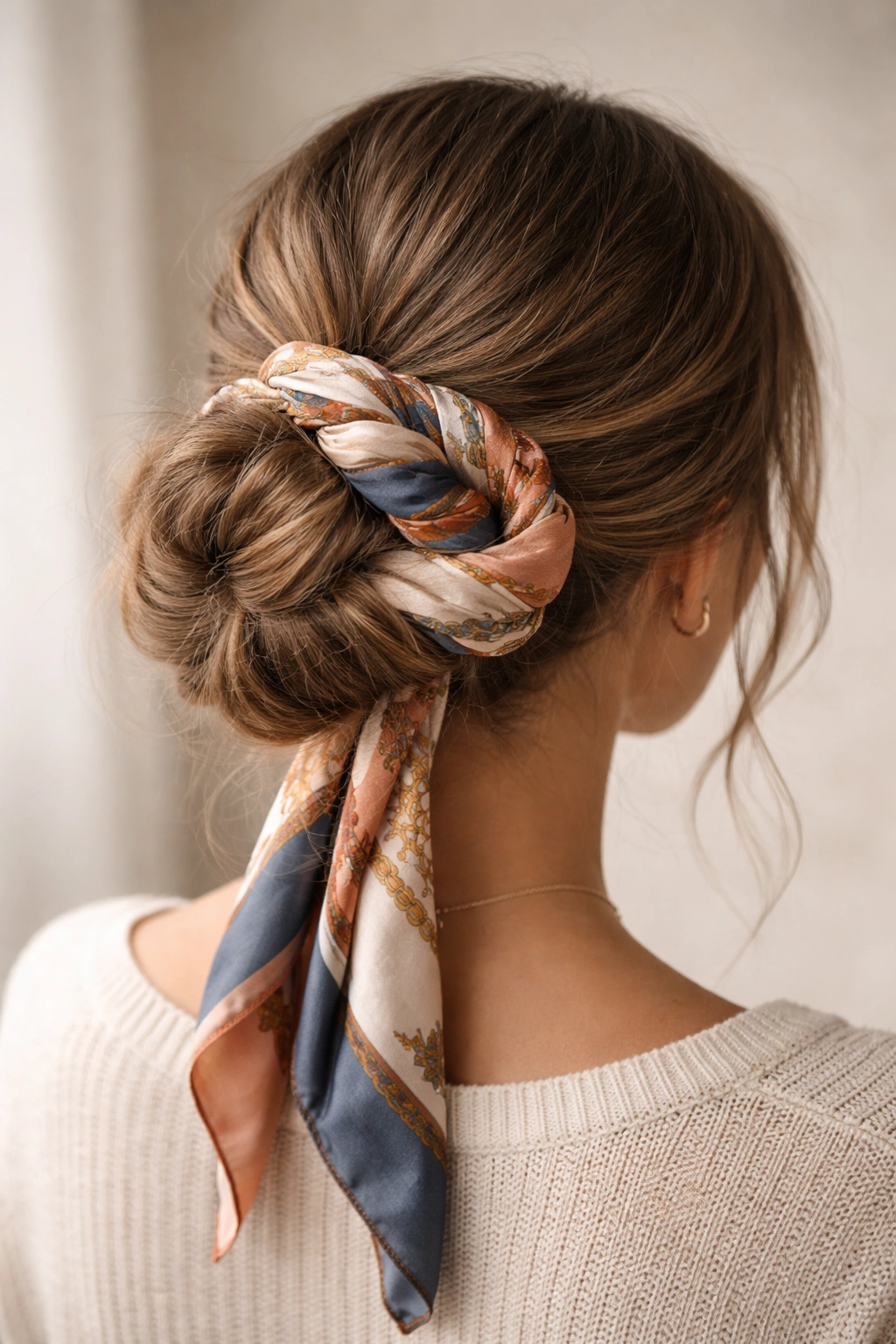
If high buns aren’t your thing, a low textured bun with a silk scarf draped through it offers the same elegance with a more relaxed, approachable vibe. Create a low ponytail at the nape of your neck, then divide it into three sections. Braid or loosely twist each section, then spiral them into a loose bun shape at the base of your neck. This is where the scarf comes in—thread it through the bun in a figure-eight pattern so both the scarf and your braided sections are visible.
Weaving the Scarf Through Your Braids
Thread the scarf horizontally through your braids, going in and out at different heights. This creates a jewel-like effect where the scarf appears and disappears as it moves through the bun structure. You don’t need to knot it tightly—the scarf should move slightly with the bun, which actually adds to the intentionally undone aesthetic. If your scarf keeps slipping, use a small clear bobby pin to secure it at one or two key points inside the bun where it won’t be visible.
Key Benefits of This Style
- It reads as more mature and intentional than a basic high bun
- The low placement makes it perfect for work settings, fancy dinners, or events where you want polished but not overly playful
- The scarf weaving technique works on thick and thin hair equally well
- You can add a small decorative hair comb or clip at the base for extra hold without it being obvious
Quick tip: Slightly damp hair works beautifully for this style because it grips better as it dries, locking the scarf weaving in place.
3. The Half-Up, Half-Down Messy Style
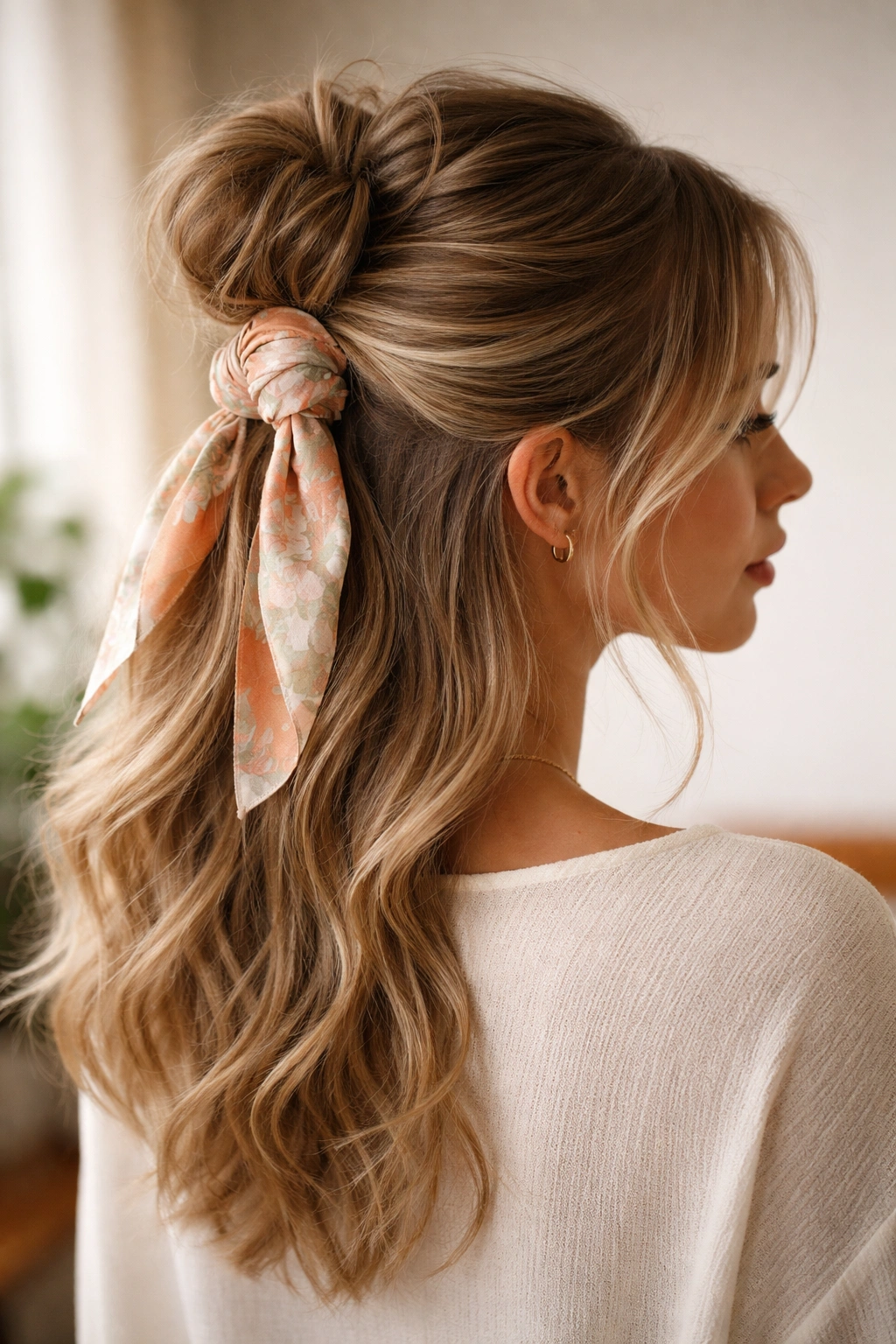
Not everyone wants to put their entire head of hair up, and that’s where this hybrid style shines. Section out the hair from your temples back toward your crown, leaving the bulk of your hair down and loose. Gather this upper section into a small ponytail, then wrap your silk scarf around the base of this ponytail several times, knotting it securely in the back.
Building the Bun Component
Instead of twisting this section into a tight bun, loosely wrap it around itself and pin it gently so it maintains a shaggy, undone appearance. Pull some face-framing pieces down intentionally to soften the whole look. The silk scarf should be very visible at the base of this upper bun, creating a striking horizontal line of color and texture that frames your face.
Why This Style Has Major Appeal
- It keeps hair partially off your face without committing to a full updo
- The contrast between the loose lower hair and the contained upper section is visually interesting
- It works equally well on wavy, straight, or curly hair because the looseness of the upper bun compensates for different hair textures
- You get the protective benefits of putting some hair up while maintaining the freedom of wearing hair down
Pro move: Use a patterned or metallic silk scarf in this style because it’s prominently visible and becomes the focal point of the entire look. A solid scarf can feel a bit plain when it’s framed this way.
4. The Twisted Bun With Scarf Weave
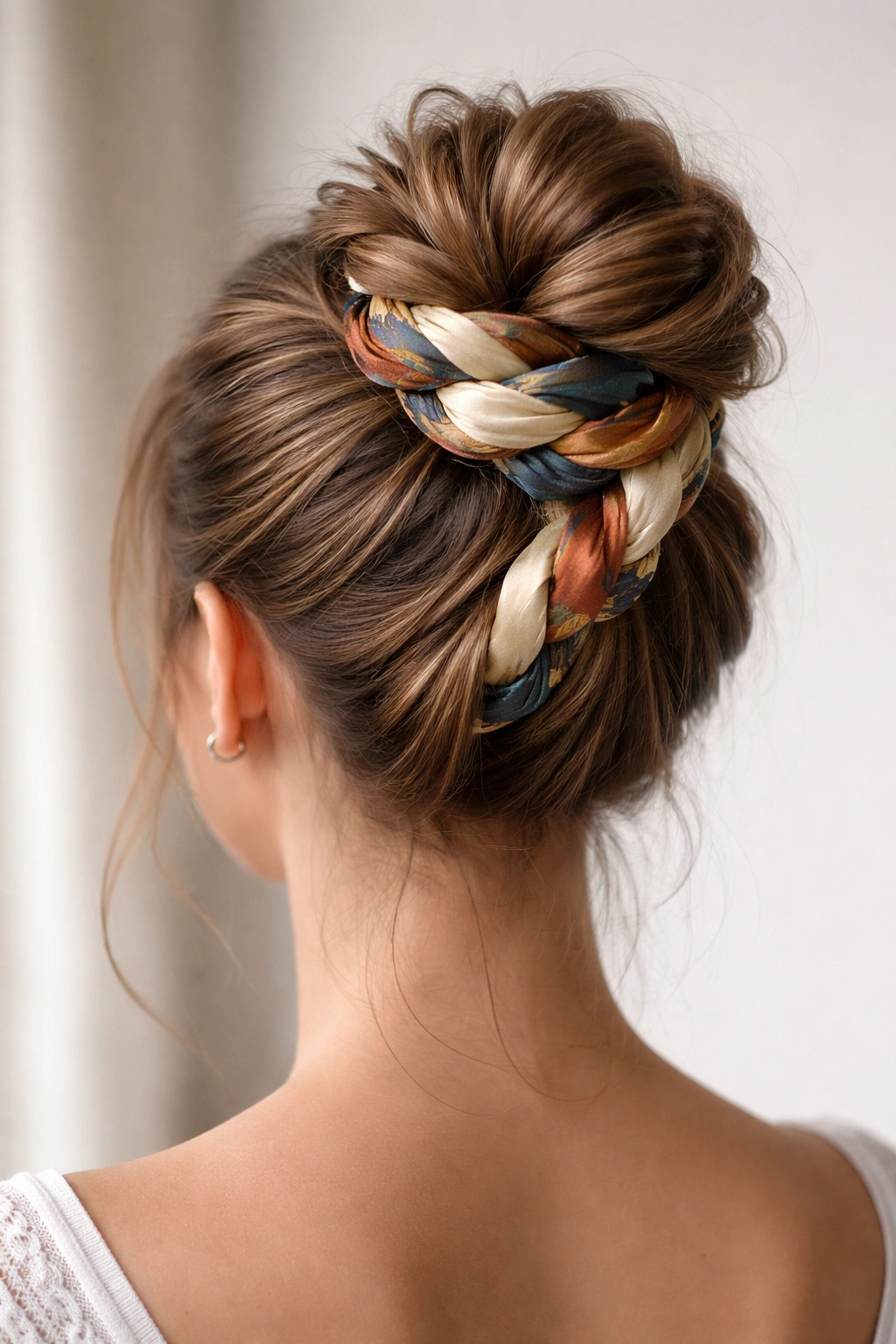
This style is pure artistry and works especially well if you have medium-to-thick hair. Pull your hair into a high or mid-height ponytail, then divide it into two large sections. Twist each section tightly, then twist the two sections around each other in a spiral pattern. As you’re doing this double-twist, have a silk scarf nearby and weave it in and out of the twists as they spiral around.
Mastering the Spiral Technique
The key to making this look polished rather than chaotic is to weave the scarf in a consistent pattern. For example, if you go under the first twist and over the second, keep that alternating pattern throughout the entire spiral. Wrap the resulting spiral into a bun shape and secure it with bobby pins, making sure the scarf is woven throughout so it doesn’t slip. The scarf should be visible in multiple places throughout the bun, not just at the base.
When to Wear This Style
- Special events where you want something that looks genuinely special and handcrafted
- Date nights or situations where you want the updo to be a conversation starter
- Days when you’re feeling creative and have ten extra minutes to spend on your hair
- Occasions where your outfit is fairly minimal so the hair becomes the statement piece
Insider note: Practice this style on a day when you don’t absolutely need it to be perfect. The first few times you’ll be thinking through the pattern, but once your hands learn the movement, you can create it almost automatically.
5. The Scarf-Secured Bun With Face-Framing Pieces
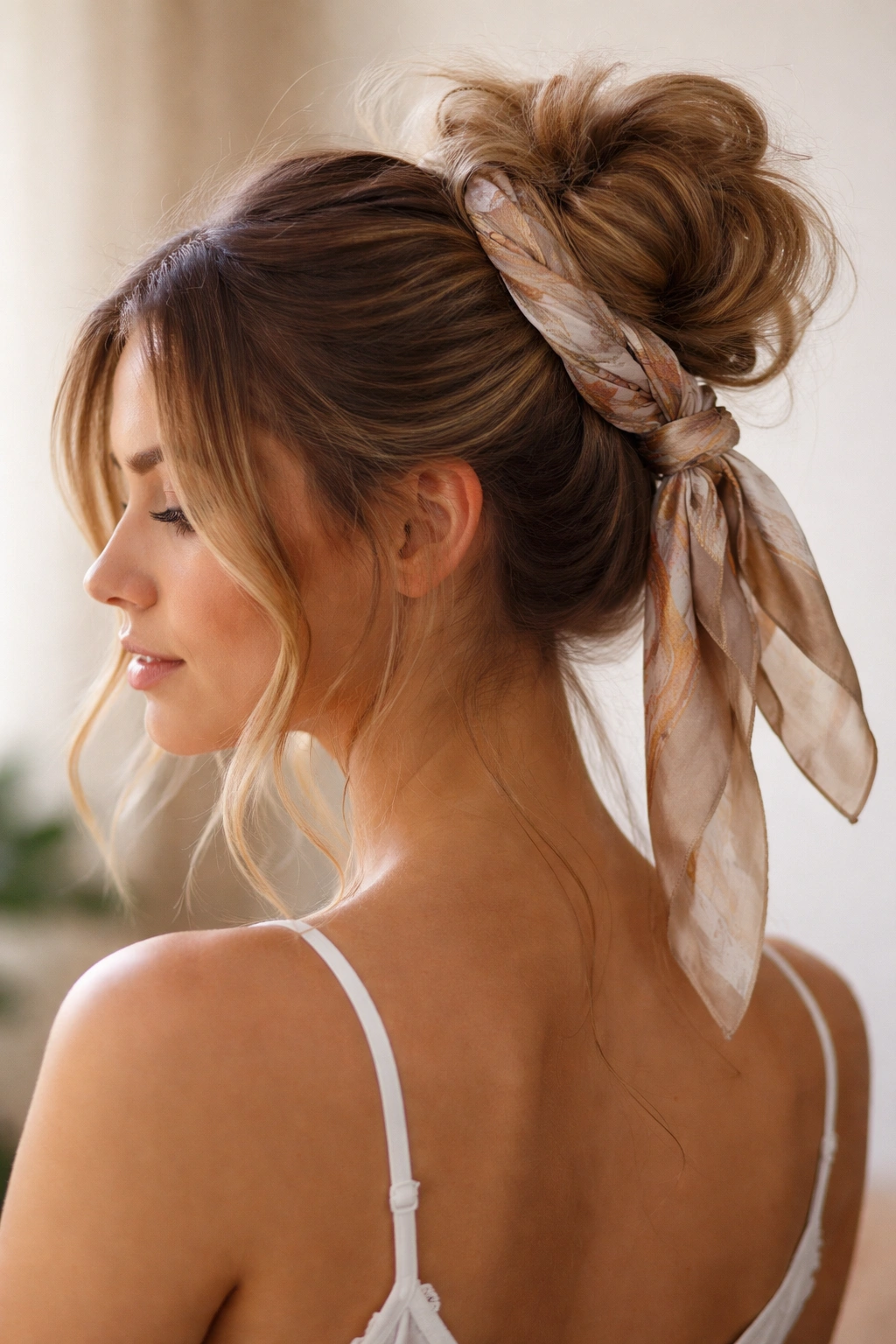
This style prioritizes strategic looseness. Create a very loose, barely-there ponytail at whatever height appeals to you—high, middle, or low. Don’t use an elastic; instead, hold your ponytail loosely in one hand while you grab your silk scarf. Wrap the scarf around the ponytail multiple times (usually three or four), then secure it by tying the ends in a double knot.
Creating Intentional Texture and Movement
Once the scarf is securing your ponytail, deliberately pull apart the ponytail sections with your fingers to create a visibly undone, textured effect. Pull a few pieces down in front of your ears and cheeks. The scarf is doing the actual work of holding everything together, so you have the freedom to make the bun as messy and loose as you want. Gently tease the bun section to add volume and character.
Why the Scarf Becomes Essential Here
- Unlike an elastic band, a silk scarf can hold a very loose, abundant amount of hair without cutting into your scalp
- The scarf itself becomes part of the visual story of the style—it’s not hidden but showcased
- You’re getting maximum texture and movement because you’re not constrained by trying to make tight sections
- This is genuinely comfortable to wear for hours because there’s minimal tension on your hair and scalp
Real-world benefit: If you have a thick head of hair, this scarf method holds everything securely while still allowing the airy, undone look you might not be able to achieve with a standard elastic.
6. The Bubble Bun With Silk Bow
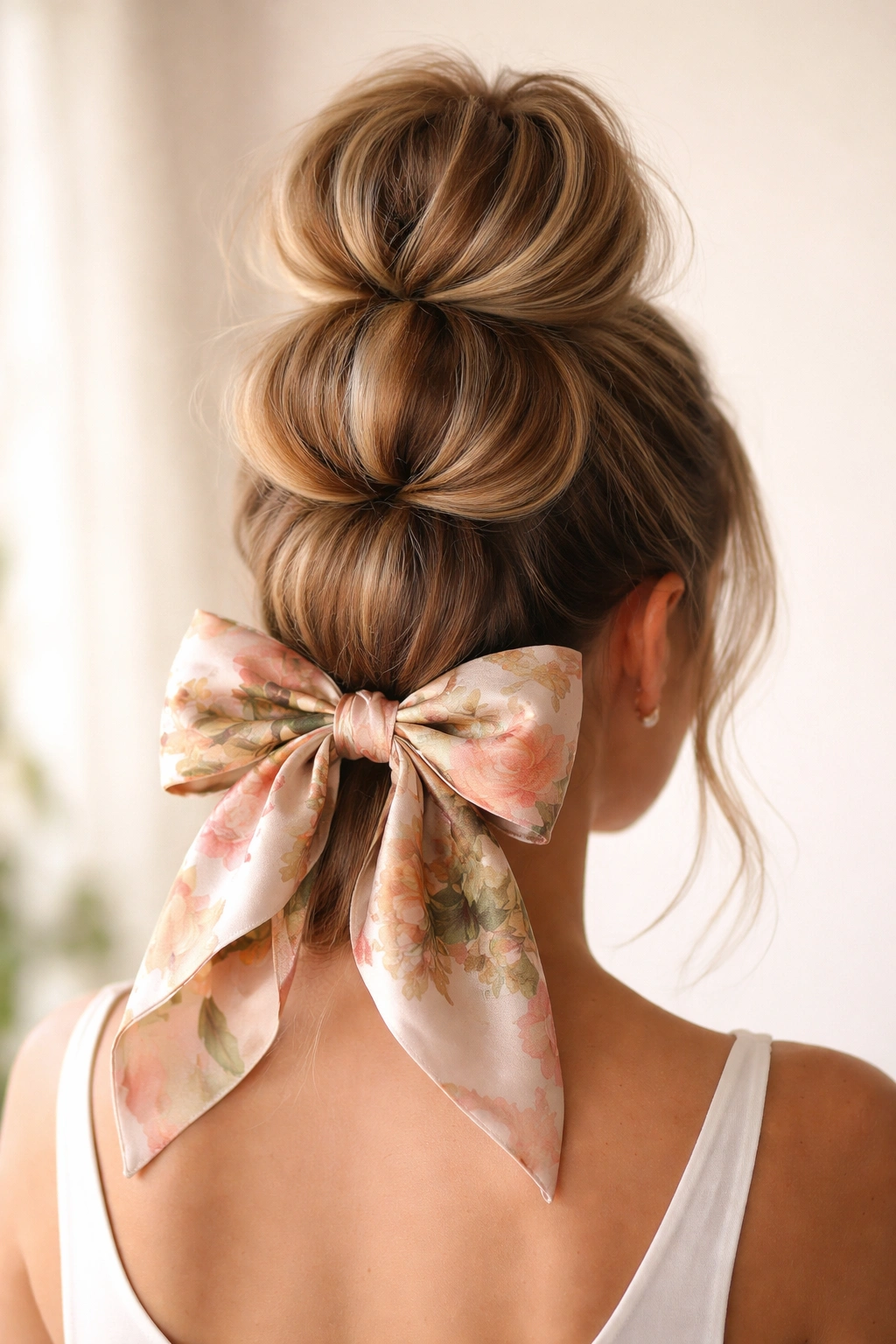
Bubble buns are having a moment, and adding a silk scarf as a bow takes the playful vibe to the next level. Start with your hair in a high ponytail secured with an elastic. Slide a bobby pin horizontally through your ponytail about an inch down from the elastic, then gather the hair above that pin and gently fluff it out to create the first “bubble.” Repeat this process—bobby pin, gather, fluff—moving down the length of your ponytail to create three or four distinct bubbles.
Adding the Scarf Bow
Once you’ve created your bubble structure, take a silk scarf and tie it into a bow around the base of the ponytail, right under the first bubble. The bow sits above all the stacked bubbles, making it visually prominent. You can adjust the bow’s tightness—loose and floppy feels playful, while a more structured bow feels intentional and designed.
When Bubble Buns With Scarves Work Best
- They’re undeniably more fun and youthful than classic buns, so they suit casual settings or creative environments
- They photograph beautifully because the stacked bubbles create interesting dimension and shadows
- They work wonderfully on fine or thin hair because the gathering and fluffing makes hair appear fuller
- This is the style to choose when you want unmistakably playful rather than sophisticated
Styling hack: If your bubbles keep deflating, give each one a quick light spritz with hairspray immediately after fluffing it. The product sets the shape while still allowing the hair to look naturally textured.
7. The Braided Bun With Scarf Enhancement
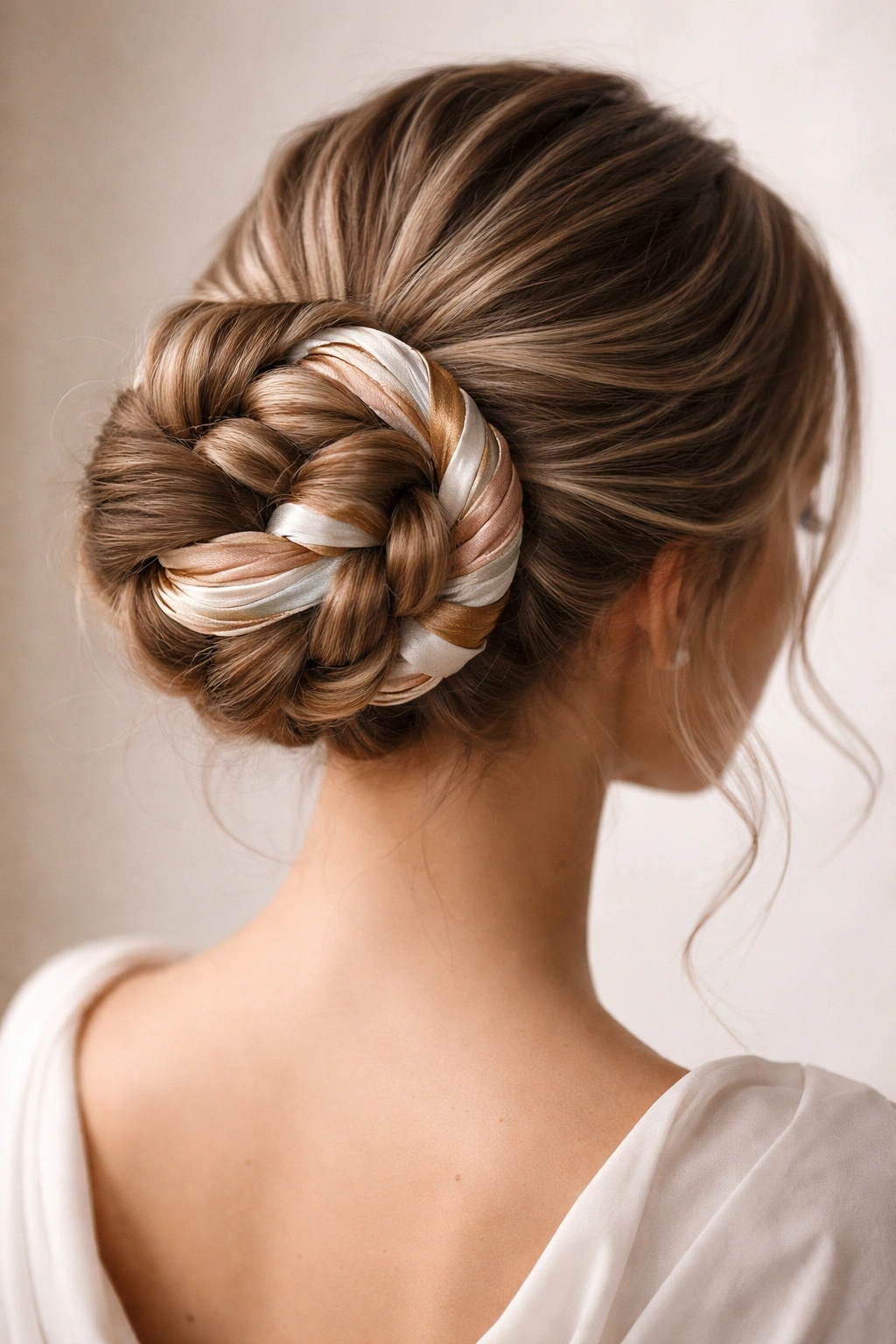
For those who love the braided aesthetic, incorporating a silk scarf elevates the braid from simple to stunning. Brush your hair smoothly and section out a section from the top of your head toward the back. French braid this section all the way down toward your lower back, then gather all your hair (braided section plus the rest) into a low ponytail.
Wrapping the Bun With Your Braid
Coil the entire braided ponytail into a bun shape and secure it with bobby pins. This is where the scarf comes in—wrap it around the outside of the bun, following the natural contours of the coiled braid. You might go around the bun two or three times, letting the scarf nestle into the grooves created by the braid. Secure the scarf by knotting it at the back or tucking it underneath itself.
Why This Combination Works Beautifully
- The braid adds structure and visual interest that a plain bun lacks
- The silk scarf in the grooves of the braid creates a luxe, intricate look that actually doesn’t take that much time
- This style holds all day because the braid creates natural grip points for the scarf
- The contrast between the linear braid structure and the soft, flowing scarf is genuinely lovely
Tip for longer hair: If you have very long thick hair, you can create a more dramatic effect by braiding all the way to the very bottom of your ponytail, then creating the bun with the unbraided hair at the end and wrapping the entire braided length around it like a crown.
8. The Sleek-to-Messy Bun Transition
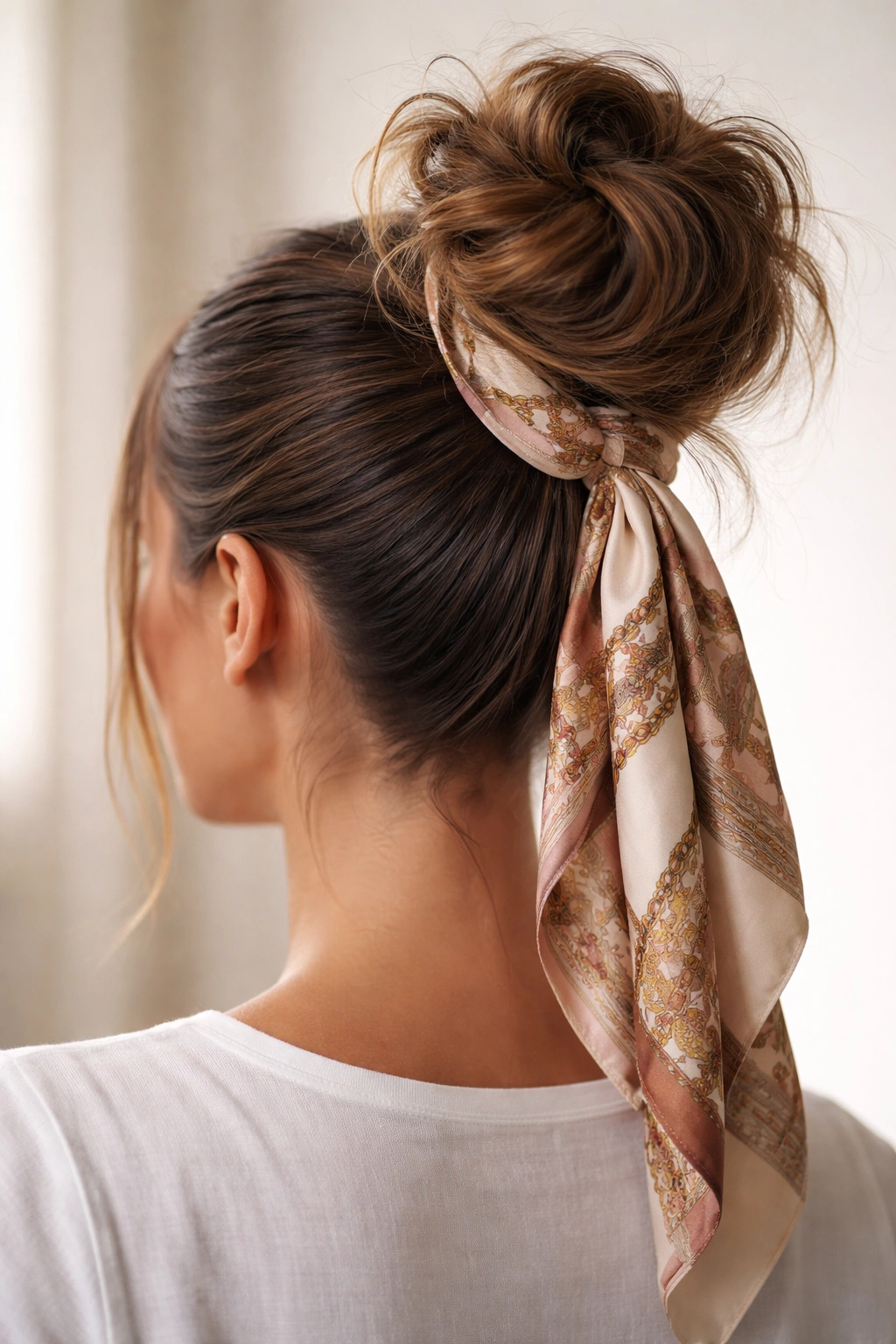
This style plays with contrast—a sleek, polished bottom that transitions into intentional messiness at the top. Apply a smoothing cream or light serum to your hair and brush it back into a very sleek, tight ponytail at your preferred height. Secure it tightly with an elastic, then wrap your silk scarf around the base of the ponytail multiple times to create a smooth, finished frame.
Creating the Textured Top
Now here’s the magic: take the ponytail itself and divide it into sections, gently teasing each section and pulling out wispy pieces. Loosely twist or coil these textured sections into a messy bun shape on top of your sleek base. The contrast between the smooth, shiny base and the textured, undone top is visually striking. The silk scarf at the base emphasizes this contrast by appearing smooth and controlled while the bun above it looks artfully chaotic.
Strategic Use of This Style
- It’s sophisticated enough for professional settings because of the sleek base but creative enough to feel interesting
- The controlled bottom half means you’re getting polished hair styling even if the top bun is genuinely messy
- This style works on all hair types because the sleekness comes from product and brushing, not hair texture
- It’s an excellent style for days when your hair isn’t cooperating—the sleek bottom makes it look intentional rather than disheveled
Pro styling trick: Use a bristle brush or paddle brush to smooth the ponytail and create that sleek finish. A wide-tooth comb won’t give you the same smooth result. Spend 30 seconds really smoothing the hair and applying serum before you move on to creating the textured top.
Why Silk Scarves Transform Messy Buns
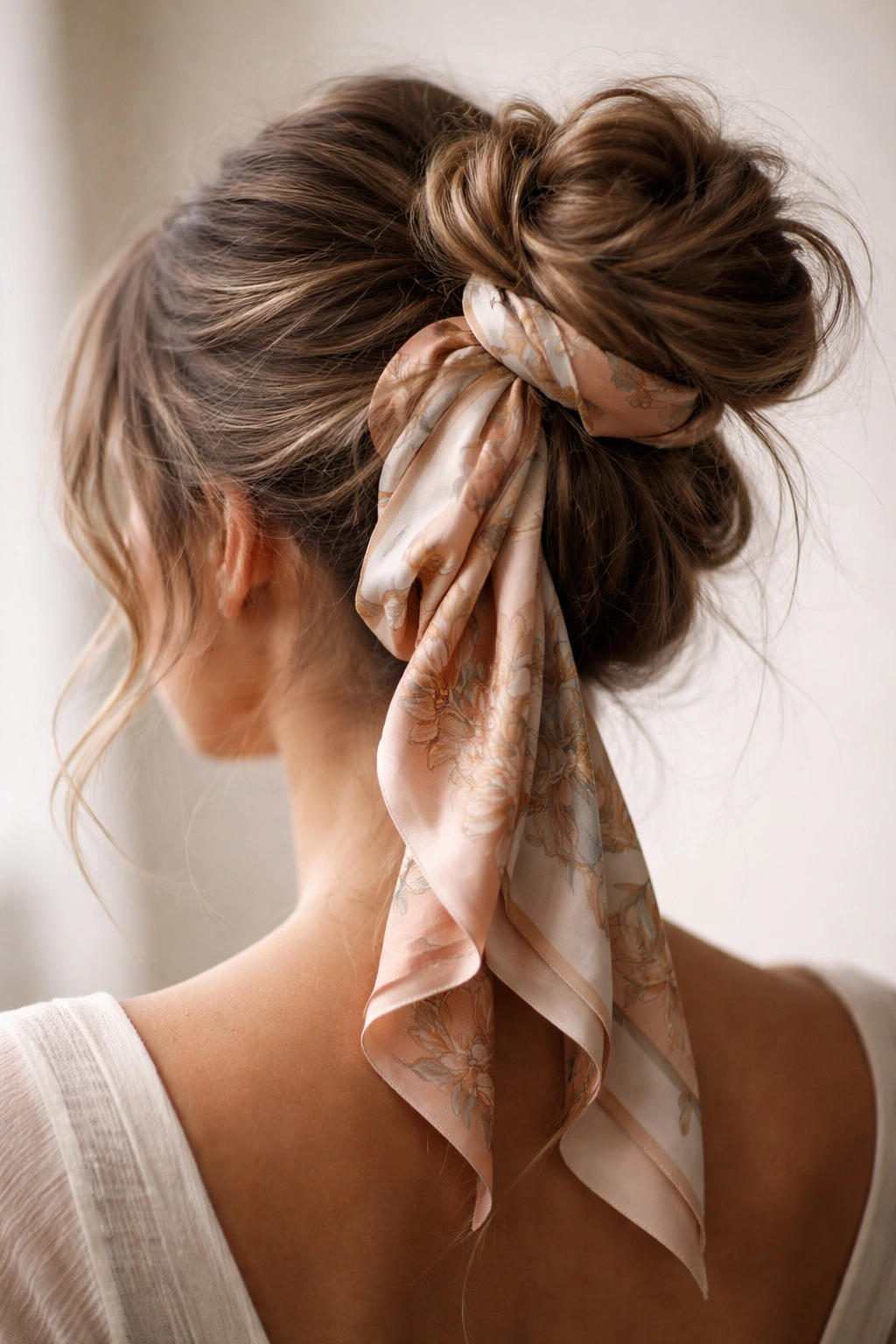
The shift from elastic bands to silk scarves does more than just add visual interest—it fundamentally changes how your buns function and feel. Silk creates friction against your hair strands rather than cutting into them, which means less breakage, less stress on your scalp, and less creasing that damages your hair’s structure. When you remove a silk scarf from your bun, your hair returns to its natural shape. Elastic bands can leave visible dents that take hours to disappear.
The visual benefit is equally important. A silk scarf adds intentionality to a style. An elastic band says “I’m just pulling my hair up.” A silk scarf says “I’m pulling my hair up with purpose.” The color, pattern, and drape of the scarf become part of your overall styling statement, which means a messy bun suddenly feels like you’ve put thought into your appearance rather than looking like you rolled out of bed and grabbed an elastic.
Beyond the practical and visual advantages, silk scarves give you creative flexibility. You can use the same bun technique with five different scarves and create five completely different impressions—one day it’s bohemian, the next it’s polished, the next it’s playful. You’re not locked into looking the same every time you wear your hair up.
Final Thoughts
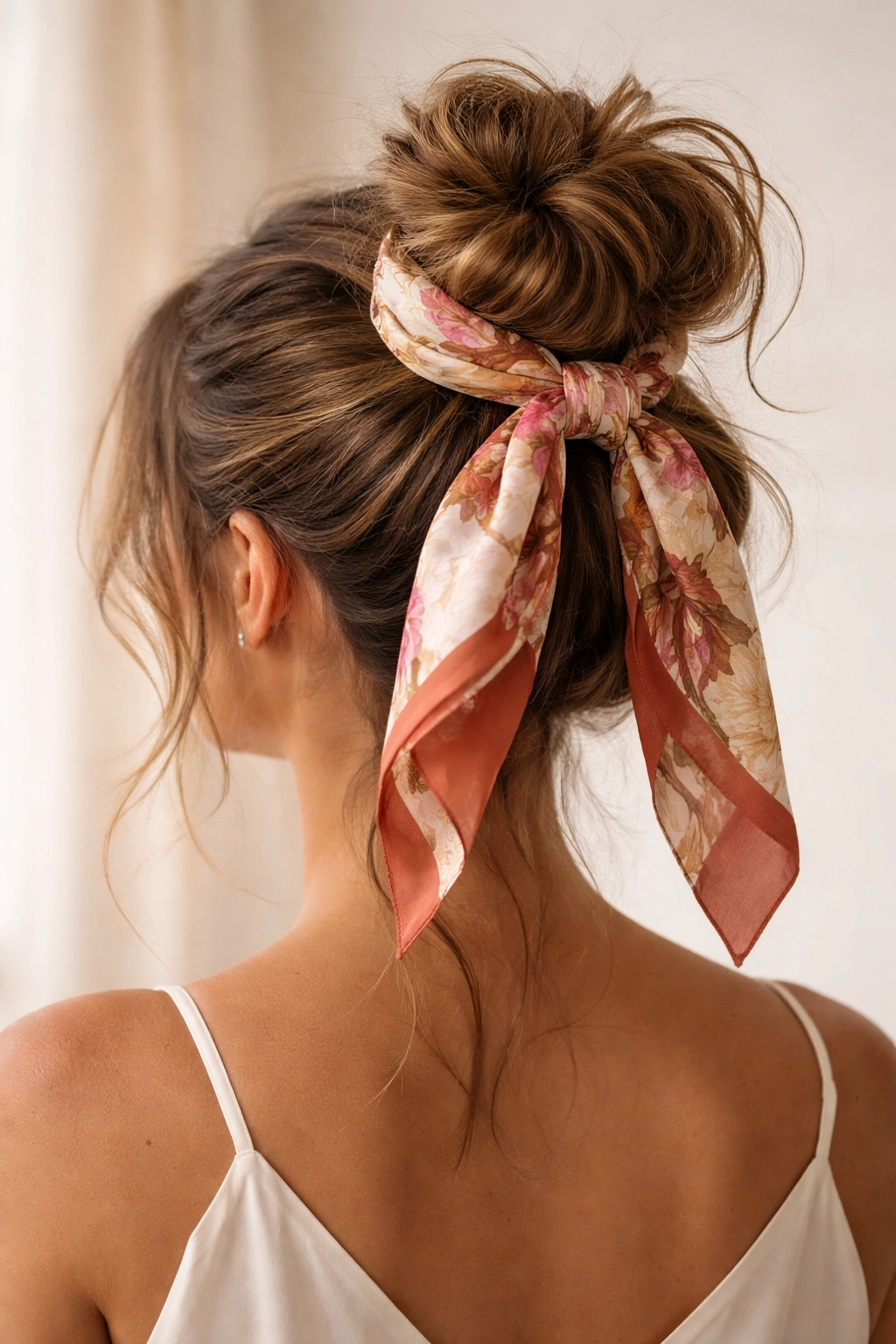
A silk scarf is one of those small accessories that seems minor until you actually start using it, at which point you wonder how you ever styled messy buns without one. Each of these eight techniques gives you options depending on your mood, your hair condition, your plans for the day, and the overall impression you want to create.
Start with whichever style appeals to you most—maybe that’s the classic wrapped bun if you want something straightforward, or the braided bun with scarf if you’re feeling more creative. The techniques all build on similar foundational skills: securing a ponytail, wrapping a scarf, and creating intentional texture. Once you’ve practiced one or two styles, adding another becomes much easier because you’re just shifting where the scarf goes and how tightly you bun the hair.
The real magic happens when you stop thinking of messy buns as a “quick throw-your-hair-up” style and start treating them as an actual hairstyle deserving of attention and intention. A silk scarf is what makes that shift possible.
