



Short hair doesn’t mean you have to skip the half-up messy bun trend — it just means you need the right techniques and styling tricks to make it work. The challenge with shorter locks is that there’s less hair to anchor, less volume to create that intentionally undone texture, and less material to frame your face the way a true half-up style demands. But that’s exactly why mastering half-up messy buns for short hair is so satisfying. When you nail it, you get all the sophistication of a gathered style without the formal, polished vibe — plus you keep your face and shoulders completely open and visible.
The half-up messy bun sits somewhere between a casual ponytail and a full updo, and that middle ground is where the real magic happens. You’re taking just the top section of your hair, securing it with some intentional texture and dimension, and leaving the rest to fall naturally around your shoulders. For short hair, this creates instant visual interest, adds height to your crown, and can make your face look fresher and more defined. It’s the hairstyle equivalent of a white button-down shirt — simple enough to work on a Tuesday morning, but polished enough to take you through the evening.
The good news is that short hair actually has some built-in advantages when you’re creating a messy bun. It requires less styling time, less product, and less wrestling with unwieldy lengths. You can achieve that intentionally imperfect texture in minutes, and the whole style feels modern and effortless rather than overdone. Whether your hair is a sharp pixie, a longer crop, a textured bob, or a shaggy shoulder-length cut, there’s absolutely a half-up messy bun version that’ll work with your specific length and hair type.
1. The Twisted Half-Up Messy Bun
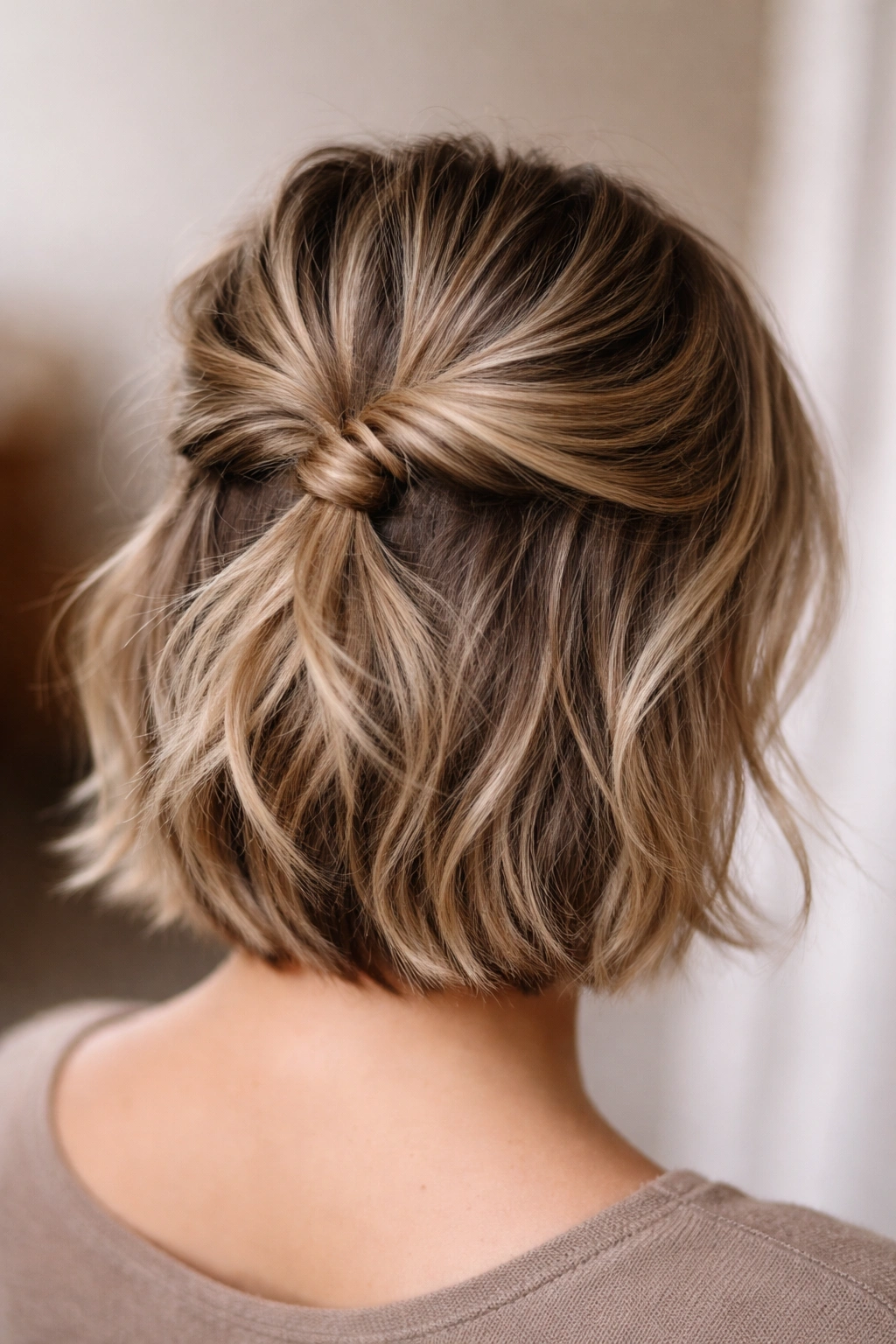
This is the simplest possible introduction to half-up buns on short hair, and it’s the version you’ll reach for on days when you need something polished but you’re running late. Instead of braiding or creating elaborate texture, you’re just twisting — which means fewer hands in your hair, less chance of pulling too tight, and a result that looks naturally undone rather than deliberately styled.
Start with hair that has a little texture to it — whether that’s natural wave, a light salt spray texture, or hair that’s been dry shampooed. Pull the top half of your hair up as if you’re creating a half ponytail, but don’t secure it yet. Divide that section into two equal parts. Now twist one section toward the back of your head, then wrap it around the base of where your ponytail would sit. Secure it with a bobby pin tucked underneath so it’s invisible. Take the second twisted section and wrap it in the opposite direction, crossing over the first twist, and pin it down as well.
Why This Works on Short Hair
Twisted sections are thicker and more visible than braids, which means they read as intentional style even when you don’t have much hair to work with. The overlapping twist pattern creates the illusion of a fuller bun at the crown, which is crucial on shorter lengths where you might not have enough hair to create a truly volumetric bun.
What to Know Before You Try It
- Use bobby pins that match your hair color so they disappear completely — this is especially important when you’re twisting on short hair where pins are more visible
- Don’t twist too tightly or you’ll lose the messy, undone texture that makes this style work
- If your hair is fine or silky, apply texture spray or dry shampoo to your roots before twisting — this gives the twists something to grip and prevents slipping
Pro tip: Pull a few small pieces of hair loose around your face and at the nape of your neck after you’ve secured everything. These face-framing pieces are what transform a neat style into a deliberately messy one.
2. The Braided Half-Up Messy Bun
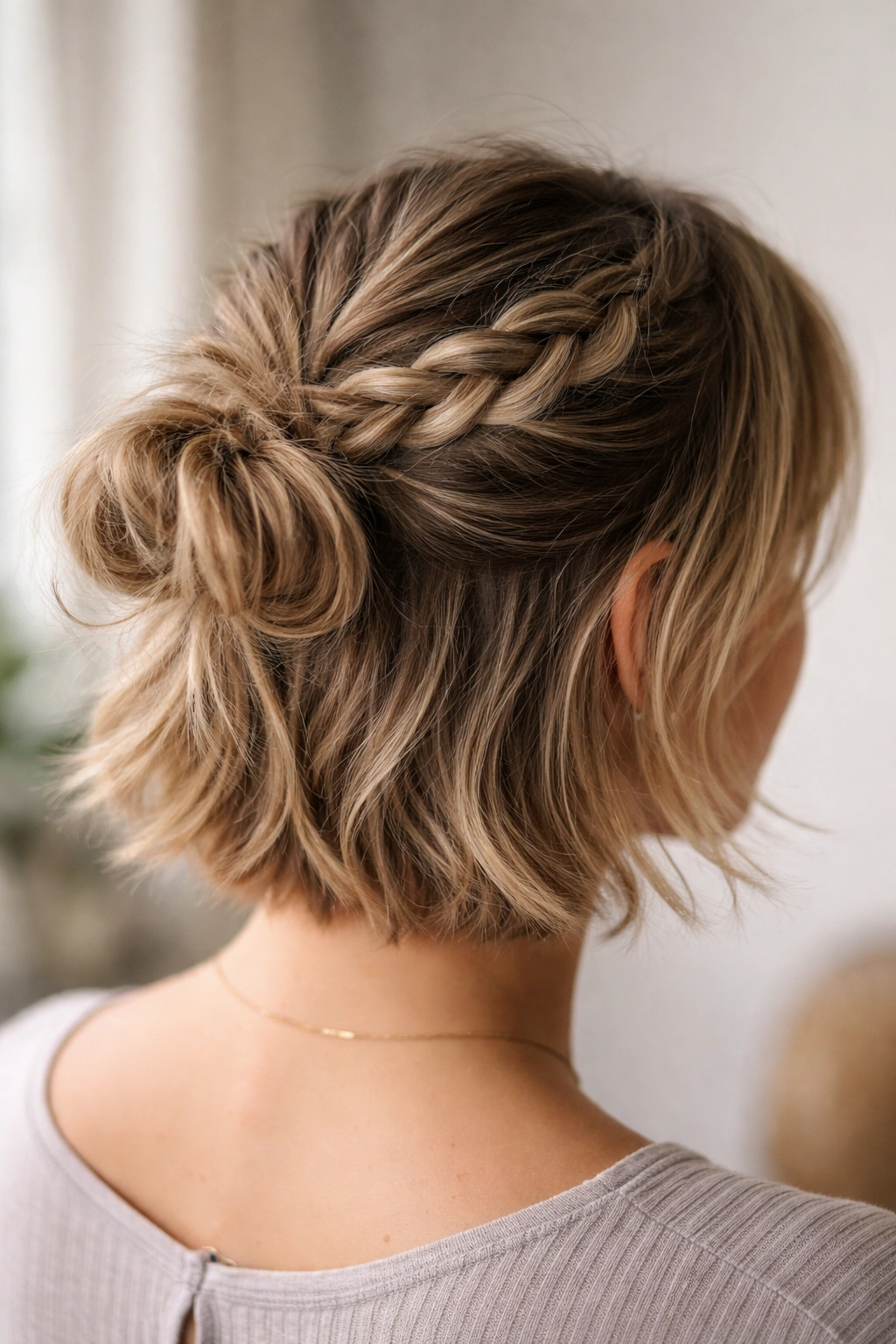
If you want more dimension and visual interest than a simple twist, the braided half-up version is your move. This style takes a bit longer than the twisted version, but the payoff is a sophisticated, textured look that reads as intentional and editorial. The braid creates a defined line of texture running from one side of your head to the crown, which is especially flattering on short hair where you want to create visual interest at the top.
Section off the top half of your hair as before, but this time divide it into three sections to create a Dutch or French braid — it doesn’t matter which, just whichever you find easier. Braid from one side of your head toward the back, incorporating small sections as you go. You want the braid to feel slightly loose and undone, so don’t pull too tight. Once you reach the back of your head, twist the remaining braid or gather all of it together and pin it into a small, loose bun shape at the base where your hair would naturally bunch.
The Texture Trick That Changes Everything
Here’s the secret that most tutorials skip: after you’ve finished braiding and pinned your bun, gently pull the braid apart with your fingers, loosening the loops slightly. This “pancaking” technique doubles the visual size of your braid and creates that messy, intentional texture that prevents the style from looking too formal or too neat. Spend an extra 30 seconds doing this and you’ll be amazed at the difference.
Pro Tips for Short Hair
- Do your braid slightly to one side rather than down the center back — this prevents the braid from looking too severe on shorter hair where there’s less hair on either side to balance it
- Use a very fine-tooth comb or a teasing brush to gently backcomb the roots of your top section before braiding — this gives you more texture and volume to work with
- If your braid feels too chunky once you’ve pinned it, pull out the bobby pins and re-anchor it with just one or two smaller pins instead
3. The Textured Half-Up with Loose Waves
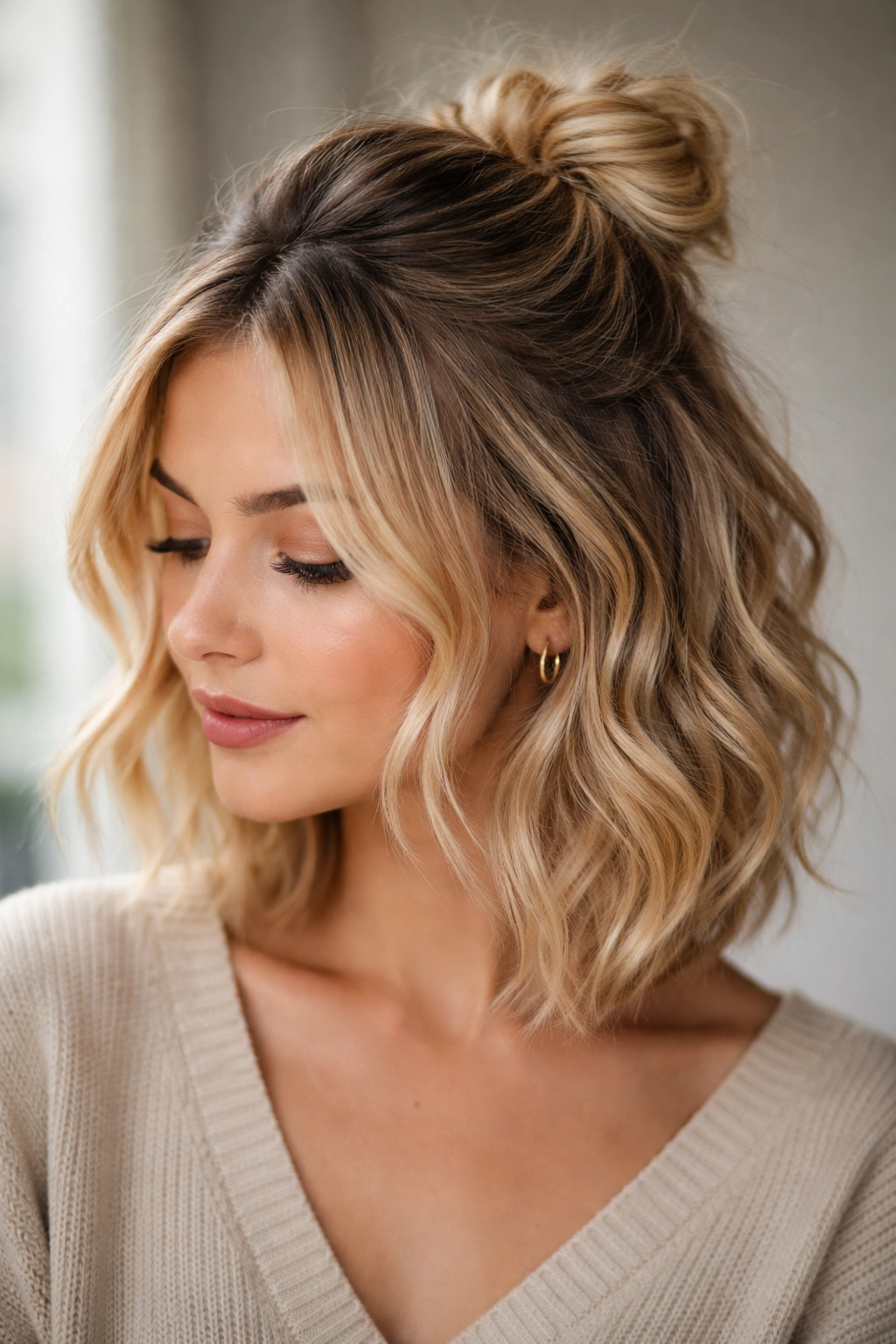
This version leans less into structured elements like braids or twists, and more into texture and movement. It’s perfect if you’ve got naturally wavy or curly short hair, or if you’re willing to spend five minutes with a curling iron or wand the morning you wear it. The idea is to create maximum texture throughout your hair, then gather just the top section loosely and pin it without any formal styling — just pure, undone waves and curl.
Start with heat-styled waves or curls throughout your entire head. You can use a curling iron, a waving spray, or work with your natural texture — the goal is to have visible dimension and movement in every section. Once your waves are set, flip your head upside down and gently tease the roots of your top section with a paddle brush. This lifts your crown and adds volume where you need it most. Right-side up, gather the top half into a loose, relaxed shape at the crown, and secure it with 2-3 bobby pins placed just underneath. Don’t pull it tight — you want it to look like you just casually tucked it up, not like you deliberately styled it.
Why Short Hair Benefits From This Approach
Shorter hair doesn’t hold waves quite as long as longer hair, so the slight disorder and movement in this style actually works in your favor. The waves start to relax and soften throughout the day, which makes the style look more naturally undone and less overdone. By evening, it looks effortlessly cool rather than like you just got out of the salon.
Building the Texture
- Spray your finished waves or curls with a flexible hold hairspray — nothing too heavy or sticky, just something that keeps the texture intact as you move
- Pull a few loose waves down around your face before securing the top section — these frames are essential on short hair to prevent the style from looking too exposed
- If you have straight or fine hair, you might need a texture spray or sea salt spray applied before you begin, followed by light backcombing for grip
4. The Side-Swept Half-Up Messy Bun
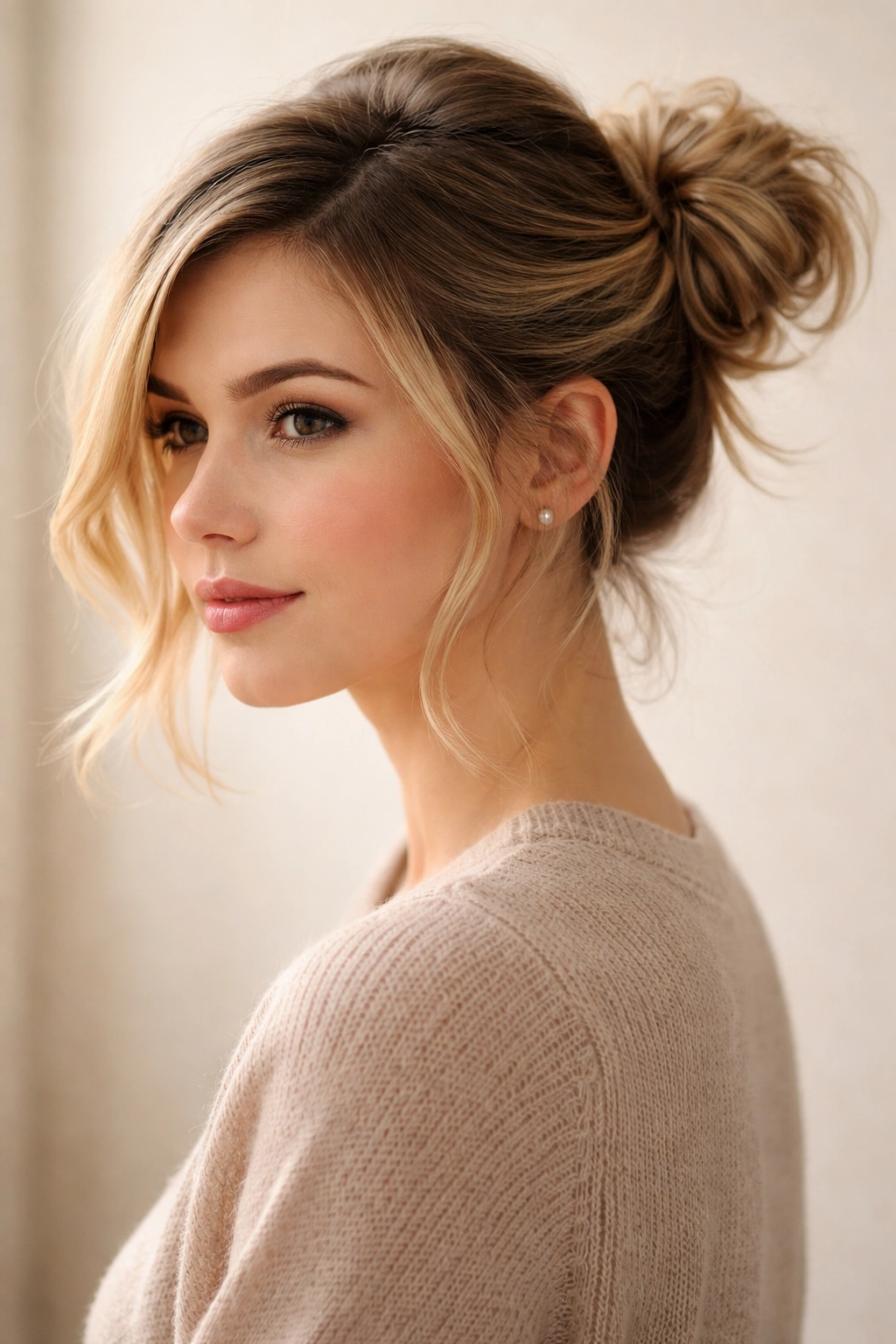
This version moves away from the centered crown placement and instead gathers your top section toward one side of your head. It’s a more asymmetrical, modern take on the half-up bun, and it’s especially flattering if you have a side part or if you want to show off one side of your face more than the other. The side placement also gives you something to work with on very short hair where the top section might be limited.
Create a deep side part — really exaggerate it, sweeping more hair to one side than the other. Tease the roots of your top section to build volume, then gather it into a small, loose bun positioned just above and behind your ear on the fuller side. The bun should sit roughly where a cocktail-party updo would sit, not at the very crown of your head. Secure it with bobby pins, then pull a few pieces loose around your face and at your temple to soften the line and prevent it from looking too slicked-back.
Why This Works When Hair Is Really Short
When your hair is cut very short, you sometimes don’t have enough length on top to create a bun at the very crown of your head — it just looks too exposed and thin. By moving the bun to the side, you’re working with more hair in that section, and you’re creating a style that actually looks intentional rather than like you’re working around a limitation. The asymmetry reads as deliberate and modern.
The Key Details
- Your side part should be positioned where your natural part line falls, or slightly deeper — forcing a part where your hair doesn’t naturally part will make the whole style feel uncomfortable and look like it’s fighting against your hair
- Soften the side-swept section with loose pieces and gentle texture — this prevents it from looking severe or slicked-back, which can happen on short hair if you’re not careful
- Make sure the secured section sits low enough that it’s not pulling on your hairline, especially if you have a sensitive scalp or prone to tension headaches
5. The Wrap-Around Half-Up Messy Bun
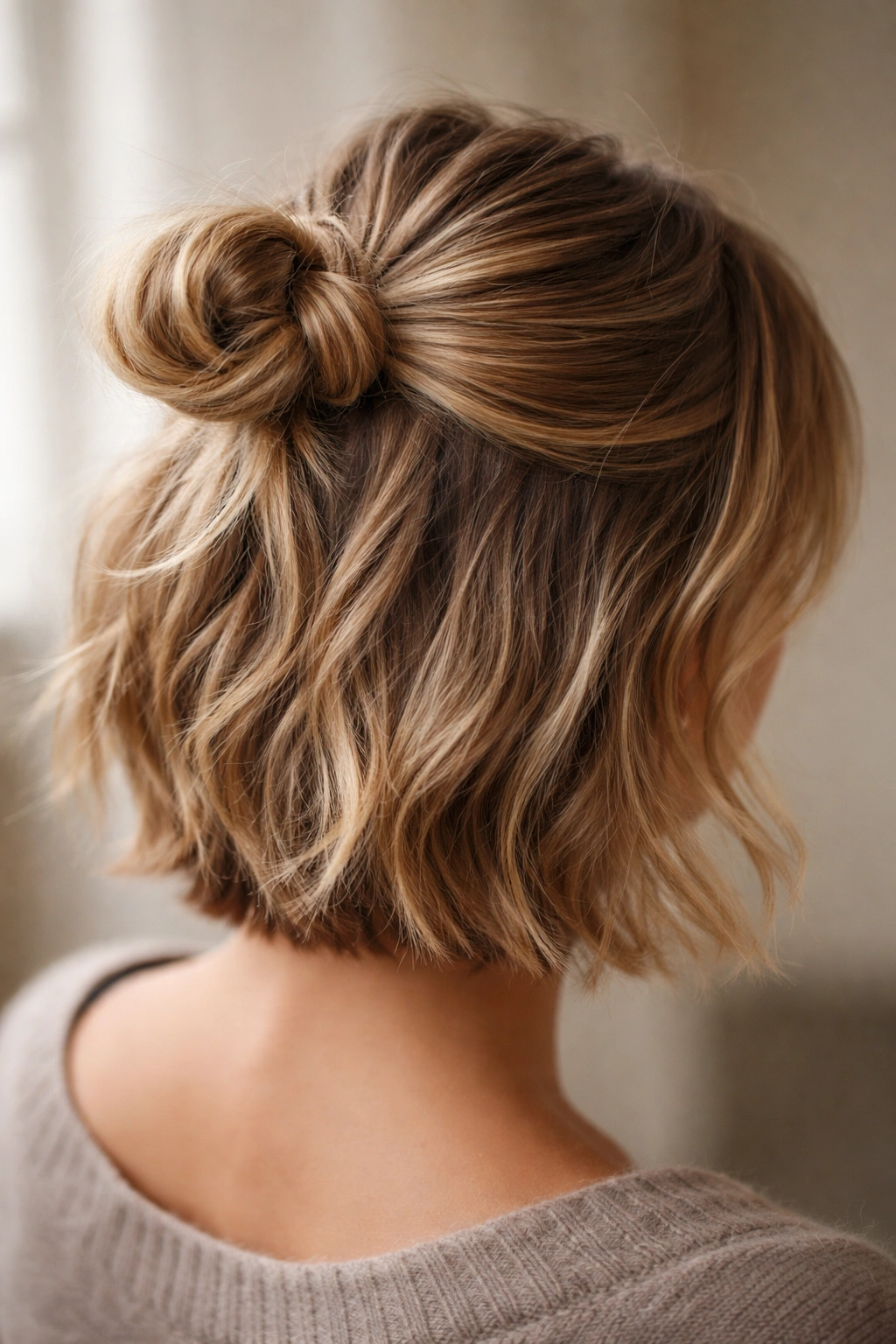
This style works especially well on short hair because it uses a technique that doesn’t require much length, but creates the illusion of a much more elaborate style. You’re essentially creating a small twisted or braided section and wrapping it around the base of a very loose, barely-there bun. It looks more complex than it actually is, and it’s the version you should try if you want people to think you spent an hour on your hair when you really spent twelve minutes.
Gather your top section into a loose, relaxed half ponytail — don’t tighten it at all, just barely secure it with an elastic. Now take a small section from underneath this loose ponytail, twist it tightly, and wrap it around the elastic securing your ponytail. Tuck the end of this twisted section underneath your bun and pin it so it’s completely hidden. The effect is that your loose, somewhat messy bun is now anchored with an invisible twisted detail that keeps everything in place while looking like it could fall apart at any second.
The Psychology of This Style
There’s something very satisfying about a hairstyle that looks way more complicated than it actually is. This wrap-around version plays into that — the twisted wrap around the base signals that someone put real effort in, but in reality it’s one of the fastest versions to create. It’s the hairstyle equivalent of meal prep that looks impressive but is honestly simple.
Making It Work on Short Hair
- Don’t use a thick elastic to secure your initial ponytail — use a thin, clear elastic so it’s less visible and doesn’t create bulk at the crown
- Your wrap-around twist can be quite small since you don’t have much hair to work with — think quarter-inch thickness, not half an inch
- Pull the loose ponytail apart slightly with your fingers before wrapping, so it looks intentionally textured rather than like a tight gathered section
6. The Double-Strand Twisted Half-Up Messy Bun
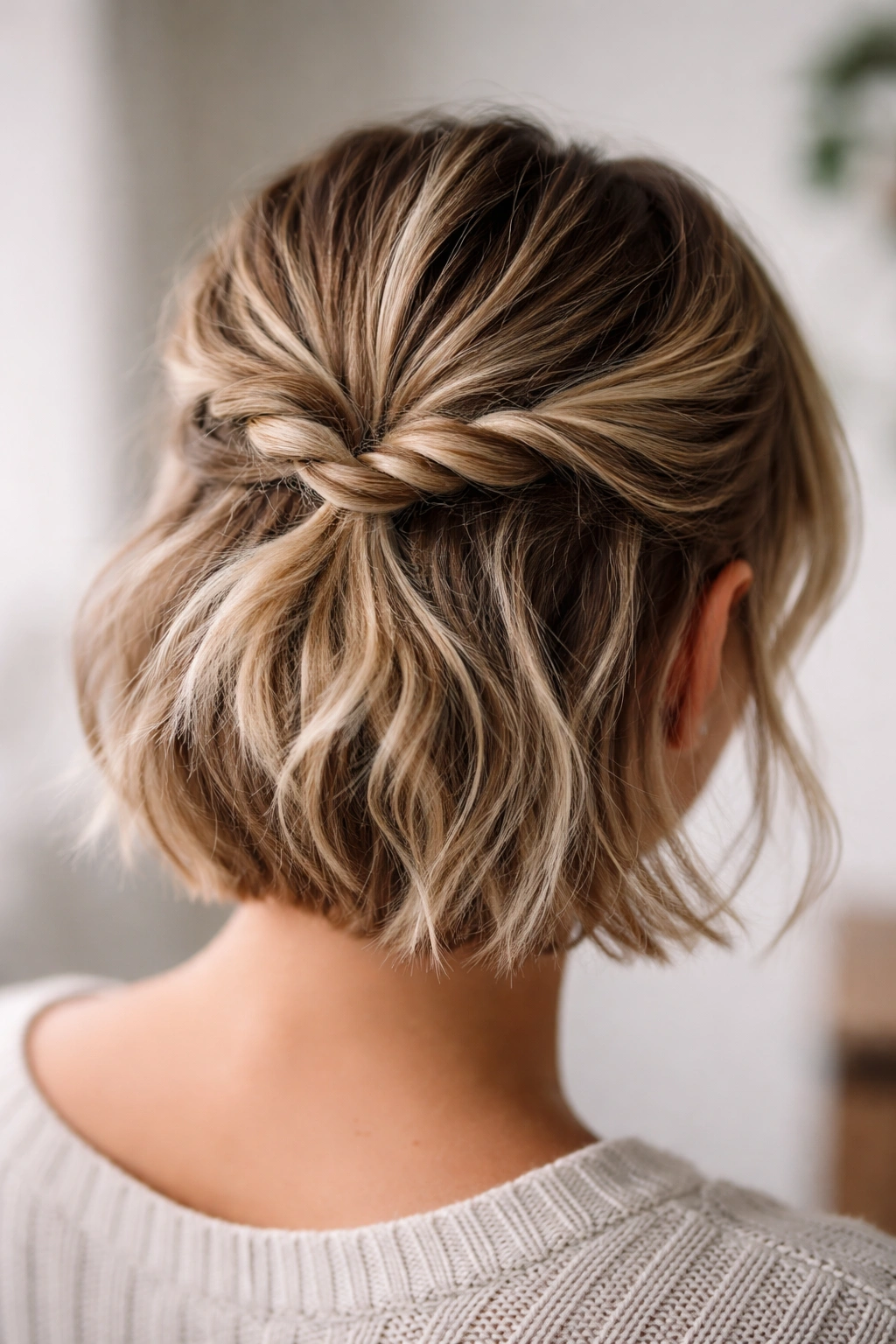
This is the most sculptural and intentional-looking version of the bunch. Instead of a single bun anchored at the crown, you’re creating two twisted strands that wrap around each other and intertwine, meeting at a central point where they’re secured into a small bun. It sounds elaborate, but it’s actually quite straightforward once you understand the technique. The visual result is a hairstyle that looks architectural and deliberate, perfect for when you want to look polished but still undone.
Divide your top section into two equal parts. Twist each section separately — one clockwise, one counterclockwise. Now, instead of wrapping them around a center point, wrap them around each other, spiraling them together as they meet at the back of your head. Once they meet and intertwine, pin the resulting twisted knot loosely so it sits just below your crown. The two twists create a natural visual frame on either side of your face, and the intertwined center creates texture and dimension.
Why This Specific Technique Suits Short Hair
Double-strand twists create maximum visual impact with minimal hair. Because both strands are twisting around each other, the style reads as much fuller and more complex than it actually is. On short hair where you’re working with limited length and volume, this multiplication effect is crucial — it ensures your style doesn’t look skimpy or like you’re working around your haircut rather than embracing it.
The Technical Details
- Twist each strand tightly enough that it holds its shape but loosely enough that you can still gently pull it apart for texture — somewhere in the middle is ideal
- As you intertwine the two twists, keep them relatively loose so the final knot doesn’t feel tight against your scalp
- After pinning, pull a few loose pieces from around your face to soften the overall look and prevent it from feeling too constructed
Texture Spray and Product Recommendations for Short Hair
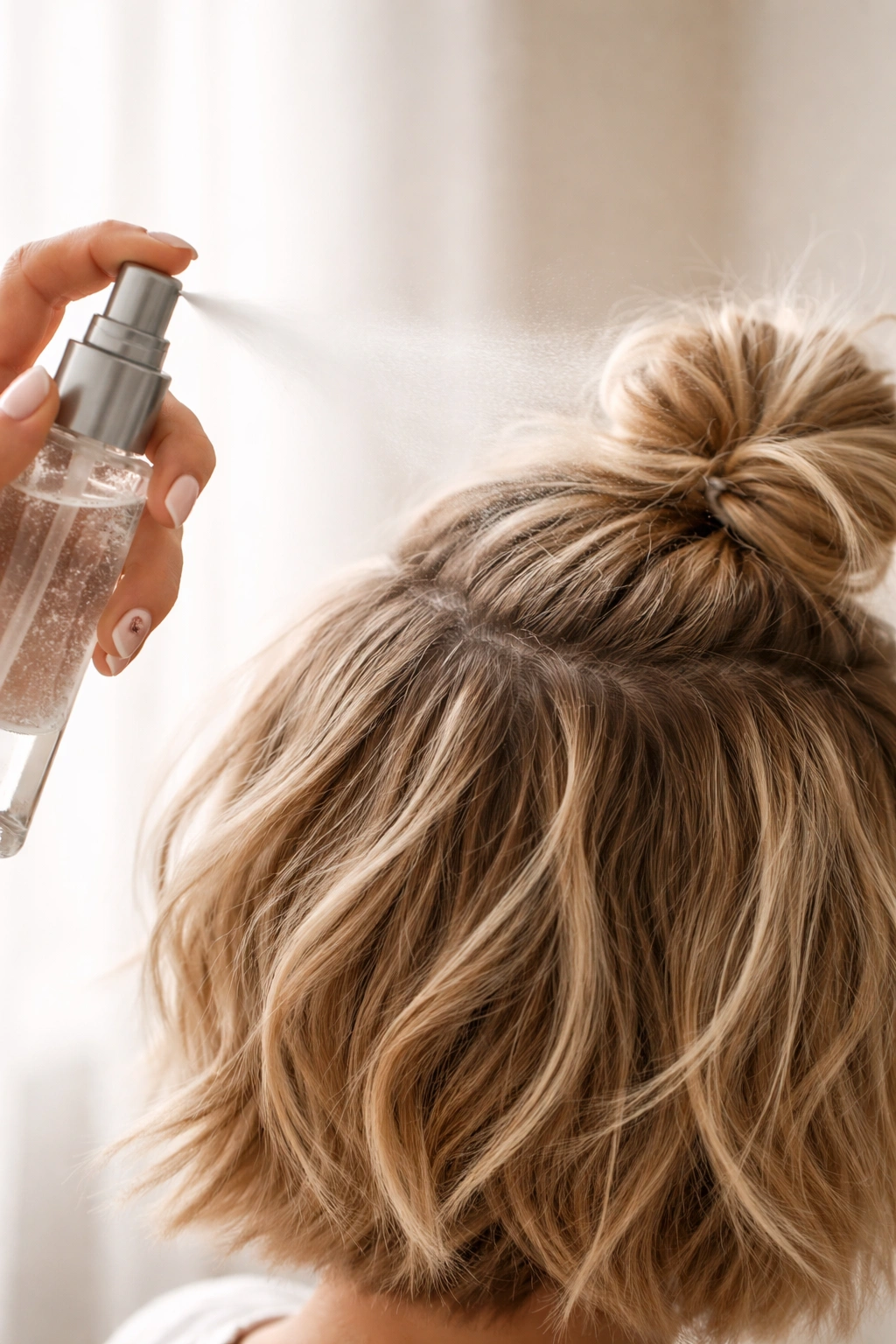
The difference between a half-up messy bun that looks intentionally undone and one that looks like you just rolled out of bed comes down to product selection and how you use it. On short hair, you need products that add grip without adding weight, and that provide texture without flaking or feeling crispy.
Texture sprays and dry shampoos are your secret weapons here. Apply them to the roots of your top section before you style, and again to the strands you’re twisting or braiding. This gives your hair something to grip onto and prevents the slippery-smooth texture that causes styles to slip throughout the day. Look for lightweight formulas that won’t weigh down short hair — cream or mousse texturizers are usually better choices than heavy sprays for shorter lengths.
Lightweight hairsprays work better than ultra-hold formulas for this style. You want the pieces you’ve loosened to stay loosened, not get locked in place, so a flexible-hold spray that lets your hair move slightly is ideal. Apply it after you’ve finished pulling pieces loose, not before — this prevents you from sealing the tightness before you’ve had a chance to mess it up.
Tips for Making Your Half-Up Messy Bun Last All Day
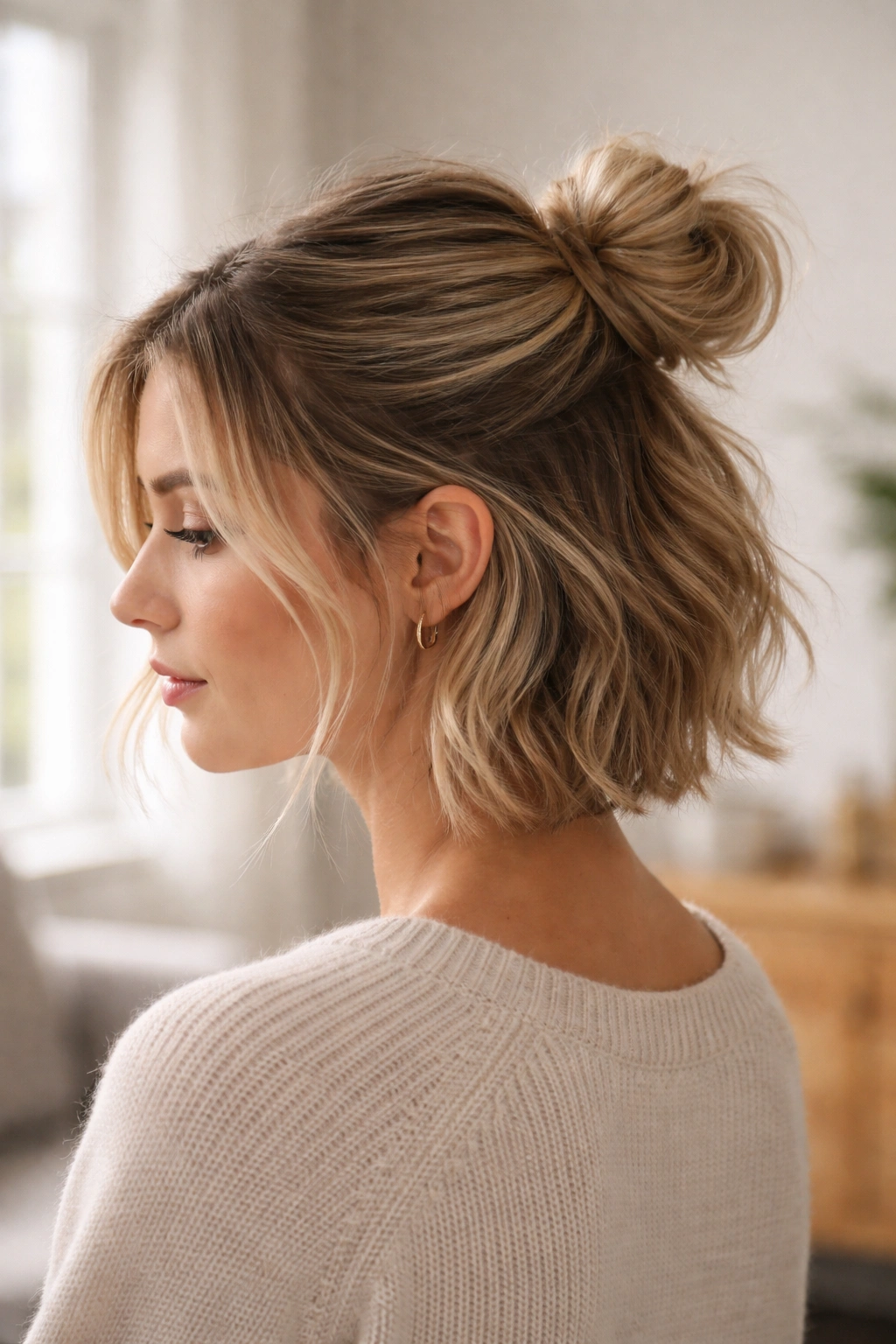
The biggest challenge with half-up styles on short hair is that they can start to slip or shift as you move around, especially on finer hair that doesn’t hold texture naturally. Start with dry hair or hair that’s been dry shampooed — clean, freshly washed hair is slippery and defeats the purpose. Style it at least an hour after your last wash if you can, so your natural scalp oils have had time to coat the strands and add grip.
Use bobby pins that match your hair color and place them at slightly different angles rather than stacked on top of each other. This distributes the grip more evenly and prevents the entire bun from shifting if one pin starts to work its way loose. Tuck the ends of your bobby pins under other hair so they’re completely invisible and they’re less likely to catch on things.
If you have very fine hair or if your style tends to slip by midday, try a lightweight hairspray mist on the specific sections you’re securing before you pin them. Let the hairspray dry for a few seconds before pinning — this adds extra grip without feeling crunchy or heavy. You’re essentially creating a slightly sticky surface that the bobby pins can hold onto more firmly.
Final Thoughts
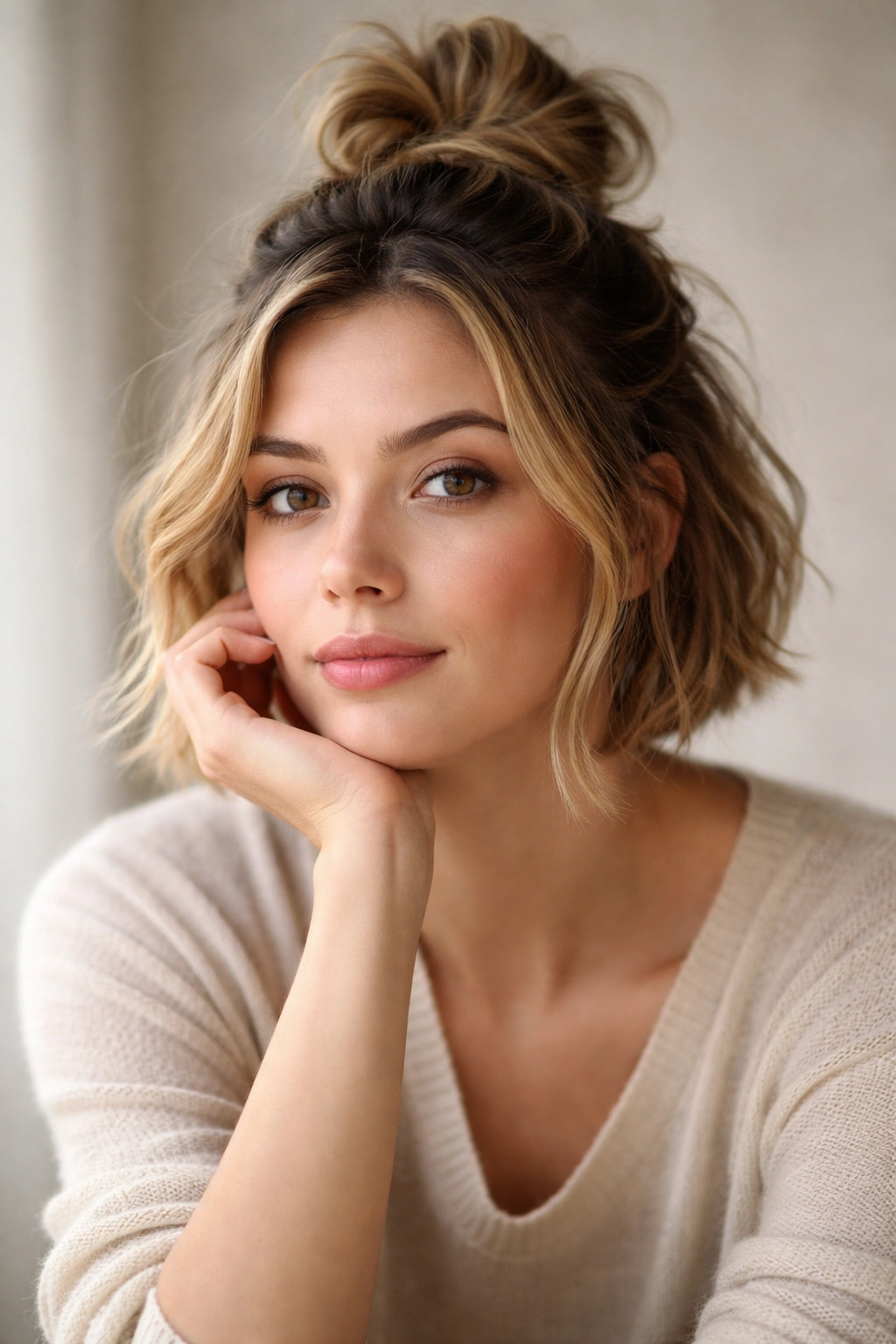
The half-up messy bun isn’t just a hairstyle that works despite short hair — it’s a hairstyle that actually benefits from it. You get the sophisticated, face-framing appeal of a gathered style without the heaviness or the styling time that longer hair demands. Each of these six versions offers a different vibe: the twisted version for days when simple is sophisticated, the braided version for when you want texture and dimension, the textured waves version for maximum movement, the side-swept version for asymmetrical modern style, the wrap-around version for a look that’s more intricate than it sounds, and the double-strand twisted version for architectural polish.
The key across all of these styles is committing fully to the “messy” part. Pull pieces loose, tease your roots, don’t tighten anything to the point where it’s smooth and controlled. Short hair is perfect for this because the slight disorder reads as intentional and modern rather than sloppy. You’re not trying to hide your hair or contain it — you’re working with it and celebrating the natural texture you’ve got.
Once you get comfortable with one or two of these versions, you’ll find yourself reaching for them constantly. They’re fast enough for a Monday morning, polished enough for a meeting or coffee date, and undone enough that they work with your life rather than requiring you to maintain them perfectly. That’s the real magic of the half-up messy bun on short hair.
