


Locs are a beautiful, versatile hair journey that opens up styling possibilities most people don’t realize are possible. While the protective nature of locs makes them perfect for low-manipulation hairstyles, the texture and weight also create unique opportunities for creative upstyles that can go from casual weekend vibes to polished enough for important events. A messy bun might seem simple on the surface, but when you’re working with locs of varying lengths, densities, and stages of maturity, the approach changes entirely from styling loose hair.
The beauty of a messy bun with locs is that it combines practicality with genuine style. You get the benefits of having your hair off your face and neck, reduced tension on your scalp, and protection for the ends of your locs — while still looking intentional and put-together rather than like you just threw your hair up because you couldn’t be bothered. The “messy” aspect isn’t about looking unkempt; it’s about embracing the natural texture and shape of your locs rather than forcing them into a perfectly sleek, compressed style. That’s actually what makes these buns so striking — they work with your hair’s natural personality instead of against it.
What sets messy buns for locs apart from regular messy buns is the technique. Your locs have weight, structure, and individual strands that behave differently from loose hair. They hold their shape better in some ways but require different securing methods to prevent slipping. The sections you pull up might not blend seamlessly the way loose hair would, so you’ll use that to your advantage — letting individual locs stand out, creating intentional texture and dimension. This guide covers eight distinct messy bun styles that showcase what’s uniquely possible when you’re styling with locs.
1. High Bun with Twisted Crown Detail
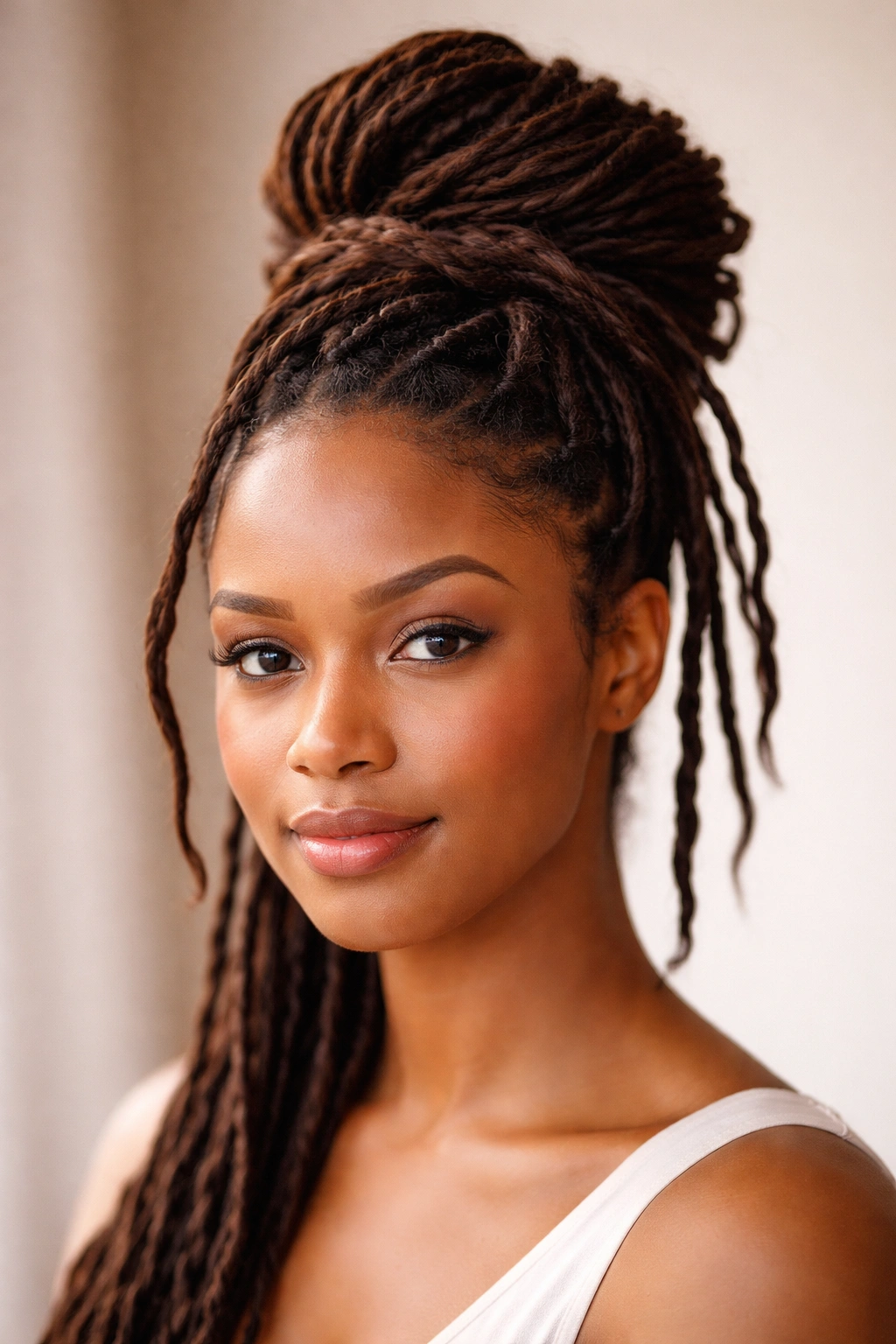
This style sits at the crown of your head, creating lift and volume that frames your face beautifully while keeping everything secure. It works especially well if you have locs of relatively similar length or if you’ve got mature, well-established locs that hold shape on their own. The twisted crown detail adds visual interest without requiring perfect symmetry — in fact, the slight imperfections are what make it look intentionally styled rather than rigidly formal.
How to Create the Twisted Crown
Start by parting your locs into two sections vertically down the center of your head — imagine dividing your hair from forehead to nape. Twist one section lightly as you bring it up toward the crown, then do the same with the other section. The twists don’t need to be tight or perfectly uniform; loose, organic twists actually look better and require less tension on your scalp. Cross the two twisted sections over each other at the crown and secure them together with bobby pins or a hair tie, then gather the remaining locs from around the sides and back into a ponytail at that same crown point.
Why This Works for Locs
Locs hold twists beautifully because each individual loc acts like its own strand, creating natural texture within the twist. The weight of your locs will naturally anchor the style, so it stays in place throughout the day without needing excessive pins or products. The crown placement gives you volume at the top of your head, which is especially flattering if you prefer to show your face or if you’re wearing it for a professional setting where you want to look polished.
Styling Tips for Maximum Impact
- Wrap a thin decorative thread, ribbon, or small beads around the base of the bun to add dimension and draw attention to the detail you created
- Let a few face-framing locs fall loose in front if you want a softer look, or pin everything back smoothly for a more formal appearance
- This style works beautifully for 7 to 10 days of wear — your locs will naturally relax slightly and create more texture, making the bun feel even messier and more lived-in as time goes on
2. Low Textured Bun with Face-Framing Locs
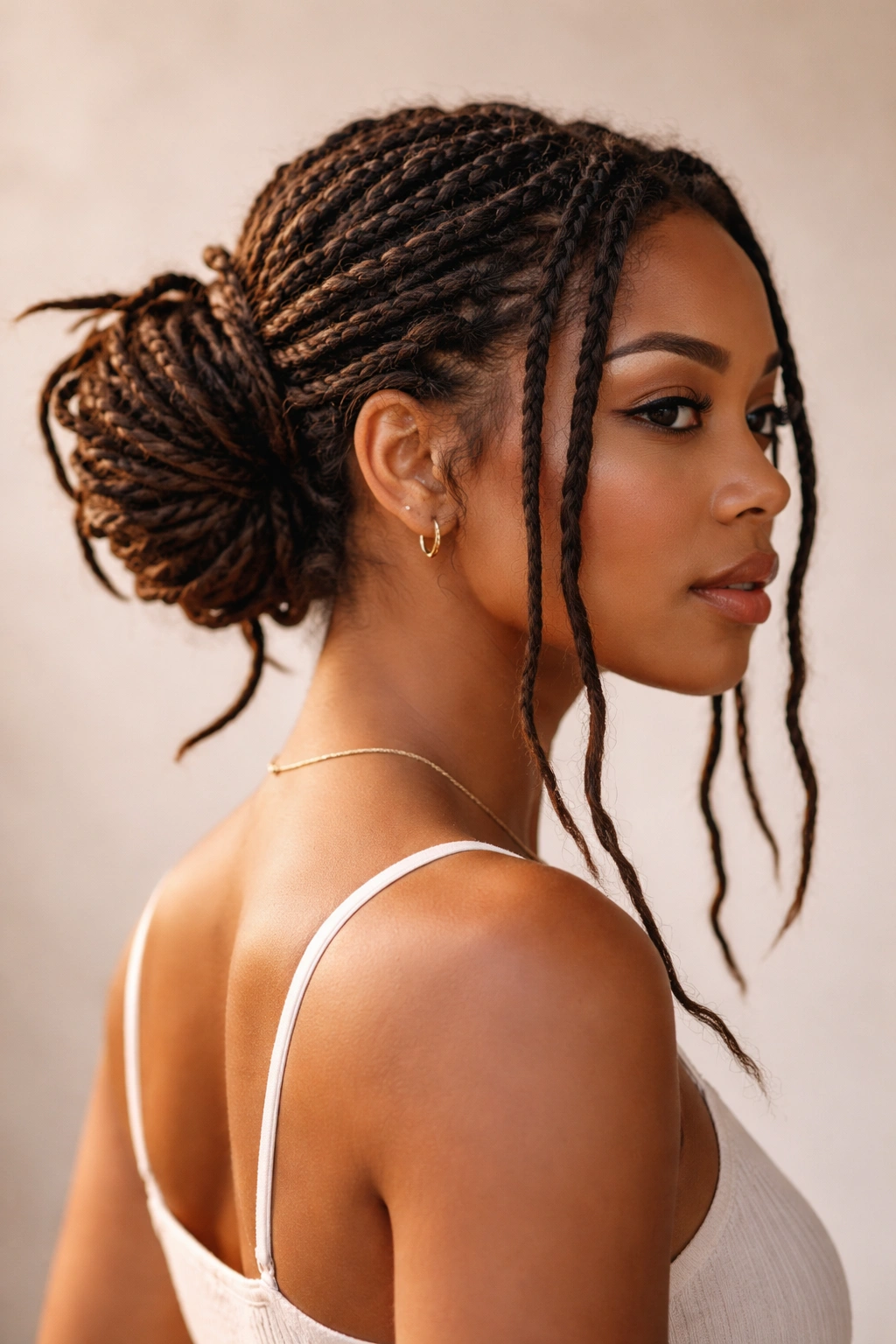
A low bun positioned at the nape of your neck offers a completely different energy than a crown-height bun. It’s sophisticated, shows off the back of your neck and shoulders, and creates a silhouette that photographs beautifully. This style embraces the individual nature of your locs by deliberately letting several frame your face rather than pulling everything back smoothly.
Building the Structure
Gather your locs loosely at the nape of your neck using a hair tie, but before you do, pull out 4 to 6 smaller locs from the front and sides of your face — the ones that would naturally frame your features. Leave these out completely. Take the main gathered section and twist it loosely or braid it if your locs are long enough, then wrap it around itself to form the bun shape, securing with bobby pins as needed. The loose twisting or braiding creates inherent texture, so the bun looks deliberately undone rather than sloppy.
The Power of Face-Framing Details
The locs you left out become the style’s signature element. They add softness, create movement, and make the overall look feel less severe than a completely pulled-back style. These face-framing locs should have some intentional styling — you might twist them slightly, create small waves with a curling iron, or just let them fall naturally depending on how much styling you want to do. The contrast between the structured bun and the loose face-framing pieces is what makes this style photograph so well and feel more editorial than casual.
Maintenance and Longevity
This style typically lasts 5 to 8 days comfortably if you sleep on a silk pillowcase or wrap your locs at night. The face-framing locs won’t be compressed, so they stay fresher-looking longer. You can refresh the bun itself every few days by gently loosening it, re-twisting the main section, and rewrapping without touching the face-framing pieces.
3. Double Buns with Wrapped Base
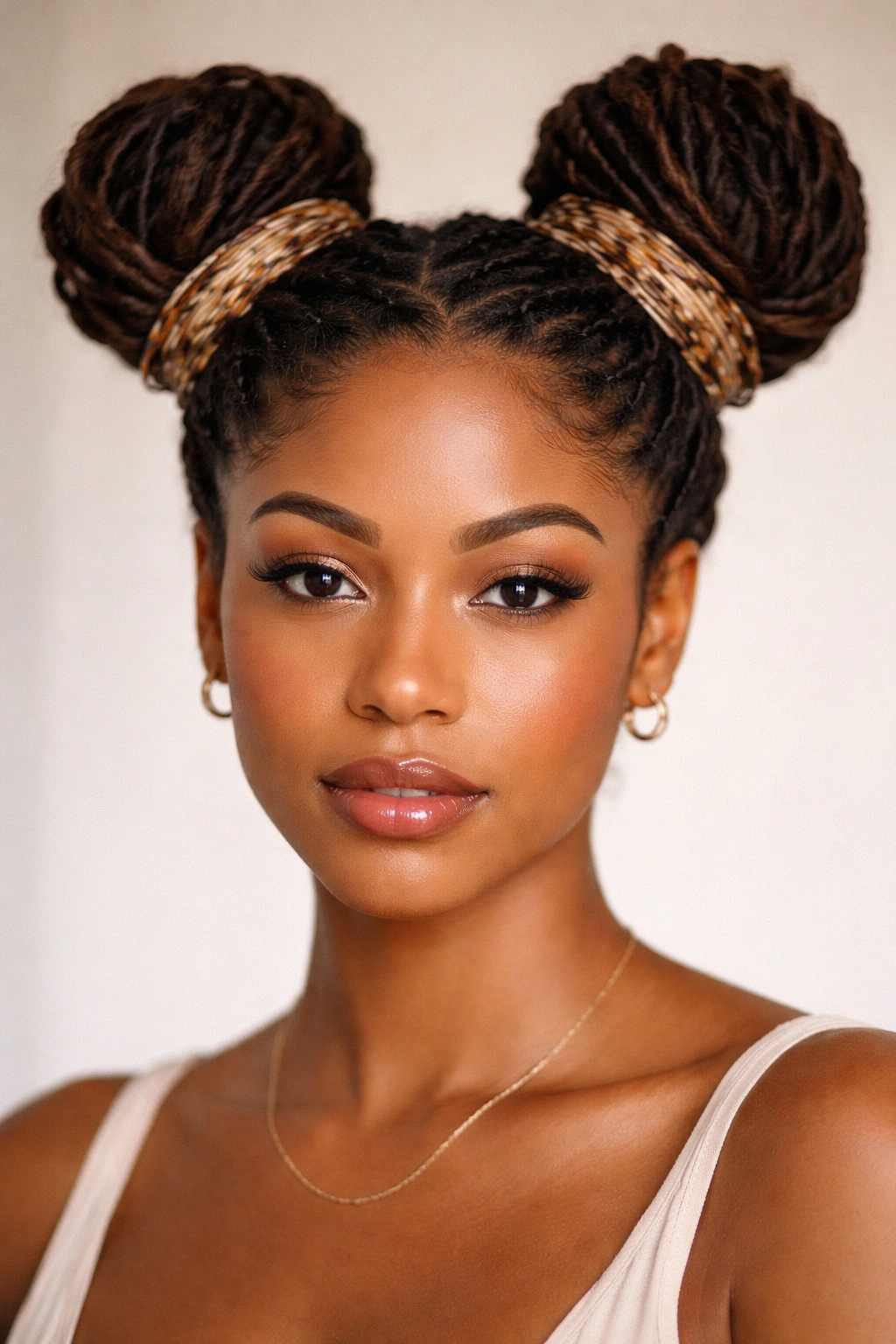
Double buns might conjure images of a playful aesthetic, but with locs, they can look surprisingly sophisticated and intentional. The wrapped base — where you wind decorative thread, yarn, or thin fabric around the bottom of each bun — elevates the whole look and adds a custom, handmade quality that feels high-fashion rather than casual.
Sectioning and Placement
Create two equal sections by parting your hair down the middle from forehead to nape, then divide each half horizontally so you have four quadrants. Gather the two top sections up toward the crown into high ponytails, then do the same with the two lower sections into ponytails just below them. Each ponytail becomes its own bun. The height difference between the upper and lower buns creates visual interest and prevents the style from looking cartoonish.
The Wrapped Base Technique
Once you’ve twisted and secured each ponytail into a bun shape, wrap a thin decorative element tightly around the base where the hair tie is. You can use metallic thread, colorful yarn that complements your aesthetic, leather cord, or even strips of fabric. Wind it around 5 to 7 times, then secure it by tucking the end under itself or tying it off. This wrapped detail serves a practical purpose too — it holds the bun more securely and prevents it from loosening throughout the day.
Why Double Buns Work with Locs
Because each loc has weight and structure, double buns sit more solidly on your head than they might with loose hair. The texture of locs also means the buns develop personality as you wear them — they won’t look plasticky or artificially smooth. After a day or two, the buns will loosen slightly and create that intentionally messy texture that makes the style feel modern rather than dated.
Styling Scenarios
This works beautifully for casual weekend wear, creative professional settings, or anywhere you want to make a confident style statement. It’s also surprisingly practical — if you’re doing physical activity or working in a warm environment, having your entire head of hair secured in two smaller buns distributes the weight and tension better than one large bun would.
4. Side-Swept Bun with Loose Strands
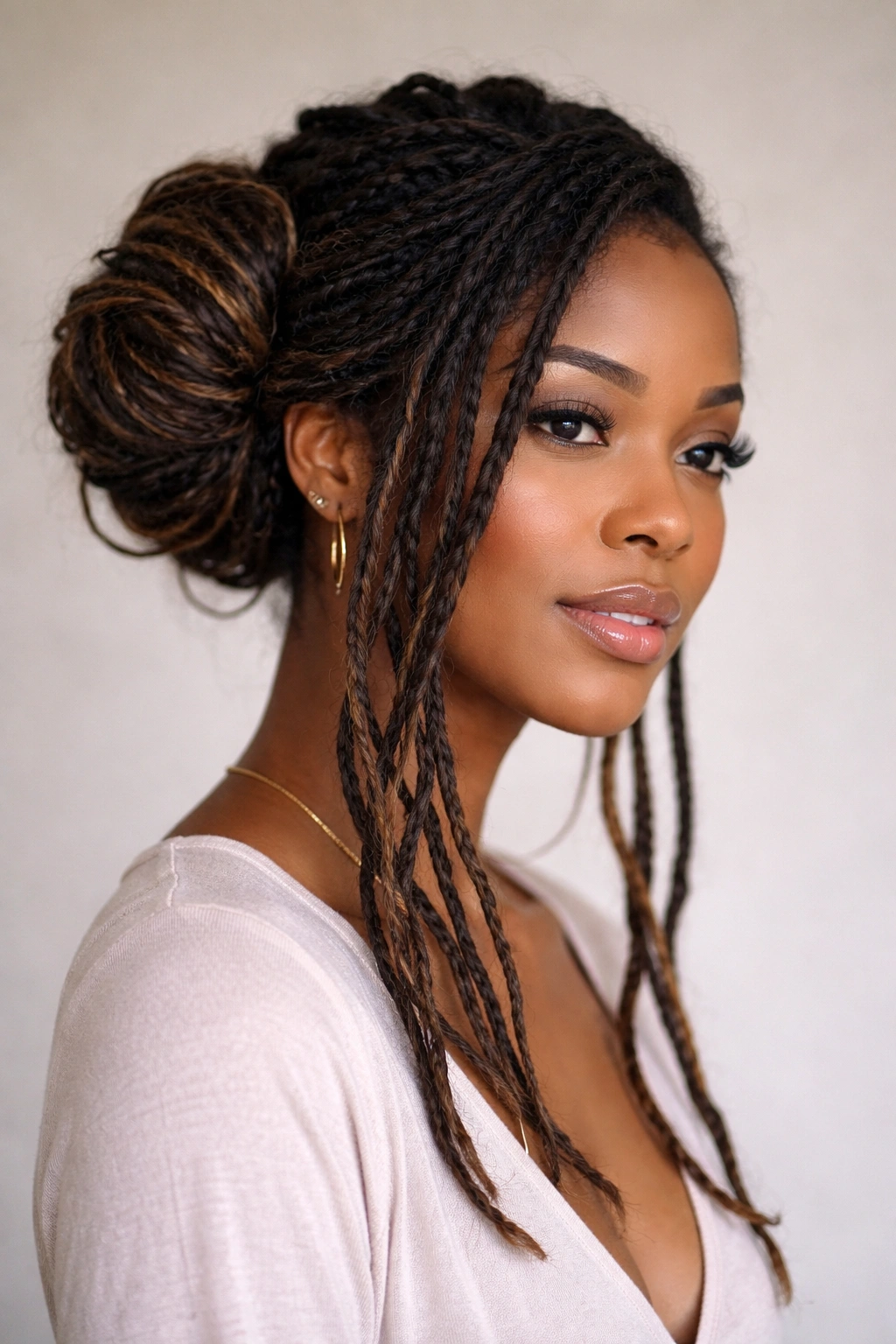
This is the epitome of effortless elegance. By positioning the bun off to one side rather than center back, you create asymmetry that automatically reads as more intentional and styled. Letting several locs hang loose throughout adds movement and prevents the style from feeling too tight or controlled. It’s the perfect option when you want to look put-together without looking like you spent hours styling.
Creating the Side Placement
Rather than gathering hair straight back, angle your hands and gather your locs toward one side — typically toward the ear area if you’re doing a true side-swept look. The gathering point sits behind one ear rather than center back. Twist or loosely braid the gathered section as you bring it around, then secure it into a bun shape with bobby pins. The key is keeping the overall shape relatively loose and organic rather than tight and compact.
The Loose Strands Strategy
Allow 5 to 8 locs to fall freely on the opposite side of where your bun is positioned. These strands should fall naturally around your face, neck, and shoulders. They’re not pulled back or pinned; they just hang. The contrast between the secured bun on one side and the loose locs on the other creates movement and dimension that catches light beautifully, especially in photos or when you move.
Texture and Movement
The beauty of this style is that those loose locs will shift slightly as you move, as you sit and stand, and throughout the day — and that’s exactly what you want. It keeps the style from feeling frozen or overly done. If your loose locs have any wave or curl pattern, that texture becomes even more striking against the controlled bun. You might gently separate and fluff the loose locs a bit each morning to keep them from looking flat or matted where they lay against your neck.
Occasion Flexibility
A side-swept bun works for virtually any situation. Style it sleeker and more structured for professional settings, or keep it deliberately loose and textured for casual everyday wear. The versatility comes from how tightly or loosely you construct the bun and how much you allow the loose strands to move and separate.
5. Bubble Bun with Stacked Sections
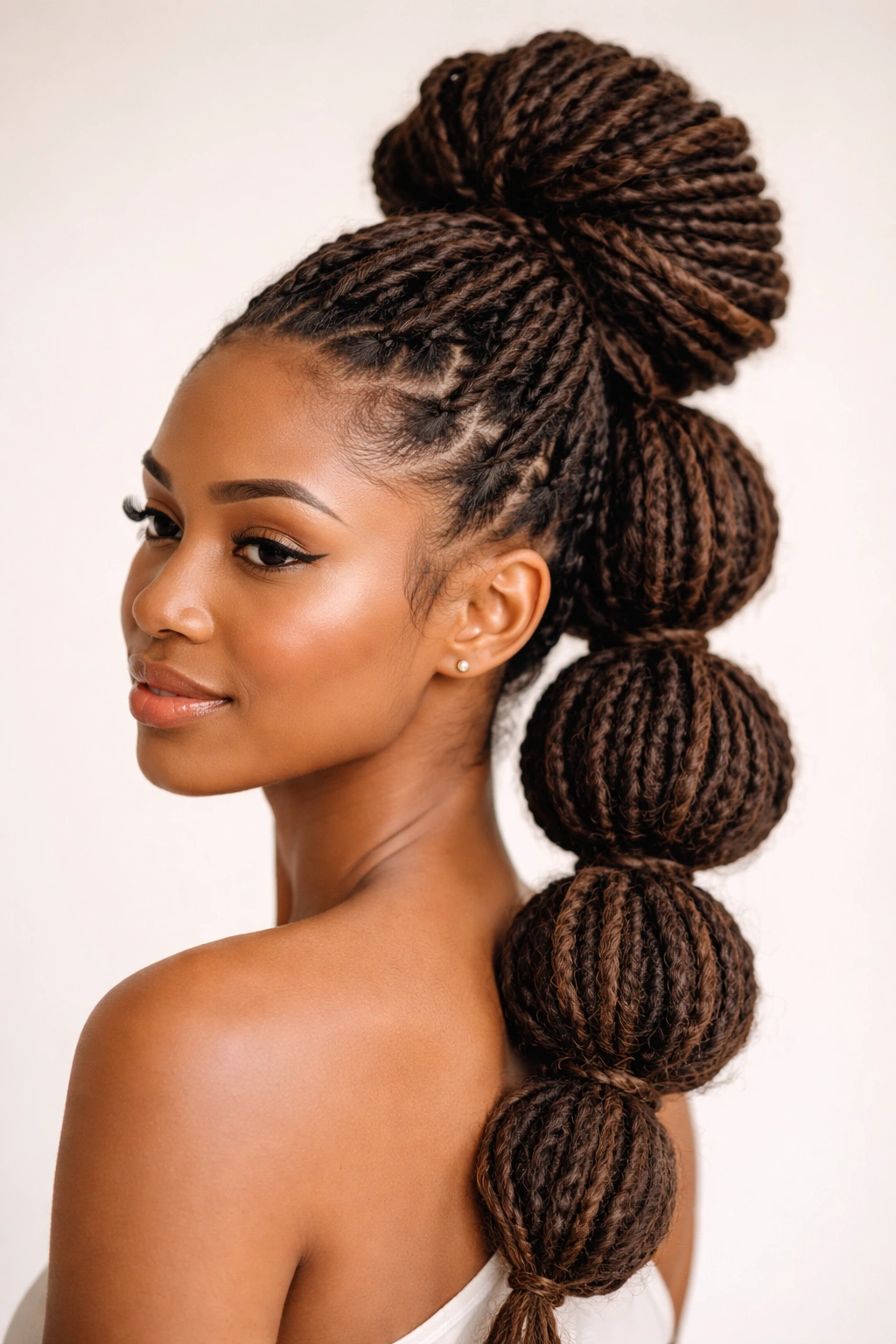
A bubble bun breaks up what might otherwise be one long column of gathered hair into distinct, separated sections that stack vertically. With locs, this creates incredible visual texture and volume while keeping everything secured. Each bubble is its own visually interesting element, making the overall style feel playful and modern without sacrificing sophistication.
The Stacking Technique
Start by gathering your locs into a high ponytail and securing it with a hair tie. Create the first “bubble” by pulling the ponytail down slightly and securing it with another hair tie about 2 to 3 inches below the first one. Gently fluff and separate the locs in that top section to create volume — the texture of your locs will naturally create dimension here without much effort. Repeat this process down the length of your ponytail: add a hair tie, fluff the section, move down, add another hair tie, fluff again.
Why Locs Make This Special
Locs are actually ideal for bubble buns because each individual loc maintains its shape within each bubble. Where loose hair might look deflated after a few hours, your locs will hold the separated sections distinctly. The staggered texture created by multiple bubbles is far more striking with locs than it would be with loose hair because you see the individual strands within each bubble.
Customizing the Look
You can make your bubbles large or small depending on how much hair you have and the effect you want. Larger bubbles create a bolder, more artistic look; smaller, tighter bubbles feel more polished and structured. The number of bubbles depends on your hair length — you might have three large bubbles or six smaller ones. As you wear this style, the bubbles naturally relax slightly, creating an even messier, more organic appearance.
Securing and Longevity
Use elastic hair ties that match your loc color or opt for decorative elastics in a contrasting color to make the ties themselves a design element. This style can last 7 to 10 days if you’re gentle with it and sleep with your hair protected. Each bubble will gradually soften, which actually makes the style look better as time goes on — the sharp definition mellows into something more lived-in and intentional.
6. Pineapple Bun for Overnight Protection
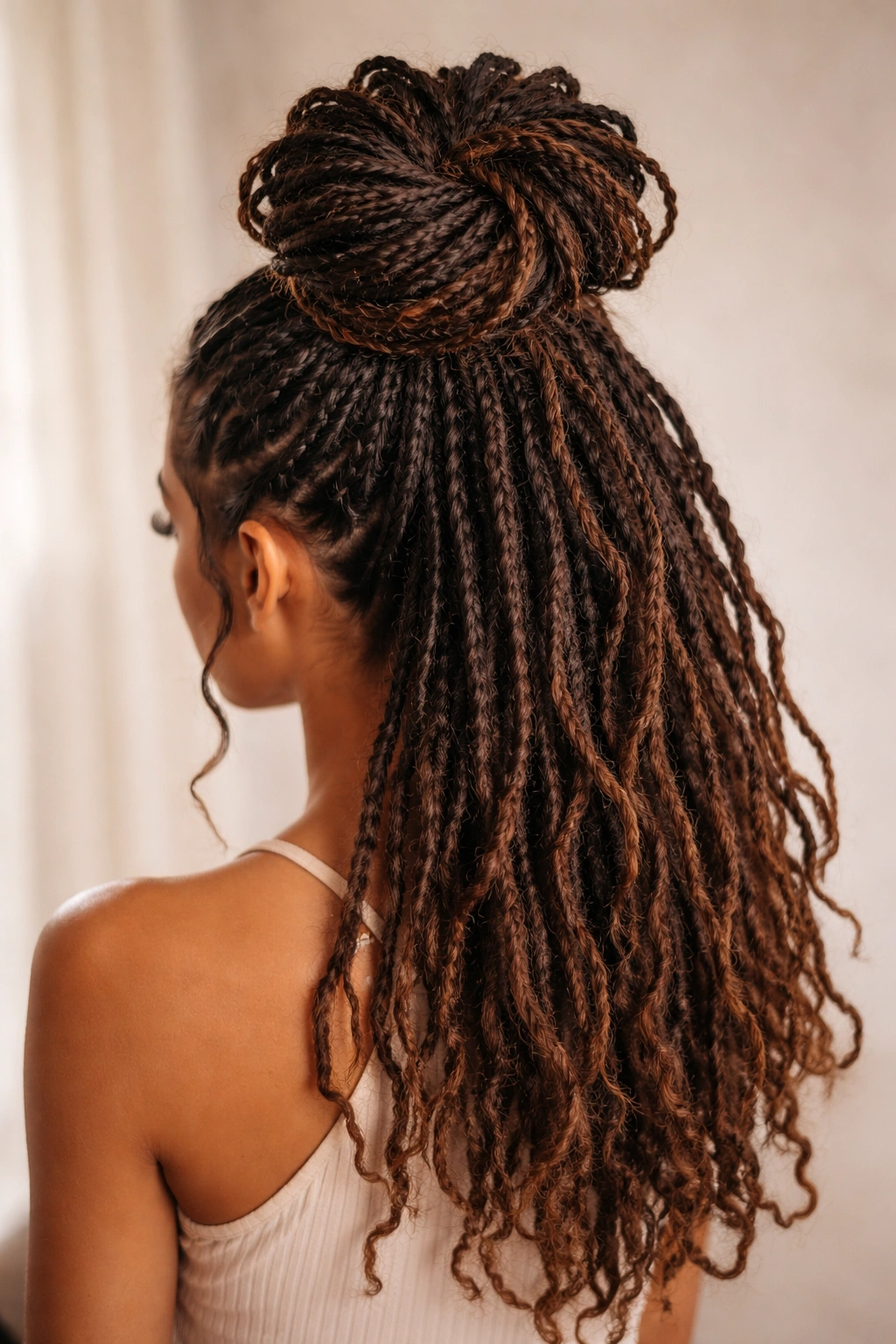
A pineapple bun is technically a protective style designed to preserve the shape and condition of your locs while you sleep, but it’s stylish enough to wear outside the house during the day. It’s positioned high on your head with locs gathered into a ponytail at the crown, creating a shape that’s supposed to resemble a pineapple — secure at the base with plenty of length flowing loosely from the gathered point.
The Proper Pineapple Setup
Flip your head upside down and gather all your locs loosely at the crown using a soft, silk-lined hair tie or bonnet-style tie that won’t create creases. When you flip back up, the locs should fall down and around your head, creating that pineapple silhouette. The key is keeping the ponytail loose enough that you’re not creating tension that could contribute to loc breakage or scalp irritation, but secure enough that it won’t slip down while you sleep.
Daytime Styling Variations
If you want to wear a pineapple bun during waking hours, you can twist or braid the gathered ponytail section and wrap it into a bun at the crown, or leave it as a simple high ponytail with loose locs flowing down. Some people create a bun and then wrap decorative elements around it to make it feel intentionally styled rather than like a protective-only choice. You might add a scarf, tie, or wrap around the base of the bun to define it and add visual interest.
Moisture and Scalp Health
The beauty of the pineapple method with locs is that it keeps everything off your scalp and neck while you sleep, which means less friction, less moisture loss in those areas, and better overall scalp health. During the day, if you’re wearing it, the loose locs get air circulation, so your locs stay fresher longer than they would in a more enclosed style.
Duration and Frequency
You can wear a pineapple bun nightly indefinitely — it’s actually beneficial for loc health and longevity. Daytime pineapple bun looks work best for casual settings, running errands, or relaxed environments where the slightly undone aesthetic fits naturally.
7. Half-Up Bun with Interlocked Details
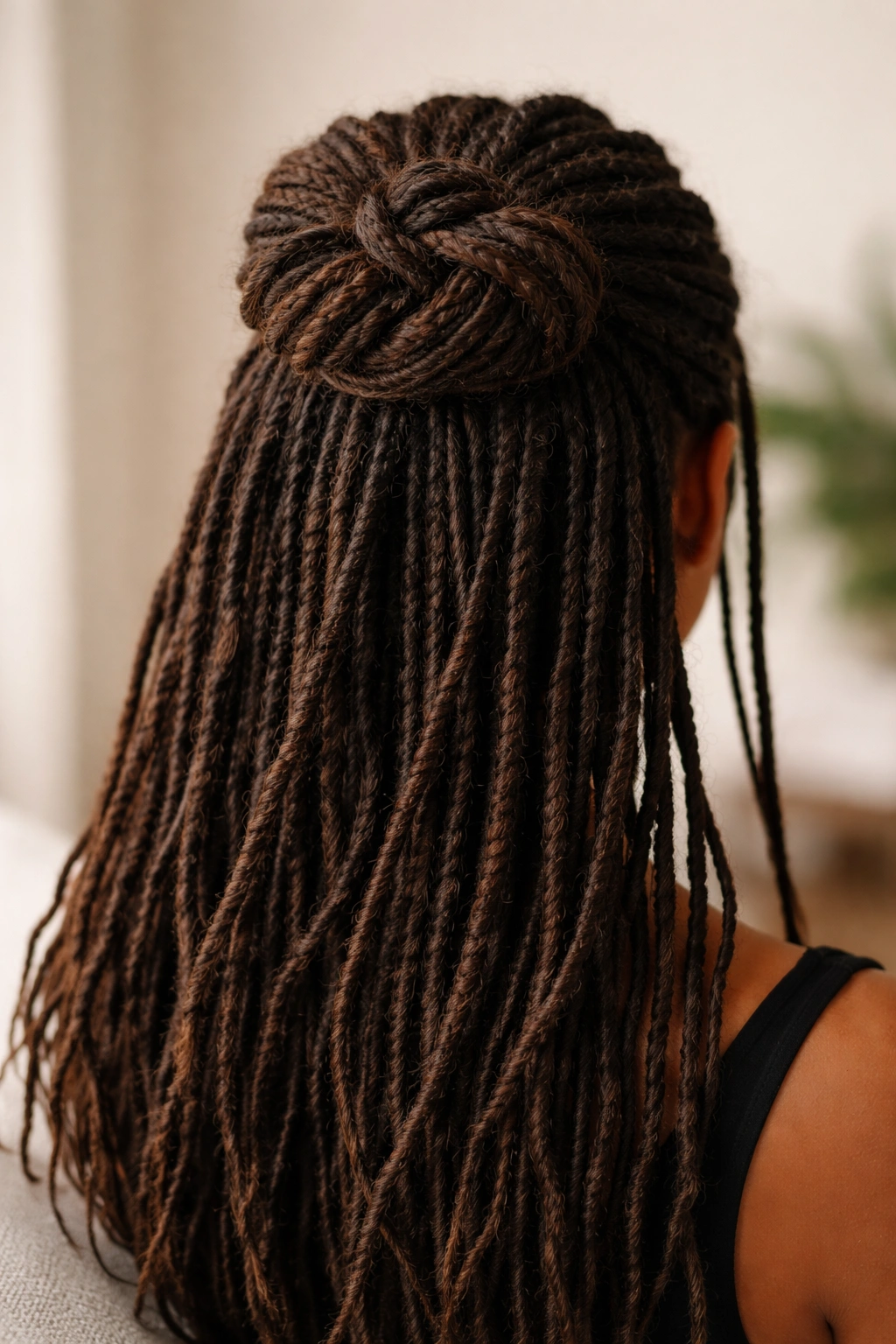
A half-up bun takes just the top portion of your hair, leaving the bottom half down for movement and style versatility. The interlocked details come from weaving or intertwining sections of the half-up portion before securing them into the bun, creating visual complexity that makes the style feel more intentional and fashion-forward than a simple half-up ponytail.
Sectioning the Half
Imagine a line running horizontally from ear to ear across the crown of your head. Everything above that line is your “up” section; everything below stays down. Take the top section and gather it loosely, but before you secure it into a bun, divide that gathered section into two or three sub-sections and intertwine or braid them together. This intertwining serves both a practical purpose — it helps hold the style together — and a visual one — it creates texture and detail at the crown.
The Interlock Technique
Instead of doing traditional braids, try interlocking: take one loc from one sub-section and pass it over and under locs from another sub-section in an alternating pattern. It’s less uniform than a braid, which actually looks better with locs because it embraces their individual nature. The interlock creates dimension and a handmade quality that’s more interesting visually than a simple braid would be.
Styling the Bottom Section
The bottom half of your locs stays completely loose and can be styled however you like. You might let them hang straight, create waves with a curling iron, or braid a few sections for added texture. The contrast between the controlled, interlocked half-up bun and the freely styled bottom section creates beautiful visual balance. It’s perfect for occasions where you want some hair off your face but also want the full length and movement of your locs showing.
Occasion Versatility
A half-up bun with interlocked details works beautifully for professional settings, dates, creative environments, or anywhere you want to look thoughtfully styled. It’s more casual than a full bun but more intentional than a simple half-up ponytail. It also offers practical benefits — you get the style and polish of an updo while maintaining the cooling effect of having some hair down around your shoulders and neck.
8. Faux Bun with Wrapped Dreads
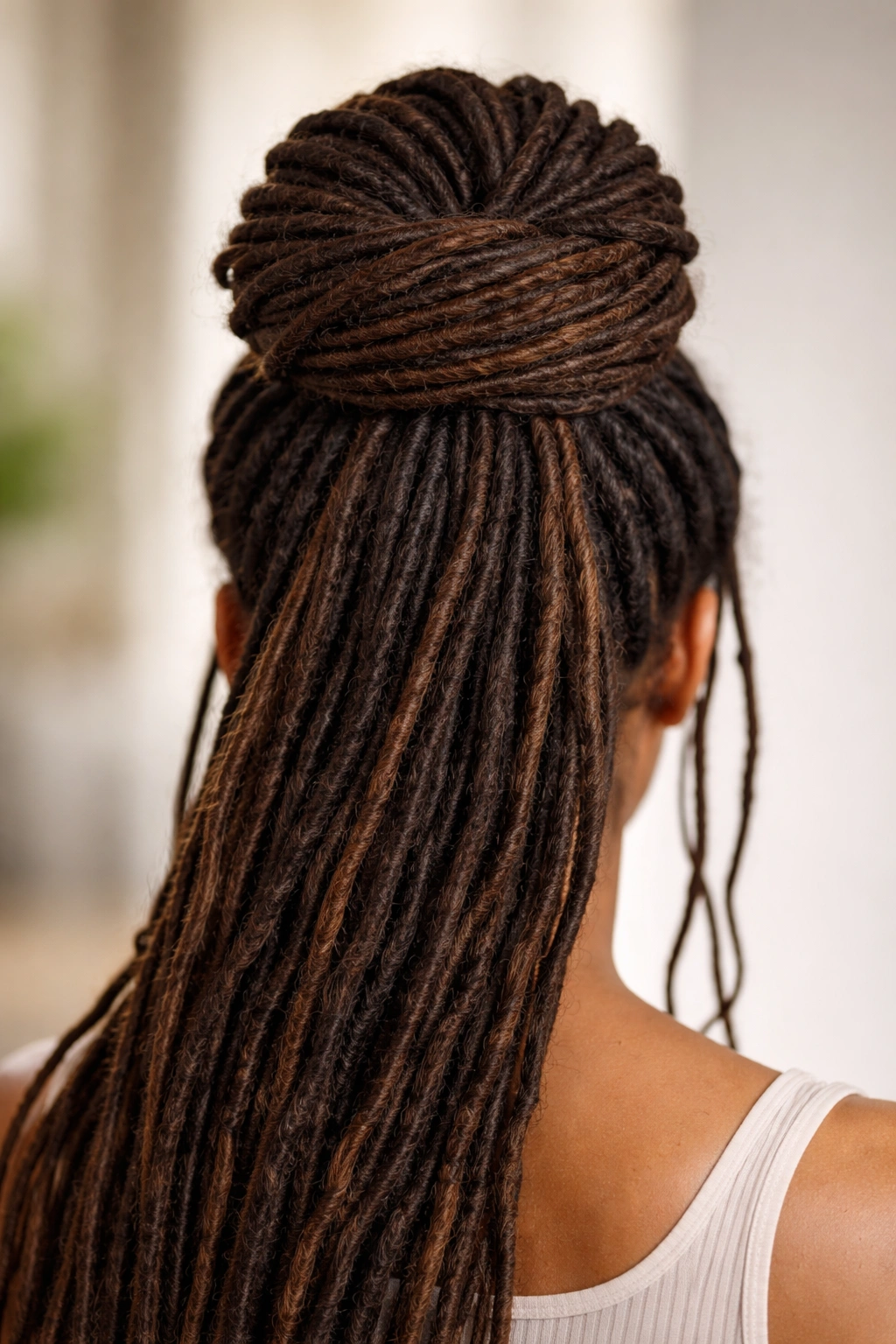
A faux bun creates the visual appearance of a full bun without actually gathering all your locs up. Instead, you select a smaller section from the back, form it into a bun, and wrap long locs around the base of that bun to create the illusion of fullness. It’s a clever technique that works particularly well if you have very long locs or if you want to keep most of your hair down while still having an updo element.
Creating the Faux Structure
Take a section of locs from the lower back of your head — roughly 2 to 3 inches wide — and gather them into a small, tight bun. Secure this base bun very well with multiple bobby pins so it won’t shift. This bun should be compact and stable since it’s doing structural work. Then take three to five longer locs from other areas of your head (the sides, the back, anywhere with length) and wrap them around the base of your bun, securing the ends with bobby pins tucked underneath.
The Wrapped Technique
As you wrap each longer loc around the bun base, you’re essentially using it as a decorative element that covers the structural bun and creates visual fullness. The wrapped locs should crisscross and layer as they go around, creating a textured, organic appearance. This technique gives you the look of a fuller, more substantial bun without the weight of all your hair actually being gathered up.
Benefits of the Faux Approach
This style is genuinely comfortable because the bulk of your locs stay down and loose, so there’s minimal tension and scalp strain. You get the visual benefit of an updo while maintaining the temperature regulation and movement of having most of your hair down. It also works beautifully if you have mixed loc lengths — your shorter locs can form the base, and your longer ones can do the wrapping.
Styling Flexibility
The wrapped locs themselves become a design element. You might wrap them smoothly and neatly for a polished look, or wrap them with intentional looseness for a more undone aesthetic. You can use decorative thread or ribbon to wrap around the bun before applying the locs for extra visual interest. A faux bun works for casual everyday wear and can be styled more formally for special occasions depending on how deliberately you construct and wrap it.
Final Thoughts
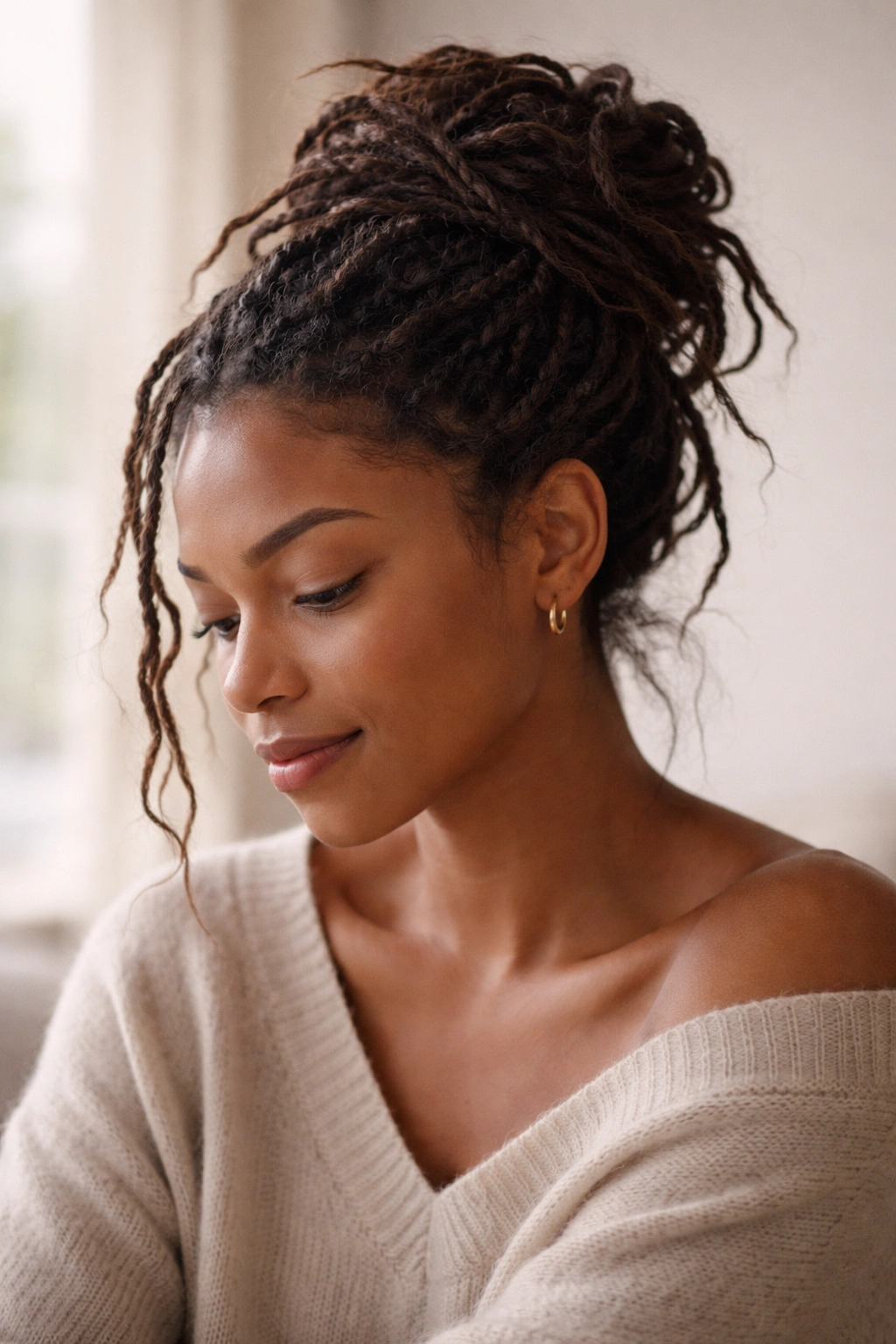
The right messy bun style depends entirely on what you’re doing, how much time you want to spend styling, and what feeling you want to create. What’s beautiful about styling locs is that imperfection and texture aren’t flaws you need to fight against — they’re actually the most striking elements of the style. Those individual locs that don’t blend perfectly, the slight loosening that happens as you wear the bun, the natural texture that develops — all of that is what makes a messy bun with locs genuinely interesting to look at.
Start with one or two of these styles and practice them until they feel intuitive. Once you understand how your specific locs respond to being gathered, twisted, and secured, you’ll find yourself adapting these techniques and creating your own variations. Your locs are unique to you, so your styling should be too. The best messy bun for your locs is the one that works with your hair’s natural behavior, makes you feel confident, and genuinely fits your lifestyle — not a style that requires constant fussing or tension to maintain.