



Short hair and messy buns might seem like an unlikely pairing, but low messy buns are actually the perfect solution for anyone with shorter locks who wants an effortless, polished look without the struggle. The key to pulling off a messy bun with short hair isn’t fighting your length—it’s working with it strategically, using your hair’s natural texture and layering to create that intentional “undone” aesthetic that’s far more interesting than a tight, pulled-back style.
The beauty of short-hair messy buns is that they sit lower on the head, creating a more elegant silhouette while requiring far less bulk than traditional buns. Whether your short hair is fine and straight, thick and wavy, or textured and curly, there’s a low messy bun style that’ll work for your specific hair type and face shape. The styles below range from romantic and soft to clean and minimalist—each one designed specifically for short hair, with techniques that account for your actual length rather than forcing you into impossible tight spirals or expecting you to have hair you don’t have.
What makes these styles genuinely work is understanding that short hair’s biggest advantage is its proximity to the face. A low messy bun on short hair frames your features differently than it would on long hair, creating definition and movement that draws attention exactly where you want it. These aren’t shortcuts or compromised versions of long-hair buns—they’re full styles that happen to suit shorter lengths even better.
1. Low Messy Bun with Face-Framing Pieces
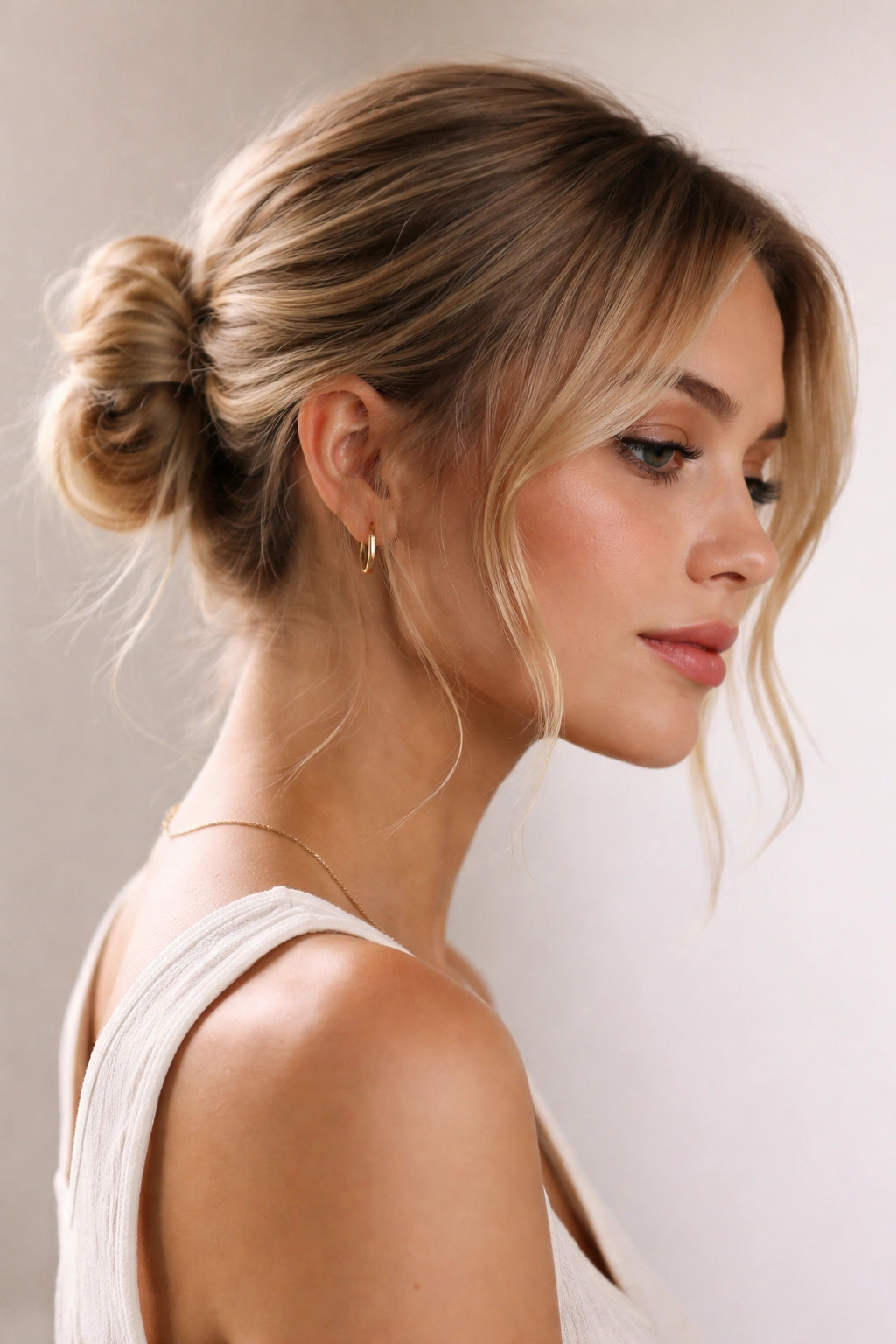
This is the most forgiving messy bun for short hair, and probably the one you’ll reach for most often. The whole idea is to leave a few shorter pieces intentionally loose around your face before gathering the rest at the nape of your neck. Those loose pieces do the heavy lifting—they soften the look instantly and make the style feel intentional rather than like you simply ran out of hair to work with.
How to Create This Look
Flip your head upside down and gently tease the underneath section of hair at the crown with a fine-tooth comb. This creates the texture and grip you need for a messy bun that actually holds without twenty bobby pins. Flip back up and lightly comb through the teased section so it blends naturally. Now take a section of hair on each side of your face—roughly the width of a piece of tape from your temple toward your ear—and don’t include this in your bun yet. Gather the rest of your hair low at the nape of your neck, twist it once or twice, and wrap it around itself into a loose loop, securing it with bobby pins positioned underneath so they don’t show.
Styling Tips and Why This Works for Short Hair
The face-framing pieces are your secret weapon with short hair because they add movement and softness without needing length. For fine hair, skip the teasing and just use texture spray instead—it’ll give you the grip without flatness. If you have thick or curly hair, let those face-framing pieces fall naturally without trying to arrange them; the movement is already built into your texture. The low placement right at your nape means this style works even if your hair is cut short around the back, and it balances the proportions of your head beautifully.
2. The Twisted Low Messy Bun
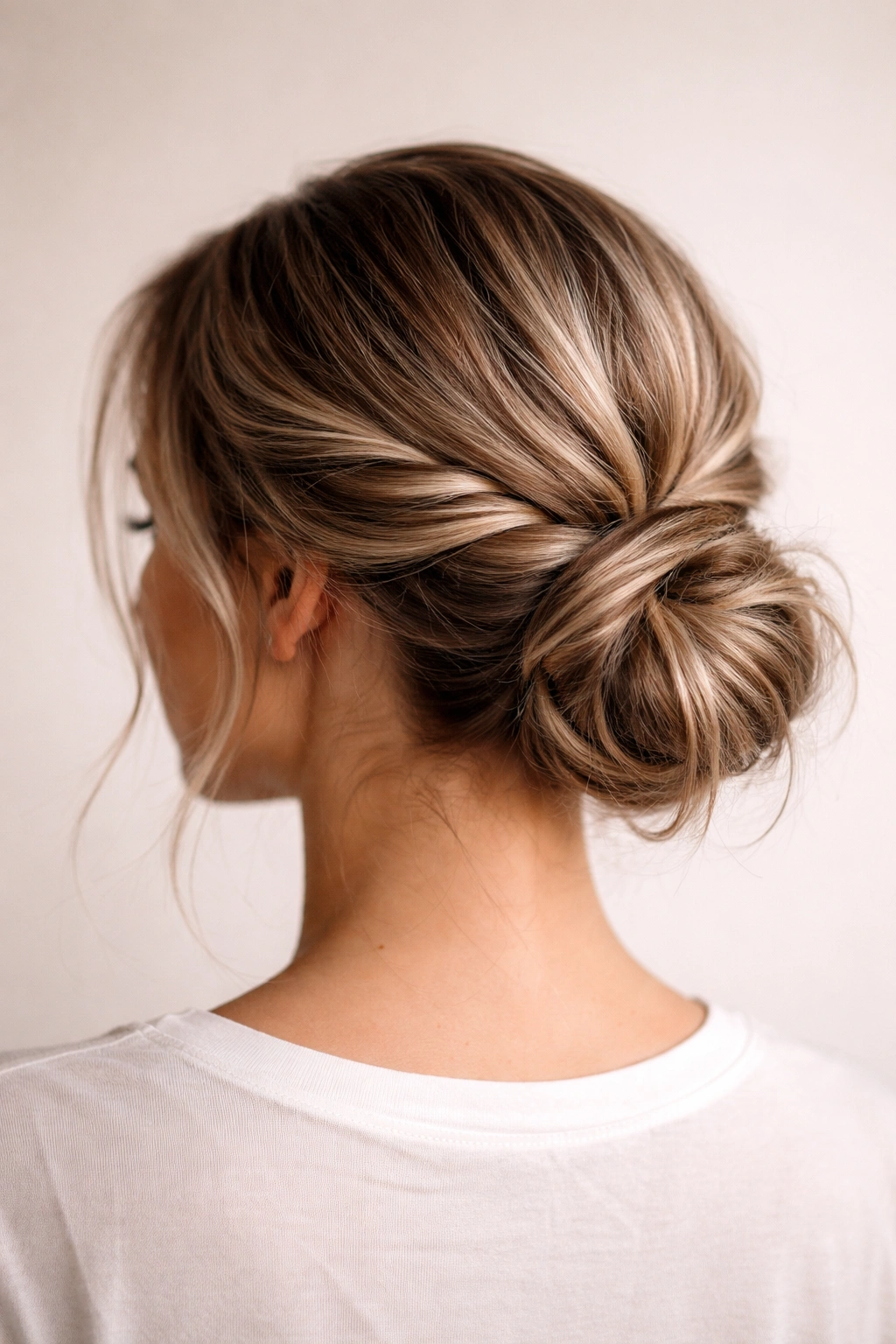
This version has more intentional structure than a traditional messy bun, and it’s particularly great if you have very short layers or if your hair is fine and straight and needs some help staying in place. Instead of roughly gathering and wrapping, you’re creating two or three flat twists that you’ll coil around your bun base, which automatically looks more polished and elegant.
Creating the Twisted Structure
Start with dry or slightly dry hair—texture spray is your friend here. Take a section from one side of your head and twist it tightly as you move toward the back, then do the same on the other side. Bring both twists to meet at the nape of your neck and secure them with bobby pins. Now take the loose hair at the back and twist that section as well, wrapping it loosely around the base where your other twists meet. Secure everything with pins and bobby pins placed underneath for a clean look. The twists themselves become the visual structure, which is why this works so well on short hair—the technique compensates for the lack of volume.
What Makes This Perfect for Short Hair
Twisted buns read as more refined than fully undone messy buns, which is actually easier to achieve with shorter length because you don’t have excess hair creating bulk and chaos. The twists act like a framework that keeps everything contained while still looking effortlessly styled. If your hair is on the finer side, the twisting motion itself creates the texture that makes the bun look intentionally messy rather than like you just rolled out of bed.
3. Half-Up Messy Bun for Short Hair
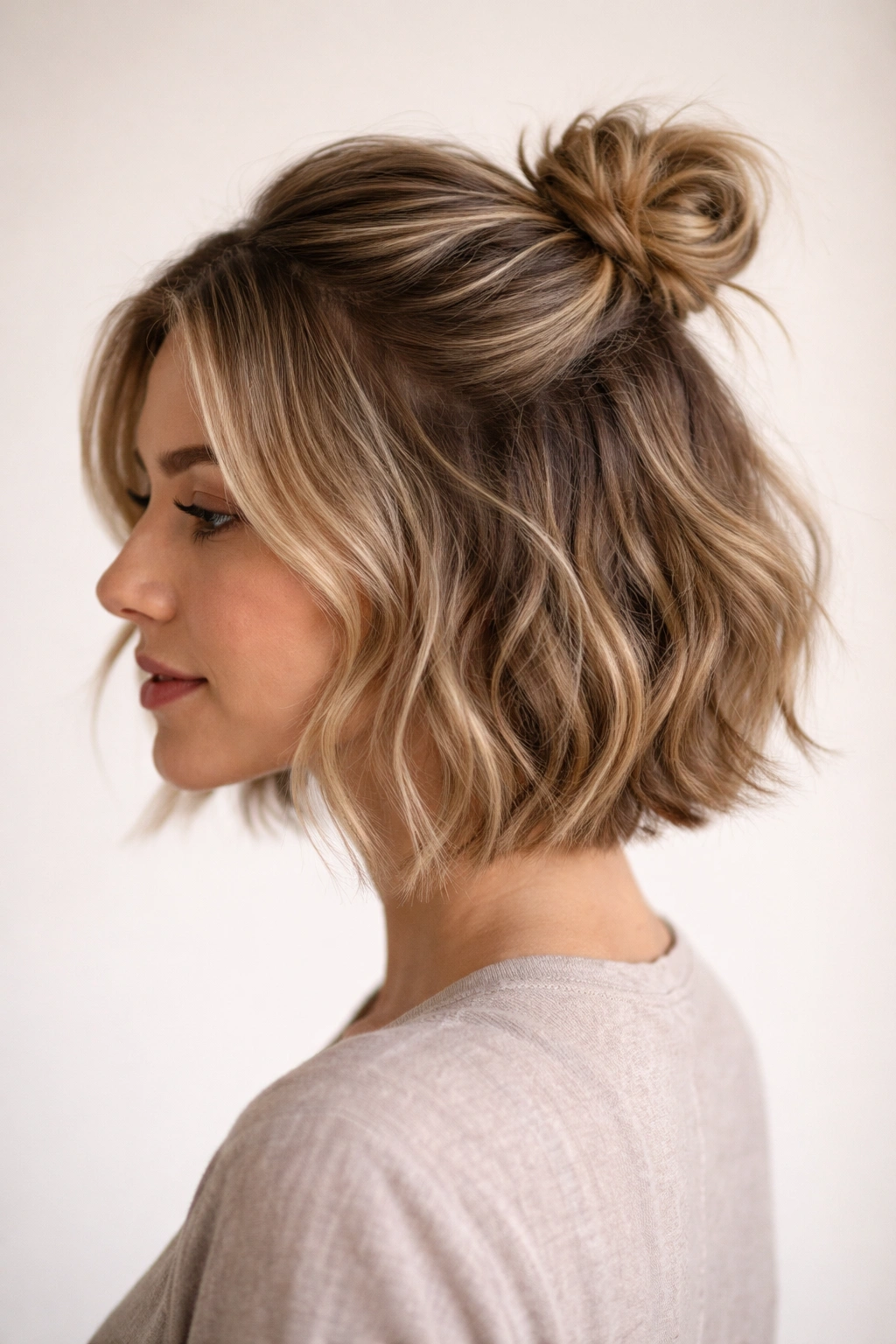
A half-up messy bun is secretly one of the most practical options for short hair because you’re only securing part of your hair, which means it’s faster, requires less bobby pins, and still gives you the face-framing effect naturally without having to plan those pieces. You get softness, movement, and that desirable undone look with half the effort.
The Right Way to Execute It
Take a small-to-medium section of hair from directly above each ear, pulling it straight back toward the center of your crown. Secure these pieces together with a small elastic at roughly the center-back of your head. Tease the gathered section very slightly to create texture, then gently comb through without completely smoothing it out. Twist this section loosely and wrap it around itself into a small bun, securing it with bobby pins. The bottom half of your hair stays completely down, framing your shoulders and face.
Why This Is Ideal for Short Hair
You’re getting all the benefits of a bun—improved neckline, hair off your face, a polished vibe—without needing enough length for a full bun. The style is automatically balanced because you have released hair at the bottom creating weight and proportion. This works for every hair type because you’re working with volume and length you actually have rather than trying to create fullness from shorter pieces. It’s also genuinely easier to do than a full bun, which means you’re more likely to actually wear it.
4. The Textured Low Messy Bun
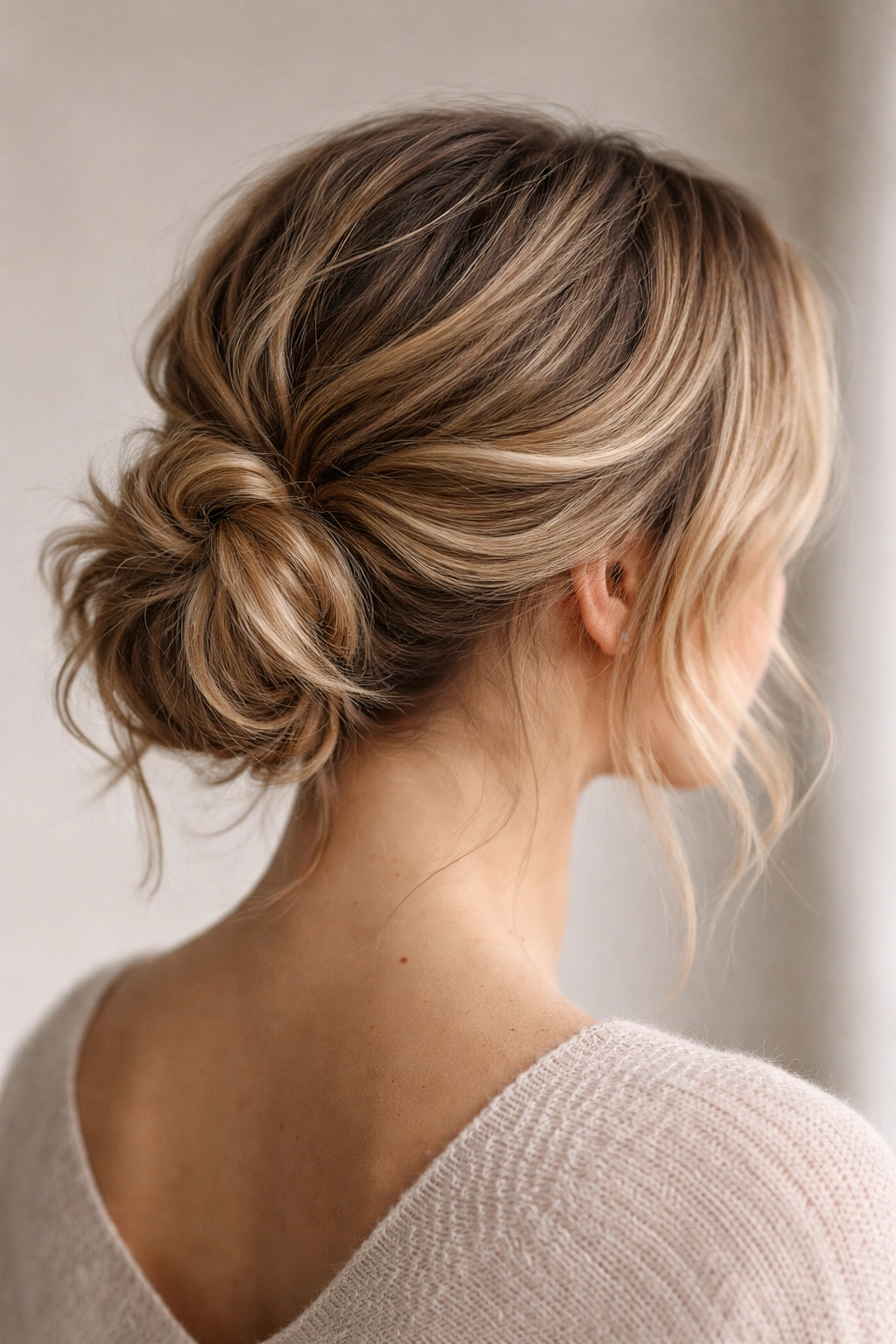
This approach focuses entirely on creating texture first, then bunning second. Instead of starting with smooth, straight hair and teasing it into chaos, you’re building in intentional texture using waves, curls, or braids before you gather everything into a bun. It’s more strategic and looks significantly more polished, especially important when you’re working with shorter length.
Building Texture That Works
For straight or wavy hair, use a texture spray, dry shampoo, or even a light salt spray before you style—this gives everything grip and movement. Let your hair dry completely or blow-dry it with your head upside down to create natural volume. For naturally curly or textured hair, let your curls air-dry or use a diffuser and don’t brush through—just separate the curls gently with your fingers. If you want more deliberate texture, sleep in loose braids the night before or use a curling iron on the sections you know you’ll be bunning. Once you have good texture throughout, gathering it into a bun is remarkably easy because the texture itself prevents everything from looking flat or one-dimensional.
Why Texture Changes Everything on Short Hair
Short hair without texture can look stringy or thin, but the same short hair with intentional waves or curls suddenly reads as full and intentional. The texture is what makes a messy bun actually look like a chosen style rather than a desperate measure. With short hair, texture is your main tool for creating visual interest, so investing in it before you bun means the final result looks genuinely put-together rather than lazy.
5. Braided Low Messy Bun
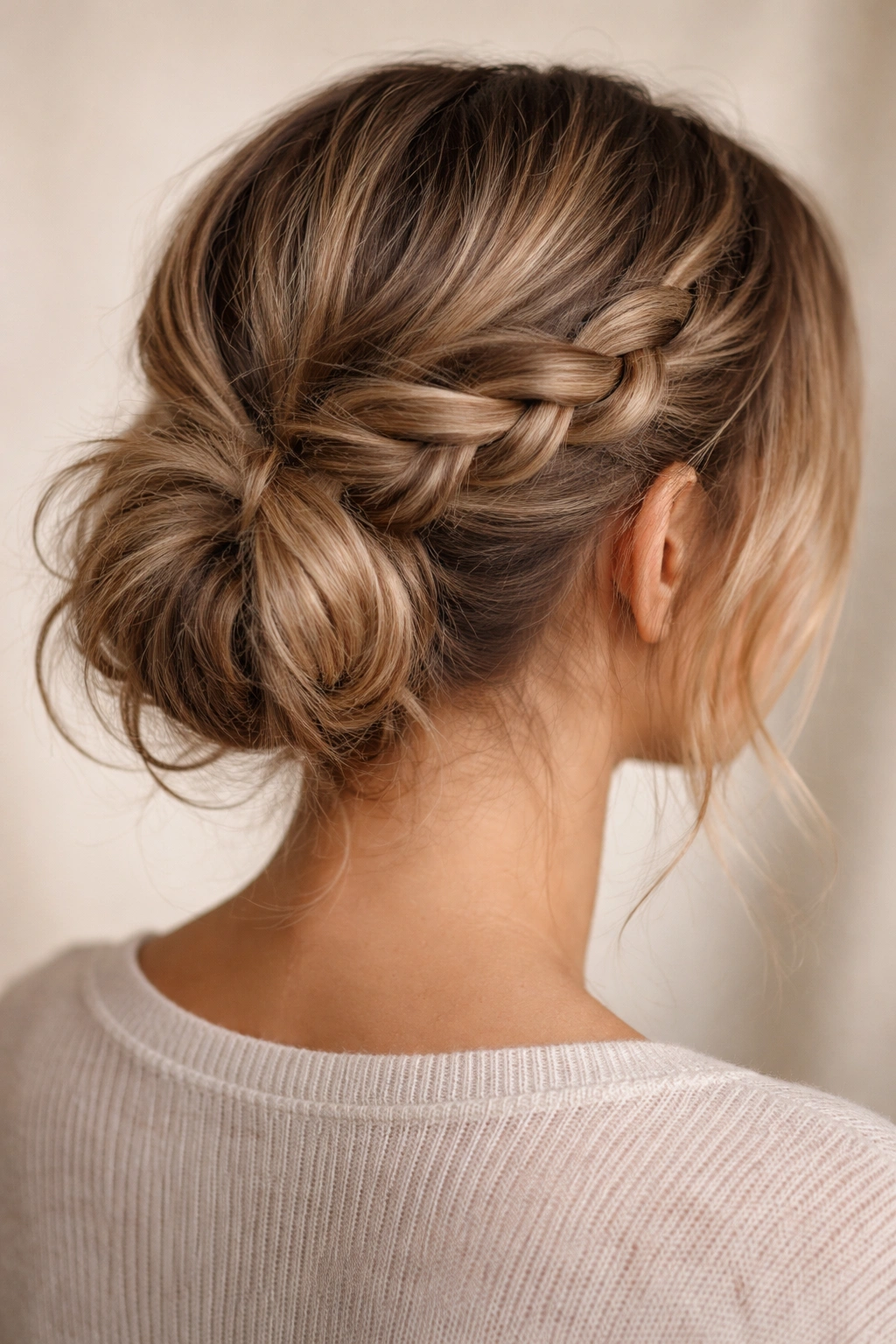
Adding a braid into your messy bun automatically elevates it from casual to deliberately styled, and it gives you something to anchor and secure even when you don’t have much length to work with. You’re creating structure with the braid that helps everything stay in place while still looking soft and undone.
Incorporating Braids Into Your Bun
Take a section of hair from one side of your head and braid it loosely as you move toward the back. Don’t aim for perfection—the looser and messier the braid, the better. When you reach the nape of your neck, stop braiding and secure the braid with a small elastic. Repeat on the other side if your hair is thick enough, or just do a single side braid if you’re working with finer hair. Now take all the loose hair at the back—including the ends of your braids—and gather it together, twist or scrunch it into a bun shape, and secure with bobby pins. The braid becomes a visual element that makes the whole bun look more intentional.
Making This Work on Short Hair
A braid on short hair is about looseness and texture rather than definition—you’re not aiming for a neat, tight French braid. Loosen the braid slightly after you’ve finished by gently pulling the sides of each section, which instantly makes it look softer and less juvenile. The braid gives you an anchor point for securing everything, which is genuinely helpful when you have shorter hair that doesn’t naturally fall into a contained shape. It also adds visual interest that works around the short length rather than fighting against it.
6. The Sleek Low Messy Bun
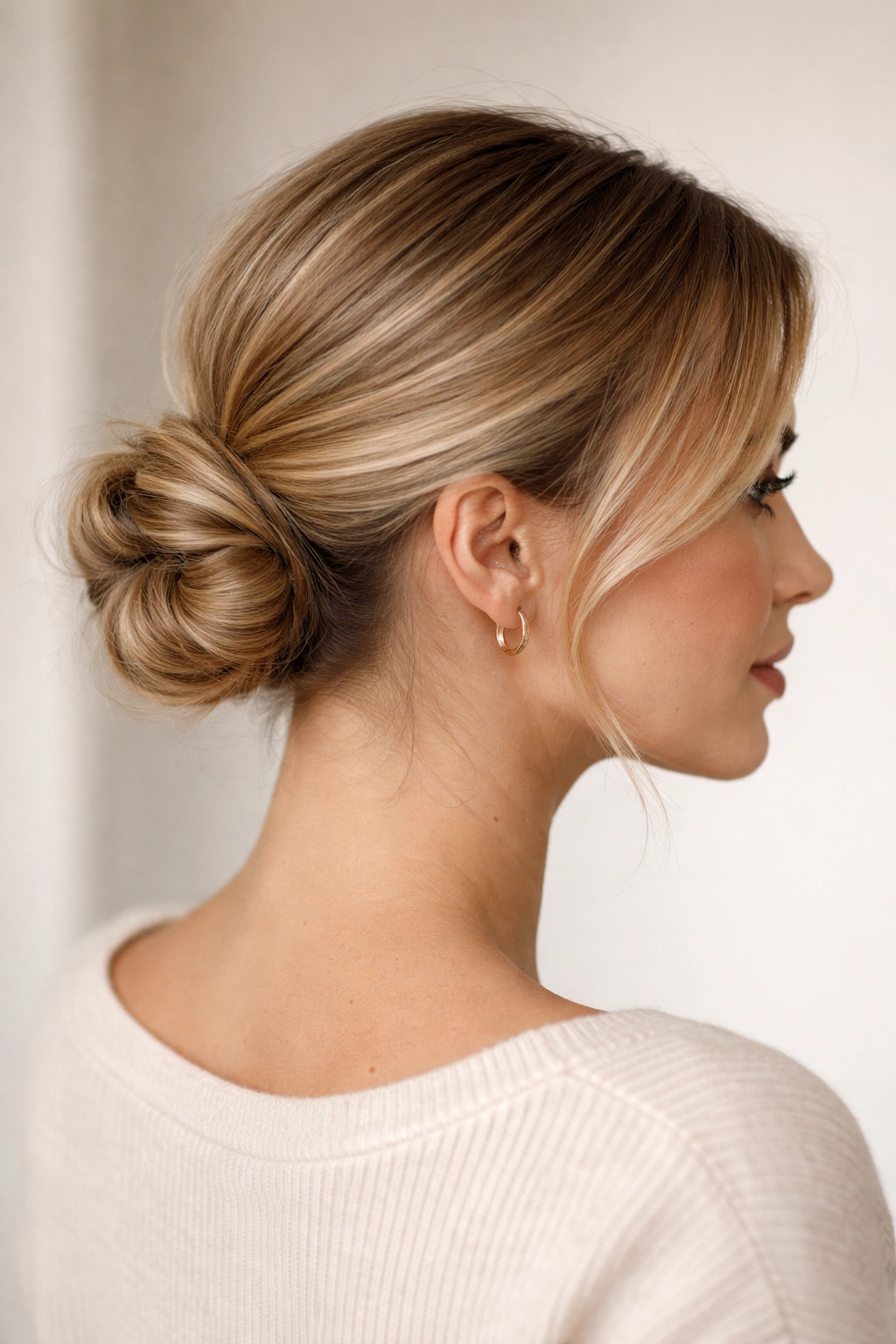
For days when you want the messy bun shape without the actual messiness, the sleek version offers a more refined, polished approach that still reads as effortless but has way more structure. This works particularly well for workplaces where you want something neat, or for any time you want a bun that’s put-together without being severe.
Achieving Sleek Without Severe
Start with hair that’s smooth—you can use a flat iron if needed, or just blow-dry it very straight with a round brush. Apply a light smoothing serum or anti-frizz cream to tame flyaways and baby hairs. Gather all your hair low at the nape of your neck and smooth it back with a fine-tooth comb or with your hands using a small amount of smoothing gel. Secure with an elastic, then take the gathered section and twist it once before wrapping it around itself loosely into a bun shape. Secure with bobby pins. The key is that while the bun itself is soft and a bit undone, the foundation pulling it back is smooth and controlled.
Why Sleek Works With Short Hair
Sleek lines actually flatter short hair because they emphasize your face shape and features without distraction. The contrast between the smooth, controlled foundation and the softer bun at the back is sophisticated and intentional. You can wear this version to professional settings or casual ones—it adapts depending on what you’re pairing it with. The smoothness means even if you don’t have much volume or fullness, the style reads as polished rather than sparse.
7. Undone Low Messy Bun with Volume
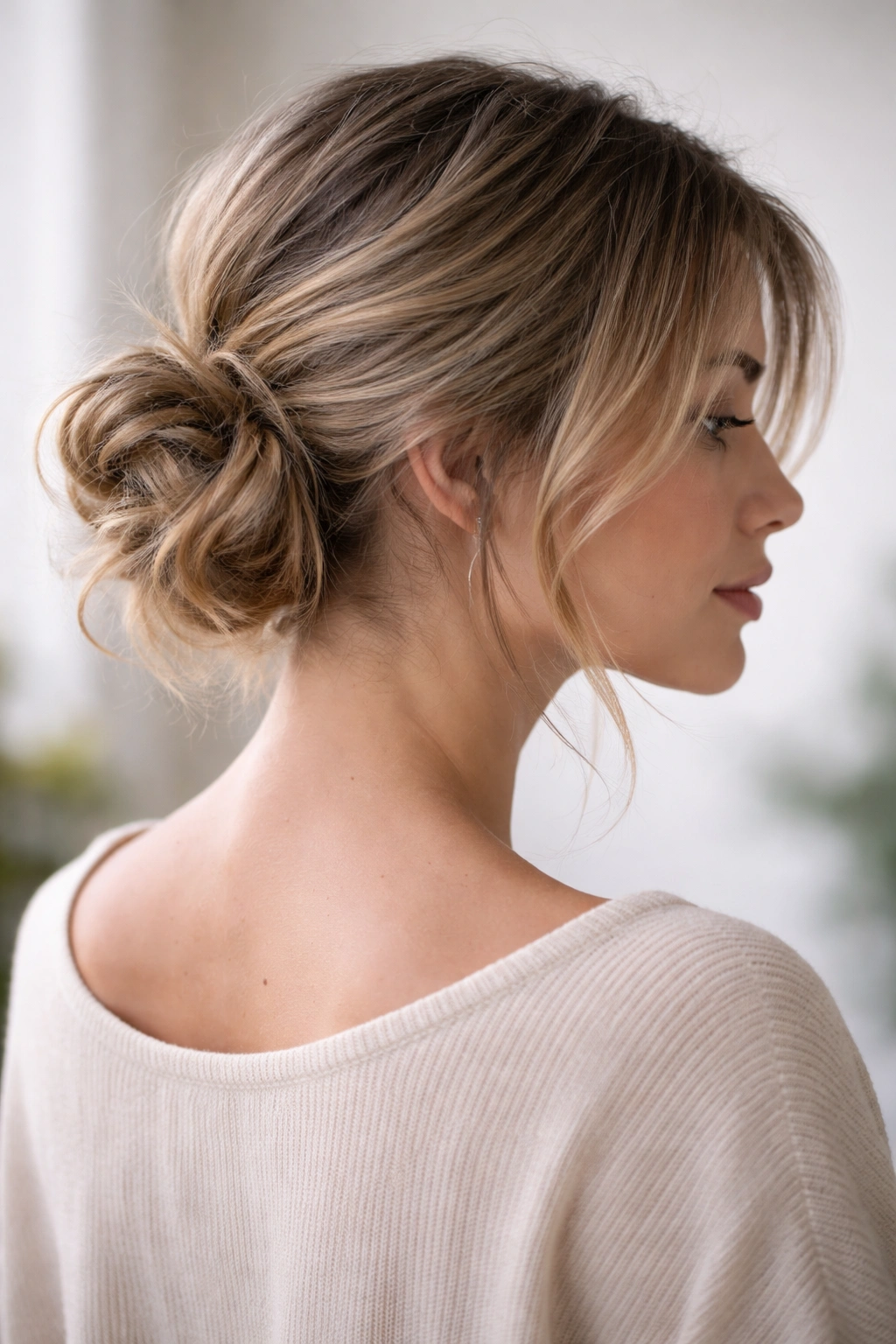
This is the opposite of the sleek version—it’s all about maximum texture and movement while still maintaining the low, nape-positioned bun shape. You want the effect of volume throughout, not just in the bun itself, which requires a specific approach with short hair.
Building Volume From Root to Tip
Start with texture spray applied to damp hair, then blow-dry your entire head upside down or with your head tipped to the side. Use your fingers rather than a brush to create natural separation and movement. Once your hair is dry and textured, tip your head upside down again and gently tease sections throughout, not just at the crown. The goal is diffused texture from roots to ends, not a concentrated pouf. Flip back upright and gently comb through so the teasing blends but the volume remains. Now gather your hair loosely at the back, twisting or scrunching it into a bun without working too hard at it. Pin everything, but leave the finished bun slightly loose—you want pieces falling out naturally, not everything perfectly contained.
Volume Tricks for Short Hair
On short hair, volume needs to be distributed throughout rather than concentrated in one spot, or it can read as disproportionate. Use products strategically—a volumizing mousse at the roots combined with texture spray on the mid-lengths gives you better results than trying to tease everything into submission. If your hair is naturally straight, a wave iron waving through small sections before you bun makes a dramatic difference in the final texture. The undone, voluminous look is actually easier to achieve on short hair because you don’t have as much mass to manage.
8. The Minimalist Low Messy Bun
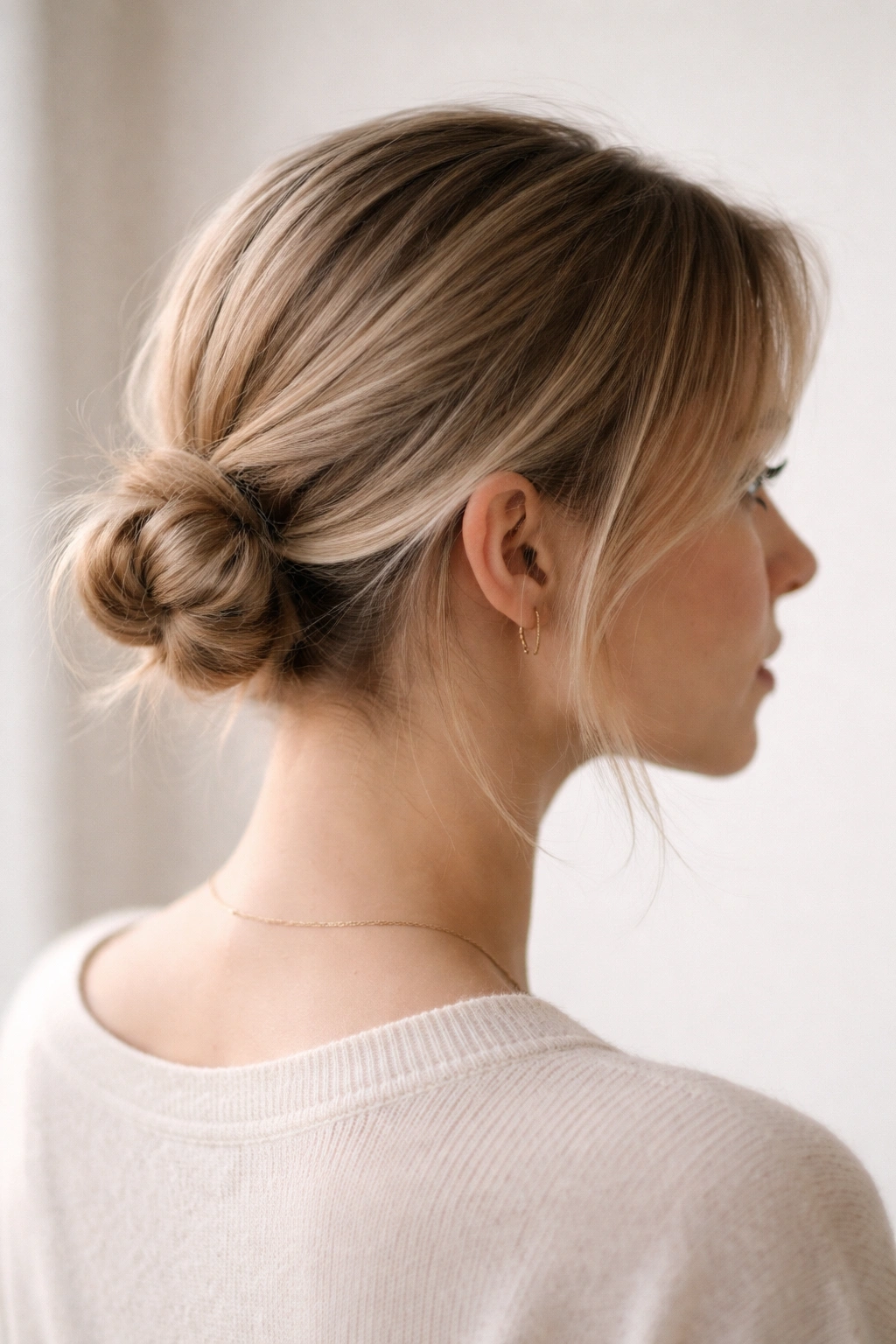
Sometimes the most elegant option is the simplest. A minimalist messy bun strips away all the extra techniques and focuses on one clean, simple twist and wrap. It’s perfect for short hair because it doesn’t rely on volume, texture, or complicated techniques—it relies on proportion and simplicity.
The Essence of Minimalist Styling
Brush or comb your hair smoothly and gather it into a low ponytail at the nape of your neck. Secure with a thin elastic. Now twist the ponytail once and wrap it loosely around the base, securing with a single bobby pin (or two if you have thicker hair). That’s genuinely it—you’ve created a bun with almost no effort. The minimalism is what makes it work; you’re not fighting for fullness or texture because you’re not pretending this is a voluminous style. The clean lines and simple construction are the aesthetic.
Why This Works Beautifully on Short Hair
Short hair looks chic with minimalist styling because simplicity suits it. A minimalist bun on short hair is elegant rather than sparse because the proportions are balanced—your shorter length means the bun sits at just the right scale for your head. This is the fastest style to create, which means you’re far more likely to actually reach for it on busy mornings. It also works for any hair type and any occasion, from casual to professional, because there’s nothing fussy about it. The key is confidence—own the simplicity rather than feeling like you need to add texture or complexity to make it work.
Final Thoughts
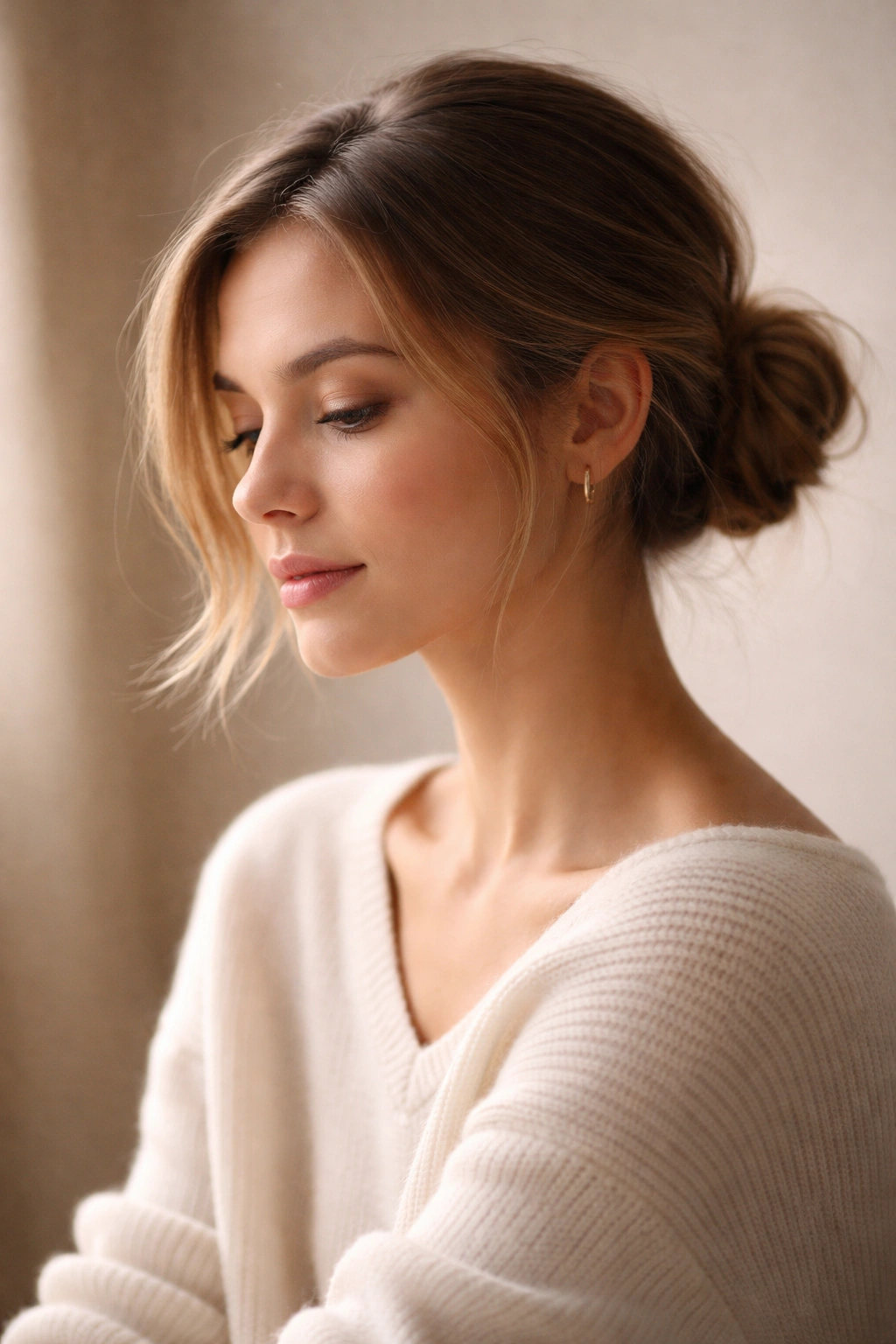
The secret to mastering messy buns on short hair isn’t pretending you have more length than you do—it’s understanding that shorter hair actually has unique advantages when it comes to this style. Low messy buns sit in the perfect position to frame your face beautifully, they require fewer bobby pins and less time than you’d expect, and they work with your hair’s natural texture rather than against it.
Start with whichever of these styles appeals to you most, then give yourself permission to adapt it. If you have fine hair, emphasize the twisted or braided versions that create structure. If you have curly or textured hair, lean into the undone versions where your natural texture becomes the main event. If you prefer a more polished look, go sleek—if you love romantic, go for the face-framing pieces or the braided version.
The real advantage of short hair is that you can switch between these styles easily, sometimes even with just a brush and a few bobby pins. A style that takes someone with long hair ten minutes might take you five. Use that speed to your advantage and rotate through different looks depending on your mood, your plans, and what your hair is doing that particular day. Messy buns on short hair are genuinely effortless once you find the version that works for you.
