



Asian hair textures—whether straight, wavy, thick, or fine—have unique characteristics that can make traditional messy buns look either effortlessly chic or frustratingly flat. The key to nailing a messy bun on Asian hair isn’t luck; it’s understanding how your hair’s density, weight distribution, and natural texture interact with different styling techniques. A style that works beautifully on one hair type might slide off or look limp on another, which is why generic bun tutorials often leave you feeling like something’s not quite right.
The good news? Messy buns are actually ideal for Asian hair when styled with intention. Your hair’s natural strength and body can hold texture beautifully, creating that coveted lived-in look without the fluffing and teasing that finer hair types often require. The trick is choosing the right style for your specific hair characteristics—straight, thick Asian hair performs differently than wavy or fine textures—and learning the techniques that make each style work specifically with, not against, your hair’s natural properties.
Whether you’re looking for something you can throw together in thirty seconds or a style that makes you look effortlessly polished, there’s a messy bun variation designed to work with your hair. Here are eight proven messy bun styles that look stunning on Asian hair, from subtle office-appropriate options to playful weekend versions.
1. The Classic Twisted Base Bun
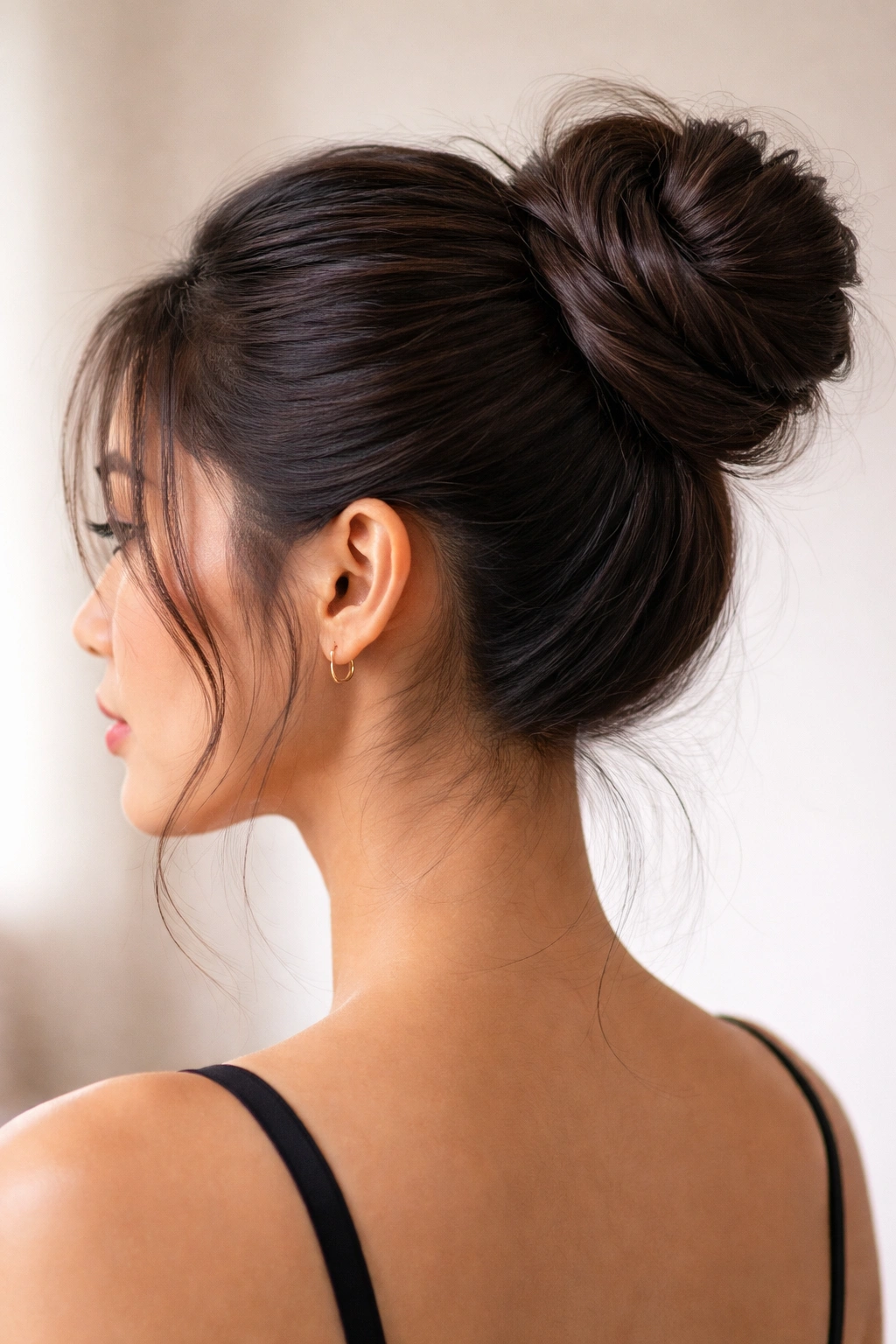
This is the reliable workhorse of messy buns, and it works particularly well on Asian hair because it relies on twisting rather than backcombing to create texture. The twist itself builds volume naturally, and because your hair is typically denser, one or two twists create enough grip to hold throughout the day without slipping.
How to Build the Twisted Base Bun
Create a high ponytail at the crown, then twist the entire ponytail tightly from root to tail. Wrap the twisted ponytail around its own base to form the bun, securing with bobby pins as you wrap. This technique gives you instant texture without needing to tease, which means less damage and more shine. The beauty of the twisted base is that loose strands naturally escape during the twisting and wrapping process, giving you that intentional messy look without having to deliberately pull out face-framing pieces.
Why It Works for Asian Hair
- Twisting builds texture without backcombing, preserving hair health and shine
- Dense hair creates volume at the bun base, so the finished bun looks full and dimensional
- The twist grips naturally, meaning fewer bobby pins and less likelihood of the bun loosening by midday
- Works beautifully whether your hair is straight, wavy, or has a natural texture
- Fine Asian hair benefits most from the twist technique because the grip is stronger than it would be with a simple wrap
Pro tip: For added security on heavier hair, twist the ponytail twice (creating a double twist), then wrap and pin. This distributes the weight better and holds up to 12+ hours.
2. The Low Side Bun with Texture
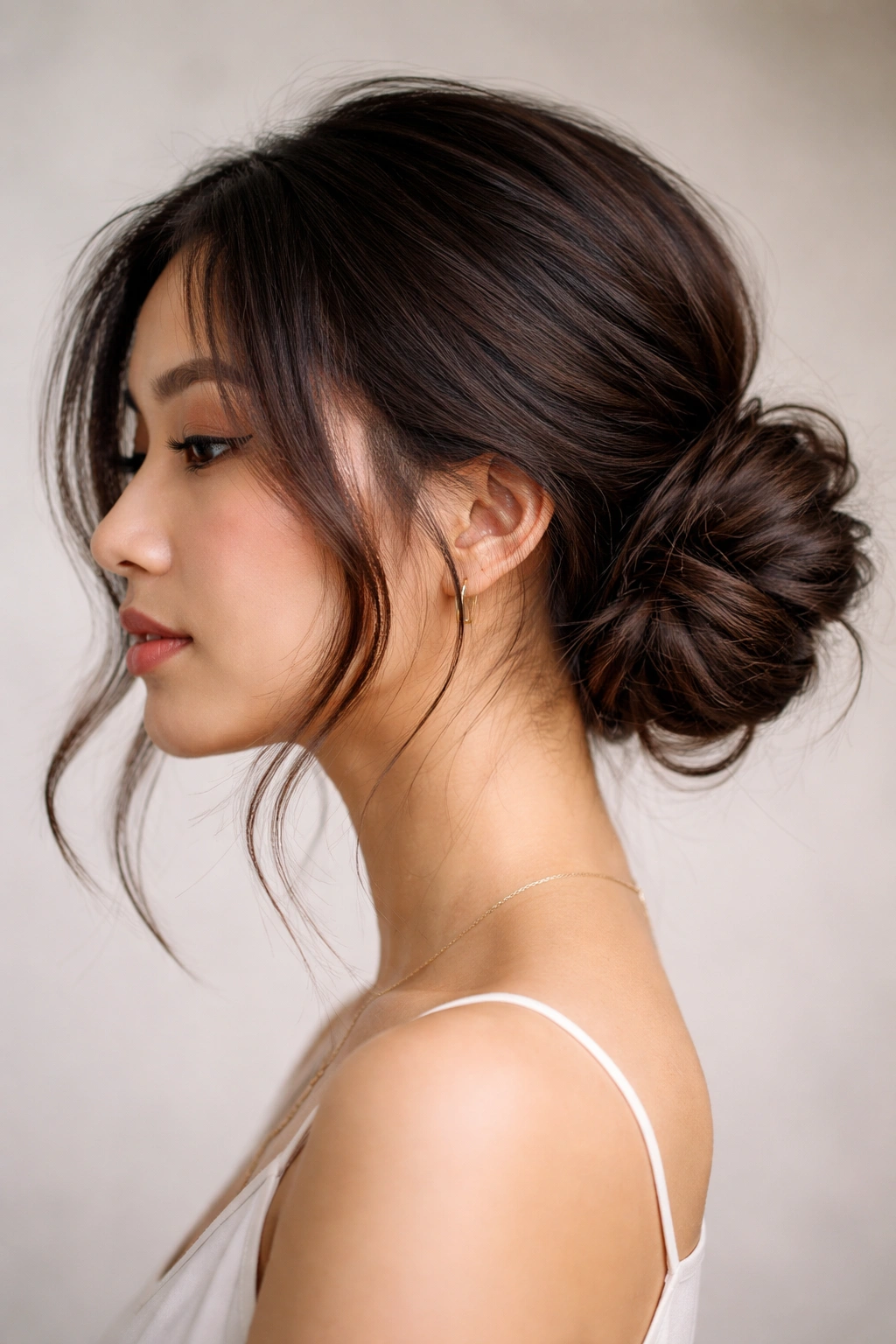
A low side bun feels more sophisticated than a high bun and suits Asian face shapes beautifully because it doesn’t pull the hairline as tightly. The side placement creates asymmetry that feels modern and intentional rather than casual.
Creating the Textured Side Bun
Start by creating a low ponytail to the side—roughly at your earlobe height, slightly off-center. Before securing, use your fingers to backcomb gently just at the crown to add some height (heavy backcombing isn’t necessary with Asian hair’s natural density). Create the ponytail, then use a texturizing spray or dry shampoo on the ponytail itself to give the hair grip. Twist or loosely braid the ponytail, then wrap it into a bun and secure. Pull a few face-framing pieces down and gently tease them with your fingers for that undone texture.
Why Asian Hair Excels with This Style
- Side placement elongates the face and suits most Asian face shapes and features
- Asian hair’s weight naturally creates shape at the sides, so you avoid that hollow look
- The lower placement feels more sophisticated and office-appropriate while maintaining the messy aesthetic
- Straighter hair types can hold a low bun longer than a high bun, reducing slippage
Worth knowing: If you have very thick or long hair, this low side placement actually distributes weight better than a high bun, which means less strain on your scalp and more comfort during all-day wear.
3. The Braided Crown Bun
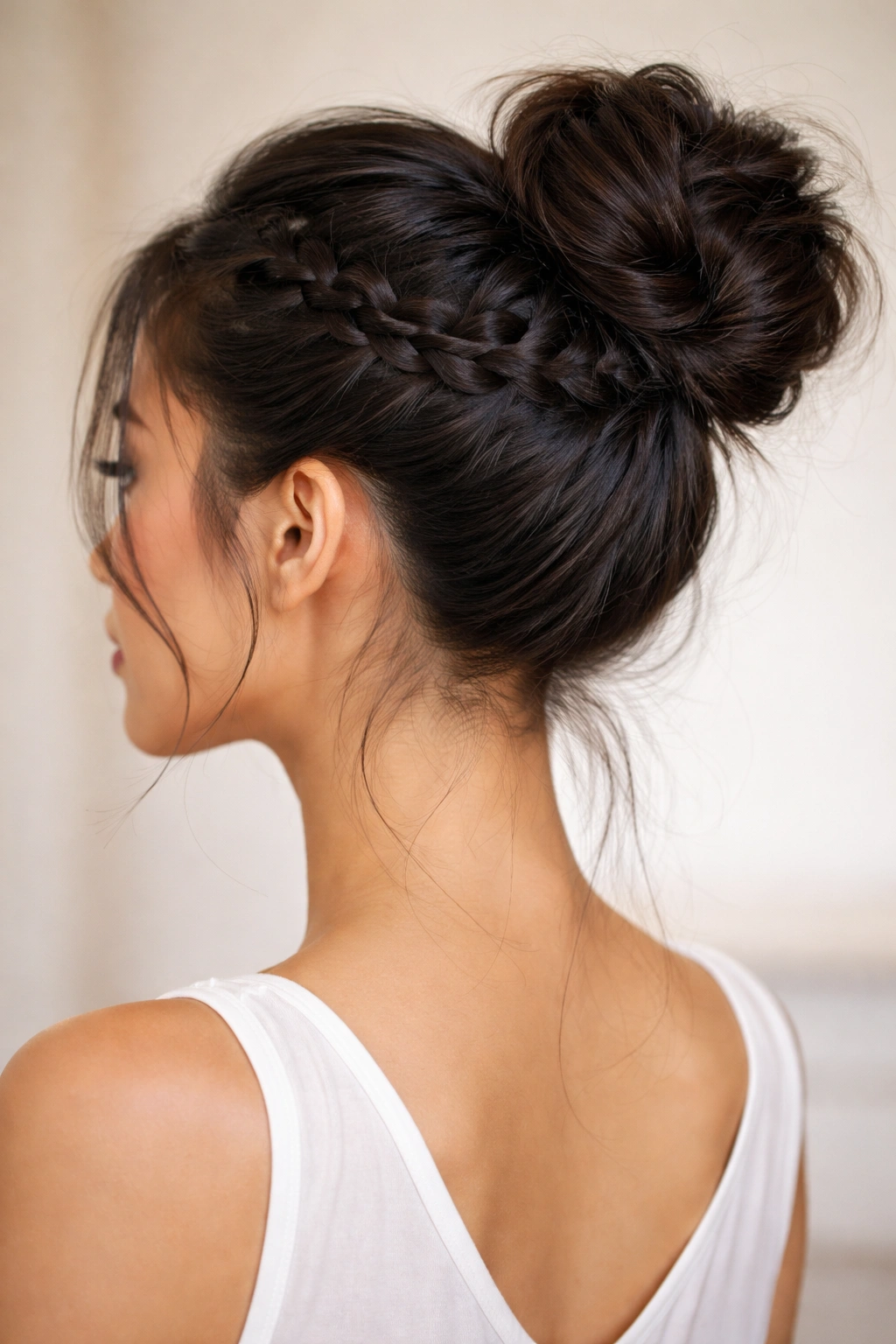
This style combines elegance with edge—the braid adds visual interest while the bun keeps it casual. It’s particularly striking on thick or wavy Asian hair where the braid texture really shows.
Building the Braided Crown Design
Create a Dutch or French braid that runs from one side of your head to the other, like a crown. Gather all your hair into a high ponytail at the back, then twist or braid that ponytail and wrap it into a bun. The braid creates structural texture, so even if some strands escape, the bun stays defined. Pull the braid slightly to widen it—this creates more texture and a fuller appearance.
The Advantage for Asian Hair Types
- The braid itself creates built-in texture and visual interest, so you don’t need to overwork the bun
- Works on all Asian hair textures: straight hair shows the braid pattern sharply, while wavy or textured hair adds dimension
- Thicker hair makes the braid hold its shape all day without flattening
- The crown placement feels intentional and polished, making this work for both casual and dressier occasions
Insider note: If your braid feels too neat, gently pull sections outward starting from the top of the braid. This softens the lines and creates that modern, relaxed-yet-intentional aesthetic.
4. The Sleek Top Knot with Textured Bottom
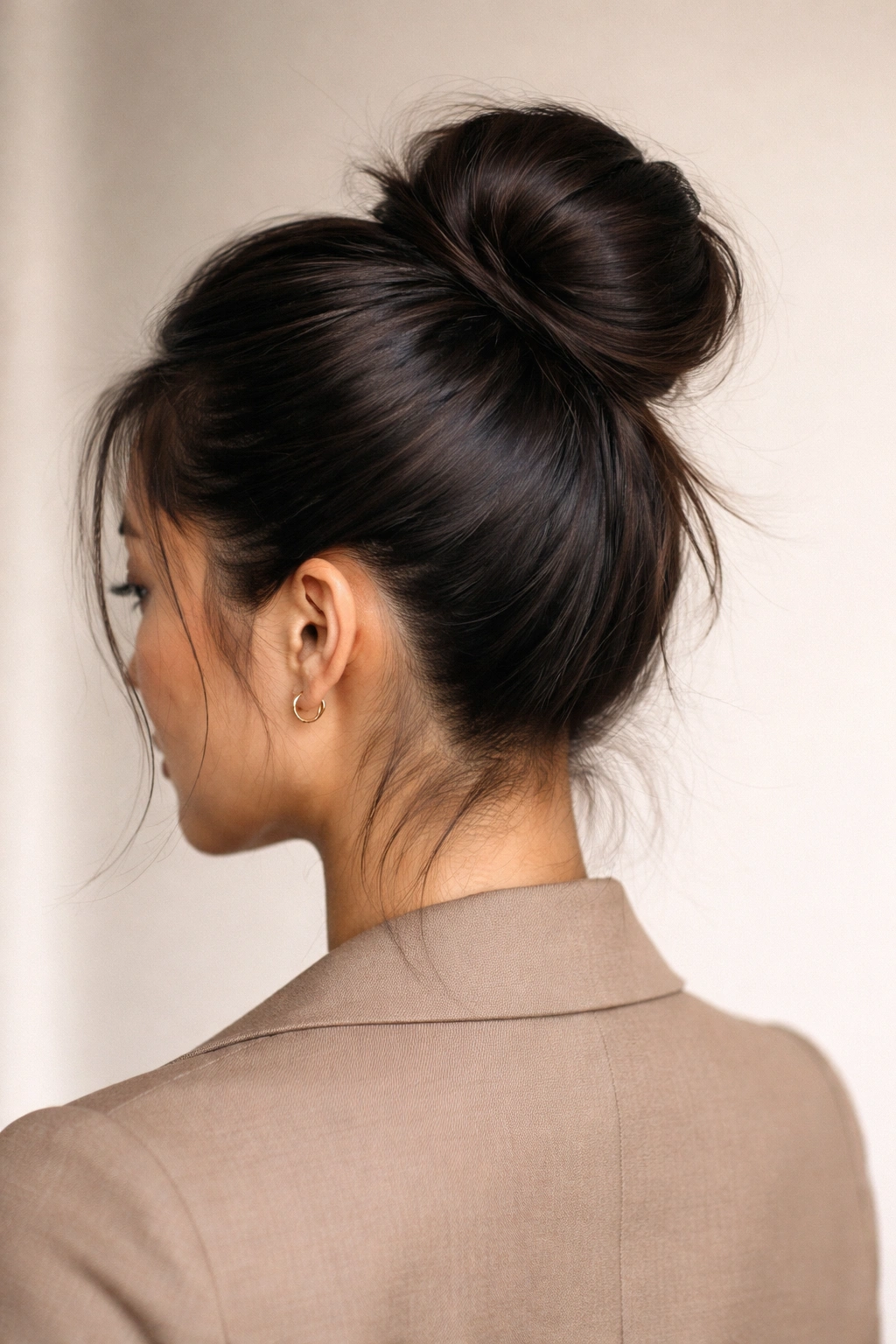
This style creates visual contrast—smooth where it matters, messy where it’s flattering. It’s a smart choice if you want your face fully visible but need a style that feels more polished than completely undone.
Styling the Sleek-to-Messy Transition
Use a smoothing serum and a fine-tooth comb to create a very smooth, sleek ponytail at your crown. The sleekness should extend from your hairline to about mid-scalp. Once you reach the elasticated ponytail, stop smoothing—let the remaining ponytail be its natural texture (wavy, straight, whatever your hair naturally does). Twist this textured section loosely and wrap it into a bun, pulling a few pieces free as you go. The contrast between the slicked top and the messy bottom is what makes this style modern.
Why This Works Beautifully on Asian Hair
- Straight Asian hair creates a striking contrast between sleek and textured sections
- Wavy or naturally textured Asian hair looks more intentional in the bottom section because the texture is visible and intentional
- The sleek top feels refined enough for professional settings while the textured bottom keeps it modern
- Thicker, denser hair holds the smooth styling longer, and the textured bottom maintains volume throughout the day
- The slicked-back styling elongates the face, which complements many Asian face shapes
5. The Double Bun Accent
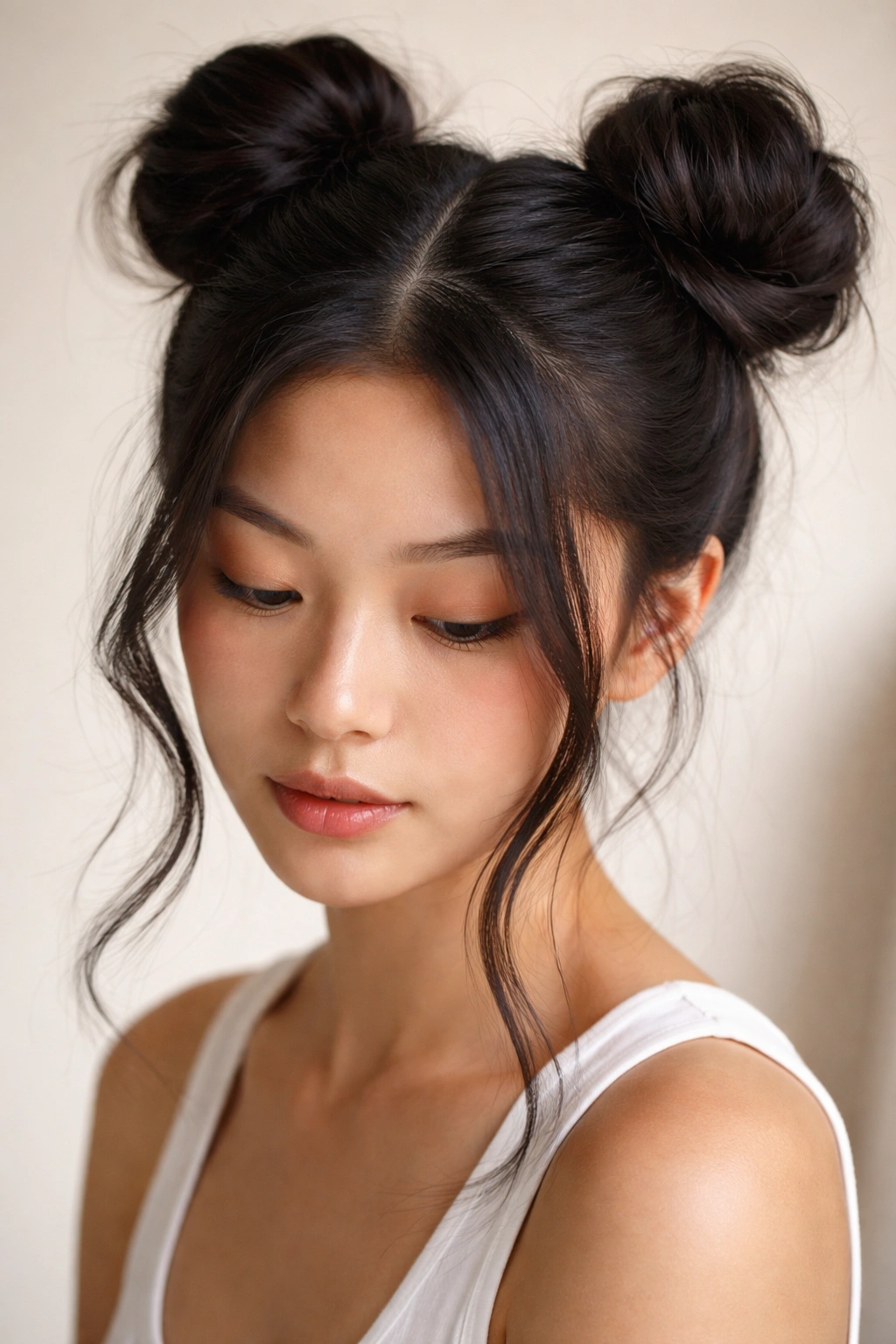
Double buns don’t have to be cutesy—when done with intention and styled on mature hair, they’re a playful yet polished option. This style works particularly well on Asian hair because the density supports two buns without them looking sparse or unfinished.
Creating Sophisticated Double Buns
Create a center part and divide your hair into two sections. Create two high or mid-height ponytails, one on each side. For each ponytail, twist gently and wrap into a bun. The key to making this feel adult rather than juvenile is the execution: keep the buns compact rather than maximally fluffy, leave strategic face-framing pieces down on each side, and ensure the buns are intentionally messy, not accidentally sloppy. Pull a few pieces from each bun and arrange them deliberately.
Advantages for Asian Hair
- Dense hair creates two full, shapely buns without looking thin or wispy
- Double buns balance the natural width of the face and work with most Asian face shapes
- The symmetry feels modern when executed with restraint and intention
- Thick Asian hair holds the double bun structure securely, preventing that mid-day collapse
Pro tip: If you want to elevate this style, skip the center part and create an off-center part instead. This adds asymmetry and immediately makes the double bun feel more mature and intentional.
6. The Wrap-Around Infinity Bun
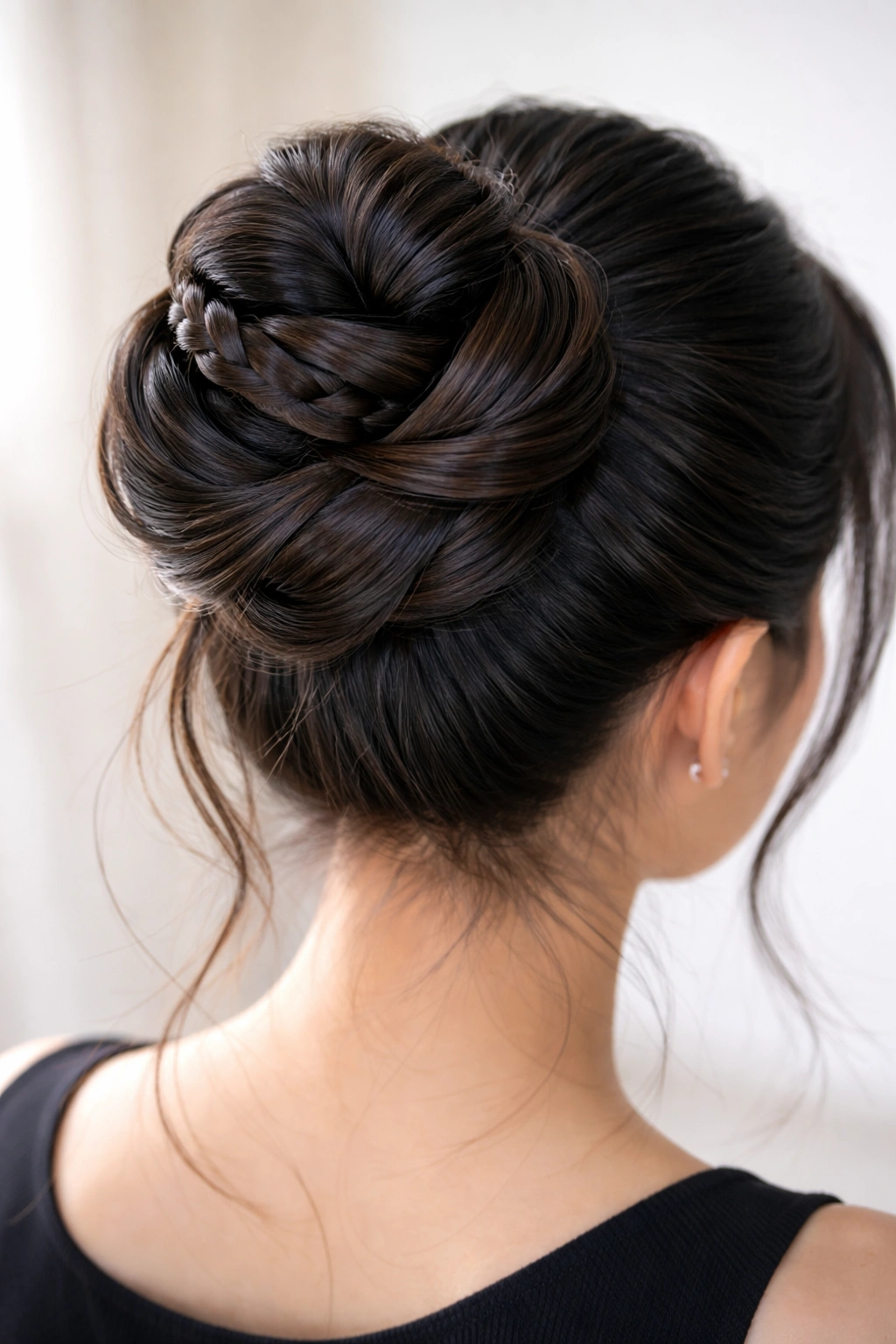
This is the style for when you want maximum drama and visual interest. The bun itself becomes sculptural, with wrapped sections creating defined texture rather than a blob of hair.
Building the Wrap-Around Effect
Create a high ponytail and divide it into three sections. Braid one section, twist the second, and leave the third wavy or natural. Wrap all three sections around the base of the ponytail independently, pinning each one separately. Each section creates its own texture and visual layer, and because they’re pinned separately rather than all together, the bun has defined contours instead of looking like a messy clump. Pull pieces strategically to emphasize the wrapped sections.
Why Asian Hair Makes This Style Shine
- Thick, dense Asian hair has enough weight to support multiple wrapped sections without collapsing
- The contrast between braided, twisted, and wavy sections shows beautifully on straighter hair types
- Wavy or naturally textured Asian hair adds extra dimension to each wrapped section
- The sculptural quality of this bun works especially well on Asian hair because the natural shine creates definition
- This style photographs beautifully, making it ideal for occasions or events
7. The Bubble Bun Upgrade
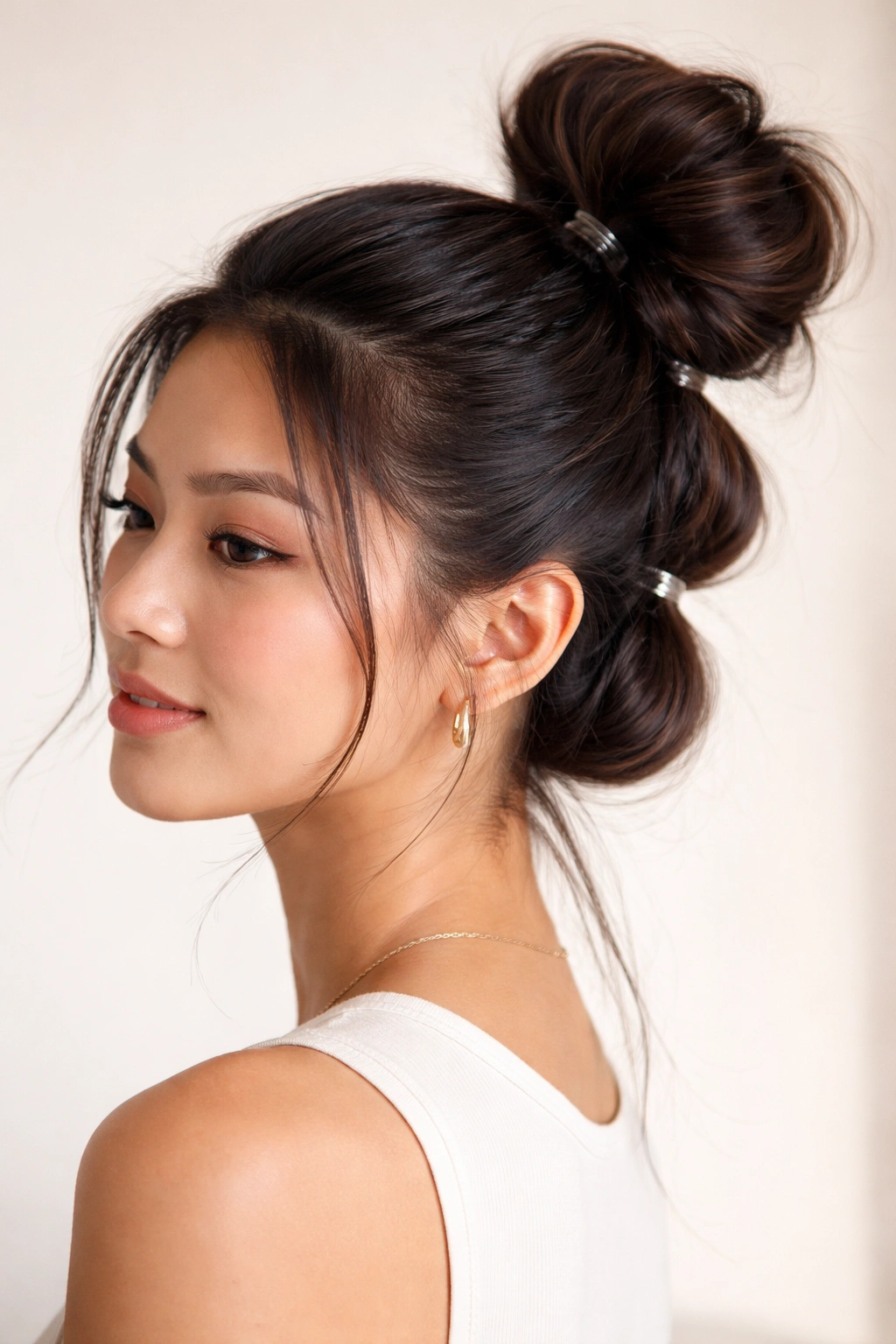
The bubble bun—hair sectioned into distinct bubbles along a ponytail—might seem too trendy, but when done with neutral spacing and kept to two or three bubbles instead of five, it’s actually a refined, architectural style that looks stunning on Asian hair.
Creating the Bubble Effect
Create a high ponytail. Place an elastic band about two inches down from the base. Gently poof the hair above that elastic. Place another elastic band two inches below the first. Poof that section. Stop at two bubbles—three is the maximum if you want this to feel adult and intentional. Gather all the remaining hair below the last elastic and twist it into a bun. The result is a ponytail with defined textured sections, then a messy bun base. This adds height and visual interest without looking gimmicky.
Why It Works on Asian Hair
- Denser hair creates fuller, rounder “bubbles” that actually look intentional rather than sparse
- Thick Asian hair holds the bubble sections all day, whereas finer hair often deflates
- Straight Asian hair shows the architectural structure of the bubbles sharply and cleanly
- Wavy hair adds softness to the bubble effect, creating a dimensional appearance
- This style is modern without being juvenile when executed with restraint
Worth knowing: The key to keeping this style from looking juvenile is spacing—bubbles should be uniform and deliberate, not random. Tight, precise spacing looks more sophisticated than loose, organic spacing.
8. The Layered Texture Bun
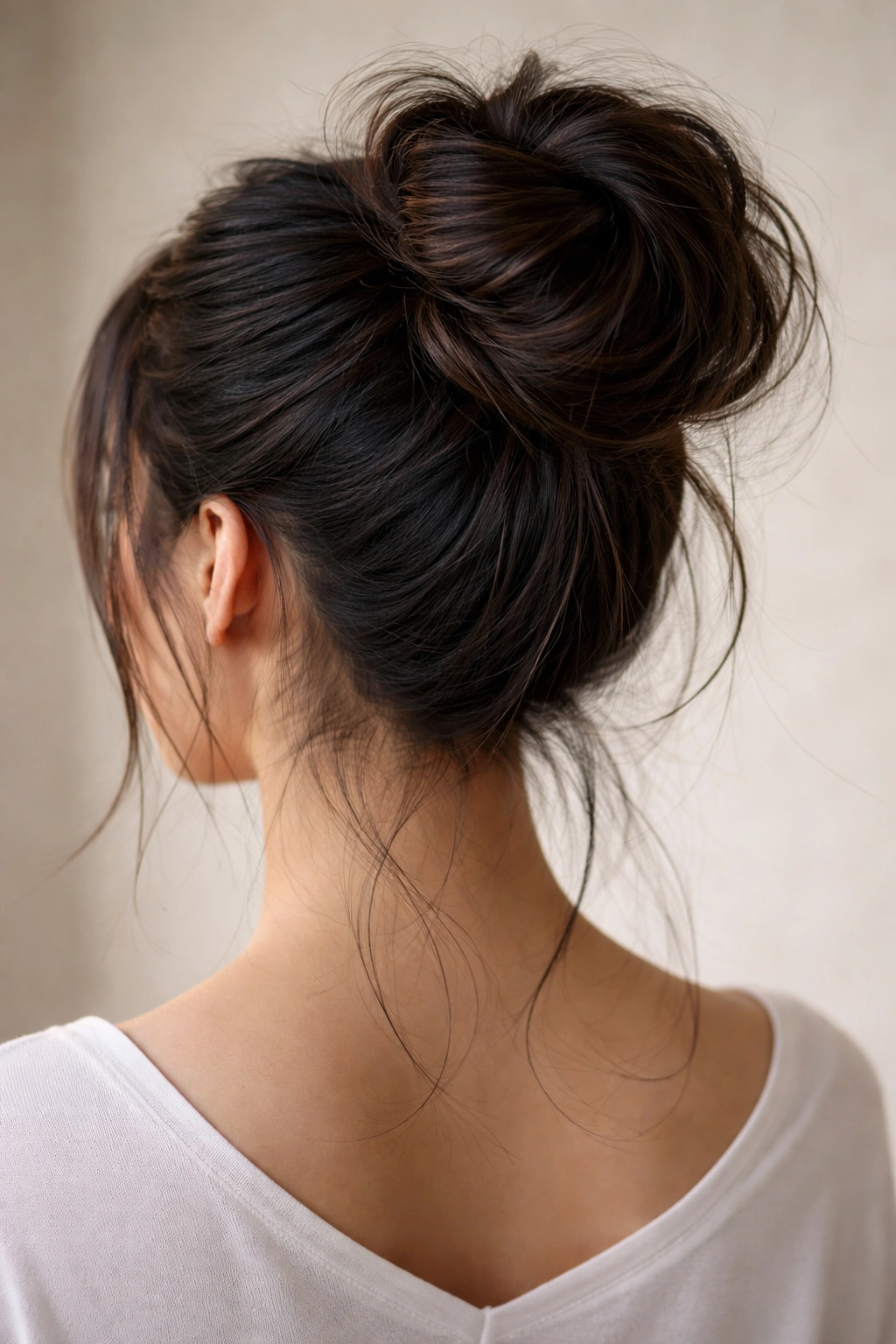
This advanced style creates the illusion that your bun has been styled from three different hair sections, creating unprecedented texture and dimension. It requires a bit of technique but the result is genuinely impressive.
Building Layered Depth
Create a high ponytail. Divide it into two sections: the outer section (about 60% of the hair) and the inner section (40%). Twist or braid the inner section and pin it into a small bun shape at the base of the ponytail. Now take the outer section and wrap it around this inner bun, pinning as you go. The inner bun becomes a textured core, and the outer layer adds another layer of definition. Pull pieces from both the inner and outer sections to create a complex, multidimensional messy finish.
The Science Behind This Style on Asian Hair
- Creates a full, dimensional bun that works beautifully on thick Asian hair
- The layering approach means no single bun looks sparse—two layers ensure fullness
- Dense hair supports the structural complexity without collapsing
- Works on all Asian hair types but looks especially striking on thick, straight hair where each layer is visually distinct
- This level of intentional structure reads as polished and put-together despite the “messy” aesthetic
Insider note: This is the style that gets compliments because people can’t quite tell how you achieved it. The complexity looks effortless on Asian hair because your hair’s natural density does most of the work for you.
Keys to Success: Texture Building for Asian Hair
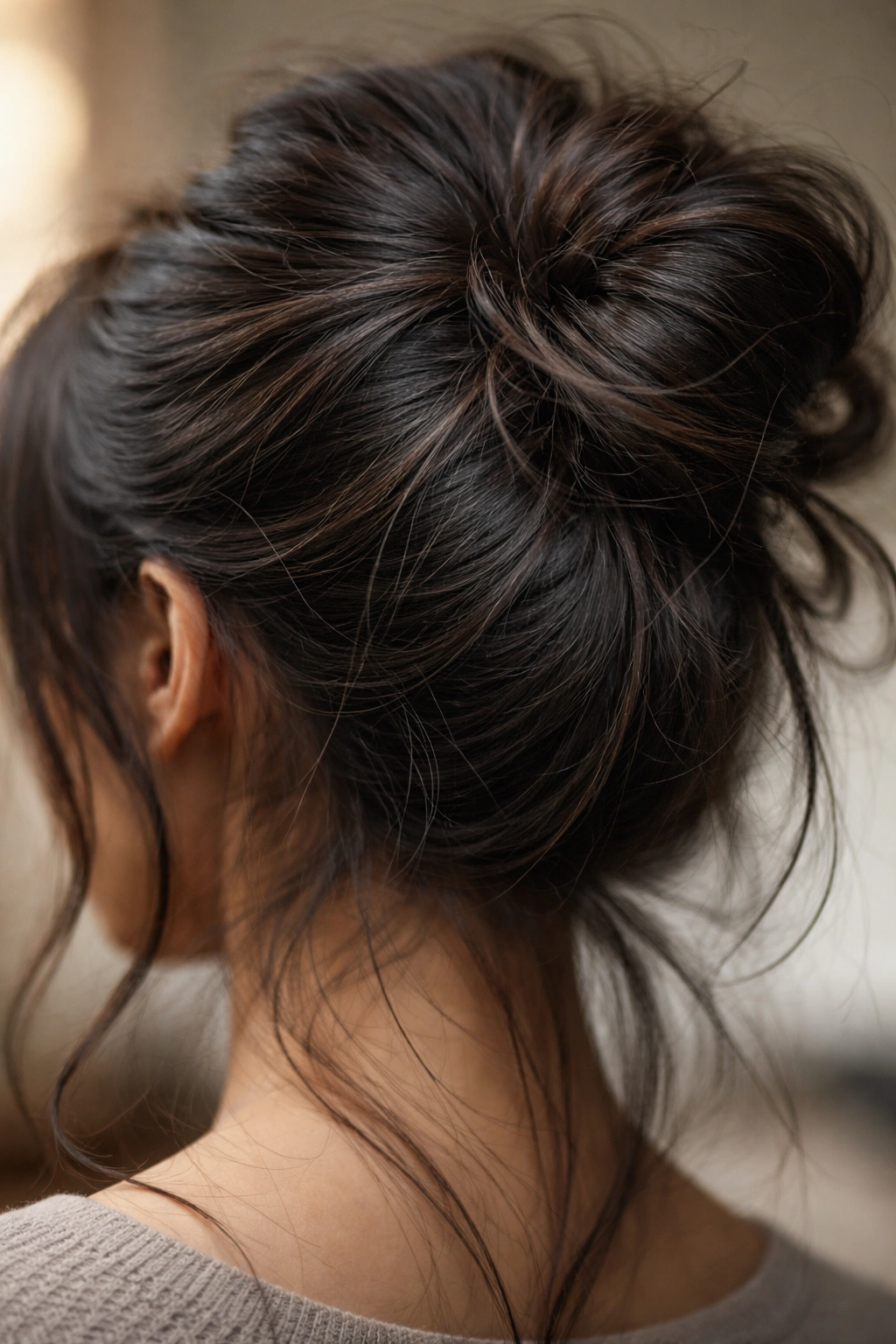
The foundation of any stunning messy bun on Asian hair is understanding that your texture needs intentional roughness to break up shine and create the lived-in look. Unlike finer hair types where texture naturally develops, Asian hair can look slick unless you actively interrupt the smoothness.
Texturizing spray or dry shampoo is your secret weapon. Apply it to your ponytail before styling—not just at the roots. This creates friction so the twist or braid grips better and the final bun has more visual interest. The spray gives your hair a slightly rougher surface that holds bobby pins more securely and creates that matte, intentional-looking finish.
The second principle is tension variation. A bun that’s equally tight everywhere looks polished but not messy. Instead, create your bun with varying tension: tight at the base (for hold), slightly looser in the middle, and deliberately loose at the edges. This variation creates the visual complexity that reads as “messy” while maintaining structural integrity.
Face-framing pieces are non-negotiable. Even the sleekest, most polished messy bun benefits from two or three pieces pulled down around your face. These pieces soften the overall effect and prevent the style from looking too severe. On Asian hair, these pieces should have some texture—either naturally wavy or gently waved with a curling iron—so they don’t look accidentally limp.
Product Recommendations for Holding Power
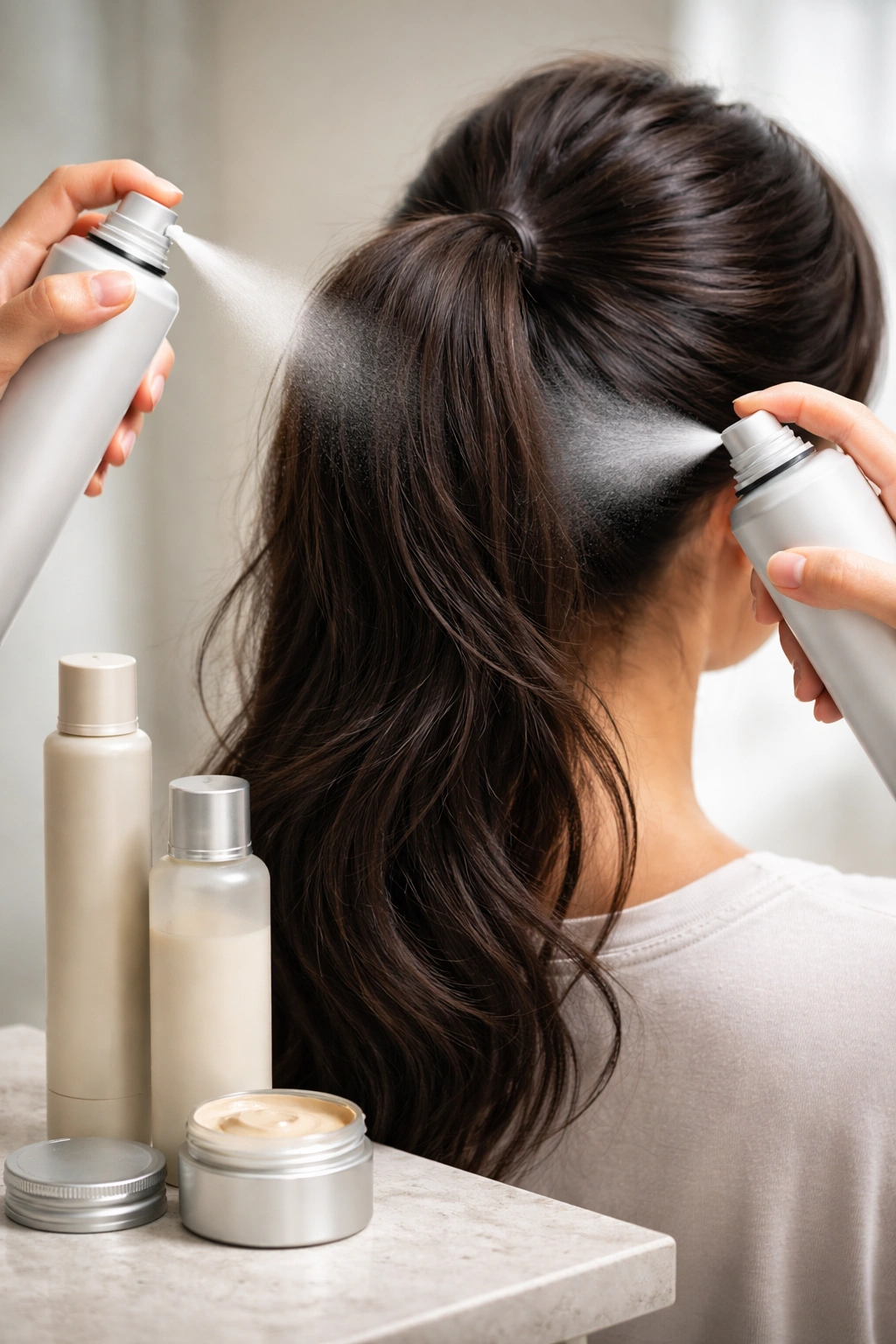
Messy buns on Asian hair benefit from products that add grip without adding weight. Heavy gels and thick pomades can make your dense hair look greasy; instead, reach for lightweight texture sprays, dry shampoo, or light cream pomades applied sparingly.
A texturizing or matte spray (applied to damp ponytails or dry hair sections before styling) gives you grip without shine. This is especially important on straight Asian hair, which naturally reflects light. The spray creates a velvet-like surface that holds bobby pins and twists in place all day.
A lightweight dry shampoo absorbs scalp oil while adding texture. Unlike heavy powder products, good dry shampoo actually improves grip. Apply a light mist to your ponytail before twisting or braiding—you’ll feel the immediate difference in how much more “sticky” the hair becomes.
Light styling cream works beautifully if you’re creating sections or needing to separate layers. Use an amount no larger than a chickpea, warm it between your palms, and apply only to the sections you’re working with. On Asian hair, less is always more with cream products.
Skip heavy serums, thick waxes, and shiny oils unless you’re specifically going for a sleek look—they make messy buns flatten and slip on denser hair.
Longevity: Keeping Your Messy Bun Perfect All Day
The advantage of messy buns on Asian hair is that they actually improve slightly throughout the day as your natural oils distribute through the style. Your bun won’t deflate or fall apart the way it might on finer hair types.
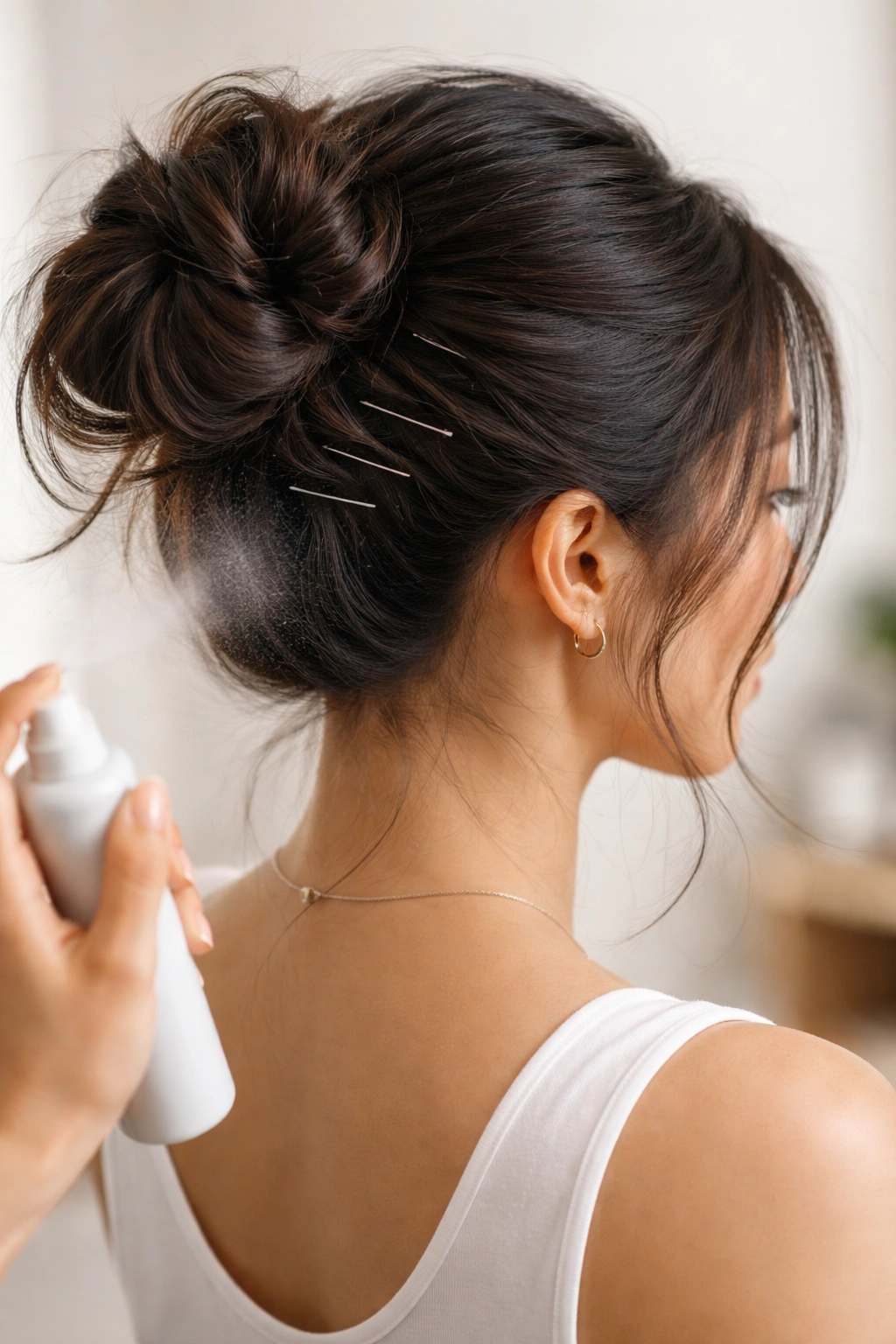
The key to maintaining your bun is using the right number of bobby pins in the right places. On thick Asian hair, you need fewer bobby pins than you’d think—four to six strategically placed pins can hold a substantial bun all day. Place pins horizontally rather than vertically, and anchor them to both the bun structure and the surrounding hair for maximum grip.
Secure the base of your twist or braid very firmly with at least two bobby pins before you even begin wrapping it into a bun. This base is everything. If the twist or braid is locked in place, the rest of the bun will follow.
At midday, if you notice any looseness, spray a tiny bit of texturizing spray around the bun’s perimeter and gently tuck any strays back in. This refreshes the grip without requiring you to rebuild the entire bun.
Final Thoughts
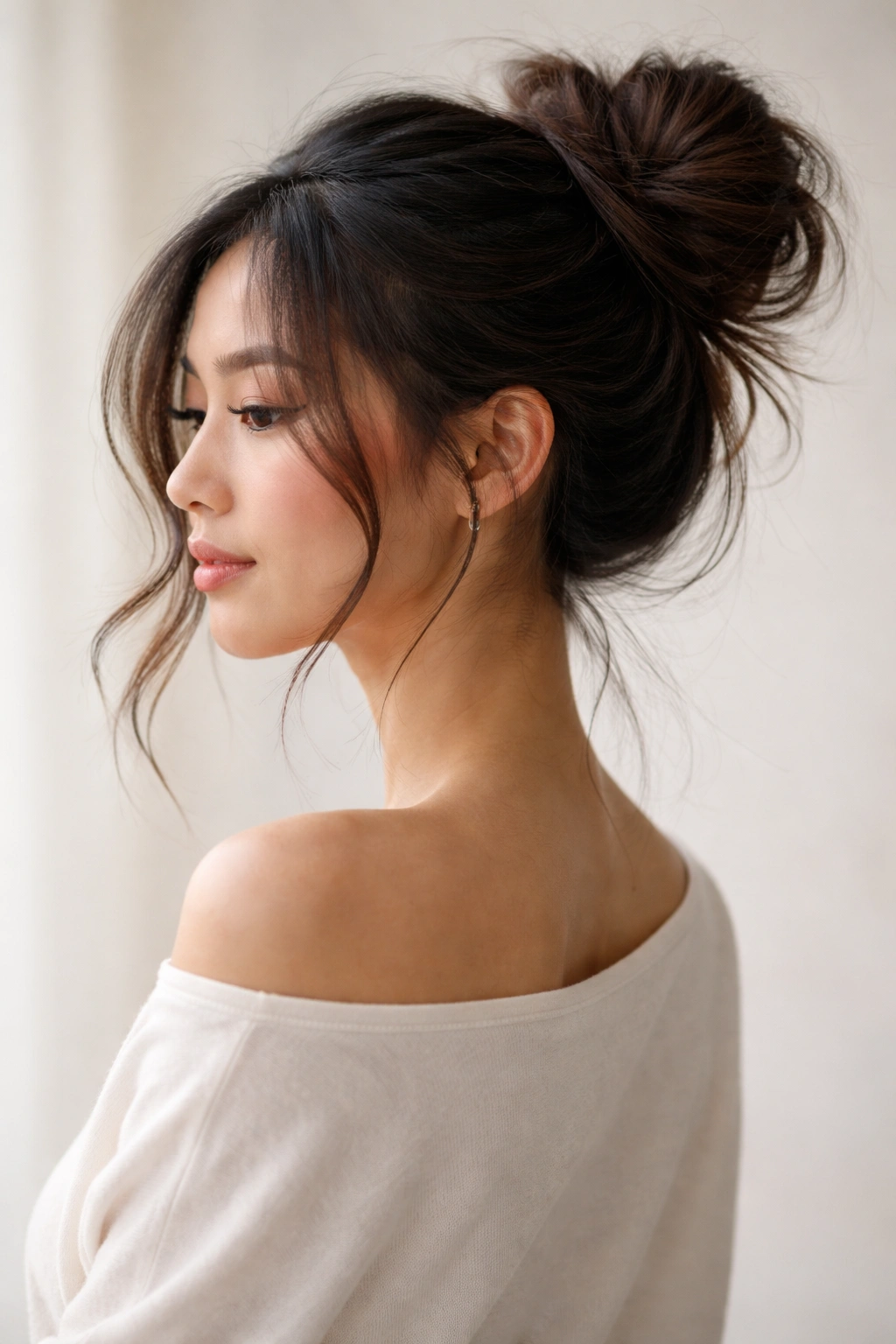
The beauty of messy buns on Asian hair isn’t luck—it’s that your hair’s natural characteristics (density, weight, and strength) are actually ideal for achieving that effortlessly chic, intentional-messy aesthetic. You’re not fighting against your hair type the way someone with finer hair might be; you’re working with it.
The eight styles here represent different occasions and moods: twisted for everyday reliability, side bun for sophistication, braided crown for occasions, sleek-top for professionalism, double bun for playfulness, wrap-around for drama, bubble for modern edge, and layered texture for genuine complexity. Your hair can handle all of them.
The real secret is understanding that messy isn’t about sloppiness—it’s about intentional texture, strategic face-framing pieces, and tension variation that creates visual interest. Master those principles, add a lightweight texturizing spray to your routine, and you’ll unlock a world of incredibly wearable, genuinely stunning messy bun styles that work with your hair, not despite it.
