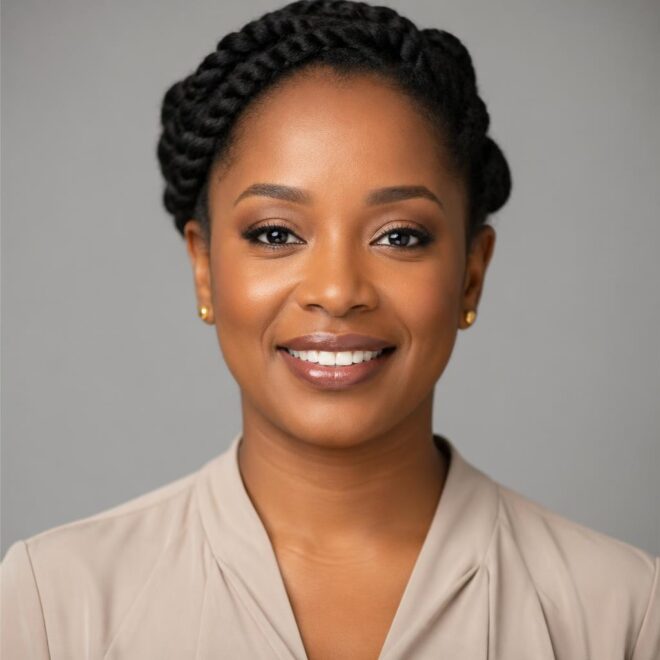


Nothing beats the combination of effortless polish and genuine practicality that a messy bun or ponytail offers. Whether you’re juggling a chaotic Monday morning, heading into a workout, or trying to look put-together without actually spending much time on your hair, these hybrid styles deliver on both fronts. The beauty of blending buns and ponytails is that you get the sleekness and security of a ponytail with the relaxed, undone texture of a messy bun — giving you a style that works harder and looks smarter than either option alone.
The challenge most people face is that they think messy bun styling is one-dimensional. In reality, the way you angle your ponytail, how high or low you position your base, whether you braid or twist before gathering, and how you texture your final bun completely transform the look. The same couple of bobby pins and hair elastics can create eight entirely different styles depending on how you approach them. Some versions work better for fine hair, others shine on thick textured hair, and a few are genuinely foolproof for anyone regardless of hair type.
What you’ll find here aren’t overly complicated Pinterest styles that require an hour and a heated iron. These are real-world combinations that you can actually execute on a regular Tuesday morning, styles that hold through a full day (or a workout), and looks that appear intentional and chic rather than “I gave up on my hair.” Each style has its own personality, its ideal scenarios, and the specific technique tweaks that make the difference between “messy” looking sloppy and “messy” looking intentionally tousled.
1. The Half-Up, Half-Down Messy Bun
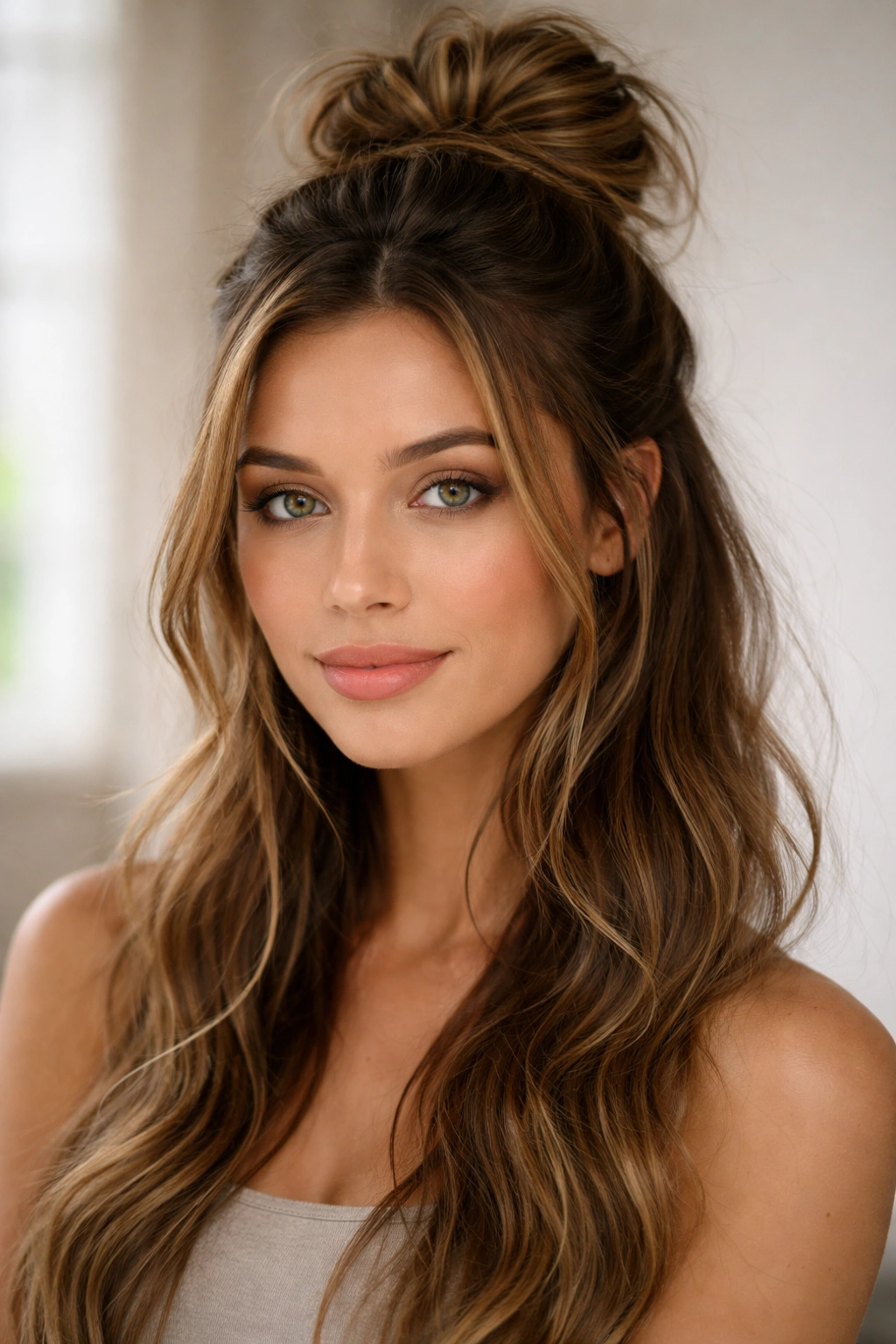
This is the perfect bridge style if you’re not quite ready to fully commit to pulling all your hair up. The magic is in how the half-up ponytail creates a clean line that frames your face while the rest of your hair tumbles down in loose waves or texture, with the upper section gathered into a soft, undone bun at the crown.
Start with your hair down and lightly waved or textured — you don’t need perfect curls, just enough texture that the bun doesn’t look slick and one-dimensional. Take a section from your temples on both sides, gathering it back as if you’re starting a half-up ponytail, and secure it with an elastic about two inches above where your crown naturally peaks. Now here’s where the messy bun aspect comes in: take that gathered section and twist it gently, then wrap it loosely around the elastic to form a soft, slightly undone bun shape. Use a few bobby pins to secure any flyaways, but leave the bun intentionally loose so it has texture and movement.
Why This Works for Most Hair Types
The half-up base provides structure that keeps your style from looking completely chaotic, while the gathered bun at top keeps hair off your face without the commitment of a full updo. The lower half of your hair stays down and free, which balances the proportions and prevents that “top-heavy” feeling some people dislike about full buns.
Best Worn When
This is your go-to for situations where you need your face clear but still want to show off length or demonstrate that you made some effort. It’s office-appropriate, date-friendly, and works equally well for casual outings. The style reads as intentional rather than lazy, making it perfect for days when you want to look effortlessly polished without the “I just threw my hair up” vibe.
Texture tip: Even straight hair works here — the key is that half-up section creating visual interest. If your hair is naturally straight, adding a quick texture spray to your crown area gives the bun more dimension and prevents it from looking flat.
2. The Sleek High Ponytail with Textured Bun Wrap
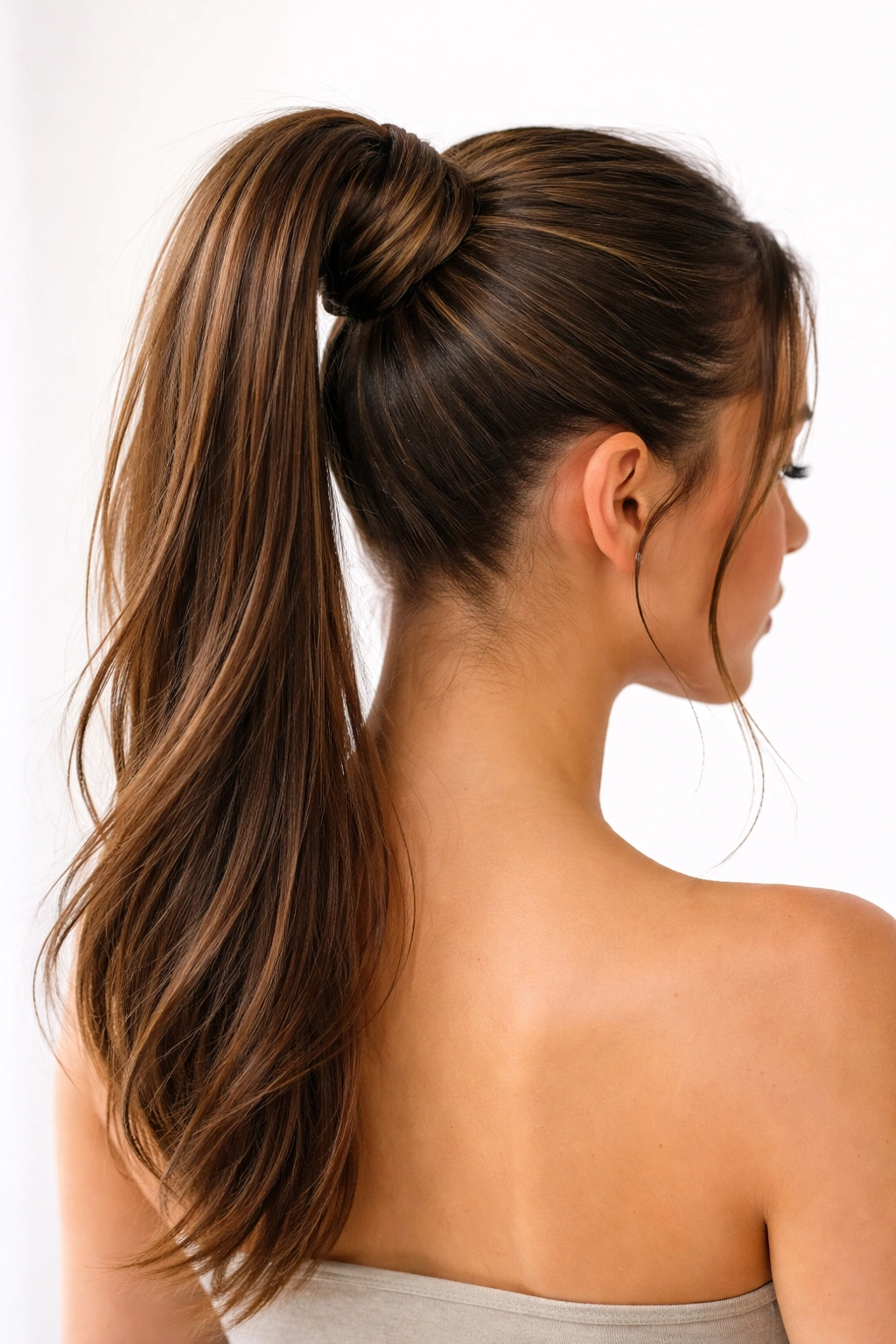
This style splits the difference beautifully: you get the refined, pulled-together look of a sleek high ponytail from the front and sides, but from the back, it’s all soft, slightly undone bun texture. The contrast between the polished base and the textured finish is what makes this genuinely eye-catching.
Begin by blow-drying your hair smooth, or applying a smoothing cream or serum to damp hair and air-drying it. You want the base to be as slick and refined as possible — this is where your high ponytail gets that clean, almost geometric look. Brush your hair back firmly into a high ponytail at the crown, using a fine-tooth comb or brush to smooth away any bumps. Secure tightly with a sturdy elastic. Now comes the contrast: instead of leaving the ponytail as-is, twist the gathered hair loosely and wrap it around the elastic into a bun shape, but pull a few face-framing strands out and tousle the bun itself so it has deliberate, touchable texture.
Creating That Sleek-to-Textured Transition
The secret is in the positioning and tension. Keep the ponytail base pulled tight and positioned high — this gives you that sculpted, intentional look at the crown. But once the hair is gathered, deliberately relax your grip as you twist and wrap, allowing the bun itself to be loose and irregular. The visual contrast between the smooth base and textured finish creates dimension and prevents the style from reading as overly formal or severe.
When to Wear This Combination
This style hits a sweet spot between casual and polished, making it perfect for working from home but needing to look presentable on video calls, or for casual dates where you want to look like you made genuine effort without appearing overdressed. It’s also ideal for highlighting your face and bone structure, since the sleek ponytail provides a clean canvas and the soft bun at back adds dimension without bulk.
Hold technique: Use a flexible-hold hairspray on the smooth base to lock it in place, then a texturizing or volumizing spray on the bun section to enhance the separated, tousled texture and keep it from falling flat by day’s end.
3. The Braided Ponytail to Messy Bun Transition
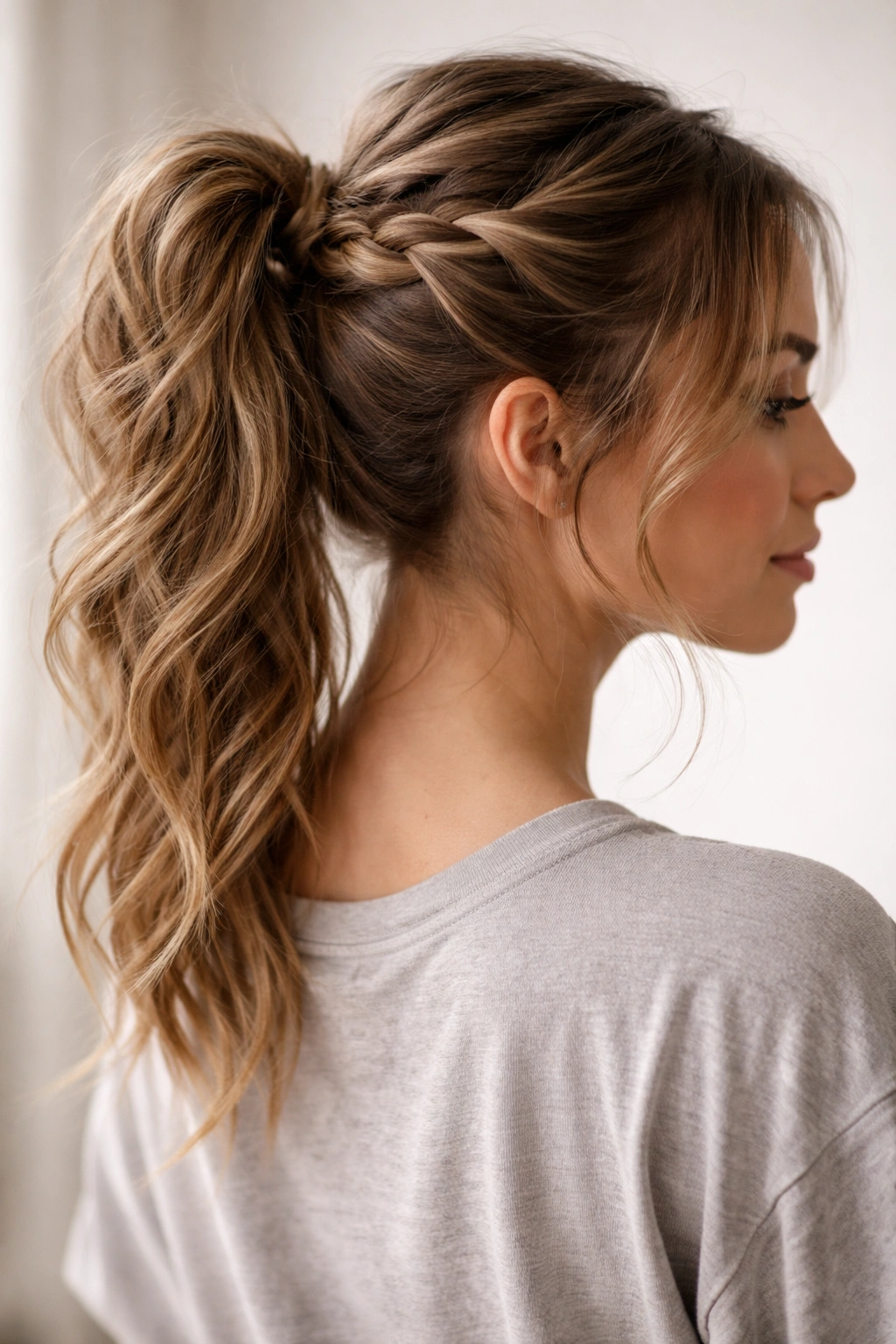
If you want dimension and movement without looking like you tried too hard, this style delivers. You’re essentially creating a regular ponytail with a braid woven through the length, then gathering the end into a soft bun. The braid adds visual interest and helps anchor the texture, creating a style that’s more interesting than a simple messy bun but requires only slightly more skill.
Brush your hair back into a high or mid-height ponytail and secure it loosely with an elastic. Now, take a small section of the ponytail closest to your face and begin a three-strand braid down the length of the ponytail. The braid doesn’t need to be perfectly tight or even — in fact, loose, slightly undone braiding looks better here. Continue braiding until you reach about two inches from the end of the ponytail. At that point, stop braiding and gently pull the braid slightly to loosen it and add texture. Gather the remaining unbraid section and the loose end of the braid together, wrapping them into a soft, textured bun and securing with bobby pins.
Building Texture Into the Bun
Because you’ve already added a braid to the ponytail itself, the bun naturally has more dimension. Don’t over-secure it — leave some sections slightly loose so the braid peeks through and you can see the layering and texture. This is one of those styles where the “imperfect” look is actually the goal.
Ideal Hair Types and Occasions
This works beautifully on most hair types, but it’s particularly flattering on fine or thin hair because the braid creates the illusion of thickness and fullness without requiring you to actually backcomb or tease. On thick hair, the style keeps everything organized while still looking intentionally undone. Wear this to casual weekend outings, to work if your office is relaxed, or on any day when you want your hairstyle to be a conversation point rather than invisible.
Braid texture secret: Use a texturizing spray or sea salt spray on your hair before braiding to give you more grip and make the braiding easier, plus the finished braid will have natural separation and texture rather than looking like a tight, formal plait.
4. The Side-Swept Ponytail with Low Bun
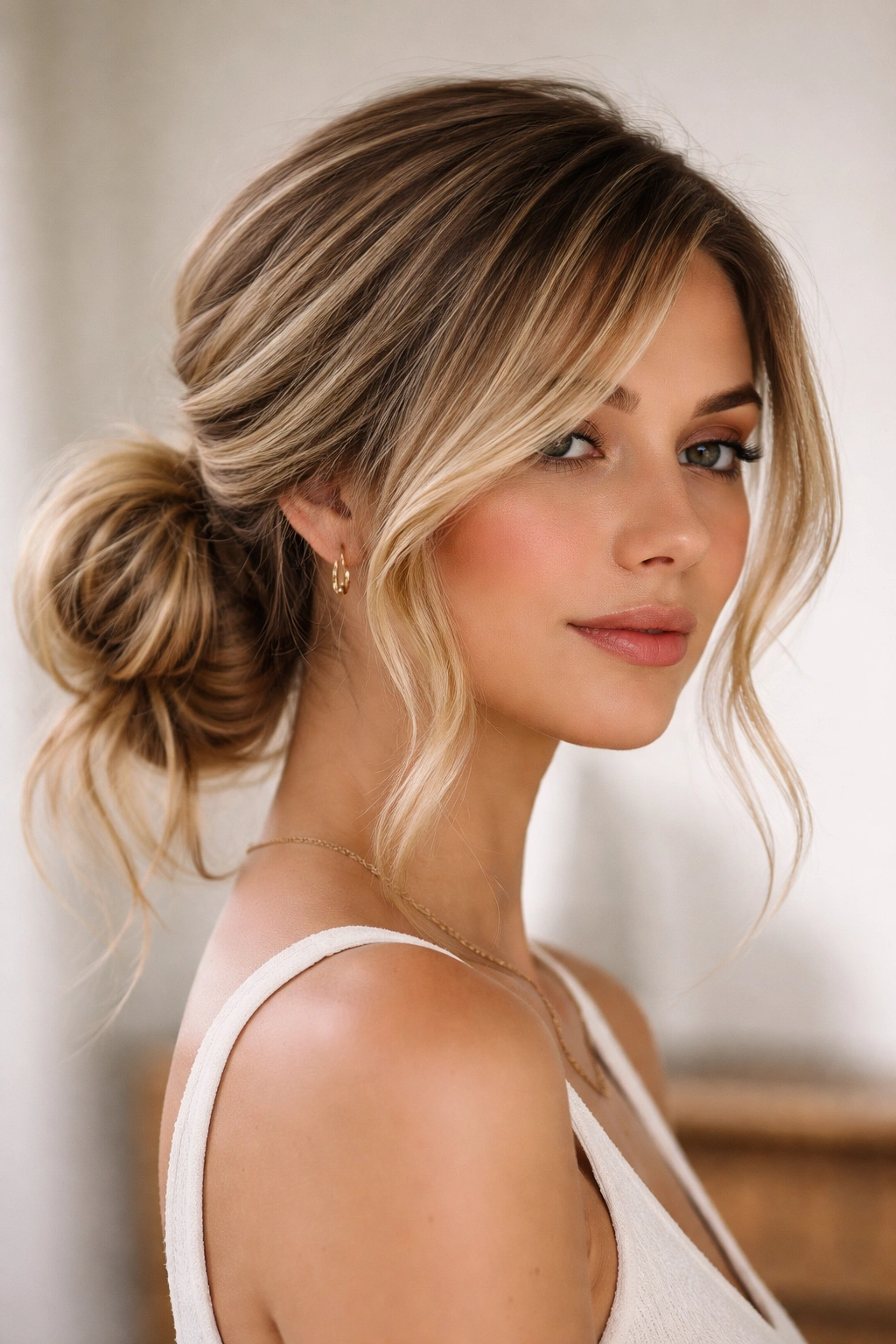
This is the style for days when you want drama and visual interest but aren’t trying to look formal or stiff. By sweeping your ponytail to the side and gathering it into a low bun, you create an asymmetrical silhouette that’s instantly more interesting than a centered style, and the position keeps the bun from feeling heavy at the back of your head.
Create texture in your hair using waves, curls, or a texturizing spray, then sweep your hair dramatically to one side — let’s say the right side of your head. Rather than creating a standard ponytail directly at the nape of your neck, position the base slightly to the right side and slightly lower than your crown. Secure it firmly with an elastic. Now twist the gathered ponytail loosely and wrap it into a bun shape positioned just to the right of center at the nape of your neck, letting some strands pull free for a deliberately undone look. The side-swept silhouette is crucial here — the weight of your hair pulls to one side, creating an asymmetrical, almost romantic aesthetic.
Why Side-Swept Creates Different Proportions
A centered, directly-at-the-nape bun can sometimes feel heavy or emphasize the back of your head if that’s an area of concern. By sweeping to the side, you create visual movement and draw the eye along a diagonal line rather than straight back, which is actually more flattering to most face shapes. The asymmetry also makes the style feel more intentional and editorial rather than simply practical.
Perfect for These Moments
This style works exceptionally well for social events, date nights, or any occasion where you want to look like you genuinely considered your appearance. The side-sweep feels dressy without requiring an updo, polished without being overly formal, and it photographs beautifully from the front since one side of your neck and shoulder line are visible rather than hidden under centered hair.
Pro move: Use a light hairspray to set the side-swept silhouette in place before you finish the bun, so throughout the day the weight of your hair naturally falls to that side rather than gradually shifting back to center.
5. The Double Bun Ponytail Hybrid
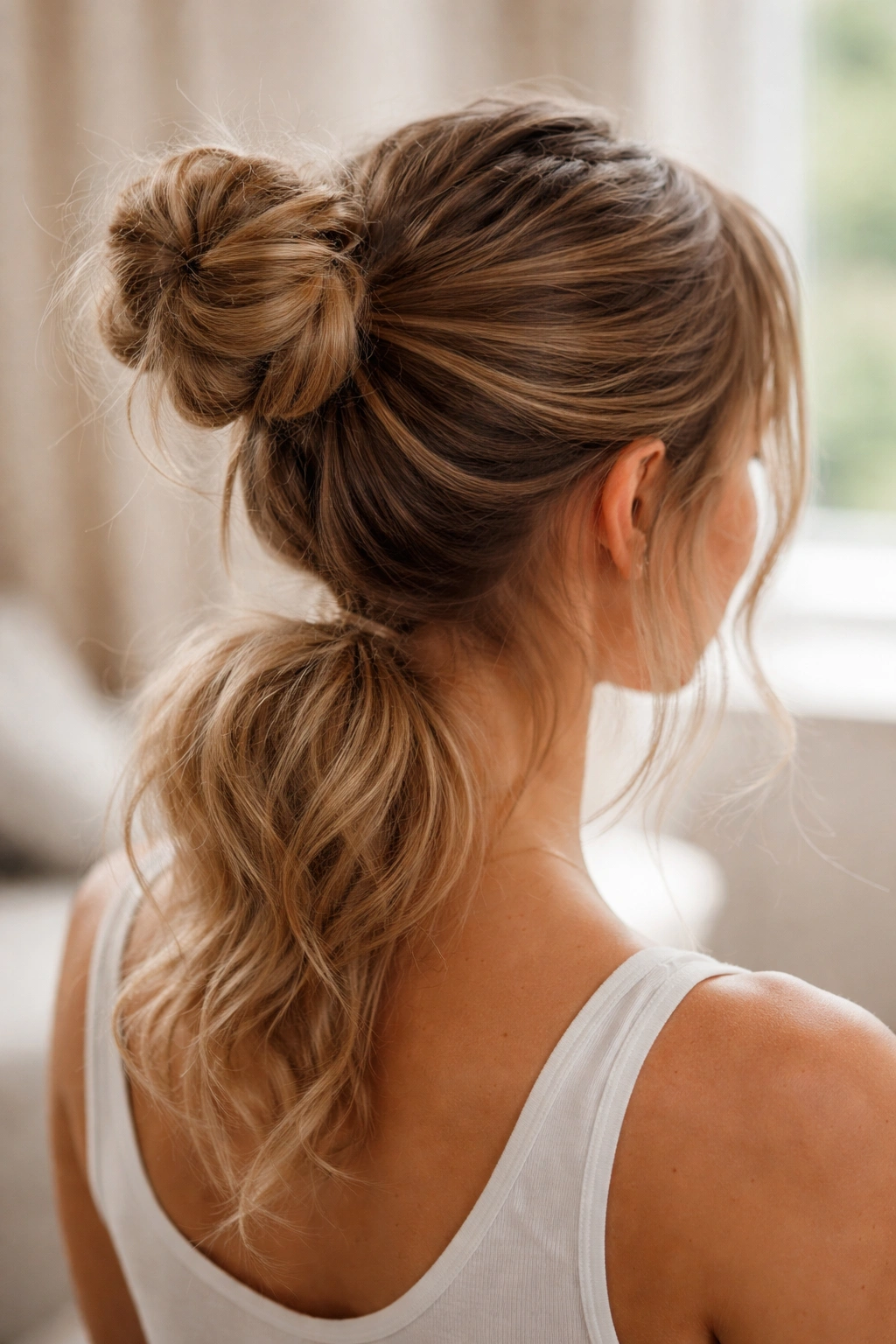
This is the statement-making style — it looks more complicated than it actually is, and it’s the perfect option when you want something visually distinctive. You’re creating two separate buns positioned close together on the back of your head, creating a shape that’s somewhere between a double bun (which can read very young) and a standard ponytail, landing in a sweet spot that’s playful but still wearable for adults.
Divide your hair into two horizontal sections: draw an imaginary line from ear to ear across the back of your head at about your crown. Section the top portion of your hair above that line and clip it back temporarily. Take the bottom section and create a low ponytail, securing it with an elastic positioned low at the nape. Create the first bun from this lower ponytail, making it soft and textured. Now release the top section. Create a high ponytail from this section, positioning the elastic above your first bun. Create a second bun from this higher ponytail, again making it soft and undone.
The finished look shows two distinct bun shapes, but they’re positioned close enough together that they create one visual unit rather than looking like two separate buns stacked on top of each other.
Execution Details That Prevent This From Looking Juvenile
The positioning is everything. The two buns need to be close enough in size and texture that they appear intentional and balanced, not like an accident. Both should be soft and slightly undone — tight, perfectly symmetrical buns will read as costume rather than intentional styling. The color and texture should be consistent (meaning don’t make one sleek and one messy), and the overall silhouette should feel cohesive.
When to Wear Double Bun Hybrid Style
This works for fun, casual occasions — weekend outings, casual dates where you want to show personality, casual workplace environments, or any time you want a hairstyle that’s a genuine conversation starter. It’s less appropriate for formal business settings or conservative environments, but it’s perfect for creative industries, casual Fridays, or personal time when you want to have fun with your styling.
Size balance tip: The lower bun should be slightly smaller than the upper one, which helps prevent a top-heavy proportion and creates a more flattering overall silhouette.
6. The Twisted Rope Ponytail into Messy Bun
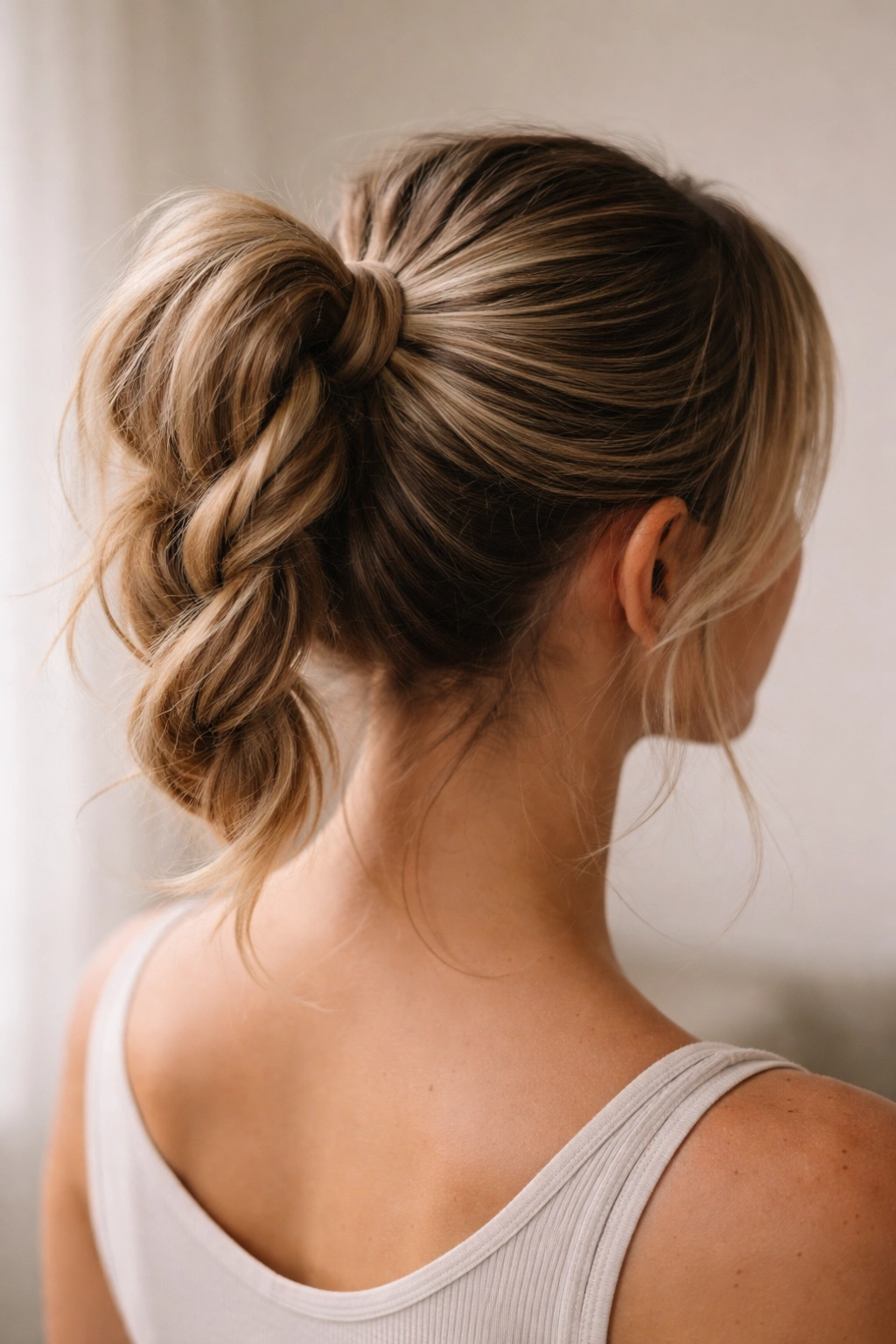
This style creates texture and visual interest through the ponytail itself rather than just in the final bun. By twisting your hair into a rope-like pattern as you create the ponytail, you’re building dimension that makes the finished bun appear fuller and more textured, even if your hair is fine or on the thinner side.
Start with your hair down and apply a light texturizing spray to give yourself some grip and texture to work with. Create a high or mid-level ponytail, but instead of simply securing your gathered hair with an elastic, divide the ponytail into two equal sections. Twist one section clockwise while simultaneously twisting the second section counterclockwise, allowing the two twists to spiral around each other, creating a rope effect. Continue twisting all the way to the ends of your hair, then secure the twisted rope with an elastic.
Now wrap this twisted rope loosely around its base elastic, creating a bun shape. Because the rope itself is already textured and dimensional, the finished bun appears fuller and more interesting than a standard bun would be. Secure with bobby pins, but leave the bun intentionally loose so you can see the rope texture throughout.
Why Twisted Rope Creates Fullness
The twisting technique essentially uses the same amount of hair you’d normally have in a ponytail, but because it’s twisted into a rope, it appears thicker and fuller. This is why this style is particularly flattering for fine or thin hair — the rope effect creates the visual illusion of density without requiring backcombing or teasing.
Best Scenarios for Rope Twist Styling
This is ideal for active days when you want your hair to look intentionally styled but still practical — the twisted rope holds together better than loose strands would, and the bun won’t fall apart as easily if you’re moving around. It’s also great for any day when you want dimension and visual interest without actually having to style individual sections or worry about flyaways.
Texture enhancement: If your hair is naturally straight or slippery, use a texturizing or sea salt spray before creating the twisted rope. This gives you better grip and makes the rope texture more visible and defined in the finished style.
7. The Tousled High Pony with Soft Bun Top
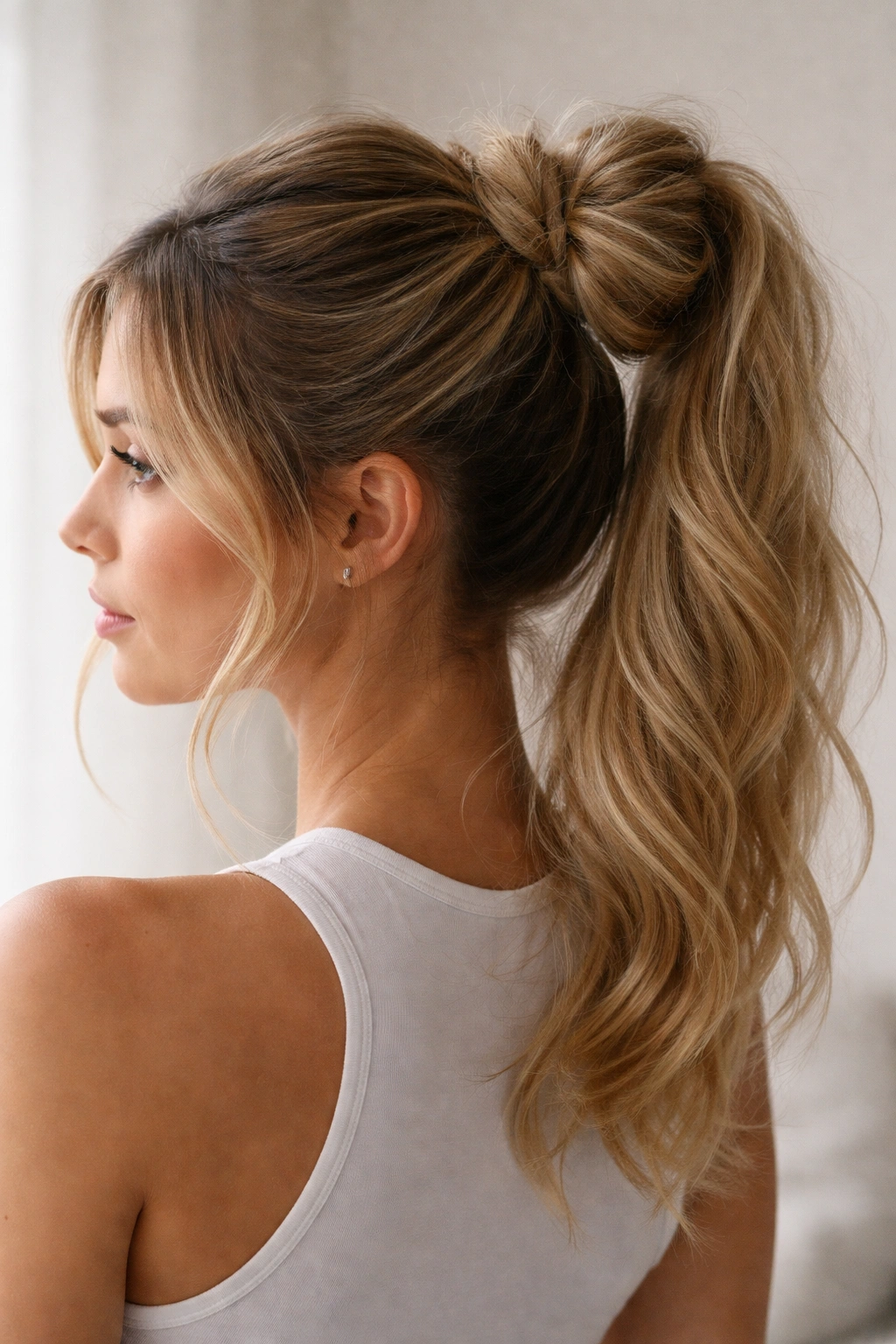
This is the “effortlessly polished” style — it looks like you woke up, ran your fingers through your hair, and somehow ended up with something camera-ready. The key is in the approach: you’re creating a high ponytail that maintains plenty of texture and movement, with the gathered end loosely formed into a bun rather than tightly secured.
Begin with textured hair (waves, curls, or even just disheveled-looking straight hair). Flip your head upside down and gather your hair loosely at the crown area, creating a high ponytail that feels relaxed rather than pulled-back and severe. Secure with an elastic, but don’t make it too tight. Flip your head back up. Now take the gathered ponytail and, instead of creating a defined bun shape, loosely twist it and wrap it around the elastic base, leaving plenty of strands loose and wispy, especially around your face and at the nape of your neck.
The goal here is that the bun looks more like a gathered, textured knot than an actual shaped bun. Pull a few face-framing pieces down gently, let some shorter strands escape the bun, and use bobby pins only where absolutely necessary to keep everything from falling completely apart.
The Art of Looking Intentionally Undone
This style walks a fine line between “tousled and intentional” and “I didn’t even try.” The secret is that you’re actually being intentional about every single placement — you’re just making it look accidental. The face-framing pieces aren’t random; you’ve deliberately released them. The strands at the nape aren’t falling out; you’ve positioned them that way. This is the kind of “effortless” that actually takes thought and intention.
Versatility Across Different Hair Types
This works beautifully on wavy, curly, or textured hair, where natural texture gives you exactly the tousled look you’re going for. On straight hair, you’ll need to create that texture with a texturizing spray, light waves, or the disheveled approach of just running your fingers through your hair and pulling it up. The style is equally flattering on all hair types when executed with the right texture as the foundation.
Securing without looking too done: Use bobby pins that match your hair color, and place them underneath the bun where they won’t be visible. You want the style to look like it’s barely being held together, even though it’s actually quite secure.
8. The Sleek Base, Textured Bun Finish
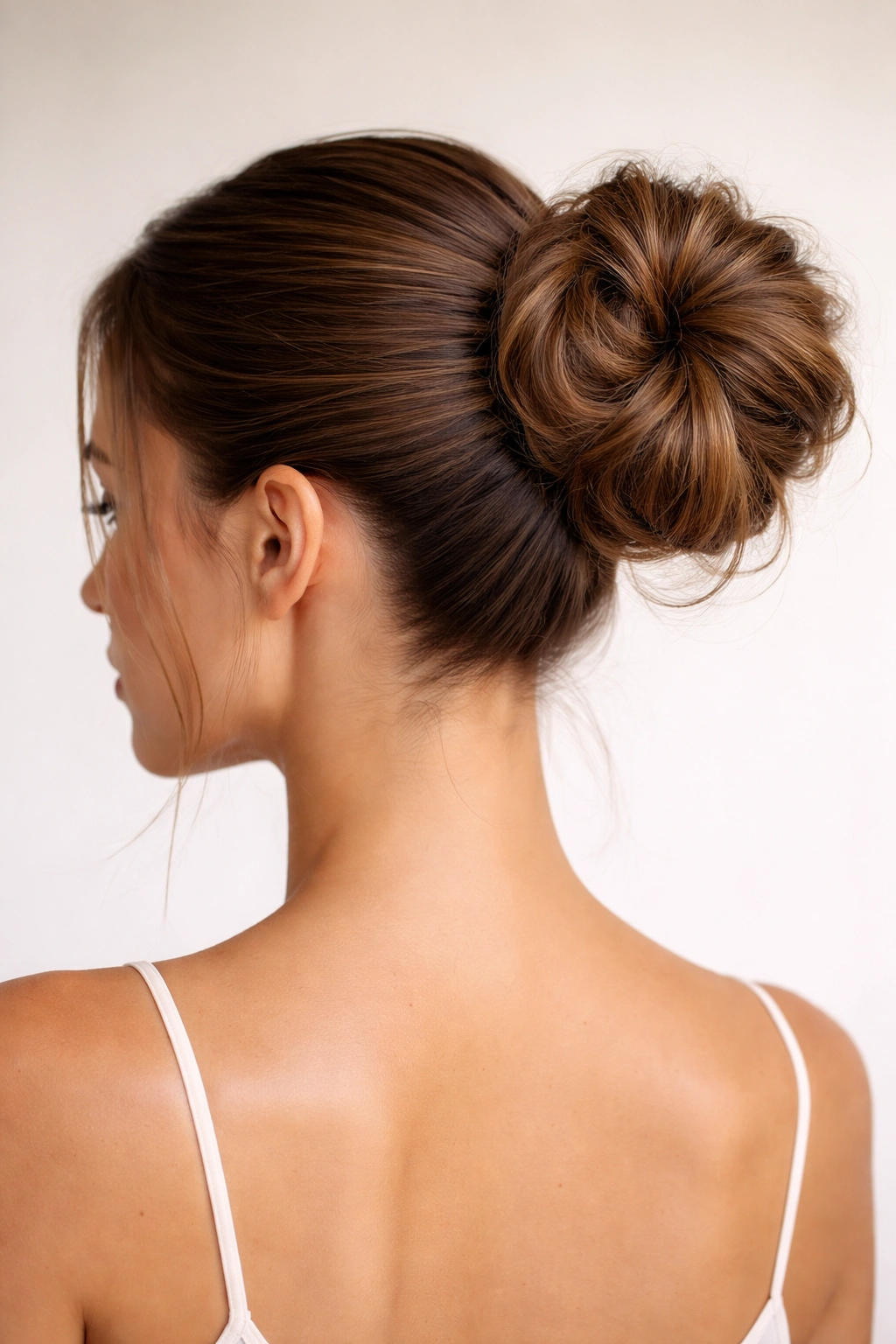
This is the polished professional’s version of messy bun styling. The approach is sophisticated: create an impeccably clean, sleek ponytail base using smoothing products and careful brushing, then deliberately introduce texture only in the final bun, creating a style that reads as controlled and intentional rather than haphazard.
Start with very smooth hair — use a smoothing cream, serum, or light hairspray designed to tame frizz and create shine. Blow-dry your hair smooth using a round brush to create a polished finish. Brush your hair back into a high or mid-level ponytail, using a fine-tooth comb or brush to smooth every single strand and eliminate bumps. The ponytail base should look almost geometric in its precision — no flyaways, no texture, just clean lines.
Secure this smooth ponytail with a sturdy elastic. Now, take the gathered ponytail and backcomb or tease it very gently to create texture, or use a texturizing spray to introduce a matte finish and separation. Twist the textured ponytail loosely and wrap it into a bun shape, making sure the texture is visible and the bun has clear separation and dimension. The finished look is sleek on top and sides, with all the texture contained within the bun itself.
Why This Contrast Works Professionally
The sleek base communicates polish, control, and intention. The textured bun communicates relaxation and approachability. Together, they create a style that’s appropriate for professional settings while still feeling intentional and modern. This is the style worn by people who want their appearance to be taken seriously without looking overly formal or stiff.
The Occasions That Call for This Specific Balance
Wear this to the office, to professional meetings, to client presentations, or to any situation where you want to appear polished and put-together. The style works equally well for business casual and business formal environments because the sleek base automatically elevates it, while the textured bun keeps it from feeling stuffy or dated.
Product strategy for lasting hold: Use a lightweight smoothing cream or serum on the base, a texturizing or volumizing spray on the bun section, and finish with a flexible-hold hairspray that keeps everything in place without making the bun feel stiff or crunchy.
Final Thoughts
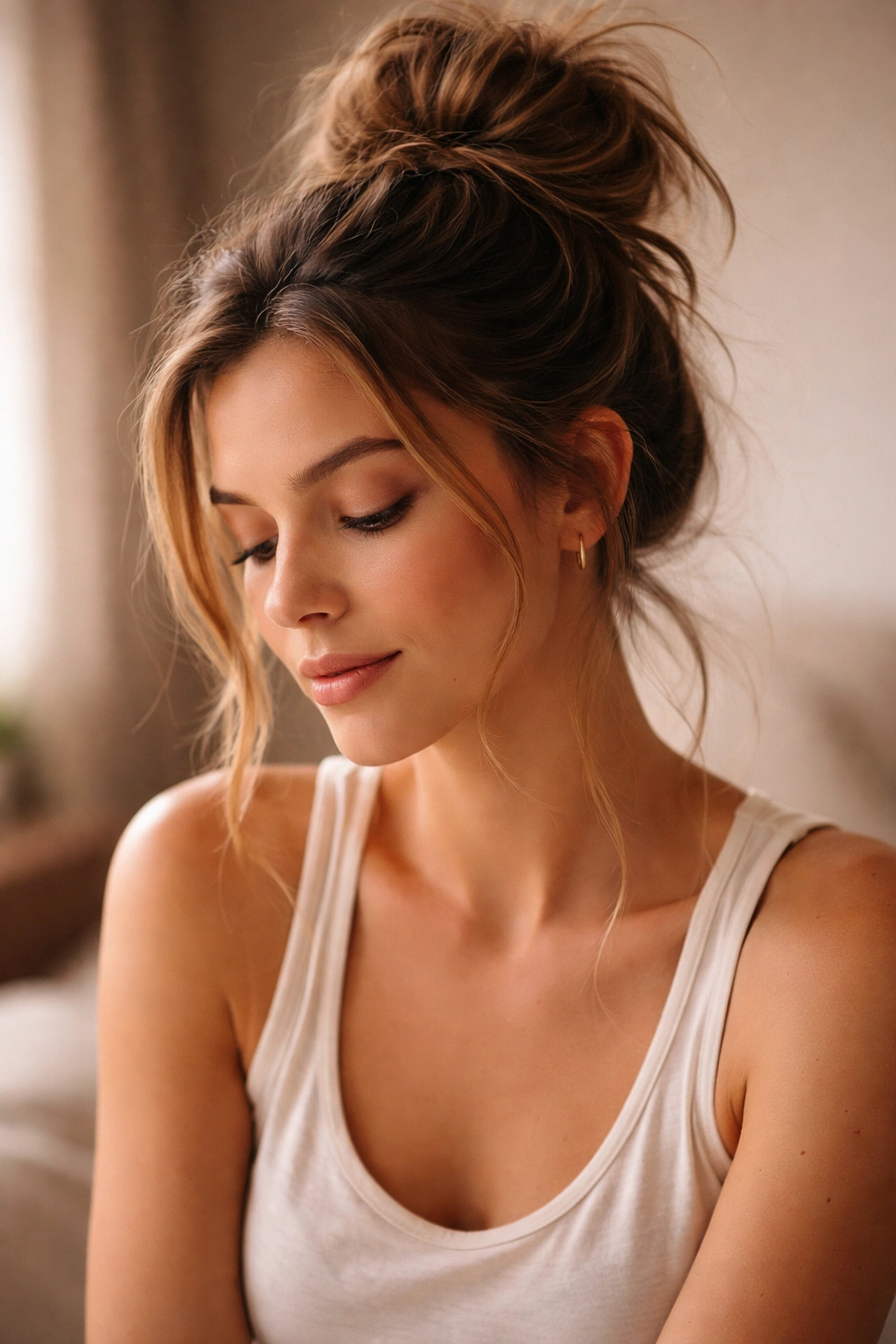
The real power of messy bun and ponytail combinations is that they’re genuinely flexible. The same basic technique — gathering hair and securing it with elastics and bobby pins — creates eight completely different aesthetics depending on how you position the base, what texture you build in, and where you leave strands loose. You’re not learning eight entirely different hairstyles; you’re learning to manipulate one fundamental technique in different ways to create the exact look you need.
The more you practice these styles, the faster you’ll be able to execute them. What might take fifteen minutes the first time becomes a five-minute morning routine once you’ve internalized the steps. And that’s really the gift of hairstyling — once you understand the principles, you can adapt them to your specific hair, your specific face, and your specific day. A style that works perfectly on a humid day might need slightly different positioning on a dry day. Textured hair might require different securing techniques than straight hair. But the fundamental approach remains the same.
Pick one or two of these styles to start, master them until your fingers can execute them without thinking, and then branch out to the others. You’ll quickly develop an intuition for which style suits your mood, your schedule, and your plans for the day.