



Short curly hair might seem like it has limited styling options, but the truth is that high weave ponytails are one of the most versatile and flattering hairstyles you can create with this hair type. The combination of texture, dimension, and volume that naturally comes with curls becomes an asset when you understand how to weave through it, layer it, and secure it in ways that actually enhance your curl pattern rather than fight against it. High ponytails work beautifully on curly hair because they draw attention upward, elongate the neck, and create a polished look that works equally well for casual outings, professional settings, or special occasions.
The key difference between throwing curly hair into a regular ponytail and crafting a high weave ponytail is intention. A weave ponytail uses strategic sections of your hair woven through each other or twisted together before being anchored into place. This technique distributes tension evenly across your scalp, minimizes breakage, and creates visual interest that a basic ponytail simply can’t match. With short curly hair, weaving also helps tame flyaways while celebrating the natural texture that makes your curls distinctive in the first place.
What makes these styles particularly great for short curly hair is that they work with your curl pattern, not against it. You’re not trying to stretch your curls into submission or smooth them into something they’re not—you’re working with their natural bounce, volume, and movement. Whether your curls are tight coils, loose waves, or something in between, these eight high weave ponytail variations offer techniques and styling approaches that will make your short curly hair feel intentional, elegant, and undeniably chic.
1. The Textured High Puff
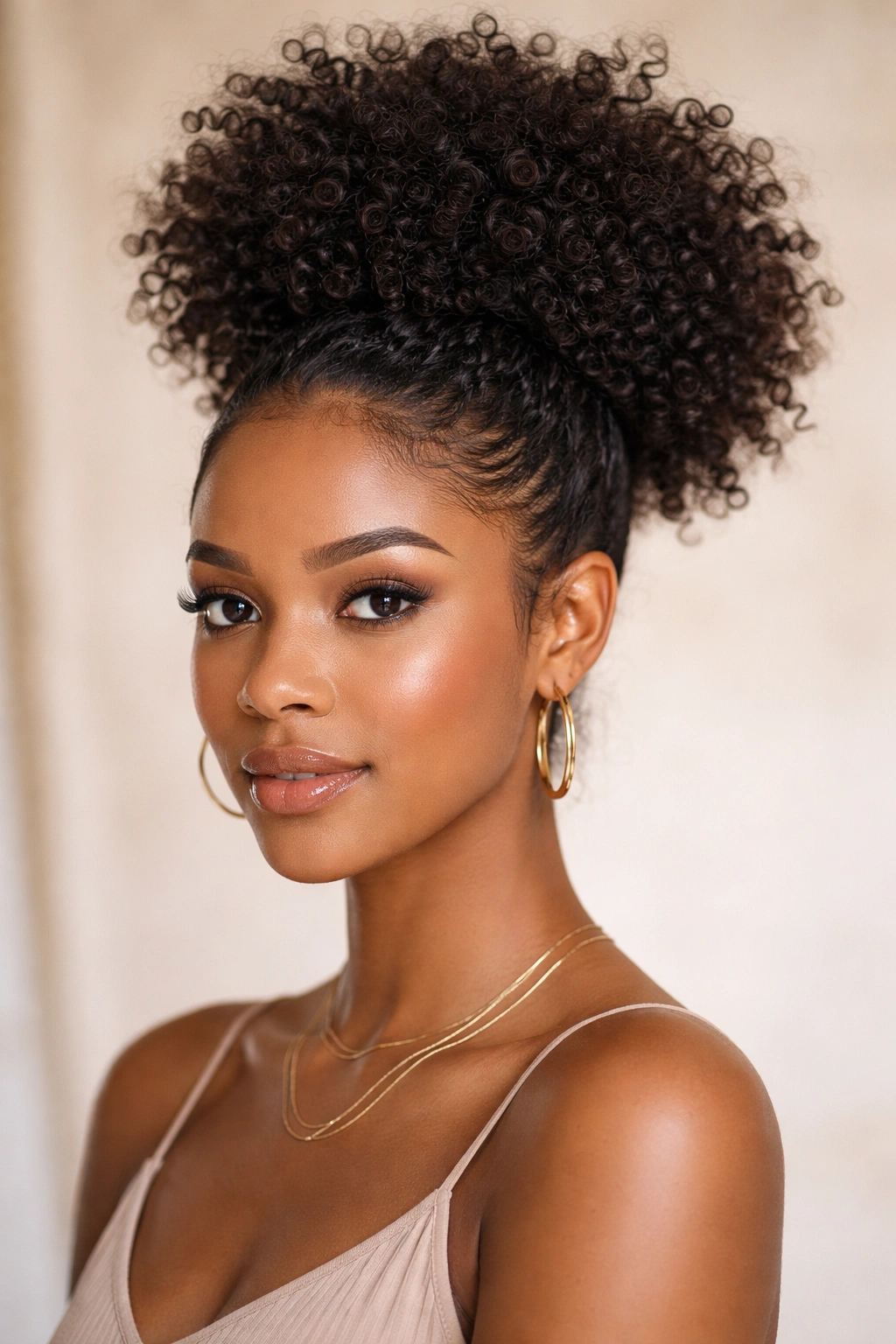
This style takes your natural curl texture and gathers it high on your head without trying to smooth or control it—instead, you’re amplifying the volume and bounce that makes curly hair beautiful. The key is using a combination of light weaving at the base to create structure while letting the gathered curls flare out naturally at the top. It’s the easiest high weave ponytail to execute on short curly hair because it celebrates rather than fights your natural texture.
How to Create Maximum Volume Without Frizz
Start with damp or dry hair that’s been moisturized with a lightweight curl cream or leave-in conditioner. The moisture is essential because it defines your curls and prevents them from looking dusty or undefined. Use your fingers to gently section out hair from your temples, working back toward where you want your ponytail to sit—roughly at the crown or slightly higher. Instead of pulling these sections straight back, create a gentle weave by crossing one section over the other as you move backward, almost like you’re braiding but with larger, thicker sections that maintain their curl shape. This weave should be loose enough that your curls stay bouncy but tight enough to anchor everything in place.
Pro Tips for Longevity
Use a flexible hold gel or mousse rather than a heavy pomade, which can weigh curls down and make them look flat or greasy. A silk or satin scrunchie will protect your curls from creasing and breakage compared to elastic hair ties. The Textured High Puff actually looks better after a few hours as your curls settle slightly into each other, so don’t be alarmed if it feels extra voluminous at first—that’s exactly what you want. This style lasts 2-3 days without needing a refresh if you sleep on a silk or satin pillowcase.
2. The Woven Crown Ponytail
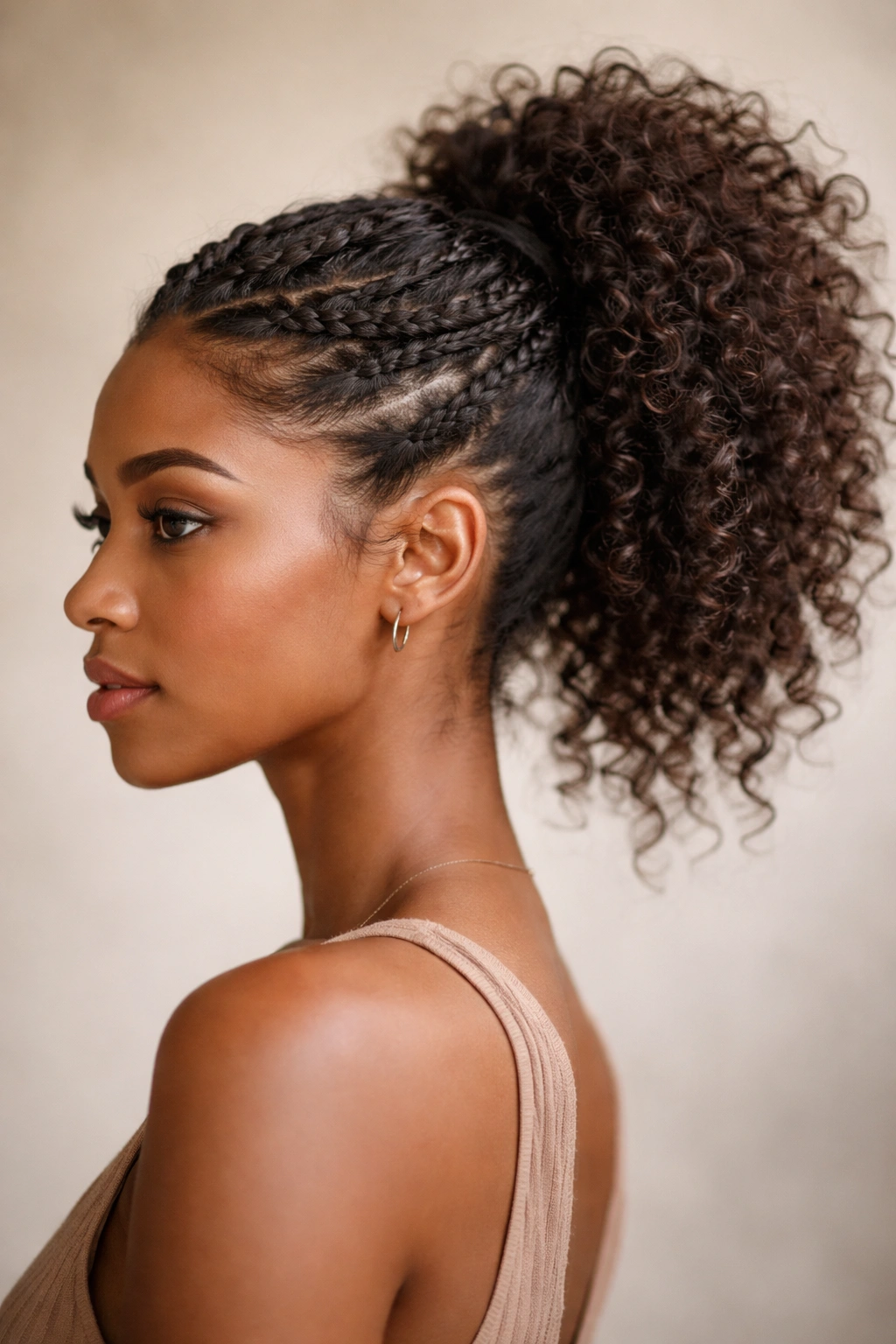
Imagine a crown sitting on top of your head, then add curls bursting out of it—that’s the visual you’re going for with this style. The Woven Crown Ponytail uses two or three thin weaves that spiral around your head from one side to the other, gathering hair as they go, before anchoring everything into a high ponytail at the crown. This approach works beautifully on short curly hair because the weaving sections can be quite loose and textured, and the gathered curls at the top have room to express their natural volume.
The Spiraling Weave Technique
Section your hair into three parts: a left side section starting near your ear, a top-center section at your crown, and a right side section mirroring the left. Begin at one ear with a small section of hair, then weave it loosely toward the back of your head, picking up additional curls as you go. The weave itself should loosely cross over and under sections of hair you’ve already gathered, creating that crown-like pattern. As you reach the back, transition all three woven sections into one high gathering point. The beauty of this technique on curly hair is that the weaves don’t need to be perfectly uniform—slightly irregular weaving actually looks more natural and dimensional with curls.
Creating Definition in Your Weaves
Use a styling cream with light hold to define each weave section before you begin—this helps your weaves stay distinct and prevents them from blending together into one mushy section. A fine-tooth comb can help you grab precise sections without disrupting your curl pattern. The weaves should feel snug enough to support your ponytail but loose enough that individual curls can still puff out from within the weave itself. This creates the effect of a decorative crown with texture and dimension rather than a flat, controlled look.
3. The Spiral Weave High Tail
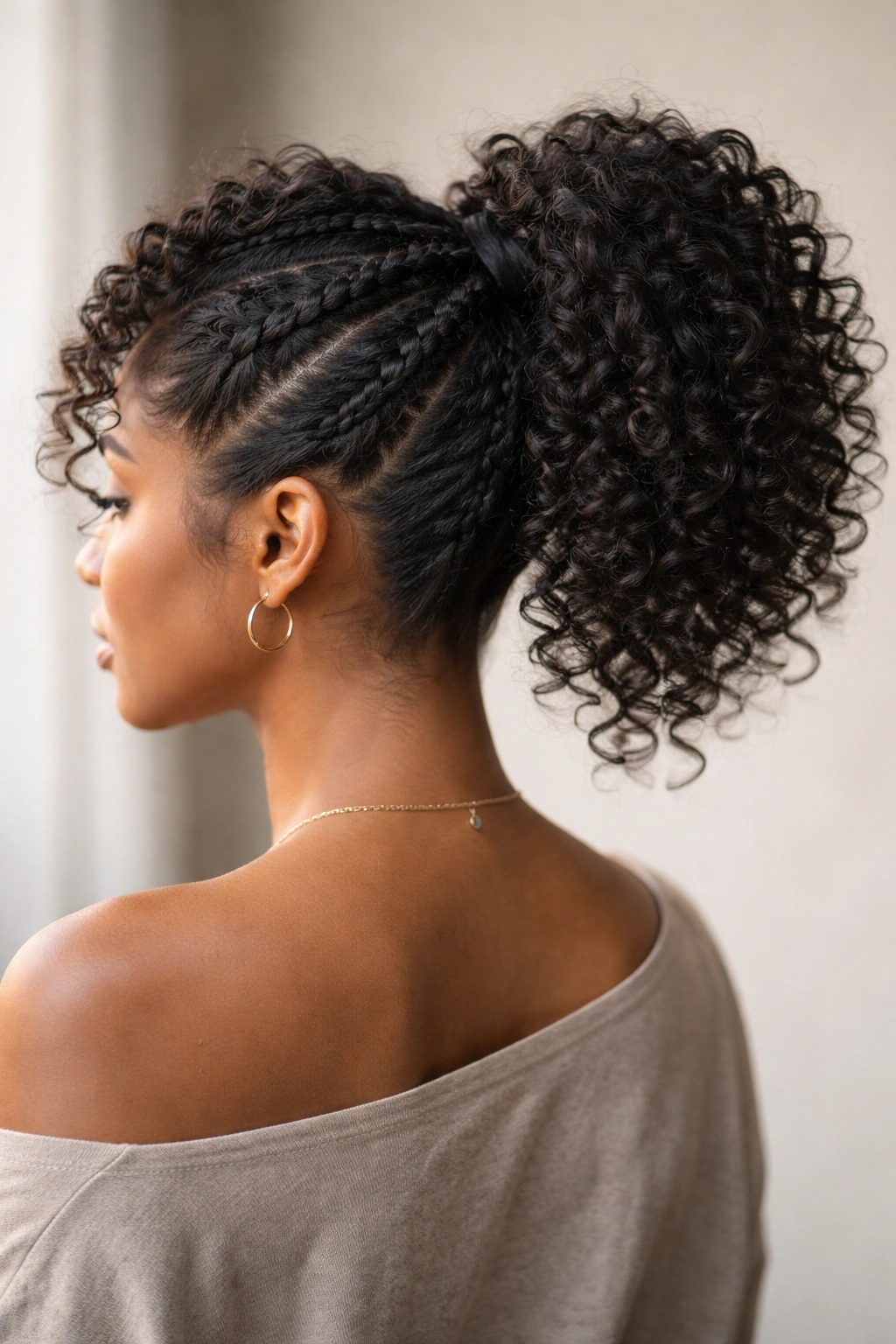
This style features one or two thick spiral weaves that wind around the back of your head before anchoring into a high ponytail. The spiral motion creates movement and visual interest, and with short curly hair, the spiral weaves can be thick enough to remain visible and textured rather than tight and controlled. It’s a style that looks intricate without requiring advanced braiding skills—you’re essentially twisting sections together in a spiral motion rather than over-and-under braiding.
Building the Spiral Structure
Start at one side of your head near your temple. Take a small section of hair and twist it very loosely, almost like you’re wringing out a towel but in slow motion. As you spiral backward toward the back of your head, continuously add new sections of hair into the twist. Your curls will naturally stay somewhat voluminous within this twist because you’re not pulling them tight—you’re loosely wrapping them around each other. The result is a visible weave with clear definition and beautiful texture. For short curly hair, this approach is perfect because tight, controlled spirals can look harsh, but loose, textured spirals celebrate your curl pattern.
Securing Without Compromising Your Curls
Once your spiral reaches the back of your head, gather all your hair into the high ponytail point using a flexible hair tie. You might need two hair ties—one at the base of the spiral weave to hold it in place, and another at the main ponytail gather point. Some people prefer to use bobby pins to anchor the spirals while letting the ponytail remain loose, which gives you more freedom in how full and textured your ponytail looks. Test what feels best for your hair density and curl type.
4. The Twisted Double Weave Pony
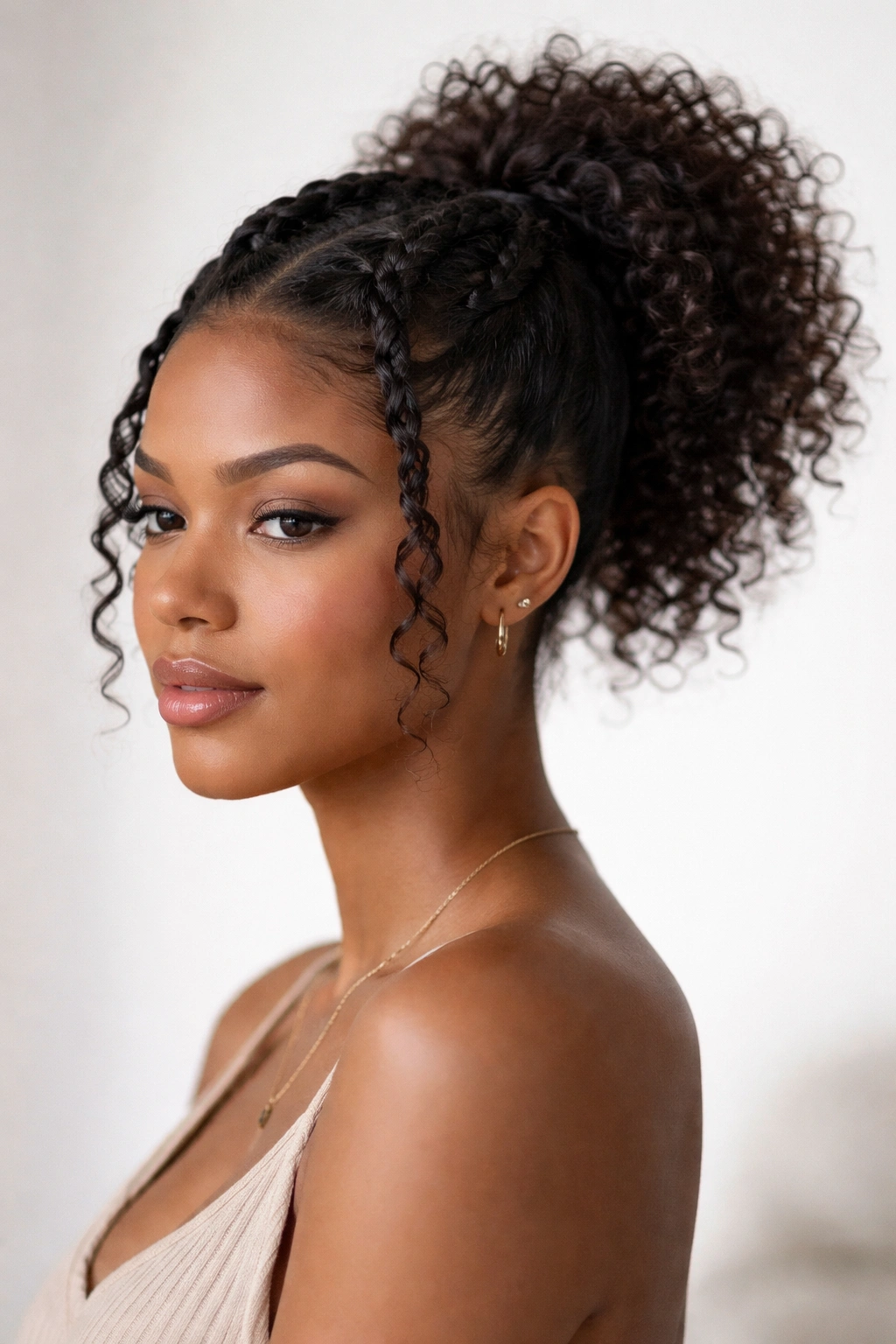
This style incorporates two distinct twisted weaves that frame your face before joining into a single high ponytail. It’s particularly flattering on short curly hair because it pulls the sides of your hair back while leaving enough texture and volume throughout. The two weaves create visual symmetry while celebrating the natural curl pattern on either side of your face.
Creating Balanced, Tension-Free Weaves
Part your hair down the middle or slightly off-center, depending on your face shape and personal preference. On one side, take a small section near your temple and begin a loose two-strand twist moving backward toward the back of your head. A two-strand twist involves taking two sections of hair and wrapping them around each other in a spiral motion—it’s simpler than a traditional braid and looks absolutely beautiful on curly hair because each strand’s natural curl remains visible within the twist. Repeat the process on the other side of your head, making sure both twists feel balanced in terms of size and tightness.
Anchoring Your Weaves Properly
As you bring both twists to meet at the back of your head, secure them with bobby pins before gathering everything into your main high ponytail. The bobby pins prevent the twists from unraveling throughout the day while the main ponytail hair tie holds everything in its high position. You can use a coordinating color bobby pin that blends with your hair, or intentionally choose a contrasting color if you want the weaves to be a design feature rather than something that blends in. With short curly hair, slightly loose twists look infinitely better than tight, overly controlled ones—aim for a look where individual curls are still visible within each twist.
5. The Sleek High Weave with Curls
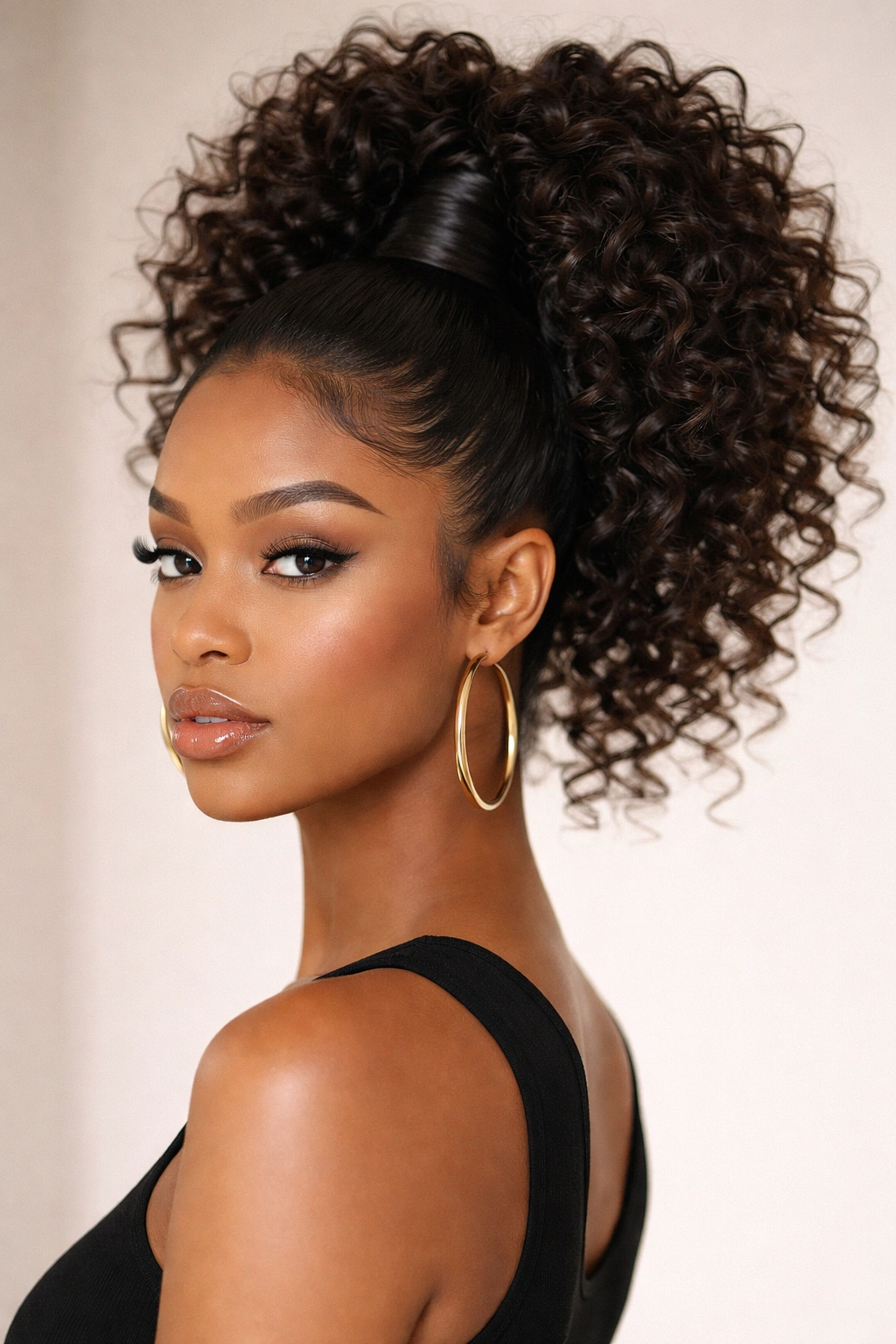
This style combines a smooth, controlled weave foundation with completely free-flowing curls at the top—it’s the ideal style if you want polish and sophistication without sacrificing volume. The weave sections are slightly more controlled and defined than some of the other options, creating a sleeker foundation, while the gathered curls at the top remain wild and textured. This contrast between sleek and curly is what makes the style work so beautifully.
Achieving Smooth Weaves on Curly Hair
This is one of the few styles where you want to apply a bit more product and use slightly more tension in your weaves. Use a smoothing cream or gel with medium hold, applied generously to the sections you’ll be weaving. You can also lightly mist these sections with water, which temporarily softens curl pattern and makes the hair more pliable for smoother weaving. Work with a fine-tooth comb to smooth each section as you weave. The goal is sleekness, not board-straight hair—you want clean, defined weaves that still look intentional and styled rather than naturally textured.
The Contrast Effect and Why It Works
The magic of this style is that smooth, defined weaves frame your face beautifully while the gathered curls at the crown feel celebratory and free. It’s particularly flattering if you have an elongated face shape because the smooth weaves create elegant lines while the full curls on top add width. This style works for professional settings where a fully textured ponytail might feel too casual, but a fully sleek ponytail might feel too severe for your personal style. You get both—control and texture, polish and personality.
6. The Sculptured Weave Ponytail
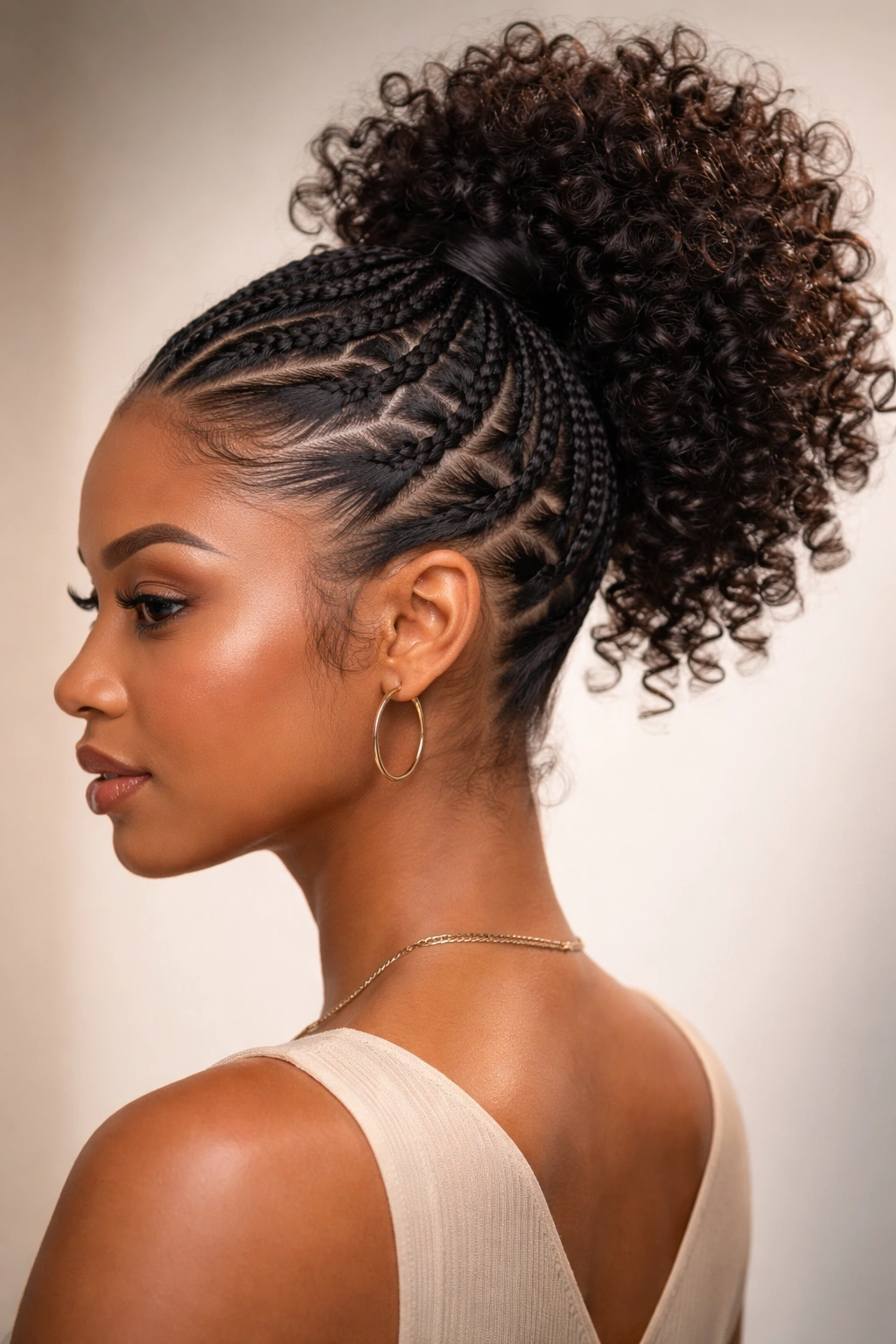
This is the most architectural of the high weave options, featuring geometric weave patterns that create visible, distinct sections along your scalp. On short curly hair, this style is stunning because the weaves create actual visual sculpture against your head while the gathered curls create volume and movement at the top. It’s easier than it sounds—you’re essentially creating thick, defined weave sections that follow geometric patterns rather than trying to make everything smooth and uniform.
Mapping Your Weave Pattern
Before you begin, visualize where you want your weaves to sit. Common patterns include: two thick weaves running vertically up the back of your head, three weaves in a triangular pattern, or one central weave with smaller weaves on either side. The key is intentionality—you’re not randomly gathering hair, you’re creating a specific, repeatable pattern. Use a fine-tooth comb to section out exactly where each weave will go. Mark these sections with sectioning clips if it helps you visualize the pattern clearly.
Executing Clean, Visible Weaves
Use a medium-hold styling cream applied only to the sections you’ll be weaving—this keeps those sections defined while leaving the rest of your hair free to be textured. Work on one weave pattern at a time, completing it entirely before moving to the next section. Your weaves don’t need to be perfectly tight, but they do need to be clearly defined so the geometric pattern is visible. With short curly hair, you’ll find that weaves naturally stay separated from each other because of your hair’s texture and volume, which actually makes creating a sculptured pattern easier than on straighter hair types.
7. The Braided Weave High Pony
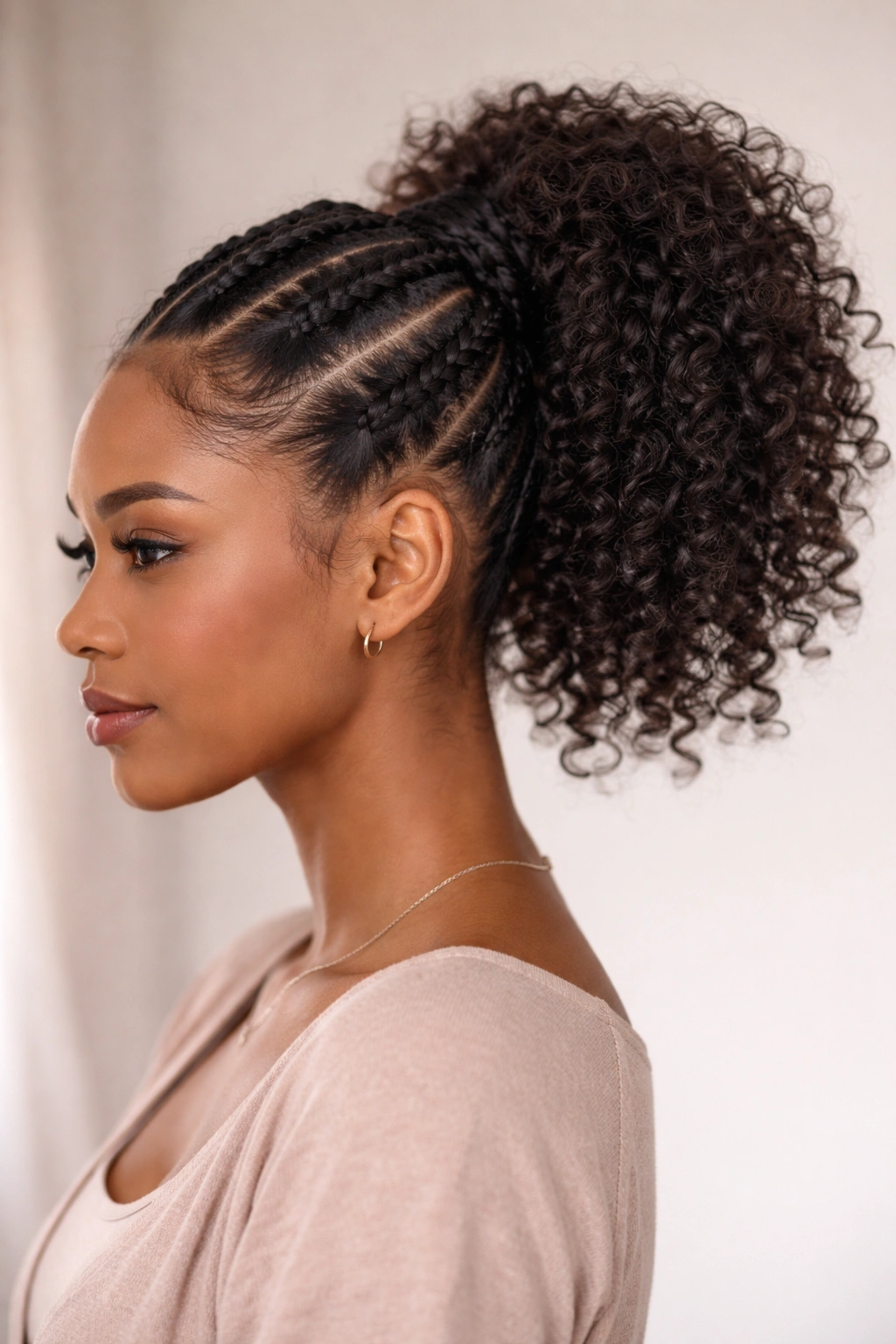
This style incorporates traditional three-strand braids into your weave structure, creating elegant, clearly defined sections that work beautifully on short curly hair. The combination of braiding and gathering creates visual interest and texture while remaining polished enough for any occasion. It’s more intricate than some of the other options, but absolutely worth learning if you want a style that feels special and intentional.
Traditional Braiding on Short Curly Hair
Begin by taking a section from one side of your head near your temple. Create a traditional three-strand braid by dividing your section into three parts and crossing them over each other in the classic over-under pattern. As you braid, continuously add new hair to your braid, working backward. The added curls will create visible texture within your braid—this is beautiful and intentional, not something you need to smooth away. Repeat this braiding process on the other side of your head, and optionally create one more braid down the center-back if you have enough hair length and density.
Combining Braids Into Your Ponytail
Once both side braids (or all three braids if you’ve created a center one) are complete, gather them together with your remaining hair into your high ponytail point. The braids become part of your gathered ponytail rather than separate elements. Use a flexible hair tie that won’t crease or damage your braids. The beauty of this style is that your braids remain visible even within the ponytail, creating layers of texture and visual interest. With short curly hair, braids tend to look fuller and more textured than they do on straighter hair types—this is absolutely an asset and makes the style more visually interesting.
8. The Stacked Volume Weave Ponytail
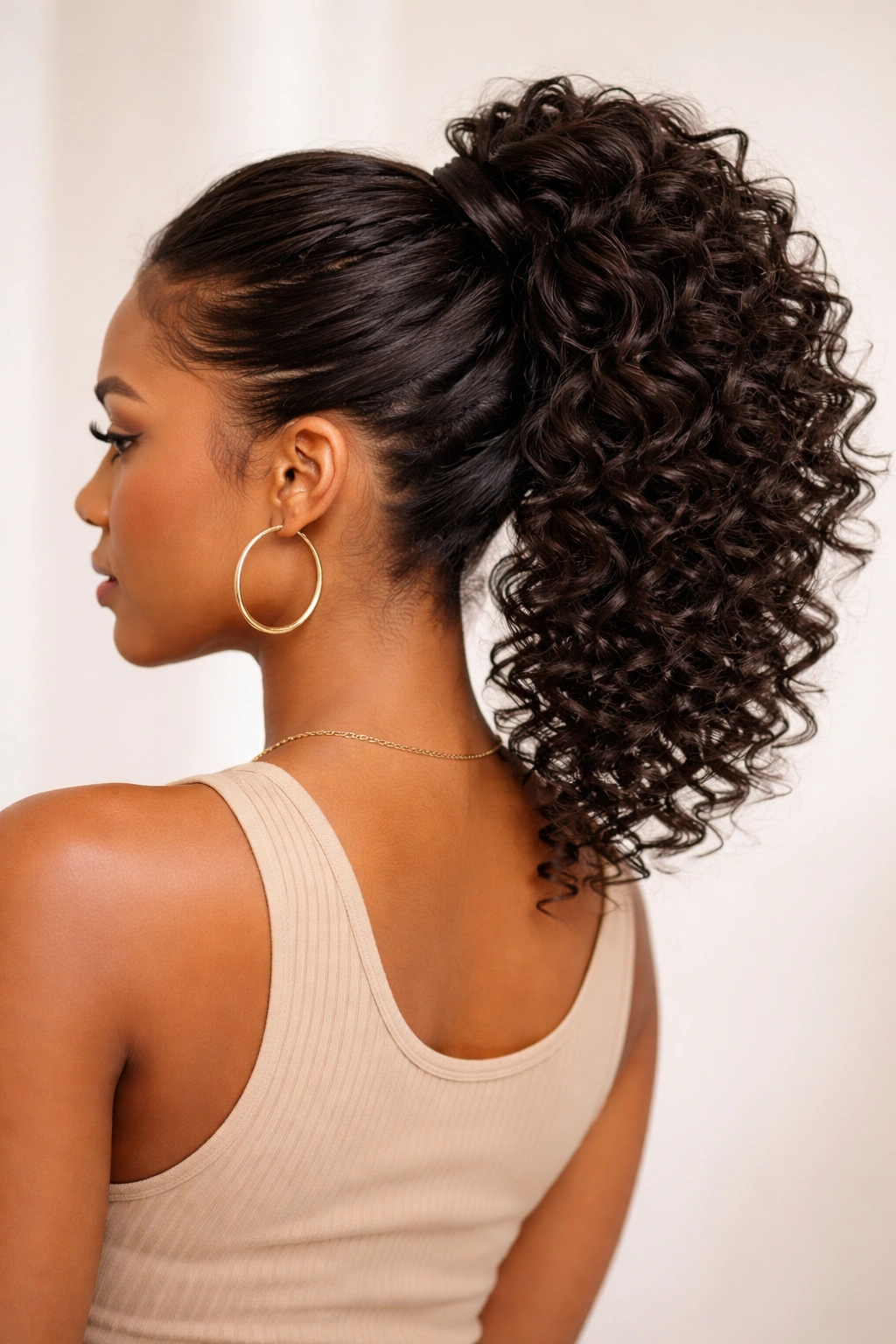
This final style uses multiple weaving layers that sit at slightly different heights, creating the illusion of extreme volume and dimension. It’s the most dramatic of the eight options, perfect for when you want a statement style that celebrates the natural fullness of short curly hair. The stacking technique distributes hair across different height levels, which creates visual impact while remaining manageable and secure.
Creating Layered, Stacked Sections
Begin by gathering a small section of hair at your very highest point—roughly at the crown. Secure this with a small hair tie. This becomes your base layer. Below that, gather another section of hair and secure it with a hair tie, but don’t pull it all the way up to meet the first section. Leave about an inch of space between the two hair tie placements. This creates the stacked effect. Repeat this process, creating three to four distinct hair tie sections stacked vertically down the back of your head. Each section should have its own distinct weave or twist within it, adding visual interest beyond just the stacked positioning.
Creating Texture and Dimension in Stacked Sections
Before securing each section with a hair tie, apply your chosen weaving pattern—one section might have a two-strand twist, another might have a looser spiral weave, and another might have a more traditional three-strand braid. This variation in weaving patterns prevents the style from looking repetitive while maximizing your short curly hair’s natural texture and dimension. Once all sections are secured with individual hair ties, you can carefully tease or fluff out the curl sections between each hair tie to increase volume even further. The final result is a ponytail that appears dramatically full and three-dimensional while remaining secure and manageable throughout your day.
Final Thoughts
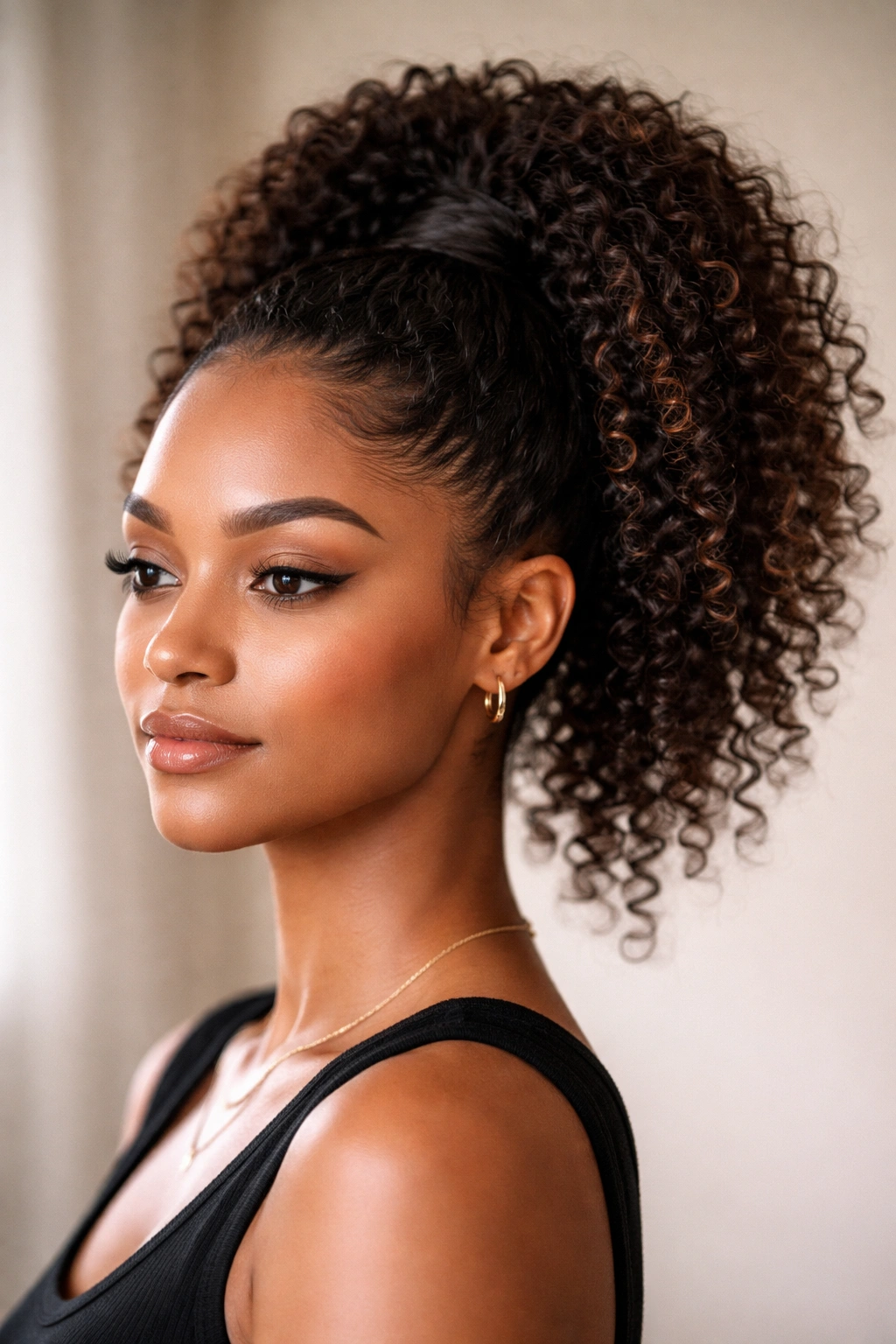
High weave ponytails transform short curly hair from something that might feel limited in styling options into a canvas for creativity, elegance, and beautiful dimensional style. Each of these eight variations works with your natural curl pattern rather than against it, which means less damage, less frustration, and more days where you feel genuinely confident in how your hair looks. The key to success with any of these styles is using the right products—moisturizing creams and lightweight gels that define curls without weighing them down—and understanding that perfection isn’t the goal. A slightly loose weave, a few stray curls, and uneven texture are features, not flaws, when you’re styling curly hair.
Start with whichever style feels most approachable to you, and give yourself permission to practice it several times before expecting it to look perfect. Your hands will learn the motions, you’ll develop muscle memory for how tight or loose your weaves should be, and you’ll discover which products work best with your specific curl type and hair density. The beautiful reality is that short curly hair is forgiving—it springs back, it bounces, and it hides minor imperfections in a way that straight or wavy hair often doesn’t. That’s not a limitation, it’s a gift. Use these eight high weave ponytail styles to celebrate exactly what makes your short curly hair uniquely beautiful.
