



Cool skin likes cool color. That’s the short version, and it matters a lot when you’re choosing braid color combos for cool-toned skin. Put ash, silver, blue, plum, or violet next to a face with pink or blue undertones, and the whole look snaps into place; pick a loud gold or orange and the braids can start doing too much.
That does not mean you’re locked into pale blondes and black hair. Cool-toned skin can handle deep jewel shades, smoky brunettes, icy pastels, and even bright fashion colors when the base stays on the cool side. The real question is less “Is this color dark or light?” and more “Does this shade lean blue, gray, violet, or ash?”
Synthetic braiding hair changes the picture a little. A shade that looks soft in the pack can look brighter once it’s braided, pulled tight, and hit by daylight, which is why mirror selfies and outdoor photos often tell two different stories. Keep that in mind before you commit to a full head of color; the same plum that reads rich indoors can go nearly wine-dark outside.
The best pairings work with the undertone instead of fighting it.
1. Icy Platinum and Silver Ribbon Braids
This is the cleanest match if you want braids that make cool undertones look sharper, not washed out. Icy platinum and silver sit so far on the cool side that they almost act like jewelry for the face, especially on knotless box braids or loose goddess braids with a few curled pieces left out.
Why it reads so clean
Platinum has that pale, almost frosted look, while silver gives the braid a harder edge. Together, they catch light in a way that flatters pink, rose, and blue undertones without pulling any warmth into the face.
- Best on small to medium knotless braids
- Looks crisp with middle parts and clean edges
- Reads softer when you add a few curly human-hair pieces
- Works well if your wardrobe already leans black, gray, navy, or white
My favorite version: platinum braids with silver accent pieces woven every few rows. It keeps the look bright, but not noisy.
2. Ash Brown and Mushroom Blonde Feed-Ins
Why do some brown braids look expensive and others look muddy? The difference is almost always the base. Ash brown and mushroom blonde stay cool by skipping that orange-gold warmth that can fight with cool skin tones.
This combo works well when you want dimension without a huge color statement. Ash brown gives the braid depth at the root, while mushroom blonde adds a smoky beige note that sits more gray than gold. On feed-in braids, the gradient feels smooth instead of striped, which matters more than people think.
How to wear it
Use this pairing when you want the braids to blend into your face rather than take over the whole look. It’s especially good for long feed-ins, side parts, and braided ponytails.
The result is calm. Not boring. Calm.
3. Jet Black and Blue-Black Shine
Jet black is never dull when it’s done right. Add a blue-black sheen, and the whole thing starts reading glossy instead of flat, which is exactly why this combo works so well on cool-toned skin.
I’ve always thought this pairing looks best in clean, structured styles: long box braids, straight-back cornrows, or sleek knotless braids with a sharp part. The black gives you strong contrast, and the blue-black shift shows up when the hair moves, which keeps the style from looking like one solid block.
A little daylight helps here.
Indoors, people may only notice the depth. Outside, the blue cast comes alive and makes the braids look richer, almost liquid. If you like low-maintenance color but still want something that feels styled, this is one of the safest bets on the list.
4. Espresso and Plum Box Braids
Plum is one of those colors that can look too loud fast, but not when you anchor it with espresso. Espresso and plum gives you that deep berry richness without drifting into warmth, so it plays nicely with cool skin and dark brows.
The trick is to keep the plum more wine than cherry. Blue-based plum has a quieter, velvety look that sits beautifully against cool undertones. Espresso keeps the braid grounded, which helps a lot if you want the color to feel wearable every day instead of costume-like.
Best braid styles for this combo
- Medium or jumbo box braids
- Knotless braids if you want softer movement
- Half-up styles that show the plum only in the lengths
If you wear this in straight sunlight, the plum wakes up. Under indoor light, it reads almost like a deep brown with a secret. That’s the charm.
5. Charcoal Gray and Lilac Ends
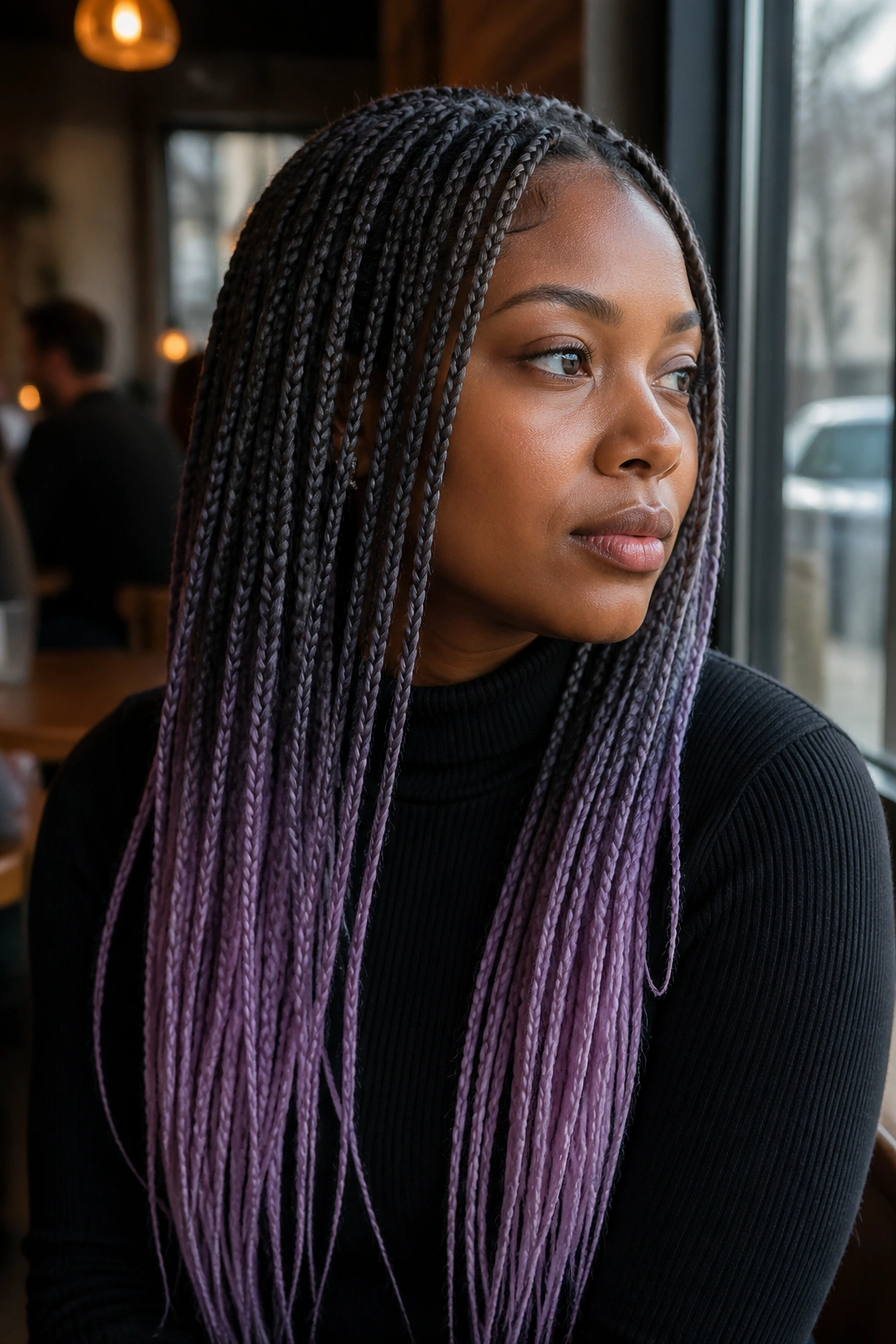
Charcoal gray does what black sometimes refuses to do: it gives you depth without hardening the whole face. Add lilac at the ends, and the braid color combo turns from moody to playful in one move.
This pairing works because both shades stay cool, but they don’t compete. Charcoal grounds the style near the scalp, while lilac softens the finish and keeps the braids from feeling heavy. On cool-toned skin, that little bit of purple at the ends can make the complexion look cleaner and a touch brighter.
Good choice if you want something a little offbeat.
It also photographs well in flat light, which is useful because gray and lilac can get lost if the tones are too pale. Ask your braider to keep the lilac slightly smoky rather than candy-bright. The softer version looks more expensive, and less like you grabbed the first bright pack on the shelf.
6. Smoky Black and Teal Ribbons
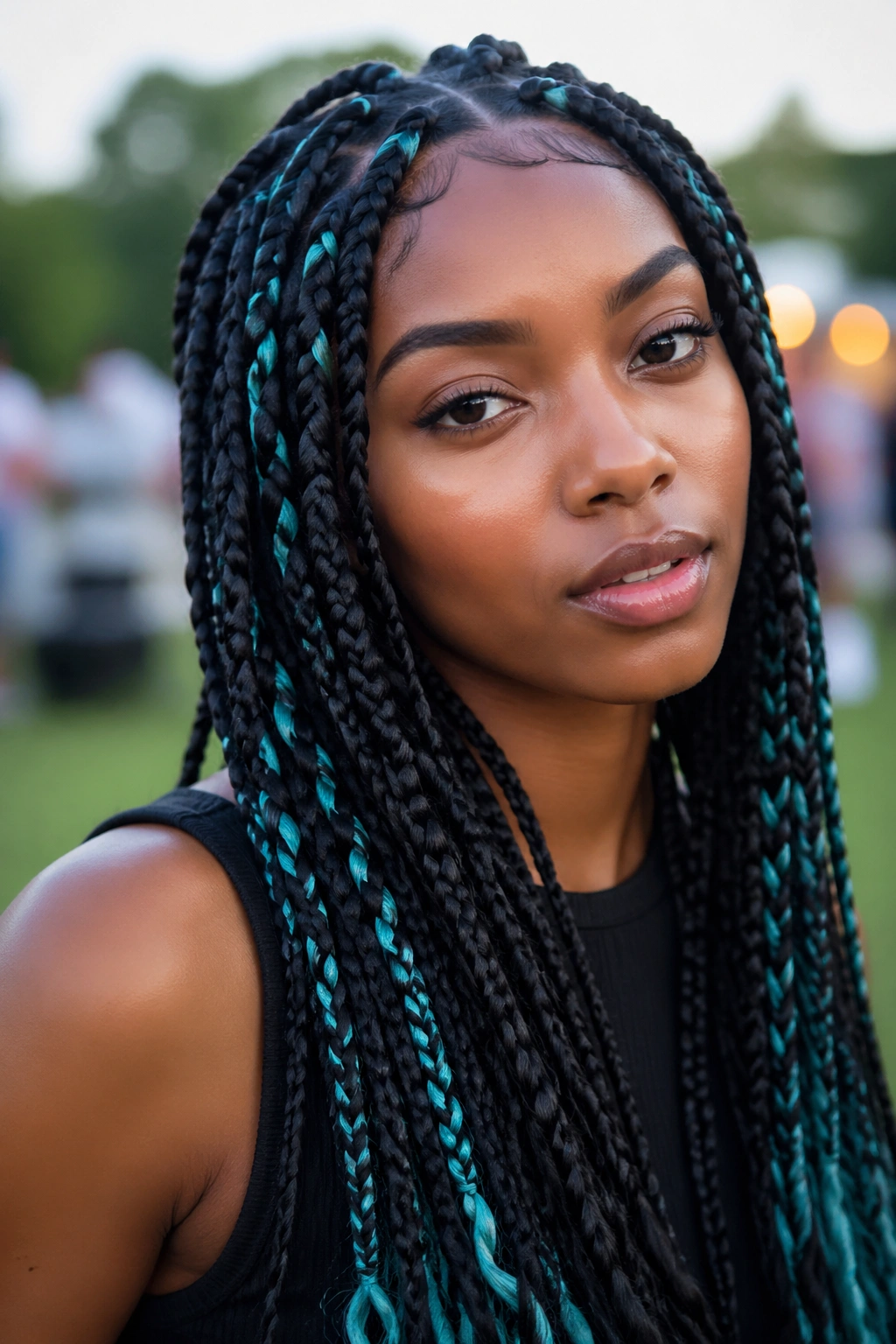
A black base with teal woven through it is one of those combinations that looks sharper on cool skin than people expect. Smoky black and teal ribbons gives you movement without making the whole braid look neon.
What makes it different
Teal is one of the rare bright shades that still leans cool enough to sit well beside blue or pink undertones. It pops most when it’s used as an accent, not the full head. Think a few teal strands in feed-in braids, or teal peeking through goddess braids near the ends.
That small hit of color matters.
- Best for statement weekends and festival looks
- Strongest in braids with loose texture
- Use darker teal if you want a more wearable finish
- Use brighter teal if your clothes stay simple
This is not the color combo I’d choose if you want quiet hair. It is the one I’d choose if you want somebody to notice your braids before they notice your shoes.
7. Midnight Blue and Black Micro Braids
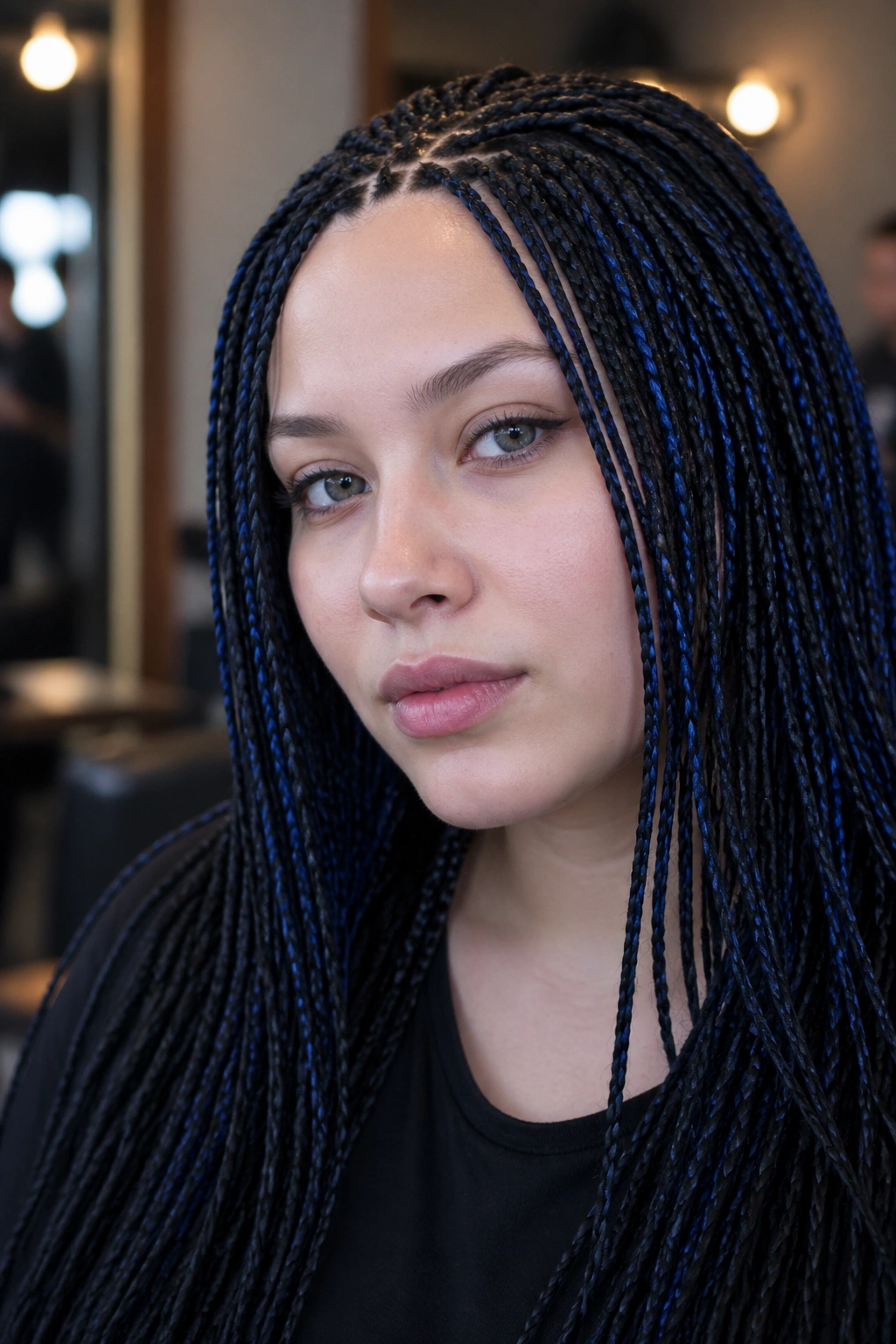
Midnight blue is a sneaky color. From a few feet away, it can look like black. Up close, the blue tone shows itself, and that’s where the braid starts doing the work for cool-toned skin.
This pairing is especially good on micro braids and small knotless styles because the tiny braids let the blue move around instead of sitting in one flat sheet. The black keeps the color from looking washed out, and the midnight blue adds just enough depth to keep things interesting.
No glitter. No fuss.
If you wear a lot of denim, silver jewelry, or gray clothing, this combination slips into your wardrobe without effort. It also has a nice side effect: if your hairline or roots need a few weeks to settle, the darker base hides that transition better than a lighter color would.
8. Burgundy and Black Root Smudge
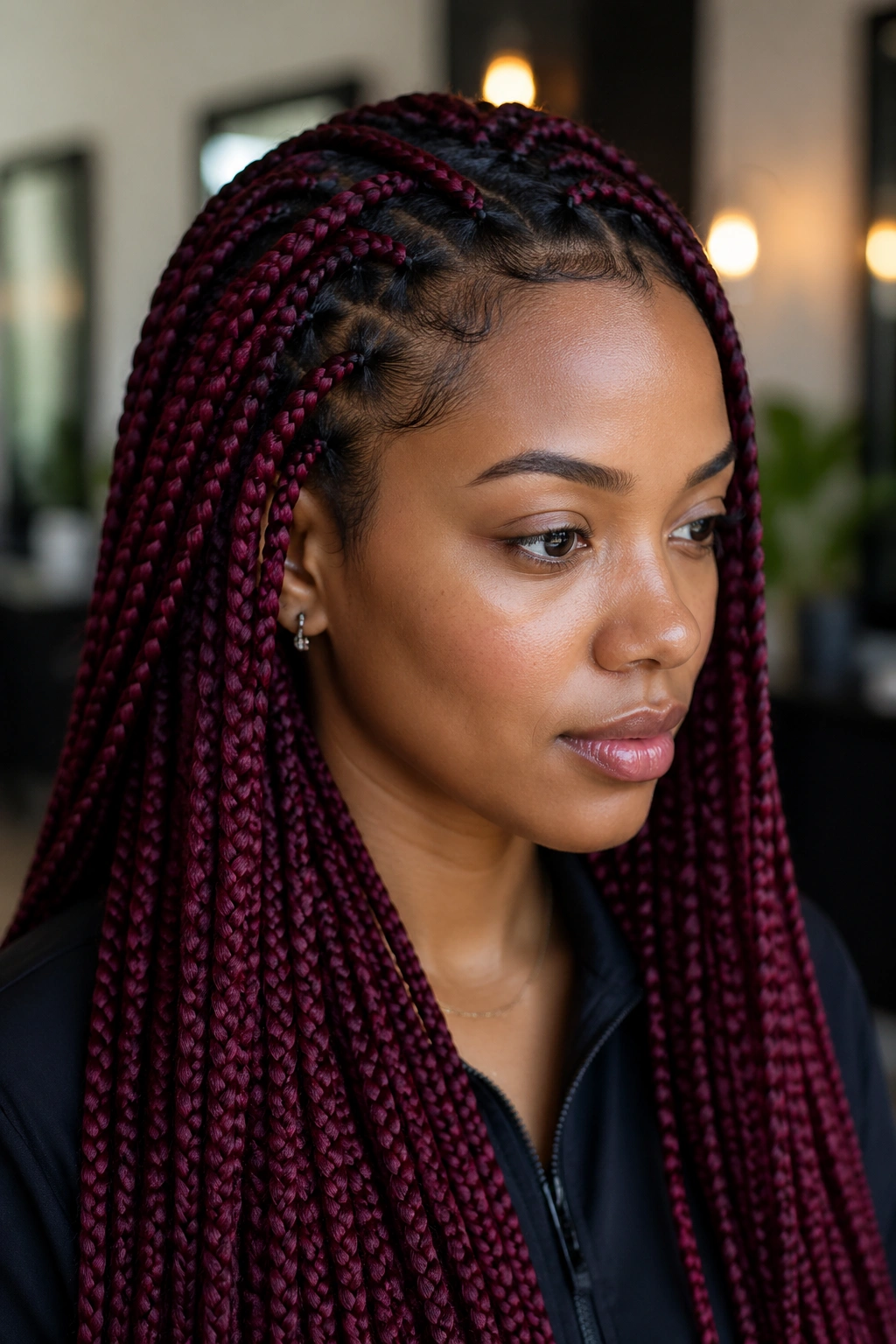
Burgundy can be tricky. If it leans orange, it can fight cool undertones hard. If it stays blue-based and deep, though, burgundy and black root smudge becomes one of the richest braid color combos for cool-toned skin.
The black root smudge makes the braid look like it grows that way, which helps the burgundy feel intentional rather than pasted on. That matters in braids because a hard color break near the scalp can look chunky fast. A soft fade gives the eye somewhere to travel.
This is the kind of color that looks better when it has movement. Side-swept braids, a low ponytail, or long braids with curled ends all help the burgundy show its depth. If you’re aiming for a red look but do not want anything coppery, this is the lane to stay in.
9. Dusty Lavender and Silver Knotless Braids
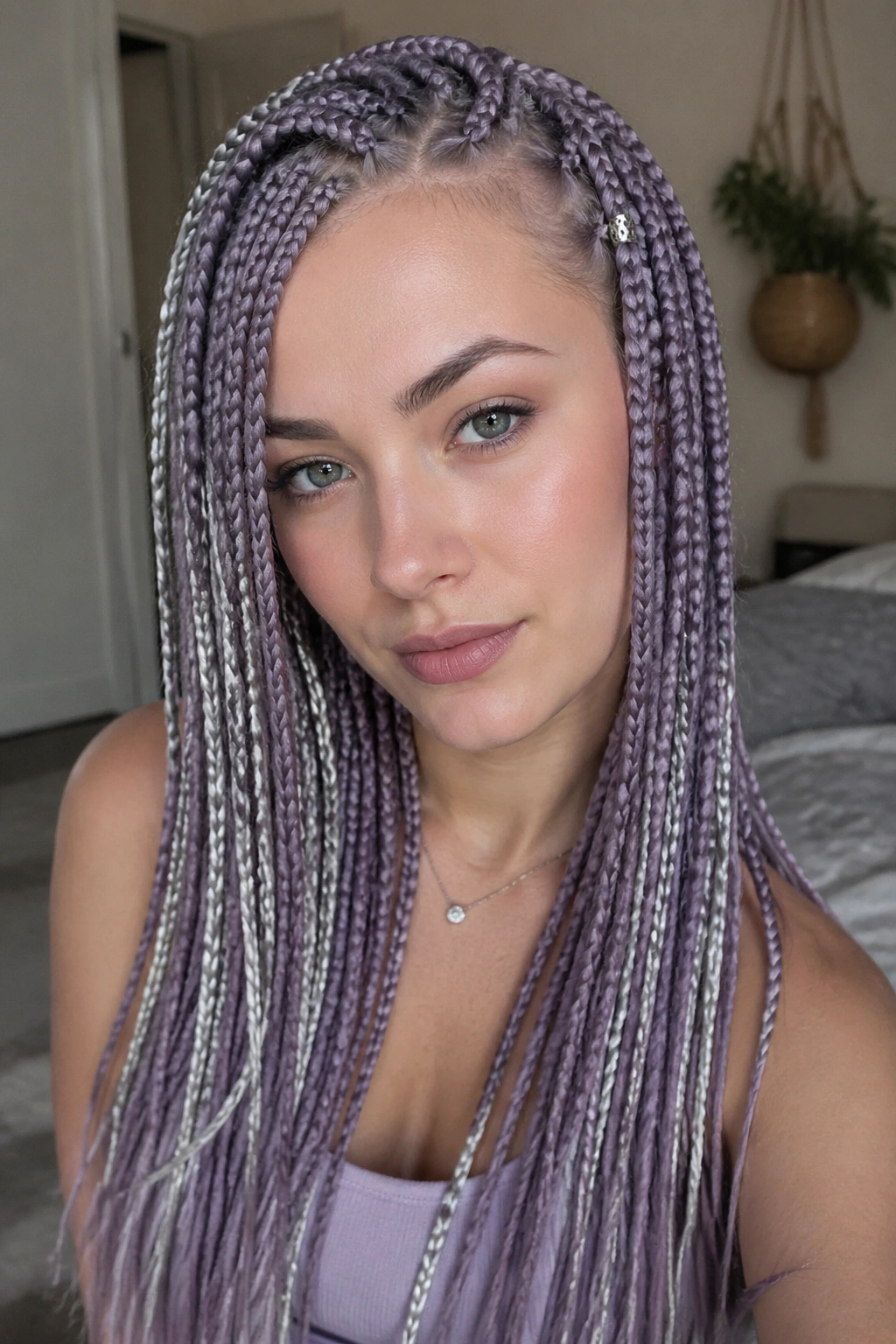
Dusty lavender is one of my favorite cool shades because it does not scream for attention. It floats. Add silver, and the whole look gets this pale, airy finish that works especially well on cool skin with rosy undertones.
Why the softness matters
A bright lavender can overpower the face if the braid is thick or the lighting is harsh. Dusty lavender fixes that problem by lowering the saturation a notch. Silver then gives you contrast, so the style still has shape and doesn’t fade into the background.
Knotless braids are a smart choice here because the lighter colors show off the smoother root area. I’d also lean toward medium-sized parts rather than tiny rows; the color needs a little room to breathe.
A tiny caution: this combo can read very pastel. If you want it to feel more grown-up, ask for lavender with a gray base, not a pink one. That one detail changes the whole mood.
10. Slate Gray and Pearl Blonde Goddess Braids
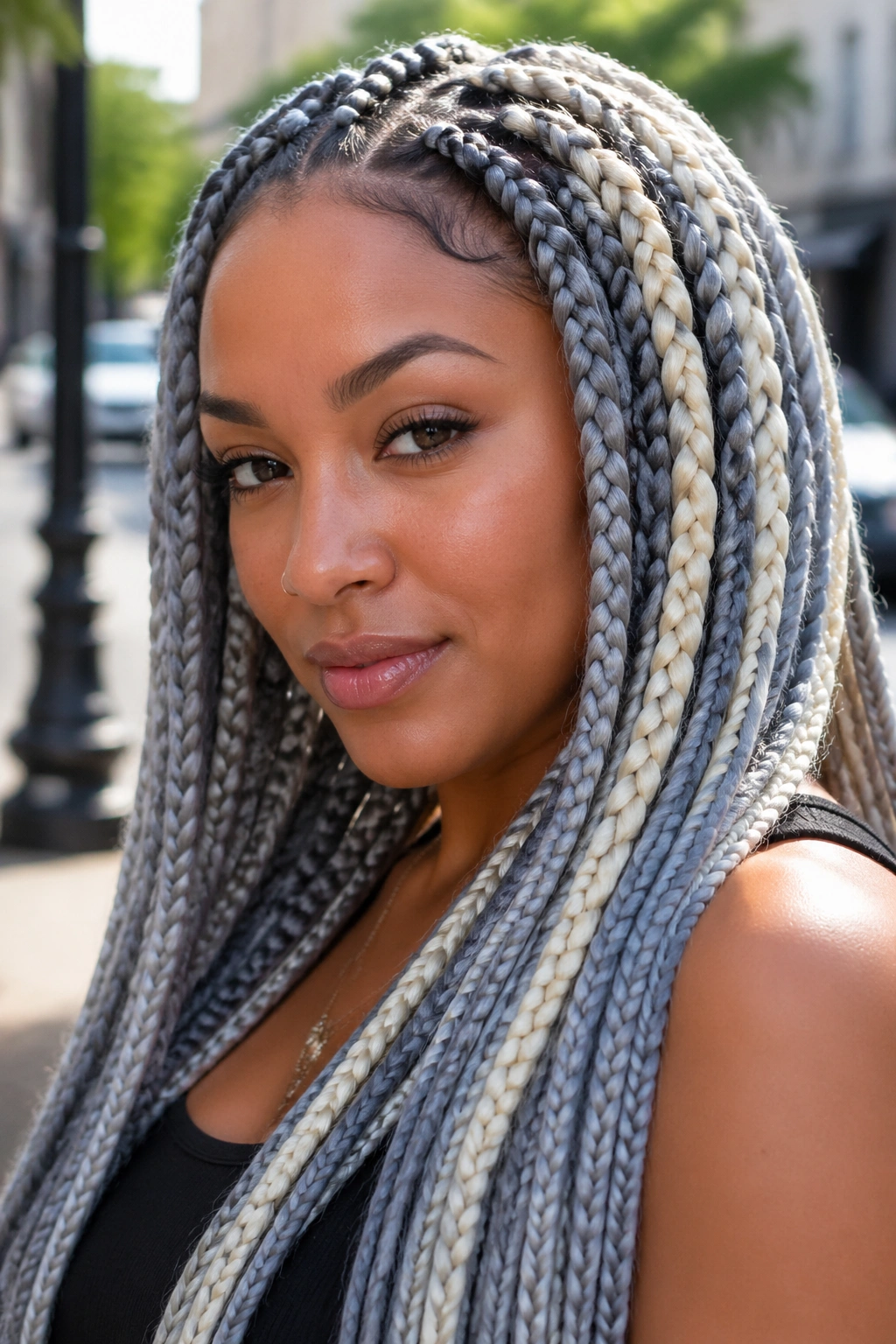
This pairing has a polished edge that I like on people who want light color but not golden light color. Slate gray and pearl blonde stays cool from root to tip, and goddess braids give it texture so the pale tones don’t fall flat.
Quick visual notes
- Slate gray adds the shadow
- Pearl blonde keeps the finish soft
- Loose curly pieces break up the solid braid line
- Side parts make the blonde read brighter
The smartest thing about this combo is the contrast between matte and shine. Slate gray can look almost smoky in low light, while pearl blonde has that pale, milky finish that catches just enough reflection to keep the braids from feeling heavy.
If you like blonde but keep getting pulled toward brass in other braid colors, this is a better lane. It gives you lightness without the yellow cast.
11. Cool Chestnut and Cranberry Tribal Braids
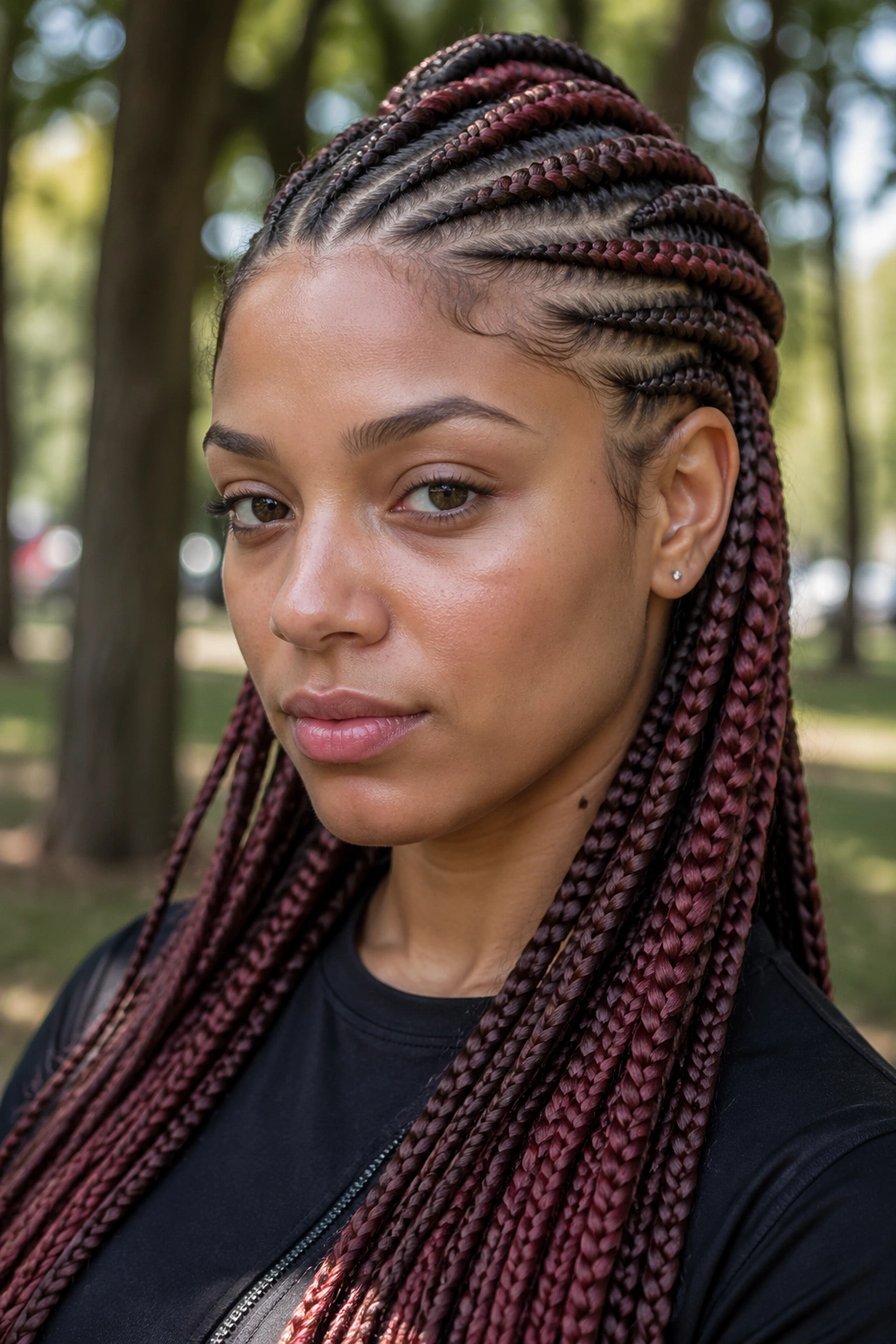
Cool chestnut is one of those in-between browns that sounds subtle until you see it next to the face. Paired with cranberry, it becomes richer and a little more dramatic without leaving the cool family.
The chestnut base keeps the braid grounded, which is useful if you want the color to work with everyday makeup and not only with a full face. Cranberry brings the energy. The key is choosing a berry shade that has more red-violet than red-orange, because that keeps the skin looking fresh instead of flushed in the wrong way.
Tribal braids are a strong match here because the pattern gives the cranberry more places to show up. The color can run through the crown braids, then show again near the ends, which keeps the look from feeling too blocky. Good move if you want a braid style with pattern and color both doing real work.
12. Denim Blue and Silver Streaks
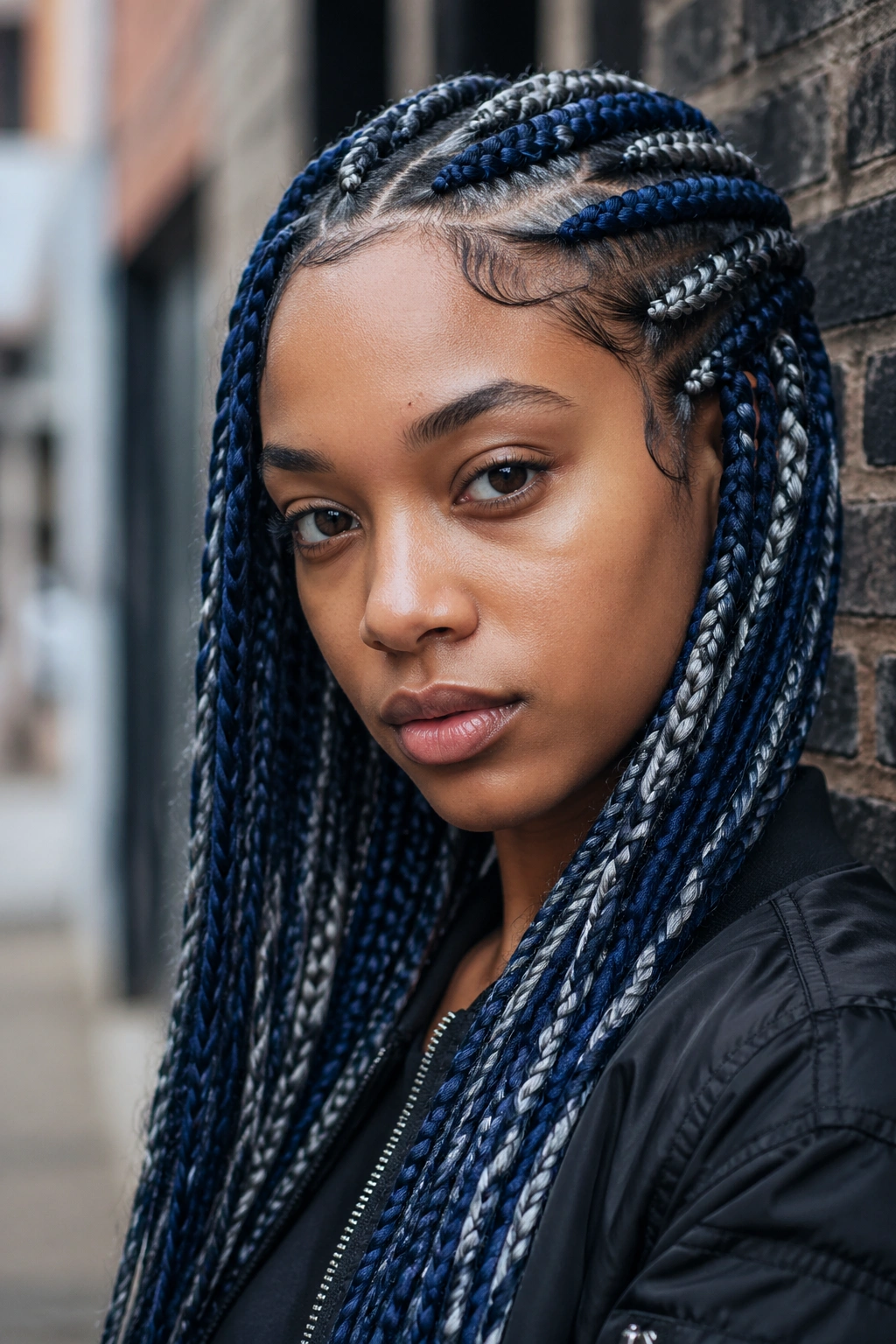
Denim blue is easier to wear than people think. It sits between navy and teal, which means it has enough color to feel deliberate but enough depth to stay cool and grounded against cooler skin.
Silver streaks break up the blue and keep the style from going flat. On chunky braids, that little streak of brightness can matter a lot, because bigger braids show color in wider slices. You get a streetwear feel without making the braids look like a costume wig.
This combo is especially good if you wear simple clothes and let your hair do the talking. A black tee, silver hoops, and denim-blue braids can look cleaner than a much more expensive outfit with the wrong hair color. Hair changes the whole frame. Sometimes that’s the whole point.
13. Mink Brown and Ash Blonde Box Braids
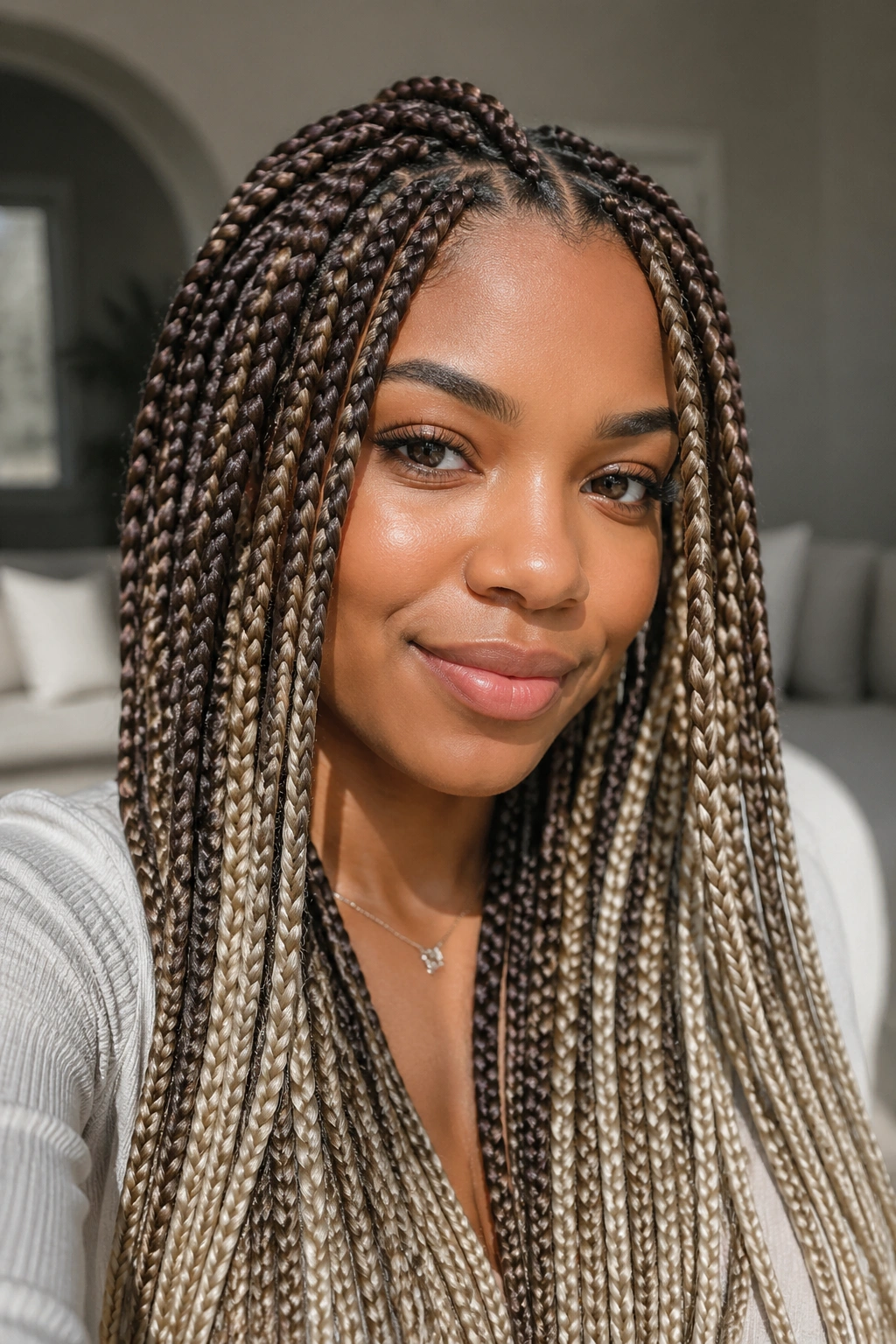
Mink brown is a quiet winner. It lives in that soft, neutral-cool zone that flatters cool-toned skin without asking for attention first, which makes it a smart base if you want blonde dimension but not a huge contrast.
Why this one gets worn a lot
Ash blonde lightens the braid without bringing in yellow. That is the whole trick. On box braids, the transition from mink brown to ash blonde looks smoother than a warm brown-to-gold fade, and the cooler contrast makes the face look a touch brighter.
The style works on all braid lengths, but it feels especially good in shoulder-length knotless braids or a braided bob. Shorter lengths show the color change fast, which is useful if you want the blonde visible without committing to waist-length hair.
Best for people who want wearable color first, statement second. That sounds boring until you actually see it on. Then it makes a lot of sense.
14. Lavender Gray and Icy Blonde Braids
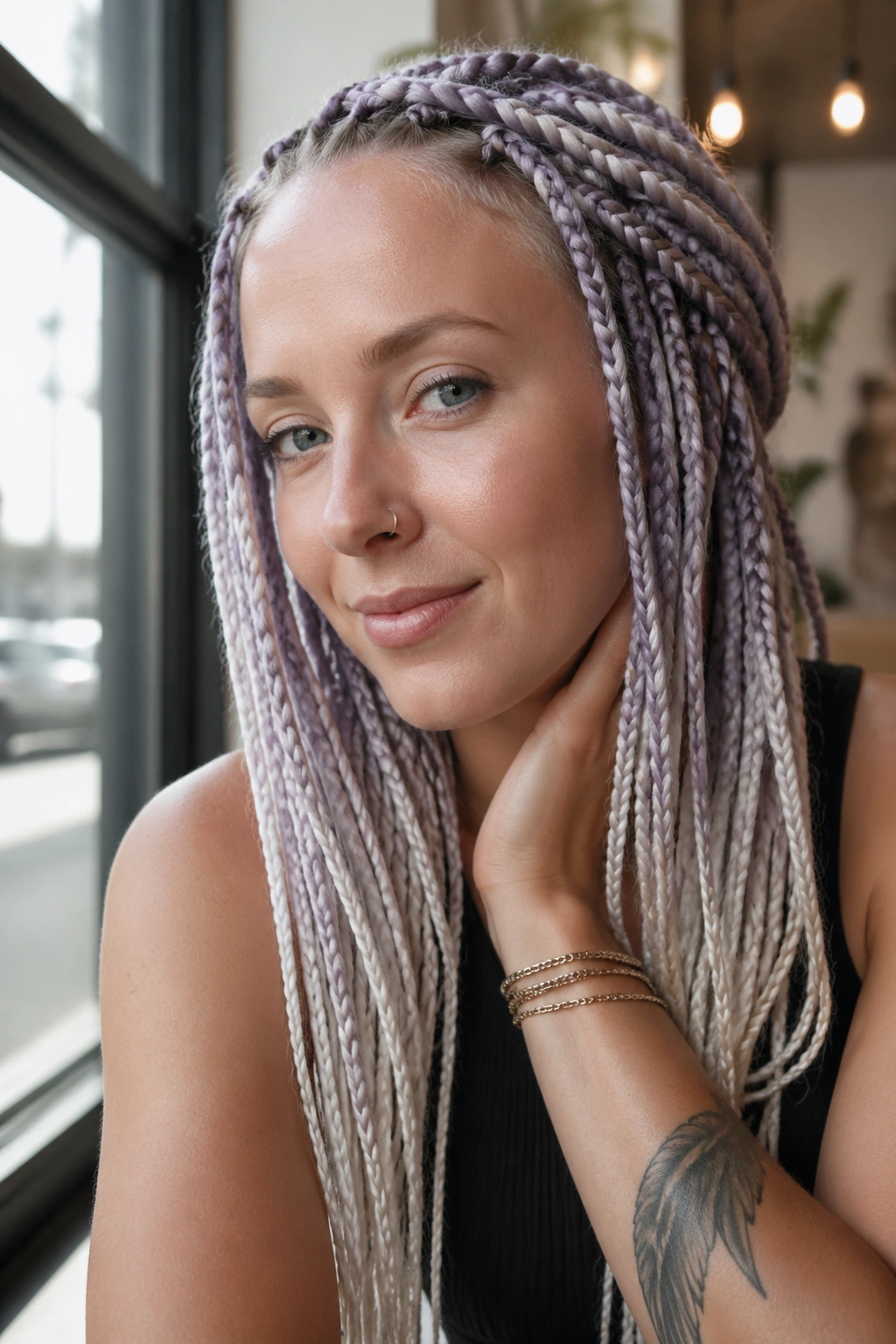
Lavender gray feels like what would happen if silver and lilac had a quieter cousin. Add icy blonde, and the result is soft, pale, and unmistakably cool-toned from every angle.
This combo is strong on braids with a little texture, because the gray can disappear if the hair is too sleek and the blonde is too pale. A loose braid pattern, or even a few curly pieces mixed in, gives the colors something to hold onto visually.
The big appeal here is restraint. It’s pastel, but not sugary. It’s light, but not warm. If your skin has blue or pink undertones and gold blonde always looks too sunny on you, this pairing fixes that problem without making you look overdone.
15. Steel Blue and Onyx Feed-In Braids
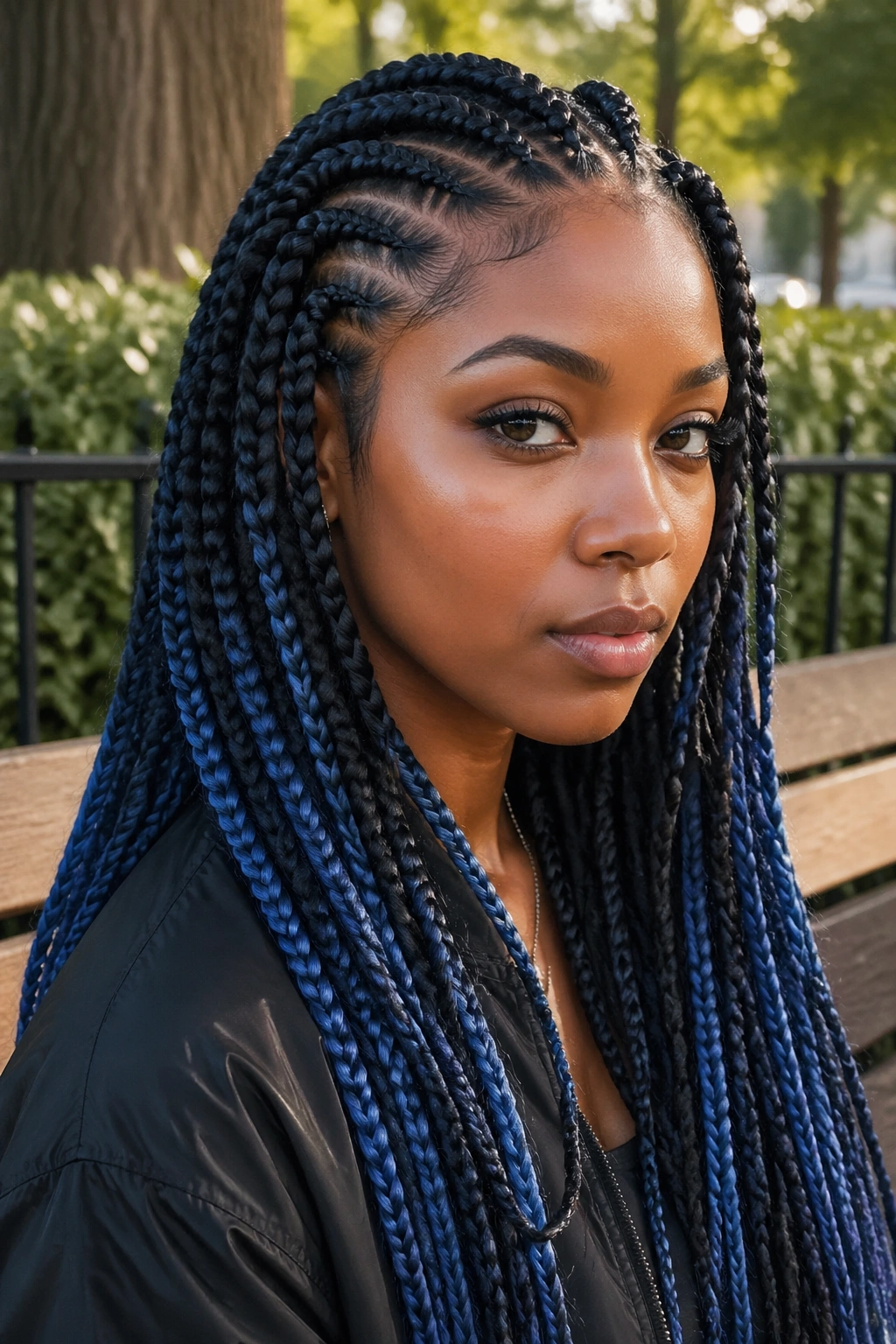
Steel blue has a sharper edge than navy and more depth than bright blue, which is exactly why it looks good beside cool skin. Put it next to onyx black, and you get a braid color combo that feels crisp instead of loud.
Feed-in braids suit this pairing because the gradual addition of hair lets the steel blue show in thin lines instead of one hard block. That matters with cooler tones. Thin color placement tends to look more tailored, while a huge flat panel of blue can skew costume-y fast.
What to watch for
- Choose a blue that leans gray, not neon
- Keep the black pieces glossy
- Use cleaner parting if you want the blue to stand out
- Go smaller if you want more subtle movement
This is a sharp look. Not soft. If your style leans structured, it hits the mark.
16. Plum and Blue-Black Jumbo Braids
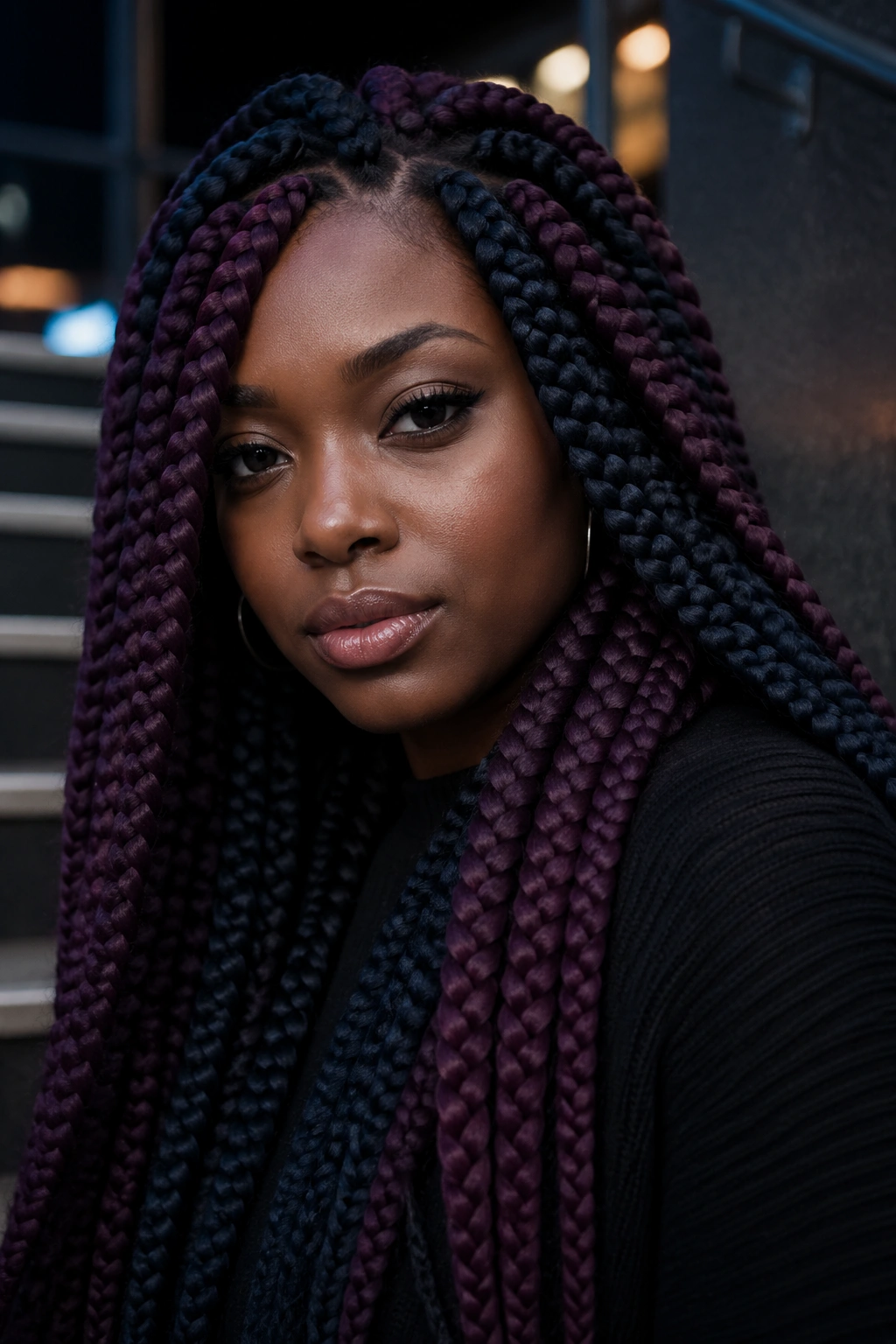
Plum and blue-black is one of the richest dark combinations you can put on cool-toned skin. The plum brings that deep berry note, while the blue-black keeps the braid from drifting warm or flat.
Jumbo braids are a good match because the bigger sections let the two shades show their depth. On tiny braids, plum can get lost if the lighting is low. On jumbo braids, the color reads like fabric—almost velvet, almost satin.
I’d pick this combo when I want drama without brightness. That is the sweet spot. It looks good with gold-free makeup, especially cool pink blush, taupe liner, and a berry lip. The hair and makeup start speaking the same language, which always helps.
17. Frosted Ombré from Dark Roots to Silver Ends
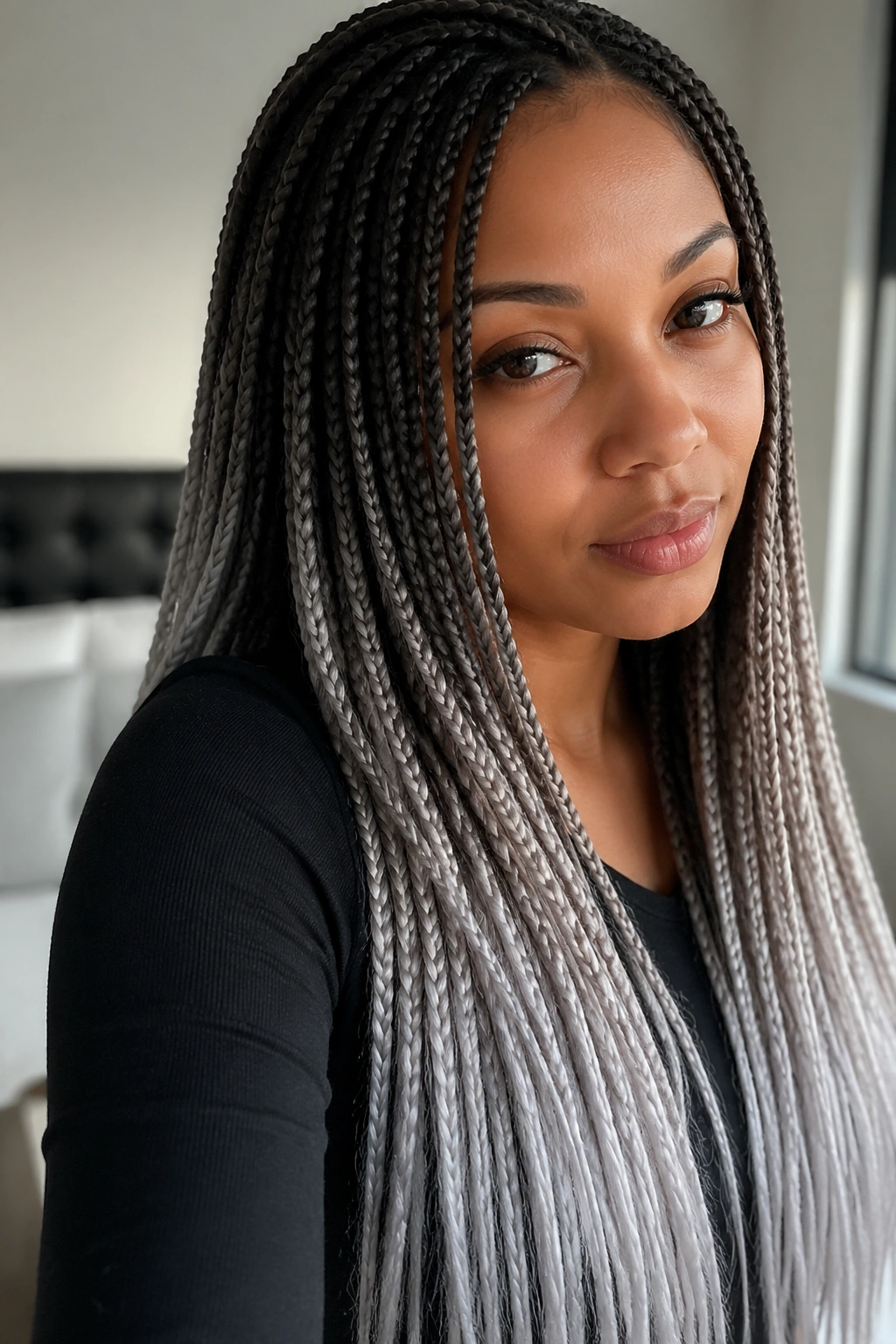
A frosted ombré braid can save you if you love light hair but hate a hard color line. Start with dark roots, fade through smoky brown or black, and end in silver. The blend feels modern without trying too hard.
How the fade should look
The transition should be soft enough that you can’t point to an exact stop. If the line between dark and light is too sharp, the braid starts looking striped. A good ombré should move like shadow into frost.
This combo is especially flattering on cool skin because silver ends bring light near the face and along the length, while the darker root keeps the whole style grounded. It also works beautifully on long braids, where the fade has space to show itself.
If you want the effect to feel expensive rather than loud, keep the silver slightly smoky. Pure white silver can be gorgeous, but it can also look stark if the braid texture is very shiny.
18. Mushroom Brown and Taupe Blonde Braids
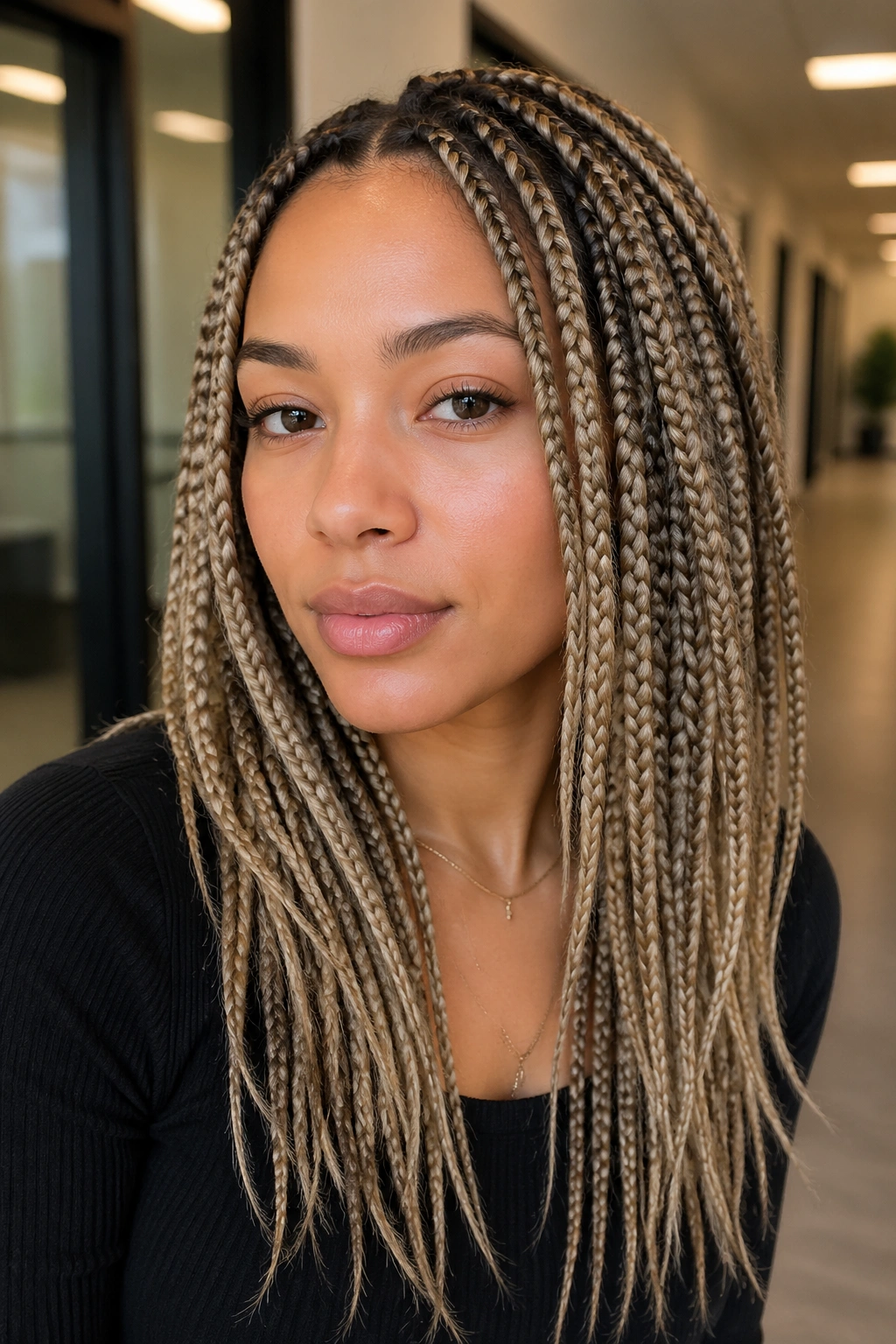
Mushroom brown and taupe blonde is for the person who likes cool tones but does not want obvious color. It’s quiet, smoky, and easy to wear with almost anything.
Mushroom brown has that gray-beige softness that sits well against cool undertones. Taupe blonde keeps the lighter pieces from turning yellow. The whole look feels like a neutral version of blonde braids, which is useful if you want dimension but still need the hair to work with office clothes, school uniforms, or simple daily outfits.
This pairing is especially nice in medium box braids and knotless braids, where the color can shift as you move. It does not shout from across the room. That’s the point. Some braid color combos are about being seen immediately. This one is about looking good up close and even better after a week of wear.
19. Rose Brown and Mauve Braids
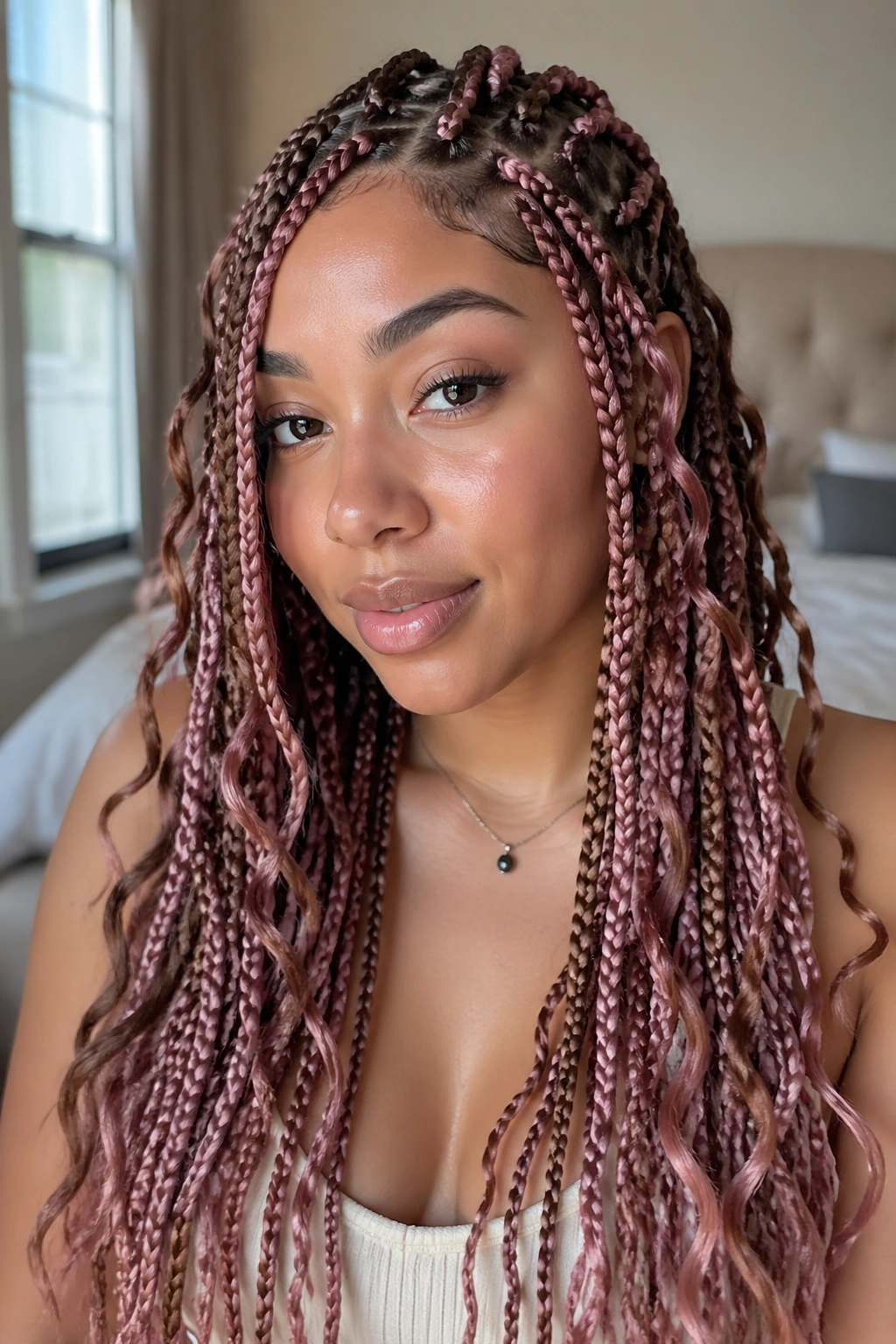
Rose brown gives you a brown base with a faint blush note, and mauve pushes it further into the cool family. Together, they create a braid color combo that flatters cool-toned skin without getting too purple or too pink.
The beauty of this pairing is that it’s softer than burgundy and more interesting than plain brown. Mauve has that muted plum feel that works with cool undertones, while rose brown keeps the whole style wearable. If you’ve ever liked pink hair in theory but worried it would look childish, this is the grown-up answer.
It works well on boho braids, especially when the ends are left loose or curled. The texture gives the mauve a chance to break up the brown, which keeps the color from feeling muddy. A subtle style, yes. A boring one, no.
20. Graphite and Violet Passion Twists
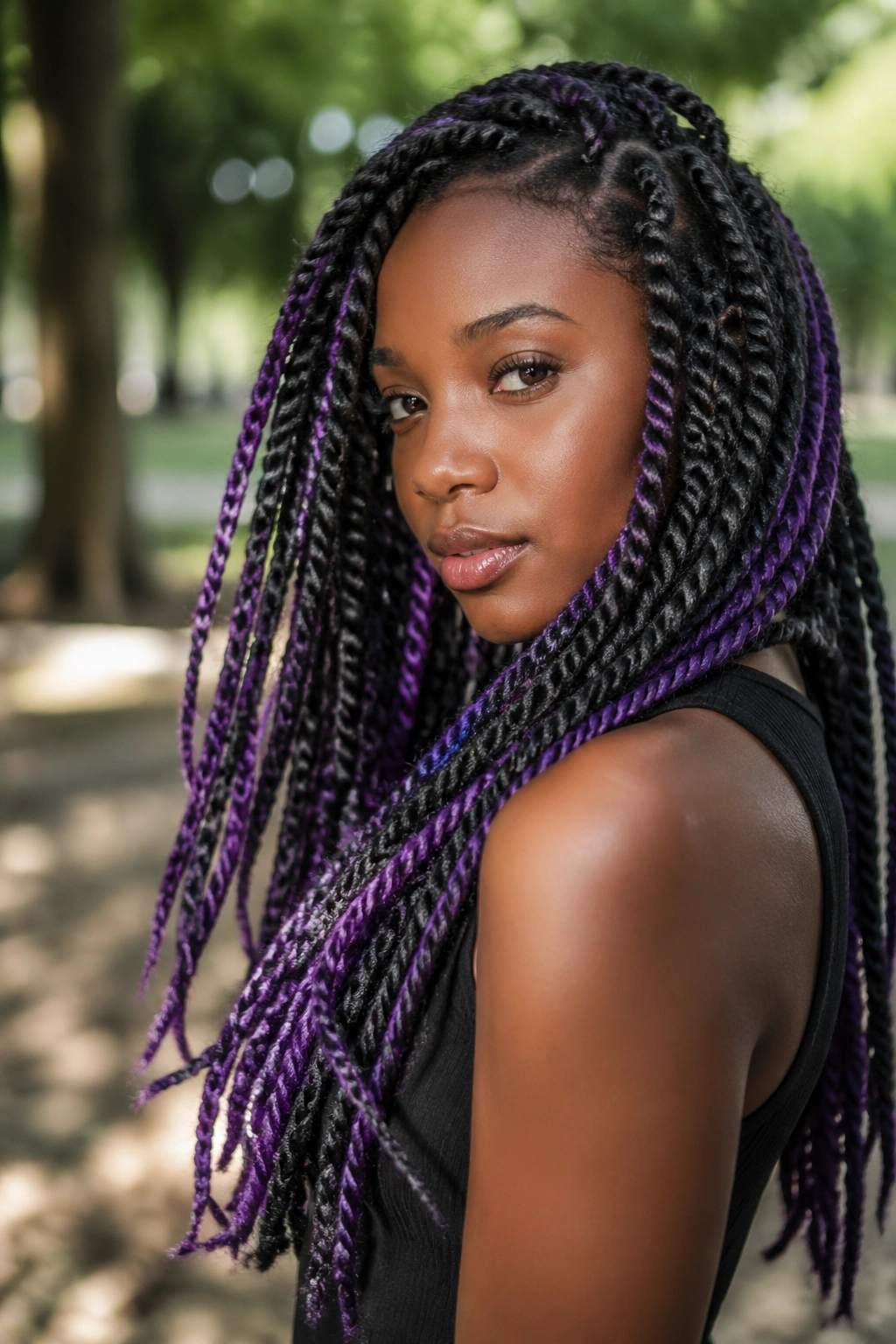
Graphite is one of the most underrated cool shades in braid color work. It sits between black and gray, which makes it a strong base for violet if you want the color to feel moody instead of bright.
What makes it different
Passion twists have more movement and softness than a tight braid, so the violet shows up in a gentler way. That matters here. Violet can look almost harsh on super-defined braid patterns, but on twists it bends and shifts as the hair moves.
- Graphite keeps the base smoky
- Violet gives the style life
- Twists soften the contrast
- Medium lengths show the color best
This pairing suits cool-toned skin because both shades keep the same temperature. No warm drift. No orange surprises. Just a smoky violet finish that feels deliberate and a little artsy without tipping into costume territory.
21. Blue-Black and Emerald Green Fulani Braids
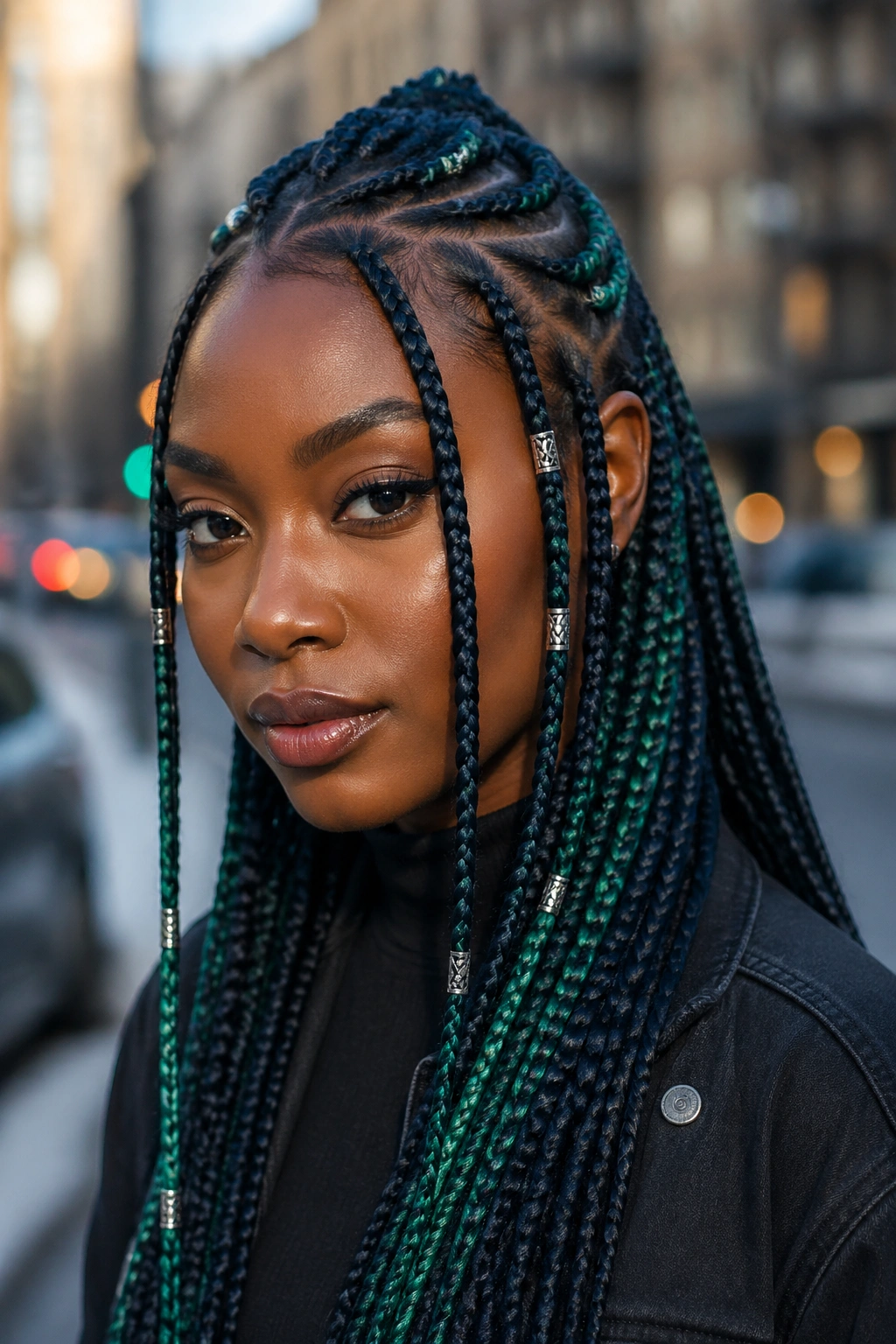
Emerald green is one of the rare bold colors that can still flatter cool undertones when the base is right. Put it over blue-black, and the braid stops looking novelty and starts looking jewel-like.
Fulani braids are a smart canvas for this combo because the pattern lets the emerald appear in a controlled way. You can thread it through the crown braids, keep the sides dark, and let the green pop only where you want it. That’s much more wearable than a full-head bright green.
A few quick details matter here:
- Keep the green deep, not lime
- Use blue-black near the roots
- Add beads or cuffs in silver, not gold
- Let the braid pattern stay clean so the color carries the look
This is a strong choice if your wardrobe already includes black, forest green, charcoal, or silver accessories.
22. Cool Wine Red and Black Knotless Braids
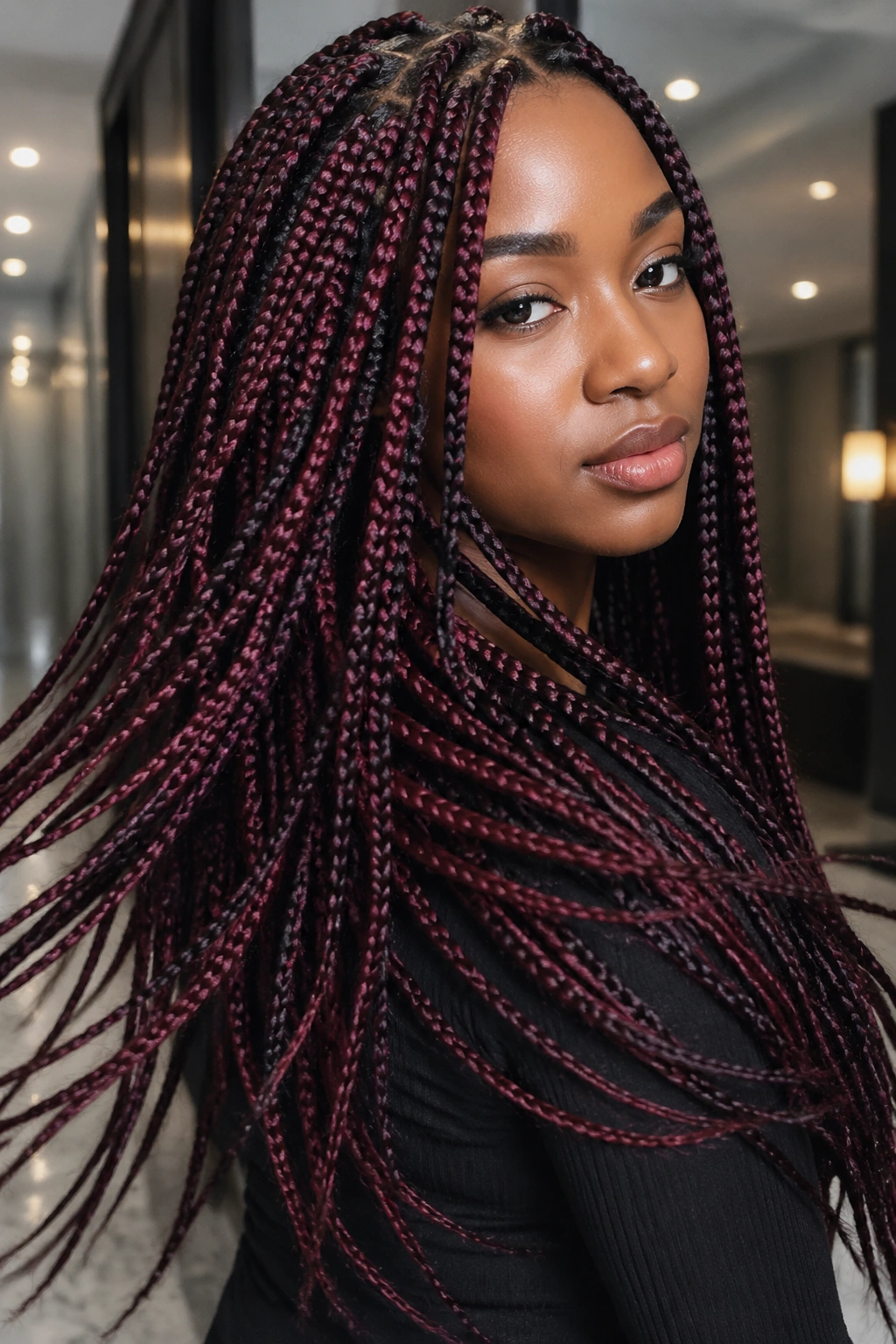
Cool wine red is the red shade people often want but don’t always know how to ask for. It’s deeper than cherry, less orange than auburn, and it sits much better beside cool-toned skin than warm copper ever will.
Black knotless braids give the color a dark anchor, which keeps the red from taking over. That’s a good thing. In braids, red can become a lot fast if it isn’t grounded. With black underneath, the wine tone feels rich and polished instead of loud.
I like this combo best when the hair has movement—long layers, curled ends, or a half-up style. The red shows in streaks as you walk, and the black keeps it from looking flat in low light. If you want a red braid color that still feels elegant with cool makeup and cool clothing, this is where I’d start.
23. Pearl Blonde and Lavender Root Shadow Braids
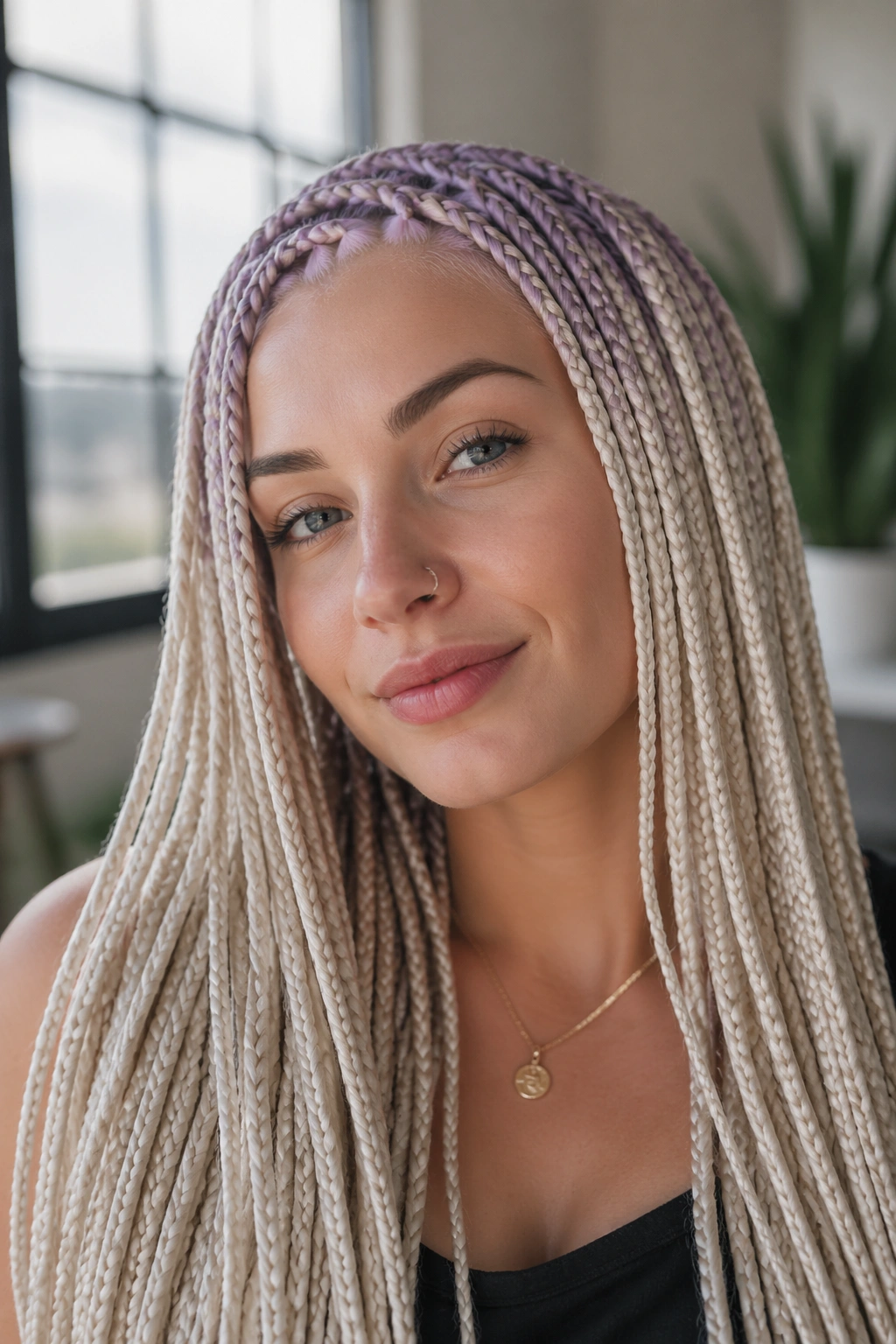
Pearl blonde can be beautiful on cool skin, but only if it avoids yellow. The lavender root shadow solves that. It gives the light blonde a cool frame at the scalp, which helps the whole style feel softer and more balanced.
Why the root shadow matters
Without a shadow root, pearl blonde can sometimes look too bright against cool undertones. Lavender at the root tones that down a bit and adds a faint pastel note that reads as intentional, not washed out.
This combo works especially well on long knotless braids, where the shadow root has room to fade before the pearl blonde takes over. It’s also a good choice if you like lighter hair but want a color story that feels a little more polished than straight platinum.
The vibe is airy. A little dreamy. Still neat.
24. Ash Black and Steel Gray Braids
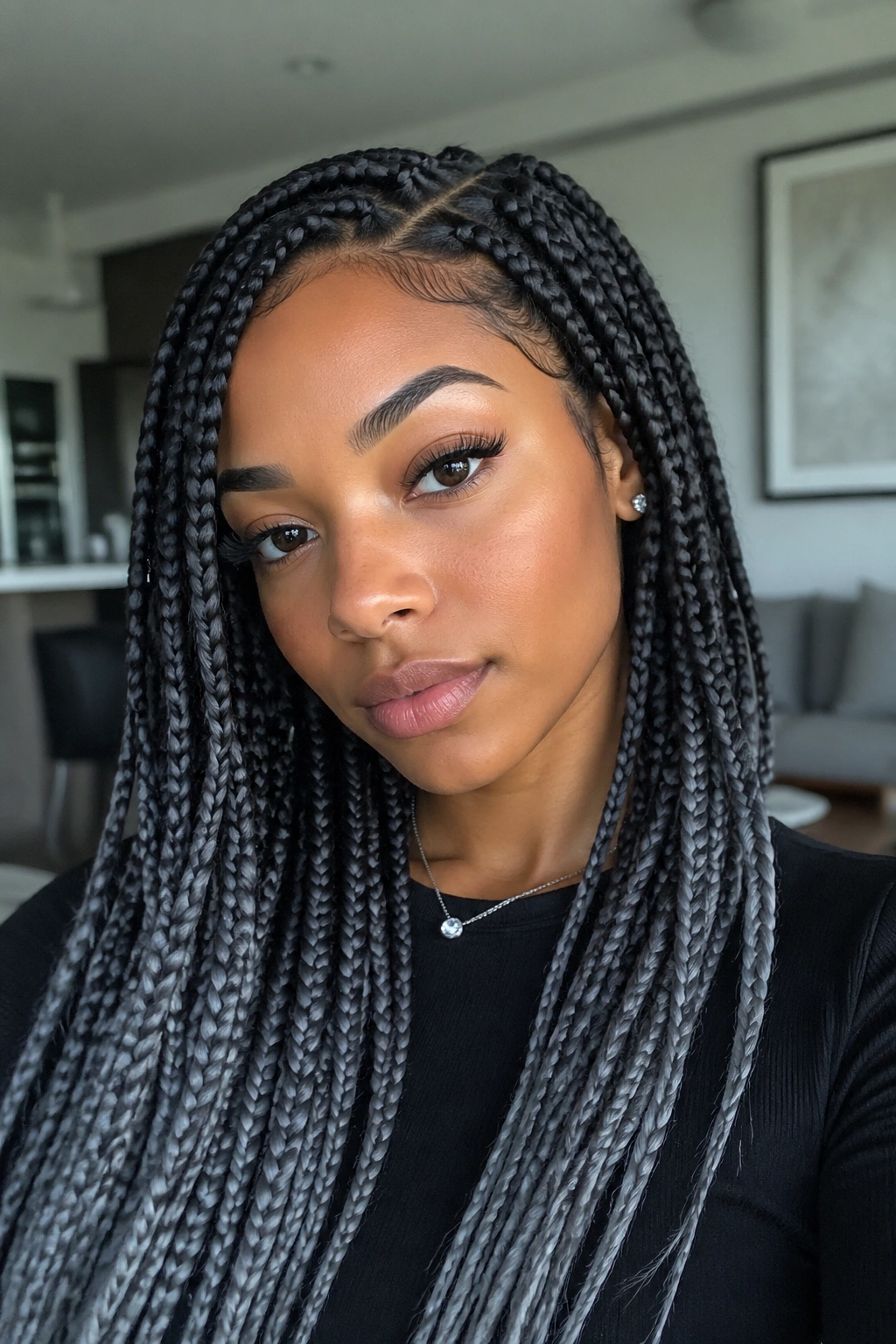
Ash black is not the same thing as jet black. It has a softer, smoke-like finish that gives cool-toned skin a gentler frame. Add steel gray, and you get a monochrome braid combo that feels sleek without looking flat.
This pairing is ideal if you want a color story that stays near-neutral but still has enough contrast to show the braid pattern. Steel gray can live in the mids and ends, while ash black stays close to the scalp, which makes the braids look structured from a distance and textured up close.
The best part is how easy it is to wear with jewelry and makeup. Silver hoops, gray liner, cool pink blush, even a simple black lip liner—all of it fits. Nothing has to fight the hair. That is a relief sometimes.
25. Cool Mocha and Mushroom Blonde Side Braids
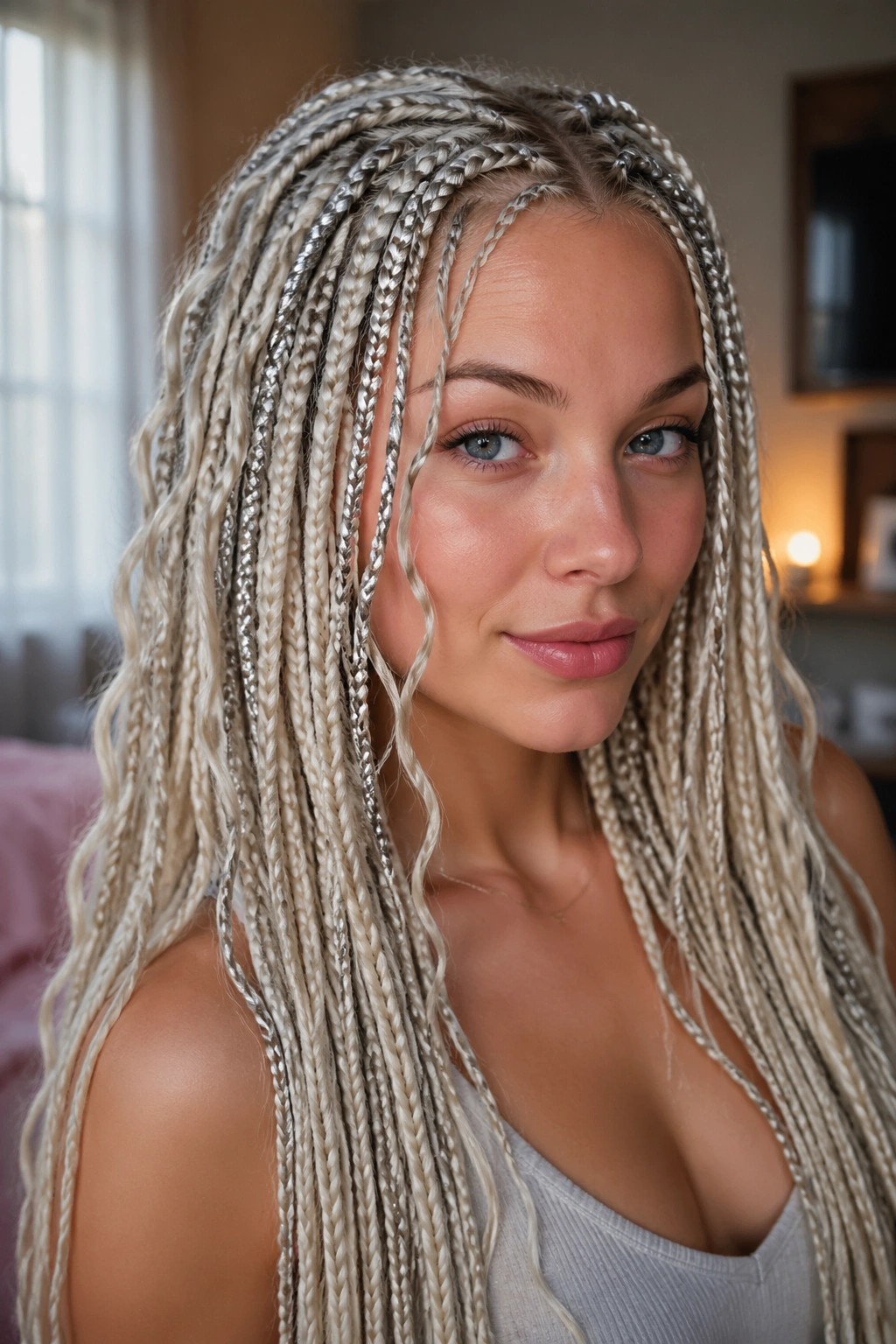
Cool mocha is one of the nicest brown bases for braid color because it stays soft and doesn’t flash orange in awkward light. Mushroom blonde keeps the lighter sections on the same cool track, which makes the whole look feel calm and wearable.
Side braids are a smart way to wear this pairing because they let the blonde frame the face instead of sitting all over the head. That can be useful if you want dimension but do not want the lighter color to dominate every angle.
This combo works for a person who wants braid color that behaves well at work, on errands, and at dinner. It’s not boring. It’s restrained. Those are different things. If you usually skip blonde because it pulls too warm, this is one of the better ways to try it without regret.
26. Teal and Black Box Braids
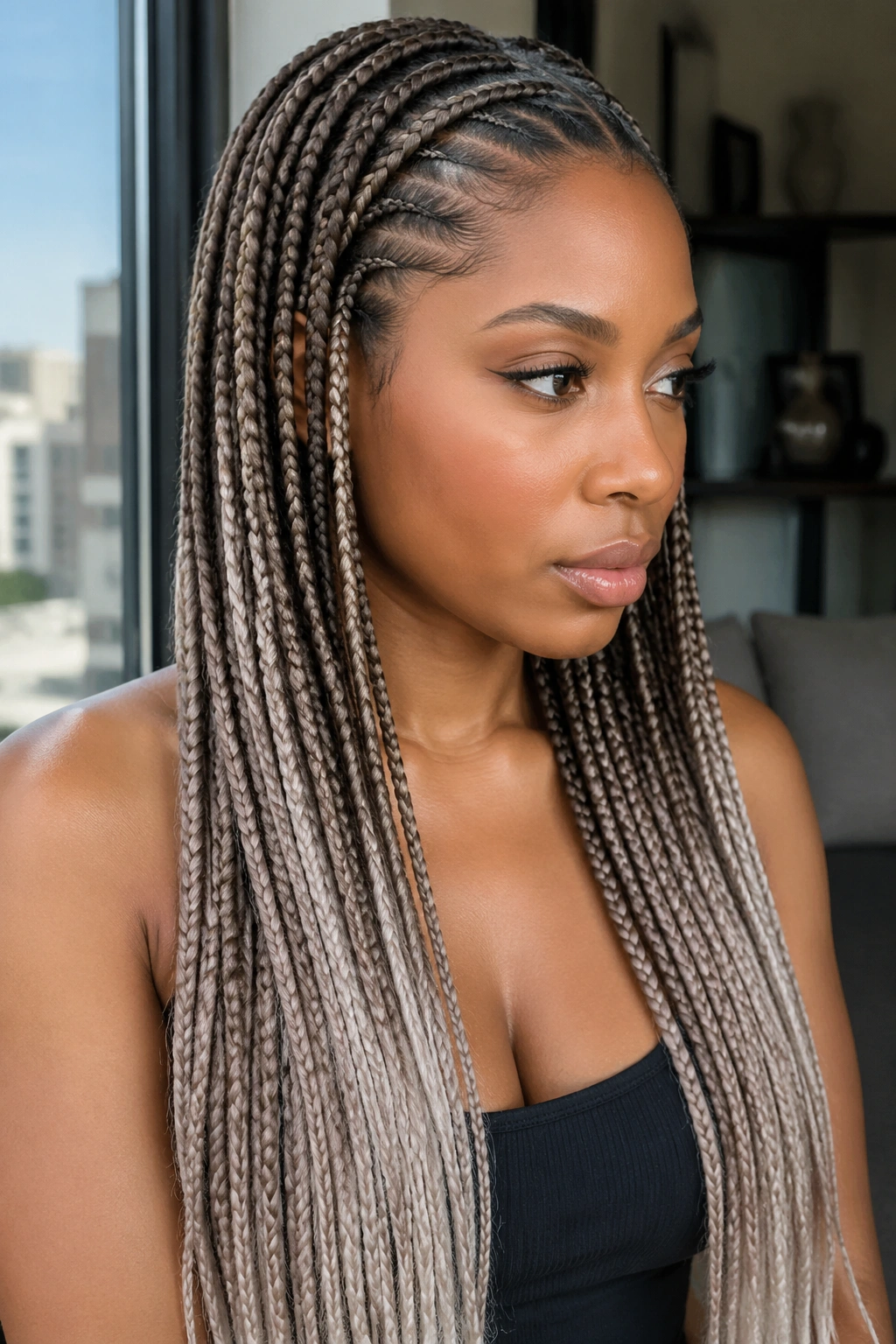
Teal with black is bold, but it’s not random. The black gives the teal structure, and the teal gives the black personality. On cool-toned skin, that pairing can look sharper than a lot of softer colors because teal already lives near the blue side of the wheel.
How to keep it from feeling flat
- Use deep teal, not neon aqua
- Keep the black dominant if you want wearability
- Try chunky box braids for stronger color blocks
- Add silver cuffs if you want the shade to read colder
This combo works best when the braid pattern is simple. If the sections are too busy, the eye starts fighting to figure out where to look. Let the color do that job. Let the braid shape stay clean.
I’d reach for this one if I wanted a statement color that still feels cool and polished instead of loud for the sake of being loud.
27. Soft Mint and Silver Braids
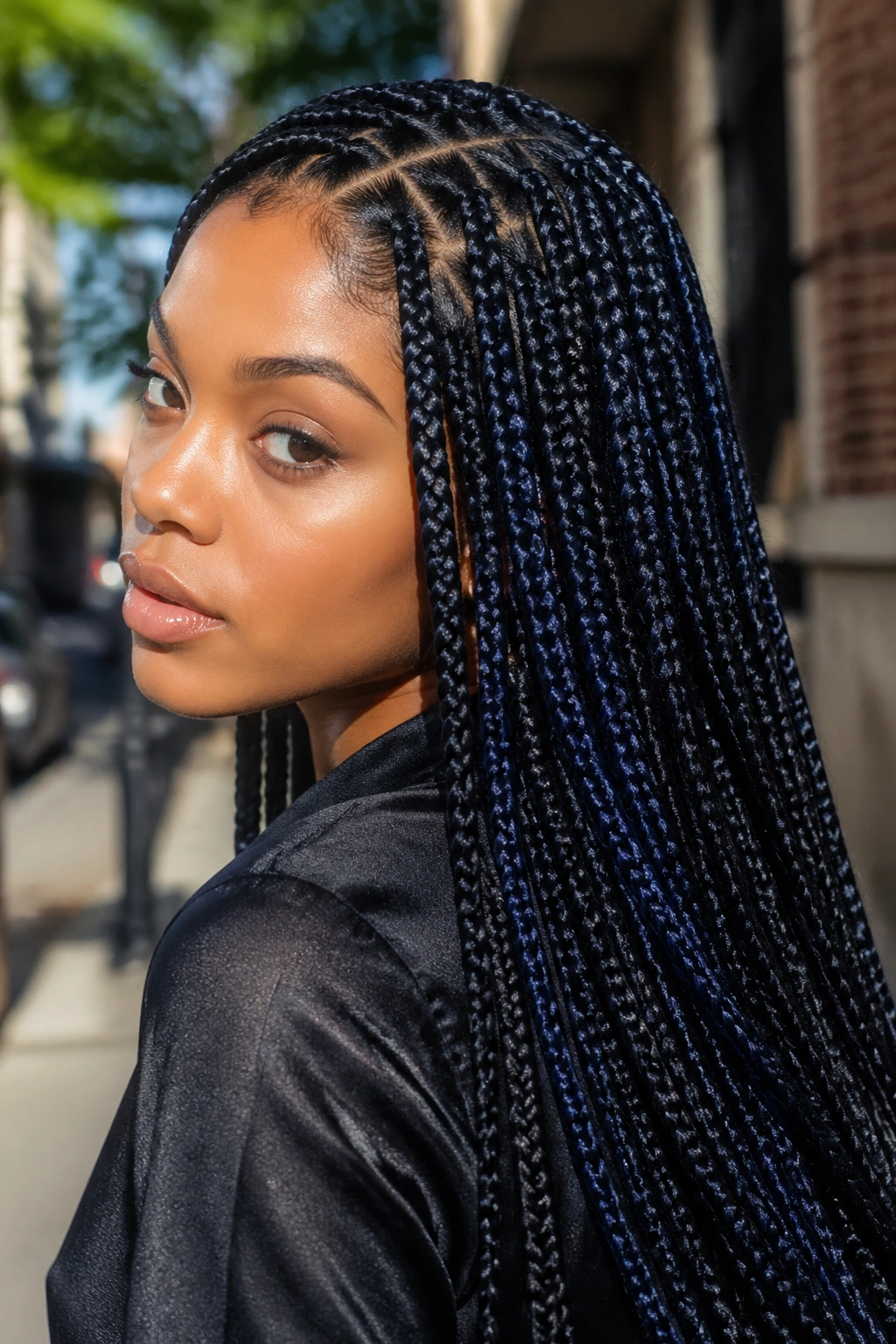
Soft mint is risky only when it’s too bright. Keep it pale, almost frosty, and it becomes one of the nicest unexpected braid colors for cool-toned skin. Add silver, and the whole style picks up a delicate, icy finish.
This combo feels best on smaller braids or neat feed-ins, where the mint can read as a hint instead of a giant block of color. Silver helps hold the shape, while mint gives the braid a tiny pulse of personality. It’s a good choice if you want something light that does not automatically read as wedding hair or kids’ hair.
I’d pair this with simple clothes and bare-neutrals makeup. Black works too, but cream, gray, and soft navy make the color stand out in a cleaner way. The hair gets to be the quiet oddball in the room, which is a nice place to be.
28. Black and Icy Violet Tips
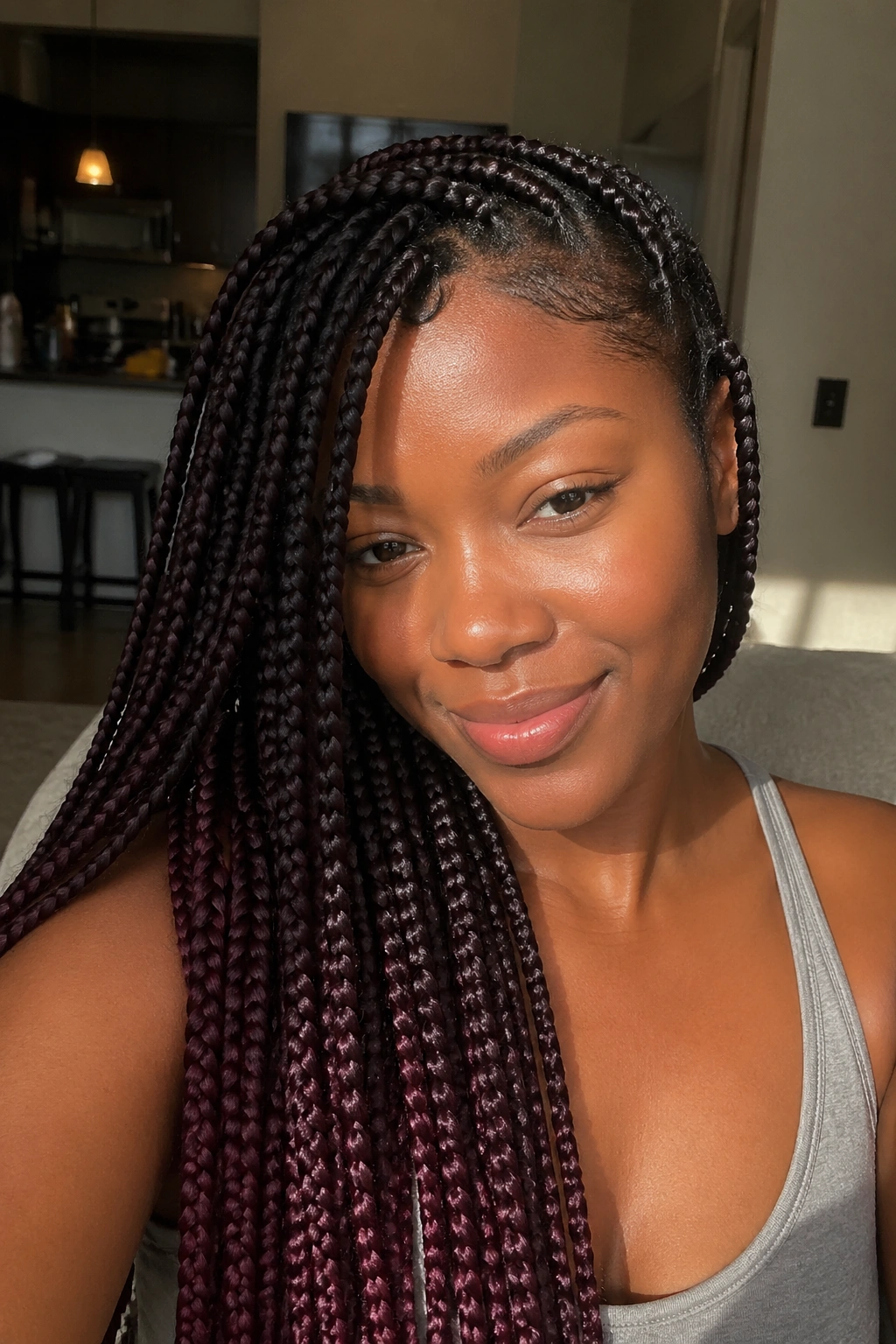
This is the one I’d choose when you want the braid to read polished from three feet away and interesting from across the room. Black and icy violet tips keeps the look grounded at the scalp, then lets the violet take over at the ends, where it can catch light and move.
The icy part matters. Violet with a cool, pale cast flatters cool-toned skin far better than a red-violet that leans warm. On braids, the tips are enough. You do not need a full head of purple to get the effect.
It works especially well on long braids, layered braids, or any style where the ends can swing a little. Short braids can wear it too, but the payoff is bigger when the color has room to show. If you like a dark base and one smart surprise, this is a strong final pick.
