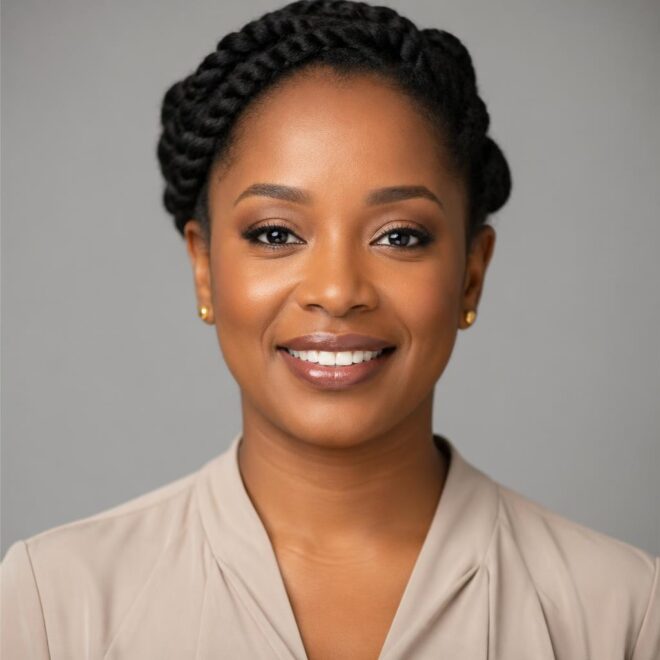


Black-tie receptions punish lazy hair. A braid with fuzzy partings, blunt elastics, or a lopsided finish can drag down an otherwise elegant dress in a hurry.
If you want braids for black-tie wedding receptions that look intentional under dim light, candlelight, and a camera flash, the trick is not complicated. Clean lines matter. So does shine. A braid pinned at the nape with tucked ends reads far more formal than a braid left hanging loose, even if the braid pattern itself is simple.
What separates a dressy braid from a weekend braid is almost always the finish. A crisp center part, a smoothed root, a hidden elastic, and a few well-placed pins do more than a tray full of accessories ever could.
The styles below lean formal on purpose. Some are soft and romantic, some feel architectural, and a few have a little edge. All of them can hold their own beside satin, velvet, sequins, and a room full of people who will, inevitably, be looking at the back of your head.
1. Sleek Low Braided Chignon
This is the braid I reach for when the dress is already doing a lot. A sleek low braided chignon sits at the nape, keeps the neckline clean, and gives you that polished, finished look without needing a dozen pins or a pile of sparkle.
Why It Reads Formal
The braid itself can be a simple three-strand, Dutch, or rope braid. The difference is in the placement. Keep the braid tight at the scalp, wrap it into a compact knot, and hide the tail underneath so nothing sticks out like an afterthought.
A center part makes this even sharper, but a deep side part works if your dress has one-shoulder drama or a heavily embellished bodice. Either way, the shape should feel controlled. Loose ends are where a formal style starts to slip into casual territory.
- Best for: strapless gowns, high necklines, and dresses with a dramatic back.
- Works especially well with: medium to long hair, relaxed texture, or silk press styles.
- Finish to use: a light shine spray, not heavy gloss that makes the hair look greasy.
- Keep in place with: 4 to 8 bobby pins crossed over the bun base.
Tiny tip: wrap one braid section around the elastic before pinning the bun. It hides the hardware fast.
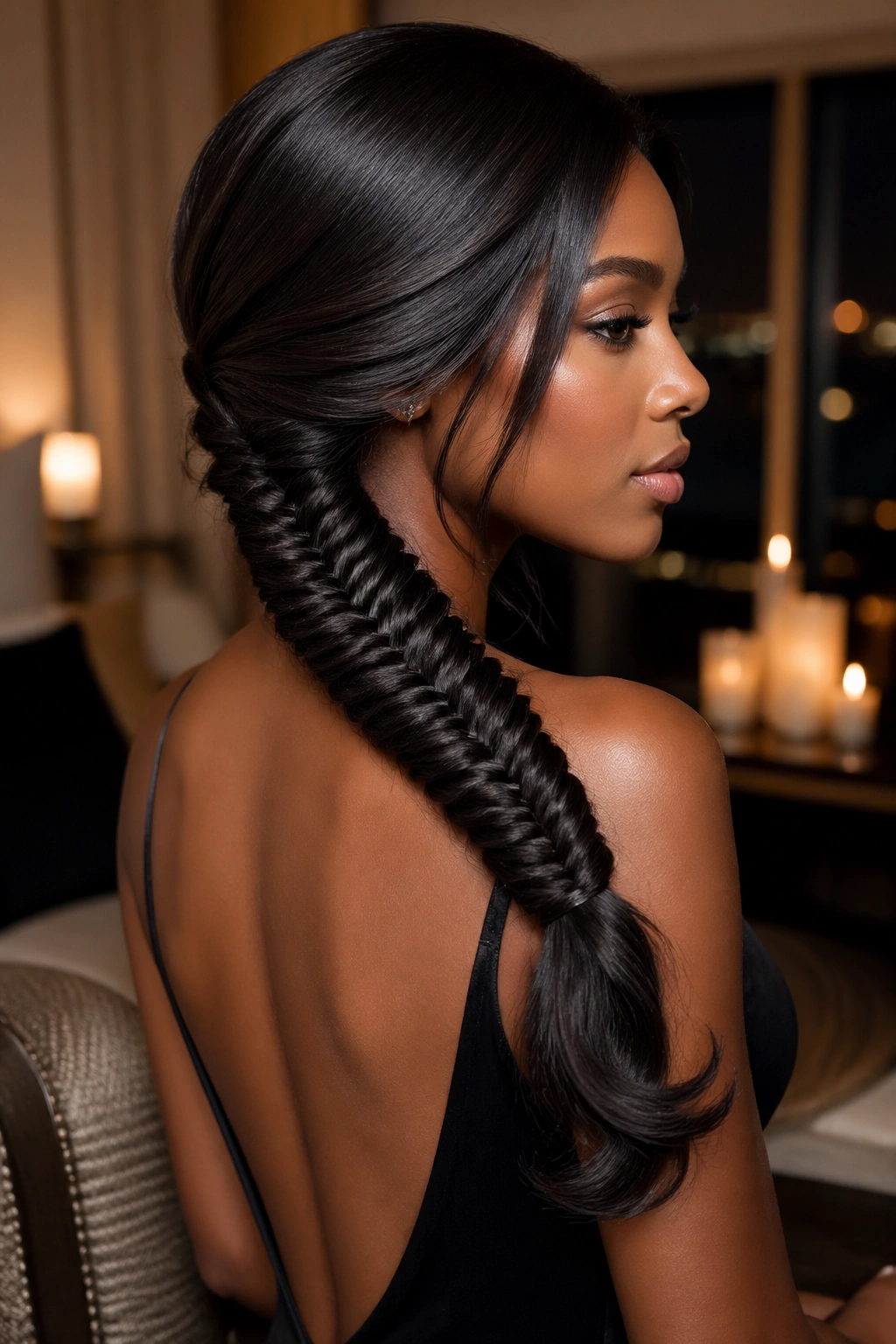
2. Side-Swept Fishtail With a Glassy Finish
A side-swept fishtail braid looks far more detailed than it is, which is part of the charm. It drapes over one shoulder, shows off earrings, and gives the whole look a softer, evening-ready shape.
The trick is restraint. Pull the braid to one side, keep the top smooth, and only loosen the outer edges a little after you finish braiding. If you pancake it too much, the braid starts to look airy in the wrong way. You want texture, not fuzz.
I like this style with dresses that have an open back or a straight neckline. It also photographs well from the side, which matters more than people admit. A fishtail can look almost like woven fabric when the strands are kept glossy and the ends are curled under or tucked into a pinched knot.
One more thing: don’t over-accessorize it. A single crystal comb near the base or a pair of statement earrings is enough.
3. Crown Braid With Tucked Ends
Can a crown braid look black-tie? Absolutely, if it’s done close to the head and finished with hidden ends instead of loose, romantic flyaways.
A polished crown braid frames the face like jewelry. It draws the eye upward, keeps hair off the shoulders, and works especially well when the dress has detail at the collarbone or sleeves. The whole thing feels elegant because the braid becomes part of the silhouette instead of sitting on top of it.
What Keeps It from Feeling Too Sweet
The answer is tension and placement. Keep the braid neat along the hairline, not fluffy around the temples, and tuck the tail low behind one ear or into the base of the crown. If you leave the ends visible, the style starts drifting toward festival hair. That is not the mood here.
A few small pins can hold the braid in place where it meets itself. For thicker hair, pin every 2 inches. For finer hair, use a texturizing spray first so the braid has enough grip to stay put through dinner and dancing.
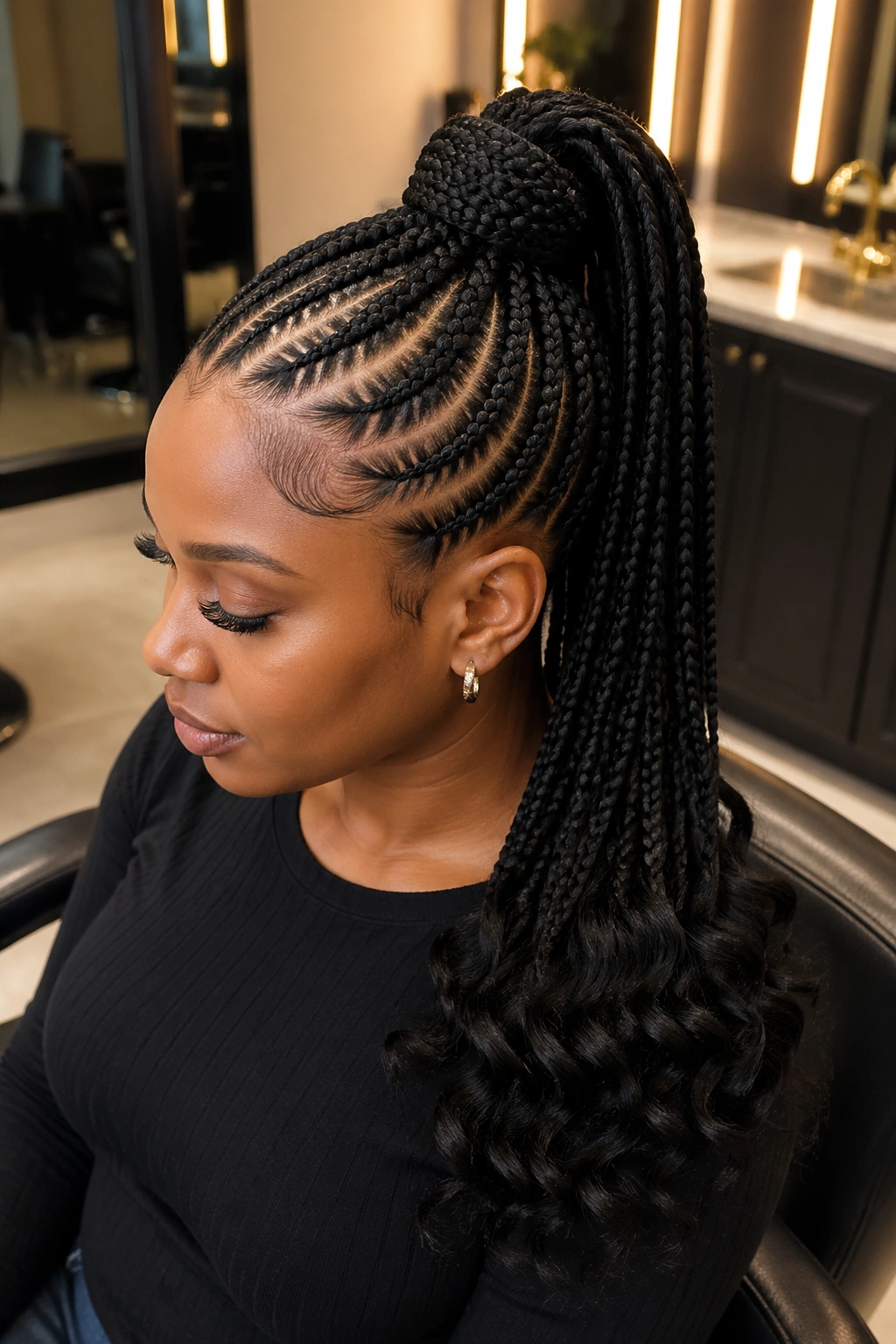
4. Feed-In Cornrows Pulled Into a High Ponytail
This is the style for someone who wants structure and height. Feed-in cornrows into a high ponytail create clean lines at the scalp, then give you movement at the back, which is a nice balance when the dress is sleek and tailored.
Feed-in braiding matters here because it keeps the front from looking bulky. The braids start narrow and build gradually, so the hairline stays smooth. That detail makes a bigger difference than most people expect. A ponytail anchored too abruptly can feel sporty. One that rises cleanly from neat cornrows reads intentional and formal.
If you want this to lean evening instead of athletic, leave the ponytail long and finished with brushed-out curls or a wrapped braid tail. A thick cuff at the base can help, too, but use it sparingly. One metallic accent is sharp. Three feels busy.
- Best paired with: off-the-shoulder dresses and bold earrings.
- Best hair prep: edge control, lightweight mousse, and a satin scarf while the roots set.
- Avoid: puffed baby hairs if the rest of the look is ultra-polished.
5. Halo Braid With Pearl Pins
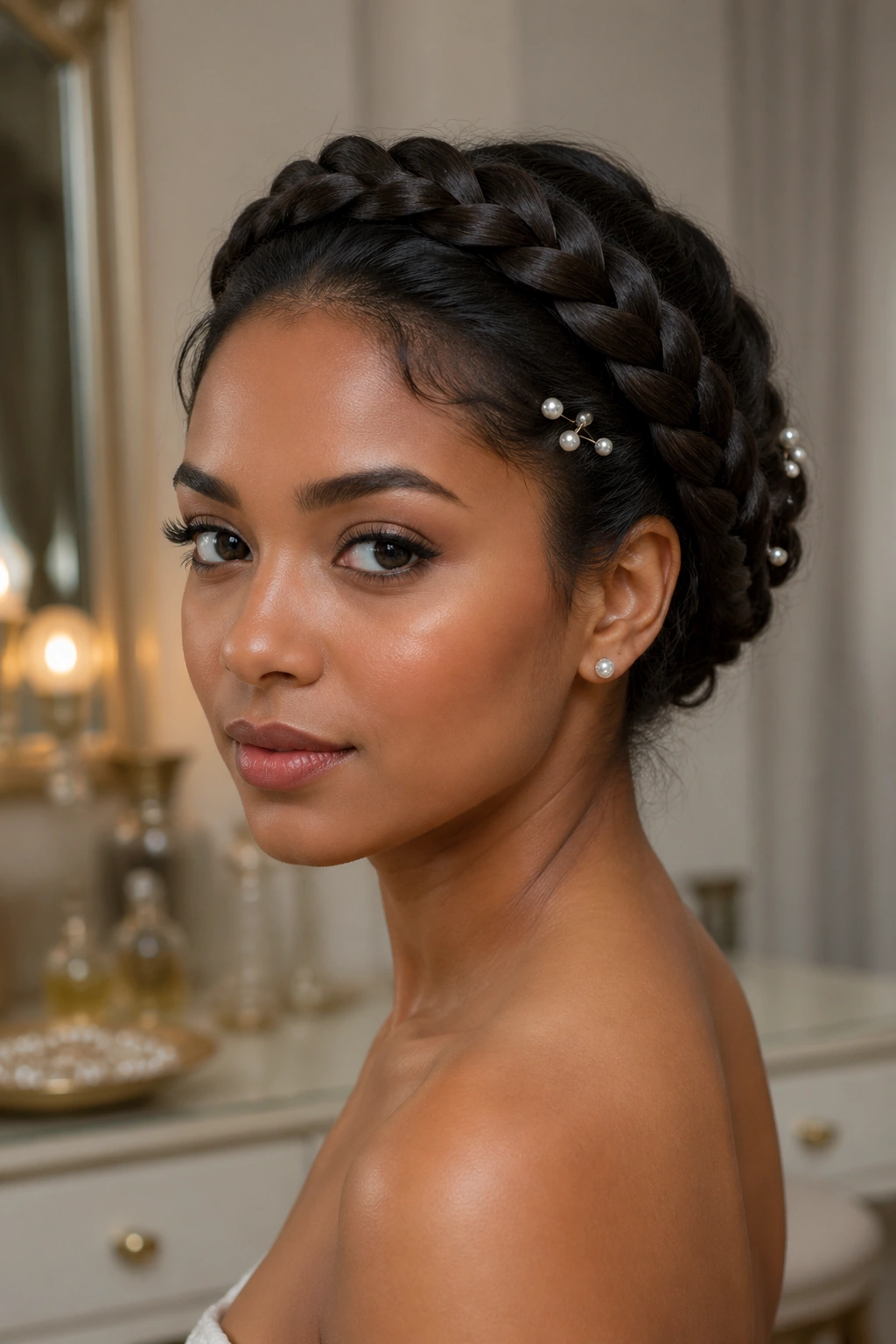
The halo braid is softer than a crown braid and a little more romantic around the edges. It circles the head without feeling stiff, which is why it works so well when you want elegance that still feels gentle.
Pearl pins change the whole mood. Tuck one where the braid meets at the back, then place another near the temple or just behind the ear. Three pearls are usually enough. More than that, and the look can start to drift into costume territory, which is a fast way to make a formal style feel fussy.
This braid looks especially good when the front is kept smooth and the braid sits close to the head. If you have layers, a little styling cream on the shorter pieces helps them stay tucked instead of sticking out like little flags. That’s the part people forget. The braid can be lovely, but the loose layer around it has to behave.
A halo braid also gives you room for a strong neckline. It leaves the face open and lets the dress do its own work.
6. Rope Braid Bun With a Clean Center Part
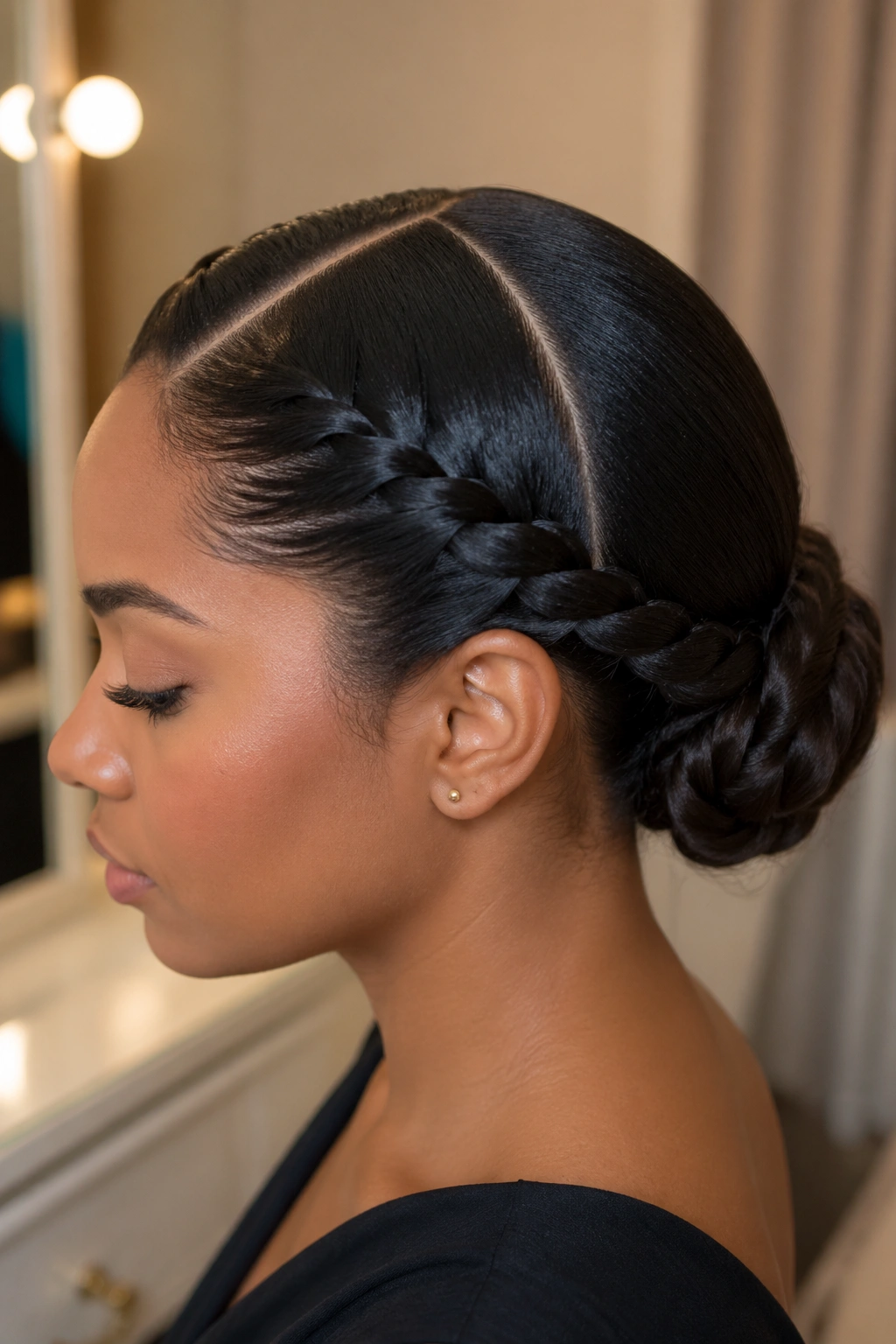
A rope braid bun has a sharper, more tailored feel than a loose three-strand braid. Two strands twisted around each other create a tight rope effect, and when that rope gets coiled into a bun, the whole style looks deliberate from every angle.
Unlike a classic braid, a rope braid gives you a cleaner line and a little more shine because the twist reflects light differently. That makes it a smart choice for black-tie settings, especially if your hair is fine or straight and needs a style that looks dense without piling on bulk.
I like this with a dead-center part and a nape bun that sits low enough to skim the collar. If the bun is too high, the style starts to feel more daytime than evening. Keep the twist firm, tuck the ends under, and pin where the rope crosses itself so it doesn’t loosen while you’re moving around.
Best of all, this one doesn’t need much adornment. A pair of slim gold pins or one barrette is enough.
7. Jumbo Goddess Braid Wrapped Into a Knot
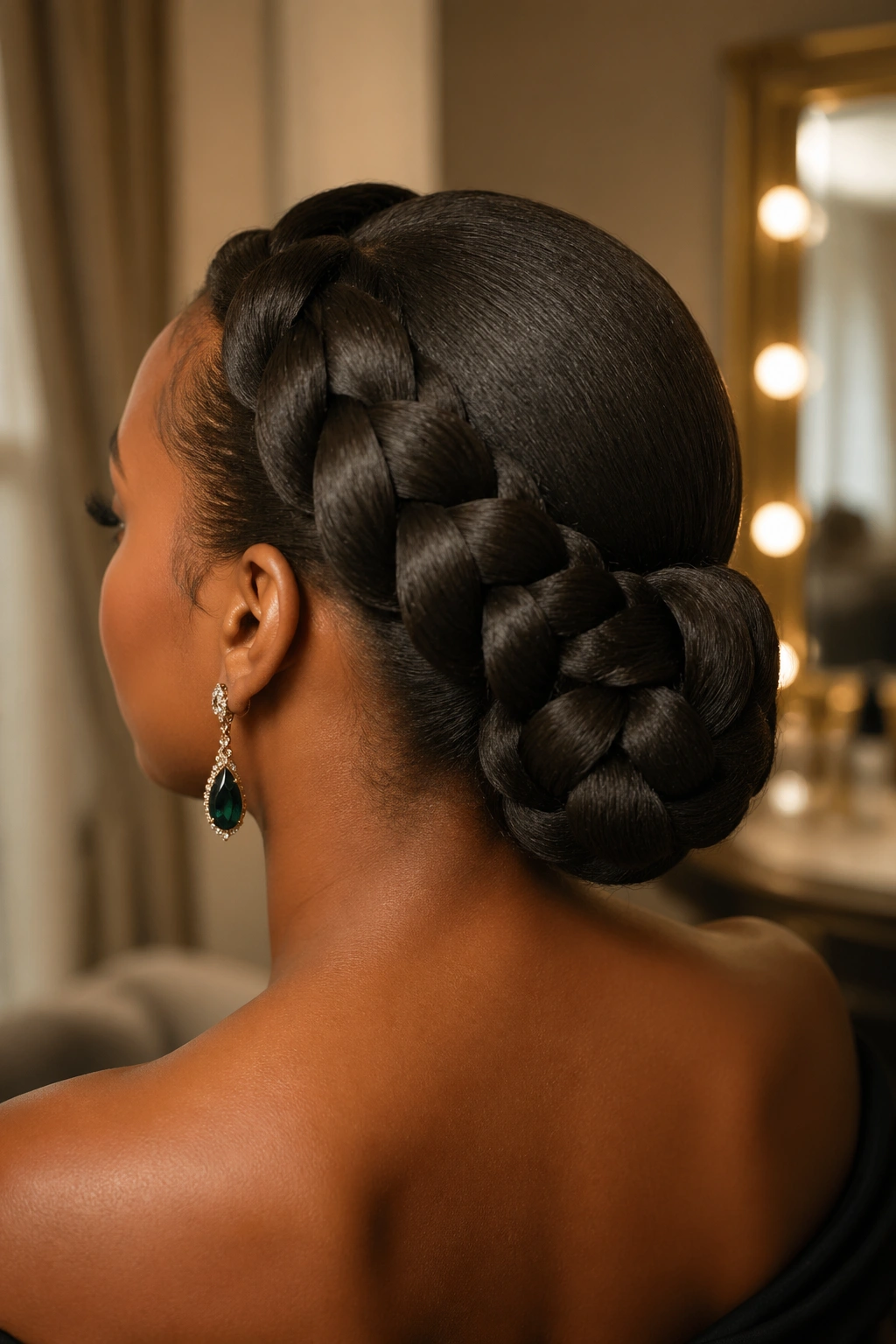
A jumbo goddess braid gives you scale, and scale matters when the dress has clean lines or a dramatic train. One large braid wrapped into a knot reads strong and confident, not busy.
I like this style when the hair itself should make the statement. The braid can start at the crown or from one side, then sweep into a low knot at the back. The size of the braid does the visual work, so you don’t need a lot of decoration. If anything, too many accessories steal the focus.
The Small Details That Keep It Elegant
Use a smoothing cream at the root and a light oil on the braid lengths. Heavy product will flatten the texture and make the braid look stiff. You want the surface to have a soft sheen, not a wet shell.
- Choose this if: you want one strong focal point instead of several small ones.
- Skip the heavy pins: one or two sturdy pins are enough for most hair textures.
- Best neckline match: halters, open backs, and deep V dresses.
A large braid like this also survives an evening of hugging and dancing better than a loose style. It stays put.
8. Waterfall Braid Half-Up for Long Hair
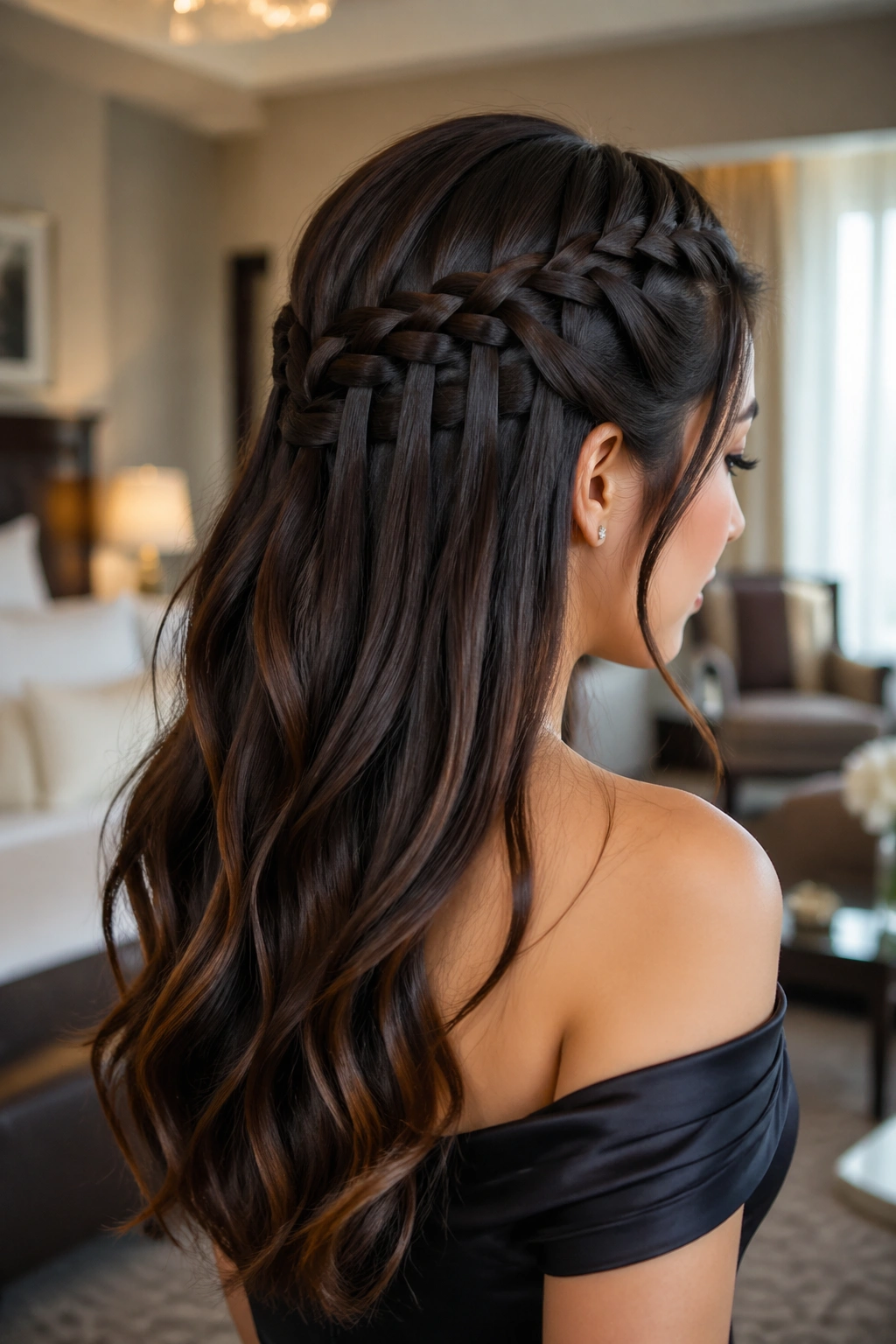
Can a half-up braid look formal enough for a black-tie reception? Yes, when the rest of the hair is polished and the braid is kept crisp.
A waterfall braid lets long hair stay visible, which is useful if the dress is simple and you want the hair to carry some of the detail. The cascading strands give movement, but the braid itself needs to sit tight and controlled at the crown. If the braid is too loose, the style tips into casual pretty fast.
The part I like best is the contrast. The top can be braided tightly, then the loose hair below can fall in soft waves or brushed-out bends. That mix of control and softness looks expensive in the best sense of the word. It feels considered.
A few notes matter here. Curl the lower lengths with a 1-inch iron, brush the curls out once they cool, and finish with a light mist of flexible hold spray. Skip crunchy products. They fight the movement that makes this style work.
9. Braided Faux-Hawk With Smooth Edges
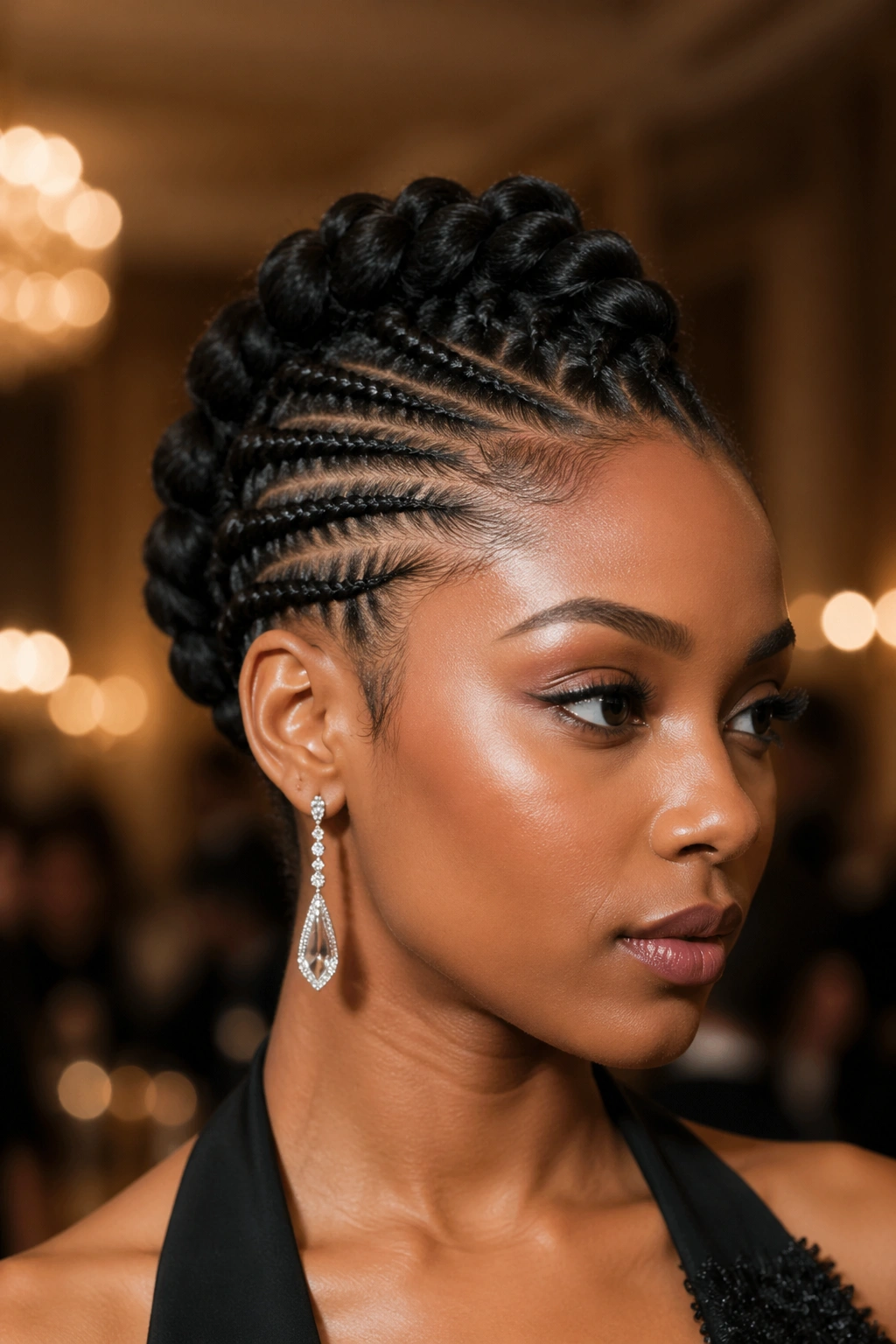
A braided faux-hawk brings more drama than most braid styles, but drama can be elegant when the sides are smooth and the center ridge is clean. Think sculpted, not spiky.
This style works because it changes the profile. Instead of spreading the braid across the head, it lifts the center section and keeps the sides sleek against the scalp. That creates height without chaos. If the dress has sharp tailoring or a strong shoulder line, the look makes sense immediately.
The best versions of this braid use narrow cornrow-like sections feeding into a central braid or series of braids. The edges should be neat, and the height should feel controlled. Too much volume at the crown can make the style look costume-like. A little lift is enough.
I’d wear this with geometric earrings or a dress that already has clean structure. It’s one of those styles that either clicks with the outfit or fights it. When it clicks, it’s excellent.
10. Micro Braids Sculpted Into a Low Knot
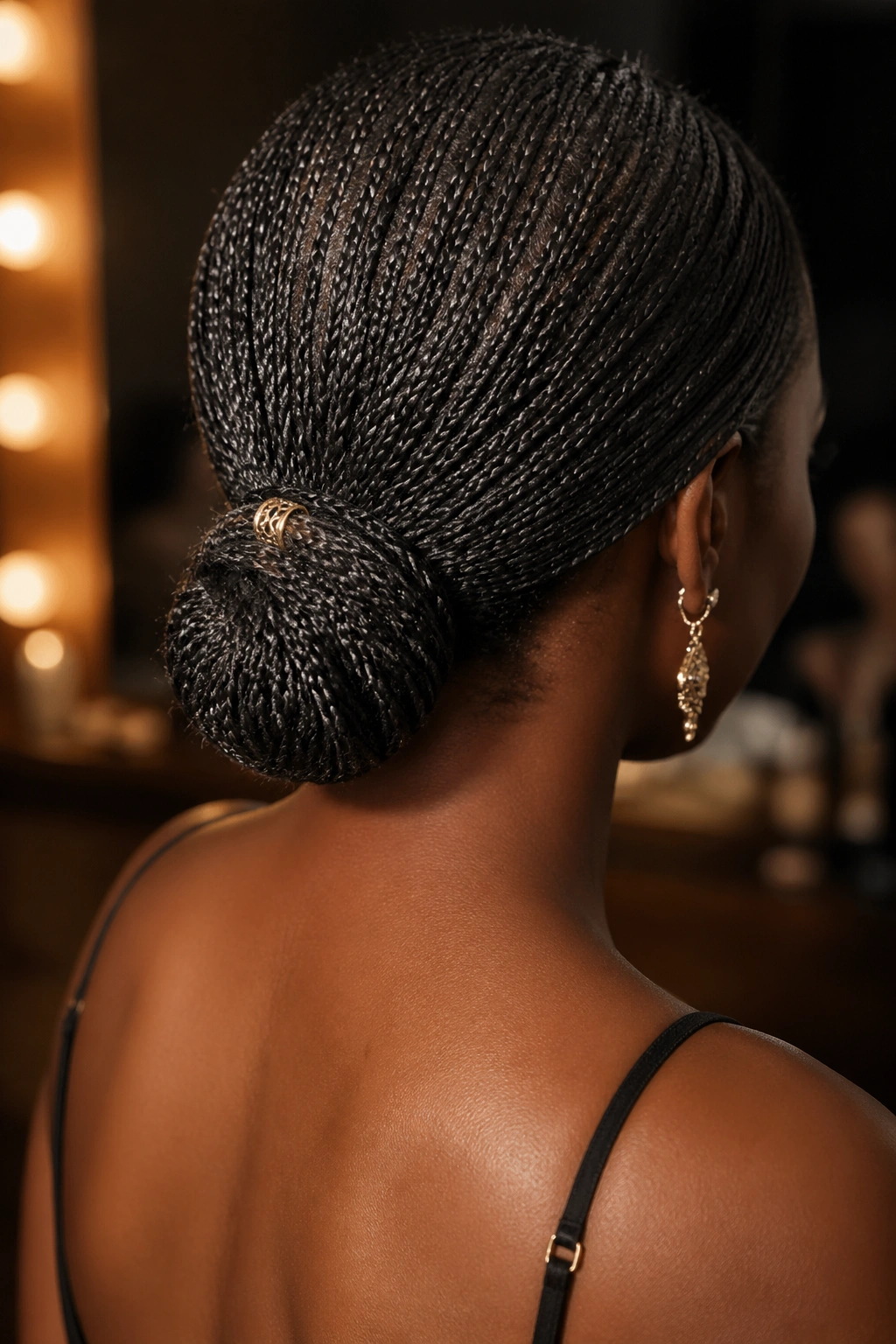
If you already wear micro braids, a sculpted low knot can be one of the strongest formal looks in the room. The tiny braids give the bun texture, and the knot itself can be shaped like a small piece of jewelry at the nape.
This works best when the braids are gathered smoothly first. Don’t just twist them up and hope for the best. Comb or finger-smooth the top, secure the ponytail base, then coil the braids into a tight knot and pin them from beneath. The silhouette should be clean from the front and textured from the back.
A small metallic cuff, a satin ribbon, or a few discreet pearl pins can make the style feel dressier without changing the structure. I’d keep the accessories close to the knot, not scattered through the length.
This is also a practical choice. Micro braids already carry a lot of staying power, and the low knot tends to survive dinner, dancing, and a packed photo line with less fuss than many other styles.
11. Dutch Braid Ponytail With Curled Ends
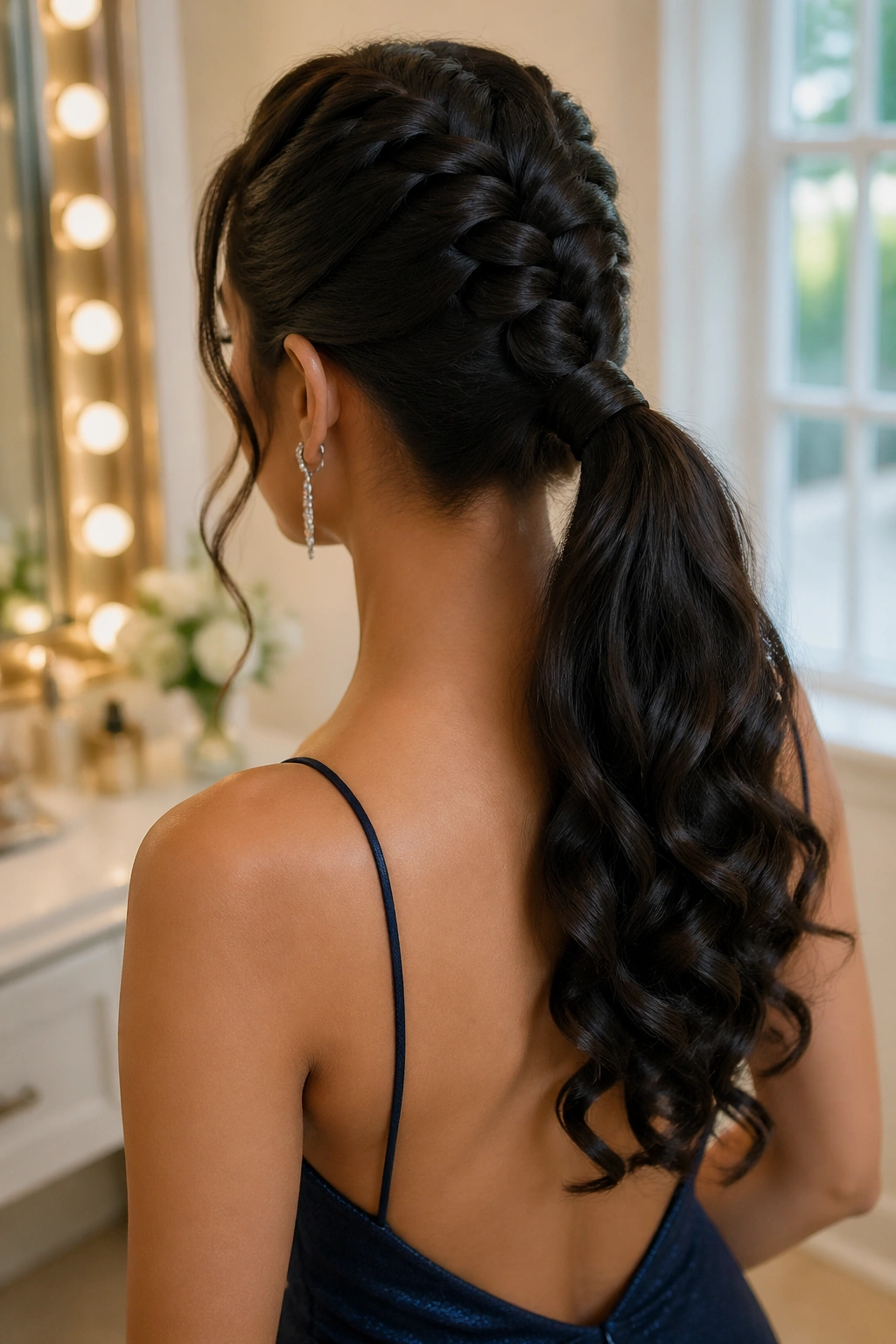
A plain ponytail can look too casual for a formal reception. A Dutch braid ponytail fixes that fast because the braid sits raised on the scalp and gives the whole style more shape.
The braid acts like architecture. It creates a ridge that the eye reads as deliberate, and the ponytail that follows can be sleek, curled, or both. My favorite version ends with brushed waves or soft spirals, because the contrast between the tight braid and the loose tail keeps the style from feeling flat.
This one works especially well with high necklines and backs that need a bit of clean space. If your dress already has a lot happening up top, the ponytail keeps hair controlled without hiding the neckline. If the dress is simple, the braid itself becomes the detail.
How to Keep It Sharp
Use gel or styling cream only at the root. The braid lengths need some grip, but the ponytail tail should stay soft. A wrapped section of hair around the elastic hides the tie and makes the finish look cleaner.
12. Braided Topknot With Face-Framing Pieces
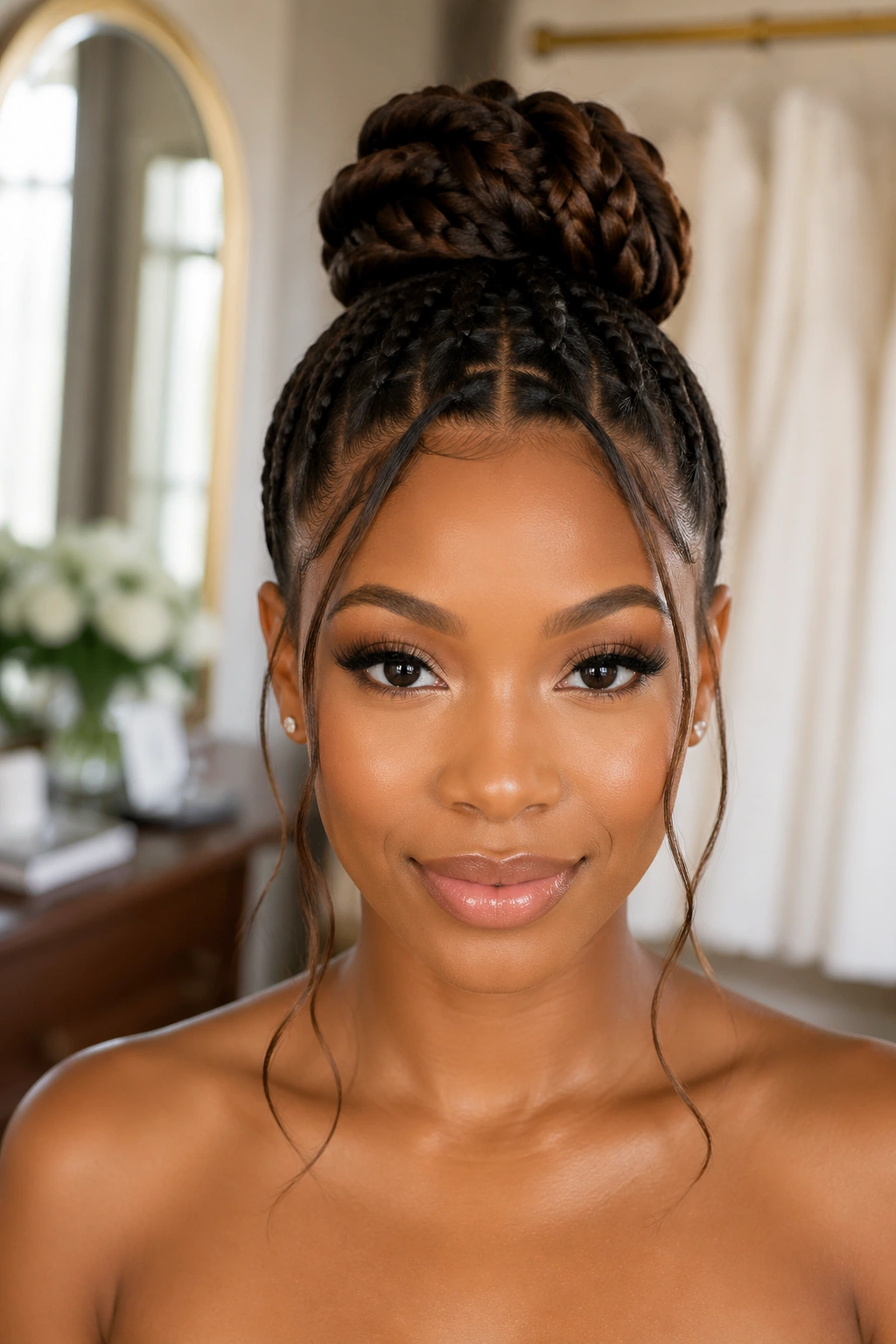
A braided topknot can look a little too gym-class if it’s done fast. Slow it down, and it becomes a clean, evening-ready shape that feels fresh instead of plain.
The move here is to braid the hair before wrapping it into the knot. That single step changes the whole effect. The knot gets texture, the top gains height, and the face-framing pieces keep the style from looking severe. Keep those front pieces slim, though. Thick curtain pieces can make the whole thing lose its formal edge.
I prefer this with dresses that show the shoulders or collarbone. The bun lifts the eye upward, and the open face makes room for statement earrings or a dramatic neckline. It also works well when the hair has natural volume, because the braid gives the topknot a bit of structure so it doesn’t collapse halfway through the night.
The finish should be neat. A topknot with frizz everywhere is a different hairstyle entirely. That one belongs somewhere else.
13. Side Braid Into a Sculpted Side Bun
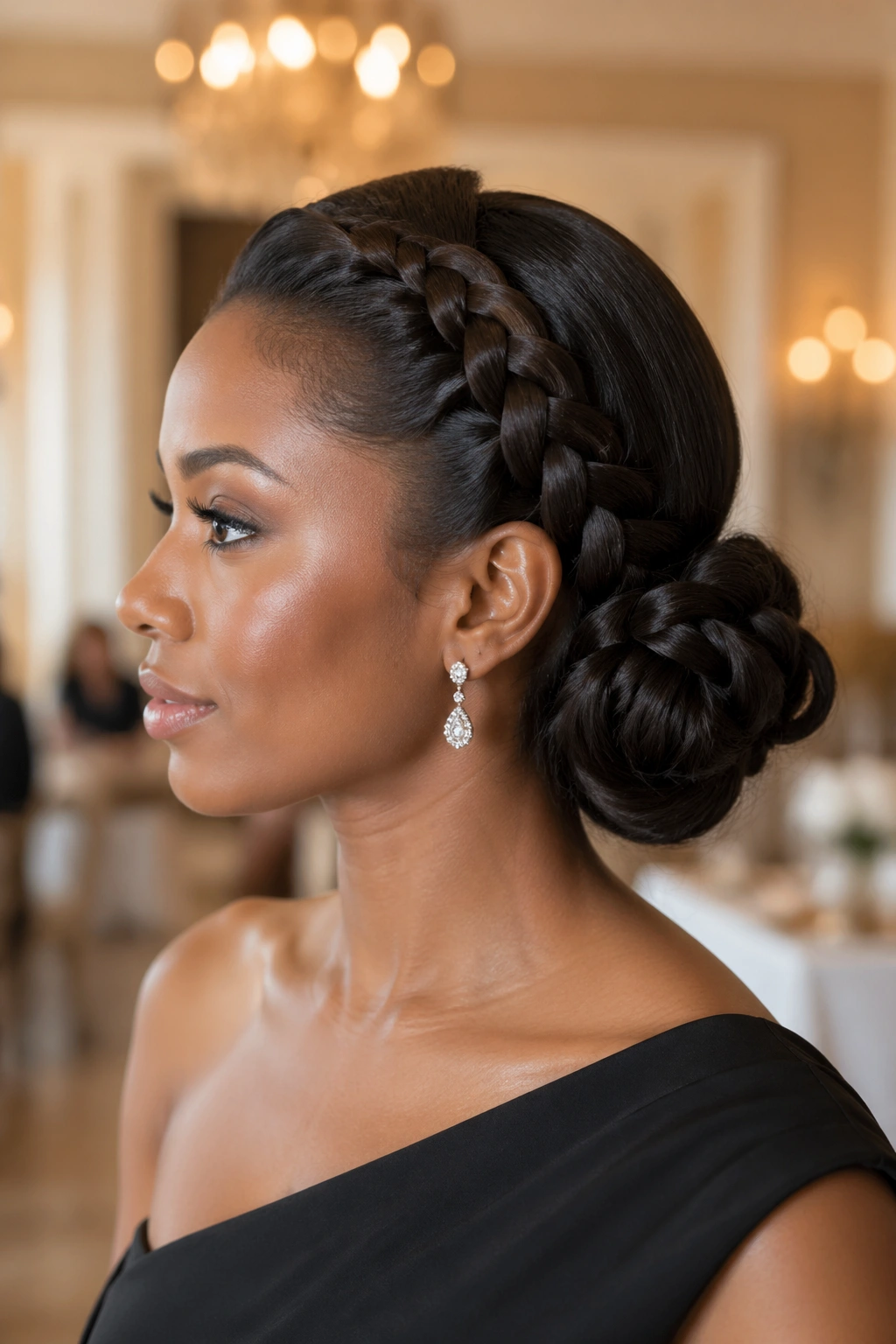
Asymmetry has a place at a black-tie reception, and a side braid into a sculpted side bun is a good example. It feels graceful without being too soft, and it gives one-shoulder dresses something to play against.
What Keeps It Elegant
The braid should start at the temple or just behind it, then sweep low across the head before gathering into the bun near one ear or just below it. The line should feel clean and intentional. If the braid drifts too far back, the whole point of the side placement gets lost.
A side bun can go romantic fast if the texture is too loose, so keep the braid snug and the bun compact. Use only a few pins, crossed in different directions so the shape doesn’t shift during the reception. One stray end poking out can ruin the polish.
- Best with: one-shoulder gowns, asymmetrical necklines, and long drop earrings.
- Best finish: soft shine spray and a small dab of smoothing cream at the hairline.
- Avoid: over-teasing the crown. It can make the style look dated.
14. Gibson Tuck With a Lace Braid Crown
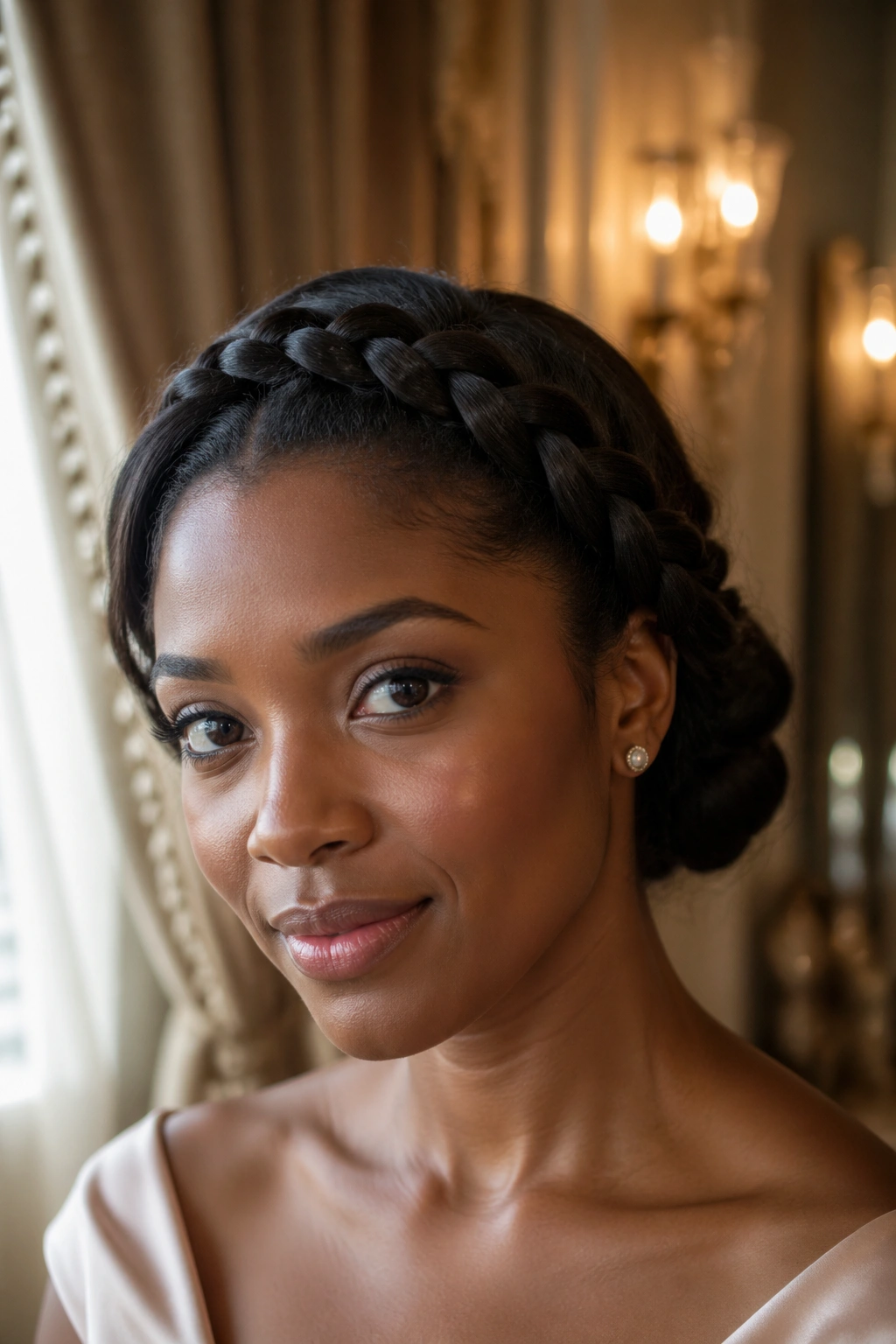
The Gibson tuck has old-fashioned elegance built right in, which is exactly why it works so well for formal evenings. Add a lace braid crown, and the style gets a little more dimension without losing that neat rolled shape at the back.
This is a strong choice for medium-length hair that needs structure. The lace braid travels along the hairline, feeding into the tuck and creating a soft frame around the face. The rest gets rolled under and pinned, so the profile stays low and clean. It has a polished, vintage feel that works beautifully with satin, lace, and pearl details.
I like this style when the dress is more refined than flashy. It does not need a loud accessory. A pair of pearl studs or a small comb at the tuck is enough. If the braid is neat and the roll is smooth, the whole thing looks more expensive than it sounds.
And yes, it holds better than people expect. The tuck hides the structure, which means the pins have something to bite into.
15. Double Dutch Braids Folded Into a Chignon
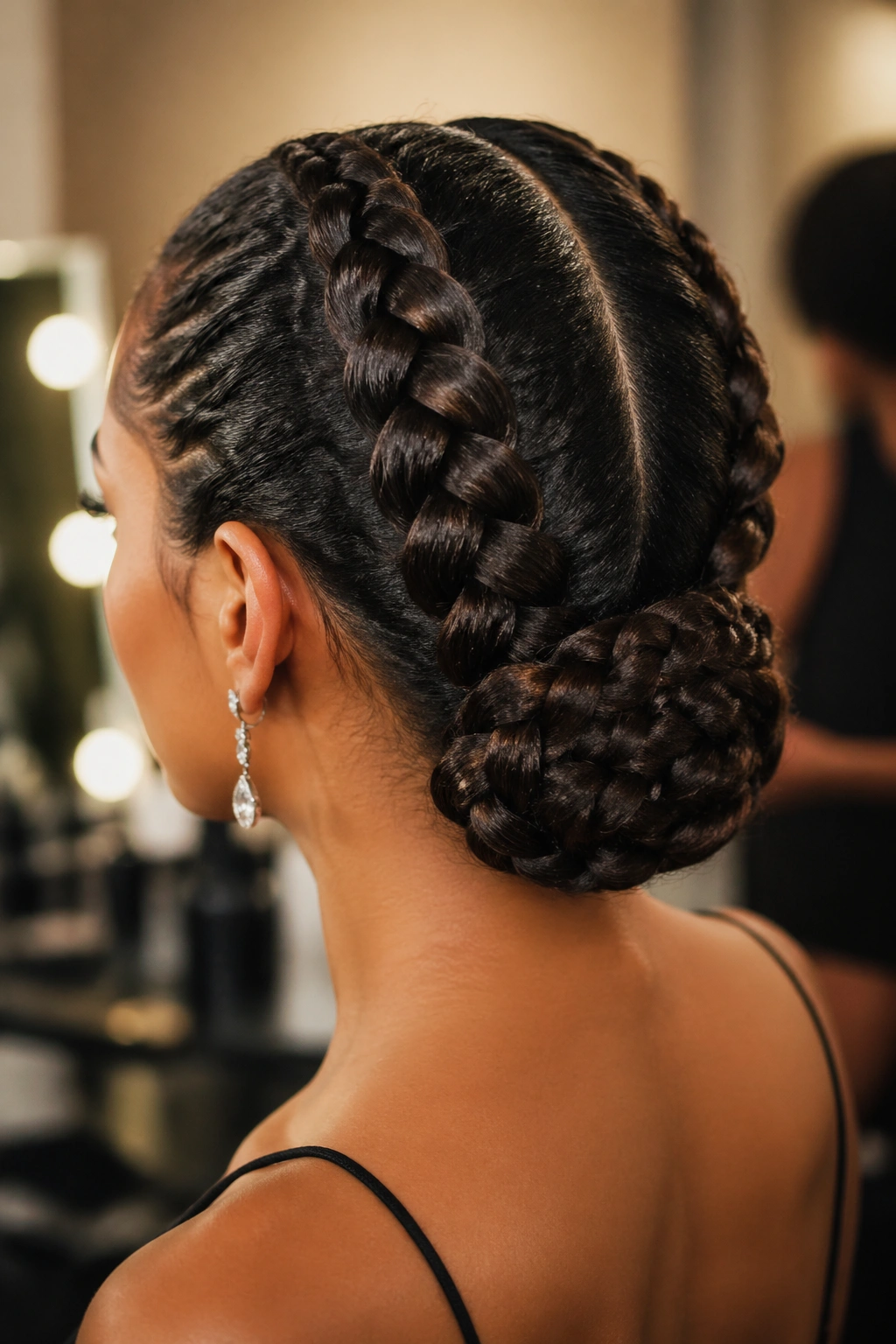
Double Dutch braids can look sporty if they stop at the nape and hang loose. Fold them into a chignon, though, and they turn into something much sharper.
The appeal here is symmetry. Two raised braids create clean lines from the front, then the folded bun at the back gives the style weight. It’s a good option if you like structure and don’t want a soft, drapey finish. The look is crisp, almost tailored.
This style also works well on textured hair because the Dutch braid pattern adds definition right away. If your hair is thick, keep the braids medium-sized so the bun doesn’t end up too bulky. If your hair is finer, a little texturizing spray before braiding gives the sections enough hold to stay defined.
I’d wear this with a clean neckline and a single strong accessory. A dramatic earring or a jeweled clip is enough. Two or three competing details will fight each other.
16. Fulani-Inspired Formal Braids With Gold Cuffs
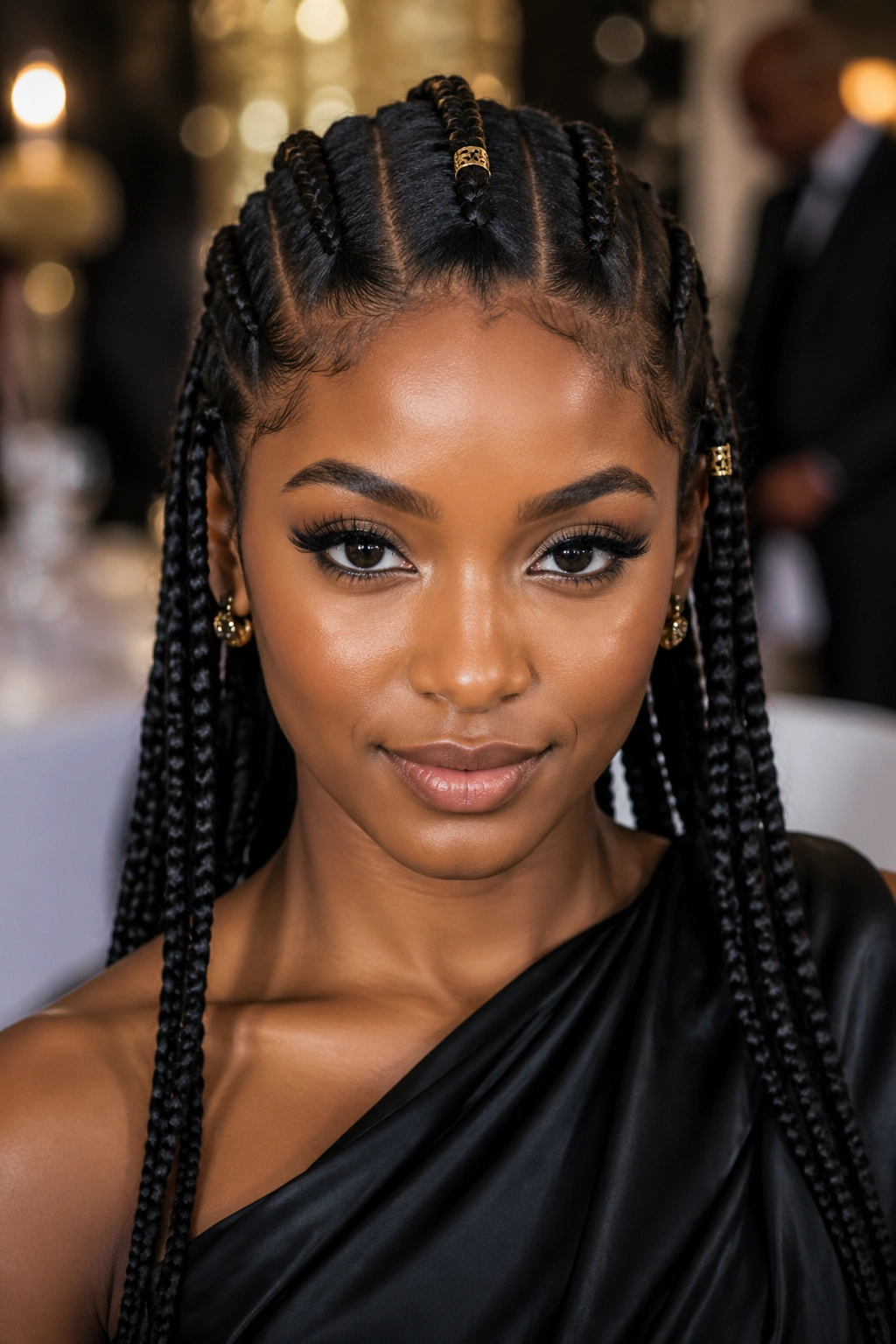
A Fulani-inspired braid style can be incredibly elegant for a reception when it is handled with care. Keep the parting crisp, the braid lines balanced, and the accessories restrained.
What makes this work is not excess. It is precision. A central braid, paired side braids, and a few gold cuffs placed with intention can look polished and deeply dressy. The style has roots and history, so it deserves a thoughtful finish rather than random decoration.
Keep the Adornments Sparse
- Use 2 to 5 cuffs or rings, not a full scatter across every braid.
- Keep part lines clean so the pattern reads clearly from a distance.
- Smooth the roots with gel or mousse before braiding.
- Let one focal braid lead instead of crowding the whole head.
The best version of this style feels composed. It is not trying to do too much. That restraint matters more here than in almost any other braid on this list.
17. Braided Accent Pieces Around a Polished Bun
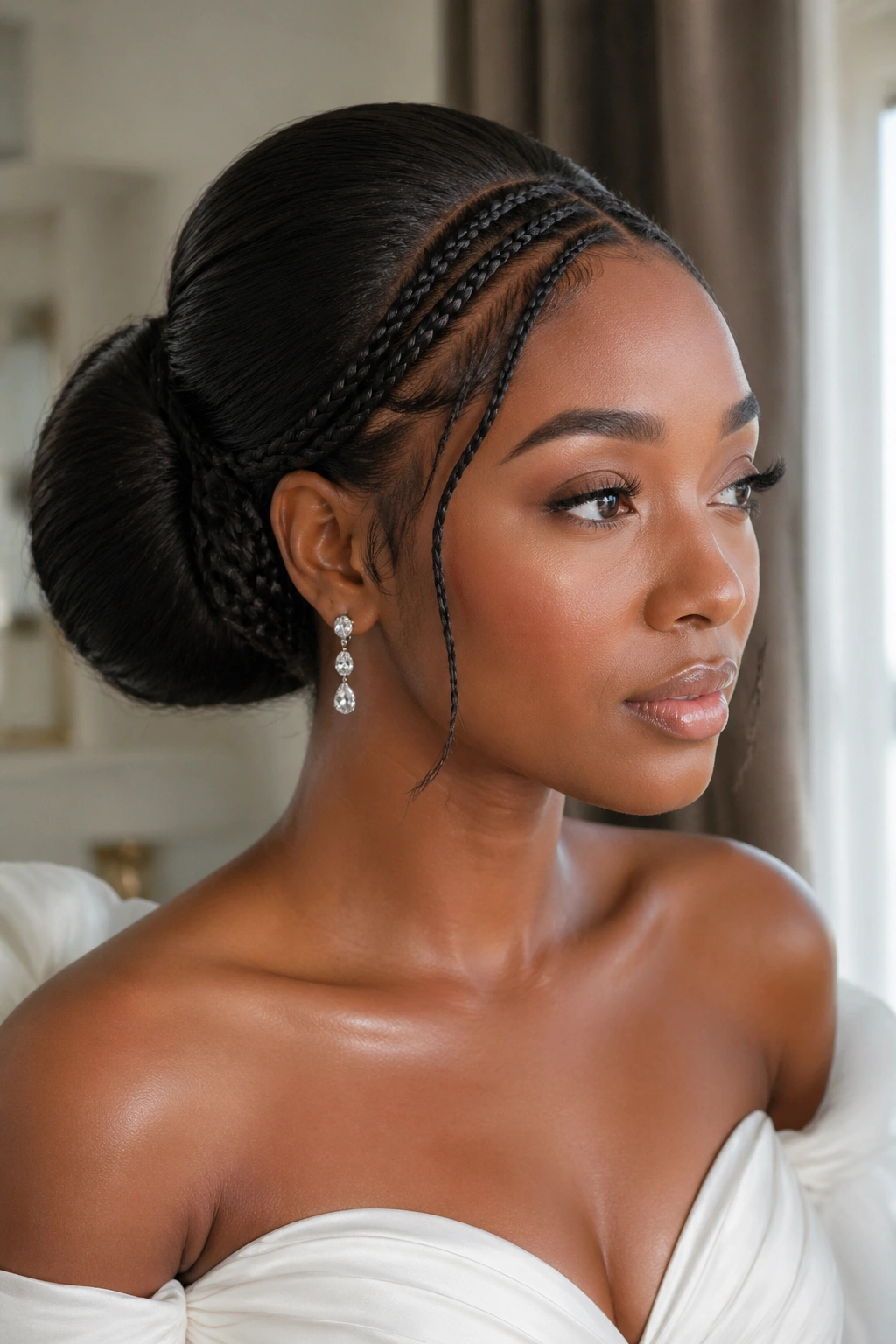
Sometimes the smartest move is not to braid the whole head. A polished bun with braided accent pieces gives you just enough detail to feel special while keeping the rest of the style clean.
This is the braid I’d choose when the dress is busy and the jewelry already has a job to do. A small braid at the temple, a narrow braided panel near the part, or a thin braid wrapped around the bun base adds texture without changing the overall shape. The bun stays classic. The braids just sharpen it.
Where to Place the Braid
The temple area works well if you want the face to feel framed. A side part with one small braid tucked back can also soften a strong jawline or a structured neckline. If you place the braid too far back, you lose the visual payoff.
Keep the accent braid tight and neat. If it looks accidental, the whole style does too. A polished bun with one deliberate braid tends to age well in photos, which is a nicer way of saying it won’t look dated when you see it later.
18. Long Braid Wrapped Like a Roped Chignon
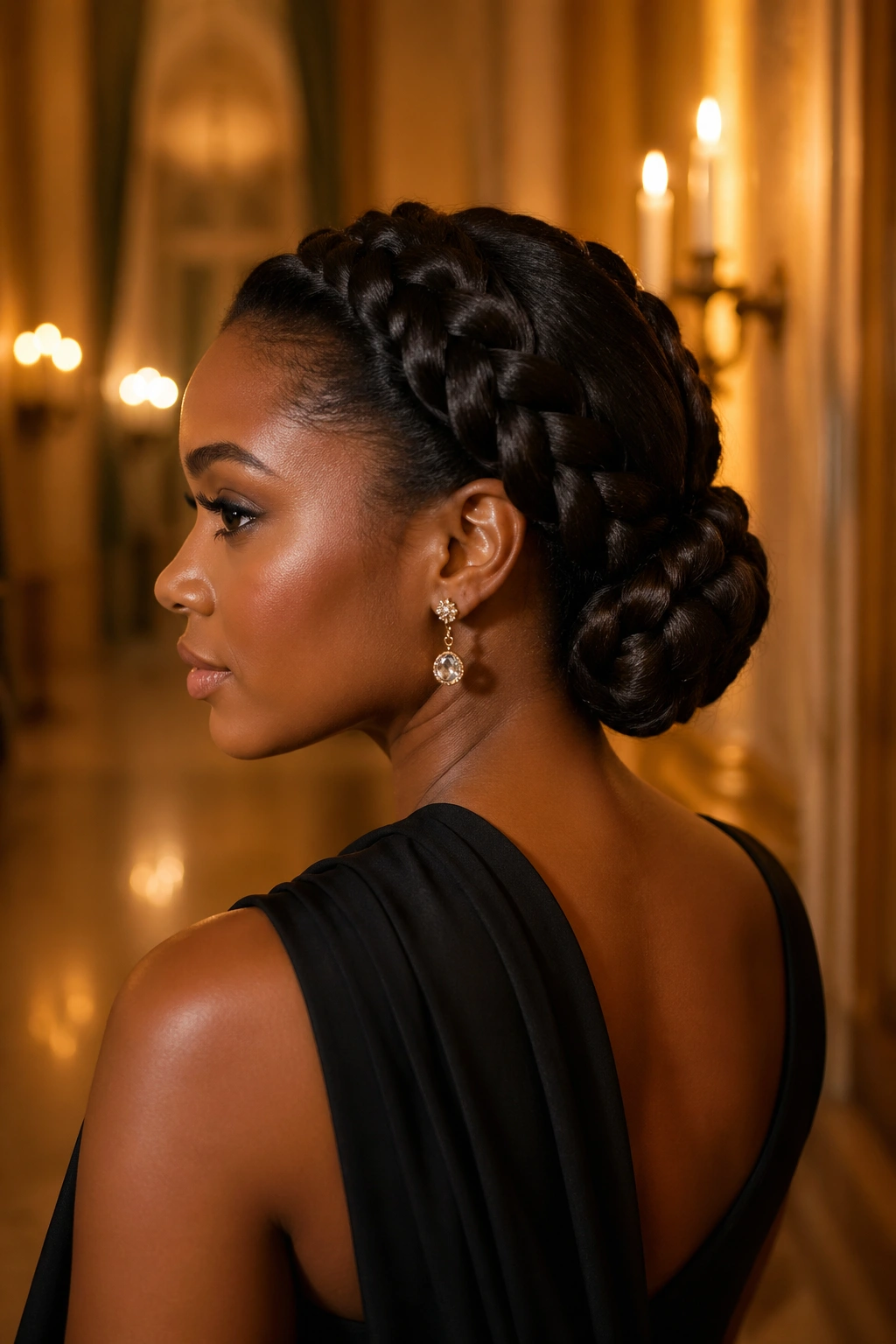
A long single braid wrapped into a roped chignon is one of those styles that looks more complicated than it is. The braid creates the texture, and the wrap gives it a formal shape at the nape.
I like this for hair that already reaches well past the shoulders. You braid the length, coil it around itself, and pin at the base and the middle of the spiral so the shape doesn’t loosen. The result is tidy, slightly sculptural, and easier to wear than a huge bun that sits too high.
A few details matter. Keep the braid snug but not flattened. Use pins that match the hair color. Spray lightly after pinning, then press the shape with your palms for a second so it settles into place. The braid should look smooth and dense, not starched.
This is also one of the better styles for long receptions because the weight sits low and close to the head. Less tugging. Less fuss.
19. Braided Ponytail With Soft Waves
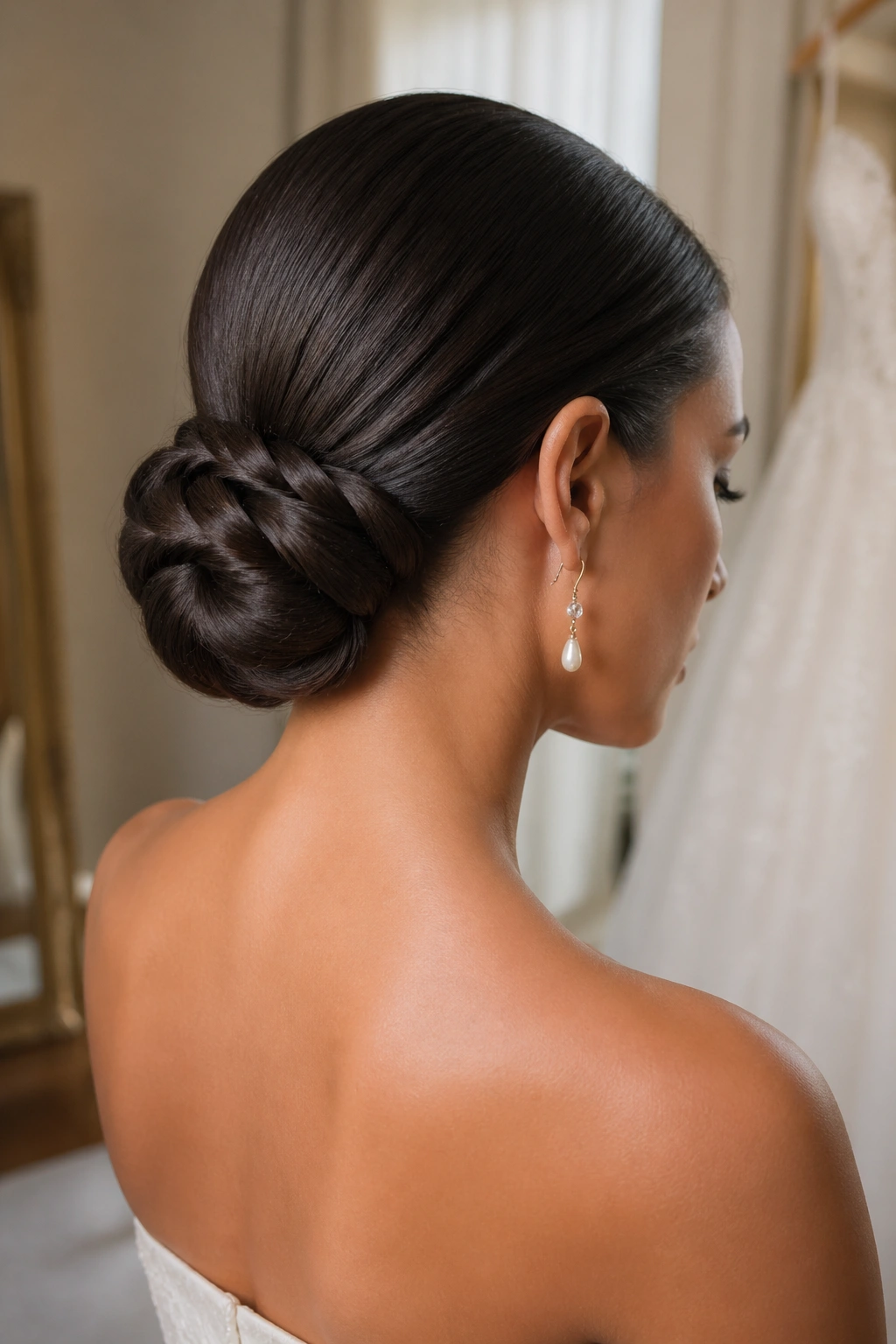
A braided ponytail with soft waves is a good answer when you want movement but not chaos. The braid adds structure at the base, while the loose waves at the end keep the style from feeling stiff.
What matters here is the root. Slick it down neatly, braid the first few inches, then let the ponytail length open into waves. If the root is fuzzy, the whole style slips toward casual. If the root is clean, the ponytail suddenly reads formal and sharp.
I’d use a 1-inch curling iron or wand on the ends, then brush them out once they cool. That gives a softer bend instead of a tight curl ringlet. A small amount of shine spray across the ponytail lengths can help, but don’t coat the roots. The scalp should look smooth, not wet.
This is a good choice for backless gowns or dresses with a strong shoulder detail. It leaves the back visible and keeps hair off the neck while still giving you some movement.
20. Side Crown Braid With a Barrette-Friendly Back
A side crown braid does not have to look sweet. Done close to the head and paired with a clean back section, it can feel structured and formal enough for a black-tie reception.
The side placement helps. Instead of circling the whole head, the braid travels from one temple and settles toward the opposite side, which keeps the front interesting without making the style heavy. I like this for people who want a little softness near the face and a clean space at the back for an accessory or a smooth finish.
A barrette-friendly back is useful here because the braid doesn’t need to do every job. A slim metallic barrette, a crystal comb, or even a single decorative pin can sit where the braid ends and make the shape feel finished. Keep the accessory aligned with the part or the braid line so it looks deliberate.
If your dress has delicate straps or a detailed back, this style gives the outfit room to breathe. It does its work quietly, which is often what the best formal hair does.
21. Sculpted Cornrow Updo With Swirl Parts
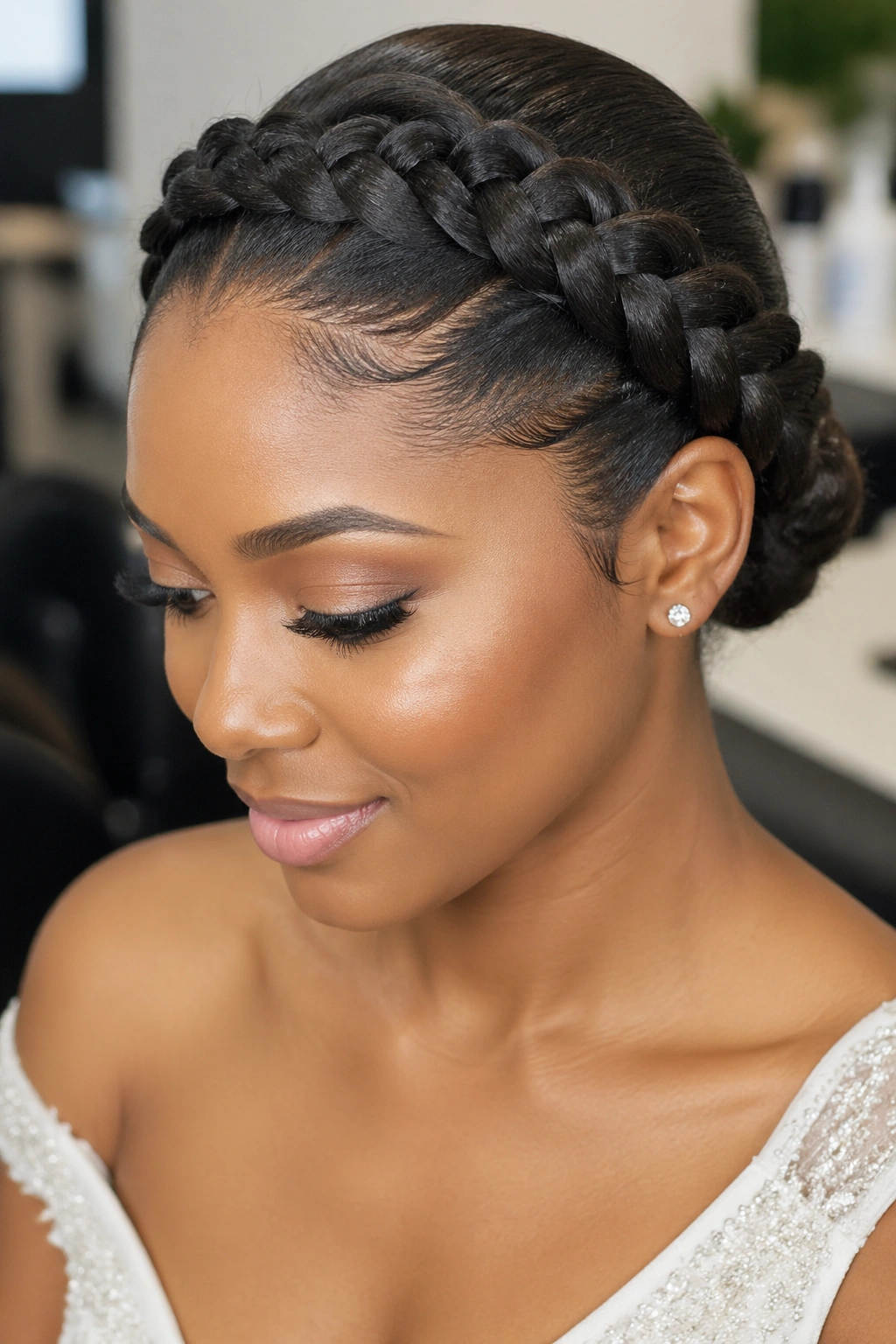
A sculpted cornrow updo is the kind of style that looks almost carved. The curved parting, the tidy rows, and the tucked finish create a clean profile that holds up beautifully under formal lighting.
Why the Swirl Parts Matter
Straight lines are sharp. Swirl parts are softer and often more graceful. They guide the eye around the head instead of stopping it, which makes the style feel fluid even though it is tightly structured. That contrast is what gives the look its power.
Ask for the rows to be symmetrical where needed and curved where they add shape. Too many directions at once can make the style busy. Keep the updo compact at the back, and let the cornrows lead into the bun or coil instead of disappearing abruptly.
For a black-tie reception, this is one of the strongest options if you want structure that lasts. It stays neat, it survives movement, and it makes a statement without needing extra ornament.
22. Low Braided Bun With a Satin Finish
The low braided bun with a satin finish is the style I’d keep if I had to choose only one braid for a long formal night. It is calm, polished, and sturdy enough to last through dinner, speeches, and a dance floor that keeps going longer than expected.
The braid can be single, doubled, or wrapped around the bun base, but the shape should stay low and compact. That low placement is what makes it read elegant instead of stiff. A touch of shine at the top, a clean part, and a bun that sits close to the neck give the whole look a dressed-up, steady feel.
I like this one because it never fights the outfit. A dramatic earring can take the lead. A beaded dress can get the attention. The hair just does its job and does it well. And that matters more than people think.
If you want a simple way to keep it looking fresh all evening, smooth the top with a light cream before you braid, pin the bun from underneath, and finish with a mist of flexible hold spray. Leave the style alone after that. The quietest braid on the list is often the one that looks the most expensive when the lights go down.