
Long hairstyles for women over 40 can look sharper, softer, and more current than short hair when the shape is right. The old idea that length belongs only to younger women has always felt lazy to me. Hair doesn’t age by the inch. It ages when it goes flat, hangs too heavy around the face, or loses movement at the ends.
The best long cuts and styles do three things at once: they open up the face, keep the body of the hair from drooping, and make styling feel manageable instead of like a full-time job. That’s why layers matter so much, why bangs can be a friend rather than a headache, and why a clean hemline often looks richer than a hacked-at one. Even with gray blending, highlights, or natural texture, the shape does most of the work.
A good long style also has to fit the life you actually have. Some days you want a blowout that looks polished. Other days you want something you can twist, braid, pin, or air-dry and still feel pulled together. The styles below cover all of that, with options for fine hair, thick hair, straight hair, waves, curls, and the stubborn in-between textures that refuse to behave on command.
1. Long Layers with Curtain Bangs
Curtain bangs are one of the easiest ways to make long hair feel fresh without giving up length. They split softly down the middle, open around the eyes, and take a little weight off the front so the whole style stops looking like one heavy sheet. On women over 40, that bit of softness matters. It brightens the face without looking severe.
What I like about this pairing is the balance. The layers keep the ends moving, and the bangs keep the front from disappearing into the rest of the hair. Ask for bangs that start around the cheekbone or lip, not too short, and let the layers fall below the chin so the cut has swing. A quick round-brush blow-dry or a bend from a 1.25-inch curling iron is usually enough.
Why it works
- Best for oval, heart, and square faces.
- Works especially well on medium-density hair.
- Needs a trim every 6 to 8 weeks to stay neat.
- Looks good air-dried with a little wave or styled smooth.
Pro tip: keep the curtain pieces a touch longer than you think you need. They’re easier to style, and they grow out far more gracefully.
2. Face-Framing Layers with a Center Part
A center part can be beautiful on long hair, but only when the front isn’t hanging like two flat curtains. Face-framing layers fix that. They start around the cheekbones, skim the jaw, and give the hair enough lift that the part feels intentional instead of severe. For women over 40, that’s a smart trade.
This is one of those cuts that works because it doesn’t try too hard. Straight hair looks clean and sleek. Wavy hair gets a little swing. Even finer hair can handle it if the layers are kept light and the ends aren’t thinned too much. I’d avoid overly short face pieces if your hair is very dense; they can puff out in the wrong places and make morning styling annoying.
If you want a style that looks put together with minimal fuss, this is a strong place to start. A smoothing cream, a quick blow-dry, and a center part that lands where your face feels most balanced — that’s usually enough.
3. The Butterfly Cut with Soft Volume
The butterfly cut has earned its keep because it gives the illusion of shorter, airy layers without sacrificing the long length underneath. The top layers create lift around the crown and face, while the lower section stays long and full. That shape is especially useful if your hair has started feeling heavy or lifeless. It wakes the whole head up.
There’s a reason this cut keeps showing up on women with thick or medium-thick hair. It removes enough bulk to make styling easier, but not so much that you lose the drama of long hair. Ask your stylist to keep the shortest pieces around the chin or cheekbone and let the longest layers flow past the shoulders. If the short pieces are chopped too high, the whole thing can flip out in a fussy way.
How to style it
Use a large round brush or big hot rollers on the top layer first, then leave the lower lengths smoother. That contrast is what gives the style its shape. A little root lift spray at the crown helps too.
4. The U-Shaped Cut for a Clean Hemline
If you’ve ever looked at long hair and thought it needs structure, the U-shape is the answer. The perimeter curves slightly upward toward the sides, so the back looks fuller and the whole cut feels softer than a blunt line. It’s one of my favorite long hairstyles for women over 40 with fine to medium hair because it makes the ends look healthier and denser.
The trick is restraint. A good U-shape should be subtle, not dramatic. You want the hemline to look like it belongs there, not like someone drew a smile across the bottom of your hair. It’s especially nice on straight or softly waved hair, because the curve shows up without much styling. A center or off-center part both work.
- Best when you want fullness at the ends.
- Good for straight, smooth textures.
- Easier to maintain than heavily layered cuts.
- Looks polished with a simple blow-dry.
One thing to avoid: over-thinning the ends. That’s how a pretty U-shape turns wispy and tired.
5. The V-Cut for Thick, Heavy Hair
Thick hair can be gorgeous, but it can also feel like a blanket if the cut is wrong. The V-cut solves that by leaving the center length longest and tapering the sides down toward it. The shape gives long hair a point at the back, which helps remove visual bulk while keeping the length dramatic.
This cut is especially good if you wear your hair down often and want the ends to look lighter. It also shows movement well, which matters when your hair has a lot of density. I’d pair it with long internal layers, not chunky ones, so the hair still falls smoothly. If the layers are too aggressive, the V can look stringy instead of sleek.
It’s a strong option for women who like long hair but hate the feeling of all that weight around the shoulders. You’ll probably notice the difference the first time you dry it. The hair swings instead of sitting there.
6. Long Shag with Wispy Fringe
The long shag has a little attitude, and I mean that in the best way. It gives you broken-up layers, airy movement, and a fringe that doesn’t sit like a helmet. On women over 40, it can be a relief because it brings energy back into hair that has gone flat or overworked. The style looks relaxed but not sloppy, which is a hard line to walk.
What makes the long shag work is its unevenness. The layers are meant to move. The fringe is meant to feather. It’s not about looking too perfect. If your hair is straight or slightly wavy, a bit of mousse and rough drying can make the shape come alive. For curlier hair, the cut needs to be done with the natural pattern in mind, or the fringe can shrink up too much.
Best for
- Medium to thick hair.
- Wavy textures that need shape.
- Anyone who wants a little edge without going short.
- People who don’t mind a lived-in finish.
My take: this is the most forgiving “cool” cut on the list. It gets better when it’s not overstyled.
7. Soft Beach Waves
Beach waves are easy to dismiss because the phrase gets tossed around too much, but the real version is useful. The best ones are loose, irregular, and shaped enough to look intentional. On long hair, they soften the face and add the kind of movement that keeps length from reading as heavy or dated.
The key is not making every wave identical. Clamp the iron for just a few seconds, leave the ends a little straighter, and alternate directions as you go. That stops the style from turning into pageant curls. If you’ve got naturally wavy hair, a curl cream and a diffuser can get you there with less heat. On very straight hair, a texturizing spray gives the bend something to hold onto.
Beach waves are one of those styles that can feel casual or dressy depending on the finish. A bit rougher? Weekend. Brushed out and glossy? Dinner. Easy.
8. The Glossy Blowout with Flipped Ends
This is the style for days when you want your hair to look expensive without shouting about it. A glossy blowout gives long hair shine, body, and clean movement from roots to ends. The flipped ends keep it from looking stiff. That small turn at the bottom matters more than people think.
If you’re dealing with dull or dry ends, this style can hide a lot. The smooth surface reflects light, and the round-brush shape makes the hair feel fuller through the mid-lengths. I like this on long layers, but it works on a U-shape too. Use heat protectant, a medium round brush, and set the front pieces away from the face so they don’t collapse.
The finish should feel soft, not crunchy. If the hair sounds hard when you move it, too much spray went in. Back off.
9. Sleek Straight Lengths
Straight long hair can look striking at any age, but only if it’s cut well. That’s the unglamorous truth. Without shape, it can drag the face down. With clean ends, a little internal movement, and healthy shine, it looks sharp and calm in a way that never seems forced.
The best version is polished, not pin-straight in a flat, board-like way. Use a smoothing balm or lightweight serum, then keep the iron moving in small passes so the hair stays supple. If your hair is naturally straight, focus on the cut instead of fighting the texture. A small amount of layering around the face and a neat hemline will do more than any amount of styling ever could.
This style is especially good if you like minimal effort in the morning. Brush it, smooth it, go. That’s the appeal.
10. Deep Side-Part Waves
A deep side part can change the whole mood of long hair. It lifts one side, softens the other, and creates that easy asymmetry that flatters a lot of face shapes. Add waves, and you get volume at the roots without needing a huge amount of styling time.
This look works well when hair has started losing fullness around the crown. The part gives immediate height, and the waves keep the length from falling straight down. I especially like it with long layers because the front pieces sweep beautifully across the cheek and jaw. If your hair tends to lie flat, mist a little volumizing spray at the roots before drying. That one move makes a difference.
There’s also something useful about a deep side part on longer hair: it makes second-day hair look deliberate. That’s not a small thing. Sometimes the easiest fix is a different part.
11. Loose Curls with a Rounded Shape
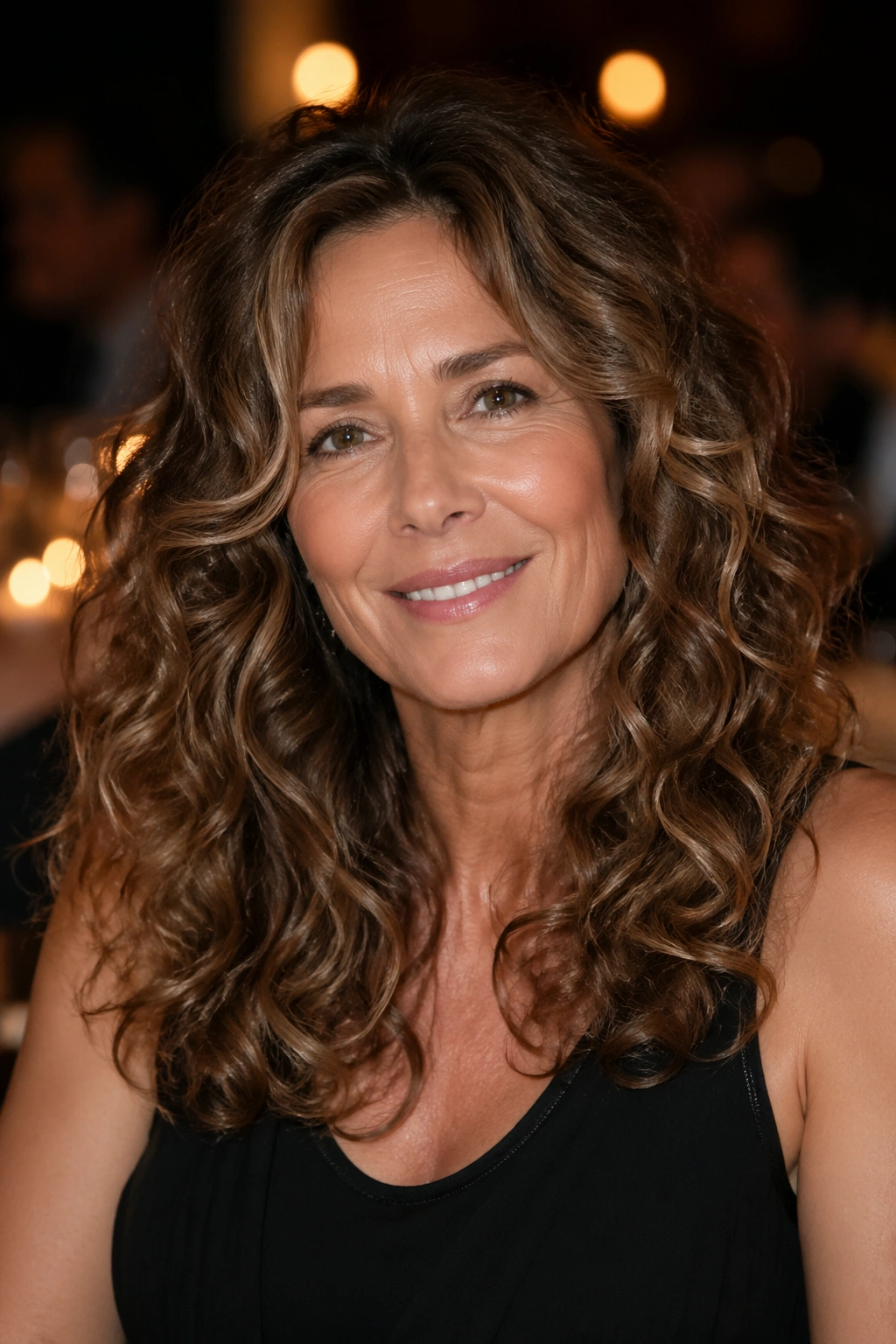
Loose curls are at their best when they create a round, balanced outline instead of going full barrel-shaped at the bottom. For long hair, that rounded silhouette keeps the style soft and elegant. It also makes curls read as healthy and full, which is a nice bonus if your hair has become a little finer over time.
I like this style on layered hair because the curls sit on top of one another more naturally. Use a 1.25-inch iron or hot rollers, curl away from the face, and let the curls cool completely before brushing them out with your fingers. If you brush too soon, the shape collapses and the whole thing turns puffy. A light hold spray is enough; you do not need helmet hair.
This is a good choice for events, dinner, or any day when you want your long hair to feel dressed up without being stiff. It has movement, but not chaos.
12. Long Hair with Bottleneck Bangs
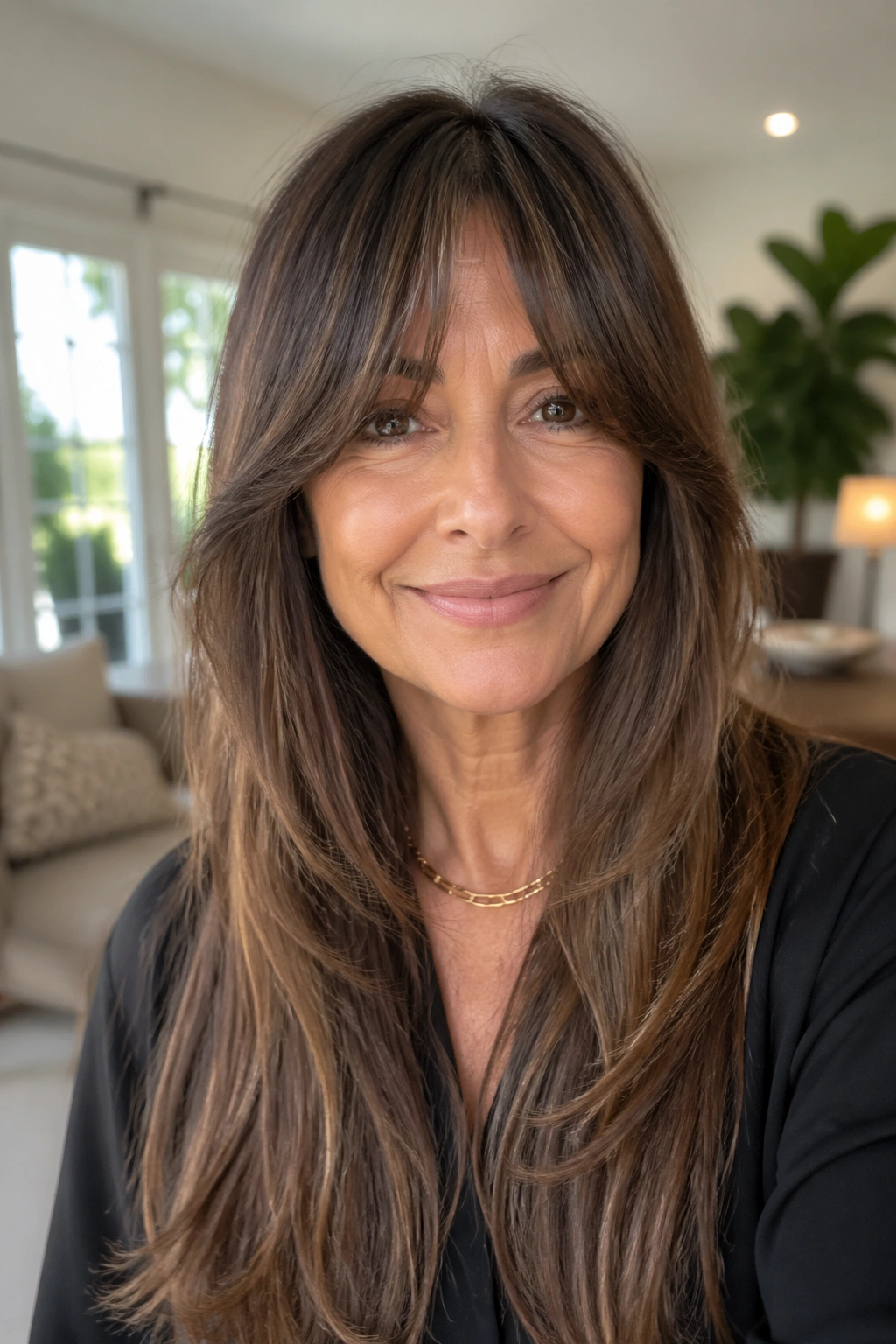
Bottleneck bangs sit somewhere between curtain bangs and full fringe, and that middle ground is exactly why they work so well. They’re a little shorter in the center, longer toward the sides, and soft enough to blend into long hair without taking over the whole look. For women over 40, that makes them a nice option if you want change but don’t want a blunt, heavy bang.
They bring focus to the eyes and cheekbones without locking you into a strict style every day. Wear them air-dried and piecey, or blow them smooth and curved. The sides should connect to the rest of the cut in a way that feels almost invisible, which is a fancy way of saying the transition matters more than the bang itself.
What to watch for
- They need a little daily styling.
- Fine hair benefits from light root lift.
- Very curly hair needs a curl-by-curl plan.
- They grow out better than blunt fringe.
Small detail, big payoff: keep the center short enough to matter, but not so short that it feels like a middle-school bang comeback.
13. The Half-Up Twist
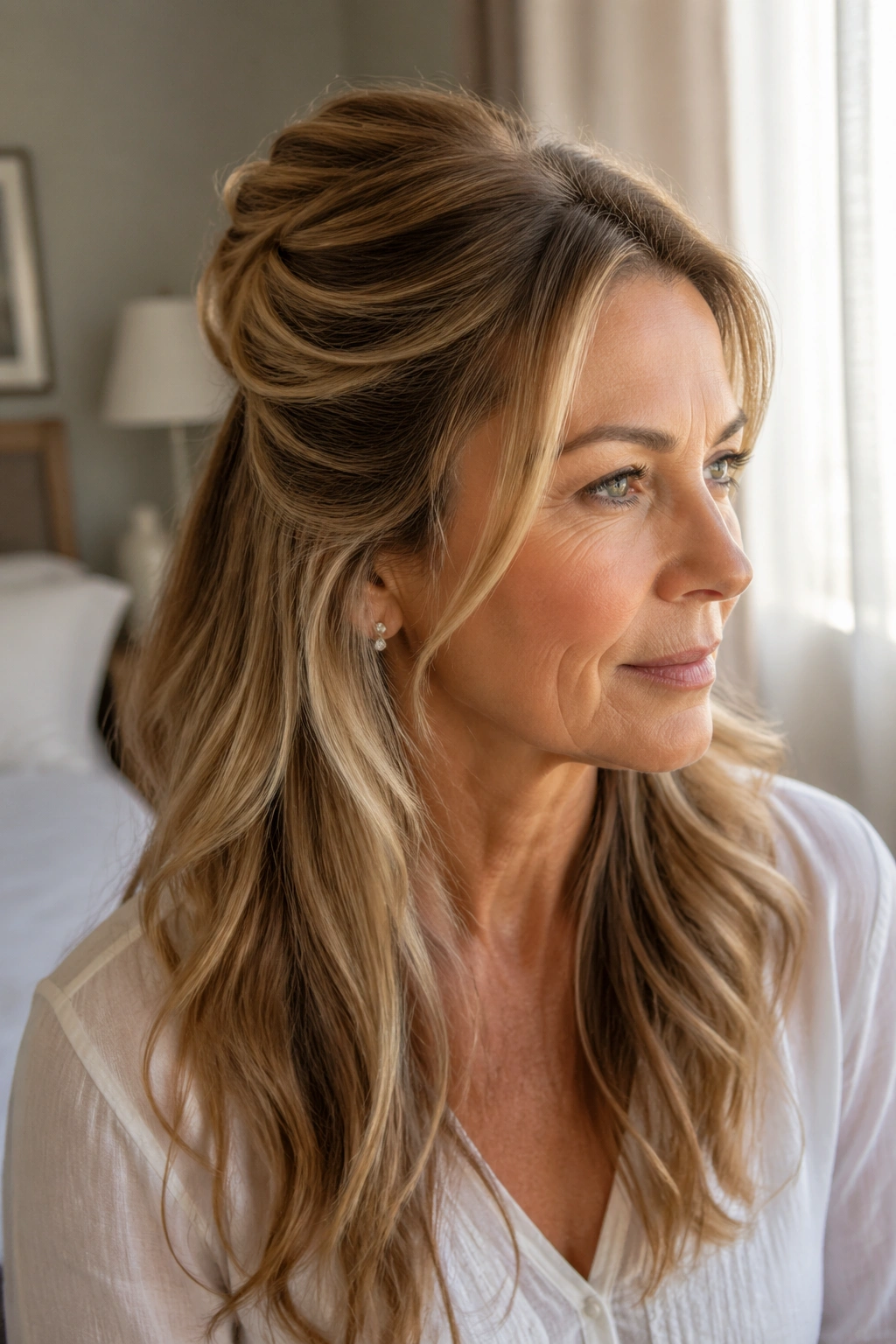
The half-up twist is one of those styles people overlook because it sounds too simple. It isn’t. On long hair, it creates shape at the crown, keeps the front pieces away from the face, and leaves the length down where you can still enjoy it. That makes it useful for busy days and nicer ones alike.
A good twist should look soft, not over-tight. Pull back only the top section, twist each side toward the back, and pin them together just below the crown. Let a few shorter layers fall around the temples if you want the style to feel relaxed. If the hair is slippery, a small amount of dry texture spray helps the pins stay put.
I like this look because it works on straight hair, waves, and curls without much fuss. It is the kind of style you can do in under five minutes and still look like you tried.
14. The Half-Up Ponytail with Crown Lift
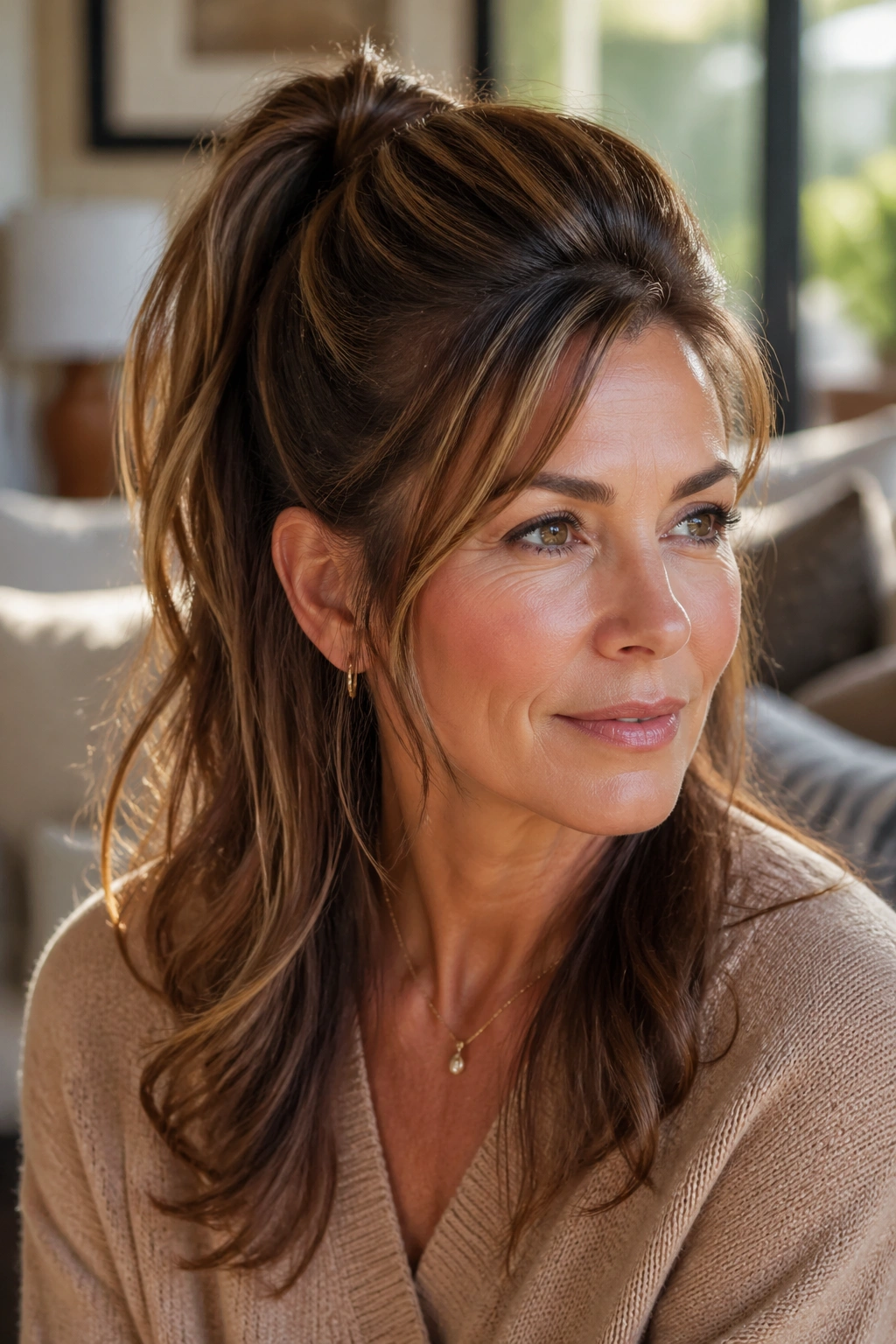
This version has a little more energy than a simple twist. Pulling the top half into a ponytail lifts the crown, gives the face room, and keeps long hair from sitting too flat on the shoulders. It’s one of the easiest long hairstyles for women over 40 who want volume without heat styling.
The crown lift matters. Tease just the roots very lightly, or use your fingers to push the hair up before securing the elastic. Don’t yank it tight. The point is fullness, not tension. A wrapped elastic or a strand of hair around the base makes the ponytail look finished instead of gym-ready.
This style is especially good on day-two hair. The natural oils help the top section stay put, and the loose lengths look softer than freshly washed hair sometimes does. Strange, but true.
15. The Low Ponytail with a Wrapped Base
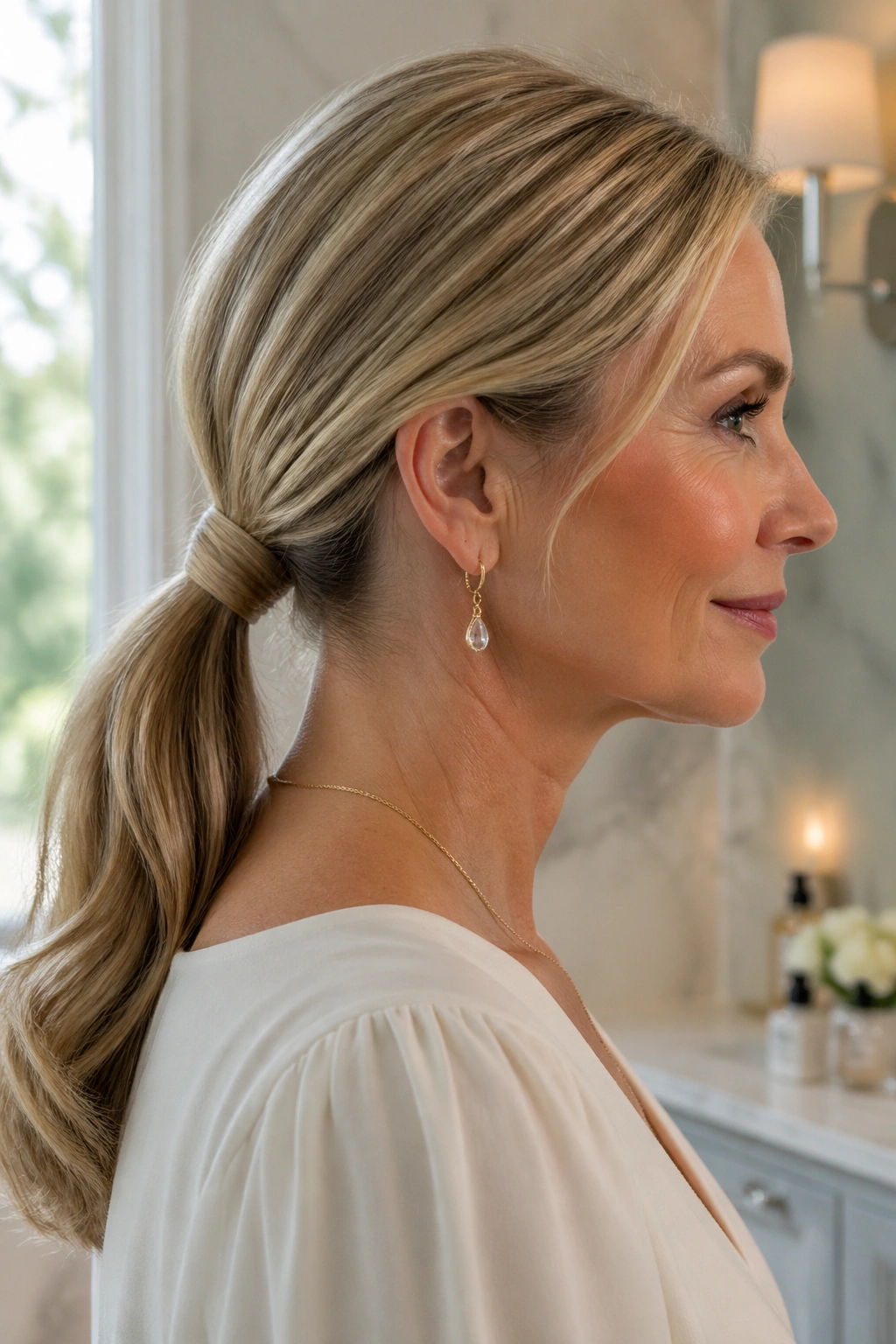
There’s nothing boring about a low ponytail when it’s done properly. On long hair, it can look crisp and refined, especially if the base is wrapped with a section of hair so the elastic disappears. That tiny detail changes everything. It turns a basic tie-back into a style.
This works well for women who want polish without volume at the sides. Keep the ponytail low at the nape, smooth the top with a brush or comb, and leave the ends loose and healthy-looking. If your hair is layered, a little bending or a light wave through the tail keeps the ends from feeling too blunt. Straight, sleek lengths can look elegant too; it just depends on the mood.
One note: don’t make it too tight. A ponytail that pulls at the temples can age the face in a way no one wants. Soft tension wins.
16. The Braided Crown with Loose Ends
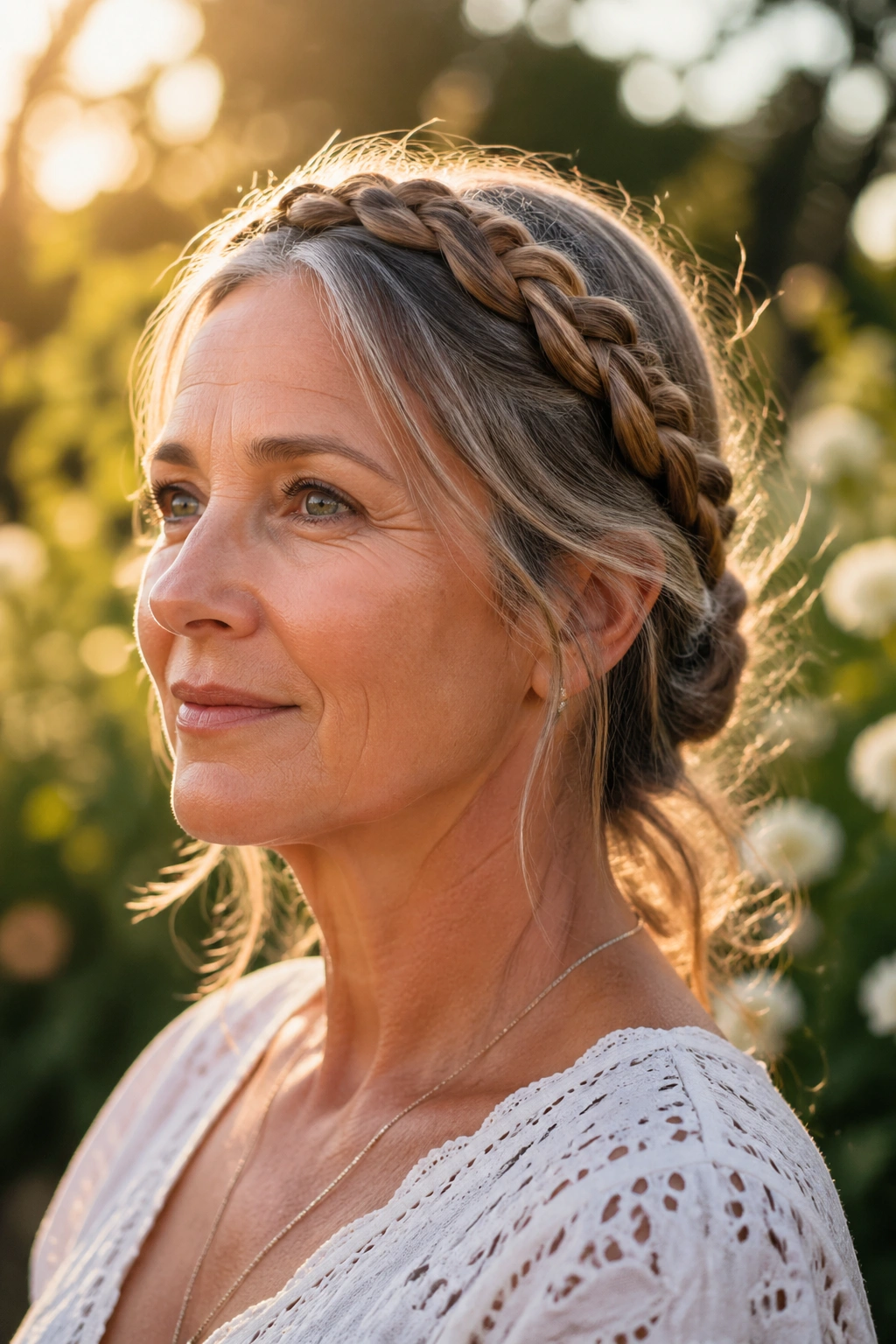
A braided crown is one of the best long styles when you want the hair out of the way but still want the length to show. It wraps around the head like a halo, which sounds a little precious until you see how useful it is. It keeps bulk controlled and gives the whole style a romantic shape.
The trick is to keep the braid relaxed. Tight braids can look severe and pull too hard on the scalp. Leave a bit of softness around the hairline and let the ends fall loose at the back or tuck them in if you want a neater finish. This style works especially well when the hair has a natural wave or a little texture, because the braid holds better and looks less rigid.
I’d call this a good choice for weddings, dinners, or any day you want long hair to feel special without pinning it all up. It’s practical, too, which I always appreciate.
17. The Side Braid Draped Over One Shoulder
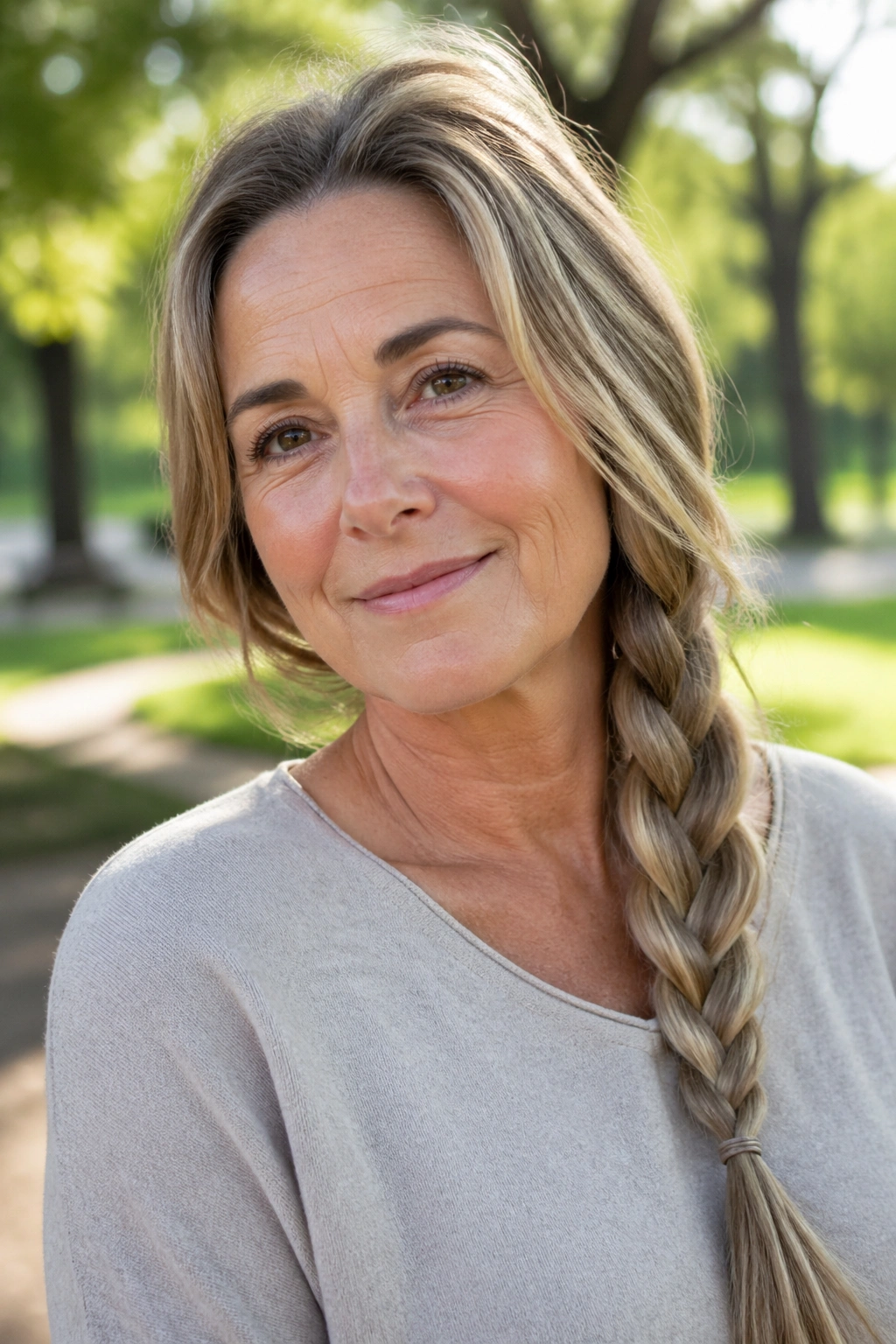
A side braid is one of the easiest ways to make long hair look intentional on a day when you cannot be bothered to do much. Pulling it over one shoulder gives the face a softer frame and keeps the braid visible, which is nice if your hair has thickness or dimension.
The best side braids aren’t too tight. Loosen them a little after tying so they look fuller and less severe. If your hair is fine, lightly rough up the crown before braiding. If it’s thick, the braid can stay more compact without disappearing. A clear elastic at the end, then a small wrap of hair around it, keeps the finish clean.
This style is dependable. That sounds plain, but plain is useful when you need it to work in ten minutes. Sometimes that’s the whole point.
18. The Waterfall Braid on Long Layers
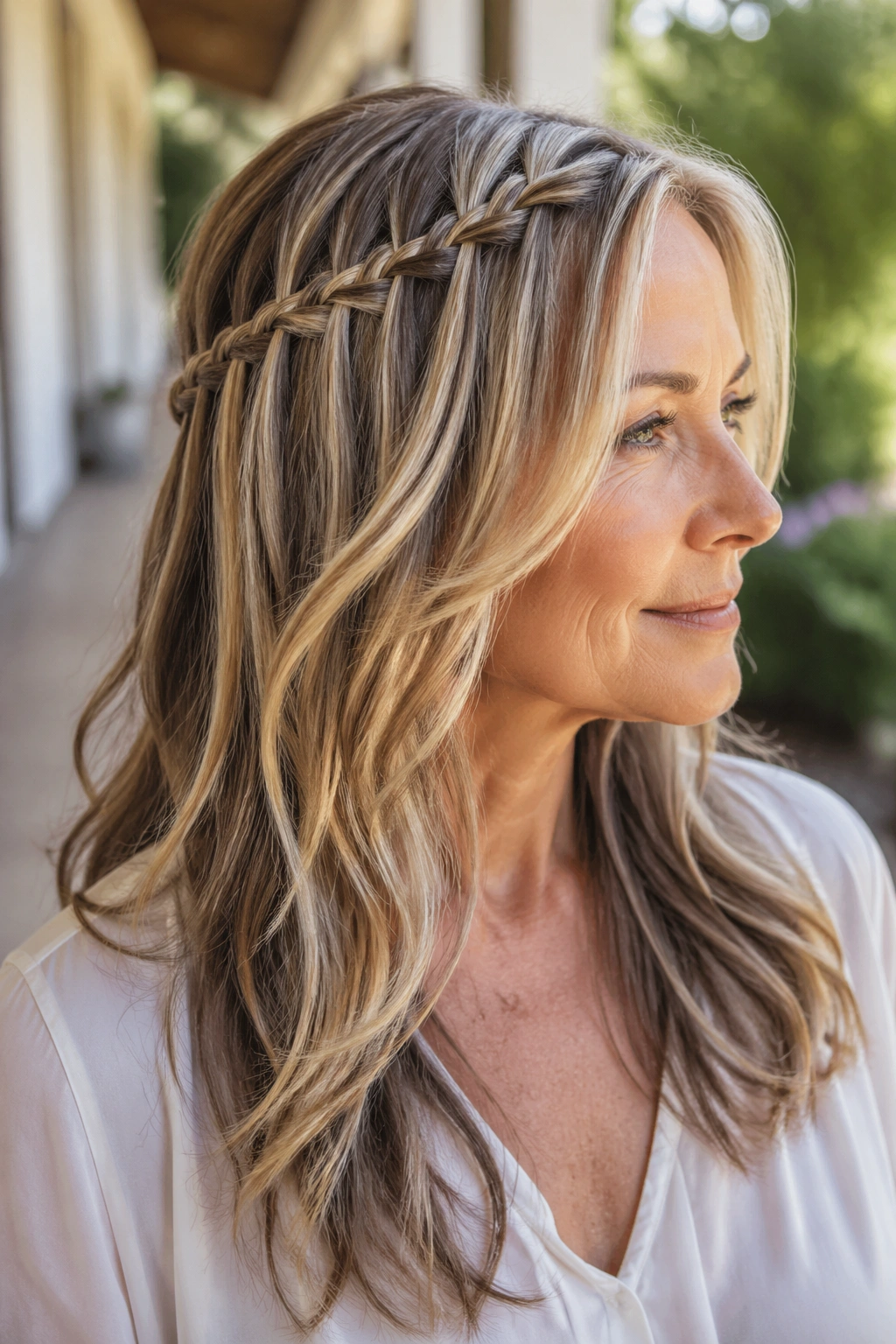
The waterfall braid looks more complicated than it is, which is part of its charm. One section drops through the braid instead of being pulled all the way in, so the hair seems to flow through the pattern. On long layers, that movement looks especially pretty because the strands that fall out have enough length to matter.
This style is a nice choice if you want detail without committing to a full braid or an updo. It works best on hair that has some grip — not bone-straight, slippery hair unless you add texture spray first. Keep the braid loose enough that it doesn’t pinch at the scalp, and don’t worry if it isn’t perfectly uniform. A little irregularity helps it look softer.
It’s one of those styles that gets more compliments than effort would suggest. I never mind that.
19. The Twisted Half-Up Style
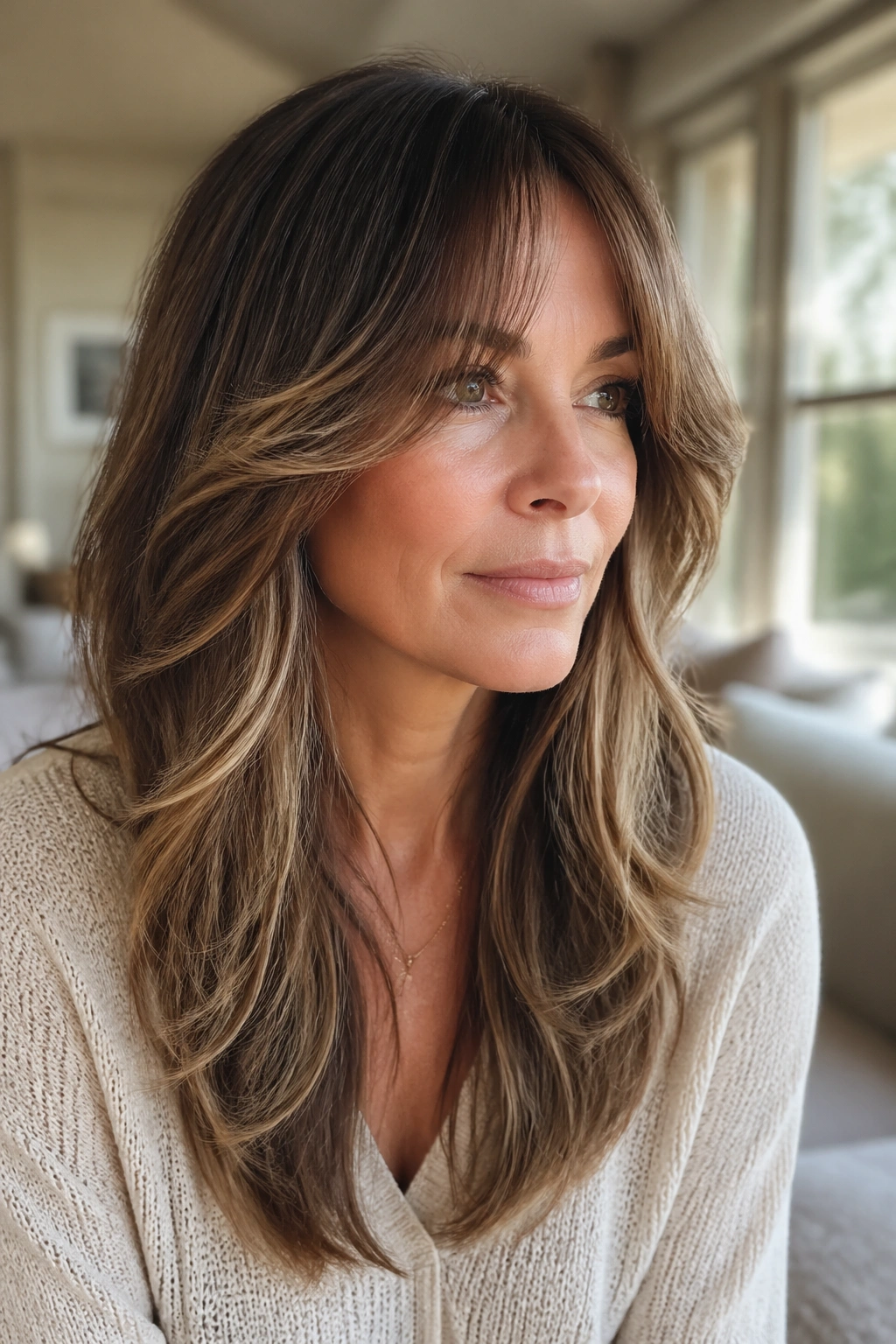
A twisted half-up style gives you the shape of an updo without losing the length. Twist two sections back from the temples, meet them at the crown or mid-back of the head, and pin them. That’s it. But the details matter: the twists should be loose, and the pinned spot should disappear into the rest of the hair.
This is a nice option when your hair has a little natural wave or the ends are slightly bent from the previous day. The texture helps the twists hold. If the hair is very fine, a bit of powder or dry shampoo at the roots gives the style some grip. I also like leaving the bottom lengths brushed out rather than too curled. It keeps the look modern.
It’s a quiet style, not a loud one. That’s part of why it works so well on long hair.
20. Long Hair with Invisible Layers
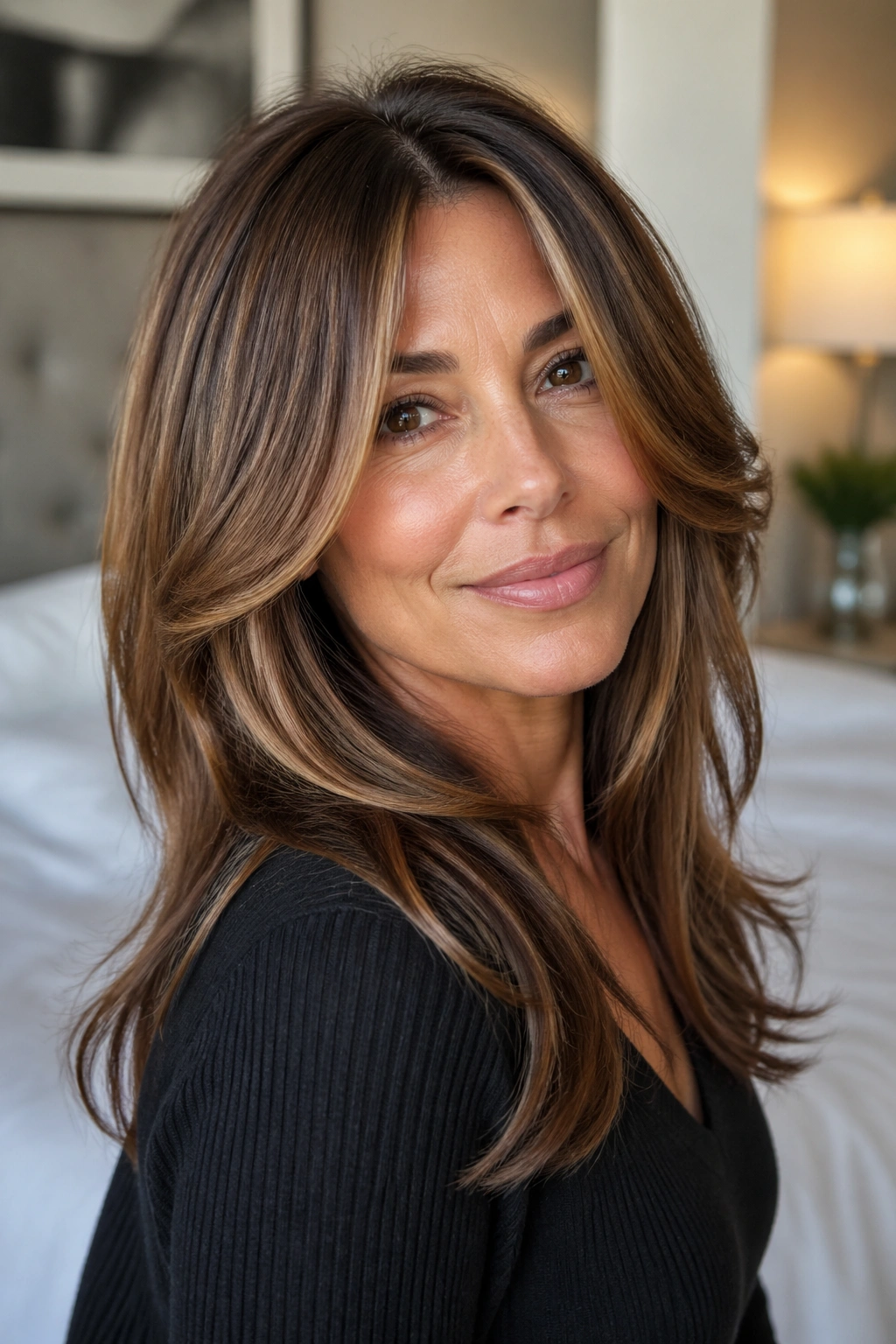
Invisible layers are for people who want movement without obvious steps in the cut. The hair looks mostly one length until it starts to swing, and then the hidden shape shows itself. This can be a lifesaver for women over 40 who like long hair but hate the choppy, over-layered look.
The beauty of this cut is subtlety. It keeps the edge looking full while preventing the whole style from falling like a curtain. Fine hair often benefits because the ends still look thick, and thicker hair benefits because the weight comes off in a smarter way. It also grows out nicely, which matters more than people admit.
If you want a long style that feels expensive but not fussy, invisible layers are a strong choice. They don’t announce themselves. They just work.
21. The Textured Ponytail
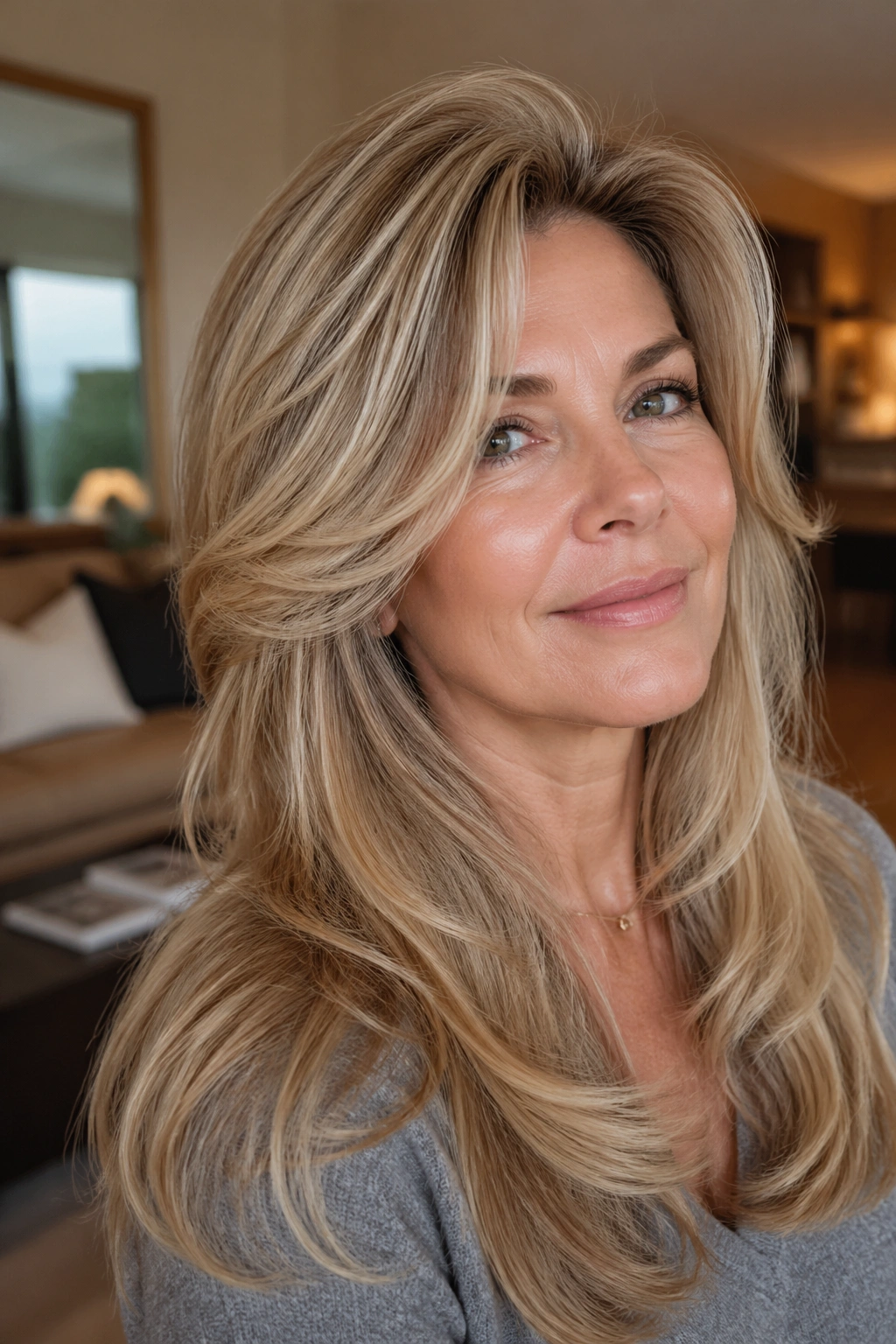
A textured ponytail is not the same thing as a brushed-back gym ponytail. This one has movement, lift, and a little personality. Start with loose waves or bend the hair with a curling iron first, then pull it into a ponytail and leave a few face-framing pieces out. That gives the style shape and keeps it from looking severe.
The placement can change the whole mood. High ponytail = energetic. Mid-height = easy. Low and loose = relaxed but tidy. If the hair at the crown needs help, lift it with your fingers instead of flattening it with a brush. The goal is controlled looseness, not slick perfection.
I like this look for long hair because it’s honest. It shows the length, but it doesn’t ask the hair to pretend it’s something else.
22. The Polished Low Bun with Face-Framing Pieces
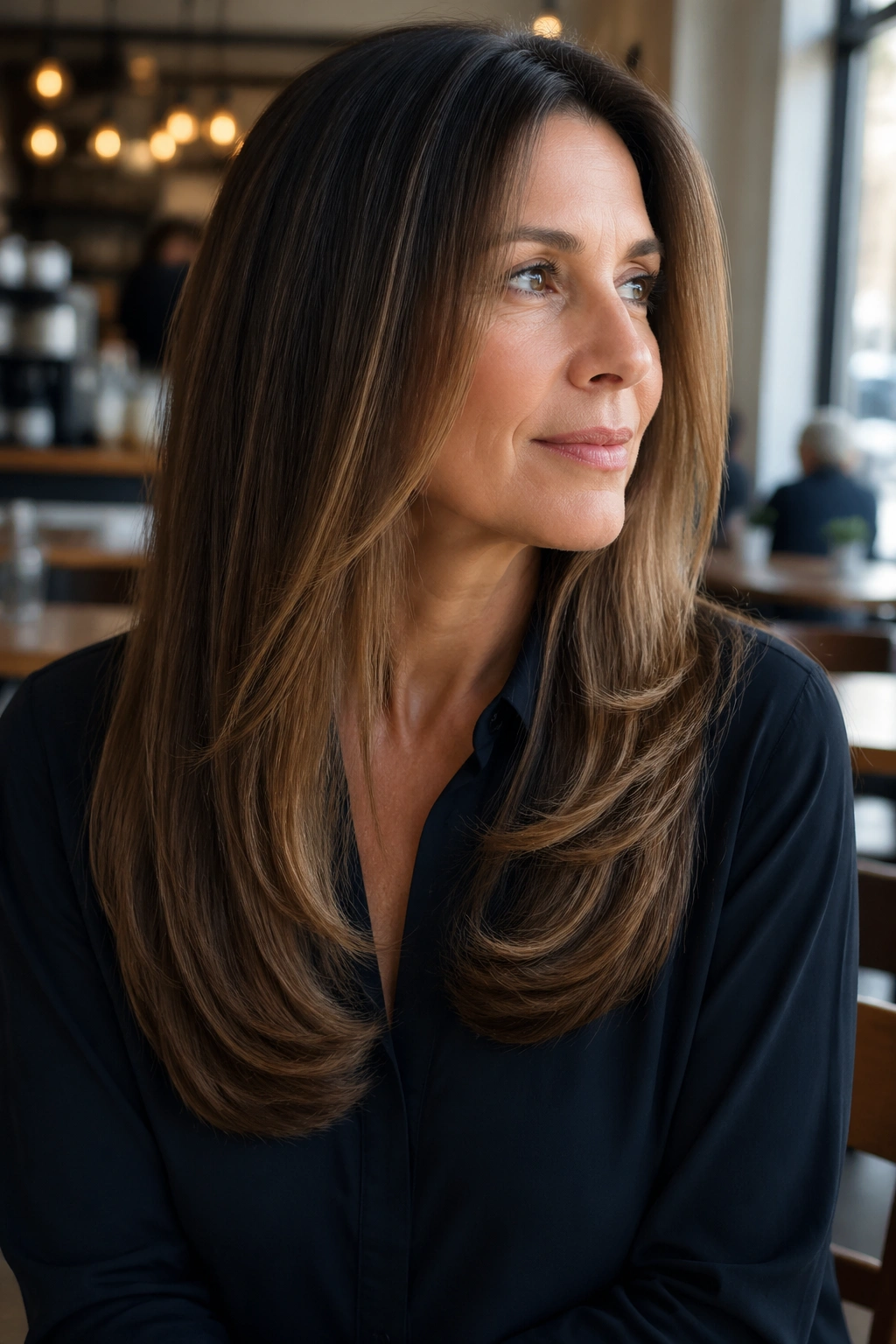
A low bun can be plain or it can look quietly elegant. The difference usually comes down to two things: smoothness at the crown and softness around the face. Leaving a couple of face-framing pieces out keeps the bun from feeling too tight, while a neat nape keeps the style grounded.
This is a strong option for long hair when you want everything off your shoulders but still want the look to feel deliberate. Twist the lengths into a bun at the nape, pin it securely, then gently tug a few pieces free near the temples if you want movement. A shine spray on the surface can make the whole style look cleaner without making it stiff.
It suits dresses, blouses, and jackets that have a good neckline. That matters more than people think. Hair and clothing need to talk to each other.
23. The Looped Half-Up Knot
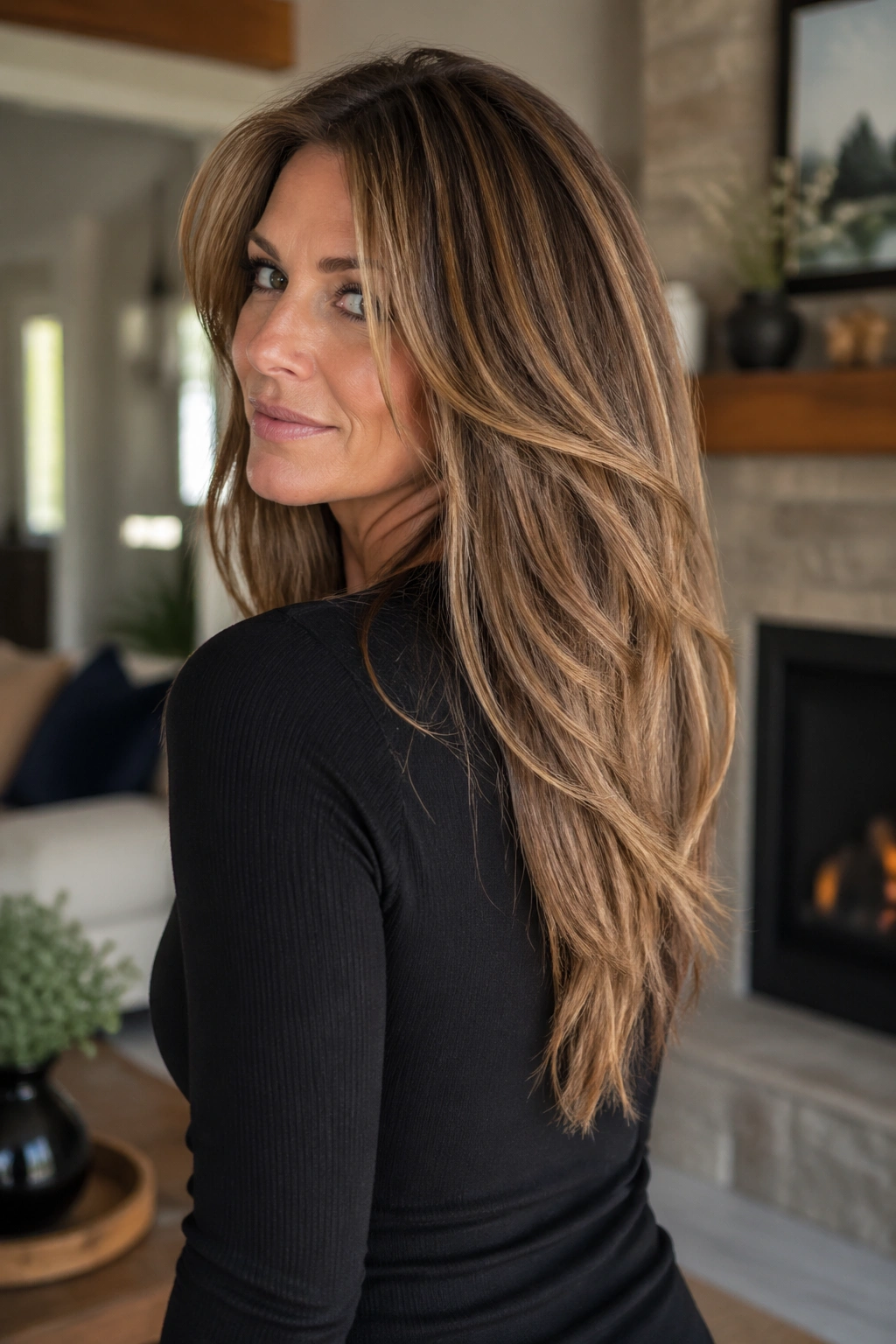
The looped half-up knot is a nice middle point between a bun and a ponytail. You gather the top section, loop it once or twice through the elastic, and leave the ends tucked or softly fanned out. It gives the crown shape and keeps the style from feeling too flat.
Long hair does this look well because there’s enough length to make the loop visible. If you have layers, let a few shorter pieces fall naturally around the sides. That makes the knot feel less rigid. A texturizing mist helps, especially if your hair is silky and likes to slip apart the second you step outside.
I use this style mentally as a “good enough but still nice” option. Which sounds modest, but honestly, those are the styles people wear most.
24. Voluminous Curls with a Side Sweep
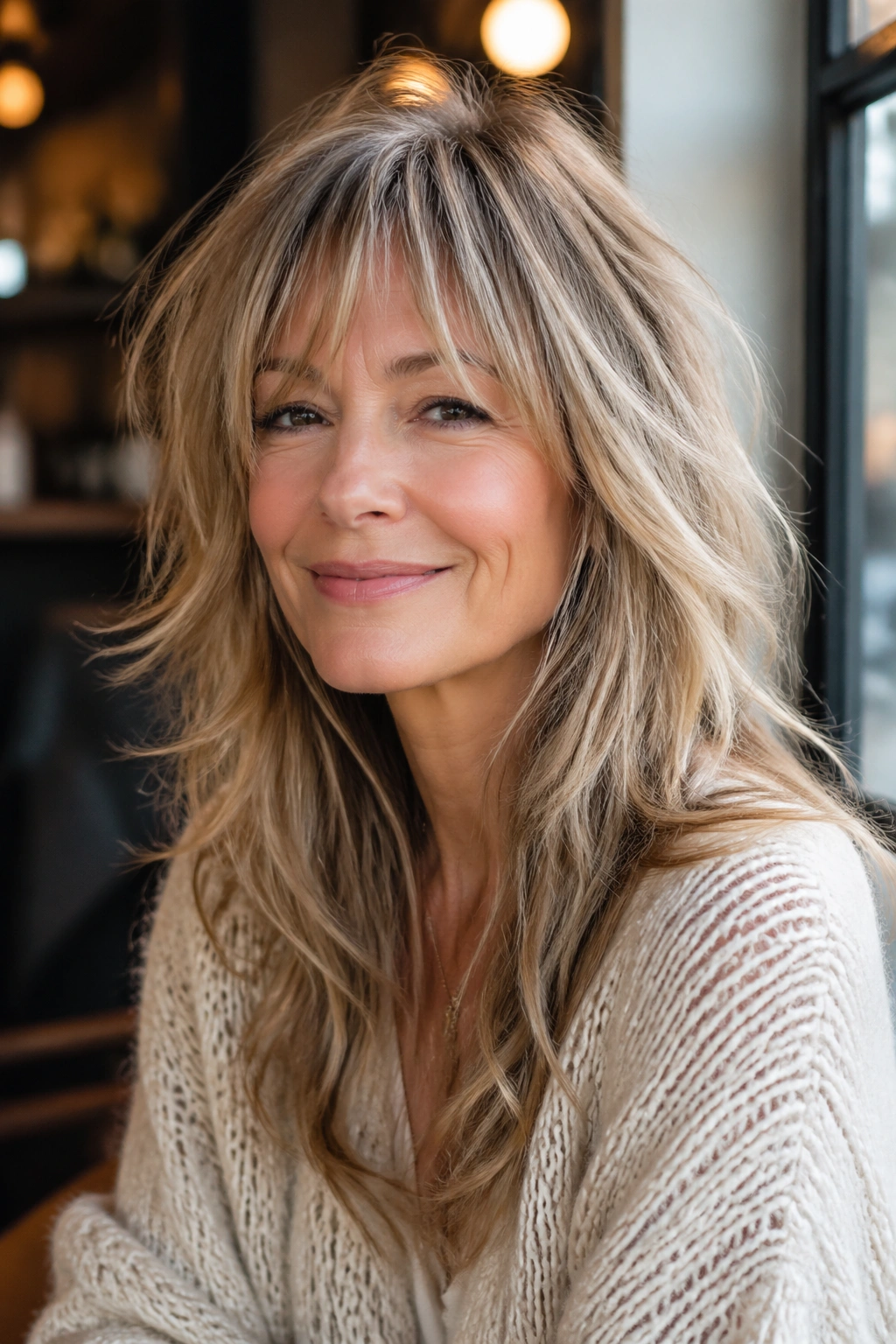
Big curls can be beautiful on long hair when they’re shaped with a side sweep instead of falling evenly on both sides. That asymmetry adds lift and keeps the style from becoming too round or too predictable. It also gives the face a softer frame, which is flattering when you want a little drama without going full retro.
To get the look, curl the hair in sections, pin the curls while they cool if you want extra hold, and then sweep a larger front section to one side. A light brush-through after the curls set makes them softer and more natural. If you prefer more structure, stop before the curls are fully brushed out. Either way, the side sweep is doing a lot of the work.
This is not an everyday style for most people, and that’s fine. Some hair should occasionally make a scene.
25. Air-Dried Natural Waves
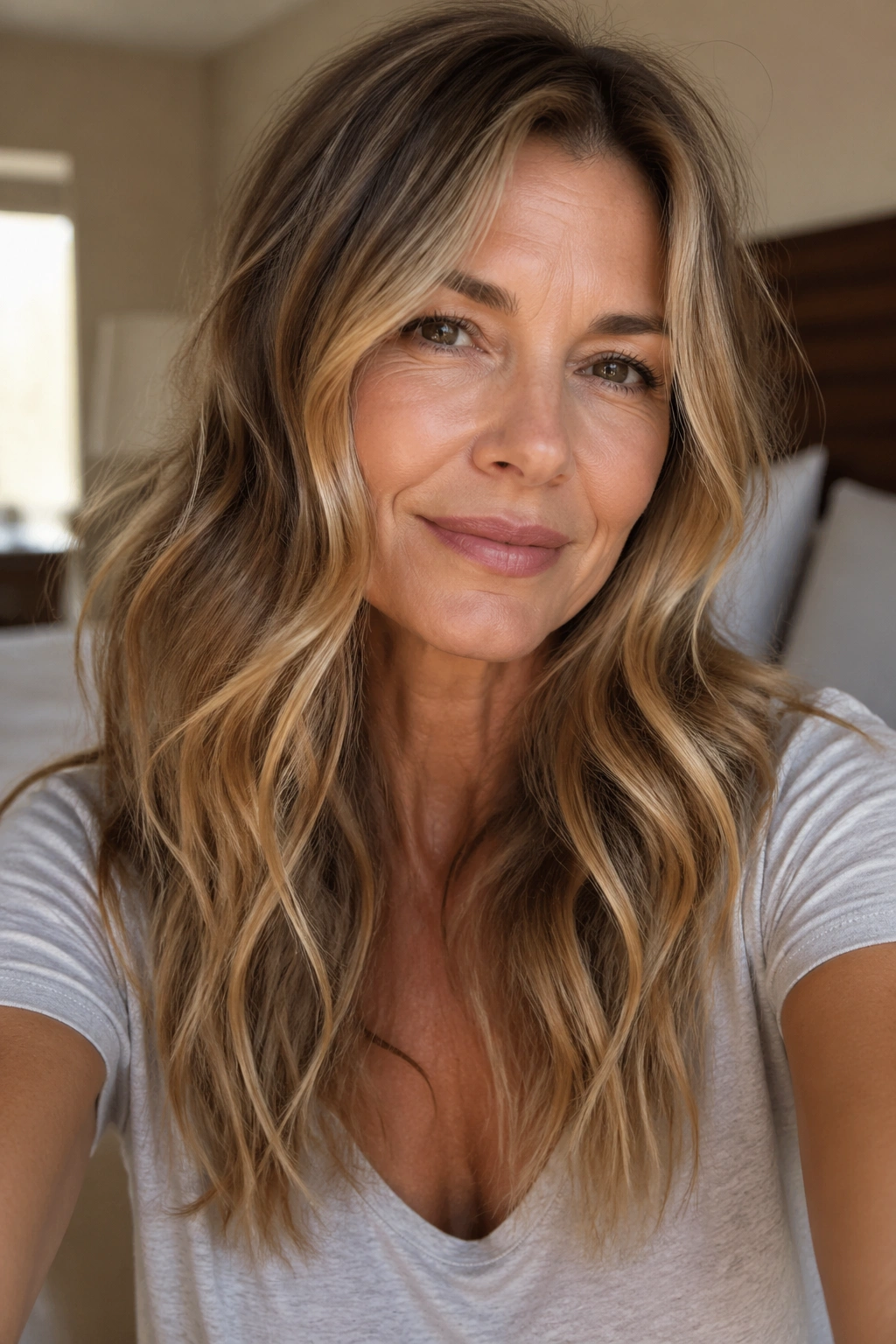
Air-dried waves are one of the most honest ways to wear long hair. They show your real texture, which can be slightly bent, loose, frizzy, or somewhere in the middle. The trick is giving the hair enough support to dry in a shape you can live with. A leave-in conditioner, a curl cream or light mousse, and a little scrunching go a long way.
The important thing is not to keep touching it while it dries. That’s how soft waves turn into frizz and weird triangles. Let the hair form, then break it up with your fingers once it’s fully dry. On women over 40, this style can look especially good because it feels relaxed and low-pressure without looking careless.
If you’ve spent years forcing your hair into a finish it doesn’t want, this style can feel like relief. Not every good look needs heat.
26. The Long Wolf Cut
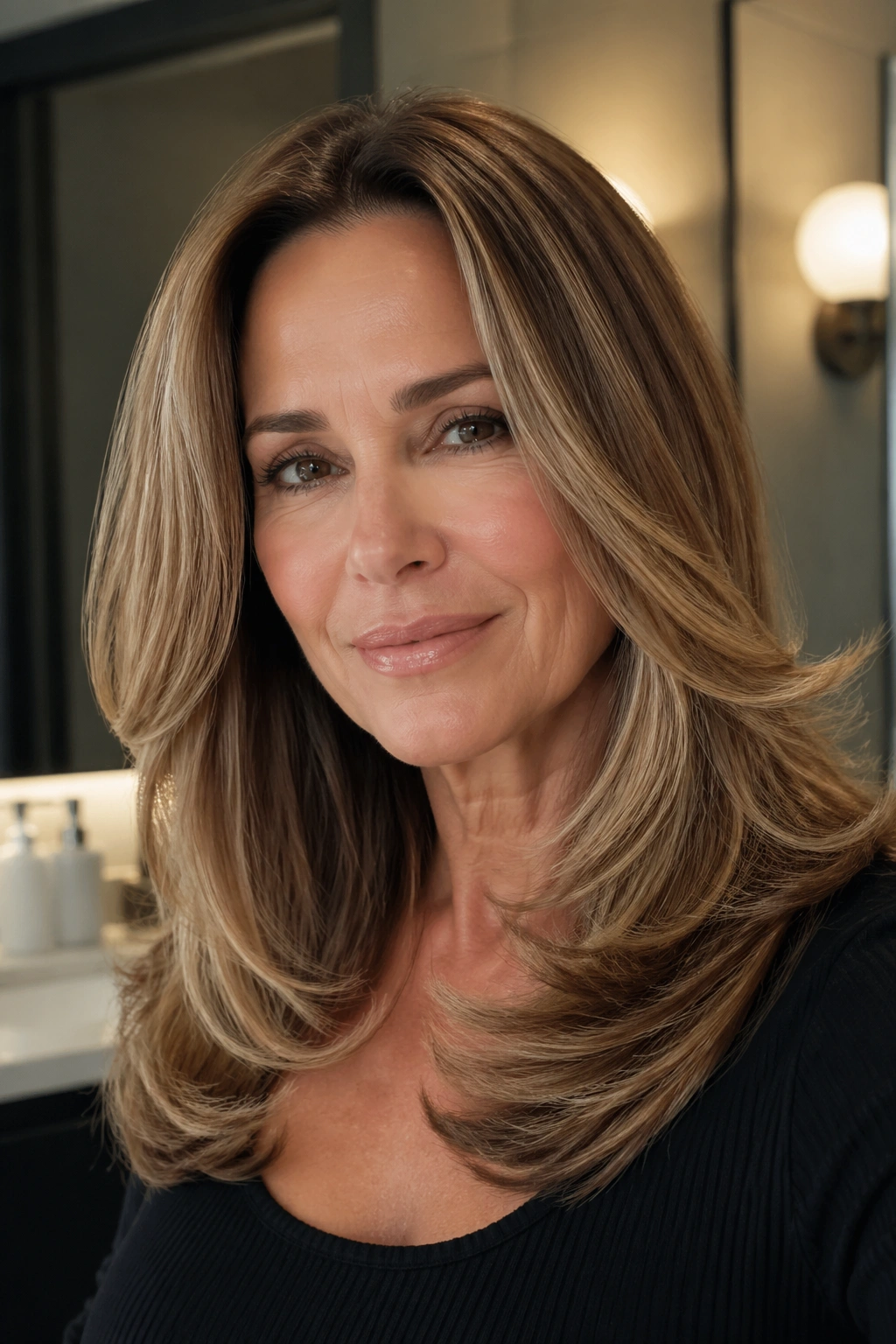
The long wolf cut is the boldest option here, and it is not shy. It mixes shaggy layers, a little mullet energy, and plenty of texture while keeping the length long enough to feel feminine and versatile. If you want something with edge, this is the cut that says so out loud.
What makes it interesting is the contrast between the shorter crown and the longer lower lengths. The top gets lift. The bottom keeps drama. That’s why it can be flattering on hair that has lost volume or feels too uniform. It does need a stylist who understands balance, though. If the layers are too chopped or too short around the face, it can look accidental instead of stylish.
This cut is best for people who don’t want polite hair. It has personality. Lots of it.
27. The Low Bubble Ponytail
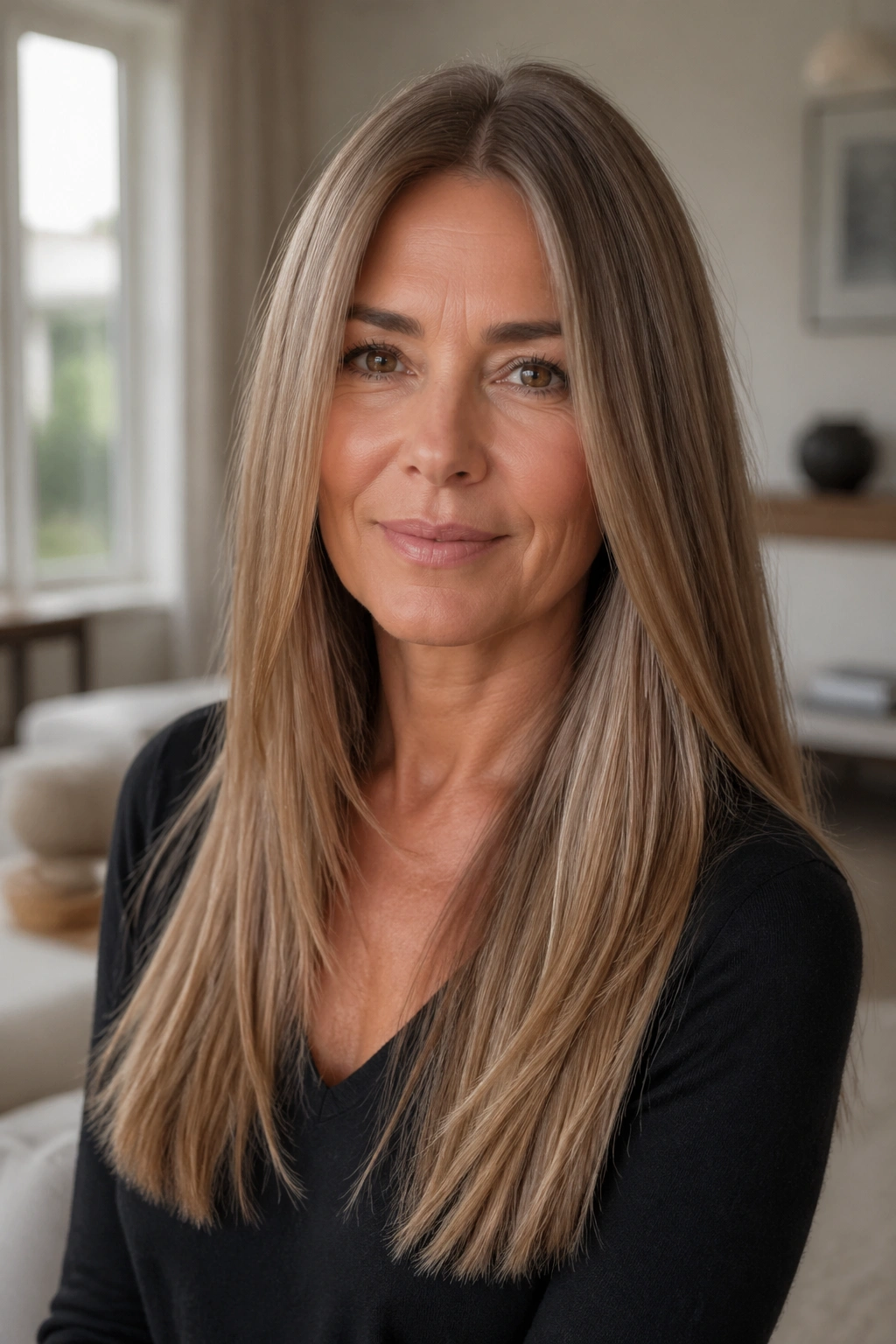
A low bubble ponytail is a fun way to make long hair feel current without needing an elaborate set of tools. You secure the hair low at the nape, then add elastics every few inches down the tail, gently pulling each section outward to form soft bubbles. It sounds playful because it is, and that’s part of the appeal.
The style works best when the top stays smooth and the bubbles have enough fullness to read from a distance. If your hair is fine, tease each section a little before puffing it out. If it’s thick, you may need larger spacing between elastics so the bubbles don’t turn cramped. A strand wrapped around the first elastic keeps the base clean.
It’s a good example of a style that can look polished or casual depending on the finish. Smooth at the crown, soft through the tail, and suddenly long hair feels a lot more interesting than a plain ponytail.
Final Thoughts
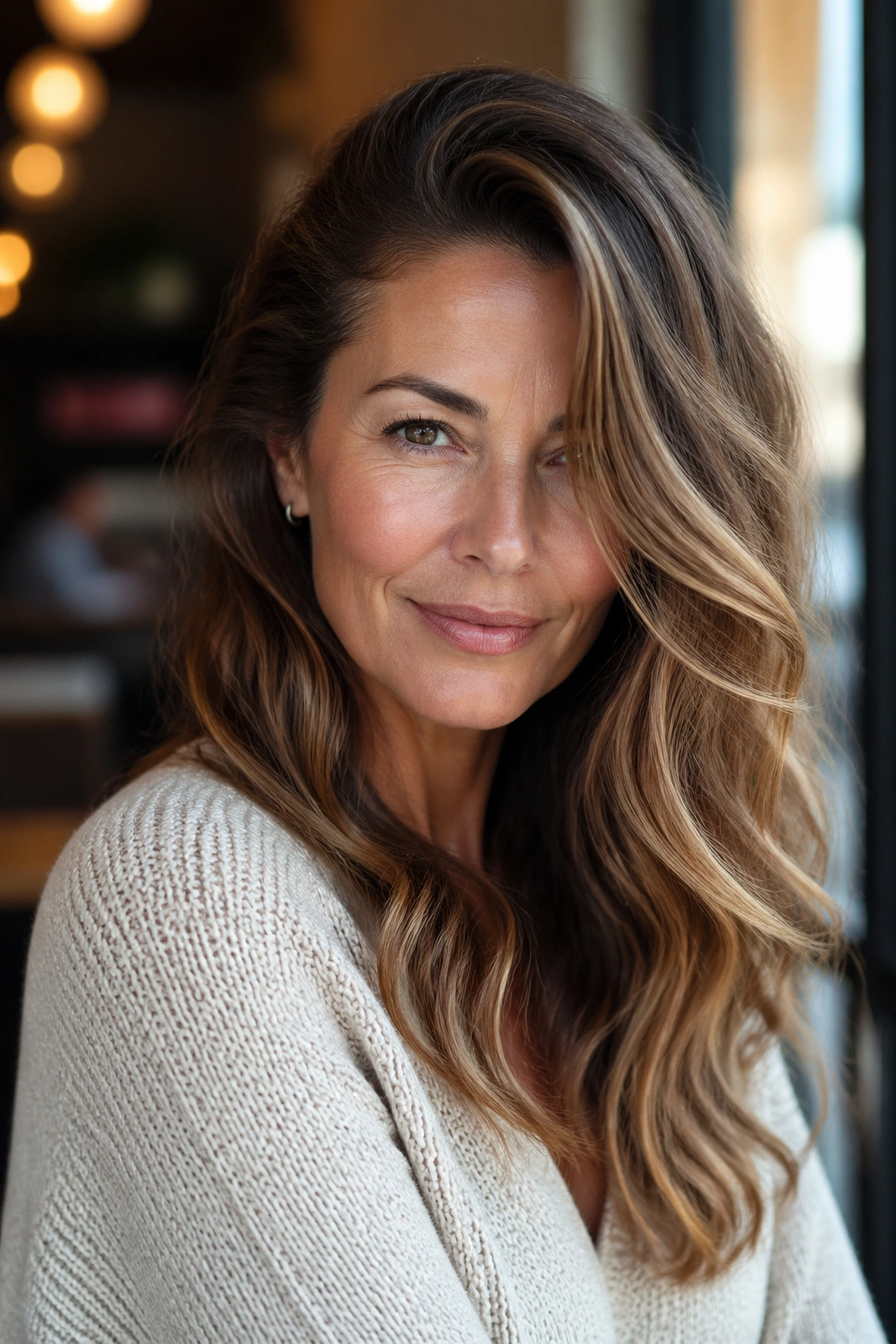
Long hair after 40 is not a problem to solve. It’s a shape to manage well. The cuts and styles that work best tend to do the same few things: they keep movement near the face, stop the ends from looking dragged out, and make the whole head of hair feel intentional.
If you want the easiest starting points, I’d reach for long layers with curtain bangs, a clean U-shape, or soft face-framing layers. If you want more personality, the long shag, butterfly cut, or wolf cut bring plenty of it. And if you’re mostly trying to get through the week looking neat, a low ponytail, half-up twist, or polished bun can carry a surprising amount of weight.