



Short hairstyles for women over 40 work best when they do more than remove length. They should lift the face, lighten the neck, and make the whole look feel deliberate, not like you just got tired of your hair and chopped it off in a parking lot.
That’s the part people miss.
A fresh short cut has shape. It has movement in the right place. It knows when to skim the jaw, when to open up the cheekbones, and when to stop before it gets too severe. The best versions don’t try to hide age, gray, or texture. They work with all of it and make the hair look healthier because the structure is doing some of the heavy lifting.
A bad short cut, on the other hand, can age you fast. Too blunt and it turns heavy. Too wispy and it looks thin. Too long in the wrong spots and it just hangs there. The sweet spot is usually somewhere between clean edges and soft movement, with a little room for your hair’s natural pattern to show through.
1. Chin-Length French Bob
A chin-length French bob has a way of making hair look expensive without trying too hard. It sits right at the jaw, which gives the face a neat frame, and that length tends to work beautifully when you want structure but not stiffness.
I like this cut most on hair that has a little natural bend. You do not need perfect waves; you need enough movement so the ends don’t feel boxy. A quick blow-dry with a round brush or a flat brush and a bend at the ends is usually enough.
Best for: fine to medium hair, oval and heart-shaped faces, low-maintenance styling.
The charm here is the balance. It feels polished in the front, but not severe. If your hair tends to puff out at the sides, ask for soft internal layering so the bob hugs the head a bit closer.
2. Soft Layered Pixie
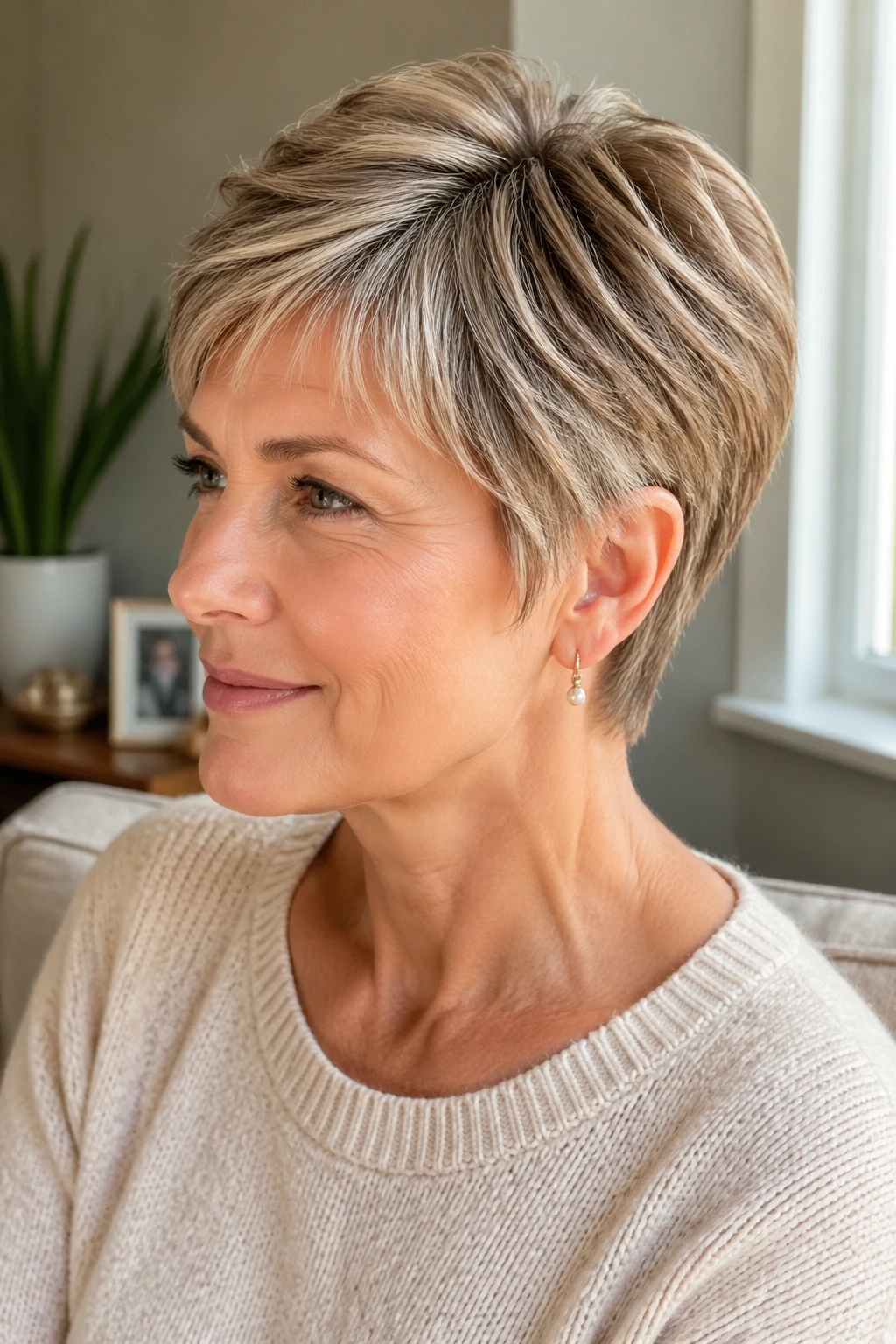
What makes a layered pixie feel fresh is the softness around the hairline. You want short pieces, yes, but you also want a little give near the temples and ears so it does not read as helmet-like.
This cut is especially kind to women with fine hair because the layers create lift at the crown without needing much product. A pea-sized dab of lightweight cream or paste is usually enough. Work it through the top, pinch a few pieces forward, and leave the rest alone.
The biggest mistake with pixies is overworking them into submission. Don’t do that. A good layered pixie should look touchable, slightly broken up, and easy to move with your fingers.
3. Side-Swept Crop
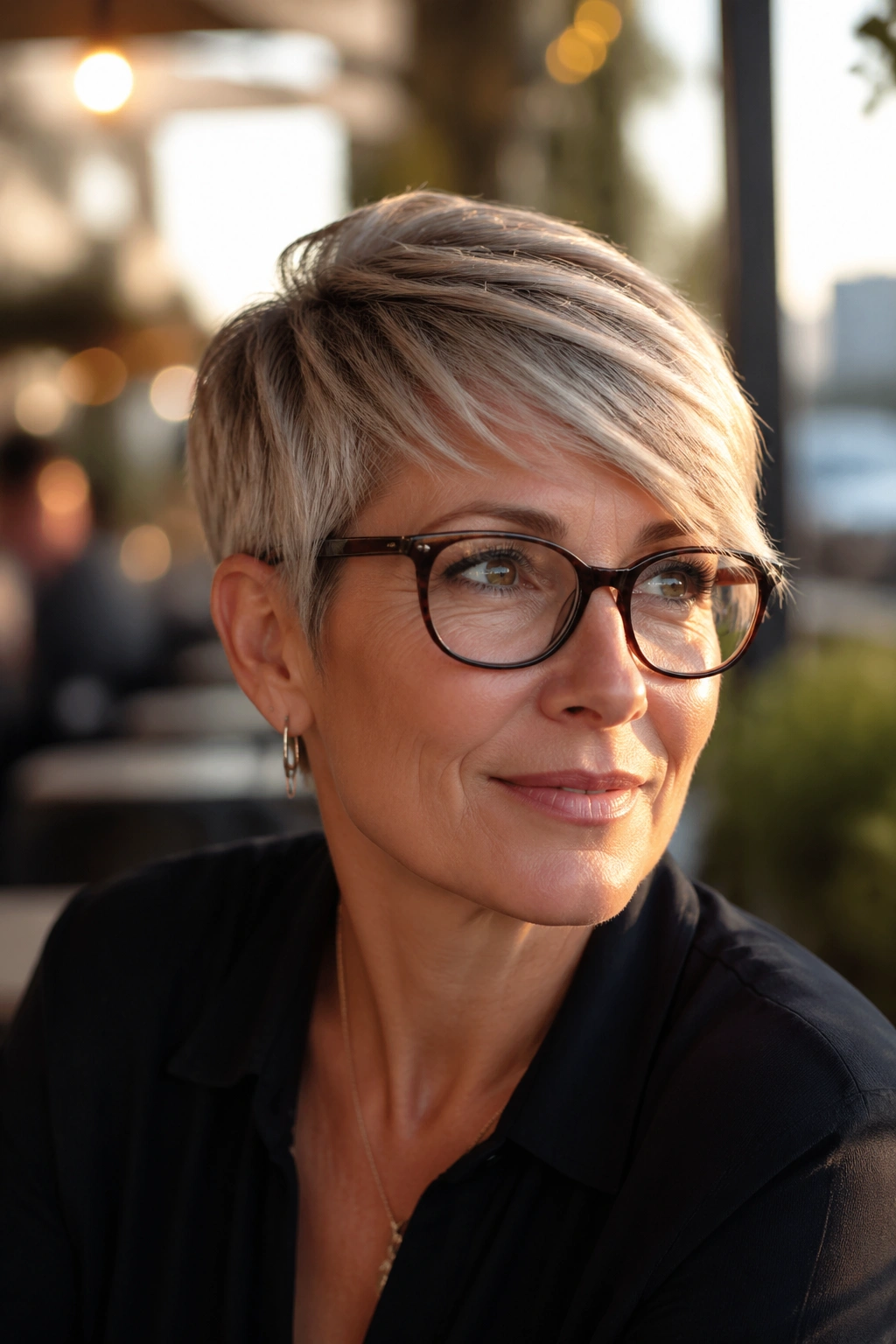
A side-swept crop changes the whole face in about five seconds. The diagonal line pulls attention upward and across, which softens the forehead and makes the cheekbones look a little higher.
If you wear glasses, this is one of those cuts that often plays nicely with frames because the side sweep keeps the front from crowding the eyes. It also works well for women who want short hair but do not want a fully exposed forehead.
A bit of root-lift spray at the front helps the shape stay open instead of collapsing flat by noon. Brush the fringe over with a vent brush or your fingers, and let the part stay a little loose. Tight parts can make this cut feel harder than it needs to be.
4. Textured Ear-Length Bob
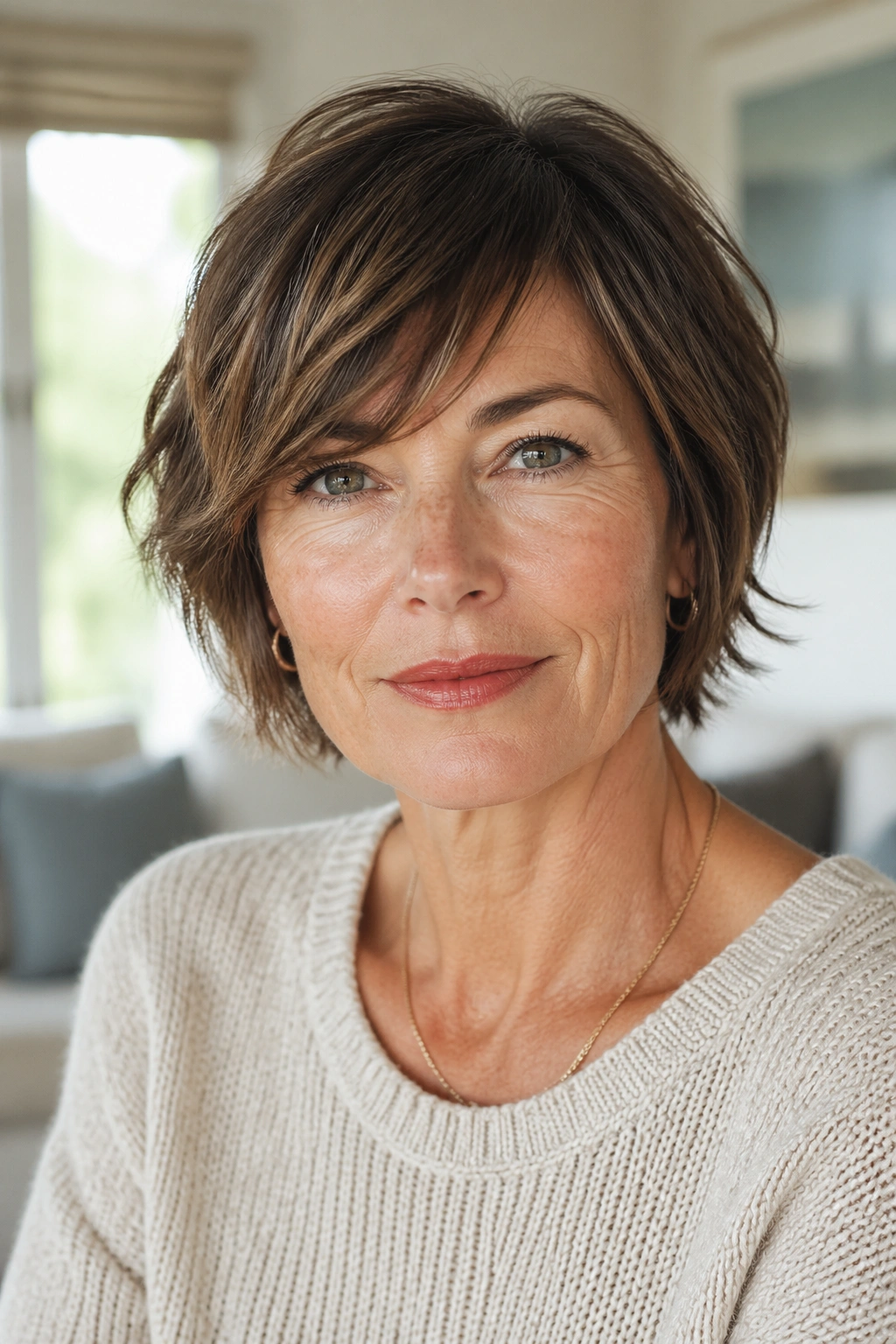
An ear-length bob is one of the easiest short hairstyles for women over 40 to live with because it feels cool, tidy, and casual at the same time. The texture keeps it from looking blocky, which is the whole trick.
This length is especially useful if your hair is thick but not coarse. The ear-length line gives shape, while the texture takes away that heavy helmet effect that some short bobs pick up. A razor-sharp finish is not necessary here; in fact, a slightly undone edge is often better.
I’d style it with a salt spray or a light texturizing mist, then scrunch or twist small sections while the hair is still damp. Once it dries, it should have that lived-in, slightly airy feel. Not messy. Just relaxed.
5. Piecey Shaggy Bob
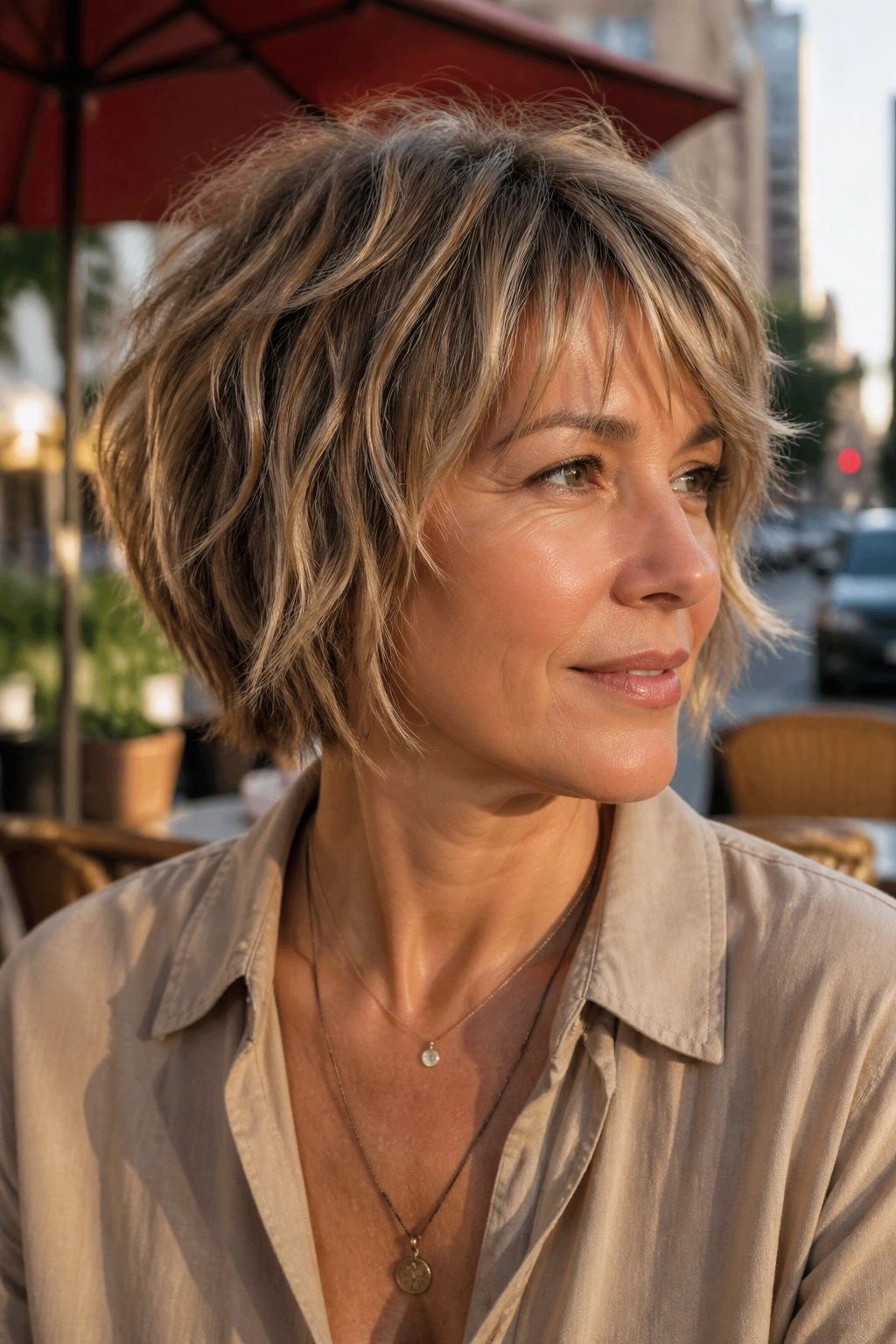
A piecey shaggy bob has attitude, but it still feels wearable. That’s why so many women keep coming back to it. It gives you layers around the face, movement through the ends, and a little bit of edge without getting into heavy styling territory.
Why It Works
The shaggy shape breaks up density, which is useful if your hair falls flat at the sides or tends to look too solid in a straight cut. The pieces around the face soften the line near the mouth and jaw, which is often where a harsh bob starts to feel aging.
A tiny bit of styling paste can do a lot here. Warm it between your palms, then pinch random sections at the ends and around the crown. The goal is separation, not stiffness.
6. Classic Blunt Bob with Movement
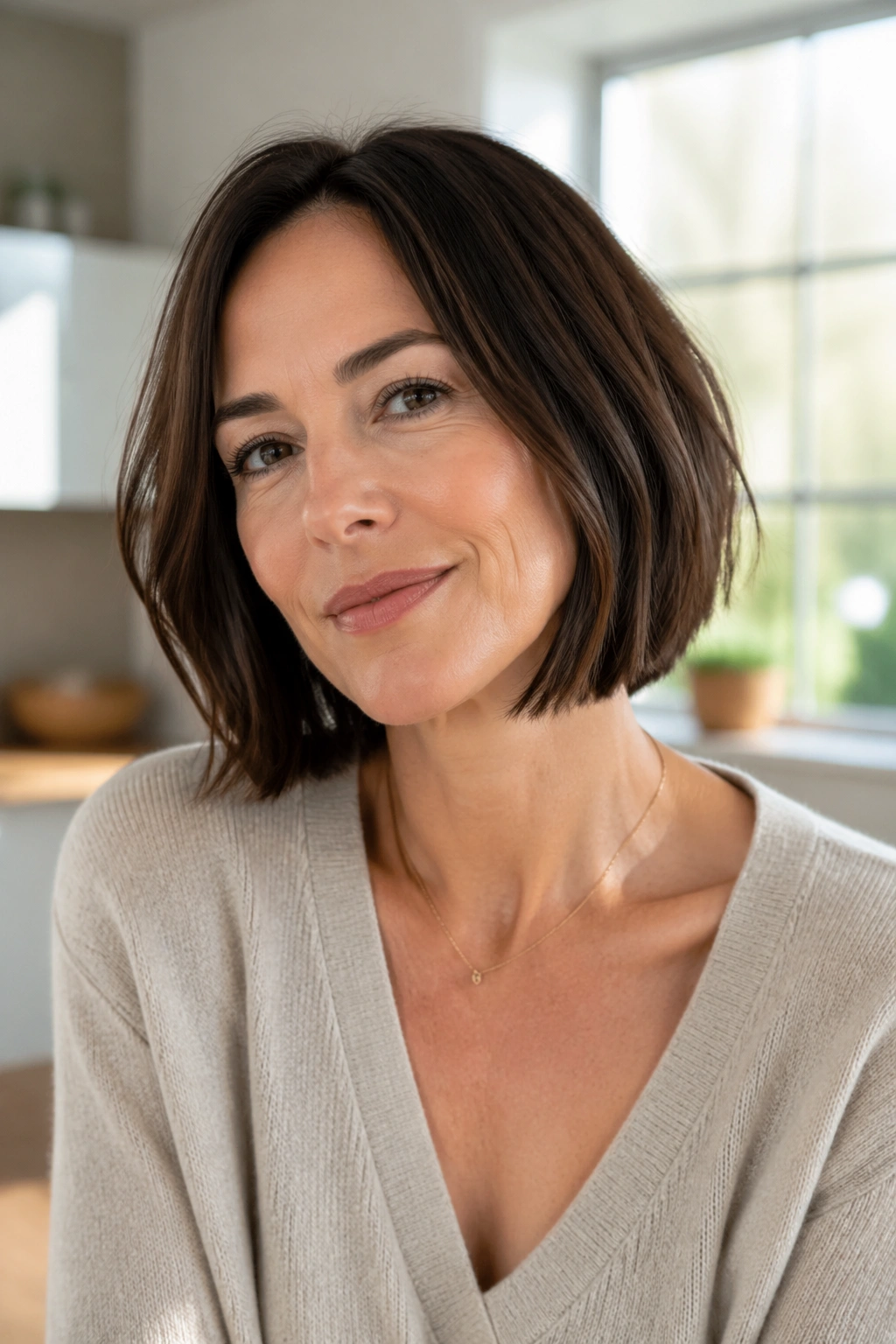
A blunt bob sounds strict, but it does not have to feel stiff. The fresh version keeps the clean edge while adding a little bend through the mid-lengths so it moves when you turn your head.
This cut is a favorite for thicker hair because the solid line makes the hair look intentional instead of bulky. Ask for the weight to be removed from the interior, not the bottom edge, or you can end up with a bob that flips out in odd places.
I’ve always thought this is one of the best cuts for women who want polish with very little fuss. Blow-dry it smooth, tuck one side behind the ear, and let the other side fall naturally. That small asymmetry keeps it from feeling too formal.
7. Tapered Pixie with a Longer Crown
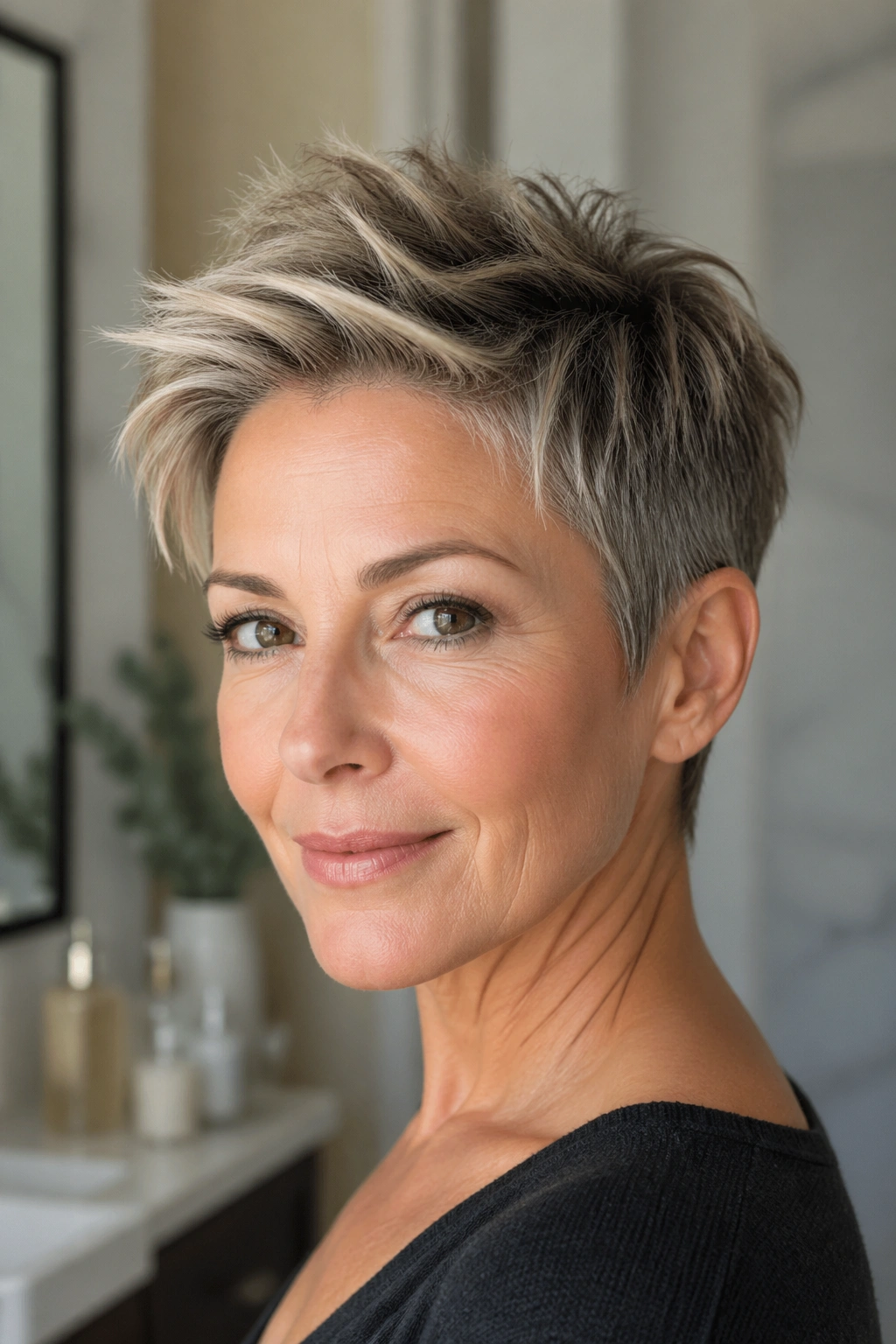
A tapered pixie with a longer crown gives you two things at once: clean sides and height where you want it. That crown length can be just an inch or two longer than the sides, but it changes the silhouette completely.
If your face feels wide at the cheeks, the extra height helps balance it. If your hair is thinning on top, the taper creates the illusion of density because the focus moves upward. It’s a smart cut, not a loud one.
The part I love most is how little product it needs. A little mousse at the roots, blow-dried forward and then pushed up with your fingers, is usually enough. Keep the sides neat. That contrast is what makes the whole thing look sharp.
8. Curly Crop
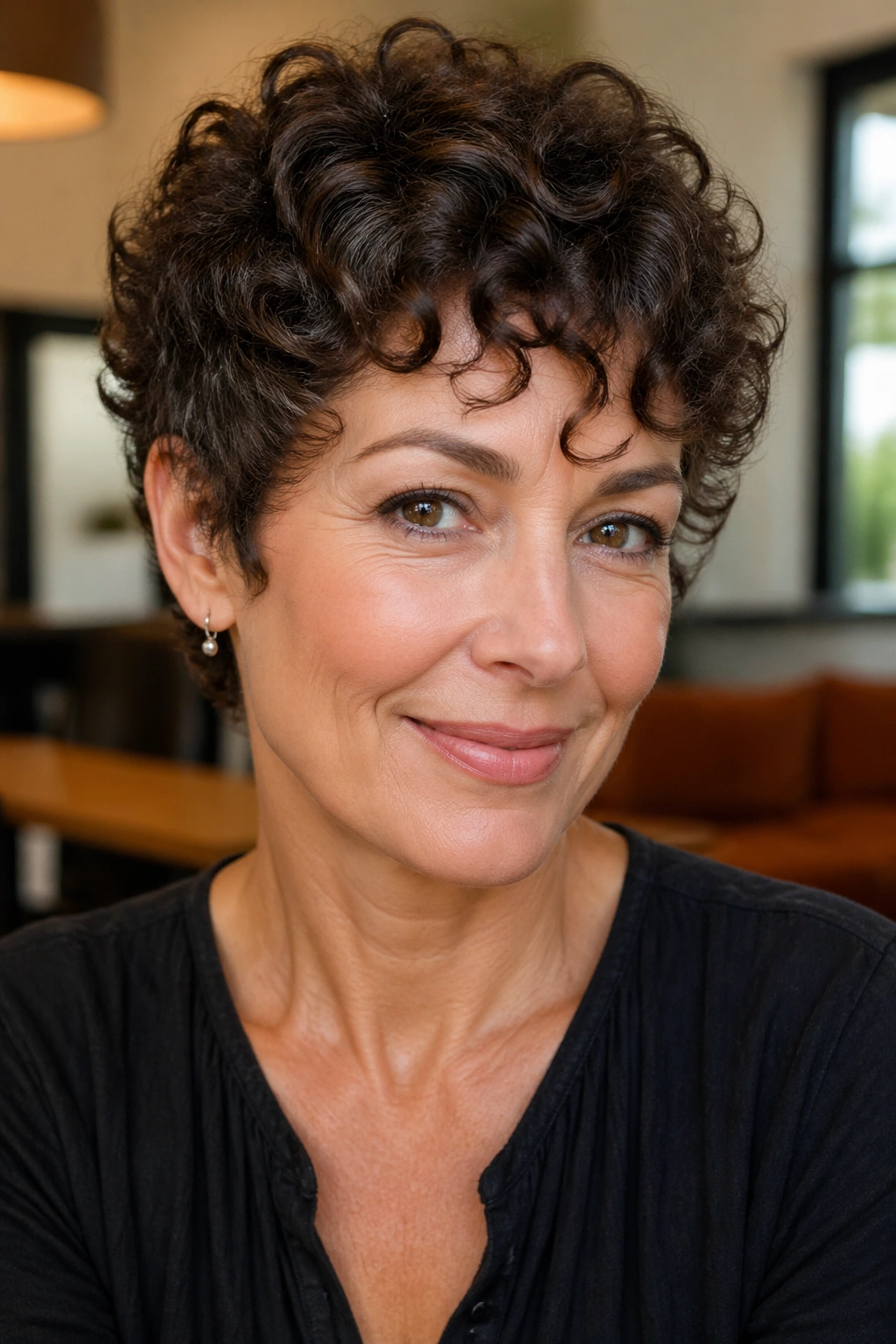
Curly hair gets a bad deal when it’s cut too long and weighed down. A curly crop fixes that by letting the curl spring up instead of stretching out into a triangle.
The shape should be cut dry or at least with the curl pattern in mind, because shrinkage matters a lot here. What looks like a tidy ear-length crop when wet can jump an inch or two once it dries. That’s not a problem. It’s the point.
Use a diffuser on low heat, and don’t rake through the curls once they start setting. Let them dry in sections, then break the cast with a drop of oil or serum. The result should feel soft, springy, and light around the face.
9. Feathered Crop with Side Bangs
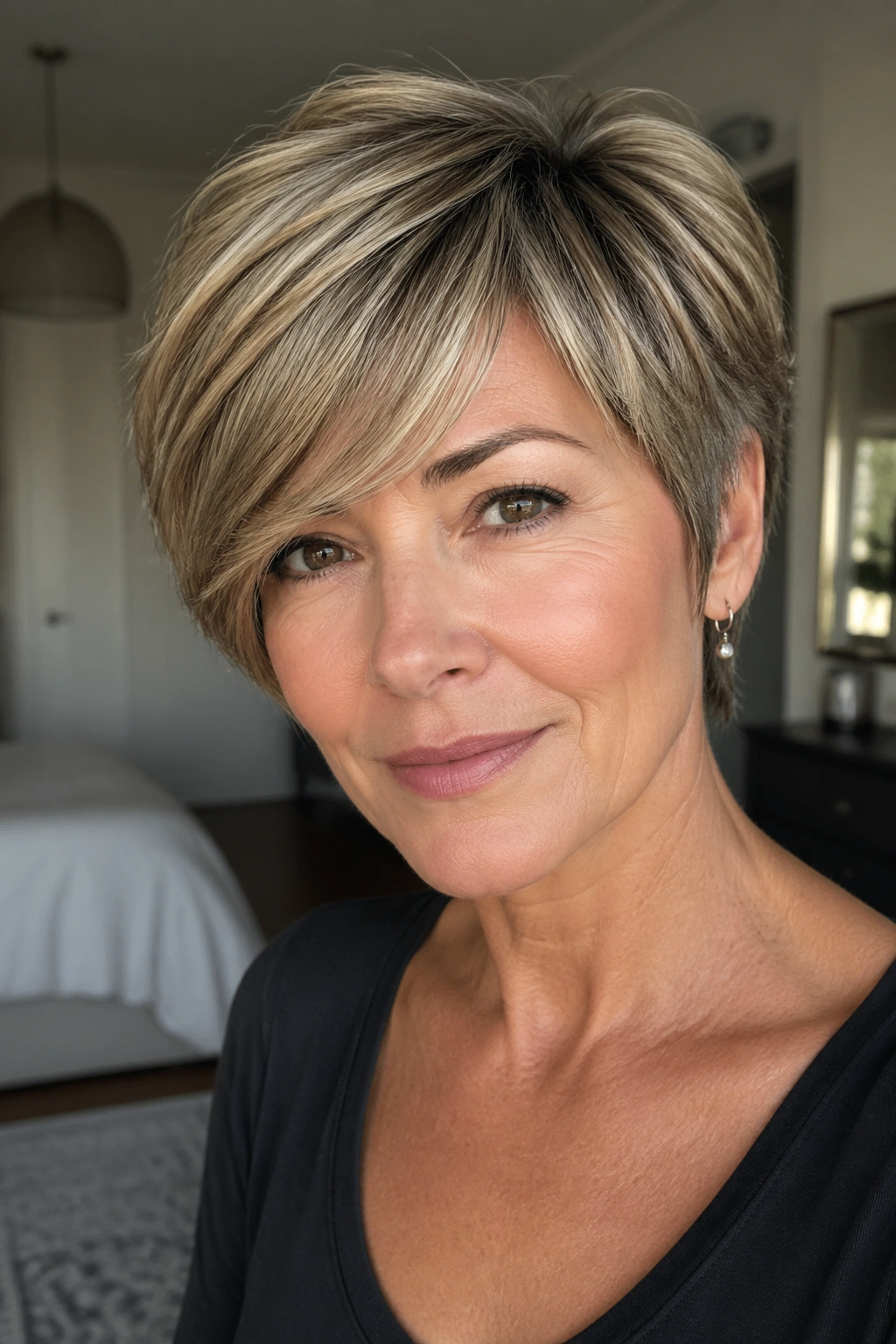
Feathered layers around the front can be a lifesaver if you want movement without committing to a shag. Side bangs keep the forehead soft and let the rest of the cut stay short and airy.
This style works especially well when hair has some natural body but needs direction. The feathering prevents the top from getting too puffy, and the side bangs guide the eye diagonally, which tends to be flattering on most face shapes.
A round brush helps here, but only a little. You’re not trying to create a big blowout. You want the bangs to sweep, not curl, and the crown to have a light lift rather than a dome. That’s a small distinction, but it matters.
10. Collarbone Lob with Soft Ends
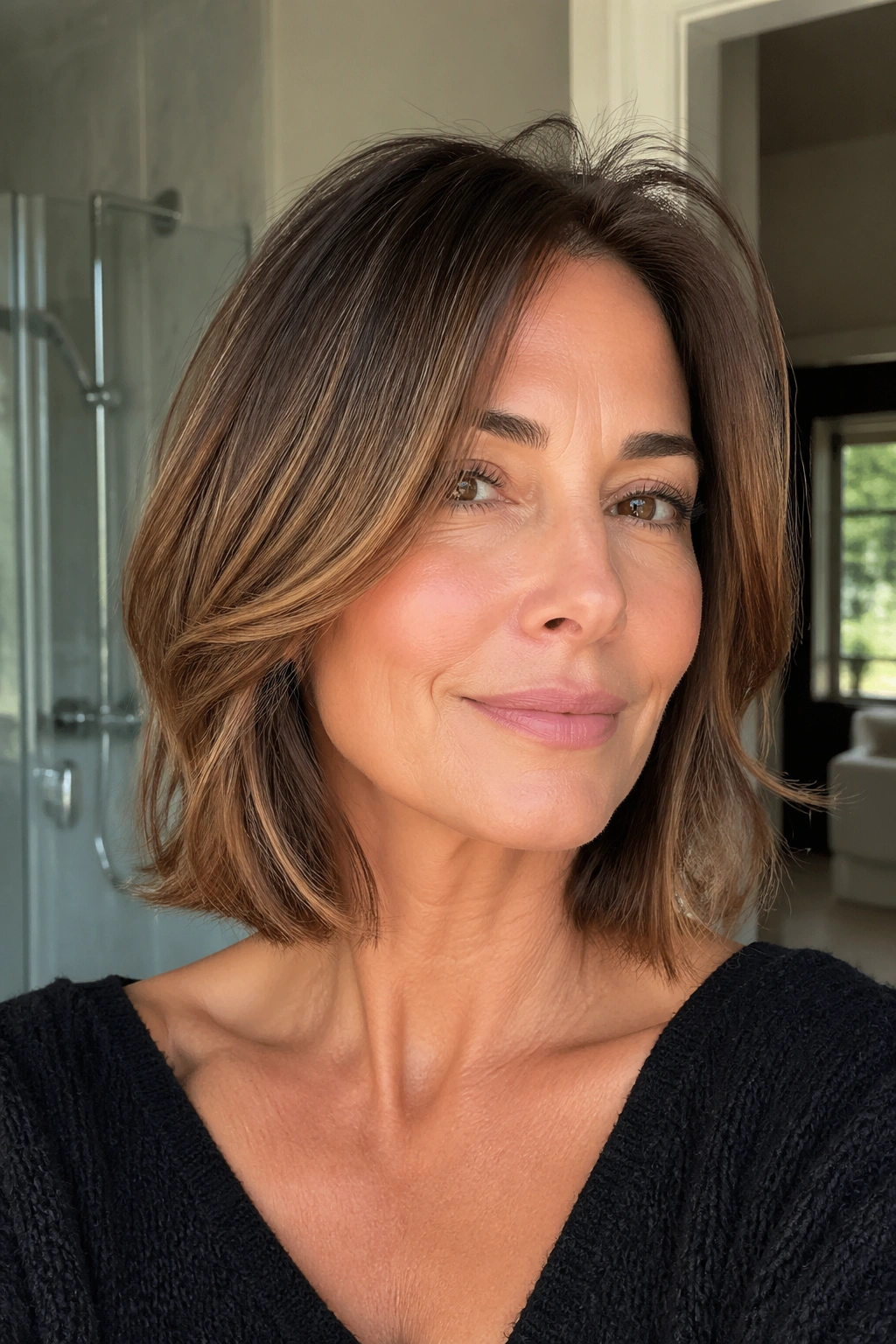
The collarbone lob sits in that helpful middle ground where it still feels short enough to be easy, yet long enough to tuck, clip, or wave. If you’re not ready to go above the chin, this is often the cut that feels like a safe first step.
Soft ends keep it from looking heavy. You want movement through the lower half of the cut, not a blunt curtain hanging around the shoulders. A flat iron bent once near the ends can do more for this style than a full curl ever will.
What Makes It Different
The length gives you more styling options than a shorter bob, but it still opens the neck and freshens the face. It’s a smart choice if you wear your hair up half the time and down the other half.
11. Angled Bob
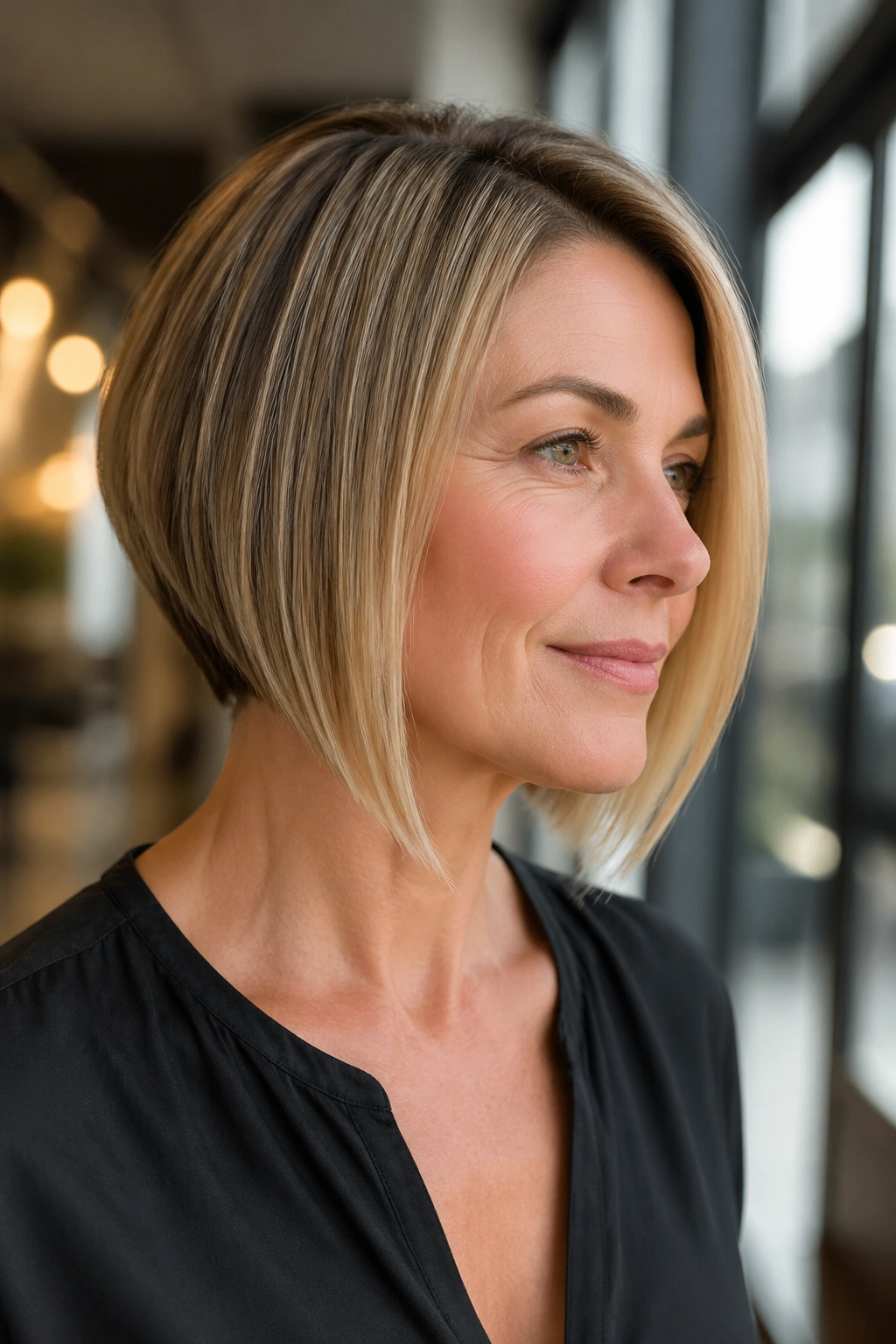
An angled bob gives you a clear line of motion from back to front, and that diagonal is what makes it look sharp. The shorter nape cleans up the neck area, while the longer front pieces skim the jaw in a flattering way.
It can be a little dramatic, and I mean that in a good way. The angle makes the profile look defined without needing heavy styling. If your hair is thick, though, the back has to be debulked carefully or it can stack up and look triangular.
This cut likes a smooth blow-dry and a touch of shine cream on the ends. Keep the front pieces sleek. Let the cut do the talking.
12. Curtain Bang Bob
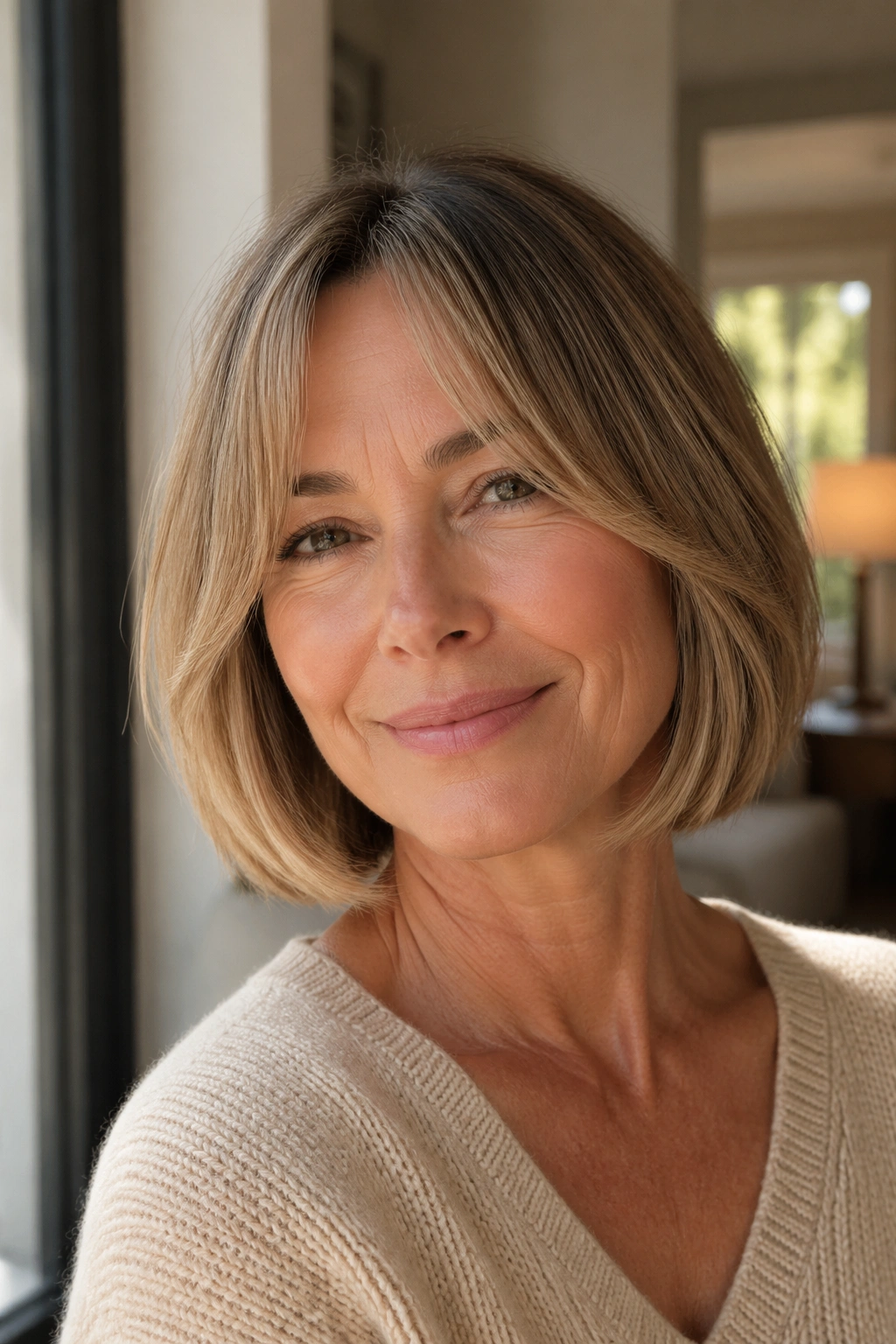
A bob with curtain bangs has a softer face-framing effect than a straight fringe, and that’s a big reason it stays so wearable. The bangs split in the middle or slightly off-center, then sweep out toward the cheekbones.
That shape is forgiving. It grows out well, it softens the forehead, and it gives a bob a little personality without forcing you into a high-maintenance styling routine every morning. A small round brush or even a large roller for a few minutes can help the bangs fall the right way.
The rest of the bob can stay chin-length or just below. If you want the freshest version, keep the ends textured so the bangs don’t look disconnected from the body of the cut.
13. Undercut Pixie
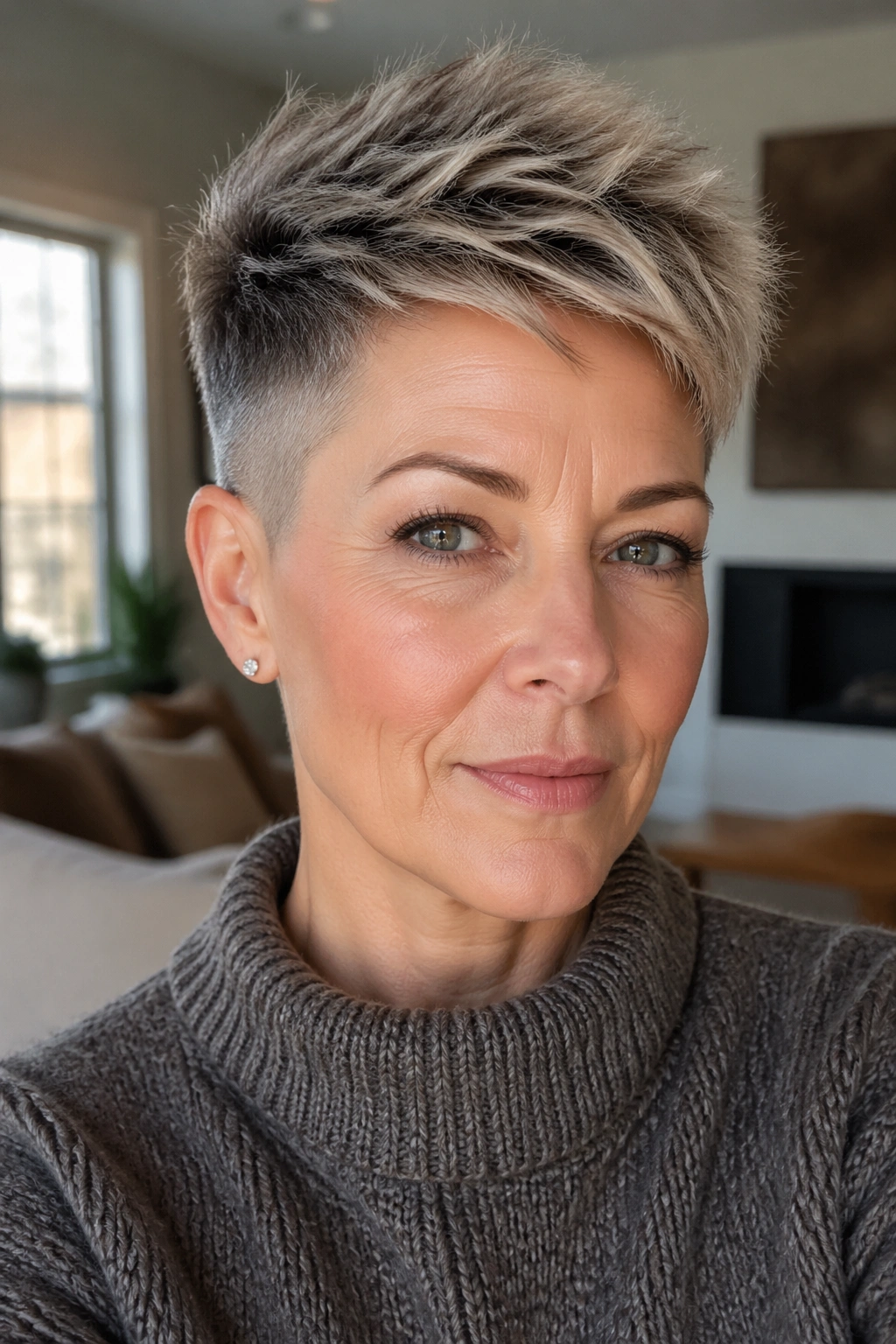
An undercut pixie is the haircut for someone who is done negotiating with thick hair. Removing weight underneath makes the top easier to lift, and it cuts down on bulk around the ears and nape.
Why It Works
The undercut hides where the hair is fullest, so the top can sit cleaner and move better. That means less drying time, less puffing in humidity, and less fighting with your brush. It also gives the style a bit of edge.
This is not the cut for someone who wants to air-dry and walk away every single day. It does need a little shape with paste or cream. But if you like a short cut that feels deliberate and low-fuss once it’s in place, this one earns its keep.
14. Jaw-Length Wavy Cut
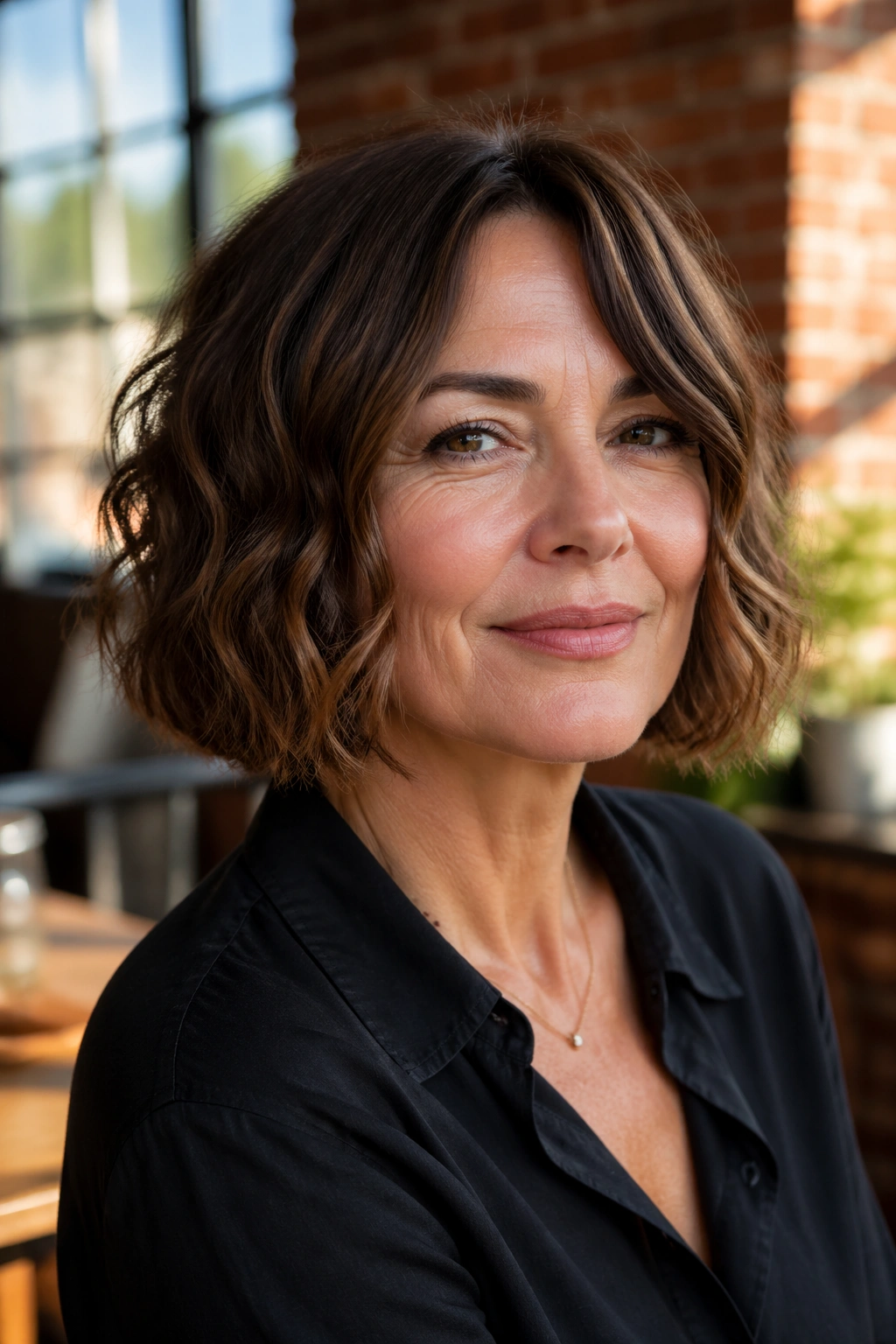
A jaw-length wavy cut is one of those deceptively simple styles that does a lot of quiet work. It follows the jawline without clinging to it, which makes the face look open and clean.
The key is not to over-layer it. Too many short layers in a wave can make the cut jumpy and uneven. Instead, keep the ends a little blunt and let the wave shape happen through the mid-lengths. That gives you movement without losing the line.
I’d use a sea-salt spray or a lightweight mousse, then air-dry halfway before rough-drying the roots. That keeps the wave soft and prevents the whole thing from ballooning. Easy does it.
15. Bixie
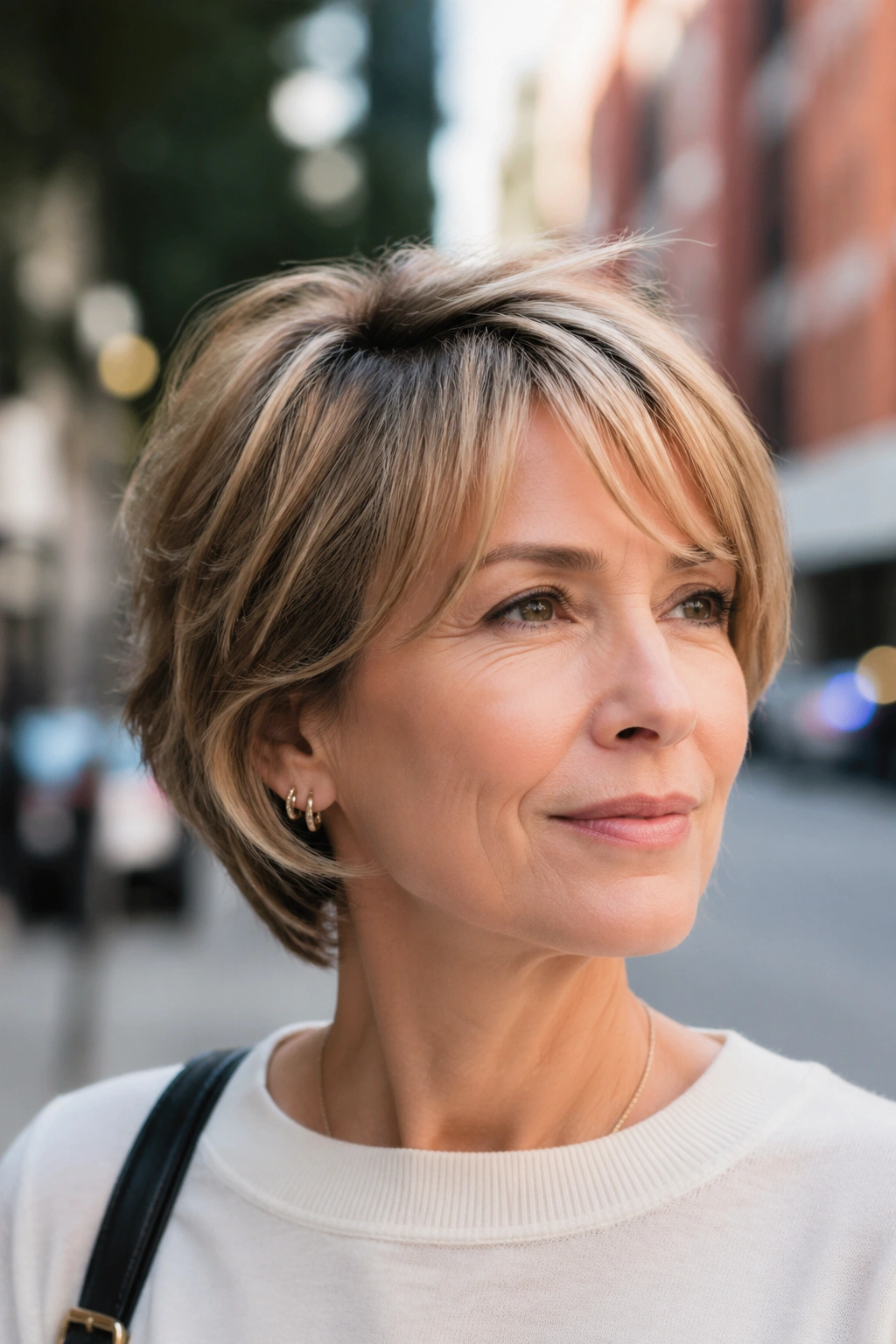
The bixie sits between a bob and a pixie, and honestly, that’s what makes it so useful. You get the softness of a pixie near the crown and the touchable length of a bob around the sides.
It works on more hair types than people expect. Fine hair likes the lift. Thick hair likes the removal of weight. Wavy hair likes the broken-up shape. It’s a cut with a lot of room inside it, which is why it tends to flatter different faces without feeling cookie-cutter.
A bixie should never look too perfect. Let a few pieces fall forward over the forehead, and keep the nape neat but not razor-tight. That tiny bit of looseness is the difference between fashionable and fussy.
16. Sleek Tucked Bob
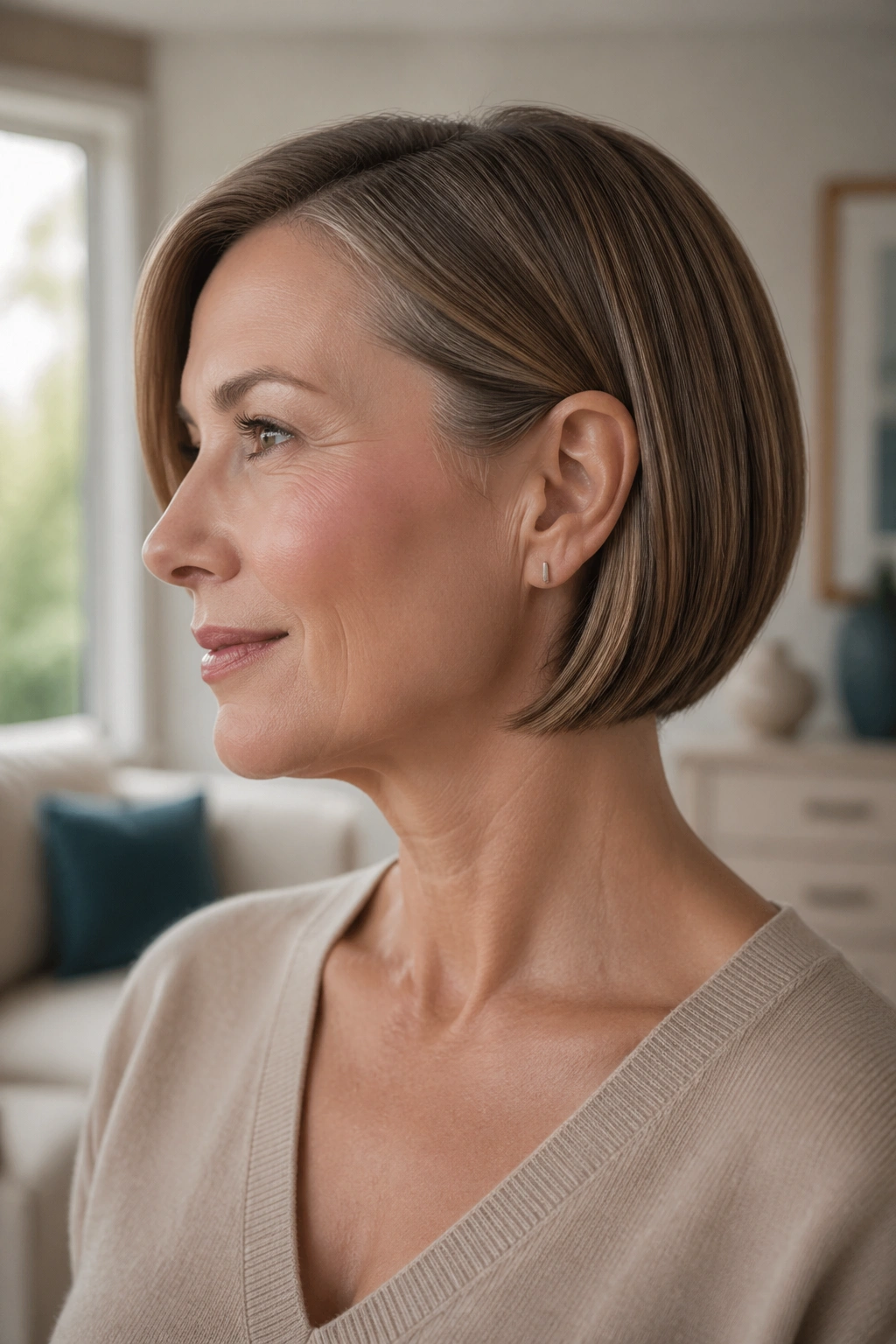
A sleek tucked bob is for the days when you want your hair to look composed in the easiest possible way. The ends stay smooth, the side tucked behind one ear, and the whole shape stays crisp without being harsh.
This style is especially good for straight or slightly wavy hair that frizzes if you over-handle it. A blow-dry with a nozzle attachment, then a pass with a smoothing brush, usually does the job. Finish with a light serum only on the ends. Too much, and it gets greasy fast.
I like this cut because it’s quiet in the best sense. It doesn’t scream for attention. It just looks clean, polished, and ready.
17. Choppy Crop
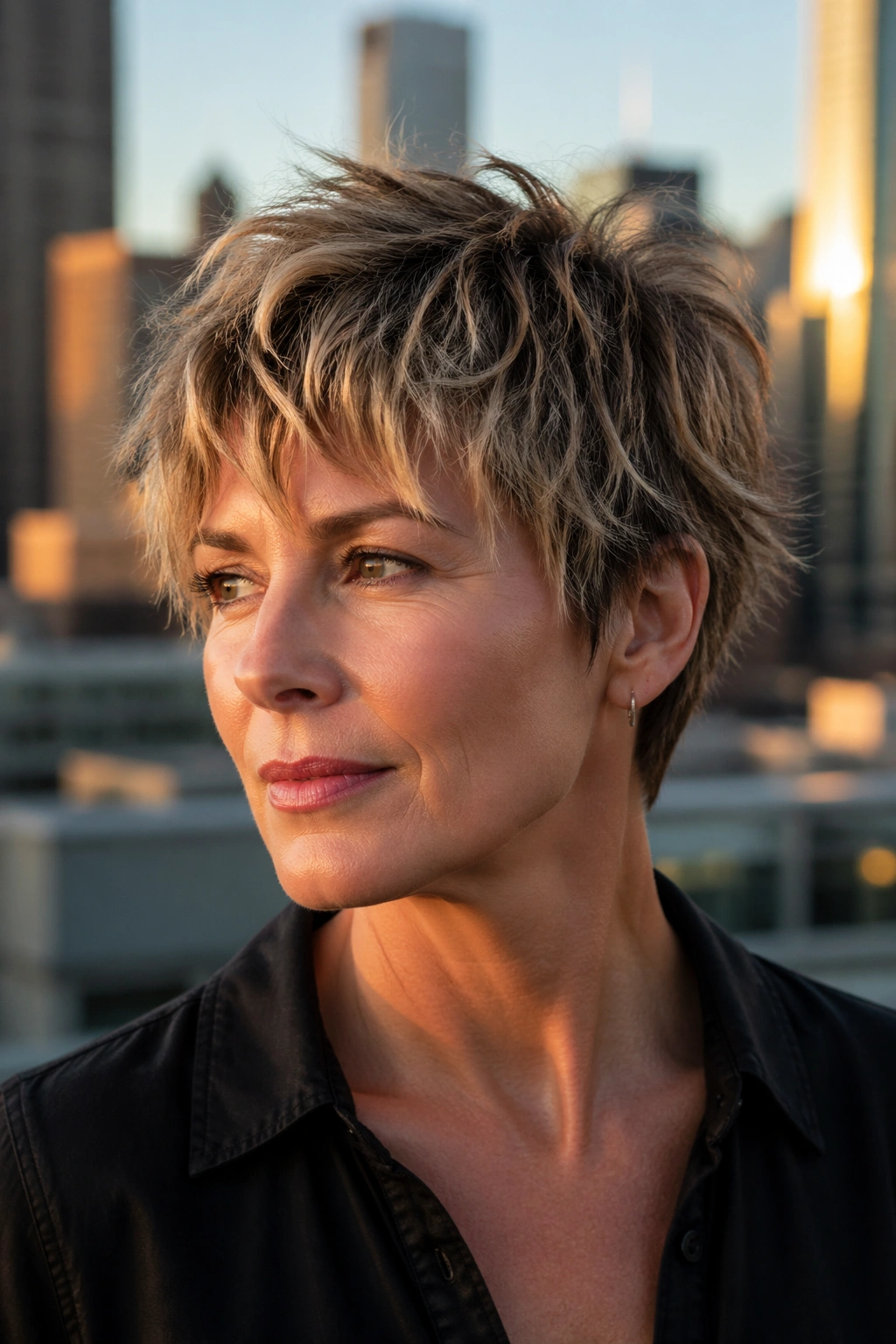
A choppy crop brings energy to short hair fast. The irregular ends keep the cut from feeling too neat, which is useful if your hair is naturally fine or if you want a cut that can survive a messy morning.
The trick is to keep the choppiness controlled. You want broken-up pieces, not random uneven bits. Ask for point cutting or light texturizing near the ends so the silhouette stays shaped even while the texture looks relaxed.
A dry texturizing spray helps here more than a heavy cream. Spray near the roots, lift a few pieces with your fingers, and leave some gaps. That empty space is part of the look.
18. Soft Mullet-Inspired Shag
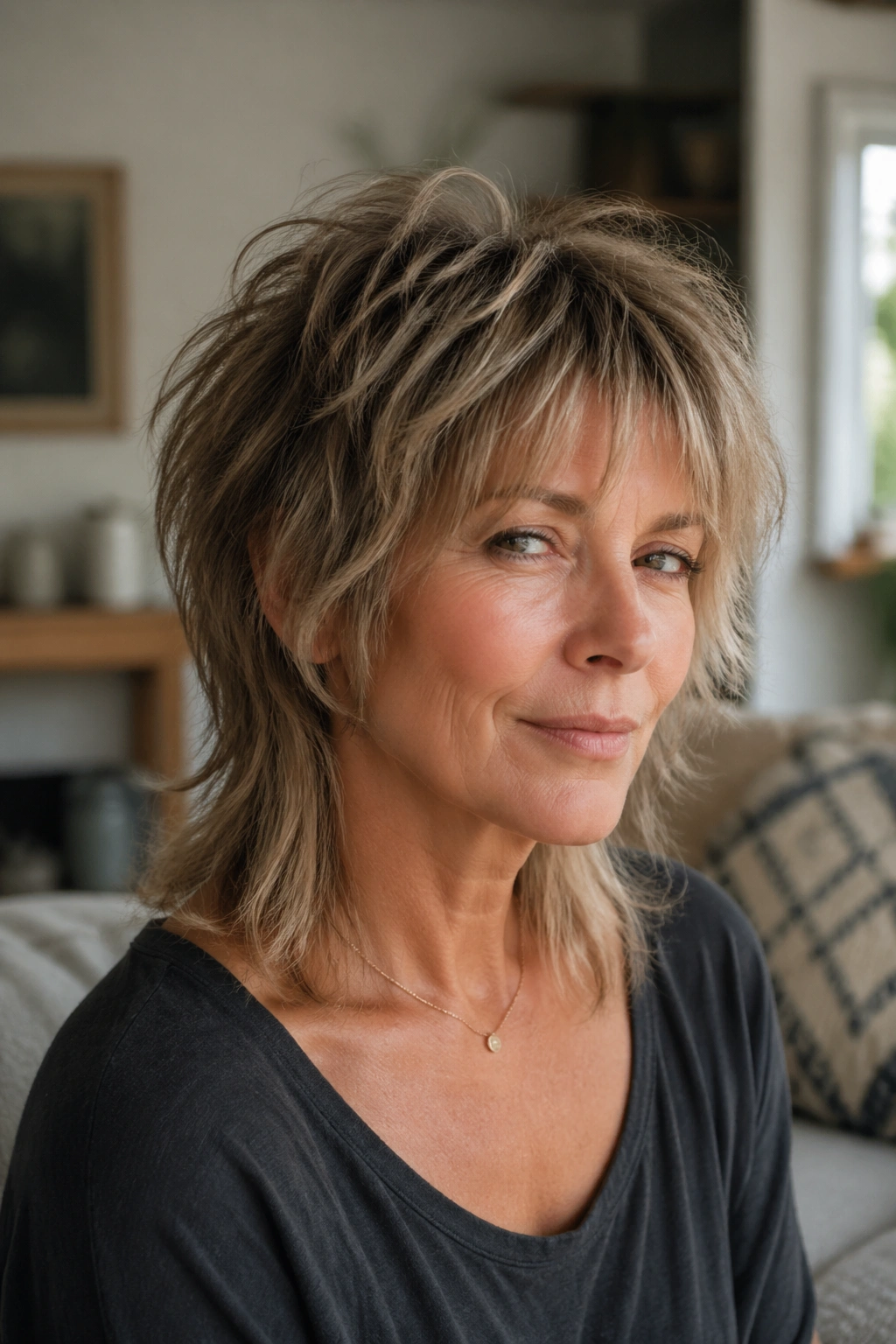
A soft mullet-inspired shag sounds bolder than it often looks in real life. The front stays shorter, the sides stay blended, and the back carries a little more length so the style has movement from every angle.
This is a good cut when you want personality. It’s also handy for wavy hair that gets flat in a straight bob. The layers create lift without requiring precise styling every day, which is one reason it feels fresh instead of fussy.
How to Wear It
Keep the crown a little loose and the ends piecey. If you blow-dry it too smooth, you lose the point of the cut. A little bend from a diffuser or a round brush is enough.
19. Rounded Bob

A rounded bob gives you softness at the sides and lift at the crown, which can make the whole face look a bit more open. It’s a good choice if you want volume without the edges flaring out.
This shape often suits women with fine or medium hair because the roundness creates the sense of fullness. The catch is that it needs a careful cut. If the layers are too short, it can puff. If they’re too long, the curve disappears. That balance matters.
Blow-dry the crown first, then smooth the sides downward with a brush that follows the curve of the head. The finished look should feel gentle and tidy, not stiff.
20. Natural Gray Pixie
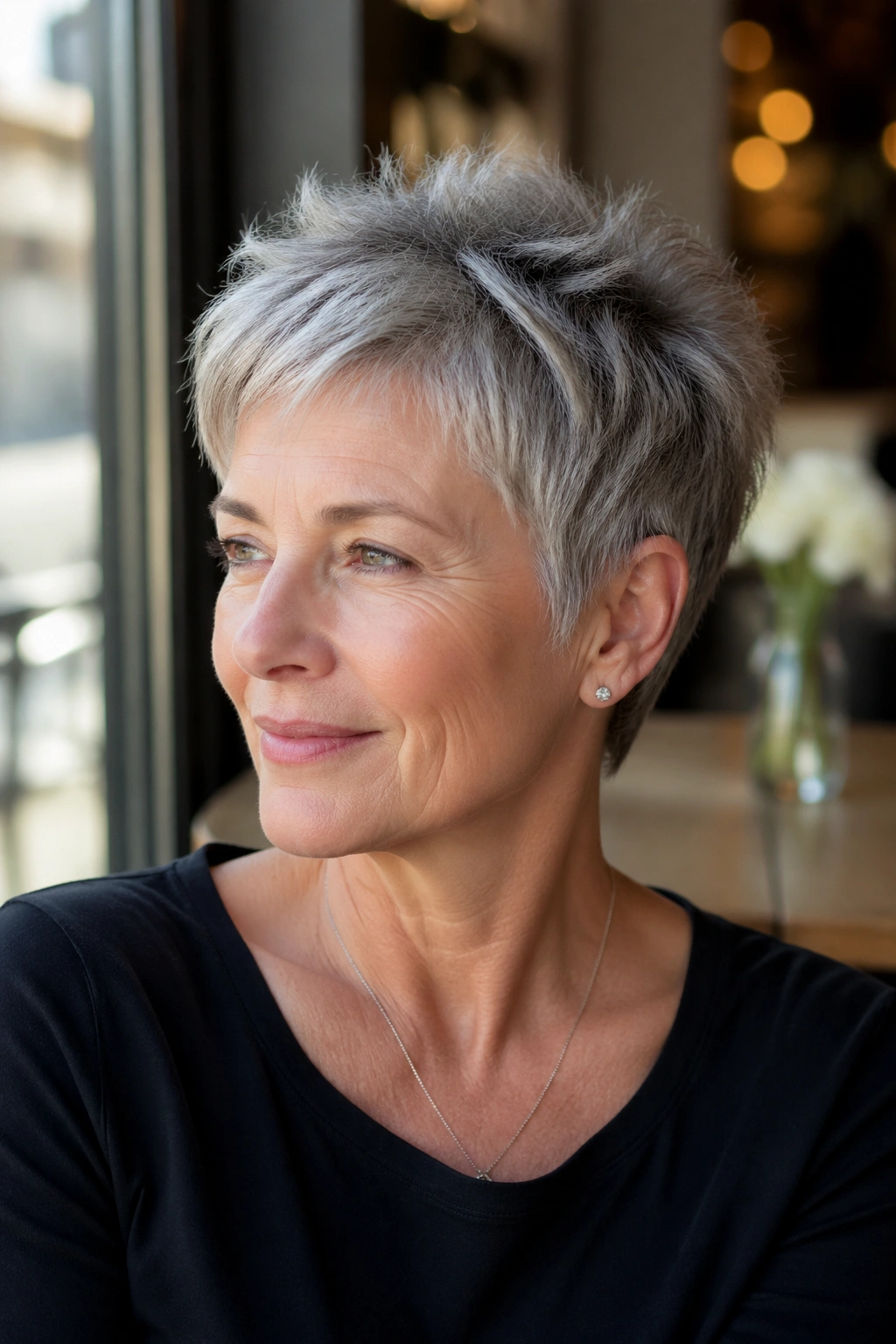
A natural gray pixie can look sharper than almost any colored short cut when it’s shaped well. Gray hair has a different texture for a lot of people — sometimes coarser, sometimes softer, sometimes a little wiry — and the right pixie turns that into character instead of a problem.
What Makes It Different
The color does a lot of the visual work, so the cut doesn’t need to be overcomplicated. Clean sides, a textured top, and a little lift around the crown usually do the trick. If your gray grows in with different tones, even better. The blend gives the style depth.
A matte paste is often enough. Skip anything too glossy if the hair is already coarse. You want definition, not shine that exposes every strand.
21. Asymmetrical Bob
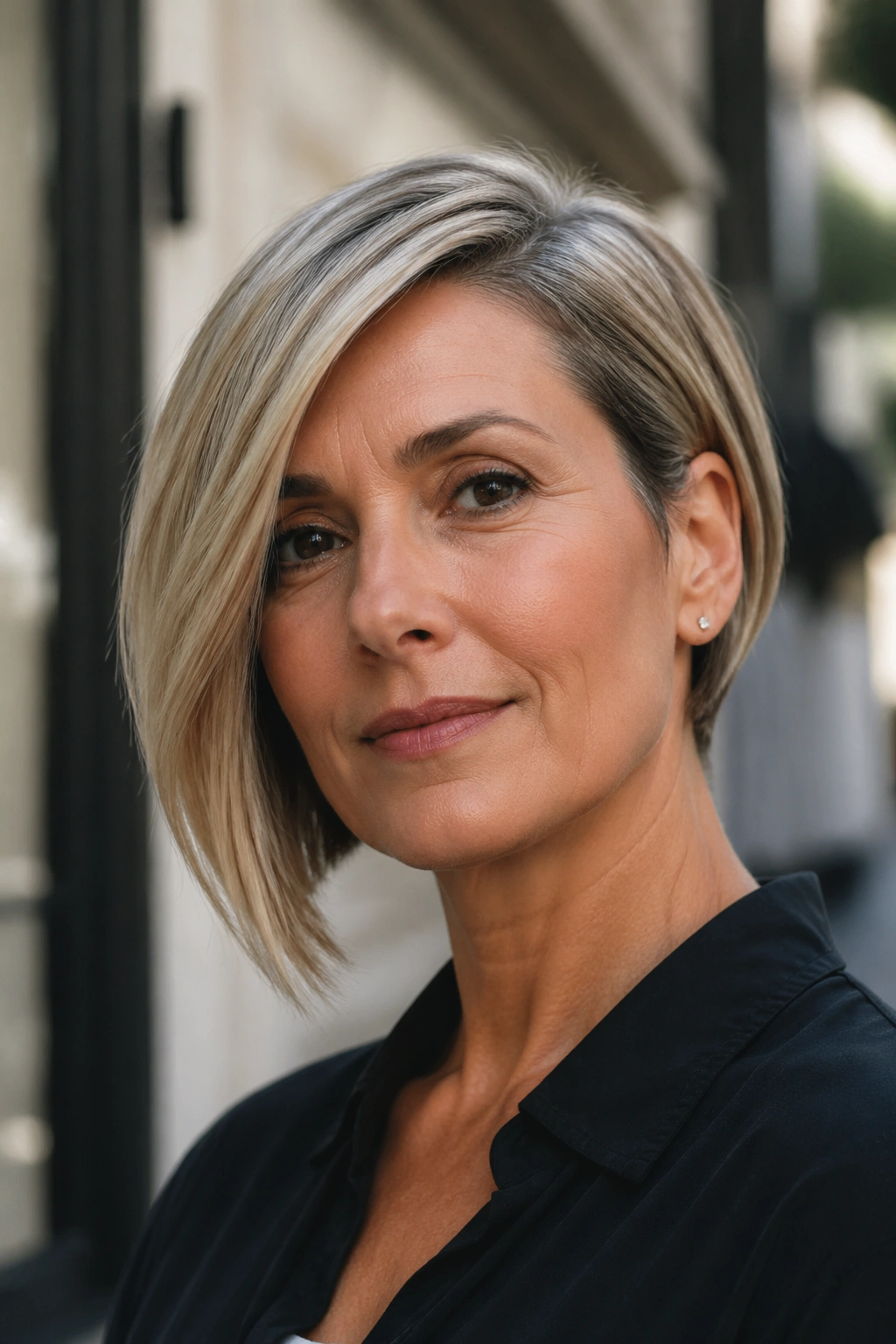
An asymmetrical bob has one side a touch longer than the other, and that unevenness is what gives it life. It makes the face feel angled and modern without needing a dramatic color or heavy layers.
This style is especially helpful if one side of your hair naturally flips better than the other. Instead of fighting it, the cut builds that difference into the shape. It also works well with side parts because the longer side can sweep forward while the shorter side stays neat.
If you wear it sleek, the line looks sharp. If you rough it up with texture spray, it gets a little more attitude. Either way, it doesn’t feel sleepy.
22. Short Layers with Wispy Fringe
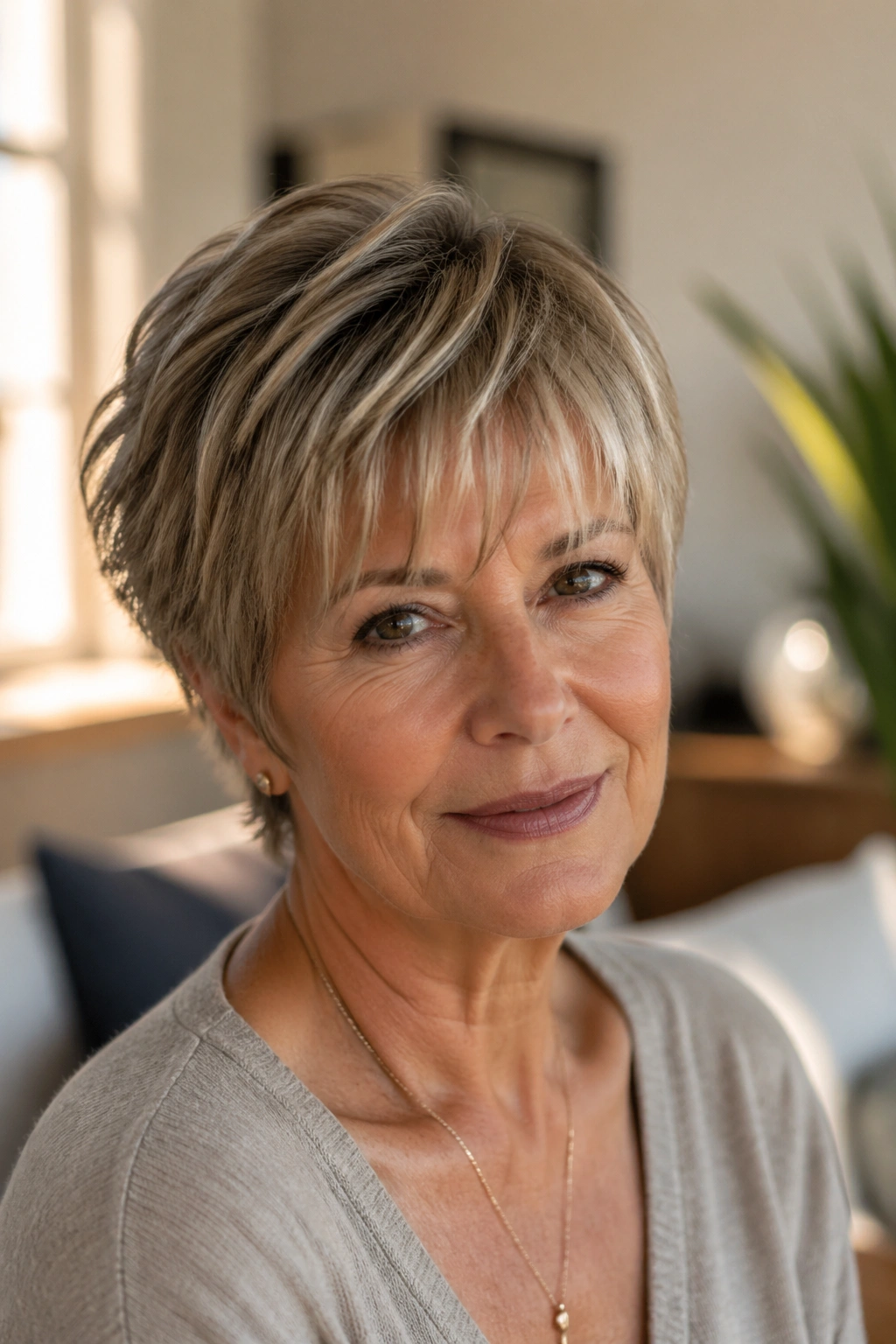
Short layers with wispy fringe are a strong choice when you want softness first and structure second. The fringe keeps the forehead from looking too exposed, and the layers stop the cut from collapsing into one flat shape.
This style is especially nice for women whose hair has lost a little density. Wispy bangs create movement without taking away too much fullness from the front. The layers should be light and blended, not sliced into tiny pieces that separate too fast.
A small round brush, a dab of mousse, and a few minutes at the roots are usually enough. Let the fringe stay a little airy. That loose finish is what keeps the cut feeling fresh.
Final Thoughts
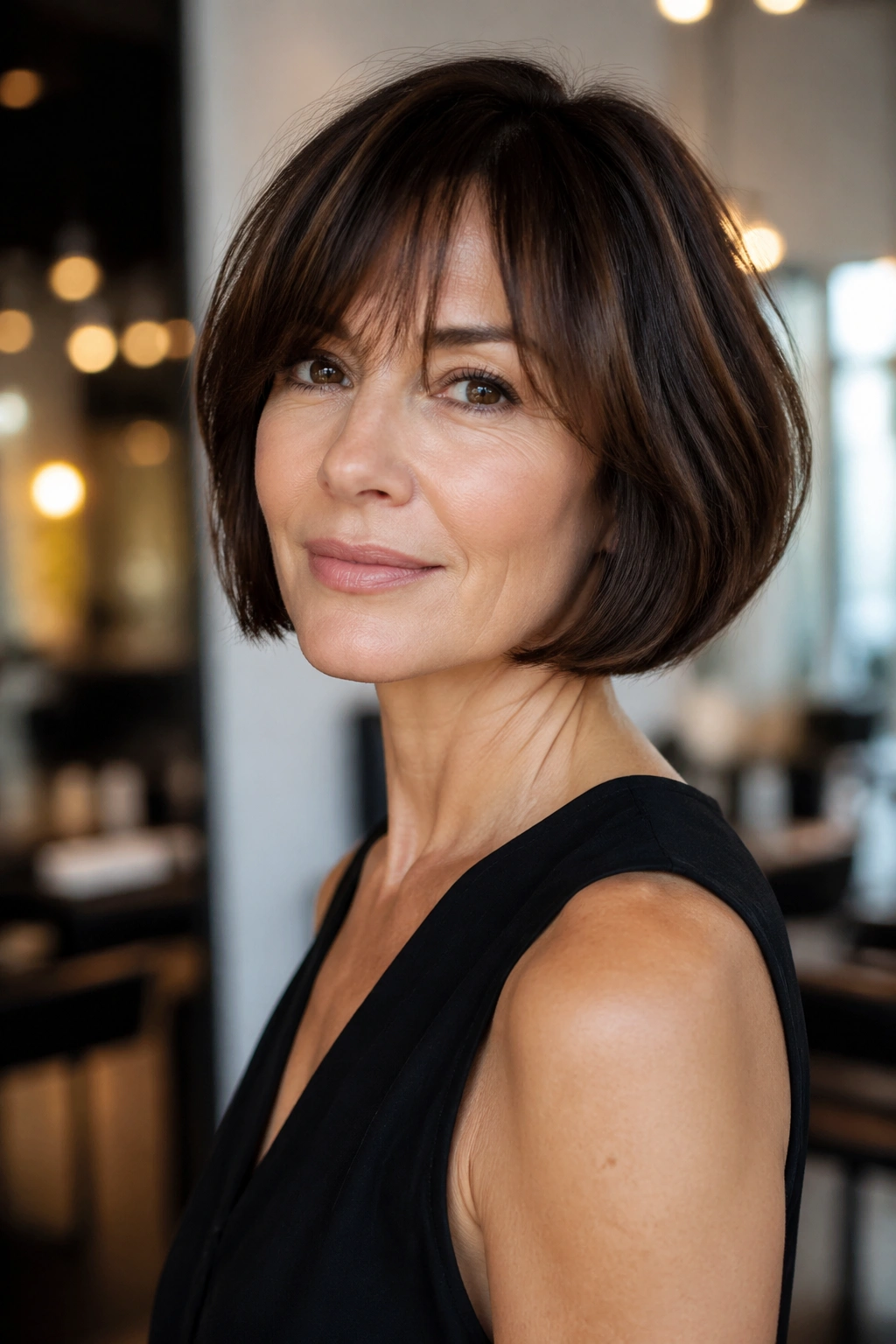
The best short haircut is the one that makes your hair look like it belongs to you, only better shaped. That means paying attention to where the weight sits, how your hair bends, and how much styling you’ll actually do before coffee.
Some of these cuts are clean and neat. Some are softer and a little undone. That range is the point. Fresh short hair after 40 doesn’t come from chasing one perfect formula; it comes from choosing a shape that works with your texture, your routine, and the way you like to wear your face.
