



Tree braids on Type 4 natural hair work best when the roots stay calm and the braid pattern stays light. That sounds obvious, but it’s the difference between a style that looks clean for weeks and one that starts itching, puffing, and pulling by the second day.
Type 4 hair has a lot going for it here. The texture gives tree braids grip, body, and a fuller finish at the scalp, and the coils make the style look rich even when the braids themselves are small. The catch is tension. If the base is too tight, if the parts are too big, or if the added hair is too heavy, the whole style starts fighting your hair instead of working with it.
I like tree braids on coily hair because they sit in that sweet spot between polished and lived-in. They can look soft without looking messy, and they can be dressed up with curls, beads, color, or a clean bun without losing the protective-style feel. Still, the details matter more than people expect. Part size, length, density, and the way the ends are finished all change the final look.
Some versions are neat and office-friendly. Some have more swing. Some lean soft and romantic, while others feel bold and full. The trick is choosing the shape that suits your density, your edges, and how much time you want to spend on maintenance. The first one is the safest place to start.
1. Classic Shoulder-Length Tree Braids on Type 4 Natural Hair
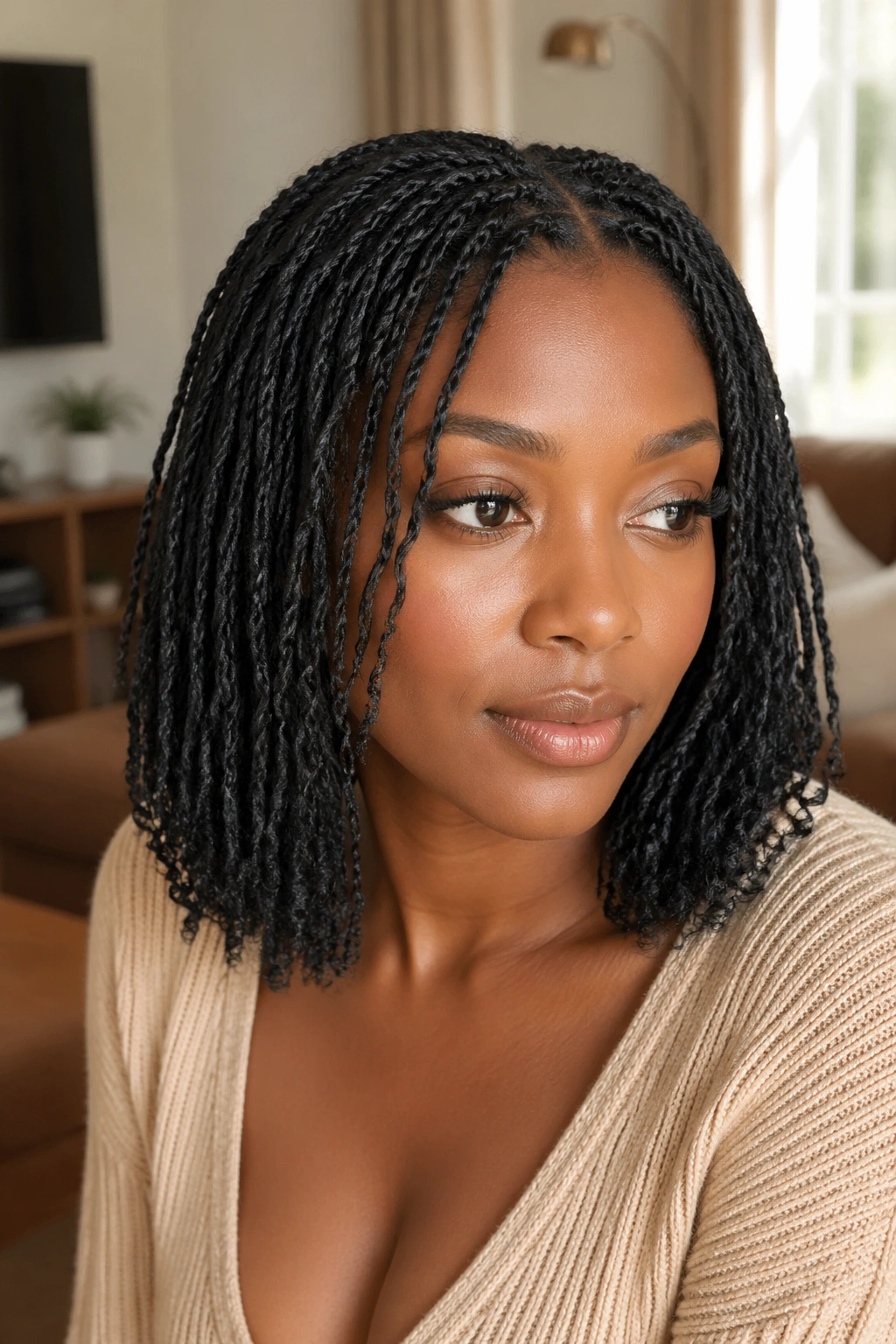
Shoulder-length tree braids are the version I reach for when someone wants the style to look polished without dragging weight around all day. The length sits in that useful middle zone: long enough to show movement, short enough to keep the install light and manageable. On Type 4 hair, that matters. A shoulder-length finish usually keeps the roots calmer, and calmer roots mean less tension on the hairline.
Why It Works
The shoulder hits at a spot where the braids can swing a little without tangling into every coat zipper, scarf, and sweater collar. That sounds small. It isn’t. Type 4 hair already needs a little respect at the ends, and a shorter length cuts down on the daily friction that causes frizz and fuzz.
The style also lets the natural texture at the base show through in a clean way. You still get the fullness people want from tree braids, but the overall shape stays neat. If your hair is dense, this length keeps the style from turning into a heavy curtain.
- Best with small to medium cornrow bases
- Works well with pre-stretched braiding hair
- Usually needs light tension at the temples
- Keeps wash days easier than longer installs
My advice: ask for the front rows to be slightly lighter than the back. The style will move better, and your edges will thank you.
2. Side-Part Tree Braids with Long Swing
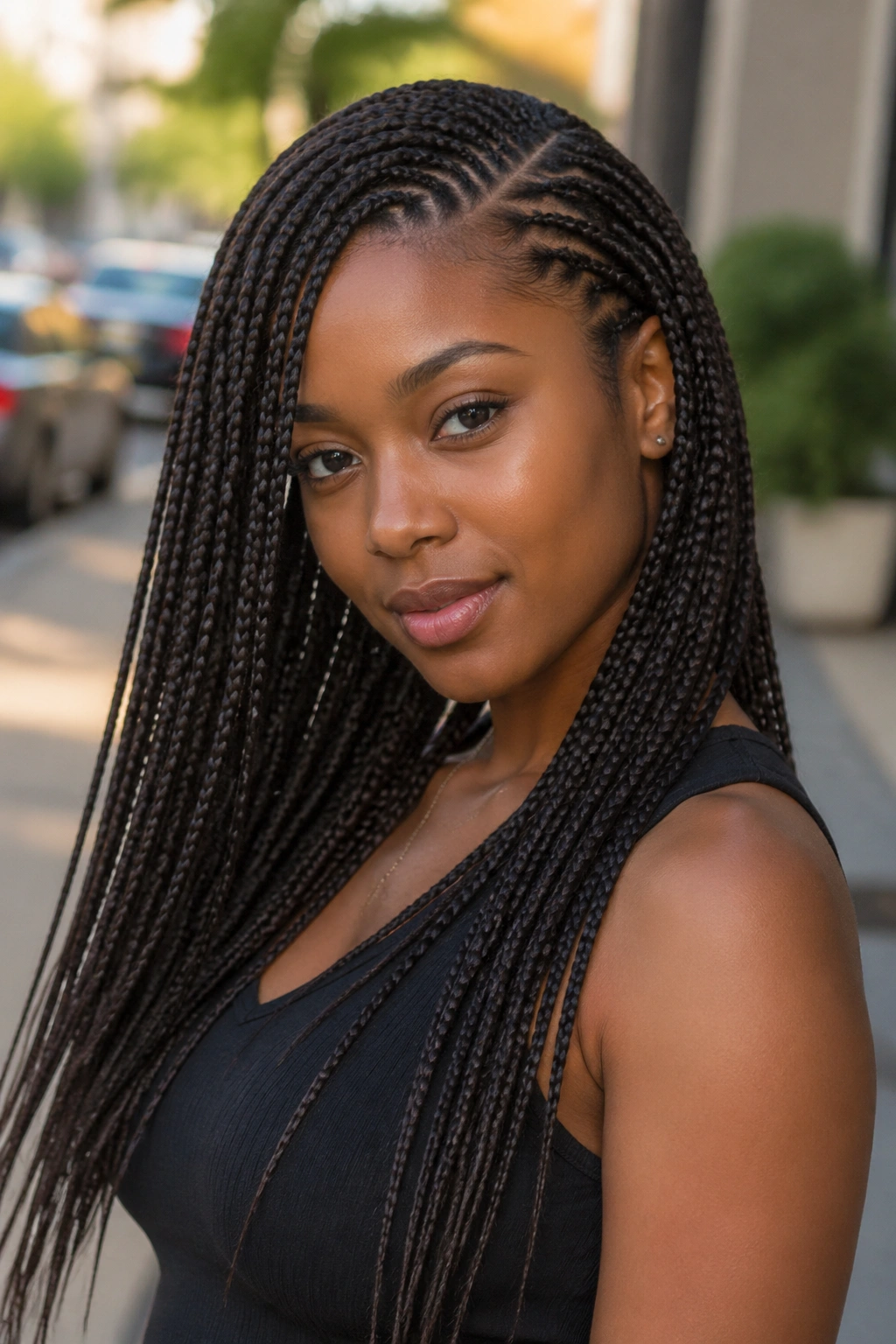
A deep side part changes the whole mood. It gives tree braids a little drama without adding extra pieces, extra length, or extra fuss. On Type 4 natural hair, a side part also softens a wide forehead and helps long braids fall in a more face-framing way, which can be a lot prettier than a straight-down middle part if you want movement around the cheekbones.
The part itself matters more than people think. I like a side part that starts about 4 to 5 inches off center and curves gently toward the crown, not a jagged line that looks accidental. If your stylist is working with dense Type 4 hair, the base rows should still stay neat and close to the scalp. A messy part plus heavy braids is how you end up with a style that looks tired before lunch.
The long swing gives this version its personality. The braids should land below the shoulders, but not so far down that they yank at the base every time you turn your head. Straight, blunt ends can look sharp here. Soft, feathered ends usually read better.
This is the version I’d choose for someone who wants a little more flair on the first install without going all the way into waist-length hair.
3. Waist-Length Tree Braids with a Clean Center Part
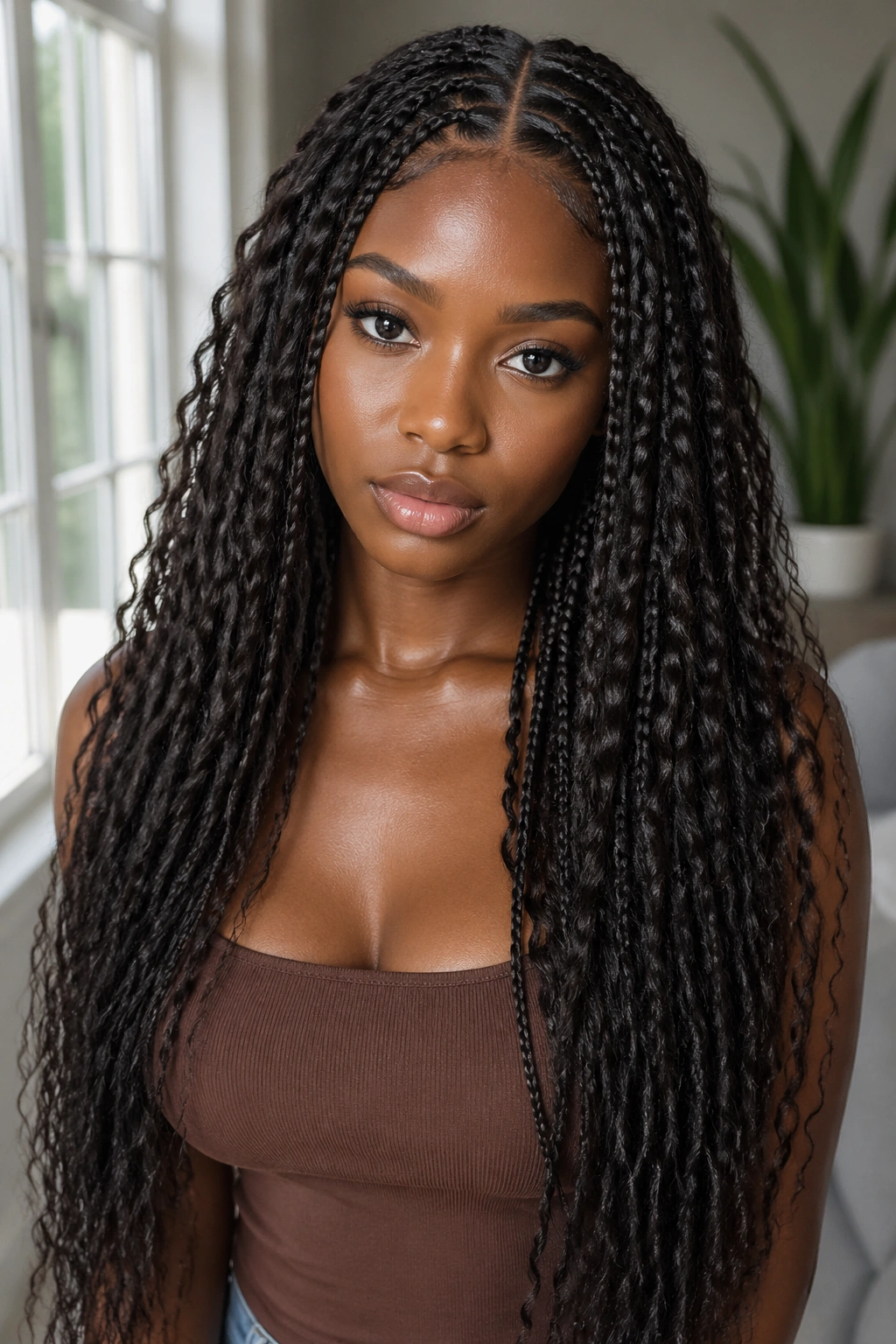
Want the long look without a lot of extra styling? Waist-length tree braids do that job. They have presence. They also have a tendency to expose every weak point in the install, which is why this style rewards neat parting and a clean center line more than almost any other version.
How to Ask for It
Tell your braider you want narrow cornrows, even spacing, and lightweight extension hair. That sounds plain, but it saves you from the common problem where the braids look beautiful in the back and way too thick near the front. If the front sections are overloaded, the style starts to pull on the temples and your part won’t lie flat.
- Ask for a center part that stays crisp from forehead to crown
- Keep the braid width consistent at about the same size as a pinky finger
- Use extension hair that has been pre-stretched or lightly layered
- Skip heavy accessories near the roots
A center part can look severe if the braids are too straight and too packed together. So give the style a little softness. A few loose strands at the ends, or a gentle bend in the hair, keeps it from feeling stiff.
Waist-length tree braids are not the fastest option, and they are not the lightest. They are the one you pick when you want your hair to make an entrance and stay put.
4. Chin-Grazing Tree Braid Bob
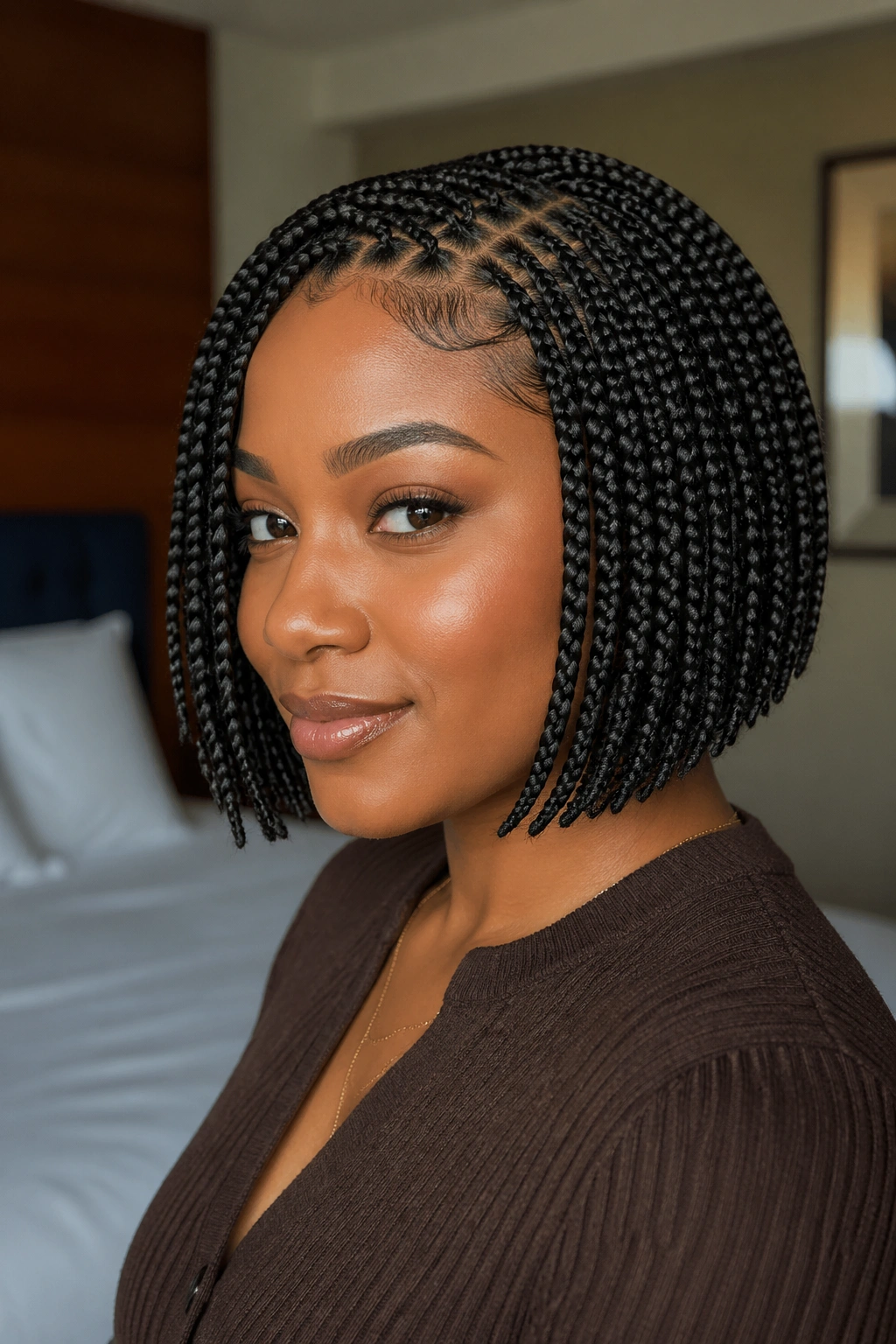
On a humid day, a bob can save you. Chin-grazing tree braids keep the look sharp, dry faster after washing, and stay out of the way when you’re working, driving, or dealing with a scarf that always seems to catch longer hair. For Type 4 natural hair, that shorter length also helps preserve the shape when the coils at the base start doing their own thing.
A good bob version should skim the jaw, not sit right on it like a helmet. The difference is in the ends. If the ends are too blunt, the style can look boxy. If they’re lightly layered, the movement feels softer and the whole shape looks more expensive, even when it’s not.
What to Watch For
- Keep the back slightly shorter than the front for a better line
- Use lighter pieces near the nape
- Ask for ends that taper, not chop off flat
- Do not pile on beads here; the shape should do the work
This is the version I recommend for people who like a tidy look and hate long hair on the neck. It also works well if you wear glasses, because the braids won’t keep brushing the frame all day.
One more thing: shorter styles show parting mistakes faster. If the scalp lines are crooked, the bob will tell on you. Fast.
5. Half-Up, Half-Down Tree Braids
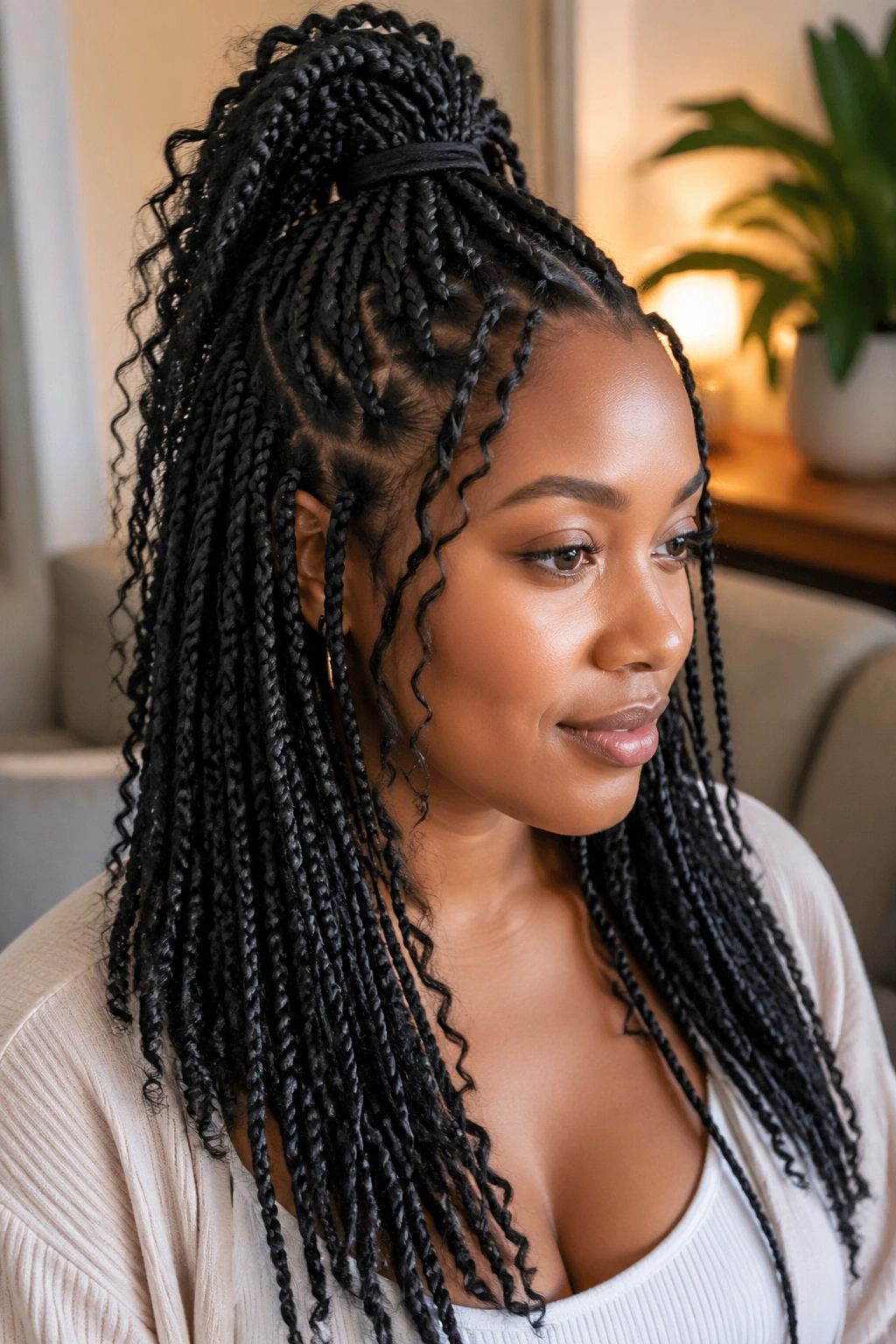
Half-up, half-down tree braids have a built-in personality split, and I mean that in a good way. The top section gets pulled away from the face, which keeps the style neat and helps the front rows sit flatter. The bottom stays loose, so you still get the movement people love about tree braids in the first place.
For Type 4 natural hair, this style does a quiet bit of protection work too. The front rows are often the first place to get frizzy or tugged on, especially if you rest your hands in your hair or lean on a hood, car seat, or scarf. Pulling the top half up reduces that daily abuse. Keep the tie loose. A satin scrunchie or a soft elastic is much kinder than a hard band that bites into the base.
The sweet spot is usually around ear level or just above the crown. Pulling the hair too high makes the style feel tight and can shift the weight in an awkward way. Pulling it too low defeats the purpose and can make the whole top look lazy.
I like this version for people who want something that works on busy days but still feels styled. It’s not flashy. That’s the point.
6. Tree Braids with Curly Ends
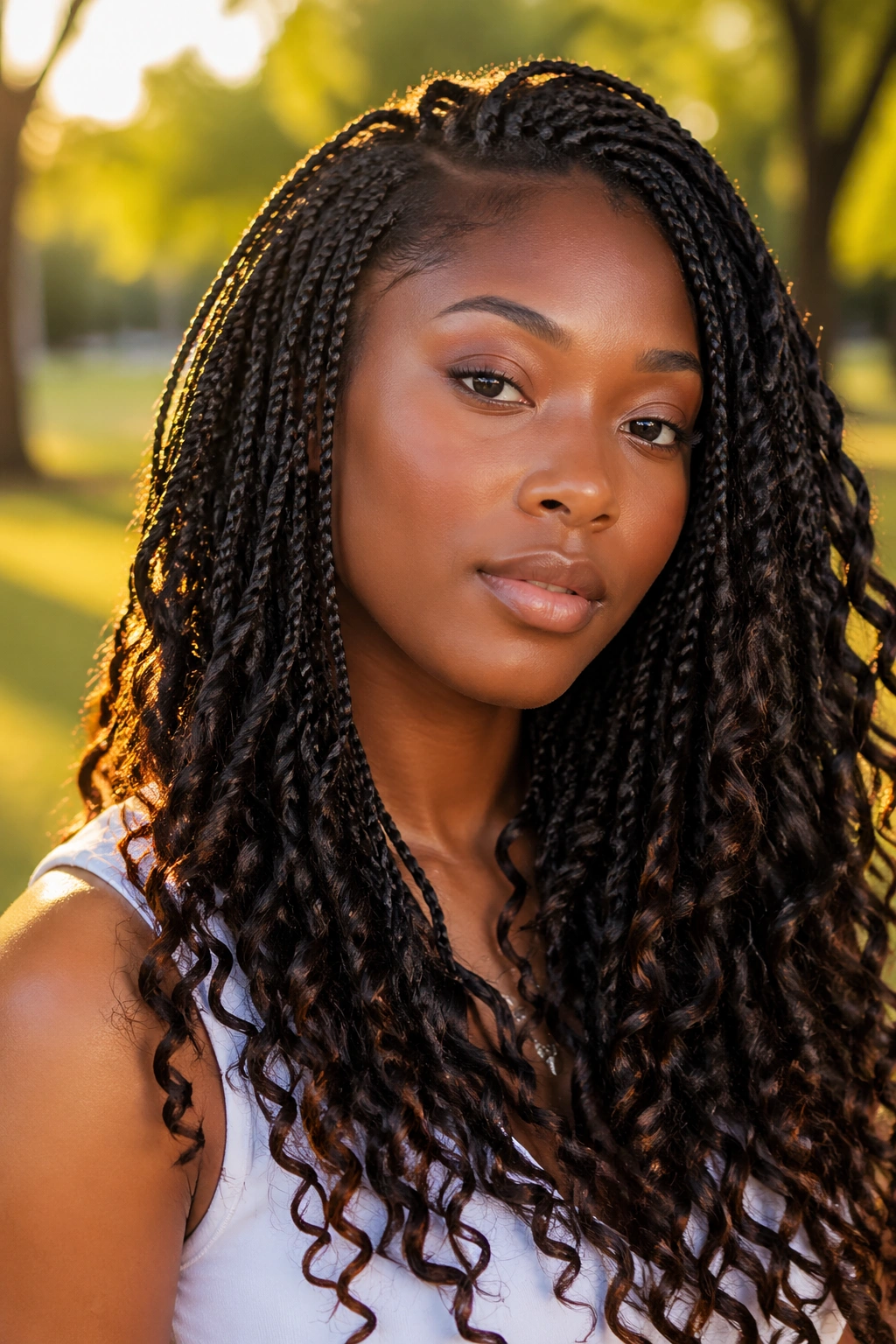
Curly ends soften everything. If straight-ended tree braids can look crisp and a little formal, curly ends turn the whole style warmer and more relaxed. On Type 4 natural hair, the curl adds a nice bridge between your texture at the root and the extension hair at the bottom, which means the style often looks blended sooner.
What Makes It Different
Curly ends hide a lot. They blur the line where the braids stop and the loose hair begins, and they’re good at covering tiny uneven spots in the install. That is useful if your parts are not microscopic or if your braider leaves a little variation between rows. The curl makes the style forgiving.
The best versions use water-wave, deep-wave, or spiral-curled extension hair. If the hair is synthetic, don’t rough it up with a brush. Separate the strands with your fingers and let the curl pattern stay intact. That little habit keeps the ends from turning into a frizz cloud by day five.
This style looks especially good when the curls start at mid-shaft rather than right at the root. Too much curl near the scalp can make the style puff out in a way that fights the clean braid base. A softer transition is better.
If you want movement, shape, and a little softness around the face, this is one of the easiest wins in the group.
7. Triangle-Part Tree Braids
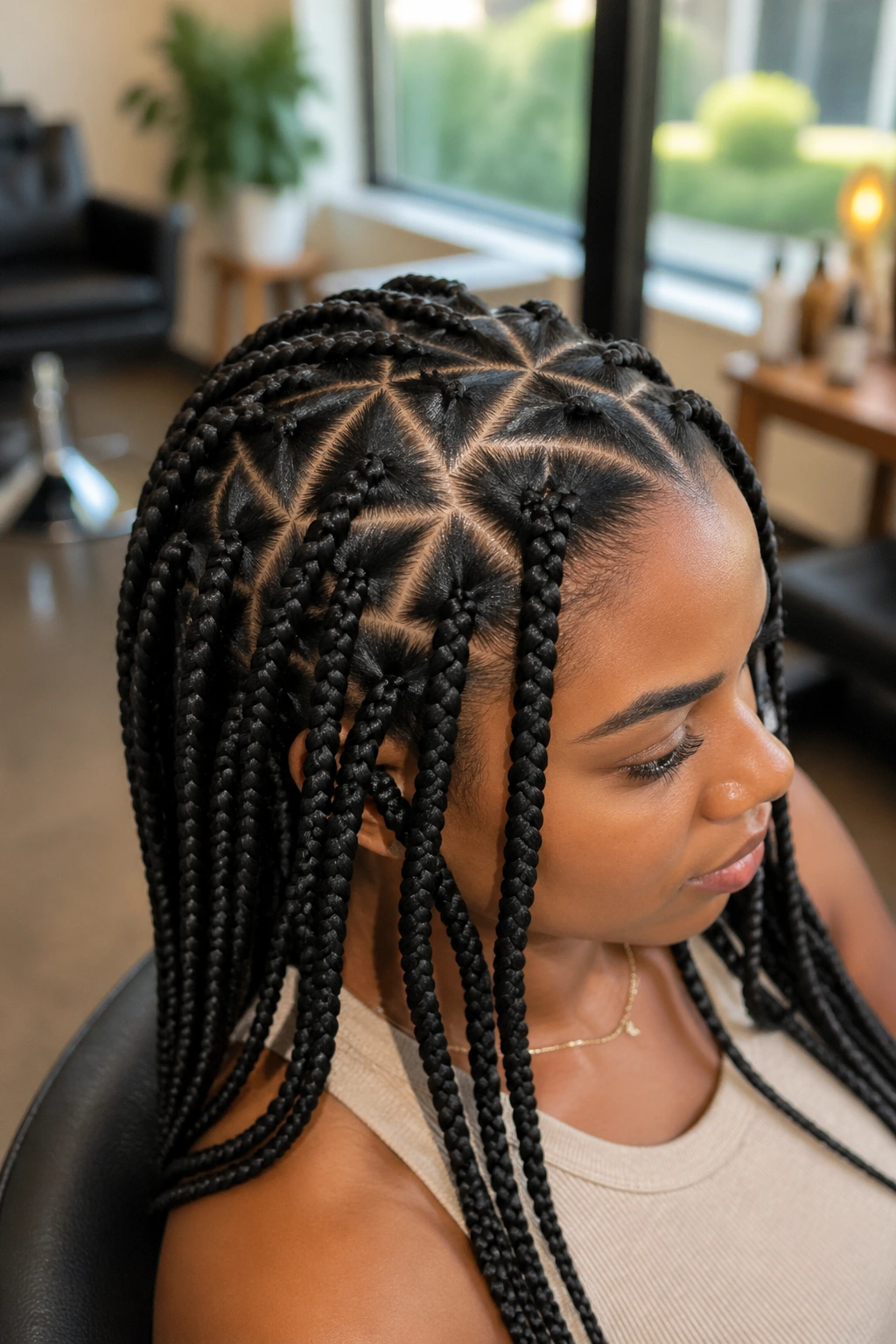
Triangle parts are for the person who wants the scalp pattern to be part of the style. They look cleaner than random sections, and on Type 4 hair the angles help the base lay flatter without making the style feel stiff. A square grid can work, sure, but triangle parts have more rhythm. They feel intentional.
What to Watch For
- Keep the triangles even from front to back
- Make the front triangles smaller than the back ones
- Use a rat-tail comb for crisp lines
- Avoid making the points too skinny, or the braid base can get weak
The shape matters because triangle parts create a slightly different fall in the hair. The sections don’t stack in straight rows, so the style ends up looking fuller at the crown. That’s a nice trick for hair with varying density, especially if your front hair is finer than the back.
Triangle parts also show off neatness. If the parting is sloppy, the whole style looks crooked fast. If it is clean, the effect is sharp without feeling severe. That’s why I’d choose this version for someone who cares as much about the scalp design as the hanging hair.
There’s a practical side too. Once the parts are set, the style holds its shape well through washing and re-moisturizing. The geometry does some of the work for you.
8. Beaded Tree Braids That Move When You Walk
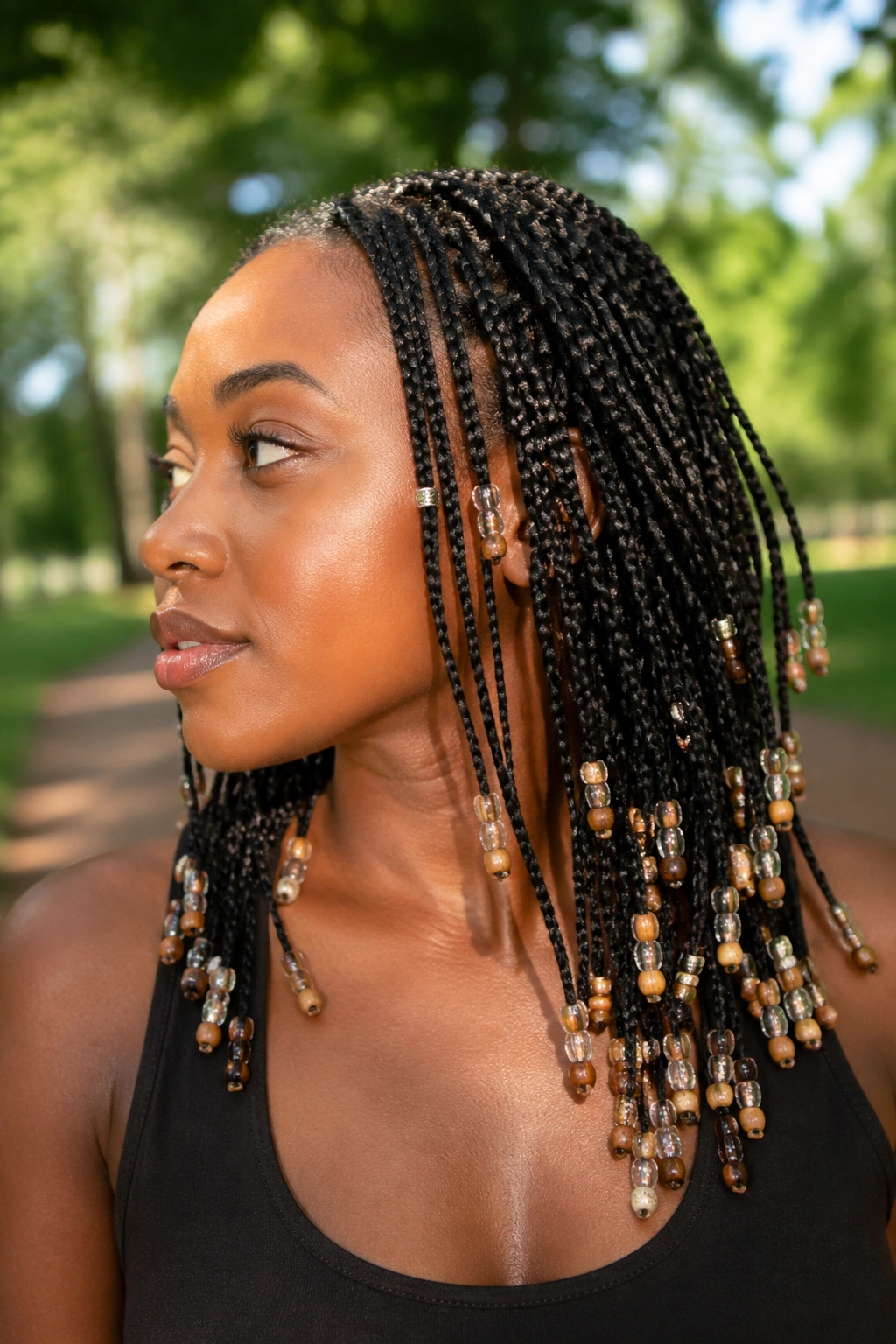
Beads change the sound, the weight, and the attitude. They make tree braids feel less formal and a little more playful, which is why I like them on Type 4 natural hair when the rest of the style is kept neat. The beads sit best on the last few inches of the braids, where they can swing without pulling at the scalp.
A few beads are enough. You do not need to cover every strand from top to bottom. That gets noisy fast and can make the ends heavy in a way that shortens the life of the style. Wooden beads feel earthy and soft. Clear beads look sharper. Gold cuffs give you a clean finish if you want something that reads a little dressier.
Keep the weight in check. If the front pieces are loaded with beads, the braids start to shift toward the face and the style gets annoying during the day. I prefer fewer beads on the front pieces and a little more decoration toward the sides or back.
The best part is how beads make the finish look more deliberate, even when the braid pattern itself is simple. That is the whole trick here. Plain tree braids can look elegant. Beads make them feel finished.
9. High Ponytail Tree Braids
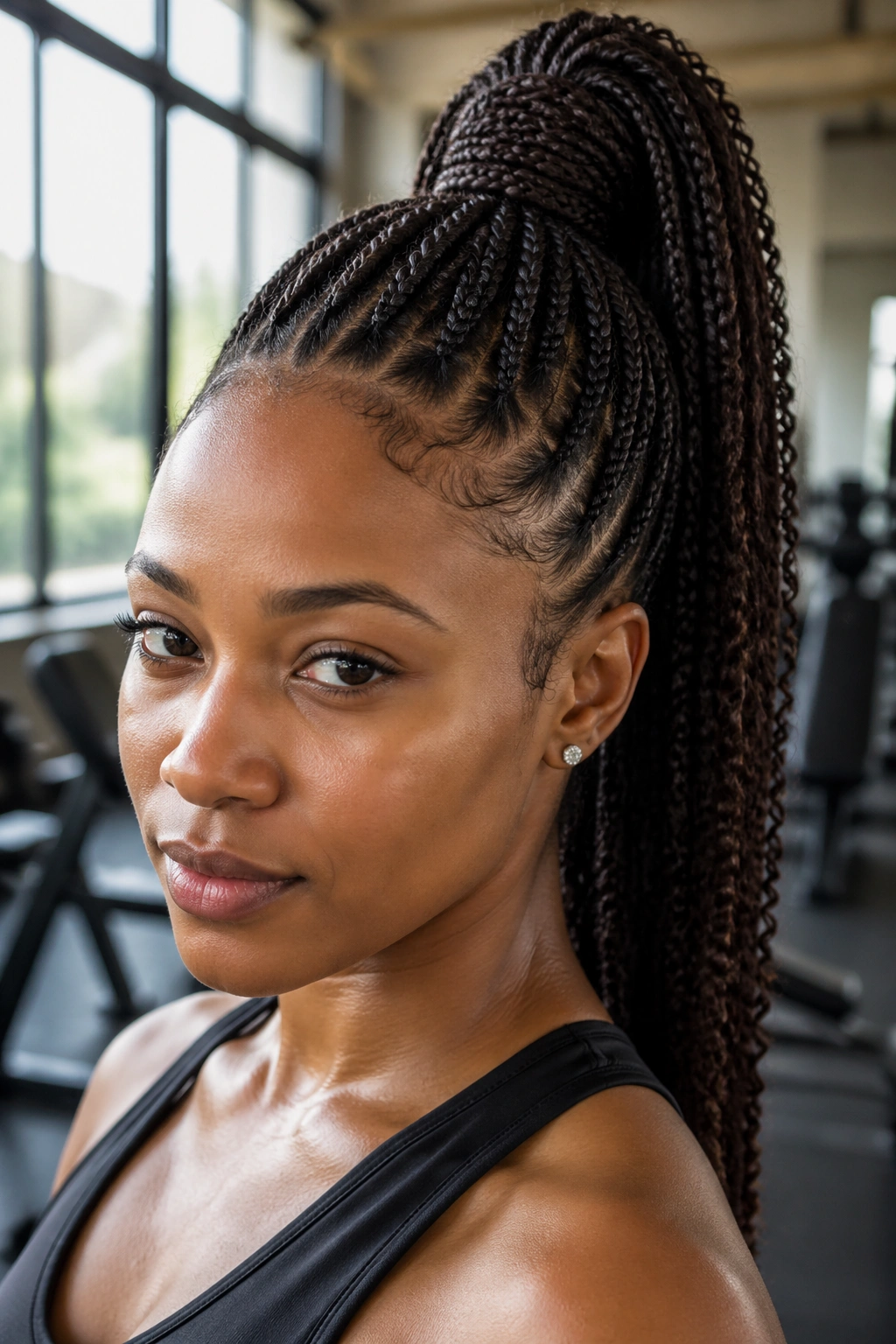
Can tree braids go up without looking bulky? Yes, if the base is laid with that in mind from the start. A high ponytail version is cleaner than people expect, but only when the cornrows are flat enough at the crown and the length is balanced so the tie doesn’t have to fight a thick lump of hair.
How to Get the Most From It
- Ask for the crown rows to be sleek and close to the scalp
- Keep the ponytail holder soft and wide
- Use a little edge control only if your hairline tolerates it
- Don’t pull the braid bundle too tight when you gather it
A high ponytail opens the face and gives the style a lifted shape that feels energetic. On Type 4 hair, it can also help with day-to-day comfort because the weight is pulled away from the neck. That part matters more than people admit. Heavy styles around the nape get old fast.
The only real problem is over-tightening. If your stylist has to yank the hair to get it up there, the style is too heavy for the shape. You should feel secure, not strained. That’s the difference between a ponytail you wear and a ponytail you endure.
I like this version for workouts, errands, or long days when you want your hair off your shoulders but still styled on purpose.
10. Honey-Brown and Burgundy Tree Braids
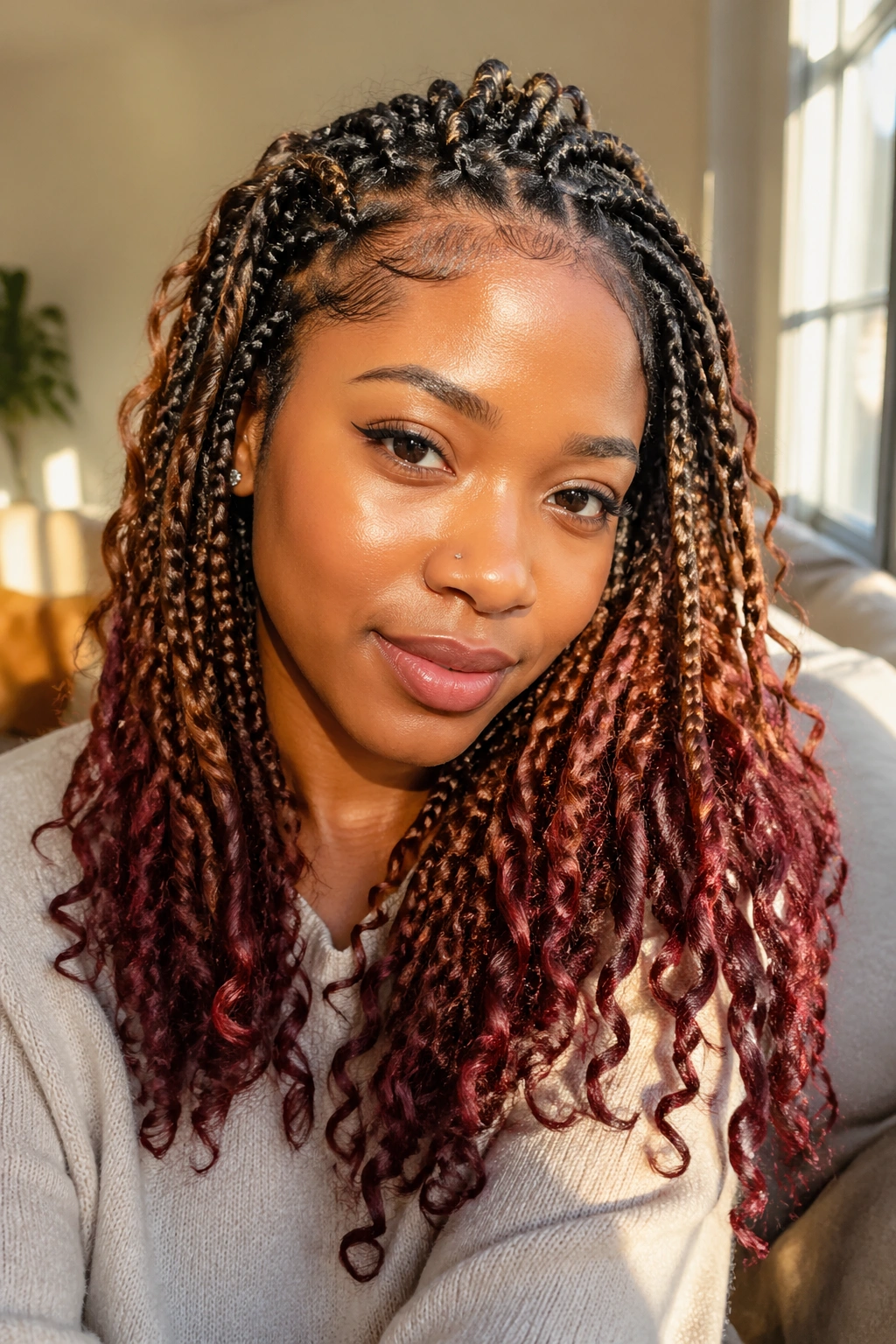
A little color changes the whole read of the braid. Not a lot. Just enough to catch the eye when the light shifts. Honey-brown and burgundy tree braids are a smart choice for Type 4 natural hair because they add dimension without asking your own hair to be processed. Use colored extension hair instead of coloring the natural strands. Easier. Safer.
The nicest version keeps the base close to your natural shade and lets the color show up through the hanging pieces. That way the scalp stays grounded and the ends carry the visual interest. If every section is the same bright tone, the style can look flat. A mix of darker roots with lighter mids and ends gives you more depth.
What to Ask For
- Place the brighter color around the front and outer layers
- Keep the back sections darker if you want more contrast
- Choose burgundy if you want a richer look; choose honey-brown if you want softness
- Avoid heavy bleach on your natural hair just for the style
I like this option because it does not need accessories to feel finished. The color itself becomes the accessory. And on coily hair, those warmer tones often show texture better than a flat black synthetic pack ever will.
One note: if you wear a lot of gold jewelry or warm-toned makeup, honey-brown can look especially good. Burgundy leans moodier and a little sharper. Pick the one that matches the clothes you actually wear, not the one that looks loud on the shelf.
11. Chunky Tree Braids for Big Volume
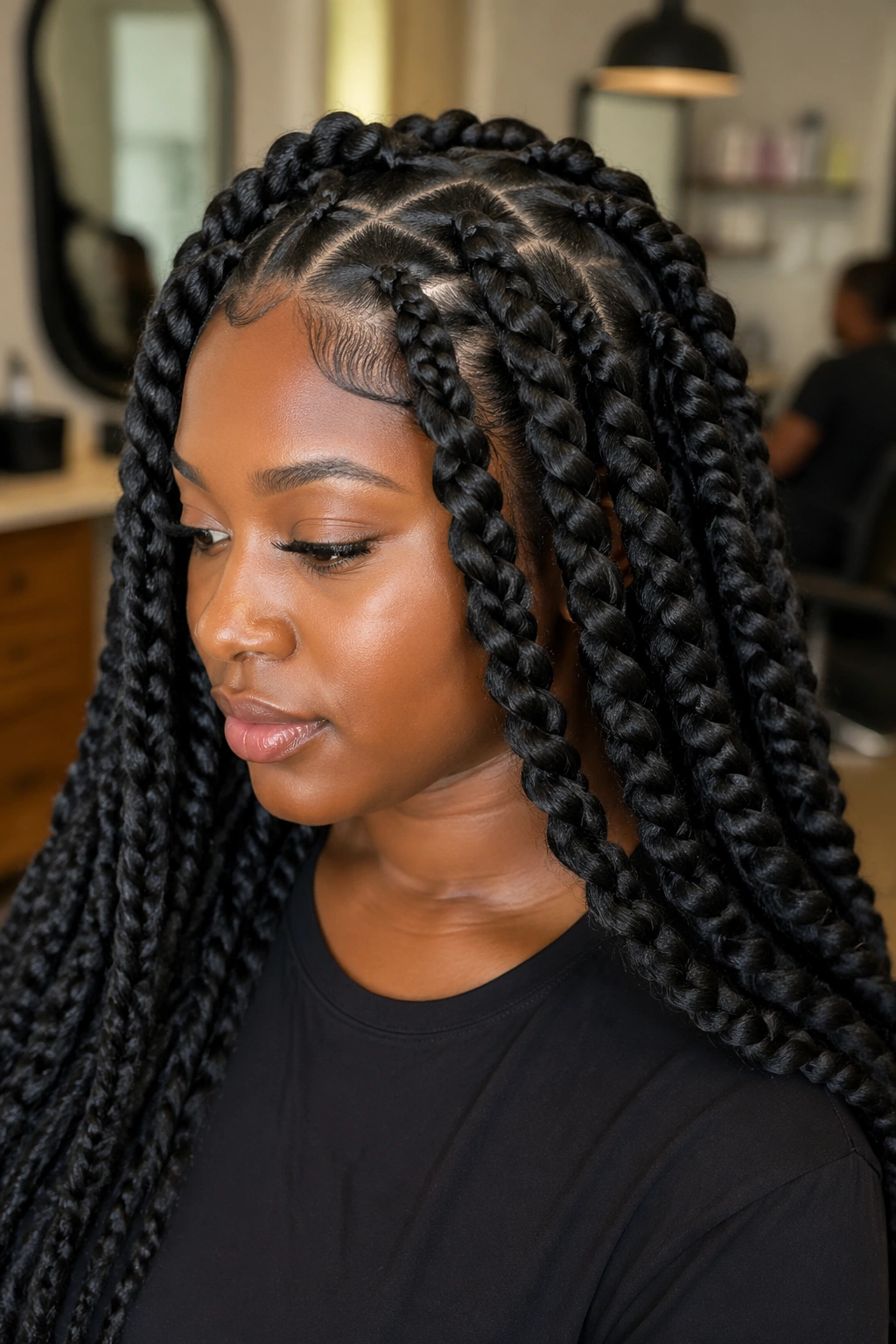
Chunky tree braids are for dense Type 4 hair that can hold a little more weight without collapsing. The style is not about making each braid huge for the sake of it. It is about giving the parts enough space so the final shape reads full, intentional, and not overcrowded at the scalp. If the rows are too packed together, chunky braids stop looking bold and start looking cramped.
The payoff is volume. Real volume. You get a thicker silhouette, which can be gorgeous if you like your hair to have presence. The trick is keeping the front rows from getting too heavy. That area is where tension shows up first, and it’s where a lot of otherwise pretty installs start to feel irritating.
Chunky versions also take down faster than tiny ones, which is one reason people who hate marathon salon sessions gravitate to them. They can still be polished. They just don’t pretend to be delicate.
If your hairline is sensitive or your edges are a bit sparse, I’d be cautious here. Chunkier does not mean better at the front. The larger the braid, the more careful you need to be with placement and weight.
12. Low Bun Tree Braids
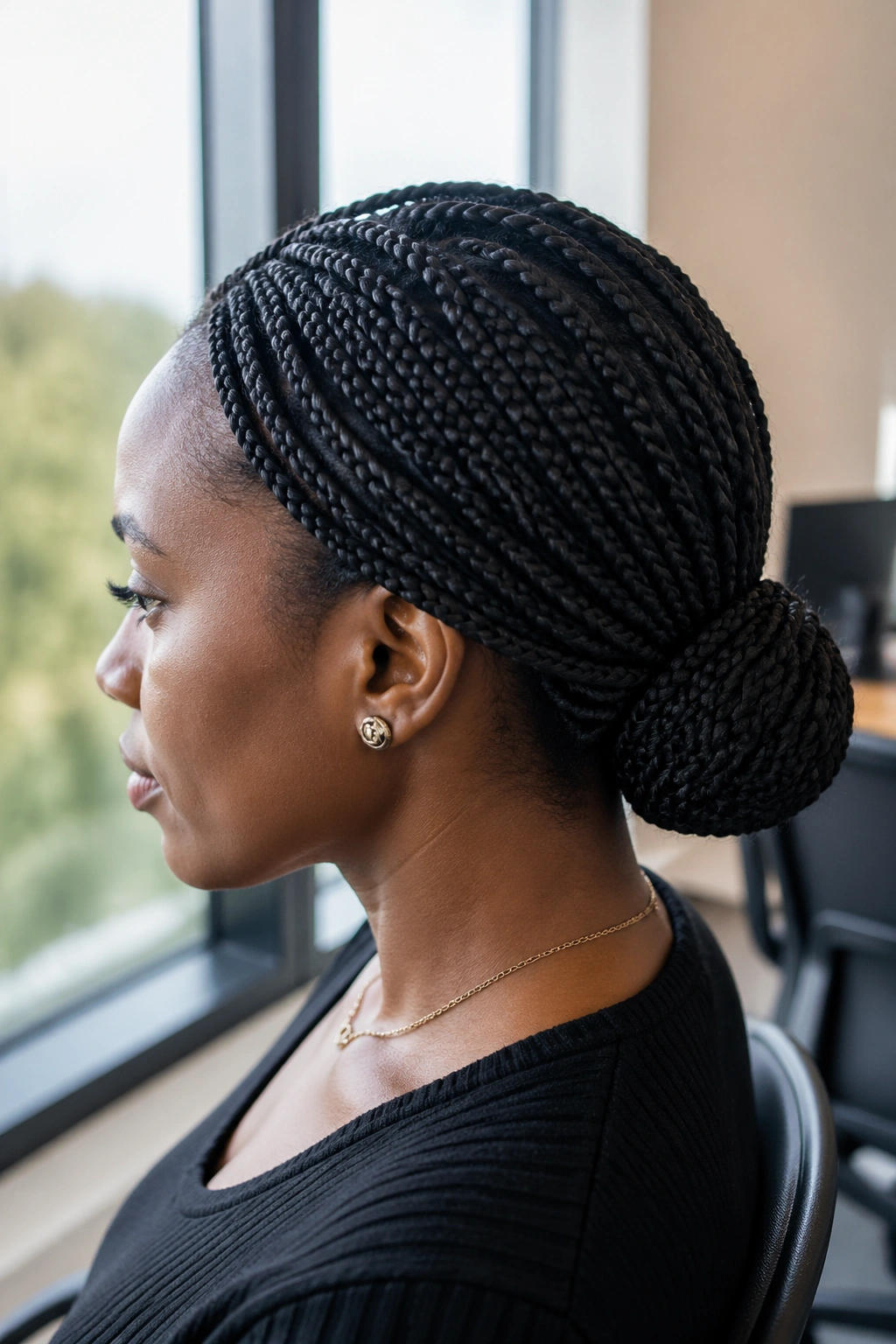
Unlike loose tree braids that hang everywhere, a low bun version keeps everything tucked, tidy, and out of the way. It’s the style I’d point to for workdays, family events, or any time you want your hair to stay put without looking plain. The bun sits at the nape, which keeps the weight away from the hairline and gives the whole style a grounded feel.
A good low bun should look soft, not squeezed. If you twist the braids too tightly, the bun turns into a hard knot that fights your scalp. If you gather them with a loose wrap and pin them with a few hidden U-pins, the shape stays round and comfortable. That small difference matters more than people think.
The style works especially well when the tree braids themselves are medium length. Too long, and the bun gets bulky. Too short, and you lose the fullness that makes the finish appealing. Medium length gives you enough material to shape without building a giant knot at the back of your head.
Leave one or two face-framing pieces out if you want softness, or sweep every strand back for a cleaner line. Either way, the low bun version has one job: stay calm. When it does, the whole look feels polished without trying too hard.
