



A good haircut after 70 should make life easier before breakfast. The best low-maintenance short hairstyles for women over 70 do exactly that: they keep shape, soften the face, and stop you from wrestling with a round brush every morning.
That is the whole point.
Hair changes with age. It often grows finer at the temples, drier at the ends, and a little less willing to hold a heavy shape. A style that felt easy ten years ago can start acting fussy for no good reason, while a smarter short cut can fall into place with a quick finger-comb, a dab of cream, or five minutes in front of the mirror.
I like haircuts that grow out with dignity. If a style looks good only for the first nine days, it is not low-maintenance — it is a standing appointment with your stylist. The cuts below lean on shape, movement, and clean lines, which is what makes them practical without looking flat or stern.
1. Classic Pixie Cut for Women Over 70
A classic pixie is short for a reason: it takes weight off the sides and lets the face do the talking. The best version is soft, not spiky, with just enough length on top to move when you run your fingers through it.
Ask for the sides to stay neat around the ears and the crown to keep a little length — about 1.5 to 2 inches usually does the trick. That small bit on top gives you options. You can smooth it down, lift it slightly, or push it to one side when the mood changes.
Why it stays easy
- It dries fast.
- It looks tidy after sleep.
- It works well with fine or straight hair.
- It needs a trim about every 4 to 6 weeks.
Keep the crown a touch longer than the sides so the cut doesn’t collapse into your scalp.
A pea-sized amount of light cream is enough. More than that, and the hair starts to look stuck in place, which is never the goal.
2. Soft Layered Crop for Fine Hair
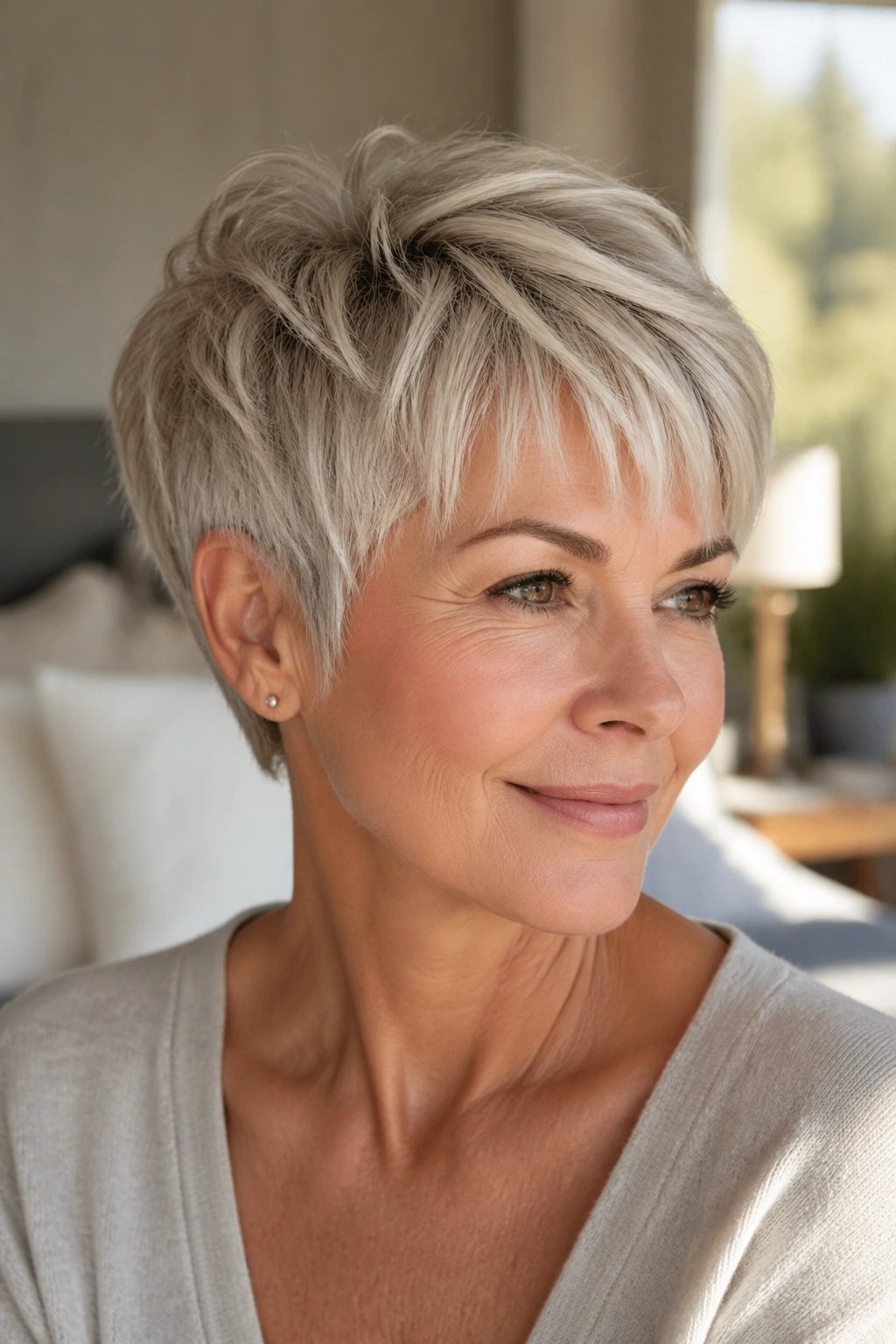
Fine hair often looks fuller when it is shorter, not longer. A soft layered crop uses that trick without making the cut feel choppy or overdone.
The key is internal layering. You want movement inside the shape, not short bits sticking out everywhere. If the layers are cut with a light hand, the hair gets lift at the crown and still lies smoothly at the edges. That matters when you do not want to spend ten minutes fixing a crown that went flat by noon.
What to ask for
- Keep the top slightly longer than the sides.
- Use soft point-cutting, not harsh razor texture.
- Leave enough length near the temples to avoid a washed-out look.
- Ask for a shape that grows out cleanly.
A small round brush can help if you like a touch of lift, but you don’t need a full blowout. Air-dry, finger-style, done. For many women, that is the whole appeal.
3. Tapered Crop with a Close Nape
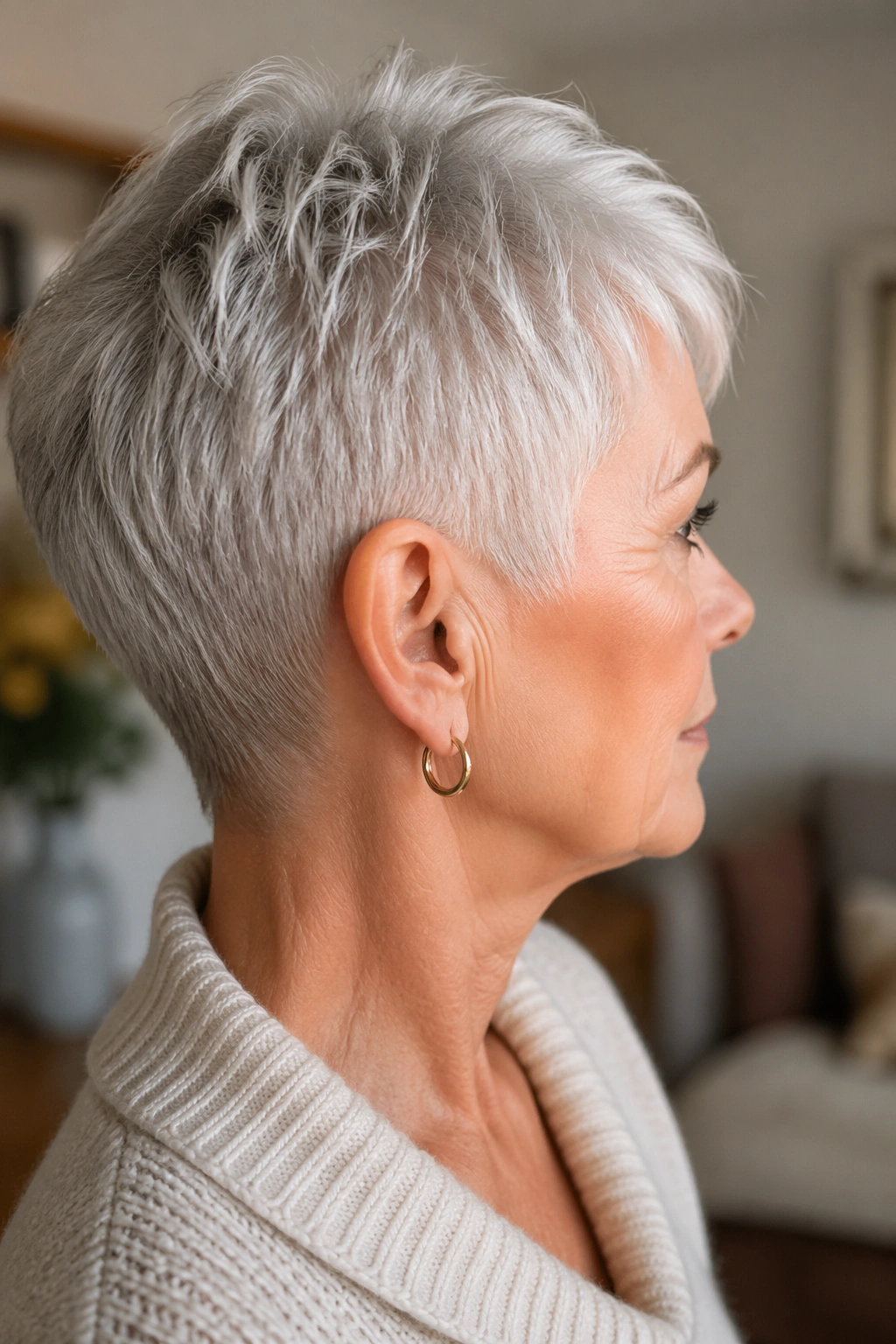
Why do tapered cuts look so neat even when the rest of life is a little messy? Because the shape is doing the work for you. A close nape keeps the back tidy, and the taper at the sides makes the haircut sit close to the head instead of puffing out.
This style is especially useful if your hair tends to stick out at the neck or if you want earrings and collars to show. It can look crisp on straight hair and surprisingly soft on slightly wavy hair, as long as the taper is blended rather than shaved down too hard.
How to ask for it
Tell your stylist you want a soft taper at the neckline, not a severe clipper fade. Leave enough length on top to sweep forward or to the side, because that keeps the cut from looking too severe.
It’s one of those haircuts that looks especially good in silver or white hair. The outline stands out cleanly. No drama, no fuss.
4. Long Pixie That Brushes the Cheekbones
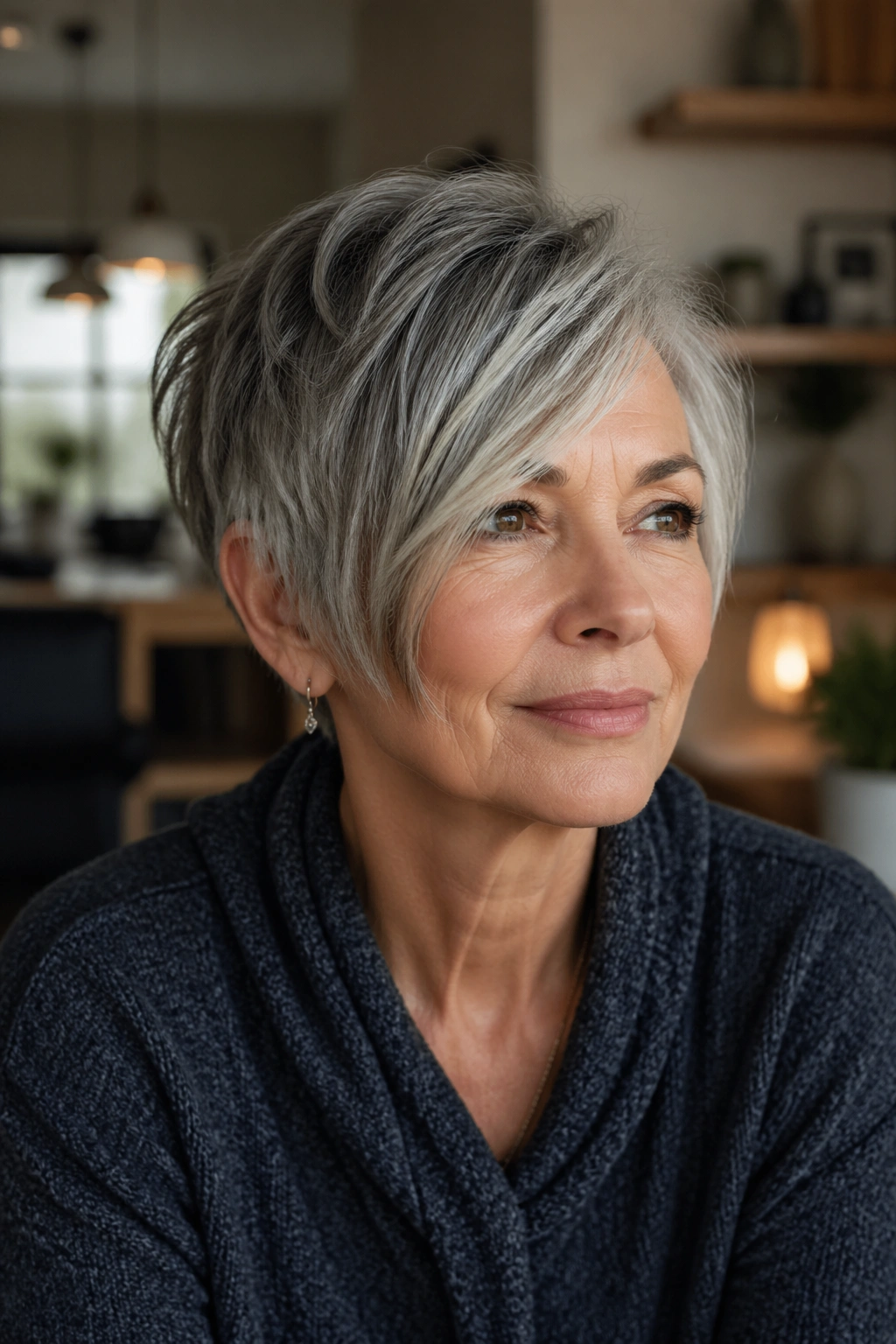
If you like touching your hair once or twice and then forgetting about it, this is the cut. A long pixie gives you the ease of a short style with a little more softness around the face, which helps if you don’t love a very cropped look.
The longer front pieces brush the cheekbones and can be tucked behind one ear when you want a cleaner line. That tiny bit of extra length is useful around glasses too. You’re not fighting the frame all day.
A long pixie is a nice middle ground for women whose hair is fine but not limp, or for anyone who wants some movement without crossing into bob territory. Keep the top layered enough to bend, not so layered that it sticks up in odd directions.
Best styling move: dry the front forward first, then sweep it to the side with your fingers. It takes about a minute and looks more natural than overworking it with a brush.
5. Chin-Length Blunt Bob for Women Over 70
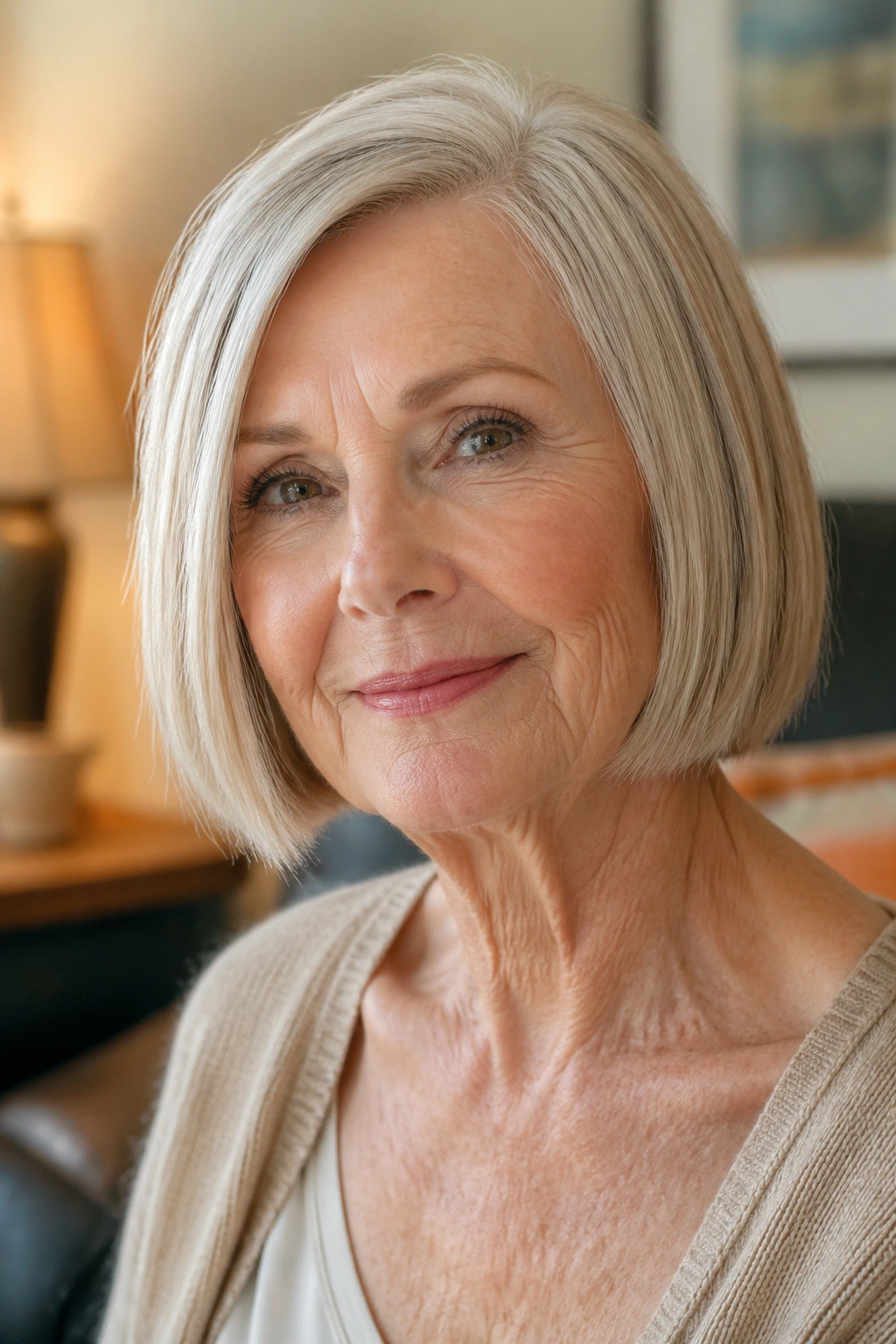
A chin-length blunt bob has a clean, cool feel on the neck. That straight line at the bottom gives the hair shape even when you do almost nothing to it, which is why this cut keeps showing up on women who want order without too much effort.
It works especially well if your hair is straight or only slightly wavy. The blunt edge keeps the outline strong, and the chin length lifts the face without making the head look too round. If your hair is thick, this cut can still work — it just needs a little internal removal so the ends don’t sit like a shelf.
Short bobs like this are easy to air-dry. A quick tuck behind the ears or a small side part changes the feel without changing the cut itself.
A few practical notes
- Trim every 6 to 8 weeks to keep the line clean.
- If your hair flips outward, ask for the ends to be beveled slightly under.
- A light smoothing cream is enough; heavy serums can make it limp.
6. Soft Stacked Bob
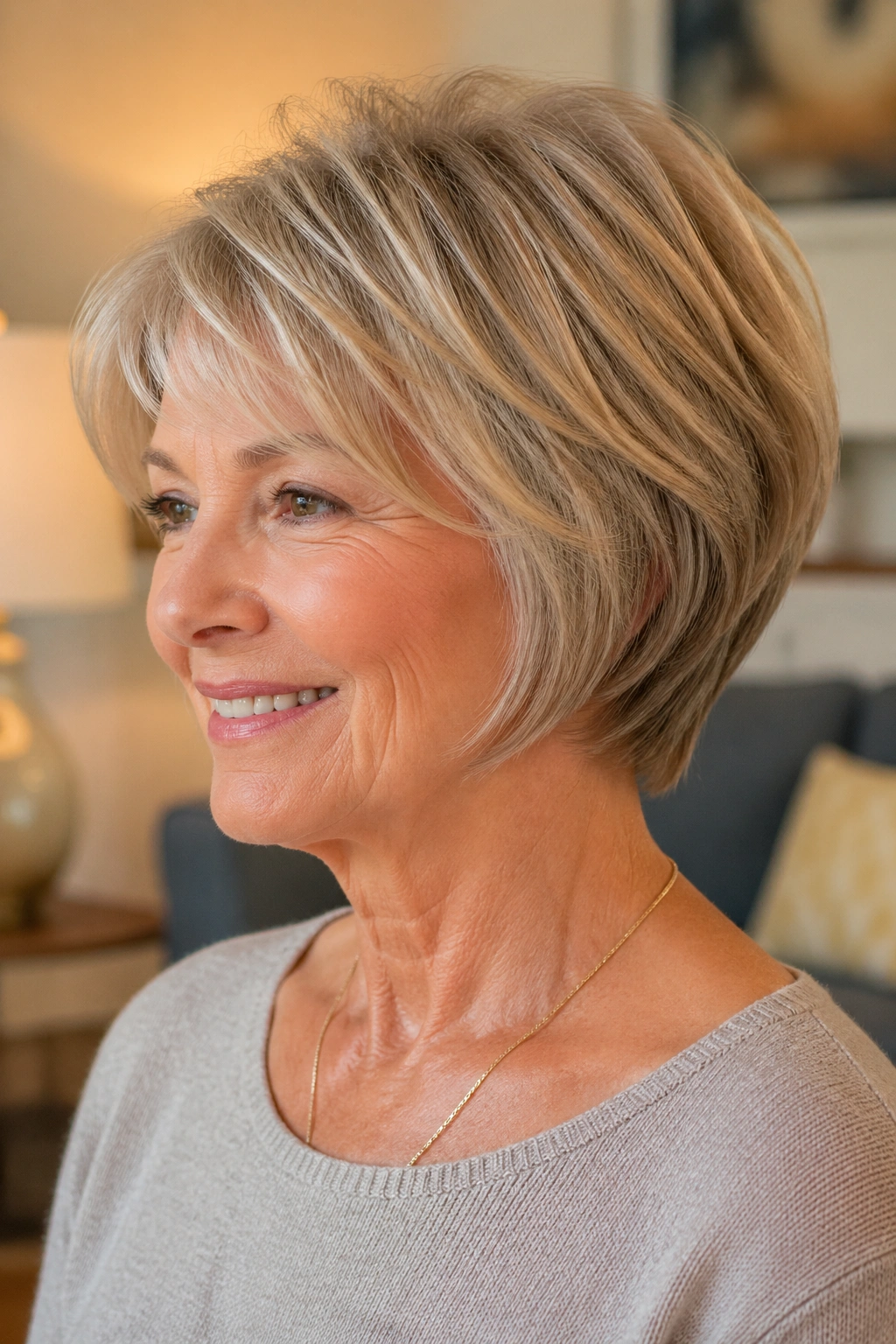
Stacking the back does the heavy lifting here. A soft stacked bob keeps the nape shorter and layers the hair so it lifts gently toward the crown, which is handy if your hair has started to sit flatter in back.
The trick is softness. Too much stacking can make the haircut feel old-fashioned in the wrong way, almost like it’s trying too hard. A modern version keeps the back shaped and the sides loose enough to skim the jawline instead of hugging it too tightly.
This is a strong choice for medium-density hair, especially if you want a little volume without a lot of styling. Blow-dry the back for 30 seconds with a small round brush, and the shape usually holds.
What makes it different
- More lift than a blunt bob
- Less maintenance than a heavily layered cut
- Good for women who want the neckline to stay neat
- Helps thick hair sit closer to the head
7. A-Line Bob
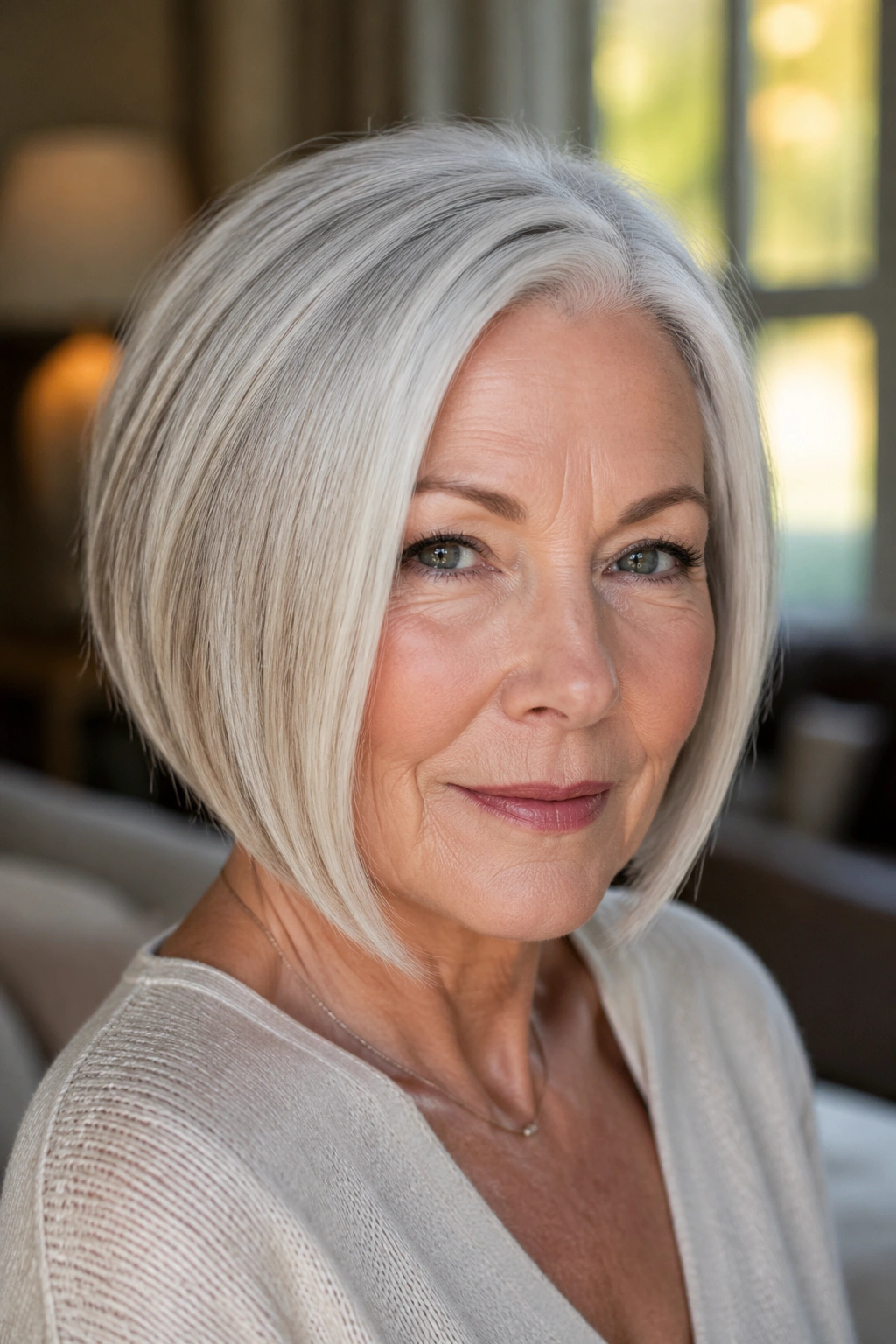
An A-line bob gives you swing in the front and control in the back. That slightly longer front piece changes everything, because it makes the haircut feel softer while still staying tidy.
I like this one for women whose hair has some natural bend. The shape does a lot of the work, so you do not need to style every strand into place. Keep the front just below the jaw if you want a gentle frame, or a touch longer if you prefer more coverage around the cheeks.
This cut can be surprisingly kind to round or square faces. The angled front lengthens the profile a bit, while the shorter back keeps the whole thing from feeling heavy. It’s a small change, but it shows.
If you wear it tucked behind one ear, the angle reads even more clearly. That little asymmetry is enough.
8. Feathered Crop
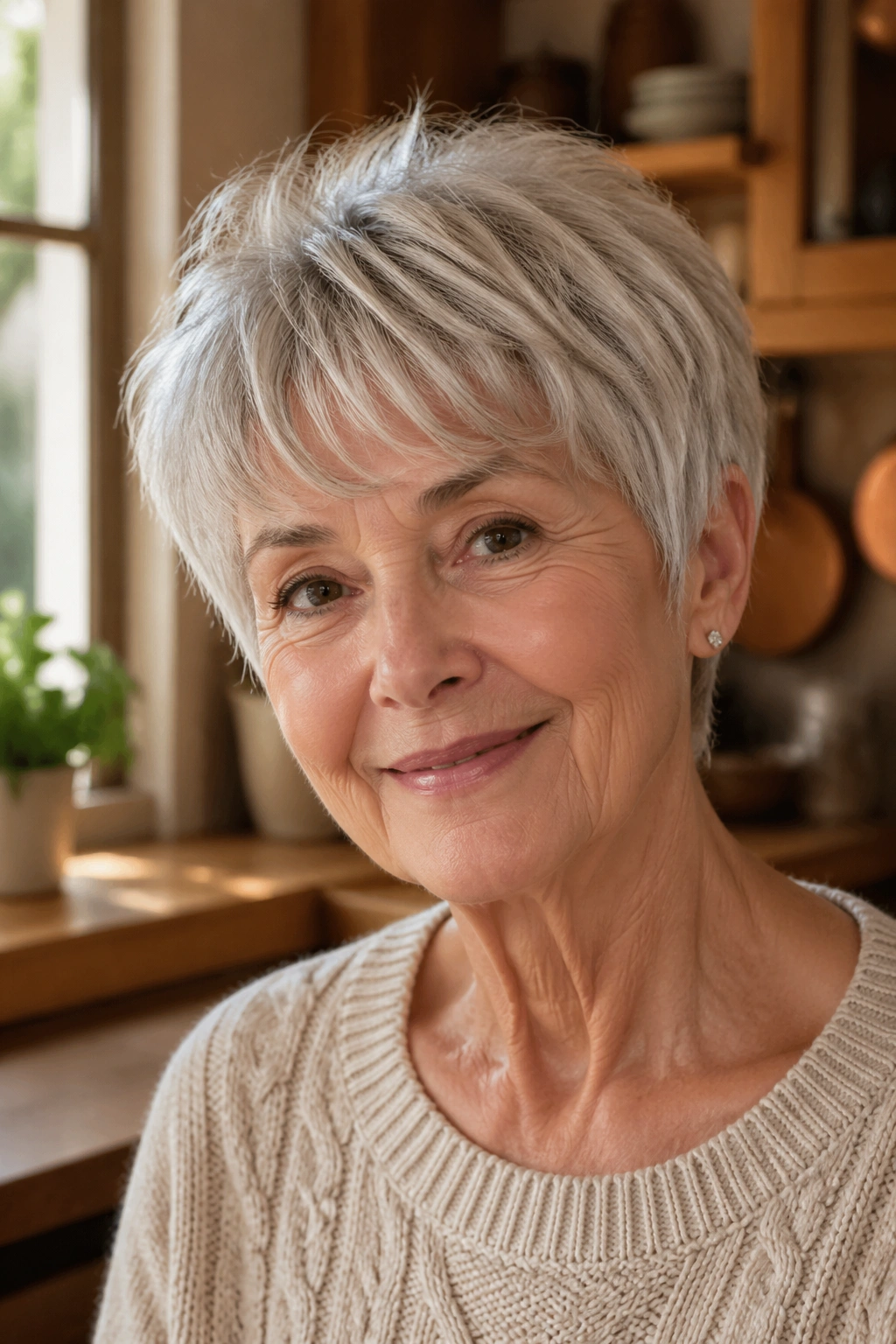
Feathered ends soften a short cut in a way blunt edges never will. The hair moves instead of sitting in one block, which is useful when your hair has gotten a little drier or more delicate over time.
Ask for light feathering around the top and sides, not a lot of thin, wispy ends everywhere. There’s a difference. Good feathering gives shape and softness; too much of it can make the hair look torn up. The best feathered crop still has a clear outline, just a gentler one.
Where feathering helps most
- Around the forehead, if you want a softer frame
- Near the ears, if you wear glasses
- At the crown, if you need a bit of lift
- Along the sides, if your hair is thick and puffs out
A light mousse on damp hair is enough. Scrunch it a little, then leave it alone.
9. Short Shag
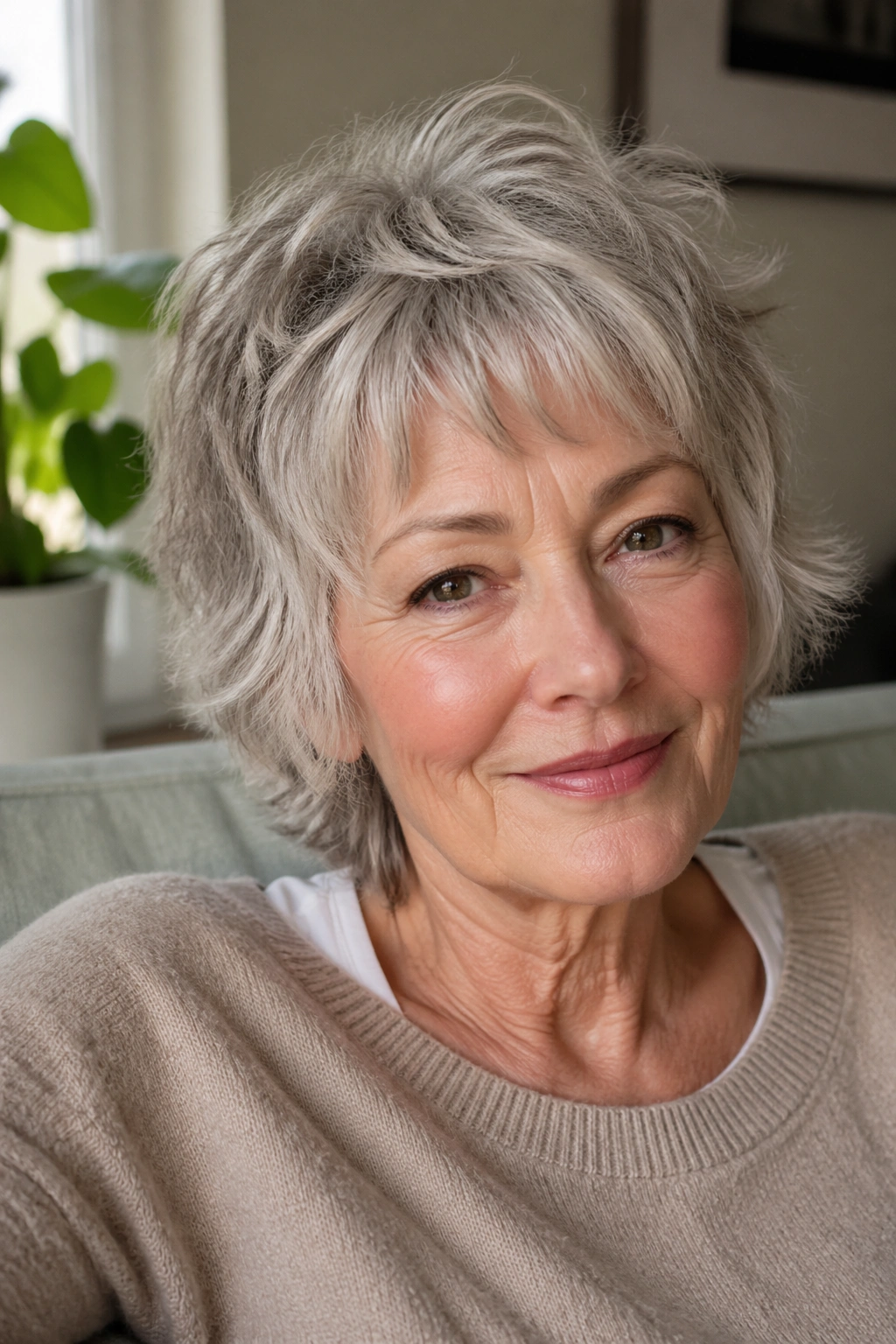
A little mess is the point. A short shag gives you movement, texture, and a shape that doesn’t mind if you skip a perfect blow-dry. That makes it a strong choice for women whose hair has a wave, a cowlick, or both.
The best short shag is not wild. It has soft layers through the top and sides, with a bit of length left around the face so it doesn’t look boxy. If cut well, it can be one of the easiest styles to live with because the messy finish is part of the design.
Easy styling routine
- Work a small amount of mousse through damp hair.
- Scrunch with your hands.
- Air-dry or use a diffuser for 5 to 8 minutes.
- Leave the ends alone once they start to set.
That’s it. Really.
A shag is one of the rare short cuts that can look better after you’ve worn it for a day.
10. Curly Bob for Women Over 70
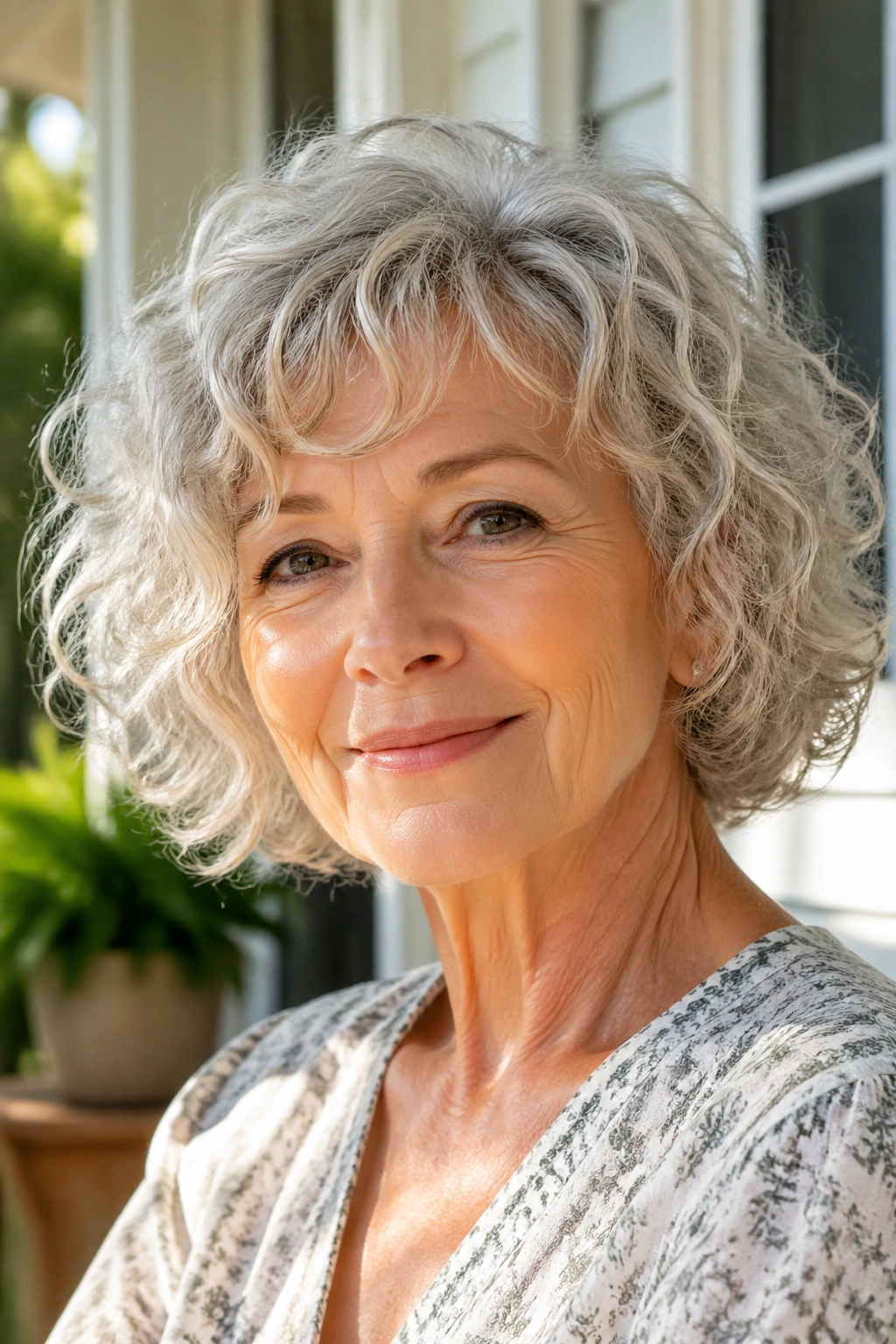
Curly hair needs room, not punishment. A curly bob gives the curls enough length to spring while keeping the shape short enough that it doesn’t become a daily project.
The biggest mistake with curly hair is cutting it too blunt or too short around the crown. That usually creates a triangle, and nobody wants that. A good curly bob has layers placed where the curl needs space, usually around the jaw and lower cheek area, so the shape moves with the curl pattern instead of against it.
Keep it simple
- Use a leave-in conditioner on damp hair.
- Detangle with fingers or a wide-tooth comb.
- Diffuse only until the roots are dry.
- Do not brush it once it’s dry.
A curly bob can look lovely in gray, silver, or white hair because the curls pick up light and show off the shape. If your curl pattern has loosened over time, this cut still works. It just needs less product than you used to think.
11. Wavy Crop
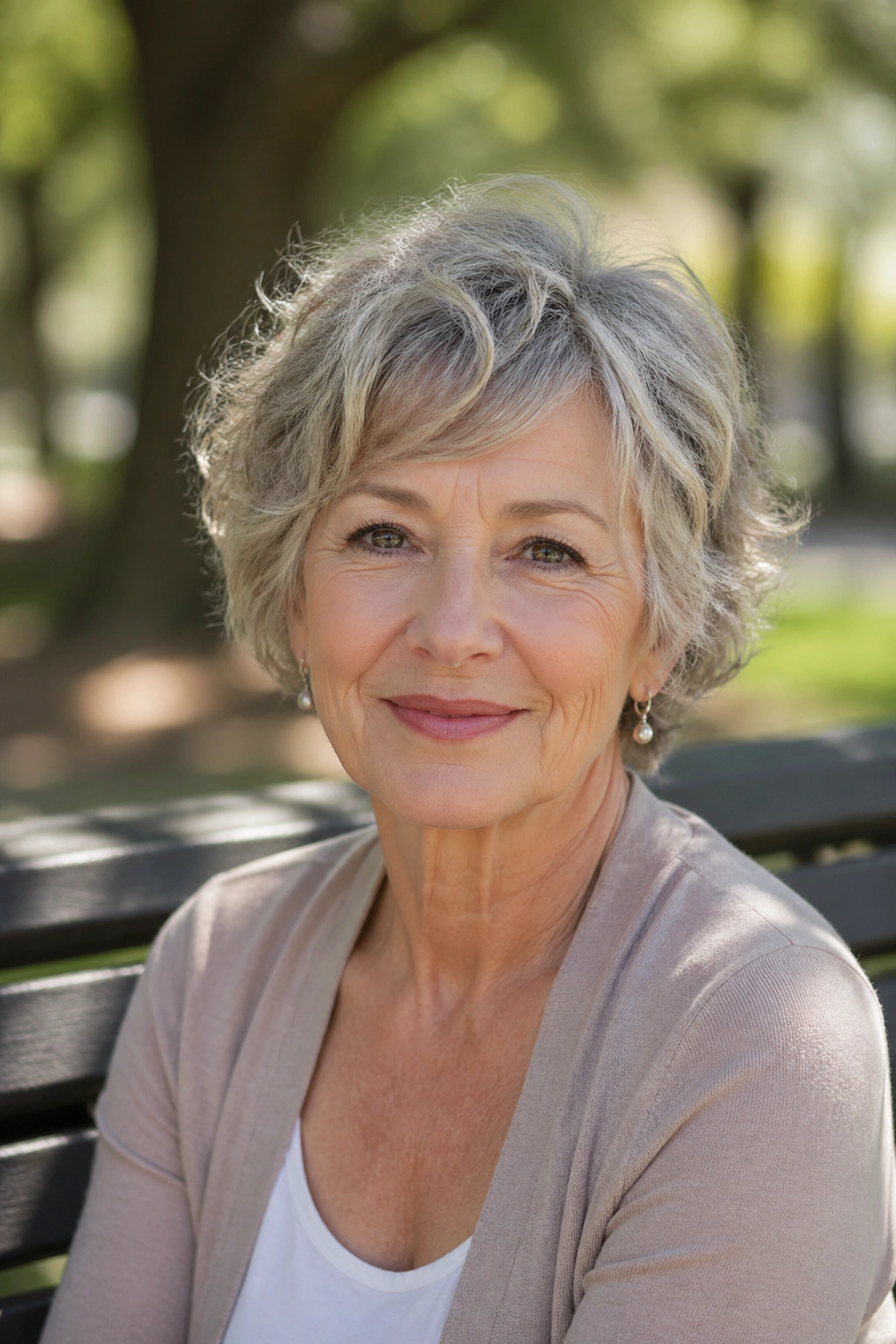
A wavy crop is what happens when natural movement finally gets to be the main event. If your hair bends a little on its own, this cut lets it do that without fighting the texture.
The length usually sits between the ears and the jaw, which is short enough to dry quickly but long enough to avoid that too-tiny feel some crops can have. I like this cut for women who want something relaxed but not messy. It can look polished with almost no work, especially if the wave falls in a soft side pattern.
A light styling cream or a touch of salt spray can help, but neither is mandatory. Sometimes hair does better when you stop trying to control it so much. That’s the honest version.
The shape should still be clean at the nape and around the ears. Loose does not mean shapeless.
12. Bixie Cut
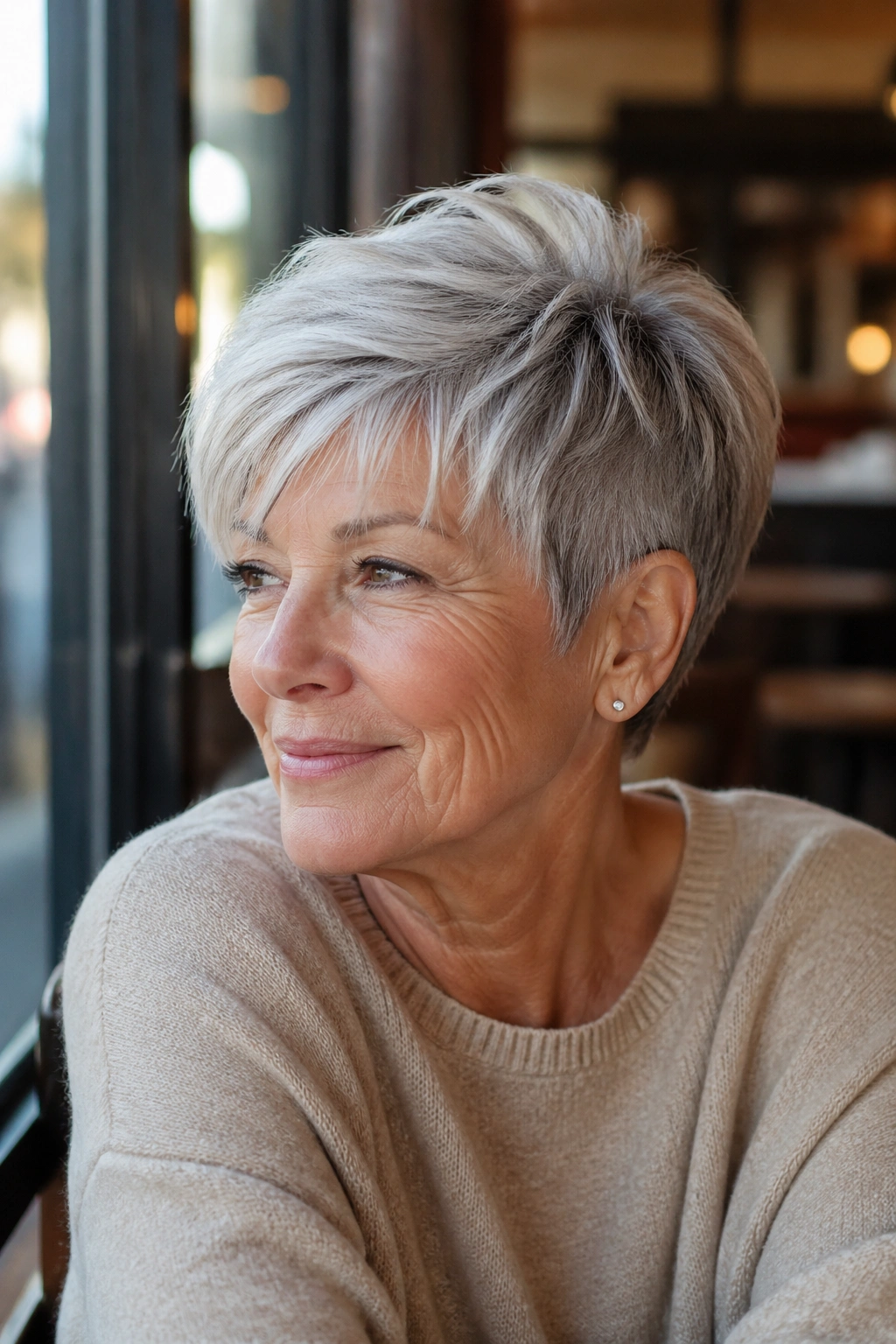
A bixie sits between a bob and a pixie, and that middle ground is the whole appeal. You get more softness than a close crop, but less daily fuss than a true bob.
The longer top gives the haircut movement, while the shorter sides and back keep it neat. It’s useful if you like short hair but don’t want your ears or neck completely exposed. A bixie can also be flattering if your hair has become finer, because the layered top creates the sense of density without needing a lot of product.
Who usually likes it
- Women who want a shorter neck area
- Anyone who likes to tuck one side behind the ear
- People who want a cut that grows out in a friendly way
- Hair that is straight, wavy, or lightly curly
If a pixie feels too cropped and a bob feels too much like maintenance, the bixie fills that gap nicely. Clean edges, soft top, not a lot of drama.
13. Rounded Bob with Crown Volume
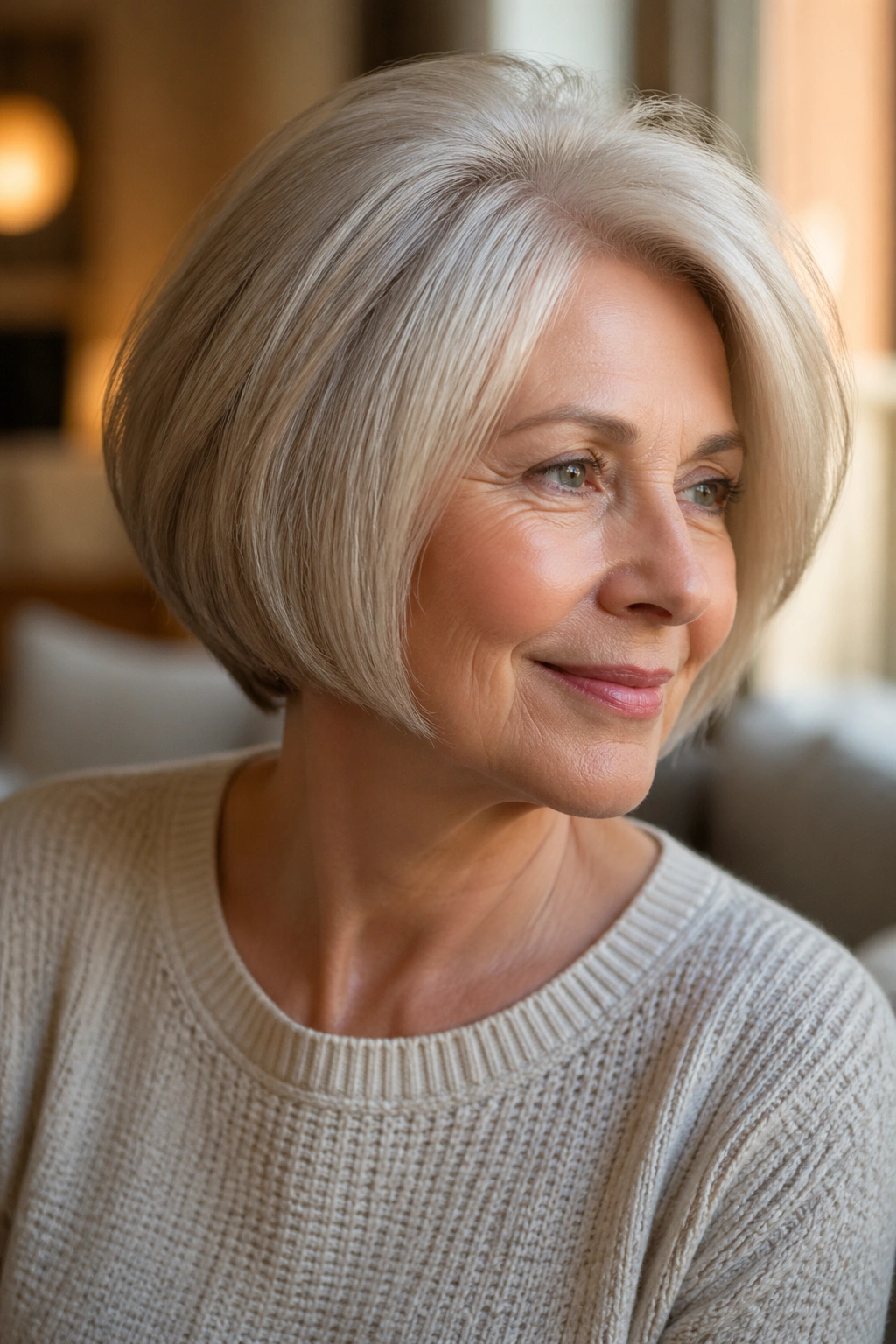
A rounded bob is kind to hair that has lost a bit of lift at the crown. The curve gives the head a softer profile and keeps the shape from hanging straight down like a curtain.
What matters here is balance. The back should have enough layering to rise gently, and the sides should curve toward the jaw without turning poofy. A good rounded bob looks shaped, not sprayed. There’s a difference, and it’s easy to spot in person.
This cut can be especially nice if you have a narrower face or if you want a style that doesn’t sharpen your features too much. The roundness softens the outline, while the short length keeps it practical.
If the top goes flat, a few seconds of root lifting at the crown usually fixes it. No elaborate routine needed.
14. Ear-Length Crop with Fringe
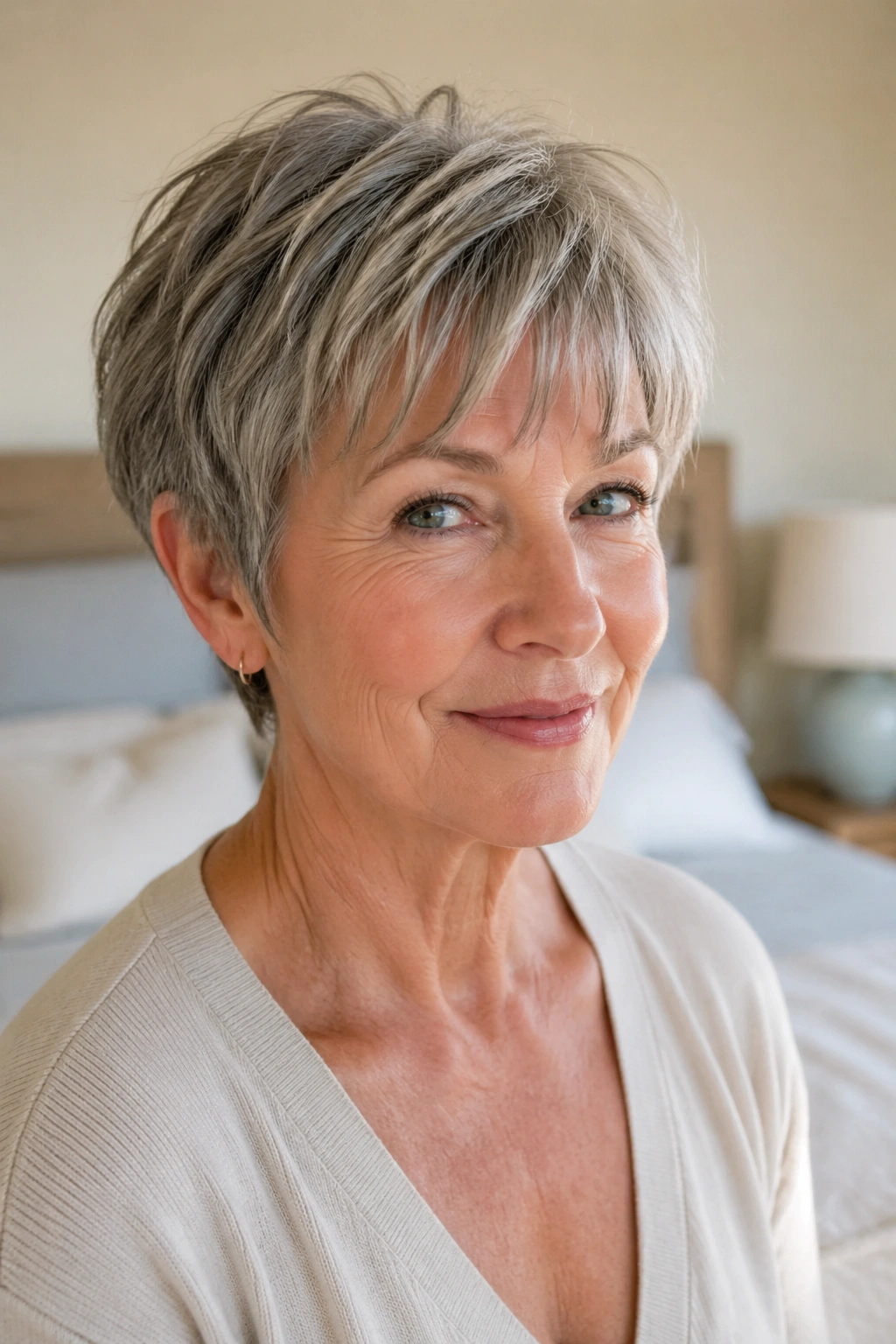
If you like hair off your neck and out of your eyes, this one behaves. An ear-length crop feels light and easy, and the fringe gives it enough softness that it doesn’t look severe.
The fringe matters more than people think. A wispy, side-swept bang can soften the forehead and break up a strong hairline, while a heavier fringe can feel too dense on fine hair. Keep it light if you want the style to stay easy. Heavy bangs need more attention than they’re worth.
Fringe choices that work well
- Side-swept fringe for a softer look
- Wispy bangs for fine hair
- A short, piecey fringe if you wear glasses
- Longer fringe if you want to tuck it to one side
This cut is nice for active days because it stays away from the face without needing constant adjustment. There’s comfort in that.
15. Side-Parted Pixie
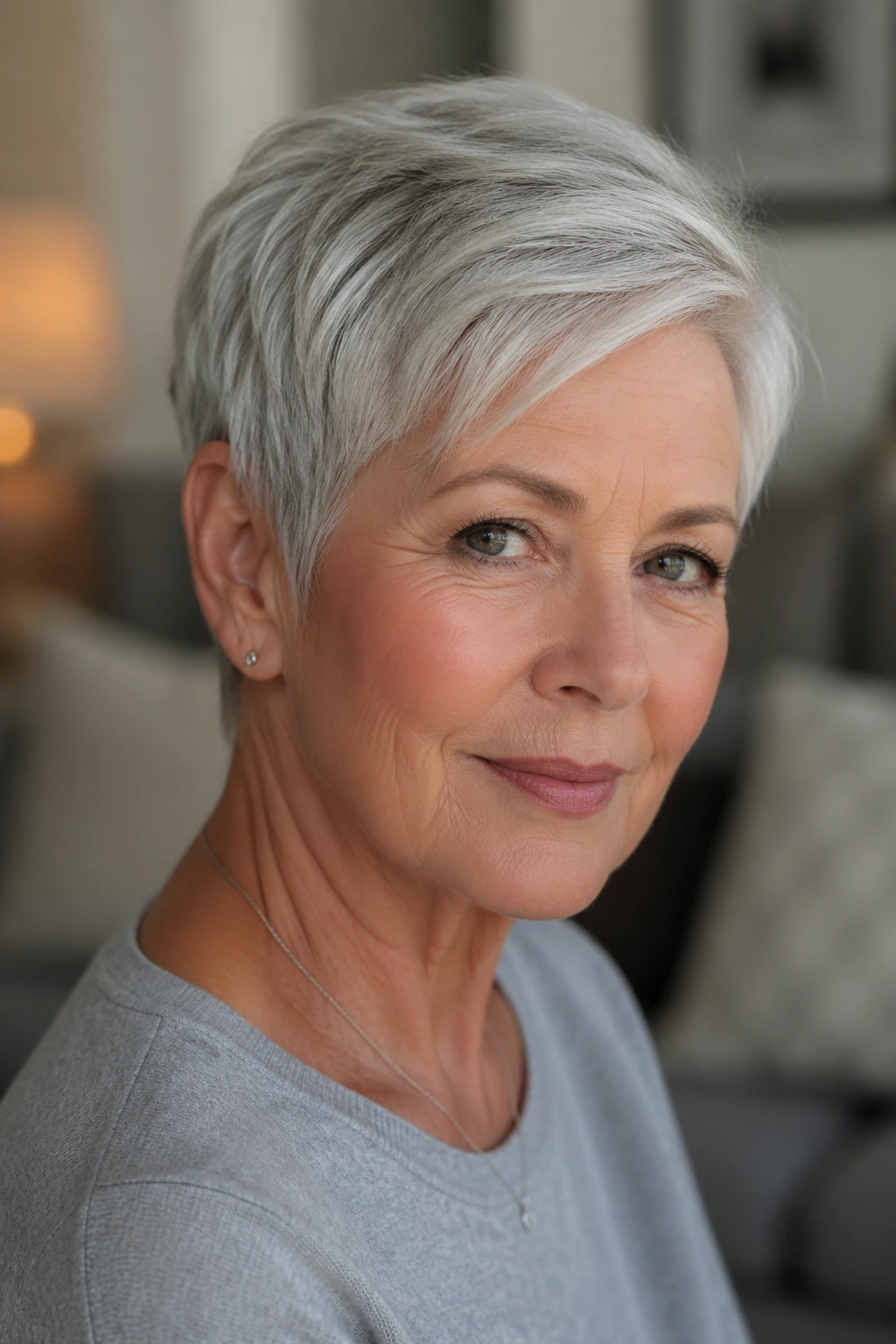
A side part does a lot of work. It gives a pixie movement, helps lift the hair at the front, and keeps the whole style from looking too uniform.
This is a smart pick if your hair has started thinning a little at the temples. The side part hides that area without hiding the face itself. It also gives you a place to tuck volume toward the stronger side, which is useful when one section of hair insists on lying flatter than the rest.
How to style it fast
- Part the hair while it’s damp.
- Blow-dry the front for 20 to 30 seconds at the roots.
- Smooth the top with a light cream or mousse.
- Push the front slightly across the forehead, not straight back.
That small diagonal line makes the cut feel more alive. It’s subtle, but it matters.
16. Wedge Cut
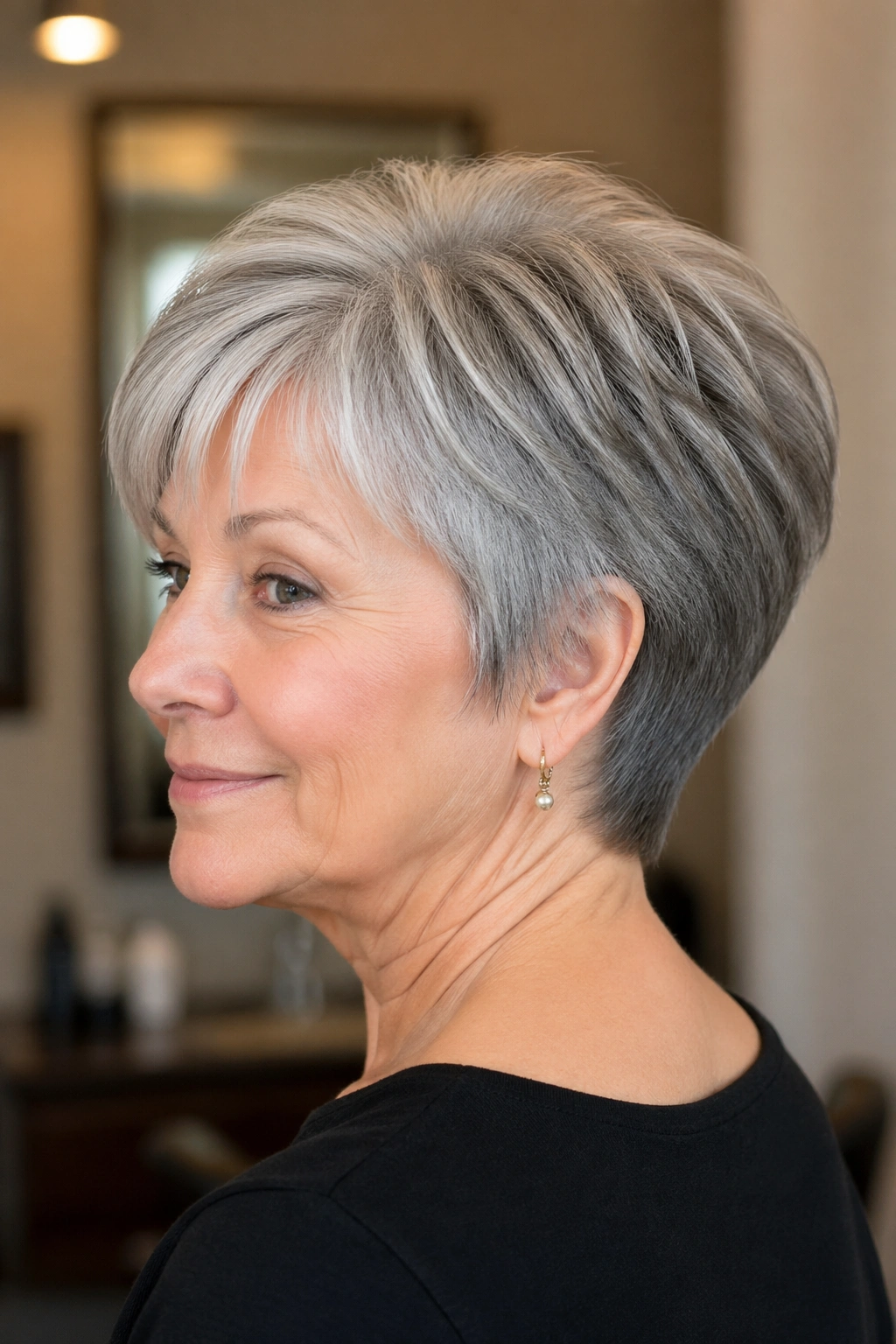
The wedge cut still earns its keep because the shape is built in. Shorter at the back, fuller through the crown, and angled toward the front, it gives you a tidy silhouette with almost no daily fuss.
It is especially good for straight or slightly wavy hair that likes to sit close to the head. The wedge keeps the neckline neat and gives the back a clean curve, which means you spend less time trying to make the shape happen with styling tools. It’s already there.
This style does need a careful cut. If the angle is too steep, it can feel old-fashioned fast. If it is soft and modern, though, it looks polished in a very easy way.
A trim every 4 to 6 weeks keeps the line crisp. Wait too long, and the wedge loses the thing that makes it useful.
17. Brushed-Forward Crop
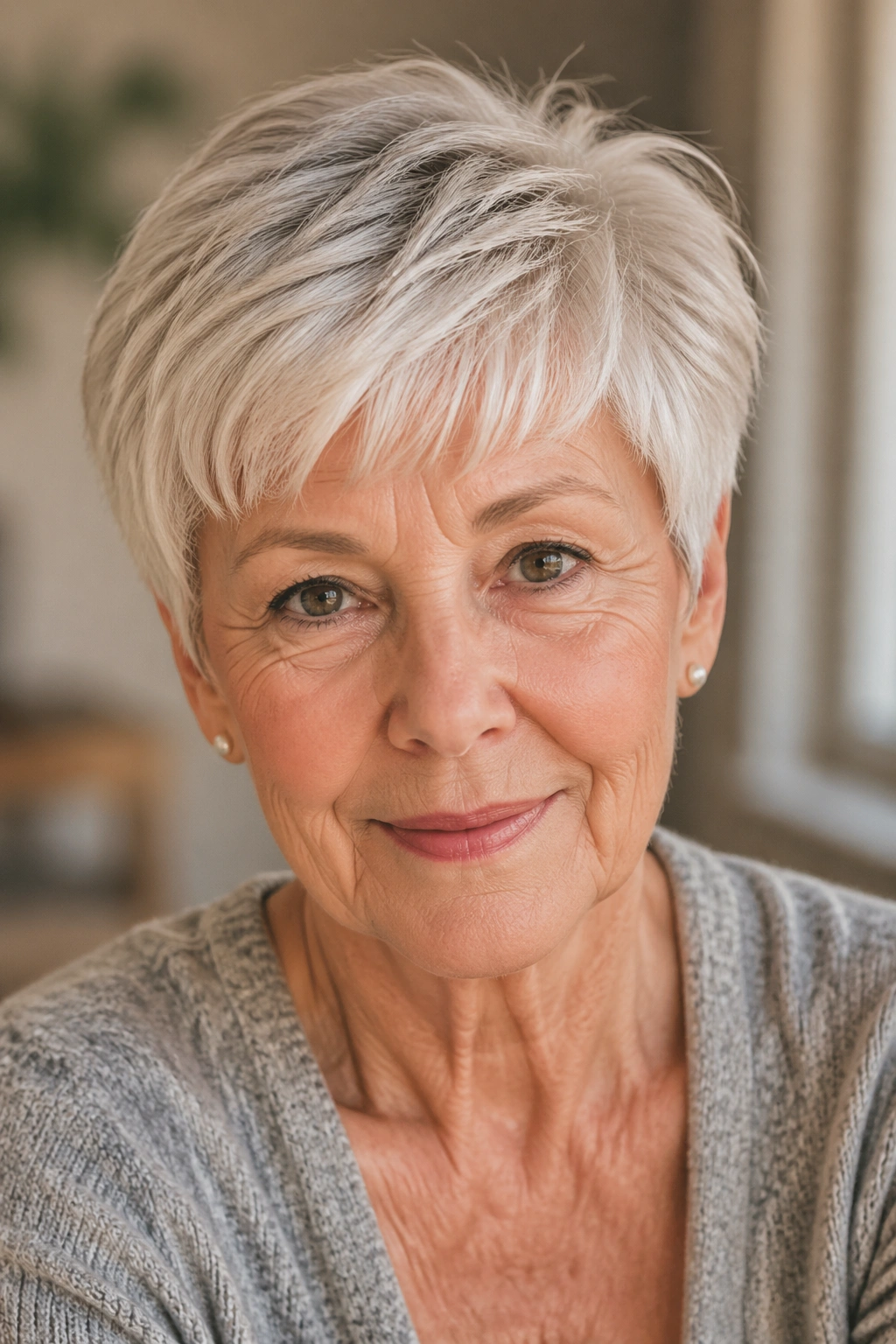
Some cuts are more forgiving around the hairline than others, and this is one of them. A brushed-forward crop brings the top and front slightly forward, which can soften the forehead and make sparse areas less noticeable.
That forward direction also gives the style a gentle, lived-in feel. It isn’t stiff. It doesn’t need to be. If your hair is fine, brushing it forward can make it look fuller at the front without asking it to do a lot of lifting at the crown.
How to keep it neat
- Start with damp hair.
- Comb the front forward, then slightly to one side.
- Dry from the crown toward the forehead.
- Finish with a tiny amount of light cream.
The result should feel soft, not heavy. If the hair falls into your eyes, it is too long. If it sticks straight up, it is too short. There’s a sweet spot in between.
18. Shaggy Bob with Wispy Fringe

This is the bob for people who don’t want a bob that behaves like a bob. The shaggy layers break up the outline, while the wispy fringe keeps the front light and easy.
It works well if your hair has a bit of texture or if you want movement without committing to a full shag. The length stays short enough to feel practical, but the ends are soft enough that it doesn’t look blocky. I think that is why so many women settle on this shape once they try it — it looks relaxed without losing form.
A shaggy bob also plays nicely with gray hair because the layers catch the change in tone. The color shift shows the movement.
If you want to keep it looking neat, trim the fringe before it gets heavy. Once that front line starts dropping into your eyes, the whole cut loses its lightness.
19. Textured Crop for Thick Hair
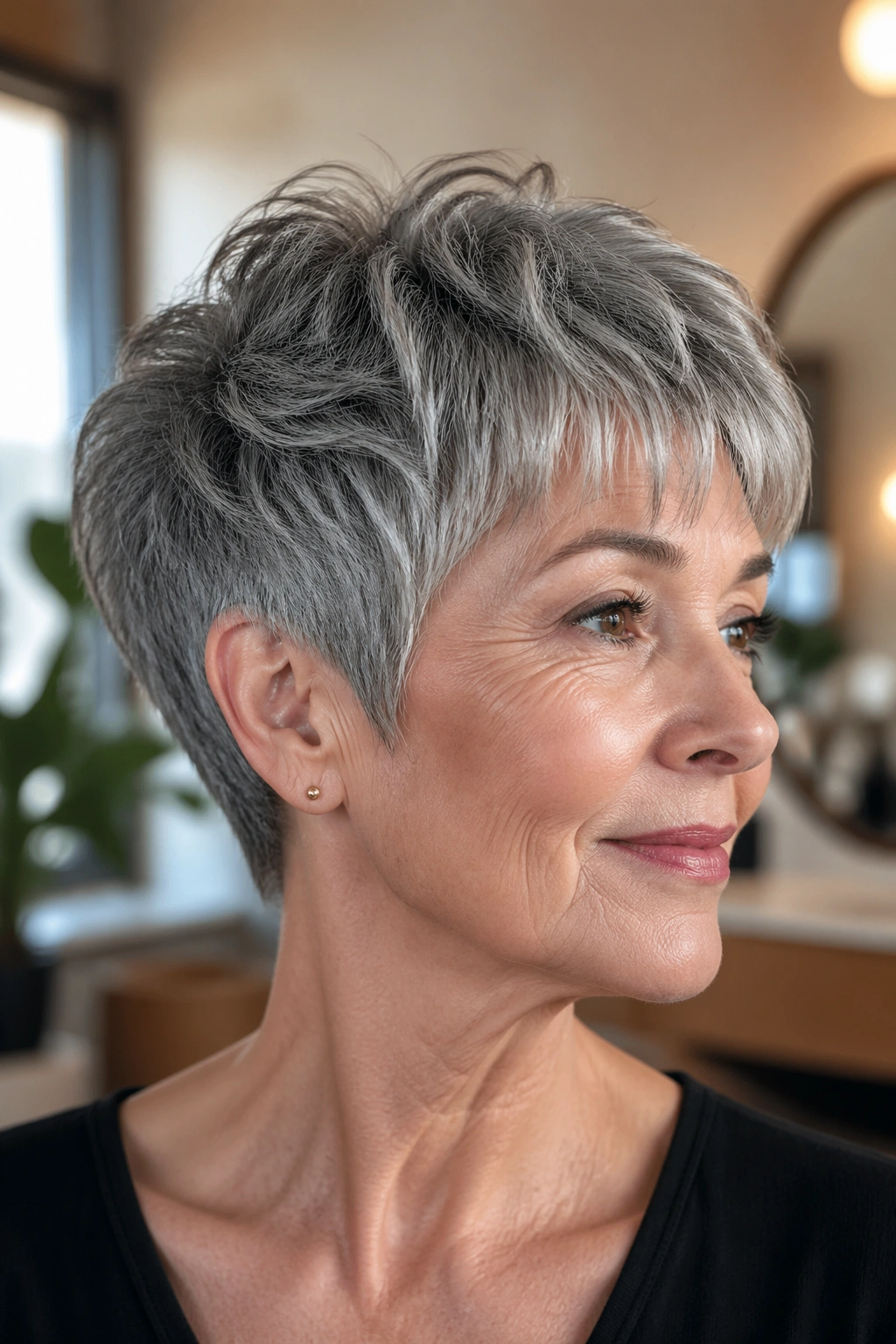
Thick hair looks heavier once it gets short unless the inside is carved out. A textured crop solves that by removing bulk where it matters and leaving the top and front with enough length to keep the shape.
This is not the place for blunt edges all the way around. You want point-cutting, internal layering, and maybe a little thinning under the surface so the hair doesn’t swell out at the sides. Done well, the haircut can actually feel easier than longer thick hair because it dries faster and sits closer to the head.
What to ask your stylist for
- Remove weight at the nape and behind the ears.
- Keep the top long enough to move.
- Avoid over-thinning the ends.
- Leave a bit of shape around the face.
A textured crop is practical in warm weather too, because it takes less drying time and keeps the neck cooler. Simple benefit. Very real one.
20. Short Bob with an Undercut Nape
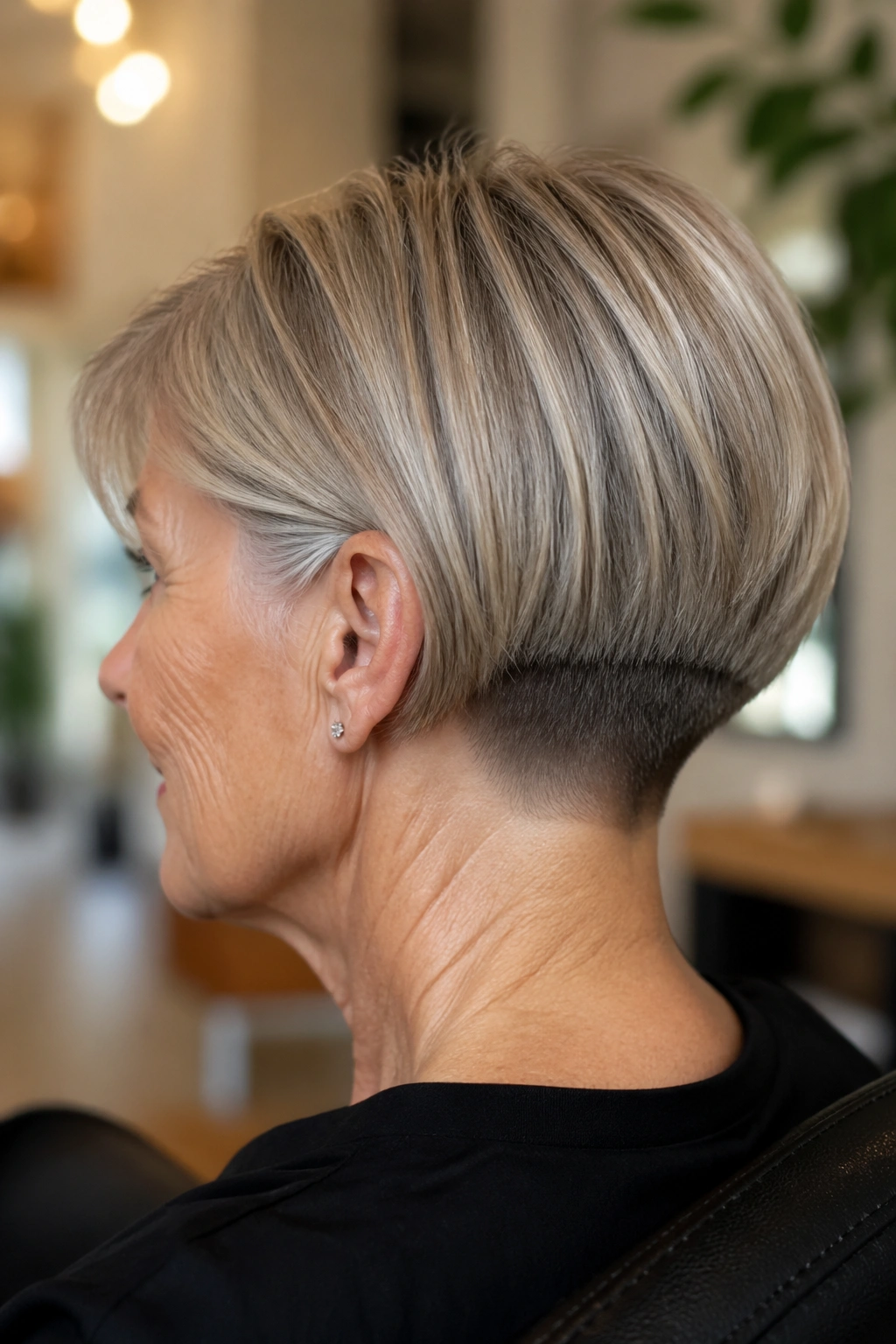
An undercut sounds dramatic until you feel how much easier the back becomes. A short bob with a hidden or soft undercut at the nape removes the bulk that often makes short thick hair puff or stack awkwardly.
This cut is not for everyone, and I like that honesty. If your hair is very fine, you probably do not need an undercut. But if your hair is dense, coarse, or always feels too hot at the neck, it can be a smart fix. The top still looks like a bob; the underneath just stops fighting you.
Best for
- Thick hair that swells at the nape
- Women who want the neck area to stay cool
- Hair that sits bulky under collars
- Anyone who wants less drying time
The stylist matters here. A good undercut is hidden and balanced. A rough one can grow out awkwardly, which defeats the purpose.
21. Soft Feathered Crop for Women Over 70
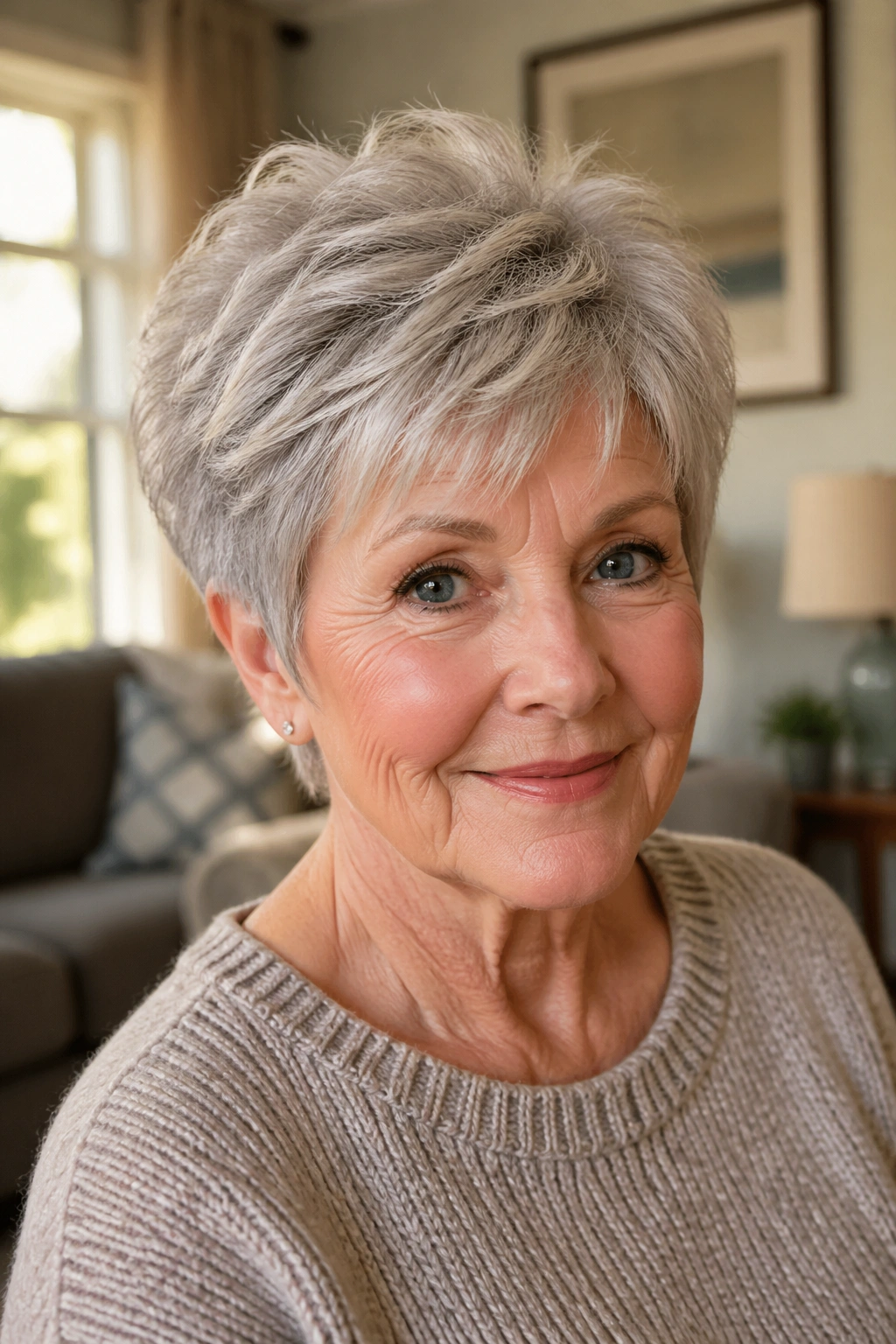
If you want one cut that behaves well with straight, wavy, or silver hair, this is the safest bet. A soft feathered crop keeps the outline neat but adds just enough movement that the style doesn’t feel stiff.
The feathering should be light at the top and sides, with a little extra softness near the face. That gives the hair room to move when you turn your head and keeps the cut from looking too square. It also grows out nicely, which matters more than people admit. A haircut that still looks decent six weeks later saves more time than a flashy one that needs constant touch-ups.
This is the kind of style I’d suggest to someone who wants low maintenance without looking like they settled. It’s easy, yes. Boring, no.
A little cream, a quick finger-comb, and a decent trim schedule are usually enough. That’s the real luxury here.
Final Thoughts
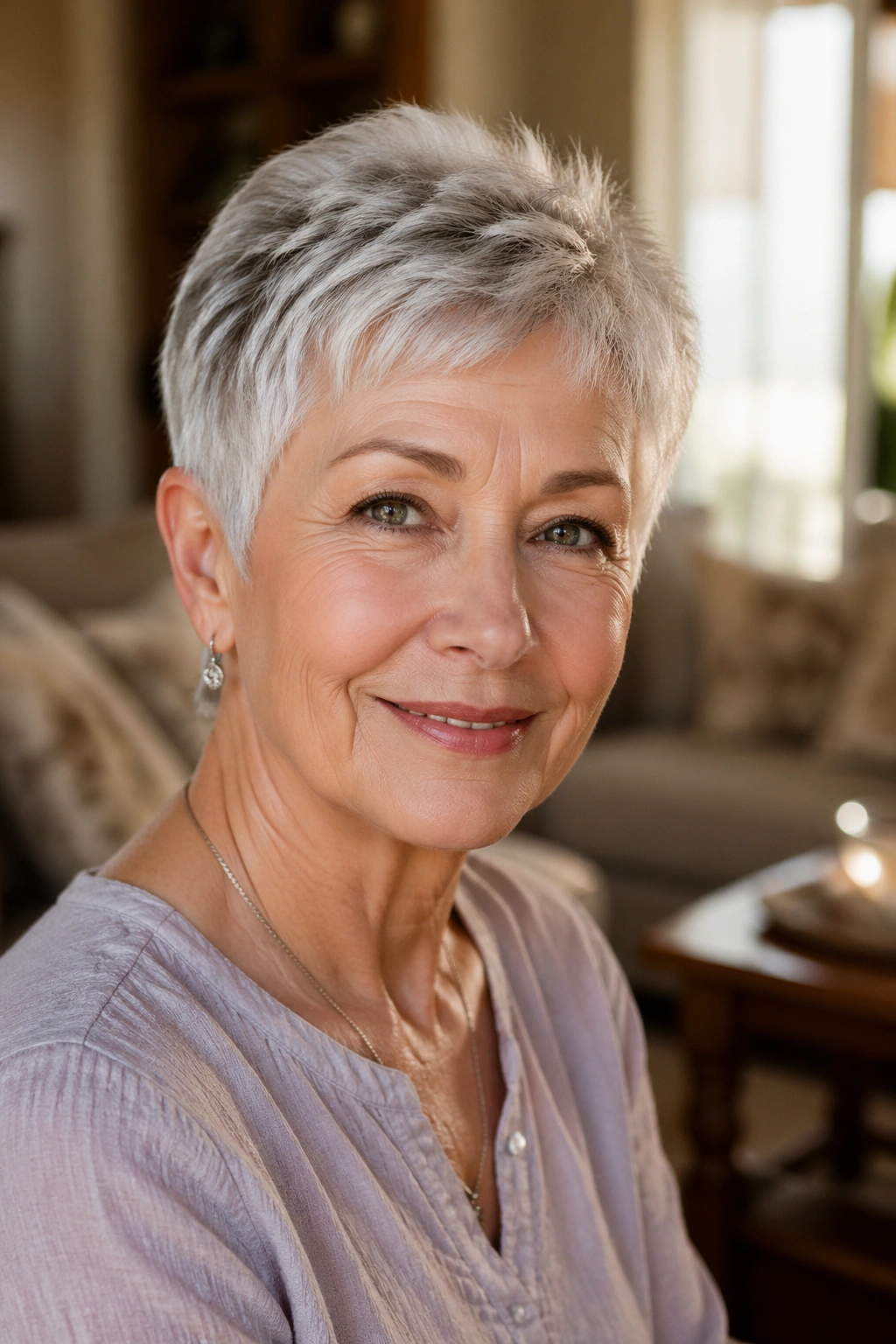
The best short haircut is the one that works with your hair’s actual habits. If it dries flat, grows bulky at the nape, or frizzes near the ends, the cut should solve that — not fight it every morning.
A smart stylist can adjust any of these shapes to fit your hair texture, face shape, and glasses. Bring a photo, sure, but also say what you want the haircut to do on a Tuesday morning when you have five minutes and no patience.
That detail matters more than trends. Always has.
