

Fine hair after 50 has a way of telling the truth. It shows every blunt line, every heavy layer, every cut that was designed for thick hair and never met your actual texture.
Short hair can fix a lot of that, but only when the shape is doing real work. A good cut builds the illusion of density with a lifted crown, a clean edge, and enough movement to keep the style from lying flat by noon. That’s the whole trick. Not more hair. Better shape.
I have a strong bias here: I like haircuts that move. I do not love styles that look polished in the chair and then collapse the second you put on a sweater or step outside. Short hairstyles for women over 50 with fine hair need a little engineering — a bit of stacking, a soft fringe, a perimeter that gives the eye something solid to read.
So let’s stick to cuts that earn their keep. Some are neat and classic. Some lean airy and modern. A few are a touch bolder. All of them are built to make fine strands look fuller, lighter, and easier to live with.
1. Feathered Pixie With Side-Swept Fringe
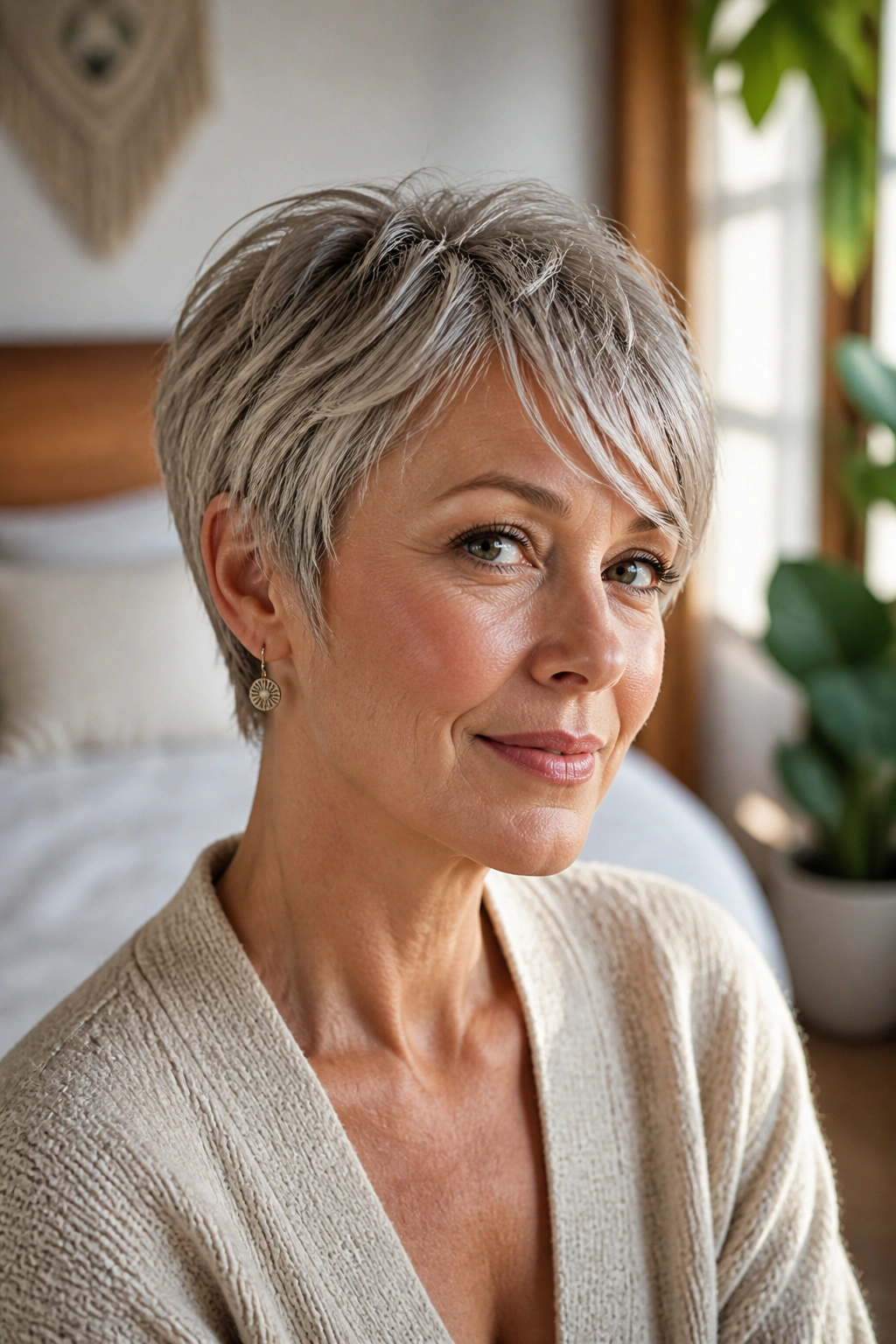
A feathered pixie is often the safest bet when you want volume without a lot of fuss. The short sides keep the shape clean, while the longer top gives you room to lift the roots and steer the front where you want it. On fine hair, that side-swept fringe matters more than people think. It creates a diagonal line across the forehead, and diagonals are kinder to sparse texture than a hard, straight line.
Why It Works
The feathering should be soft, not shredded. Ask for layers that are light through the crown and longer around the temples, so the cut doesn’t look airy in a bad way. A good feathered pixie has some bend to it; it should look touched, not carved.
- Keep the top around 2 to 3 inches so you can lift it with mousse or a small round brush.
- Leave the fringe long enough to sweep across the brow instead of sticking straight up.
- Ask for the nape to be tapered close to the neck. That makes the head shape look neater.
Best move: dry the front in the opposite direction first, then sweep it over once it’s warm. That little trick gives the fringe more bend and a touch more height.
2. Classic Chin-Length Bob With Soft Ends
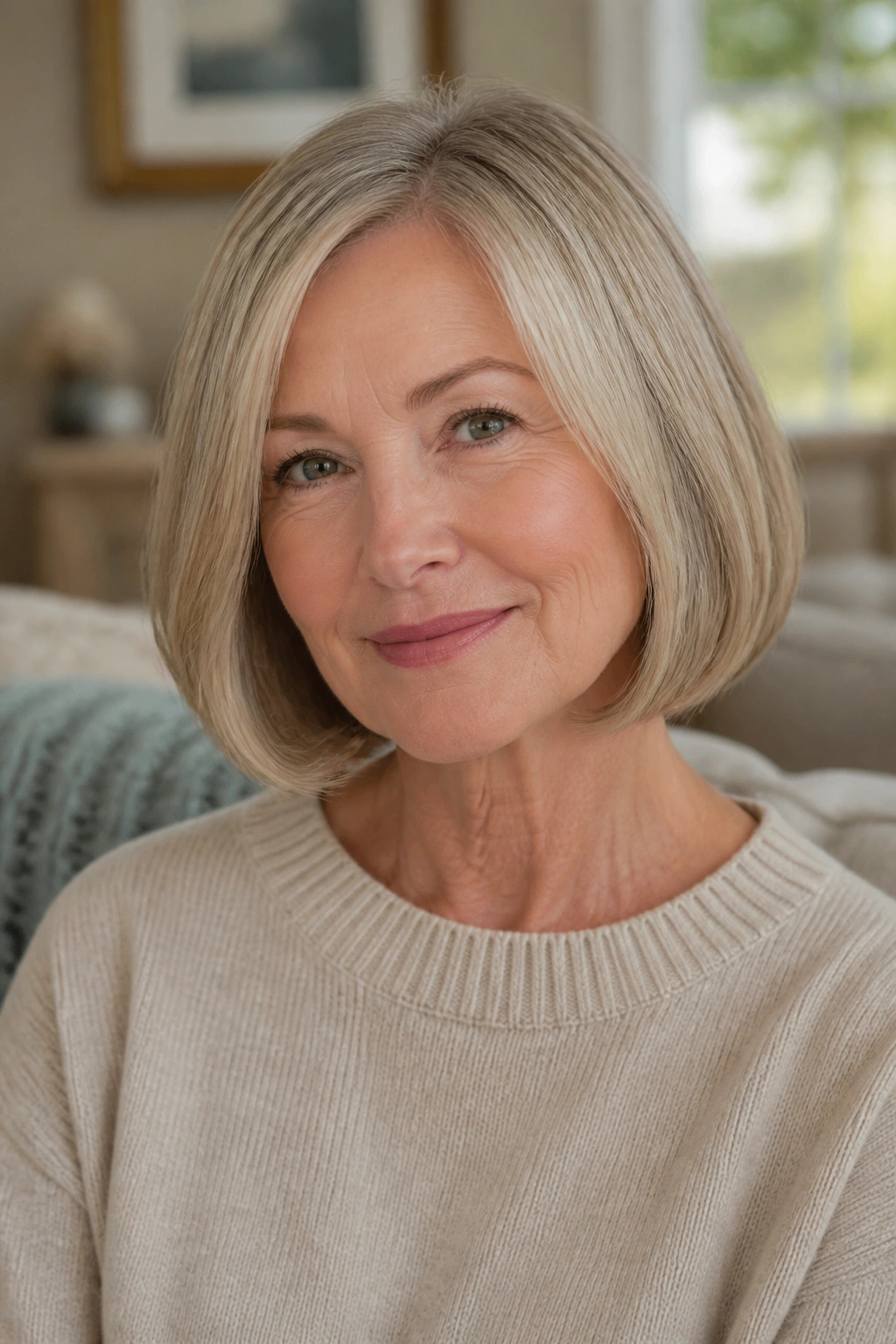
A chin-length bob is one of those cuts that looks calm on the surface and does a lot underneath. Fine hair often looks better when the perimeter is a little stronger, and a bob that lands right at the chin gives the eye a firm outline to follow. The ends should not be razor-thin. They should be lightly beveled so the line feels soft, not wispy.
This length is useful because it still tucks behind the ears, clips back, or bends under with a quick blow-dry. That flexibility matters on days when your hair feels flatter than usual. And fine hair does have those days.
Keep the layers minimal unless your hair is thick at the crown and sparse at the ends. Too many layers at this length can make the bob look hollow. A clean middle part gives a sharper look, while a side part usually adds a little lift near the face.
3. Stacked Bob With Lifted Back
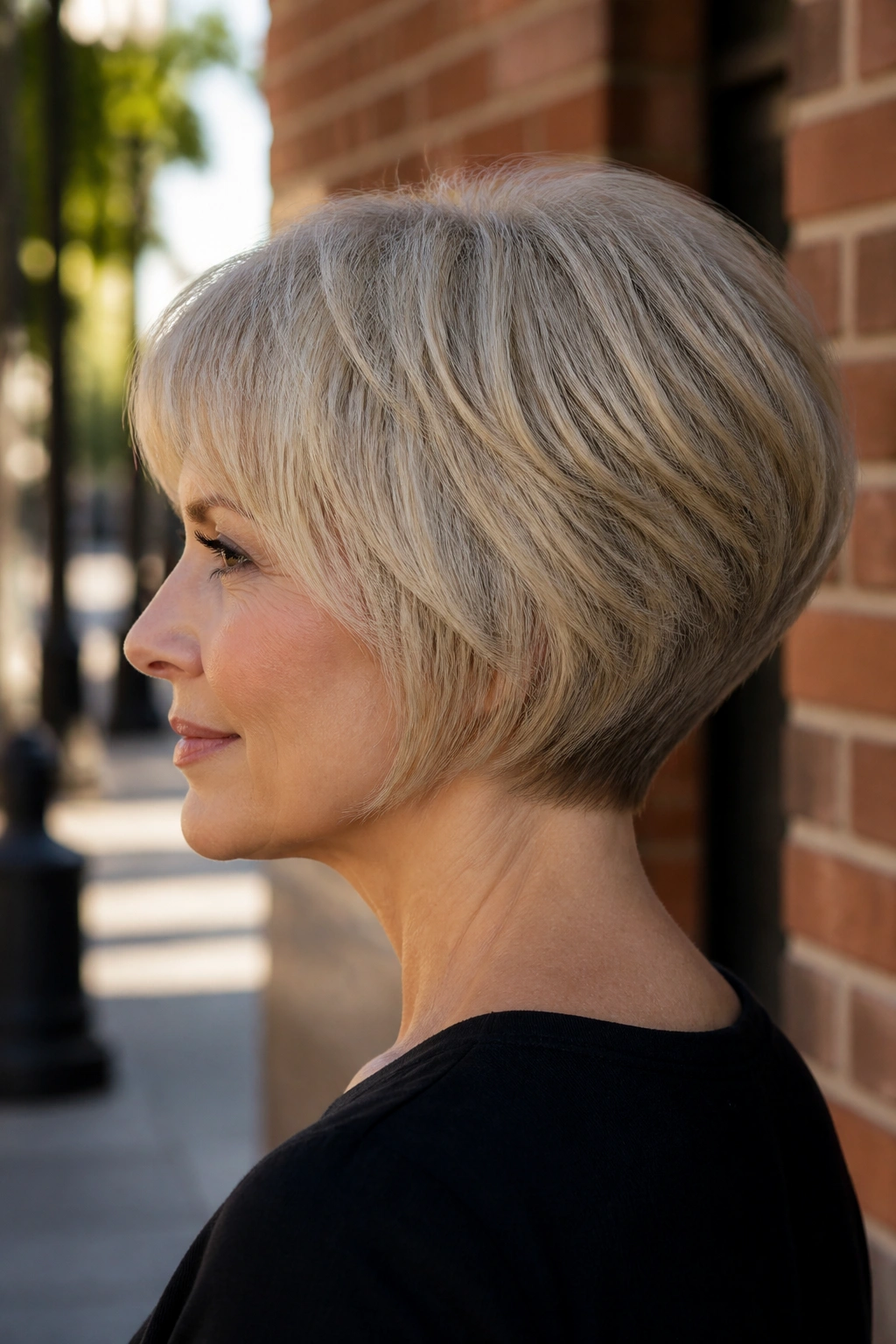
Stacked bobs get dismissed as fussy by people who have never seen one cut well on fine hair. The graduated back builds shape where flat hair needs it most: at the crown and upper nape. That upward curve makes the head look fuller from the side, which is a very nice thing if your strands tend to lie close to the scalp.
What To Ask For
The stack should be subtle, not helmet-like. You want the back shorter by degrees, with longer pieces falling toward the jaw. If the stack is too steep, the cut can look dated fast. Too soft, and you lose the lift.
- Keep the weight line around the jaw so the front doesn’t disappear.
- Use a round brush to push the back under while it dries.
- Finish with a light spray at the roots, not a heavy cream.
This cut is especially useful if your hair collapses at the crown within an hour of styling. It gives you a shape that holds its own without needing a lot of product.
4. Layered Bixie Cut
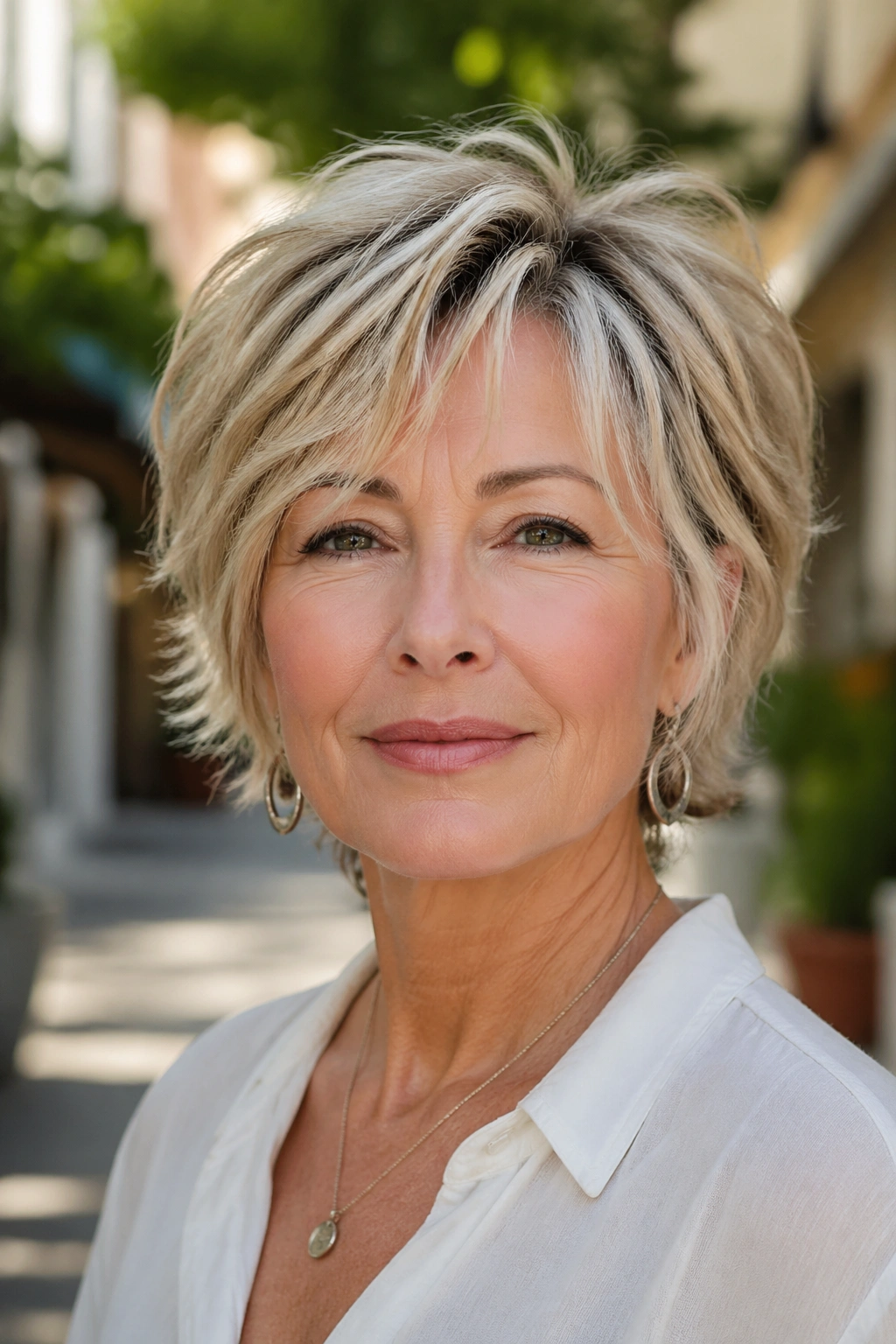
A bixie sits between a bob and a pixie, and that middle ground is exactly why it works so well for women over 50 with fine hair. You get enough length around the face to soften features, but not so much hair that the whole style drags itself down. The layers should be light and piecey, with movement near the cheekbones and a little lift at the top.
What I like most about a bixie is how forgiving it is. You can tuck it, part it to the side, spike the crown a little, or smooth it into a neater shape. It does not demand a perfect blowout. That’s a big plus.
The trick is to avoid over-thinning the ends. Fine hair already has less bulk, so if the stylist gets aggressive with razoring, the cut can start to look scrappy instead of textured. Aim for soft separation, not shredded edges.
5. French Bob With a Soft Bend
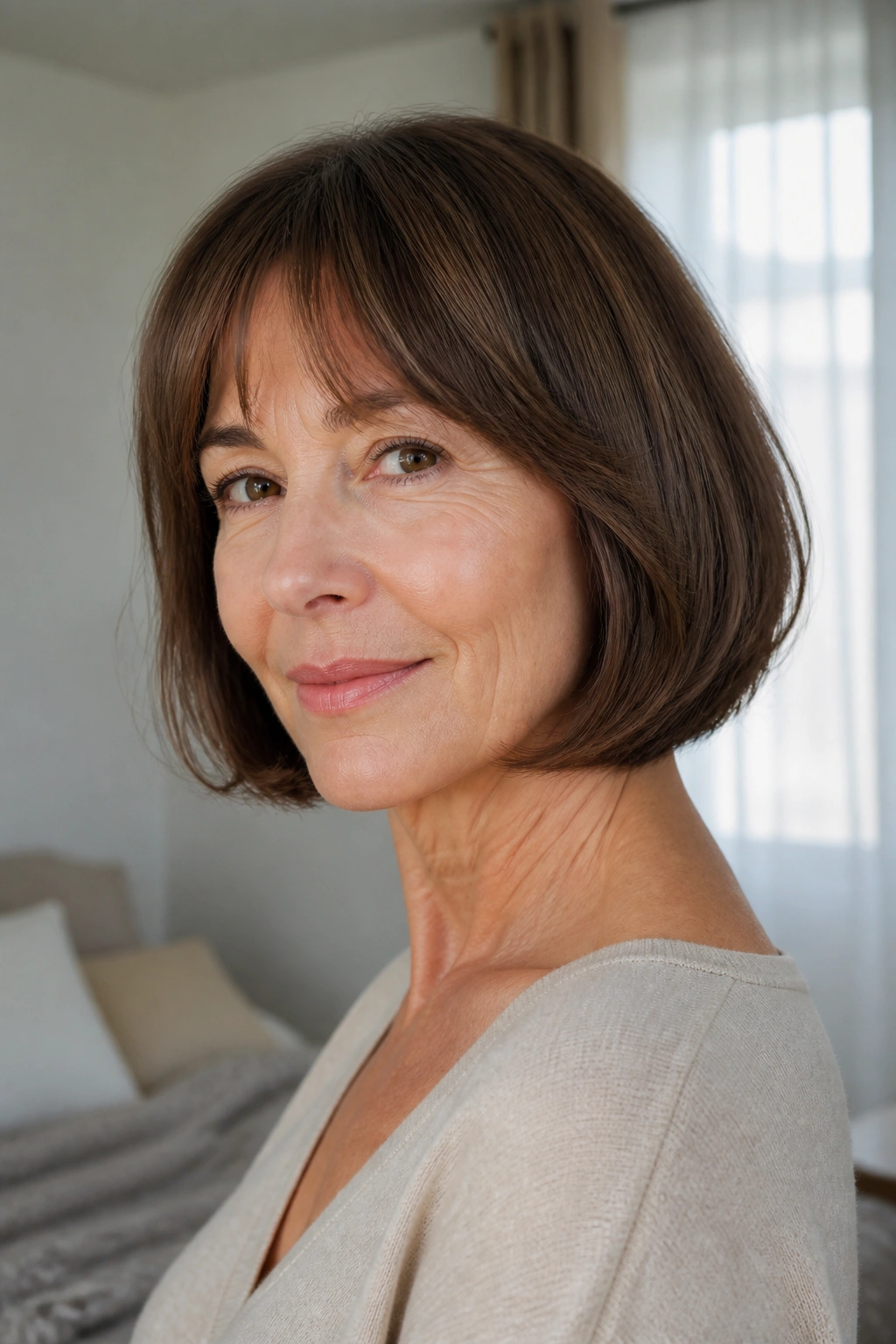
Why do French bobs work so well on wispy hair? Because they lean into shape instead of length. This cut usually stops around the jawline and pairs nicely with a light fringe or a soft side part. On fine hair, the best version is not perfectly straight and stiff. It has a gentle bend at the ends, almost like the hair was tucked behind the ear for an hour and then released.
That bend is doing more work than it seems. It keeps the bob from hanging flat and gives the silhouette a little air. A one-inch curling iron or a flat iron twist at the ends is enough. You do not need a tight curl.
If your hairline is soft or your forehead feels wider than you like, a slightly longer fringe helps balance the face. Keep the fringe wispy enough to move, but not so thin that it disappears.
6. Shaggy Crop With Wispy Layers
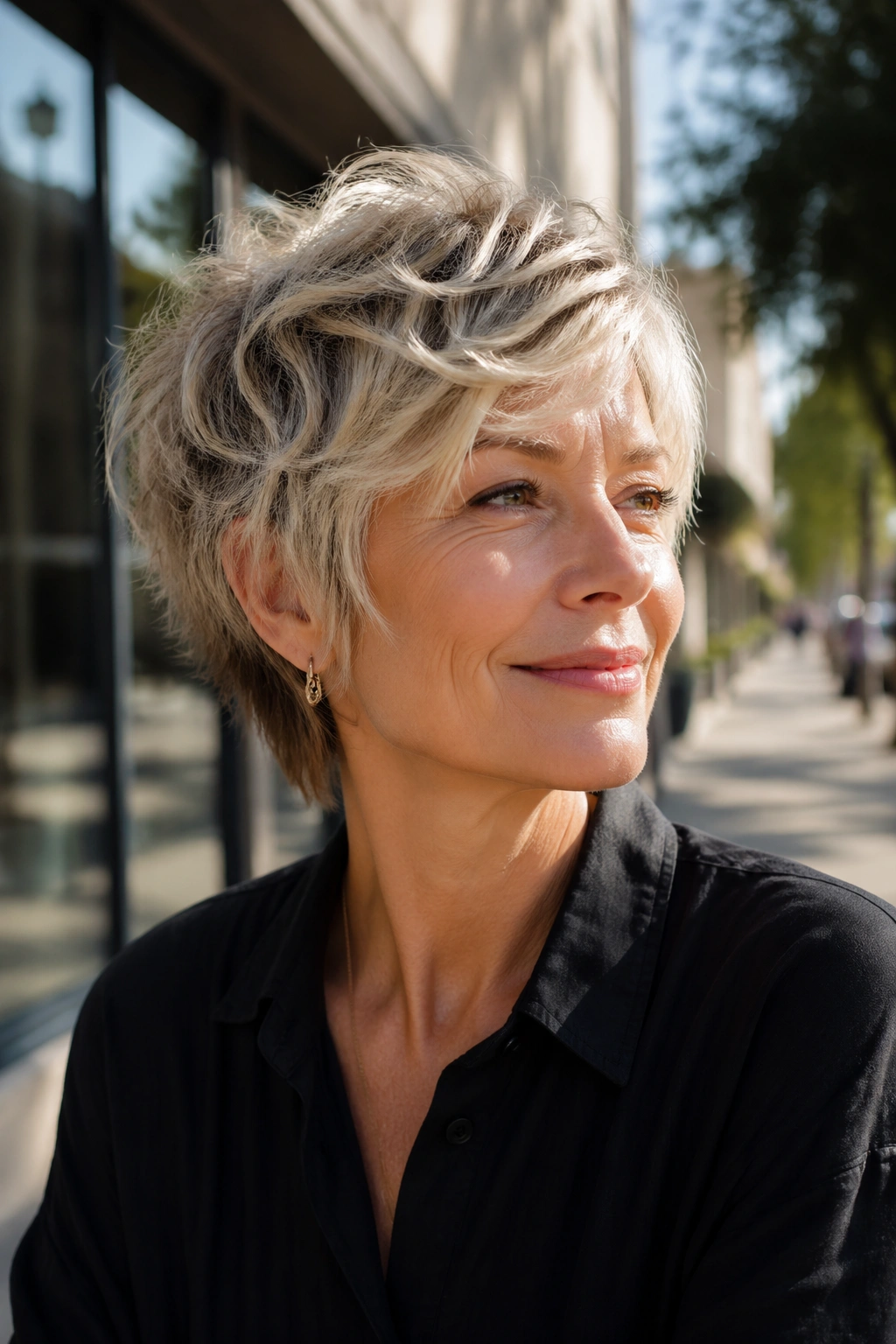
A shaggy crop should move when you turn your head. If it doesn’t, it’s missing the point. Fine hair can look thin when every strand is cut the same length, so a light shag breaks up that flatness and creates a little lift through the crown and sides. The layers need to be airy, not chopped to bits.
This style works best when the top has enough length to be finger-styled. A dab of mousse, a quick blast from the dryer, and a little scrunching can make the cut wake up fast. Dry shampoo at the roots helps too, though I prefer using it only when the hair actually needs it. Too much and the texture gets chalky.
The danger with shaggy cuts is excess. If the layers are too short, fine hair can look frayed. Keep the shape soft and the perimeter clean.
7. Tapered Pixie With Long Crown
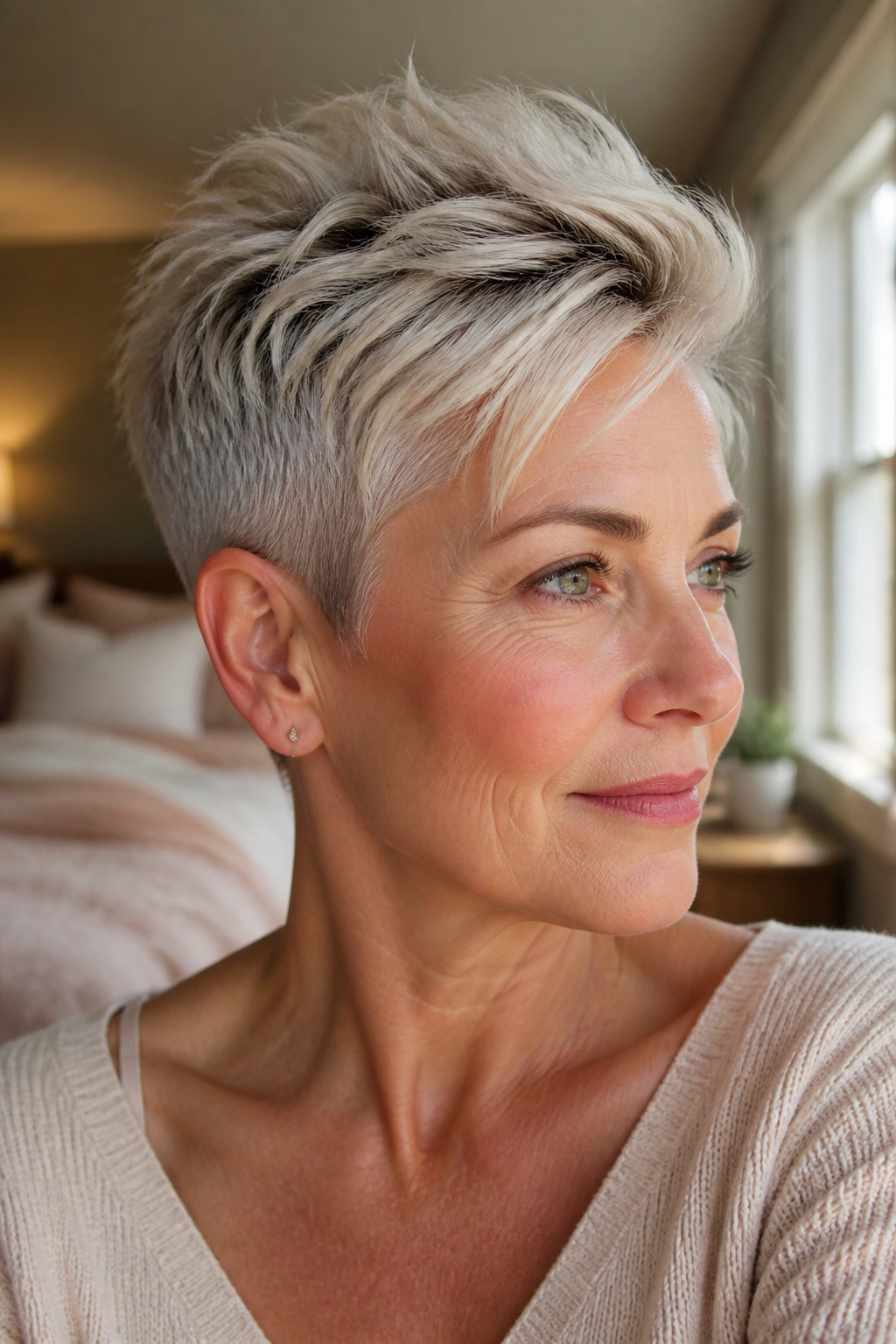
The tapered pixie is the cleanest fix for a flat crown. Short sides and back remove bulk, while the longer top gives you room to build height right where fine hair often gives up. The result is neat, light, and a little sharper than a rounded crop.
How To Wear It
You can wear the top swept back, brushed forward into a soft quiff, or angled to one side. That flexibility matters because fine hair usually behaves better when it’s guided instead of forced. A little root mousse at the crown helps the shape stay up without feeling sticky.
- Ask for the nape to be close-cut and blended upward.
- Keep the crown long enough to pinch and lift with your fingers.
- Use a pea-sized amount of styling paste, not a big glob.
This is one of the best short hairstyles for women over 50 with fine hair if you want easy mornings. It dries fast and still looks intentional.
8. Jaw-Length Bob With Deep Side Part
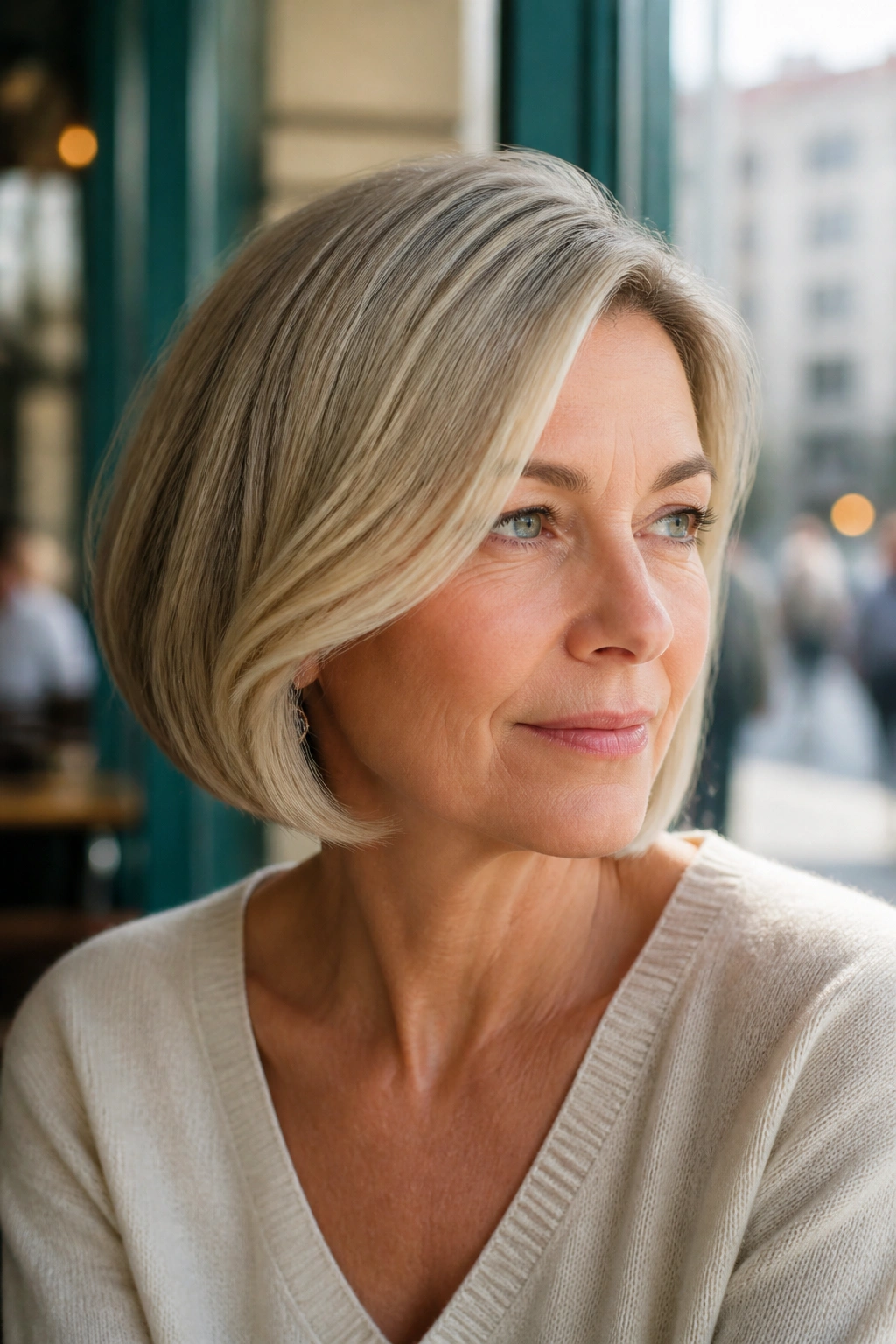
A deep side part can do more than another round of layers ever will. It creates instant volume on the heavier side and a little lift at the roots where the hair is trying to split flat. On fine hair, that shift in direction can change the whole feel of the cut.
A jaw-length bob gives the face a firm frame, and the side part adds movement without taking away the clean line. I like this cut when the ends are just slightly curved under. Straight, blunt edges can look boxy. A small bend makes the bob feel softer and more alive.
This style is also useful if one side of your hair grows flatter than the other. The part can hide that problem instead of fighting it. It is a simple fix, which is part of why I keep coming back to it.
9. Textured Crop With Piecey Bangs
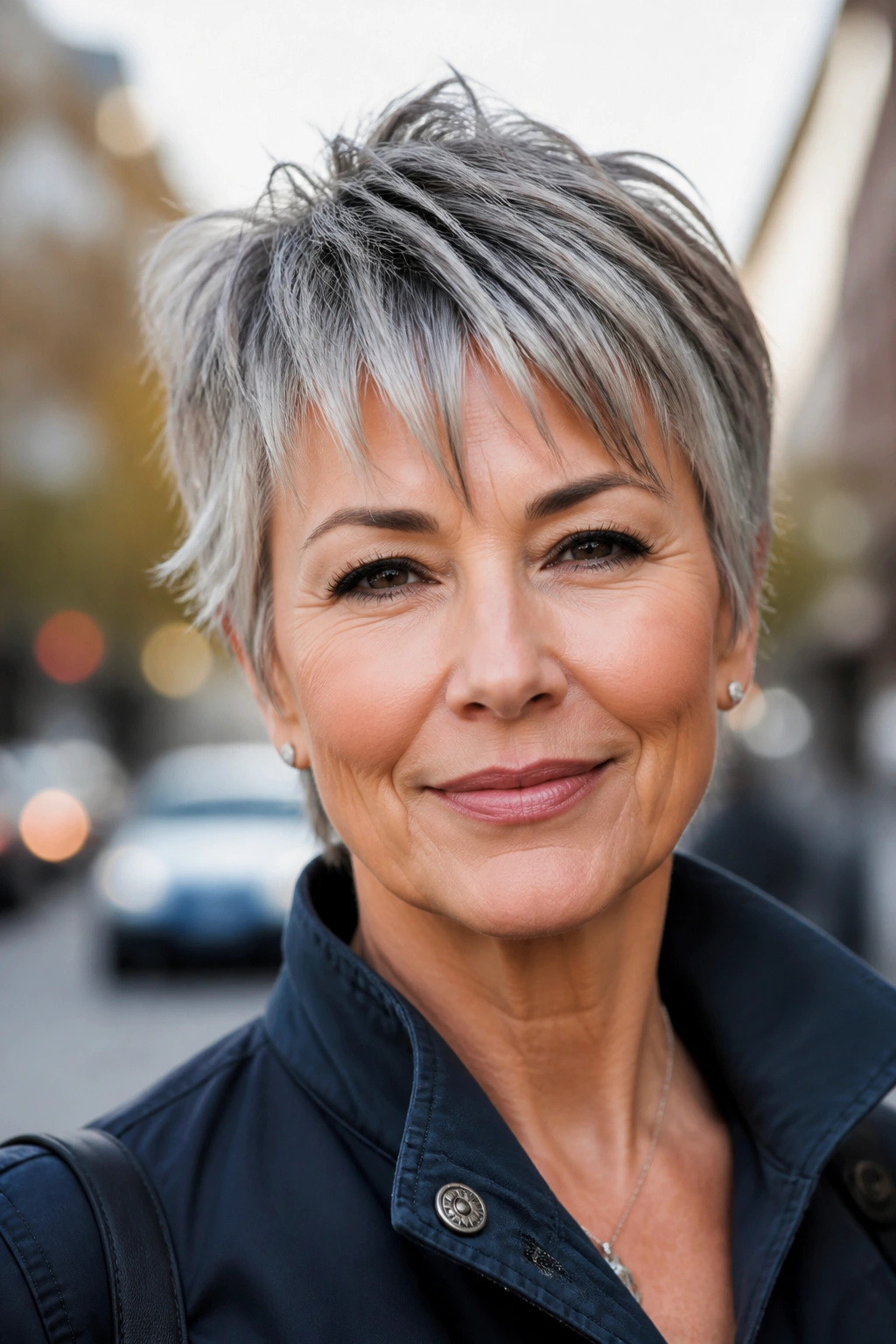
If your bangs separate at the first sign of wind, piecey texture is your friend. A textured crop with short, broken-up bangs gives fine hair a little attitude without asking it to do too much. The bangs should fall in small sections, not one heavy curtain. That keeps the front light and stops the cut from swallowing the face.
Best Styling Notes
Use a light paste or pomade the size of a lentil. Warm it between your palms first, then pinch a few pieces at the crown and fringe. Don’t rake it through everything or the whole cut can go stringy.
- Keep the bangs a little longer in the center if your forehead is broad.
- Leave enough softness around the temples so the cut doesn’t feel harsh.
- Dry the front forward, then split the pieces with your fingers.
This is a cut for women who like a bit of edge. It looks modern without trying too hard. And on fine hair, “not trying too hard” usually wins.
10. Rounded Bob With Tucked Nape
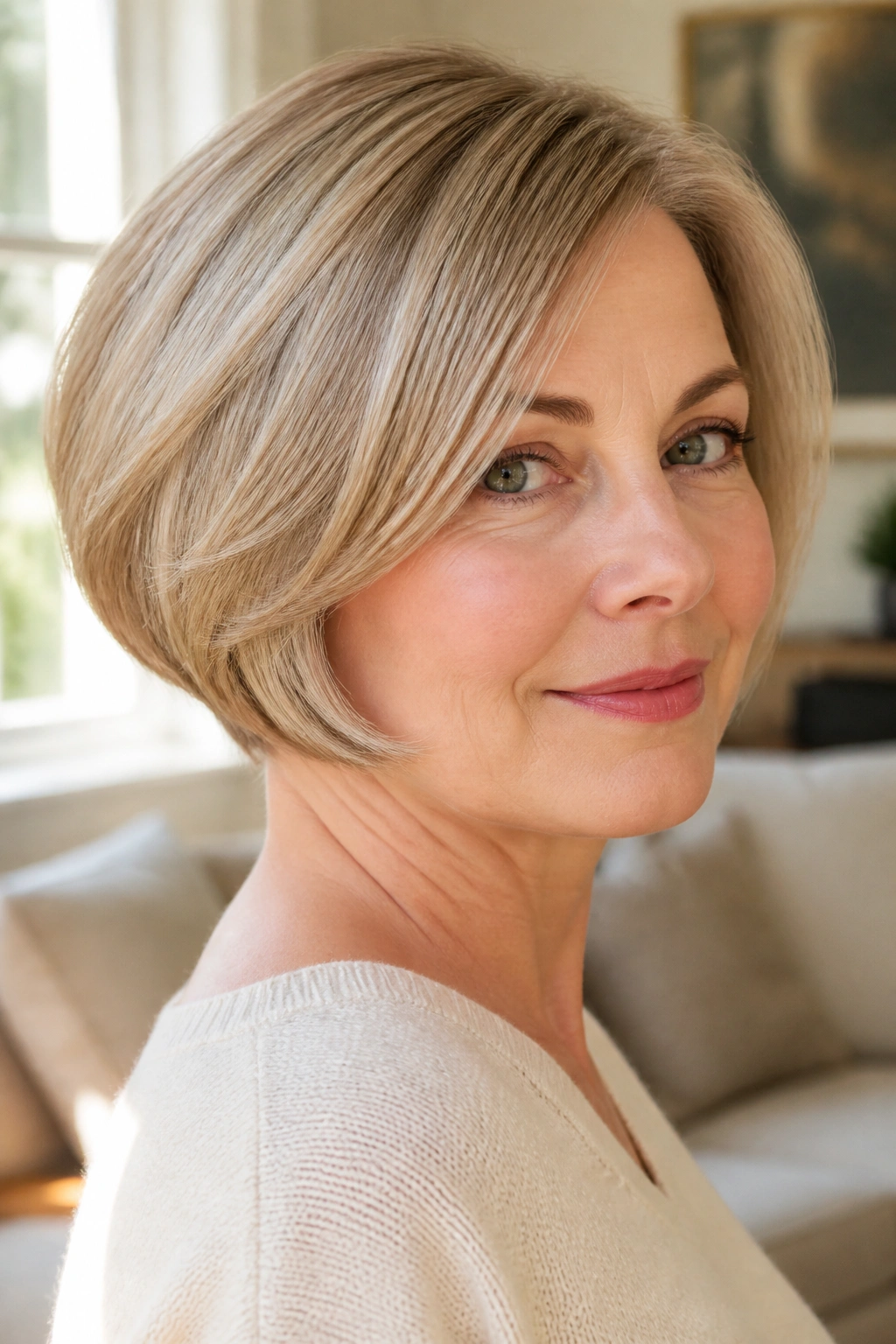
Can a rounded bob make thin hair look fuller? Yes, if the shape is right. The rounded silhouette gives the illusion of density because the hair follows the curve of the head instead of hanging straight down. That matters on fine textures, which often lose body at the bottom first.
The nape should be tucked in slightly so the back feels snug. The sides can land around the jaw or just below it, depending on how much face framing you want. I tend to like this cut with a side part, because the top gets a little more lift and the shape feels less severe.
Blow-dry it with a medium round brush and aim the ends inward. A tiny bit of bend at the perimeter is enough. You want volume that looks built in, not teased.
11. Feathered Shag Bob
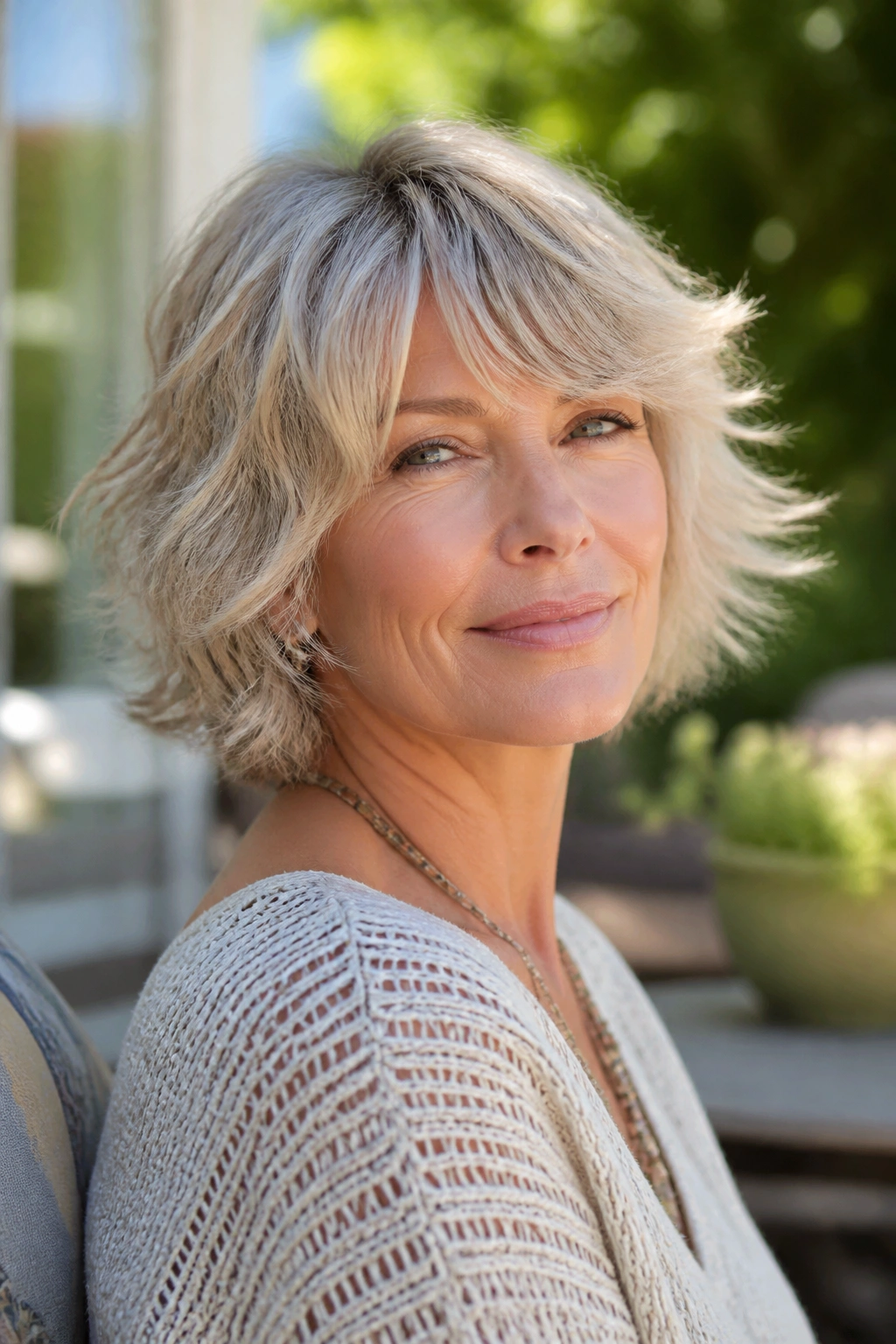
A feathered shag bob sits in a sweet spot between structure and movement. It keeps the bob’s outline, but softens it with layers that flick out a little at the ends. Fine hair often looks better when the shape has some motion, and this cut gives it that without turning into a mess.
The feathering should start below the crown, not right at the scalp. That keeps the top from getting too sparse. Around the face, the layers should graze the cheekbones and jaw so the cut feels light, not stringy. The best version still has enough perimeter to read as a bob.
This one does well with a loose wave, a diffuser, or even a quick bend from a flat iron. It is one of those cuts that improves if you do not overthink it. Let the hair move a little.
12. Ear-Length Crop With Swept Crown
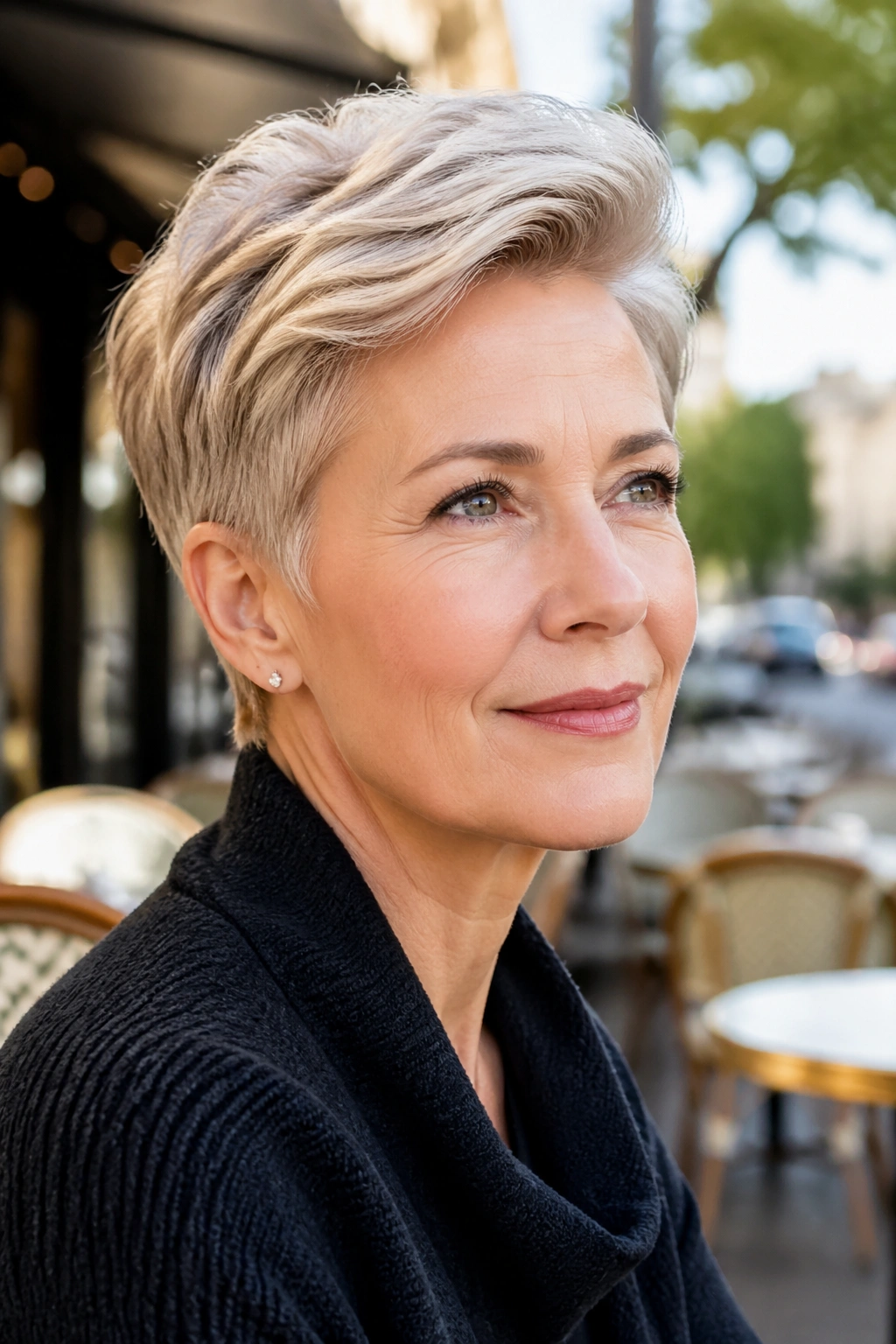
Ear-length crops are underrated on fine hair. When the cut is this short, the strands don’t have the weight to drag themselves flat, and the crown can rise more easily. The trick is to keep enough length on top to sweep upward or sideways, so the style doesn’t look clipped close all over.
The swept crown gives the cut shape and helps it read as deliberate. Without that lift, ear-length hair can slip into “I just grew out a pixie” territory, which is not the goal. A little root spray or mousse fixes that fast.
This cut works well if you wear glasses. The frames and the short sides can look balanced together, especially when the top has movement. Keep the edges soft around the ears so the cut doesn’t feel severe.
13. Sleek A-Line Bob
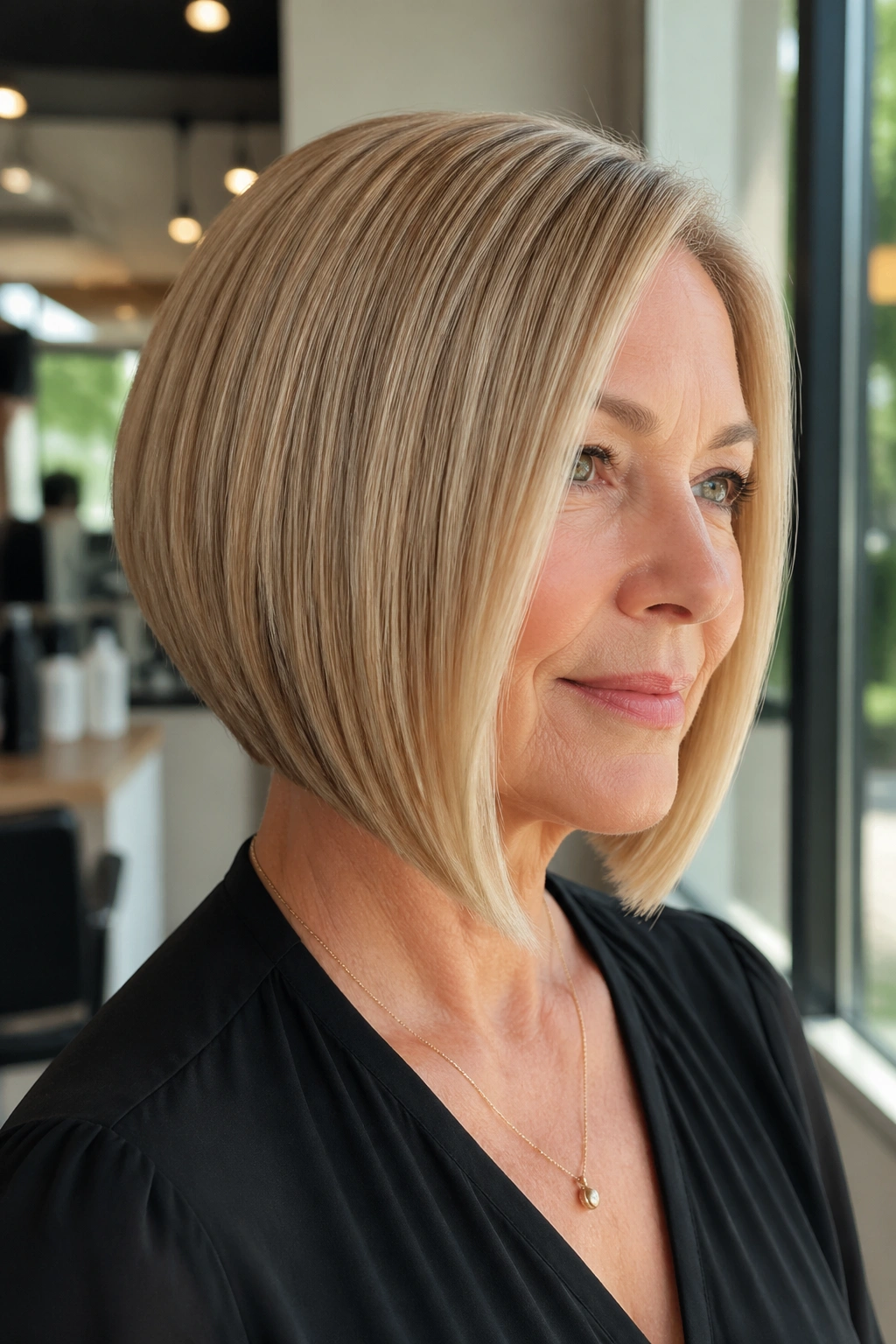
An A-line bob gives the front line the work and lets the back stay shorter and cleaner. That slight angle makes fine hair look denser because the eye follows the longer front pieces, which create more visual weight around the face. It’s a smart trick, not a loud one.
The Angle That Matters
The back should be shorter enough to lift the nape, but not so steep that the cut turns into a dramatic wedge. The front pieces can reach the jaw or skim just below it. A soft bevel at the ends keeps the line smooth.
- Choose a center part if you want a sharper, sleeker look.
- Choose a side part if you need a bit more lift near the temple.
- Ask for a clean perimeter instead of lots of slicing.
This is one of my favorite short hairstyles for women over 50 with fine hair when the goal is polish. It reads neat, looks controlled, and gives thin strands a stronger outline.
14. Soft Curly Crop for Wavy Fine Hair
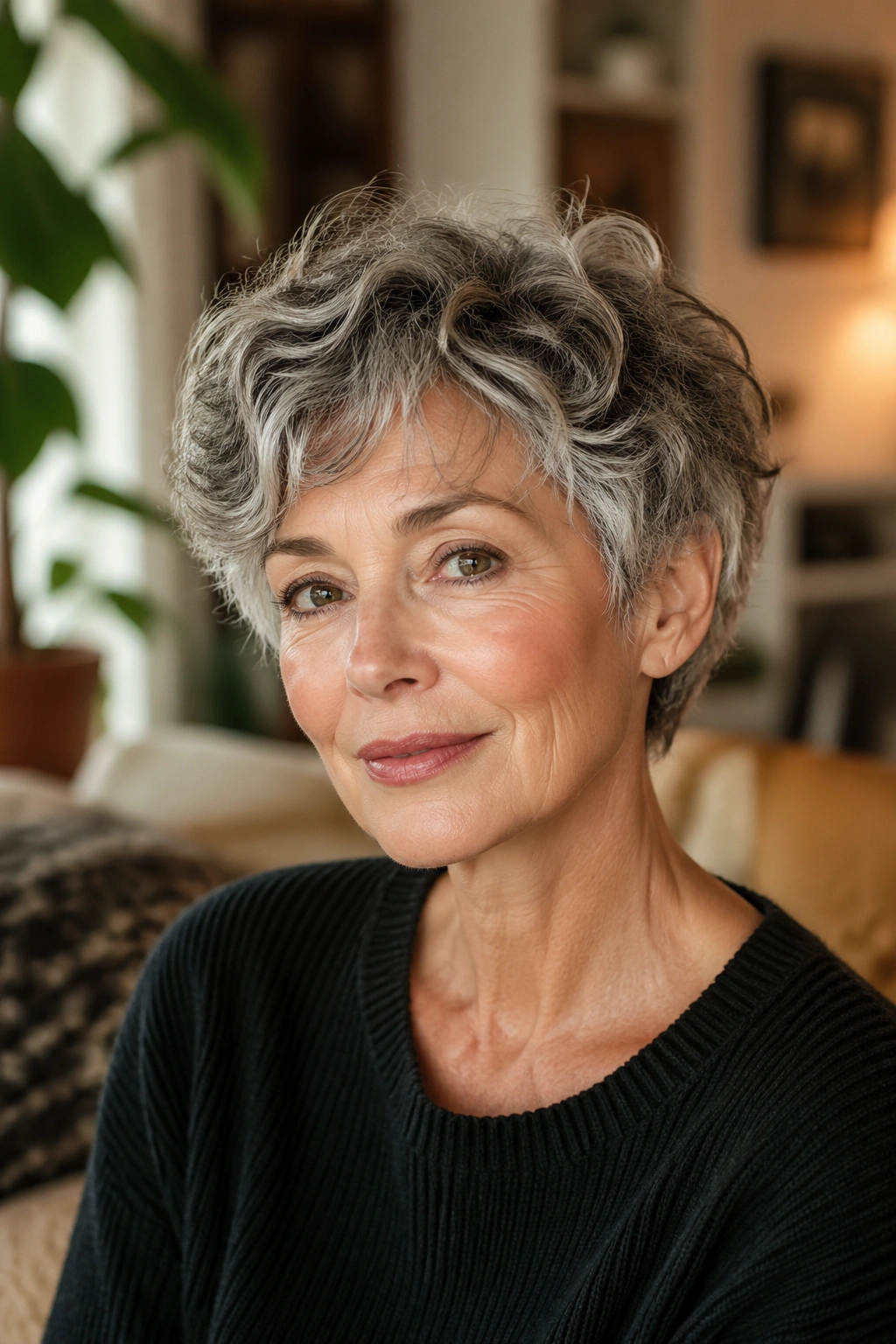
What if your hair has a small wave and a soft bend? Don’t fight it into submission. A cropped cut that respects the wave usually looks fuller than one that’s blown straight every single day. Fine wavy hair can spring up nicely when it’s cut with a little room around the ears and crown.
Keep the layers gentle. Too many short layers can make waves separate in an odd way, and then the style starts to look uneven. A soft crop with a bit of length on top lets the wave make the shape for you. That is the part people miss.
A curl cream or light gel helps hold the pattern without crunch. Scrunch the hair while it’s damp, then let it dry naturally or with a diffuser on low. Fine wavy hair hates heavy product. It wants support, not a helmet.
15. Neck-Length Lob With Invisible Layers
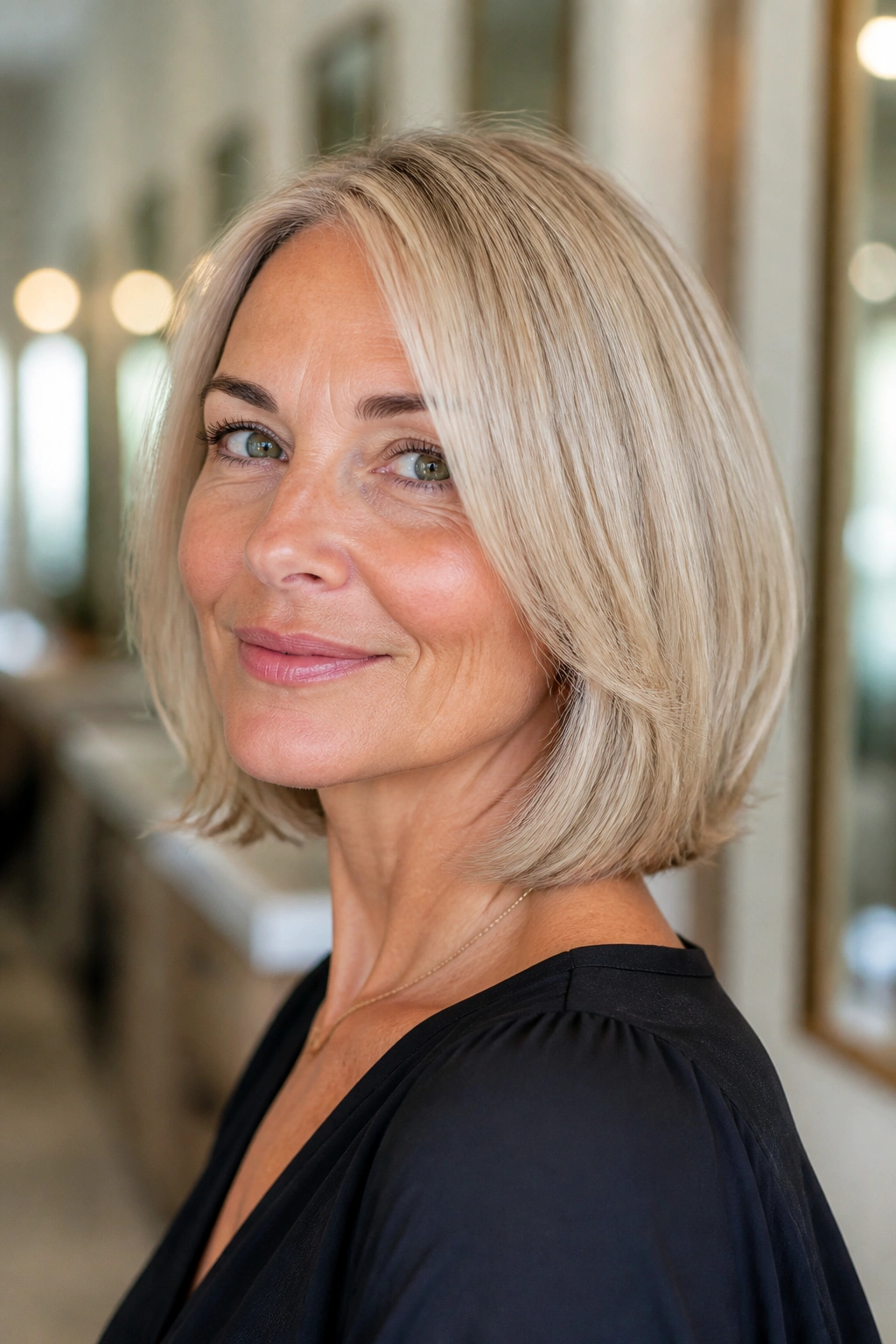
A neck-length lob is short enough to help fine hair and long enough to give you options. That’s why it stays useful. The invisible layers are the real story here. They remove weight inside the shape so the ends don’t collapse, but the outside line still looks full and clean.
This cut is good if you want to tuck the hair behind your ears, clip one side back, or wear it straight without too much effort. The length sits in that easy zone where the hair feels lighter but not too bare. For a lot of women over 50, that matters more than chasing a dramatic change.
Keep the layers subtle. If the stylist overdoes them, the lob loses its body and starts looking thin at the bottom. A smooth edge with hidden support underneath is the better move.
16. Asymmetrical Pixie Bob
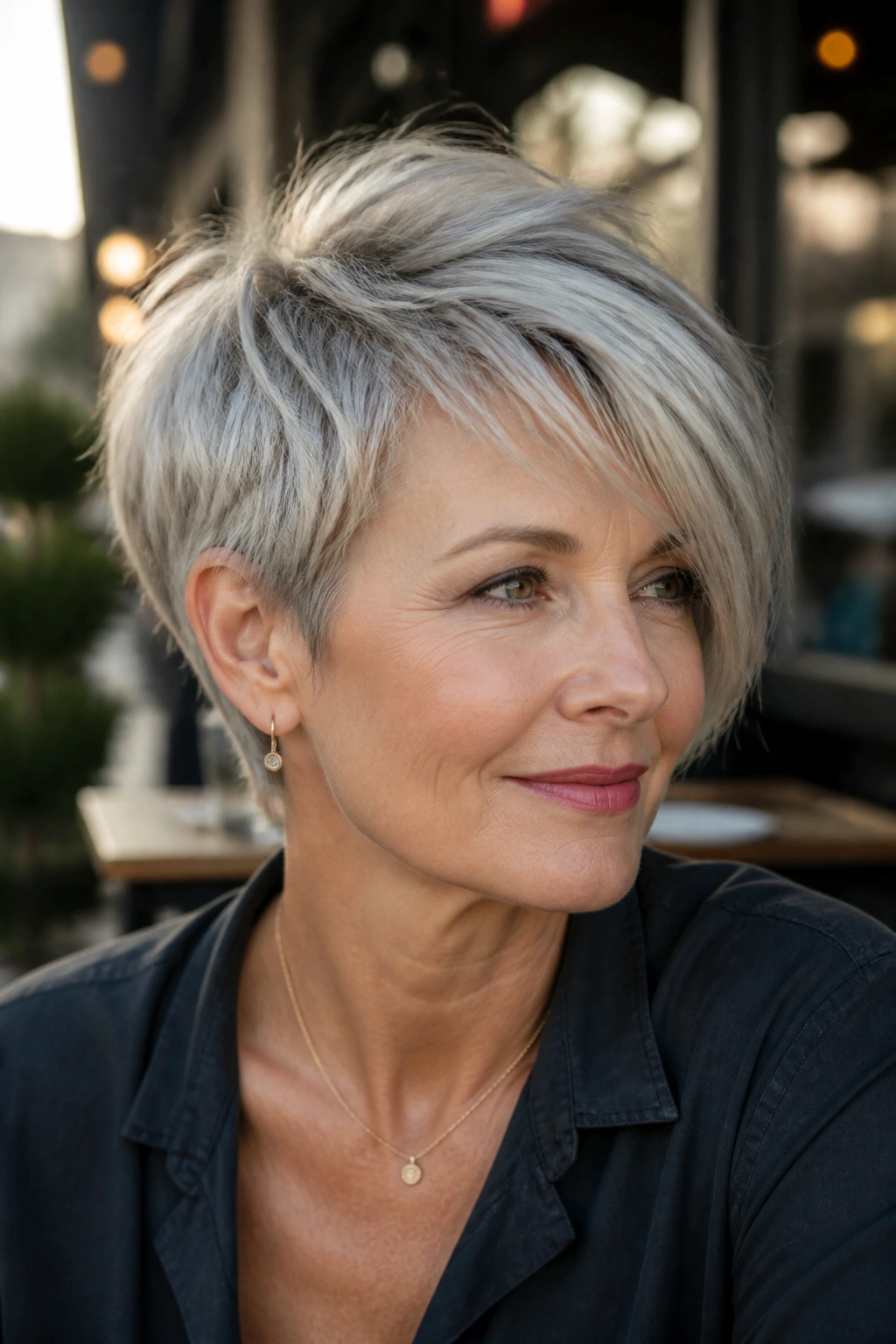
An asymmetrical pixie bob is what happens when you want polish and a little edge in the same haircut. One side stays a touch longer, which gives the face a line to follow, while the shorter side keeps the style light. On fine hair, that contrast helps the cut feel fuller because it creates shape without requiring extra bulk.
The top should be long enough to sweep across the forehead or tuck behind one ear. That gives you choices. I especially like this cut when the crown needs lift but the wearer still wants some softness around the face.
There’s no need for a harsh diagonal. A small length difference is often enough. Too much contrast can feel trendy in a way that ages fast, and that’s not the point here. The goal is easy wear and clean movement.
17. Choppy Crop With Micro Layers
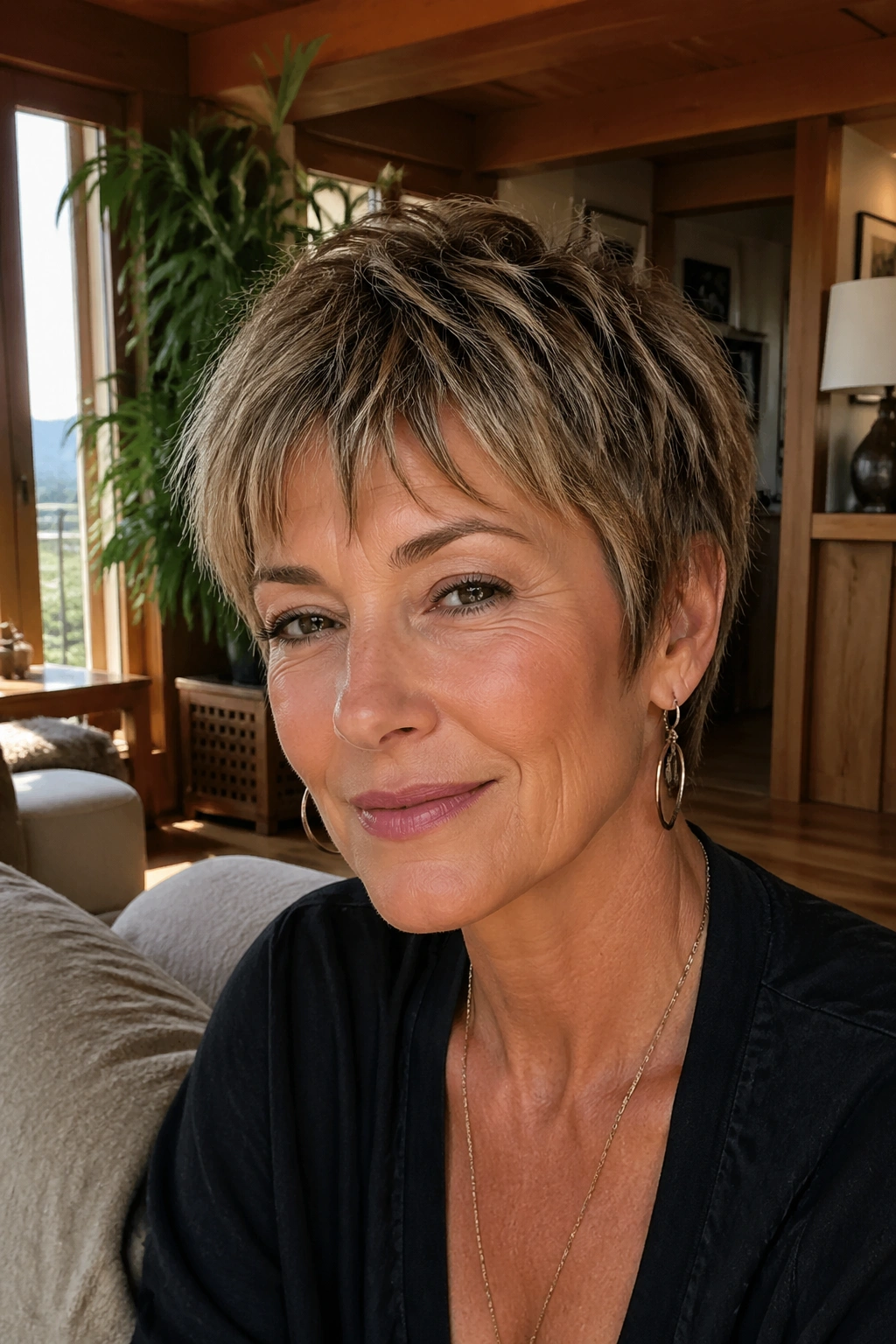
Micro layers are safer than heavy razoring on fine hair. They give texture without eating away at the shape. A choppy crop built this way can look lively and modern, but it still needs a solid outline so the hair doesn’t turn see-through at the ends.
What To Avoid
Stay away from a cut that removes too much weight around the perimeter. That’s where fine hair needs support. If the ends are too light, the whole style starts to look sparse no matter how much product you use.
- Ask for small internal layers rather than big, obvious ones.
- Keep the fringe slightly uneven for a lived-in look.
- Use a matte paste only at the tips if you want separation.
This is a good cut if you like texture but do not want the maintenance of a shag. It’s punchy, easy to style, and a little less precious than a smooth bob.
18. Side-Parted Wedge Cut
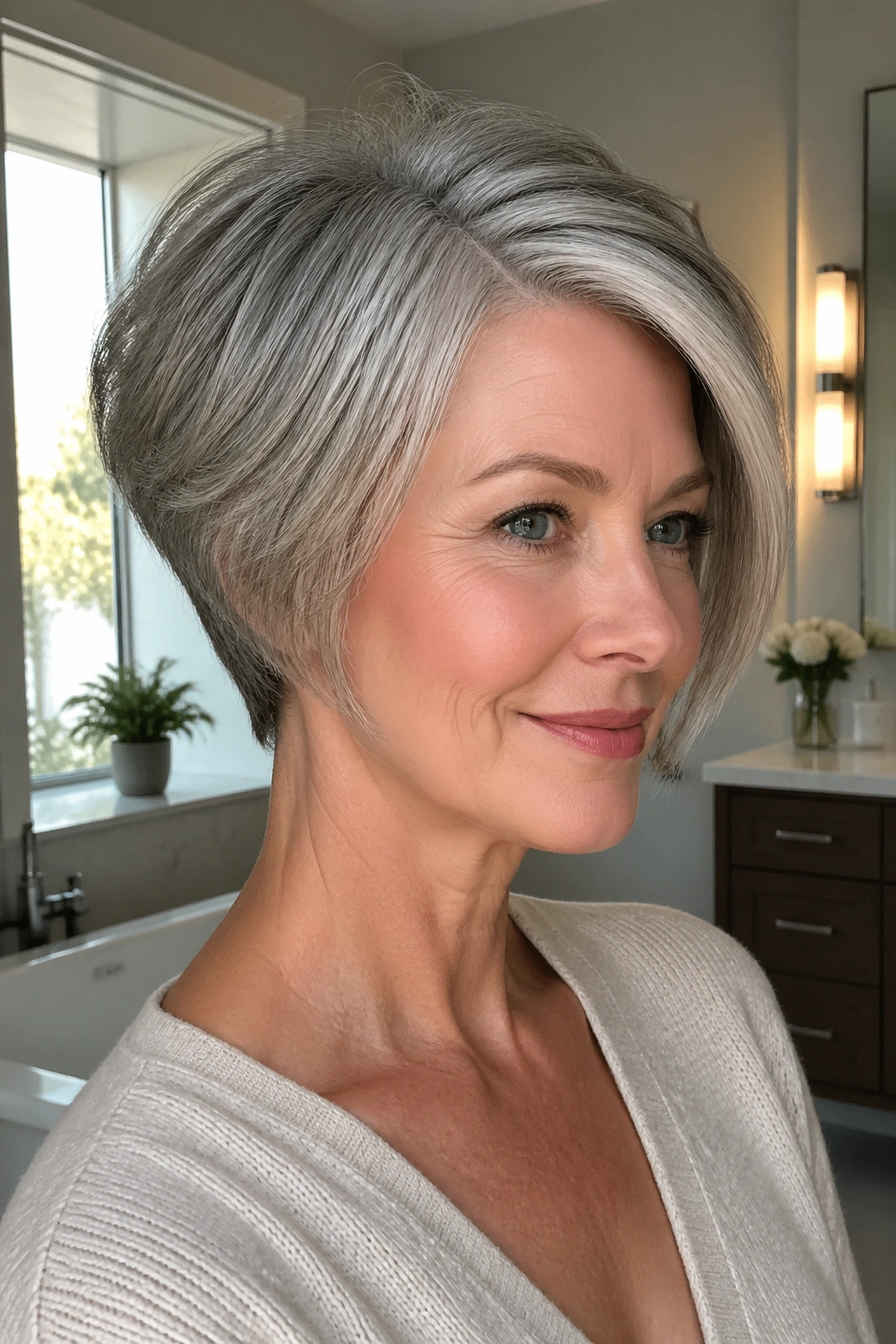
Why does the wedge cut keep coming back? Because it solves the same problem over and over: flatness at the back, softness around the face, and a need for shape that lasts. A side-parted wedge gives the crown lift and keeps the back tucked in, which is a strong combo for fine hair.
The angle at the nape should be visible but not severe. That’s the line that gives the cut its lift. The side part helps soften the front and keeps the top from looking too symmetrical, which can be unforgiving on thin strands.
I like this style when the hair has some natural straightness. It behaves best with a round brush and a little heat. If you let it air-dry, the wedge can lose some of its crisp shape and drift into ordinary bob territory.
19. Soft Bowl Cut With Texture
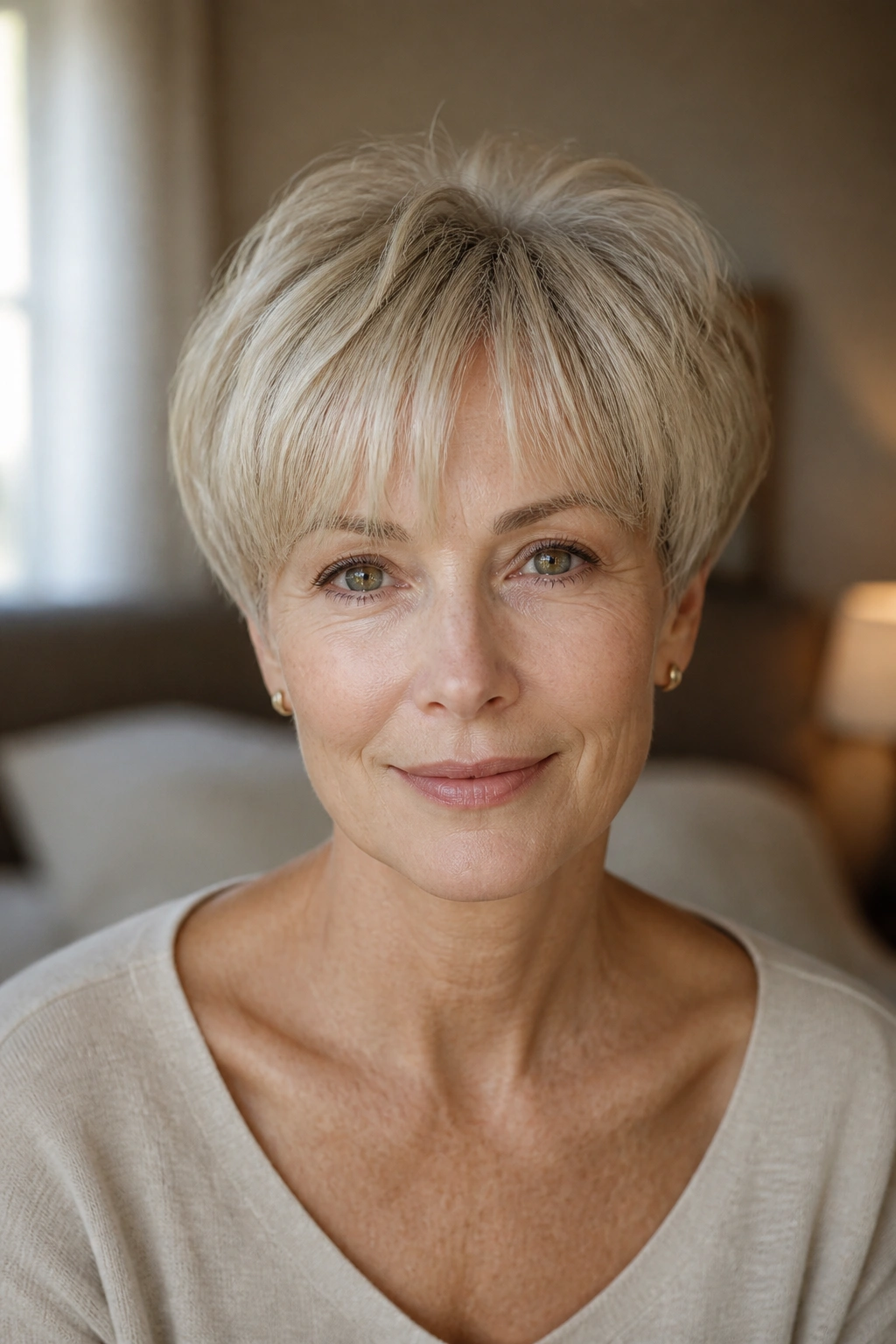
A soft bowl cut is not the helmet shape people imagine. The modern version has texture through the ends, a little lift at the crown, and enough softness around the ears to keep it flattering. On fine hair, the even outline can make the strands look denser because the eye sees one clear shape instead of a bunch of wispy ends.
The fringe should be light, maybe slightly broken up in the center. That keeps the cut from feeling heavy across the forehead. Around the perimeter, ask for soft texturing rather than hard thinning. You want the shape to stay full.
This cut suits women who like something a bit sharper and cleaner. It is not the least daring option on this list, but it can be excellent on the right face shape, especially if the hair naturally falls straight.
20. Undercut Pixie With Longer Top
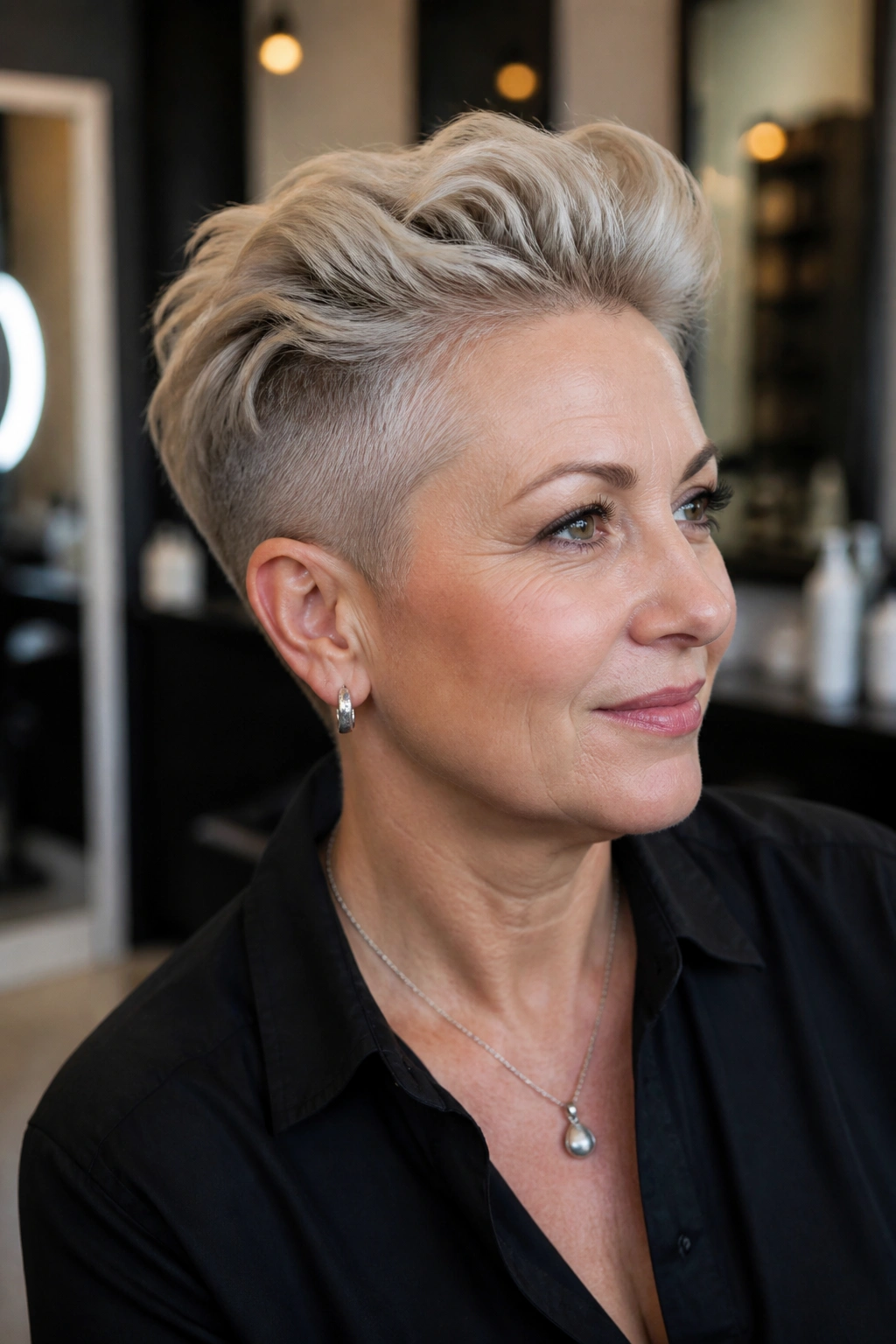
If you like easy mornings, an undercut pixie changes the whole game. Removing bulk from the sides and back gives fine hair a lighter feel, and the longer top gives you the part that matters most: visible height. The contrast can be dramatic, but it is practical too.
The top needs enough length to sweep, spike, or bend softly forward. That means you can change the mood of the cut with the styling product you choose. A little mousse gives lift. A paste gives separation. A blow-dry with the fingers gives a casual finish.
This cut works best if you are okay with regular upkeep on the sides. The undercut grows in fast and loses its clean shape if you ignore it for too long. Still, if you want a cut that feels modern and light, it earns its place.
21. Tousled Bob With Curtain Bangs
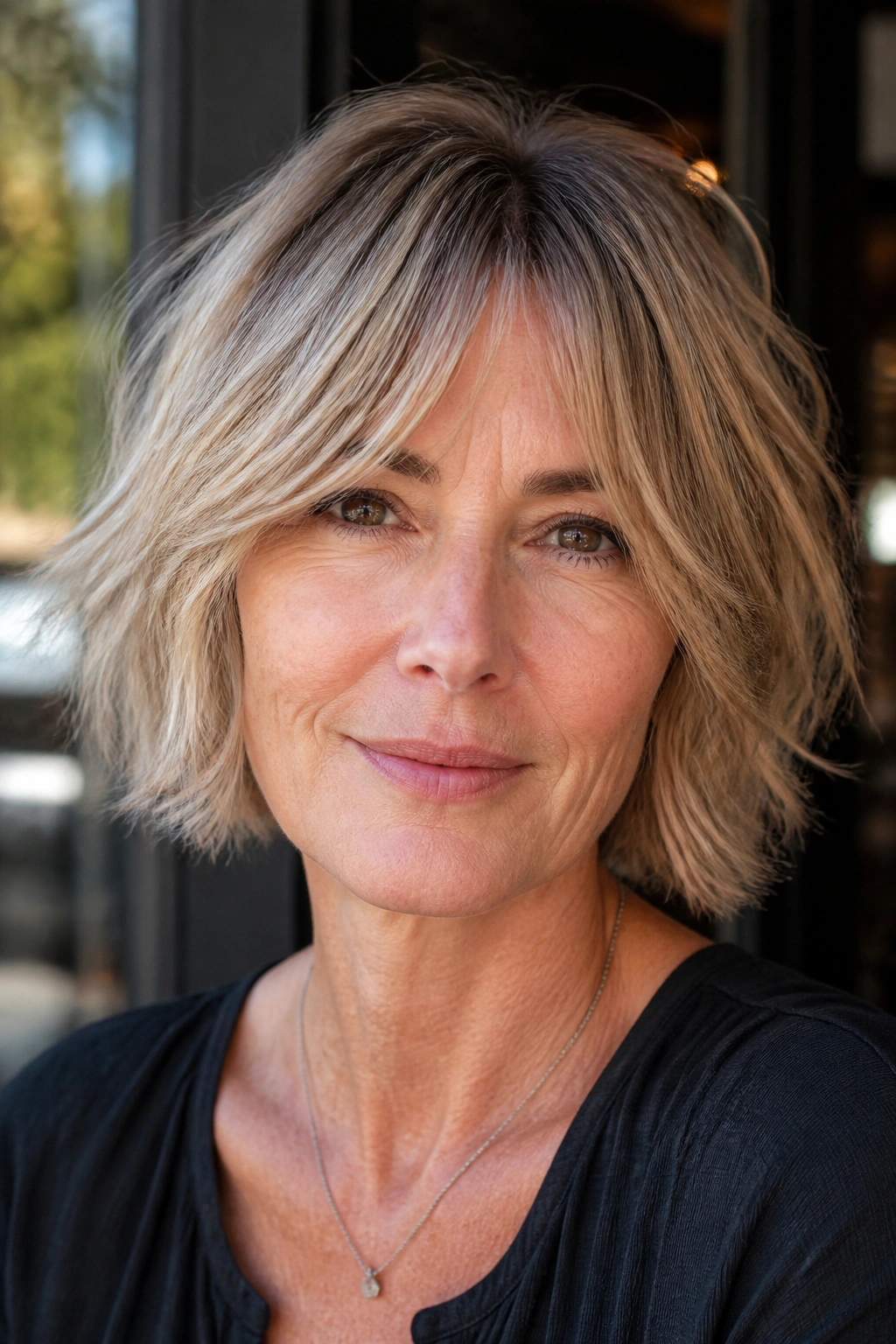
Curtain bangs on a tousled bob sit somewhere between casual and neat, which is why they work so well on fine hair. The bangs part softly in the middle and open the face without swallowing it. The bob underneath can be just below the jaw or up at the chin, depending on how much neck you want to show.
The texture should look broken up, not messy. That’s a real difference. Fine hair can go limp if the layers are too heavy, so the trick is to keep the ends soft and the crown lifted. A light sea-salt spray can help, but use a small amount. Too much and the hair gets rough.
This style flatters people who want movement around the face. It is easy to grow out too, which makes it a nice choice if you dislike awkward in-between phases.
22. Slicked-Back Crop for Straight Fine Hair
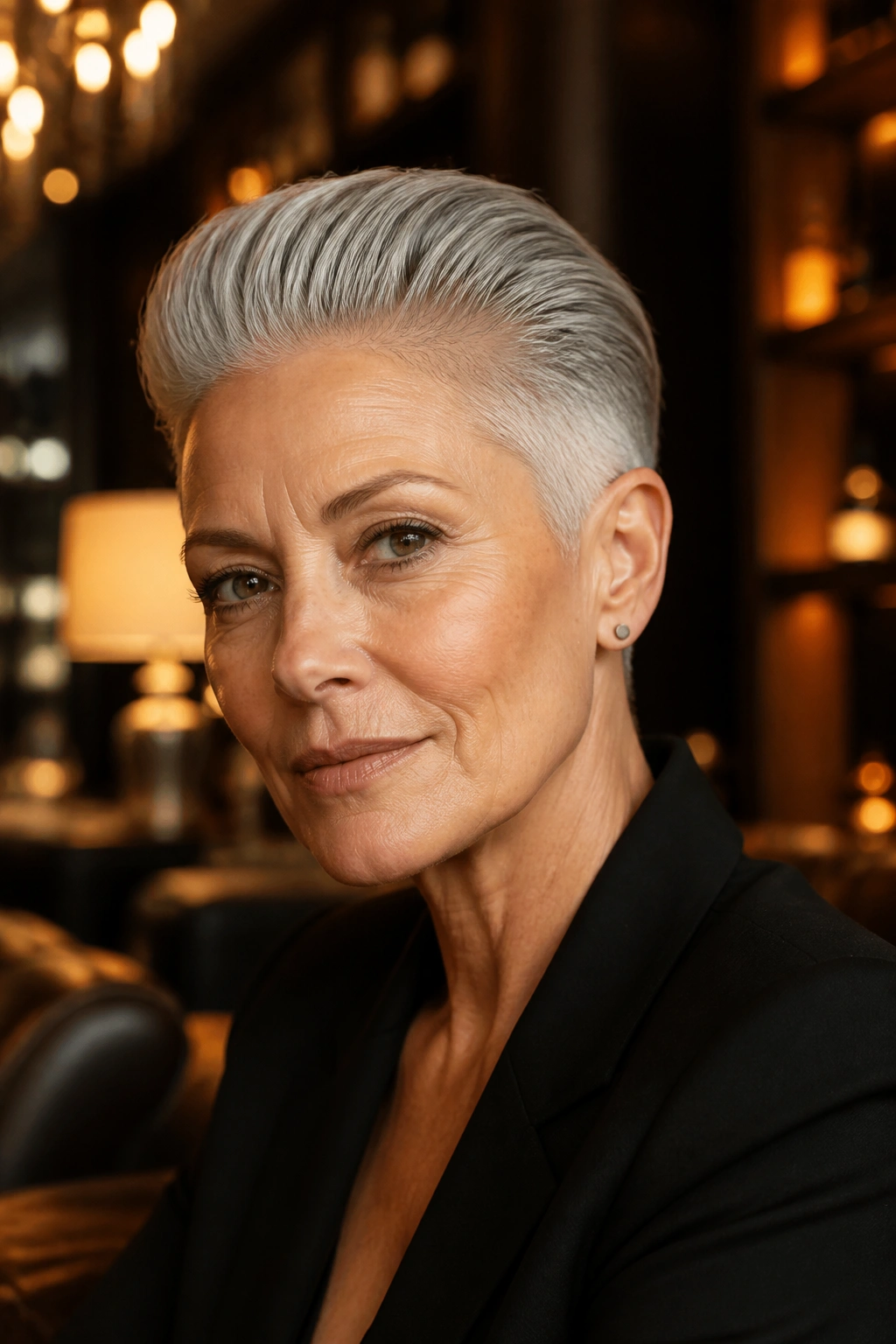
A slicked-back crop is not everyday-safe for everyone, and that’s fine. Some cuts are meant to look sharp, clean, and a little dramatic, especially when the hair is naturally straight. Fine strands can actually benefit from the smooth finish because the style turns the lack of bulk into part of the look.
The crop should sit close at the sides with enough length on top to brush back. You can use a lightweight pomade or gel, but do not overload the hair. Fine textures show product fast, and greasy roots are never the goal.
I like this style for evenings, events, or days when you want something crisp instead of soft. It puts the face front and center. The cut itself is simple; the attitude comes from how you wear it.
23. Curved Pageboy With Soft Volume
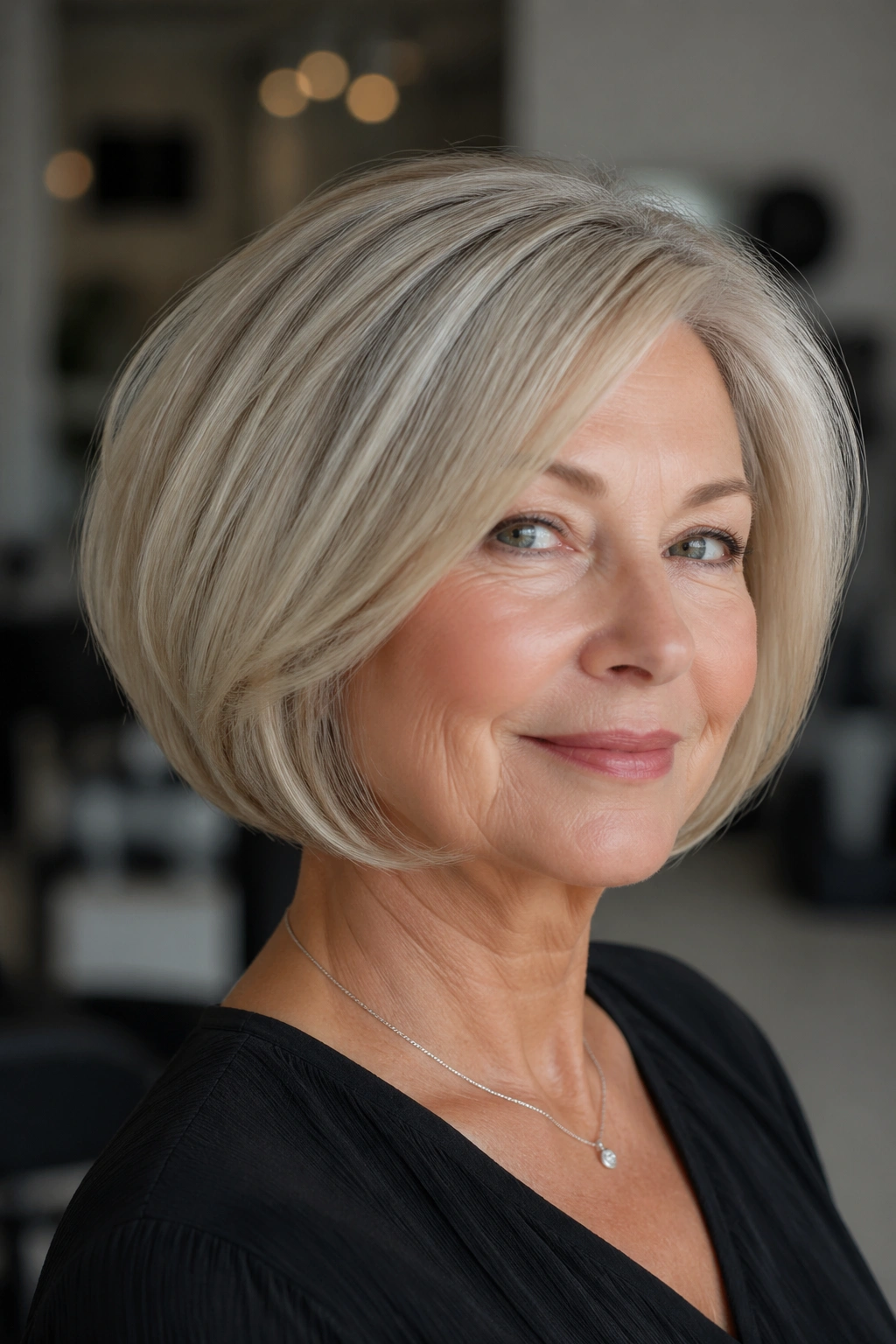
A curved pageboy is one of those cuts that looks expensive without asking for much. The rounded ends follow the jaw or neck in a smooth line, and that curve gives fine hair a fuller read. It is a very old shape in a good way — one of those cuts that survives because it solves a real problem.
The volume should sit in the body of the cut, not at the ends alone. A bit of root lift and an inward curve help the style feel settled and full. If the hair is too flat at the crown, the pageboy loses its charm and starts to look droopy.
This is a good option if you want a neat shape that still feels soft. It works especially well with natural straight texture, though a small wave can be smoothed into place without much trouble.
24. Airy Short Cut With Light Fringe
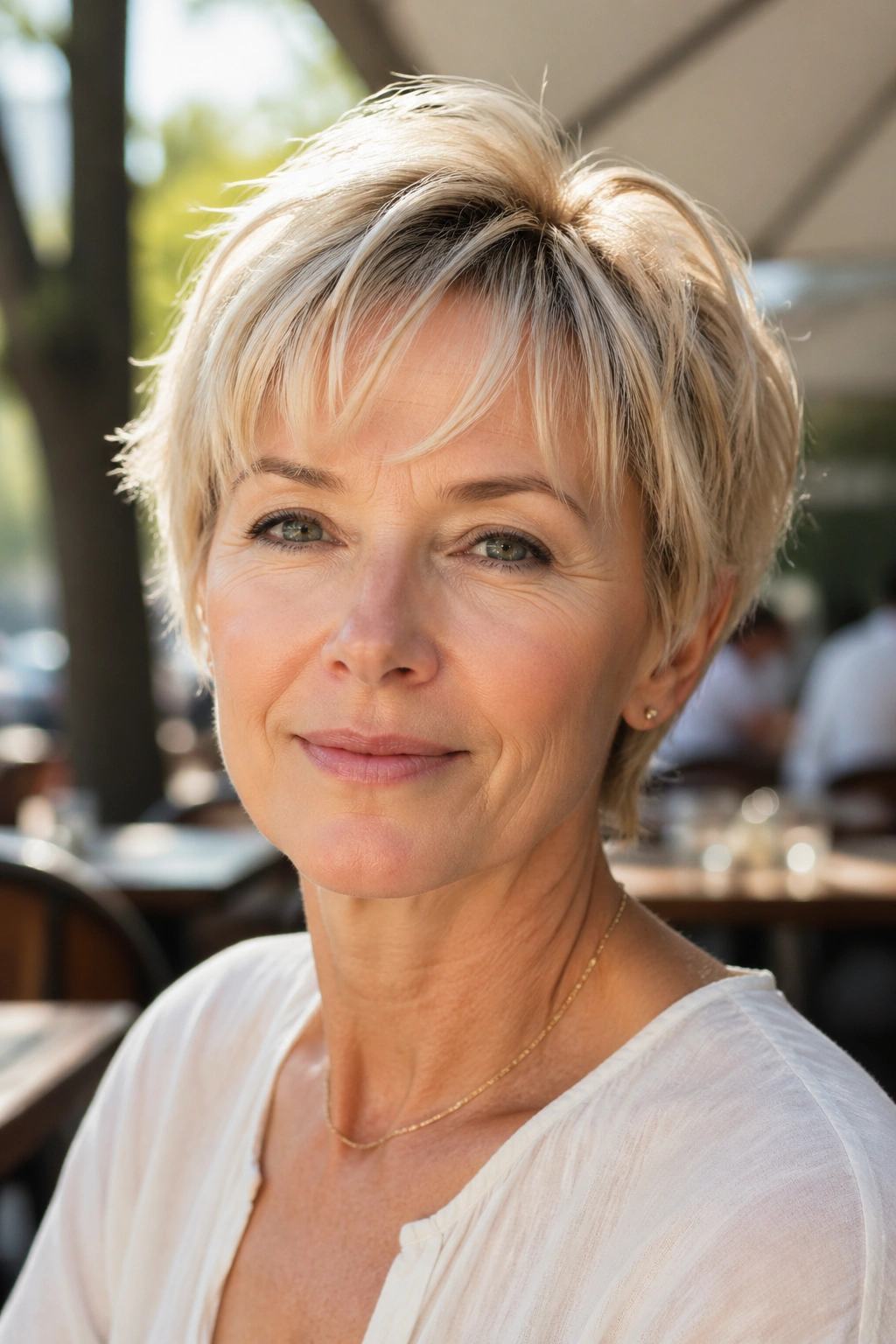
Can very short hair still feel soft? Absolutely. The answer is in the fringe and the edges. A short airy cut keeps enough length on top to create movement, while a light fringe stops the forehead from feeling too bare. Fine hair often looks better when the cut is not trying to do everything at once.
How To Keep It Lively
Ask for soft point-cutting around the fringe and temples. That creates a broken edge that looks less stiff. The top can be brushed forward, up, or to the side, depending on the mood you want.
- Keep the fringe feather-light if your forehead is narrow.
- Keep it a little longer if you want more coverage.
- Use a tiny bit of dry wax at the ends, not the roots.
This cut is nice for women who want something low-drama but not plain. It dries fast, feels light, and gives fine strands a chance to move instead of hang.
25. Polished Pixie With Tapered Neck
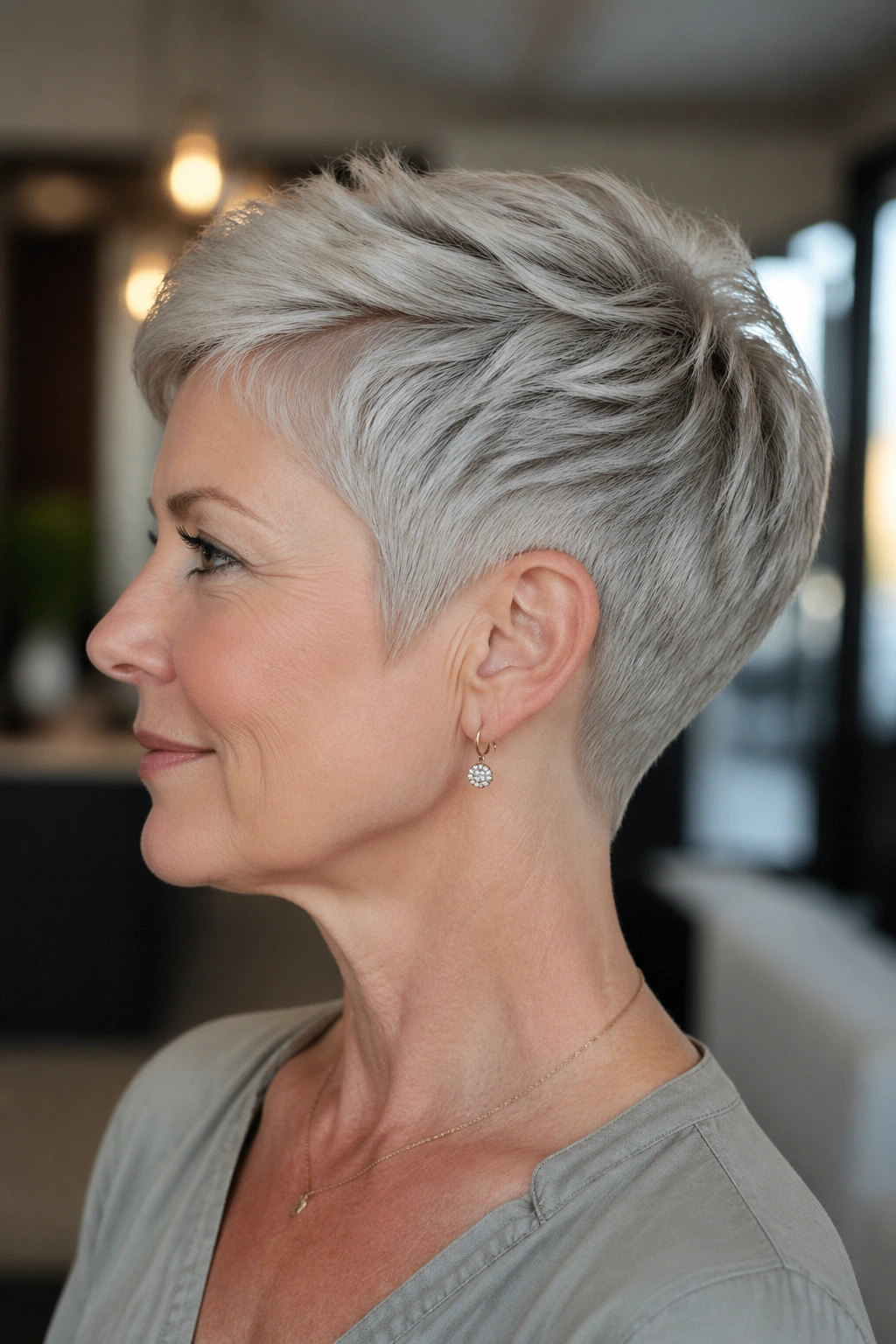
The polished pixie is the haircut people come back to when they are done wrestling with flat roots. It keeps the sides neat, the neck clean, and the top long enough to show a little lift. On fine hair, that combination can look expensive, even when it’s styled with almost no effort.
What matters here is the taper at the neck. It should be close and tidy, because that lower shape gives the whole cut its order. The top can be smooth, swept, or softly tousled, but the outline should stay clear. A strong outline makes thin hair look more intentional.
This is a good last stop if you want something simple that still feels grown-up and modern. It does not need a lot of product, and it doesn’t ask for a complicated routine. Sometimes that is the best haircut of all.