
Hair after fifty can get a little opinionated. One side flips up, the crown goes flat, and the cut that once fell into place with a quick finger-comb may suddenly need a full negotiation with the mirror. Annoying? Absolutely. That is exactly why wash and wear hairstyles for women over 50 make so much sense.
These cuts are not about giving up on style. They’re about choosing shapes that work with your texture instead of fighting it, which is a very different thing. Fine hair wants lift at the roots. Thick hair wants weight removed in the right places. Curls want room to spring. If the cut is honest about what your hair does on its own, you spend less time fixing it and more time wearing it.
I’ve always liked styles that behave in real life, not just in a salon chair. Real life means glasses, earrings, humidity, cowlicks, and mornings when you’d rather do almost anything else than blow-dry your hair for twenty minutes.
These 22 styles lean into that kind of ease. Some are crisp. Some are soft. Some carry a little edge. What they all have in common is this: they should still look like a haircut after a quick wash, a dab of product, and an air-dry that does most of the work for you.
1. Chin-Length Blunt Bob
A chin-length blunt bob is one of those cuts that looks calm but does a lot of work. The straight line at the bottom gives fine hair a thicker look, and the length at the jaw keeps it from feeling fussy.
If your hair tends to flip out at the ends, ask for a very slight bevel rather than a sharp stack. That small adjustment matters. It lets the hair curve instead of kicking out like it has plans of its own.
This cut works especially well when the front lands just below the chin and the back sits close to the jaw. It’s tidy without feeling severe.
- Best for: straight to softly wavy hair
- Good if you want: a clean shape that air-dries fast
- Styling note: a pea-size amount of smoothing cream is usually enough
My favorite part: it looks deliberate even on low-effort days. That’s the whole point.
2. Soft Layered Lob
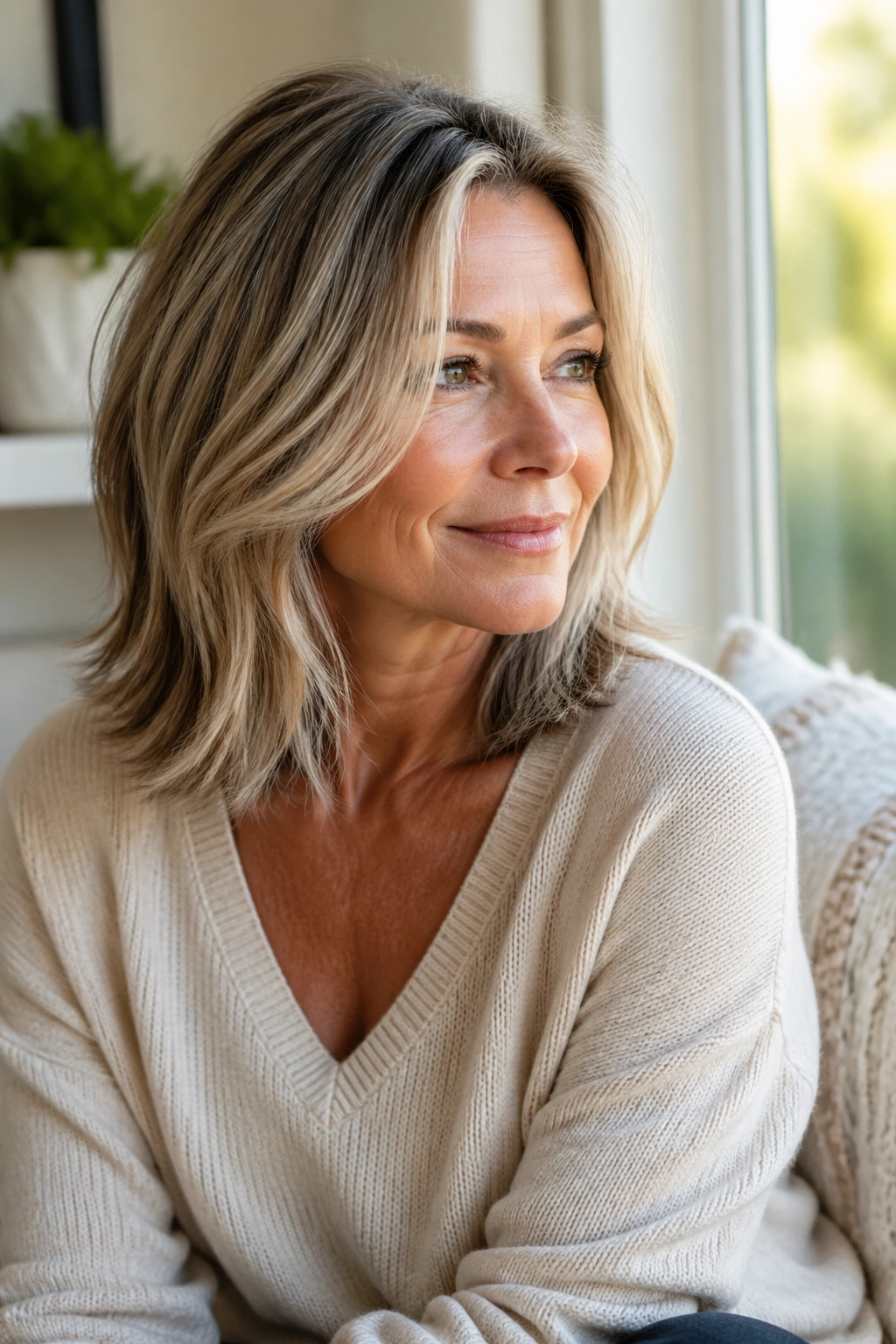
Why does the lob keep showing up in conversations about easy hair? Because it sits in that sweet spot where the hair has enough length to move, but not so much that it collapses into heaviness. A soft layered lob can air-dry into shape with very little coaxing.
The layers should be long, not choppy. Short layers can make mature hair puff in odd places, especially if the texture has changed over time. Long layers let the ends stay full while taking some weight off the middle.
What makes it low-effort
The cut should graze the collarbone or sit just above it. That gives you enough length to tuck one side behind the ear, clip it back, or let it fall loose when you want something simple. A side part can help if your roots like to flatten.
A little mousse at the roots and a leave-in on the ends is usually enough. Not much more than that.
3. Feathered Pixie
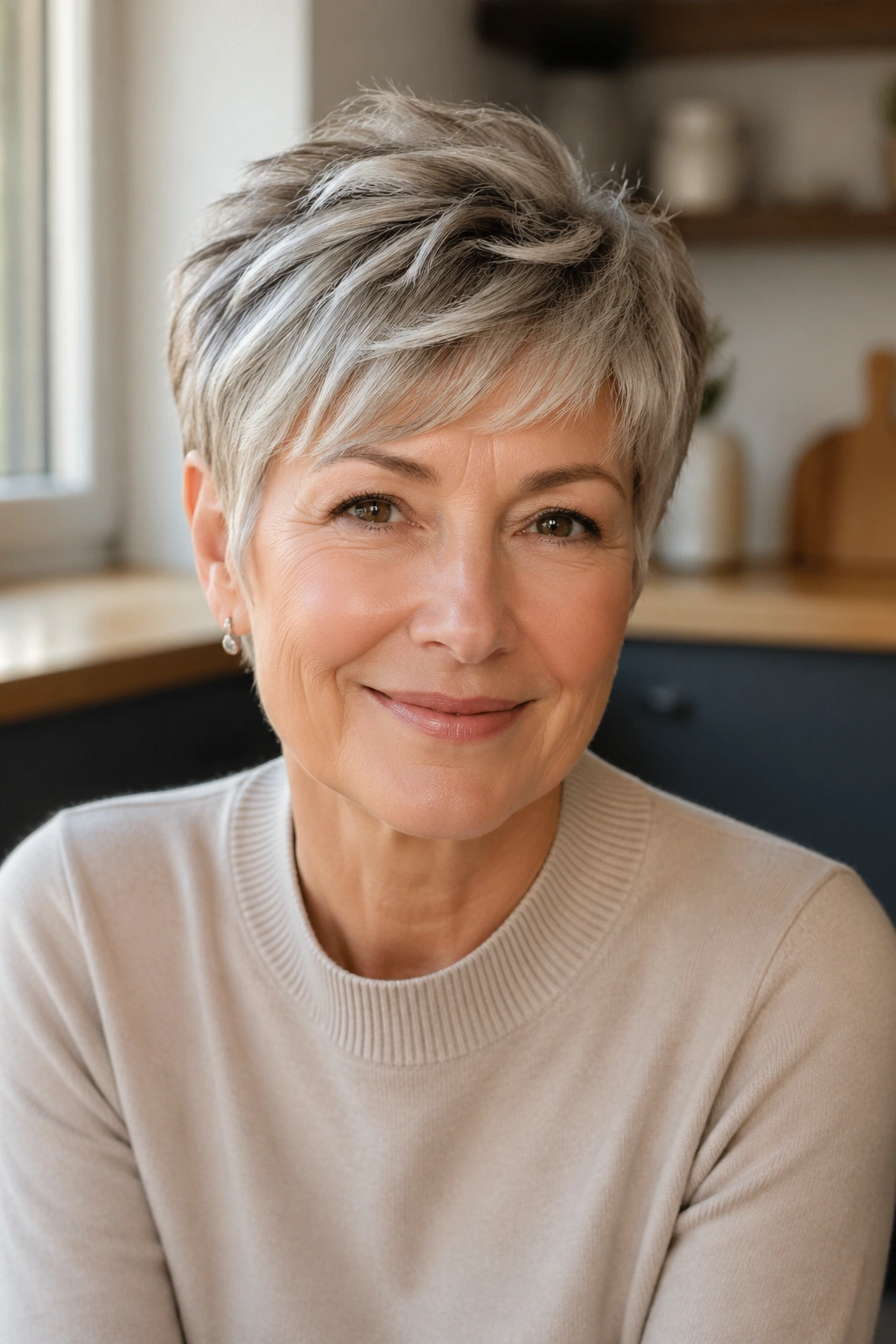
If you want the shortest cut that still feels soft, the feathered pixie is the one I’d point to first. The feathering keeps it from looking too hard around the edges, which matters more than people think.
The top should have enough length to move, while the sides and nape stay neat. That contrast is what gives the cut shape. It also means you can rough it up with your fingers and be done.
A feathered pixie is especially kind to women who wear glasses, because it keeps the hair from competing with the frames. It also works well when the hair is getting finer at the temples, since the layered top gives the eye somewhere to go.
A small dab of styling cream or light paste is plenty. Too much product will flatten the feathering and make the whole thing feel sticky.
4. Tapered Crop with Side-Sweeping Fringe
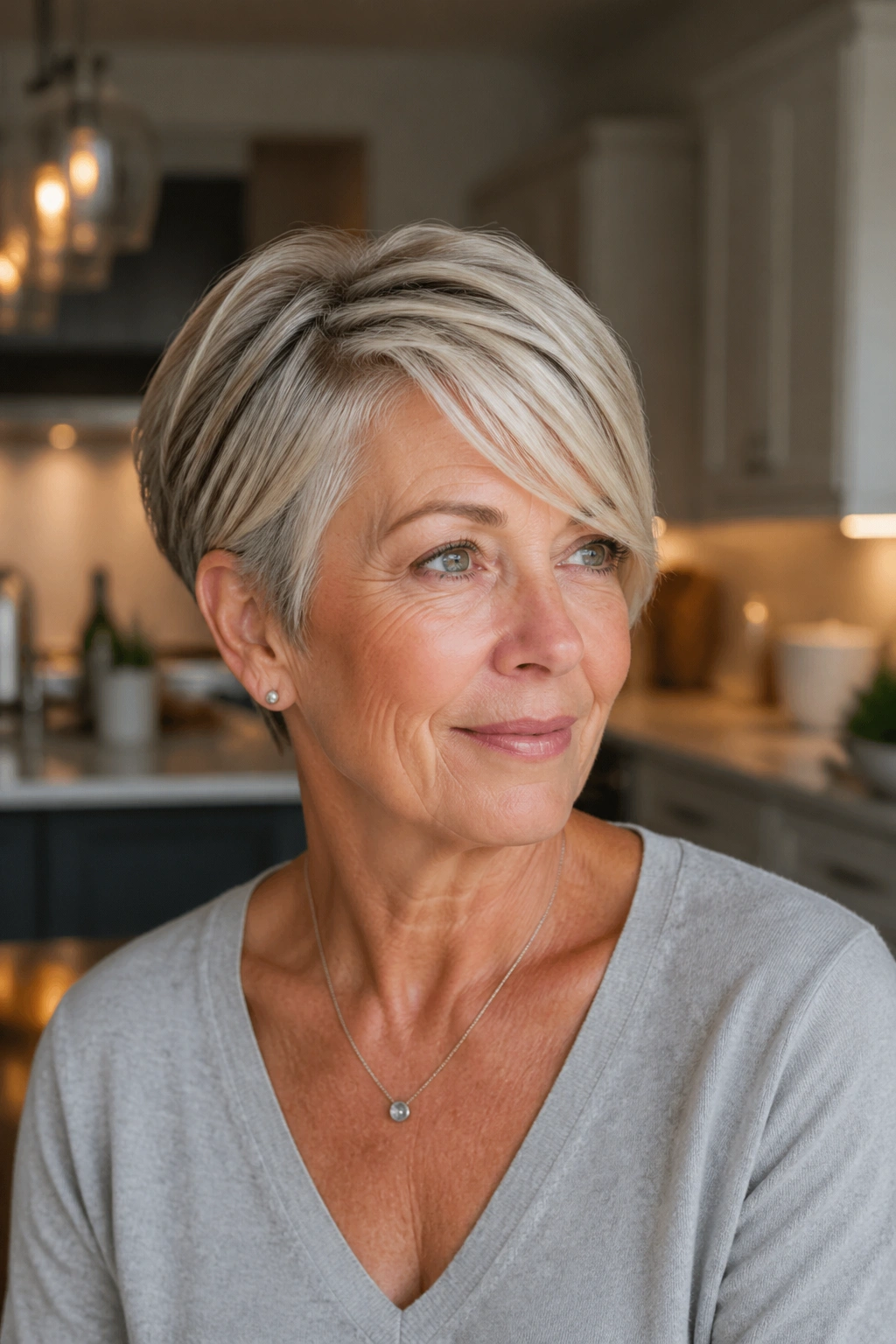
A side-sweeping fringe can hide a little mischief. Cowlick near the hairline? It helps. Forehead lines you do not want to fuss with? Also helps. That is why a tapered crop with a side-sweeping fringe is such a useful wash-and-wear shape.
The taper keeps the sides close to the head, while the fringe softens the front. You get structure without the helmet effect. The trick is to keep the fringe long enough to move, not so short that it sticks up the minute the humidity changes.
What to ask for
- A tapered nape that hugs the neck
- Longer length at the front, angled across the forehead
- Texture through the crown so the top does not sit flat
- Soft edges, not razor-sharp ends
This cut likes a quick blast of warm air or a quick air-dry with the fringe pushed the way you want it to live. After that, it usually settles down.
5. Curly Shag
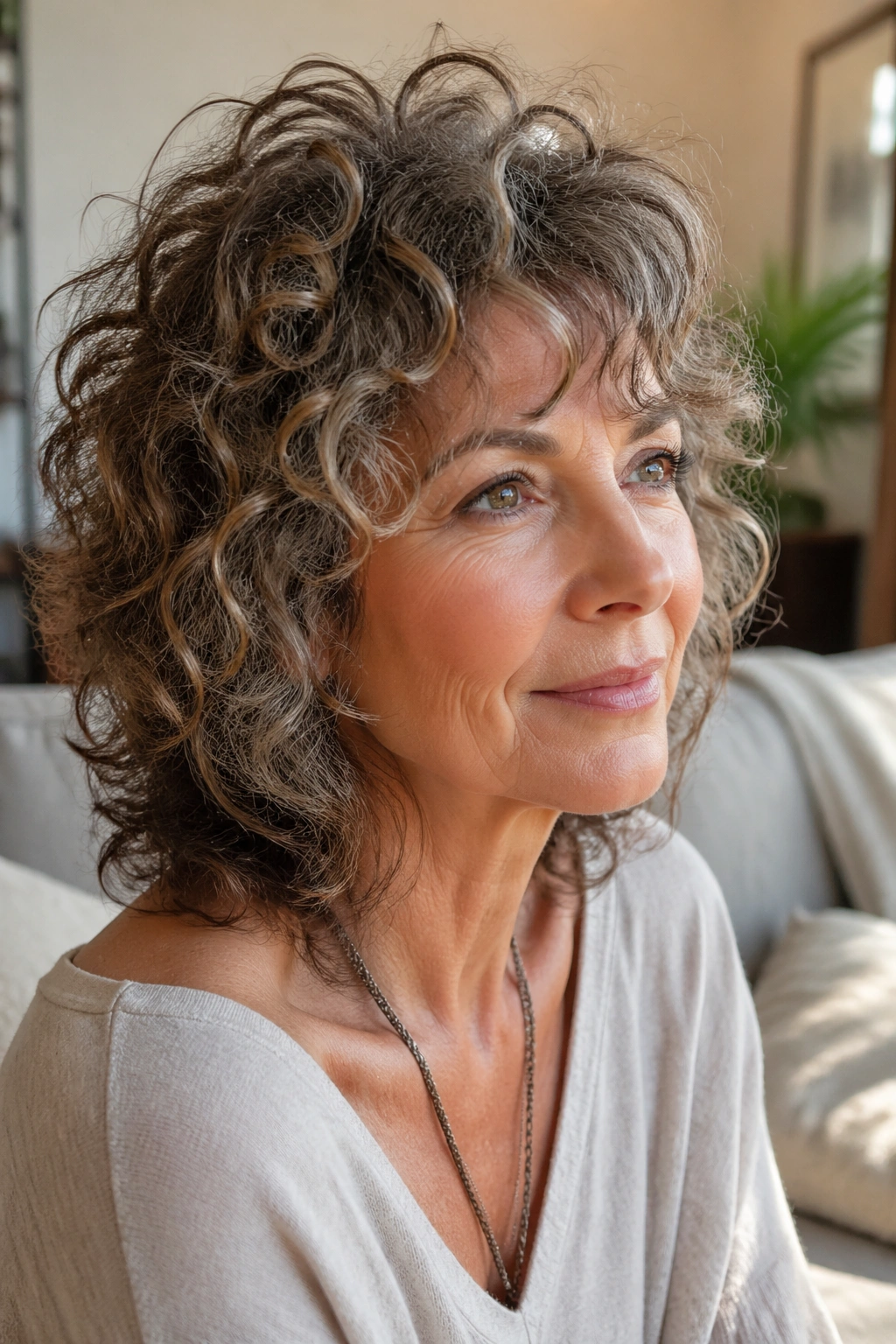
What if your curls hate being forced into one shape? Then a curly shag starts to make a lot of sense. The layers give curls room to stack naturally instead of bulking up in the wrong places.
The best curly shag is cut with the curl pattern in mind. That means the layers should not be too short at the crown, or the top can get frizzy and triangular. Keep the face-framing pieces long enough to fall, and let the interior layers do the heavy lifting.
Why it works for wash-and-wear hair
Curly hair often looks better when it is left alone after styling. That is exactly where this cut shines. A curl cream, a little gel, and air-drying or a diffuser are usually enough. Once the curls set, they keep their shape with very little effort.
Do not let anyone thin the curls too aggressively with a razor. That can leave ends looking wispy in a bad way. You want definition, not fluff.
6. Classic French Bob
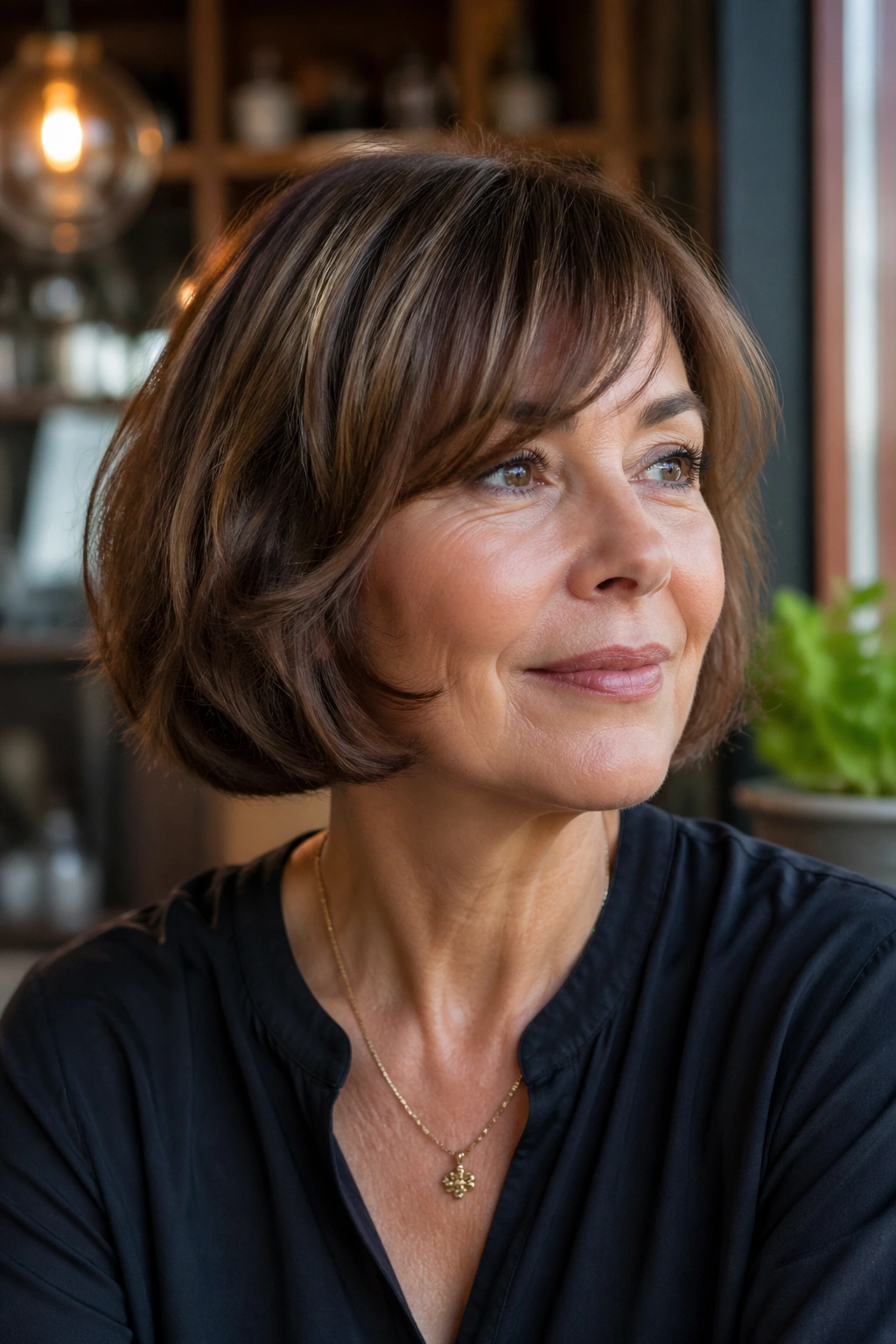
Unlike a layered bob, a French bob keeps the line cleaner. That’s part of the appeal. It usually sits somewhere between cheekbone and jaw length, with soft movement near the ends rather than a lot of stacked layers.
I like this cut when the hair has some natural bend but not a lot of bulk. It falls into place faster than longer styles, and it feels polished without needing a round brush ritual. A slight wave at the front is enough.
The fringe is optional. If you wear one, keep it soft and a little piecey. A heavy blunt fringe can take over the whole face, which is not always the look you want on an ordinary Tuesday.
This is the kind of haircut that can look sharp with almost no styling. A side part, a tuck behind one ear, and you’re done.
7. Graduated Bob with Nape Taper
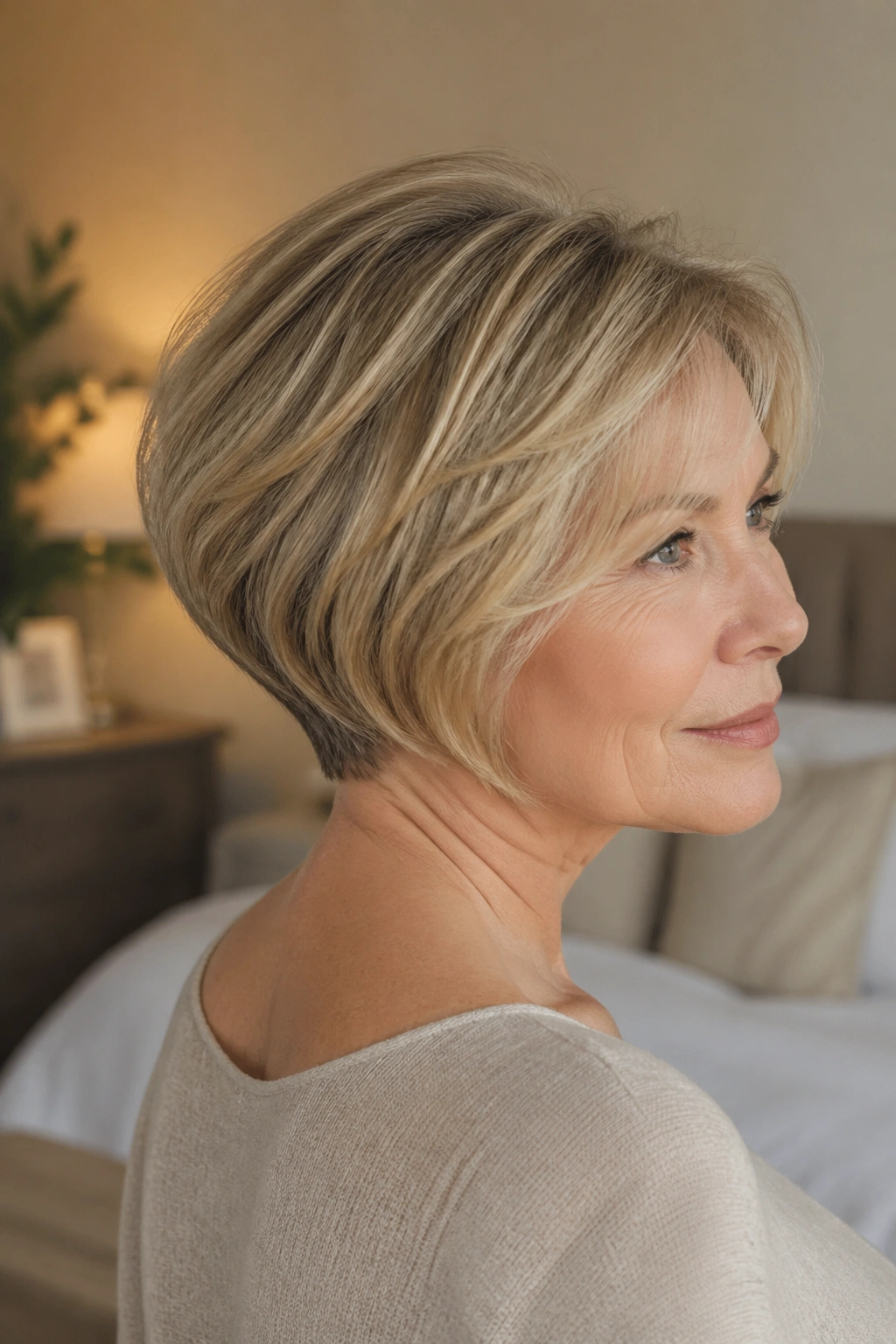
The back hugging the neck is the whole story here, and that matters more than people think. A graduated bob with a nape taper creates lift at the crown while keeping the neckline clean, which is a gift if your hair has a little thickness or stubbornness.
The front stays slightly longer so the shape does not feel too blunt. That longer front also helps soften the jawline. If the cut is done well, it falls into a neat curve when it air-dries, rather than sticking straight out from the head.
A good graduated bob needs regular trims. Not obsessive ones. Just enough to keep the back from growing into a shelf.
- Works well for: straight or dense hair
- Avoid if: you want a loose, shaggy feel
- Styling aid: a light root spray can keep the crown lifted
The shape does the hard part for you. That’s why people keep coming back to it.
8. Short Textured Crop
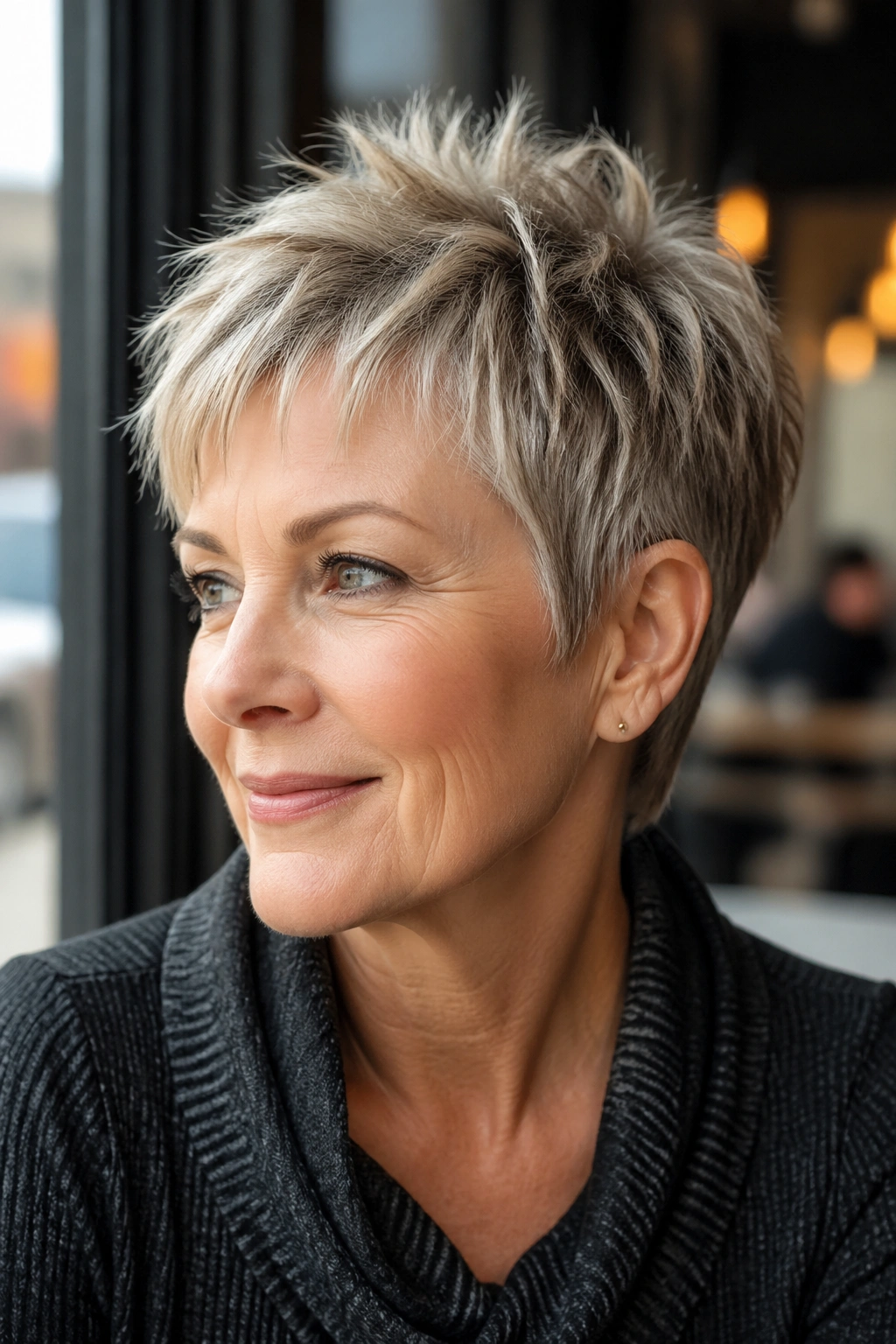
This is the cut I think of when someone says, “I want my hair to behave itself.” A short textured crop is practical, yes, but it is not boring. The piecey top and choppy edges give it some life.
The best version has texture cut into the top with point cutting or careful layering, not with over-thinning. That keeps the hair from looking stringy. A little lift at the front can make the whole face look brighter, which is a nice side effect.
A few things that help
- Use a small amount of matte paste or light pomade
- Work the product through damp hair with your fingers
- Let the crown dry a little higher than the sides
- Keep the neckline neat so the crop looks intentional
This is one of those styles that rewards restraint. If you keep touching it, you usually make it worse.
9. Shoulder-Length Layered Cut

Short hair does not own the low-maintenance lane. A shoulder-length layered cut can be just as easy, and sometimes easier, if you like to tuck, clip, or tie your hair back without losing shape.
The layers should be long enough to keep the ends from looking thin. That matters a lot on mature hair, which often feels finer at the perimeter. If the layers are too short, the ends can look see-through. If they’re too long, the hair loses movement. The middle ground is the sweet spot.
A shoulder-length cut is also forgiving when you’re growing out a shorter style. It gives you room to experiment with parts, clips, and half-up styles.
One sentence is enough here: a good shoulder-length cut should move when you walk, not sit there like a curtain.
10. Wavy Collarbone Cut
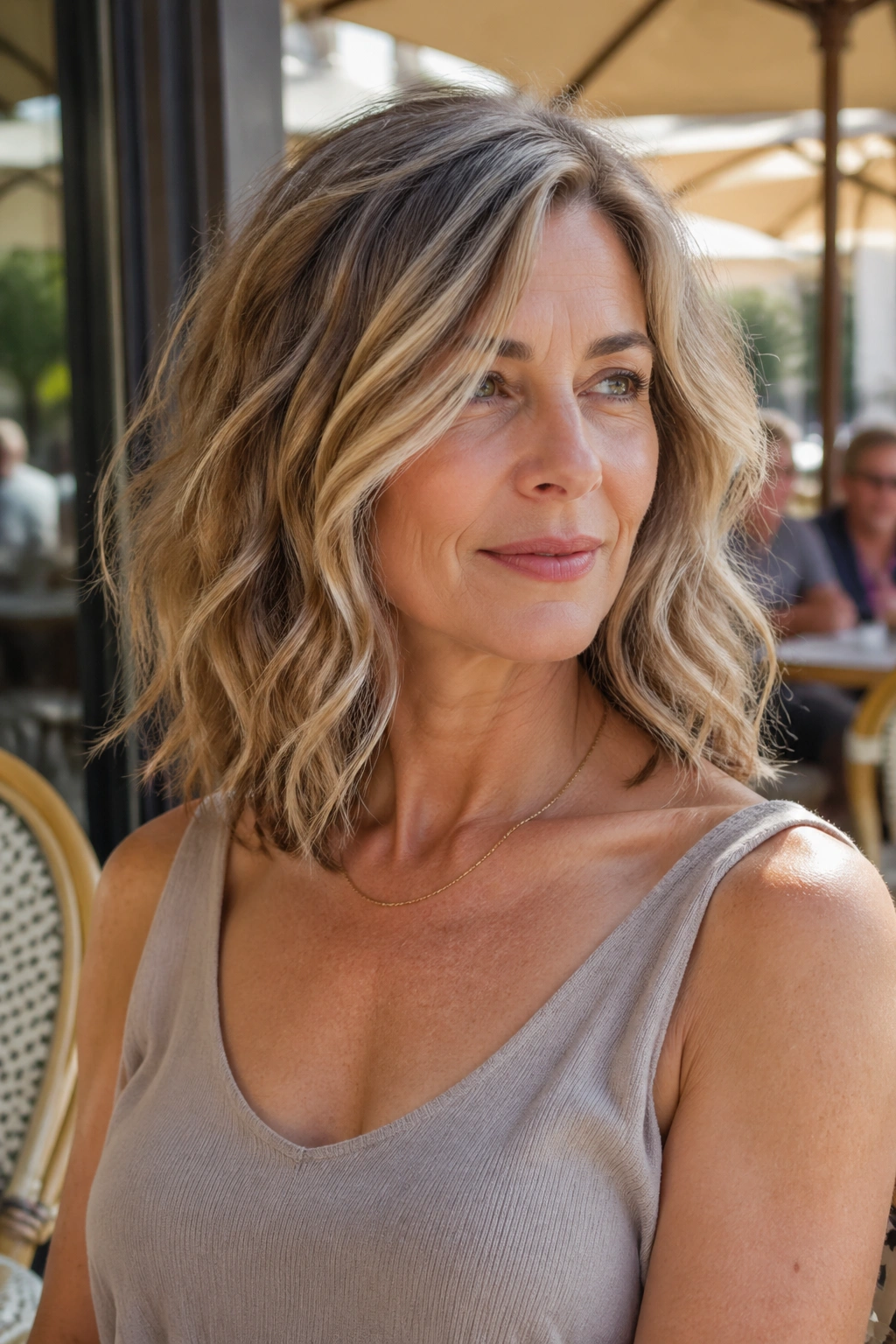
Why does collarbone length work so well for waves? Because the hair has room to swing without turning heavy. It sits long enough to feel feminine and short enough to keep the wave pattern visible.
The collarbone is a smart stopping point for hair that tends to puff when it gets too long. At that length, the weight helps the waves relax a little instead of exploding outward. A few long layers are usually enough. You do not need a stacked haircut to make this shape work.
How to keep it easy
A light mousse on damp hair is often better than heavy cream. Scrunch it through, squeeze out excess water with a T-shirt, and leave the hair alone while it dries. Pulling at the wave too early usually stretches it flat.
This cut also plays nicely with clips and scarves, which is handy on days when you want a little help but not a full style session.
11. Curly Pixie
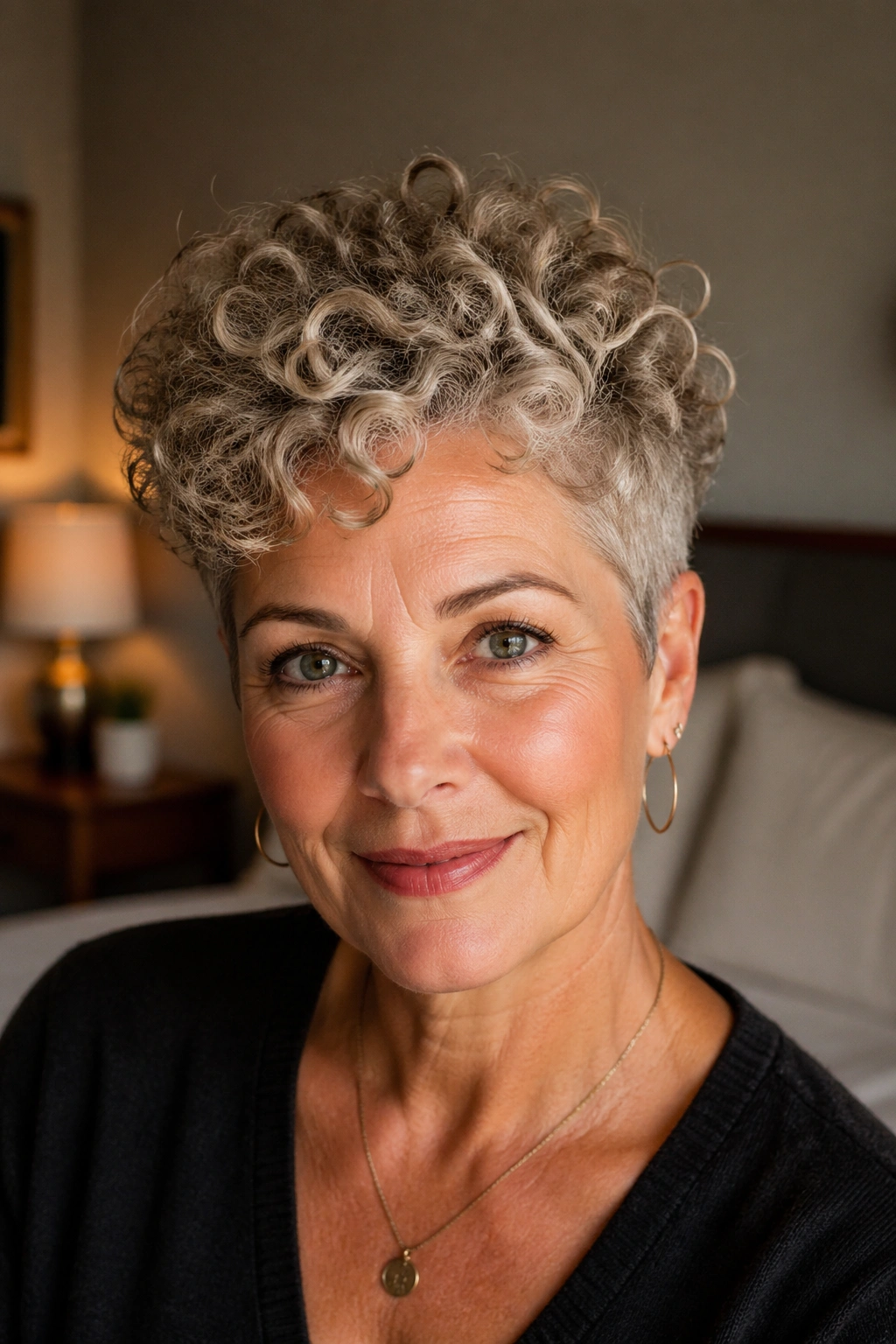
A curly pixie is not shy. It’s tiny, but it has presence. The sides and back stay short while the curls at the top and crown give the style its shape and energy.
This cut works best when the curls are cut dry or with the curl pattern in mind. Wet curl cutting can be fine, but the final shape matters more than the method. You want enough length on top that the curls spring, not so much that they turn into a mushroom.
The right product makes a difference here. A curl cream the size of a walnut, worked through damp hair, can keep the curls soft without making them heavy. If your curls are tighter, a little gel on top of the cream can help the shape hold through the day.
Not every woman wants that much height on top. If you do, this cut has a lot of charm.
12. Wash-and-Wear Pixie with Long Crown
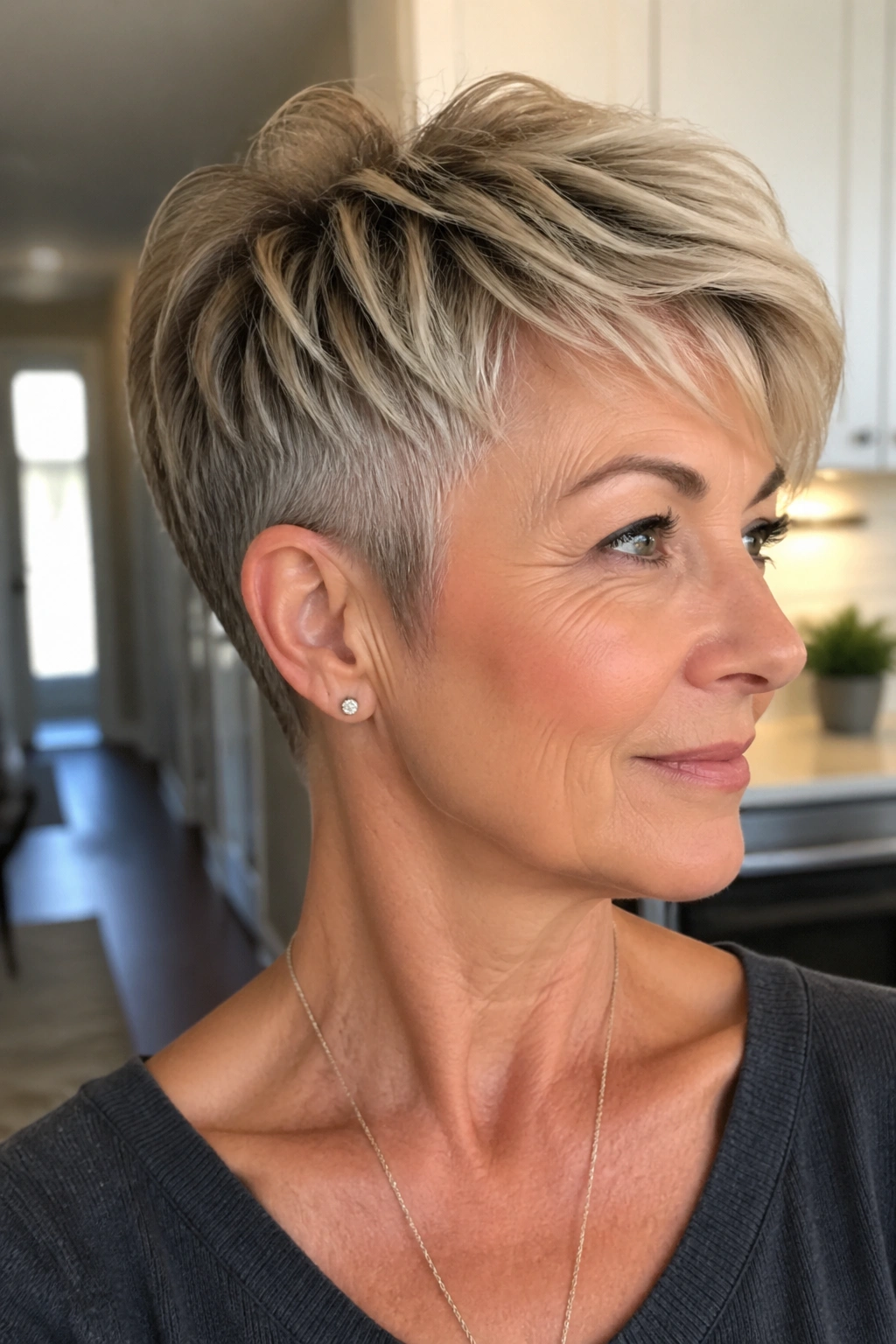
A longer crown gives this pixie just enough movement to keep it from feeling helmet-like. That small bit of extra length is the reason the style looks relaxed instead of stiff.
The sides and back should stay tight enough to keep the outline neat, while the crown can be brushed forward, pushed to the side, or left a little messy. It’s a very forgiving shape if your hair has a cowlick or two. It also works well when the hair is fine, because the longer top creates the idea of fullness without needing a lot of product.
The part that makes it work
- Longer top for movement
- Tapered sides so the shape stays clean
- Light root lift, not heavy hold
- Finger styling instead of brushing it into submission
I like this cut for women who want short hair but do not want short hair to look severe. There’s a difference.
13. Air-Dried Shaggy Bob
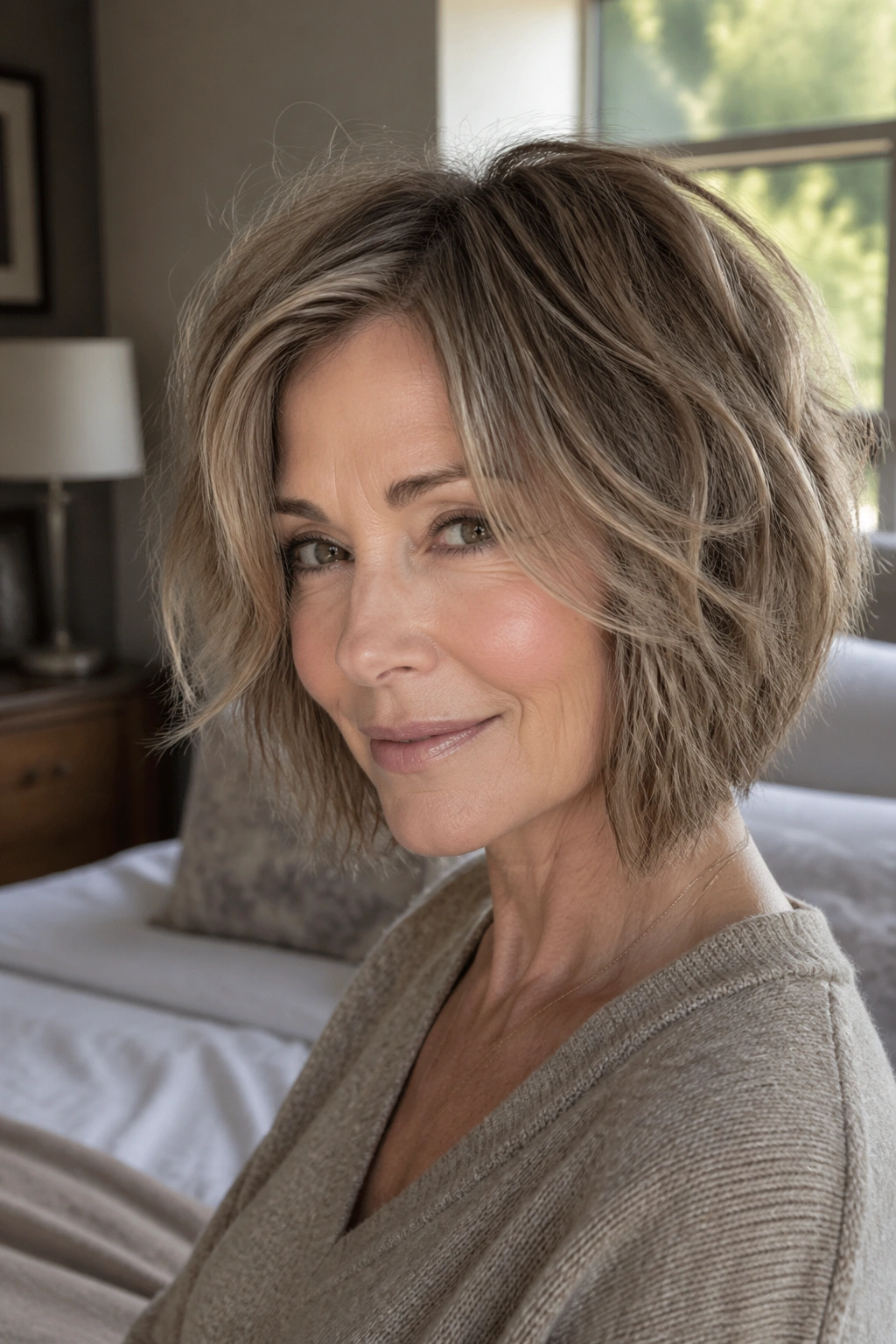
Can a bob feel relaxed instead of stiff? Yes, if the layers are placed with some care. An air-dried shaggy bob usually has choppy pieces around the face and softer movement through the ends, so the shape looks lived-in rather than formal.
The big mistake with shaggy bobs is over-layering the crown. That makes hair puff where you least want it. Keep the top controlled and let the lower layers do the swinging.
A little mousse at the roots, a touch of cream on the ends, and a scrunch with your hands can be enough. After that, walk away. Honestly. The more you keep messing with it while it dries, the frizzier it gets.
This cut is a good match for women who want something that can look casual on a plain day and still have enough shape for dinner out.
14. Asymmetrical Bob
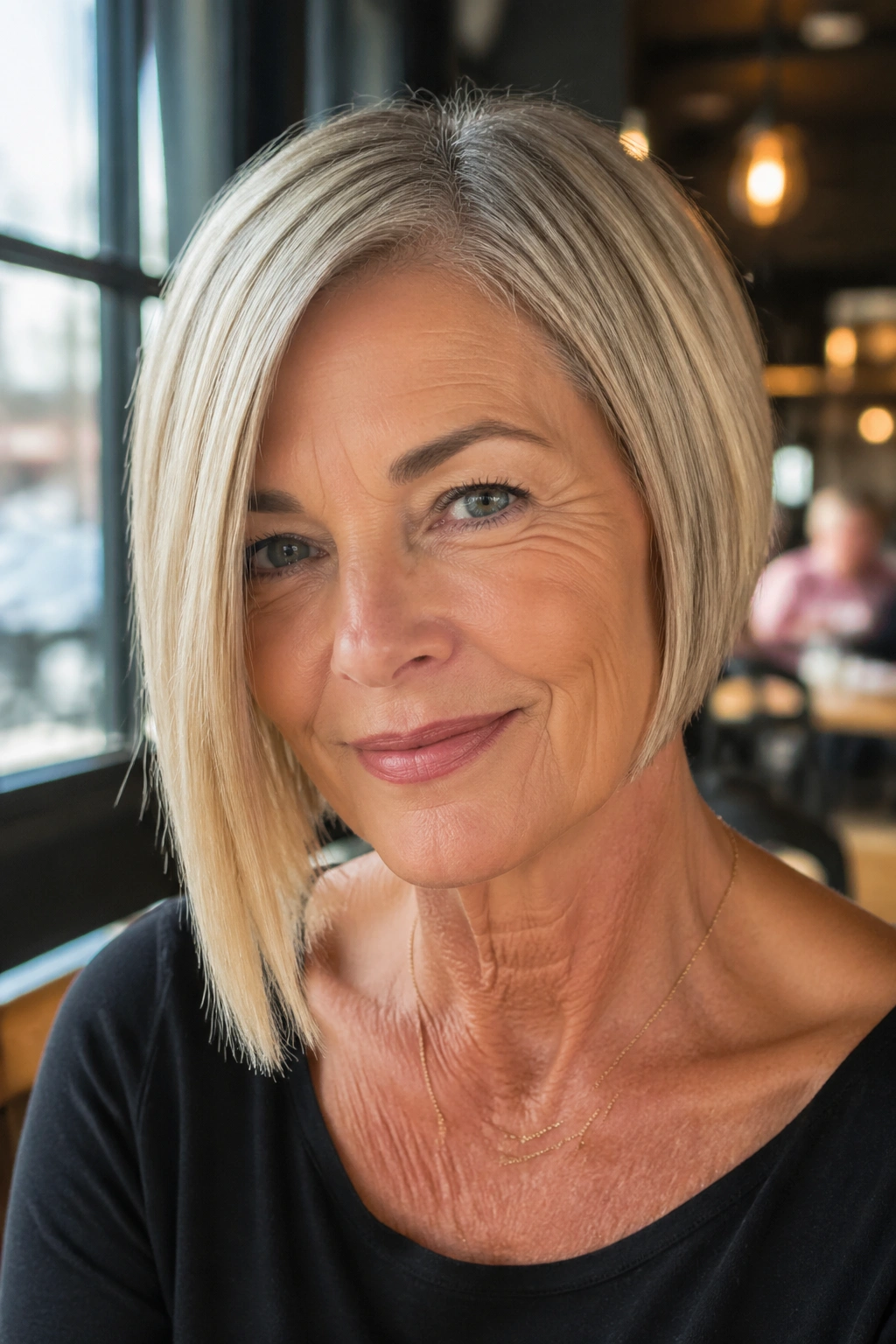
One side a little longer can make a simple bob feel sharper without adding daily work. That is why an asymmetrical bob is such a smart choice if you want a small twist rather than a dramatic overhaul.
The angle should be subtle. A huge difference from one side to the other can be hard to live with, especially if you want a cut that air-dries quickly. A gentle slope gives the eye something interesting to notice while still letting the style fall naturally.
This cut is especially nice on straight hair, because the line shows clearly. On wavy hair, the asymmetry softens a bit, which can be lovely too. A side part helps the shape make sense.
If you want a haircut that feels a little modern without demanding special styling, this is a good candidate.
15. Soft Bixie
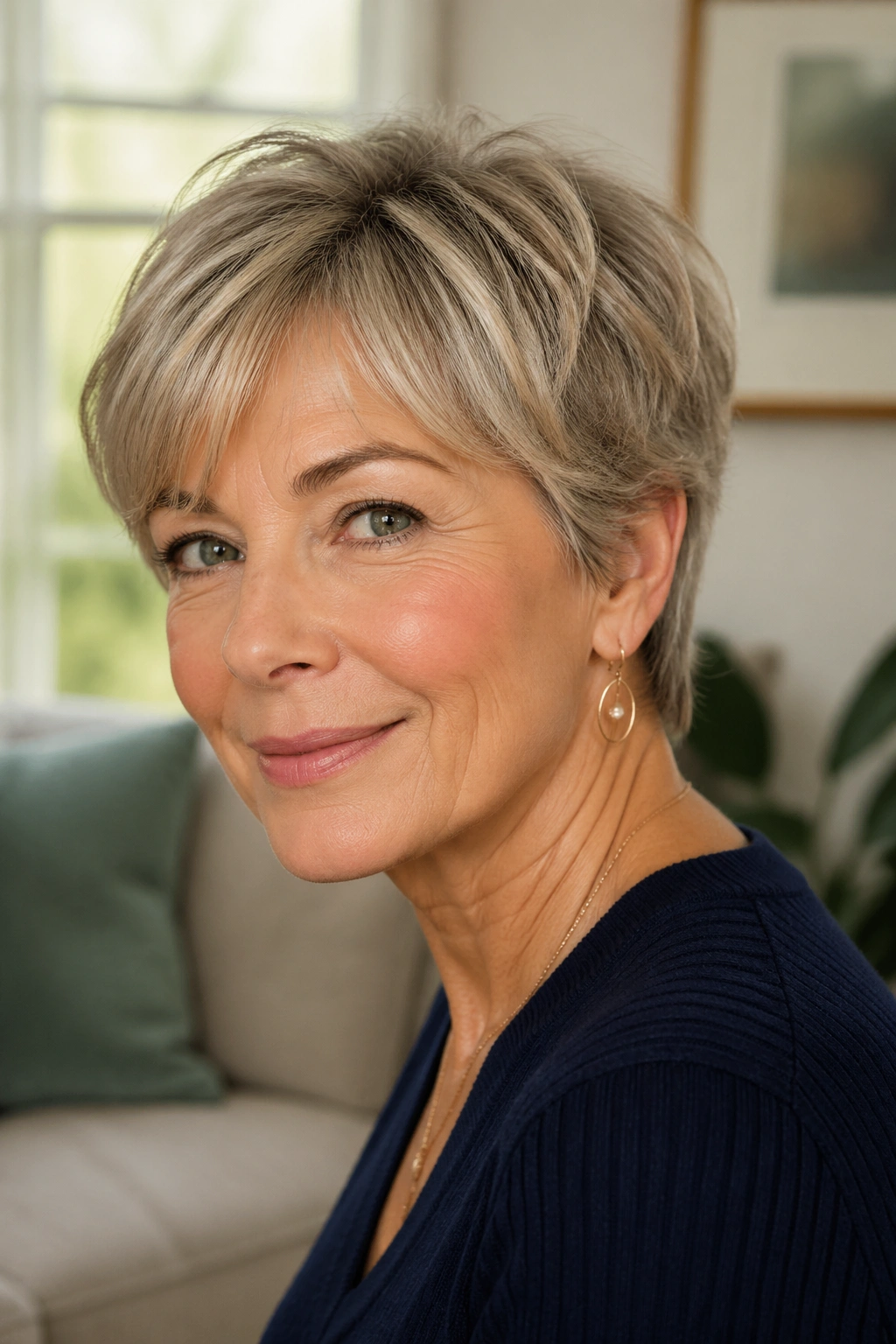
The bixie is the cut for people who want short hair but not a hard pixie line. It sits between a bob and a pixie, which sounds vague until you see how wearable it is.
A soft bixie usually keeps enough length at the top and around the ears to feel feminine, while the nape stays neat. That balance is useful if your hair is thinning at the sides or if you want some height through the crown without stacking too much volume everywhere else.
This one is good with finger styling. A brush can flatten the shape if you’re not careful.
A little cream through the ends and a quick shake of the fingers at the roots is usually enough. The cut does the rest. That is why it suits women who want structure without rigidity.
16. Layered Cut with Curtain Bangs
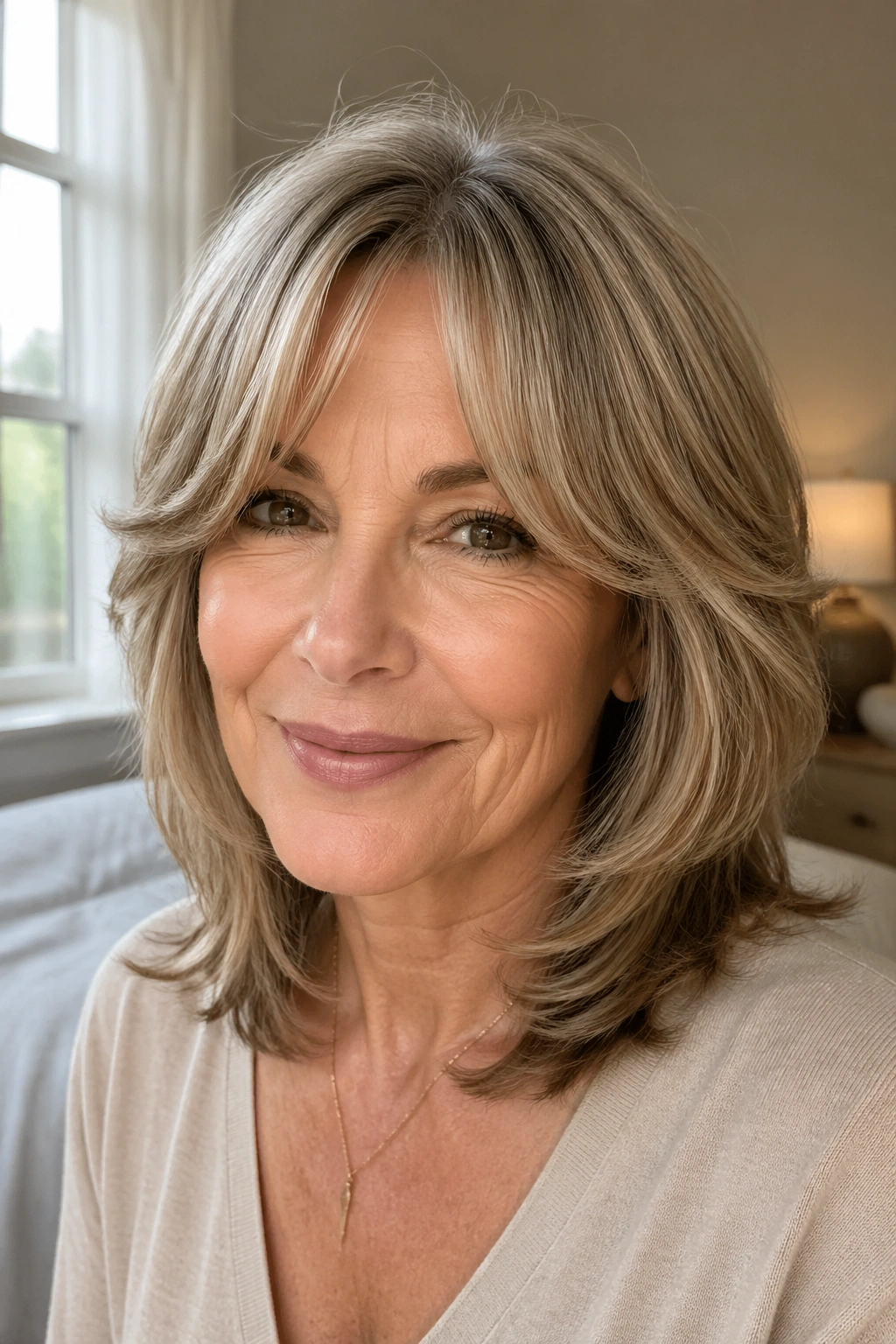
Curtain bangs can be a friend to mature hair when they’re cut long enough to move. Too short, and they start behaving like a project. Long enough to split at the center and sweep softly to each side? Much better.
The layers around the face should blend into the rest of the cut so the bangs do not look bolted on. That makes the style easier to grow out too, which is a real comfort if you’re not in the mood for constant trims.
What to ask for
Ask for bangs that hit around the cheekbones or just below them. If your hairline has a strong cowlick, tell the stylist. That tiny detail changes everything.
The rest of the cut should stay light around the face and fuller through the bottom. This gives you movement without a lot of styling. A quick finger-dry and a middle part are often enough to make the fringe fall in place.
17. Neck-Length Razor Cut
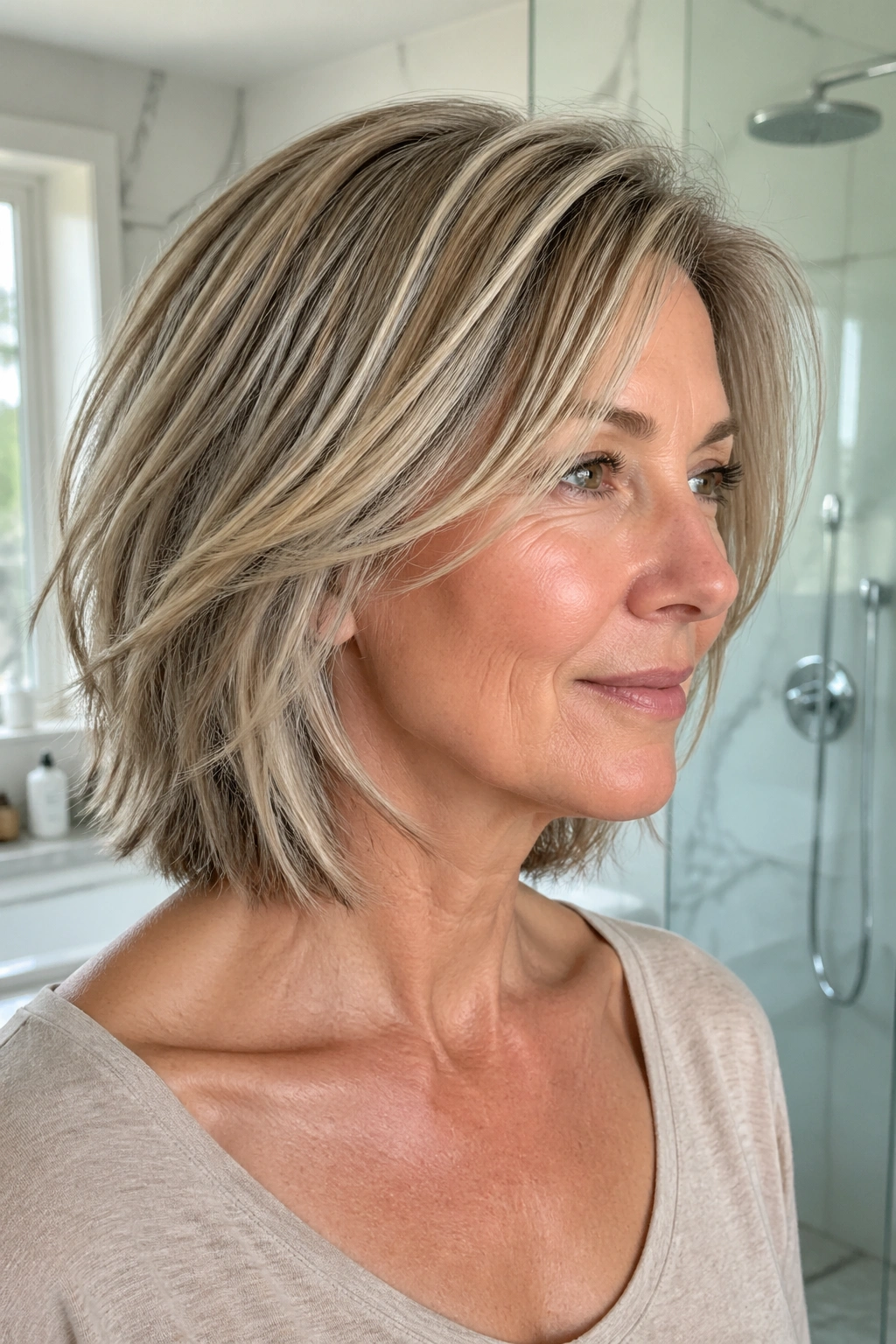
Razor-cut ends feel softer, almost airy, especially on dense hair. A neck-length razor cut uses that softness to keep the shape from looking bulky.
This cut is not the best choice for very fragile or overly dry hair, because a razor can leave ends looking frayed if it’s used too aggressively. On healthy hair with some thickness, though, it can remove heaviness in a way scissors sometimes can’t.
The length at the neck keeps the style easy to tuck, clip, or wear loose. It’s short enough to stay light and long enough to avoid that spiky, over-short feeling some crops can have.
I like this style on women who want a little edge without an obvious “look at my haircut” moment. It’s quieter than that.
18. Natural Gray Bob

Gray hair deserves a cut that treats it like a feature, not a problem. A natural gray bob does that better than most styles, because the clean line shows off the shine and the silver strands catch the eye on their own.
Gray hair can feel coarser, silkier, or both, depending on the head. That’s one reason a bob works so well: it gives the hair shape without requiring a lot of heat. A gloss or a light purple shampoo now and then can keep brassiness from taking over if the gray has yellowed a bit.
One short paragraph says enough here: silver hair looks strongest when the cut is clean.
A chin-length or jaw-length bob is often the safest bet. It frames the face, keeps the ends looking full, and makes the color look intentional instead of accidental.
19. Salt-and-Pepper Crop with Piecey Top
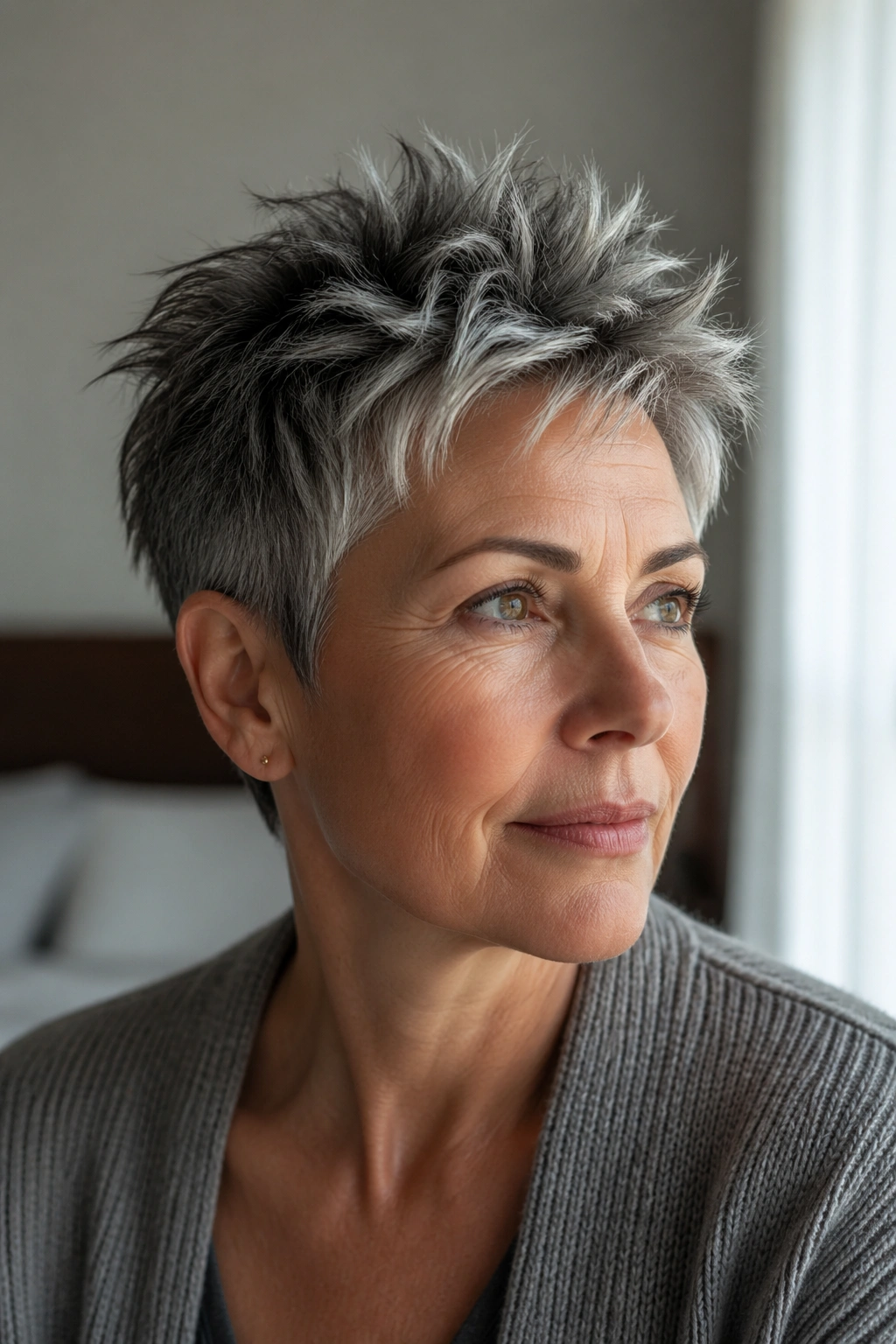
Salt-and-pepper hair has built-in dimension, so why hide it? A crop with a piecey top lets the darker strands and silver strands show up in a way that feels lively rather than flat.
The top should be short enough to lift, but not so short that it loses texture. A small amount of matte cream or paste can give the ends a separated look without making the hair greasy. Work it in with your fingertips, then stop. That’s the whole trick.
This style is a good match for women who like a little attitude in their haircut. It’s neat at the sides and a bit playful on top, which keeps it from feeling too severe.
It also holds up well on days when you only have time to wash, blot with a towel, and leave the house.
20. Wash-and-Wear Midi Shag
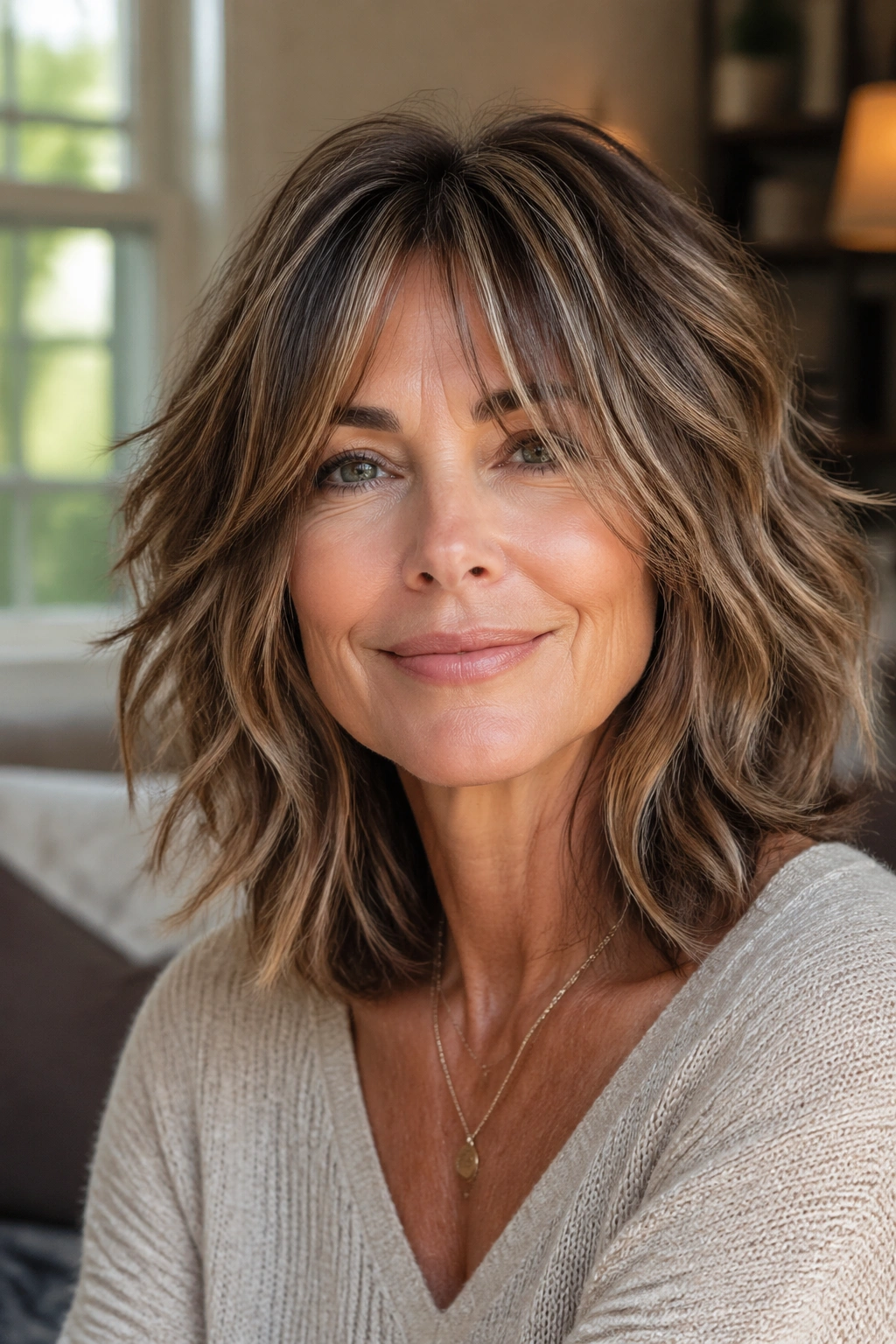
A midi shag sits in that middle zone between short and shoulder-length, and that’s part of its appeal. It gives you enough length to feel versatile, but the layers keep it from dragging.
The shag works especially well when the hair has a natural wave or a loose curl. The layers help the hair spring instead of hanging flat. If the cut is done well, you can wash it, scrunch in a little leave-in, and let the texture do the rest.
Why the midi length helps
The extra length at the bottom keeps the ends from looking thin. The layers around the face prevent the style from turning into one heavy block. It’s a good compromise for anyone who wants movement without going short.
A light mousse and a bit of air-drying time are usually enough. If you like, a diffuser can speed things up, but you do not need one to get a decent result.
21. Rounded Crop with Tucked Sides
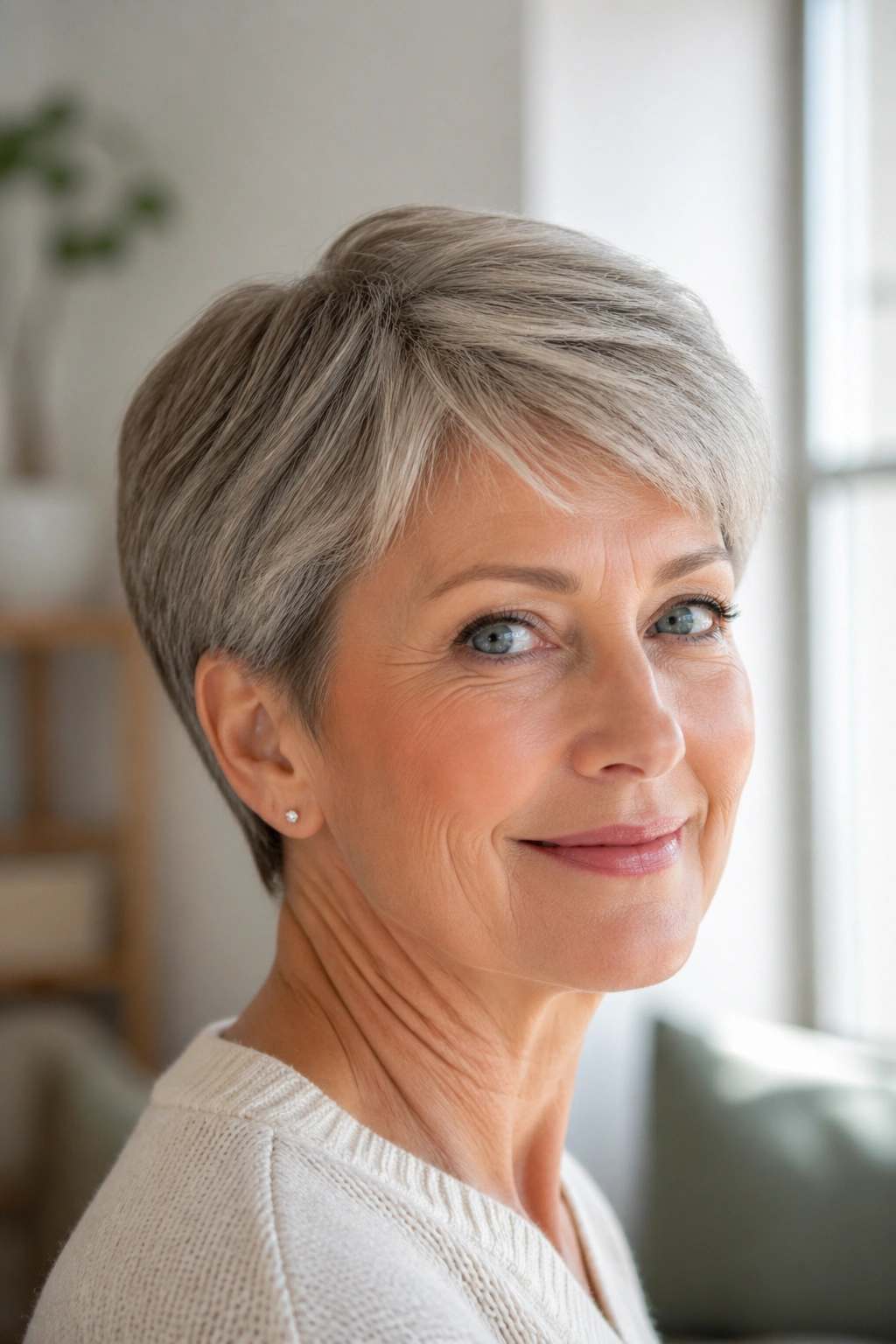
A rounded crop with tucked sides is one of those quiet styles that makes sense the minute you see it. The curve around the head feels soft, while the sides stay close enough to the ears to keep the shape neat.
This cut works nicely with glasses and earrings because it leaves room around the face. It also keeps the neckline clean, which many women like once hair gets a little thinner or finer at the nape.
Small details that help
- Keep the crown slightly longer than the sides
- Tuck the side pieces behind the ears when you want a cleaner look
- Ask for soft, rounded edges instead of sharp corners
- Use a small round brush only if the hair needs a little lift
This is a very good choice if you want the hair to look styled without making it obvious that you styled it.
22. Sleek Tapered Pixie
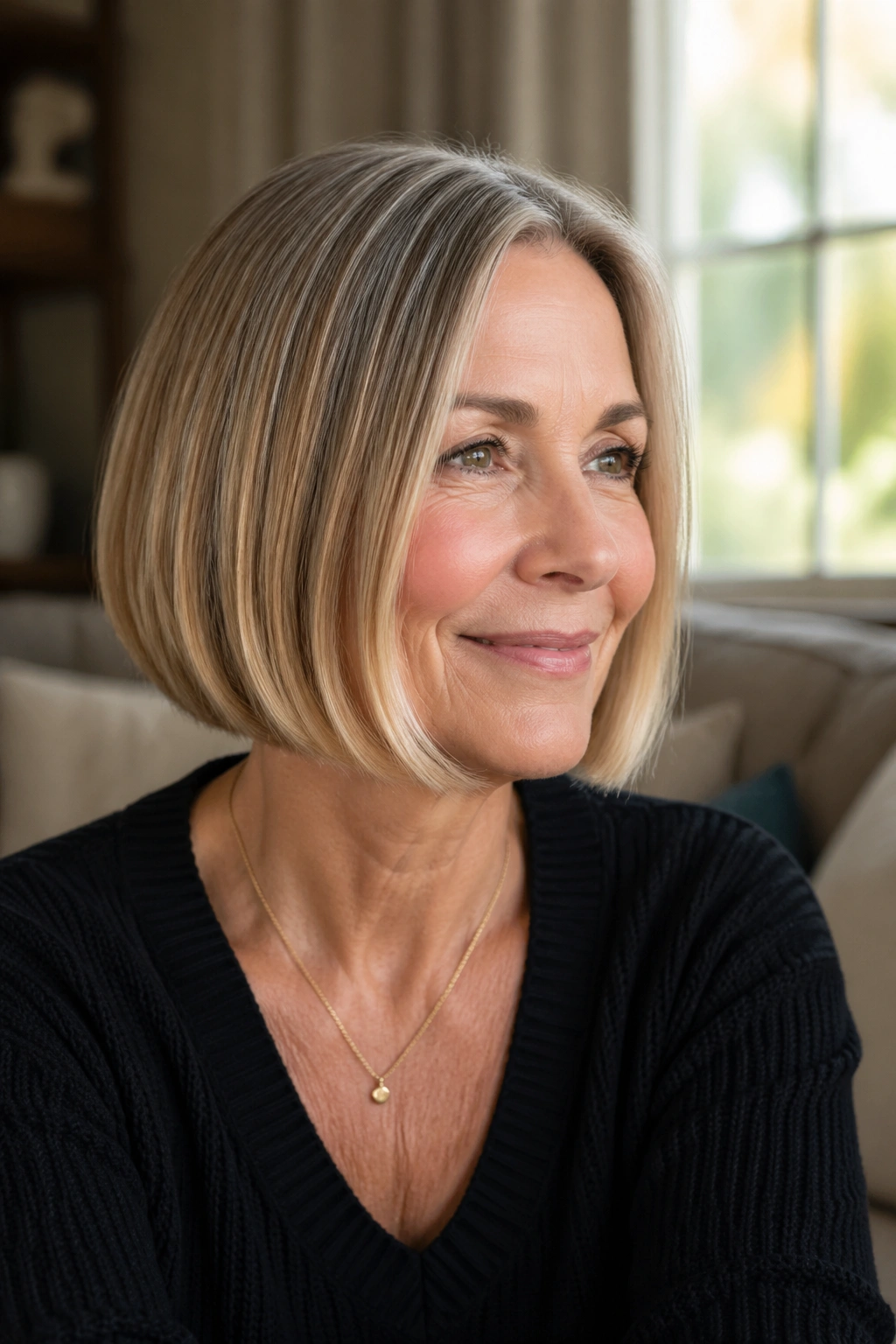
A sleek tapered pixie is for the woman who likes clean lines and no nonsense. The neckline is neat, the sides are close, and the top has just enough length to be brushed forward or to the side.
What makes it work as a wash-and-wear cut is the taper. The hair naturally narrows toward the nape and around the ears, so it settles quickly after washing. A tiny bit of smoothing cream on damp hair can help, but too much product will weigh it down fast.
I like this style on women who are done negotiating with bulky ends and want the haircut to do the talking. It looks crisp with little effort, and it can still feel soft if the top is left a touch longer.
If there is a lesson hiding in all these styles, it’s this: the right cut should make your mornings smaller, not bigger. Pick the shape that respects your texture, your face, and your patience. The best wash-and-wear hair is the kind that looks like you, only with less arguing.