



An asymmetrical hairstyle can do a lot with a little. One side grazes the jaw, the other skims the cheekbone, and the whole cut suddenly has movement without looking fussy. For women over 40, that matters because hair often changes shape, density, and texture over time. A cut that works with those shifts is worth more than a pretty picture on a screen.
The best asymmetrical hairstyle ideas are not about hiding age. They’re about line, balance, and a bit of attitude. A slight angle can slim a round face, soften a strong jaw, or make fine hair look fuller where it matters most: around the outline.
I like asymmetry because it gives the eye something to follow. A longer fringe. A side that tucks behind the ear while the other stays loose. Small moves, big payoff. And the best versions rarely look overworked; they look like someone thought about them once, then lived in them.
Good hair after 40 doesn’t need to be complicated. It needs to behave. The cuts below do that in different ways, from polished to messy, from short to shoulder length, with enough range that there’s probably a version that fits your routine instead of forcing you to rebuild it.
1. The Jaw-Grazing Angled Bob
The jaw-grazing angled bob is the kind of haircut that makes a face look more deliberate right away. The back sits a little shorter, the front falls longer, and the whole shape draws the eye downward in a clean line. That can be a gift if your hair has started to feel flat at the ends or if your face looks a little wider than you’d like in straight-across cuts.
Why It Works
The angle gives you structure without stiffness. It works especially well on fine to medium hair because the front pieces create the illusion of density, while the shorter back keeps the shape from dragging.
Keep the front 1 to 2 inches longer than the nape if you want a visible angle without going full editorial. That’s the sweet spot for most women who want something sharp but wearable.
- Ask for a stacked back with a soft, forward lean.
- Keep the longest pieces just below the jaw.
- Blow-dry with a small round brush to bend the ends inward.
- Use a light mousse at the roots if your hair collapses fast.
Best tip: If the ends flip out, a quick pass with a flat iron or round brush makes the whole cut look cleaner in seconds.
2. The Side-Swept Pixie With a Long Fringe
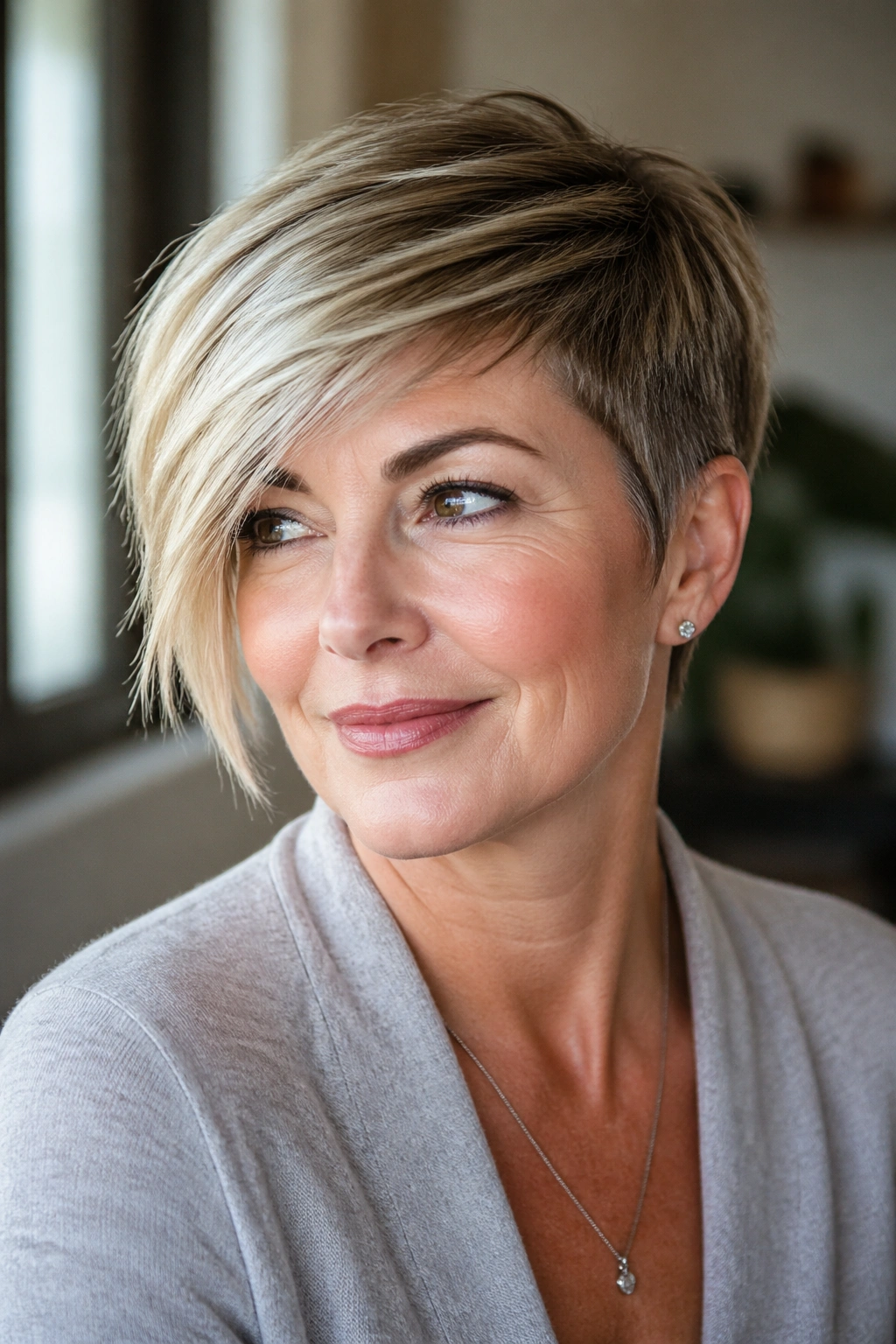
Why do some pixies look severe while others feel soft and easy? The fringe. A long, side-swept piece across the forehead changes everything. It breaks up the face, makes the cut feel less cropped, and gives you a little movement even when the sides are kept neat.
This version is especially kind to women with strong brows, a high forehead, or glasses. The fringe can skim the brow bone and sweep into the cheek area, which softens the front view without hiding your features. It also works well if your hair has a stubborn cowlick at the hairline, because the longer front has enough weight to stay put.
The trick is not letting the fringe get too heavy. You want it to move when you turn your head, not sit like a curtain. A pea-sized amount of paste or styling cream is usually enough.
3. The Collarbone Lob With Soft Waves
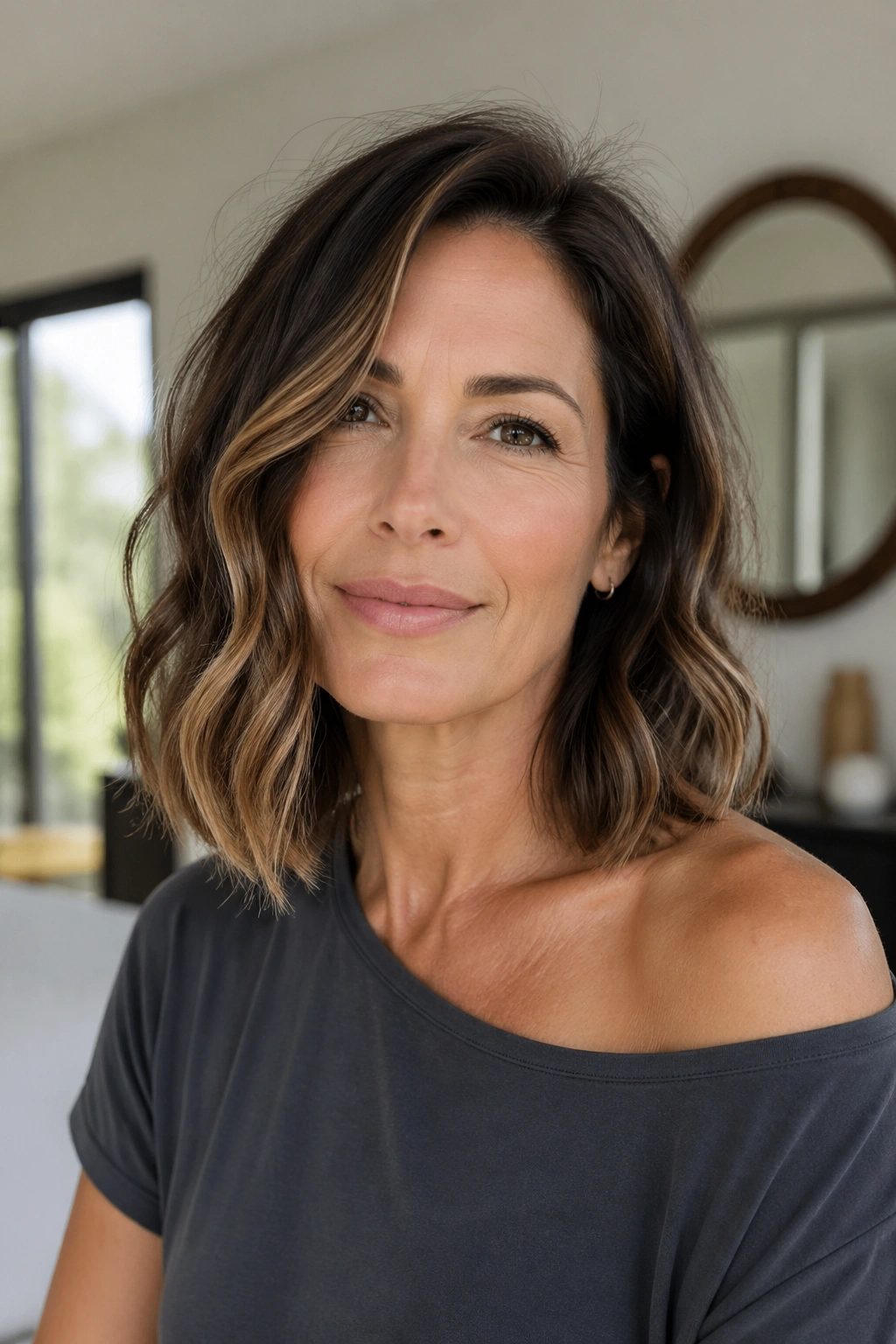
A collarbone lob gives you the easiest kind of asymmetry: subtle enough for daily wear, but obvious enough to look styled. One side can sit a touch longer, or the cut can be parted deeply so one edge drops over the collarbone while the other tucks closer in. Either way, it has that easy bend that makes hair look lived-in instead of rigid.
This is the cut I’d point to if you want options. You can wear it straight, wave it, pin one side back, or pull it into a low clip when you’re running late. That length also gives you enough hair to work with if you like a messy bun now and then. Not every asymmetrical cut needs to be short to have shape.
How to Style It
A 1-inch curling iron or wand is usually enough. Wrap the mid-lengths, leave the ends a little straighter, and brush the waves out with your fingers so they fall into a soft S-shape.
- Part your hair slightly off-center.
- Curl away from the face on both sides.
- Leave the longest side tucked behind one ear if you want more contrast.
- Finish with a light mist of flexible-hold spray.
4. The Deep-Side Shag That Loves Natural Texture
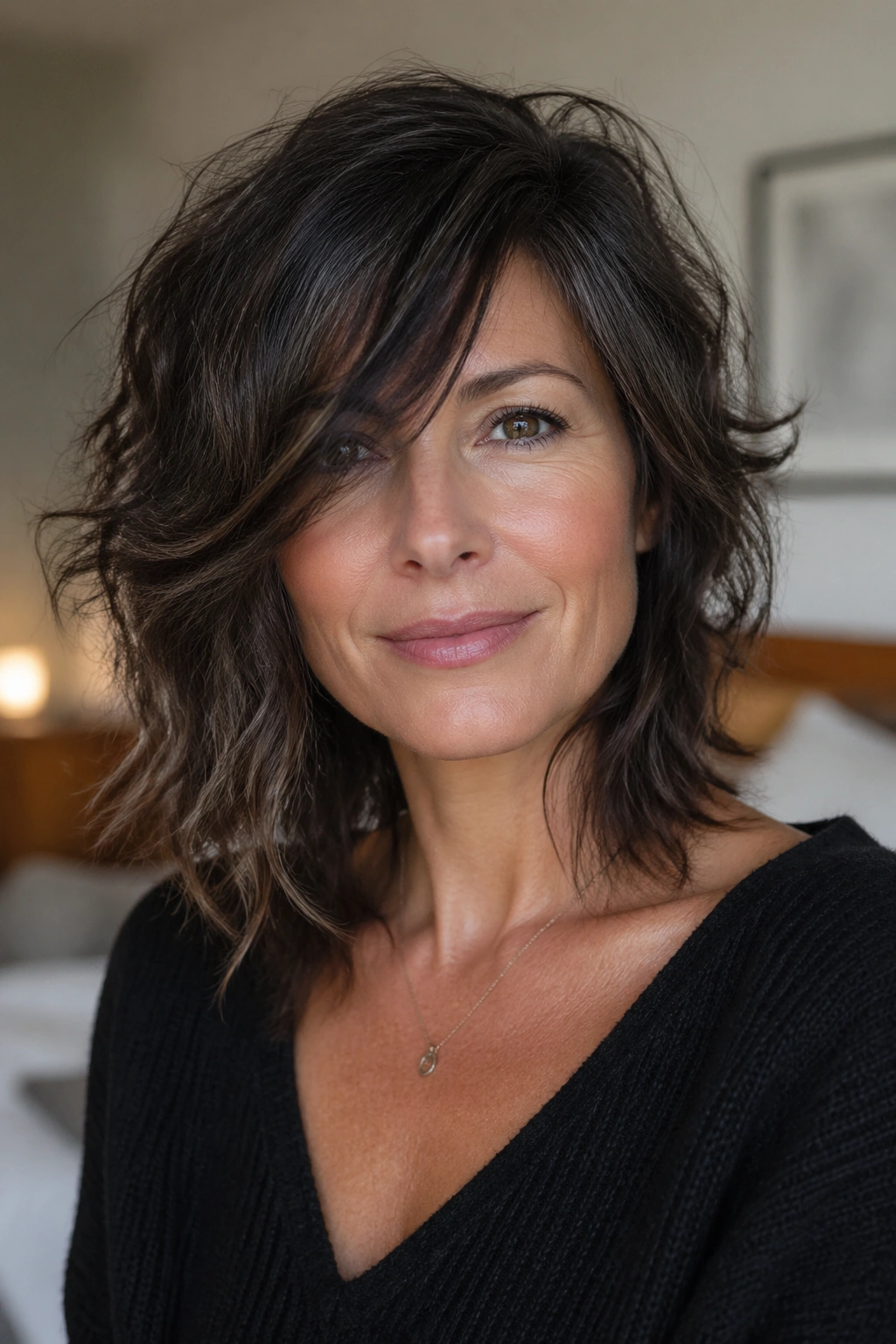
A shag is not a sloppy cut when it’s done right. In fact, on women over 40, it can be one of the smartest ways to deal with hair that has become either wavier, coarser, or simply less predictable. The deep side part gives the cut its asymmetry, while the layers create that uneven, lived-in shape that looks better the more it moves.
The beauty of this cut is that it does not ask for perfection. Air-dried hair can look better than a blowout if the layers are placed well. That’s a relief for anyone who’s tired of fighting the same head of hair every morning.
What to Watch For
- Works best on wavy, thick, or coarse hair
- Needs point-cut layers, not choppy chunks
- Looks best with a side part that drops low near the temple
- Benefits from curl cream or texture spray, not heavy oil
One honest warning: If your hair is very fine and pin-straight, a shag can lose its shape fast. In that case, keep the layers longer and softer.
5. The Tucked Bob With a Hidden Undercut
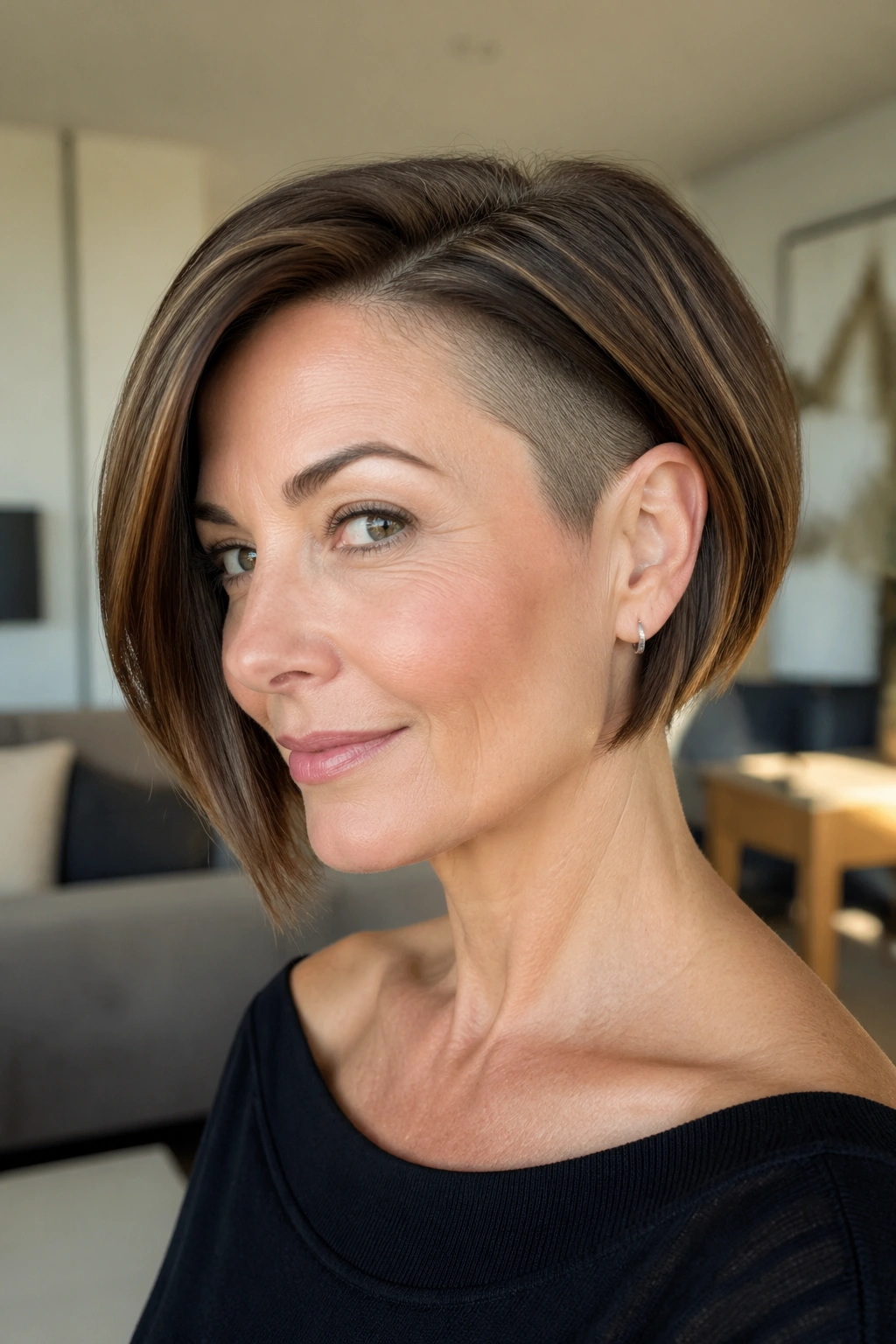
You feel it before you see it. That’s the charm of a tucked bob with a hidden undercut. One side has a little less weight underneath, which lets the top layers fall closer to the head and keeps the silhouette from puffing out around the neckline. The visible side still looks polished, so the haircut reads as sleek, not edgy for the sake of it.
This is a good move if your hair is thick, if your neckline gets hot and bulky, or if you want a clean shape that doesn’t balloon in humid weather. The undercut can sit low, behind one ear or at the nape on one side, and stay mostly invisible until the hair shifts.
The result is lighter. That’s the whole point. Your hair swings instead of sitting like a helmet. And for a lot of women over 40, that difference is the reason a bob starts feeling good again.
6. The Curly Crop With One Side Longer
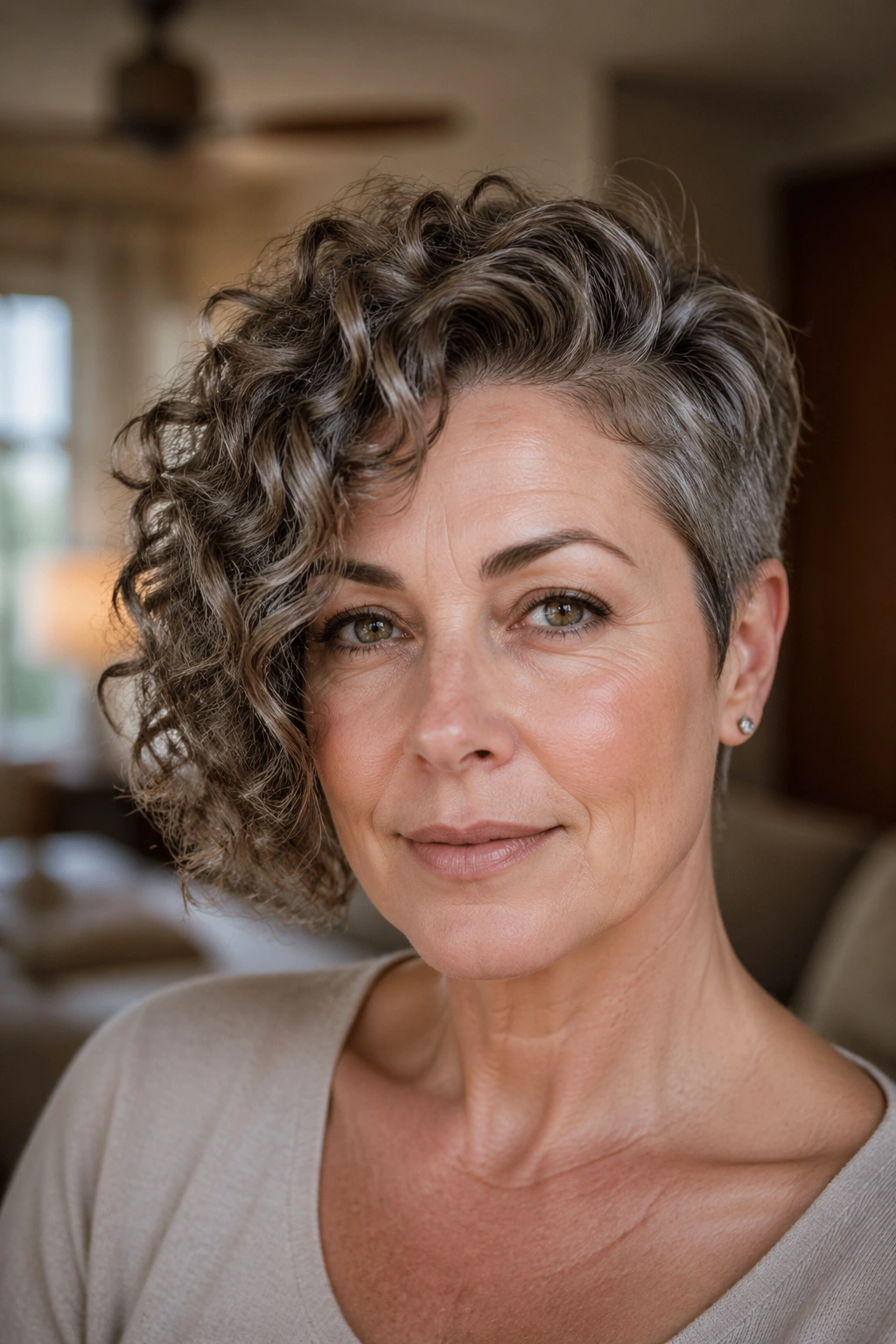
Curly hair does not need to be forced into symmetry to look polished. A curly crop with one side longer can make the whole cut feel more modern and more relaxed at the same time, because the shape follows the way curls actually behave. Curls already have a mind of their own. Letting one side sit a little longer works with that energy instead of fighting it.
The best version keeps the top soft and rounded while allowing one side to drop toward the jaw or cheekbone. That longer side helps curls stack without turning into a triangle, which is a real concern if your hair is dense or springy. It also gives you a nice line near the face without flattening the curl pattern.
Use a cream that gives slip, then scrunch in a bit of gel for hold. If you diffuse, keep the dryer on low heat and stop when the hair is about 80 percent dry. Let the rest air-dry. Curl shapes usually look best when you stop touching them.
7. The Shoulder-Length Cut With Face-Framing Angles
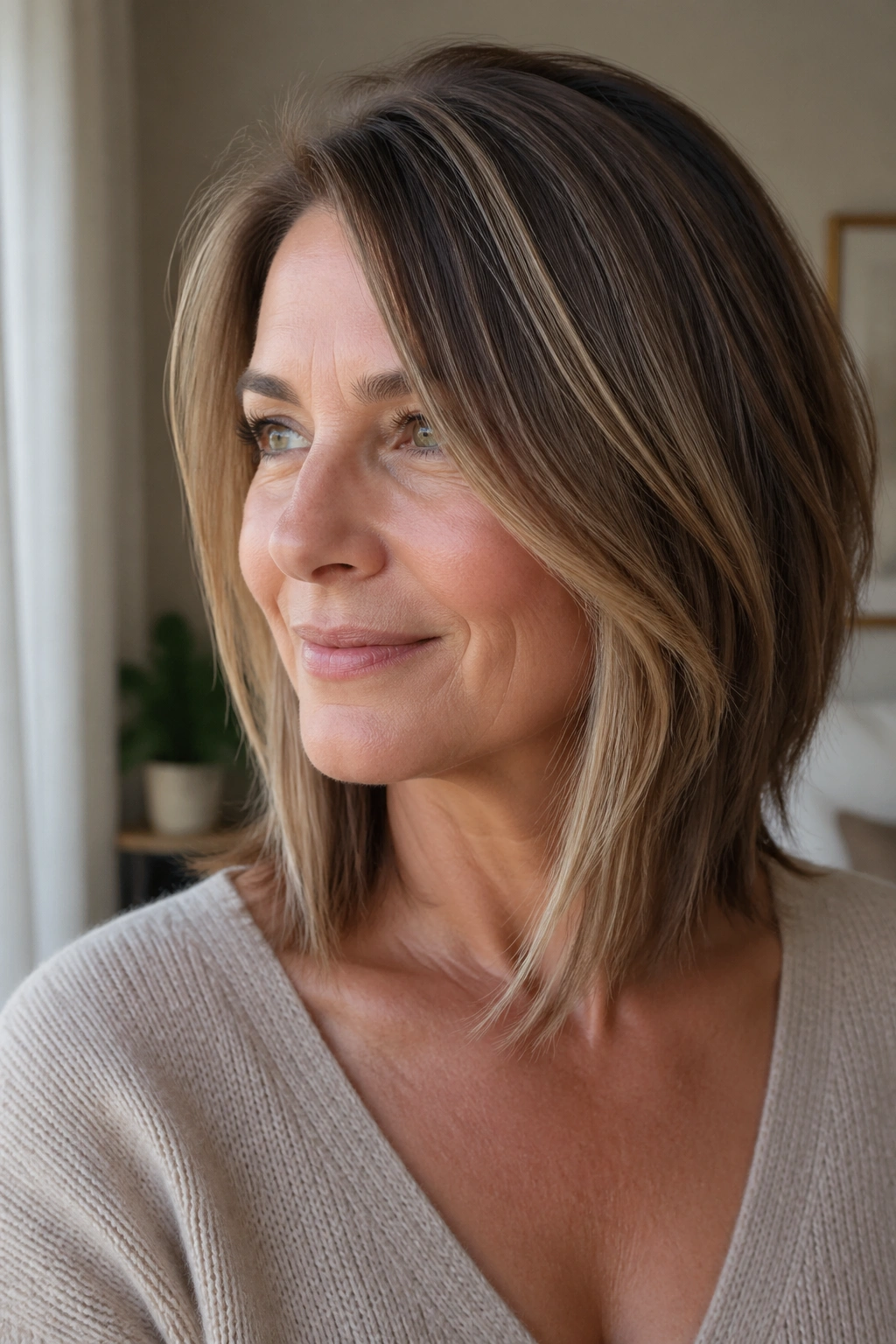
Some people want movement without going short. Fair enough. This shoulder-length asymmetrical cut gives you that middle ground, with longer pieces that skim the collarbone and shorter angles that frame the face. It’s a smart choice if you’re trying to soften a square jaw, add lift around the cheeks, or keep enough length for a ponytail on busy days.
The Sweet Spot at the Shoulders
The shoulder line can be tricky because hair tends to flip outward there. A slight angle solves that by giving the ends somewhere to land. You can wear it center-parted for a calm look or go deeper on one side to build more shape.
- Ask for the front to be half an inch to 1 inch longer than the back.
- Keep the shortest face-framing pieces near the chin.
- Use a smoothing cream if your hair puffs at the ends.
- Blow-dry downward at the crown to keep the top flat and clean.
The nice part is how easy this cut is to grow out. It doesn’t hit that awkward in-between stage as hard as a blunt bob.
8. The Undercut Pixie With Height at the Crown
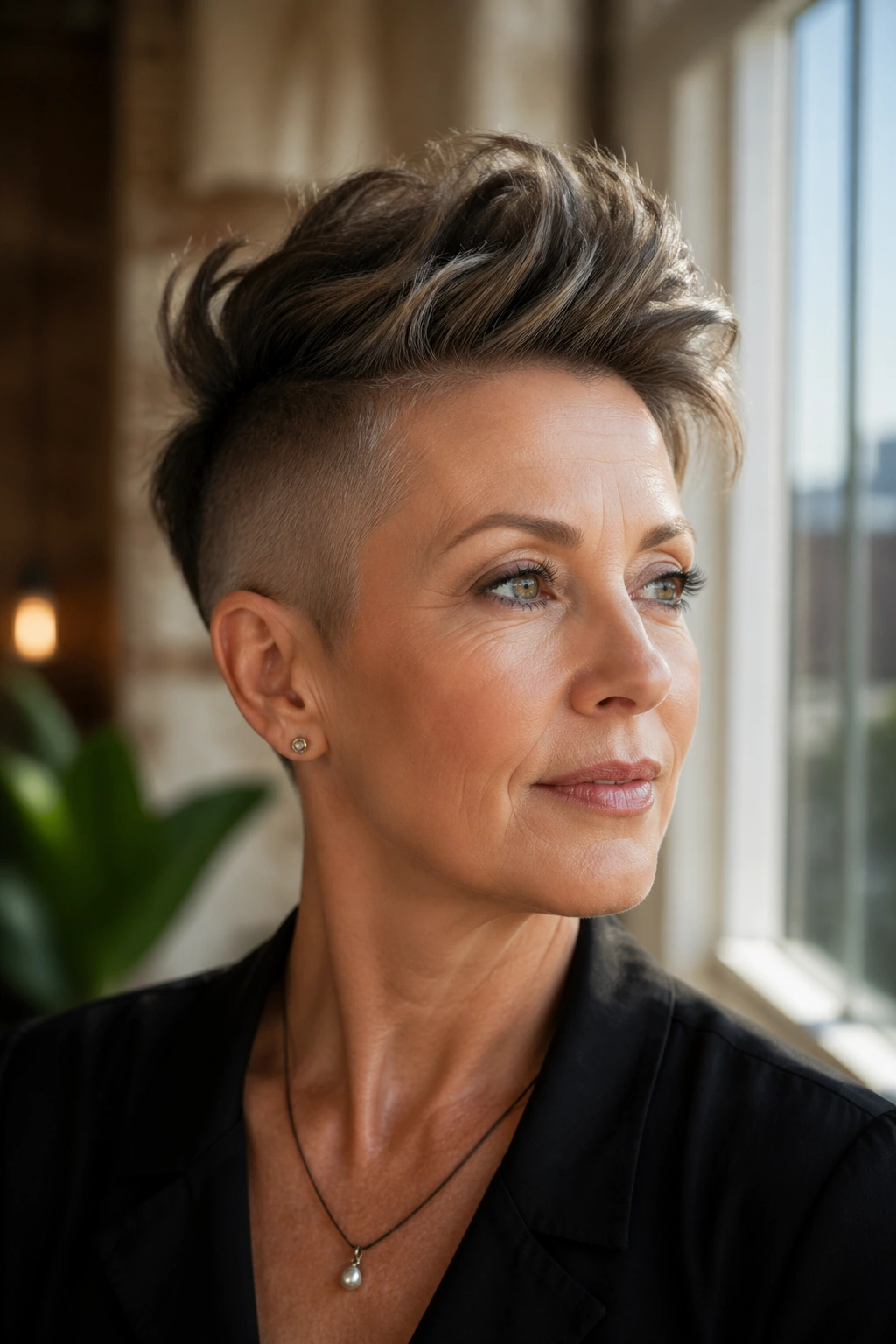
Short hair doesn’t have to sit flat. The undecut pixie with height at the crown proves that point fast. One side or the back is clipped tighter underneath, while the top stays longer and more lifted. That gives you asymmetry from both the profile and the top line, which is why this cut has so much energy.
This style is a real win for thick hair that feels too full when it’s short. The undercut removes bulk where you don’t want it, and the longer top lets you sweep pieces across the forehead or spike them up a bit with paste. It can also make fine hair look more awake if your stylist leaves enough length on top to create shape.
Ask for texture through the crown, not random thinning everywhere. Those are not the same thing. The first gives you movement. The second can leave you with holes.
What to Ask For
- Shorter sides or back underneath one section
- Longer top layers that can be swept forward
- Soft texture at the crown, not choppy ends
- A fringe long enough to brush the brow
9. The Curly Asymmetrical Bob
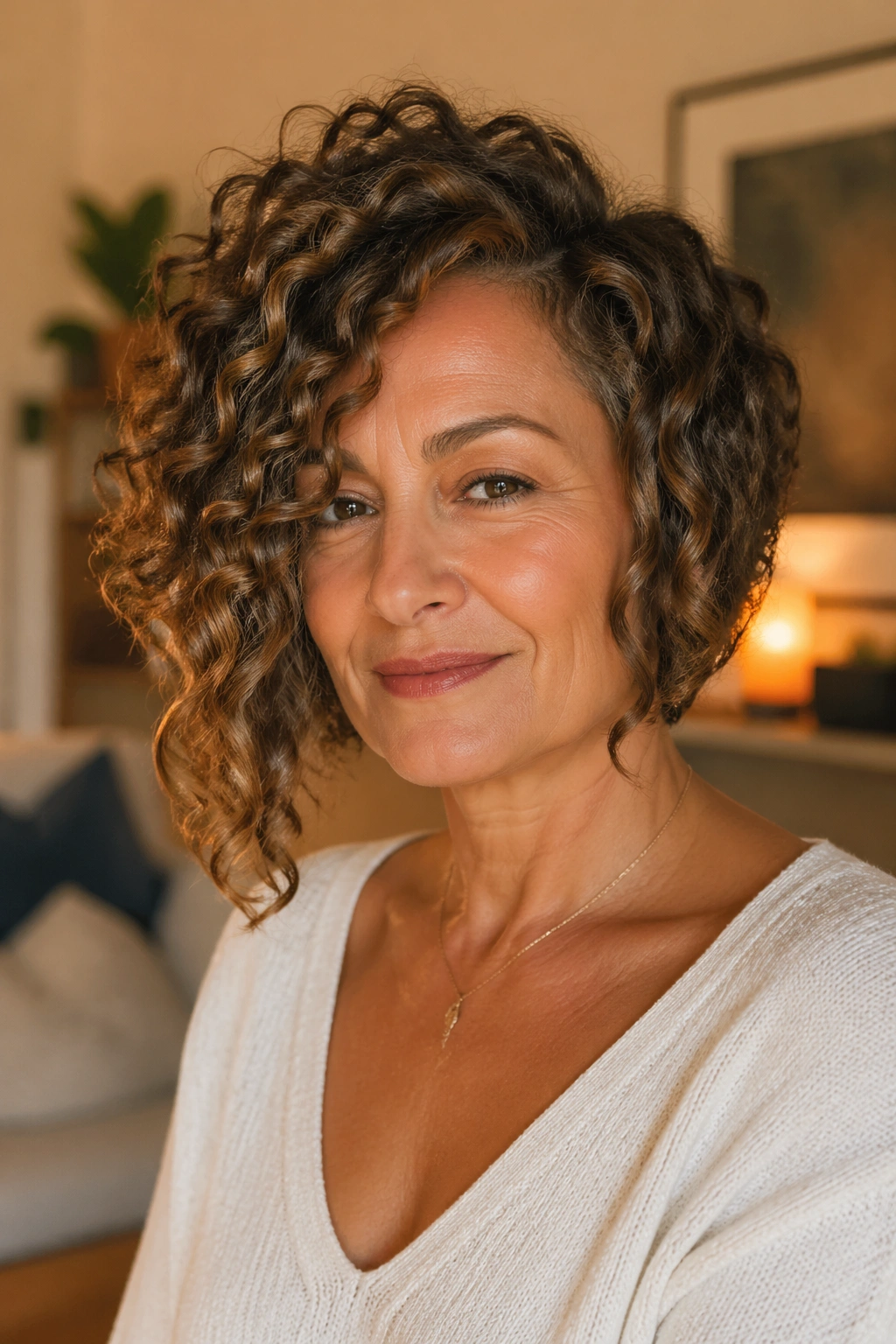
Picture curls landing just below the chin on one side and brushing the jaw on the other. That’s the appeal here. The asymmetrical curly bob keeps the shape playful, but the uneven length gives the curls somewhere to fall so they don’t puff out into a round ball. If you’ve ever had a curly bob that felt too wide, this is the fix.
The cut should be shaped dry or at least checked dry, because curls shrink in ways that straight hair never will. A stylist who understands curl pattern will leave enough room for bounce while keeping the perimeter clean. You want the outline to look intentional when the curls dry, not random.
How to Keep It From Going Frizzy
Use a leave-in conditioner on damp hair, then layer a curl cream over it. Scrunch gently. No rough towel. No brushing after the product goes in. If you need more definition, use a tiny bit of gel at the surface and let the curls cast before you break them with your hands.
10. The Subtle Long-Front Cut for Straight Hair
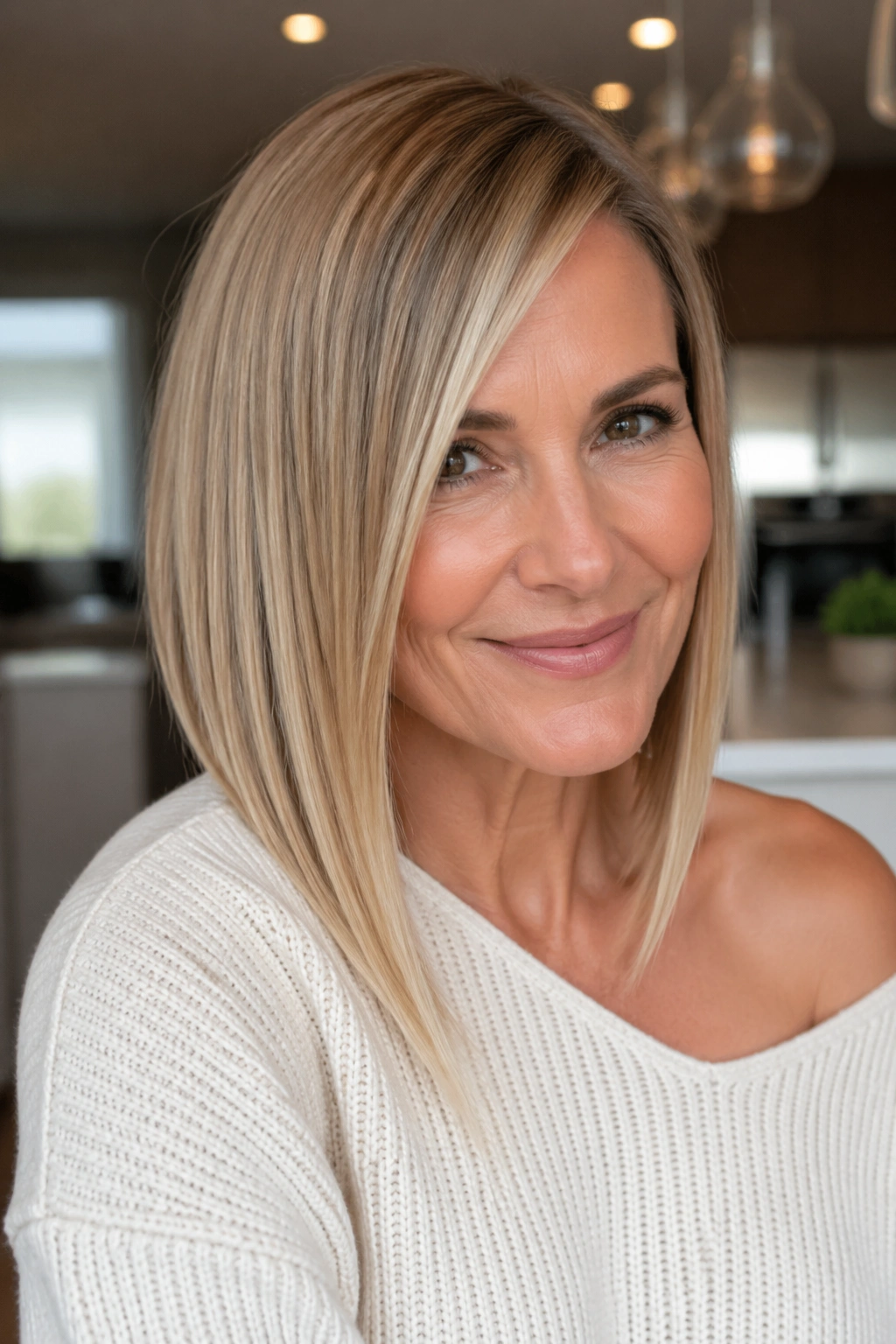
Straight hair can look too tidy in a blunt cut. A subtle long-front asymmetrical shape fixes that by giving the front a little more length and keeping the back cleaner. The result is smooth, but not boring. That matters if your hair tends to hang in a single flat line and you want something with more presence.
This is one of the easiest cuts to live with because it does not demand much styling. A side part does half the work for you. The longer front pieces frame the face, while the shorter back keeps the overall shape from looking heavy.
- Keep the front pieces 1 to 2 inches longer than the back.
- Ask for beveled ends so the cut bends inward instead of sticking out.
- Use a flat iron only on the bottom inch if the ends flip.
- Tuck one side behind the ear for a quick asymmetrical look.
It is polished without being precious, which is usually the sweet spot.
11. The Feathered Cut for Fine Hair
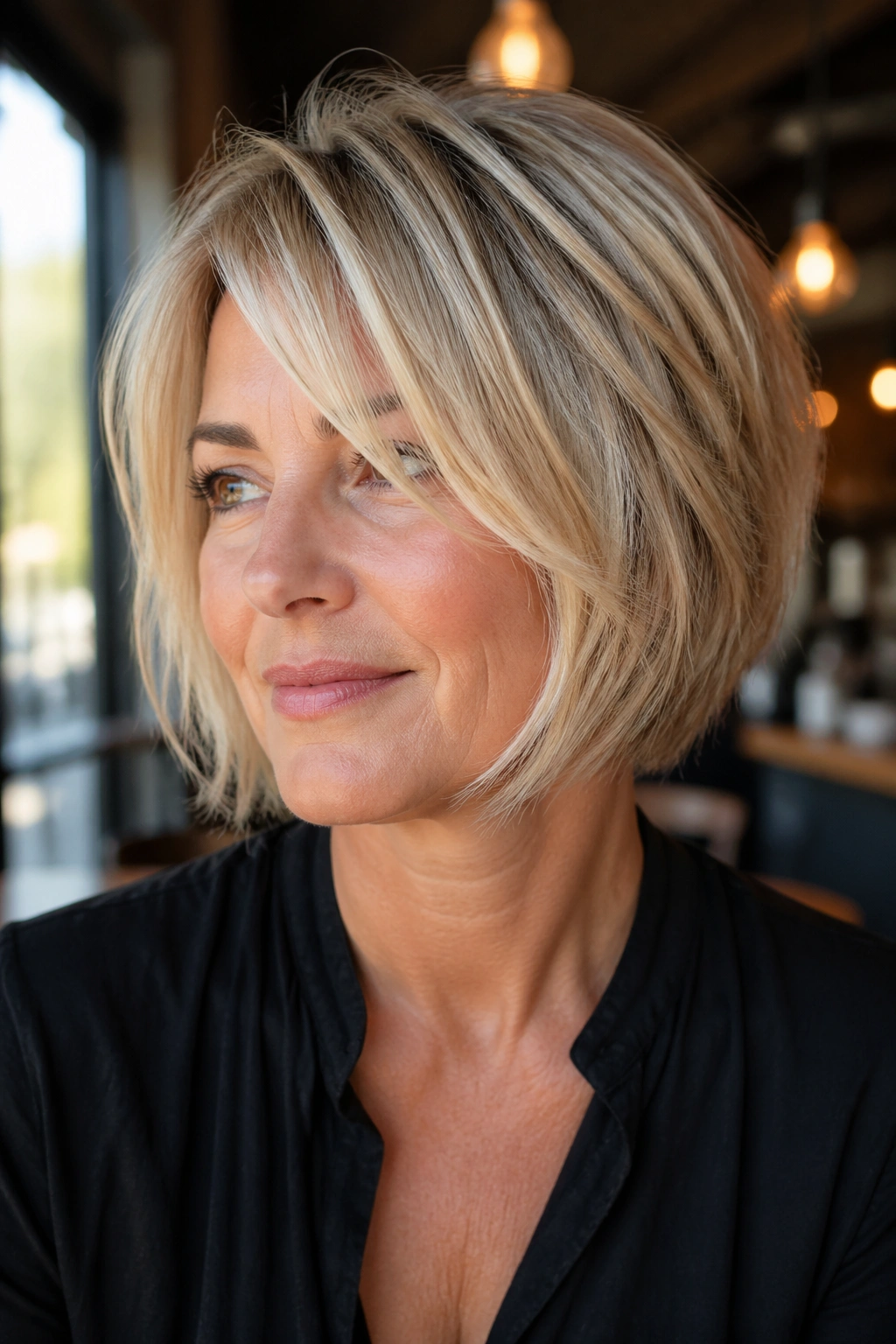
Thinning out fine hair is the fastest way to make it look thinner. That’s why a feathered asymmetrical cut is so much better than random razor work. The point is to create movement around the edges, not remove the structure. A little asymmetry in the front makes the whole cut feel lighter and more alive.
The feathering should happen near the cheekbones, jaw, and ends, where the shape needs softness. Shorter front pieces help the face stand out, while the rest of the cut stays long enough to keep some body. If your hair has started to feel limp at the sides, this is one of the best ways to wake it up without going too short.
What to Avoid
- Heavy thinning at the ends
- Razor cuts that leave the perimeter wispy
- Too many short layers on the crown
- Thick product that drags the hair down
A root-lifting spray at the scalp and a light blow-dry with a paddle brush can make this cut look fuller than you’d expect.
12. The Sleek Beveled Bob
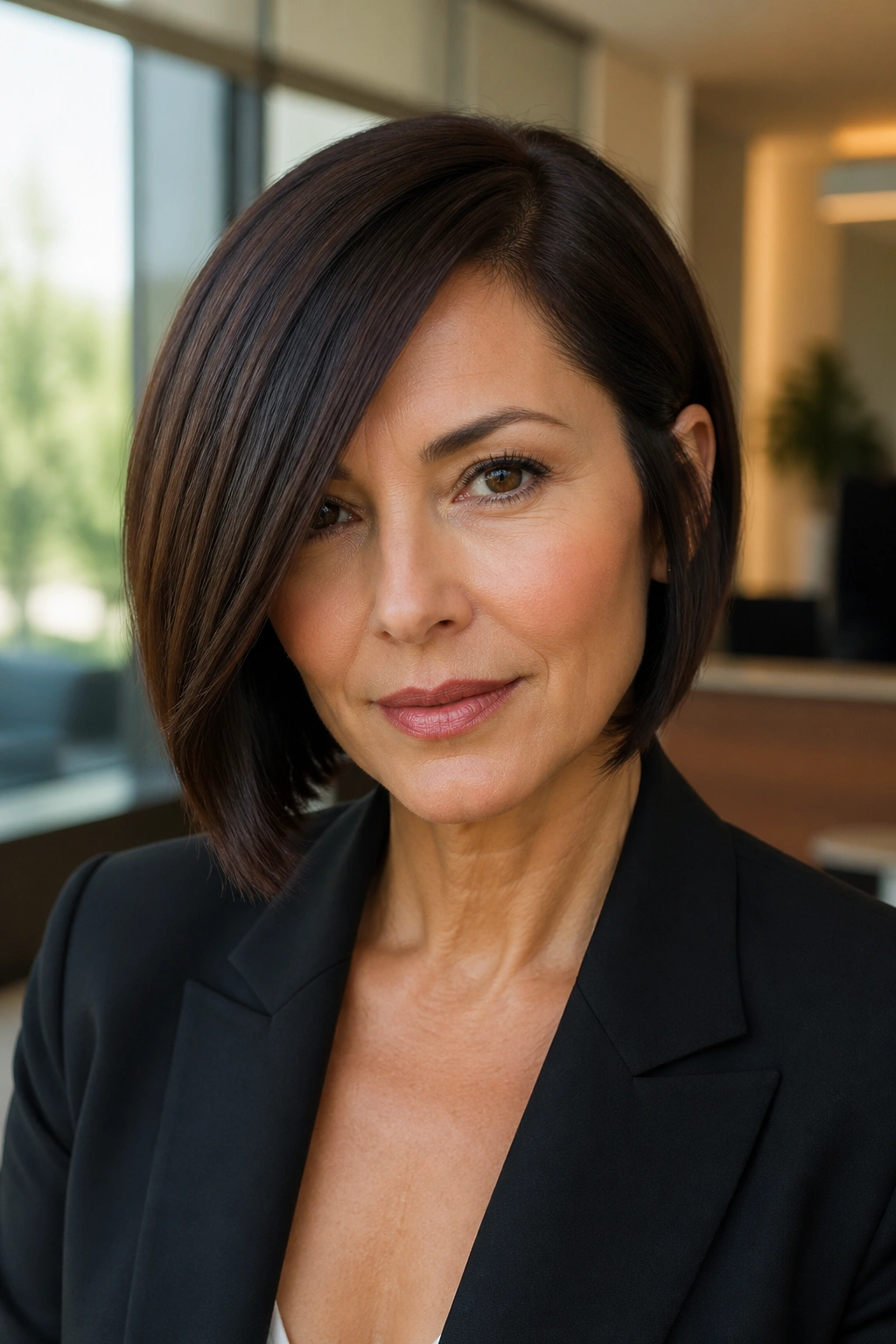
When this one is done well, the ends curve under like they were pressed. That’s the feel of a sleek beveled bob: controlled, clean, and a little glossy. The asymmetry comes from a deeper side part or a slightly longer front on one side, but the overall effect stays smooth and composed.
This cut is a good match for straight or lightly wavy hair that already likes to behave. It also works beautifully if you want a haircut that can go from office to dinner without much effort. The line is the whole story here. If the ends are blunt and the surface is shiny, the cut does the talking for you.
A blow-dryer nozzle matters. So does a heat protectant that doesn’t leave a greasy film. Finish with a flat iron in small sections only if you need it, and stop once the edges lie neatly against the neck and jaw.
13. The Messy Shag With Curtain Bangs
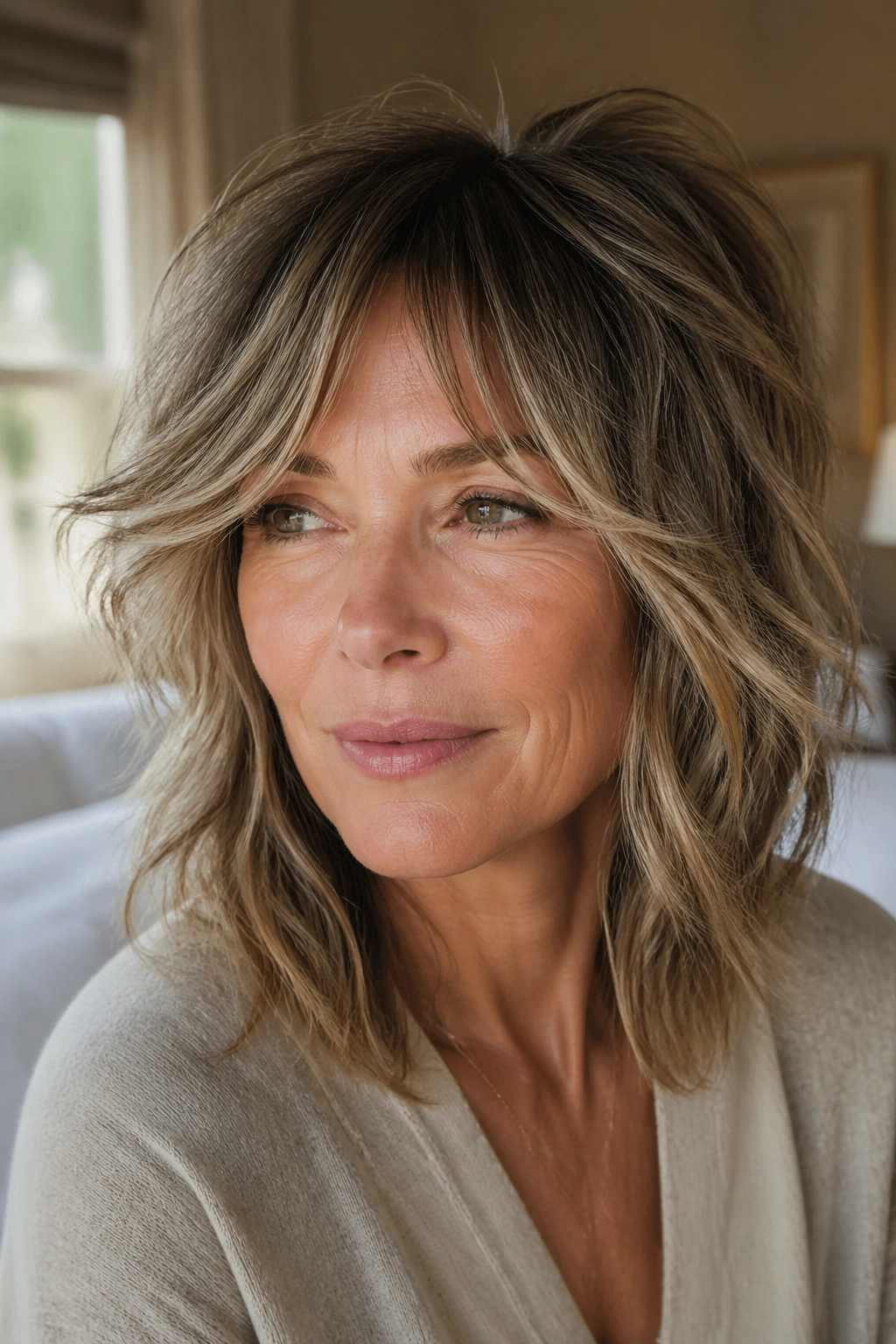
Soft. Piecey. A little unruly. That’s the mood here, and it’s a good one. The messy shag with curtain bangs gives you asymmetry through the part, the fringe, and the uneven fall of the layers. It’s one of the more forgiving cuts on this list because it looks fine when it’s not perfectly styled, which is rare and useful.
How to Wear It
Curtain bangs should open at the center and sweep away from the face, but they don’t need to be identical on both sides. Let one side fall a little fuller if your part naturally sits that way. That small imbalance gives the cut character.
- Scrunch in a texturizing cream on damp hair.
- Rough-dry with your fingers until the roots are about 80 percent dry.
- Twist the bangs away from the face while they cool.
- Finish with a dry texture spray at the ends, not the roots.
This style has a low-key edge that works especially well if you don’t want your hair to look too precious.
14. The Thick-Hair Shape With Internal Layers
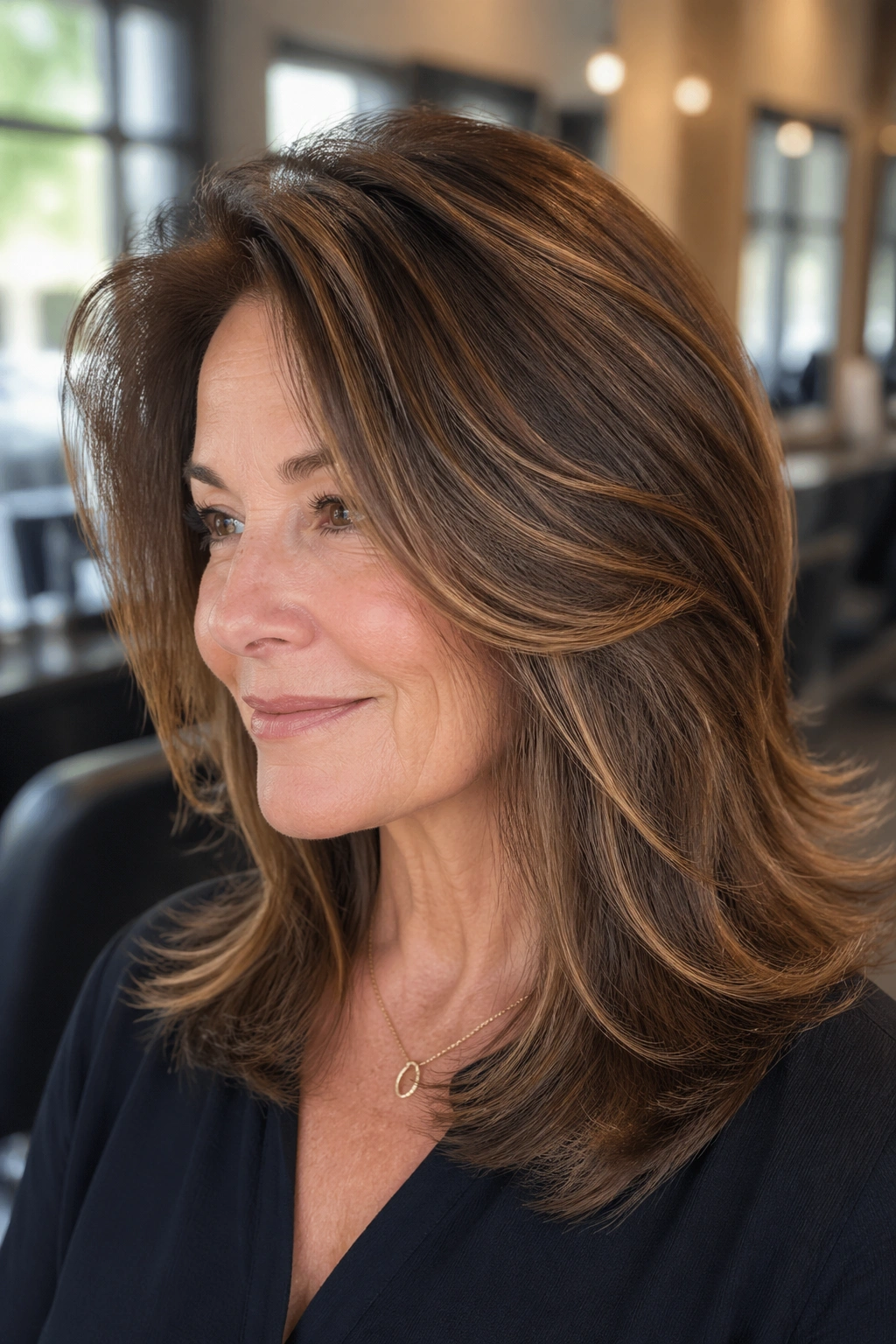
Thick hair can turn triangular fast. That’s the problem. The fix is not to hack at the surface and hope for the best. It’s to remove weight from the inside while keeping the outer line strong enough to hold its shape. Add a longer front on one side, and suddenly the whole cut feels lighter and more modern.
This type of asymmetrical cut is especially useful if your hair expands when it dries. Internal layers make the bulk settle instead of balloon. The outside still looks full, which is what you want. You’re not trying to make thick hair thin. You’re trying to make it move.
A good stylist will talk about where your hair pushes out at the sides, around the crown, and near the nape. That part matters. Thick hair is never one uniform thing, and a smart cut treats it that way. If you have a lot of hair, this is one of the few cuts that can actually make your life easier.
15. The Side-Swept Mid-Length Cut
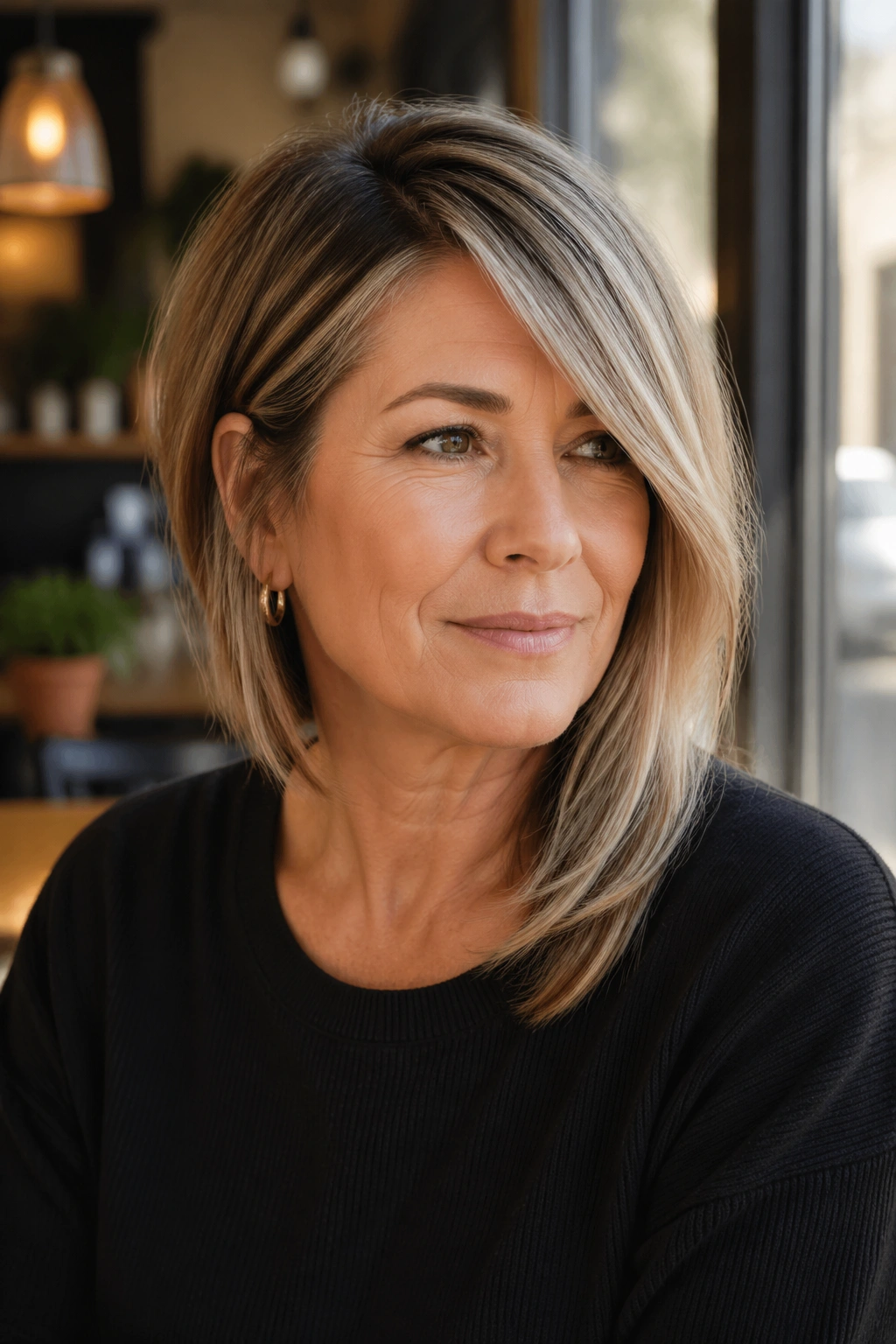
Unlike a dramatic bob, this one keeps you in ponytail territory. That’s why so many women like it. The side-swept mid-length cut lands somewhere between practical and polished, with one side falling a touch longer so the shape doesn’t look square or heavy. It’s a good choice if you want asymmetry without giving up the flexibility of medium hair.
The magic is in the part and the front angle. A deep side part gives you instant lift at the roots. The longer side can slide over the collarbone while the shorter side opens the face a little more. It’s subtle enough for everyday wear, but it still reads as intentional.
This cut works well on straight, wavy, and lightly curly hair. You can air-dry it, smooth it, or tuck one side behind the ear and let the rest fall loose. Not every haircut has to do all the talking. Sometimes it only needs to frame the face well.
16. The Stacked Wedge Bob
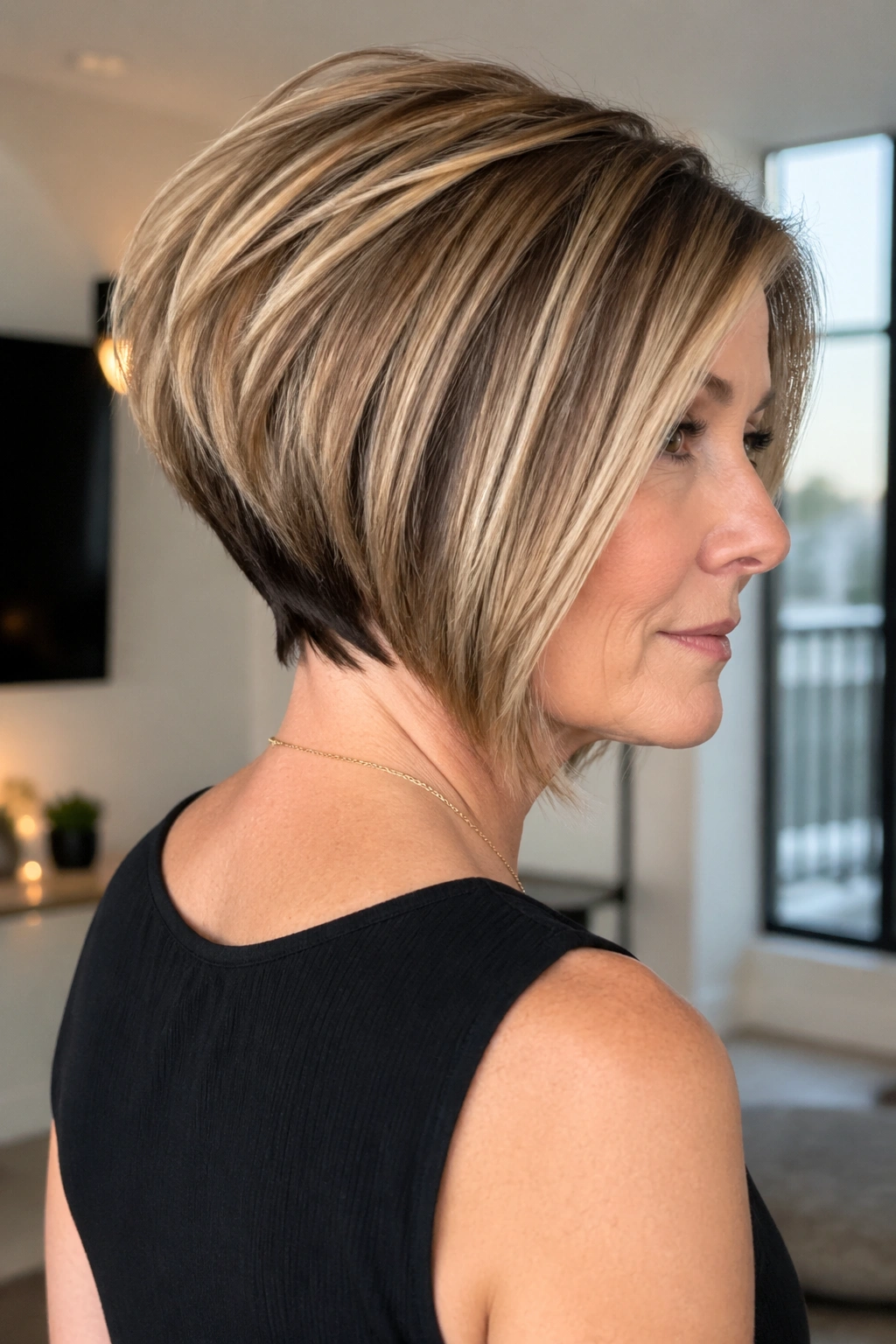
If you want lift in the back without teasing the crown, this is the cut. The stacked wedge bob uses short layers at the nape to build shape, then extends longer toward the front so the whole cut leans forward a little. The asymmetry is built into the geometry, which gives it that neat, strong outline.
Why It’s Worth Considering
This shape is especially good for hair that falls flat at the back of the head. The stacked layers push the silhouette up, while the longer front pieces keep it from looking old-fashioned. It can feel crisp, almost sculpted, without becoming too severe.
- Ask for a rounded stack, not a hard shelf.
- Keep the front long enough to graze the chin.
- Use a round brush at the nape for lift.
- Finish with a light mist of spray so the back holds its shape.
The wedge can look a little retro if it’s too stiff. Softening the ends and keeping the part off-center usually fixes that.
17. The Asymmetrical Cut That Flatters Gray Hair
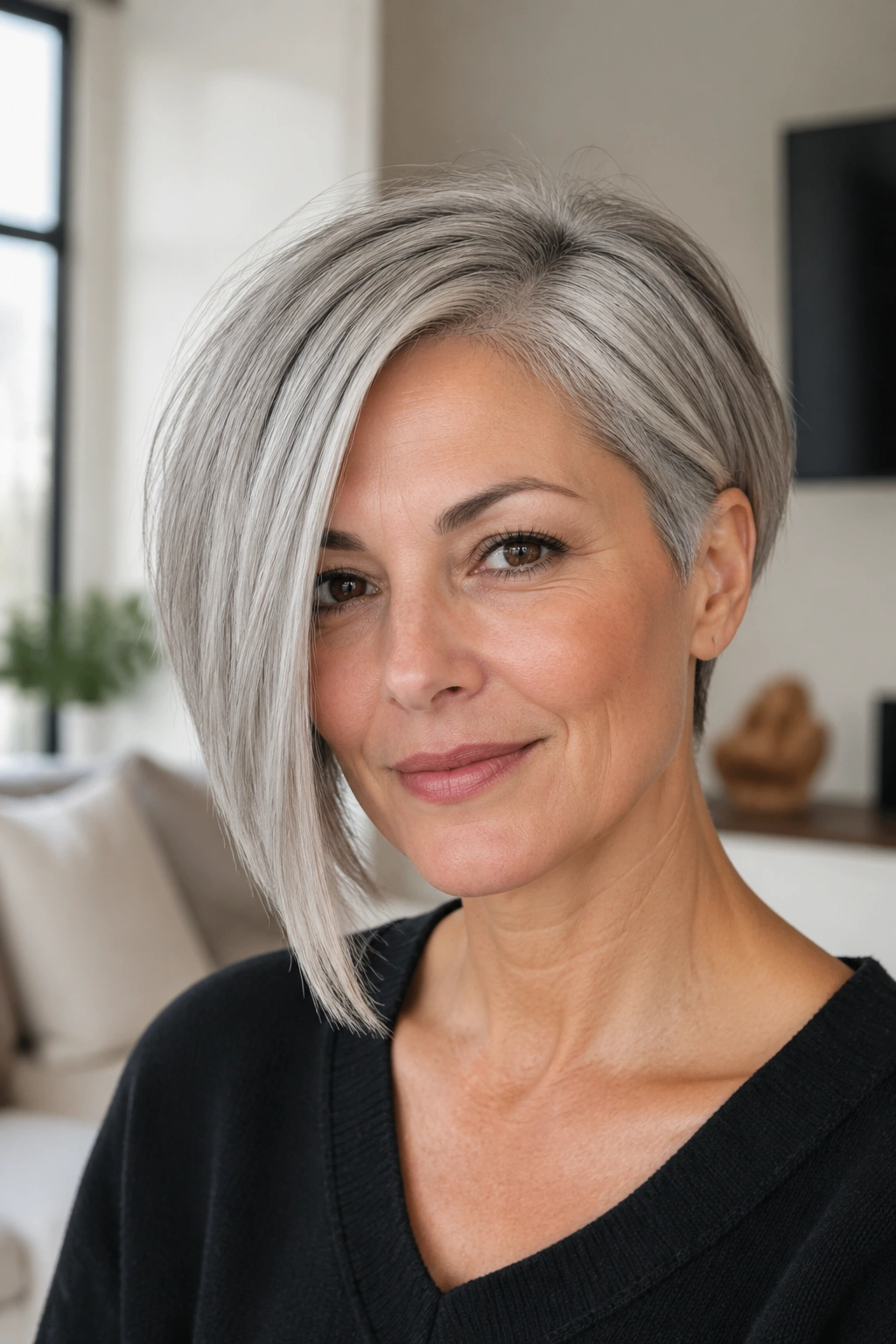
Why does gray hair look so good in an asymmetrical shape? Shine and contrast. Silver strands catch the eye, and when the cut has one side slightly longer or a soft diagonal line through the front, the whole style looks sharper. Gray hair also tends to show texture more clearly, which makes movement and clean edges matter even more.
A glossy finish helps here. Not sticky shine serum — that can make gray hair look flat. A light glossing cream or a small amount of smoothing serum through the ends is enough. If yellow tones creep in, a purple shampoo used sparingly can keep the silver looking cool rather than dull.
This is one of those cuts where the shape and the color work together. The asymmetry keeps the hair from looking too uniform, and the gray makes the angle stand out. That combination can be striking without feeling loud.
18. The Soft Pixie Mullet
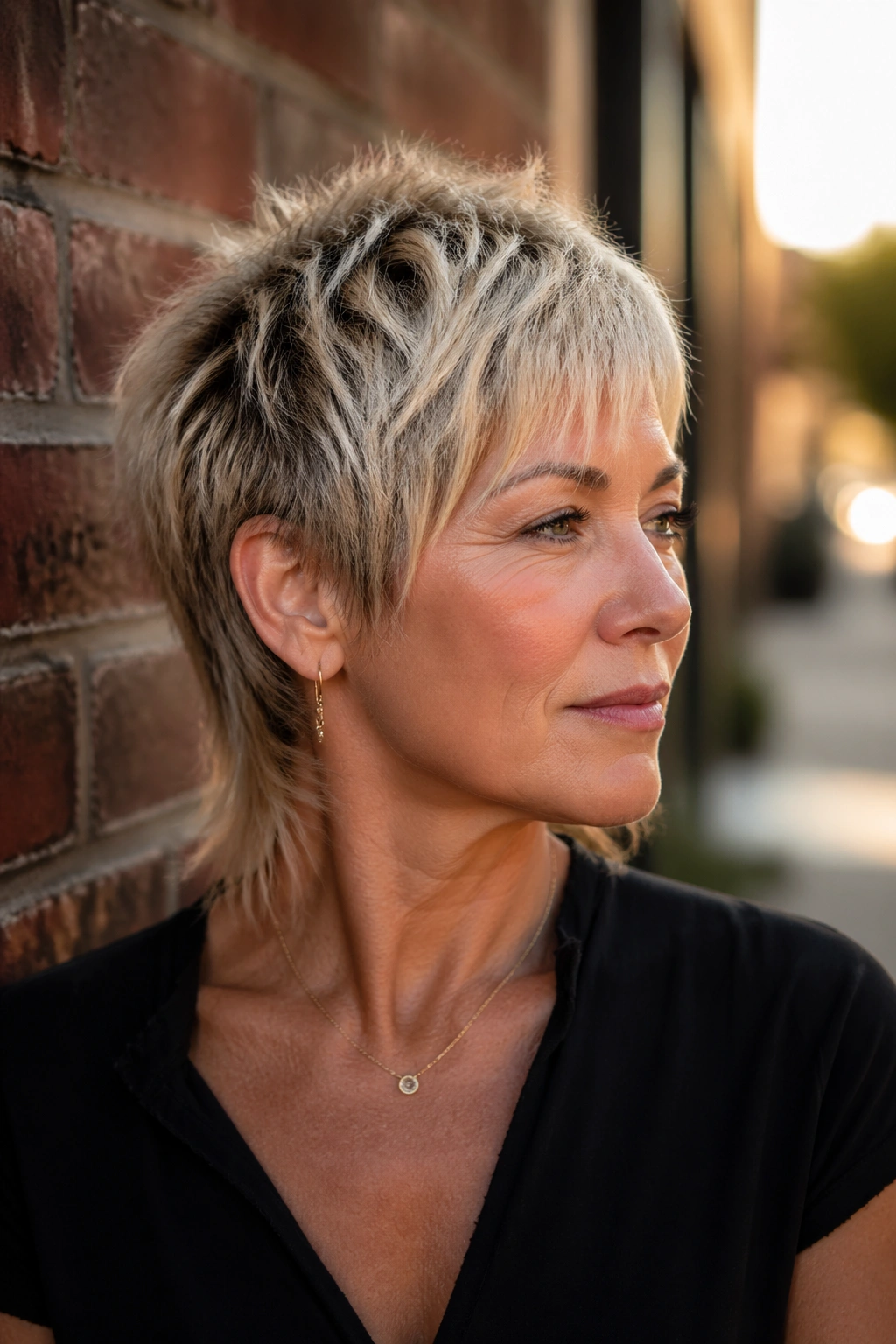
The word “mullet” scares people off. Fair enough. But the soft pixie mullet is a different animal. It keeps the front and top short enough to feel fresh, then leaves more length at the back and sides so the shape flows instead of stopping hard at the ears. Done well, it has a gentle slope, not a costume vibe.
This cut is especially nice if your hair has a bit of wave or if you like pieces that move when you tuck them behind one ear. The asymmetry comes from the longer nape and the uneven balance between the front and the sides. It can be edgy, but it doesn’t have to be dramatic.
I’d point this out to women who are tired of “safe” cuts. Not everyone wants a tidy bob forever. Some people want a bit of shape with some bite. This is the cut for that mood.
19. The Angled Lob With Bangs
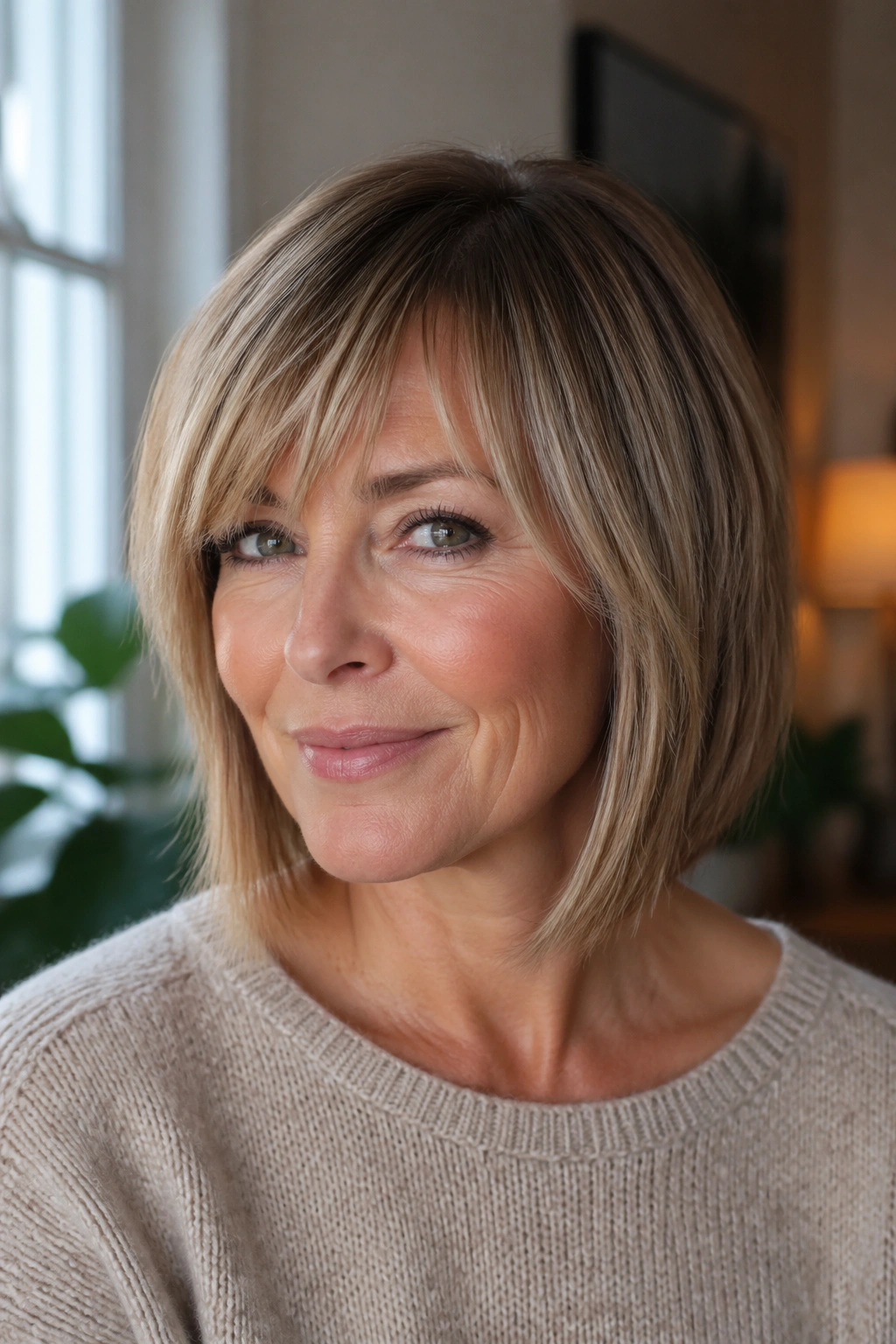
If your forehead feels like the part you always end up styling around, bangs can make the whole haircut easier. An angled lob with bangs folds that front section into the shape instead of treating it like a separate problem. The result is cohesive. The longer front pieces and the bangs work together, not against each other.
Bangs That Cooperate
The best version usually uses side-swept or curtain bangs rather than a hard straight fringe. That lets the asymmetry stay soft while still giving you face-framing detail.
- Keep the bangs long enough to blend into the front layers.
- Ask for a slight angle from one side of the brow to the jaw.
- Style the fringe with a round brush, not a stiff blowout.
- Use a dry shampoo at the roots if the bangs separate too fast.
This cut flatters a lot of face shapes because it adds movement at the top and along the sides at the same time. It also looks good tucked behind one ear, which is a small thing, but a useful one.
20. The Gentle Asymmetrical Cut With Tapered Ends
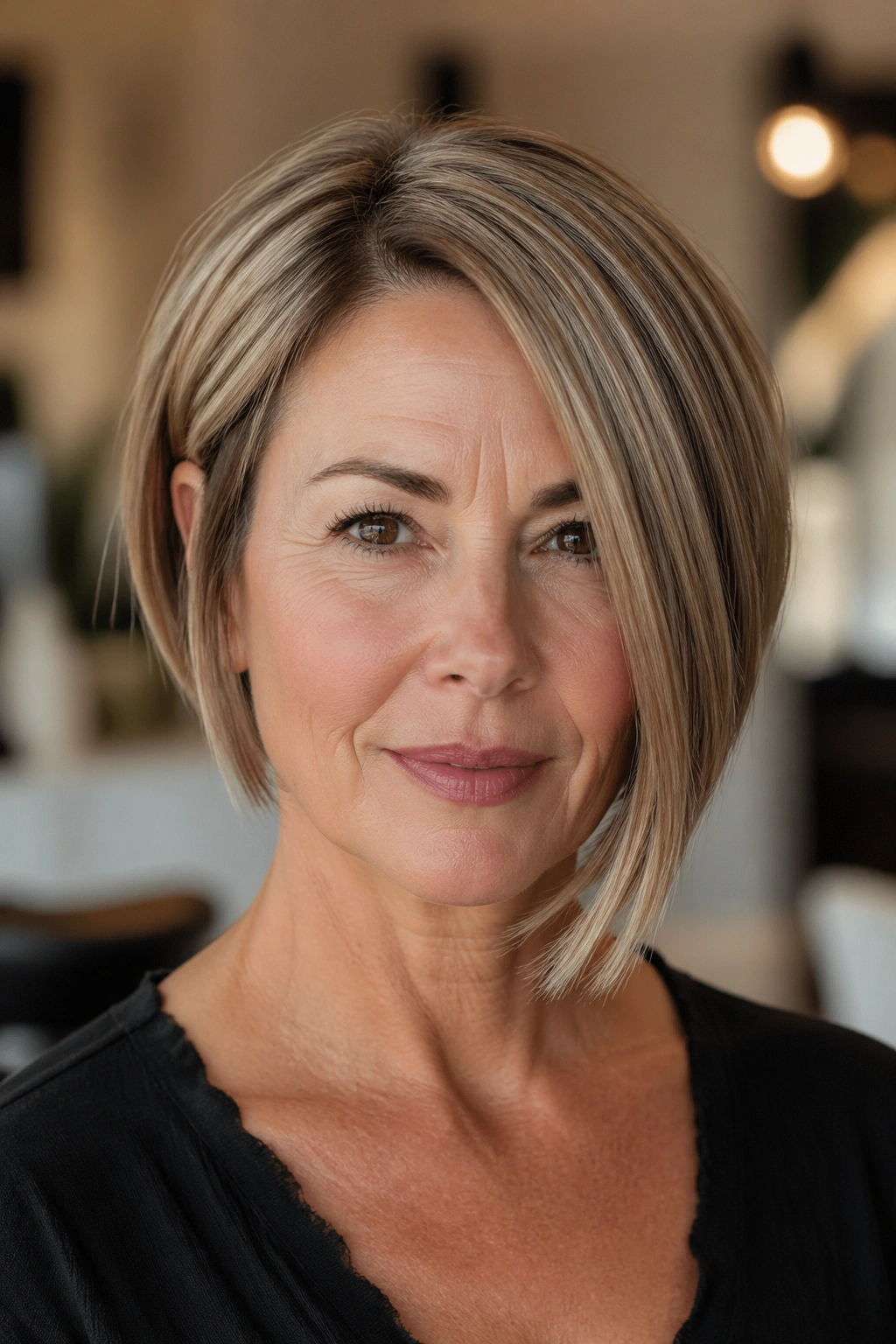
Not every asymmetrical cut needs to announce itself. A gentle version with tapered ends can be the smartest choice if you want shape without a dramatic difference from one side to the other. One side might be only half an inch longer, but that tiny shift changes how the hair falls around the face and neck.
This is the cut I’d suggest for women who want polish with almost no fuss. It works on straight, wavy, and lightly curly hair. It also grows out in a soft way, which means you’re not stuck with a harsh line when it starts getting longer. Ask for point-cut ends, a light side part, and a little extra length on the side that naturally frames your face best.
The quietest cuts are sometimes the smartest ones. They don’t try to do too much. They just sit right, move well, and make the rest of your look feel pulled together without asking for much in return.
