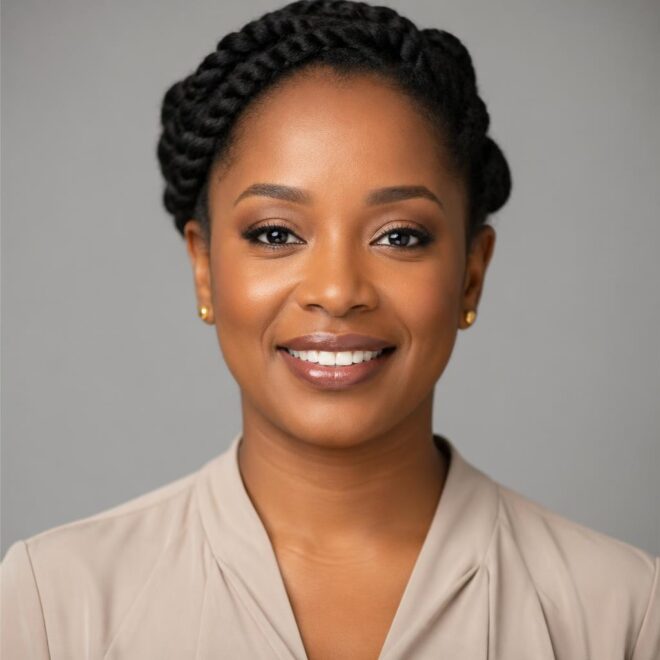


Short layered haircuts with side bangs have a way of softening a face without stealing its shape. A pixie stops looking severe. A bob loses that blocky, helmet-ish feel. Even a cut that sits close to the head can still have movement if the fringe is swept across the forehead instead of cut straight on.
That is why this family of cuts keeps showing up in good salons. Side bangs are flexible. They can fall cheekbone-deep, skim the brow, tuck behind one ear, or blend into layers when you do not feel like styling much. The cut can look polished, messy, sharp, or airy depending on how the layers are handled.
I also like how practical these cuts are when they’re done well. Fine hair gets a little lift. Thick hair loses some bulk. Curly hair keeps its shape instead of puffing out in all the wrong places. Bad short haircuts tend to look obvious in a hurry. Good ones grow out with some grace, which is half the battle.
The 24 looks below cover sleek, shaggy, feathered, curly, and cropped versions of the same idea. Some are easygoing. Some lean a little edgy. A few are classic enough to wear anywhere. Start with the one that matches your texture, then pay attention to the bang shape, because that’s where the whole haircut either clicks or falls flat.
1. Soft Textured Pixie With Side Bangs
A pixie gets easier to wear the moment the fringe stops fighting your forehead. A soft textured pixie with side bangs keeps the sides neat, leaves enough length on top for movement, and bends the whole look toward the face instead of straight up and out.
What makes it work
The trick is contrast. The nape and sides stay short, usually clipped or tapered close enough that the outline is clean, while the crown keeps 2 to 3 inches of length for lift. The bangs should start somewhere near the temple, not the middle of the forehead, so they can sweep naturally.
Ask for point-cutting or light razor work through the top if your hair is thick. If it is fine, keep the layers a little longer so the cut does not disappear by lunchtime. A pea-sized bit of paste or cream is usually enough.
- Side length: tight around the ears and nape
- Top length: about 2 to 3 inches
- Fringe: temple-starting, swept diagonally
- Styling: blow-dry the bang first, then pinch the ends with a small amount of paste
Best for: small to medium face shapes, glasses, and anyone who wants short hair without a hard edge.
2. Chin-Length French Bob With Side Bangs
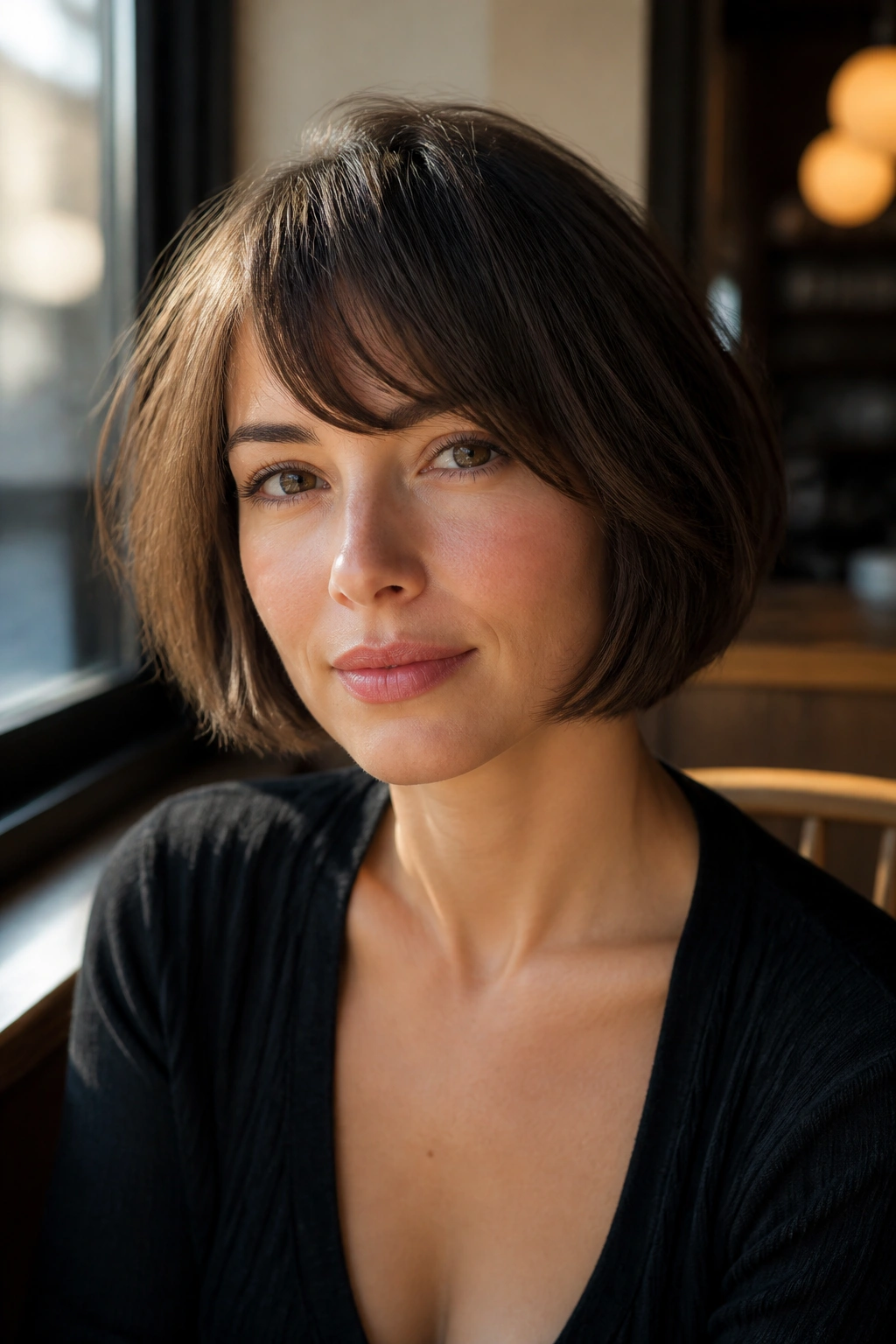
Why does a chin-length bob look softer with side bangs? Because the diagonal fringe breaks the line before it becomes too blunt. That one move keeps the haircut from feeling boxy, especially when the ends sit right at the jaw.
The French bob usually works best when the perimeter is clean but not overly stiff. A little layering inside the shape gives the hair room to bend, and the side bang keeps the front from closing in around the face. If your hair has a slight wave, this cut can look excellent with almost no effort.
I’d ask for the fringe to land somewhere between the eyebrow and cheekbone, then have the stylist taper it into the front layers. A 1.5-inch round brush or a quick bend with a flat iron is enough to give it polish. Let the ends stay soft. That’s the point.
3. Layered Bixie With Sweeping Fringe
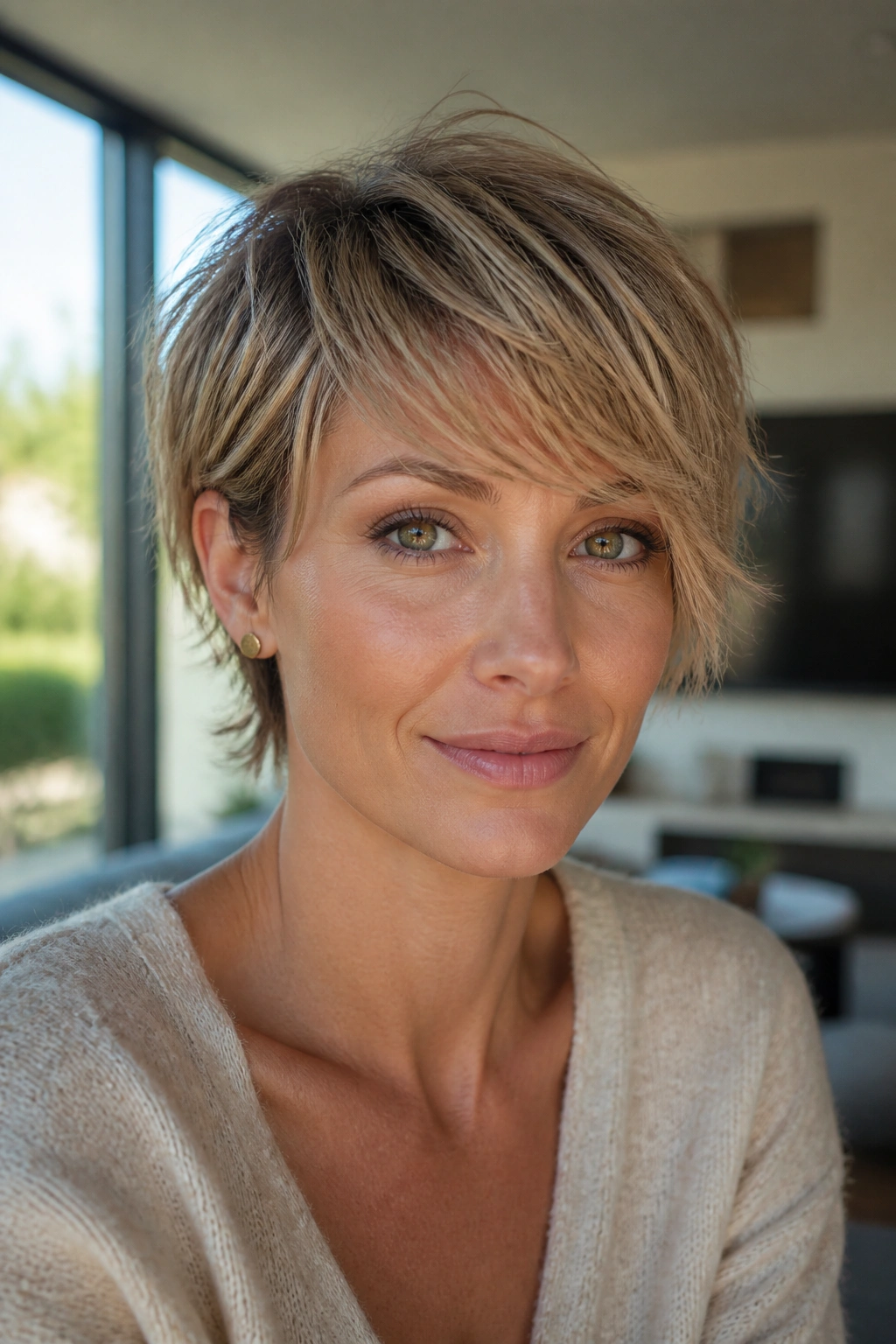
The bixie is what happens when a bob and a pixie stop arguing. It is short, but not severe. It has shape, but still moves. Add a sweeping side fringe, and the whole haircut starts to feel more lived-in than locked down.
How to ask for it
Tell the stylist you want a short bob shape with pixie-like texture through the crown and ears. That usually means a little more length at the front, lighter layers near the top, and a fringe that can tuck into the rest of the cut instead of sitting on top of it. If your hair is dense, this is a smart place to remove bulk.
Why people like it
It grows out well. That sounds boring, but it matters. A bixie with side bangs can shift from neat to messy to tucked-behind-the-ear without a total restyle. It also works for people who want short hair but are not ready for a full crop. That in-between feel is the draw.
A texture cream, a fingertip twist near the crown, and a quick side sweep usually do the job.
4. Feathered Crop With Long Side Bangs
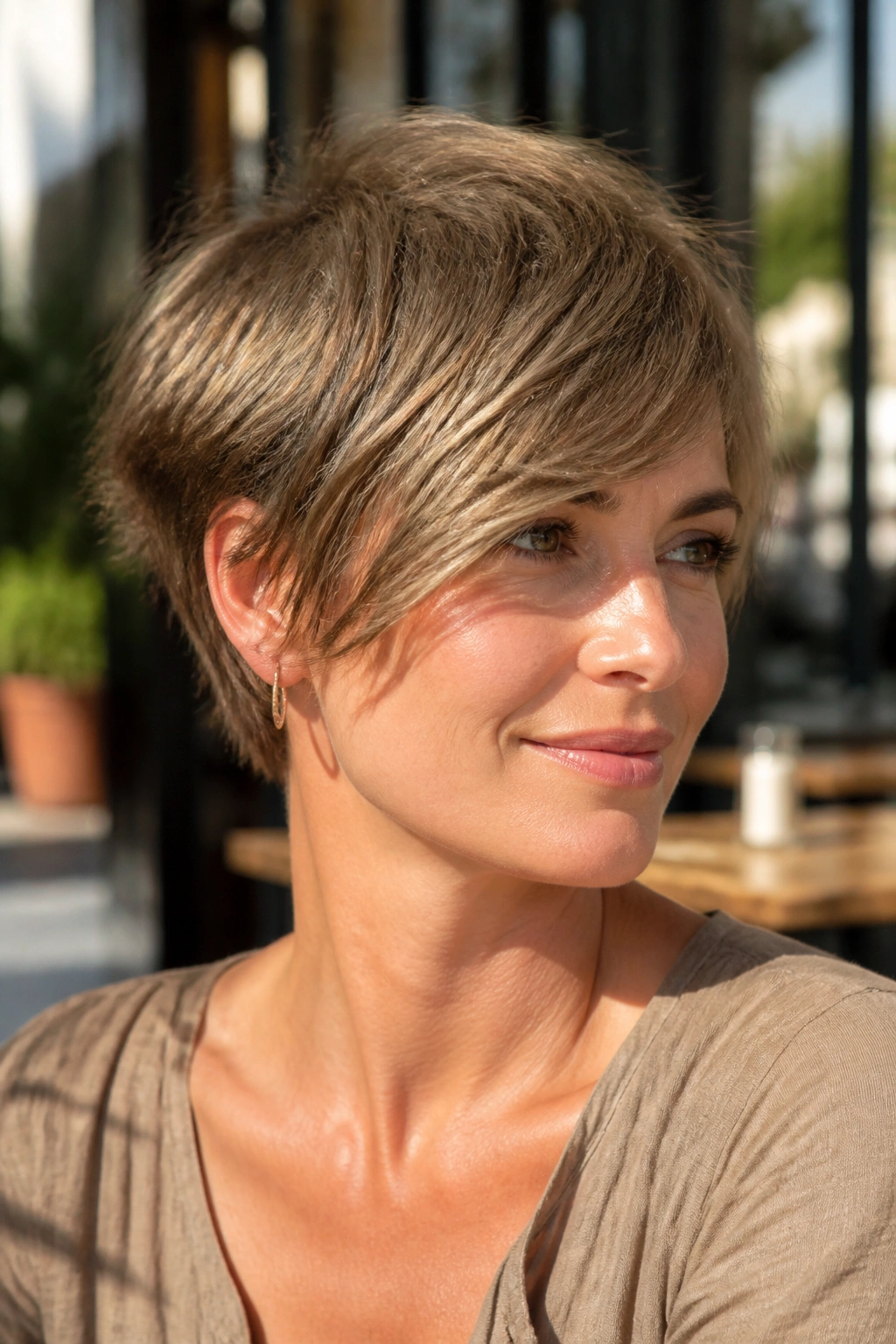
Not every short cut has to look crisp. A feathered crop with long side bangs brings back a little softness at the edges, which is especially useful if your hair tends to lie flat or if you want movement without a lot of volume at the sides.
Feathering means the ends are cut so they taper and flick rather than sit in a hard line. The bang stays longer, usually grazing the eyebrow or cheekbone, and that longer piece keeps the crop from reading too severe. This kind of cut likes a blow-dryer and a vent brush more than a lot of product.
If you have fine hair, ask for feathering through the crown and around the temples, not just the top. That detail helps the haircut open up around the face. It also makes the fringe look connected to the rest of the cut instead of pasted on. A light mousse at the roots helps, but heavy wax will kill the lift fast.
5. Stacked Bob With Side Bangs
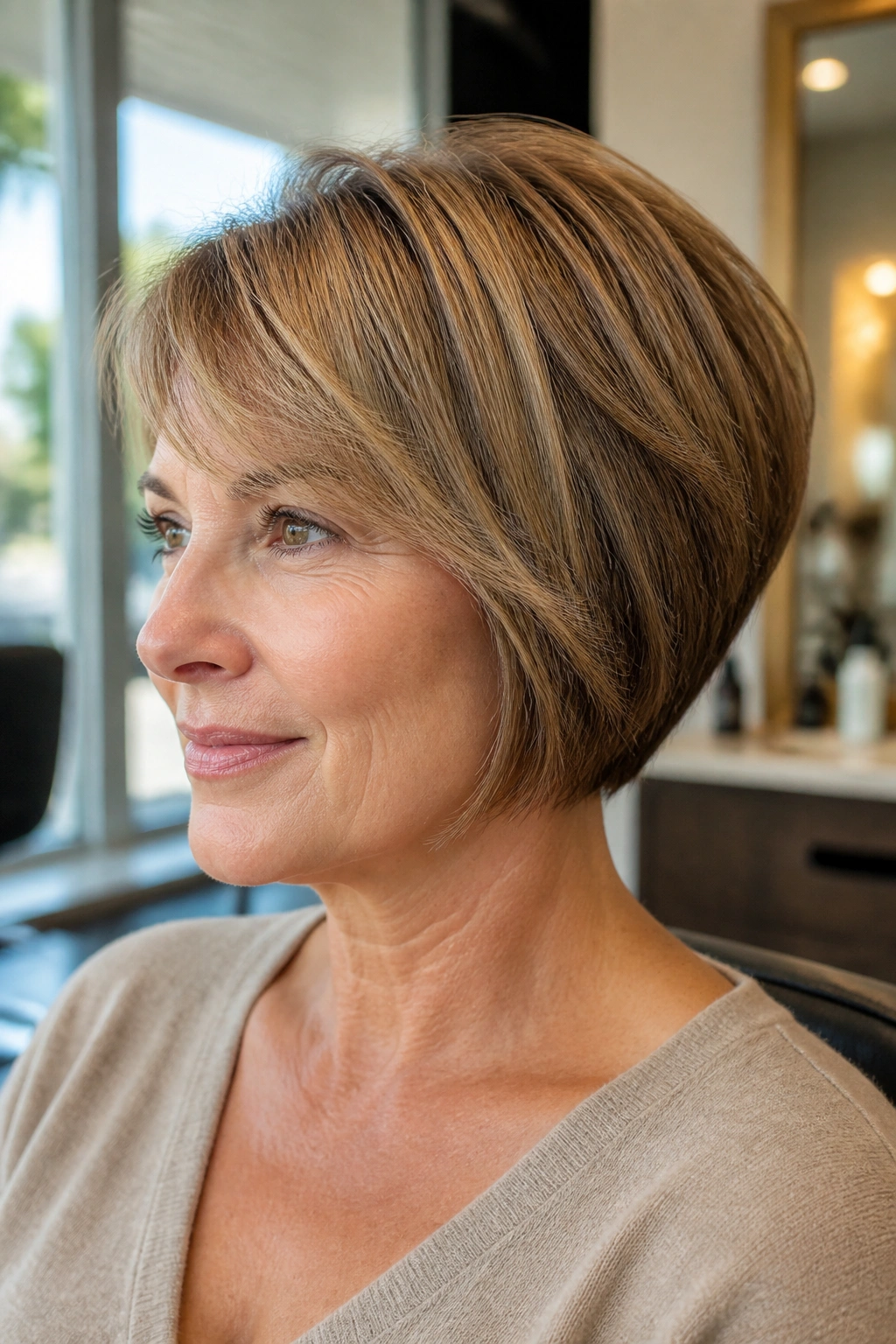
The back sits snug. The crown lifts a little. The front falls softly. That shape is why a stacked bob with side bangs works so well when you want fullness without a lot of length.
A stacked bob uses shorter layers in the back to create a rounded profile. On straight or slightly wavy hair, that gives the haircut a built-in curve. Side bangs are the thing that stops it from looking too rigid. They bring the eye forward and make the whole shape feel less architectural.
If your hair is thick, this cut can be a relief. The stack removes weight where it collects most, especially near the nape. Just do not let the layers get too short at the top, or the crown can puff up in a way that needs constant smoothing. A medium round brush and a little heat protectant go a long way here.
6. Shaggy Bob With Choppy Side Bangs
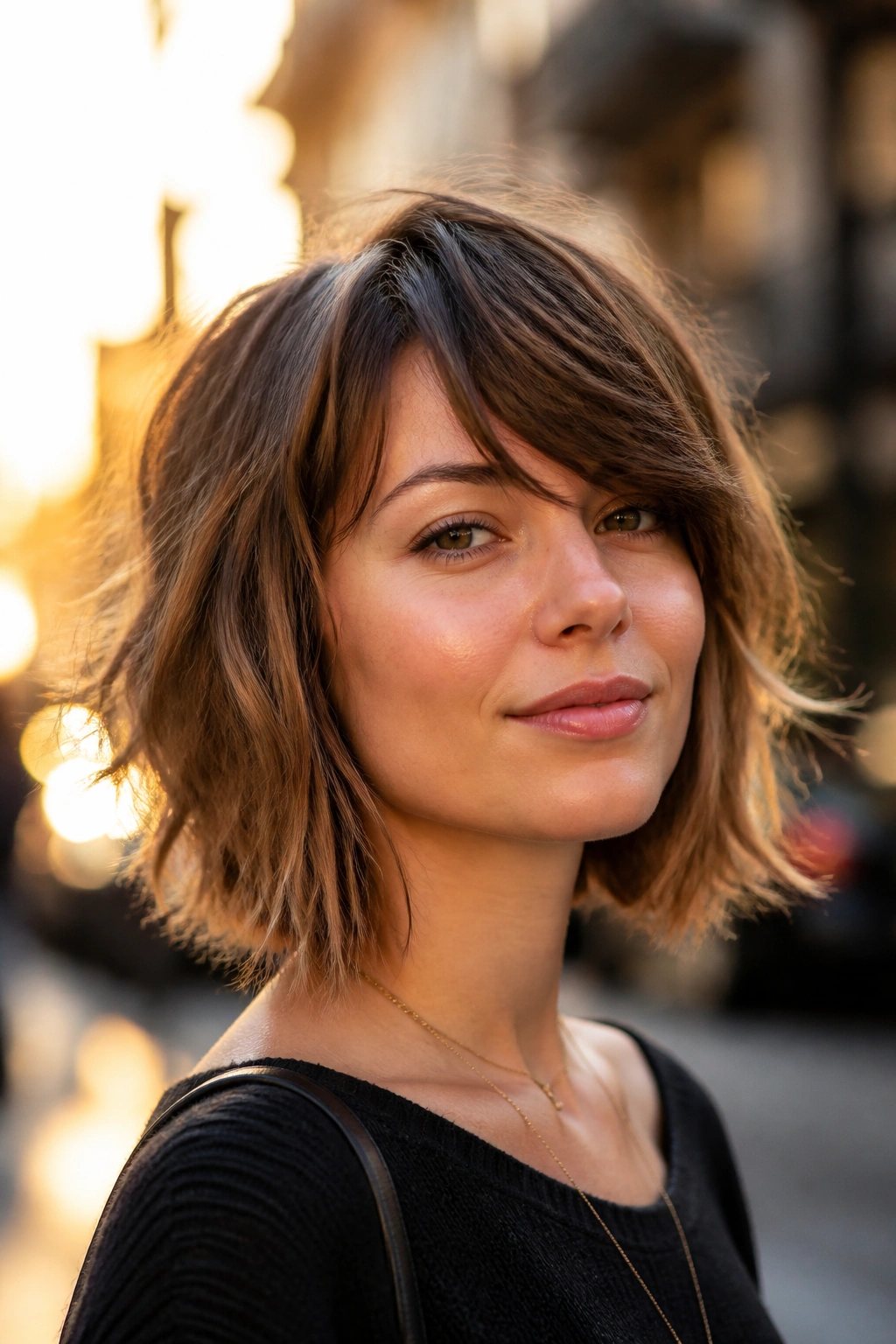
Some people want a bob they can scrunch and forget. This is that haircut. A shaggy bob with choppy side bangs looks better when it is a little imperfect, and that is exactly why it works so well for wavy hair.
Why it feels easy
The layers are broken up, not polished into one solid shape. That gives the ends a piecey look, and the side bangs help blend the front into the rest of the cut. If the fringe is cut blunt, the whole style can feel fussy. Choppy is better here.
Styling it without overdoing it
Use a small amount of mousse on damp hair, then air-dry or diffuse until it is about 80 percent dry. After that, twist a few face-framing pieces with your fingers and leave the rest alone. A salt spray can help, but too much turns soft movement into crunch.
- Best texture match: wavy or lightly curly hair
- Bang length: eyebrow to cheekbone
- Product: mousse first, spray later if needed
- Finish: loose, touchable, not stiff
7. Tapered Curly Cut With Side Bangs
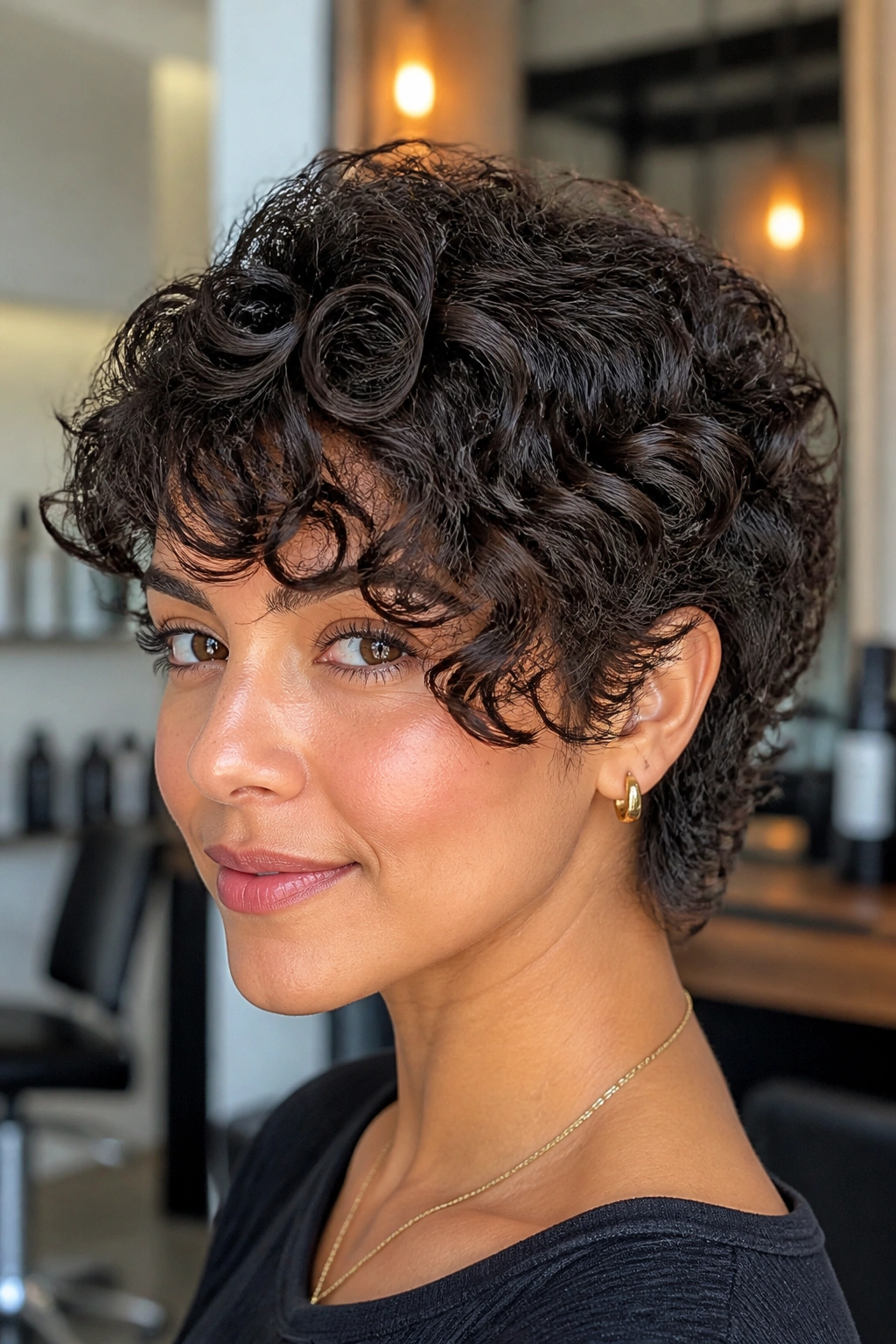
Curly hair changes the rules. A side bang cannot be forced into a straight line and expected to behave. A tapered curly cut with side bangs works because the shape follows the curl pattern instead of fighting it.
The taper matters around the sides and nape. It keeps the silhouette neat while leaving the top and fringe long enough to show the curl’s spring. A good stylist will often cut this kind of shape dry or at least partially dry, because curls shrink and bend in ways that straight hair does not. Cut it wet and you can lose the whole plan.
The side bang should land where your curls actually want to sit. For some heads, that means cheekbone length. For others, it means longer pieces that can sweep and coil together instead of hanging alone. A diffuser on low heat, plus a curl cream with a light hold, usually gives the best finish. Don’t rake too much. Let the curls find each other.
8. Jaw-Length Bob With Curtain-Style Side Bangs
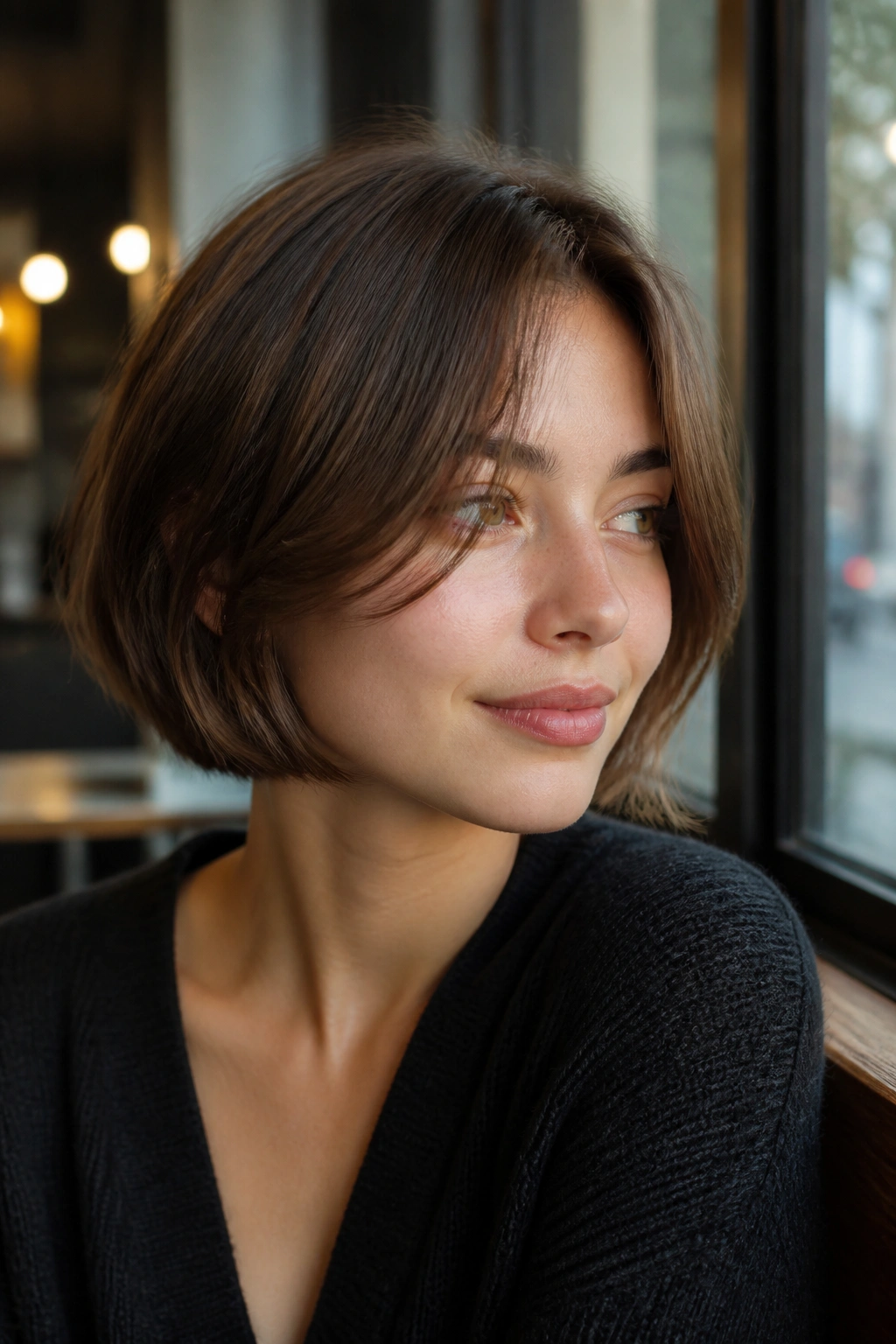
If your jawline feels strong or sharp, this cut softens it fast. A jaw-length bob with curtain-style side bangs adds a bend across the forehead and keeps the perimeter close enough to feel clean without boxing the face in.
The side bangs here are not a tiny side flick. They are longer, split a little off center, and shaped so they open around the cheekbones. That makes the haircut feel less fixed. On a round face, the diagonal framing can add length. On a square face, it can take a little hard edge off the jaw.
A quick bend with a flat iron usually helps this one settle. Wrap the fringe away from the face, then brush it through once it cools. If your hair is naturally straight, the result can look very controlled. If it has a wave, even better. The bob gets softness, and the fringe keeps the look from going flat.
9. Asymmetrical Layered Bob
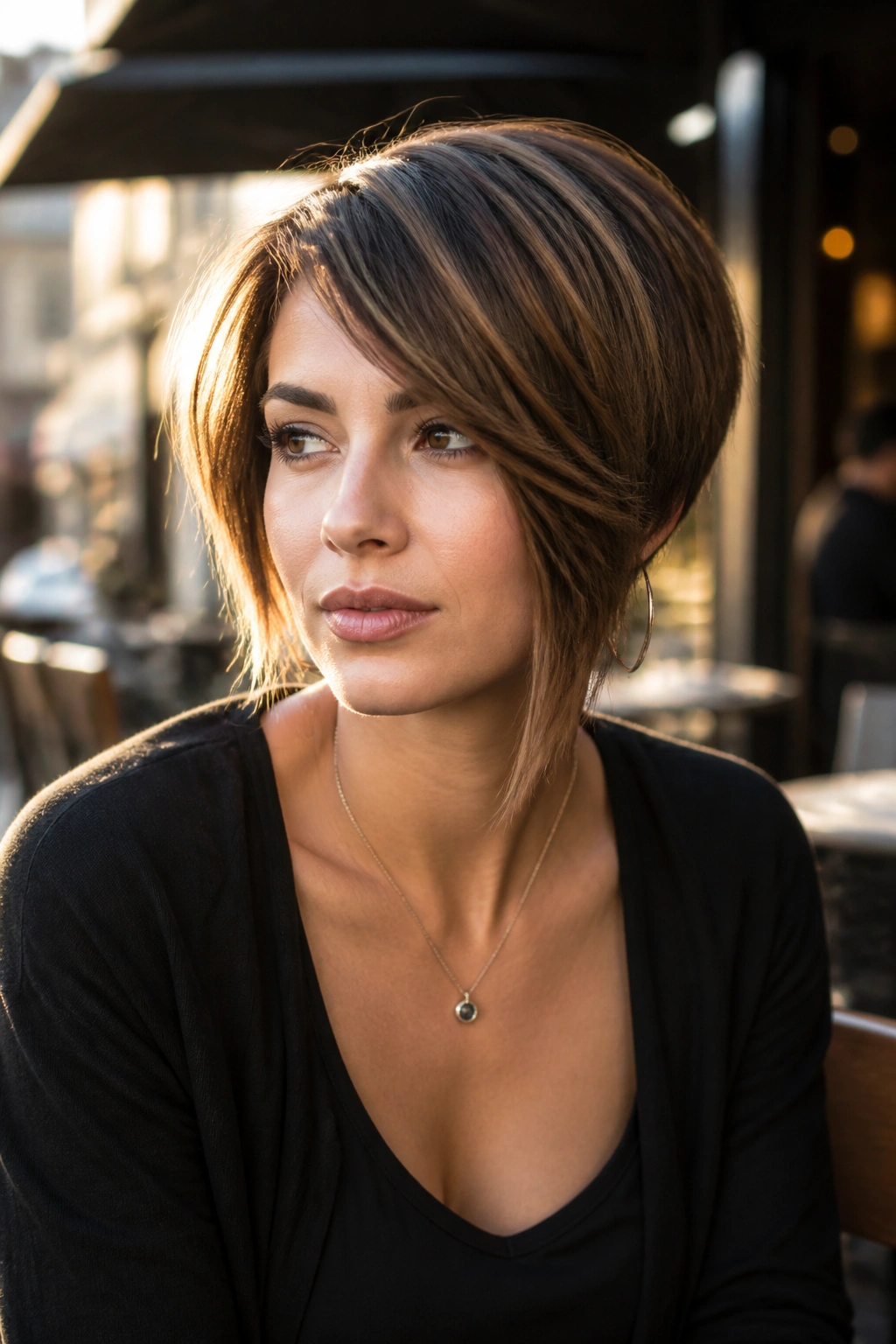
Unlike a symmetrical bob, this one uses length to create motion. An asymmetrical layered bob leaves one side a little longer, then folds side bangs into the design so the cut feels deliberate instead of lopsided.
What to ask for
A difference of 1 to 2 inches between the sides is usually enough. You do not need a dramatic angle unless you want the haircut to read bold from across the room. The layers should follow the longer side, not fight it, and the fringe should sweep into that direction so the front looks continuous.
This is one of those cuts that can feel sharper on straight hair and softer on wavy hair. Either way, the diagonal line does the heavy lifting. It pulls the eye downward and sideways, which is useful if you want to break up a wide cheek area or add some shape to a longer face. A little smoothing cream at the ends keeps the line clean without making it stiff.
10. Razor-Cut Pixie Bob
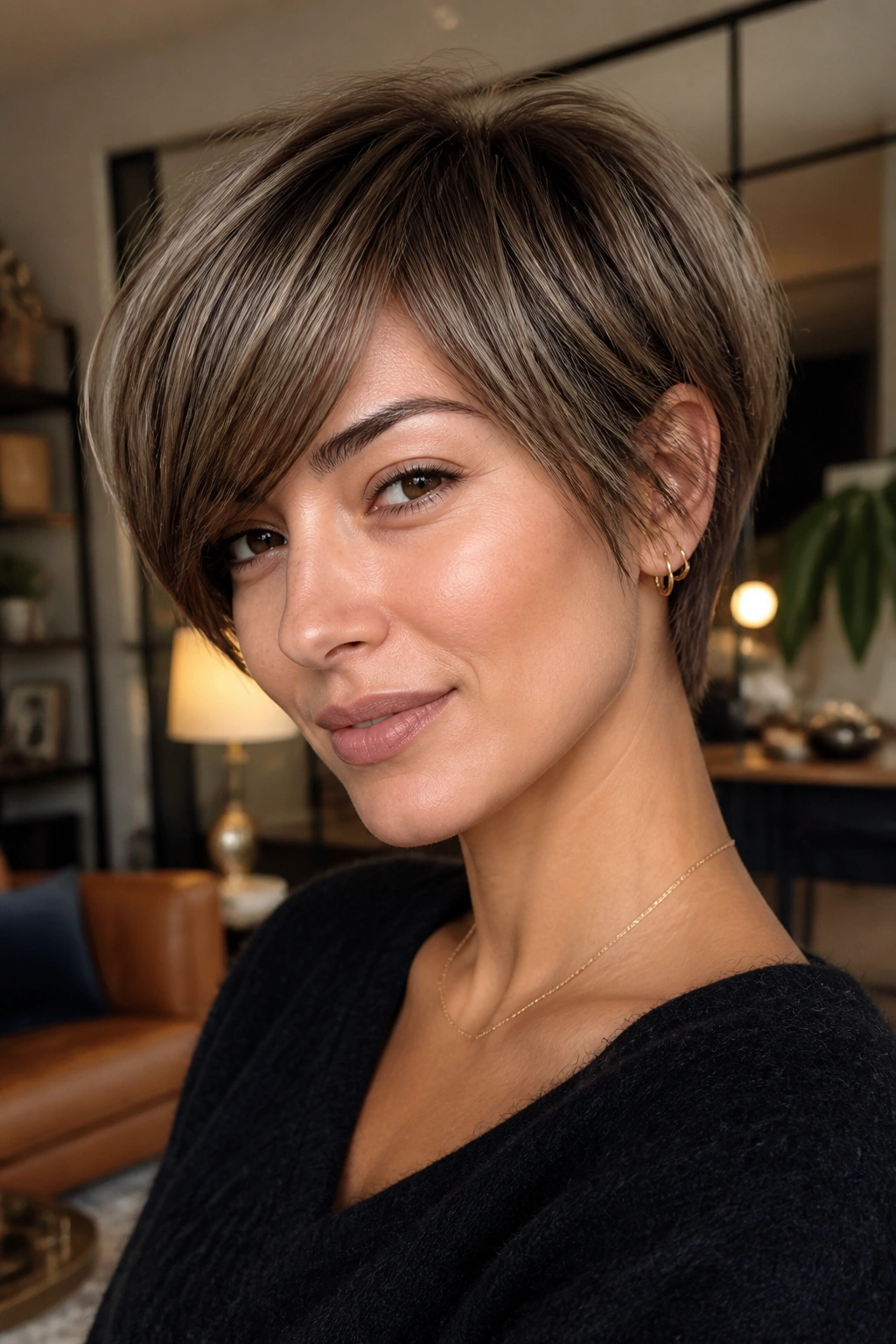
Sharp ends. Soft movement. That is the whole charm of a razor-cut pixie bob. The razor removes some of the heaviness that can make short hair look blunt, and the side bangs keep the cut from feeling too choppy.
This version works best on hair that is medium to thick, because the razor can take out bulk and leave the perimeter lighter. If your hair is already very fine or fragile, a heavy razor pass may fray the ends and make the haircut feel wispy in the wrong way. That’s a real downside, not a tiny one.
For styling, think low effort and small amounts. A little cream or serum through the ends, then finger-drying the fringe into a side sweep. If you blow-dry, use a nozzle and keep the airflow angled downward so the cuticle lies flatter. The goal is movement, not frizz.
11. Rounded Crop With Side Bangs
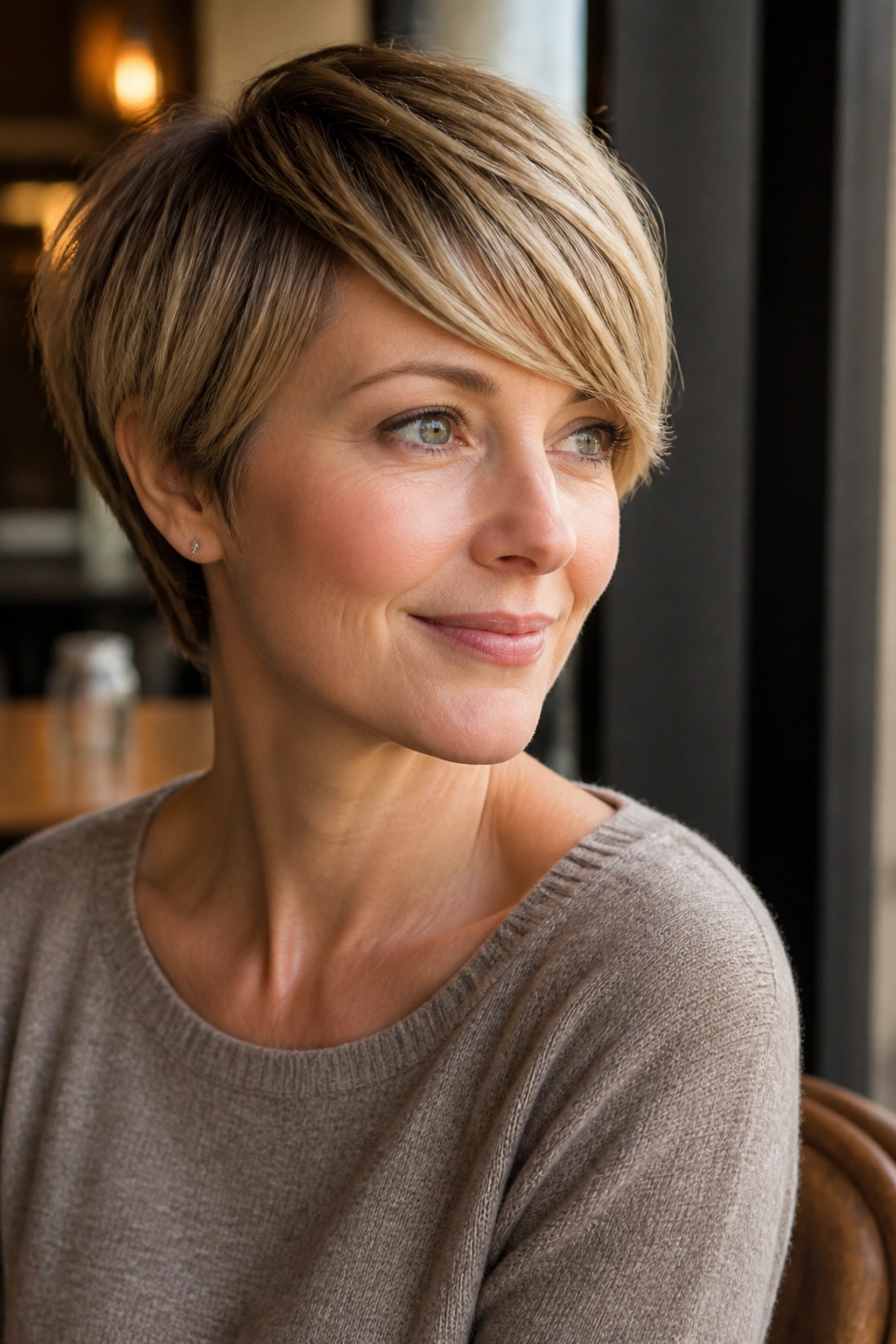
What keeps a crop from looking too boyish? A rounded crop with side bangs. The curve around the head gives the haircut a softer outline, and the side fringe keeps the front from feeling abrupt.
Face shape notes
This cut tends to flatter longer faces because the rounded silhouette adds width near the temples. It also works for people who wear glasses, since the bangs can sit above the frames or skim just beside them. If the forehead is narrow, the side bang can be kept thinner. If it is broader, the fringe can be fuller and a little longer.
The back should hug the head without collapsing. The top needs enough length to create a gentle arc, not a spiky point. That balance matters. A crop that is too tight can look severe in half a day. One that is too soft loses the whole shape.
A matte cream or styling paste gives control without shine. Use a tiny amount. Seriously.
12. Short Wavy Lob With Side Bangs
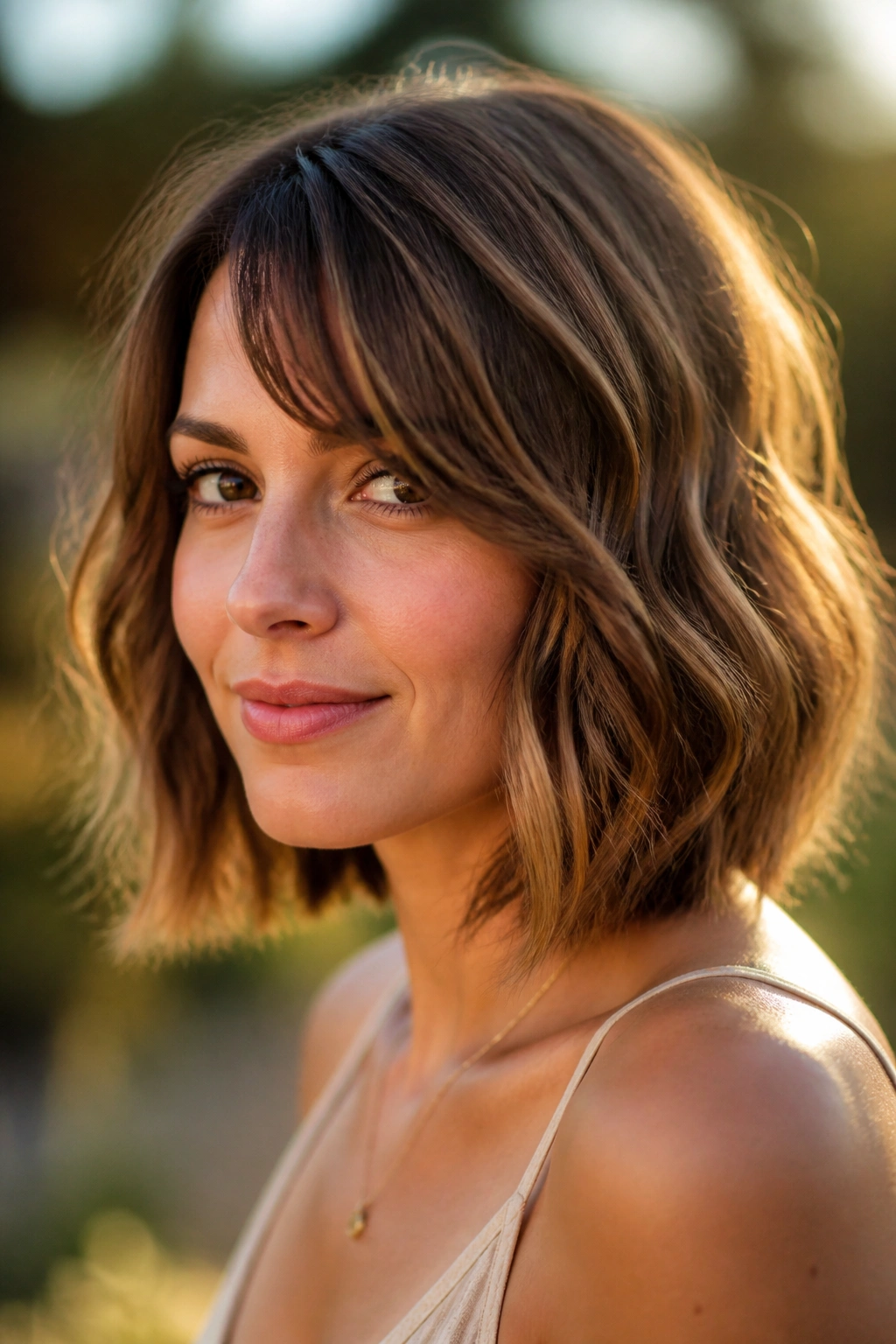
A short wavy lob is a good bridge if you want to go shorter without jumping straight into a bob or crop. The side bangs make the transition feel easier, because they keep some softness around the face while the rest of the cut sits cleanly at the shoulders or just above them.
This shape works especially well when the layers are light and the ends are slightly blunt. Too many short layers can make wavy hair puff out in a triangle, which is not a look most people enjoy. A side bang helps anchor the front, and the wave keeps the cut from feeling too serious.
If you style with a dryer, use a medium brush and bend the bang away from the face, then let the rest dry with a loose shape. If you air-dry, tuck the fringe behind one ear for ten minutes while it sets, then release it. That small habit can change how the wave falls all day.
13. Undercut Pixie With Long Fringe
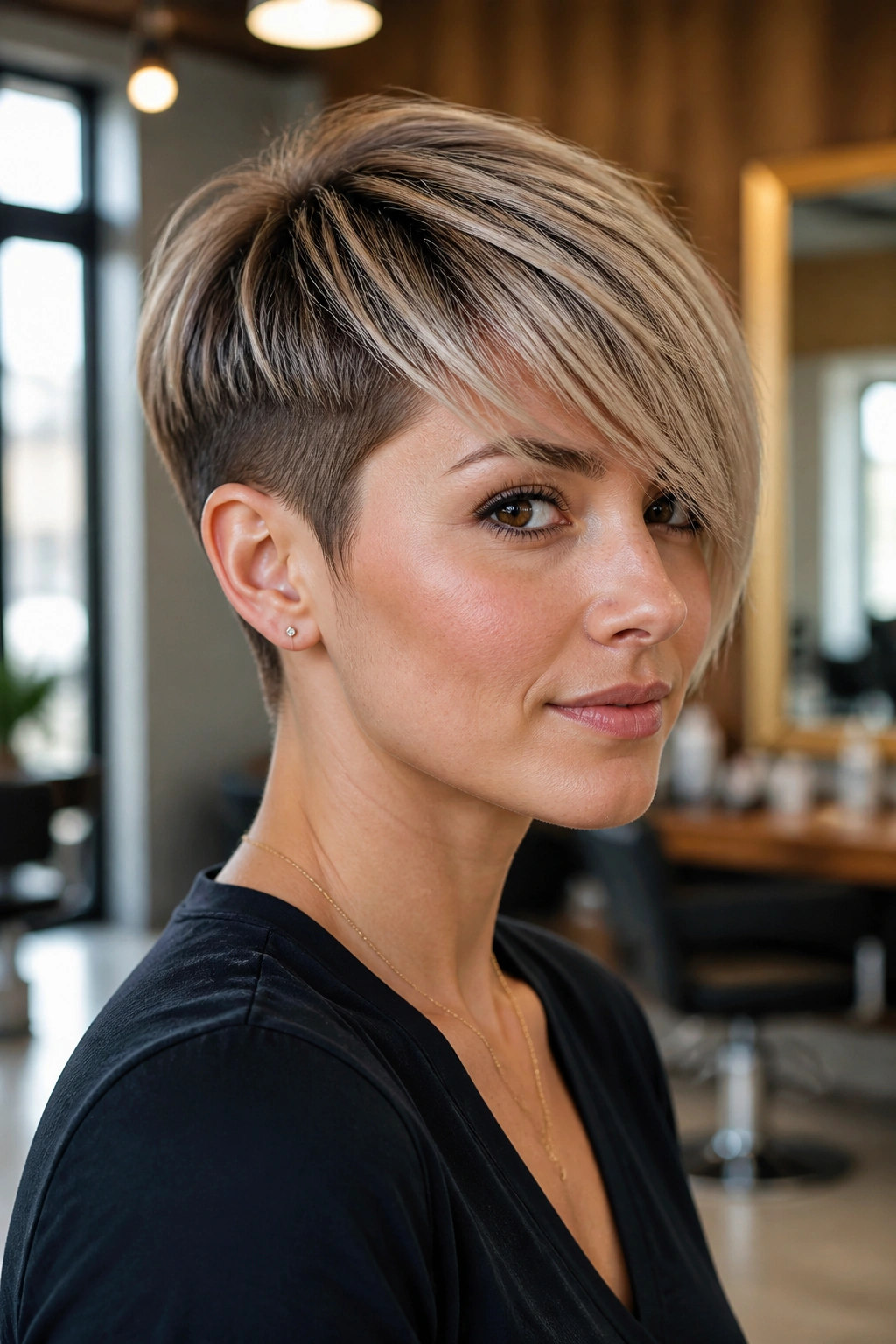
If your hair balloons at the sides or sticks to your neck the second the air warms up, an undercut can feel like relief. An undercut pixie with long fringe gives you that clean, close shape underneath and leaves enough length on top to keep things interesting.
The undercut usually sits at the nape and around or behind the ears. The top stays longer, often 4 to 5 inches, so the side bangs can sweep across the forehead with some weight. That contrast is what makes the haircut pop. Without it, the cut can look too flat.
This one is a favorite for thick hair because it removes the hidden bulk that causes puffiness. It also gives you a bit of styling range. Wear the fringe smooth. Push it loose. Pin part of it back. The shape can take all three. Just be ready for maintenance, because the short sections lose their clean line sooner than you think.
14. Modern Mop-Style Cut With Side Bangs
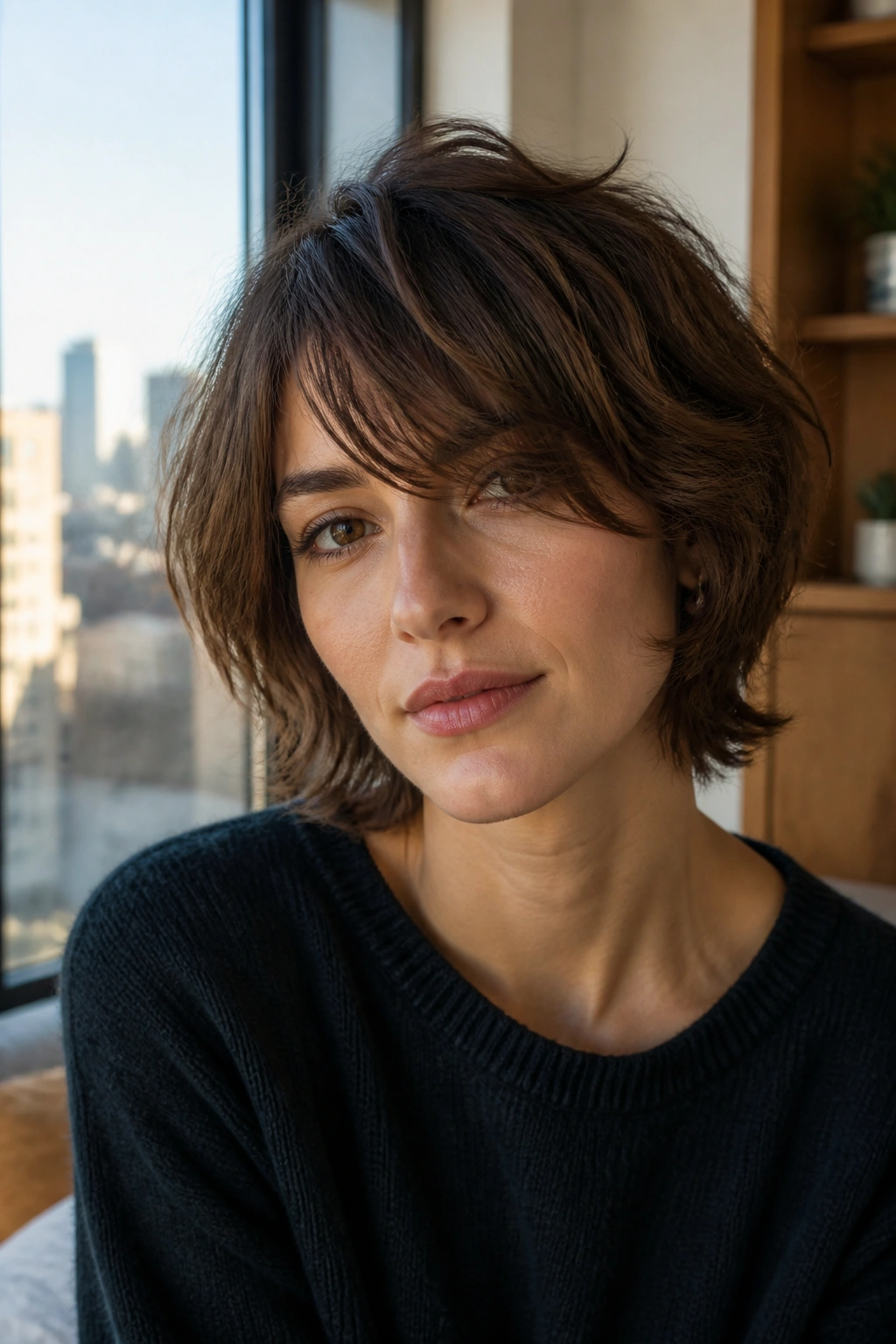
A mop cut can look chic when it is trimmed with intention. The modern version keeps the shape loose, not heavy, and the side bangs stop the front from falling into a blunt bowl.
The difference is in the layers. Instead of one dense sheet of hair hanging around the face, the interior gets enough removal to let the hair move. The fringe can be longer and swept across one eye slightly, which gives the cut a lived-in feel. That is useful if your hair is straight and tends to sit like a curtain.
This cut does best when the ends are softened and the top is not overworked with product. A light mousse or soft cream is enough. Too much hold makes the style stiff, and stiffness is the enemy here. If you want an easy short haircut that still has a little edge, this one deserves a hard look.
15. Graduated Bob With Face-Framing Layers
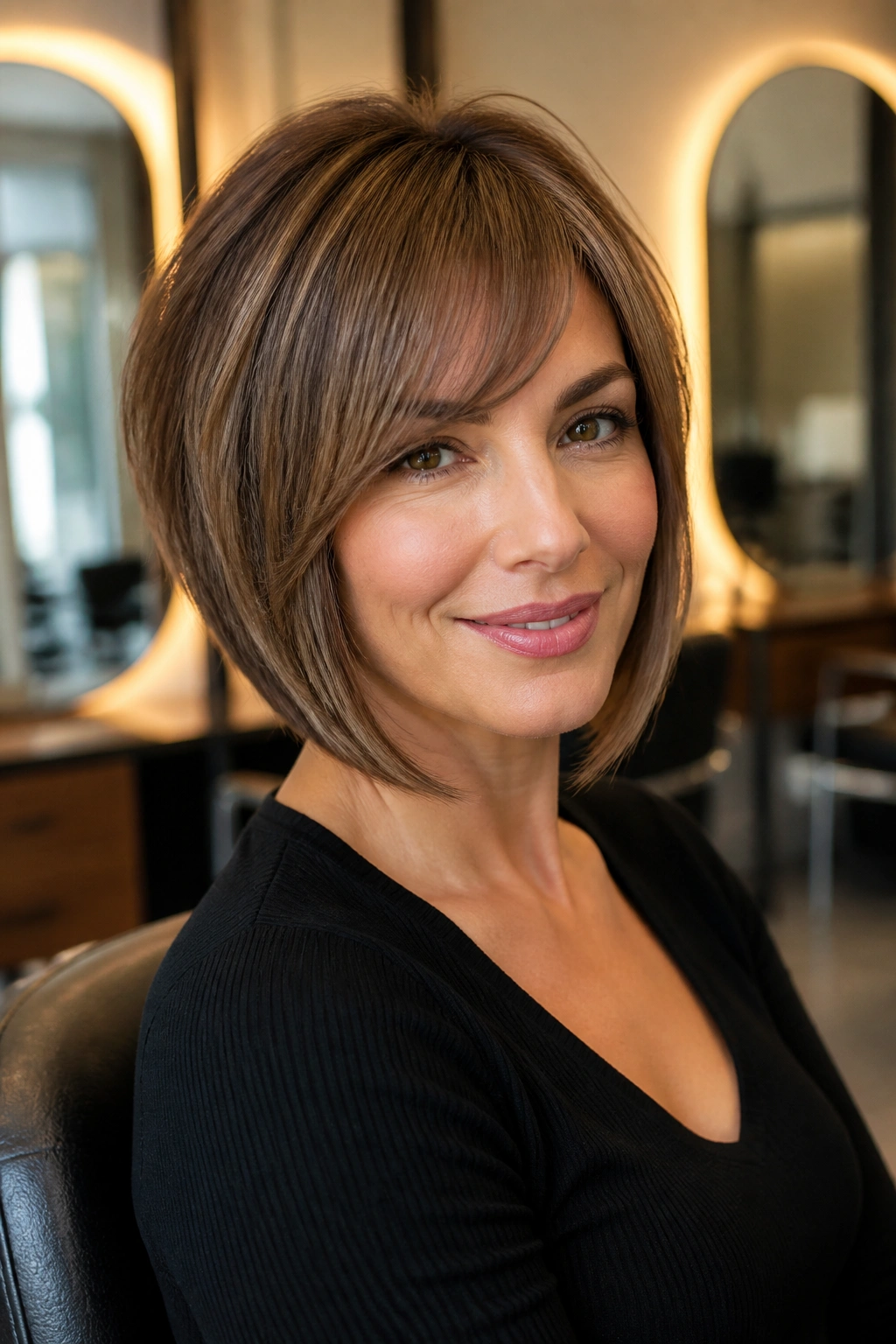
At the back, the hair hugs the neck. At the front, it opens around the cheekbones. That shape is what a graduated bob does best, and side bangs make the transition from back to front feel smoother.
How it differs from a stacked bob
A stacked bob often builds fullness with shorter layers tucked into the back. A graduated bob uses a sharper angle, with the nape shorter and the front steadily longer. The line is cleaner and a little more dramatic. Side bangs help break that line just enough so it does not feel stiff.
This is a strong cut for fine hair because the graduation gives the illusion of density where the head needs it most. It is also a good option if you want short hair but still want some movement around the collar and jaw. A blow-dry with a round brush can make the front curve under neatly. If you leave it air-dried, the layers still do some work on their own.
16. Tousled Crop for Thick Hair
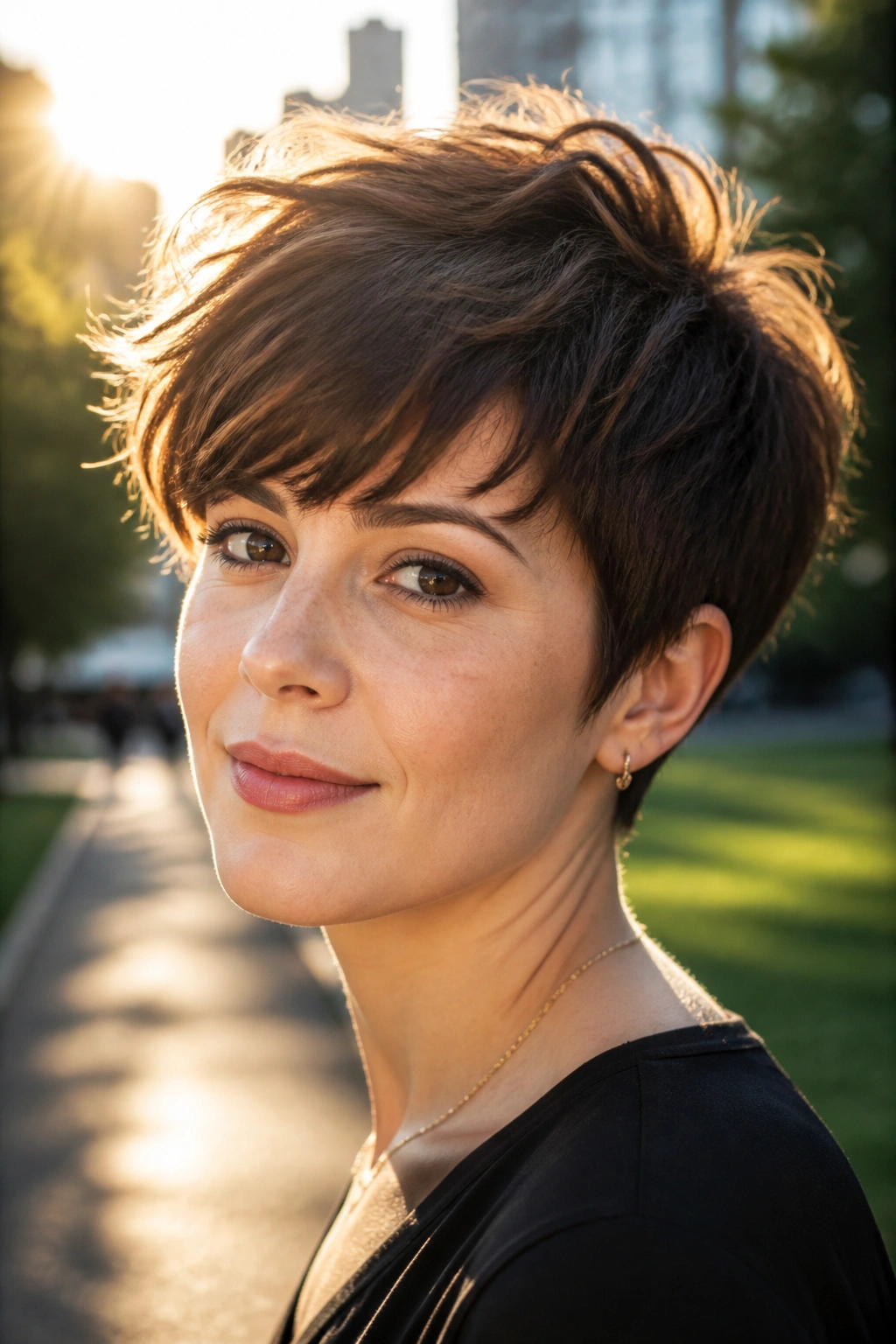
Thick hair usually needs more removal than length. A tousled crop for thick hair takes out bulk through the interior, then leaves the top and side bangs loose enough to move instead of sitting like one heavy block.
The key is not to over-thin the ends. That creates frizz and leaves the haircut with a fuzzy outline. A better move is controlled layering through the middle sections and a choppy fringe that can sweep across the forehead without puffing up. The shape should feel lighter, not stringy.
A lot of people with thick hair think short means easier by default. Not always. If the weight is removed in the wrong places, the hair can spring out wider instead of shorter. This cut works because it keeps the perimeter believable. A dab of styling cream and a quick finger-dry are usually enough to keep it in line.
- Best for: dense straight, wavy, or coarse hair
- Avoid: over-thinning the ends
- Finish with: a small amount of cream on damp hair
- Bonus: side bangs help keep the front from looking bulky
17. Soft Mullet With Side Bangs
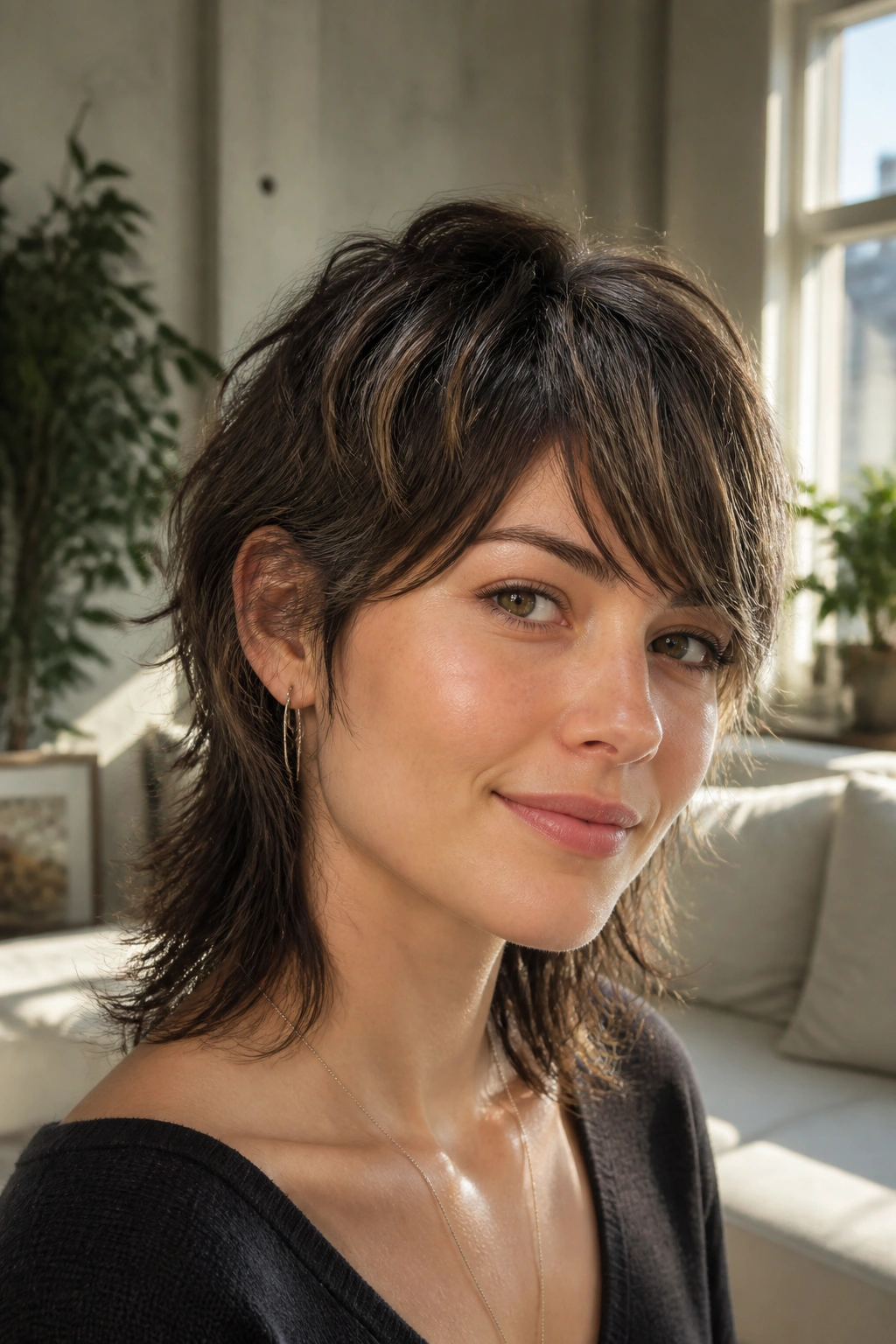
Unlike a shag, the soft mullet keeps a little more shape in the back. That difference matters if you want movement but do not want the cut to look too wild or too retro.
The front and crown stay shorter, the back is left a bit longer, and the side bangs soften the jump between the two. It sounds bold, but the modern version is usually more wearable than people expect. The nape length can be just 1 to 2 inches longer than the layers around the face, which is enough to suggest the shape without shouting it.
This cut likes texture. Airdrying works. A diffuser works. A little mousse at the roots and a wave cream through the middle sections can make it land in that messy-but-deliberate zone. If your hair is pin-straight, you may need a little bend with a flat iron to keep the whole thing from reading flat.
18. Side-Parted Pageboy Remix
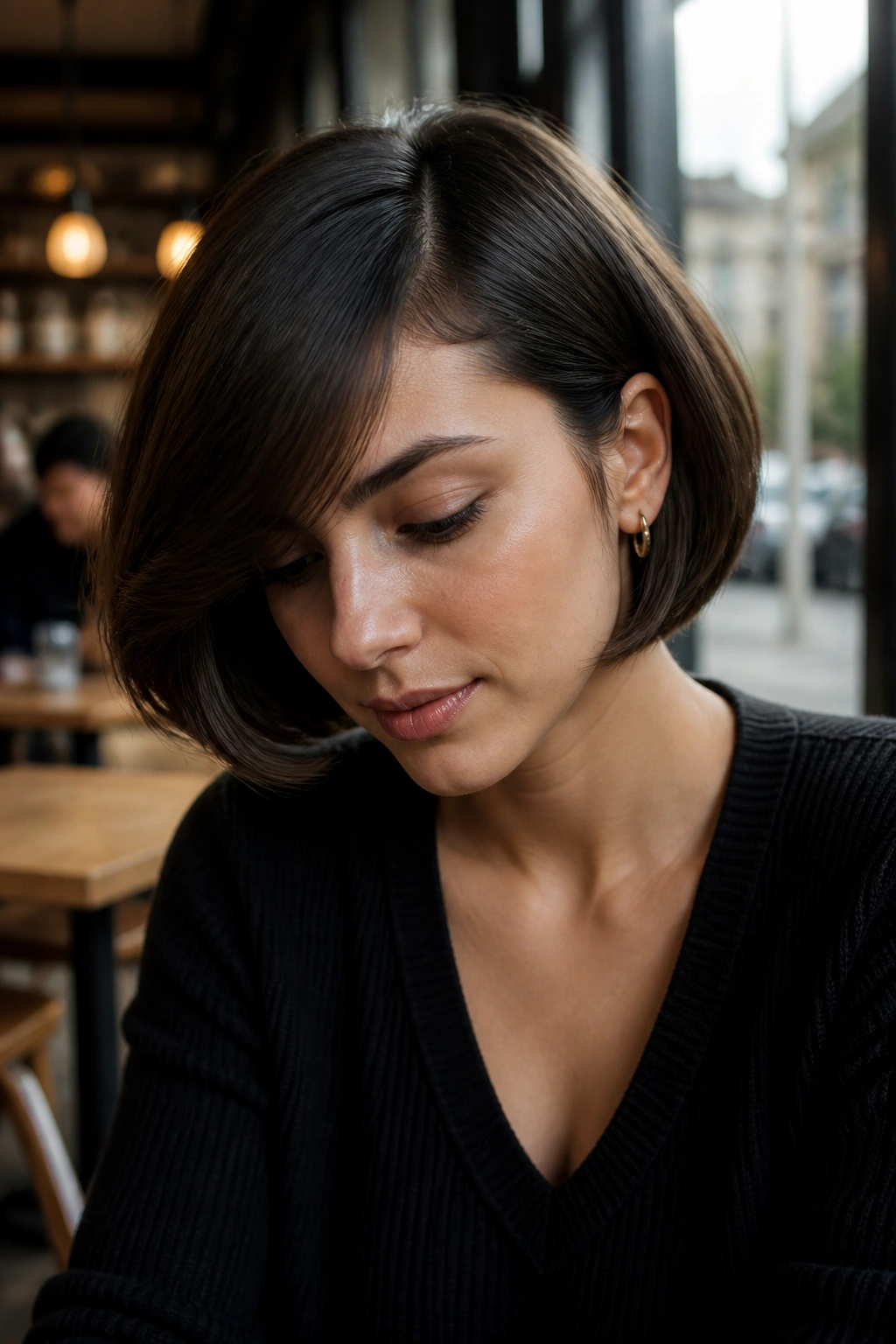
A chin-length pageboy with a deep side part can look sharper than people expect. The side bangs change the whole mood, turning a clean, tucked shape into something that feels softer and less rigid.
The old pageboy had a very even outline. This remix keeps the neatness but adds layers and a side sweep so the front no longer hangs like one solid curtain. The ends can curve inward with a brush or flat iron, which gives the cut a polished edge without making it stiff. Straight hair loves this shape. Coarse hair can wear it too, as long as the ends are controlled.
If you want a short haircut that reads tidy at work but still has a little personality, this is a smart pick. It is especially good if you like tucking one side behind the ear and letting the other side fall forward. That asymmetry gives it life.
19. Airy Layers for Fine Hair
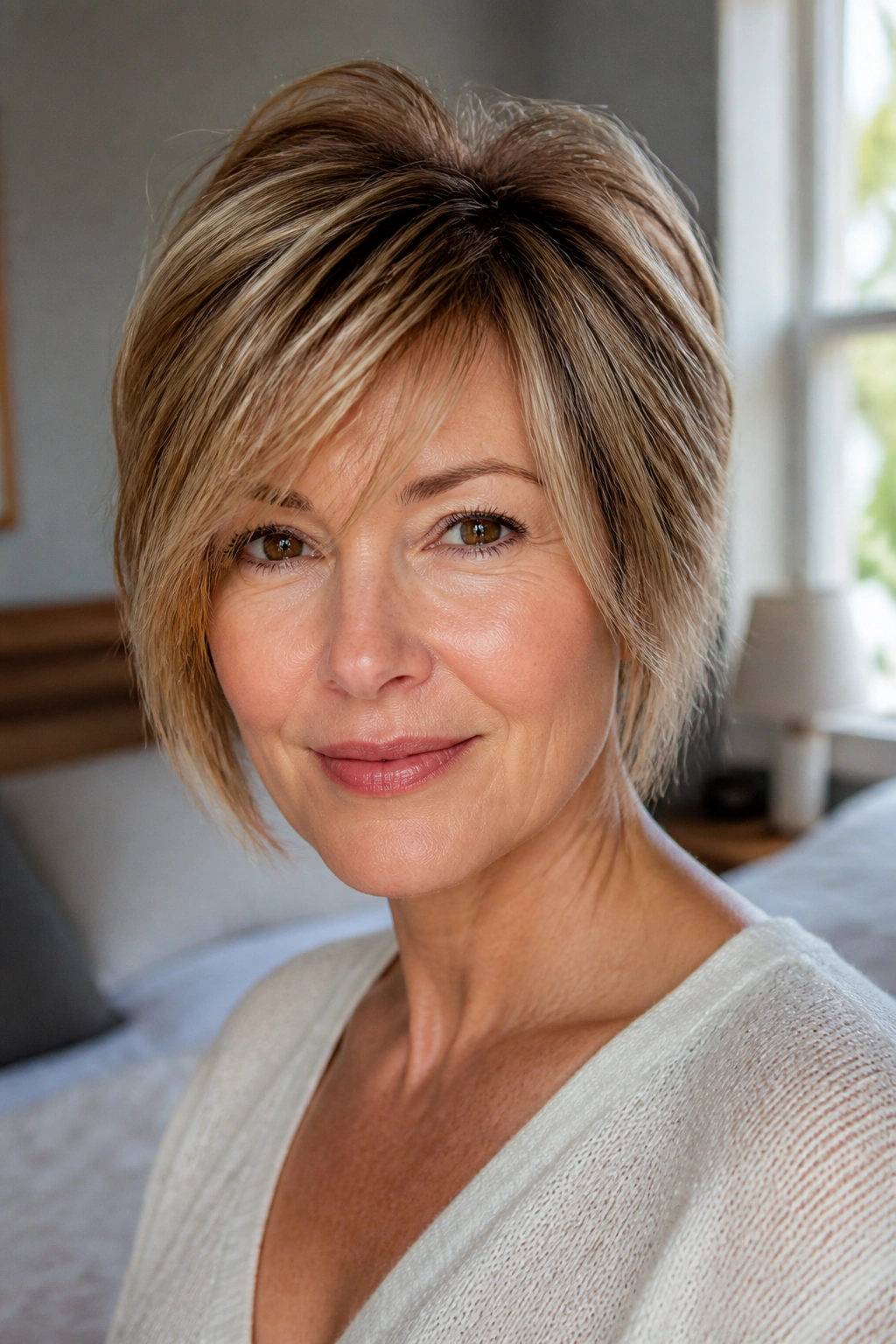
Fine hair hates too many layers. Airy layers for fine hair work because they keep the outline light without hollowing out the body that makes hair look full in the first place.
The rule that matters
Don’t ask for every inch to be sliced up. The better move is gentle layering through the crown and around the face, with the side bangs kept long enough to merge into the haircut. That keeps the hair from looking see-through at the ends. If the stylist takes too much from the interior, the cut can collapse by noon.
This style usually looks best when the bangs land around the cheekbone and are cut with a soft angle. That length gives the front some weight, which fine hair needs. A root-lift spray or a little blow-dry foam can help, but the real win is the shape itself. If the cut is right, you won’t need much product. That is the whole point.
20. Short Razored Shag
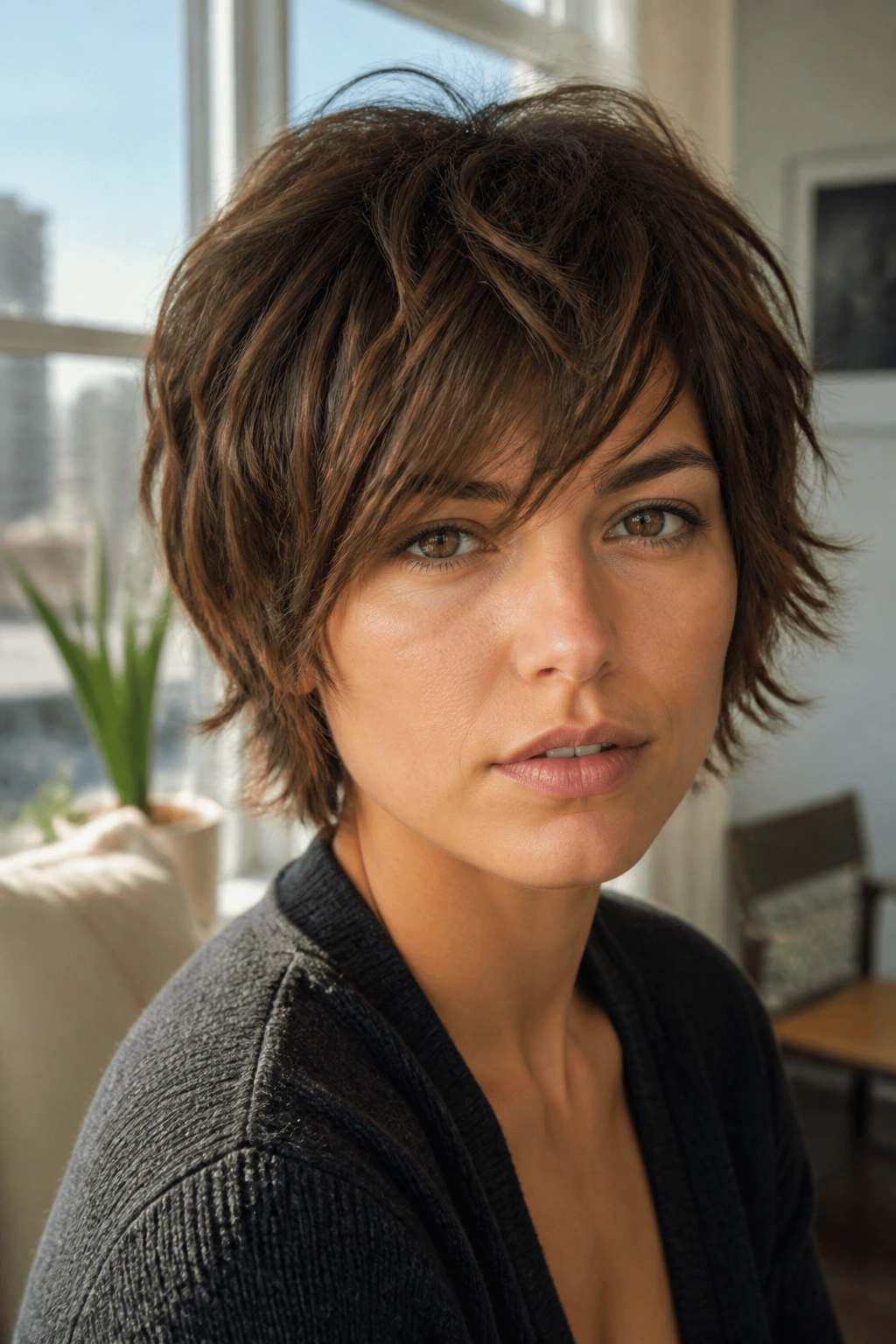
Why does a short shag feel so easy? Because the broken edges and loose layers do half the styling for you. A short razored shag with side bangs thrives on texture and a little mess.
The razor gives the ends a lighter, airier look, which helps wavy hair bend instead of puff. The side bangs should not be too thick. A softer fringe blends into the rest of the cut and keeps the forehead from looking boxed in. If the hair is very thick, the razor can help remove bulk, but the cut still needs enough structure that it does not turn fuzzy.
How to style it fast
- Work mousse through damp hair from roots to mid-lengths
- Scrunch with your hands, not a brush
- Diffuse on low heat, or air-dry about 80 percent before touching it
- Add a touch of paste to the fringe only if it separates too much
This cut suits people who like a little roughness in their hair. Clean lines are not the goal here.
21. Brushed-Back Layered Bob With Side Sweep
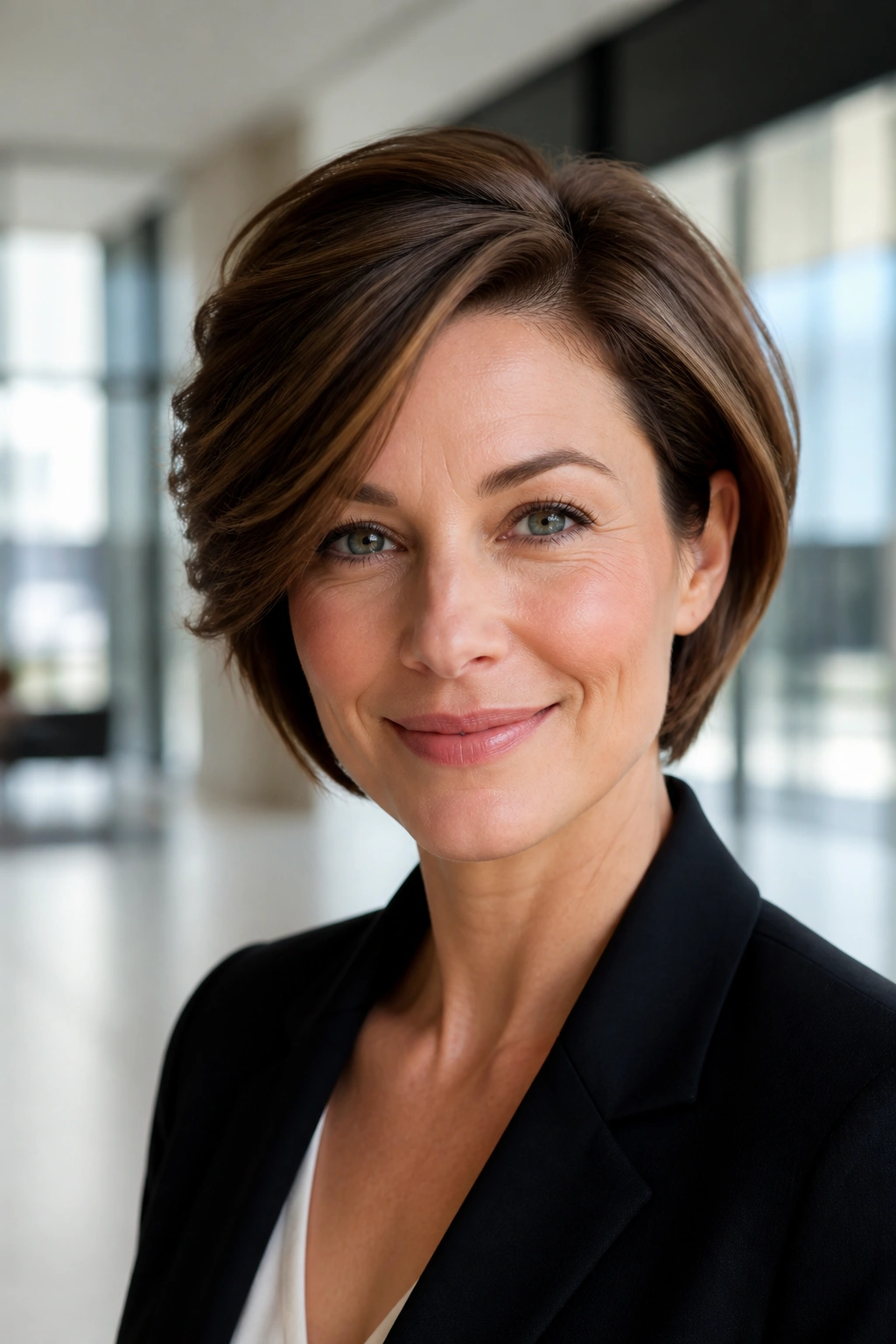
Side bangs do not have to fall across your face all day. A brushed-back layered bob with side sweep keeps the fringe long enough to move, then guides it away from the eyes for a cleaner, more open look.
That makes this cut useful for people who work with their hair tucked behind one ear or pulled partly back. The layers around the crown create lift, while the side sweep softens the front without hiding the brow. If the bob hits just below the chin, the whole shape can feel a little more grown-up, in the best sense.
This is one of the nicer choices if you wear glasses or spend a lot of time in wind. The fringe can be trained to sit off the face instead of fighting it. A small round brush, a quick blast of heat, and a cool-down set is often enough. A drop of serum on the ends keeps the bob neat without flattening the top.
22. Ear-Grazing Crop With Deep Side Part
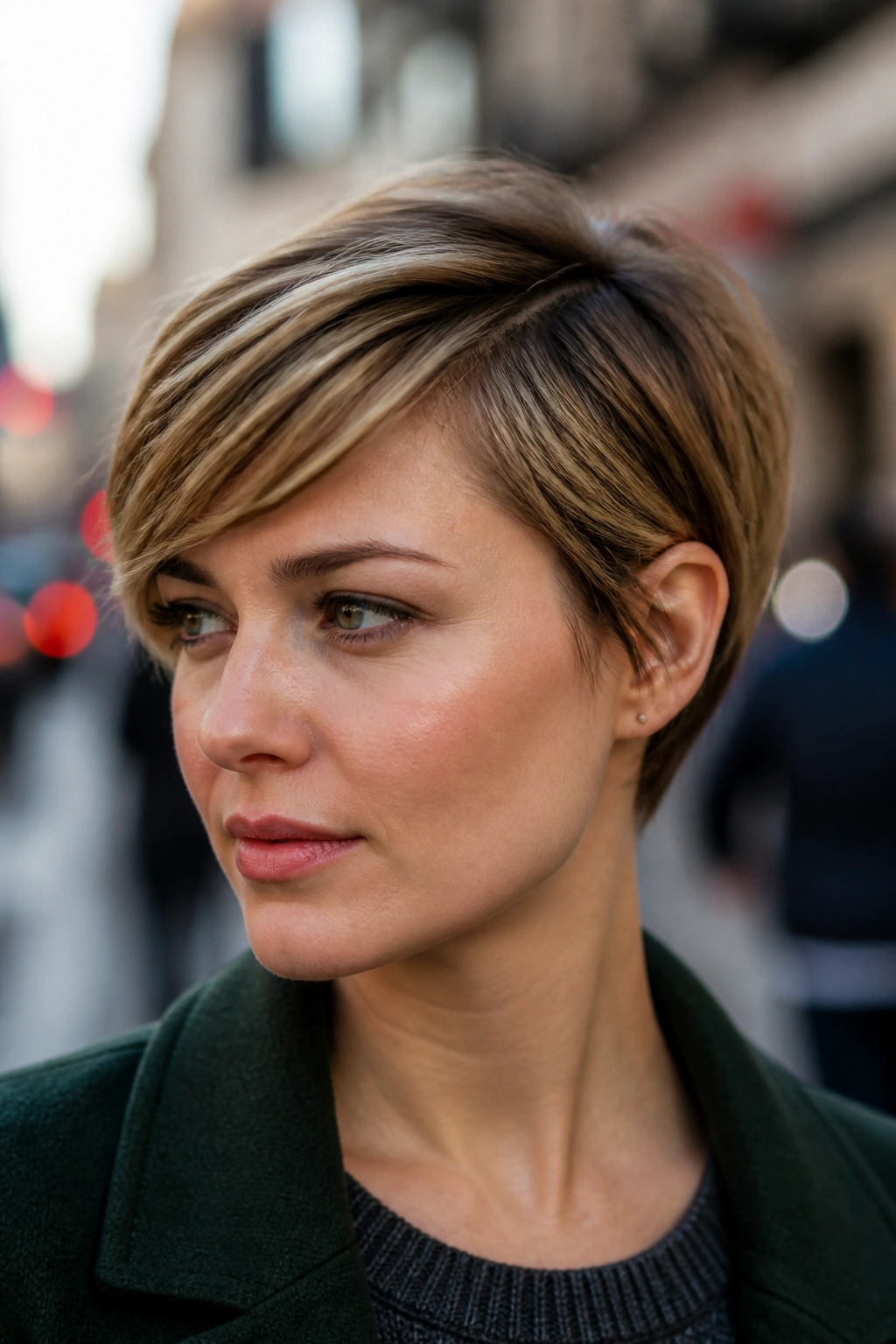
If your hairline gets heavy around the temples, this shape can balance it fast. An ear-grazing crop with a deep side part keeps the sides short and the fringe long enough to create a clean diagonal across the forehead.
The deep part does a lot of the work. It gives lift at the root and lets the bangs fall with intention instead of hanging in the middle. A cut like this can make strong brows, angular cheekbones, or a narrow chin look more balanced. It also plays well with statement earrings, which is a nice bonus if you like a little visual contrast.
Ask for the crop to sit softly around the ears, not chopped right at the top of them. That small difference keeps the haircut from looking abrupt. A lightweight paste or molding cream is enough to keep the fringe in place without making it crispy. Nobody needs crispy bangs.
23. Curly Pixie With Longer Top Layers
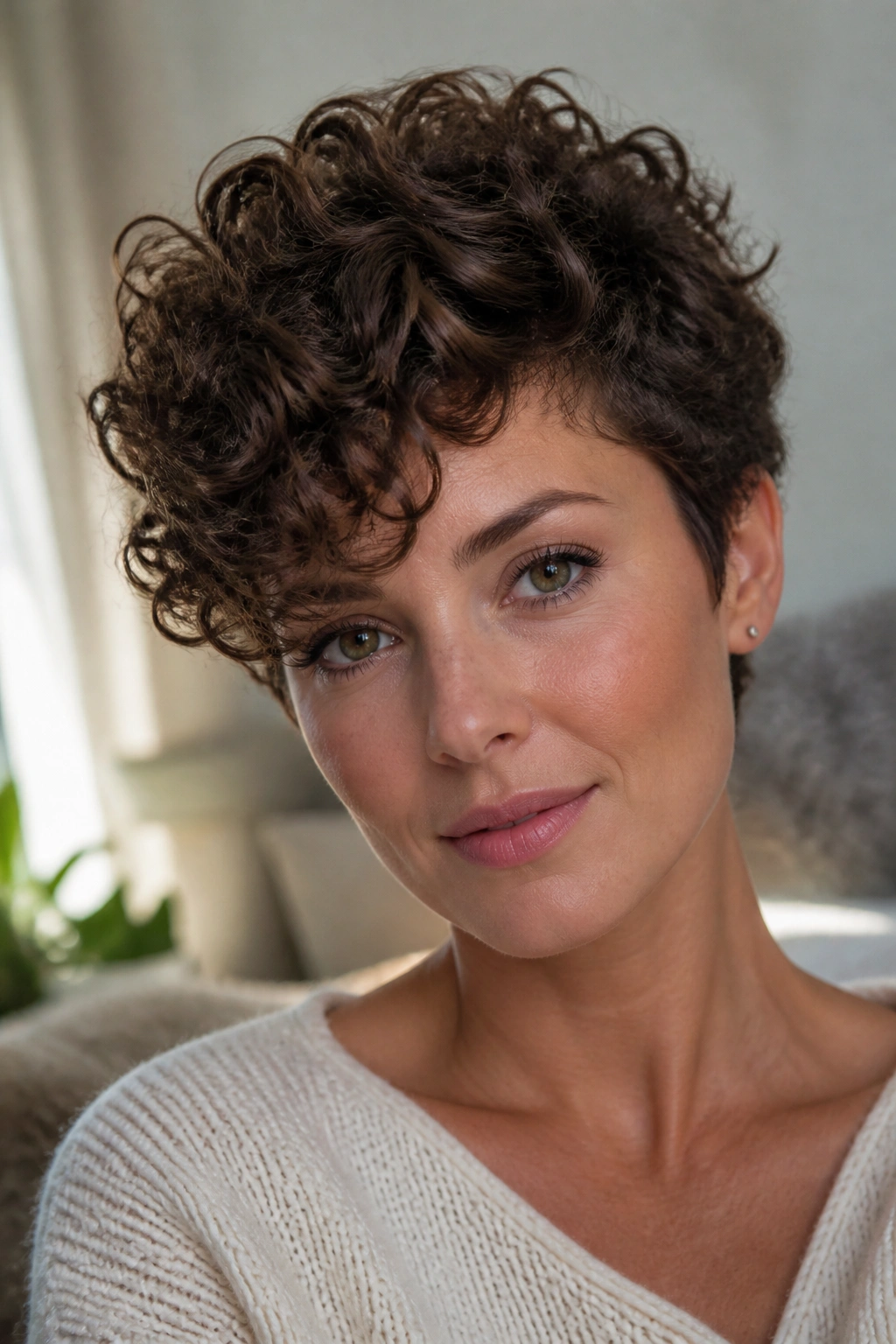
A curly pixie works best when the top is left longer than the sides by a full inch or more. That extra length gives the curls room to form a side bang instead of bouncing straight up.
What to tell the stylist
Cut it dry if possible, or at least mostly dry, so the curl pattern shows its real shape. The sides and nape can stay close, but the top should have enough room to create a soft sweep. If the fringe is too short, it shrinks and disappears. If it is too long, it can fall into the eyes in a clump. The sweet spot is somewhere in the middle, and that spot changes with texture.
This style is good for people who want curl definition without a lot of bulk around the head. A curl cream and a diffuser handle most of the styling. If a few pieces at the front need direction, finger-coil them while damp and let them dry into the side. Small fixes like that matter more than heavy product ever will.
24. Sleek Layered Bob With Side Bangs
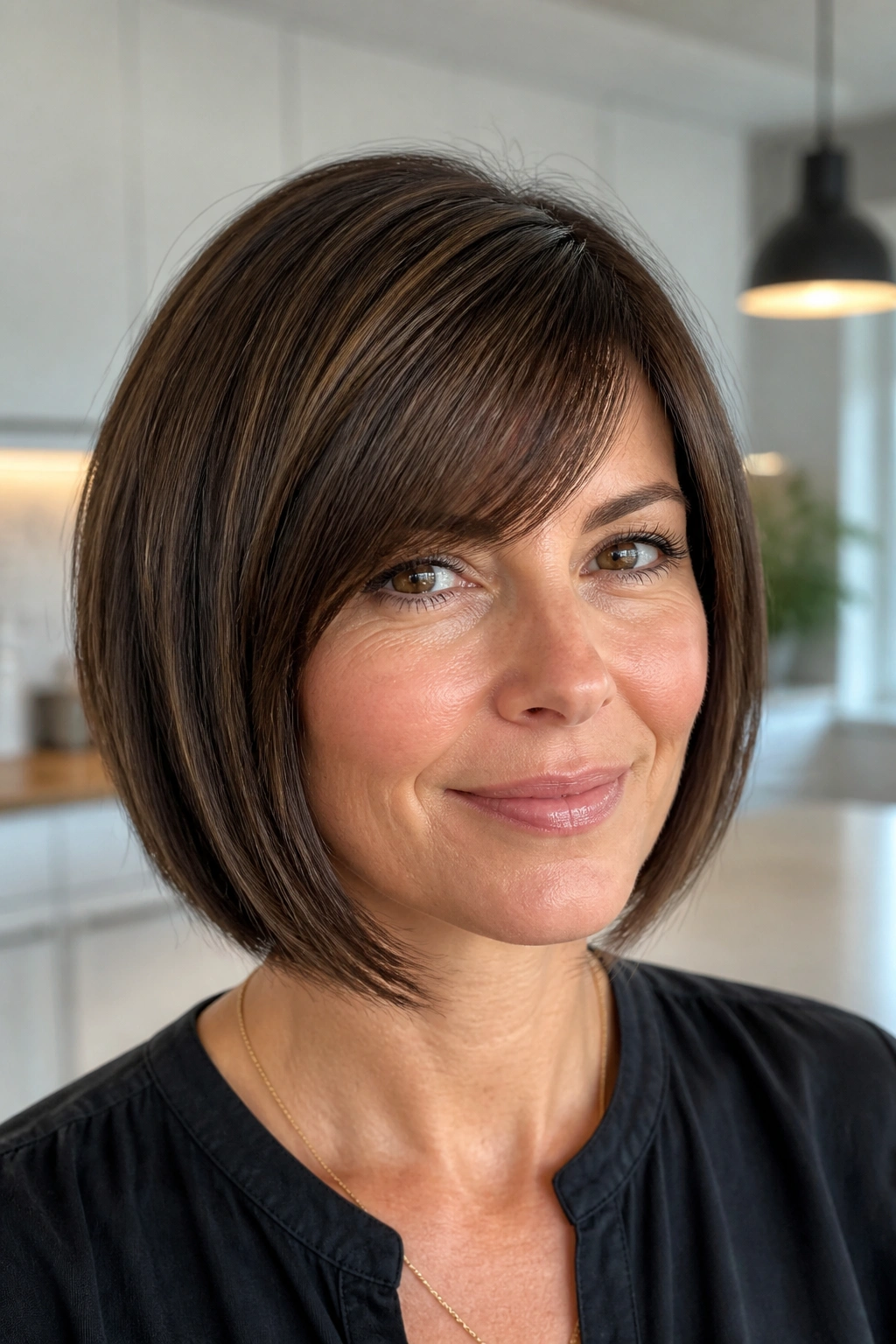
If you like clean lines, this is the neatest version of the whole group. A sleek layered bob with side bangs keeps the shape polished while the fringe stops it from feeling flat or severe.
The layers are subtle, tucked into the interior so the ends keep their smooth outline. The side bangs should skim the brow or cheekbone, then melt into the front edge of the bob. That blend is what makes the cut work. Without it, the whole thing can look too square.
This style suits straight hair especially well, but it can also tame coarse hair if you use a smoothing cream and a nozzle dryer. Keep the product light. A pea-sized amount on damp hair is enough for most lengths. Too much serum makes the roots collapse, and then the cut loses the clean swing that makes it worth wearing.
Final Thoughts
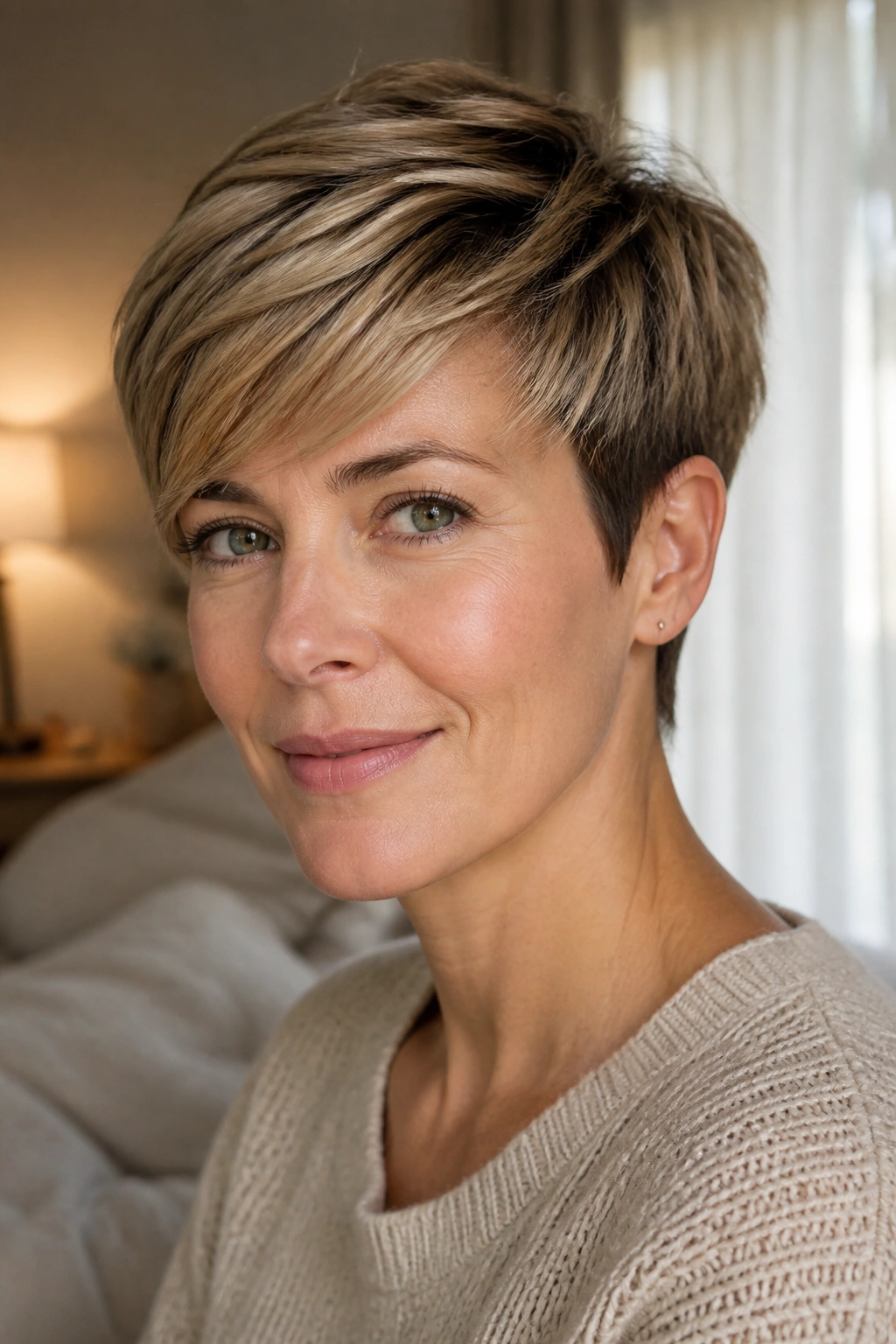
The best short layered haircuts with side bangs do one thing well: they give the face a little motion without making the whole cut feel busy. That balance is harder to get than it looks. Too many layers can leave hair wispy. Too few can make it boxy. The side bang is the hinge that keeps the shape moving.
Texture matters more than the name of the haircut. A cut that looks airy on straight hair may need a different interior shape on curls. A style that flatters thick hair can drown fine hair if the layers are too aggressive. That is why the same basic idea shows up in so many forms.
Bring photos, sure. Better still, bring photos that show the side view and the back. That saves a lot of guesswork, and with short hair, guesswork is expensive.