

Silver and white highlights can make hair look sharp in a way warmer blondes never quite do. They read crisp, a little frosty, and they can soften a dark base without making it feel flat. The trick is placement. A few pale strands around the face can wake up a cut; the wrong stripe in the wrong spot can look like a skunk tail, and nobody wants that.
These tones also ask for more respect than people sometimes give them. White pieces need hair lifted to a pale yellow first, and silver usually needs a clean, cool canvas or it turns muddy fast. If your base sits around a level 6 brunette, your colorist has to work harder than they would on a light blonde. That part matters more than the inspiration photo on your phone.
The good versions look lived-in, not costume-y. They move with the cut, they sit near the skin in a flattering way, and they leave enough depth so the brightness has somewhere to go. A blunt bob, a shag, a pixie, long curls — each one takes silver and white a little differently, and that difference is where the good ideas live.
1. Face-Framing Silver Money Piece
A silver money piece is the quickest way to get that cool, bright hit around the face without committing to a full head of lightening. It works because the eye goes straight to the front sections, so even a narrow band of white-silver can change the whole mood of a cut.
Why It Flatters
A softly placed money piece brightens the cheeks and makes the front of the hairline look cleaner. If the rest of your hair stays deeper — brunette, ash blonde, even a smoky beige — the contrast feels intentional instead of busy.
- Best on shoulder-length cuts, long layers, and curtain bangs
- Ask for a teardrop shape that starts narrow at the part and widens near the cheekbone
- Keep the brightest bits just off the root if your hairline is fragile
- A pearl or silver-beige toner keeps the front from reading yellow
Tip: If your hair is fine, don’t let the money piece get too wide. A slim, bright panel looks cleaner and lifts the face faster.
2. Ultra-Fine White Babylights
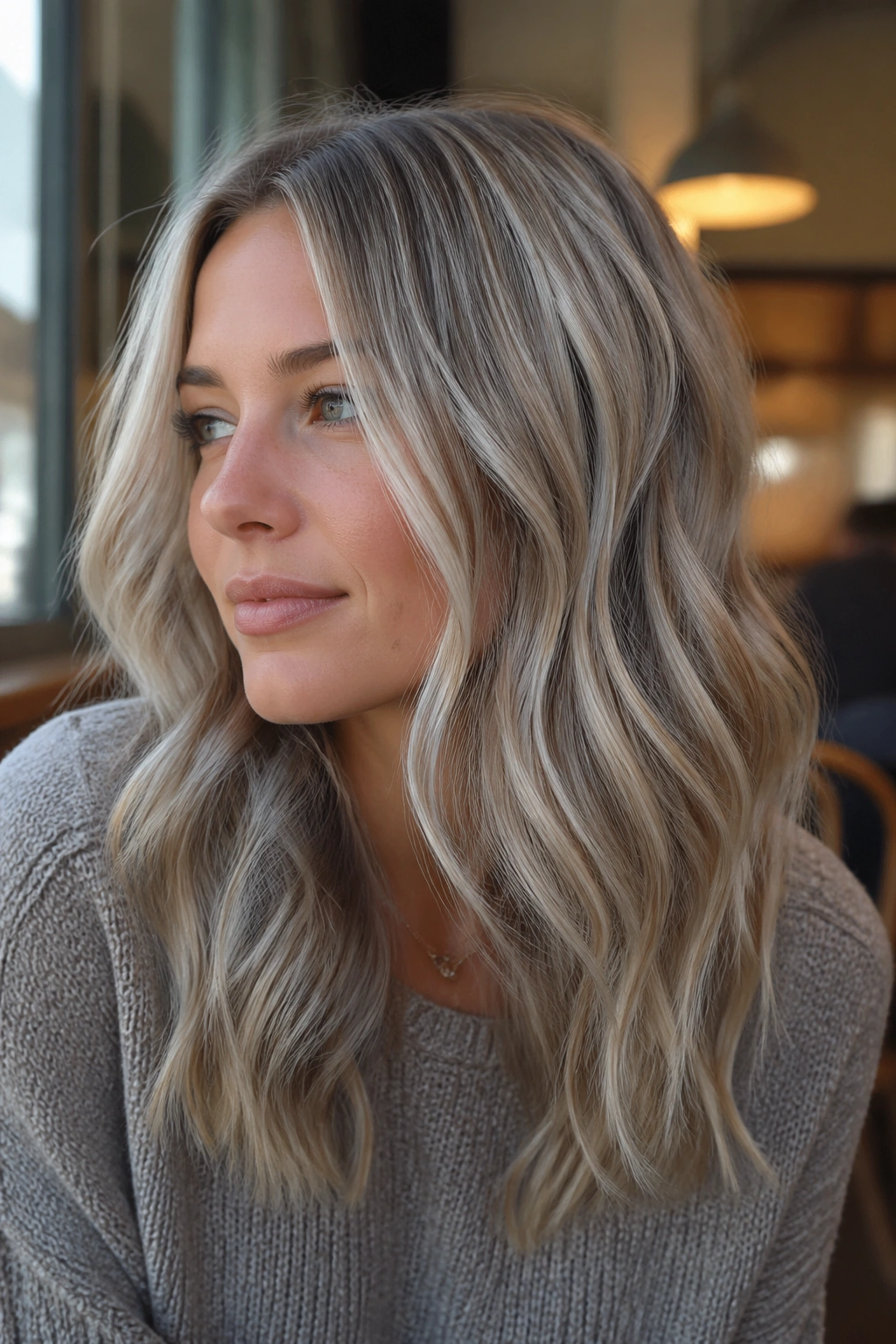
Tiny babylights are the quietest way to go icy, and that is exactly why they work so well. Instead of shouting from across the room, they scatter little flashes of white through the top layer and make the whole head look lighter.
That softness matters on hair that already has movement. Loose waves, a blowout, even a blunt bob with a bend at the ends — all of them pick up those micro pieces in a way chunky streaks never can. The result is less stripe, more shimmer.
If you want this look to hold up, ask for very thin weaves, not broad slices. The pieces should sit close together enough to blend, but not so close that the hair loses depth. That depth is the point. Without it, white hair can go flat fast.
3. Smoky Silver Balayage on Brunette Hair
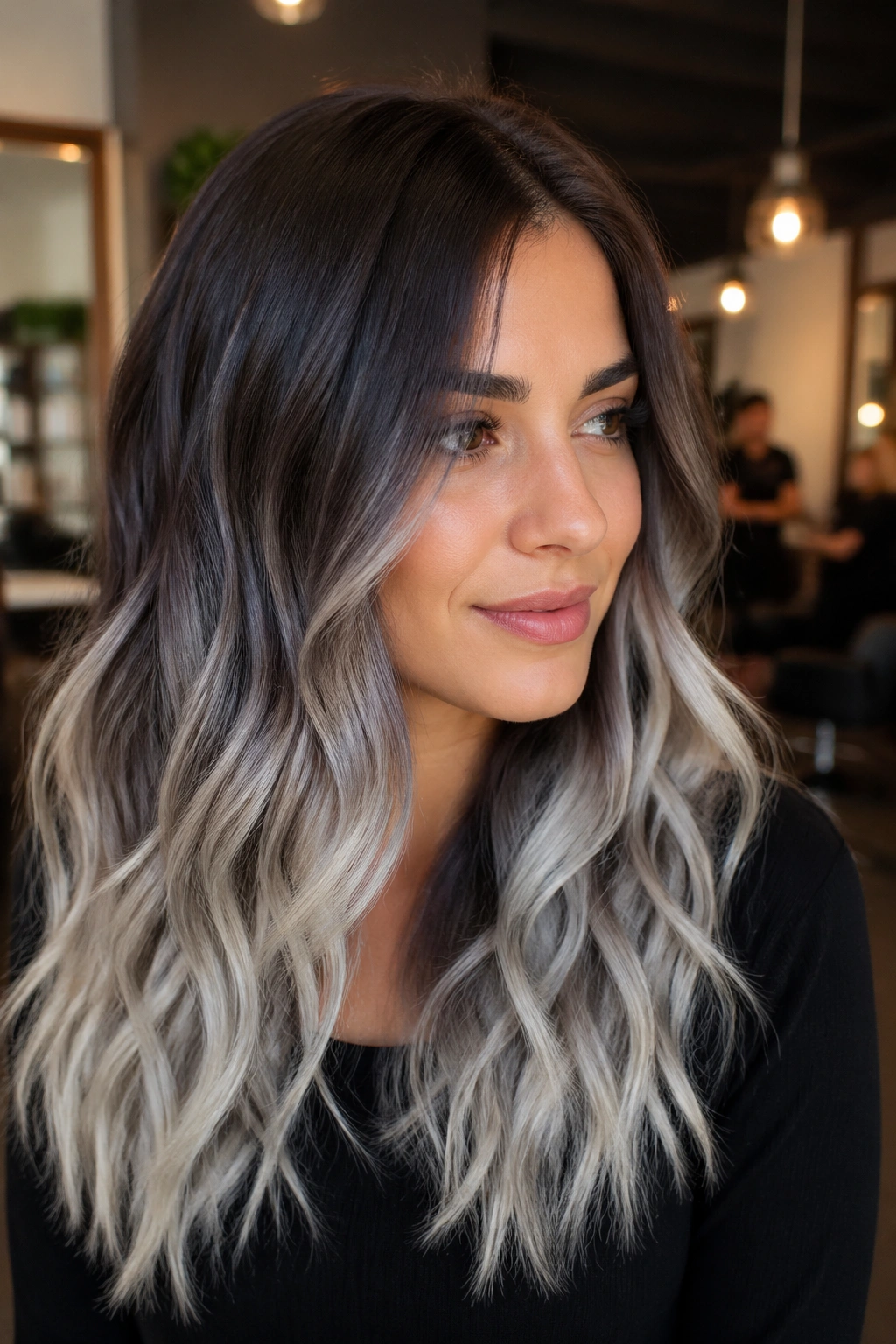
How do you keep silver from looking harsh on dark hair? You let it melt instead of slice. Smoky silver balayage uses hand-painted placement, so the brighter pieces start lower and blend up through the midlengths instead of drawing hard lines across the head.
How to Ask for It
Tell your colorist you want a dark root, smoky midsection, and silver-white ends. Those three zones give the color a gradient that feels expensive, not streaky. It also helps if the pieces are painted around the face and the top layers first, because that is where the silver gets noticed.
Brunette hair usually needs more lifting than people expect, and that’s where the patience comes in. If the base is warm, the silver will read soft gray instead of icy metallic unless the hair is lifted cleanly. No shortcut fixes that.
What Makes It Wearable
- The root stays darker, so regrowth doesn’t shout
- The silver sits in ribbons, not blocks
- The end result looks good on waves and air-dried bends
- A blue-violet shampoo helps keep brass from creeping back
4. Chunky Ice Streaks Around the Crown
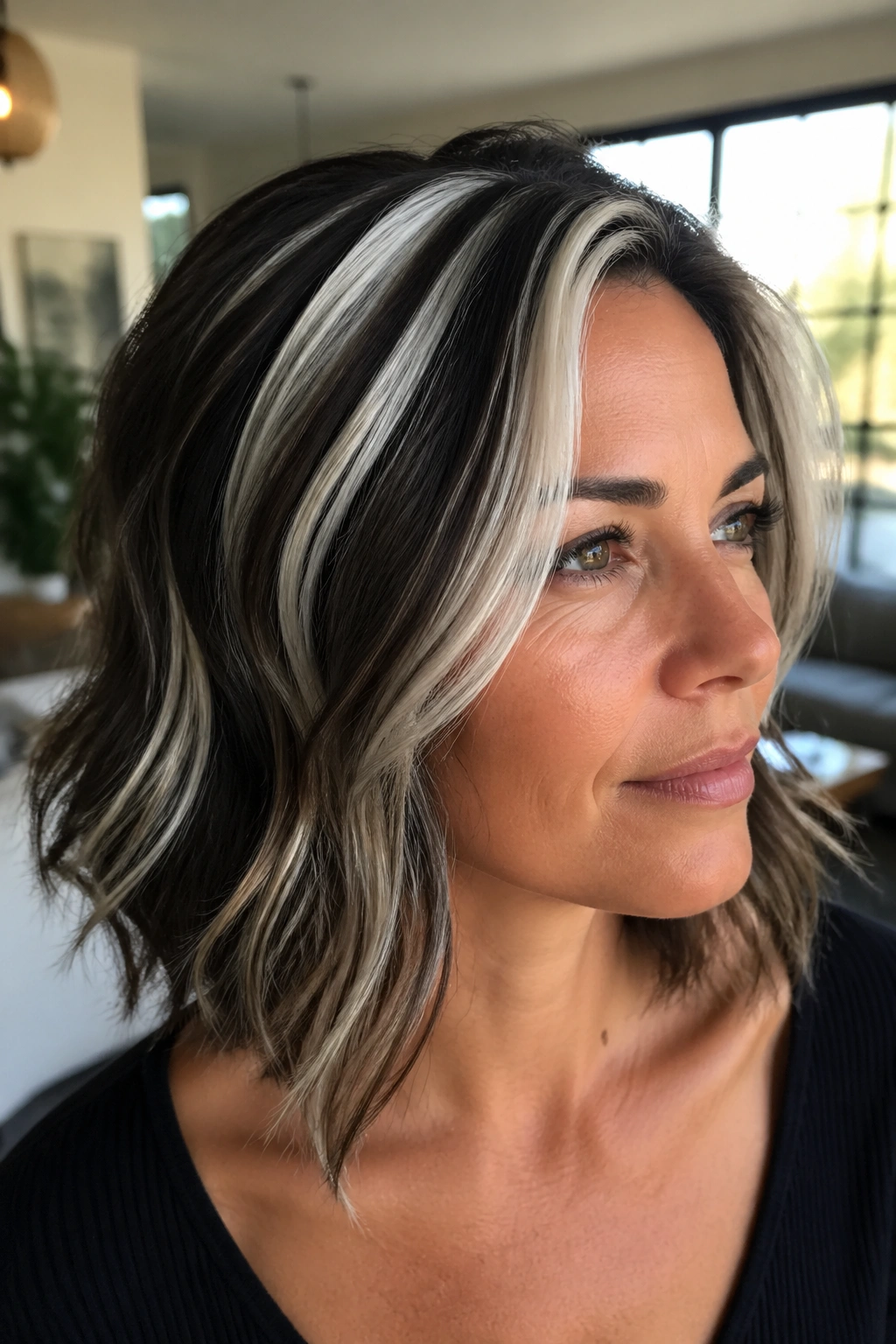
If you like a little drama, chunky ice streaks around the crown bring it. They look especially good when the haircut has some lift at the top, because the lighter pieces catch the light every time you turn your head.
This is not a shy placement. The brighter panels sit where people notice volume first, so they make a cut look fuller and a little more styled, even when you’ve barely done anything to it. On a blunt bob, they feel bold. On a layered shoulder cut, they feel more playful.
- Best placed just behind the hairline and around the part
- Works well on bobs, lobs, and layered midlength cuts
- Needs more upkeep than babylights because the contrast is obvious
- Looks strongest when the rest of the hair stays one or two shades deeper
Tip: If you want the streaks to look modern instead of retro, keep the width uneven. Straight, even panels can read dated fast.
5. Platinum-White Ends on a Lob
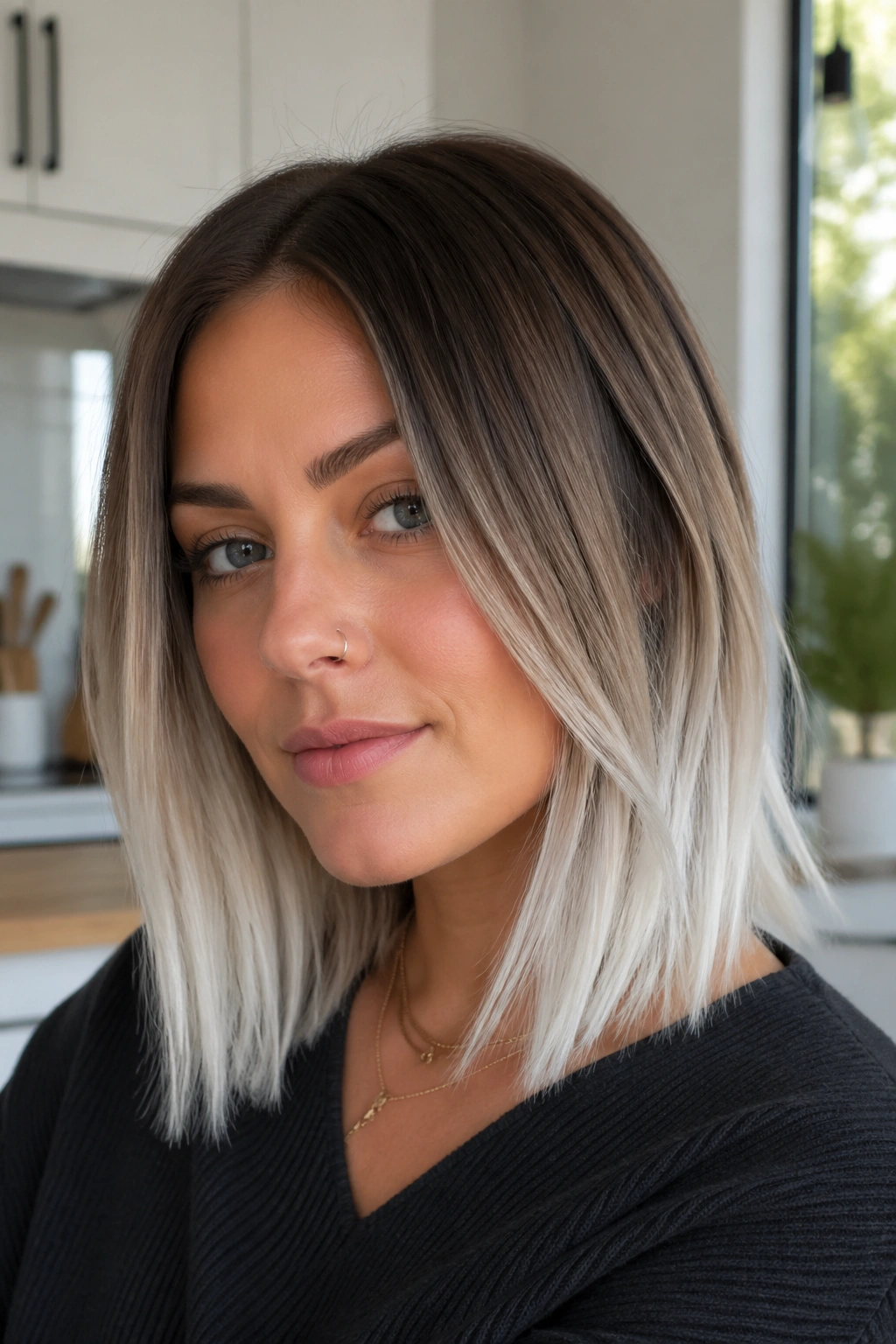
A lob with platinum-white ends has a clean, slightly sharp look that I always think suits a neat neckline. The shorter length keeps the brightness from feeling heavy, and the darker root gives the color room to breathe.
The magic is in the contrast. When the bottom few inches go nearly white, the cut looks crisp even when it’s worn with loose waves or a rough blow-dry. On straight hair, the edge looks sleek. On bent hair, the ends flash a little more and the effect feels softer.
This one needs careful lifting because the ends sit where hair is already the oldest and most fragile. If the colorist pushes too hard, those ends can go rough, and white hair shows damage faster than beige blonde does. A good finish here should look smooth, not chalky.
6. Silver Peekaboo Panels Beneath the Top Layer
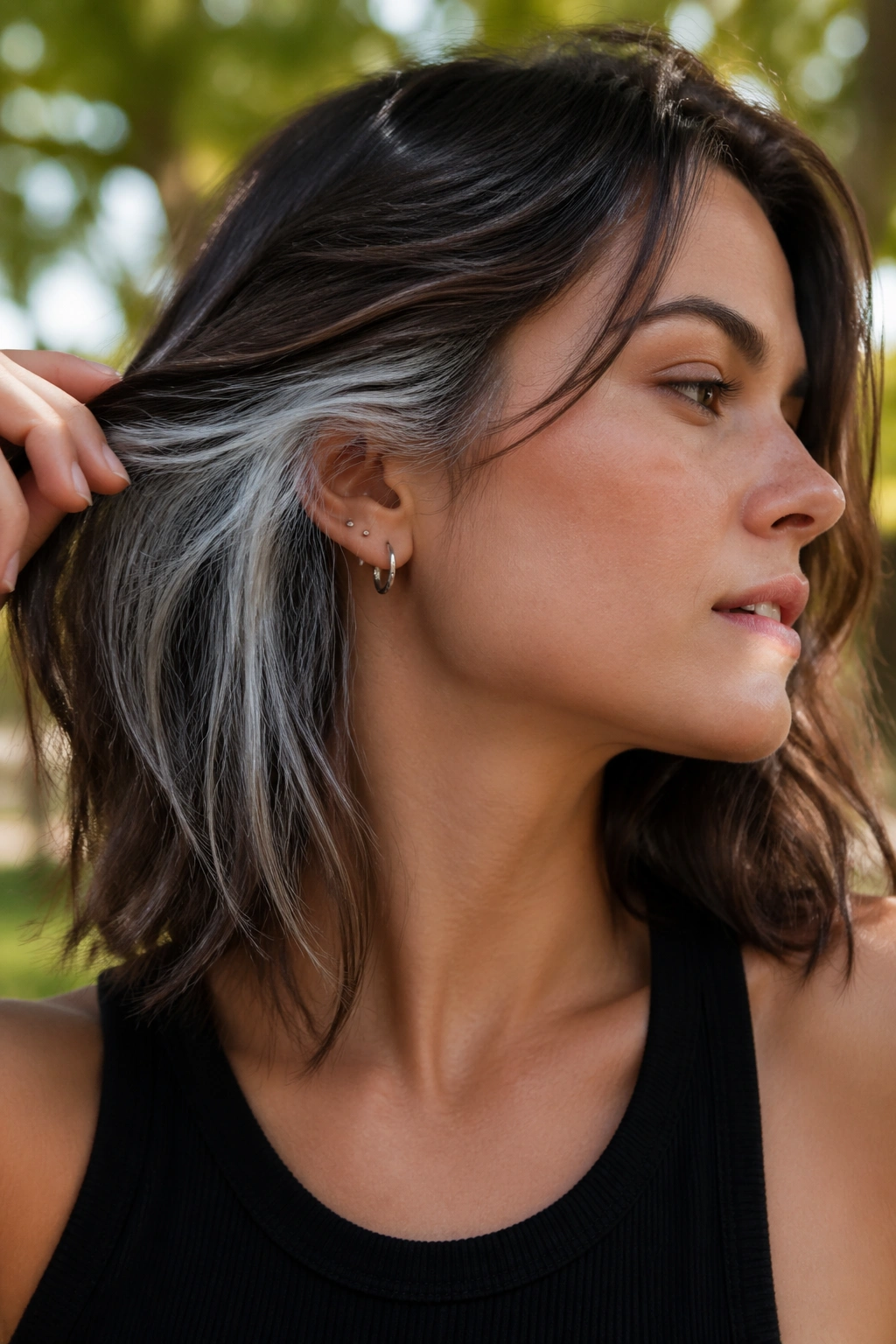
Peekaboo silver is for people who like a surprise more than a statement. The brighter pieces hide under the top layer, so they only show when the hair moves, flips, or gets tucked behind the ear.
Unlike face-framing highlights, these panels keep the top of the head darker and calmer. That makes the look easier to wear in settings where full silver might feel too loud. It also gives a haircut a second life in motion, which is half the fun.
This style shines on layered hair, half-up styles, and anything with a bit of swing. Ask for the panels to sit under the crown and around the ears, where they can flash through without taking over. If the hair is very fine, keep the panels narrow so they don’t expose too much scalp.
7. White Highlights That Follow Curly Hair
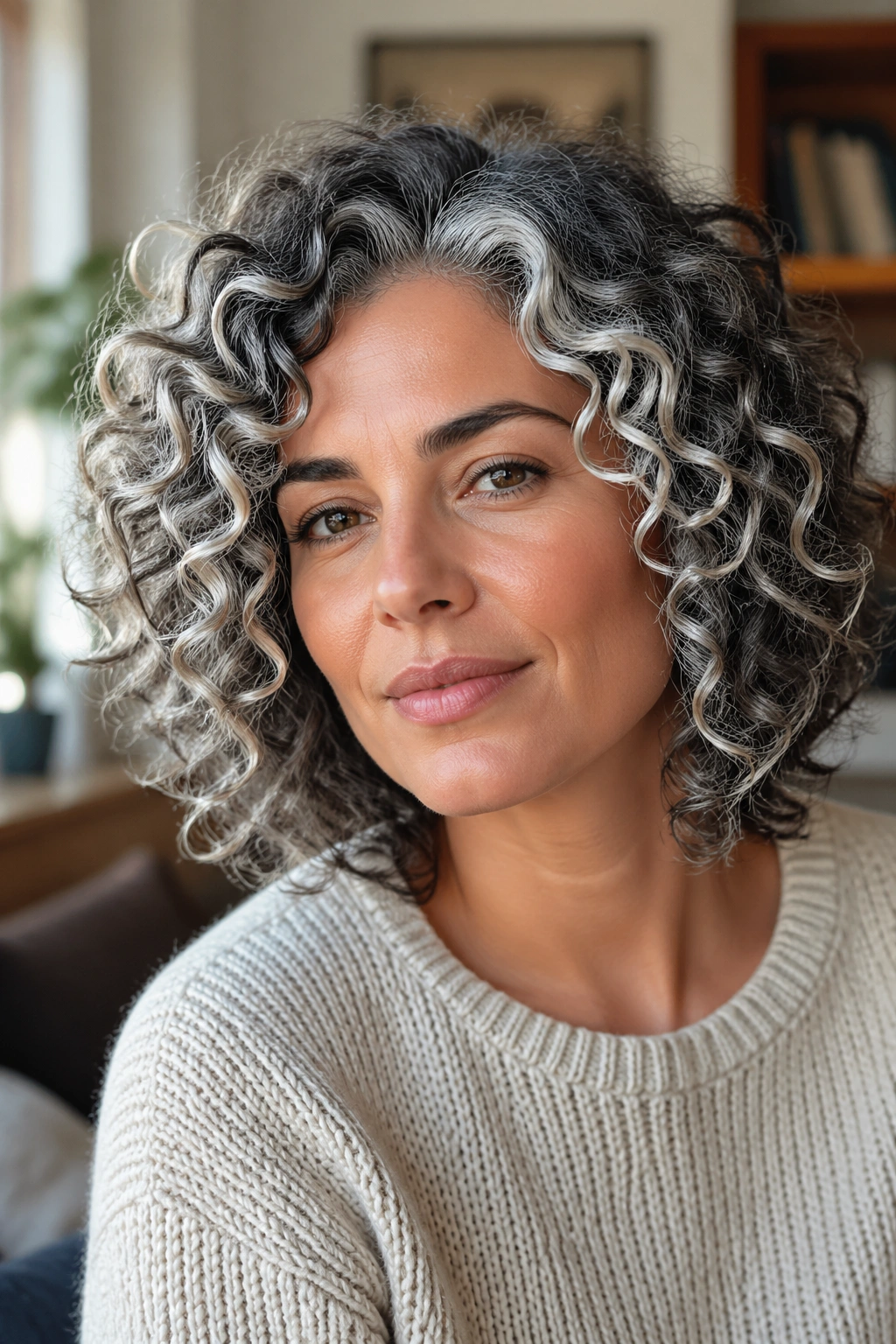
Curly hair loves placement that follows the curl, not fights it. White highlights work best when they’re painted on the outer curves of the curl pattern, where the light naturally lands and each coil gets a little edge.
What Makes It Pop
If the highlights are dropped randomly, curls can turn into a blur. When they’re placed with the shape of the curl in mind, the white pieces separate the pattern and make the texture look clearer. That’s the whole trick.
- Paint on the outside of curl clumps, not every strand
- Leave some depth underneath so the curls don’t puff out
- Ask for soft ribbons, not thick blocks of white
- Keep the toner cool but not flat, or the curls can lose dimension
Tip: Curly hair often looks best with a slightly darker root than the rest. It helps the white pop without making the whole head look over-bleached.
8. Frosted Curtain Bangs With a Root Shadow
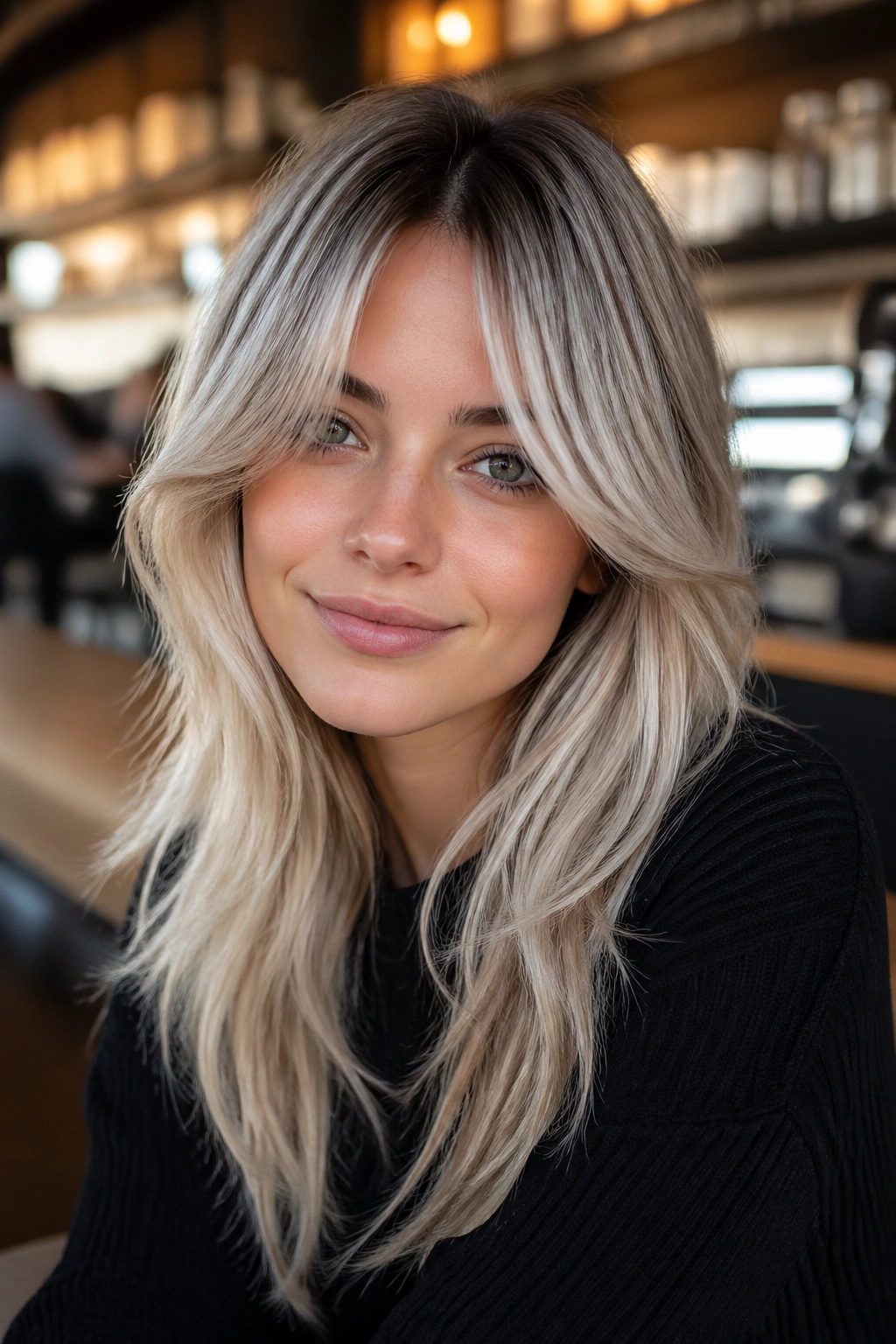
Curtain bangs and icy color are a cheat code. The bangs already sit where people look first, so when they’re frosted with silver-white pieces, the face gets a quick lift without changing the entire head.
The root shadow is what saves this look. Keeping a deeper base underneath the light bangs stops the front from looking like one pale block. It also gives the bangs shape, which matters because curtain bangs can flatten fast if the color is too even.
This idea works especially well if you want something noticeable but not high-maintenance everywhere else. The bangs can be bright, while the lengths stay smoky or beige. That contrast feels modern and gives you a little edge without turning the whole haircut into a maintenance project.
9. Soft Silver Melt From Dark Root to Pale Ends
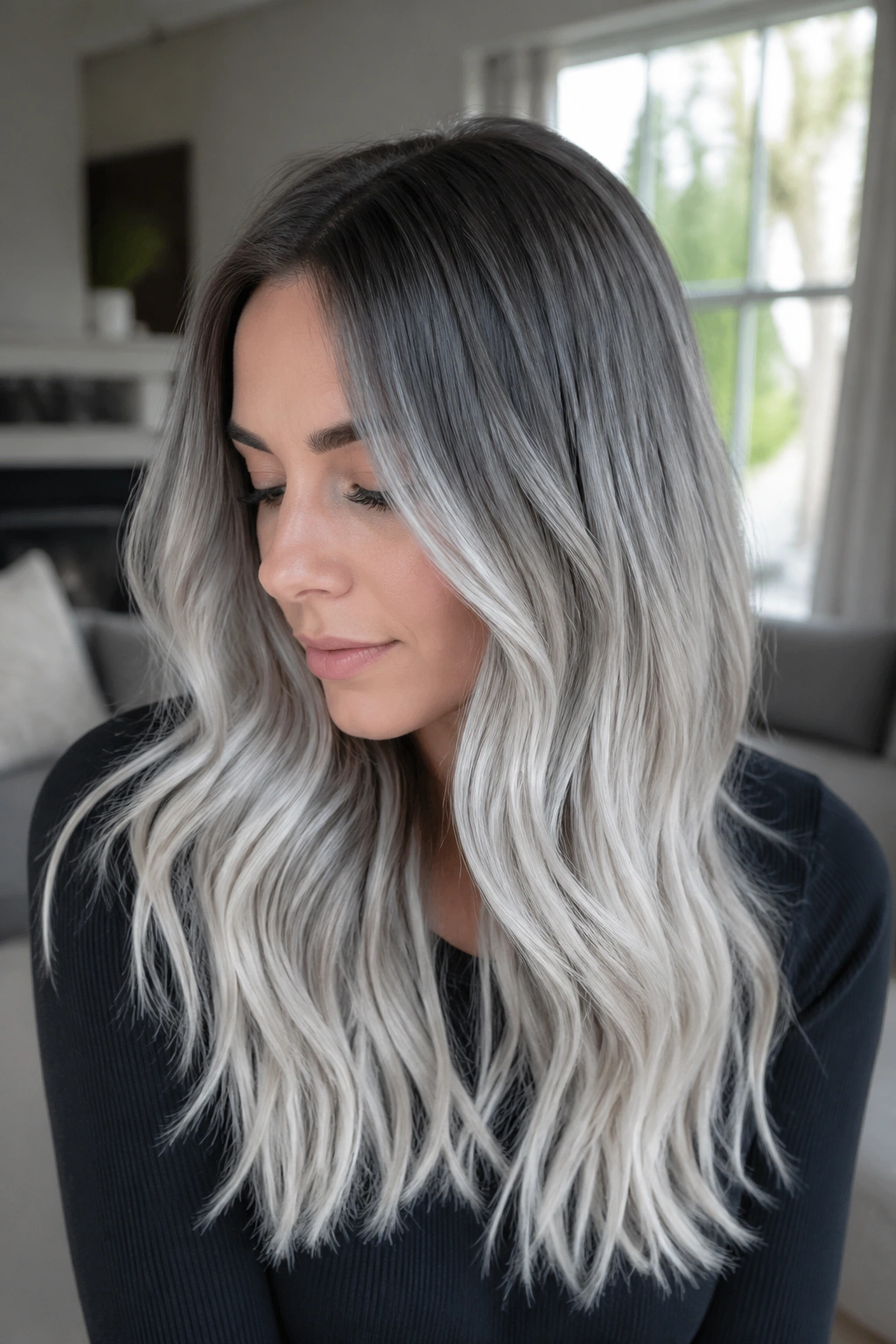
How do you get silver without a hard line? You let the color melt through the midlengths and keep the transition slow. A soft silver melt starts with a deeper root, slides into smoky gray, and fades into pale white at the ends.
How to Ask for the Blend
Use those words when you sit in the chair: root smudge, silver midlengths, white ends. That tells the colorist you want the color to move in stages instead of jumping from dark to light. It sounds simple. It isn’t.
A good melt depends on the space between each tone. Too little contrast and the hair goes flat. Too much and it looks striped. The sweet spot is a gentle shift where you can still see the root, but the eye doesn’t stop there.
This is one of the most forgiving silver ideas for grow-out, because the root is already part of the design. If you hate hard lines, this is the one that won’t fight you every few weeks.
10. White Ribbons Through a Shag Cut
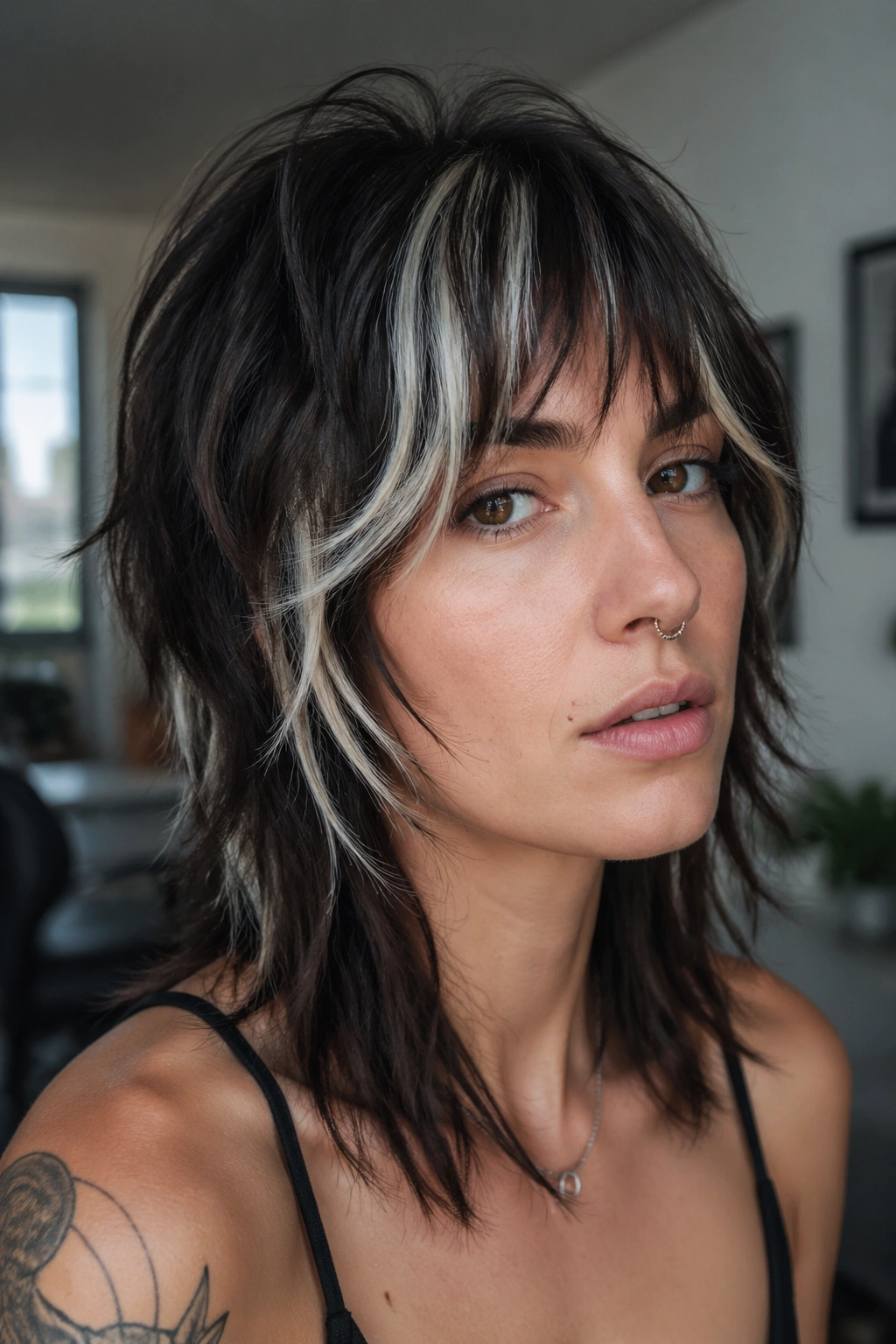
A shag cut wants movement, and white ribbons give it exactly that. The layers break up the color, so the bright pieces don’t sit there like stripes; they move, bend, and disappear into the texture as the hair shifts.
I like this look on hair that’s a little messy on purpose. Air-dried waves, rough blowouts, diffused curls — all of that works. The brighter ribbons can be placed through the crown and around the face, then softened toward the ends so the layers still look feathered.
- Best when the layers are choppy, not too polished
- Ask for thin ribbons, especially through the top layers
- Keep a few darker pieces near the nape for depth
- Works well with a texturizing spray or matte finish
A shag with white ribbons should feel alive. If it looks too neat, something went wrong.
11. Steel-Gray Highlights on Black Hair
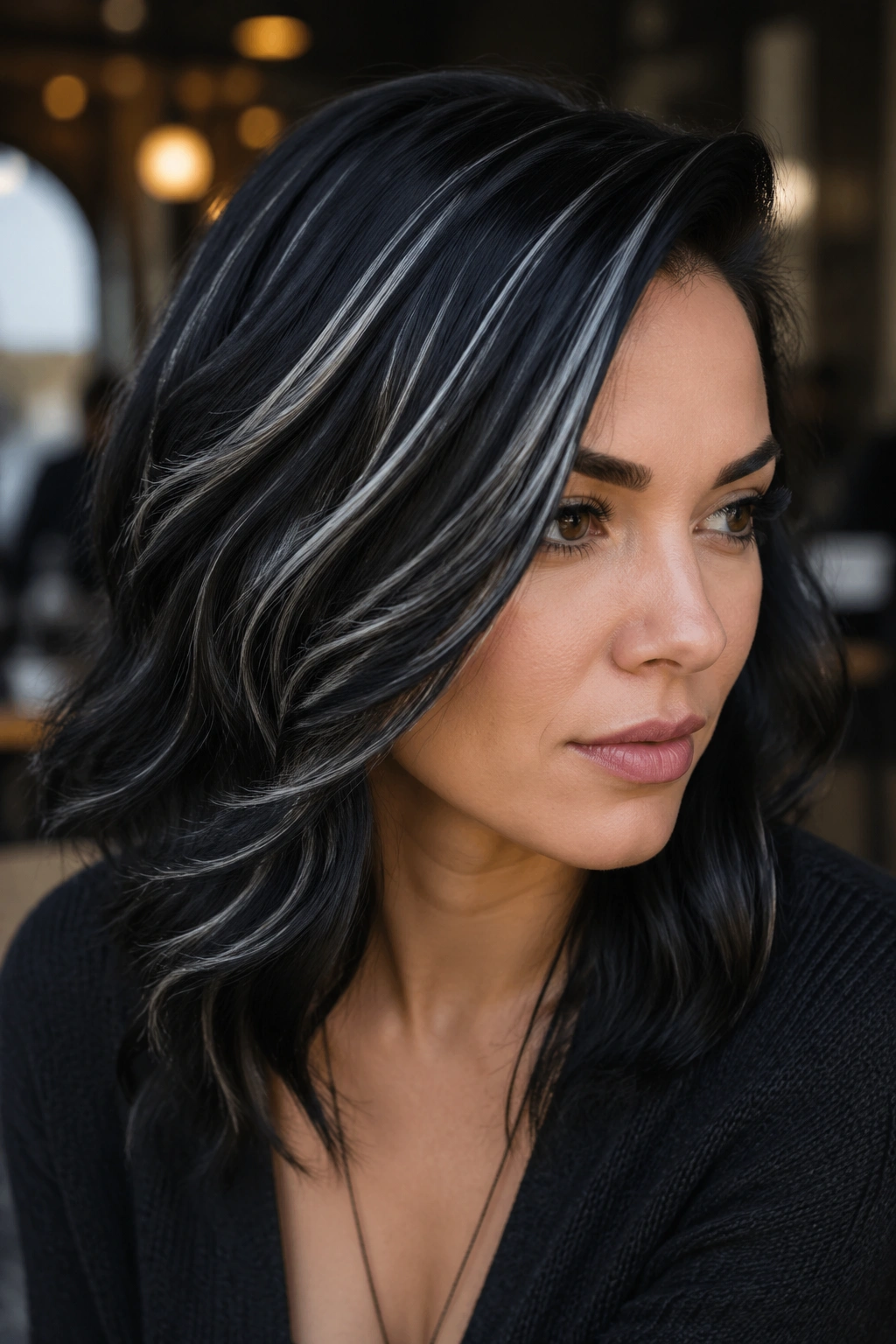
Steel-gray highlights on black hair are bold in a clean, graphic way. They do not try to look soft. They look deliberate, almost architectural, and that can be a lot more interesting than trying to fake a warm blonde effect on a dark base.
The pieces need to be thin enough to look like flashes, not slabs. On black hair, even a narrow gray ribbon reads strong, so the placement matters more than sheer amount. If the highlights are too broad, the contrast gets stiff. If they’re narrow and well spaced, the hair gains movement without losing its depth.
This look also leans on tone more than people think. A cool steel finish should sit between silver and smoke, not pure white. Pure white against black can look harsh in a way that’s hard to wear unless you want a very graphic result.
A side part helps a lot here. It gives the brighter pieces a place to gather and keeps the overall look from feeling busy.
12. Silver Foils on Beige Blonde Hair
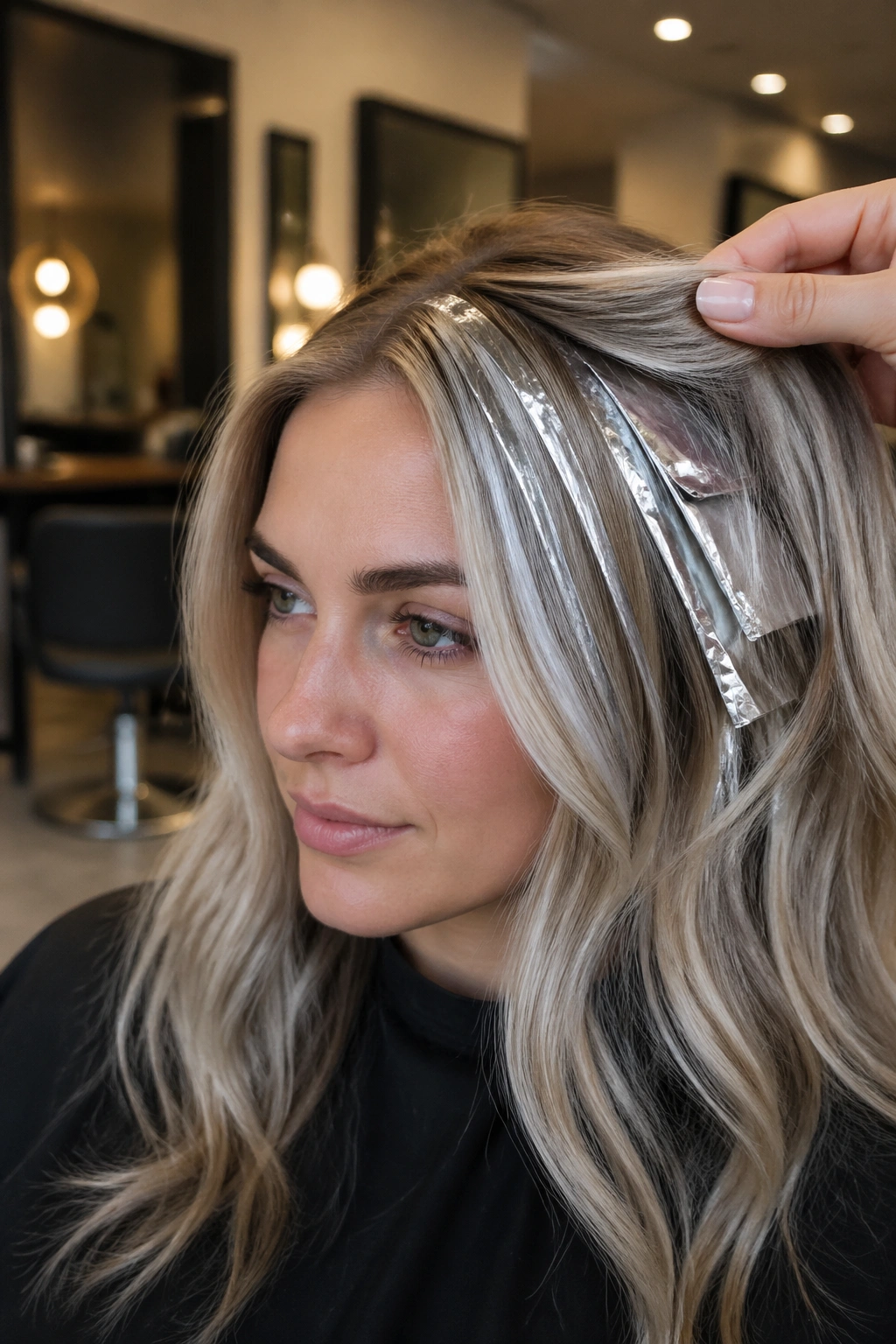
Beige blonde already has a soft base, so silver foils can add coolness without turning the whole head into a sheet of white. That’s the nice thing about this placement: it gives you lightness with a little breathing room.
Unlike all-over platinum, the beige background keeps the look grounded. The silver foils sit on top like cool accents, which means the grow-out is easier to live with and the color stays dimensional. If you like hair that looks expensive rather than icy for its own sake, this is a strong choice.
Ask for narrow foils around the hairline, through the top layers, and just a few in the midlengths so the color doesn’t go flat. The base should still show through in places. That’s what keeps the blonde from turning chalky.
13. Icy Face-Frame on a Pixie Cut
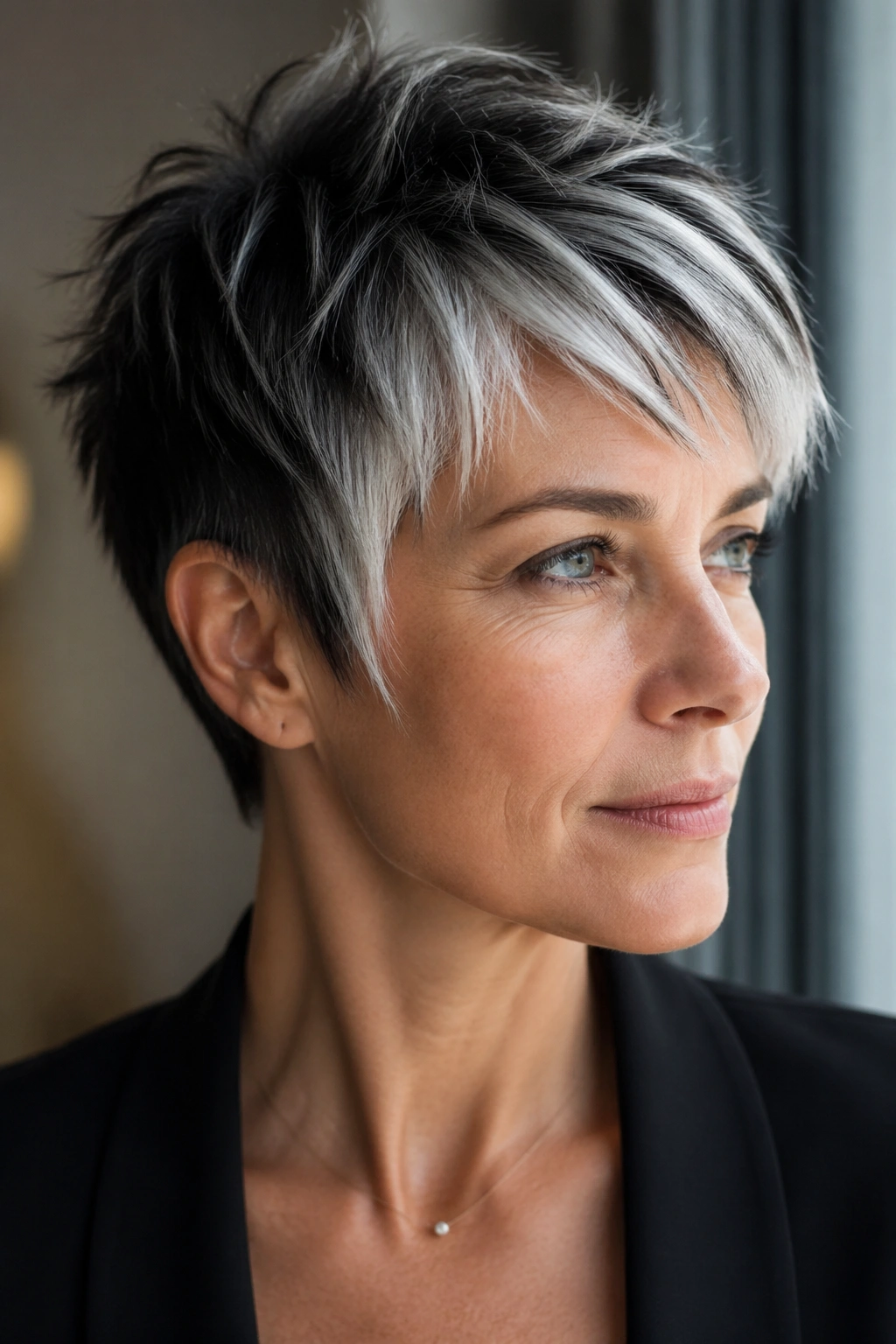
Can a pixie carry silver-white highlights? Absolutely. A short cut can handle bold color because the shape is already doing some of the work, and the brighter pieces have less length to compete with.
Where the Eye Goes First
The best place for this look is the fringe and temple area. That little bit of brightness draws attention to the eyes and keeps the pixie from reading too dark around the face. If the top is textured, the highlight pieces can follow the direction of the layers and give the cut more lift.
A pixie doesn’t need much color to feel changed. One or two bright panels are enough if they sit in the right spot. That’s what makes this style so smart for short hair: you get an obvious result without flooding every strand.
Tip: Keep the nape a shade deeper. It stops the whole cut from turning into one white blur and makes the top look fuller.
14. Rooty Silver Balayage for Low-Maintenance Wear
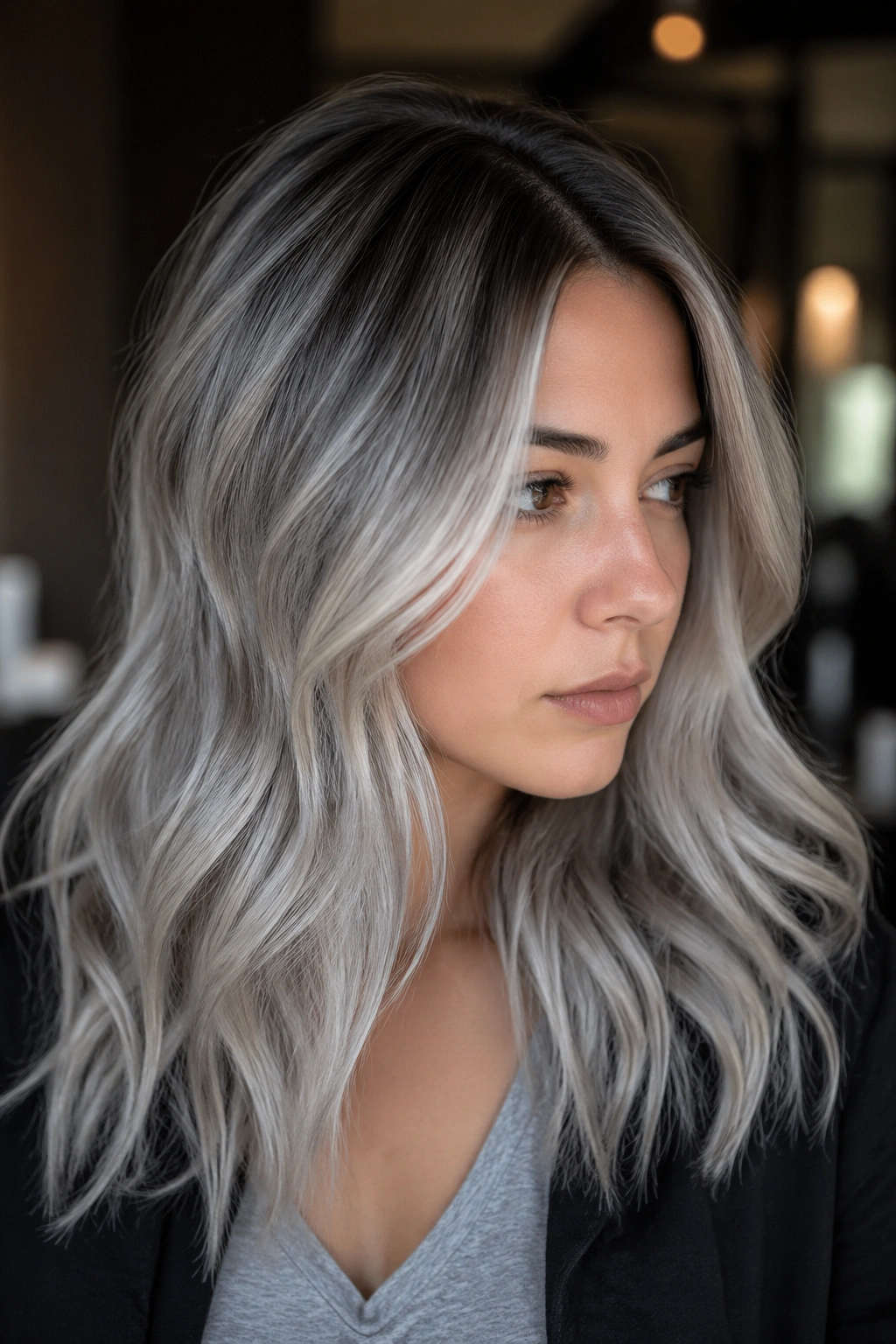
This is the one for people who do not want to visit the salon every few weeks. A rooty silver balayage keeps the base deeper, lets the silver sit in the midlengths, and uses the root as part of the design instead of hiding it.
The root shadow should stay one or two shades darker than the highlighted areas. That gives the grow-out a soft edge and keeps the silver from looking painted on. On wavy or layered hair, the darker root also adds depth so the silver pieces don’t float.
I like this style because it looks intentional even when it grows out a little. It does not need to be perfect to look good. That matters. Silver that depends on absolute freshness can get exhausting fast, and this version avoids that trap.
15. White Underlights for Hidden Brightness
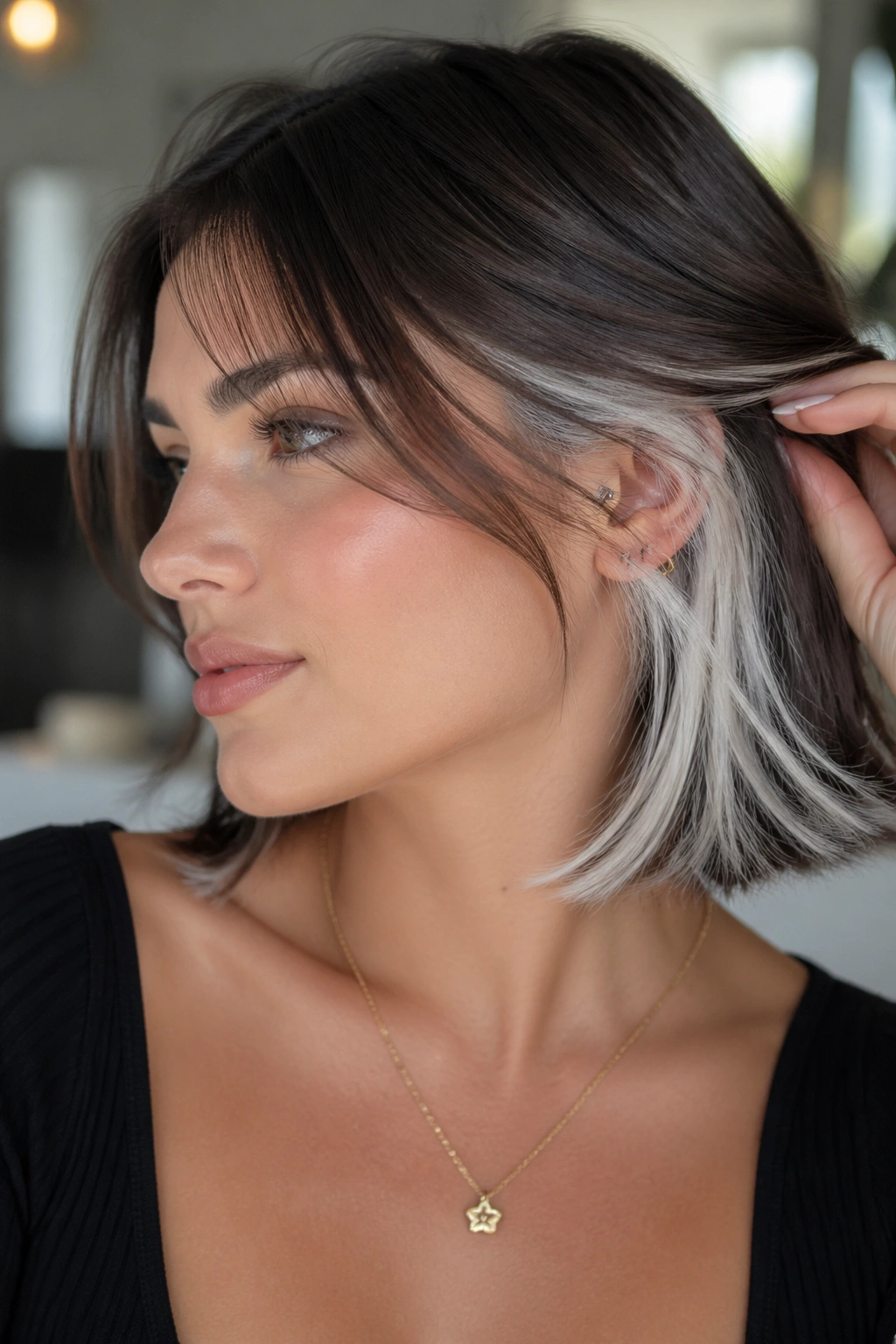
Why hide the brightest pieces under the top layer? Because sometimes the best part of a color service is the reveal. White underlights stay tucked away until the hair moves, and that little flash can feel sharper than an obvious front streak.
The placement works best when the top layer is left darker or more muted. Then the white underneath pops through at the ends, around the ears, or in a half-up style. On straight hair, the effect is subtle and cool. On curls or waves, the bright bits peek out more often and read bolder.
How to Style It
A half-up clip, a low bun, or a loose braid all show off underlights without making the whole style loud. If you wear your hair down most days, the underlayer still gives you a little something extra when the wind hits.
It’s a good choice if you want a hidden detail that doesn’t need constant attention.
16. Halo Highlights Around the Crown
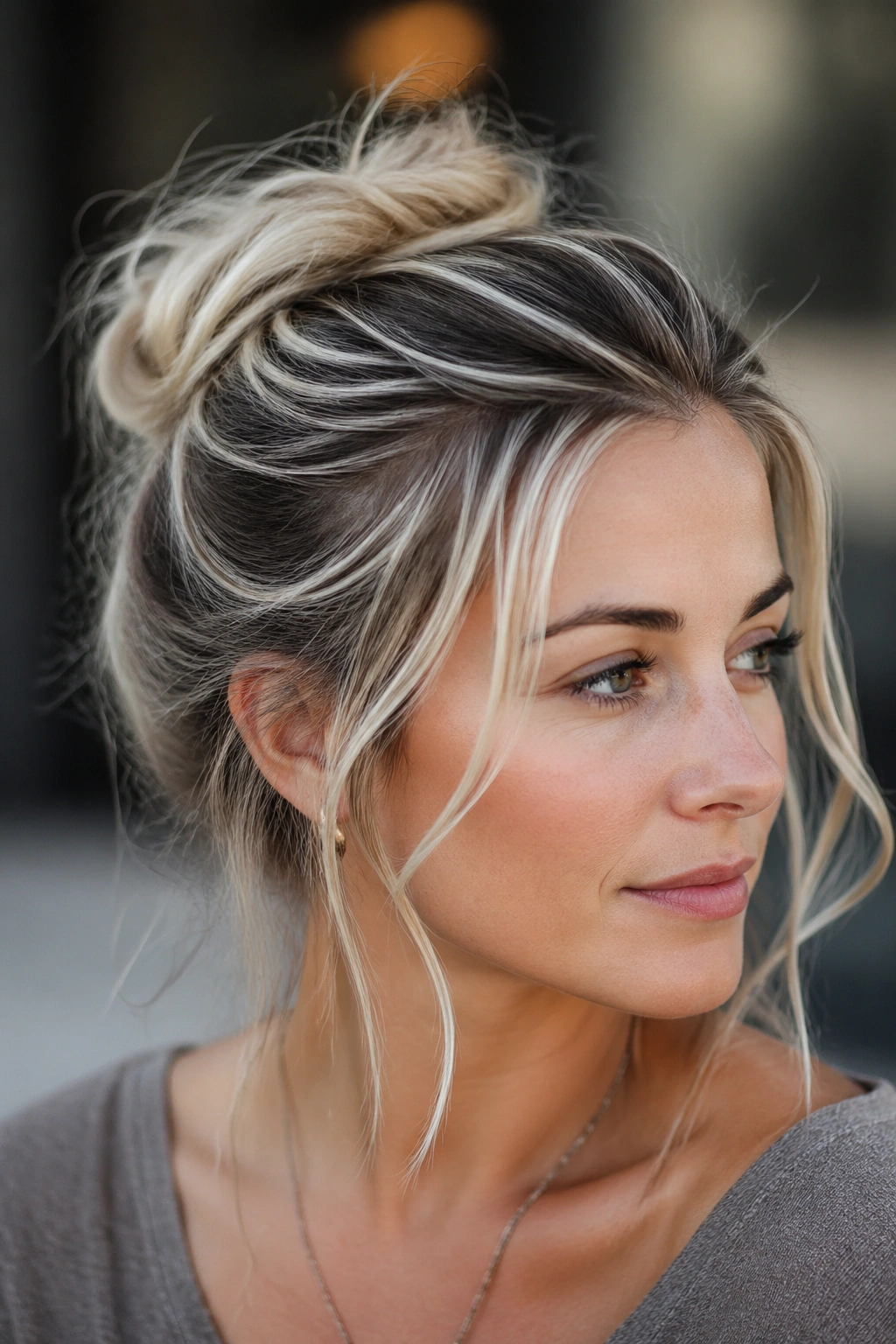
A halo of silver around the crown changes the silhouette of the hair more than people expect. It lifts the top visually and makes buns, ponytails, and loose updos look cleaner, because the bright ring sits where the eye naturally rounds the head.
This placement works especially well on layered cuts. The crown pieces can be a touch brighter than the rest, while the lower lengths stay darker or more muted. That keeps the effect from spreading everywhere and turning the whole head into one bright surface.
- Best for top knots, ponytails, and clips
- Ask for the brightest pieces just at the crown ridge
- Leave the underneath darker for contrast
- Works well on medium and long hair
The halo idea is one of those styles that looks more expensive when the hair is up than when it’s flat and loose. That’s a nice problem to have.
17. Silver Ribboning on Long Layers
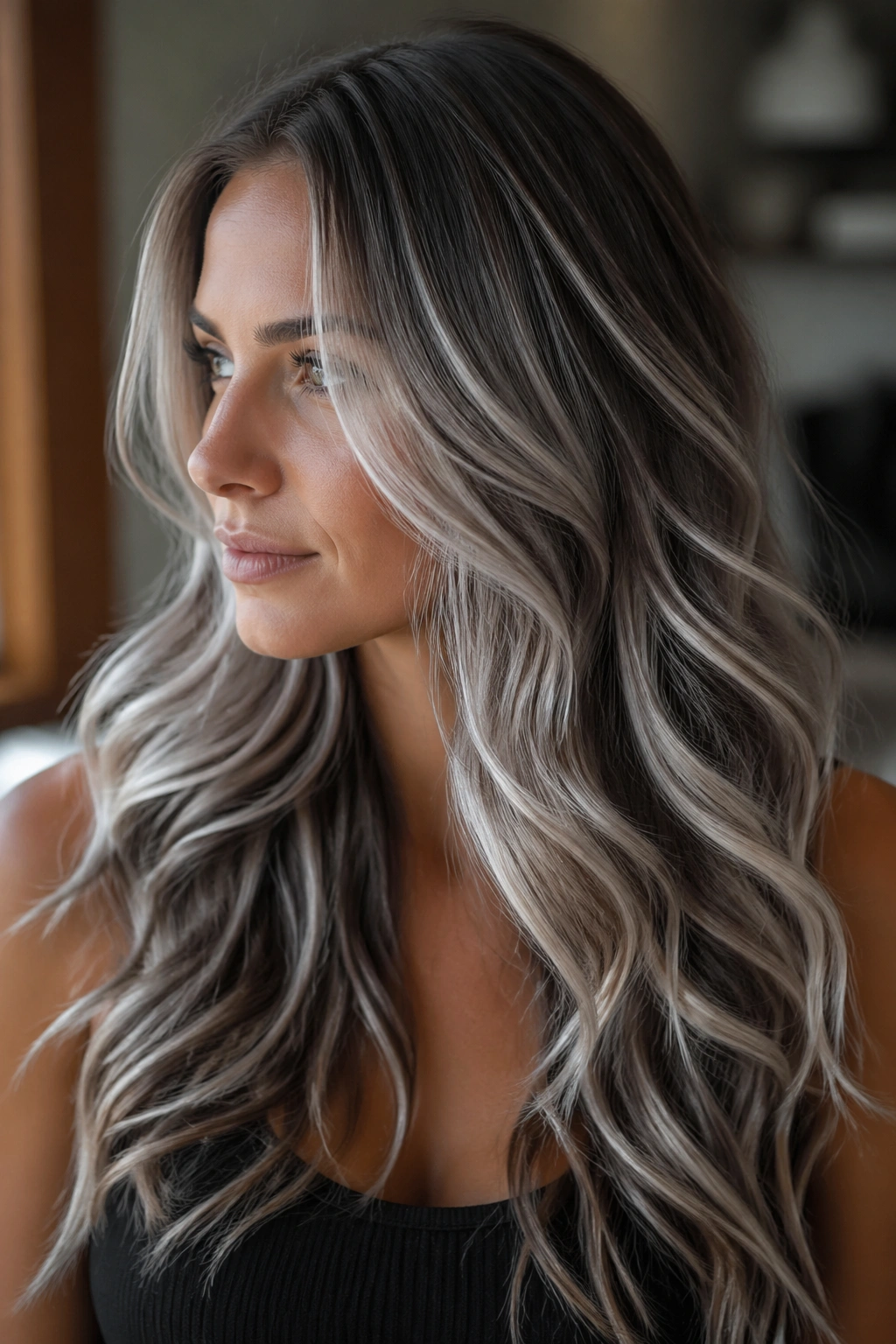
Long layers and silver ribboning go together because the cut already gives the color places to break. Instead of one solid band of brightness, you get long, narrow ribbons that move from midlength to ends and show off every bend in the hair.
This is one of my favorite ways to use silver, honestly, because it keeps the hair looking soft even when the color is strong. The ribbons should be placed where the layers fall naturally, not forced into every section. When the hair moves, the silver shows in flashes, which feels richer than a blocky stripe.
The best finish here is usually a soft wave or a round-brush blowout. Straight hair can work too, but the ribbons need room to breathe. If the pieces are too thick, the ends start to look heavy. Thin placement keeps the whole thing light and bright.
18. White Highlights on a Wolf Cut
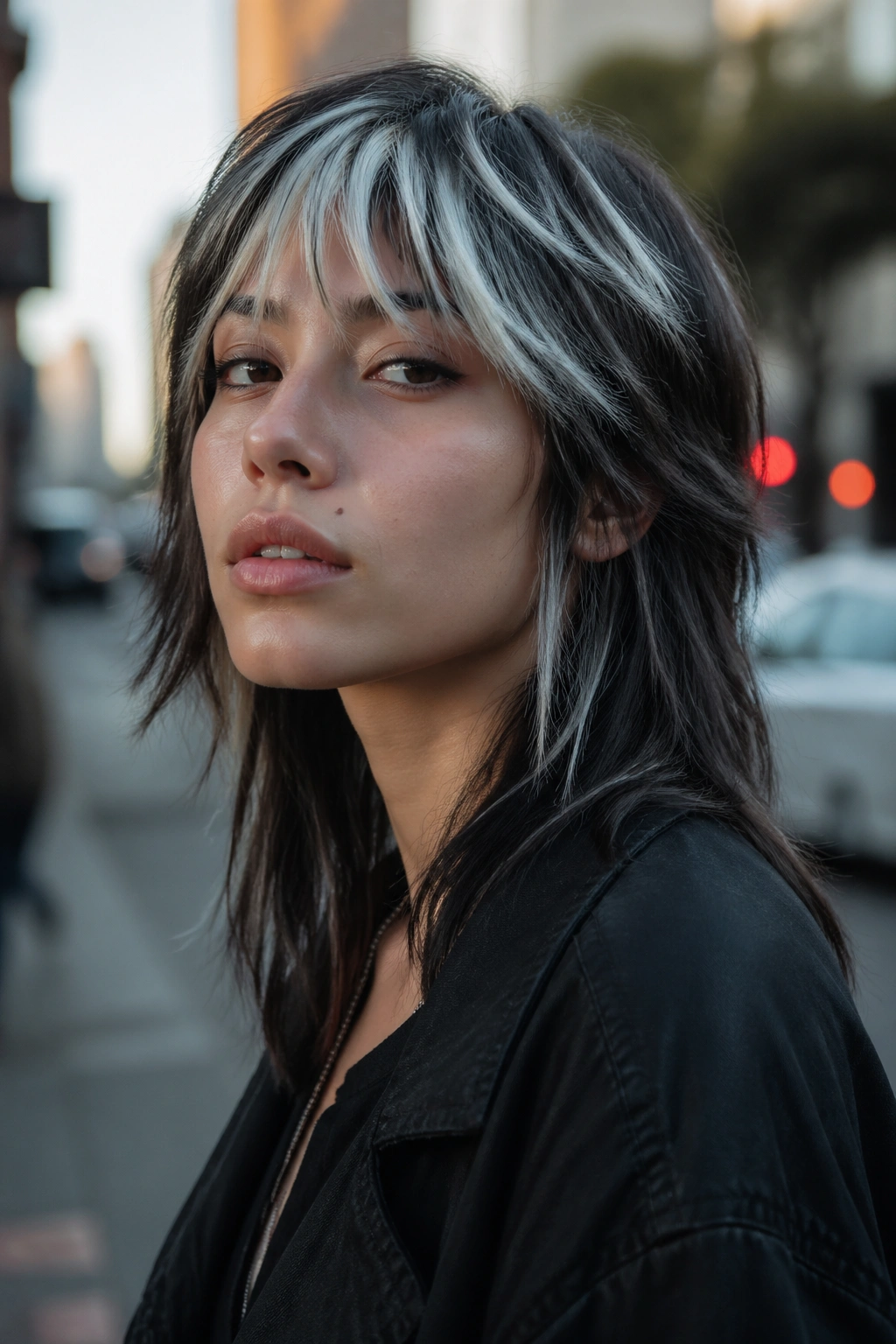
A wolf cut can take white highlights better than a more polished cut because the shape already has attitude. The shorter crown layers and longer bottom layers create a natural contrast, so the white pieces can sit in the messy top area without feeling overworked.
Unlike a neat shag, the wolf cut likes a little roughness. That means piecey white highlights around the fringe, the crown, and the top sides can actually make the haircut look sharper. The lower lengths can stay darker, which keeps the whole style from turning into one bright halo.
If you want this look to land well, ask for highlights that follow the texture, not a grid. Wolf cuts do not need perfect symmetry. They need movement, and the color should look like it belongs to the mess.
This is a strong option if you like your hair to feel slightly rebellious.
19. Metallic Silver Gloss With White Accents
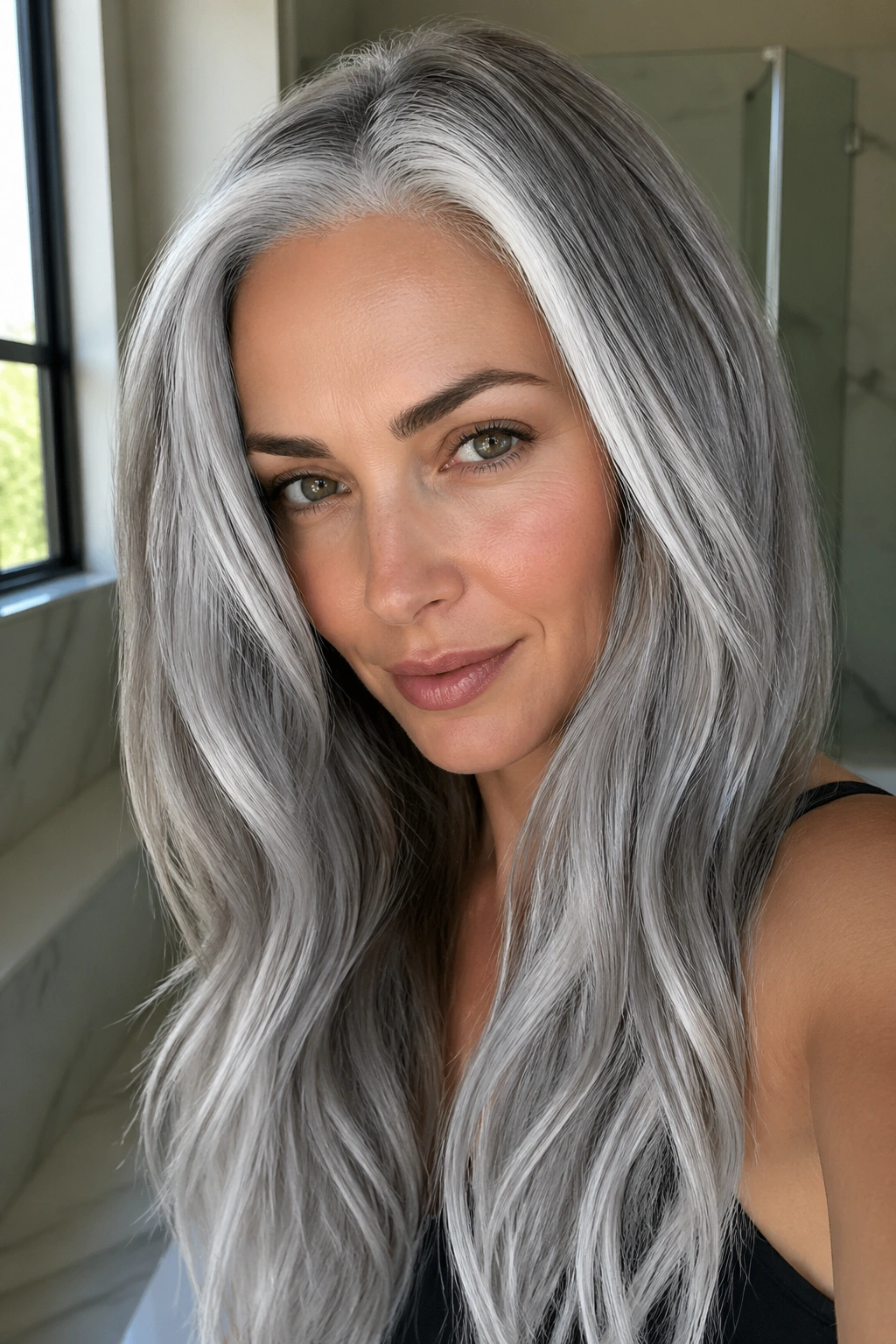
A metallic silver gloss with white accents is a smart move when you want shine more than big contrast. The gloss pulls the existing silver pieces into a cooler finish, while the white accents keep the color from looking dull or muddy.
Why the Gloss Matters
Gloss is the part that makes the color feel finished. Without it, silver can sometimes go matte in a way that looks dusty. A cool gloss, whether it’s clear-toned or faintly violet, tightens the whole look and gives the hair that smooth metallic feel.
A good version usually has white around the hairline, the part, or the ends, then a silver gloss over the rest. That way the brightest pieces stay bright, but the surrounding hair still has a polished tone. The difference is subtle until you see it in daylight.
This is a nice option if your hair is already light enough and you want refinement rather than a full overhaul.
20. Side-Swept Silver Panels on a Deep Part
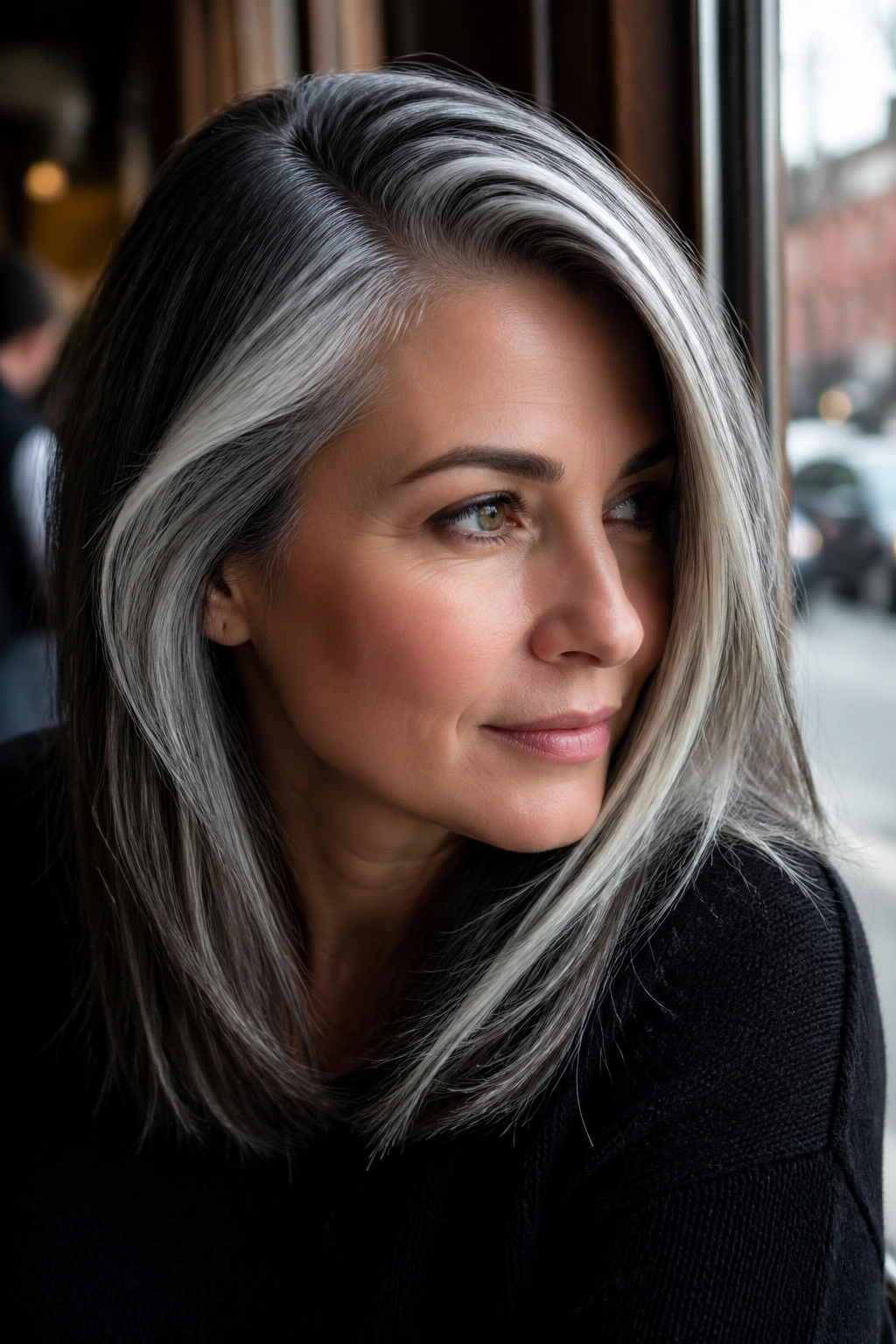
A deep side part changes everything. Put silver panels on the heavier side, and the hair suddenly looks more sculpted, because the brightness follows the sweep instead of sitting symmetrically on both sides.
That asymmetry is what makes the look feel modern. One side gets a stronger hit of silver, the other side keeps more depth, and the contrast between the two creates movement before you even style it. On medium-length hair, the result can look especially good with a tucked-behind-the-ear finish.
The panels should be broad enough to notice but not so broad that they overpower the cut. A few well-placed pieces under the outer layer usually do more than a bunch of tiny streaks. That’s the kind of choice that matters here. Big placement, not random brightening.
If you like a side part already, this is an easy way to make it do more work.
21. White Streaks on a Buzz Cut
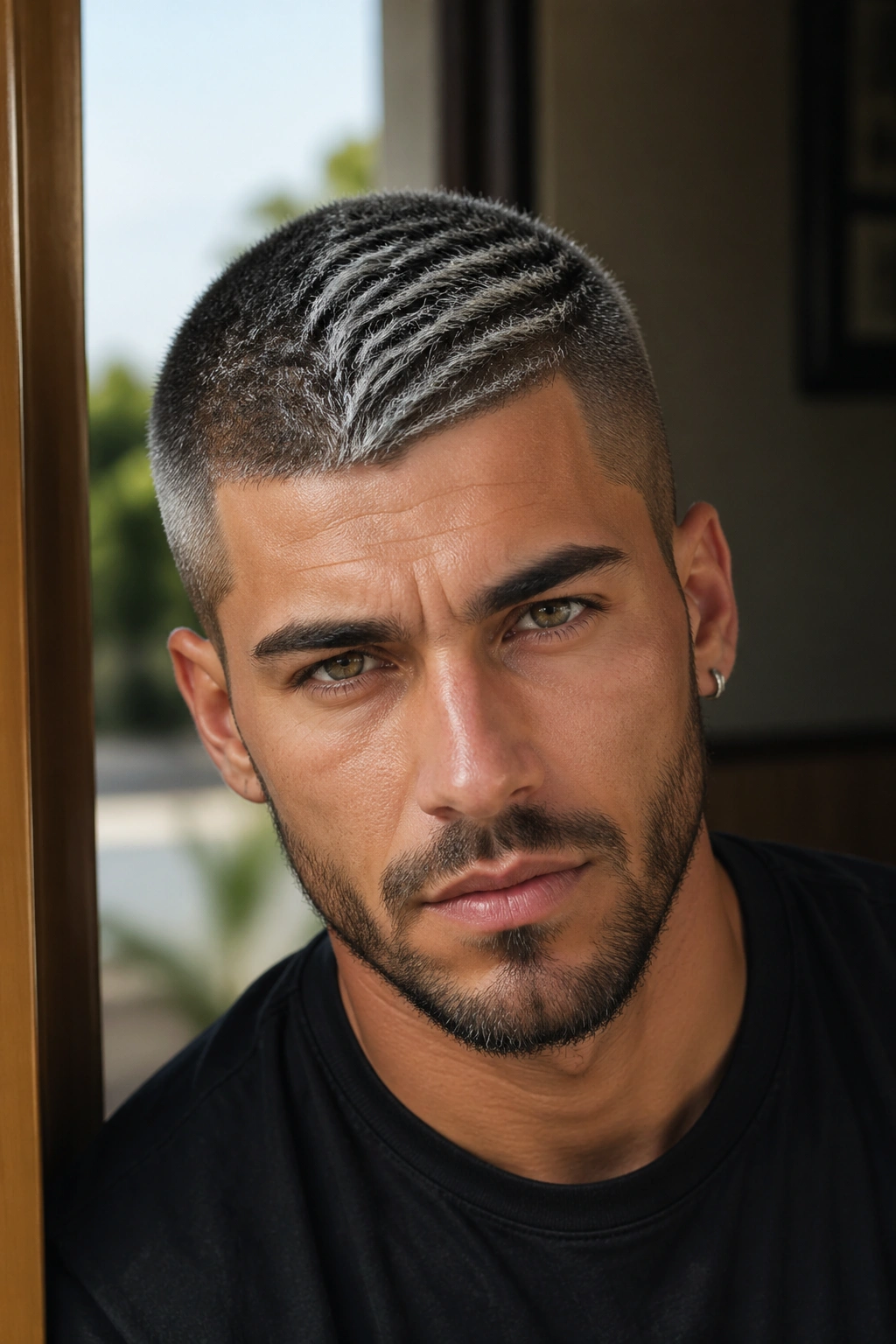
Can a buzz cut carry white highlights? Yes, and it can look sharp in a way longer hair can’t quite match. Short hair turns the scalp, the hairline, and the color into one clean shape, so even a few white streaks read with a lot of force.
What to Ask For
Ask for soft streaks or narrow painted sections across the top rather than all-over saturation. That keeps the buzz cut from looking like a uniform block of color. A tiny shift in tone can be enough because there’s so little length for the eye to process.
This style works best when the streaks follow the direction of the cut, especially across the top and slightly off-center. It gives the head shape instead of hiding it. If the hair is extra short, the difference between silver and white can be tiny, but tiny is enough here.
A buzz cut with white streaks is clean, direct, and a little bit fearless.
22. Frosted Dusting for Natural Gray Hair
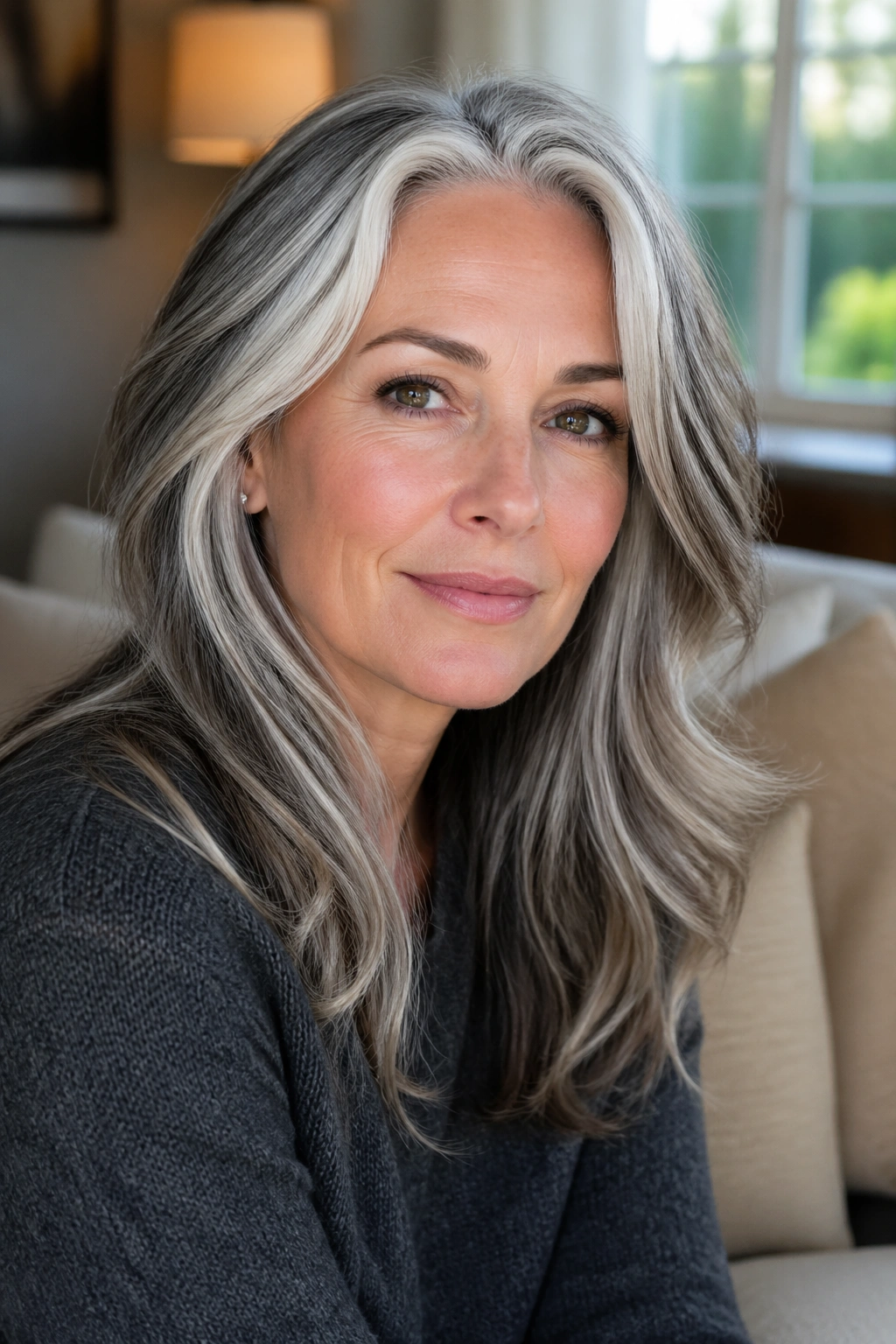
If you already have gray coming through, a frosted dusting can make the transition look deliberate instead of accidental. The point is not to cover the gray. The point is to brighten it with white and silver pieces so the blend looks soft across the whole head.
This is one of the few silver ideas that can feel elegant without trying very hard. The highlights sit near the temples, the crown, and the front hairline, where natural gray often shows first, and they help everything connect. Instead of fighting the existing silver, they give it a cleaner frame.
- Best for salt-and-pepper hair
- Works well when the brighter pieces are softly woven, not chunky
- A cool toner helps the gray read polished, not yellow
- Great if you like a more natural grow-out
The nicest part is that it can make gray hair look intentional without erasing the character that’s already there.
23. Icy Ombré With White Ends
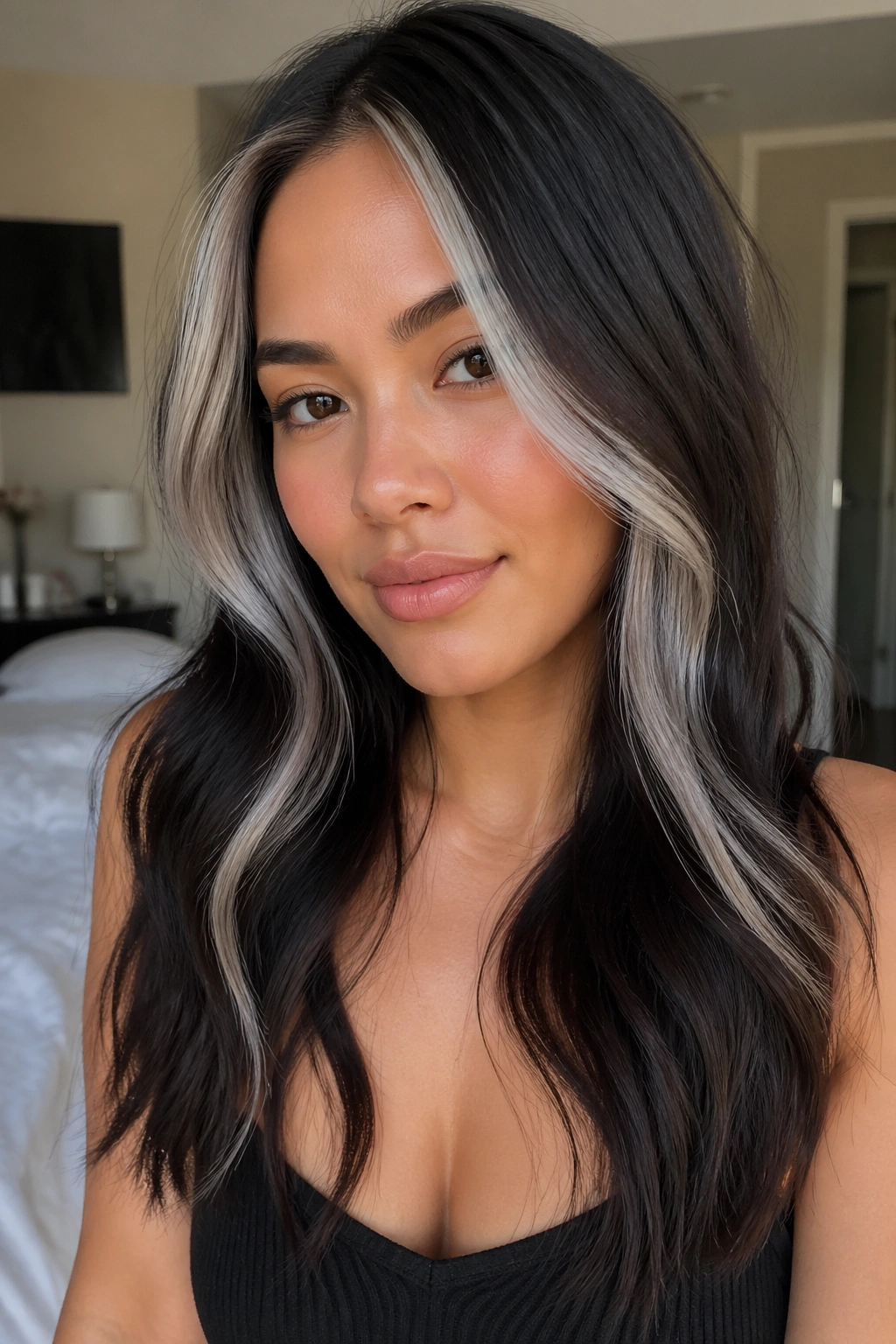
Icy ombré is the dramatic one in the bunch. The color stays deeper near the roots or midlengths, then pushes toward white at the ends, where the lightness feels strongest and the movement of the hair shows it off best.
This works especially well on long hair because the fade has room to stretch. On shorter hair, the transition can look cramped. On long layers, a braid, or loose waves, it has space to breathe. The ends become the payoff, and that payoff is what makes the whole style feel bold rather than busy.
It does ask a lot from the hair, though. Those ends need to be light enough to go white without looking dry or frayed, which means the lightening has to be clean and the aftercare has to stay steady. No one wants pretty ends that feel like straw.
If you want the coolest version of silver and white highlights, this is the one that lands with the most force.