



Dark red hair color ideas for pale skin can look razor-sharp in the best possible way, but only when the red has enough depth to hold its own against lighter features. Too bright and it can start to feel loud. Too black and it can flatten the face. The shades that work best usually sit in that sweet spot where brown, red, and a little violet all pull together.
That balance matters more than people think. Pale skin can read pink, peach, porcelain, or cool ivory, and each one reacts a little differently to red hair. A color with a cherry or berry base can make the complexion look fresher. A red that leans orange can throw everything off fast. A good dark red should make your eyes stand out, your skin look clearer, and your hair look like it has actual depth, not just one flat dye job.
The list below moves through brown-reds, wine shades, berry tones, and deeper jewel colors, because pale skin does not need one single kind of red. It needs the right kind of contrast. And the difference between “that suits you” and “why does this feel off?” is usually only a few undertones.
1. Cherry Cola Brown
Cherry cola brown is the dark red I reach for when someone wants color that feels rich, not theatrical. The brown base keeps pale skin from getting washed out, while the cherry reflect adds a little glow around the face.
Why It Works
This shade sits around a level 4 or 5 brunette, which means it still reads as dark even when the red shows in sunlight. That is the whole appeal. Pale skin gets contrast without losing softness.
- Best on: light skin with cool or neutral undertones
- Keeps grow-out easy: the brown base blends with natural roots
- Looks strongest in: glossy straight hair or loose waves
- Salon ask: a brunette base with red-cherry reflect, not copper
My tip: ask for a clear gloss on top. Cherry cola looks flat when it dries out, and a glossy finish brings back the red shimmer that makes the color work in the first place.
2. Black Cherry Melt
Black cherry is the darkest red on the list that still reads as red, not just black. If you want drama on pale skin, this is the move. It has enough depth to feel moody, but the red-violet edge keeps it from disappearing indoors.
The trick is the melt. A good black cherry color doesn’t sit like one block of ink; it shifts when the light hits it. You’ll notice the red first around the face and ends, then the darker base takes over again. That little movement is what keeps the color alive.
It’s red-black, not fire-engine red. That matters.
For the best result, keep the finish shiny and the cut clean. A blunt lob, a long bob, or smooth layers all work here because the color already brings the attitude. If your hair is very fine, this shade can look flatter than you want, so ask for a soft red sheen instead of a dense blue-black base.
3. Burgundy Gloss
Why does burgundy work so well on fair skin? Because it sits between wine and plum, which gives the color enough coolness to suit pale complexions without turning harsh. A gloss version is especially good if you want the red to look expensive in a quiet way.
The gloss is the important part. Burgundy without shine can look muddy. With shine, it looks like polished glass. On pale skin, that reflective surface brings the face forward instead of letting the hair take over.
How to Ask for It
Ask your colorist for a burgundy gloss over a dark brunette base, especially if your natural hair is already medium brown. If your skin leans pink, keep the red side deeper than the violet side. That keeps the complexion from looking flushed.
This shade is also one of the easiest to wear with simple makeup. A brown mascara, a soft berry lip, done. No need to overwork the face.
4. Mahogany Wine
Mahogany wine is for the person who wants dark red hair but does not want the room to notice the hair before the face. It is brown, red, and just a touch warm, which makes it one of the most forgiving dark red hair color ideas for pale skin.
The warmth matters here. Pale skin with rosy cheeks can look a little delicate next to a colder red, but mahogany adds enough depth to keep things balanced. It also works well if your natural eyebrows are dark brown, because the color sits in the same family and feels cohesive.
- Works best on: medium-length cuts with layers
- Color level: usually around 4 or 5
- Maintenance: moderate, especially if you shampoo often
- Best formula: demi-permanent or gloss for softer fade-out
If you want red without the risk of a neon edge, this is a very safe place to land. Honestly, it’s one of the easiest shades to live with.
5. Plum Noir
Plum noir is the dark red for people who secretly want purple hair but still need it to look grown-up. It leans violet more than berry, so pale skin gets a cooler frame that can make blue, green, or gray eyes look sharper.
The color is especially nice on hair that already pulls naturally dark. It can sit almost black in low light, then flash plum when you step outside or stand under a bright bulb. That shift gives it a little edge. Not loud. Just enough.
I like this shade on sleek cuts and shoulder-length waves, where the color has room to move. On very curly hair, the plum tones can read even deeper, which is good if you want the red to stay mysterious rather than bright. If your skin is very pink, keep the violet side soft so the complexion does not go chilly.
6. Oxblood Velvet
Oxblood velvet is the deepest, richest red-brown on the list. It sits somewhere between burgundy and brown-black, which makes it a strong pick for pale skin that needs contrast but not too much sparkle.
Unlike cherry-based shades, oxblood does not shout red from across the room. It comes out slowly. In shade it can look almost espresso-dark, and then a wine-red note appears at the ends or around the part line. That restraint is part of the appeal.
This color works especially well if you wear strong brows, black eyeliner, or darker clothes. It gives the face enough structure to handle those choices. If your wardrobe is mostly soft creams and heather grays, oxblood still works, but it reads a little more dramatic. Keep the finish plush and soft, not matte.
7. Chocolate Cherry
Chocolate cherry is the safest red-brown lane, and I mean that in the best way. It gives you dark red color without asking you to rewrite your whole look. The chocolate base keeps it grounded, while the cherry reflect gives pale skin a bit of warmth and life.
What Makes It Different
This shade looks like brunette first and red second. That makes it ideal if you want a color that still feels work-friendly, subtle, or low drama. It also grows out well, because the root area and the darker base stay close to natural brown.
Quick Notes
- Best for: first-time redheads
- Looks good on: layered cuts and long hair
- Fades into: a soft brown with a red glow
- Skip if: you want high-contrast hair
Try this: ask for a chocolate brunette base with cherry-red lowlights. That wording helps keep the color rich instead of turning it coppery.
8. Merlot Balayage for Pale Skin
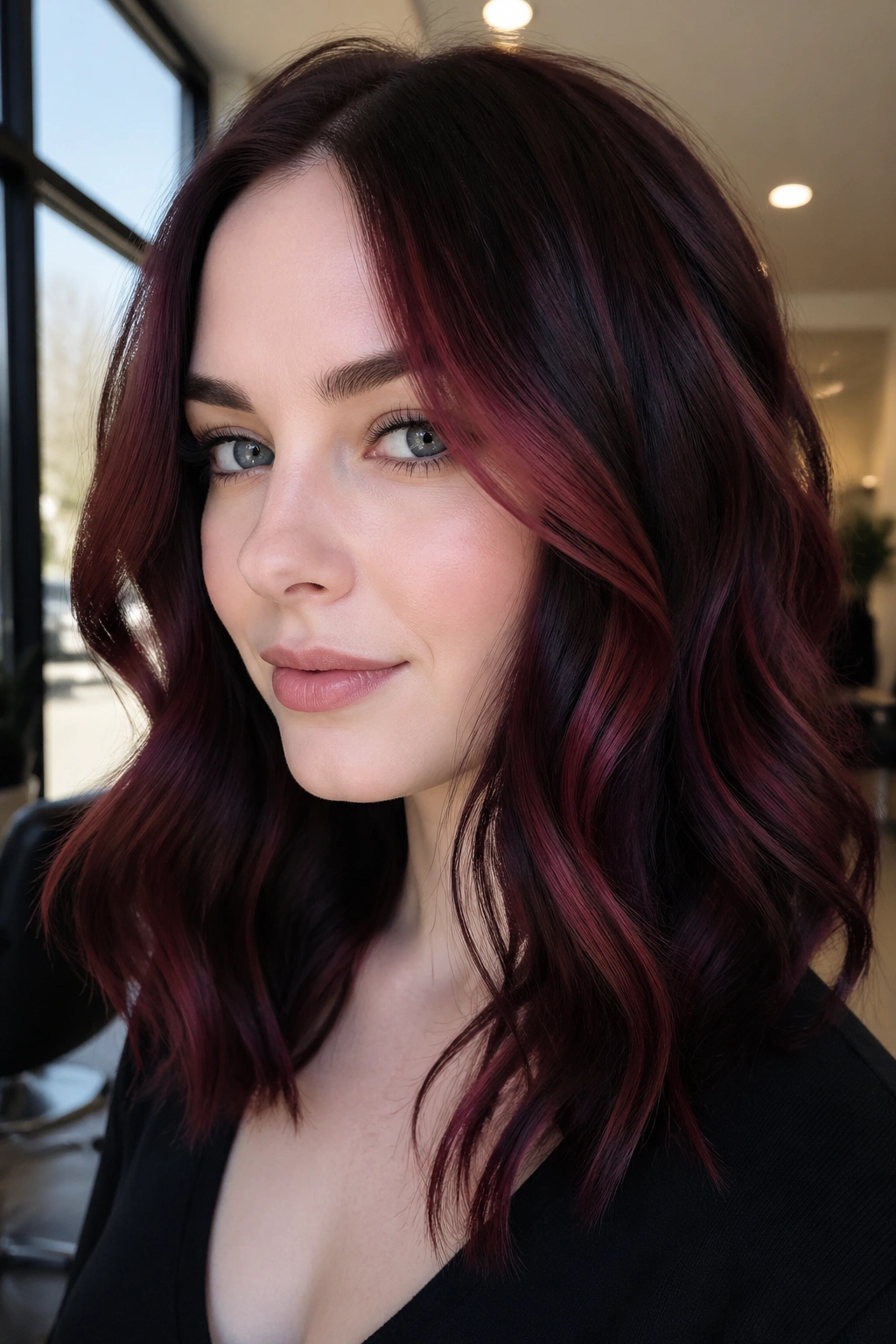
Merlot balayage is one of those colors that looks more expensive than it is hard to wear. The base stays dark brown or deep brunette, then the merlot ribbons appear through the mid-lengths and ends. On pale skin, that placement matters a lot more than the brightness level.
How to Wear It
Ask for the reddest pieces around the face and the top layer, then let the color soften as it moves down. That keeps the face bright without turning the whole head into one solid red block. If the pieces are too chunky, the result can look striped. Thin ribbons are better.
The nice part is that balayage grows out in a softer way than all-over color. You will still need toning, of course. But you do not have to chase every root every few weeks.
- Best for: wavy or curled hair
- Salon language: merlot ribbons on a dark brunette base
- Maintenance: lower than all-over red
- Payoff: movement, dimension, and a little lift around the face
9. Cranberry Brown
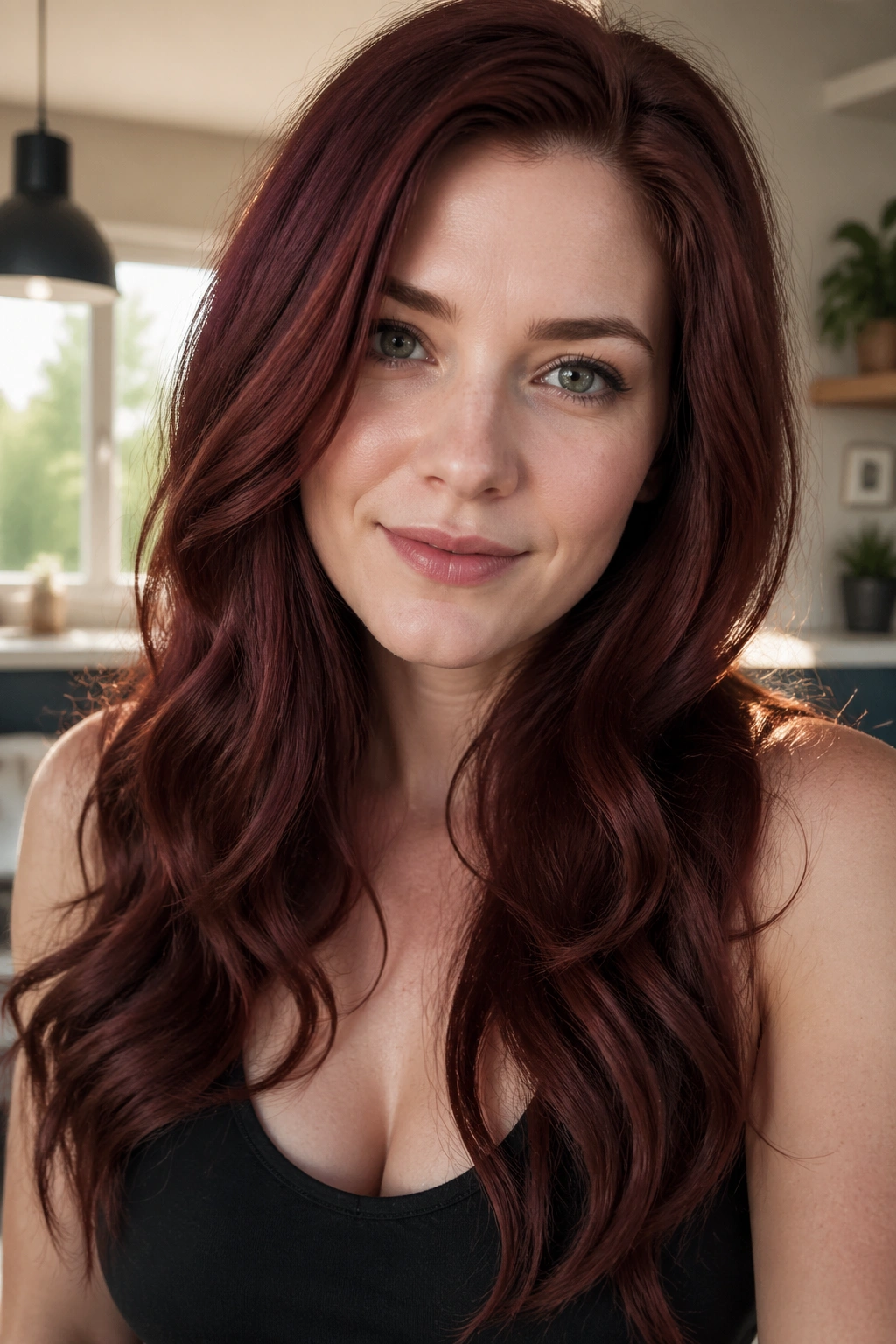
Can a dark red still feel soft? Absolutely, and cranberry brown proves it. This shade sits between berry and brown, so it gives pale skin a livelier look than mahogany but stops short of pure red.
The cranberry note is what keeps it from feeling dull. It adds a brighter flash under daylight, especially around the front sections and the ends. On pale skin, that lift can make the complexion look clearer and the eyes more awake. It is not a loud color, but it does not disappear either.
How to Ask for It
Ask for a brunette base with cranberry reflects, or a brown-red that keeps the warmth controlled. If your skin leans cool, stay closer to berry. If your skin has peach in it, a tiny bit more warmth works. That small tweak matters.
This shade is a good middle ground for anyone who wants red hair but cannot commit to all the way crimson.
10. Rosewood Red
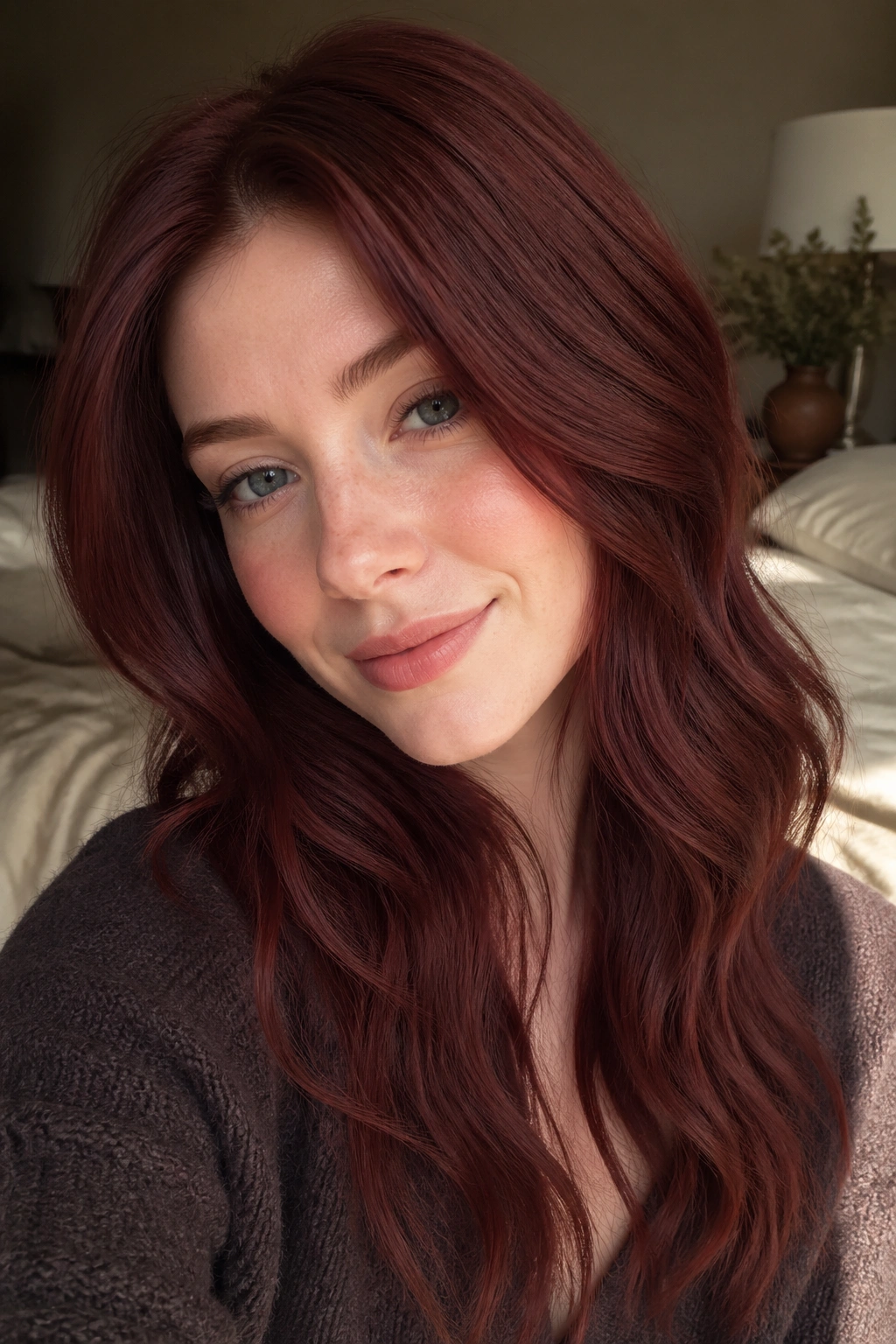
Rosewood red is muted, soft, and easier to wear than most people expect. It has a dusty red-brown feel, almost like dried rose petals mixed into brunette. On pale skin, that softness is a gift because it does not compete with delicate features.
The color looks especially good if you have freckles, light lashes, or a few pink tones in your cheeks. It doesn’t force the face into high contrast. It simply gives it a little shape. That makes it one of the better choices for people who want a red that feels refined instead of flashy.
I also like this shade with loose waves, because the bend in the hair helps the muted red catch light in small places. Straight hair can make it seem browner. Not bad. Just quieter. If you want the red to read more clearly, a demi-permanent rosewood formula usually does the job better than a permanent one with too much brown filler.
11. Garnet Brunette
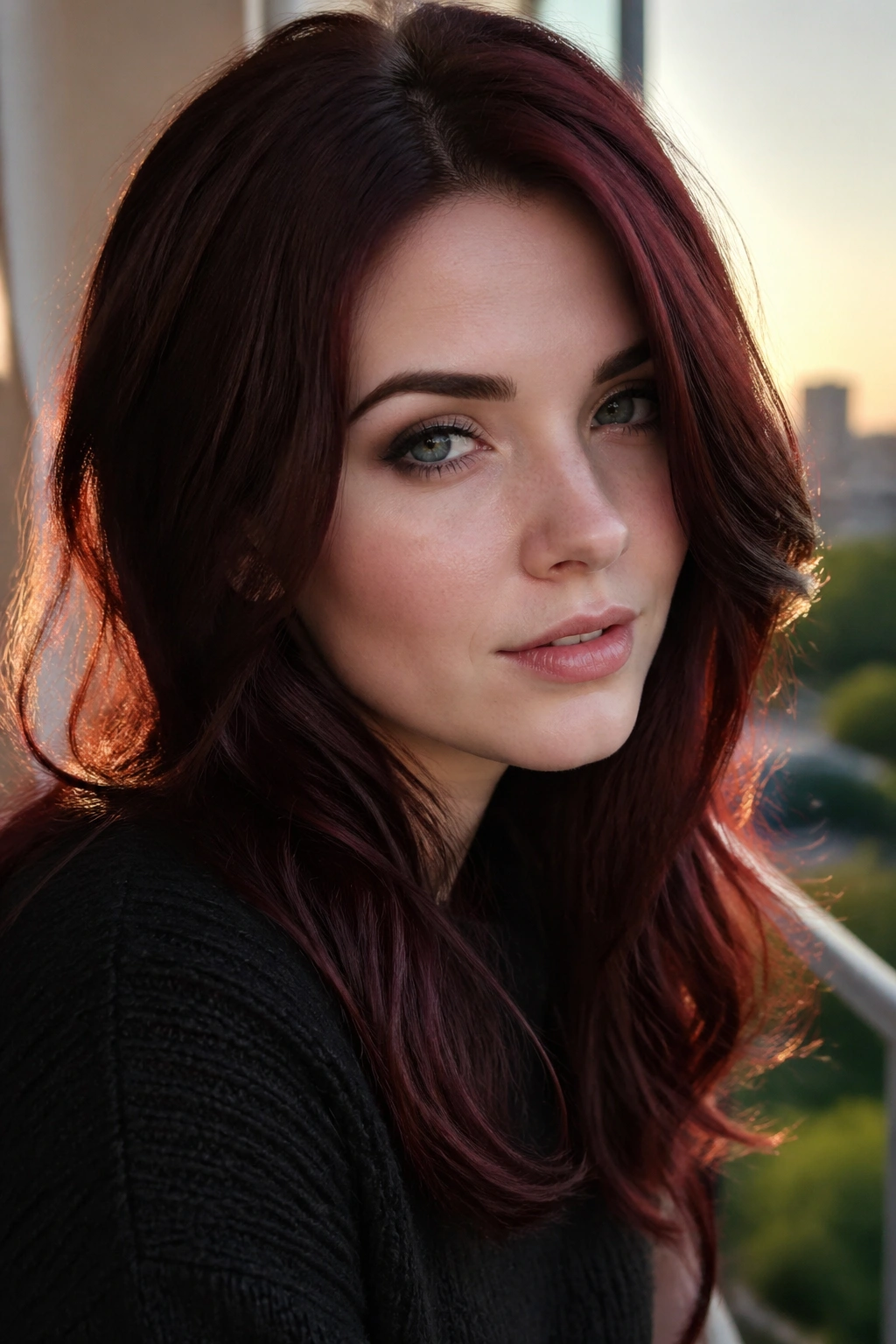
Garnet brunette is the jewel-tone pick on the list. It is dark, but it is not flat. The red sits inside the brown, and when the light hits it, you get this deep garnet sparkle that can make pale skin look brighter in a clean, sharp way.
Why It Stands Out
The appeal here is depth. You do not get a loud red stripe effect. You get a color that looks like it has layers inside it. That makes it flattering on fine hair, thick hair, and everything in between.
A few details matter:
- Base: dark brunette or level 4
- Reflect: red with a berry edge
- Best finish: glossy, not matte
- Looks best on: layered cuts, long bobs, soft curls
The one catch is upkeep. If the shine drops, garnet can drift toward flat brown. A color-safe conditioner and a regular gloss are worth it here.
12. Bordeaux Shadow Melt
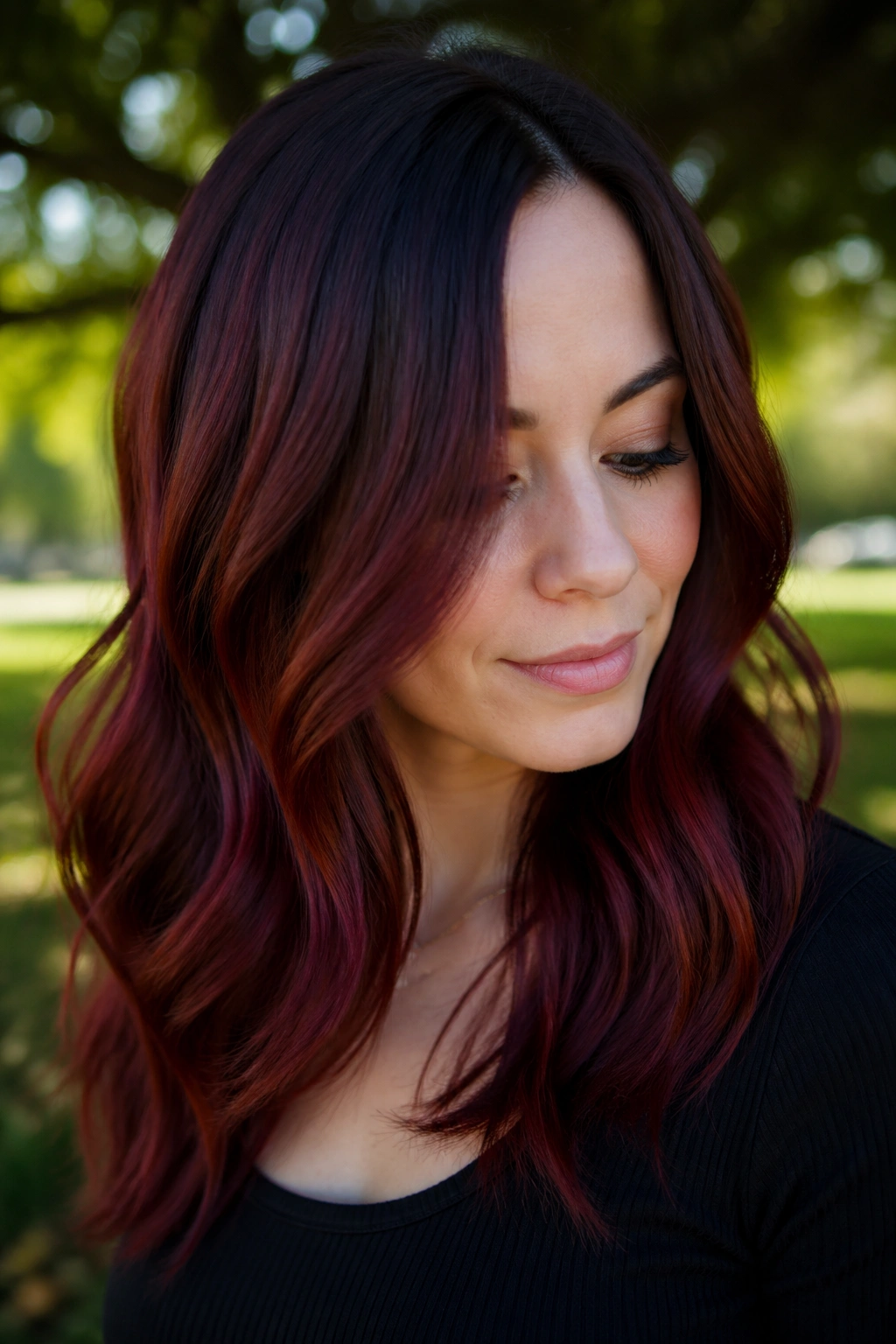
Bordeaux shadow melt is the polished cousin of burgundy. The root stays deep and soft, then the red-brown bordeaux takes over through the mid-lengths and ends. It feels controlled, which is why it suits pale skin so well.
Unlike a full burgundy color, the shadow root keeps the hair from looking painted on. That little bit of darkness at the top adds shape near the scalp and makes the red feel more expensive in the plain, practical sense of the word: it looks finished. There is no harsh line. No sudden stop.
This color is especially good on longer hair because the fade from root to ends gives the style more movement. On a pixie cut, some of that effect gets lost. On shoulder-length waves, it looks balanced and soft. If your natural color is dark brown, this is one of the least painful ways to go red.
13. Raisin Red
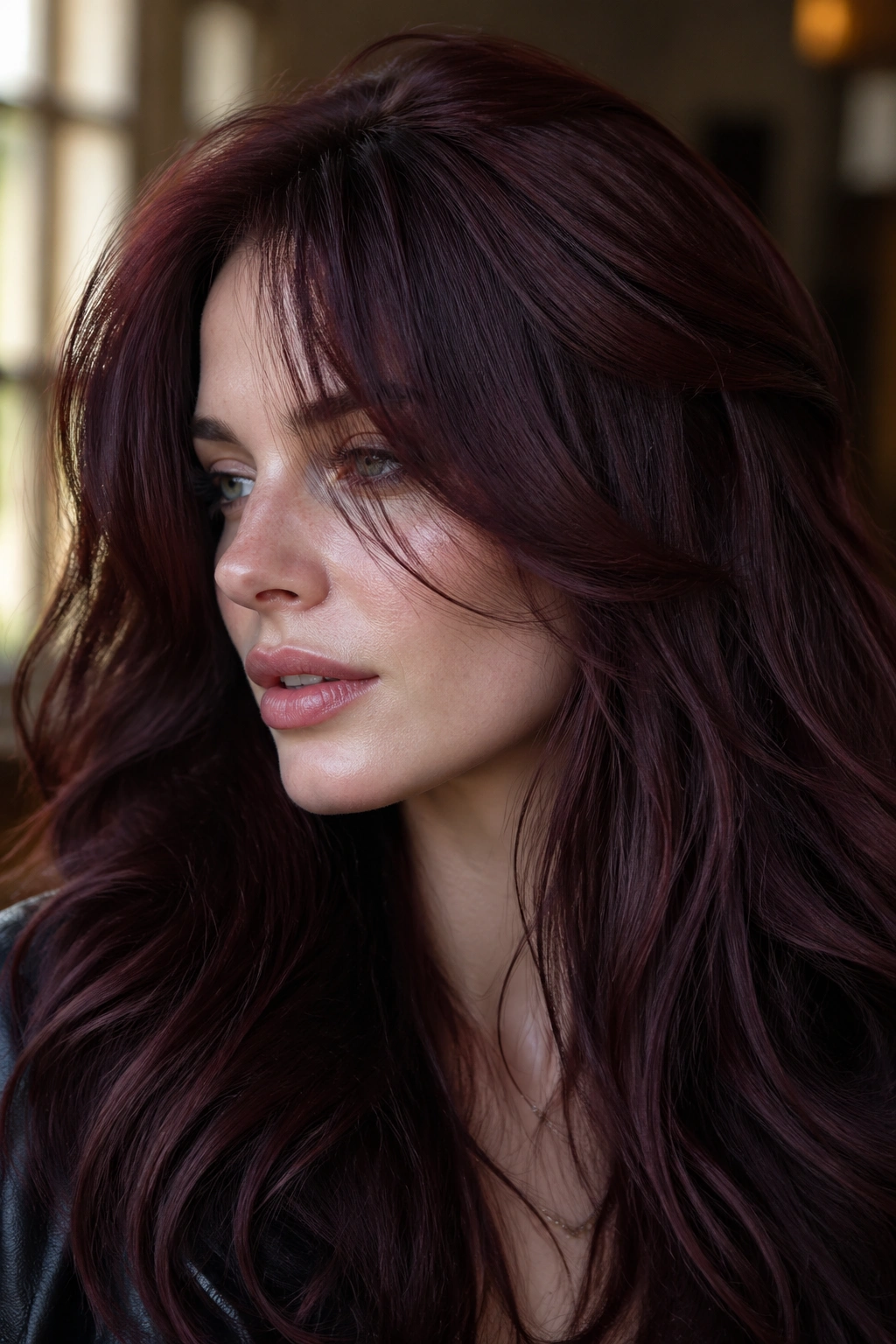
Raisin red is for the person who wants a dark red that almost hides its own brightness. The color leans purple-brown, which gives pale skin a cool frame without washing it out. It is a little smoky, a little wine-dark, and a little unusual.
Why It Works
The raisin note keeps the shade from drifting into standard burgundy territory. That means you get something that feels deeper and less predictable. On cool skin, it can look almost tailored to the face. On warm skin, the result is moodier, which can still be flattering if the shade stays brown enough.
A few things to know
- Best on: medium to thick hair
- Good for: soft waves and air-dried texture
- Avoid if: you want obvious red in every light
- Salon ask: purple-brown with a deep red reflect
If you want a red that feels a little artsier, this is a smart choice. It doesn’t need much makeup help.
14. Auburn Espresso
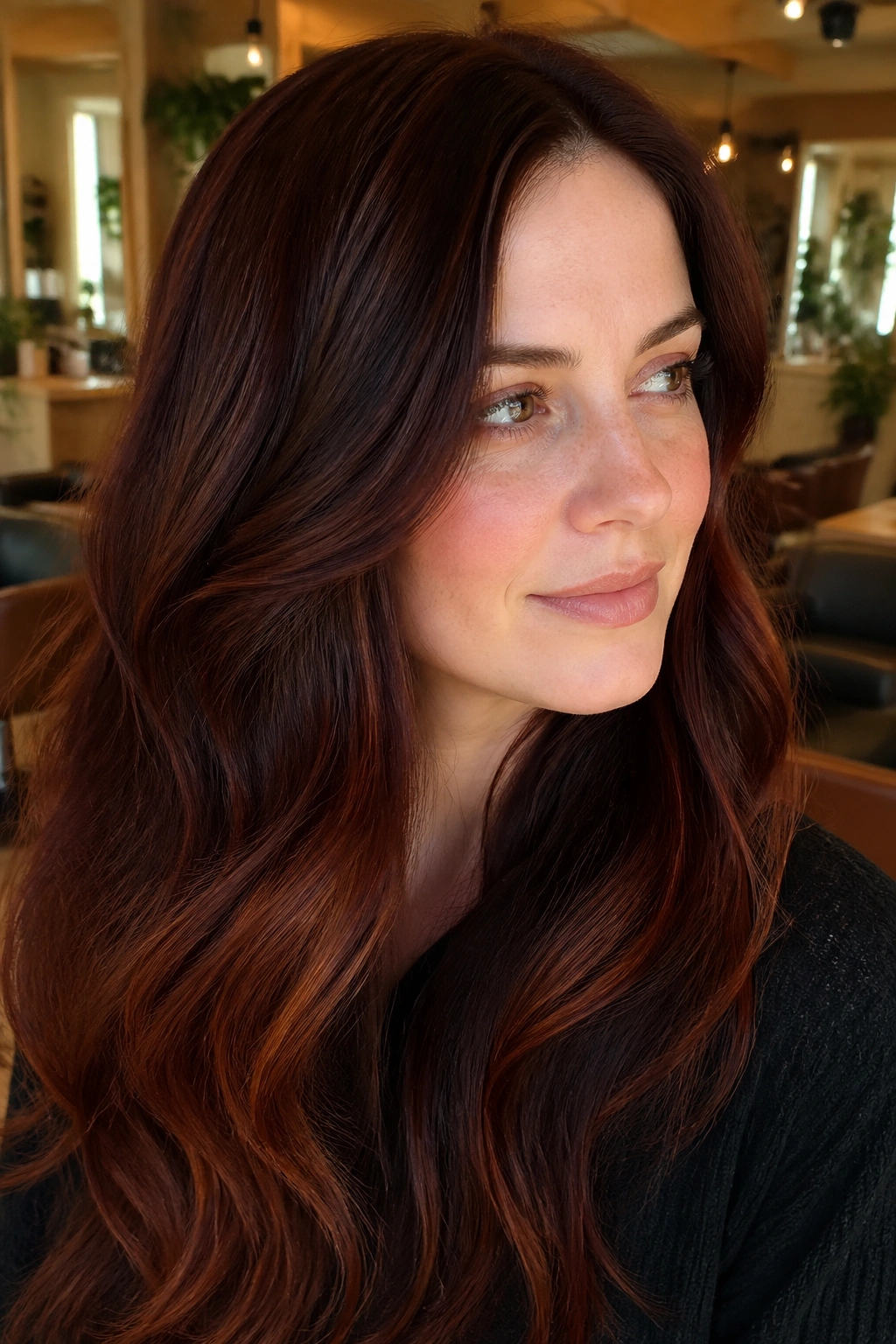
Auburn espresso is the warmest dark red here, and that warmth is the whole point. The espresso base keeps the color dark enough for pale skin, while the auburn note adds a bit of coppery life around the edges.
That makes it a strong option if your skin has peach, ivory, or golden undertones. A colder red can make those undertones look dull. Auburn espresso does the opposite. It brings the face forward and keeps the color looking soft instead of severe.
This shade also works well if your natural hair is already brunette and you do not want a dramatic shift. The result is less “new hair” and more “better hair.” One sentence, but it matters. Ask for subtle auburn lowlights over a dark brunette base if you want the color to stay wearable as it grows.
15. Mulled Wine Curls for Pale Skin
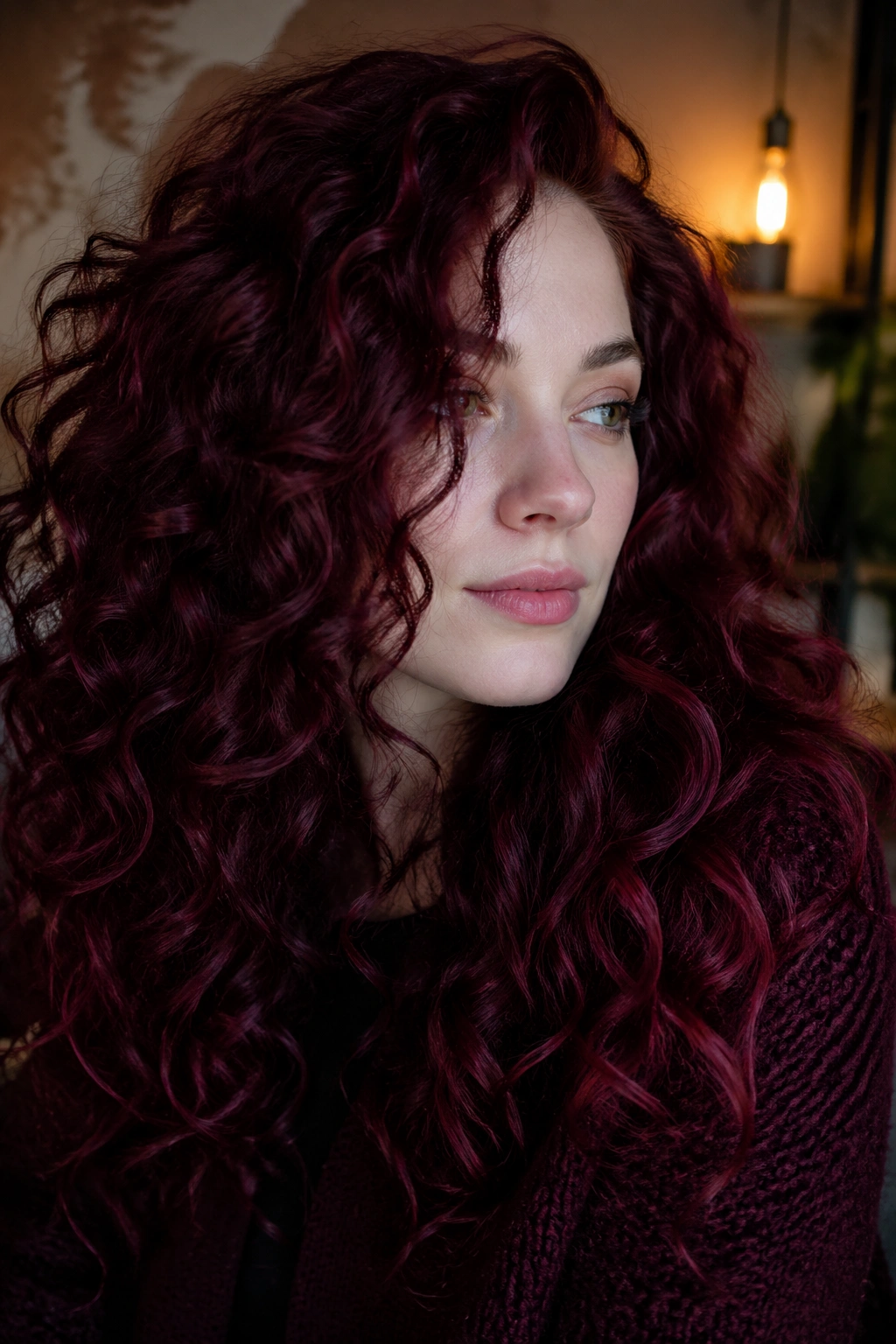
Why does mulled wine look so good in curls? Because the bends in the hair let the red-violet tones show up in layers instead of one flat sheet. On pale skin, that movement keeps the color from looking heavy.
How to Ask for It
Ask for a dark wine-red base with soft violet reflects and a little extra brightness around the outer curls. If you wear your hair straight most days, the shade will still work, but it looks richer when the texture has some bend. The light catches the curve, then slips off. That’s when the color starts doing the real work.
I’d keep the root area a touch deeper than the mids. That tiny contrast helps the face look brighter. If the whole color is lifted too evenly, you lose the wine effect and it starts to feel like a standard red-brown.
Best on: loose curls, barrel waves, and textured shags.
16. Wineberry Highlights
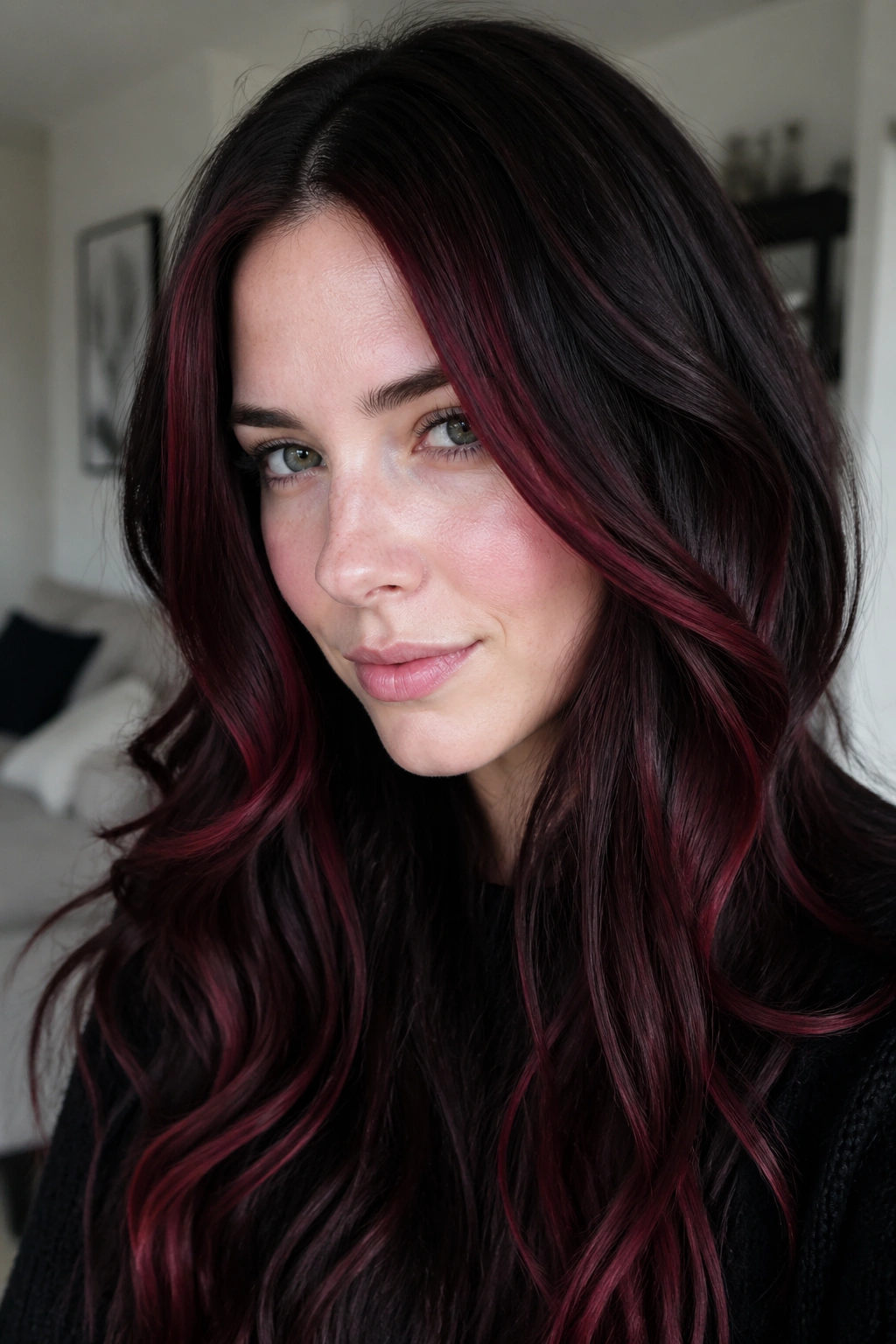
If full red feels like too much, wineberry highlights solve the problem without making the hair look timid. The base stays dark brown or brunette, and the wineberry pieces sit where the light can find them. That means pale skin gets color near the face without a full commitment to all-over red.
The placement is the point. Put the brightest pieces around the part line, temples, and a few ends, then keep the rest deeper. That creates movement instead of a solid block of color. It also gives the hair more dimension when it’s tied back, which matters more than people think.
This shade works best when the highlights are thin and well-blended. Thick streaks can make the color look dated fast. Thin ribbons? Much better. If your natural shade is close to dark brown, wineberry highlights can be one of the easiest ways to test whether you actually like dark red on yourself.
17. Deep Plum Brunette
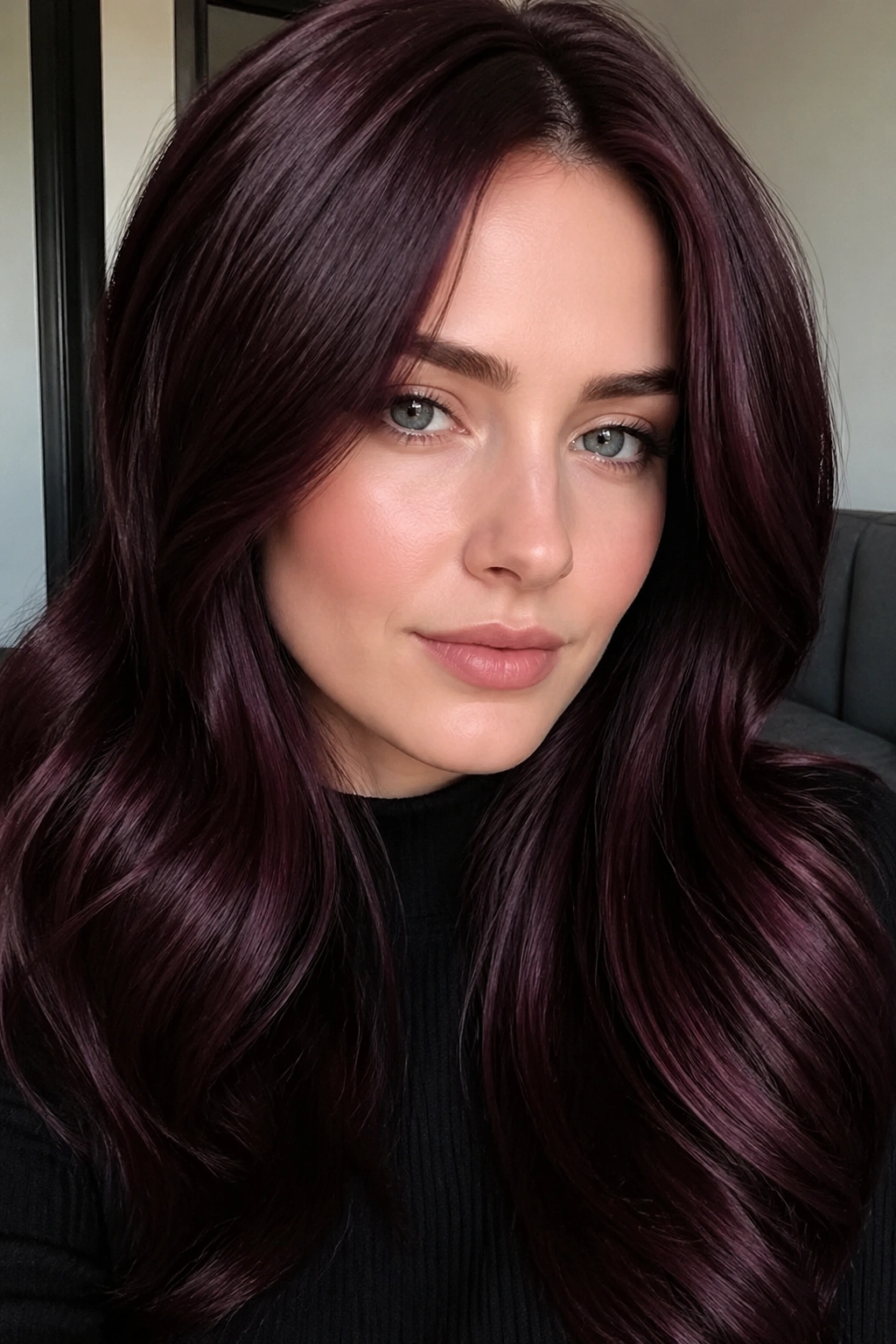
Deep plum brunette is the color I’d hand to someone who wants red hair to feel slightly mysterious. It is not overtly red. It is not fully purple either. It sits in that dark, inky zone where the plum tone only shows when light moves across the hair.
That makes it especially good on pale skin with cool undertones. The color adds depth without fighting the complexion. It can also make straight hair look sharper, because the reflective plum edge gives the shape more definition. On very layered hair, it can soften the look a little, which is a nice side effect.
I like this shade most when the finish is clean and shiny. A matte finish can swallow the plum and turn it into plain brown. If you want the red-violet note to show, keep the conditioning on point and avoid washing too often.
18. Ruby Brown
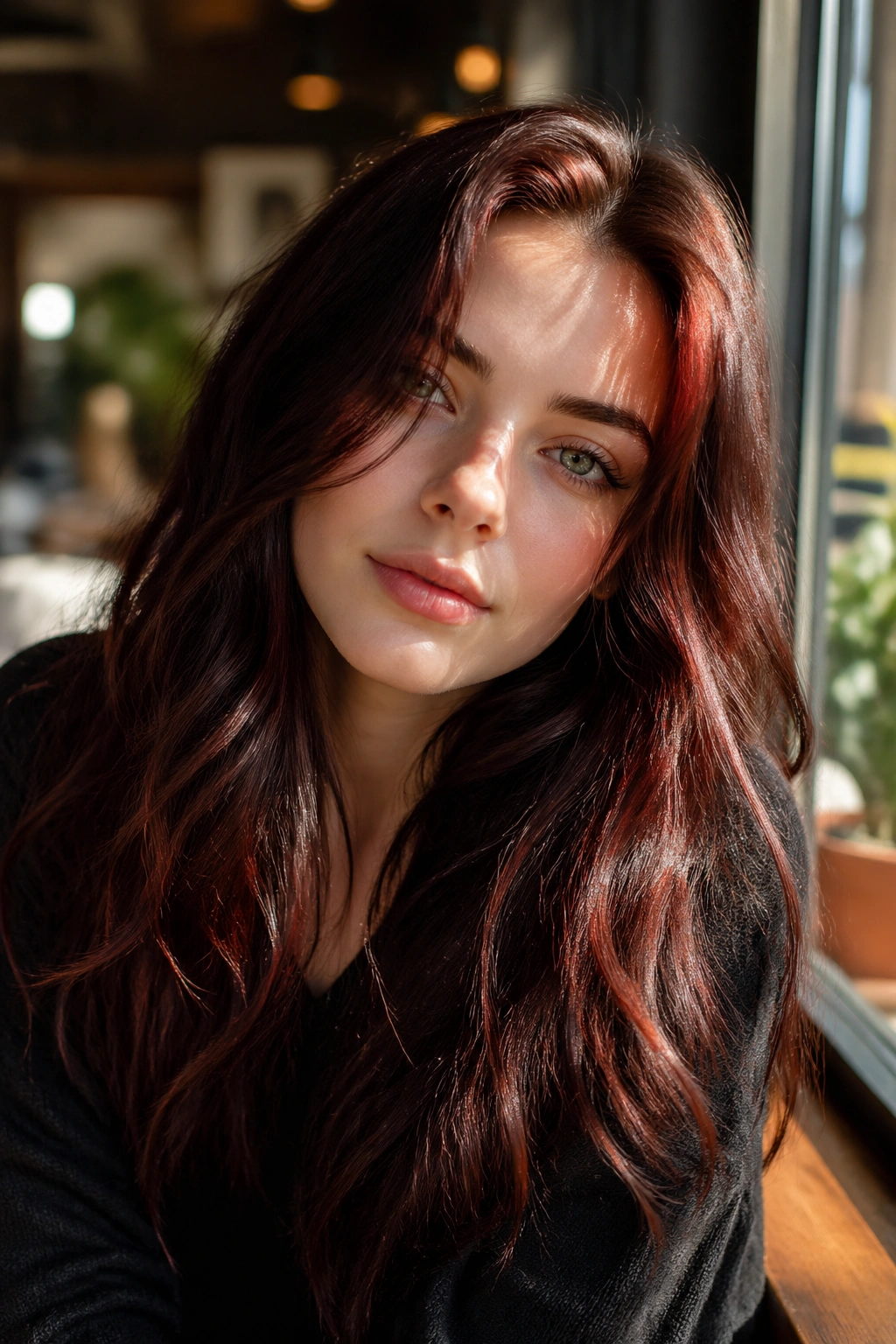
Ruby brown is the shade for someone who wants red, but not red-red. The brown base holds everything together, while the ruby reflect comes through in motion and sunlight. On pale skin, that gives enough contrast to wake up the face without turning the hair into the main event.
What Makes It Different
Unlike a classic ruby red, this version stays brunette-first. That means less shock at the mirror and an easier grow-out. It also means the color can move from office-friendly to dressy depending on how you style it.
Best Uses
- Medium brown starting points
- Long layers or collarbone cuts
- Softer makeup looks
- People who want red only in certain light
The color reads best when the hair has shine. On dry ends, ruby brown can lose the ruby part and look too brown. A light oil on the mid-lengths helps a lot.
19. Maroon Money Piece
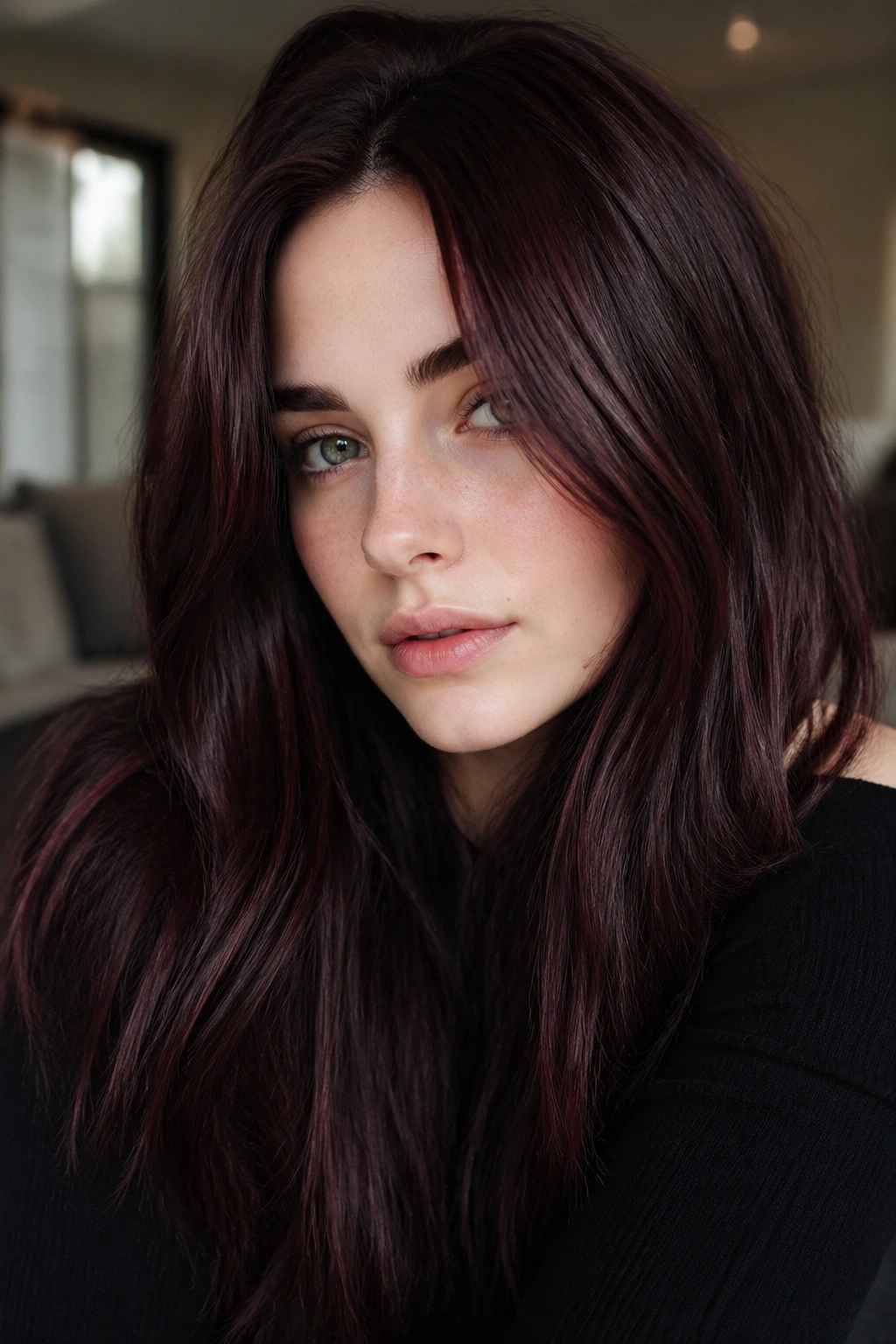
A maroon money piece is a smart move if you want your face to feel brighter without changing every strand on your head. The maroon pieces sit right around the front, so pale skin gets that rich red frame where it matters most.
Why It Works
The contrast lands near the cheeks and eyes, which is exactly where color placement should do some heavy lifting. You do not need a full head of red to get a visible effect. A few face-framing strands can change the whole mood of the haircut.
A few details make it work:
- Keep the base: dark brown or black-brown
- Make the money piece: thin, not chunky
- Best with: center parts and soft waves
- Salon request: maroon framing pieces blended into the front layers
If your hair is shoulder length or longer, this is especially effective because the front pieces can curve into the rest of the style. On very short hair, the effect is sharper and a little less subtle.
20. Chestnut Cherry
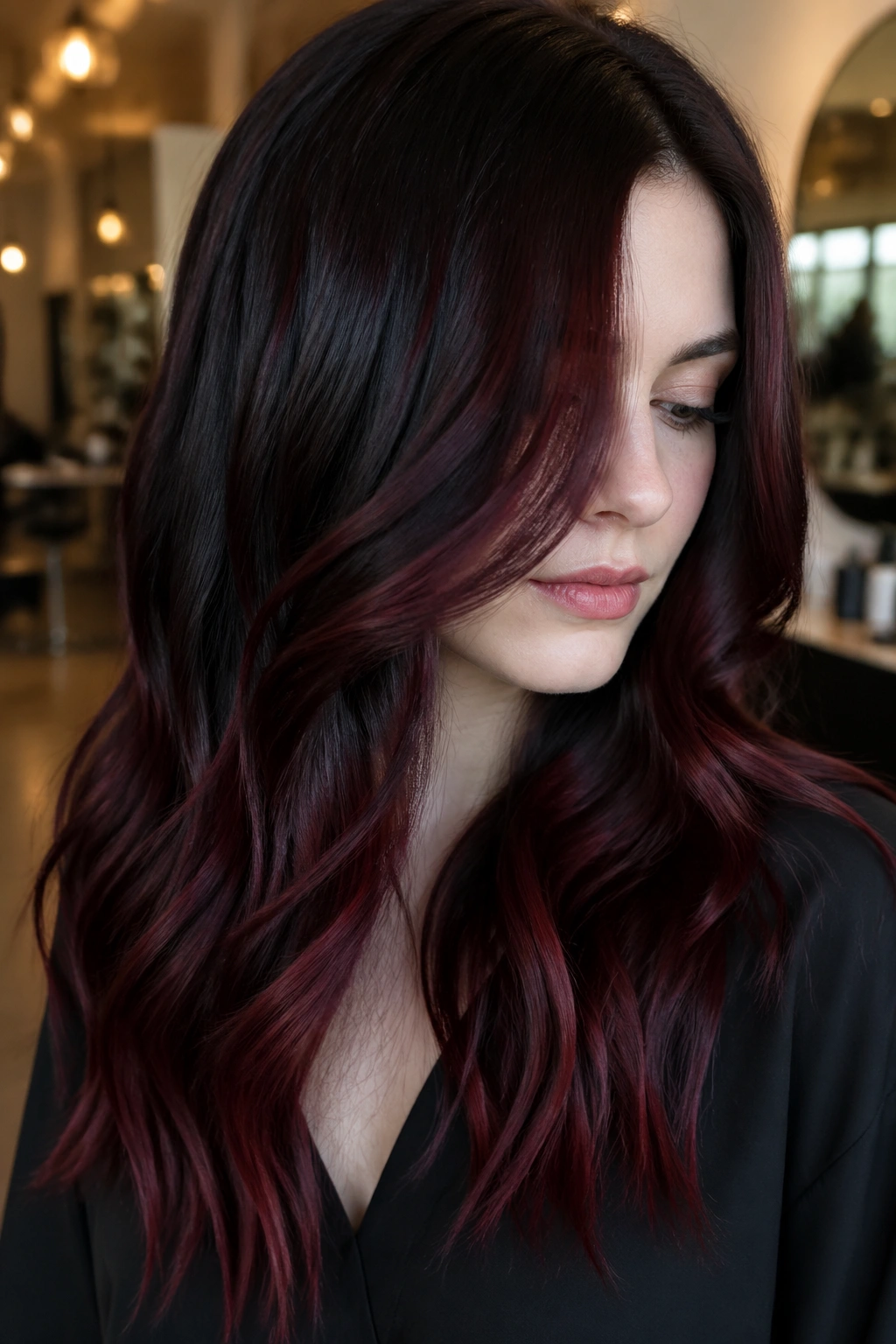
Chestnut cherry is one of the easiest dark red shades to wear because it stays close to brunette territory. The chestnut keeps it grounded, and the cherry note prevents the whole thing from fading into plain brown.
It’s a good choice if you want your hair to look warm and healthy more than obviously dyed. On pale skin, that can be flattering in a very natural way. The face looks a touch warmer, the hair gets more dimension, and nothing feels too forced.
This one is easy to wear. That’s the point.
If you want the red to show more, ask for a light cherry glaze over a chestnut base instead of a heavy permanent red. That keeps the tone soft and lets you decide later whether you want to go deeper. It’s also kinder to hair that already feels dry.
21. Velvet Merlot
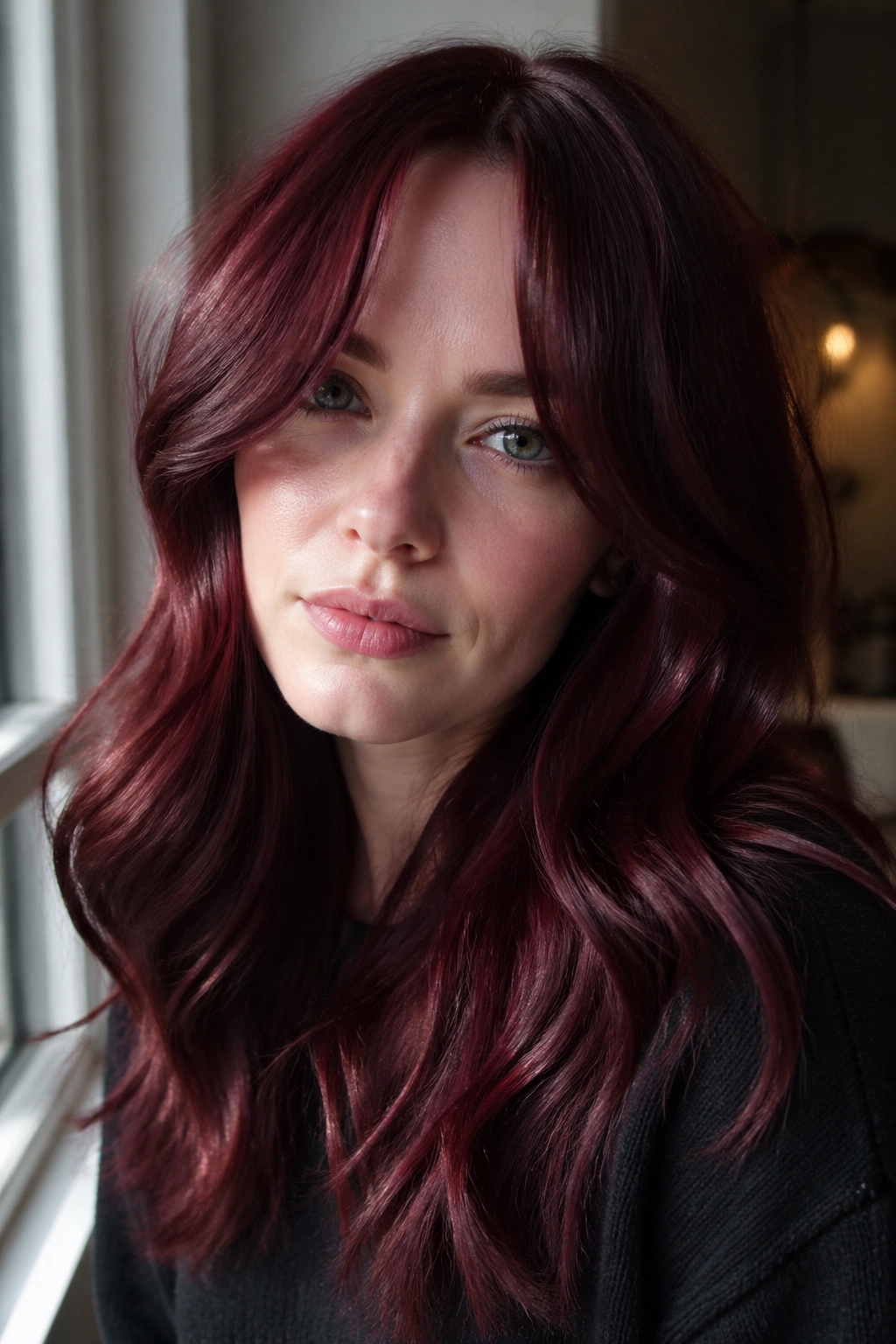
Velvet merlot is all about richness. The color sits deep in the red wine family, but the finish should feel plush rather than shiny in a plastic way. On pale skin, that velvet depth gives enough contrast to make the features look precise and clear.
Why Shine Matters
Merlot needs reflection to work. Without it, the shade can look brown and lose its wine edge. A soft gloss, a smooth blowout, or even a good leave-in cream helps the red show in layers instead of collapsing into one dark mass.
This color is strongest on hair that moves. Long waves, smooth curls, and even a blunt cut with some bevel at the ends all help. If your hair is very frizzy, the shade can still work, but the texture will grab the light in a rougher way.
I’d call this one the “dressy dinner” red. It can look polished fast.
22. Beetroot Brunette
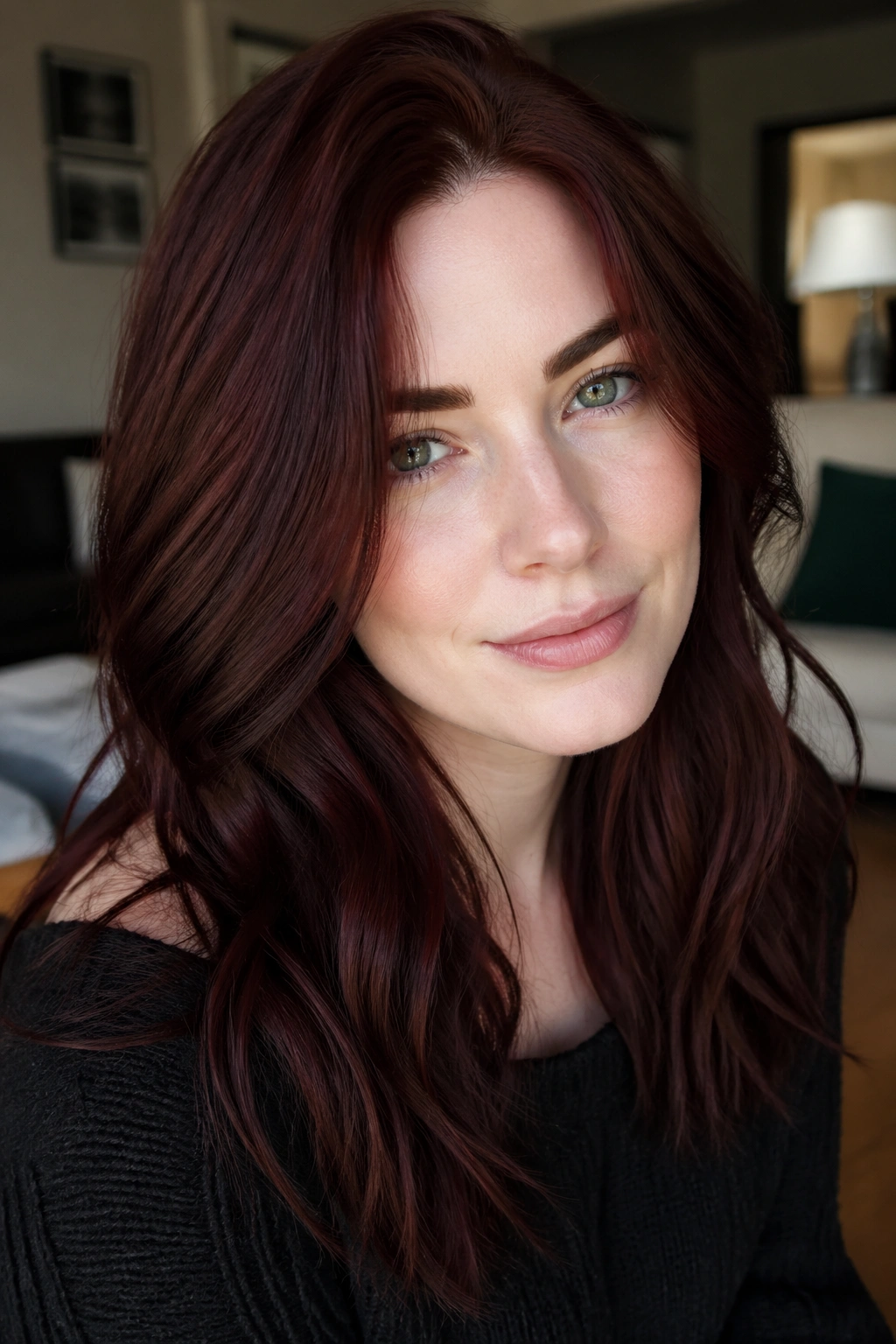
Beetroot brunette is a little weirder than the others, and that is what makes it fun. The tone is earthy, almost dusty, with a red-purple depth that can look fabulous on pale skin if you want something less expected than burgundy.
The Shape of the Color
This shade works because it feels grounded, not sugary. It has enough brown to stay believable, enough purple to keep it interesting, and just enough red to read as dark red instead of dark brown. That balance is tricky, which is why a good gloss matters here.
Key Details
- Best on: medium-length hair with texture
- Feels strongest in: soft daylight
- Pairs well with: muted makeup and darker brows
- Ask for: a beet-toned brunette with violet-red reflects
If you like colors that look a little different every time you step outside, beetroot brunette is worth a serious look.
23. Smoky Sangria
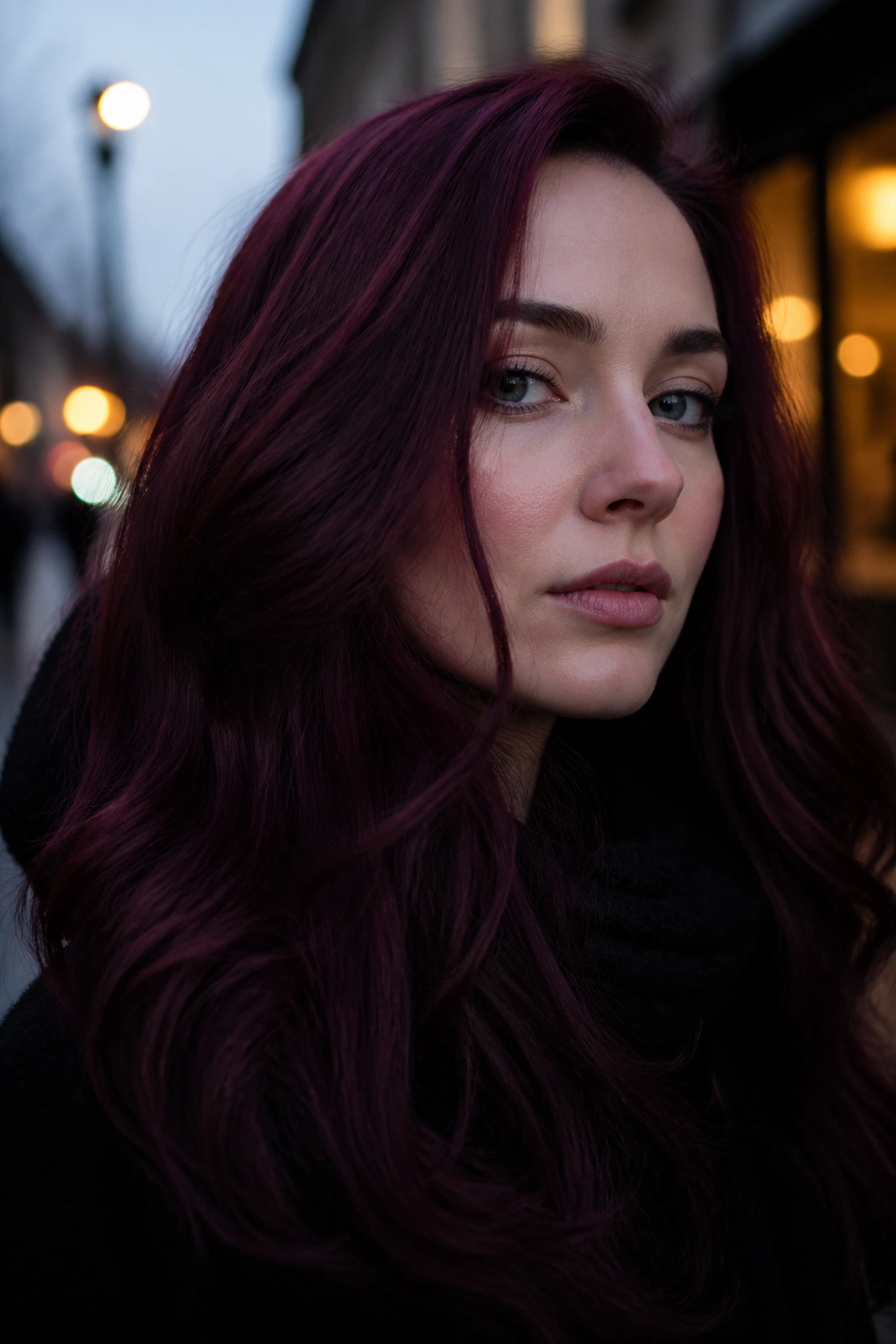
Smoky sangria is the kind of dark red that looks better the less perfect the hair is. A little bend, a little texture, a little movement — that’s where the color starts to breathe. On pale skin, the smoky brown base keeps the complexion from getting overwhelmed, while the sangria note adds just enough depth.
The shade works especially well on layered cuts and lived-in waves. The color shifts between berry, wine, and brown depending on where the light lands. That kind of movement is useful if you do not want a red that announces itself before you do.
It also fades in a pretty way. Some reds get ugly when they wash out. Smoky sangria tends to soften instead, which is kinder if you stretch salon visits. If you like a color that feels a little moody and a little effortless, this is a strong one.
24. Dark Burgundy Dip-Dye
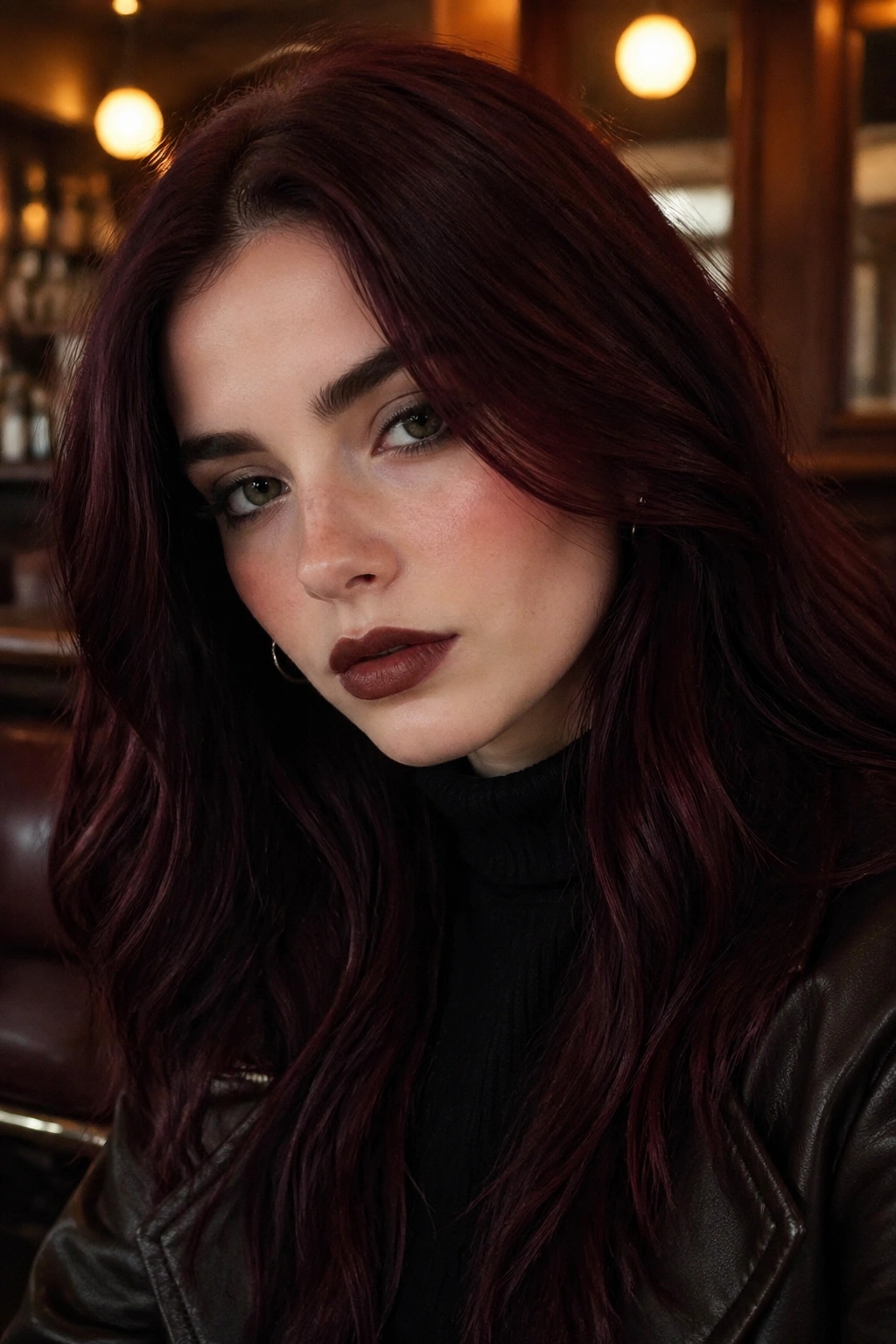
Dark burgundy dip-dye is the lowest-risk red on the list. The roots stay dark, the burgundy lives at the ends, and the whole thing gives you the dark red look without committing every inch of hair to it. On pale skin, that can be a smart way to test the waters.
What Makes It Different
Unlike an all-over burgundy, dip-dye keeps most of the head brunette. That means the face stays soft, and the color only shows where the eye naturally travels down the length of the hair. It’s a little bolder, a little more playful, and easier to grow out than you might expect.
Best For
- Long hair
- People who wash often
- Anyone nervous about red fading at the roots
- Haircuts with blunt or slightly tapered ends
If you want the color to look intentional, keep the line between brown and burgundy blurred. A hard break can look choppy in a bad way. A soft fade feels much better.
25. Cherry Merlot Root Shadow
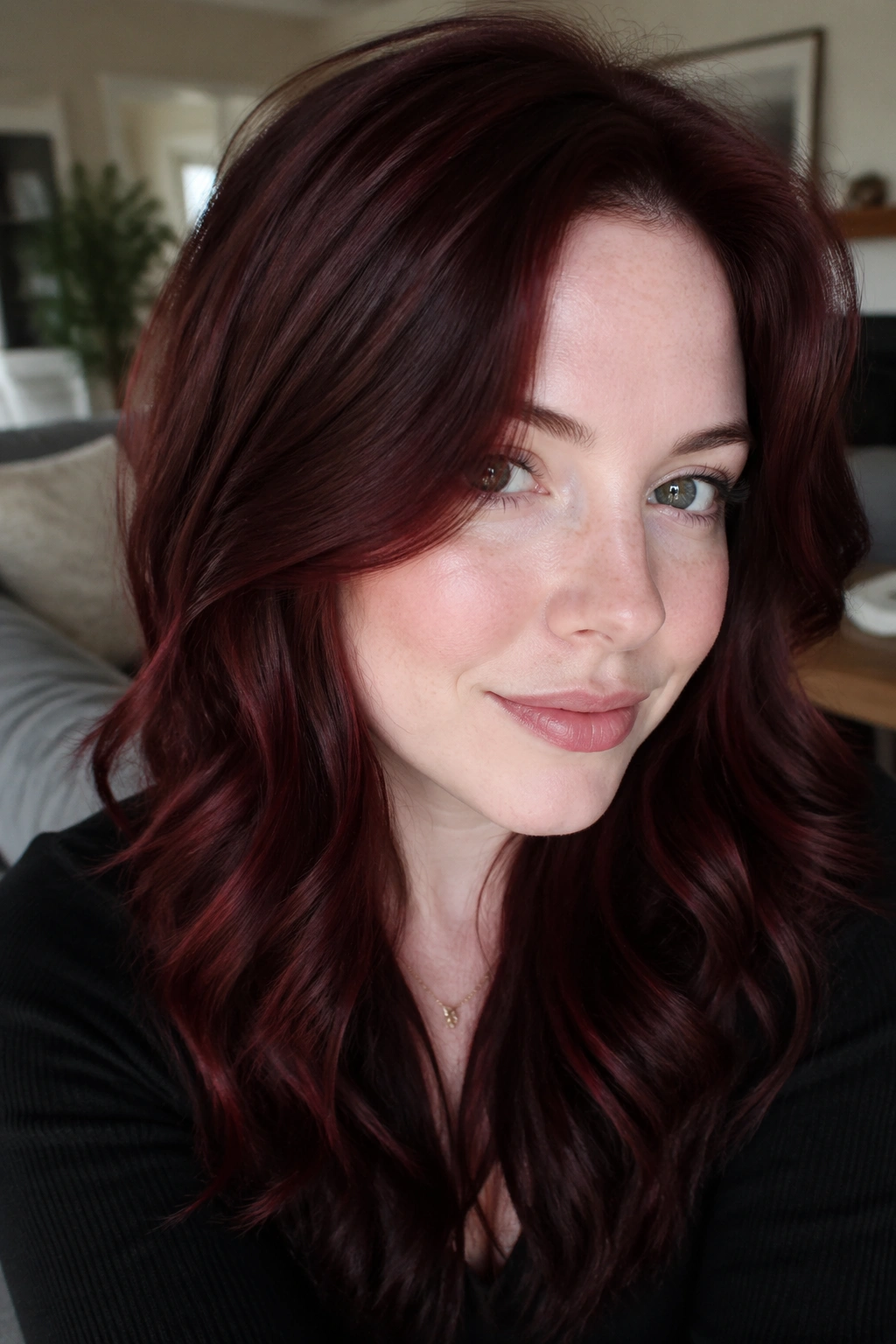
Cherry merlot root shadow is the one I’d choose for someone who wants dark red hair color ideas for pale skin but still wants the result to feel balanced. The shadow root keeps the top soft and dark, then the cherry-merlot body carries the color through the mids and ends.
That setup is useful because pale skin needs some contrast at the root, but it also needs the red to stay visible around the face. The shadow solves the first part. The cherry-merlot tone solves the second. Put together, they give you a red that looks expensive in the practical sense: it grows out gracefully, and it keeps its shape even after a few washes.
If you want one final rule, keep it simple. Ask for a dark root, a wine-cherry midtone, and a glossy finish. That three-part formula does a lot of work. And if you are sitting there trying to choose between all the richer reds, this one is the safest bet for looking dark, polished, and alive at the same time.
