



Orange hair doesn’t have to shout.
The shades people actually keep wearing live in a much calmer lane: copper, apricot, ginger, rust, peach, amber. They have warmth, but they also have control. On the right base, they can look glossy and expensive instead of loud and costume-like.
The part most people get wrong is the depth. A soft copper on level 7 hair behaves nothing like a full neon orange dye job, and that difference matters more than the name of the shade on the box. Placement matters too. A few face-framing ribbons can do more than a head full of flat color.
That’s why the best orange hair color ideas are the ones with a little brown, gold, beige, or peach mixed in. They flatter more skin tones, grow out with less drama, and feel easier to wear with a white T-shirt on a random Tuesday. Some are barely orange at all. Others lean rich and smoky. All of them stay on the stylish side of the line.
1. Soft Copper Bob
A soft copper bob is one of those shades that looks far more expensive than it sounds. The bob keeps the color contained, so the warmth feels neat and polished instead of taking over the whole room. On jaw-length hair, copper has a clean edge that plain blonde rarely gives.
Why It Works on a Short Cut
Short hair shows off tone changes fast. That matters here, because copper needs dimension to stay wearable. A blunt or slightly beveled bob gives the color a little structure, and the ends catch the light in a way that makes the orange read rich rather than flat.
A good version sits somewhere between strawberry blonde and light copper penny. Ask for a demi-permanent gloss if your base is already light enough, or a gentle copper overlay if your hair is a level 7 or 8. Keep the root a touch deeper. That tiny shadow keeps the whole look from turning shiny and empty.
- Best on: chin-length or jaw-length bobs
- Base level: 7 to 8 for the softest finish
- Maintenance: gloss refresh every 4 to 6 weeks
- Styling note: a smooth blowout makes the copper look cleaner than a tousled finish
My favorite move: keep the roots one shade deeper than the mids. It makes the cut look sharper.
2. Apricot Peach Waves
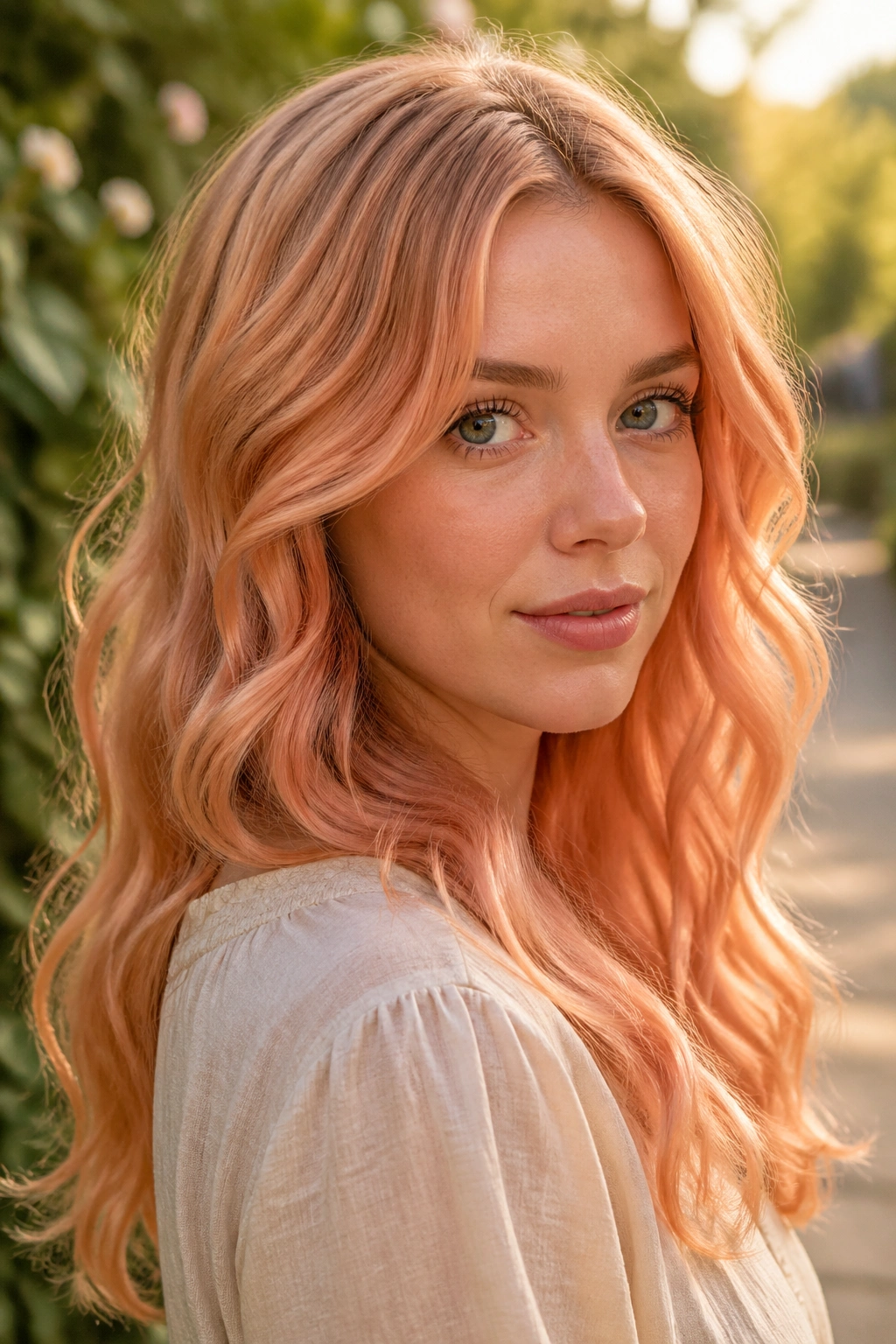
Apricot peach is the easiest orange-adjacent shade for anyone who worries about looking too bright. It sits in that sweet spot where the color feels sunny, but the peach softens the edge. On loose waves, it almost looks like the hair is lit from inside.
The reason it works is simple: peach carries pink, and pink keeps orange from going too hard. You get warmth without the heavy, brassy feeling some copper shades can have. It’s especially nice on pale blonde, beige blonde, or a soft light brown that has already been lifted a bit.
Wear it with loose bends and a soft finish, not tight curls. The movement keeps the color from reading flat. If you want this to stay believable, ask for an apricot glaze with a beige or champagne toner underneath. That little bit of neutrality is doing more work than the bright part.
3. Burnt Orange Balayage
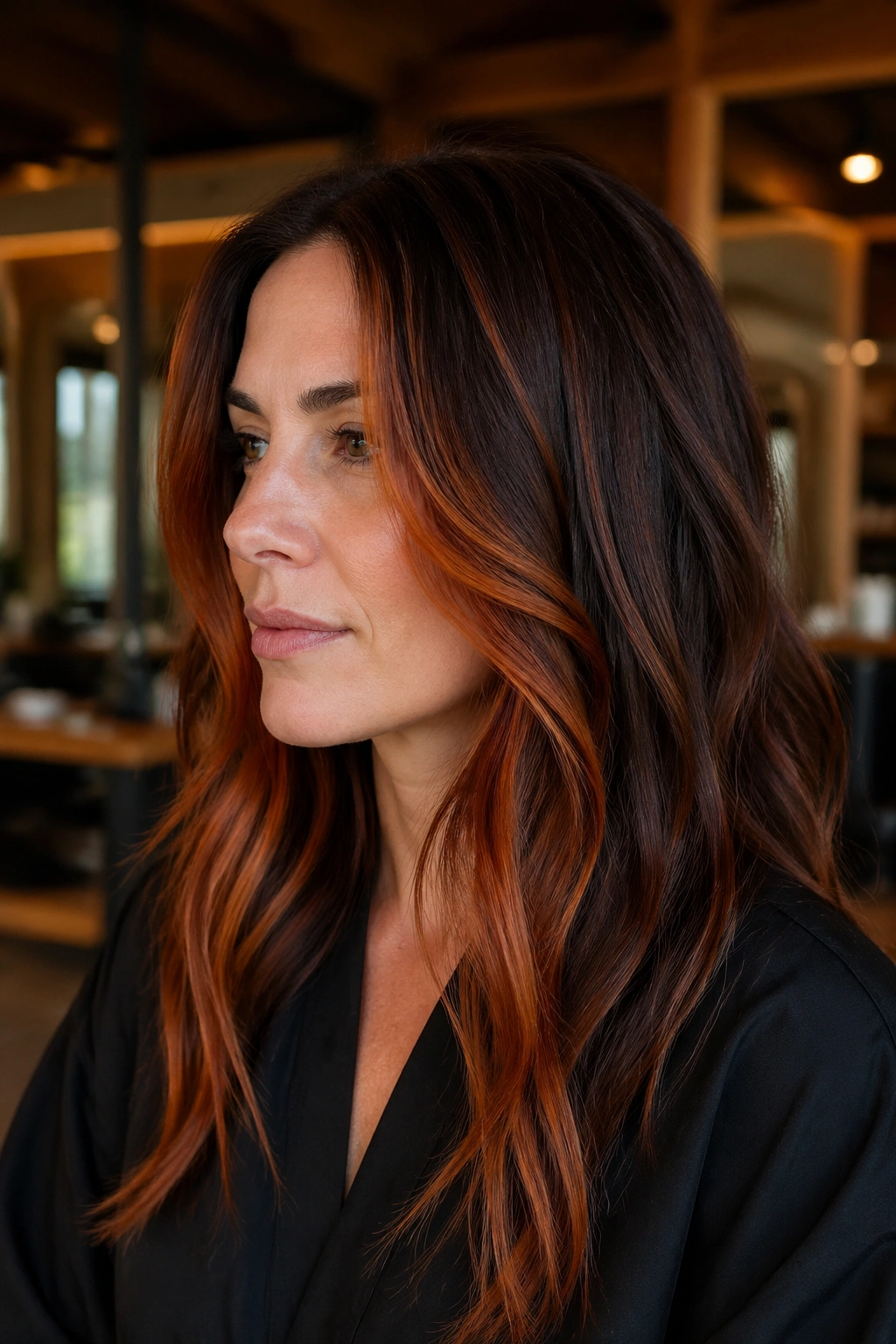
Can orange balayage look subtle? Yes — if the orange is burned down with brown and gold instead of pushed into neon territory.
On brunette hair, burnt orange balayage is one of the smartest ways to test the water. The painted ribbons can stay a shade or two lighter than your base, which means the color blends into the hair instead of sitting on top like a stripe. Done well, it gives the same feeling as a warm sunset through glass. Done badly, it looks like chunky stripes from a very determined era. There’s a line there.
How to Wear It Without the Stripey Look
Ask for hand-painted pieces around the face, crown, and ends, not a block of orange through the middle. Keep the brightest copper on the surfaces and let the underside stay deeper. That contrast creates depth, and depth is what makes orange wearable on brown hair.
If you style with a round brush or soft waves, the ribbons move in and out of view. That motion is the whole point. The color shows up when you turn your head, which feels easier than having it stare back at you from every angle.
4. Ginger Gloss on Fine Hair
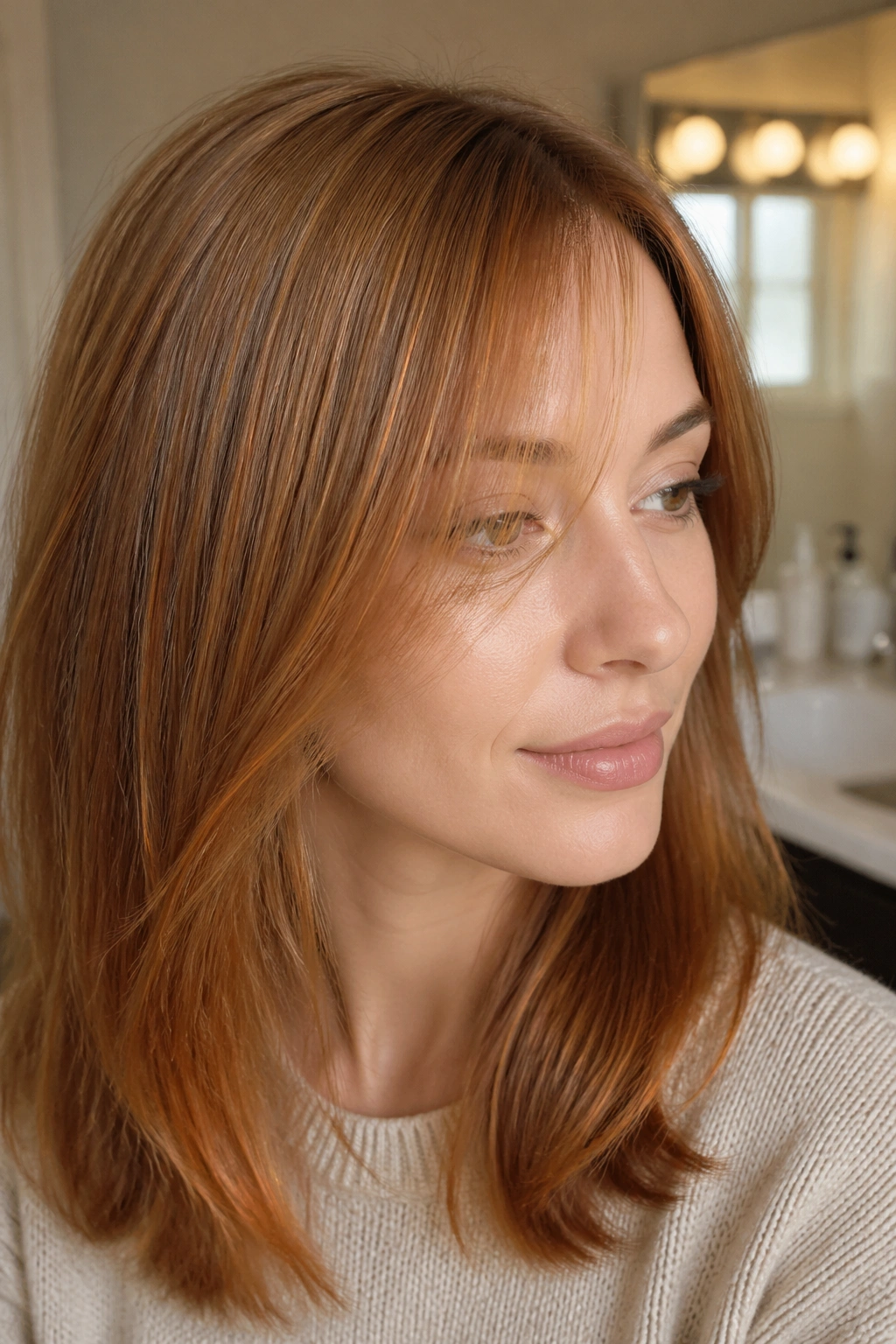
Fine hair can swallow color if you go too dark, and that’s exactly why a ginger gloss works so well. It adds warmth and shine without weighing the hair down visually. The result is airy, not heavy.
Picture a light brown or dark blonde base with a transparent ginger veil over it. That’s the lane. A demi-permanent gloss is the better move here because it stains the hair cuticle instead of sitting like a thick layer on top. You keep movement, and the hair often looks a touch fuller because the shine is more even.
- Ask for a deposit-only gloss, not a permanent lift
- Keep the tone translucent, not opaque
- Use a lightweight mousse or foam at the roots
- Finish with a loose bend, not a stiff curl
Fine hair needs restraint more than drama. A little warmth goes a long way.
5. Cinnamon Money Piece
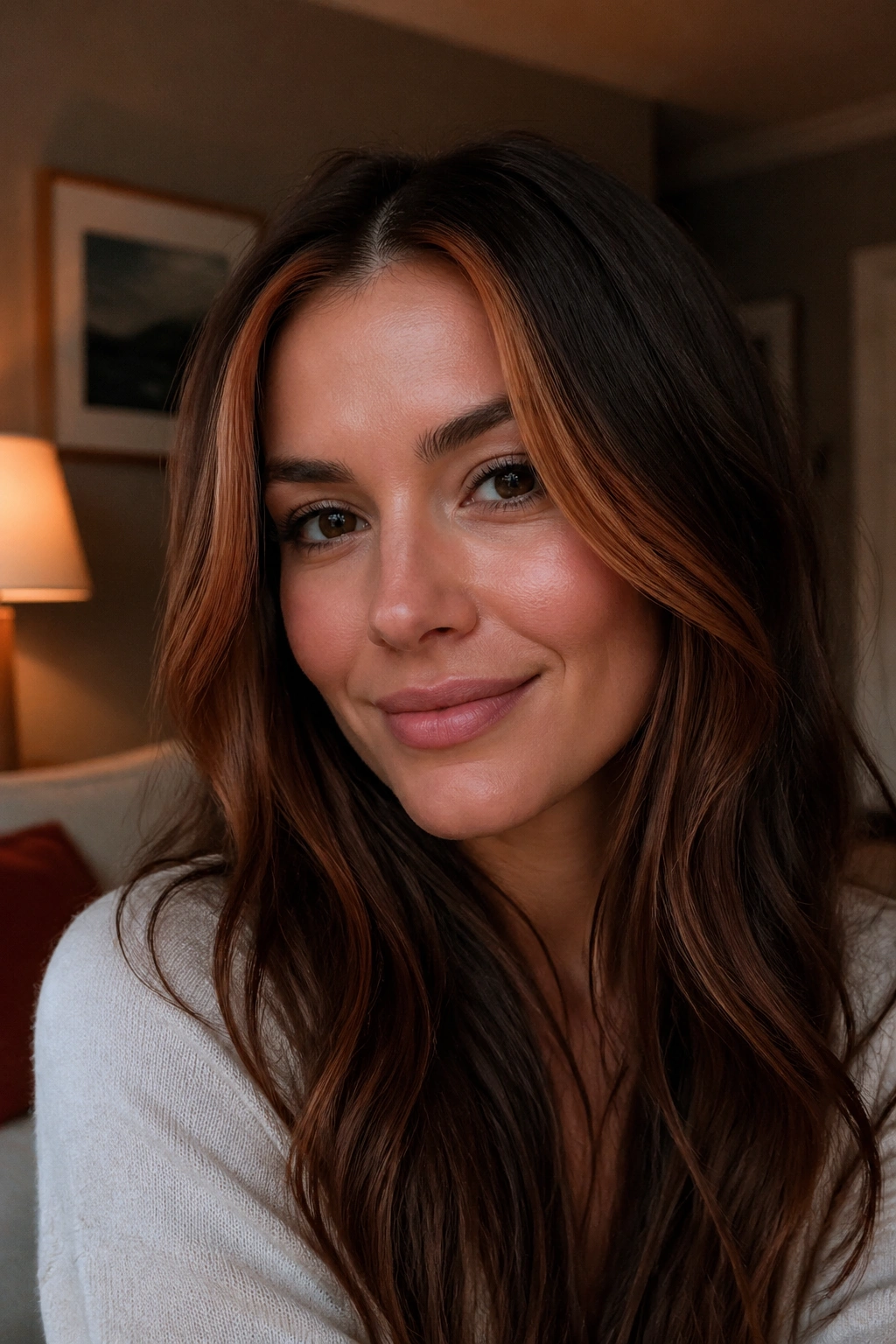
A cinnamon money piece is the kind of orange accent that does its job without asking for a full commitment. It frames the face, warms the skin, and gives you that orange hit right where people actually notice it first. The rest of the hair can stay brunette, dark blonde, or soft copper.
What makes this shade wearable is the mix of spice and brown. Pure tangerine can be too loud around the face, but cinnamon has enough depth to soften the hit. It works especially well if you wear your hair in a center part, because the lighter strands sit on either side and pull the eye upward.
The nicest part is how easy it is to grow out. A money piece can be maintained with touch-ups every six to eight weeks, or even stretched longer if you like the lived-in look. It’s a strong option for anyone who wants orange without redoing the whole head.
6. Tangerine Peekaboo Streaks
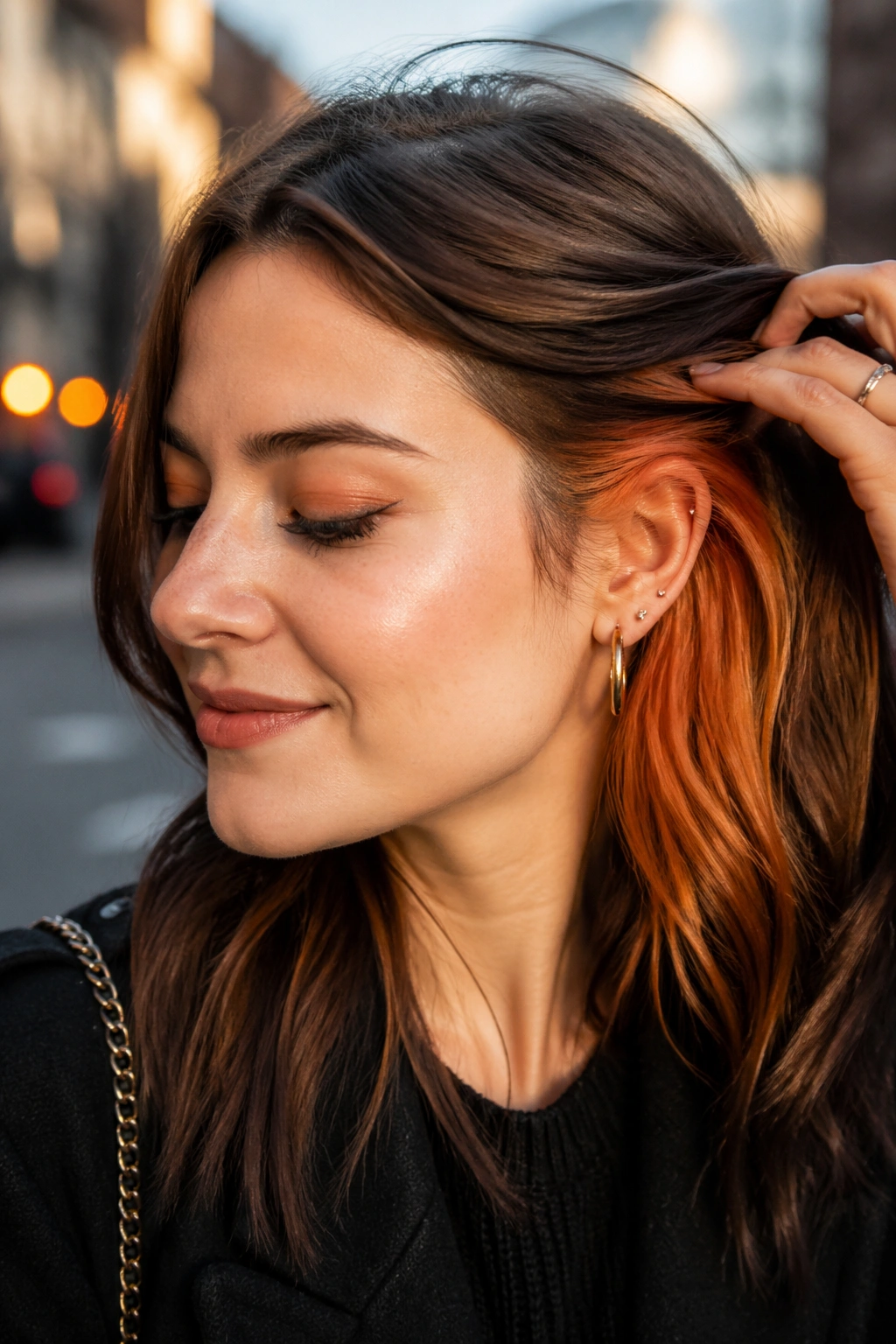
Tangerine peekaboo streaks are for people who like color but don’t want to see all of it at once. The orange hides under the top layers, then flashes out when you move, flip your hair, or tuck one side behind your ear.
That contrast is what makes it work. Unlike all-over orange, peekaboo color gives you control. You can keep the top polished and natural-looking while letting the underneath sections carry the bright stuff. It also makes sense for long hair, because there’s more room for the hidden pieces to show off.
The best version uses saturated tangerine on a pre-lightened underlayer, with the top layer left brown, dark blonde, or copper. If you wear your hair down most of the time, this is a fun compromise. If you wear clips, braids, or half-up styles, it gets better.
7. Peach Champagne Melt
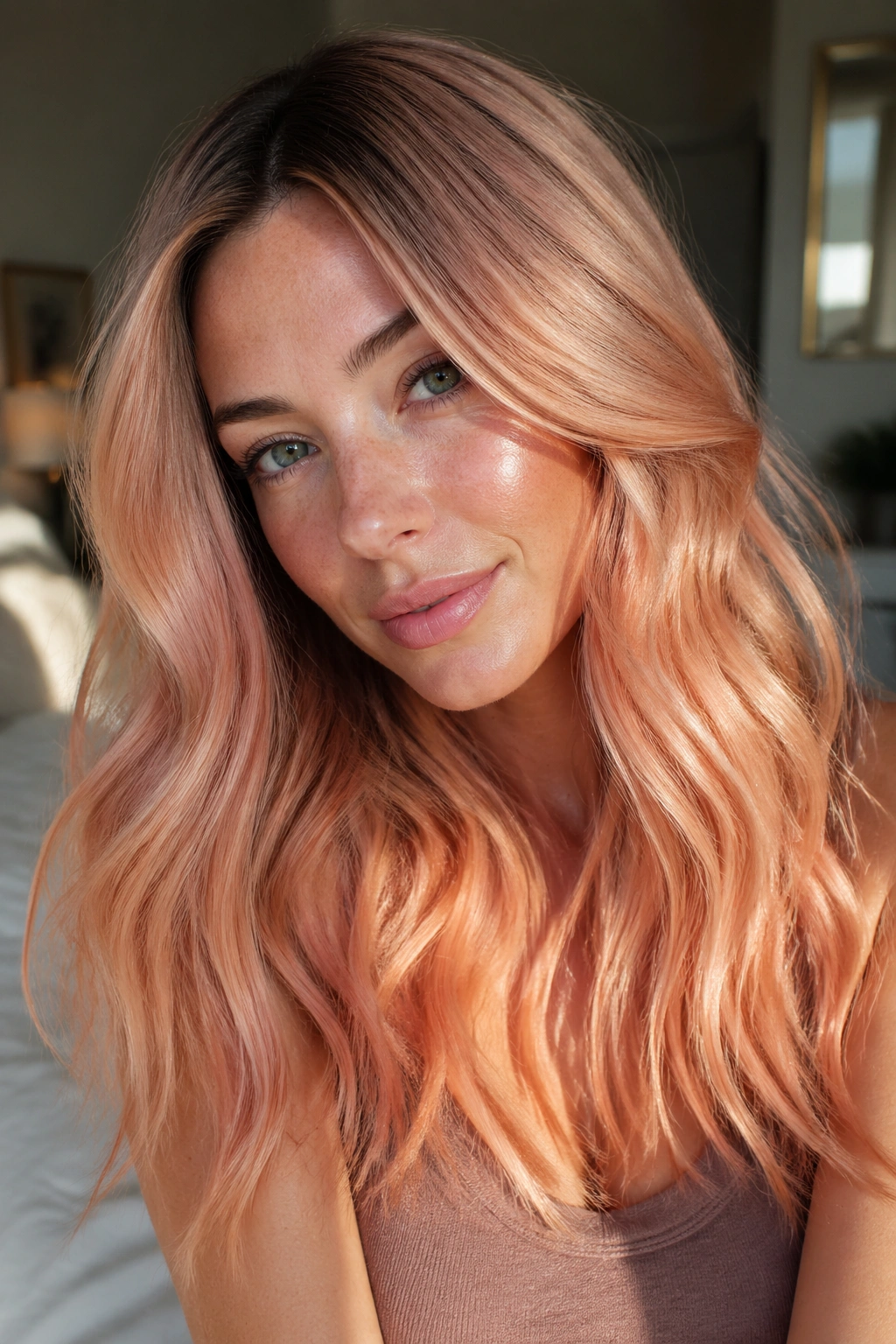
A peach champagne melt is softer than most people expect from an orange shade. The peach brings warmth, the champagne takes the edge off, and the melt keeps the roots from looking painted on. It’s one of the most forgiving orange-adjacent looks you can wear.
This is the shade for someone who wants warmth but doesn’t want to explain the color every time they walk into a meeting. The transition from root to ends is smooth, so the eye doesn’t stop at one harsh line. Instead, the color shifts gently from beige blonde near the top to a peachy wash through the lengths.
What to Ask Your Colorist For
Ask for a root shadow one or two levels deeper than the mids, then a peach glaze through the rest. If your hair is very light, the champagne note keeps the peach from turning bubblegum. If it’s darker, the champagne helps the orange family shade stay soft rather than brassy.
Best on: lobs, long layers, and softly waved hair.
Maintenance: low to moderate, because the root blend hides grow-out well.
Skip if: you want a strong orange statement from a distance.
8. Copper Face-Frame for Orange Hair Color Beginners
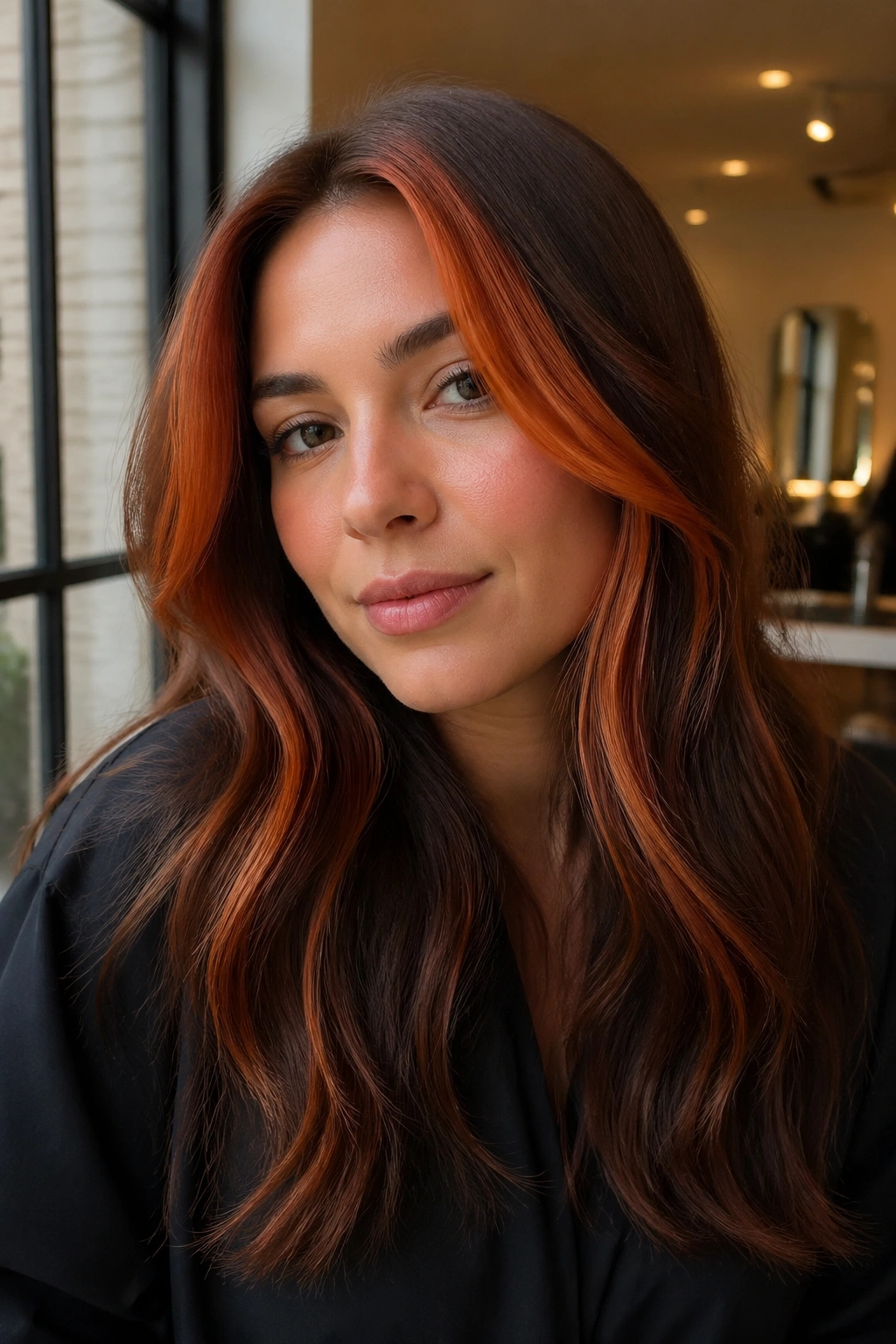
If you only want a small commitment, a copper face-frame is the move. It gives you orange where it matters most — around the hairline — without changing the whole head. That makes it one of the easiest orange hair color ideas to wear in real life.
The shape matters as much as the shade. A frame that starts just off the part and falls past the cheekbone draws attention upward and makes the color look deliberate. Too thin, and it disappears. Too wide, and it starts behaving like a full streak. The sweet spot is usually two to three ribbons on each side.
This works especially well on medium brunette, dark blonde, and red-brown bases. The contrast is enough to show up in photos, but not so harsh that you feel stuck with it. If you want even less upkeep, keep the rest of the hair close to your natural color and let the copper around the face do the talking.
9. Smoky Auburn Orange
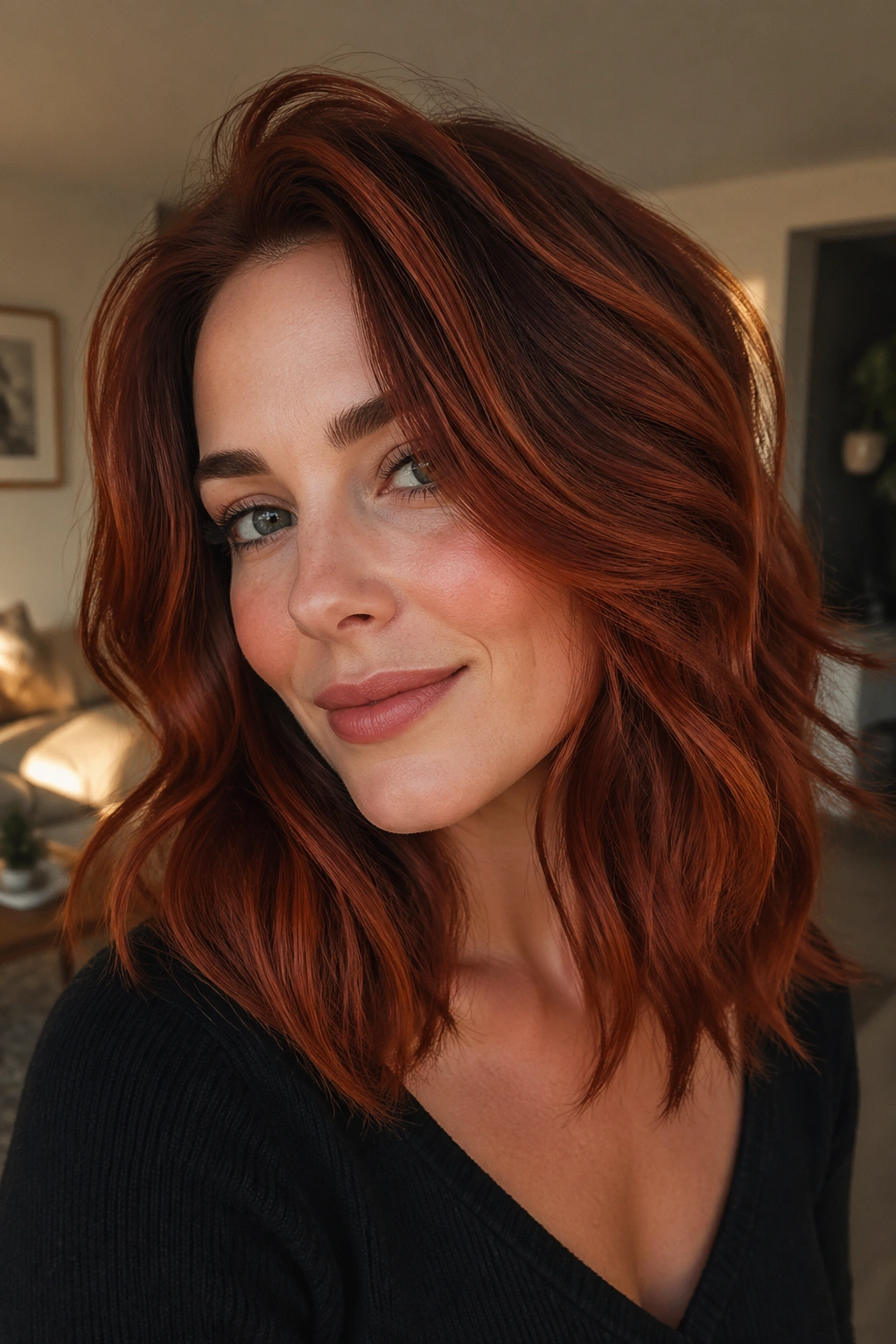
What if you want orange that still feels grounded? Smoky auburn orange is the answer.
This shade leans brown first, orange second. That’s the magic. The orange is there, but it’s tucked under a richer auburn base, so the color reads like a deep copper with attitude rather than a bright fashion tone. On medium to deep brown hair, it can look almost like a natural red at a glance, then flash more orange in sunlight.
The best way to wear it is with softness in the cut. Layered hair, shoulder-length cuts, and curtain bangs all help because they keep the color moving. Heavy, one-length hair can make smoky auburn feel too dense. A bit of shape keeps the warmth alive.
10. Coral Curly Shag
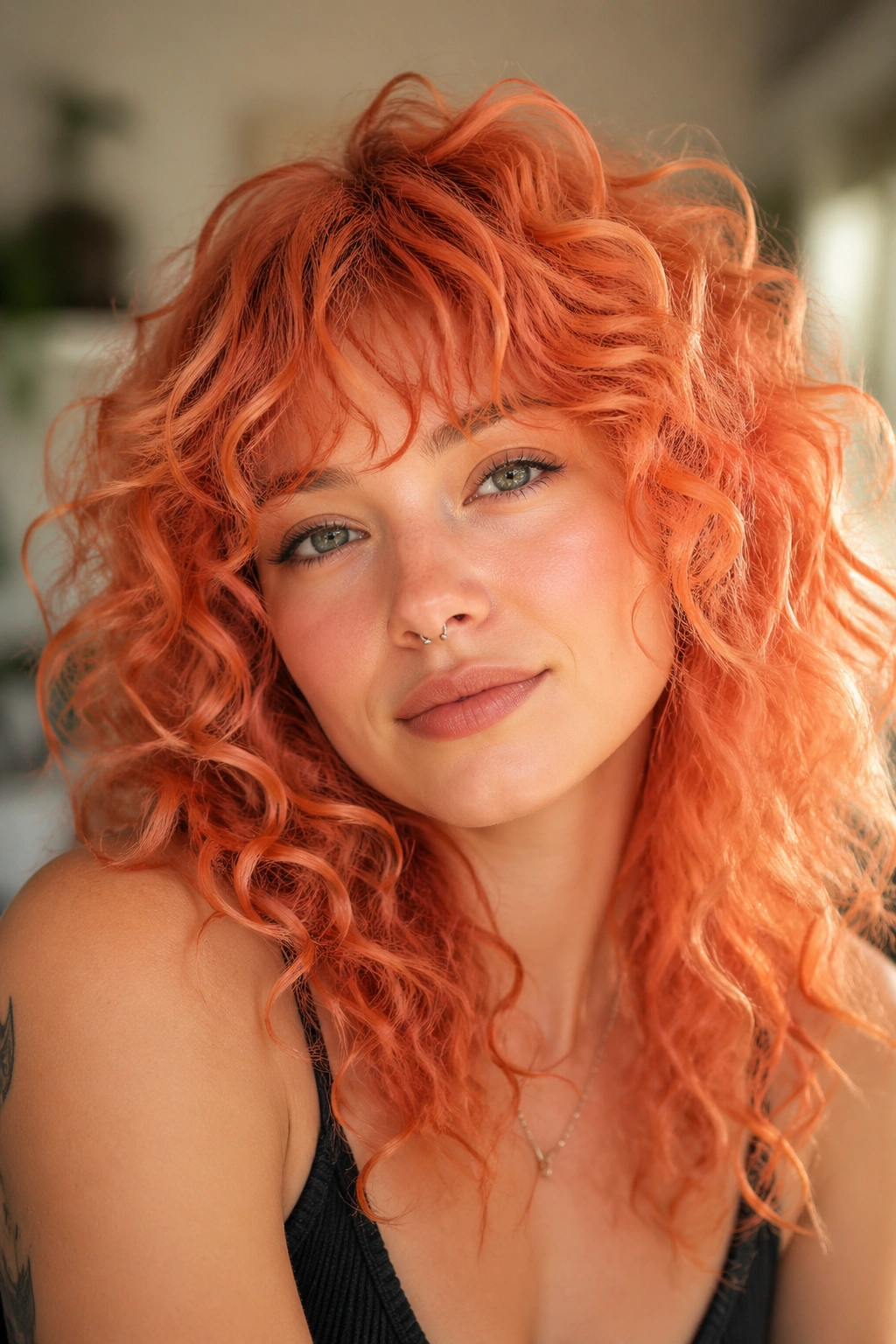
Curly hair loves coral because the shape already does half the work. The shag layers break up the color, and the coral keeps the curls from looking flat or muddy. It’s playful, yes, but it can also be surprisingly grown-up when the tone stays muted enough.
On curls, the goal is not a solid block of orange. It’s to let the highlights, mids, and ends all sit a little differently, so the color changes as the curls bounce. Coral has enough pink to soften the orange, which is why it reads warmer and lighter than true tangerine.
- Best on curl patterns that need definition
- Works well with layered cuts that remove bulk
- Looks good with a slightly darker root for contrast
- Needs curl cream, not heavy oils, so the color stays visible
A curly shag with coral ends never feels fussy. It has movement built in.
11. Bronze Apricot Lob
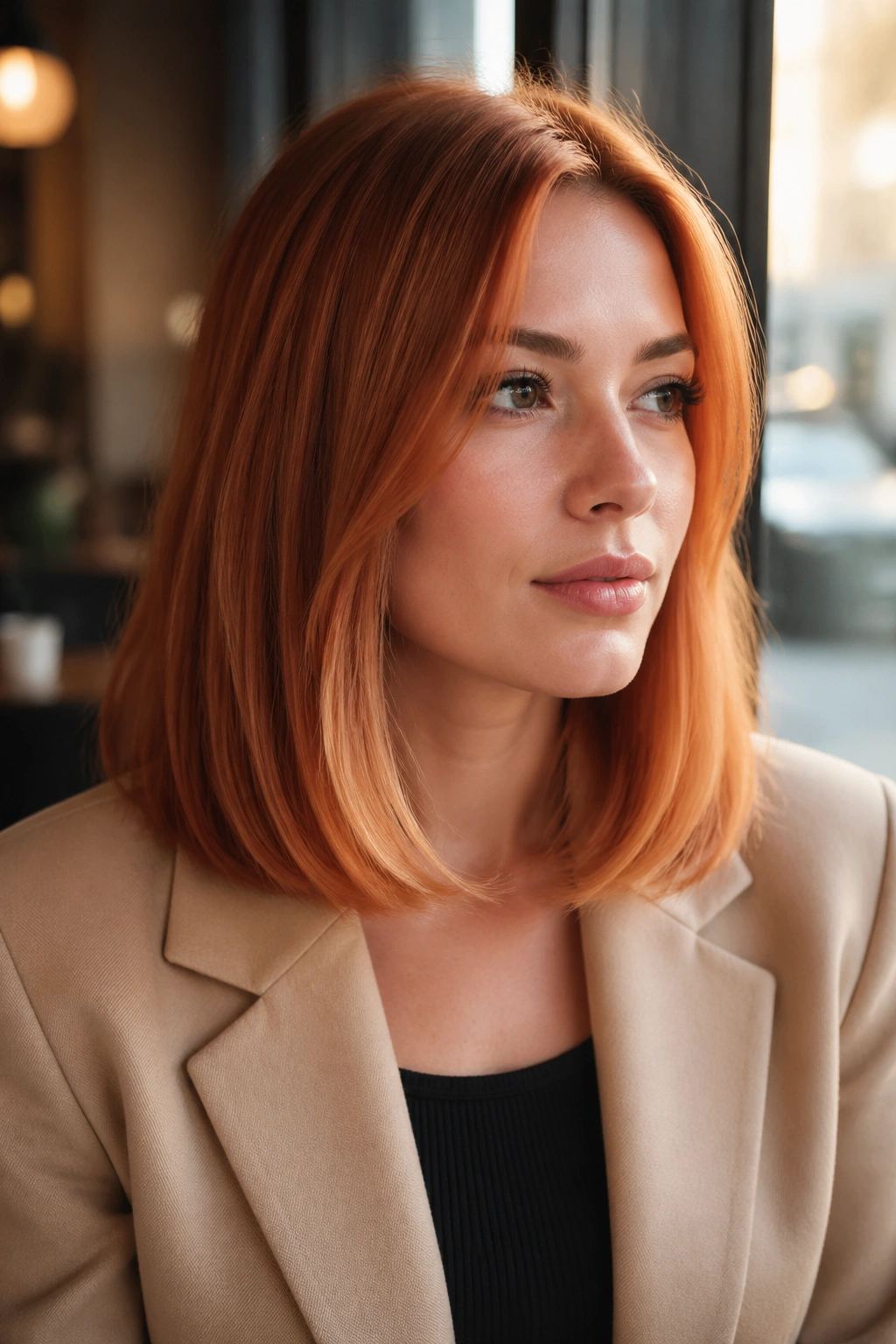
A bronze apricot lob sits in that lovely middle zone where orange feels polished instead of playful. The bronze grounds it, the apricot warms it, and the lob gives it a clean shape that makes the whole thing easy to wear.
This shade is good for anyone who wants orange hair color ideas that still work with a tailored jacket or a plain black sweater. It doesn’t scream for attention. It hums. On straight hair, the bronze gives the apricot some depth. On waves, the apricot catches just enough light to keep the shade from looking flat.
I like this one on shoulder-length hair because the cut gives the color room to show. Too short and the bronze can look dense. Too long and the apricot may disappear into the ends. A lob is the sweet spot. It’s boring in the best way.
12. Rusted Brunette Ribbons
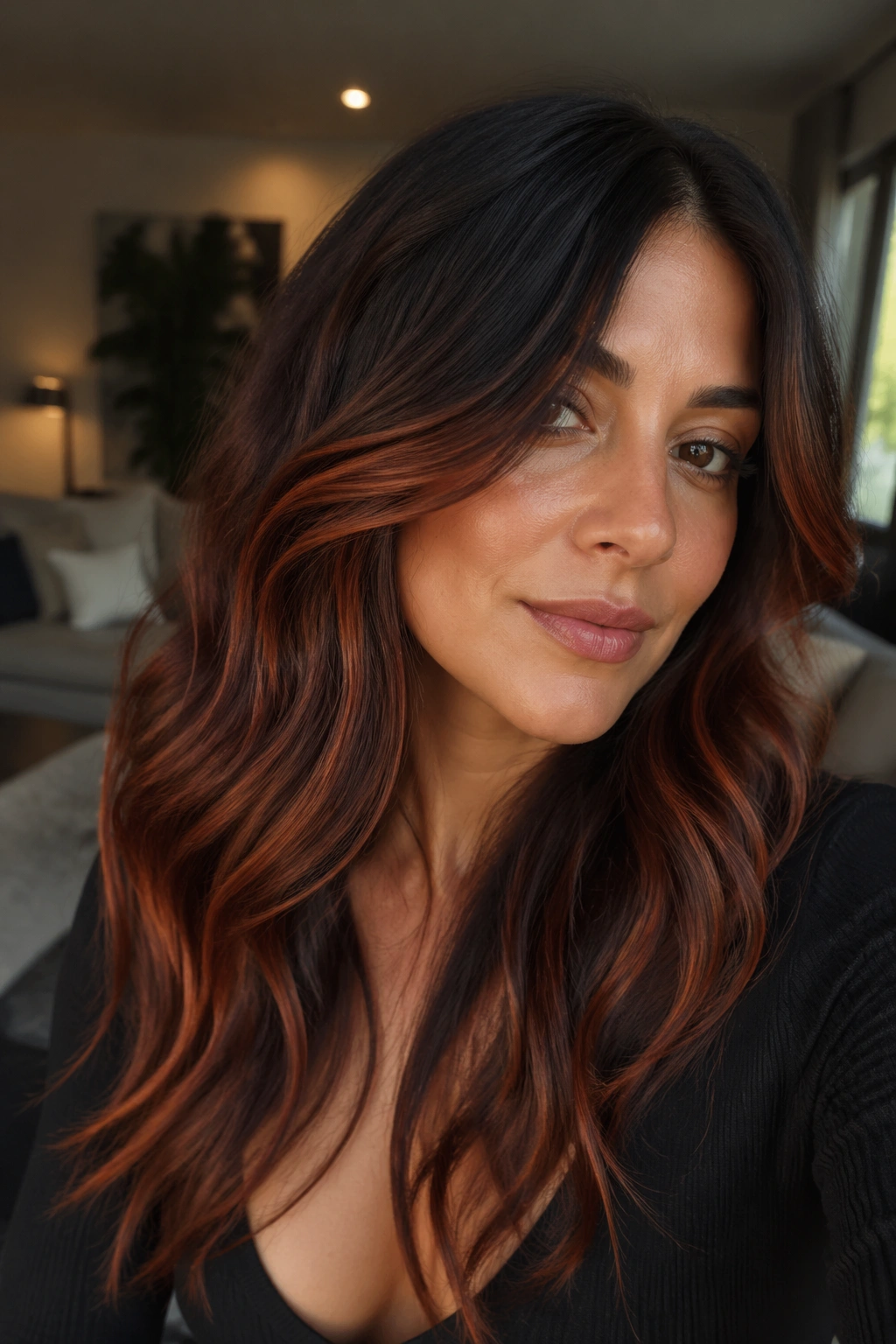
Rusted brunette ribbons are one of the most convincing ways to wear orange if you already love dark hair. The base stays brunette, and the orange appears in thin, rust-toned ribbons through the mids and ends. That keeps the look dimensional and low-pressure.
Unlike a full copper refresh, these ribbons are about texture, not saturation. They catch movement, especially in layered cuts or loose waves, and they make dark hair feel warmer without forcing it into a red category. If you like your hair to look expensive and a little mysterious, this is a good place to land.
The best part is the grow-out. Because the orange sits inside the brunette, your natural root can come through without ruining the effect. That means you can push appointments farther apart and still keep the style looking intentional. Not every orange shade can do that.
13. Mango Glaze Pixie
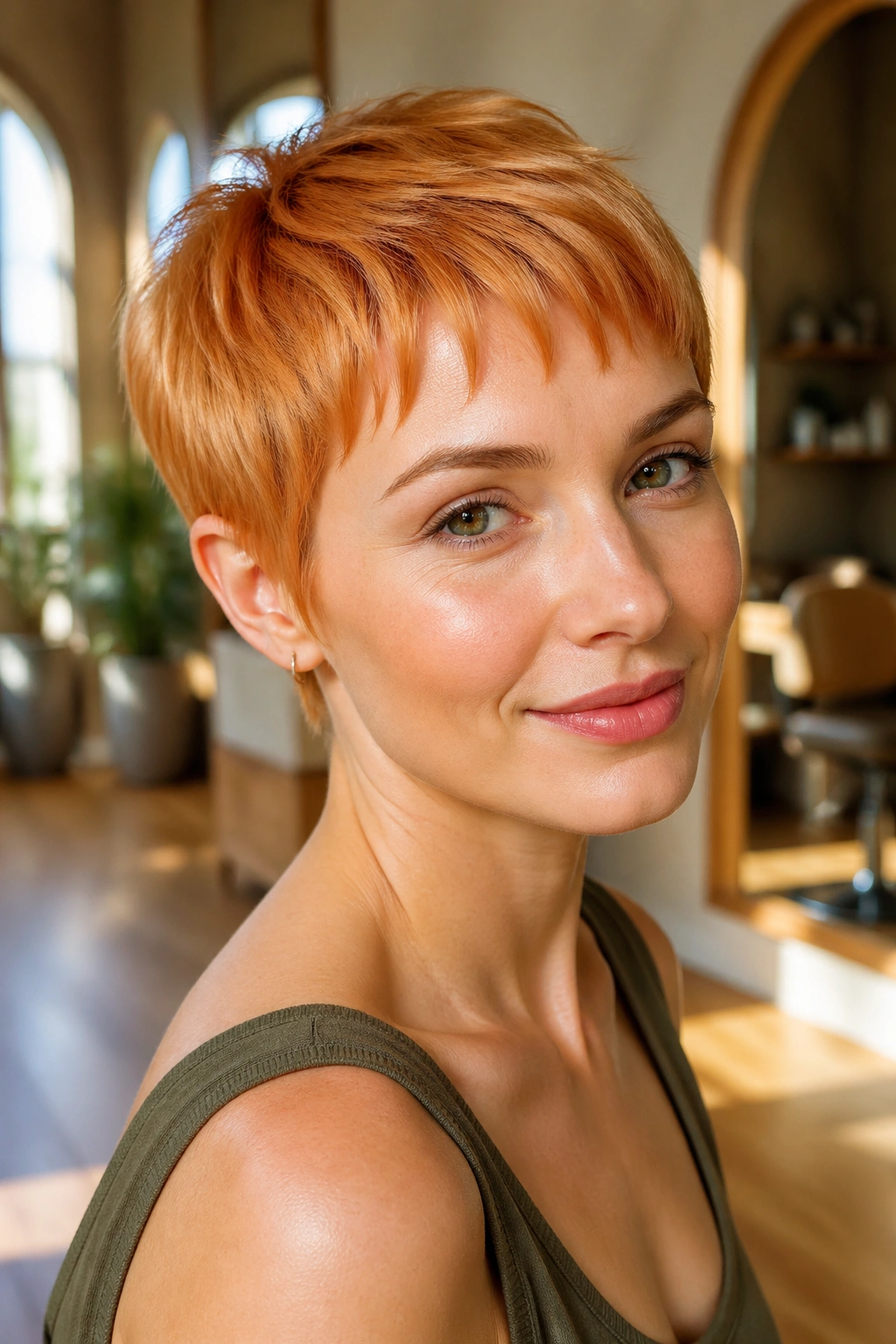
A pixie cut can handle more color than people give it credit for, and mango glaze proves it. The short length keeps the shade fresh and modern, while the mango tone adds brightness without making the cut look stiff. It’s a lively choice, but it can still feel polished.
On a pixie, every millimeter matters. A mango glaze should be translucent enough to show the cut lines, especially around the fringe and nape. If the color gets too dense, the haircut loses its shape. The good versions have a little gold in them, which keeps the orange from going cartoonish.
Tiny Cut, Big Payoff
A pixie gives you color impact fast because the hair is so close to the face. That means you can go brighter than you might on long hair and still stay in wearable territory. The style itself keeps things neat.
If you want a softer finish, ask for darker roots and a brighter glaze through the top layers only. It keeps the style from feeling flat and gives the crown a bit of lift.
14. Terracotta Midlength Layers
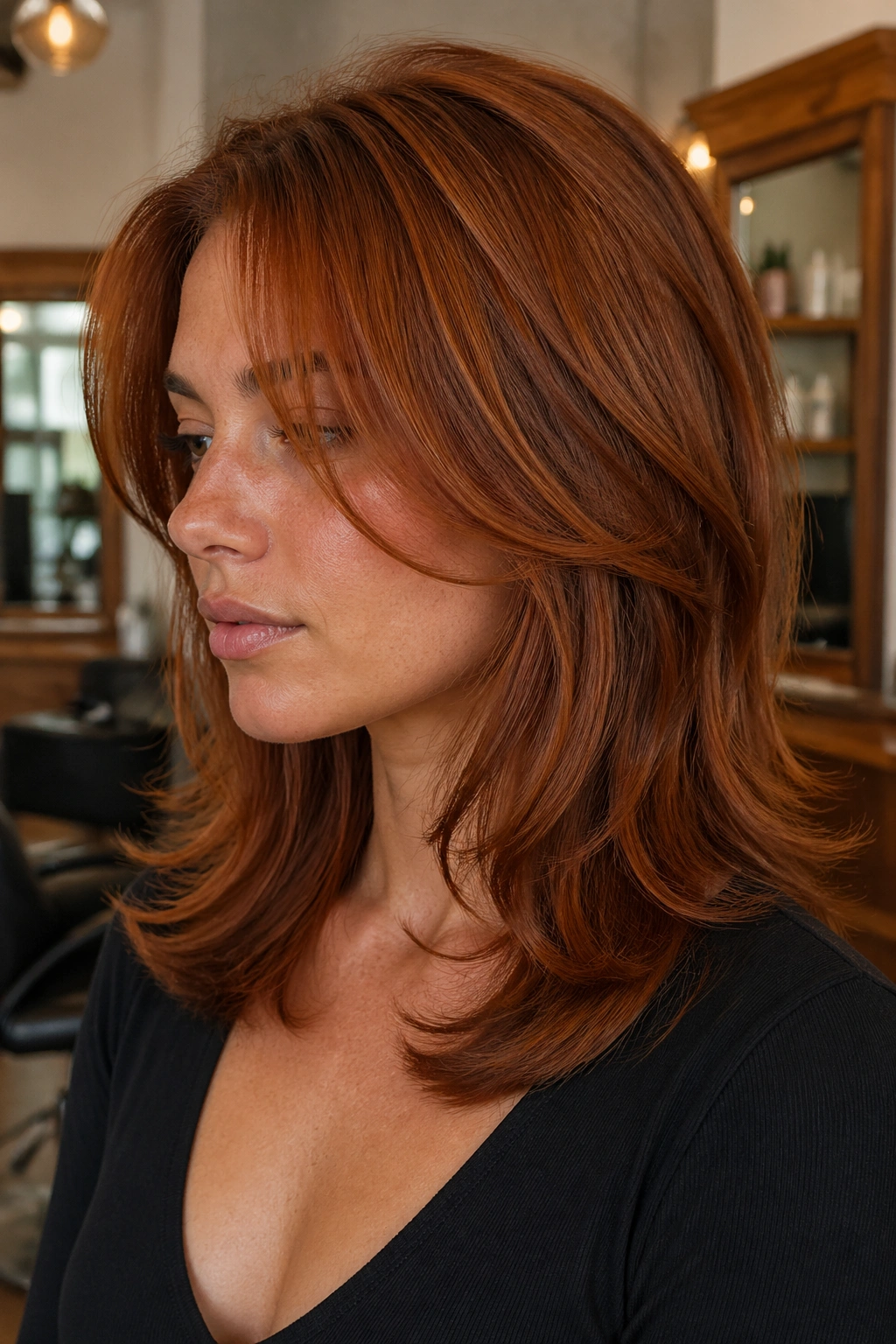
Terracotta is one of the best orange family shades because it has dirt, clay, and warmth all mixed together. On midlength layers, that earthy base keeps the hair from looking too candy-like. It feels grounded and full.
The layers matter because terracotta can look heavy on hair that hangs in one block. Once you add movement through the ends, the color starts to breathe. You see warm red-orange tones when the hair swings, and the deeper brown-red base keeps the whole style from sliding into bright copper.
This is a strong pick if you like more natural-looking color with a little edge. It works with brown eyes, olive skin, and neutral undertones especially well, but the real win is texture. A few bends from a flat iron or a soft blowout are enough. You don’t need a perfect curl pattern to make it work.
15. Deep Orange Hair Color With a Root Shadow
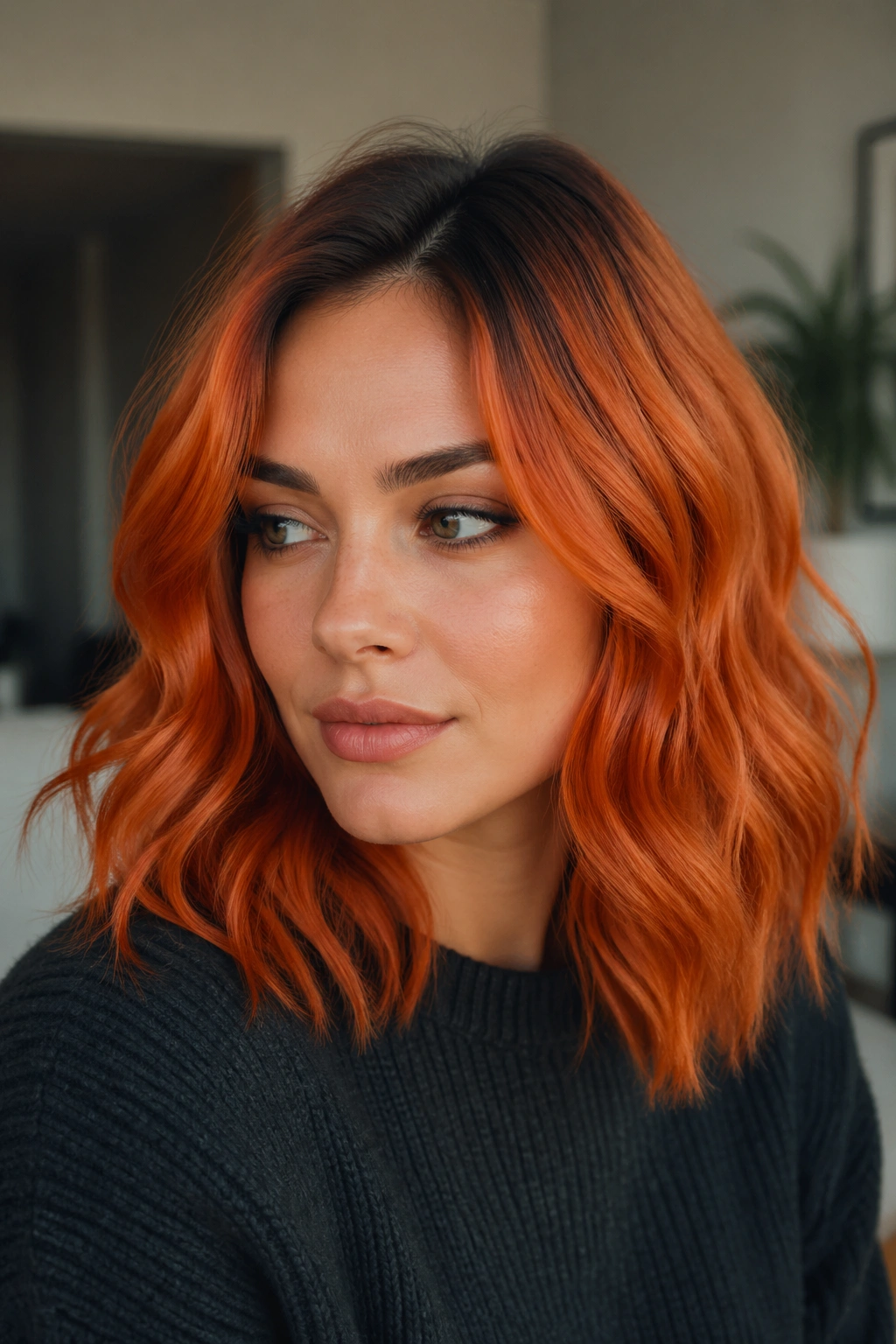
Can deep orange hair color still feel low-maintenance on darker hair? Absolutely, if the root shadow is done right.
A deep orange base without a shadow can look harsh when it starts to grow out. Add a root that’s one or two levels deeper, and the whole thing settles down fast. The shadow gives the eye a place to rest, which keeps the orange from looking pasted on. On brunettes, this is the difference between “fashion color” and “I need a touch-up tomorrow.”
The best version uses a rich copper-orange through the mids and ends, with a smoky root that fades gradually. It’s especially good if you wear your hair in waves or a loose blowout, because the movement breaks up the solid tone. If your hair is naturally medium brown and you don’t want full bleach, ask about a warm deposit color first. You may not need as much lift as you think.
16. Papaya Ends on Blonde
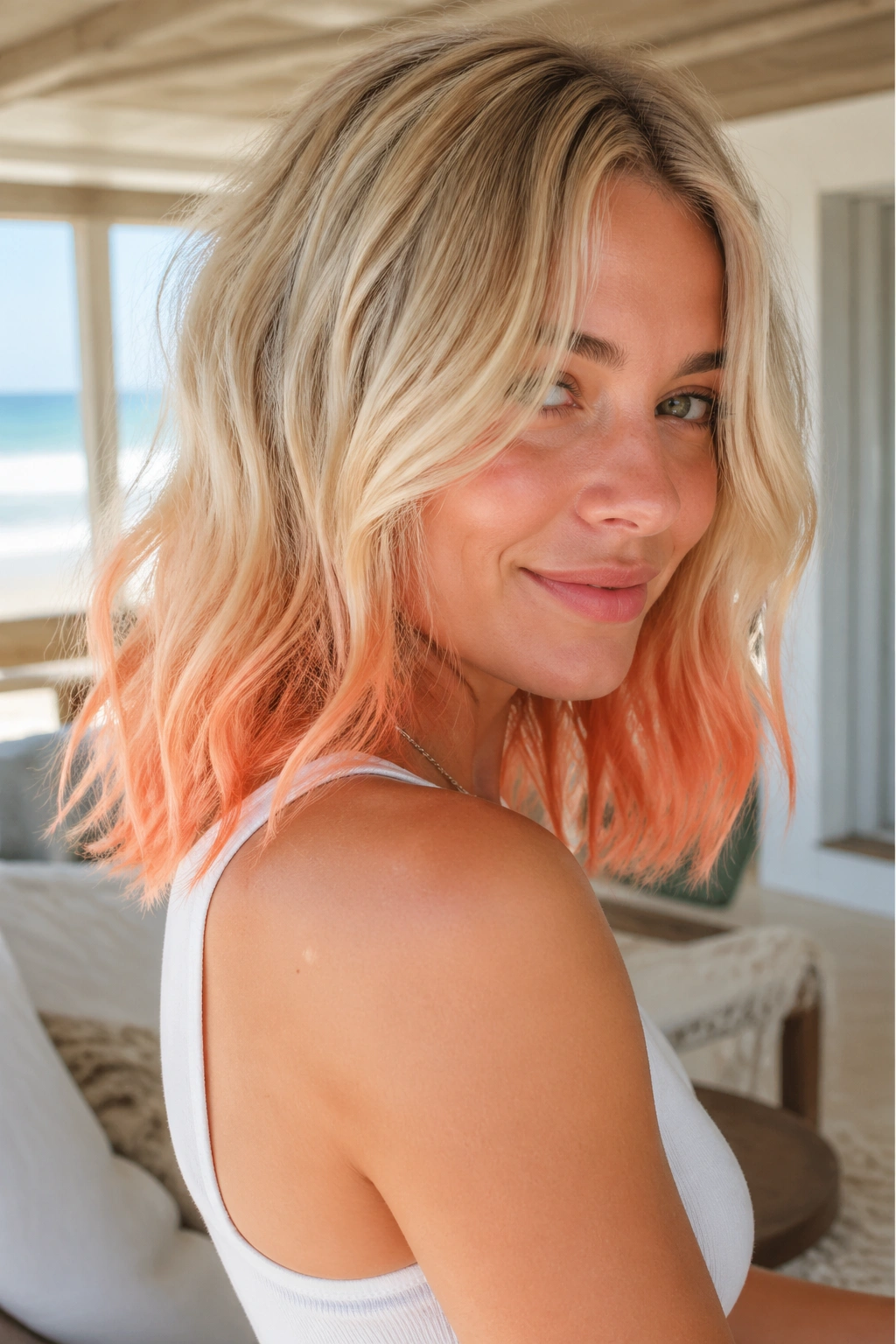
Papaya ends are a fun way to wear orange without letting it dominate the whole head. The top stays blonde, and the warmth builds toward the tips in a papaya wash that feels playful but still soft. It’s brighter than apricot, yet less intense than tangerine.
This look works because the eye reads the hair as light and airy first, colorful second. The orange arrives at the ends, where it can feel like a little surprise rather than a full takeover. That makes it easier to live with if you like pale blondes but want to add some personality.
- Best on beachy layers or long bobs
- Looks strongest on hair lifted to a pale blonde
- Pairs well with loose braids and twisted styles
- Needs a purple or blue shampoo only if brass starts creeping in
Papaya ends can be flashy without being loud. That balance is the whole appeal.
17. Amber Ribbon Highlights
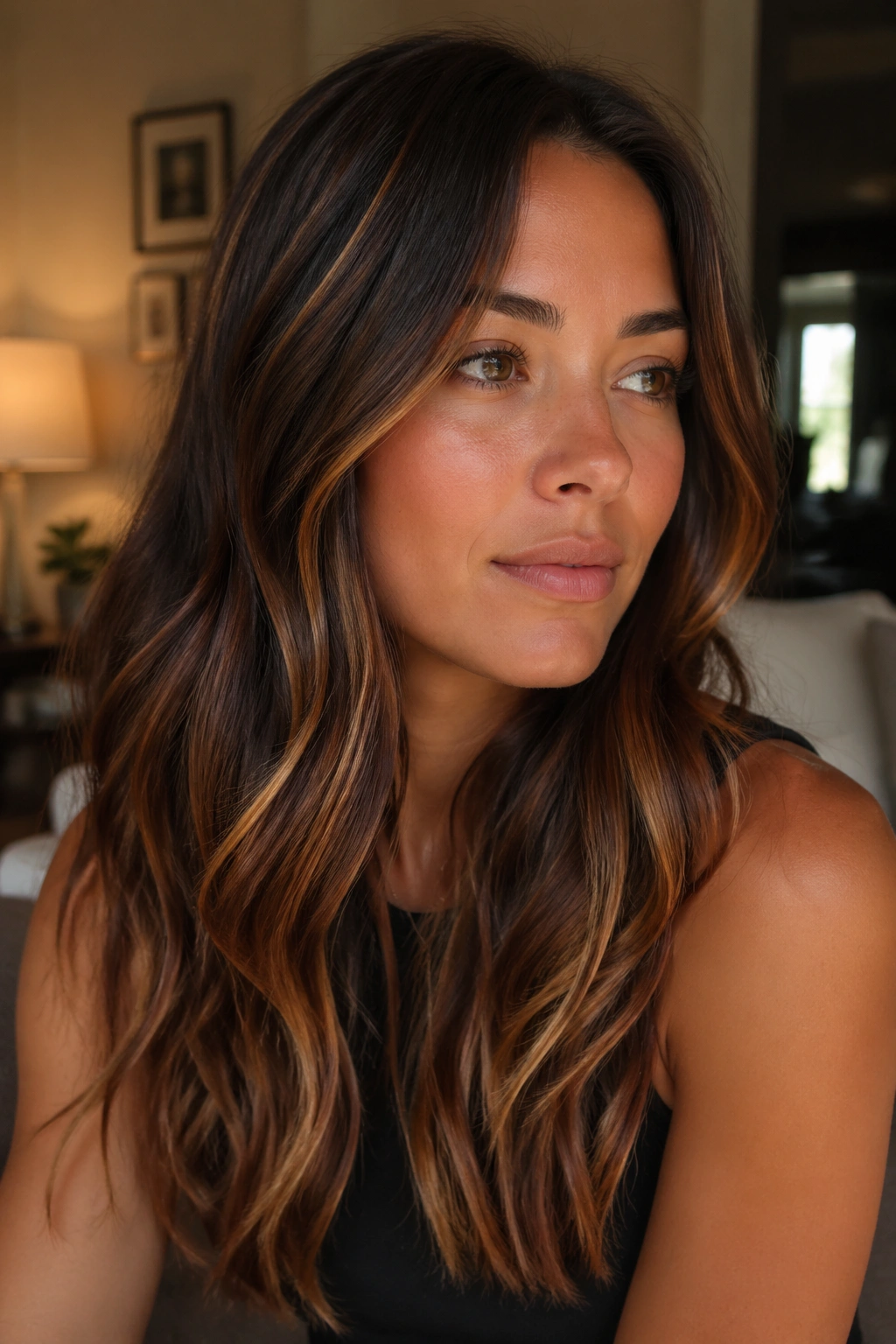
Amber ribbon highlights are the sort of orange hair color idea that gets better the more you look at it. The color sits between gold and copper, so it doesn’t feel like a blunt orange stripe. Instead, the ribbons thread through the hair and give it warmth from inside.
This is a smart choice for anyone with medium brown hair who wants dimension more than a color overhaul. Amber has enough depth to show up, but it still blends with brunette bases in a way that feels natural. On layered hair, the ribbons catch the ends and the top layer differently, which keeps the whole look moving.
The nicest versions use thin, irregular ribbons rather than heavy chunks. That irregularity matters. It keeps the highlights from looking lined up or overplanned. If you like hair that feels lived-in and a little sun-touched, amber is one of the better bets.
18. Spiced Copper Curls
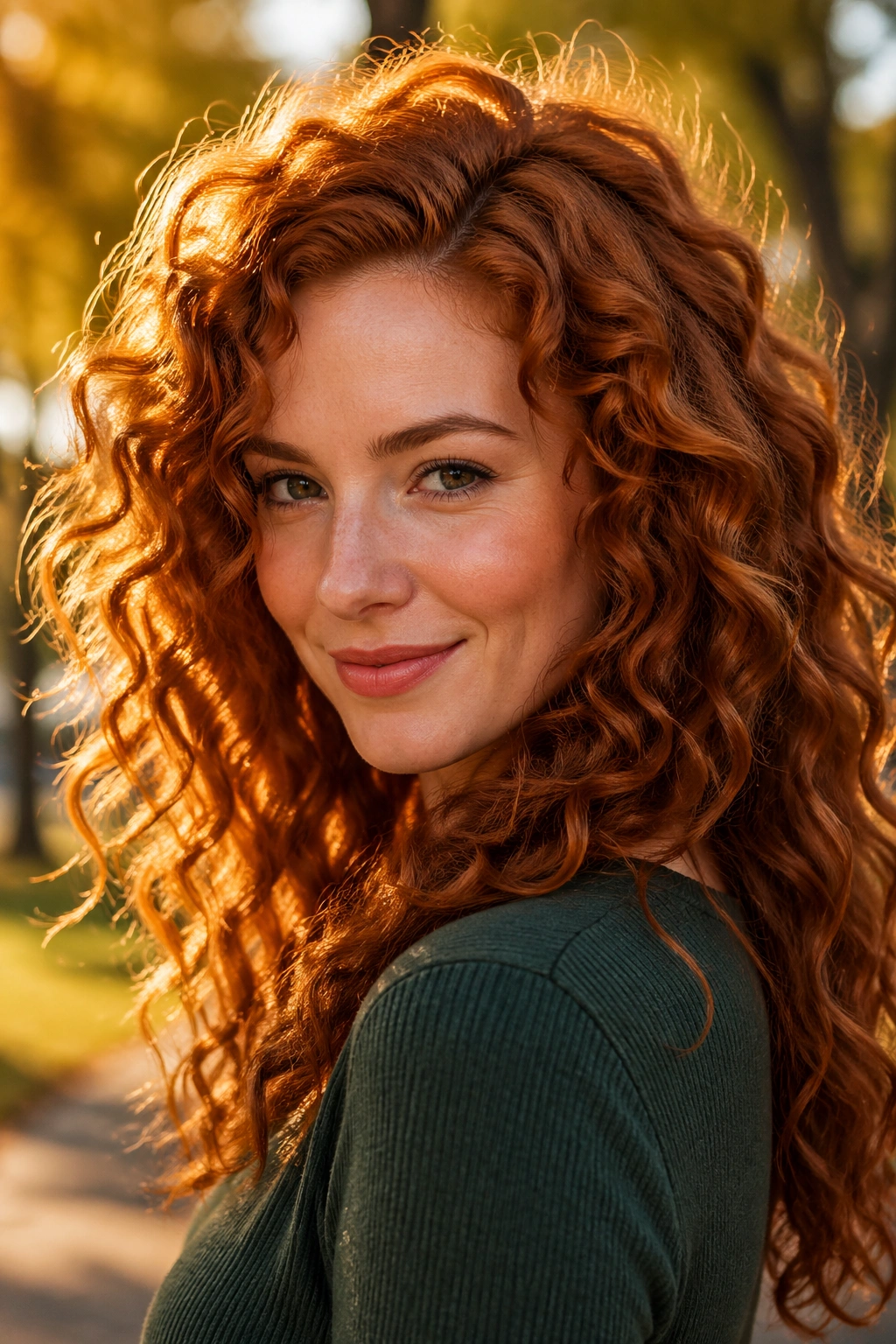
Spiced copper curls hit a sweet spot that straight hair sometimes misses. The curl pattern gives the color depth, and the copper tone gives the curls more shape. Together, they make each ringlet look defined without needing a lot of styling product.
What makes this shade wearable is the spice note. Pure copper can go bright fast, but spiced copper leans a touch brown and a touch gold, which softens the entire effect. On hair that already has some natural texture, it can look rich and easy instead of overworked.
Best Ways to Wear It
A curl cream with a light hold usually beats heavy gels for this shade. Heavy product can dull the warmth and make the color sink back into the hair. A diffuser on low heat helps preserve the shade too, since rough drying can make the surface look frizzy and uneven.
If you want the color to stay dimensional, leave a few deeper lowlights underneath. The contrast makes the copper pop without needing a brighter dye.
19. Sorbet Orange Crop
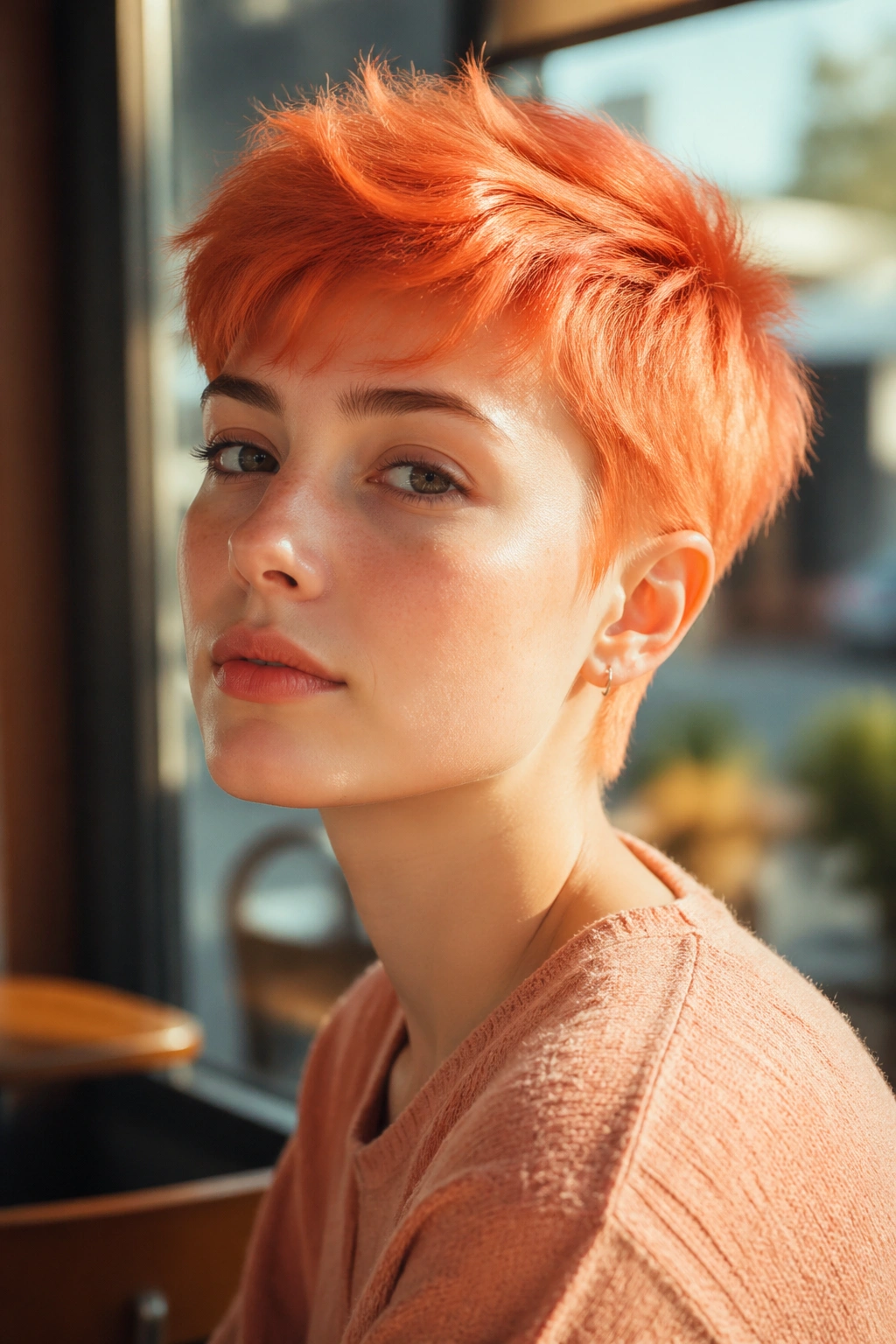
A sorbet orange crop is short, bright, and a little cheeky — but still wearable when the orange is softened into peach and citrus rather than pushed into traffic-cone territory. The short cut keeps the color clean and modern.
This is a good choice for people who want a fresh start without going full vivid. The crop puts the color right at the front of the face, so even a muted orange has impact. Because the hair is short, maintenance is easier too. You aren’t fighting a long root line or trying to keep midlengths and ends in sync.
The best version has a matte, airy finish rather than a heavy glossy one. That sounds minor, but it changes the whole mood. Matte-ish texture makes the orange feel cooler and more current; too much shine can make it look more copper than sorbet. If you like crisp haircuts, this shade fits neatly.
20. Burnished Copper Waves
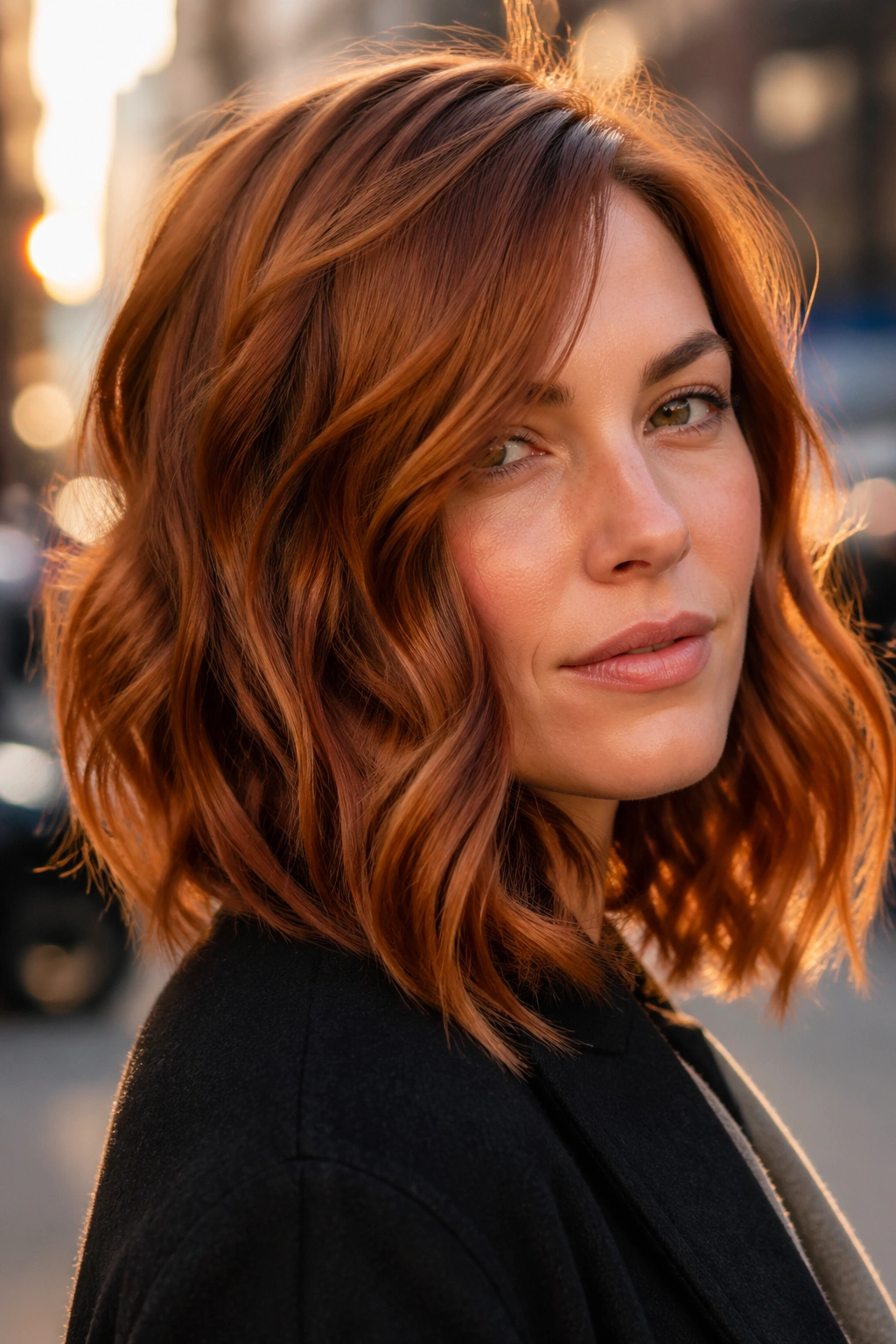
Burnished copper waves are one of my favorite orange-adjacent looks because they feel calm from far away and rich up close. The burnished finish means the orange has been deepened with brown and a little gold, so it avoids the shiny, flat look that plain bright copper can fall into.
Waves help because they split the tone into layers. The top of each curve reads brighter, while the underside stays deeper and more grounded. That movement gives the hair a lot of life without needing a high-contrast dye job. It’s the kind of shade that looks good whether you spend five minutes styling it or fifteen.
If you have a warm or neutral skin tone, this one is easy to wear. If your complexion leans cooler, ask for a touch more brown in the formula so the orange doesn’t push too far. That tiny adjustment can make the difference between flattering and fine.
21. Orange Hair Color in Rose-Gold Balayage
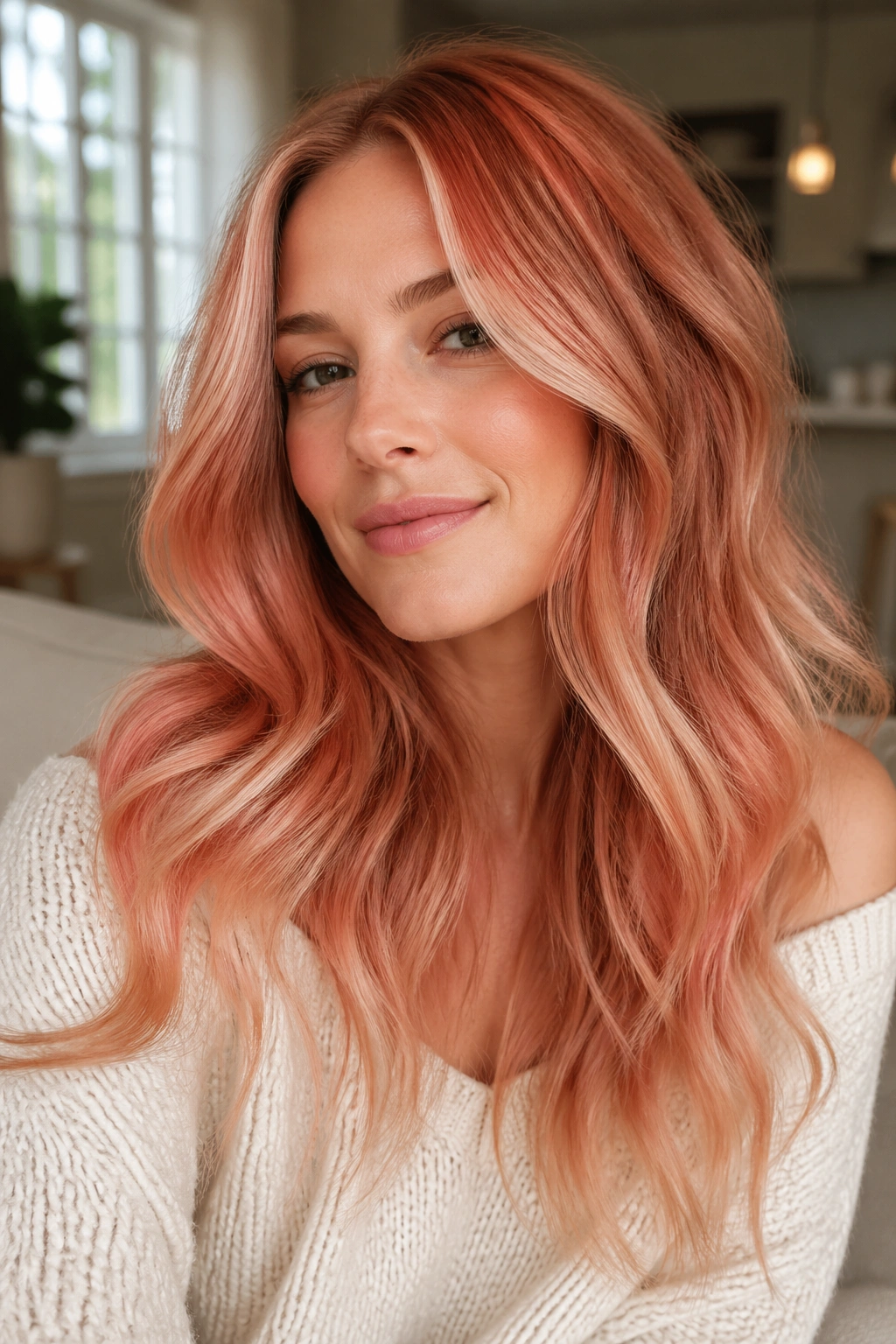
Rose-gold balayage is a quiet way to wear orange when you don’t want anyone to pin it down too fast. The rose softens the orange, the gold warms it, and the balayage placement keeps the color loose through the lengths. It feels light, airy, and less committed than a full copper transformation.
The best thing about this version is the blur. There’s no hard line where one tone stops and another starts. That means the color can live on blonde, light brown, or even darker blondes without looking like you tried to force a single shade to do too much. It’s gentler on grow-out, too.
Ask for rose-gold pieces painted mostly through the top layer and around the face. You want the color to show when the hair moves, not to sit in one obvious panel. A soft wave brings the whole thing together. Straight hair can work, but the balayage looks more dimensional with bend.
22. Deep Cider Auburn
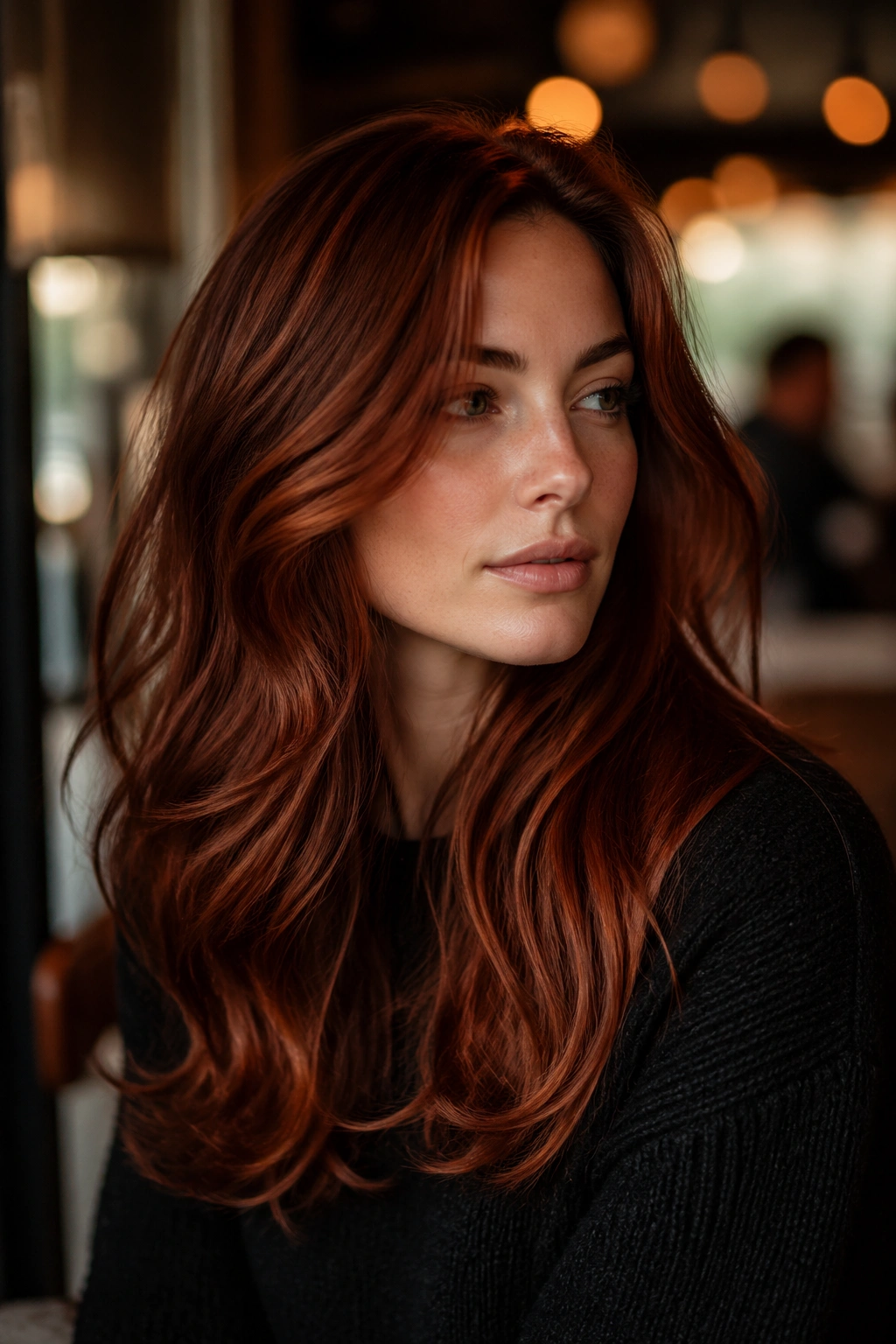
Deep cider auburn is what I’d point to if someone wants orange hair color ideas that still feel grown-up. It’s darker than copper, richer than standard auburn, and has enough brown to stay grounded. The cider note gives it warmth without making it sugary.
This shade is especially good on medium to deep brunettes who want to keep some of their natural depth. You can often get there with a deposit color and a soft glaze rather than a drastic bleach service. That makes it easier on the hair and easier on the eyes, which matters more than people admit.
A deep cider tone loves texture. A smooth finish shows off the red-orange depth, while loose waves bring out the brown underneath. Either way, it has a moody quality that keeps it from reading flashy. That’s the real strength here: color with a little restraint.
23. Muted Tangerine Bob
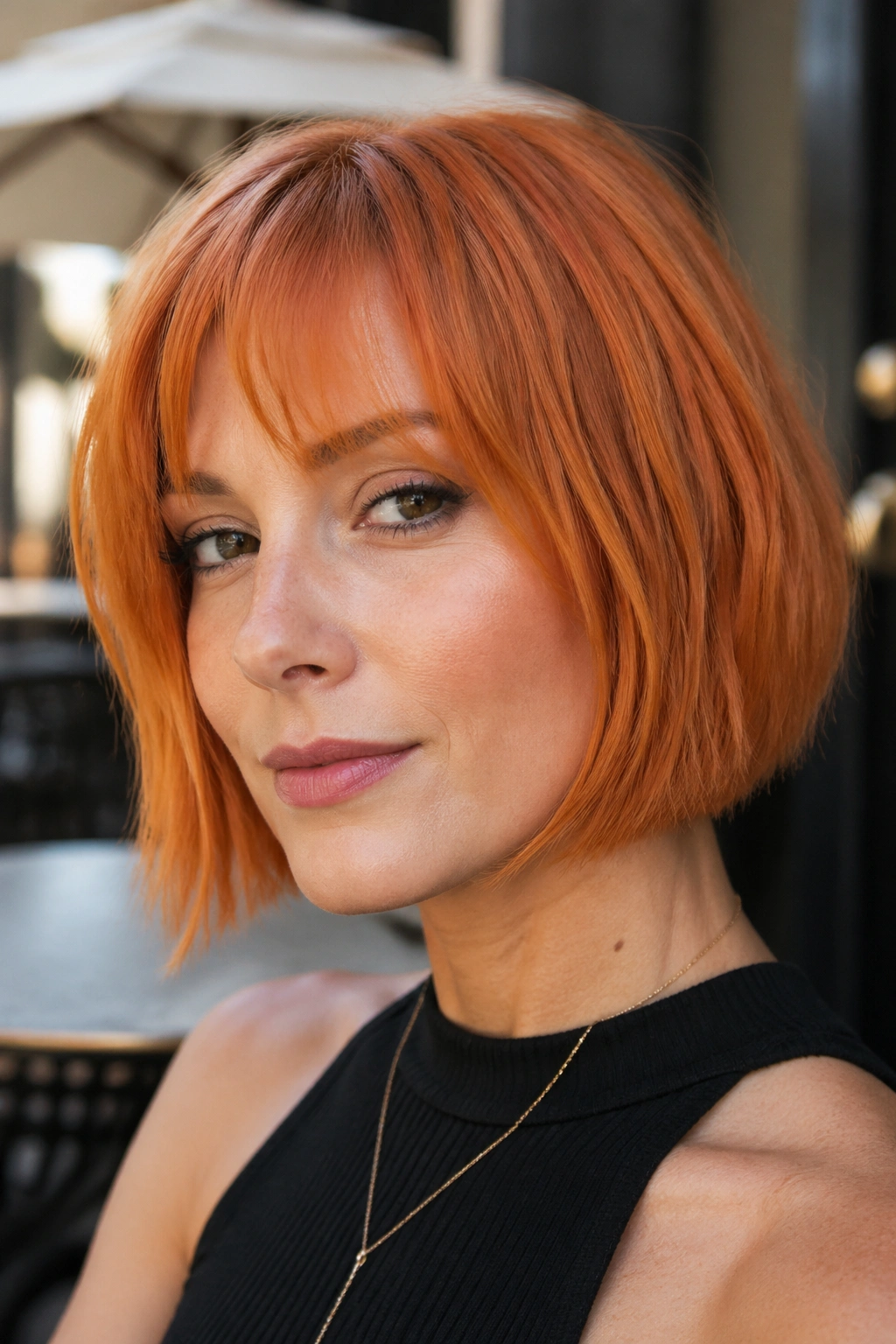
A muted tangerine bob is the bolder cousin of the soft copper bob, and it earns its place because it still stays wearable. The orange is more obvious, but muting it with brown or gold keeps the shade from going full novelty. On a sharp bob, that balance feels neat and modern.
The cut helps the color stay controlled. A bob has clear edges, so even a brighter orange shade looks more intentional when the shape is crisp. If the bob is slightly textured or tucked under at the ends, the orange feels even more manageable. That little bit of movement keeps the color from looking hard.
This is the shade for someone who wants a visible change and knows they can handle some attention. It suits shorter styles, clean lines, and people who like their hair to feel styled even on ordinary days. Add a gloss every month or so, and the color stays fresh without drifting into brassy territory.
Final Thoughts
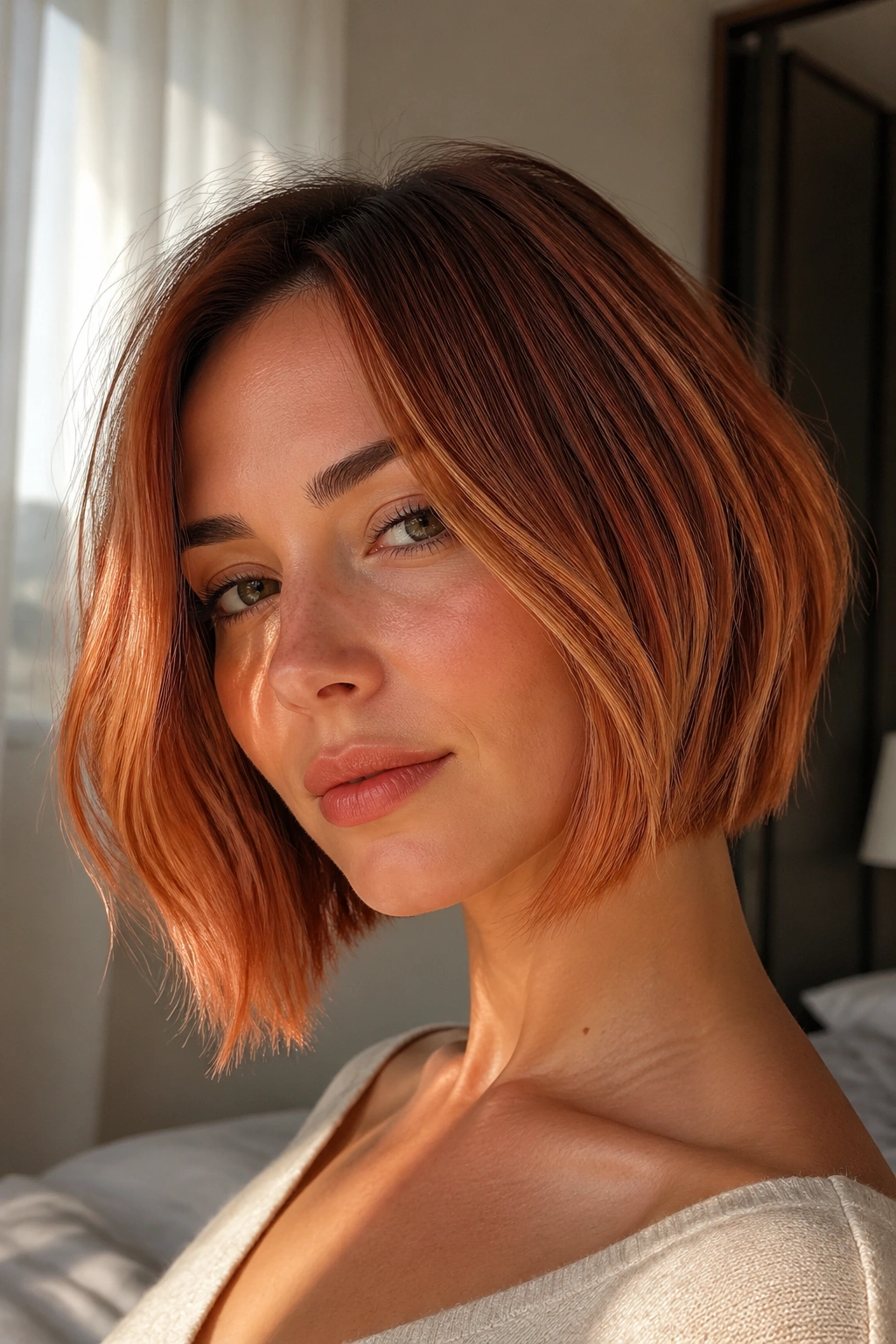
Orange hair is at its best when it has a little control built in. Copper, apricot, rust, terracotta, amber — the wearable versions all have some mix of brown, gold, peach, or smoke keeping them honest.
The cut matters, the placement matters, and the depth matters more than people expect. A soft frame around the face can beat a full head of bright color, and a root shadow can make a bold shade feel far easier to live with.
If you’re taking one idea to a stylist, pick the one that matches how much maintenance you’ll actually tolerate. That’s the part that keeps the color looking good after the first week, which is usually the real test.
