



Light brown hair can go flat fast under indoor light, which is why the best highlight ideas for light brown hair usually work by layering tone, not by chasing the palest blonde in the room. The prettiest versions keep some depth at the root, then let a few lighter pieces drift through the mid-lengths and ends, where movement does most of the work.
That balance matters. Push the highlights too warm and the result starts reading brassy; push them too pale and you lose the quiet brown base that makes the whole thing feel easy to wear. On a level 5 or 6 brunette, the sweet spot is often one or two levels lighter in most sections, with a few brighter face-framing pieces if you want a little more lift.
I keep coming back to the same rule: sunlight never lands in one perfect stripe. It hits the top layer, softens around bends, and leaves the underside darker. Good color does the same thing.
The ideas below lean into that kind of movement—some warm, some cool, some whisper-light, some a little bolder—so you can match the mood you want instead of chasing one flat blonde formula.
1. Honey Babylights Through the Mid-Lengths
Babylights are the quietest way to brighten brown hair. That’s the whole charm. The pieces are so fine that the brown underneath still shows through, and on light brown hair that soft weave gives you a glow that looks like it happened over time.
Why They Work
Honey babylights sit in that sweet middle lane between brunette and blonde. They add warmth without turning the whole head gold, and they catch the light especially well on layered cuts, curls, and soft waves.
They also grow out cleanly. Tiny foils near the part and hairline blur much faster than chunky streaks, so the color keeps its shape even after a few weeks.
- Ask for pieces that are 1 to 2 levels lighter than your base.
- Keep the thinnest weaves around the crown, temples, and part line.
- Use a beige-honey toner if your hair pulls orange in the light.
- Leave the underside darker so the color still has depth.
My take: if you want the most believable sunlit effect, start here. It’s calm, flattering, and hard to mess up.
2. Caramel Balayage Painted in V-Shapes
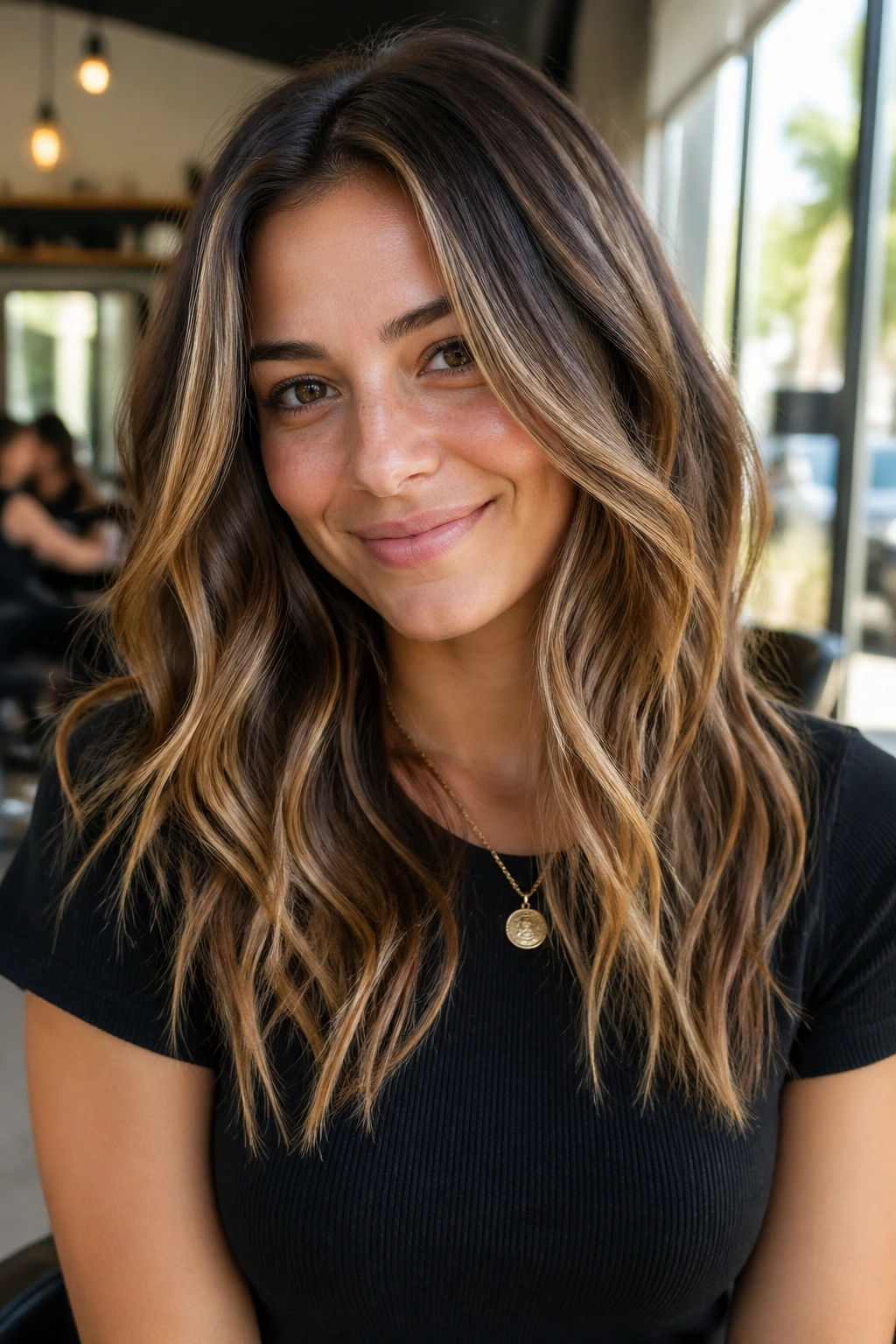
Caramel balayage is the one I reach for when the goal is glow, not blonde. The painterly V-shape placement lets the lighter pieces land where the sun would naturally touch them: mid-lengths first, then the ends, with the root area left soft and darker.
That root depth does a lot of heavy lifting. It keeps light brown hair from looking washed out, and it gives the caramel ribbons somewhere to live. Without that contrast, caramel can go a little muddy.
The best versions use a soft hand and a gloss after the lift. If the caramel is too orange, the whole look loses its ease. If it’s too flat, it starts to feel like one solid color with streaks. You want movement.
And yes, waves help. Always.
3. Beige Blonde Ribbons at the Crown
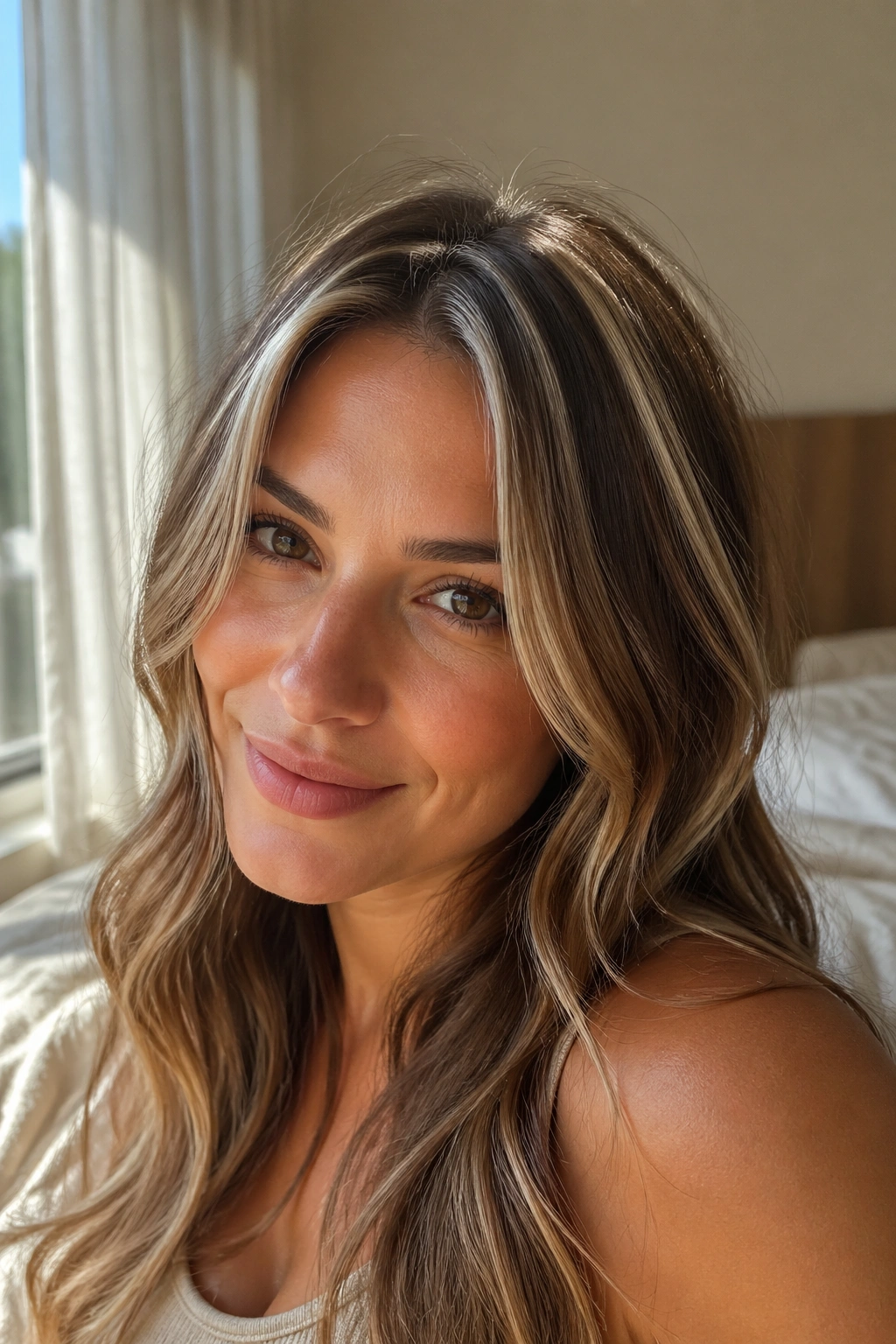
Why does this placement look so natural? Because the crown is where sunlight hits first, and beige blonde sits in that narrow lane between warm and cool that flatters light brown hair without shouting.
How to Ask for It
Tell your colorist you want fine ribbons, not blocks. The difference is huge. A ribbon is narrow enough to bend with the hair; a block reads as a stripe.
Beige blonde works best when the lightest pieces stay near the top layer and around the part. The mids can stay a touch darker, which keeps the whole head from turning yellow-white.
- Use thin foils at the crown only if you want subtle brightness.
- Ask for a neutral-beige toner, not icy blonde.
- Keep the lightest pieces within 1 inch of the part line.
- Pair with a soft blowout or loose bends for the most natural finish.
If you’ve ever wished your hair looked brighter without looking colored, this is the move.
4. Cinnamon-Copper Flecks Around the Part Line
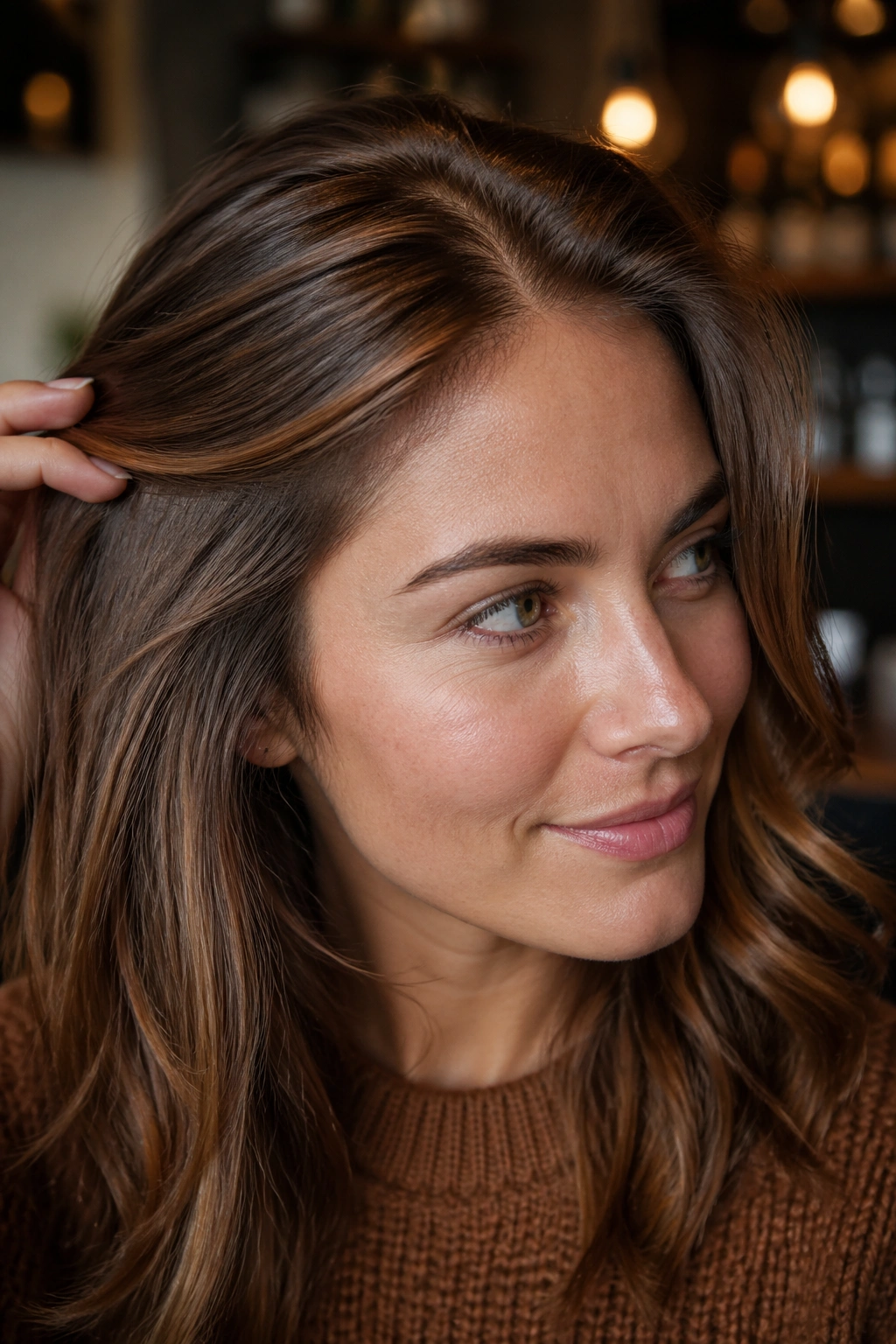
Picture light brown hair pulled into a loose half-up style, with just a few warm pieces flashing near the part. That’s the sweet spot for cinnamon-copper flecks. They’re small, warm, and a little spicier than honey, which makes them feel deliberate instead of safe.
These flecks are best when they’re used like punctuation. A few around the temples, a few near the front, and maybe one or two tucked into the top layer can change the whole mood of the cut. Too many, though, and the hair starts looking red instead of sunlit.
- Keep the copper soft, not fire-engine bright.
- Place the brightest pieces near the part and temple area.
- Leave the ends mostly brown so the color doesn’t get loud.
- This looks especially good with messy waves or a claw clip.
Tip: if your base is neutral-brown, cinnamon-copper gives you warmth without the heavy gold that can turn on you in bright light.
5. Face-Framing Money Piece in Butterscotch
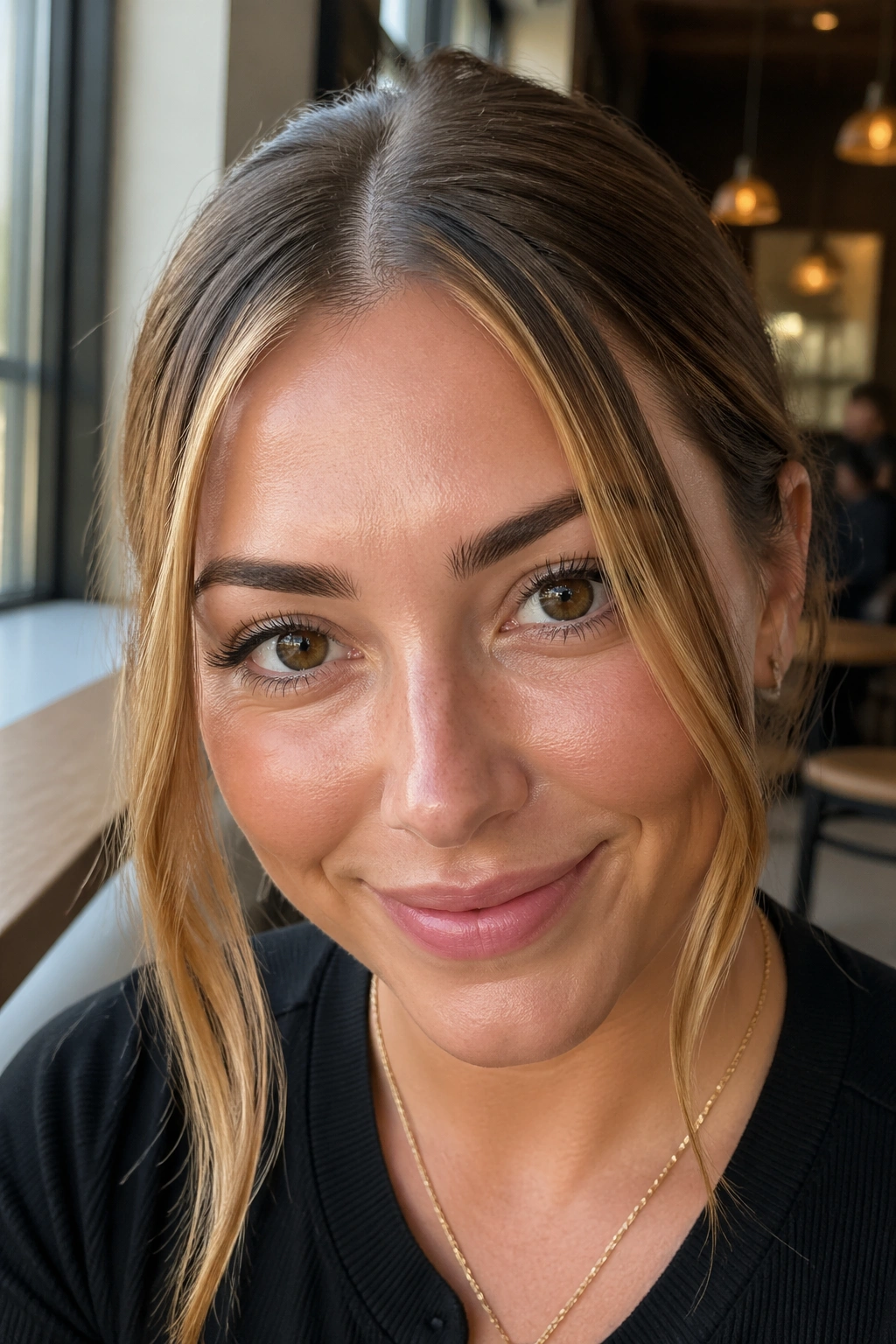
A face-framing money piece does one thing fast: it brightens the face. That’s why it works so well on light brown hair. You don’t need a full head of blonde to get impact; you just need a few carefully placed pieces that sit where the eye goes first.
Butterscotch is a smart shade for this because it has warmth, but not so much that it reads orange. The best version is a little lighter than the rest of the highlights, yet still soft enough to blend once the hair is curled or tucked behind the ears.
I like this idea on shoulder-length cuts and longer lobs. It brings attention upward, which makes the cut feel fresher without changing everything else. If you wear glasses, even better. The lighter frame around the face can make the whole style feel more awake.
6. Mushroom Brown Contour Highlights
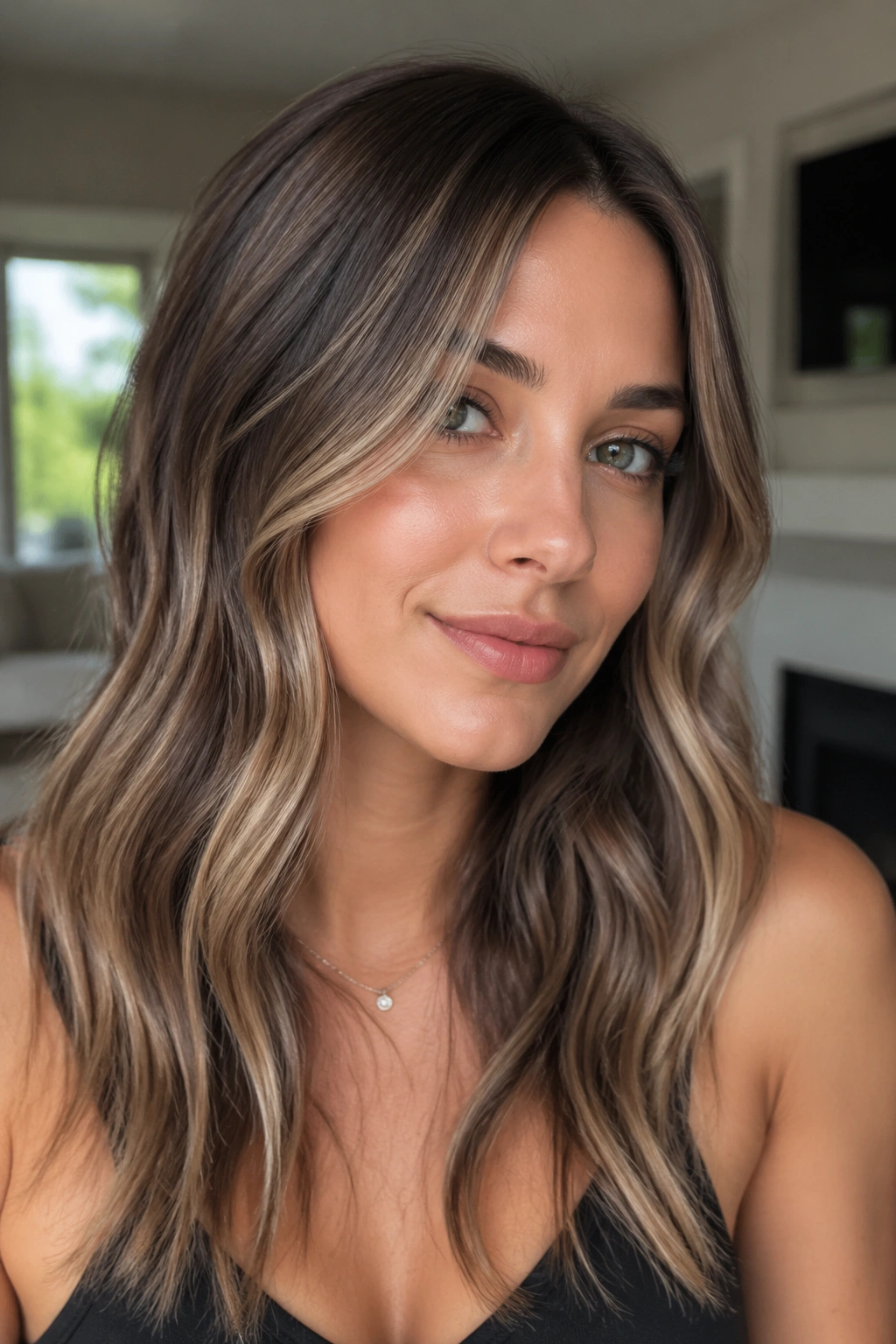
Mushroom brown highlights are for the person who likes lightness but not warmth. They sit cooler, with a taupe-beige cast that keeps light brown hair looking polished instead of golden. If your hair tends to orange in sunlight, this is the safer road.
Unlike honey or caramel, mushroom tones don’t chase brightness for its own sake. They add contour. That means the color works by creating soft shifts in tone, not by shouting for attention.
This is especially good on straight hair, blunt lobs, and layered cuts with clean ends. The cool ribbons make the shape of the haircut easier to see, which is one of those small details people notice without knowing why. It’s neat. Not fussy.
If you want a sunlit effect that leans smoky instead of sweet, mushroom brown is the one to ask for.
7. Sun-Kissed Ombré From Root Shadow to Light Ends
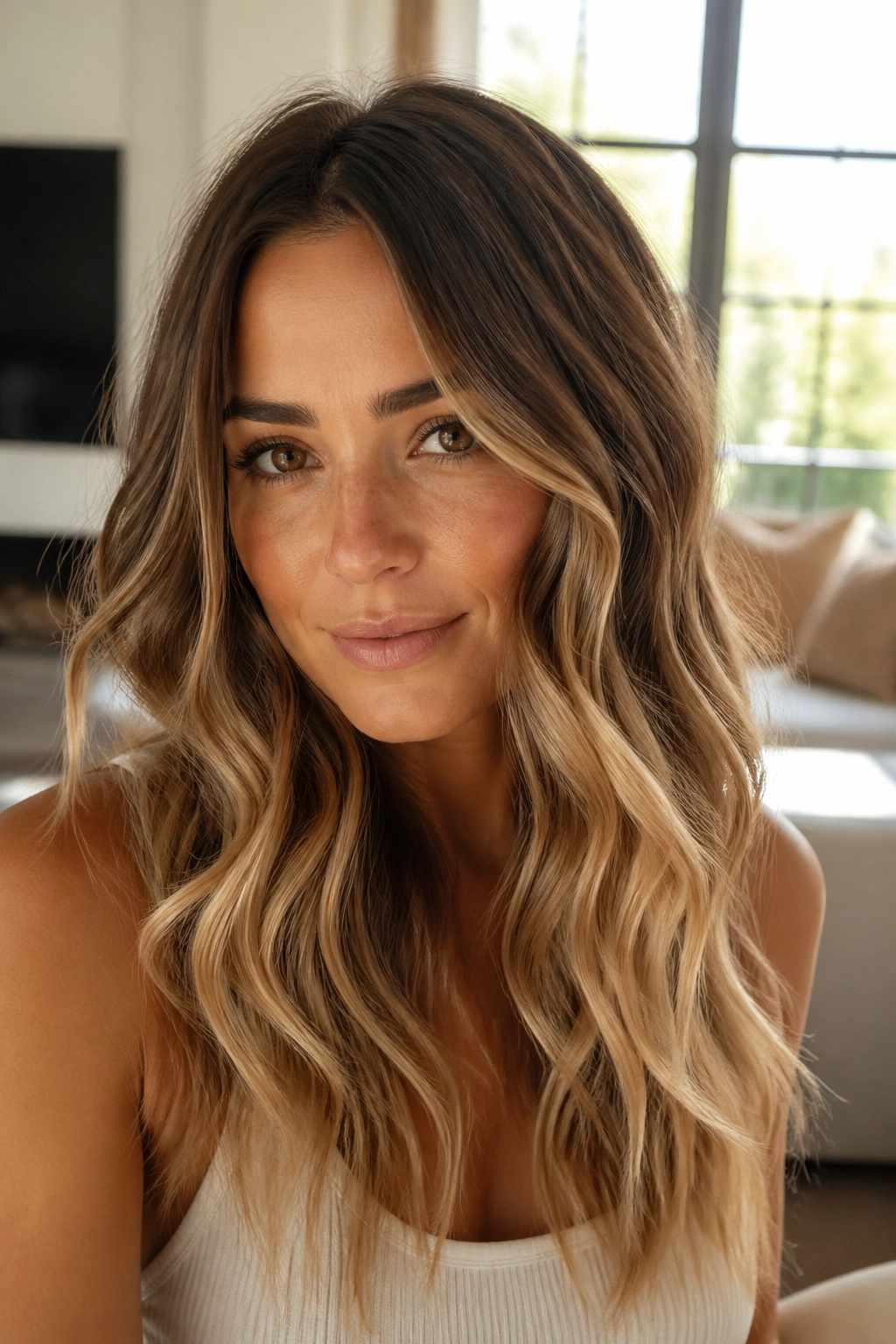
A good ombré on light brown hair should look like it faded in the sun over months, not like two different dye jobs glued together. The root shadow keeps the top rich, then the color gets lighter and softer as it moves toward the ends.
Where the Sun Should Land
The prettiest ombré usually starts around the cheekbone or jaw area, then opens up through the lower half of the hair. That keeps the crown grounded and gives the ends a little drama.
It works best when the transition is blurred with balayage, not made with a hard line. A harsh ombré ages badly. A blurred one looks expensive and easy.
- Ask for a smudged root that stays close to your natural brown.
- Keep the mid-lengths one or two shades lighter than the root.
- Let the ends reach the lightest point, but stop before they go chalky.
- Add loose curls to show the gradient.
One more thing: if your hair is fine, don’t push the lightest ends too pale. You’ll lose thickness fast.
8. Champagne Gloss Highlights Over a Light Brown Base
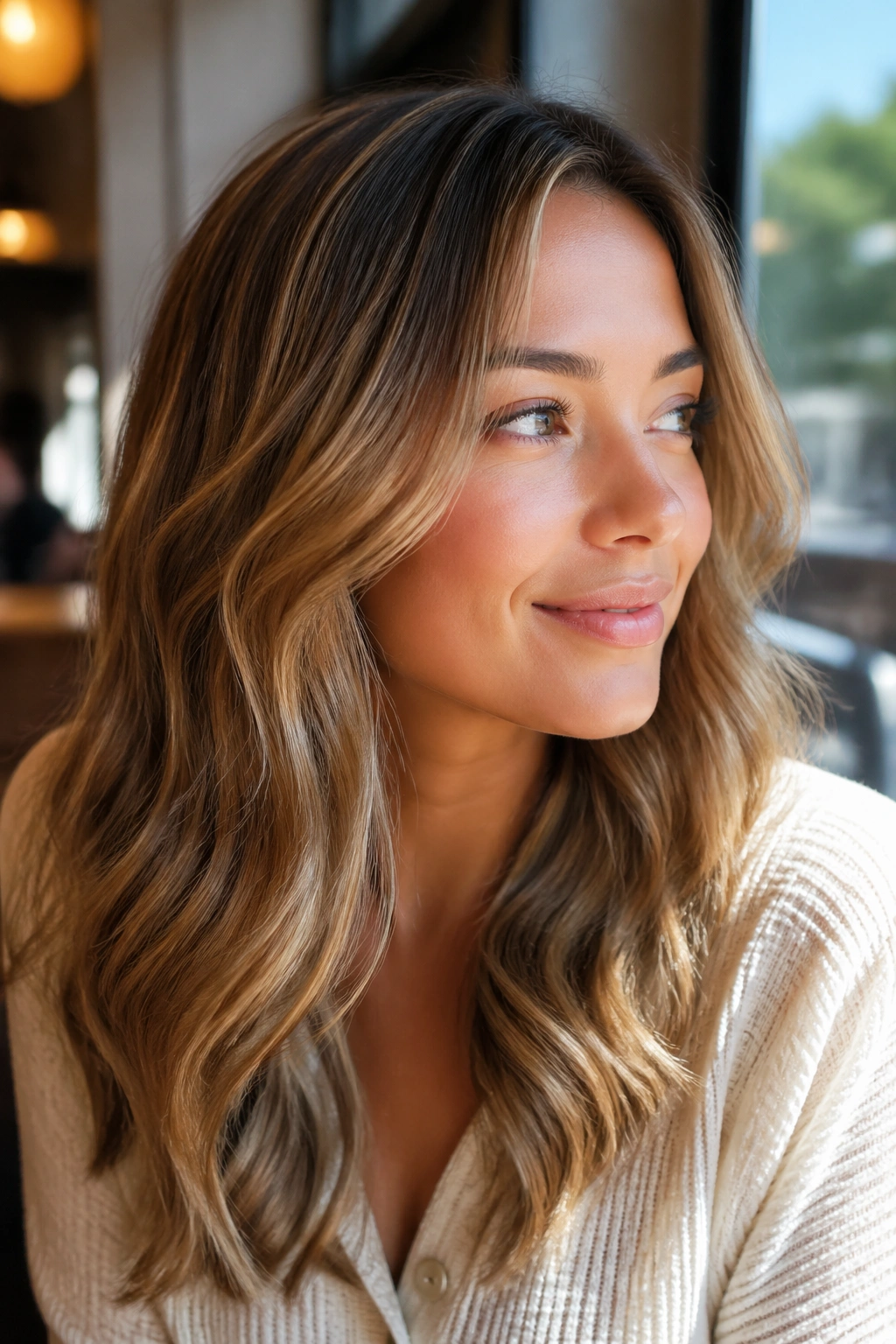
A gloss can make half the difference. Seriously. On light brown hair, champagne gloss highlights don’t need to be ultra-bright to work; they need a clean tone and a reflective finish that looks soft in daylight and indoors.
This idea is less about dramatic foils and more about polishing what’s already there. A few fine highlights lifted to a pale beige, then toned with a champagne glaze, can take brown hair from flat to luminous without pushing it into obvious blonde territory.
The nice part is how wearable it is. Champagne has a cool-warm balance that flatters a lot of skin tones, and it photographs as soft sheen instead of harsh contrast. If your hair already has some natural warmth, this can calm it down. If it’s flat, it wakes it up.
I like it most on straight or softly waved hair. The shine shows up fast.
9. Toffee Ribbon Lights Woven Through Long Layers
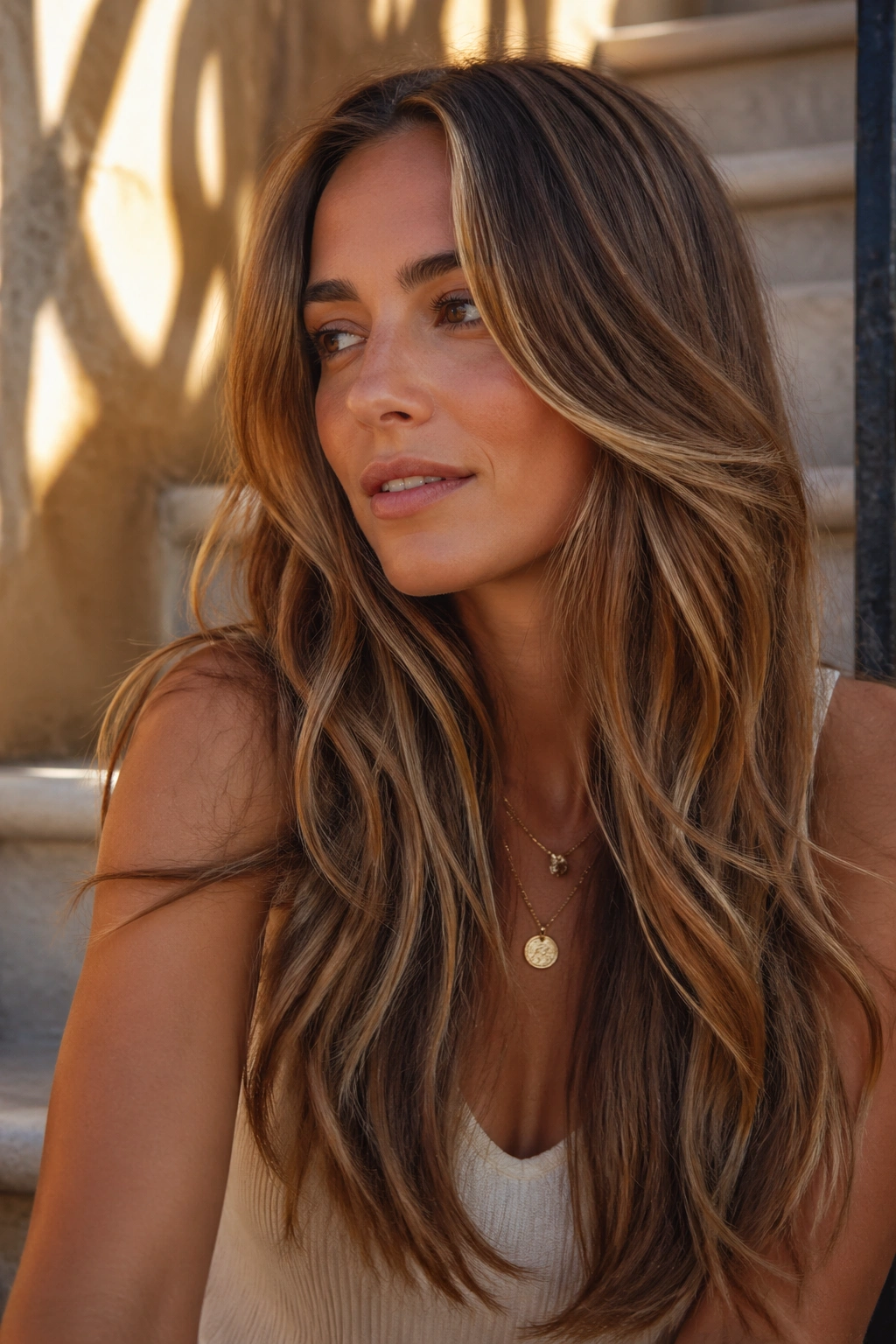
Do toffee ribbon lights work better on long hair? Yes, usually they do. The reason is simple: ribbons need space to move, and long layers give them that motion. On a one-length cut, the look can feel a little heavy.
Toffee sits between honey and caramel, which makes it useful when you want warmth but don’t want the color to tip orange. The ribbons should be wide enough to read as a shape, yet soft enough that you can still see the light brown base peeking through.
How to Get the Most From It
This is one of those looks that changes a lot with styling. Blow it smooth, and the ribbons feel glossy and controlled. Add bends with a flat iron, and they look softer, almost sun-faded.
- Best on long layers or a layered cut with movement.
- Ask for ribbons about 1/4 to 1/2 inch wide.
- Keep the root area slightly deeper for contrast.
- Use a beige-gold toner if the lift comes out too yellow.
Toffee is a workhorse shade. It’s warm, flattering, and easier to wear than lighter blonde.
10. Sandy Beige Balayage for Air-Dried Waves
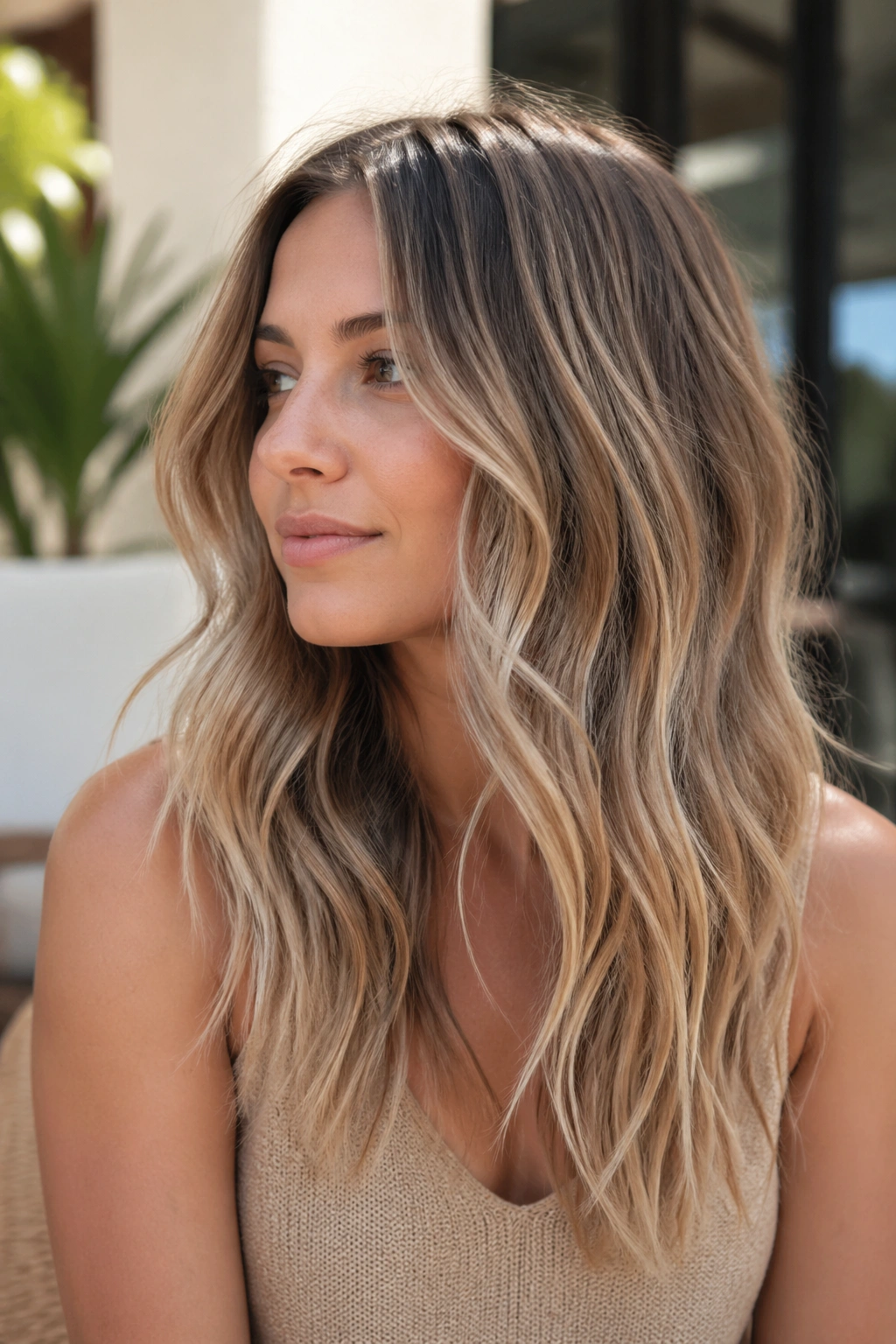
I’ve seen sandy beige balayage save a haircut more than once. When hair has a little wave and a little frizz, a soft sandy tone can make the texture look intentional instead of messy.
The trick is keeping the beige soft and the placement loose. You want the lighter bits to land where the hair bends, because that’s where the wave catches light. Around the face, the pieces can be a touch brighter. Toward the back, they should blur out and disappear into the brown.
- Great for air-dried hair and natural texture.
- Ask for soft hand-painted placement, not dense foils.
- Keep the tone beige, not yellow.
- A salt spray or curl cream helps the ribbons show up.
Sandy beige is one of those shades that looks casual in the best possible way. Not sloppy. Just relaxed.
11. Golden Bronde Blend Across the Top Layer
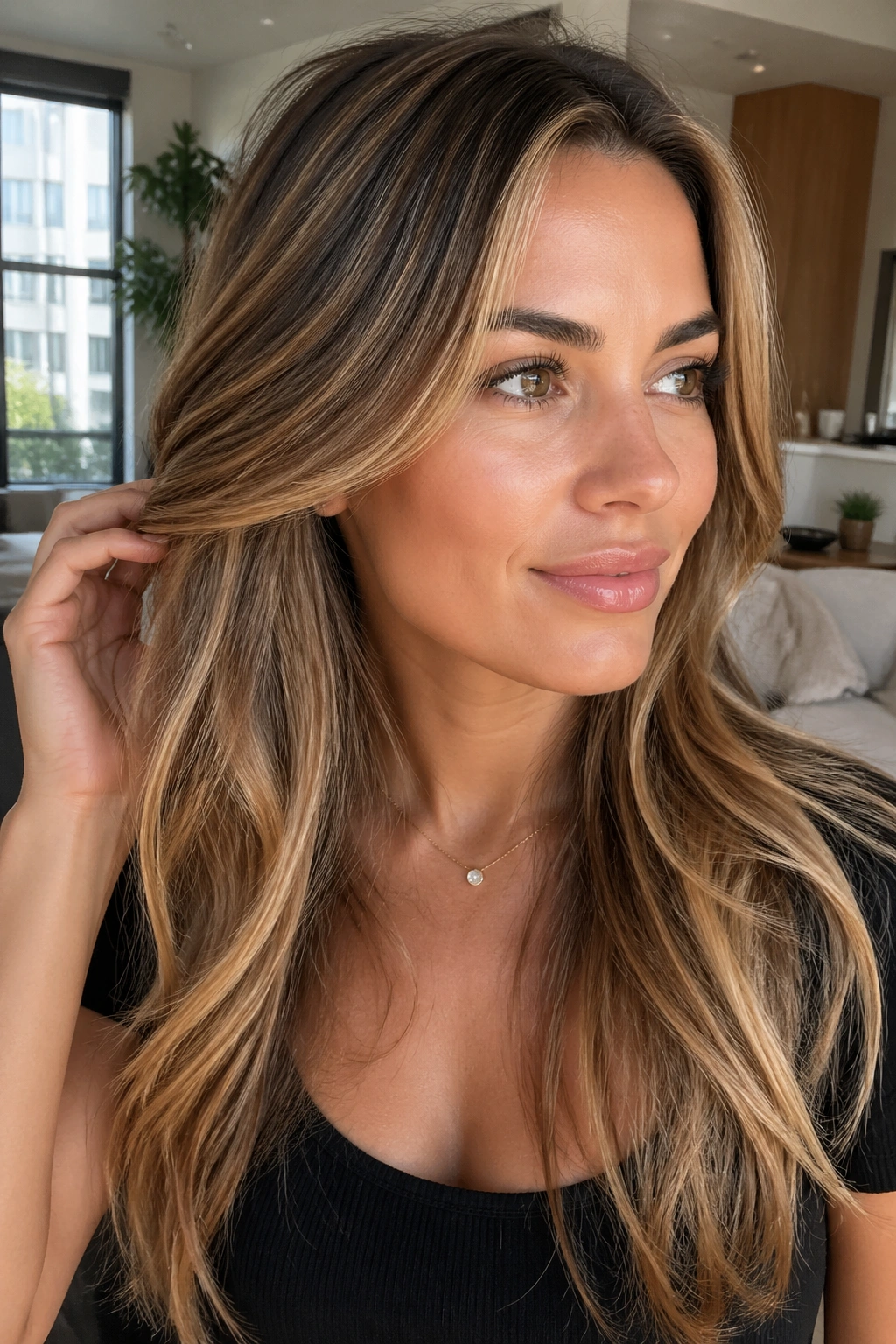
Bronde gets dismissed as a buzzword sometimes, but the idea itself makes sense. It’s the bridge between brown and blonde, and on light brown hair it can look especially good when the top layer is lifted just enough to catch the light while the underneath stays grounded.
Golden bronde works because it doesn’t ask the whole head to be blonde. It lets the hair remain brown at the core, then warms the outer layer with gold-beige ribbons. That gives you brightness without losing the richness that makes light brown hair pretty in the first place.
This is one of my favorite choices for people who want to flirt with blonde but don’t want the upkeep of going there fully. It reads sunlit, not bleached. And because the base remains visible, grow-out is kinder.
If your hair is thick, this can also keep the top from feeling heavy. The lighter layer breaks it up.
12. Vanilla Latte Panels at the Ends
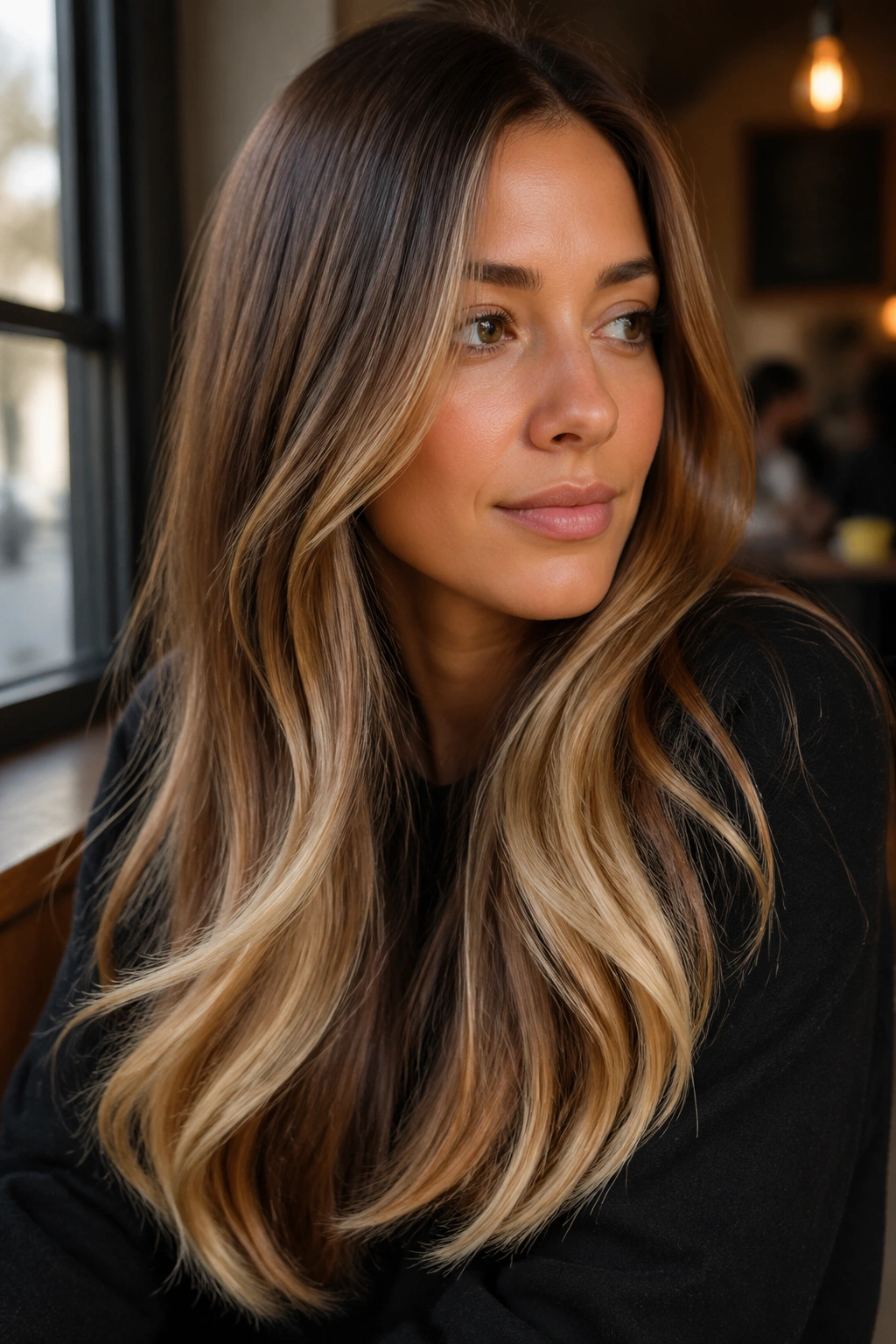
Vanilla latte panels are wider than babylights and softer than chunky highlights. That’s the difference. They sit mostly at the ends, where they can brighten a cut without turning the whole length into a block of color.
Unlike babylights, which blur almost invisibly, panels give you a little more shape. They’re especially useful on thick hair or blunt cuts, where fine highlights can disappear. A few vanilla panels at the ends give the style an edge and still keep the light brown base intact.
Best Cut Types for This Look
This idea shines on lobs, long bobs, and layered long hair. The lighter ends make the shape of the cut clearer, especially if you wear hair smooth or tucked behind one ear.
The vanilla tone matters here. You want creamy, not icy. Pure white blonde at the ends can look disconnected fast, and on light brown hair it can feel too sharp.
A soft wave helps the panels blend back into the darker lengths. Straight hair shows the structure more.
13. Bronze Underlights Hidden Beneath the Top Layer
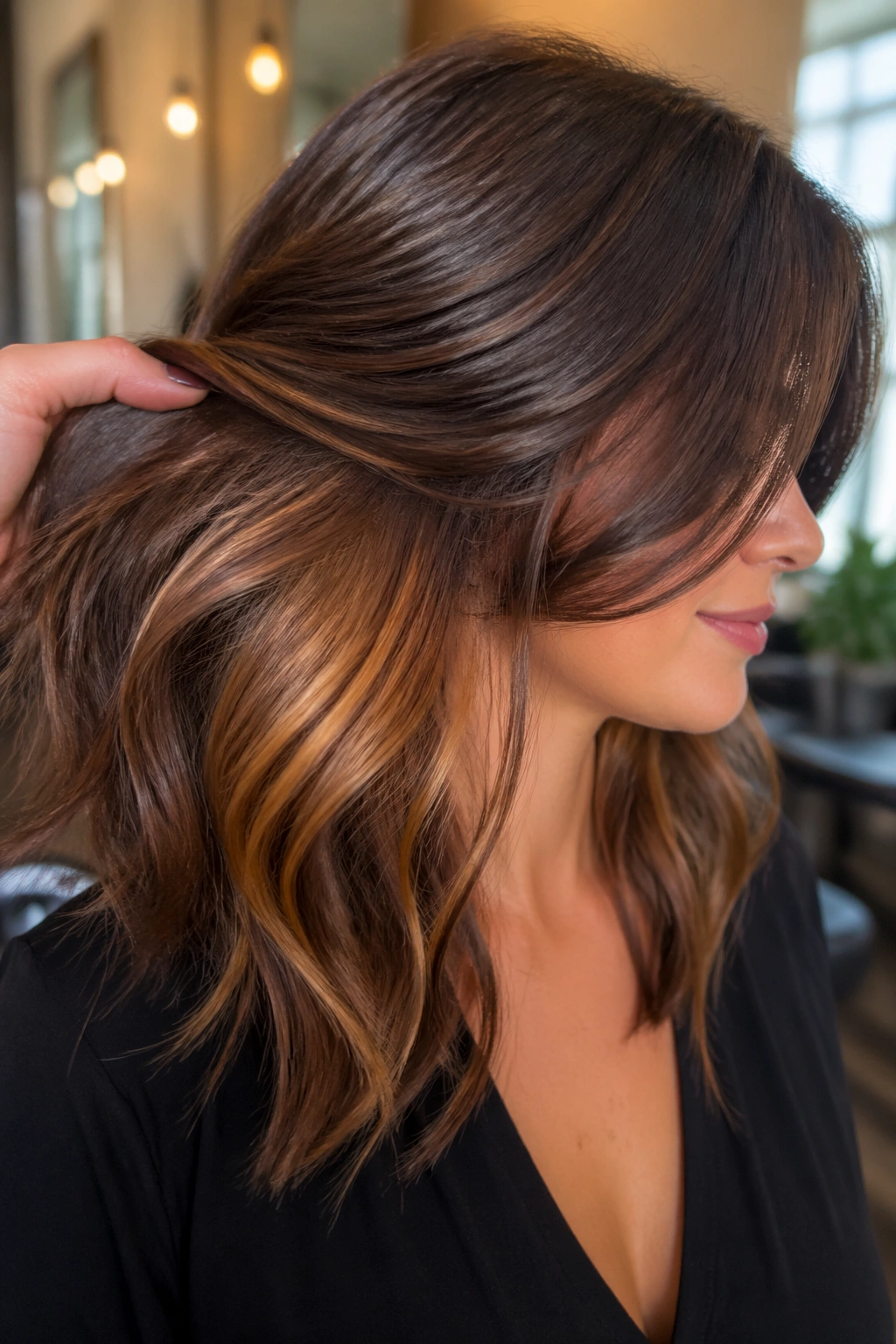
Bronze underlights are for the person who wants depth and a little surprise. The lighter pieces live underneath the top layer, so they show when hair moves, flips, or gets tied up. On light brown hair, bronze gives a warm metallic glow without taking over the whole head.
When They Show Up
These highlights are a bit shy in the best way. They appear in ponytails, half-up styles, and loose waves, then disappear again. That makes them feel fresh without being obvious.
They’re also useful if you don’t want to brighten the top layer too much. The surface can stay rich and brown while the hidden bronze pieces add life underneath.
- Place the underlights in the mid-back and nape area.
- Keep them slightly warmer than caramel, but not orange.
- Ask for a soft glaze so they don’t go brassy.
- Great for people who wear hair up often.
Bronze underlights are a sleeper pick. Not loud. Still interesting.
14. Micro-Foil Crown Highlights for Extra Lift
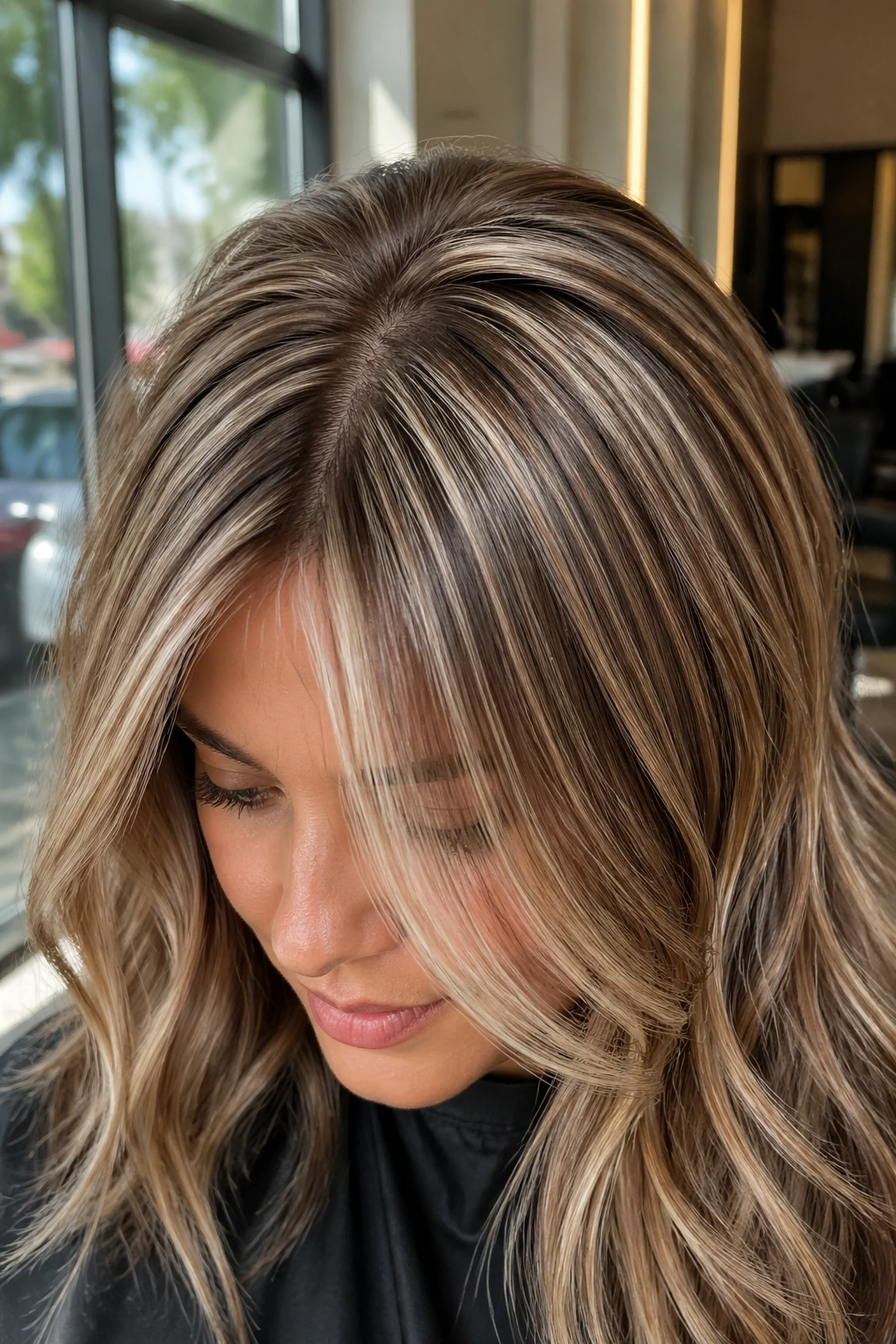
Micro-foil highlights at the crown create lift in a way that chunky placement never will. Tiny foils around the part and top section catch light where the eye lands first, and on light brown hair that means the whole style feels brighter right away.
The small size matters. Micro-foils let the color stay delicate, which keeps the root area from looking striped. They’re also handy if your hair is fine, because a dense highlight pattern can make it look thinner. Tiny foils give you brightness without sacrificing the body of the base.
This is a strong choice if you wear your hair in a middle part or if the crown tends to look flat. A few delicate pieces there can make the blowout look fuller. Not thicker in a fake way. Just more alive.
Ask for the lightest pieces to stay within the top quarter of the head. That keeps the lift focused.
15. Peekaboo Highlights Under Face Layers
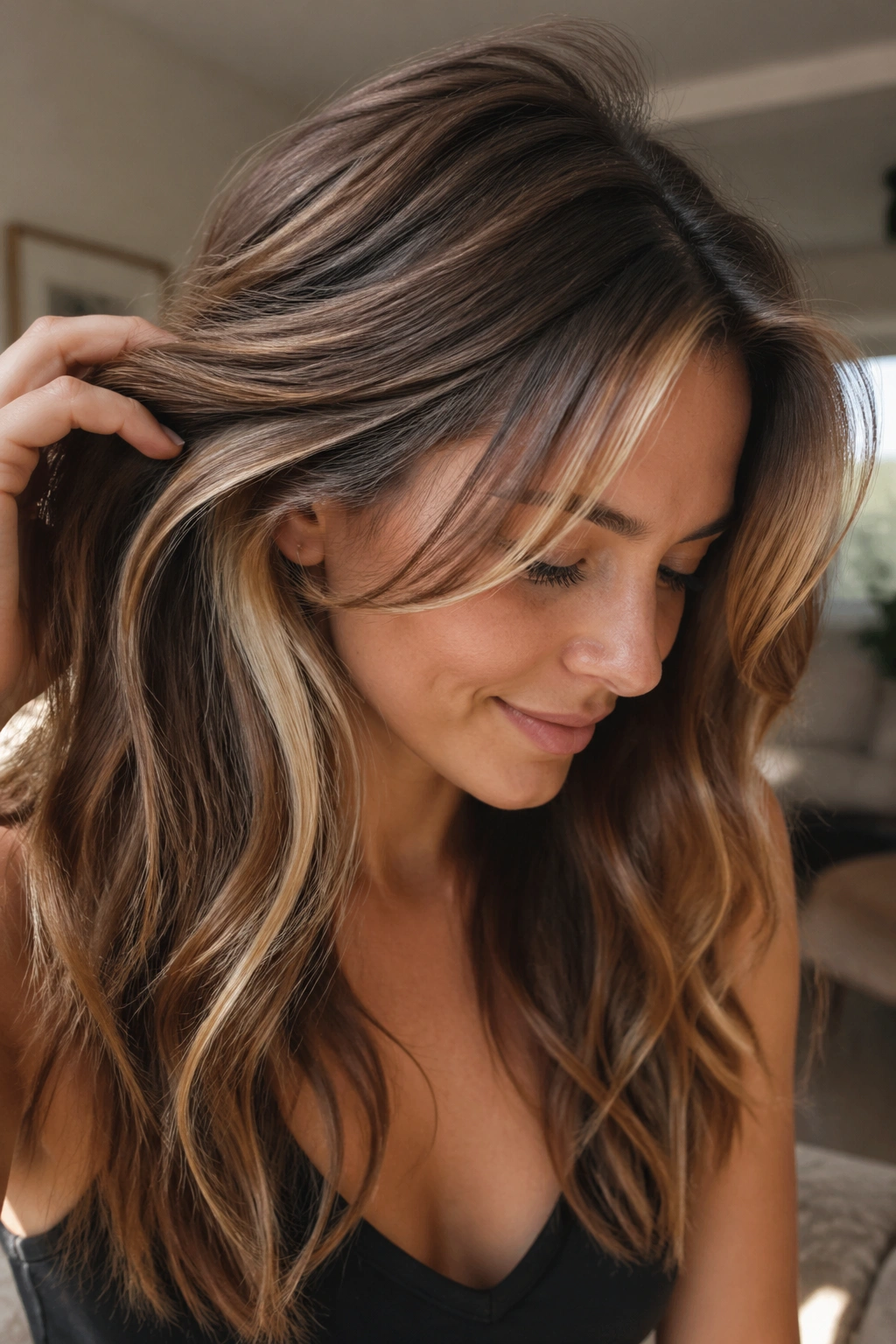
Can a hidden highlight still make a big difference? Absolutely. Peekaboo highlights under face layers give you movement, contrast, and a little surprise when the hair swings forward or gets tucked behind the ears.
Best Placement
This look works best when the brighter pieces sit just under the top layers near the cheeks and jaw. That way, the highlights appear and disappear as you move, which keeps the hair from looking overworked.
You can go warm, cool, or somewhere in the middle. The placement matters more than the exact tone. If your base is light brown, a soft beige or caramel peekaboo piece will blend beautifully into the overall color.
- Try 2 to 4 hidden panels on each side.
- Keep them one shade lighter than the visible highlights.
- Use them to frame curtain bangs or layers.
- They look especially good in braids and half-up styles.
This is the sort of color that rewards a little motion. Still hair hides it. Moving hair shows it off.
16. Root-Shadowed Balayage With Soft Grow-Out
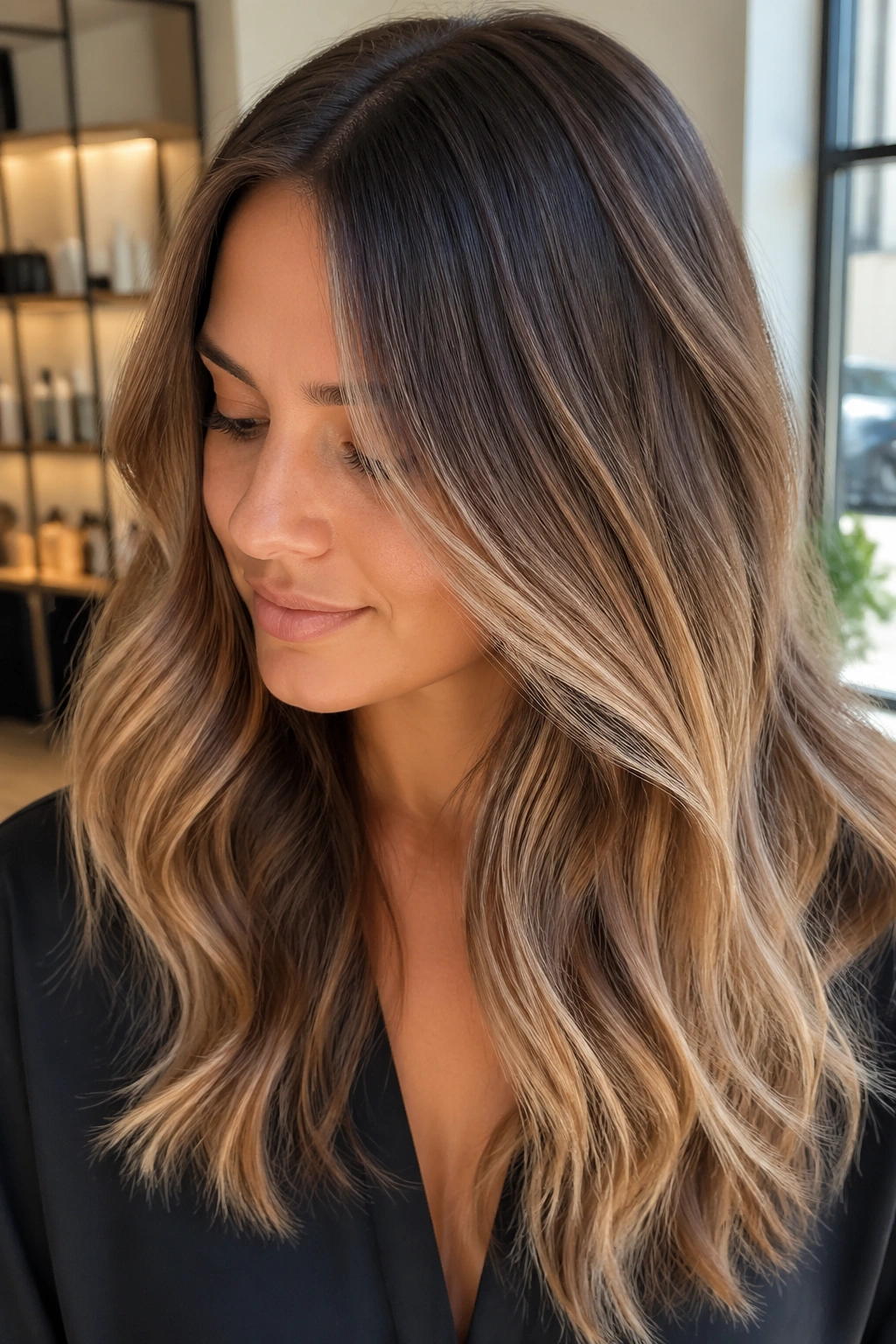
Root-shadowed balayage is the sensible person’s version of sunlit color, and I mean that as a compliment. The darker root keeps your natural color in play, while the lighter balayage starts lower and fades out softly so grow-out doesn’t feel harsh.
That shadow at the top does more than save maintenance. It also gives the brighter pieces somewhere to land. Without a root shadow, light brown hair can lose depth and start looking washed. With one, the whole color feels grounded.
- Ask for a root smudge that’s 2 to 3 shades deeper than the lightest ends.
- Keep the transition soft at the mid-lengths.
- Use a neutral or beige toner to prevent the ends from turning yellow.
- This is a good option if you can’t sit in the salon every few weeks.
The best part? It still looks fresh when the roots grow in. That’s the real luxury here.
17. Buttercream Ribbons Along the Front and Ends
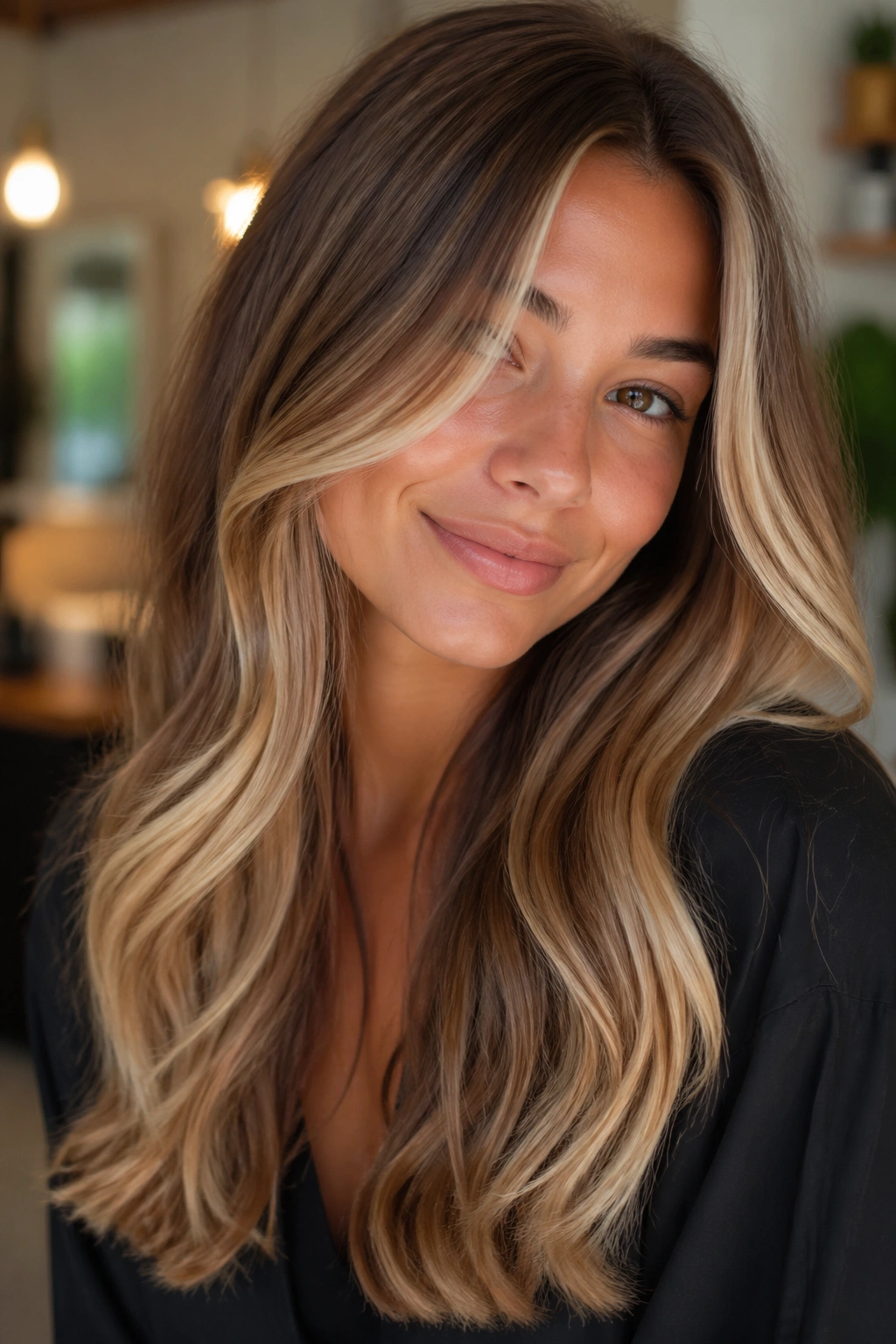
Buttercream is a prettier word than blond for this shade, and that matters because the tone is soft, creamy, and a little warm without going gold. On light brown hair, buttercream ribbons along the front and ends give you brightness where you want it most.
The front pieces frame the face. The ends keep the cut from feeling heavy. Put those together and the whole style feels lighter, even if the actual lift is modest.
I like this on layered cuts with a bit of bend. Smooth hair shows the ribbons as neat streaks; waves soften them into something closer to sunlight on fabric. There’s a quiet richness to buttercream that flat blonde never gives you.
If your skin runs warm, this is especially flattering. If your skin is neutral, it still works. That’s part of the appeal.
18. Chestnut Lowlights With Thin Honey Highlights
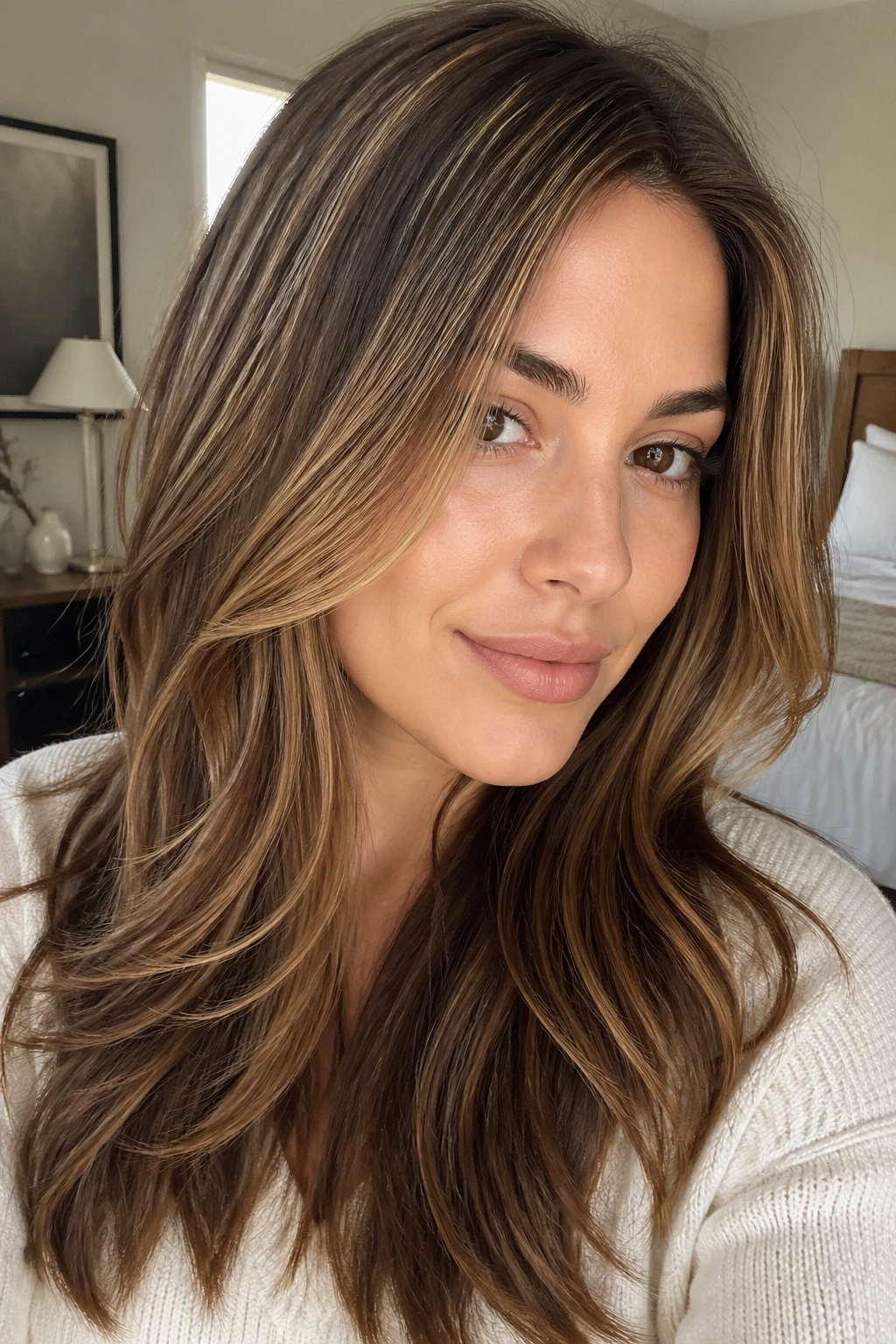
A lot of people chase lighter highlights when what they actually need is contrast. Chestnut lowlights fix that. They deepen parts of light brown hair, then thin honey highlights sit on top of the richer base and create a layered, sunlit effect that feels fuller.
This is one of my favorite choices for fine hair. Too many pale highlights can make fine strands look see-through. Adding chestnut lowlights brings back density, and the honey pieces stop the color from feeling dark.
Unlike all-over blonde, this approach keeps the hair looking dimensional from every angle. You get bright bits, dark bits, and that middle brown that makes both of them read better. It’s a smarter fix than people expect.
Ask for the lowlights to stay soft, not black-brown. The goal is depth, not drama.
19. Soft Chunky Panels Inspired by Sun Through Hair
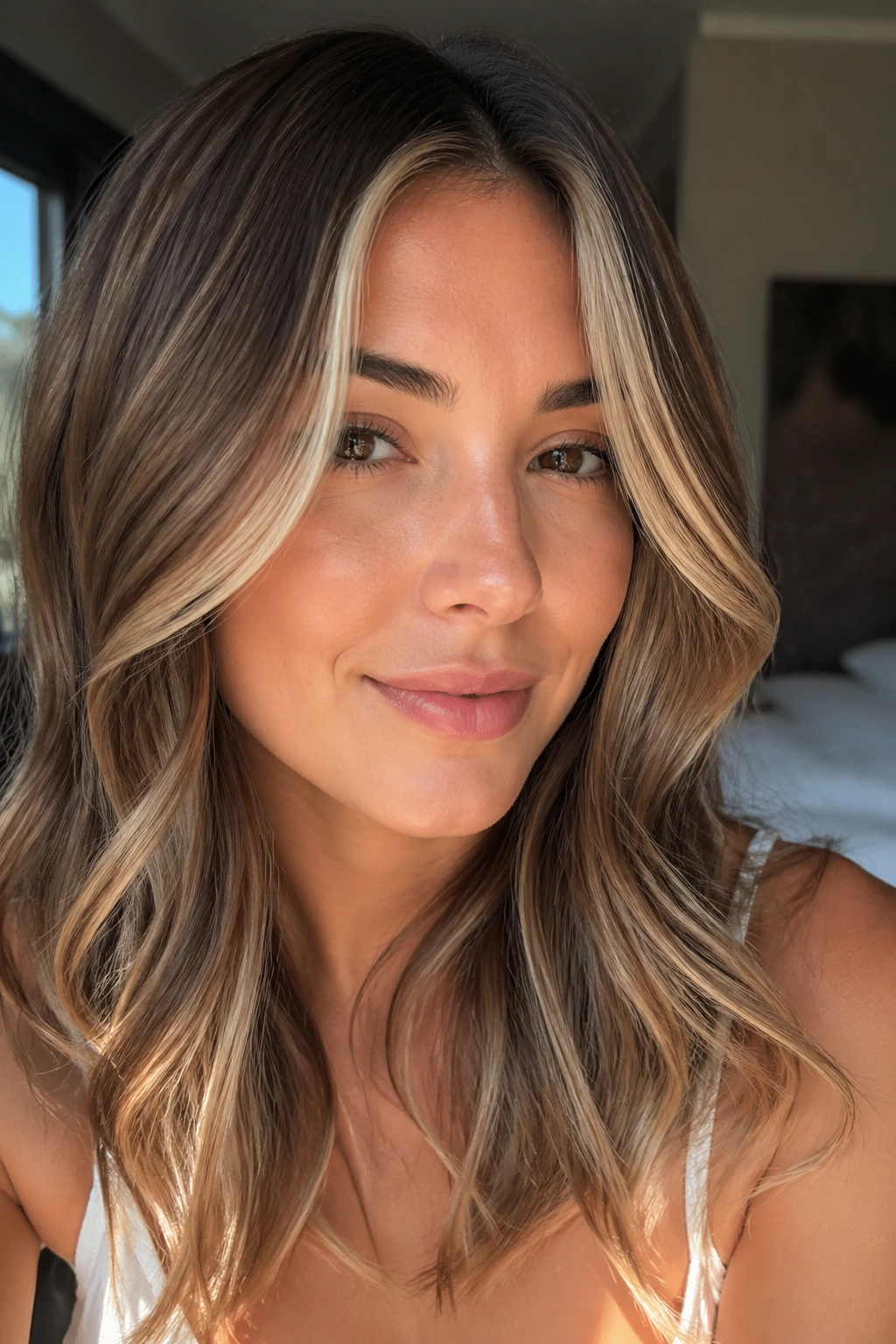
Chunky panels can look dated fast if they’re too hard or too evenly spaced. Soft chunky panels are different. They borrow the idea of wider pieces, then blur the edges so the result feels sunlit instead of striped.
Why They Can Still Work
On light brown hair, a few wider panels can create a beautiful patch of brightness, especially around the face and top layer. The color has room to show, which can be helpful on thick hair or longer styles where fine highlights disappear.
The key is softness at the edge. Ask for the panel to be feathered, not blocked. That keeps the bright section from looking pasted on.
- Use panels about 3/4 inch wide near the face.
- Keep the spacing irregular.
- Tone the light pieces to beige or soft gold.
- Let the underneath stay darker for contrast.
If you like a little more visible color, this is the boldest idea on the list. It still works if the edges are blurred.
20. Smoked Caramel Glaze on Existing Highlights
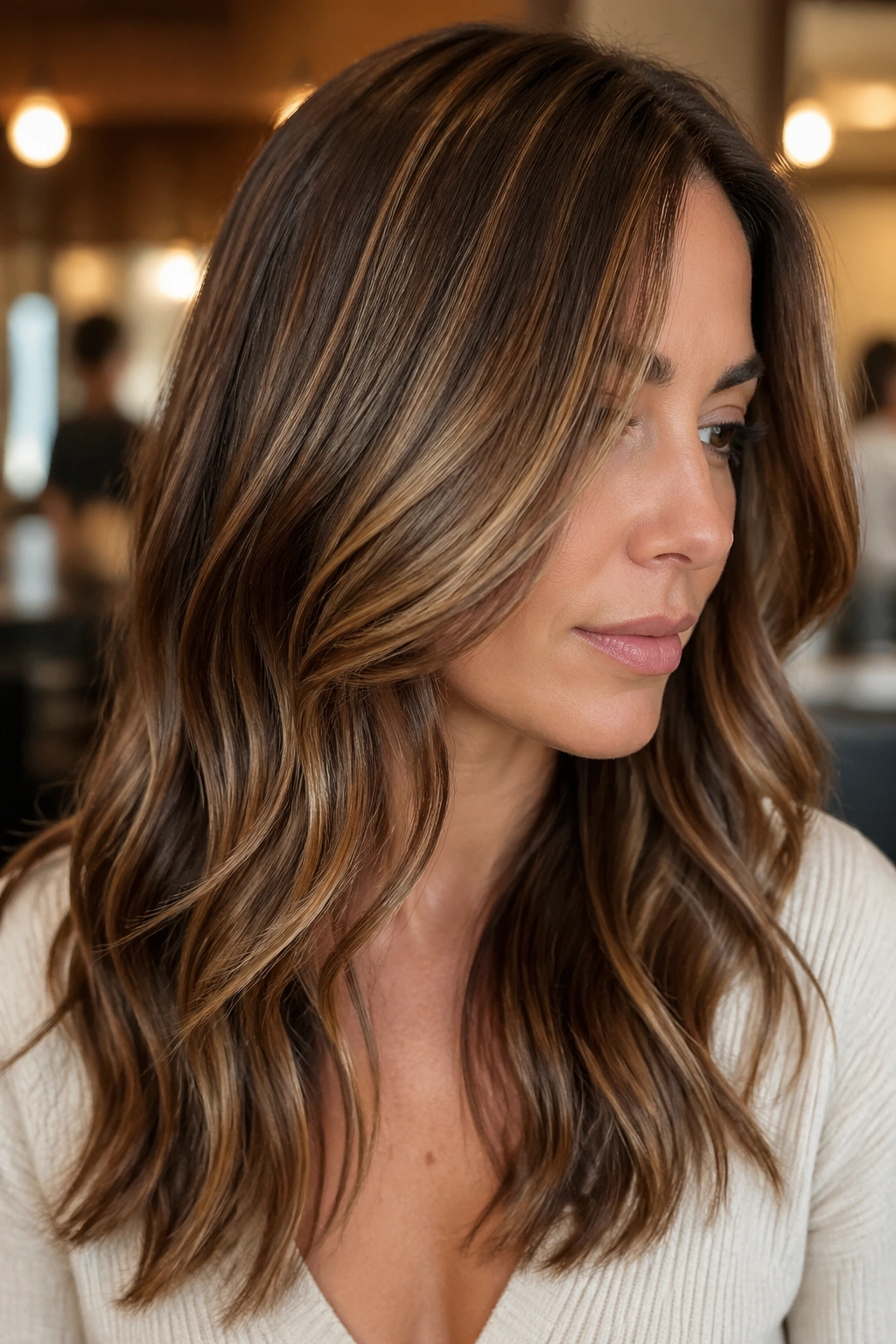
Smoked caramel glaze is the fix for highlights that came out too bright, too yellow, or just too loud. Instead of adding more lightness, you tint the existing color with a caramel-brown glaze that softens the whole head and gives it a warmer, richer finish.
This is one of those salon moves that feels small but changes everything. A good glaze can pull the tone back into balance, especially on light brown hair that has been lifted a little too far. The color ends up looking more expensive, more even, and less patchy.
I like smoked caramel when the hair has already been highlighted and just needs a calmer finish. It’s also useful after summer lightening, when the ends can get dry and pale. The glaze doesn’t fix damage, but it does make the color behave better.
If your highlights look striped, this is often the fastest way to soften them.
21. Bronde Babylights Feathered Only at the Ends
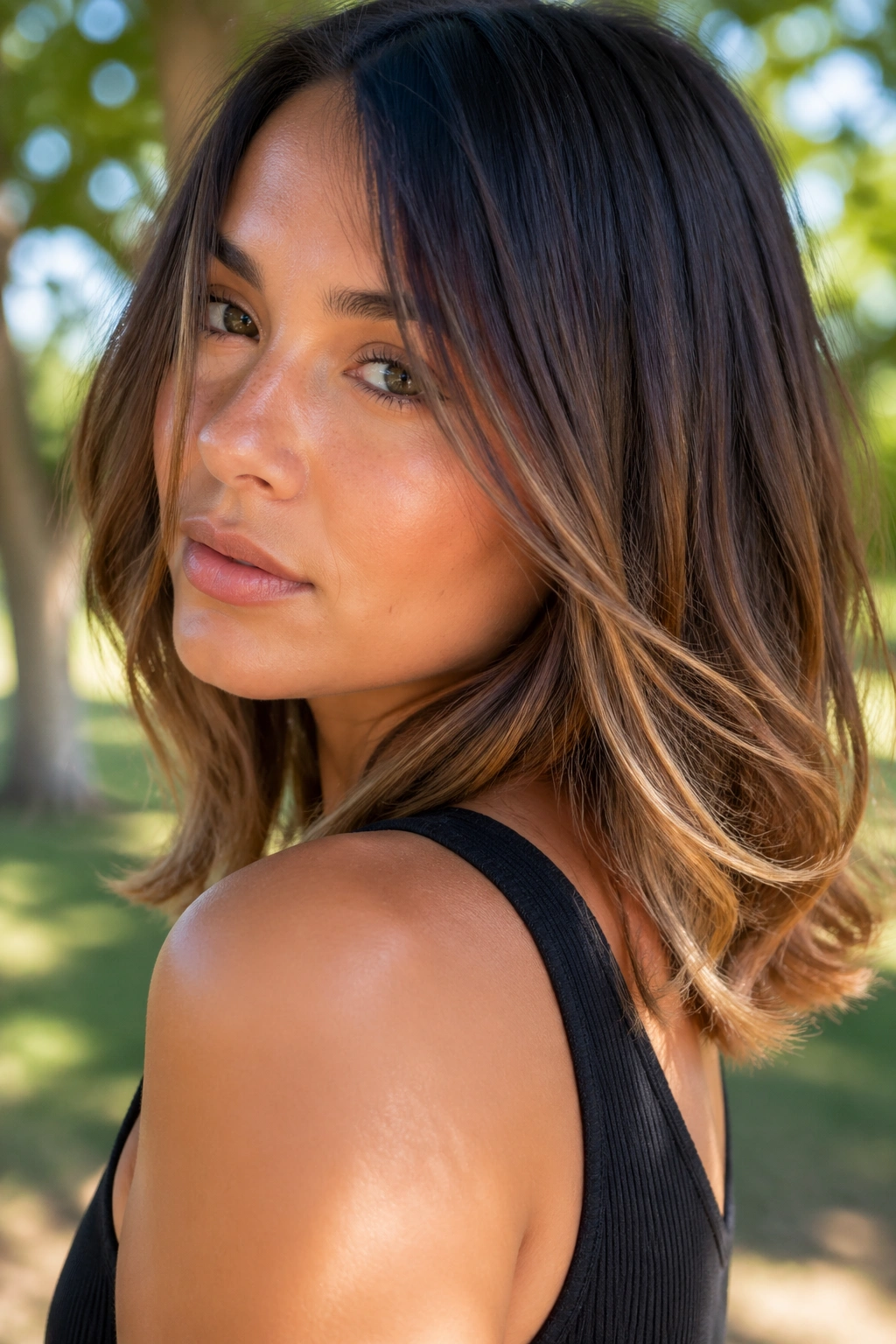
Why place babylights only at the ends? Because the ends are where the hair moves most, and that movement makes even tiny light pieces show up. On a light brown base, bronde babylights feathered at the ends create a soft fade that feels light without turning the roots into a highlight map.
Why Ends-Only Works
This placement is smart for lob cuts, long layers, and any style that flips out a little at the bottom. The lighter bits catch the light when the ends bend, which keeps the top layer rich and grounded.
It also makes grow-out easy. Since the brightness lives lower down, you don’t get that hard band at the root that some blonding jobs leave behind.
- Keep the babylights very fine.
- Focus them on the last 3 to 5 inches of hair.
- Use a bronze-beige toner for a soft finish.
- Great if you want brightness without changing the top half much.
This is a quieter version of blonde, and that’s why it works.
22. Peachy Beige Highlights for Warm Light Brown Hair
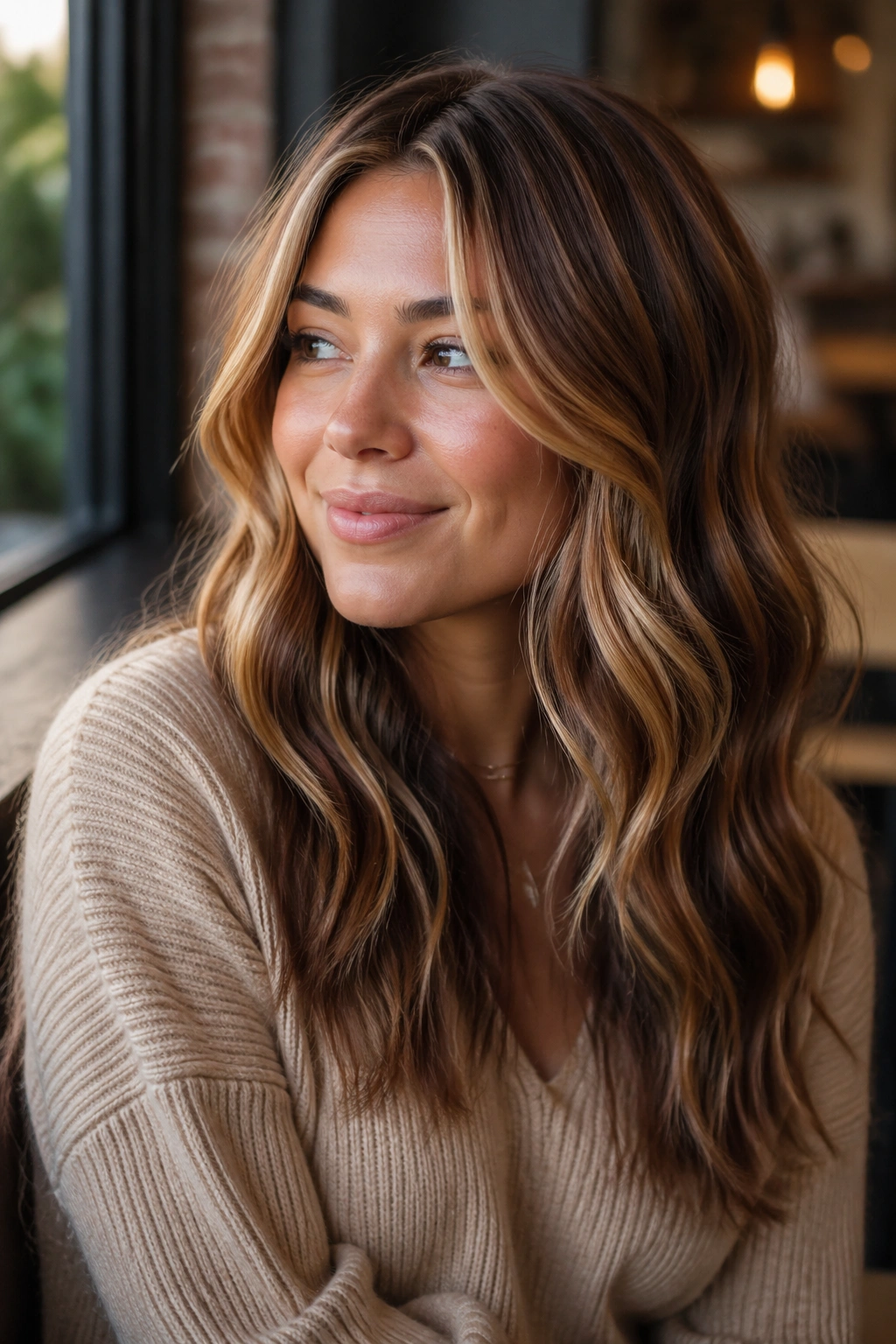
Peachy beige highlights are for light brown hair that already leans warm and just needs a little more life. The peach note keeps the color from going flat, while the beige reins it in so the whole thing stays wearable.
I’ve always liked this tone on hair that has a bit of natural gold. Pure caramel can get too sweet. Pure blonde can go dull. Peachy beige sits somewhere in the middle, which gives you warmth with a soft skin-friendly cast.
Quick Placement Notes
These highlights work well around the face, on the top layer, and through the mid-lengths where the light lands first. They also play nicely with loose curls, since the bends help the peach tones flash without taking over.
- Keep the peach tone muted, not coral.
- Place the brightest pieces near the front and crown.
- Let the ends stay a touch darker if you want more contrast.
- Style with a soft bend to show the tone shift.
If your base color already has warmth, this may be the prettiest option on the list.
23. Soft Pearl Highlights That Melt Into the Base
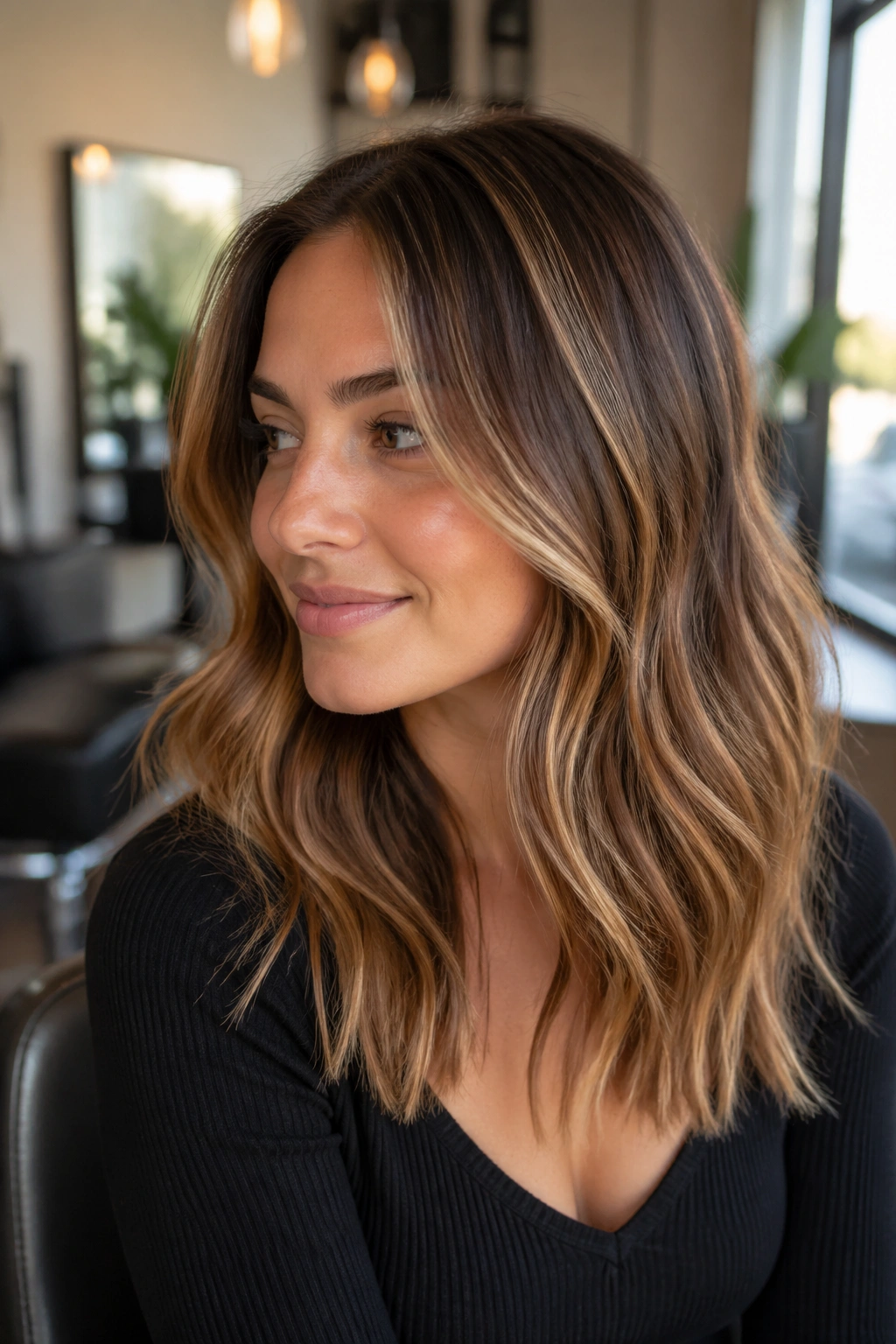
Soft pearl highlights are for the person who wants the lightest possible touch without losing the brown underneath. The tone is pale, but not chalky. It has a cool-sheen quality that can make light brown hair look polished and airy at the same time.
This is where placement really matters. Pearl pieces should be used sparingly, with enough base showing through that the color still feels like hair and not fabric. Too much pearl and the finish turns flat. Just enough, and it looks clean, lifted, and expensive-looking without trying too hard.
I like pearl highlights best when the cut already has movement—layers, bends, a soft wave, anything that lets the pieces break up a little. Straight hair can handle it too, but the finish needs a good gloss to keep the tone from looking washed.
If you want the most delicate sunlit effect on the whole list, this is the one I keep circling back to.
A few strands can do a lot.
