

Gray hair can look flat fast when every strand sits at the same brightness. Brown lowlights fix that in a way highlights often don’t: they put some shadow back into the hair, sharpen the shape of the cut, and keep silver from reading as washed out or chalky.
The trick behind gray hairstyle ideas with brown lowlights is placement, not bulk. A few fine chestnut or mocha ribbons woven through the right spots can make a bob look thicker, make curls separate more cleanly, and make long hair stop looking like one big sheet of color. The best versions don’t scream “color job.” They look like the hair has depth on purpose.
I’m a fan of brown lowlights on gray hair when they stay one or two levels deeper than the gray, not five. Go too dark and the contrast gets chunky. Keep the tone soft — chestnut, walnut, mushroom brown, cocoa, mink, espresso in tiny doses — and the whole head starts to move in a much nicer way. Fine slices, not striping. That’s the move.
1. Gray Lob with Chestnut Ribbons
A lob gives gray hair room to swing, and chestnut ribbons stop it from looking too tidy. When the cut falls between the chin and collarbone, the darker threads sit right where the eye follows the shape. That makes the style feel fuller, especially if your ends are a little wispy.
Why It Works
Chestnut sits in that sweet spot where it warms the gray without turning the whole look brown. It’s softer than espresso and less beige than taupe, which matters on a bob because every line shows.
Ask for fine lowlights placed through the interior layers and a few softer pieces near the sides. That keeps the surface bright while the body of the cut gets depth.
- Best on straight to slightly wavy hair.
- Looks especially good when the ends are blunt.
- Works with a center part or a loose side part.
- Ask for demi-permanent color if you want a gentler grow-out.
Tip: keep the chestnut 1 to 2 levels deeper than your natural gray blend. Any darker, and the ribbons start to look like stripes.
2. Soft Pixie With Espresso Crown Shadows
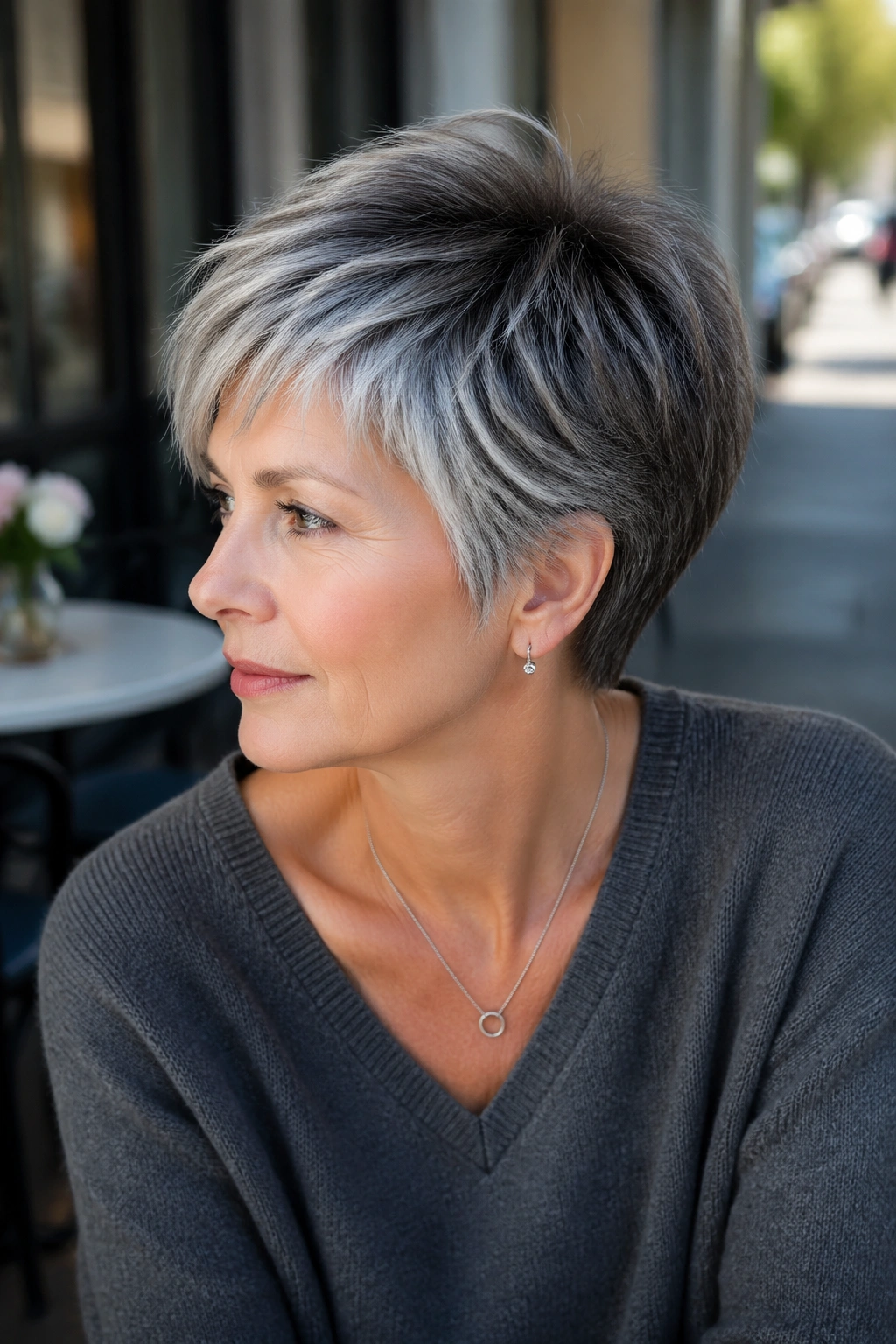
Short gray hair needs depth more than shine. A pixie can turn puffy or piecey if every strand reflects the same way, and that’s where espresso lowlights earn their keep. Placing the darker color at the crown and around the nape gives the cut shape, almost like shadow in a good haircut photo.
The best part is how low-maintenance this looks when it grows out. The gray at the top stays bright, while the espresso underneath hides the line of regrowth a little longer. That’s handy if you like a wash-and-go routine and don’t want to be at the salon every few weeks.
Keep the lowlights feathered, not blocky. Tiny slices around the temples and behind the ears give the pixie some edge without making it harsh. A light styling cream is enough; heavy wax tends to make the darker pieces look sticky instead of airy.
3. Curly Shag With Mocha Ribbons
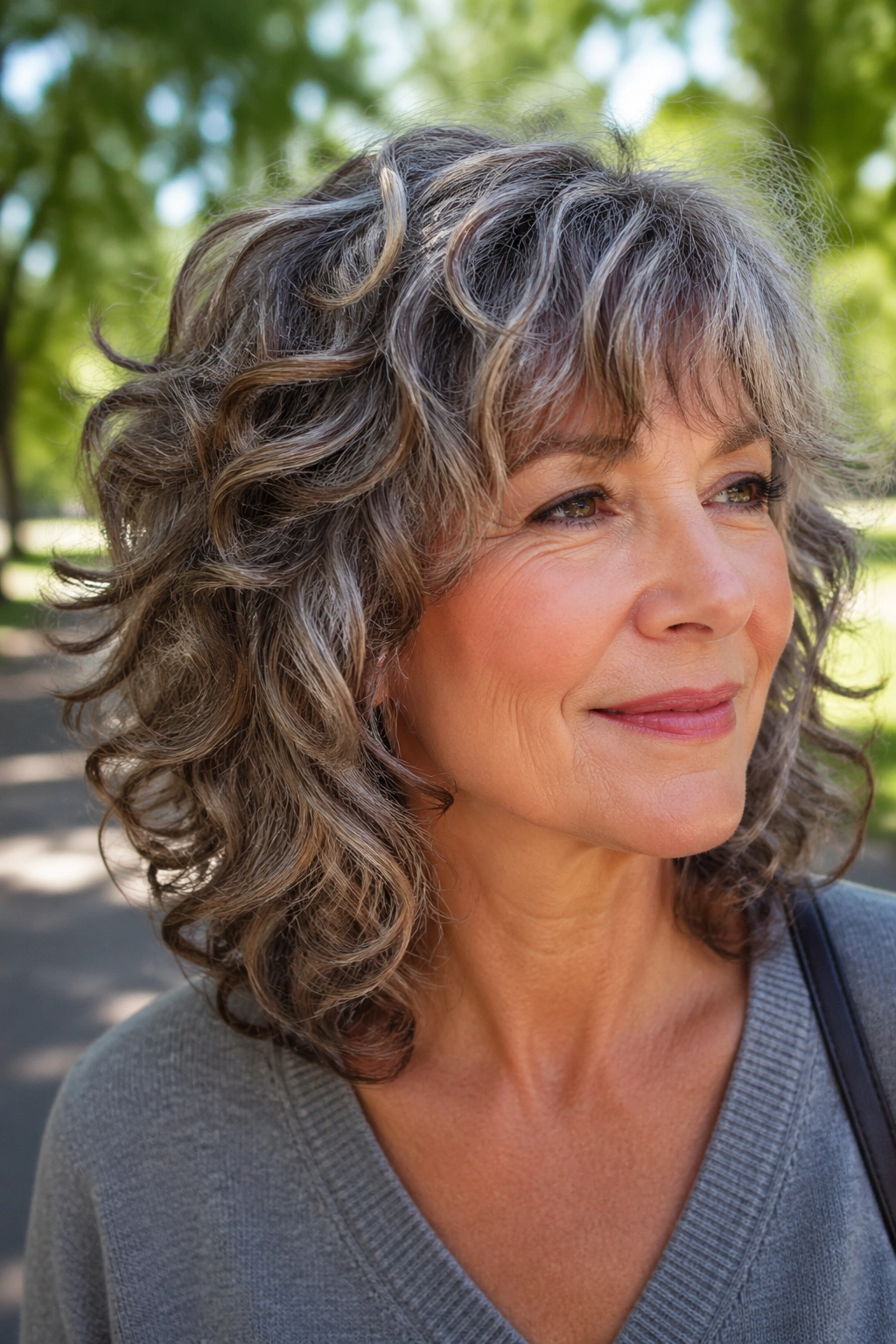
Why do curls look richer with lowlights than with highlights? Because curls already make their own motion. What they need is separation, and mocha ribbons tucked into the mid-lengths do that job better than bright streaks that can blur the shape.
A shag works because the layers give the color somewhere to land. Put the mocha through the bends of the curls, not just the outer surface, and the pattern looks deliberate instead of random. The gray stays lively, but the cut gets a little grit and a lot more depth.
How to Wear It
- Use curl cream on damp hair, then scrunch.
- Diffuse on low heat until the curls feel set but not stiff.
- Ask for lowlights in the longer layers first, then a few around the fringe.
- Keep the mocha soft and cool if your gray has a silver cast.
A shag like this loves movement. It does not need perfect curls. That’s part of the charm.
4. Shoulder-Length Waves With Walnut Lowlights
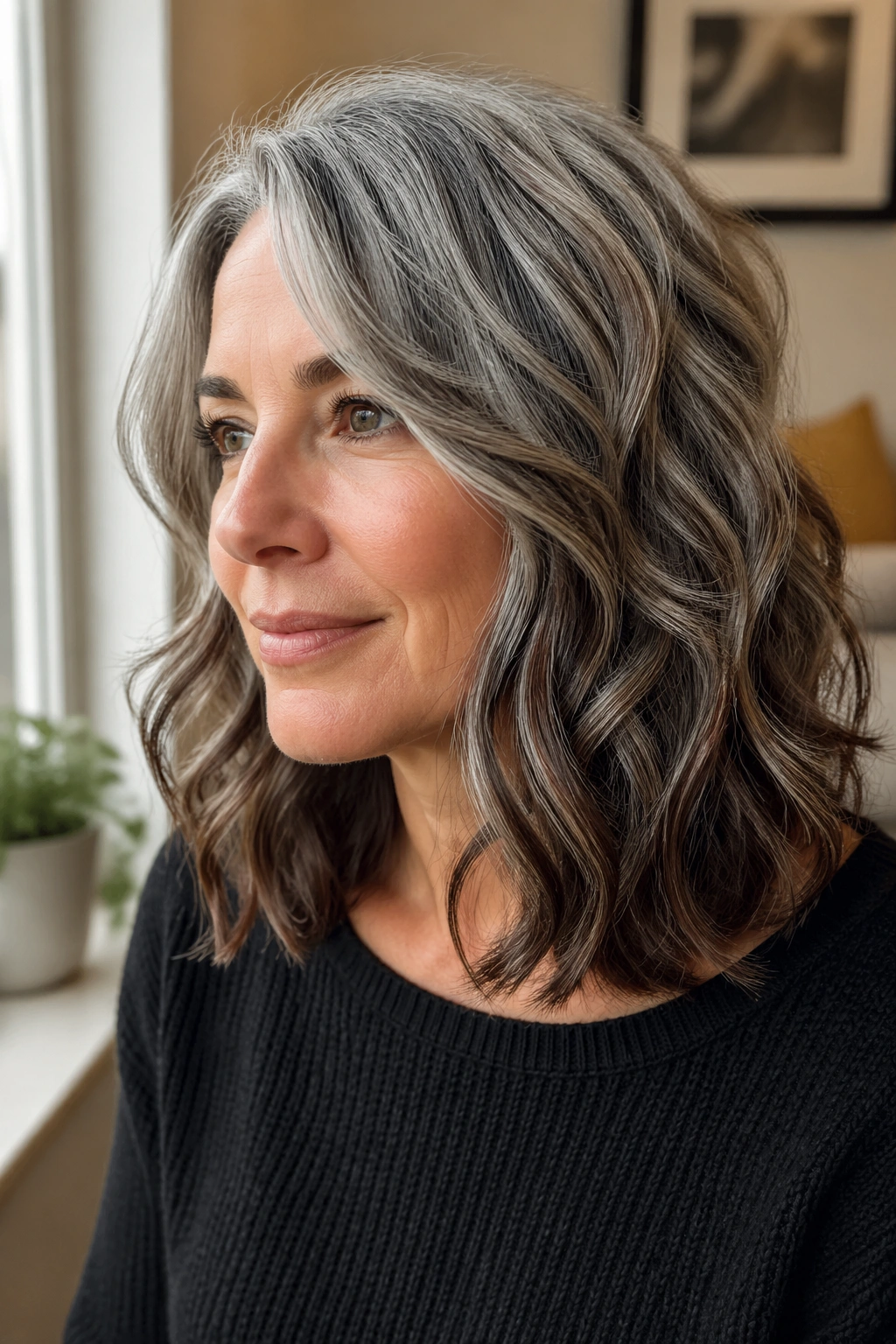
If your gray waves puff out at the ends, walnut lowlights can calm the whole shape down. The darker pieces act like visual anchors, so the style looks thicker at the ends and less airy at the mid-lengths. It’s a small change on paper. In the mirror, it’s noticeable.
Walnut works especially well when it sits under the top layer. You get brightness on the surface and a shadow underneath, which makes the waves look carved instead of frizzy. That matters if your hair is fine or if the curl pattern changes from root to ends.
This is one of those styles that looks better with a loose finish. A wide-barrel iron, a soft bend through the mid-lengths, and a bit of finger-combing are enough. Too much polish can flatten the texture and hide the color placement.
5. Blunt Chin-Length Bob With Taupe Panels
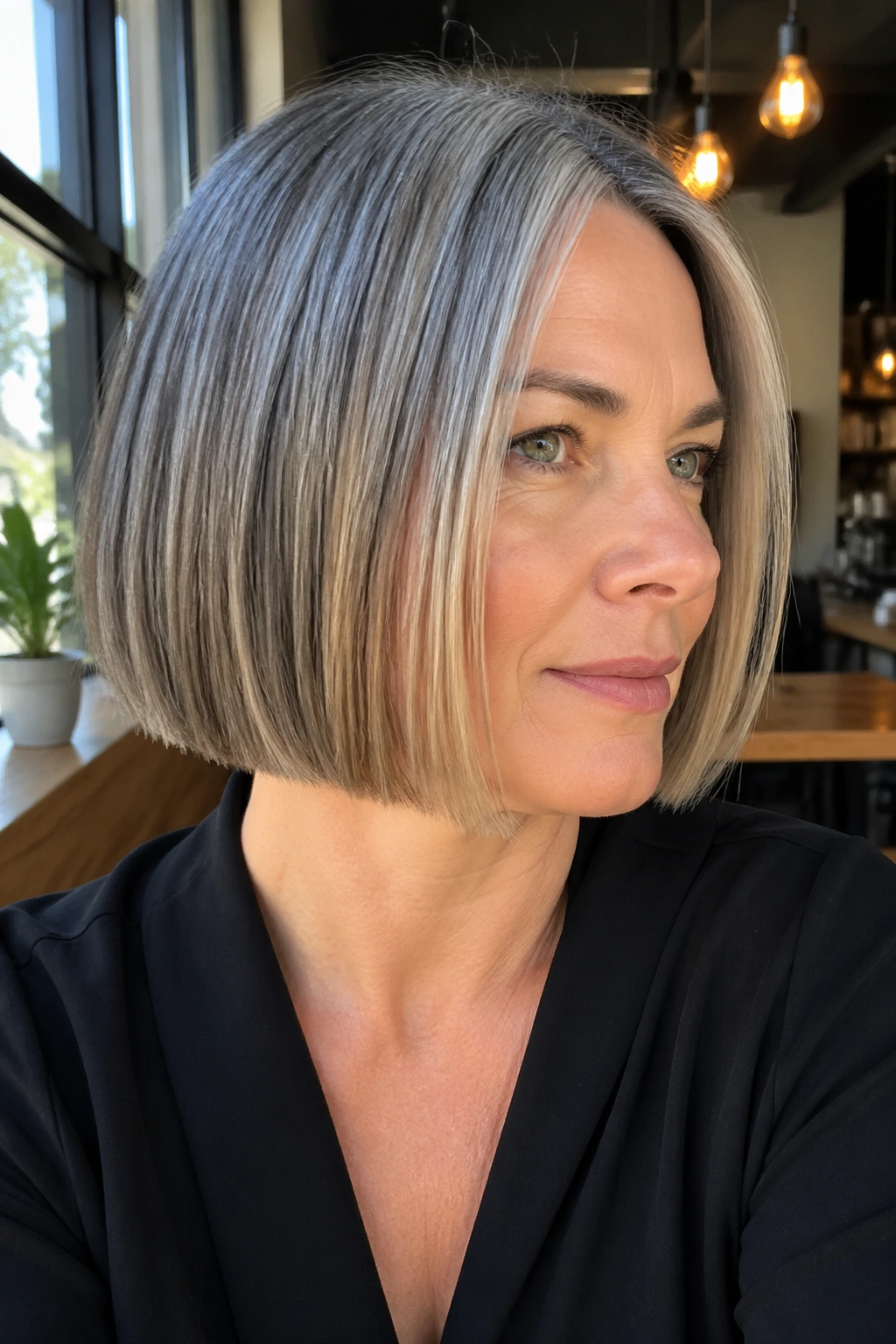
A blunt chin-length bob can look severe if the gray is all one tone. Taupe panels take the edge off that stiffness without softening the shape too much, which is exactly why this cut works so well on square or oval faces. The line stays crisp. The color gets kinder.
Taupe is one of the easiest brown lowlight shades to wear on gray hair because it lives between cool and warm. It doesn’t fight silver the way a rich chocolate can, and it doesn’t disappear the way a very pale brown sometimes does. A few panels beneath the top layer are enough to change how the whole bob sits.
I like this look on straight hair because the clean edge shows off the difference between the gray surface and the shaded underside. It’s sharp, but not hard. If you blow-dry with a round brush and tuck one side behind the ear, the lowlights peek through in a way that feels controlled, not fussy.
6. Layered Mid-Length Cut With Cocoa Ends
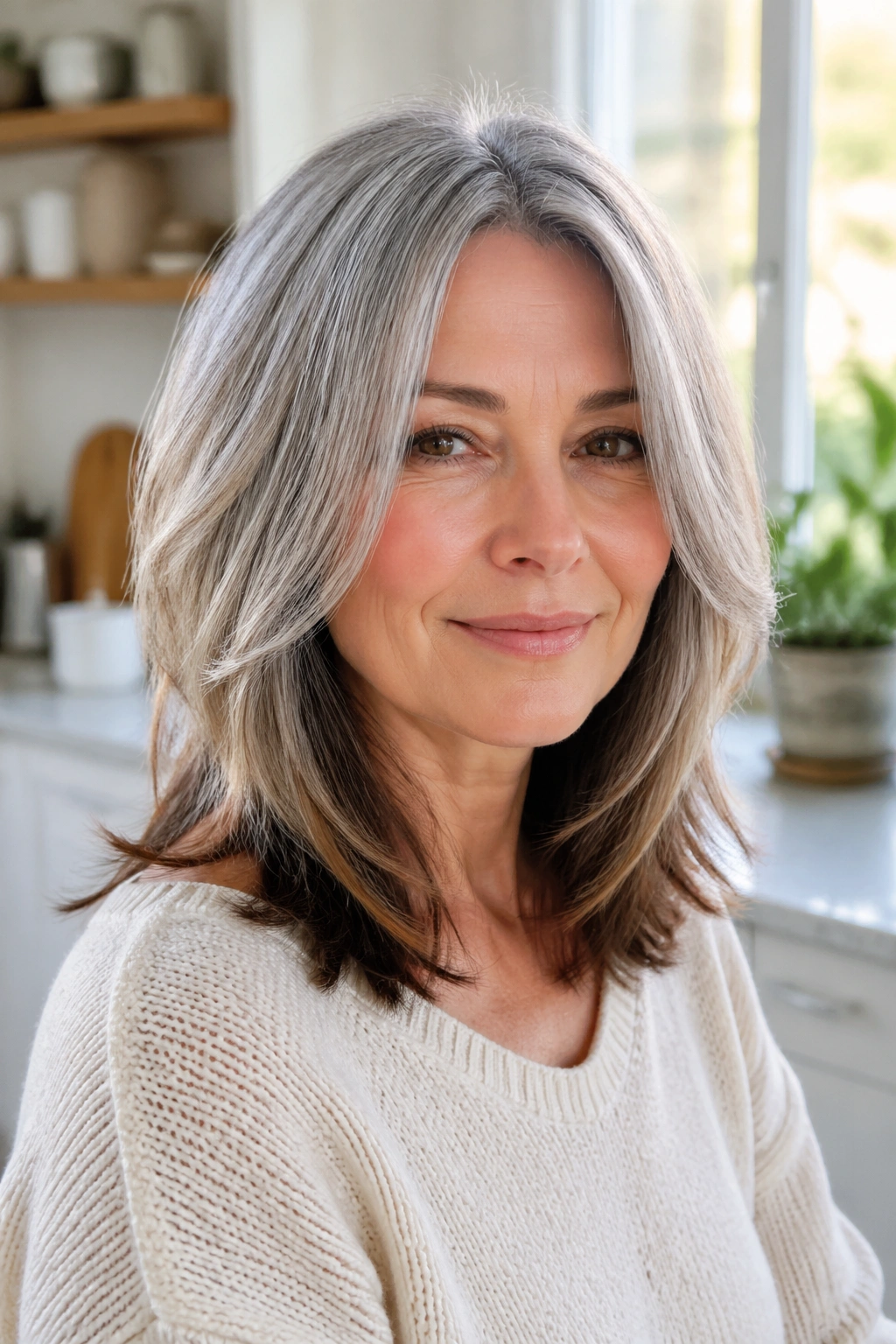
Unlike an all-over dark gloss, cocoa lowlights at the ends keep a layered cut from looking thin. That’s the whole point here. The darker pieces at the bottom create a visual base, so the layers above them feel fuller and more structured.
This cut works best when the lowlights follow the fall of the hair instead of sitting in obvious bands. Ask for cocoa through the last third of the length and a few softer strands inside the layers. The gray at the top stays bright, which keeps the style from feeling heavy.
It’s a smart choice for thicker hair that needs movement. Air-dried texture helps, but so does a blunt-ish perimeter. If the ends are too shattered, the color can lose its shape. Keep the cut clean enough to hold the lowlights, and the whole look feels much more expensive than it sounds.
7. Face-Framing Gray Bob With Chestnut Money Pieces

A gray bob with chestnut face-framing pieces draws attention where you want it first: the eyes, cheekbones, and jaw. The darker strands act like a soft outline, which is a nice fix if the front of your hair tends to look washed out in daylight.
Where the Light Lands
Place the chestnut just inside the hairline, not in a thick block. A few slices at the temples and near the cheekbones are enough to warm the face. If you wear glasses, this placement is even better because it keeps the frame from disappearing into the silver.
The rest of the bob can stay cooler and lighter. That contrast gives the haircut a little shape without making it look overdone. You end up with a face frame that moves, not one that looks painted on.
Tip: keep the face-framing pieces one shade warmer than the rest of the lowlights. That tiny shift makes the front come alive.
8. Feathered Shoulder Cut With Mushroom Brown Lowlights
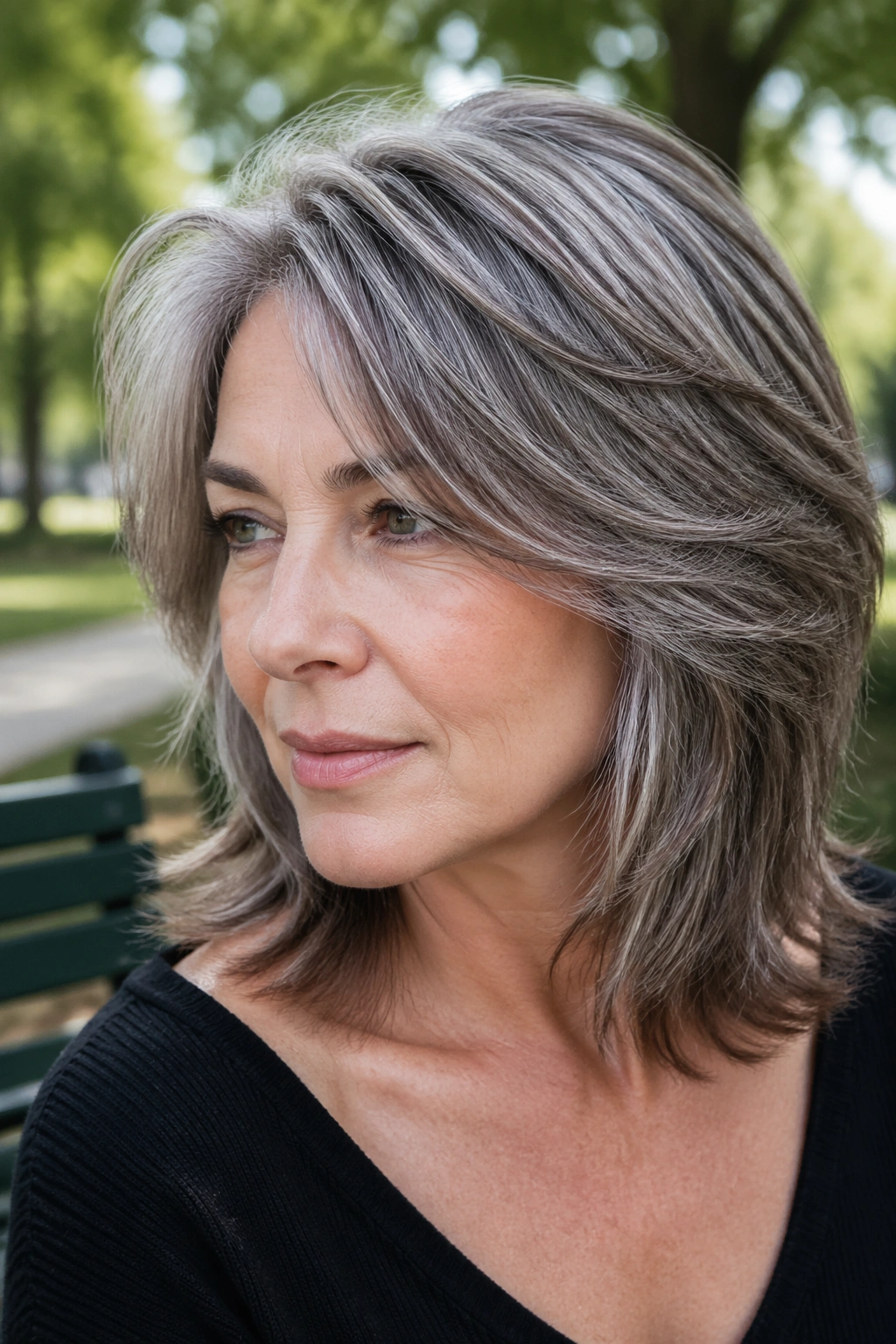
Mushroom brown is the shade people overlook, and they miss out. It sits between taupe and ash brown, which makes it ideal for gray hair that already leans cool. The result is soft depth, not a hard color change.
A feathered shoulder cut gives those lowlights somewhere to breathe. The ends are light enough to move, while the darker pieces break up the body of the hair through the middle. That matters if your gray is silvery and reflective, because too much uniform shine can make the shape disappear.
Ask for mushroom brown in soft ribbons rather than chunky panels. It works best when the color is tucked into the feathering, especially around the lower crown and the back. The style ends up looking airy from a distance and more textured up close, which is exactly where this color lives best.
9. Salt-And-Pepper French Bob With Coffee Bean Streaks
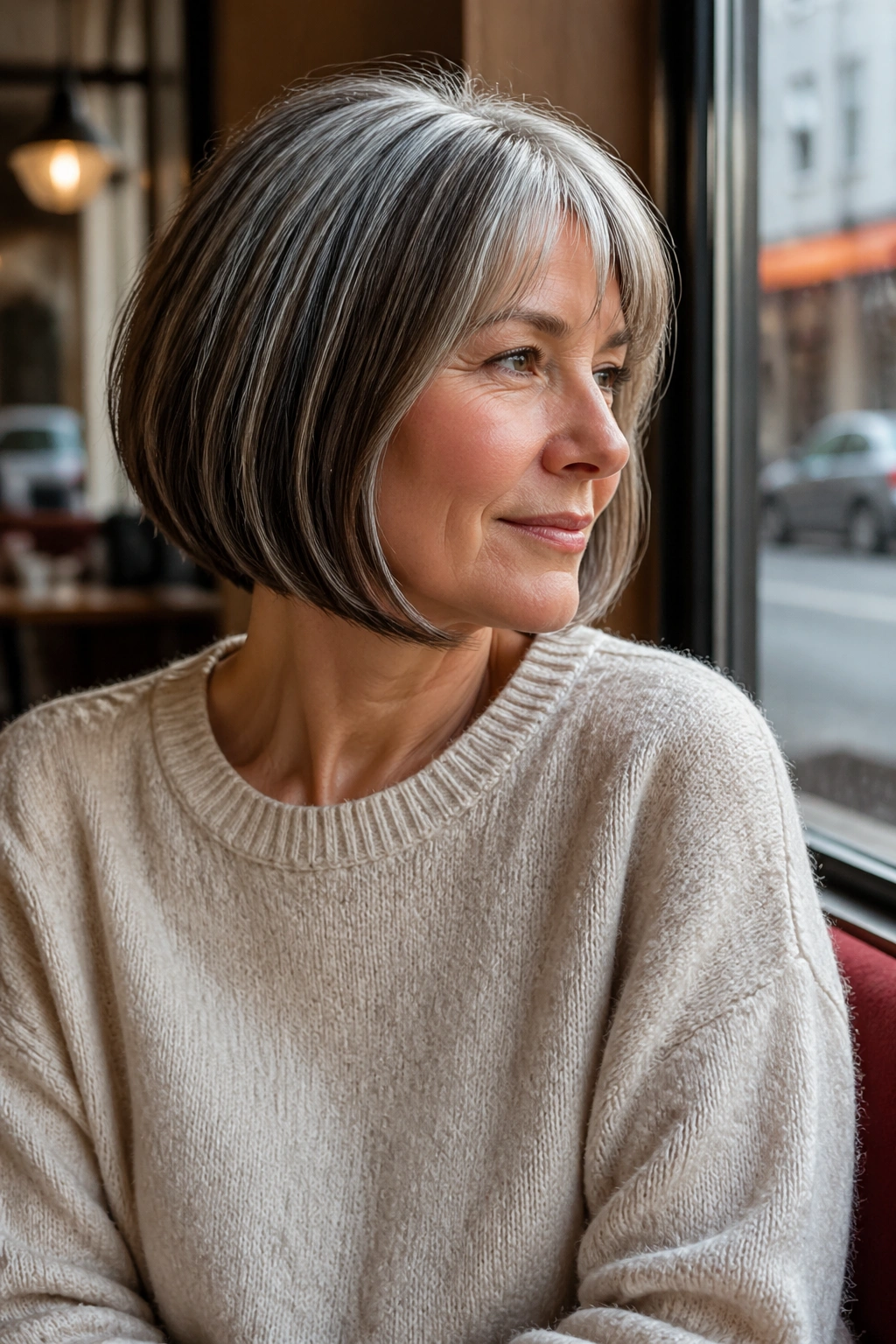
Can a French bob stay soft if it’s cut blunt? Absolutely, and coffee bean streaks are the reason. The cut itself is neat and close to the jaw; the darker streaks break up the silver just enough so it doesn’t read as severe.
How to Wear It
- Keep the streaks narrow and close together.
- Place most of the color under the top layer.
- Let a few pieces land near the mouth and jawline.
- Use a light pomade or cream, not a heavy paste.
This style looks best when it’s a little undone. Tuck one side behind the ear. Leave the other side loose. The gray and brown should look like they’re living in the same haircut, not competing for attention.
Coffee bean is darker than chestnut, so it works well if your natural gray is bright white or very pale silver. It gives the bob more structure without stealing the whole show.
10. Wolf Cut With Deep Brown Interior Layers
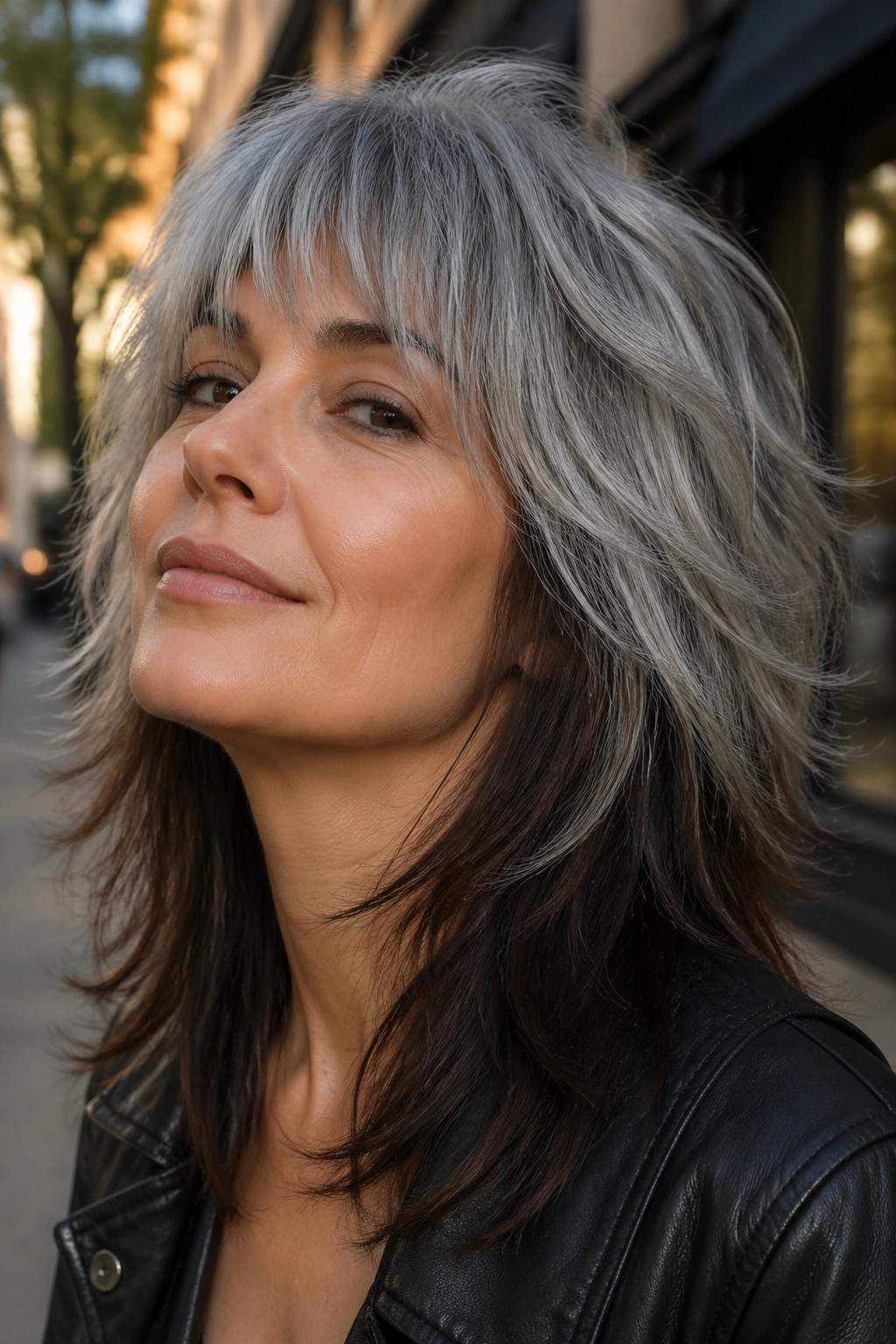
A wolf cut already has a lot going on, so the color has to keep up. Deep brown interior layers do that job beautifully. They sit under the choppy top layers and stop the haircut from looking like a puff of disconnected texture.
The trick is to keep the surface gray bright and let the darker pieces live inside the shape. That makes the wolf cut look intentional, not wild for the sake of being wild. It also helps if your hair is thick, because the lowlights can remove some of the visual bulk without changing the density.
- Best on wavy or coarse hair.
- Strongest effect happens near the crown and upper sides.
- Works well with curtain bangs.
- Ask for soft, broken ribbons instead of even spacing.
The result feels edgy, but not messy. That’s a useful line to walk.
11. Sleek Collarbone Cut With Mink Lowlights
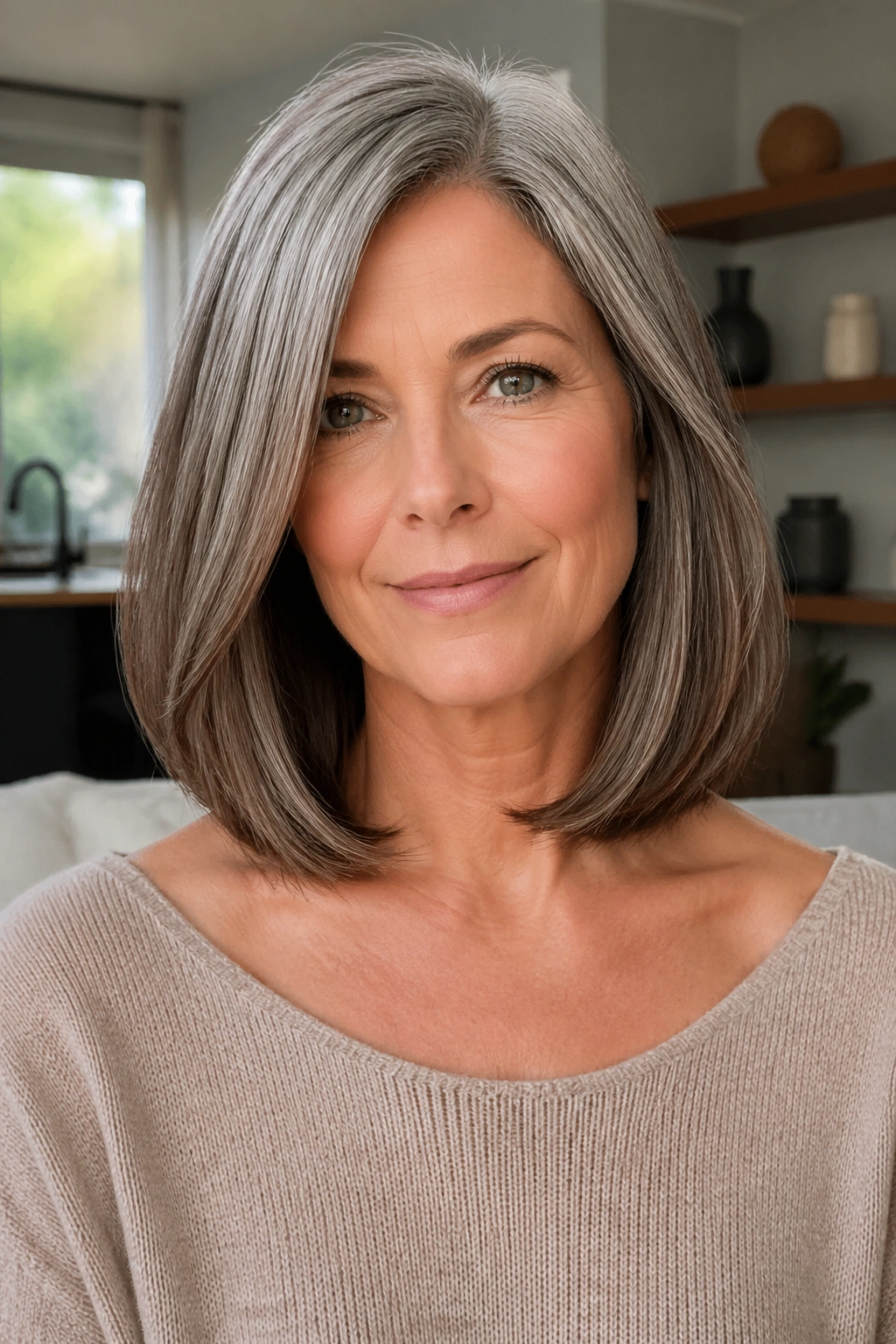
A sleek collarbone cut depends on clean lines, and mink lowlights are one of the few dark tones that won’t fight that polish. Mink has a soft brown-gray cast, so it blends into silver instead of sitting on top of it like a harsh stripe.
This style looks good when the lowlights are placed under the top sheet of hair and through the lengths closest to the neck. When the hair swings, those darker sections show in a thin, elegant way. When it’s straight, the whole shape feels denser and more controlled.
A smoothing serum and one good blow-dry pass make a difference here. You do not need a pin-straight finish, though. A soft bend at the ends keeps the haircut from feeling rigid, and it lets the mink pieces peek through instead of disappearing into one flat surface.
12. Curly Crop With Toffee Lowlight Nesting
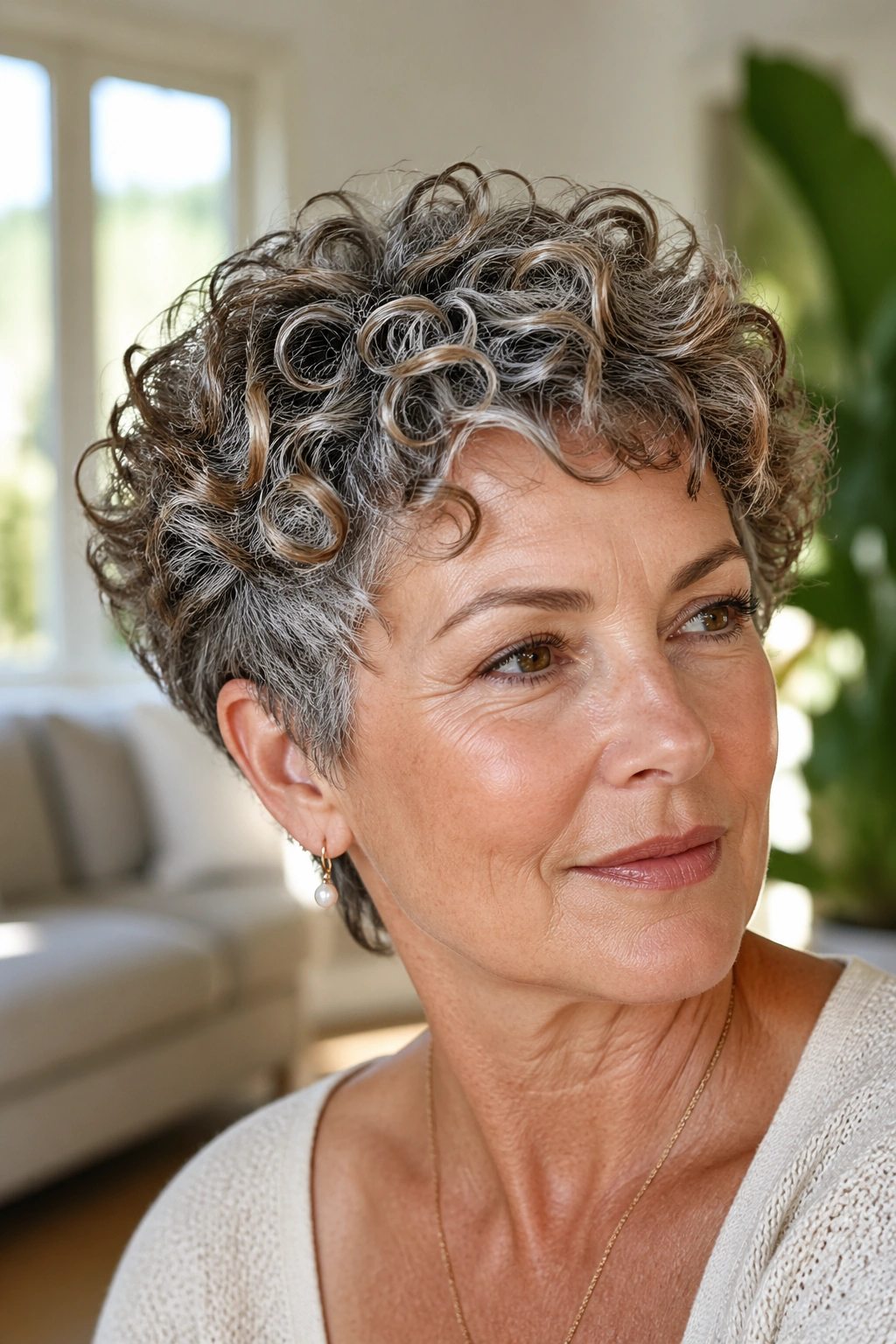
Unlike a single-tone curl cut, a curly crop with toffee lowlights looks more alive because the darker pieces nest inside the curl pattern. That means the lowlights show when the curl opens, then disappear again when it coils back up. It’s a small trick, but it changes everything.
Toffee is warmer than ash brown and softer than chocolate, which makes it friendly to gray curls that need a little depth without looking muddy. The best placement is around the outer perimeter and a few curl groups near the crown. That way, each coil gets a little shadow of its own.
This cut is a good pick if your curls are dense and you want them to look shaped instead of puffy. Keep the lowlights in narrow sections so the curl definition stays clear. A diffuser helps, but the real work is in the color map. The better the placement, the less styling you need.
13. Side-Swept Pixie-Bob With Dark Roast Shadows
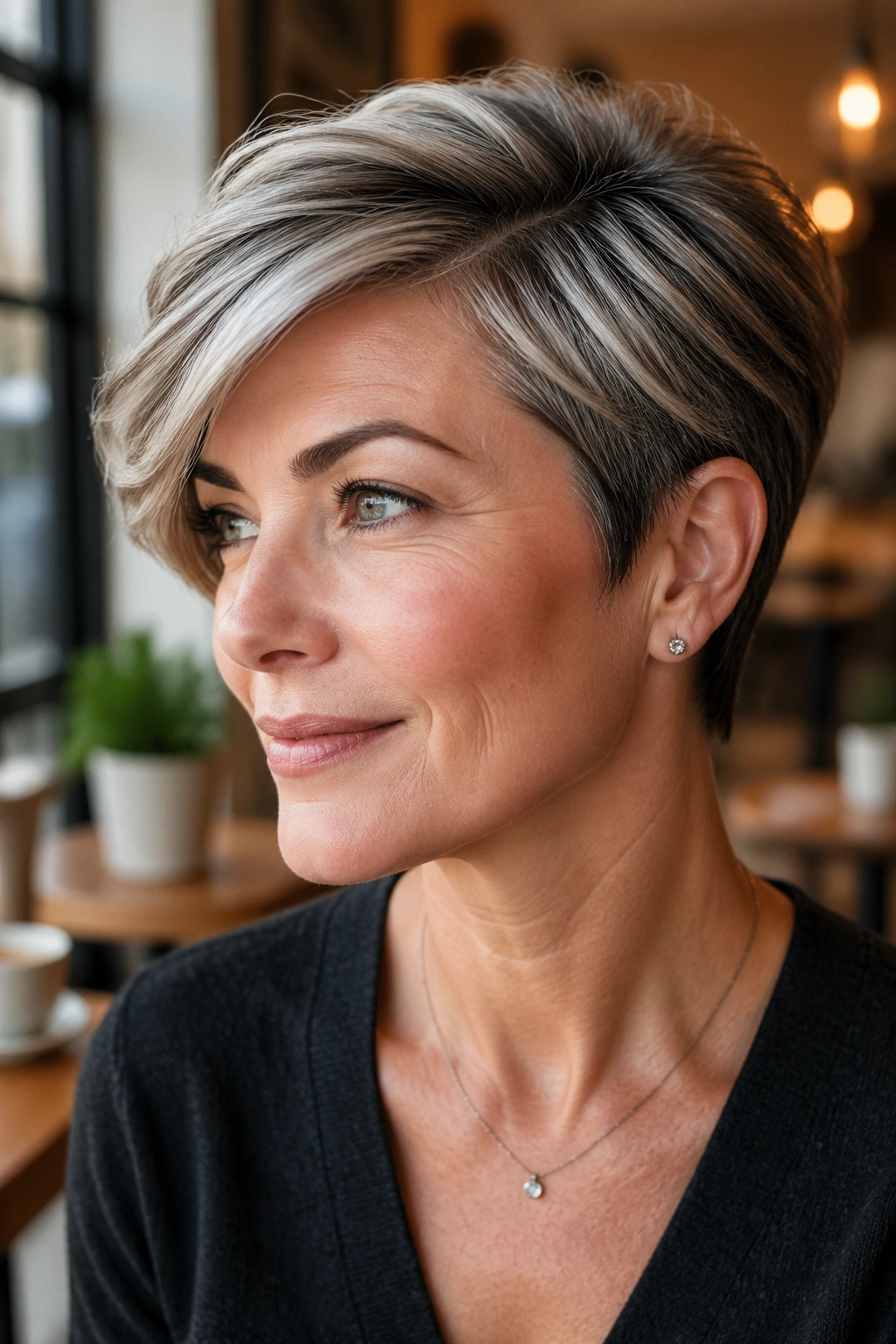
A side-swept pixie-bob gets its shape from the sweep, and dark roast shadows make that shape obvious. The darker color at the nape and around the heavier side adds weight where the cut needs it, which keeps the front from falling flat.
Why the Side Sweep Helps
The sweep gives your eye a path. Darker pieces underneath that path make the angle sharper. That’s why this style looks so good on straight gray hair that tends to lie too neatly.
A few finer slices at the sideburns keep the cut from looking helmet-like. The crown should stay brighter, otherwise the style loses its lift. Ask for soft, narrow lowlights, not broad panels. You want movement, not a checkerboard.
Tip: this cut grows out well if the darkest pieces live below the visible top layer. The grow-out stays softer and the side sweep keeps doing the work.
14. Long Straight Gray Hair With Mocha Veil Lowlights
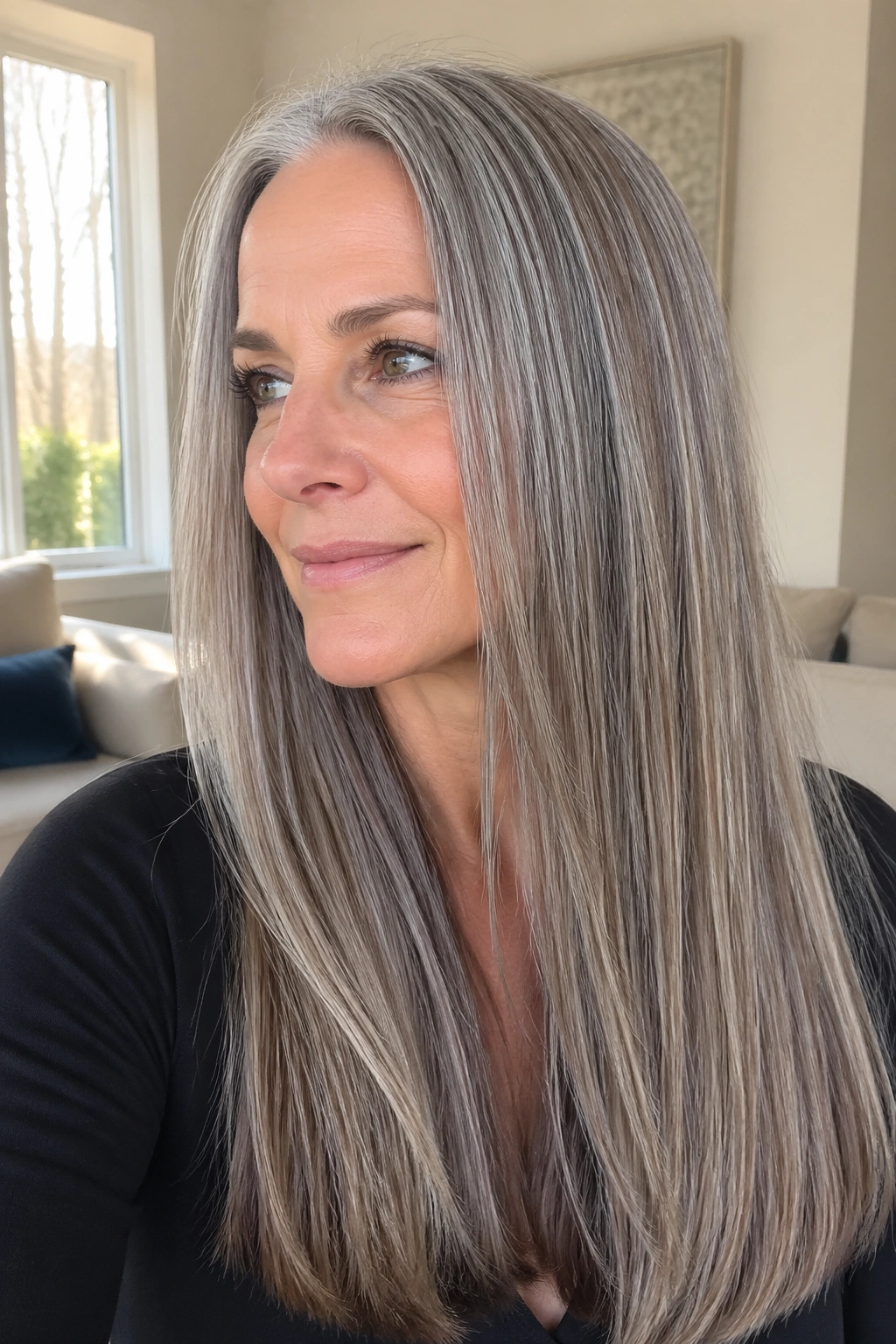
Long gray hair needs the gentlest lowlights or it can turn stripey fast. Mocha veil lowlights solve that by staying whisper-thin and spread out through the interior lengths. The gray still reads as the main color. The mocha just gives it some shape.
This is a good choice if your hair is smooth and fine, because long straight strands show every color decision. Bigger brown pieces would look blocky. A veil of mocha, though, can make the length look thicker and stop the ends from fading into a pale blur.
Ask for the darker pieces from about the ears down, with a few hidden strands near the crown. That keeps the roots light and the movement subtle. A flat iron can make the finish sleek, but the cut should still have enough life to show the lowlights as you move.
15. Wavy Shag With Ash-Brown Lowlights
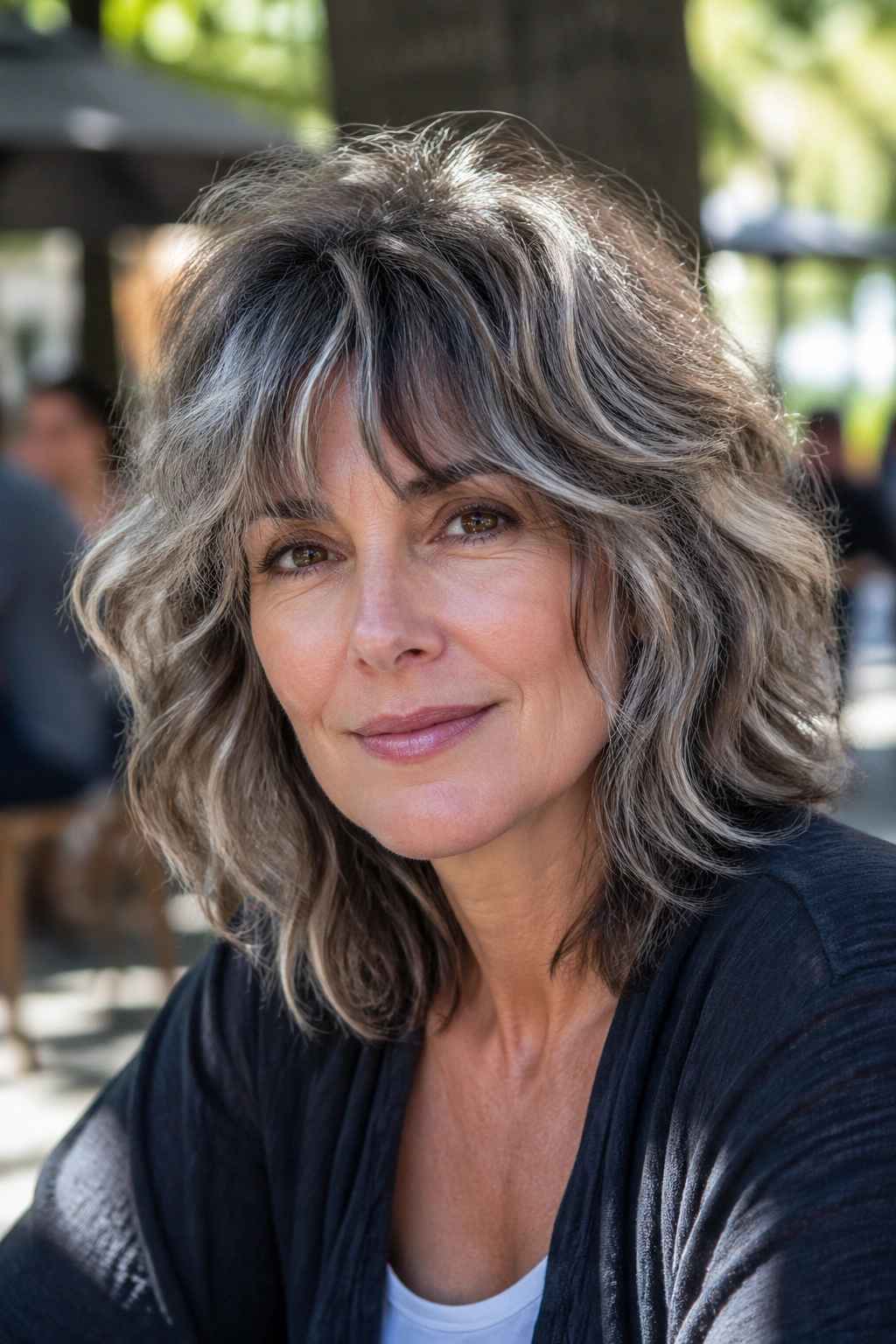
Why does ash-brown work so well on a gray shag? Because it respects the cool tone already in the hair. Ash-brown lowlights don’t muddy the silver; they deepen it. That matters when the shag has layers everywhere and you need the color to keep up with the texture.
How to Get the Most From It
- Keep the ash-brown light enough to stay readable against gray.
- Focus the color on the mid-lengths and lower layers.
- Use a wave spray or light mousse to bring out the separation.
- Leave the crown brighter so the cut keeps lift.
The shag shape is already messy in a good way, so the color can be a little more playful than on a blunt cut. Still, I’d avoid going too dark. If the ash-brown gets heavy, the layers lose their air and the whole haircut starts looking tired instead of textured.
16. Inverted Bob With Walnut Nape Depth
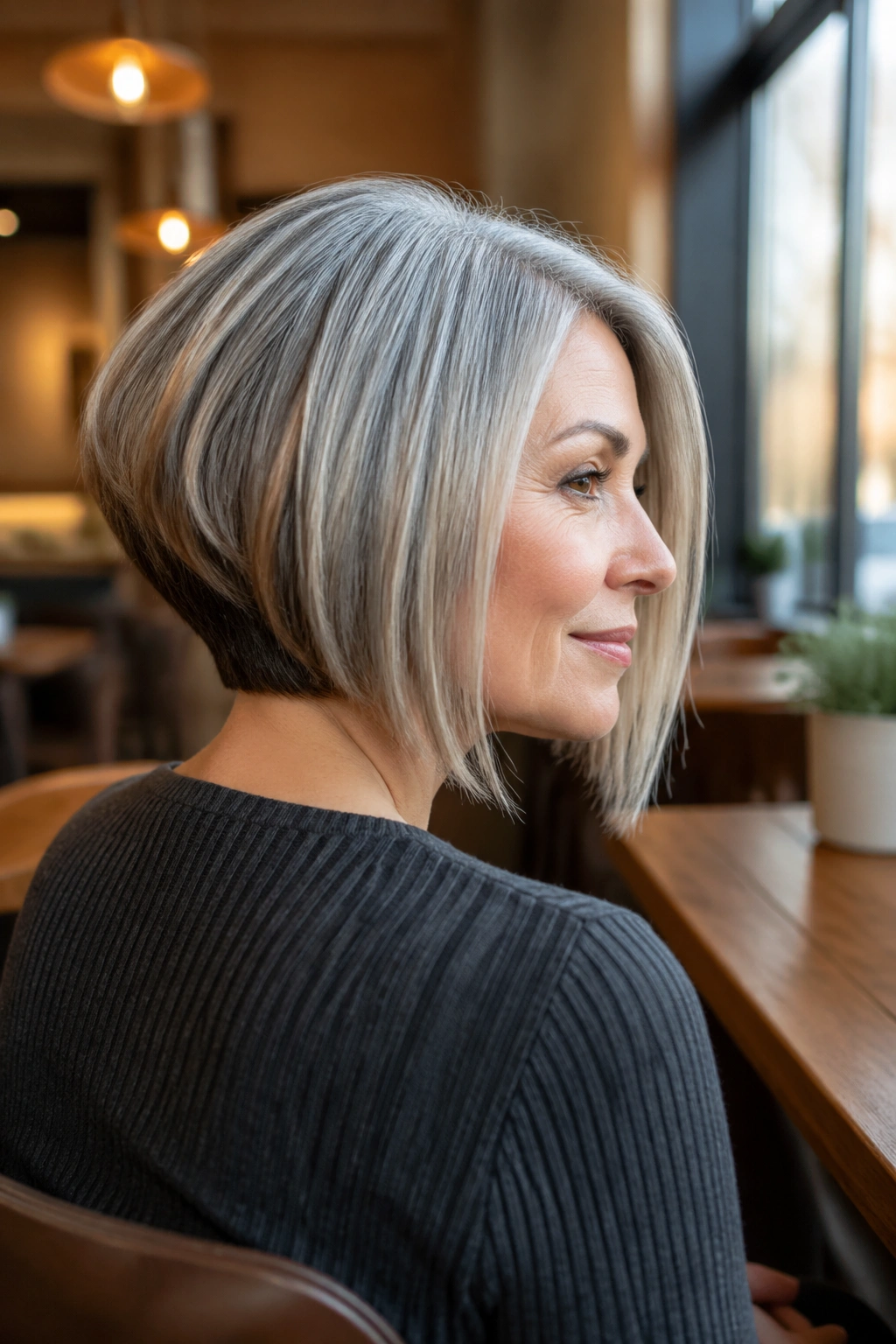
Picture a bob that stacks up at the back and curves forward along the jaw. Now add walnut lowlights just at the nape, where the shape needs the most shadow. That one move makes the angle look sharper.
The inverted bob lives on contrast. The front is longer and lighter, while the back needs enough depth to show off the stacked shape. Walnut gives that depth without making the back look heavy. It’s especially useful if your gray hair is fine and needs a little visual lift at the crown.
- Best for straight or lightly bent hair.
- Great when you want the back to look fuller.
- Ask for lowlights concentrated at the nape and inner stack.
- Keep the front sections brighter for a clean line.
The thing I like here is the restraint. Too much brown and the cut loses its curve. Too little and the stack fades. Walnut sits in the middle.
17. Tapered Cut With Chestnut Temples
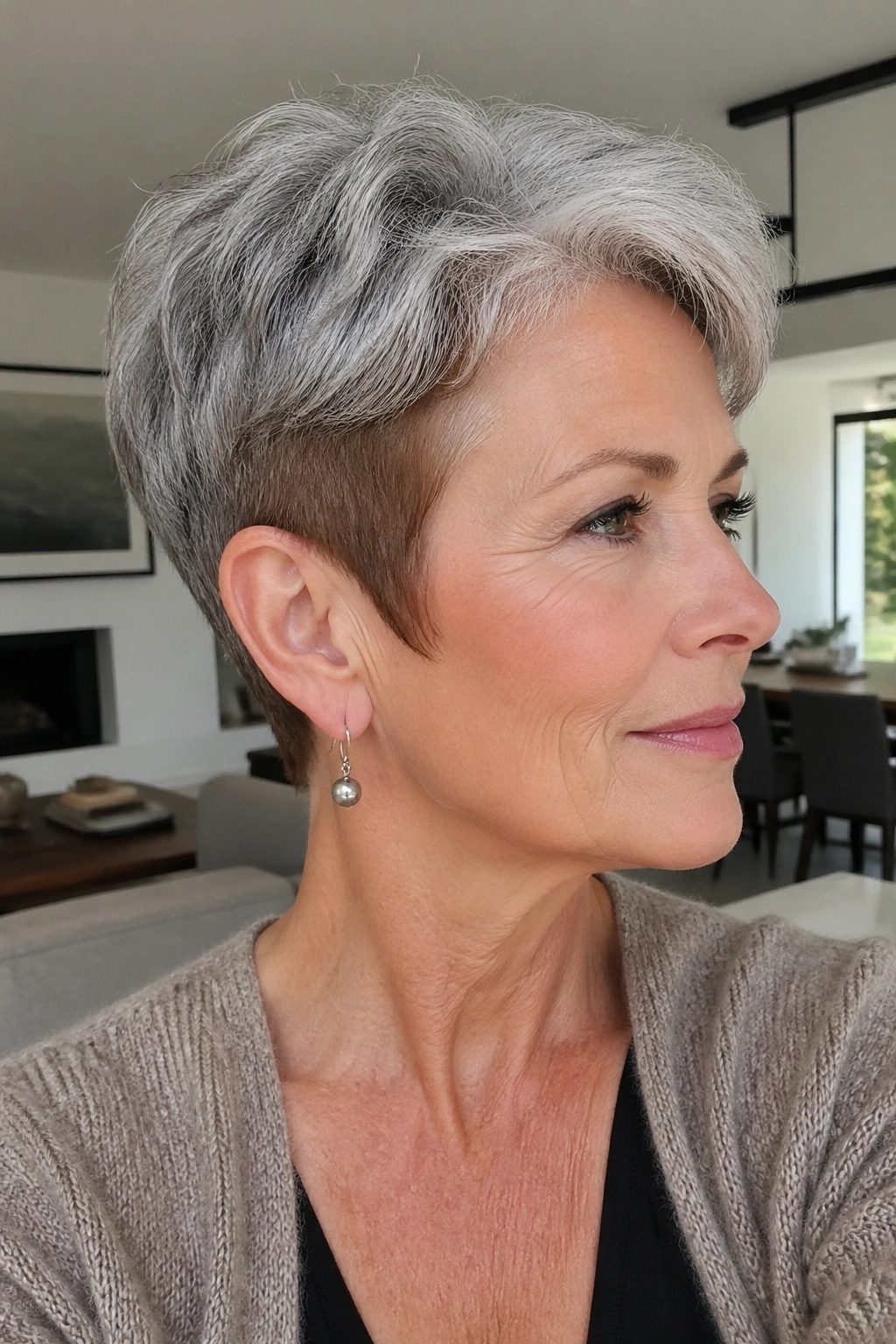
A tapered cut can look almost architectural on gray hair, and chestnut at the temples softens the hard edges in a smart way. The darker pieces near the face add contour, while the tighter nape keeps the whole style neat and compact.
This is a good pick if you wear glasses or like earrings to stand out. The chestnut near the sides draws the eye forward without crowding the face. It also helps if your hair around the temples is the whitest part, because a little depth there makes the cut feel more balanced.
The rest of the taper can stay silver or salt-and-pepper. That contrast makes the shape clear from every angle. If the hair is coarse, a light cream or leave-in helps the cut sit closer to the head, and the lowlights look more polished instead of fuzzy. Clean lines matter here. So does placement.
18. Soft Chignon With Hidden Brown Lowlights
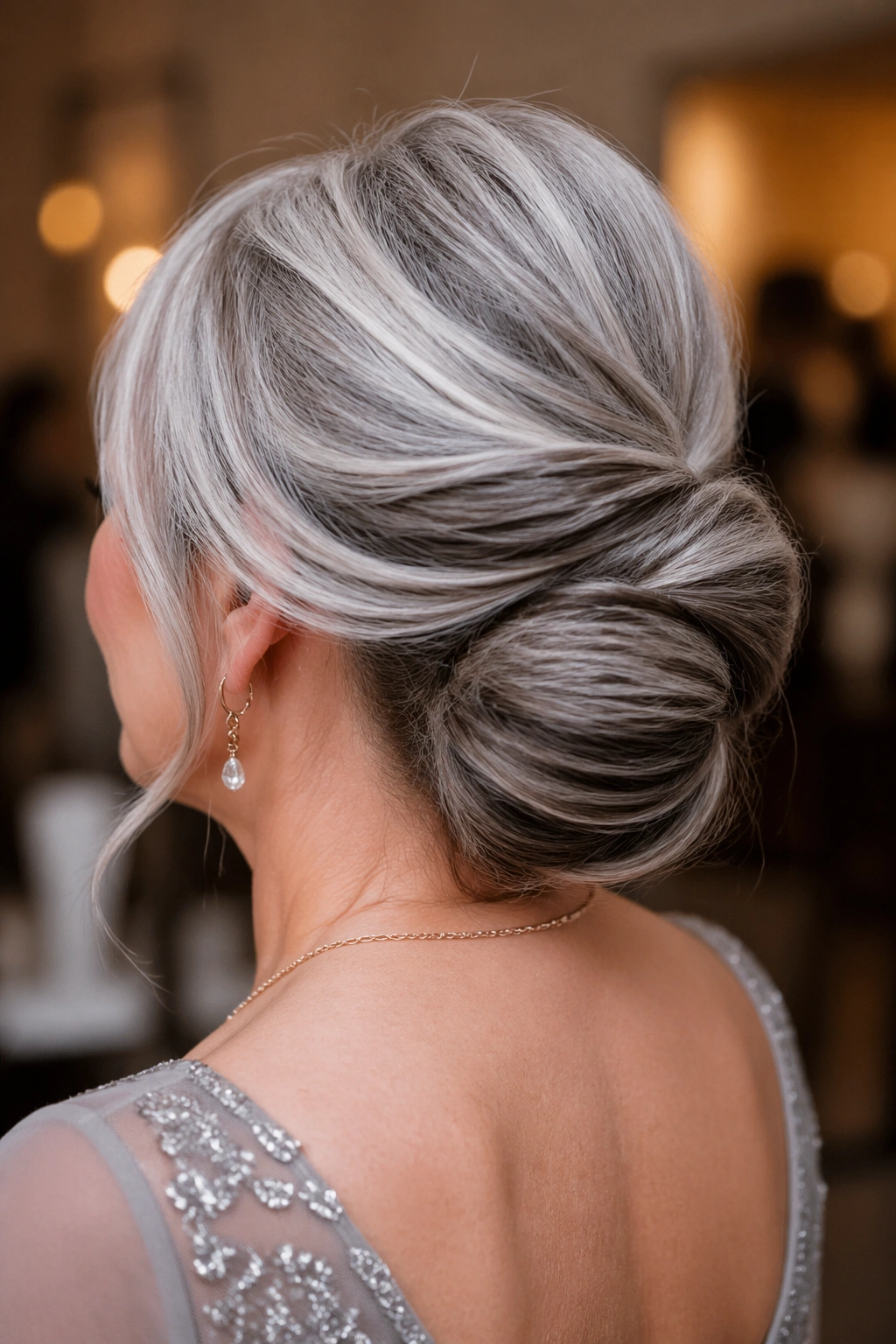
A soft chignon is one of the easiest places to hide brown lowlights in a smart way. The color shows through the twist and folds instead of sitting out in the open all the time, which gives the style a little depth from the side and back.
Unlike a loose wave, an updo reveals color in layers. That means the lowlights can stay tucked into the underside and still do real work. Chocolate, mink, or walnut all behave well here, especially if the bun is a little undone and not polished into a hard knot.
This style is a good option for events, yes, but also for days when you want the gray to look intentional with almost no styling. Leave a few face-framing pieces out, and the hidden brown underneath makes those loose strands stand out in a softer way. A little pins-and-spray structure goes a long way.
19. Half-Up Twist With Dimensional Brown Pieces
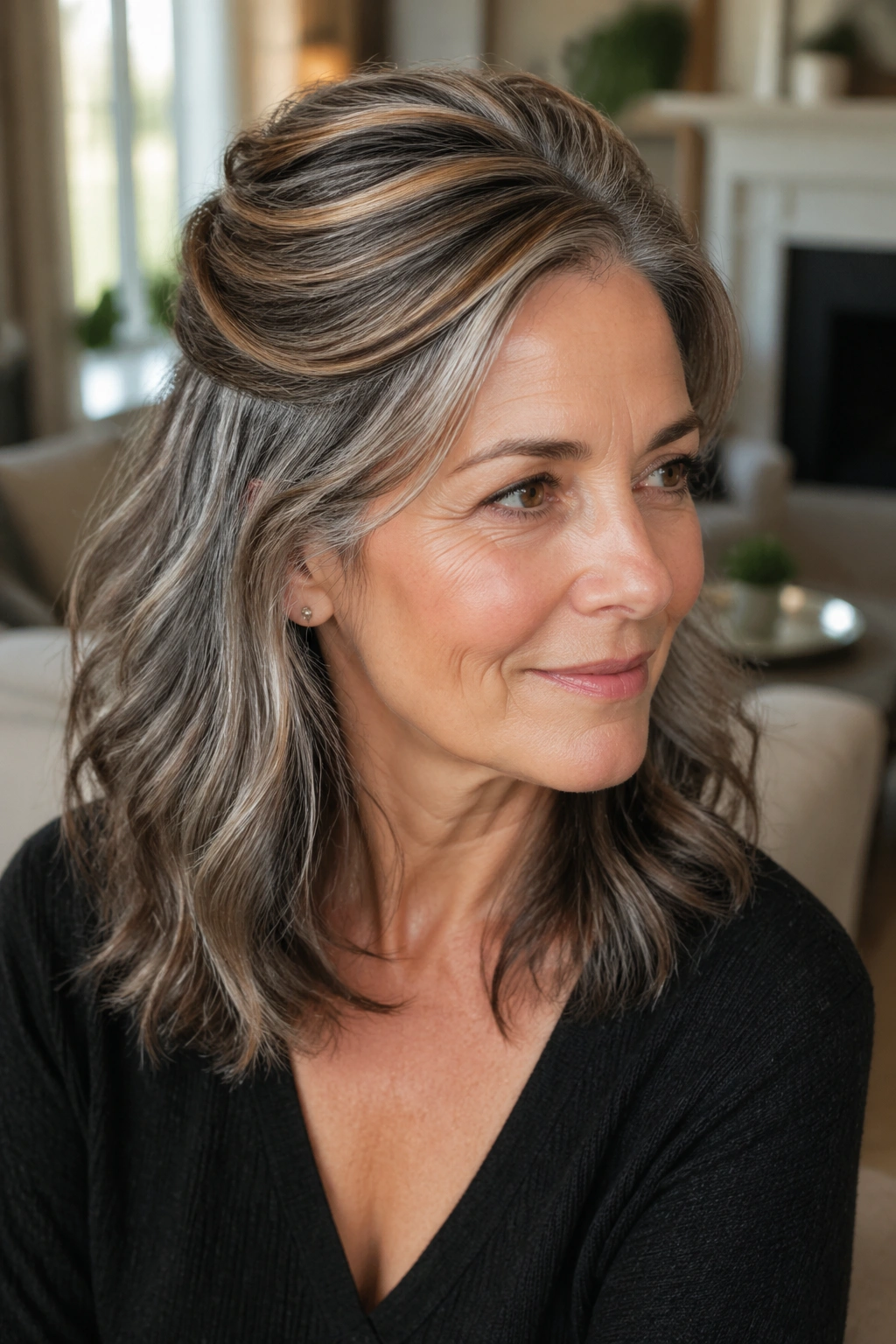
A half-up twist is one of those styles that benefits from dimension more than almost anything else. When the top section is pulled back, the lower gray hair stays visible, and the brown lowlights in the twist create a layered look that feels much richer than a single-tone finish.
Where to Place the Contrast
Keep the darker pieces in the mid-lengths of the top section and a few hidden strands near the crown. That way, the twist looks full without turning blocky. The lower hair can stay lighter and softer, which gives the style more range.
A half-up shape also works well if your hair is growing out and you want the color to look less obvious. The twist hides a lot. The lowlights do the rest.
Tip: use a small clip or two bobby pins instead of a tight elastic. The shape stays looser, and the brown pieces move more naturally.
20. Braided Crown With Smoky Brown Depth
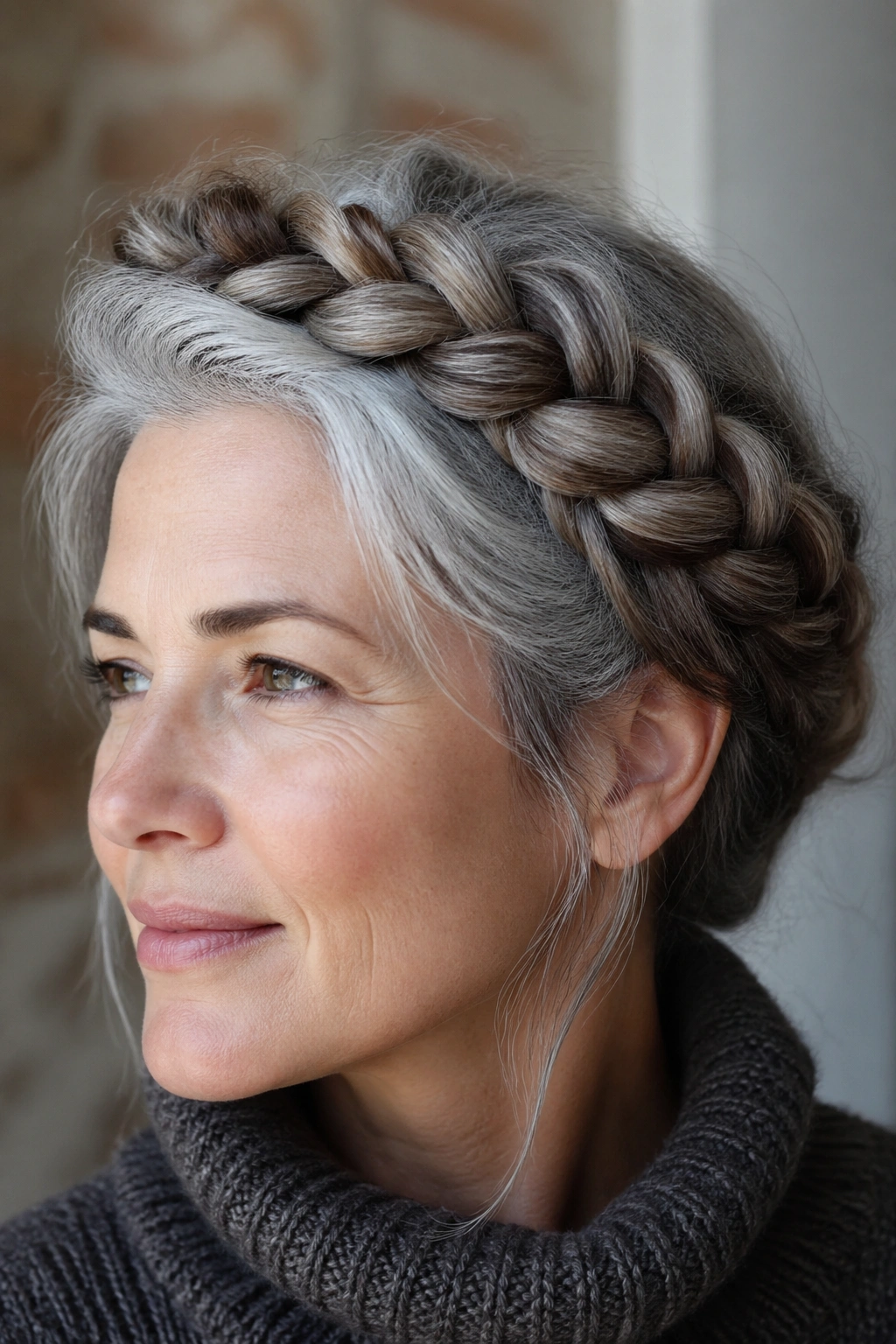
Braids love lowlights. Every crossing strand creates a small change in tone, so smoky brown pieces woven through gray hair can make a crown braid look deeper and more deliberate than a plain silver version.
The best part is that a braid shows color from the inside out. That means the smoky brown doesn’t have to be loud to matter. Even a few darker strands near the temples and behind the ears will show up once the braid wraps around the head. It’s a nice choice for weddings, dinners, or any day you want the hair to look finished without a lot of fuss.
Keep the brown smoky, not warm and rusty. Gray hair often looks cleaner with cooler brown lowlights, especially in braided styles where the texture already gives plenty of warmth. A bit of shine spray on the braid surface can help the different shades read clearly.
21. Messy Bun With Underlayer Lowlights
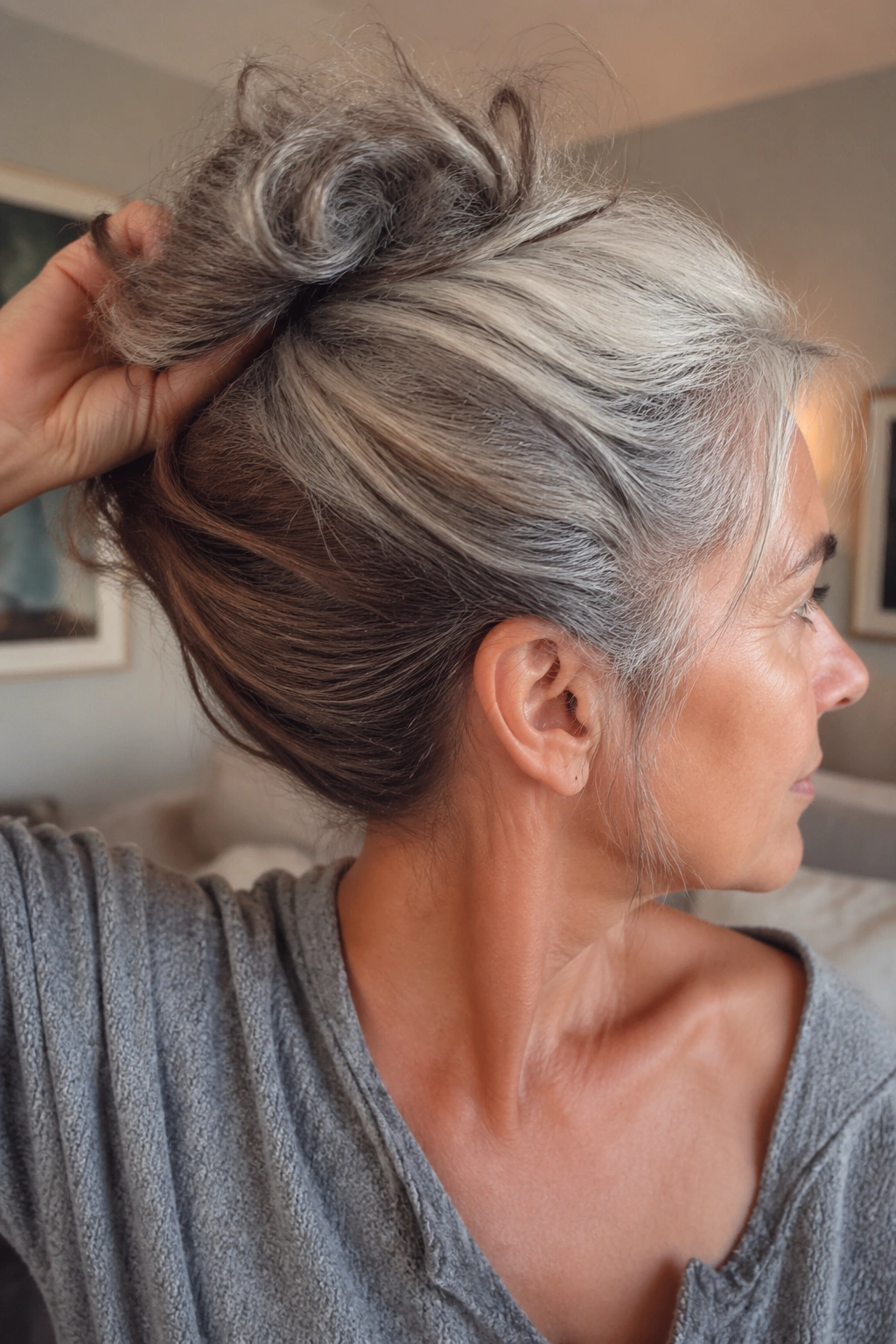
Why does a messy bun look more interesting with brown lowlights underneath? Because the bun lifts the hair and exposes the interior. Suddenly the darker pieces become visible around the base, through the twist, and at the nape. That’s where the style gets its shape.
This is one of the easiest gray hairstyle ideas with brown lowlights for everyday wear. You don’t need perfect placement on the surface if the lower layers carry the color. Mocha, cocoa, or espresso all work, but I’d keep the lowlights softer if the bun is loose and casual.
How to Keep It From Looking Flat
- Leave a little height at the crown.
- Pull out a few face-framing pieces.
- Don’t slick the bun too tight.
- Let the darker underlayer show near the neckline.
It sounds simple because it is. The color does the quiet work while the style stays relaxed.
22. Curtain Bang Lob With Cinnamon-Brown Framing
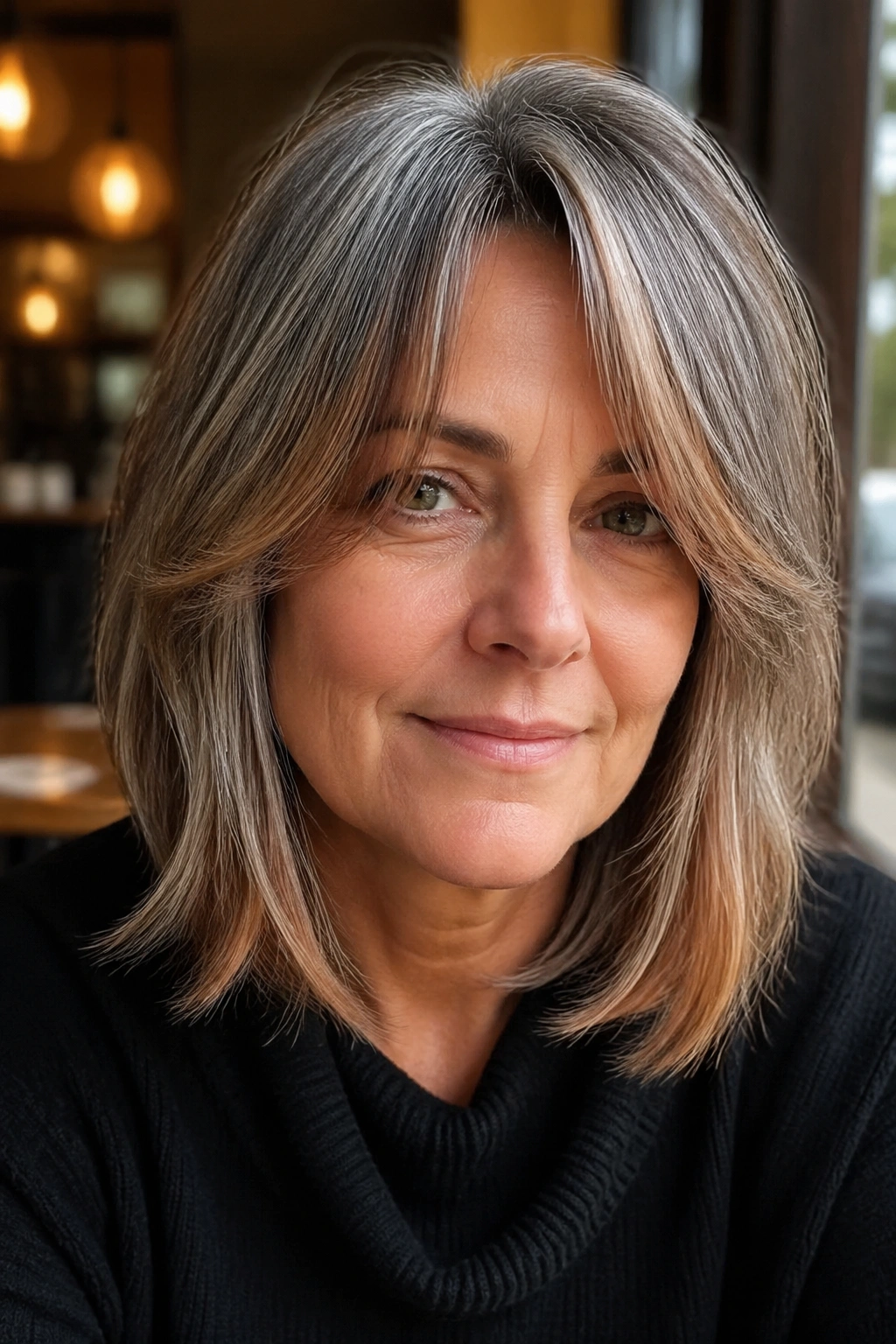
A lob with curtain bangs is already flattering because it opens the face and softens the cheek area. Cinnamon-brown framing pieces make that effect stronger. The warmer brown near the front gives the gray a little glow, but it still looks grounded, not bright for the sake of bright.
The bangs matter here. If they’re too heavy, the color gets lost. If they’re too wispy, the framing pieces don’t have enough weight to show up. Keep the curtain bangs blended into the lob layers, then let the cinnamon lowlights start near the cheekbone and drift down through the front sections.
- Best for medium to thick hair.
- Works well with a blowout or loose bend.
- Ask for a soft, gradual placement near the face.
- Keep the cinnamon muted if your skin has a cooler undertone.
That face frame is what makes the whole style feel finished. Not loud. Finished.
Final Thoughts
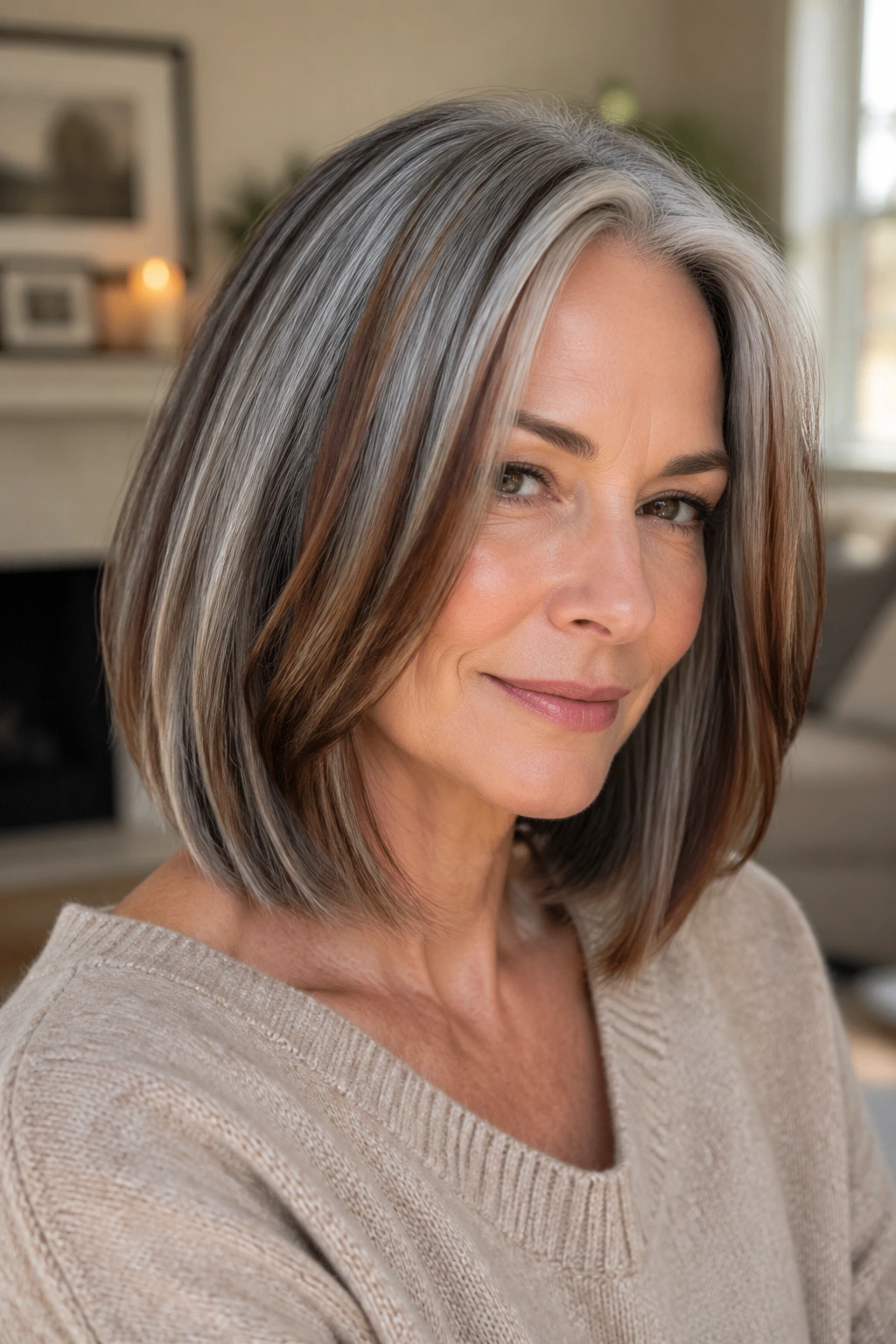
Brown lowlights on gray hair work best when they look like shadow, not decoration. That can mean chestnut through a lob, walnut under an inverted bob, or smoky brown hiding inside a braid. The cut matters just as much as the color. So does placement.
If you’re choosing between shades, start softer than you think you need. A level or two darker than your gray usually gives enough depth without turning the style choppy. Fine slices, careful placement, and a haircut with real shape will do more than a heavy color job ever will.
And if you’re standing in front of a mirror trying to decide whether the brown should go warmer or cooler, look at the hair in daylight. That tends to settle the argument fast.