



A shaggy lob can do something sneaky: it gives hair movement without asking you to spend half the morning wrestling it into place. For women over 50, that matters more than the style blogs admit. Hair often gets finer at the crown, drier through the ends, or a little less predictable after color, and a collarbone-grazing cut with soft layers handles those changes without looking fussy.
The best shaggy lobs for women over 50 don’t scream for attention. They sit in that useful middle ground where the shape feels fresh, the ends move, and the face gets a little lift without the whole cut turning into a pile of disconnected pieces. That balance is harder to get than it looks, especially if you want something that still behaves on day three.
I also think people underestimate how much a lob can change the mood of hair. A blunt, heavy line can drag features down. A good shaggy long bob does the opposite: it loosens the perimeter, softens the jaw, and gives fine or aging hair a chance to look lively instead of flat. You can wear it polished, air-dried, curled, or a little undone, and it still holds together.
So let’s get into the versions worth asking for at the salon. Some are softer, some are more piecey, and a few are a little bolder than you might expect — which is exactly why they work.
1. Feathered Shaggy Lob With Airy Ends
This is the cut I reach for when hair feels heavy but not thin. Feathering the ends keeps the lob from sitting like a block, and that matters when you want movement without losing shape.
Why It Works
Feathered ends move when you turn your head. That sounds small, but it changes everything. Instead of a hard line at the bottom, you get soft tapering through the perimeter, which makes the whole cut look lighter and more alive.
Ask for long layers that start below the cheekbone and a perimeter that is softly point-cut, not chewed up. Too much texturizing can make the ends look wispy in a bad way. A careful hand keeps the shape clean.
- Best for fine to medium hair
- Works well with a side part or off-center part
- Easy to style with a 1.25-inch round brush
- Looks especially nice on silver or salt-and-pepper hair
Pro tip: dry the roots first, then flip the ends under with a quick brush. That tiny bend keeps the cut from reading flat.
2. Collarbone Shaggy Lob With Curtain Bangs
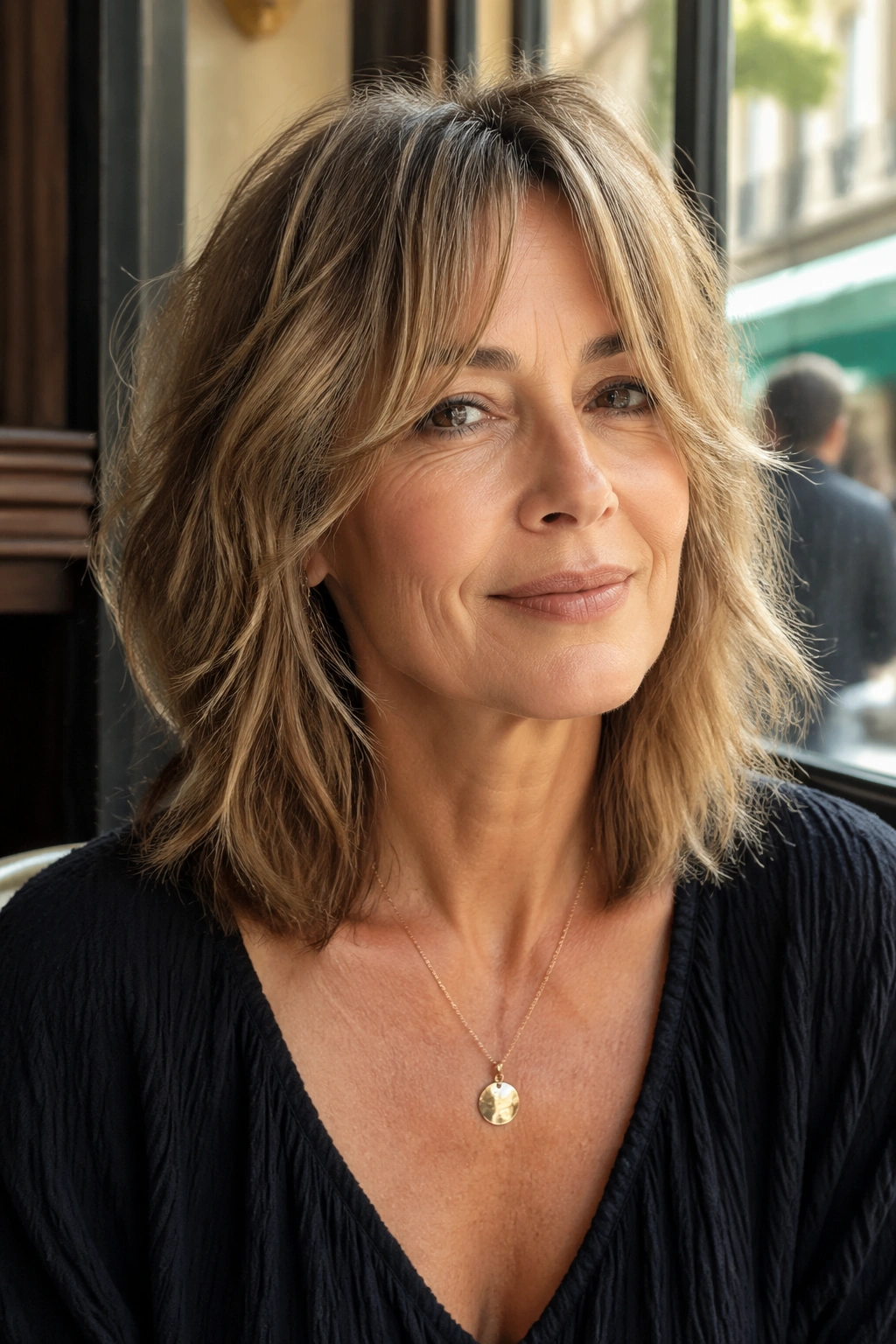
Curtain bangs are the quickest way to make a lob feel current without doing much damage to your morning routine. They open the face, soften forehead lines, and blend into the rest of the layers instead of sitting there like a separate haircut.
The trick is length. Curtain bangs that hit around the cheekbone or just below it give you movement around the eyes and cheek area, which tends to be kinder than a heavy straight fringe. On a collarbone lob, they also keep the style from feeling boxy.
If your hair is slightly wavy, this shape is even better. The bangs can sweep away from the face, and the ends can bend softly inward or outward depending on your brush. I like this version for women who wear glasses too, because the bang length can be adjusted so it does not fight the frames.
A middle part with soft bend at the front gives the cut that easy, lived-in feel people keep trying to fake with products.
3. Razored Shaggy Lob for Fine Hair
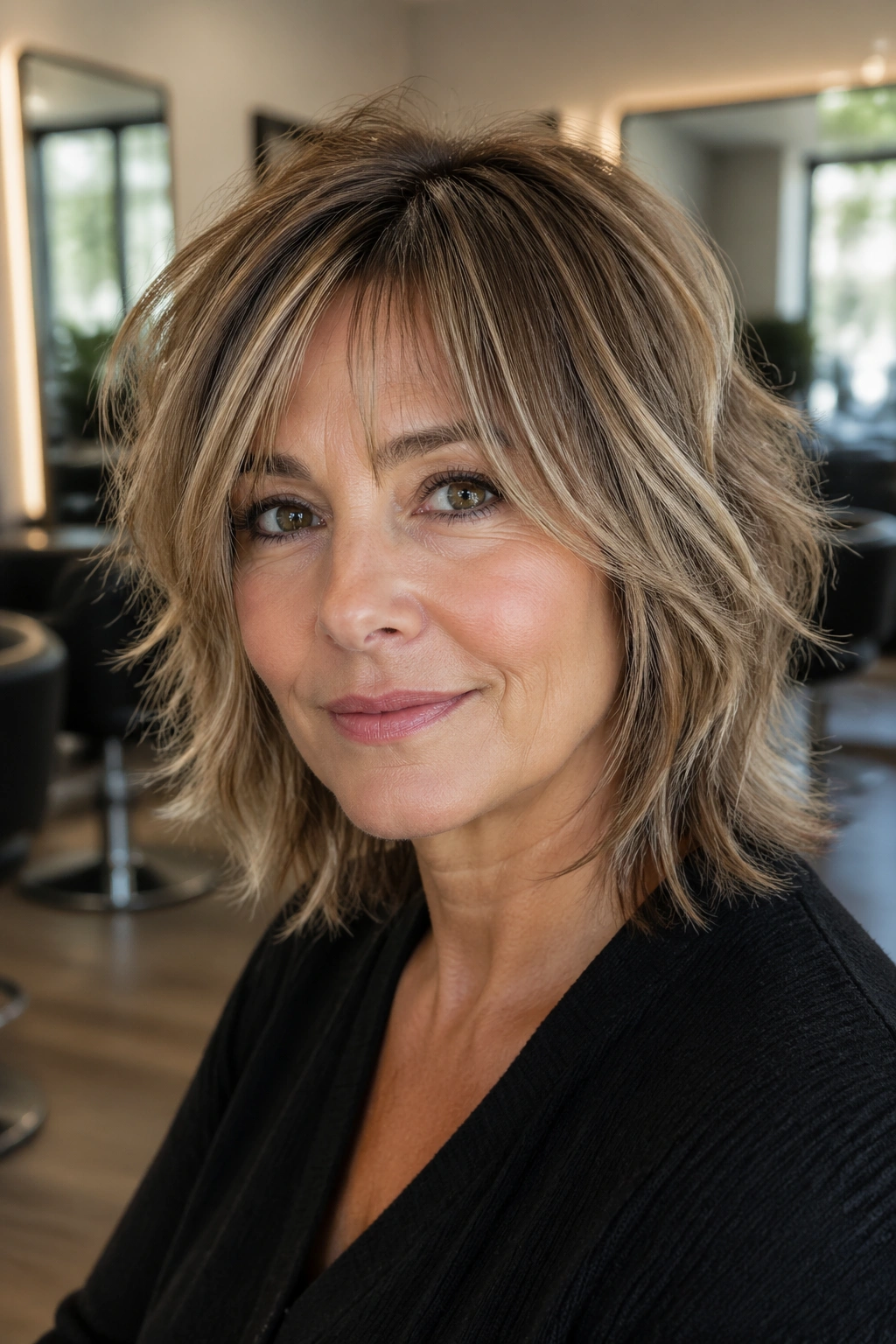
Can razoring help fine hair? Yes — if it’s done with restraint. The point is to create movement, not shred the perimeter into nothing.
A razored shaggy lob gives fine strands a little separation, which helps the hair look fuller through the ends. The mistake is going too high with the razor or over-thinning the crown. That can leave you with airy pieces that collapse by lunchtime. The better version uses light razoring only on the mid-lengths and ends, while the top stays more solid.
How to keep it full
Ask for micro-layers around the face and a slightly heavier back section. That keeps the cut from looking stringy. When you style it, a root-lifting spray at the crown and a round brush at the front is usually enough. You do not need a shelf of products.
A woman with fine, straight hair often gets talked into blunt cuts forever. I don’t love that advice. A careful razor cut can give the hair texture and lift that blunt ends sometimes steal.
4. Wavy Shaggy Lob With Cheekbone Layers
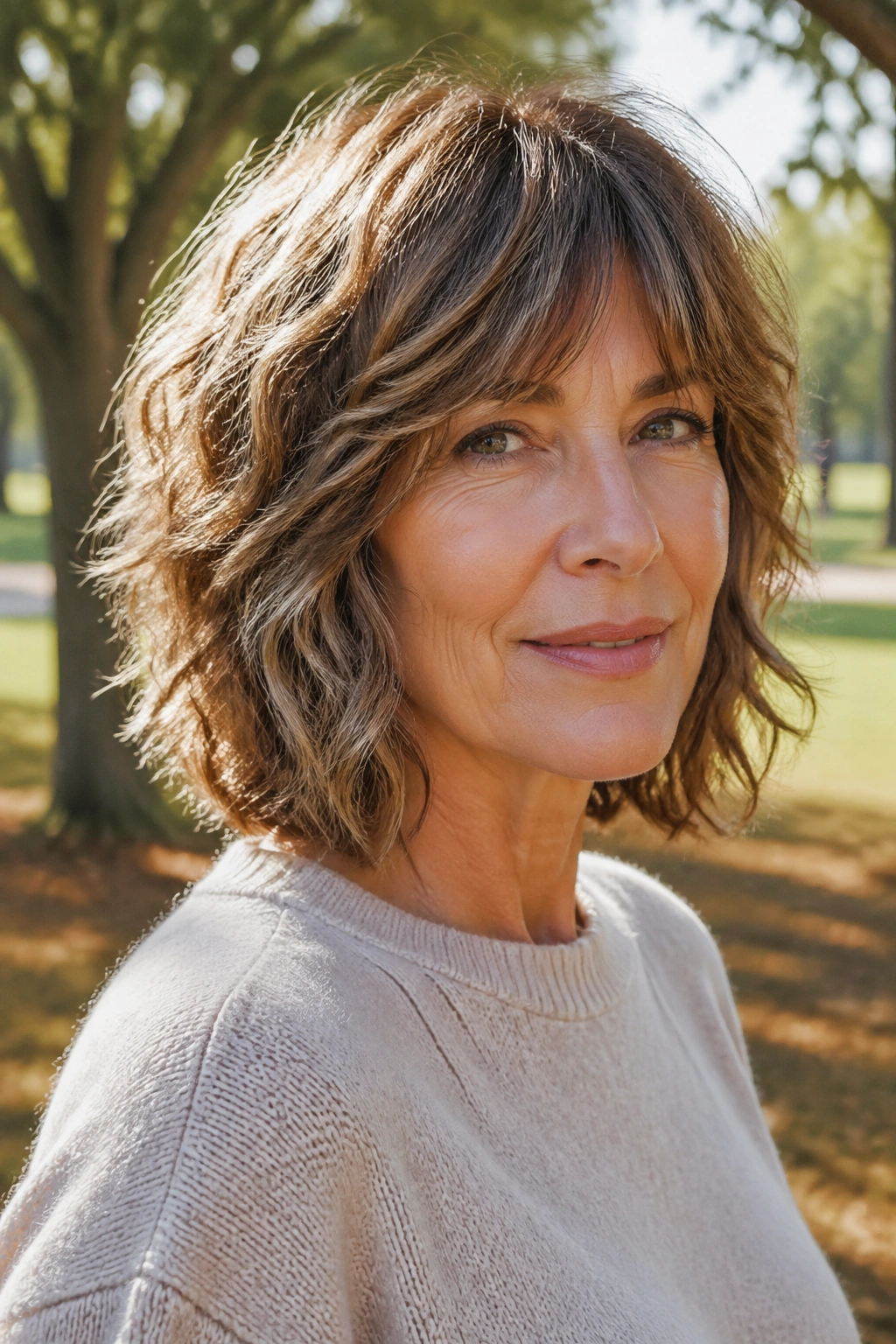
A wavy shaggy lob is one of those cuts that seems to make sense the second you see it. The wave pattern does half the work, and the layers just guide it.
Think of this cut as a shape for hair that already wants to bend. The layers land near the cheekbones, then soften through the jaw and collarbone, so the movement feels deliberate instead of random. That little bit of lift around the face can brighten the whole look, especially if your hair tends to fall forward.
You do not need perfect curls for this. A bend from a diffuser, a large curling iron, or even a few overnight twists can be enough. The important part is that the layers are placed where the wave will actually show, not buried somewhere no one sees.
If your natural wave is strong, keep the ends a touch softer. If it’s barely there, ask for slightly shorter face-framing pieces to pull the eye upward. That’s the difference between a cut that flatters and a cut that just sits there.
5. Gray-Blending Shaggy Lob With Silver Ribbons
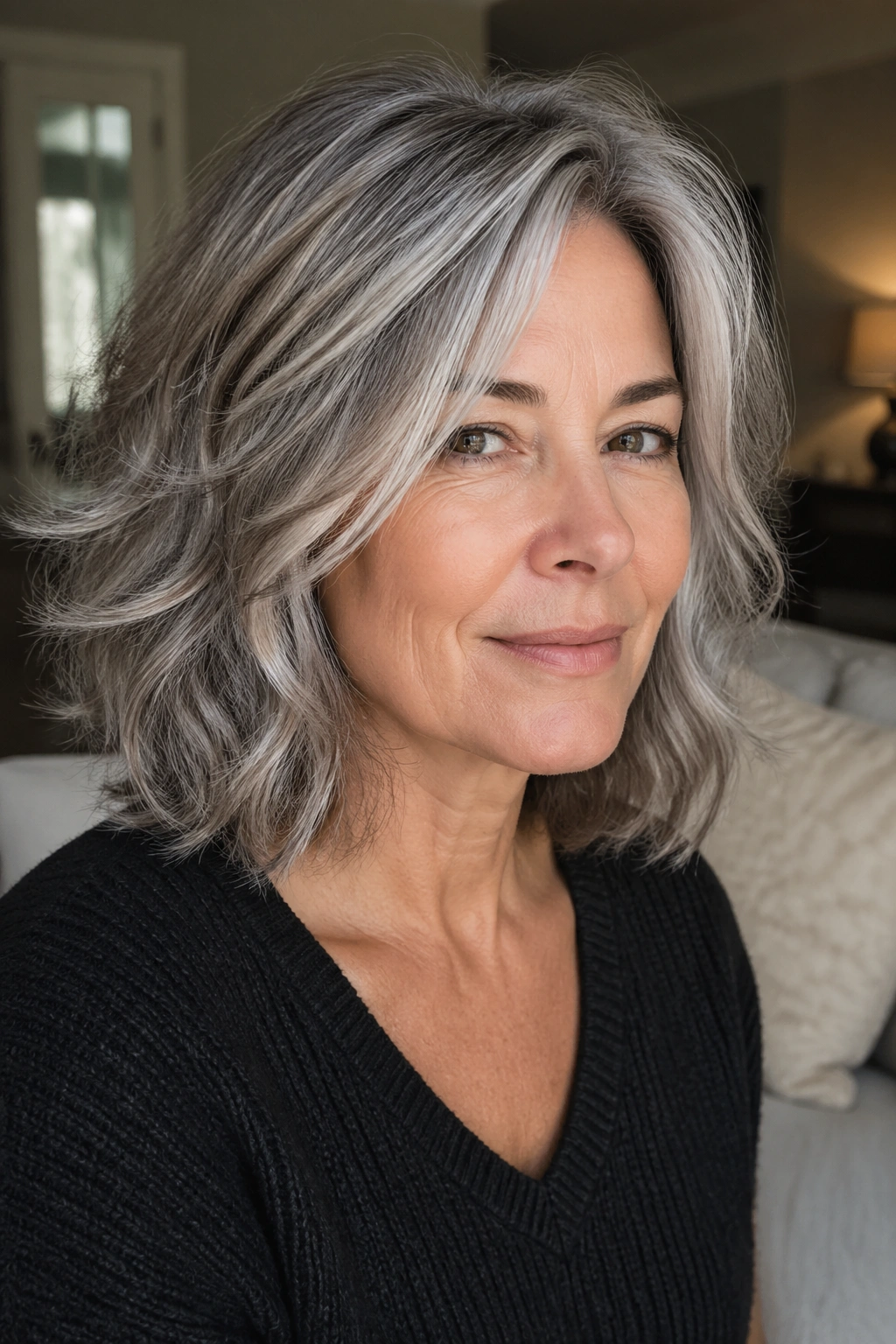
Gray hair looks especially good in a shaggy lob when the color has some dimension. Flat, one-tone gray can feel heavy. Silver ribbons and soft lowlights let the texture of the cut show up better.
This is one of my favorite pairings because the haircut and the color support each other. The shaggy layers create movement, and the blended color keeps that movement visible. A few lighter pieces around the front can brighten the face without turning the whole head into stripes.
The best version is not high-contrast. It’s more like a soft shimmer through the surface, especially around the temple and cheek area. That keeps the grow-out easier, which people tend to appreciate when they’re not in the mood for constant touch-ups.
A shaggy lob with gray blending also works well if your hair has some coarse texture. The layers stop it from looking like a helmet, and the dimension stops it from looking flat. That combination is hard to beat.
6. Side-Part Shaggy Lob With Soft Volume
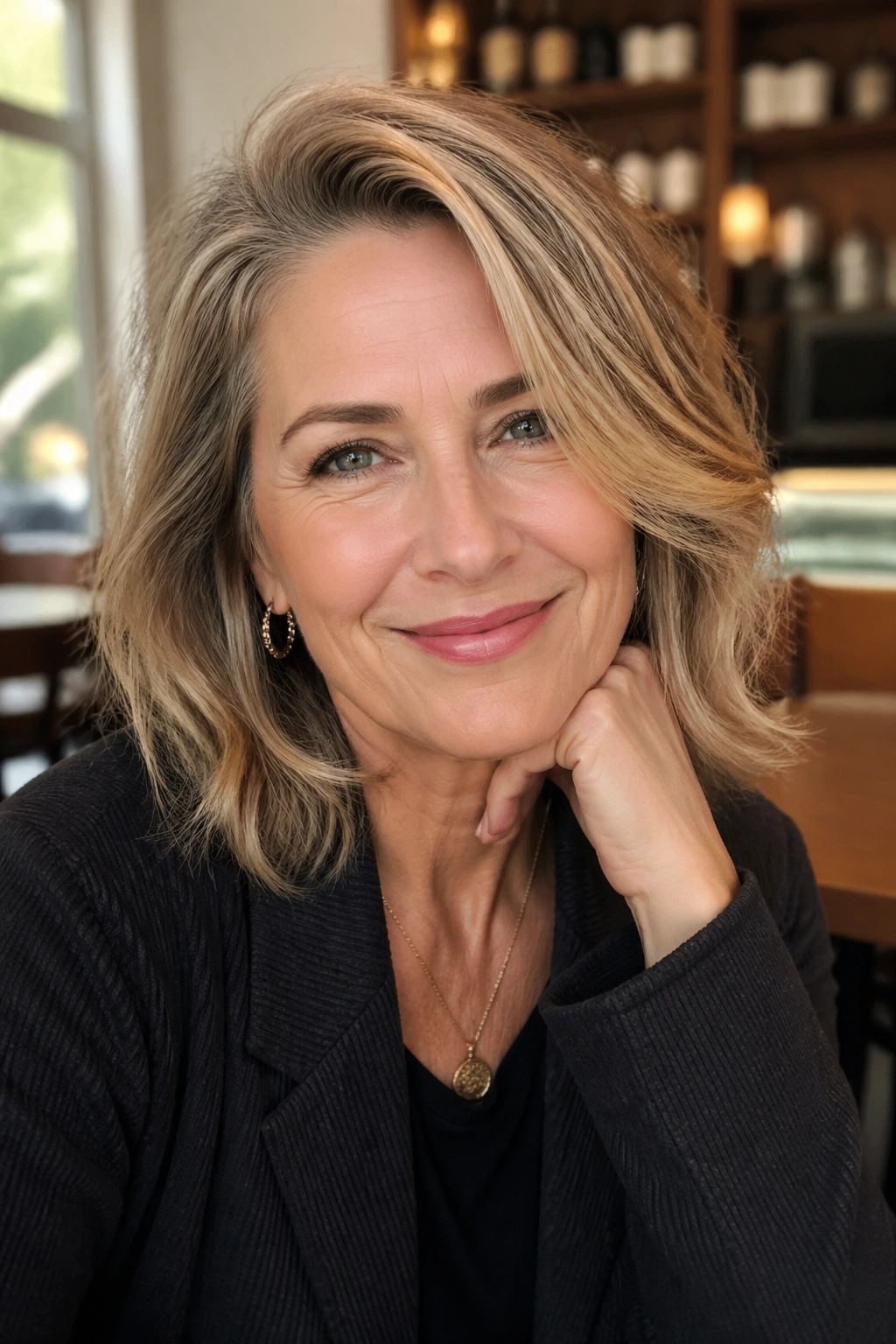
A side part can rescue a lob that has gone limp at the crown. If your hair falls flat on top, shifting the part a few inches over gives instant lift without adding more layers.
This version is especially good for women with finer hair or a face that feels a little long. The side part breaks up the vertical line, and the soft volume at the roots keeps the shape from clinging to the head. It also helps if one side of your hair naturally lies flatter than the other — which, frankly, is most people.
What makes it different
A center part can look sleek, but it also puts every detail right in the middle. A side part lets the shaggy layers fall in a more flattering way, especially if you like a bit of hair across the forehead. The style reads softer, less severe.
Use a small root clip or velcro roller at the crown while the hair cools after blow-drying. That tiny step makes a bigger difference than people expect. And if you skip heavy creams near the roots, the volume lasts longer.
7. Shaggy Lob With Bottleneck Bangs
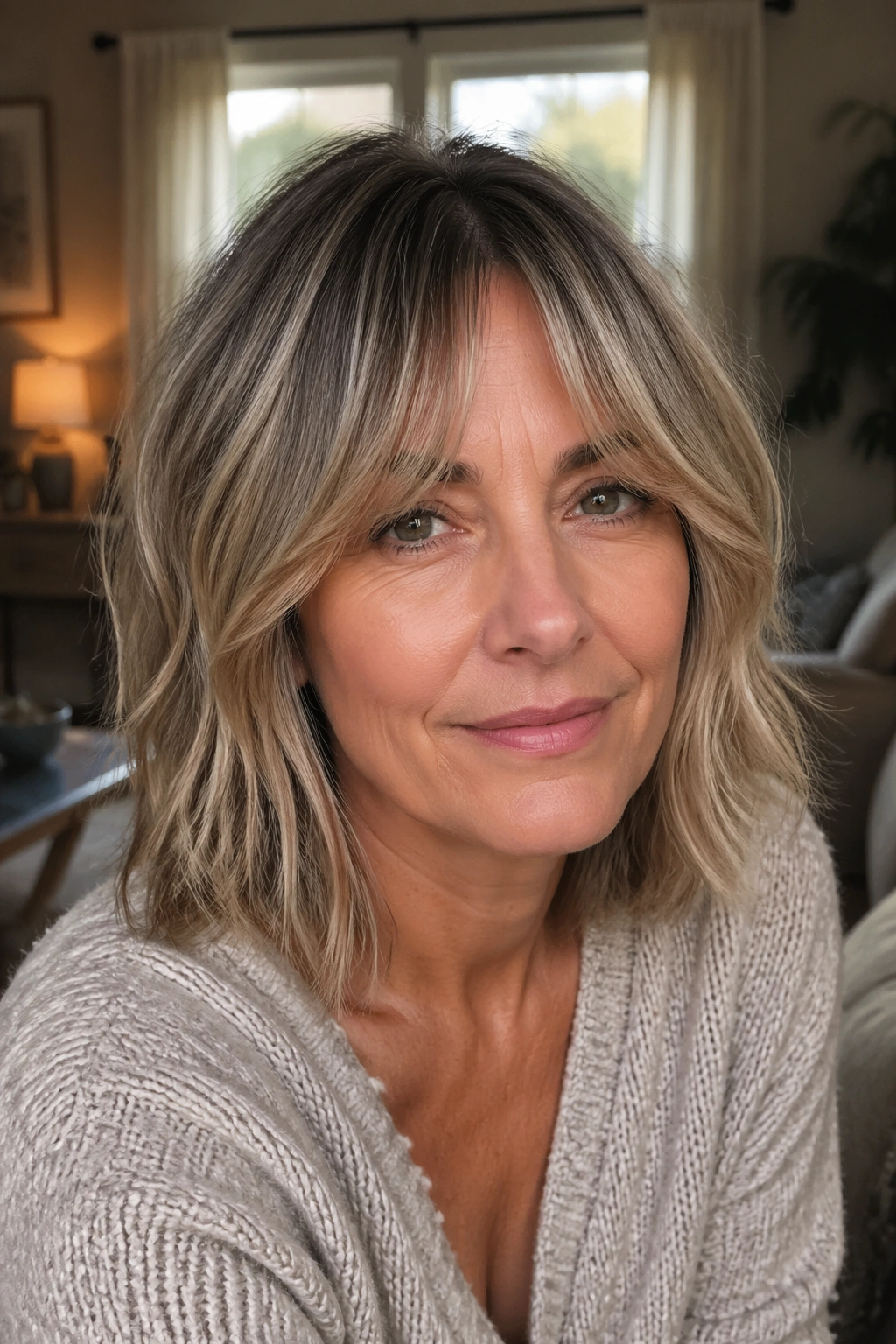
Bottleneck bangs give a shaggy lob a little bit of shape without turning the front into a wall of hair. They start narrow in the center, then widen softly toward the temples, which makes them less abrupt than blunt bangs.
I like this cut for women who want face framing but not a full fringe commitment. The bottleneck shape can slim a wider forehead, soften strong brows, and blend into the lob with much less grow-out drama than a shorter bang. It’s also a decent option if you wear glasses, because the edges can be placed to sit above or beside the frame line.
Ask your stylist for
- Shorter center pieces that graze the brows
- Longer side pieces that land near the cheekbone
- Soft, chipped ends rather than hard blunt lines
- A shaggy lob length that falls between the chin and collarbone
The one thing to avoid: cutting the bangs too thick. A heavy bottleneck fringe loses the airy feel that makes this style work in the first place.
8. Choppy Shaggy Lob for Thick Hair
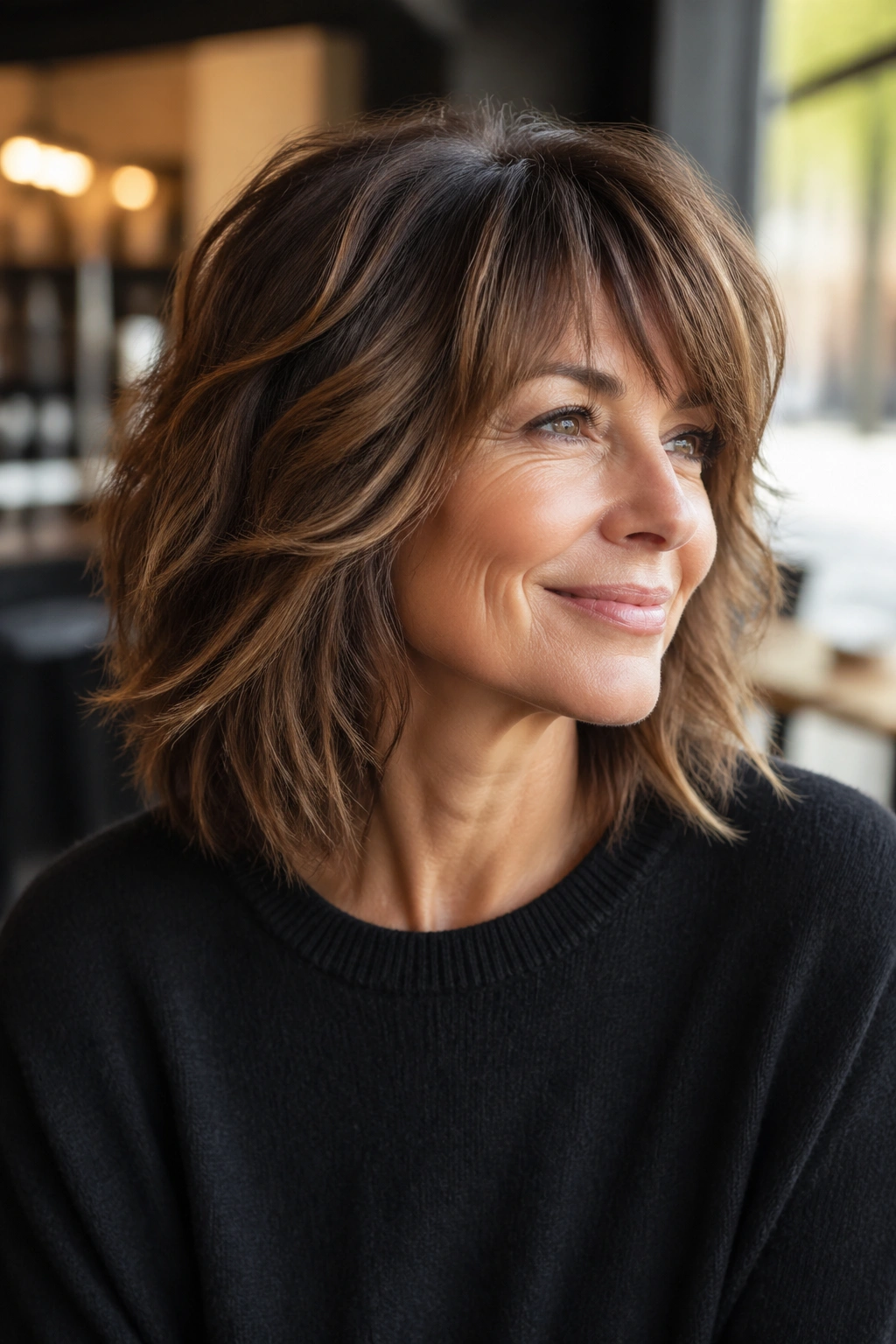
Thick hair needs control, not punishment. A choppy shaggy lob gives it shape while taking some of the bulk out of the wrong places.
The useful part here is internal removal, not just surface texture. Thick hair can sit like a shelf if everything is the same length. Choppy layers break that up and let the ends move. The key is to keep some weight at the bottom so the hair still feels full; if the stylist thins too aggressively, the cut can puff out in humidity and behave badly.
This style loves a bit of natural wave. If your hair is straight, a bend from a flat iron or a large barrel iron helps separate the ends. If it’s coarse, a smoothing cream through the mid-lengths keeps the texture from getting too big.
I’d ask for light texturizing through the midsection and a perimeter that still has enough density to hold a line. That balance matters more than people think.
9. Curled-Under Shaggy Lob With Hidden Layers
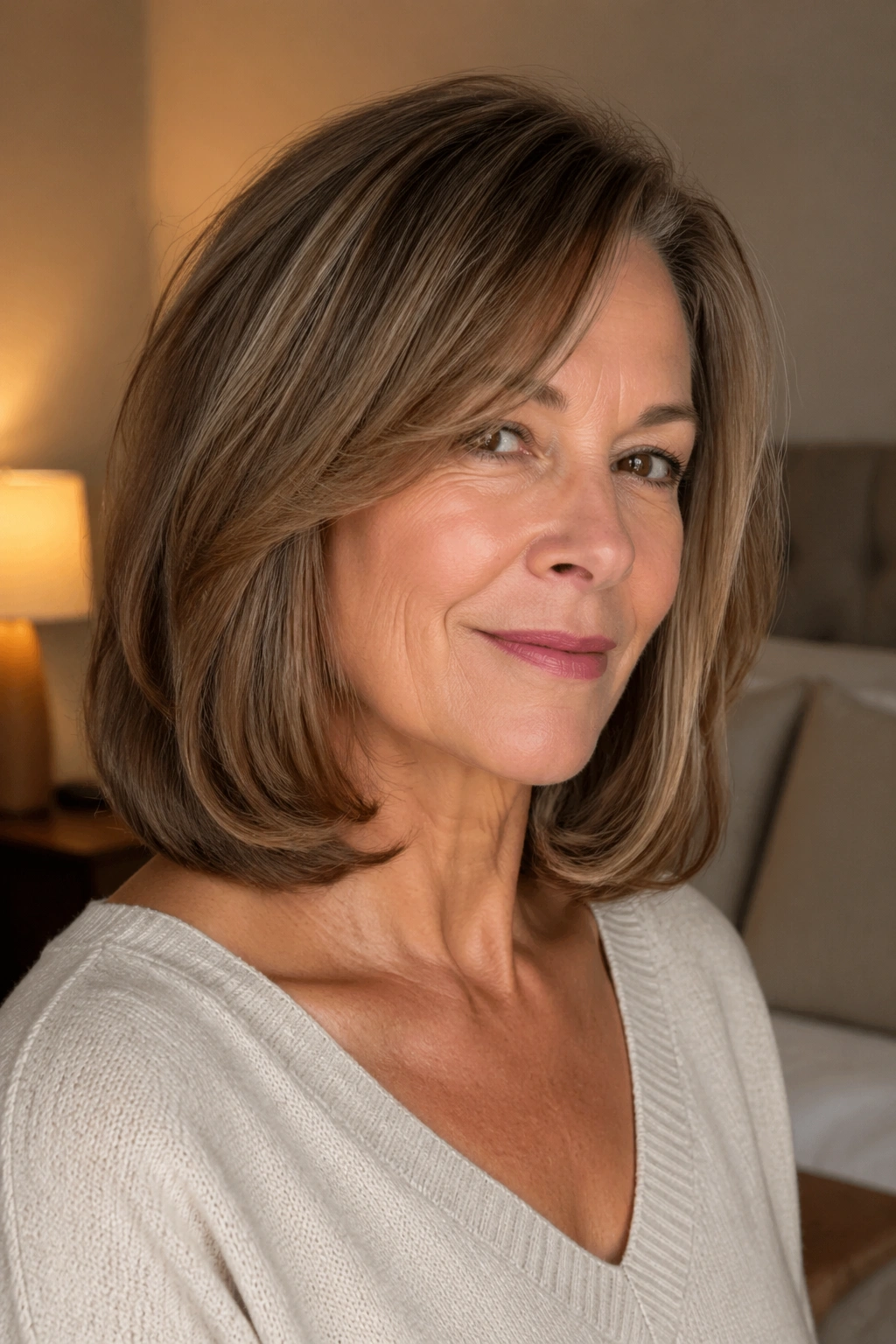
What if you want a shaggy lob that still looks neat? Then the curled-under version is worth a look. Hidden layers let the cut move without turning it into a messy stack of pieces.
This shape works well for people who like a finished, polished look but do not want the stiffness of a classic bob. The ends turn gently under the chin or just below the jaw, which gives the cut a tidy outline. Underneath, the layers stay soft and invisible unless the hair moves.
A medium round brush and a quick blow-dry at the ends are enough. You can also use a flat brush and tuck the last inch under with the dryer nozzle. The result is calm, not fussy.
This is a smart choice for women whose hair has lost a little density around the nape. The hidden layers build movement from inside the shape instead of carving holes into the outline. That keeps the whole style looking expensive without being high-maintenance.
10. Tousled Shaggy Lob With a Deep Side Sweep
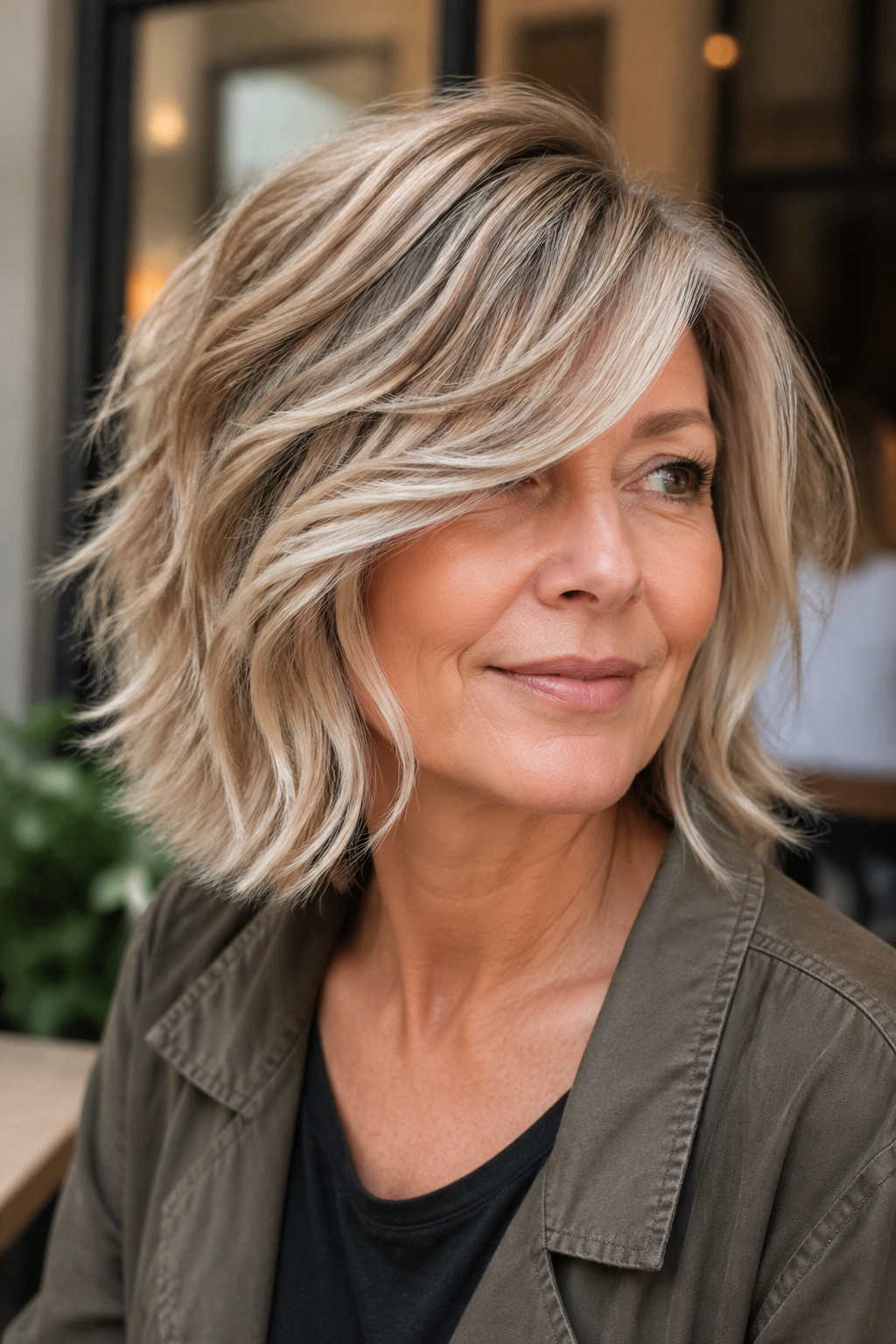
A deep side sweep gives a shaggy lob a softer, less symmetrical mood. That can be a gift if your features feel strong and you want the haircut to take a little edge off.
The sweep creates instant direction. Hair falling over one side of the forehead can soften a square jaw, balance a strong cheekbone line, or simply make a basic lob feel less expected. It also gives movement to straight hair that otherwise hangs there and behaves itself too much.
I like this approach when the cut is air-dried with a touch of mousse and a little scrunching. You do not want a crunchy finish. You want bend, separation, and a bit of lift near the part.
This one is good for someone who wants style without committing to bangs. The side sweep gives you face framing on your own terms. And if you change your mind halfway through the week, you can push it back and part it differently. That flexibility is the real win.
11. Shoulder-Skimming Shaggy Lob With Wispy Fringe
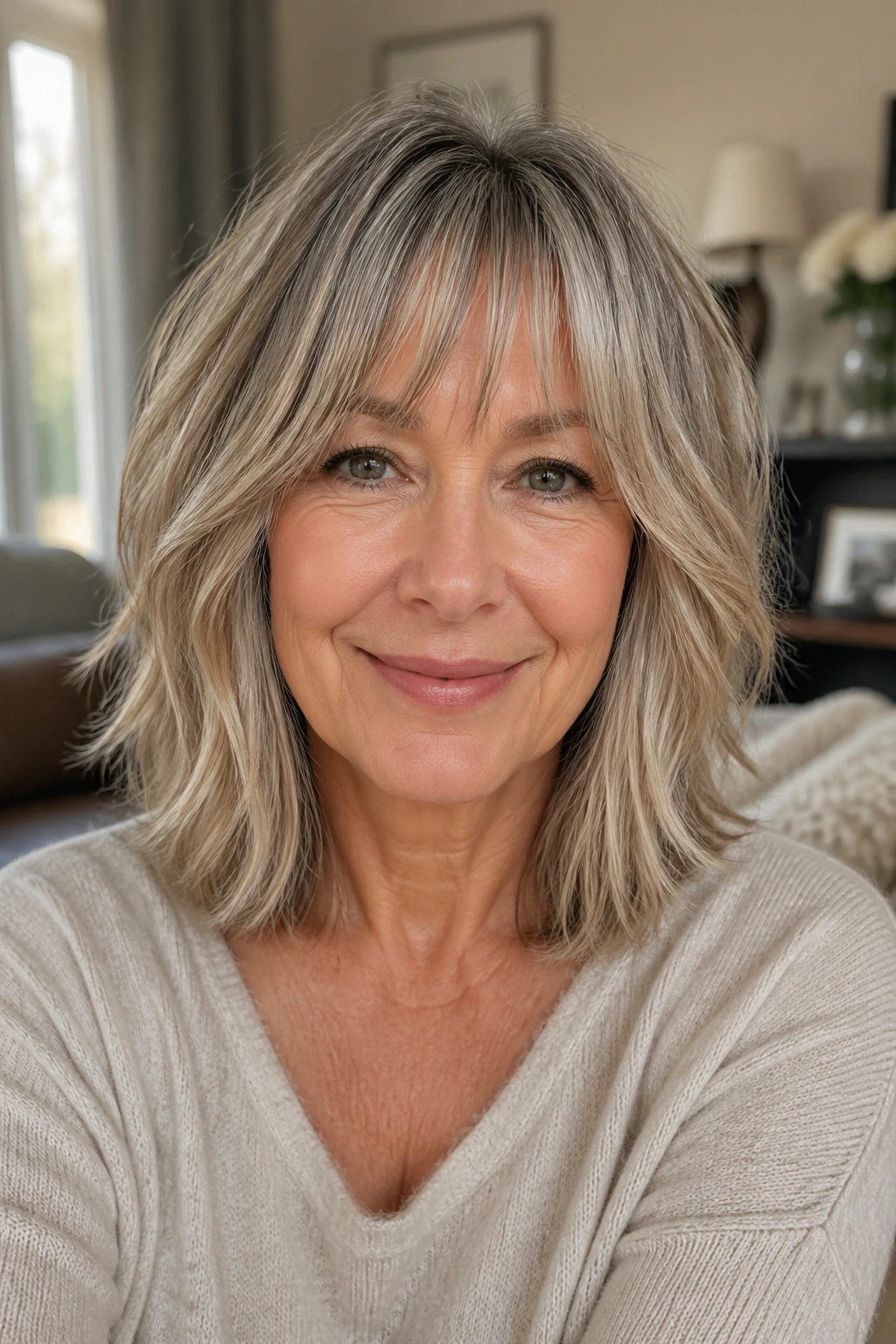
There’s a reason shoulder-skimming lobs show up so often in good salons. They hit that practical length where the hair still feels long, but the weight starts to leave.
Add a wispy fringe, and the whole cut becomes lighter around the face. The fringe does not have to be short. In fact, I prefer it slightly longer and broken up so it softens the eyes without stealing attention from the rest of the cut. It’s a nice option if you want some forehead coverage but hate a dense bang.
Why it suits older hair
- The shoulder length keeps the cut from collapsing
- The wispy fringe blends into layers instead of sitting on top
- It grows out cleanly, so salon visits can be spaced out
- It works with air-drying or a quick blowout
A soft fringe like this is not dramatic. That’s the point. It just makes the lob feel friendly, which is a word more haircuts should earn.
12. Face-Framing Shaggy Lob for Round Faces
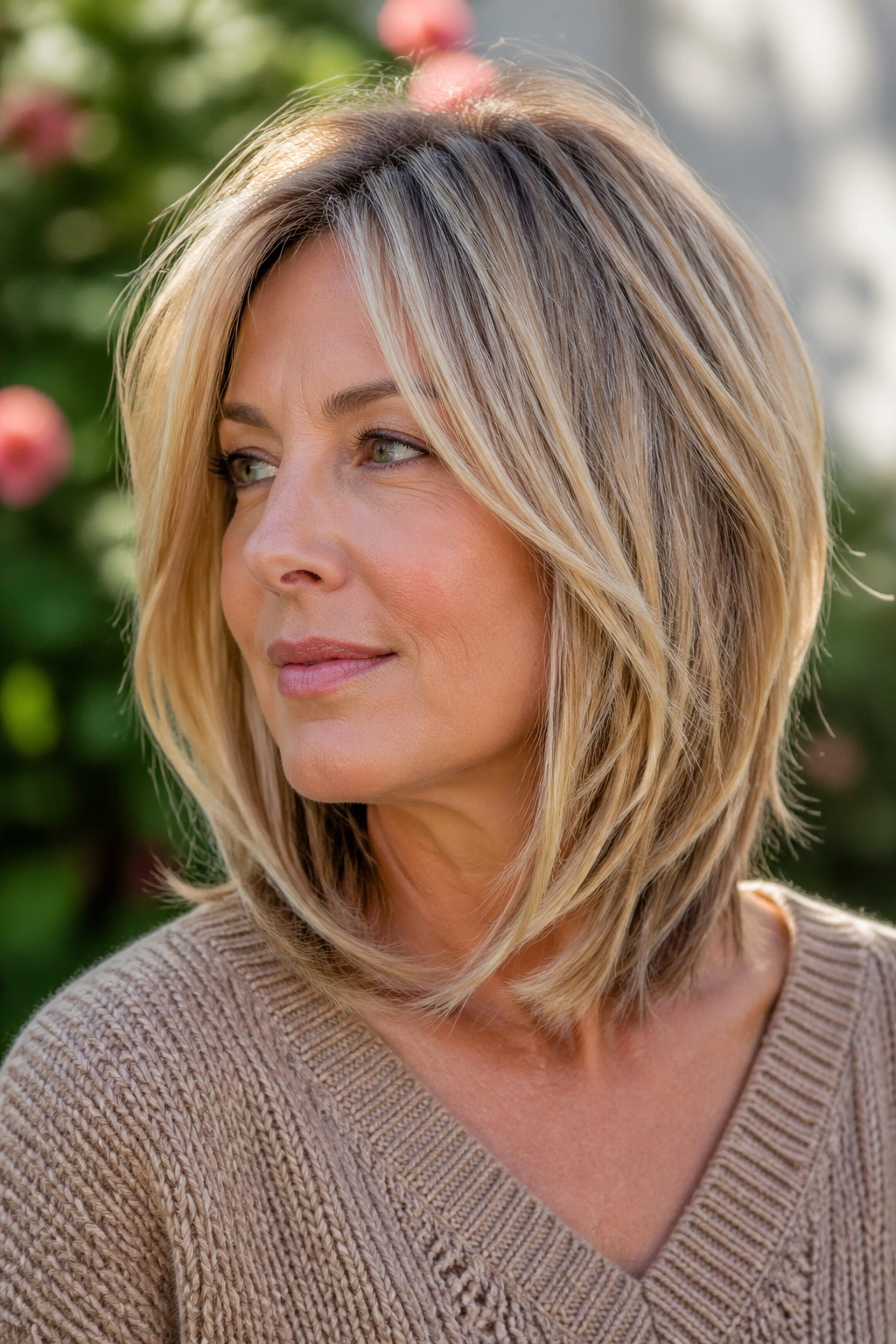
Round faces benefit from vertical movement, not width. That’s why this shaggy lob uses longer face-framing pieces to stretch the silhouette a little.
The best version starts the shortest face frame somewhere near the chin or just below it. Anything shorter can widen the cheeks more than you want. From there, the layers travel downward toward the collarbone, which keeps the cut from puffing out at the widest part of the face.
Unlike a one-length bob, this shape does not sit like a circle around the cheeks. It cuts a cleaner line down the sides of the face, and that makes the whole profile feel longer. If you like a side part, even better. It adds a touch of asymmetry that keeps the look from feeling too centered.
My recommendation: ask for soft, angled pieces around the cheek and jaw, not harsh chunks. The difference is small in the chair and huge in real life.
13. Sleeker Shaggy Lob With Blunt-Yet-Soft Ends

Shaggy does not have to mean wild. A sleeker shaggy lob can be the best choice if you like your hair smooth but not stiff.
The trick is leaving enough bluntness in the perimeter to hold the shape, then adding softness only where it matters — around the face and through the inner layers. That gives you a polished outline with just enough broken texture to keep it from looking severe. It’s a useful cut for straight hair that tends to lie too flat when over-layered.
A paddle brush or flat brush works well here. Blow-dry the root smooth, then bend the ends slightly inward or outward depending on your preference. If the ends are too perfect, the style loses its ease. If they’re too choppy, the clean line disappears. So yes, the balance matters.
This cut suits women who want something neat enough for meetings, dinners, and everything in between. It’s not loud. It works because the details are quiet.
14. Curly Shaggy Lob With Dry-Cut Layers
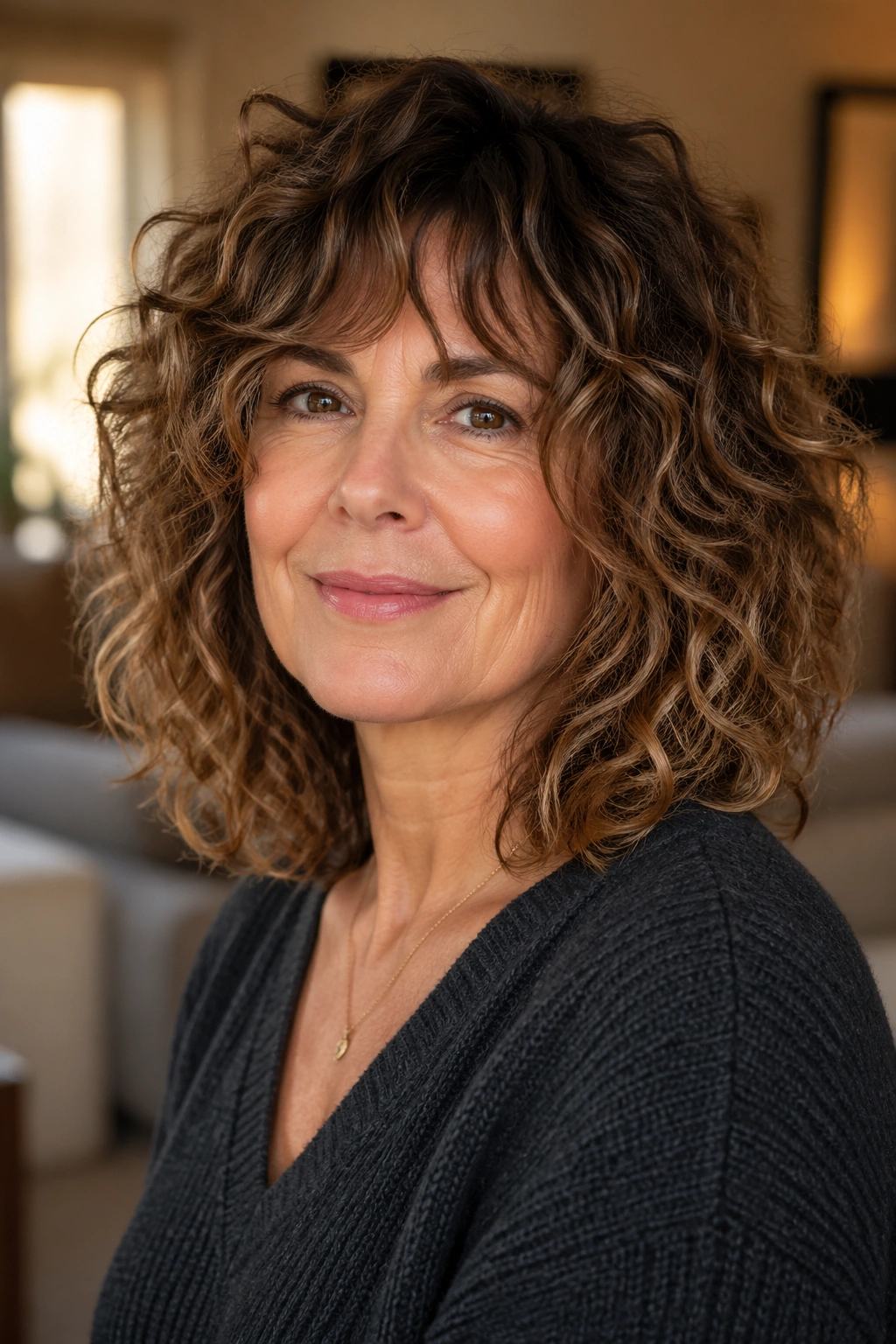
Curly hair and a shaggy lob are a strong match when the layers respect the curl pattern. Dry cutting helps with that, because you can see where the curls actually sit instead of guessing.
A curly shaggy lob should not be hacked into shape when it’s wet and stretched. That’s how you end up with pieces that spring up too short or a triangle shape that nobody asked for. Dry cutting lets the stylist place the layers where they help the curls stack and move naturally.
What to ask for at the salon
- Layers shaped while the hair is dry or mostly dry
- Length that sits around the collarbone or a bit above
- Face-framing pieces that land where your curls naturally fall
- Minimal thinning if your curls are already fine
Aftercare matters too. A curl cream, a light gel, and a diffuser are usually enough. If the cut is right, you will not need to drown it in product. That’s one of the nicest parts.
15. Shaggy Lob With Long Layers and No Fringe
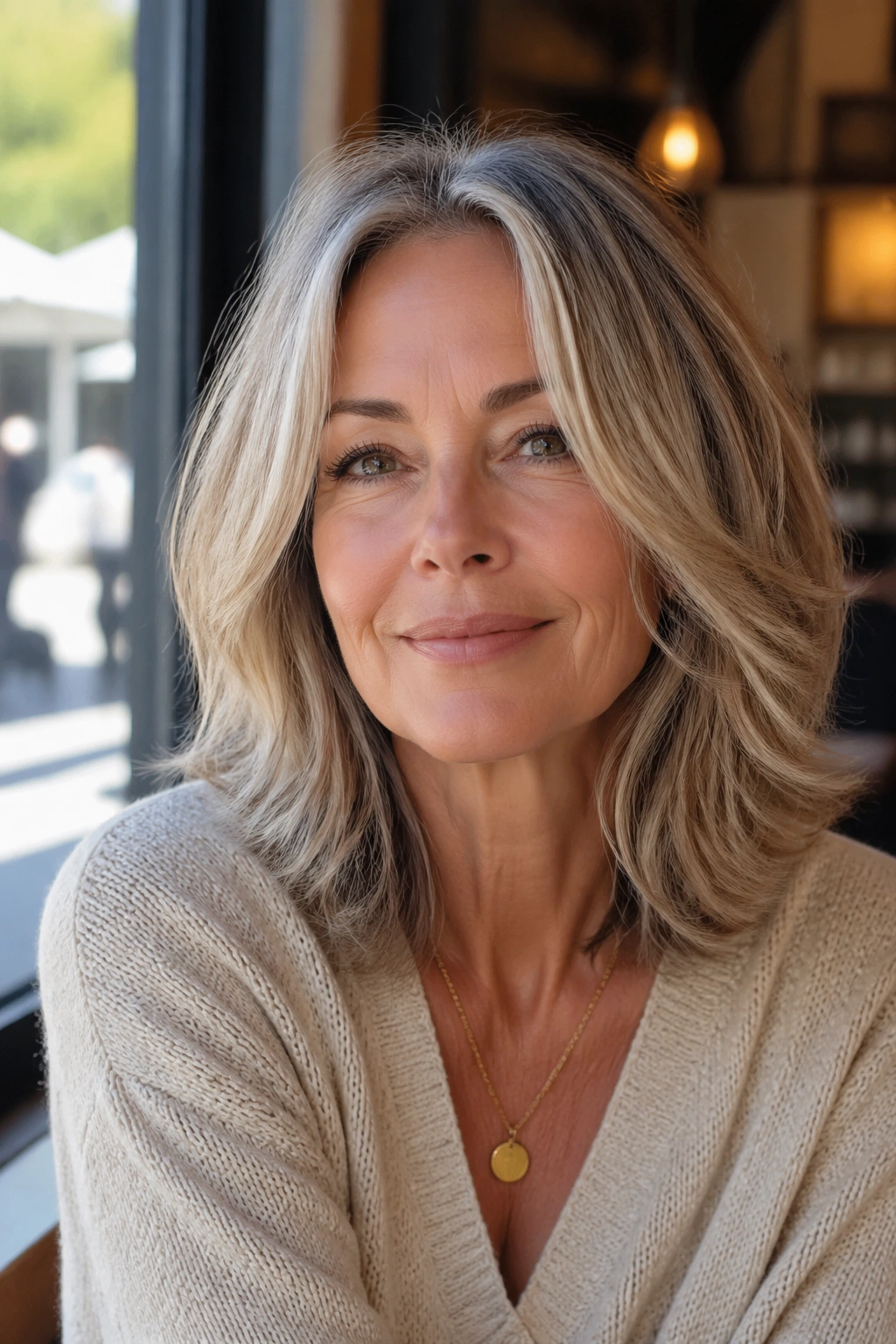
Not everyone wants bangs. I get that. A long-layered shaggy lob without fringe is the cleanest option for someone who wants movement but hates hair in the eyes.
This cut keeps the front open and the lines soft. The layers begin lower, often around the cheek or jaw, then melt through the collarbone. That lets the face stay visible while the hair still has swing. It’s especially handy for people who wear glasses, because there’s no bang section competing with the frames.
The shape also grows out well. Long layers lose their sharpness slowly, which means you can go a bit longer between cuts without the style falling apart. That makes a difference if your schedule is busy or you simply do not enjoy constant upkeep.
If you want more shape, flip the ends under with a round brush. If you want less polish, air-dry and tuck one side behind the ear. It’s one of those cuts that behaves either way.
16. Warm Brunette Shaggy Lob With Piecey Highlights
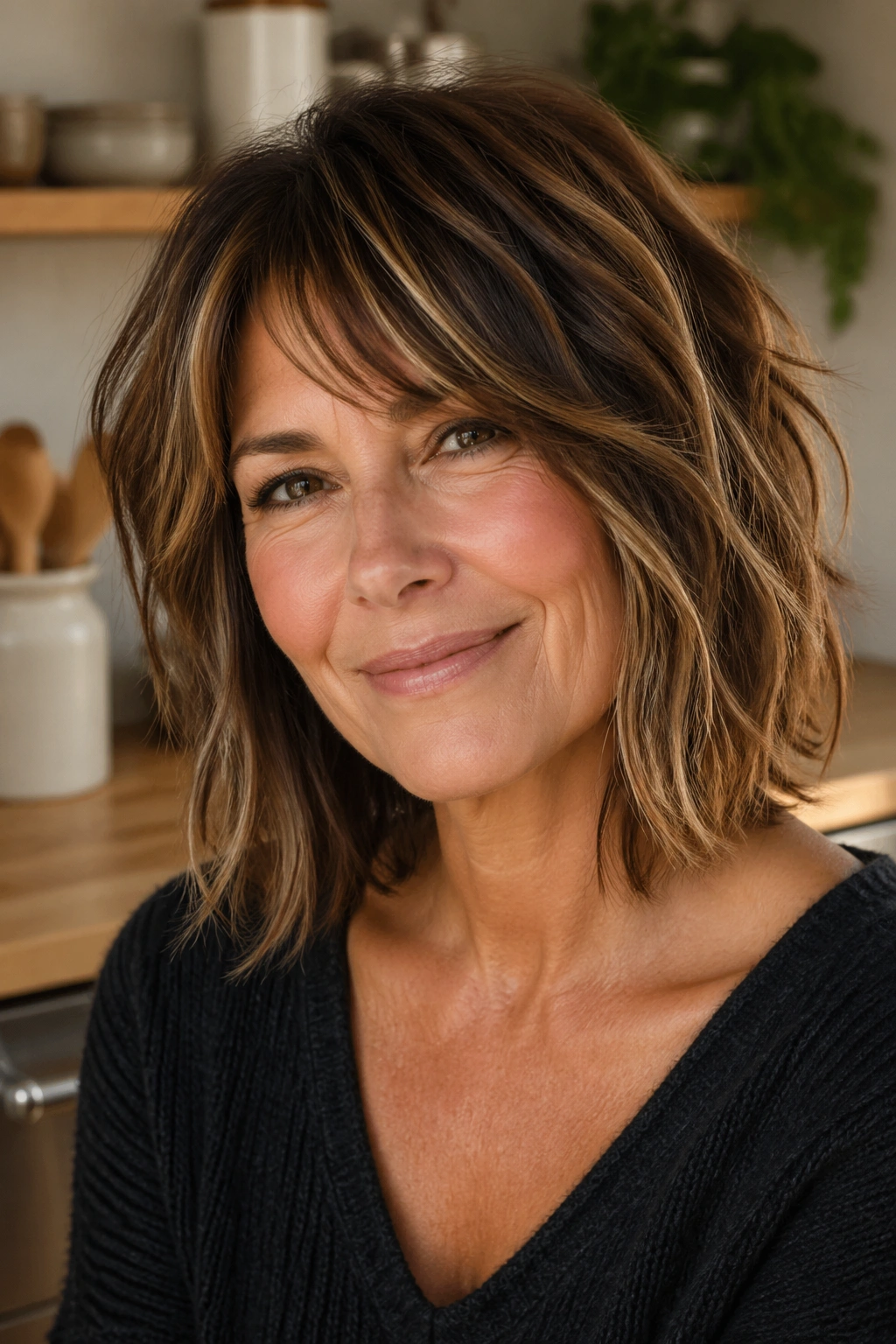
Color changes how a shaggy lob reads. Warm brunette tones with piecey highlights make the layers visible without making the cut look busy.
This is a good move if your hair feels a little too solid or heavy in one color. Caramel, honey, and soft cinnamon tones can sit on top of a brunette base and show off the motion in the cut. The highlights do not need to be dramatic. Thin ribbons around the face, a few brighter strokes through the top layer, and maybe a touch at the ends are enough.
Where the color should live
- Around the cheekbone for brightness
- Through the top layers for lift
- At the ends to show movement
- Near the temples if you want a softer frame
A shaggy lob with dimension always looks more alive than the same cut in flat color. That’s not marketing. It’s just how hair behaves under light.
17. Slept-In Shaggy Lob With Beachy Bends
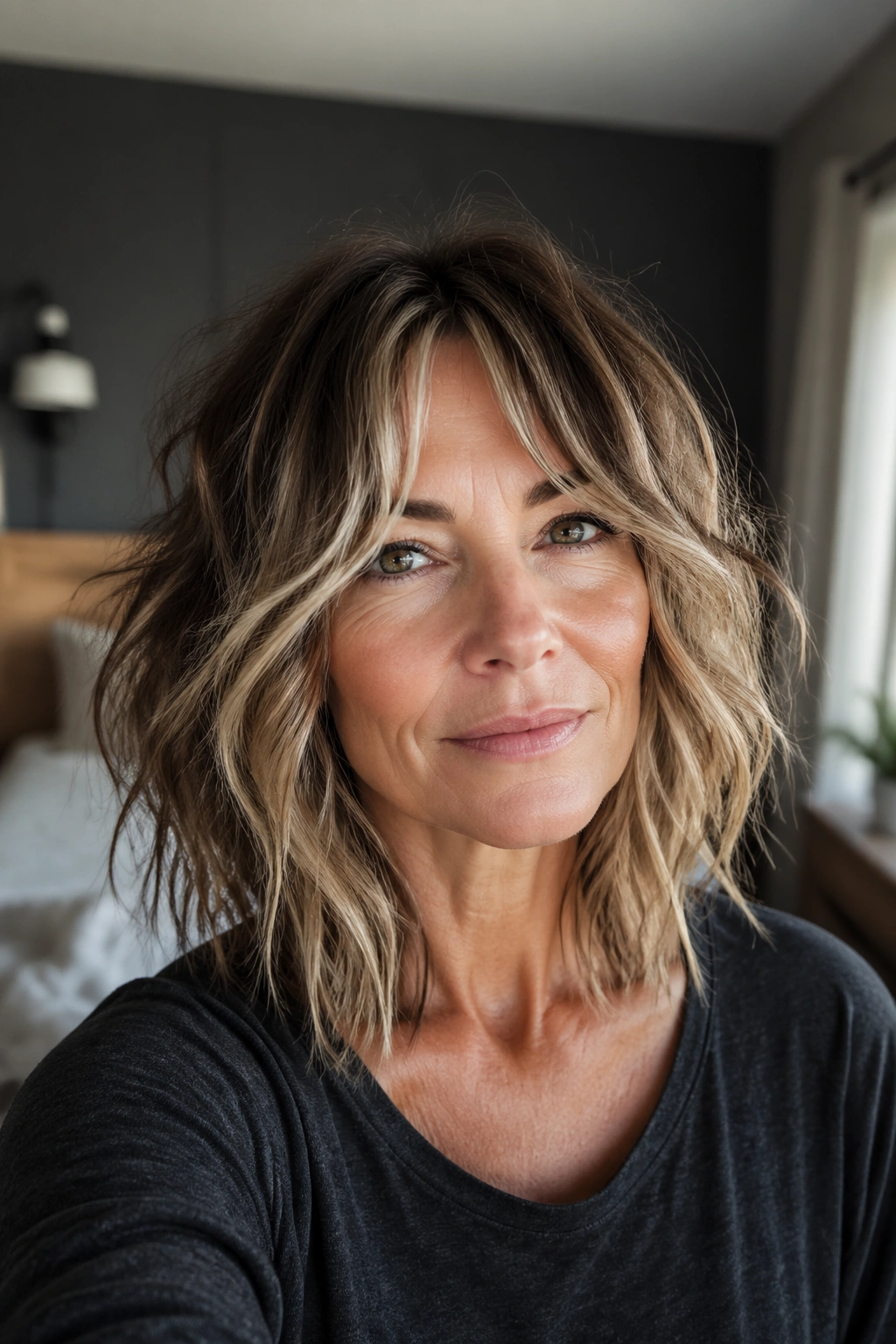
The best undone hair looks like it had a plan, even when it didn’t. That’s what the slept-in shaggy lob is aiming for.
This version works especially well on hair with a little natural wave or bend. You can rough-dry it, braid it loosely before bed, or twist a few sections with your fingers and let them set. The point is not to force a perfect curl. The point is to get loose bends that break up the shape and make the cut feel relaxed.
It’s a forgiving style for women who don’t want a polished finish every day. The texture hides small imperfections, and the layers keep the style from falling flat by noon. A light spray, a bit of scrunching, and you’re done.
I’d skip heavy oils here. They can flatten the movement and make the hair look limp. A touch of texture is enough. Too much product kills the whole idea.
18. Inverted Shaggy Lob With a Slightly Stacked Back
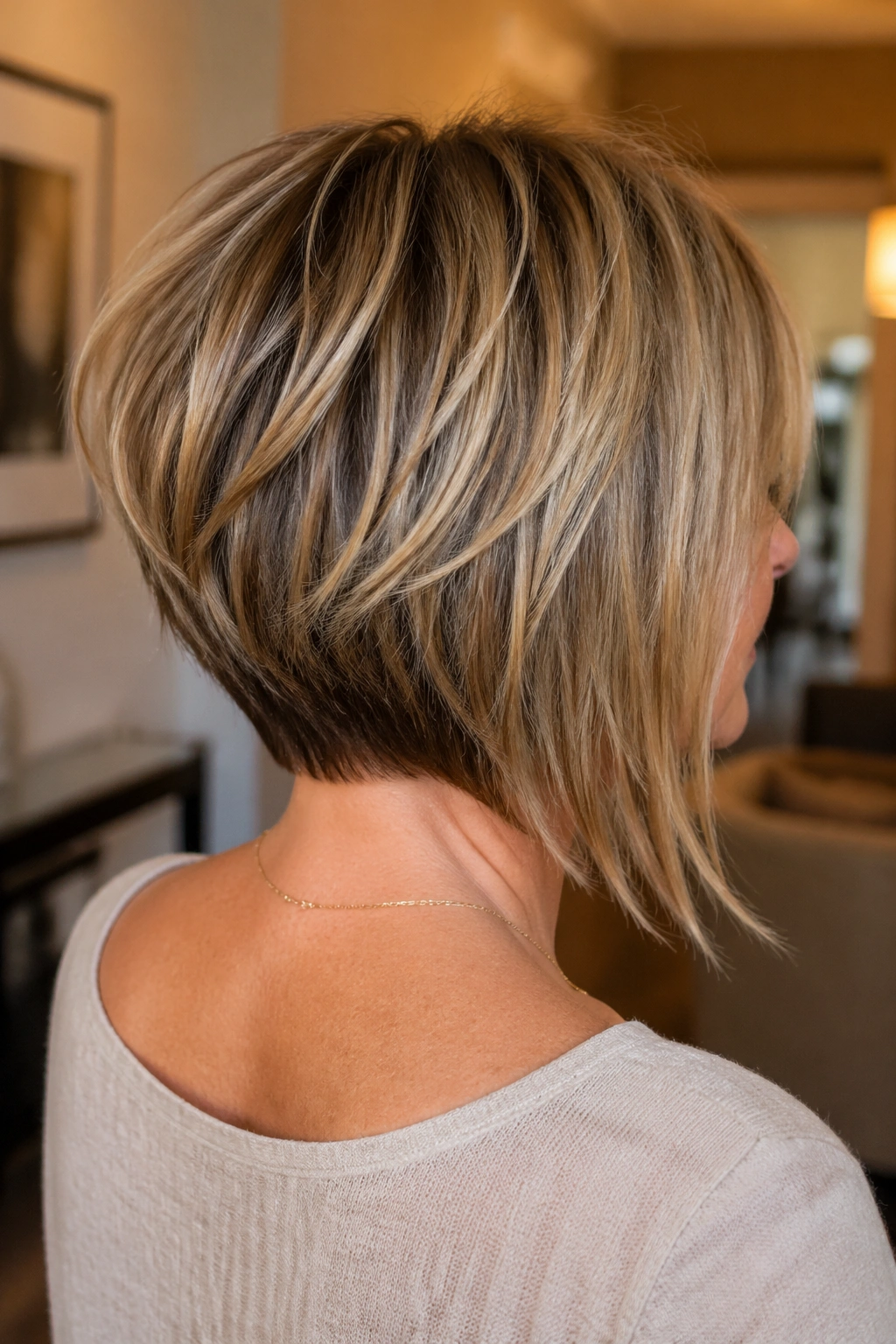
If your hair loses shape at the nape, a slightly stacked back can bring it back to life. The inverted shaggy lob is a smart fix, not a dramatic one.
The back sits a little shorter, which helps lift the crown and stop the style from dragging straight down. The front stays longer, usually brushing the chin or collarbone, so the cut still reads as a lob rather than a short bob. That slight angle gives the hairstyle energy when you move.
Unlike a severe inverted cut, this version keeps the stack soft. No sharp shelf. No hard graduation line. Just enough structure to help fine or straight hair hold its posture. That’s useful when you want lift without turning the haircut into a statement piece.
A quick blow-dry with the head tipped slightly forward can help the back sit right. Then smooth the front pieces so the angle stays visible. Simple, but effective.
19. Minimal-Product Shaggy Lob for Natural Texture
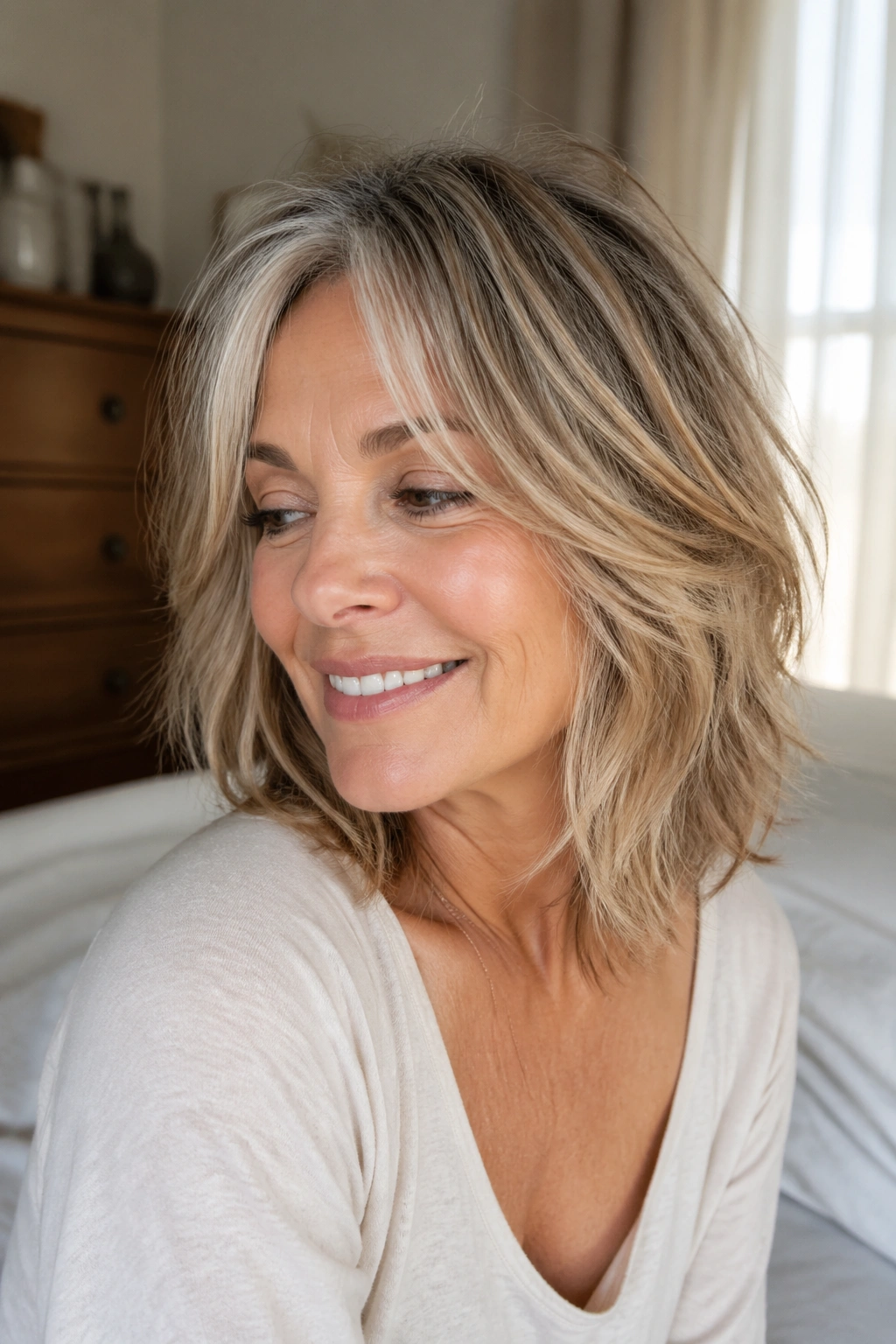
Some people want the haircut to do the heavy lifting. Fair enough. A minimal-product shaggy lob works when your hair already has some texture and you do not want sticky styling steps.
This cut is about respecting what the hair already does. If it bends, you let it bend. If it dries a little piecey, you shape around that rather than fighting it. The layers should be soft enough to encourage movement but not so aggressive that they demand styling every morning.
The few products that are enough
- A lightweight leave-in for ends
- A small amount of mousse at the roots
- A curl cream or lotion if hair is wavy
- A heat protectant if you do any blow-drying
That’s it. Anything heavier starts to weigh the texture down. This kind of lob is especially good for busy mornings, humid weather, or anyone who is tired of redoing the same blowout every day.
20. Shaggy Lob With a Polished Blowout Finish
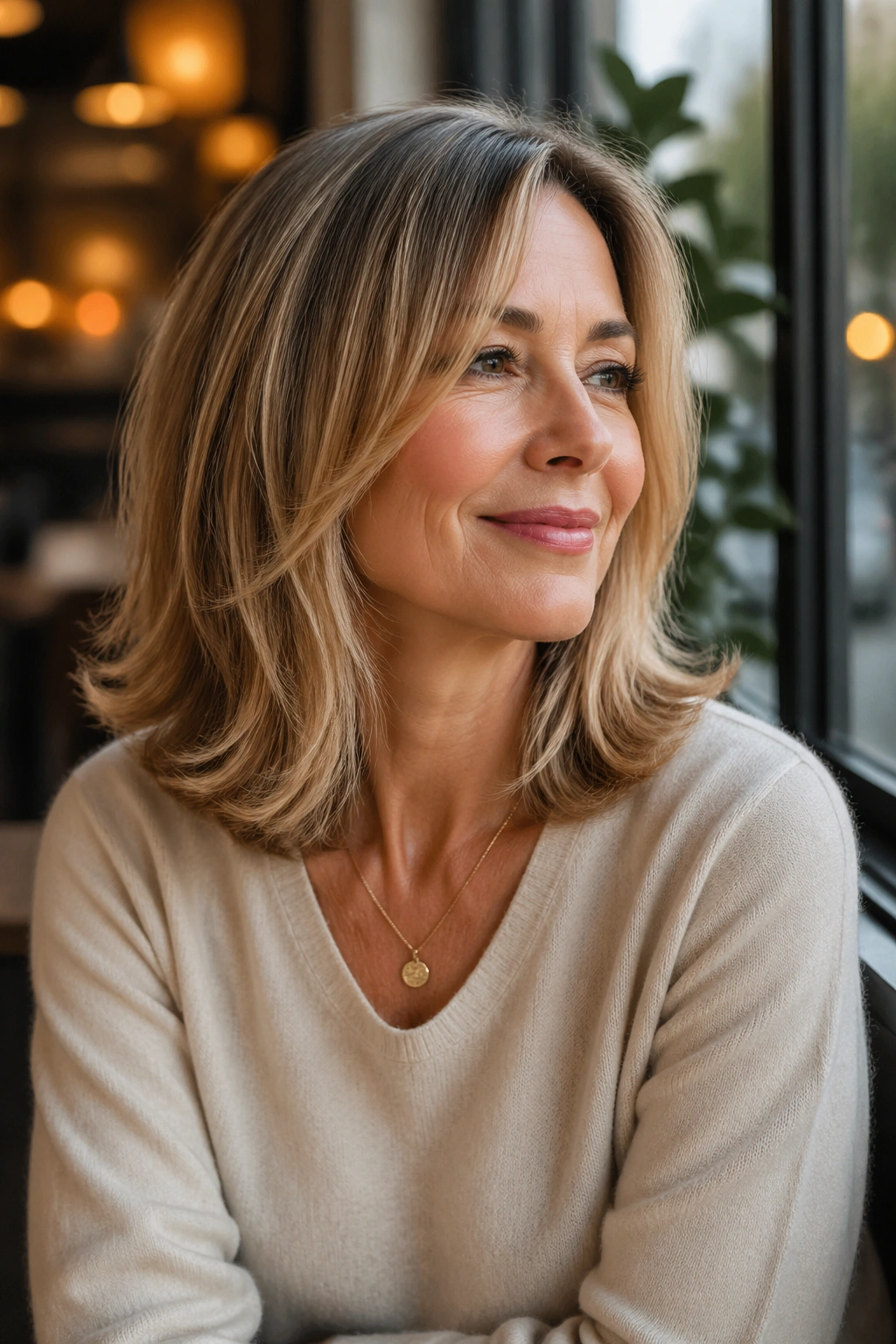
A shaggy lob can look soft and structured at the same time. The polished blowout version proves it.
This style keeps the layers visible, but the finish is smoother and more controlled than the usual tousled version. Think rounded ends, smooth roots, and a bit of bend through the mid-lengths. It’s a strong choice if you like your hair to look neat for events, dinners, or the kind of days when you want to feel a little more put together.
The best blowout version uses a medium round brush and a nozzle on the dryer to keep the cuticle smooth. Dry the roots first, then work the mid-lengths in sections about 2 inches wide. If you rough-dry everything at once, the shape gets fuzzy before you even start styling.
This is one of those styles that looks expensive without asking for a lot of drama. Clean, soft, and controlled. That’s the whole point.
21. Salt-and-Pepper Shaggy Lob With Bright Face Pieces
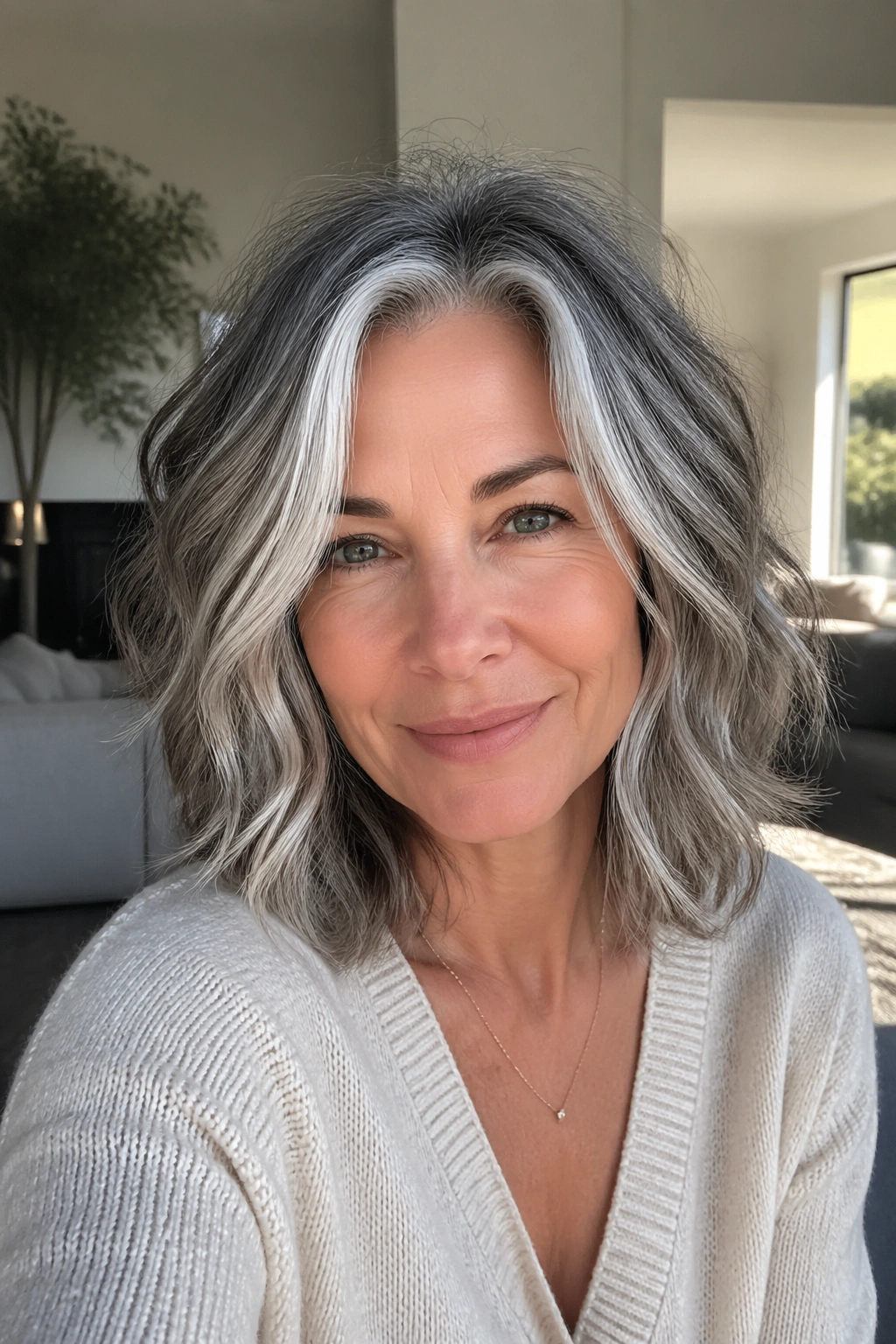
Gray hair does not need to be hidden to look stylish. A salt-and-pepper shaggy lob with brighter face pieces can look sharper than a fully blended color job.
The contrast between darker strands and silver or white strands gives the cut texture before you even style it. Add a few brighter pieces around the front — especially near the temples and cheekbones — and the face gets a natural lift. That’s a small change with a big visual payoff.
What to ask for
- Brightness concentrated around the front
- Soft blending through the crown
- Dimensional lowlights in the deeper sections
- A cut that keeps the perimeter soft, not heavy
This version suits women who like their gray to be part of the look rather than something to disguise. It has a little edge, but not in a try-hard way. And that’s a relief, honestly.
22. A-Line Shaggy Lob That Swings at the Jaw
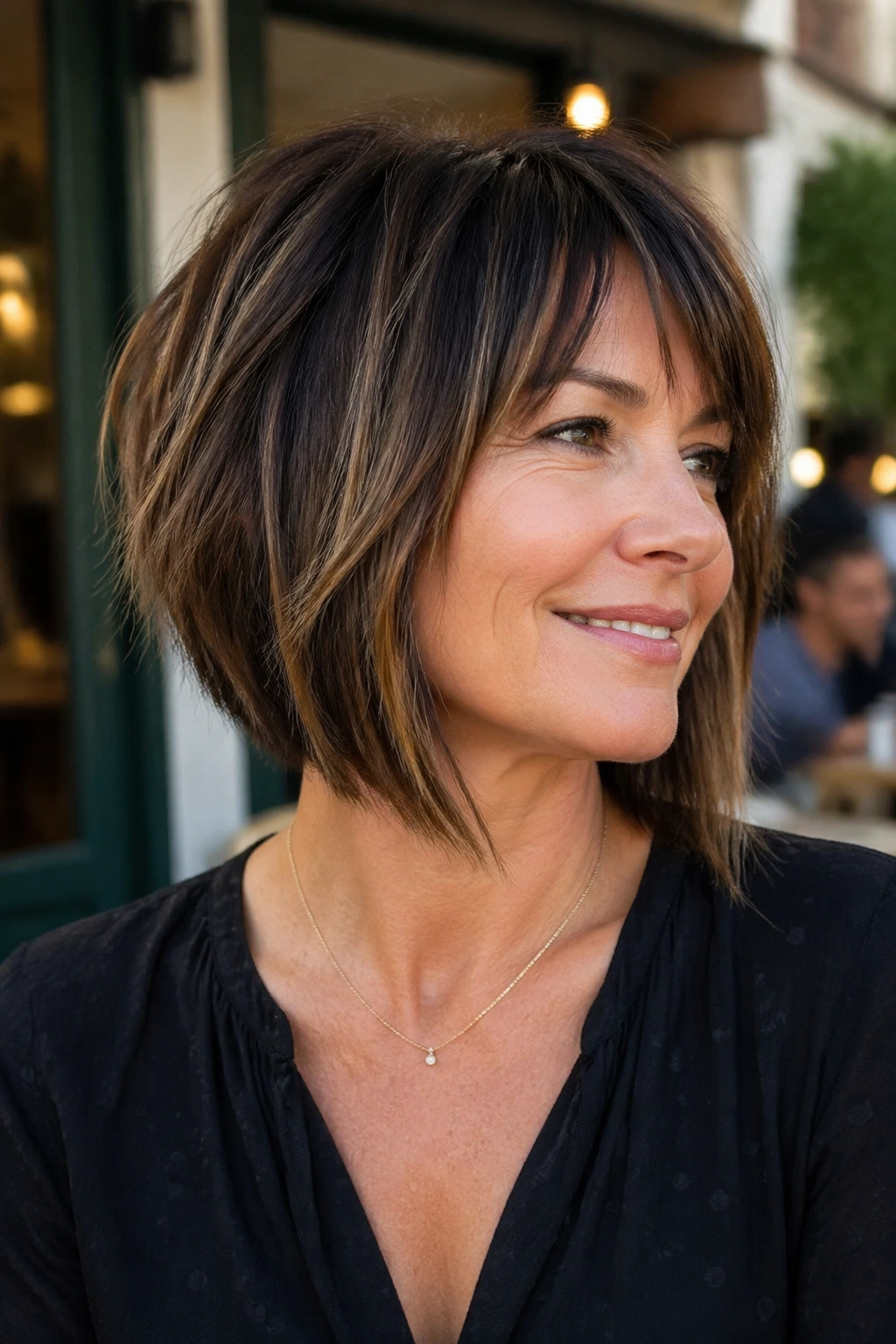
An A-line shape gives a shaggy lob a bit more swing than a straight-across cut. The front is a touch longer than the back, so the hair moves when you turn your head.
That length difference is enough to sharpen the jawline and give the cut a bit of lift in profile. It also works well if your hair tends to flatten in the back. The angled front keeps the style from feeling too heavy around the face while the shorter back stops it from hanging like one long sheet.
This is a solid choice for straight or slightly wavy hair. On straight hair, the line reads clean and intentional. On wavy hair, the angle softens and the ends look more casual. Either way, it stays flattering.
A good A-line shaggy lob does not need to be dramatic. A subtle angle is usually better than a steep one. The goal is movement, not a geometry lesson.
23. Airy Shaggy Lob With Chin-Grazing Face Layers
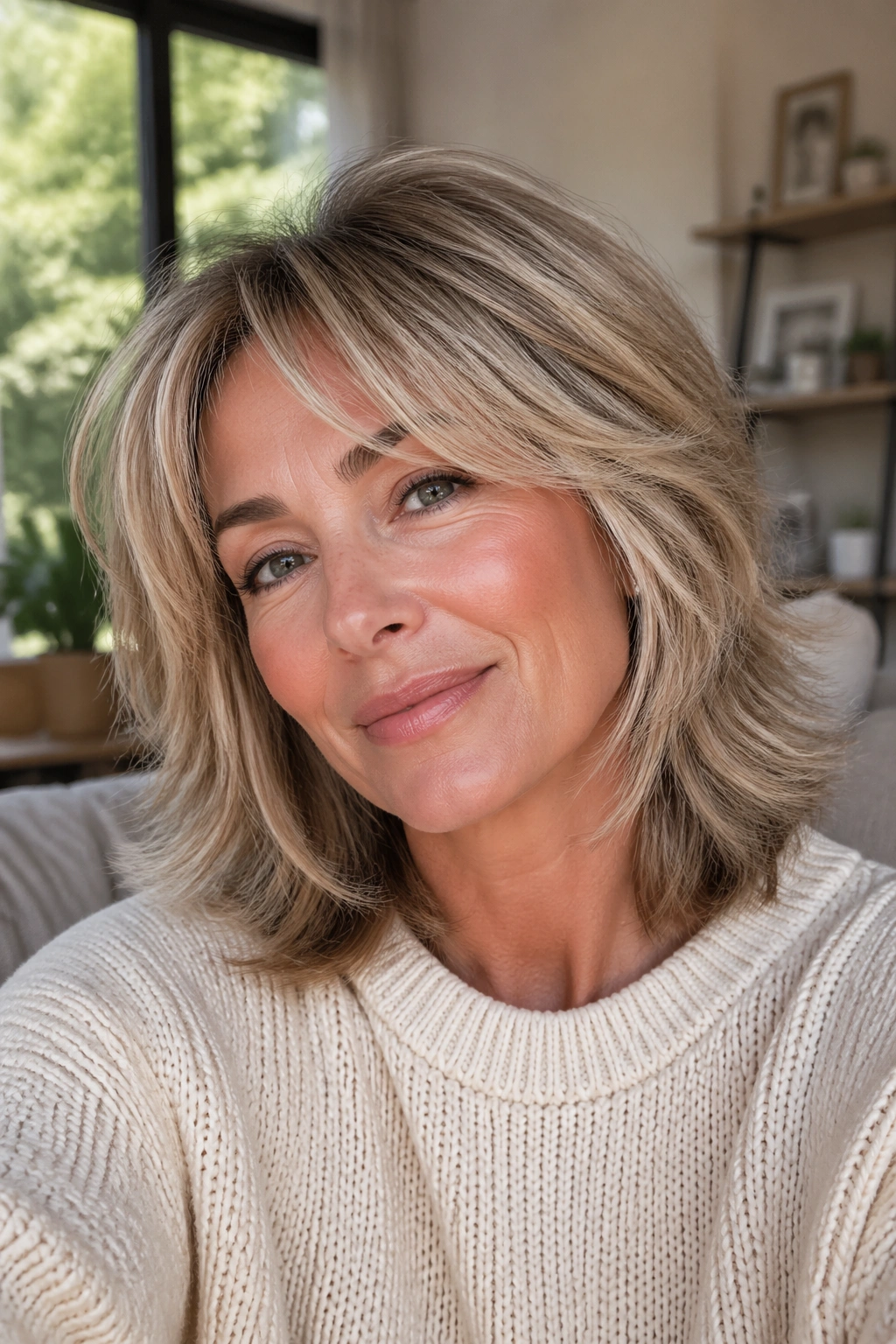
The nicest shaggy lobs are often the quiet ones. An airy lob with chin-grazing face layers gives you shape, movement, and a grow-out that behaves itself.
I like this version for women who want a haircut that still looks decent three, four, even five weeks after the salon visit. The chin-length pieces frame the face without crowding it, and the rest of the cut keeps enough length to tuck behind the ears, clip back, or wear loose. It is practical in a way that never feels boring.
This one also works across a wide range of textures. Fine hair gets lift from the front pieces. Wavy hair gets a soft frame. Even straight hair benefits from the movement around the jaw and collarbone. If you’re tired of cuts that demand constant fixing, this is the sort of lob that quietly earns its keep.
And honestly, that’s what makes a shaggy lob worth wearing after 50. It should flatter the face, yes. It should move, yes. But it should also feel like hair you can live in, not hair that runs the household.
