



Short haircuts for thicker hair can be a relief, but only when the shape is doing the heavy lifting. Thick strands have their own personality: they hold volume, they resist flatness, and they can turn puffy in places that look polished on thinner hair. A cut that looks airy on a photo can land like a helmet if the bulk sits in the wrong spot.
That’s why the smartest short styles for thick hair don’t just remove length. They control density. They carve out a line at the jaw, open up the neck, lighten the crown, or keep the sides from ballooning out to the ears. The difference is huge, and you can usually spot it within five minutes of a blow-dry. Good short haircuts make thick hair look intentional. Bad ones make it look like you lost a fight with a boxy triangle.
There’s another thing people miss: thick hair does not always need more layers. Sometimes it needs better layers. Too much slicing can leave ends frayed and frizzy, especially if your hair is coarse or wavy. A clean bob, a tapered crop, or a long pixie with a smart fringe often gives thicker hair more shape than a heavily thinned cut ever could.
So let’s get into the cuts that actually make sense on dense hair, from crisp jaw-skimming bobs to cropped shapes that stay neat without turning into a puffball by noon.
1. Blunt French Bob for Thick Hair
A blunt French bob is one of the easiest ways to make thick hair look expensive without trying too hard. The line is sharp, the shape is compact, and the ends sit together instead of spreading out. That matters when your hair has enough weight to build its own architecture.
Why It Works
The blunt edge keeps the hair from exploding outward at the bottom. On thick hair, that clean perimeter looks stronger than soft, wispy ends, which can go fuzzy fast. If your hair is straight or only slightly wavy, this cut gives you that neat, chin-length frame that feels polished even when you air-dry it.
The sweet spot is usually right at the jaw or a touch above it. Shorter than that, and the look can get too round. Longer than that, and the bulk starts returning around the neck.
Quick details
- Best for straight, wavy, and mostly smooth thick hair
- Looks sharpest at chin length or just above
- Needs a trim every 6 to 8 weeks to keep the line crisp
- Works well with a center part or a soft off-center part
Pro tip: ask for minimal texturizing on the ends. Thick hair already has structure. You want the outline to stay clean.
2. Long Pixie Cut with a Side-Swept Fringe
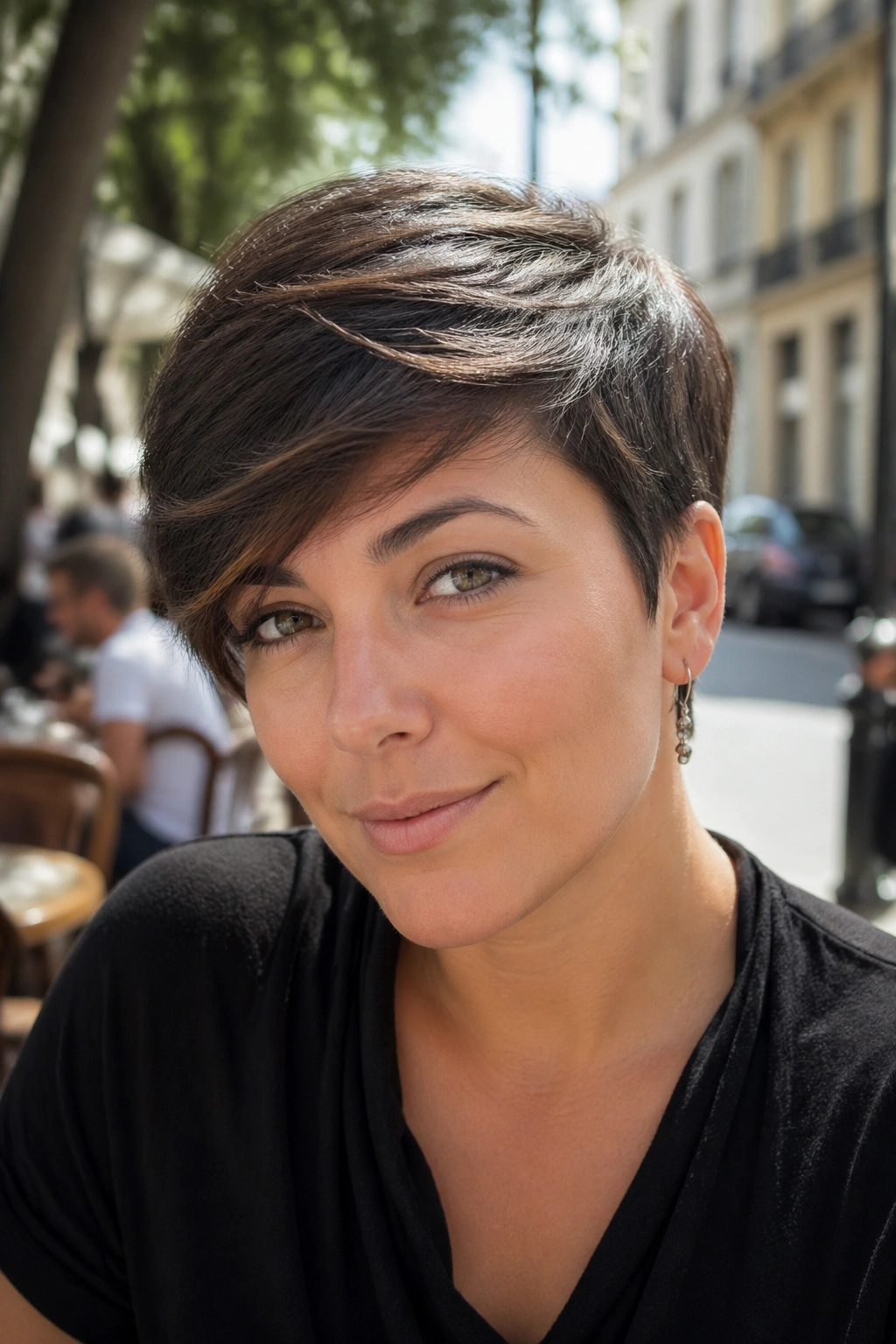
This is the shortcut for people who want short hair but not a severe crop. A long pixie keeps enough length on top to move, sweep, and tuck behind the ear, while the sides and nape stay close enough to control bulk. On thick hair, that balance is gold.
The fringe does a lot of the visual work here. A side-swept front pulls attention upward and breaks up the density around the forehead. If your hair grows wide at the temples, this cut can make the whole head look lighter without sacrificing style.
Use a matte cream or a tiny dab of paste, about the size of a pea. Work it through the top only. Leave the ends a little piecey, not stiff. You want movement, not a sculpted cap.
And if your hair is coarse, this cut often behaves better than a shorter pixie. The extra top length gives you room to shape the hair instead of fighting it every morning.
3. Angled A-Line Bob
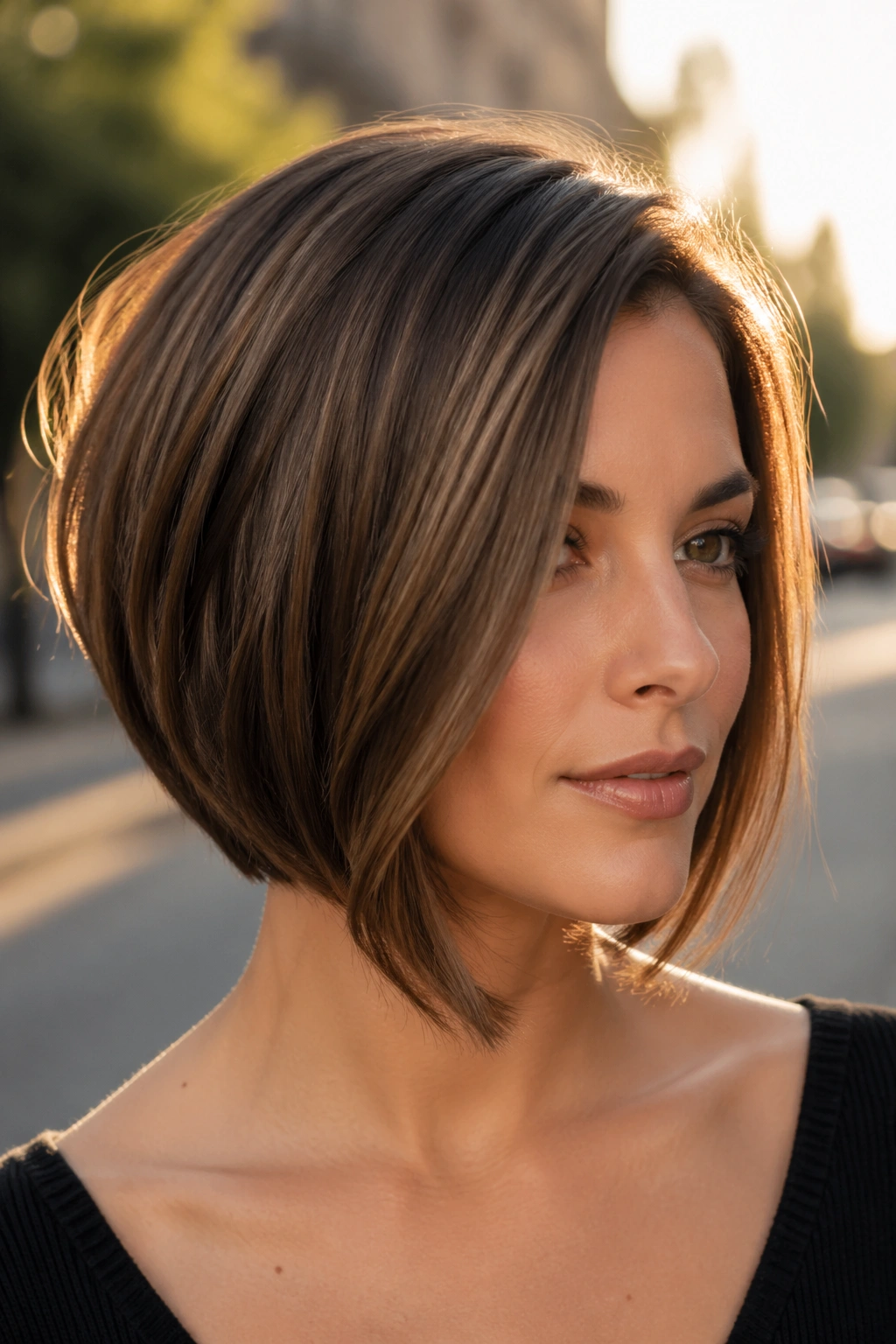
Why do some bobs make thick hair look sleek while others make it look boxy? Usually, the angle. An A-line bob is shorter in back and gradually longer in front, which shifts some of that visual weight forward and keeps the nape from building too much volume.
That forward angle is useful if your hair tends to poof out at the back of the head. It gives the front a little length to frame the face, while the shorter back keeps the whole cut from feeling heavy.
How to Ask for It
Tell your stylist you want a subtle A-line, not a dramatic one. A steep angle can feel dated fast and can also make thick hair stack up in a weird way.
- Keep the front about 1 to 2 inches longer than the back
- Leave enough length in front to tuck it if needed
- Keep the back light, but not feathered to pieces
- Ask for soft internal shaping near the nape if your hair is dense there
One good rule: if you love a clean profile from the side, this cut earns its keep.
4. Curly Bob That Lets Thick Hair Breathe
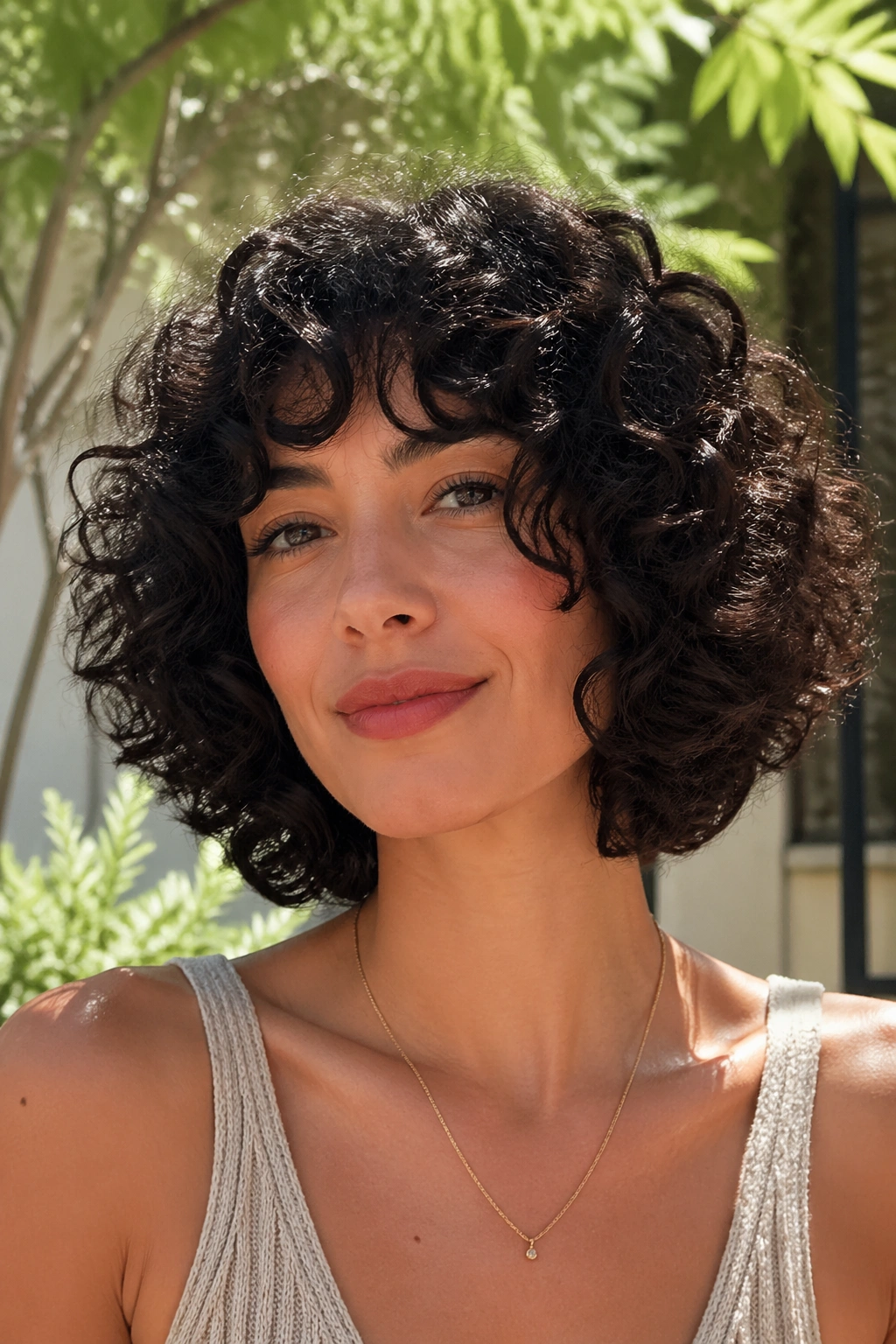
If your thick hair is also curly, a short cut can look amazing or chaotic, depending on how it’s shaped. A curly bob gives your curls room to spring up without drowning your face in width. The key is cutting it dry or near-dry so the curl pattern is visible while the cut is made.
Picture this: you leave the salon with a wet, shoulder-length shape, and once it dries, it jumps up three inches and turns into a triangle. That’s the trap. A curly bob avoids that by respecting shrinkage from the start.
What to Watch For
- Length around the chin or just below
- Layering only where the curls need lift
- A soft perimeter, not a blunt shell
- A diffuser set on low heat
- Curl cream used in small amounts, not slathered on
If your curls are loose, a bob can sit beautifully with a rounded edge. If they’re tighter, the shape may need a little more length in front to keep the silhouette balanced. Either way, this is one of the few short styles that can look fuller without feeling bulky.
5. Bixie Cut
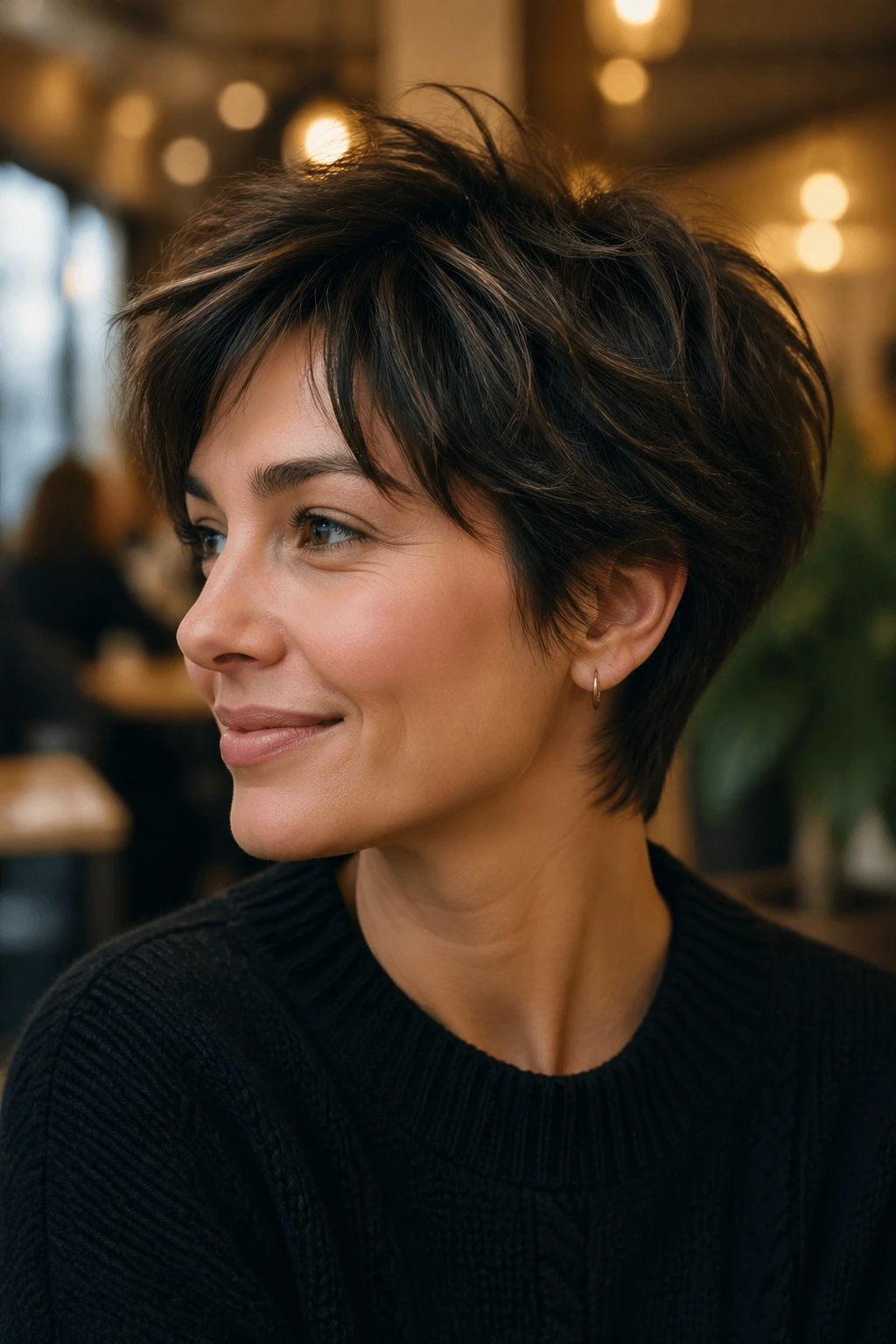
The bixie is the in-between cut people keep pretending doesn’t matter, but it does. It sits between a bob and a pixie, and for thick hair, that middle ground can be a lifesaver. You get the lightness of shorter sides with enough length on top and around the ears to soften the shape.
What I like about the bixie is that it doesn’t demand perfect styling. Thick hair gives it body on its own, so the cut can look lived-in instead of overworked. A little bend through the top, a bit of texture at the ends, and you’re done.
The important part is not to over-thin it. A bixie should feel airy, not stringy. Keep the top about 2 to 4 inches long, and let the sides taper gently into the neckline. That keeps the shape from turning mushroom-like.
This cut also grows out well. That matters more than people admit. A good bixie doesn’t look sloppy after three weeks; it just softens.
6. Inverted Bob
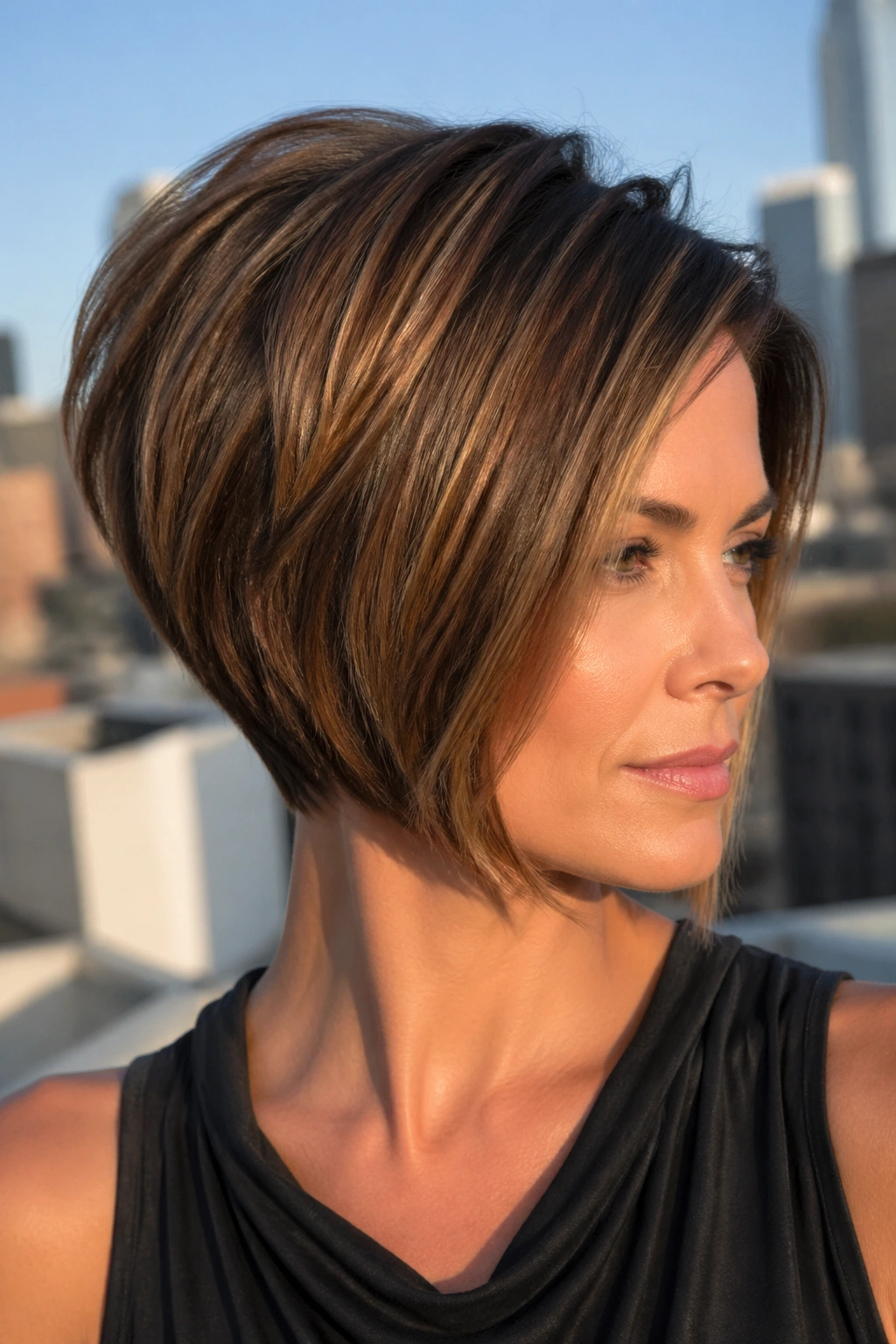
An inverted bob is one of the cleanest answers for thick hair that bulks up at the back of the head. Compared with a blunt bob, it has more lift through the crown and more slope toward the front, which helps the whole shape sit closer to the head.
The big win here is the stacked back. Done well, it removes weight where thick hair usually gets stubborn. Done badly, it can look overbuilt and too round, so the graduation should be soft, not crunchy.
Who’s it best for? People whose hair is dense at the nape and flat at the crown. That combo can be tricky, and this cut handles it by raising the back just enough to avoid a flat helmet effect.
I’d keep the front below the cheekbone but above the collarbone. That range gives you length to frame the face without sliding out of the “short haircut” category.
7. Tapered Crop for Thick Hair
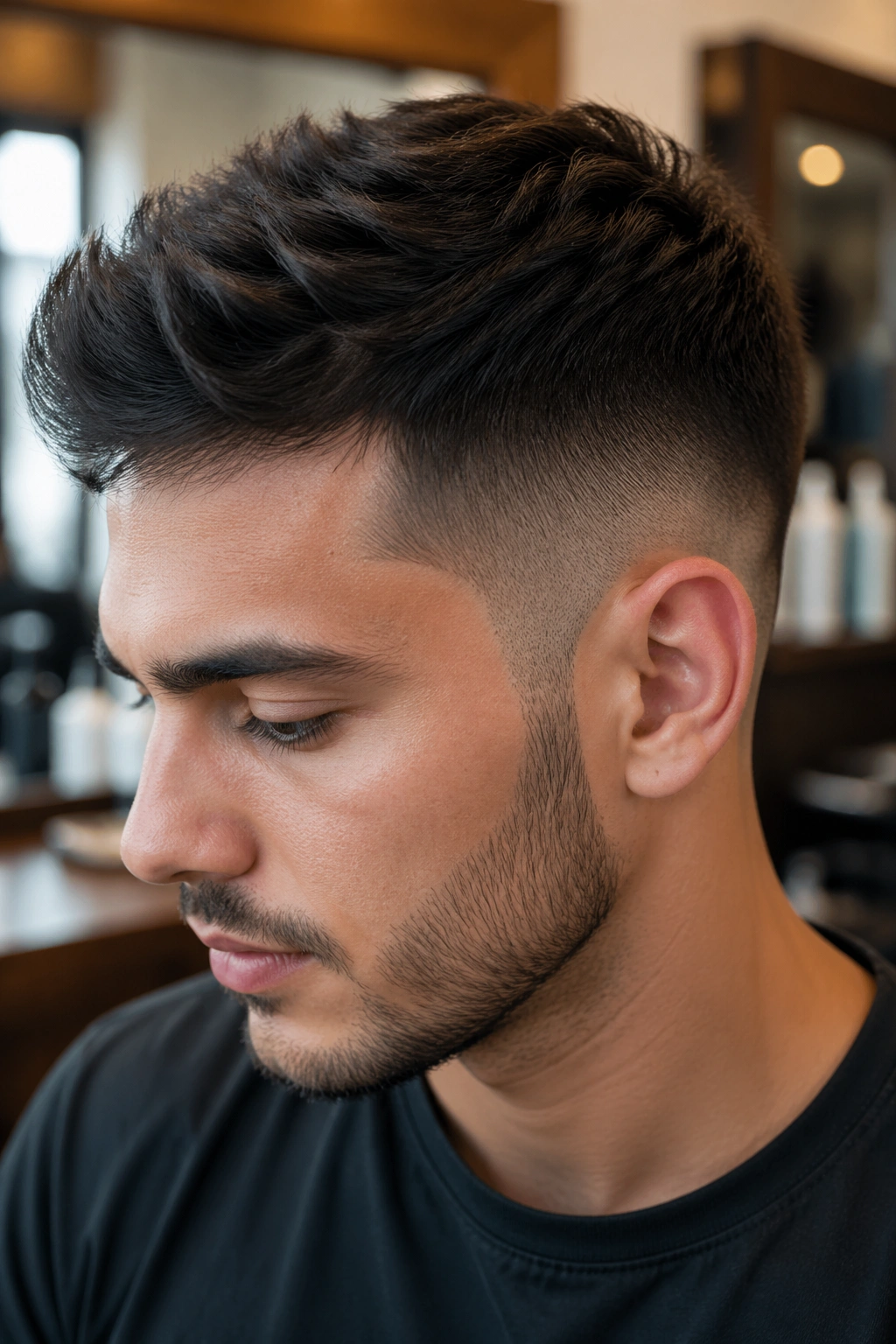
A tapered crop is one of those cuts that sounds simple until you see it on the right head. Then it makes sense immediately. The sides hug close, the nape stays neat, and the top holds enough length to create shape without dragging the whole style down.
Why It Works
Thick hair often needs a little relief around the ears and neckline. This crop creates that relief without stripping the hair bare. The taper removes bulk where it shows most, which keeps the silhouette tidy all day.
It’s also a good pick if you hate spending time with a brush. A quick finger style is usually enough. Add a bit of lightweight cream, rough-dry the top, and let the cut do the rest.
What to Ask For
- Short, clean sides with a soft taper
- Top left at about 2.5 to 3.5 inches
- A neckline that sits close and neat
- Minimal bulk near the ears
Best for: straight thick hair, dense wavy hair, and anyone who wants a short cut that stays controlled when humidity shows up.
8. Shaggy Bob with Soft Texture

A shaggy bob can be a dream on thick hair, but only if the layers are cut with restraint. Too many chopped-up pieces and you get frizz. The right shaggy bob gives movement through the ends and a little lift at the crown while keeping the overall shape readable.
This is the cut for someone who wants their hair to feel a bit undone on purpose. Not sloppy. Just relaxed. Thick hair holds texture better than fine hair, so even a small amount of layering can create a lot of movement.
I like this cut best when the layers start below the cheekbone. That keeps the face-framing pieces from puffing out too high. A soft blow-dry with a round brush or a quick rough-dry with mousse can both work.
If you wear glasses, this cut can be especially good. The hair moves around the frames instead of sitting like a block above them.
9. Box Bob
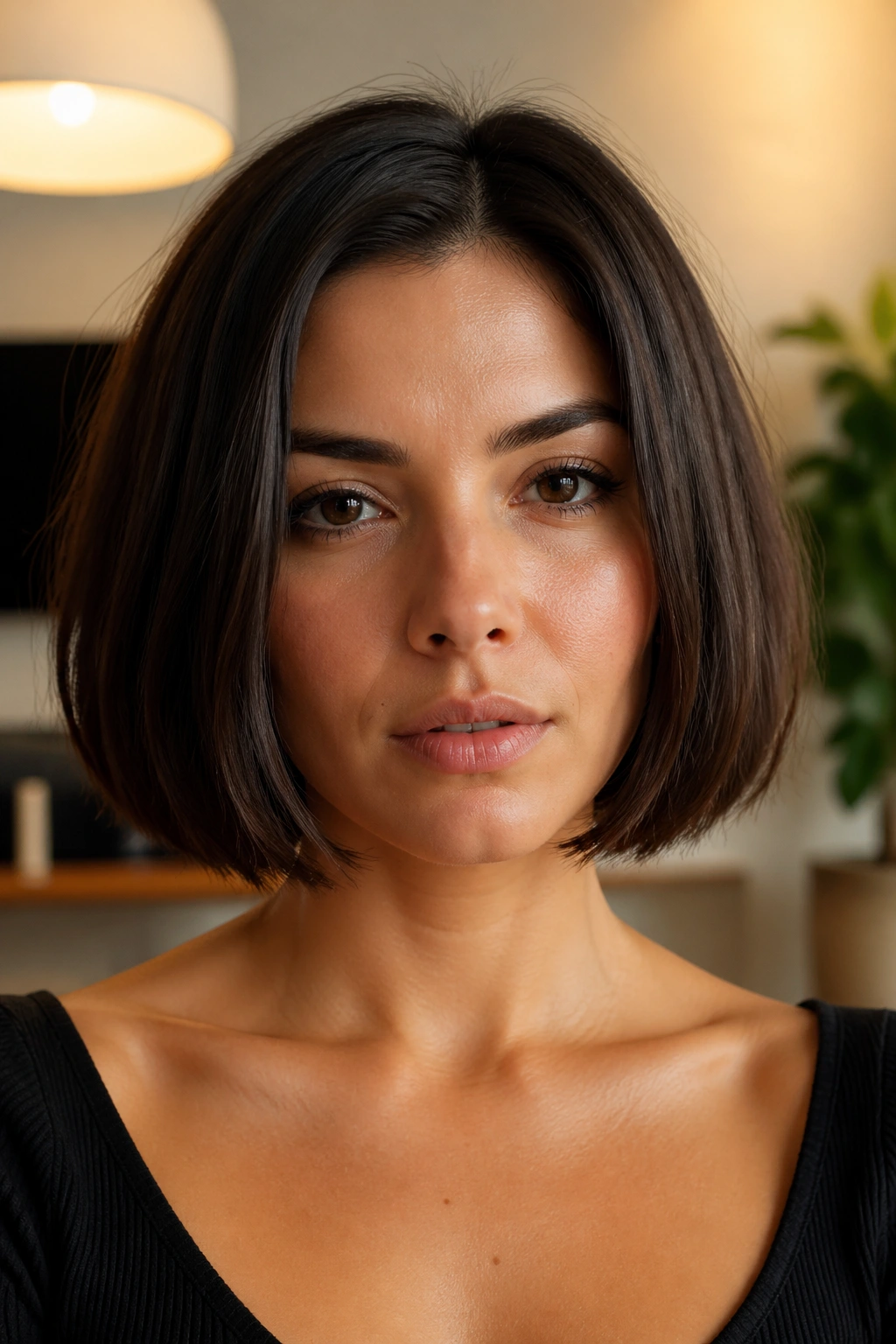
Is a box bob too blunt for thick hair? Not if the ends are handled with care. The box bob is all about strong lines and a squared-off shape that sits close to the jaw. On thick hair, that geometry can be a blessing because it keeps the cut from expanding outward.
How It Feels in Real Life
A box bob has presence. It looks deliberate. That’s the appeal. If your hair is the type that grows wide even after a trim, this shape keeps the sides from wandering.
The trick is to avoid making it too heavy. A tiny bit of internal removal under the top layer can help the shape sit flatter without wrecking the clean outline. You still want the perimeter to feel dense.
How to Wear It
- Straight blowouts make the shape look strongest
- A side part softens the square edge
- A flat iron with a slight bend at the ends keeps it from looking stiff
- Light shine serum on the mid-lengths gives it a polished finish
This is the cut for someone who likes structure. It doesn’t whisper. It states its case.
10. Undercut Pixie
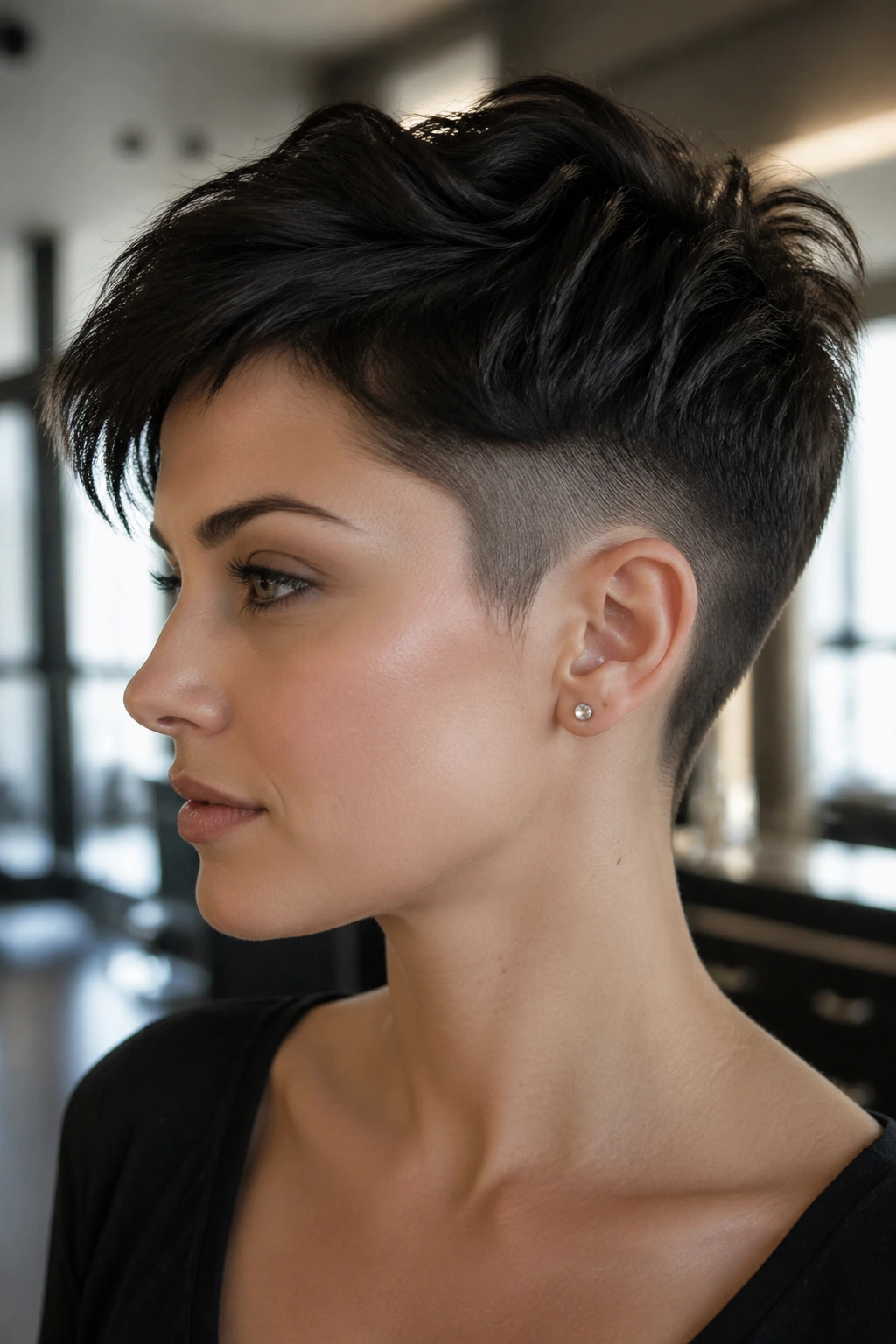
If your thick hair feels too full around the neck and behind the ears, an undercut pixie can feel like a deep exhale. The hidden undercut removes bulk underneath, while the top stays long enough to style in a dozen directions.
I’ve always liked this option for dense hair because it solves the problem where it actually lives. You don’t have to over-layer the top and create frizz just to get rid of weight. You cut the weight from below, where nobody sees it.
What makes it practical
- The top can stay 3 to 5 inches long
- The sides and nape stay close to the head
- The style can be worn sleek or tousled
- It grows out in stages, which gives you flexibility
One caution: this cut needs a stylist who understands balance. If the undercut is too high, the shape can look chopped in a bad way. Low and clean is the move.
11. Rounded Bob

A rounded bob works beautifully on thick straight hair because it follows the natural curve of the head instead of fighting it. The shape is fuller through the middle and softer at the bottom, which keeps the ends from sticking out like shelves.
This cut is underrated. People hear “rounded” and think old-fashioned, but a modern rounded bob can look clean and expensive when it’s cut to sit just below the ears or at the jaw. It’s especially nice if your hair has a little natural bend, because the shape supports that bend instead of forcing it straight.
The best version keeps the crown controlled and the sides smooth. You want gentle contour, not a bubble. A medium round brush and a quick blow-dry at the roots can help, but the cut should do most of the work.
If you like your hair to look full without looking wide, this is one of the safest bets.
12. Feathered Crop
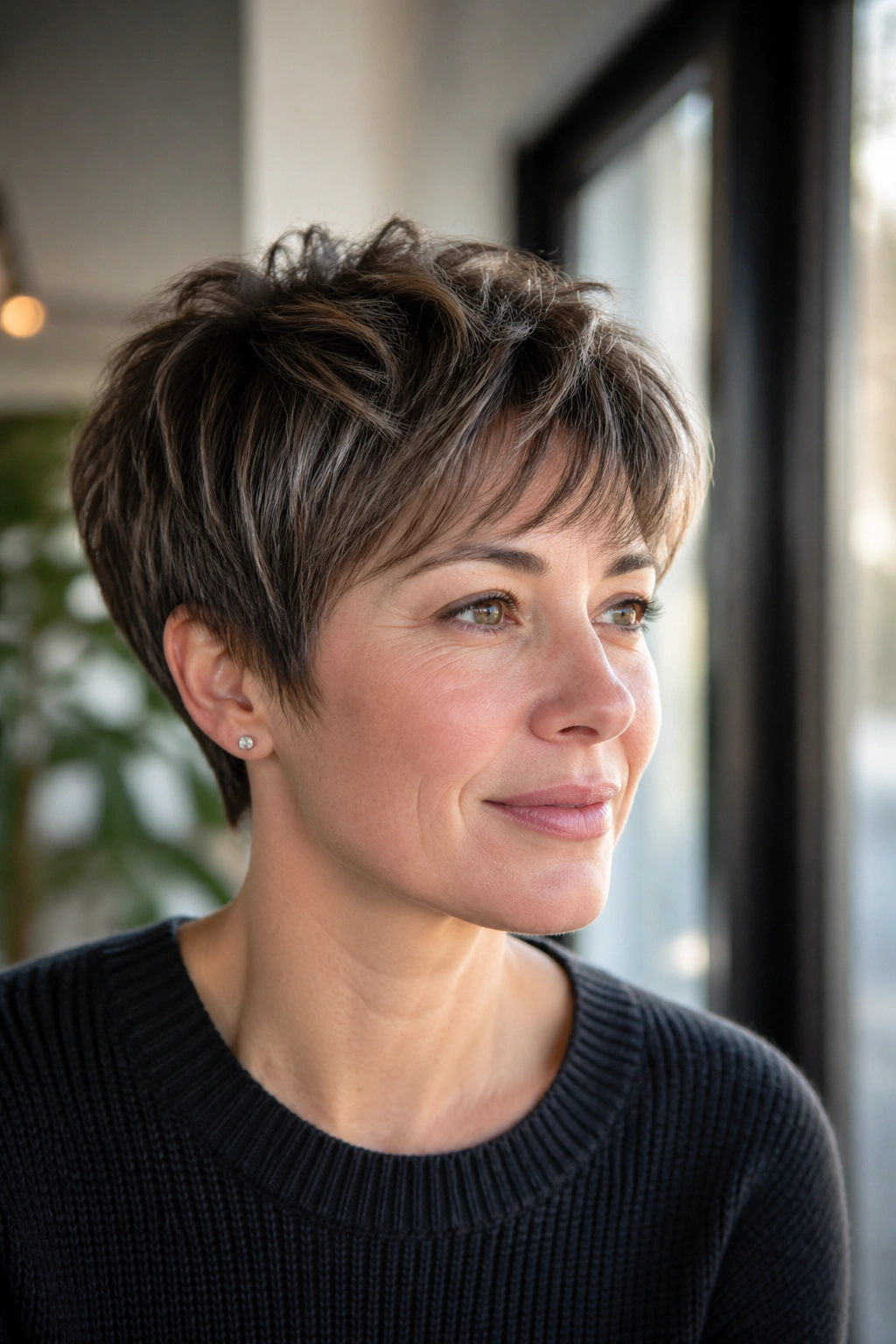
Unlike a shag, a feathered crop keeps the outline neater while softening the interior. That matters for thick hair, because a full shag can sometimes create too much air between the layers. Feathering breaks up the mass without making the ends look ragged.
This cut is especially good for people who want short hair but still want some softness around the temples and fringe. The feathering creates a little motion, and the crop keeps the overall shape short and easy to maintain.
Who It Suits Best
- Thick hair with a slight wave
- Hair that feels heavy around the crown
- Faces that benefit from softer edges near the cheekbones
- Anyone who wants texture without a wild silhouette
A light mousse works better than a heavy cream here. Use about a golf-ball sized amount, rake it through damp hair, and dry with your fingers. You do not need much else.
13. Asymmetrical Bob for Thick Hair
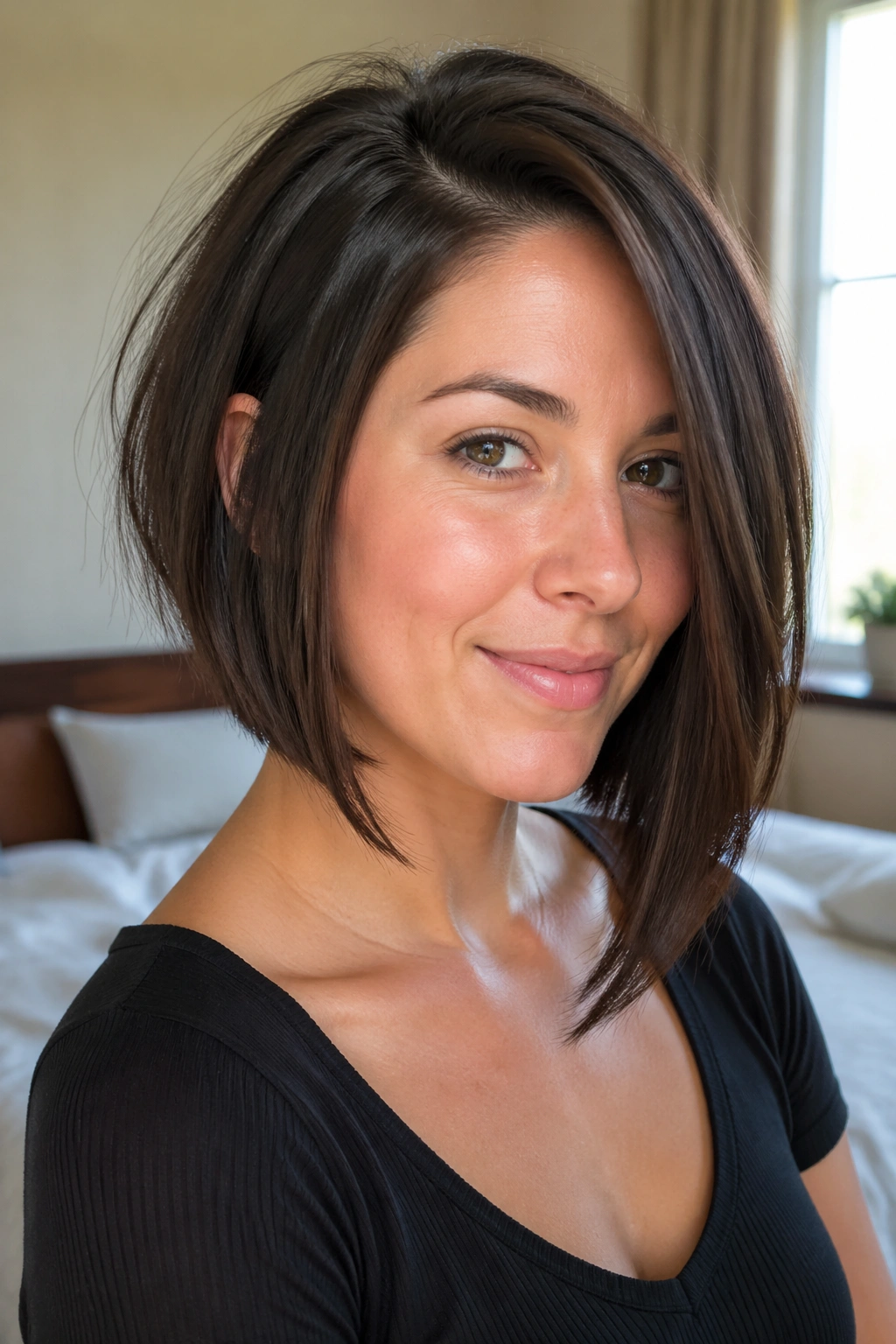
An asymmetrical bob shifts the weight to one side, which sounds small until you see how much it changes the feel of thick hair. One side sits slightly longer, and that offset keeps the cut from looking too boxy or too predictable.
Why It Helps
Thick hair can look very even in a way that sometimes feels flat. An asymmetrical line breaks that symmetry and gives the style a bit of motion even when the hair is still.
It also helps if one side of your hair naturally falls heavier than the other. Instead of fighting that, the cut works with it. The longer side can skim the jaw or collarbone, while the shorter side keeps the neckline open.
Ask for This
- A difference of about 1 to 2 inches between sides
- A smooth transition, not a sharp slash
- Soft ends if your hair is coarse
- A side part to match the line
Tip: keep the asymmetry subtle. The cut should look chic, not like it was done with a ruler during a power outage.
14. Wedge Cut
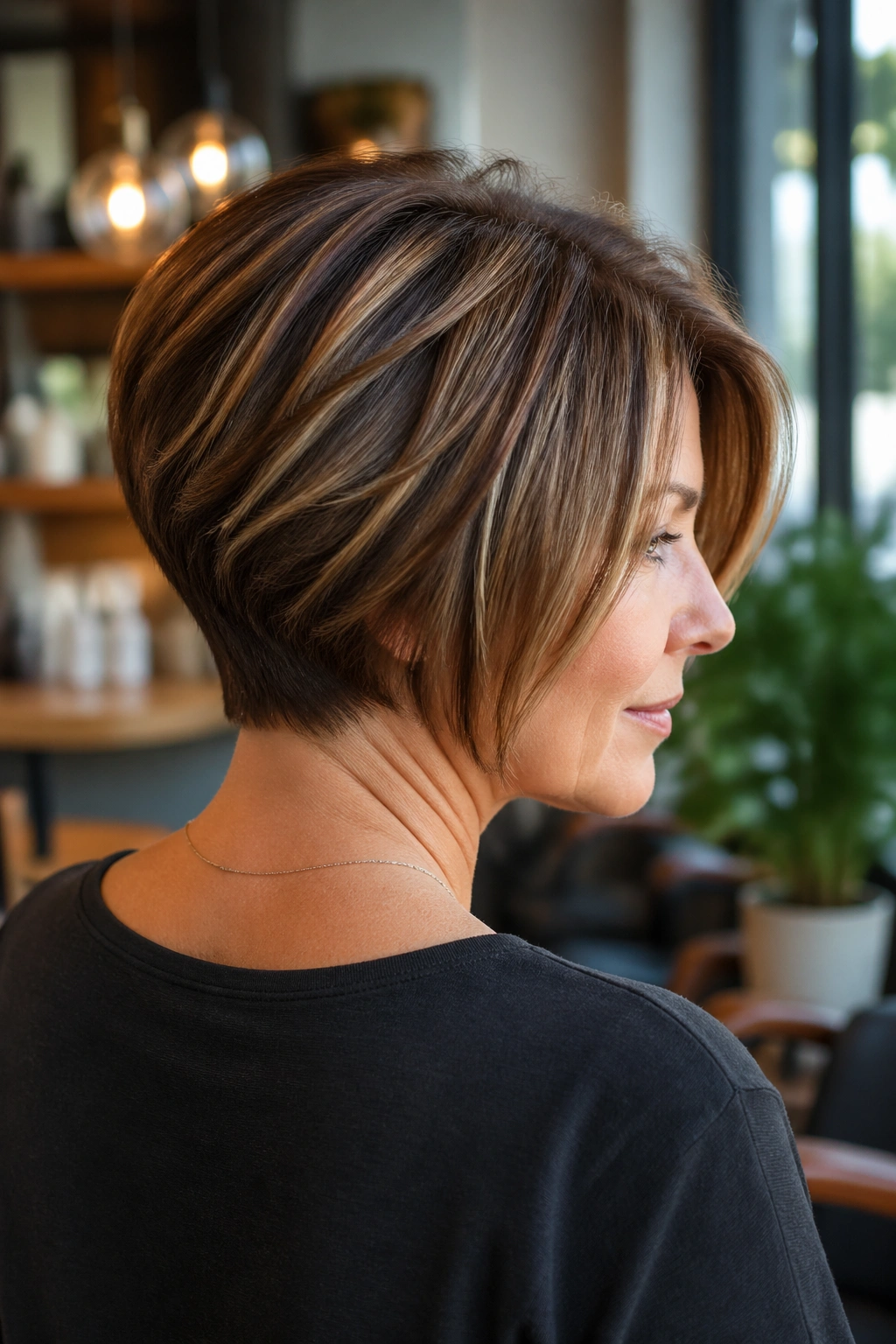
The wedge cut has a reputation problem, and honestly, that’s unfair. In the right hands, it’s one of the most useful short haircuts for thick hair because it removes weight in the back while leaving enough shape up top to keep things modern.
The stacked back gives the haircut lift, but the sides should stay soft enough to avoid that stiff, triangular look people remember from old photos. Done well, the wedge can make dense hair feel lighter at the nape and easier to dry.
This is a great option if your hair grows out heavy at the crown and sticks out at the bottom. The graduation gives the back a nice curve, and the front can stay longer to keep the face framed.
I’d especially consider it if you like a neat silhouette and don’t mind a cut that needs regular shaping. It looks best when the line stays fresh.
15. Curtain Bang Bob

Can bangs work on thick hair? Yes, if they’re cut with enough space to move. A curtain bang bob gives you face framing without boxing in the forehead, and on dense hair, that lighter center split can make the whole style feel less heavy.
The key is not to cut the bangs too blunt. Thick hair likes softness around the fringe, especially if the rest of the cut is compact. Curtain bangs should fall away from the face in a gentle sweep, not sit flat like a curtain rod.
How to Wear It
- Blow-dry the bangs first, using a medium round brush
- Direct the front pieces away from the face
- Keep the rest of the bob at chin length or slightly shorter
- Use a small amount of dry texturizing spray at the roots, not the ends
This cut suits square and round faces especially well because it opens the center of the face while keeping body on the sides.
16. Ear-Length Crop
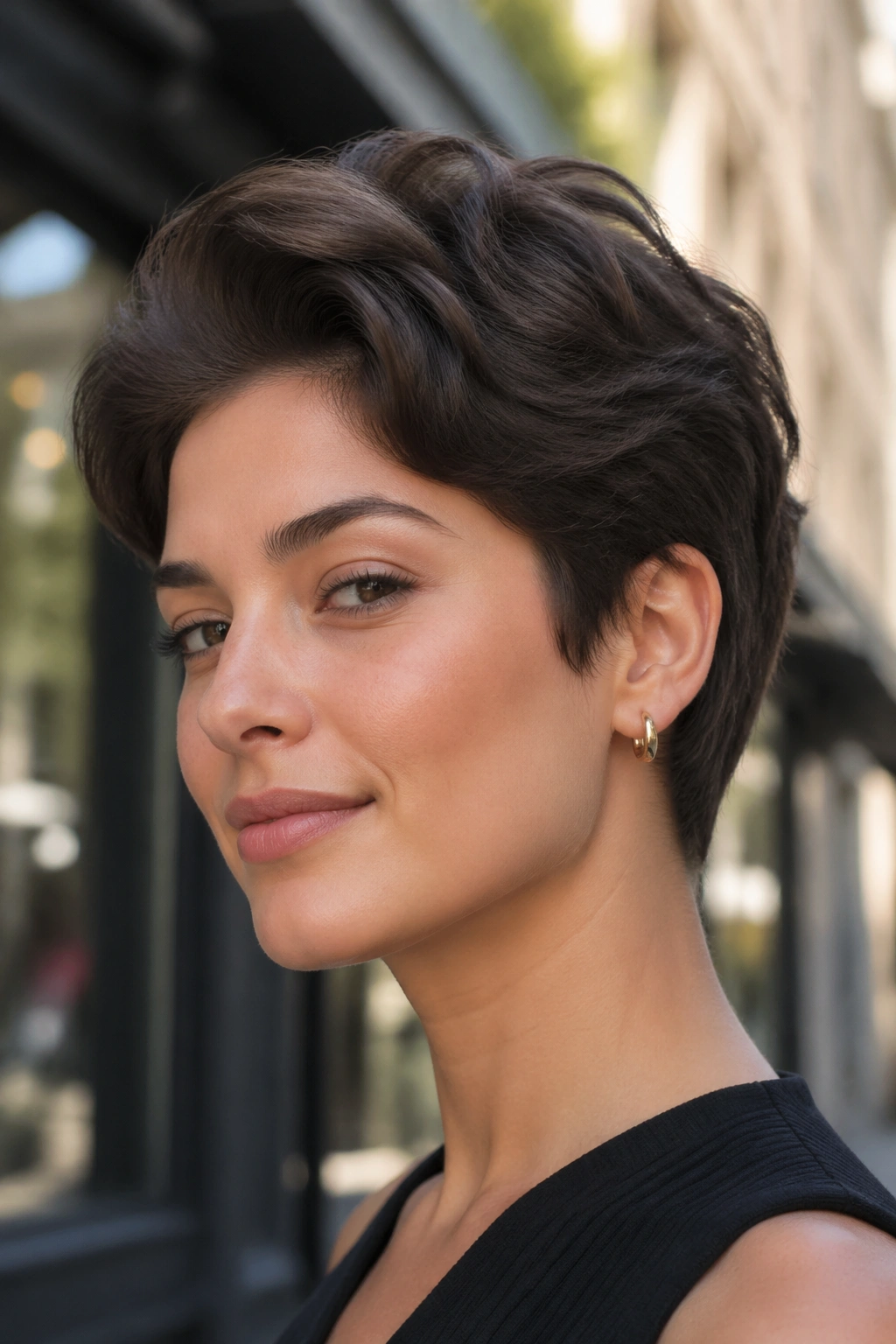
An ear-length crop is not for the faint of heart, but thick hair can carry it better than you’d think. The density gives the shape substance, so the cut doesn’t disappear or look wispy at this length.
The best version keeps the top a bit longer than the sides, maybe 2.5 to 3 inches, so you can push it forward, sweep it back, or tuck it with a little product. The ears stay visible. The neckline stays open. It feels sharp.
What to Notice
- Great for very dense hair that feels hot and bulky
- Needs careful shaping around the ears
- Works best with a strong bone structure or a bold style
- Styling takes under 5 minutes once the cut is set
This is one of those haircuts that rewards confidence more than effort. If you’ve been wanting to chop off the extra length, thick hair gives this cut enough body to hold its own.
17. Shaggy Pixie
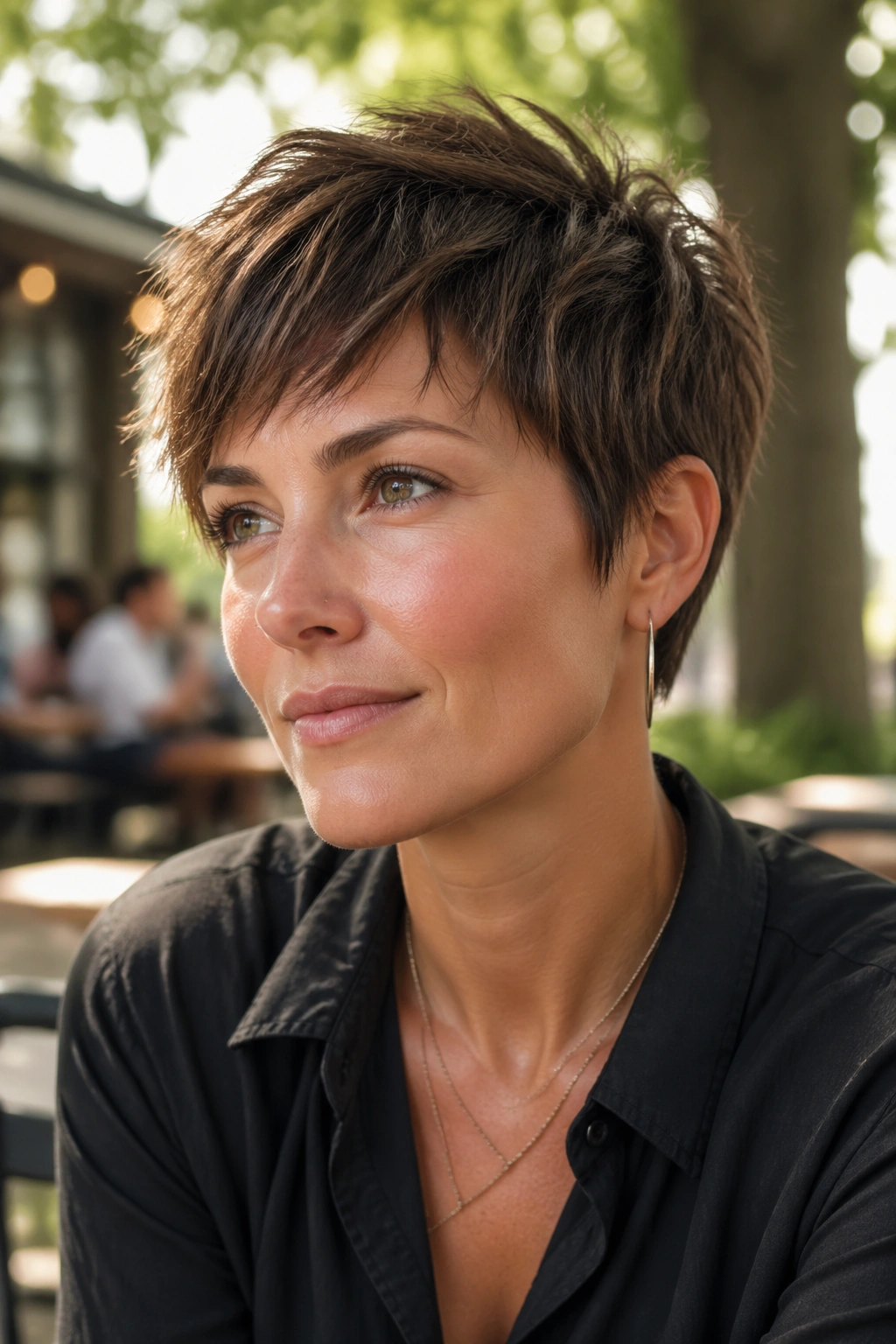
A shaggy pixie is the fun cousin in the room. It takes the neat outline of a pixie and loosens it up with choppy texture on top, which can look excellent on thick wavy hair. The density gives the pieces life, so the style never falls flat.
The upside here is movement. The downside is that it can look messy if the layers are too short all over. You want the top to have some length, and the sides to stay controlled enough that the shape doesn’t puff out at the temples.
A matte paste works well. Warm a small amount between your fingers and pinch the top into pieces. Don’t comb it into submission. That kills the point.
If your hair tends to get bigger as the day goes on, this cut can still work. The texture is part of the design, so a little roughness reads as intentional.
18. Mushroom Cut, Modern Version
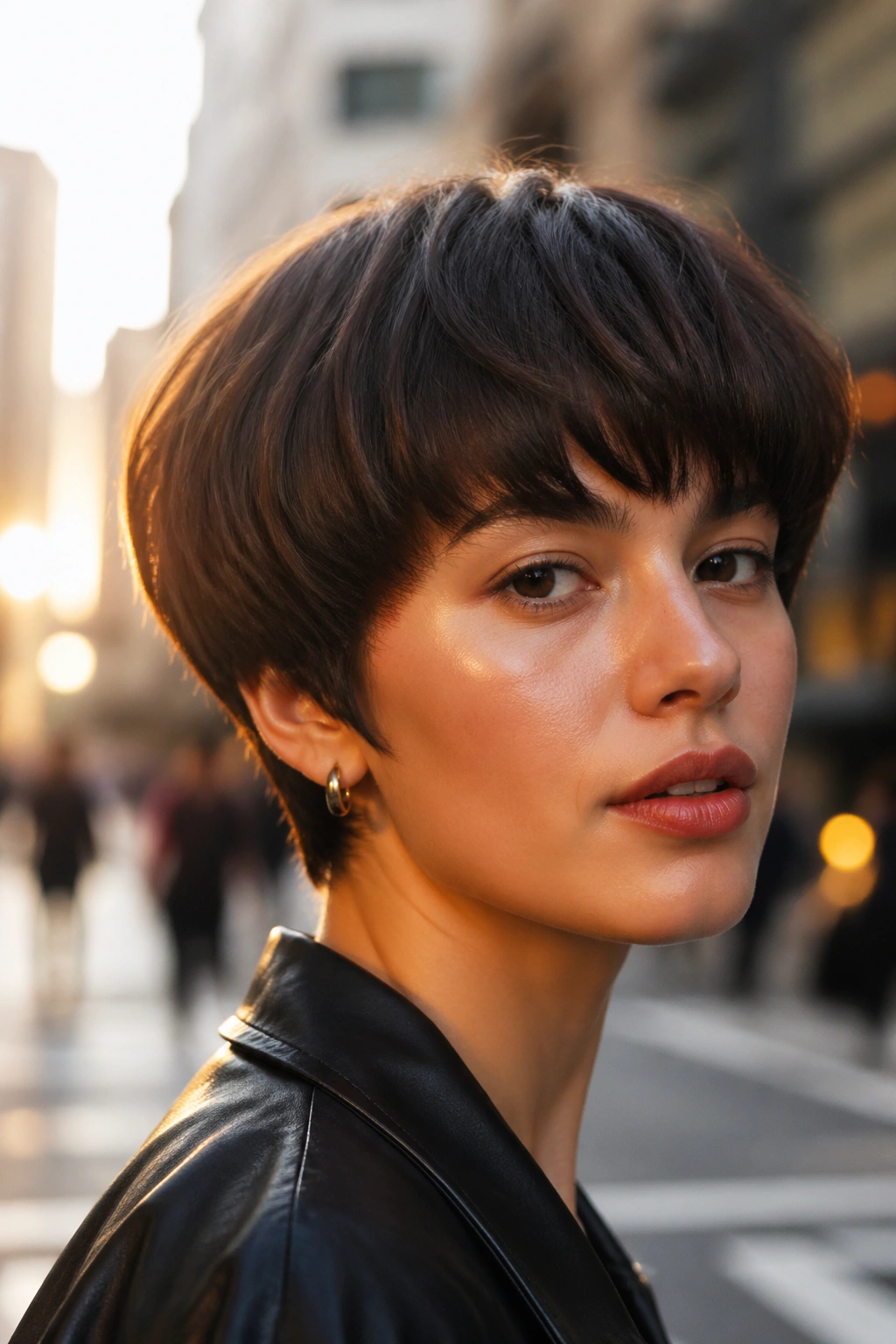
The modern mushroom cut is not the old bowl cut people used to joke about. This version has a softer top, a cleaner perimeter, and enough internal shaping to keep thick hair from sitting like one solid cap.
What makes it useful is the balance between density and control. The round shape flatters thick hair because the hair already has enough body to hold the silhouette. You’re not forcing volume. You’re directing it.
Best for
- Straight or slightly wavy thick hair
- People who want a bold shape with a soft edge
- Faces that suit a rounded frame around the forehead and cheeks
- Hair that gets bulky at the sides
If you like haircuts that feel graphic but not severe, this one deserves a closer look. It reads strongest when the top is smooth and the outline stays even.
19. Jaw-Length French Bob with Micro Fringe
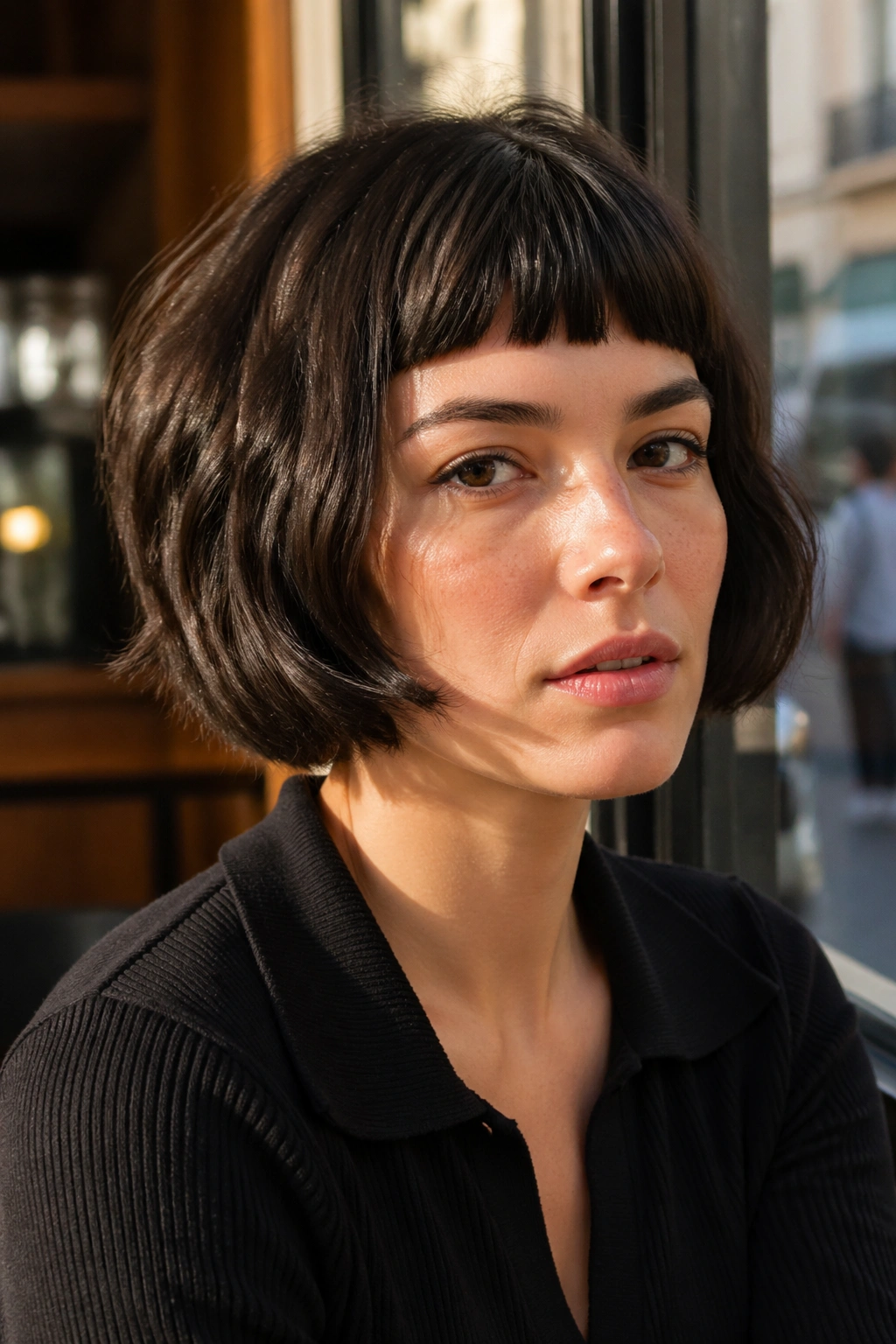
A jaw-length French bob with a micro fringe is a sharper, moodier version of the classic bob. The short fringe changes the whole balance of the cut, and on thick hair, that can be a smart move because it keeps the face open without adding extra width.
The micro fringe won’t suit everyone. It’s blunt, a little daring, and it puts the eyes front and center. But if you like strong lines and you don’t mind maintenance, it gives thick hair a crisp frame that feels intentional rather than cute.
Why It Works
The length hits the jaw, which is one of the cleanest spots for thick hair. The fringe removes some visual weight from the forehead while the bob keeps the rest of the cut compact. That combination stops the hair from taking over the face.
Small warning: micro bangs need more upkeep than people expect. A trim every 3 to 4 weeks keeps them looking neat.
20. Side-Part Crop for Thick Hair
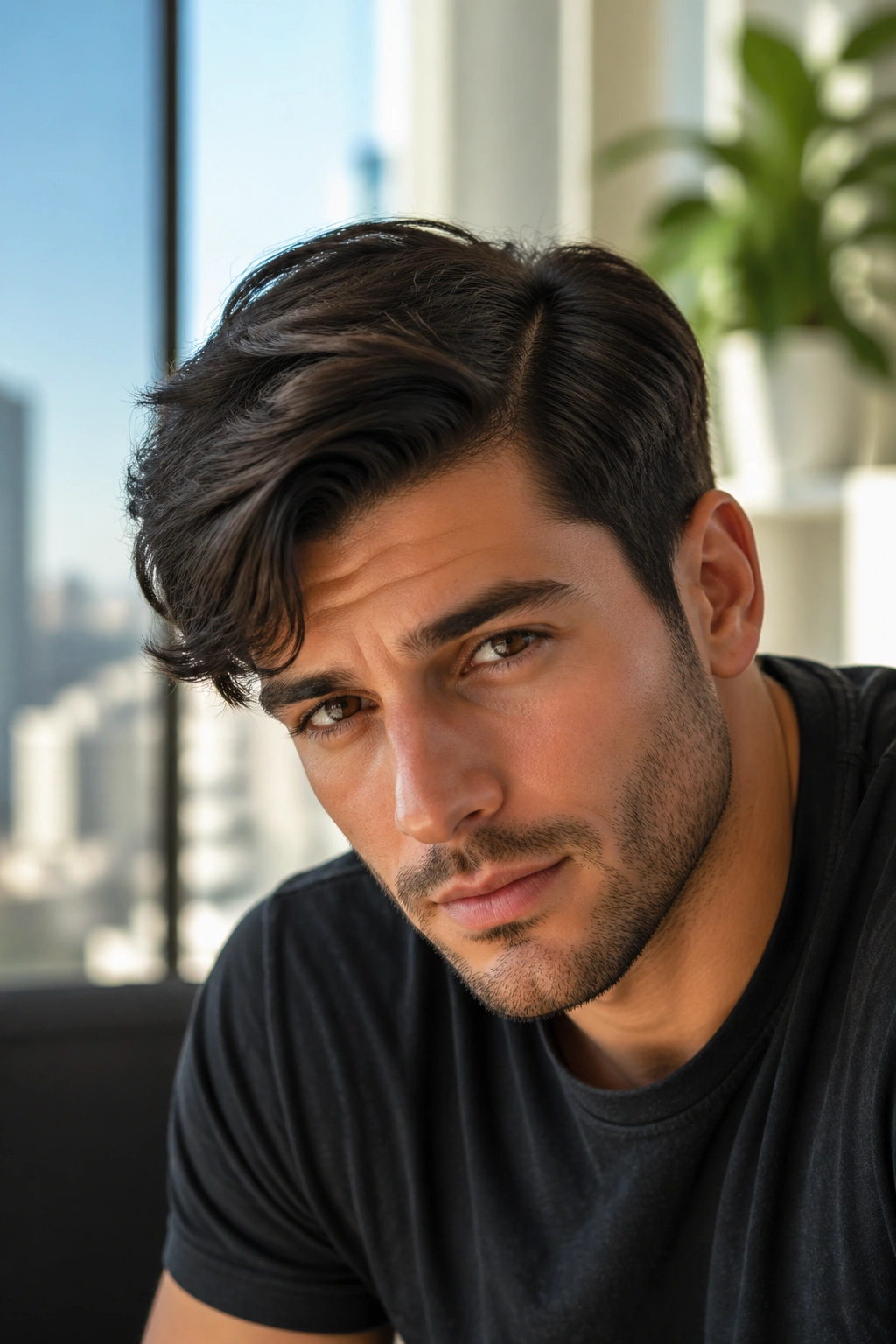
A side part can change everything when your hair is dense. It breaks up the crown, shifts the volume, and stops thick hair from sitting in a centered block. That’s why a side-part crop often looks more relaxed than the same cut worn dead center.
The crop itself can be simple. The parting does the work. Move the part about an inch off center, then let the top fall across the forehead or cheekbone in a soft sweep. Thick hair holds that shape well, which is part of the appeal.
This cut is especially good if your hair has a stubborn crown or wants to lift straight up after drying. A side part helps redirect the growth pattern and can make styling easier.
Use a light spray at the roots and dry the hair in the direction you want it to go. Do that while it’s still damp. Dry hair is far less cooperative.
21. Textured Pageboy
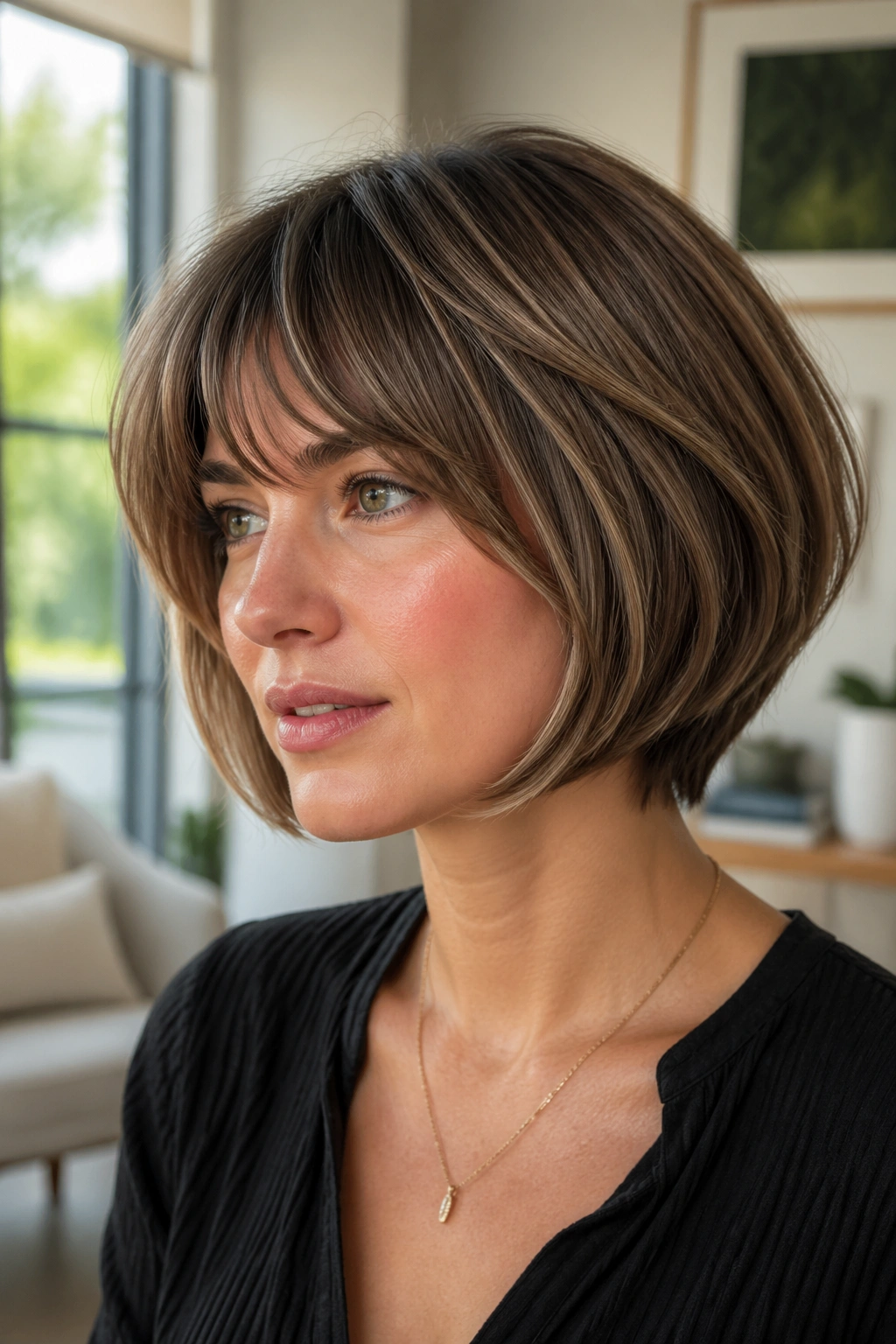
Is the pageboy too retro? Only if it’s cut too stiff. A textured pageboy keeps the rounded outline of the classic shape but adds softness through the ends and a little air under the layers, which thick hair can handle beautifully.
The charm of this cut is in the bend. It curves under slightly at the jaw, then opens around the neck, so the whole shape feels neat without looking severe. If your hair is thick and straight, that inward motion can keep the cut from flaring out.
How to Get It Right
- Keep the perimeter smooth
- Add light texture only through the inner layers
- Ask for a rounded silhouette, not a hard shell
- Blow-dry with a round brush and finish with a cool shot
This one suits people who like a tidy look but don’t want a blunt bob. It feels a little softer, a little more lived-in, and less obvious in the best way.
22. Soft Tapered Pixie-Bob

A soft tapered pixie-bob is a smart ending point because it borrows the best parts of both cuts. You get the shortness and ease of a pixie, plus the face-framing length of a bob. For thick hair, that mix keeps the shape flexible without letting the hair get puffy at the edges.
The taper at the nape matters here. It keeps the back close and neat, which stops dense hair from building a shelf under the occipital bone. The top stays slightly longer, so you can sweep it, part it, or rough it up with a tiny bit of cream.
This is a strong choice if you want a short haircut that can go polished or messy without a full restyle. It also grows out with more grace than people expect. The shape softens instead of collapsing.
If you’re sitting between “too short” and “too long,” this is often the cut that lands in the right spot. It respects thick hair instead of wrestling it, and that’s usually the whole game.
