



Short hair looks easy until the wrong cut sits on the wrong texture.
A blunt bob can make fine hair look fuller. The same shape can turn thick hair into a helmet. A pixie that looks sharp on straight hair can puff up on waves, and a curly crop that looks effortless in a photo can turn fuzzy if the layers were cut the wrong way. That’s why funky short haircuts are worth a proper look instead of a quick mood-board scroll.
Hair type matters. So do density, cowlicks, shrinkage, and the amount of bend your hair has when it dries on its own. A cut that flatters straight hair often needs a cleaner perimeter. A cut for curls usually needs room to spring. Coily hair wants shape, not a fight. Fine hair wants lift without too much thinning. Thick hair needs bulk removed in the right spots, or it just sits there like a heavy curtain.
The best short cuts don’t try to force every head of hair into the same shape. They work with what you’ve got, then add attitude. That’s the sweet spot.
1. Choppy Pixie That Gives Fine Hair Lift
A choppy pixie is one of the smartest funky short haircuts for fine, straight hair because it builds movement where the hair usually falls flat. The trick is not going too short everywhere. Leave enough length on top — usually about 1½ to 3 inches — so the crown can lift, then keep the sides and nape tight enough to make the top feel fuller.
What Makes It Work
The choppiness is doing the heavy lifting here. Soft point-cut ends and a little separation make the hair look airy instead of limp. Ask for texture in the top layers, but not so much that the ends go wispy and weak.
A tiny bit of matte paste or styling cream is enough. Warm it between your fingers, then pinch the top pieces upward and forward. If you brush it flat, the cut loses the point. If you overdo product, the hair clumps and shows every thin spot.
Best move: blow-dry the roots in the opposite direction of your part for 30 to 45 seconds. It sounds small. It changes everything.
2. Curly Bixie That Lets Loose Curls Move
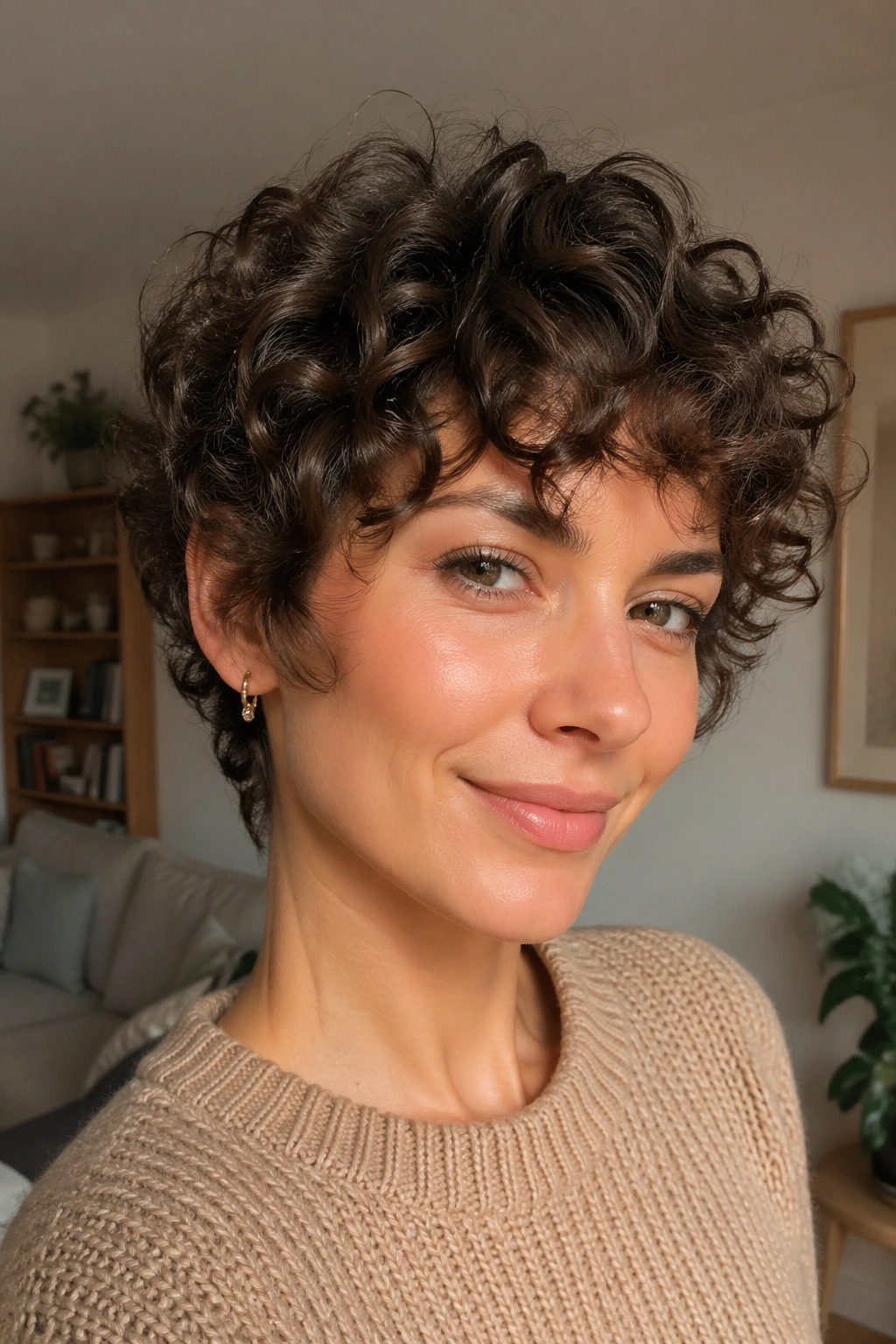
A bixie sits between a bob and a pixie, and that middle ground is a gift for loose curls. The hair keeps enough length to show the curl pattern, but the shape stays light around the face and neck. For 2C, 3A, and soft 3B curls, this cut gives bounce without building a big triangle.
Why It Works on Curl Patterns
Curly hair wants room to spring. If the cut is too short all over, the curls can bunch up and sit oddly high. If it’s too long, the shape gets bulky and the ends lose their spring. A bixie lands in the useful zone.
Ask for layers that start around the cheekbone or just above the jaw. That keeps the front lively and stops the back from getting boxy. A curl cream and a small amount of gel will hold the shape; a diffuser helps, but don’t blast it on high heat. Medium heat and low airflow keep the curl clumps intact.
How to Style It
- Scrunch in product while the hair is damp.
- Diffuse until the roots are set but the curls still feel soft.
- Break the cast with clean hands once the hair is dry.
- Refresh the front with a mist of water and a pea-sized amount of cream.
A bixie can look playful or polished. That range is the whole reason people keep coming back to it.
3. Blunt Micro Bob for Thick, Straight Hair
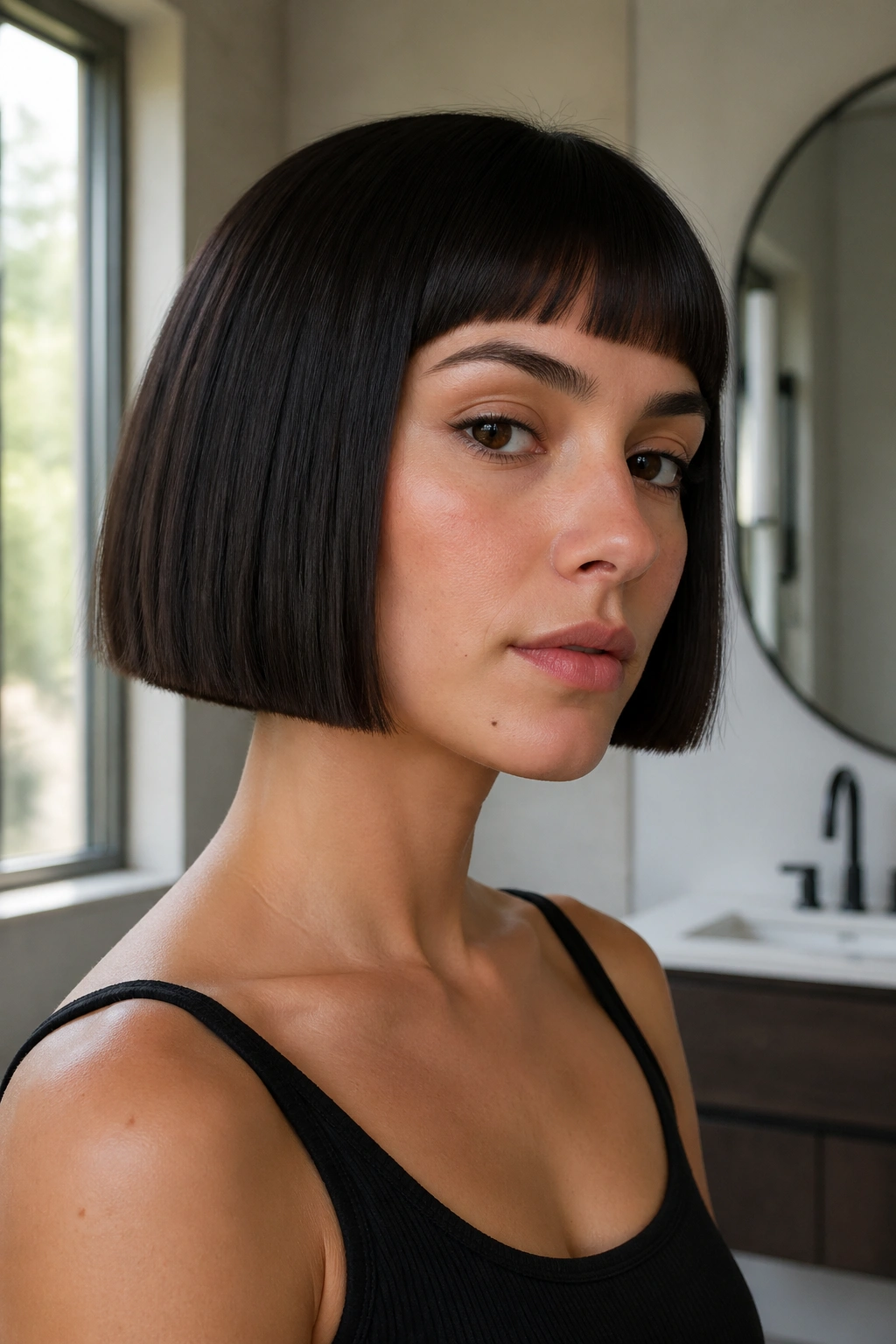
Thick, straight hair loves a blunt micro bob because the shape has somewhere to go. There’s no need to pretend the hair is lighter than it is. A clean line at the jaw or just below it gives the ends a sharp edge, and that edge keeps the cut from ballooning out.
Most people with thick hair get talked into too many layers. I’m not a fan of that, not for this shape. Too many layers can turn a crisp bob into a fluffy puff by lunch. A better approach is internal weight removal, done carefully, so the outside line stays solid.
The finish matters. Blow-dry with a paddle brush for a smooth surface, then tuck the ends under with a round brush only if you want a little bend. A dab of shine serum on the mid-lengths is enough. Heavy oil near the roots? No. That just makes thick hair look greasy faster than you’d like.
4. Asymmetrical Crop for Wavy Hair
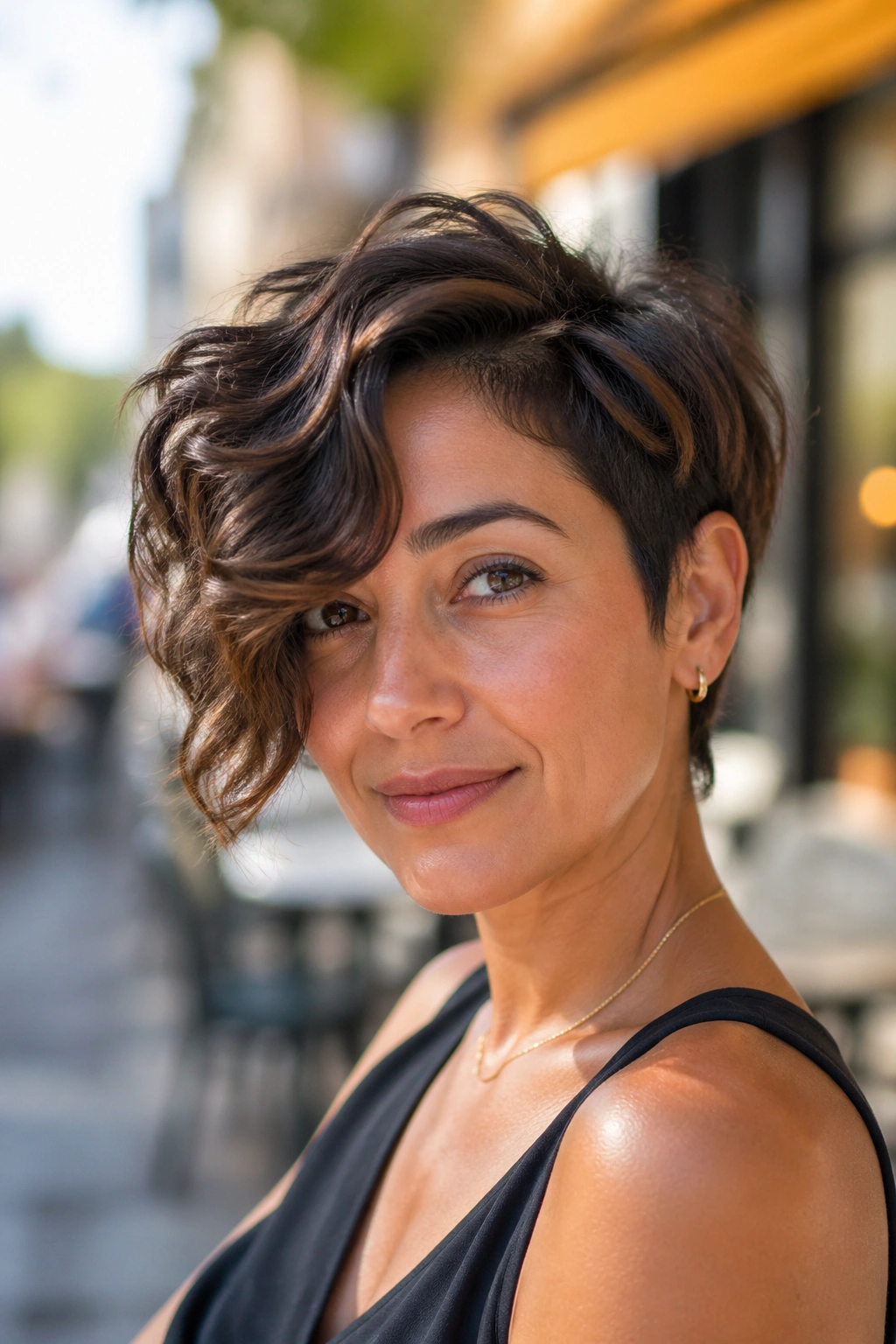
Wavy hair has a habit of doing its own little dance, and an asymmetrical crop leans into that instead of fighting it. One side sits a touch longer, the other side comes in closer, and the whole shape looks intentional even when you air-dry and go.
The reason it works is simple: waves already create motion. A perfectly even cut can sometimes make wavy hair look boxy, especially if the wave pattern is stronger on one side. A slight asymmetry breaks that up and gives the hair a sharper outline.
Ask for the longer side to skim the cheekbone or jawline. Keep the shorter side neat around the ear. A sea salt spray can help the wave pattern pop, but don’t drown the hair in it. Two or three sprays per section is enough. Too much salt spray on short hair makes the ends feel sticky, and nobody wants that.
5. Tapered Pixie for Coily Hair
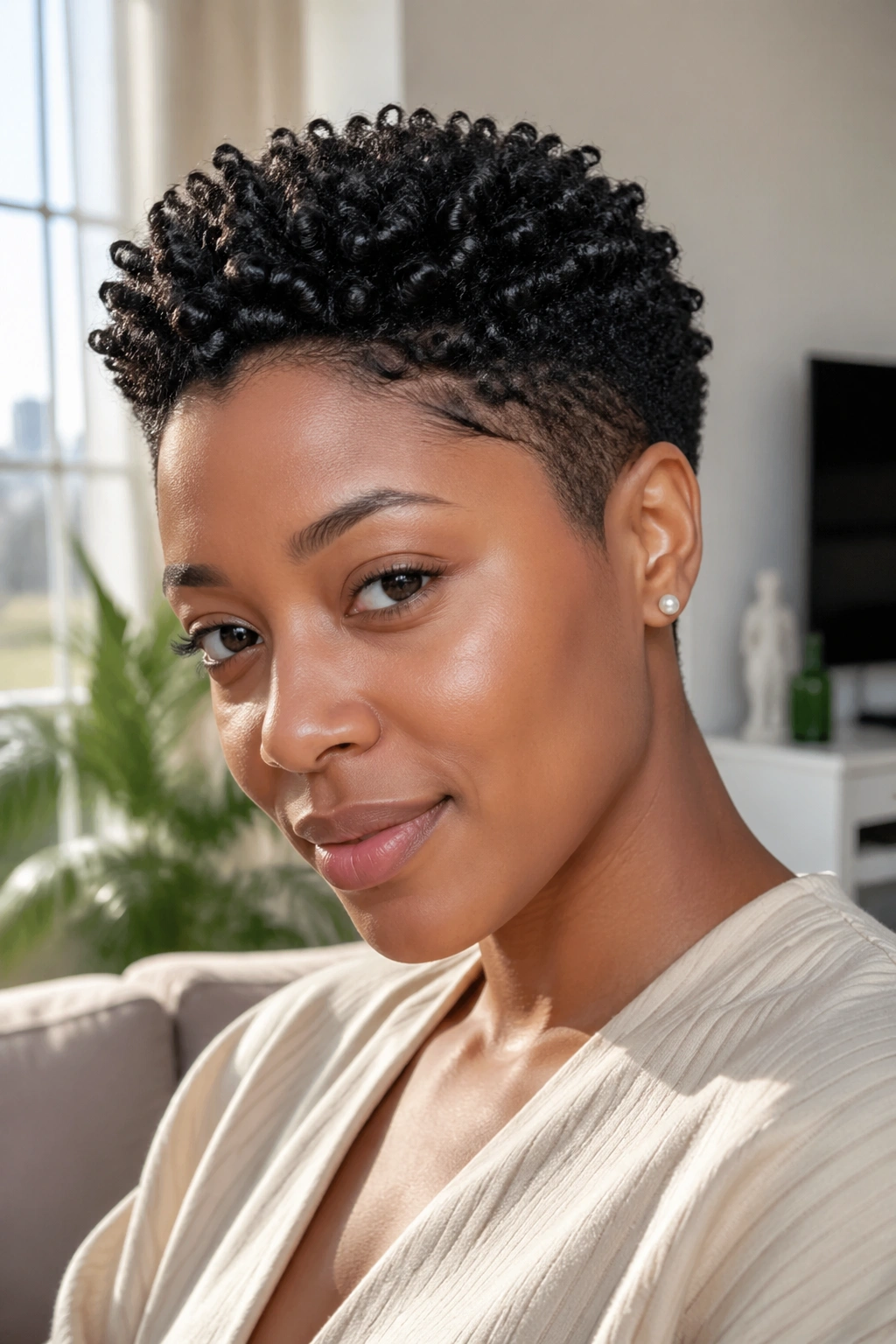
Coily hair shines when the shape is built around the coil, not against it. A tapered pixie keeps the sides and nape close, then leaves the top with enough length for the coils to form properly. On 4A, 4B, and 4C textures, that top length is the difference between a strong shape and a cut that feels too short to hold interest.
The taper also gives the neck some breathing room. That sounds small, but it changes the whole feel of the haircut. The back gets neat. The top gets to be the star.
A curl butter or cream with hold works well here, especially if your coils tend to dry out. Shape the top with your fingers, not a brush, unless you want to stretch the coils for a softer look. If the barber or stylist leaves the sides too bulky, ask for a cleaner taper. Bulk in the wrong spot can make the cut sit heavy. The right taper makes it look sharp and soft at once.
6. Razor-Shag Bob for Dense Hair
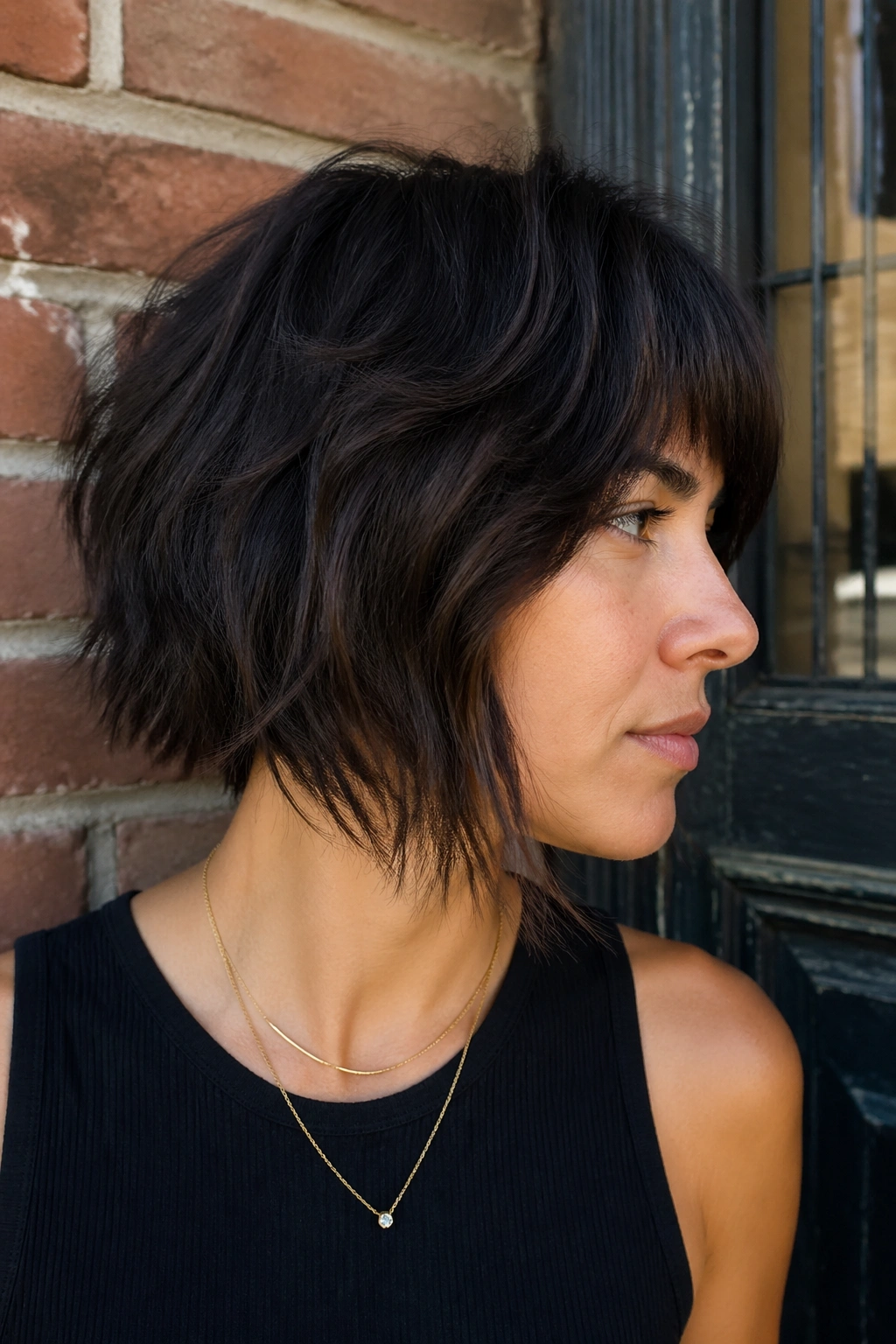
Dense hair can swallow a haircut whole if it’s not cut with some air in it. A razor-shag bob takes that density and breaks it into movement. The ends look a little feathered, the layers fall in a loose pattern, and the shape feels lighter without losing too much length.
This is a cut with personality. Not a careful, whispered personality either — more like it showed up in boots and a leather jacket. It suits thick, dense hair that tends to sit flat at the crown and heavy at the sides. The razor creates softness at the edge, while the shag shape keeps the top from collapsing.
What to Ask For
- Face-framing pieces that start near the cheekbone.
- Interior weight removal, not a ton of short surface layers.
- Soft fringe if you want extra movement around the eyes.
- A slightly longer front if your hair expands when it dries.
If your hair is very frizz-prone, tell the stylist that you want softness, not frayed ends. That difference matters. A good razor shag looks lived-in. A bad one just looks rough.
7. French Bob With Micro Fringe for Straight Hair
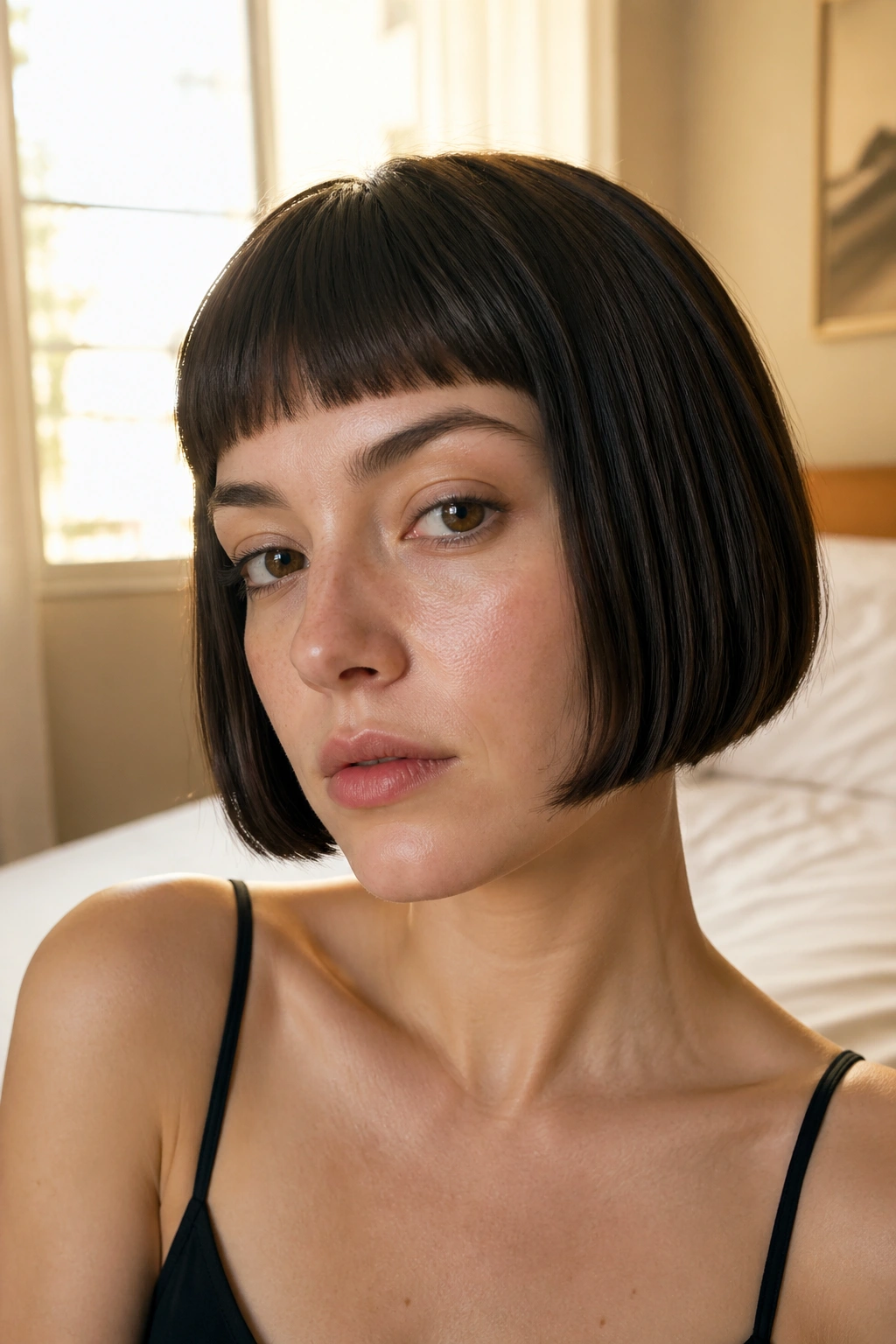
A French bob with a micro fringe is one of those short haircuts that looks cool without trying too hard. The length usually sits around the jawline, sometimes a little higher, and the fringe is cut short enough to show the brow line. On straight hair, that clean geometry reads fast and clear.
What makes it different from a standard bob is the little jolt of the fringe. That tiny band of bangs changes the whole mood. Suddenly the haircut feels sharper, a bit more graphic, and a lot less predictable.
Why It Feels Fresh
Straight hair can look too neat if the cut is too safe. The micro fringe fixes that. It adds a strange little twist at the front, and the rest of the bob can stay polished and simple.
A small round brush helps when drying the fringe, but don’t curl it into a helmet. You want a soft bend, not a hard arc. If your forehead is short or you hate frequent trims, this is not the easiest style to maintain. Bangs that sit that high need regular cleanup, and there’s no shortcut around that. Still, when the cut is right, it has a crisp, editorial feel that never gets boring.
8. Undercut Pixie for Thick Curly Hair
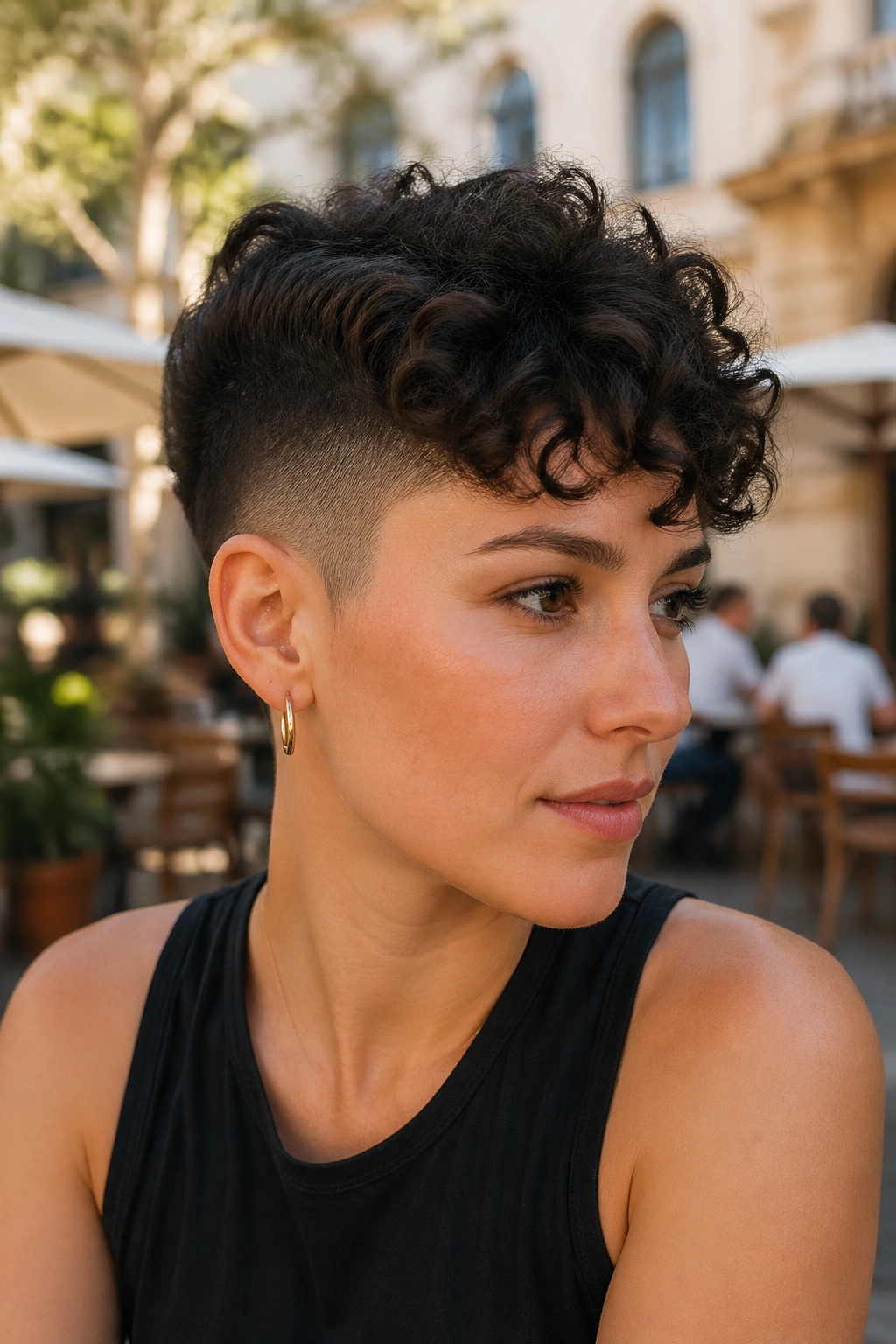
Thick curly hair can be stunning in a pixie, but only if the bulk is handled properly. An undercut pixie removes weight at the sides and nape, then leaves the curls on top with enough room to shape upward. That keeps the silhouette from turning round and puffy.
This is a bolder haircut, and I like it for that reason. It doesn’t pretend thick curls should lie flat. They won’t. The undercut gives the curls a clean base, which means the top can sit higher and feel lighter.
What To Tell The Stylist
- Keep the top long enough to show the curl pattern.
- Clip the nape close, but blend the edges so it doesn’t look harsh.
- Remove bulk under the crown where curls pile up.
- Leave enough length around the front for shape near the eyes or cheekbones.
Maintenance is part of the deal. Every 4 to 6 weeks, the short sides will need cleanup. That’s the tradeoff for the shape. If you want curls with structure and a little edge, it’s worth it.
9. Jaw-Length Box Bob for Fine Wavy Hair
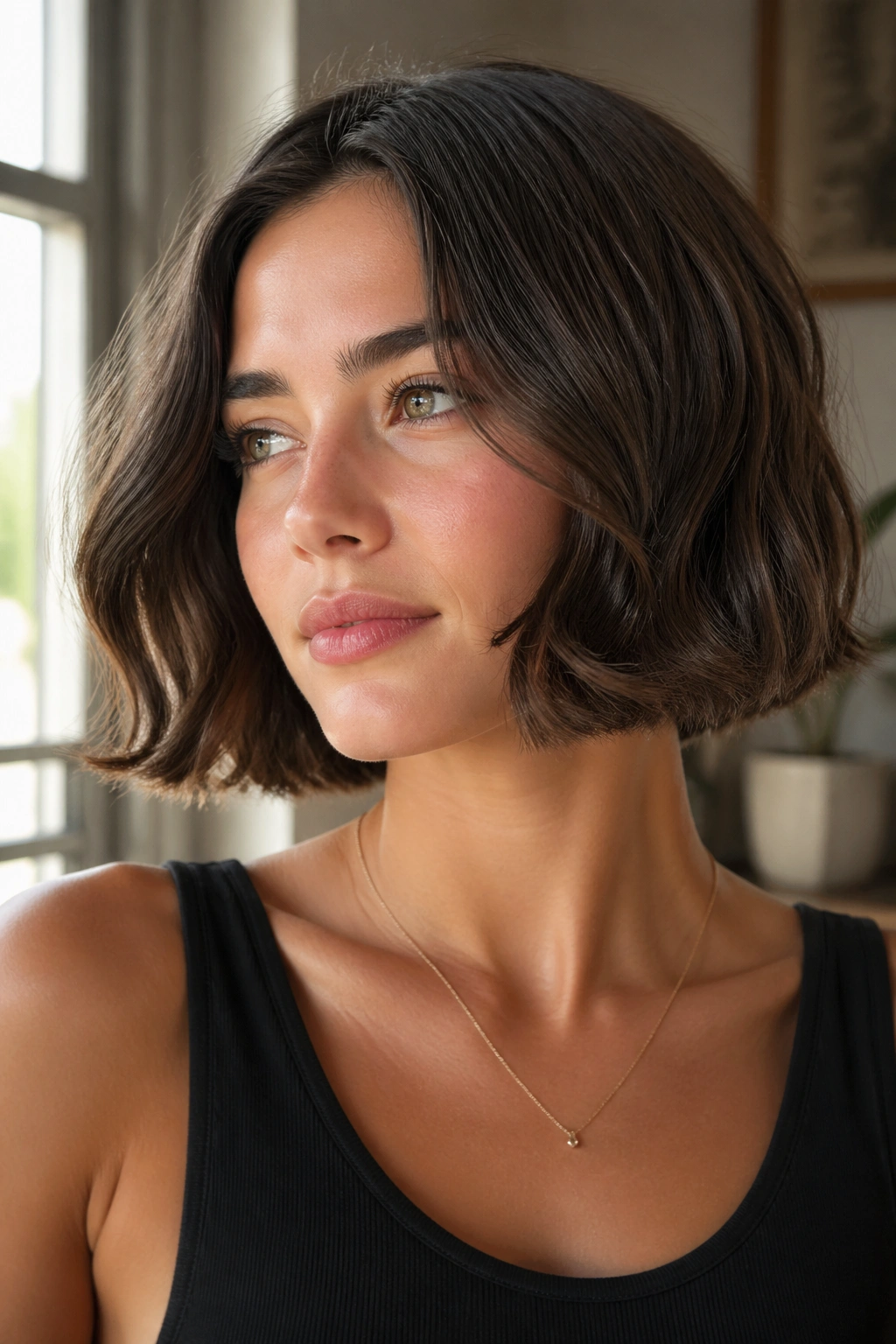
Fine wavy hair can get lost inside a lot of layers. A jaw-length box bob solves that by keeping the outline firm and the interior simple. The result is a blunt shape that makes the hair look denser than it is, while the natural wave stops it from feeling stiff.
This cut sits in a sweet spot. Short enough to lift the roots. Long enough to catch the wave pattern. If the hair bends even a little as it dries, the bob starts to move without needing much help.
A light mousse at the roots and a touch of cream through the ends is usually enough. Skip heavy masks on styling days; they can flatten fine hair fast. And if your wave pattern flips in odd directions, a side part can calm it down. Not a deep side part. Just enough to guide the front pieces away from the face so the cut falls cleanly.
10. Wolf Cut Crop for Textured Hair
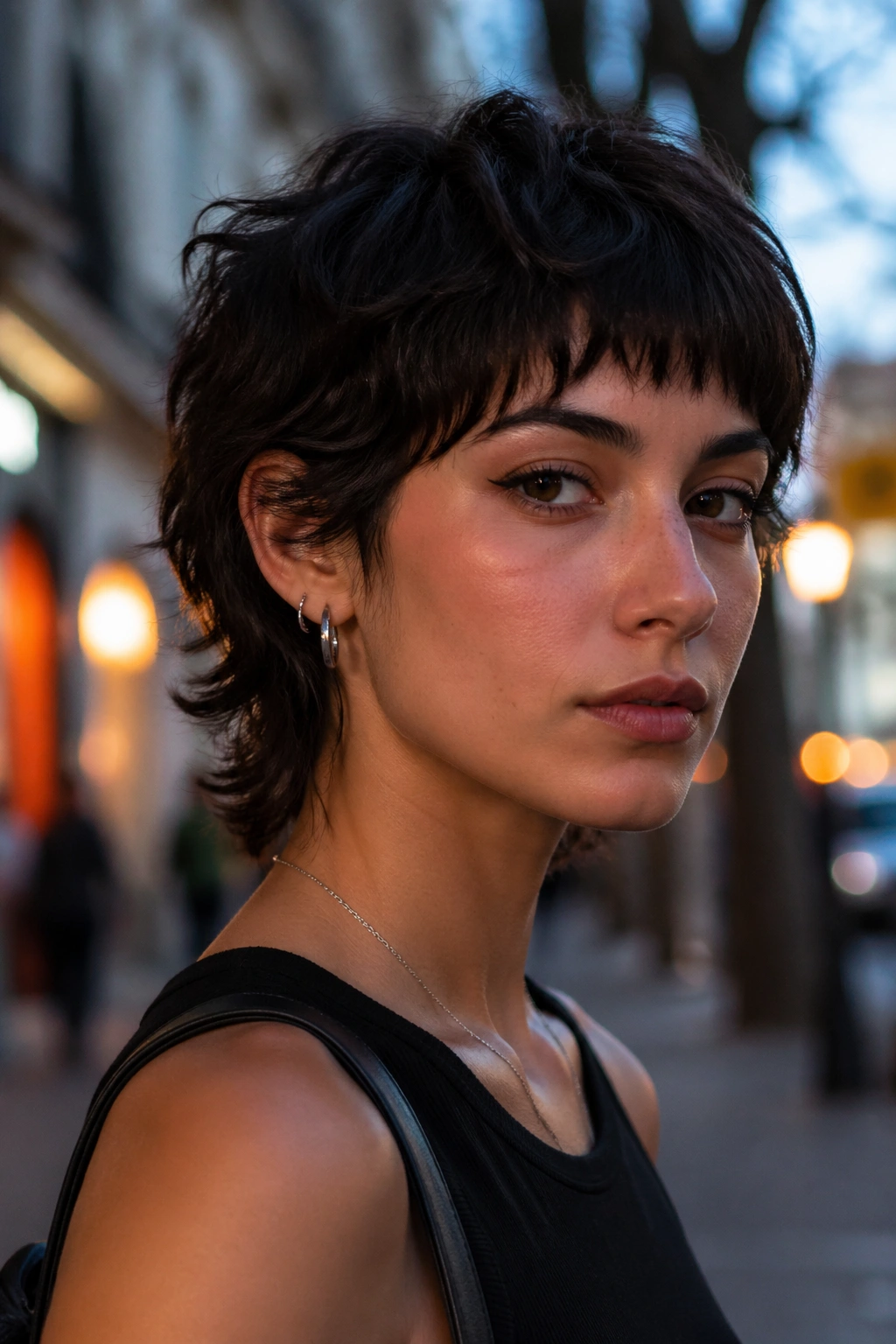
The wolf cut crop is messy in the best sense. Short layers, a bit of length in the back, and face-framing pieces give the hair a rough, cool shape that works especially well on textured hair. If your hair already has wave, curl, or natural bend, this cut tends to wake it up.
It’s not a haircut for someone who wants polished and quiet. It’s for someone who likes movement and doesn’t mind a little edge. The top layers create lift, while the back stays just long enough to keep the shape from looking too severe.
How To Keep It from Going Too Far
The biggest mistake is taking the sides too short. Then the cut starts to look like a mullet with no plan. Keep some softness around the temples and cheekbones, and let the crown layers fall in a shaggy way rather than a spiky one.
A curl-enhancing cream or a light texturizing spray usually does the job. Air-dry if you can. Diffuse only until the hair is about 80% dry, then stop. Overdrying textured hair makes the layers frizz out and lose the shape that makes this cut fun in the first place.
11. Feathered Crop for Medium Straight Hair

Feathered layers still have a place, and on medium straight hair they can look clean instead of dated. A feathered crop keeps the edges soft and the top airy, which helps straight hair move instead of lying in one flat sheet.
The nice thing about this shape is that it doesn’t demand a lot of product. A blow-dry brush or round brush, a heat protectant, and a light styling cream are enough. The layers should fall away from the face in pieces, not chunks. That matters. Choppy layers can make straight hair look uneven fast, while feathered layers keep the silhouette smoother.
This cut works especially well if your hair has a little body but still collapses at the crown. The feathering lifts the roots and gives the ends some swing. It’s one of those cuts that looks better when the wind hits it. That sounds romantic, but it’s also practical. A little movement hides a lot.
12. Mushroom Bob for Thick Straight Hair
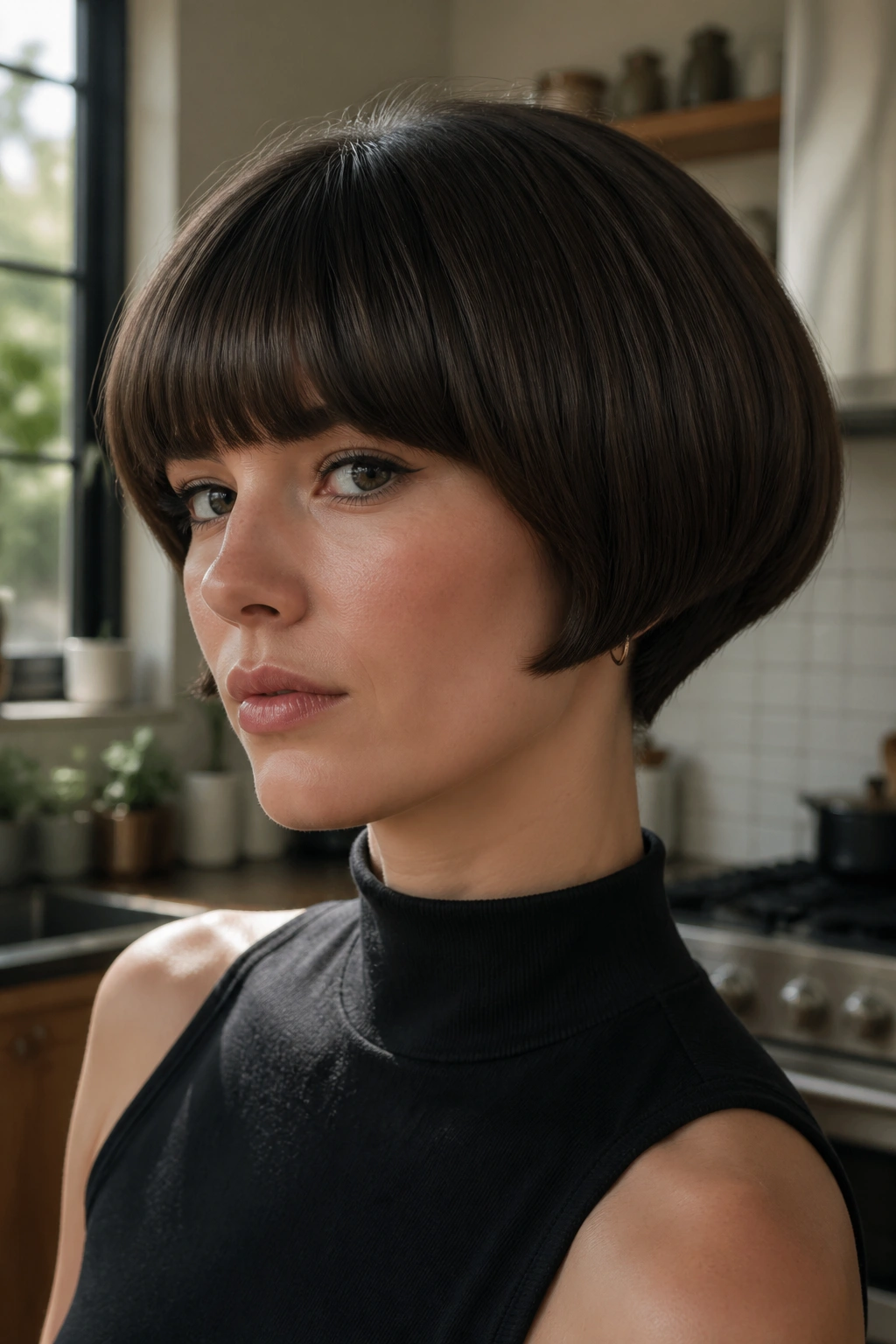
The mushroom bob is not a shy haircut. Good. Thick straight hair needs something with enough shape to hold its own. This cut has a rounded silhouette, a fuller crown, and a clean line around the perimeter, which gives the hair a bold, almost sculpted look.
People sometimes assume the mushroom bob feels too retro or too severe. Not if it’s cut well. A modern version keeps the fringe soft enough to move and the sides shaped so the whole cut sits neatly around the head, not like a helmet. The strength of the line is the point.
It looks especially good when the hair is glassy and smooth. A flat iron pass on the ends can tighten the curve, but don’t clamp the roots flat. Leave a bit of lift at the crown. If the hair is thick and stubborn, this cut can feel refreshing because it stops the bulk from spreading sideways. That alone is worth something.
13. Soft Mullet for Wavy or Curly Hair

A soft mullet has a bit of attitude, but the softness is what keeps it wearable. The front and sides stay shorter, the crown gets some lift, and the back carries more length. On wavy or curly hair, that shape gives the texture a place to stretch without swallowing the whole head.
The key word is soft. A harsh mullet can feel costume-like fast. This one should move. Think broken-up layers, not hard steps. The front can skim the cheekbone, and the back can graze the neck, but there should still be some blending through the sides so the haircut feels intentional.
Why It Works on Movement
Waves and curls naturally create width. A soft mullet uses that width instead of fighting it. The shorter crown gives height, while the longer nape keeps the shape from looking too puffy.
A little gel at the roots and curl cream through the lengths can help the pattern stay defined. Scrunch gently. Let it dry with minimal touching. If you like the rougher look, separate a few front pieces by hand once the hair is fully dry. Not before. Wet separation usually wrecks the curl clumps.
14. Side-Swept Pixie for Cowlicks

Cowlicks can be maddening. They can also be useful, which people forget. A side-swept pixie turns a stubborn growth pattern into part of the design. Instead of fighting the swirl at the front or crown, the haircut works around it and lets the sweep guide the eye.
This cut is especially good if your hair wants to stand up or split in the wrong place. A longer top, usually 2 to 3 inches, gives enough length to redirect the movement. The sides stay close, so the hair doesn’t keep trying to escape in six directions at once.
The part matters more than most people think. If one side keeps lifting, part the hair slightly against the cowlick and dry it that way for a minute or two. Then set it with a light paste. A strong gel can make the front look stiff, and stiff is the enemy when you’re dealing with a cowlick. You want control. Not a helmet.
15. Mini Shag for Thick Wavy Hair

Thick wavy hair can go triangular fast, and a mini shag cuts that problem off at the root. The shorter crown layers add lift, the face frame opens the front, and the wavy body gets to do what it wants without building a heavy block.
This is one of my favorite short hairstyles for people who say they want “something edgy” but don’t want a haircut that takes over their life. It feels playful, not precious. The layers should be short enough to create movement, but not so chopped that the ends look thin and ragged.
Good Details to Ask For
- Layers that start near the cheekbone and continue through the crown.
- A soft perimeter around the jaw.
- Enough weight left at the bottom so the cut doesn’t puff out.
- Texture through the inside, not shredded ends.
Styling is easy if you don’t overthink it. A diffuser, a dab of curl cream, and a tiny bit of mousse at the roots usually do the job. The hair will look best when it has a little roughness. Too much smoothing kills the shag’s whole personality.
16. Sleek Micro-Fringe Bob for Straight Hair
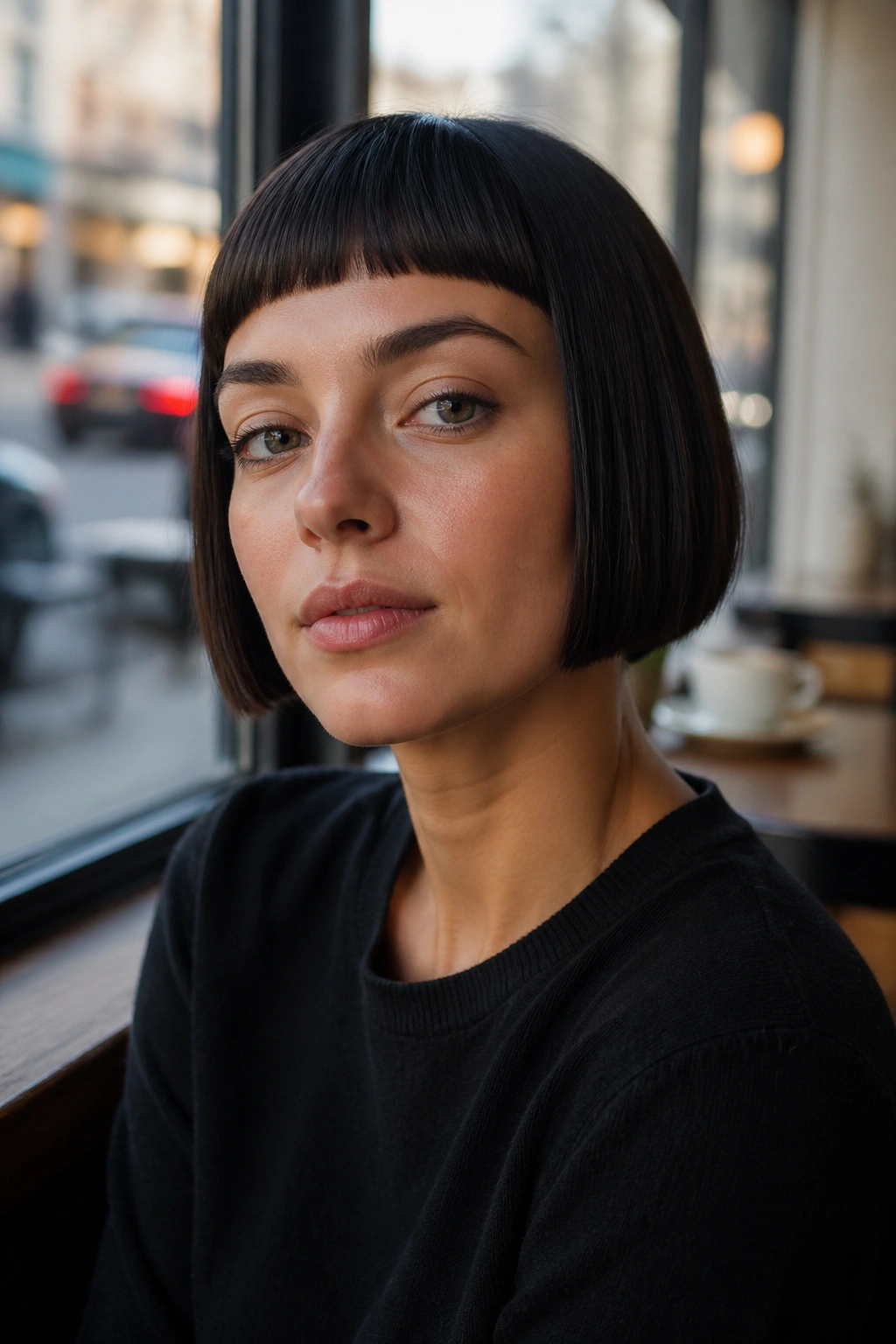
A sleek micro-fringe bob is clean, sharp, and a little weird in the best way. The hair sits close around the jaw or cheekbone, and the fringe comes in short enough to make the eyebrows part of the look. On straight hair, that combination feels precise and modern without needing extra decoration.
The reason it works is line. Straight hair can hold a clear edge, so the bob looks deliberate instead of fuzzy. The fringe adds a little tension at the front, which keeps the cut from falling into plain territory. If you like short hair that reads fashion-forward rather than safe, this is a strong move.
A straightening blow-dry or flat iron pass can make the line crisp, but stop before the ends get stiff. A soft inward bend at the tips gives the cut shape. And if you’re thinking about this style, be honest about maintenance. Bangs that short ask for regular trims. They don’t care about your excuses.
17. Tapered Frohawk for Coily Hair
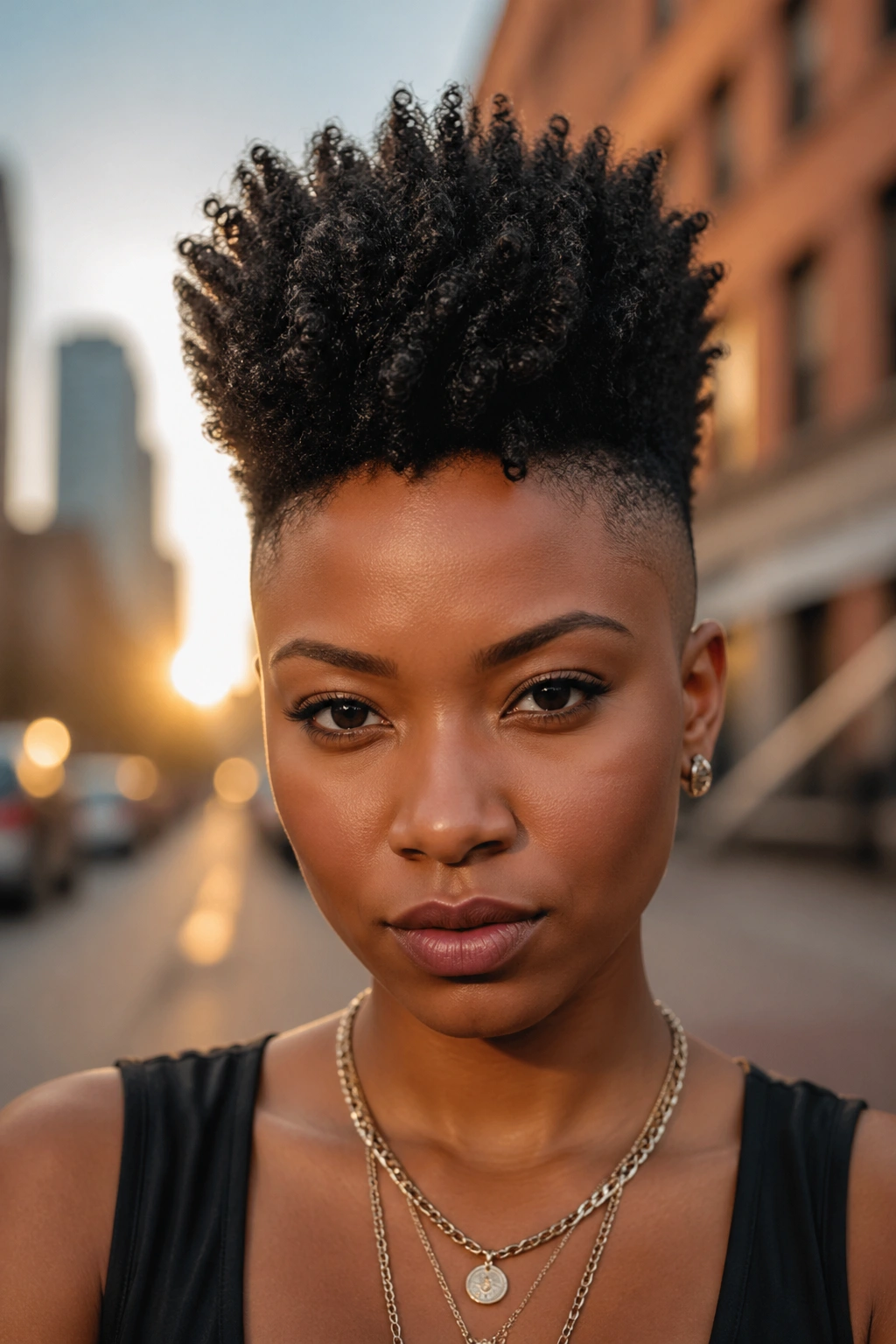
A tapered frohawk has presence. It keeps the sides and back short, then builds height through the middle so the coils can stand up and out in a strong strip of texture. On coily hair, that shape can look bold without feeling overworked.
The best part is how much personality it gives to shrinkage. Coily hair shrinks a lot when dry, and this cut uses that to its advantage. The taper frames the head cleanly, while the center section keeps enough length to show off the coil pattern.
Where the Shape Comes From
The center does not need to be huge. It needs to be balanced. Too much length in the middle and the cut starts to wobble. Too little and the whole point disappears. A good taper makes the top feel like it belongs there, not like it was added as an afterthought.
Edge control can help around the hairline if you like a crisp finish, but don’t plaster it on. Keep the hair flexible. A little curl cream on damp coils, then finger shaping, usually gives a better result than heavy product layers. This one looks strongest when the texture stays touchable.
18. Graduated Bob for Fine Hair
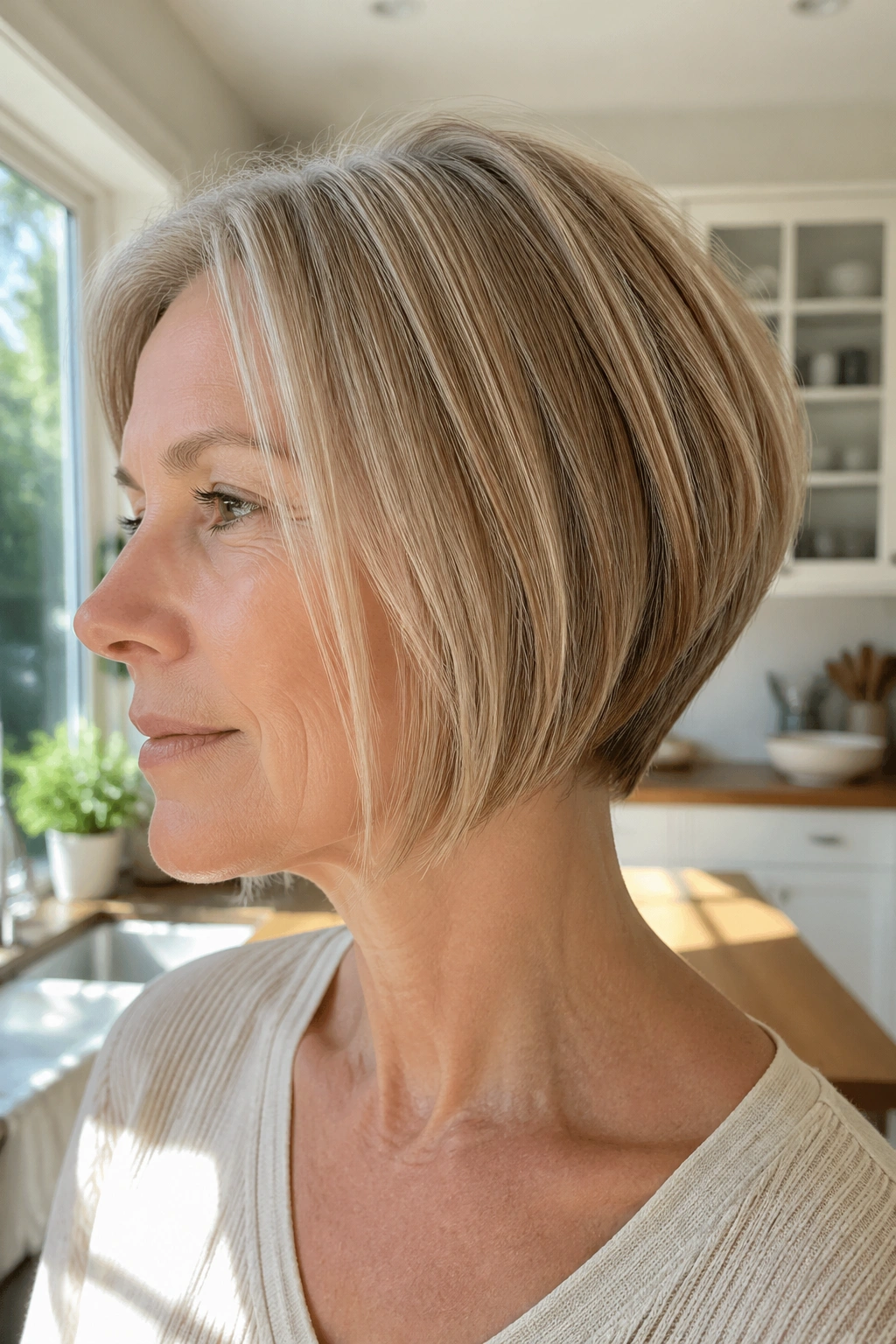
A graduated bob is one of the most useful short haircuts for fine hair because it creates lift through stacking at the back. The shortest layers sit close to the nape, and the length gets slightly longer toward the front. That little angle gives the illusion of thickness without needing a lot of bulk.
This cut is cleaner than a shag and more structured than a blunt bob. Fine hair often looks best with structure. Too many soft layers can make the ends see-through, which is the opposite of what you want. A graduate line gives the hair a body that stays put.
The back should be stacked enough to lift, but not so much that it turns into a wedge. That old-school look can be harsh if it’s too steep. A modern version keeps the front a little longer and the line softer around the face. Dry it with a round brush or a large vent brush, and finish with a touch of volumizing spray at the roots. Not much. Fine hair can get weighed down fast.
19. Disconnected Pixie for Thick Hair
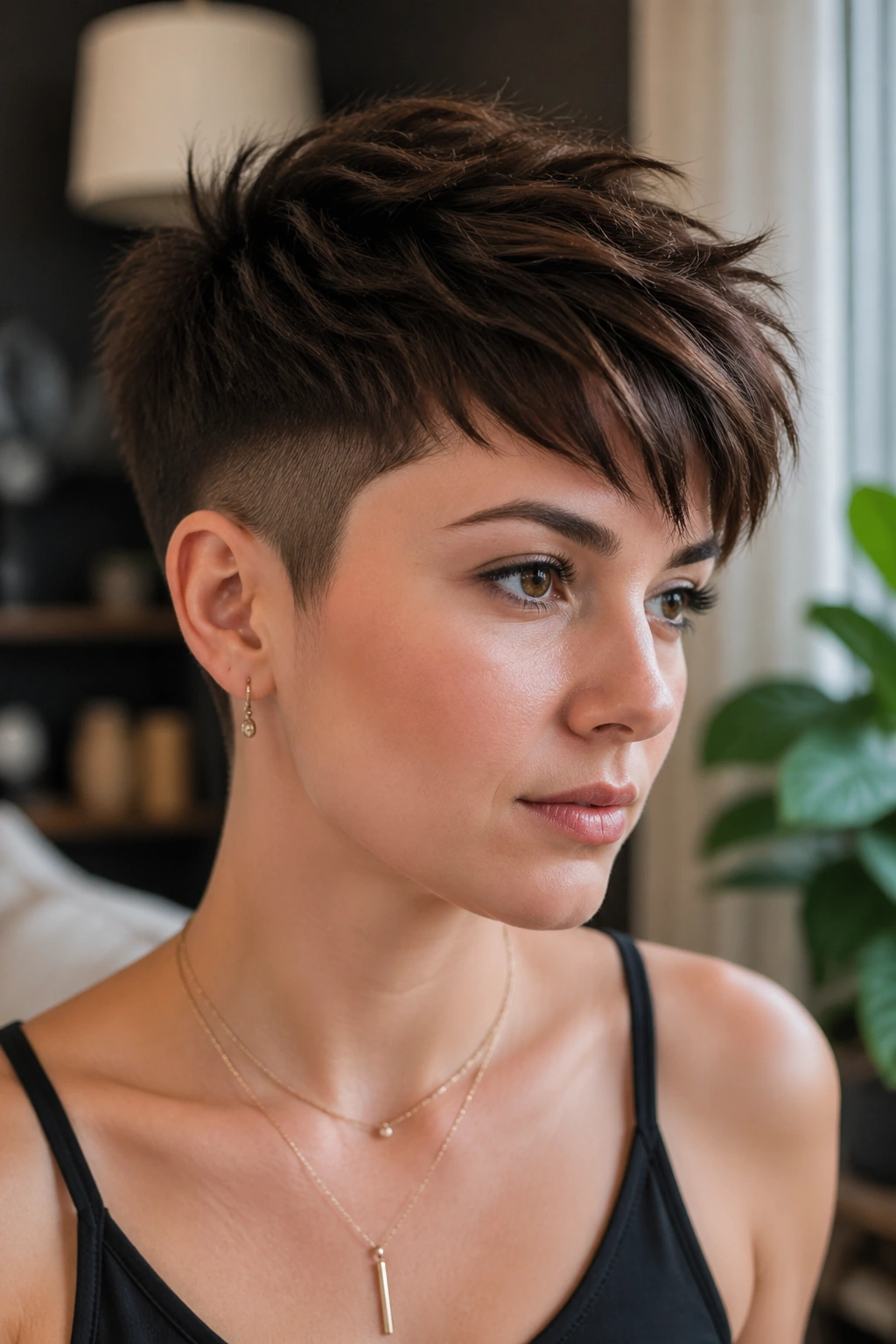
A disconnected pixie makes thick hair feel lighter without sanding off all its character. The sides stay very short, the top stays longer, and the transition between them is meant to be visible. That disconnect creates edge. It also keeps thick hair from expanding into a single block.
This cut has a little attitude, sure, but it’s practical too. Thick hair can be hard to style when everything is the same length. The top gets buried. The sides get bulky. A disconnected pixie solves that by giving the top a clear job and the sides a clean exit.
What Makes It Different
Unlike a soft layered pixie, this one wants contrast. The longer top can be swept forward, lifted, or pushed to one side, while the cropped sides keep the whole look tidy. That contrast is what gives the haircut its shape.
A clay or firm paste works better than a shiny product here. You want separation. Work the product through dry hair and pinch a few pieces forward. If your hair grows fast or your sides puff up between cuts, this style will ask for more trims than a longer bob. Still, thick hair usually earns the payoff.
20. Chin-Length Shag for Curls
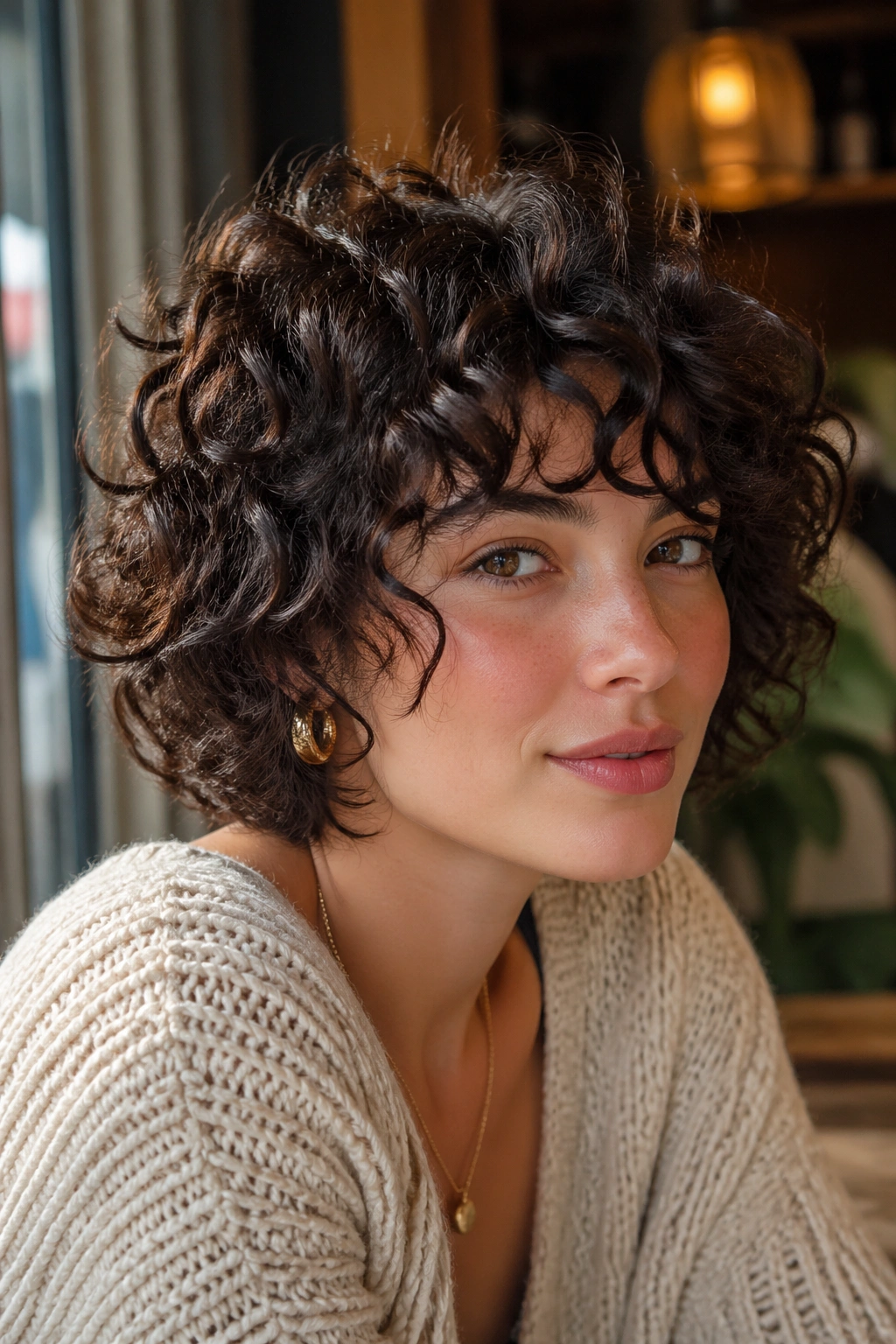
A chin-length shag is one of the kindest cuts you can give curls. The length lets the curl pattern form properly, while the layers stop the bottom from becoming a triangle. For 3A, 3B, and some 3C curls, the chin line keeps the shape lively and close to the face.
The cut works best when the stylist respects shrinkage. That sounds obvious, but it’s where a lot of curly cuts go wrong. Curls spring up. A lot. If the hair is cut too short while wet, the final result can land much higher than expected. A chin-length shag should be shaped with the dry curl pattern in mind, or at least with that shrinkage clearly understood.
A curl gel or mousse combo usually gives enough hold. Let the curls form their clumps, then leave them alone until dry. Once the hair is set, you can fluff the roots a little with your fingertips. Not a brush. A brush can blow the curl structure apart, and then you’re back to frizz city. Nobody needs that.
21. Jawline Bixie With Nape Taper for Almost Everyone
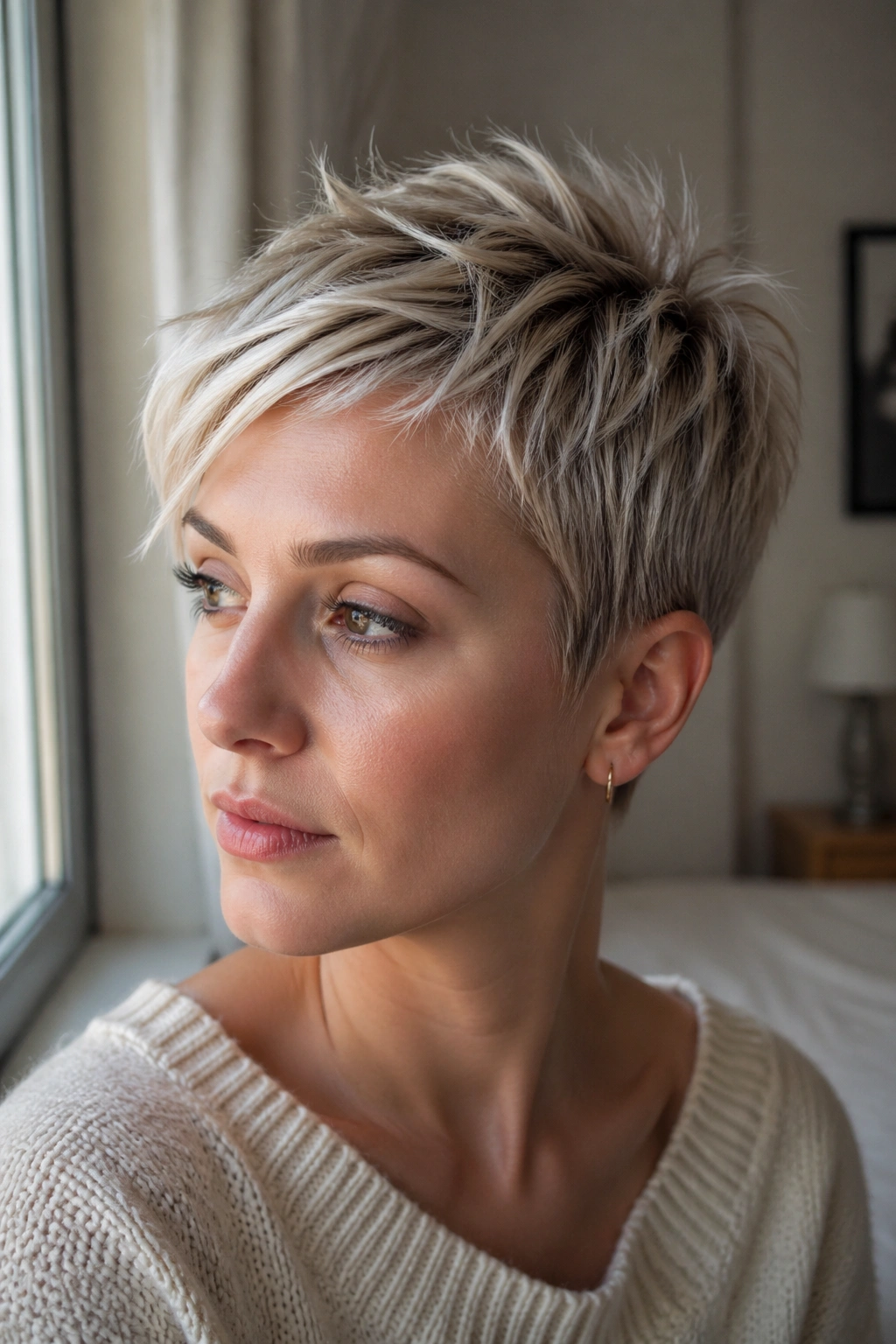
A jawline bixie with a nape taper is the kind of cut that keeps showing up because it has range. It sits close enough to read as short, but not so short that styling options disappear. The jawline length gives softness around the face, and the tapered nape keeps the back neat. That balance works on straight, wavy, curly, and even coily textures when the shape is adjusted properly.
What I like about it is the flexibility. You can make it soft with side-swept pieces. You can make it sharper with a cleaner fringe. You can leave more weight in the front for thick hair or keep the perimeter crisp for fine hair. It’s a haircut that doesn’t mind being personalized, which is more than I can say for a lot of trendy short cuts.
How To Make It Yours
If your hair is fine, keep the top slightly shorter so the crown lifts. If it’s thick, remove weight through the inside so the shape doesn’t swell. Curly hair needs longer face pieces so the curls have room to spring. Coily hair usually looks best with a tapered neckline and a little extra length at the top. One cut, four different moods.
The real trick is choosing a shape that respects your texture on a bad hair day. That’s where funky short haircuts earn their keep. They shouldn’t only look good when you spend 20 minutes with a blow-dryer and a mirror full of optimism. They should still feel like you when the air is humid, the crown misbehaves, or you’ve got five minutes and a coffee in your hand.
