



A great short haircut can make people think you spent twice as long getting ready than you actually did. A blunt bob can make fine hair look denser. A well-cut pixie can sharpen the face, show off your neck, and make earrings do half the work. Badly cut short hair, though, is merciless. Every line shows.
That’s why short hairstyle ideas need more than a pretty photo saved on a phone. The nape matters. So does where the weight sits, how the fringe falls, and whether the shape is soft enough to grow out without looking messy by week three. A cut that looks chic in a salon chair can fall flat at home if the balance is off by even half an inch.
The best short hairstyles do a neat little trick: they look polished without looking precious. Clean edges help. So do texture, a smart part, and a length that suits the way your hair actually behaves when it dries. Some cuts are all about crisp structure. Others lean into movement and a bit of bend.
Big payoff.
1. Soft Side-Swept Pixie
A soft side-swept pixie is one of those short hairstyles that looks intentional even on a rushed morning. The top stays a little longer, the sides are neat, and the fringe sweeps across the forehead instead of sitting straight on it. That tiny shift changes the whole mood. The cut feels lighter, gentler, and less severe than a sharp crop.
I like this shape for hair that has a bit of natural bend, because the side sweep gives it somewhere to go. It also plays nicely with glasses and strong brows. If you want something feminine without being fussy, this is a strong place to start.
Ask your stylist to keep the crown soft, not spiky. You want movement, not helmet hair.
A pea-sized amount of styling cream or light wax is usually enough. Work it through damp hair with your fingers, then push the fringe over with the flat side of your hand. If the front falls too flat, lift the roots with a small round brush and a quick blast of warm air.
2. Choppy Tapered Pixie
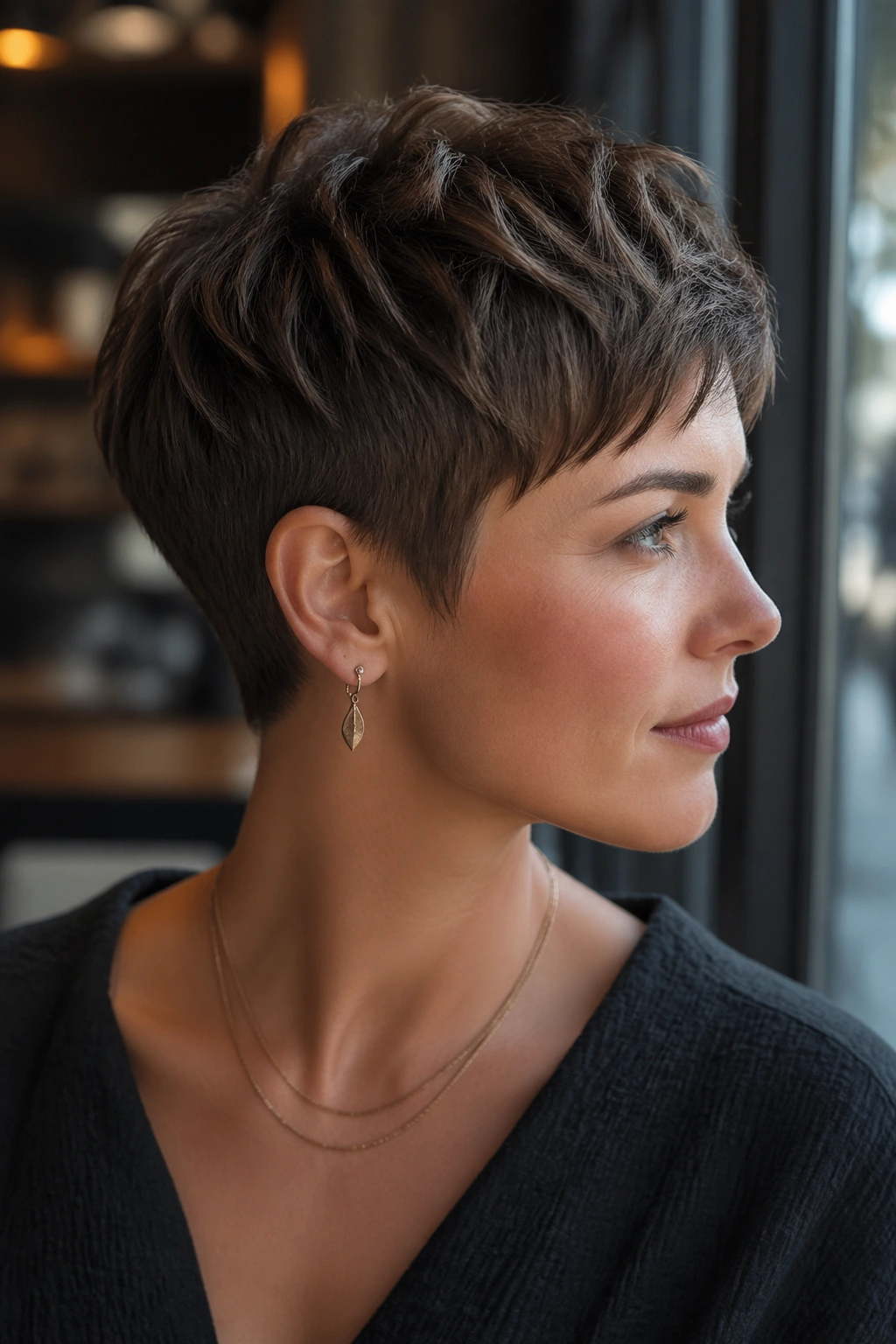
This cut has more edge, and that’s the point. A choppy tapered pixie keeps the back and sides close to the head while leaving broken-up texture on top, which stops the whole style from looking heavy. The taper at the nape keeps the neck clean. The choppy top keeps it from feeling too neat.
Why It Works
The blunt truth is that pixies look best when there’s some contrast. Short sides, longer top. Smooth nape, rougher crown. That mix gives the haircut shape even if you skip a full blow-dry.
It’s a smart choice for thicker hair that tends to puff out at the sides. The tapered back takes away bulk where you do not want it. On finer hair, the chopped top can create the illusion of more lift without needing a mountain of product.
How to Style It
- Use a matte paste, not a shiny gel, if you want the ends to look piecey.
- Blow-dry the crown upward with your fingers for about 30 seconds.
- Pinch small sections between your fingertips so the texture looks broken up, not clumped.
- Book a trim every 4 to 6 weeks if you want the taper to stay crisp.
Pro tip: ask for the nape to be cleaned up a little higher than you think you need. It keeps the shape looking fresh longer.
3. Slick Side-Part Pixie
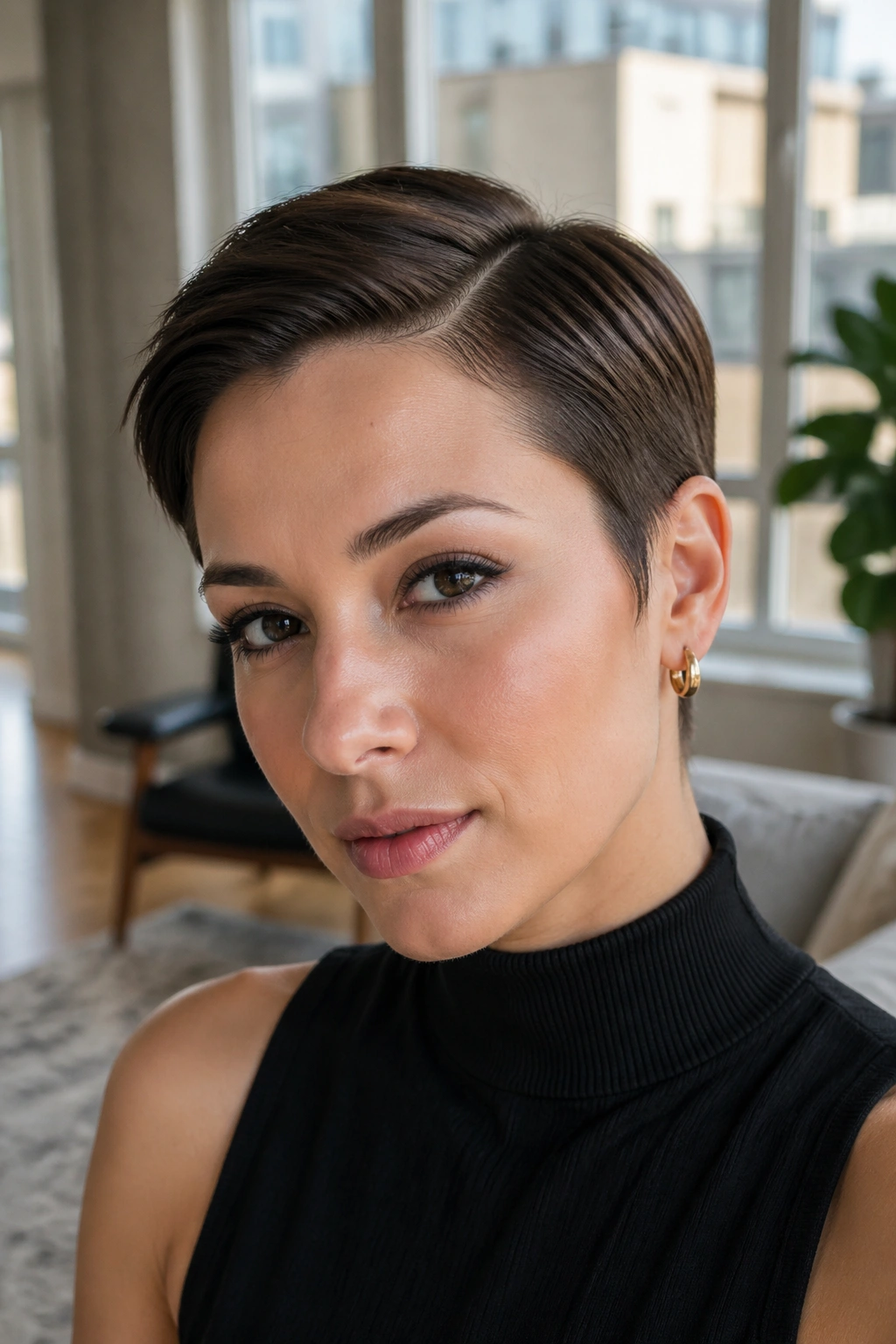
A slick side-part pixie is the haircut I’d choose when I want short hair to look sharp instead of sweet. The side part creates a diagonal line across the face, which gives the style an immediate sense of structure. One side sits close. The other side has a little sweep and lift.
There’s something especially good about this cut on straight hair. It holds the shape cleanly and doesn’t fight the geometry. On wavier hair, the part can tame the texture without flattening it to death. The result feels polished, but not stiff.
This is also one of the best short hairstyles if you like a bold earring or a strong lip. The hair gets out of the way and lets the rest of your look do the talking.
Use a light pomade or serum on dry hair, then comb the part in place and smooth the sides with your palms. Don’t overload the top. You want sheen, not grease. A comb tooth or a tail comb can help keep the part precise, which matters more here than people think.
4. Curly Pixie With Crown Lift
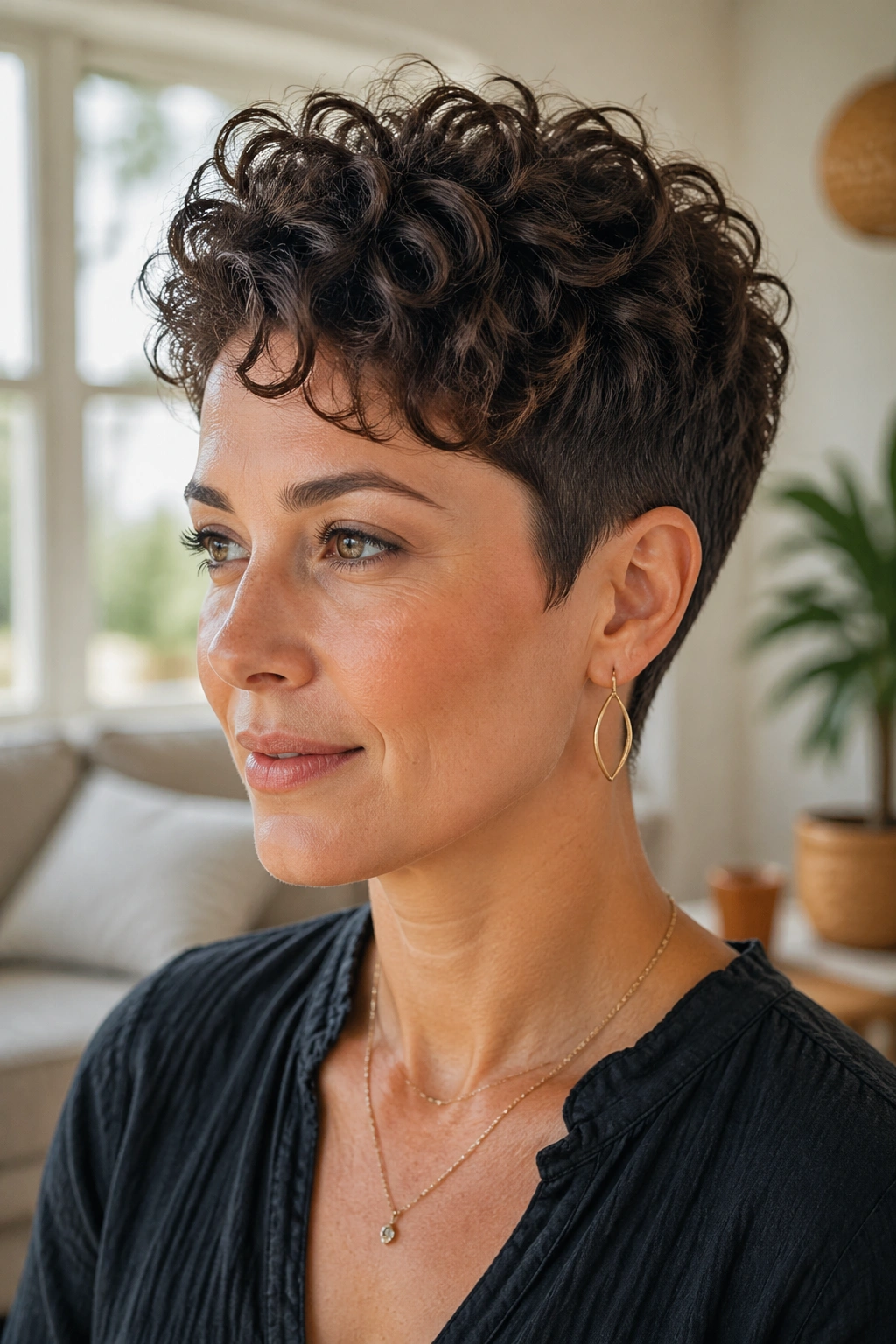
Can a pixie work on curls? Absolutely, if the cut respects the curl pattern instead of fighting it. A curly pixie should be shorter at the sides and back, with enough length on top for the curls to spring up instead of collapsing. That crown lift is the whole game.
The best versions have a little softness around the hairline so the shape doesn’t look boxy. Too much bulk on the sides can make a curly pixie balloon outward in a bad way. A good stylist will carve the outline with the curls dry or nearly dry, so the natural shape guides the cut.
What to Watch For
- Ask for curl-specific shaping, not heavy razor work through the whole head.
- Leave enough length on top for at least one full curl pattern.
- Diffuse on low heat, low speed, and stop when the roots are about 90 percent dry.
- Use a cream or gel that defines the curl without leaving a crunchy shell.
This cut shines when you want volume without length. It feels playful, but it’s not sloppy. And yes, a little frizz is fine. On curly hair, a tiny bit of lift often looks better than perfect smoothness.
5. Bixie Cut With Feathered Layers
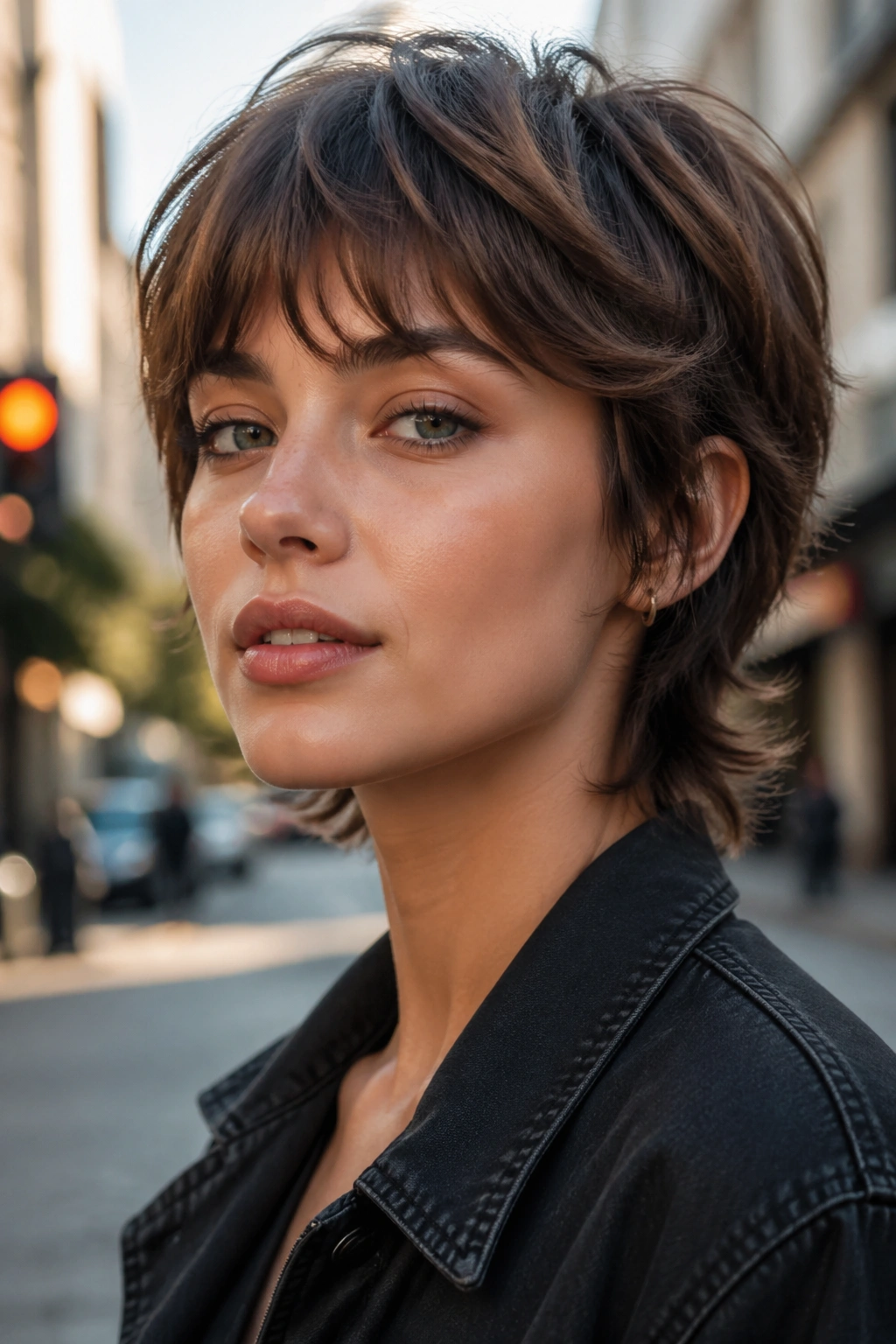
The bixie sits right between a pixie and a bob, and that in-between energy is exactly why it keeps showing up in short hairstyle ideas. It gives you the shorter neckline and cropped feel of a pixie, but with enough length around the ears and jaw to feel softer than a classic close cut.
That feathered layer work matters. Without it, the style can turn chunky fast. With it, the ends move. They fold in, flip out, or tuck under with very little effort. It’s one of the easiest cuts to grow out because the shape already lives halfway toward a bob.
I especially like this on hair that’s thick enough to hold a shape but not so dense that it turns bulky. It also flatters people who want short hair but are nervous about going full pixie. The bixie is a polite way to do it.
A little mousse at the roots and a round brush at the crown are enough for most days. If you want more texture, twist small sections around your fingers while they’re still damp. That gives you movement without the stiff, over-styled look.
6. Chin-Length Blunt Bob
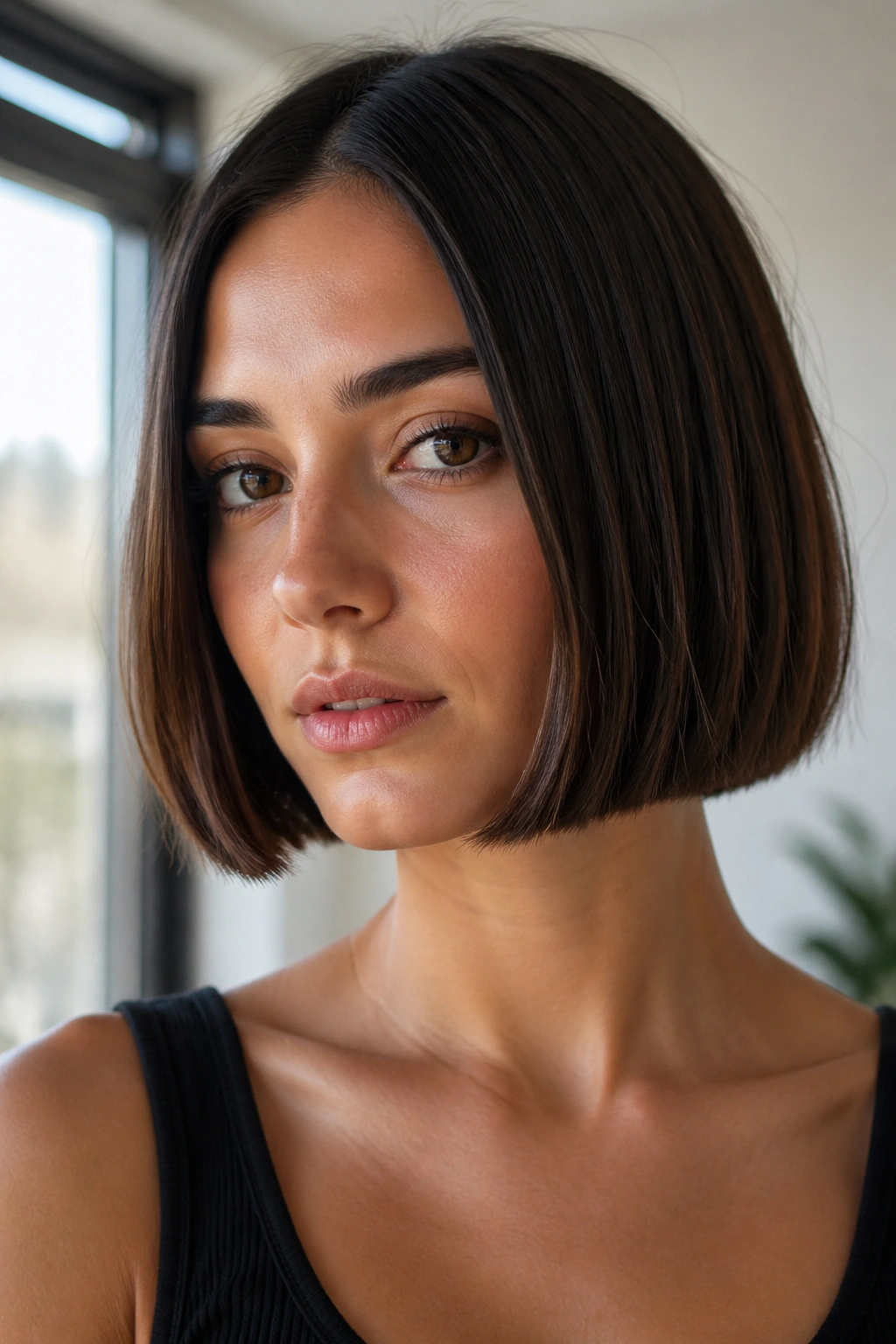
If your hair is fine, this cut can feel like a cheat code. A chin-length blunt bob creates a strong, even line that makes the ends look fuller than they are. No soft feathering. No wispy bits hiding at the bottom. Just a clean edge that lands right around the jaw.
The magic is in the weight. Because the length is one solid block, the hair doesn’t scatter light the way long layered hair can. It reads as denser. It also looks expensive in the plainest sense of the word: the shape is tidy, direct, and hard to mess up.
A center part gives it a modern feel. A side part makes it softer and more forgiving on rounder faces. Either way, the cut needs regular trims, because a blunt bob loses its snap once the ends start to fray.
Blow it dry with a paddle brush if you want it smooth, then bend the last half-inch under with a flat iron if the ends stick out. Keep the line clean. That’s the whole point.
7. French Bob With Micro Bangs
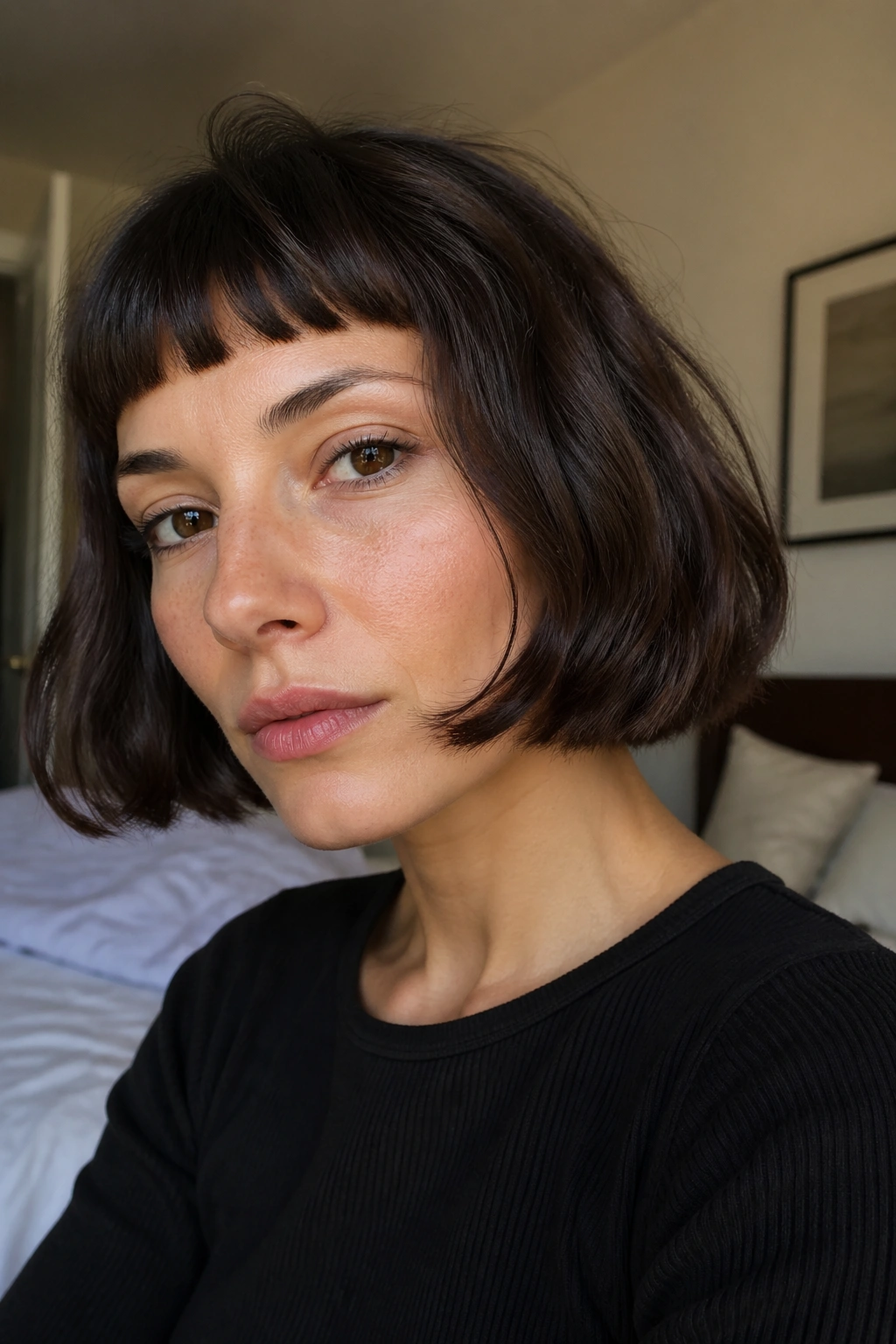
A French bob with micro bangs has a little attitude, but not in a loud way. The length usually sits around the cheekbone or jaw, and the fringe is cut short enough to show a sliver of forehead. That sharp little detail changes the balance of the whole face.
It looks especially good when the hair has a soft wave or bend, because the shape feels relaxed instead of overworked. Straight hair can wear it too, but then the cut needs a touch more softness through the ends so it doesn’t look too severe. The trick is to let the bob move while the bangs stay deliberate.
Where It Shines
- It frames the eyes fast.
- It works well with minimal styling, especially if your hair has natural texture.
- It gives small features more presence.
- It can make a strong jaw look even sharper.
This is one of those short hairstyles that reads as chic without trying too hard. A quick blow-dry with a small round brush is usually enough. If the bangs sit too flat, lift them at the roots with a fine comb and a burst of air. Tiny bangs need less product than people expect. Use too much, and they separate in a weird way.
8. Italian Bob
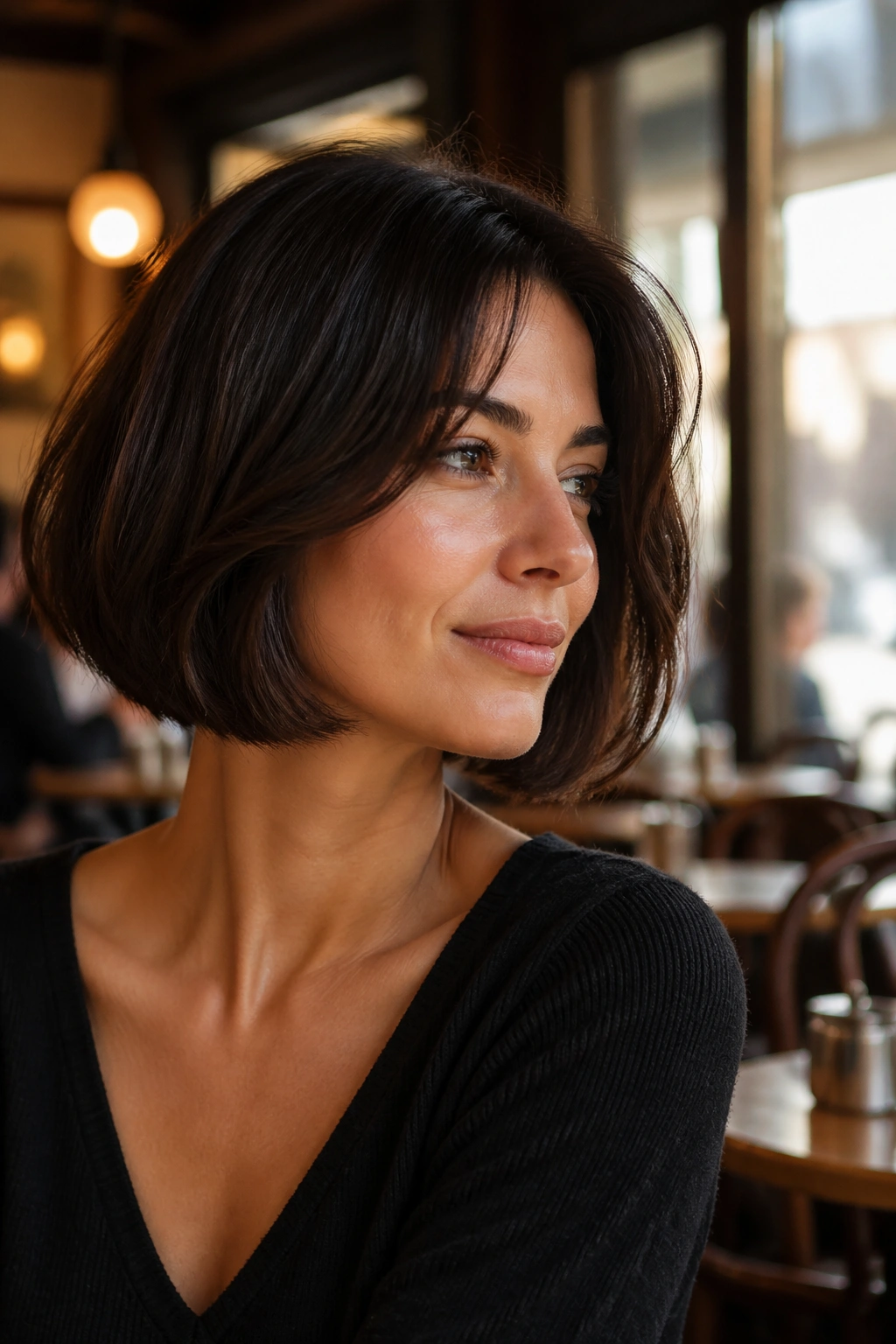
The Italian bob is fuller and softer than a blunt chin-length cut, and that’s why it feels so rich. The ends usually sit around the jaw or just below it, with enough length to swing when you move. It has body. It has weight. It has a little curve at the bottom that keeps it from looking stiff.
I prefer this bob on hair that can hold a shape but still likes some movement. The rounded outline gives the cut a polished feel, almost like it has been brushed into place rather than forced there. It’s a nice option if you want short hair that still feels a bit lush.
The part can go center or slightly off-center. A slight side part softens the face; a center part makes the whole thing feel cleaner and more balanced. Either way, the ends should stay thick.
A medium round brush and a bit of root lift spray go a long way. Dry the roots first, then smooth the mid-lengths and bend the ends inward. You do not need a huge blowout. You need the outline to sit well.
9. Angled A-Line Bob
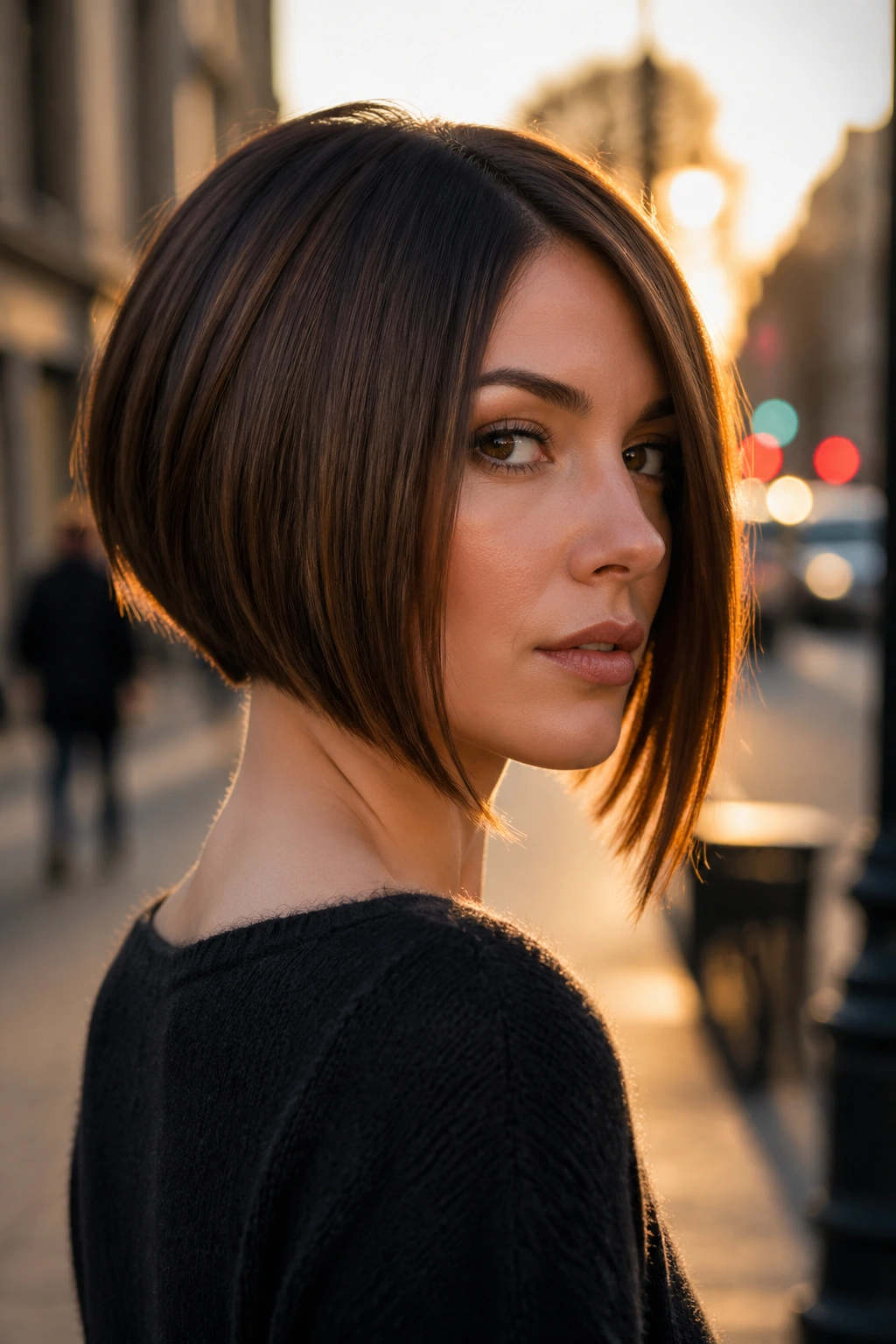
Why does this shape keep winning? Because it quietly does a lot. An angled A-line bob is shorter in the back and longer toward the front, which gives the haircut a clean diagonal line from the nape to the chin. That line lengthens the face and adds structure without needing extra layers.
This cut works especially well if you like the back of your hair to feel neat. The shorter nape removes bulk, while the longer front pieces skim the jaw and frame the cheeks. It’s a smart shape for people who want short hair with a little drama but no wild texture.
The downside is that the angle loses impact if the front gets too long. Once it starts drifting into lob territory, the crisp shape fades. That’s why regular trims matter here more than on some other bobs.
Quick styling notes
- Flat brush the back downward for a smooth base.
- Turn the front pieces under or leave them sharp, depending on how sleek you want it.
- If your hair is thick, ask for slight internal removal near the nape so the back doesn’t puff.
This is a tailored cut. It looks best when the lines are deliberate.
10. Shaggy Bob With Choppy Layers
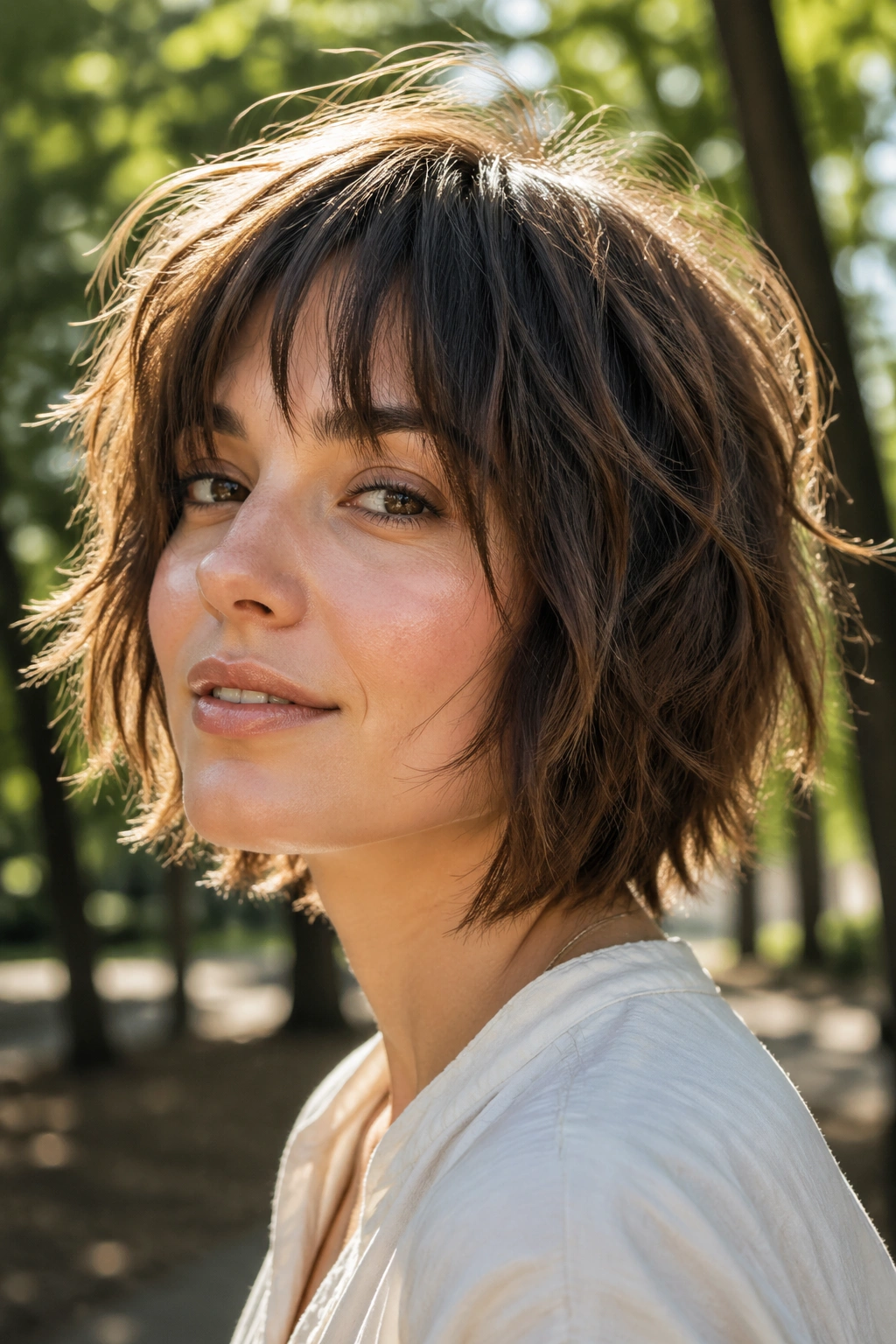
A shaggy bob is what you want when a bob starts to feel too neat. The layers are uneven on purpose, the ends are broken up, and the whole cut has a bit of swing. It looks even better after the hair has lived in it for a few hours, which is saying something.
I’ve always thought this cut is kind to people who don’t want to spend ten minutes fighting their own hair every morning. Air-dried waves settle into it well. So does a rough blow-dry with a diffuser. The shape is forgiving, which is rare in short hair.
The main thing to avoid is over-layering. Too many layers can make the bob look thin at the ends and fuzzy at the sides. A good shaggy bob still has a shape underneath the movement.
A salt spray or light texture mist can help, but use it lightly. Two or three sprays through the mid-lengths is enough. Scrunch with your hands, let it dry, then break up any stiff pieces with a touch of cream on your fingertips. Easy. Messy, but on purpose.
11. Box Bob
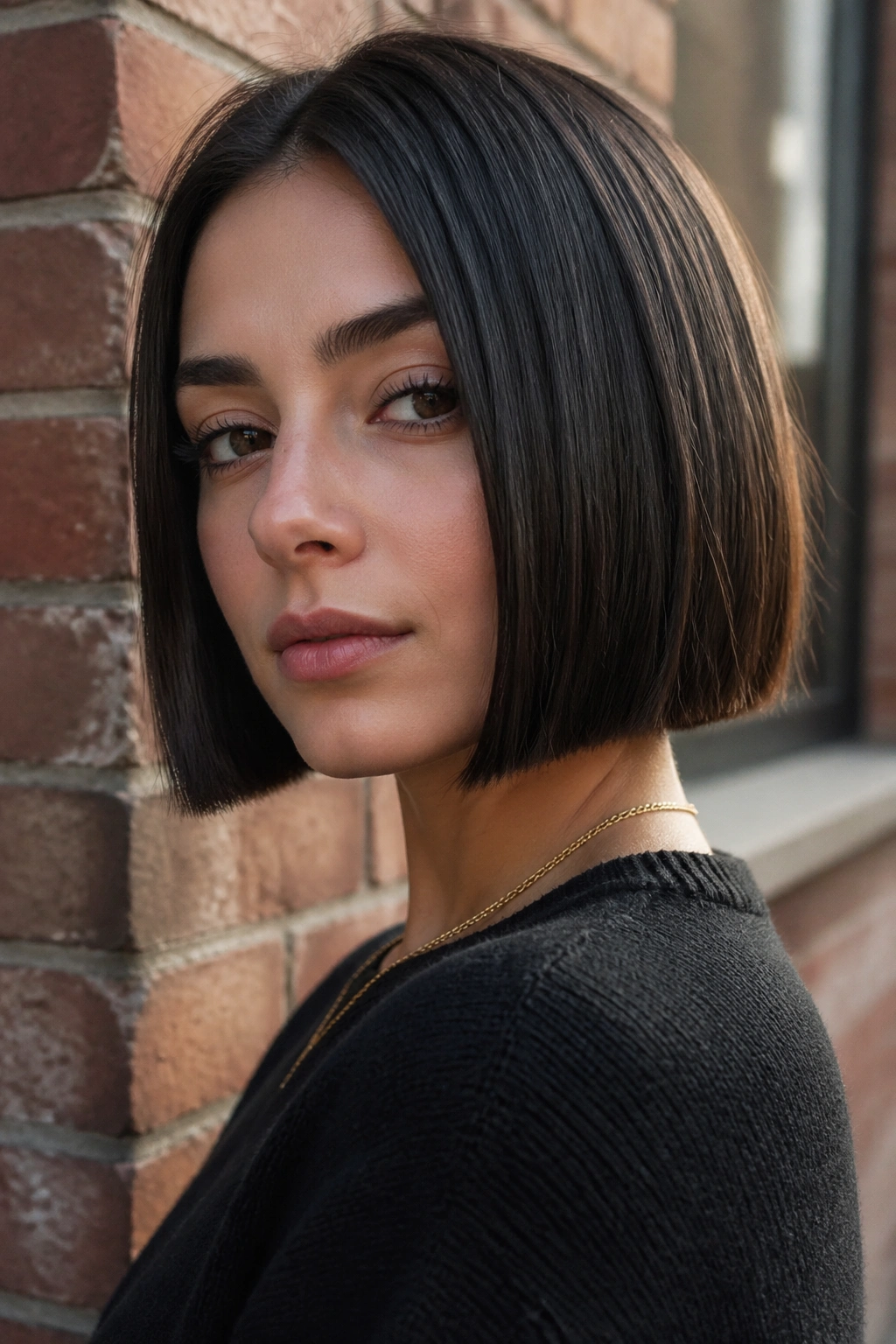
A box bob is blunt, square, and clean-edged. It does not apologize for being structured. The silhouette sits more like a shape than a soft haircut, with the ends cut evenly and the corners left a little strong. That gives the style a modern, graphic feel.
This is a good choice if you like precise clothing, sharp tailoring, or a haircut that looks deliberate even when your styling is minimal. It can also make thick hair look controlled without stripping away too much bulk. The square outline holds weight at the bottom, so the ends look full and grounded.
The catch? If your hair is already very wide at the sides, a box bob can feel a little too solid unless the interior is thinned carefully. It needs balance. Not too much. Not too little.
My favorite way to wear it is with a flat, tucked-behind-the-ear finish on one side and a clean part on the other. That little asymmetry keeps the cut from looking blocky. Add a light smoothing cream, and stop there.
12. Curly Bob With Sculpted Shape
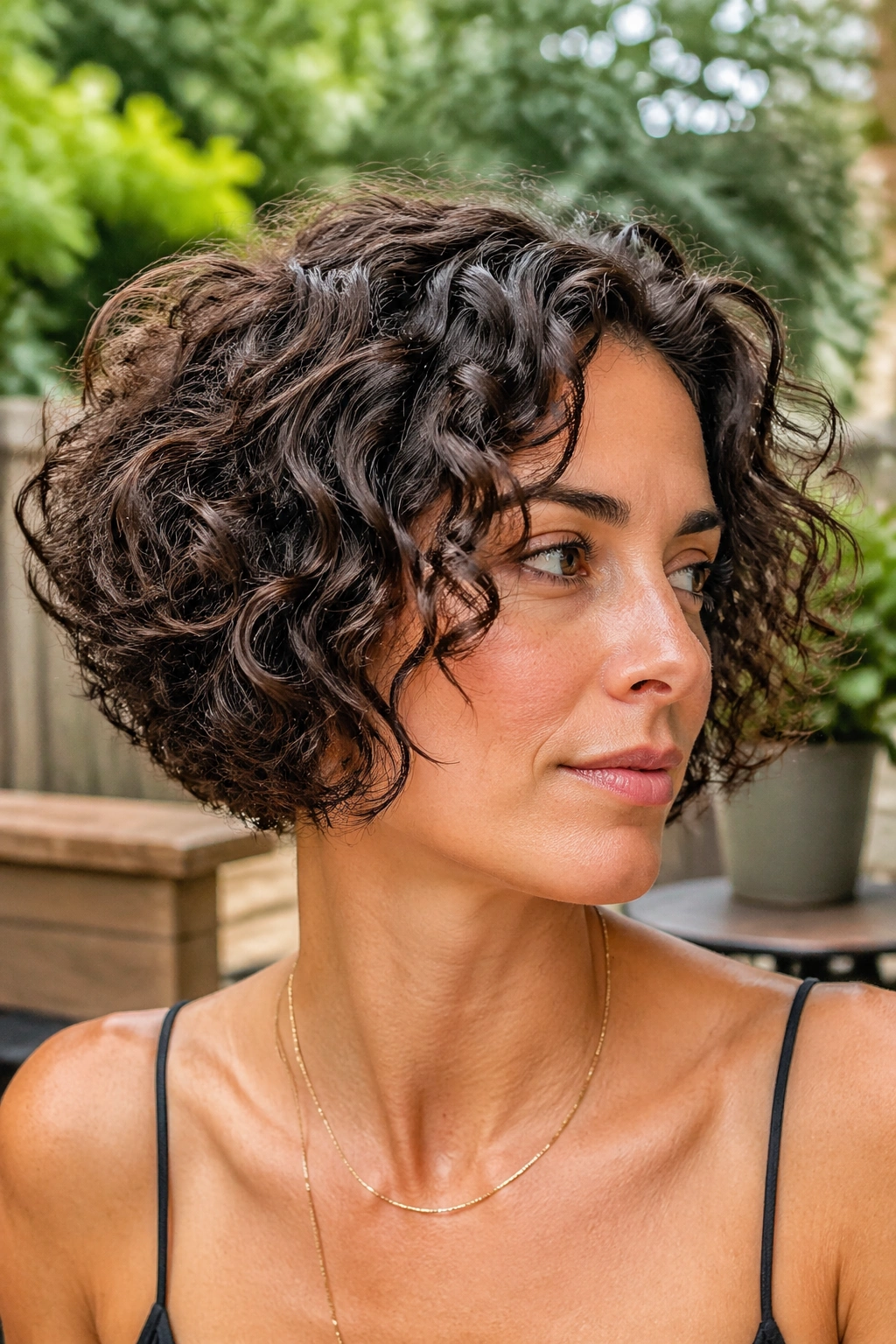
A curly bob should be cut for the curl, not against it. That sounds obvious, but you see the mistake all the time: a straight-line bob cut as if curls will obey it. They won’t. They spring up, shrink, and change the outline.
How to Keep the Curl Pattern Intact
The best curly bob usually has a slightly longer perimeter and internal shaping that removes bulk where the hair wants to balloon. The top is often left a touch longer so the curl has room to form without collapsing. A dry cut or a cut on nearly dry curls helps the stylist see where each curl actually lands.
Styling is simple when the cut is right. Use a leave-in conditioner, then a curl cream or gel while the hair is still damp. Scrunch upward with a microfiber towel, then diffuse gently or let it air-dry. Once dry, break the cast with your hands if the product left one.
This shape can be soft and round or a little more compact, depending on how much volume you want. Either way, it looks best when the curls have their own shape instead of fighting for space. That’s the whole point.
13. Collarbone-Length Blunt Bob
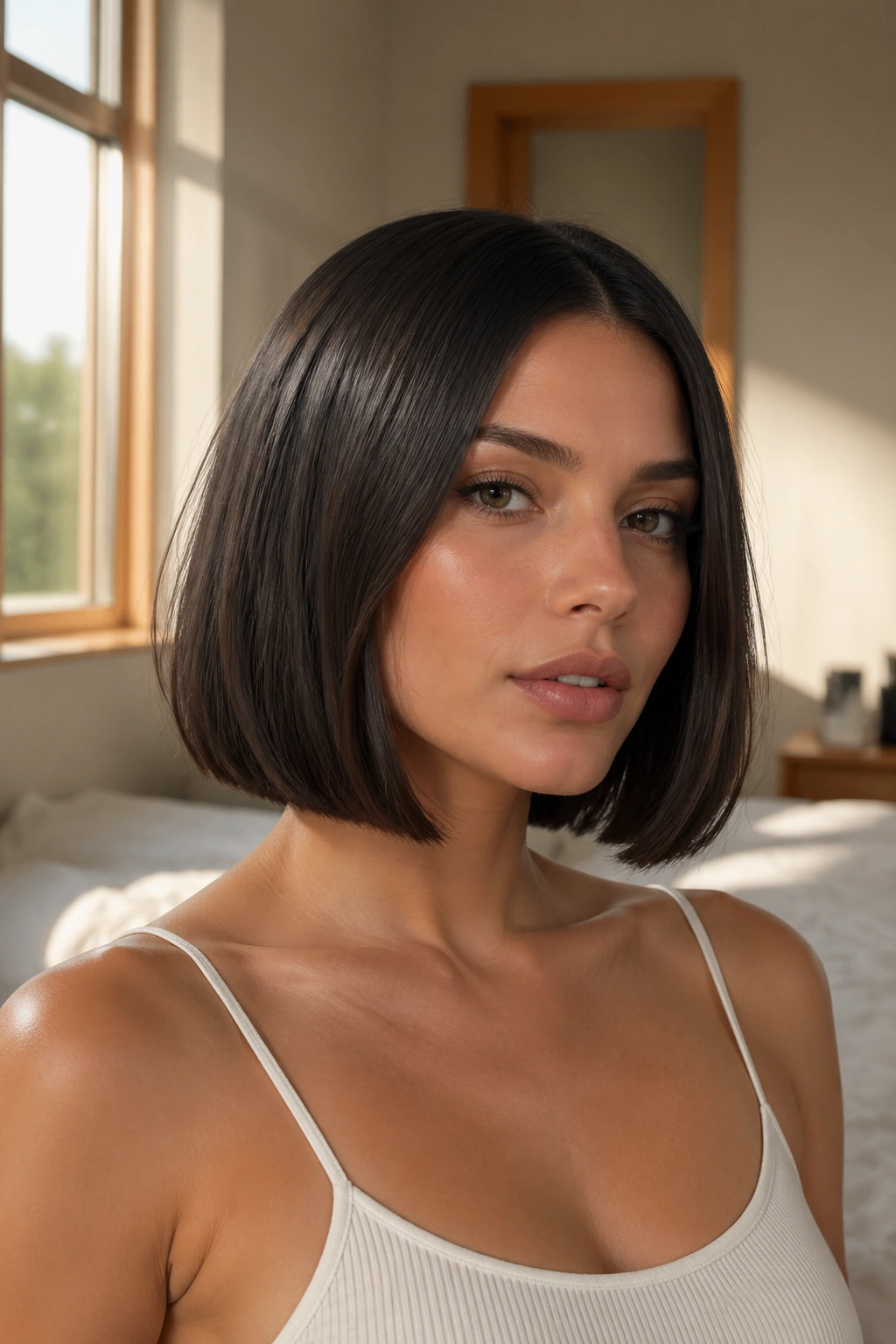
If you want short hair but not too short, this is the cut. A collarbone-length blunt bob keeps the weight at the ends, which makes hair look thicker, while the slightly longer length gives you more room to tuck, wave, or clip it back. It sits in that useful middle space between a classic bob and a lob.
Compared with a chin-length bob, this version feels easier to grow out. Compared with longer hair, it still reads as fresh and decisive. That’s a nice balance, especially if you are nervous about losing too much length at once.
The blunt edge is what keeps it chic. If the ends get too layered, the shape starts to soften in a way that can look nice, but less sharp. This cut is about line.
A straight blow-dry gives it a clean finish. A loose bend with a 1-inch iron gives it a little bend and movement. I like this cut on people who want options, because it can look polished, beachy, or tucked up depending on how you style it that day. Not many short hairstyles can claim that.
14. Bob With Curtain Bangs
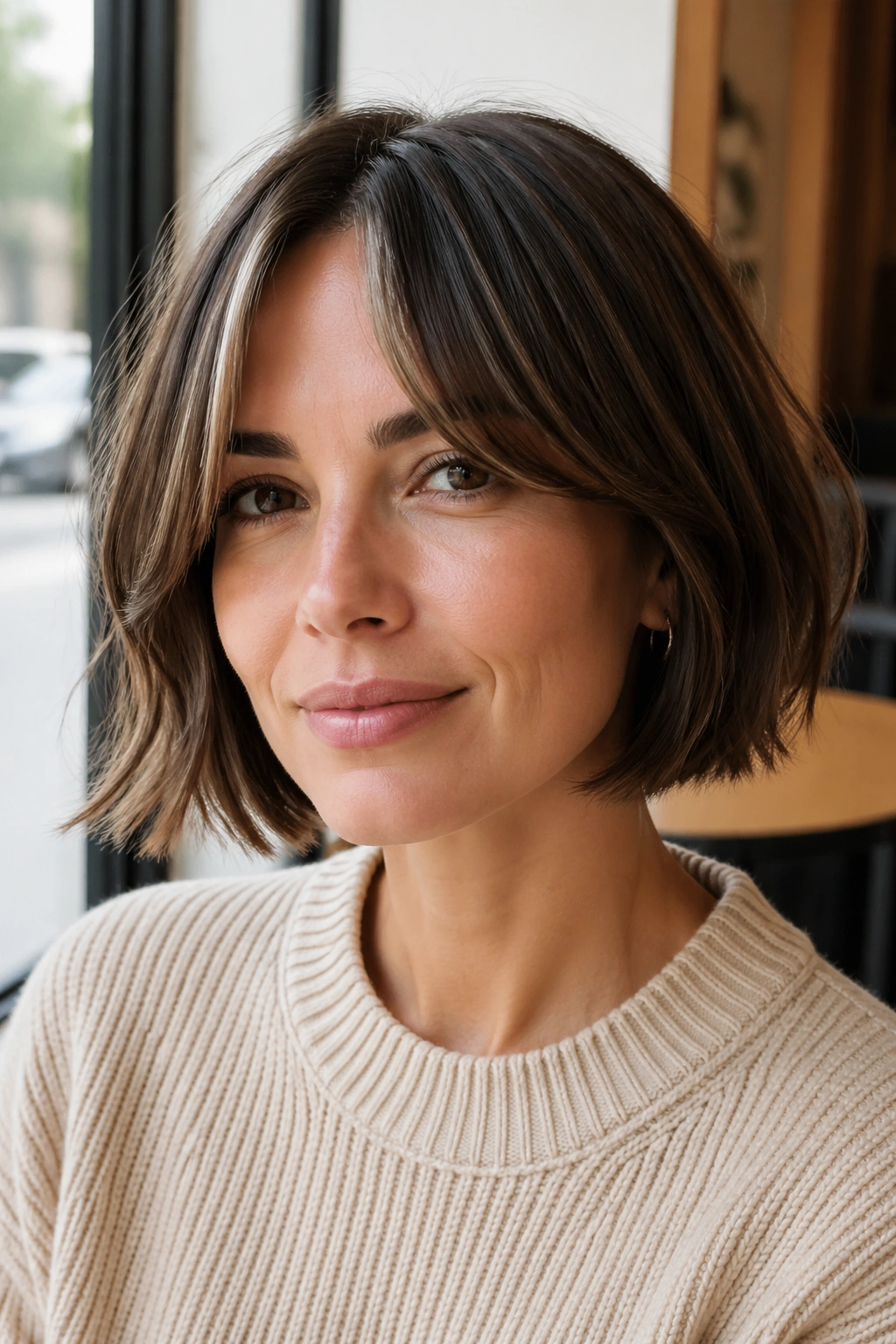
Curtain bangs change a bob fast. They split down the middle or slightly off-center, then fall outward in a soft frame that opens the face instead of covering it. The effect is gentle, but not sleepy. There’s shape here. Real shape.
This cut works especially well when the bob itself sits around the jaw or a bit below it. The bangs pull the eye upward, while the bob keeps the lower half of the face neat. If your forehead feels broad or you like a little softness around the eyes, this is a smart move.
The only catch is maintenance. Curtain bangs need a quick round-brush blow-dry if you want them to fall properly. If you just air-dry them, they can separate weirdly at the center and flip in odd directions. Two minutes with a brush usually fixes that.
Styling notes
- Blow the bangs away from the face first, then let them cool in place.
- Use a light mousse at the roots if they tend to go flat.
- Keep the bob ends blunt or only slightly textured.
It’s an easy way to make short hair feel softer without losing the edge of the cut.
15. Tucked-Behind-the-Ear Bob
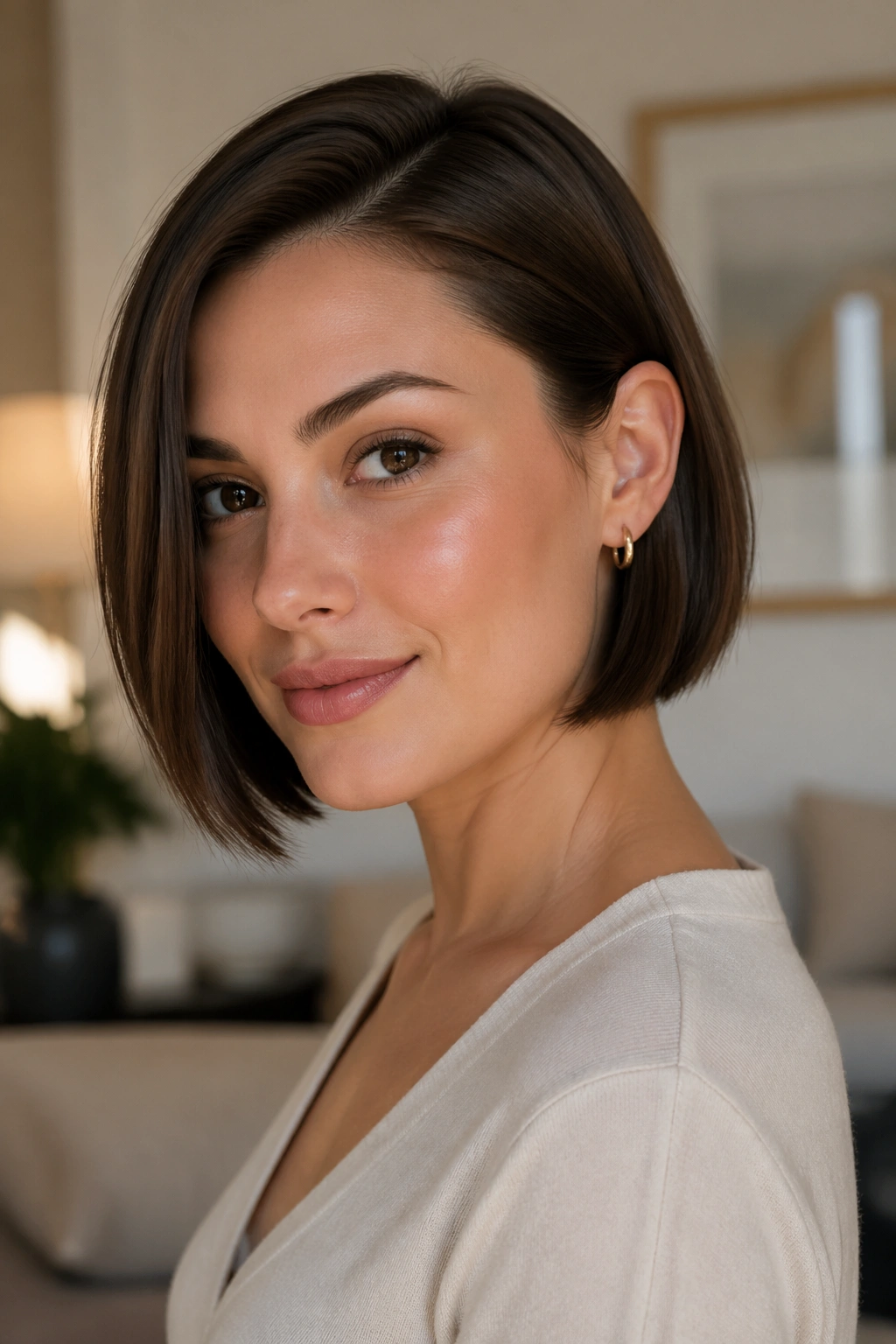
A tucked-behind-the-ear bob is one of the simplest chic short hairstyle ideas, and that simplicity is the charm. One side gets tucked behind the ear, which exposes the cheekbone and jaw. The other side can fall forward a little, creating a soft imbalance that feels modern without trying too hard.
It works beautifully on straight or lightly wavy hair because the tuck stays put and the outline stays neat. If your hair is heavy, ask for enough internal removal so the tucked side doesn’t bulge outward. Nobody wants the ear tuck to turn into a puff.
This is also a good style if you wear glasses. The frame, the ear, and the bob can all sit together without fighting. Small detail, big difference. That little tuck makes room for your face.
A drop of shine serum on the ends keeps the shape looking polished. Tuck one side while the hair is still warm from styling, then let it cool there. Once it sets, it tends to stay put longer. And if you want the style to feel more dressed up, add a slightly deeper side part. Done.
16. Undercut Pixie Bob
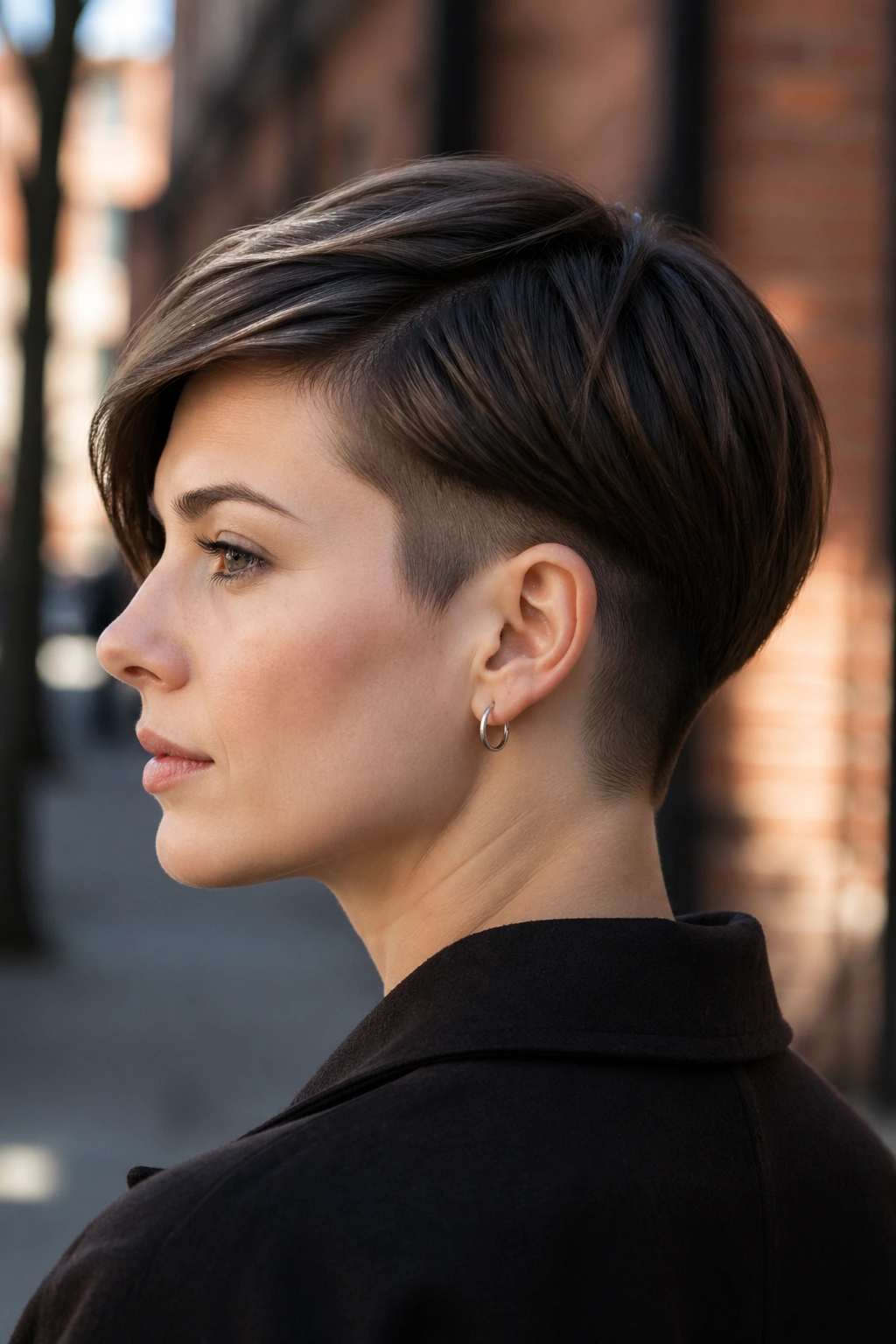
This cut is for anyone who wants short hair with a bit of bite. An undercut pixie bob keeps more length on top and around the front, while the underside is clipped shorter to remove bulk and create contrast. It sounds dramatic. It often looks surprisingly wearable.
The undercut makes the top section move better, especially if your hair is thick or dense through the nape. Without that hidden removal, the shape can swell into something bulky. With it, the top falls more neatly and the whole cut feels lighter on the head.
What Makes It Different
The visible part of the haircut still reads like a pixie bob, so it doesn’t have to look extreme. The undercut lives underneath, which means you get the shape benefits without showing off the shorter sections unless you want to.
It’s a strong fit if you like easy mornings and a little edge. It’s less ideal if you want a cut that grows out invisibly, because the undercut will show itself as it lengthens. That’s the trade-off. A good one, in my opinion.
Use a texturizing cream through the top and let the sides stay close. If the top is long enough, you can tuck it, sweep it, or push it forward for a different mood.
17. Razor-Cut Crop
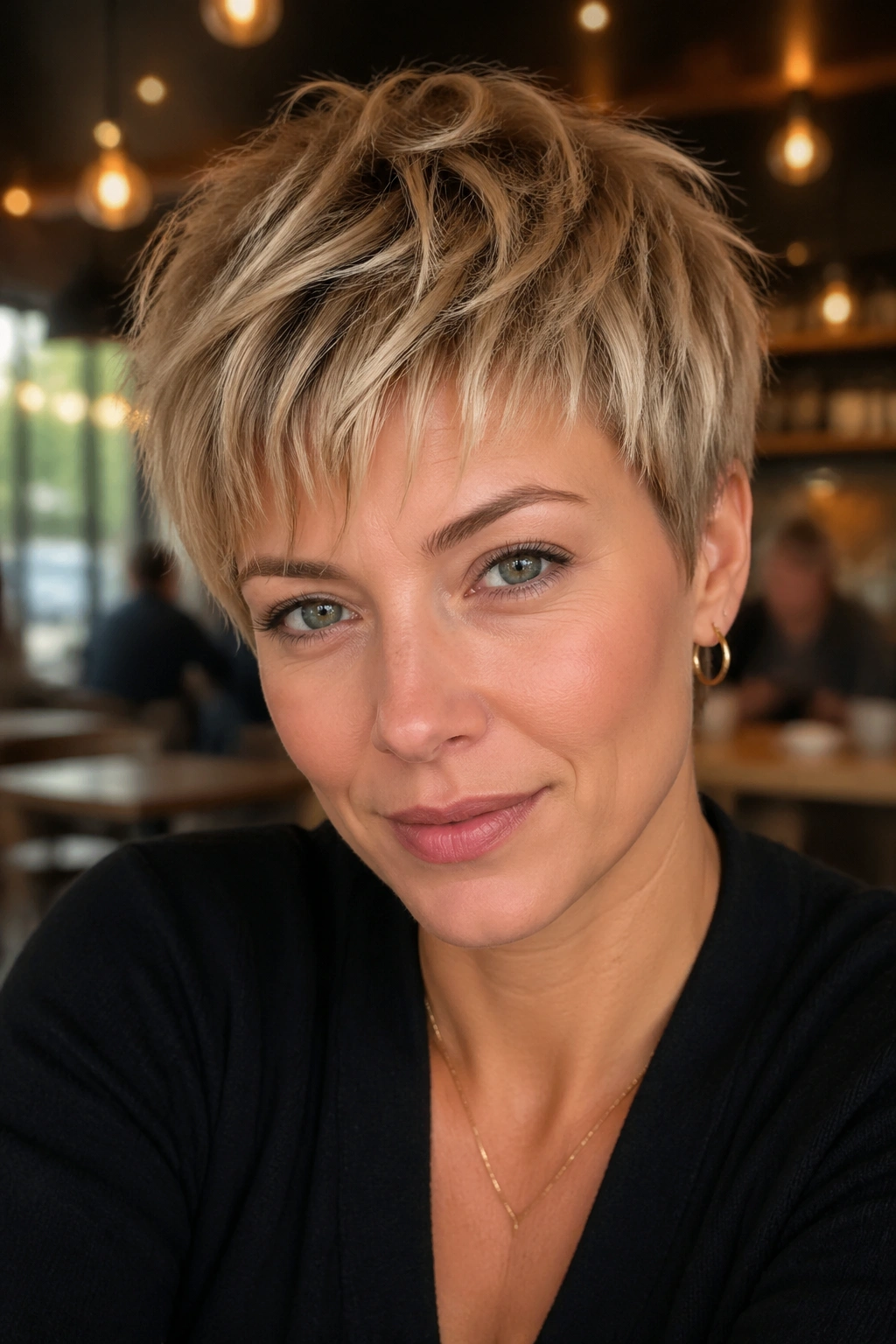
Does every short haircut need to be crisp? Not at all. A razor-cut crop keeps the silhouette short, but the ends are feathered rather than blunt, which gives the style a lighter, softer edge. It can feel airy, a little undone, and very easy to wear.
The razor work helps break up heavy lines in straight hair. It also lets wavy hair fall with more movement. The downside is that razor cuts are not always kind to dry or damaged hair, because the lighter ends can start to look frayed if the hair is already rough. That’s a real thing, not a tiny detail.
If your hair is healthy and you want texture without a lot of product, this is a good option. A spray of volume mist at the roots and a tiny bit of cream at the tips are usually enough. Anything heavier can make the feathered ends collapse.
I’d call this one a cool-weather haircut for the head, not the calendar. It looks good when it moves. It looks less good when it’s overloaded.
18. Rounded Bob With Internal Layers
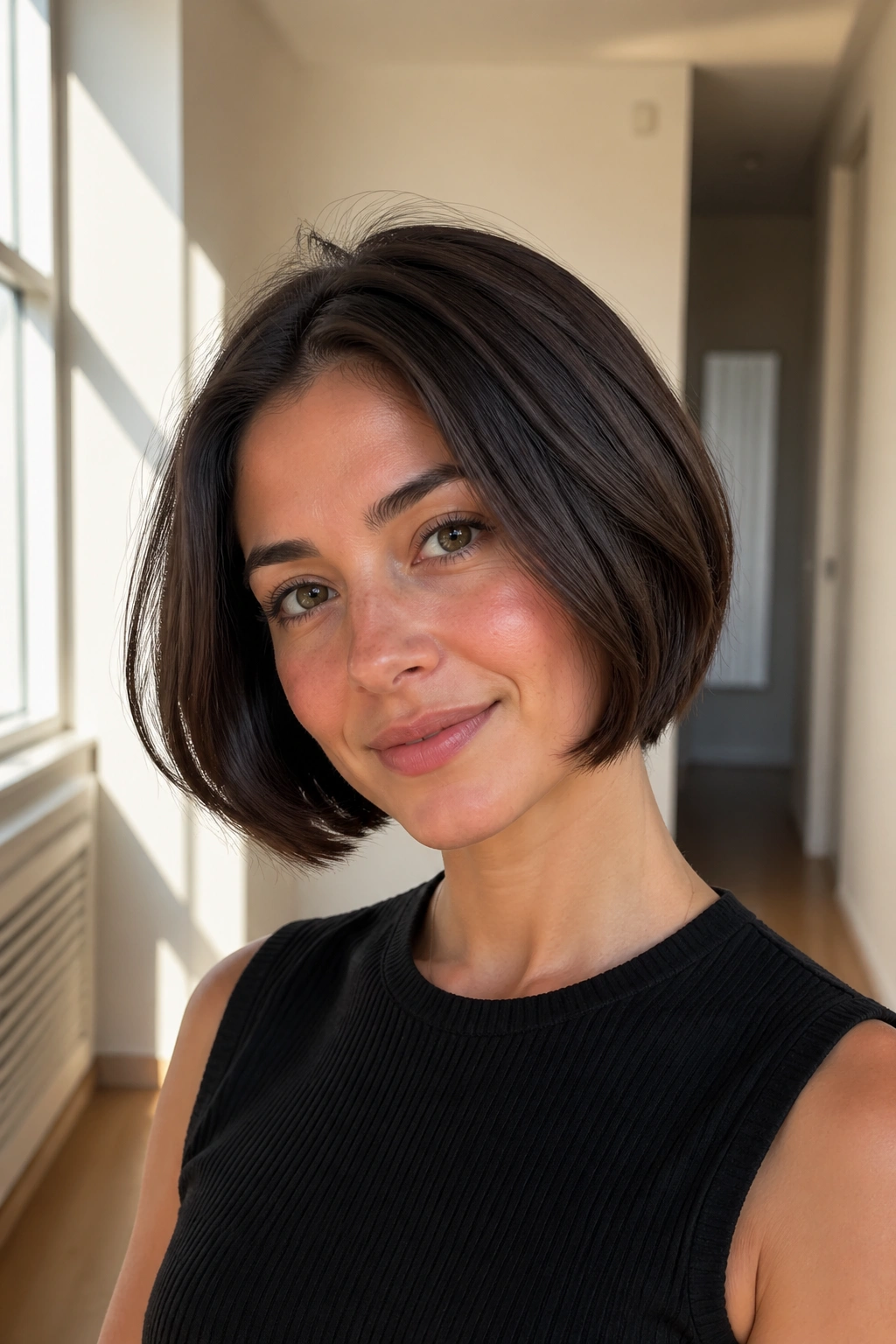
A rounded bob is the quiet achiever of the short hair category. From the outside, it looks smooth and curved, almost like a bowl shape with better manners. Inside, though, the layers are cut to remove bulk and keep the bottom from feeling puffy.
That internal structure matters more than people realize. Without it, the roundness can look heavy. With it, the bob keeps its shape while still moving when you turn your head. The outer line stays polished. The inside does the work.
What to Ask Your Stylist For
- A curved perimeter that hugs the jaw or sits just below it.
- Internal layers placed to reduce weight, not to create choppiness.
- A finish that stays rounded even when the hair air-dries.
- Enough length at the front to soften the cheeks if needed.
This cut suits people who want order more than edge. It feels neat, controlled, and easy to dress up. A quick blow-dry with a round brush makes it look finished, but it does not demand a lot beyond that. If you’ve ever wanted short hair that behaves like it has manners, this is it.
19. Flipped-End Lob
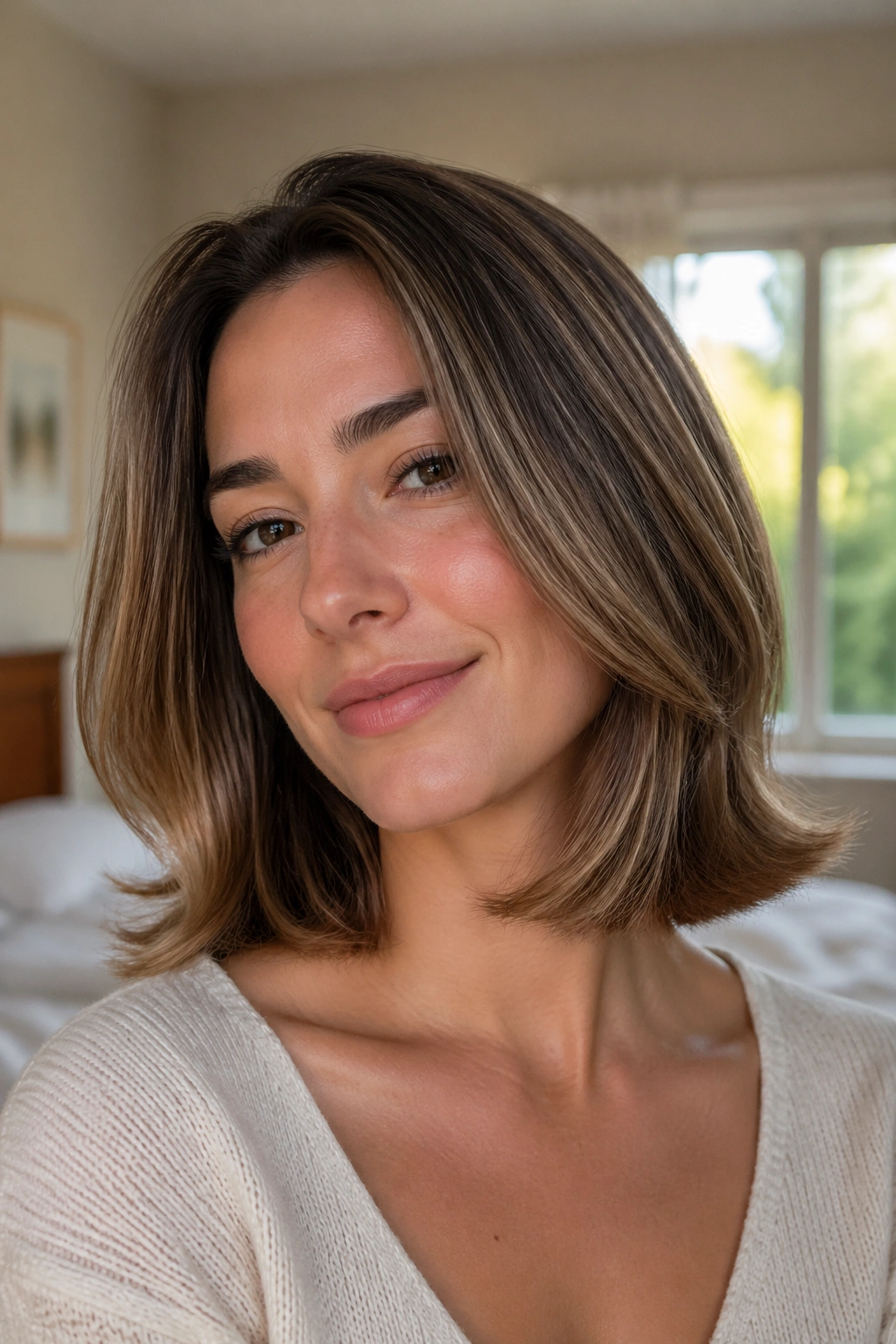
A flipped-end lob gives you a little movement at the bottom without turning the whole haircut into layers. The length usually lands around the collarbone, and the ends bend outward or inward with a touch of styling. That small flip changes the mood fast. It stops the style from looking flat.
This is a good bridge cut if you are moving away from longer hair but do not want to jump straight to a bob. It gives you enough length to ponytail the front sections, enough shape to feel current, and enough swing to keep it from looking severe. Practical. Not boring.
The flipped finish works best when the ends are blunt enough to hold their shape. Too many layers, and the flip gets wispy instead of crisp. A 1-inch iron or a medium round brush can create the bend in seconds. Turn the brush away from the face for a softer flip, or under for a cleaner line.
I like this style on hair that likes to collapse at the shoulders. The longer length keeps it from flipping out in the wrong places, and the styled end puts the focus where you want it.
20. Feathered Crop With Long Top
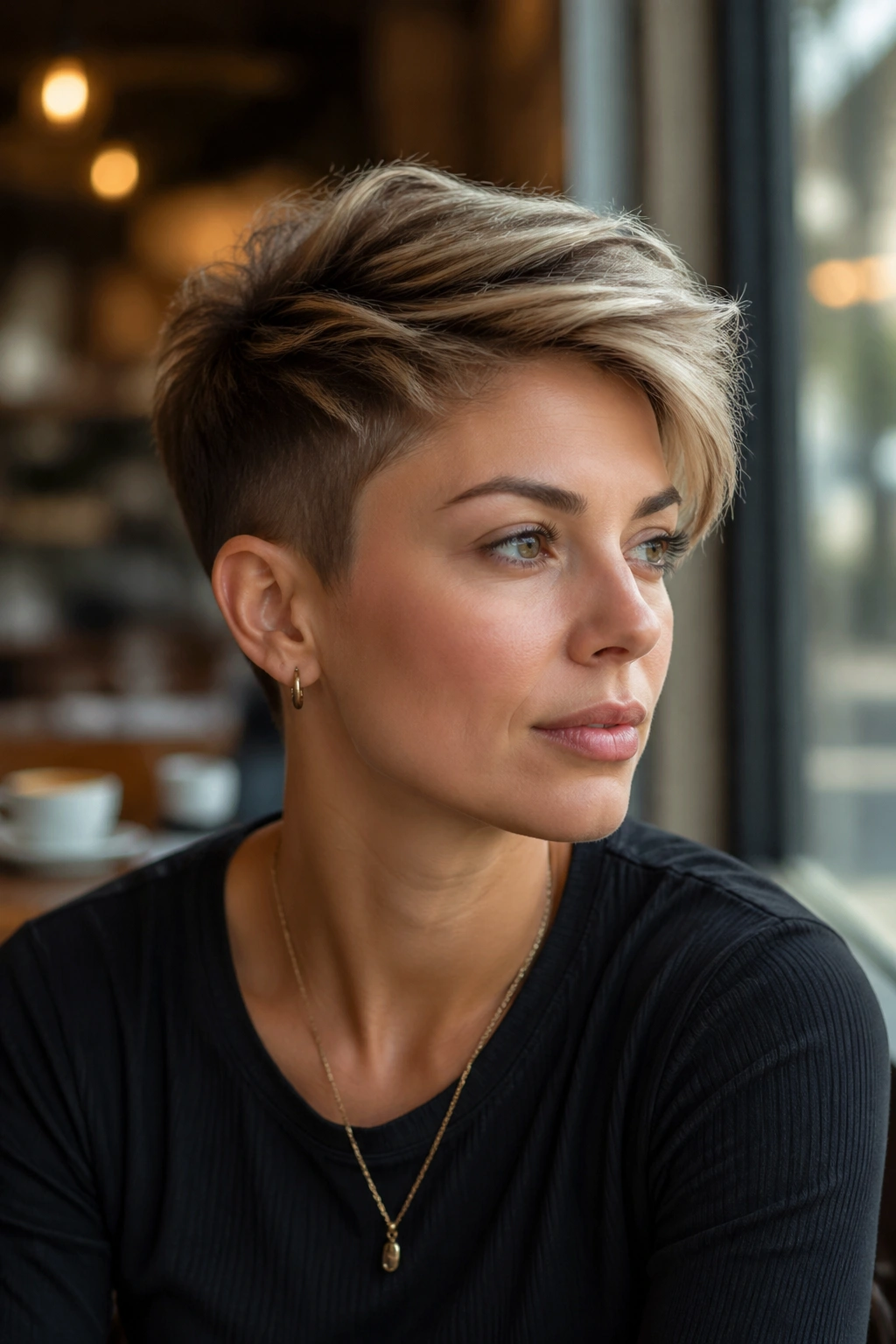
A feathered crop with a longer top is one of the most useful short hairstyles for anyone who wants movement without losing the feel of a real haircut. The sides stay shorter and tidy, while the top is left long enough to sweep, lift, or flatten depending on your mood. It has flexibility built in.
The feathering keeps the shape light around the edges, which helps if your hair tends to sit heavy after a blow-dry. It can also take some pressure off a dense crown, because the top is cut to fall instead of balloon. That’s why this style often looks better when it is a little imperfect. A touch of mess suits it.
You can wear it forward for a softer look, push it up for height, or part it deeply for more drama. That range makes it one of the more useful cropped cuts if you like to change your hair without changing the whole haircut. It is a good pick for people who want short hair but don’t want to commit to a severe outline.
Final Thoughts
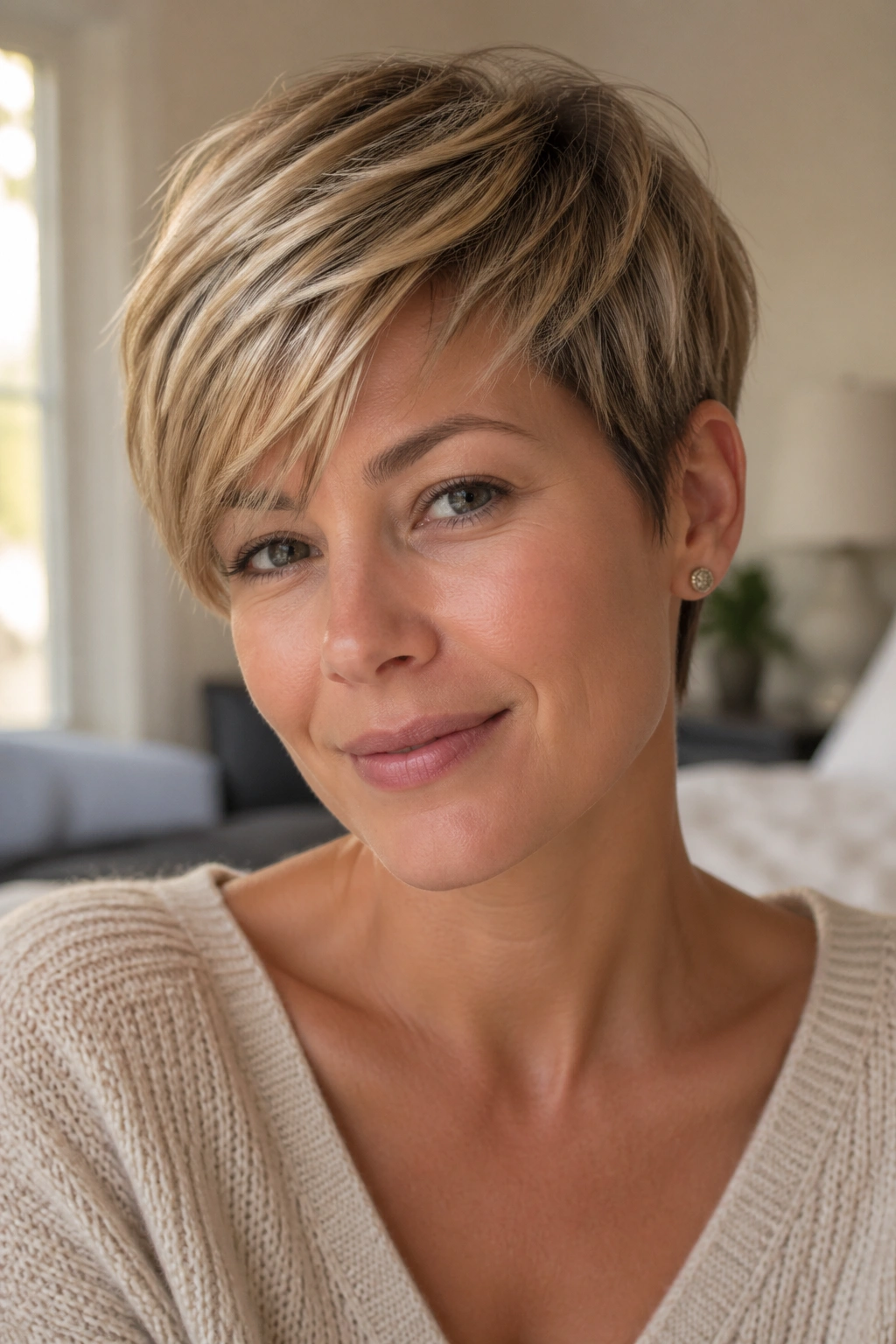
Short hair works best when the cut matches the way your hair actually behaves. That sounds obvious, but it’s where a lot of bad haircuts happen. A pixie or bob should not force your texture into a shape it hates.
The smartest short hairstyle ideas are the ones with a clear line and one or two strong details: a clean nape, a blunt edge, a soft fringe, or a little asymmetry. Pick the part that suits your face, then choose the amount of styling you can live with on a normal Tuesday. That part matters more than people admit.
Bring photos to your stylist, yes, but also say how much time you want to spend on your hair each morning. That one sentence will save you from a lot of regret.
